Congratulations to our trio of researchers—Luis Gerloni, Fabian Sotonica, and Clara Steiner from the plus-MINT boarding school Steinmühle—on winning the special prize for “Original Work in the Field of Geosciences” at the national “Jugend forscht” competition in Heilbronn! We’ll be posting a report about your unforgettable four days and all the experiences you had on our website soon!

At the state competition “Jugend Forscht” in Darmstadt, Steinmühlen students Leonard Berger, Clara Steiner, and Quentin Herwig narrowly missed second place—and with it, qualification for the national competition—with their project “Food Wrap Made from Crab Shells—Is That Possible?” For the trio—which recently became a quartet with the addition of Nicolas Bohnstedt—the project is now moving on to the next round at a different level. In addition to second place and a special prize at the state competition, an inquiry from ZDF is a wonderful sign of recognition.

An editor from the ZDF science program PUR+ had visited the “Jugend Forscht” state competition, looked at the many exciting projects, and presented the most interesting ones to the planning editorial team. Among them was the Steinmühle project by the four teenagers. While still at the event, the journalist spoke with Quentin about the project and shortly thereafter reached out to the Steinmühle and project leader Dr. Jutta Töhl-Borsdorf to stay in touch with the students and their project.

“We don’t yet have a specific program in mind that this project might fit into,” according to ZDF. The plan is to produce a segment for 2025.

PUR+ is an educational program for children that covers a wide range of topics, from sports and the environment to social issues and technology. The target audience is children aged approximately 10–14.

Meanwhile, the group is very excited about this request, according to Dr. Jutta Töhl-Borsdorf, project supervisor and STEM coordinator at Steinmühle. The team now plans to continue working on the project and perhaps submit it to “Jugend testet” next year.
This works out well, because the group has not only produced many different types of films made from chitosan—a byproduct of crab shells—but has also developed various testing methods. For example, the highly sustainable films can be tested for tear resistance using a homemade pulling machine, or to determine how much moisture or oxygen they allow to pass through.
Further information: https://www.zdf.de/kinder/purplus, https://www.jugend-testet.de/.


As is customary with every 11th-grade class, Principal and math teacher Björn Gemmer conducted a packaging optimization project with his current 11th-grade class. This time, they took a close look at a product from the ESN brand, examining the dimensions of one of its popular whey products. ESN, along with the More Nutrition brand, is part of The Quality Group. The company focuses on “premium products for health, enjoyment, and performance.”

Leon, Piet, Hessein, and Rebecca investigated whether, in the case of the selected item, not only the product but also the packaging could impress with top-notch qualities. The focus was on reducing material usage, which could lead to lower costs and a better sustainability record due to reduced amounts of plastic packaging. Their take: There’s still room for improvement.

This statement was supported by detailed calculations that were attached to the letter to ESN. Although it took several weeks to receive a response, it was unusually accommodating. Employee Sina Frömberg expressed her sincere thanks and explained in detail that, due to various regulations and provisions, packaging that may appear “too large” can nevertheless comply with the rules and may even be necessary in its current form. She also noted that consumer acceptance is an important factor. Sina Frömberg explained all these aspects in detail.


Packaging Technology Degree Program

At the same time, the contact person suggested that anyone with a deeper interest in the topic as a whole might want to look into the Packaging Technology and Sustainability degree program in Leipzig. — It’s a complex topic, then, one that, as such, may not yet have entered the consciousness of consumers.

By the way, the students were also delighted to receive a box filled to the brim with numerous ESN products, which, as expected, were very well received. Of course, we had to take a group photo as a thank-you!
In any case, the class and math teacher Björn Gemmer would like to say a big thank you for the nice surprise and the kind feedback on the Steinmühle’s activities!


This is the best “Jugend Forscht” result in Steinmühle’s history: After Steinmühle student Akaash Bhagwat won the state championship in physics at “Schüler experimentieren” (the competition for younger students), the 12th-grade plus-MINT trio—consisting of Luis Gerloni, Fabian Sotonica, and Clara Steiner, also emerged as state champions at the “Jugend forscht” state competition held at Merck in Darmstadt. Originally submitted in the Earth and Space Sciences category, the project ultimately won the award for “Best Interdisciplinary Project” and will now compete in the national competition. “We’ve been participating in ‘Jugend forscht’ for seven years and have always done very well. But we’ve never had a success like this before,” explains their advisor, Dr. Jutta Töhl-Borsdorf.

Luis (16), Clara, and Fabian (both 17) were quite nervous as they had to hold their own among about 50 other projects and ultimately compete against three others in their category. For about half an hour, the jury members—representing research, academia, and industry—asked their questions—and they were on the same level. Under the title “Water Analysis 2.0: Autonomous Low-Cost Boat for Determining Water Quality,” the trio presented their research project. The discussion delved deeply into the subject matter—not a trace of easy questions whose answers would have been obvious. Relieved and almost in disbelief, the students—who participate in the plus-MINT program at the Steinmühle boarding school—heard that they had won—the reward for hours of dedicated tinkering, extensive expertise, endless perseverance, and tremendous interest.


Another criterion: public benefit

The next round—the national competition in Heilbronn—will feature the best German research projects. The young researchers explain in an interview that they’ll have to step it up a notch there. “There are only a few projects in our category, Earth and Space Sciences,” the three acknowledge. But that makes their efforts all the more closely scrutinized by the jury members.

The questions asked there will also focus on other aspects. The jury will assess whether the project is truly the participants’ own—that is, whether they identify with the project’s goals and demonstrate genuine commitment. According to the trio, the project’s benefit to the community is also important. They can wholeheartedly affirm this—because their greatest hope is that their experiment will become a mass-market product for measuring water quality!


The Goal: To Inspire the Industry

A small “surfboard” serves as the basis for the remote-controlled, motorized platform for water analysis developed by Clara Steiner, Fabian Sotonica, and Luis Gerloni. It is not stationary—which sets it apart from many measurement systems. The “boat” can be equipped with various sensors for water analysis, and it can collect up to four water samples.

Inspiring industry and businesses with their idea is therefore the goal of the three plus-MINT talents, who—along with the Steinmühle School and Boarding School—have made it to the top ranks of Germany’s best young researchers. Their vision is a fully autonomous boat capable of navigating currents and saltwater that can be used by anyone, even private individuals, in any location. This would allow water measurements to be taken at a wide variety of locations across the country and transmitted online for analysis. “The result would be a nearly complete picture of the condition of our waterways.”

At the end of May, Luis, Clara, and Fabian will head to Heilbronn for the national “Jugend Forscht” competition. Joining them will be Dr. Jutta Töhl-Borsdorf, a multiple recipient of the Mentor Award. Alongside her are others who have supported the plus-MINT trio on their journey to the top. These include Antje Seel and Dr. Patrick Szabo from the Steinmühlen STEM team. The collaboration with Dr. Christoph Reudenbach from the Department of Geography at Philipps University of Marburg also provided valuable insights and support.

Shortly before the end of the first semester, the 12th-grade advanced chemistry class met with their teacher, Dr. Jutta Töhl-Borsdorf, for a workshop at the Department of Chemistry at the University of Marburg on the Lahnbergen. For many of them, it was their first time standing on the large campus—which was covered in snow that morning—and getting a taste of college life.

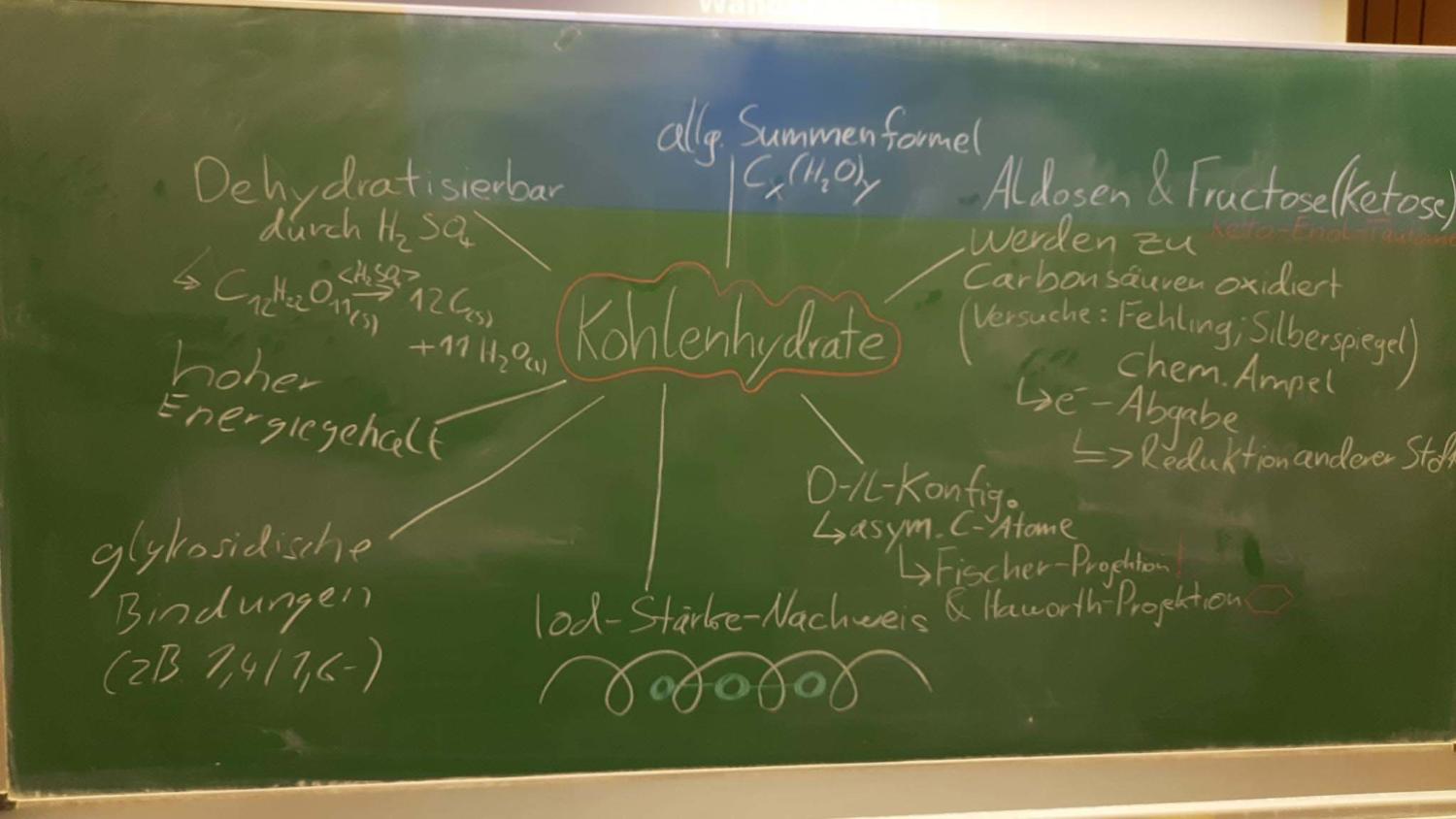
The goal of the workshop was to provide us with theoretical and practical insight into the chemistry of carbohydrates and to serve as a practical exercise for the three student teachers who led the session. To start things off, an interactive lecture laid the foundation for understanding the following experiments by explaining the general properties and various structures of carbohydrates.
We then split into small groups and headed straight to the stations, where we explored a wide variety of phenomena. These included detection reactions, qualitative analyses, and a self-induced color-changing reaction that could be repeated simply by shaking the solution. What made it special was that nearly everything could be explained using the information from the introduction—which was now our task.

We spent our lunch break in the university cafeteria, which, fortunately, was pretty empty that day, before returning to discuss our experimental results.

At the end, we were divided into small groups again, each with a buzzer. The final activity was a quiz in which we competed against each other and had to demonstrate the knowledge we had gained throughout the day. The winning group was rewarded with candy.

In summary, it was a valuable experience not only in terms of our knowledge of carbohydrates, but above all in terms of how to interpret experimental results and understand the relationships between them.

Huge joy for the team of advisors—Dr. Jutta Töhl-Borsdorf, Sven Freibert—and the entire Steinmühle community: Last weekend, 12-year-old Akaash Bhagwat, a student in our International High School Program, won first place in physics at the state-level “Schüler experimentieren” competition held at the University of Kassel! Akaash took an in-depth look at how to combine environmental protection and cost savings when it comes to batteries. He analyzed over a hundred used batteries and discovered that they still contain a considerable amount of residual energy. This inspired him to make a large portion of that residual energy usable again using a voltage converter. Among other things, he modified a 4.5V flashlight—which is normally powered by three 1.5V batteries—so that it can now run on a single used battery.

Several factors led the jury to award first place to our 6i student: the high social relevance of the project, the comprehensive and systematic analysis, and the visually appealing and informative presentation of the results. The experts were so impressed by Akaash’s work that, in addition to the prize money, they awarded him the Special Prize for Energy Efficiency and the Environment as well as the Special Prize for Resource Efficiency. Our photos show the student at his desk and at the award ceremony alongside state competition director Eva Kretzer. The older students will compete this Thursday in the state “Jugend forscht” competition, which will take place at Merck in Darmstadt. We’re keeping our fingers crossed and will later summarize the projects of all participants in a comprehensive report.

“Jugend forscht” and “Schüler experimentieren” Hesse State Competition 2024
Awards Ceremony March 16, 2024 Ing.-Schule, University of Kassel
Photo: Andreas Fischer
andreasfischerkassel@gmx.de
Tel. 0172 56 37 017
Tiessenstrasse 5
34134 Kassel

Steinmühle was the only high school in Marburg to take first place in the regional “Jugend forscht” competition—and it did so four times. It also won two second-place finishes, as well as special awards and a mentor award.


Used batteries—too good to throw away?
With this research project, Akaash Bhagwat, a 6th-grade student at the Steinmühle International High School, won first place in the physics category in the “Students Experiment” subcategory, as well as a day-long field trip with a guided tour at Feig Electronics in Weilburg.


Natural UV filters—an alternative?
Anna-Lena Griesler (8th grade), Maya Fischer, and Justus Pöschl (both 7th grade) explored this question in their chemistry class and, as the best interdisciplinary project, also won the regional competition in the same category.

On March 15–16, both teams will head to the University of Kassel for the state competition.


“The Muffin of the Future—0% Egg, 100% Vegan”
was the title of the project by Lotta Funk, Lotti Jarosch, and Evin Kaya from 6th grade, for which the trio won second place in the “Working World” category.


Plus-MINT boarding school students took first place
Water Analysis 2.0: Development of an Autonomous, Low-Cost Boat for Determining Water Quality— this is the title of the project by students at the plus-MINT Boarding School Steinmühle: Luis Gerloni, Fabian Sotonica, and Clara Steiner (12th grade). With their work, the young researchers took first place in the field of space and earth sciences. This project was developed in collaboration with Dr. Christoph Reudenbach from the Department of Geography at Philipps University of Marburg.


Plastic wrap made from crab shells—is that possible? Leonard Berger, Quentin Herwig (both 11th grade), and Clara Steiner (12th grade) focused on chitosan films, since chitosan is a waste product and its production therefore does not require any farmland. With their project on this topic, the three students won first place in the “Working World” category and were delighted to receive the additional special prize: a day at the magical Makerspace Gießen.

On March 20 and 21, these teams will compete in the state round of the “Jugend Forscht” competition at Merck in Darmstadt.


“Nettles and More—Natural Insulation Materials for Heat and Sound ” was the name of the project for which Toshiro Beato del Rosal (9th grade), Leontin Schmidt (10th grade), and Paul Fischer (9th grade) won second place in the Technology category and also received the special prize for renewable raw materials.

All of Steinmühle’s projects were led—depending on their subject focus—by Steinmühle’s STEM advisory team, consisting of Dr. Sven Freibert, Jonathan Gröb, Antje Seel, Dr. Patrick Szabo, and Dr. Jutta Töhl-Borsdorf, who supervised no fewer than five projects.

The competition, which proved so successful for Steinmühle, was ultimately capped off with a special award for particularly dedicated project supervisors: Dr. Jutta Töhl-Borsdorf, who is responsible at Steinmühle for coordinating the STEM subjects—mathematics, computer science, natural sciences, and technology—as well as for supporting gifted students in these fields—will travel to Lemgo for a three-day networking event, which will include visits to InnovationsSPIN and Lernfabrik 4.0.

With a spectacular performance, Isabella Kuhl from Class 5a won third prize in the second round of the Math Olympiad. Math teacher Maximilian Moll shared this wonderful news. Steinmühle extends its congratulations!

About the event: The Mathematics Olympiad is an annual nationwide competition for all math enthusiasts in grades 3 through 13 and is sponsored by the Federal Ministry of Education and Research and the Stifterverband. It has a tradition dating back to the 1961–62 school year and attracts over 200,000 participating students each year.

The Math Olympiad offers all interested students the opportunity to demonstrate and further develop their exceptional abilities in mathematics. The competition, which is organized by age group, features challenging problems starting in 3rd grade and requires logical thinking, the ability to see patterns, and a creative approach to mathematical methods. Participation in the competition often inspires students to engage with mathematics far beyond the scope of their classroom instruction.

Steinmühle once again achieved great success in the “Informatik-Biber” competition. Computer science teacher Nicole Scholtes (left) presented certificates to (from left) Liam Randau, Yunus Götz, Daniel Carle, and Jonathan Kirschning. The Informatik-Biber is Germany’s largest student competition in the field of computer science. Students in grades 3 through 13 are eligible to participate. Since 2007, the Informatik-Biber has been promoting digital thinking in Germany through real-world, everyday tasks. In the process, participants discover the fascination and relevance of computer science methods. At the Informatik-Biber, even young students encounter the versatility of computer science in a playful and natural way. The Informatik-Biber has been in existence since 2006. In the most recent competition, 401,737 students participated. Students in 7th grade and above complete 15 tasks in 40 minutes. The Informatik-Biber takes place once a year in November and lasts for two school weeks. Our illustration shows a sample task from the competition. Computer science teacher Steffen Ullwer is missing from our photo.

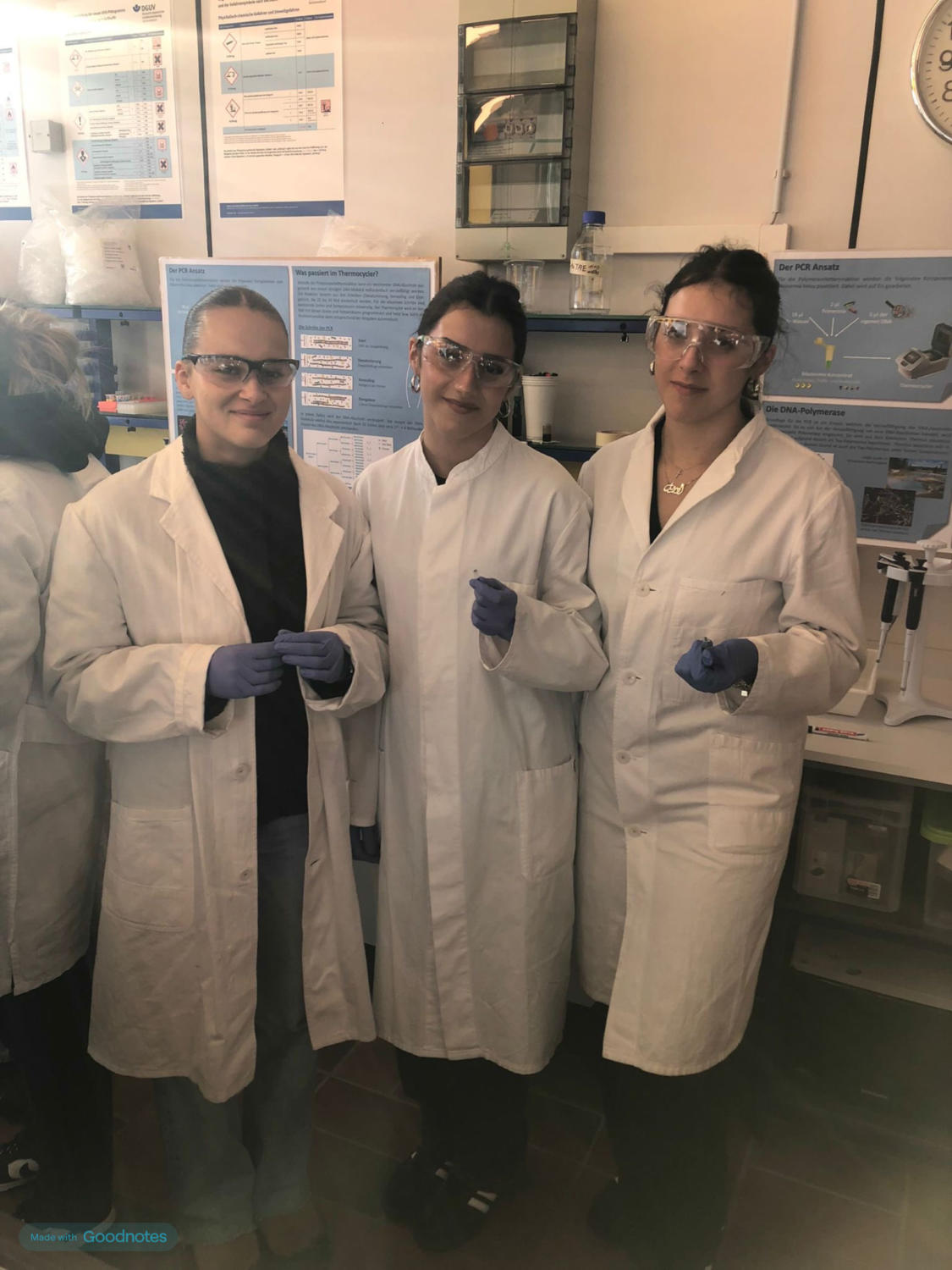
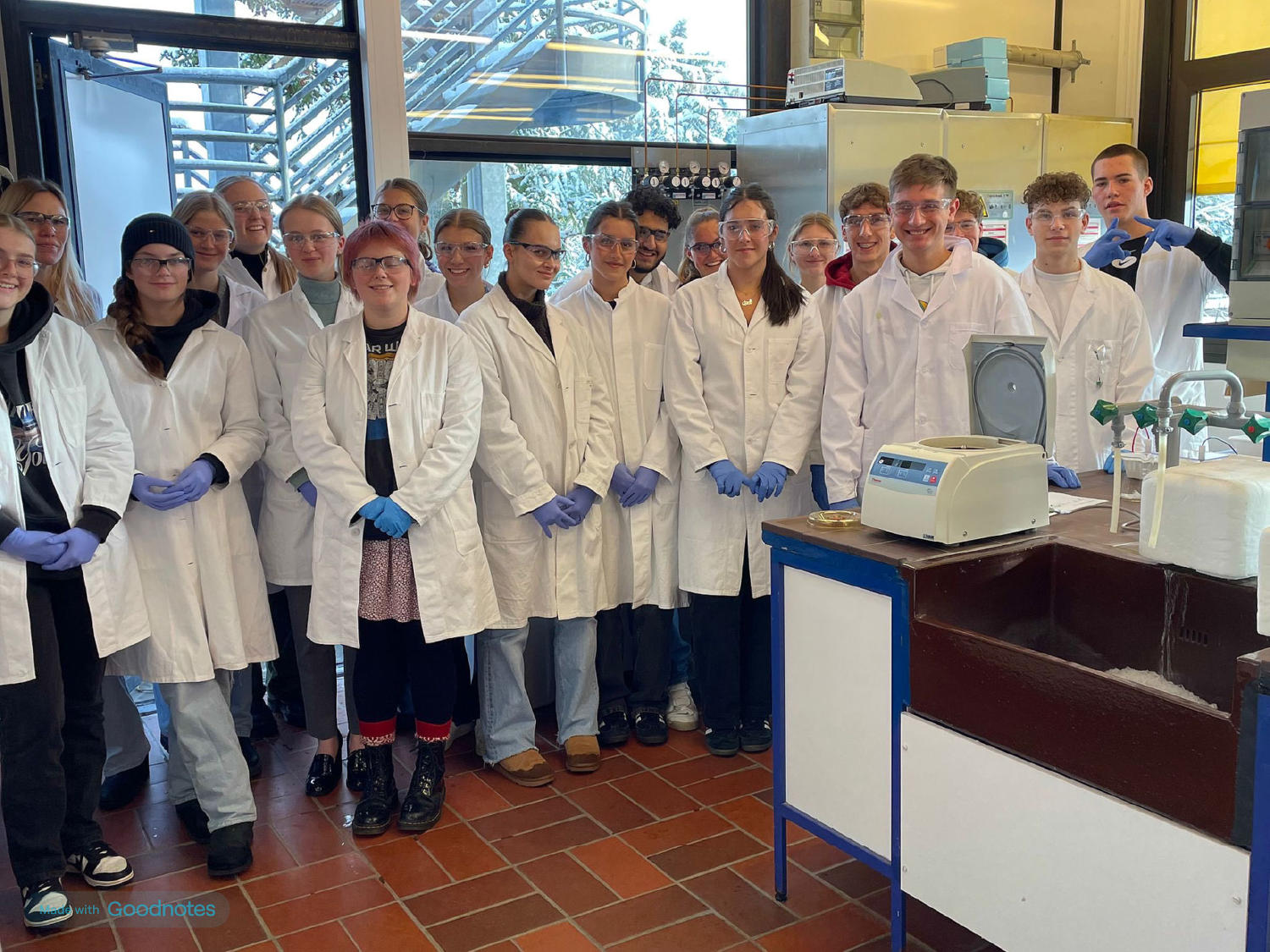
Applying what you’ve learned. Seeing your own DNA. Making DNA visible? — That’s exactly what the 12th-grade advanced biology class did during their genetics course at Lahnbergen. Alicia Spitzhüttl writes:

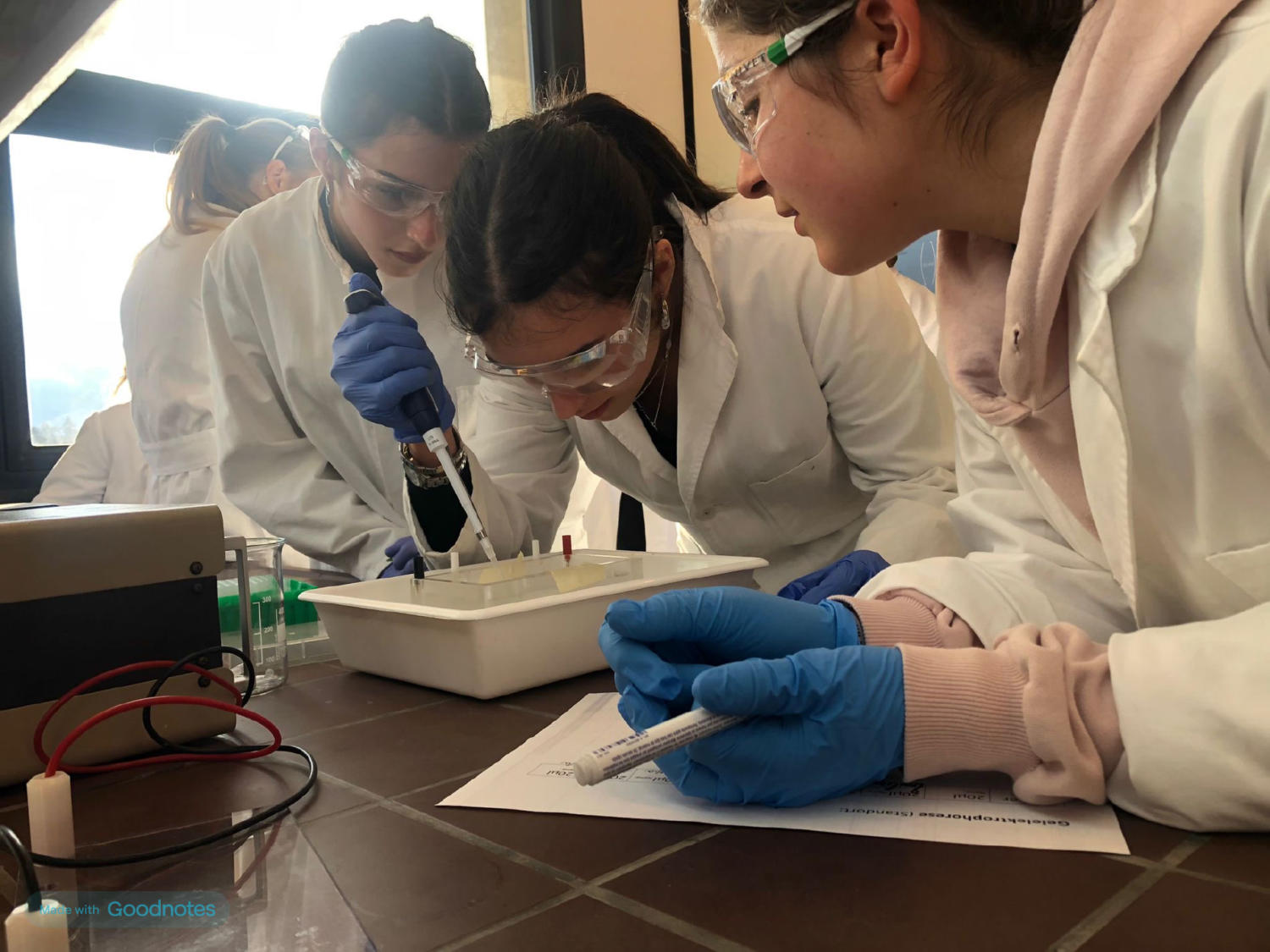
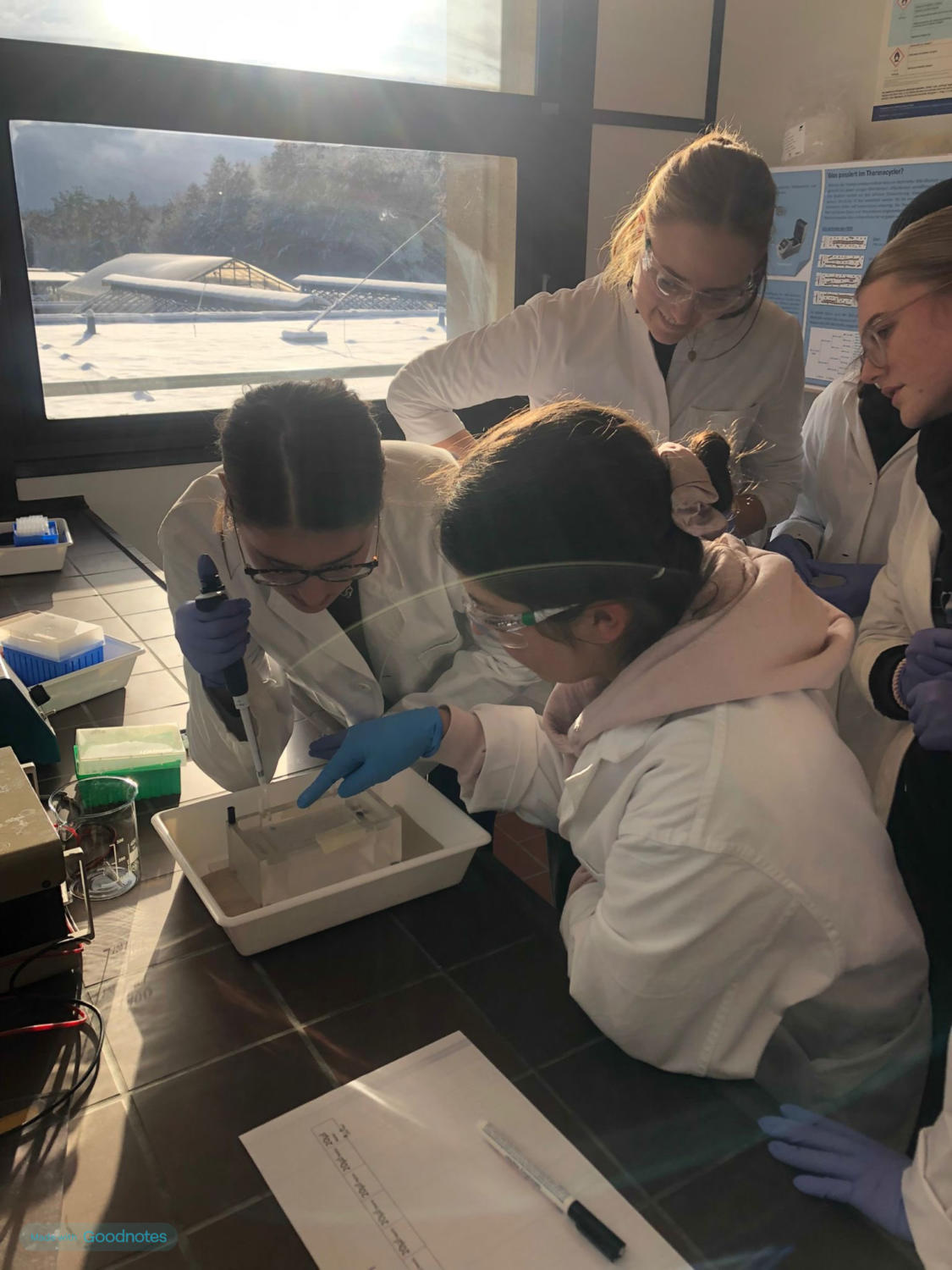
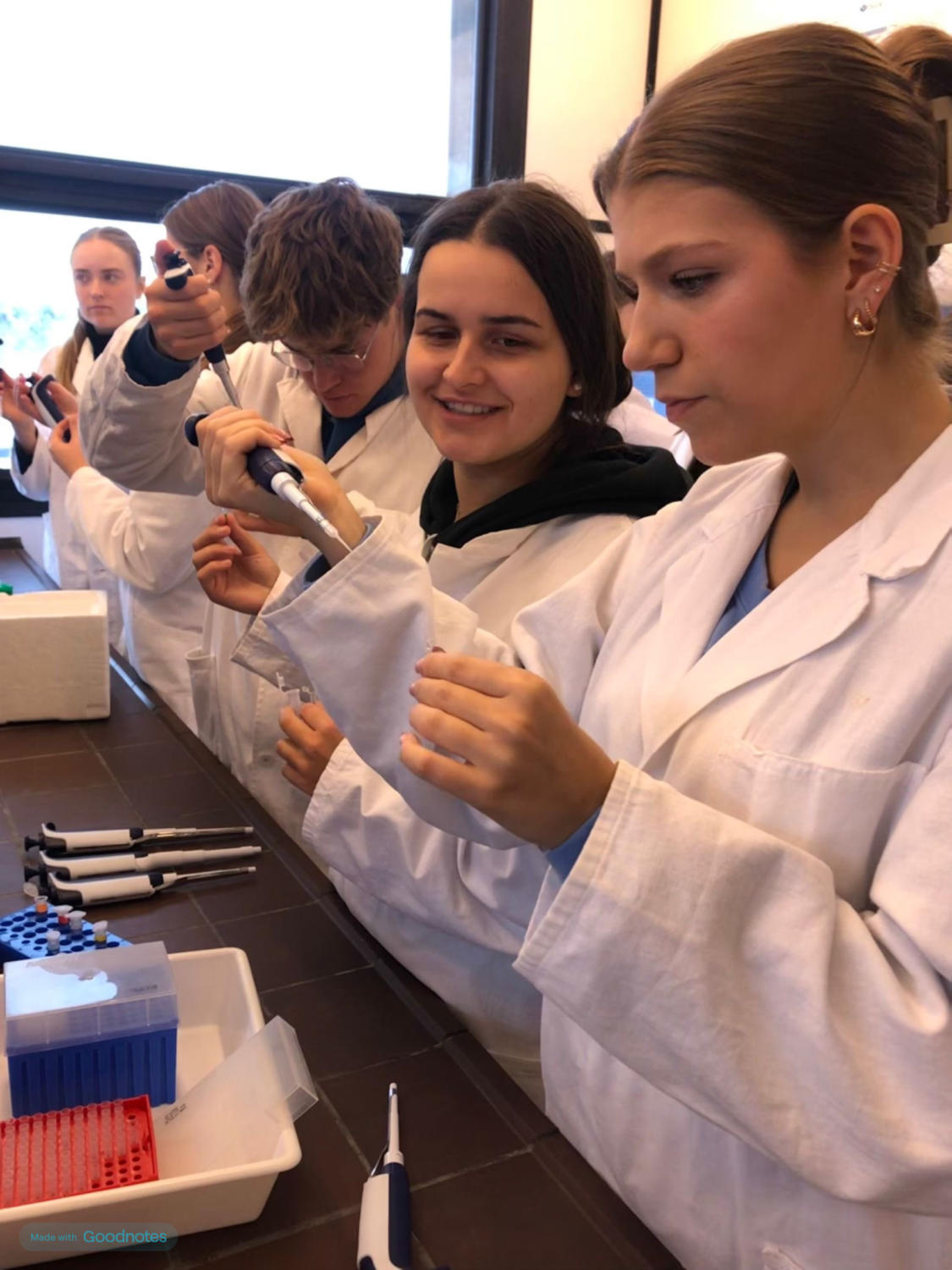
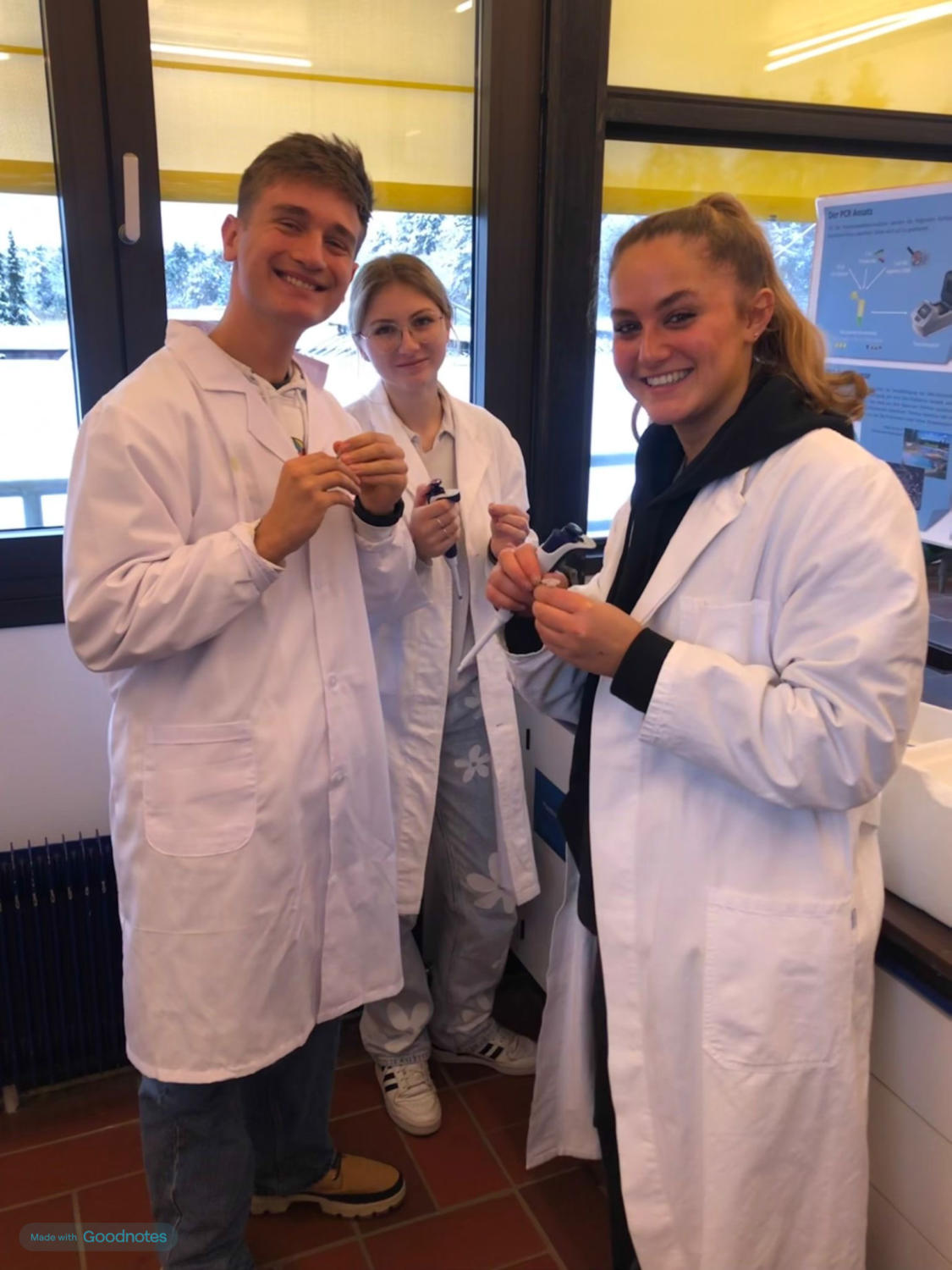
We met at the Marburg Botanical Garden and, by the end of this course, were able to see our DNA. More specifically, our genetic fingerprint, which is unique to each person and is used, for example, in criminal cases to unequivocally identify the perpetrator. To examine our DNA, we first learned how to use a microbiological pipette. We were given a few rules and some background theory at the beginning to reinforce or refresh what we’d learned before heading into the lab.


DNA extraction is a complex process

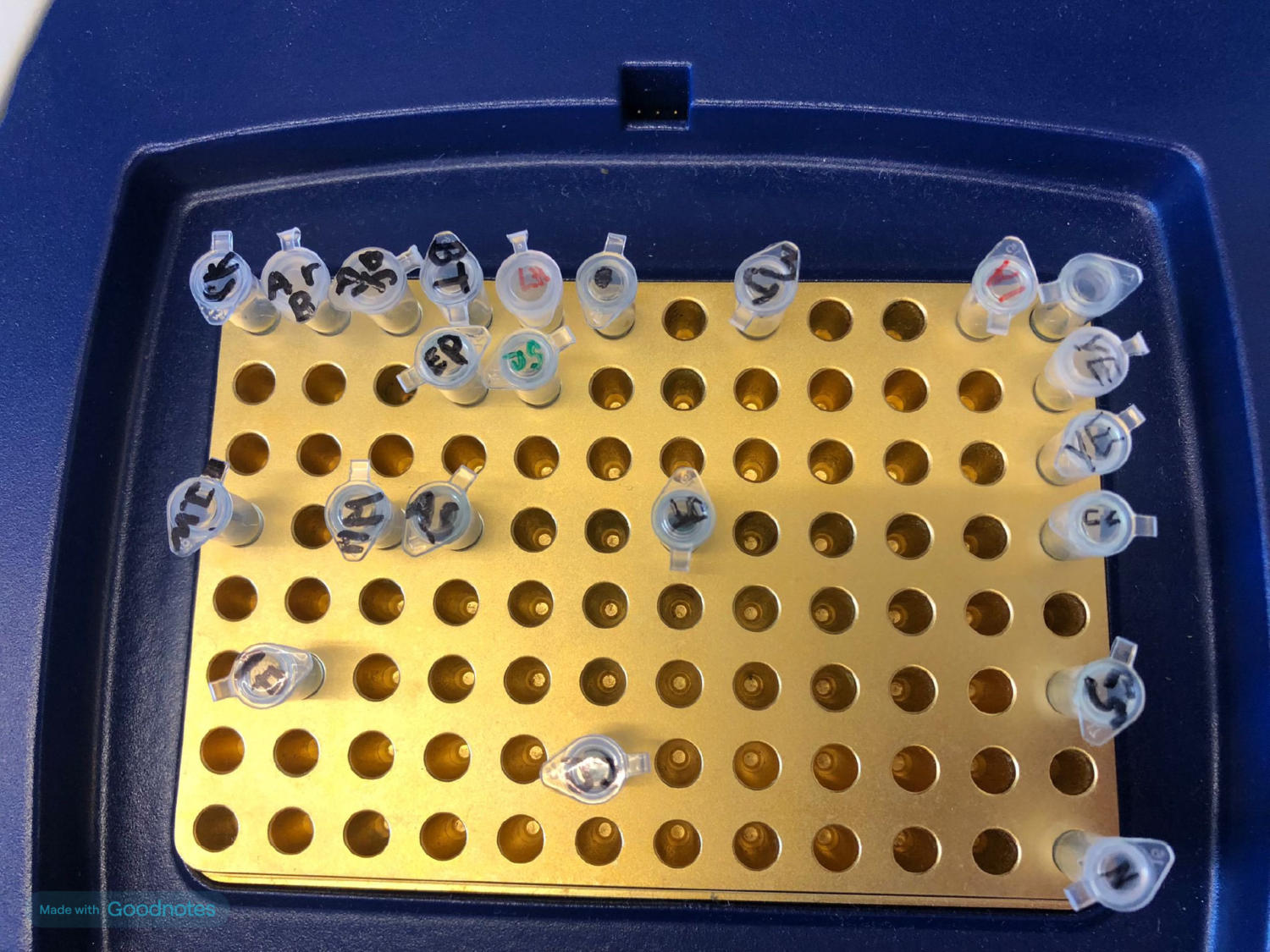
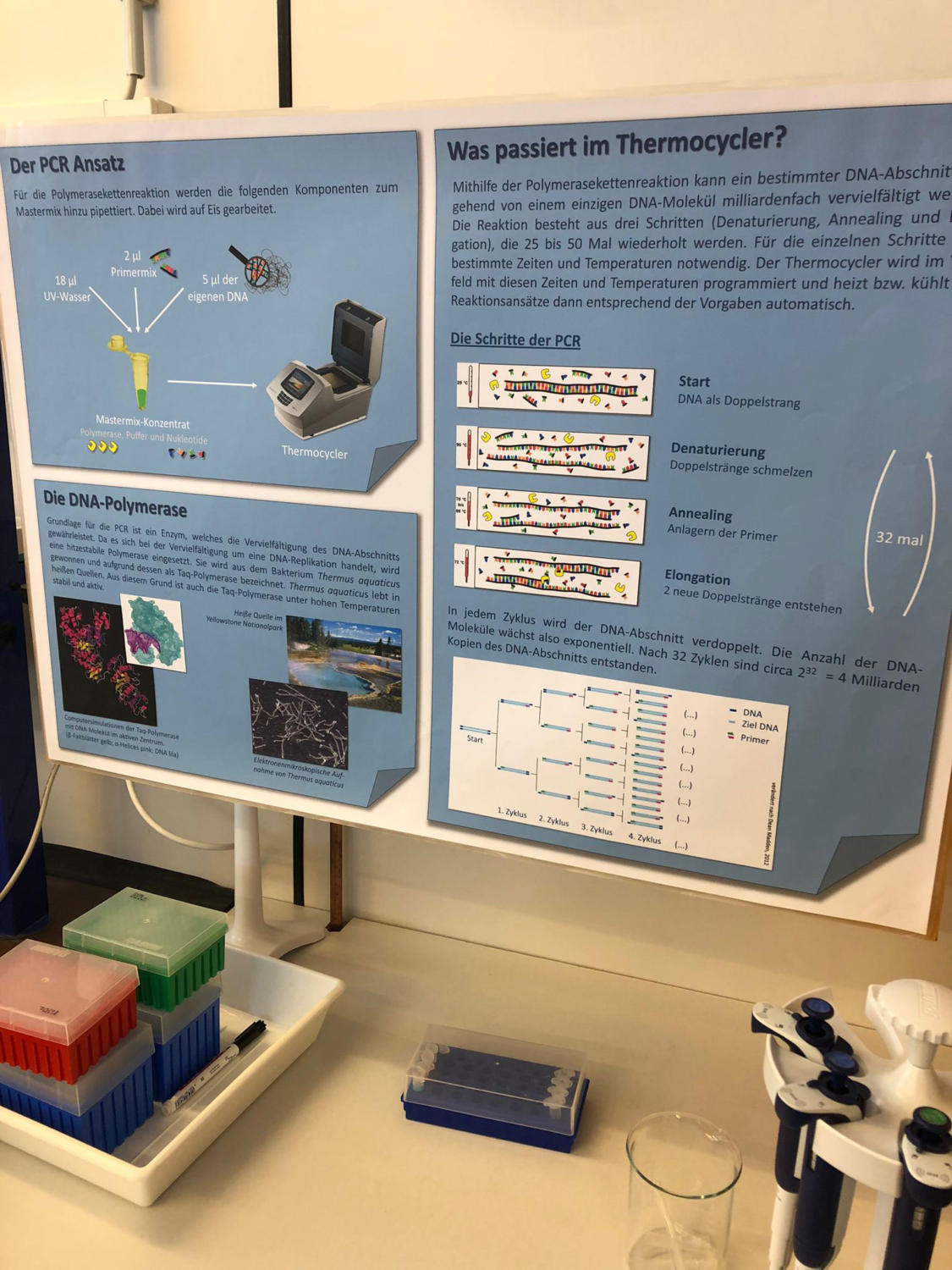
The first step in the lab was to collect our cells. To do this, we rinsed thoroughly with water, which allowed us to collect cells from our oral mucosa. We then centrifuged our water-cell mixture so that the cells would settle at the bottom and the excess water could be removed. Since our DNA is well protected within the cell nucleus, we had to break down the cell membrane in several steps using buffers. For this reason, a lysis buffer and a precipitation buffer were added to dissolve the cell membrane. Furthermore, our DNA mixture was centrifuged repeatedly to allow the solid components to settle and to remove excess water. Gradually, all cellular components were dissolved using buffers and centrifugation, so that in the end only a DNA pellet remained. Finally, we purified this DNA pellet with ethanol and UV-deionized water so that we could then perform the polymerase chain reaction.
Using the polymerase chain reaction, a specific DNA segment can be amplified billions of times starting from a single DNA molecule.


View Your Own Genetic Fingerprint

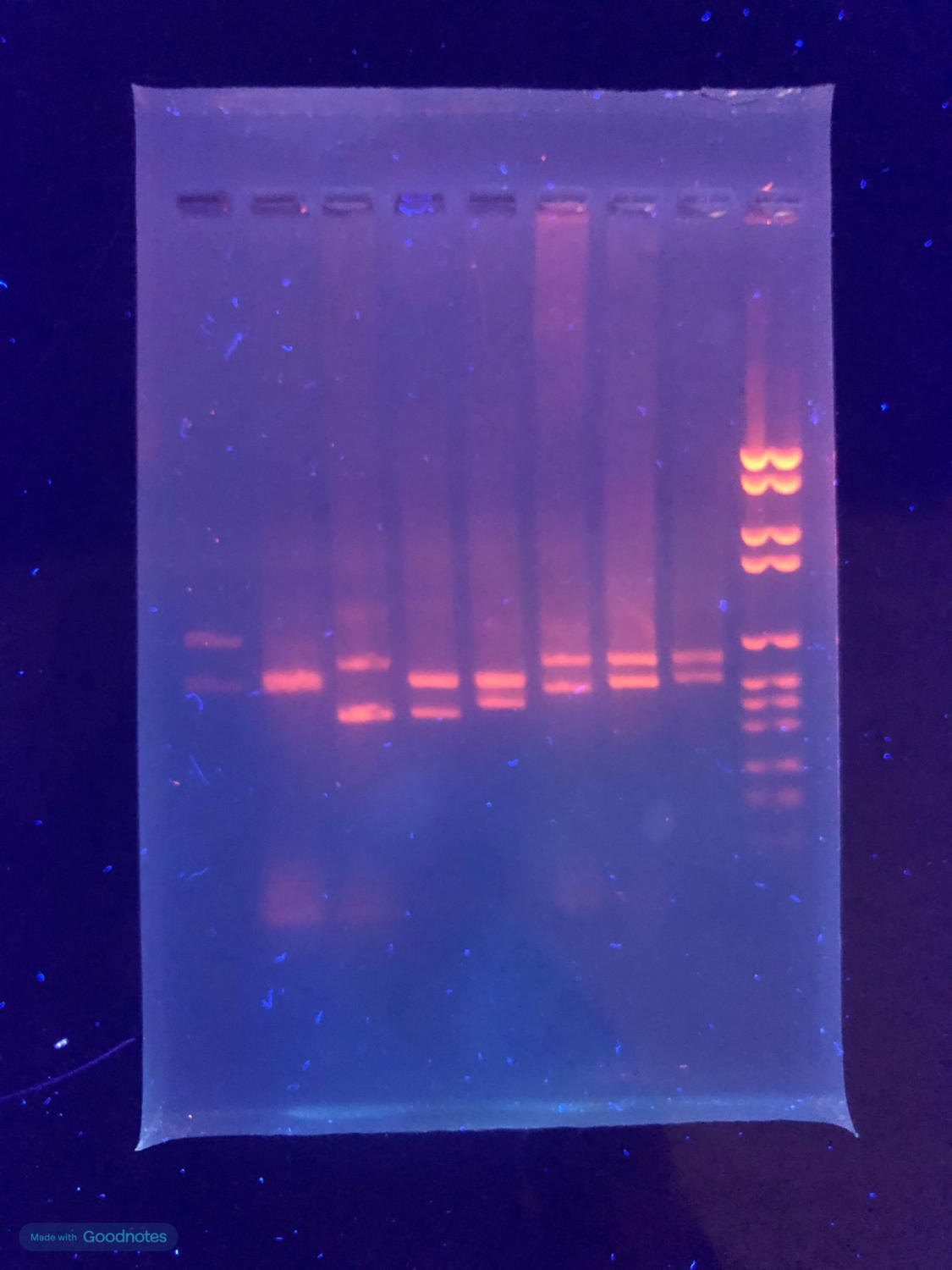
During our lunch break, we ordered pizza and took a look at the botanical garden in the snow flurries. After the break and once the polymerase chain reaction was complete, we made our DNA visible using electrophoresis and agarose. We then added the amplified DNA
to the agarose gel. Next, we turned on the device that was responsible for making the lengths of the individual satellites visible. We were then able to observe this in a darkroom, allowing each of us to see and visualize our own genetic fingerprint.

It was a truly fun and educational day, and it may even have motivated some of the students to pursue a career in this field later on. The student laboratory at the Botanical Garden is an extracurricular learning center that offers various lab courses for high school biology classes. Some of these programs are carried out in cooperation with the newly founded Central Hesse Student Research Center. The Student Research Center is a place for all students in the region who are enthusiastic about STEM subjects and offers workshops, lectures, and guidance and support for students’ own research projects.

For more information, visit: https://sfz-mittelhessen.de/ and https://www.uni-marburg.de/de/botgart/schuelerlabor.