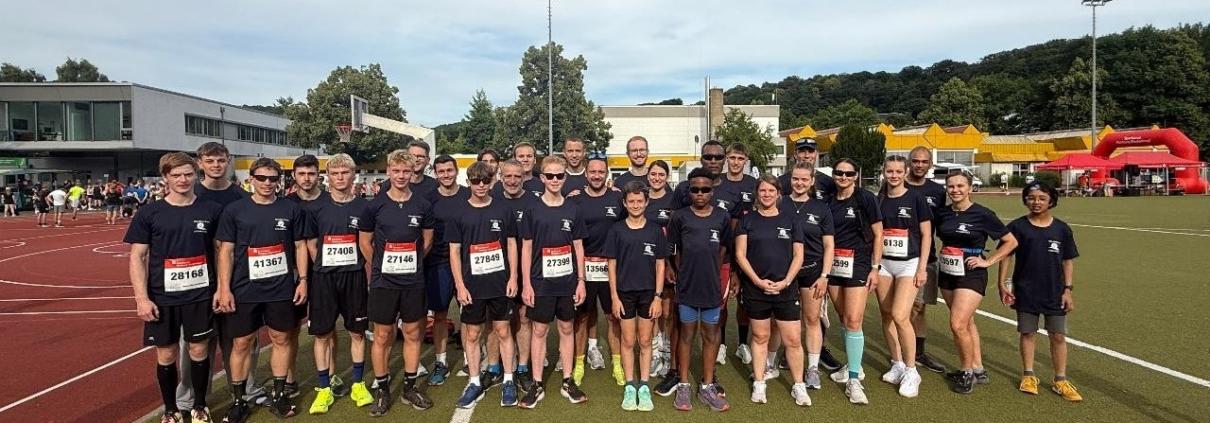
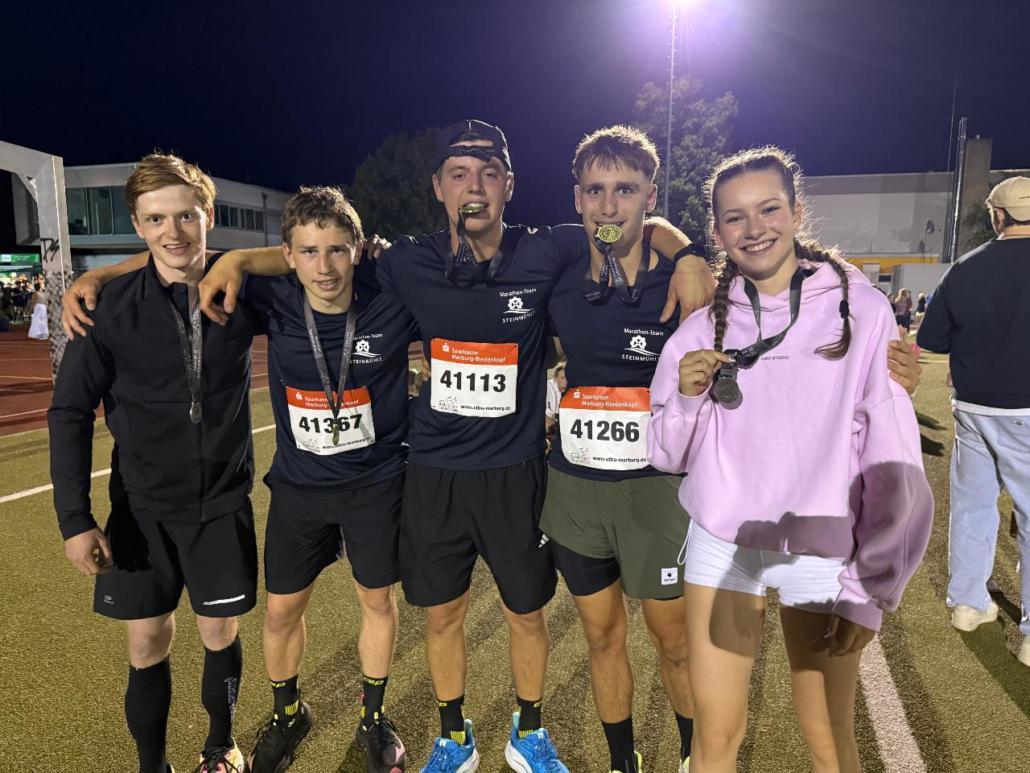
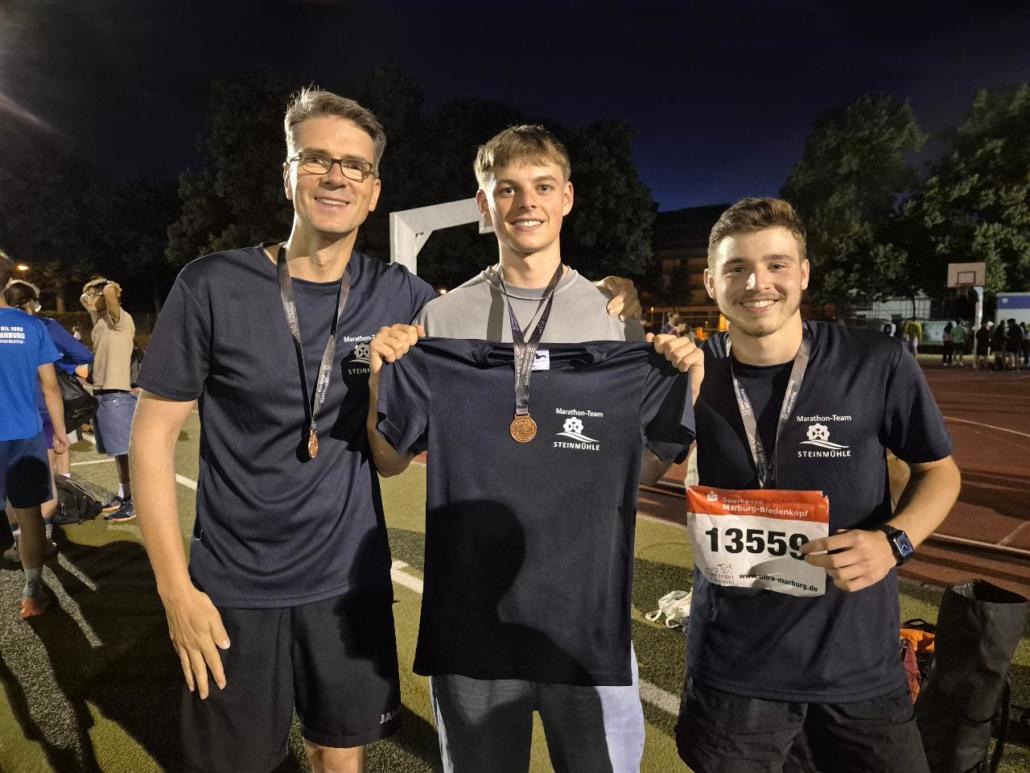
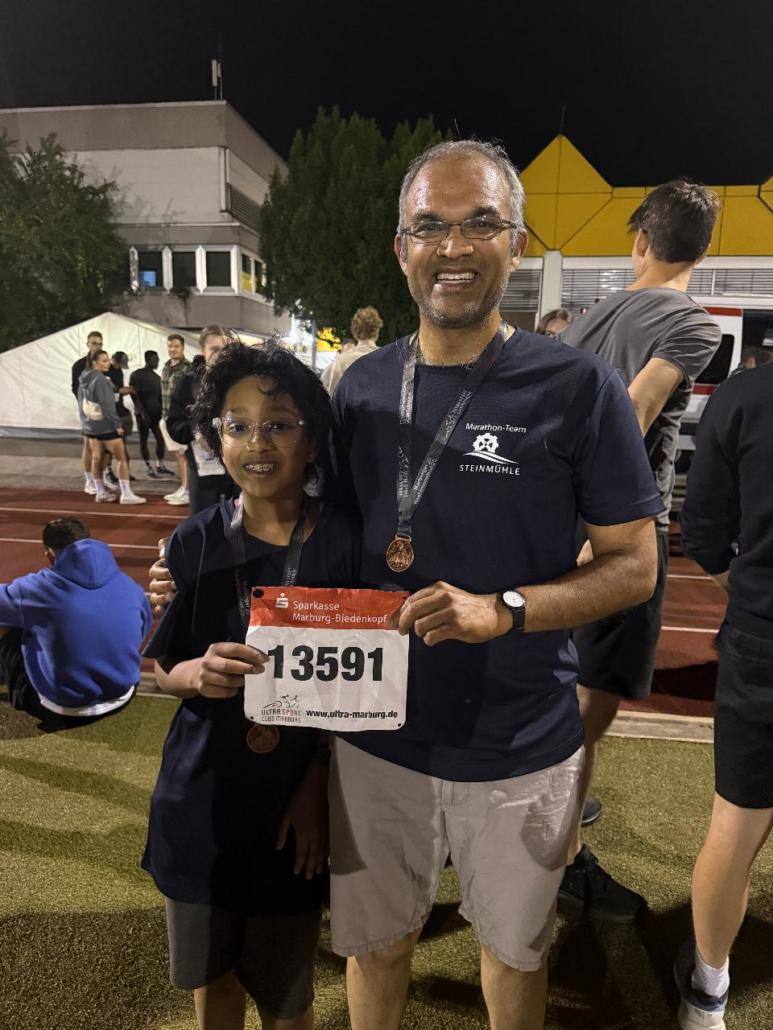
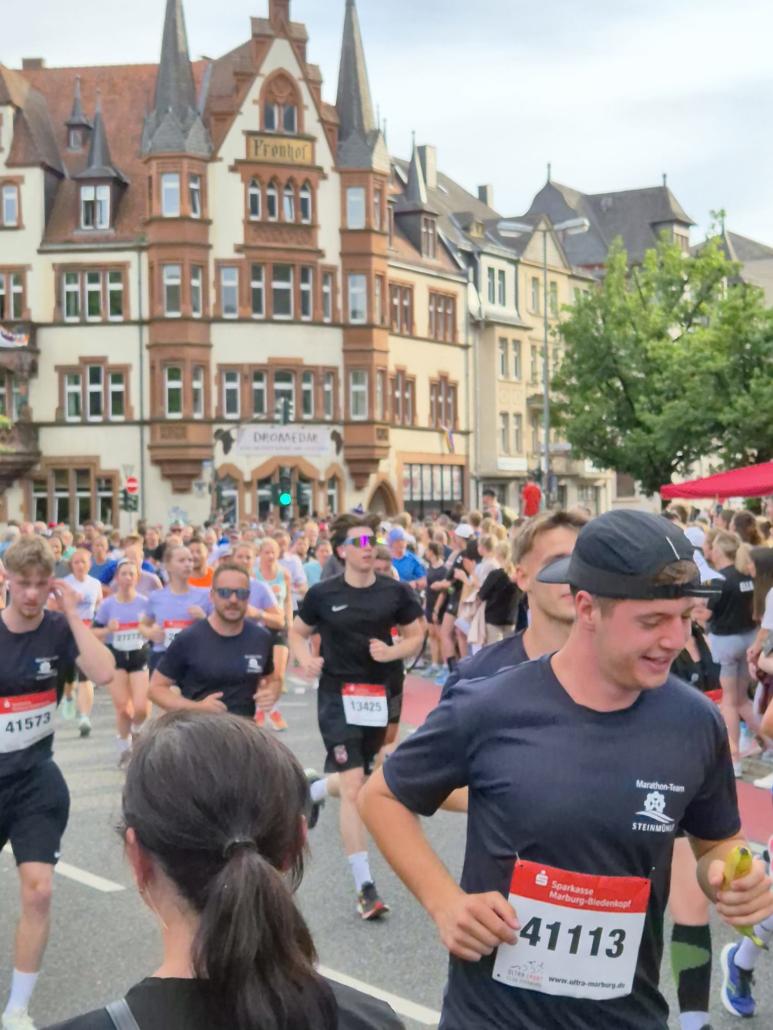
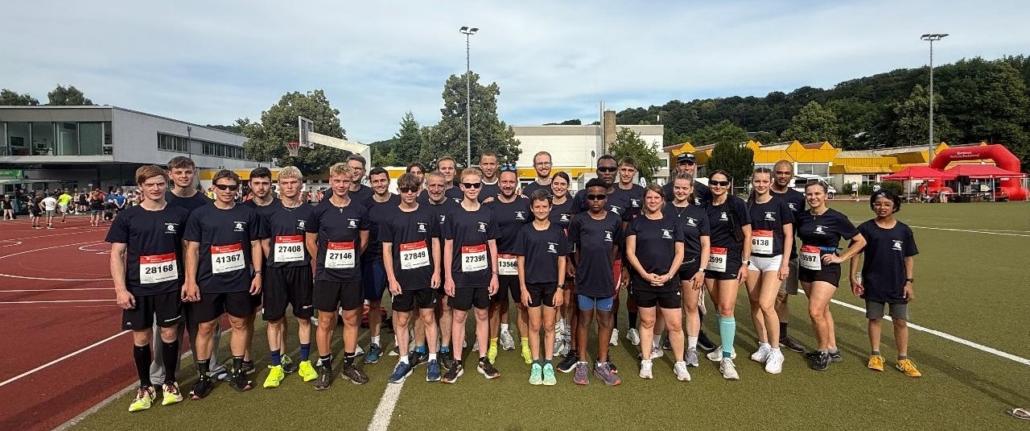
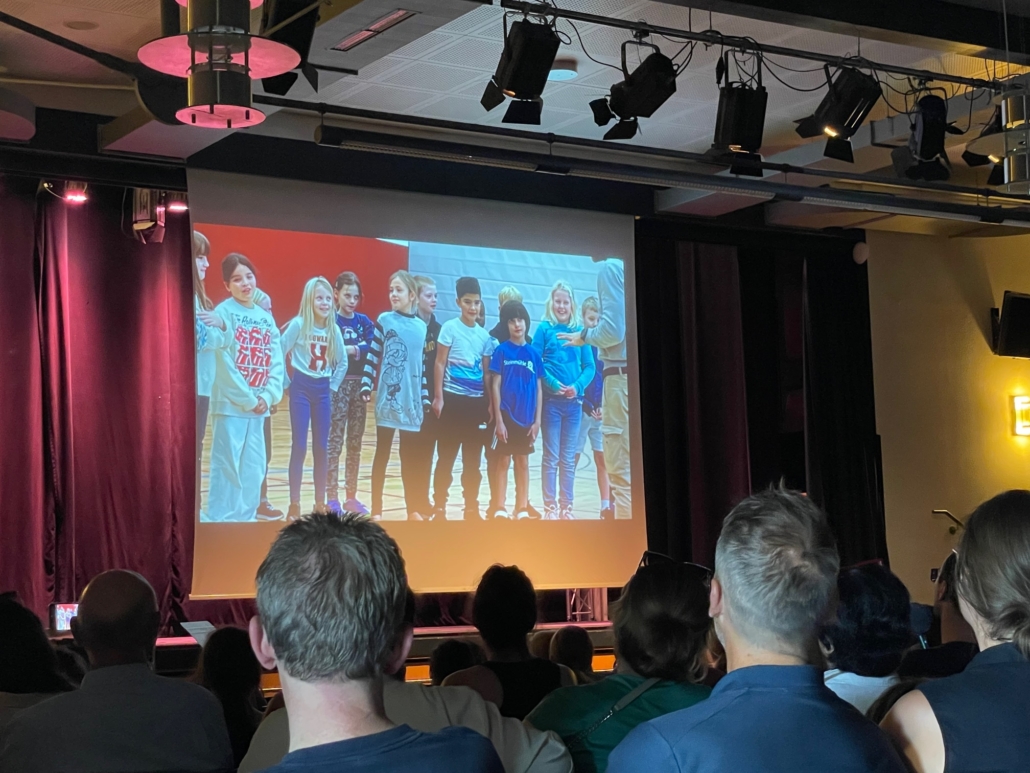
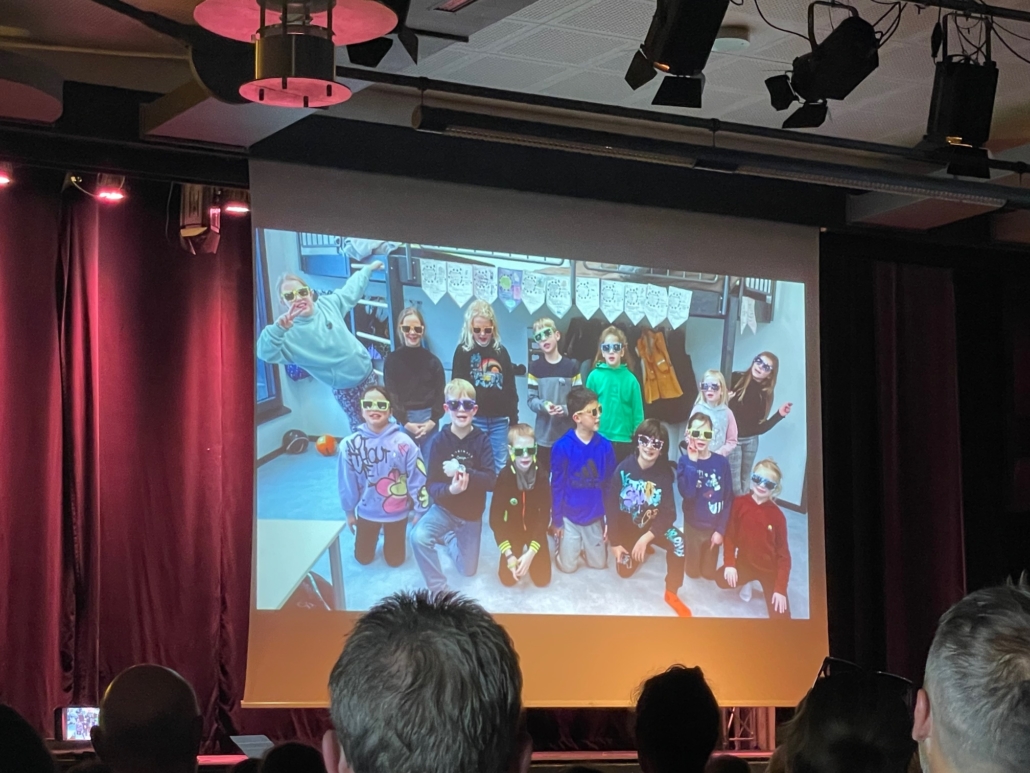
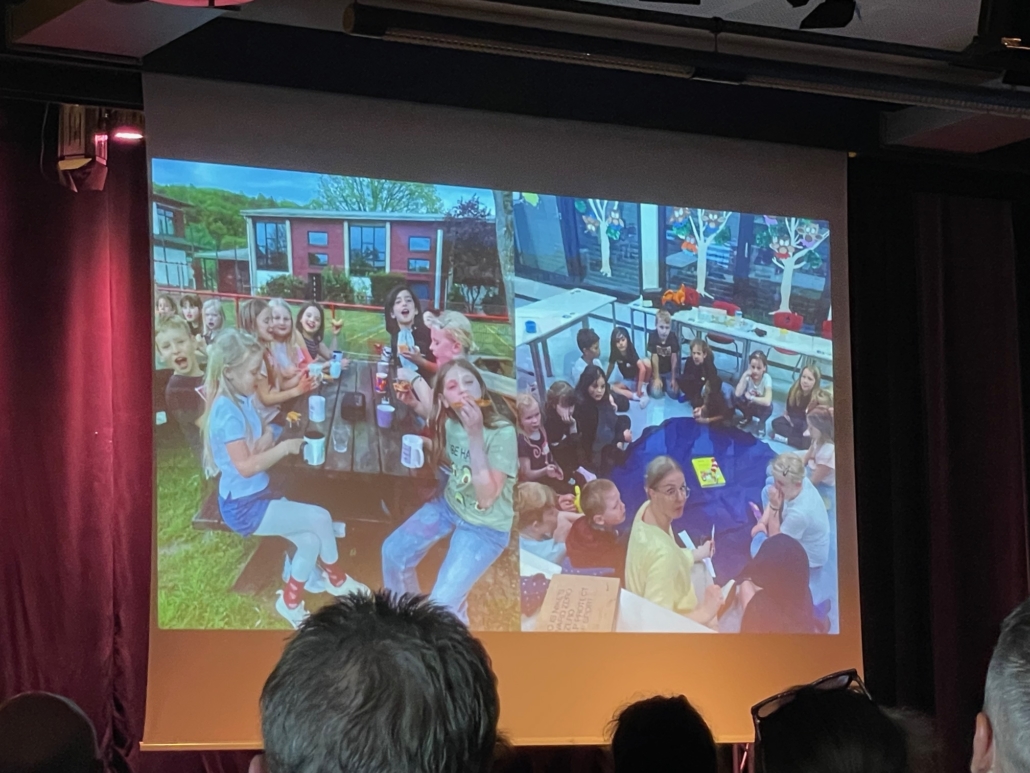
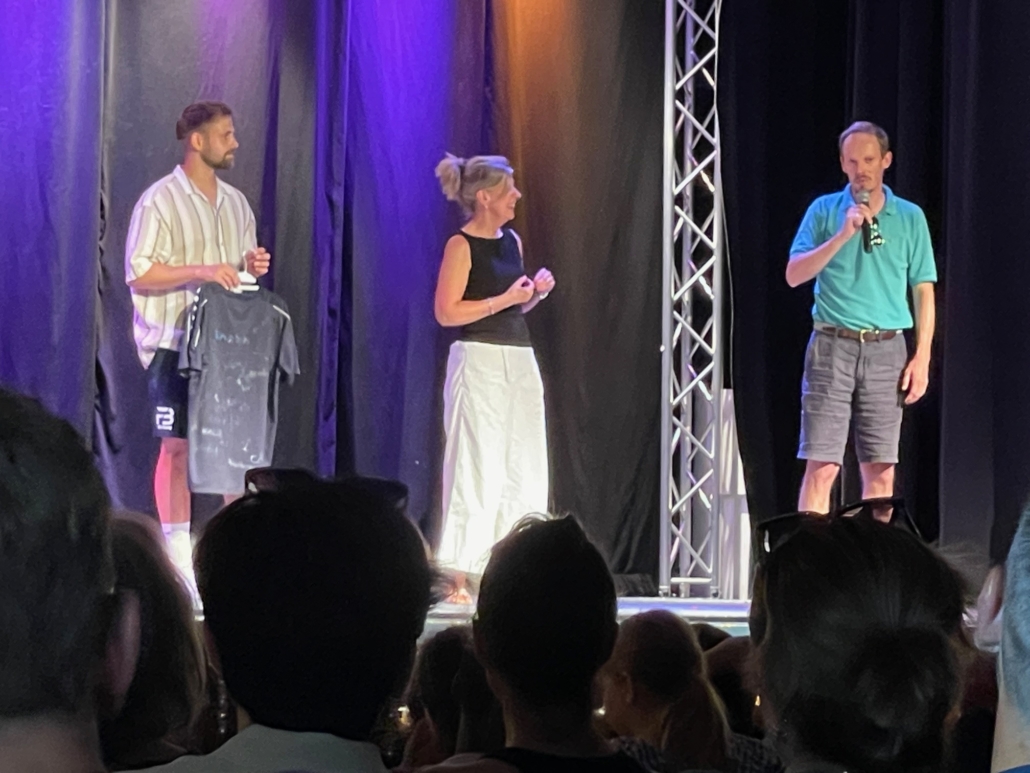
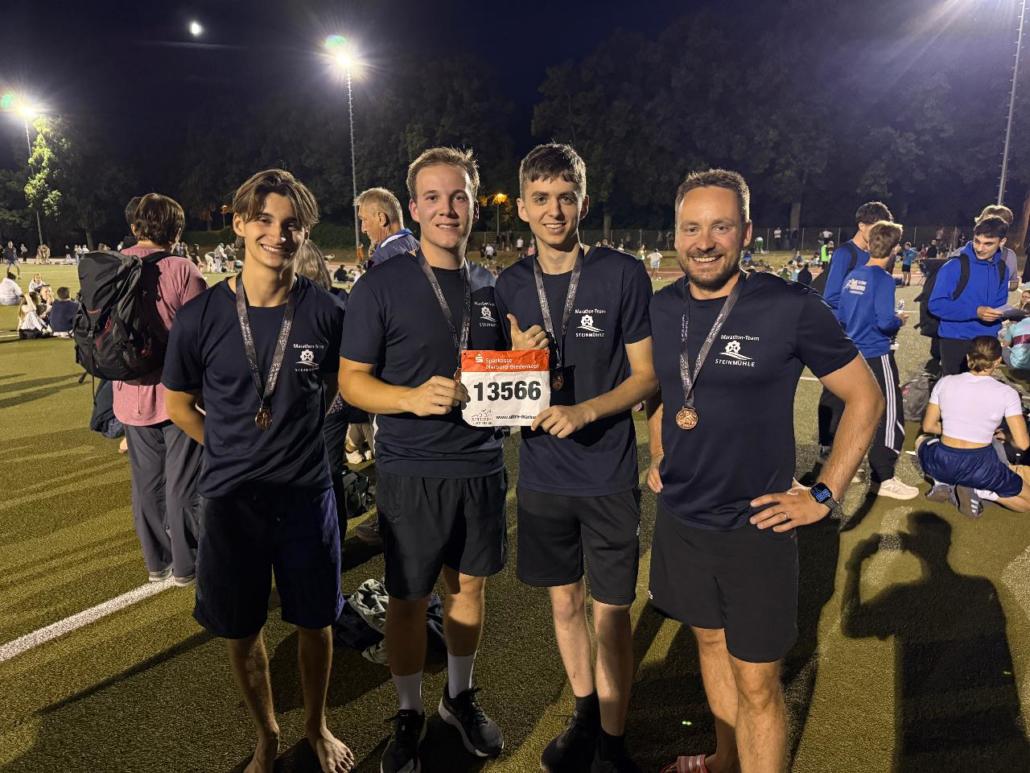
With five teams and a total of 13 participants in the half marathon (nine) and marathon (four), Steinmühle took part in the Marburg Night Marathon. The school and boarding school traditionally participate in this well-established event, involving the entire Steinmühle community. Anyone who is interested and feels fit is welcome to join in.

Participants included students, teachers, parents, and support staff. – “All in all, a very diverse group,” reported Marcel Kalb, the school’s athletic director and organizer. – A heartfelt thank you to him and all the participants for their dedication to the night marathon, where having fun together is always more important than running performance.

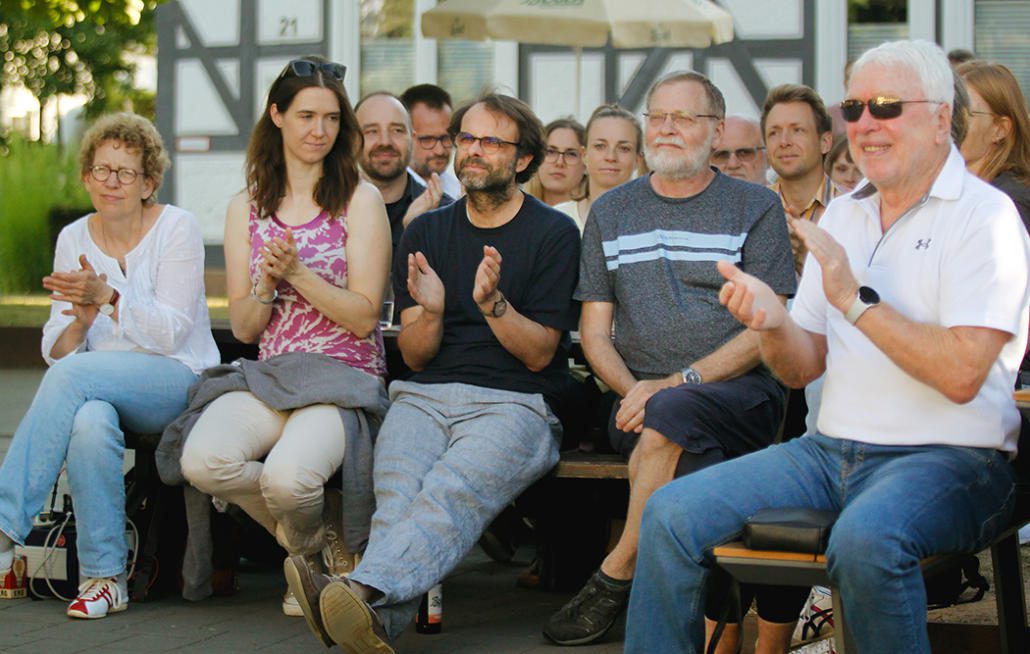
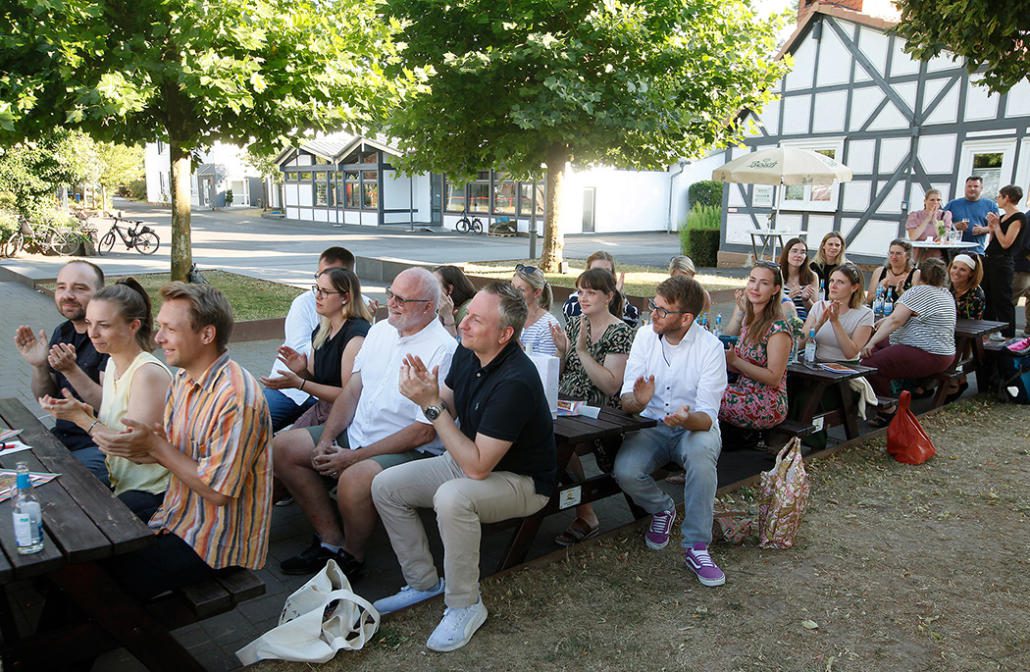
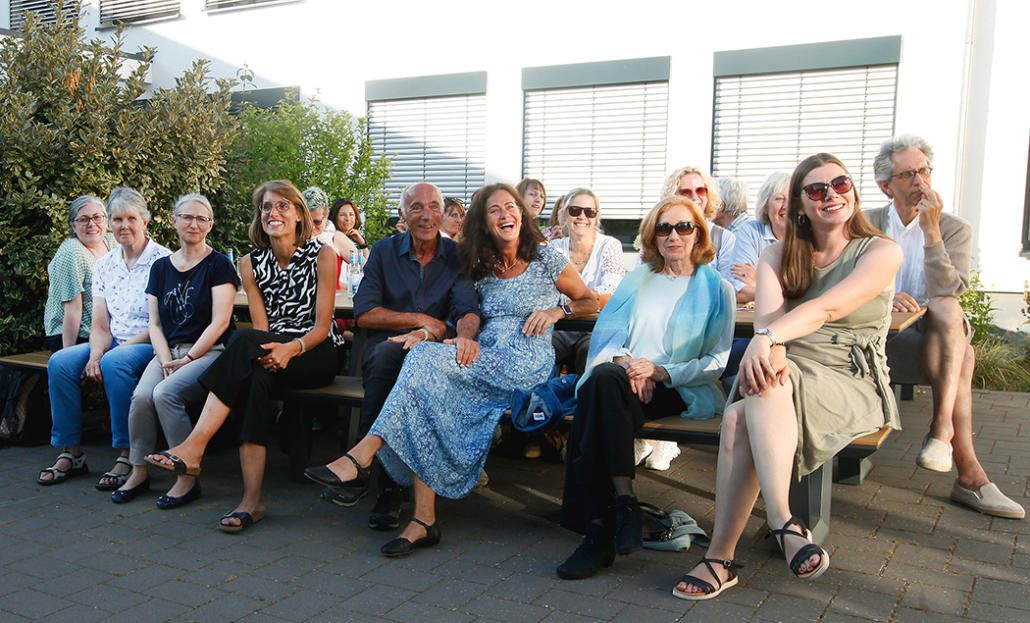
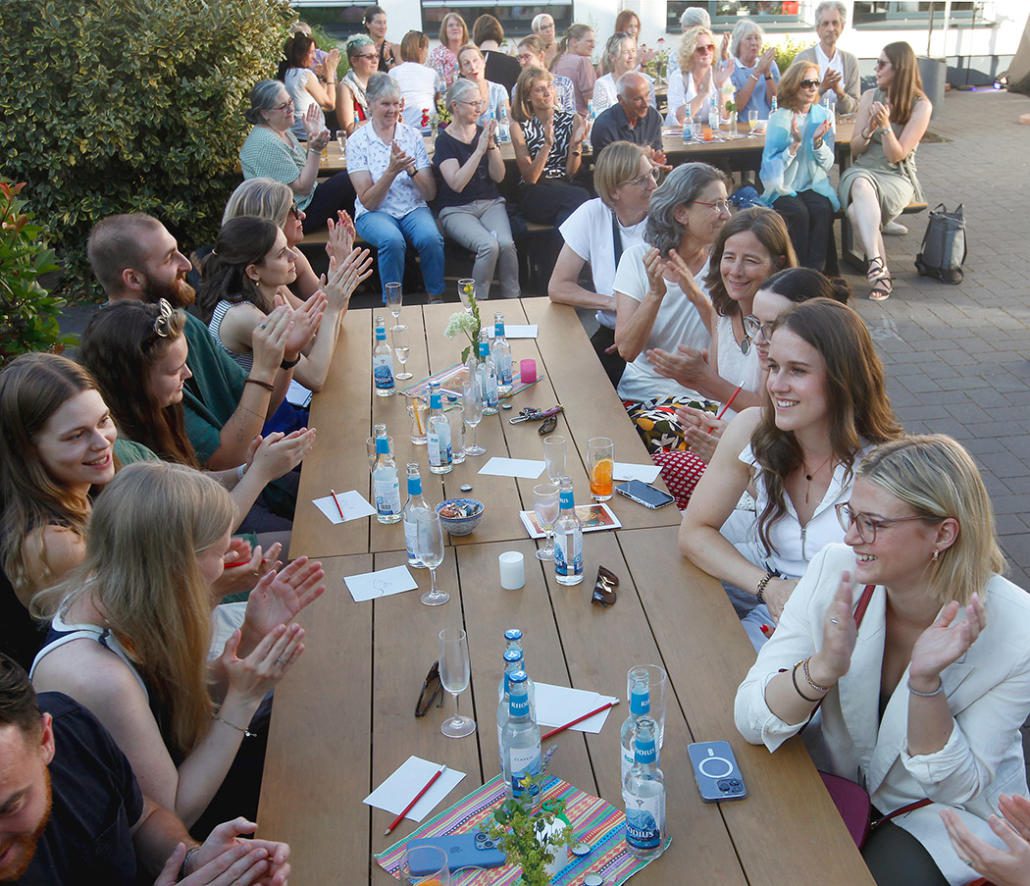
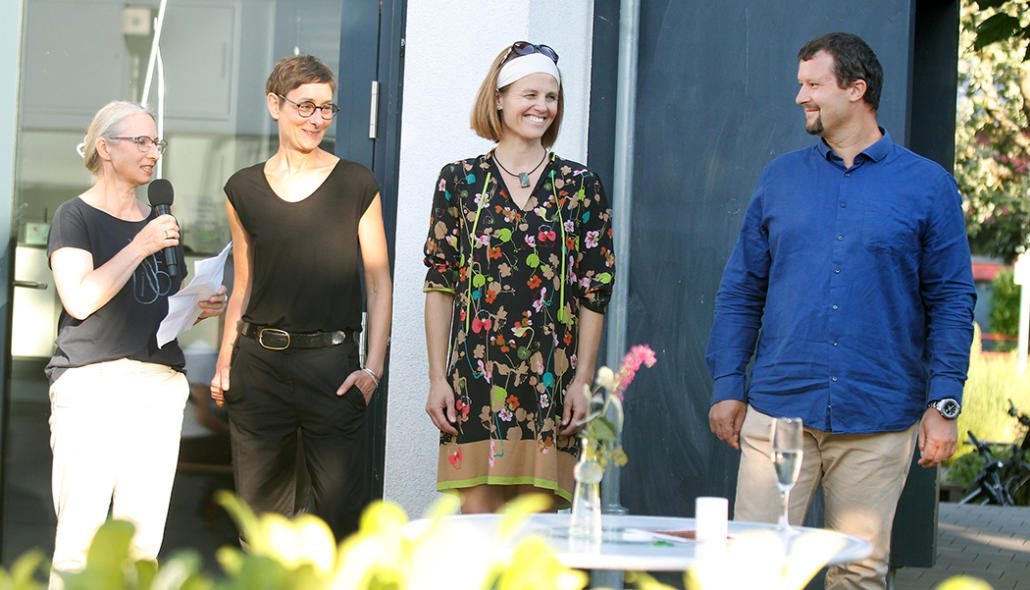
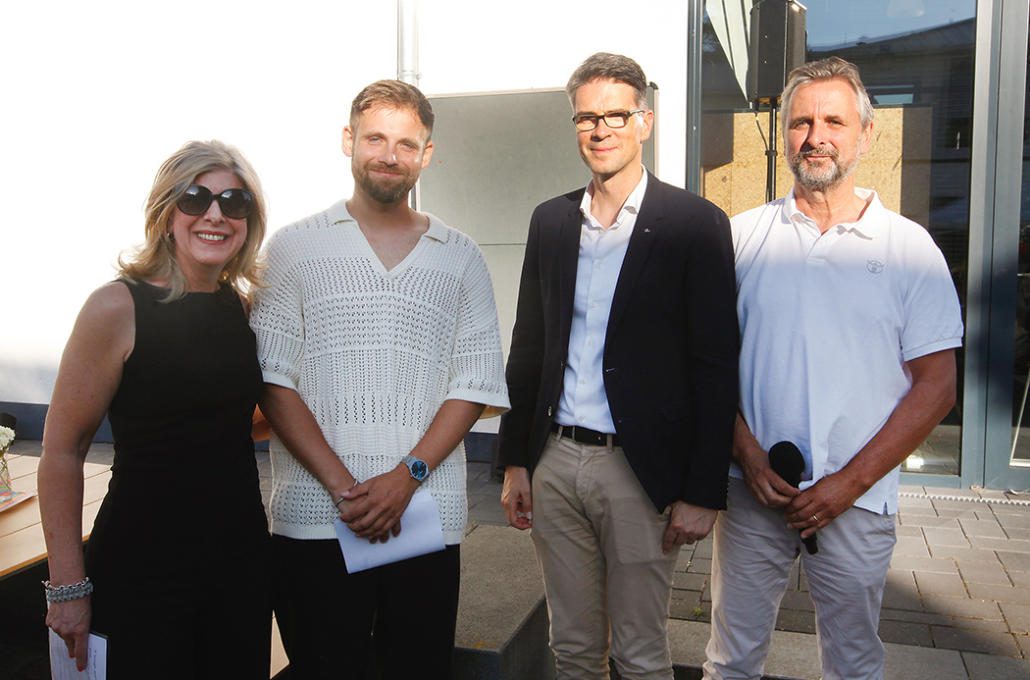
The end of the school year at Steinmühle is also the time to say goodbye to colleagues who are retiring. It is a traditional event, marked by a sense of reflection, but also by joy for the employees in question, who can now shape their lives beyond the daily school routine according to their own wishes. As is the case every year, the farewells took place as part of the joint summer party, to which Managing Director Dirk Konnertz invites all staff members from the school and boarding school on the last Thursday evening before summer break.


Decades of Work

When someone has been a teacher for several decades, their colleagues have so many memories of that person that it is impossible to do justice to their contributions here. With art teacher Dr. Sabine Kraft (25 years), physicist Dr. Rainer Nietzke (math and physics teacher, 33 years) and Almut Sersch, a German and religion teacher (36 years at Steinmühle), we bid farewell to long-serving teachers who not only left their mark but also shaped Steinmühle through their personalities.

Principal Björn Gemmer paid tribute to the work of Sabine Kraft, a certified architect and urban planner who holds a master’s degree in art history and a Ph.D. (Dr. phil.) earned in 2000. Publications, lectures, and teaching assignments characterized Sabine Kraft’s work until she left academia in 2001 to join Steinmühle, where she taught art with great dedication to students in all grade levels.


“You were always focused on the issue”

Rainer Nietzke began his teaching internship at Steinmühle in 1992 and later became the school’s data protection officer as well as chair of the physics and computer science student councils. “You were my mentor; I learned a lot from you,” recalled Principal Björn Gemmer, while also praising Rainer Nietzke for his clarity, his steadfast commitment to his values, and his competence, “which was always focused on the matter at hand, never on yourself.”

Almut Sersch studied Protestant theology and German language and literature, and completed her teaching internship at Steinmühle, where she earned an “excellent reputation among teachers and students” (Gemmer). Almut Sersch was known for her ability to handle conflicts at school; she worked as a school mentor, student council advisor, and works council member, and served as a mentor to numerous teachers in their pre-service training—”…and was always open to innovation,” according to the principal.

The three teachers also received recognition from Managing Director Dirk Konnertz—for their decades of dedication and for spearheading specific activities that are inextricably linked to each of them and will remain so. Special mention was also made of Tobias Leisge’s departure from the Bilingual Elementary School; he is seeking a career change, and his “calm demeanor and great patience” were always regarded as important and helpful. Speaking on behalf of the works council, Nicole Hohm expressed her gratitude to the departing employees. Heartfelt and personal words were also offered by the department representatives and, on behalf of Tobias Leisge, by Lorraine Herrmann, the deputy principal of the Steinmühle Bilingual Elementary School.


A warm welcome to all newcomers!

As the new school year begins, we also welcome new colleagues. Following Janine Küster’s departure, Julia Daube is now taking over as principal of the Bilingual Elementary School. Niki Johnson and Sophia Fleißner are joining the faculty at the Bilingual Elementary School. In the high school division, Steinmühle is also welcoming Philipp Knaack and Olaf Roth for the new school year; Roth will be teaching a greater number of music classes.


The Steinmühle won both the “School Cycling” and “City Cycling” competitions organized this year by the university city of Marburg, reported Principal Björn Gemmer, who proudly added: “This makes us not only the most active school when it comes to cycling, but also the most active company in Marburg.”

Every summer, the city organizes a three-week “City Cycling” campaign for businesses. One subcategory is dedicated to “School Cycling.” There are many reasons to get around by bike: health, reducing CO2 emissions, or cost savings—whatever your personal priorities may be.

A huge lead over the runners-up

Teachers Ines Vielhaben and Antje Seel were the main ones to drum up support within the Steinmühle school and boarding school community, encouraging students to register for the competition and to get around primarily by bike during the period from May 24 to June 23. Steinmühle ultimately accounted for 196 of the 1,274 active cyclists registered in the competition and logged an incredible 32,662 kilometers. This represented a significant lead over the next-ranked participating company, which cycled 27,4423 kilometers, and a huge lead over the second-place school, which managed just under 14,000 kilometers.

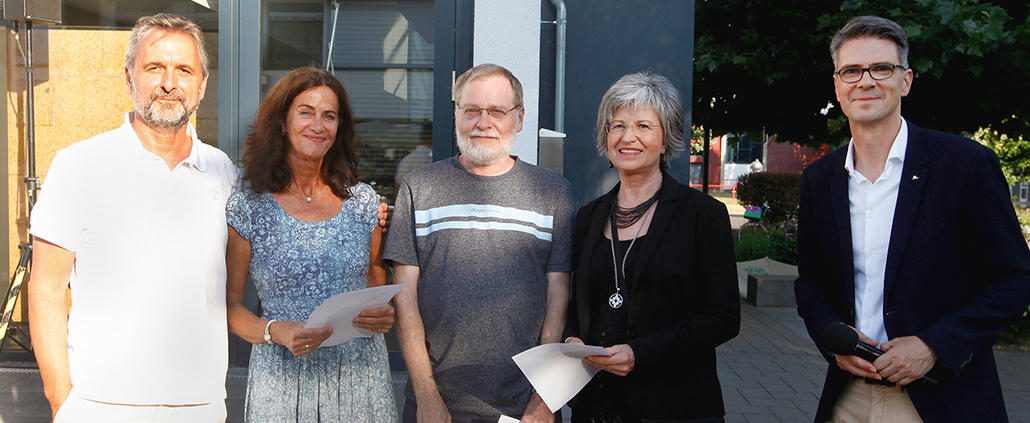
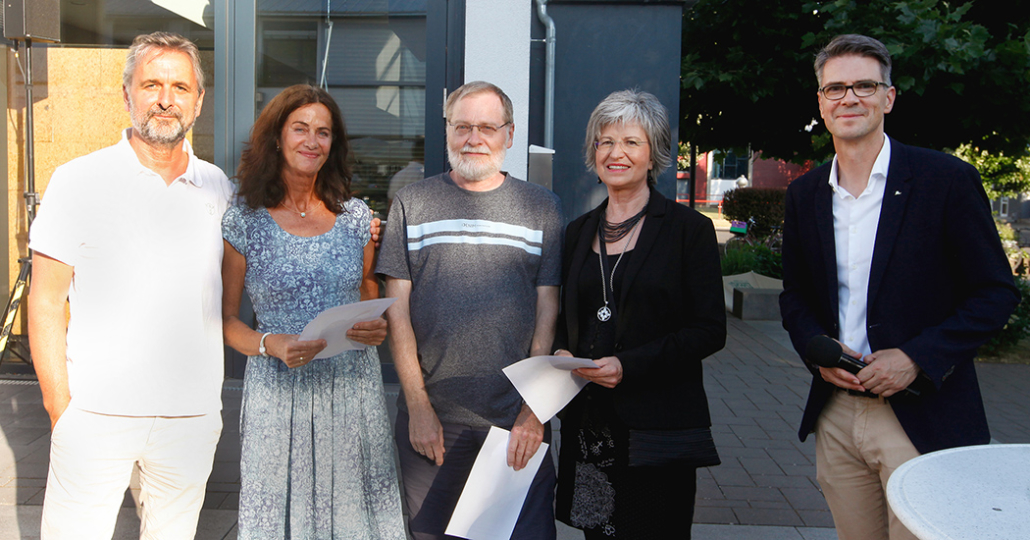
The City of Marburg recognized Steinmühle’s outstanding results with a certificate in both categories—City Cycling and School Cycling—as well as a cash prize of 250 euros. Principal Björn Gemmer and teacher Ines Vielhaben accepted the awards and prize from Mayor Nadine Bernshausen (center). Steinmühle would like to thank everyone who contributed to this success—including those who were inspired to get on their bikes even if they don’t usually cycle very far. Perhaps we can make cycling a habit more and more often.

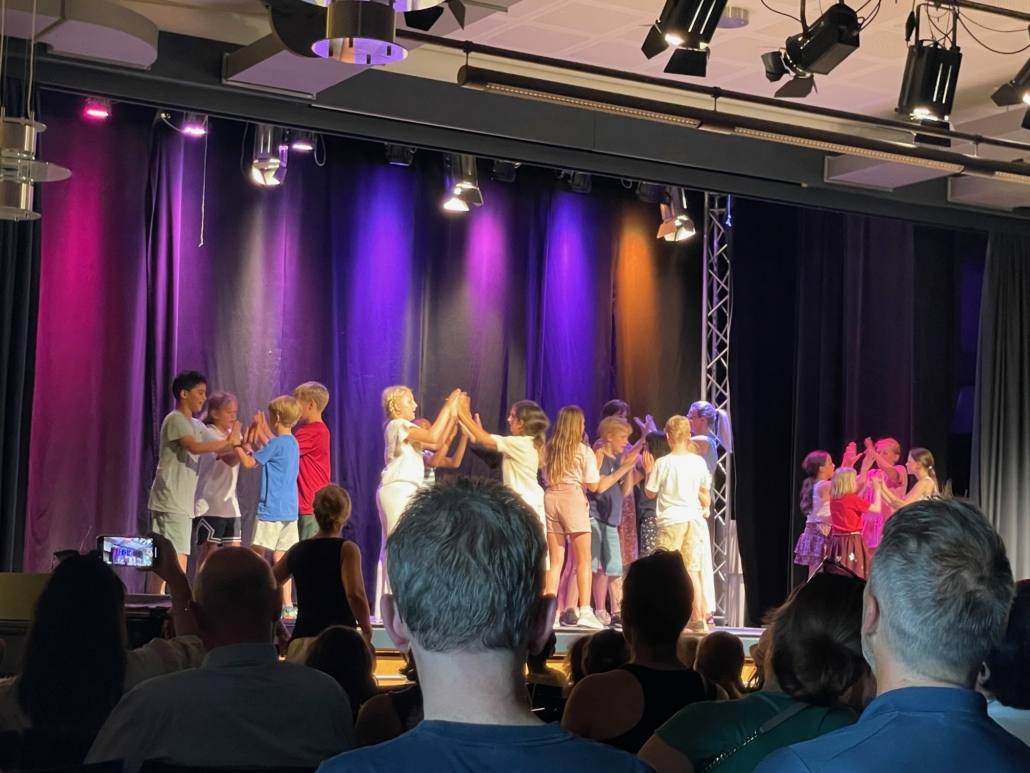
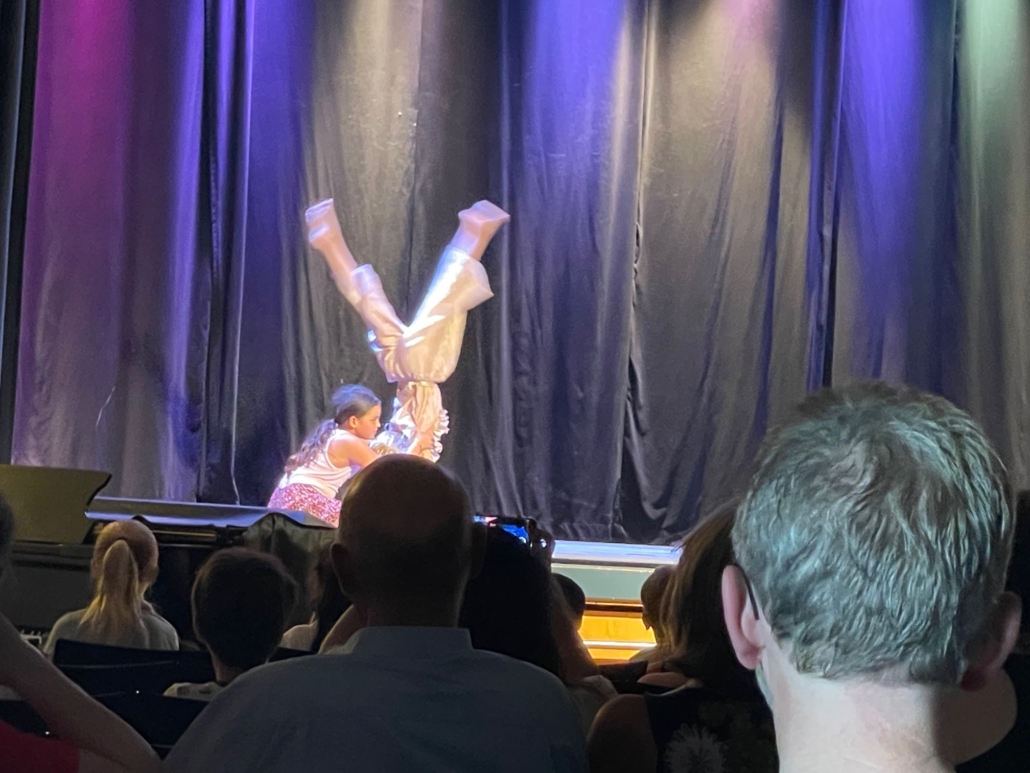
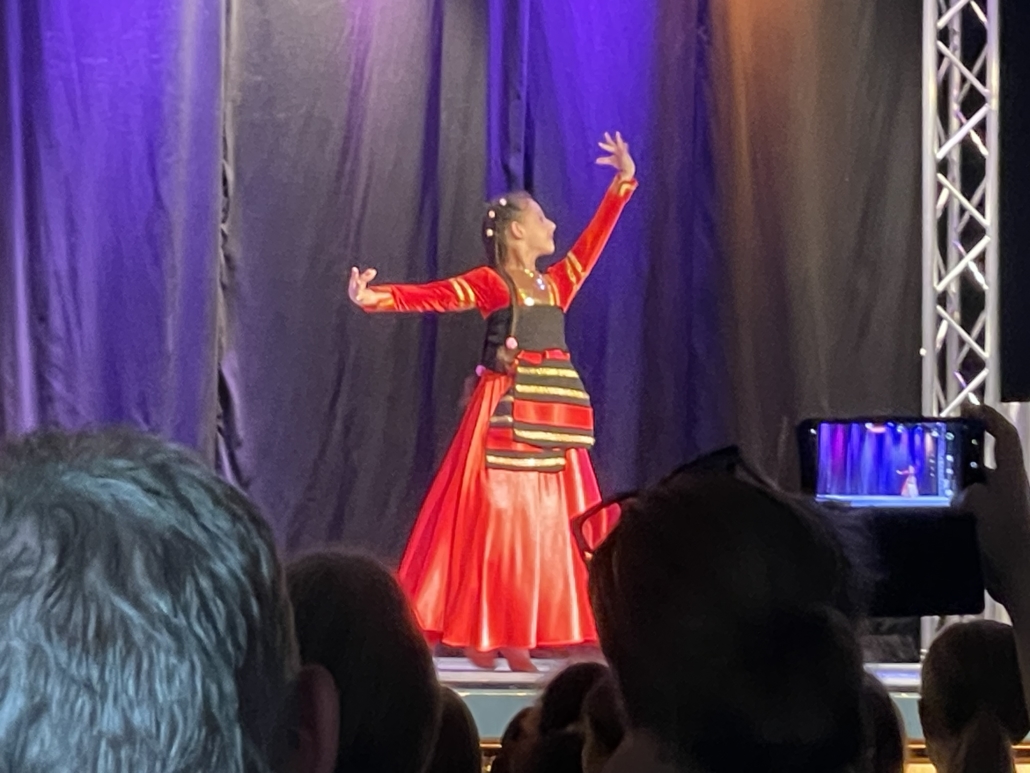
Music, acrobatics, a football rap, English poems, a folk dance from Georgia, and melodious string instruments—these and other program highlights made up the “Open Stage” event at the Bilingual Elementary School on the last day of school before summer break. Despite the quite high temperatures, the girls and boys carried out their impressive and lively program for this annual event, which is always a joyful occasion due to the upcoming vacation but also always quite emotional because of the farewell to the fourth-grade class.

Unfortunately, it was also “Time to Say Goodbye” to elementary school teachers Tobias Leisge and Dr. Sebastian Verbeek, who will be pursuing other career paths after the summer break. Lorraine Herrmann, deputy principal of the Bilingual Elementary School, presided over the farewell ceremony for the elementary school staff.


A roller coaster of emotions

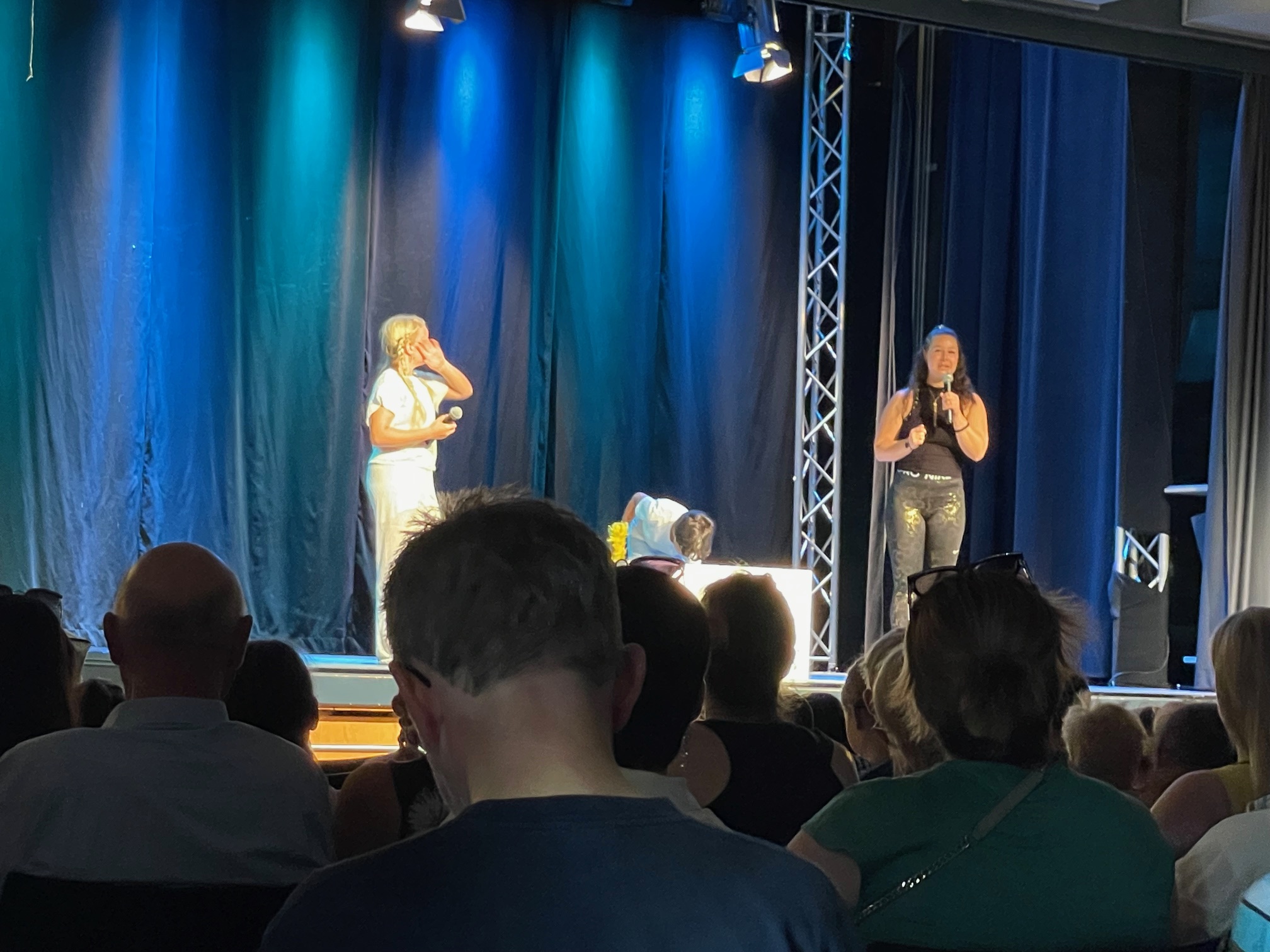
Teacher Lisa Smit and her student assistant hosted the “open stage” with great sensitivity, skillfully guiding the audience through the roller coaster of emotions. Among the audience was Janine Küster, the former elementary school principal who had stepped down at the beginning of the year. – A joyful reunion! A photo retrospective brought back memories of days spent together at the Steinmühle Bilingual Elementary School, evoking a touch of nostalgia but also plenty of smiles.

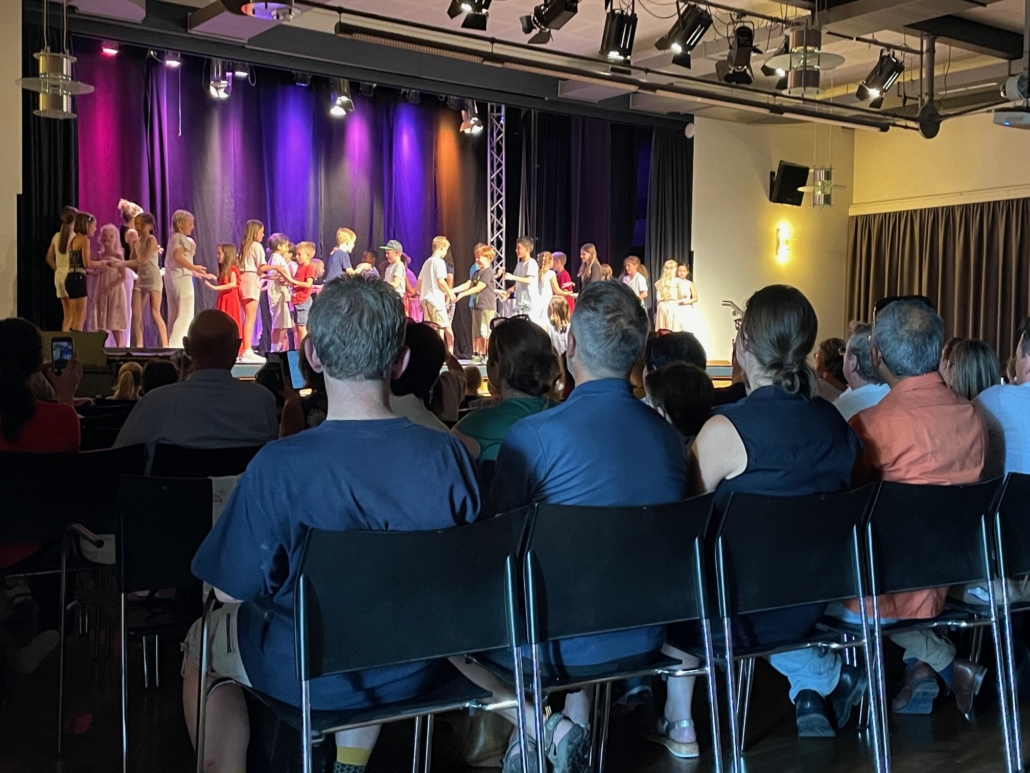
At the end of the ceremony, Class 3 bid farewell to the girls and boys of Class 4—who, after summer break, will not be returning to the elementary school classrooms but will instead mostly be joining Class 5i in the International High School program at Steinmühle—by singing the “Fried Potato Song.”

After a colorful show, performed with great enthusiasm and emotion, the elementary school students and audience were sent off on summer vacation.

How can one combine the unique challenges of sustainability with the popular business administration program?

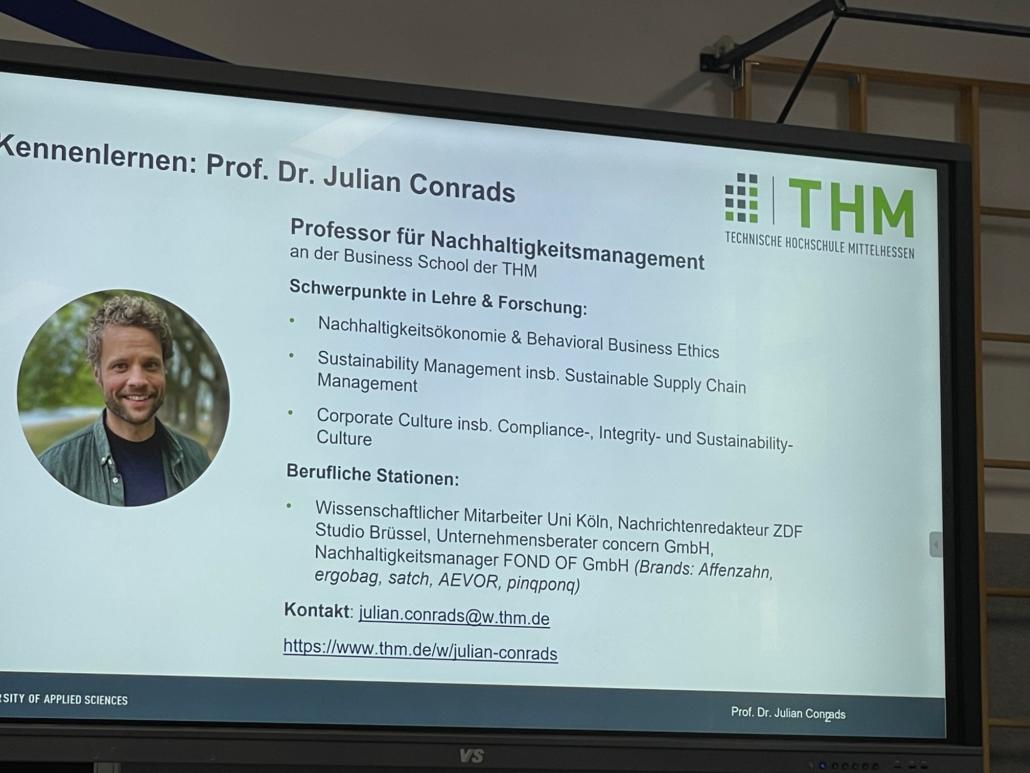
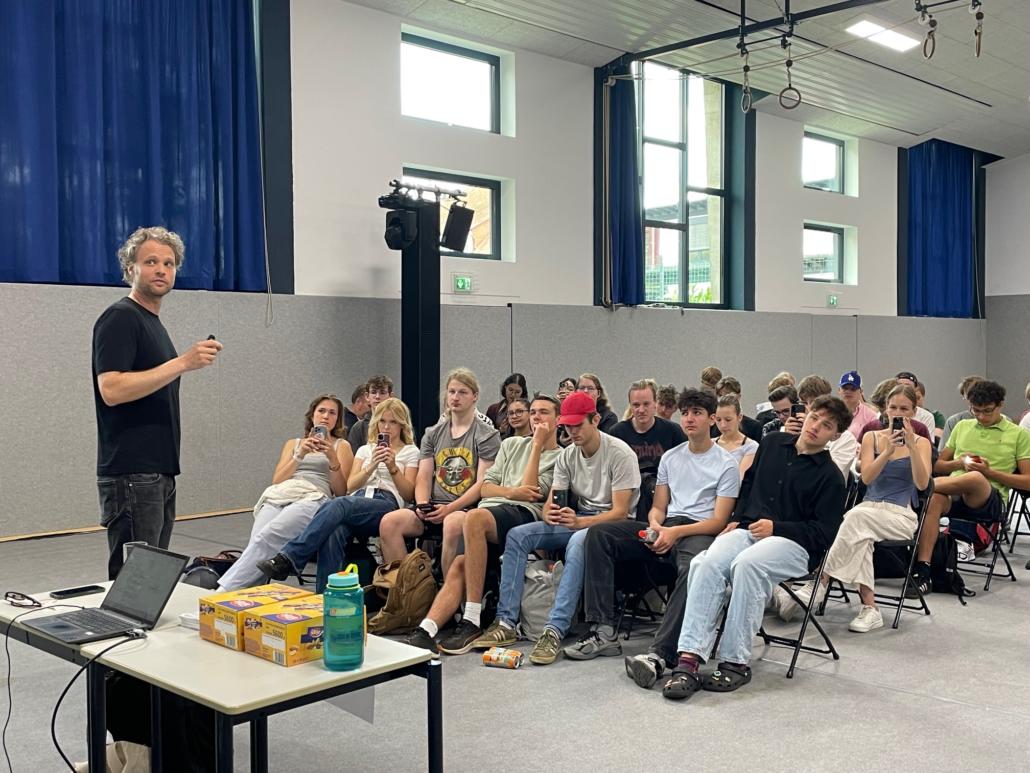
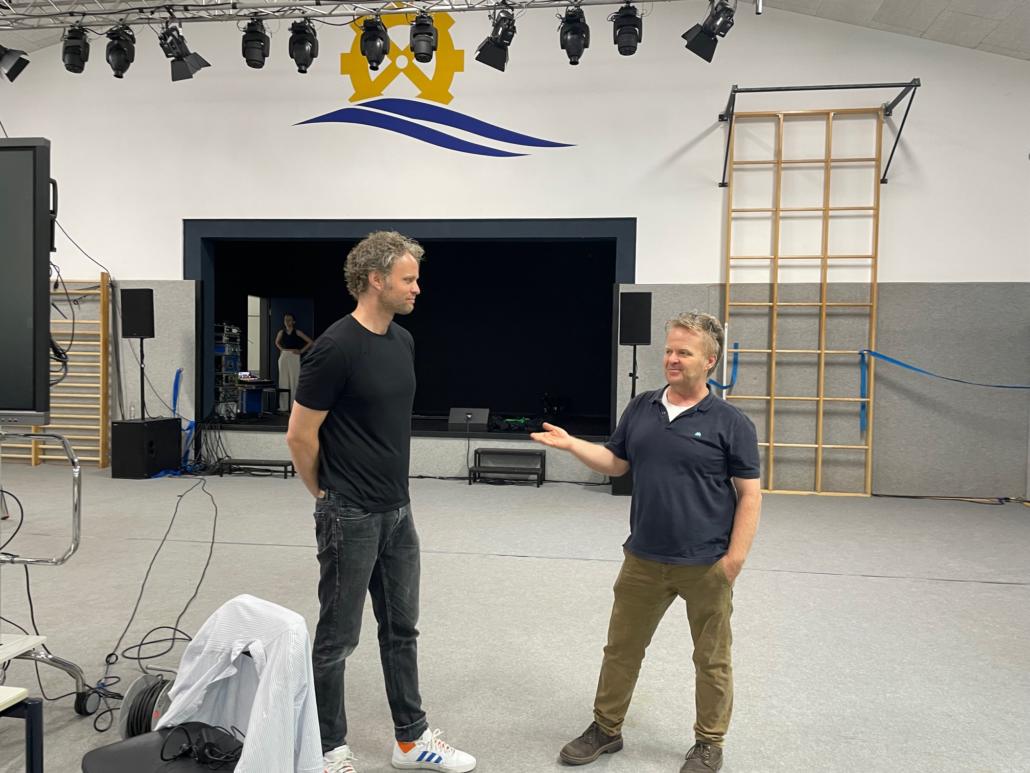
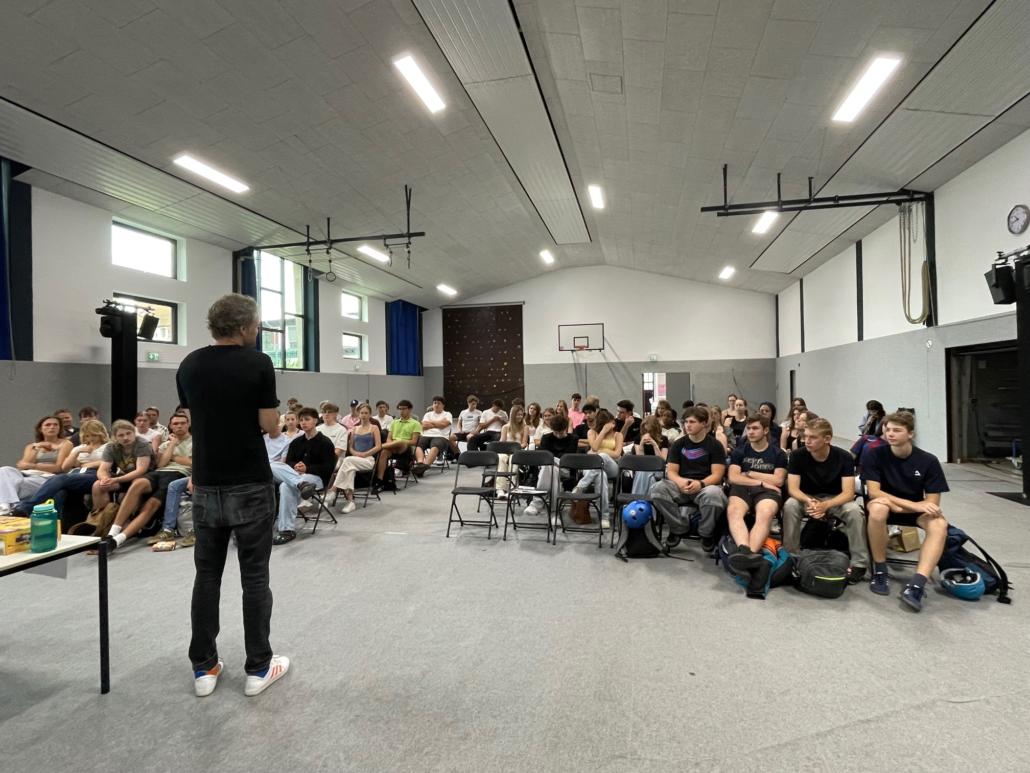
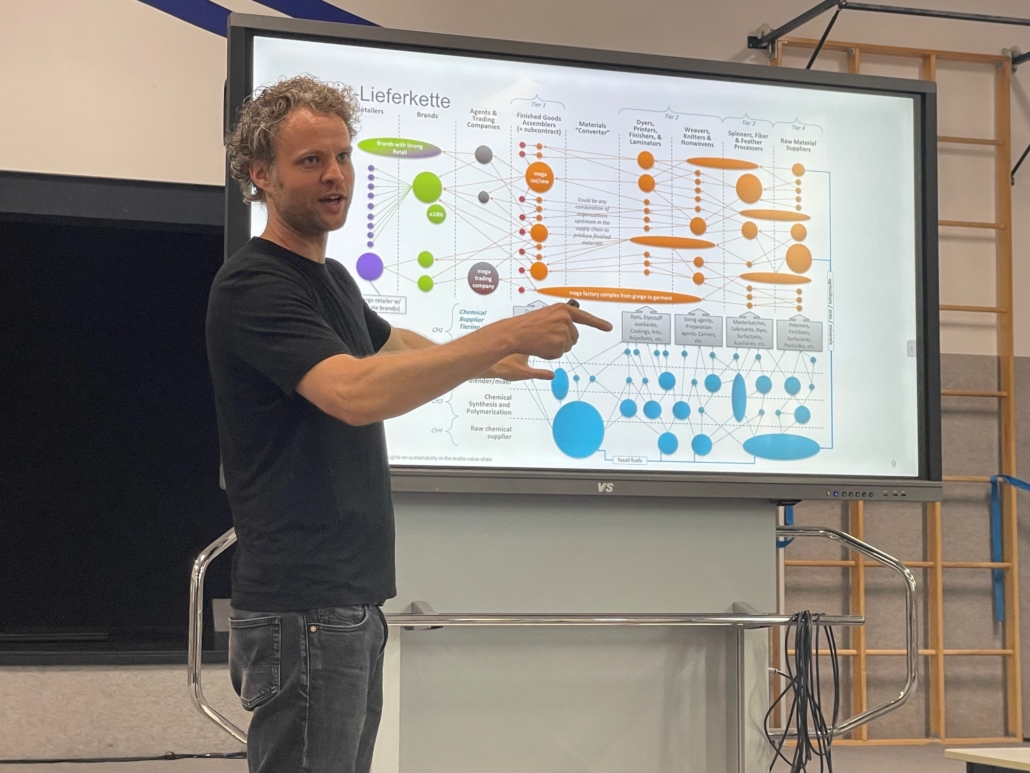
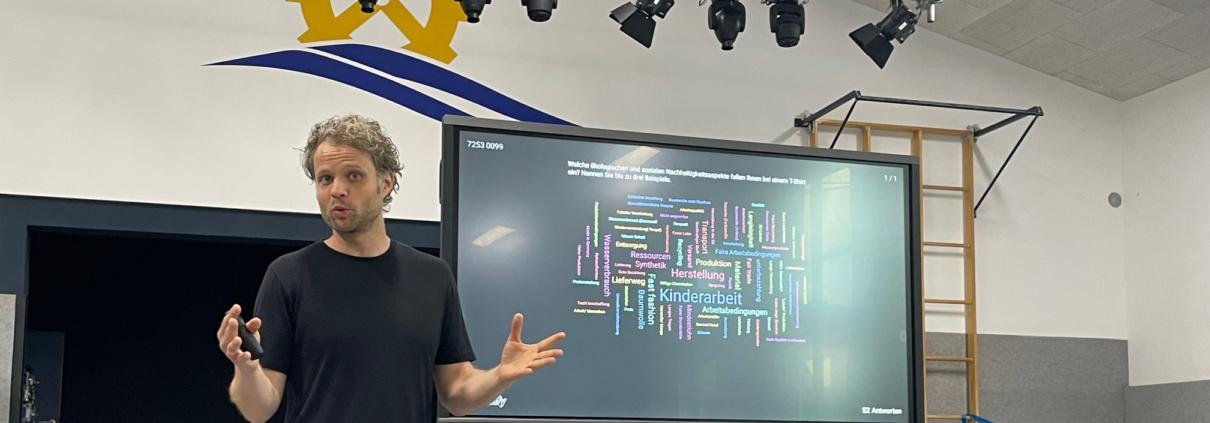
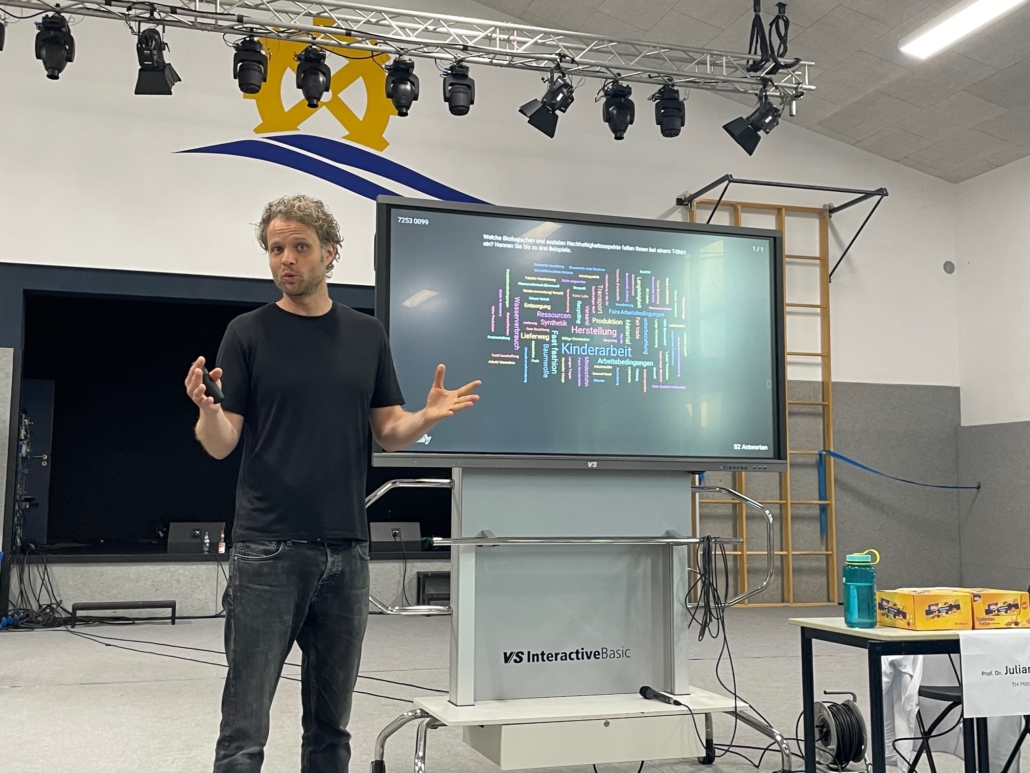
One person who knows this all too well is Prof. Dr. Julian Conrads. For the past three years, he has been teaching business administration with a focus on sustainability management at the Technical University of Central Hesse (THM). His lecture at the Steinmühle, given at the invitation of Bernd Hülsbeck—a subject teacher and head of the social sciences department at our school—contributed to career guidance and once again fostered exchange with the university.


In Focus: Textile Manufacturing, People, and the Environment

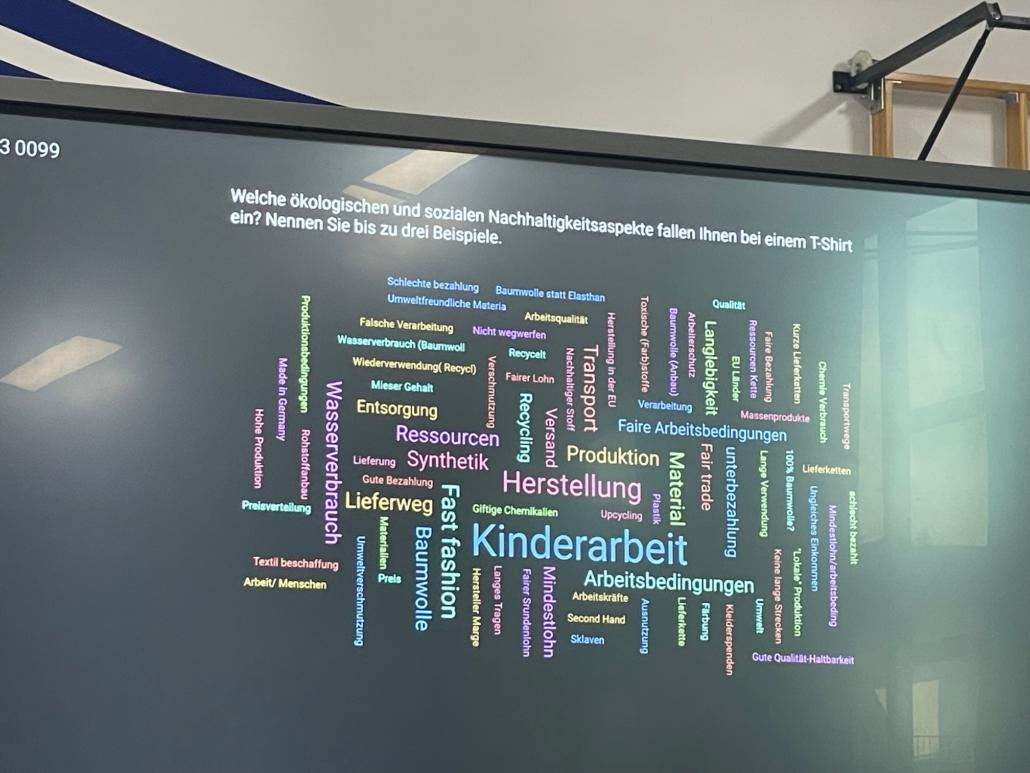
This issue affects everyone, and to have a say in it, all you have to do is look down at yourself: What am I actually wearing? Textile manufacturing around the world is a hot-button issue—one that’s generally well known but often ignored. “Surely expensive brand-name manufacturers don’t tolerate poor working conditions,” many reassure themselves, attributing the environmental impact of the textile industry solely to low-cost producers. — That’s often the case and may be true, but it isn’t necessarily so, as Prof. Conrads knows.


Utilization of all conceivable resources

Vietnam, Taiwan, Bangladesh: Conrads went there in person to see for himself the conditions under which the items we wear are produced and how, for example, backpacks are sewn together. The focus is on the three pillars of sustainability: ecology, economy, and social responsibility. Aware that synthetic materials are petroleum-based and that dyeing—along with cotton cultivation—places an enormous strain on water resources, we can immediately announce another startling fact: With 1.2 billion metric tons of CO2 per year and 6–8 percent of global emissions, the textile industry has a greater impact on our climate than air travel and shipping combined.

In fact, these are all figures you should be aware of. And here are a few more examples: The textile industry consumes 20 percent of the world’s water supply. For every kilogram of clothing produced, about one kilogram of chemicals is used.


A Look at Working Conditions

However, alongside these sobering facts, it is also true that the textile industry is a major global employer. It is estimated that 70 million people—particularly in developing and emerging economies—earn their livelihoods from it. Yet even these figures must be viewed in context, given the often inadequate wages paid to workers—who are mostly women and frequently lack basic rights. It is not only the natural environment that suffers from the production of textiles due to air, water, and soil pollution; human resources—specifically, the labor of workers—are also exploited.

Compliance with core labor standards is part of social responsibility. This includes the elimination of forced labor, fair wages, and reasonable working hours. Independent third-party firms conduct audits to ensure that certain standards are met or maintained. Another important criterion in this context is the elimination of child labor.


Business Statements Send a Message

To ensure that employees—most of whom are women—are aware of their rights, training sessions are offered in the areas of occupational safety and labor law. Complaint hotlines are available if on-site conditions do not appear to comply with the law. To send a clear message, companies issue a business statement in which they commit to adopting a sustainable approach. This also addresses supply chains, the diversity of suppliers, and the highly complex substances to be processed.


Is sustainable business economically viable?

Social responsibility and sustainable business practices entail costs for companies. “Can this even be economically worthwhile anymore?” the speaker asked the group, consisting of 11th-grade students from Steinmühle High School. They had the right answer ready. To ensure this is the case, companies rely on marketing and on building a reputation that resonates with consumers.


Possible Career Paths

The Business Administration (BWL) program in Sustainability Management, leading to a Bachelor of Science (B.Sc.) degree, can lead to careers in corporate management, work with nongovernmental organizations (NGOs), a career in politics, or starting a business. Prof. Conrads: “It’s an addition to business administration. We’re trying to make sustainability a normal part of business administration.”

Angela Heinemann
 

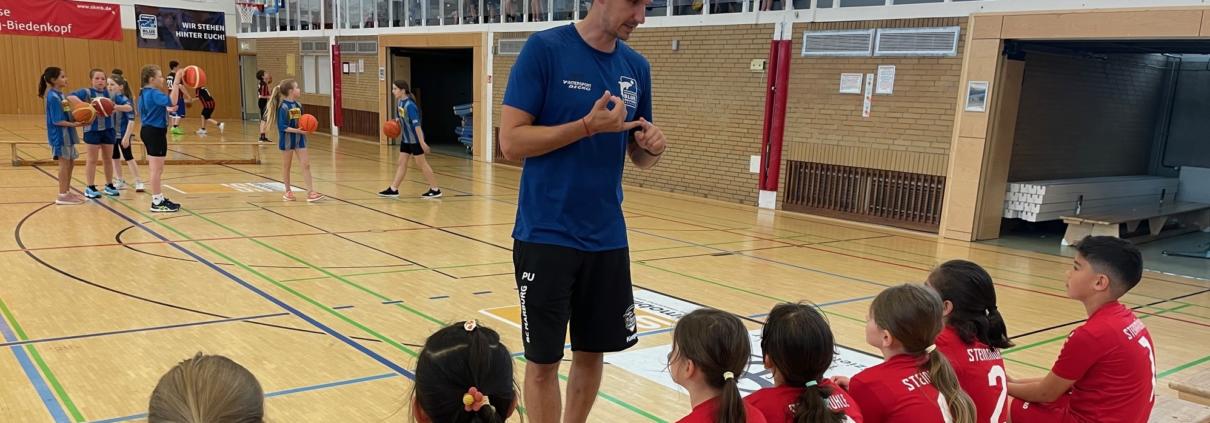
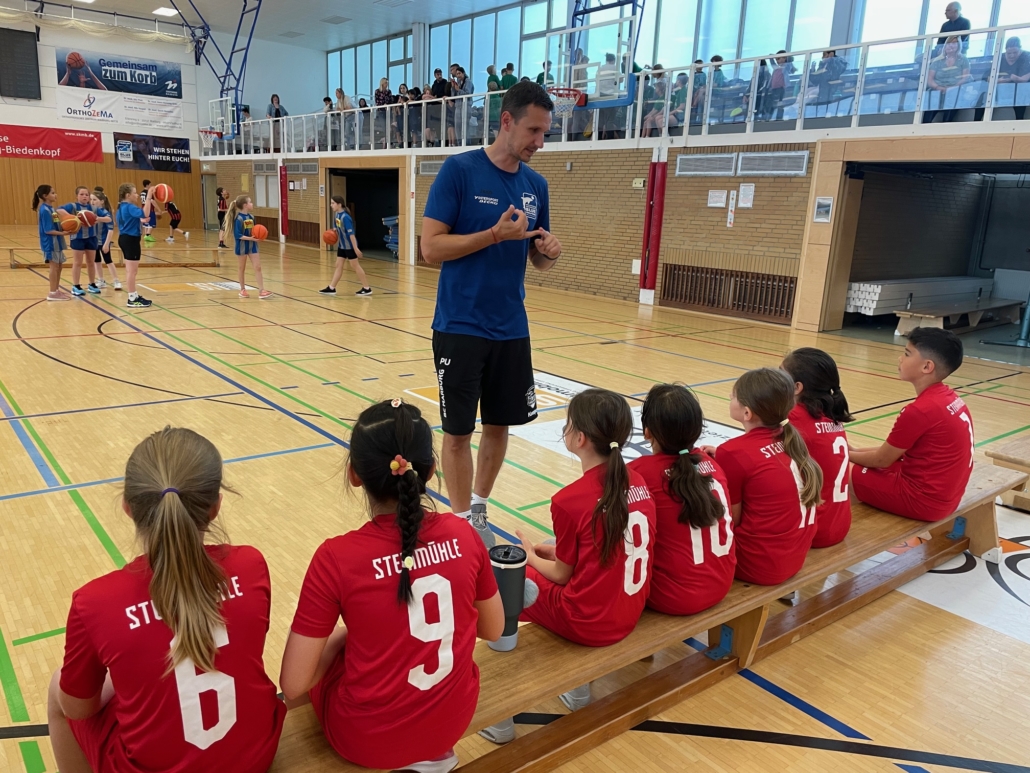
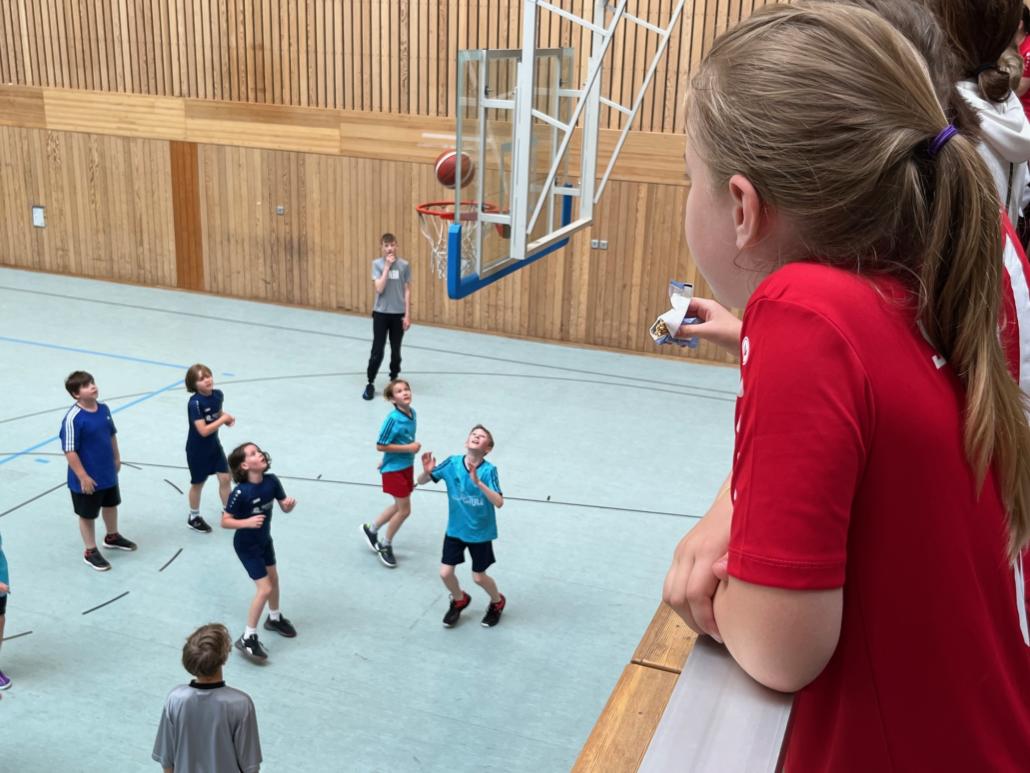
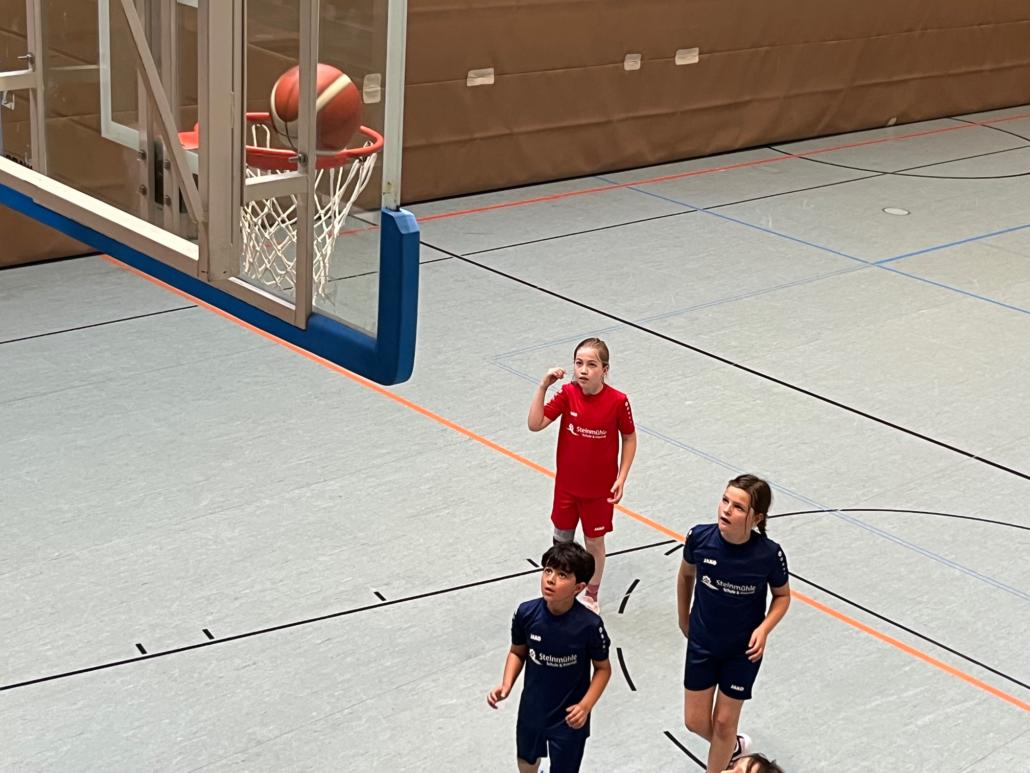
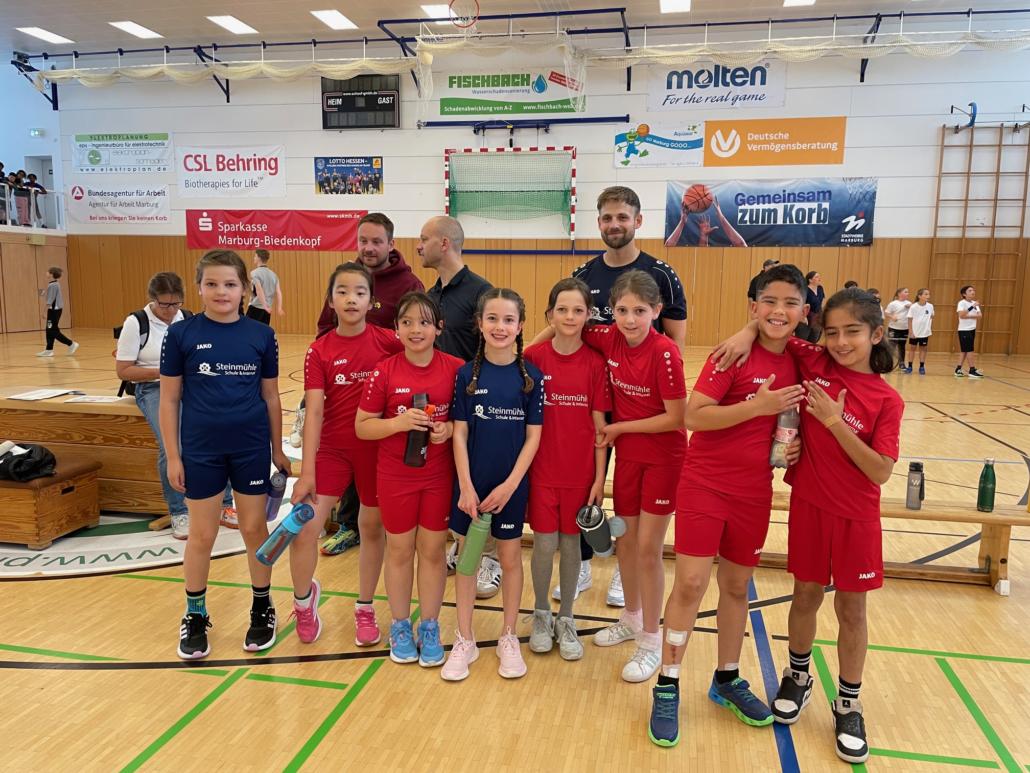
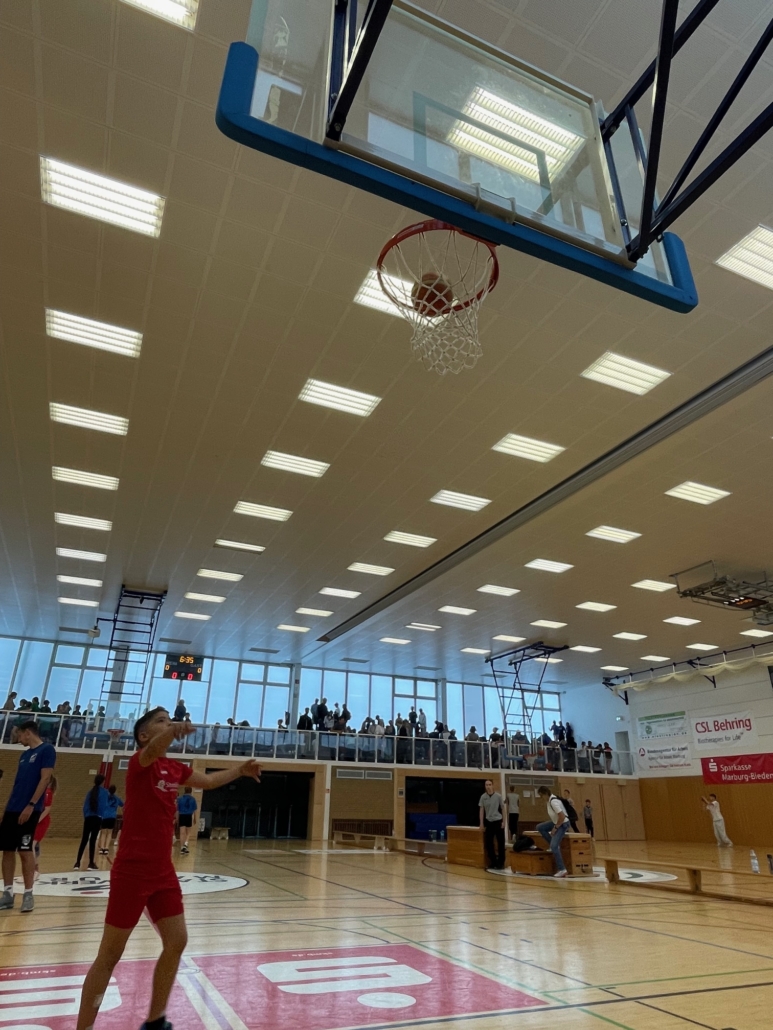
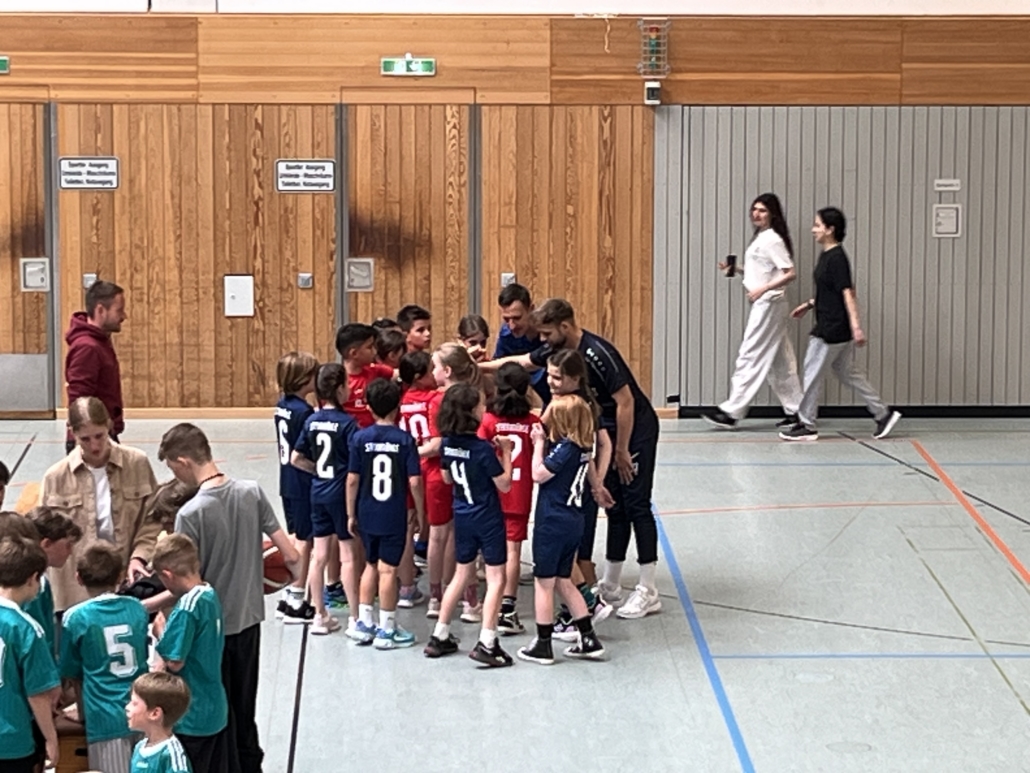
This year, Steinmühle Bilingual Elementary School participated in the elementary school basketball tournament for the first time—and with two teams, no less! So many children wanted to join that we ended up fielding two teams, reported elementary school teacher Tobias Leisge.


Professional Patrick Unger as Coach

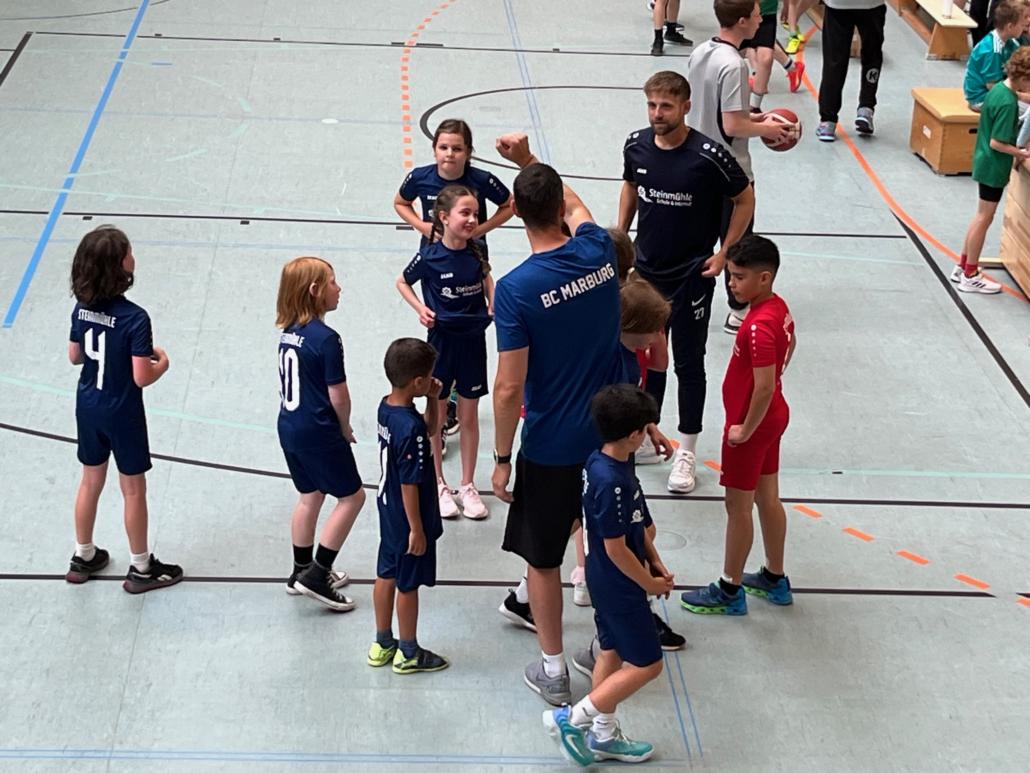
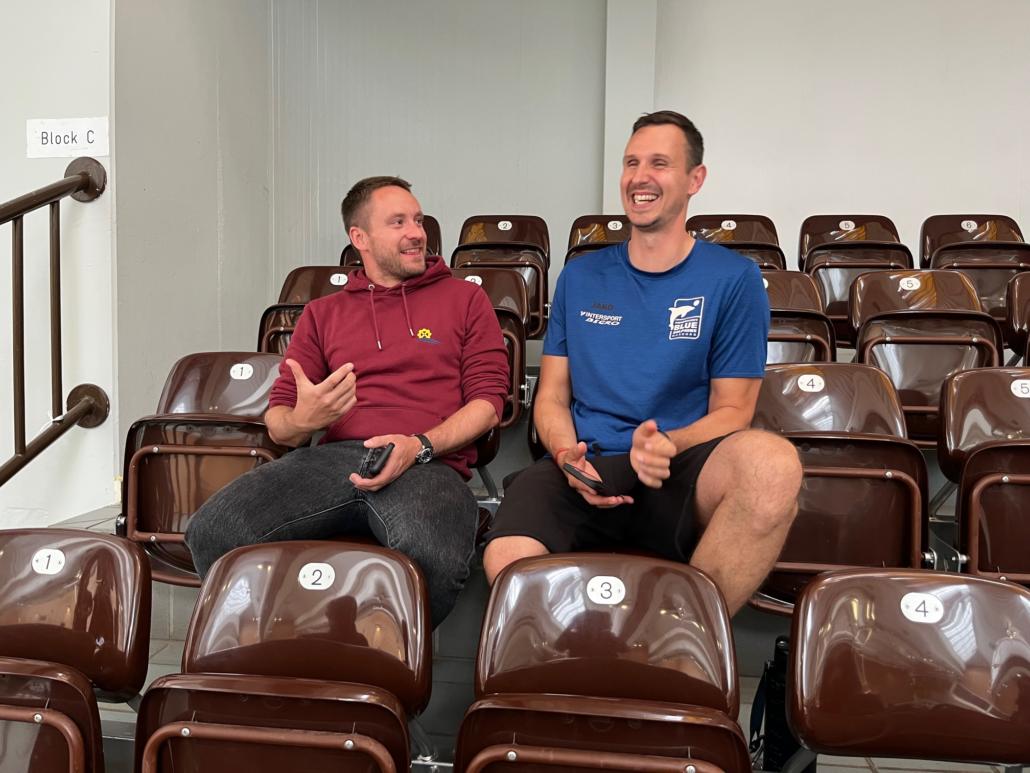
The teams were coached by Patrick Unger, the former head coach of the Blue Dolphins first-division team at BC Marburg, which was, of course, a special experience for many.


Improvement from game to game

First, the tournament director explained the rules—for example, what counts as a traveling violation and that double dribbling results in a whistle. Both teams, which had little or no prior experience, took this to heart as best they could, made great strides over the course of the tournament, and improved with every game.


Parents were on the edge of their seats

One of the highlights was the head-to-head matchup between our two teams—an exciting game that ended in a tie.

Many parents were there to cheer on the kids and support them. All in all, it was a really wonderful day filled with fun and physical activity. We’ll definitely be back next year!


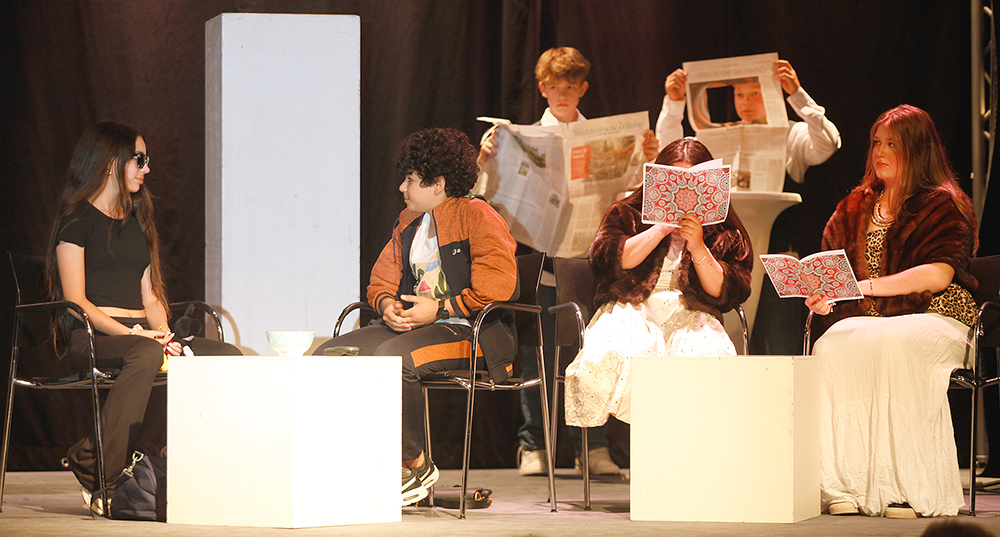
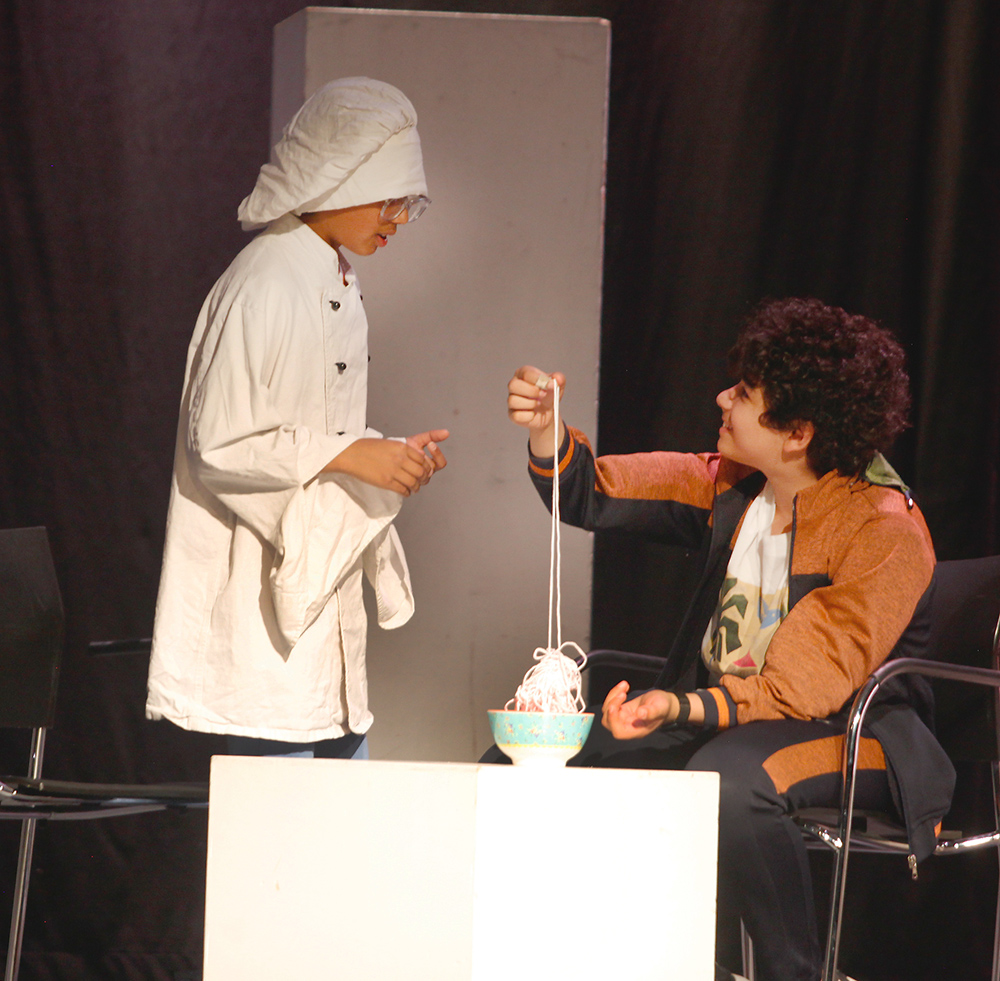
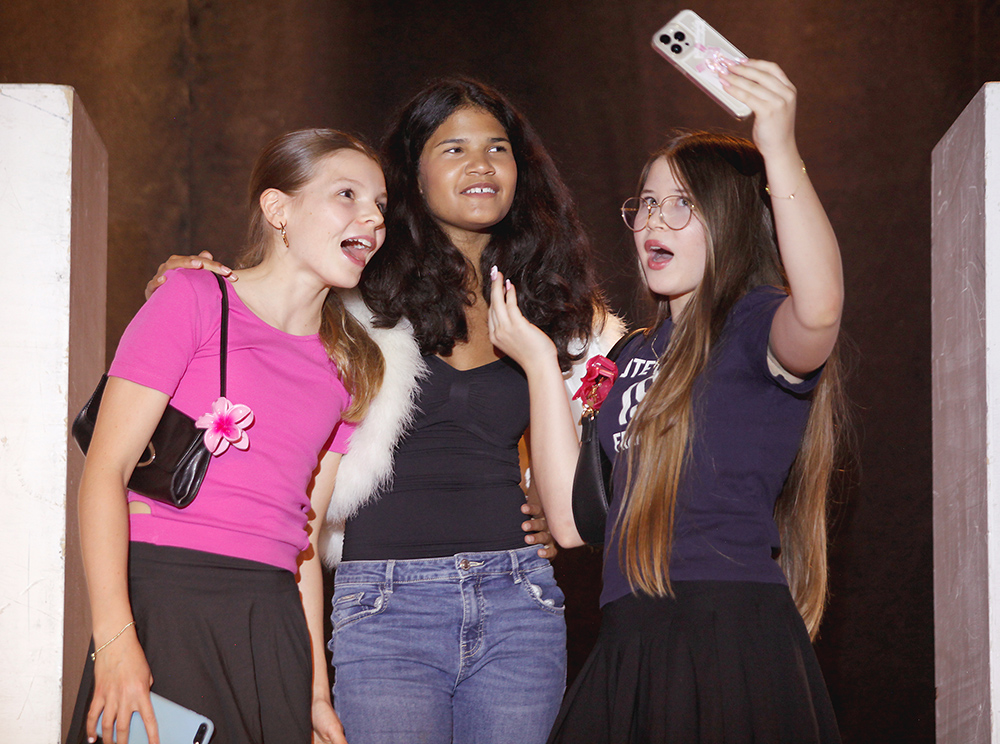
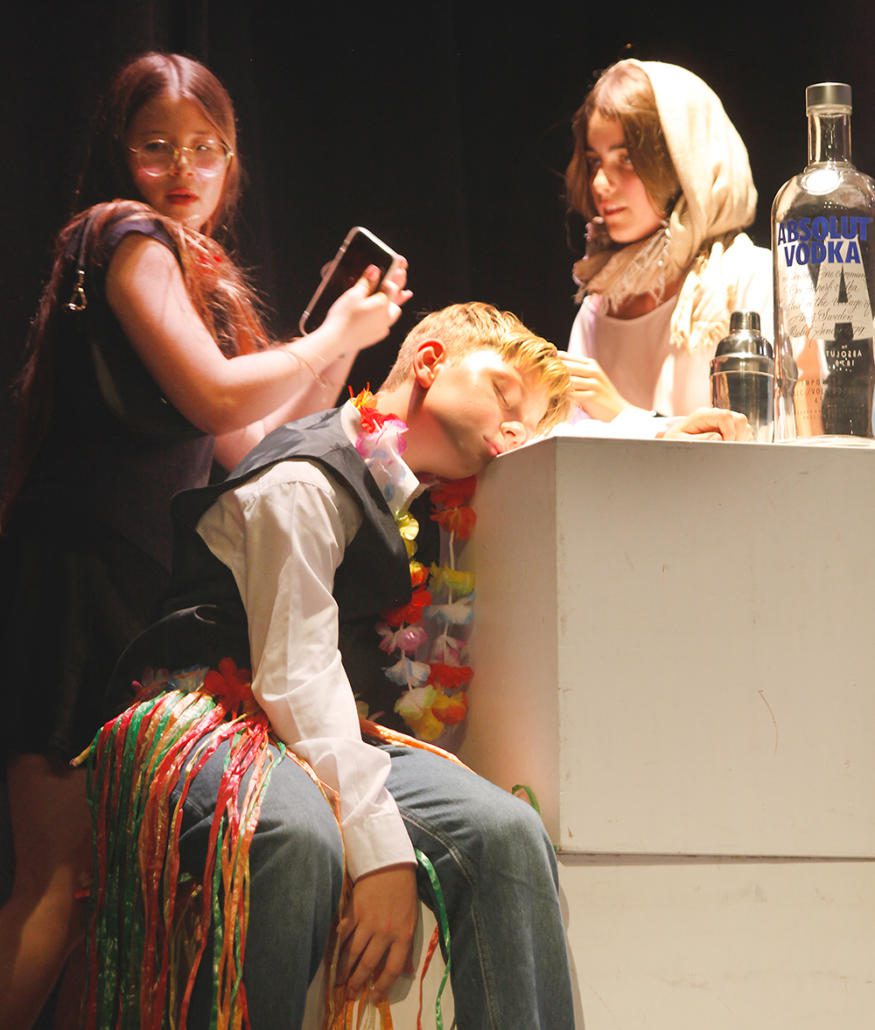
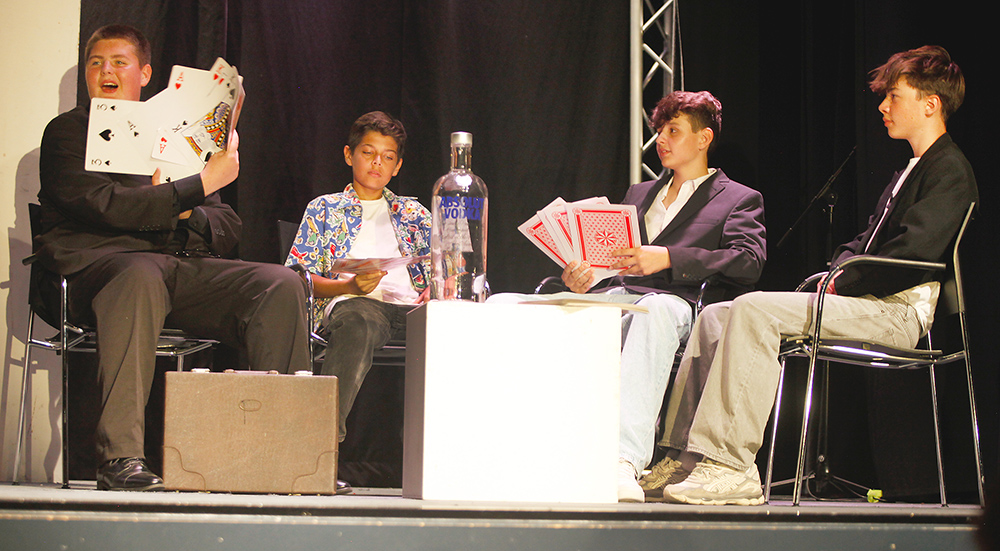
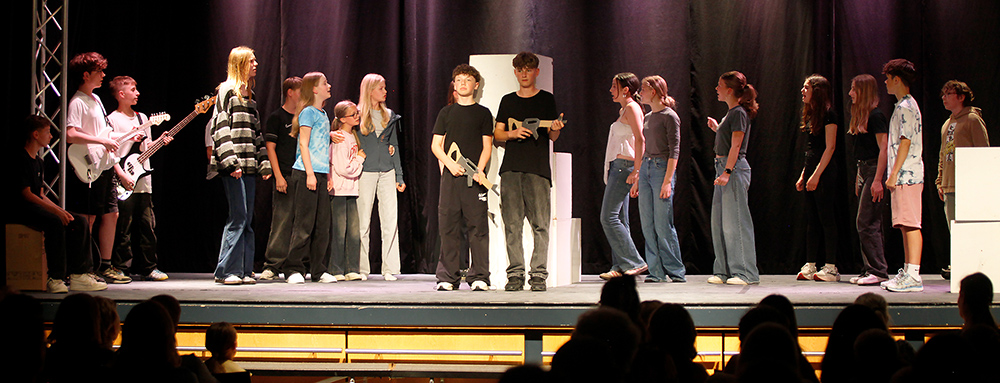
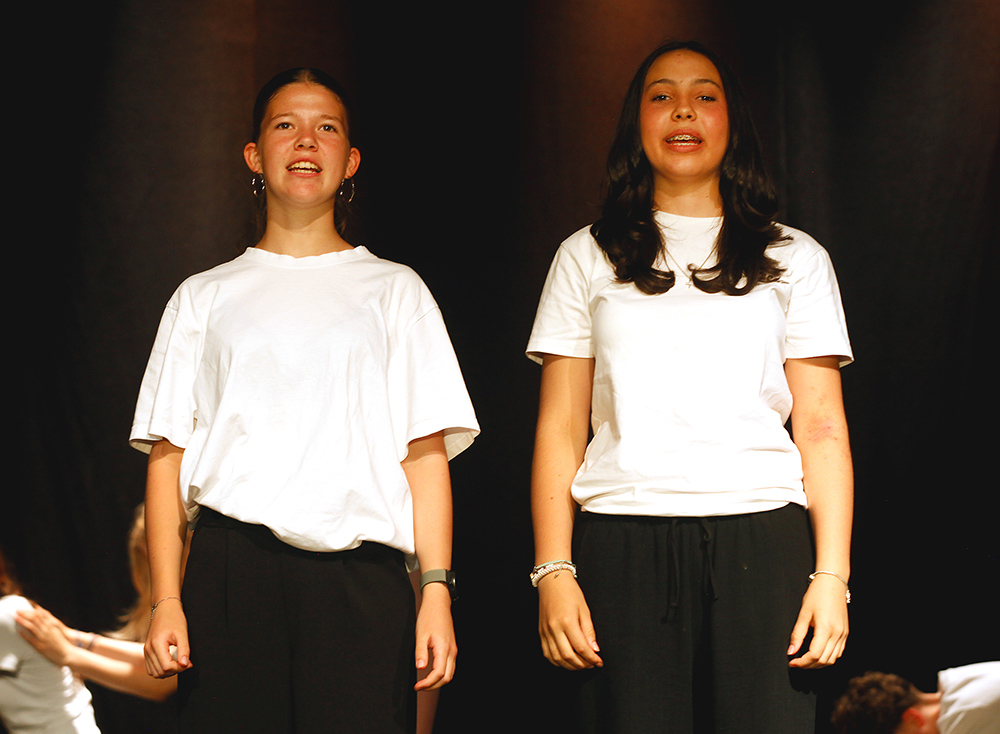
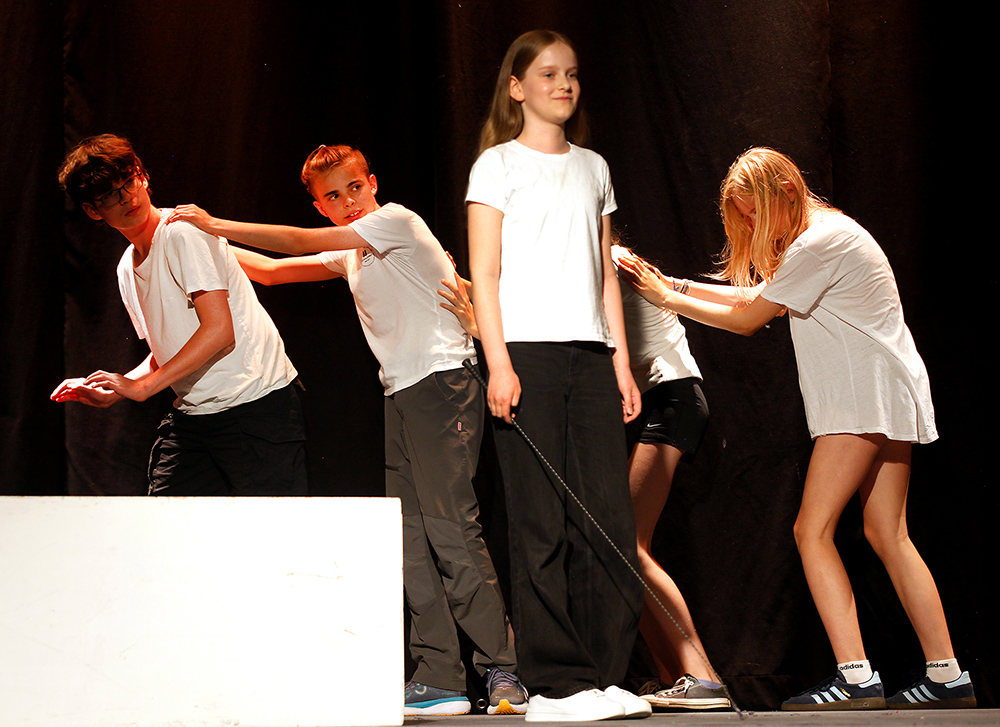
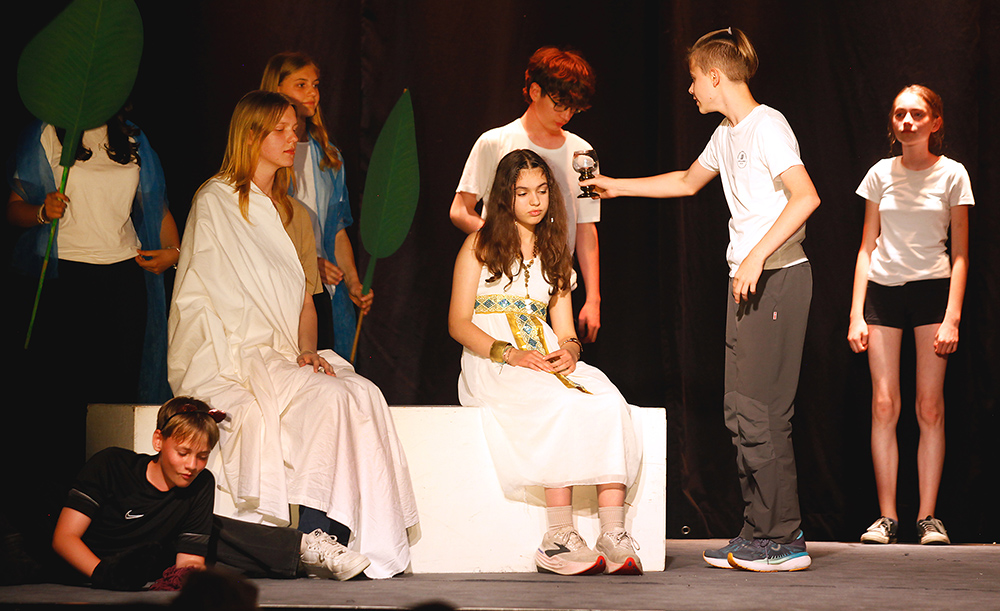
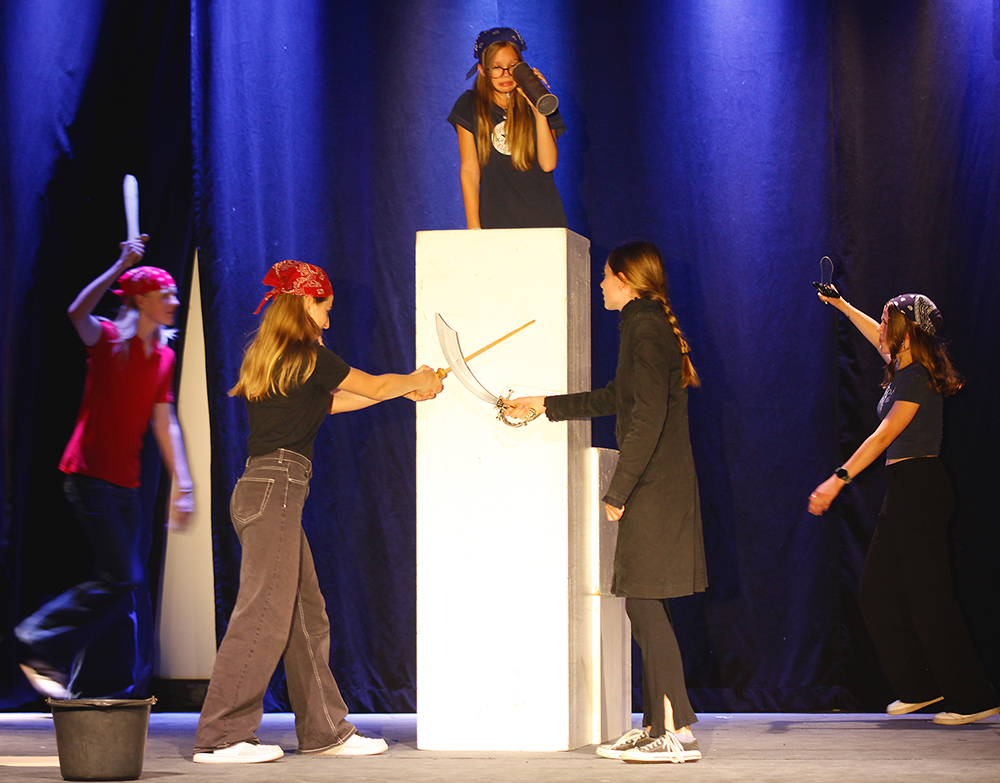
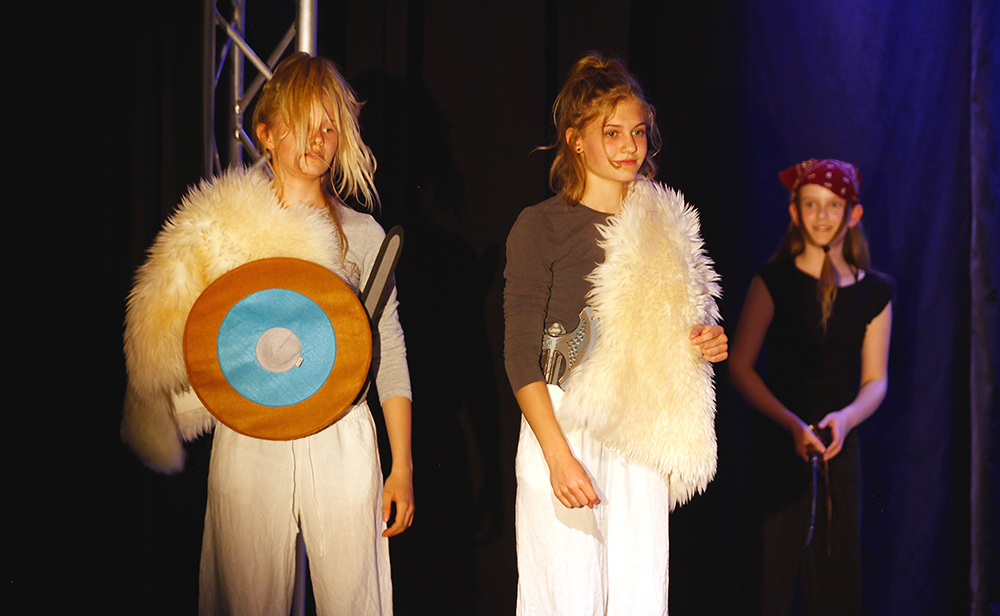
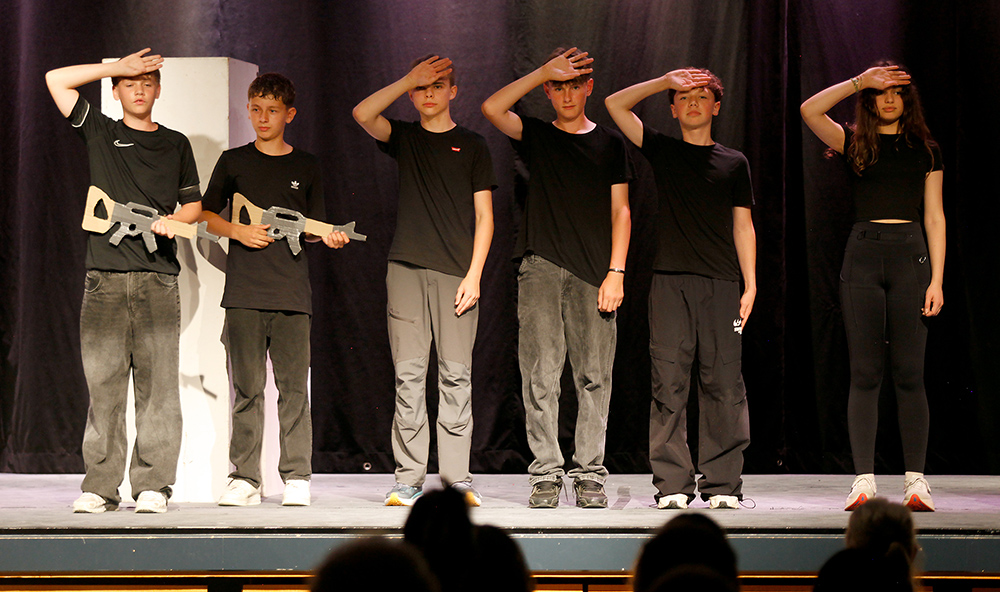
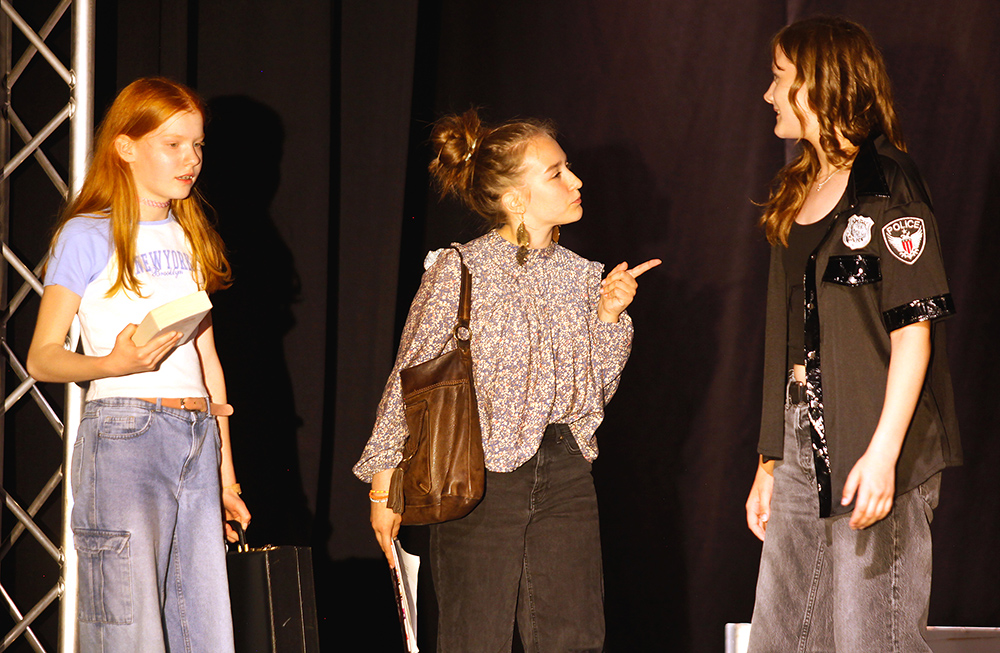
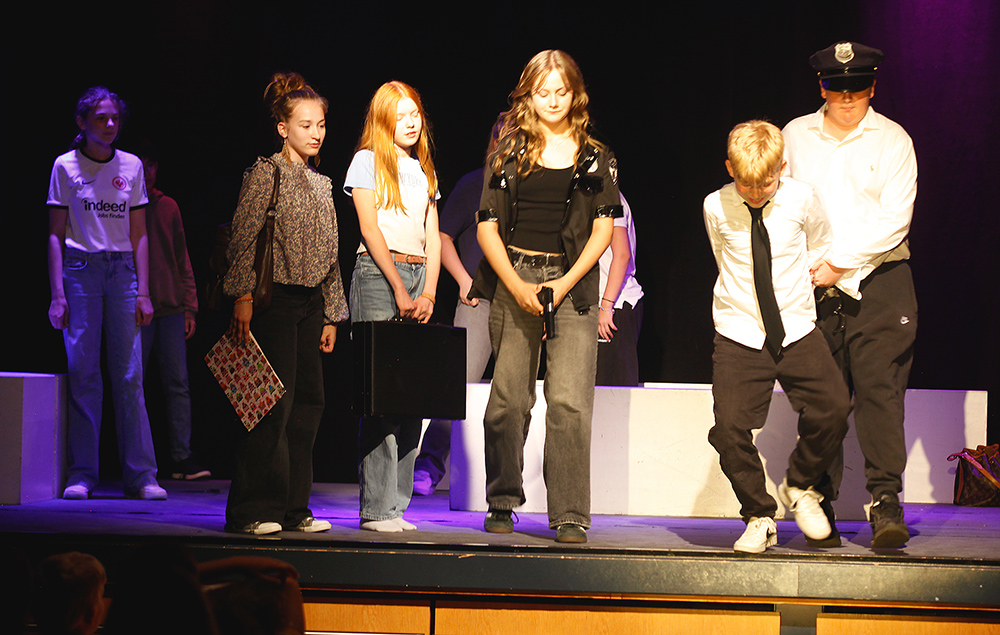
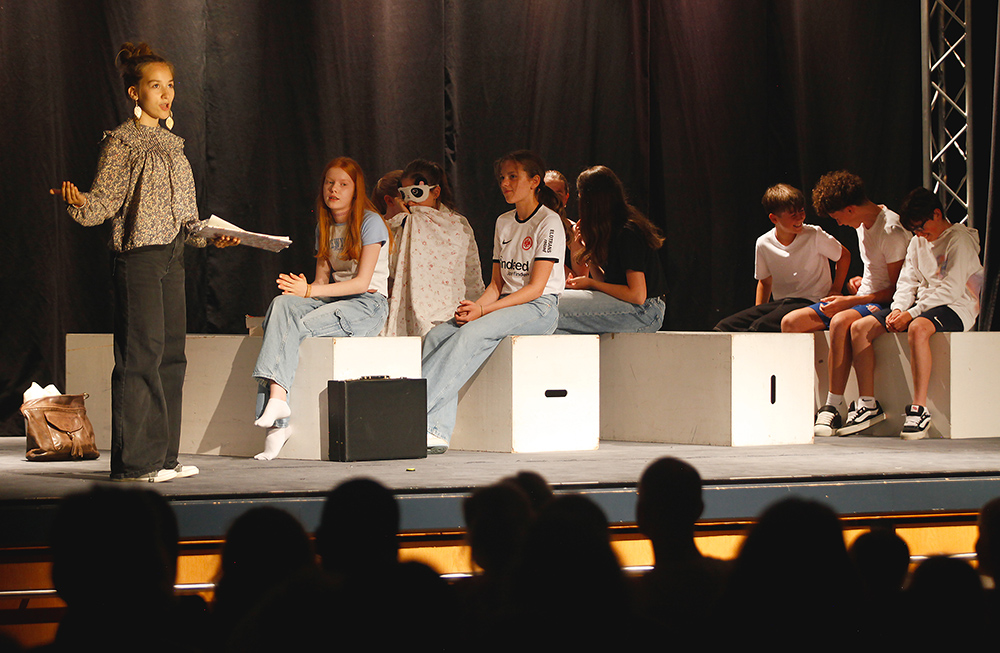
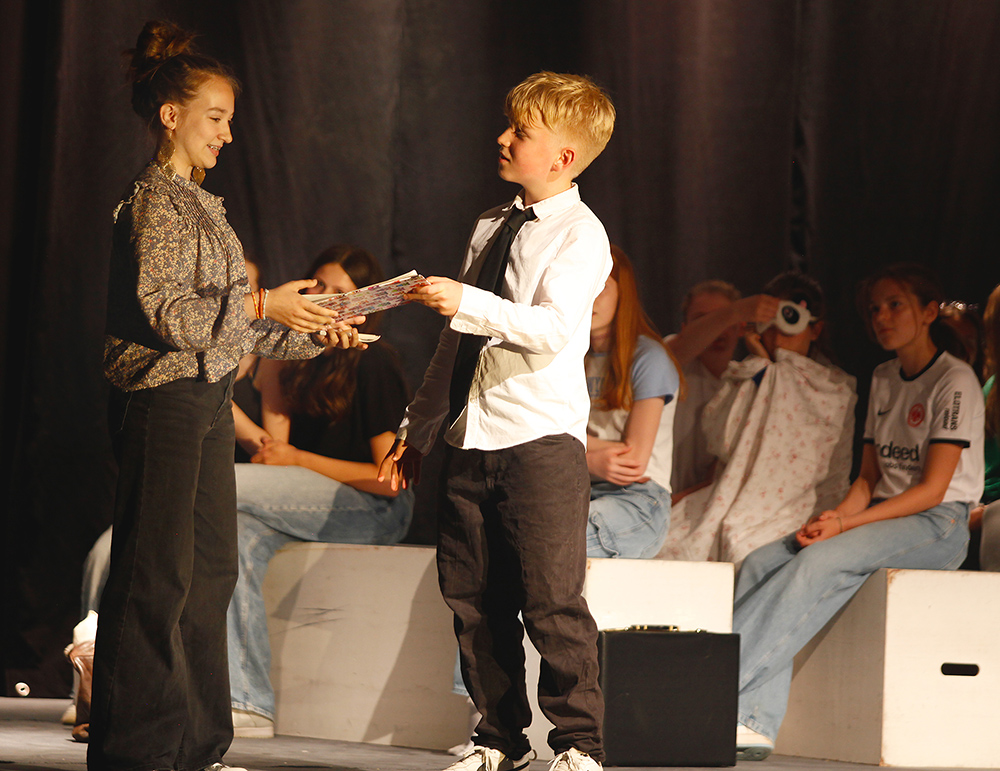
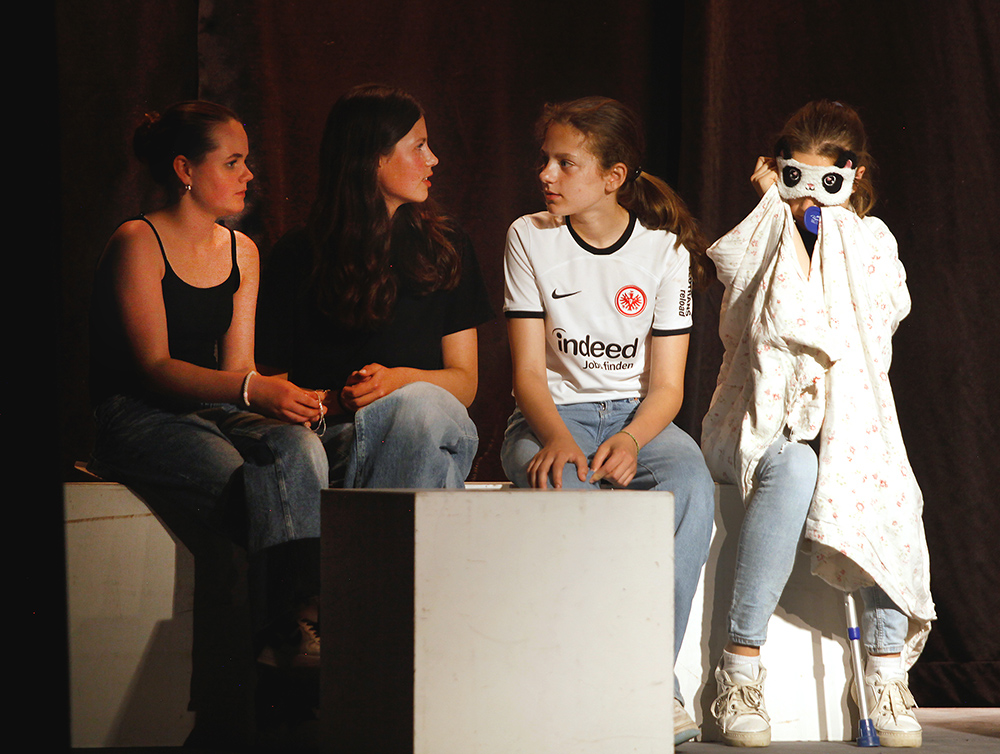
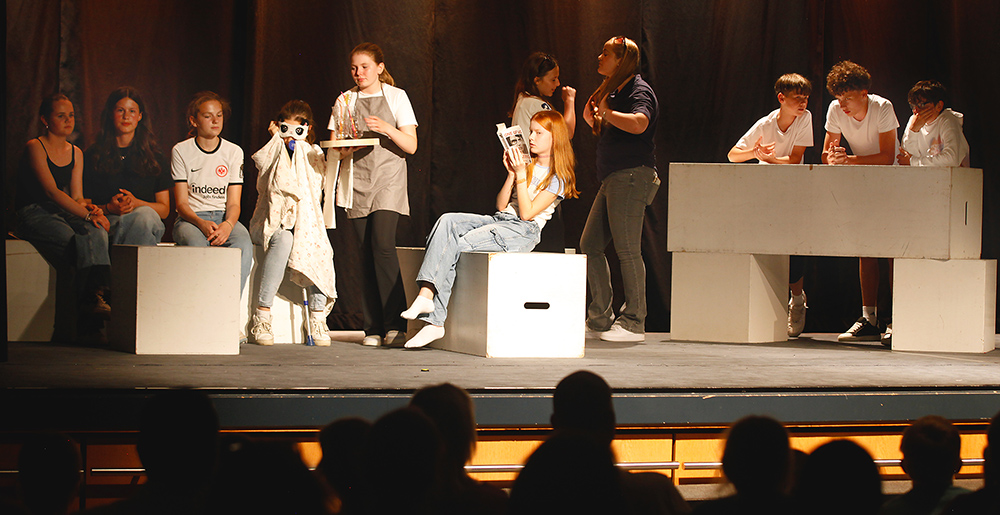
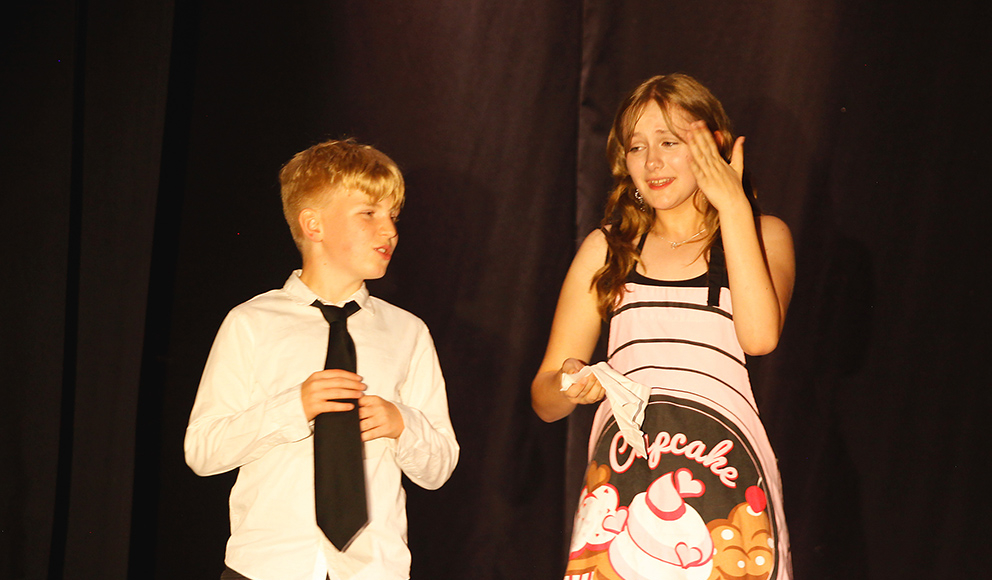
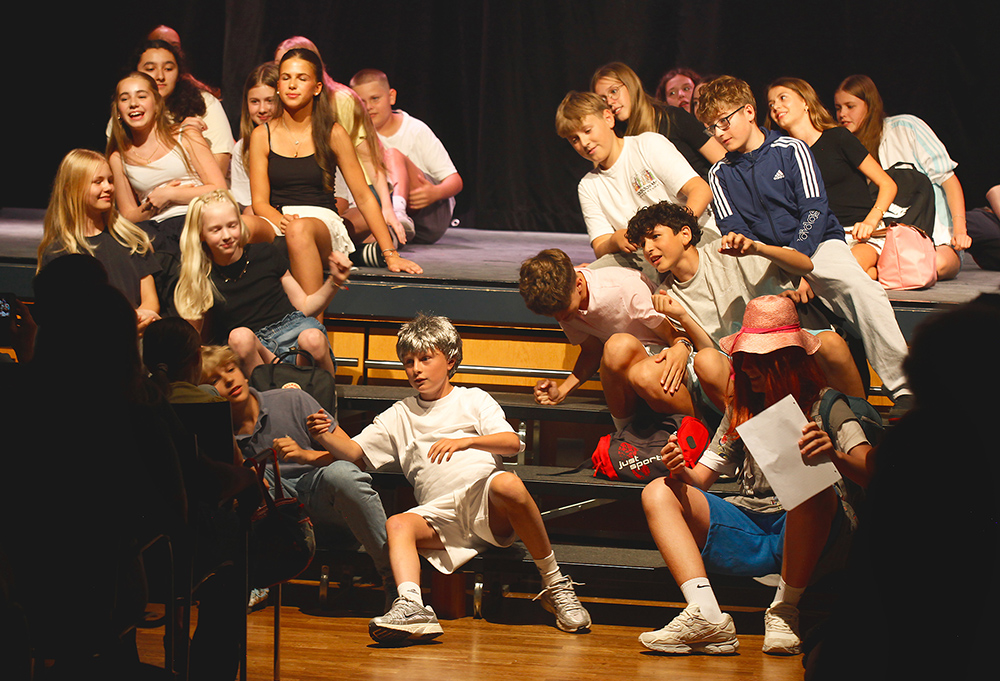
Toward the end of each school year, all 7th-grade classes showcase the skills they have developed with professional guidance through a theater performance. Four classes—four plays—and so the warm summer evening was filled with plenty of entertainment and humor for the audience.


Entertainment on the Cruise Ship

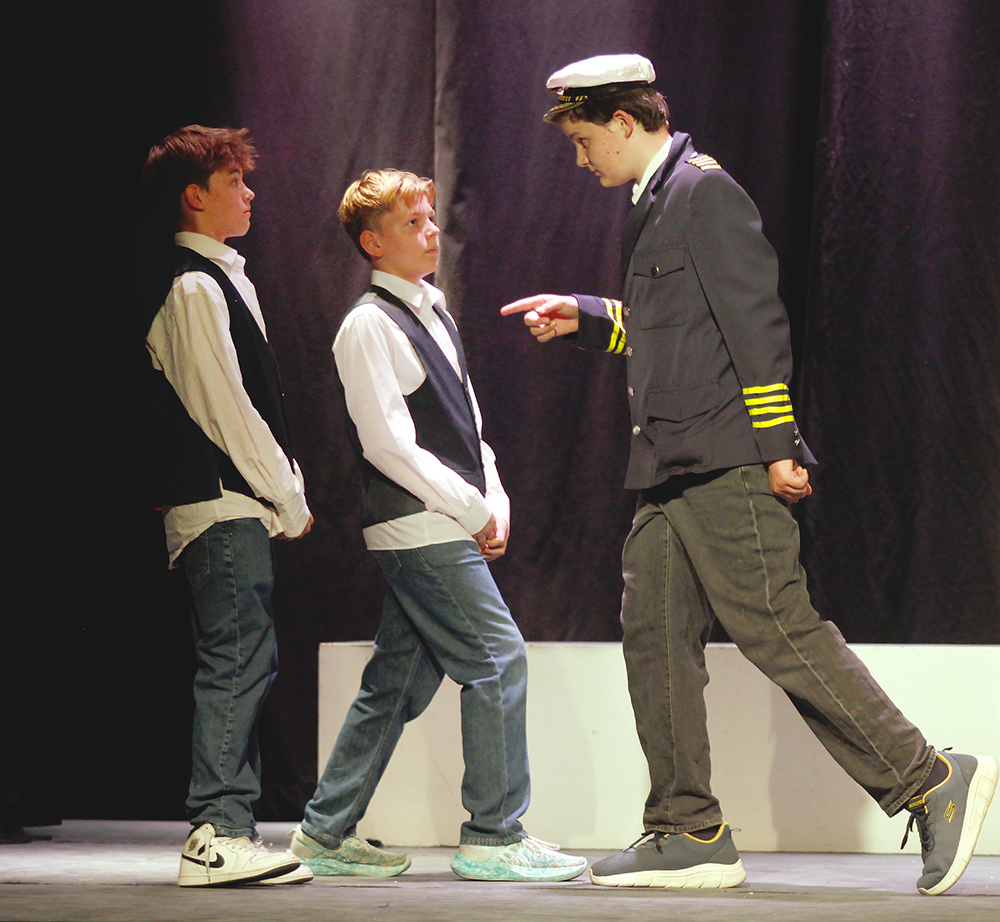
Our seventh-graders did a great job. Class 7i, our seventh-grade class from the international high school track, kicked things off. They immediately chose an international setting: a “criminal and outrageous cruise” titled “No Panic on the Titanic.” On the rather luxurious ship, special guests gathered and treated each other to hours of entertainment—though at times there was an annoying presence or even glimpses into personal priorities. Under the direction of Nina Merzenich and Michael Pietsch, the girls and boys staged a play that earned enthusiastic applause.


School Operations Face Challenges

“The Recess Godfather” was the next performance, and Class 7b took the stage. The setting: a high school where the new school year was beginning. Unfortunately, it wasn’t without its minor obstacles, persistent rumors, or big secrets. When the principal was led away in handcuffs, it seemed to be definitive proof that something wasn’t quite right. Steinmühlen Principal Björn Gemmer, who was in the audience, took it in stride with a grin: No, these events shouldn’t be taken as a reflection on our school. Conclusion: A fantastic performance by directors Lisa Braun and Olga Merani and their group.


“We don’t need any separation”

It really makes you think when, of all places, America is missing from Grandpa’s world map. The two grandchildren, visiting their grandfather, certainly found themselves pondering this, and it wasn’t long before they noticed other inconsistencies in his collection. In addition to some unusual food offerings—such as crocodile tail in grasshopper ragout—this performance featured plenty of East-West German history, capped off with the musical statement “We don’t need no separation” —a nod to Pink Floyd’s classic “Another Brick in the Wall.”—Hats off to the students’ production and their directors, Dagmar Müller and Michael Köckritz.


Missing Student

The evening concluded with the performance “5 Friends, 5 Years, 5 Rules” by Class 7a, directed by Nicole Hohm and Olga Lerani. The play featured a mystery: a student had gone missing! A large cast—ranging from teachers to the bus driver and the “5 Friends” to the detective and the kitchen assistant—performed this final act with great dedication, and the audience left the packed Forum to thunderous applause.


Great Results for First Theater Production

One of the highlights of the evening was that some students took on dual roles. For them, this was a multifaceted new experience, as they were just beginning to learn how to use their bodies, voices, and expressions in a way that suited their roles. It was their first time truly performing on stage—with fantastic results that give us hope that one or two of them might choose “DS” (Drama) as a subject in the future. For this spectacular start to their journey into the world of theater, they were in the very best of hands, not least thanks to Frank Wemme, the experienced overall organizer. — Enjoy browsing through our photo gallery!

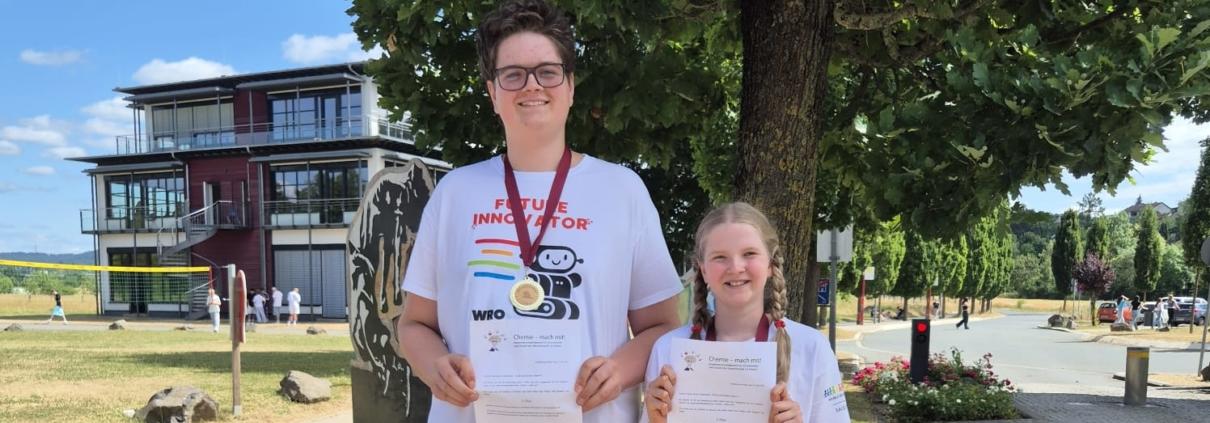
Felix and Sophie Sacher had just received their invitation to the World Robot Olympiad (WRO) World Finals in Singapore when the next award came in for the young scientist siblings from Steinmühle: They took third place in the 47th edition of the Hesse-wide experimental chemistry competition “Chemie – mach mit!” (Chemistry—Join In!), organized by Dr. Jens Salzner and his team at Goethe University Frankfurt am Main.
Steinmühle would like to thank both of you and your advisor, Dr. Jutta Töhl Borsdorf, our school’s STEM coordinator, for your interest and enthusiasm in science projects and competitions. You’re a great team, and we’re delighted that you’ve been invited to the awards ceremony in Frankfurt at the end of the year. We’re also looking forward to everything that’s still to come!

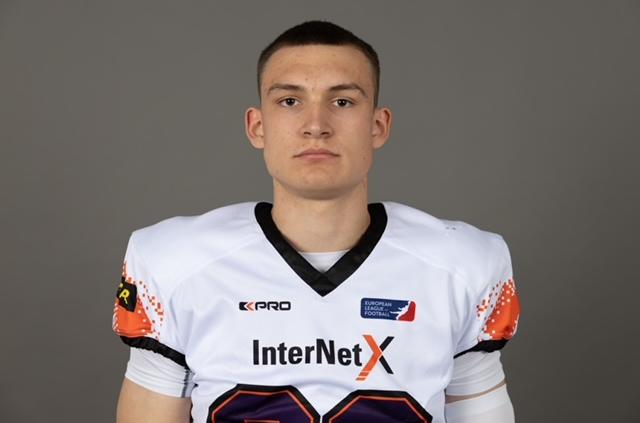
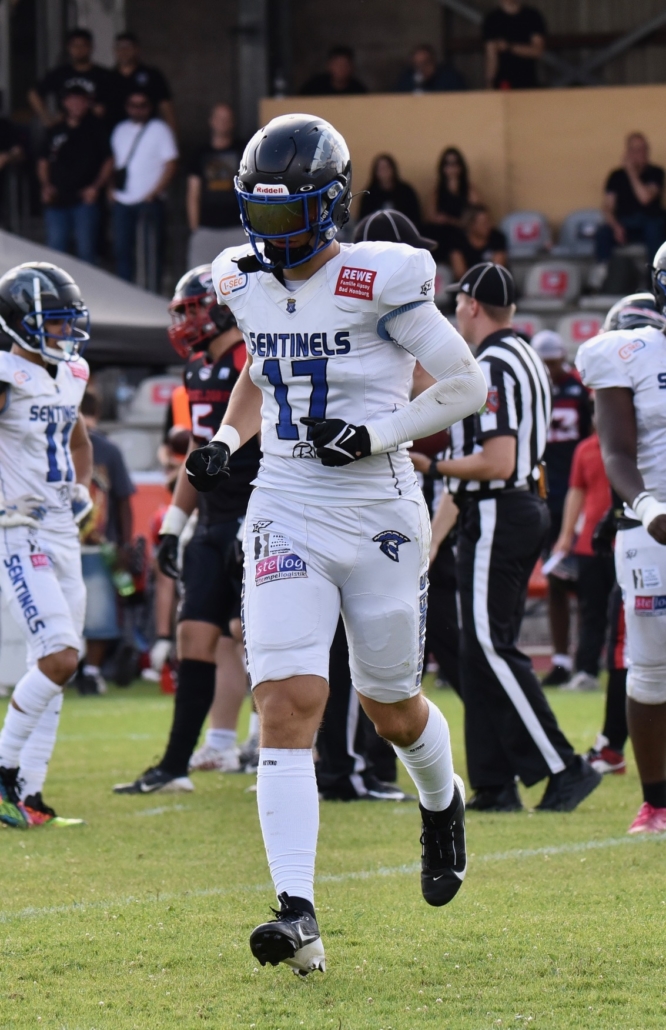
The annual Super Bowl, the championship game of the U.S. National Football League (NFL), fills the coffers and empties the beverage shelves in supermarkets. Many fans in Europe are also eagerly following the action. Benedikt Mons, who just graduated from Steinmühle Boarding School with his high school diploma in hand, remains one of the biggest fans. His goal: to play in the NFL himself one day.

First Contact as an Eighth-Grader

It’s not just a pipe dream. Benedikt has a plan, and he’s sticking to it. After joining Steinmühle in eighth grade, a classmate took him to a football practice. The sport isn’t exactly gentle. But that didn’t stop him from continuing to train.


Important Companions

Benedikt played more and more often and made the U18 Hesse select team. He connected with players from Bad Homburg, joined the Sentinels, and played in the GFL-Juniors—the youth Bundesliga of the American Football Association of Germany (AFVD). He also came to see the team’s coach, Markus Hackenberg, as a mentor: “He helped me develop as a player.” In 2024, Benedikt Mons was named to the U19 national team.

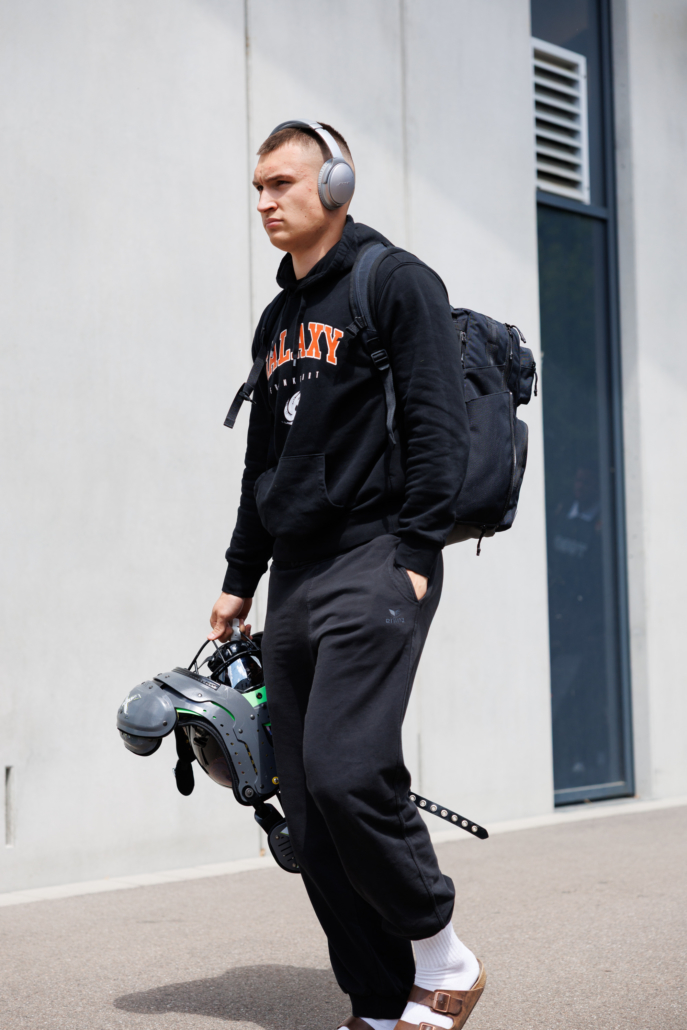
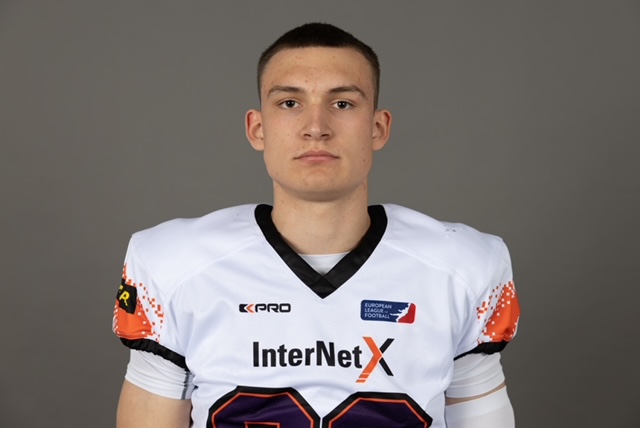
Benedikt Mons must have continued to do something right, because in early 2025, the next step was on the horizon: a move to the Frankfurt Galaxy and the transition to professional sports in the European League of Football. This was a decisive step for the humble Steinmühle student—who took advanced courses in political science and math—who is grateful not only to Steinmühle for supporting his athletic career, but also to others, such as the sports director of his current club, Thomas Kösling. “He motivated me to balance my high school diploma and training”—training four times a week, no less.


Reaching Full Potential in the U.S.

Logistically, things will get a little easier for Benedikt now that he has his high school diploma in hand. After the season, he’d ideally like to attend college in the United States. “I definitely want to keep playing, and I want to do it in the U.S. Everything about the sport is much more professional there, from training all the way to the individual support athletes receive. To reach your full potential in this sport, you have to go to the U.S.”

When it comes to this step and his athletic career, Benedikt Mons knows his parents have his back: “They support me.” Whenever possible, they even sit in the stands at his games. The high school senior regularly competes against his brother in sports. But his brother is better at hockey and tennis. “I’d rather stick with football,” Benedikt says with determination.


A lot of practice and talent, too

When asked about his career goal, the former boarding school student replies, “To make a living from sports.” Benedikt views being tied to equipment like a helmet and shoulder pads as a temporary phase. “I want to retire in my mid-30s and have made my money in the NFL by then.” Then he could imagine being a good father and helping to make the sport more attractive in Europe: “The market is growing tremendously; there’s a lot of potential.” Until then, however, Benedikt says it will take a lot of courage, a lot of time, a lot of patience, and a lot of training.

You have to run; you have to be fast. “It’s a sport for physical types,” says Benedikt Mons, describing the rough-and-tumble nature of football, while acknowledging that he himself is “genetically blessed—and grateful for it.” He’s ideal for the tight end position in football; the rest he’s earned through hard work.

But he knows that a certain amount of talent is definitely part of it. Angela Heinemann
Follow Benedikt Mons on Instagram: benedikt.mons
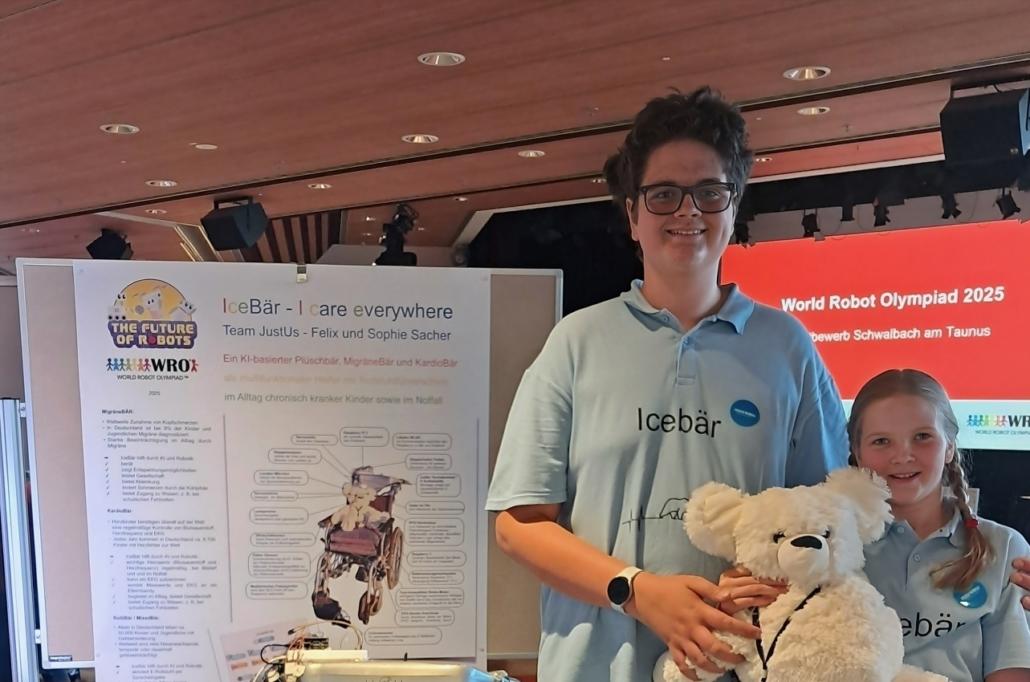
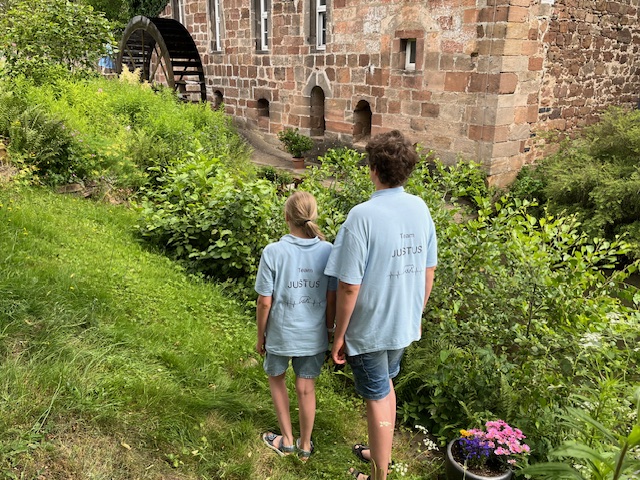
Felix and Sophie Sacher, a pair of siblings from Steinmühlen School, have shared some amazing news with us: At the World Robot Olympiad (WRO), the ninth-grader and fifth-grader qualified for the world finals in Singapore in the “Future Innovators” junior group with their project “Ice Bär – I care everywhere.” From November 26 to 28, up to 500 teams from 80 countries are expected to compete there.


Project Description

It is the central component and also serves as the title of her project: “IceBär – I care everywhere.” The “IceBär” is a highly complex system for this age group, consisting of various modules and biometric sensors. An AI-based stuffed bear with an integrated ECG and computer serves as a multifunctional assistant—complete with a “wheelchair license”—in the daily lives of chronically ill children as well as in emergencies. The target groups are young migraine sufferers, young people with heart conditions, and young people with mobility impairments. The technology provides a cooling function for migraines when needed or, in the case of heart problems, important cardiac readings, which it can also transmit. Through a voice function powered by generative AI, it can also provide emotional support. The combined electric wheelchair can start and stop, and the IceBär responds to voice commands.


Two Jack-of-all-trades

The two young inventors came up with the entire technical design and even tailored the IceBear’s shaggy plush fur themselves. The IceBear is designed for children between the ages of 3 and 17. It could be used at home, in children’s hospitals, or in emergency medicine. The Sacher siblings, who have given themselves the double-entendre name “Team JustUs” (just us—or, in Latin, “just”), envision numerous applications and opportunities for further development of the system.


A victory by a wide margin

In the competition, the “Future Innovators” teams were tasked with developing a robotic solution that combines AI with robotics to improve people’s lives. “Out of a total of 111 teams in Future Innovators Germany, we were the only ones left in our ‘Junior’ age category at the German finals, and we’ll be representing Germany at the world finals in Singapore,” Felix and Sophie say happily. The siblings had already impressed the jury during the qualifiers for the German finals in the “Junior” age group, taking first place by a wide margin.


27-page document

In the competition, projects must be presented using working models, and technical questions must be answered on the spot. Entries were evaluated using a detailed evaluation form across various sections and categories: the idea, the technical solution, the presentation, and teamwork.

According to the jury, the project was not only presented in an outstanding and confident manner, but was also documented with impressive professionalism. Steinmühle had the opportunity to review the 27-page documentation, which was produced to the highest standards and demonstrates that young people are pursuing this project with heart and soul, convinced of its practicality for everyday use.


Fascinated by medical professionals and STEM teachers

Felix and Sophie have already interviewed several medical experts across Germany about their project, and they were encouraged by these experts to present it on the international stage. The STEM teachers at Steinmühle were also fascinated by the project when it was tested “live” at the school.

We’re curious to see how the IceBear’s journey will unfold and whether it will find supporters who might one day help bring it to market.