You must have felt extremely at home in your school environment to decide that you wanted to work there later on. That was the case for Michel Hermens. From 2004 to 2008, the native Dutchman lived in the Stamm- and Westfalenhaus at the Steinmühle boarding school. He returned to that very place and is now the head of the Mühle.

Born in Eindhoven in 1987, he came to Germany at the age of three and “didn’t understand a word.” A Philips plant in Wetzlar was the reason his parents moved to Central Hesse. They had imagined their son’s school career would go more smoothly. According to Michel, stress at school—and consequently within the family—led them to enroll him at the Steinmühle boarding school.

After 12 years of school, he wanted to break away from the daily school routine and become more active. With his vocational diploma in hand, he planned to pursue an apprenticeship in the hospitality industry. However, the young man’s expectations of this career field did not pan out. He then completed a voluntary social year at an elementary school, working in before- and after-school care and handling administrative tasks. This successful experience subsequently inspired him to study to become an elementary school teacher in his native Netherlands.

That wasn’t the end of it. Michel Hermens found himself drawn back to Marburg. Back to his roots. In 2012, he financed an internship at the Steinmühle boarding school by working at a gas station. “It felt like coming home, walking down Steinmühlenweg again.”


“I see myself in the students themselves”


It went without saying: I’m staying here. Michel Hermens had to admit, however, that quite a bit had changed. Although the boarding school had already housed boys and girls together in the Westfalen- and Hessenhaus during his own school days, the house meetings were still held separately. The resident teacher for the boys in the house was a male staff member, while the girls were supervised by a female staff member.

There were also personnel changes, as was to be expected at the time. Rowing coach Martin “Stromi” Strohmenger was an assistant at the Westfalenhaus back then. Michel Hermens knew the boarding school director from his earlier days as a teacher. Of the rest of the teaching staff, two were still there.

He hit it off with the students right away. “I quickly realized that we had a good connection,” says Michel Hermens, looking back on the early days of his return. “For many students, I became a trusted figure right away.” The man, who initially worked as an assistant at Mühle and Hessenhaus, reflects on his own past today: “I see myself in the students.”

He says that the challenges—even in tricky situations—are what make the job particularly enjoyable and rewarding. He views many of the changes in a positive light. “The social aspect,” says Hermens, “has really developed at Steinmühle Boarding School. The study center also opens up opportunities that didn’t exist before.”

The athletic Dutchman, who once felt the urge to move around, has (once again) found peace at Steinmühle Boarding School. He is able to instill this sense of “inner peace” in his students. Nevertheless, he still travels home regularly to visit his family in Maastricht. And on vacation, he goes to special places with unique landscapes. For Michel Hermens, even on vacation, things don’t have to be ordinary, normal, or run-of-the-mill. One of his favorite places: the Azores.


M. Hermens with his current residential group

A photo from school days

A small but delightful event where talented soloists have the opportunity to showcase their skills—that’s the annual “Open Stage” at the Steinmühle. This time, however, the program called for some additional skills: Fynn Konnertz, the lead performer, had fallen ill—so it was time to improvise.

Daniel Sans hosted the program, which he consequently had to “rewrite.” However, he managed to convince various talented performers to join in at the last minute. As a result, the evening still turned out to be a smooth-running event full of music. — That, too, is what Steinmühle is all about: pitching in when help is needed.

Alicia Spitzhüttl (flute) and Nina Simmer (piano) kicked off the concert brilliantly with Debussy’s “Clair de lune.”

Next came Telemann’s “Presto” Sonata, a Baroque piece that is difficult to play at a fast tempo. Here, Nela Haeberle and Anna Schwarz demonstrated their skill on the flute.

The performance by the multi-award-winning violinist Bodam Lee, together with concert pianist Marie Sans—the host’s wife—was simply perfect. The two performed Monti’s “Csardas” and Elgar’s “Salut d’amour.”

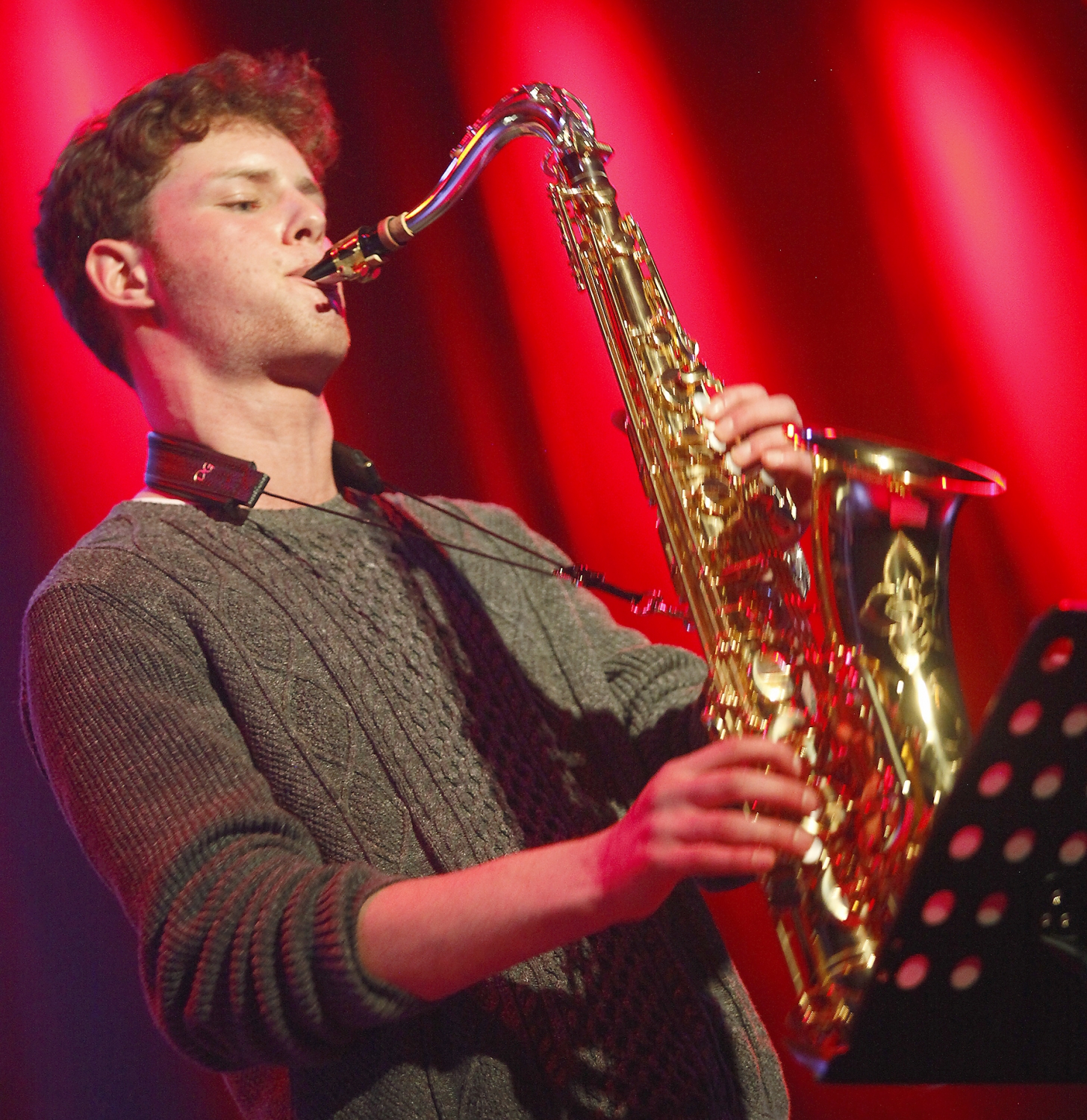
Tom Herfert then showcased his skills on the tenor saxophone with the jazz standards “Solitude” and “Remember Clifford.”


Successfully took on great songs

Christian Michael Eifert then took on Ed Sheeran’s challenging song “Save Yourself” and did a really good job.

Tom Herfert then took the stage once again on saxophone to perform “Old Cowhand” and “Sentimental Mood” by Duke Ellington.

Next, Alissa Thomas sang Etta James’s song “I’d Rather Go Blind.” The talented singer was accompanied by Noah Herrmann’s guitar playing, which blended perfectly with her voice.

Talea Funk (vocals and ukulele) and Evelyn Damer (vocals) brought this evening full of dedication, passion, and emotion to a close with their performance. They performed “Human” by Dodie Clark and Jon Cozart, “I Wanna Be Like You” from *The Jungle Book* (arranged by Tessa Violet and Jon Cozart), and Faber’s “If You Can’t Swim, You Dive.”

On this freezing cold evening outside, no one in the audience could have regretted choosing to sit in the comfortably heated Steinmühle Forum instead of at home on the sofa.

Just 36 months ago, the Steinmühle Marburg School Association didn’t even own the land; today, the new Steinmühle middle school building has already been officially opened. Nearly 100 guests came to Cappel for the official dedication ceremony, and several of them spoke: expressing their amazement, gratitude, and enthusiasm.

The “Atrium,” as it has been named, stands as an impressive entrance right at the entrance to the Steinmühlen campus. It features 8,800 cubic meters of enclosed space and 1,780 square meters of usable and ancillary space. Twelve classrooms for grades 7–10 have been created here, featuring eco-friendly building technology and modern, future-oriented facilities. Egon Vaupel, chairman of the school association, summed it up: “All the conditions and foundations for successful learning are met here.”

Indeed, the atrium leaves nothing to be desired. It features a group room and a storage room for each grade level, as well as a flexible, divisible space, a kitchen, and a teachers’ lounge. Interactive smartboards with multi-touch systems have long since heralded the end of the chalk era. The view from every window is outstanding: to the south, you look out over the Lahn Valley; otherwise, the view is toward the castle. “It makes you want to go back to school”—that’s what someone said in the auditorium. Guests from the worlds of politics, business, and administration were in attendance, along with the teaching staff—and many others who contributed to the project’s success.


Expertise and Competence

The project didn’t just fall into their laps. As an independently operated school, the Steinmühle cannot automatically rely on public funds. The project, which had a total cost of 6.5 million euros, required the school to provide its own funding. Over 150,000 euros were donated, with 35,000 euros alone coming through the Friends of the School Association. A guarantee from the Marburg-Biedenkopf district supported the portion of the capital requirements covered by loans. The fact that costs remained within budget and completion was on schedule is a testament to the expertise and competence of those in charge. The school association chair said, “Everything was done right.”

Special thanks today went to Managing Director Dirk Konnertz. “He has achieved extraordinary and outstanding results; without him, we wouldn’t have made it,” Vaupel explained. Konnertz highlighted the support and first-rate teamwork he received from school principals Björn Gemmer and Bernd Holly. Working hand in hand, they made what we see today possible.


“The Steinmühle is very persuasive”

“School should be a place where people feel comfortable—in terms of how we treat one another, the atmosphere, and even the visual environment,” said Mayor Dr. Thomas Spies in his speech. He noted that fostering personal bonds is particularly strong at Steinmühle, which is a positive sign. “We’re also pleased about the bilingual elementary school,” the mayor said on this occasion, even though it’s important to keep an eye on the potential impact on enrollment at public elementary schools. The new program, which will launch at Steinmühle at the start of the 2019–20 school year, expands the city’s educational offerings, “another attractive educational building block.” The school sets standards for the education sector, from which everyone ultimately benefits. Spies remarked appreciatively: “The Steinmühle’s appeal is strong.”


Help in Developing One’s Own Personality

“Schools are naturally in competition with one another to develop the best educational approaches,” agreed Marian Zachow, First Deputy District Administrator. Education should change perspectives and ways of thinking and help students develop their own personalities. The Steinmühle fulfills this mission to a high degree.


Georg Ritter, managing director of Steinmühle GmbH & Co. KG— the organization that operates the Steinmühle Boarding School —had words of praise for the school association’s achievements and its projects. The increased collaboration between the boarding school and the school, which was recently put on a solid contractual footing, is already proving very fruitful and is focused on the future: “We still have a lot planned together.”


With local companies

Architect Thomas Oesterle concluded his assessment of the new Steinmühle building from a structural perspective. He noted that the building had been constructed to be future-proof in every respect. Soil improvements achieved by incorporating gravel to a depth of up to four meters had provided a solid foundation for the building, which is located in a flood zone. The project, which was managed by Gade Schlüsselfertigbau GmbH, was completed without any construction accidents, within the prescribed timeframe, and—with one exception—using only contractors from the district. Oesterle remarked with pride: “A showcase project.”

These words certainly fit the musical opening of the event, performed by concert tenor and Steinmühle music teacher Daniel Sans. Accompanied on the piano by concert pianist and wife Marie-Gabrielle Sans, he proclaimed in a powerful voice: “Today is the most beautiful day of my life.” There was certainly some truth to that—at least from Steinmühle’s perspective.


Graduates and master’s students from the programs in Fine Arts, Art Education, Art History, Product Design, and Visual Communication at the Kassel Art Academy hosted their graduation exhibition in December. The exhibition took place in the documenta Hall. The artists’ final projects gave the students of the Steinmühlen Art Elective Course, led by Ines Vielhaben, insight into the quality and diversity of contemporary art and design in Kassel. The report from the Steinmühlen Art Elective Course states:

Armed with their cameras, the students first wandered through the exhibition, capturing the unusual, the surprising, and the thought-provoking from various perspectives. The students agreed: Almost everything about these exhibits is amazing! While they had previously been accustomed to traditional art forms such as drawing, painting, sculpture, film, and design at school, the arrangements in this exhibition seemed to blend all these genres together, employing cutting-edge technical methods and repeatedly subjecting art itself to ironic scrutiny. For example, graduates of the film classes painted over canvases and projected animated drawings of a running figure onto them.

The Creepy Face Scanner

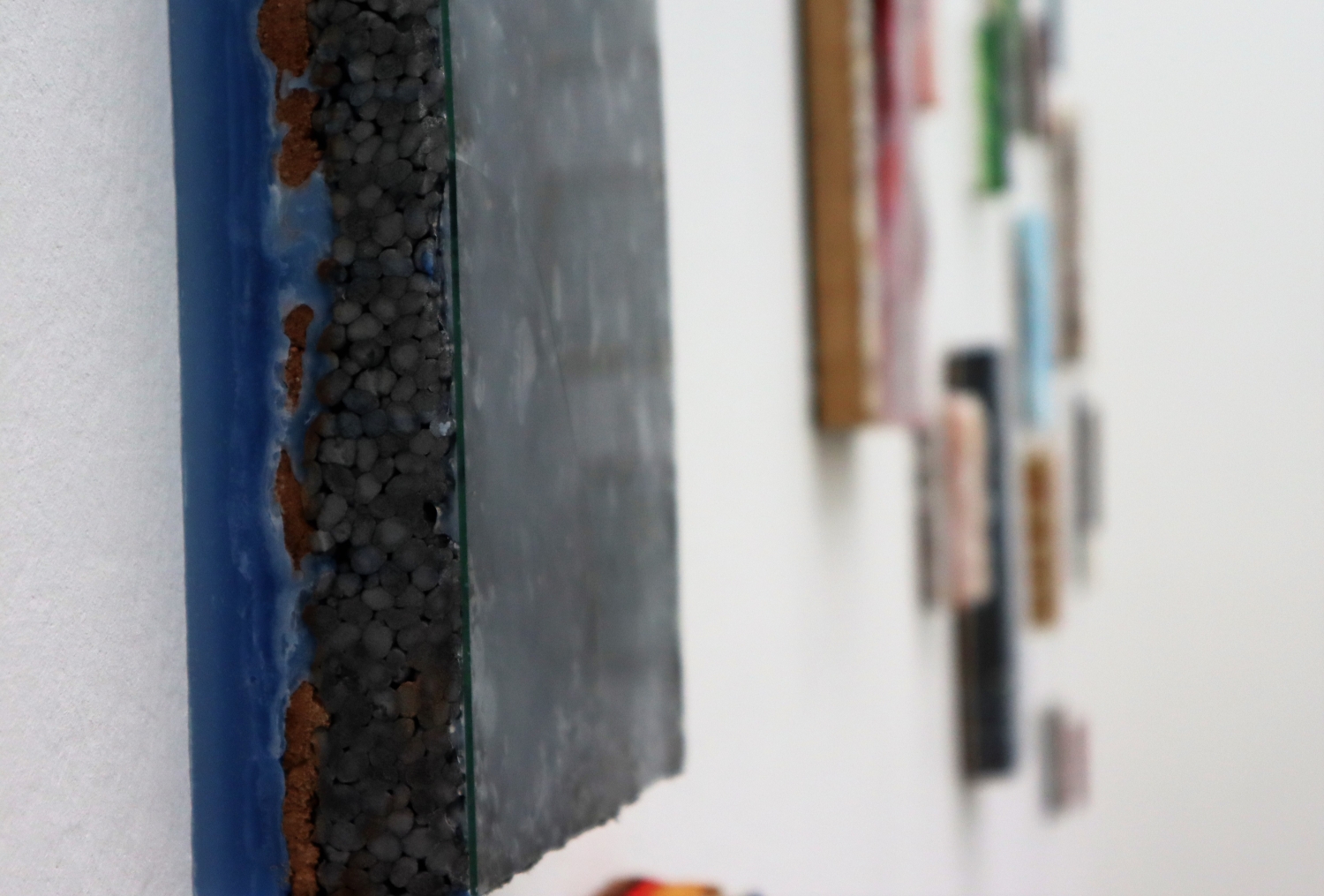
One graduate experimented with seemingly mundane materials from the hardware store and the kitchen to create painterly images that emerged more by chance. A work featuring a facial scanner—which was given its own room—was both unsettling and technically impressive. Here, visitors could interactively animate a virtual face—similar to a video game—by changing their own facial expressions and head position. The face scanner’s learning ability was very unsettling for everyone and hinted at cutting-edge programming for artificial intelligence.


The Changing Role of the Viewer

In an installation that included a real swimming pool, above which a projection screen displaying a video was mounted, the boundaries of art became completely blurred. In the videos, the artist staged herself as she explored existential questions about life and its meaning. Through this artistic work, the students realized that, in addition to the use of unusual materials, the role of the viewer in contemporary art had also changed significantly: By being invited to step into the 37-degree water—swimwear and towels were provided—the viewer became a participating subject, intended to experience a sense of “oneness” with the water and with the other swimmers.


Female visitors as part of the performance

“Even though,” the report states, “none of us accepted this invitation, our small group was to become part of a performance-like presentation.” After an hour of exploring the art exhibition on their own, the students pinned their hopes on a guided tour by a professional art educator that would hopefully explain everything. But the guide, Julian, dashed those expectations right at the start of his tour. He literally slipped into the “role of the educator” by donning a costume, thereby making them—and us—part of a performance: he had photos of the exhibition printed on canvas, from which he had sewn together elements of clothing that exuded power. In this way, as the guide for this exhibition, he demonstrated his authority to us; at the same time, however, this attire reflected his ironic approach to the role of the educator, upon whose shoulders rested the burden of interpretive authority and the evaluation of the exhibition’s exhibits.


Discussing Aspects of Art Studies

Apparently, the older visitors who had intended to join our guide were so unsettled by his slightly provocative manner that only our advanced art class continued to listen to his explanations. Even though Julian didn’t explain the exhibits themselves, he was able to share some insightful background information with us about the creation of the masterclass final projects and the concept behind the exhibition. As the “private tour” came to a close, the students found it particularly exciting to ask him about various aspects of studying art and the art scene.


A visit like being thrown in at the deep end

All in all, this first-time visit to a contemporary art exhibition felt to the students as if they had been thrown into cold water—not 37 degrees. However, the discussions with the guide and former Steinmühle student Maren Eidenmüller about studying at the Kassel Art Academy were so interesting for everyone that no one regretted spending the third Sunday of Advent in the documenta hall instead of enjoying cookies and candlelight. The conclusion: These days, everything seems worthy of being called art and possible within the visual arts. It’s just a matter of how you sell it and how you make your case.


Rowing has a long-standing tradition at Steinmühle Boarding School. Fourteen-year-old boarding student Maxim Dyck seized this opportunity and trained so relentlessly over the past few months that he won the silver medal right off the bat at the Hessian Ergometer Rowing Championships in Frankfurt—and he did so as the youngest competitor in the older 15/16—in his very first official competition!

Before he got into a boat for the first time at the Steinmühle, Maxim had already gained some experience. He took his first strokes on the Moselle near his hometown of Koblenz. From the Rhenania Rowing Club, he brought not only his skills but also a healthy dose of ambition. The new member of the Rudern und Sport (RuS) Steinmühle club quickly decided: I want to achieve something.


Four times a week during practice


No pain, no gain. That’s why this teenager is currently one of the most ambitious athletes in the Steinmühle weight room. He works out there four times a week and accepts that his free time is otherwise rather limited. Little changes in the summer. Then the 14-year-old rows in a single scull and trains at the same pace on the Lahn.

One of Maxim’s role models is RuS athlete Lucas Schäfer. It’s therefore hardly surprising that his goal is to become the Hesse champion himself one day. Just like Lucas, Maxim discovered cycling as a complementary sport to help with his training. “A good complement,” he says.

The fact that the boarding school student feels the RuS coaching staff fully supports his ambitions—and that, in his view, the club offers everything needed for successful rowing—makes it all come together. The fact that his parents support his rowing also gives the young rower a sense of security.

In his report, RuS coach Martin “Stromi” Strohmenger described Maxim as a “promising talent,” so it will be interesting to see how things unfold. The boarding school and rowing club community at Steinmühle will certainly be following Maxim’s activities with interest.


On the left in each photo: Maxim Dyck