• Anruf
  • E-Mail
  • Zu Facebook
  • Zu Instagram
  • Zu LinkedIn
Loading
Steinmühle – Schule & Internat
  • About us
    • Organization & History
    • Teams
    • Stakeholders
    • Internal clubs
      • Riding School
      • Rowing Club
      • Friends of the School Association
    • Partners
    • Mission Statement & Vision
    • Ecology & Sustainability
    • A Safe Place
    • Quality Management
  • School
    • High School
    • Bilingual Elementary School
    • Project-Based Learning
    • Promoting STEM Talent
    • Languages & International Affairs
    • Sports & Health
    • Art, Music & Theater
    • Social Responsibility
    • Digitization
    • Promoting Independence & Individuality
    • Social Responsibility & Strengthening the Community
  • Boarding School
    • Boarding School as an Opportunity
    • Support for Families
    • Life
    • Learning
    • Sports & Recreation
    • Trips & Weekends
    • Talent Program Plus STEM
    • Fit for Life
  • Admission
    • Boarding School Admission
    • High School Admission
    • International High School Program
    • Bilingual Elementary School
    • Costs & Contract Terms
  • News
    • News
    • News Archive
    • Events
    • Support Current Projects
  • Friends & Alumni
    • Stories
    • Alumni Reunion
    • Steinmühle Alumni Network
  • Fan Shop
  • English
    • German
    • Spanish
    • French
    • Italian
    • Russian
  • Search
  • Menu Menu
  • English
    • German
    • Spanish
    • French
    • Italian
    • Russian

Understanding Life on Earth: A Journey with Dr. Judith Klatt to the Earth’s Beginnings

Collaborations & Partnerships, News, STEM

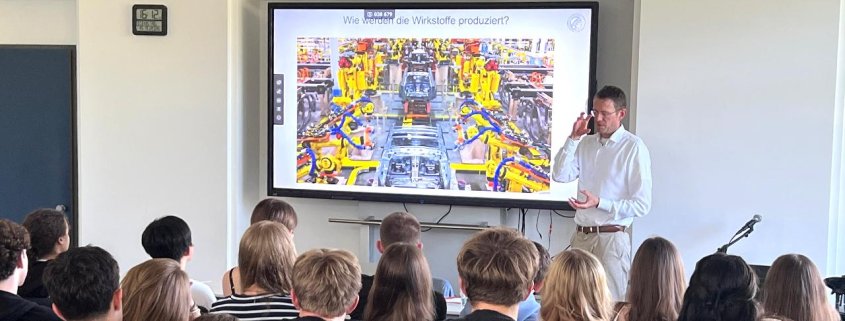
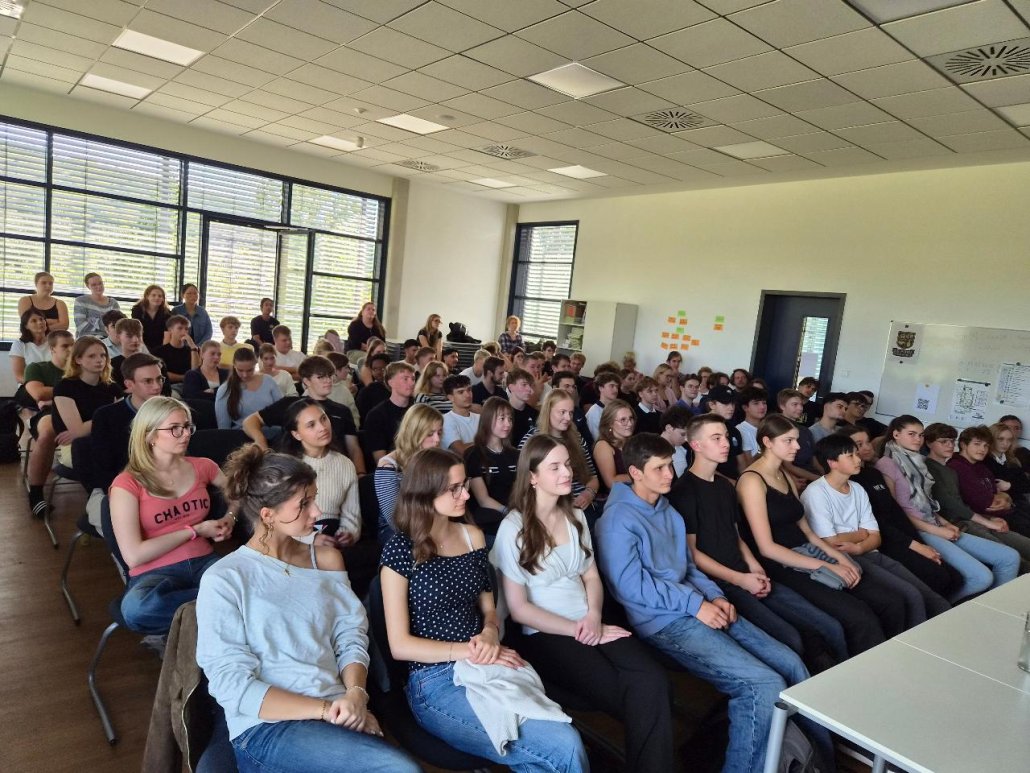
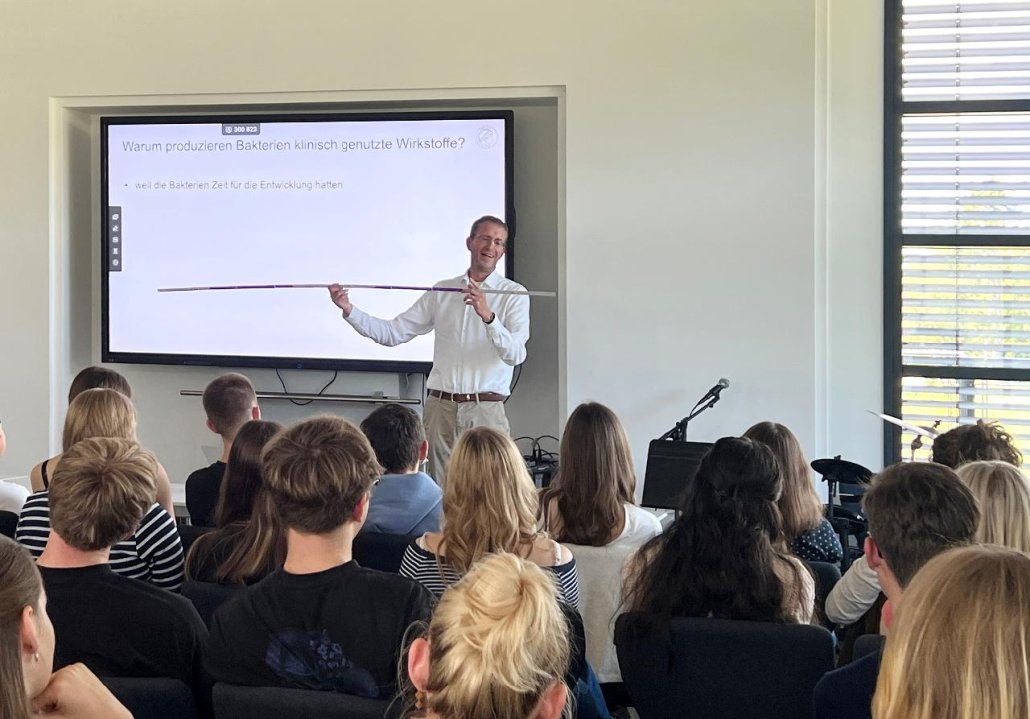
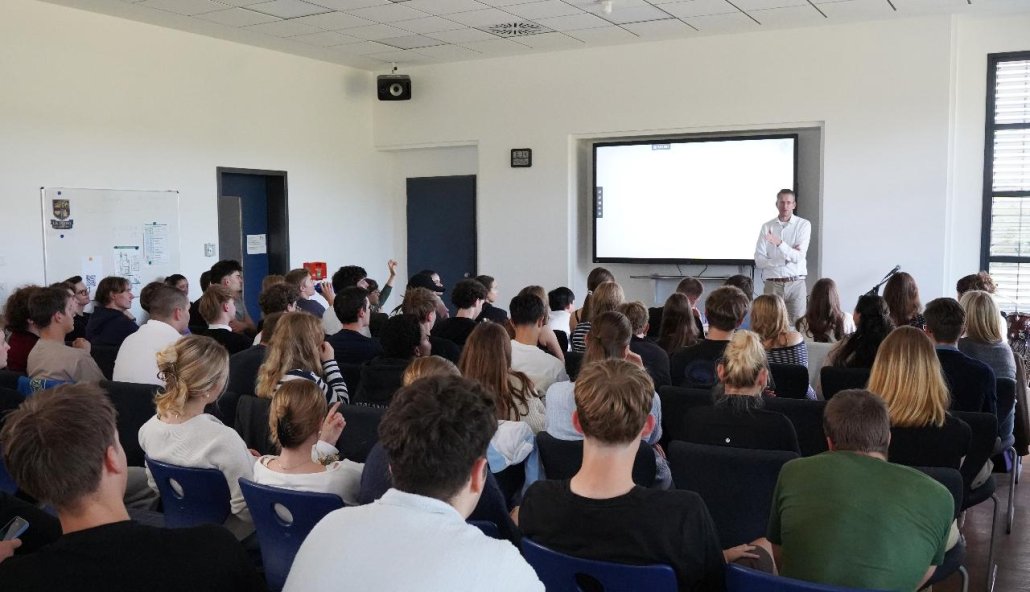
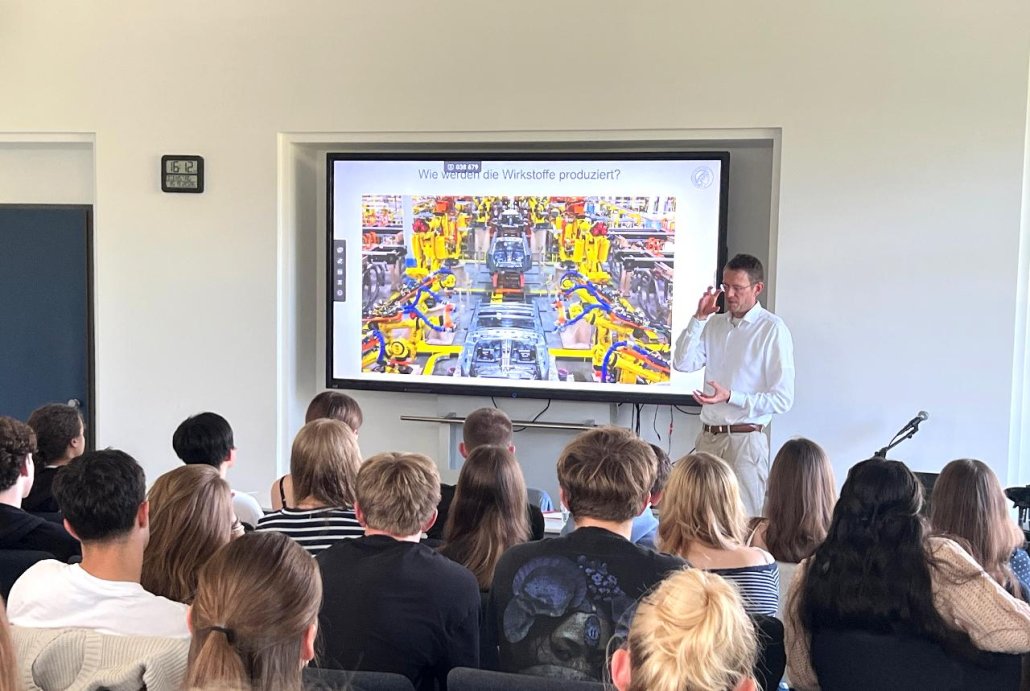
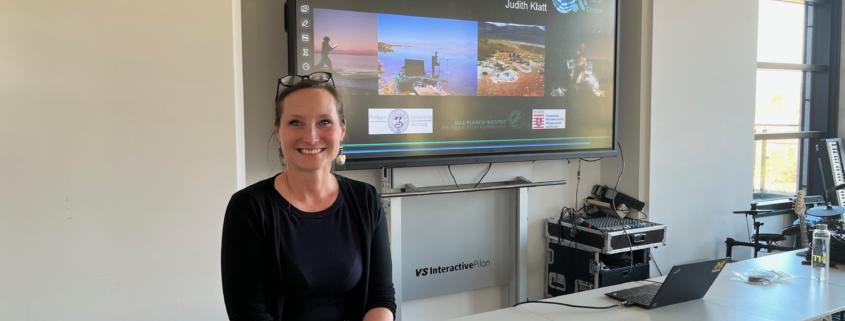
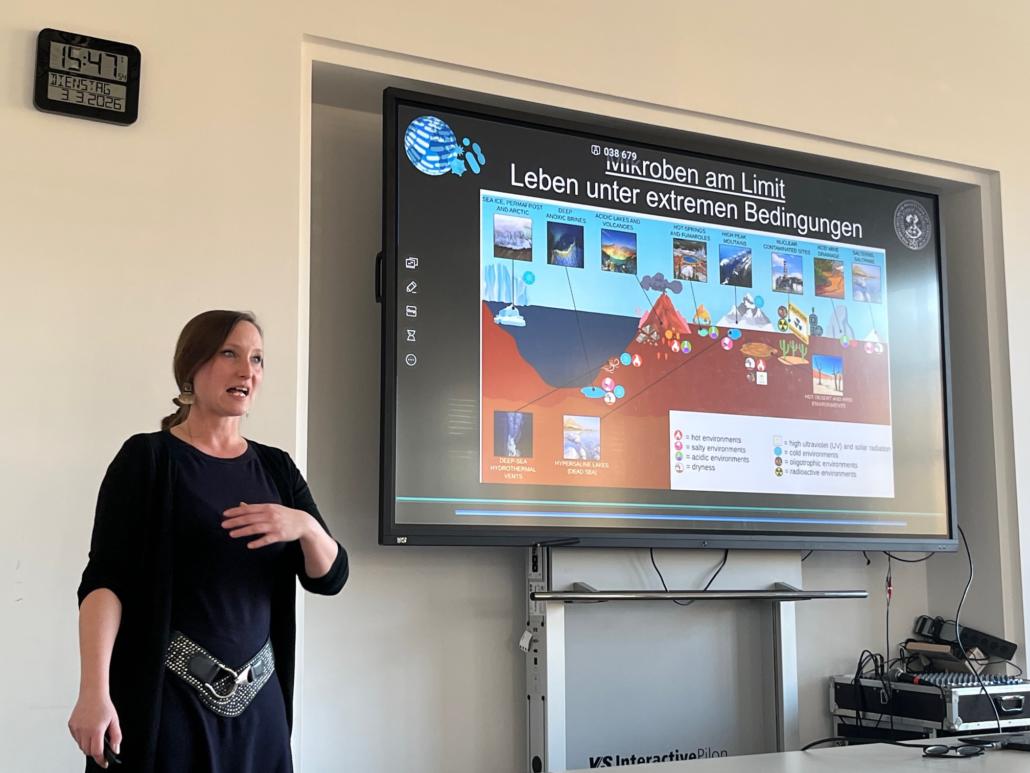
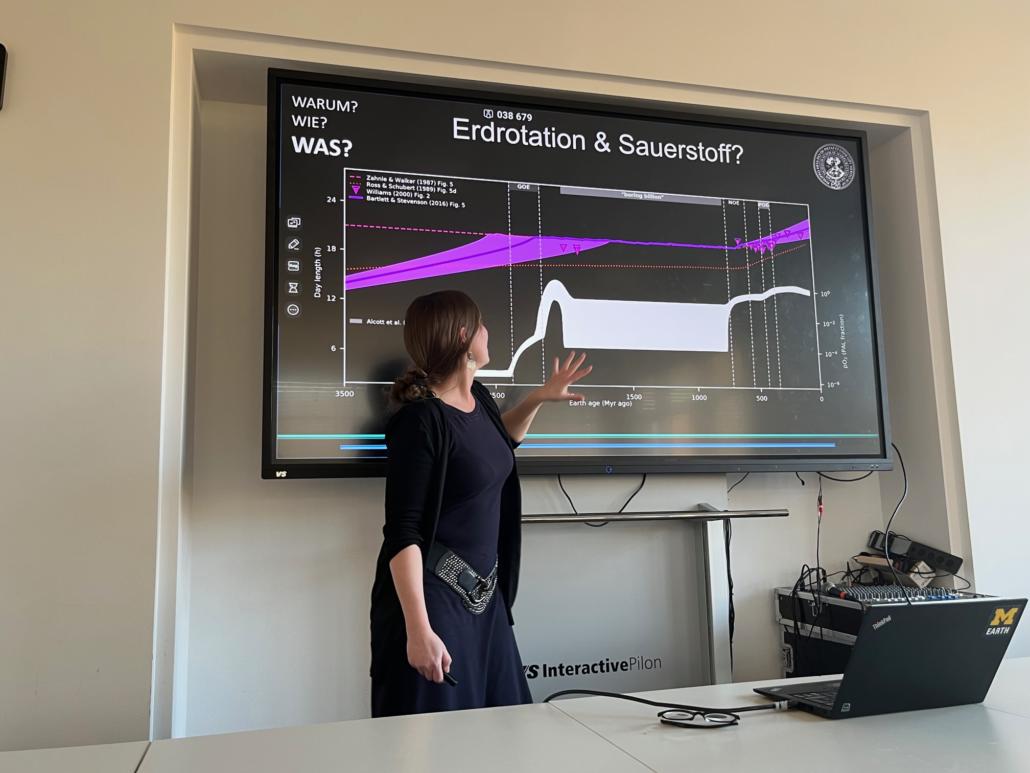
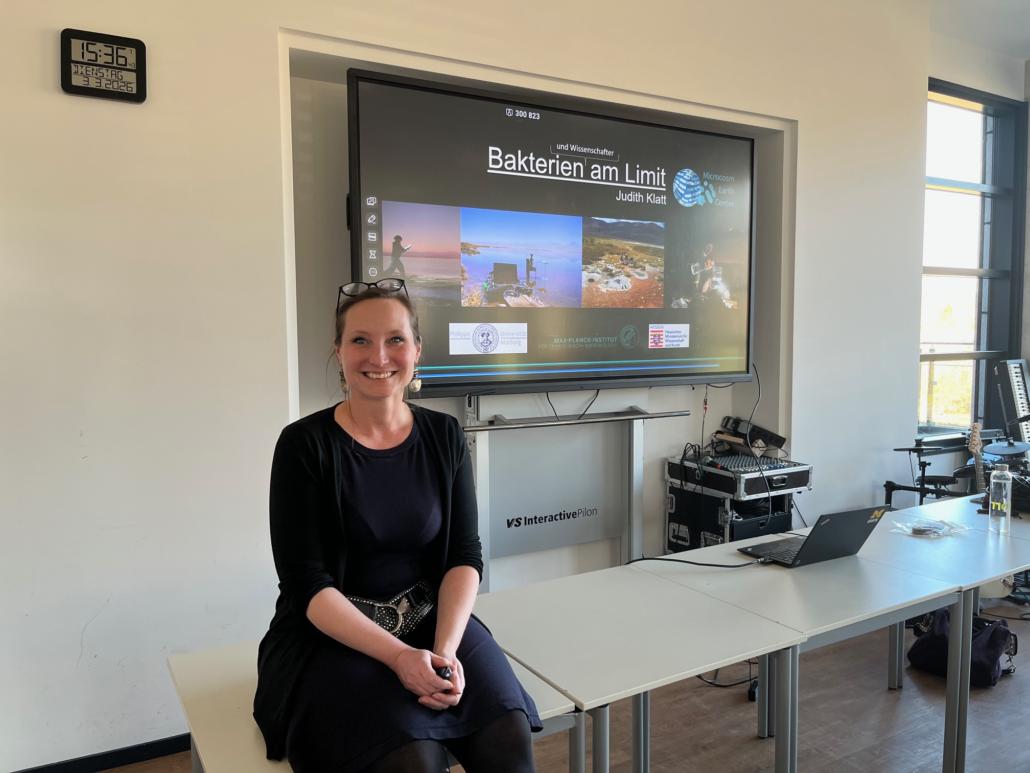
High UV radiation, heavy metals, extreme temperature fluctuations, low oxygen levels: some microbes thrive in places it’s hard to even imagine. Geomicrobiologist Dr. Judith Klatt, who has been working at the Max Planck Institute for Terrestrial Microbiology in Marburg since 2022 and serves as a research group leader at the Mikrokosmos Erde Future Center, took her audience at the Steinmühle on research journeys to explore these microbial survival experts.


Interdisciplinary Work

The scientific lecture “Bacteria at the Limit” was also a journey back to the very first microbes and the origins of life: “It’s about understanding microbial life and, at the same time, the limits of life,” said Dr. Judith Klatt. This understanding emerges at the intersection of several disciplines: physics, biology, and chemistry.


A broad temporal scope

One of Dr. Klatt’s research sites, for example, is Hawaii: “Our work opens a window into Earth’s history spanning a timeline of 4.5 billion years,” the researcher reported, thereby giving her audience an idea of the temporal scale under consideration. Environmental science topics are also frequently incorporated into her research stays, helping to better understand the fluctuations in maximum temperature and in the oxygen and CO2 levels of the atmosphere throughout Earth’s history. According to Dr. Klatt, both are very closely linked to the “global microbiome.”


Fundamentals of Molecular Biology

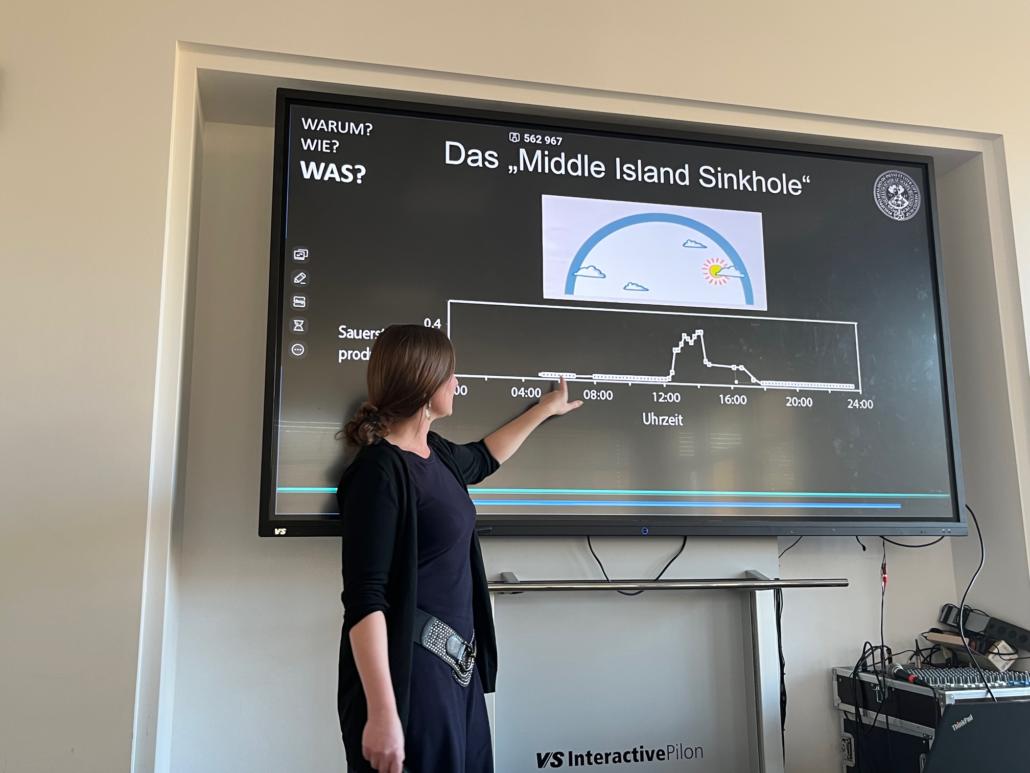
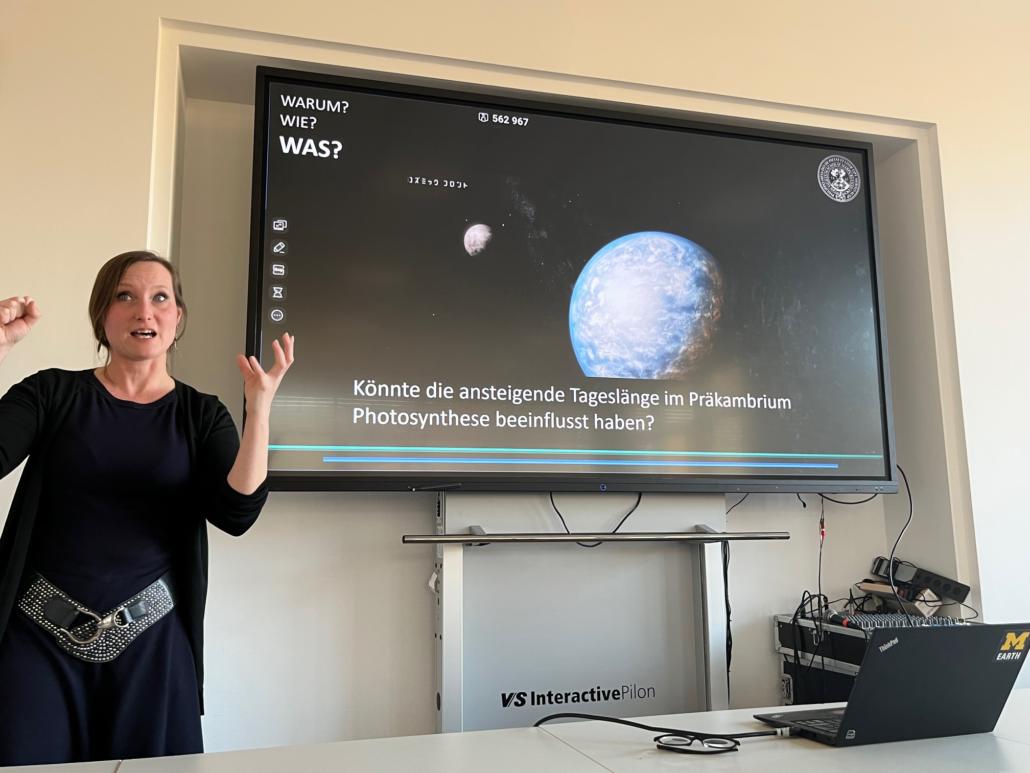
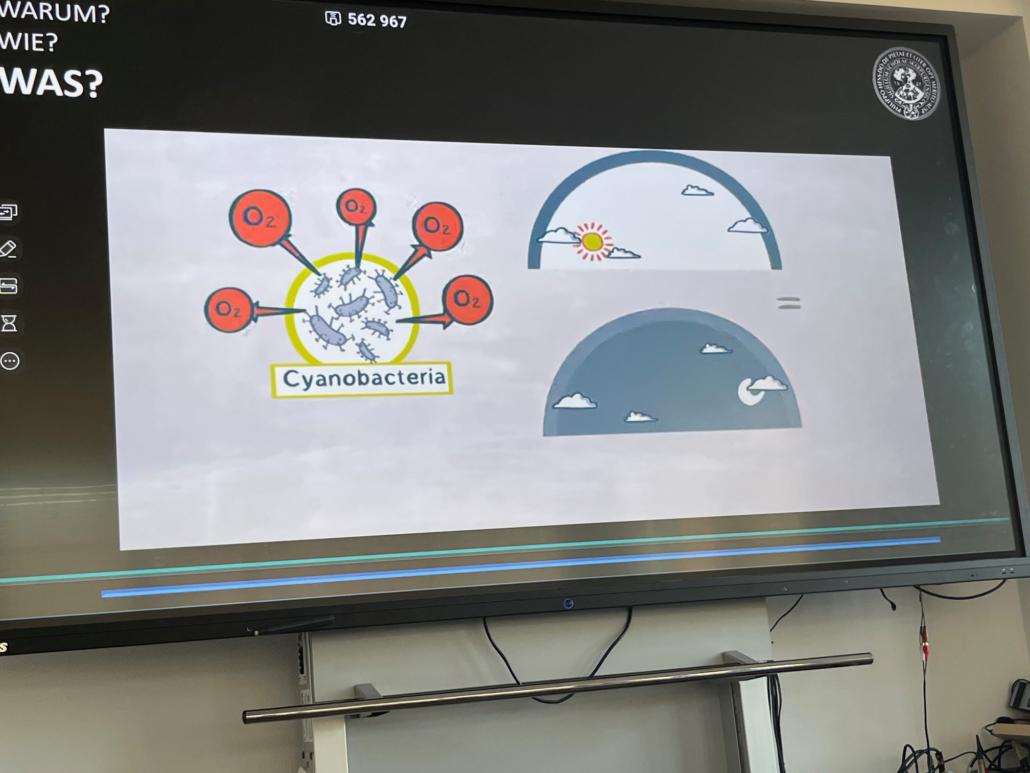
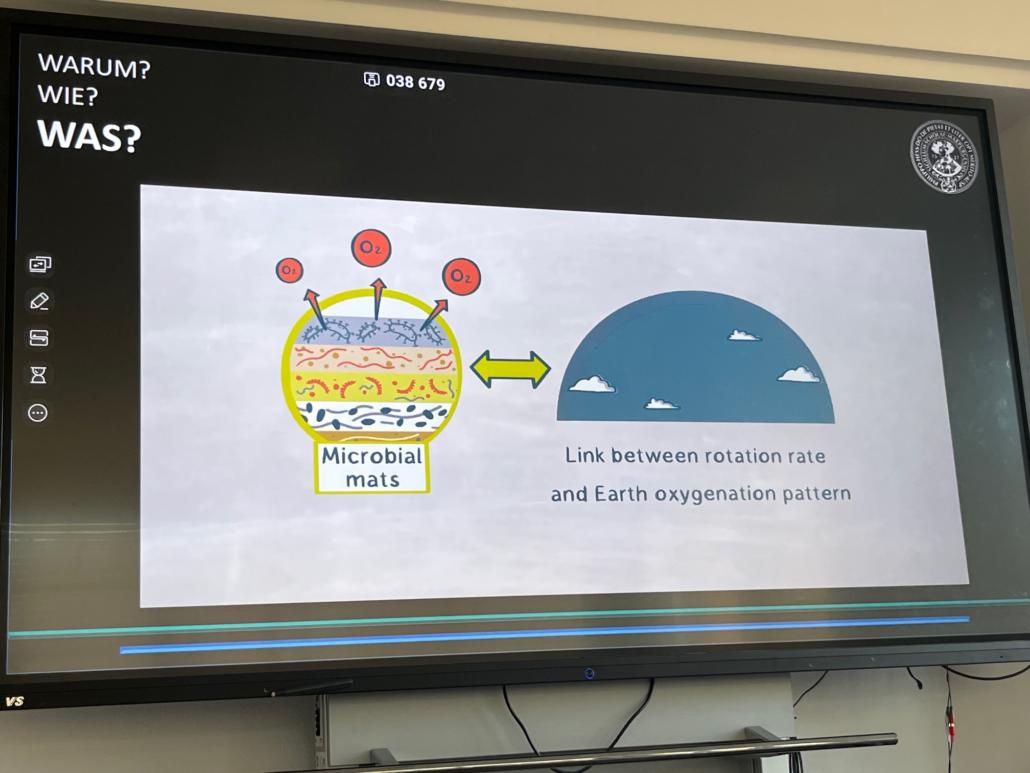
Extreme habitats continually open up new horizons for research and research teams. For example, the fundamentals of molecular biology were isolated from microbes in extremely hot or cold habitats: these include the enzymes used in polymerase chain reactions (PCR), which form the basis for paternity tests and DNA fingerprinting in forensic science. Microorganisms such as cyanobacteria—commonly known as blue-green algae—have also been responsible for oxygen production and played a key role in the oxygenation of our atmosphere during the Precambrian era. Cyanobacteria are single-celled organisms that live in both fresh and saltwater and obtain their energy through photosynthesis, much like our green plants. This process produces oxygen, which escapes from the “microbial mats” and can be measured by Dr. Klatt’s team, for example, using microsensors.


Research Under the Most Challenging Conditions

“It can be difficult to work in the field,” the speaker recalled, citing, for example, a research trip to the high Andes at an altitude of 3,000 meters. A 24-hour trek to the nearest supermarket presented the research team not only with the challenge of answering their research question using complex methods but also with the difficult task of self-sufficiency. No stable life for microorganisms has been detected there so far. Oxygen alone, therefore, is not a reliable indicator of life.


Impressive photos

At the Max Planck Institute for Terrestrial Microbiology in Marburg, the extreme conditions that the research team encounters in the field are also simulated in the laboratory. “While we can never quite replicate the conditions from field research exactly as they occur in nature, this approach still allows us to study the enormous dynamics within an extreme habitat very realistically, even over longer periods of time,” explains Dr. Judith Klatt, who illustrated her presentation with impressive photos and sparked great enthusiasm among the students with her talk.


Outstanding Researcher

Through her work, Dr. Judith Klatt helps make Marburg a center of excellence in cutting-edge research. In 2024, for example, she was awarded an ERC Starting Grant by the European Research Council.

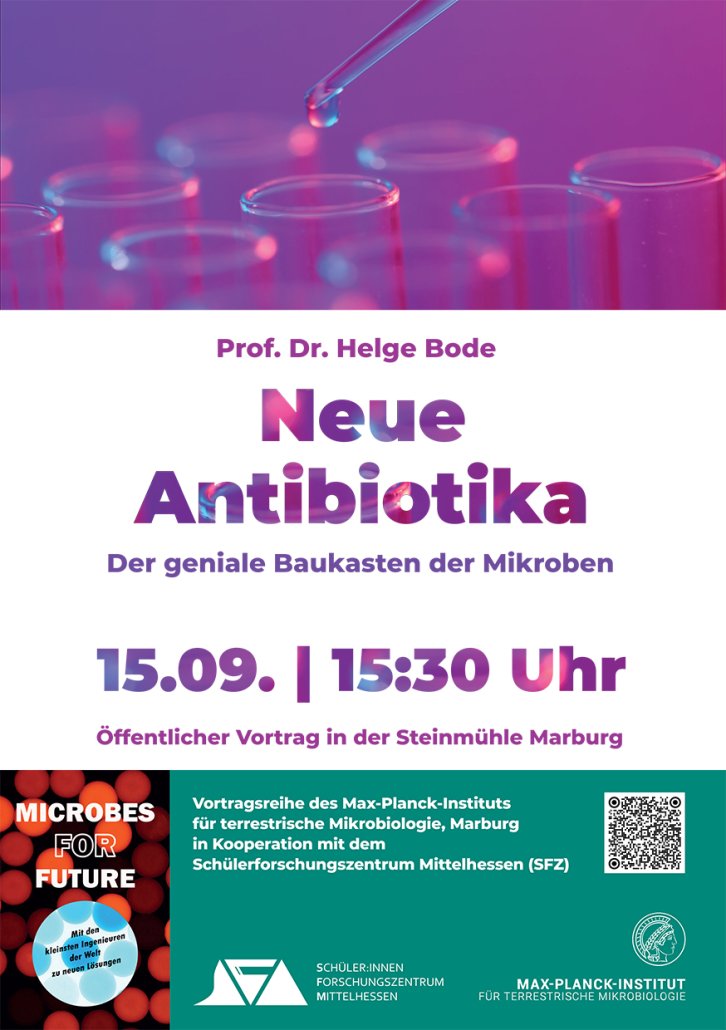
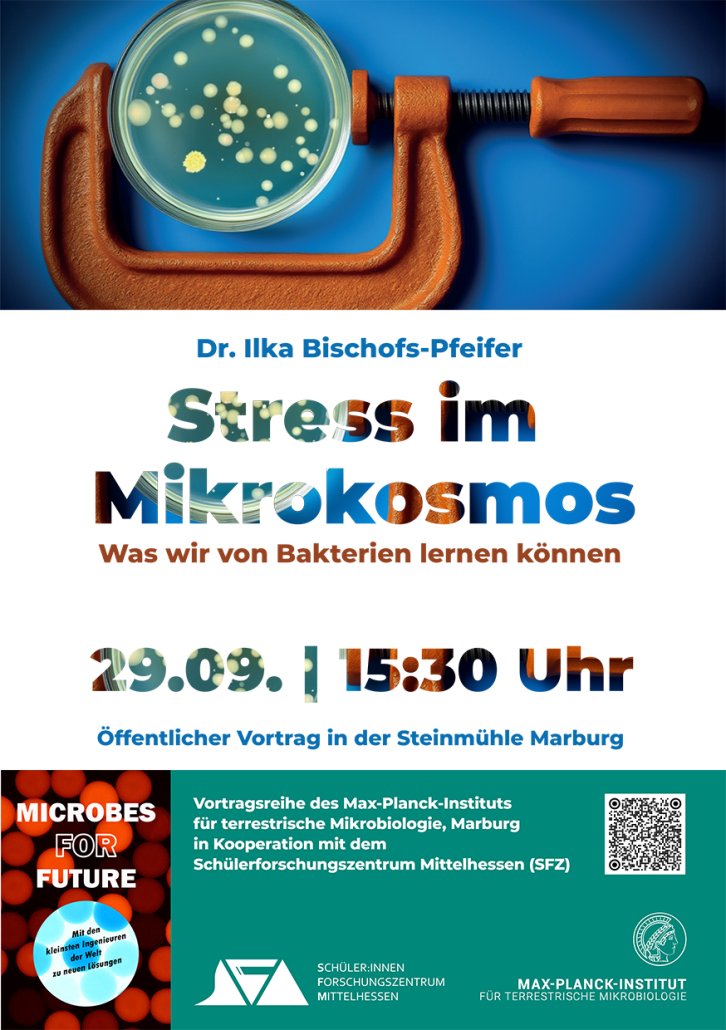
The presentation was part of the “Microbes for Future” lecture series organized by the Max Planck Institute for Terrestrial Microbiology in Marburg in cooperation with the Central Hesse Student Research Center (SFZ).

The scientific presentations will continue.

(Angela Heinemann / Dr. Sven-A. Freibert)

24. April 2026
https://steinmuehle.de/wp-content/uploads/sites/5/2026/04/IMG_0695-scaled.jpeg 1125 1500 Angela https://steinmuehle.de/wp-content/uploads/sites/5/2025/11/Logo_SchuleInternat_Steinmuehle_2026_3.png Angela2026-04-24 19:43:532026-06-19 07:34:09Understanding Life on Earth: A Journey with Dr. Judith Klatt to the Earth’s Beginnings

Microbes and the Climate Crisis: A Top-Notch Lecture Sparked Interest in Research

Collaborations & Partnerships, News, STEM

Conveying complex topics in a way that is tailored to the audience—this is, at best, a skill possessed by professors, lecturers in general, and also by teachers. With this in mind, Björn Gemmer, principal of Steinmühle School, expressly praised the Marburg-based biologist and chemist Prof. Dr. Tobias Erb of the Max Planck Institute for Terrestrial Microbiology for his public lecture at Steinmühle.

About 100 interested attendees came to hear the presentation on the topic “Microbial Power—New Paths Out of the Climate Crisis.” In the auditorium were students from the advanced biology classes in grades Q2 and Q4, students from the introductory biology class in our Q4, as well as external attendees and all members of the plus-MINT group from Steinmühle.


How can microbiology help reduce the CO2 content of the atmosphere?

That was the topic of the lecture, which biology and math teacher Dr. Sven Freibert—a member of Steinmühle’s Plus-MINT support team—summarized as follows:


The “terrestrial microbiome” plays an enormously important role in the carbon cycle. The sequestration of CO2—including anthropogenic CO2—is carried out almost entirely by terrestrial plants and aquatic microorganisms. The latter are primarily found in the world’s oceans. However, the efficiency of CO₂ fixation by microorganisms is not very high. Due to the comparatively high availability of CO₂ throughout both the older and more recent geological history, there has been—and continues to be—no evolutionary pressure to significantly improve this efficiency.

Microbiology—or, more specifically in this case, synthetic microbiology—and, above all, the team led by Prof. Dr. Tobias Erb has now made this “problem” of efficiency the focus of its research. The goal is to use microbiological, genetic, and biochemical methods to identify and isolate metabolic pathways in microorganisms and increase their efficiency, with the ultimate aim of using these molecular machines for artificial CO₂ fixation. It should be noted, however, that the goal is not to release artificially produced microorganisms!

Another approach being pursued by Prof. Erb’s team is to genetically modify crops that are grown in large quantities so that these plants can fix CO2 more efficiently. This would have the dual advantage of removing large amounts of anthropogenic CO₂ from the atmosphere and enabling the plants to grow significantly faster, which in turn would make food much more readily available and thus contribute to global food security. “Killing two birds with one stone”!


The audience’s full attention

It’s not usually the case that an audience listens spellbound to a speaker from start to finish. Tobias Erb managed to hold the audience’s full attention throughout his nearly 45-minute presentation. He struck the right balance between technical expertise and clarity, and during the subsequent Q&A session—which lasted about 30 minutes—it became clear that he had truly engaged the audience with his content.

In closing, Erb expressly praised the keen interest shown by the Steinmühlen students as well as the quality of their questions.


Speaker Sparked Interest in Research

Professor Erb began by introducing the Max Planck Institute in Marburg as one of a total of 86 Max Planck Institutes. He highlighted the quality of the research, which is evident not least in the numerous awards, including several Nobel Prizes. The scientist highlighted the work of the international research teams and sparked an interest in scientific research.


Central Hesse Student Research Center as the organizer

In closing, Steinmühlen School Principal Björn Gemmer thanked not only the speaker, Prof. Dr. Tobias Erb, and Dr. Virginia Geisel, the press officer, but also the Central Hesse Student Research Center, which initiated and organized the event. As part of this group, Steinmühle is hosting four lectures in the “Microbes@School” lecture series.

(Gem / Dr. S. Freib / Heinm)
 

16. April 2026
https://steinmuehle.de/wp-content/uploads/sites/5/2026/04/20260223_155339-scaled-1-scaled.jpg 1125 1500 Angela https://steinmuehle.de/wp-content/uploads/sites/5/2025/11/Logo_SchuleInternat_Steinmuehle_2026_3.png Angela2026-04-16 19:57:392026-06-19 07:34:02Microbes and the Climate Crisis: A Top-Notch Lecture Sparked Interest in Research

Plus-MINT Boarding School Steinmühle Won the State Championship at “Jugend forscht”

Contests & Awards, News, STEM, Talent Development

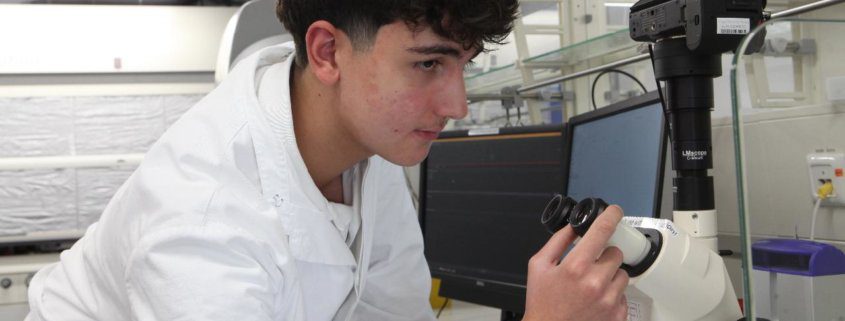
Anyone who claims that young people today lack an interest in the natural sciences and fail to achieve success in those fields clearly hasn’t yet taken a look around the plus-MINT boarding school Steinmühle. There, in fact, the students have racked up one victory after another in the “Jugend forscht” competitions. Akaash Bhagwat (14) and Emil Zuckermann (12) recently took first place in physics at the state level in this competition.
 

A Dedicated Team of Teachers

There’s a whole team of students at Steinmühle High School who are investing a lot of enthusiasm and time in the subjects of math, computer science, natural sciences, and technology. An amazing fact: Not a single one of them went home empty-handed from this year’s “Jugend forscht” competition! The fact that Steinmühle in Marburg stands out from surrounding high schools with these results also makes the teachers proud. STEM coordinator Dr. Jutta Töhl-Borsdorf says, “Our students are eager to do research, and we as a team of teachers support them in that.”

It goes without saying that this team itself consists of die-hard scientists. However Dr. Jutta Töhl-Borsdorf, Dr. Sven Freibert, Malte Klimczak, Dr. Eva Neumann, Antje Seel, and Dr. Patrick Szabo manage to do it—they manage to inspire the young people.


“An outstanding piece of work”

The laudatory speech for the winners of the Hessian state competition “Jugend forscht” in physics, Akaash Bhagwat and Emil Zuckermann, certainly offers deep insight: “…They presented an outstanding project on the topic “Smart Fluids—Smart Cars?”, which impressed us with its exceptionally high level of motivation and genuine interest in the subject.
We particularly appreciated your highly structured scientific approach, in which you systematically varied influencing factors independently of one another, conducted measurement series meticulously, and evaluated your results in a clear, meaningful, and reproducible manner,” the laudatory speech states.


What had Akaash and Emil done?

Since both students are huge car fans, it was obvious: their joint research project would be about cars. The two teenagers investigated the viscosity of MR fluids. Magnetorheological (MR) fluids are smart functional fluids that change their viscosity—that is, their viscous properties—from liquid to semisolid within milliseconds when exposed to a magnetic field. Using various measurement methods, Akaash and Emil developed a working prototype for adaptive shock absorbers. — A success that earned them press coverage, including an article and a video, about their research.

Considering that in the previous regional qualifying round, all 6 of the 6 teams from Schule & Internat Steinmühle that competed had emerged victorious, that fact alone must be described as absolutely extraordinary. The fact that several Steinmühle teams subsequently competed at the very top at the state level is evident from the following list:


The “Jugend forscht” winning teams in the regional competition (RW) and the state competition (LW):

Felix Sacher (10th grade) and Sophie Sacher (6th grade) / Topic: AIceBear cares everywhere—AI assistance system for chronically ill children: RW 1st place in the “Working World” category, LW 2nd place in the “Working World” category & Special Prize from the German Hearing Aid Industry Association

Aurelia Wild, Marietheres Schwabe, Fatma Sepetcigil (5th grade) / Topic: Making Baby Diapers More Eco-Friendly—Plant Power Instead of Superabsorbents: RW 1st Place in Chemistry, LW Geolino Special Prize (Participation in the “Jugend Forscht Junior” competition)

Marlene Jerrentrup, Ida Watzlawek (6th grade) / Topic: Living Foam Experiment: Elephant Toothpaste: RW 1st Place in Chemistry, LW 2nd Place in Chemistry & Special Prize from the German Chemical Industry Association (VCI) (Participation in the “Jugend Forscht Junior” competition)

Lotte Wagner, Isabella Kuhl (7th grade) / Topic: The Formula for Flight: RW 1st place in physics, LW 2nd place in physics & special award for attention to detail (participation in the “Jugend Forscht Junior” competition)

Lara Khatib, Giorgia Kuhn (8th grade) / Topic: The Gen2 Horse Paper: RW 1st Place in the “Working World” category, LW Special Prize for Materials and Substances (Institute of Materials Science and Engineering). Participation in the “Jugend Forscht Junior” competition.

Akaash Bhagwat (8th grade), Emil Zuckermann (6th grade) / Topic: Smart Fluids—Smart Cars? MR fluids as metamorphic shock absorbers; RW: 1st place in Physics & Special Prize in Physics (game prize); LW: 1st place in Physics and the plusMINT Special Prize for Creativity in Physics. “Fascination with Electric Cars” experiment kit.


Unfortunately, there is no national competition in this category.

Akaash and Emil also participated in the “Jugend Forscht Junior” competition, which is for their age group. There is no national finals round in this competition category. However, both have been invited to the plusMINT Research Camp in Louisenlund in early August. — Have fun there, you two!

(Angela Heinemann)


Oberhessische Presse, April 7, 2026

7. April 2026
https://steinmuehle.de/wp-content/uploads/sites/5/2026/04/P3-scaled.jpg 848 1500 Angela https://steinmuehle.de/wp-content/uploads/sites/5/2025/11/Logo_SchuleInternat_Steinmuehle_2026_3.png Angela2026-04-07 20:23:472026-06-19 07:34:02Plus-MINT Boarding School Steinmühle Won the State Championship at “Jugend forscht”

Doing math, tinkering, having fun: A visit to the Steinmühle for the +MINT Camp

Collaborations & Partnerships, News, STEM, Talent Development

A Flurry of Activities at the +MINT Boarding Schools: Together with a total of eight students from Schloss Louisenlund and Schloss Neubeuern, a team from Schule & Internat Steinmühle kicked off this year’s +MINT Camp. In addition to plenty of information and activities related to math, computer science, natural sciences, and technology, there was lots of fun and plenty to marvel at.


With kangaroo jumps

Some aspects were familiar from previous years’ camps, while others were new: For the first time, the event took place in March and was combined with the Kangaroo Competition. Under the proven leadership of Maximilian Moll, a math teacher at Steinmühle, the group headed to the Lahnberge, among other places, where Dr. Patrick Mehlitz, a professor of mathematical optimization, was waiting with his workshop on Eulerian graphs.

Another workshop on knot theory was held the following day, led by Prof. Dr. Oliver Goertsches.

The program also included the traditional visit to Pfeiffer-Vacuum in Aßlar to learn about state-of-the-art vacuum technology.

To find out just what a beautiful city the Steinmühle is actually located in, we naturally set out to explore Marburg, packed with a lunch to go.


Mathematikum: Educational and entertaining

“The world is—according to Pythagoras—numbers. And no one does the math.” That was the title of Dr. Muth’s workshop. It took place at the Steinmühle.

The grand finale of the four-day event was a visit to the Mathematikum in Giessen (cover photo). This is a well-established and engaging part of the program that demonstrates in many ways that math doesn’t have to be so “dry,” but instead holds plenty of surprises.


The dinner event was a culinary highlight

Events at the Steinmühle are renowned for their attractive supporting program and excellent catering. And this year’s +MINT Camp once again lived up to that reputation. Refreshments in the bistro with snacks and drinks, delicious meals in the Steinmühle cafeteria prepared by Chef Sebastian Riehl and his team, and topped off by a festive dinner.


Which rocket flies the highest?

For some entertainment in between activities, participants took part in a rocket competition, the goal of which was to build a water-pressure-powered rocket and make it fly as high as possible. And for those who wanted to get some exercise themselves in addition to launching their rockets, there were various sports activities to choose from.

Our takeaway: It was great hanging out with you guys, and we had a lot of fun! — We’ll say: Ciao — see you next time!

(Angela Heinemann)


25. March 2026
https://steinmuehle.de/wp-content/uploads/sites/5/2026/03/IMG_4579.jpeg 960 1280 Angela https://steinmuehle.de/wp-content/uploads/sites/5/2025/11/Logo_SchuleInternat_Steinmuehle_2026_3.png Angela2026-03-25 18:32:302026-06-19 07:33:44Doing math, tinkering, having fun: A visit to the Steinmühle for the +MINT Camp

Outperforming the “Informatik-Biber”: Joel and Emil Beat the Highest Score

Contests & Awards, News, STEM, Talent Development

With a performance that far exceeded the standard required for first place, Steinmühlen students Joel (left) and Emil (both in 6a) impressed the judges at the Germany-wide Informatik-Biber competition.

Among the 204,150 participants in grades 5 and 6, they were ultimately among the nearly 2 percent who took home a first prize. That required 117 points—but Joel and Emil scored 144!

The two classmates had worked together as a team on the same screen—and that clearly worked out wonderfully, said computer science teacher Steffen Ullwer. Like his two students, he, too, was awarded a certificate for this remarkable achievement.

All we can say is: Hats off to such talent in computer science! We’re sure we’ll be hearing even more from you in the future.

(Angela Heinemann)


9. March 2026
https://steinmuehle.de/wp-content/uploads/sites/5/2026/03/IMG_0716-e1773089206751-scaled.jpeg 794 1500 Angela https://steinmuehle.de/wp-content/uploads/sites/5/2025/11/Logo_SchuleInternat_Steinmuehle_2026_3.png Angela2026-03-09 21:48:162026-06-19 07:32:44Outperforming the “Informatik-Biber”: Joel and Emil Beat the Highest Score

Seeking Participants: Who would like to take part in our concentration study?

News, STEM, Surveys & Studies

Are you between 14 and 19 years old? Are you interested in learning more about when and why it’s easier or harder to concentrate? Would you like to support our study by participating? If so, we look forward to hearing from you! Information sessions will be held on March 4 or 9. You can find more details on our poster:


25. February 2026
https://steinmuehle.de/wp-content/uploads/sites/5/2026/02/Konzentrationsstudie-scaled-1-scaled.jpg 1500 1061 Angela https://steinmuehle.de/wp-content/uploads/sites/5/2025/11/Logo_SchuleInternat_Steinmuehle_2026_3.png Angela2026-02-25 21:14:512026-06-19 07:31:14Seeking Participants: Who would like to take part in our concentration study?

More Eco-Friendly Baby Diapers: All Six “Jugend forscht” Projects Took First Place

Contests & Awards, News, STEM, Talent Development

The Steinmühle sent six projects to the regional “Jugend Forscht” competition over the weekend—and returned with six first-place finishes! All of the Steinmühle’s participating projects won the regional title in their respective fields! As a result, the Marburg high school will travel to Kassel from March 20 to 21 with a total of 11 students and five projects to compete in the state competition of “Jugend Forscht Junior.” One group will compete in the state competition for older students in Darmstadt.

Ideas… they don’t really exist. Marietheres Schwabe, Aurelia Wild, and Fatma Sepetcigil from 5th grade had one. In their research, they focused on making baby diapers more eco-friendly—using plant power instead of superabsorbents.

Under the guidance of teachers Dr. Jutta Töhl-Borsdorf and Dr. Patrick Szabo, the group’s project in the “Working World” course sought an ecological alternative to the non-biodegradable superabsorbent used in baby diapers. In extensive tests of absorption capacity, absorption speed, and pressure stability, the students found that a mixture of apple pectin and konjac powder works very well. This combination of materials even passed the practical test in a “modified diaper” with Aurelia’s little brother.


A Closer Look at Elephant Toothpaste

Marlene Jerrentrup and Ida Watzlawek from 6th grade, under the guidance of Dr. Patrick Szabo and Antje Seel, conducted a “Living Foam” experiment in their chemistry class: Elephant Toothpaste

The group investigated how temperature, the amount of yeast, the amount of dish soap, and the concentration of hydrogen peroxide affect the amount of foam produced. Among other things, the young researchers found that you should use a lot of yeast, but not too much dish soap.


Unraveling the Formula for Flight

Isabella Kuhl and Lotte Wagner, seventh-graders, tested the formula for flight under the supervision of Malte Klimczak and Dr. Jutta Töhl-Borsdorf in the physics department.

The two researchers re-examined a recently discovered formula that can be used to calculate the wingbeat frequency of insects and birds based on the animals’ masses and wing areas. To do this, they measured and analyzed free-flying insects and butterflies they had raised themselves using video analysis. They also investigated how changes in the mass of an ornithopter (a wind-up model bird) affect its flight behavior.


A special project by young car enthusiasts

Akaash Bhagwat (8th grade) and Emil Zuckermann (6th grade) focused their project on the potential interaction between smart fluids and smart cars. Under the guidance of Dr. Jutta Töhl-Borsdorf and Dr. Sven-A. Freibert in their physics class, they investigated the fascinating properties of magnetorheological fluids and subsequently conducted experiments they designed themselves, which demonstrated how viscosity and damping behavior can be specifically controlled by magnetic fields. Finally, the students filled the shock absorbers of a model car with the magnetorheological fluid and demonstrated adaptive damping using a ramp test.


Paper made from horse manure has been further developed

Lara Khatib and Giorgia Kuhn from 8th grade worked on further developing their project, which involves producing eco-friendly paper from horse manure. Under the guidance of Dr. Sven Freibert and Dr. Eva Neumann, the two students were able to significantly improve the production of their eco-friendly paper from horse manure in this follow-up project as part of the “Working World” course. Among other things, adding starch reduced the paper’s brittleness. The result is a second-generation (Gen2) paper that is sturdy, thin, uniform, and easy to write on.


The AIceBear is a seasoned competitor

The AIceBear has already traveled with siblings Sophie and Felix Sacher to many competitions, including one in Singapore (as we reported). Now, the project—an AI-driven assistance system for chronically ill children—has been presented at Jugend Forscht in the “Working World” category and has qualified directly for the state competition. To present it to the jury, they’ll be heading to Darmstadt at the end of March, while the younger students will have to explain their experiments to the experts in Kassel.

The students are feeling confident about the next round.

(Angela Heinemann)
22. February 2026
https://steinmuehle.de/wp-content/uploads/sites/5/2026/02/DSC_2983_bearb.jpeg 864 1280 Angela https://steinmuehle.de/wp-content/uploads/sites/5/2025/11/Logo_SchuleInternat_Steinmuehle_2026_3.png Angela2026-02-22 21:15:472026-06-19 07:31:04More Eco-Friendly Baby Diapers: All Six “Jugend forscht” Projects Took First Place

Our Own AI Server: Artificial Intelligence Made in Steinmühle

Digitalization & AI, News, STEM

Thanks to the support of our booster club, chaired by Jasmine Weidenbach, and a wealth of in-house expertise, Steinmühle has had something for several months now that most schools in Germany do not yet have: its own AI server—and with it, true digital sovereignty.

Behind the unassuming server case lies remarkable computing power: Two high-performance NVIDIA graphics cards power state-of-the-art open-source language models—including GPT-OSS-120b, Gemma 3, and Mistral 7b. The OpenWebUI interface makes them intuitive for teachers and students to use. The hardware is deliberately designed to be scalable, ensuring that growing usage will not cause bottlenecks. The server and its features were presented to the faculty at Steinmühle during the school’s internal teacher training program (SchiLF).


The server operates in a completely climate-neutral manner

Steinmühle is particularly proud of its sustainable operations: The server runs entirely climate-neutrally—powered by hydropower and the school’s own photovoltaic system. — So, for us, AI and sustainability are by no means mutually exclusive.

But what exactly can the server do? We’re currently testing several exciting applications: a parent assistant with information about Steinmühle, a resource assistant for the religion department, exam assistants for teachers, and other experimental projects. Everything runs on our own infrastructure—no data leaves the school, and full GDPR compliance is guaranteed.


The Interplay Between Education and Technology

Recent developments also show that we’re on the right track with this approach: We’ve just submitted our entry to a prestigious 2026 competition—with our data-sovereign server at the heart of the concept. We’re very excited to see what happens!

Steinmühle would like to thank the school administration and management for their vision of a school that responsibly combines education and technology. We are proud of our experts, who developed our project and are keeping an eye on its future development.


Contact:

Björn Wagner, teacher at Steinmühle, AI and Data Protection Officer

Till Buurman, IT Specialist for System Integration, member of the Steinmühle IT team, and server administrator

This post was created using AI and edited by Angela Heinemann

19. February 2026
https://steinmuehle.de/wp-content/uploads/sites/5/2026/02/5E6F5C3D-61A0-4A80-8BF4-A4024FF914C3_1_105_c-e1771539694603.jpeg 700 1012 Angela https://steinmuehle.de/wp-content/uploads/sites/5/2025/11/Logo_SchuleInternat_Steinmuehle_2026_3.png Angela2026-02-19 23:22:202026-06-19 07:30:25Our Own AI Server: Artificial Intelligence Made in Steinmühle

Steinmühle Announced the Winners of the Rocket Competition

Contests & Awards, News, STEM, Talent Development

Sign up to participate in the rocket competition, build a water-pressure-powered rocket, and launch it as high as possible on our campus! — That was the challenge issued in project-based learning to physics-enthusiastic students in 6th grade and above.

Several teams got together and began tinkering before later presenting the results of their work to an audience of STEM teachers and classmates.

The rockets could be made of any material, had to have space for an altimeter, and had to include a parachute. The key requirement was that only water-pressure propulsion was allowed.


Start in the cordoned-off area

On the day of the competition, the demonstration began at 2:00 p.m. The setup time in the specially cordoned-off area was also limited—work could not continue for more than an hour.

Finally, the moment had arrived: All the rockets took off one after another. Then it was time to determine which rockets had flown the highest. The winners were later presented with certificates and posed for a photo. They were (from left to right) Emanuel (11d), Jan (11d), Alexander (12 PoWi), Felix (10b), Sophie (6), and Junus (10c).

– A slightly different kind of class that everyone really enjoyed, organized mainly by students Helena Steidl and Luca Weingärtner.
(Heinm)


23. January 2026
https://steinmuehle.de/wp-content/uploads/sites/5/2026/01/IMG_53221.jpeg 960 1280 Angela https://steinmuehle.de/wp-content/uploads/sites/5/2025/11/Logo_SchuleInternat_Steinmuehle_2026_3.png Angela2026-01-23 14:28:392026-06-19 07:29:37Steinmühle Announced the Winners of the Rocket Competition

“We’re all incredibly proud”: A look back at the Sacher siblings’ huge success

Contests & Awards, News, STEM, Talent Development

Well, did you spot them—in the front row, on the left? —As the new year begins, let’s take another look back at what was arguably the greatest science achievement by our school’s elementary and middle school students in 2025: At the end of November, the Steinmühlen siblings Felix and Sophie Sacher not only competed against the world’s best at the World Robot Olympiad (WRO) in Singapore, but they even brought home a trophy: As a team named JustUs, they won the bronze medal! International attention focused on their IceBear project (as we reported at https://steinmuehle.de/blog/2025/07/07/felix-and-sophie-sacher-qualify-for-world-finals-in-singapore-with-robotics-project-2/), and fittingly, the students’ intelligent companion had changed its name shortly before the competition: AIceBear—controlled by artificial intelligence.


The Largest WRO Finals Ever

Last week, 12 German teams competed in the World Robot Olympiad (WRO) World Finals in Singapore. A total of 594 teams from 91 countries were in attendance—making it the largest WRO World Finals ever held.

The competition in the various age groups and categories was correspondingly fierce. There were several top finishes, and we are particularly pleased with the bronze medal won by Team JustUs in the Future Innovators Junior category. In this age group, Sophie and Felix took third place out of 58 teams. “It was a great experience,” they both said.


Technology and Team Spirit Bring People Together Across Borders

The 2025 World Finals in Singapore once again demonstrated how technology and team spirit bring people together across borders. The World Robot Olympiad offers young people the chance to turn their ideas into reality—with enthusiasm, creativity, and technical skill.


Made many friends

“We’re both overjoyed,” the siblings continue, adding: “The International Final was four days full of adventure: After a delegation outing that included temples, streets, and a group visit to a hawker center (a traditional street food hall), three exciting days of competition began. In the three age categories of the Future Innovators, we saw many solutions—some of them very country-specific—related to this year’s theme, ‘The Future of Robots,’ which ties in with the UN Sustainable Development Goals. Team JustUs always drew a large crowd, as AIceBear was exciting not only for the jury but also for visitors, other teams, and media representatives. We formed friendships with other teams, and very soon we at Team JustUs would like to visit our new friends in Cambridge, Turkey, and Singapore.”


AIceBear can now compose music as well

Even the judges assigned to evaluate other teams wanted to see AIceBear; many took advantage of the new feature that Felix and Sophie had added in their hotel room right before the competition: In addition to its many other functions, AIceBear can now sing and compose short songs, tailored to the user’s preferences in terms of theme (e.g., Singapore) and style; this allows it to help create a relaxing atmosphere and a good mood.


Reports in newspapers and on television

There was also a great deal of media interest. The fact that AIceBear greeted visitors not only in English but also in Singapore’s other national languages was reported in newspapers in Singapore, Malaysia, Qatar, and China. A Chinese television crew also interviewed the JustUs team, which ultimately took the bronze medal on the podium.


High praise from the school administration

“My personal congratulations on this outstanding achievement!” commented Björn Gemmer, principal of Steinmühlen School, after the team’s return. “Third place worldwide is simply incredible—and yet so well-deserved—because their entry can be viewed from multiple perspectives and is creative and ethically unquestionably positive. We are all incredibly proud of what Sophie and Felix have achieved.” Björn Gemmer and Managing Director Dirk Konnertz, who were also thrilled by the incredible result of the competition, had worked hard in the run-up to the event to secure a few sponsors to cover at least a small portion of the costs for the family’s trip to Singapore and the transport of their valuable equipment.


The following photos provide a visual recap of the Sacher siblings’ trip to Singapore, the competition, and the impressions they took away from the experience:

(Heinm)


8. January 2026
https://steinmuehle.de/wp-content/uploads/sites/5/2026/01/Delegationsfoto-WRO-scaled.jpg 1000 1500 Angela https://steinmuehle.de/wp-content/uploads/sites/5/2025/11/Logo_SchuleInternat_Steinmuehle_2026_3.png Angela2026-01-08 17:39:272026-06-19 07:28:31“We’re all incredibly proud”: A look back at the Sacher siblings’ huge success
Page 1 of 12123›»

Pages

  • A Safe Place
  • About Us
  • Alternative Sports
  • Alumni Feed
  • Alumni Login
  • Alumni Reunion
  • Annual Calendar Download
  • Art, Music & Theater
  • Awards
  • Bilingual Elementary School
  • Bilingual Elementary School
  • Boarding School
  • Boarding School Admission
  • Boarding School as an Opportunity
  • Charity Projects
  • Contact
  • Costs & Contract Terms
  • Digitization
  • Donation Failed
  • Donation Receipt
  • Donor Dashboard
  • Ecology & Sustainability
  • Elementary School Registration
  • Events
  • Fan Shop
  • Fit for Life
  • Forgot your password?
  • Friends & Alumni
  • Friends of the School Association
  • Funding Partners
  • Fundraising
  • Groups
  • High School
  • High School Admission
  • High School Registration Form
  • Home
  • Internal Clubs
  • International High School
  • International High School Program
  • International High School Registration Form
  • International School
  • International School Registration
  • Keyword Search
  • Languages & International Affairs
  • Learning
  • Legal Notice
  • Life
  • Members
  • MINT Lab Equipment
  • Mission Statement & Vision
  • My Profile
  • News
  • News
  • News Archive
  • Newsletter
  • Newsletter
  • Organization & History
  • Partners
  • Privacy Policy
  • Privacy Policy (Detailed)
  • Project-Based Learning
  • Promoting Independence & Individuality
  • Promoting STEM Talent
  • Publications
  • Quality Management
  • Recording
  • Registration Form for the Bilingual Elementary School
  • Reset Password
  • Riding School
  • Rowing Club
  • School
  • School as a Community
  • Signed up for the newsletter
  • Social Responsibility
  • Social Responsibility & Strengthening the Community
  • Sponsorship
  • Sports & Health
  • Sports & Recreation
  • Stakeholders
  • Steinmühle Alumni Network
  • Steinmühle as a Youth Welfare Agency
  • Stories
  • Summer Camps
  • Support Current Projects
  • Support for Families
  • Talent Program Plus STEM
  • Teams
  • Terms and Conditions for High School
  • Terms and Conditions for the Bilingual Elementary School
  • Terms and Conditions of the International High School
  • Terms of Contract for the Bilingual Primary School
  • Terms of Contract for the International School
  • Trips & Weekends
  • Upload Transcript
  • What is … up to today, anyway?
  • Why Steinmühle?
  • Work at the Steinmühle

Categories

  • Archive
  • Art, Music & Theater
  • Bilingual Elementary School
  • Boarding School
  • Class Trips, Field Trips, and School Outings
  • Collaborations & Partnerships
  • Contests & Awards
  • Digitalization & AI
  • Ecology and Sustainability
  • Events & Celebrations
  • Former Students & Alumni
  • International High School
  • Job Openings
  • Languages & International Affairs
  • Life at Boarding School
  • News
  • Politics, Business & Responsibility
  • Rowing
  • Social Engagement
  • Sports
  • Sports & Health
  • Steinmühle on the Road
  • Steinmühle Riding School
  • STEM
  • Surveys & Studies
  • Talent Development
  • Uncategorized

Archive

  • June 2026
  • May 2026
  • April 2026
  • March 2026
  • February 2026
  • January 2026
  • December 2025
  • November 2025
  • October 2025
  • September 2025
  • August 2025
  • July 2025
  • June 2025
  • May 2025
  • April 2025
  • March 2025
  • February 2025
  • January 2025
  • December 2024
  • November 2024
  • October 2024
  • September 2024
  • August 2024
  • July 2024
  • June 2024
  • May 2024
  • April 2024
  • March 2024
  • February 2024
  • January 2024
  • December 2023
  • November 2023
  • October 2023
  • September 2023
  • August 2023
  • July 2023
  • June 2023
  • May 2023
  • April 2023
  • March 2023
  • February 2023
  • January 2023
  • December 2022
  • November 2022
  • October 2022
  • September 2022
  • August 2022
  • July 2022
  • June 2022
  • May 2022
  • April 2022
  • March 2022
  • February 2022
  • January 2022
  • December 2021
  • November 2021
  • October 2021
  • September 2021
  • August 2021
  • July 2021
  • May 2021
  • April 2021
  • March 2021
  • February 2021
  • December 2020
  • November 2020
  • October 2020
  • September 2020
  • August 2020
  • July 2020
  • June 2020
  • May 2020
  • April 2020
  • March 2020
  • February 2020
  • January 2020
  • December 2019
  • November 2019
  • October 2019
  • September 2019
  • August 2019
  • July 2019
  • June 2019
  • May 2019
  • April 2019
  • March 2019
  • February 2019
  • January 2019
  • December 2018
  • November 2018
  • October 2018
  • September 2018
  • August 2018
  • July 2018
  • June 2018
  • May 2018
  • April 2018
  • March 2018
  • February 2018
  • January 2018
  • December 2017
  • November 2017
  • October 2017
  • September 2017
  • August 2017
  • July 2017
  • June 2017
  • May 2017
  • April 2017
  • March 2017
  • February 2017
  • January 2017
  • December 2016
  • November 2016
  • October 2016
  • September 2016
  • August 2016
  • July 2016
  • June 2016
  • May 2016
  • April 2016
  • March 2016
  • February 2016
  • December 2015
  • November 2015
  • October 2015
  • September 2015
  • July 2015
  • June 2015
  • May 2015
  • April 2015
  • March 2015
  • February 2015
  • January 2015
  • December 2014
  • November 2014
  • October 2014
  • September 2014
  • July 2014
  • June 2014
  • May 2014
  • April 2014
  • March 2014
  • February 2014
  • January 2014
  • December 2013
  • November 2013
 
PreviousNext
12
 
PreviousNext
123456

Do you have questions about the school?

School Administration & Management

Björn Gemmer & Dirk Konnertz
Phone: 06421 408-20

schule@steinmuehle.de

Do you have questions about the boarding school?

Boarding School Administration & Management

Anke Muszynski & Dirk Konnertz
Phone: 06421 408-0

internat@steinmuehle.de

  • NEWSLETTER
  • PUBLICATIONS
  • CAREERS AT STEINMÜHLE
  • SUMMER CAMPS
  • LEGAL NOTICE
  • PRIVACY POLICY
  • CONTACT

Do you have questions about the school?

School Administration & Management

Björn Gemmer & Dirk Konnertz
Phone: 06421 408-20

schule@steinmuehle.de

Do you have questions about the boarding school?

Boarding School Administration & Management

Anke Muszynski & Dirk Konnertz
Phone: 06421 408-0

internat@steinmuehle.de

  • NEWSLETTER
  • PUBLICATIONS
  • WORK AT THE STONE MILL
  • SUMMER CAMPS
  • LEGAL NOTICE
  • PRIVACY POLICY
  • CONTACT

© Copyright – Steinmühle 2026 | Erneuern oder ändern Sie Ihre Cookie-Einwilligung
Scroll to top