• Anruf
  • E-Mail
  • Zu Facebook
  • Zu Instagram
  • Zu LinkedIn
Loading
Steinmühle – Schule & Internat
  • About us
    • Organization & History
    • Teams
    • Stakeholders
    • Internal clubs
      • Riding School
      • Rowing Club
      • Friends of the School Association
    • Partners
    • Mission Statement & Vision
    • Ecology & Sustainability
    • A Safe Place
    • Quality Management
  • School
    • High School
    • Bilingual Elementary School
    • Project-Based Learning
    • Promoting STEM Talent
    • Languages & International Affairs
    • Sports & Health
    • Art, Music & Theater
    • Social Responsibility
    • Digitization
    • Promoting Independence & Individuality
    • Social Responsibility & Strengthening the Community
  • Boarding School
    • Boarding School as an Opportunity
    • Support for Families
    • Life
    • Learning
    • Sports & Recreation
    • Trips & Weekends
    • Talent Program Plus STEM
    • Fit for Life
  • Admission
    • Boarding School Admission
    • High School Admission
    • International High School Program
    • Bilingual Elementary School
    • Costs & Contract Terms
  • News
    • News
    • News Archive
    • Events
    • Support Current Projects
  • Friends & Alumni
    • Stories
    • Alumni Reunion
    • Steinmühle Alumni Network
  • Fan Shop
  • English
    • German
    • Spanish
    • French
    • Italian
    • Russian
  • Search
  • Menu Menu
  • English
    • German
    • Spanish
    • French
    • Italian
    • Russian

Pretty clever! Fifth-grade students advance to the second round of the International Junior Science Olympiad (IJSO)

Contests & Awards, News, STEM

The International Junior Science Olympiad (IJSO) is a science competition that promotes the development of young talent in the natural sciences across disciplines, starting in 5th grade. The topics and questions are based on the everyday lives of children and teenagers. This school year’s theme was “Listen Up!”

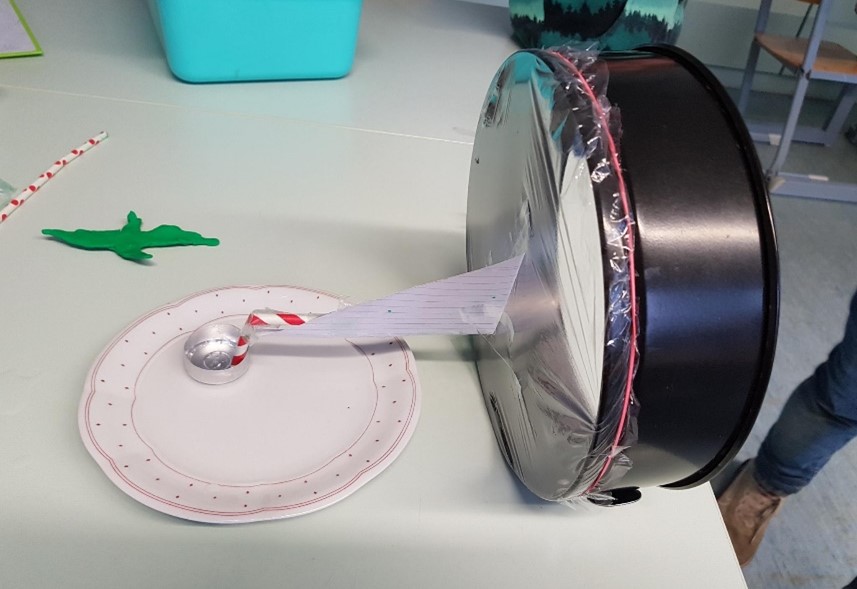
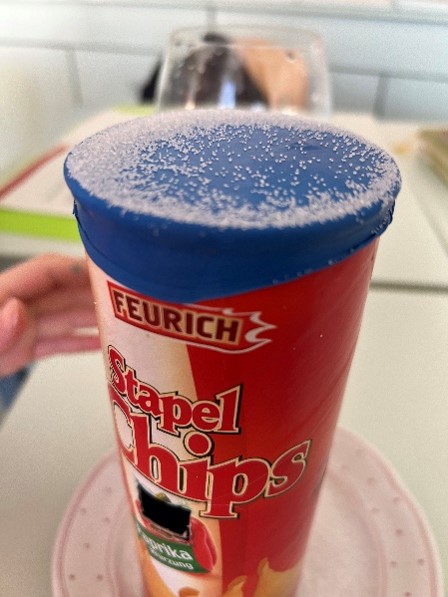
Nine students worked hard on experiments as part of the 5th-grade GuFi Lab under the guidance of Jutta Töhl-Borsdorf. They investigated popping popcorn and learned the difference between sound, noise, and a bang. They used the physics app Phyphox to investigate swinging wine glasses with different water levels. There was also plenty of time for building and crafting: they constructed a model of a human ear using a cake pan and a sound box made from a potato chip can. Finally, everything had to be documented in a report.

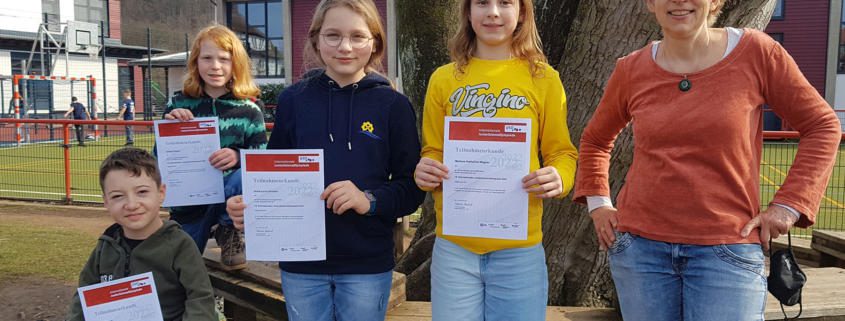
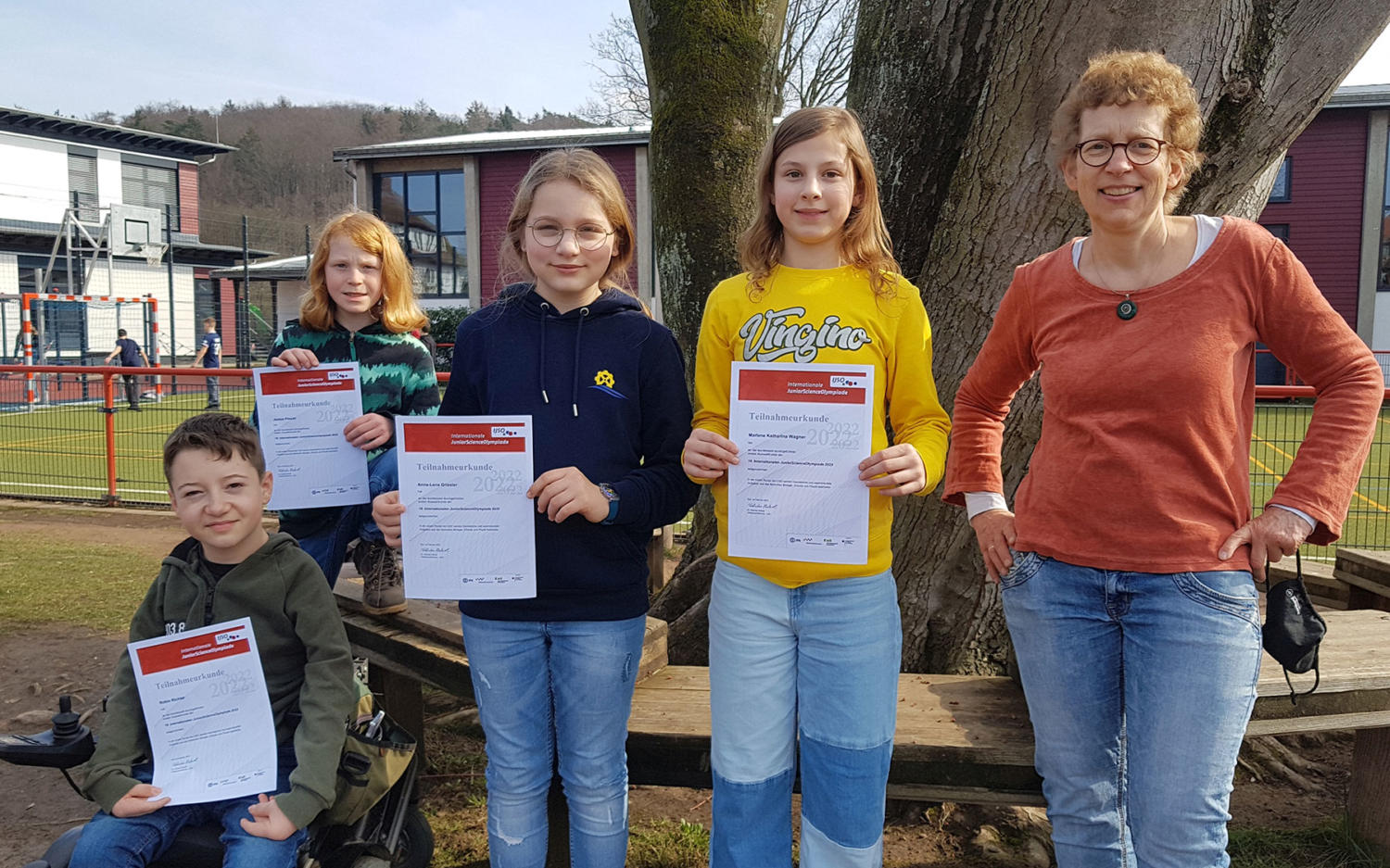
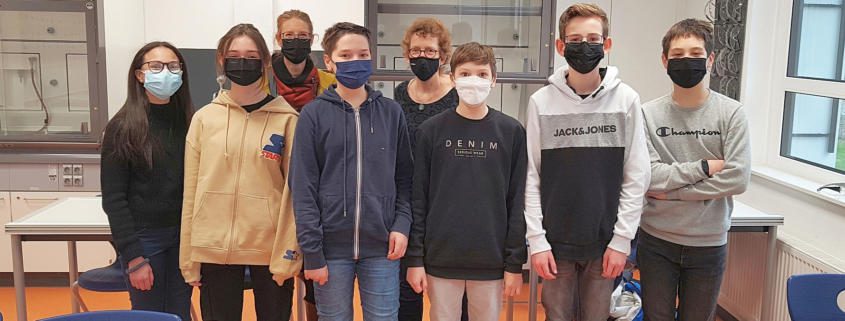
Anna-Lena Griesler, Marlene Wagner, Justus Pöschl, and Robin Richter persevered, tackled these extensive and challenging tasks, and completed the first round.
Out of approximately 3,800 participants from all over Germany, Justus and Robin performed so well that they ranked 213th, thereby qualifying for the second round.
This round consisted of a challenging quiz with 24 multiple-choice questions covering the three natural sciences—biology, chemistry, and physics—which had to be completed within 45 minutes. The quiz is still being graded and will continue until the end of March.

If they qualify, the two will have to take a written exam in the third round in May. Since the fifth-graders will be competing against eighth-graders, their motto can only be, “Just participating is what counts.”

We congratulate everyone involved and are rooting for the two boys in the next round.

25. March 2022
https://steinmuehle.de/wp-content/uploads/sites/5/2022/03/Siegerehrung-IJSO-2022_web-scaled.jpg 937 1500 konnertz https://steinmuehle.de/wp-content/uploads/sites/5/2025/11/Logo_SchuleInternat_Steinmuehle_2026_3.png konnertz2022-03-25 10:12:022026-06-18 17:35:39Pretty clever! Fifth-grade students advance to the second round of the International Junior Science Olympiad (IJSO)

Another Success: Four Awards for the Steinmühle at the “Jugend forscht” Regional Competition

Contests & Awards, News, STEM, Talent Development

On Bioplastic Films, Microplastics, and Rusting Processes

The 57th “Jugend forscht” Regional Competition for Central Hesse took place on Friday and Saturday, February 25 and 26, 2022. As was the case last year, the competition—which, unfortunately, was held exclusively online—was jointly organized by the Technical University of Central Hesse (THM) and Justus Liebig University Giessen. Under the theme “Randomly Brilliant?”, a total of 34 projects were presented, including two projects from Singapore and one from Buenos Aires.

This year, Steinmühle launched three projects as part of the “Schüler experimentieren” competition, in the fields of chemistry, physics, and biology. Steinmühle emerged successfully from this competition, taking first, second, and third place, as well as a special award for dedicated mentors. All prizes include certificates and cash awards.


Rusting keeps you warm, too!
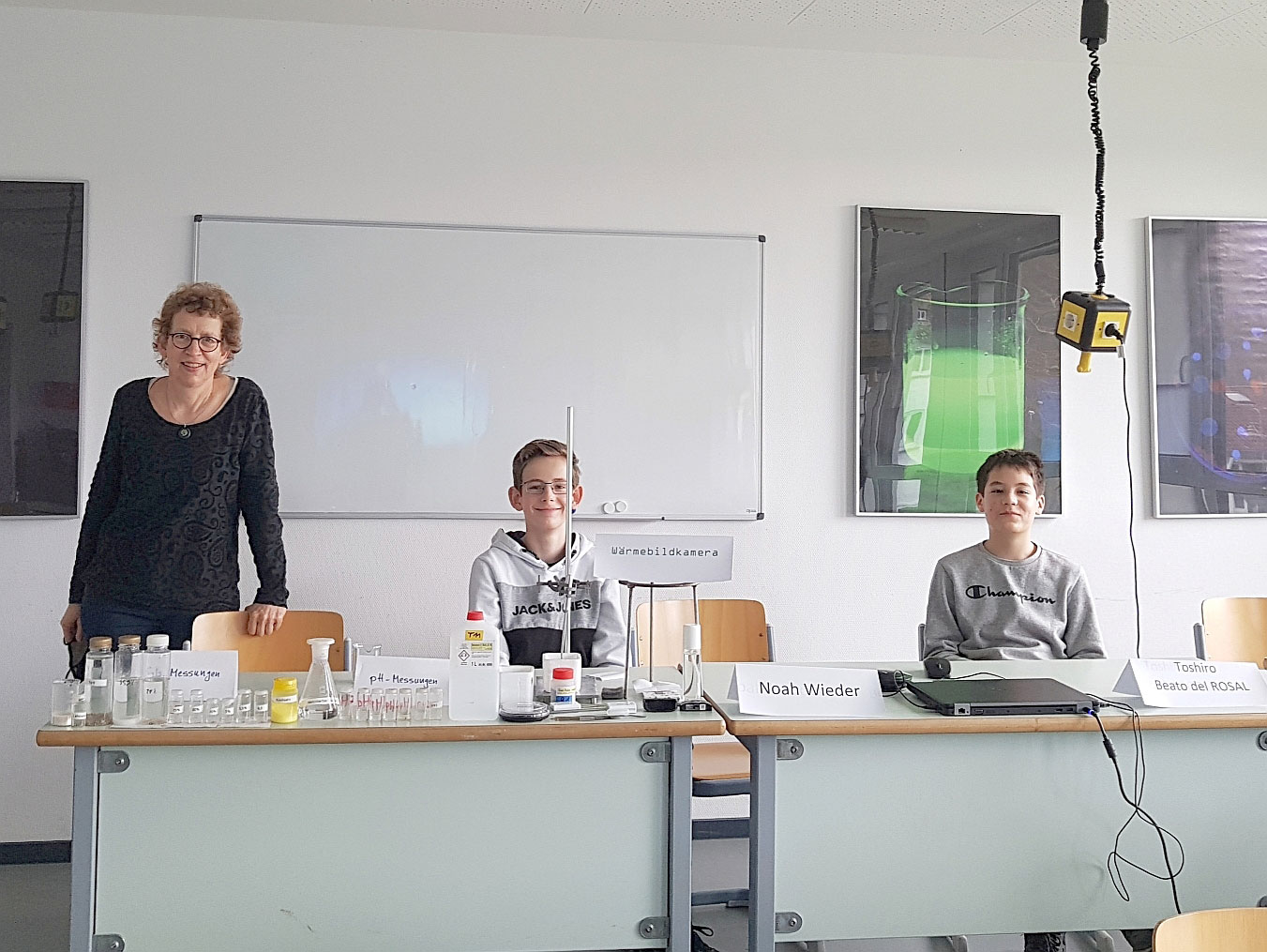
Noah Wieder (8th grade) and Toshiro Beato del Rosal (7th grade) wondered just how quickly rusting actually occurs after they noticed two rusty shopping carts at the boathouse that had been “fished out” of the Lahn River. Since rusting releases small amounts of heat, they developed model experiments under the supervision of Dr. Jutta Töhl-Borsdorf and measured temperature changes over time under various conditions. They found that the process occurs faster when the salt content is high and the pH is low. Since the temperature changes are very small overall, these measurements were not easy to perform experimentally.
The jury praised the ambitious project idea and the students’ advanced subject knowledge, as well as their excellent presentation skills, and awarded them third place in the chemistry category.
 

What effect do microplastics have on plant growth?
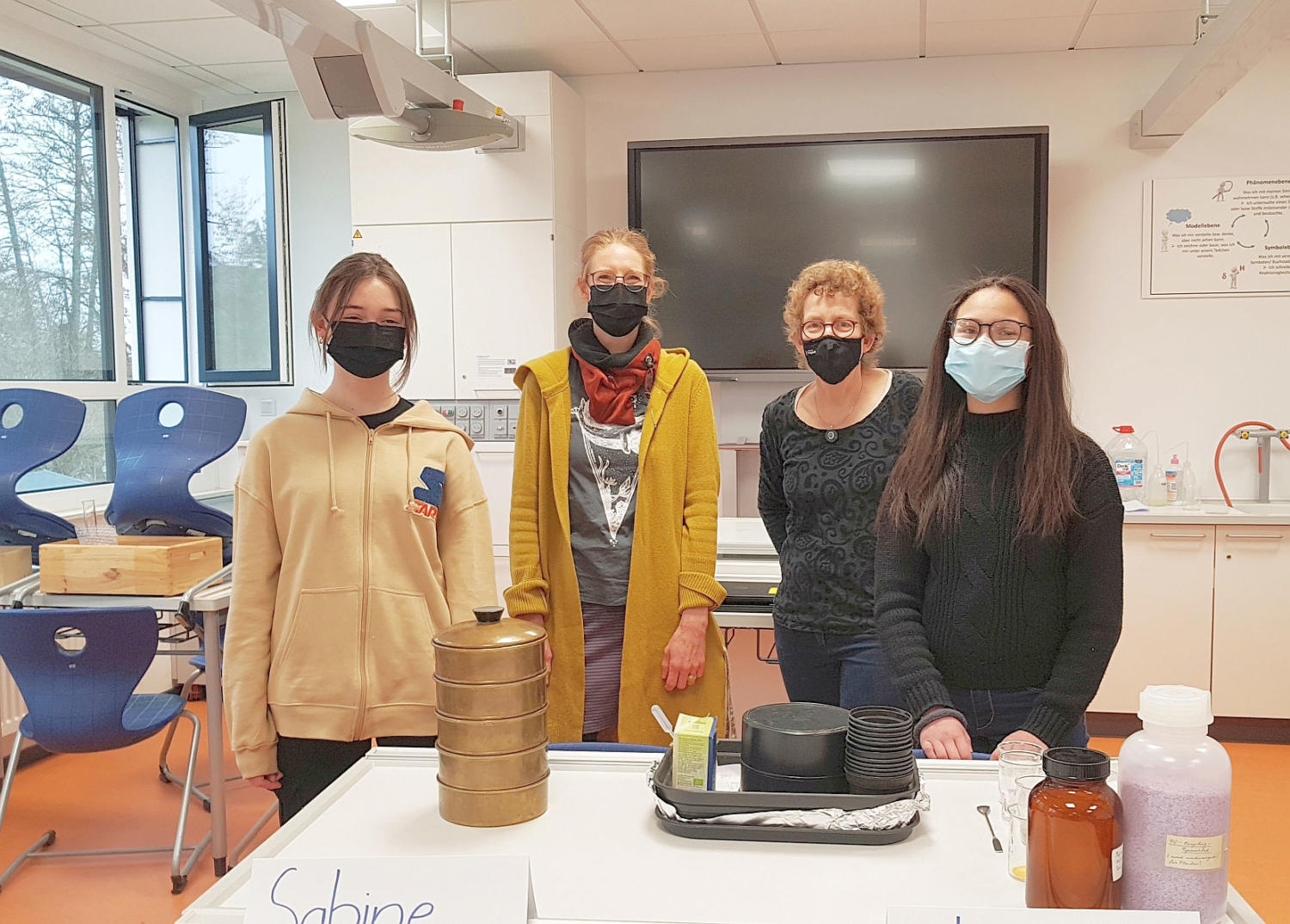
Lina Wicherek and Sabine Auer, both seventh-graders, have been studying the issue of microplastics in the soil. In their research, which focused on a specific type of microplastic (PA), they were able to show that, depending on the amount of microplastic introduced, PA negatively affects or even completely inhibits the germination of cress. They also demonstrated that the extent of the inhibition depends on the substrate. They succeeded in defining the maximum tolerated amount of PA for the substrates “sand” and “cellulose.”
The jury was impressed by the highly topical subject matter, the precise research question, and the reproducible experimental design. The project was awarded second place in the biology category. The project was jointly supervised by Antje Seel and Dr. Jutta Töhl-Borsdorf.
 

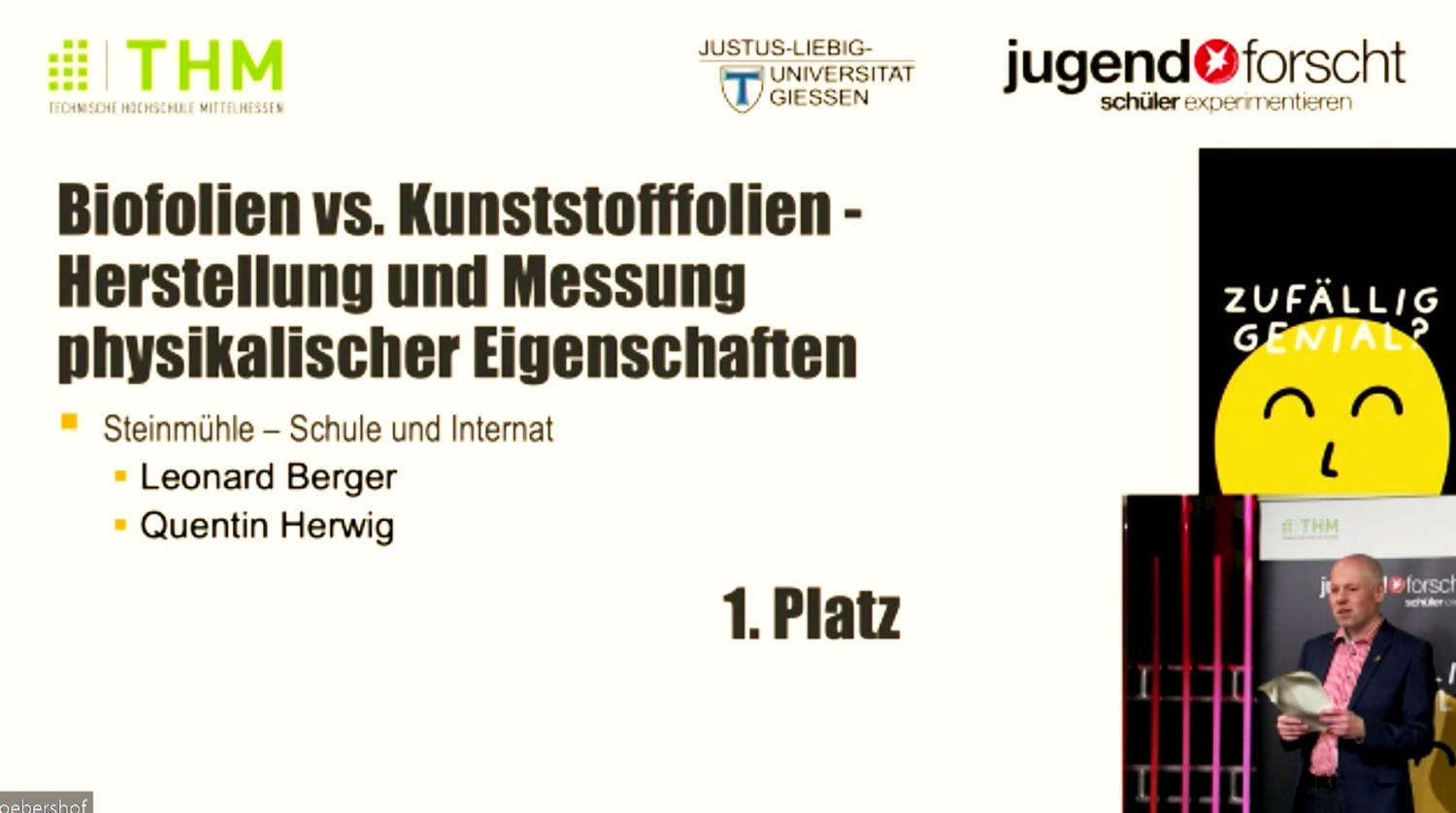
Biofilms vs. Plastic Films—Manufacturing and Measurement of Physical Properties
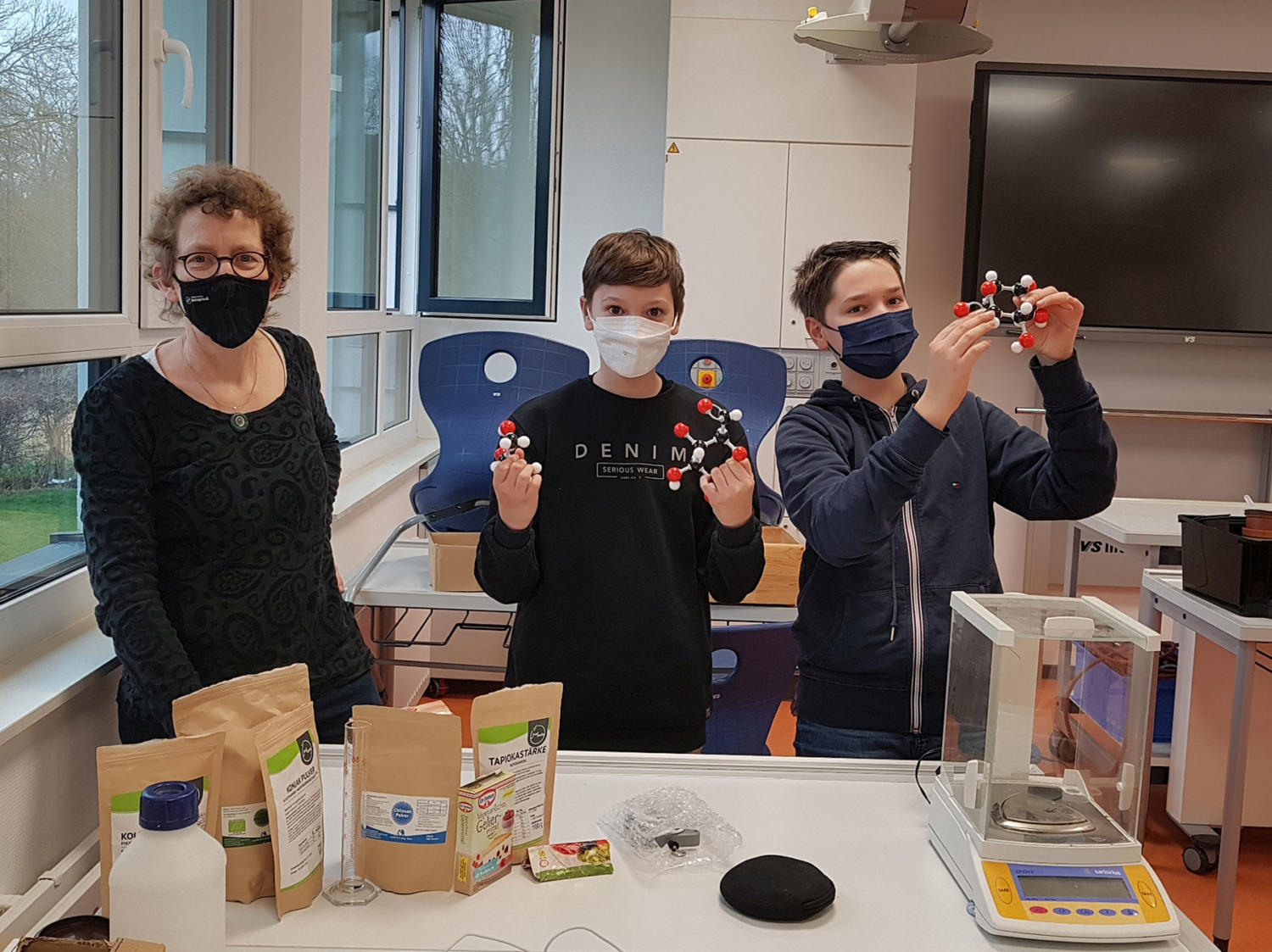
Leonard Berger and Quentin Herwig received a lengthy commendation. Under the supervision of Dr. Jutta Töhl-Borsdorf, they produced biofilms from various food-grade thickeners and developed a physical measurement apparatus to test their suitability for everyday use. The films should be as tear-resistant, transparent, and impermeable as possible.

They measured tear strength using digital sensors, transparency using a smartphone, and water vapor permeability using an analytical balance.
All of their measurement methods are now working very well, and during the production of the films, they also identified individual films with promising properties (e.g., made from tapioca, arrowroot, or konjac starch). Further research is needed to find an all-around film that performs well in all areas.

The judges were not only very impressed by the presentation, but also by the “in-depth understanding of the topic.” They also praised the comprehensive and clear description of the experiments, a very well-thought-out discussion, and the ideas for further developing the project. In addition, they recommended that the students enter their tests in the “Jugend testet” competition (Stiftung Warentest).
First, however, they’ll be heading to the state competition in Kassel, as the two won first place in the physics category and have thus qualified for the in-person competition. Due to the pandemic, however, the event must take place without parents and behind closed doors. At least the mentors are allowed to travel with them, and the interaction with the other young researchers—which has been missing for the past two years—will likely be able to take place.
Leonard has been participating since 5th grade—this is his fourth consecutive year in “Jugend Forscht”—and has always advanced to the state competition with his respective group. A great achievement!
Talent and Interest in the Best Hands

Last year, students Joshua Wieder, Morten Köhler, and Benjamin Schul also advanced to the state competition. The group decided to take a break this year, as the members were less enthusiastic about the online version of the competition.
Nevertheless, they didn’t sit idle and investigated how effectively various oxygen-based cleaners can remove different types of stains. This project was submitted to the ongoing “Jugend testet” competition.

Finally, Dr. Jutta Töhl-Borsdorf received another award—the Special Prize for Dedicated Talent Promoters, sponsored by the Heinz and Gisela Friedrichs Foundation. Once again, she served as the advisor and coordinator for the school’s participation in the “Jugend forscht” competition.
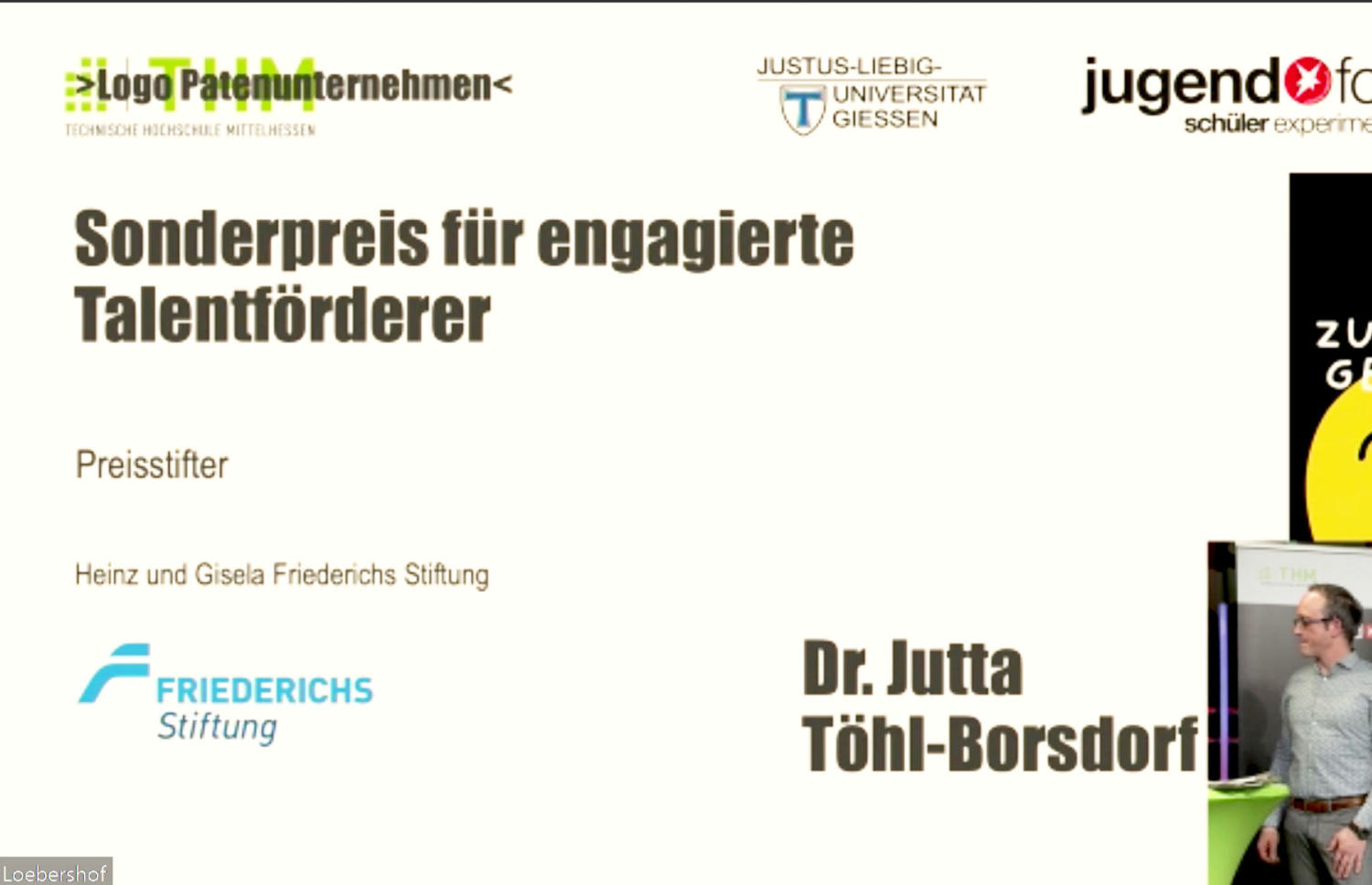
Steinmühle is proud of all the award winners!

25. March 2022
https://steinmuehle.de/wp-content/uploads/sites/5/2022/03/Alle-scaled.jpg 998 1500 konnertz https://steinmuehle.de/wp-content/uploads/sites/5/2025/11/Logo_SchuleInternat_Steinmuehle_2026_3.png konnertz2022-03-25 09:57:032026-06-18 17:35:33Another Success: Four Awards for the Steinmühle at the “Jugend forscht” Regional Competition

10th-graders Take Second Place in Germany’s Largest Computer Science Competition

Contests & Awards, News, STEM, Talent Development

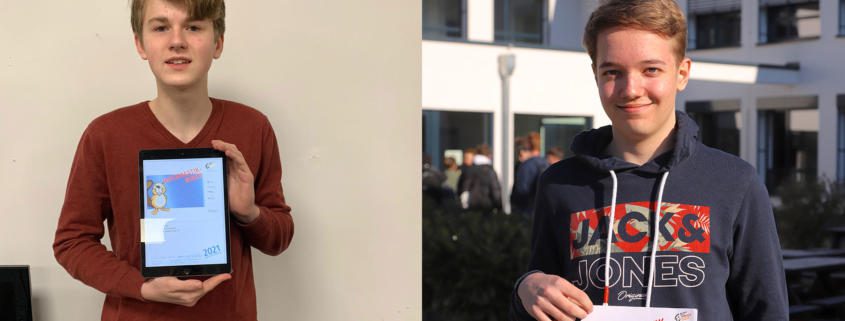
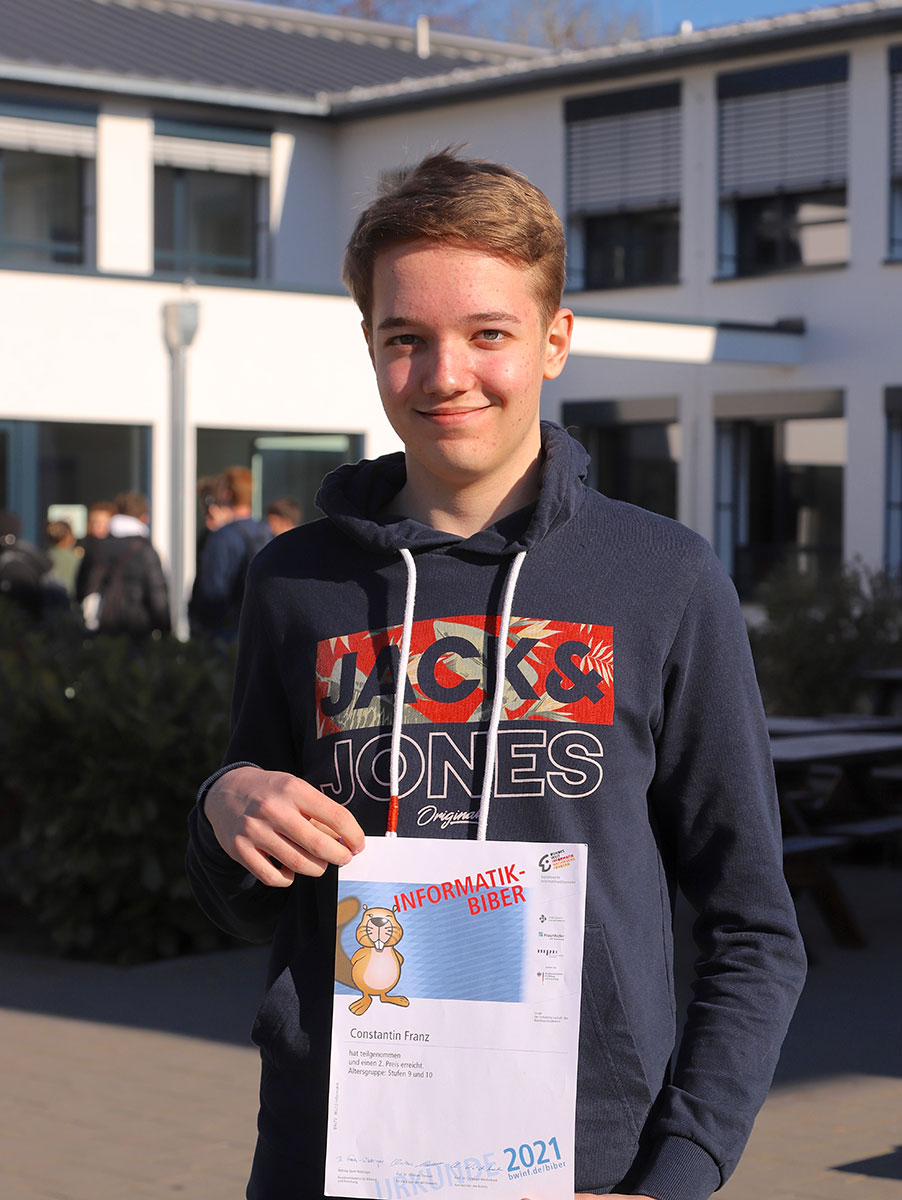
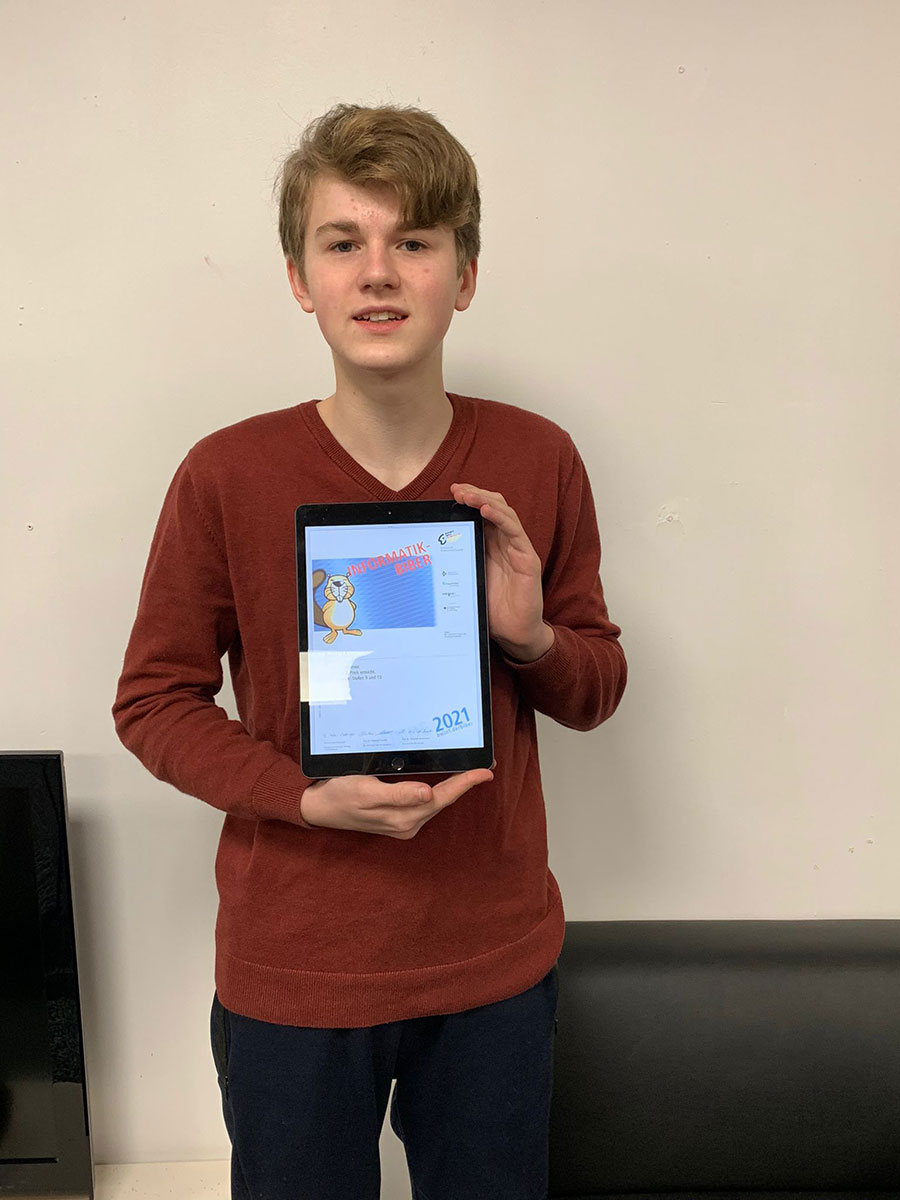
Two students from the WU10 computer science class earned second-place finishes for Steinmühle in the “Informatik Biber” competition. Constantin Franz and Felix May each received a certificate and a small prize.

The Informatik-Biber is Germany’s largest computer science competition for students in grades 3 through 13. In the most recent edition, a record number of 429,000 students from 2,500 educational institutions across the country participated.

Above all, the program calls for skills in solving puzzles and brain teasers, with the tasks creatively teaching the thought processes and concepts of computer science. One example of this is algorithmic descriptions—that is, explaining or formulating clear, structured sequences of actions that a computer could understand.

Students who are not enrolled in the Computer Science track (8th, 9th, or 10th grade) but enjoy brain teasers are welcome to contact English and computer science teacher Christopher Koch and participate in the next round at the end of the year. There is also an opportunity to practice beforehand.

24. March 2022
https://steinmuehle.de/wp-content/uploads/sites/5/2022/03/Titel_Biber1-scaled.jpg 869 1500 konnertz https://steinmuehle.de/wp-content/uploads/sites/5/2025/11/Logo_SchuleInternat_Steinmuehle_2026_3.png konnertz2022-03-24 10:30:182026-06-18 17:35:3610th-graders Take Second Place in Germany’s Largest Computer Science Competition

Youth Tests — White, as white as it gets? 11th-graders test stain removers

News, STEM

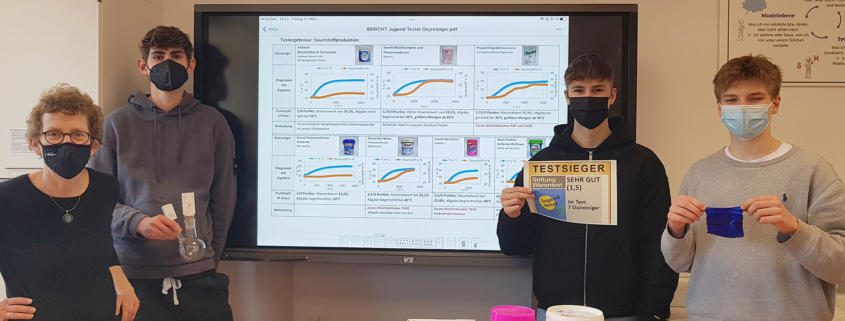
Joshua Wieder, Morten Köhler, and Benjamin Schul have long been part of a research team at Steinmühle. This year, they’ve taken a break from the “Jugend forscht” competition, in which they’ve participated regularly since 6th grade.
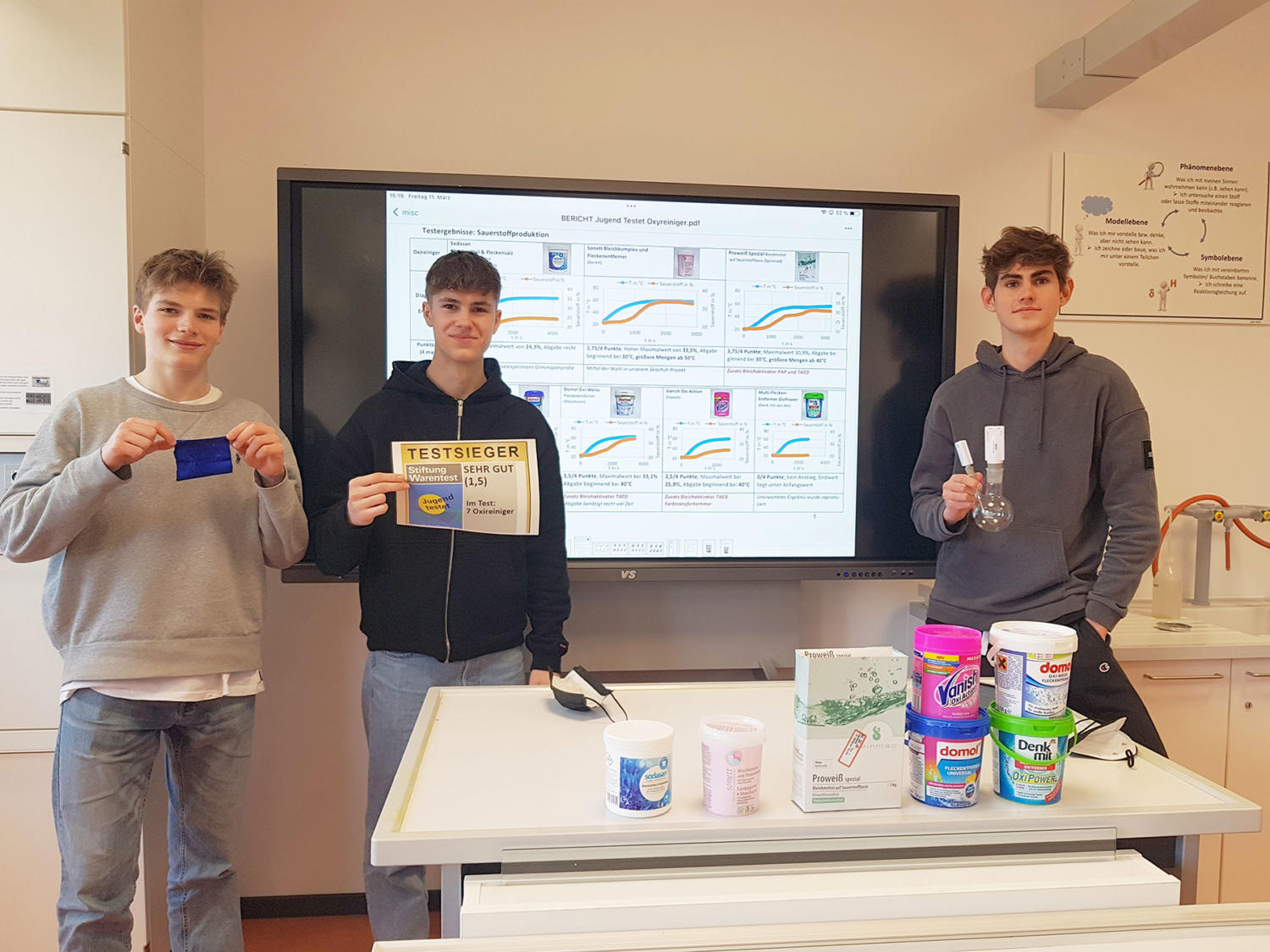
But these three students simply can’t go without doing some research. On Fridays in the “Open Lab,” they investigated the effectiveness of oxygen-based detergents, which are also used in laundry as stain removers or bleaches. The packaging often advertises stain removal starting at just 20°C. The team wanted to take a closer look at bold advertising claims such as “With active oxygen for brilliant whites” or “Chlorine-free laundry booster.”
For these investigations, they purchased various oxygen-based detergents and examined several criteria that might be important to consumers.
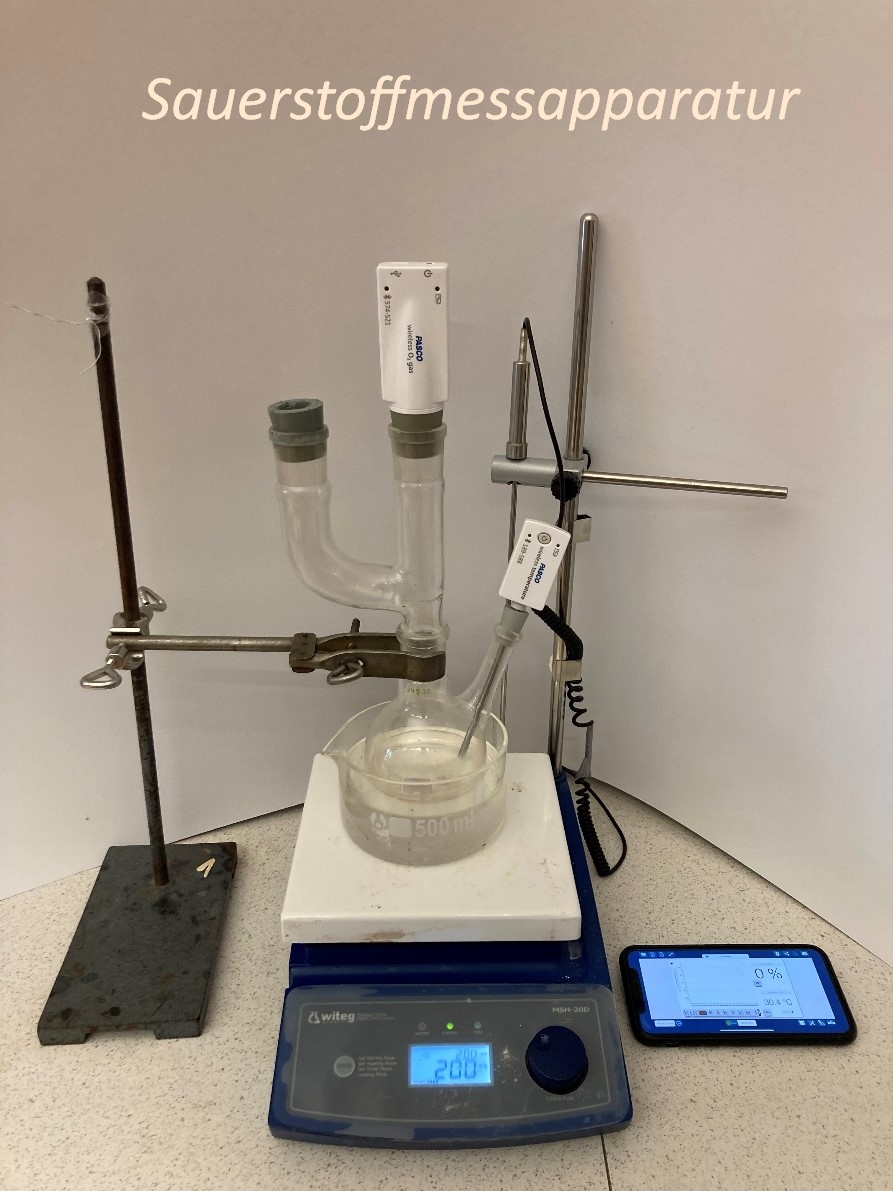
Among other things, they used a test apparatus they developed themselves to measure oxygen release at specific temperatures and the amount of oxygen produced for various stain-removing salts, since oxygen is responsible for the bleaching process.
This was followed by a practical test at various wash temperatures using red wine and ink stains. They also checked whether the stains bled onto the fabric surrounding the stain during washing (stain transfer). All results were compiled into tables to identify a test winner and, taking the purchase price into account, a best-value winner.
The result was somewhat predictable: not all advertising claims can be fulfilled. Among other things, the team was able to show that red wine stains are generally more difficult to remove. Only a single product ultimately received a “very good” rating from them. Another product, which received a “good” rating, was named the best value for money.

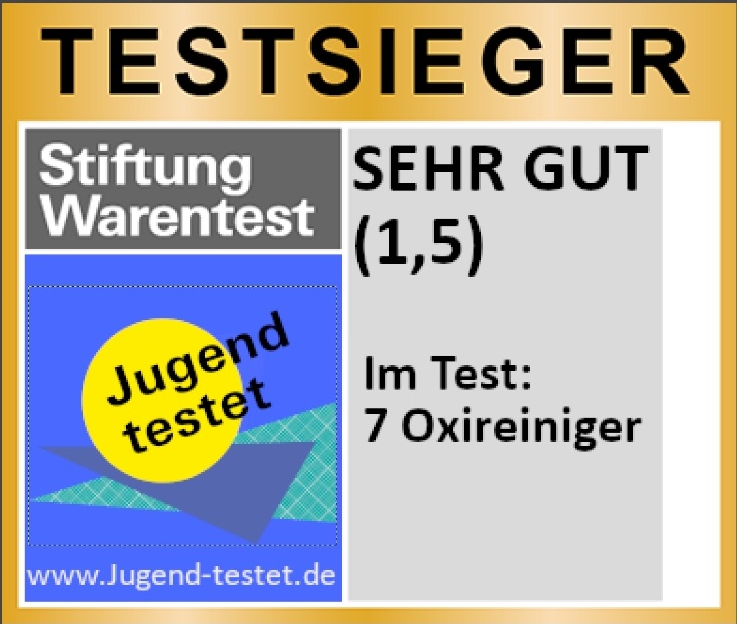
The results were documented in a report and submitted to the “Jugend Testet” competition. Through the end of May, the entries will be evaluated by a jury composed of experts from Stiftung Warentest and other reviewers from the media and consumer protection sectors. The judges will evaluate how the tests were conducted, how thoroughly the work was carried out and documented, and whether the test results are transparent.
We’re keeping our fingers crossed for the team!
22. March 2022
https://steinmuehle.de/wp-content/uploads/sites/5/2022/03/Bild-2-scaled.jpg 1106 1500 konnertz https://steinmuehle.de/wp-content/uploads/sites/5/2025/11/Logo_SchuleInternat_Steinmuehle_2026_3.png konnertz2022-03-22 08:02:182026-06-18 17:35:35Youth Tests — White, as white as it gets? 11th-graders test stain removers

Media Weekend at Steinmühle Boarding School

Digitalization & AI, Life at Boarding School, News

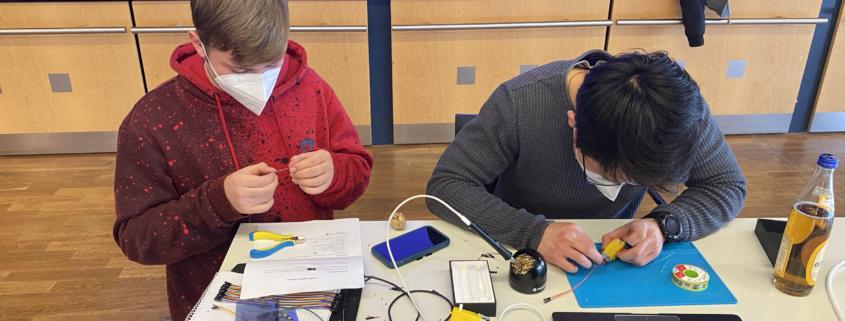
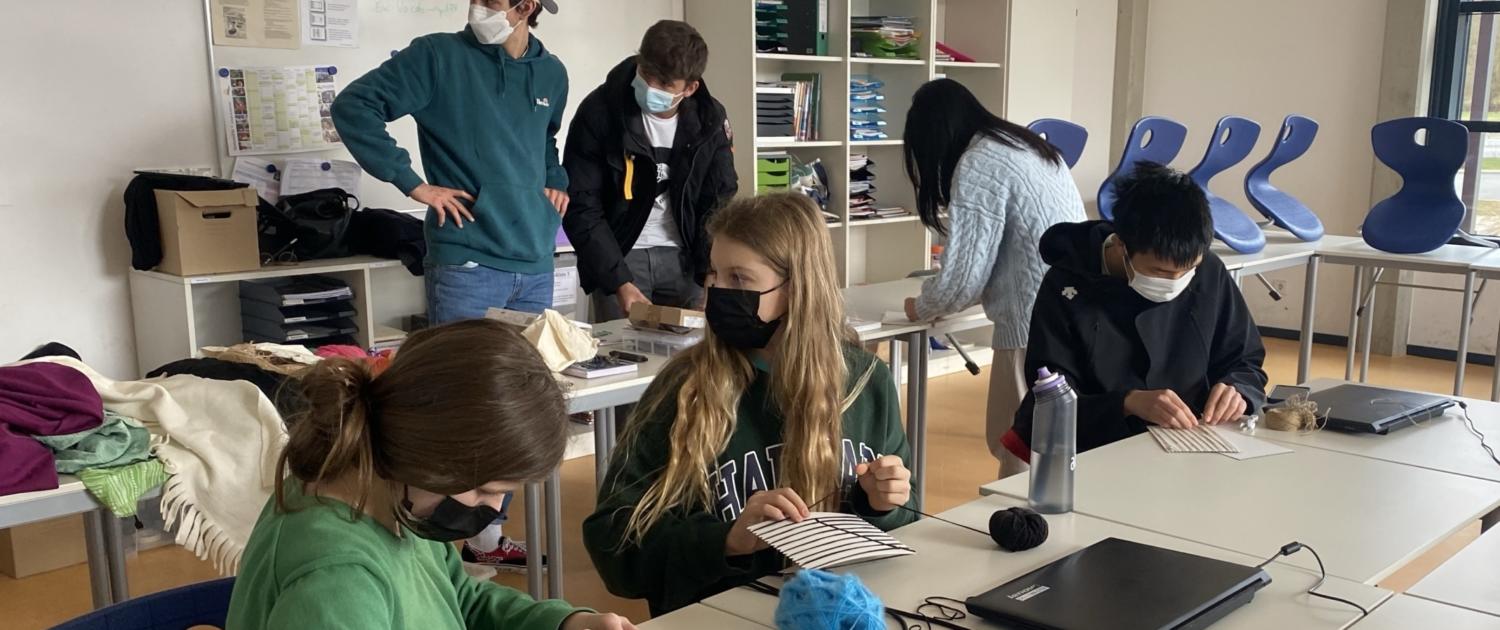
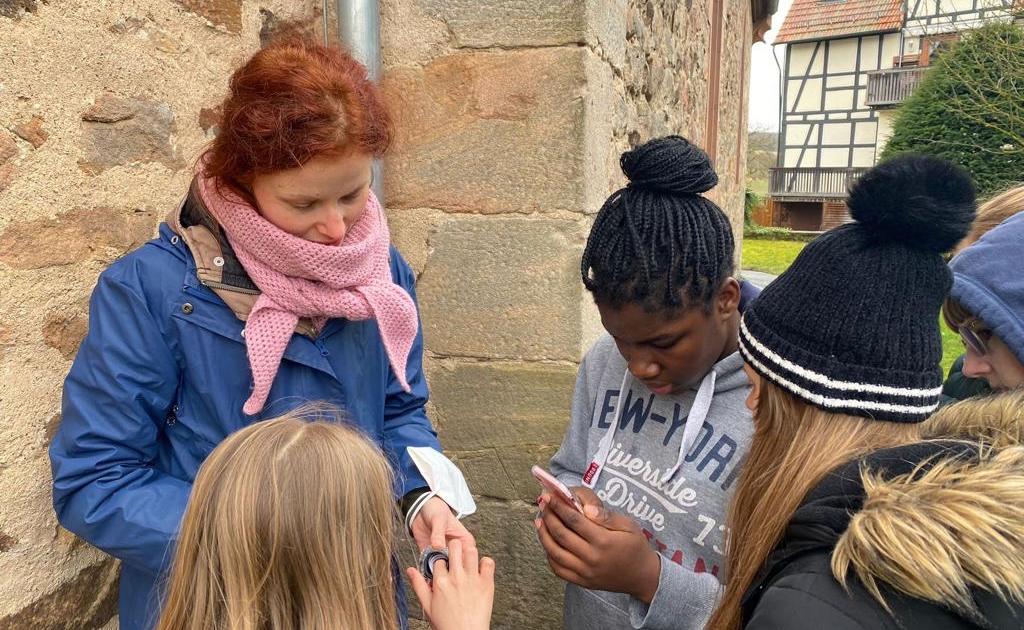
A weekend dedicated to media: from data protection to mobile games and digital photo editing to robot programming. The second themed weekend offered a wide variety of activities related to media content in a successful blend of information and fun.

The event kicked off on Saturday morning with a presentation by three representatives from the Chaos Computer Club (CCC). Afterward, the students at Steinmühle Boarding School had the opportunity to participate in three activities under the expert guidance of a CCC representative.


In this way, some students learned to program in a way that initially sounded very abstract: Through the interlacing points in the traditional weaving of a small rug, the students were taught the basic concept of programming as binary code. In another program, students took a close look at their data security online.

One of the highlights of the weekend was definitely building small robots that the students could program on their own.

The teaching staff also shared their experiences and insights on selected media topics with the students.

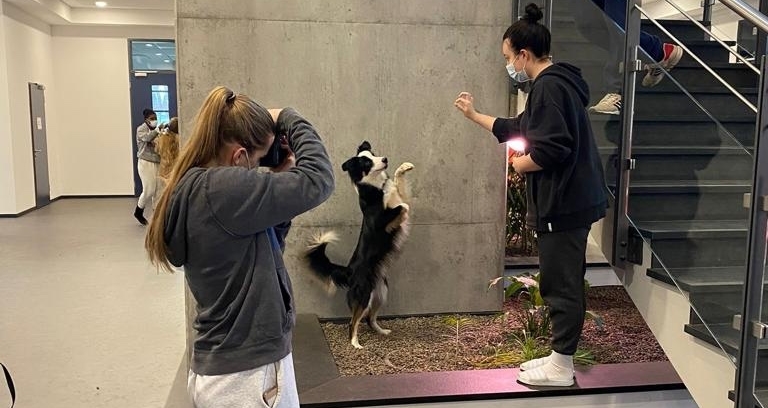
For example, students were able to try their hand at taking photos with digital cameras, or explore effective presentation techniques in a course offered by the Learning Center. This weekend made it clear that mobile games don’t always have to be played alone—they can also offer a welcome change of pace through social interaction in multiplayer mode—just as the experience of recording and editing their own rap track did.

In addition to all the fun the media weekend offered, it also provided a space to address serious topics. Students discussed sexuality and how we perceive ourselves and others on social media, as well as current and pressing issues surrounding radicalization and hate speech online.

We started together, and we finished together: At the closing dinner on Sunday evening, individual project groups presented their results and had the chance to look back on the weekend together over the classic Sunday meal of schnitzel and fries.


18. March 2022
https://steinmuehle.de/wp-content/uploads/sites/5/2022/03/img_5264-scaled-1-scaled.jpg 1125 1500 Angela https://steinmuehle.de/wp-content/uploads/sites/5/2025/11/Logo_SchuleInternat_Steinmuehle_2026_3.png Angela2022-03-18 17:40:312026-06-18 17:35:33Media Weekend at Steinmühle Boarding School

History Up Close: Stadtallendorf’s Turbulent Development and People’s Life Stories

Collaborations & Partnerships, News, Politics, Business & Responsibility

From time to time, parents or relatives of our students are able to make valuable contributions to Steinmühlen’s curriculum—thanks to their professional experience or knowledge. The visit by Herbert Köller, the grandfather of Alexandra Köller (6b), was one such example. Together with Hans-Jürgen Wolff, he spoke to Steinmühlen students in grades 8, 10, and 13 about the work of the Stadtallendorf Documentation and Information Center (DIZ), founded in 1994, which is Germany’s first and oldest memorial dedicated to forced labor.

The DIZ (www.diz-stadtallendorf.de) has received photographs and records from the late phase of World War II from the estate of Hilmar Eisenhut. Hilmar Eisenhut was a 15-year-old student in Eschwege when his friends from the grade above him, who were serving as anti-aircraft gunners near Kassel, were killed by a crashing airplane. Shortly thereafter, Hilmar also became an anti-aircraft gunner and was stationed in Stadtallendorf.

From a Poor Village to the No. 1 Industrial City

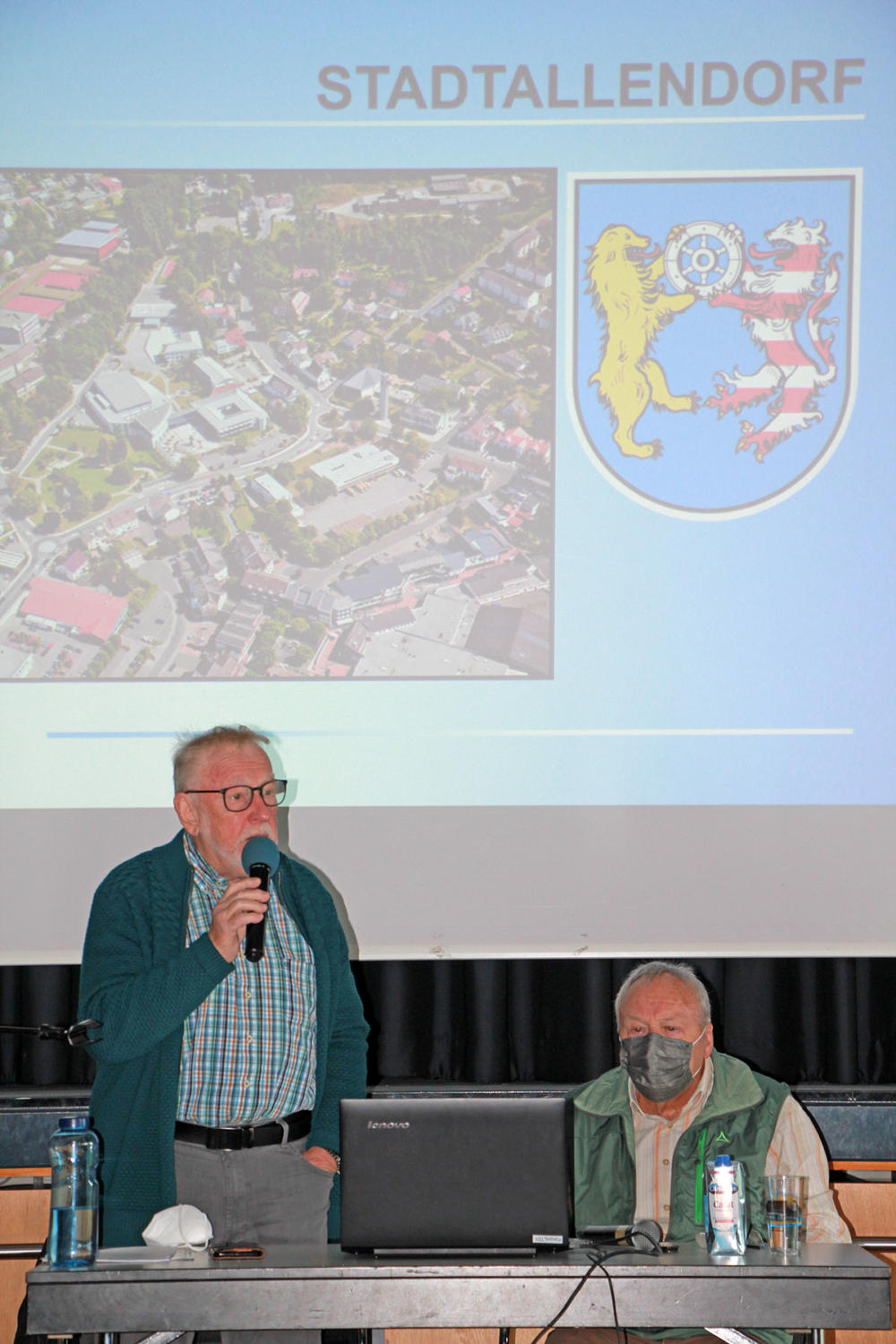
In the first part of the double period, Hans-Jürgen Wolff used a PowerPoint presentation to explore why Stadtallendorf is now a thriving industrial city. He traced the town’s journey from a poor Catholic village, through its history as an ammunition depot and a refuge for displaced persons and guest workers, to its current status as the number one industrial town in the Marburg-Biedenkopf district. In doing so, he also explored the question of why Stadtallendorf was not bombed during World War II. This is where 16-year-old Hilmar Eisenhut, his accounts, and his photographs came into play.

A 16-Year-Old’s War Experiences

In the second part, the presentation took on a more personal tone and was told from the boy’s perspective. Herbert Köller read vividly, taking on various roles, and emotionally brought Hilmar’s notes to life—sometimes in the loud tone of the sergeant, sometimes with a tear-choked voice. In between, Hans-Jürgen Wolff repeatedly interrupted the reading to provide factual, matter-of-fact, and even technical information to help the audience contextualize what they had heard.

The title “History Up Close” can therefore be understood in two ways. On the one hand, it was about regional proximity—that is, the history of a town in our county. On the other hand, the accounts were emotionally moving, as the fate of the anti-aircraft gunner and his friends—who were the same age as the audience—struck a deep chord—not even ten days before another war of aggression began in Europe.

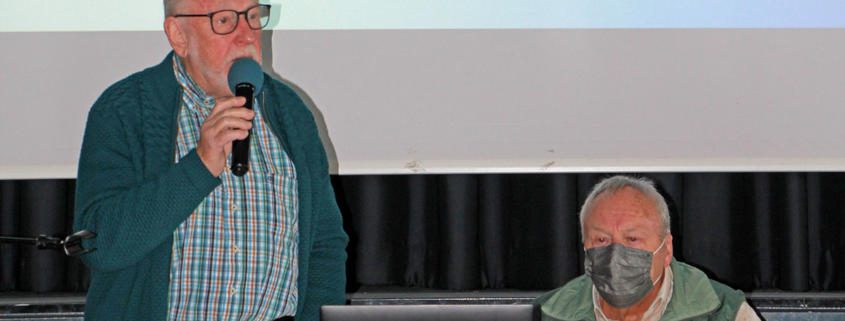
Our photo shows the speakers Herbert Köller (left) and Hans-Jürgen Wolff.

11. March 2022
https://steinmuehle.de/wp-content/uploads/sites/5/2022/03/Titel-1.jpg 636 1200 konnertz https://steinmuehle.de/wp-content/uploads/sites/5/2025/11/Logo_SchuleInternat_Steinmuehle_2026_3.png konnertz2022-03-11 11:42:562026-06-18 17:35:34History Up Close: Stadtallendorf’s Turbulent Development and People’s Life Stories

A sport for those who prefer a more relaxed pace: Fencing builds coordination, dexterity, and strength

News, Sports & Health

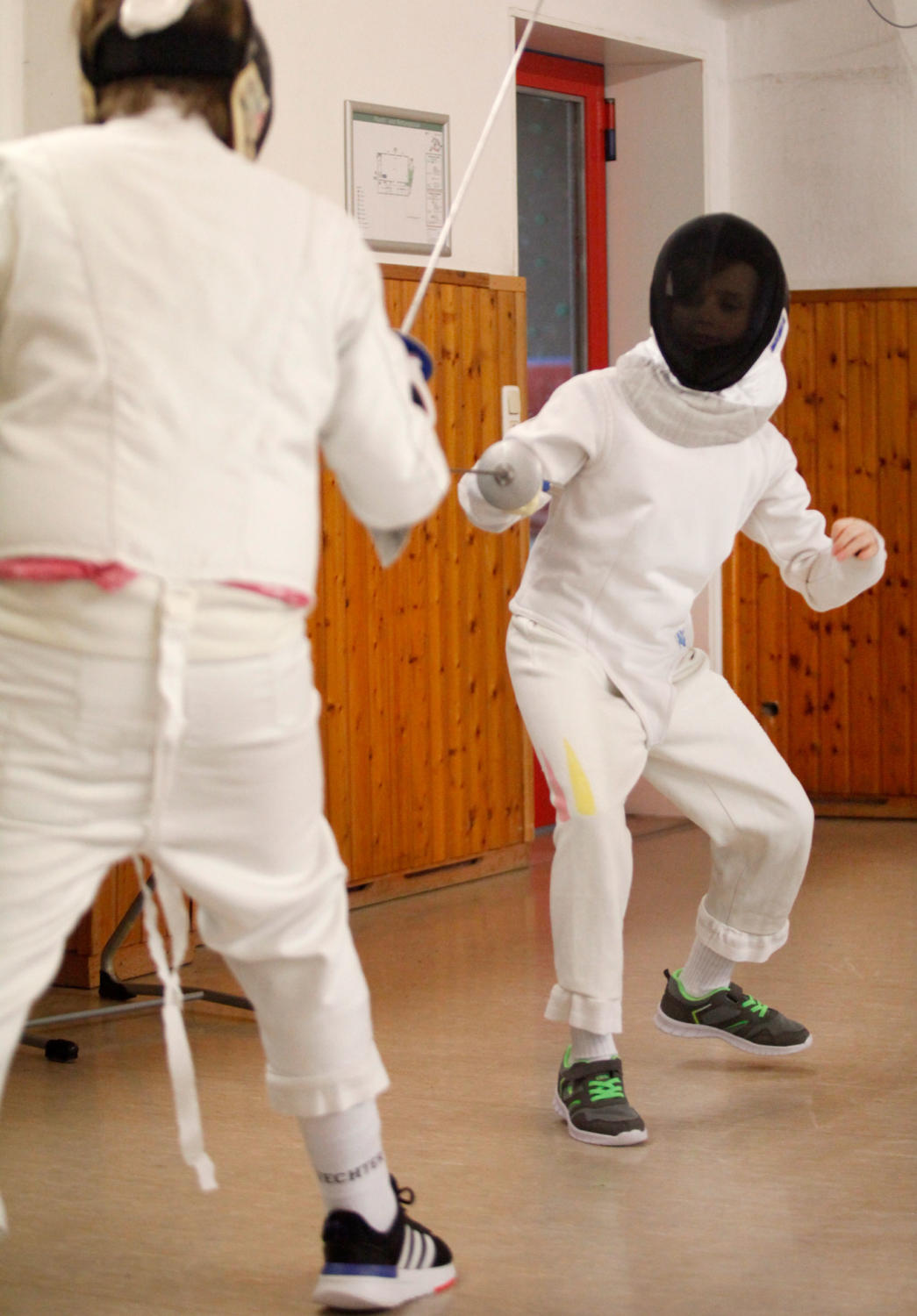
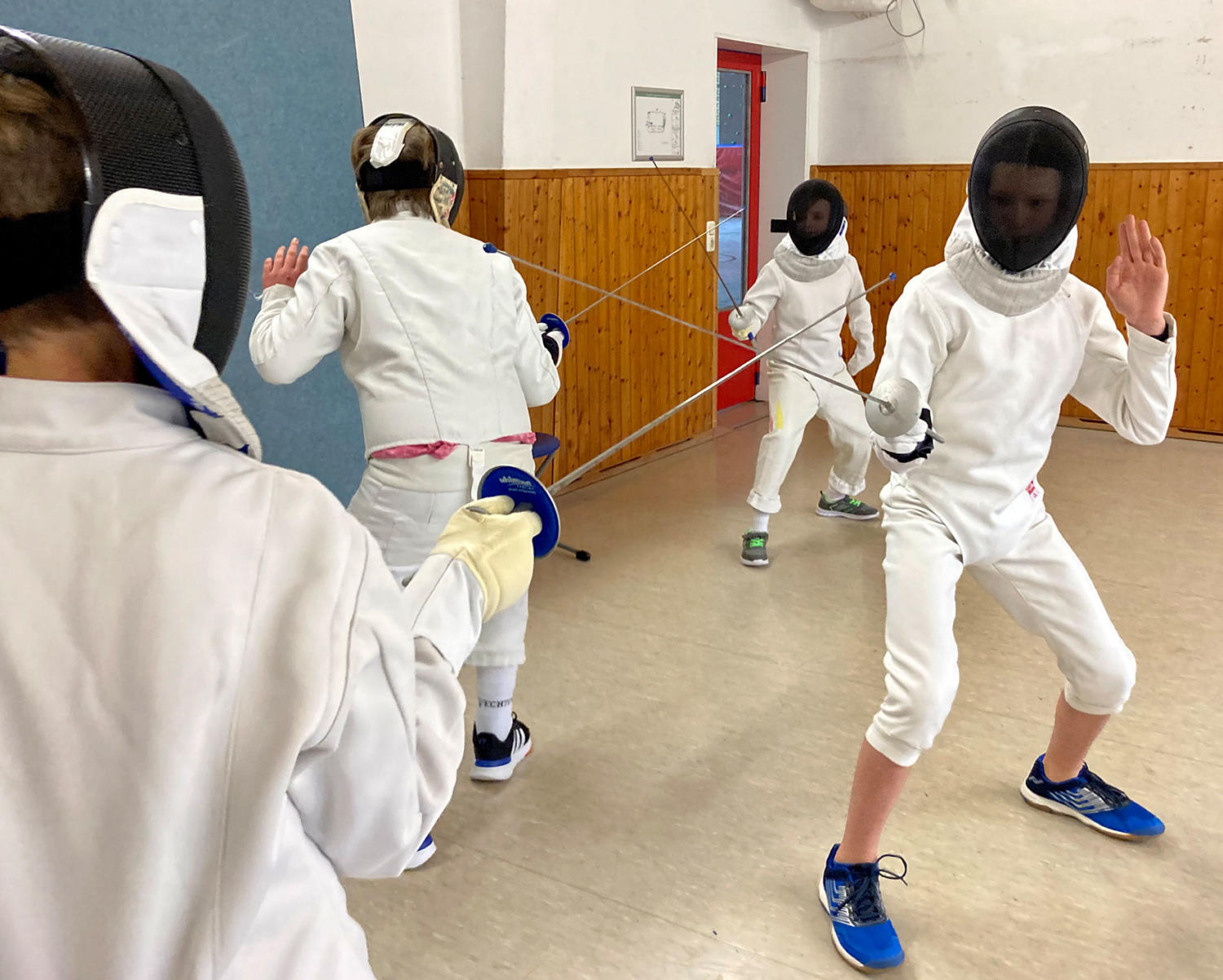
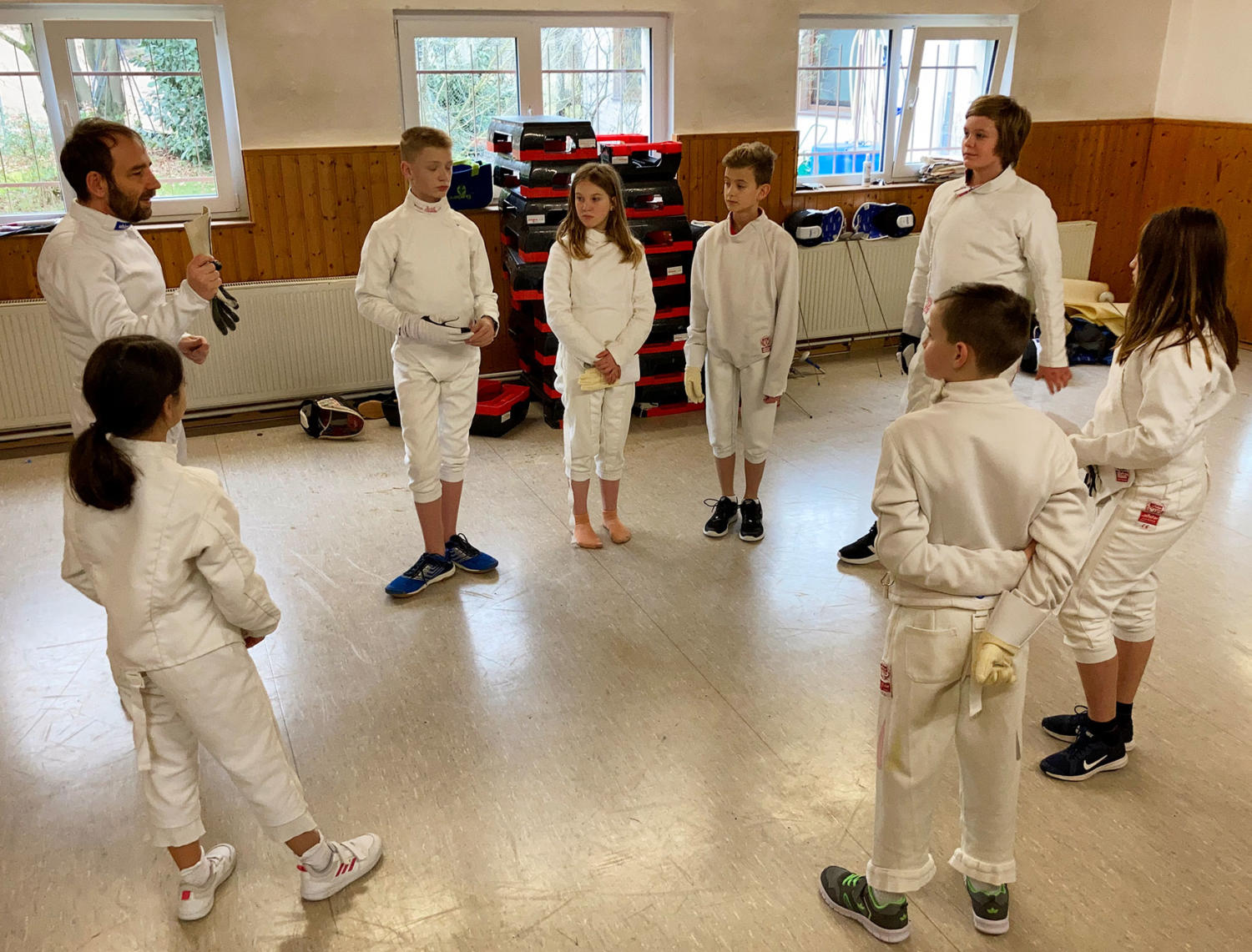
To get this out of the way: Statistically speaking, fewer accidents occur in fencing than in winter sports or soccer. As is so often the case, it all comes down to good training, the right equipment, and people who are eager to learn something from the ground up. All these criteria are met when Steinmühlen teacher Steffen Ullwer meets with a group of boys and girls every Wednesday for fencing lessons. The after-school club has been running since the start of the 2020–21 school year—though, unfortunately, it has been interrupted several times due to pandemic-related restrictions.

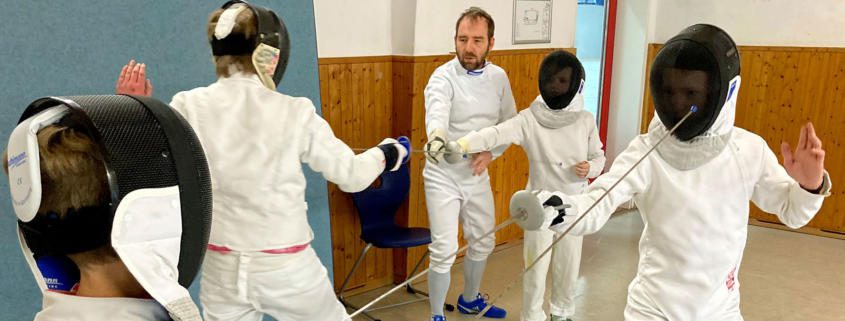
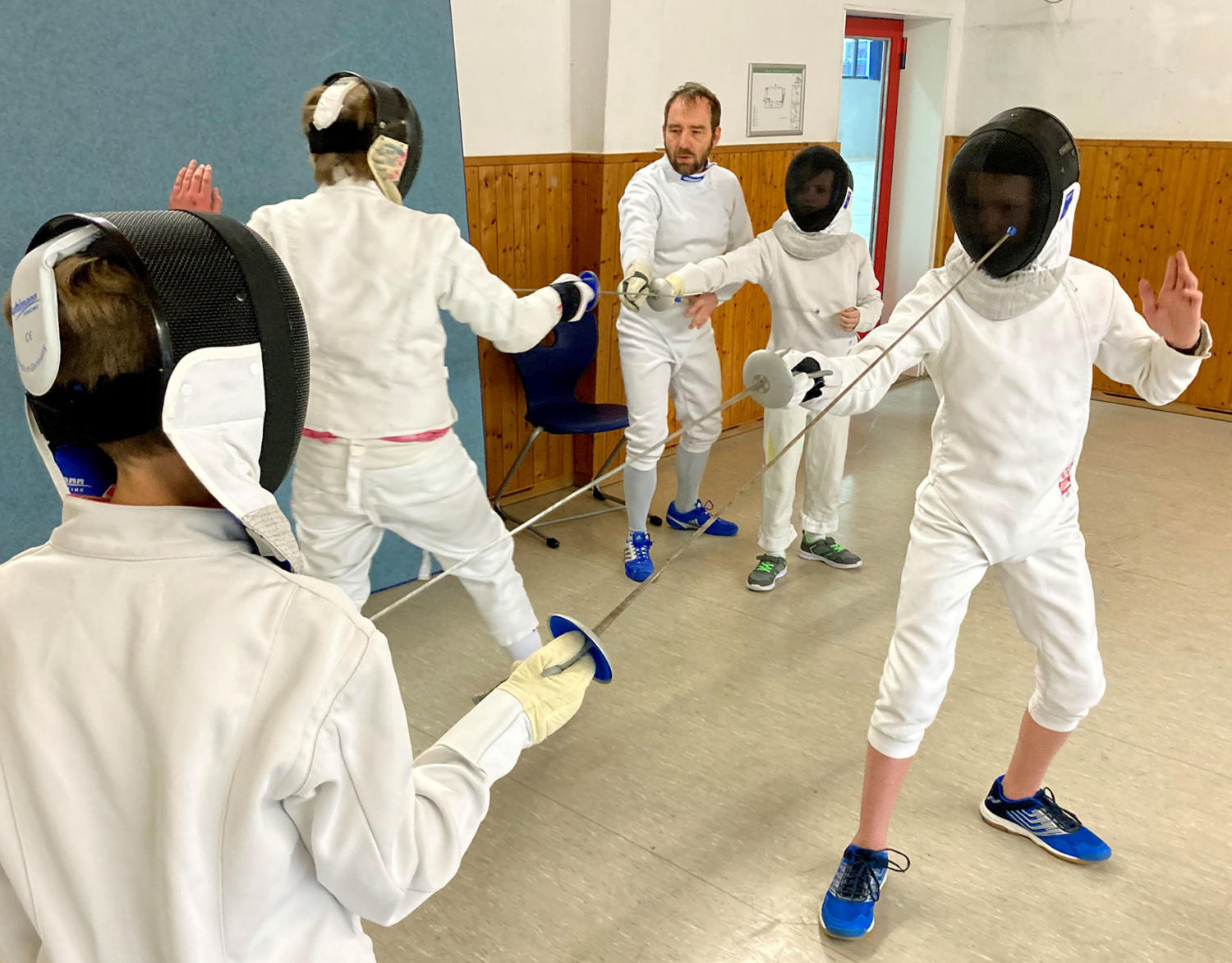
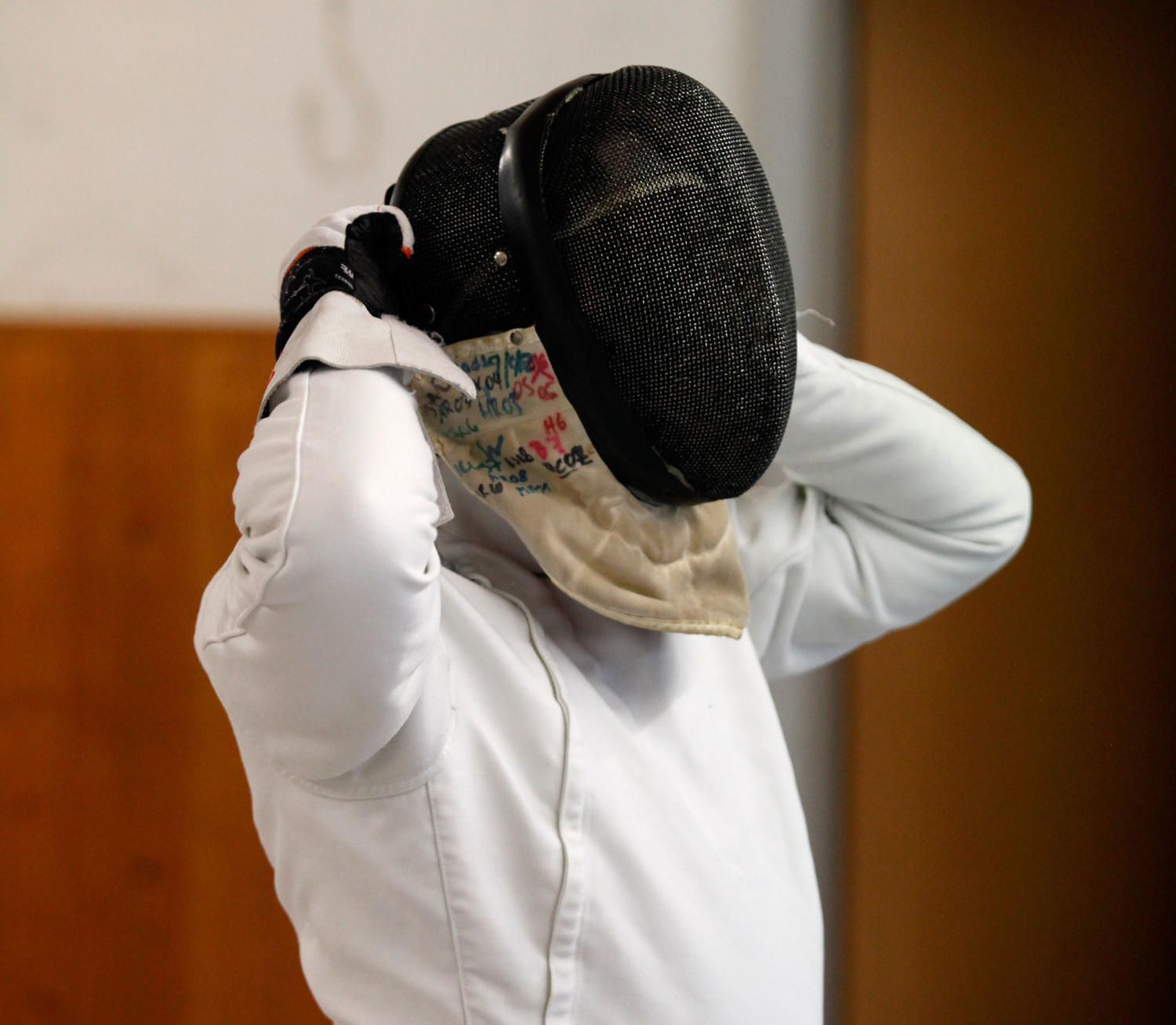
In the locker room, they swap their face masks for fencing masks. They quickly learn that “helmet” is the wrong word. The fencing mask is made of steel mesh and protects against blows and strikes. They put on their white protective suits—and off they go. A maximum of 8 students can participate in each group to learn how to use the foil. Currently, participants in grades 5 and 6 are training.

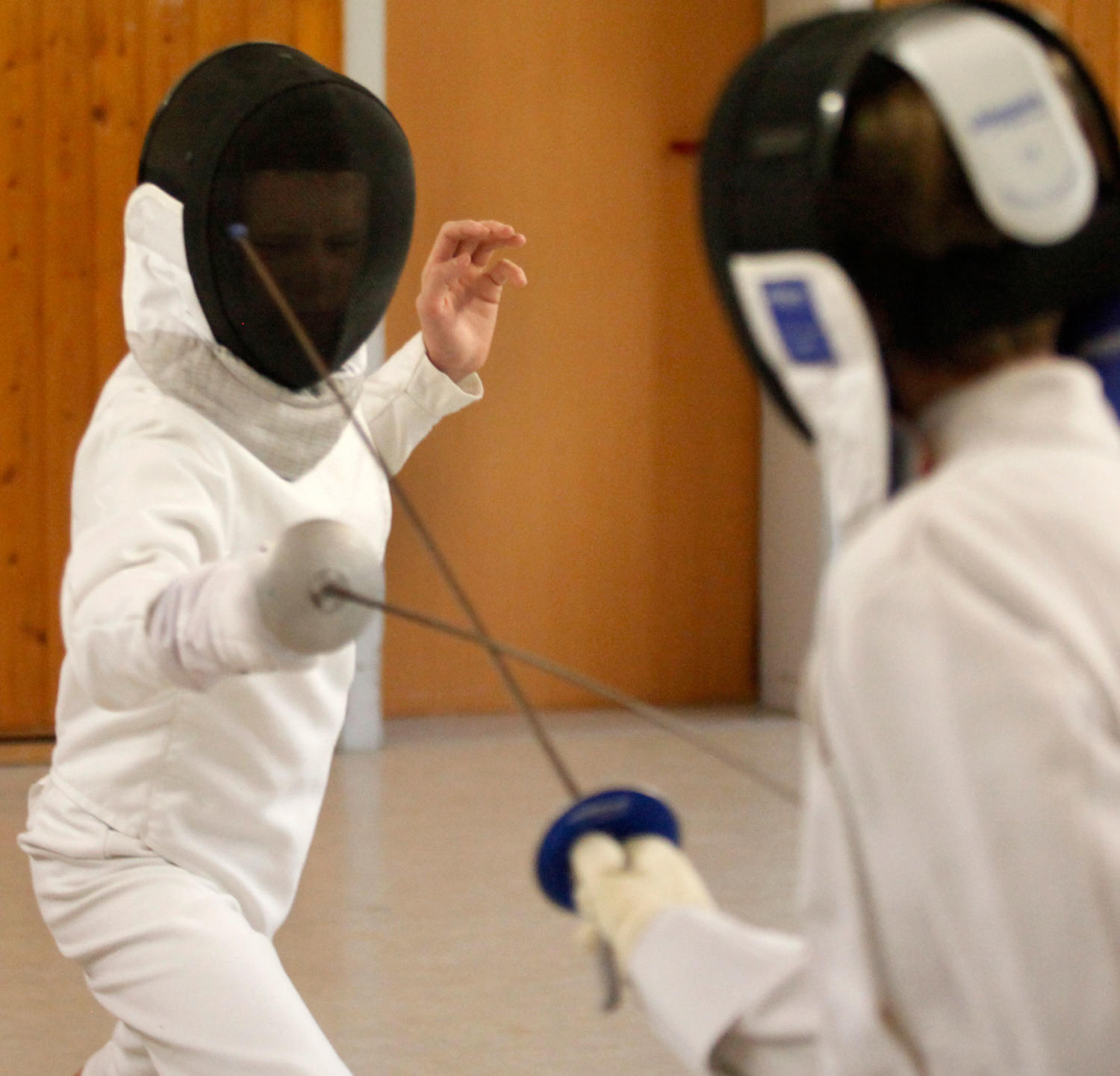
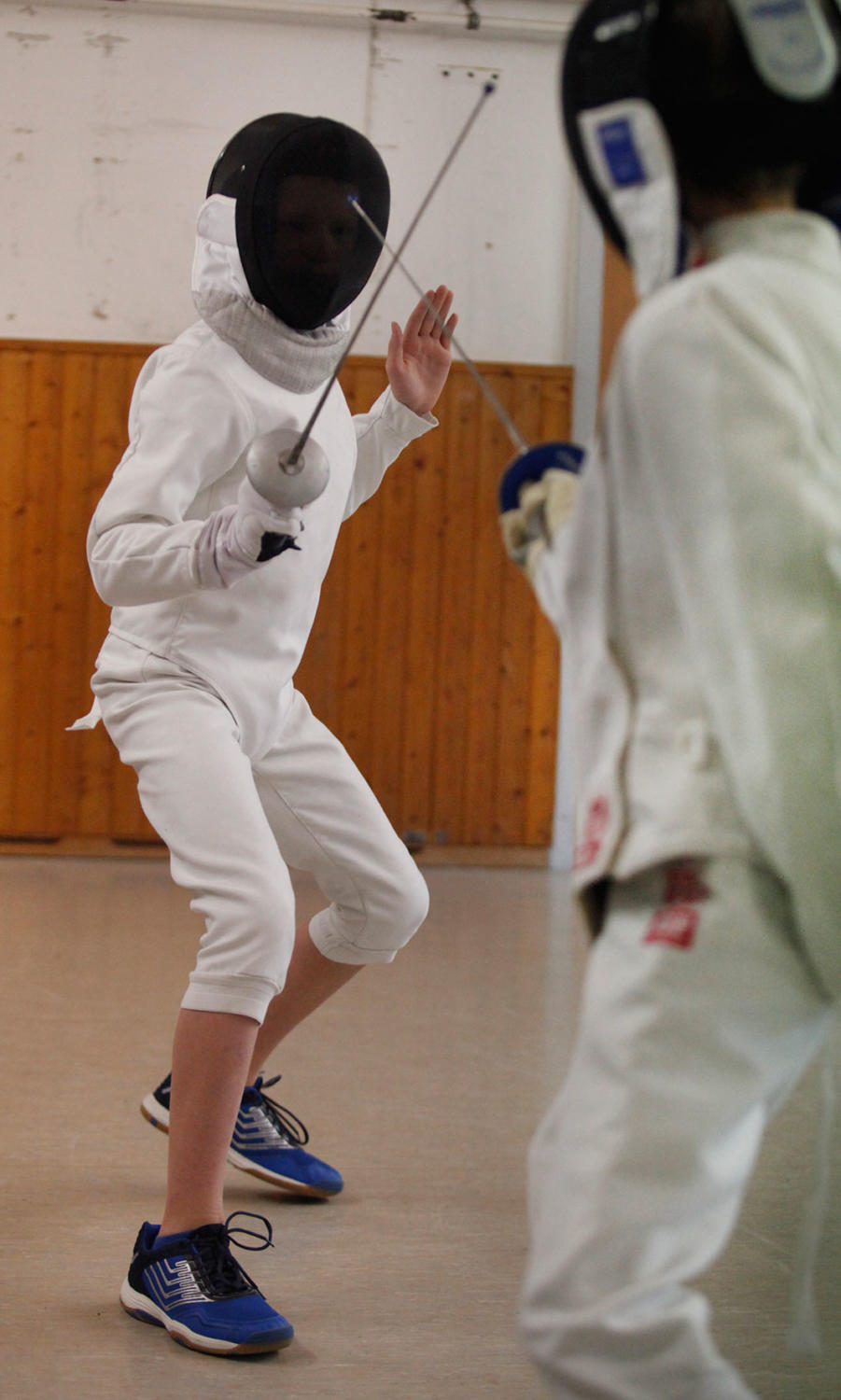
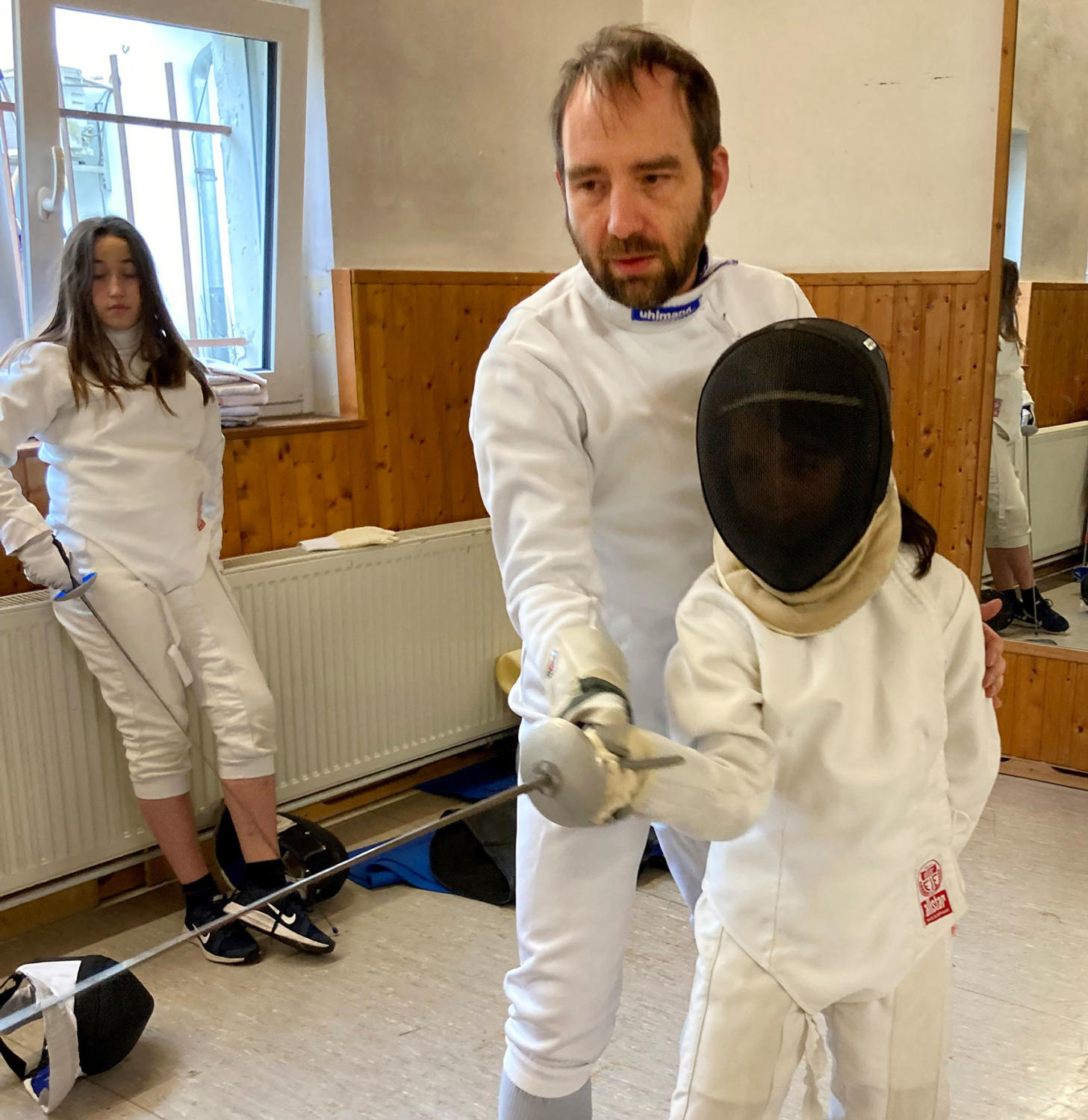
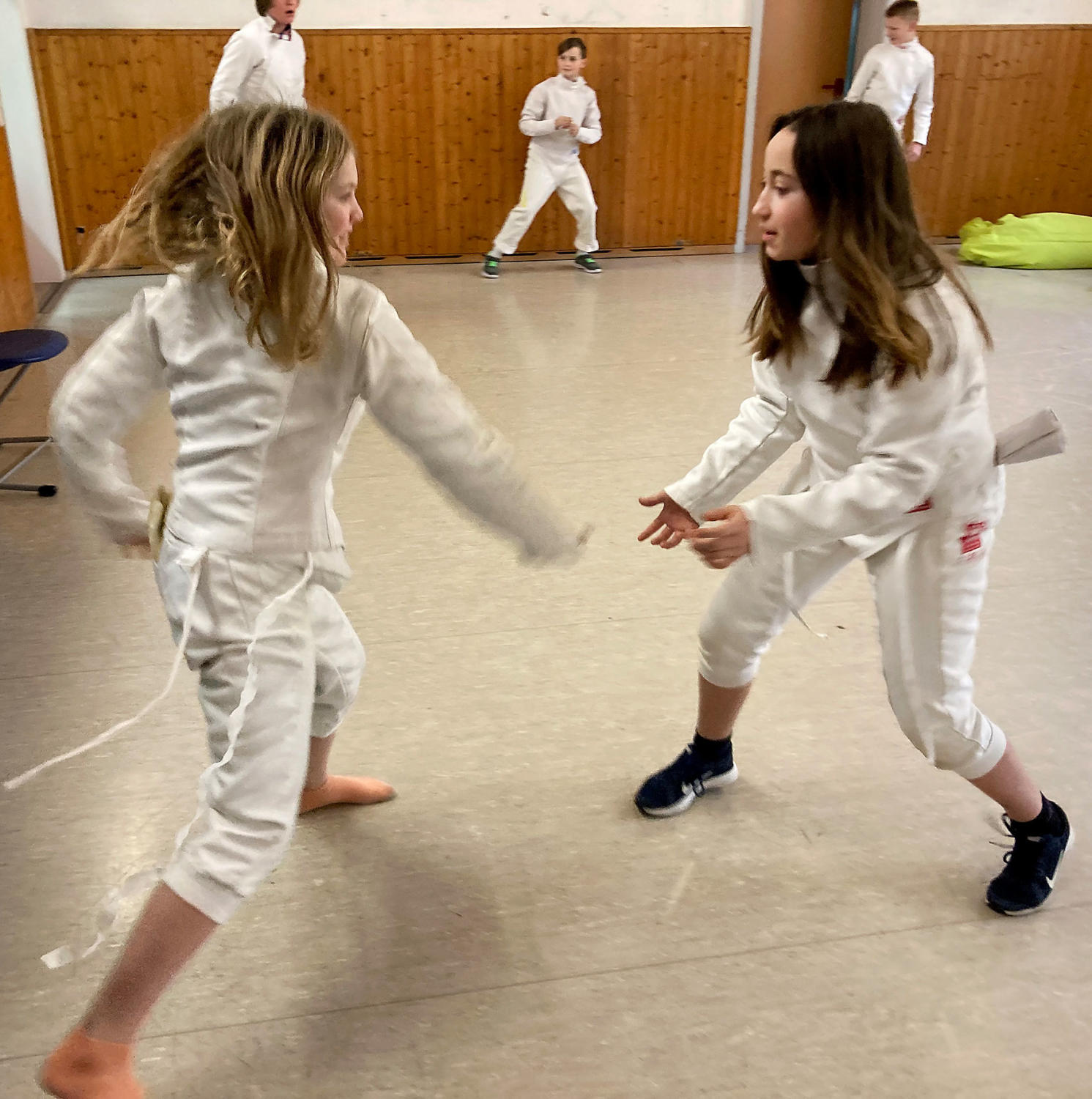
The foil is a thrusting weapon. At first, it takes some effort to use it and aim where you’re supposed to. The only valid target area is your opponent’s torso. Not the head, not the arms, not the legs. “Go ahead, it won’t hurt me.” Steffen Ullwer encourages the student to use the foil. A correct stance is important, as is good posture. By stepping forward with the front leg and extending the back leg, you close in on your opponent. This “lunge” must be executed perfectly. Once you’ve had some practice, the goal is to identify your opponent’s weaknesses. This can be done with feints—a threatening move, such as extending your arm, that isn’t followed by a thrust. Instead, your opponent’s defensive reaction opens up a new opportunity to attack. This time, you take advantage of it.

Fencing has several physical benefits. The sport strengthens the muscles and the cardiovascular system and is beneficial for the nervous system and concentration. It is said that those who fence develop physical strength, speed, agility, quick reflexes, as well as alertness and decisiveness.

Steffen Ullwer, the coach, is an experienced fencer. A math and physics teacher at Steinmühle, he has been involved in the sport since the age of 7, thanks to his father. He also coaches adults in the fencing division of VfL Marburg 1860.

“Fencing is a sport for the more calm-natured,” says Ullwer. Anyone looking to improve their coordination is in good hands here. Steffen Ullwer makes sure that beginners perform their first fencing movements with the right equipment. The foil used in the club—which is also available in a smaller version for younger participants—has blades made of flexible, rust-resistant steel. A fencing glove and a pair of fencing socks round out the equipment.

In the second semester of the 2021–22 school year, the fencing club will meet on Wednesdays. Until now, the club has met on Mondays. For any questions about fencing or what equipment is available, please contact teacher Steffen Ullwer (steffen.ullwer@steinmuehle.net).

3. March 2022
https://steinmuehle.de/wp-content/uploads/sites/5/2022/03/Titel-scaled.jpg 620 1500 konnertz https://steinmuehle.de/wp-content/uploads/sites/5/2025/11/Logo_SchuleInternat_Steinmuehle_2026_3.png konnertz2022-03-03 09:56:382026-06-18 17:35:26A sport for those who prefer a more relaxed pace: Fencing builds coordination, dexterity, and strength

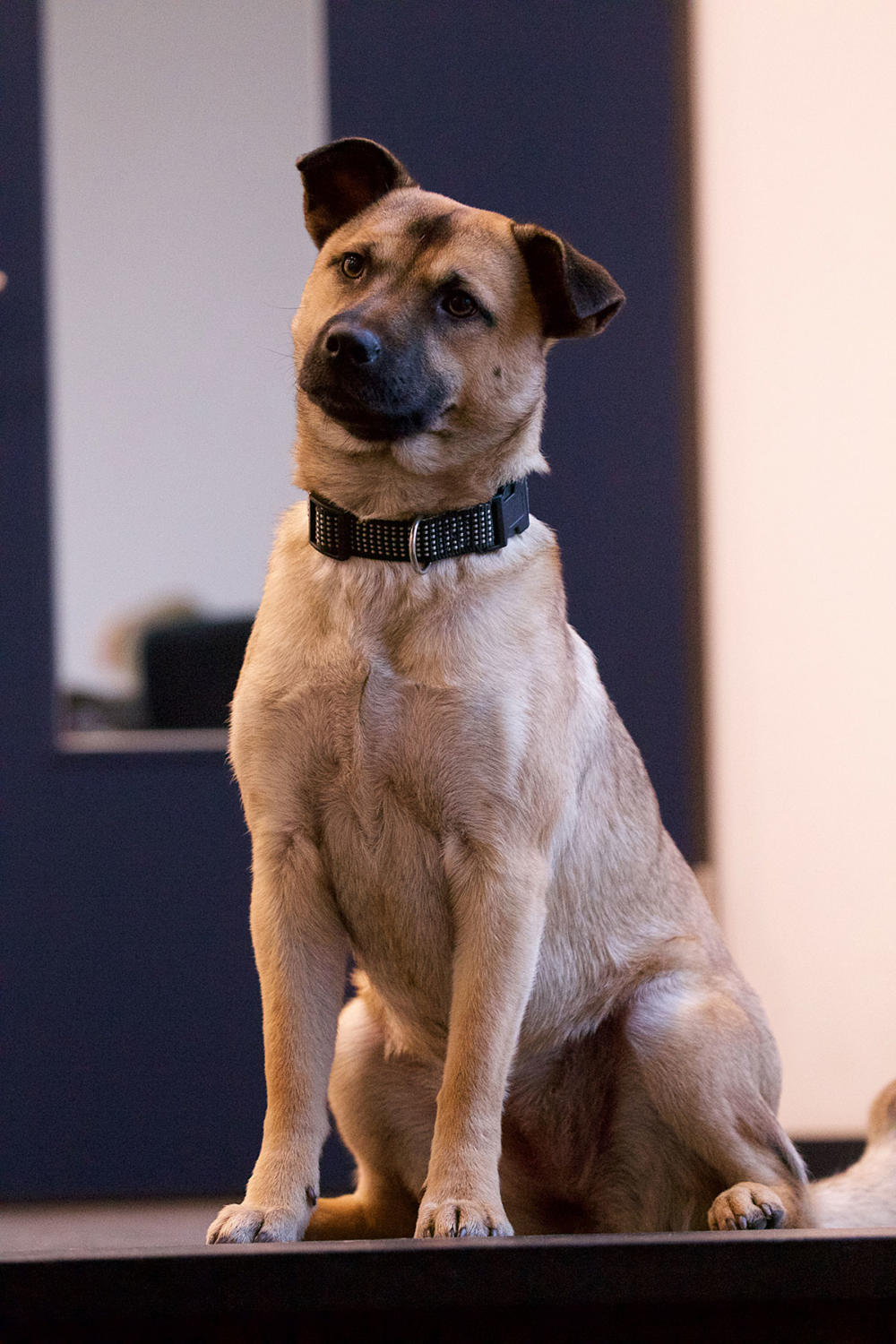
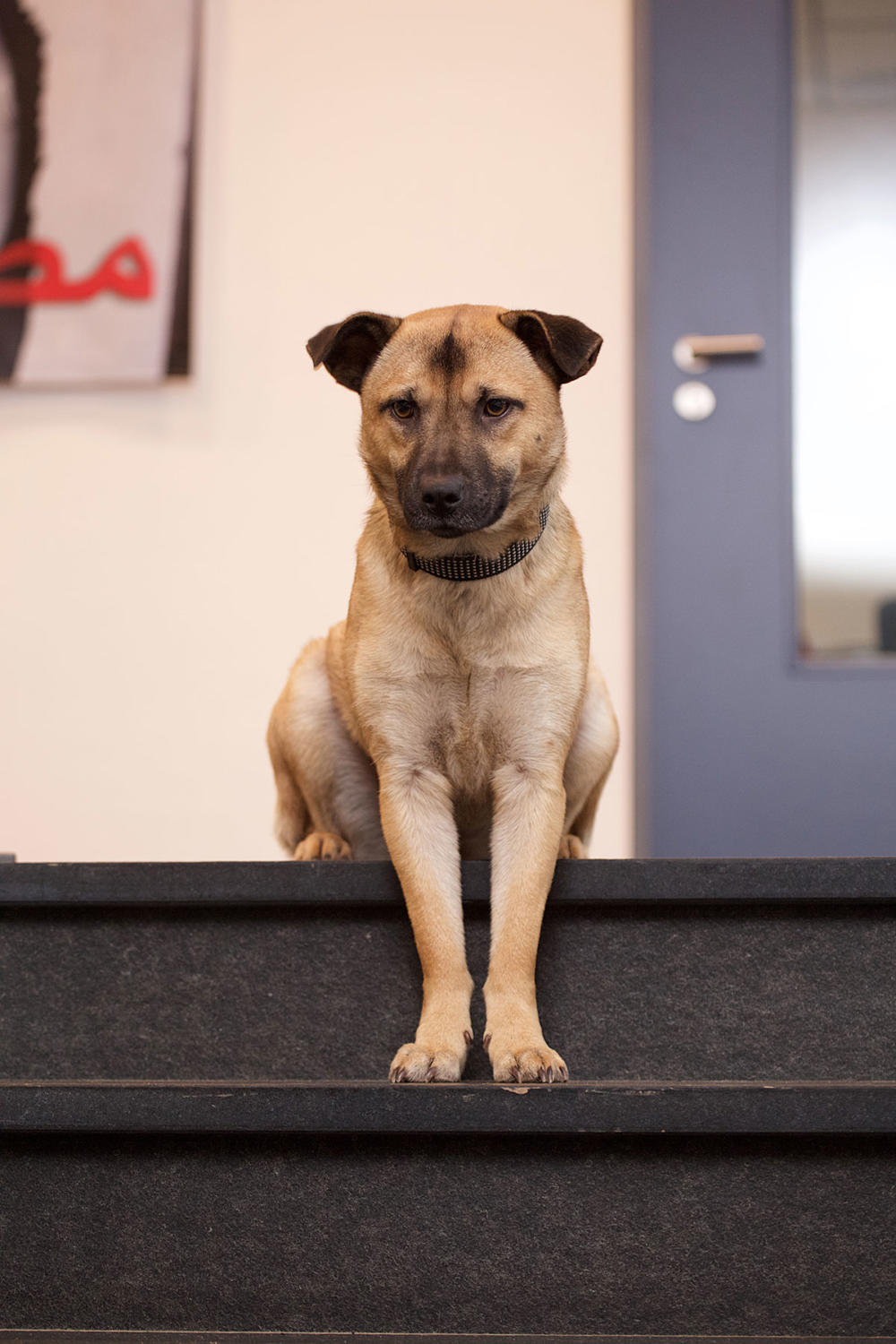
“Part German Shepherd, part meerkat”: Mara becomes a school dog

News, Social Engagement

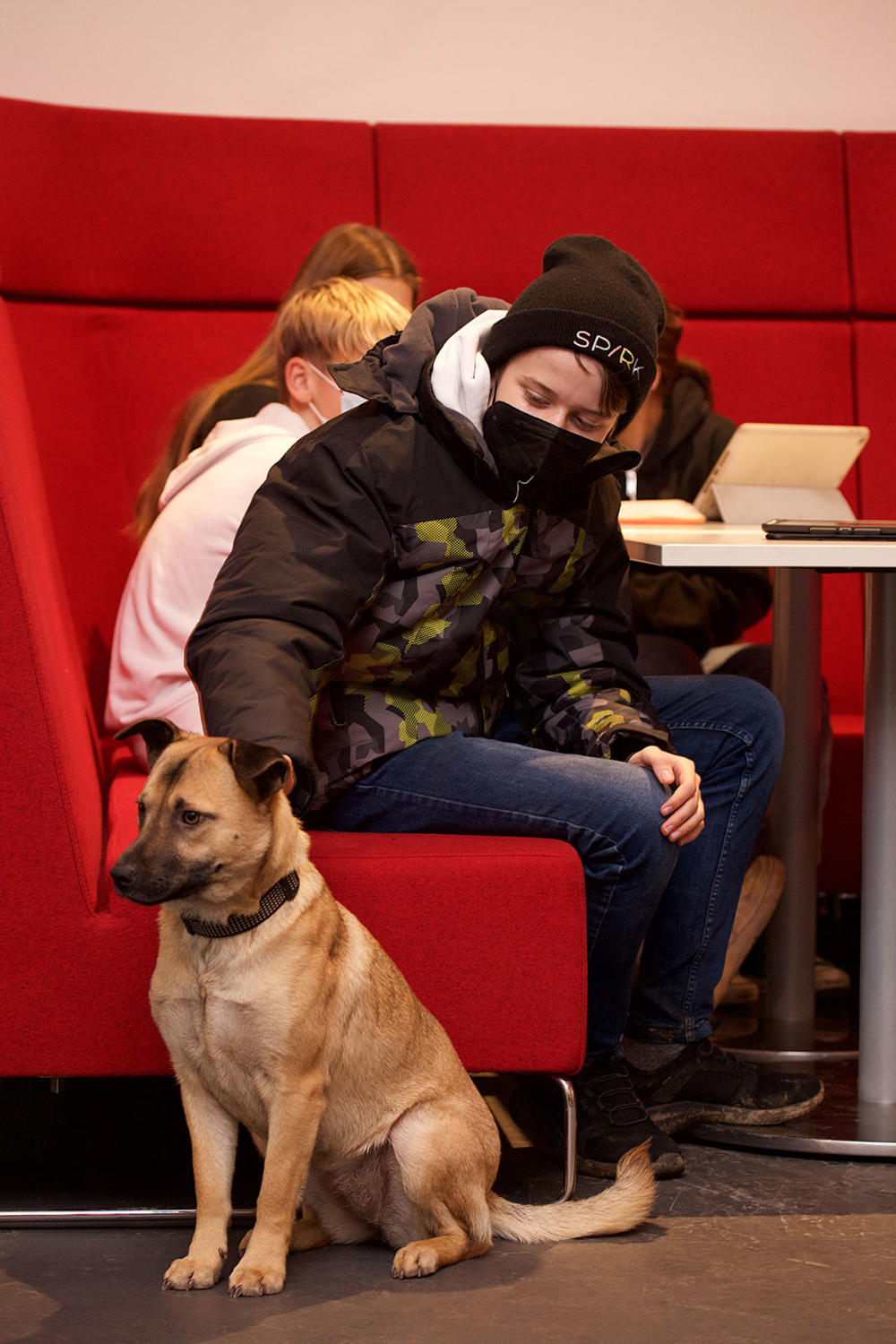
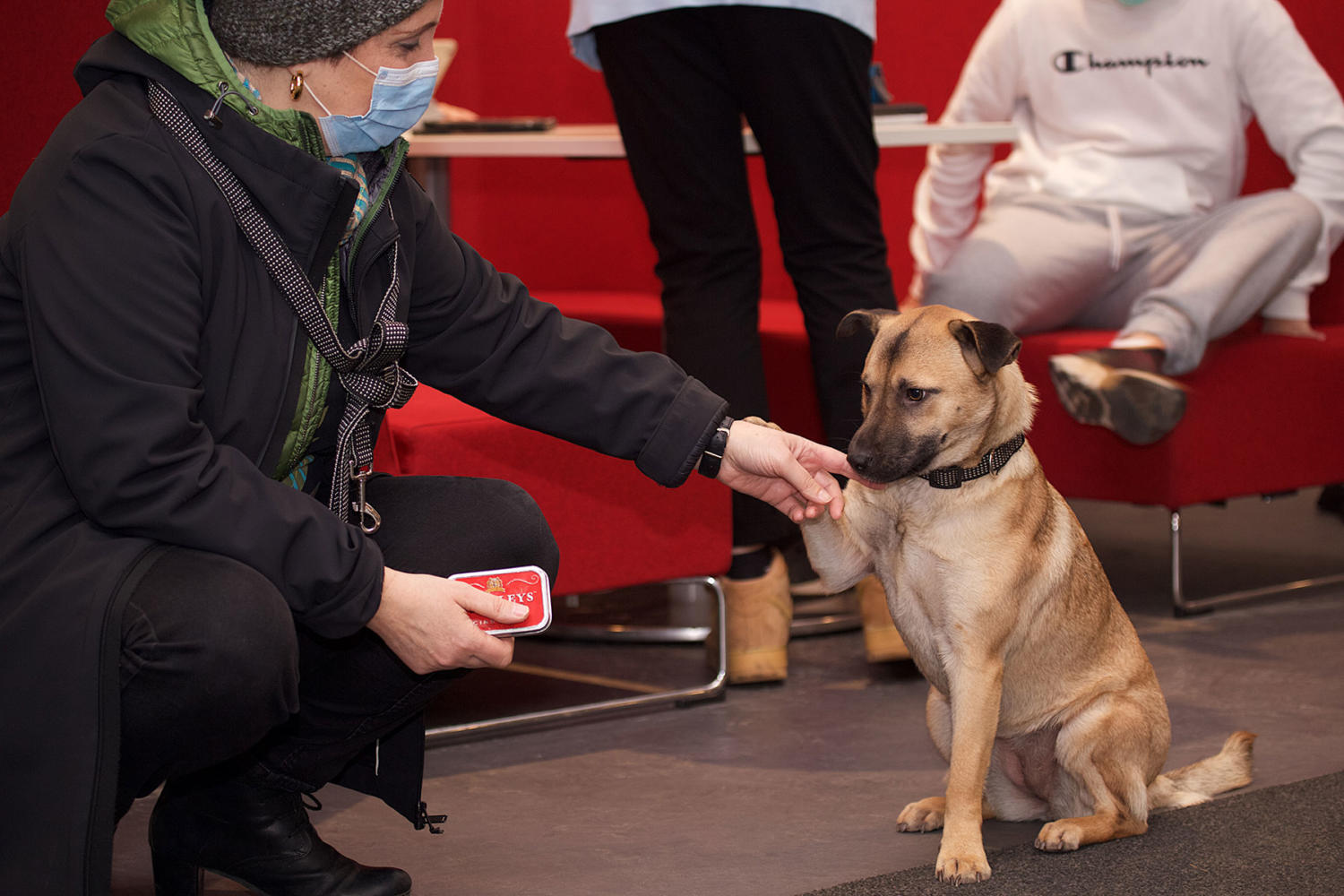
Mara is unfazed. Small children, crowds, all kinds of noises, a skateboard whizzing by, bicycles, or joggers—nothing fazes her. The presence of teacher María Ramos’s dog is greeted with joy on the grounds of the Steinmühle. And soon, the four-legged friend starts stopping by Steinmühlenweg more often.

Mara is actually María Ramos’s daughter’s therapy dog. Her daughter wasn’t able to bring Mara with her to her facility. Ramos: “One day I thought, ‘We could do more with this animal’s potential.’ The school administration agreed with my idea of Mara becoming a school dog.” First and foremost, a temperament test is required. “Mara passed that successfully,” the teacher reports. Now Mara will undergo proper training. “She already knows all the commands.”

Mara’s roots are in the Balkans. She arrived in her new home in Germany malnourished, frightened, and “with patches of light-colored fur.” Mara spent her first six months on a farm with many children. This “cross between a German Shepherd and a meerkat” has been living with María Ramos since December 2020.

Those in charge are well aware that children will also need instructions on how to interact with the school dog. They also recognize that a school dog can help children cope with stress, promote their well-being, lift their spirits, and even improve their social skills.

We’re very excited to see how things turn out and look forward to Mara’s return with her “diploma.” We’ll continue our animal-themed report in due course.

3. March 2022
https://steinmuehle.de/wp-content/uploads/sites/5/2022/03/01-1-scaled.jpg 1000 1500 konnertz https://steinmuehle.de/wp-content/uploads/sites/5/2025/11/Logo_SchuleInternat_Steinmuehle_2026_3.png konnertz2022-03-03 09:53:232026-06-18 17:35:24“Part German Shepherd, part meerkat”: Mara becomes a school dog

Opportunity for therapeutic conversations: “The service is available”

News, Politics, Business & Responsibility

Your thoughts are going in circles, even your closest friends don’t have a solution, and besides, you don’t want to go around telling everyone about your problem: For anyone who needs someone to talk to and would like to get an “outside” perspective, there’s been a new point of contact at Steinmühle since the start of the school year: Maria Sideraki. She’s available to anyone who’s stuck on an issue that’s really weighing on their mind or that they’d like to change.

Support in various life situations can mean many things. A student feels bullied, parents are worried about their daughter’s development, a teacher feels on the verge of burnout, an administrative staff member is struggling with a poor relationship with colleagues. — All of these examples are fictional. They are meant to illustrate just one thing: Anyone, regardless of their role within the Steinmühlen community, can take advantage of Maria Sideraki’s services. Frank Wemme, the head of the lower secondary school, is aware of the prejudices that persist to this day: “No, you’re not crazy just because you seek therapeutic help once in a while. There are many situations that can pull the rug out from under you. This could include the loss of a loved one due to separation or even death, or, for example, a medical diagnosis. The offer of counseling is there. You just have to accept it.”

Maria Sideraki has lived in Germany since she was 7 years old. Born in Athens, she initially lived in Kassel with her parents and siblings, attended high school there, and, after graduating from high school and completing a voluntary social service year, went on to study psychology and education in Marburg. “That was when I first came into contact with the Steinmühle,” she recalls. At the time, she was living in the Bremerhaus.

A few months after she graduated, her son was born. The two years of parental leave that followed are the only “personal” period in Maria Siderakis’s life, which otherwise features an impressive range of professional activities in the fields of psychotherapy and education, complemented by a dozen or so internships, continuing education courses, and volunteer work.

In summary, it can be said that the quadrilingual therapist (Greek, German, English, Arabic) has led many therapeutic interventions, provided support in many situations, and cared for many people over the years and decades—regardless of their age or nationality. Notable examples include her work in the field of psychogeriatrics at a nursing home in Marburg, conducting literacy courses for young adults in Wetzlar, and leading training sessions for children and adolescents on ADHD and social skills at a pediatric practice in Giessen. Parents were also involved in some of these courses. Since 2015, Maria Sideraki has been working at a practice for psychiatry and psychotherapy in Giessen, conducting psychological testing and diagnostics. At the same time, she works at the Rhön-Klinikum Gießen-Marburg, Giessen campus, in the Center for Social Pediatrics/Neuropediatrics. There, she specializes in educational and psychological assessment and therapy for children and adolescents and serves as the director of the Regulation Clinic.

Appointments with Maria Sideraki:

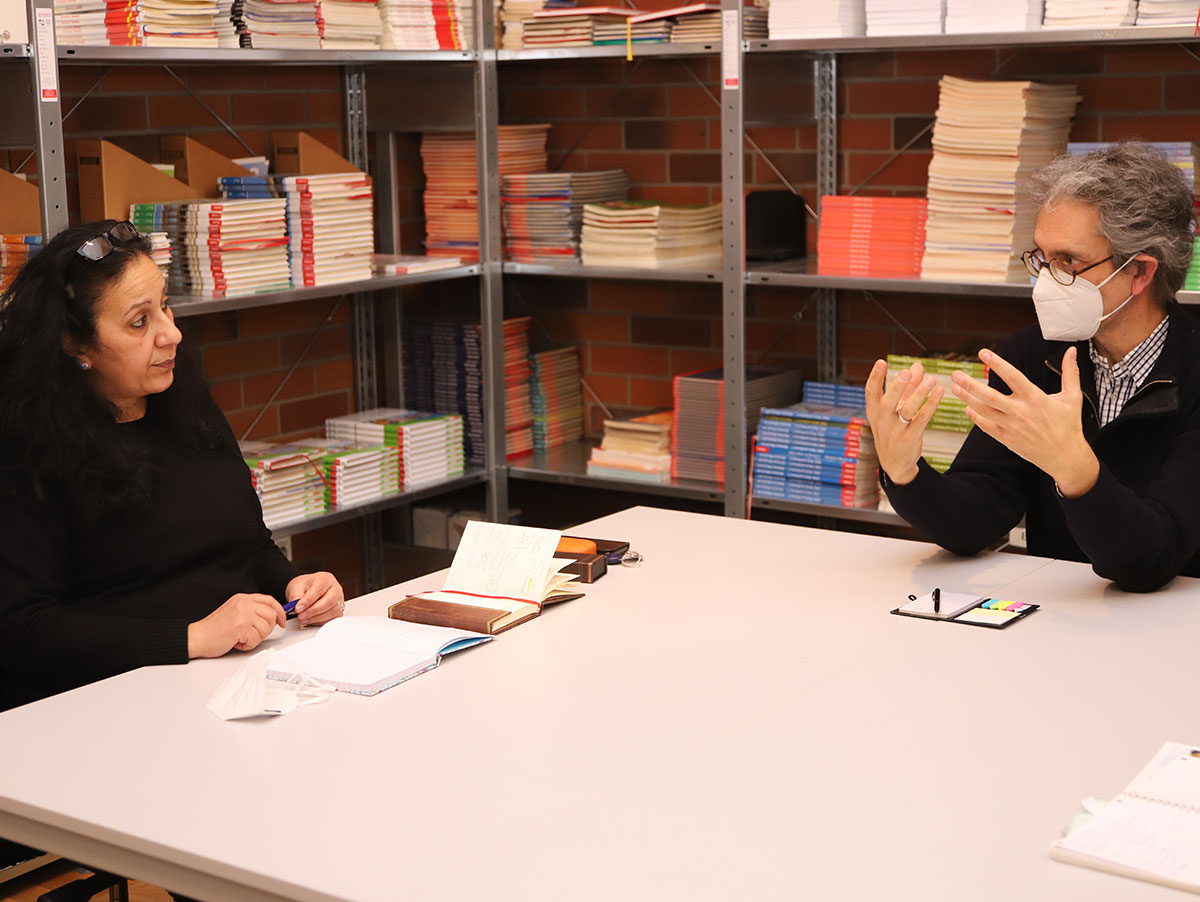
All students, parents, teachers, and staff at Steinmühle are welcome to take advantage of Maria Sideraki’s counseling services. If necessary, she may also observe classes. Individual sessions are scheduled for 45 minutes. Follow-up appointments are available as needed. Maria Sideraki is bound by confidentiality. She will not discuss the content of the sessions with any third parties. The costs of this service are shared equally between Steinmühle School and Steinmühle Boarding School. Appointments with Maria Sideraki can be scheduled through Frank Wemme via email frank.wemme@steinmuehle.net. Confidentiality is also guaranteed when contacting us.

3. March 2022
https://steinmuehle.de/wp-content/uploads/sites/5/2022/03/01.jpg 902 1200 konnertz https://steinmuehle.de/wp-content/uploads/sites/5/2025/11/Logo_SchuleInternat_Steinmuehle_2026_3.png konnertz2022-03-03 09:47:202026-06-18 17:35:23Opportunity for therapeutic conversations: “The service is available”

Pages

  • A Safe Place
  • About Us
  • Alternative Sports
  • Alumni Feed
  • Alumni Login
  • Alumni Reunion
  • Annual Calendar Download
  • Art, Music & Theater
  • Awards
  • Bilingual Elementary School
  • Bilingual Elementary School
  • Boarding School
  • Boarding School Admission
  • Boarding School as an Opportunity
  • Charity Projects
  • Contact
  • Costs & Contract Terms
  • Digitization
  • Donation Failed
  • Donation Receipt
  • Donor Dashboard
  • Ecology & Sustainability
  • Elementary School Registration
  • Events
  • Fan Shop
  • Fit for Life
  • Forgot your password?
  • Friends & Alumni
  • Friends of the School Association
  • Funding Partners
  • Fundraising
  • Groups
  • High School
  • High School Admission
  • High School Registration Form
  • Home
  • Internal Clubs
  • International High School
  • International High School Program
  • International High School Registration Form
  • International School
  • International School Registration
  • Keyword Search
  • Languages & International Affairs
  • Learning
  • Legal Notice
  • Life
  • Members
  • MINT Lab Equipment
  • Mission Statement & Vision
  • My Profile
  • News
  • News
  • News Archive
  • Newsletter
  • Newsletter
  • Organization & History
  • Partners
  • Privacy Policy
  • Privacy Policy (Detailed)
  • Project-Based Learning
  • Promoting Independence & Individuality
  • Promoting STEM Talent
  • Publications
  • Quality Management
  • Recording
  • Registration Form for the Bilingual Elementary School
  • Reset Password
  • Riding School
  • Rowing Club
  • School
  • School as a Community
  • Signed up for the newsletter
  • Social Responsibility
  • Social Responsibility & Strengthening the Community
  • Sponsorship
  • Sports & Health
  • Sports & Recreation
  • Stakeholders
  • Steinmühle Alumni Network
  • Steinmühle as a Youth Welfare Agency
  • Stories
  • Summer Camps
  • Support Current Projects
  • Support for Families
  • Talent Program Plus STEM
  • Teams
  • Terms and Conditions for High School
  • Terms and Conditions for the Bilingual Elementary School
  • Terms and Conditions of the International High School
  • Terms of Contract for the Bilingual Primary School
  • Terms of Contract for the International School
  • Trips & Weekends
  • Upload Transcript
  • What is … up to today, anyway?
  • Why Steinmühle?
  • Work at the Steinmühle

Categories

  • Archive
  • Art, Music & Theater
  • Bilingual Elementary School
  • Boarding School
  • Class Trips, Field Trips, and School Outings
  • Collaborations & Partnerships
  • Contests & Awards
  • Digitalization & AI
  • Ecology and Sustainability
  • Events & Celebrations
  • Former Students & Alumni
  • International High School
  • Job Openings
  • Languages & International Affairs
  • Life at Boarding School
  • News
  • Politics, Business & Responsibility
  • Rowing
  • Social Engagement
  • Sports
  • Sports & Health
  • Steinmühle on the Road
  • Steinmühle Riding School
  • STEM
  • Surveys & Studies
  • Talent Development
  • Uncategorized

Archive

  • June 2026
  • May 2026
  • April 2026
  • March 2026
  • February 2026
  • January 2026
  • December 2025
  • November 2025
  • October 2025
  • September 2025
  • August 2025
  • July 2025
  • June 2025
  • May 2025
  • April 2025
  • March 2025
  • February 2025
  • January 2025
  • December 2024
  • November 2024
  • October 2024
  • September 2024
  • August 2024
  • July 2024
  • June 2024
  • May 2024
  • April 2024
  • March 2024
  • February 2024
  • January 2024
  • December 2023
  • November 2023
  • October 2023
  • September 2023
  • August 2023
  • July 2023
  • June 2023
  • May 2023
  • April 2023
  • March 2023
  • February 2023
  • January 2023
  • December 2022
  • November 2022
  • October 2022
  • September 2022
  • August 2022
  • July 2022
  • June 2022
  • May 2022
  • April 2022
  • March 2022
  • February 2022
  • January 2022
  • December 2021
  • November 2021
  • October 2021
  • September 2021
  • August 2021
  • July 2021
  • May 2021
  • April 2021
  • March 2021
  • February 2021
  • December 2020
  • November 2020
  • October 2020
  • September 2020
  • August 2020
  • July 2020
  • June 2020
  • May 2020
  • April 2020
  • March 2020
  • February 2020
  • January 2020
  • December 2019
  • November 2019
  • October 2019
  • September 2019
  • August 2019
  • July 2019
  • June 2019
  • May 2019
  • April 2019
  • March 2019
  • February 2019
  • January 2019
  • December 2018
  • November 2018
  • October 2018
  • September 2018
  • August 2018
  • July 2018
  • June 2018
  • May 2018
  • April 2018
  • March 2018
  • February 2018
  • January 2018
  • December 2017
  • November 2017
  • October 2017
  • September 2017
  • August 2017
  • July 2017
  • June 2017
  • May 2017
  • April 2017
  • March 2017
  • February 2017
  • January 2017
  • December 2016
  • November 2016
  • October 2016
  • September 2016
  • August 2016
  • July 2016
  • June 2016
  • May 2016
  • April 2016
  • March 2016
  • February 2016
  • December 2015
  • November 2015
  • October 2015
  • September 2015
  • July 2015
  • June 2015
  • May 2015
  • April 2015
  • March 2015
  • February 2015
  • January 2015
  • December 2014
  • November 2014
  • October 2014
  • September 2014
  • July 2014
  • June 2014
  • May 2014
  • April 2014
  • March 2014
  • February 2014
  • January 2014
  • December 2013
  • November 2013
 
PreviousNext
12
 
PreviousNext
123456

Do you have questions about the school?

School Administration & Management

Björn Gemmer & Dirk Konnertz
Phone: 06421 408-20

schule@steinmuehle.de

Do you have questions about the boarding school?

Boarding School Administration & Management

Anke Muszynski & Dirk Konnertz
Phone: 06421 408-0

internat@steinmuehle.de

  • NEWSLETTER
  • PUBLICATIONS
  • CAREERS AT STEINMÜHLE
  • SUMMER CAMPS
  • LEGAL NOTICE
  • PRIVACY POLICY
  • CONTACT

Do you have questions about the school?

School Administration & Management

Björn Gemmer & Dirk Konnertz
Phone: 06421 408-20

schule@steinmuehle.de

Do you have questions about the boarding school?

Boarding School Administration & Management

Anke Muszynski & Dirk Konnertz
Phone: 06421 408-0

internat@steinmuehle.de

  • NEWSLETTER
  • PUBLICATIONS
  • WORK AT THE STONE MILL
  • SUMMER CAMPS
  • LEGAL NOTICE
  • PRIVACY POLICY
  • CONTACT

© Copyright – Steinmühle 2026 | Erneuern oder ändern Sie Ihre Cookie-Einwilligung
Scroll to top