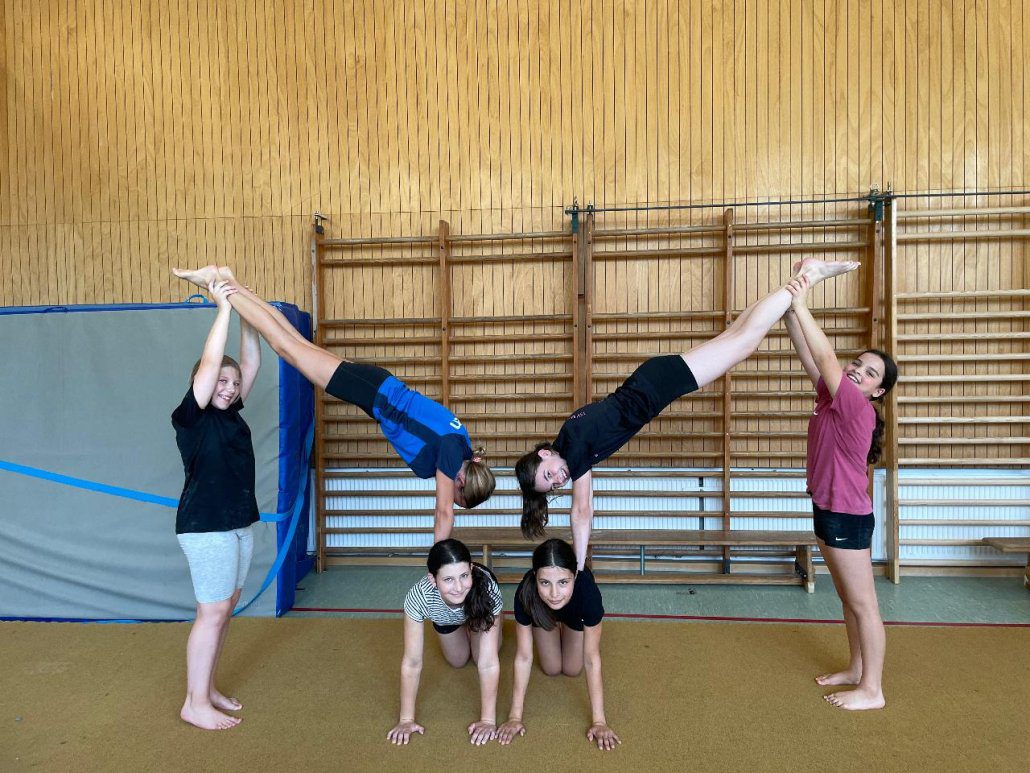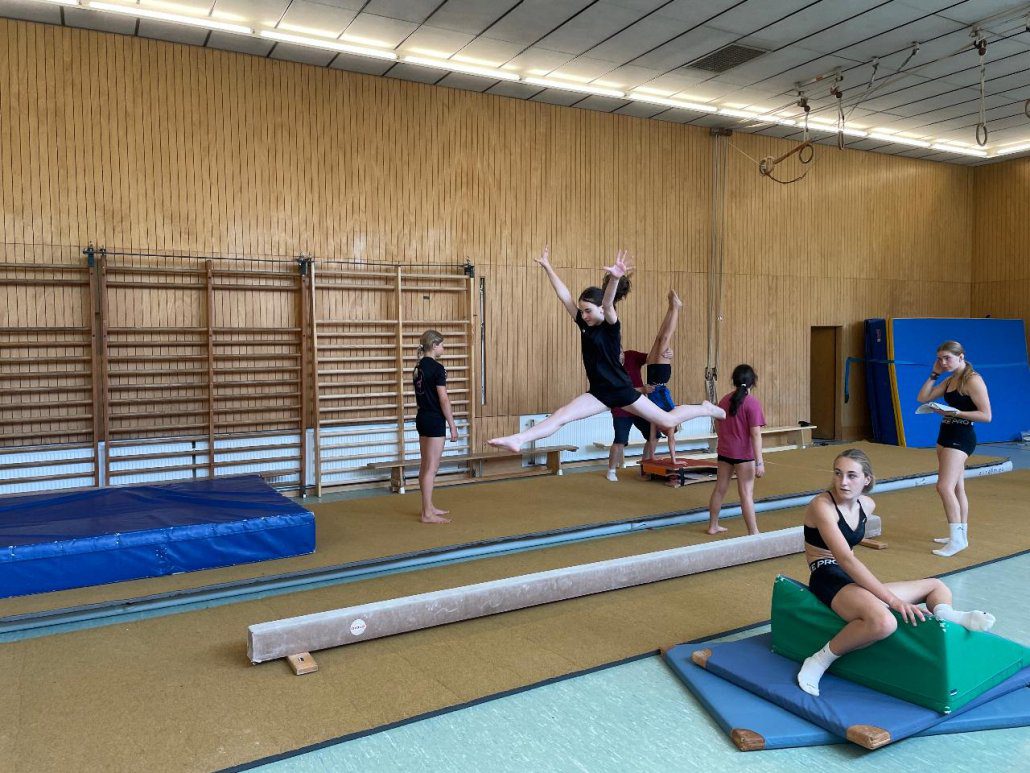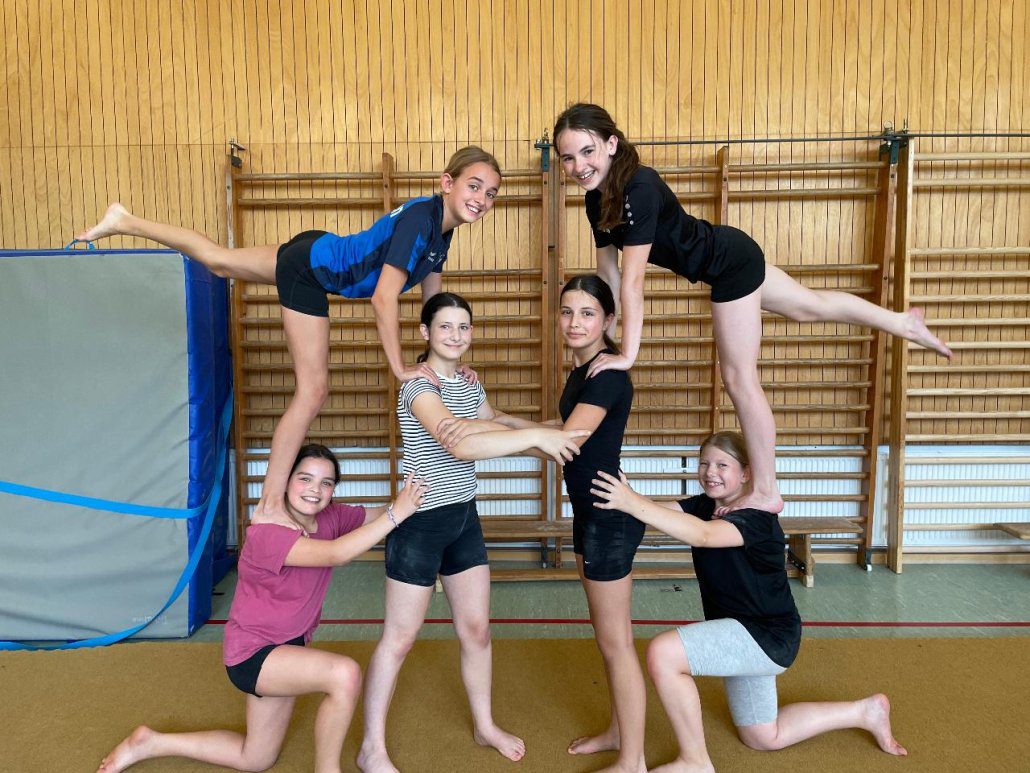
“Right before summer break…nothing much is going on at school anyway.” — Anyone who thinks that probably hasn’t experienced Steinmühle yet. No, we don’t overwhelm our students with lots of highly challenging brain teasers anymore. But a little guidance on which sport they might enjoy in the future—that’s definitely possible!


Active Day for Grades 5 through 12

This idea laid the foundation for the two consecutive sports project days. For several years now, they have been a permanent fixture in the annual program at the Steinmühle School & Boarding School. Divided into 32 groups, students in grades 5 through 12 try out different sports. They registered for these in advance, listing their first choice and three additional sports.

“We make a variety of sports experiences possible,” says Marcel Kalb. He is a biology and physical education teacher and also the school’s athletic director at Steinmühle. Since Steinmühle cannot offer all sports on its own, it partners with various clubs. “We rent out the occasional sports facility and also make use of external workshops. This happens in disciplines where we don’t have our own expertise.”


The Stone Mill as a “Sports Mill”

Experience has shown that everyone finds something that piques their curiosity or that the students have always wanted to try.

For example, there were activities in basketball, American football, ballet, golf, handball, fitness, lacrosse, judo, kickboxing, Muay Thai, mixed martial arts (MMA), padel tennis, pickleball, horseback riding, gymnastics, rowing, and dance. Of course, there were also activities in soccer—and, building on that, an opportunity to learn about the role of a soccer referee.

Even the very warm temperatures didn’t bother the vast majority of students. They took the opportunity to try out sports they hadn’t experienced before. So it was another great success for Steinmühle as the “Sports Mill.”


(Angela Heinemann)


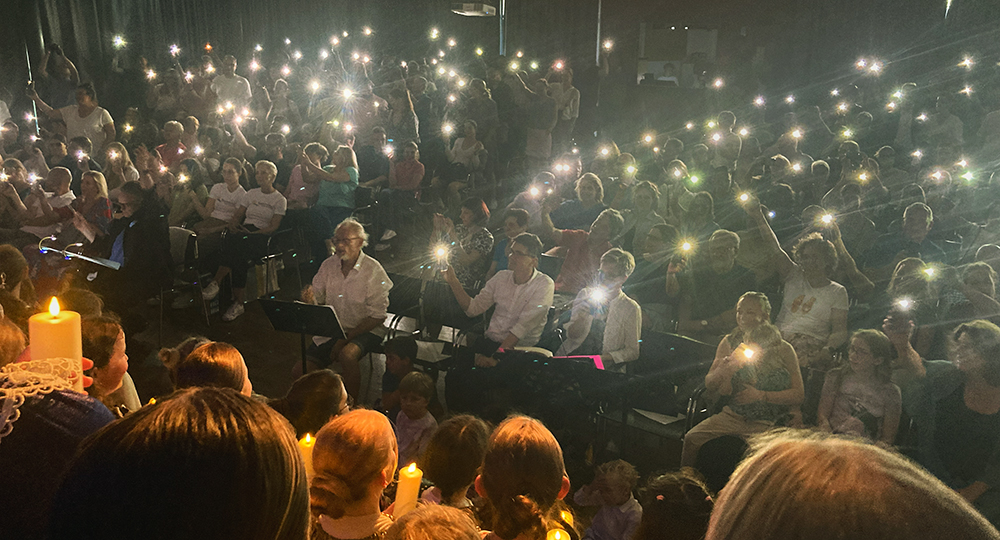
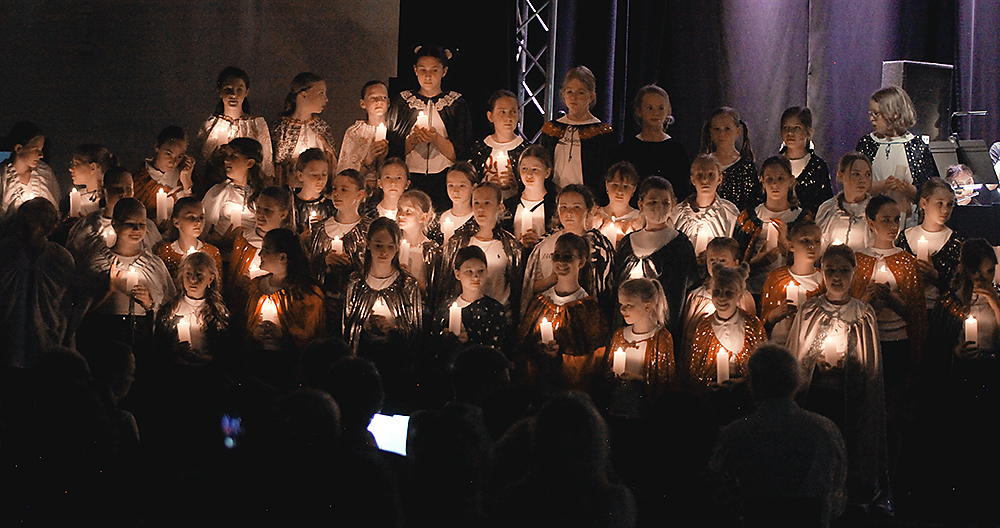
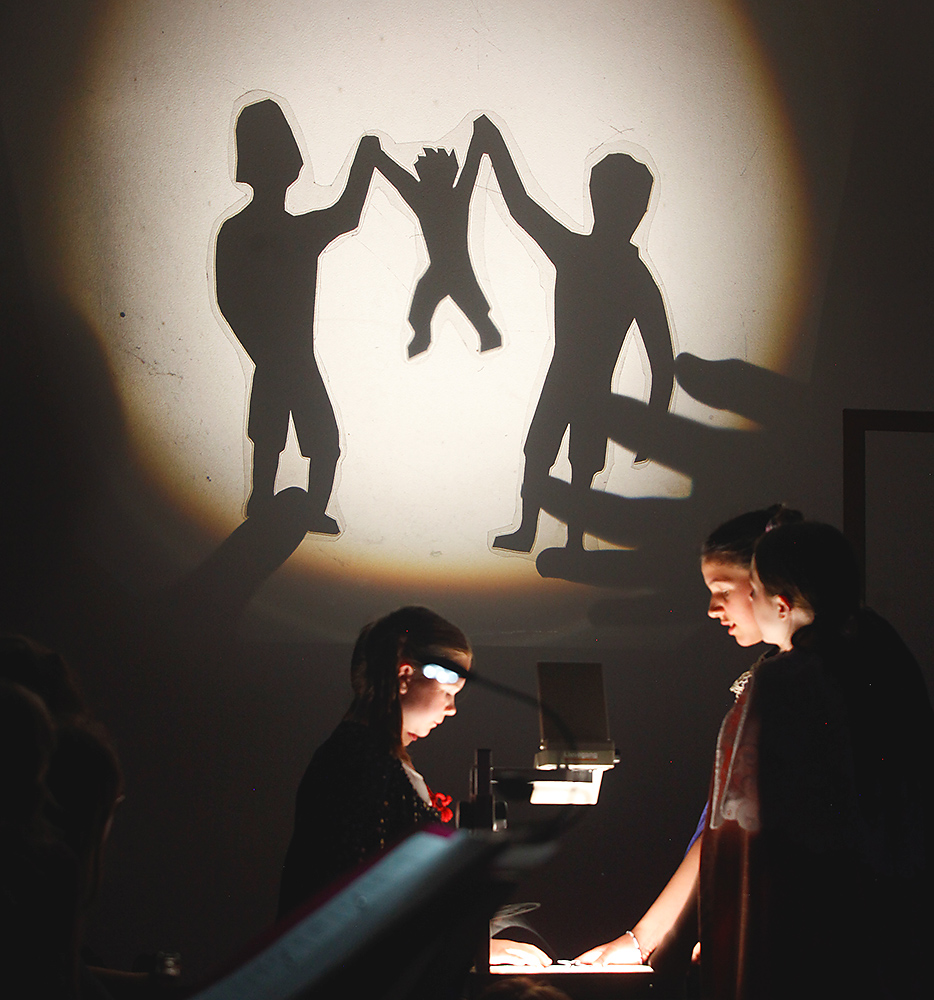
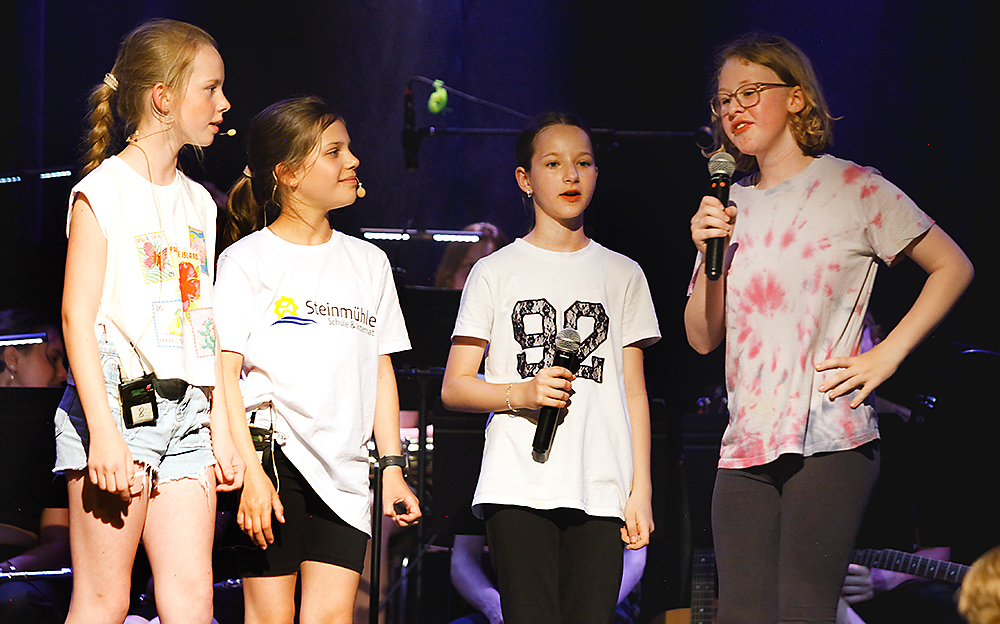
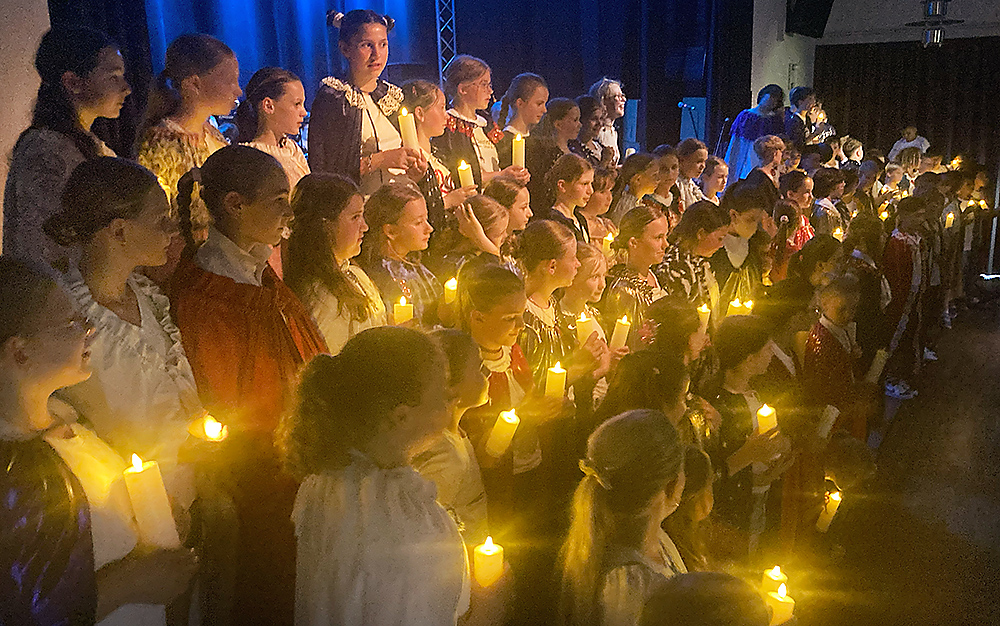
As the first notes of “Imagine” rang out, countless candles and cell phone lights gradually began to glow. For a moment, time seemed to stand still. The stage and the audience were united in a shared message—a striking image that captured the theme of this year’s musical by the 5th-grade classes: “Land of Peace—Utopia.”

When Steinmühle looks back on the highlights of the school year, the fifth-graders’ musical has held a special place for many years. Once again, the school’s youngest students demonstrated just how much creativity, musical talent, and team spirit they can bring to bringing a story to life on stage. At the heart of the production was a message that could hardly be more timely: “We’re moving toward peace.”

Music, Drama, and Movement

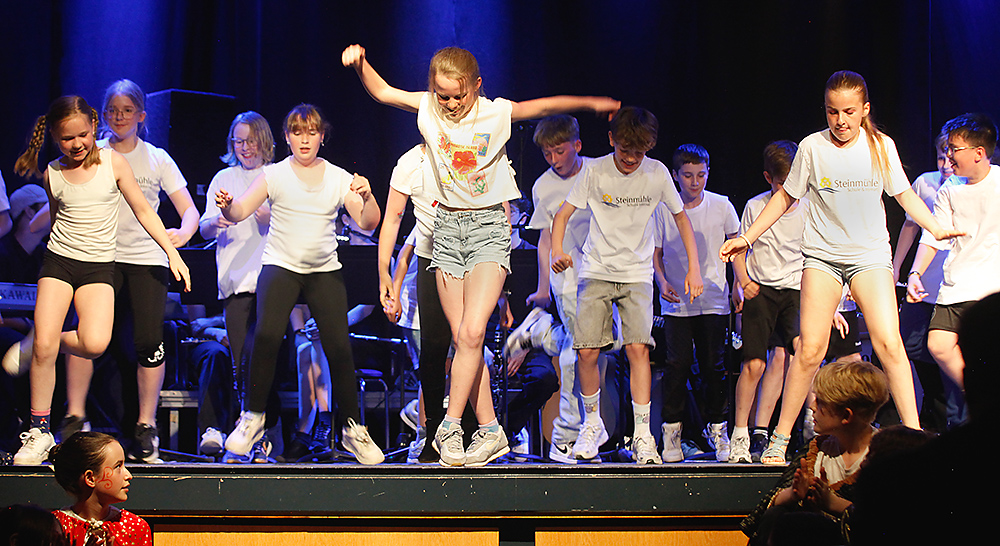
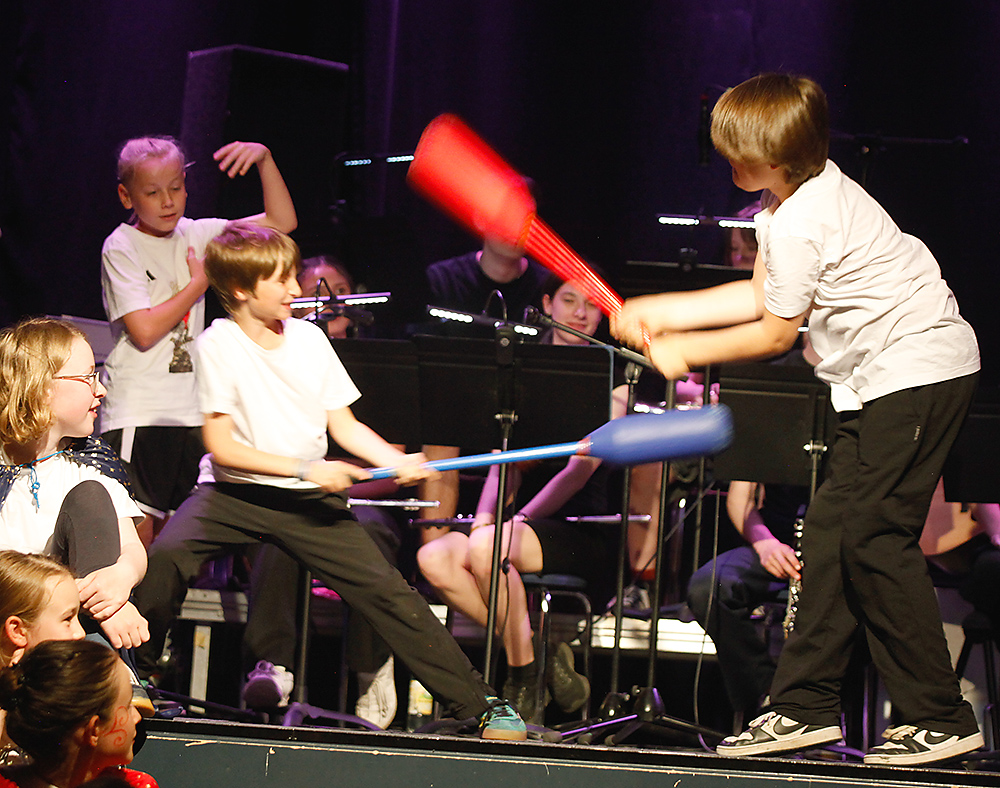
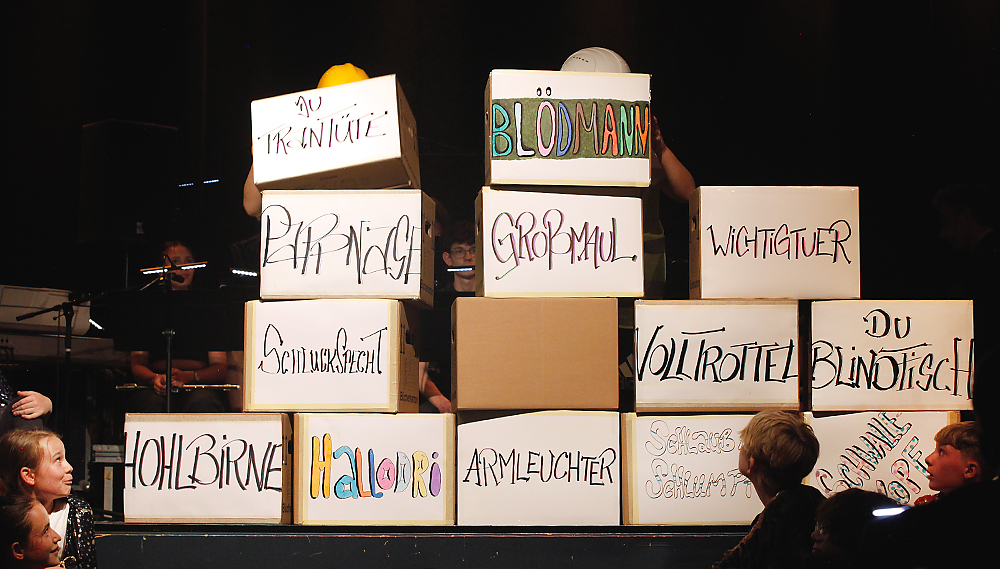
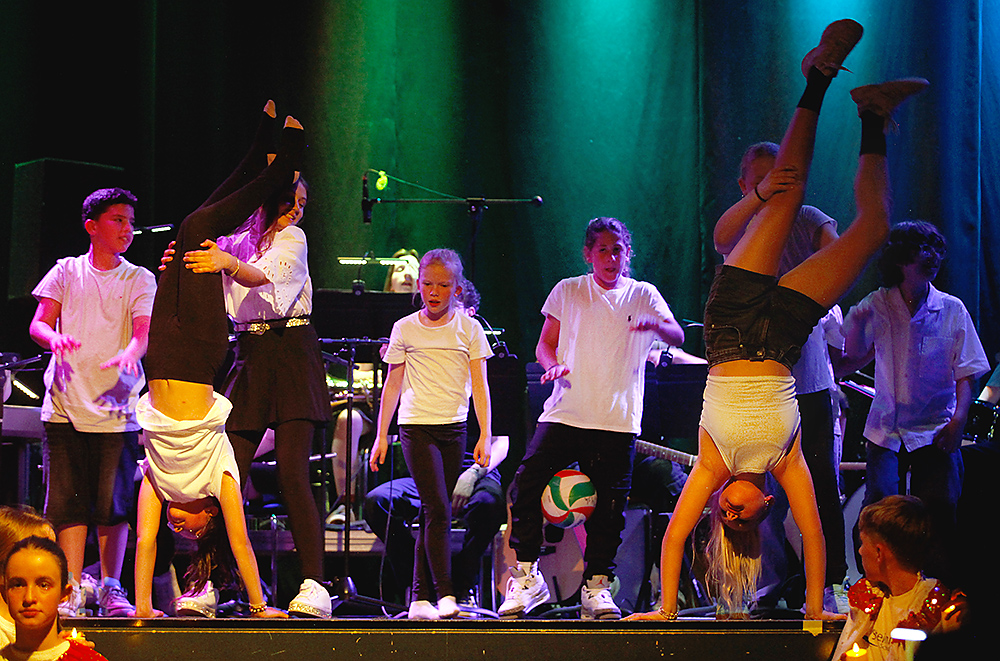
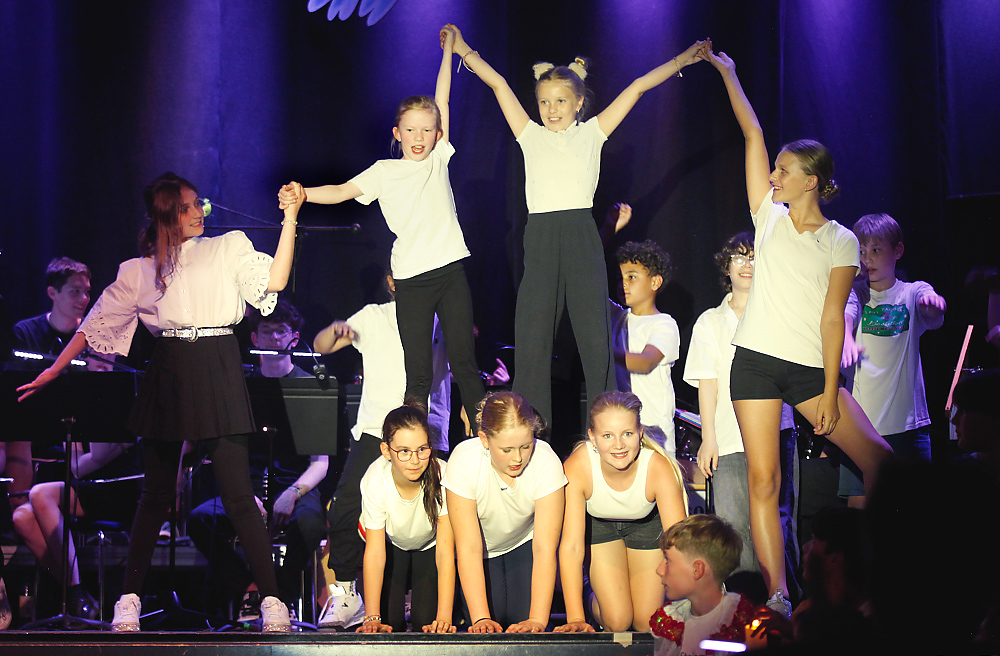
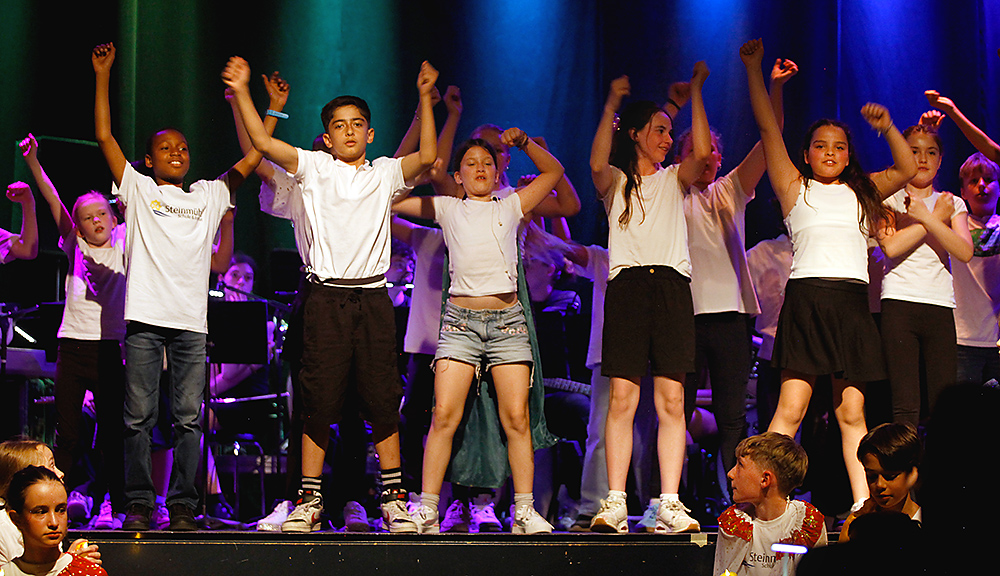
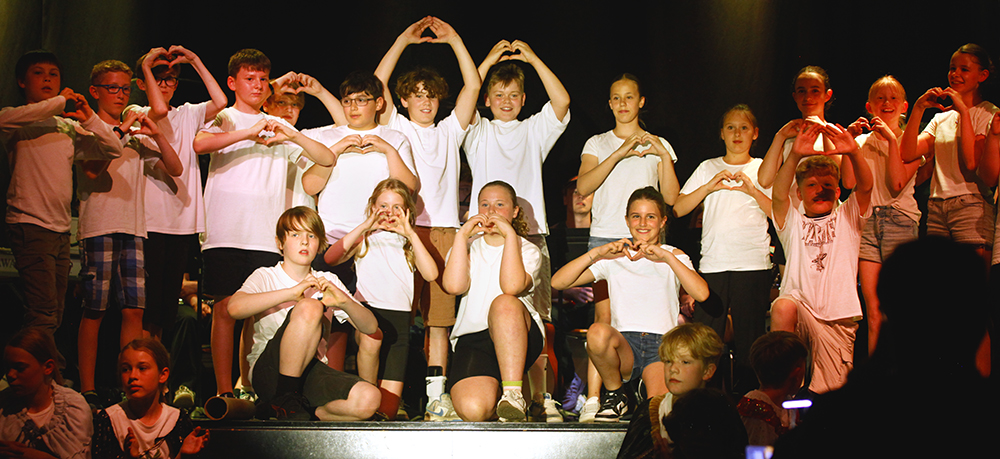
With great enthusiasm, the students told their story about the desire for a more peaceful world. They impressed the audience not only with their stunning choral performance but also with their acting talent and athletic feats. Creative choreography and acrobatic performances added extra energy to the musical and were repeatedly rewarded with spontaneous applause from the audience.

The varied program took the audience on a musical journey through different decades and featured peace songs that have lost none of their power to this day. The set list included “We Shall Overcome,” “Blowin’ in the Wind” by Bob Dylan, “Imagine” by John Lennon, “Heal the World” and “Man in the Mirror” by Michael Jackson, “99 Luftballons” by Nena, “Wir ziehen in den Frieden” by Udo Lindenberg, as well as the traditional pieces “Dona nobis pacem” and “Kumbayah, My Lord.”
The fifth-graders particularly impressed the audience with their powerful voices during their performance of “99 Luftballons.” When the last note faded away, the applause went on for a long time. The audience demanded encores—and got them.

A collaborative project involving the entire school community

Ulrike Wilmsmeyer served as the overall musical director. Together with Daniel Sans, Olaf Roth, Ines Vielhaben, and Frank Wemme, as well as the teachers of the 5th-grade classes, they created a performance that clearly demonstrated how many people contributed their ideas and dedication.

The collaboration among the different grade levels was also impressive. The accompanying band, led by Frank Wemme, was made up of students from grades 8 through 12. With flutes, clarinet, trumpet, euphonium, guitar, piano, drums, and bass, they highlighted the musical diversity of Steinmühle and gave the songs their distinctive sound.


Behind the scenes, too, there was a great deal of hard work. The Sound & Light Club handled the technical aspects, and Kira Gräser was once again in charge of props and makeup. The posters for the performance were created in the 5th-grade art class taught by Ms. Rado and helped spark interest in the musical well in advance.

A message that leaves a lasting impression

In closing, Principal Björn Gemmer thanked the many people who had contributed to the success of the evening. He particularly highlighted that, as part of the musical, the students had also explored historical songs and impressively conveyed their messages.
“Friedensland – Utopia” was far more than just a musical performance. It was an evening that demonstrated what schools are capable of: young people pushing themselves to new heights together, taking on responsibility, and using music, drama, and movement to send a message of peace, solidarity, and hope—a message that resonated long after the final applause.

(Heinm)

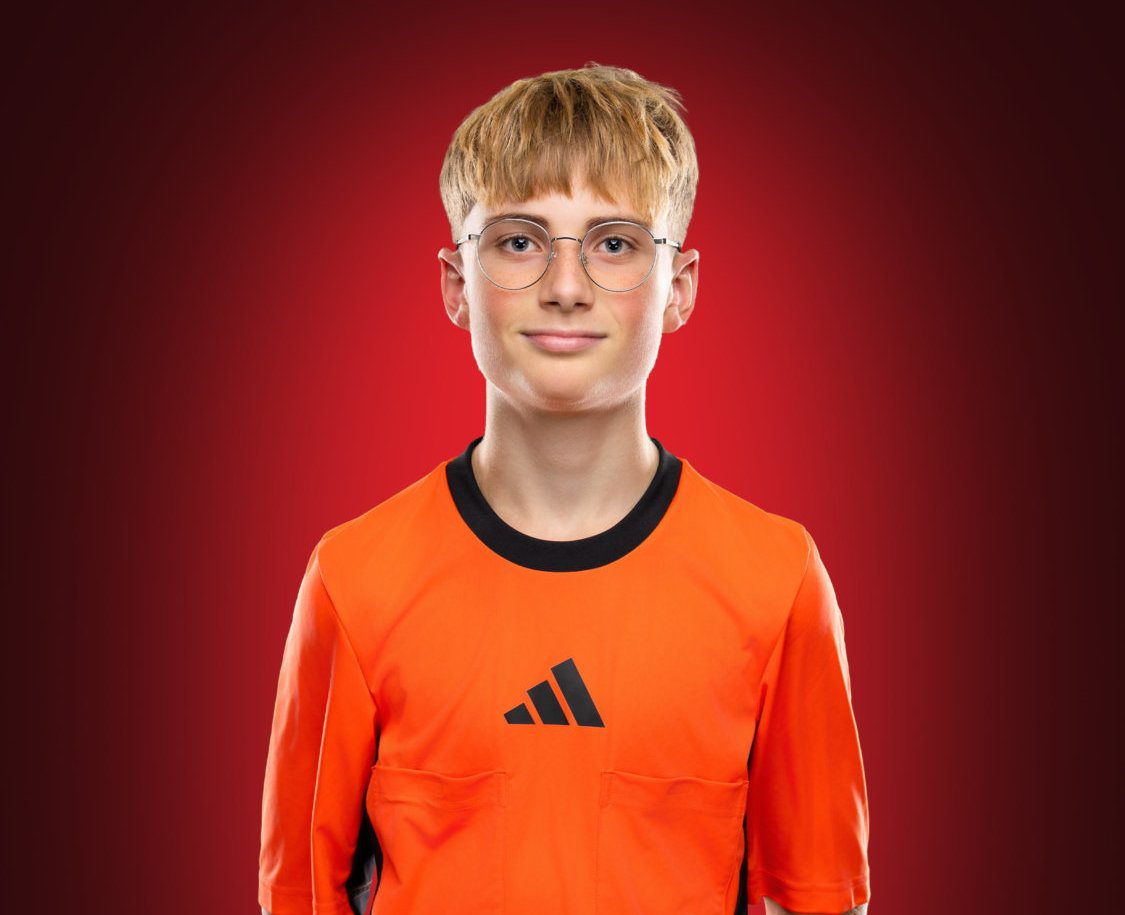
Boys, whether young or old, sometimes dream of soccer: one day being a goal-scorer like Harry Kane, or a goalkeeper like Manuel Neuer. Lars Hübl, a student at Steinmühlen School, also envisions a career in soccer—just in a different role. He dreams of becoming a Bundesliga referee.

“I don’t really know how it happened. At some point, there was just this moment. From then on, I knew: I want to be a referee.” Coming from a 13-year-old, those words sound confident and definitive.

Lars had this “inspiration”—that’s what we call it—six years ago. Whether he was watching soccer or playing soccer, that determination suddenly took hold. And as we all know, where there’s a will, there’s a way.


Support from Parents

To say that Lars has dreams is only partly true. Some time ago, the teenager began putting his dreams into action. At the age of 11, he earned his official referee certification after completing a 12-hour course. The written exam consisted of 30 questions on the rules that had to be answered. For Lars Hübl, this was no problem.

The young referee first began officiating in the U-10 league and later moved on to the U-15 Group League, the third-highest league in youth soccer. Lars Hübl works the time commitment required for this into his weekly school schedule. His parents support his hobby, which can certainly be described as unusual.

The young man has some reservations about the word “hobby.” The sport is taken very seriously. As part of a three-person team, he takes the field alongside assistant referees for many games. It’s not uncommon for his colleagues to already be of legal age.


“Self-confidence and assertiveness are important”

How does that make you feel?

“Great!” Lars says. But he remains realistic. Because he knows: “The most important things are self-confidence and assertiveness.”

He does that. He attends seminars, listens, and contributes his thoughts. He’s an active player for FV Wehrda, where he also serves as a referee for the club, of course.

“It’s possible,” Lars said, “that I’ll focus on it one hundred percent.”

The active, athletic aspect of the referee’s job is by no means neglected. “That’s often underestimated,” the student laughs. He knows you have to be fast and you have to run. You easily cover 6 to 7 kilometers per game.

Lars Hübl has something that even older teenagers often lack: he has a vision. “I want to get into men’s soccer as soon as possible,” he says, explaining at the same time that underage referees are not uncommon there.


“I asked myself: Is this what I want?”

His young age can sometimes be a challenge during games—namely, when aggressive parents from the opposing team yell at him. “The first time it happened, I asked myself, ‘Is this what I want?’” Lars recalls.

By now, however, he’s come to terms with it; he doesn’t take it personally, but looks at it from a psychological perspective. “You’re just to blame for everything when things aren’t going well for your opponent.”

He himself has a level-headed disposition. He enjoys his role as a mediator between players on opposing teams. He’s quite comfortable with the career prospects of being a referee. Starting in the 3rd Division, the German Football Association (DFB) pays fixed salaries. Lars himself sees himself, ideally, in the Bundesliga one day.

Since professional athletes typically have a long-term civilian career to fall back on, Lars already has his sights set on one. “I might end up in sports management.” With his favorite subjects being math and physical education—why not?

Incidentally, he also has a valuable supporter at school who is helping him pursue his goal of becoming a referee: his teacher, Phillip Knaack. Both actively share a passion for the role of referee.

Angela Heinemann

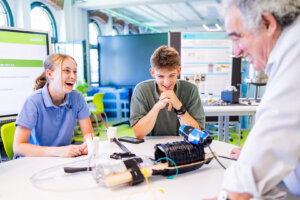
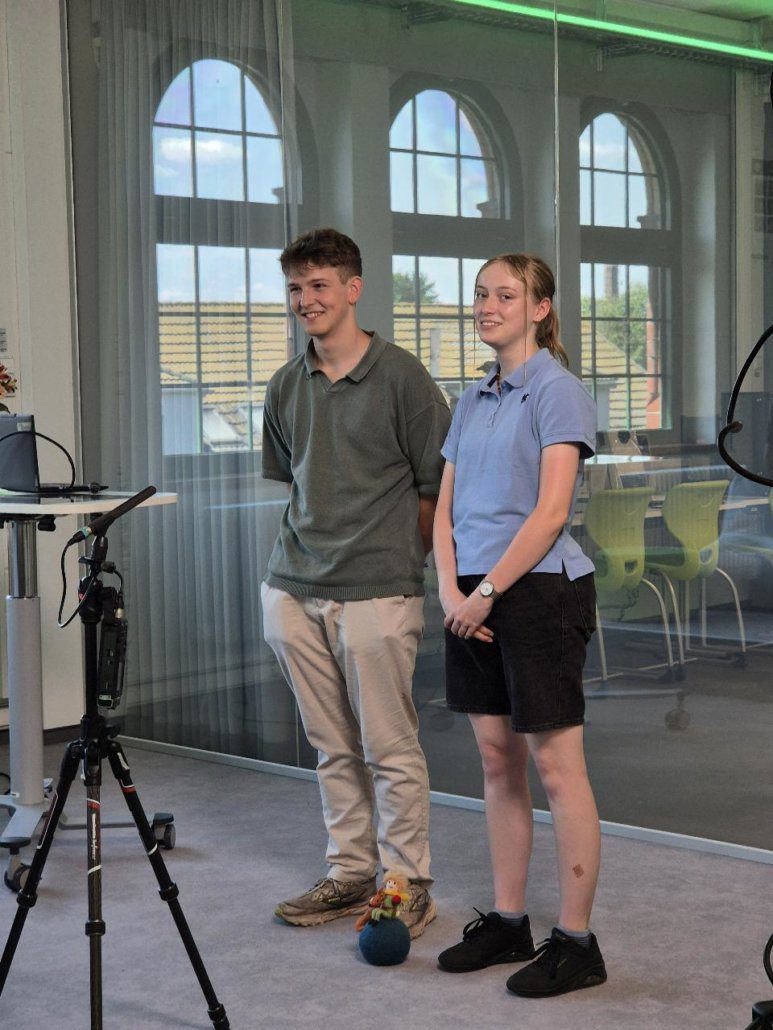
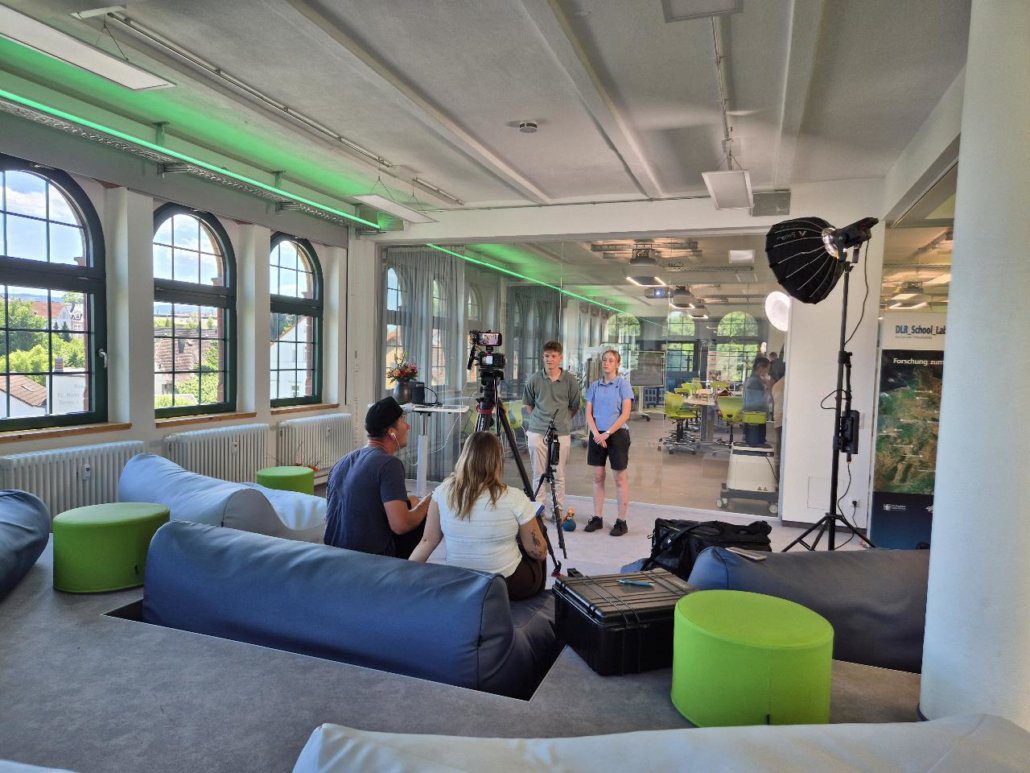
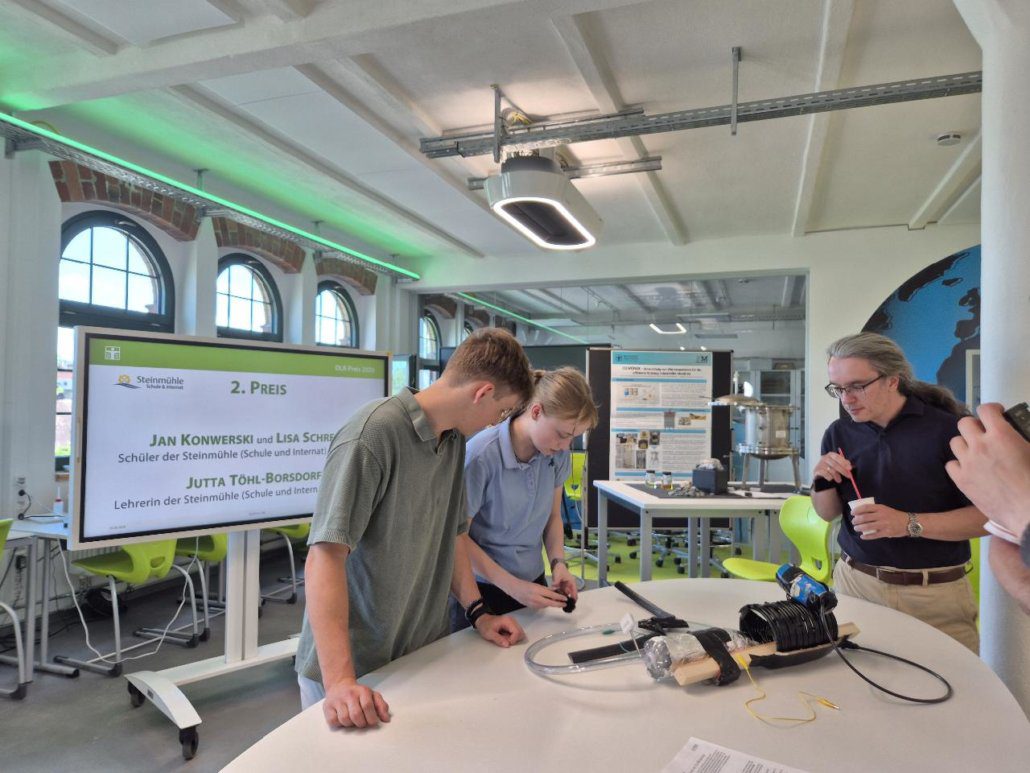
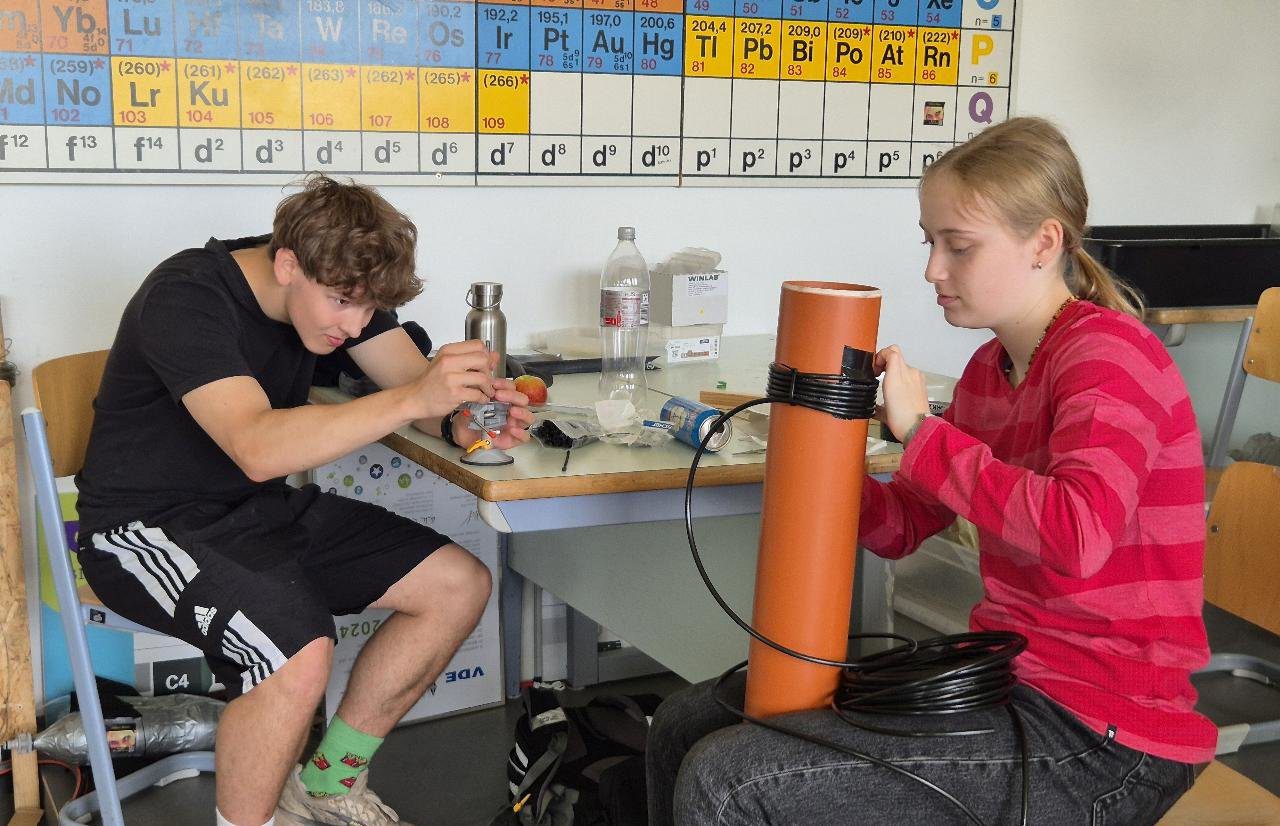
This is amazing: Jan Konwerski and Lisa Schreier, 11th-grade students in the plus-MINT program at Steinmühle Boarding School, won second place in the School Lab competition hosted by the German Aerospace Center (DLR) with their heat pump model.

“We are very pleased with this tremendous success,” said project supervisor Dr. Jutta Töhl-Borsdorf—who also serves as the STEM coordinator at Steinmühle School and Boarding School—along with Managing Director Dirk Konnertz and Principal Björn Gemmer.

Everyone is talking about heat pumps, and the technology itself is already in use in many buildings. In terms of market share, heat pumps account for about 6 percent of all homes in Germany. Although many sophisticated devices are available on the market, innovative approaches from young researchers remain crucial in light of these figures. This is the only way to further develop this field, underscore the importance of the technology, and carry the topic forward into the future.


The Task: Building Mechanical or Virtual Models

The 2026 DLR School Lab Award was a student competition on the topic of climate-neutral heat pumps.

The topic was “Reducing CO2 Emissions with Heat Pumps.”
The students’ assignment was to explain how a heat pump based on the Brayton cycle works and to build a model of it.
Teams from grades 6 through 12 accomplished this by designing mechanical or virtual models.

On behalf of the DLR, Dr. Thomas Fester from the project management team invited the two young researchers from Steinmühle to the DLR in Zittau for the award ceremony. From there, they returned home with many new experiences, a wealth of information, and prize money totaling 700 euros.

On its own website, the DLR also reports on the DLR School Lab Award:

© Foto: Carla Schmidt Fotografie

Read the article at www.dlr.de


… and Zittau University also reports:

© Foto: Carla Schmidt Fotografie

Read the article at www.hszg.de

With its performance in this prestigious competition, Steinmühle—which offers a range of athletic programs, including rowing and equestrian sports—has further solidified its reputation as a plus-MINT boarding school.

(Angela Heinemann)


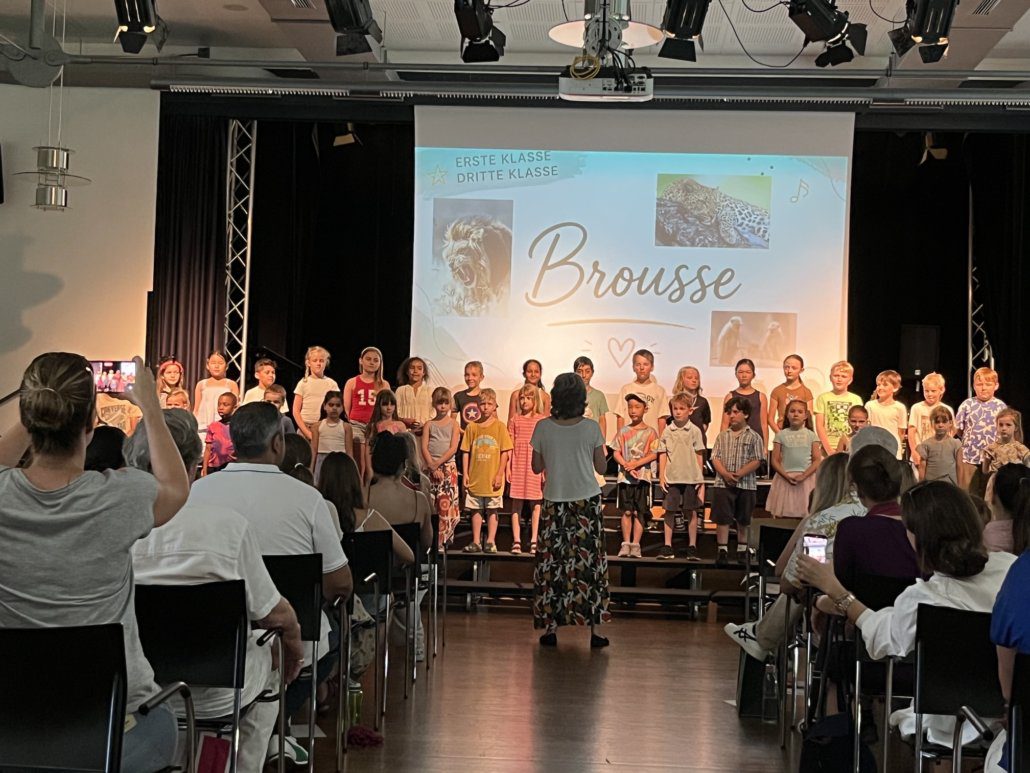
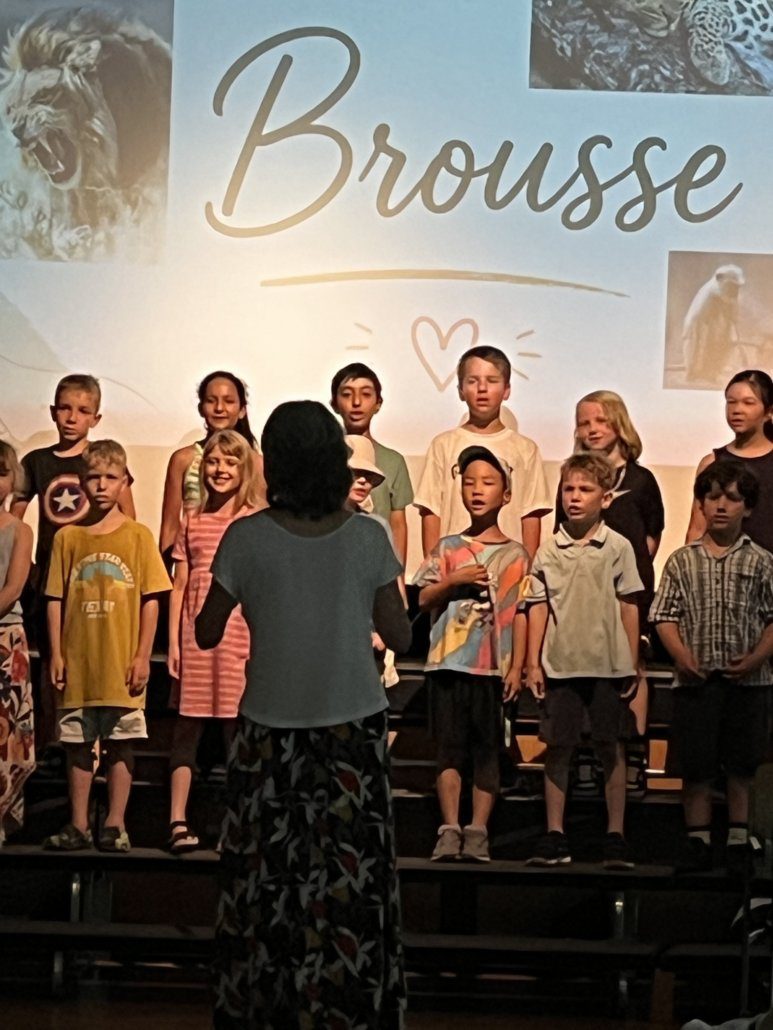
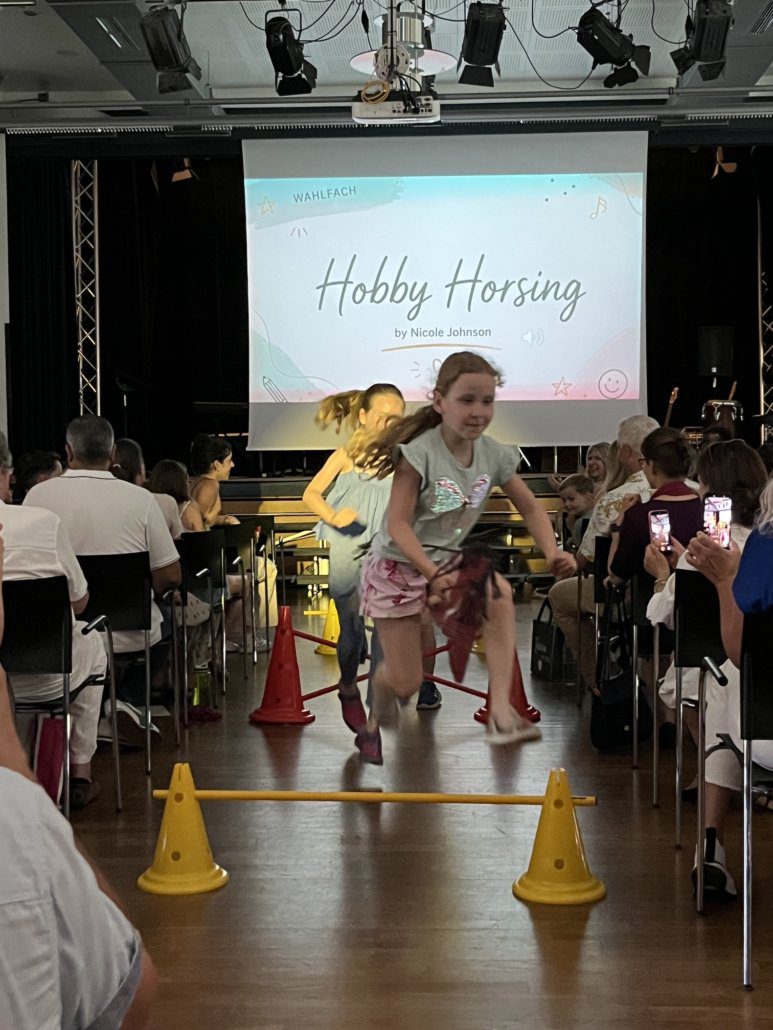
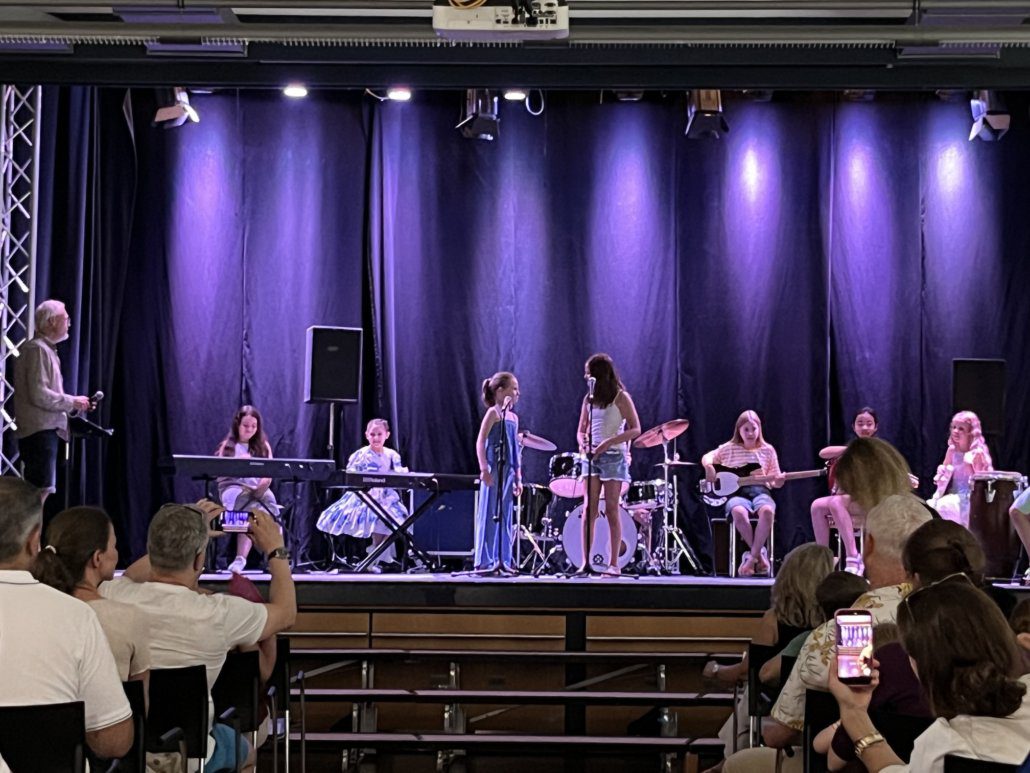
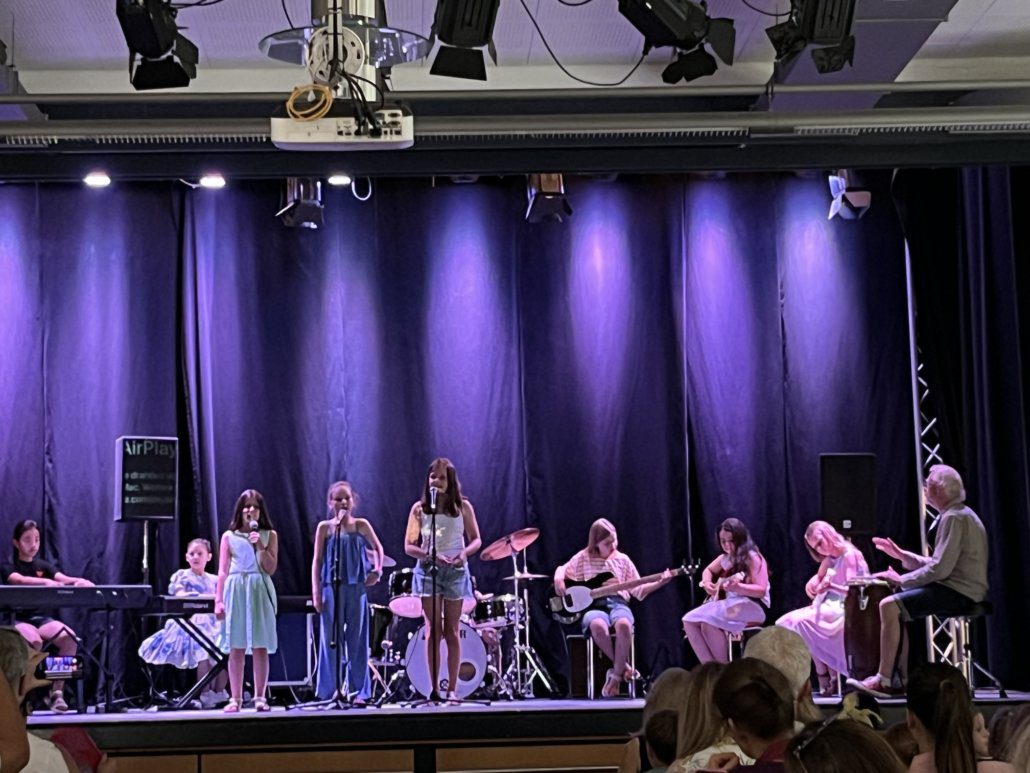
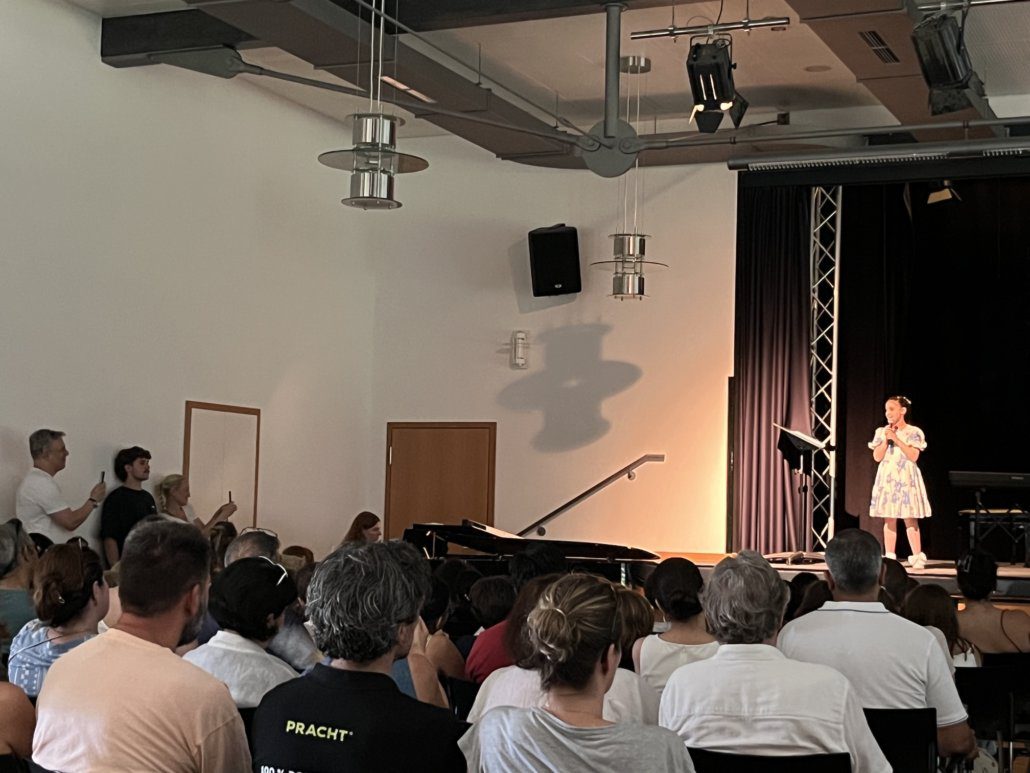
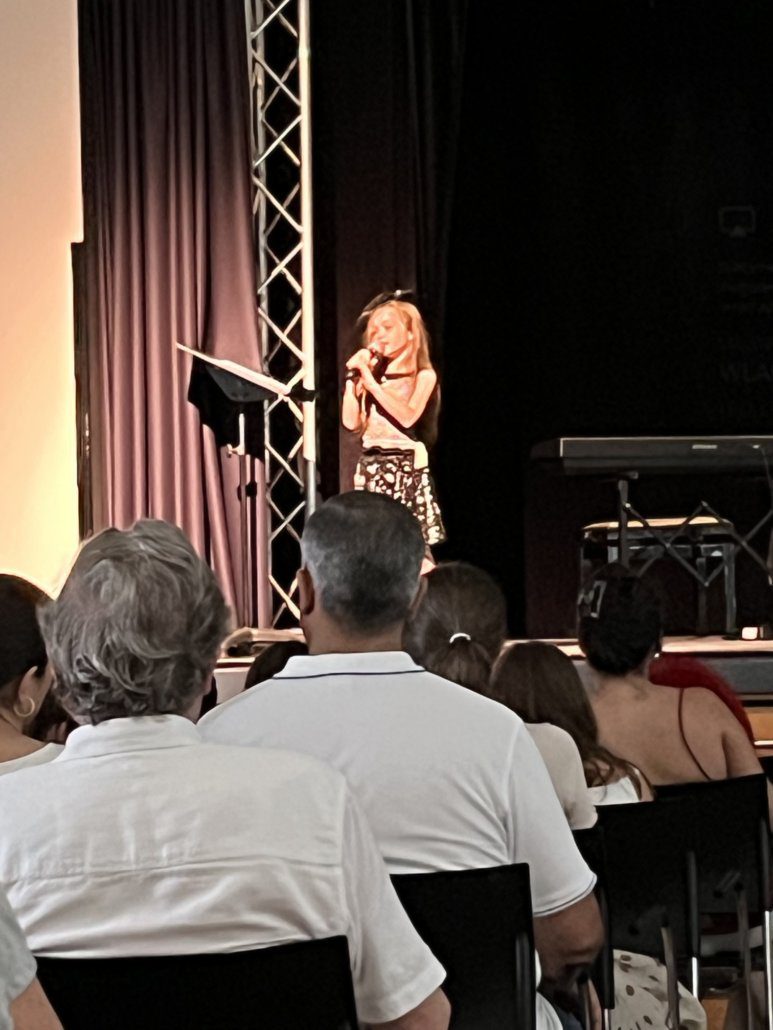
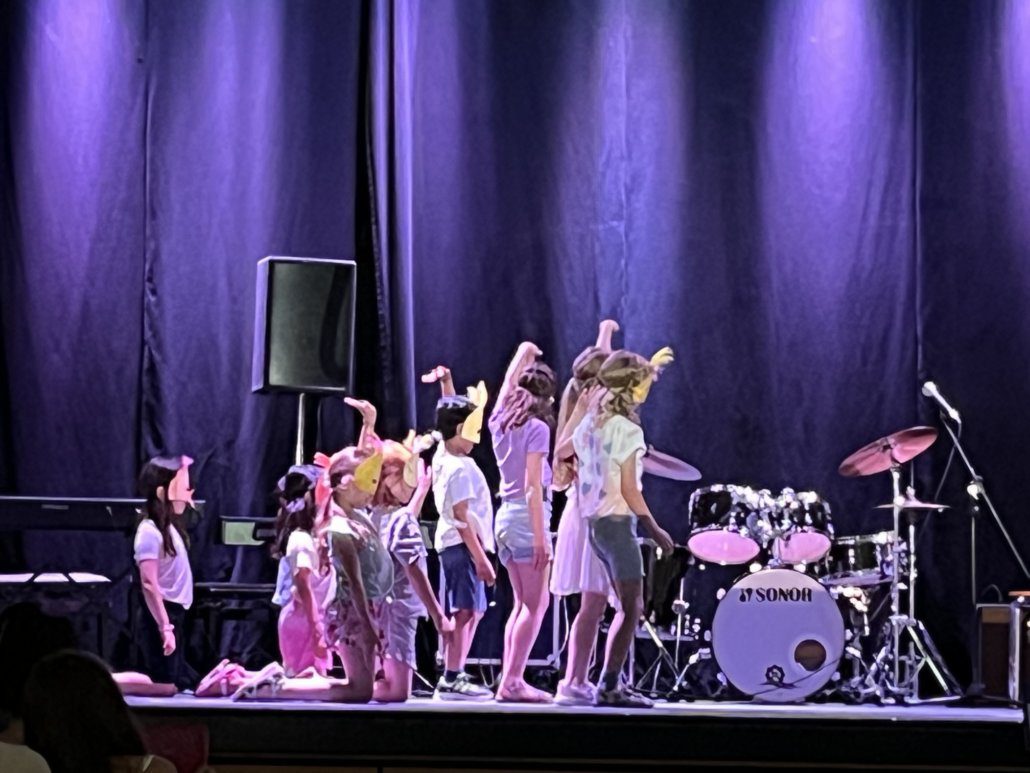
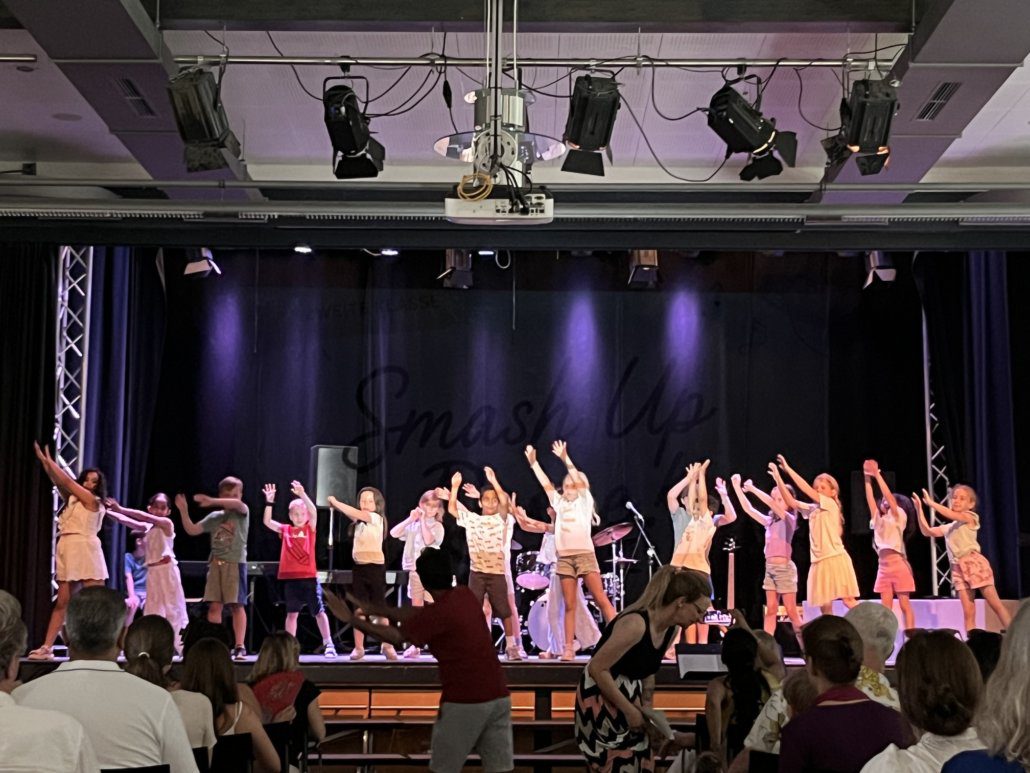
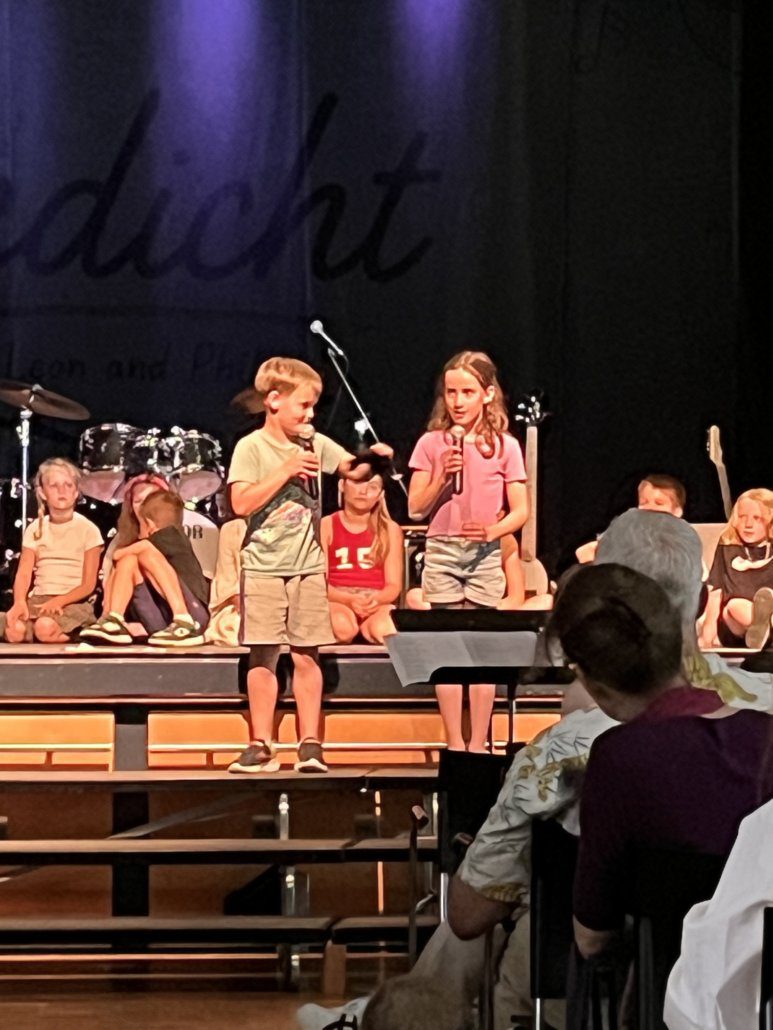
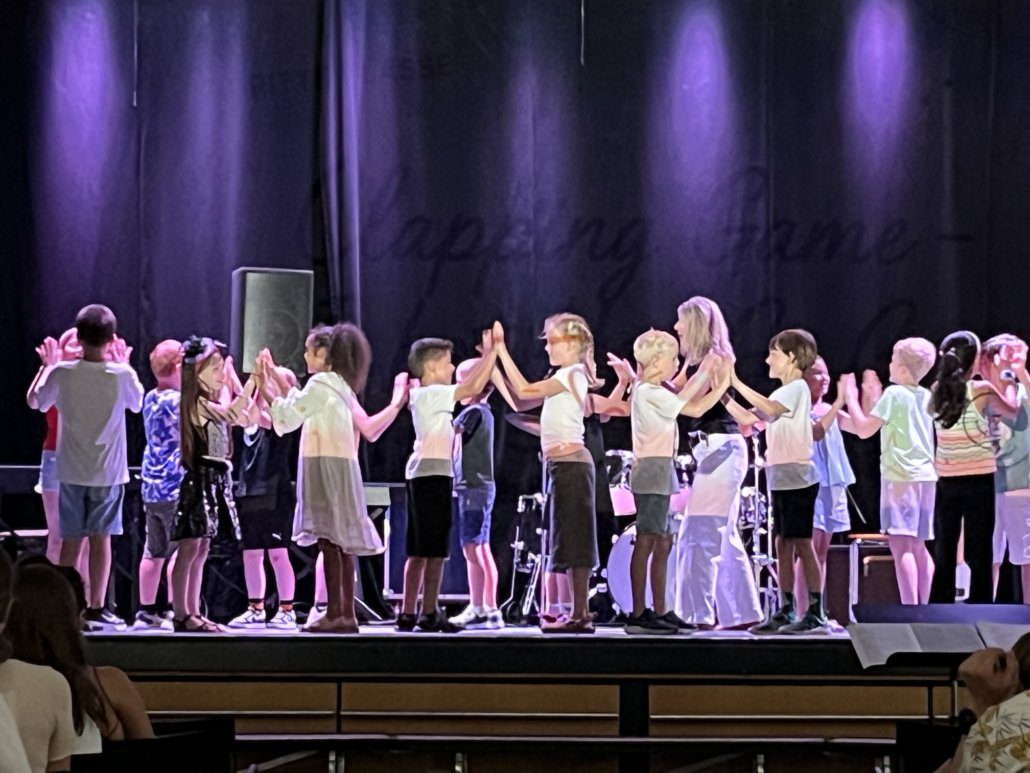
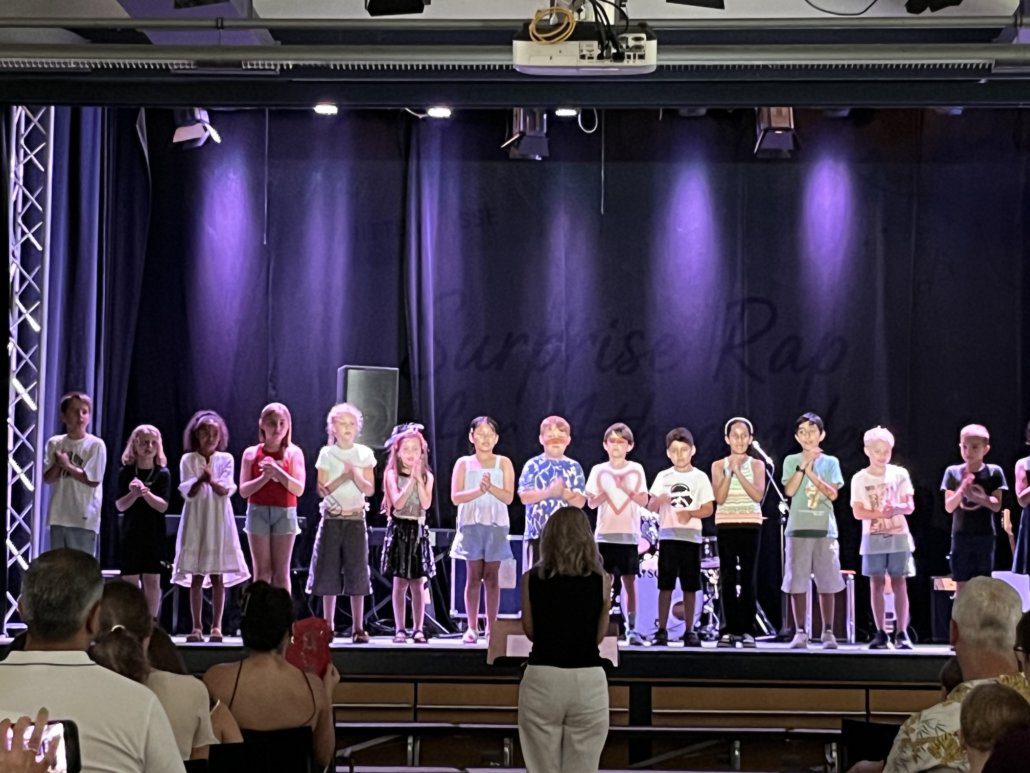
As the school year draws to a close, the “Open Stage” event has become a fixture on the calendar at Steinmühle Bilingual Elementary School. Numerous parents, family members, and friends gathered in the school auditorium to enjoy the diverse performances by our students.

The event was opened by Principal Julia Daube, who warmly welcomed the guests. At the conclusion of the Open Stage, she thanked all the teachers for their great dedication, as well as the families, whose interest and support play such an active role in their children’s school life.


Band music, movement, and singing

All four elementary school classes presented what they had been working on throughout the school year with great enthusiasm and confidence. The varied program was rounded out by the elective course “Hobby Horsing” with physical education teacher Nikki Johnson, by our elementary school band called “Girls on Fire,” led by Olaf Roth, and an impressive musical performance by students Letitia Pabst and Violetta Sans, who delighted the audience with their singing and instrumental playing.

With their performance of “The Duck Dance,” Class 2 actively involved many parents in the event. With a touch of nostalgia, Class 3 bid farewell to all the fourth graders at the end of the performance. If they move up to Class 5i at Steinmühle, their common meeting place in the coming school year will likely be the schoolyard.

(Herrm/Heinm)

As we look back on the second semester, we’d like to share a few more highlights from the school year.

As always, our students represented us with great enthusiasm at various STEM competitions.

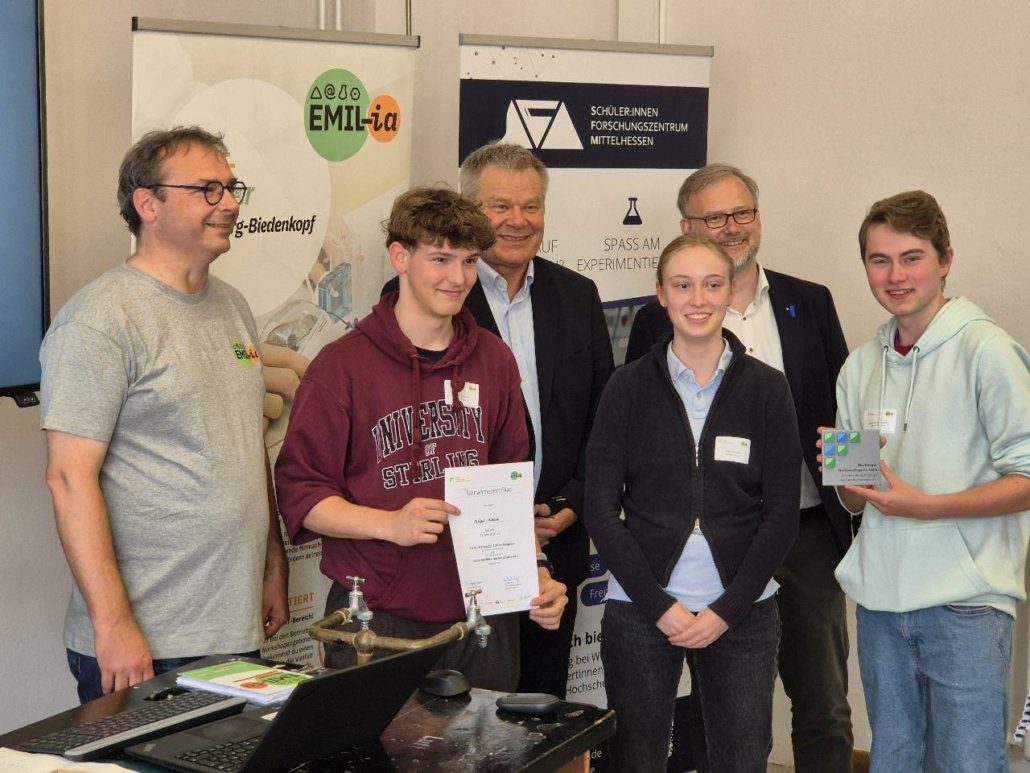
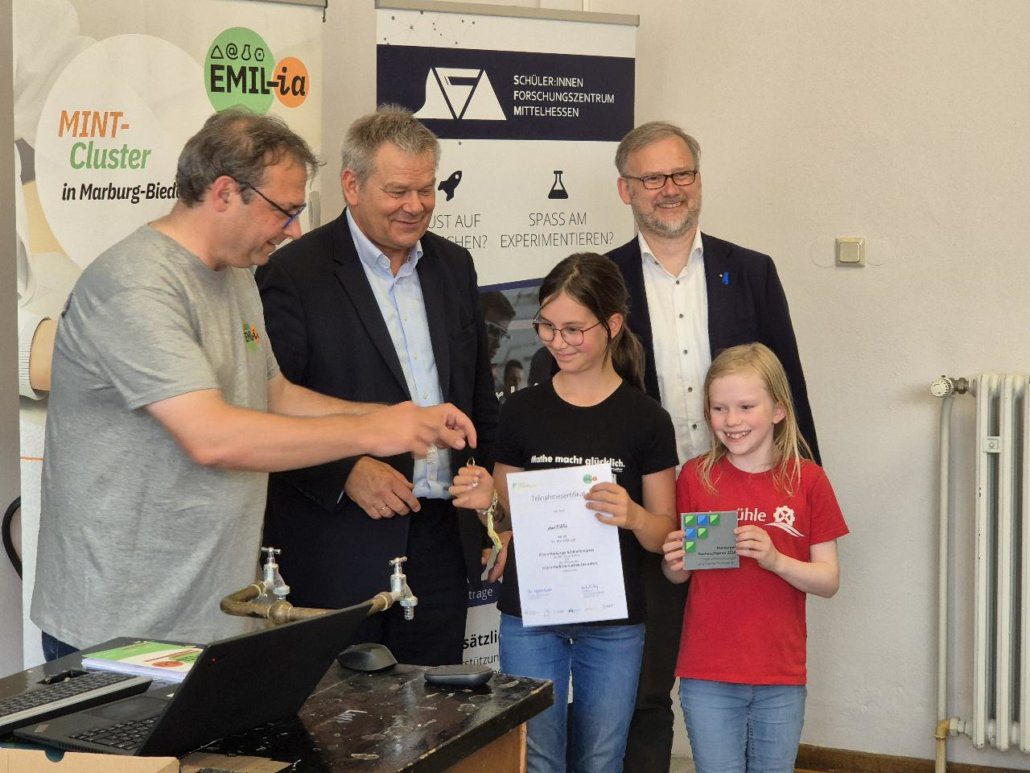
For example, Steinmühle achieved success in the competition for the MarBiNa Young Talent Award. This acronym stands for “Marburg Bio- and Nanotechnology Award.”

The overarching theme of the contest was “Nutrition.” Both participating groups from Steinmühle—one from 11th grade and one from 5th grade—each claimed victory and will soon take part in a guided tour at MULTIVAC in Dautphetal and at the Max Planck Institute for Terrestrial Microbiology, respectively.


Cafeteria Review, Jell-O, Pineapple, and Kiwi

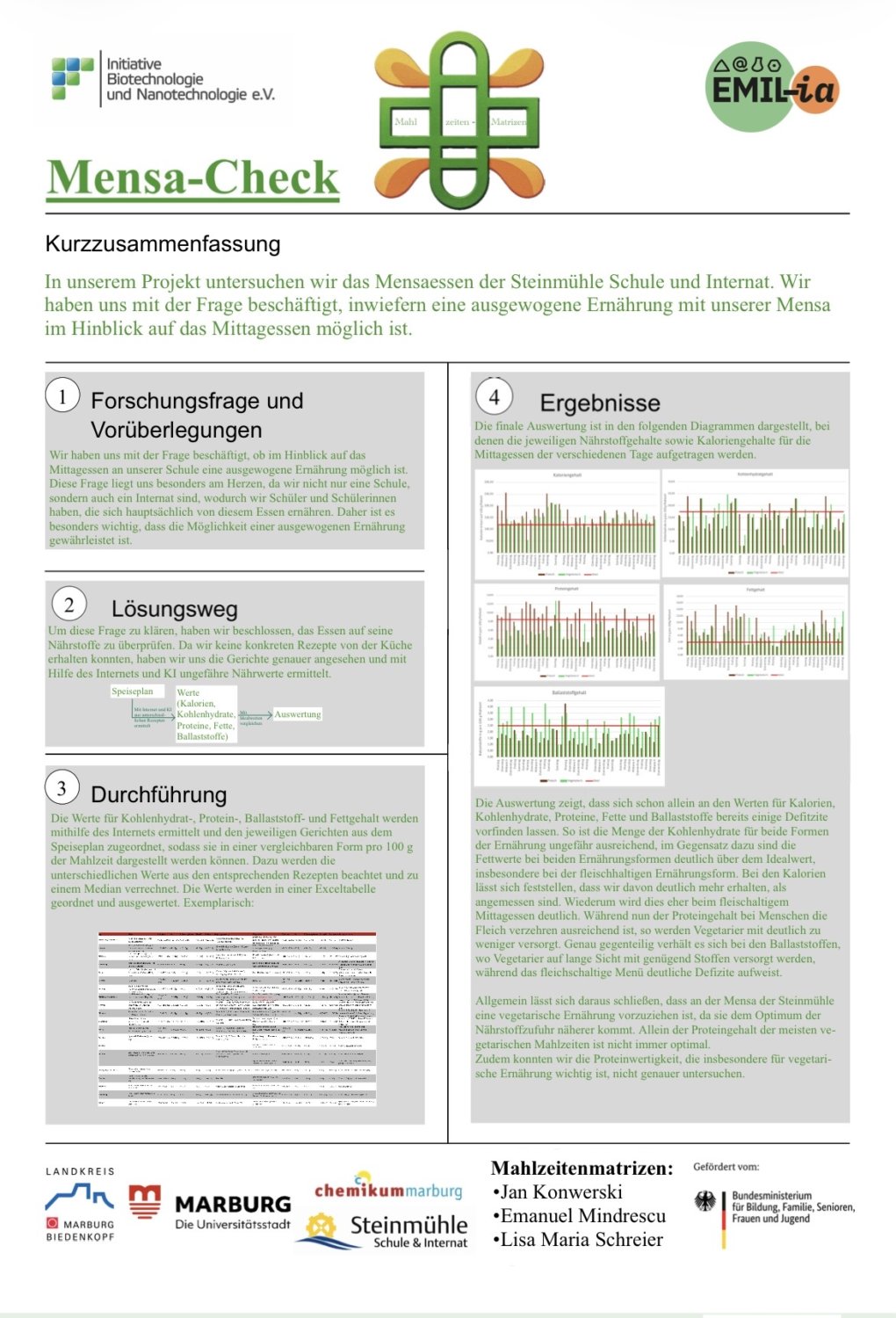
The group “Mahlzeit-Matritzen,” consisting of Jan Konwerski, Lisa Marie Schreier, and Emanuel Mindrescu (all plusMINT students in class 11d), had been working on the topic “Cafeteria Check.”

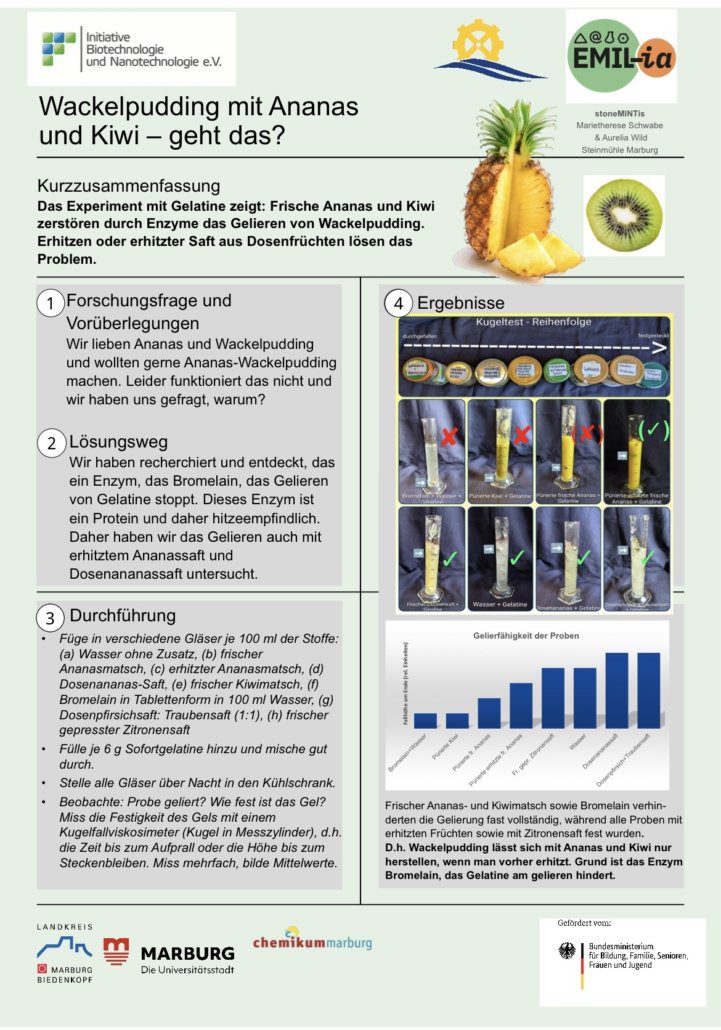
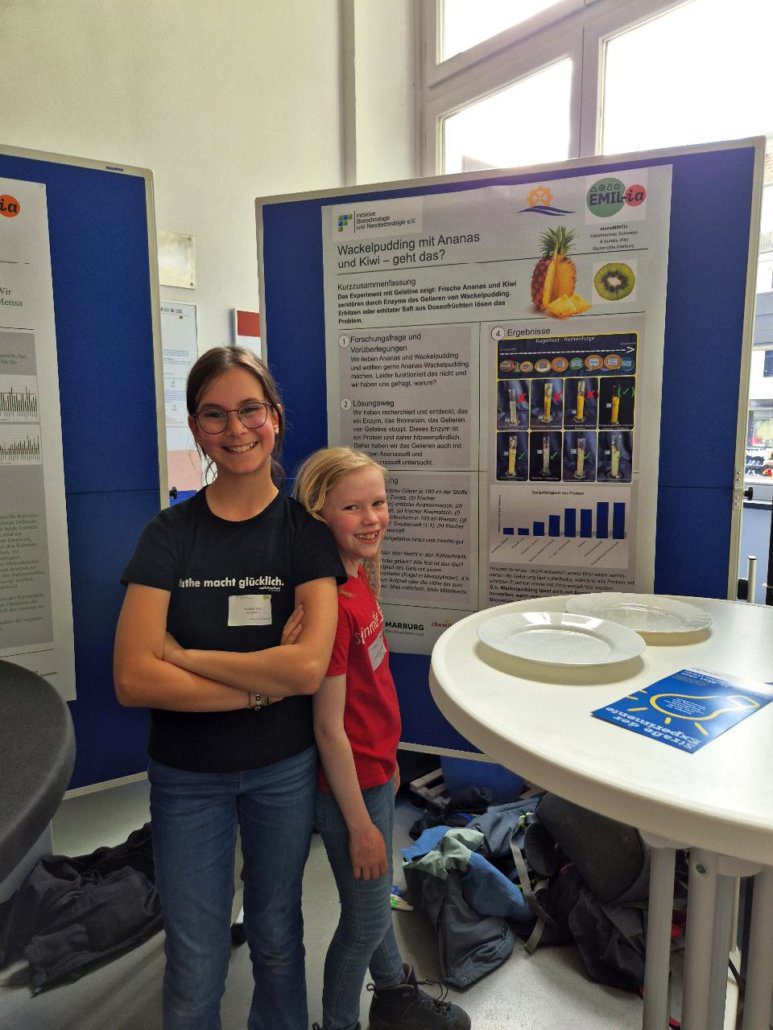
The second group, StoneMINTis Marietheres Schwabe & Aurelia Wild (from class 5i), focused on the topic “Jell-O with pineapple and kiwi—is that possible?”

At the end of the article, two posters provide insight into the specific questions the students worked on.


The goal is to inspire enthusiasm for STEM subjects

The goal of the competition is to inspire children and teenagers of all ages and from all types of schools in the city and county to take an interest in the STEM subjects—mathematics, computer science, natural sciences, and technology.

The event’s partners are the Marburg-Biedenkopf District, Chemikum Marburg, the University City of Marburg, and the Central Hesse Student Research Center.

Our photos show the winning workgroups from Steinmühle, along with District Administrator Jens Womelsdorf and Marburg Mayor Dr. Thomas Spies, as well as all participants from our school together with project coordinator Dr. Jutta Töhl-Borsdorf.

(Heinm)


On the last Monday of the school year, the entire elementary school gathered for a morning circle to bring the school year to a close in a special way. First, students were honored for their outstanding achievements in both Federal Youth Games. To loud applause, they received certificates for their special achievements and posed for a photo with their teacher, Nikki Johnson.


An important and reliable support person

A particularly emotional moment was saying goodbye to our junior assistant, Cameron Carr, from Scotland. Cameron supported our school throughout the entire school year with exceptional dedication. He assisted with English and physical education classes, supported the children in their daily school life, and served as a calm and reliable source of support, especially for students facing social or emotional challenges.


Bringing Scotland Closer to Home

During International Project Week, he also captivated the children with a project about his native Scotland, introducing them to the language and culture in an authentic and lively way. His dedication, helpfulness, and warm personality have enriched our school community, and we will miss him very much.

We also said goodbye to a few children who will be leaving our school because they are moving away. Together, we looked back on the wonderful time we spent together and wished them all the best for the future.

The joint morning circle was a wonderful way to wrap up the school year and demonstrated once again how important community, mutual respect, and celebrating successes together are for our elementary school.

(Lorraine Herrmann)
 

The following received certificates for the Federal Youth Games (cover photo):

Back row: Anton, Henri, Oskar, Karl, Noam, Ruben, Leon, Mick
; Front row: Nikki Johnson, Florian, Philipp, Nors, Mariella, Philine


Julia Daube and Lori Herrmann said goodbye to: Leon and Oliver

Children and teachers said goodbye to Cameron Carr from Scotland.


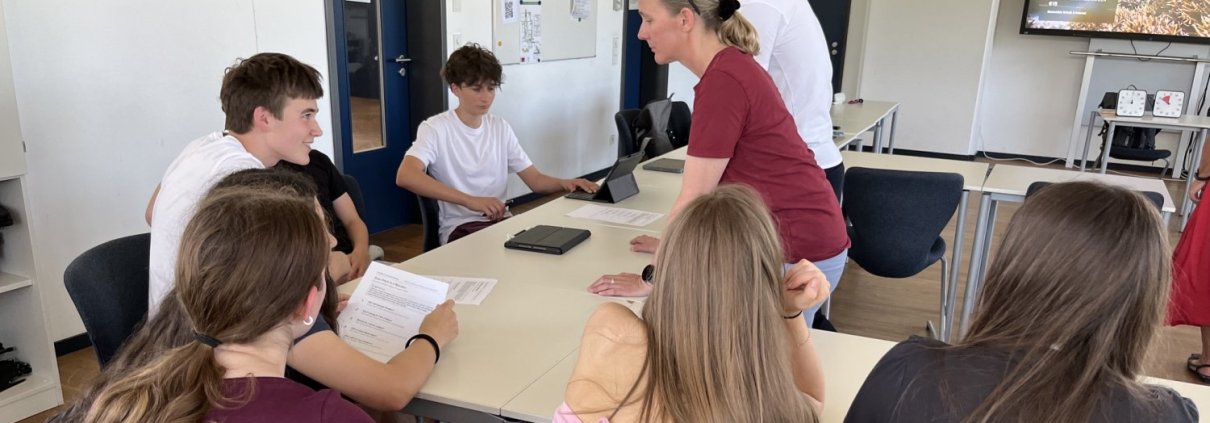
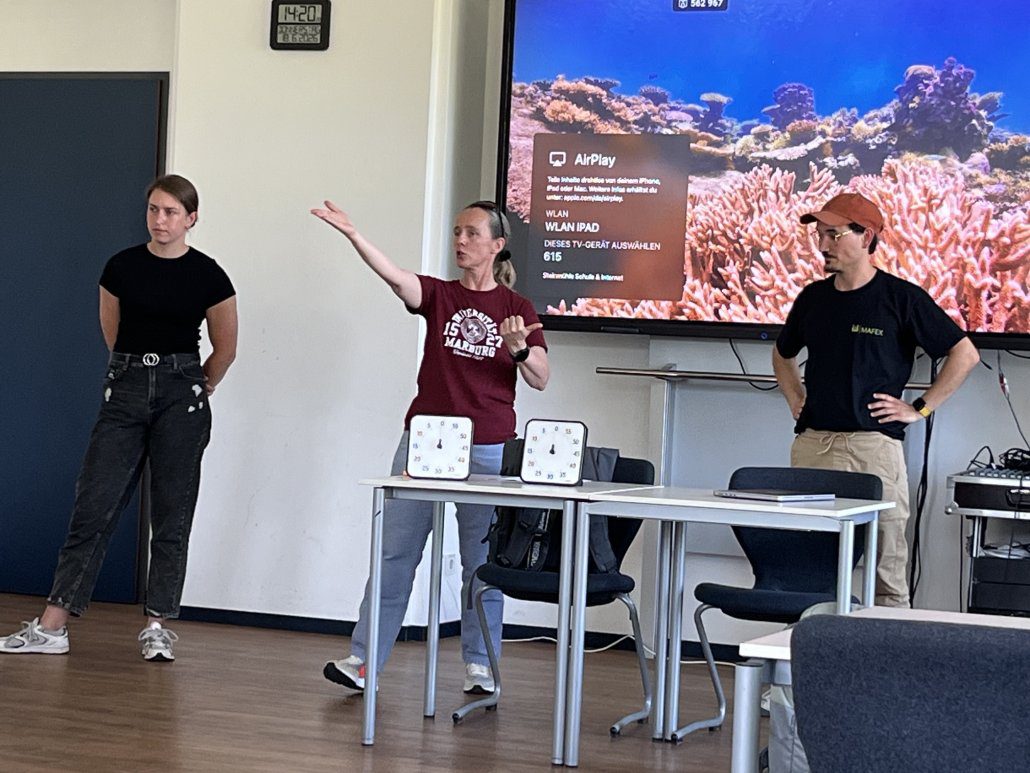
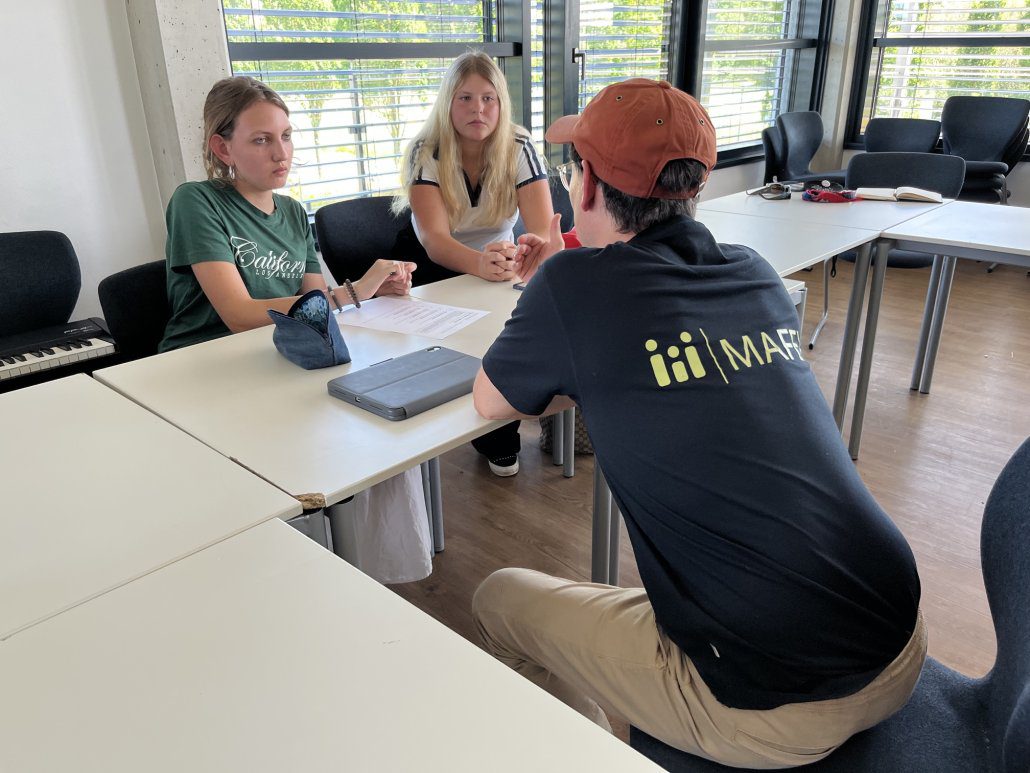
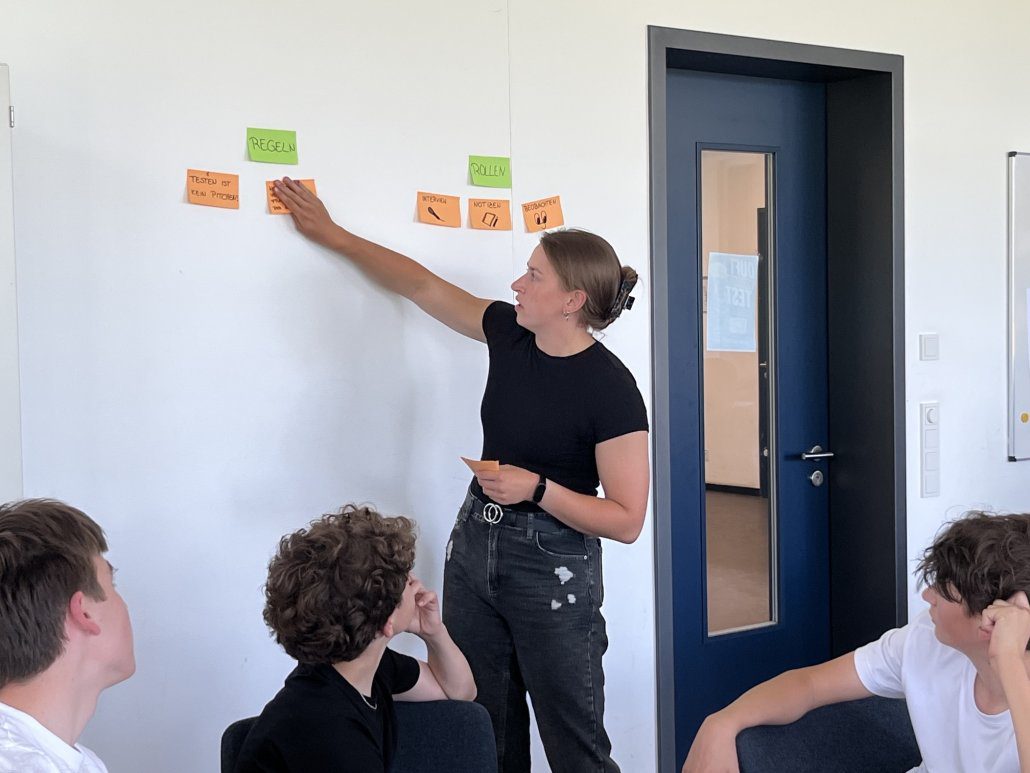
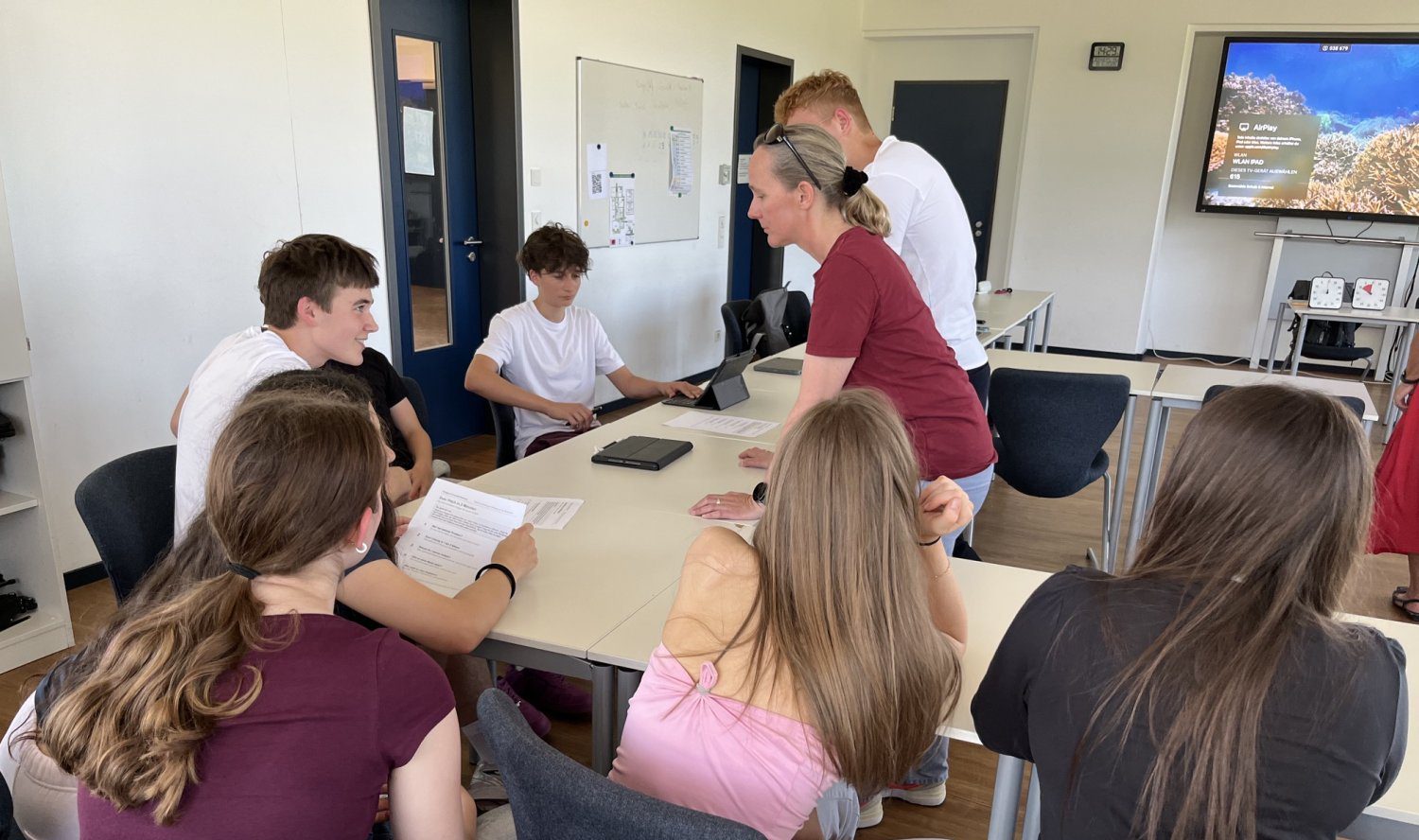
Powi-plus students in grades 9 and 10 recently presented their product ideas to a panel from MAFEX, the startup service at Philipps University of Marburg. – So this is what it feels like when founders and young entrepreneurs present their ideas on TV on “The Lion’s Den”!

The students at Steinmühlen learned that a pitch lasts 2 minutes, is presented from memory, and ends with a clear call to action, a clear message. The time in between should be filled with confident statements that highlight a great product and a competent team. Ultimately, the project should be realistically feasible.

The student groups had 12 minutes to prepare their respective presentations for the team led by MAFEX Executive Director and Professor Dr. Vivien Procher. Although the presentations already sounded quite professional, the groups still received a number of tips from the experts on how to further refine their presentations.

(Heinm)