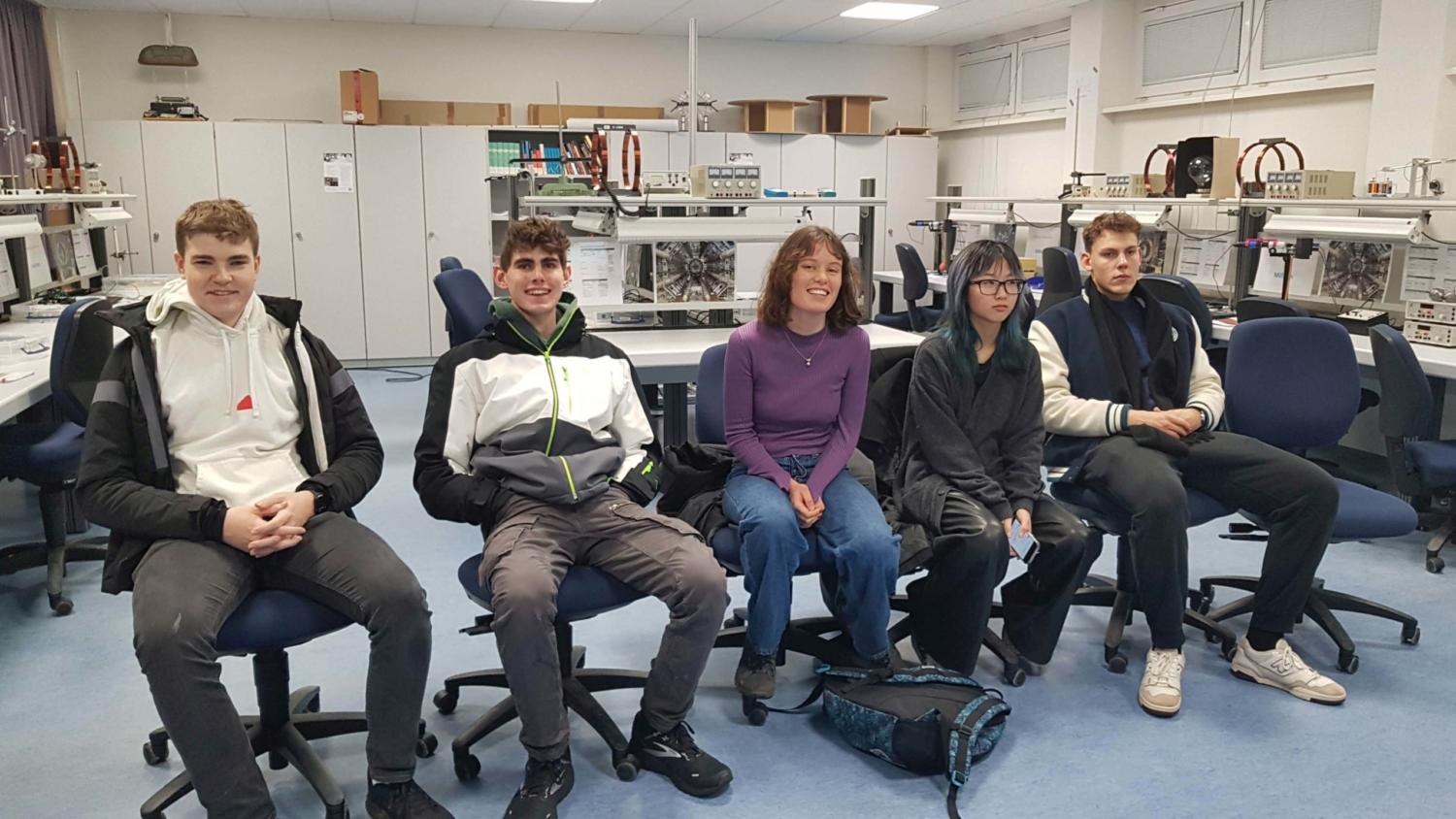
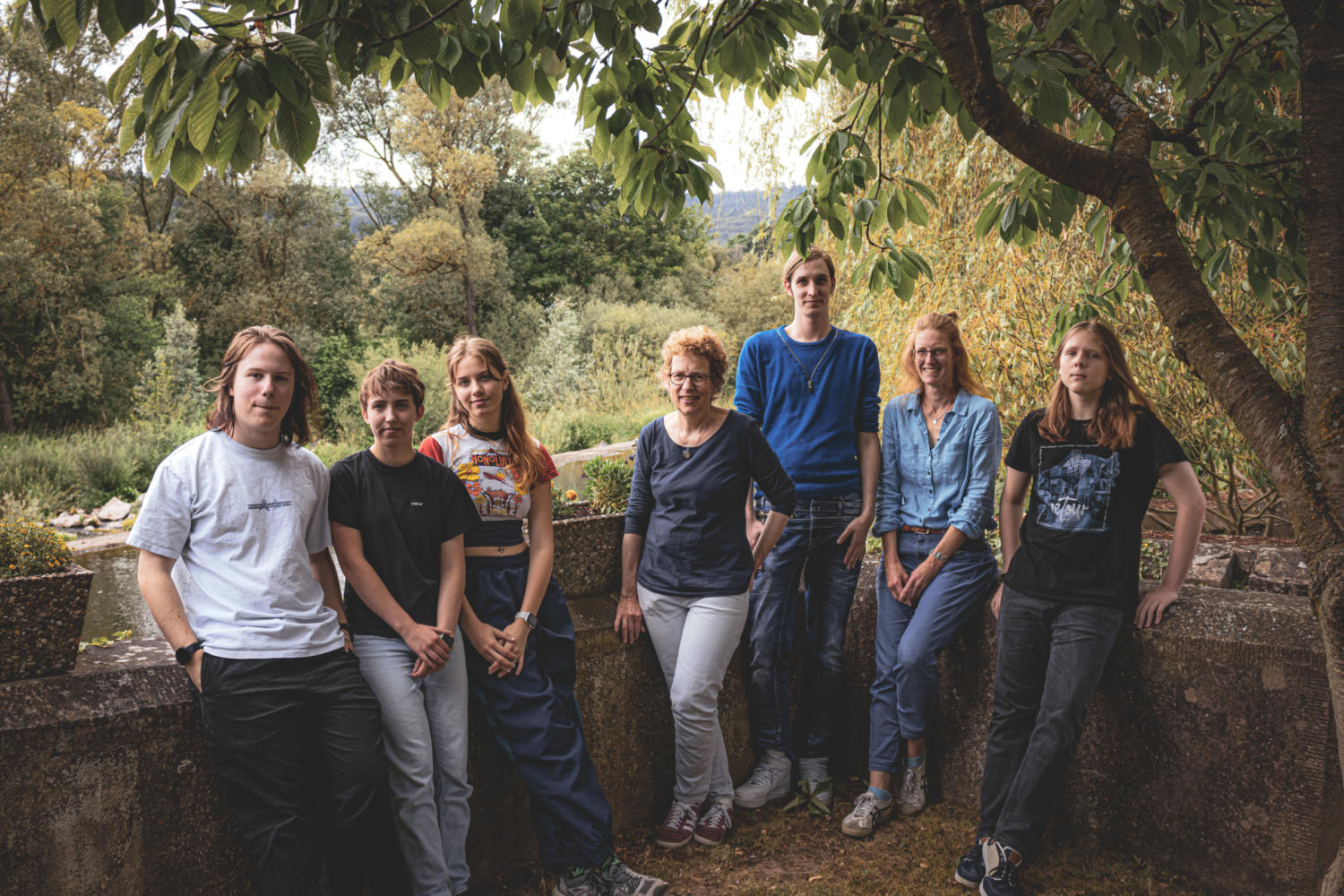
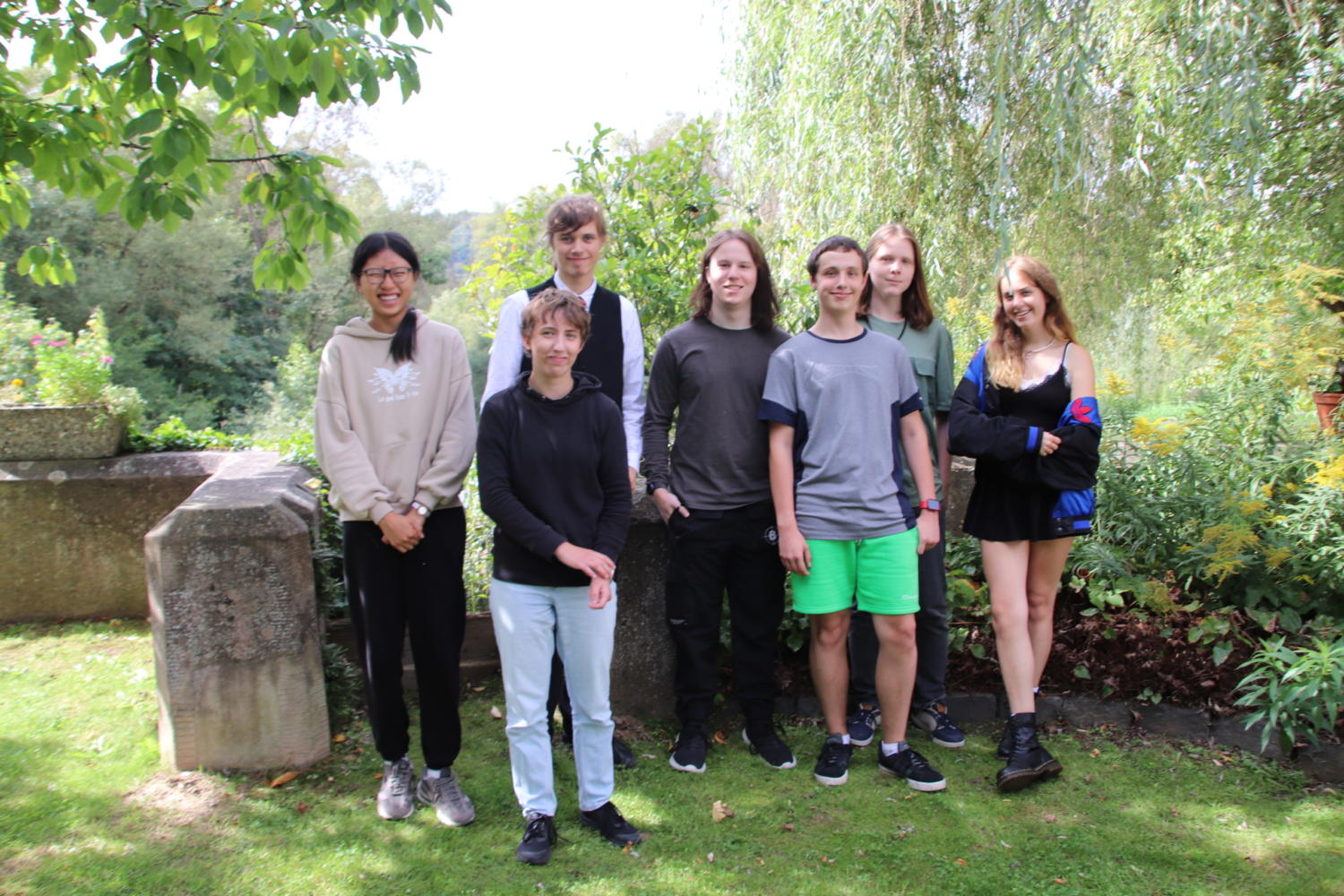
At the end of Q3, from Thursday morning through Saturday evening, the 13th-grade advanced physics class, accompanied by their teacher Dr. Jutta Töhl-Borsdorf, embarked on a varied field trip to Hamburg to explore the German Electron Synchrotron (DESY). The trip was packed with other exciting activities and experiences.
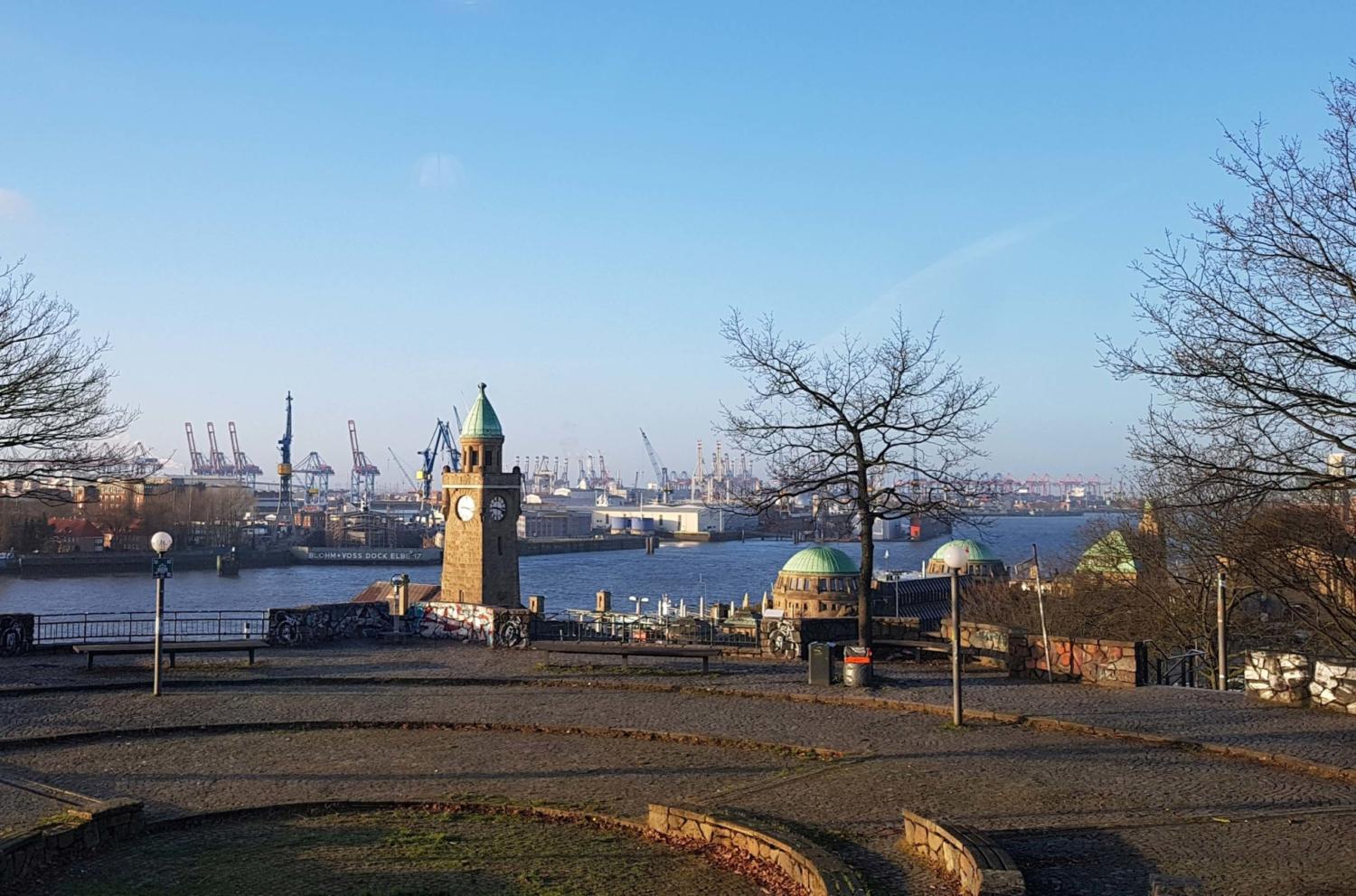
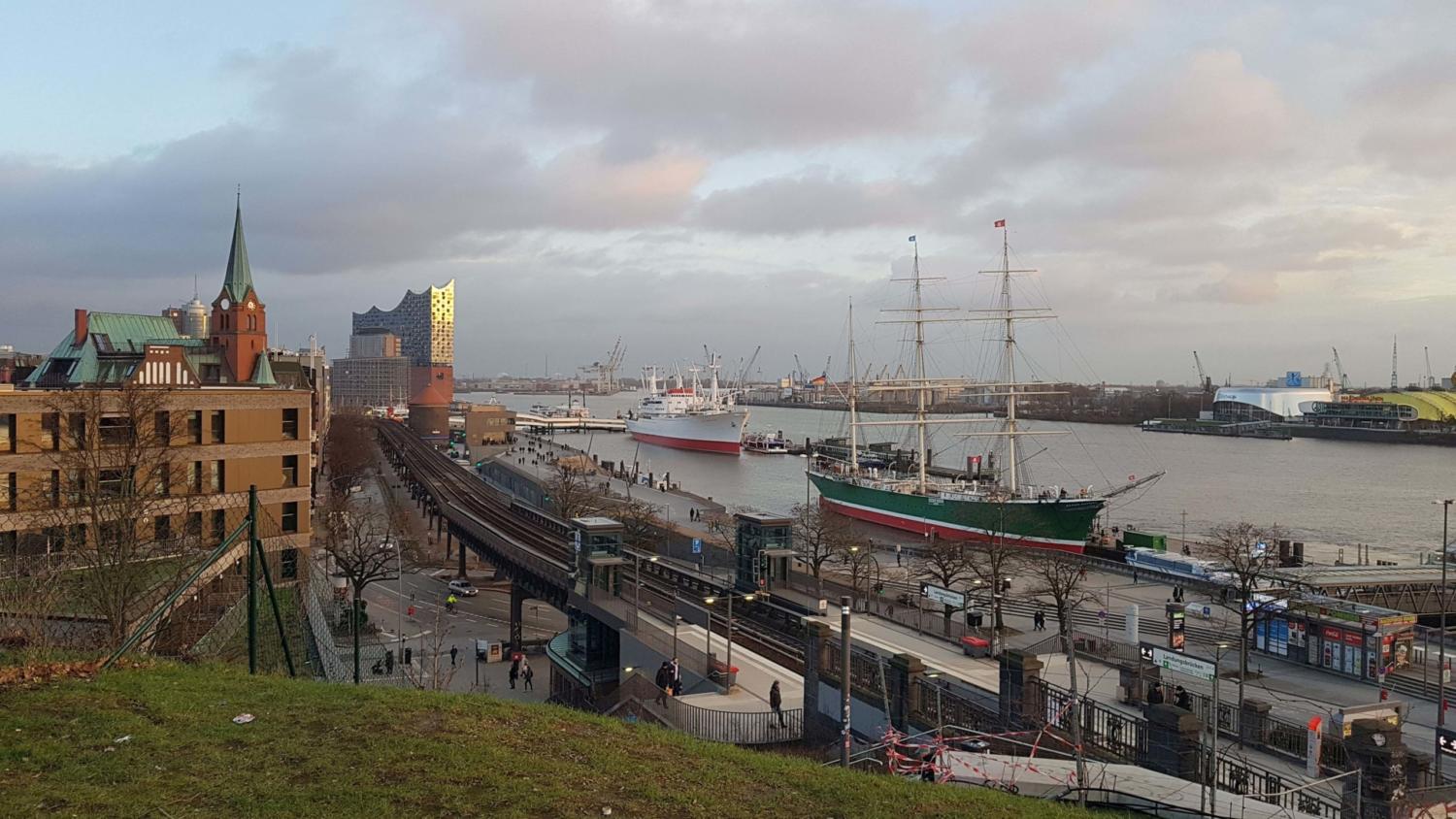
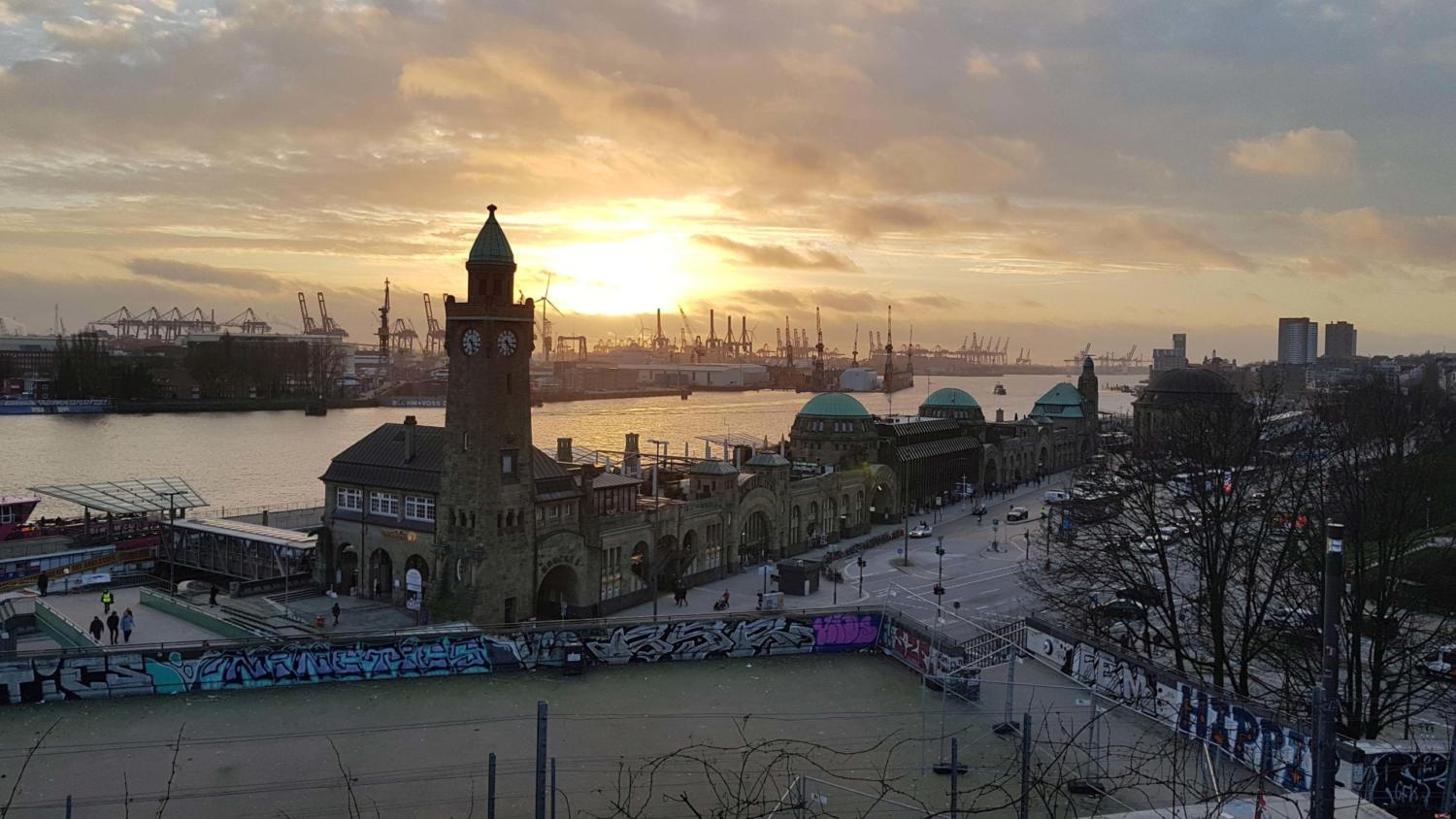
Even the journey there turned out to be an adventure, as the planned departure was delayed by a full two hours due to a rail strike. Despite this challenge, the group finally arrived at the youth hostel at the Landungsbrücken around noon. The accommodation not only offered a very pleasant stay in a central location but also an impressive view of the Elbe River and the harbor.
The first item on the agenda took place in the afternoon—a visit to the Hamburg Student Research Center. There, all those interested gained insight into the work of the facility, which has already accumulated far more experience than the Central Hesse Student Research Center (SFM), which recently opened in Marburg.
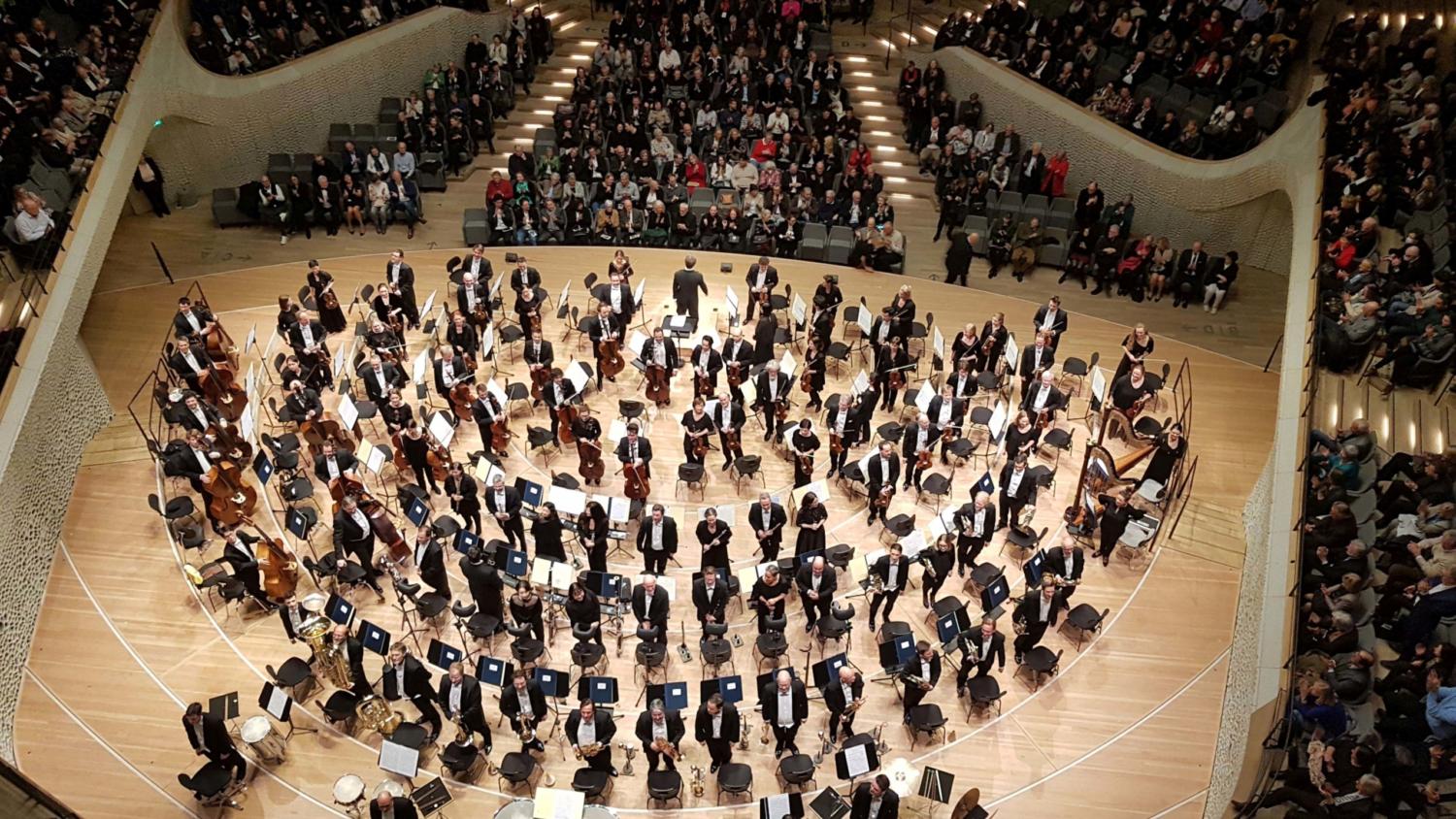
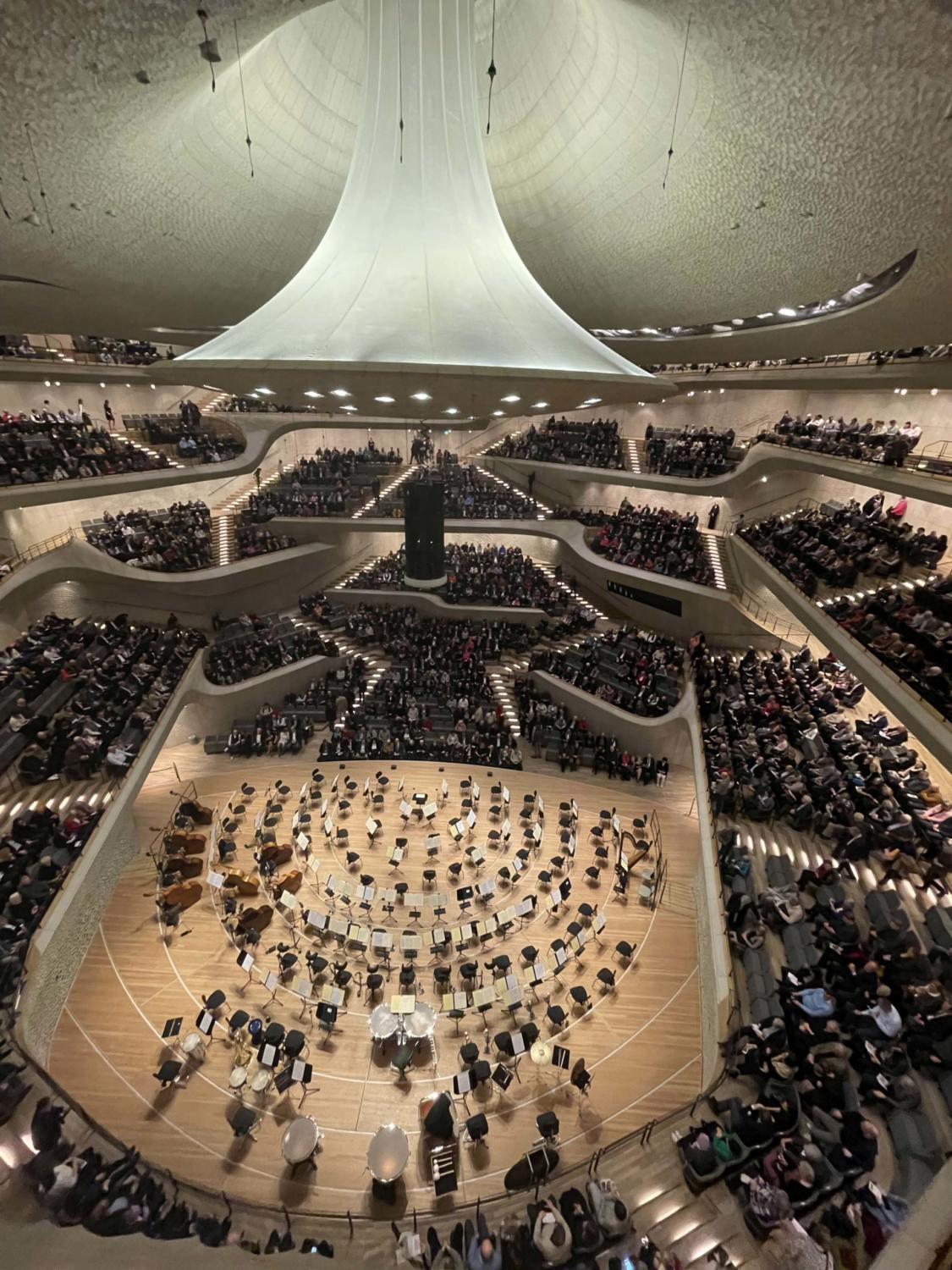
A cultural highlight was on the agenda for the evening: a classical concert in the main hall of the Elbphilharmonie, a building that is impressive both architecturally and acoustically. The Bamberg Symphony Orchestra performed, among other works, Beethoven’s Symphony No. 3 and “A Hero’s Life” by Richard Strauss.
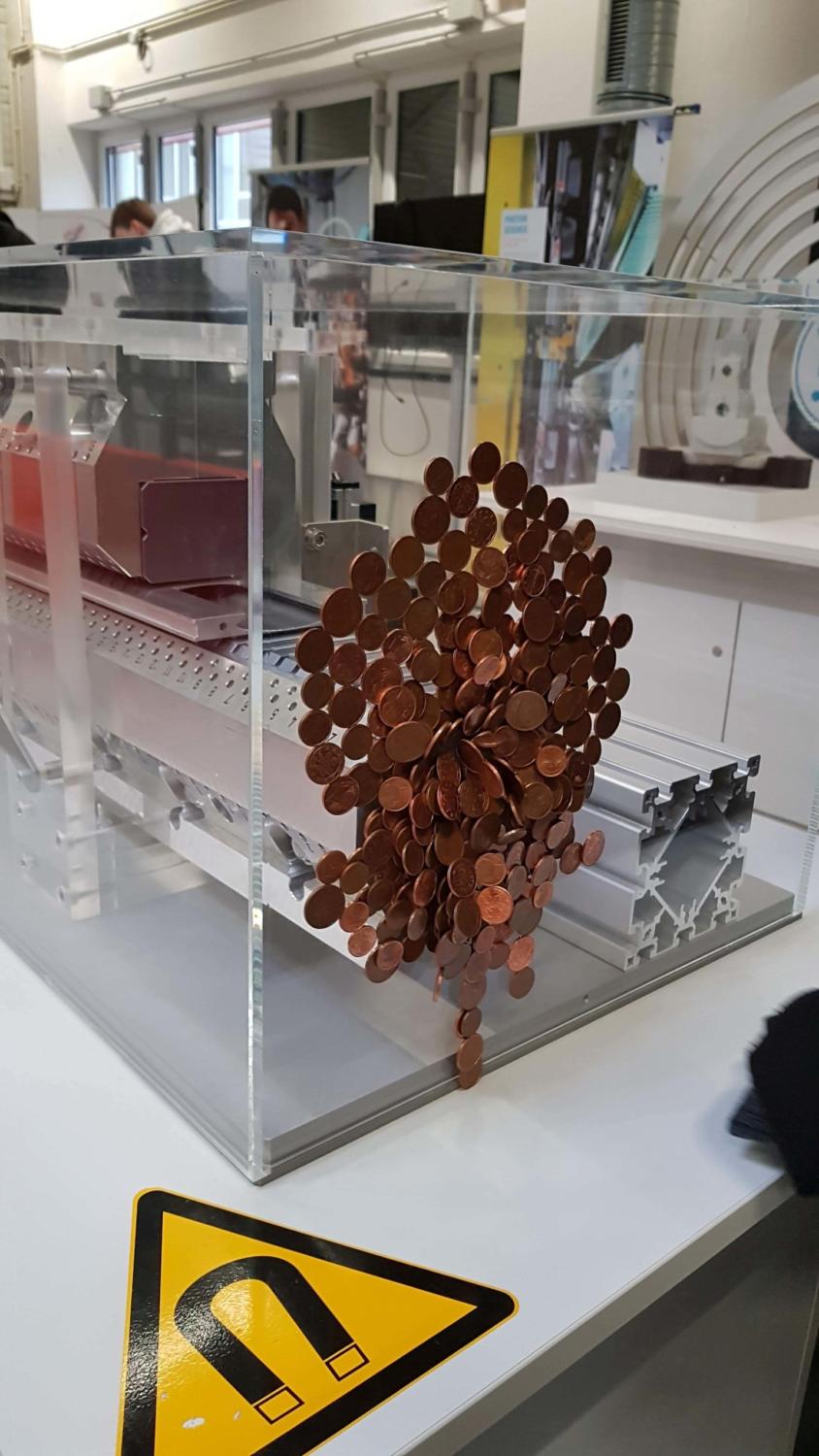
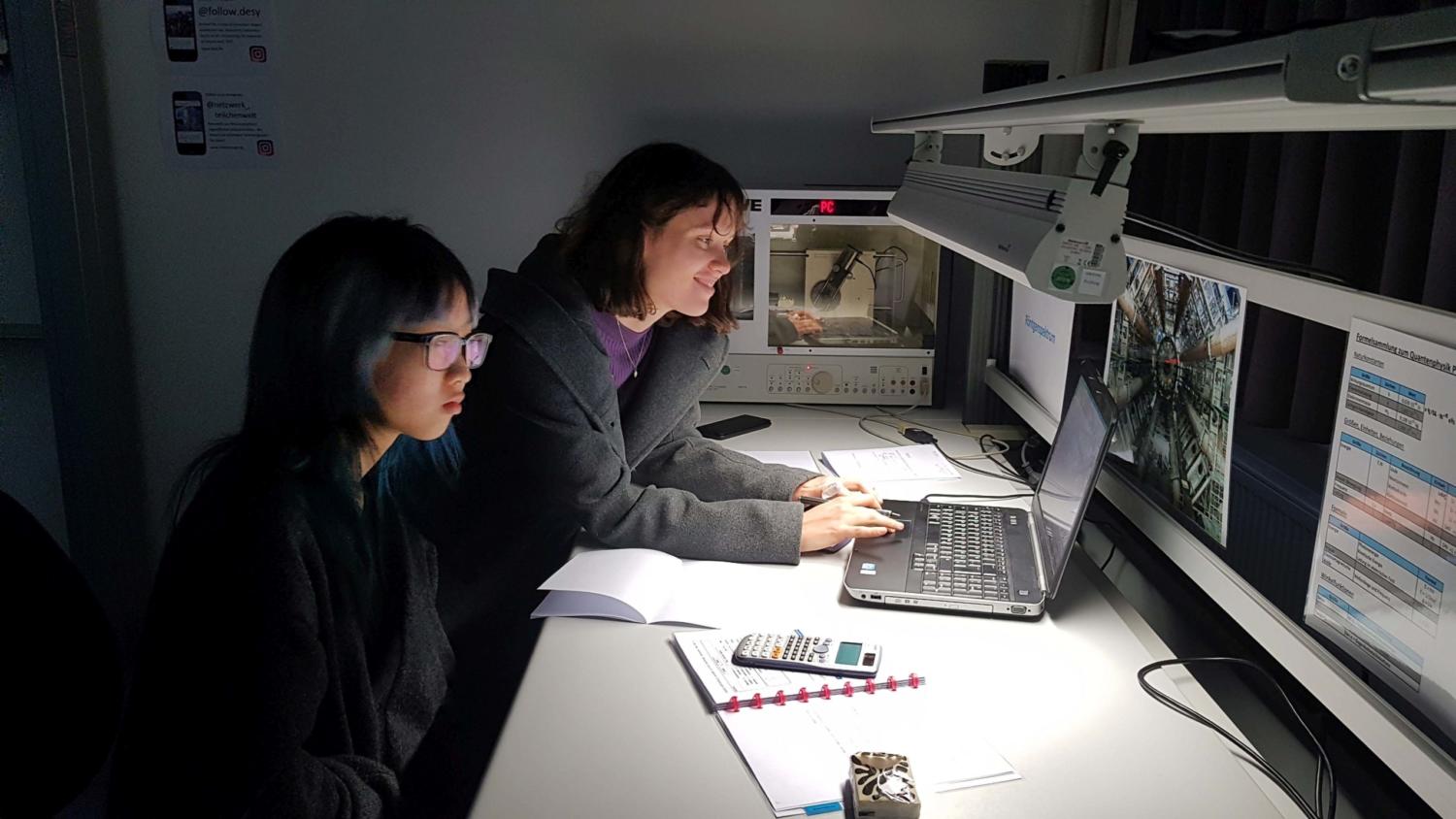
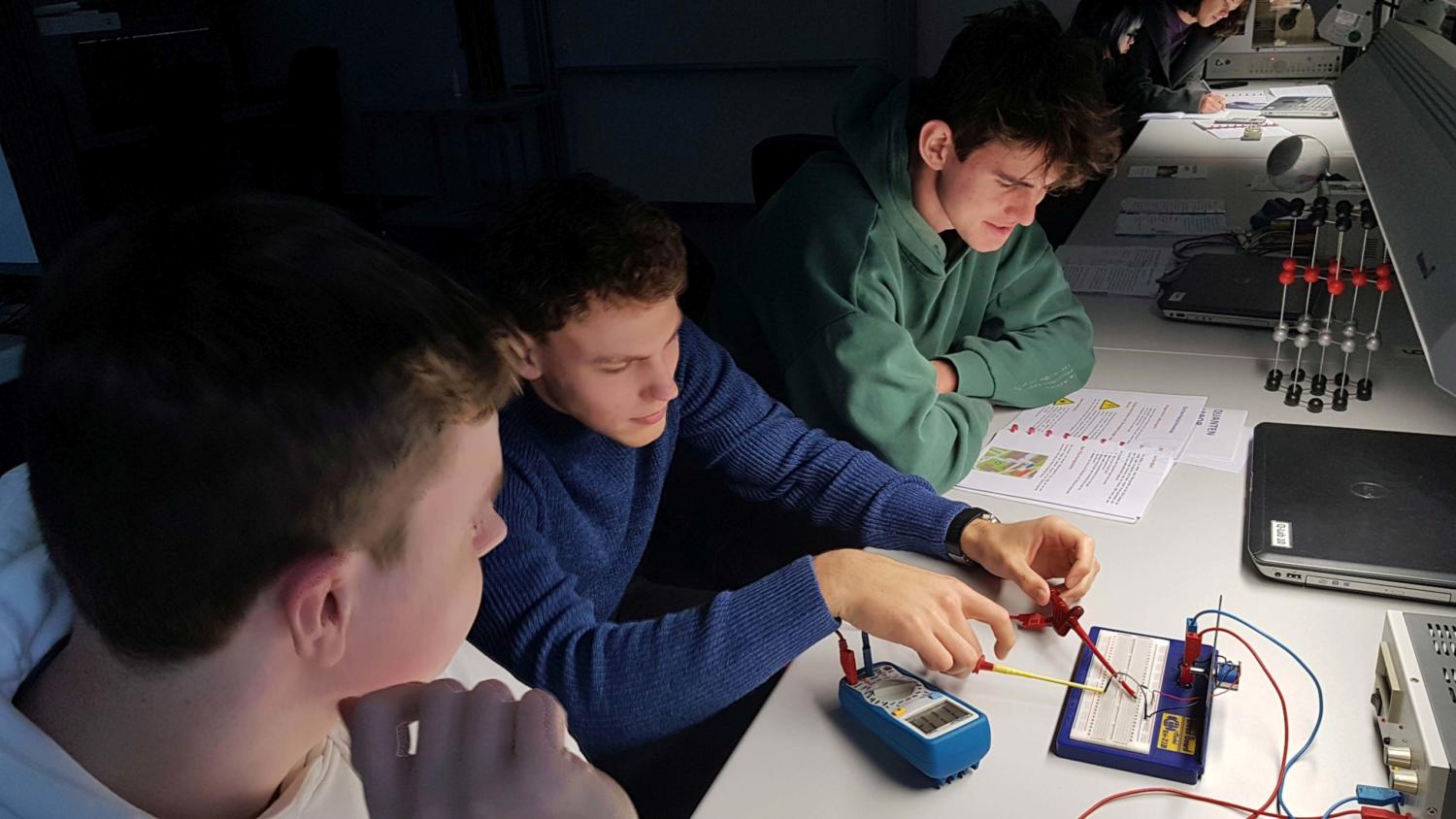
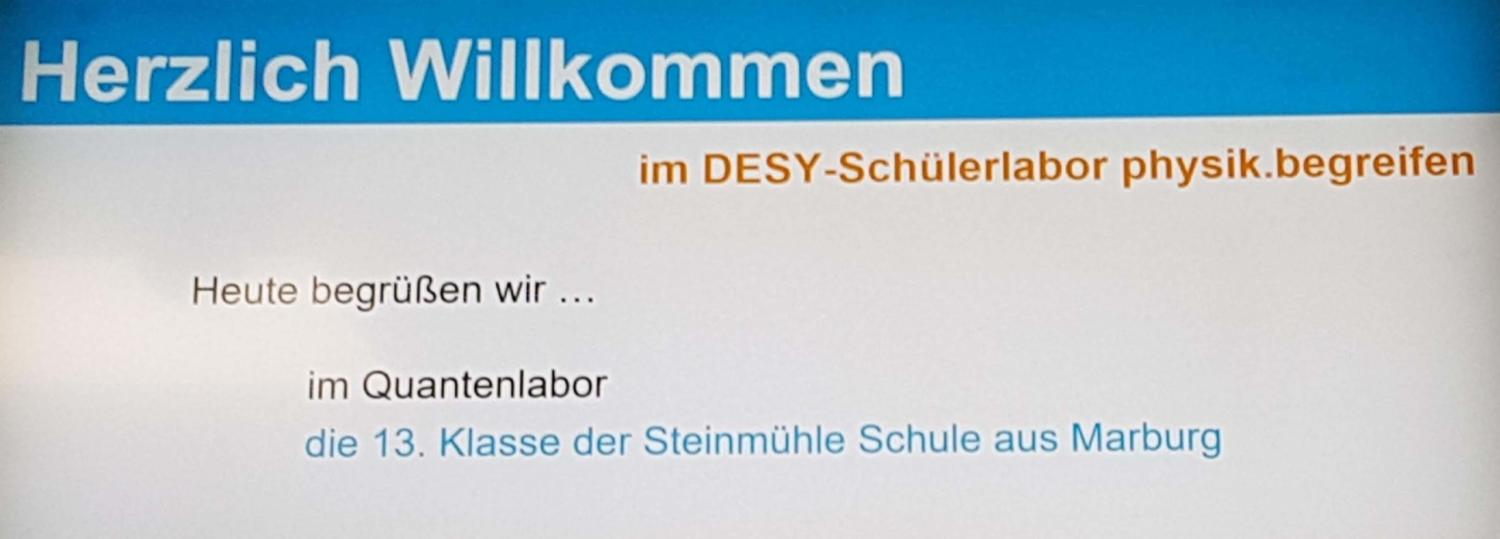
The second day began with a visit to the quantum laboratory at DESY, a leading research center for particle physics. Here, the students had the opportunity to conduct in-depth experiments on quantum physics themselves, which will certainly be helpful in preparing for their upcoming physics Abitur exams.
It was also exciting to record an X-ray spectrum ourselves—something you just can’t do at school.
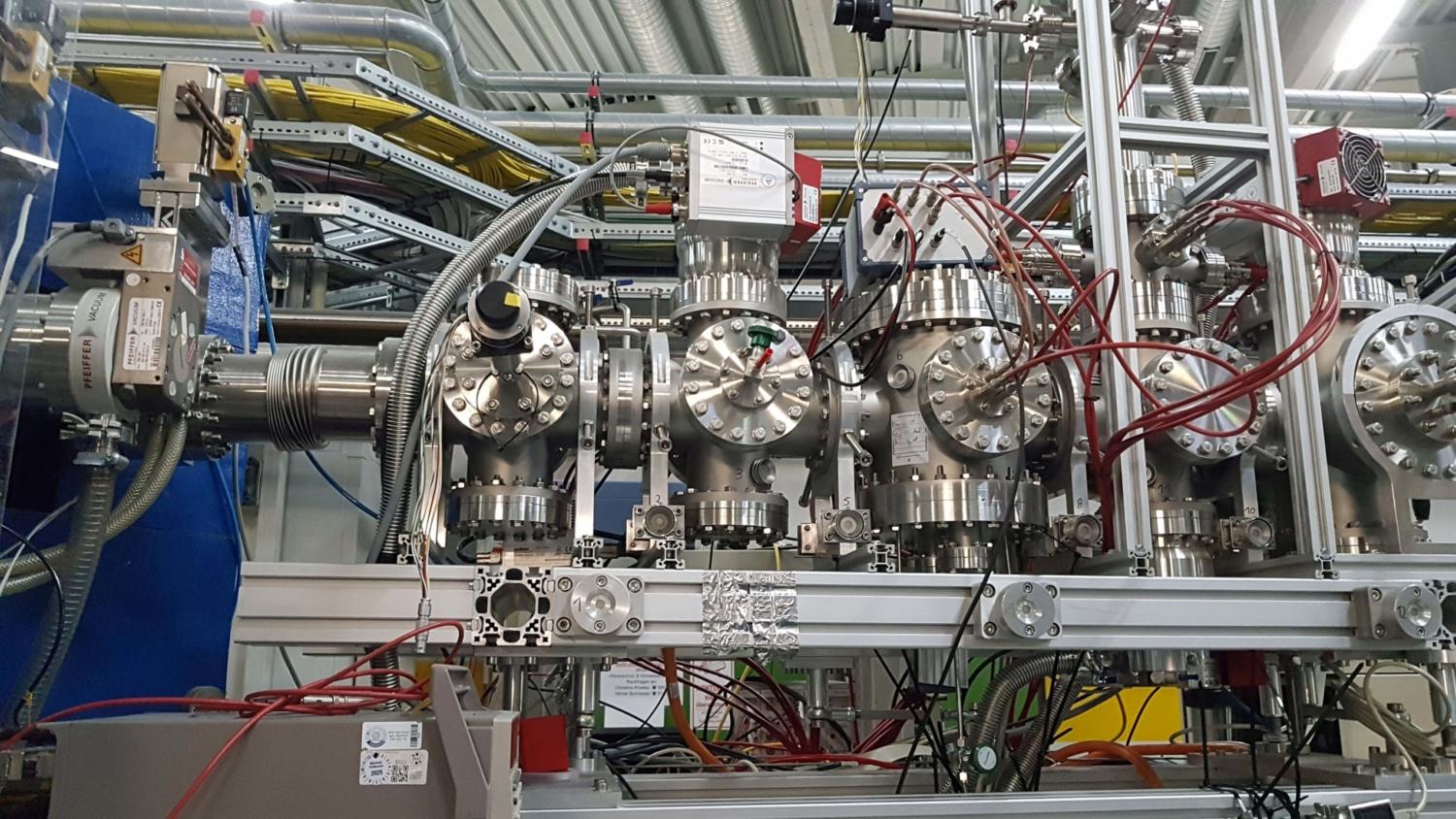
The subsequent guided tour of the sprawling research institute offered everyone a fascinating glimpse into the world of subatomic particles.
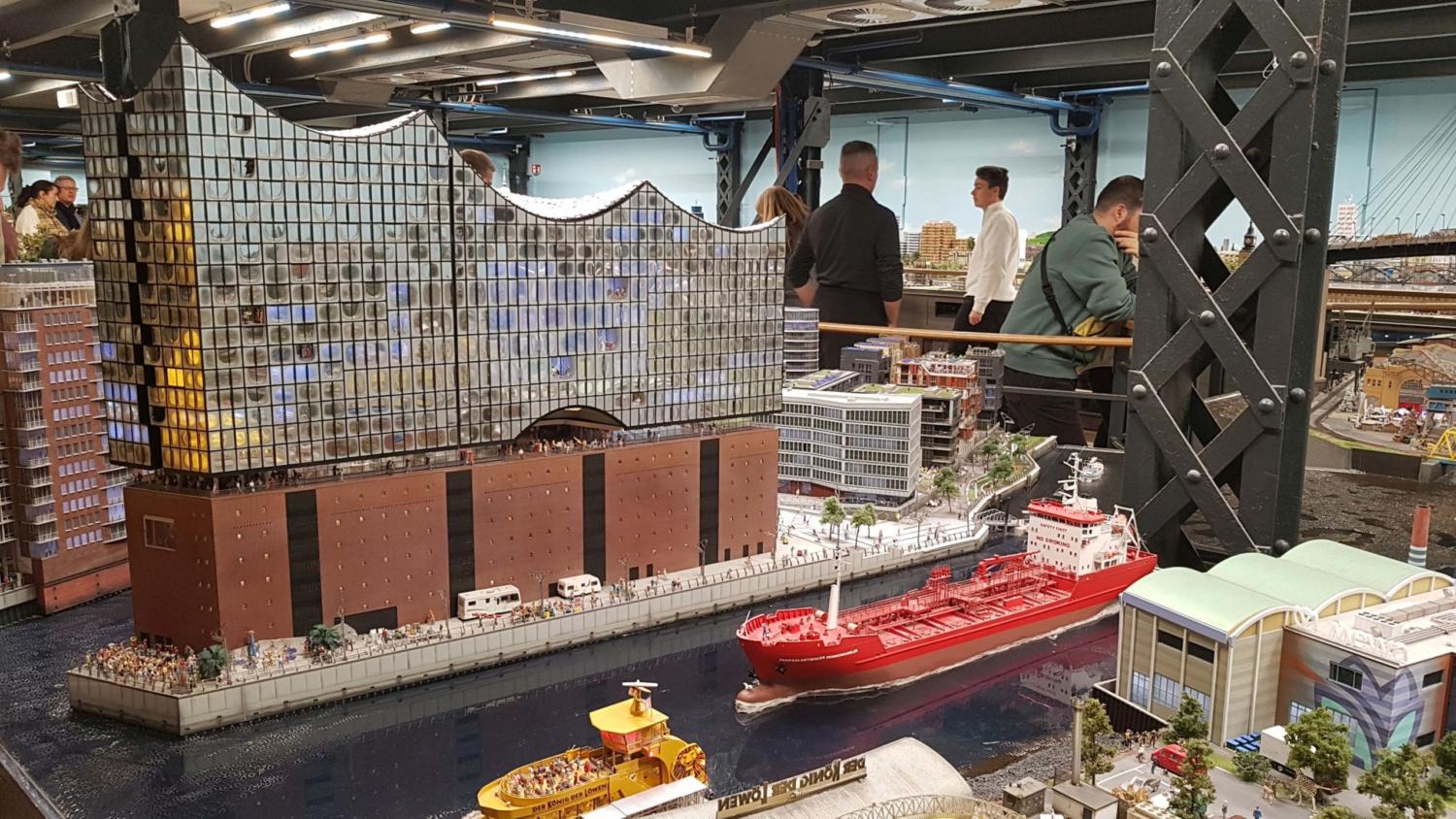
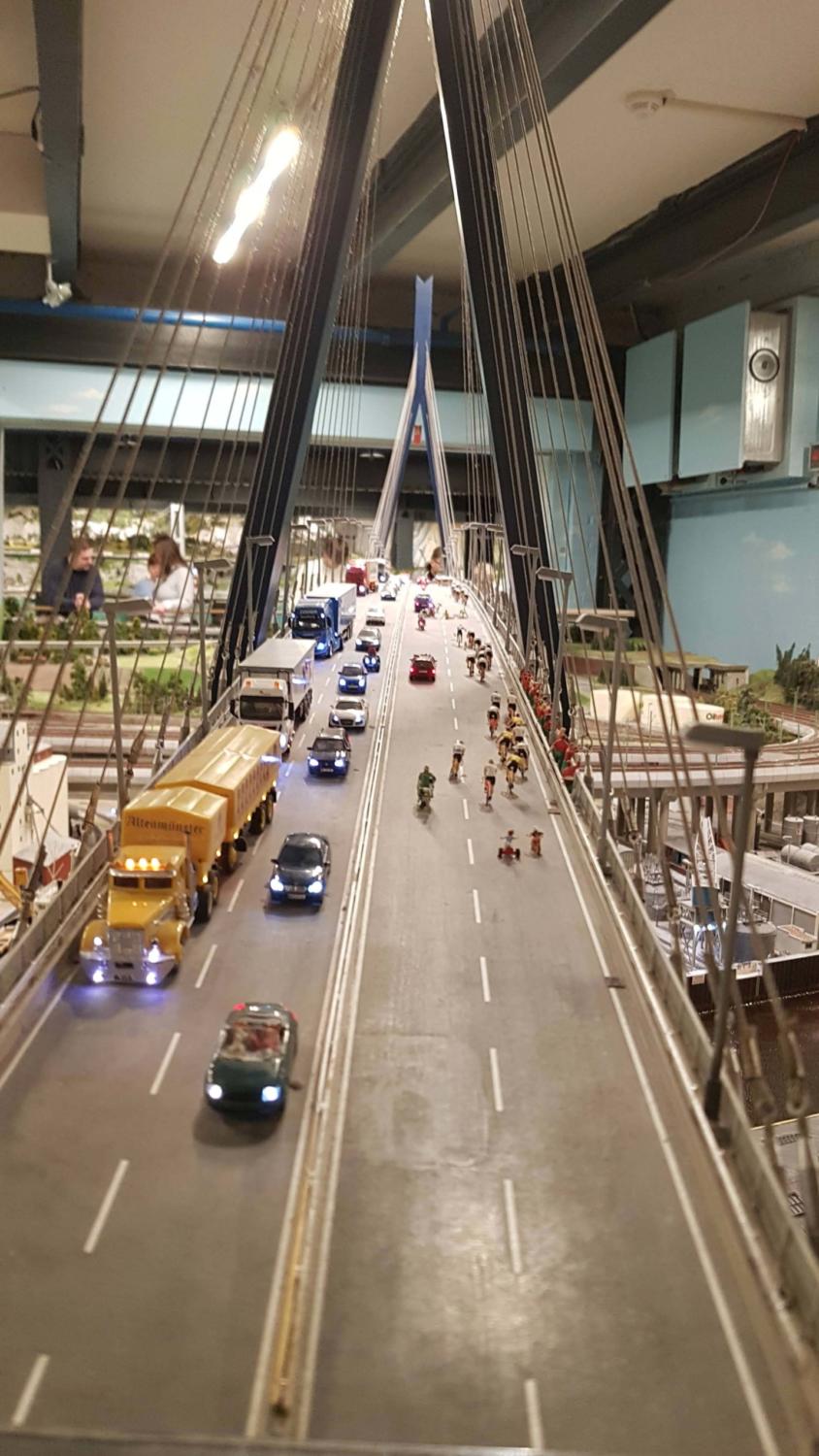
In the evening, the group continued its cultural journey, this time to Miniatur Wunderland, one of Hamburg’s most popular tourist attractions. The meticulously detailed miniature worlds delighted the students and provided a wonderful conclusion to the day.
On the last day of the field trip, the students had the opportunity to explore the city on their own. The trip finally came to an end, as planned and even right on time, with the evening return trip on the ICE, during which the participants were able to reflect on their impressions and experiences. The field trip was an enriching experience that not only deepened their academic understanding but also undoubtedly left them with lasting memories.
https://steinmuehle.de/wp-content/uploads/sites/5/2024/02/Titelfoto-scaled-1-scaled.jpg11251500konnertzhttps://steinmuehle.de/wp-content/uploads/sites/5/2025/11/Logo_SchuleInternat_Steinmuehle_2026_3.pngkonnertz2024-02-10 14:31:372026-06-18 17:37:49Quantum Physics and Worlds of Sound: Advanced Physics Class on a Field Trip to DESY and the Elbphilharmonie
In 12th grade, Clara Steiner and Fabian Sotonica participated in various science competitions, including the Chemistry, Biology, and Physics Olympiads. Both tackled the very challenging problems of the Physics Olympiad and made an immediate impression. They qualified for Round 2. Unfortunately, Clara was unable to take the exam for Round 2.
Fabian also competed in the Biology and Chemistry Olympiads, though he narrowly missed advancing to the second round in biology. Things went very well in chemistry; he aced the first round and performed so well in the second round that he was rewarded with a book voucher.
The two were accompanied by their supervising teachers, Antje Seel, Dr. Jutta Töhl-Borsdorf, and Dr. Patrick Szabo. The results give cause for optimism for next year’s competition, as both students will likely have significantly expanded their knowledge by then.
https://steinmuehle.de/wp-content/uploads/sites/5/2024/05/Olympiade_Header-scaled.jpg6851500konnertzhttps://steinmuehle.de/wp-content/uploads/sites/5/2025/11/Logo_SchuleInternat_Steinmuehle_2026_3.pngkonnertz2024-01-26 13:11:292026-06-18 17:38:12Successes of Our “MINTis” at Science Olympiads
Right in the middle of the Christmas break, we received some fantastic news: René Schulenberg’s Class 6a won first place in the “Class Competition” category of “Math in Advent” among all 6th-grade classes! The “Schulenbergies” achieved the best results in their grade level across all federal states in the digital math Advent challenge.
Principal Björn Gemmer was among the very first to offer his congratulations and gushed, “That’s fantastic!”
This victory is truly fantastic for the sixth graders, as it also means that the entire class has been invited to the awards ceremony on January 26 in Berlin. A major math event will take place at the Max Kade Auditorium at Freie Universität Berlin, featuring an awards ceremony for all winners, music, games, and entertainment. There will be plenty to discover at a math fair. A total of 1,000 people are expected to attend.
“Mathe im Advent” is a digital Advent calendar and math competition for students in grades 4 through 9, organized by the nonprofit Mathe im Leben GmbH.
(A report on the trip will follow!)
https://steinmuehle.de/wp-content/uploads/sites/5/2024/01/Titel-scaled.jpg8981500konnertzhttps://steinmuehle.de/wp-content/uploads/sites/5/2025/11/Logo_SchuleInternat_Steinmuehle_2026_3.pngkonnertz2024-01-26 08:48:412026-06-18 17:37:41“We’re Going to Berlin”: Class 6a Takes First Place in Nationwide Class Competition
For the second time, Steinmühle hosted the plus-MINT Math Camp as part of the plus-MINT talent development program, organized and led this year by Maximilian Moll. In January, 22 students gathered for four days and had an exciting time participating in a varied math program that included several field trips.
Young math enthusiasts from grades 10 and 11 arrived at the Steinmühlen campus from all corners of the country: Participants from Birklehof High School, Louisenlund, St. Afra Saxon State High School, and Pforta State School—they all worked on math problems and puzzles together with students from Steinmühle High School.
Geometry on a Sphere
On Monday, the group arrived and was welcomed in the boarding school’s tea room with drinks and snacks. Afterward, they headed to the Lahnberge hills in Marburg to participate in the workshop “Geometry, Topology, and Spherical Triangles” with Prof. Dr. Oliver Goertsches from Department 12 (Mathematics and Computer Science). Topics covered included the geometry of the sphere, dihedra, and the derivation of the area of a spherical triangle.
The next morning, the students were set to compete in the Bolyai Competition. In this multiple-choice math competition, team performance is what counts. Talea Wagner, Zora Herrmann, Alfred Sontag, and Alexa Lehmann achieved an outstanding result. They took first place out of 134 teams in Hesse! This high-performing group also took first place nationwide, tied on points with the team from the Landesgymnasium für Hochbegabte in Schwäbisch Gmünd. Unfortunately, the quartet missed out on advancing to the final round in Budapest in the tiebreaker. Still, it was a fantastic performance by the four of them that day!
Calculating Logarithms in Your Head
The team competition was followed by a workshop with Dr. Karl-Heinz Muth: “Math Tricks to Help in Everyday Life—From the Calendar to the pH Value.” The students gained many fascinating insights into mathematical relationships. For example, they calculated logarithms in their heads and learned how to determine the day of the week of a given birth date mentally.
The day’s mathematics program concluded with a workshop led by Prof. Dr. István Heckenberger titled “Games, Logic, Mathematics.” Topics included a Hungarian board game with a brief introduction to logic in mathematics.
It wasn’t just the daytime program at the +MINT Math Camp that was sports-oriented: The evening wrapped up at the Steinmühle with an exercise session.
Field Trip to the Mathematikum
On Wednesday, the group took a trip to Gießen and visited the Mathematikum. The doors of the popular hands-on museum opened exclusively for the “MINTIs” during renovation week.
The group had actually planned to go on a math scavenger hunt in Marburg’s old town afterward. However, the heavy snowfall that set in put a stop to those plans.
The math camp ultimately wrapped up with a special dinner in the cafeteria, featuring a three-course meal by candlelight.
To sum up the entire event, Steinmühle noted a very positive overall atmosphere, engaging presentations, and successful cross-school networking.
The participants quickly realized among themselves: We can count on you!
https://steinmuehle.de/wp-content/uploads/sites/5/2024/02/IMG_0205-scaled-1-scaled.jpg15001125konnertzhttps://steinmuehle.de/wp-content/uploads/sites/5/2025/11/Logo_SchuleInternat_Steinmuehle_2026_3.pngkonnertz2024-01-25 14:42:012026-06-18 17:37:51The second plus-MINT Math Camp at the Steinmühle produced the best Bolyai team in all of Hesse
The Marburg-Cappel Volunteer Fire Department conducted its annual drill at the Steinmühle. The simulated emergency: a fire in the chemistry lab! Late in the evening, in the darkness of November 9, a fire engine arrived with its emergency lights flashing: After the bollard was lowered, five vehicles—including a turntable ladder—passed through the entrance to the school grounds and skillfully positioned themselves between the flower beds in the courtyard and on the adjacent open area.
When the alarm was sounded, reports indicated that several boarding school students were on the first floor of the main building, where smoke was coming from the chemistry lab, though the cause was unclear. While fellow firefighters were busy rolling out the fire hose, four firefighters equipped with self-contained breathing apparatus had to make their way up the stairs to guide themselves and the people in danger through the smoke—realistically simulated with stage fog— and to guide the students to safety. The rescue was carried out by leading the students down the stairs; in some cases, they were also evacuated via the turntable ladder.
The Tasks: Water Supply and Rescue Operations
A total of 31 firefighters—both men and women—had come to the Steinmühlen campus for the drill. “In cases like this,” reported Steinmühlen teacher Jonathan Gröb, “some are tasked with the water supply, while others are responsible for rescuing people.” There’s a special reason why Jonathan Gröb is so knowledgeable about this: The math and physics teacher is himself the fire chief in his hometown in the Vogelsberg district, and thanks to the close ties between colleagues, he was happy to agree when Cappel’s fire chief, Dominik Wagner, asked about a training opportunity.
This is a win-win situation. While the fire department can fully practice such operations a short distance from its station on the bypass, Steinmühle learns specific rules of conduct and procedures for emergencies. It is no coincidence that Jonathan Gröb also serves as Steinmühle’s fire safety officer, and an updated fire safety policy—tailored to the building’s current layout—is already in the works.
“Mr. Gröb, we want to ride the turntable ladder.”
Once the students participating in the drill realized that, depending on the situation, these kinds of operations can sometimes get a little rough, their spirits lifted all the more shortly afterward. They didn’t exactly sing “Hurrah, hurrah, the school’s on fire” like the band Extrabreit did back in the legendary ’80s, but they did ask for a bit of fun: “Mr. Gröb, we want to ride the turntable ladder,” they pleaded at the end. And so it came to pass that a group of students, under professional supervision, was lifted a good 20 meters into the night sky in the basket of the extended turntable ladder and was able to enjoy the view of Marburg.
Steinmühle would like to thank the Cappel Volunteer Fire Department, the students who participated, and our teacher Jonathan Gröb for giving us the opportunity to have these experiences and expand our knowledge of the work of the fire department!
https://steinmuehle.de/wp-content/uploads/sites/5/2023/11/IMG_2981-scaled.jpg11251500konnertzhttps://steinmuehle.de/wp-content/uploads/sites/5/2025/11/Logo_SchuleInternat_Steinmuehle_2026_3.pngkonnertz2023-11-24 13:06:162026-06-18 17:37:35“Smoke in the chemistry lab”: Volunteer fire department extinguishes the fire and evacuates the building
Cedric Engels (28), also known as Doctor Whatson, spent an entire day visiting the Steinmühle to get a sense of what plus-MINT means at the Steinmühle. Suffice it to say, he was impressed!
Dr. Whatson is one of Germany’s most successful science bloggers. He has just under 18,000 followers on Instagram and 318,000 subscribers on YouTube.
His posts are about science, space, technology, and the future—in short, videos that will blow your mind.
@DoktorWhatson finds the plus-MINT program so fascinating that he visited the Steinmühle in Marburg in the summer of 2023. He is accompanied by the Steinmühle students, who are presenting their exciting projects to him.
And here’s the video of Dr. Watsons’ visit:
Enjoy watching!
What is plus-MINT?
Particularly talented students with a gift and passion for mathematics, computer science, natural sciences, or technology (MINT) receive special support at plus-MINT boarding schools specifically selected for this purpose. One of these special boarding schools is Steinmühle.
Who is eligible to apply for plus-MINT?
Students who have demonstrated exceptional achievement in STEM subjects, have already (successfully) participated in STEM competitions, are involved in extracurricular clubs focused on these subjects, and/or show exceptional dedication and sustained enthusiasm for STEM topics are eligible to apply.
The application period for the 2024–2025 school year has already begun!
Anyone interested in joining the plus-MINT program can apply online at https://plus-mint.de until January 31, 2024.
All additional information about the program can also be found at https://plus-mint.de.
If you have any further questions, please feel free to contact Steinmühle directly at any time:
https://steinmuehle.de/wp-content/uploads/sites/5/2023/10/IMG_20230711_154512-scaled-1-scaled.jpg11251500konnertzhttps://steinmuehle.de/wp-content/uploads/sites/5/2025/11/Logo_SchuleInternat_Steinmuehle_2026_3.pngkonnertz2023-10-04 12:15:052026-06-18 17:37:15Dr. Whatson Visits plus-MINT at the Steinmühle
One Year of Plus-MINT Talent Development at Steinmühle / The next application period is already underway
For the past year, Steinmühle has been one of seven boarding schools in Germany participating in the plus-MINT talent development program. We spoke with Dr. Jutta Töhl-Borsdorf, the head of the MINT and plus-MINT departments at Steinmühle.
Hello, Dr. Töhl-Borsdorf. Looking back, what all happened during the first year of plus-MINT? Oh, quite a lot. It all really got started in October 2022. That’s when YouTuber Marcel Häfele, aka Techtastisch, came to Steinmühle with some spectacular experiments. That really got all the students from the research labs excited.
In November, the annual plus-MINT conference took place. Many students and staff members from the other plus-MINT boarding schools came to Steinmühle for the event. The atmosphere was fantastic. The same was true in January 2023, when we hosted our first plus-MINT Math Camp at Steinmühle. This was followed by the plus-MINT Astronomy Camp in Heidelberg. And in July of this year, YouTuber Dr. Whatson finally came to Steinmühle for a video shoot (the link to the video can be found at the end of the interview).
Many day students from Steinmühle also took part in all of these events. That makes me personally very happy. It’s a great opportunity for everyone and helps STEM and plus-MINT grow together.
That sounds like a very exciting and varied program. Do the plus-MINT students already have their own project?
Yes, indeed, the “Boat Project.” The four of them are working there in collaboration with the Department of Earth Sciences at the University of Marburg—that is, with the support of Dr. Christoph Reudenbach. They are building a boat equipped with sensors to semi-automatically measure water quality in the Lahn River and collect water samples. It’s a very ambitious project.
Have there been any STEM achievements to report this year?
Yes, you could certainly say that! The Steinmühle won the Hopp Foundation’s school award for its commitment to STEM education as part of the “Jugend forscht” state competition.
The boat project by the plus-MINT students played a major role in the application. The prize money of €2,500 came at just the right time, since the necessary sensors are quite expensive. The money also made it possible to purchase a high-performance 3D printer. Now, of course, we’re hoping for success when the project’s results are presented at “Jugend forscht.” So please keep your fingers crossed! Beyond the public recognition that comes with success, what’s most important, of course, is that the students are given every opportunity to fully pursue their interests in the natural sciences.
How did you personally experience the first year with the four plus-MINT students?
It’s labor-intensive, but very exciting. A first run-through like this is never perfect. We had actually planned to start with something involving biological and chemical water analysis, since we didn’t know much about the four students’ STEM interests. However, three of the “STEM students” are primarily interested in physics and math. So we had to improvise at first. But with the boat project and the university partnership, we found a great project that’s interesting for everyone.
Still, the four of them had to find their footing as a group first. We had the opportunity to get to know four remarkable and very different young people. Of course, there were also some “dry spells” along the way. As is often the case in science, things don’t always work out the way you imagine at the beginning. In any case, the four of them have already demonstrated perseverance and a willingness to work hard.
What makes the plus-MINT program special? That a framework is being created for students passionate about STEM—one they certainly didn’t have in this form at their former schools. They’re working on a major project in the STEM module and have many other opportunities to conduct research and network across regions. Clara, for example, has been studying mathematics at the University of Marburg since last semester, and Fabian is starting his biology studies this semester.
Because all plus-MINT students live in the boarding school, they can meet up at any time to continue discussions, conduct research, or simply have fun.
Speaking of having fun, what else can the plus-MINT students expect at the Steinmühlen Boarding School?
The plus-MINT students are part of the boarding school community. In addition to their STEM talent and passion, the MINTis are teenagers at the boarding school. They have the same rights and responsibilities. They attend the study hall, eat together, choose their extracurricular groups, and live in one of the six residential groups on campus. They contribute their share to the community. Fabian and Marlene, for example, are active on the boarding school council. Fostering the academic talents of our STEM students is one of our goals. However, to integrate into the workforce and succeed in the future, young people also need team spirit, empathy, and self-confidence. A boarding school can provide optimal support on this journey.
That sounds great! Is the plus-MINT talent development program continuing at Steinmühle?
Yes, plus-MINT is definitely continuing. We were able to welcome four more MINTis to Steinmühle at the start of the new school year. In total, there are now 8 plus-MINT students at Steinmühle. Now the goal is to raise even more awareness of this great opportunity at Steinmühle and to encourage even more young people to apply for the next round (the 2024–2025 school year).
What are Steinmühle’s STEM plans for the future? We would like to further expand the program for our day students. We want children and teens not only to participate in camps and competitions, but also to work on collaborative projects. To do this, we urgently need a larger lab so that all research groups can have their own workspace—a place where they don’t have to constantly put away their experimental materials, but can continue working on their projects during breaks or free periods.
Another issue is access to the SFM, the Central Hesse Student Research Center. Unfortunately, it’s relatively far from the Steinmühle for our students.
And—we want our school to become climate-neutral. Of course, we’re also planning to involve our STEM students in this effort, for example with the hydroelectric power plant.
Those are some very ambitious plans! In addition to financial resources, you’ll probably need a lot of personnel as well. How are you going to manage that?
I’m happy to share some good news: Our STEM mentor team at Steinmühle has grown! I’m very pleased to have the support of Dr. Sven Freibert and Mr. Jonathan Gröb, and I’d like to welcome them both once again. That means there are now five of us in the STEM department at Steinmühle.
What are your suggestions for the plus-MINT and MINT programs at Steinmühle?
It’s clear: more time for students. My greatest wish would be to “streamline” and reform the curricula. Our society is changing rapidly right now, but the state ministries of education are barely responding. Why not give students more time to work on their strengths and interests? Our students have so much to accomplish and too little time for projects close to their hearts, especially in high school, where we have little influence.
Are there still possible solutions at the Steinmühle?
At the next SchiLf (in-school teacher training session), Steinmühle will explore a new school schedule model designed to provide more opportunities for independent work and interest-driven learning. I expect this to bring many improvements for STEM subjects. Currently, our structures—with WU, the GuFi Lab, the STEM module, and the Open Lab—are very complicated, and there’s a gap in 7th grade that’s currently only being filled by the Open Lab. For example, forming groups has become extremely complicated.
Of course, this applies not only to STEM but also to the other subject areas. After all, we at Steinmühle want to do justice to all students!
I, too, would like to have more time to focus more on the subject matter with the students again. I’m just as fascinated by the STEM subjects as they are. I enjoy having in-depth discussions with the students and sparking their interest. I always learn something new myself with every project—that’s really great. But there’s so much administrative work to do these days that there’s hardly any time left for the students.
Yes, science requires time AND space. You’ve already mentioned that there’s a shortage of space.
That’s correct. We’d like to have a STEM lab to make our school even more attractive to future STEM and plus-STEM students.
How do you become a plus-MINT student at Steinmühle? You can apply online for the plus-MINT program until January 31, 2024, starting with a short letter of motivation (initial application). Steinmühle accepts students entering 10th or 11th grade. In the second round of the selection process, you submit teacher recommendations, report cards, etc.
Once you’ve cleared these hurdles, you’ll be invited to a 4-day selection camp at the Birklehof in the Black Forest. Passing the camp there isn’t as difficult as you might think. A large number of spots are made available.
The alternative is a wildcard (free pass), which can be awarded by plus-MINT students or teachers; if you receive one, you’ll be invited directly to the selection camp.
In addition to interest and aptitude, key admission criteria include extracurricular involvement in STEM fields, academic performance, as well as personality and social skills.
We hope to receive many applications for the coming school year!
The current application deadline for the plus-MINT Talent Development Program is January 31, 2024.
For more information, visit www.mint-verein.de
https://steinmuehle.de/wp-content/uploads/sites/5/2023/10/Einzelbild_Jutta_Toehl_Borsdorf-scaled-1-scaled.jpg10001500konnertzhttps://steinmuehle.de/wp-content/uploads/sites/5/2025/11/Logo_SchuleInternat_Steinmuehle_2026_3.pngkonnertz2023-10-02 11:03:102026-06-18 17:37:19A great prize, ambitious projects, and an expanded team of STEM mentors
During the final week of the summer break in Hesse, from August 28 to September 1, 2023, the SFM organized a STEM summer camp for students from Central Hesse. The program featured exciting experiments, interesting STEM sites, and, of course, lots of fun. A total of 40 students from grades 7 through 12 signed up for the camp. Three 7th-grade students from Steinmühle were also there. Maya Fischer, Anna-Lena Griesler, and Justus Pöschl had a great time.
The workshops were led by the SFM team, including Steinmühlen teachers Malte Klimczak and Dr. Jutta Töhl-Borsdorf, who are on secondment to the SFM.
All students were able to sign up for the various activities on their own and thus put together their own personalized schedule. Specifically, the following 11 workshops were offered:
Robotikum – Guide and create dialogs with the Nano voice bot
The Lahn—Together, we’re investigating how clean the Lahn is
Mathematikum – We Get to the Bottom of Mathematical Models + Viseum – Explore Optics from Every Angle
Chemikum – The Vast World of Hydrogen and Climate
MS Wissenschaft – On a floating science center, you can dive into the depths of our universe
Genetics – Genetic Fingerprinting
FIRST LEGO League – Work as a team to solve tricky challenges using LEGO robots
WOW Experiments — It’s easy to spot a phenomenon, but how do I figure out what’s behind it?
Microcontrollers + Soldering – We’re Building an Environmental Monitoring Station
3D Printers – Discover the Technology and Possibilities of 3D Printers
Planetarium – Let’s Discover Our Night Sky Together
The camp came to a close with a group barbecue at the Elisabethschule boathouse on Friday, which was also attended by many parents.
https://steinmuehle.de/wp-content/uploads/sites/5/2024/02/titel-scaled.jpeg10421500konnertzhttps://steinmuehle.de/wp-content/uploads/sites/5/2025/11/Logo_SchuleInternat_Steinmuehle_2026_3.pngkonnertz2023-09-24 14:30:112026-06-18 17:37:49Steinmühlen students are having a great time at the SFM summer camp
Fabian (16), Luis (15), Clara (15), and Marlene (15) are sitting in Room 126 at the Steinmühle, putting their heads together. They are discussing the next steps in their joint plus-MINT project, the “Boat Project.”
Looking Back: Since the summer of 2022, the four plus-MINT students at Steinmühle Boarding School have been enriching both the school’s STEM program and the boarding school community. In the fall of 2022, they began brainstorming ideas for their first major, independent project. “We wanted a joint project where each of us could contribute our respective STEM passions and that would also have practical relevance,” Fabian explains.
Antje Seel, who has been teaching biology and geography at Steinmühle since 2019, contacted Dr. Christoph Reudenbach of the Department of Geography at Philipps University of Marburg regarding the plus-MINT pilot project. Philipps University of Marburg and Steinmühle have had a cooperation agreement since 2018, forming a strong and strategic partnership in many respects.
Dr. Christoph Reudenbach showed great interest in collaborating and, together with the plus-MINTIs (as they are affectionately called at the boarding school), developed an idea for a boat that can perform semi-automatic water analyses.
Boat Project in collaboration with Dr. Reudenbach from the Department of Geography
The idea is to build an autonomous, sensor-equipped boat so that we can avoid entering the sensitive ecosystem in the Gisselberger Spannweite restoration area (located immediately adjacent to the Steinmühle site) as much as possible. This platform is designed to monitor water quality in the Lahn River and also to collect water samples.
In close collaboration with the Department of Earth Sciences at the University of Marburg, the “boat idea” became the Boat Project. Dr. Christoph Reudenbach from the Department of Geography is actively supporting the plus-MINT students with his expertise. In addition, the students are mentored by the Steinmühle STEM team—Antje Seel, Dr. Patrick Szabo, and Dr. Jutta Töhl-Borsdorf.
“Projects like this are only possible thanks to the personal dedication and idealism of individuals. Dr. Reudenbach visits Steinmühle regularly and supports the students with their project, always treating them as equals and showing great dedication. This is a great opportunity for the students to learn how to build complex devices and program them independently for research purposes, as well as to deepen their knowledge in the fields of robotics, programming, and environmental sciences,” reports Dr. Jutta Töhl-Borsdorf, head of the STEM and Plus-STEM division at Steinmühle.
“The Boot Project reflects our STEM expertise AND it’s a perfect fit for Steinmühle, given its close proximity to the Lahn,” says Luis.
Award from the Hopp Foundation and prize money in the amount of 2,500,- €
The relevance and timeliness of the “Boot Project” were underscored by a special award that the Steinmühle received in March 2023:
For its commitment to STEM education, Steinmühle won the Hopp Foundation’s school award, worth 2,500 euros, as part of the “Jugend forscht” state competition. A prerequisite for participating in the competition was a detailed application letter, in which the boat project by the plus-MINT students played a major role.
“I didn’t expect us to win the Hopp Prize right away, even though the project was still in its early stages—I guess we really struck a chord with the jury,” Luis reports proudly.
Part of the prize money has already been invested in a high-performance 3D printer. “Now we can professionally print custom-made mounts for the sensors on the prototype—that’s really cool,” said Clara.
(From left to right: Fabian, Clara, Marlene, and Luis)
The “Boat Project,” including the prototype, is set to be submitted to the next “Jugend forscht” competition. We’re keeping our fingers crossed for the plus-MINT team.
The next round of applications for plus-MINT will begin in fall 2023. For more information, visit www.plus-mint.de
https://steinmuehle.de/wp-content/uploads/sites/5/2023/07/Gruppe_mit_Reudenbach_Boot_2023-scaled-1-scaled.jpg11251500konnertzhttps://steinmuehle.de/wp-content/uploads/sites/5/2025/11/Logo_SchuleInternat_Steinmuehle_2026_3.pngkonnertz2023-07-13 12:22:412026-06-18 17:37:03Plus-MINT students at Steinmühlen Boarding School work closely with the Department of Geosciences at Philipps University of Marburg
Starting in the 2023–2024 school year, Steinmühle is now an official partner of the Chemikum in Marburg. From 5th grade through 11th or 12th grade, all students will now attend an experimental workshop at the Chemikum once per school year.
Chemikum sees itself as a hands-on lab and a STEM educational institution, and therefore offers workshops featuring not only chemistry experiments but also physics and biology experiments. Important future-oriented topics are addressed, for example, in a hydrogen workshop or a climate workshop. As a result, some of our students are accompanied by their biology, physics, or geography teachers. What they learn is always relevant to the curriculum and is intended to be further explored in class afterward.
Dr. Ina Budde and Dr. Christof Wegscheid-Gerlach from Chemikum came to the Steinmühle to sign the contract. Principal Björn Gemmer and STEM Coordinator Dr. Jutta Töhl-Borsdorf were delighted to sign the contract.
https://steinmuehle.de/wp-content/uploads/sites/5/2023/07/2.jpg8001200konnertzhttps://steinmuehle.de/wp-content/uploads/sites/5/2025/11/Logo_SchuleInternat_Steinmuehle_2026_3.pngkonnertz2023-07-12 10:16:282026-06-18 17:36:55Steinmühle Signs a Cooperation Agreement with Chemikum