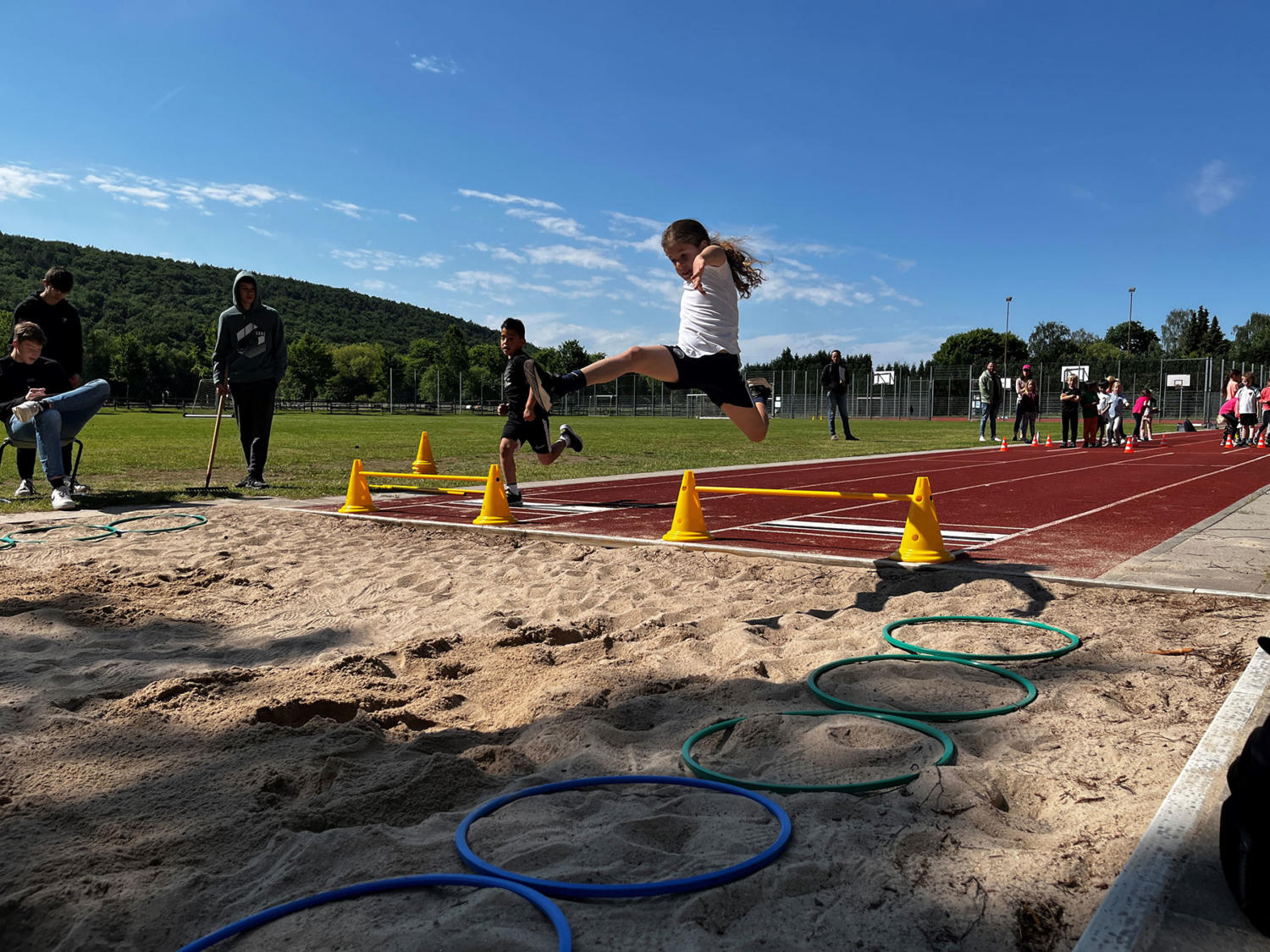
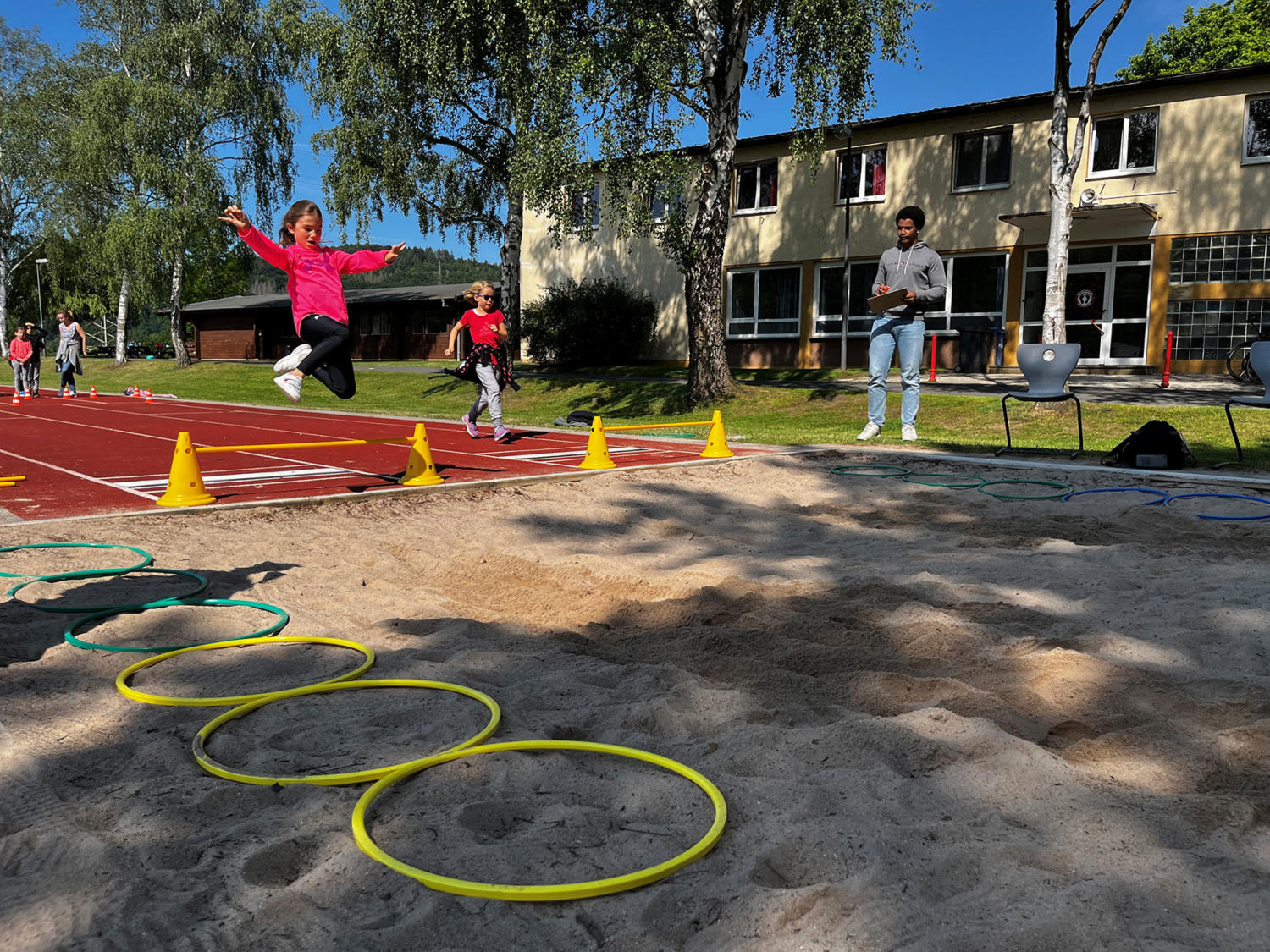
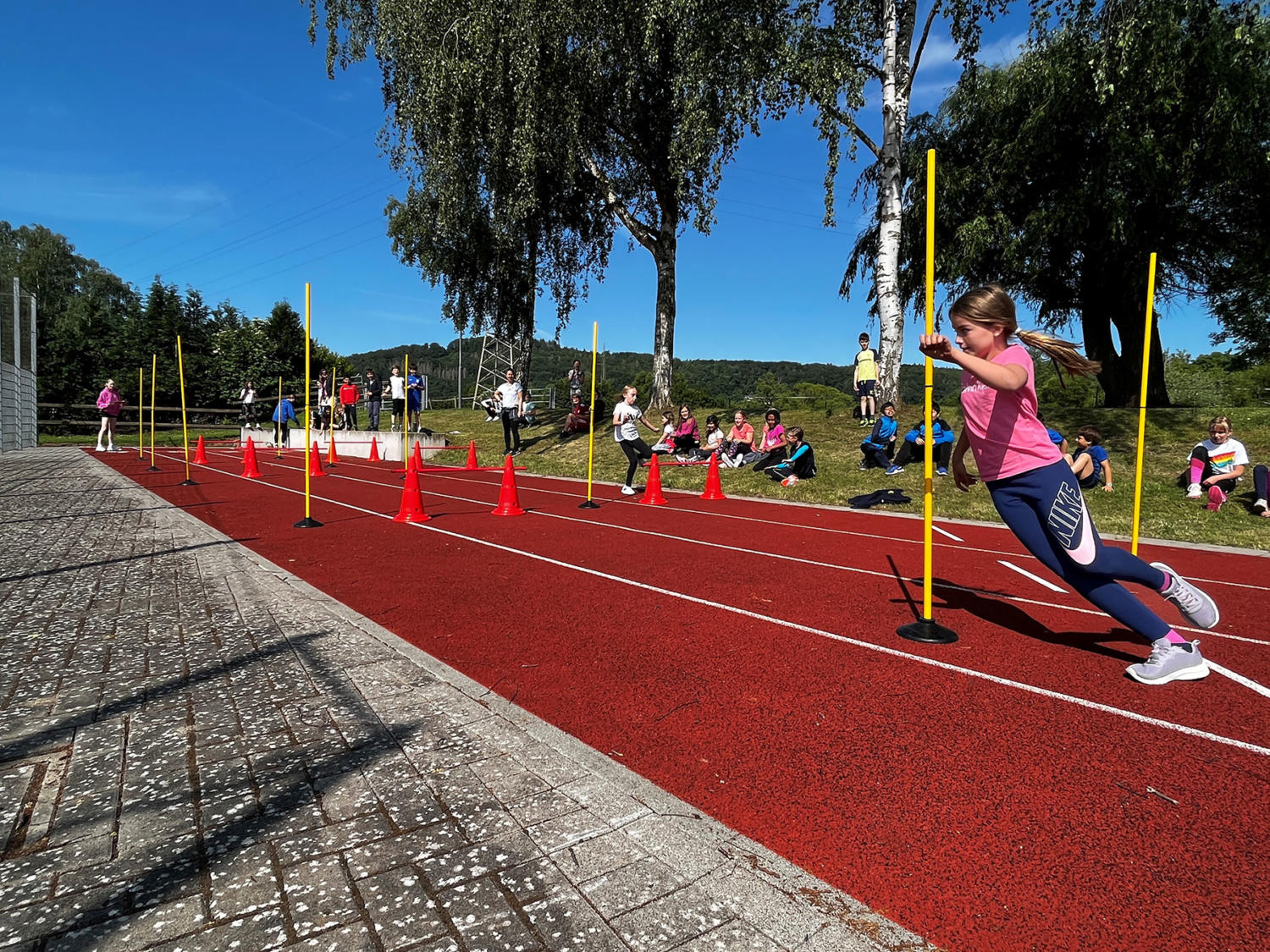
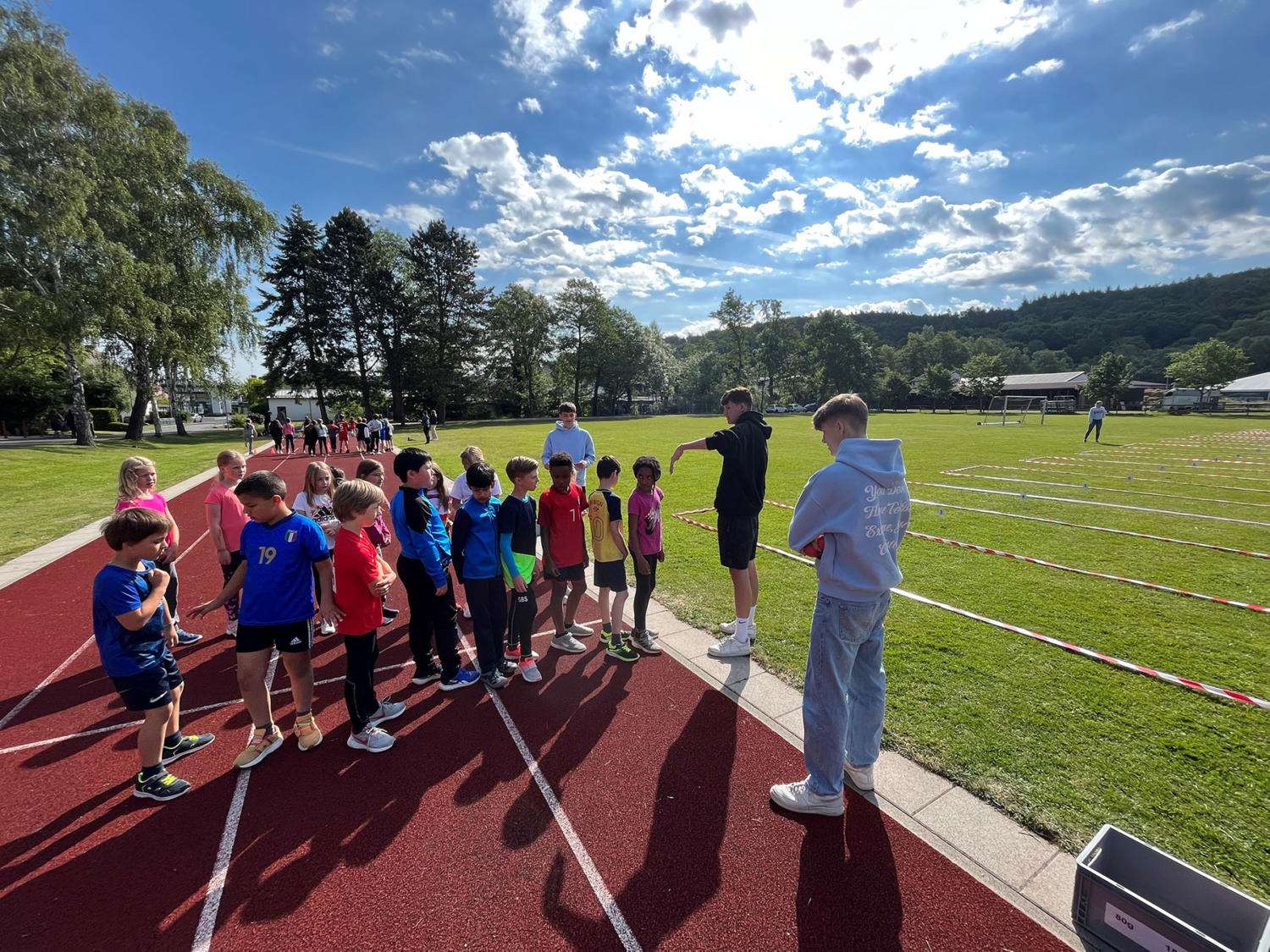
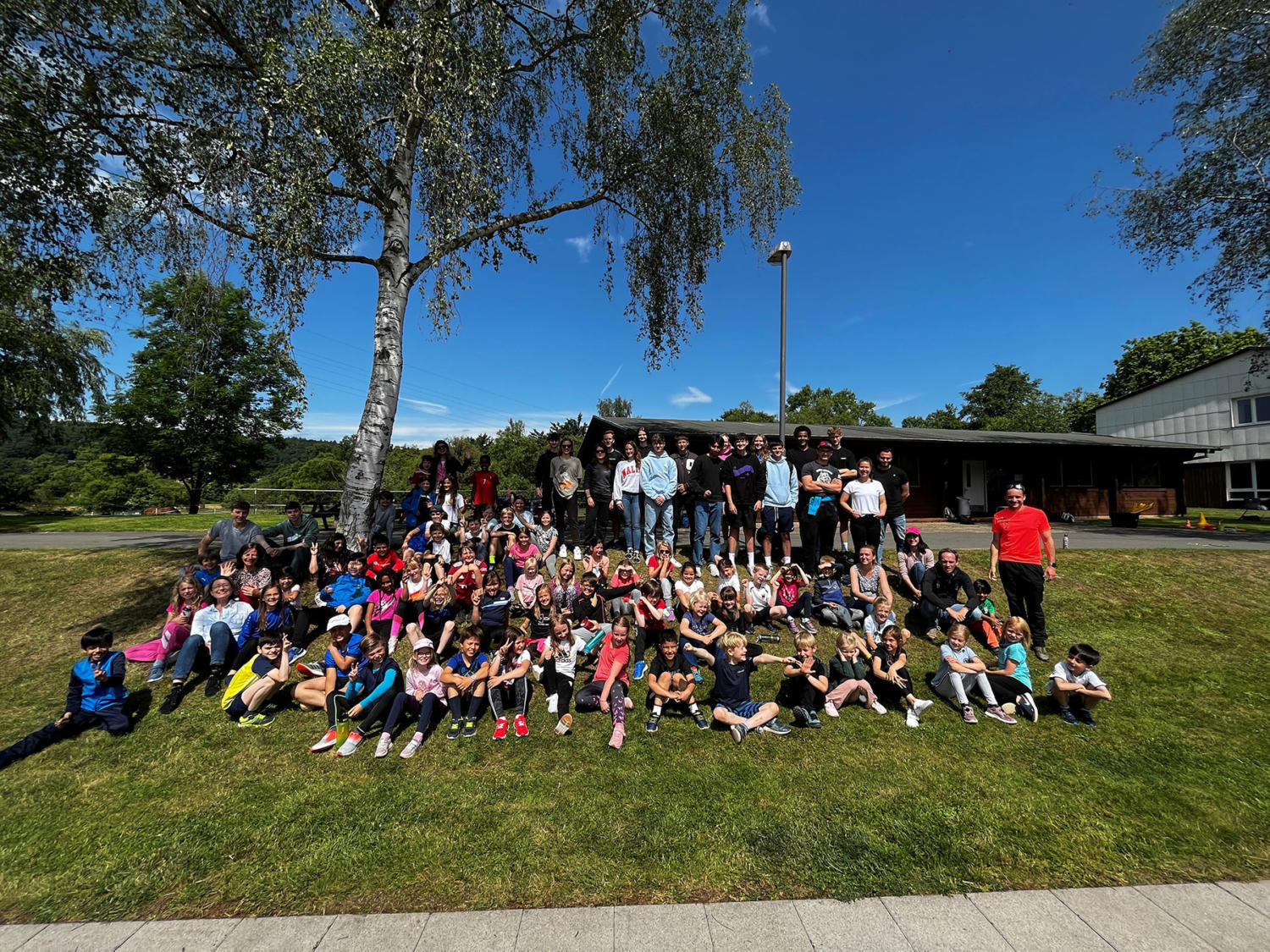
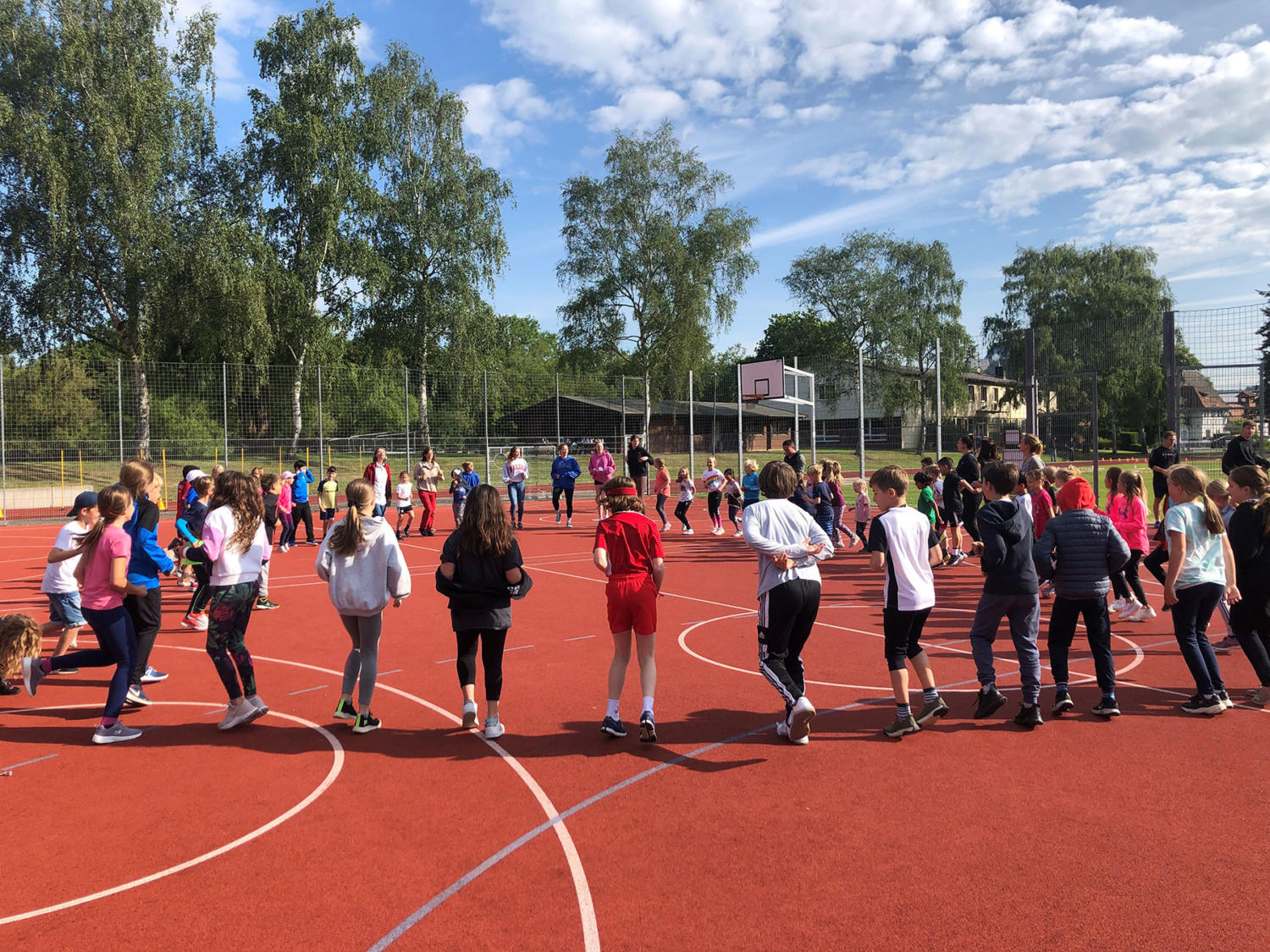
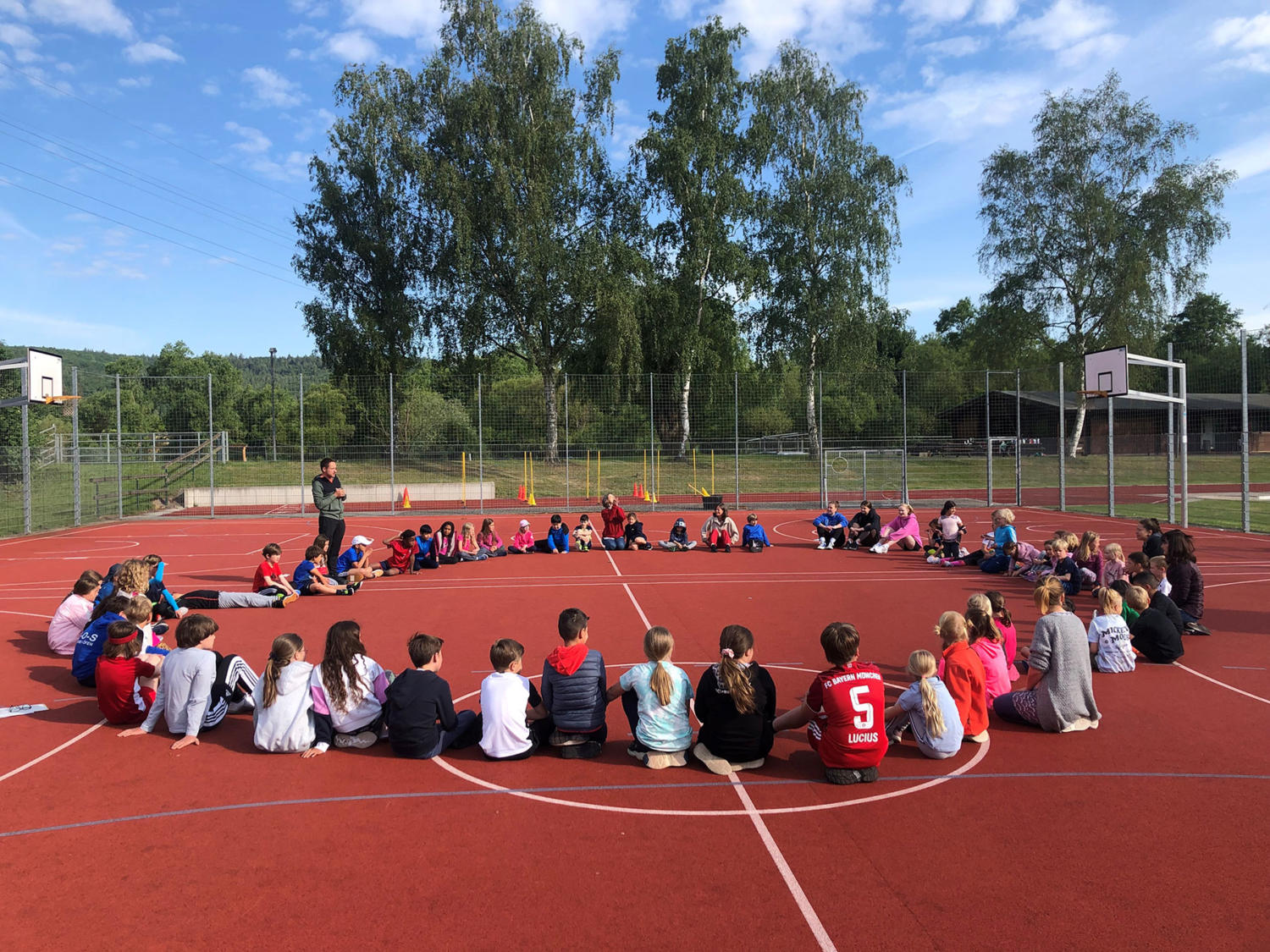
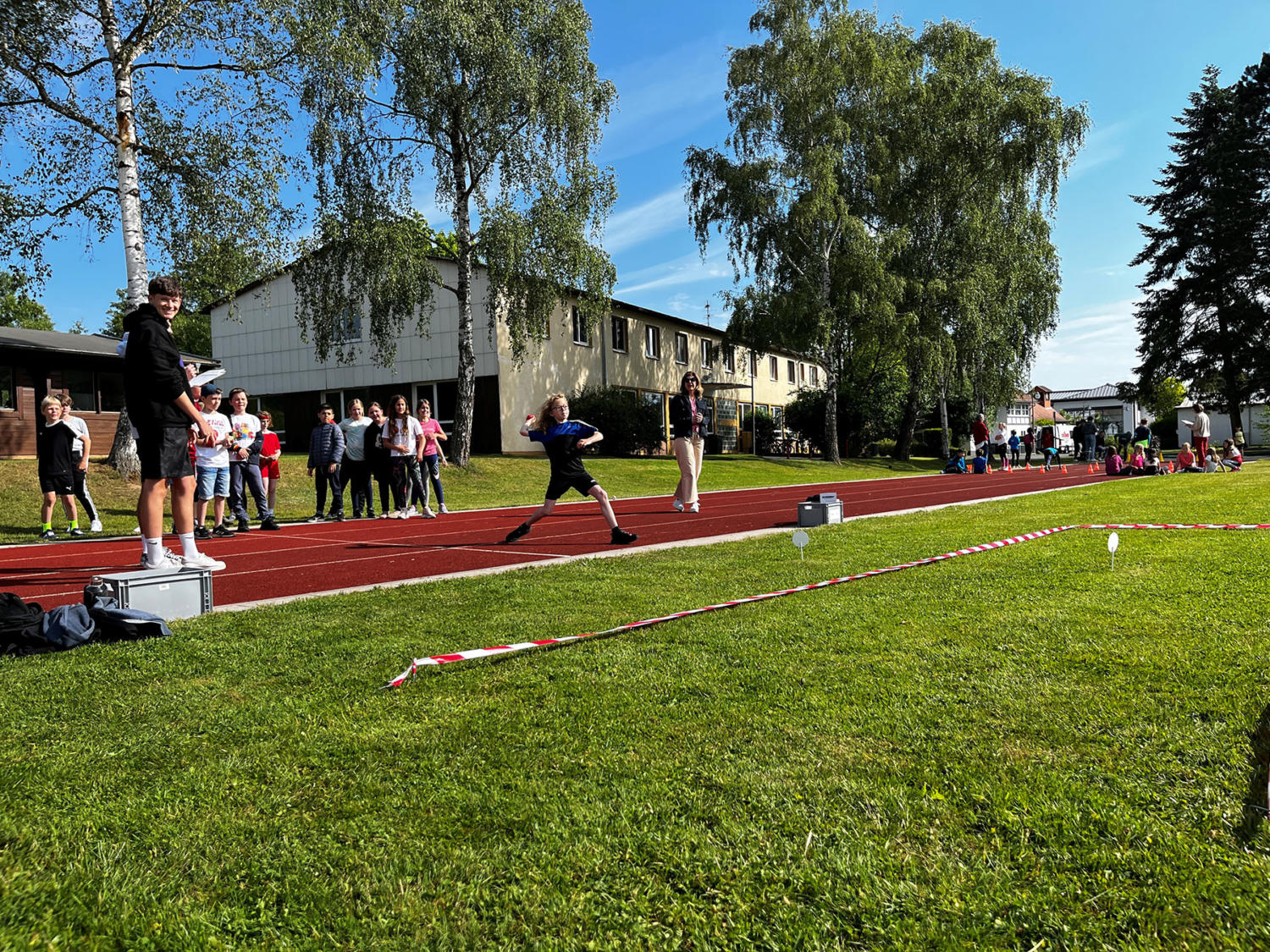
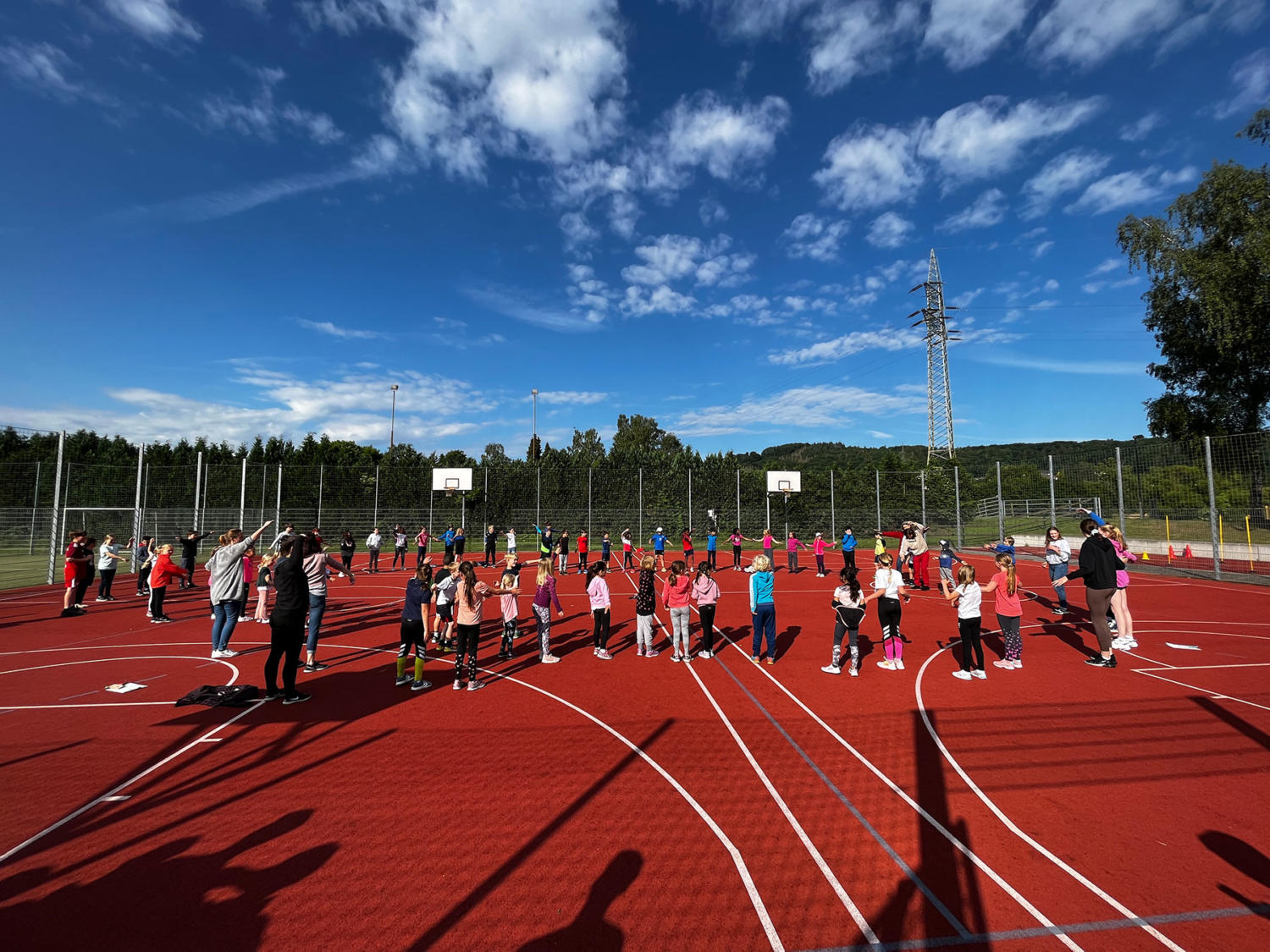
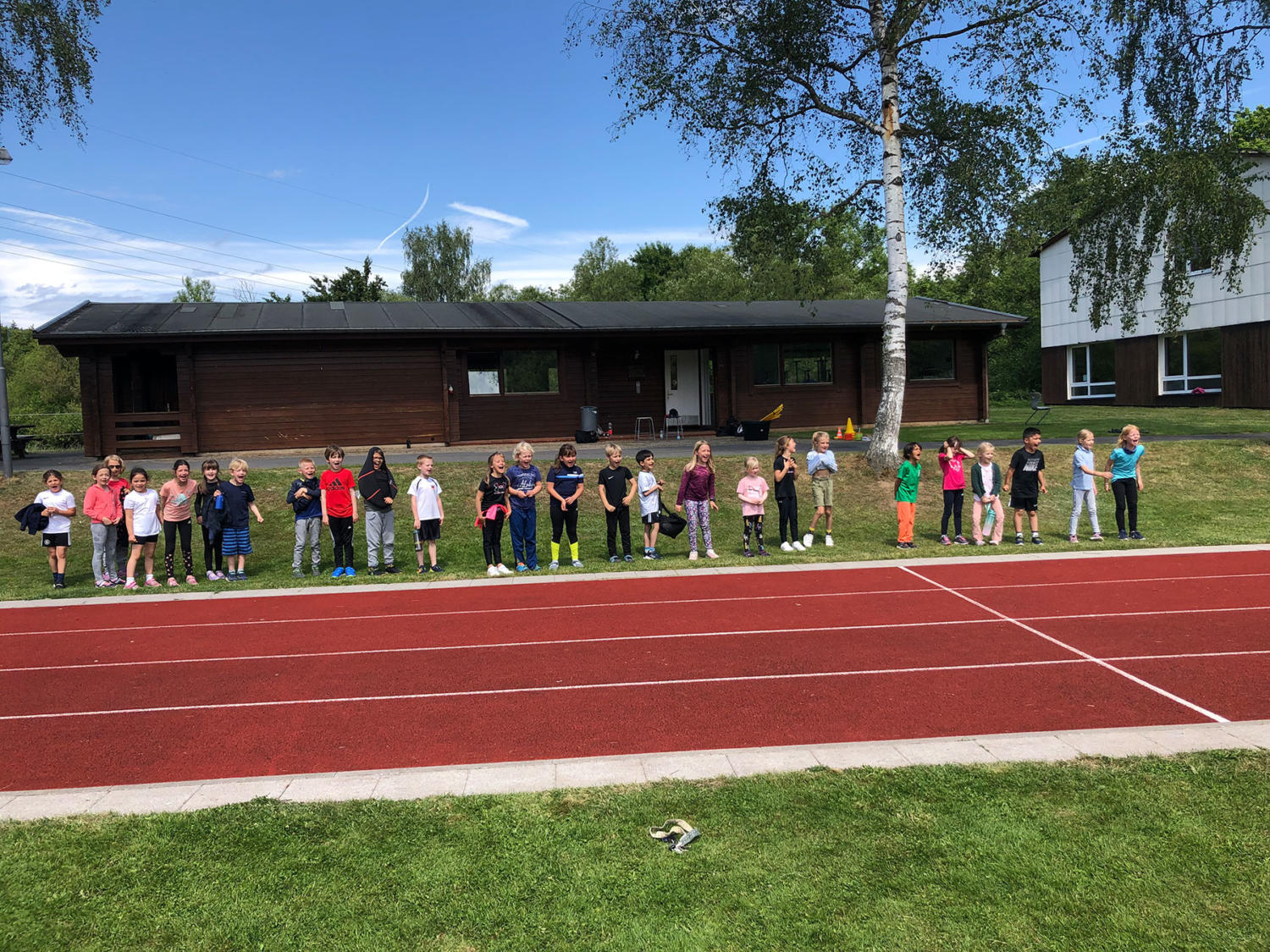
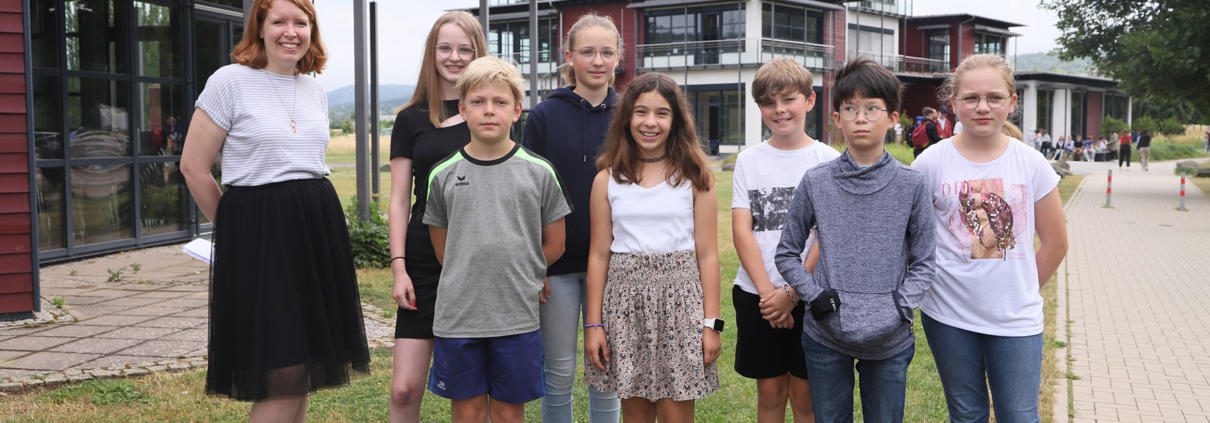
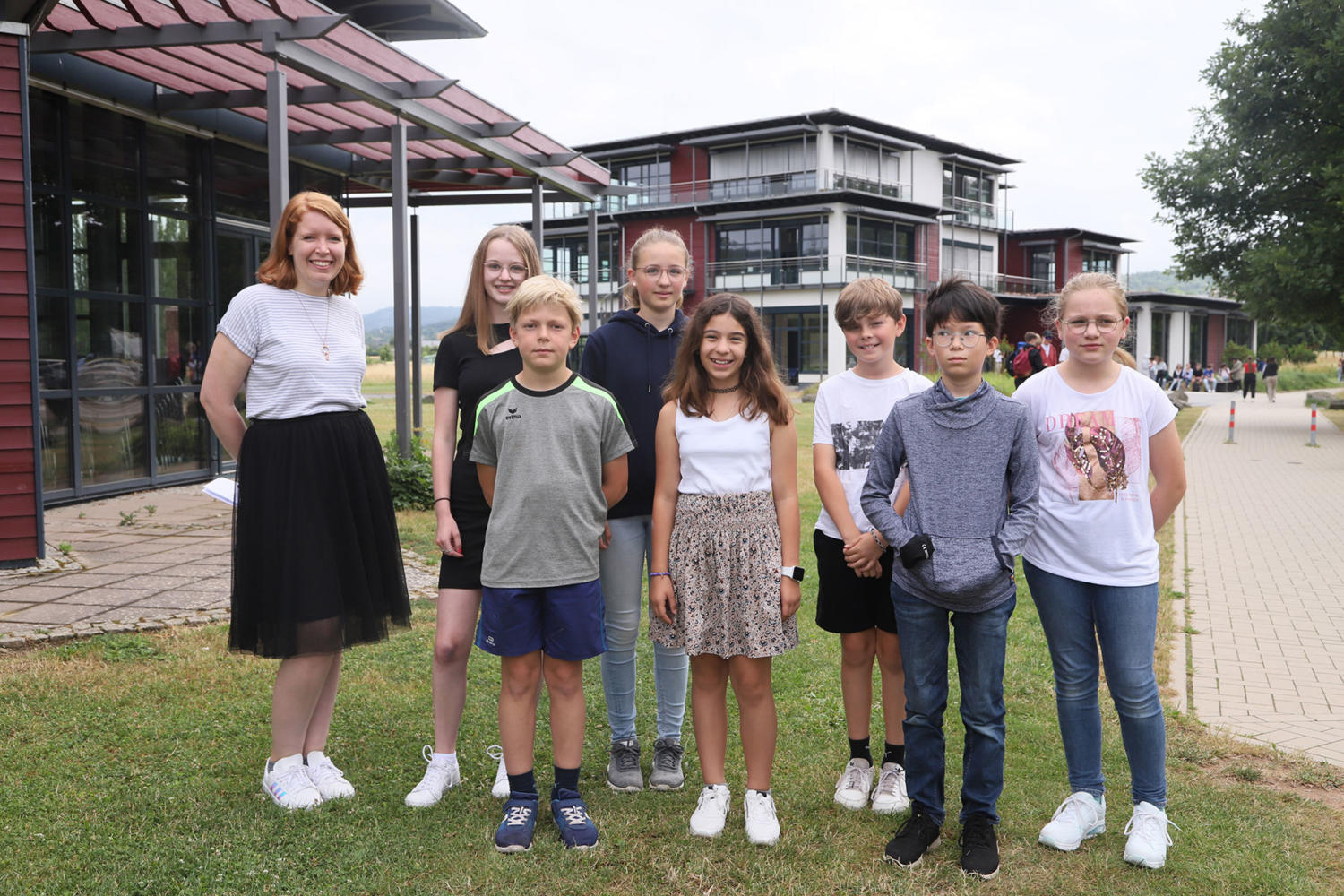
On May 31, the time had finally come: After two years of the pandemic, during which the importance of school sports had been downplayed, school sports events were finally allowed to take place again. As a result, our elementary school students got to experience their very first Federal Youth Games at Steinmühle.

With the active support of the Sports Track (11e), all the students had a blast all morning long and got to compete and let off some steam. Here’s how our fourth graders described their morning in their own words:

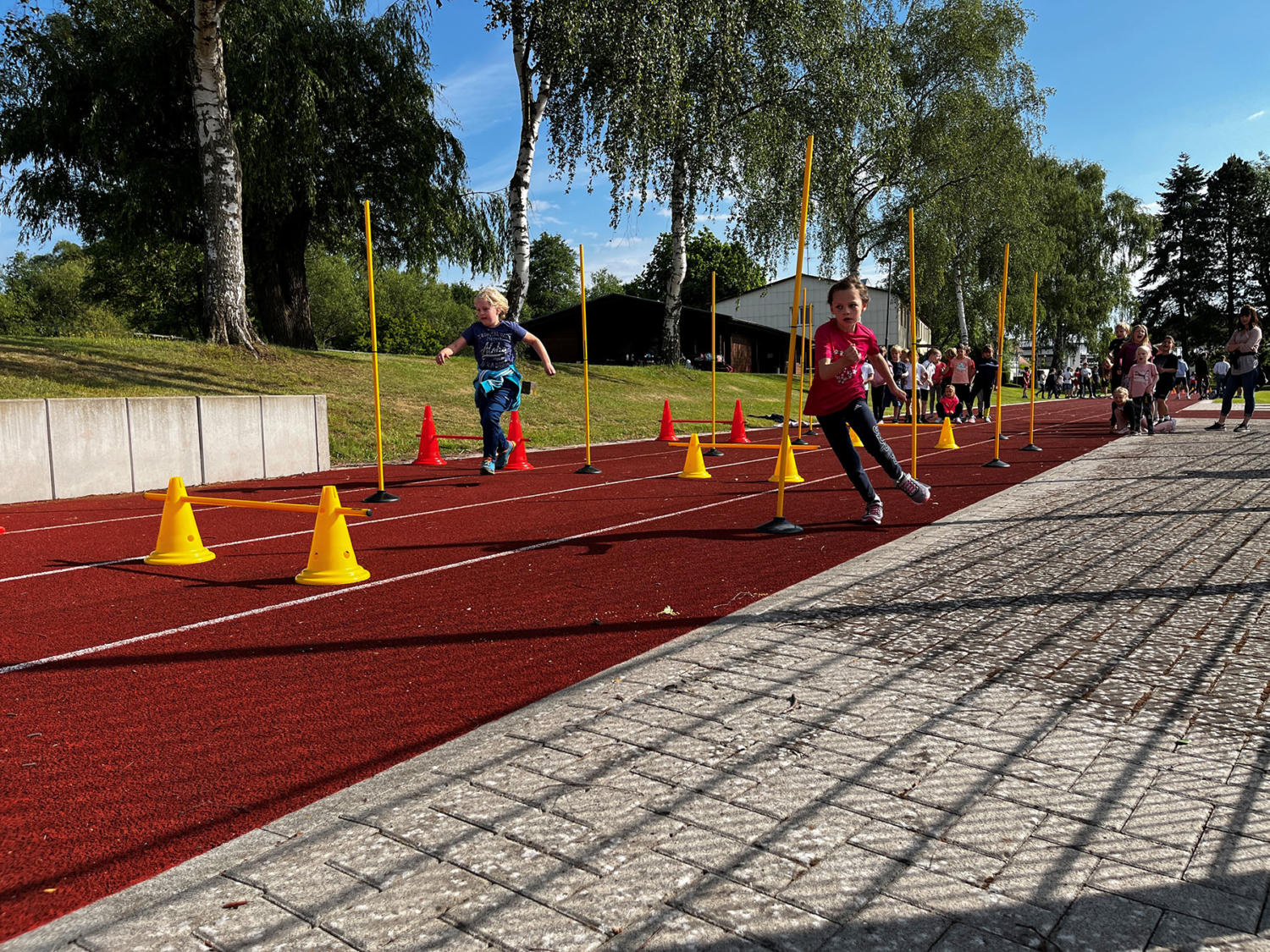
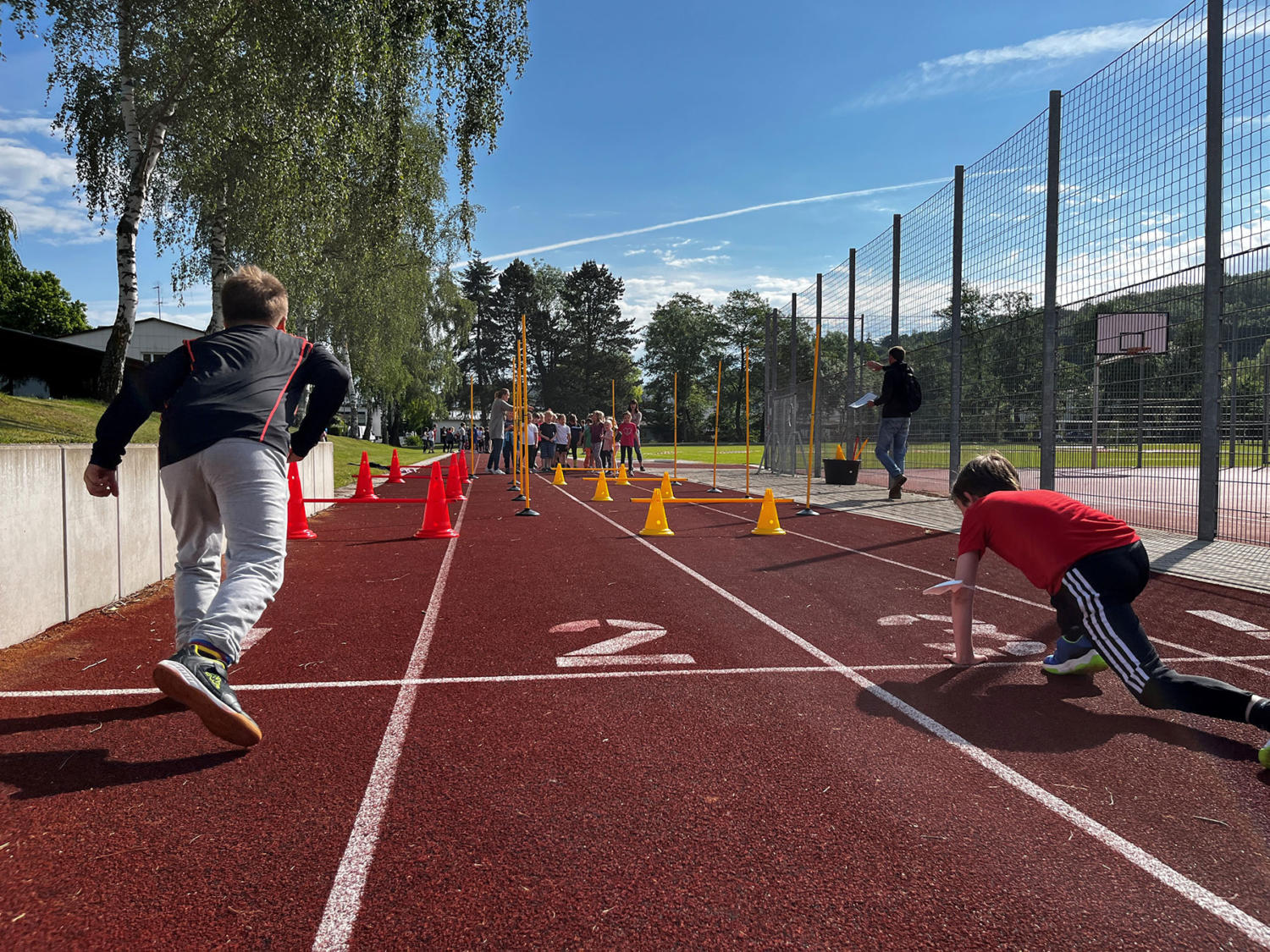
“On May 31, we attended the National Youth Games. Marcel Kalb had his 11e advanced physical education class help us prepare for the National Youth Games. They were behind the cafeteria, near the log cabin. The 11e class helped us warm up and showed us everything. We participated in four events. They showed us everything and explained everything to us. For the long jump, the 11th graders first gave us tips, and then we got started. It was a lot of fun, and the 11th graders were goofing around a lot. The ball toss is a sport where you have to throw a ball into squares numbered 1–20. Class 11e organized the ball toss and helped us understand the rules. If you didn’t hit the marked squares, you didn’t get any points. The third station was the sprint. At this station, the fourth-grade class raced against the third-grade class. We had to jump over hurdles, run a slalom course, and our times were recorded. The final event was the cross-country run. The Flexies went first. Then the fourth graders started. One of them fell over. Five minutes later, the third-grade class began. There were obstacles in the race, too.”


“I liked the race because it was fun”

Since the Federal Youth Games are set to remain a regular part of the school curriculum next year as well, third-graders were asked for their opinions for the purposes of quality assurance and “event development.” When asked, “What did you like?” they responded as follows:

  • “We liked the hurdle race and the fact that the 11e and our class cheered us on. They didn’t give up!”
  • “I liked the hurdle race because I was good.”
  • “I ended up liking the race because it was fun”
  • “The best helper for me was Sahra. Because she helped me and said, ‘You’re the sweetest first-grader.’”
  • “I liked the whole-school race because everyone was happy. I love the long jump and the hurdle race.”


“There might be more breaks to play”

The atmosphere was great, and the kids had fun. Nevertheless, there were also some critical comments from Class 3. In response to the question “What could be better next time?”, the following comments were made:

  • “There could be more breaks to play, go to the bathroom, and drink!”
  • “That the hurdles are lower for the younger kids.”
  • “Next time, I’d better make sure there’s a place to eat there!”
  • “The 11th-grade class could count better by jumping!”
  • “Next time I want more games [between each discipline] because I liked them”

In summary, it can be said that the very first Federal Youth Games at the Bilingual Elementary School fully achieved their goal of helping elementary school students discover the joy of physical activity and “competing,” but there is still room for even more progress, especially looking toward the future—or, in Tim Cook’s words:“We are proud of what we have and what we are, but there is much more to come and we can take it even further!”

—

Additional information about the report: The statements written in italics are the students’ original words. In some cases, we have made only minor grammatical changes to these statements and otherwise left them as is—in the spirit of an open culture of learning from mistakes. By the way: No one needs to worry about the fourth-grader (“One of them fell over”). He just tripped…

Marcel Kalb

The annual Kangaroo Math Competition took place on March 17. This is a multiple-choice competition in which students have 75 minutes to answer as many questions as possible correctly across three difficulty levels.

This year, an enormous number of students from grades 3 through 10 signed up. There were 95 in total.

Based on a predetermined point system, prizes 1 through 3 are awarded, as well as a prize for the “biggest kangaroo jump”—that is, the longest streak of correct answers.

The winners at Steinmühle have been announced:

  • Johannes Stroth from Class 4 for the longest kangaroo jump in elementary school
  • Anna-Lena Griesler (5c), 1st Prize
  • Philian Merle (5c), 2nd Prize
  • Liam Randau (6b), 2nd Prize
  • Johanna Rogosch (6b), 3rd Prize
  • Antonia Tapia Gehring (6b), 3rd Prize
  • Carlos Toshiro Beato del Rosal (7a), 3rd Prize
  • Teresa Dinges (7b), 2nd Prize
  • Orlando Geisel (7c), 1st Prize
  • Mathilda Lambach (9b), 2nd Prize

The Math Olympiad begins shortly after summer break with a homework round, in which students with a particular passion for math work on competition problems appropriate for their grade level and submit them to their teachers for grading. Successful completion of the problems qualifies students to participate in the second round.

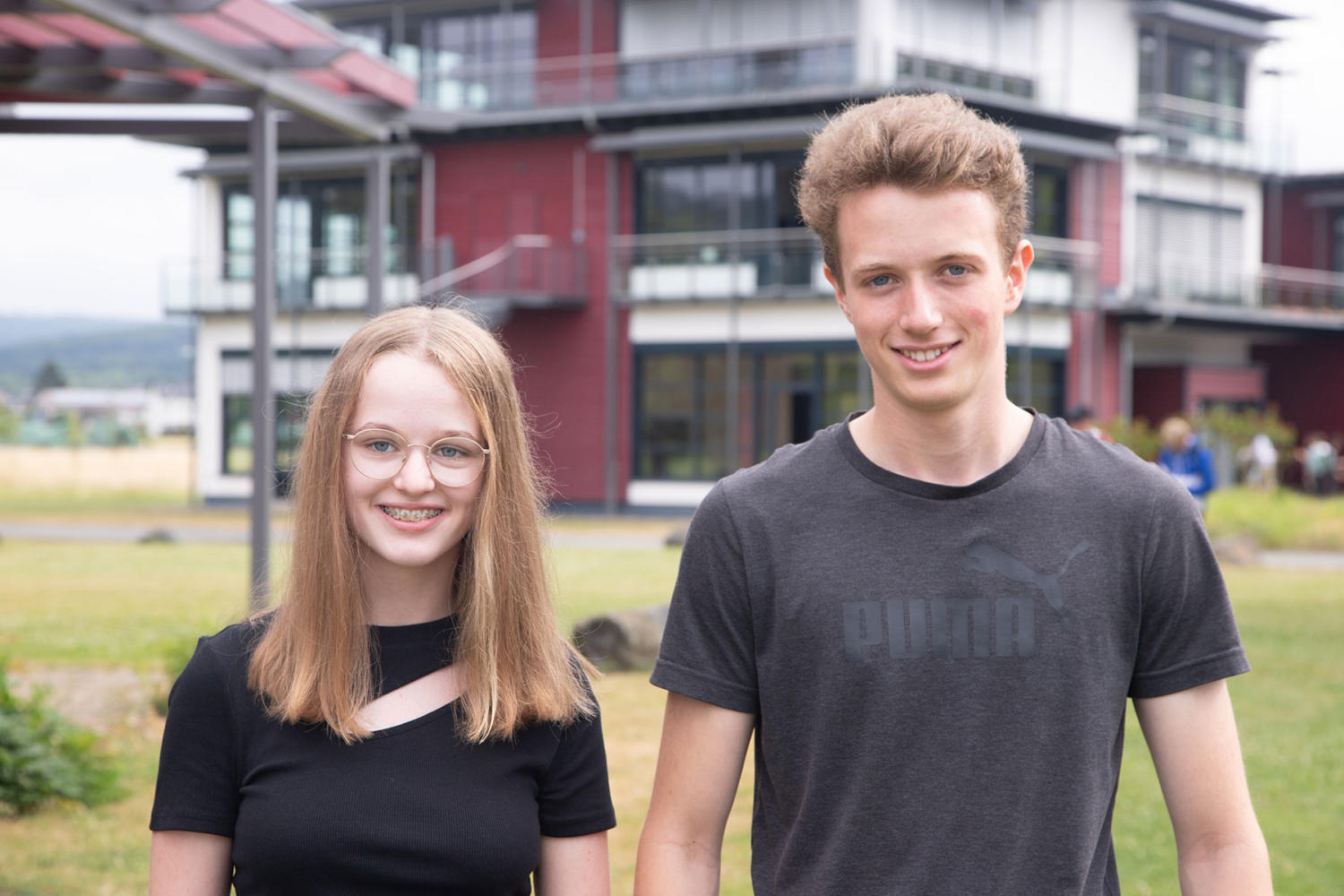
Round 2 consisted of a four-hour written exam in November 2021. Fourteen students in grades 5–12 took part in it. The top students from each grade level then qualified for the next round of the state-wide competition in Hesse. Jan Audretsch (12d) and Teresa Dinges (8b) made the cut.

In the spring, the two of them took another four-hour exam, which was submitted online. Unfortunately, a trip to Darmstadt to compete at the university where the Hessen round is usually held was once again canceled due to the coronavirus.

Jan and Theresa once again achieved great results in the Hessen Round.

Steinmühle extends its congratulations!

After two and a half years, the school celebrated together again: the Spring Festival!

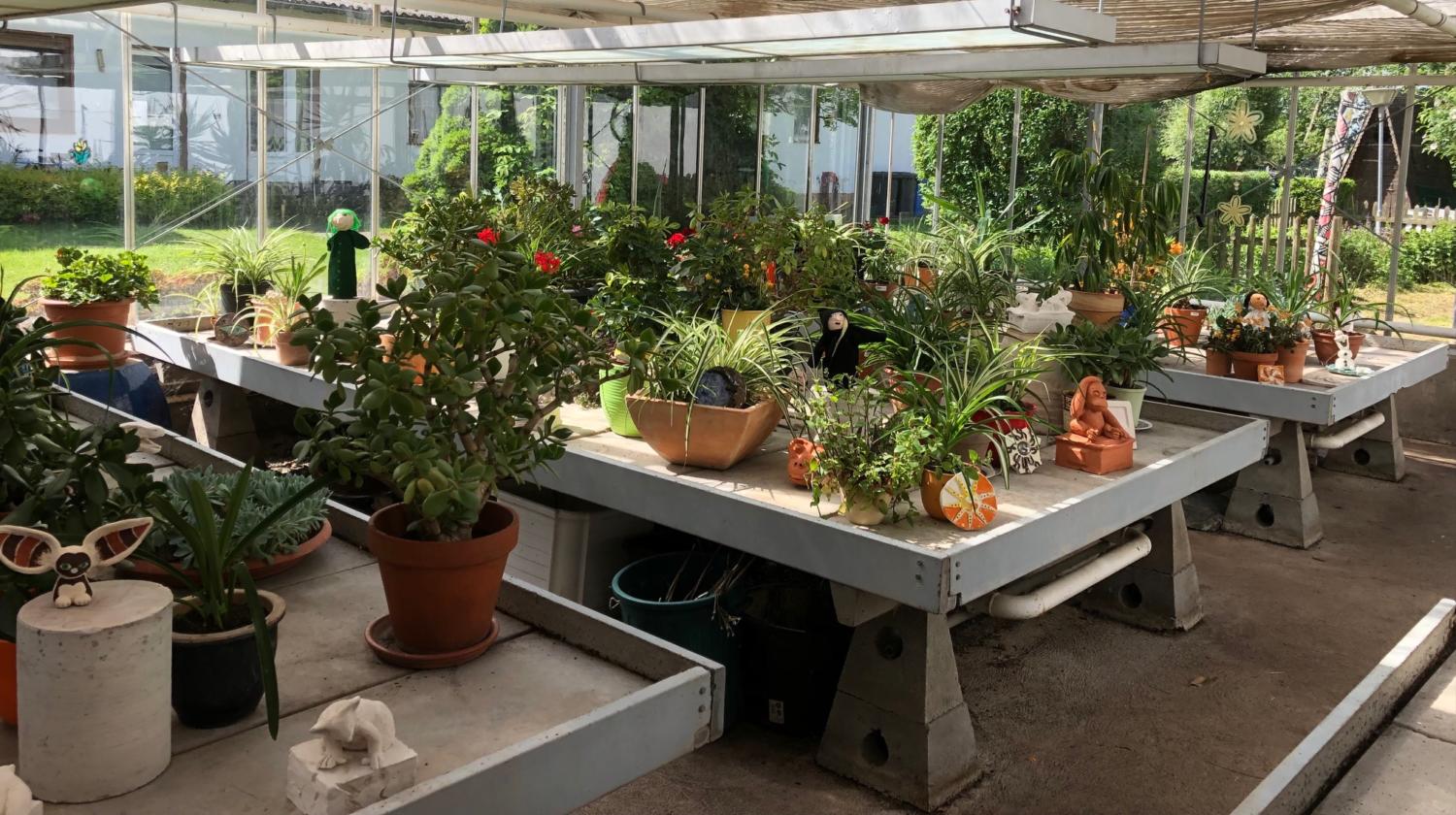
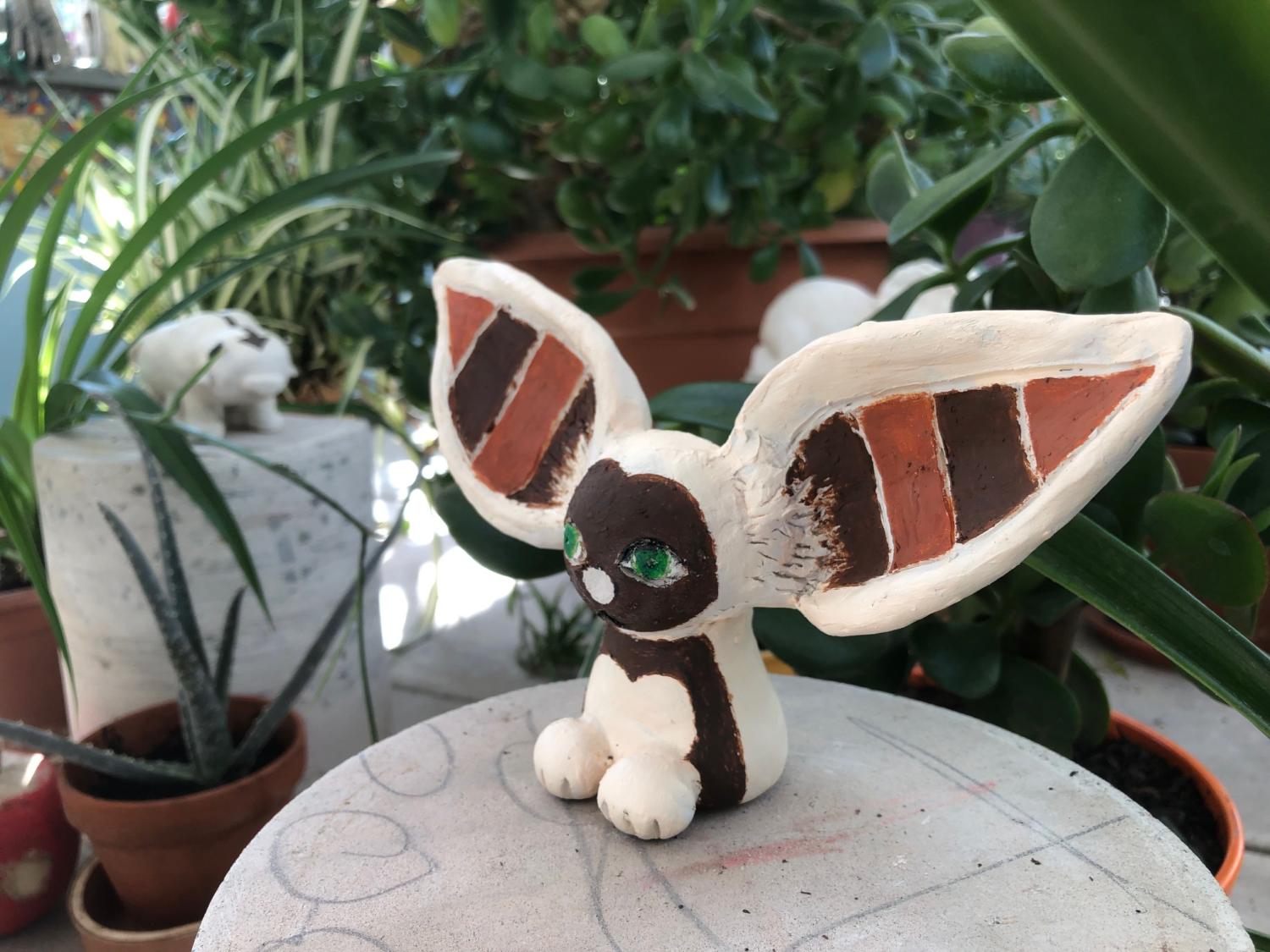
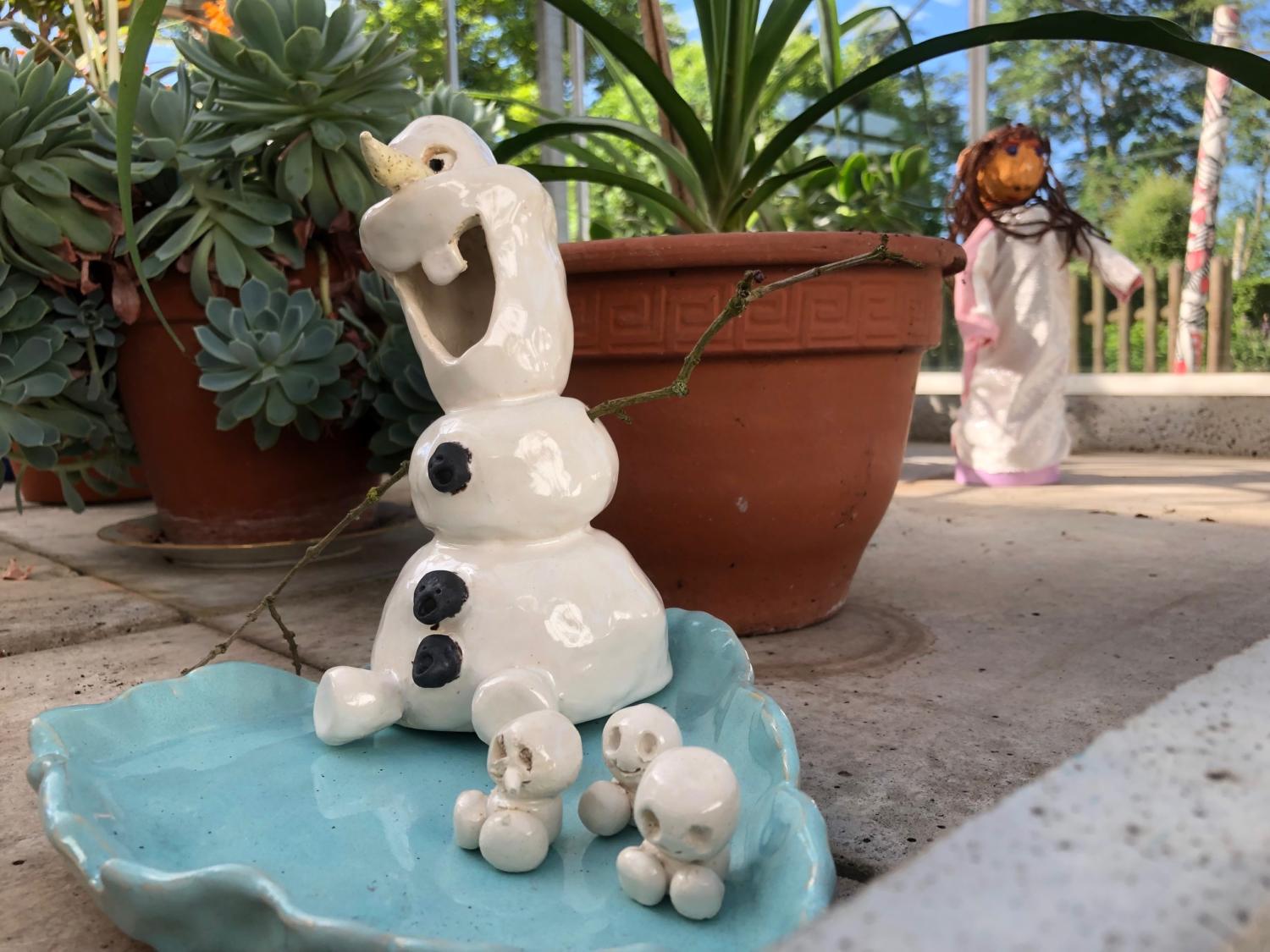
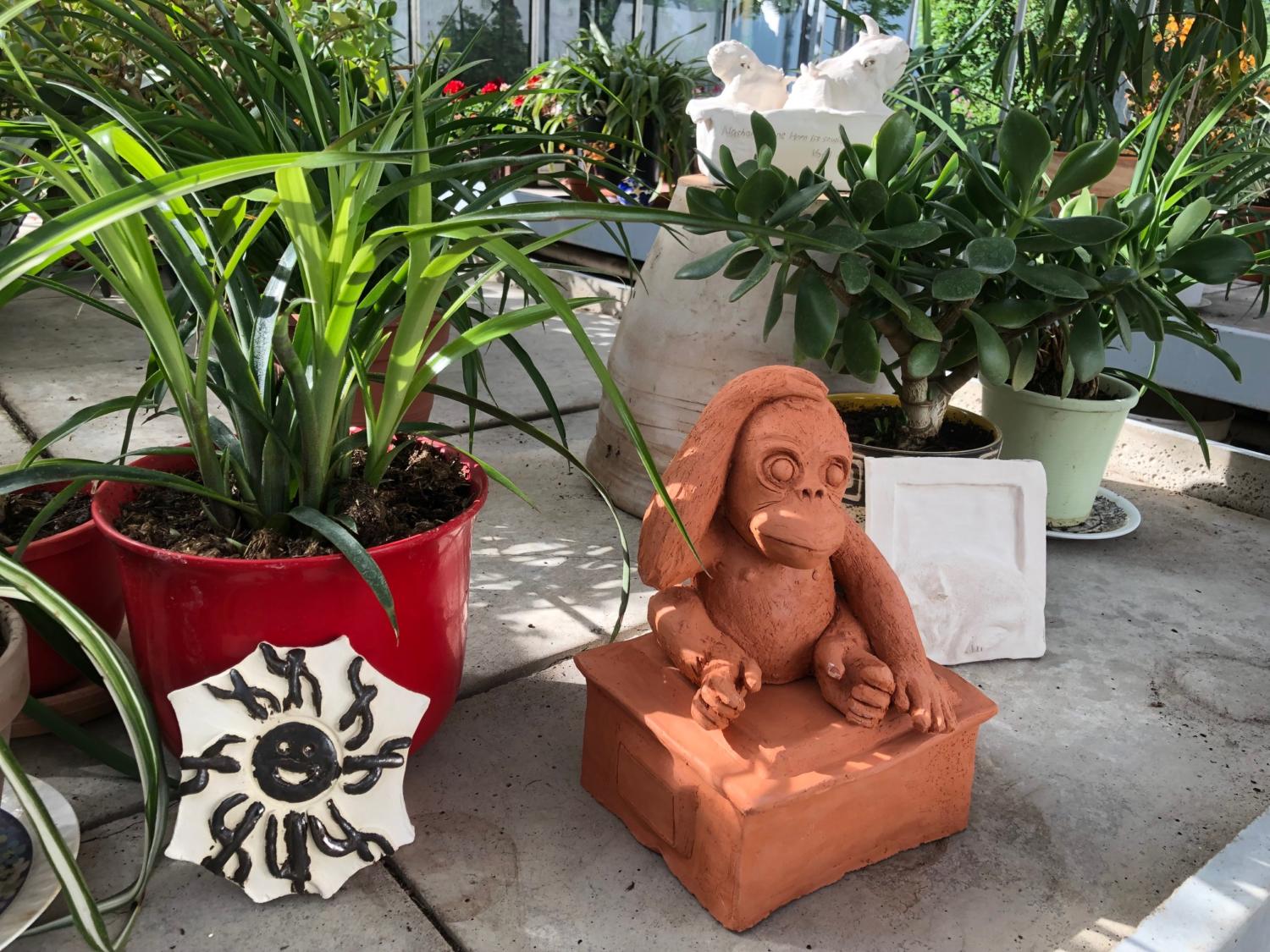
Maria Ramos and Ines Vielhaben took this as an opportunity to bring the symphony of art and nature back to life in the greenhouse and garden. So the WU “Gardening and Vegetarian Cooking” group spruced up all the plants and the rooms to create space for arranging the small sculptures and hand puppets among them.

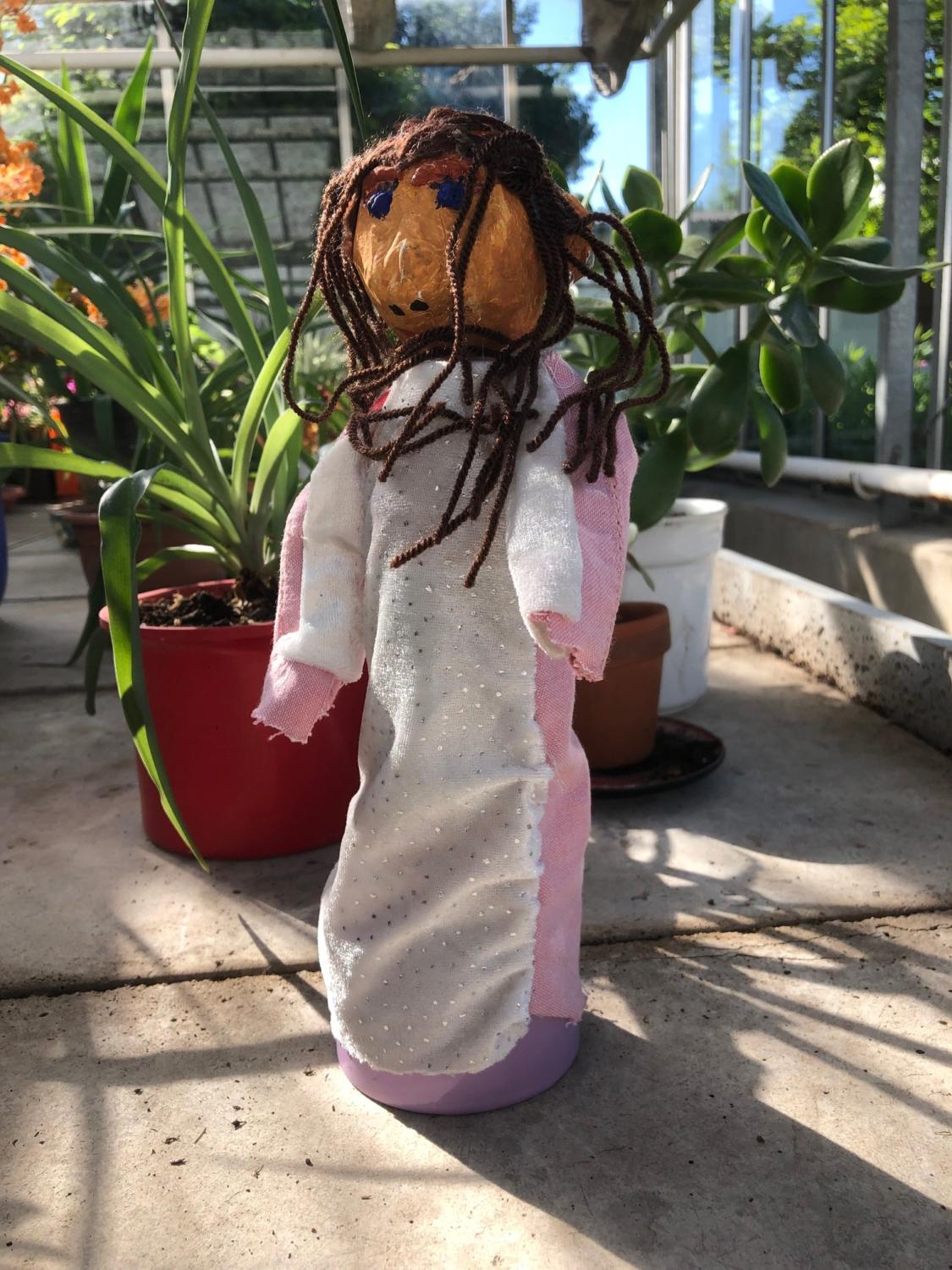
On display were a variety of hand puppets created by Heike Rabben-Martin’s (RaDo) 5th-grade classes, which caught the eye with their humorous faces and hand-sewn costumes. Class 5a, taught by Ines Vielhaben, modeled and glazed clay sun symbols inspired by sun symbols from various cultures around the world.

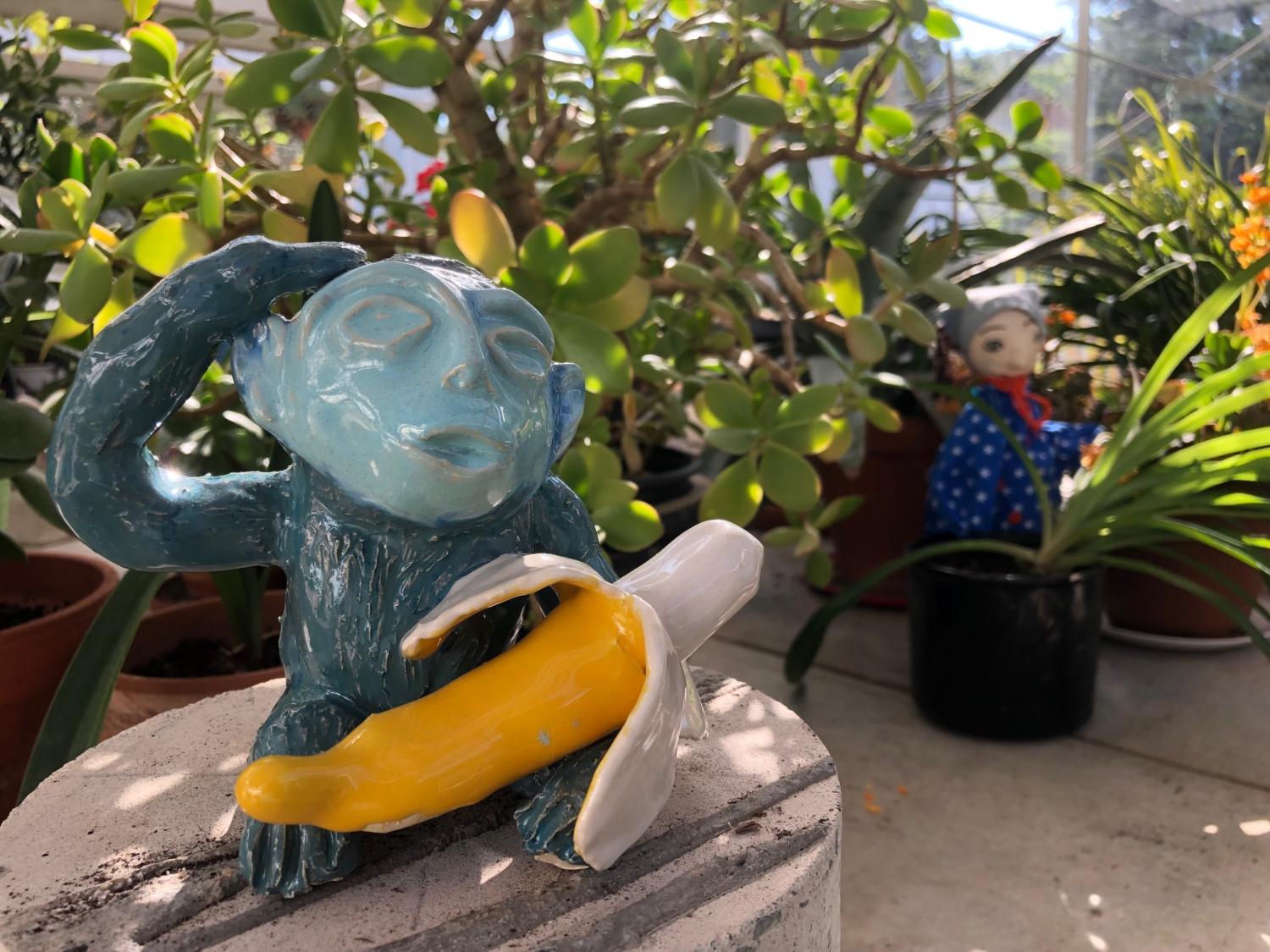
The WU 10 “Drawing and Cultural Studies” course developed small models for sculptures that could be erected or installed on the Steinmühle grounds in a way that reflects the local context. “Instead of on the cafeteria roof, the banana-eating blue monkey also looks great among the plants,” says Maria Ramos as she places the figures.

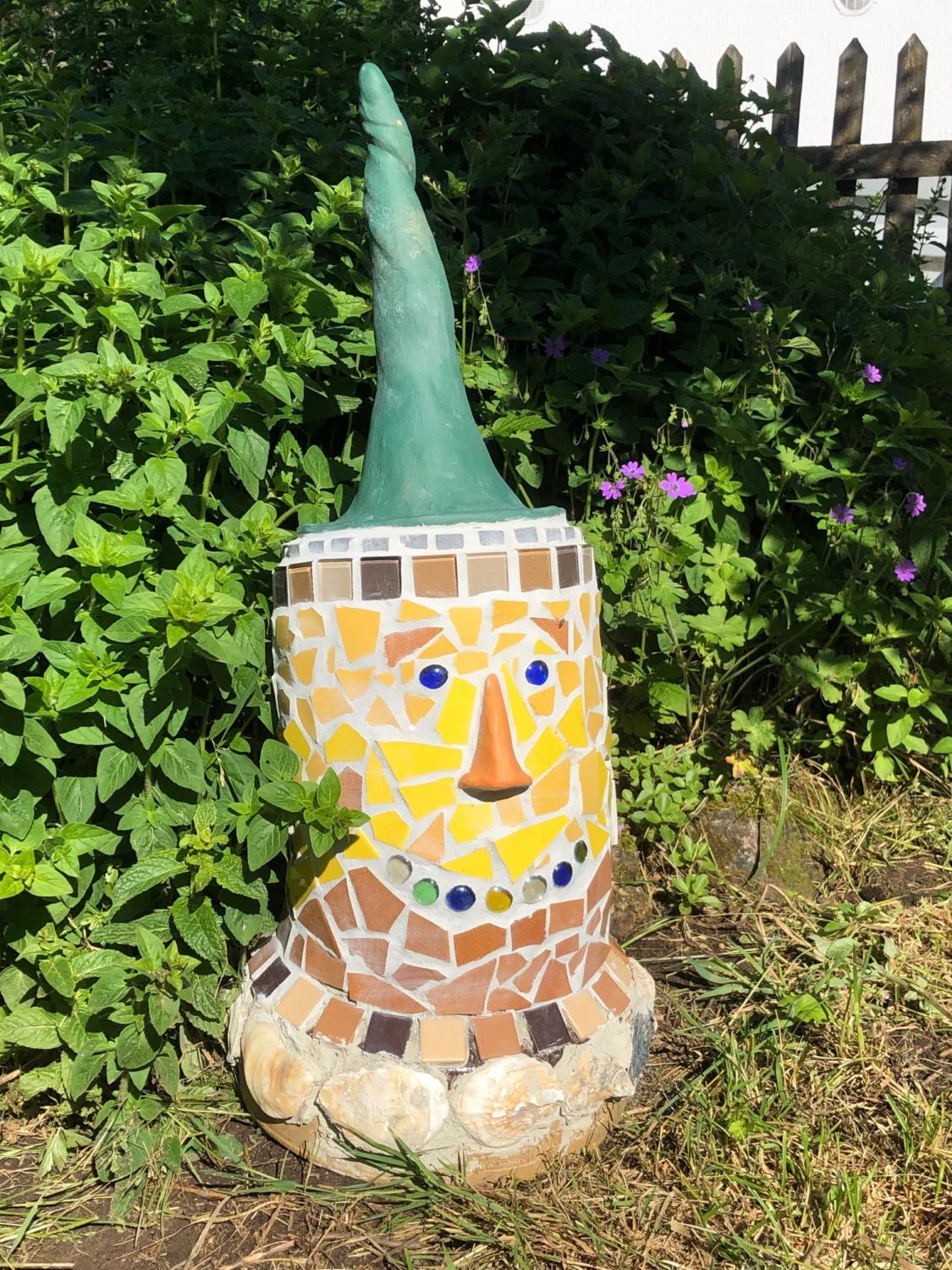
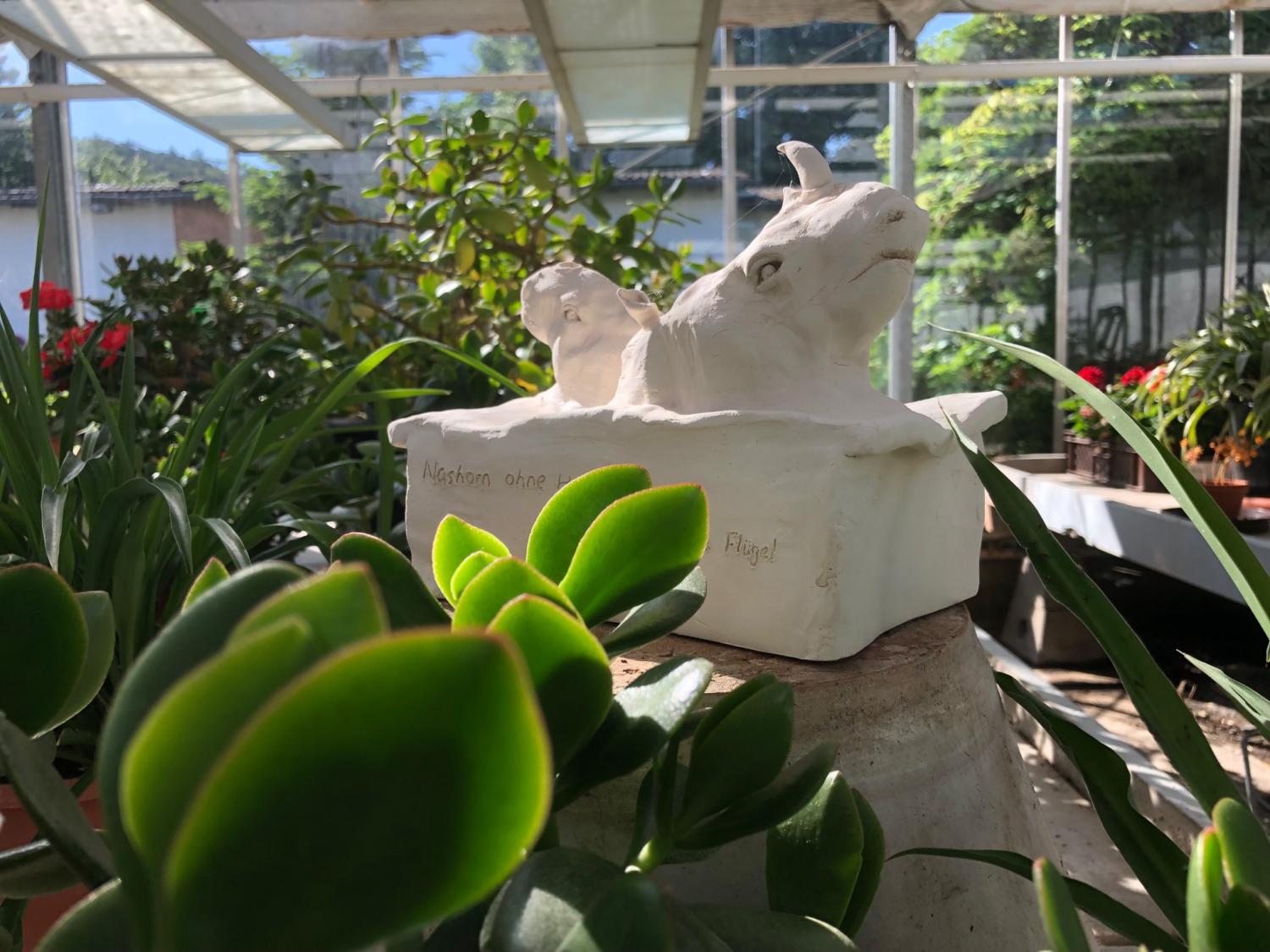
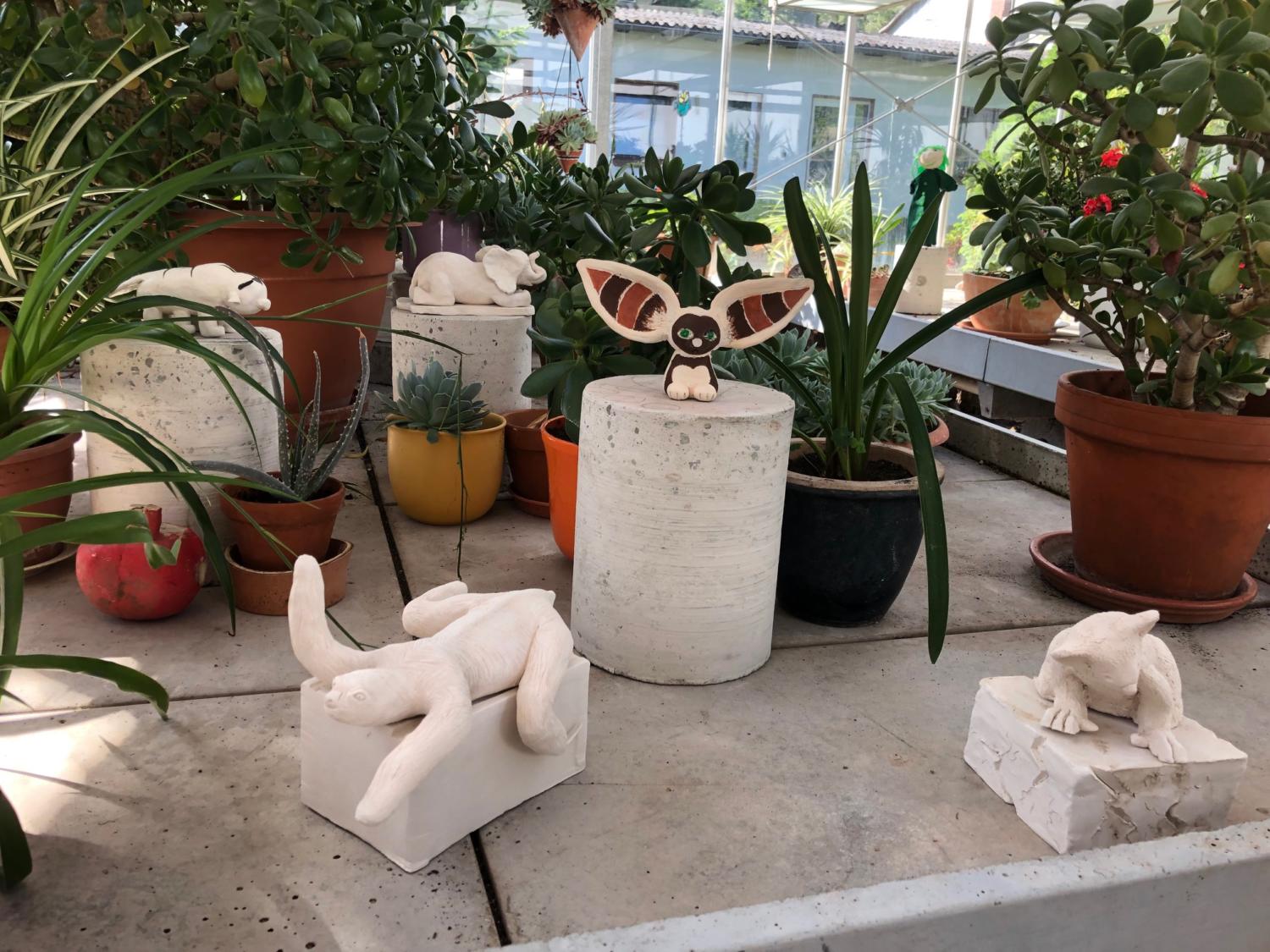
Animal figures on pedestals emerged from an in-depth exploration by Ines Vielhaben’s 11th-grade art class of occasions, motifs, and locations for monuments. When looking at the selection of animals, it is easy to see that they are endangered species that take the term “DenkMal!” literally, thereby serving as a stark reminder to protect biodiversity. Otherwise, only statues will remain to commemorate these animals.

Thanks to the variety of chalk drawings in the schoolyard, students repeatedly found their way to this hidden gem at the Steinmühle during the spring festival, stepping away from the hustle and bustle of the festivities.

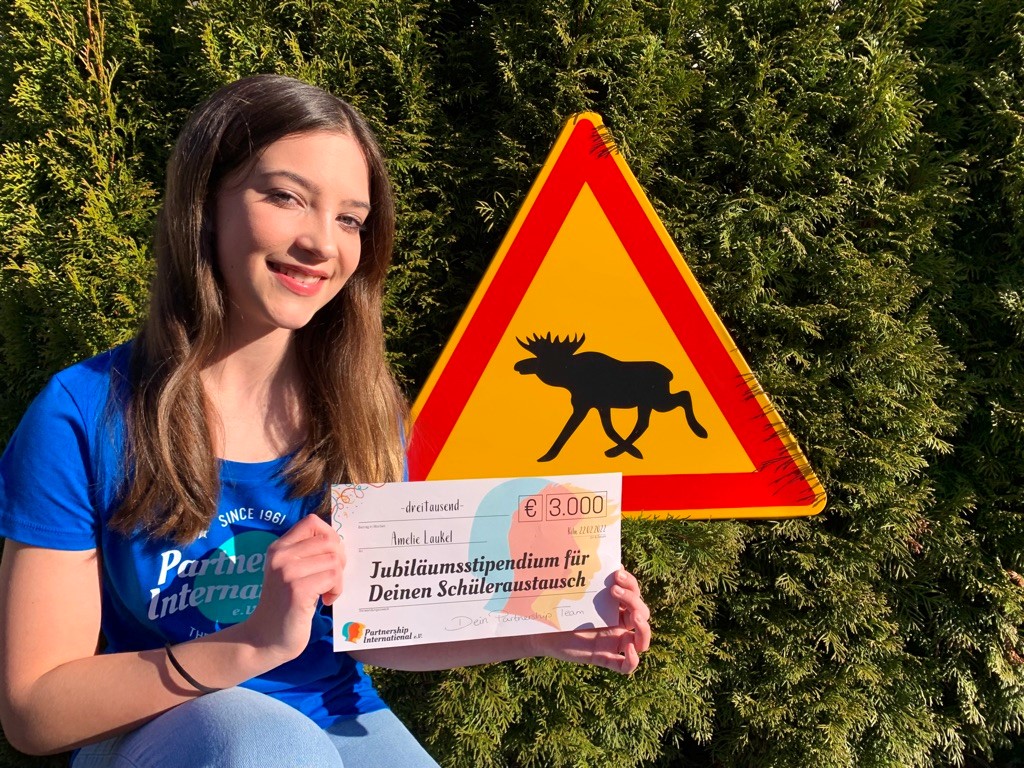
Amelie Laukel (9a) Receives a Scholarship for Her Stay

It worked out great: Amelie Laukel, a student at Steinmühle School, beat out 240 other applicants in the competition for a scholarship to study abroad in Canada. This marks the fulfillment of a big dream for the 14-year-old.

The student exchange program begins at the end of August. It is made possible by Partnership International e.V. The Cologne-based organization is supporting the student with one of the coveted anniversary scholarships that Partnership International awarded to mark the organization’s 60th anniversary.

Amelie is really looking forward to her time in Canada: “What appeals to me about Canada, aside from its impressive and, in some places, still untouched nature, is the openness and tolerance of Canadians. They’re also known for being incredibly friendly and multicultural. I think it will be easy for me to make connections and find friends there.”

To ensure that Amelie is well-prepared for her adventure, she and other exchange students underwent extensive preparation during a seminar lasting several days. The organization Partnership International e.V. places great importance on personal contact and thorough preparation for the students, as both are crucial to a successful student exchange.

The association (www.partnership.de) has set itself the goal of enabling as many students as possible to participate in an intercultural exchange. To that end, it awards partial scholarships to its program participants each school year. Students can currently apply for scholarships for exchanges beginning in the summer of 2023. In addition to Canada, the United States, Ireland, and England are also available as exchange destinations.

Photo: Amelie (9a) attended a preparatory seminar for her stay abroad and is delighted to have received her scholarship.

A regular feature of life and shared experiences at Steinmühle Boarding School took place in May: All students were spread out across seven differently structured experiential education trips throughout Germany.

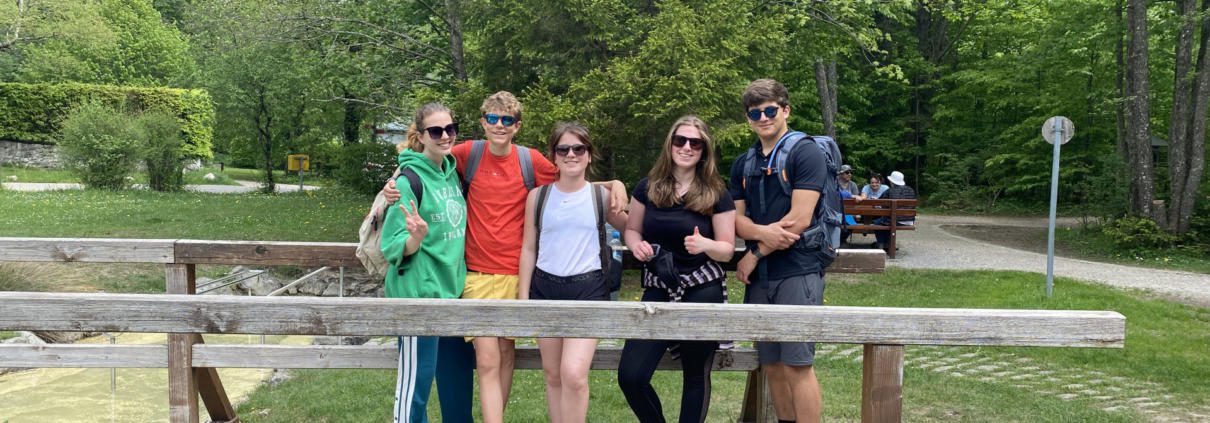
Community, sports, and new experiences were at the heart of the trips. The students were able to burn off some energy during the canoe trip on the Diemel, at the climbing park, on a bike tour around the Vogelsberg, or while hiking in the Allgäu, while the groups at Lake Edersee, Nieder Moser See, or Hennesee focused more on exploring nature and sharing communal experiences while camping in the great outdoors.

Sleeping in tipis and petting raccoons at Hennesee

The teepees were already set up, so the group was able to start a cozy barbecue right away that evening after arriving. The basketball-loving participants on this trip rounded out the evening with a game against a school class from Bielefeld. Since basketball is currently one of the most popular sports at Steinmühle, it was no surprise that the boys and girls won the game.

Since it still got quite chilly at night at Hennesee, the students gathered wood on their own to heat the teepees from the inside.

On Saturday, the group traveled to Bilstein to visit a stalactite cave. These millennia-old natural formations never fail to impress, but the students found true joy in the adjacent nature park: there, they had the chance to hold hands with raccoons. Feeding the deer and getting up close with the animals was especially exciting for them.

“The biggest highlight of the weekend was definitely the campfire gatherings every evening,” says educator Ben Zriki happily. “The conversations around the campfire definitely gave the children and us educators the chance to get to know each other in a different way than we do during the daily routine at boarding school.” As an intercultural highlight, student Alex entertained the group for an hour around the campfire as he sang along at the top of his lungs to songs from his home country.

Reaching New Heights in the Tree Climbing Adventure Park

Group camping under the trees right on the shores of the crystal-clear Heider Bergsee near Brühl: Here, another tour group was able to enjoy nature up close.

Right at the start of their stay, the small group worked together to overcome one of their biggest challenges: setting up tents. Most of the students were new to camping, so they explored the different ways to set up their tents together so that they could play Werewolf in the evening, relaxing comfortably around the campfire while roasting marshmallows.

The highlight of the field trip was the visit to the climbing park: The mission here was to overcome their fear of heights and climb trees up to 13 meters high. The students cheered each other on and encouraged one another. “It was wonderful to see how, thanks to their shared motivation, every student was able to successfully complete the climbing course,” reports teacher Philipp Dönges with satisfaction.

Cycling Toward Vogelsberg

Early Friday afternoon, we set off by bike along the Lahn Valley Bike Trail toward Vogelsberg. After the first 30 kilometers, upon arriving in Gießen, they continued their journey by train. They used the train ride to rest and recharge before the group cycled another 30 kilometers along the beautiful Vulkanradweg through the low mountain range landscape of Vogelsberg and Wetterau. Riding toward the sunset, they headed to Nieder Mooser See, where another group from the Steinmühle boarding school—who had already set up their tents after cycling nearly 60 kilometers—welcomed them.On Saturday, the cycling group left their bikes behind and hiked together up to the Hoherodskopf. On Sunday morning, everyone was back on their bikes, heading toward the boarding school grounds. With perfect cycling weather, they were able to enjoy the beautiful natural scenery of the Vogelsberg and the Lahn Valley once again.
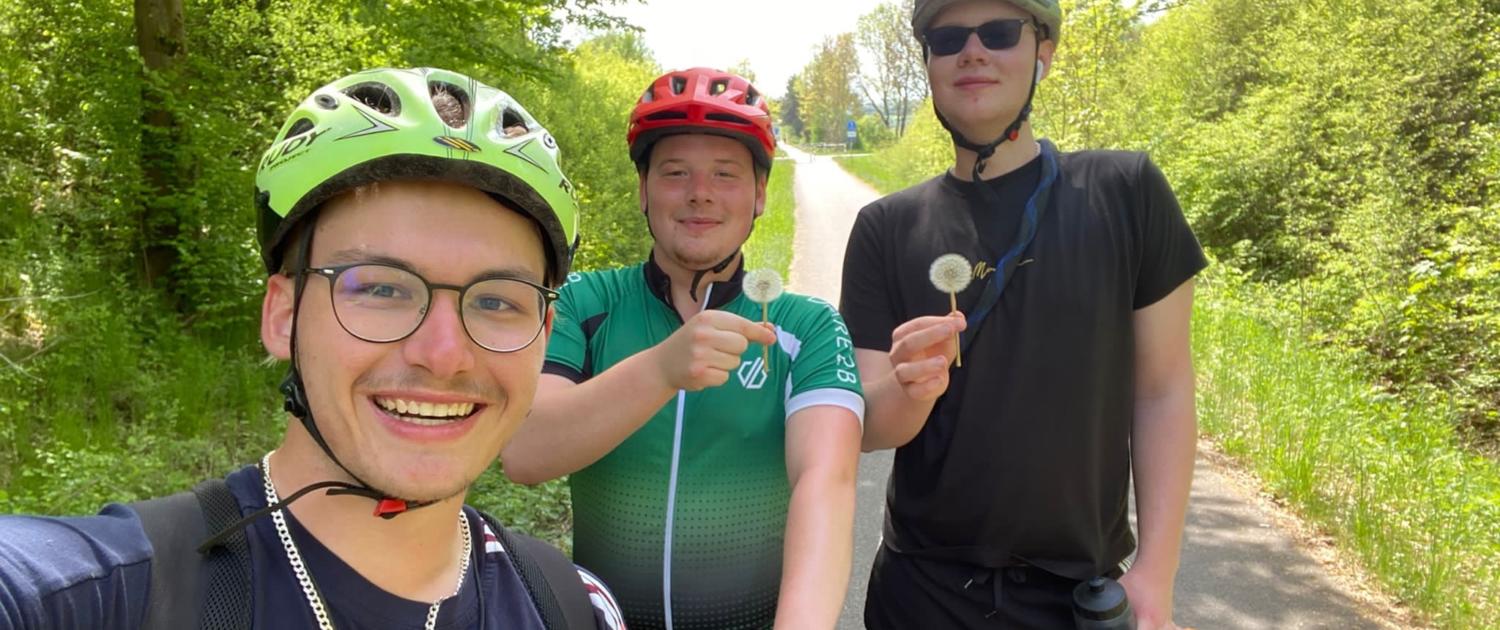
 

Summer tobogganing at Lake Nieder Moser

Those who didn’t want to bike but still wanted to enjoy their visit to the Hoherodskopf traveled by car. This group set up the tents for the biking group in advance and welcomed them to the barbecue buffet. The night turned out to be surprisingly cold here at Nieder Moser Lake as well, which is why some students slipped into the restrooms during the night to warm up.

On Saturday, after everyone had enjoyed some hearty and especially delicious rolls, we took a ride on the summer toboggan run and went for a long walk through the beautiful Vogelsberg countryside, taking in the impressively sweeping views of the surrounding area.

Those who had warmed up again then let off some steam by swimming in the lake or stand-up paddling.

Lake Eder: Camping at a Hidden Gem in Northern Hesse

In the idyllic setting of this life of simplicity, the camping group could easily forget the comforts of everyday life. Thus, the absence of showers, electricity, running water, and cell phone reception was a completely new and fundamental experience for the entire group. A digital detox, water rations, and “modified” personal hygiene gave the participants a new perspective on the luxuries of everyday life that are otherwise taken for granted. “It’s always amazingly wonderful to see just how happy the students can be even without media,” said educator Nils Schwandt after the trip.
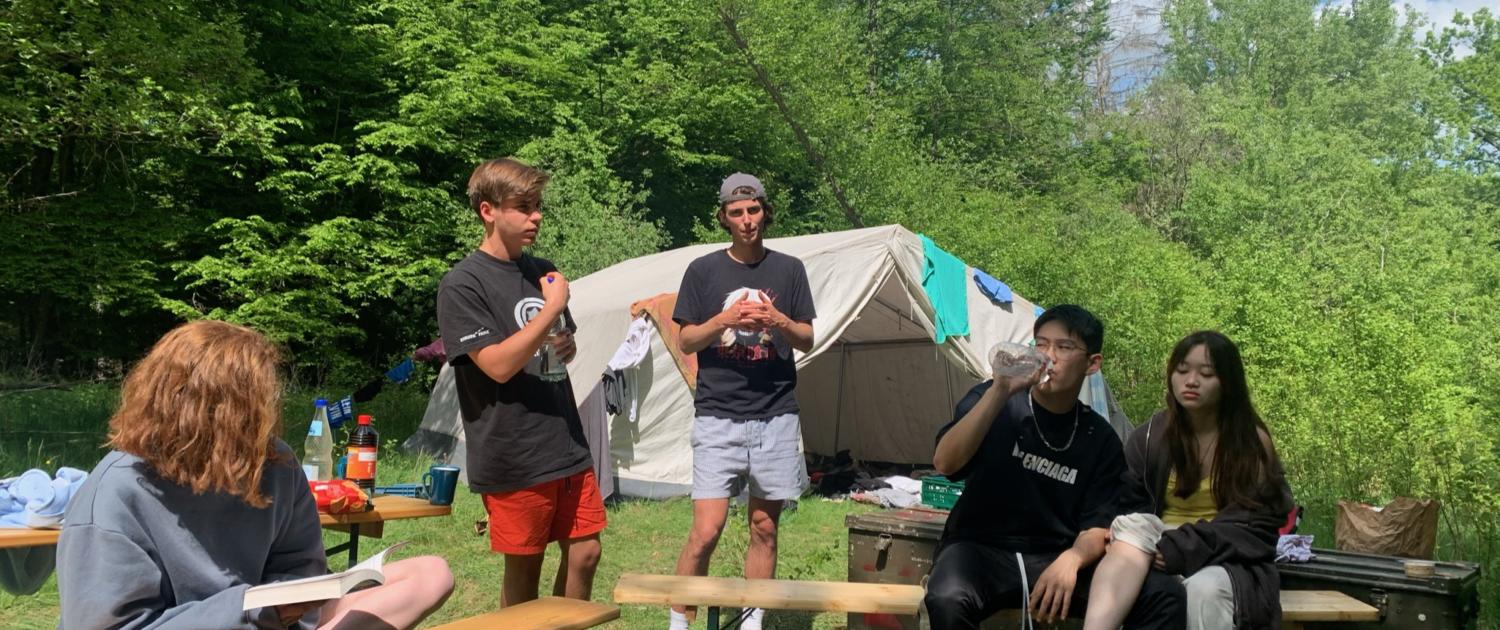
In a climate that was almost Mediterranean, the young people were able to be kids again and let their minds wander while playing tag. Numerous encounters with wild animals, both small and large—from spiders to snails and snakes—did nothing to dampen the group’s spirits. Culinary delights also helped take their minds off their everyday worries.

Canoe Trip on the Diemel

The canoeing group set out from the Hofgut in Stammen on the Diemel River and paddled all the way to Bad Karlshafen, where the Diemel flows into the Weser. After six hours of paddling on the first day, quite a few of the novice canoeists in the group took full advantage of the river’s width and thoroughly explored the bushes along the banks. During the lunch break, the young canoeists received further instructions on how to paddle successfully.

On the second day on the water, the canoeing group was confronted with wild rapids. “Only one canoe was briefly turned into a submarine,” educator Philipp Rumpel reported with a laugh. However, the group worked together to bring the boat safely to shore and helped bail out the water.

Since our arms were getting tired by the end of the weekend, we rewarded ourselves for the successful trip and the thorough cleaning of the boats with a big ice cream on the way back.

Hiking Around Neuschwanstein Castle

The last group of travelers had planned a hiking trip in the Allgäu. Nine students wanted to take on the physical challenge of the Allgäu Alps. “I’m curious to see if I can do it, but I’m also motivated!” said student Emilia upon arrival, gazing at the mountain scenery.

On the first day, the enthusiastic students hiked from their lodging across the Salober Alm—with a view of Lake Weißensee—all the way to Füssen. There, they took a break at the impressive Lech Falls before exploring Füssen’s old town. Sticking to the shore of the Weißensee on the way back, the hiking group arrived back at their vacation homes exhausted but happy after a 20-kilometer hike.

On Sunday, the hikers woke up to bright sunshine. The starting point for the day’s hike was right at Neuschwanstein Castle. But the tour of the castle wasn’t scheduled until the following day. Today began with a steep climb, but it also offered a breathtaking view of Neuschwanstein Castle and the surrounding lakes. “Unbelievable—I never would have thought at the start that I could do it, but then suddenly you’re standing at the top and can be so proud of yourself!” said student Emilia happily.

At the Tegelbergkopf, the hiking group took another break to refuel before climbing together to the Ahornspitze at 1,784 meters. “It’s just so beautiful here—this view, this silence, and this nature!” exclaimed student Friederike enthusiastically.

Returning past the castle with one last beautiful evening view, the hiking group reached the vacation homes exhausted but happy after climbing 1,100 meters in elevation. Teacher Francine Olschewski cooked a meal as a reward for the athletic and persevering group. After the guided tour of the opulent Neuschwanstein Castle, the hikers set off on their journey home on Monday afternoon as the last group from the Steinmühle boarding school—exhausted but also relaxed.

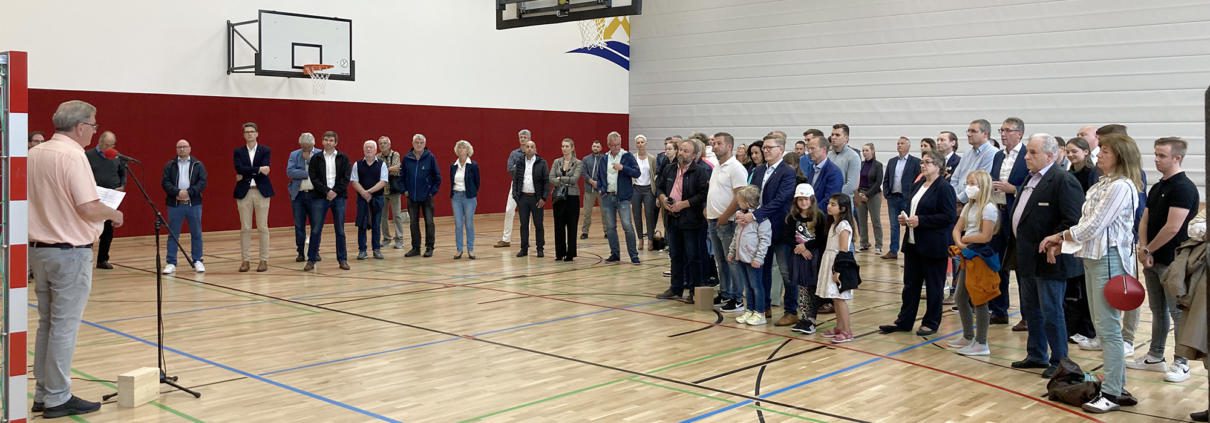
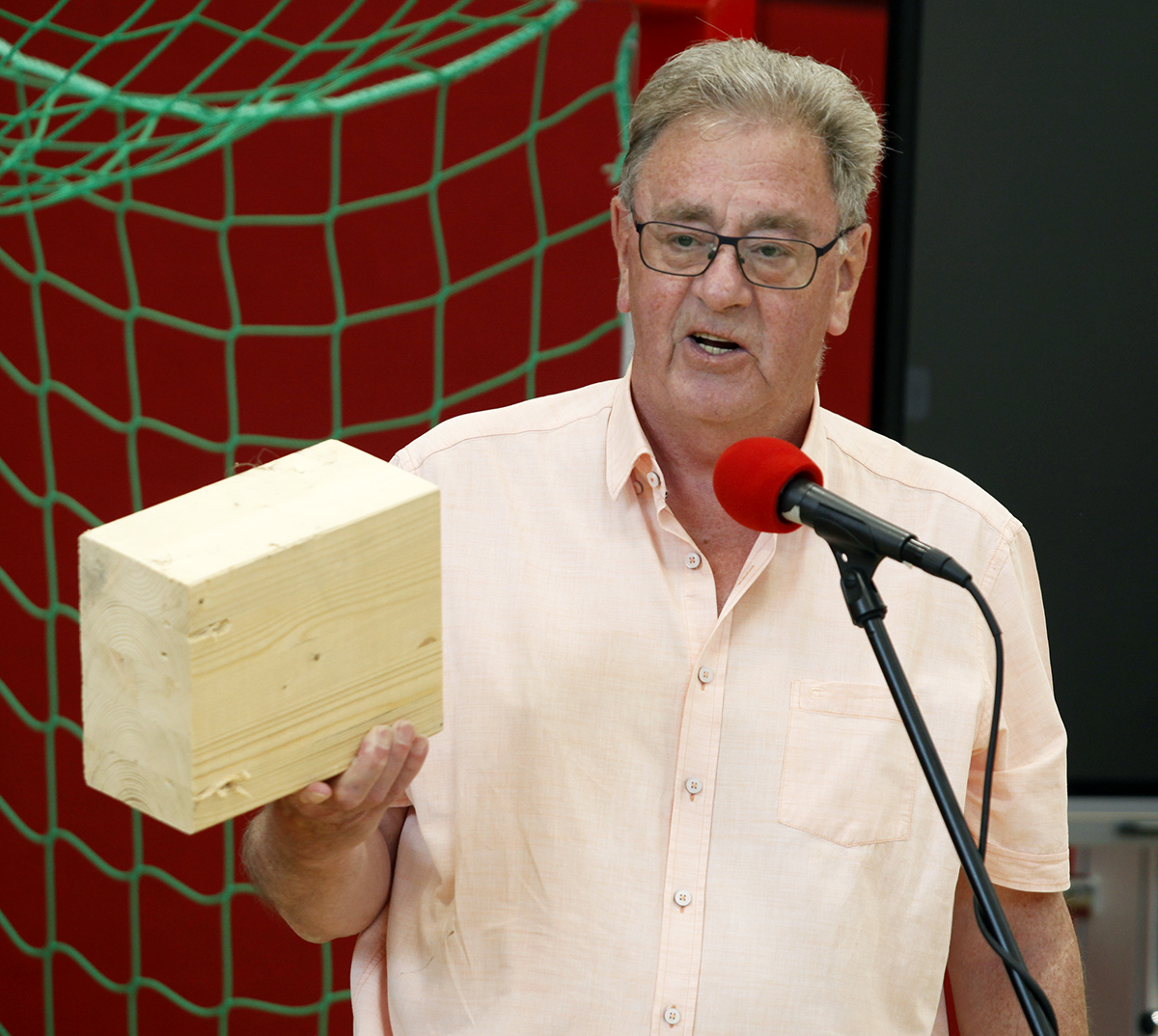
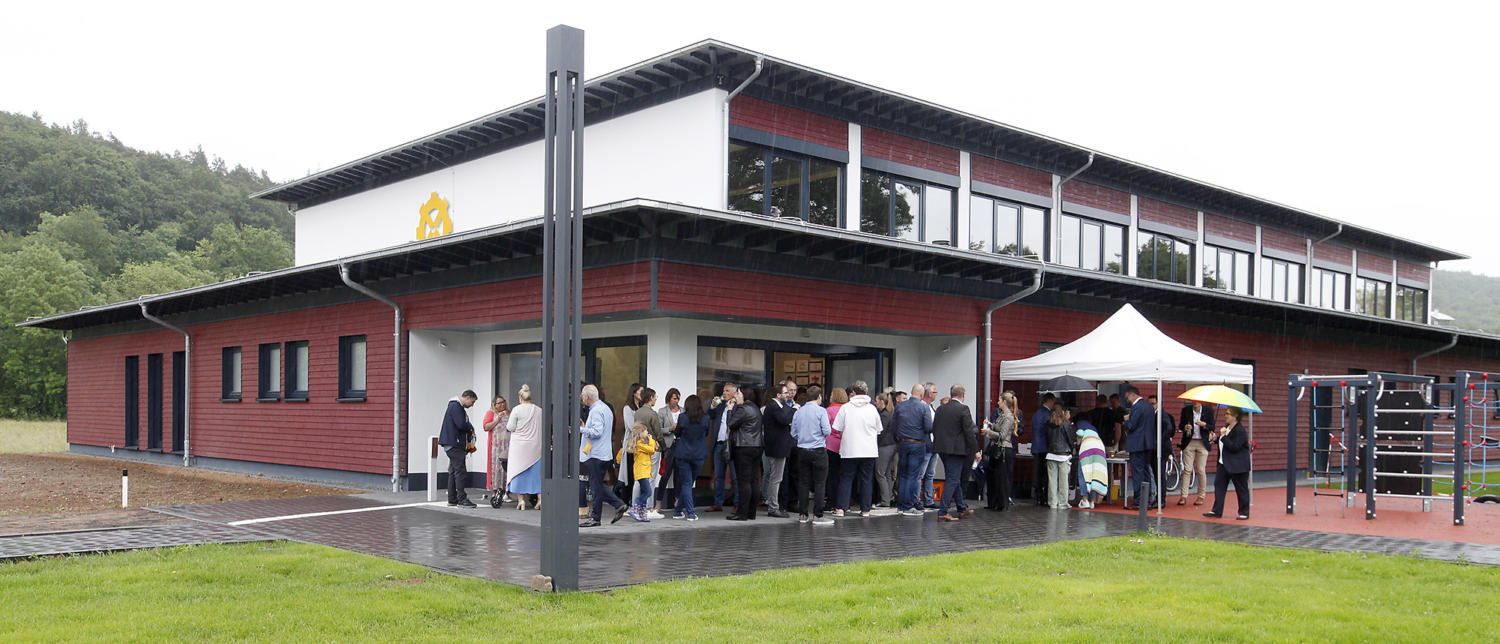
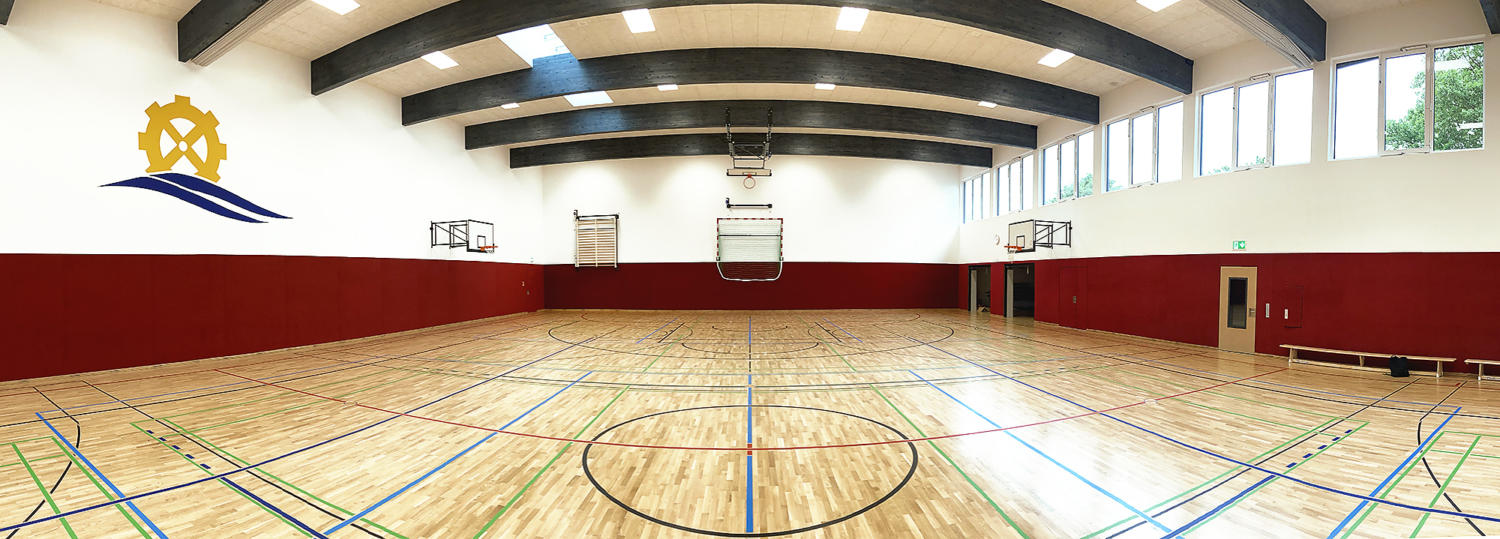
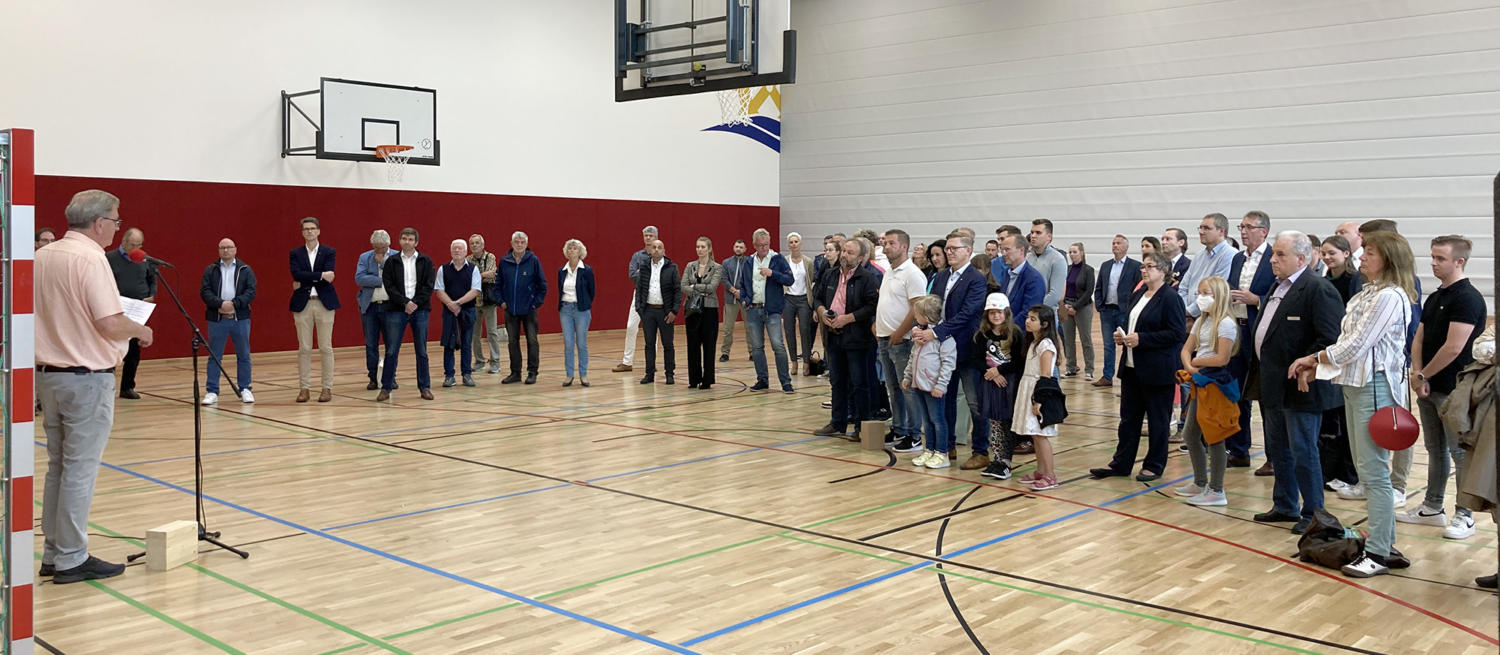
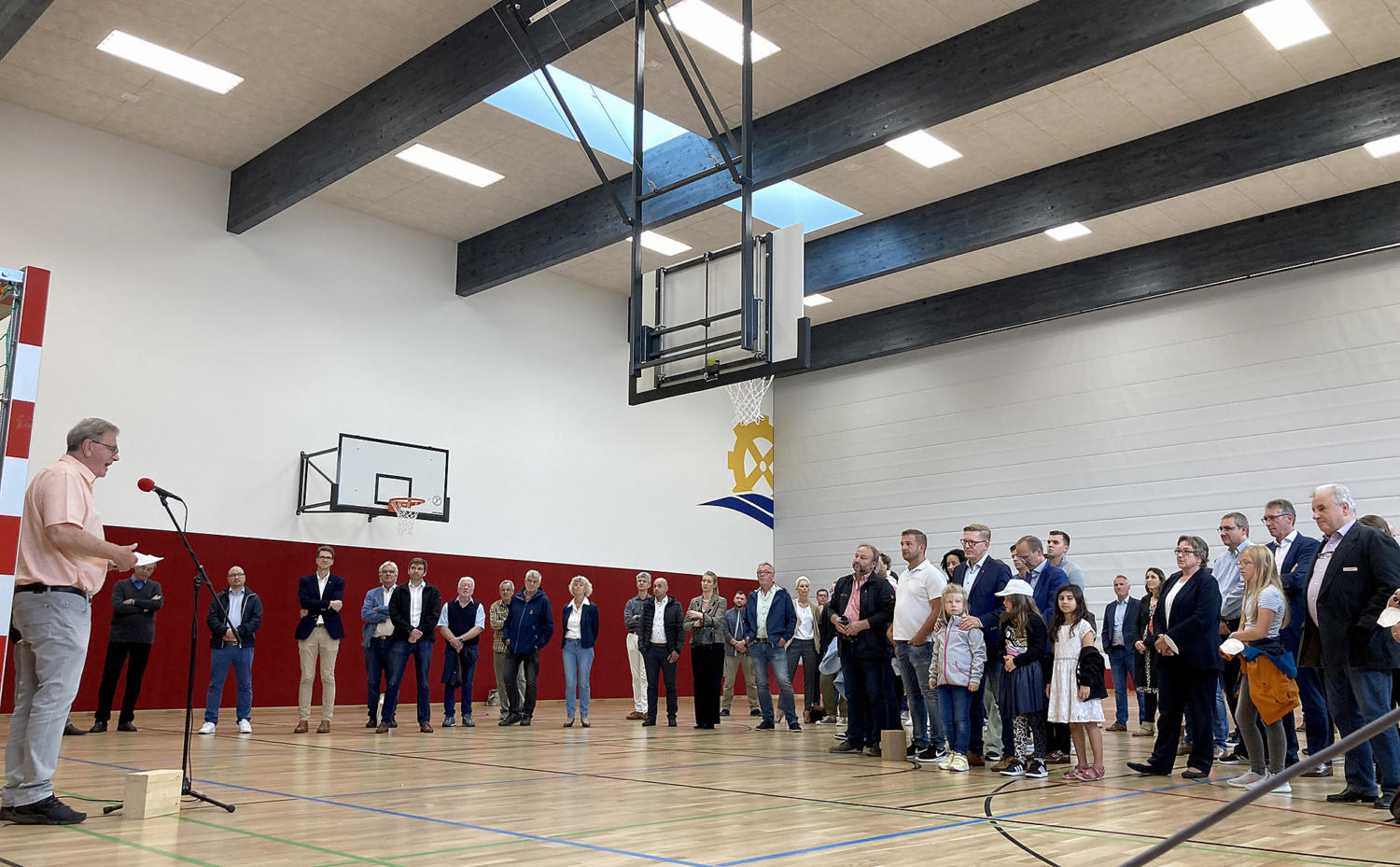
Late yesterday afternoon, about 100 invited guests celebrated the opening of the new sports hall. Egon Vaupel, chairman of the board of the Steinmühle Marburg e.V. school association, welcomed and thanked everyone involved in the construction as well as all supporters; site manager Jochen Schröder provided the key facts about the project; and Claus Duncker, managing director of BLISTA, spoke about the long-standing and successful partnership between Steinmühle and BLISTA, and prominent political figures (City Councilwoman Kirsten Dinnebier, State Parliament Representative Dirk Bamberger, and District Deputy Klaus Weber) congratulated Steinmühle on the new gym.

The celebration finally came to a close in a relaxed atmosphere outdoors, with bratwurst and cold drinks, despite the rainy weather, and plenty of pleasant conversation. (A more detailed report will follow shortly.)

Highly Qualified Teamwork in the Language of Science

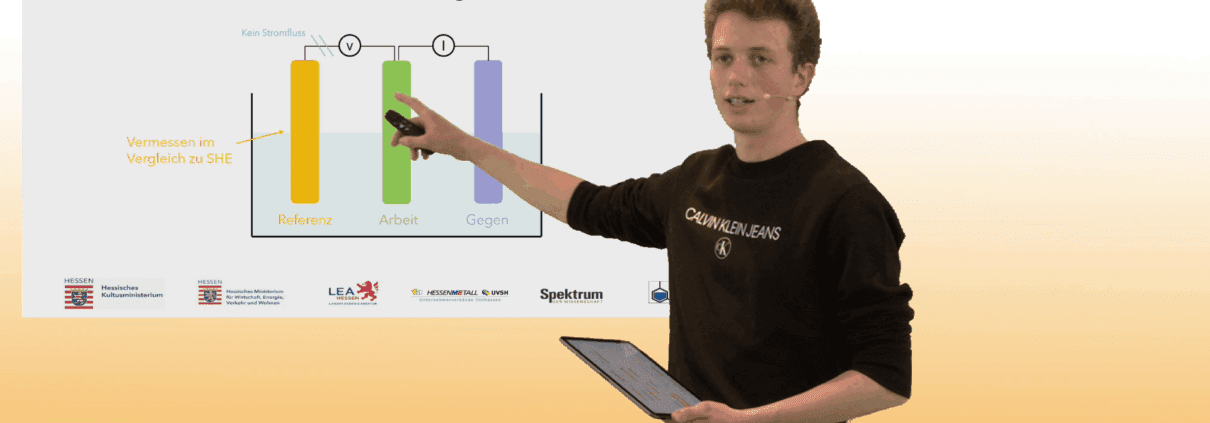
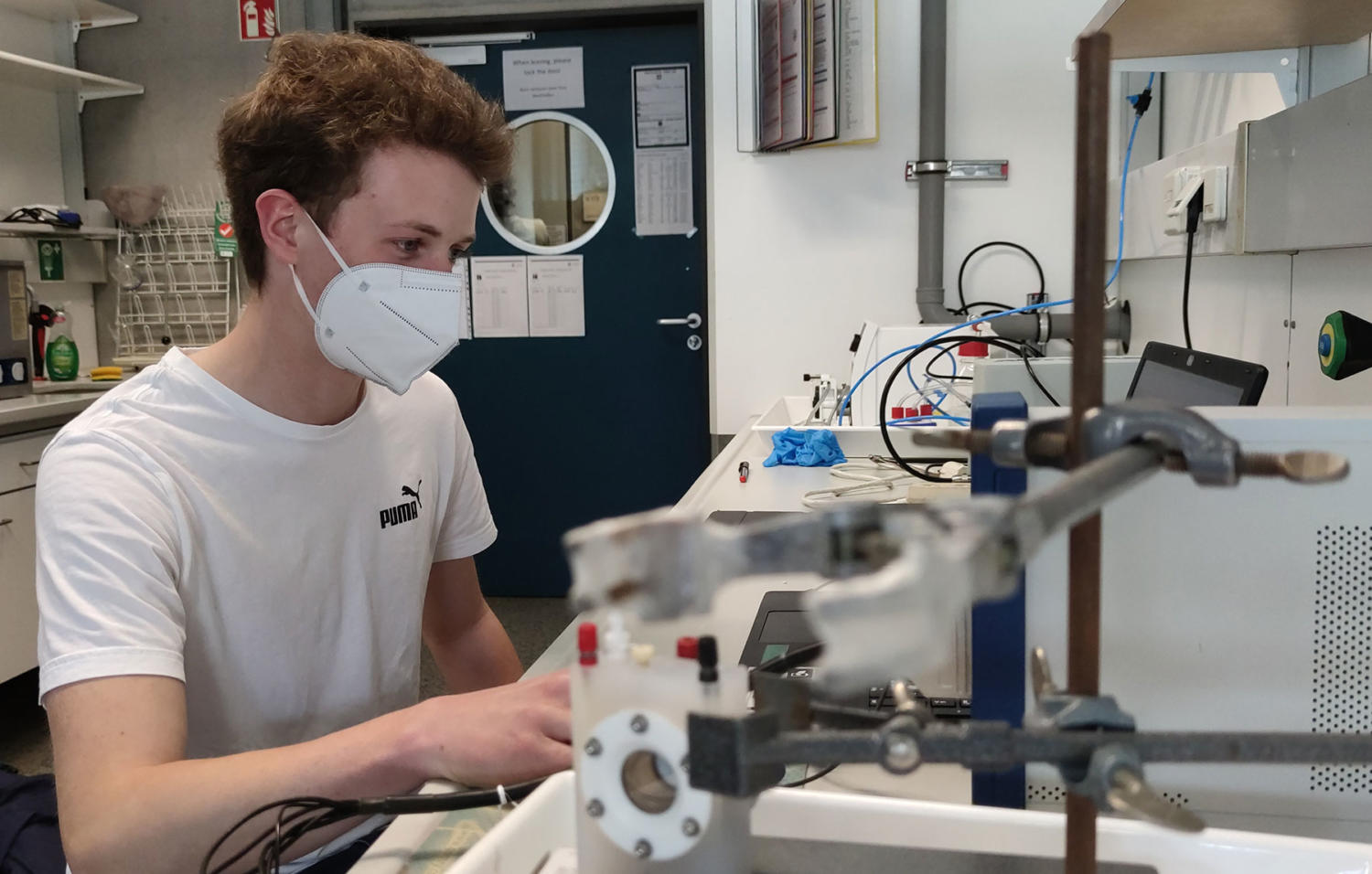
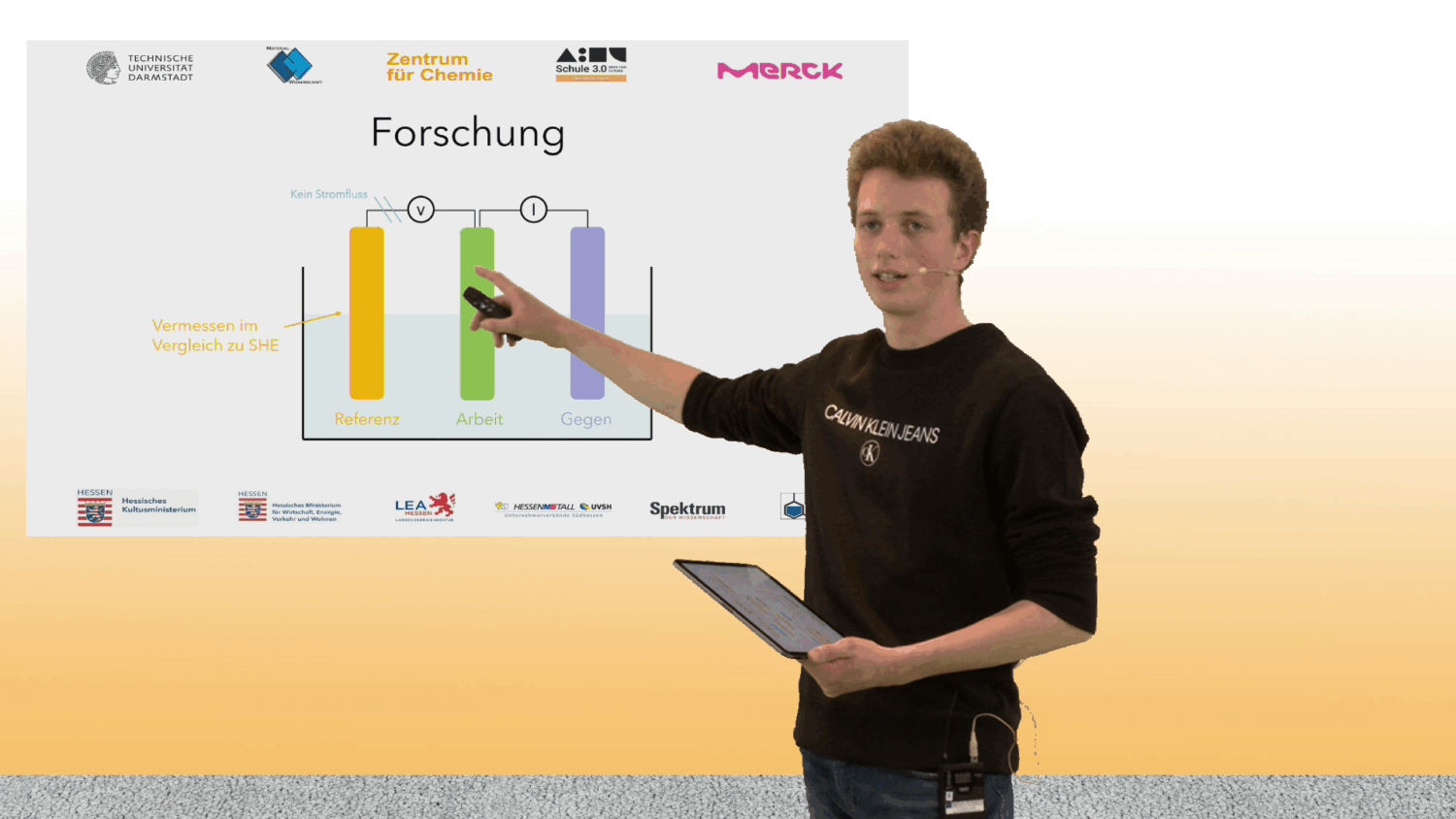
“Unfortunately, technology and invention aren’t school subjects.” — That’s not just the view of the vice president of the Technical University of Darmstadt (TUD), Prof. Dr. Jens Schneider. The Steinmühle school administration and Dr. Jutta Töhl-Borsdorf, the school’s STEM coordinator, also have their eyes on one or two male and female students who might be interested in such a subject. Currently, the Inventor Lab in Darmstadt offers interested and talented students a platform each year to engage in dialogue with scientists from the Institute of Materials Science at TU Darmstadt. This year, Jan Audretsch from Steinmühle was there and conducted research as part of a team focused on the energy transition.

It’s teamwork at the highest level. “A total of 16 exceptional students from all over Hesse took part again this year to conduct experiments in a professional setting and then present their findings clearly to a wider audience.” – This statement from the press release illustrates the level at which the team of young researchers was operating. “We urgently need the next generation of researchers,” say the experts.

The closing ceremony took place virtually once again. But even on the online stage, according to reports, everyone looked great. The closing ceremony was streamed.
“Youth Shapes the Future”—that was roughly the working title of the event. It focused on sustainable solutions, alternative technologies, and innovative concepts for the world of tomorrow.


Insights into research beyond the daily school routine

“Ms. Töhl-Borsdorf asked me if I was interested and registered me accordingly,” says Jan Audretsch, describing how he came to participate in the prestigious event. “Afterward, I received all the further details by email from the Center for Chemistry. I worked on the topic ‘Hydrogen vs. Batteries,’” says the young scientist. The other groups conducted research on the topics ‘Cooling with Magnets,’ ‘Can Solar Cells Clean Themselves?,’ and ‘The Battery of the Future.’ All results had to be explained in a 10-minute presentation tailored to a high school audience.

“I think the basic concept behind the Inventors’ Lab is really great and exciting,” Jan Audretsch says, reflecting on his participation. “The opportunity was very valuable to me—it allowed me to step away from my everyday school routine and gain insights into research at the university.”

On a personal level, the high school senior has confirmed his desire to pursue a degree in the natural sciences. But Jan Audretsch says it’s still too early to make a decision: “I don’t know exactly what yet.”