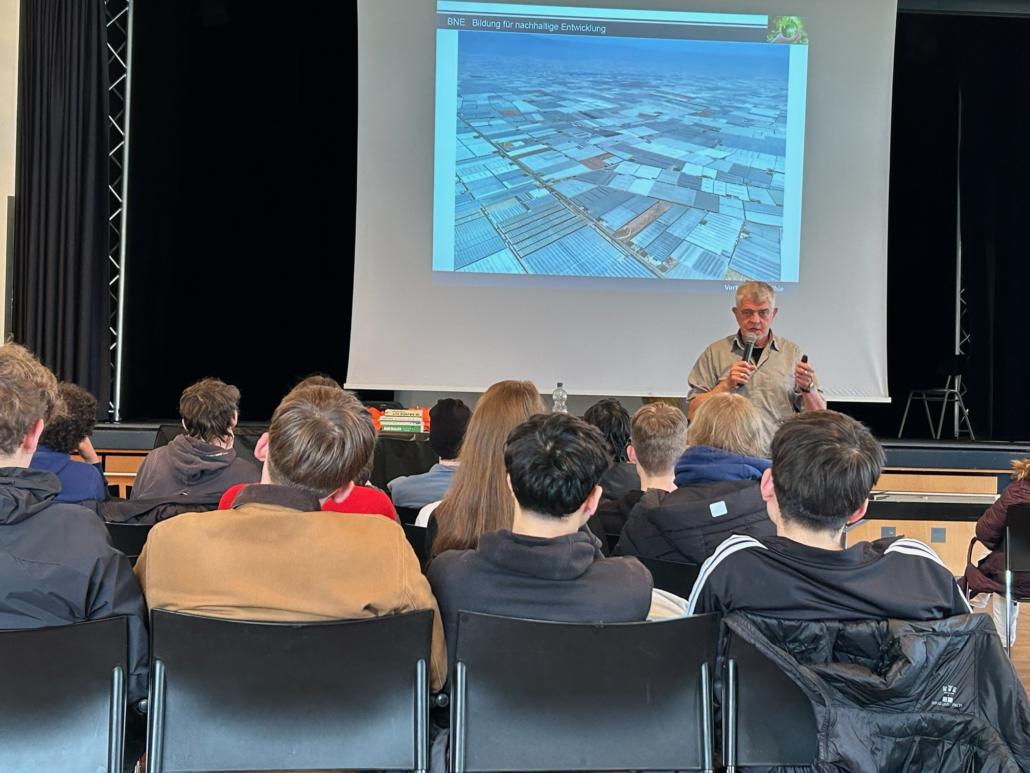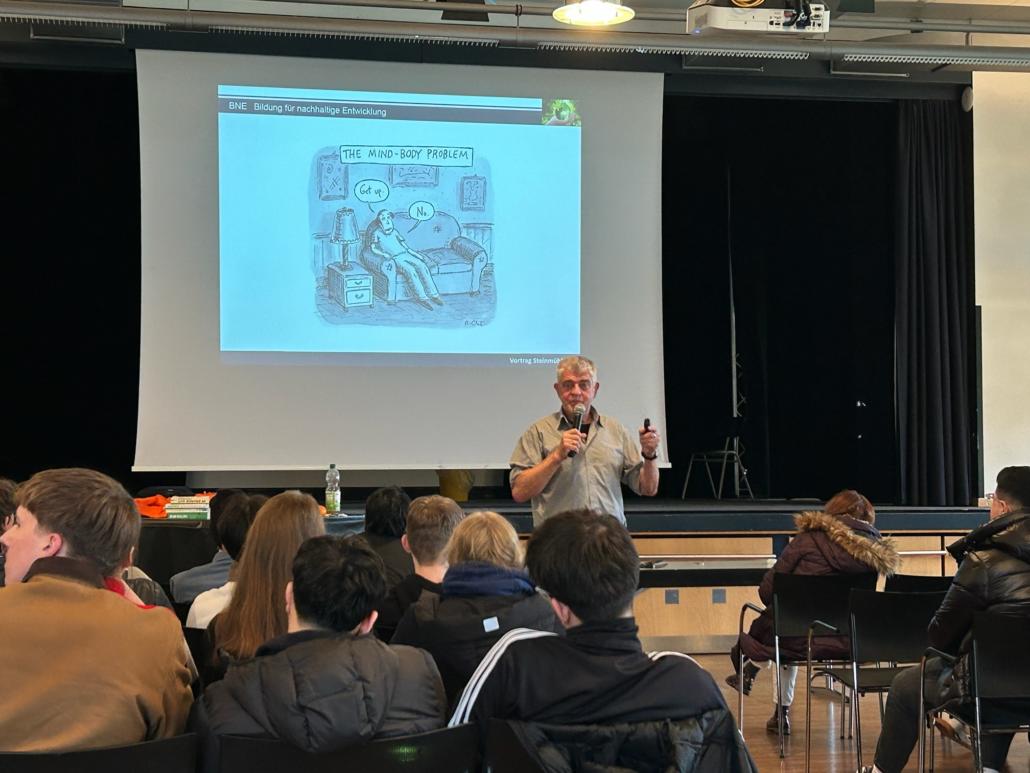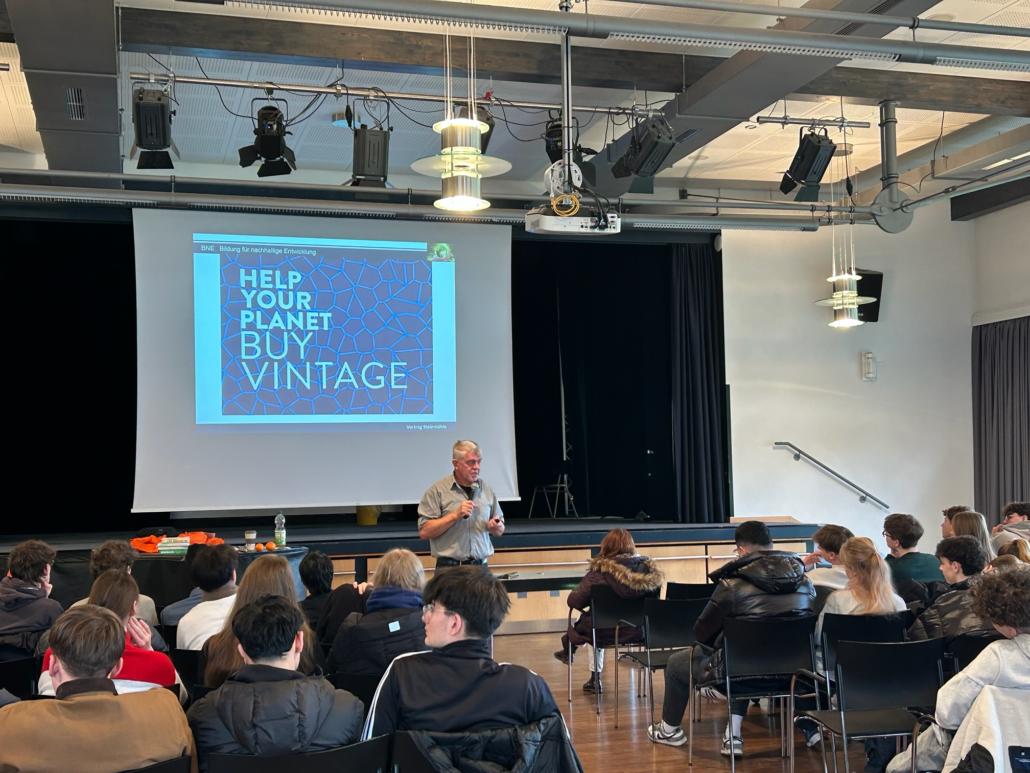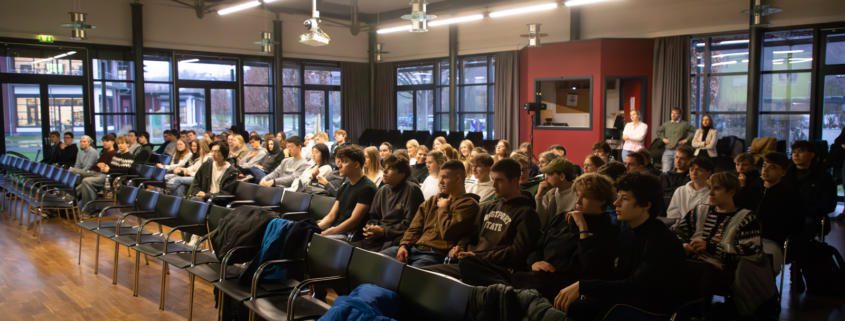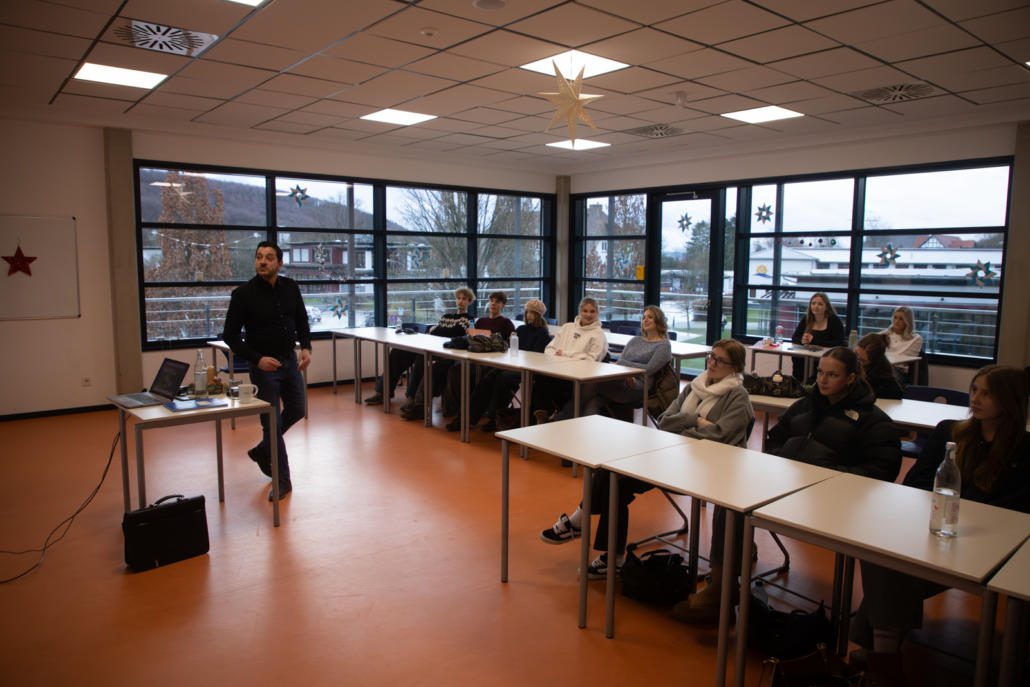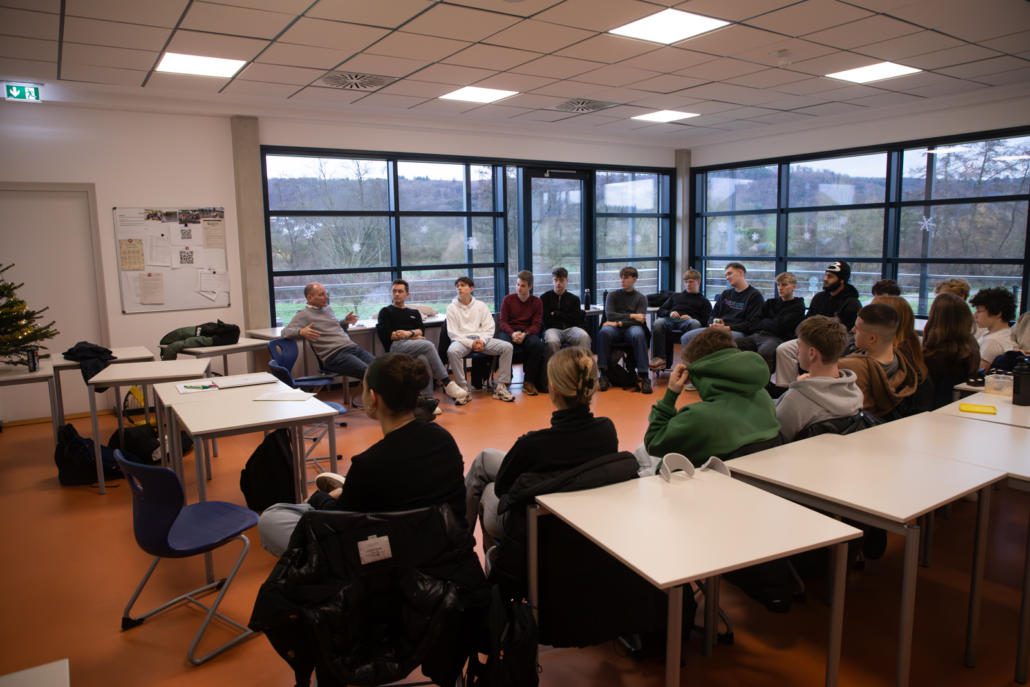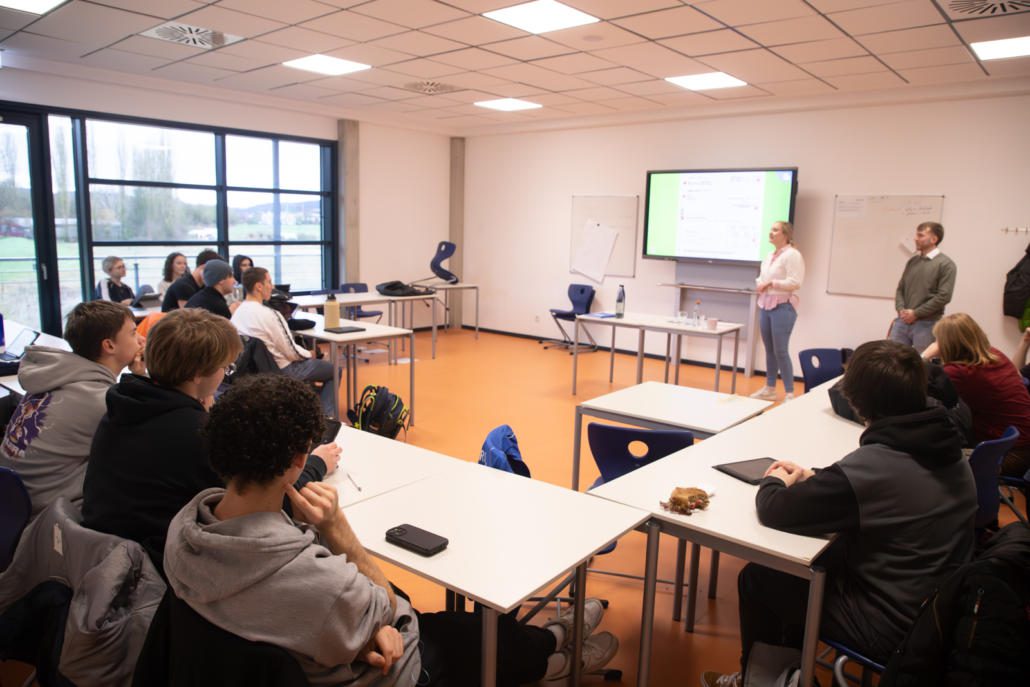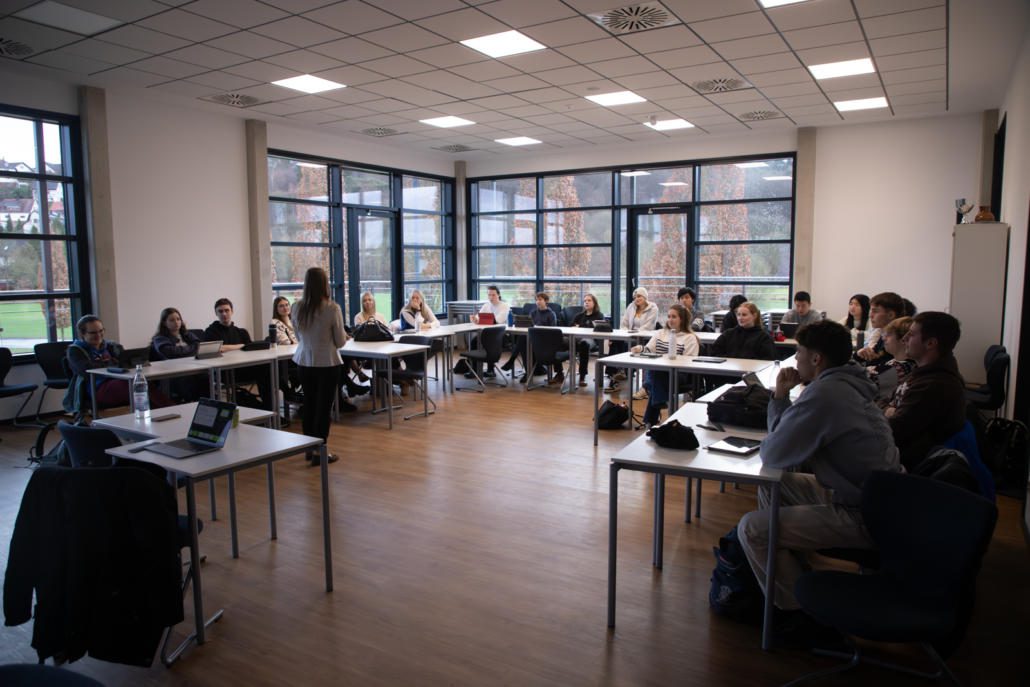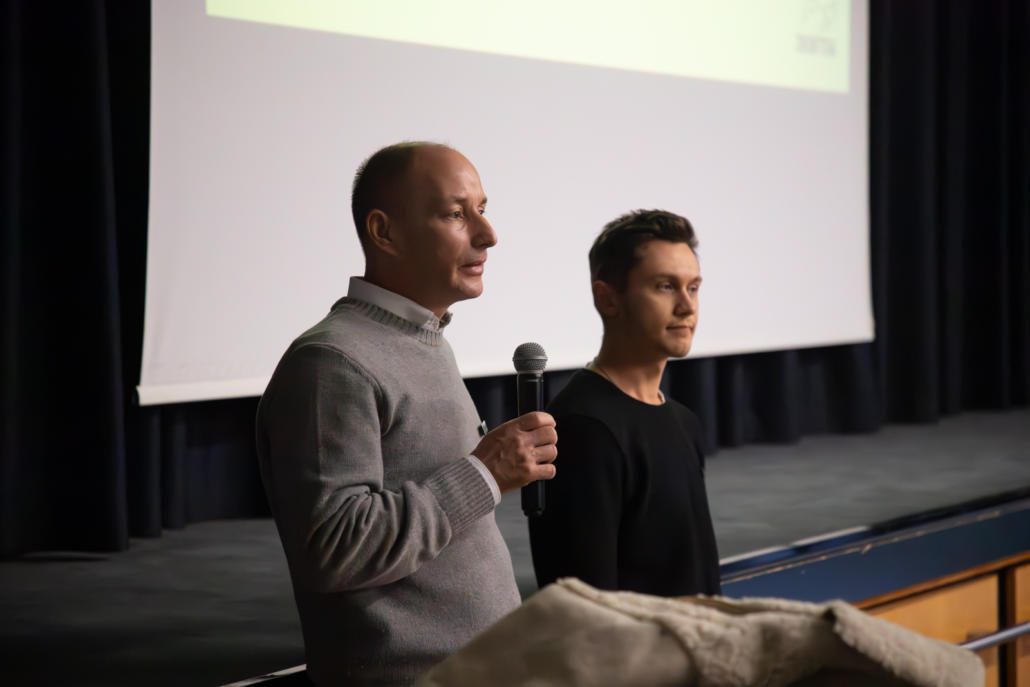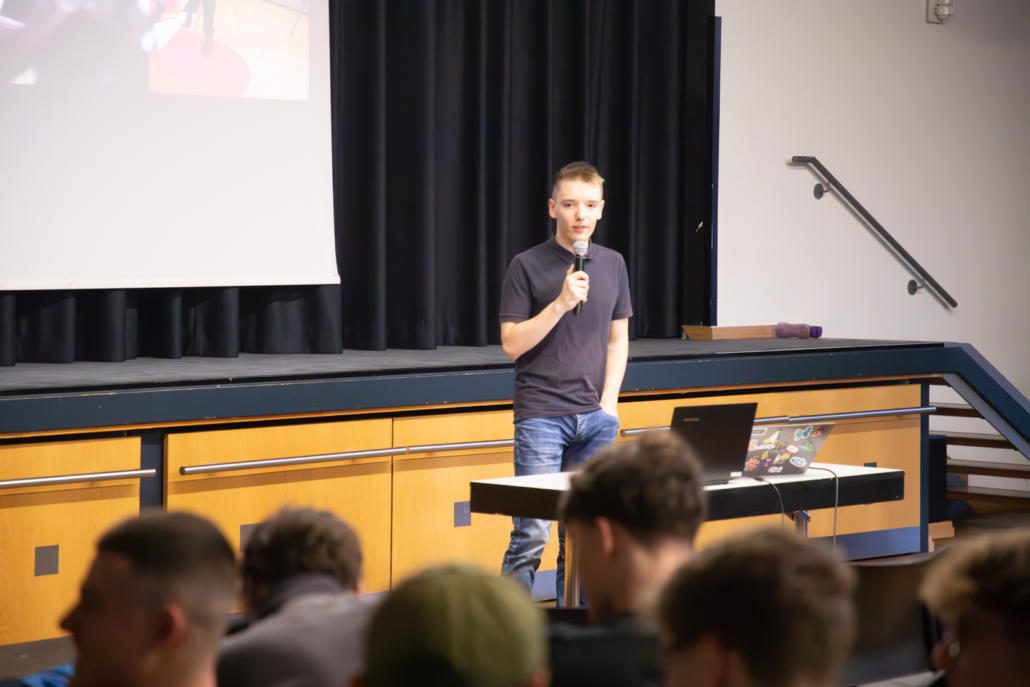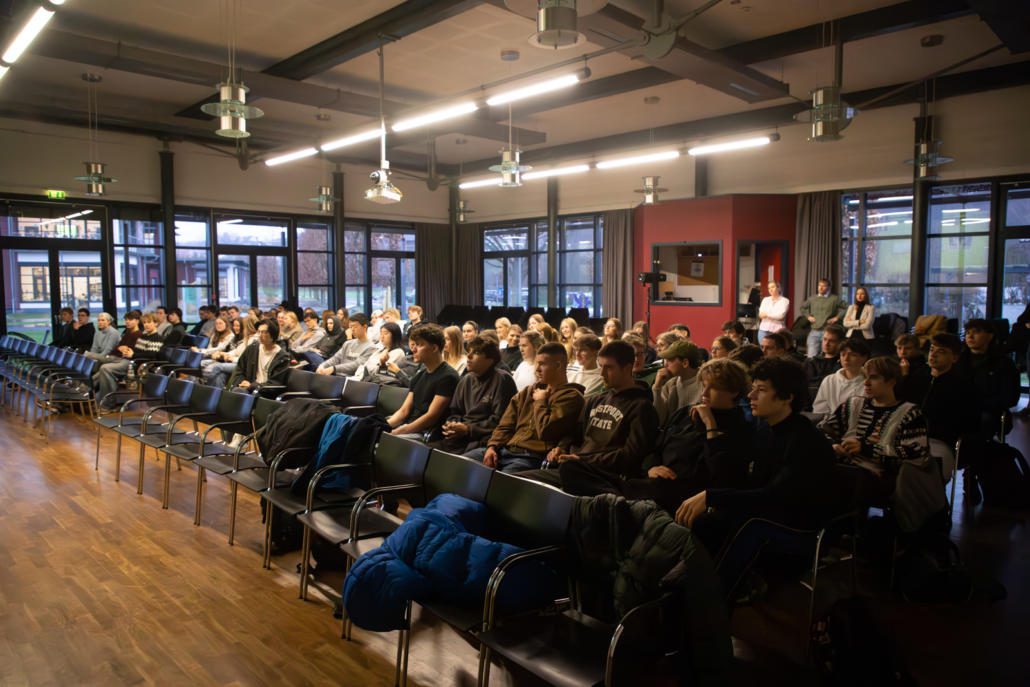


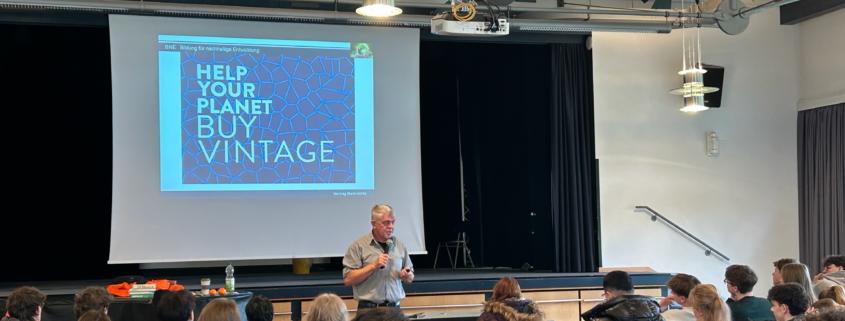
For decades, Bernd Holly, as principal of Steinmühle, made announcements: at events, over the PA system, or sometimes in person when he wanted to get a message across. His announcement at the end of January to the upper-school students was different. It was a call to rethink their own behavior if everyone on this planet wants to continue living here.
“We know we’re destroying the Earth. And we do it anyway.” That’s how the educator—who has been retired since the summer of 2023—began his talk. The worst part is: he’s right. With this reality in mind, Bernd Holly shared numerous examples with the audience—examples they could recognize in their own lives and that would give them pause for thought. How thoughtlessly do we buy coffee to go, leaving behind a billion disposable cups in Germany alone? We mow our lawns to achieve the perfect “English” style, but in doing so, we destroy the wildflower meadow. And we would have loved to win the shopping weekend in New York that a public radio station in Hesse raffled off around Christmas time. Is reflection a matter of luck? Seriously?
Energy drinks? Totally out of touch!
Holly makes it clear that he adapts his talks—which he also gives to adults at companies—slightly when speaking at schools. “Anyone who drinks energy drinks is a victim. Completely out of it.” He raised awareness about fruit that’s peeled and then packaged in plastic, advocated for seasonal fruits, and encouraged people to rethink their meat consumption for health and environmental reasons. “The world doesn’t need people—it’s about the foundations of our existence. We’re seeing this firsthand through the effects of climate disasters like those in the Ahr Valley, in Valencia, or now in California,” appealed Holly, who has been a vegetarian for four years. He questioned the popular nut nougat spread not only because of its sugar content but also because of its use of palm oil, which leads to rainforest deforestation. There are many things people would rather not see, said the former school principal, citing, among other things, the Christmas goose industry.
35 percent of food ends up in the trash
Breaking free from the pressure to be seemingly perfect isn’t easy, but it is possible: constantly buying new clothes you never wear anyway, constantly getting a new cell phone, buying too much groceries, 35 percent of which end up in the trash—as has been proven. “Shopping triggers happiness hormones, I know,” remarked Holly, who began volunteering at the Marburg Food Bank at the start of his retirement, “an institution that symbolizes social problems,” he noted. Then the conversation quickly turned political: migrants’ lack of German language skills as a sign of failed integration, gender-neutral language as a sham debate (“I don’t do that”), and then back to the “Don’t Buy Anything List” that had convinced him, along with the question of whether speeding down Berlin’s Ku’damm in a souped-up car was really the only way to gain social recognition.
“Giving Back to Society”
But—Bernd Holly is a realist. He knows that not all of his points will be implemented right away, and he understands the odds involved. “You are privileged; you will eventually hold key positions. Think things through and be role models.” If even just one of the points he listed were to be implemented, the lecture would have been worth it.
Bernd Holly looks back on his life so far. Coming from a very humble background and having risen to become principal of the popular and highly sought-after Steinmühle School, he wants to give something back to society. Out of a sense of responsibility—”which (turning to the student body) you, too, will one day bear.”
The lecture was a project of the Education for Sustainable Development (ESD) program based at the Steinmühle.