Ideals of beauty have always existed—and they still do today. But in our time, they are everywhere, especially on social media. Young people are confronted every day with a flood of images that show them what is considered “beautiful.” Everyone looks for a role model, tries to fit in, and strives to get closer to these ideals. – Mirror, mirror on my phone, tell me, am I the king? (Alligatoah)


Self-presentation plays a central role

The play begins with a scene shaped by the media. The obsession with beauty ideals, coupled with the constant use of headphones, leads to less genuine, spontaneous interaction in public. Instead, self-presentation and self-affirmation take center stage—documented through selfies and Stories shared on social media.


Plagued by self-doubt

One of these teenagers, convincingly portrayed by Elias, is in the middle of creating a new live story about himself. But suddenly, he finds himself fascinated by a young woman who draws him in like magic. He dares to approach her and even includes her in his live stream. But before he can ask her out, doubts assail him: What if she says no? – I’m… I’m not like you. I’m not the type to make a good first impression.


Overcoming Uncertainty

This uncertainty is heightened by the contrast with two characters who are portrayed as the embodiment of perfection and self-improvement. The “Perfect One” confronts him defiantly: “And what exactly is ‘yourself’?” A stuttering boy who looks like he just rolled out of bed? But the Doubting One argues against this. He insists on spontaneity, authenticity, and the beauty of imperfection. Despite his insecurity, he decides to ask her out on a date.


Emotions Described with Humor

In the final scene, the audience finds itself immersed in the thoughts of the two protagonists as they prepare for their date. Emotions such as nervousness, springtime feelings, and daydreams are humorously portrayed and brought to life through impressive physical theater. At the same time, a video projection shows Elias and his crush sitting across from each other—but instead of looking at one another, they’re both busy perfecting their appearance in the mirror.


They finally look into each other’s eyes

The short performance concludes with a telling moment: The two finally look into each other’s eyes.
The audience—Music Class 13 and DS Class 12—was particularly enthusiastic about the expressive physical theater, the carefully selected music, and the impressive acting performances.

Cast:
, Arwen Seifert,
, Elias Schumann,
, Silas Krüger,
, and Luisa Harperscheid

Ines Vielhaben


With their research into sustainable alternatives to conventional petroleum-based plastic wrap, Steinmühle students Leonard Berger and Nicolas Bohnstedt have really taken off. After taking first place in chemistry at the regional “Jugend forscht” competition, winning a special prize at the state competition, and even hosting a visit from a ZDF TV crew at Steinmühle in the meantime, they now have another success to report: Leonard and Nicolas won one of the top prizes in the “Jugend testet” competition, organized by Stiftung Warentest.

Which of the three grand prizes our students have won will be announced on June 5 at the awards ceremony in Berlin, to which the team—along with their advisor, Dr. Jutta Töhl-Borsdorf—has been invited. – We’d like to offer our heartfelt congratulations in advance and look forward to hearing the results you’ll bring back to Steinmühle!


It’s the event with nearly the greatest musical diversity a high school has to offer, when students from grades 5 through 13 all take the stage to sing and play music. Every March, all grade levels gather in the Forum for “Bands On Stage,” and once again, it was a musical mix that many will remember for a long time to come. Certainly those who were there for the last time, since they’re part of the graduating class. And most certainly Frank Wemme, the event’s organizer and host. A touch of melancholy came over him as he watched and listened to the 13th graders. Was this evening the grand finale for them?


A Program That Fills the Room

The 5th- and 6th-grade band club, which opened the evening, had chosen some challenging pieces. The audience rewarded them with warm applause. Whether it was Annica Bartsch with her powerful voice or, later in the evening, Larry and the Loud Tree Frogs with their room-filling set: every performance had its place here and was duly celebrated by the audience in the packed Forum. Jazz and ’80s pop were part of the mix. Of course!


For all age groups

As in previous years, the traditional “Bands On Stage” evening was a successful mix of all kinds of musical genres: There was something for everyone, regardless of age. And many of the attendees likely took home one or two “catchy tunes.”


Those present were:


  • Grades 5 & 6 Band Club
  • Janna Gosejacob & Samri Wulf
  • Annica Bartsch
  • Isabelle Kerber
  • Larry & the Loud Tree Frogs
  • Jazz Ensemble
  • StoneMill House Band

WU Sound & Light (Technical)

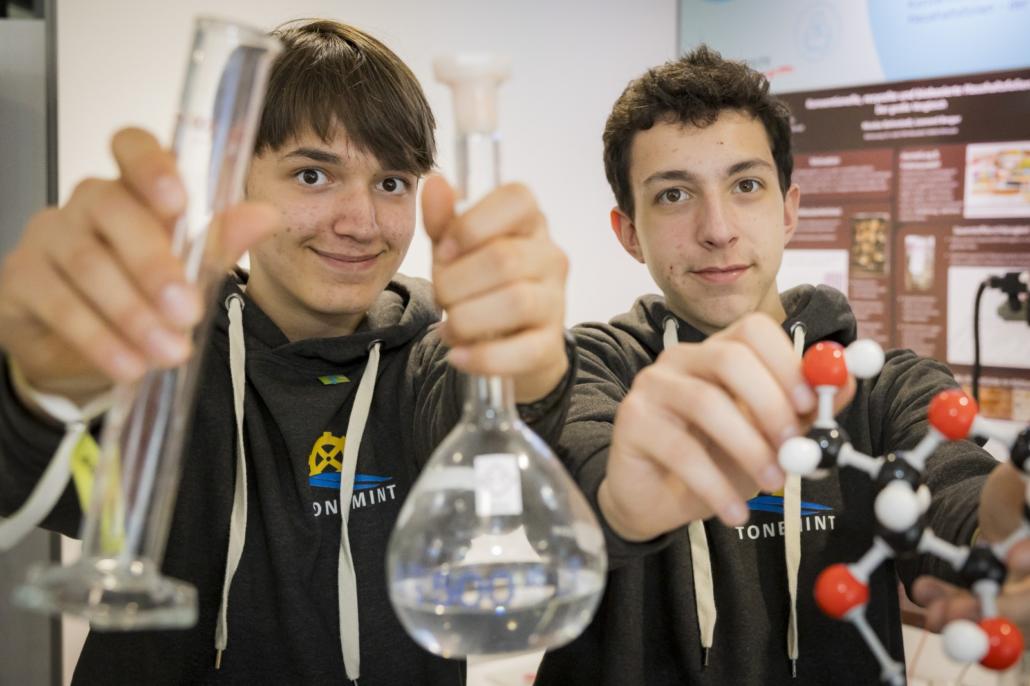
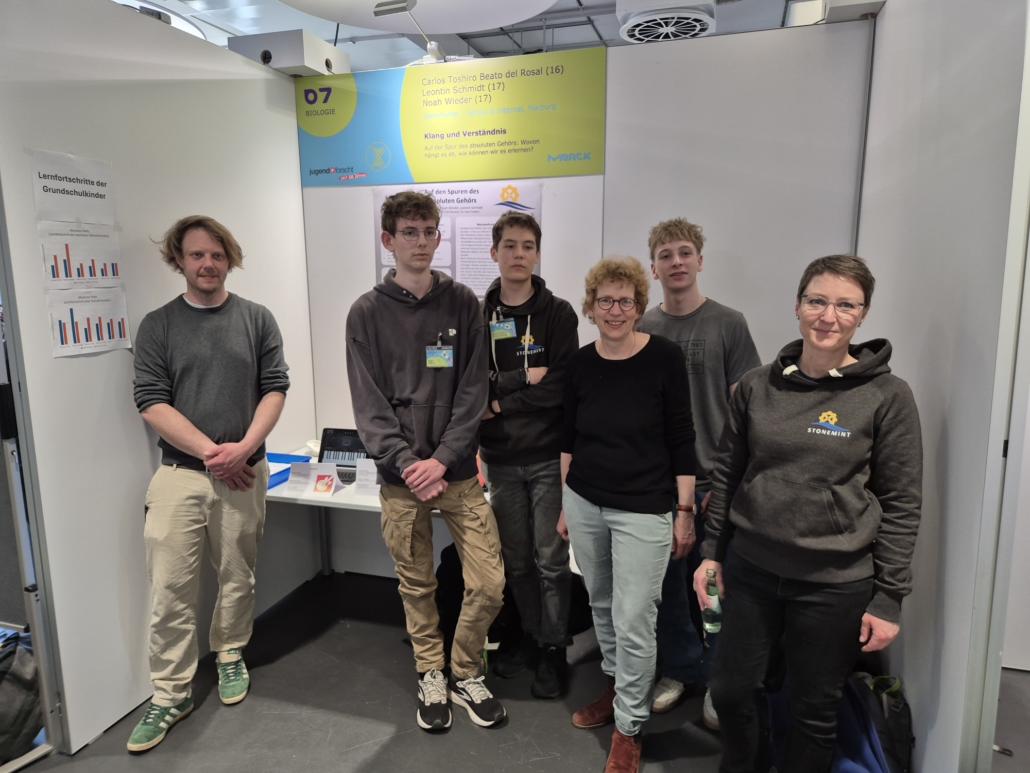
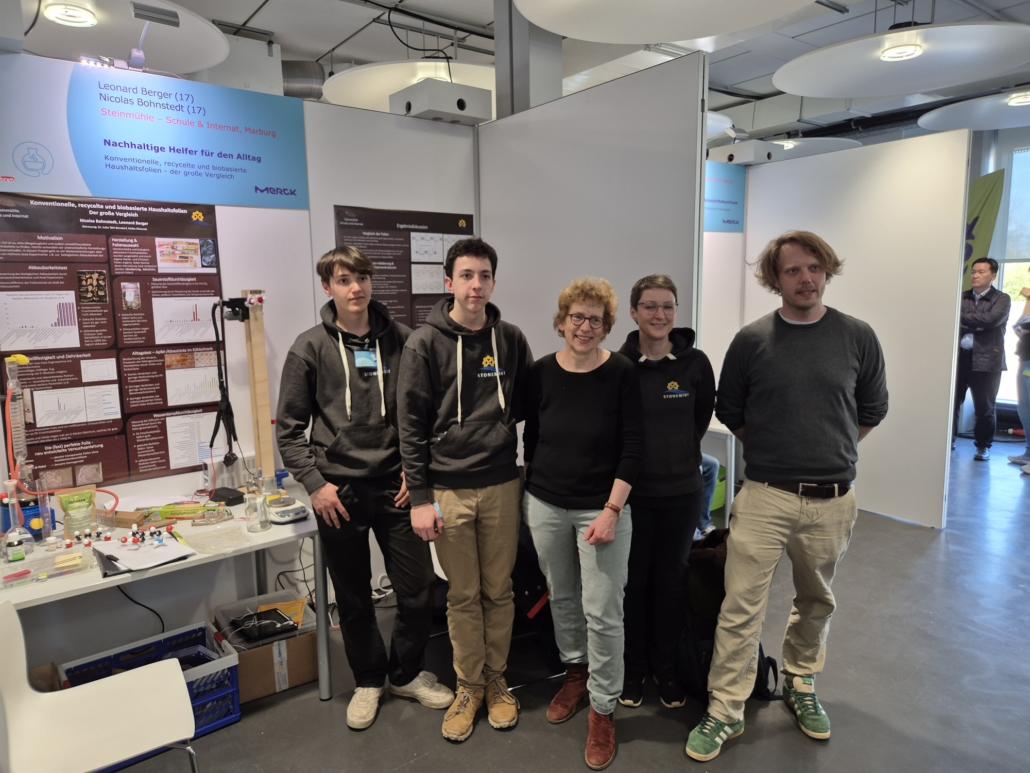
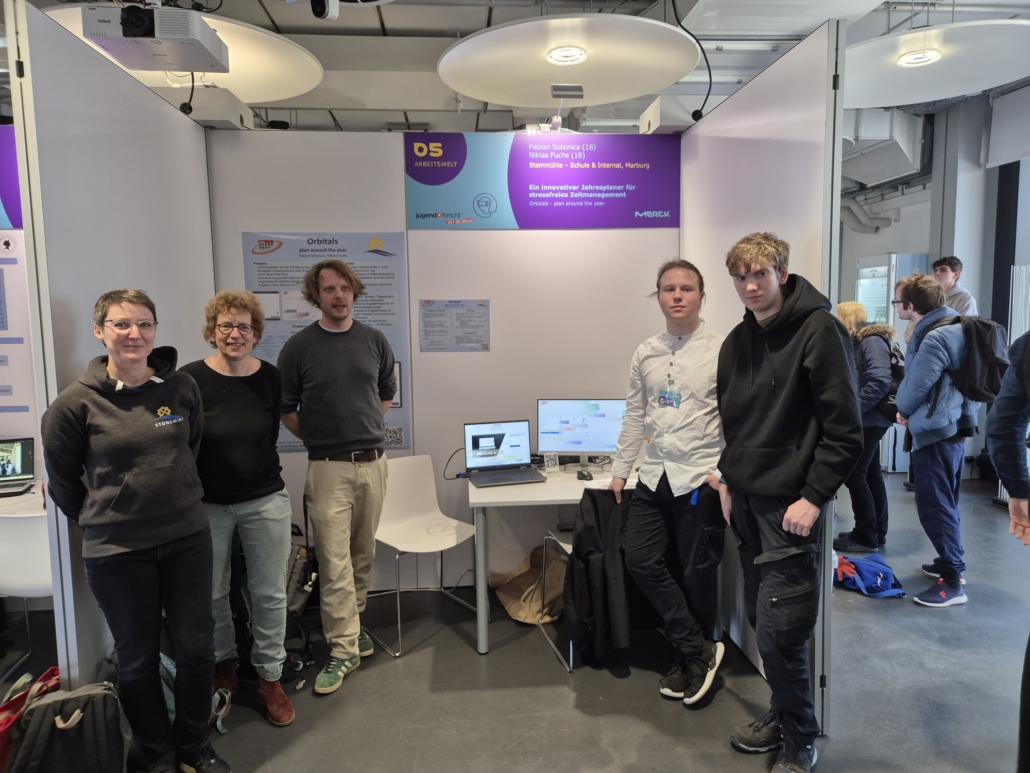
The students built on their successes at the regional “Jugend forscht” competition (as we reported) by securing two top placements and several special awards at the state competitions in Darmstadt and Kassel. “A fantastic, well-deserved achievement by our young researchers,” said the team of advisors—consisting of Dr. Jutta Töhl-Borsdorf, Dr. Sven Freibert, Dr. Eva Neumann, and Malte Klimczak—who received an invitation to the national competition as an advisor’s award.

In Darmstadt, Toshiro Beato, Leontin Schmidt, and Noah Wieder took the stage once again to present their project , “On the Trail of Perfect Pitch: What Does It Depend On, and How Can We Learn It?” They took third place in biology and were also awarded the special prize from the German Hearing Aid Industry Association.

Leonard Berger and Nicolas Bohnstedt once again stood out with their research on “Conventional, Recycled, and Bio-based Household Films—The Big Comparison .” They took home a special prize—a summer internship in materials research at the Leibniz/Helmholtz Research Institute—and were invited at the last minute to the Materials Research Conference (MatFo) in Frankfurt, where they had the opportunity to present their project.

The project ” Orbitals – plan around the year” by Fabian Sotonica and Niklas Fuchs was awarded the “Entrepreneurial Spirit” Special Prize by Wissensfabrik e.V.


Youngest Team Takes an Outstanding Second Place

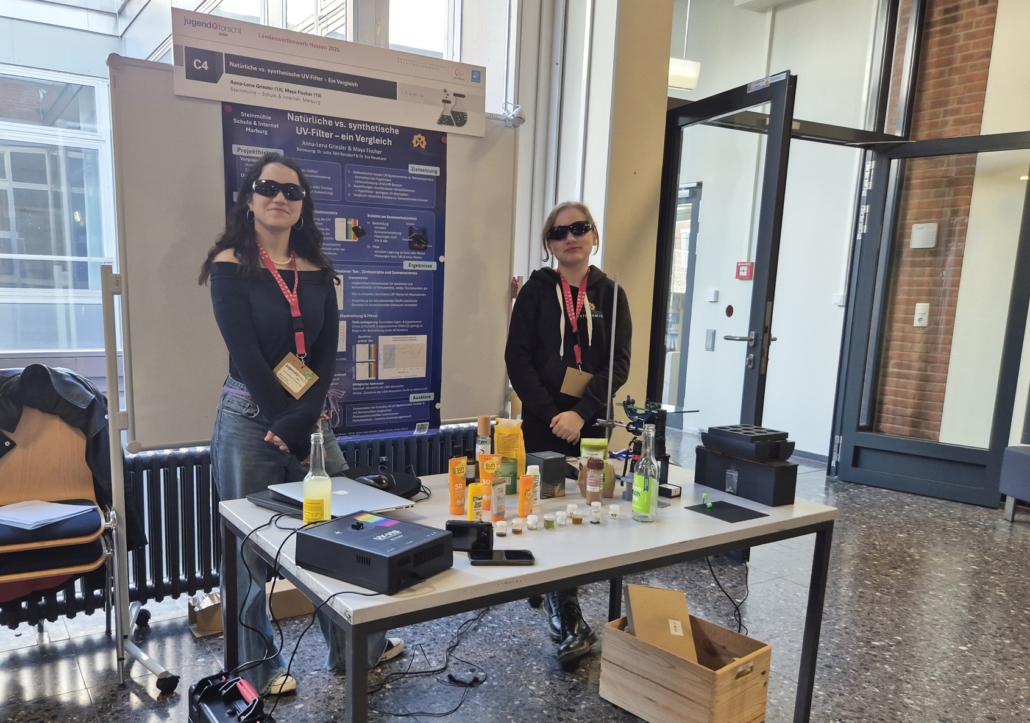
Steinmühle took second place in the chemistry category and won the special prize for quality assurance through non-destructive testing at the state round of the “Jugend forscht” competition in Kassel, where the younger teams competed. ” Natural vs. Synthetic UV Filters—A Comparison” was the topic presented by the duo consisting of Anna-Lena Griesler and Maya Fischer.

We would like to congratulate you from the bottom of our hearts and thank all participants for their dedication and interest in these fascinating projects, all of which were time-consuming and required a great deal of perseverance. We are proud of you!


A generation of cyclists is leaving Steinmühle along with this year’s graduating class. Steinmühle teacher Ines Vielhaben sat down for a conversation with two of them, Anton and Leo.

Vielhaben: When did you start riding your bike to school, and what made your parents let you do that at such a young age?

Leo: I’ve been biking to Steinmühle since fifth grade, with a few exceptions in the winter when I took the bus. My father also went to that school and used to bike there back then—so it just made sense for me to do the same.

Anton: I’ve also been riding my bike to school since fifth grade. I used to walk to elementary school, but when I started middle school, my friends—including Leo—and I got together to form a biking group.


“It won’t be any faster by car or bus”

Vielhaben: What advantages do you see in riding your bike to school instead of being driven by car or taking public transportation?

Leo: Well , ever since I turned 18, I’ve been driving to the Steinmühle every now and then when I get the car, and I’ve noticed for myself that driving a car or taking the bus isn’t any faster.

“I feel more balanced”

Anton: Besides saving time, it’s also convenient to be able to head out on a whim—for example, when school lets out early. Plus, I feel more balanced when I get some fresh air and exercise in the morning. Bus rides, on the other hand, I often found more exhausting and tiring.

Vielhaben: Have you discovered any special routes that are great for biking?

Leo: We always drive through the Cappeler Felder.

Anton: My walk to school is almost entirely car-free. I only come into brief contact with traffic at one bridge. That makes the walk pleasant and relaxing.

Vielhaben: Were there any challenges with your daily cycling? How did you handle them?


“Exercise warms you up.”

Leo: Sometimes our large group—at times as many as twelve people—was a hindrance to others. Some people didn’t like that very much. Other than that, I hardly had any negative experiences.

Anton: Sure , rain and cold can be challenging sometimes. But with gloves and weatherproof clothing, it’s manageable. After a few minutes of riding, you warm up anyway from the exercise.

Vielhaben: How has cycling affected your daily life, your fitness, and your health?

Leo: The total distance I walk each day is about 12 kilometers—it keeps you in shape without you even realizing it.

Anton: I also use my bike for after-school activities or when I go to practice. Even when I have the option to take the bus, I prefer to ride my bike because it’s more relaxing. I’d like to keep doing that in the future, too.

Vielhaben: Are there any special experiences that have stuck with you?

Anton: In the winter, there was always a frozen puddle in the Cappeler fields that we would ride over on purpose. Sometimes we’d even leave 20 minutes early. It was a fun challenge—to see who could fall the coolest or stay balanced the longest (laughs).

“Sustainable behavior doesn’t have to mean making sacrifices”

Vielhaben: Has cycling influenced your attitude toward environmental protection?

Leo: The environmental aspect was never the main reason for me, but of course it plays a part. That’s why I think it’s a good thing, and I’ll keep doing it.

Anton: I think it shows that sustainable behavior doesn’t have to be complicated or mean making sacrifices. When there are good bike paths, it’s easy to choose to ride a bike.

Vielhaben: What advice would you give to younger students and their parents who are considering biking to school?

Leo: Just give it a try! It’s best to do it with friends—it’s more fun in a group. It’s especially worth it when the weather’s nice.

Anton: Parents don’t need to worry. Kids are careful when they ride their bikes, and it’s safe across the Cappeler Feld. Plus, biking keeps you fit in the long run.


“Tires should be inflated, and the lights should work”

Vielhaben: Do you need a specific type of bike for the ride to school?

Leo: No , not at all. As long as the tires are inflated and the lights are working, we’re good to go.

Vielhaben: Do you prefer backpacks or bike bags?

Leo: A backpack —that’s more practical.

Vielhaben: Are there any improvements that could make biking to school even more appealing?

Anton: Yeah , the path from the boathouse is a constant issue. It gets especially muddy in the spring and fall, and you end up with mud splattered all over your back.

Vielhaben: Fortunately , for some time now, you’ve had the option of riding along the newly paved Steinmühlenweg when it’s wet out. Thank you very much for the interview, and good luck on your high school graduation exams—which I’m sure you’ll be riding your bikes to as well!