At Steinmühle Boarding School, there are always some students who cannot go home during the short breaks. This is especially true for our international students, who are primarily from China. For these students, there is a separate team of educators known as “Welthaus,” which works with the students to plan not only the weekends when the boarding school is closed but also the fall and Easter breaks. The two educators employed for this purpose plan and organize special outings every weekend and during each break.

Normally, they explore mainly the area around Marburg with their “Welthaus” tour group, but during the fall break, they ventured all the way to the far north of Germany.

First Stop: The House by the Sea

For the first week of vacation, a house right on the beach in Stein near Kiel had been rented for the students. “I really enjoyed being able to drink my coffee by the sea every morning,” says teacher Lena Schneider enthusiastically. And so the group spent their first week close to the sea, spending nights under the vast starry sky or relaxing at the house while watching the many sailboats go by.

And, of course, a traditional boat tour and a visit to the aquarium in Kiel were a must. With perfect Baltic Sea weather, the students and teachers were able to relax and enjoy the scenery and the vastness of the sea.

From the Sea to the Edge of the Forest in Hamburg

In the second week, the “Welthaus” tour group moved on to a rented house near Hamburg, located right on the edge of the forest, with its own basketball court, table tennis table, and plenty of nature.

Along with the visit to Heidepark and the trip to the wax museum after a guided tour of Hamburg, the highlight was definitely the visit to the Chokoversum. Here, the students were able to experience firsthand the entire process—from the cacao plant and its precious beans all the way to chocolate production—and, of course, taste it too!

“The best part was that at the end, we each got to design our own chocolate bar and take it home!” says educator Philipp Rumpel happily.

Get out together, experience it together

On Sunday, at the end of the vacation, the Welthäusler group also traveled together from Hamburg back to Marburg. They had happily celebrated their last evening together in Hamburg over a hot pot dinner.

“It really did us all a world of good to get away for a while,” says educator Lena Schneider. The two Chinese students standing next to her nod in agreement. They are thrilled to keep discovering new parts of Germany.

What everyone will remember, I’m sure, are the many shared experiences: the big ones, but also the little things!


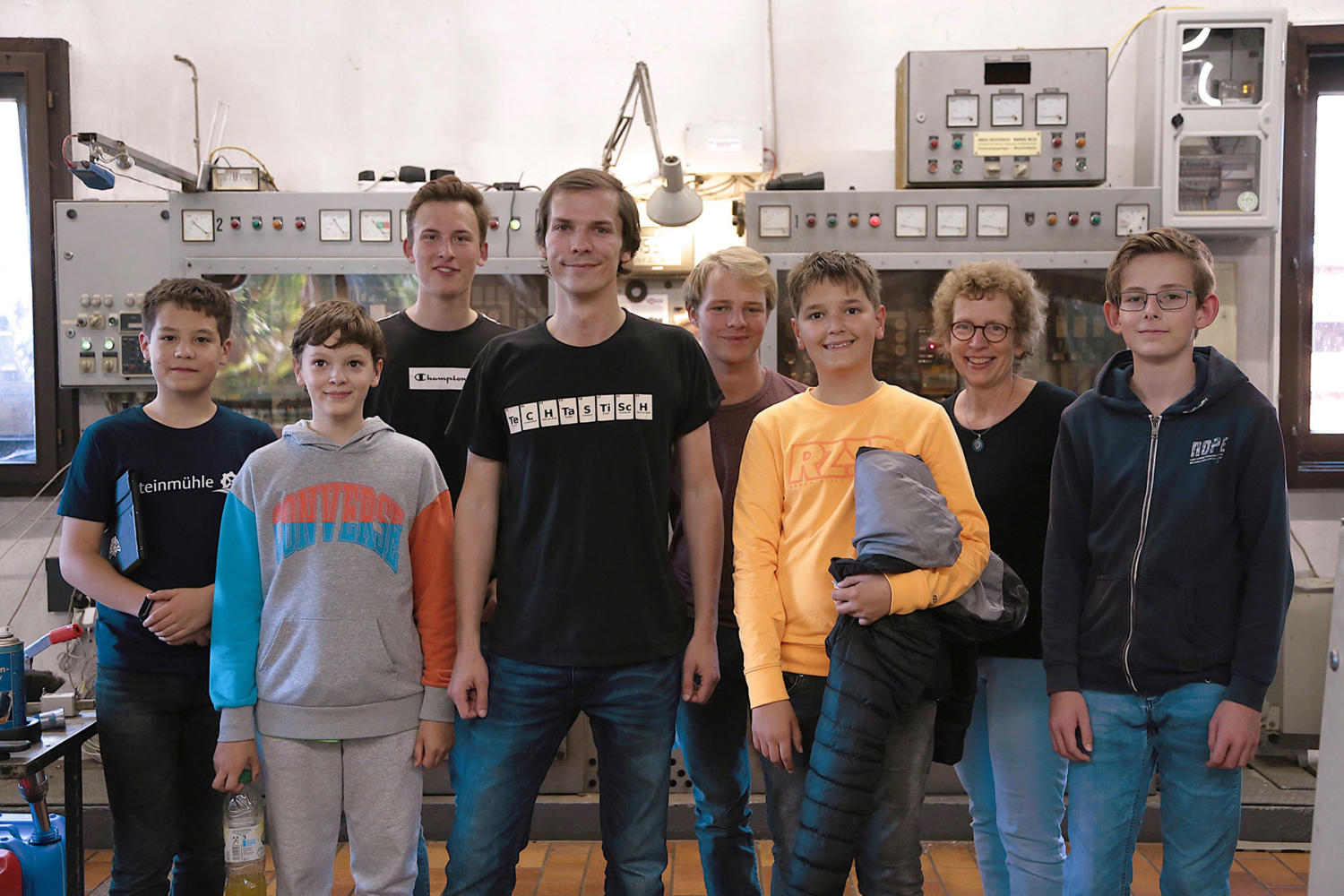
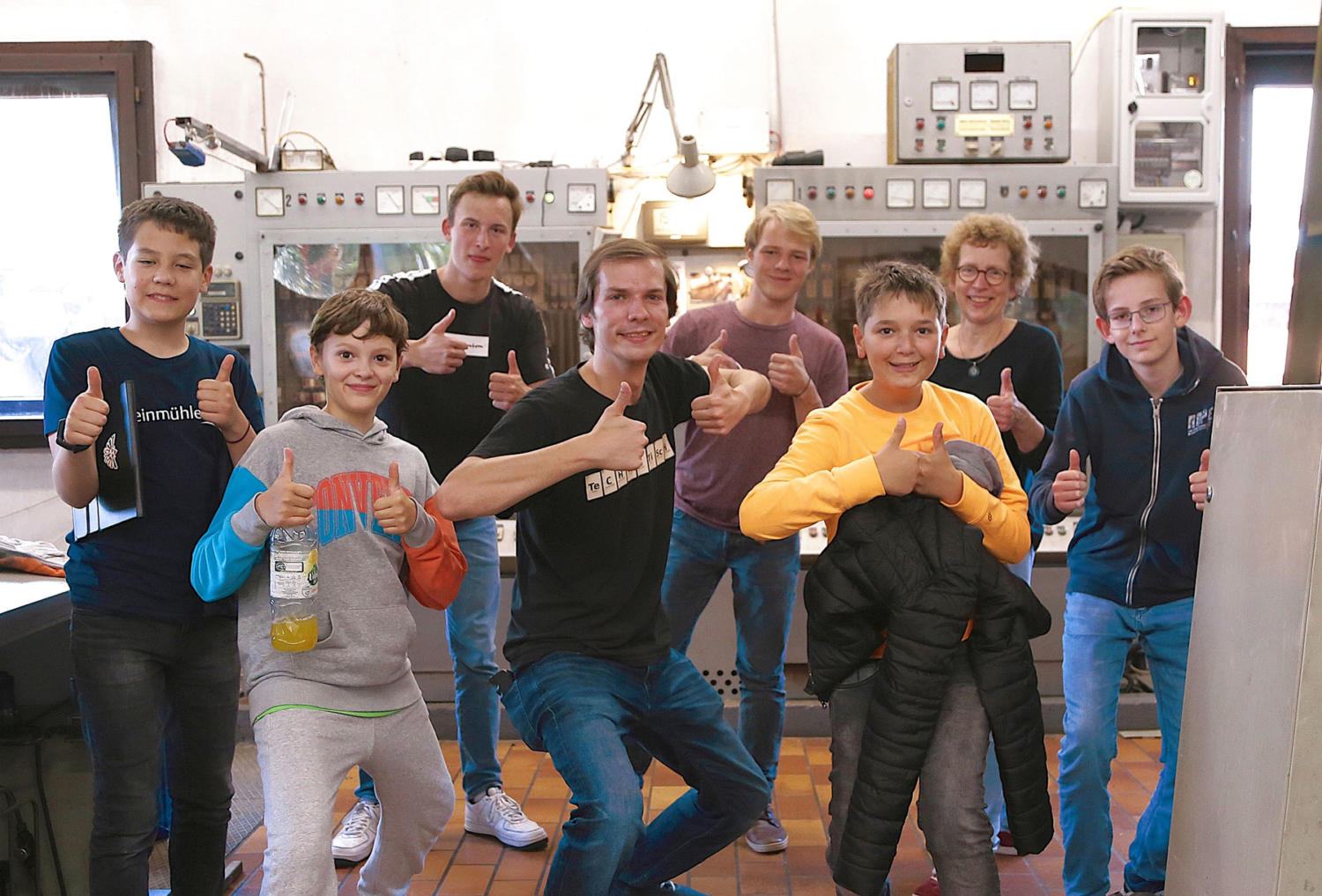
For some time now, the well-known YouTuber Techtastisch (Marcel Häfele) has been a supporter of the +MINT talent development program, which Steinmühle will join starting in the 2022–23 school year as the only boarding school in Hesse to do so.
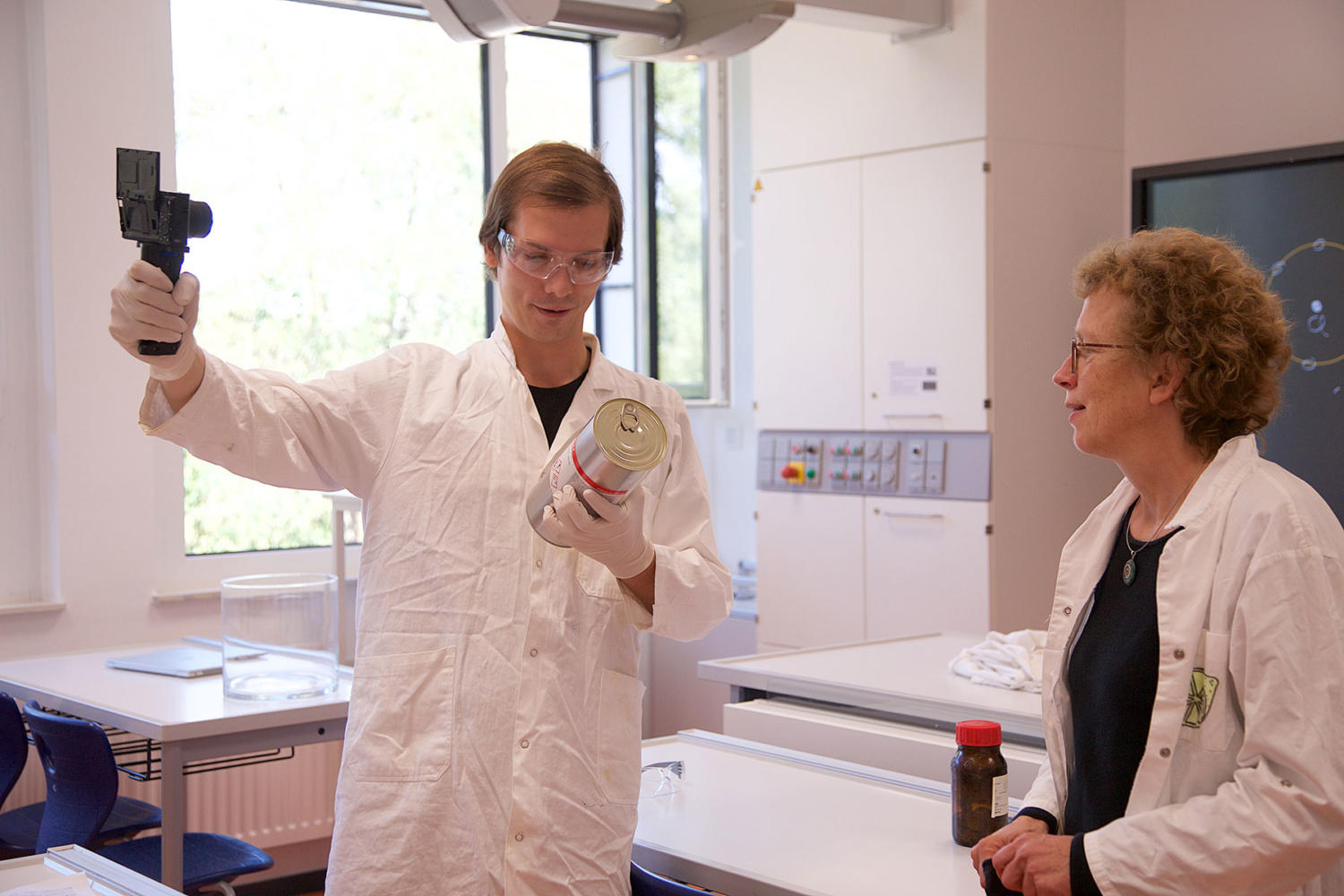
With the participation of students from various research courses, he recently visited Steinmühle for a day of filming. In the run-up to the visit, the students worked with their teacher, Dr. Jutta Töhl-Borsdorf, to plan experiments that are usually not feasible to conduct in a typical classroom setting.
Everyone involved was thrilled, as the experiments were spectacular. The reaction of sodium with water—on a slightly larger scale than is usual in the classroom—as well as with chlorine and ice, generated a great deal of interest.
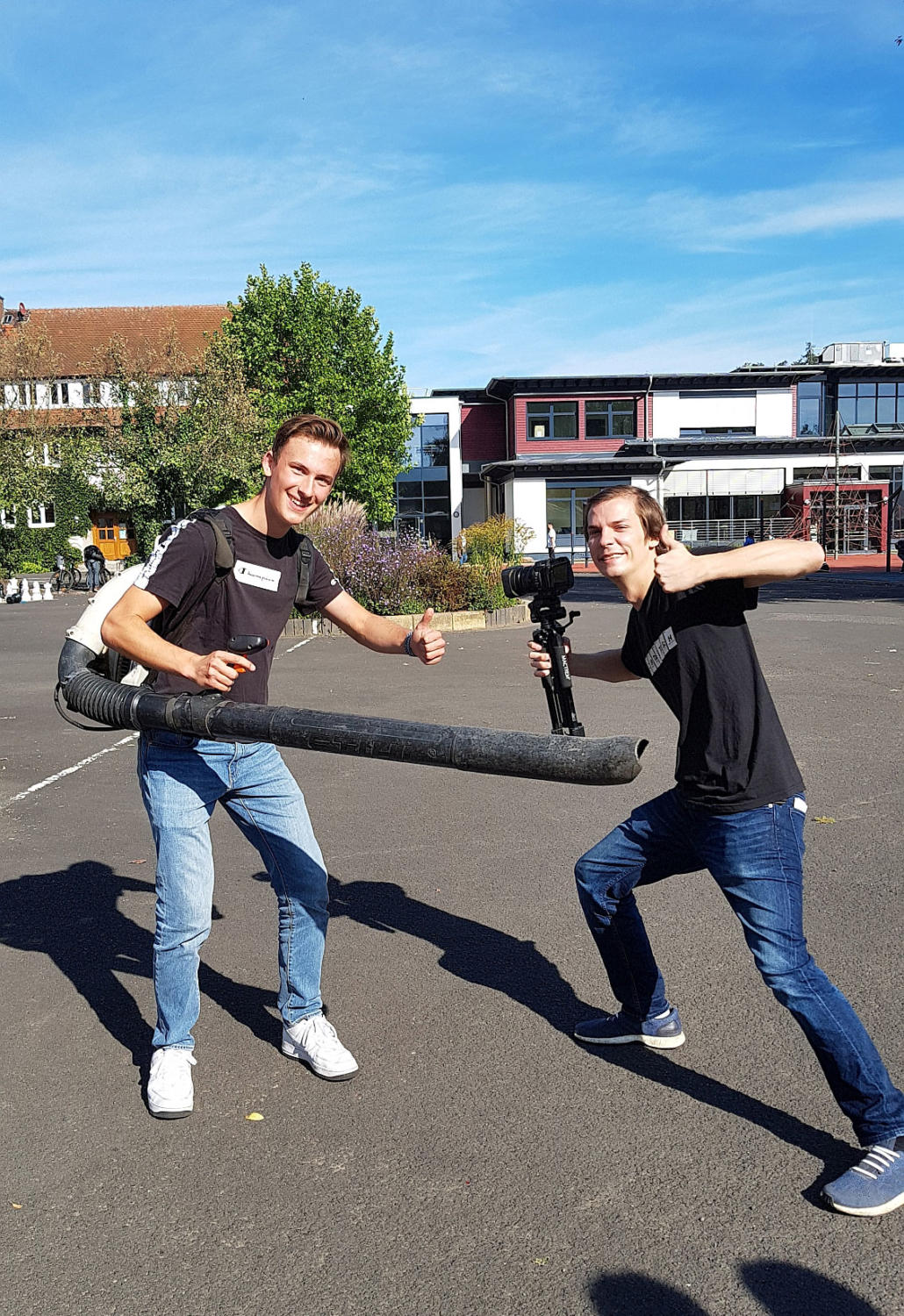
The experiments in the schoolyard also drew the attention of numerous other students, who were able to observe the spectacle from a safe distance. Afterward, the elementary school students in particular had so many questions that it became very clear just how great even the youngest children’s thirst for knowledge is when it comes to scientific phenomena.

Techtastisch itself was also thrilled—by the beautiful school grounds, the fantastic opportunities for experimentation, the power plant, and the many curious students.

You can watch the video of Techtastisch’s visit here: https://www.youtube.com/watch?v=qeFfHtvVoL4


What is our vision for biology classes at Steinmühle?

Direct experiences with nature not only increase students’ motivation to learn but also foster a caring attitude toward living things and the environment.

Biodiversity plays a central role, especially in the debate on climate change. It is precisely this diversity of habitats, animals, and plants that we now need to document and integrate even more deeply into biology classes. That is why we set out to assess and map the potential of the Steinmühle site.


Who are we?

We are the BiologyDepartment, which currently consists of ten faculty members. These include Carmen Bastian, Tim Elmshäuser, Hanna Herzog, Marcel Kalb, Malte Klimczak, Yvonne Nehl, Heike Rabben-Martin, Mirko Radatz, Siiri Wienbeck, and Aylin Yüzguelen.

What did we do?

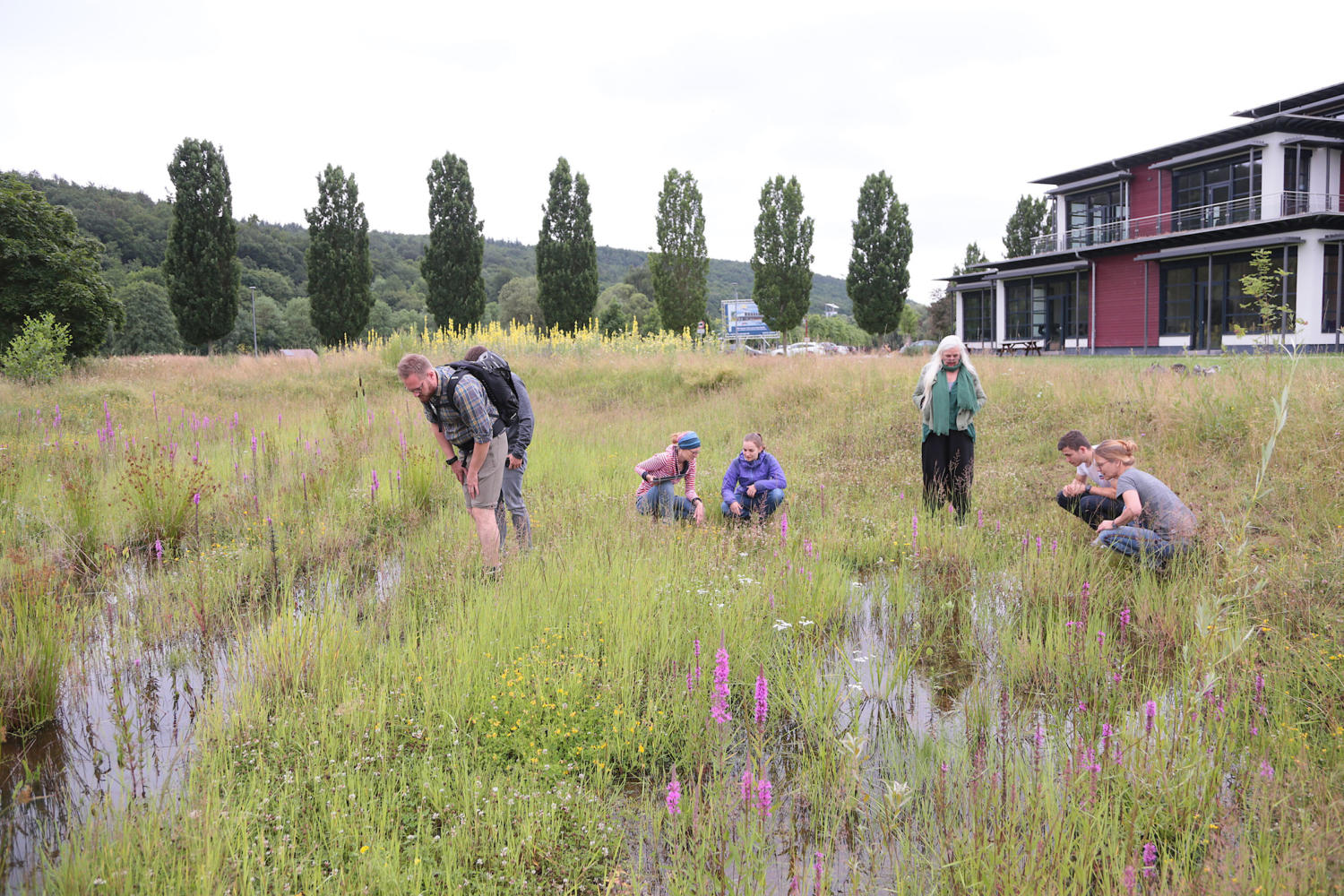
The BiologyStudent Council met at the Steinmühle grounds before summer break, discussed the general plan, and then we were off. We explored the orchard meadow, whose variety of fruit tree species sparked our interest in old apple varieties. The pond, with its inhabitants, invited us to observe and linger. The vegetation-rich area along the Lahn River fascinated and inspired us with its diversity of shapes and colors. In addition to the stream, the Steinmühle school garden, and the greenhouse, the Steinmühle grounds impress with their large number of different trees.

How can you bring nature into the classroom?

In addition to the many ideas that have already been implemented to incorporate the diversity of habitats into biology classes, Marcel Kalb describes a successful project below:

Thanks to the EU LIFE project “Living Lahn – One River, Many Demands,” a significant stretch of the Lahn at the far end of the Steinmühle site was also extensively restored to its natural state.

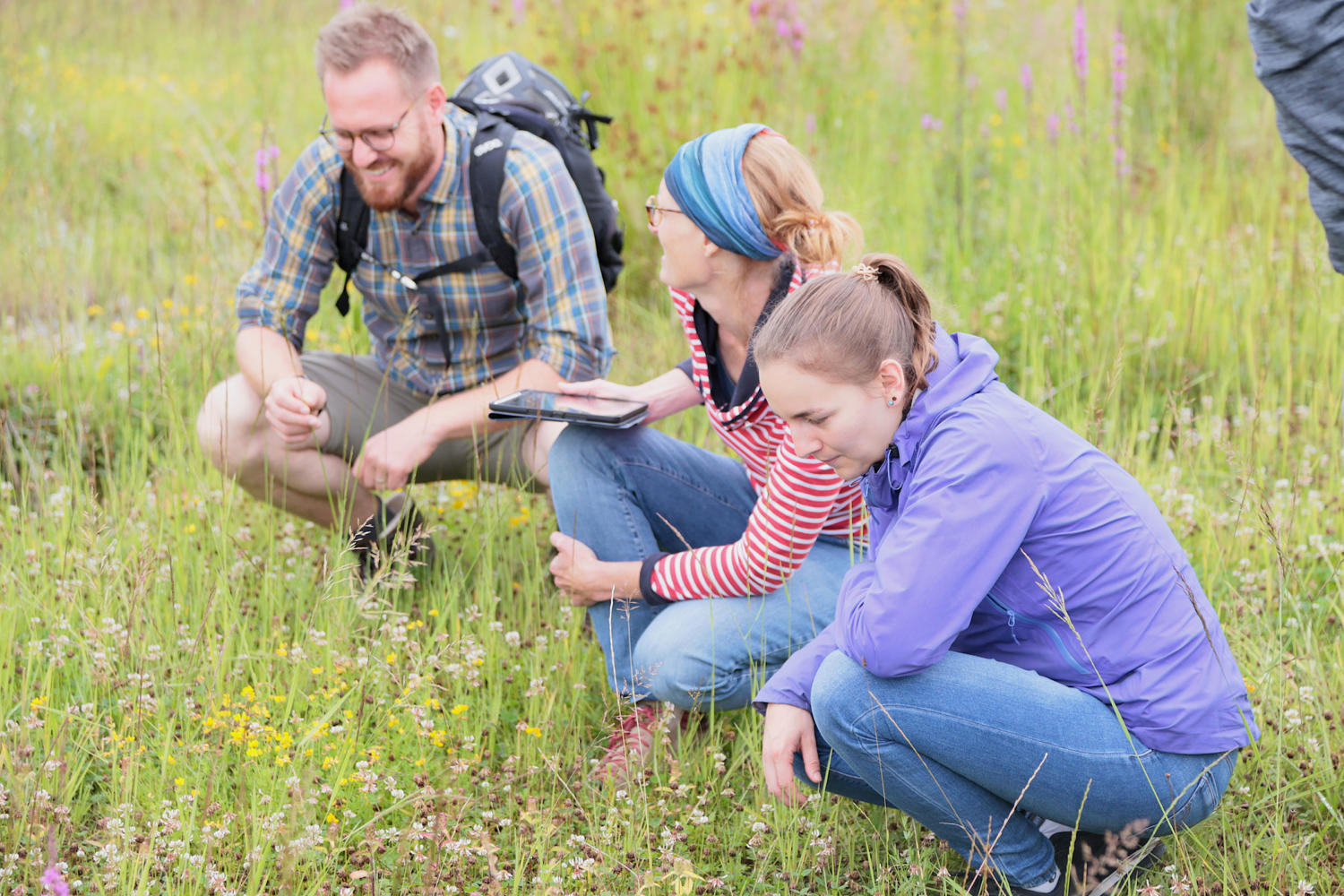
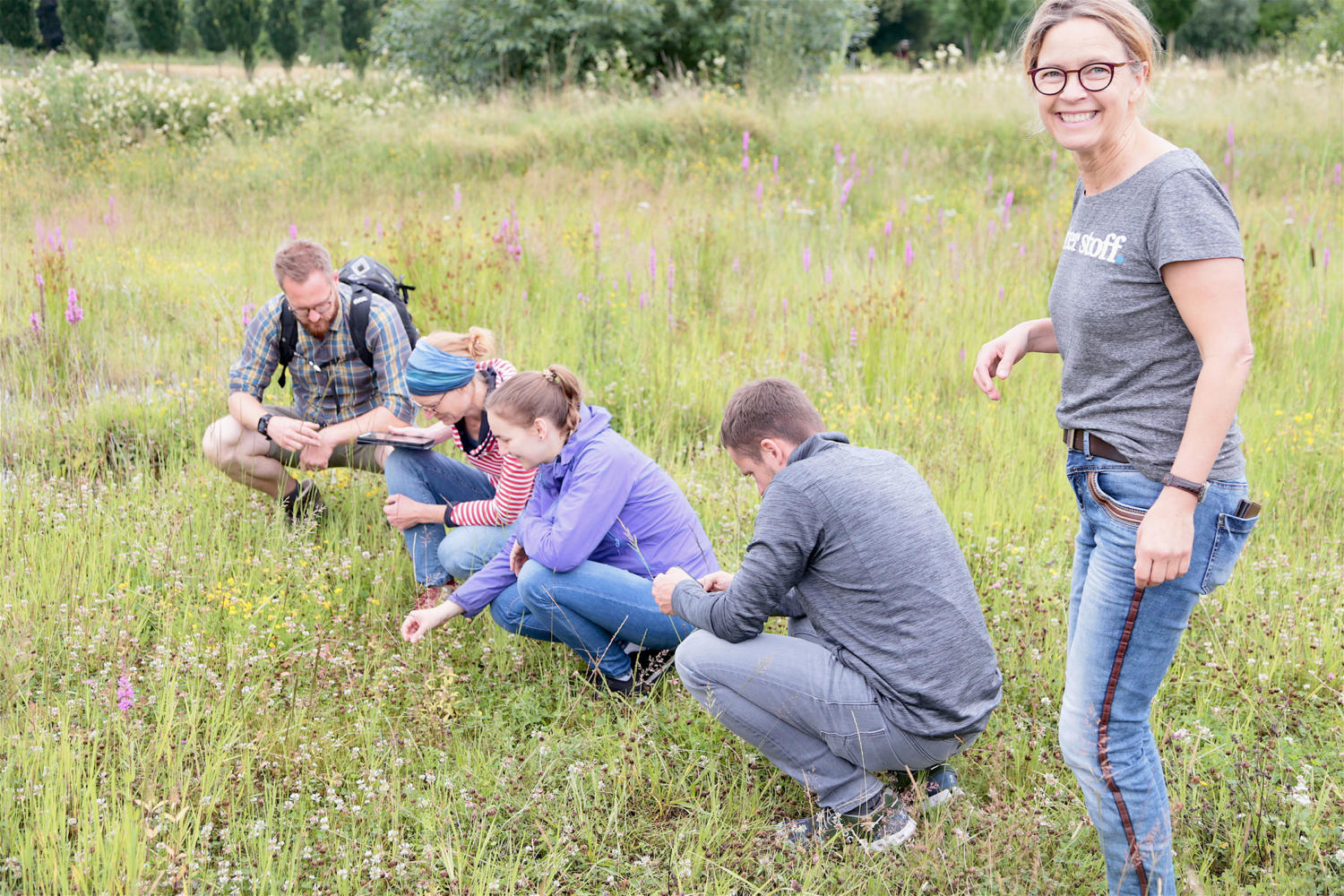
That’s why a “field trip just around the corner” for the Q2 biology class was the perfect opportunity. Armed with ecological background knowledge and equipped with outdated maps and photographs, the students were tasked with analyzing which structures had changed as a result of the intervention and what ecological impacts this intervention had on the organisms living there. The fact that the students were able to leave the classroom and experience the subject matter with all their senses reflects Steinmühle’s guiding principle of sustainable and hands-on learning. In the concluding reflection session, the class agreed: “This is what makes cramming fun!”

Yvonne Nehl

40 percent of all students drop out of college—with over 20,000 degree programs in Germany, this isn’t a sign of a lack of opportunities, but rather an indication of poor choices. “Finding the right career is a matter of analyzing your own abilities and, above all, a matter of self-confidence”—that’s the view of the 15-member team at the young company “Mein Mutiger Weg.” It visits schools to show how things could work out—and what young people should do.

Over 20,000 degree programs, over 320 vocational training programs. Would you like a little more? Probably not. Most young people study business administration. The field promises security, much like law, or meets a need, like psychology. Together with medicine, computer science, mechanical engineering, and economics, these are the “top choices.” In the worst-case scenario, young people are pushed into certain careers by those around them. A bigger problem, however, is the fear of making mistakes, according to what was said that morning at the Steinmühle. Career guidance for 11th graders, who often don’t yet know where their journey will take them after graduation.


Identifying Your Own Strengths

High school graduation—what’s next? It’s a question that’s always been around. But navigating the maze of options, identifying one’s own strengths, and choosing the right path seems harder than ever. Brothers Pascal and Frederic Keller have launched a startup to improve the situation for young people: “…we’ve been there ourselves.” Now the two brothers from the Palatinate are touring the entire country with their team to tell high school students how career guidance can be effective. Their mission: “Mein Mutiger Weg” (My Courageous Path).

Using a workbook and an engaging presentation that puts them on the same level as the students and speaks their language, Pascal and Frederic Keller guide the students through the morning with numerous real-life examples. A list of professions—in no particular order—gives them a glimpse of the wide range of possibilities.

The young people on the organizing team—all under 30 themselves—admit: “Some people already know what they want to be by the eighth grade.” If that’s not the case, the goal is to identify one’s own strengths. “Why not ask classmates and friends who know you well what you’re good at?” is one suggestion.


Gaining Experience Through Internships

Internships can also be a great way to identify your own strengths. There are as many as 53,000 open internship positions in Germany. If you find one that interests you, it’s time to start applying—another step, another hurdle. What does the hiring manager want to hear?

When asked about their strengths during job interviews, many applicants gave standard answers. “I’m reliable,” “I’m creative”—these kinds of responses hardly impress anyone anymore. Instead, it’s about sharing what you’ve already accomplished on your own, what you’ve actually done—even outside of school—even if it’s unusual. “Have the confidence to talk about what you’re capable of.” A story, an example. That’s how hiring managers can see which direction you’re headed. Your career choice is a success when you can apply your strengths as often as possible in your day-to-day work—when you can make a reality of what’s important to you in life.”


Digital Help

Along the way, participants can also take advantage of digital resources for career guidance. These include simulated job interviews and help navigating the maze of available opportunities. The organizing team invites followers to check out its Instagram channel @meinmutigerweg and also recommends the platforms www.traumjob-campus.de and www.berufenet.arbeitsagentur.de.

The Federal Employment Agency’s career counseling service was specifically recommended by the “Mutmacher-Crew” as one of several key components. For students at Steinmühle, Annerose Glöckner is the designated career counselor at the Federal Employment Agency in Marburg. She was also present at the Steinmühle event; among other things, she can help students find internships and offers individual counseling for students in the E-phase. Contact: annerose.gloeckner@arbeitsagentur.de. The contact person for career guidance at Steinmühle is Dr. Claudia Röder.

The Steinmühle recently served as the founding location for the association “Mentor—the Marburg-Biedenkopf Reading Tutors.” This initiative aims to provide support to children in the region who struggle with reading as they learn to read. And this support is more necessary than is often realized: Studies show that nearly 20 percent of all children still cannot read fluently by the end of fourth grade.

To help bring about change, Steinmühle has joined the association’s efforts. The Mentor Federal Association, founded in 2008, is supported by 12,500 people in 100 clubs across the country. Its members are dedicated to helping socially disadvantaged boys and girls learn to read.

After all, being able to read well and quickly grasp text and numbers is an important part of a student’s academic journey and the key to further education.

Currently, the reading mentors from the local area are working with six elementary schools in the Marburg-Biedenkopf region, one of which is the Steinmühle Bilingual School. Twenty mentors have already signed up to support the project on a volunteer basis. Courage and patience are the most important qualities for those who want to help as mentors. Janine Neckenich, director of the bilingual elementary school program at Steinmühle, serves on the board of the Marburg-Biedenkopf Reading Mentors. The board also includes Inge Maisch (chair), Dr. Michaele Künzel, and Inge Kachel-Moosdorf.

The Steinmühle’s involvement with the local reading tutors had paved the way for the founding celebration to take place at the Steinmühle. The Steinmühle jazz band, led by Frank Wemme, provided the event with a fitting musical backdrop. Host Inge Maisch and Steinmühle School Principal Björn Gemmer welcomed entrepreneur Karin Ahrens, as well as Biedenkopf-based children’s book author Andreas Steinhöfel and TV host Hülya Deyneli—both of whom had agreed to serve as patrons—to the event.

The fact that various donations came in from several different sources served as a source of motivation for all those who were currently working hard to launch the Reading Tutors Initiative in Marburg-Biedenkopf as well.

Anyone interested in taking on the role of a mentor to support children who struggle with reading is welcome to contact us here: inge.maisch@perspektivenundberatung.de.