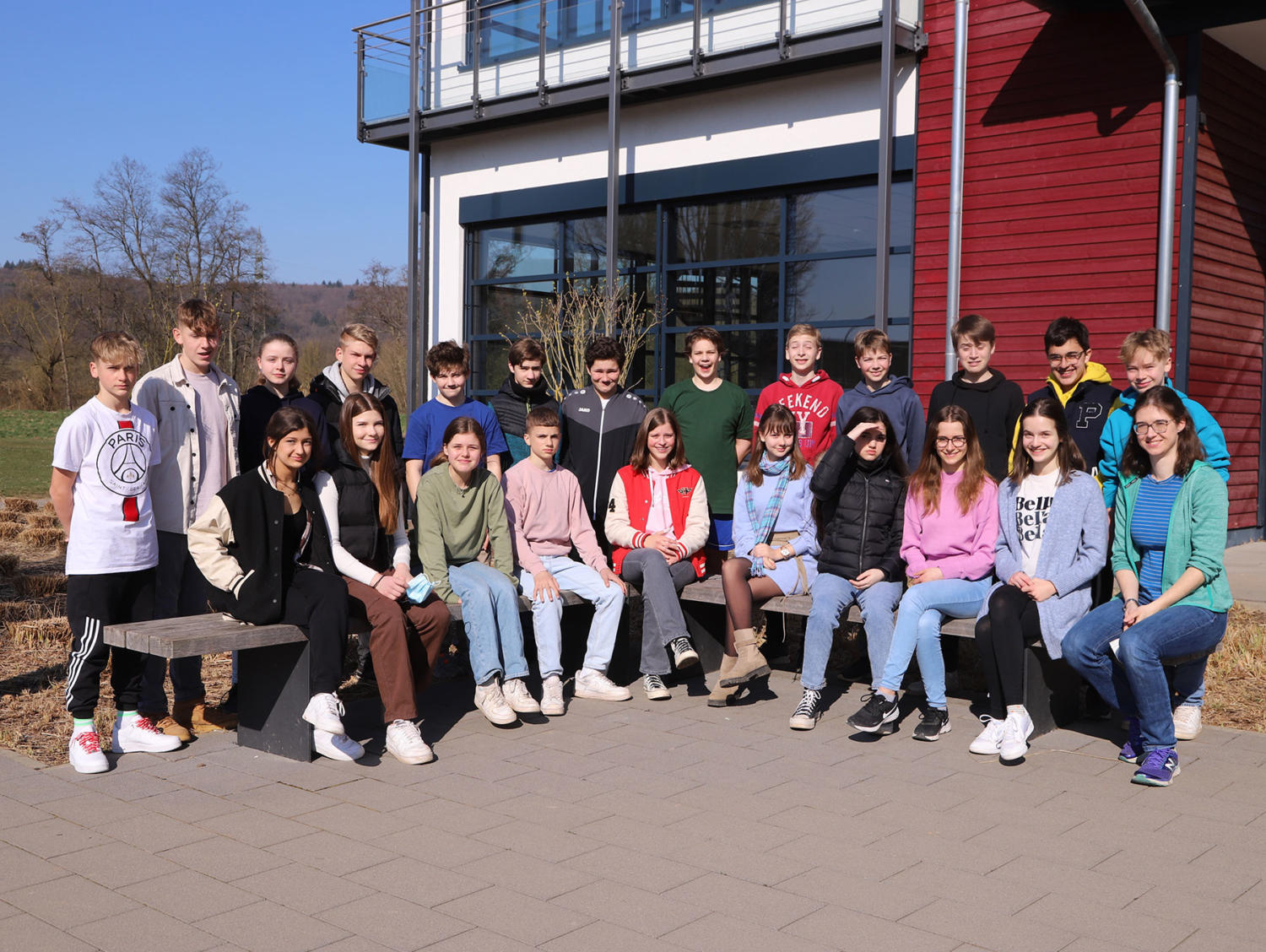
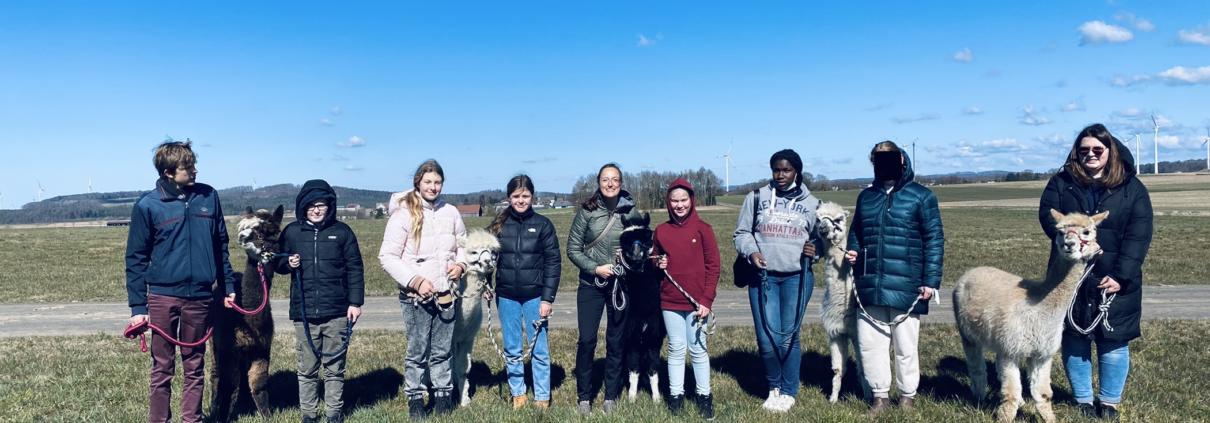
Spring is definitely in the air, so the boarding school community took advantage of the weekend to enjoy many outdoor activities together. Finally barbecuing outdoors again, experiencing nature up close on the water while rowing, or hiking across the fields with alpacas—the Steinmühlers’ hearts blossomed this weekend! And best of all: with a little rowing, we were able to raise 650 euros as a donation for the “Starthilfe für Kinder aus der Ukraine” project in Marburg.
Barbecues in the on-site gardens
And so, three residential groups took advantage of the nice weather on Friday evening to kick off the weekend with a barbecue. “Finally, we’re sitting outside together again!” was the exclamation heard from everyone, accompanied by broad grins.
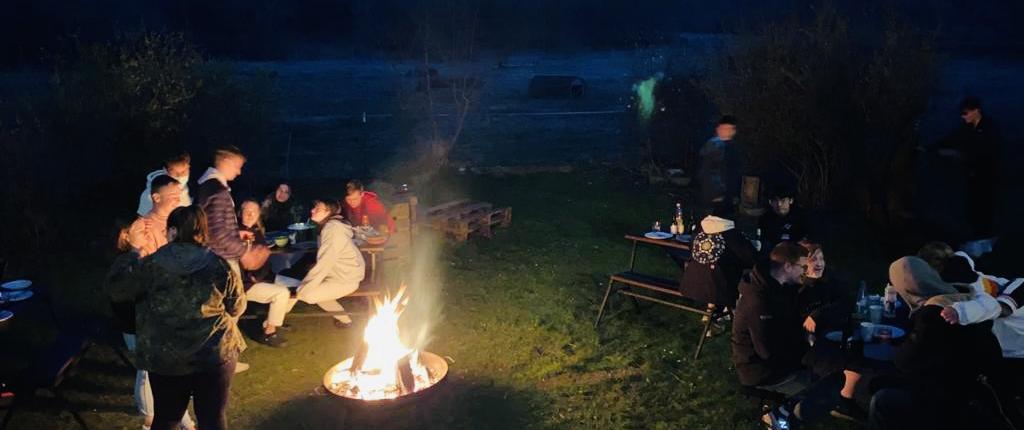
As darkness fell, a bonfire was lit in the Westfalenhaus garden so that everyone could linger a little longer and enjoy each other’s company.
Pet the alpacas or play sports?
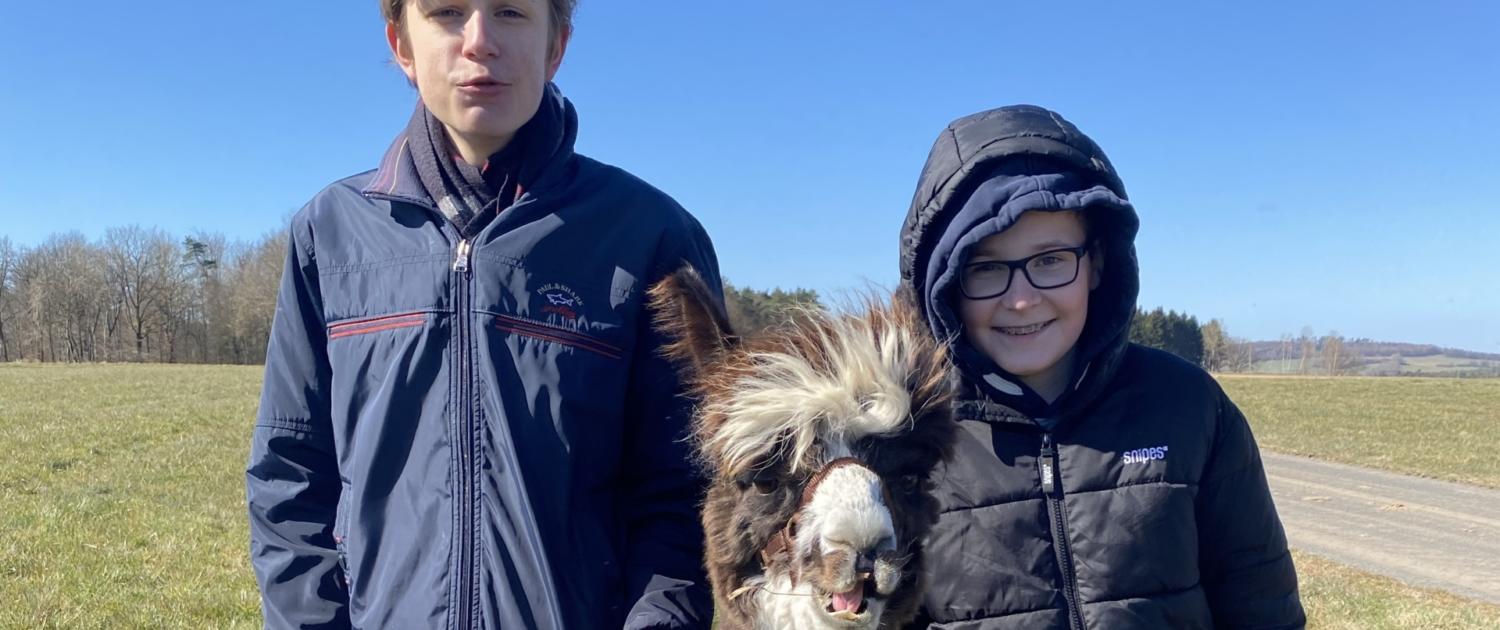
On Saturday, the students were treated to a variety of activities. A small group traveled to the Vogelsberg district to roam through fields and meadows with five adorable alpacas. 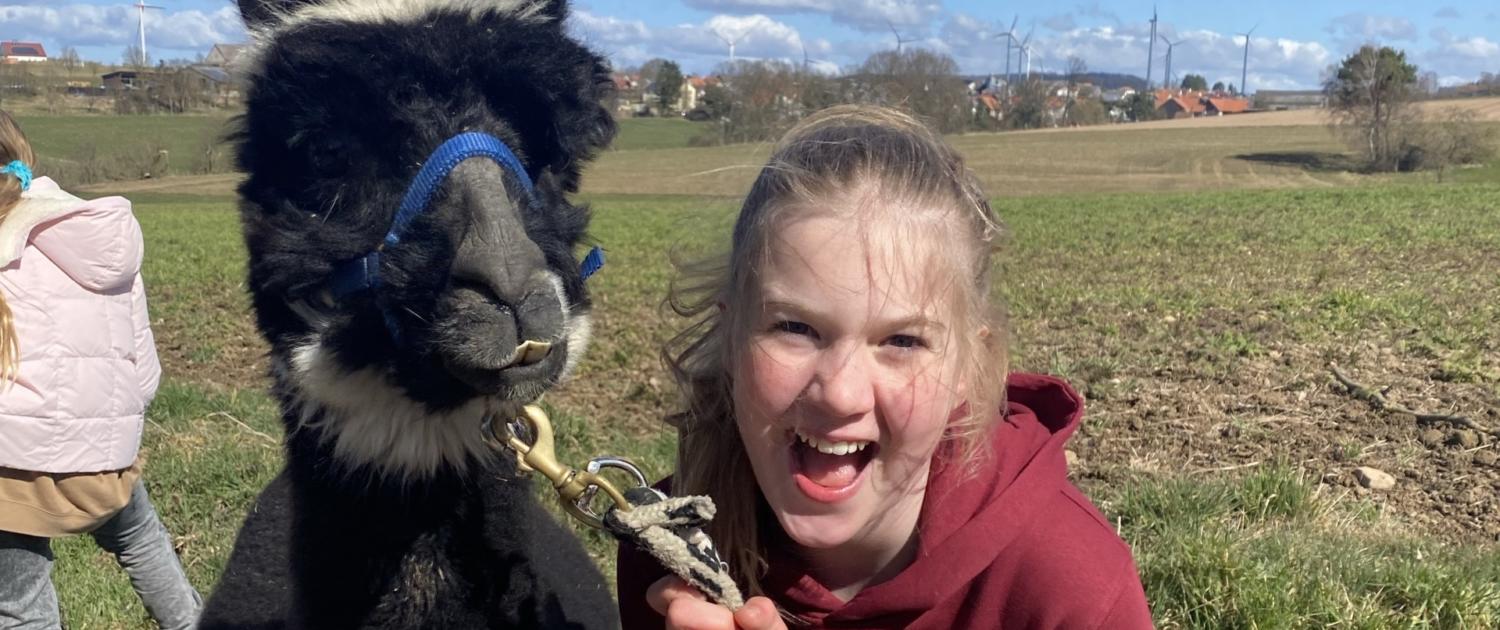
“They’re so fluffy!” “They hop around so cutely!” “Oh my gosh, how adorable they are when they talk to each other!” The little herd of alpacas had taken the students’ hearts by storm.
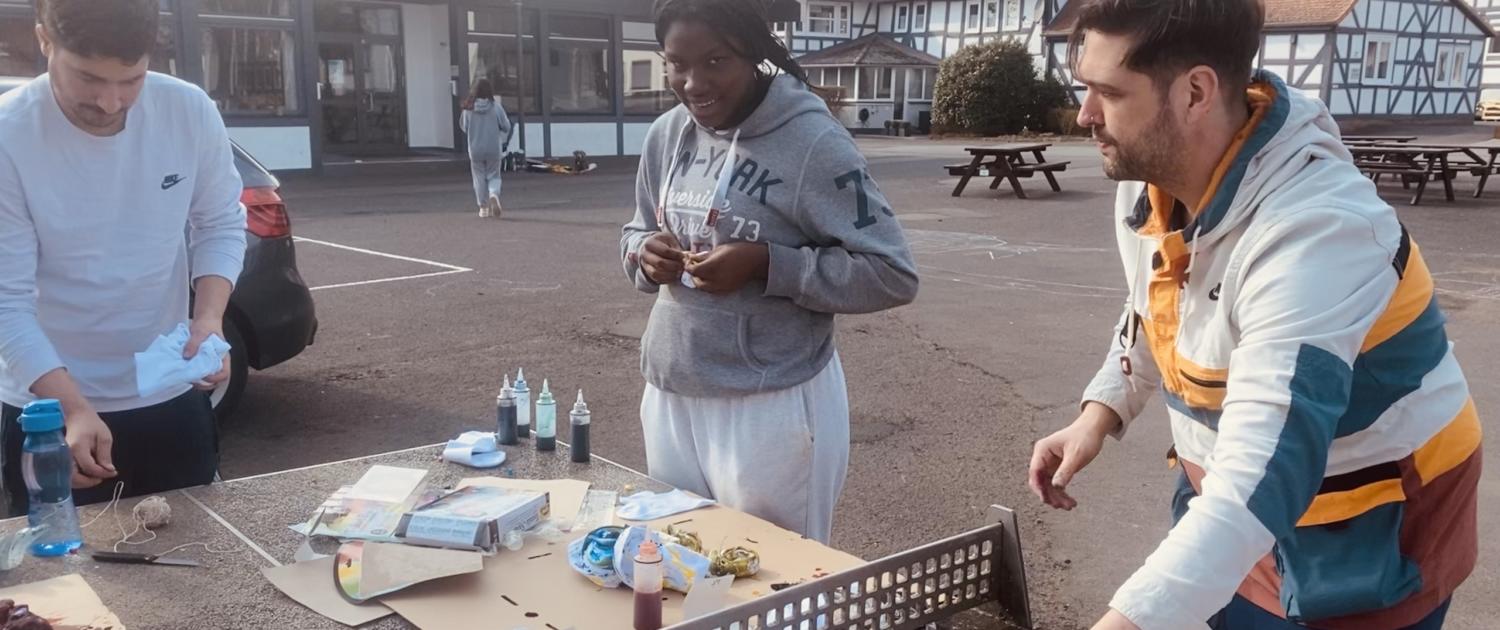
And for those who still hadn’t had enough variety over the weekend, there was the chance to burn off some energy in the sun with outdoor boxing training or Ultimate Frisbee on the sports field, while other students took it a bit easier by making crêpes together or tie-dyeing socks and T-shirts.
ErgoCup Raises 650 Euros in Donations
This year, Steinmühle also participated for the first time in the ErgoCup, a competition among various boarding schools. Eight students—both day students and boarding students, most of whom train with Rudern und Sport Steinmühle Marburg e.V.—represented our school. Delegations from the boarding schools competed simultaneously via a live online broadcast: Which group would complete the two kilometers on the ergometer the fastest? The male rowers from Steinmühle even took first place in the 16–17-year-old category with Lennart Holly and Fabian Seidel, as well as in the 18+ category with Maxim Dyck, Jamal Jaber, and Sarah Kremer.
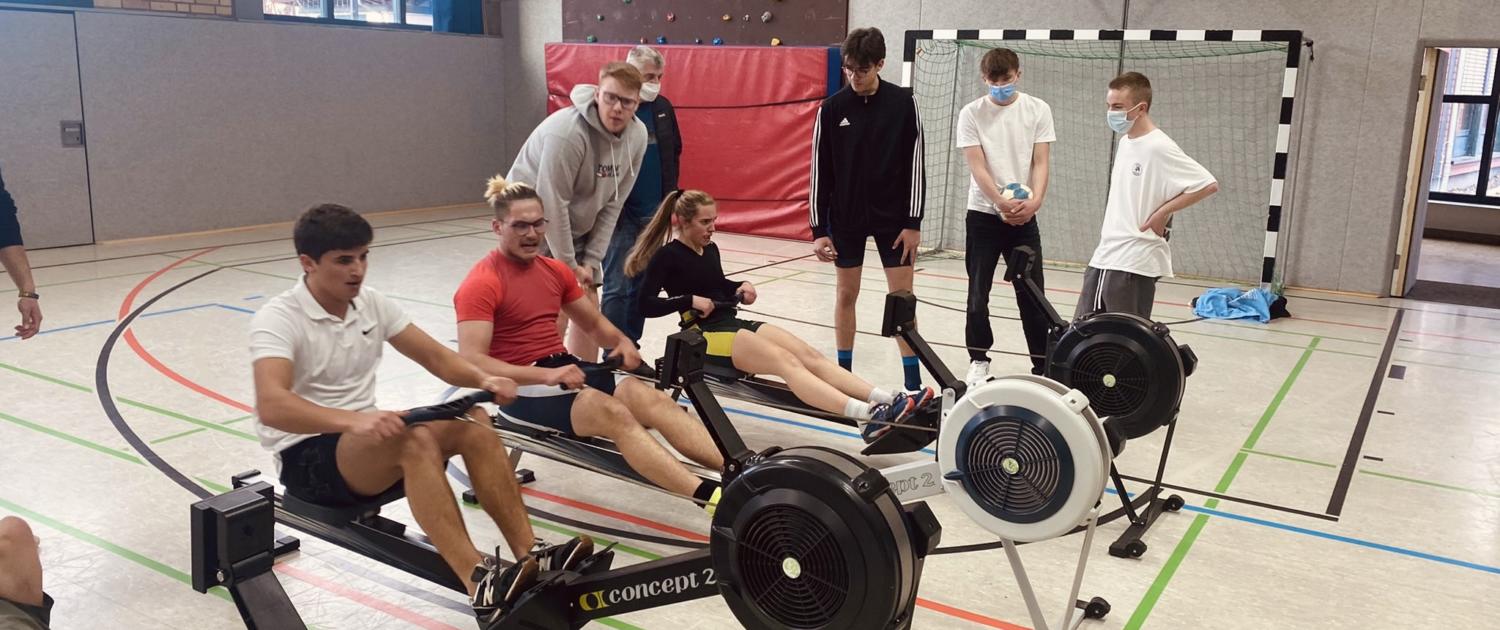
In the competition category “30 Minutes of Rowing—Most Kilometers Count,” boarding school director Anke Muszynski launched a spontaneous fundraising campaign: For every kilometer row, Steinmühle donated 15 €, and school principal Bernd Holly added another 200 €. This motivated students and teachers to give their all on the ergometers. By the end of the day, a total of 650 euros had been “rowed” together, which was then donated to the “Starthilfe für Kinder aus der Ukraine” project in Marburg—a joint initiative of Steinmühle and the Rotary Club of Marburg.
The ErgoCup will take place again next year—and hopefully in person this time.
Experiencing Self-Directed Learning Even in Their Free Time: Students Organize Their Own Clubs
But anyone who actually wanted to give it another try on the water had the opportunity to do so through students Maxim and Sarah in the “Rowing for Beginners” class.
At first, they were very wobbly and out of control, but by Sunday afternoon, two rowboats filled with absolute beginners were gliding across the water almost like pros, thanks to the help of Sarah and Maxim. “That was so exciting!” said Francine, an educator who also took part in the event. “And it was so nice to see students teaching us something. I hope Sarah and Maxim offer this again—I’d definitely be there!”

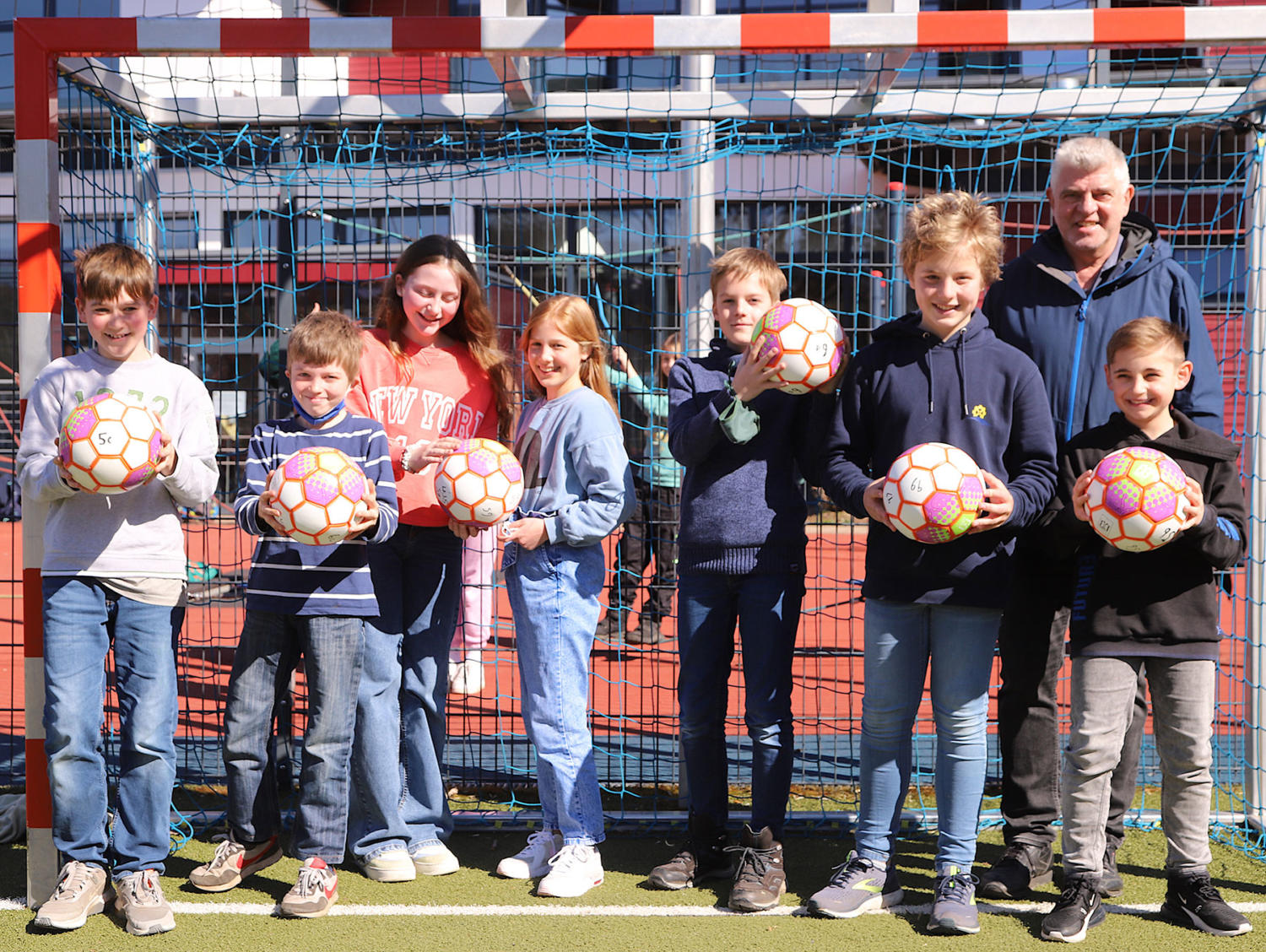
And so it happens time and again that students organize their own clubs with the support of teachers. That’s exactly what Nico and Ian did this weekend. “We felt like playing soccer. So we’re starting an initiative around that. And if that brings more people from different dorms together again, that’s great!” explains student Nico, describing his idea.
With this motivation, the boarding school community is starting the new week. The next boarding school weekend is scheduled for two weeks from now—we’re excited to see what activities await us then.