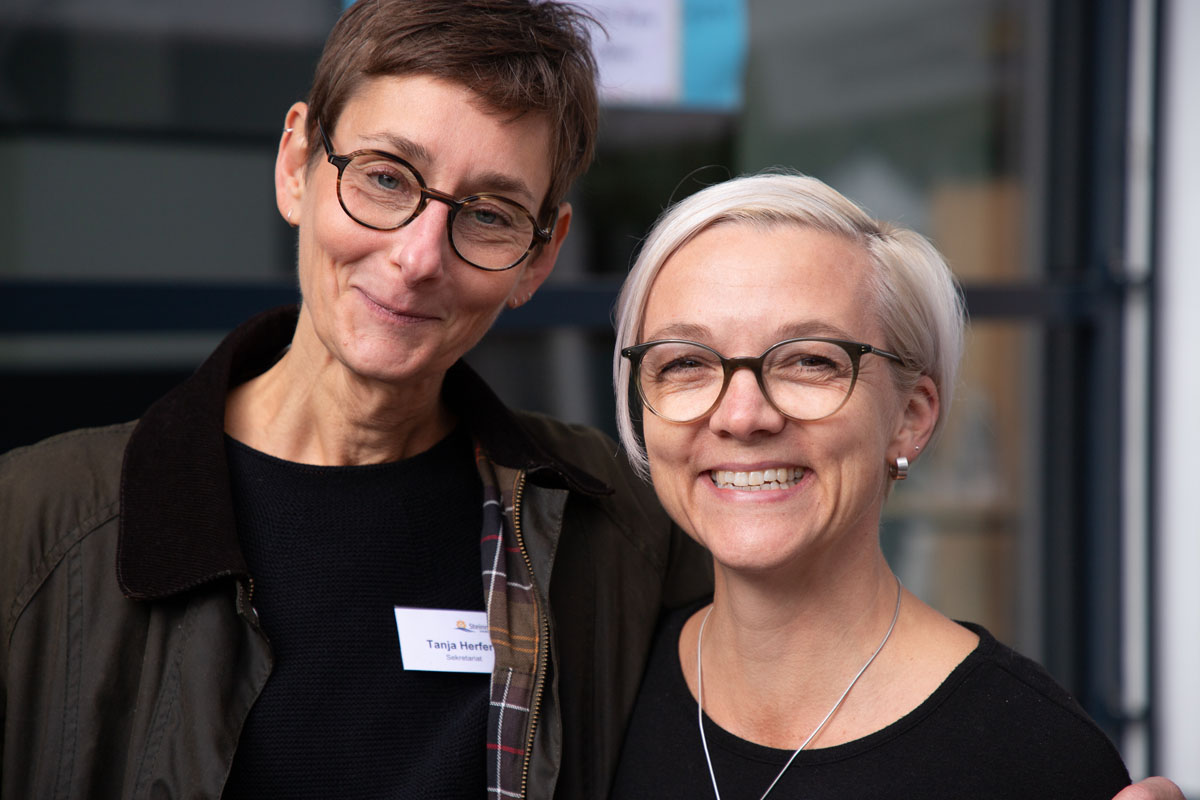
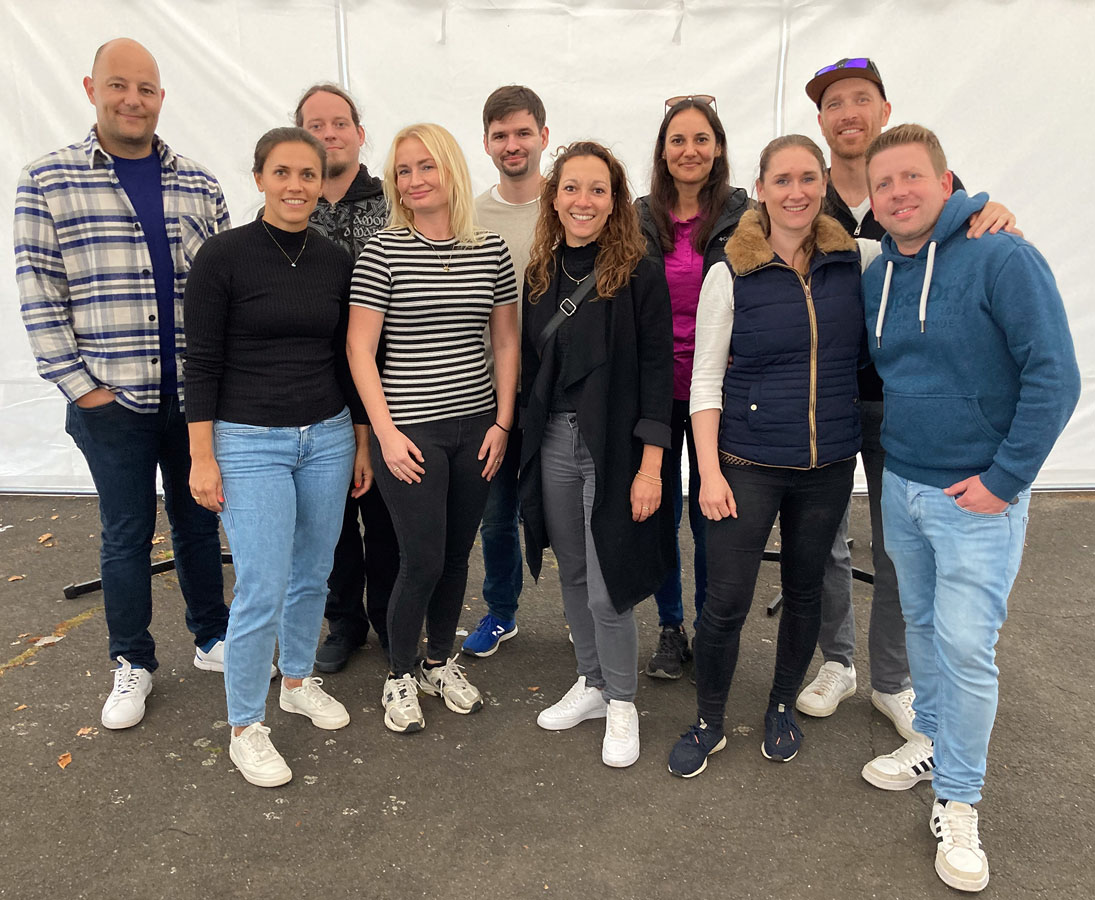
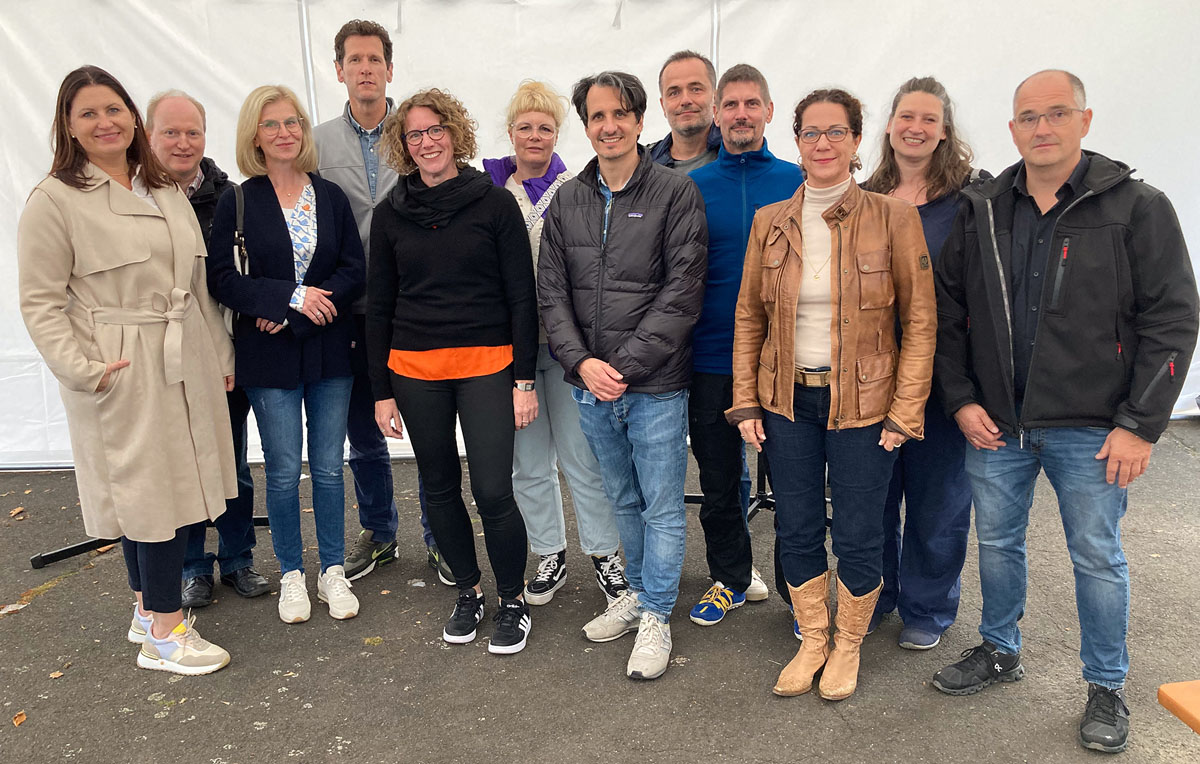
From September 18–21, the DIV (Die INTERNATE VEREINIGUNG e.V.) met at the Steinmühle as part of a training program for quality management officers. The DIV is an association of renowned boarding schools in Germany and Switzerland. The boarding schools undergo regular internal and external evaluations, collaborate with research institutions and universities, and place great emphasis on the professional development of their staff.

Quality management—including the planning and implementation of quality improvement initiatives at member boarding schools and within the association—is one of the DIV’s core responsibilities.

In 2014, the DIV General Assembly therefore unanimously adopted the “Framework Concept for Quality Management in Boarding Schools.” The gradual implementation of the quality standards set forth in this document is mandatory for DIV members and is reviewed at regular intervals.

Since March 2021, the DIV has been training quality management officers at each of its member boarding schools; these officers are responsible for establishing and gradually implementing the DIV’s framework for quality management in boarding schools.

The first generation of QMBs successfully completed their training in March 2022.

The participants in the current training program are already the second generation of QMBs, as the DIV is constantly welcoming new boarding schools into its ranks or existing members wish to have another QMB trained.

As part of their practical training, which is specifically tailored to the boarding school context, participants will acquire not only the theoretical foundations of quality management and hands-on experience with supporting tools, but also the ability to conduct quality management audits at member institutions.

In this regard, the DIV places particular emphasis on ensuring that trainees receive a quality management (QM) certification in accordance with the requirements of the DIN EN ISO 19011 audit standard.

The training program is divided into several sessions (some in-person, some online). Following an initial Zoom kick-off at the end of June 2023, the current session at the Steinmühle marked the first in-person block; two additional training blocks will follow before the second generation of QMBs is expected to complete their training in September 2024.

In addition to the technical content, participants were also treated to an engaging social program. A guided tour of Marburg’s picturesque Upper Town and a group visit to one of the university town’s most charming venues, the “Sonne,” rounded out the conference.

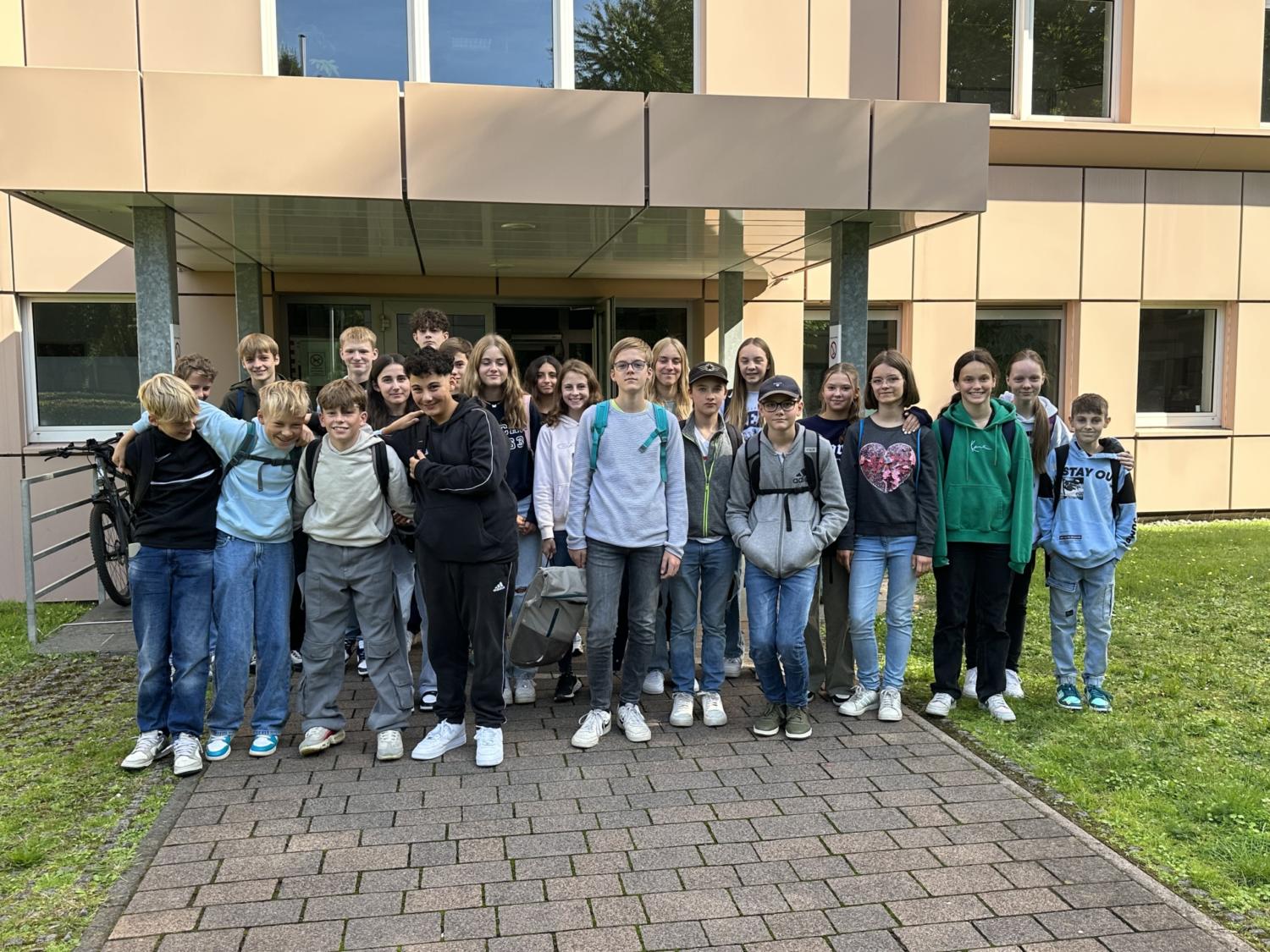
On September 25, we, Class 8a, visited the Marburg Regional Court on Universitätsstraße as part of the “Youth and Crime” project, accompanied by our teacher, Dr. Claudia Röder. The visit was made possible by the father of one of our classmates, who works as a judge at the regional court; he also gave us a tour of the building and answered our questions. The date was chosen so that we would have the opportunity to observe a criminal trial.

We met at 8:10 a.m. at the courthouse on Universitätsstraße in the city center. Before the trial began, we had a little time to look around the building. This gave us the opportunity to see the holding cells. Defendants can be detained there on the day of their trial. These cells resemble prison cells, with a toilet, sink, table, and chair—though without a bed.


Inspection of ankle restraints and protective gear

Afterward, we spoke with a member of the security staff. Among other things, court officers are responsible for escorting and guarding prisoners in the courthouse. We were allowed to look at the equipment used for this purpose, such as handcuffs and leg irons, as well as the court officers’ protective gear.

Since the trial we wanted to attend was being held in a smaller courtroom, we took a look at the building’s largest courtroom—the jury courtroom—which was not in use that morning. It is a fairly large, high-ceilinged room, almost the size of a small gymnasium, and it also has a section for spectators. There were also many chairs for all the defendants and plaintiffs, along with their respective attorneys.

Shortly before the hearing, we took a look at a smaller courtroom at the regional court and then went to the district court shortly afterward, where the hearing took place.

The hearing was actually supposed to begin at 9 a.m. However, due to a road closure on the B3 caused by an accident, some of the participants—including the judge—were delayed, so the start of the hearing was postponed by one hour to 10 a.m.


Surveillance video from the crime scene

The criminal case heard in court involved a charge of aggravated assault and illegal possession of a weapon. The incident in question took place in Marburg in August 2022. The defendants were an 18-year-old at the time of the crime and his adoptive father. The younger of the two was accompanied by a lawyer. The plaintiff did not appear at the hearing. The trial was presided over by Juvenile Court Judge Kai Michel Dronka, and the prosecution was represented by the public prosecutor.

At the start of the trial, surveillance video from the crime scene was first reviewed, followed by an interrogation of the two defendants by the judge and the prosecutor. The younger defendant admitted to possessing the weapon; both described the physical altercation with the plaintiff as self-defense. In addition, two female witnesses were questioned; one refused to testify, while the second confirmed the defendants’ statements.


Penalty for Absence on the Day of the Hearing

After the questioning ended, a 15-minute break was scheduled. Since the hearing had started an hour later than planned, we didn’t have time to wait for the verdict and had to head back to school. Later at school, we learned that the older of the two defendants had not received a sentence. The younger one was sentenced to 80 hours of community service for illegal possession of a weapon. The plaintiff was also fined 300 euros or sentenced to three days in jail for being absent on the day of the hearing, because the judge did not accept his doctor’s note.

It was a very successful morning during which we were able to get a little insight into the day-to-day workings of the justice system and the courts. Just seeing the inside of the courthouse—which we’d otherwise only seen in photos in the newspaper—was interesting. Even though we had to head back to school before the verdict was handed down, the day was well worth it.

Photos were also taken during the visit that will serve as a memento of the day at the regional court.

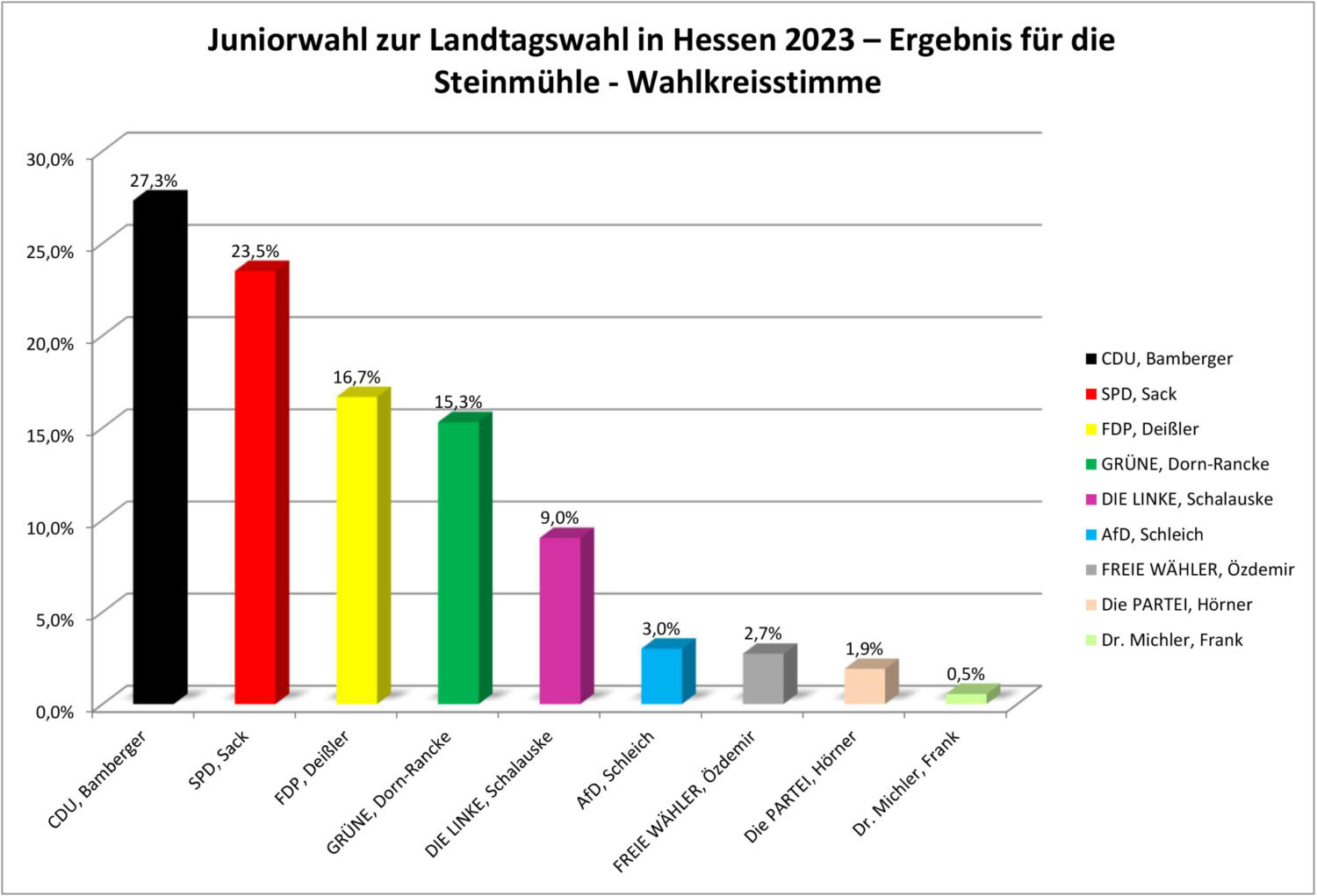
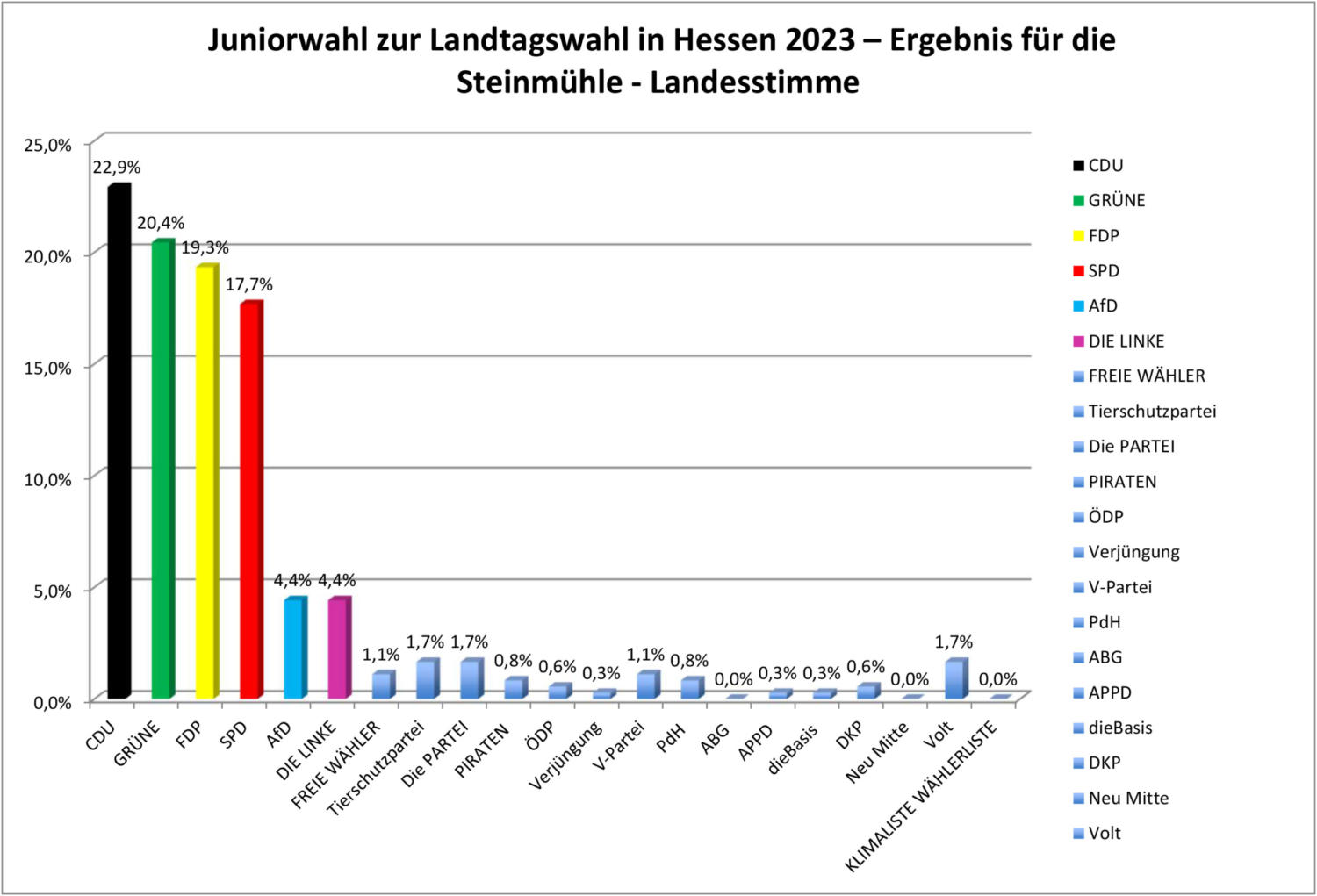
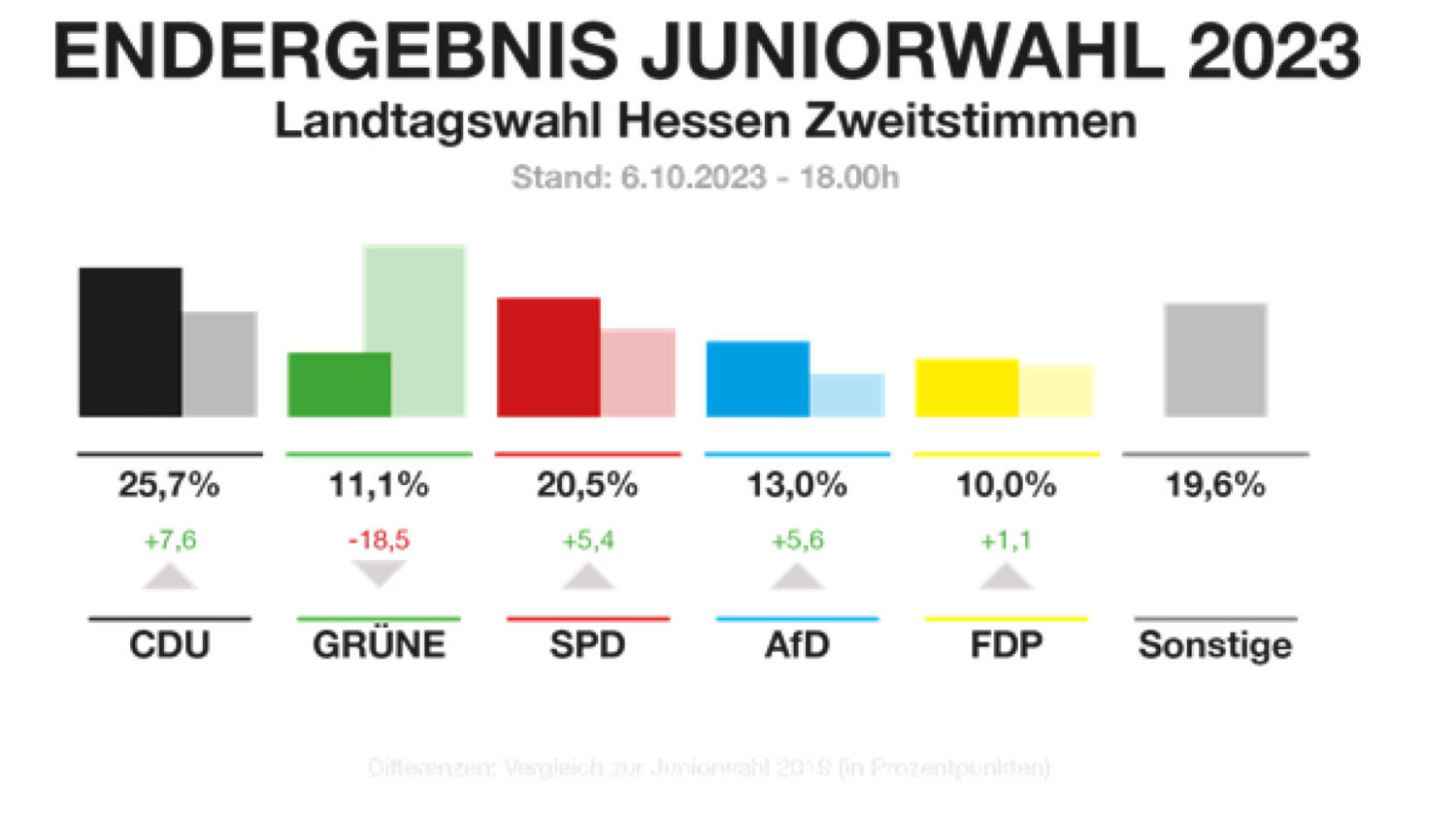
As part of a school project on political education, the “Junior Elections” were once again held at Steinmühle for students in grades 9–13 in the run-up to the state legislative election on October 8. As subject teacher Eva Katharina Rink reported, the students cast their constituency votes and state votes on October 4 and 6, respectively. The charts show how voting took place at our school—and, with regard to the state-wide vote, also in comparison to the overall results of all participating schools in Hesse. Voter turnout at Steinmühle, at 85.1 percent, was higher than the state average (82.7 percent).

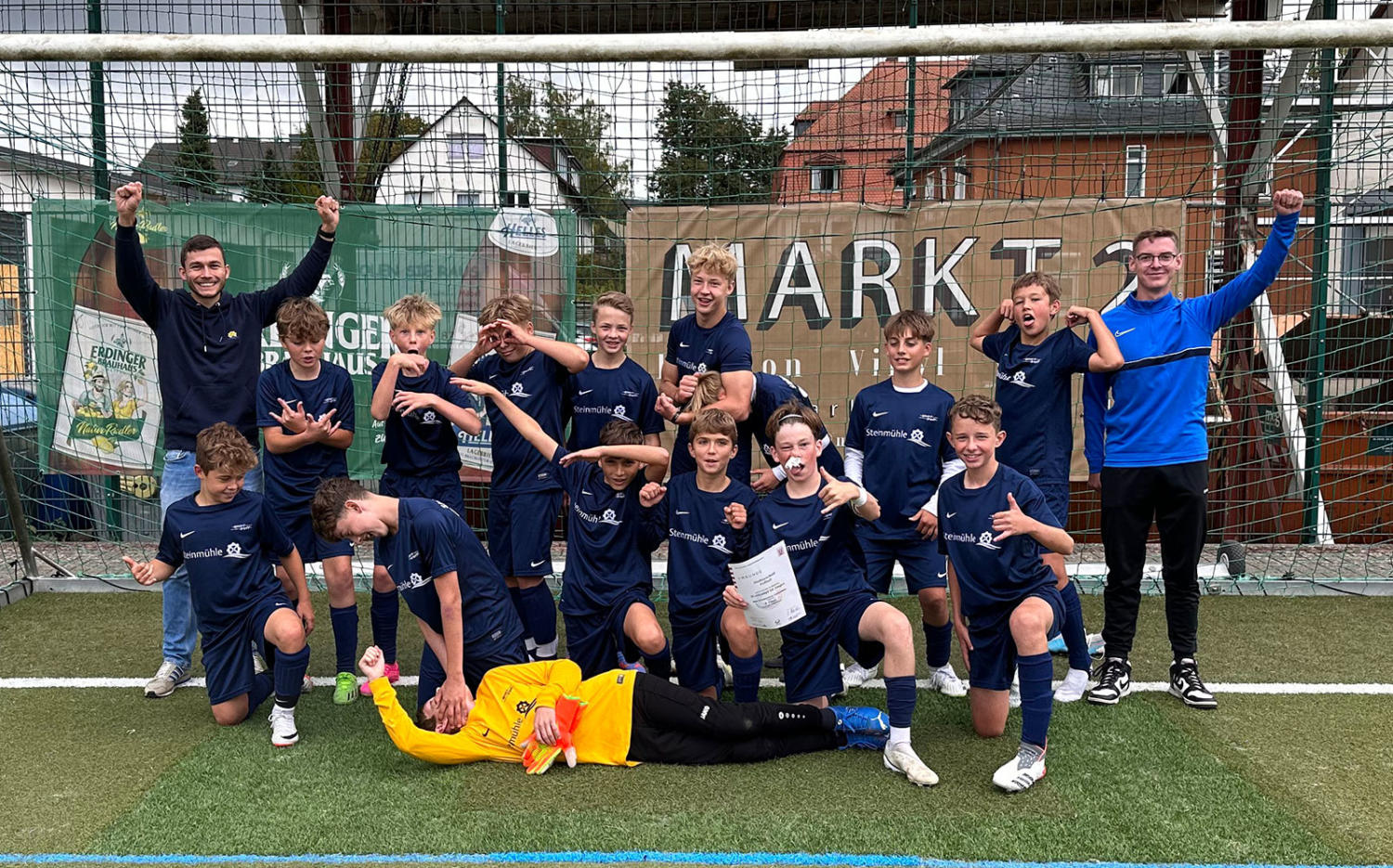
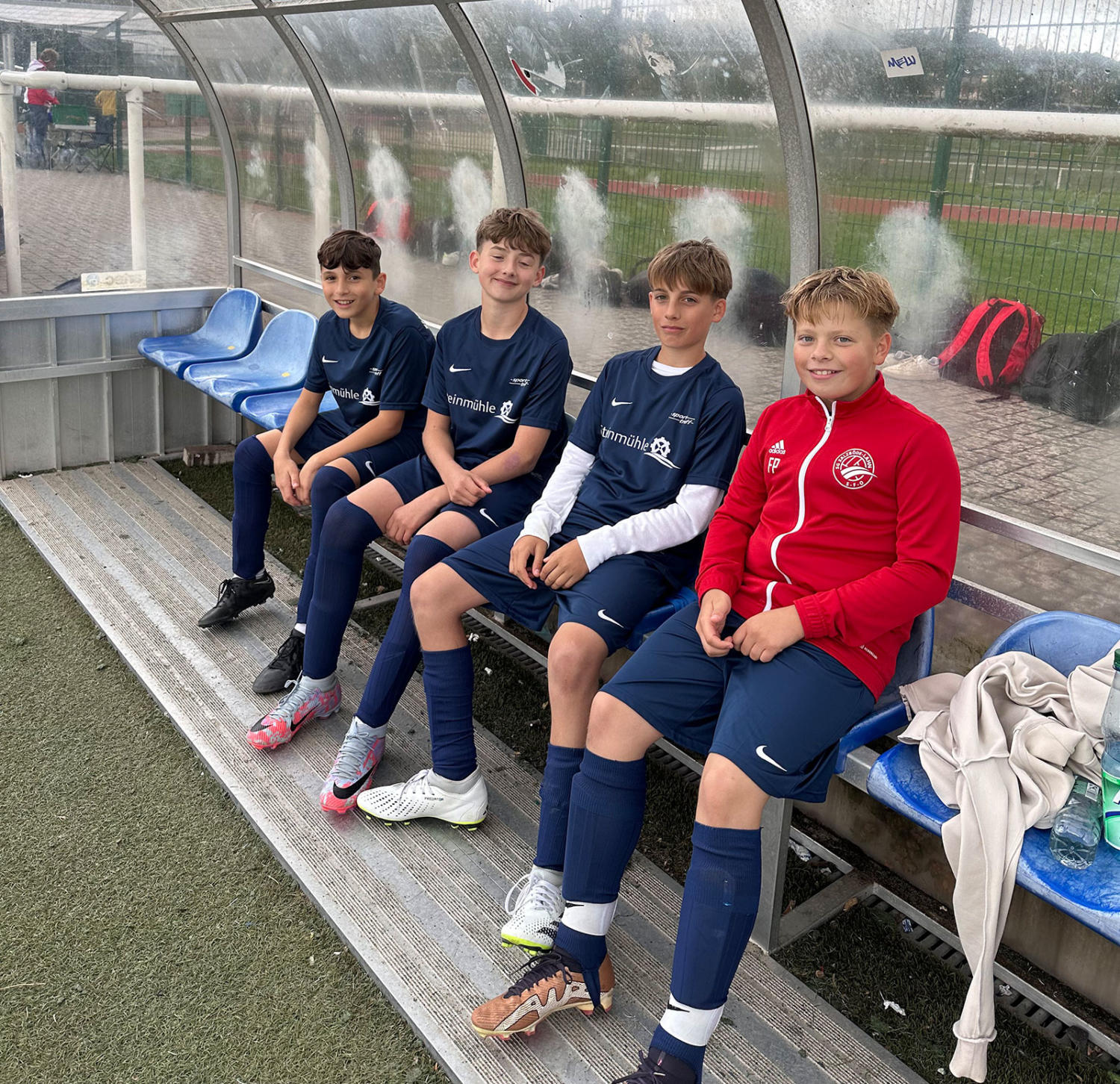
On October 4, a team made up of students from the Steinmühlen classes of 2010 and 2011 competed in the Marburg city soccer tournament. Steinmühlen teacher Tim Elmshäuser reports:

The team played in a group with the city schools: Elisabethschule, Philippinum, and Martin Luther School. In the first game, they faced the MLS. Although our boys dominated the match, the ball just wouldn’t go in the net. So the game ended in a scoreless 0–0 draw. In the second game, our team put on a strong performance against the Philippinum and won 3–0. In the final match, they needed a victory by a margin of two goals to move ahead of MLS, which was tied on points. With a commanding performance and a 4–0 win, our boys defeated the Elisabethschule and secured a well-deserved first-place finish.

So the next round—the district finals—is coming up in March, where our team will once again try to prove itself. We’re already keeping our fingers crossed for them!

Players: Jaden Vogel, Philian Merle, Lars Dittrich, Len Hülsbeck, Ben Templer, Thiemo Mimisch, Jonah Isenberg, Felix Martens, Felix Bork, Arthur Böning, Ben Borawski, Paul Sondergeld, Jonas Tierisch, Julius Brückmann, and Fabian Preis.

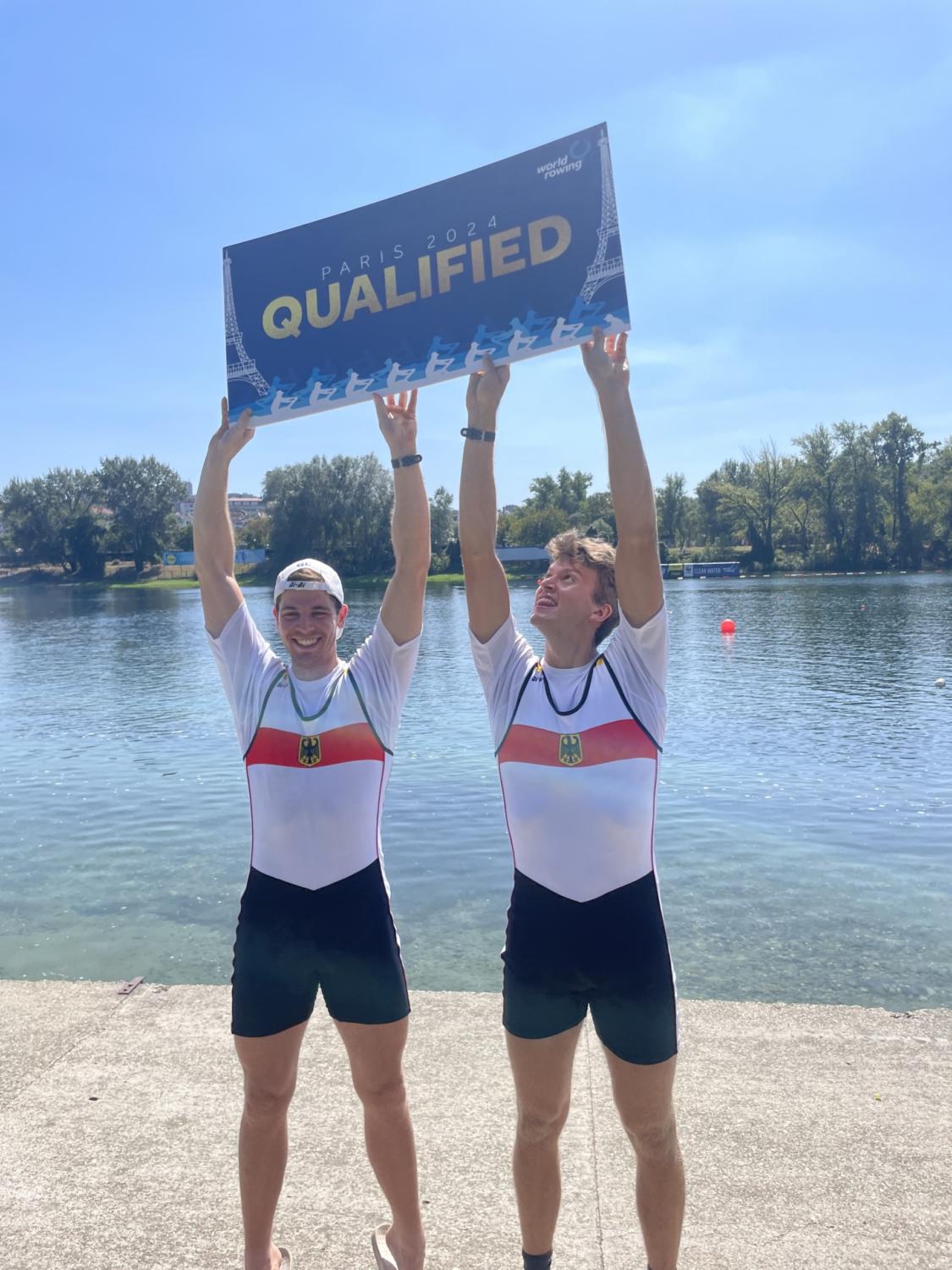
By finishing second in the B final of the World Rowing Championships in Belgrade, Steinmühlen rowers Marc Weber and his partner Jonas Gelsen secured their spot in the men’s double sculls at the 2024 Olympic Games in Paris. This success also means the duo will not have to relocate to the sculling team’s central training base in northern Germany—a move the German Rowing Association (DRV) would have deemed necessary had they failed to qualify. So there’s relief on all sides: about their performance given the strong international field at the World Championships, about the trip to Paris to compete under the Olympic rings, and, of course, about the fact that our rower will continue to train with us. Dear Marc, we’re thrilled and wish you and your rowing partner continued success. Give it your all!

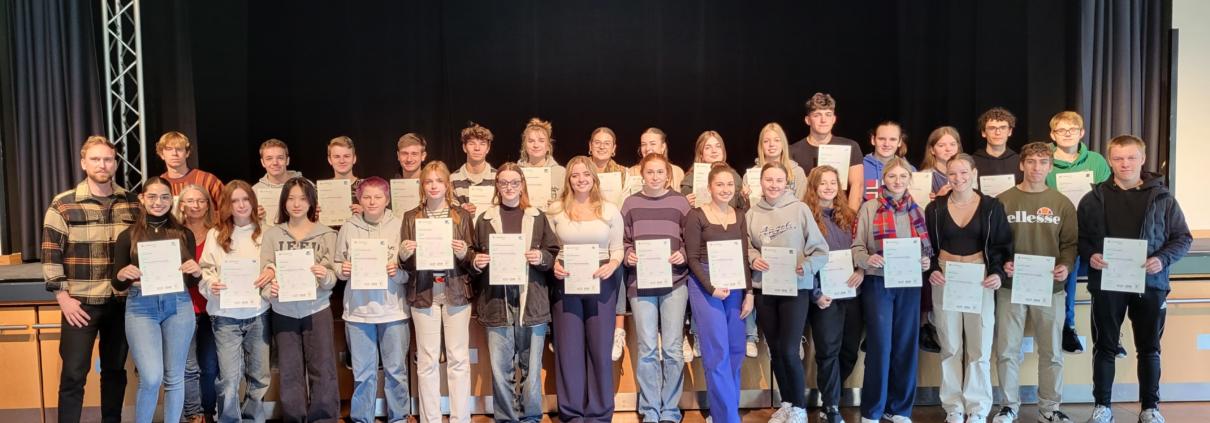
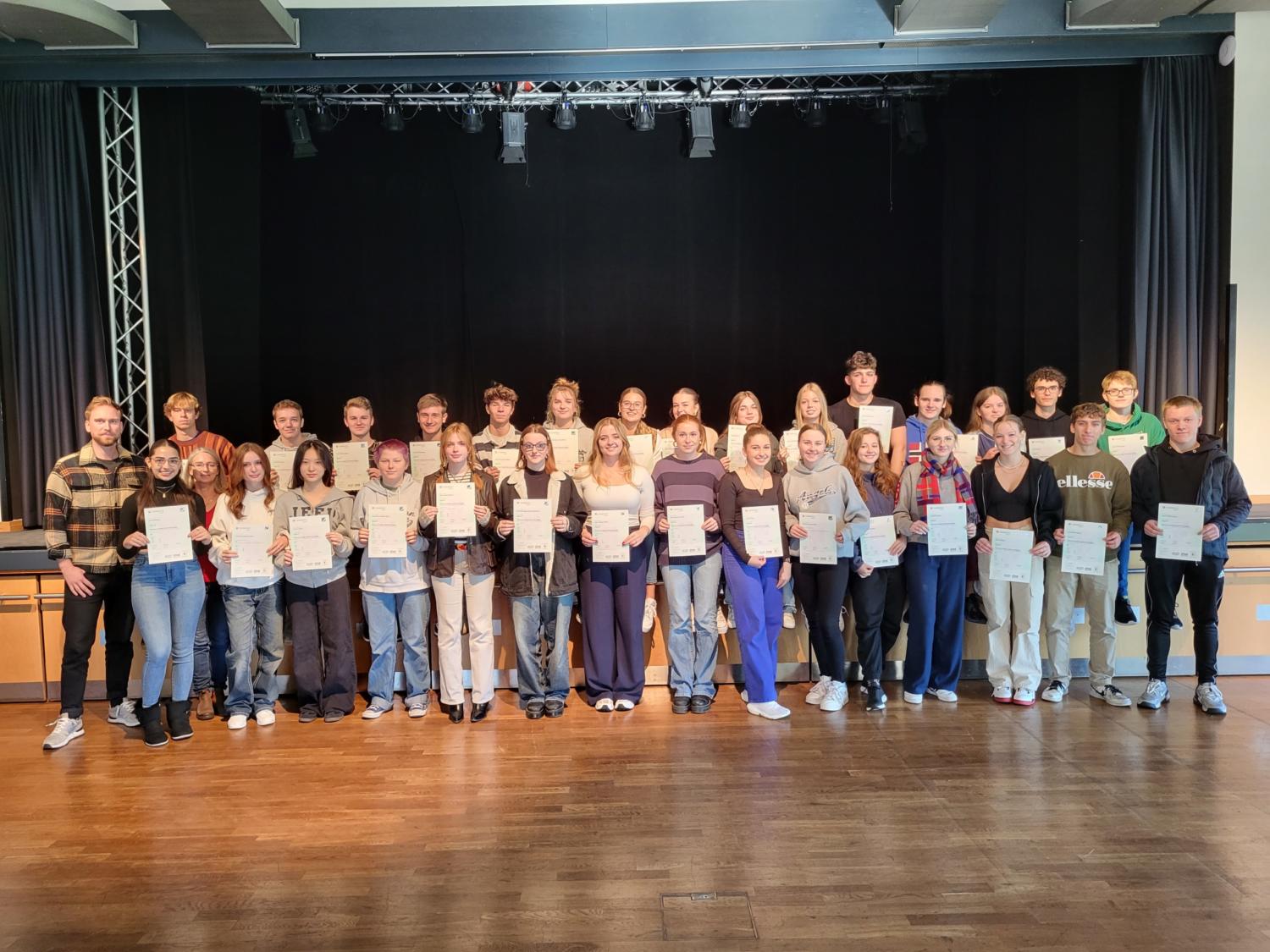
Thirty students earned their Cambridge certificates this summer at Steinmühle High School. “Five of them even achieved Level C1, even though the goal was only B2,” says Principal Björn Gemmer happily. All participants attended the recent certificate ceremony, including their supervising teachers, Nicole Hohm and Matthäus Otte. The following students passed the exams (listed alphabetically): Annabell Bork, Katharina Lena Bradler, Ella Augustine Carroll, Vivien Leonie Ettrich, Julia Fischer, Constantin Franz, Florentine Maya Sophie Havemann, Henning Oskar Hepting, Yewon Jeong, Josefina Justus, Silas Benito Krüger, Jannik Malte Kurras, Felix Christoph May, Arvid Paul Andreas Mayer, Sienna Katharina Jasmin Mayer, Jakob Severin Merle, Emilia Sophie Metz, Selim Erdem Özcan, Tamim Rezek, Anna Franziska Rumpel, Laura Salavati, Emma Sophie Schnabel, Arwen Aimée Seifart, Lillian Cara Camille Seiler, Nina Jolanda Simmer, Juliane Fiona Miriam Spies, Alicia Spitzhüttl, Robin Philipp Tatje, Jan Simon Vollmer, Melina Wagner. In June, when they received their certificates, the graduates were still in 11th grade and are now, accordingly, in 12th grade.

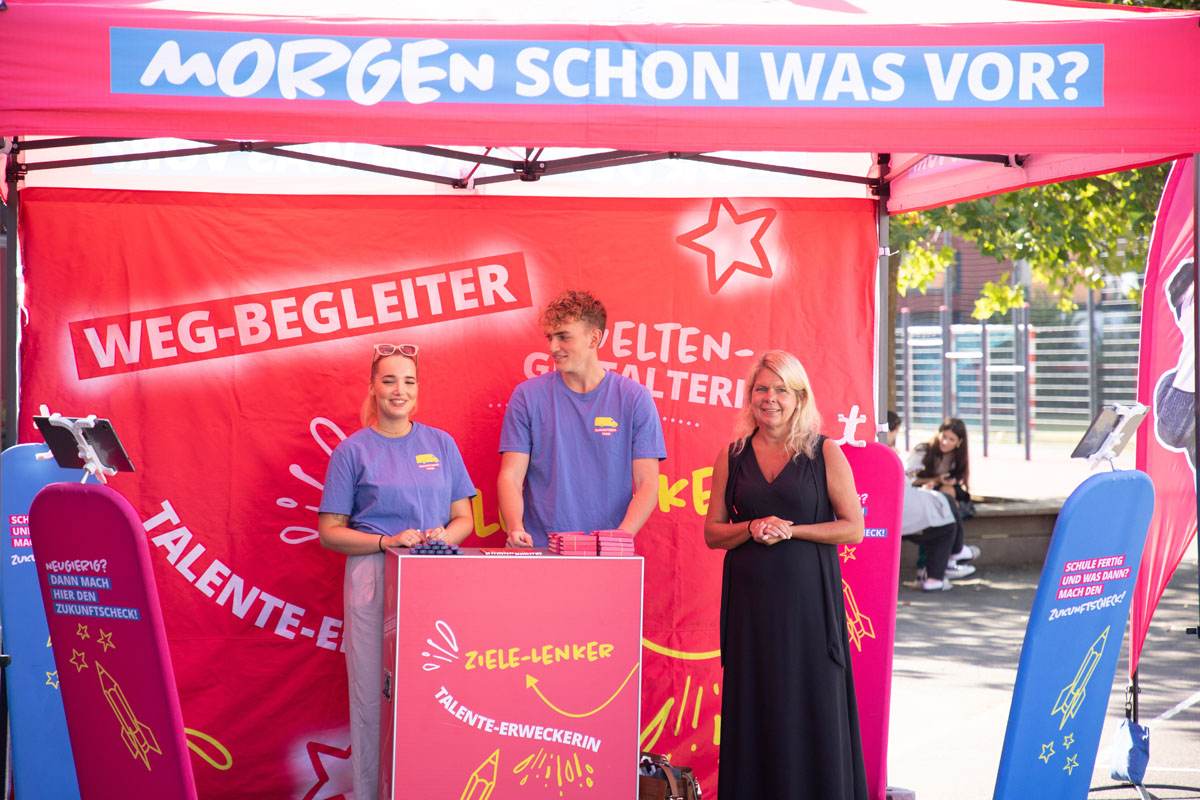
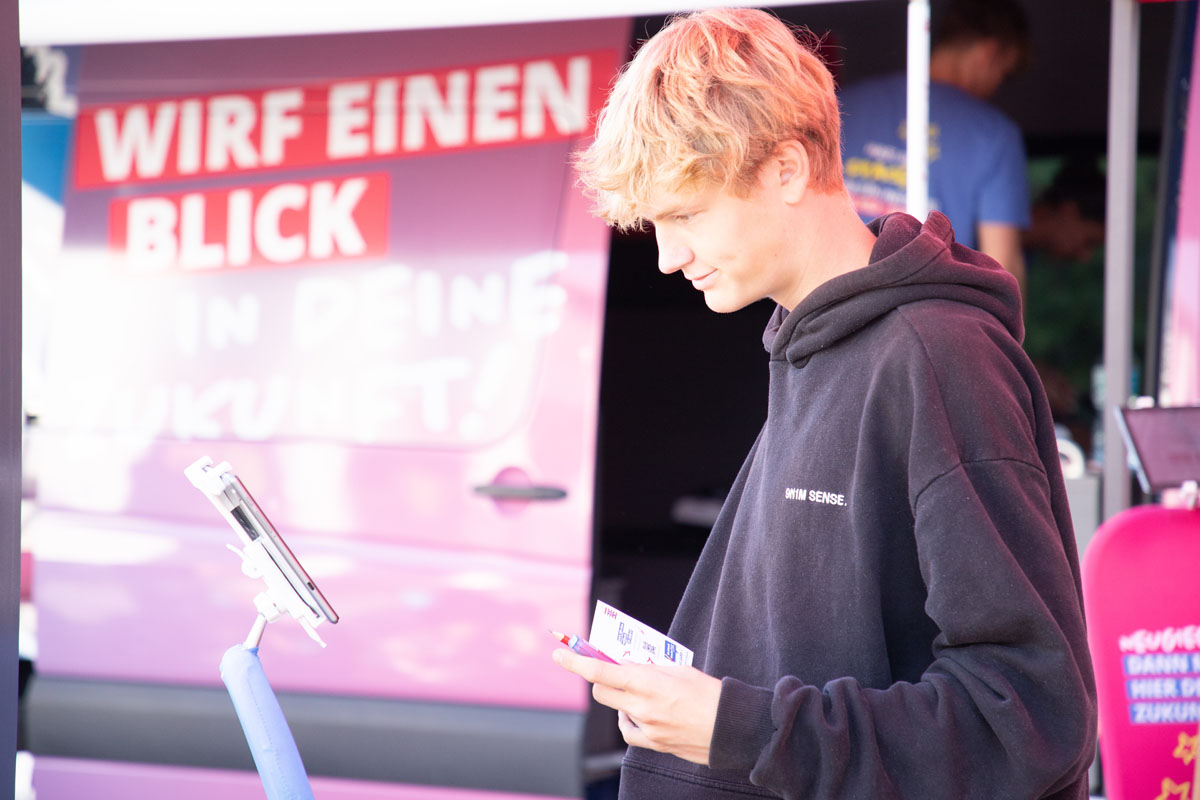
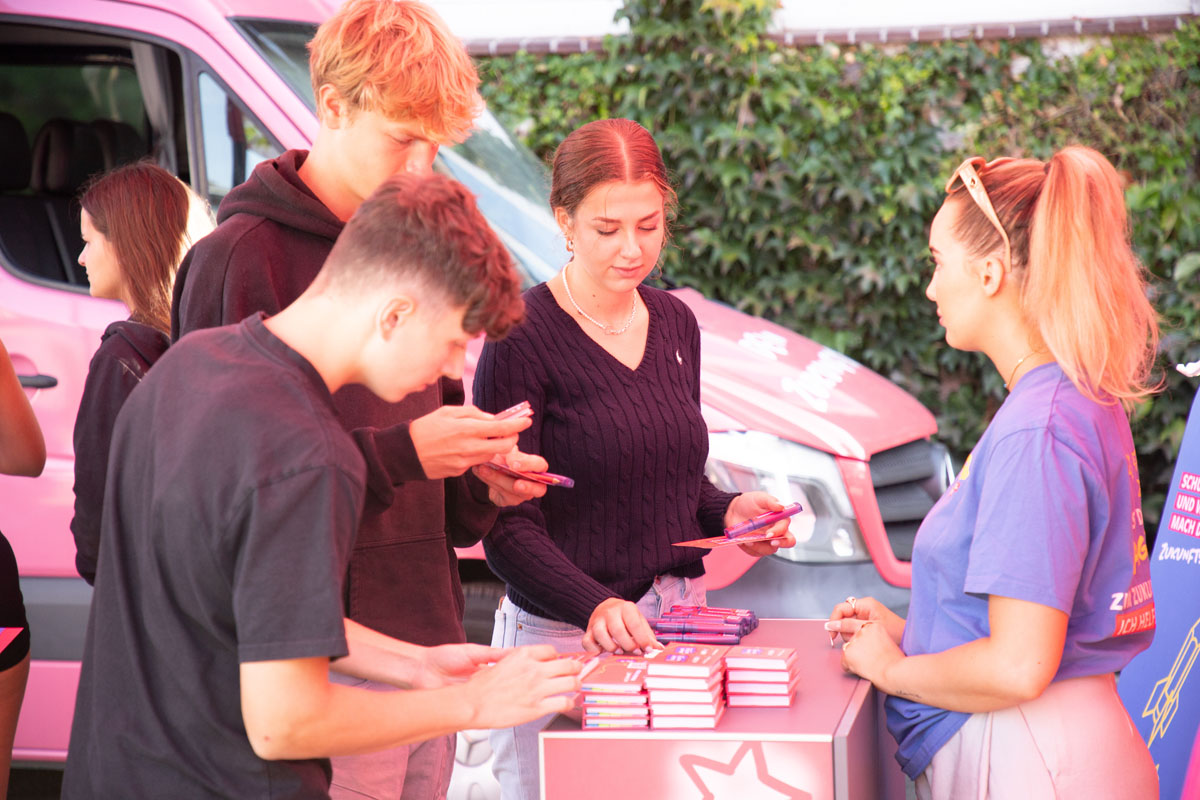
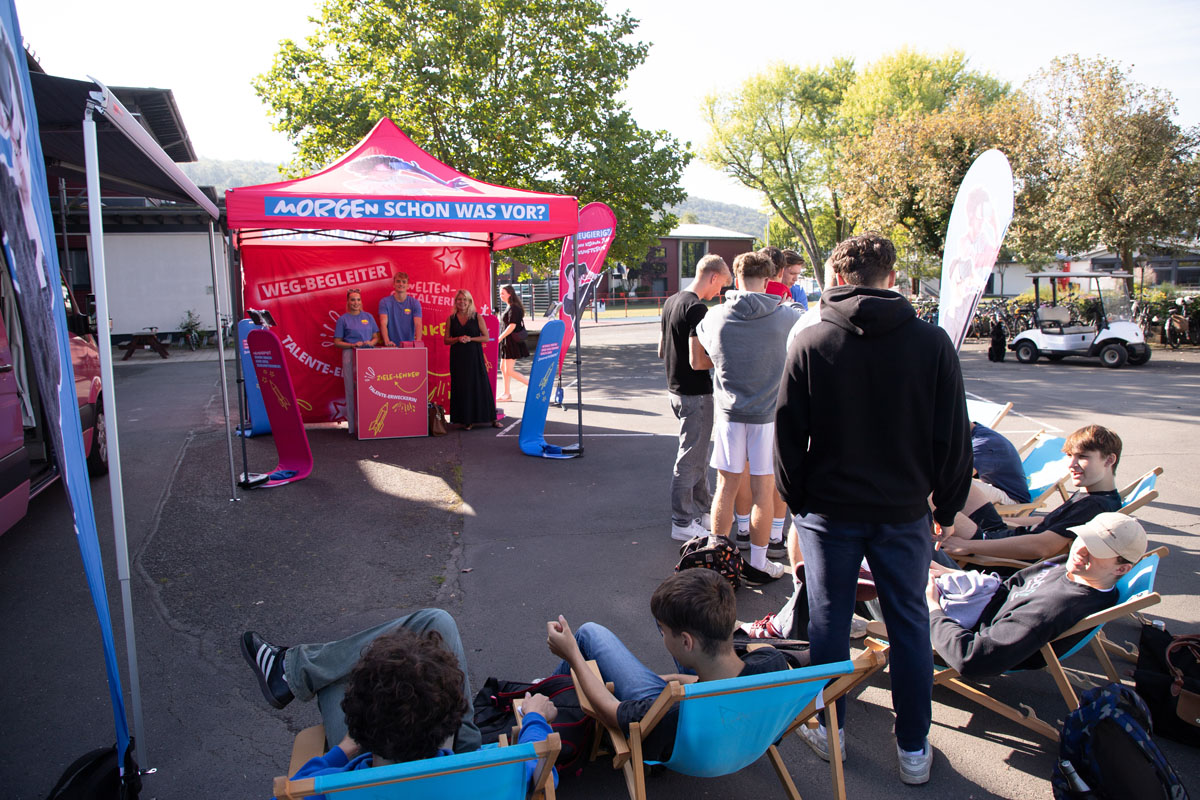
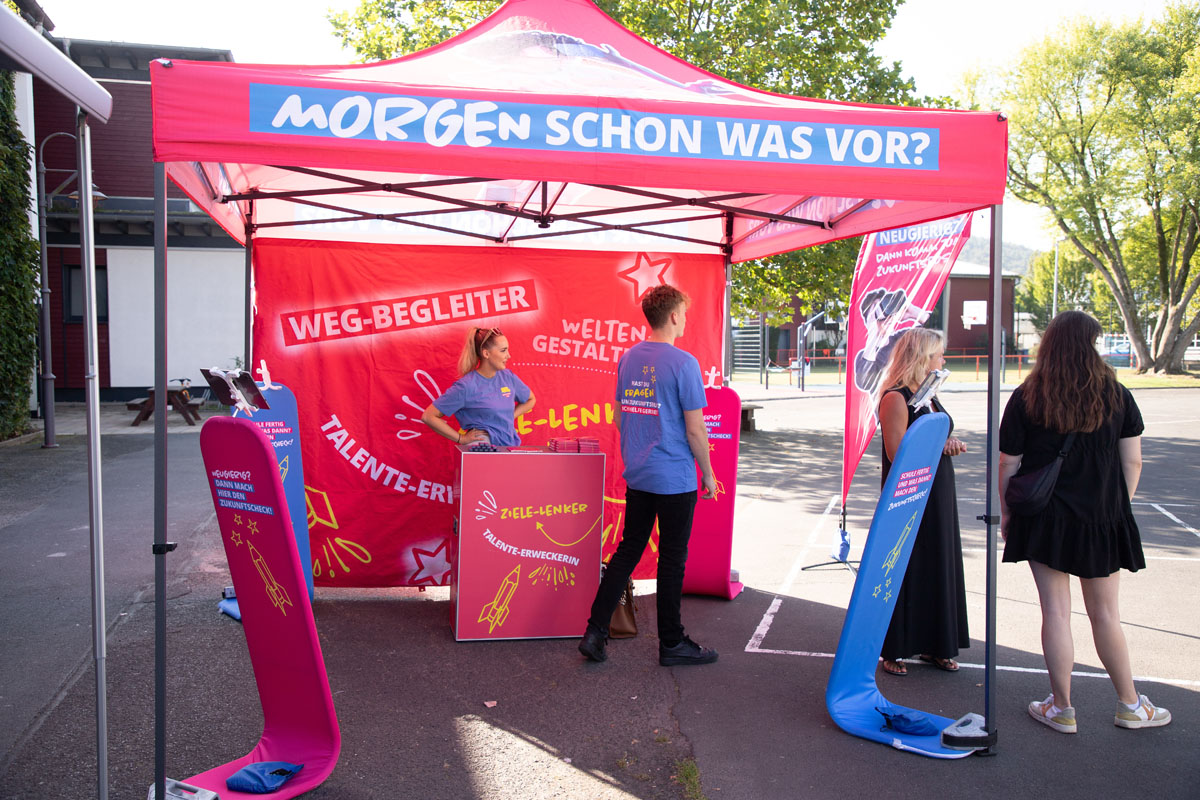
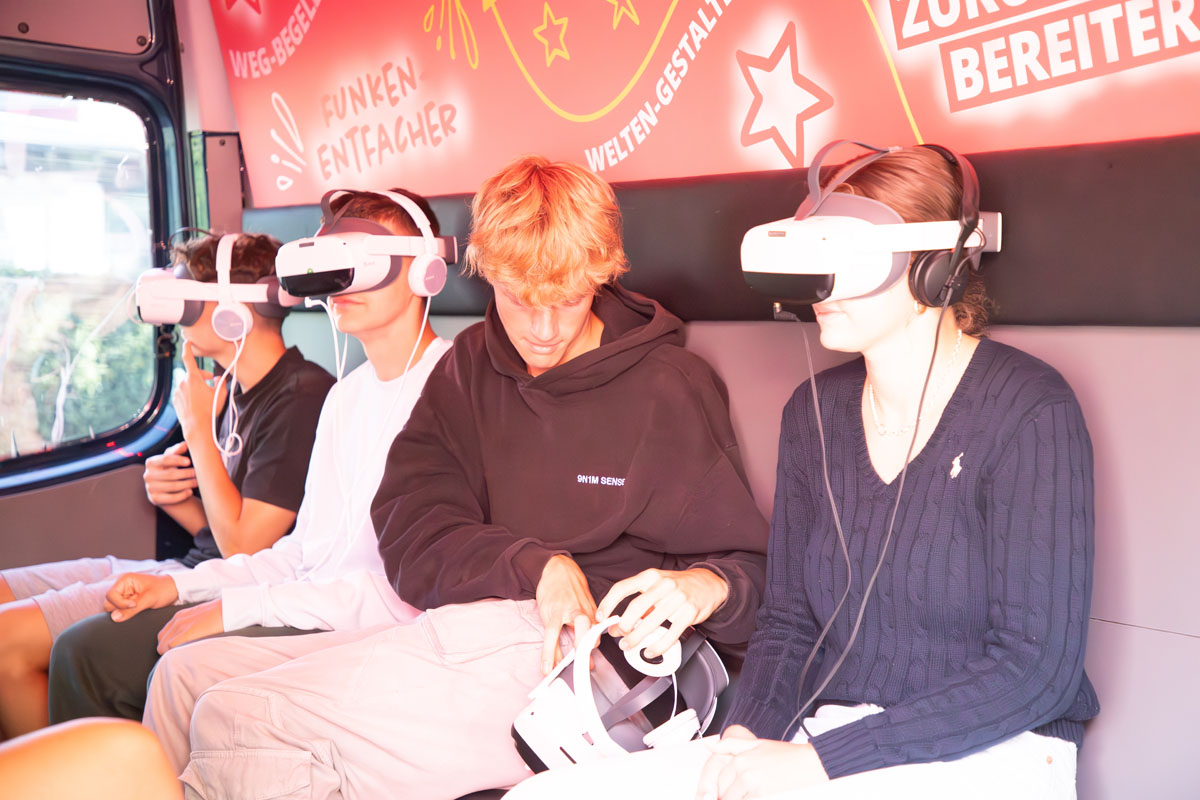
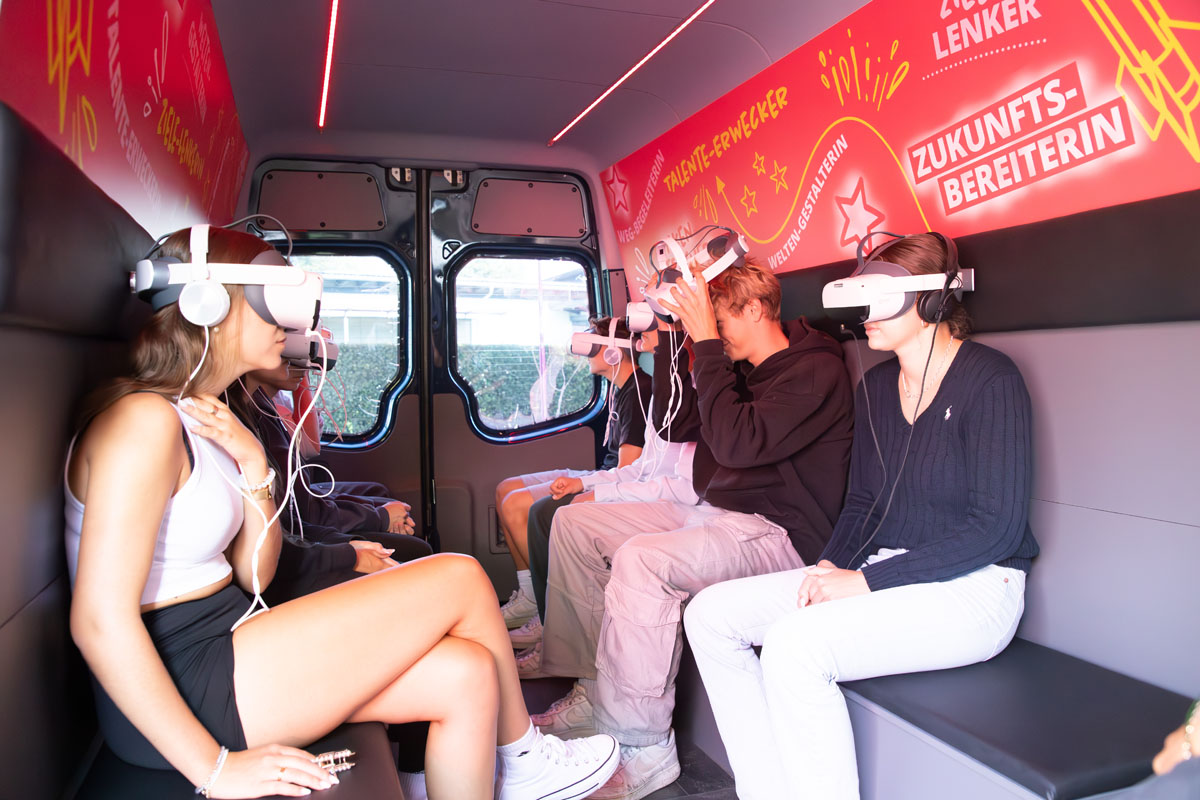
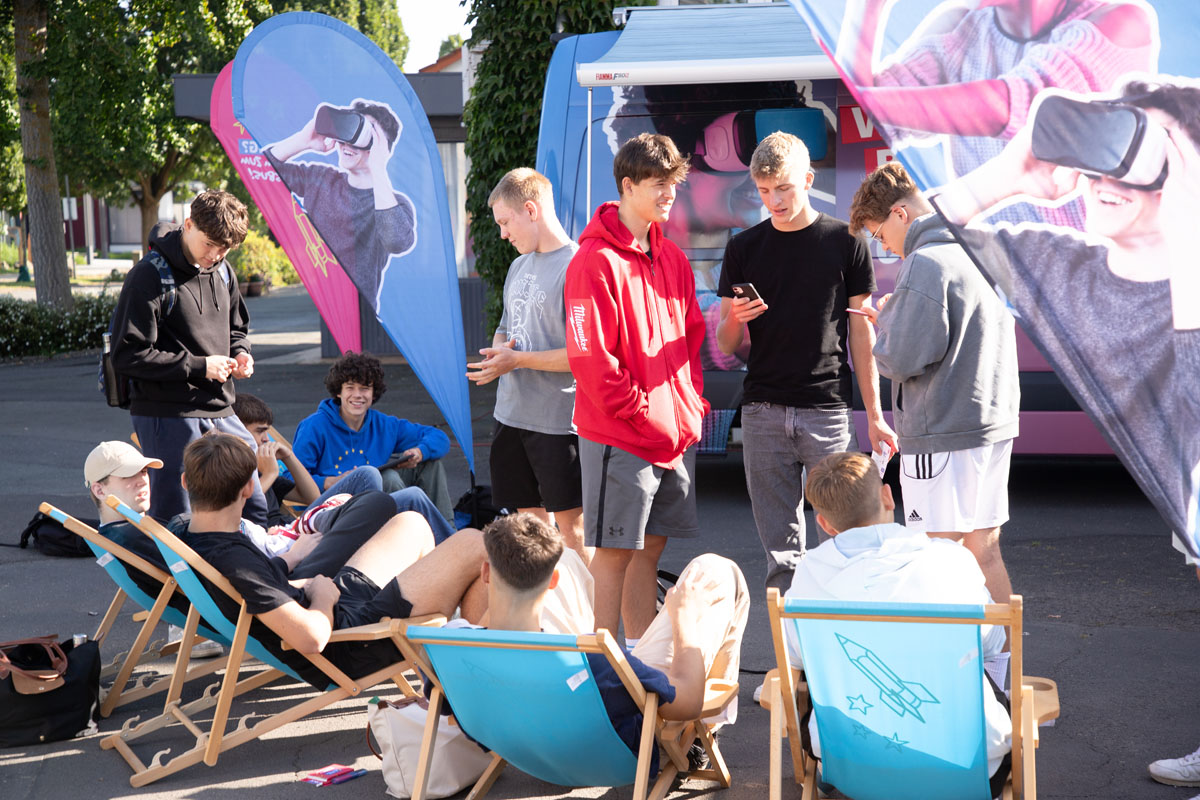
To further promote teacher recruitment, the Hessian Ministry of Education and Cultural Affairs’ “Future Bus” stopped by the Q1 and Q3 upper-level classes at Steinmühle on Monday, September 11.

As part of the initiative“The Future Needs You! Become a Teacher in Hesse,”the bus is touring more than 100 schools in Hesse this year—and it also stopped at Steinmühle. Also on board: a new, innovative motivational video in virtual reality style. The goal of the video is to provide insight into the work of a teacher. The approximately 3-minute, 270-degree short film becomes an immersive experience when viewed with VR goggles. After watching the VR film, there was even a chance to find out just how much teaching potential the Steinmühle high school students have. The “Teacher Test” could be taken digitally on-site, with results appearing immediately afterward. And who knows—maybe a few of tomorrow’s teachers are already in the starting blocks.

The event at the Steinmühle was organized by Dr. Claudia Röder, who is in charge of academic and career guidance at our school.

On the recruitment of teachers in Hesse:

In addition to increasing the number of spots in elementary school teacher training programs, various career-change programs and opportunities for further training have already been established. The starting salary for elementary school teachers has also been raised. According to the Ministry of Education and Cultural Affairs, 2,500 teachers are hired into the teaching profession each year.

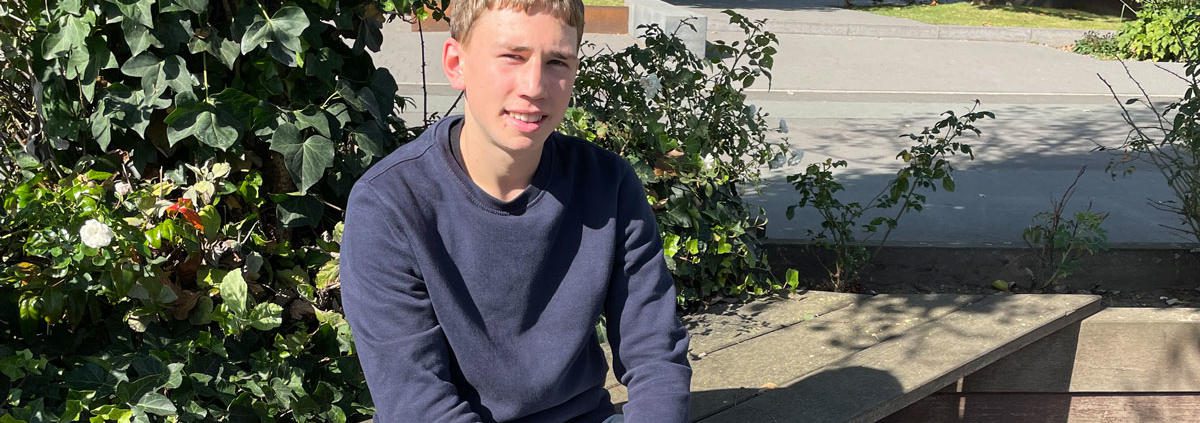
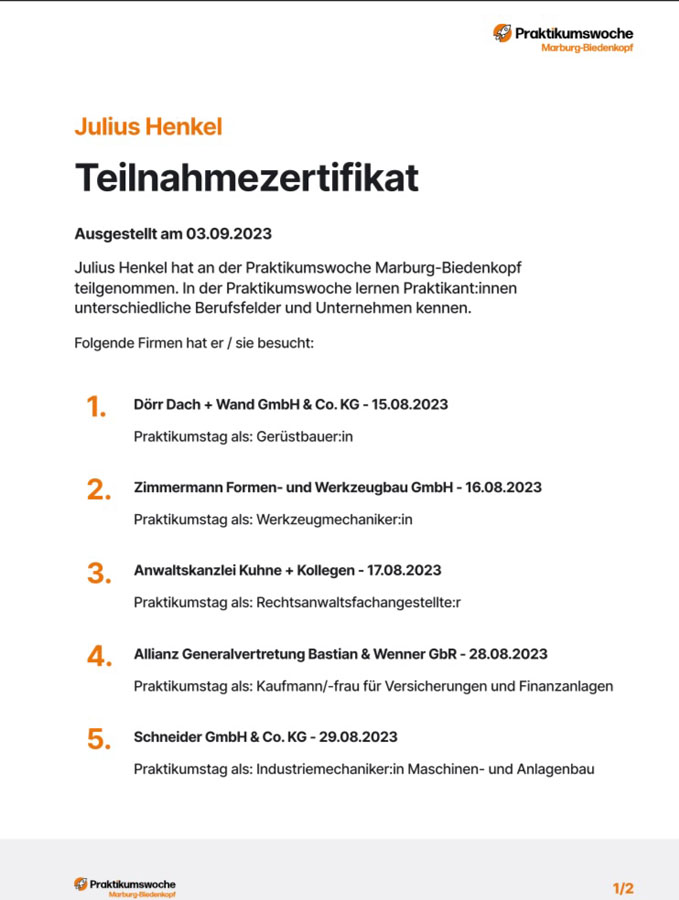
Julius Henkel, a 11th grader, completed the district’s internship week

Figuring out what career you want to pursue later in life isn’t that easy. Many upper-level students at Steinmühle know this, too. Julius Henkel, a 11th-grader in Dr. Claudia Röder’s class, has found an opportunity he can wholeheartedly recommend: participating in the Marburg-Biedenkopf district’s internship week.

During the summer break, the district, in collaboration with the startup stafftastic, offered the internship week for the first time. The concept is simple: spend five days getting to know five different professions at five different companies. There is no cost to the students.

“The whole process was pretty straightforward,” Julius recalls. “On the website www.praktikumswoche.de/marburg-biedenkopf, you can quickly get an overview of the available opportunities. You register on the site with your name, age, grade, and school, and specify the time period during which you’d like to complete your internship days. If you have a general idea of what topics interest you and where you’d like to spend a day, you can indicate that. The internship team then selects companies that match your preferences.”

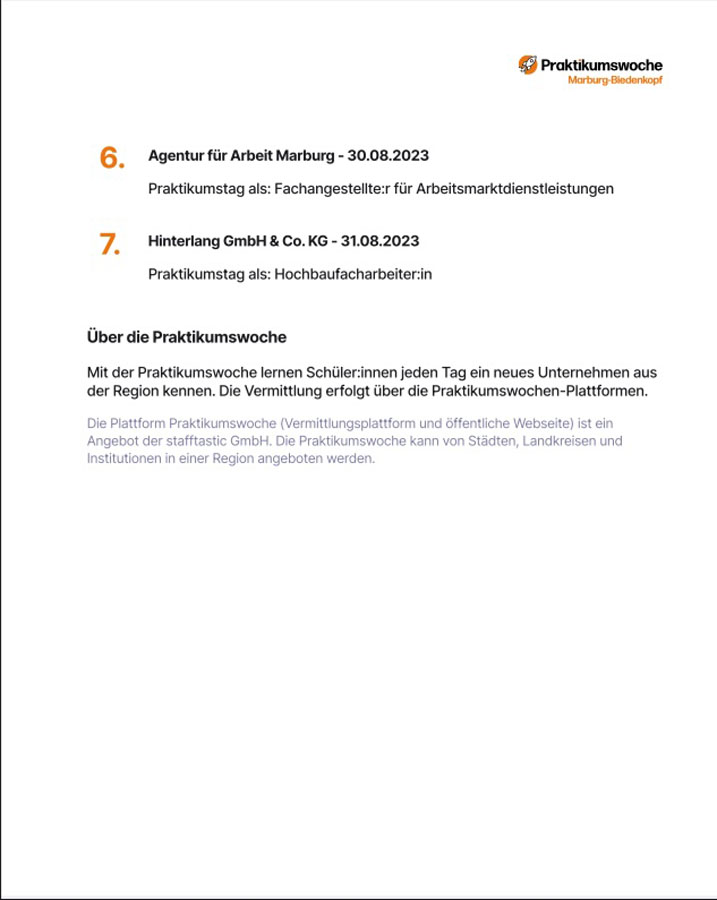
Julius had set aside the third week of summer vacation for his internships. In the end, he even spent seven days visiting seven different companies. The 11th-grader proved to be flexible. His choices included skilled trades, an insurance company, a law firm, and the employment agency. “It was all interesting in its own way,” the student reports, “but I quickly realized what was more my thing and what wasn’t.” He said the amount of screen work at the law firm wasn’t really his thing when he imagined having to do that for the rest of his life. He gained valuable insights at the insurance company and now understands how important the fine print is in contracts.

“For him, it’ll probably come down to some kind of manual work,” the student summarized. Paving a new street, manufacturing materials for the automotive industry—“I’m the type who likes to see what I’ve created with my own eyes.” Sure, the tone on a construction site is rougher than in an office. But he’s confident he can handle it.


Finding the Right Career Path

For companies, the internship week offers an opportunity to get to know motivated young people with minimal organizational effort and to make a positive impression on them. The one-day internships can be structured independently, allowing companies, for example, to use their own training workshops and integrate the students into their daily work routines.

Partners in the district’s internship week include the Marburg Employment Agency, the Kassel-Marburg and Lahn-Dill Chambers of Industry and Commerce, the Marburg and Biedenkopf District Craftsmen’s Associations, the State School Authority, the University City of Marburg, and the “SchuleWirtschaft Mittelhessen” initiative. According to Nancy Bartholomes, head of the Youth Support Department at the Marburg-Biedenkopf District, plans are underway to continue offering the internship week.

For Julius Henkel, who received a certificate of participation for his week-long internship, there’s no doubt that the time was well spent. During his placement at the Employment Agency, he learned firsthand: “An alarmingly high percentage of young people end up there after graduating from high school and don’t know what to do next.”

Steinmühlen High School showed great interest in engaging with the candidates


All of the district’s leading candidates running in the upcoming state legislative election gathered on stage at the Steinmühle Forum to share their views on controversial political issues with 12th and 13th graders. The politicians devoted most of their energy to distinguishing themselves from their political opponents.

Speaking before a packed auditorium, in front of students who will be first-time voters this year or next, was likely what made this event so appealing to the candidates. The questions to be addressed were provided by Jonathan Eckardt and Jan Templer. They are students in the advanced “Politics and Economics” course in the 12th grade at Steinmühlen High School.

The questions posed by the two young moderators and the follow-up questions from the audience focused, among other things, on opinions regarding the phase-out of the internal combustion engine, attitudes toward gender equality, and gender-neutral language, as well as Marburg’s “Move 35” transportation plan and the related question of how people from the surrounding areas—especially older residents of the city’s neighborhoods—should envision their future mobility. General issues were also discussed, such as the proposed solution to the teacher shortage or the environmental protection measures that the candidates considered both feasible and appropriate—to name just a few examples.

Given the generally well-known positions of the individual parties, there were few surprises in the answers. The candidates’ stances were sometimes polarizing, and if there was one thing that could be described as exemplary about the event, it was the fact that it took place in a mostly objective atmosphere.

There would have been plenty more “material” to continue the discussion. Unfortunately, however, the allotted time—90 minutes—was not enough. In any case, there is certainly no sign of the political apathy among young people that is often claimed in public discourse here at the Steinmühle.

Thanks to the efforts of subject teacher Dr. Claudia Röder, Steinmühle High School succeeded in inviting the candidates from all political parties, without exception, to participate in the school event. Principal Björn Gemmer thanked her and the political guests for this extraordinary and fruitful morning, which likely served as another important step toward helping the student body form their own political opinions.

This lineup promised a lively discussion. Participating in the political discussion with the students (from left) were Jan Schalauske (Die Linke), Sebastian Sack (SPD), Angela Dorn (Alliance 90/The Greens), Lisa Deißler (FDP), Dirk Bamberger (CDU), and Pascal Schleich (AfD). Jonathan Eckardt and Jan Templer (center) moderated the morning session.


Caught on camera:

Angela Dorn (Alliance 90/The Greens)
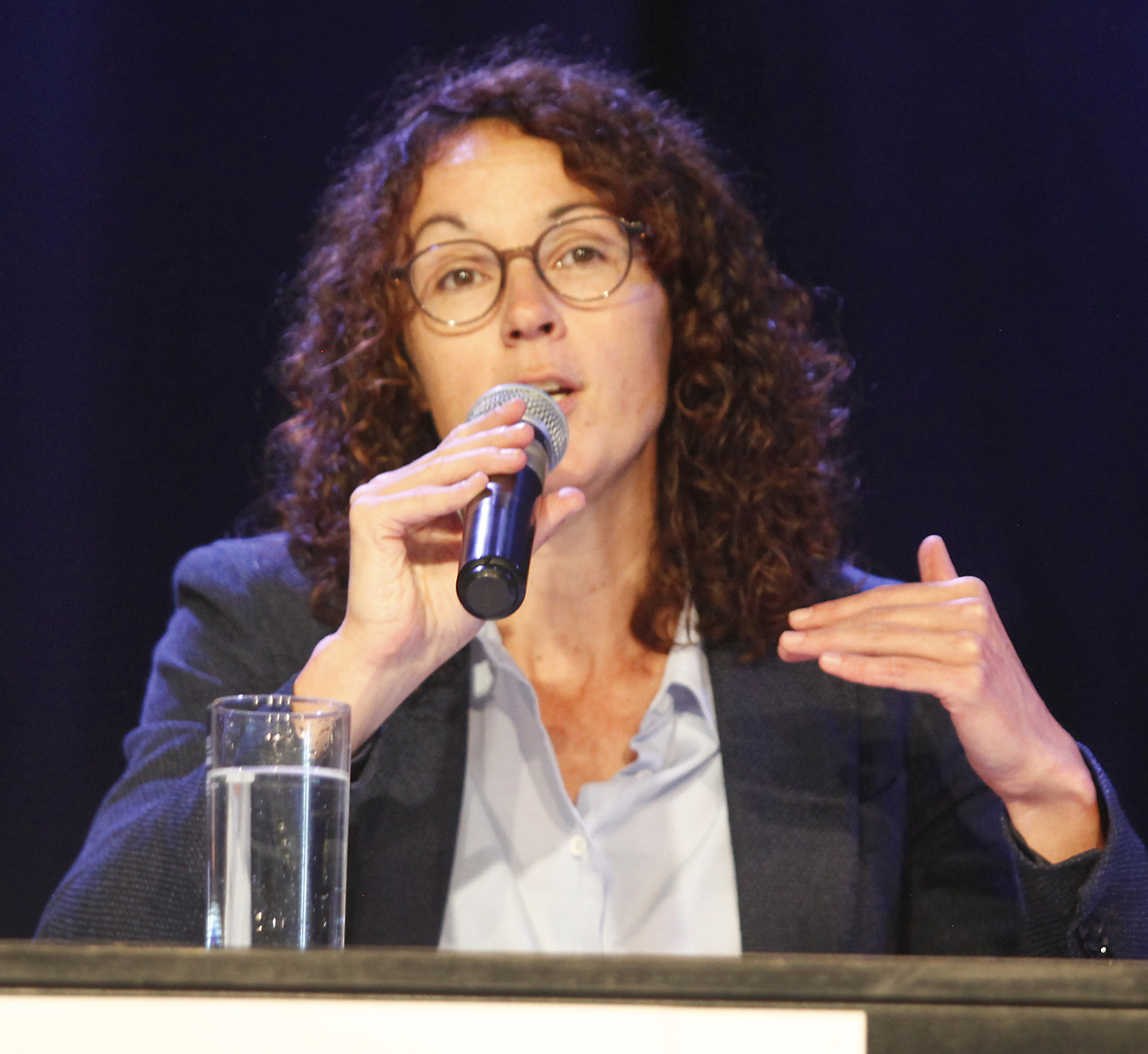
Angela Dorn, Alliance 90 / The Greens

The phase-out of the internal combustion engine was an EU decision. That is often forgotten.

The Federal Constitutional Court has also ruled that there are more than two genders. Incidentally, this can also be observed in the animal kingdom.

We have doubled funding for road repairs. The FDP, however, is always in favor of new construction, but never of maintenance.

It takes too long to plan bike paths in Germany.

When it comes to local public transportation, we continue to support the “Every Village, Every Hour” initiative. However, this cannot be free of charge.

Our greatest resource is our mind.

We need a genuine educational revolution. Steinmühle can serve as a role model in this regard.

Go abroad! Take the time to look closely. Do internships! (Addressed to the student body, regarding career guidance).

Our prosperity is at risk if we do not meet our climate goals.


Dirk Bamberger (CDU)
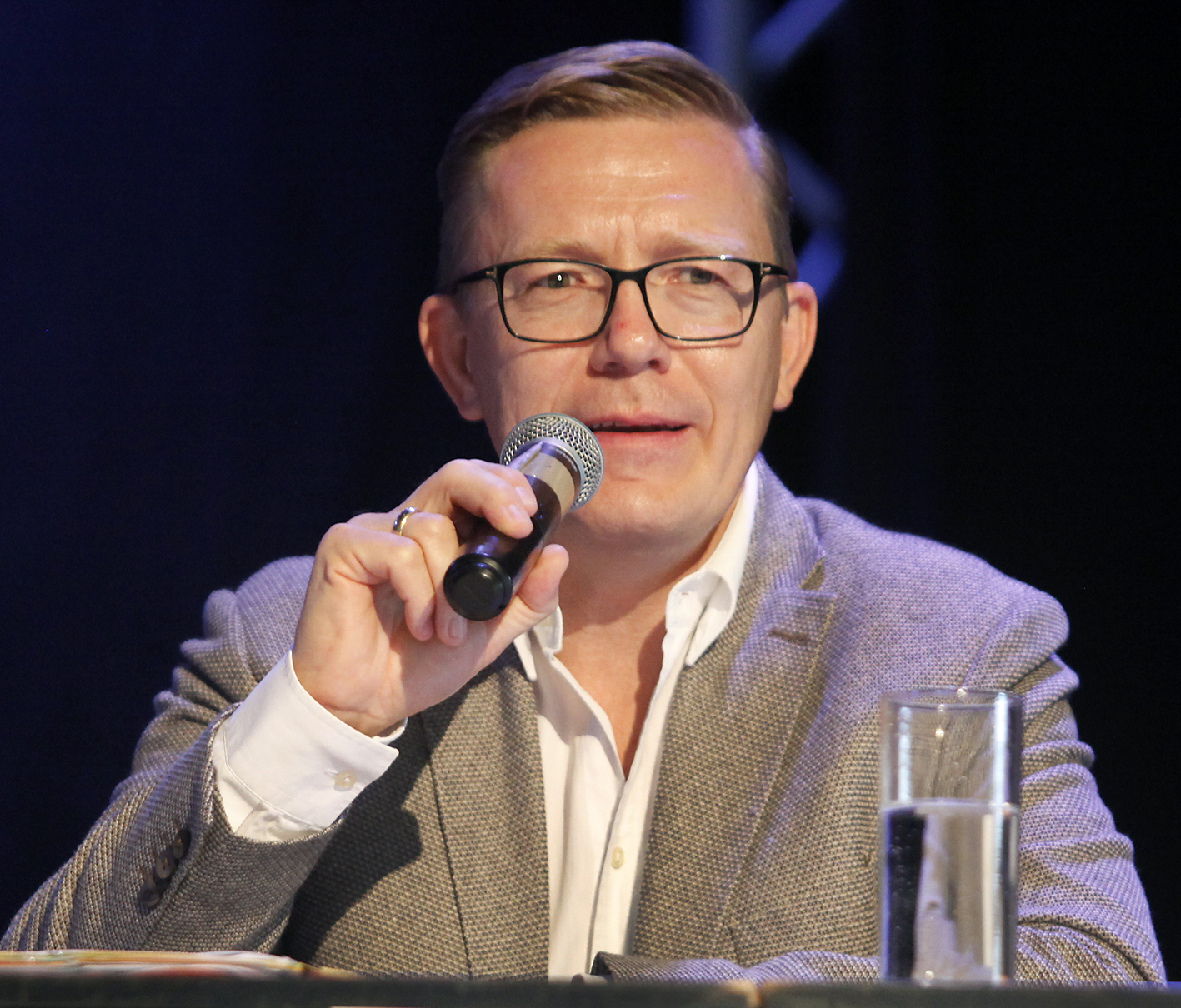
Dirk Bamberger, CDU

We need to recognize that even electricity is not entirely CO2-neutral.

I take a critical view of gender-neutral language. For people with disabilities, it makes language more complicated.

Move35 suddenly disappeared behind closed doors. The concept is aimed at the car.

In 10 to 15 years, we may have autonomous vehicles, including buses.

Student tickets for everyone—we also need to consider how this will be funded.

In Hesse, we currently have more teachers than ever before, with fewer students than ever before—and more school psychologists than ever before.


Lisa Deißler (FDP)
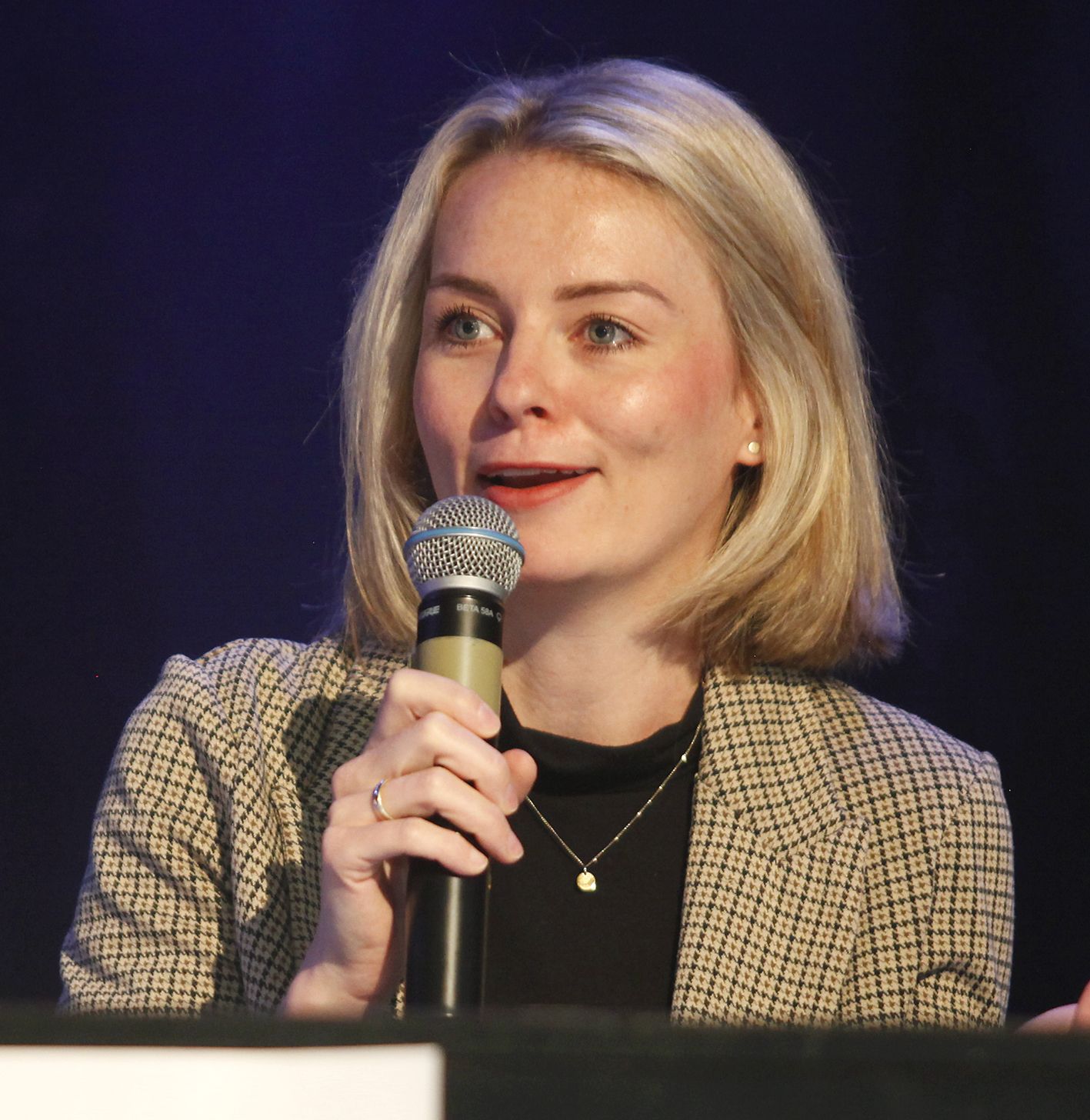
Lisa Deißler, FDP

The question arises as to whether the timing (for phasing out the internal combustion engine) is wise. And whether we have the infrastructure for charging (electric cars).

When it comes to Move35, there’s a lot I don’t understand either.

For a Green Party transportation minister (Tarek Al Wazir), the rail and bike paths in Hesse are underdeveloped.

We need private transportation. Otherwise, things will get bleak in the outlying neighborhoods.

We need technology for the future and must continue our research in that direction.

When it comes to renovation, government buildings need to be addressed first before imposing regulations on the public.


Pascal Schleich (AfD)

Pascal Schleich, AfD

Phasing out the internal combustion engine is a complete mistake. We simply don’t have the energy for electric cars.

People are laughing at us. Biologically speaking, there are only two sexes.

Teachers have a higher rate of sick leave than people in other professions. This is due to overwork.

We support the preservation of special education schools. Inclusive classrooms require trained teachers.

When it comes to climate protection, we need to get others on board and, first and foremost, hold them accountable.


Sebastian Sack (SPD)
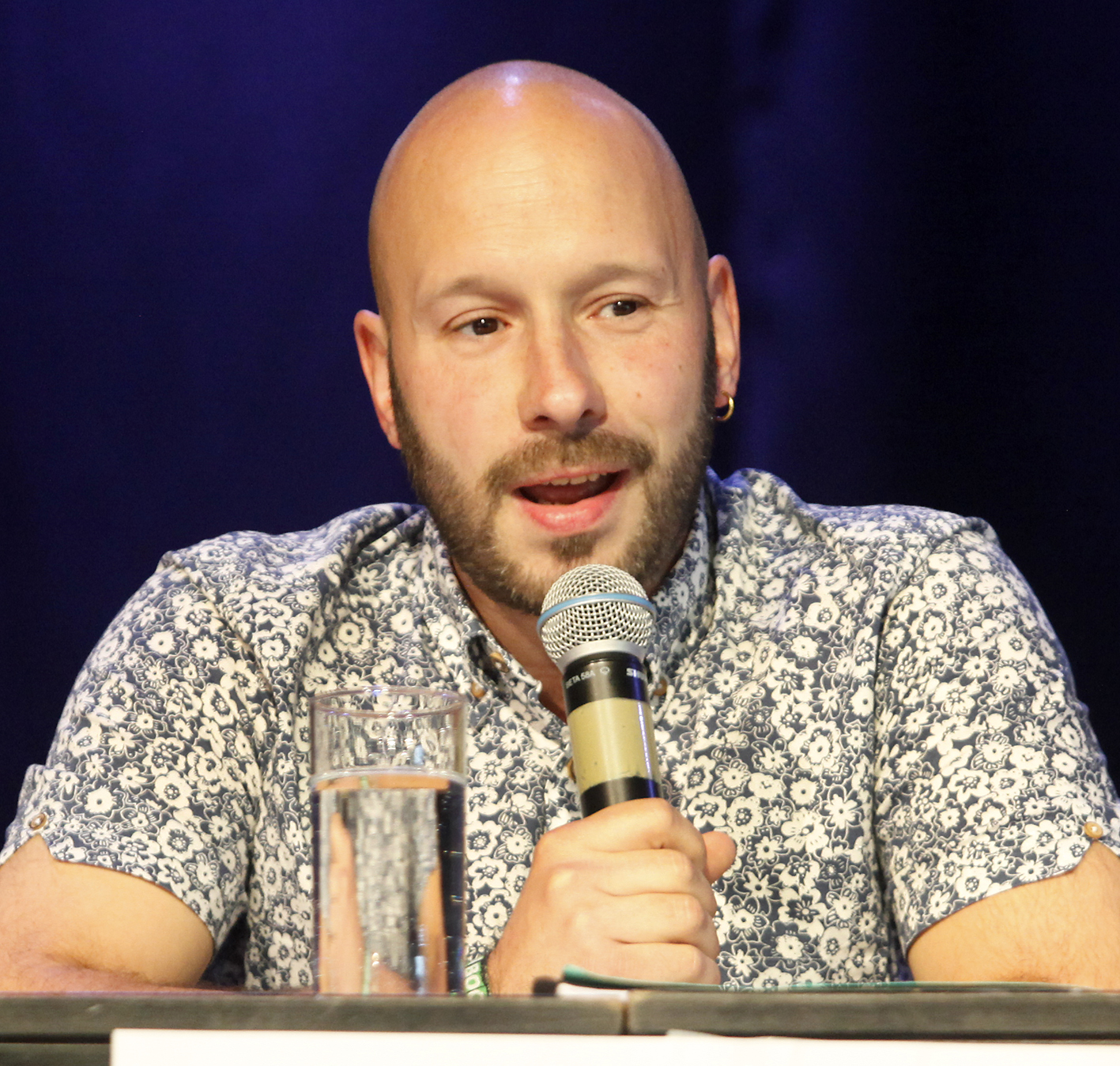
Sebastian Sack, SPD

We need to take responsibility. In the long run, this means the end of the internal combustion engine.

Remote villages in the county still rely on private transportation.

I’m in favor of small buses and frequent service.

The community bus is a useful service.

Education must be free—whether it’s a vocational certificate or a master’s degree.

It is important to renovate houses.

We should stop picking on each other.


Jan Schalauske (The Left)
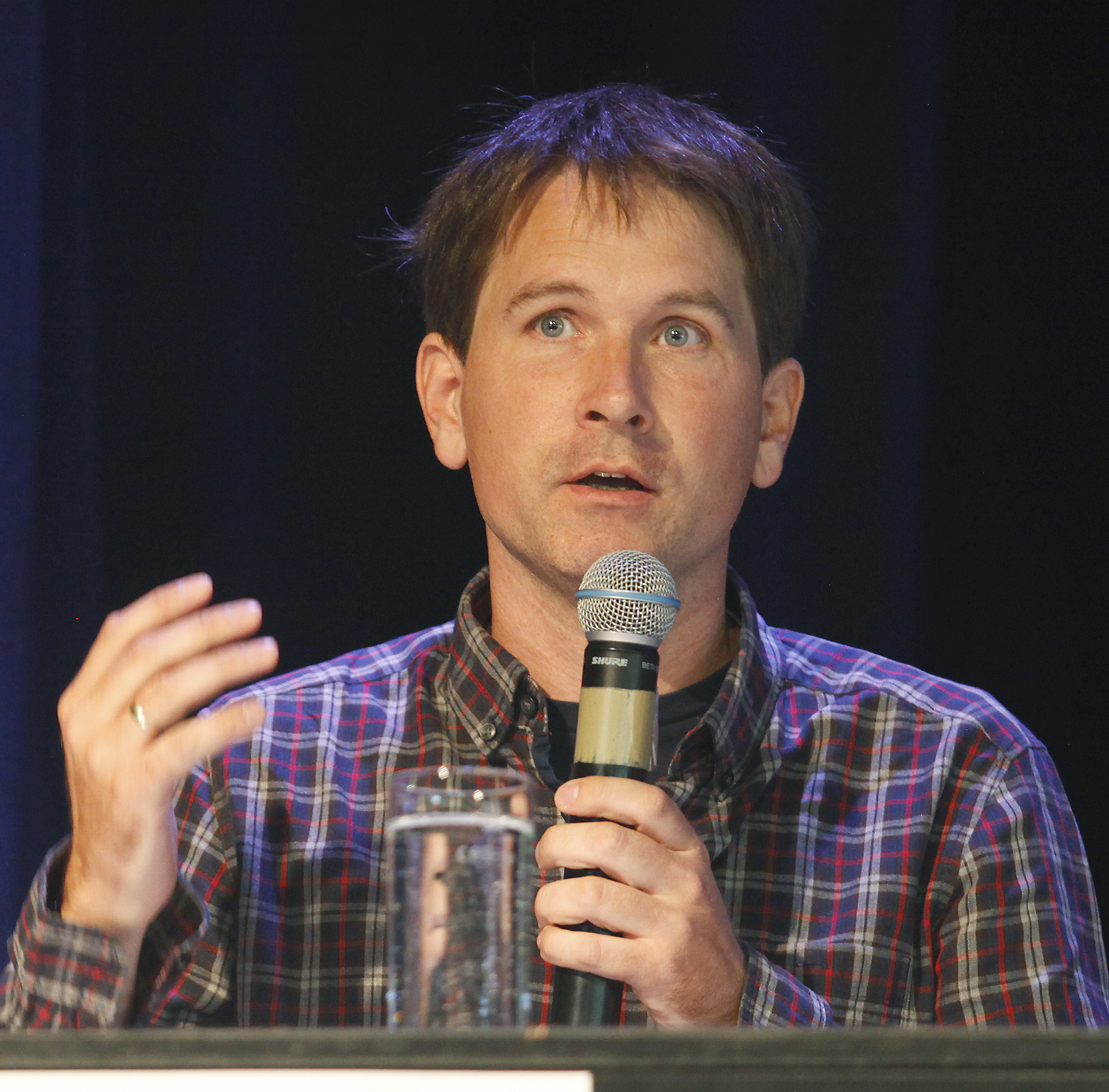
Jan Schalauske, The Left

We must do everything we can to meet our climate goals. Phasing out internal combustion engines is the right thing to do.

I see the issue of gender language the same way Ms. Dorn does. It has to do with respect.

Roads should be repurposed to prioritize pedestrian and bicycle traffic.

The car-sharing concept is important for rural areas.

My vision for local public transportation: free of charge, no fare.

Educational success still depends on parents’ income.

To increase the number of teachers, we should focus on attracting people from other fields.

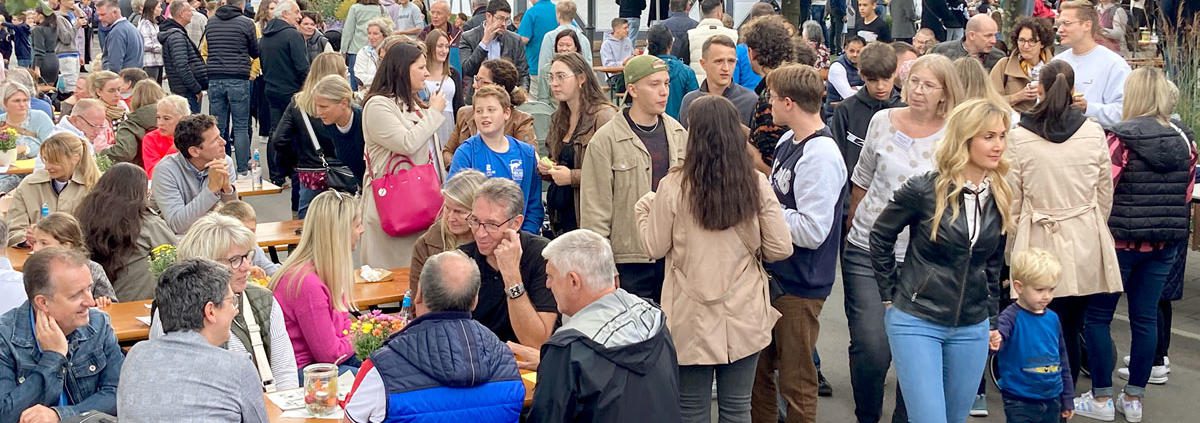
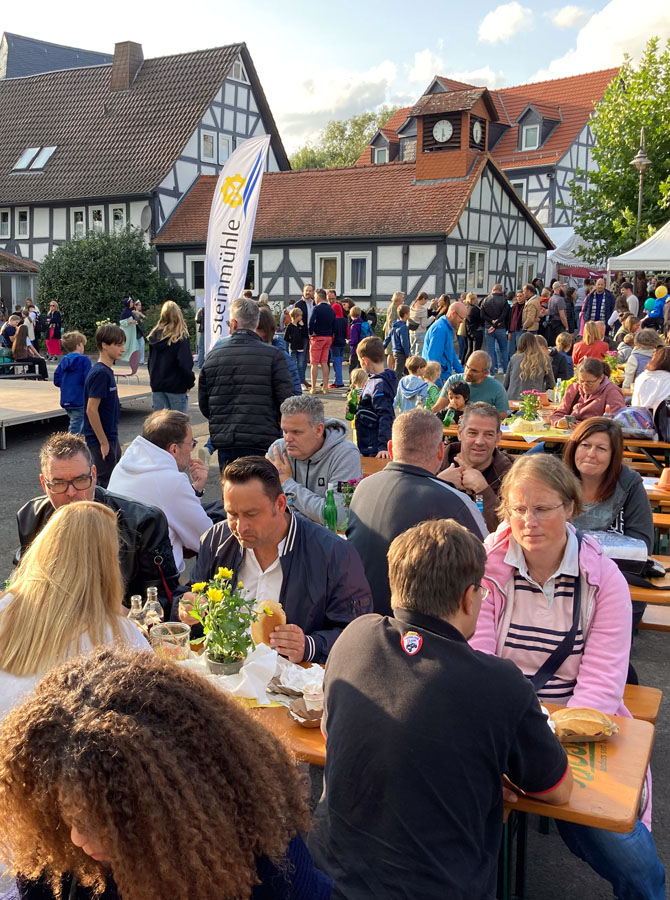
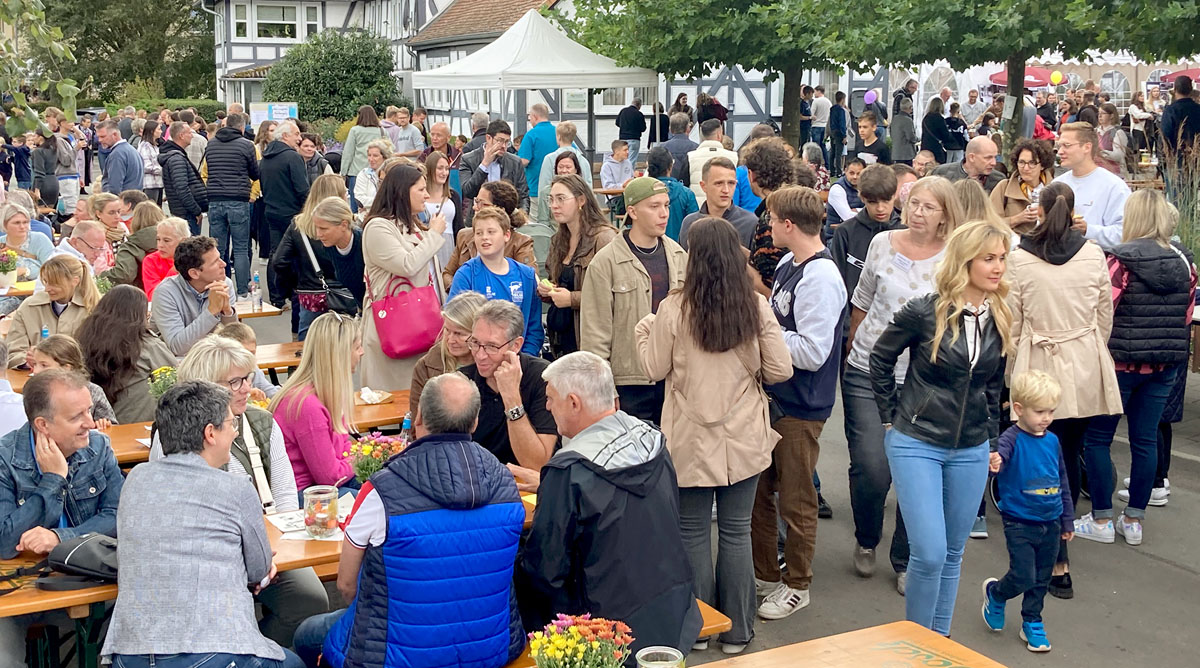
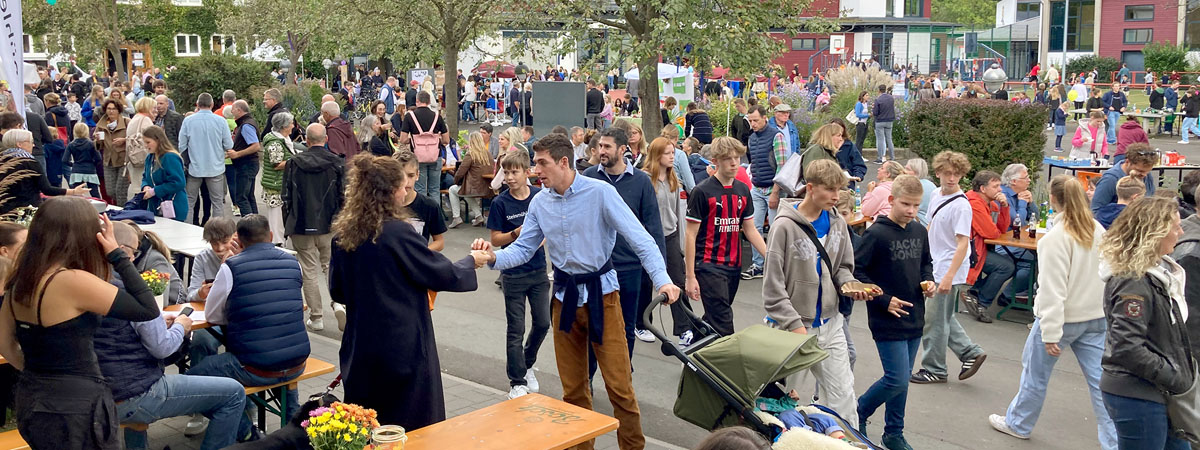
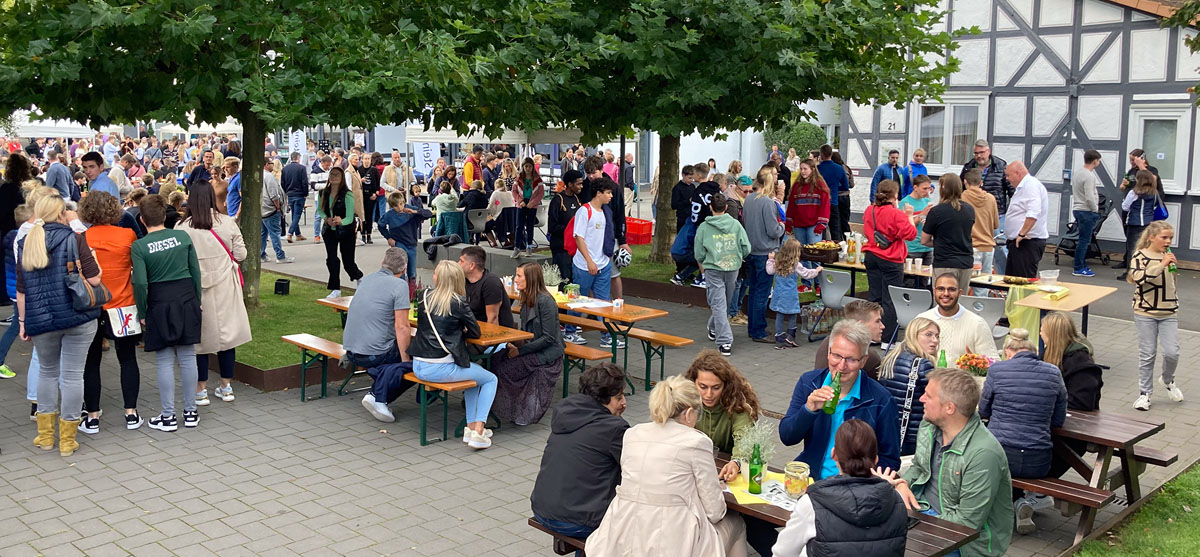
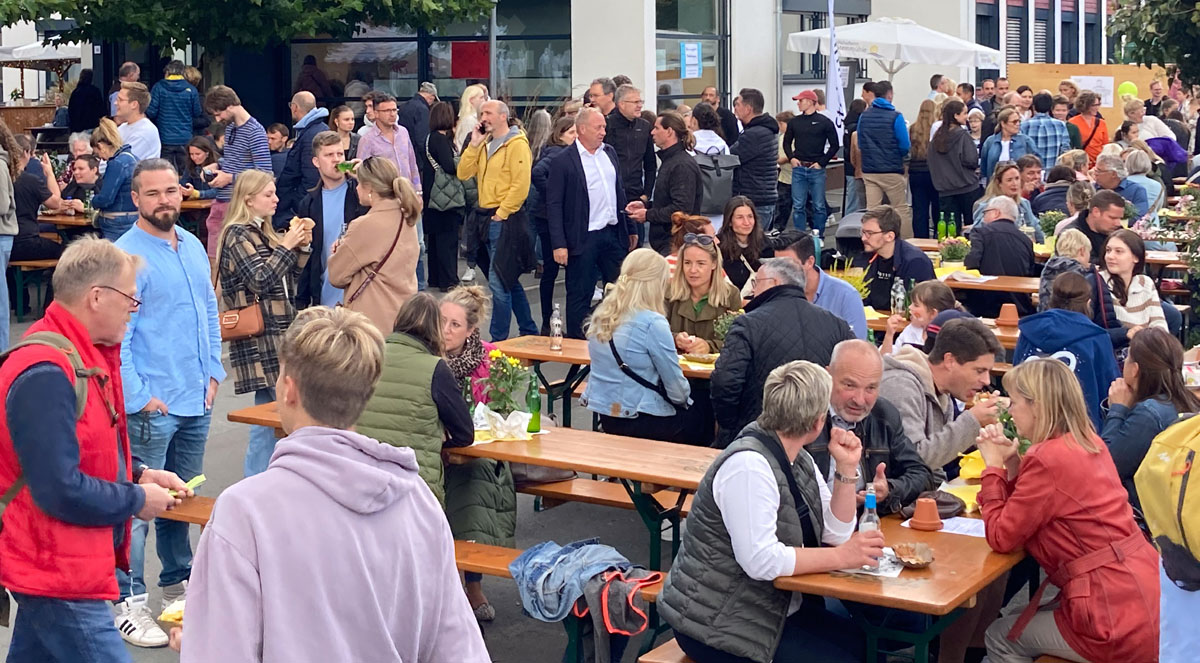
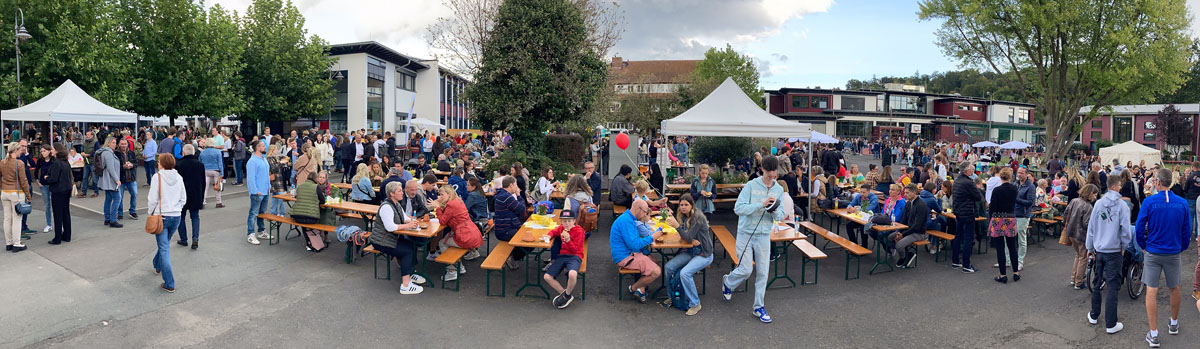
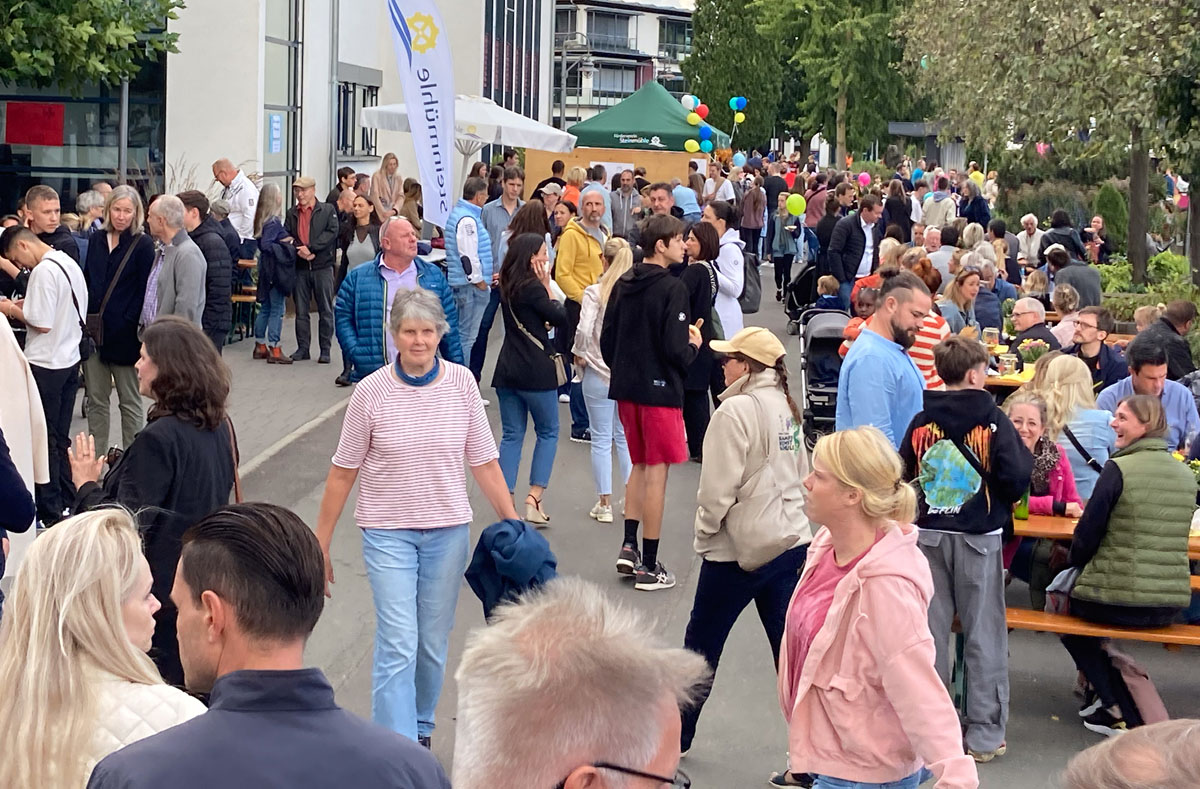
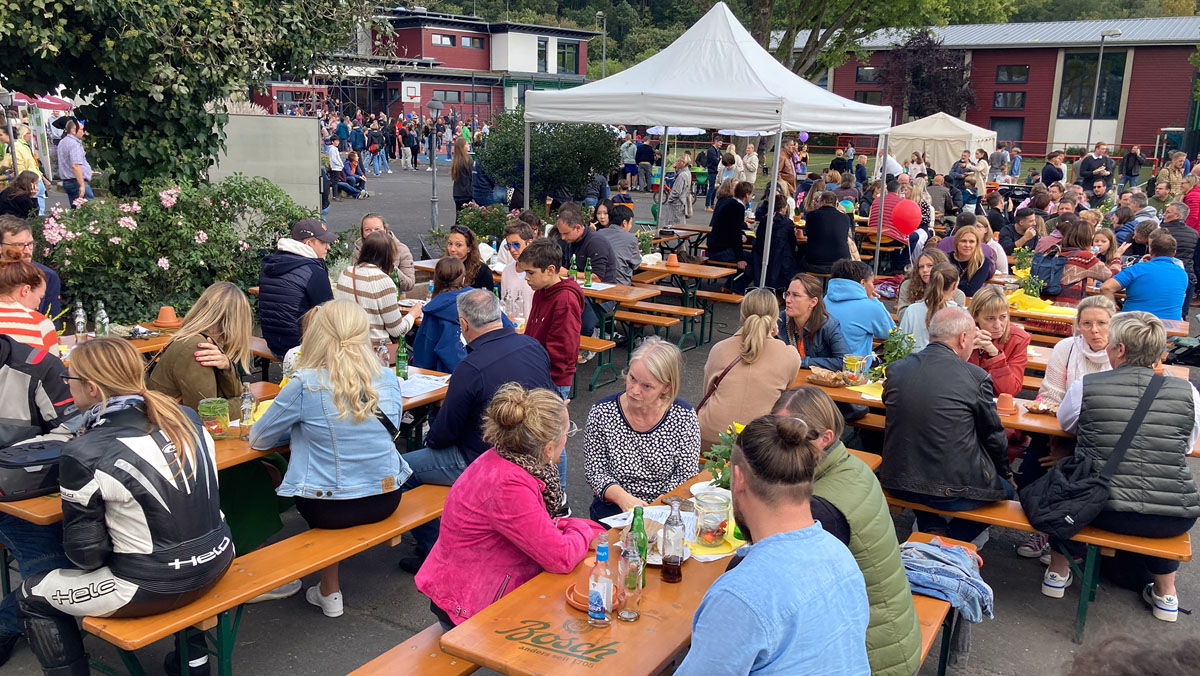
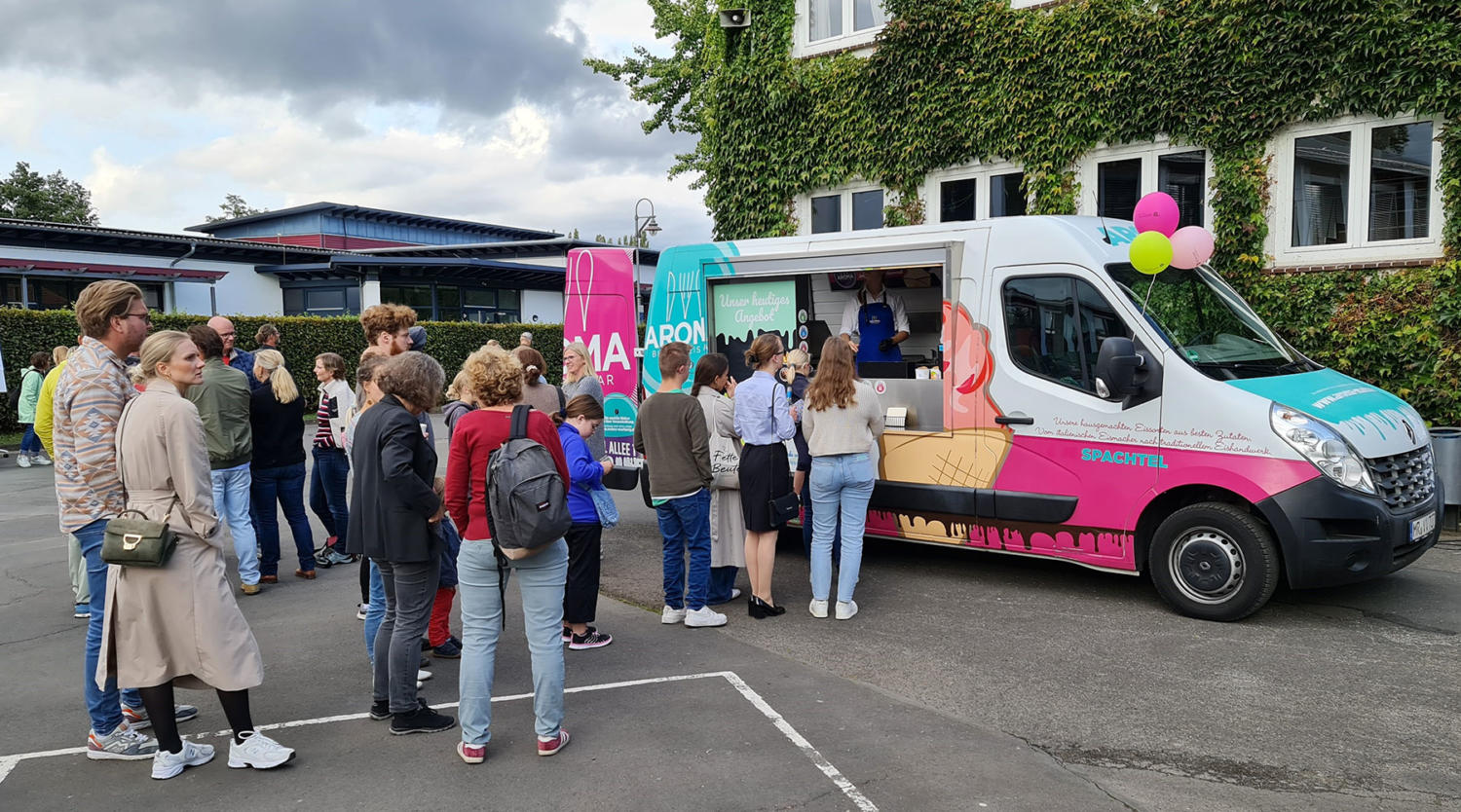
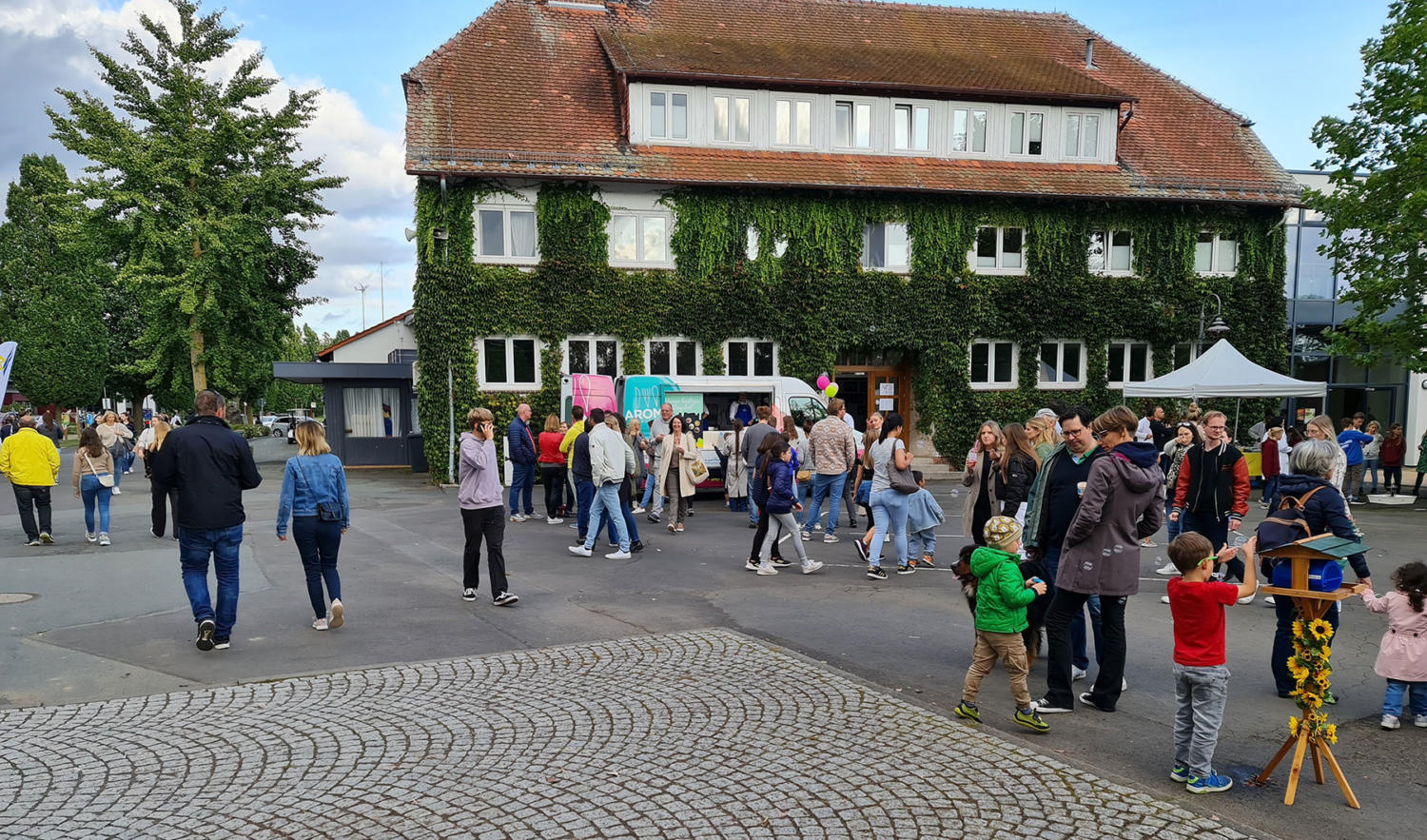
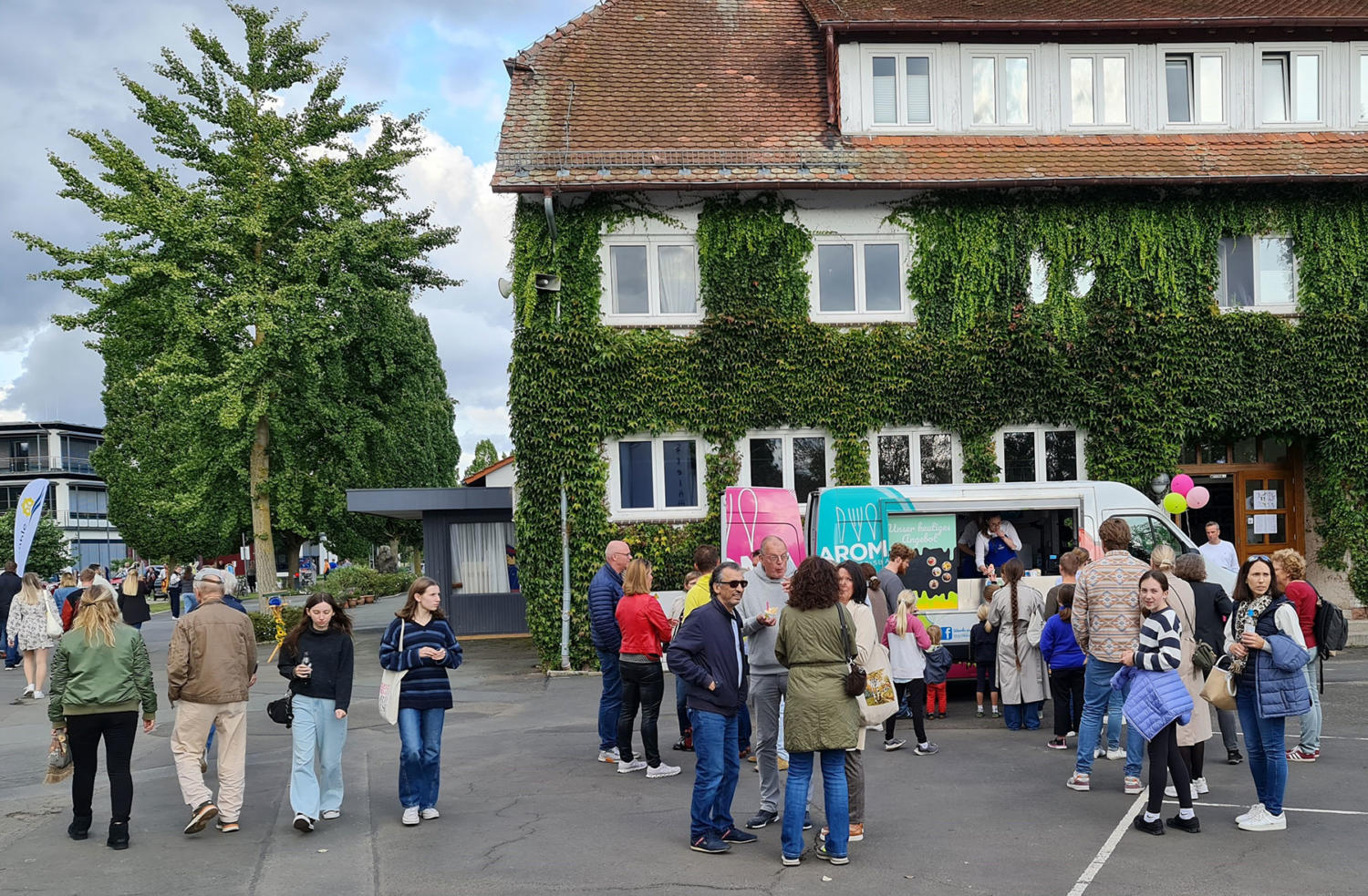
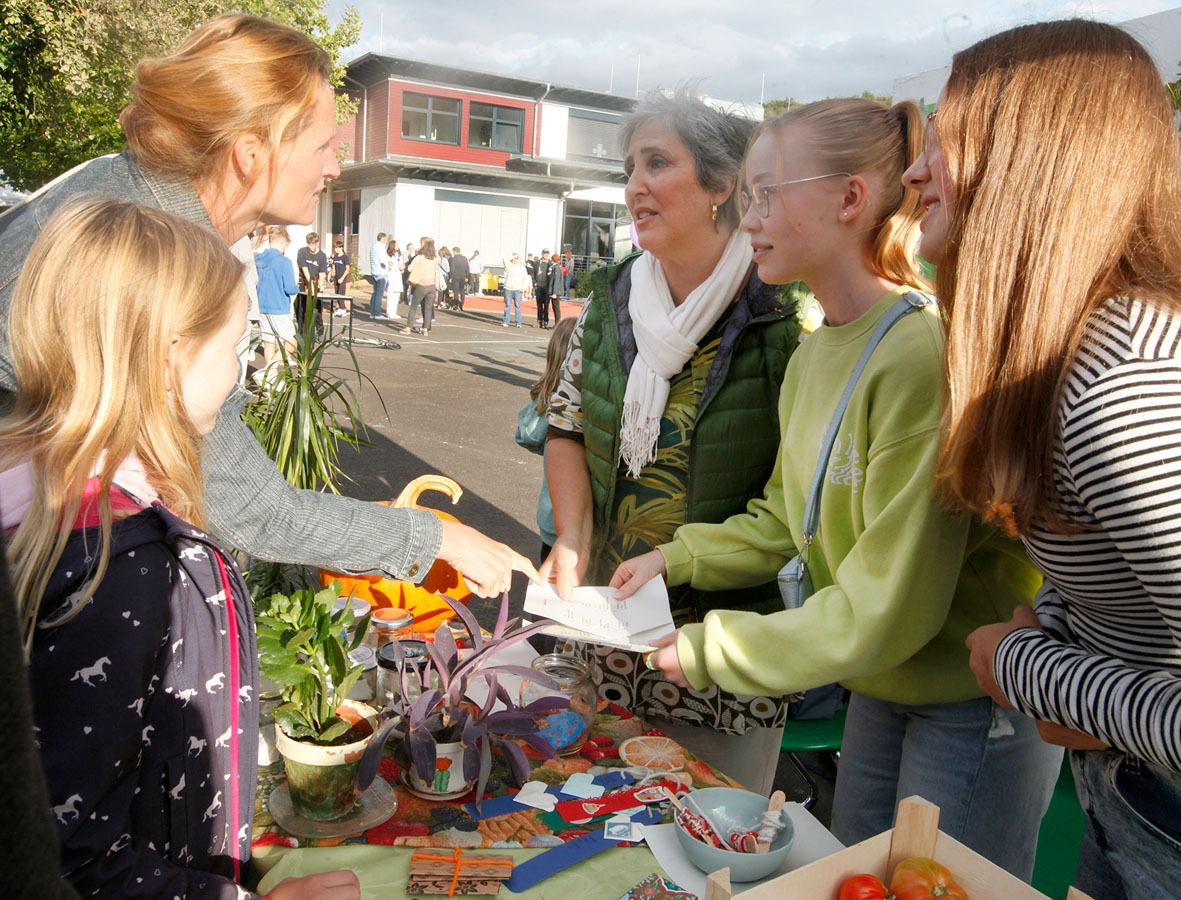
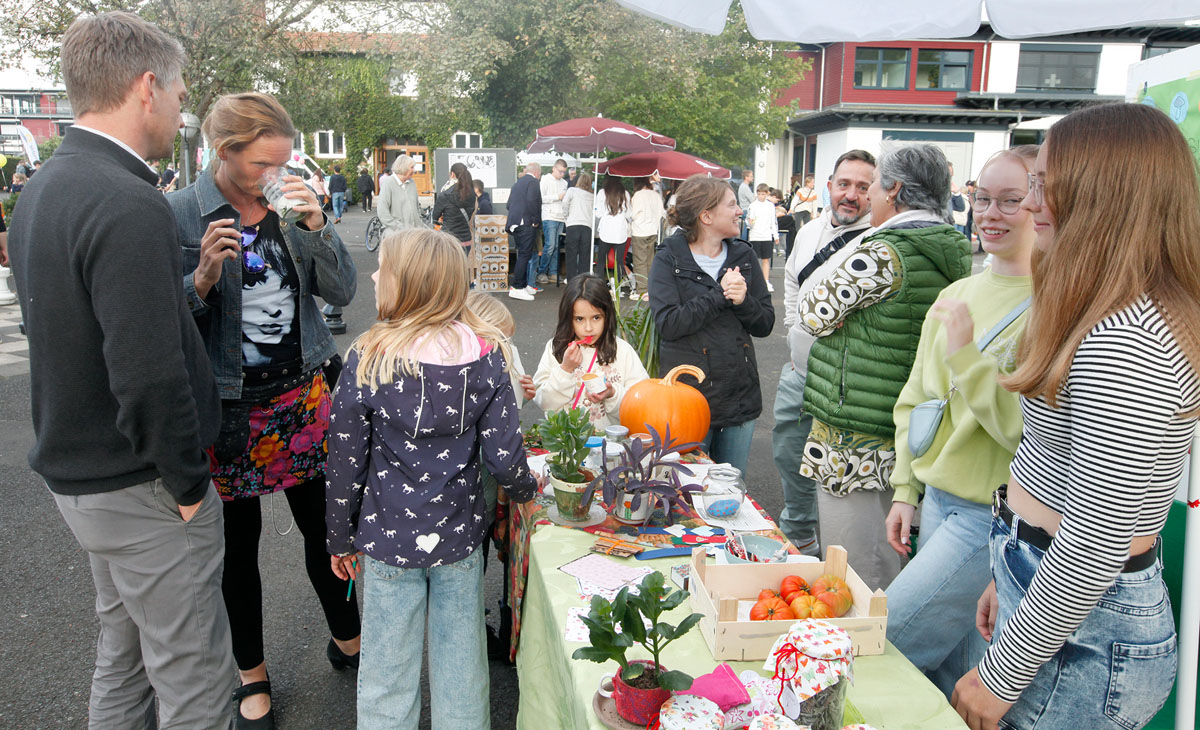
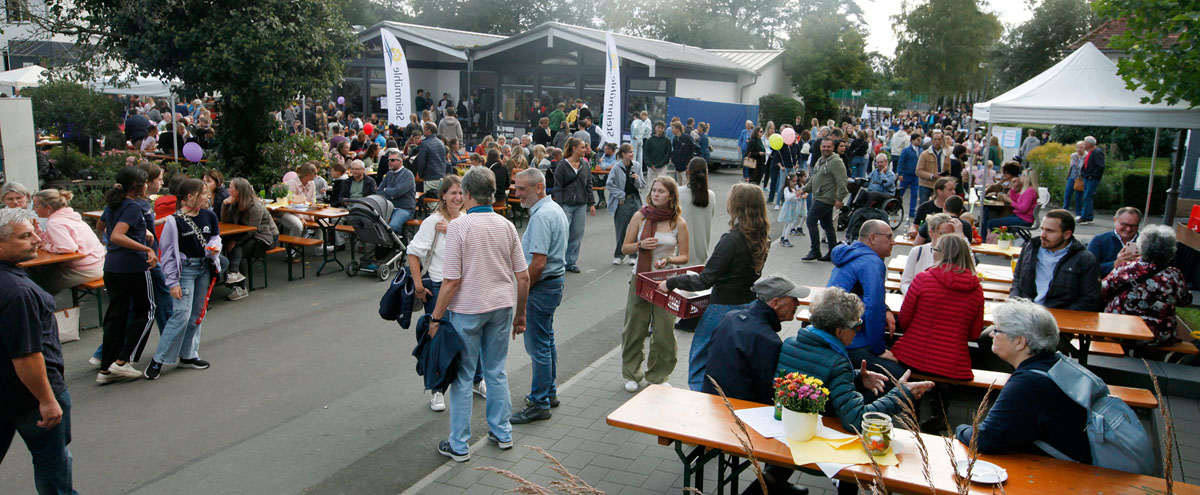
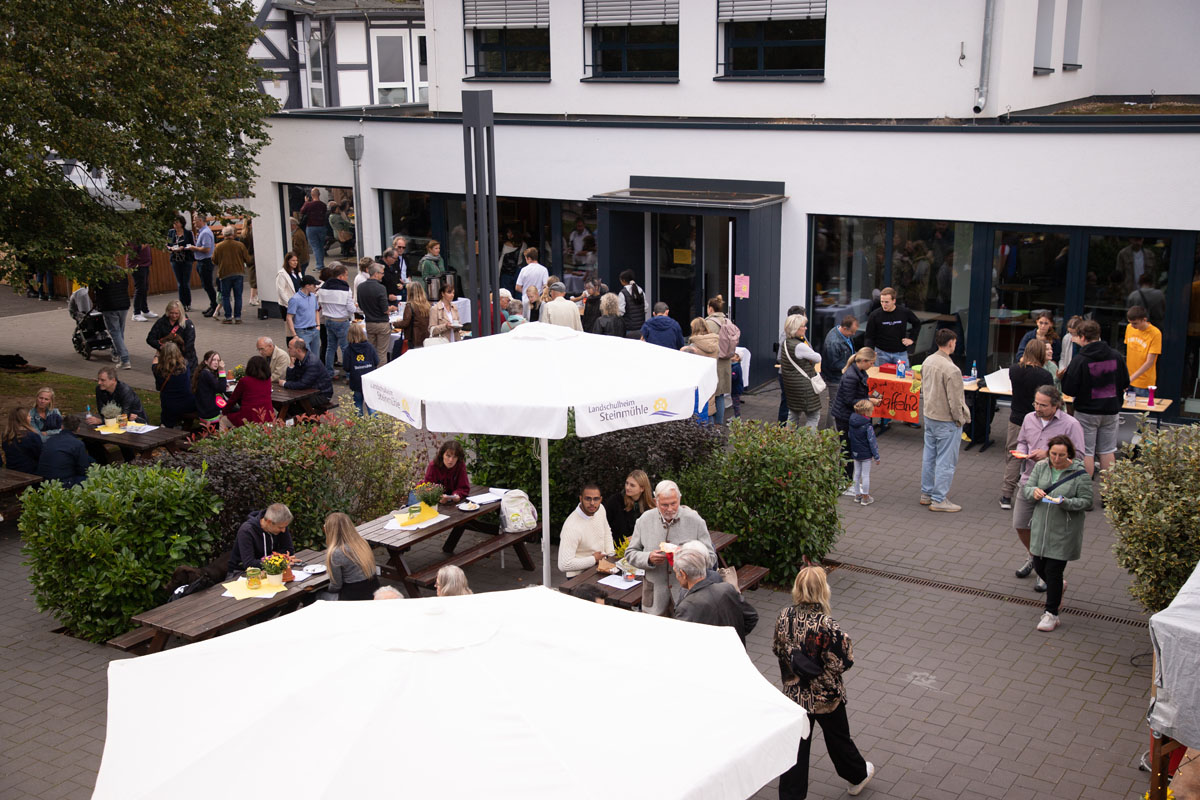
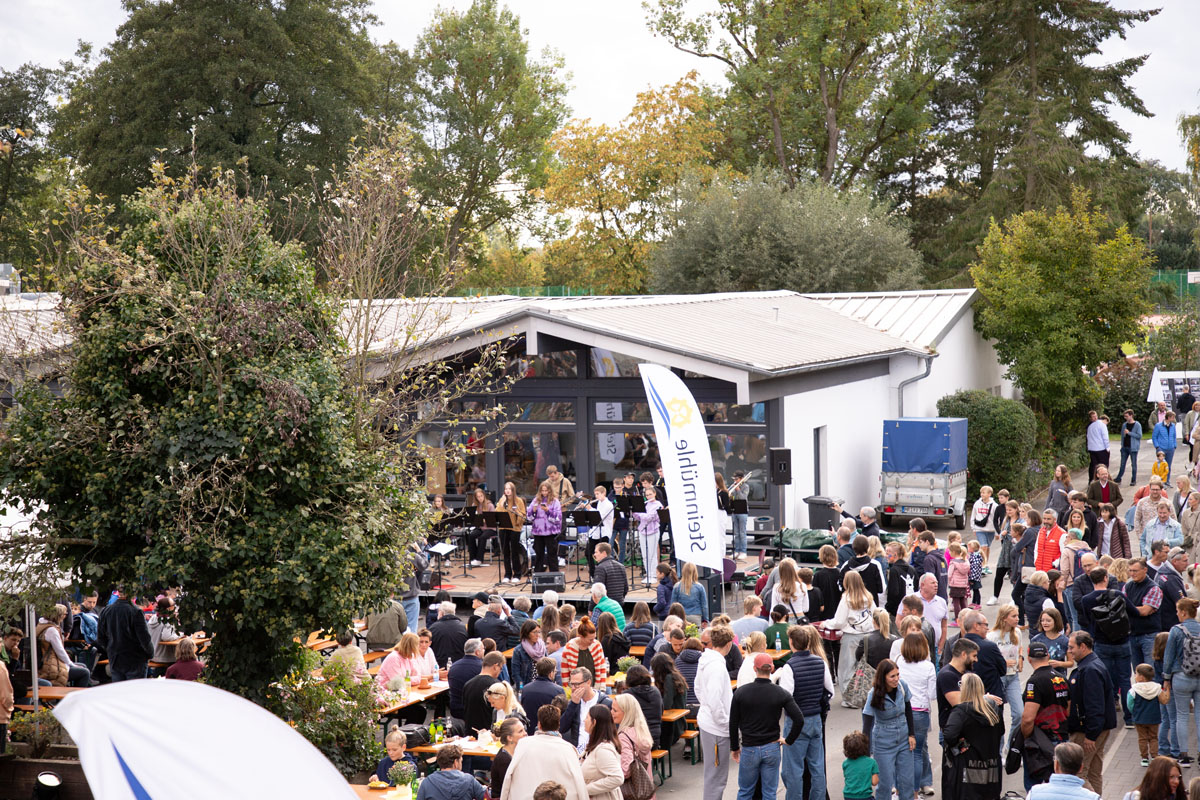
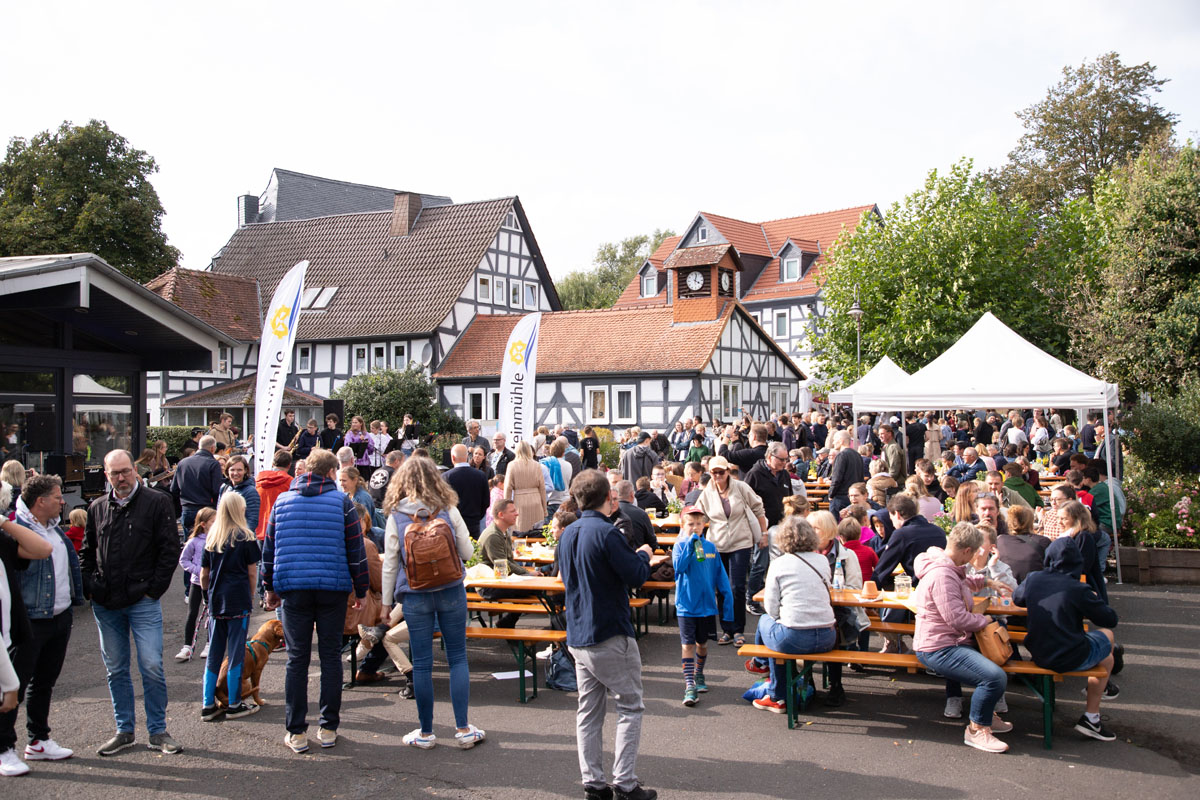
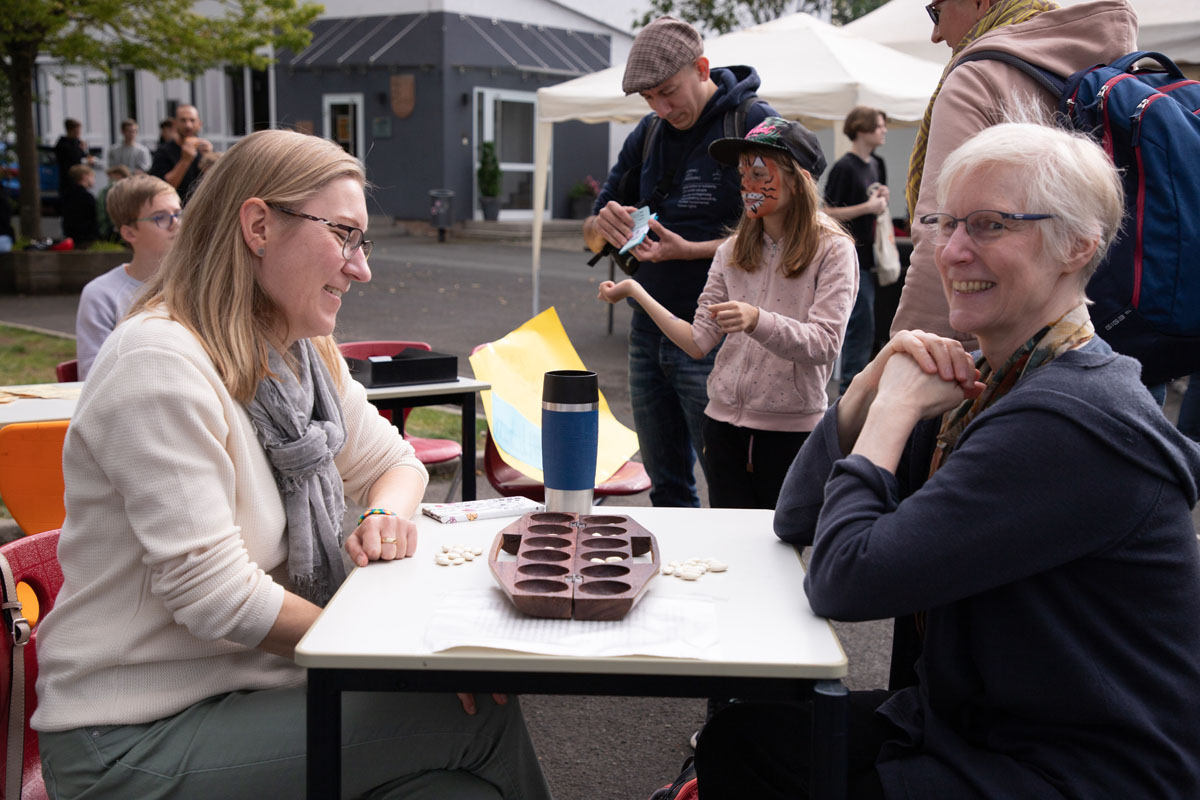
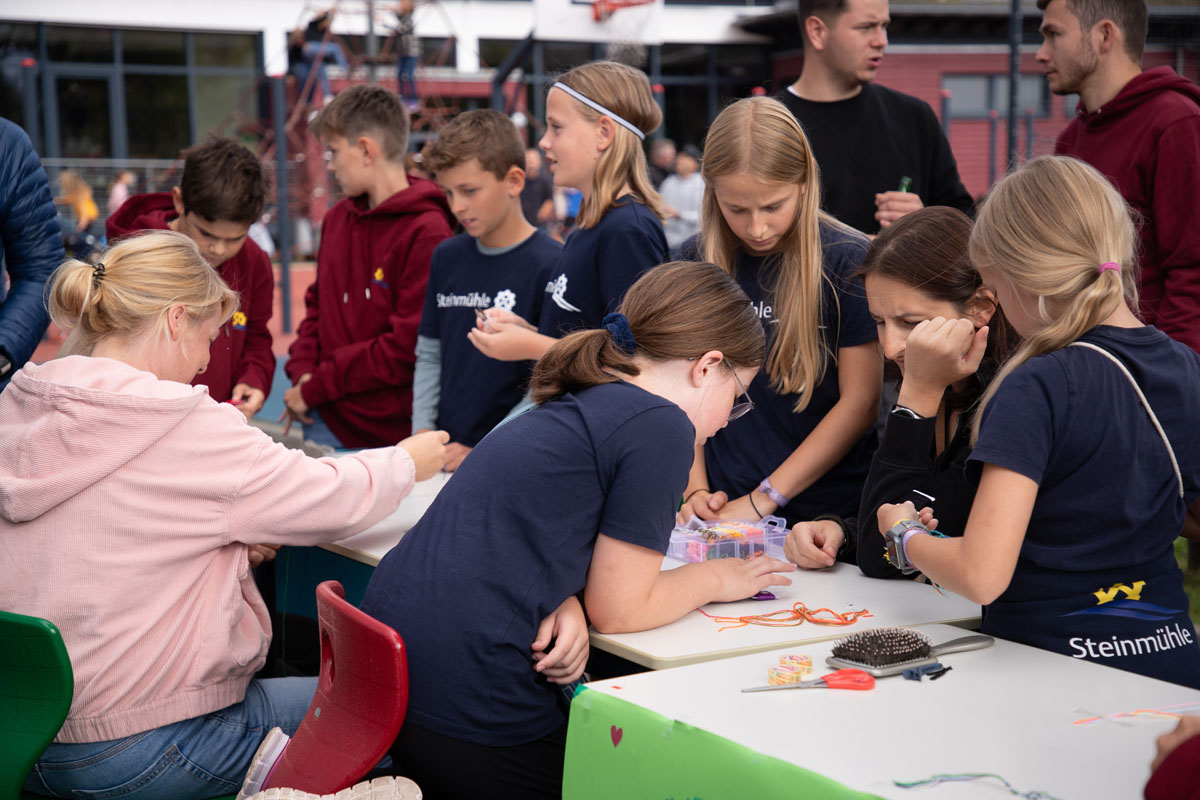
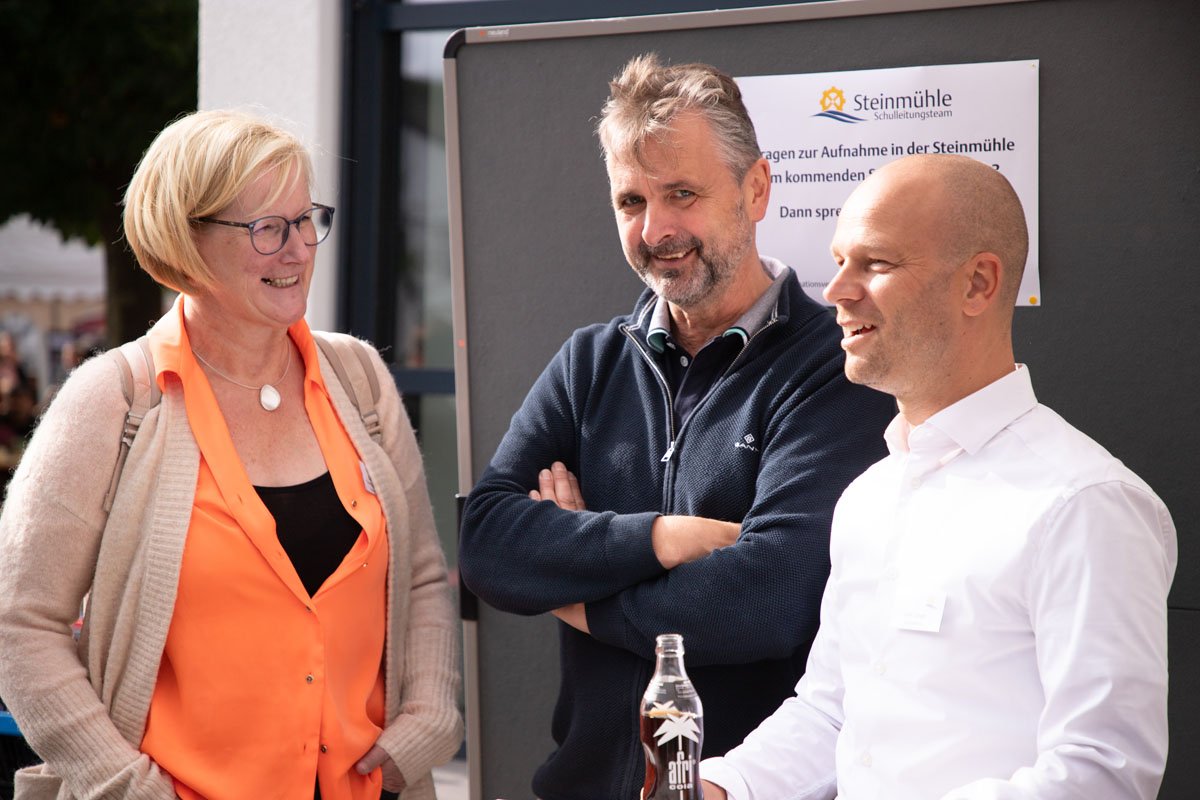
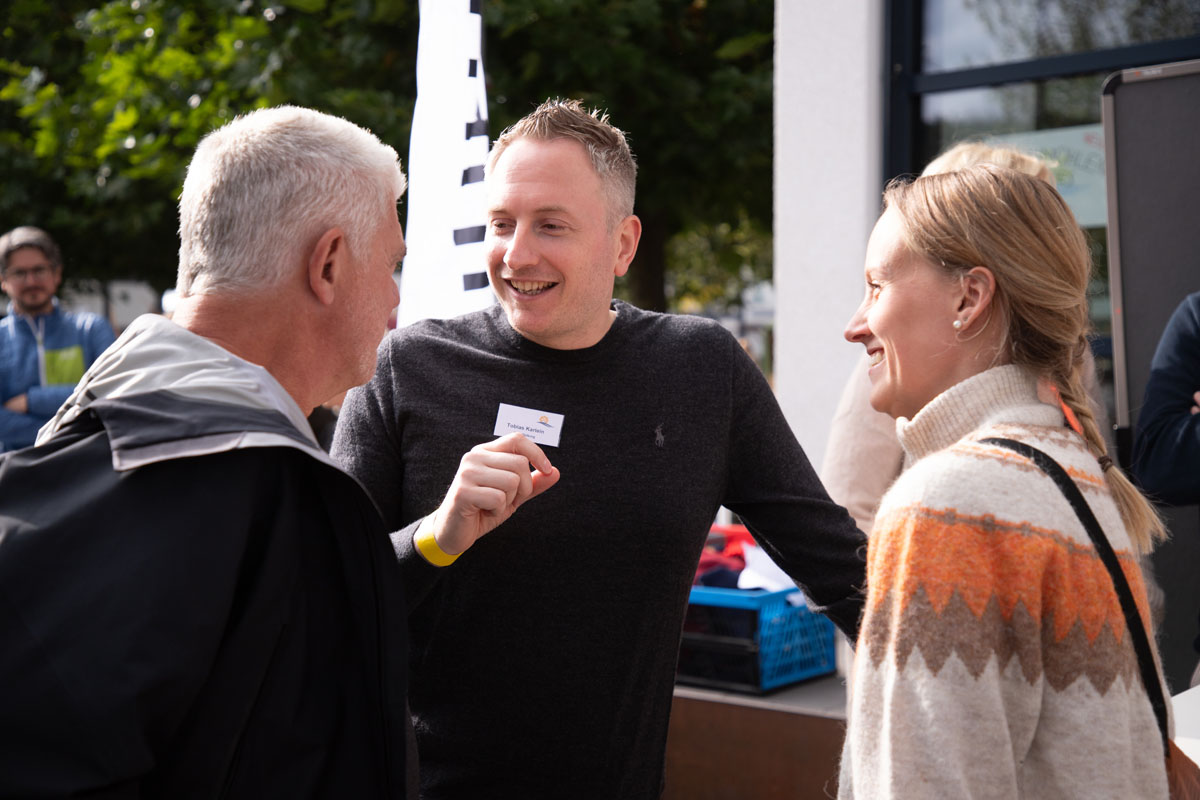
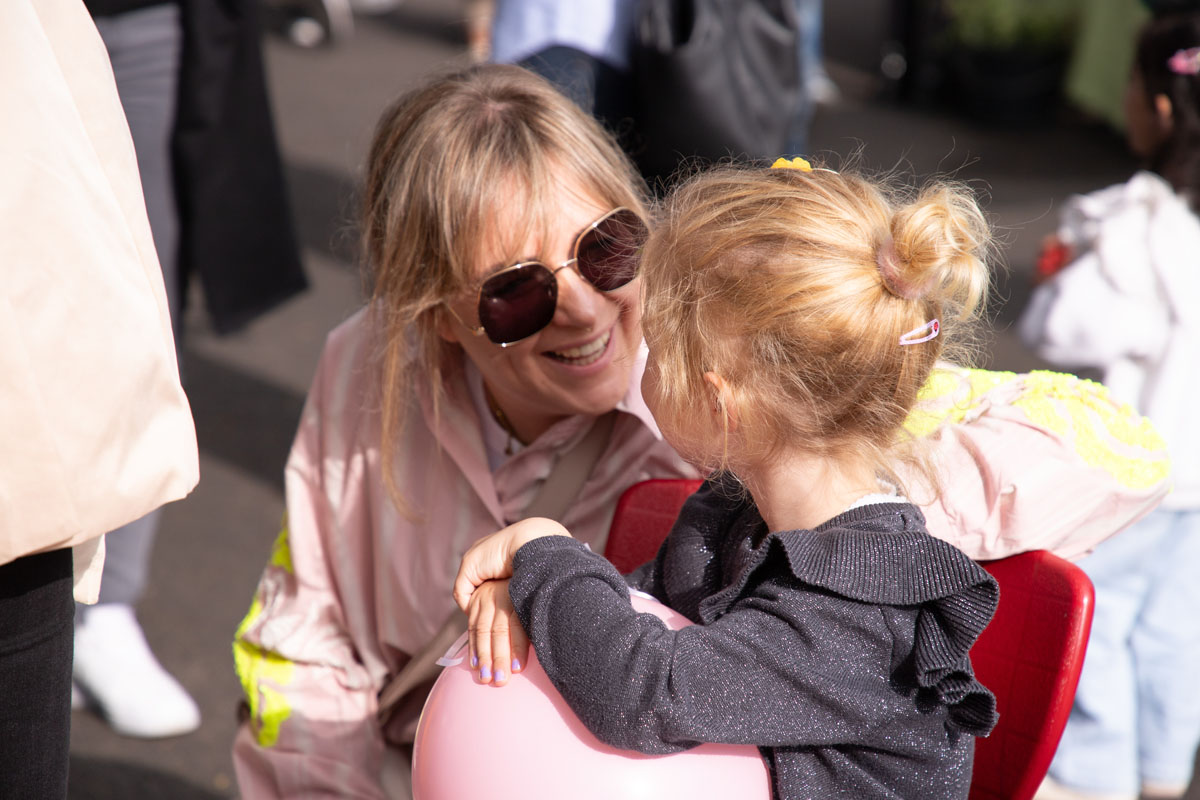
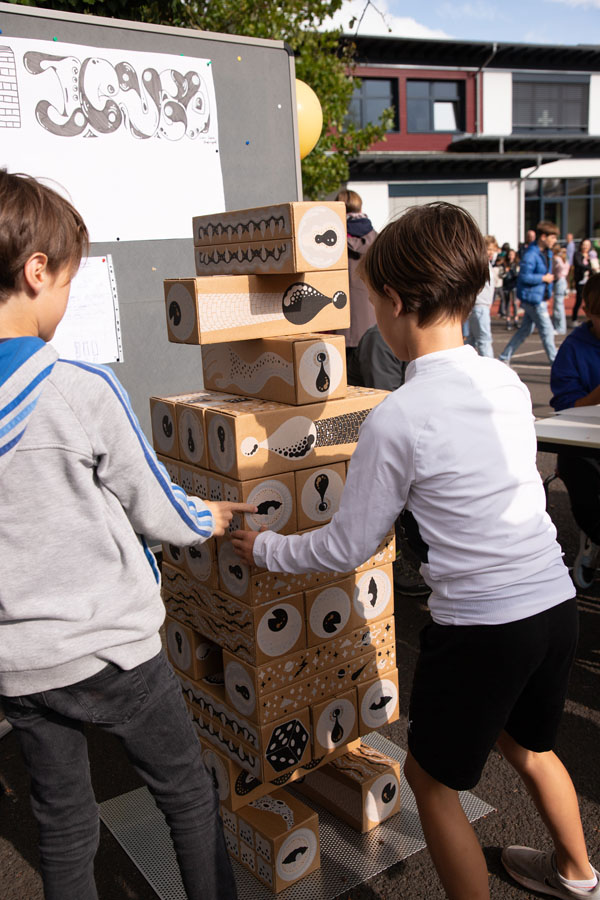
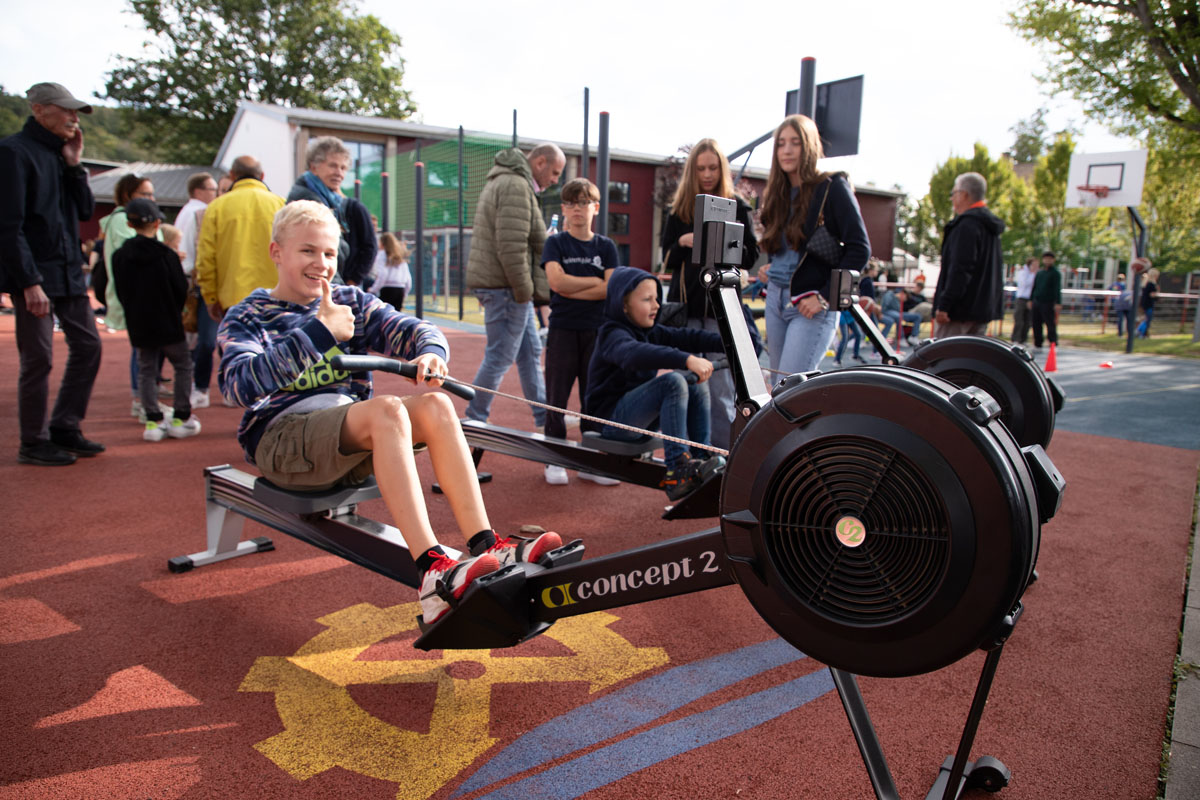
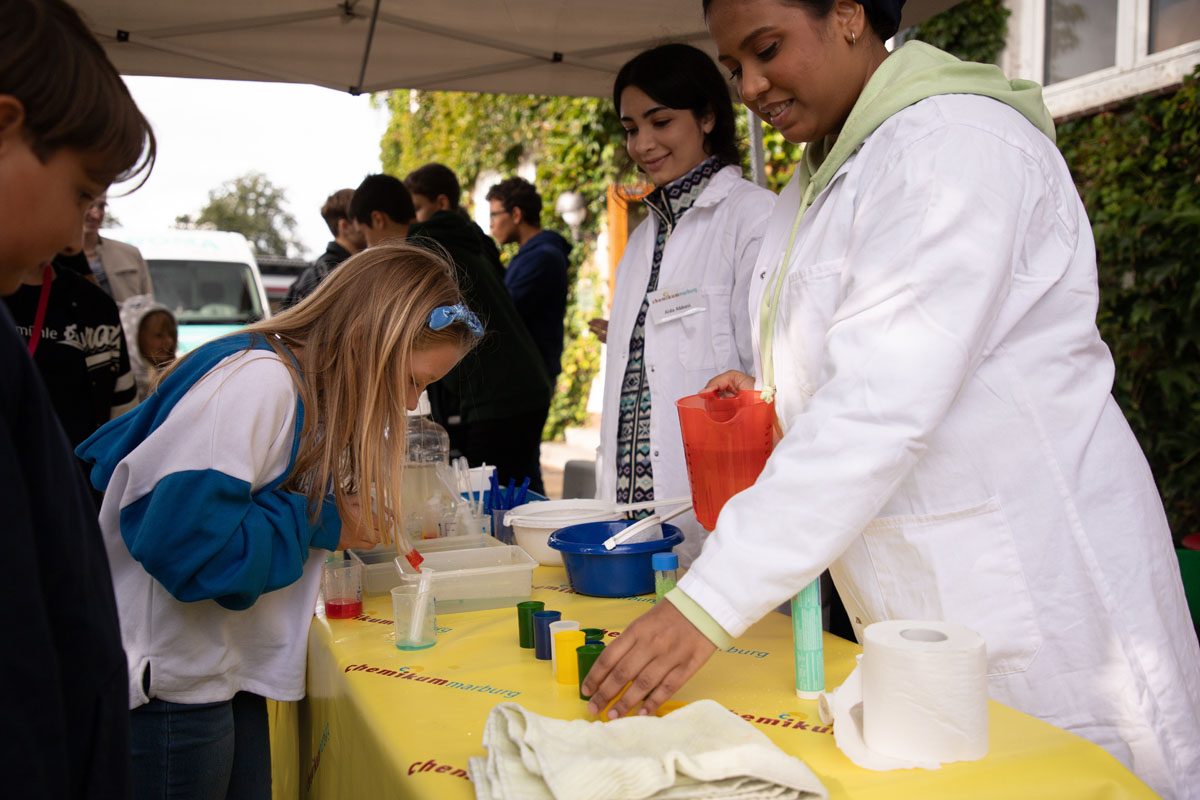
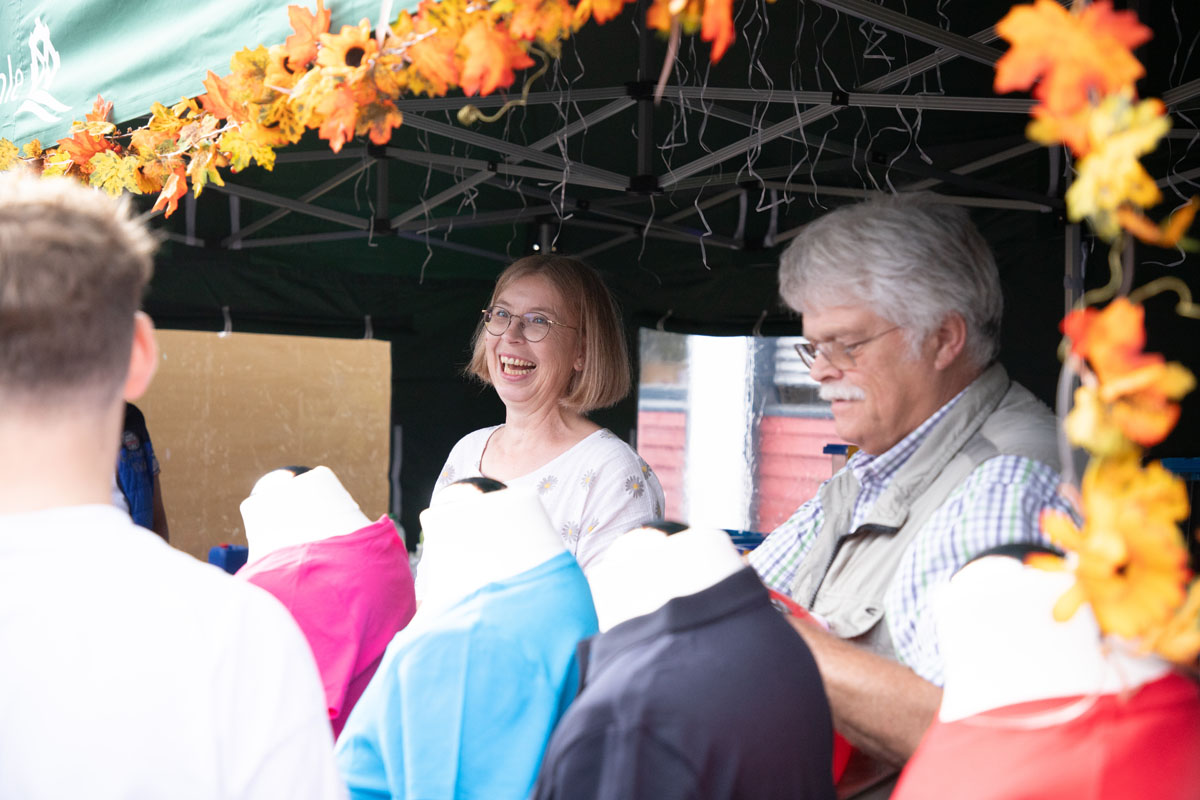
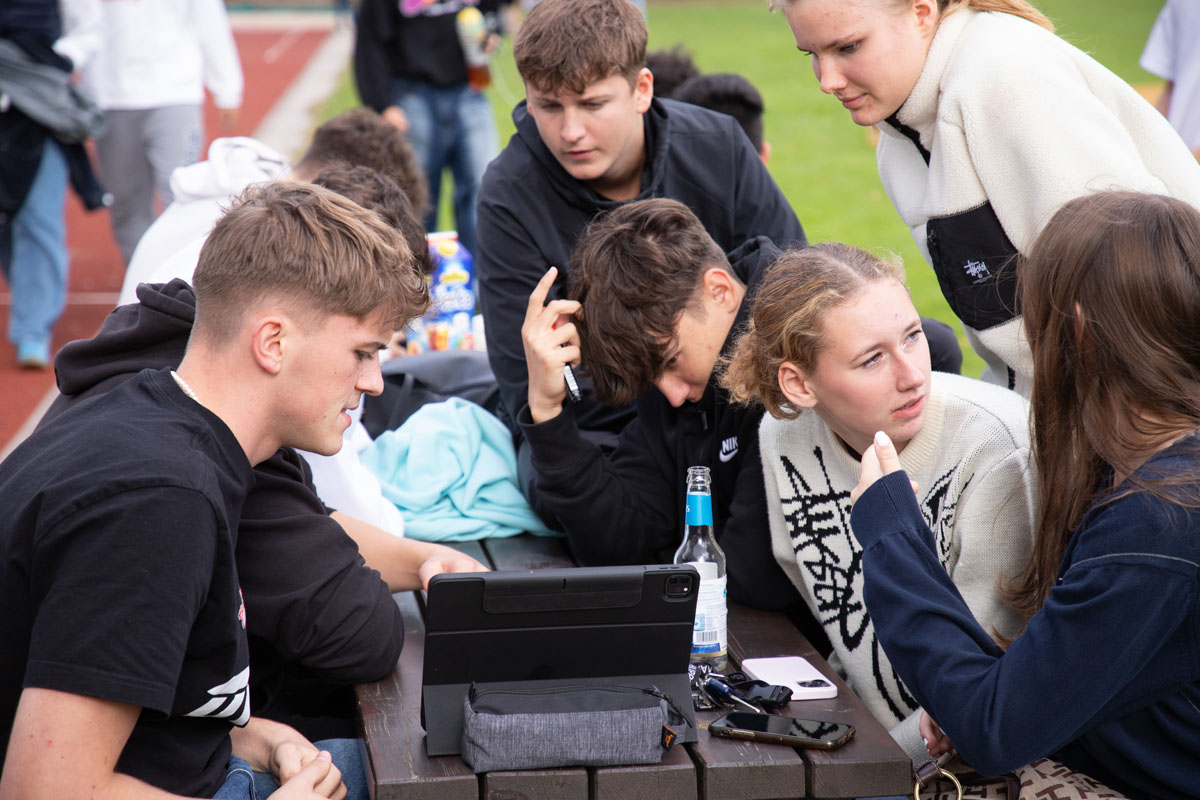
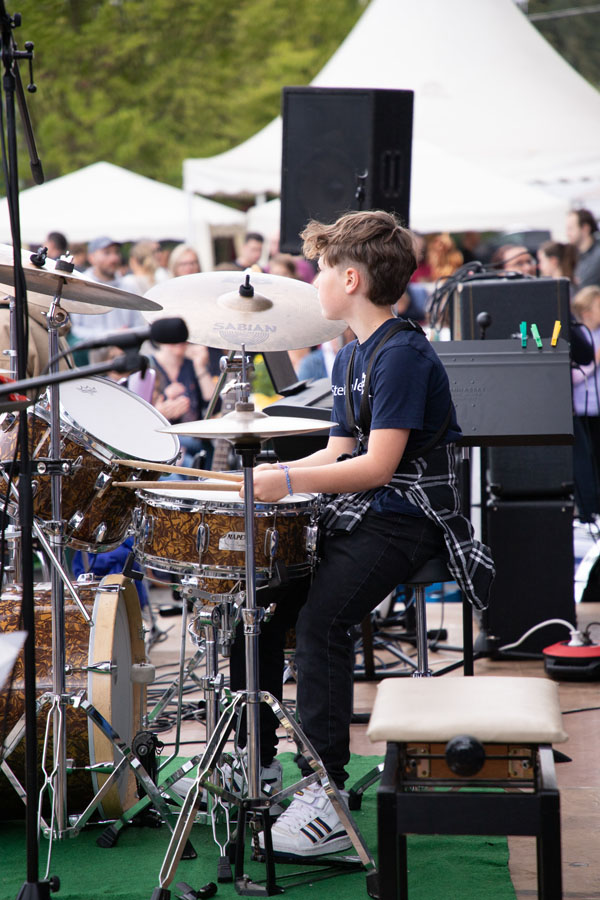
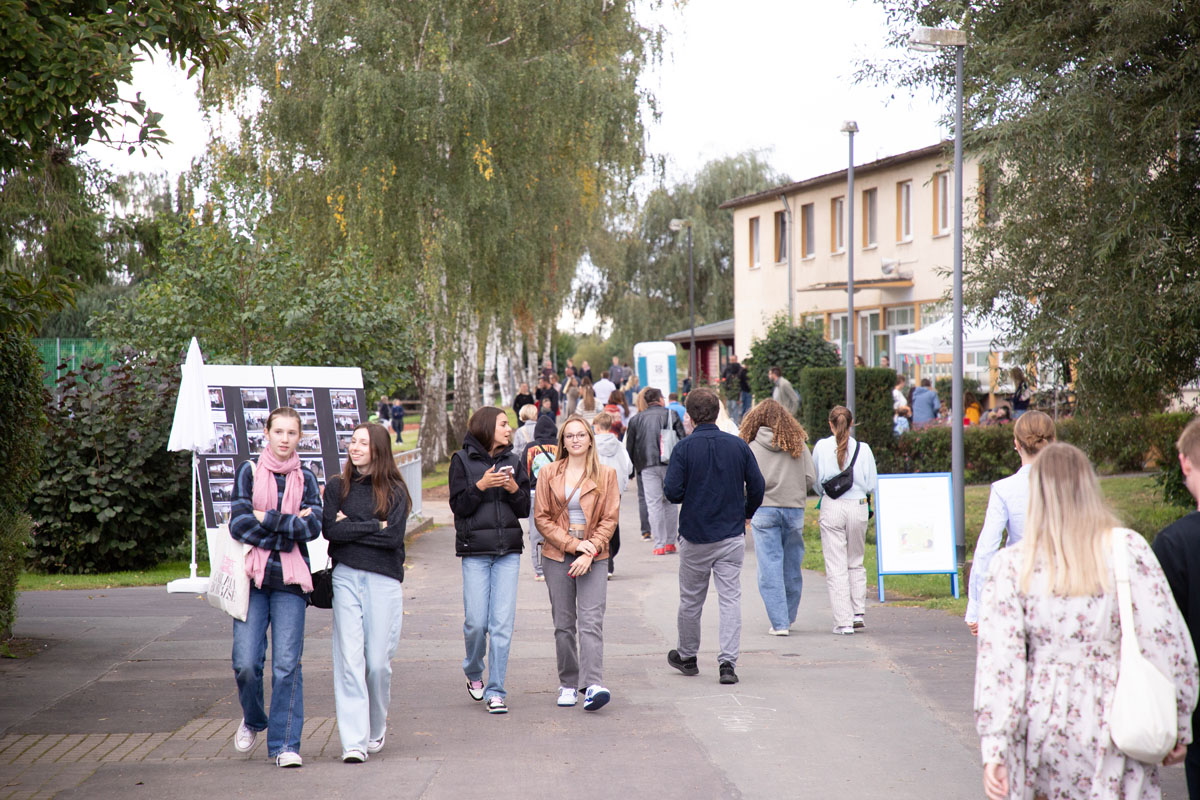
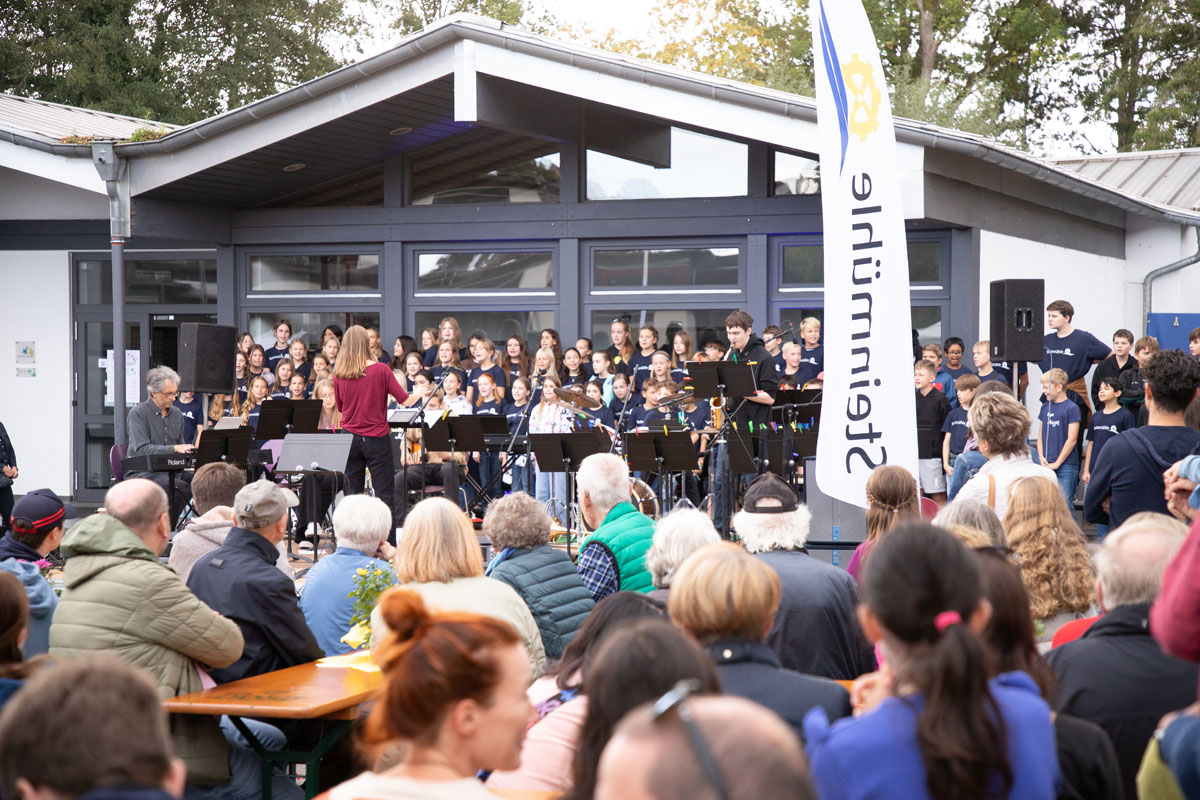
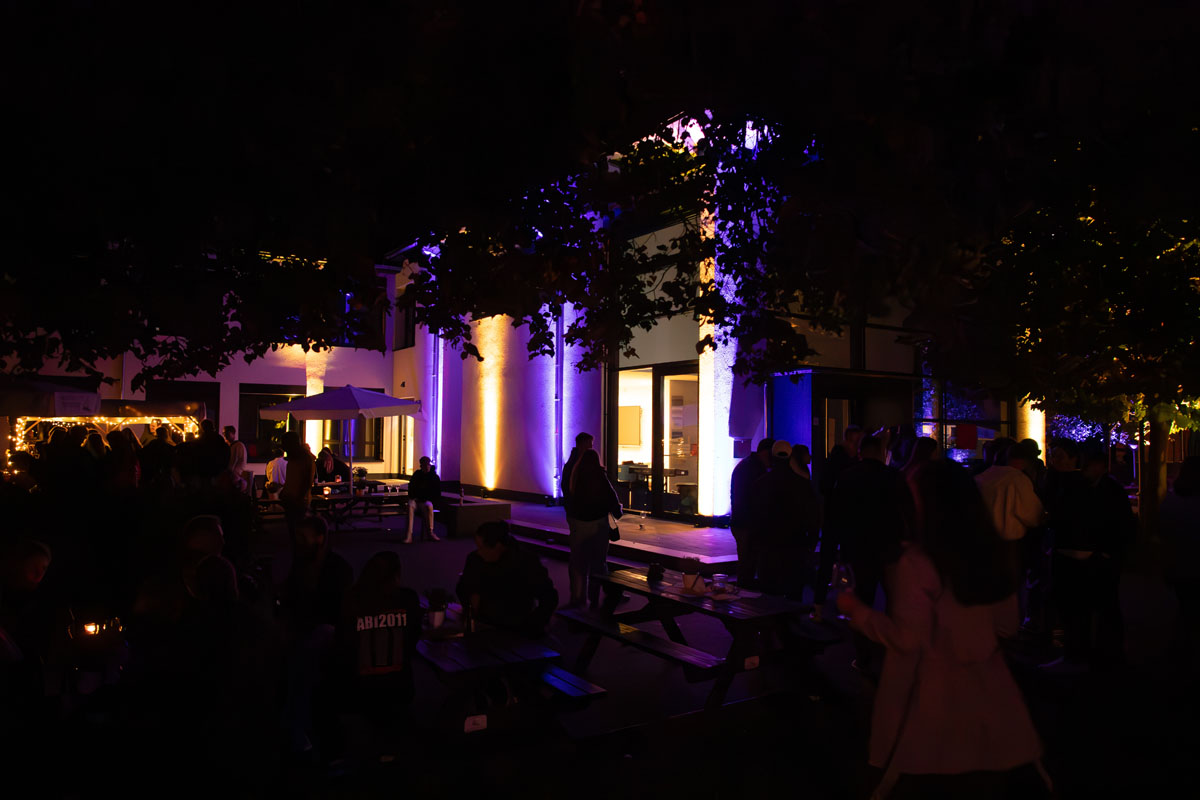
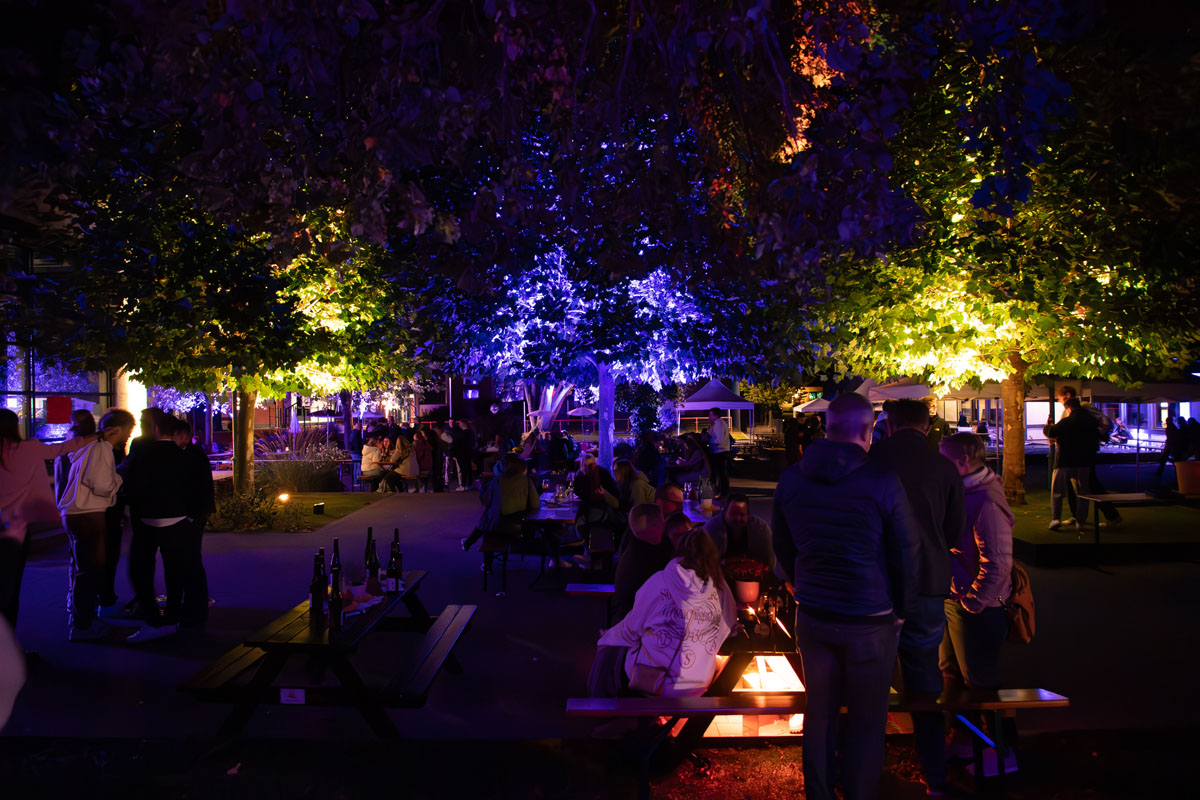
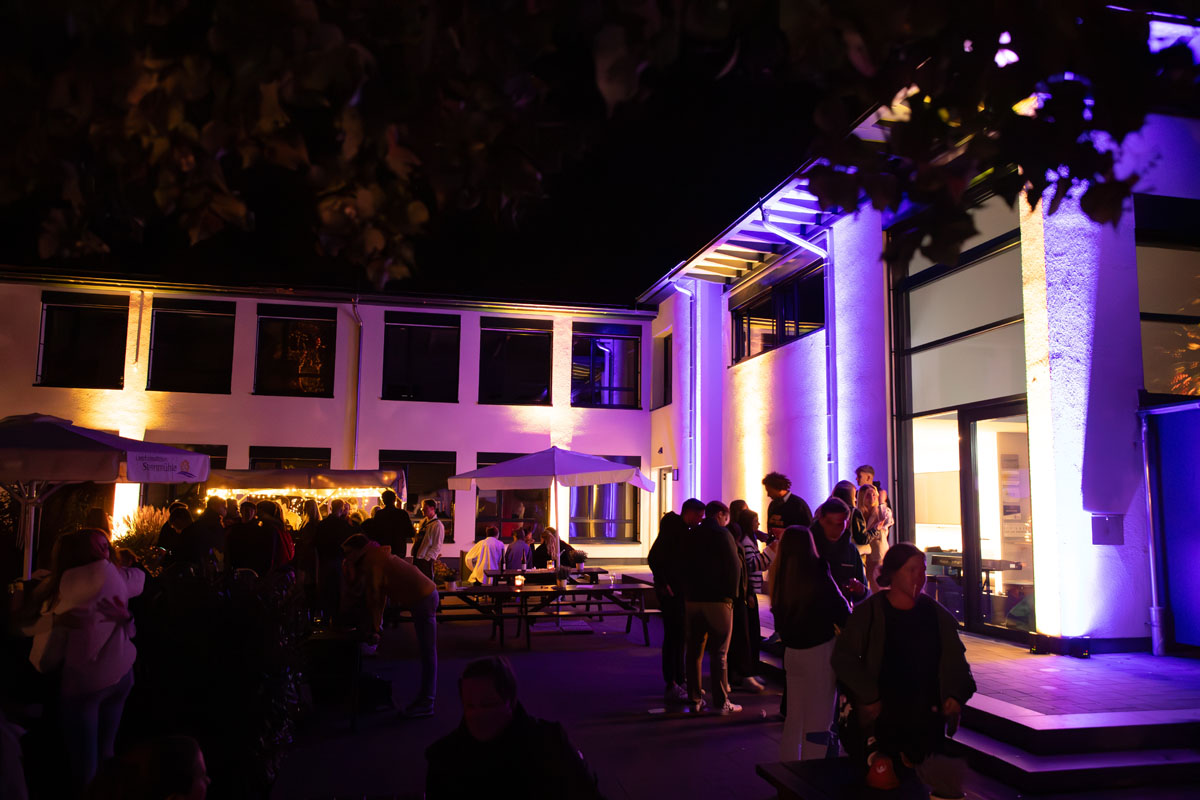
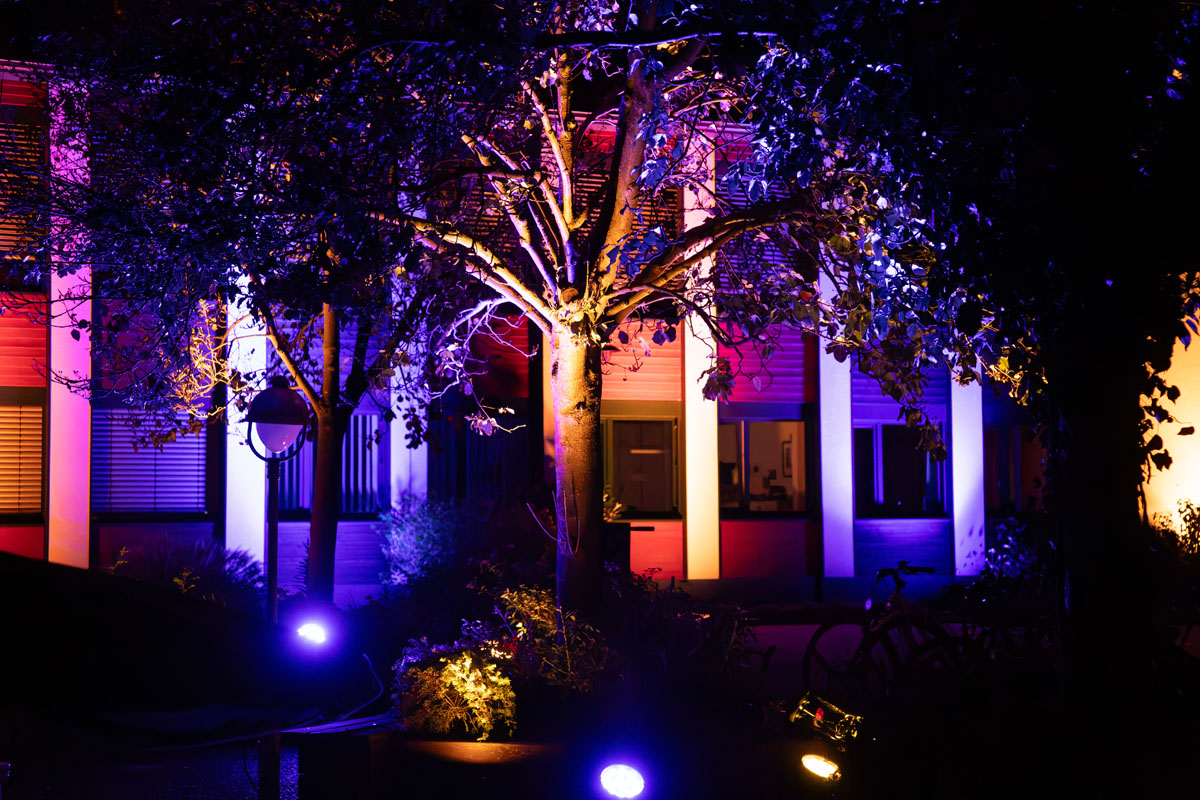
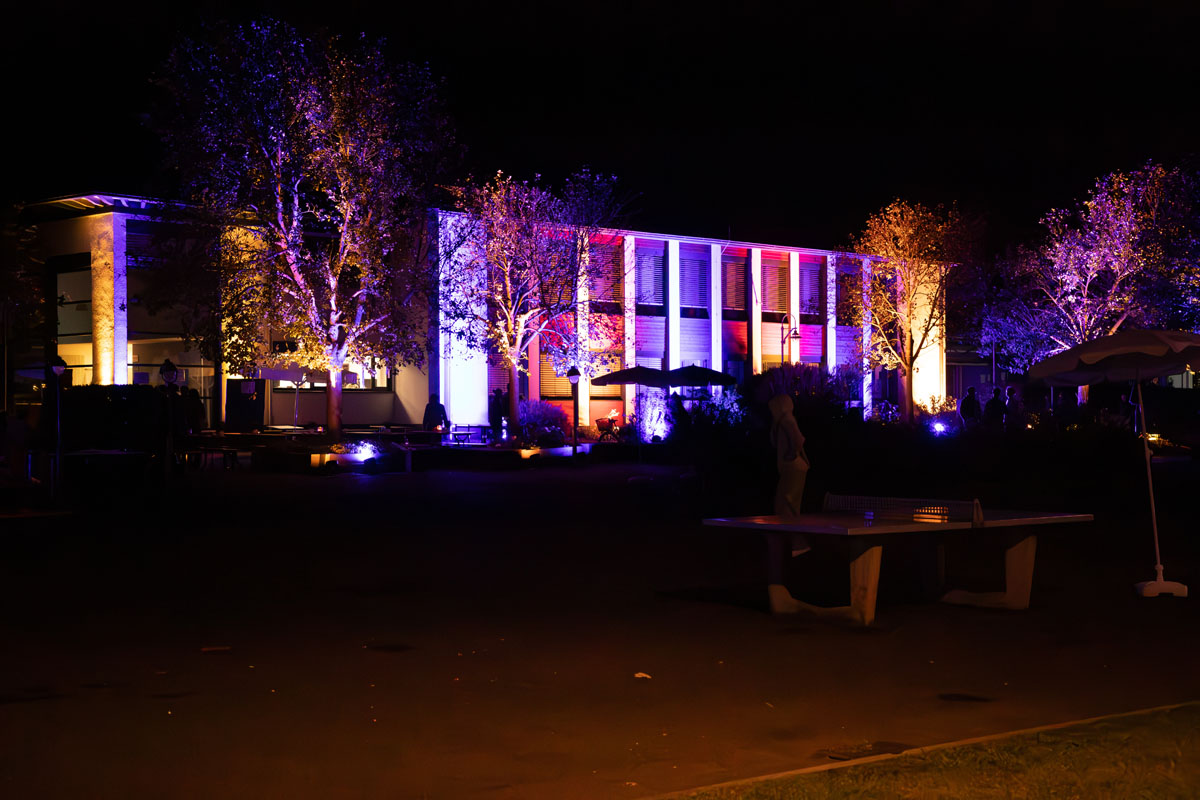
The day of the year when the Steinmühle, as a school and boarding school, attracts the most visitors to its grounds is the Fall Festival. A great many people came last Saturday to meet up, chat, and have fun. It seems there’s no longer any need for a Plan B in case of bad weather, because the sun always shines reliably—and that was the case this time, too.

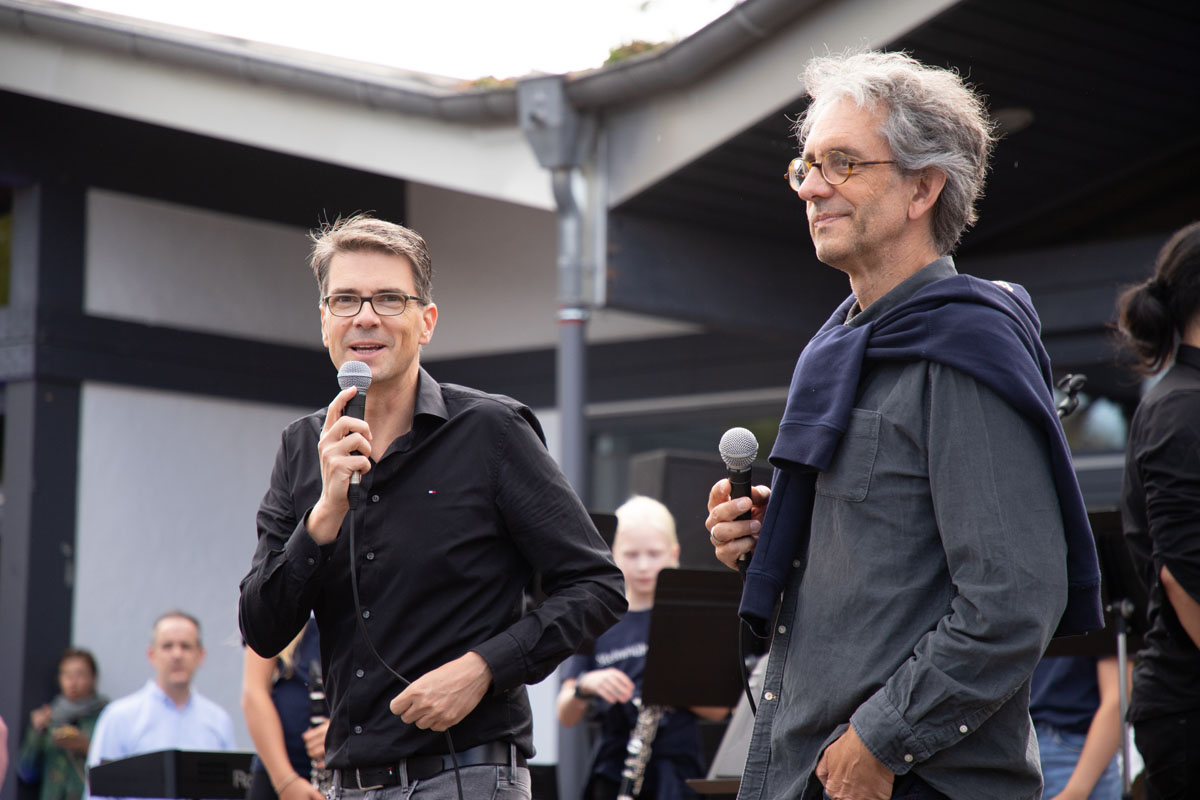
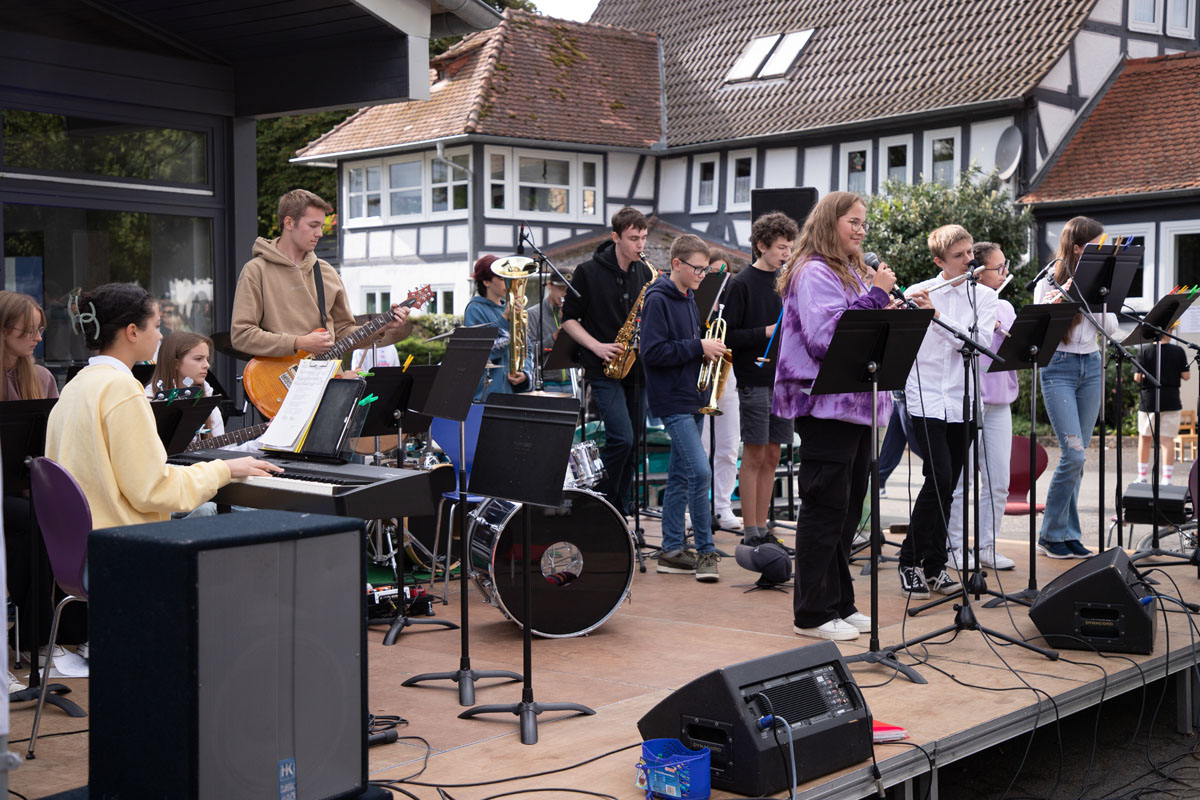
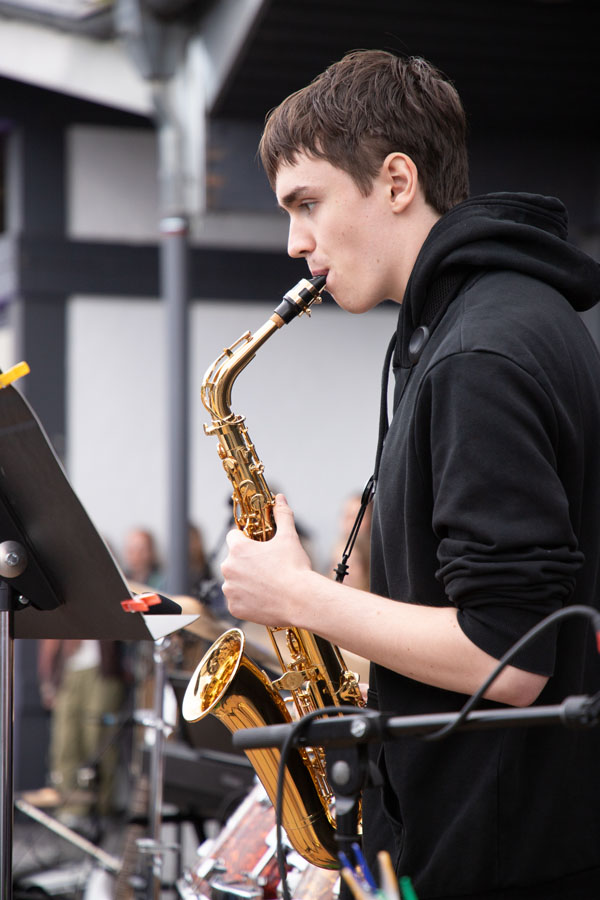
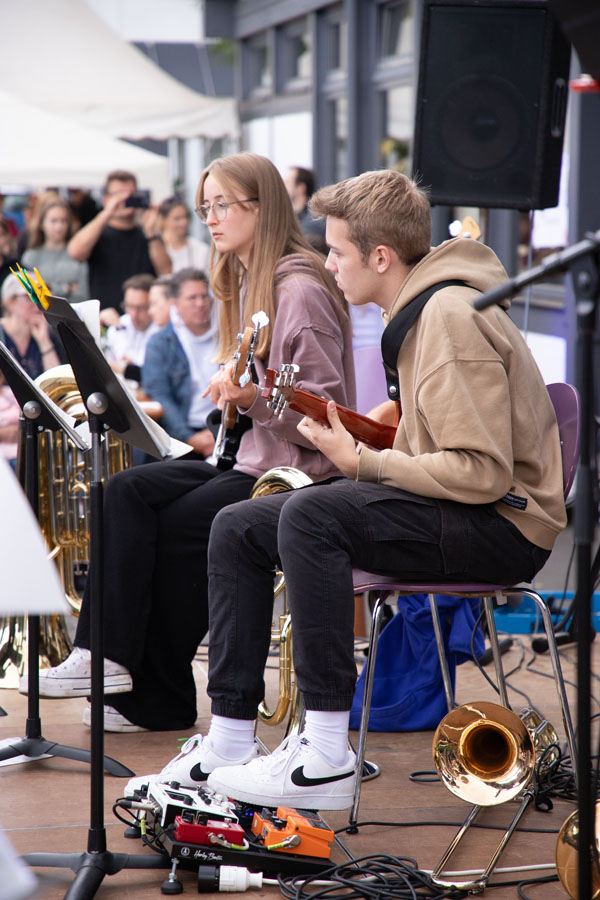
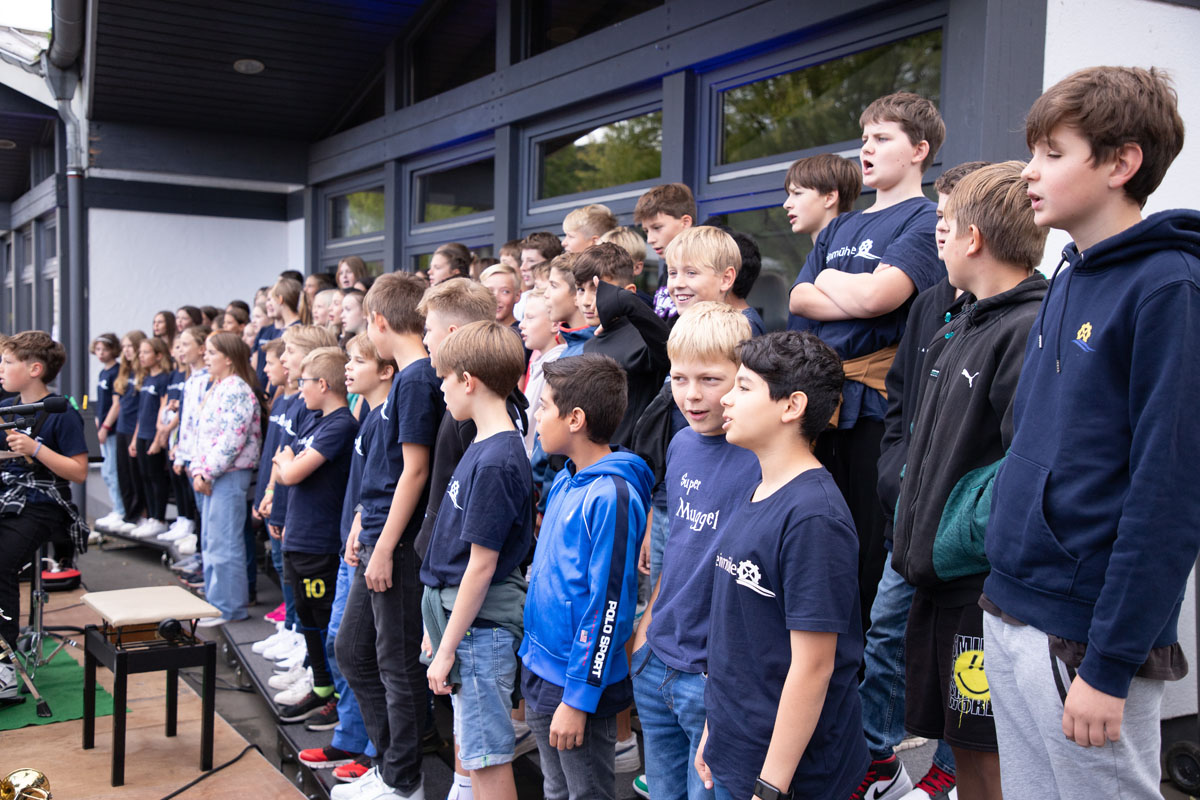
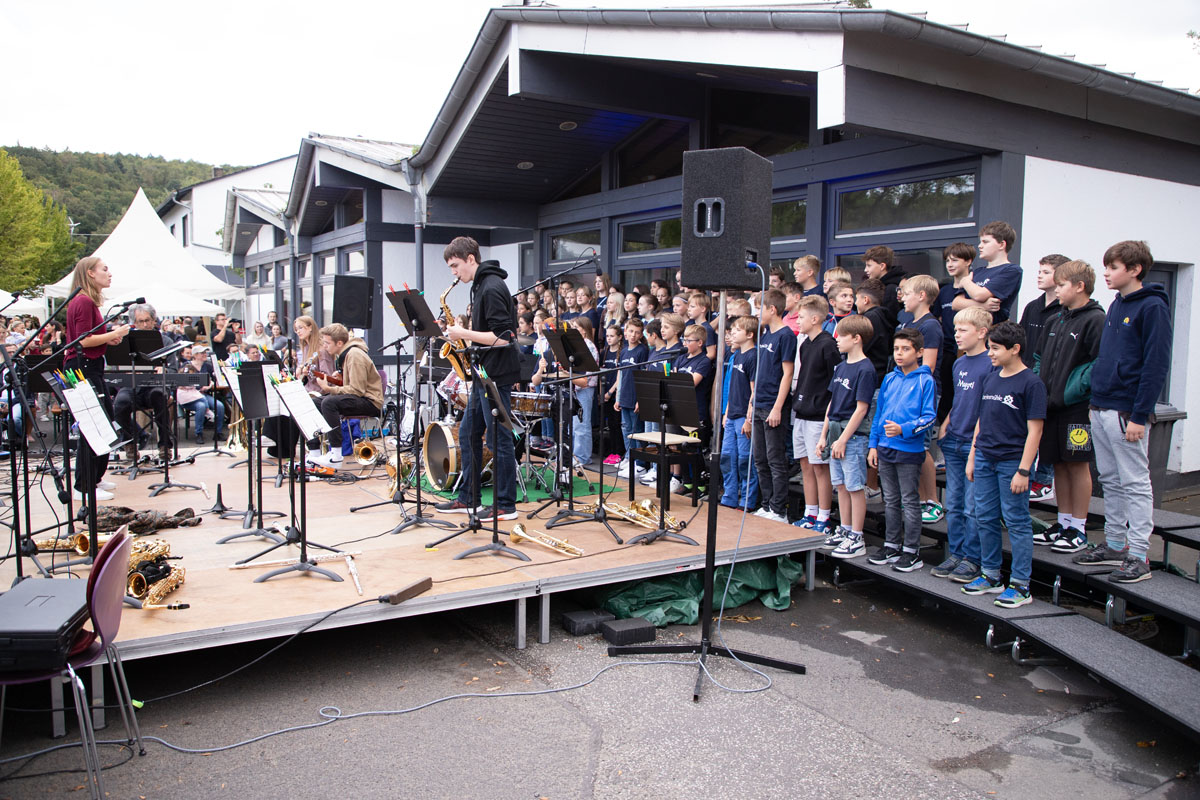
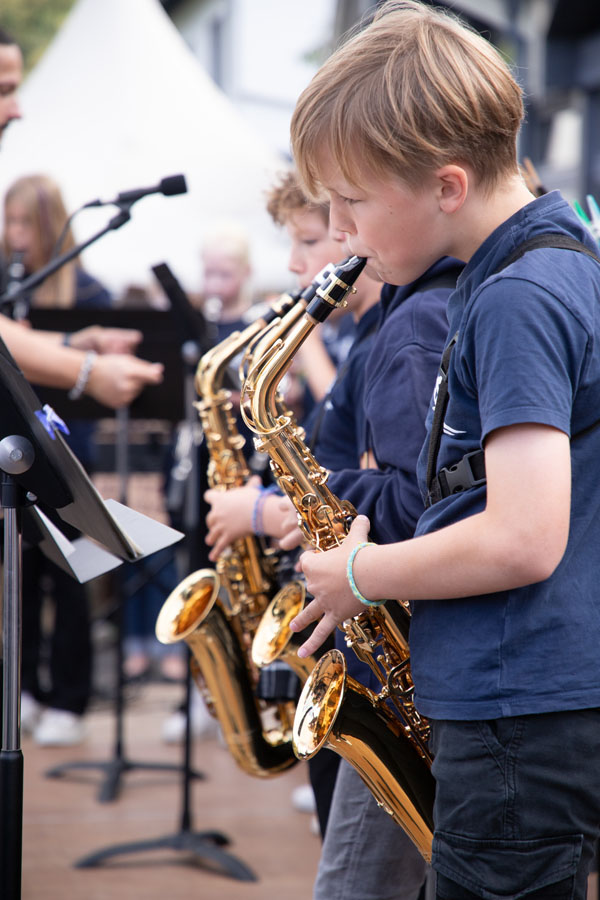
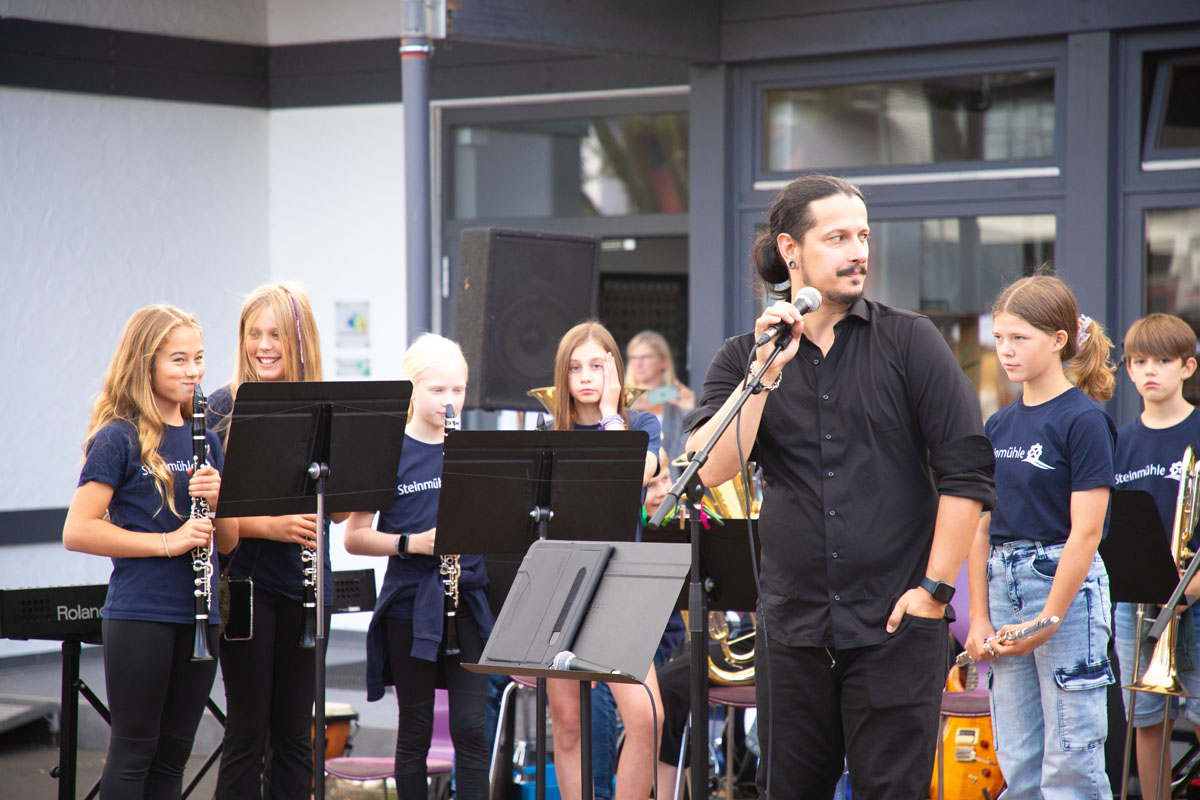
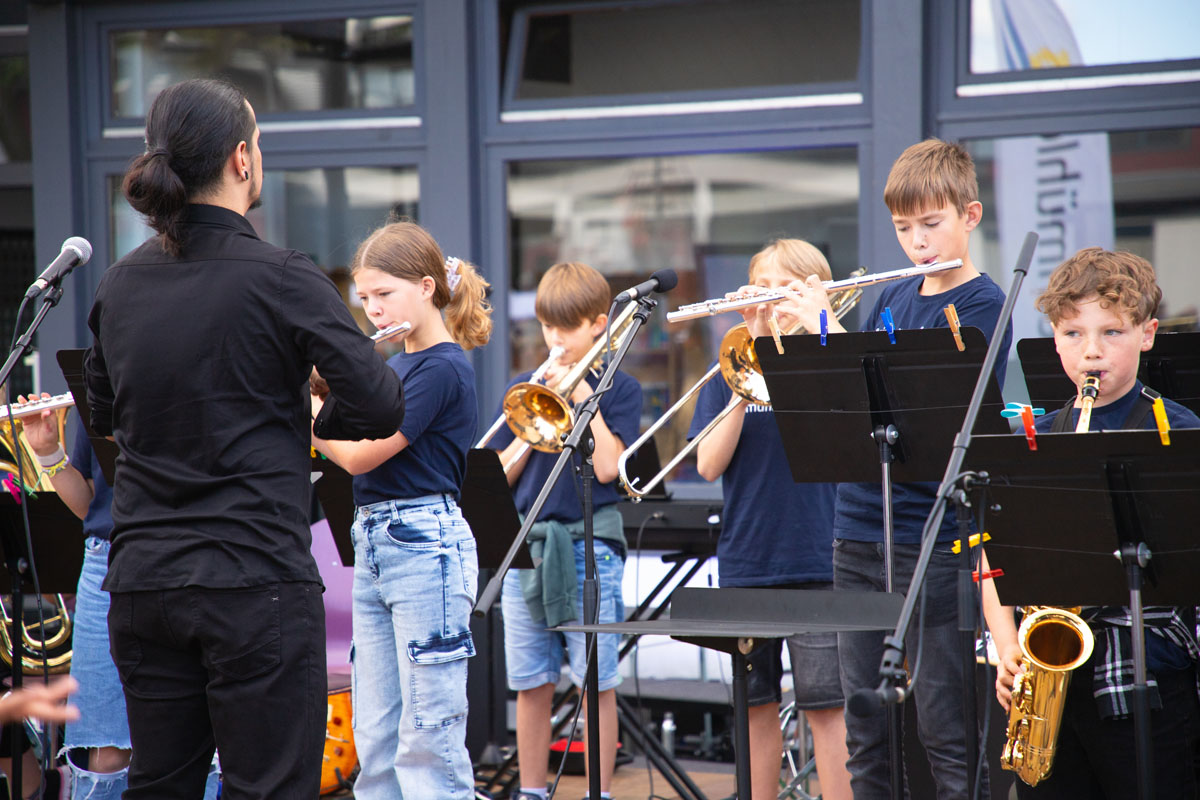
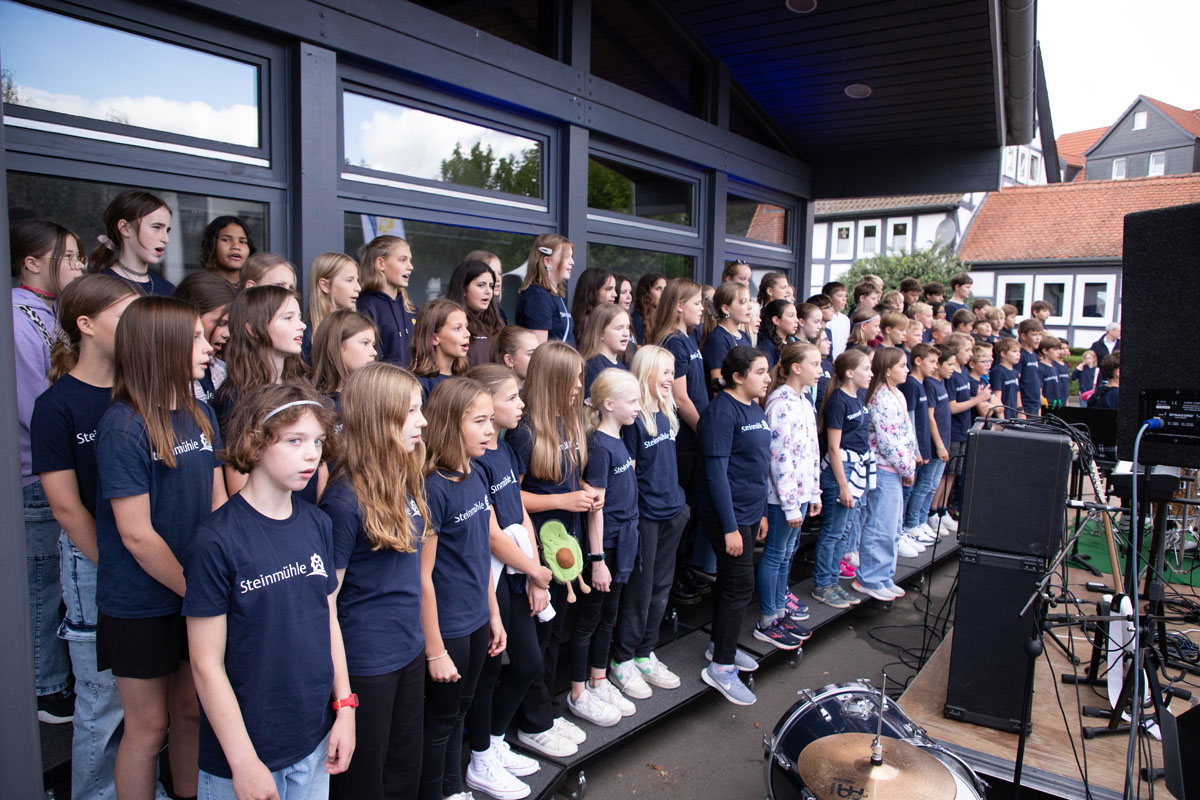
The planning on campus—with its dozens of booths—the timing, and the coordination—all of that goes by one name: Frank Wemme. The head of the lower secondary school, nicknamed “Mister Herbstfest,” made sure, as always, that everything ran smoothly. Accompanied by plenty of music, the 6th-grade brass band, led by Stephan Reissig, welcomed the large crowd gathered on the school grounds—some standing around the stage, others sitting on benches and applauding. They’ve only been practicing their instruments for a year—which was hard to believe. Principal Björn Gemmer welcomed the guests, many of whom had come as entire families and even brought their grandparents along. They also enjoyed the rhythmic performances by the musical theater band, which played under the direction of Anna Prokop.

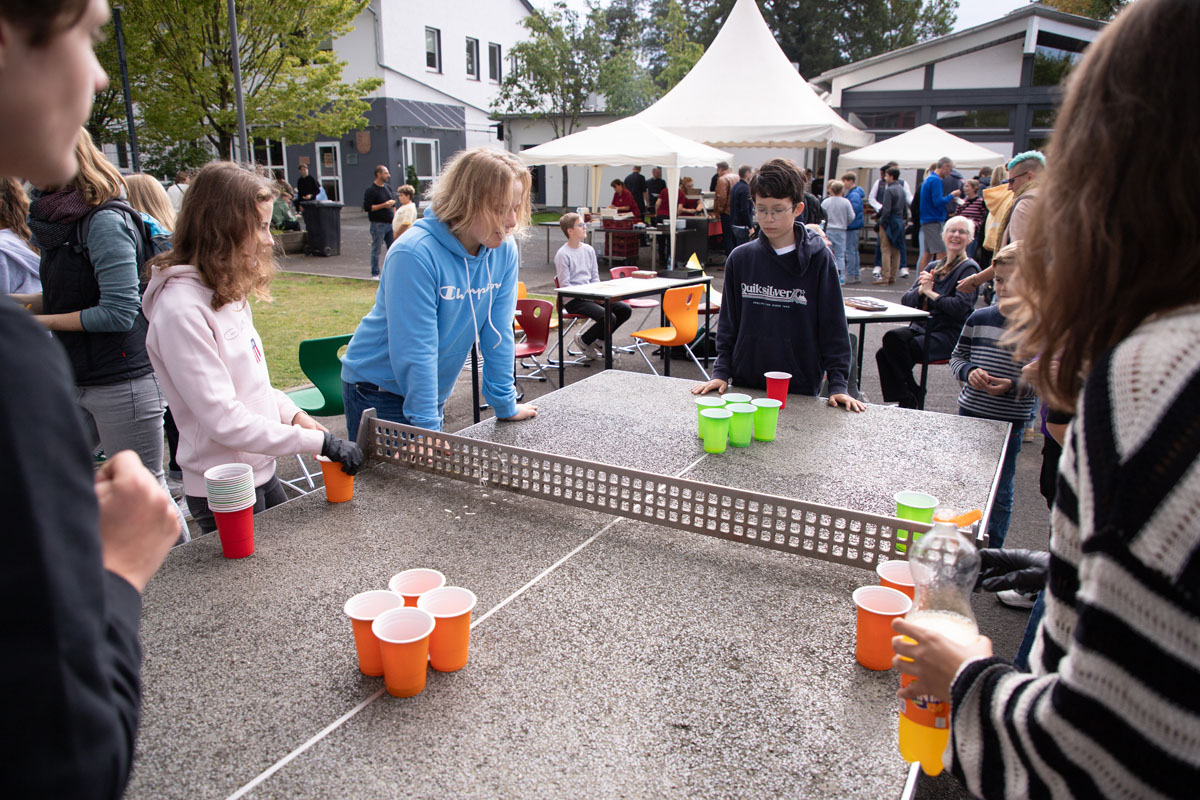
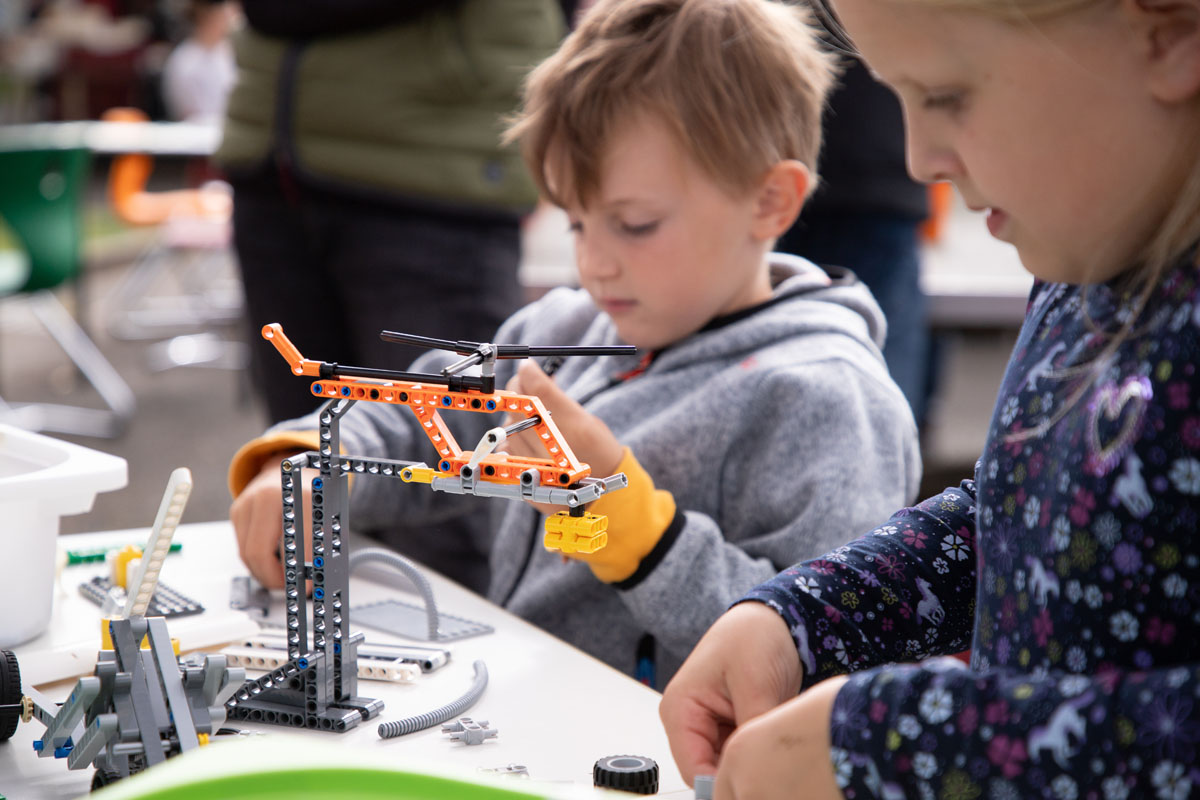
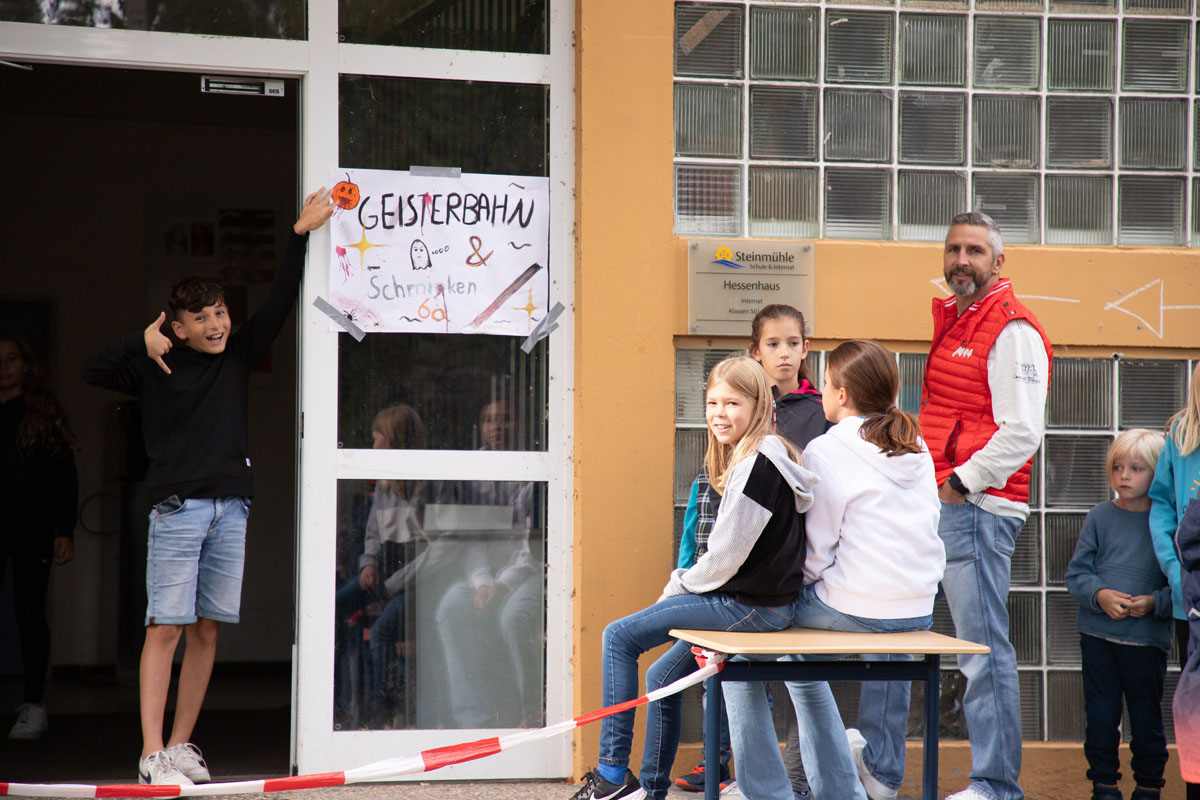
During the tour of the Steinmühle grounds, numerous activities stood out that had been well-received in the past and were therefore repeated. One example is the haunted house: Once again this year, people eager to experience it lined up! All the activities were spread out across the entire grounds—from the boarding school area with pony rides, to the Forum with its disco and karaoke, all the way to the boathouse, where coach Martin “Stromi” Strohmenger was waiting.


Pedal away for a smoothie

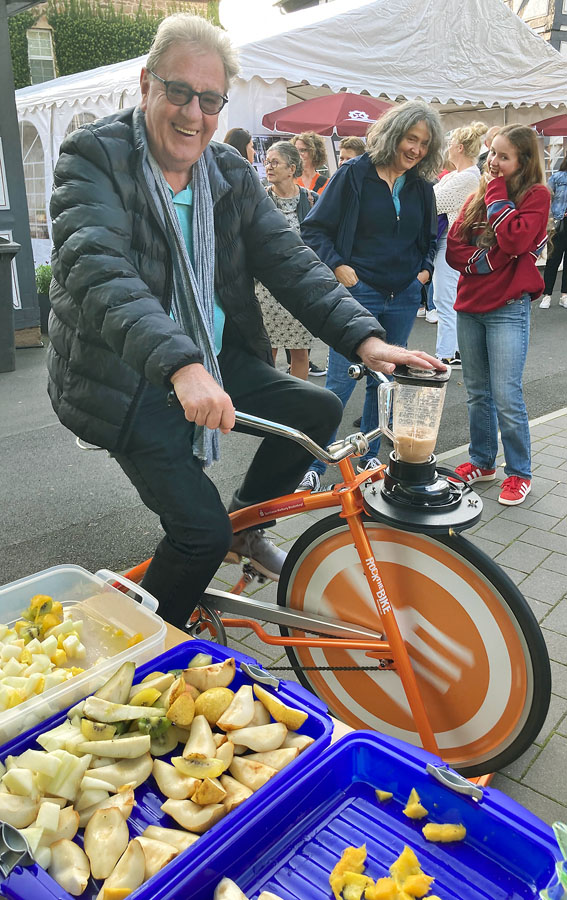
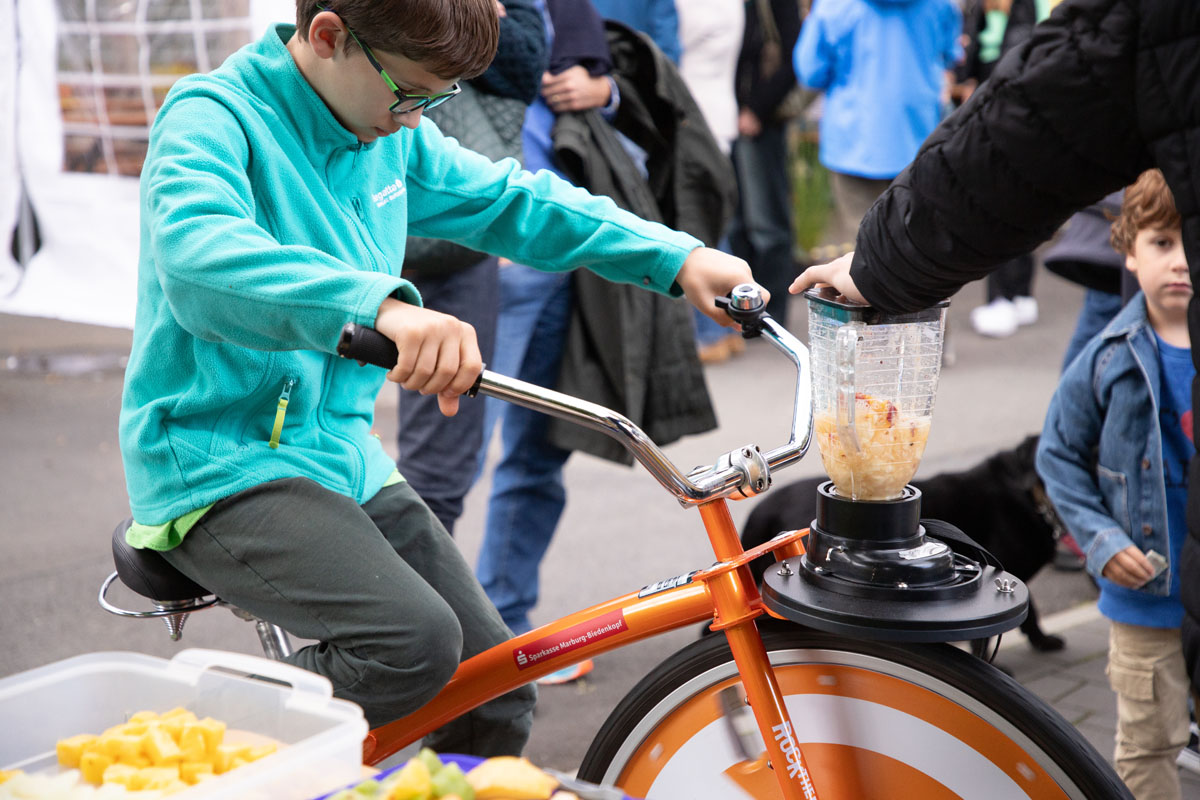
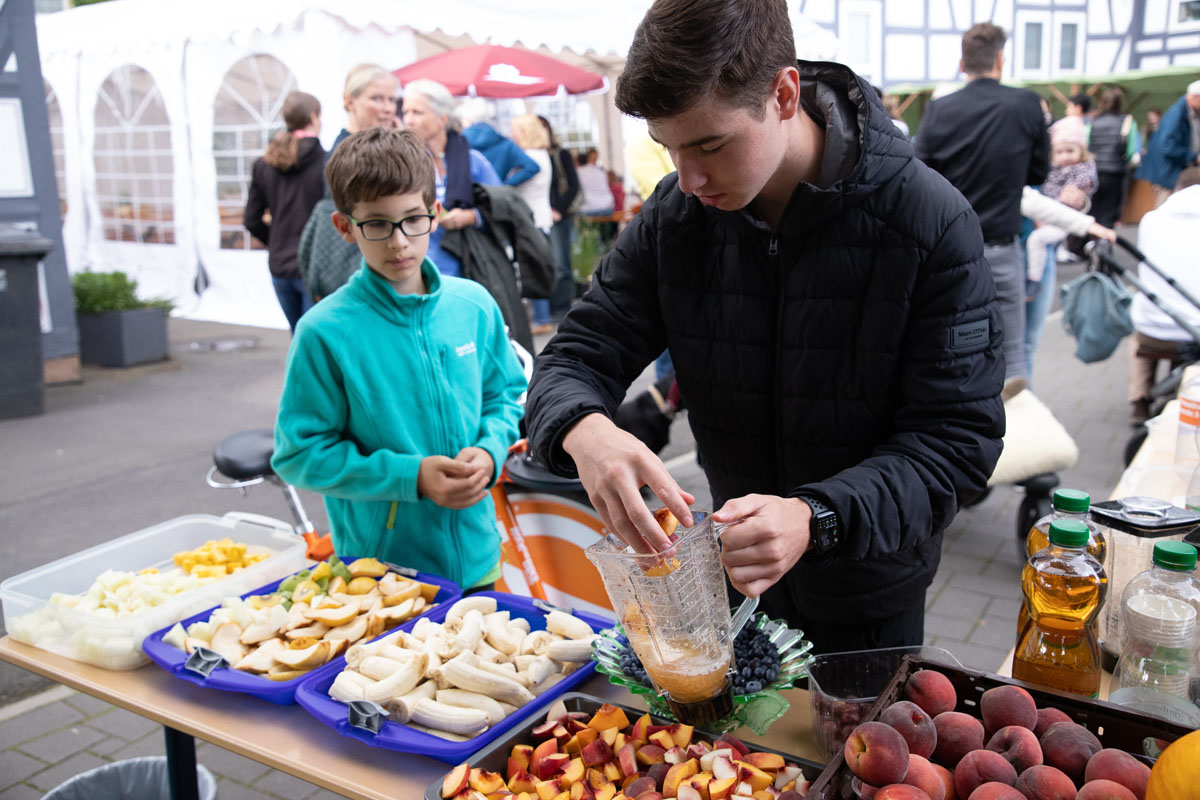
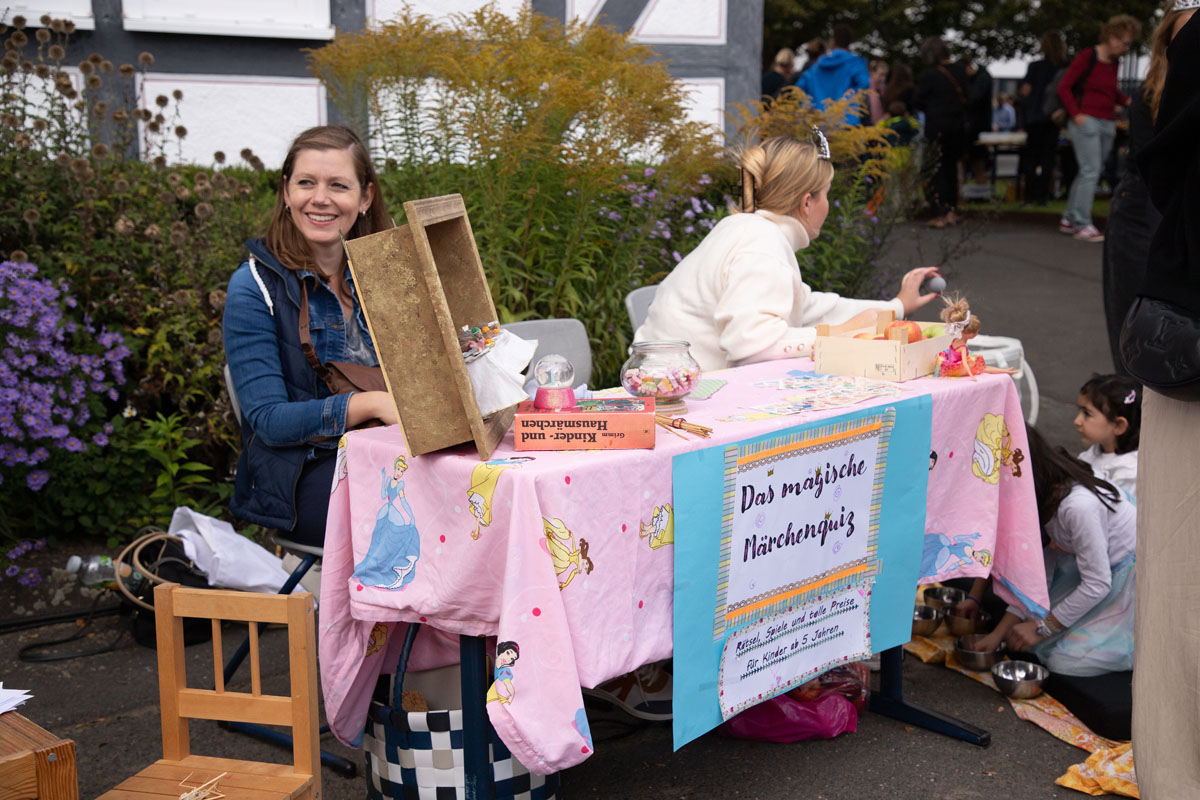
A few new features caught the visitors’ attention. Among them was a booth where “fortune tellers” offered interested visitors a glimpse into their future. Another great attraction was the smoothie bike, where visitors could make their own fruity fitness drink by pedaling. The bike was on loan from the Marburg Food Bank, which its chairwoman, Rita Vaupel—wife of school association chair Egon Vaupel—had made available to the Steinmühle for the fall festival.

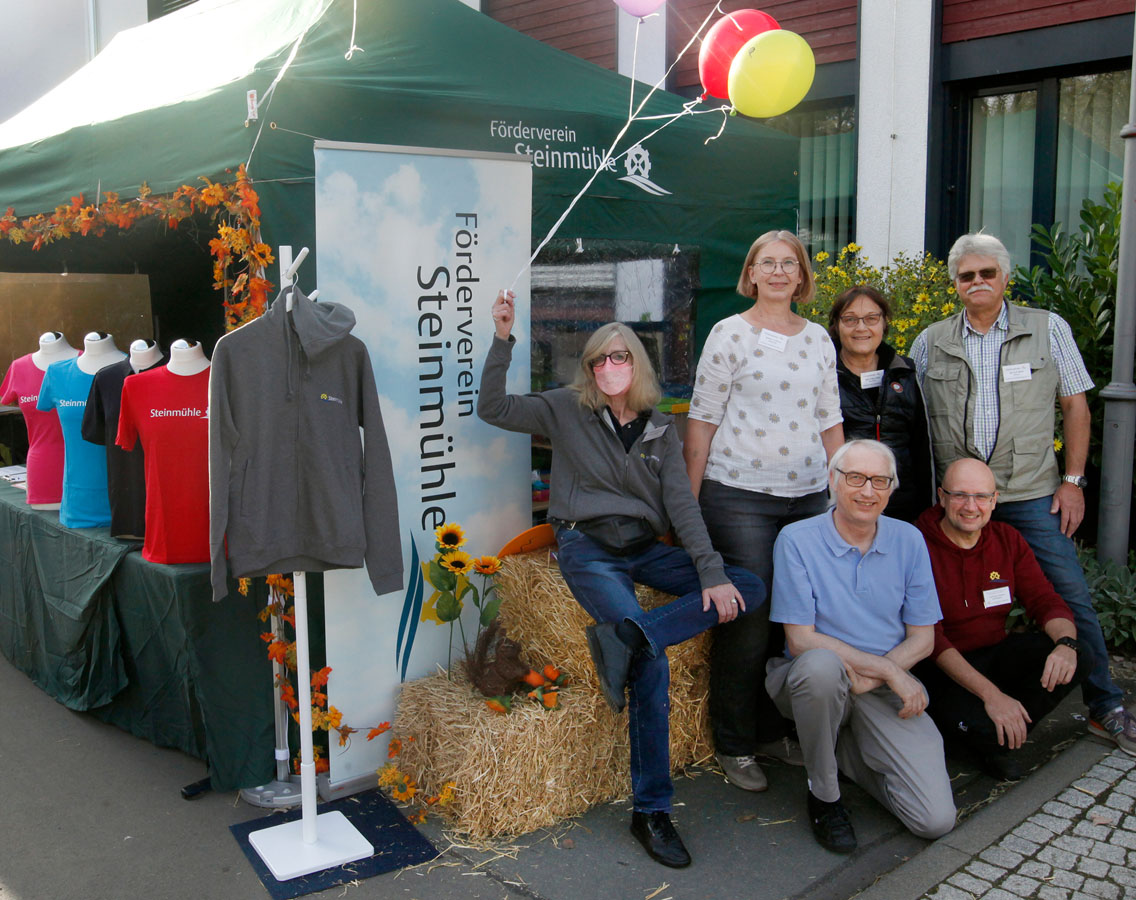
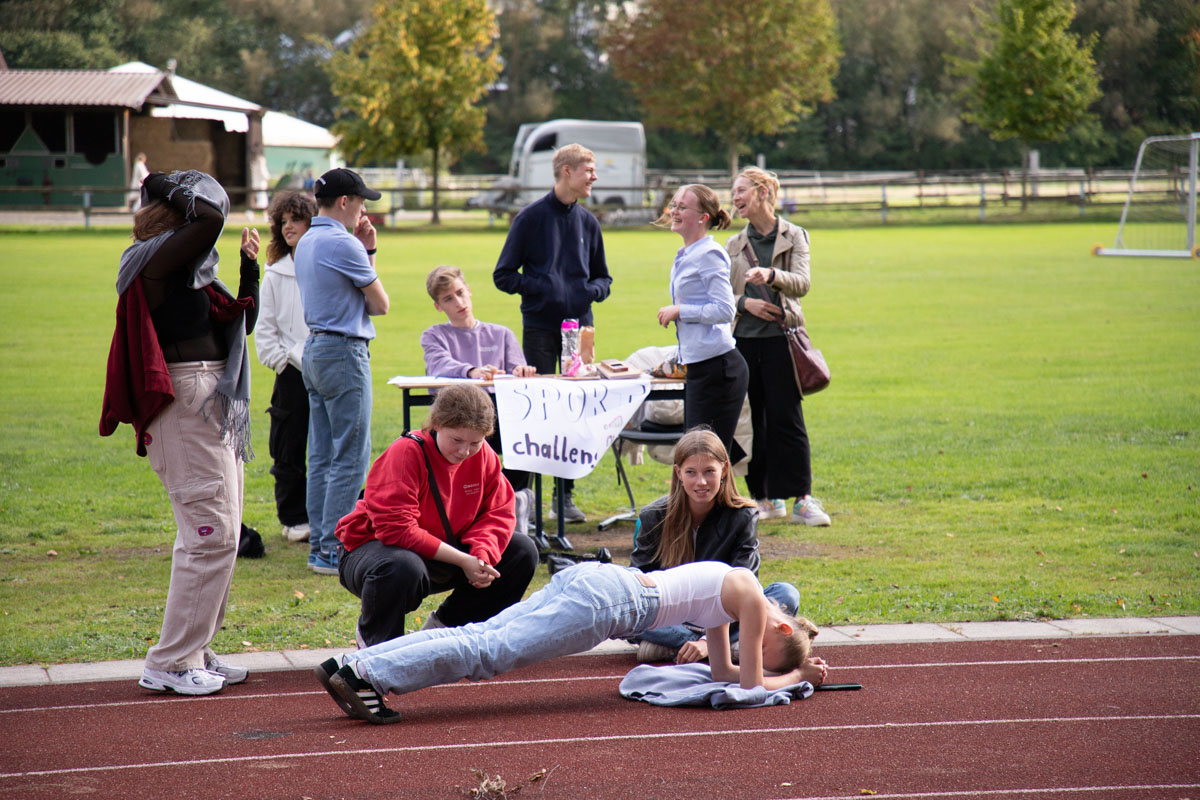
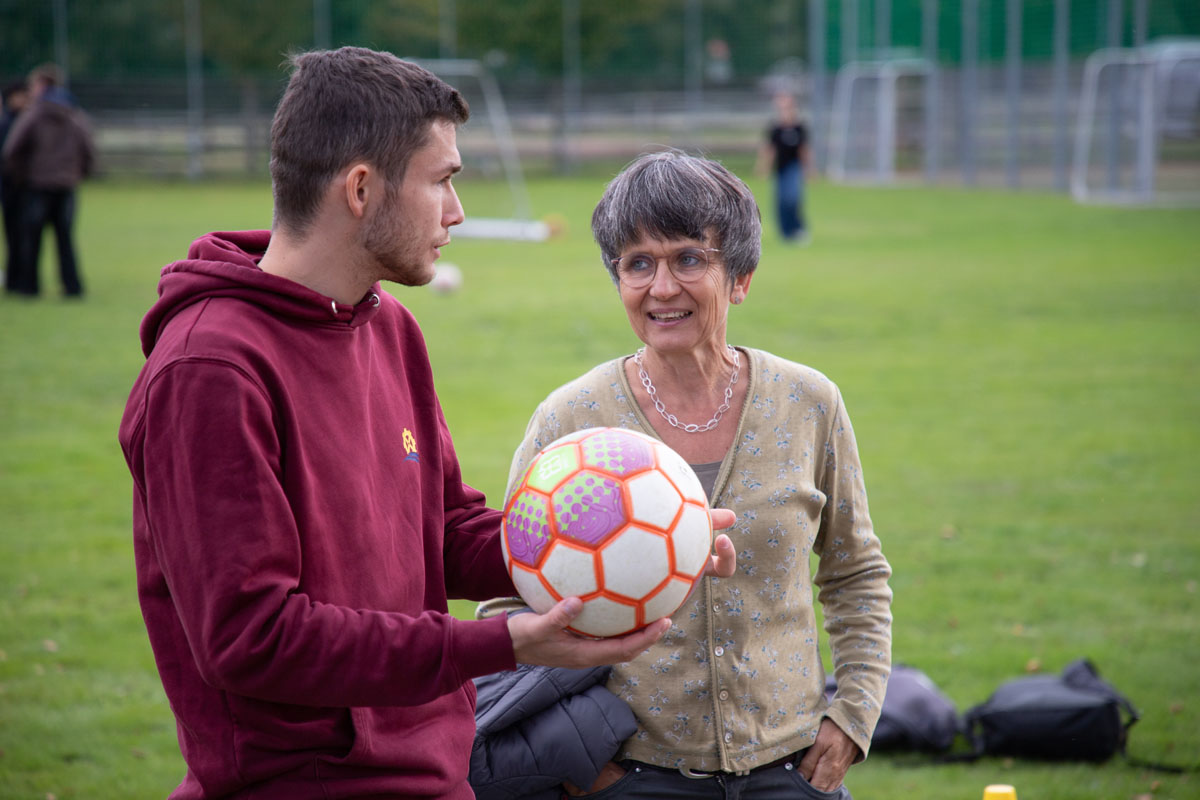
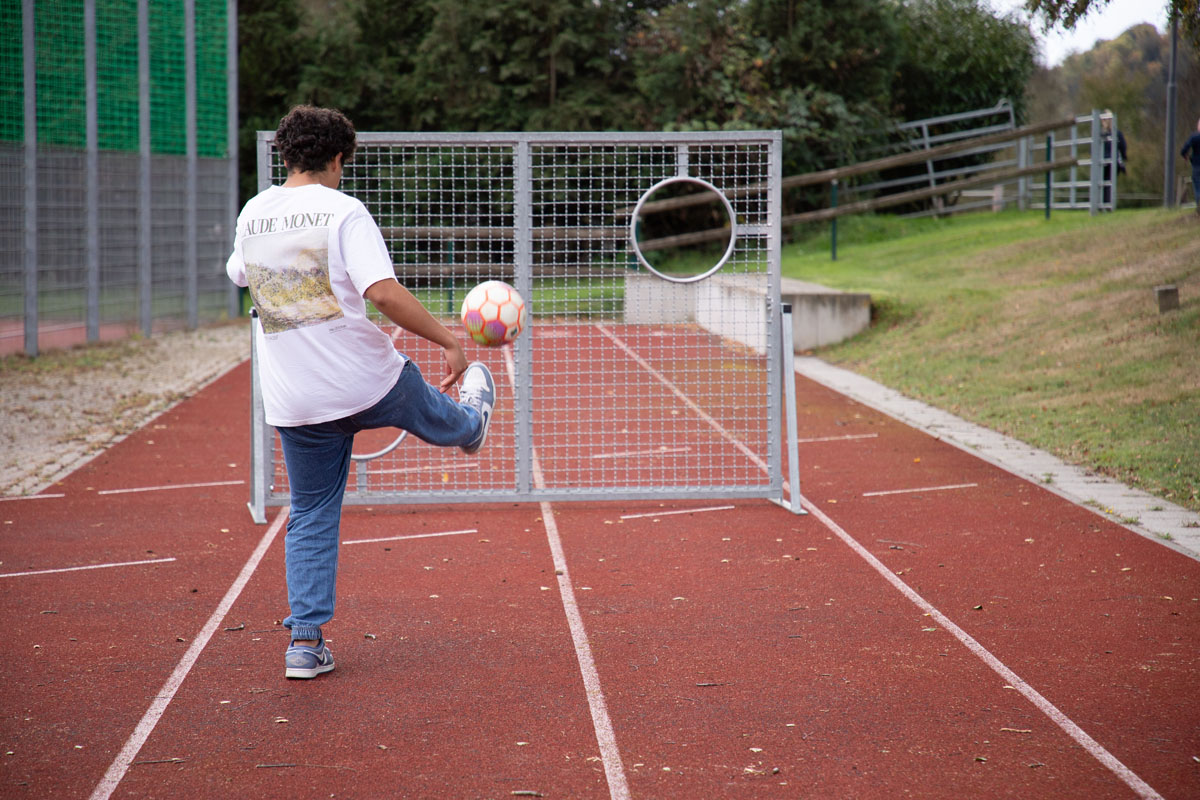
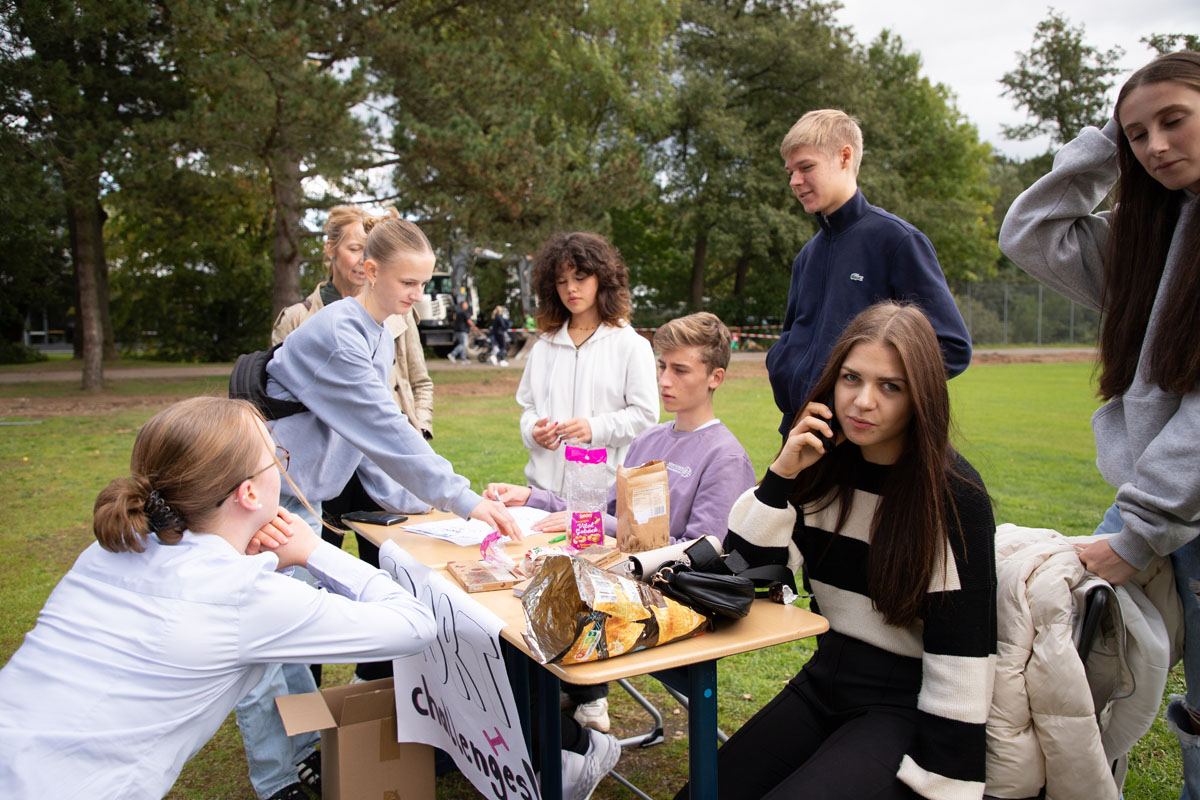
Overall, many booths were focused on collecting donations. For example, the sports challenge on the soccer field—located in the back area of the campus—was also a charity event. The Steinmühle Friends Association, chaired by Jasmine Weidenbach, recruited new members at its beautifully decorated booth right at the entrance to the schoolyard. Not far from there, Executive Director Dirk Konnertz, Upper School Director Cornelia Oestreicher-Gold, and Dirk Lange—speaking on behalf of the entire school administration team—provided information about the various academic programs offered at Steinmühle.
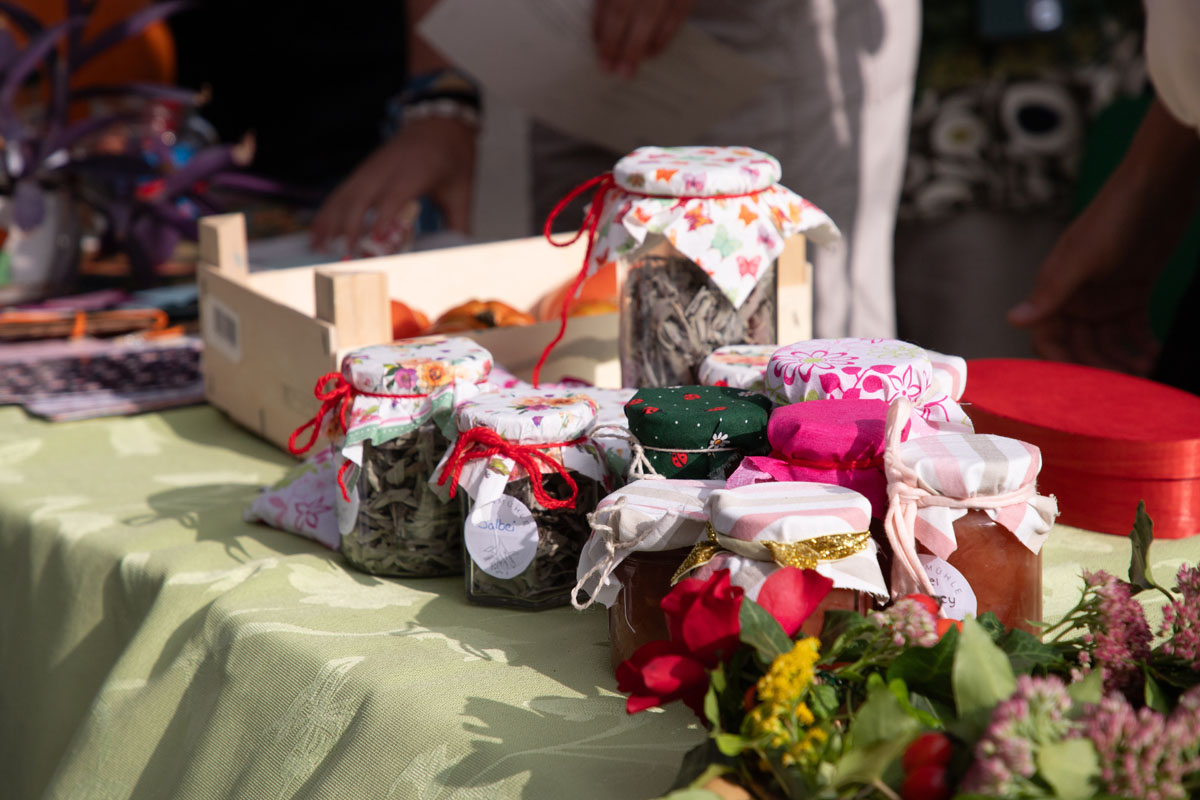
It’s well known that the culinary aspect is a key part of the Steinmühle Fall Festival. For this reason, the selection of cakes, hearty dishes, and various beverages was once again extensive and delicious.
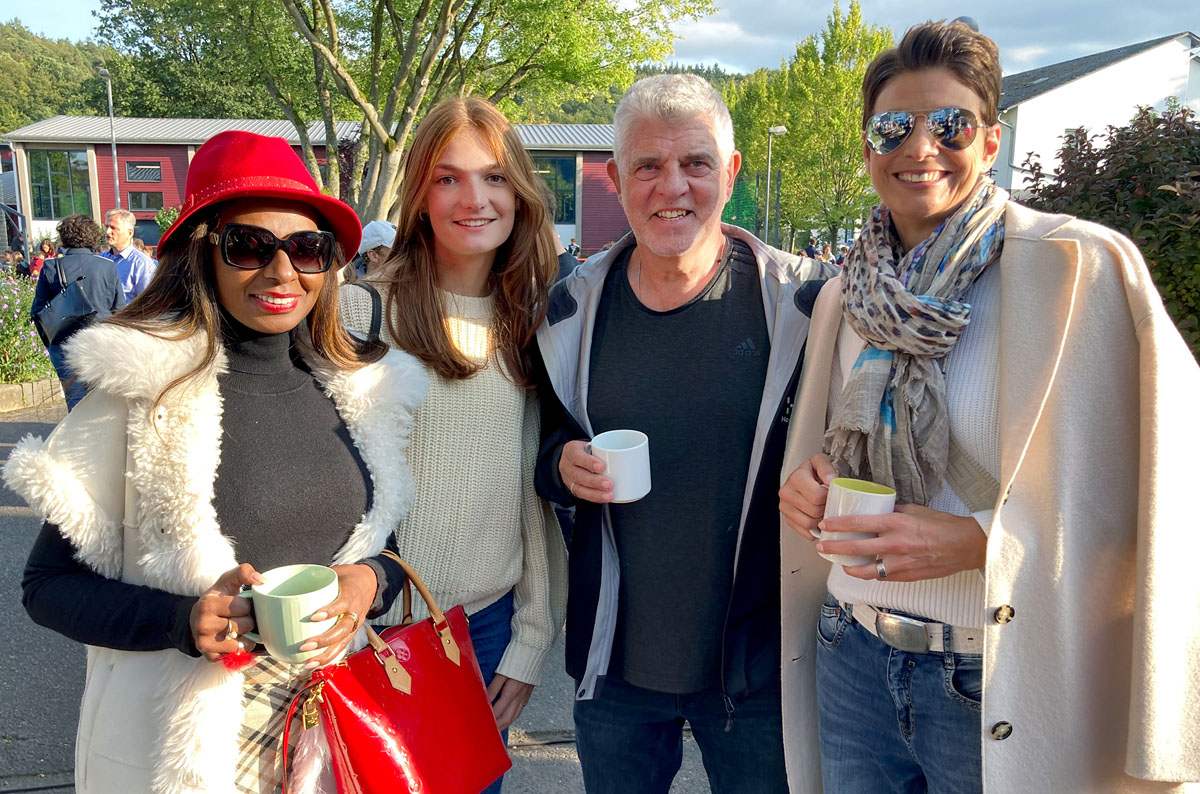
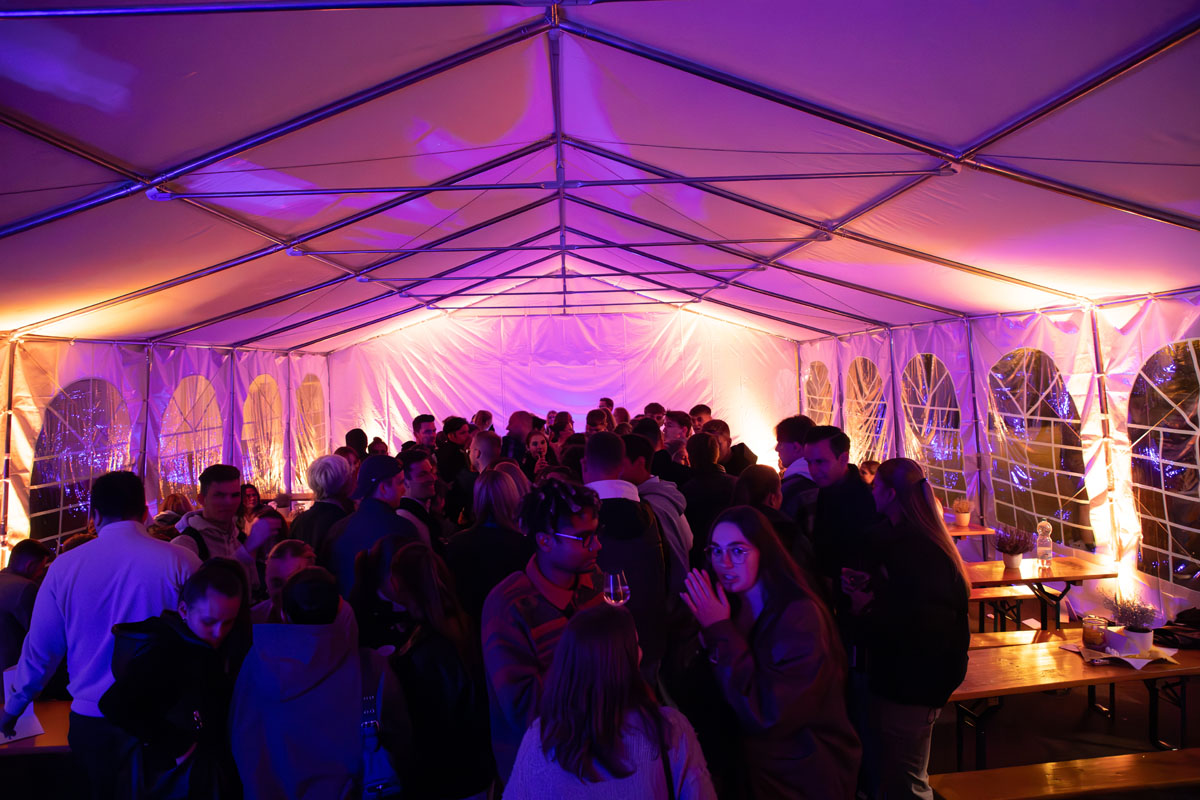
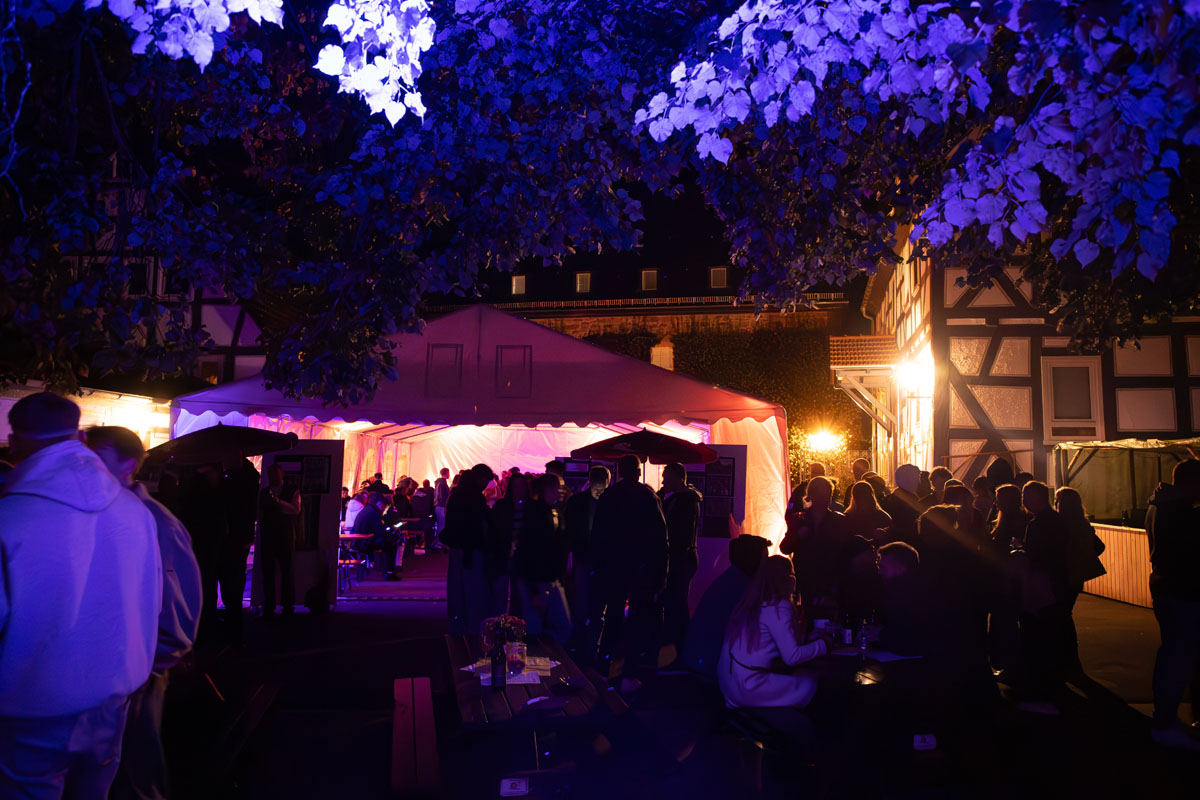
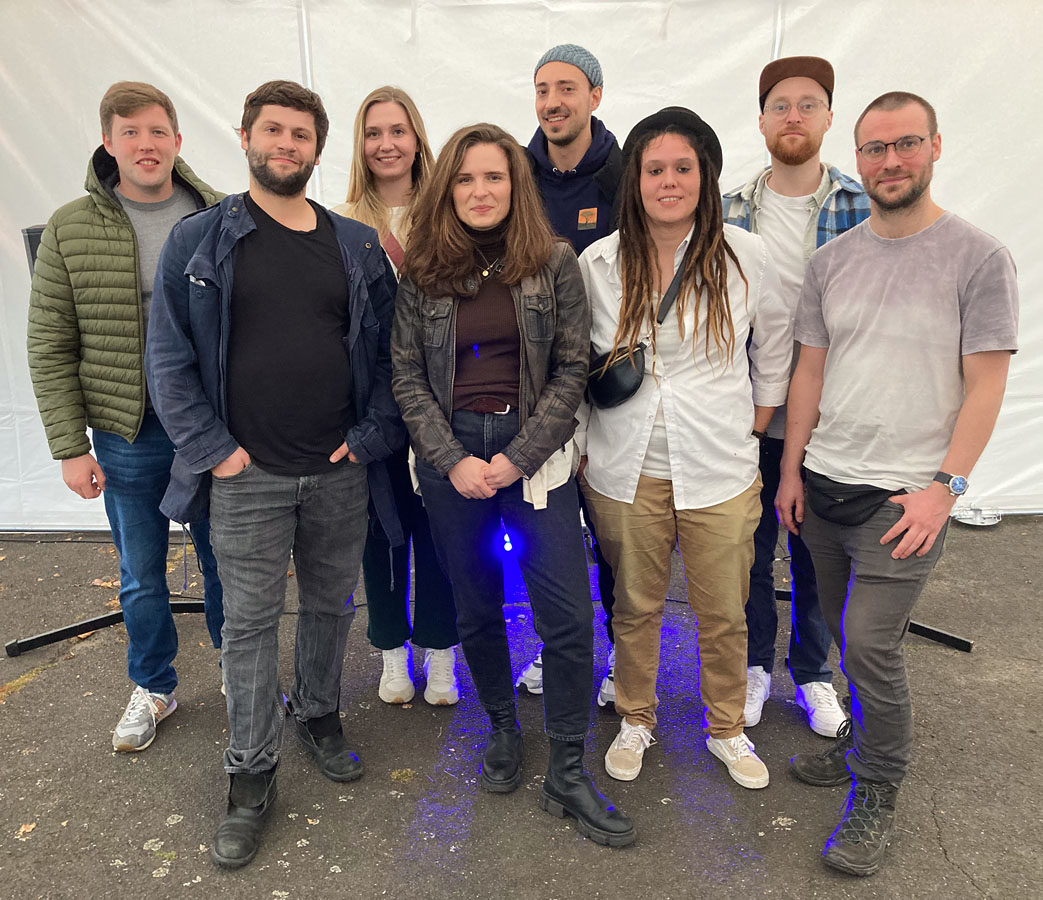
The Steinmühlen high school graduating classes of 1993, 1998, 2008, and 2013 had received a special invitation. Each class gathered in the tent for a group photo and, like many other alumni, raised a glass to “the good old days.”