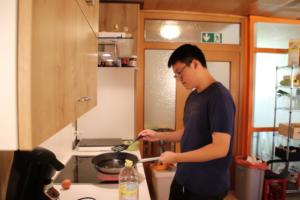
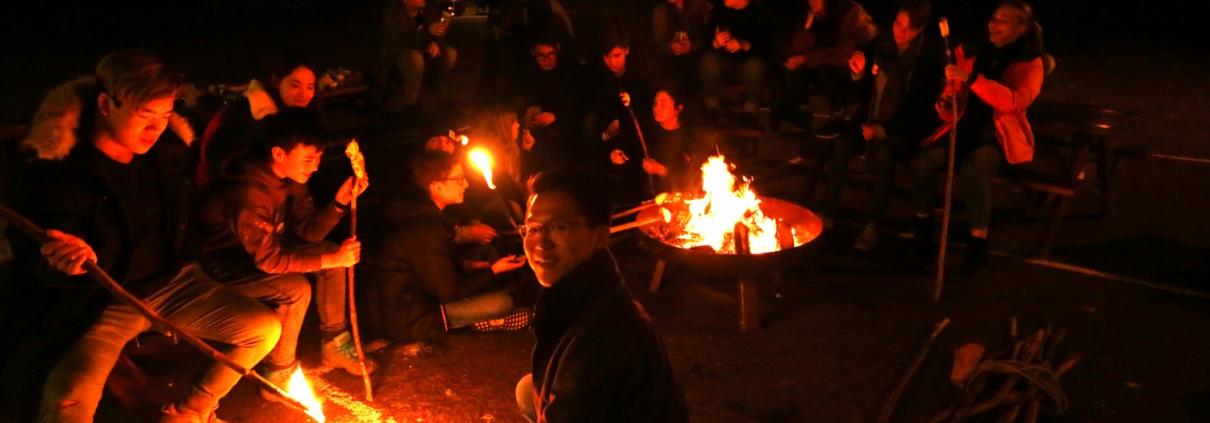
The students at Steinmühle Boarding School went on a special nighttime hike along a path lit by lanterns. Divided into five small groups, each accompanied by two teachers, the entire boarding school community set off through the forest. The entire group reached the starting point by “shuttle service”—that is, on four wheels. During this time, the first part of a story was told. From the start of the night hike, the group continued on foot: first through the Cappeler Forest and then through a residential area, before later returning to Steinmühle. The path was marked by lights along the way. The individual groups, which set off at 30-minute intervals, had to find their own way along the route. During the waiting time between groups, there were campfires, bread on a stick, and several rounds of Werewolf in the tea room.

Several stations and tasks

We stopped at various stations along the hike. There were different tasks to complete:

Station 1: Lie on a tarp in a meadow and listen to the sounds of the forest at night

Station 2: An interactive game focused on teamwork

Station 3: The tour’s first highlight: We made our way cross-country through the dark forest along a 100-meter-long rope stretched from tree to tree. We had to be careful here, as fallen trees here and there posed a tripping hazard.

Station 4: From here on, those who dare should cover a certain distance on their own

Station 5: Here, everyone heard the rest of the opening story and received a candle for the next station

Station 6: Teamwork was once again required here: The groups had to cover a distance together, and the candles of all members had to remain lit the entire time.

Developing a Sense of Belonging

As part of a partnership, the stations were staffed by volunteers from the Protestant Youth Center in Cappel, who participated in setting up, taking down, and running the night event on a voluntary basis and with great dedication. After the hike, all the groups were able to warm up by the fire with punch and hot orange juice. According to the team of educators, the goal of the night hike was not the classic “spooky experience” typically associated with summer camps or camping trips. Rather, it was about fostering a sense of community, sharpening the senses outside of everyday life, and gaining confidence in oneself and one’s own abilities. A big thank you to the staff of the Protestant Youth Center in Cappel for their dedication!

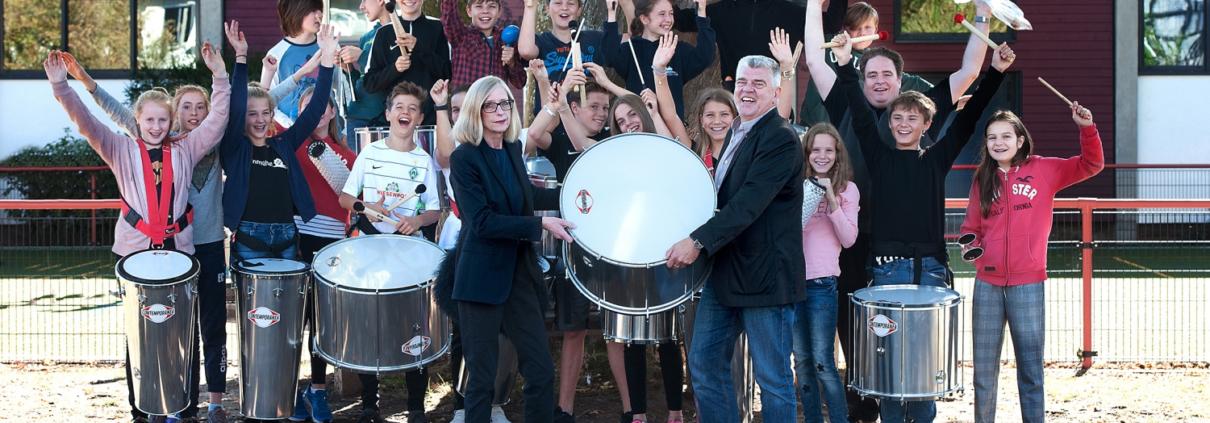
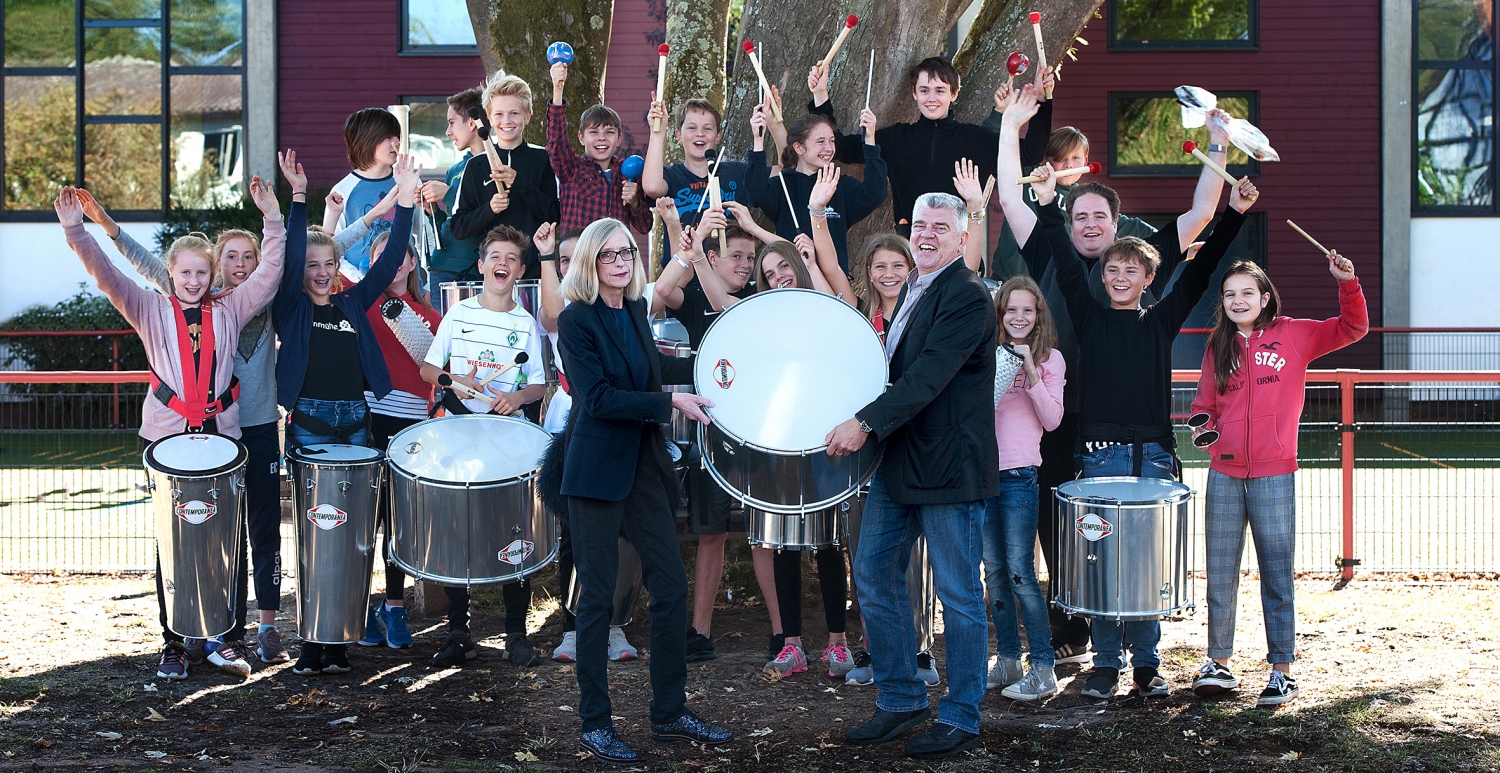
The Steinmühle Friends Association donated an entire classroom set of high-quality percussion instruments, including large drums, for use in hands-on music lessons.
At the beginning of the year, Frank Wemme, educational director at Steinmühle and a music teacher, had the idea to expand the practical component of music instruction. Since Steinmühle already offers plenty of hands-on experience through its wind ensemble, concert band, bagpipe group, and musical theater program, the focus was now to shift more toward rhythm. “For this reason, we visited a percussion instructor in January while she was working with a samba group,” reports Daniel Sans, who not only performs as a concert tenor on many stages but also teaches music at Steinmühle. Impressed by the drums and the instructor, Kerstin Itzenhäuser, they decided to integrate this rhythmic practice into the 10th-grade curriculum.

Total value of approximately 3,500 euros
Daniel Sans stayed in touch with Kerstin Itzenhäuser. She visited Steinmühle over the summer, in part to help with the planning for the purchase of the instruments and to ensure that all aspects were taken into account.
After summer break, the Steinmühle was able to get started with the new samba drums, with a total value of around 3,500 euros. Kerstin Itzenhäuser now visits our school at regular intervals to help the 10th graders learn to drum professionally. However, the drums are not intended solely for this project but for the entire school community and can also be used for musical performances, among other things. Our photo shows the chairwoman of the Steinmühle Friends Association, Jasmine Weidenbach, together with Principal Bernd Holly, music teacher Daniel Sans, and young Steinmühle students who were allowed to try out the instruments—at least for the photo.


At first glance, his last name and place of birth might suggest otherwise, but Sebastian-Max Merkel from Berlin is a chef. For several weeks now, he has been a valuable addition to the kitchen team at the Steinmühle, bringing with him experience gained from working with renowned colleagues, and he chose his profession “…out of passion and love for the product.”

The 31-year-old, who grew up in Marburg, gained experience in cafeterias and various restaurants after completing his vocational training. His journey took him from Marburg to Giessen and his hometown of Berlin, and then on to Switzerland, where he worked as a cook and head chef. The desire for stability brought Sebastian-Max Merkel to the Steinmühle. His personal goal is to work with fresh, seasonal ingredients even in a cafeteria setting. The philosophy of the Steinmühle kitchen aligns perfectly with his own. Proximity to the ingredients is also important to Merkel. In fact, he could even imagine growing some vegetables or fruits right on the Steinmühle grounds and using them on site.

The new member of the kitchen team enjoys introducing children and teens to cooking and preparing meals together with them. He’s already started doing this with his 4-year-old son. “Cooking with kids is fun. It’s a joy to share tips and tricks with them and help them develop an appreciation for healthy eating.”

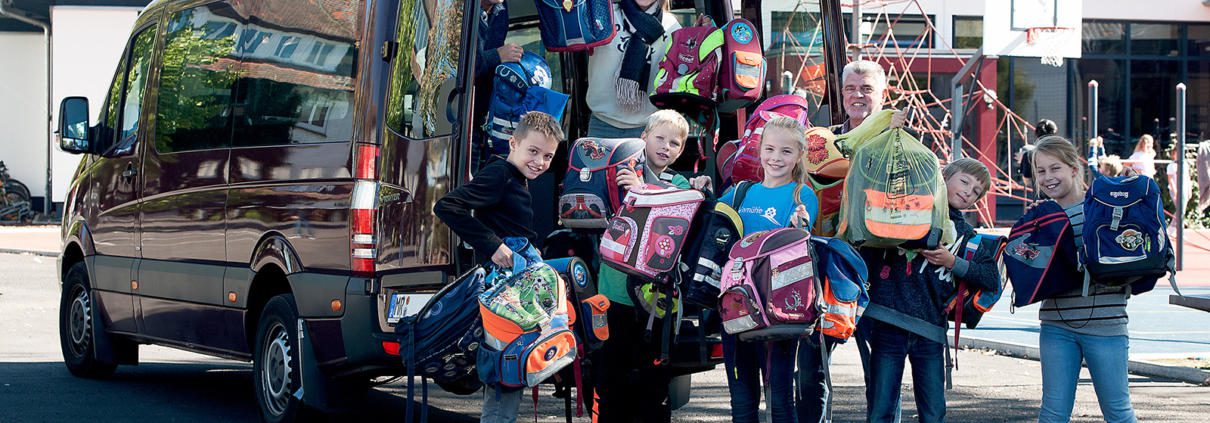
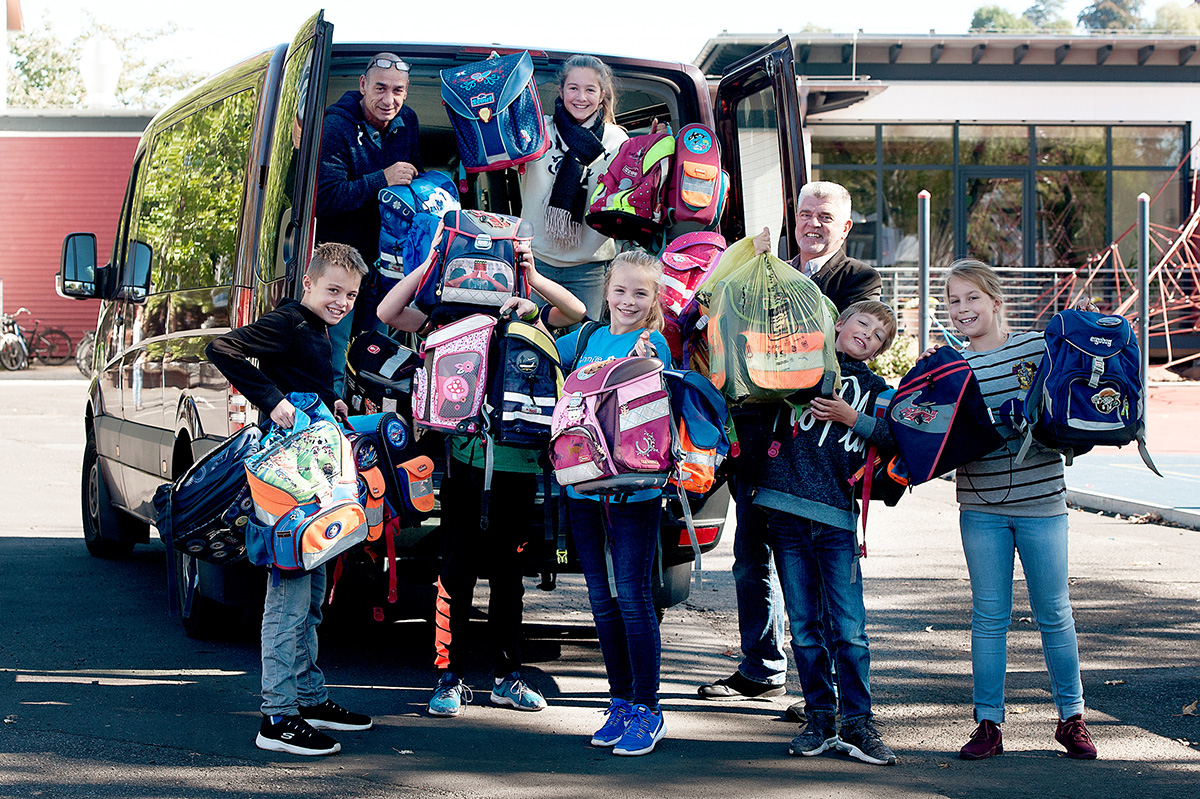
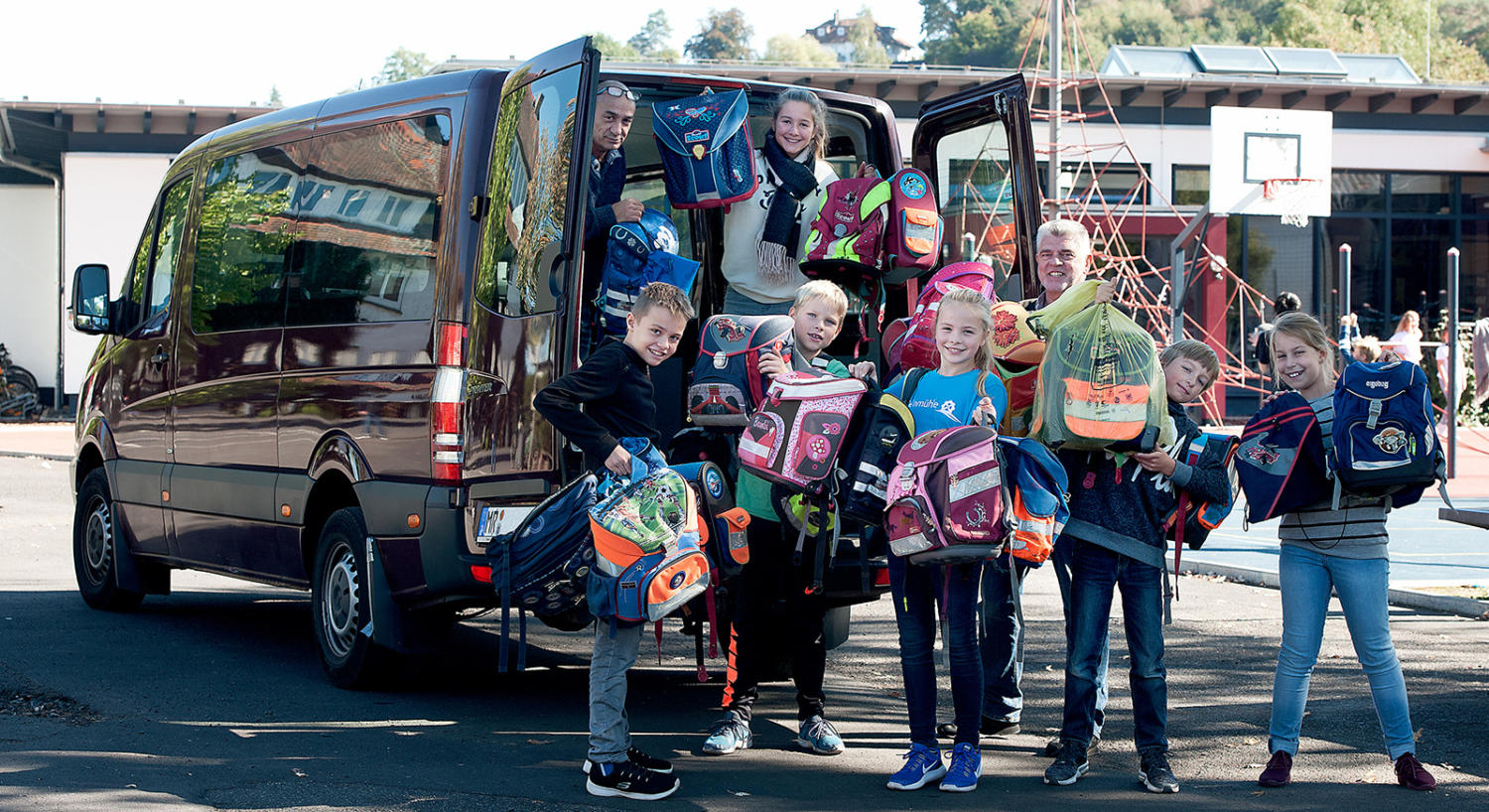
Many of our new 5th-grade students received new, “cooler” backpacks for their first day of school. As in previous years, Principal Bernd Holly asked for donations of the old backpacks, which are almost always still in very good condition. Before the fall break, the students, together with Bernd Holly, were able to hand over more than 30 backpacks to the Marburg Children’s and Youth Parliament as a donation for the children in Marburg’s sister city, Sibiu.

Through this initiative, KiJuPa has been supporting children in Marburg’s sister city, Sibiu/Hermannstadt, since 2010—children who cannot afford school backpacks or bags. While in Germany, students typically use about three to four school bags, backpacks, or bags over the course of their school years, many families in Romania cannot afford them. In Germany, discarded school bags are often simply thrown in the trash or forgotten in attics.

The donated backpacks will be transported to Sibiu toward the end of the year in cooperation with the organization “Hilfe für Sibiu/Hermannstadt” and distributed there. For some of the children, the backpack will be a Christmas gift.

Steinmühle has once again been certified as an “Environmental School.” “Environmental School—Learning and Acting for Our Future” is an award presented by the Hessian Ministry of the Environment, Climate Protection, Agriculture, and Consumer Protection (HMUKLV) and the Hessian Ministry of Education and Cultural Affairs in recognition of a school’s exceptional commitment to environmental and ecological education. The focus is on improving the quality of instruction and school life in the spirit of education for sustainable development. Students should receive support in developing the necessary skills to lead a sustainable lifestyle.

In addition to its general focus on environmental protection, nature conservation, energy efficiency, and the ecological design of the school grounds, Steinmühle had applied for certification based on two major projects during the two-year certification period.


Projects: Climate Protection, Energy, Environment, Food, and Health

The first project focused on climate protection and energy. These topics were developed and implemented as part of project-based learning and were subsequently incorporated into the school curriculum under the title “Energy: A Sociopolitical Challenge.”

The second project consisted of a health day featuring workshops on the topics of “environment,” “nutrition,” and “health.” The event aimed to raise awareness among the school community about sustainable approaches to nature and personal health, and to help students recognize the importance of the environment, nutrition, and health for themselves.

The schools received support from a total of ten regional environmental education centers in Hesse during the certification process.


“Schools are showing that they are taking responsibility”

“Today, we are honoring schools in Northern Hesse as ‘Environmental Schools’—schools that, through their exciting projects on topics related to sustainable development, have demonstrated their commitment to taking responsibility for their own actions,” explained Dr. Beatrix Tappeser, State Secretary at the Ministry of the Environment, during the presentation of the “Hessian Environmental School” award, which consists of a certificate and a plaque officially designating the school as an “Environmental School.” In addition to the well-known Environmental School plaque, the new plaque for the umbrella brand “Learning Sustainability in Hesse” was presented. The award ceremony took place in Fritzlar in the presence of Henning Smolka from the Roßberg Youth Forest Center, who is responsible for the Marburg environmental schools, and Steinmühle teacher Carmen Bastian, representing the Steinmühle’s Environmental Office.

For our school, this was a recertification. To retain the “Environmental School” designation, a school must reapply on a regular basis.

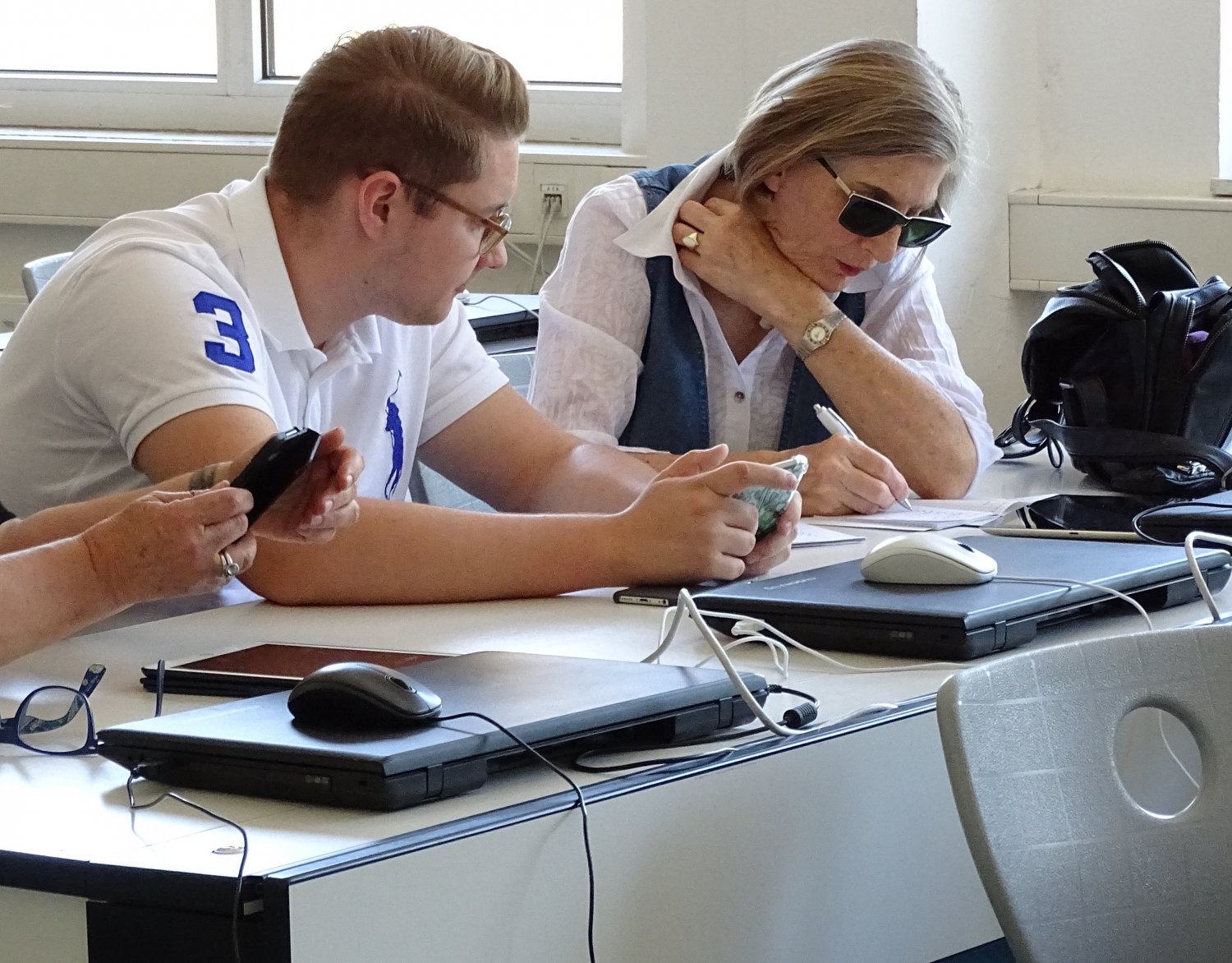
Some students at our school are currently helping seniors take their first steps with smartphones.

As chairman of the “Aktive Bürger Cappel” association, Heinz Wahlers had approached school principal Bernd Holly and asked for help in teaching some senior citizens how to use smartphones (Android and iOS). The request was forwarded to Steinmühlen teacher Eberhard Wieth, who was able to recruit a total of seven students from his 12c math class, who willingly offered their assistance during their free periods.

The courses took place in the Steinmühle’s computer lab; a total of 18 men and women from Cappel have participated in the three sessions so far. All participants were very impressed and very satisfied with how the courses went and with the new skills they gained in using their smartphones. They are now continuing to practice diligently at home.

According to Eberhard Wieth, the course series will resume shortly.

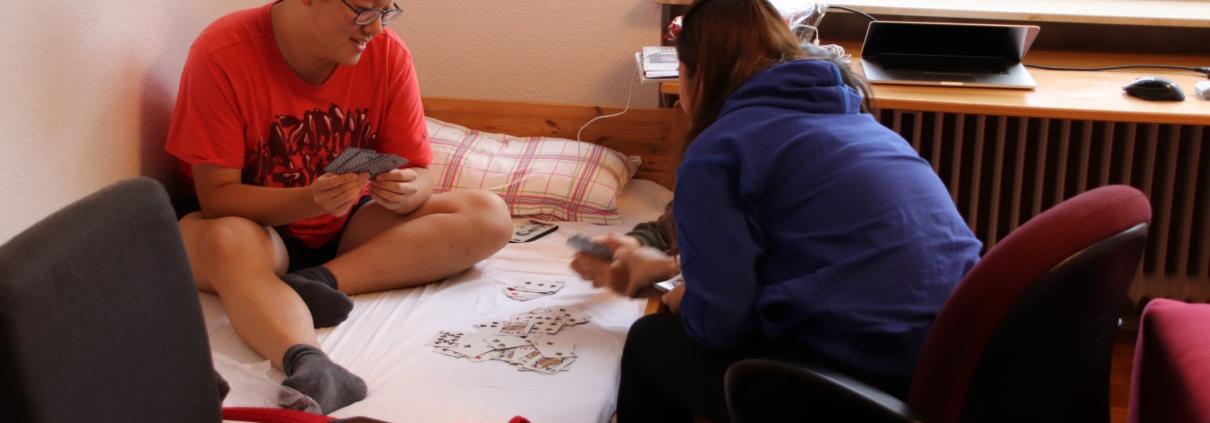
“Get out of the usual four walls”—that’s the motto during the holidays for the international boarding school students as well—even though they aren’t going home but are staying right here in Marburg. They spend their free time at the Waldhaus, the boarding school’s newly rented accommodation on the Richtsberg. Students who are completing internships in Marburg during this time also have the opportunity to stay at the Waldhaus. It’s a place that offers the best of both worlds: proximity to the boarding school—yet still plenty of independence. At the Waldhaus, the residents take care of their own meals and cook together. They decide on the recreational activities as a team.

Since the house has only been part of the boarding school since the summer break, the focus during the current break is still on designing the living spaces. The design is being adapted to everyone’s shared needs, taking into account their different tastes. When shopping together for furniture and decorations at specialty stores, care is taken to reconcile everyone’s ideas as much as possible.

“Regular” recreational activities are also part of the fall break at the Waldhaus. The planned activities include a trip to the movies, LaserTag, a visit to Holidaypark, bowling, and pumpkin carving. In the evenings, the students regularly play card games. Although schoolwork is supposed to play a role during the break, studying, exam preparation, and individual review take a back seat to recreational activities so that the students can also enjoy their free time and recharge their batteries.

Philipp Rumpel is the new Assistant to the Management

Among others, Philipp Rumpel, the new assistant to the director, oversees all activities. He began his position on October 1; in addition to studying to become a teacher of physical education and religion, he is also studying adventure and experiential education and already brings a wealth of experience in youth work to the role. With his expertise in both recreational and educational settings, he is the perfect addition to the team. Philipp is looking forward to working with the young people and, by the way, is also a valuable help when it comes to meals. He enjoys introducing the young people to Franconian cuisine—a piece of his homeland.

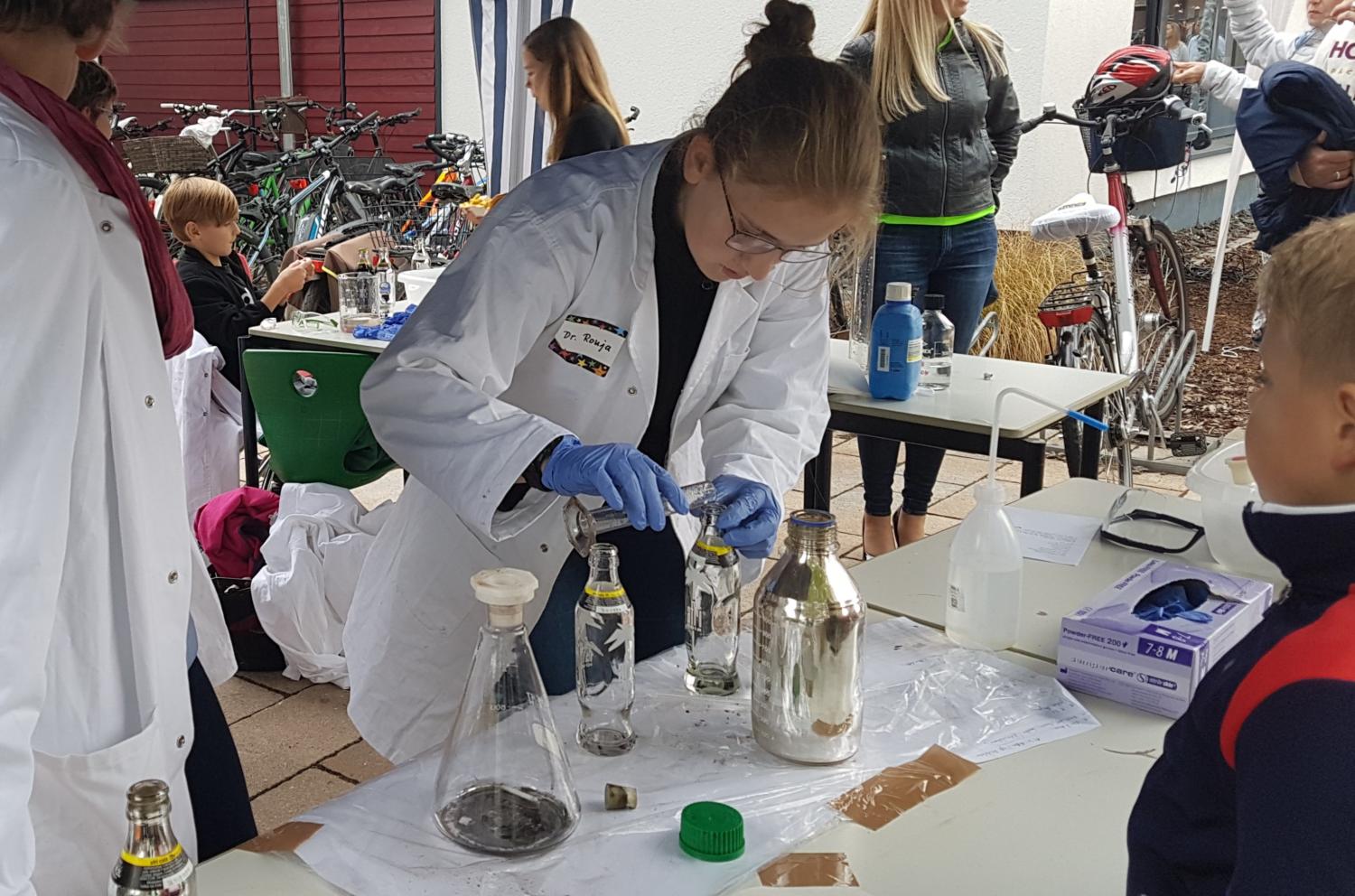
What exactly is a non-Newtonian fluid? How are “slime worms” made from alginates? And how can you silver-plate bottles?

Exciting experiments drew numerous visitors to the booth, which was staffed by students from various courses. Posters also provided explanations that were easy for laypeople to understand.
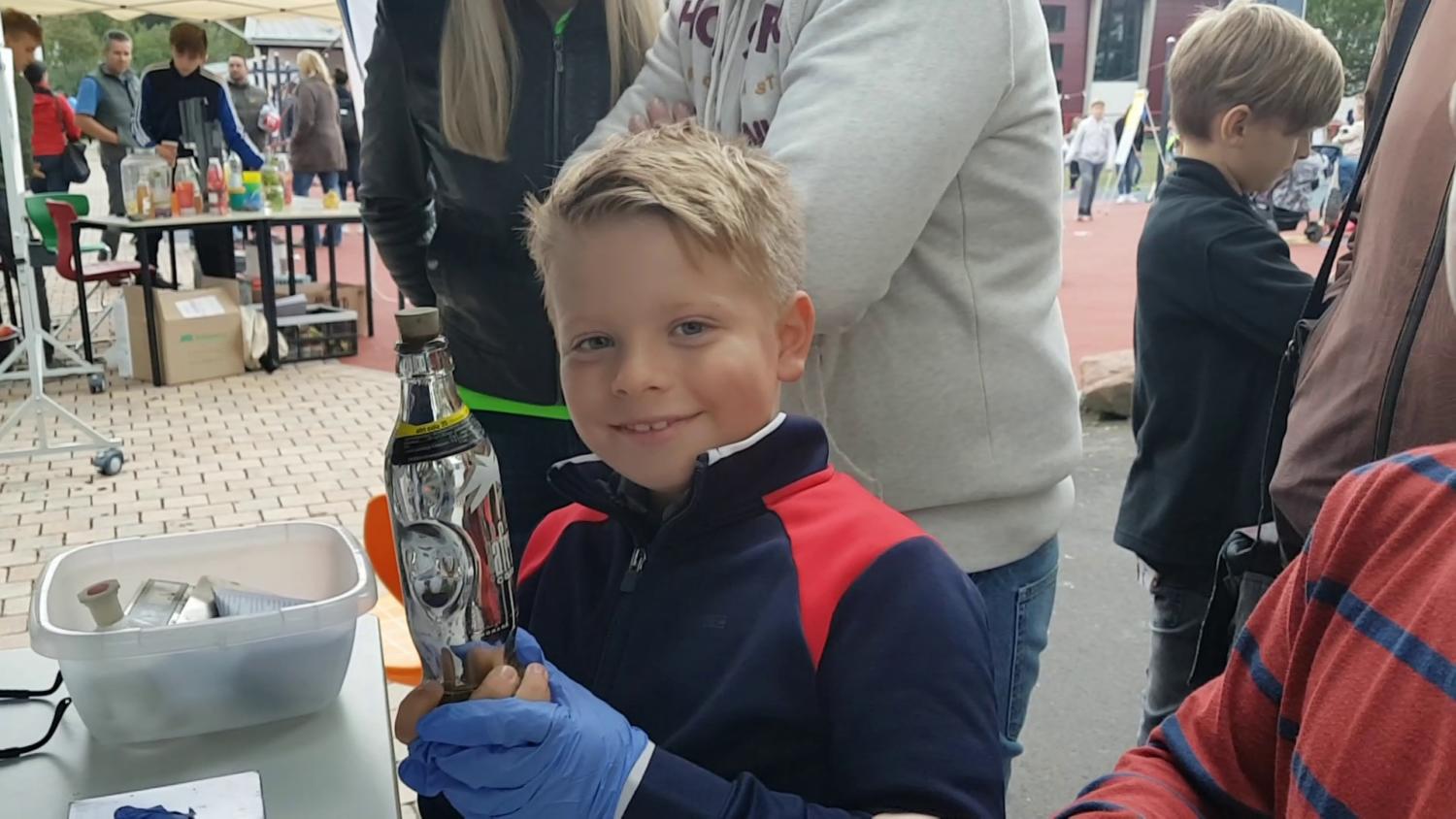
The silver-plating of the iconic Africola bottles was particularly well-received by visitors of all ages.