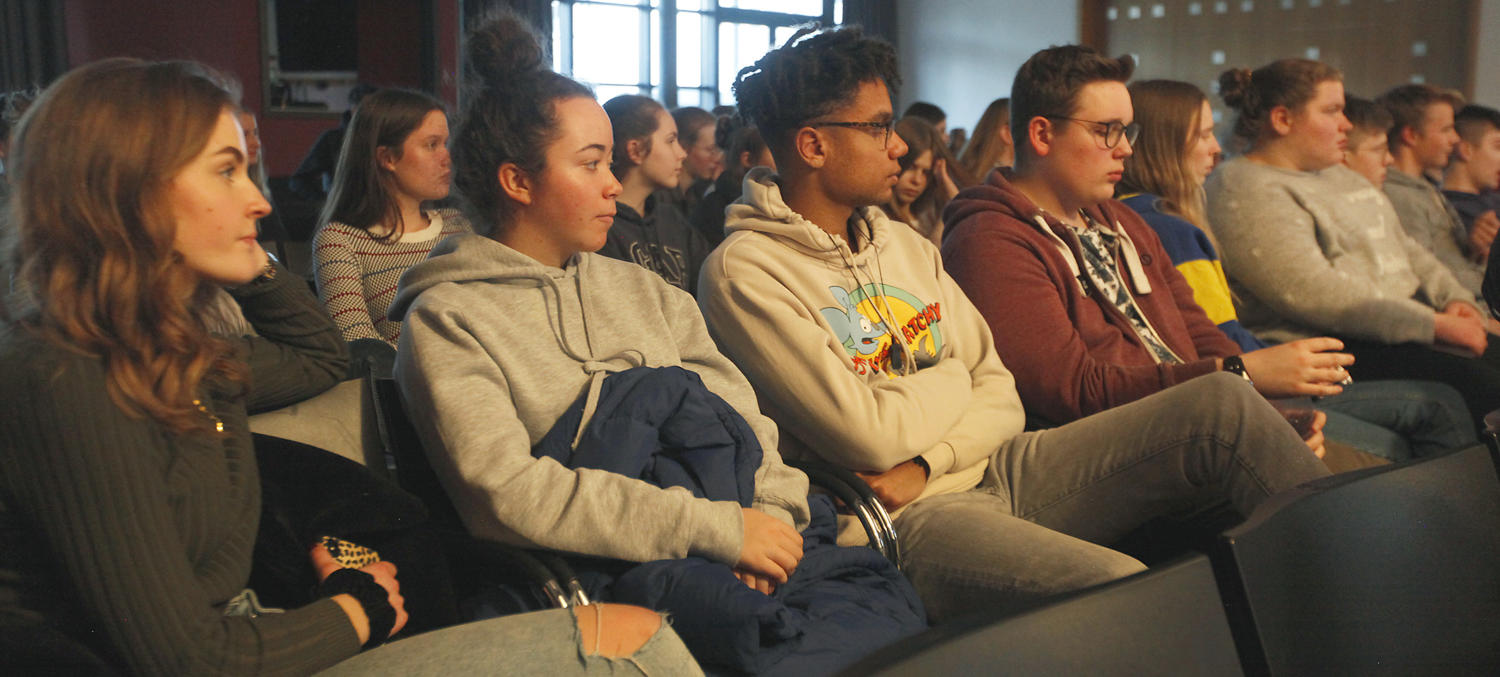
Exuberant and cheerful, a polonaise of children from grades 5 and 6 winds its way through the Steinmühle gym to the music. Everyone is in high spirits, and it’s a joy to watch: school beyond grades and studying.

And yet, the annual Carnival afternoon for the lower grades requires some preparation on the part of the teachers. Decorations must be arranged, and the dance must be rehearsed. – Who will stand at the front, and who will be the lead? This is where teachers Nicole Hohm and Stephan Steinebach step in to help. Then it’s time for the can toss—a tried-and-true and popular activity. Next up on the program is the disco. After a playlist featuring requests from the 6th-grade classes—compiled by teacher Dirk Lange—Sam Kempkes (Sound & Light Club) plays all the selected songs in his usual style: “Hier kommt die Maus,” “Helikopter 117,” and other songs that get the party started. If you open the door to the outside, you can already smell it: the unique aroma of french fries. They’re simply part of the tradition of the Steinmühlen Lower School Carnival and are enjoyed with relish after the disco.

This Carnival afternoon in the new decade also came to an end, and there will be another edition next year. General organizer Frank Wemme thanked the colleagues who participated, including others not mentioned here who supported the event through their assistance and presence.

The workshop is known as “Aktion BOB,” and every year, in the run-up to Carnival season, the police use it to educate 11th-grade students about the dangers of drinking and driving. However, the content of the two-hour course goes beyond simply describing the dangers of alcohol and is, of course, relevant all year round.

Senior Police Inspector Thorsten Frey from the Regional Traffic Division of the Marburg Police Department spent two mornings giving very vivid presentations to two classes each day, explaining where dangers lurk for drivers, what behaviors to follow, and which ones to avoid. The entire project was organized by Steinmühlen teachers Heike Rabben-Martin and Nicole Hohm.


Also dangerous: old glasses, medications, and time pressure

Drawing on real-life incidents from the local area, the speaker described the tragic outcomes of car trips where alcohol was involved. But danger can also lurk from other sources. For example, many medications contain substances that impair reaction time. Outdated eyeglasses impair vision, and a leg or arm in a cast no longer allows for reliable control of the vehicle. In addition to faulty brakes or tires—which must have a minimum tread depth of 1.6 mm—distractions such as cell phones, children in the car, or restless passengers are often underestimated. If you’re pressed for time, it’s not a good idea to mention the stress or time pressure you’re under when filing a report after an accident. “By doing so, you’re essentially admitting that you intentionally exceeded the speed limit or, at the very least, accepted that you had broken it.” The police officer also warned against driving or continuing to drive while extremely tired: “Before you risk falling asleep at the wheel, please pull over!” (Hei)

During a politics and economics class, student Anton Schneider enthusiastically told his class, 9c, and his teacher, Eva Stelz, that his father, Michael Schneider, as part of his work as a labor court judge, had recently dealt with a case that touched on the topics of politics and media as well as the rule of law—two areas currently being covered in the 9th-grade Politics and Economics class! Anton suggested inviting his father to class so he could tell the class a little about the case and his work at the court.

No sooner said than done! Labor court judge Schneider visited the class a few days later and sparked enthusiasm and great interest with his compelling account, his professional expertise, and his open approach to the students’ questions. The students were able to put themselves in the situation described in the case and were also asked for their own opinions on it, allowing them to apply and expand upon the knowledge they had gained in class using a real-life case as an example.

The class and their teacher, Eva Stelz, were delighted that the expert’s visit had made for a hands-on political science lesson that the students will surely remember for a long time to come.
Eva Stelz

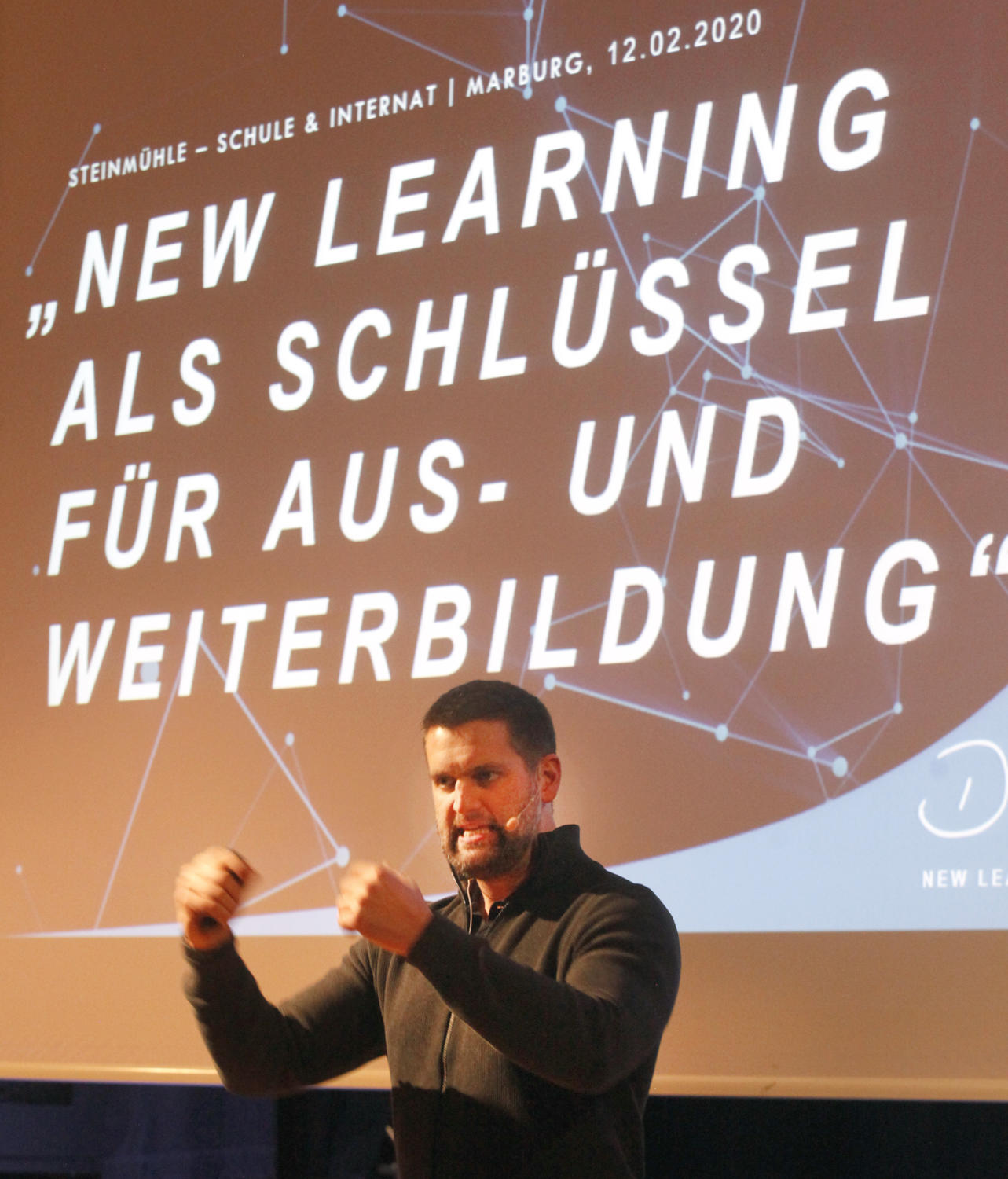
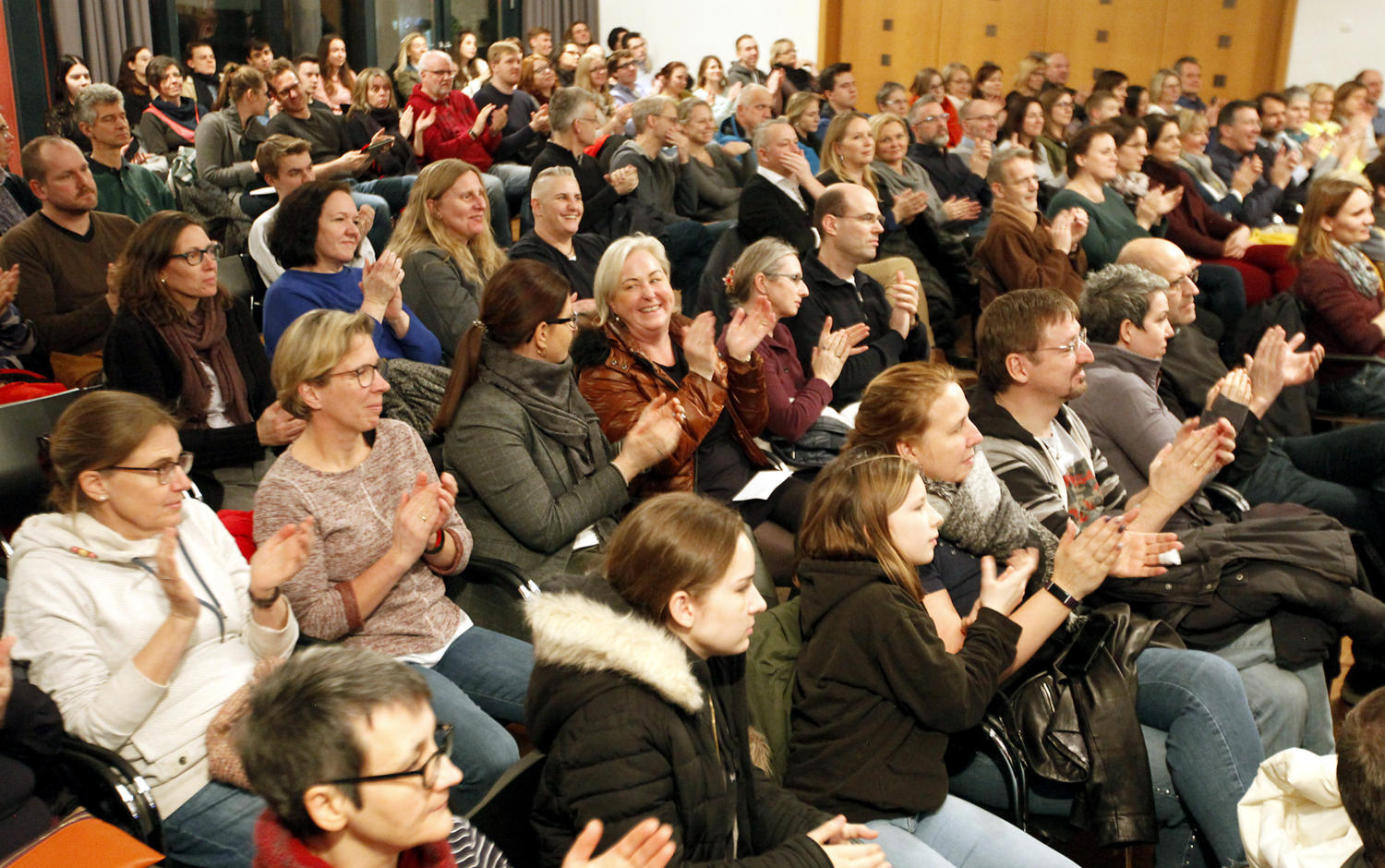
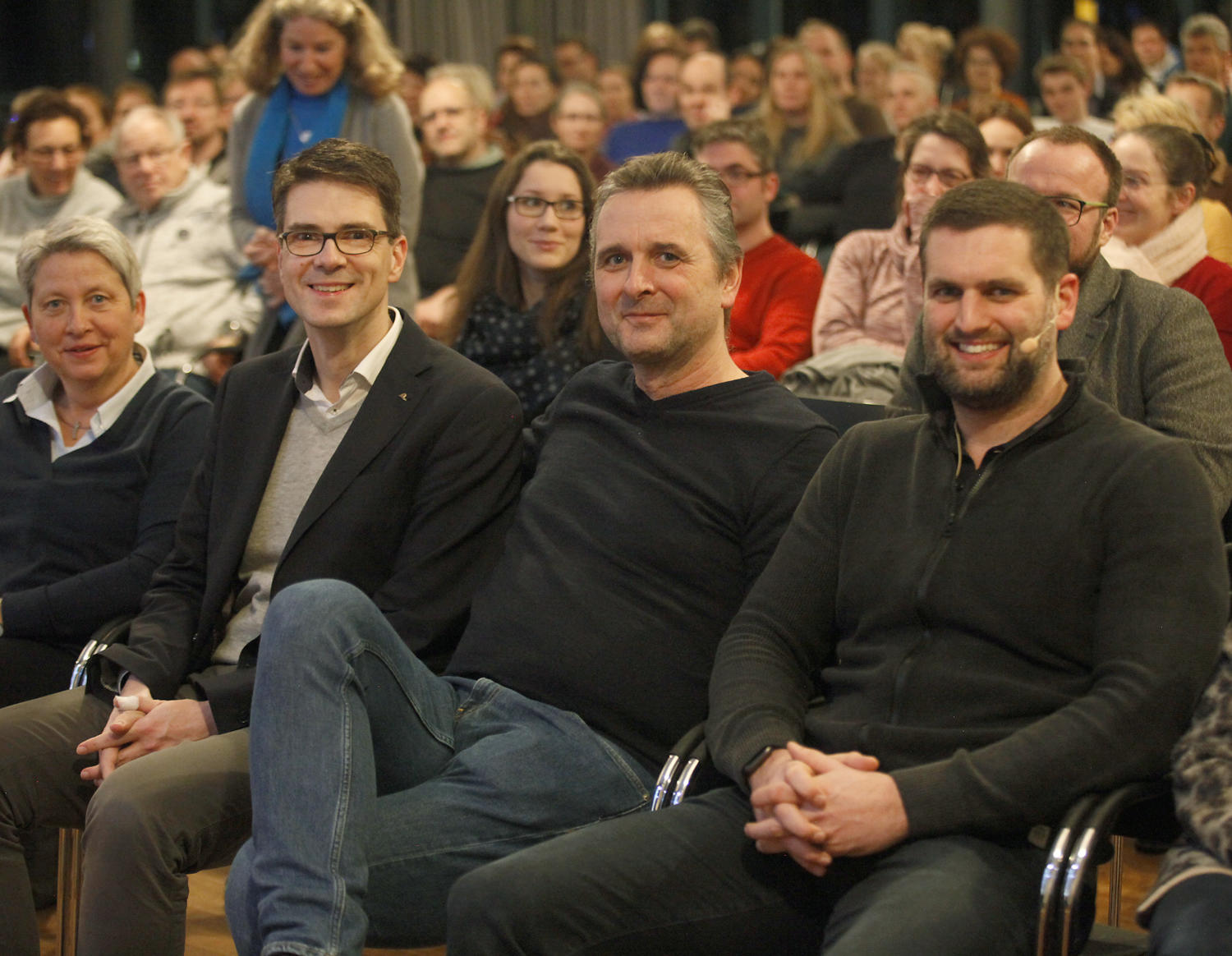
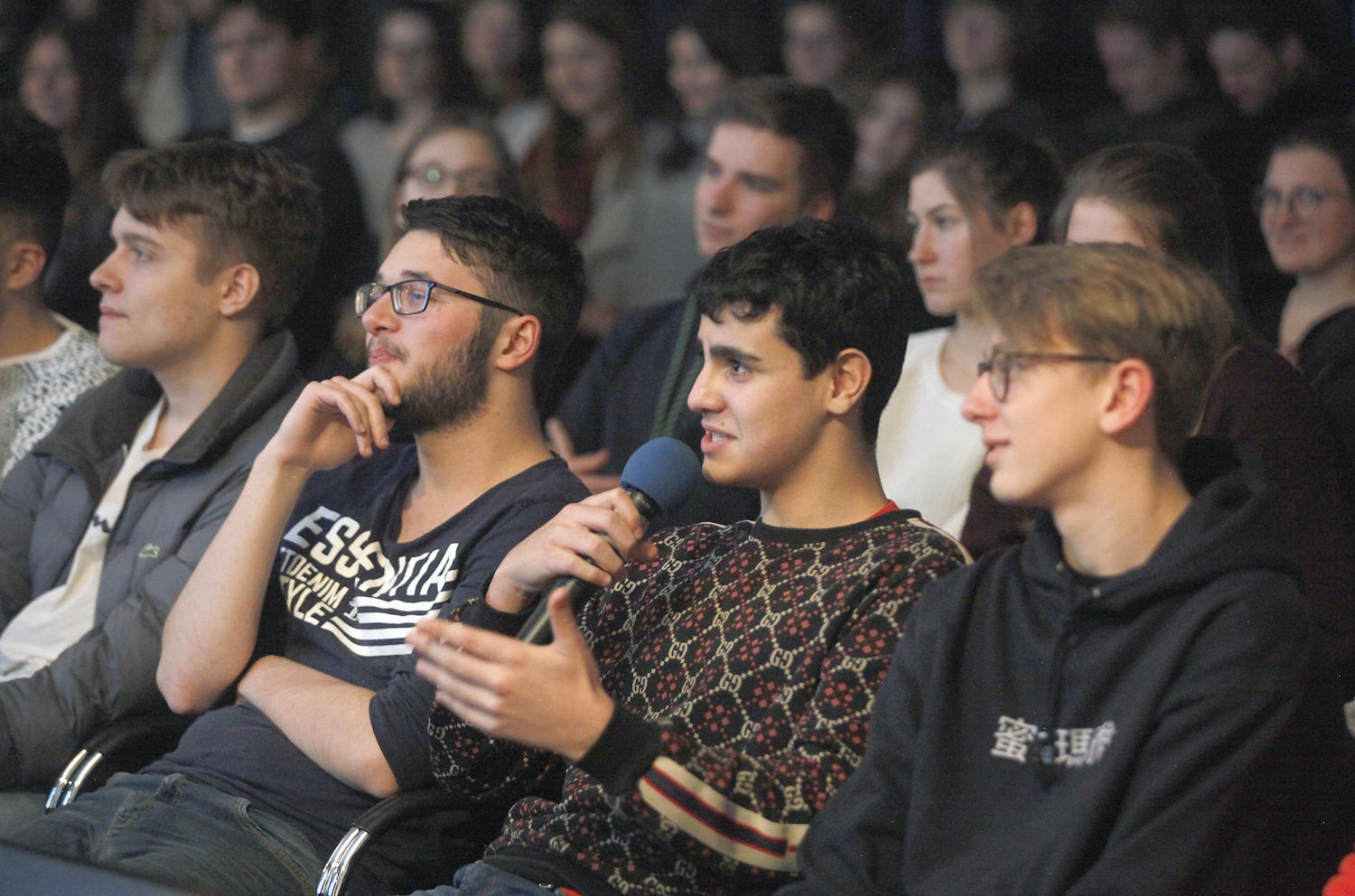
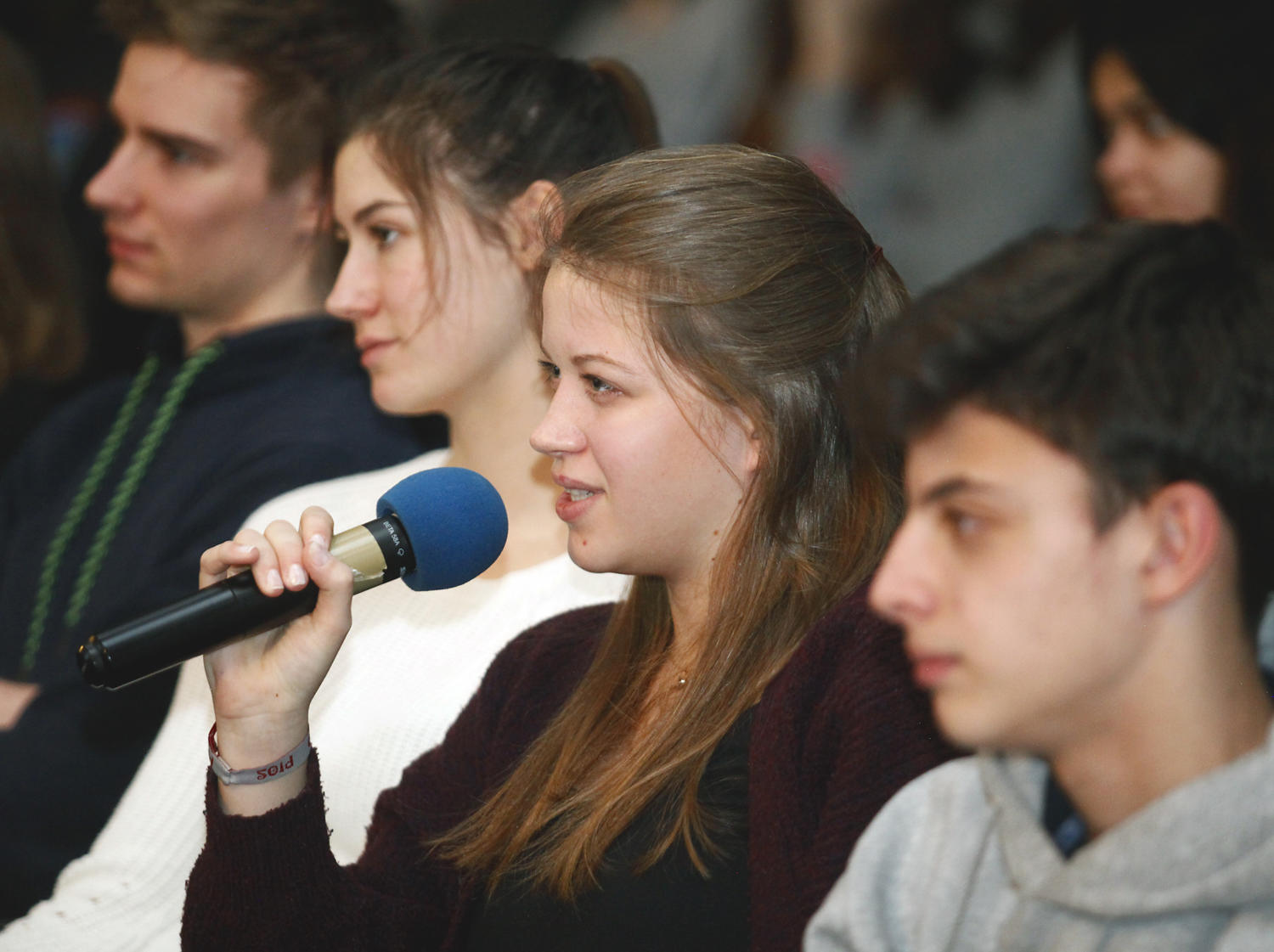
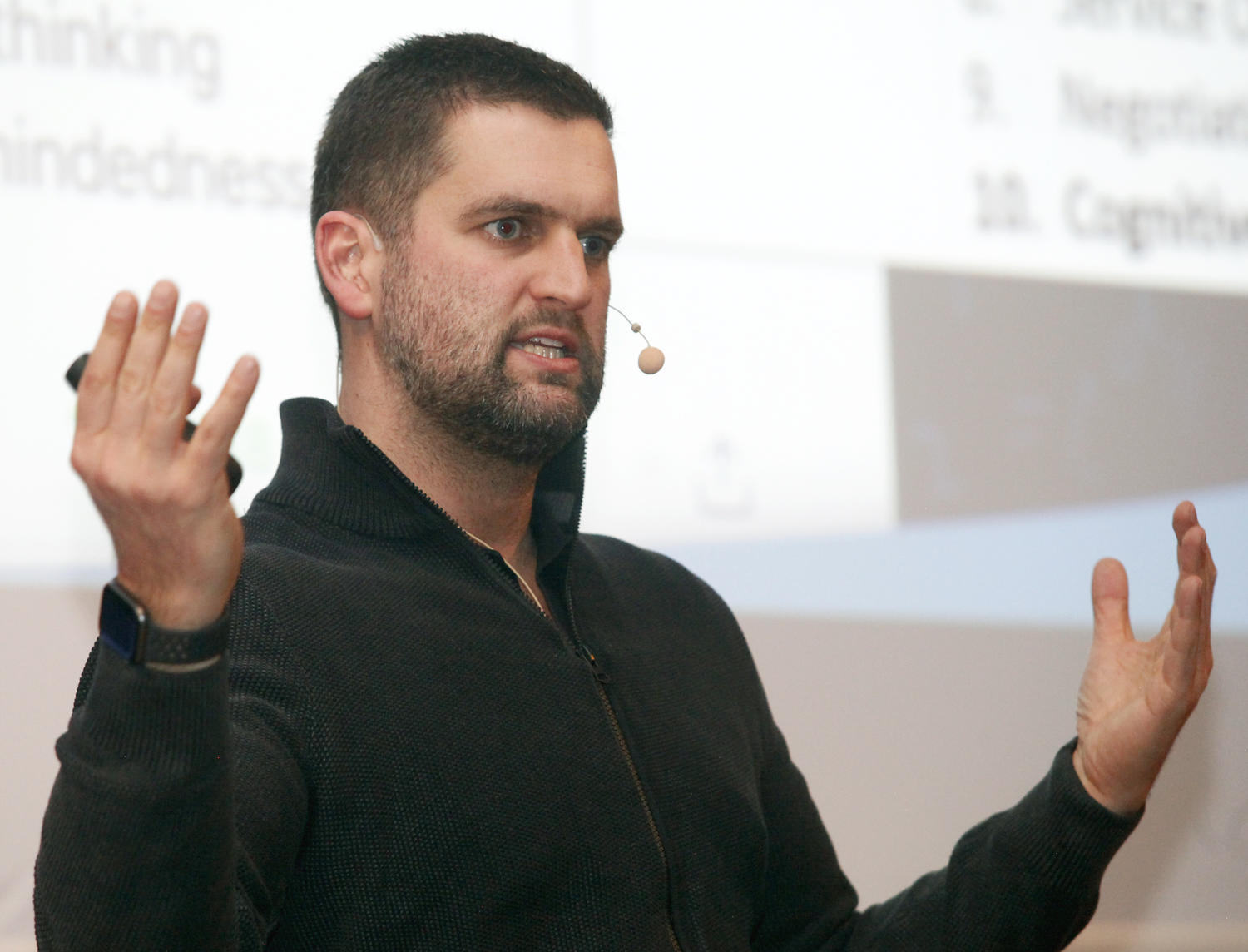
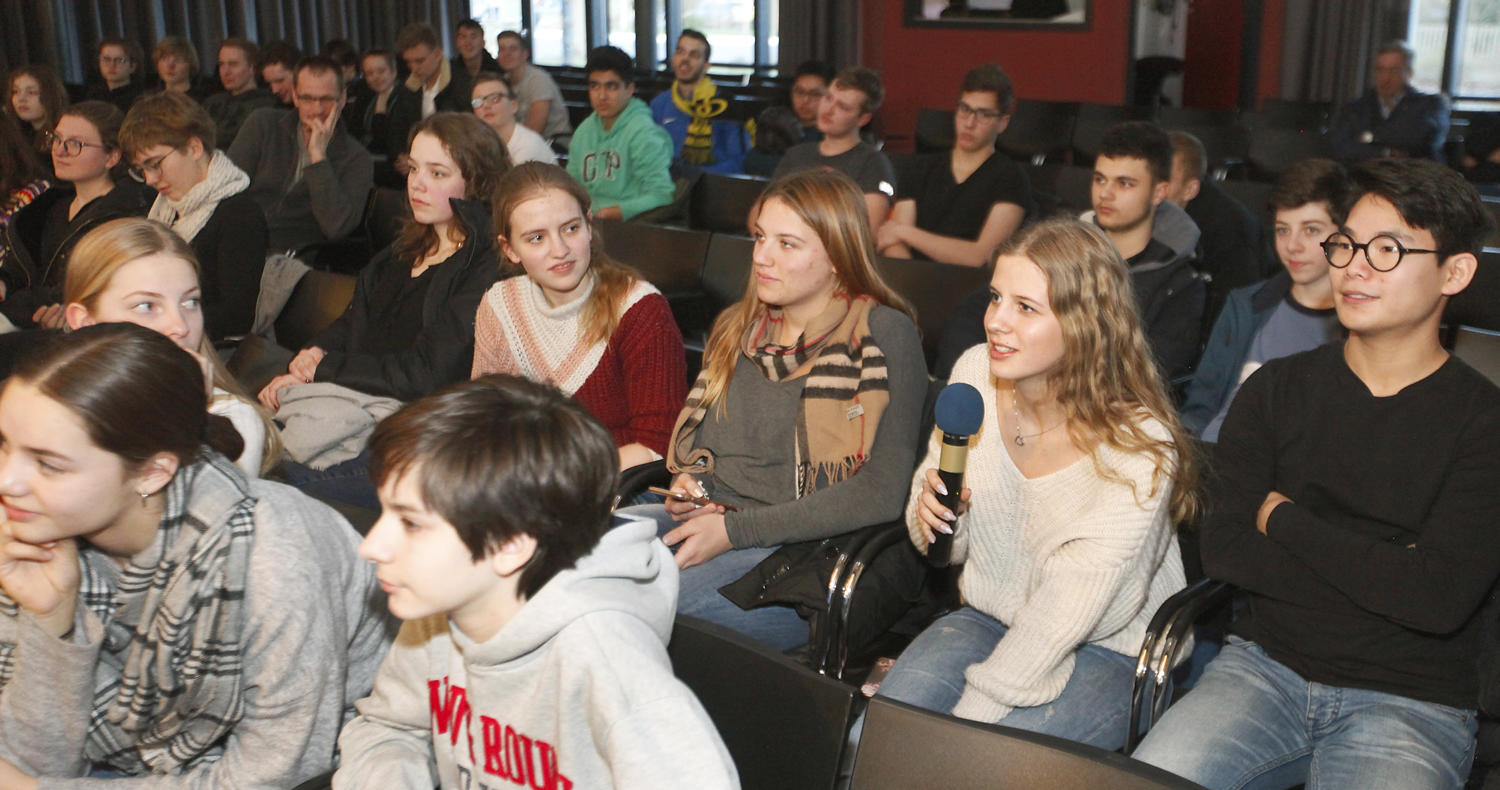
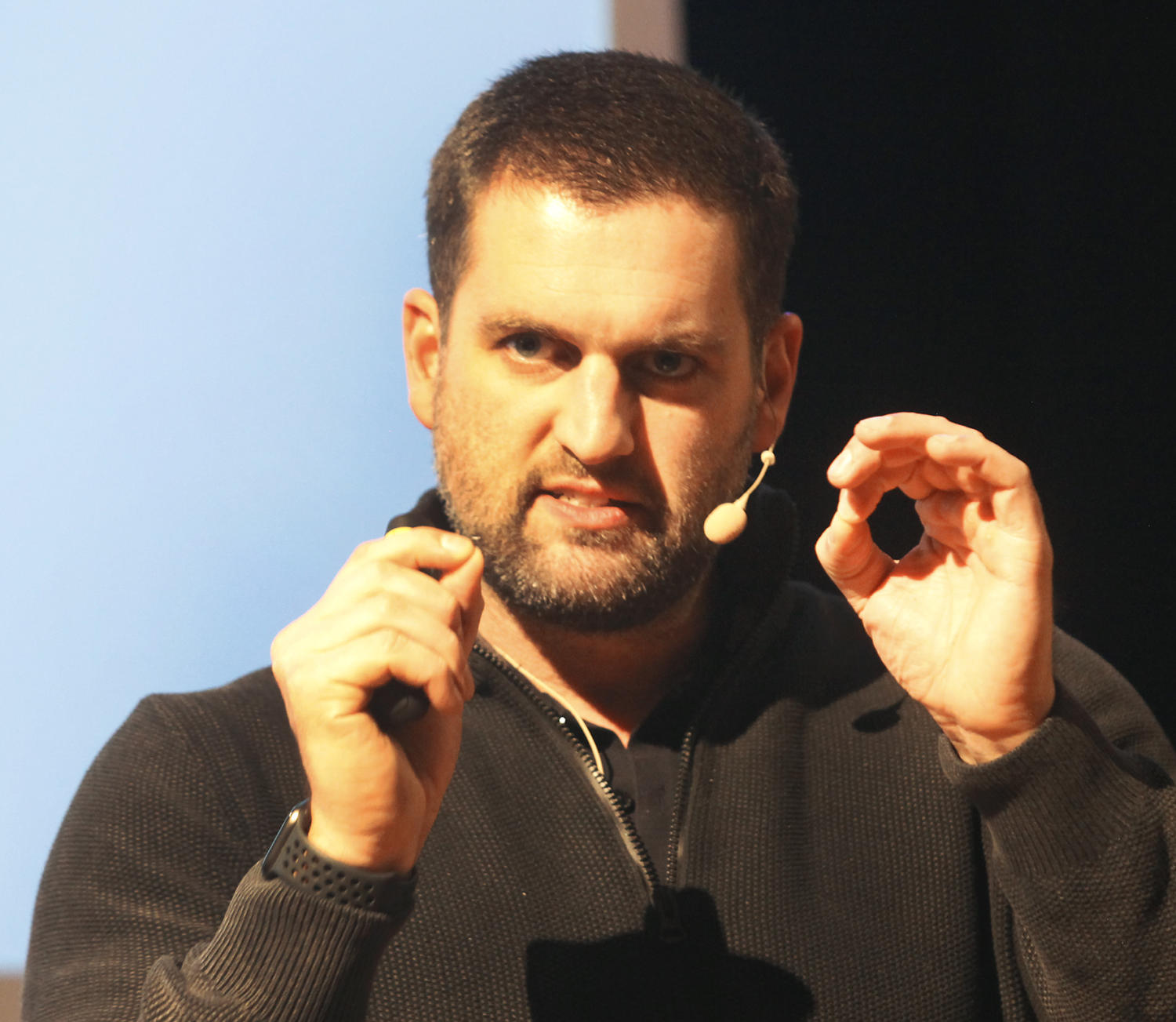
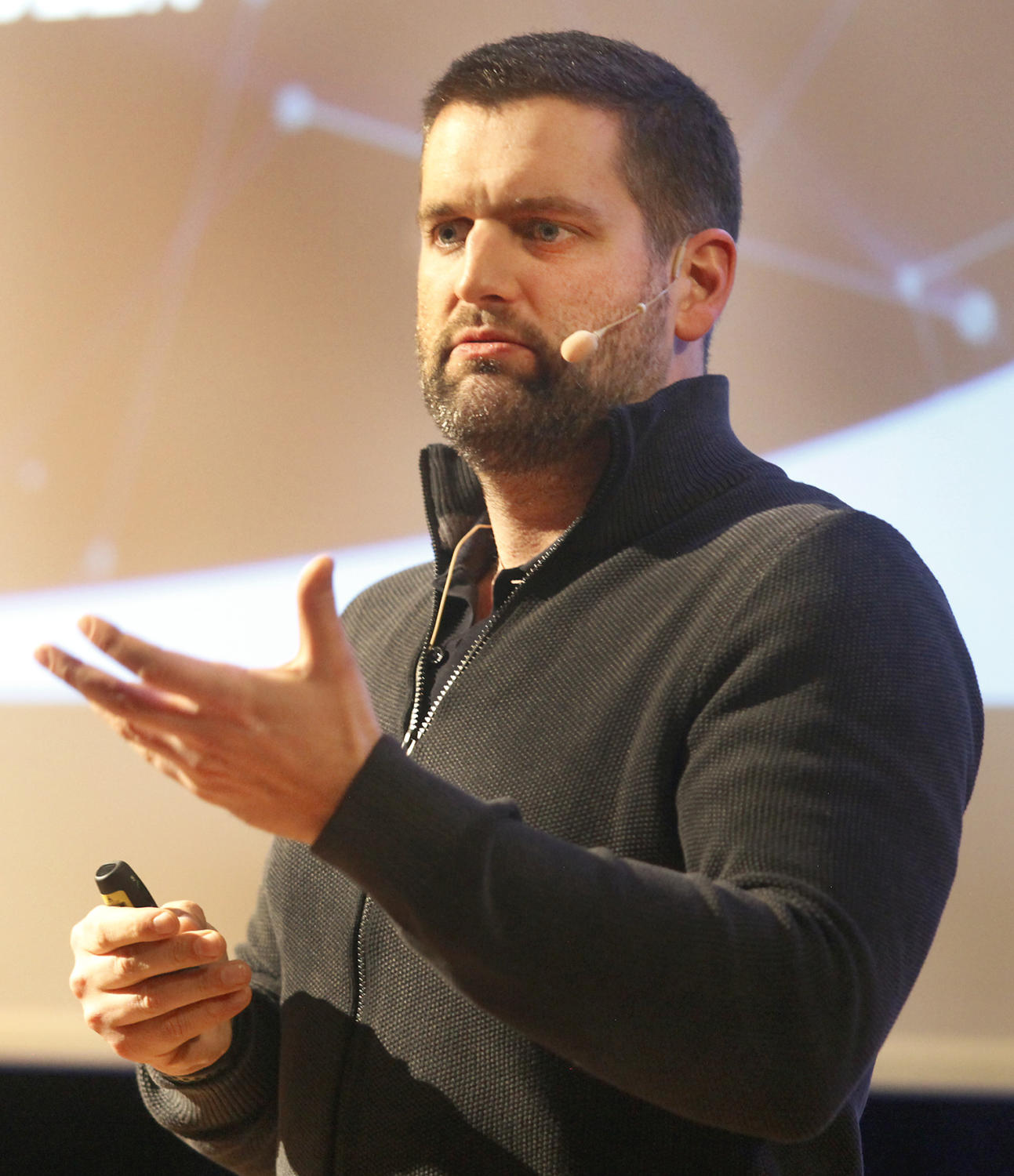
He is a regular guest speaker at well-known companies, but he has never been invited by a school. — School principal Björn Gemmer wasn’t willing to let this statement by Germany’s most famous math YouTuber, Daniel Jung, in an article in Deutsche Bahn’s customer magazine stand unchallenged. The school administration and Steinmühle management secured the “math rock star’s” agreement to give a talk at Steinmühle. On Wednesday evening, he filled the audience seats in the forum.

He doesn’t waste time with long introductions in his videos. Daniel Jung gets right to the point—and that’s exactly what his well over 600,000 followers seem to love. It’s not about beauty, fashion, or fitness like it is for countless other YouTubers. Daniel Jung’s passion is—mathematics! Laughter fills the hall as the speaker on the Steinmühlen stage mimics the way he steps into the frame in front of the camera in his videos—and then steps back out again. That’s how many people who search the internet for solutions to math problems—and find them—know him.

Born in Remscheid in 1981, Jung has compiled over 2,200 explanatory videos covering topics such as stochastics, systems of linear equations, and other mathematical problems that give many high school and college students a hard time. The videos, each just a few minutes long, are a huge hit on YouTube. His videos have already been viewed over 200 million times. The thank-you comments under his videos speak for themselves. “Oh my God, you saved my butt on my final exams,” one comment reads, for example. Or: “I learned more from you in 60 seconds than I did in half a year of math class.”


Breaking Down a Generational Conflict

Yet this eloquent man in his late thirties, who studied math and sports but ultimately did not pursue a teaching career in the traditional school setting, does not see himself as competition for schools, but rather as a complement: “We need the structured school environment, ‘but people aren’t built for 45 minutes of high-pressure learning.’” In addition, it has been proven that an individual teacher can achieve more than group instruction. And: “My material is accessible from anywhere, at any time.” Daniel Jung, who, among other things, contributes to the platform mathefragen.de and founded the Daniel Jung Academy, sees himself as an entrepreneur. His goal is to decipher “new learning,” break down a generational divide, and make it clear: “It’s not just thick books that can impart knowledge—the internet can, too.”
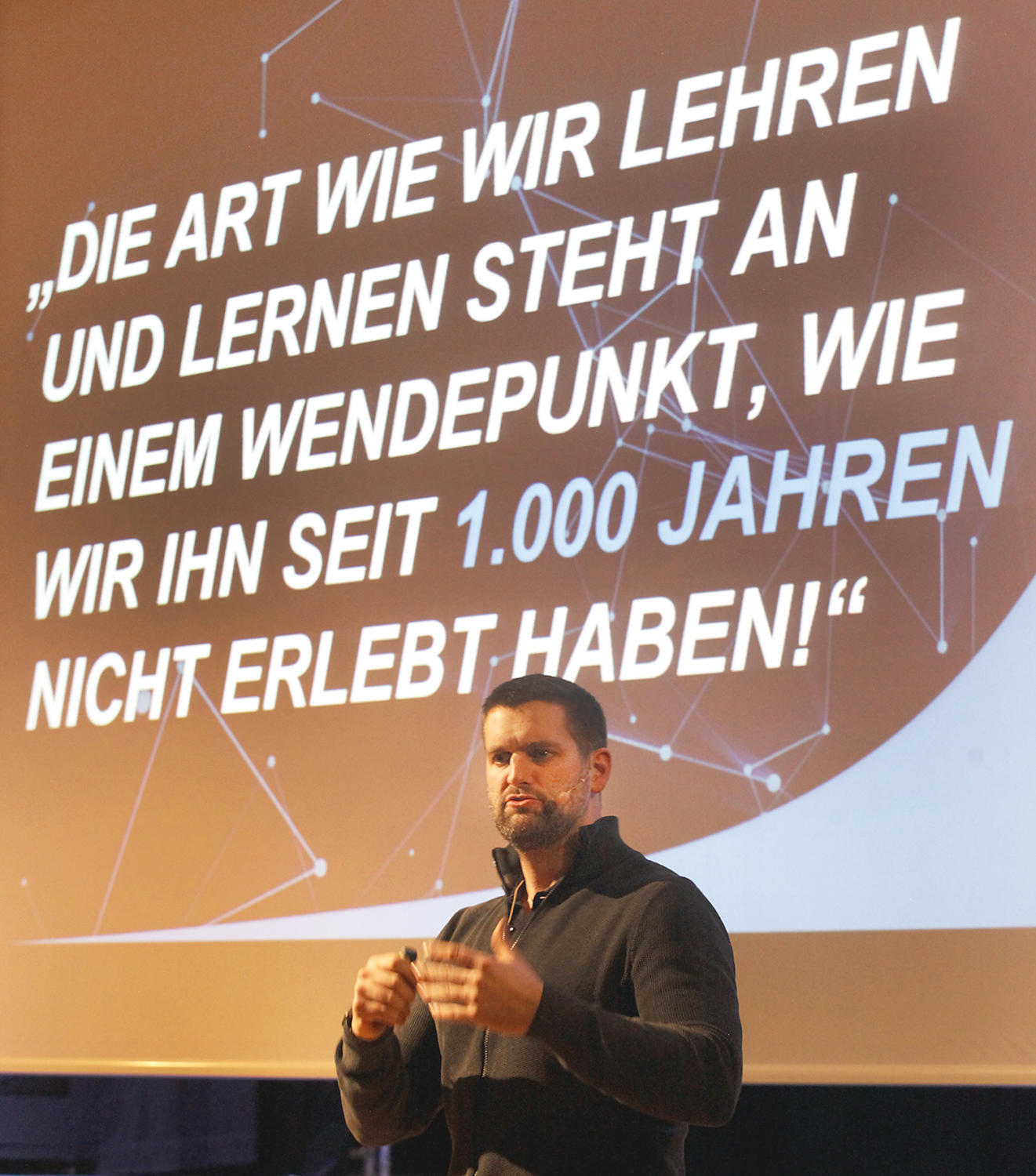
With his approach—projected powerfully onto the Forum’s screen—Jung delivers a thunderclap: “The way we teach and learn is at a turning point unlike any we’ve seen in a thousand years.” Even statements from dissenters—who demonized educational videos by claiming they were to school learning what Amazon is to retail—did nothing to change this. “We should meet young people where they already are—namely, on the internet,” said the speaker.
He therefore encouraged students and teachers to use the Internet to share interesting content: “Share your knowledge with the world. It’s fun to help others.”
In light of the impending storm, public schools in the Marburg-Biedenkopf district will remain closed on Monday, February 10. This also applies to schools in the university city of Marburg. The district, the city of Marburg, and the State School Authority reached this decision on Sunday during a meeting called on short notice. The closure of public schools also affects after-school care programs at those schools. The Steinmühle is offering emergency care but expressly warns against sending students to emergency care due to the storm.