The Christmas party at Steinmühle Boarding School—traditionally THE highlight of the year for the boarding school community. And to keep that sense of anticipation alive, the teaching staff has outdone itself in creativity for this year’s Christmas party: despite the pandemic, the teachers put together an extraordinary, relaxed, and cheerful Christmas market in the Mühlenhof.

Under the guidance of Nils Schwandt, students and teachers painstakingly built five Christmas stalls of their own by hand. “It was absolutely wonderful to see how enthusiastic the students were and how much dedication they put into this project. We couldn’t have done it without them,” says teacher Nils Schwandt happily.

The students helping out were also thrilled by the construction project: “It’s so much fun to make something ourselves. And knowing that we’re doing this for the Christmas party makes me really proud to say, ‘We made that!’” says student Julian Timm.

And so it came to pass that, despite the restrictions, another Christmas party full of fun, cheer, and togetherness was organized. And there really was something for everyone: Aside from the classics—sausages and fries or punch and mulled wine at the tea room run by Michel Hermens—the students could indulge themselves at the candy bar. “We really have everything!” says teacher Luisa Völker. “From crêpes to waffles, gingerbread, and cookies, to cotton candy and marshmallow treats—everything your heart desires.”

And for those who preferred something less sweet, there were activities and games to let off some steam. Guessing the teachers based on children’s drawings, decorating Christmas ornaments, making their own candles, or putting their skills to the test with a new round of “1, 2, or 3”—the students certainly didn’t get bored that evening. Teachers Ben Zriki and Francine Olschewski led the evening with great energy.

In addition, there were frequent performances by the students themselves: For example, the Biohaus put on an incredibly adorable performance set to a Bruno Mars song. While the youngest students danced and sang, the entire boarding school community swayed along with them. And, as is tradition, student Felix Müller sang Christmas carols for the group with his gifted voice, accompanied this year by Friederike on the violin.

But anyone who thinks that was the highlight of the festivities is mistaken. The outdoor party really got going when learning center director Patric Hahn fired up the karaoke machine. From then on, there was no stopping it: Everyone sang, laughed, and danced together well into the night.

“I was really skeptical and had actually planned to leave early because I had an important exam on Monday,” student Leon admits, “but then the evening turned out to be so much fun—I never would have thought! I just had to stay until the very end; it was so great!”

Wrapped up warmly in their coats, the boarding school community continued to celebrate together for hours. “We had considered holding the celebration in the dorms again due to COVID-19. But it was the right decision to move the party outdoors and celebrate together with everyone!” reports boarding school council member Verena happily. The boarding school council’s idea to organize its own raffle was also a huge hit. The absolute highlight among the prizes was the wet toilet paper, but the sweet surprises, hand warmers, and gift certificates were also celebrated by the winners.

Luke, a student who has been part of the boarding school community for years, even says, “That was the absolute best Christmas party ever!”

Necessity is the mother of invention—and here, the educational team has once again demonstrated how flexibly it can respond to any adversity. And the entire boarding school community provided hopeful proof that evening: Not even a pandemic can dampen our spirits or break our spirit of community. We live together, we celebrate together.

With that in mind, Steinmühle Boarding School wishes you a joyful holiday season and a healthy start to the new year!


It doesn’t get any more organic than this: Eighth- and ninth-graders showed particular creativity in the elective course (WU) “School Garden.” Under the guidance of Steinmühlen teacher María Ramos Iglesias, they used the produce grown in the school’s own garden to create original products with great dedication, proving themselves to be true connoisseurs of gourmet cuisine. To make their creations even more special, they added the Steinmühlen logo. The result included, for example, decorative vinegar products, oregano salt, jars of ratatouille, lavender sachets, and much more. The products—which make excellent Christmas gifts—are on display in the teachers’ lounge and are available for purchase in exchange for a voluntary donation.

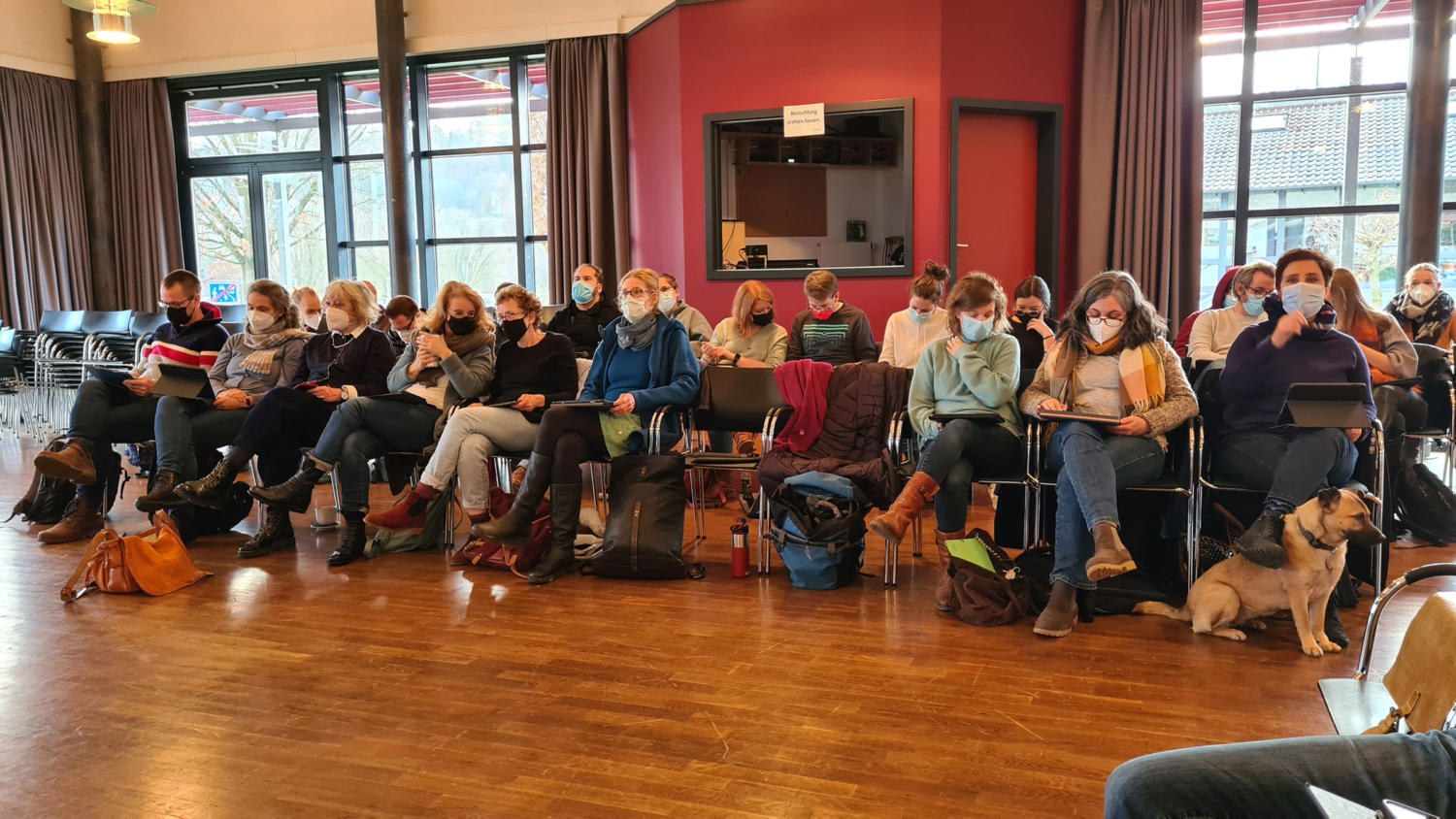
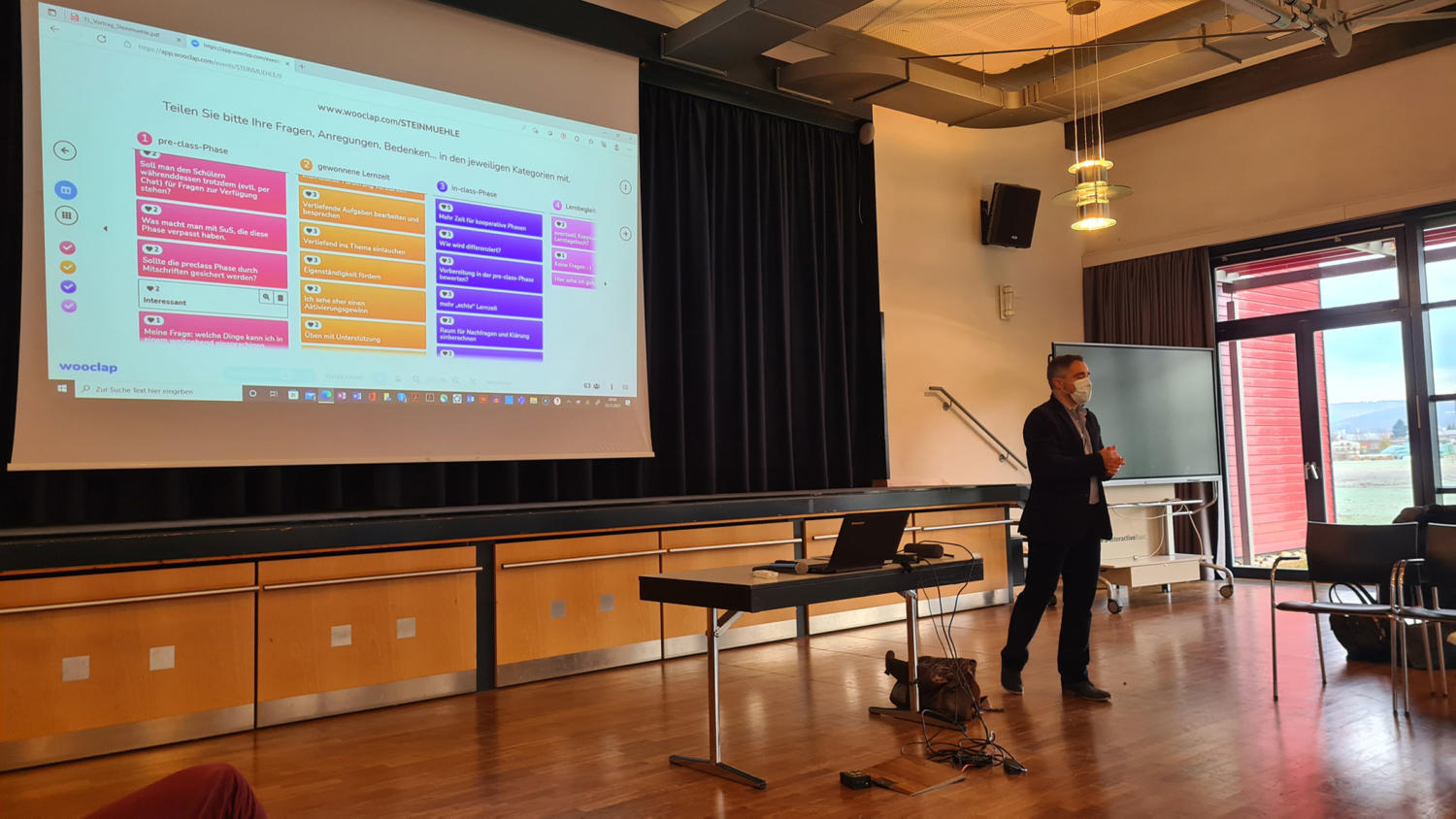
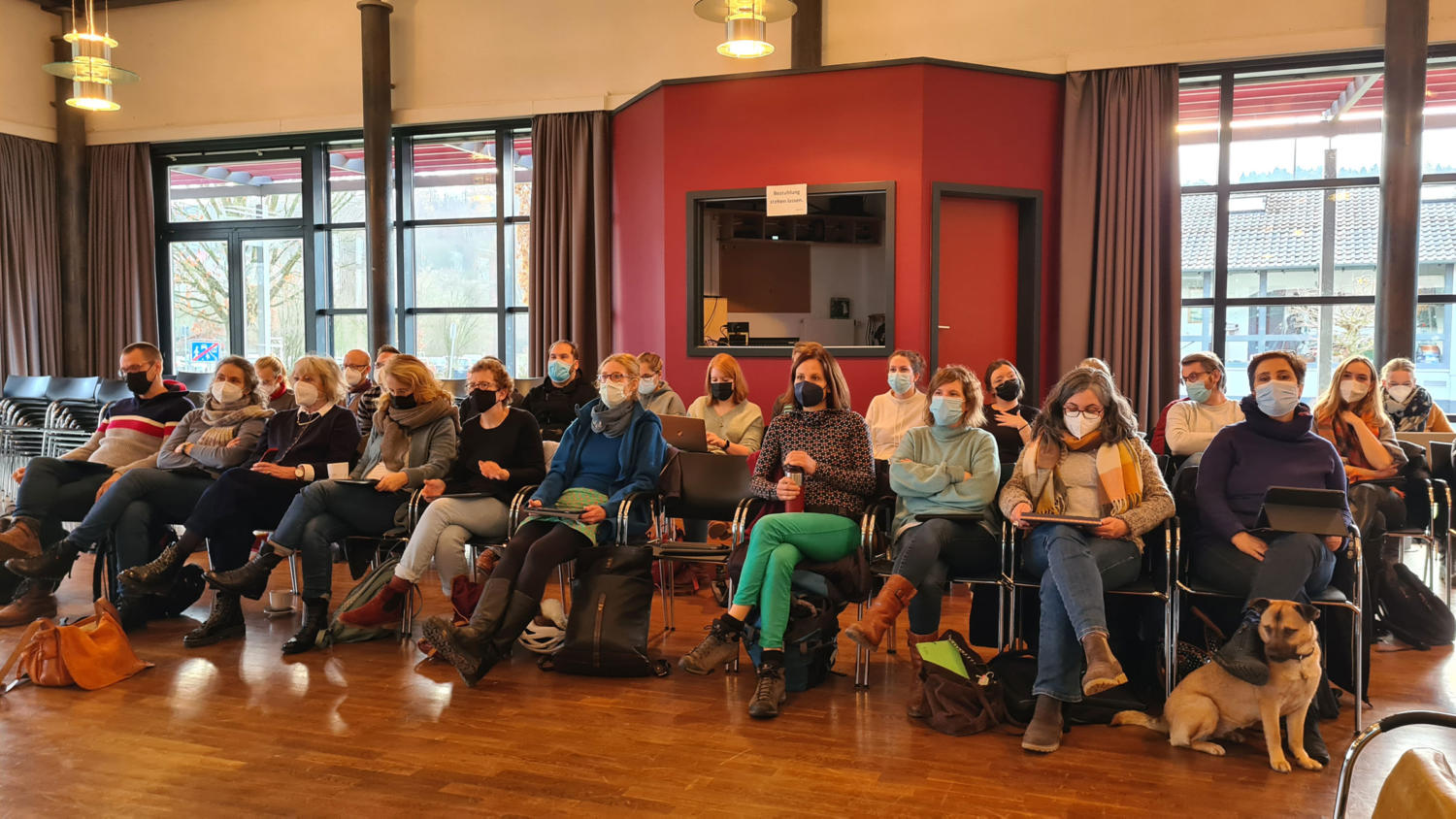
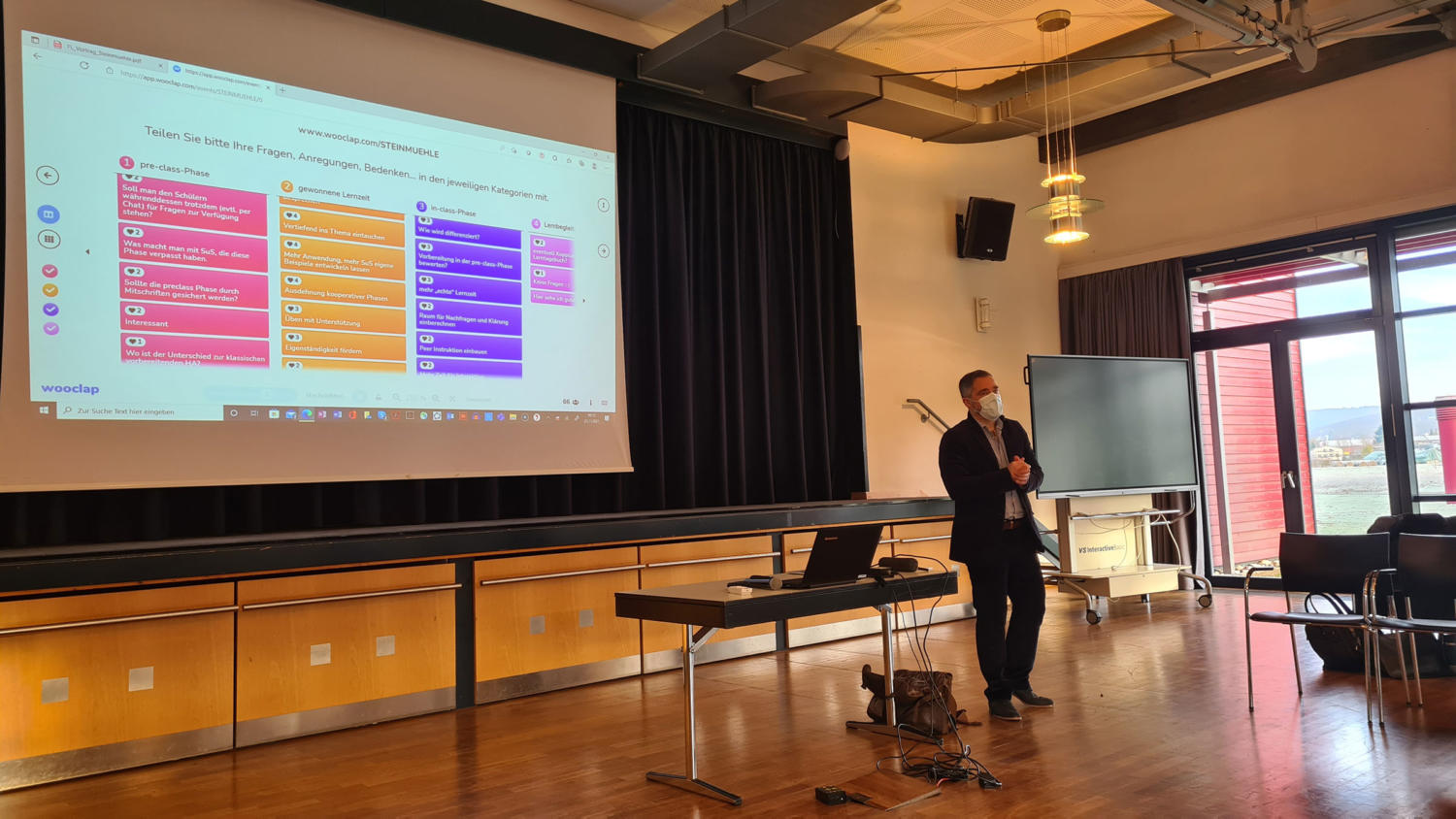
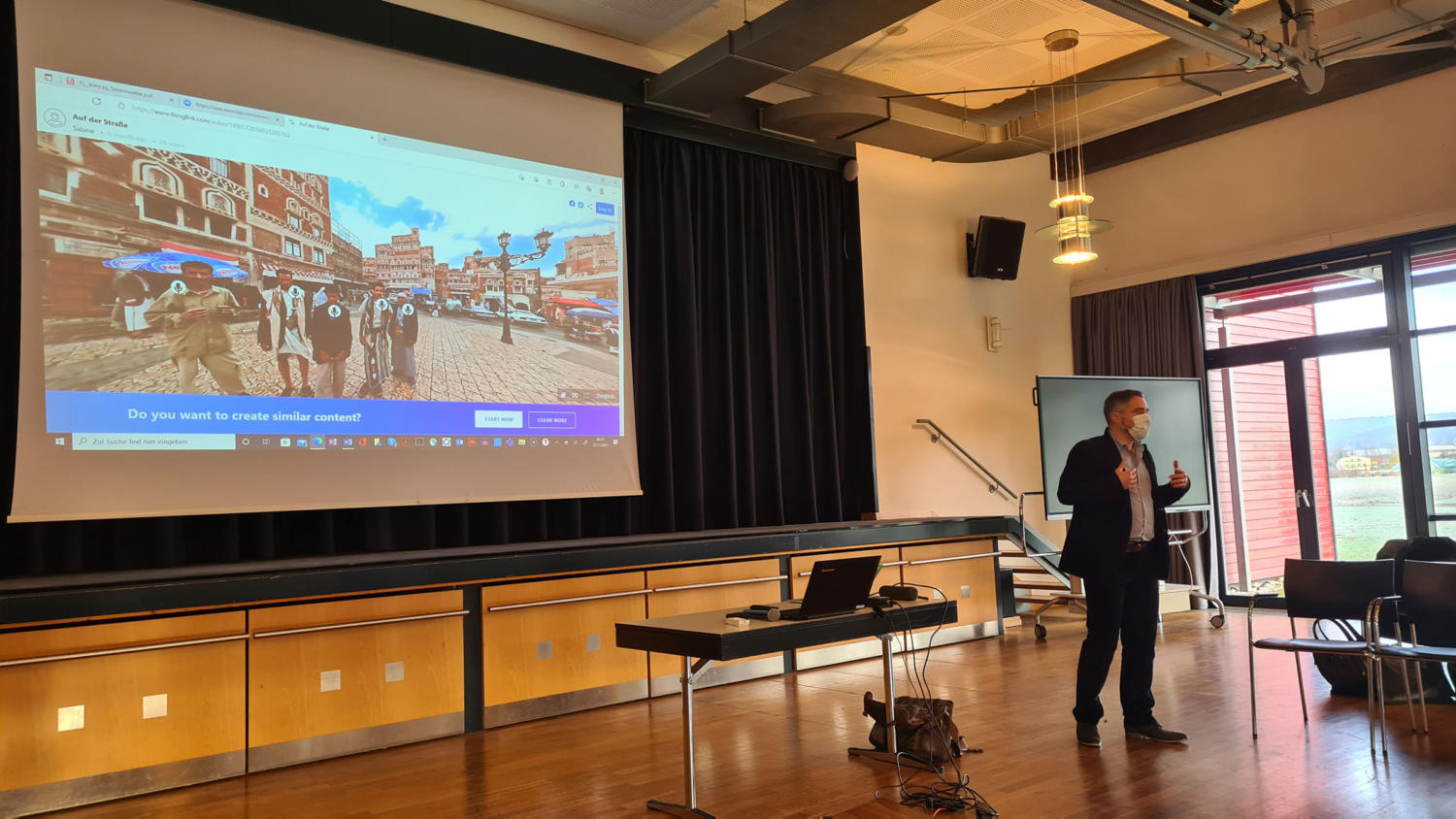
For Steinmühle, developing the StoneApp and winning Bitkom’s “SmartSchool” award are not the grand finale of its digital transformation, but rather the beginning of a further optimization process. The pandemic has forced students—but especially teachers—to become highly engaged with digital technology. But what does the future hold for digitalization—until the end of the pandemic and, above all, afterward? These questions were on the minds of the Steinmühle faculty during this year’s in-house teacher training session.

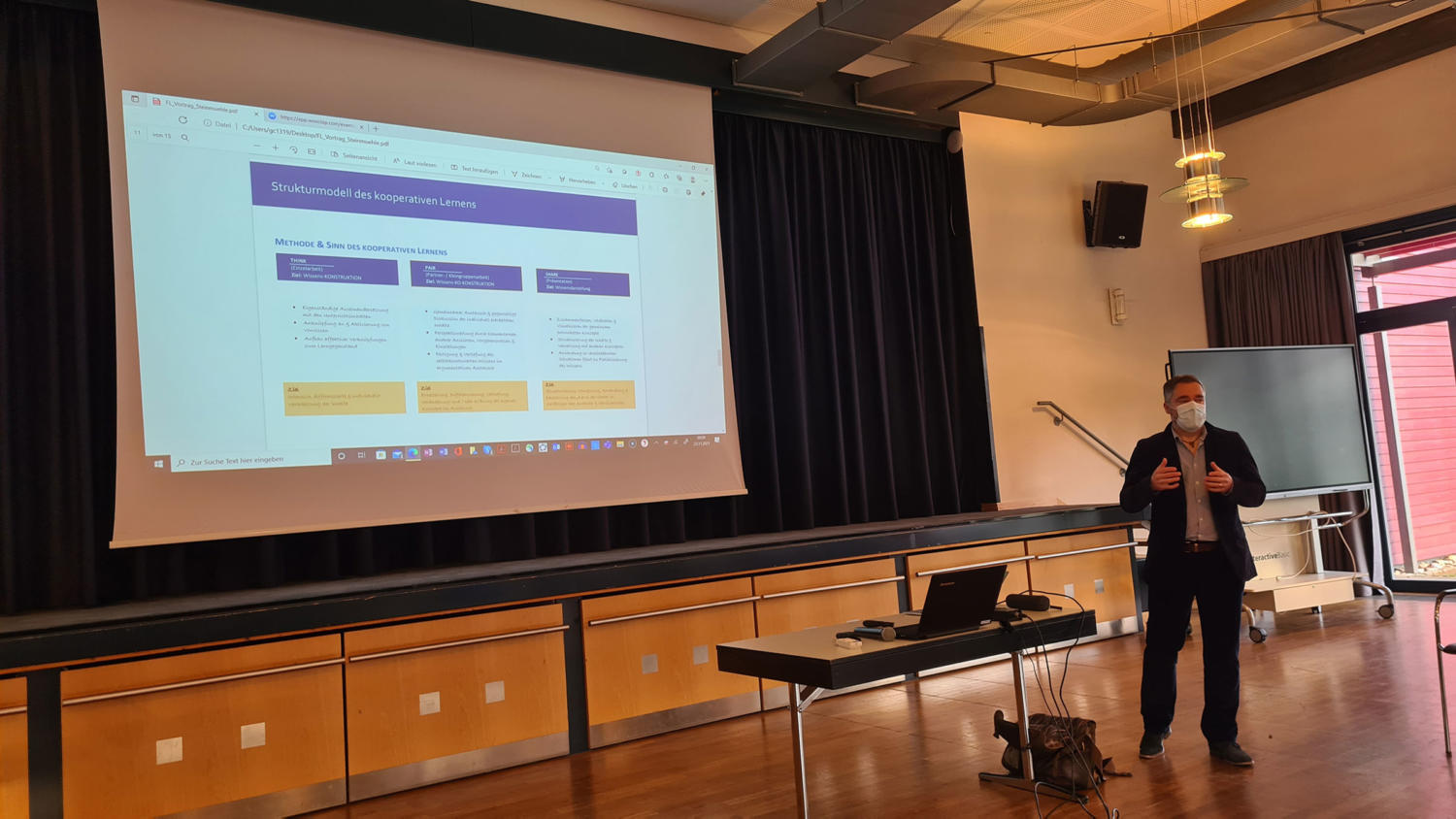
The methods used in digitalized instruction often involve various concepts. At the start of the two-day event, “flipped learning”—an “alternative approach to learning” in which students work through course material at home and then present it in class—was introduced in this context. The “Peer Instruction” teaching method, developed at Harvard University, was also explained. It is based on the observation that tasks are better understood and solved in a group than by students working alone. This is determined through a two-step question-and-answer session on the respective task, in which students first give their own assessment and then, after group discussion, provide a revised answer. In the second step, the overall results are consistently significantly more accurate.

The use of media at Steinmühle is based on a media education concept. Similarly, the protection of minors in the media plays an important role at Steinmühle. These areas, as cornerstones of our media work, are—like digitalization itself—dynamic and are structured quite differently across the various grade levels.

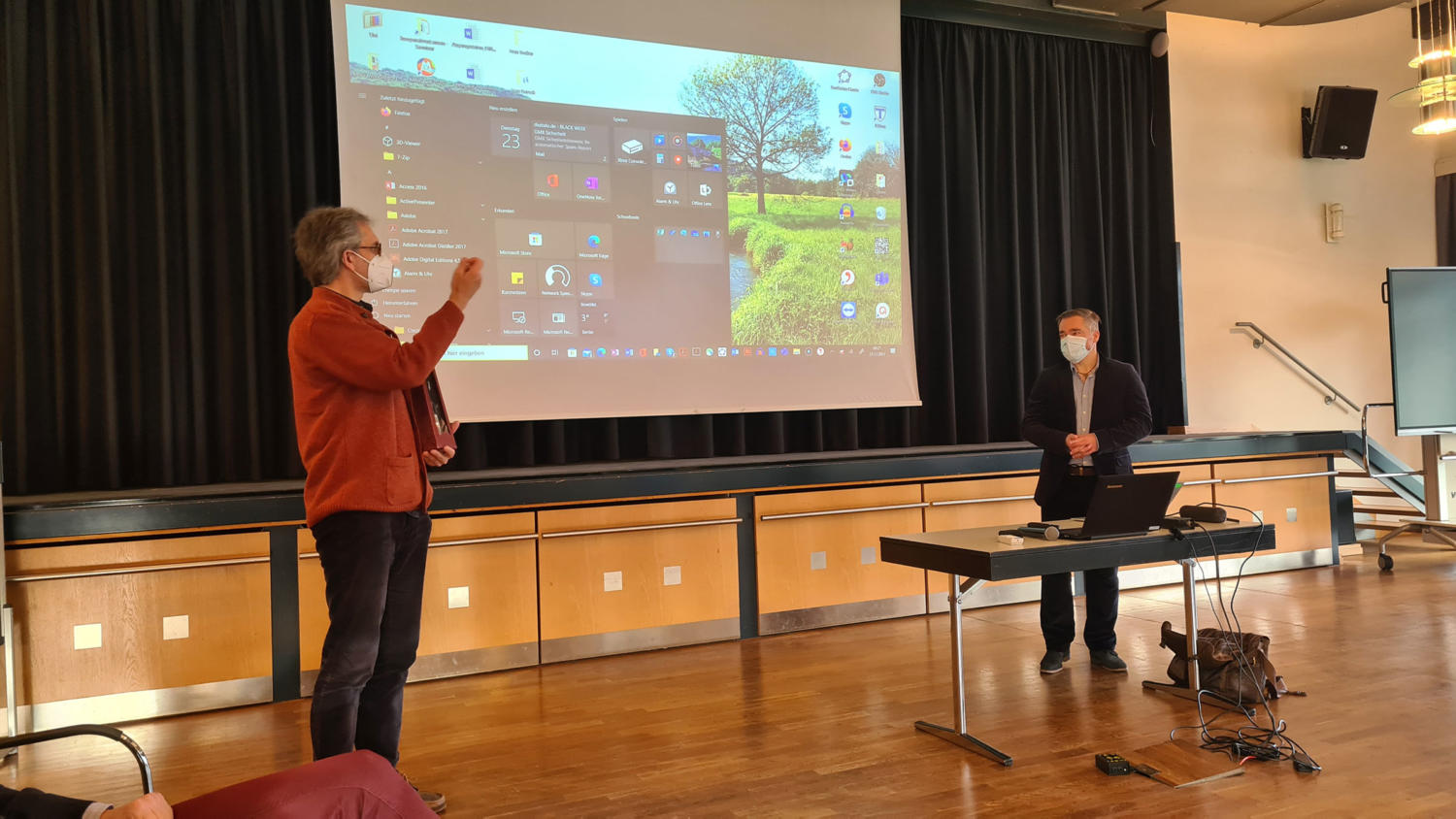
Continuously optimizing teaching and learning—a challenging situation for teachers. “Here at Steinmühle, we have the advantage of having Malte Klimczak as our digitalization coordinator, as well as many dedicated colleagues who have familiarized themselves with specific areas,” explained Frank Wemme, the event’s organizer. While the second day of professional development featured a presentation by external speaker Patrick Eckert on the flipped classroom method, but several teachers from within the faculty had also delved so deeply into specific topics that they were able to share their knowledge with the faculty in a meaningful way, either in plenary sessions or in individual workshops.

Recognizing that mediation is closely linked to both analog and digital components, the school integrated a basic training course on mediation into its internal teacher professional development program. The goal of this training is to develop a shared set of methods that promote learning processes and structure learning in a meaningful way over the years. This is done with a focus on generally developing and strengthening personal competence and social competence—particularly in cooperative learning formats and conflict resolution—as well as in the integration of digital tools.

Ideally, according to Frank Wemme, a basic methodological framework would be developed based on all the elements taught, and, above all, it would be implemented in everyday school life.

The annual Career Information Day, organized in collaboration with the Rotary Club Marburg-Schloss, has become a tradition at Steinmühle. In 2020, due to the pandemic, it could only be held virtually. This year, a new format made it possible to hold the event in person while adhering to COVID-19 safety guidelines; the event remains consistently popular and in high demand.

Thanks to the ample space in the atrium, the organizers—Hans-Heinrich Bähr from the Career Services Department of the Rotary Club Marburg-Schloss and Steinmühlen teacher Dr. Claudia Röder—decided to assign a separate room or a dedicated corner to each representative of a specific profession. This arrangement was well received. Principal Björn Gemmer welcomed the participants and was pleased with the lively interest shown by everyone.


Architecture in High Demand

In total, representatives from 20 different professions were on hand to answer the students’ questions. The most popular session was the one on architecture, represented by Thomas Oesterle, the architect behind the new Steinmühlen buildings—given the current workload at all existing architecture firms, it might not be a bad idea to consider a career in this field. The sessions on medicine, psychology, management consulting, and journalism were also well attended. New professions featured at this event included pharmacist, mechatronics engineer, theater director, and positions at the municipal utilities involving both technical and business roles.

The twelfth graders were impressed by the career information session that evening, and they expressed their thoughts as follows:

Lasse Siener: “We got some great insights into different careers; it was nice that there was something for everyone.”

Felix Mittag: “We had good discussions in a positive atmosphere, but I would have liked to have had more time and a fourth round as well. It was very pleasant that the discussions took place on an equal footing.”

Tillmann Molzberger: “The career fair dispelled stereotypes and gave us a lot of insight into what everyday work life is really like.”

Jan Siegwolf: “It was a great event; we gained new insights and were able to get a concrete idea of what each profession entails.”

Lutz Lehning: “It was a really awesome event, but there wasn’t enough time.”

The Steinmühle Boarding School, led by Anke Muszynski, has planned a themed weekend for each quarter of this school year to foster the development of the boarding school community and all its members. The program includes topics such as “sustainability,” “physical health,” and “the world of media.” The kickoff weekend focused on the topic of “mental health.” The workshops and extracurricular groups provided ample opportunity for discussion, self-reflection, and mutual understanding among both students and educators.

Getting to know each other in a different way

Talking about it, staying in touch, asking for help. Things that should go without saying, but that we all too often forget or deliberately avoid in our daily lives. Isn’t it embarrassing to bare my soul? What will others think? And I’m supposed to confront my weaknesses? Great! And I didn’t even know I had any strengths—and if so, how many? These questions were deliberately and very sensitively raised in small groups over the weekend.

At the end of the themed weekend, educator Luisa Völker summed up the particularly wonderful outcome of these group sessions: “It was impressive to see how, within a very short time, many students experienced a shift in perspective. They realized that there isn’t just ‘my world,’ but that people have had very different experiences and, as a result, the world can look very different to them.”

After all, everyone has their own cross to bear

At the beginning, there was some initial unease in many places. Concerns about what exactly lay ahead, how much to reveal about oneself—and feelings of embarrassment in front of the others. However, the activities were so well designed that these uncertainties quickly faded. The students learned to consciously observe their surroundings and were soon ready to actively participate in the discussions.

Accepting themselves, getting involved, and not giving up: For many students, this weekend was the first time they truly realized this. “It was great to see how the individual students began not only to become more aware of themselves, but also to become more aware of others,” educator Michel Hermens reports enthusiastically.

It was about happiness, resources, and self-worth

Staying active, trying new or creative things, and learning to relax consciously—these were the skills consciously practiced during this themed weekend, for example, in the origami class. Getting to know oneself and, above all, learning to appreciate one’s own strengths and needs. To consciously recognize and appreciate people and friendship as resources once again. To feel part of a supportive community while simultaneously becoming aware of one’s own individual greatness. That’s what this weekend helped bring about. For example, during the workshop on “Social Media and Mental Health,” our student Lydia suddenly realized: “It’s not that important to me to present myself on social media—I have my friends right here!”

This weekend was profound and memorable

Even after the themed weekend is over, conversations about what we experienced continue into the evenings. The workshops continue to have an impact; new perspectives have opened up, and best of all: we’re starting to talk about something that is deeply important to all of us—our collective well-being. This themed weekend has shown us how to become aware of this again, to reflect on ourselves, and to actively and positively influence the well-being of the boarding school community. I am never alone, and especially at boarding school, I am part of a community that can support me.