“Die Mühle,” a girls-only residential group at the Steinmühle boarding school, took this year’s group trip to the Black Forest—“to a little village surrounded by forests and meadows,” reports house director Julia Ploch. The young people stayed in a beautiful self-catering cottage surrounded by nature; thanks to the good weather, they were able to enjoy delicious meals outdoors and sit around the campfire well into the late evening. On Saturday, the group visited the Rulantica water park, located next to Europapark Rust. With perfect weather, everyone had a great day. “We then wrapped up Sunday with a delicious breakfast together in the sun out in the courtyard before heading back to Steinmühle.”

Career guidance is traditionally a focus for 11th graders at the start of each new school year. Slowly but surely, students should be making their decisions regarding the advanced courses they will choose at the end of the so-called introductory phase to upper secondary school (“E-Phase”). But where should this journey actually lead? Dr. Claudia Röder, who is responsible for internships and career guidance at Steinmühle, invited an expert to speak—especially for students who are still unsure. But the entire grade benefited from the event.

Choosing a career is a process

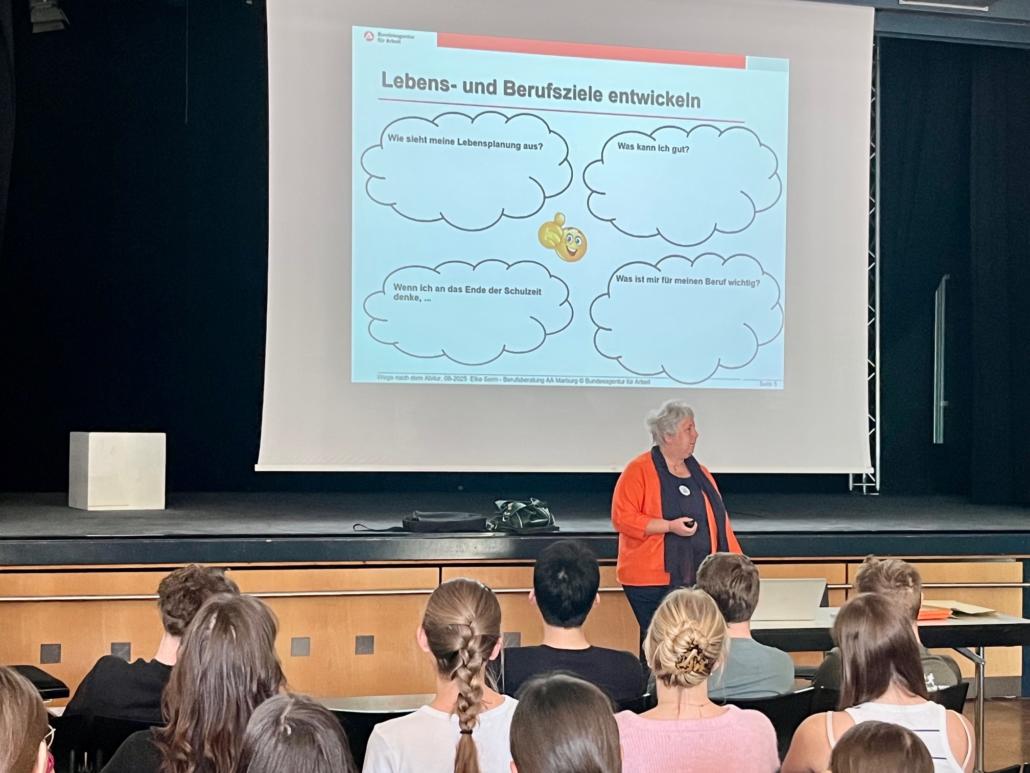
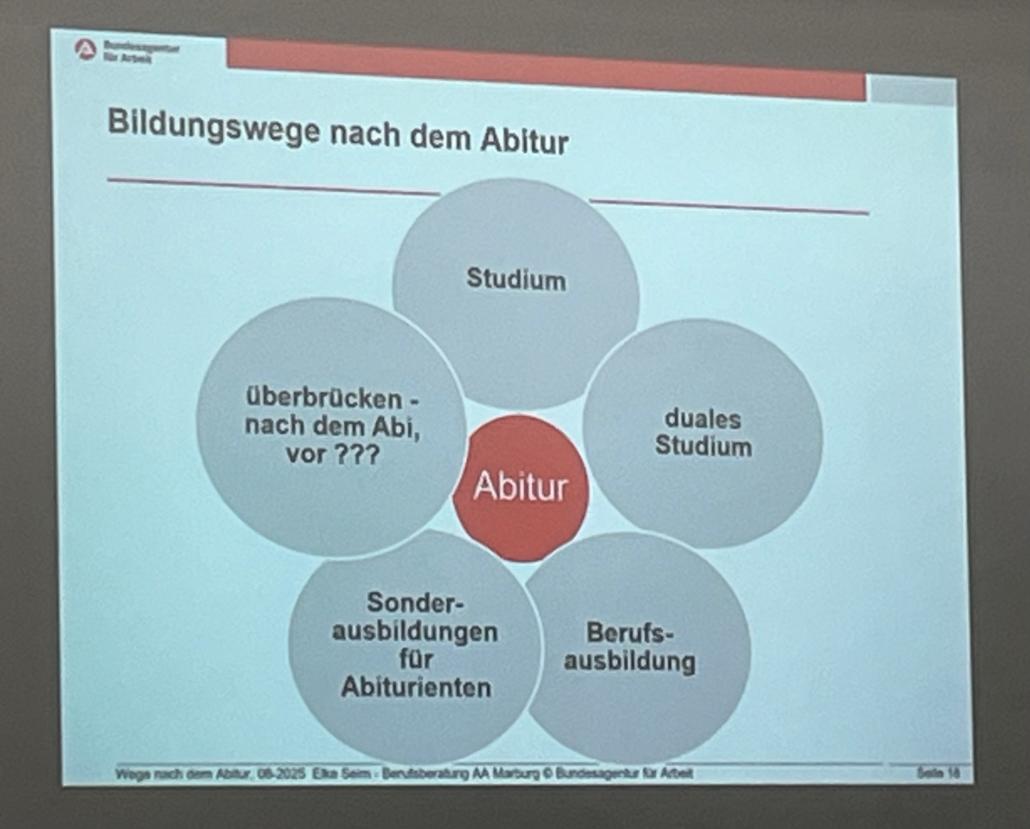
Elke Seim holds degrees in education and public administration and works as a career counselor at the Federal Employment Agency in Marburg. In her presentation, she not only gave the students food for thought regarding their choice of advanced courses but also offered tips for their future career planning. “It’s about finding your own path; choosing a career is a process,” explained Elke Seim. She emphasized that experience gained through an internship or even vocational training could certainly precede a college degree. “A vocational college entrance qualification or a general college entrance qualification has no expiration date.”

Personalized “Roadmap”

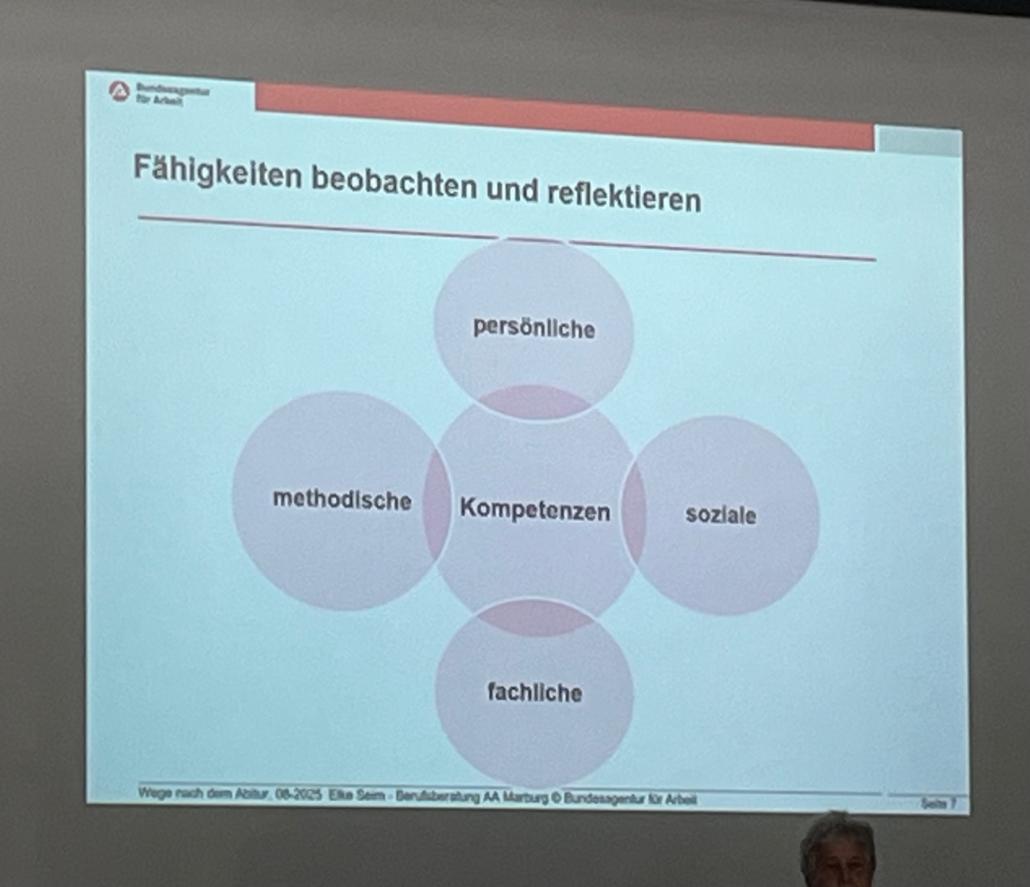
It’s important to honestly answer a few questions for yourself: Where do I want to work? What fields interest me? What am I good at? What do I value in life? This year’s 11th-grade class needs to tailor its own individual roadmap through 2028, the year they’ll graduate from high school. For those aiming to pursue a dual degree program or vocational training immediately after graduating from high school, the report card from the first semester of 12th grade is particularly important.

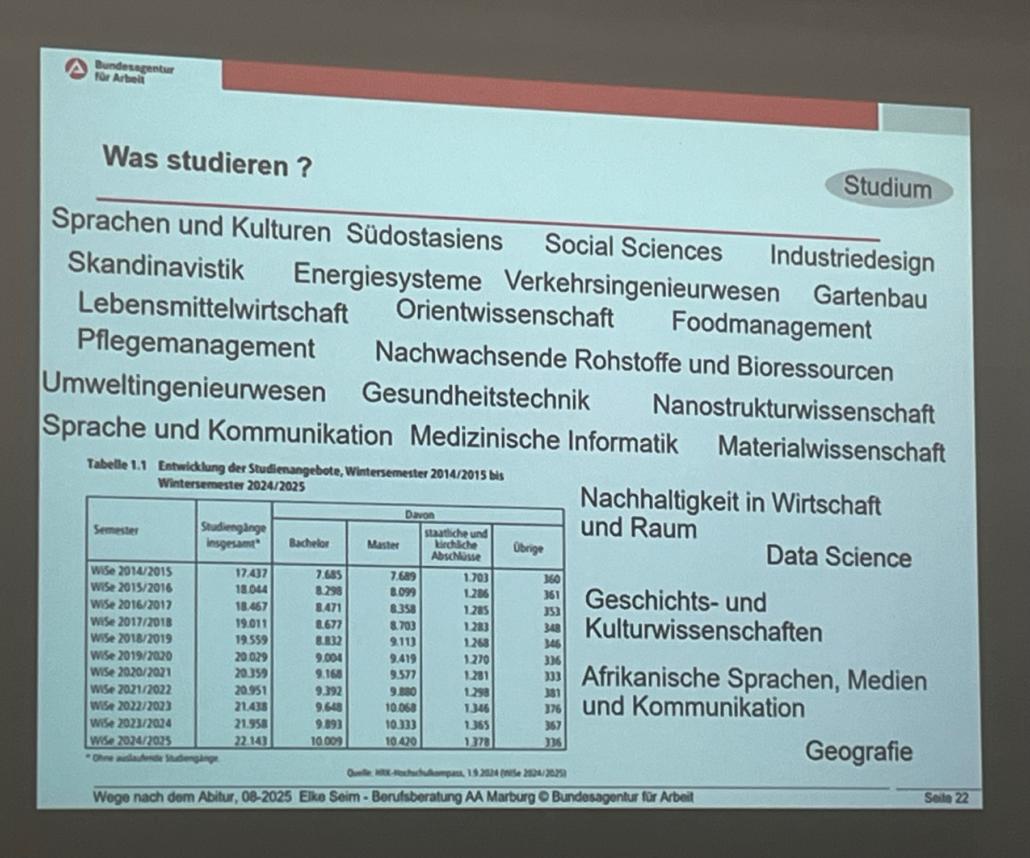
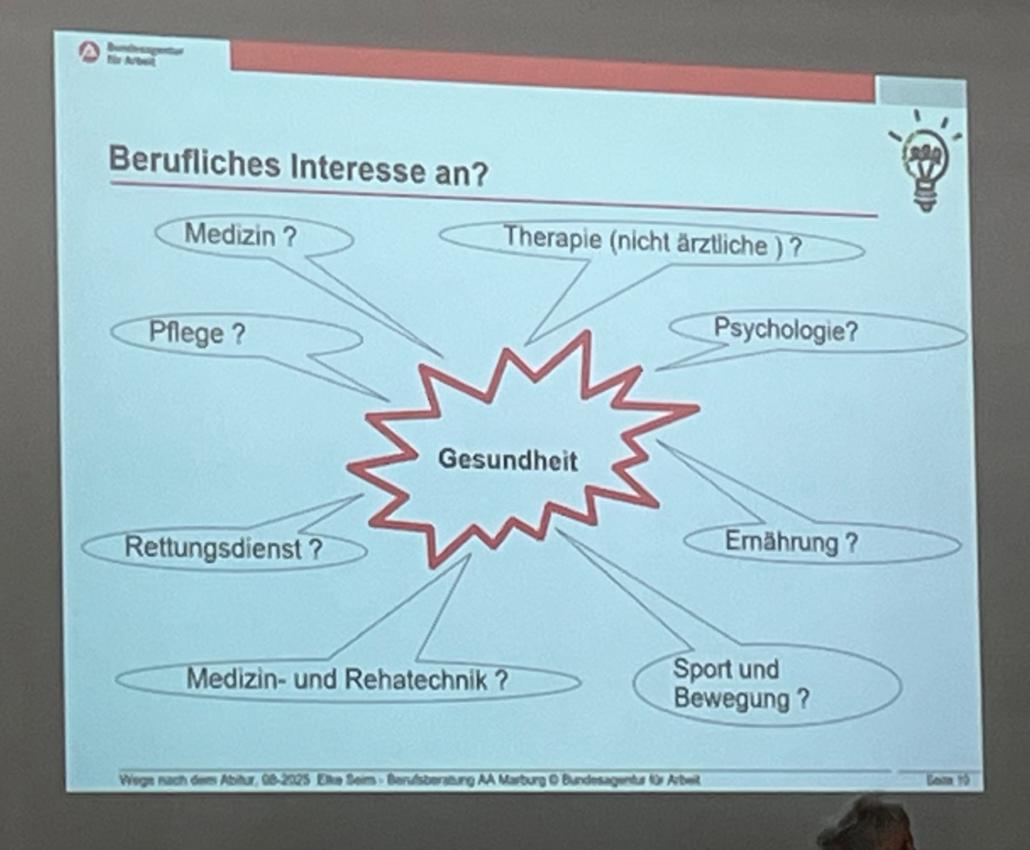
Using a PowerPoint presentation, Elke Seim outlined in brief points what else plays a role: Choosing from among the many professions and fields of study, the goal of completing the respective degree program with a bachelor’s degree (B.A./B.Sc.) or even a master’s degree (M.A./M.Sc.), and the opportunities that this opens up.

The career counselor is available to answer any questions students may have following the presentation or in the near future (elke.seim@arbeitsagentur.de).

At the start of each school year, every residential group at the Steinmühle boarding school takes its own trip to a specific destination. This helps the students get to know each other better and allows them to start the new school year off on the right foot together. For this year’s so-called “house trip,” our Bremerhaus group traveled to the Schloss Dankern vacation center in Haren an der Ems.


Stopover at the amusement park

“We stayed in vacation homes there and cooked for ourselves,” reports house director Nils Zeller. In addition to a visit to the affiliated amusement park, the itinerary included a trip to the Dutch university city of Groningen. They also took part in a “silent dancing” activity. After enjoying some wonderful days together, the young people returned happily to the Steinmühle.

On Saturday, August 30, an information day on para-rowing will take place at the RuS Steinmühle Marburg clubhouse from 10 a.m. to 4 p.m. The event is aimed at people who would like to row despite physical limitations. RuS coach Martin Strohmenger and Ines Prokein from the Hessian Association for Sports for People with Disabilities and Rehabilitation (HBRS) will be on hand to explain how this works.


Target audience: People with physical disabilities

Inclusive rowing, in which sighted and visually impaired people row together in the same boat, has been a long-standing tradition at Steinmühle. However, the current event is open not only to people with visual impairments but also to those with other physical disabilities.

The RuS Steinmühle event is a collaborative project with the HBRS and blista (German Institute for the Blind in Marburg). Please contact our coach “Stromi” at martin.strohmenger@steinmuehle.net or by phone at 0152-54248254 to register.


Today, 21 young people and their families secured a place in the sun in the schoolyard when they were welcomed and officially admitted to our Steinmühle boarding school this afternoon. We extend a warm welcome to you all! Boarding school director Anke Muszynski, her deputy Philipp Dönges, and the entire teaching staff welcomed the children and teenagers and answered any remaining questions.

As on every Sunday at the start of the school year, the boarding school administration team was on hand to handle all the paperwork for the new residents.

Familiar young faces were also seen around the schoolyard in front of the main building. For them, it was time to move on to the next chapter—the next school year! The reunions with the familiar teaching staff were joyful. It was clear that the young people were happy to return to their “second home” and quickly struck up conversations with their teachers again.


Just under 20 different extracurricular club options

One thing that couldn’t be overlooked was signing up for at least one recreational club. With so many options to choose from, it was often hard to decide: rowing? Horseback riding? Bouldering? Or maybe tennis? In total, there are just under 20 options to choose from.

After a light meal and some refreshments, everyone headed straight to their rooms—a familiar journey for many back to their own quarters at the Steinmühle.

Steinmühle Boarding School is starting the 2025–26 school year—which begins tomorrow—with a total of nearly 100 students, who will be joining approximately 750 day students.

We wish you all the best, much success, and above all: Have a great time with us!


This year, a delegation from Steinmühle once again made its way to Louisenlund to participate in the STEM Campus and present their projects—despite the summer break in Hesse. This is according to Dr. Jutta Töhl-Borsdorf, STEM coordinator at Steinmühle.


Reunited with Old Friends

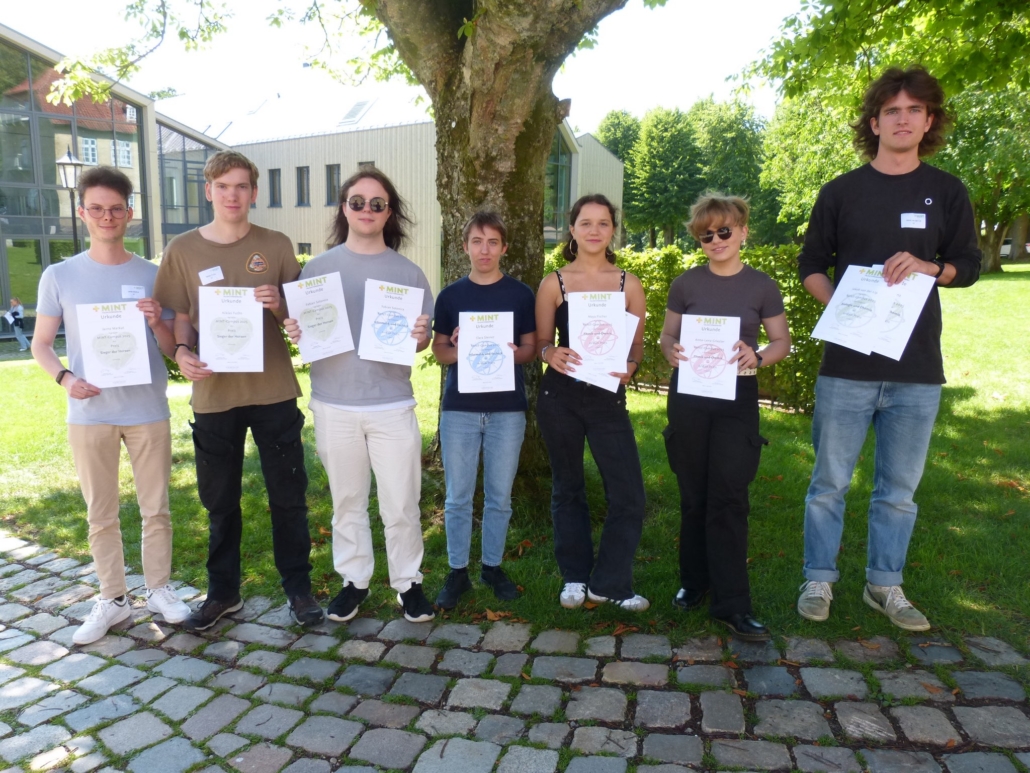
Fabian Sotonica, Clara Steiner, Maya Fischer, and Anna-Lena Griesler received a warm welcome on Thursday and, following the play *The Visit* staged by the +MINT students from Louisenlund, had the opportunity to meet new people and reconnect with old friends. Afterward, they had the opportunity to take a guided tour of the Learning & Research Center and admire the school’s new observatory, which was set to be inaugurated the following day.

Friday morning began with an interesting presentation on “genetic and epigenetic changes.” This was followed by the main event of the day—the fair, where students presented their projects to the public and a panel of judges and had the opportunity to discuss them with one another.


Workshops and a Lecture on Climate Protection

Just like last year, the popular pub quiz took place again that evening. The quiz involved sitting around a table and answering questions on a wide variety of topics, and the relaxed atmosphere made for a very pleasant evening.

The next morning began with workshops on various STEM topics. This was followed by another presentation on climate protection and then the awards ceremony conducted by the jury.


Both Steinmühlen teams won in their respective categories

As was the case last year, Steinmühle was extremely successful and secured victory in its respective categories with the projects it entered: The “Boat Project / A-WAVE” in the technology category and “Natural UV Protective Agents” in the chemistry category—as well as the “Orbitals Project,” a collaboration between Steinmühle and Louisenlund, which received the audience award “Winner of the Hearts.”

Afterward, everyone had the afternoon to spend as they pleased. This brought an extremely successful and exciting weekend to a pleasant close, and everyone was able to head home on Sunday morning feeling satisfied. Anna-Lena Griesler
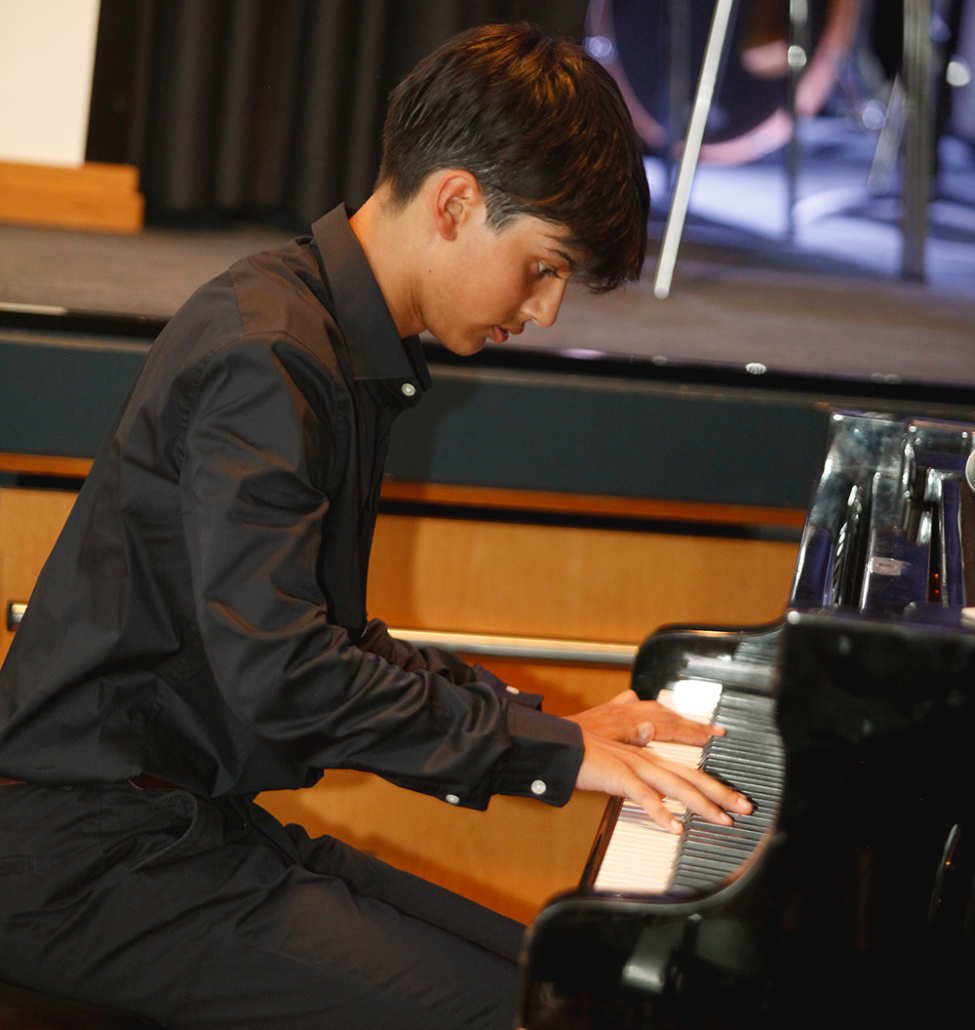
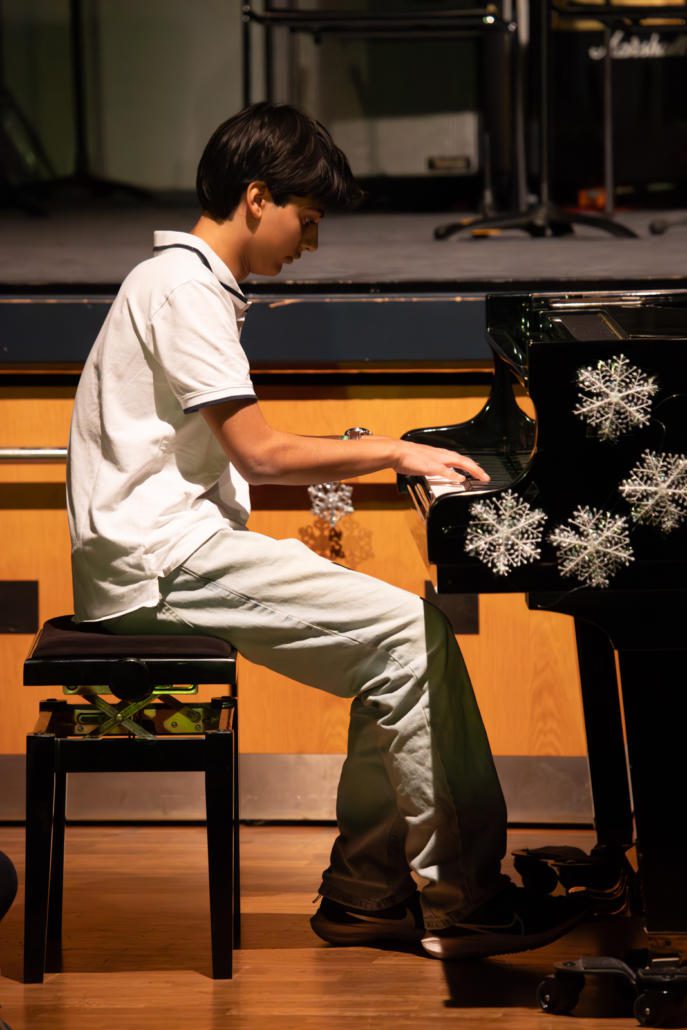
Music lovers have surely already seen the young man with dark hair playing the piano at events at the Forum. Gojus Kanes, a boarding student at Steinmühle, loves this instrument—and it shows. Last school year, he took on the challenges of the “Jugend musiziert” competition, first at the regional level, then statewide. He placed third—and anyone familiar with the competition knows that’s no small feat.


Three hours of practice a day

Gojus has been at Steinmühle for a good year now. He has made the Steinmühle boarding school in Marburg, Central Hesse, his home and is happy about it: “I like it here.” In public, he tends to keep a low profile and defines himself through his piano playing. He has devoted three hours a day to this art since he was 13.


Piano Performance and Presentation at the Competition

At the Steinmühle concerts, a variety of works are performed. One composer he personally admires is Mikalojus Konstantinas Ciurlionis from Lithuania. “He’s considered the national composer there,” Gojus explains, describing how he traveled to that country himself, following in Ciurlionis’s footsteps to transcribe his piano music—a task that wasn’t all that easy. Gojus Kanes also dedicated his presentation to Ciurlionis at the “Jugend musiziert” state competition in Schlitz, which required not only a musical performance at the piano but also a verbal presentation before the four-member jury. The student presented his knowledge of the composer on the occasion of the 150th anniversary of his birth, which was all the more interesting given that Ciurlionis left behind not only passionate musical works for posterity but also paintings—from the early days of abstract art—through his concurrent career as a painter.


Significant research effort

“You can find practically no works by this artist online,” Gojus had noticed during his research. Untitled pieces, cataloged late, and suppressed in terms of distribution—these were the reasons for the great effort the boarding school student had to expend to obtain information and to be able to dedicate his piano performance and lecture to the Lithuanian national composer Mikalojus Konstantinas Ciurlionis.


Possible career goal: Something related to music

This makes his outstanding placement in the “Jugend musiziert” competition all the more wonderful and well-deserved. Charlotte Schmidt-Schön from the Marburg Music School had encouraged him to participate; “I’d never done anything like that before,” he says. It remains to be seen whether Gojus will enter other competitions, and his career goals are also still up in the air. He knows that making a living through music is rather difficult. But he doesn’t completely rule out the possibility that the piano could play a role in that.

Angela Heinemann


Math isn’t boring or dry. Quite the opposite: Math can also successfully challenge the creative side of the brain, and anyone who doesn’t believe that is welcome to see for themselves in our photo gallery below. As an alternative learning assessment on the topic of fractions in 6th grade, numerous creative projects were produced last school year. Math teacher Malte Klimczak shared some examples of the work from the classes that he and his colleague Nina Kvachko supervised during math class. This alternative learning assessment served as a creative replacement for a traditional class test.


Task: Create a poster or handout

Math and creativity? What does that look like?

This was an individual assignment in which the student was required to create an informative poster or lab book on the topic of “Working with Fractions” using colors, pictures, or diagrams. Within a specified time frame of 10 school hours, the assignment consisted of required and optional tasks.


Present the most important rules for working with fractions

For the required tasks, the most important rules of fraction calculations were to be presented, and at least one clear example was to be used for each rule. Among the five optional tasks, for example, students had the option to design a fold-out “fraction pizza slice” made of paper that explains the addition of fractions, or a “fraction scale” made of cardboard that demonstrates the balance when expanding and reducing fractions.


Guidelines for Project Planning

For the planning phase of the project, each student received general guidelines applicable to everyone on how to approach the task in a meaningful and goal-oriented manner. Assessments were based on a point system using a matrix that evaluated completeness, examples and explanations provided, creativity and design, completion of the assigned task, and structure and organization. There were also written comments that explained the scoring and grading to the sixth graders as clearly as possible.