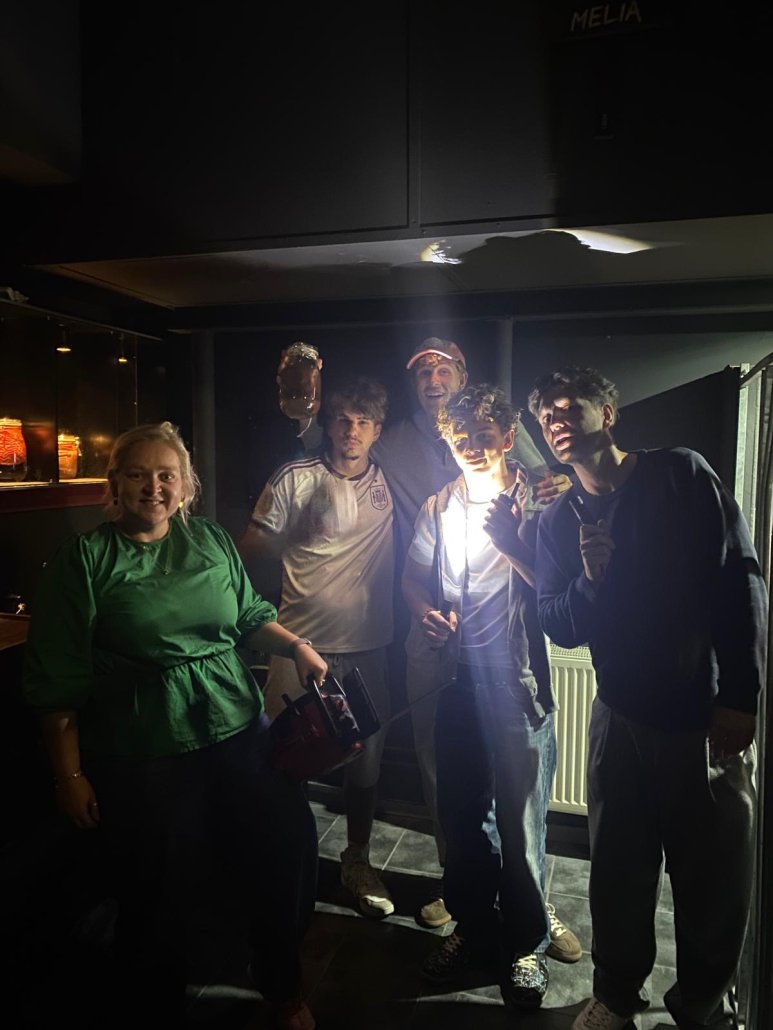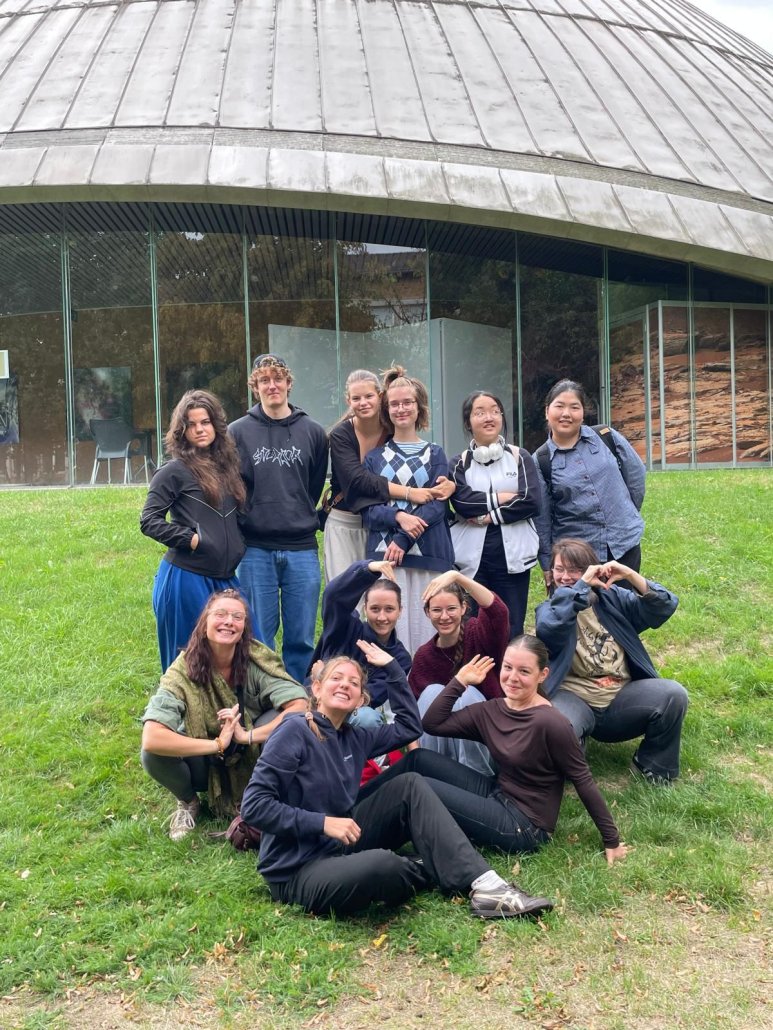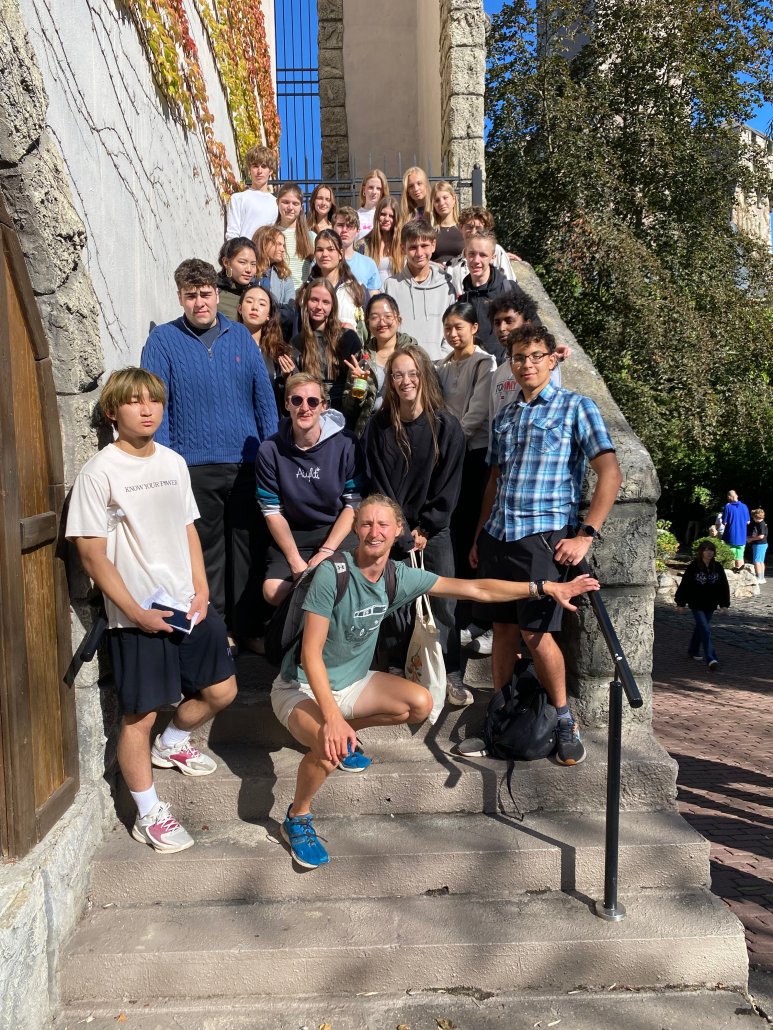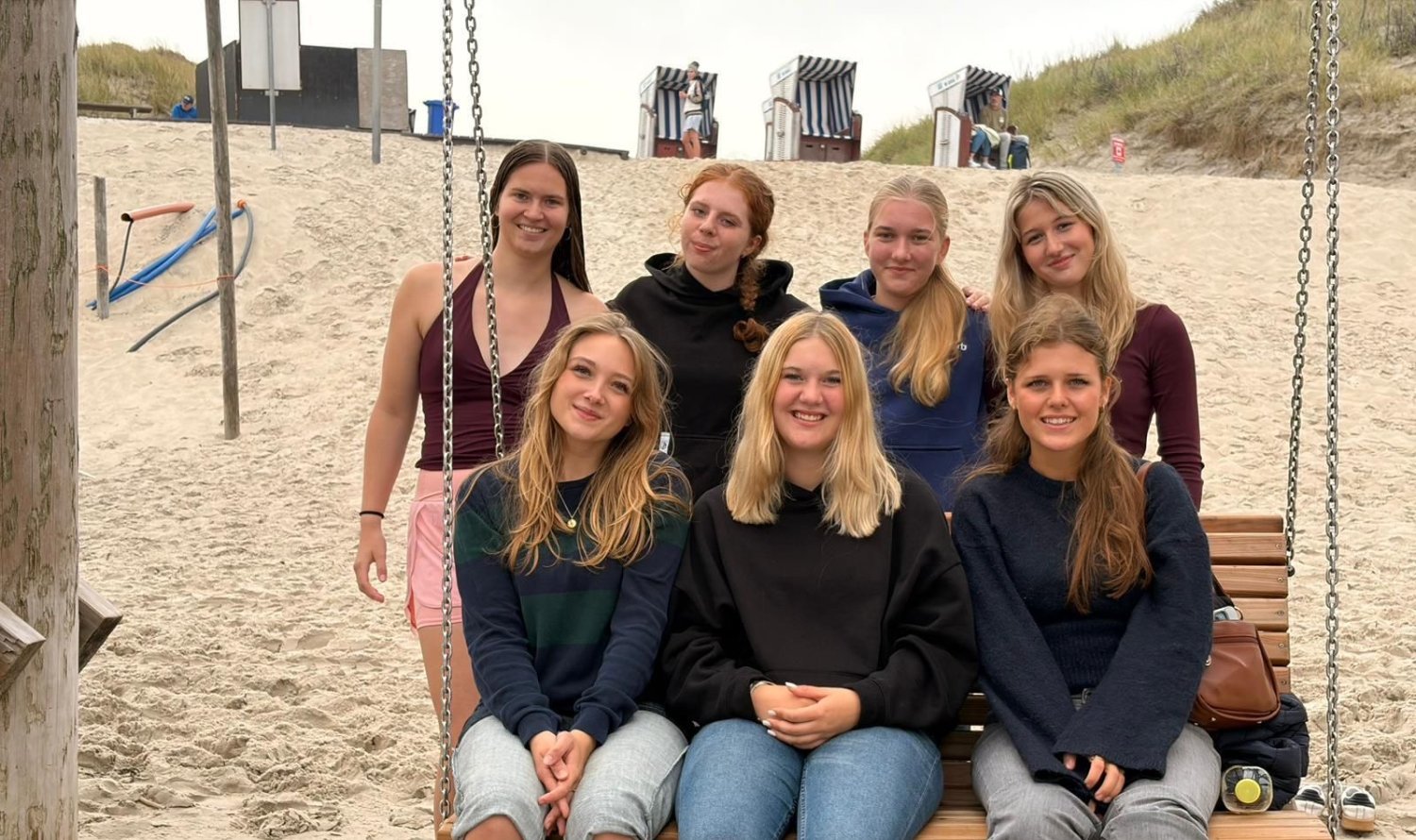
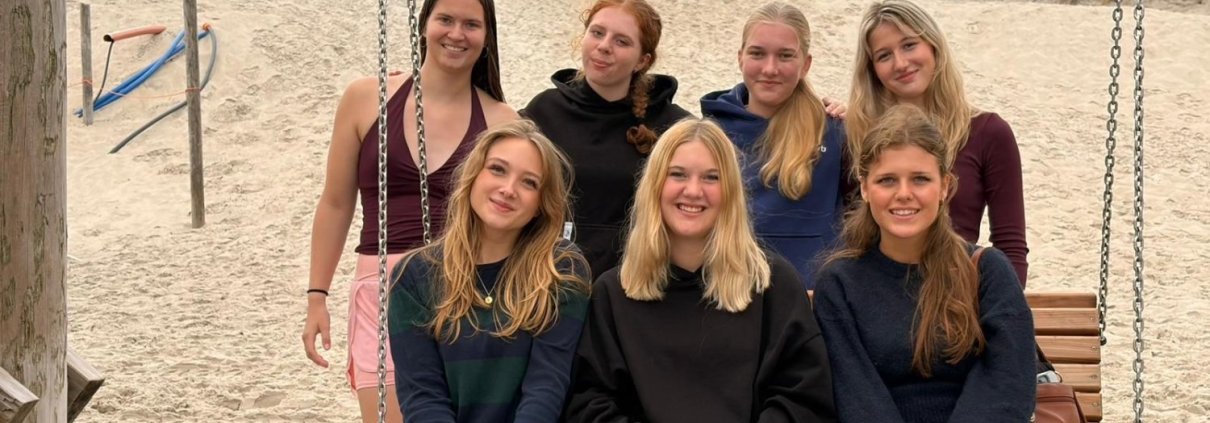
What’s the best way for new and “old” boarding students in the same residential group to get to know each other? Steinmühle relies on a tried-and-true format for this. At the start of the school year, each residential group embarks on a group trip. Read on to find out which trips were on the calendar this time.


Hessenhaus: Casual conversations and new connections

This year’s group trip took us to Soltau, in the heart of the Lüneburg Heath, where we spent a fun-filled weekend together. The goal of the trip was to strengthen group cohesion, build trust, and create opportunities for new connections through shared experiences.

Over the course of the weekend, it was clear to see how the group was growing closer and closer. During games, shared meals, and the visit to Heide Park, many casual conversations took place and new connections were formed. It was especially wonderful to see how naturally the young people included one another and shared experiences together.


Westfalenhaus: Personal Friendships and True Group Cohesion

To get to know each other better and build a sense of community, this year’s Westfalenhaus event was held near Cologne. The highlight on Saturday: riding roller coasters at Phantasialand. We spent the whole day on the hunt for the next adrenaline rush, during which some of us had to step out of our comfort zones and conquer the thrills together. Things got really exciting—and a little bit scary—that evening during a game of Werewolf, which gave everyone another chance to get to know each other even better. But it wasn’t just there—individual friendships and genuine group camaraderie also blossomed over the weekend while we cooked together in the self-catering cabin, sat comfortably around the campfire chatting, or enjoyed spontaneous dance parties in the evening.


Bremerhaus: The Success of Everyday Life Depends on Everyone’s Participation

The Bremerhaus trip to East Frisia and the island of Norderney was all about shared experiences, team building, and personal development. The focus was less on the journey itself and more on how a group grows closer through new experiences, shared challenges, and unfamiliar situations.

Shaping daily life together was particularly important. When shopping, planning, and preparing meals, the young people were challenged to take on responsibility, coordinate with one another, and divide tasks among themselves. This naturally led to situations that required consideration, communication, and reliability. Cooking together thus became an important social learning experience: Everyone could contribute and see firsthand that the success of daily life as a group depends on everyone’s participation.

The stay on Norderney also offered numerous opportunities to test their independence and personal responsibility. The young people had to find their bearings in an unfamiliar environment, navigate their way around on their own, and coordinate with each other within the group. Consciously trusting in their own abilities and in the group not only strengthened their individual independence but also fostered mutual trust.

Taking a group swim in the cold North Sea posed a particular challenge. Venturing into the water despite the low temperatures required determination and courage. It is precisely these kinds of situations—those that lie outside our usual daily routine—that offer valuable experiences: recognizing one’s own limits, overcoming them when necessary, and being supported and motivated by others in the process. Overcoming this challenge together strengthened the sense of camaraderie and created a shared sense of accomplishment.

In addition, new connections formed within the group, particularly through playing together. The unfamiliar situations gave rise to new dynamics and relationships that might not develop as naturally in the normal daily life of a boarding school. In some cases, the teens saw each other from a different perspective and discovered shared interests and skills. This helped break down existing group boundaries and foster new relationships within the Bremerhaus.


Parent Company: A Complete Success in Terms of Momentum

The main group went to the Rhön this year. We all spent the night together in a large tent under simple conditions. We set up and took down the tent together with all the boys. All other tasks that needed to be done—cleaning up, doing the dishes, and preparing meals—were also handled collaboratively and without complaint. In our free time, we played chess and soccer. Whether it was summer tobogganing, hiking, or unwinding at the thermal baths at the end of the trip, the mood was consistently lively, and the entire group clearly had a great time. As a reward after the hike, we stopped at a monastery to refuel with hearty treats.

The weekend was a complete success in terms of the group’s dynamic and cohesion, and we are very optimistic about the coming school year.


Mühle: Time spent together on a wonderful weekend

This year, we took a trip to the Ruhr region together with the Mühle girls’ group. At a cozy lodging in a cultural center in Essen, we wrapped up Friday evening with an Italian cooking session and fun games. At the stroke of midnight, we had a little party with a sing-along to properly celebrate one of the residents’ 14th birthday. We spent Saturday together at Movie Park. From whitewater rafting and looping roller coasters to shooting ranges and delicious crêpes, there was something for everyone. Before heading back to our hometown of Marburg on Sunday, we made a stop at the Bochum Planetarium. There, we watched “The Mysterious Universe,” lying beneath a huge dome and gazing at wonderful constellations while listening to a fascinating presentation about the structure of our universe and the Milky Way galaxy. The girls—and we teachers, too—really enjoyed our time there and will remember this wonderful weekend, complete with lots of photos.


Biohaus: The group can weather friction and reach compromises

A new residential group, a new concept, and eight young adults: For some of our 12th and 13th graders, this trip wasn’t just an outing—it was a dress rehearsal for a completely new residential group concept at our boarding school, one that emphasizes initiative, trust, and maximum independence. The role of the educational team? No longer merely as guides, but as invited partners on equal footing.

It became clear right from the start of the weekend together that this idea could work: shopping, preparation, and an atmospheric candlelit pizza dinner were all organized entirely by the group on their own. The educational team sat at the table with them—but as guests in what was clearly a well-functioning shared apartment.

Saturday was all about genuine participation. To turn the living group into a true meeting place that also serves as a learning space, the group worked together to select the furnishings for the “new” group room. The lively discussion about taste and practicality suggests that the group can handle disagreements and find compromises together.

To highlight the importance of effective communication for a group, we visited the interactive museum “Dialog im Dunkeln” in Frankfurt am Main. Relying on the voices and signals of others while unable to see was a valuable and very powerful experience in terms of trust, support, and communication for a group that must learn to work together without a constantly supervising team of educators. The same applies to the escape room, which rounded out the Saturday. Finding solutions as a team, relying on one another, and even taking wrong turns together will also be part of everyday life in a shared apartment.

As a team, we’re drawing a very positive conclusion from this weekend: Despite their very different personalities, the group is already getting along remarkably well. Naturally, such a new and, until now, unfamiliar living arrangement at our boarding school brings with it some minor uncertainties—both for the young adults and the slightly “older” ones. Nevertheless, we were able to prove this weekend that giving young adults a lot of trust up front can pay off. An all-around successful start for a new group—and perhaps also for a new living arrangement that will last for many years.


The Educational Team at the Steinmühle Boarding School
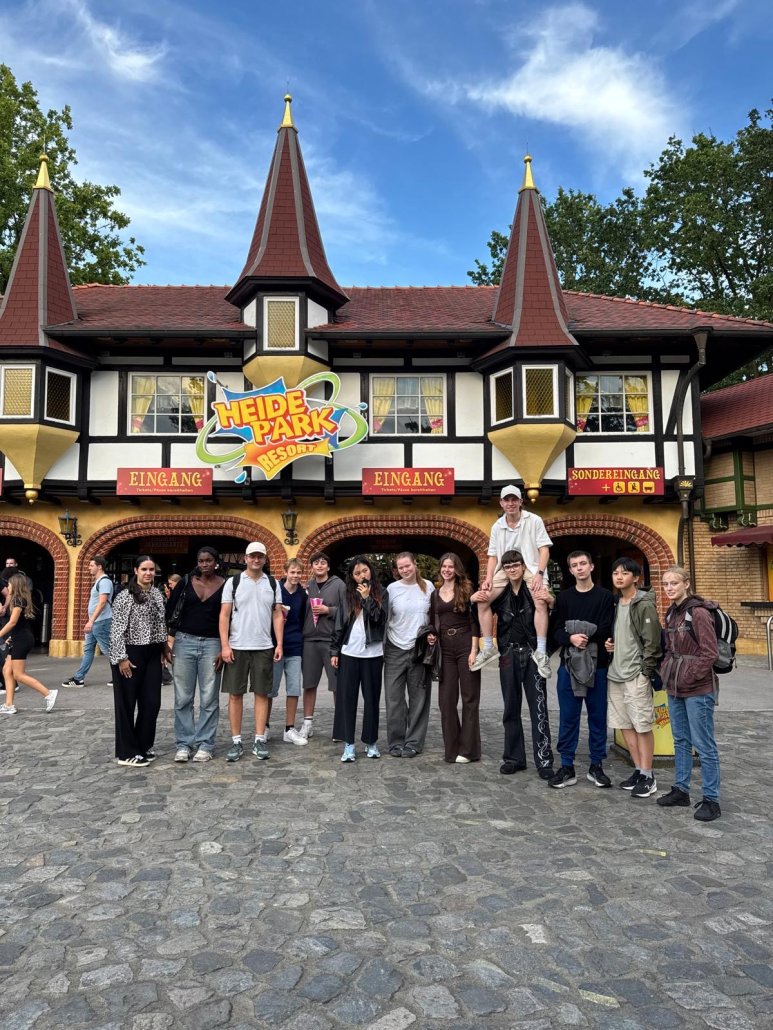


Accompanied by a group of 14 young people from the Steinmühle boarding school, the teaching team of Julia Ploch and Daniel Mlaeb traveled together to Citykamp Valkenburg in the Netherlands.

Each small group of 4–5 people had special accommodations at the charming campground, Julia Ploch reports: a tiny house, a construction trailer, or a well-equipped tent.


Trip to Maastricht


Julia Ploch continued: “We wrapped up Friday with a night of making our own burgers together. On Saturday, we went on a hike to Schaloen Castle, which also took us through a small petting zoo. In the early evening, we took a trip to Maastricht for anyone who wanted to go—including a stop at a delicious ice cream shop. That evening, we made wraps together at the campground and played games.”


Graduation photo in front of the flags


On Sunday, after checking out, the group drove to the Dreiländereck. There, they visited a maze featuring a puzzle game. After taking a group photo in front of the flags of the three countries, they headed back home. — A successful trip, as the young people unanimously agreed.

(Heinm)


As part of the international Round Square school network, Steinmühle offers its students new and additional opportunities for personal development as well as for education both inside and outside of school. “Round Square promotes intercultural learning and provides our students with great opportunities to engage with young people around the world,” summarizes Theresa Großer, head of the lower secondary school and the international high school program at Steinmühle.


What does Round Square stand for?


Round Square’s approximately 260 selected member schools worldwide form an international network committed to shared educational goals and values. Round Square sees itself as a pioneer in tolerance, community, and global learning. Member schools in the network are encouraged to incorporate the 6 IDEALS (Internationalism, Democracy, Environmentalism, Adventure, Leadership, Service)—which guide the network’s collective actions—into their school programs. This results in a comprehensive educational program that prepares students for life in a global world.


Customized Exchange Opportunities


For students at Steinmühle, the network offers excellent opportunities to experience international learning and gain insights into a foreign culture. This takes place in various ways. First, individual exchange opportunities are organized through Round Square for students in grades 8–10. The exchange programs typically last 2 to 10 weeks. The students live locally, some in boarding schools and others with host families. Regardless of where the young people are housed, a Round Square exchange requires full commitment from the participating schools and families, ensuring that a warm welcome and diverse experiences are an integral part of the exchange.

There’s also a wide range of countries to choose from: from Australia to the U.S., from Colombia to Okinawa and Bermuda—the global network welcomes its students on nearly every continent. The costs for the exchanges remain manageable: the only expenses are flights to the destination country, on-site activities, and a placement fee of €500.


For students in 8th grade and above


Students in 8th grade and above are eligible to participate in a Round Square exchange. It’s important to note that anyone interested must also host an exchange partner—typically for the same length of time that they themselves were able to spend abroad. While Round Square exchanges are generally individual, it is often possible to travel to a school as a small group (2–3 people) at the same time.


Information Session on March 24


“We are delighted by the keen interest in participating in a Round Square exchange and by our students’ openness to experiencing new countries and cultures,” says Theresa Großer. With about 40 exchange programs, the school year is off to a good start in terms of interest in Round Square exchanges.


Those interested can contact Linda Hörner and Theresa Großer by email at Roundsquare.exchange@steinmuehle.net. Information about Round Square is also available on the Parent Cloud.

An information session will be held on March 24 at 7:30 p.m. The application deadline for the following school year is April 30.


What else does Round Square offer?


In addition to exchange opportunities, Round Square hosts international student conferences and organizes social projects in developing countries. We are also considering participating in these initiatives in the future. Furthermore, membership enriches daily classroom life by facilitating authentic interactions with students abroad through joint online meetings and projects. In addition, the school offers an elective course in which students take care of our guests from abroad, plan excursions, conduct interviews, and much more, all to ensure that every guest has a wonderful time at Steinmühle.


Our photos show Matilda, a 11th grader, during her stay in Colombia at the Colegio Anglo Colombiano.

(Theresa Großer/Angela Heinemann)


Once again this year, during the run-up to Christmas, the 5th-grade classes went to the theater to see the play “Little Lord Fauntleroy.” Students from other schools were also at the theater, and many children were happy to see their friends from elementary school again. The performance that followed had the audience laughing and marveling, and it ended with thunderous applause.


Visible Progress on Skates

Afterward, the entire class marched in a “duck march” through Marburg’s Upper Town toward Georg-Gaßmann Stadium, where the ice rink is currently being set up. There, the children rented skates or quickly slipped into the ones they’d brought with them, and then spent the rest of the day among the food stands or on the ice. In addition to a few “pros,” there were many children who, although they fell over quite often at first, were able to make visible progress thanks to the skating aids. By the end of the day, almost everyone was skating very confidently and was thrilled with their newly acquired skill.

Ronja Heckmann / Dr. Claudia Röder / Laura Haller


To help 5th-grade students develop a sense of space, time, and dimensions, math teacher Malte Klimczak launched a project to create a planetary nature trail—right on the Steinmühle school grounds!


How long is 15 million kilometers?

How long is a meter? How long is a kilometer? And just how vast—almost beyond our imagination—is a distance of 15 million kilometers? —It’s impossible to visualize this, but even the youngest students at Steinmühle High School can get a sense of it: Along a 300-meter-long stretch, the planets of our solar system were to be placed at the correct distances from the Sun.


A small group chose “their” planet

Working in small groups, the girls and boys set up a station in the schoolyard for a planet of their choice. Geography quickly came into play: How big and heavy is the planet? How far is it from the Sun? And how long would it take to get there from Earth?

Using this key information, the students then designed an information board and a model of the planet—the artistic aspect. Using the scale—where one meter in the schoolyard corresponds to 16 million kilometers in space—they then calculated where each planet should be located in the “schoolyard solar system.” This required mathematical skills.


Explaining the Solar System in Five Minutes

To help people understand these very large numbers and their significance in terms of distance and time, illustrative comparisons were made: how many times one would have to circle the Earth, how many years one would spend traveling by car, and so on.

Since even younger children can develop a basic understanding of this, the young experts from Grade 5 presented their planet project to the students in Grade 4 at the Steinmühle Bilingual Elementary School. The fifth graders mastered the challenge of explaining the topic as clearly as possible in just a few minutes with flying colors. The fact that preparing for this presentation had taken several school hours beforehand was quickly evident in the quality of their presentation.

This fantastic project, which not only drew on interdisciplinary knowledge but was also implemented across grade levels and school types, must be considered a complete success. Creative, challenging—and yet accessible even to the youngest students at Steinmühle.

The sun—which is often mistakenly referred to as a planet but is actually a star—certainly seemed to be in a good mood on the day of the event. It cast its wintery rays over the Steinmühle grounds.

Angela Heinemann


On Tuesday evening, the students in the introductory religion course swapped the classroom for the lecture hall: As part of the student preparatory program, Bene Hohmann’s class visited the Catholic Theological Seminary at the University of Marburg.

The evening offered the Q1 students an exciting look behind the scenes of academic theology. After an initial orientation led by enthusiastic students who guided us through the building and told us about their daily life at the university, the main event of the visit began.


From the Biblical Fall to Modern Narcissism: Insights into Theology

The focus was on the lecture by PD Dr. Florian Klug, a professor of dogmatic theology in Marburg and Vienna. He spoke about a topic that is traditionally difficult to grasp: original sin.

Dr. Klug presented original sin not as a historical event, but as a theological attempt to interpret humanity’s inclination toward evil. The connection to the present day was particularly fascinating: Dr. Klug interpreted original sin as a kind of collective narcissism—the constant exaltation of one’s own ego as the cause of separation from goodness. The students took advantage of the opportunity to ask questions, which led to a lively and engaging discussion.


A resounding success and a taste of college life

The students were thrilled by this glimpse into university life. The evening was not only relevant in terms of content—it also fit perfectly with our Christology unit in Q1—but it also provided the young adults with valuable guidance.

Conclusion: An all-around successful evening that not only imparted knowledge but also—hopefully—sparked an interest in further academic education among the young adults!

Benedikt Hohmann


As part of the “Youth and Crime” project, Class 8b attended an exciting court trial at the Marburg District Court. One student wrote the following report about the experience:

On November 20, the 8th-grade class from Steinmühle visited the district court in Marburg. Thanks to our intensive preparation—which involved studying various offenses as well as background information and legal terminology—our class had acquired a certain amount of prior knowledge that proved useful during the subsequent trial.


A Look Inside the Detention Cells

At 8 a.m., we all met in front of the district court on Universitätsstraße. There, our teacher, Dr. Claudia Röder, introduced us to Dr. Wilhelm, who works as a judge at the district court. We were also lucky enough to run into two court officers there who were willing to give us a tour of the court’s holding cells.

Ten minutes later, we were all standing in the narrow hallway in front of the five simply furnished detention cells. The interior of the detention cells was basic: a wooden table mounted on the wall, a simple chair, a sink, and a toilet. The police officers also shared a few anecdotes from their daily work, which gave us a small theoretical insight into how people feel when they’re held here for a short time.


Visit to the Criminal Courtroom

As a result, before the trial began, we had a little time left, during which the court officers showed us around the criminal courtroom. There, the court officers and Dr. Wilhelm explained further examples of different types of court proceedings and their specific characteristics. This was good preparation for us ahead of the upcoming trial.


Narcotics were the topic

The trial began at 9 a.m., and as it progressed, we were able to get a good overview of the general structure of such a trial. This case mainly concerned the use and trafficking of narcotics—a topic we had covered in class, but not nearly in such detail.


Reading Chat Histories Aloud

Despite the many legal details, we were able to follow the proceedings well, even though it was harder to stay focused at times. For example, when the evidence was being reviewed. The defendant’s cell phone had been analyzed by the police, and the reading of the chat histories and call records ended up taking almost exactly one hour.


26 prior convictions and a report from a psychiatrist

The two police officers who had been called as witnesses reported on the investigation into the defendant, which was very informative and provided yet another perspective on the trial. Twenty minutes later, there was another rather theoretical segment in which the judge read aloud the defendant’s 26 prior convictions, which gave each of us a small glimpse into the defendant’s past and childhood. As we saw from the statements of the probation officer and the psychiatrist—and as we realized for ourselves—such background information is always important. Most likely, everyone—including the prosecutor and the judge—would have had a different impression of the defendant before hearing the statements from the probation officer and the psychiatrist. But with this assessment, which was a great help to the judge, many aspects of the case changed.


It’s not about the maximum sentence, but about the future

After all, in the end, everyone wants to find a good solution to the problem or the situation at hand. The goal is not to sentence someone to the maximum penalty, but to find a solution for the person in question. Everyone involved worked to secure a future for the defendant and to guide him, thereby enabling him to find his way back into society.

Annamierl Pierenkemper, Class 8b


Last Saturday, Benedikt Hohmann’s three-hour introductory sports course was hosted at the Blue Dolphins Marburg’s home game against the Saarlouis Royals. A total of 17 12th-grade students made their way together to the small Georg-Gaßmann-Halle—invited by BC Marburg, whom we would like to sincerely thank here.

And the trip was well worth it: From the very first minute, there was a genuine Bundesliga atmosphere—fast-paced plays, loud cheers, and a crowd that passionately supported its team. The game itself was exciting right up to the end: Despite trailing by a wide margin in the first half, the Dolphins fought passionately, but ultimately fell just short against the strong Saarlouis Royals, losing 57–61. The disappointment over the loss quickly gave way to excitement over the intense, high-level game, which many of us were able to experience live for the first time, reports Benedikt Hohmann.


Inspiration Just Before the Practical Basketball Exam

Perfect timing, by the way: The practical basketball exam for the course starts in just a few days. So the evening wasn’t just a great experience, but also an inspiring way to get in the right mindset for our own game—truly in the spirit of “learning by watching.”

A big thank you to BC Marburg for the invitation and to the Blue Dolphins for an exciting, athletic evening full of emotion!

The tables were beautifully decorated, the buffet was constantly being restocked, and the stage was still closed off. Hanging on the walls were works of art by children and teenagers from the two neighborhood schools—the Steinmühle and the Erich Kästner School—as well as from the shared housing facility on Raiffeisenstraße. These paintings and sculptures reflected a wide spectrum—not only because they were created by people of different ages, but also because they came from very different backgrounds and had diverse life experiences.

The Intercultural Family Festival was opened by City Councilwoman Kirsten Dinnebier and Local Council Member Michael Korte, representing Local Council Chairman Peter Hesse. Cappel’s neighborhood manager, Vanessa Binzen, who organized the festival, guided the audience through the program. Clown Gina Ginella then took the stage—there were squeals, rumbling sounds, and things falling down—just the right kind of entertainment for the preschool- and elementary-school-aged children in attendance. And for us adults, she always struck just the right (off-key) note to amuse her audience. There were more than three rounds of hearty laughter. With delicious treats on our plates and in our cups, we came together and struck up conversations. It was a lovely afternoon.

Katrin Reichel


At the event, the Steinmühle displayed various exhibits on the topic. The artwork was created by Ella, Paul, Hannah, Josephine, Arvid (formerly LK 13, Rado), and Cilia (now LK 13 Vielhaben).