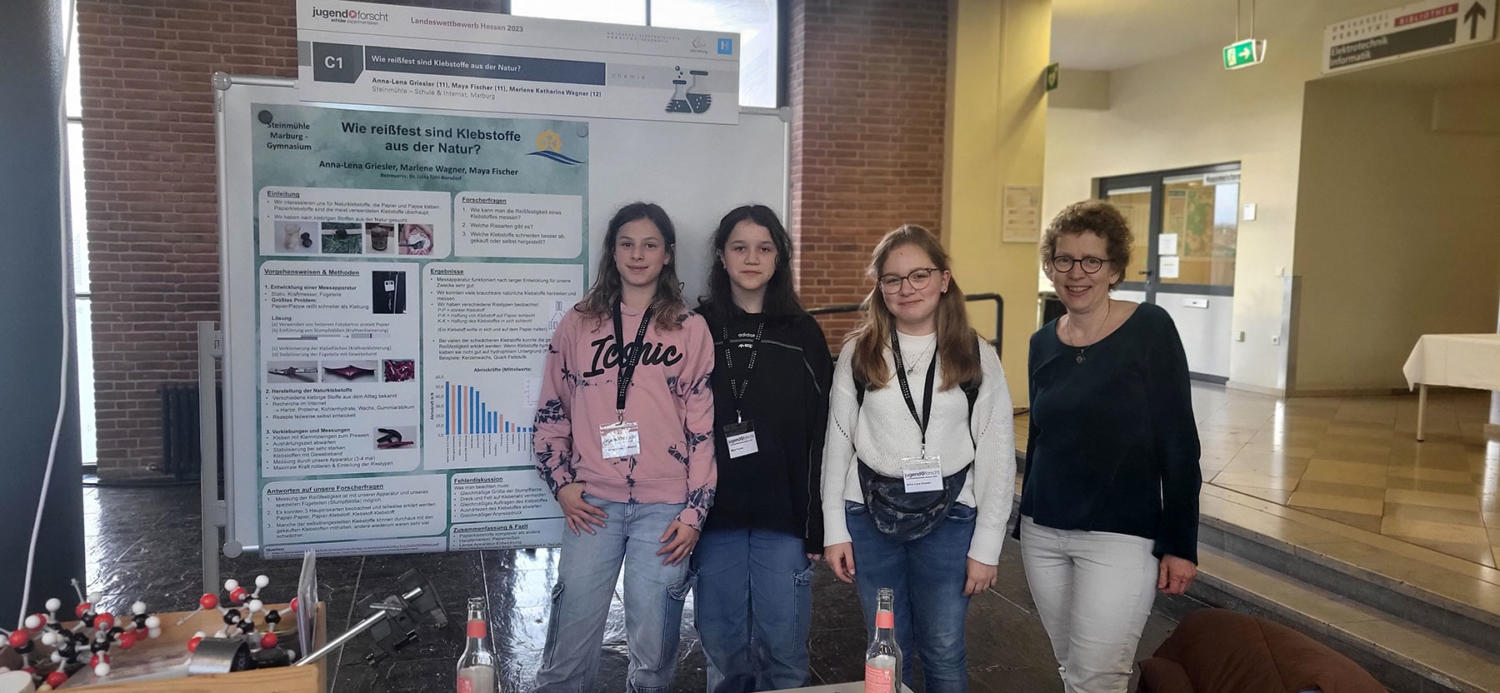
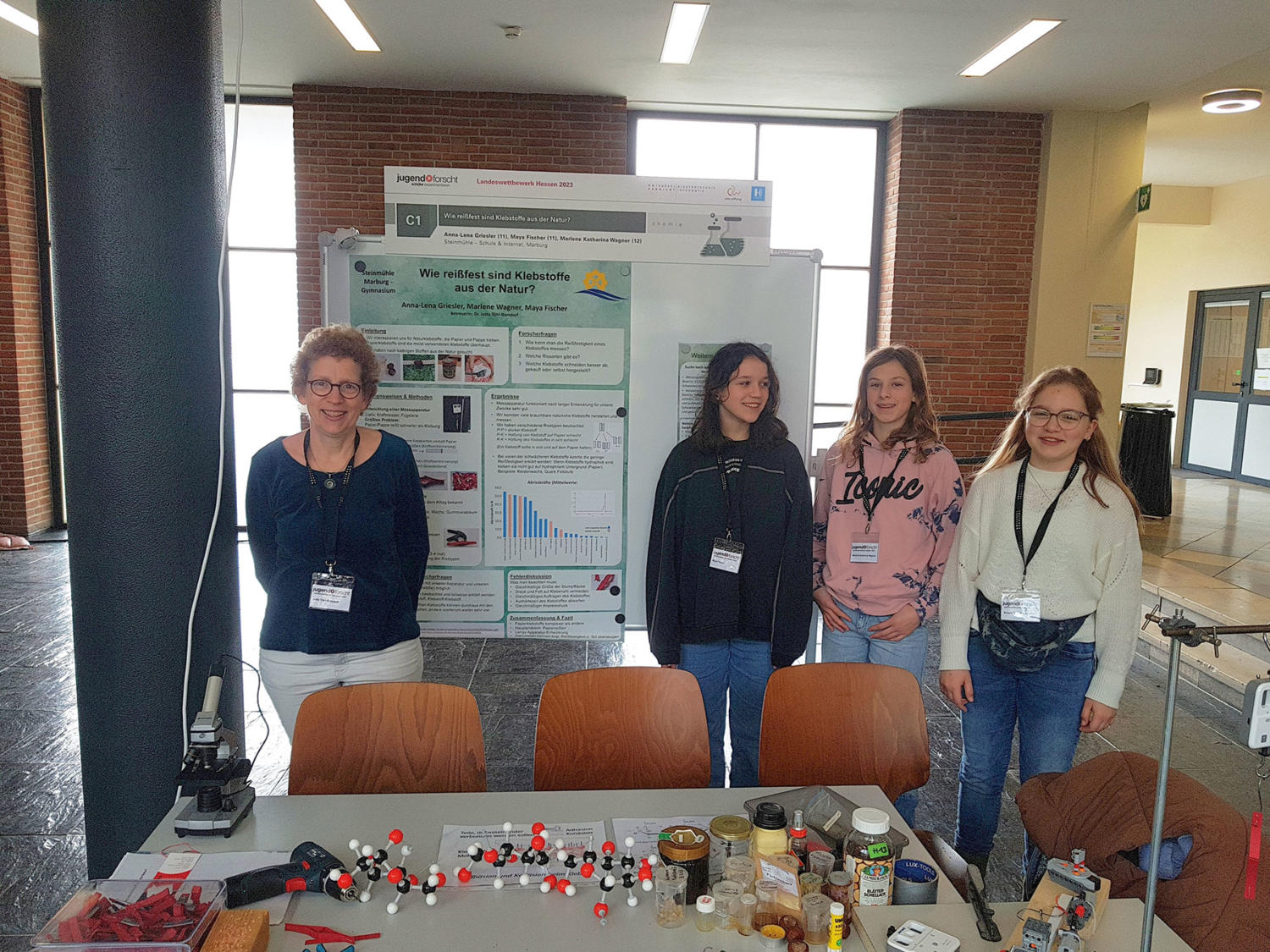
A great success for our very young researchers from 6th grade: By winning the regional competition in Gießen, they qualified for the state competition and were able to travel to Kassel for two days with their advisor, Dr. Jutta Töhl-Borsdorf, to present their research project there. And they won there, too.
, Anna-Lena Griesler (11), Maya Fischer (11), and Marlene Wagner (12) focused on making adhesives from natural sources (as we reported), and this involved a lot of chemistry. But since the three didn’t stop at just making the adhesives—they also built a device to test their tensile strength—engineering played a major role in this project as well. Their force measurements using digital force sensors ultimately fell within the realm of physics as well.
This multifaceted approach—that is, its interdisciplinary nature—impressed the jury. The continuous refinement of the experimental apparatus and the depth of understanding with which they analyzed the underlying processes impressed the judges. In addition, they were praised for their confidence during the presentation and, in particular, for their strong team spirit.

The depth of content is something that is also close to the heart of “Jugend forscht” advisor Dr. Jutta Töhl-Borsdorf. “The three of them had to explain the different adhesive properties of the various materials on the paper. Since paper is made of cellulose, that’s more of a topic from 12th-grade chemistry class. Natural adhesives are also rather complex molecules. But you can ‘break it down’ into simpler terms.” During the jury deliberations, the team was able to impress with their expertise and technical terms such as hydrophilic and hydrophobic, hydrogen bonding, and cohesion and adhesion failures.

It was also great to see the students interacting with students from other schools. One team, for example, had been working on an adhesive made from mistletoe berries. A sample was quickly provided and measured by the girls. However, this adhesive turned out not to be suitable for everyday use just yet.
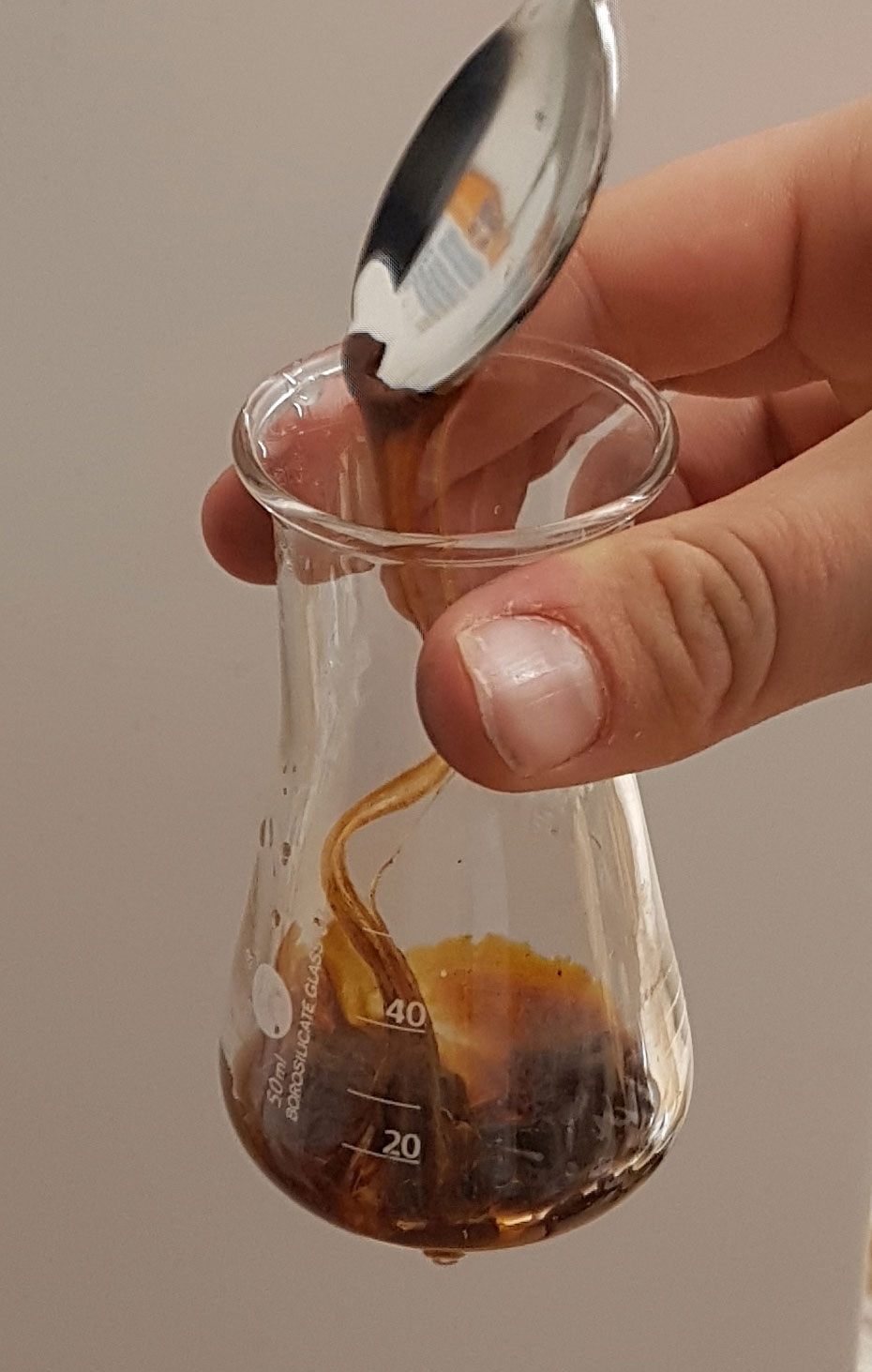
The team’s best adhesive consists of starch, sugar, and a little vinegar, which breaks down the starch molecules into shorter chains.
Last but not least, the Steinmühlen team also took home the special “Materials and Substances” prize from the Institute of Materials Science at the University of Kassel. In total, this meant prize money of 300 € for the three young researchers, though Anna-Lena noted: “The money isn’t really important at all. Spending those two days with like-minded people was the best part.”

We are very proud of you. Congratulations!
Click here for the University of Kassel’s press release
On March 7, the Central Hesse Student Research Center kicked off its activities at Steinmühle School in Marburg with an experiment and information day, which was also attended by numerous students from Steinmühle. Steinmühle Principal Björn Gemmer was delighted to welcome 90 students from all over Central Hesse.

“How do I come up with a research question, and how can I develop it further?” was the central theme of the day, which the students explored in six very different workshops. Some students investigated the behavior of woodlice, while others examined how much radioactivity the human body absorbs. Another workshop used real measurement data to study the motion of entire galaxies, while the chemistry workshop focused on the question of optimal combustion. The math workshop was dedicated to calculating the area of polygons, and the energy workshop focused on the efficient use of natural resources.

In addition to the six workshops, there was an extensive supporting program. At the “Market of Opportunities,” students presented their current projects from the “Jugend forscht” competition, the German Young Physicists’ Tournament, and the First Lego League. Mr. Burk, the regional director of “Jugend forscht,” informed participants about what to consider when conducting their own research projects and answered questions from the audience.
In addition to the technical content, the students naturally also had time to exchange ideas and get to know one another. The organizers were impressed by the students’ high level of motivation and the positive atmosphere. So it was ultimately no surprise that the final feedback was consistently positive. Many participants said they plan to start their own research projects in the near future.
Let’s hope that many students from Steinmühle are among them.

If you’re also interested in STEM or are thinking about starting a research project, check out the website of the Central Hesse Student Research Center.


For more information about the SFM’s programs, visit https://sfz-mittelhessen.de

“We pooled all our resources—with discipline and, above all, with passion.” Over the course of two days, 160 participants from the fields of theater, visual arts, and music captivated the audience in the packed Forum. The results of Steinmühlen’s work in the arts were presented as a “revue” in a joint performance—a format that had never been done before.
Culture suffered particularly during the pandemic. Many rehearsals had to be canceled or took place under difficult conditions. Events with an audience were out of the question. Yet there were so many things shaping the students’ thoughts: the war in Ukraine, the climate activists’ protests, life at school, personal matters, and their own love lives. But where could these topics be heard?
Daniel Sans is the cultural coordinator at Steinmühle. “I see it as my job to bring all cultural areas together and, in doing so, create a platform for everyone.” An initiative was launched to offer the entire upper school a performance opportunity where everyone could showcase their talents.
Sans envisioned a loose sequence of acts, including drama, singing, music, acrobatics, and magic. “I sought out the leaders of these departments,” he recalls, “and they, in turn, engaged with the student body.” From this collaboration emerged topics that resonate with young people. The working title “Revue” was born.

Working in small groups, high school students brainstormed and compiled topics. They rehearsed plays, created many art pieces, developed a music quiz, and compiled songs that fit the overarching theme. That overarching theme—which was also the title of the event—was spot-on and couldn’t have been better: “The World and Me—Me and the World.”
In addition to the challenging rehearsals, the big rehearsal weekend with 160 participants, and the dedication required of everyone involved, practical help—such as designing posters and tickets—was also essential. Artistically designed by art teacher Heike Rabben-Martin, known as Rado, the tickets, when distributed at the school office, indicated that a larger audience was expected. The revue was to be free of charge; the process was simply intended to provide an overview of how many audience members to expect.

The result of all these efforts was art and entertainment at its very finest. Great acting talent came to the fore, and the performers connected brilliantly with the audience, who were soon captivated. The segments where the audience was invited to test their dancing skills were particularly lighthearted, and the way the show seamlessly shifted between serious topics and humorous segments was especially impressive. Kudos to the director!

Many teachers and a wide range of Steinmühlen equipment were involved in the preparation and presentation of the event. In order of appearance, the audience enjoyed Melisande Lauginiger’s DS class performance, “DS 13 Has More Than Meets the Eye”; solo artists Laura Salvati (violin) and Iliya Zand (piano); the “World Music Quiz” by Ulrike Wilmsmeyer’s 12th-grade music class, the performance by tenor Félix Müller—which was met with a standing ovation—Ines Vielhaben’s 11th-grade DS class with “Ich will mich sein wie Ihr,” and the upper-level choir conducted by Daniel Sans. Olaf Roth and the 11th-grade music class presented new material with the band “One World.” In the foyer, Ines Vielhaben and the Q1 advanced course displayed figures from the “All Welcome” cultural installation.

It goes without saying that the evening, with its rotating emcees, could not have taken place without the support of members of the school community, but it is still worth mentioning. Special mention goes to Frank Wemme, who is not only the head of the lower secondary school but also well-versed in music and organization, as well as Anna Prokop, a new permanent member of the faculty. Reliable technical support from “Sound & Light,” led by Matthäus Otte, along with assistance from the custodians, ensured the right conditions for everyone to enjoy the evening. “The fact that the school administration supported us and made time available was, of course, the foundation for everything,” Daniel Sans recalls.
“It’s an experiment,” the cultural affairs representative had said in the run-up to the performance, adding that if it was a success, they were considering doing it again. From the perspective of the enthusiastic audience, which demanded an encore, the decision has been made.

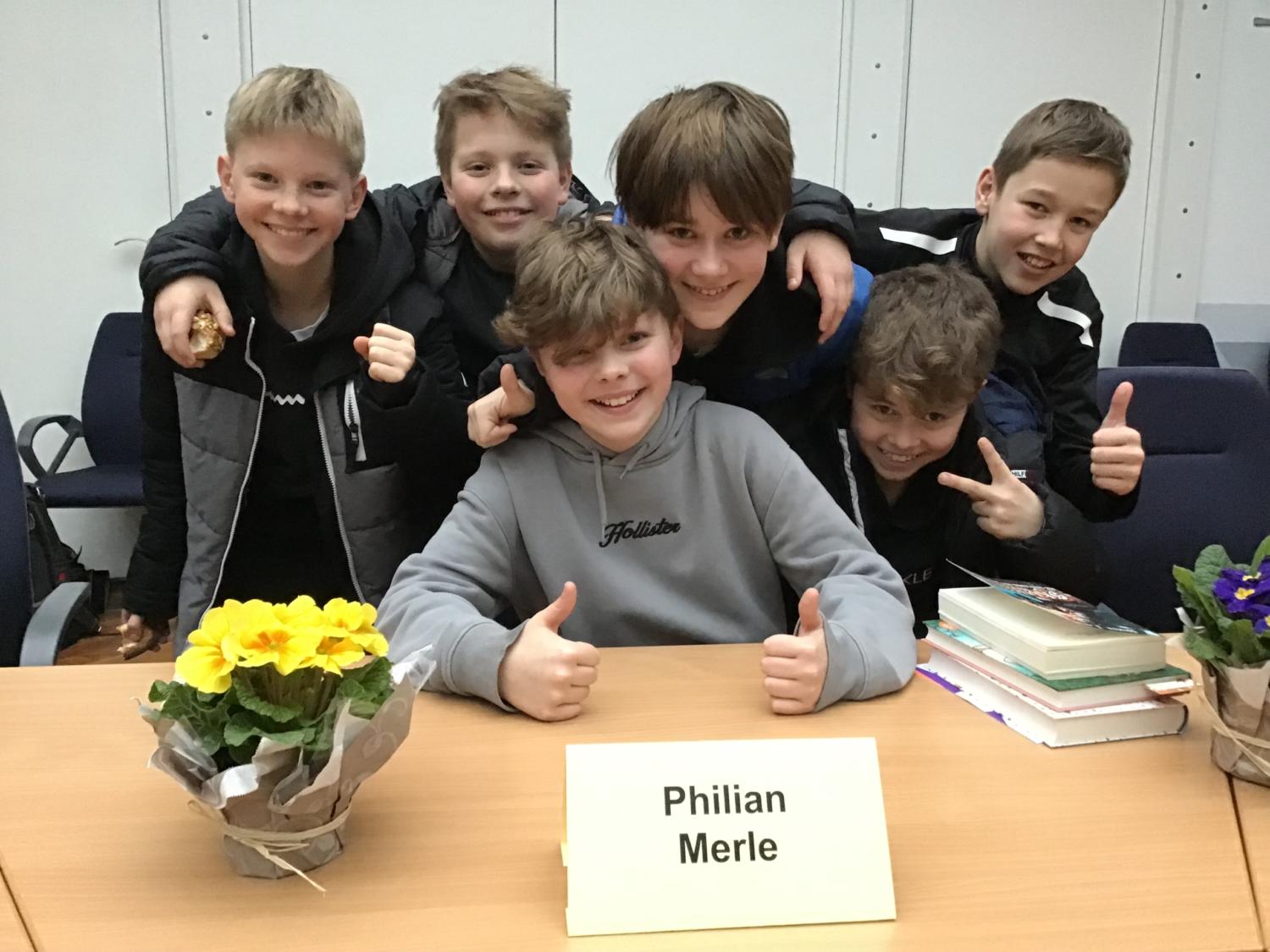
All eight school winners from across the city gave excellent and captivating readings on Monday, February 27, in the hall of the Building Authority at Barfüßertor, whether they were reading their prepared text or the assigned “unknown text.”

There was also a wide variety of talent on display: one participant skillfully brought the various characters to life with a subtle voice; another knew how to effectively highlight the onomatopoeic nature of certain terms; others developed an impressive dramatic structure through calm delivery and sensually intelligent pauses—and there were many other powerful moments as well. In his reading of the text of his choice, Philian Merle created a remarkably vivid scene with strong characterization in the dialogues. That may have been the deciding factor in the jury ultimately awarding him the victory. We’re thrilled for Philian (and his “fans”) and wish him the best of luck in the next round. At the same time, we’d like to thank the organizers from the Haus der Jugend as well as the friendly jury, who put together a wonderful, entertaining event that truly honored the young readers.


This year, our “Jugend Forscht” teams had to compete at two different locations.

What is the condition of the soil in our area?
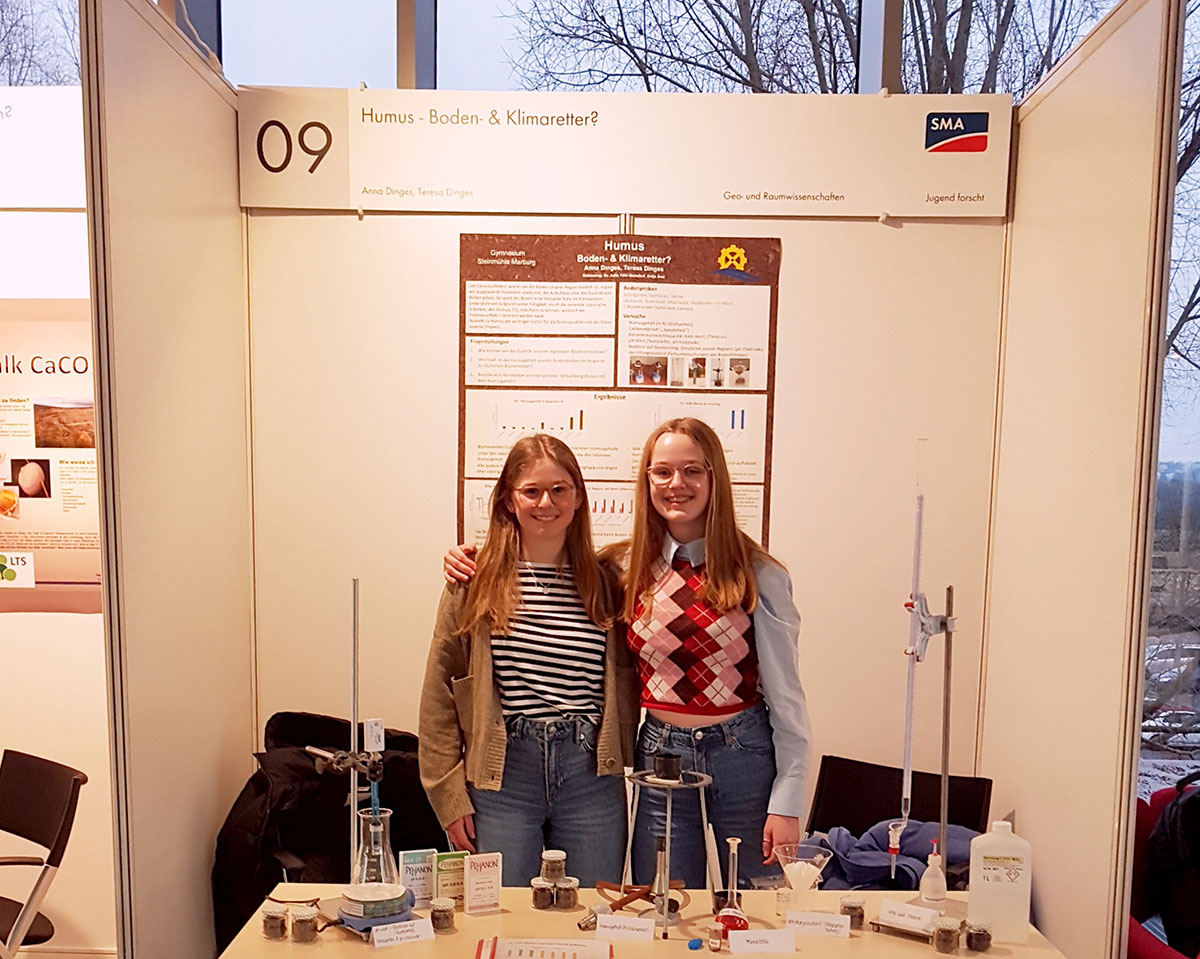
Sisters Anna Dinges (12th grade) and Teresa Dinges (9th grade) traveled to Kassel on Saturday, February 11, with their project “Humus: Savior of the Soil and Climate?” on Saturday, February 11, along with their advisors Antje Seel and Dr. Jutta Töhl-Borsdorf. The North Hesse regional competition was held at SMA in Kassel-Niestetal.

Soils play a major role in the climate system because humus is capableof storing large amounts ofCO2 . Anna and Teresa wondered about the condition of the soils in the areas where they live and go to school. In addition to measuring humus content, pH, and KAK values (a measure of soil fertility), they also investigated how soils react to acid rain. They compared the measurements from the soil samples they collected with those from commercially available potting soils and found that the latter actually had higher humus and KAK values. However, a coniferous forest soil also performed impressively overall. The jury particularly praised the outstanding laboratory work, which was conducted at a high level and with great precision, the rigorous scientific approach, and the in-depth examination of sustainability issues at the local level.

With their project, they won second place in the “Geosciences and Spatial Sciences” category and a special prize consisting of a one-year subscription to the science magazine “natur.”

Rainwater and Natural Adhesives
On
Friday, February 24, a large group set out for the University of Giessen to present their projects at the competition in Central Hesse. Anna-Lena Griesler, Maya Fischer, Marlene Wagner, Nico Farwig, Justus Pöschl, and Robin Richter—all from the 6th-grade GuFi lab groups—took on the challenge in the “Students Experiment” category.
The Steinmühlen bus was fully occupied with the six children, their supervisor Dr. Jutta Töhl-Borsdorf, STEM teacher Dr. Patrick Szabo, and participation assistant Steven Müller.
They set off at 7:45 a.m., and the morning was well filled with jury interviews and interesting lab tours. In the afternoon, the presentation booths were open to the general public. Many parents, grandparents, and friends took the opportunity to have the young researchers explain their projects to them. By around 5:00 p.m., everyone was tired but full of new impressions as they returned to the Steinmühle.
This year’s awards ceremony took place online on Saturday afternoon. To mark the occasion, all the students gathered at the Steinmühle for pizza. And finally, there was something to celebrate.

The group of three boys who asked themselves, “Is rainwater valuable?” won over the jury, taking second place in the “Geosciences and Spatial Sciences” category and a special prize of a one-year subscription to the magazine Geolino.
Justus, Nico, and Robin analyzed rainwater for various components, developed a water hardness test using soapy water, and found that cress grows better with rainwater than with tap water. The jury praised their clear methodology, the neat presentation of the measurement results, the visualization of the cress growth, and their broad knowledge.

Anna-Lena, Maya, and Marlene securedfirst place in the chemistry category—and with it, a spot in the state competition at the University of Kassel—with their project “How Tear-Resistant Are Natural Adhesives?” They made many adhesives themselves—for example, from food—and tested other natural substances, such as spruce resin, shellac, and snail slime, for their adhesive properties. The team also succeeded in developing a device to measure the adhesive strength of the substances on paper.
The jury was particularly impressed by how these very young students continuously refined and adapted their experimental setup. They paid close attention to accuracy and critically evaluated their approach in each phase of the experiment. Their strong problem-solving skills were evident.
The team also won the plusMint Special Prize for interdisciplinary projects.

If you’re interested in starting your own research project, just stop by the “Open Lab” at the Steinmühle—it’s open every Tuesday and Friday starting at 2 p.m. (Room 127).