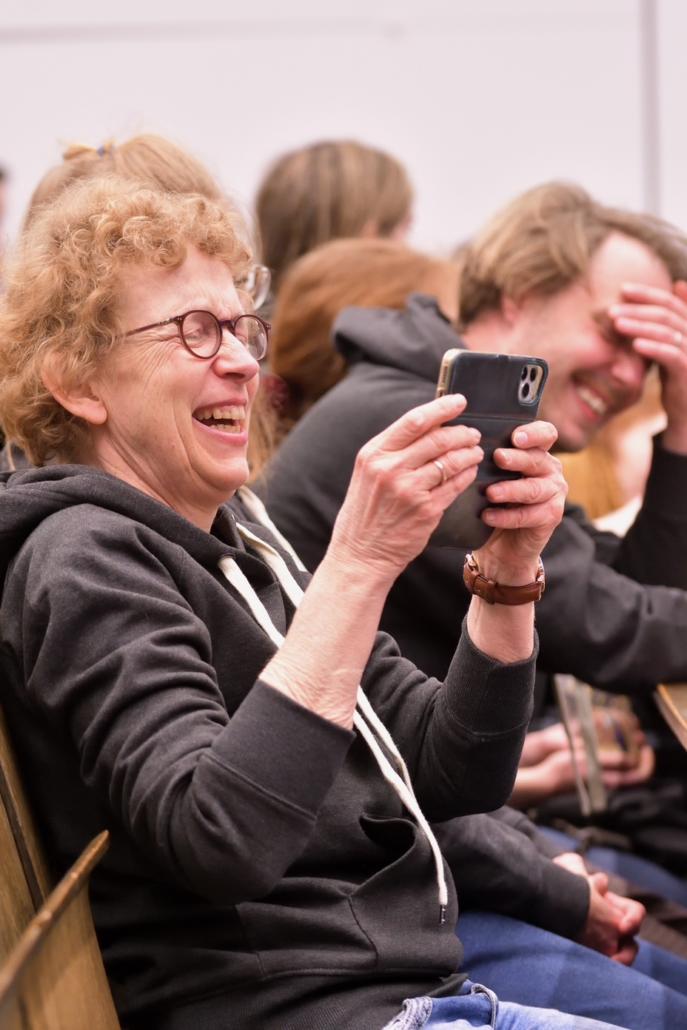
How do you care for fruit trees? This is important for the Steinmühle to know, since there has been a mixed-fruit orchard behind the atrium for some time now.

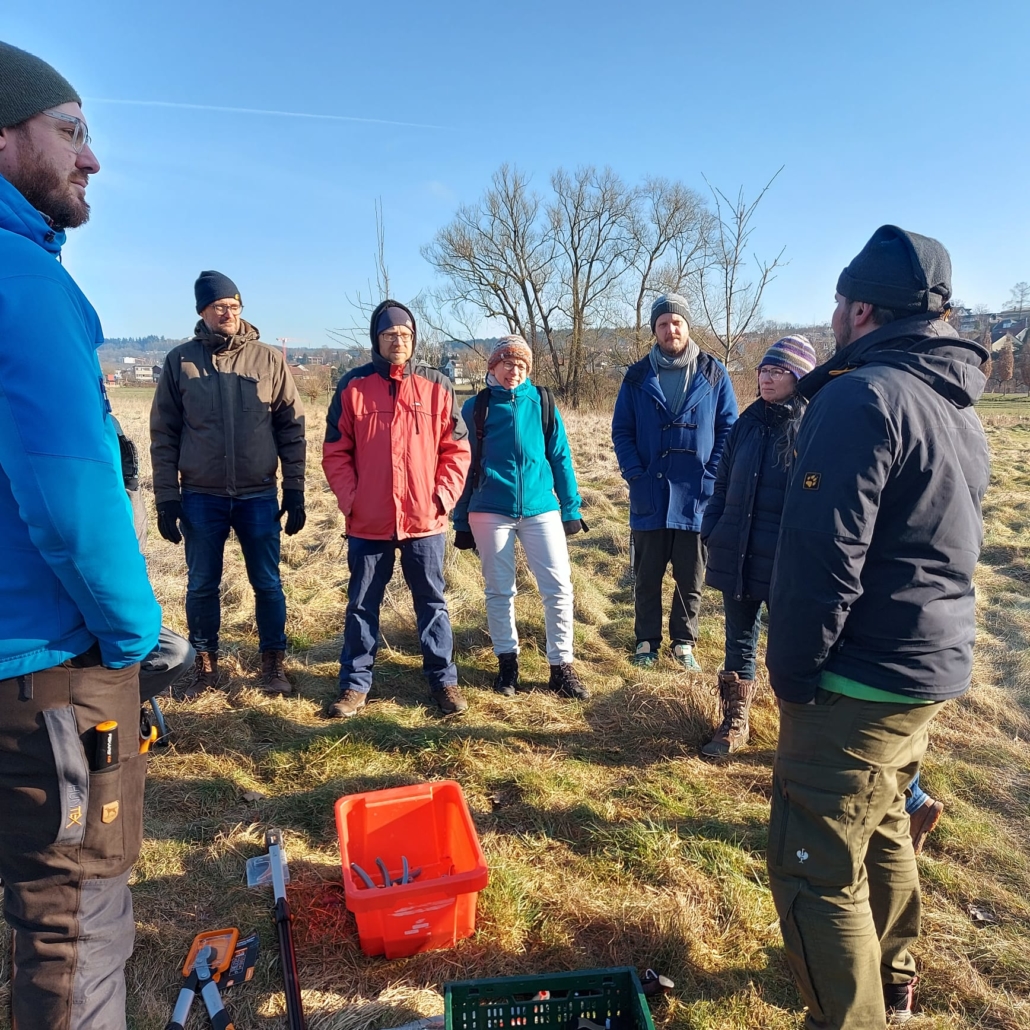
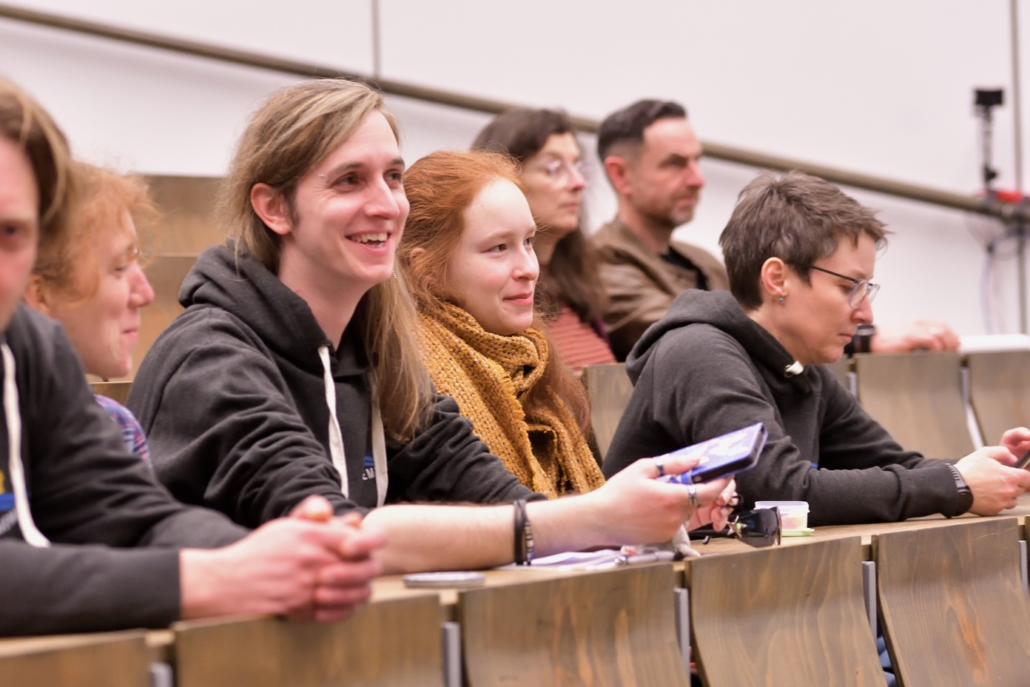
Carmen Bastian, a biology teacher at Steinmühle, had invited David Rempen, a certified landscape and fruit tree specialist, to lead a workshop. Registration numbers were very high, but unfortunately dwindled due to a winter wave of illness; however, this did not dampen the positive atmosphere or hinder the sharing of knowledge.

Disinfect your pruning shears!

David Rempen, project manager of the educational garden at the Demeterhof Fleckenbühl near Schönstadt, gave an excellent presentation on how to prune fruit trees naturally so that they are not damaged but thrive and eventually bear fruit. During the five-and-a-half-hour workshop, the focus was first on training in fruit tree pruning, covering both theory and practice. A supplementary handout was used to convey basic theoretical knowledge before moving on to the practical application. For many, it was certainly new to learn that pruning shears should be disinfected after use to prevent the spread of fungal spores to other trees.

A few “aha” moments from horticulture were complemented by a discussion on space travel, during which biology teacher Dr. Sven Freibert got into a technical discussion with the speaker.

The workshop was considered a complete success, and everything points to the fact that Steinmühle’s collaboration with the Fleckenbühlers is bearing fruit in the best possible way.

At the Central Hesse regional round of “Jugend forscht”—Germany’s best-known competition for young talent in mathematics, computer science, natural sciences, and technology—Steinmühle took first place four times. Following a team from the plus-MINT boarding school Steinmühle’s advancement to the national competition last year, this marks another outstanding start to the competition. Now in its 60th year, the competition invites young researchers to present their projects to a 24-member jury.

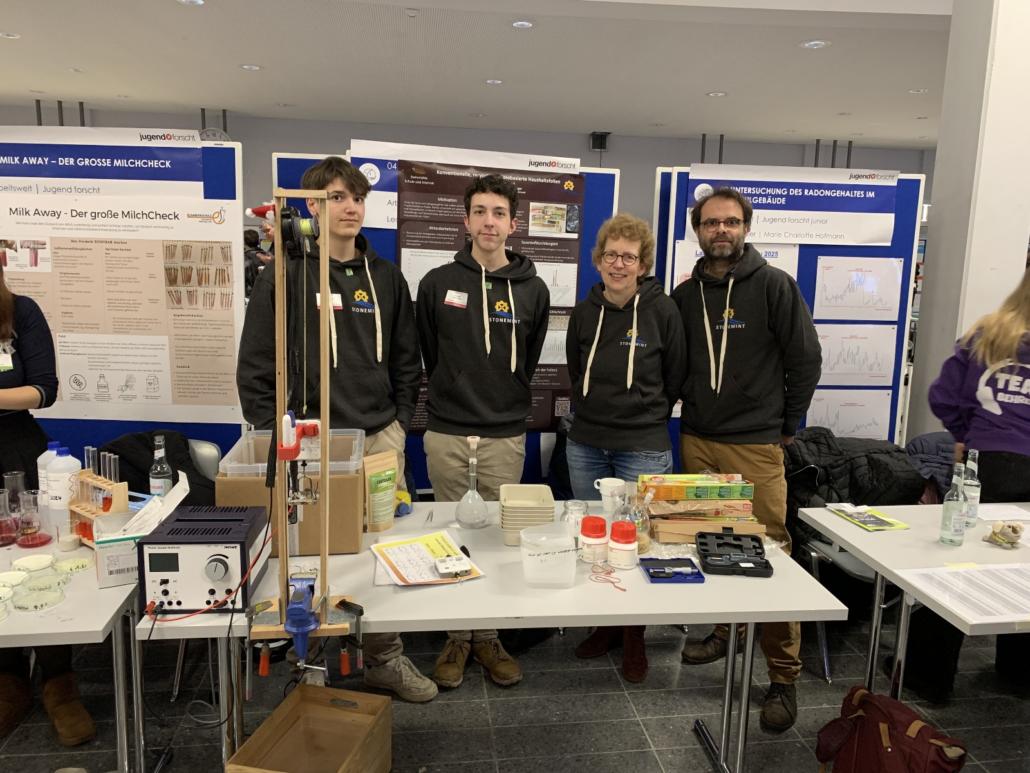
A total of 34 teams presented their research projects at the event, which was coordinated and jointly organized by Justus Liebig University Giessen and the Technical University of Central Hesse. Steinmühle was represented by seven teams, all of which addressed different topics in chemistry, the working world, biology, and technology. Using equipment, poster presentations, and scientific explanations, the students described their research questions and methods and reported on their findings. Key criteria included innovative thinking, the level of scientific rigor, as well as attention to detail and the ability to derive plausible and practically applicable insights.


For gentle UV filters in sunscreens

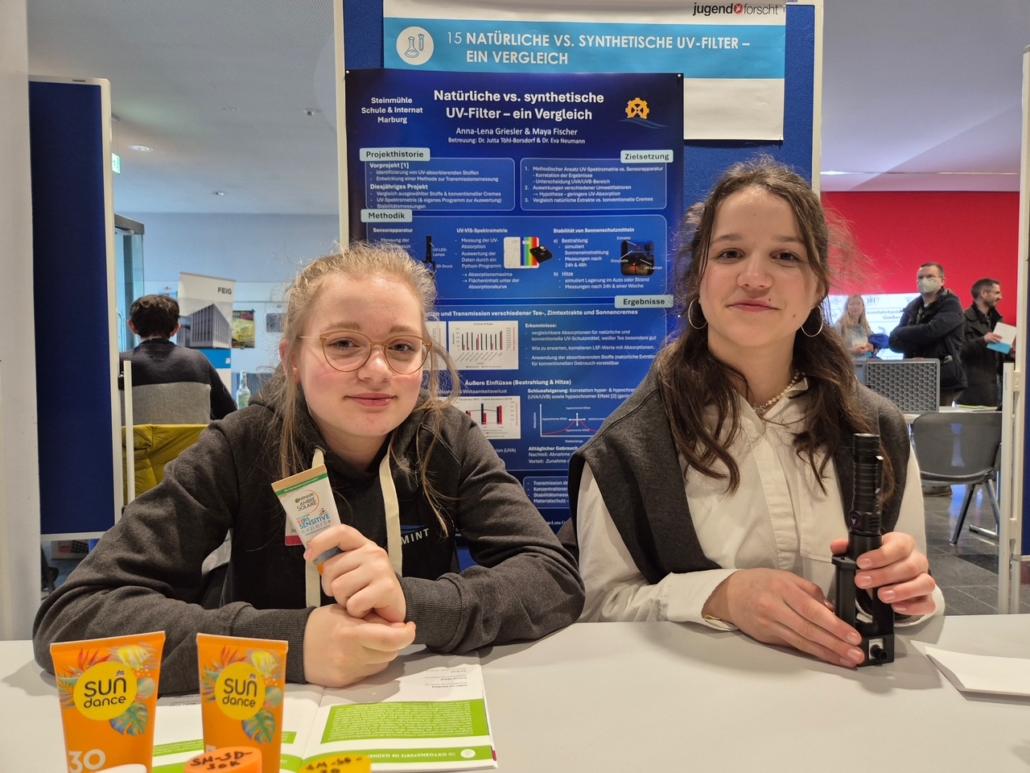
Anna-Lena Griesler and Maya Fischer from 9th grade took first place in chemistry. Building on a project from the previous year, they investigated the possibility of replacing synthetic and potentially harmful UV filters in conventional sunscreens with natural and long-term stable extracts, which required specialized equipment in the form of a UV-VIS spectrometer.


A Closer Look at Film Properties

First place in chemistry also went to Leonard Berger and Nicolas Bohnstedt, who are conducting research on sustainable alternatives to conventional petroleum-based plastic wrap. Their work focused on films that are partially recyclable or biodegradable, and they used precise methods to investigate their properties relevant to everyday use—including tear resistance, elasticity, oxygen barrier properties, and degradability.


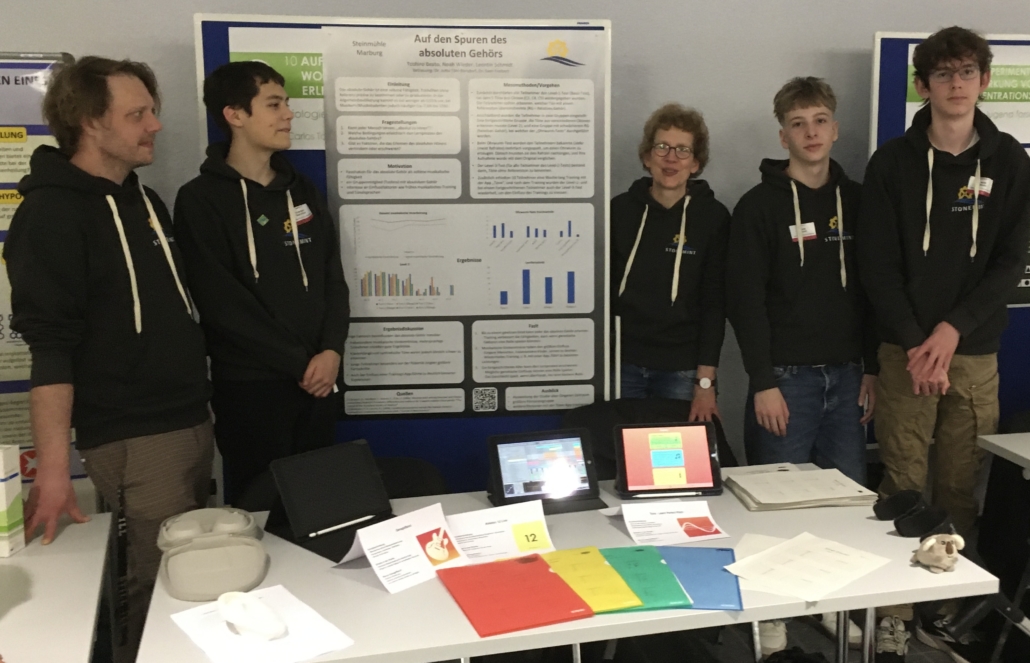
Can You Learn Perfect Pitch?

Toshiro Beato, Leontin Schmidt, and Noah Wieder were delighted to take first place in biology. The trio of young researchers explored the topic of perfect pitch—what it depends on, how it can be learned—and whether it can be learned at all. To investigate this topic, the three young researchers designed questionnaires and conducted tests as part of a study.


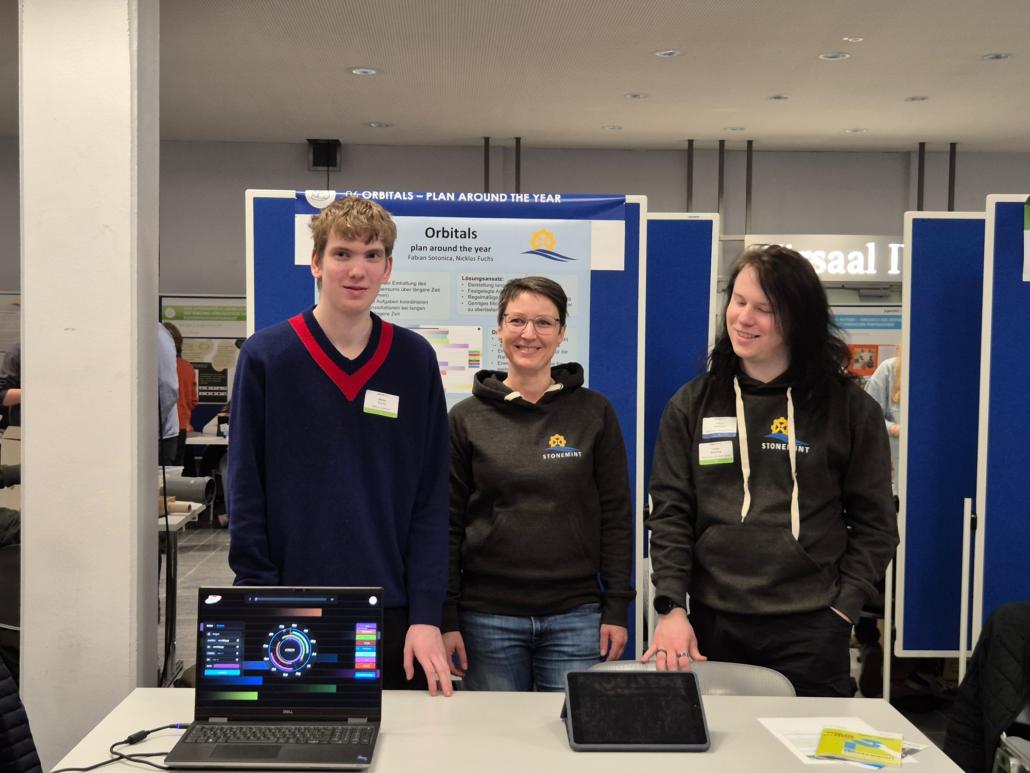
Collaboration Between Two plus-MINT Boarding Schools

The project “Orbitals – plan around the year” by Fabian Sotonica, a student at Steinmühlen, and Nicklas Fuchs from the Louisenlund Foundation was the fourth project to win first place, in the “Working World” category. The project focused on annual schedule management, taking into account not only individual dates but also broader time frames. An application was developed for this purpose. This project marked the first collaboration between two plus-MINT boarding schools in the “Jugend forscht” competition.


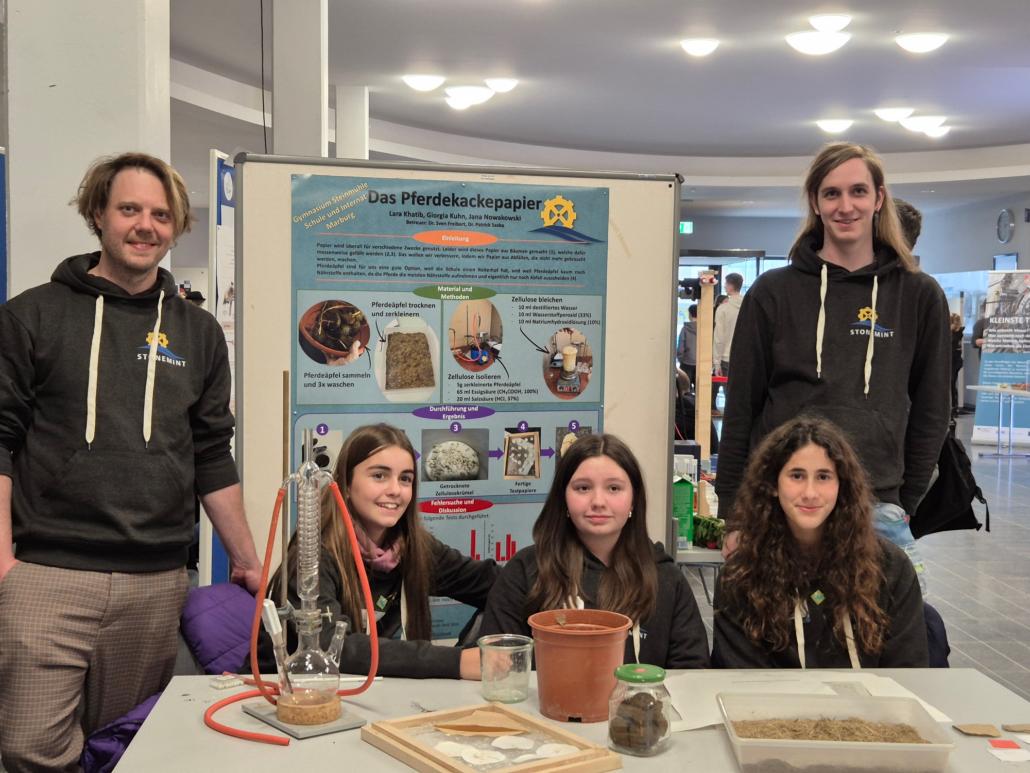
Paper Made from Horse Manure

Lara Khatib, Jana Nowakowski, and Giorgia Kuhn (7th grade) took second place in the “Working World” category and won a special prize for resource efficiency with their project “Environmentally Friendly Paper Made from Horse Manure.” By producing paper from this resource—which is virtually unlimited at Steinmühle thanks to the school’s own horse farm—tree die-off can be reduced.


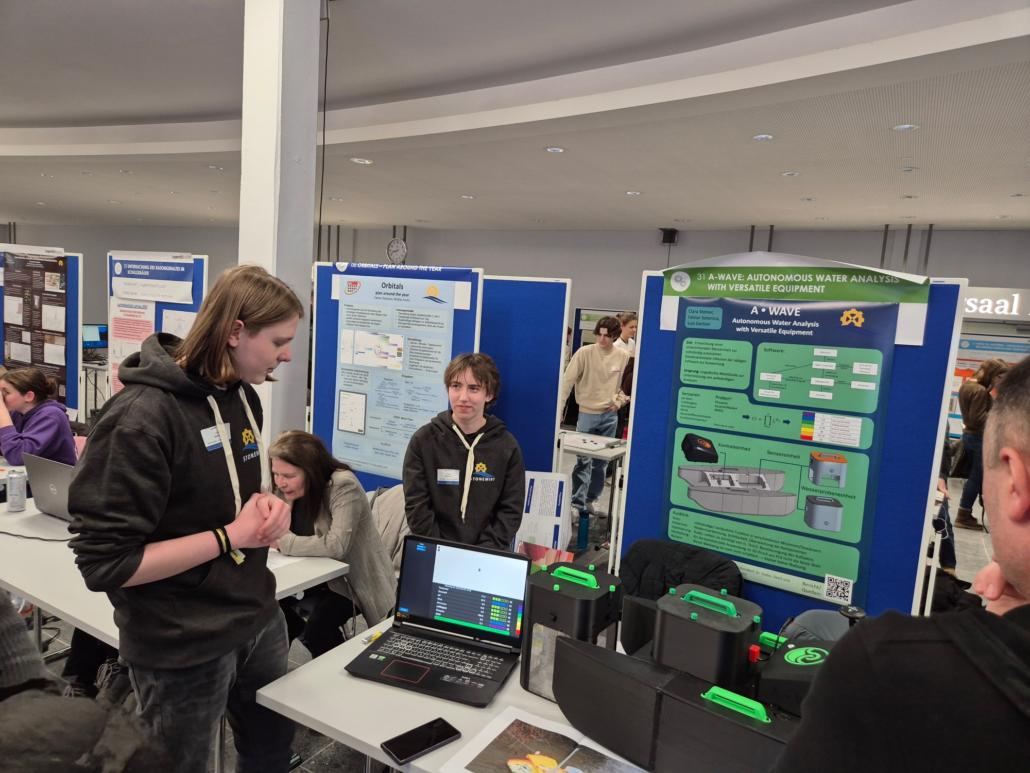
Professionalizing Water Quality Testing

Fabian Sotonica, Luis Gerloni, and Clara Steiner won third prize, along with the special “Make Annual Subscription” award, for their optimization measures aimed at the professional use of the low-cost boat they developed for the semi-automatic determination of water quality classes. The focus was on individual functions and autonomous waypoint tracking to enable completely autonomous sampling and subsequent analysis.


A Bubbling Experiment

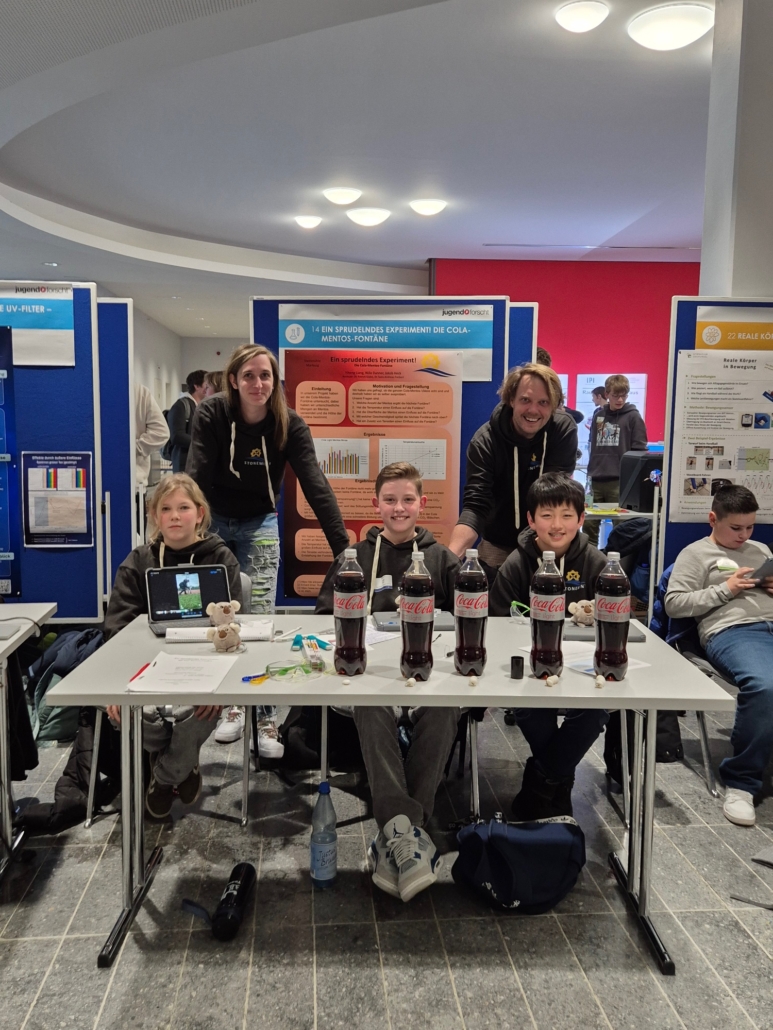
Third place also went to Yiheng Liang, Niilo Danner, and Jakob Heck from 6th grade. The trio had investigated the height of the “Coke-Mentos fountain” as a function of the quantity, state, and temperature of the ingredients. The three young researchers were also interested in the fountain’s speed and whether adding dish soap would change its height.


All Steinmühlen projects were ranked

This means that all of Steinmühle’s “Jugend forscht” projects have placed in the competition. To top off all these awards, Steinmühle received the MINTSPACE School Award from Hohenloher.


Many thanks to the support team!

The Steinmühle projects, which achieved outstanding results among the 34 participating teams, were supervised by Steinmühle teachers Dr. Jutta Töhl-Borsdorf, Dr. Sven Freibert, Malte Klimczak, Dr. Eva Neumann, Antje Seel, Dr. Patrick Szabo, and Dr. Christian Drews (Louisenlund).

Rainer Grabowski, Hesse’s State Representative for the Mathematics Olympiad at secondary schools, was the one to deliver the good news to Maximilian Moll from the Steinmühle math department: Once again, Steinmühle had secured a podium finish in a competition. Fifth-grader Sophie Sacher scored 26.5 out of 40 points in the highly challenging competition, securing third place. Steinmühle Principal Björn Gemmer commented on the achievement of the student, who attends Steinmühle’s International High School Program: “Outstanding!”

Emil Zuckermann, also a 5th grader and regional champion, and Orlando Geisel (11th grader) also took on the challenging problems of the Math Olympiad. Unfortunately, Orlando had to withdraw early on the second day due to illness.

Up through 7th grade, the state competition is the highest level that can be reached

The Math Olympiad consists of several rounds, with the difficulty increasing from round to round—culminating in the national round for the top math whizzes starting in 8th grade. For students in grades 3 through 7, the competition ends with the state round and a grand awards ceremony organized by the individual states.

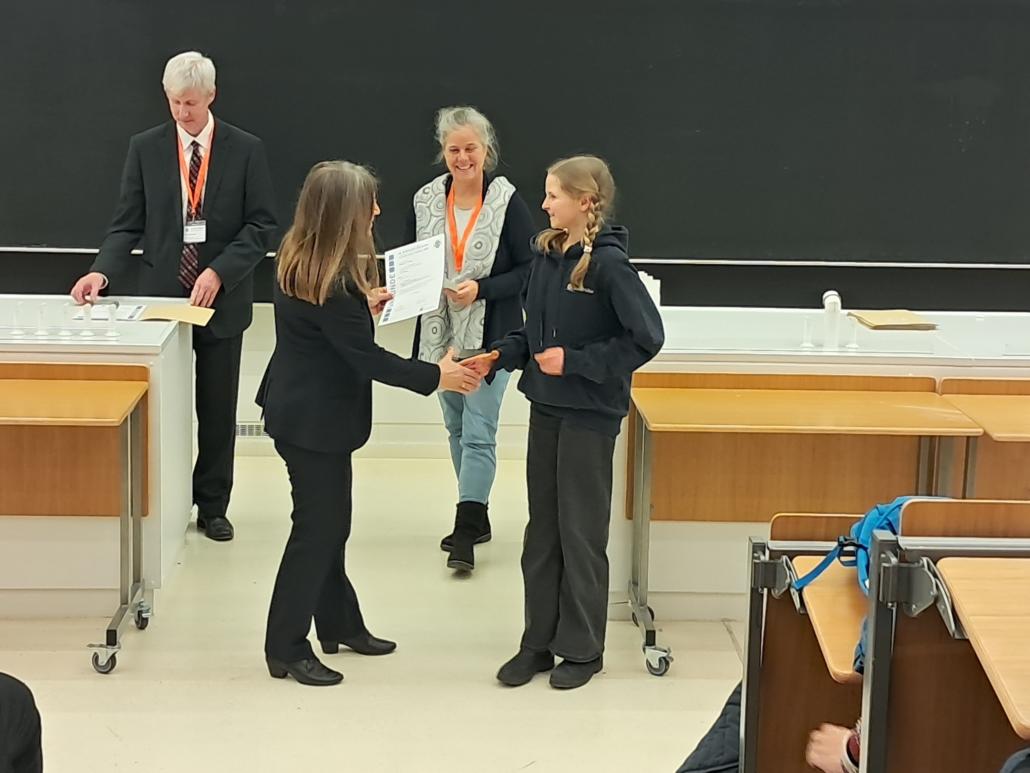
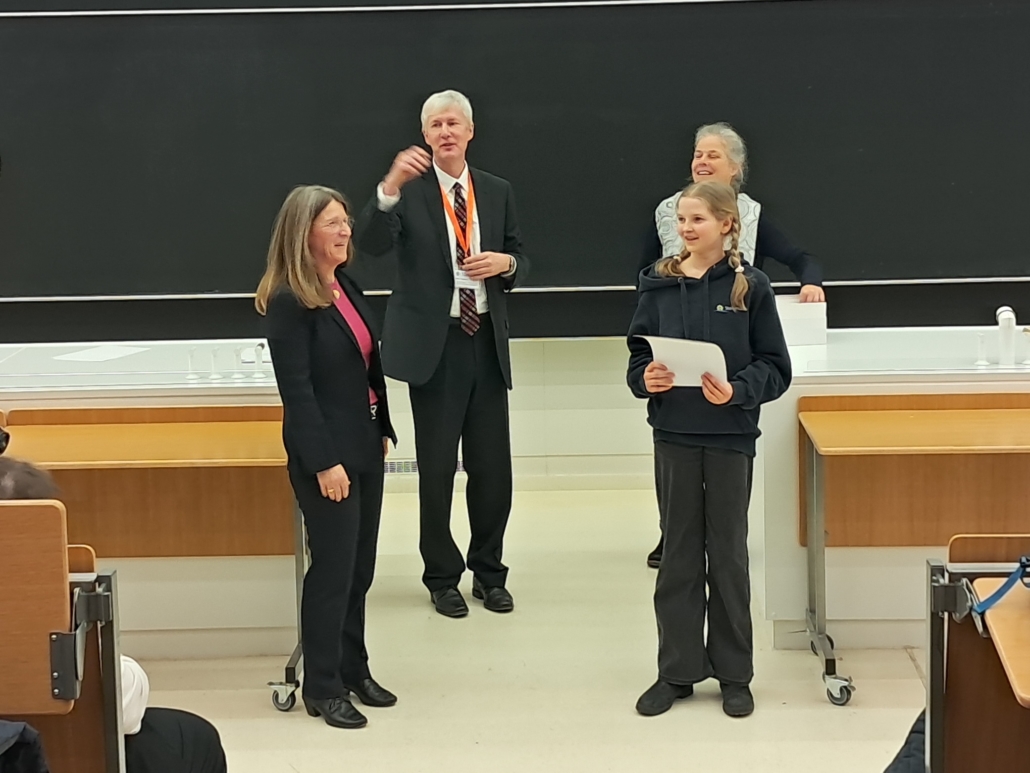
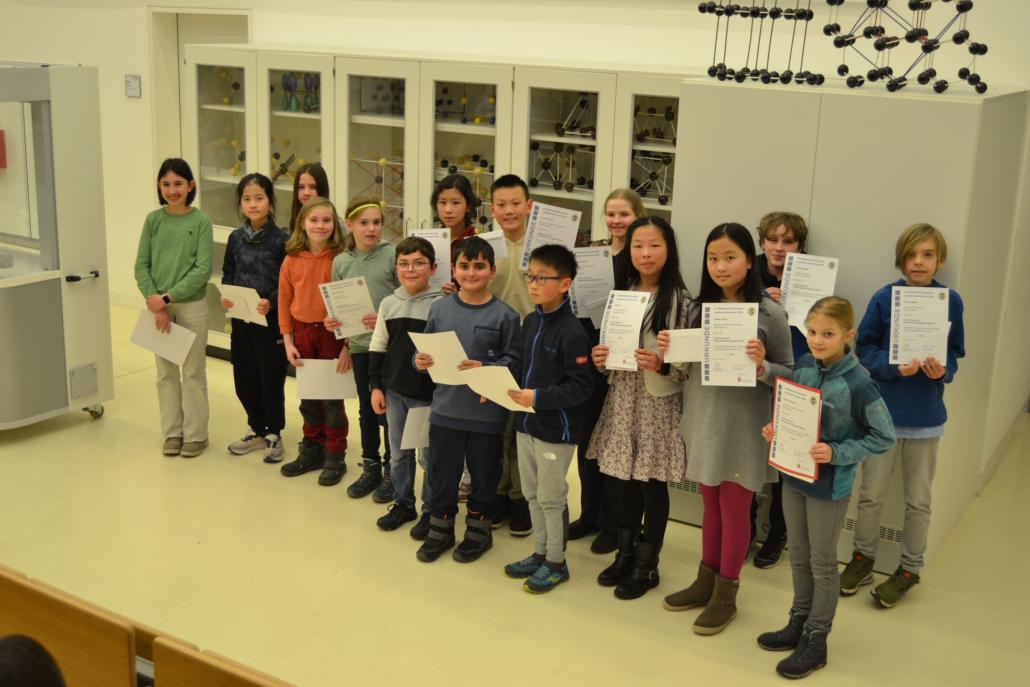
Our photo shows Sophie Sacher at the awards ceremony alongside Brigitte Hirschler from the Hessian Ministry of Education and Cultural Affairs, organizer Rainer Grabowski, and the head of Olympiad Class 5. All the award winners from this Olympiad class then gathered for a group photo. Sophie can be seen in the back row, center.

With as many as 60 guests at times, the new Café Mühle at the Steinmühle tennis complex celebrated its grand opening. Visitors were eager to see the new addition and took in the atmosphere while enjoying a hot drink and something sweet. According to the plan, the café will now be open every weekend and twice during the week—initially only for boarding students, but eventually also for students from outside the school.

Work areas are divided into

With more than 20 young people, the café is Steinmühle’s largest Inno-Club, Ben Zriki announced on behalf of the educational team. For this reason, the work was divided into various areas of responsibility: barista, a baking group, PR, decoration, and finances.

Check Cost-Effectiveness

At the opening, everything was still free of charge. Now, however, we need to develop an idea of how such a café can—and must—be run profitably. To better cater to the interests of young people, this task was also included in the plan. —It’s like a small student-run business, so to speak!

A smoothie maker is on its way

We already have some concrete ideas for the product lineup. Every week, there will be a rotating selection of different cakes. In the near future, we’ll be adding a smoothie maker so we can offer delicious and healthy juices.

Designed as a multipurpose space

The opening was a complete success, and everyone was delighted with the overwhelmingly positive feedback. Ben Zriki: “We hope the café can become a new gathering place at the boarding school where young people enjoy spending time—whether to study or just to relax.”

You can find a reel offering a 360-degree view of Café Mühle at instagram.com/steinmuehle/.


On February 19, 2025, the junior elections were held once again at the Steinmühle, this time as part of the early federal elections.

Voter turnout, at 80.2 percent, was slightly below average compared to turnout in previous years, which can be attributed to the high number of students on sick leave and the many students who were abroad. Given these circumstances, however, it is encouraging that voter turnout was still relatively high.


Many thanks to the election workers

This was certainly also due to the great dedication of this year’s election volunteers. Ben Luis Peters, Jannis Bastian, Fabian Gutmann, Andreas Wöhr, Jonathan Eckardt, Baris Tutu, Jan Templer, and Anton Neßler from Dr. Claudia Röder’s Political Science seminar impressed everyone with their motivation, expertise, organizational skills, and their friendly and good-humored demeanor.

Project manager Eva Rink was pleased that the junior elections went off without a hitch. The political science and English teacher was also relieved that the junior elections were able to take place at all this year, which was by no means a given due to the early federal elections and the resulting time constraints. Once again, the project’s sponsor, the nonprofit and nonpartisan association Kumulus e.V. from Berlin, proved itself to be a reliable supporter and organizer of political education (for more information: juniorwahl.de).

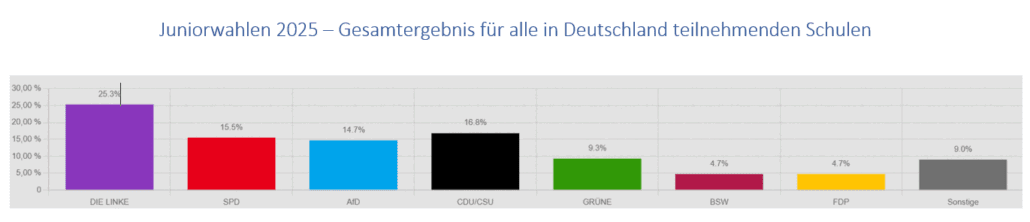
The results of the mock elections could hold a few surprises here and there, especially when compared to the results of the actual federal elections or to the overall results of the mock elections from all participating schools in Germany.


CDU Remains the Strongest Party, Followed by the Left Party

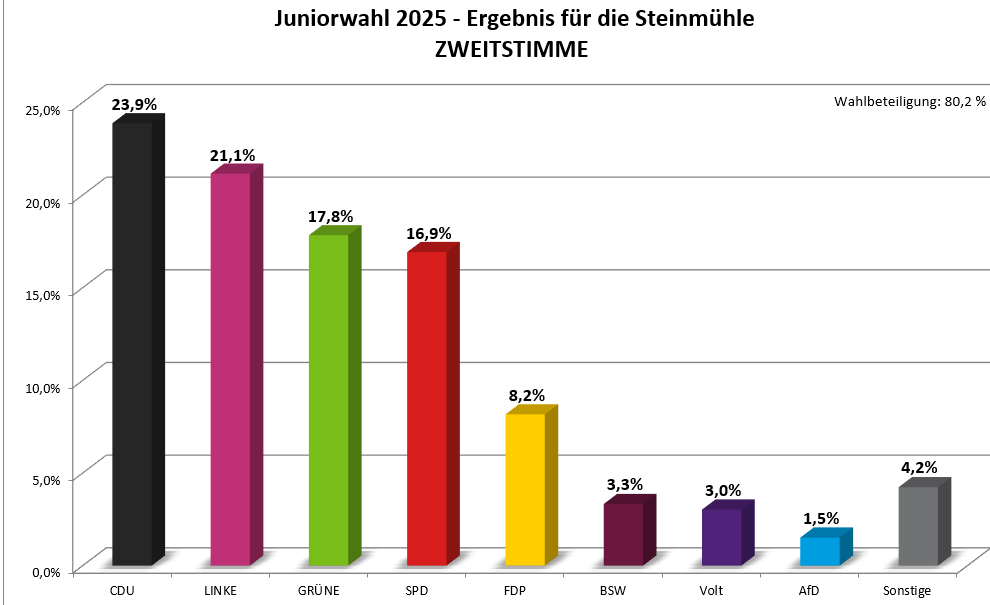
At Steinmühle, the CDU emerged as the leading party with 23.9 percent of the vote, just as it had in the last youth election held in conjunction with the European elections.

The result achieved by the Left Party—which was considered the loser in the last election—is striking. This year, the party can certainly be described as another winner, as it not only made significant gains but also became the second-largest party with 21.1 percent of the vote.

The Greens are in third place with 17.8 percent, just ahead of the SPD (16.9 percent).

A nationwide trend is also evident at Steinmühle: Compared to previous junior elections at Steinmühle, the FDP has suffered further losses. While it was still the second-strongest party in the youth elections held as part of the 2021 federal elections, this year it received only 8.2 percent of the vote.

The Sarah Wagenknecht Alliance and the Volt Party received 3.3 percent and 3.0 percent of the vote, respectively, putting them almost neck and neck.


There was no shift to the right

The shift to the right, which is evident not only in Germany but throughout Europe, did not take hold in Steinmühle. The AfD received even fewer votes than in the previous local elections and managed to secure only 1.5 percent of the vote.

In the chart, the following parties were grouped under “Others”: Free Voters (1.2 percent), Animal Protection Party (1.2 percent), Die PARTEI (0.9 percent), MLPD (0.6 percent), and PdH (0.3 percent).


“Panel Discussion Was Helpful”

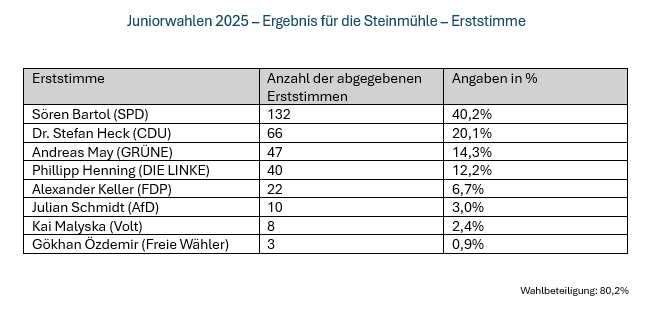
The results of the first-preference votes are also interesting. Sören Bartol of the SPD emerged as the clear winner, with 40.2 percent of the vote. The attached table shows additional results regarding the district representatives.

Many students noted that the previous panel discussion at the Steinmühle with the candidates running directly for the German Bundestag was very helpful in determining their voting decisions and left a lasting impression.


Democracy is fun

In addition, numerous students and faculty members once again spoke positively about the junior elections, a sentiment that was also reflected in the enthusiasm shown by the Steinmühle student body on election day. Democracy is fun! This was evident once again this year, and the organizer of the junior elections at Steinmühle hopes that enthusiasm for the event will not wane in the years to come.

Eva Rink


Germany’s best-known competition for young talent in mathematics, computer science, natural sciences, and technology—Jugend forscht—kicked off on Friday. And once again, this competition ended with an outstanding performance by Schule & Internat Steinmühle!


Standing out among 34 teams

At the Central Hesse Regional Competition, coordinated and organized jointly by Justus Liebig University Giessen and the Technical University of Central Hesse, Steinmühle took home the regional title with no fewer than four projects! A total of 34 teams presented their research and experiments to a 24-member jury, after which other interested attendees had the opportunity to ask the participating groups various questions.


Collaboration Between Two plus-MINT Boarding Schools

We’ll be presenting the experiments over the next few days, including, as a special feature, a collaborative project with the Louisenlund Foundation—which, like the Steinmühle, is a plus-MINT boarding school. We’re proud of the entire group, including the teachers led by MINT coordinator Dr. Jutta Töhl-Borsdorf. Thank you all so much! Simply amazing!


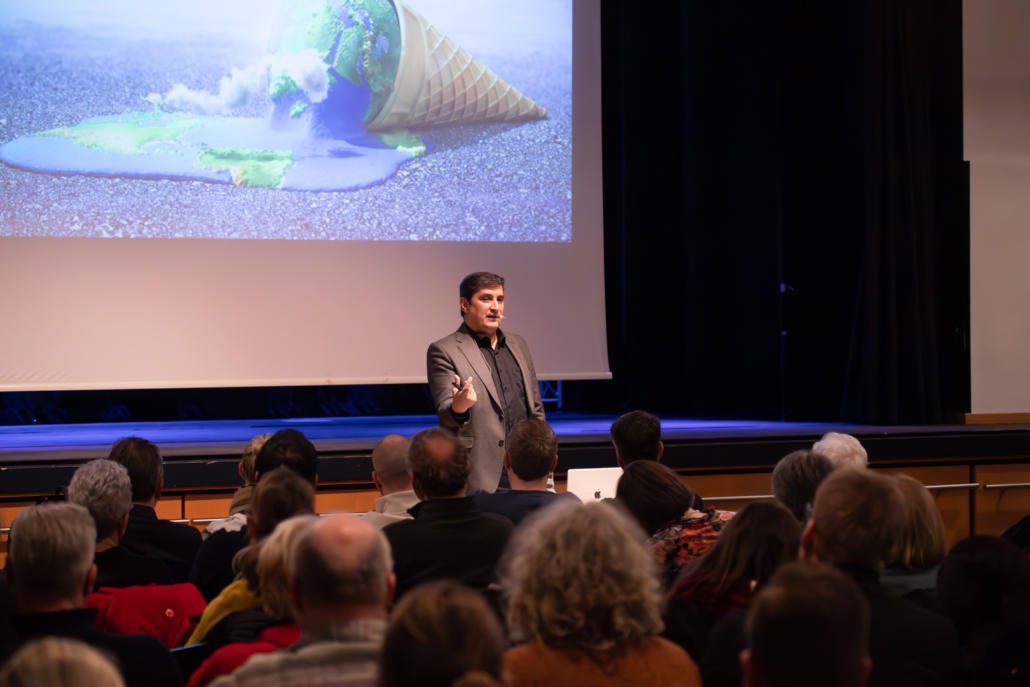
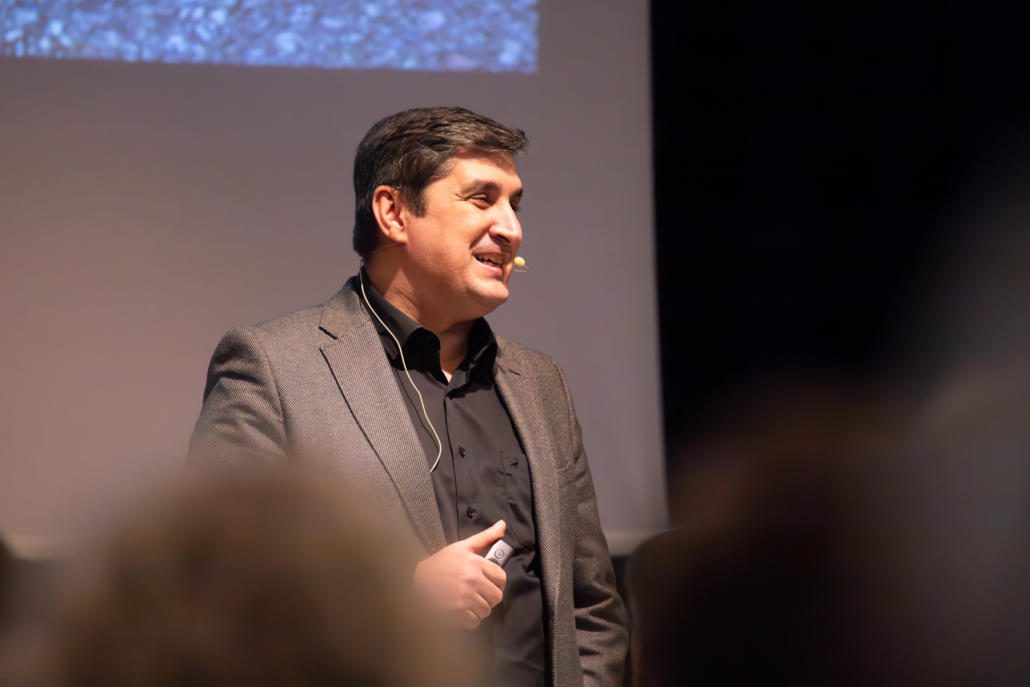
On “data condoms,” whistles, and loss of control: Cem Karakaya, who has specialized in cybercrime and prevention since 2008, spoke to teachers, parents, and alumni of Steinmühle about cybercrime and media literacy. The following day, the former Interpol employee returned to Steinmühle to speak to students in grades 7 through 10—offering plenty of tips on the topic.
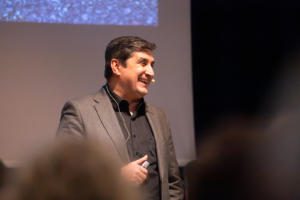
He’s not on Facebook. Nor is he on Instagram or TikTok. You’ll also search in vain for Cem Karakaya on the professional network LinkedIn. Instead of WhatsApp messages, he sends good old-fashioned text messages—because of the terms and conditions under German law. And that’s where he catches the audience off guard for the first time: “You always just check the ‘I’ve read this’ box on every set of terms and conditions. Right?”

Well. Who actually reads everything carefully? And who worries about the digital footprint they leave behind? Cem Karakaya holds up a mirror to the audience at the Steinmühle Forum: Be sure to provide your date of birth—and, ideally, your city and street address, too. Email address, of course, and phone number too. Photos of yourself, and of your family as well. The stage is set for identity theft.


Don’t post photos of children online!

“Please, please, don’t post photos of your children online,” warns the Turkish-born trained police officer, former Interpol employee, cybercrime expert, and founder of blackstone 432, a company with 198 employees. Why do you think Mark Zuckerberg covered his children’s faces with emojis online? The internet is not a lawless space; the right to one’s own image and copyrights apply just as they do elsewhere. The only question is: Who actually follows the rules?


Most attacks begin with phishing emails

Karakaya laments the German police’s frequent lack of recourse and shares stories—stories that, unfortunately, are true. How quickly passwords can be cracked (“please make it 13 characters long and include only special characters”), how incredibly easy it is to gain access to other people’s devices via a hotel Wi-Fi network, how easily you can occasionally read the emails of the person sitting next to you on the train or the messages of the passenger two seats away on a plane. That charging your phone on a public Wi-Fi network can expose your data; that an email purporting to be from the “bank” often isn’t actually from the bank; or that it’s not the package delivery service asking you to open its email attachment. Please—don’t! “80 percent of all attacks start with phishing emails.”


Clip made from two photos and AI

Cem Karakaya focuses on education so that people can understand how these mechanisms work, thereby preventing damage to computers and harm to their owners. “Did you know that two portrait photos online are enough to create a video of you speaking every language in the world, with perfect lip-syncing?” The speaker demonstrates this in his presentation: Cem Karakaya suddenly starts speaking French. AI makes it possible.


“They don’t have an awesome life”

In his presentation, the speaker touches on numerous topics. Artificial intelligence—also an issue among influencers who “enhance” their appearance and fake their vacation backgrounds. Cem Karakaya: “In reality, they often don’t have such an amazing life.” There are small details that usually only insiders notice, revealing that it’s not actually a South Sea beach: a repetitive cloud pattern, incongruous vegetation, and more.


“People can swipe and click—that’s all”

Cem Karakaya doesn’t demonize technology. “It’s not the computer itself that’s bad—it’s people.” In addition to data that people enter about themselves online, their behavior on the Internet is also analyzed. Big Data. “Search engines are the biggest source of user identities. Even the way you type on the keyboard helps form a user profile.” Online relationships do the rest. “People make life easy for criminals—whether out of negligence or ignorance.” Karakaya’s take: “People can swipe; people can click. That’s all.”

The speaker sheds light on even more. “Quishing,” for example—the attempt to redirect recipients to a specific page via a QR code in a snail mail letter. It looks legitimate—but it isn’t. “That’s a reason to double-check the sender,” says Cem Karakaya.


Warning sign: Lots of small red numbers on your phone’s home screen

The speaker also throws in a few more tips and suggestions during the presentation. It doesn’t hurt to give them some thought:

– Delete unnecessary files and emails—mail servers consume a lot of electricity, generate heat, and require cooling. “A lot of little red numbers on your phone’s home screen mean you’ve lost control.”

– No backup—no sympathy

– Hacker attacks usually occur on weekends or holidays

– Take a close look first, then react. If an email sender seems suspicious to you, hover your cursor over the name for a few seconds. In such cases, the “real” sender will appear next to it after a while.

– A data blocker (“data condom”) prevents data transfer while charging

– Don’t choose a password that’s too short. It takes 11 hours to crack an eight-character password, and a whopping 47 years to crack a thirteen-character one

– Do not reuse passwords

– If you receive so-called “support calls” from Microsoft, Amazon, PayPal, or Europol/Interpol, blow the whistle

– Watch out for typos in email addresses (O instead of zero, capital “I” instead of “l,” etc.)

– Keep data minimization in mind: Rental cars may, in some cases, access a smartphone’s entire address book

– Set up a guest Wi-Fi network for visitors at home or in the office

– The laws of the location where the server facilities are located always apply


“Media education is the parents’ responsibility”

Cem Karakaya, a Spiegel bestselling author, bids his audience farewell with humor, but not without urging them to reflect: “Media education is the school’s responsibility. Media training is the parents’ responsibility. Every adult serves as a role model. Everyone decides for themselves when to turn it on and when to turn it off.”

Perhaps one or two members of the audience went home feeling uneasy. Steinmühle School also raises its students’ awareness about using the internet cautiously on many occasions, but here the information came in a concentrated dose. The many statistics presented were also impressive—for example, the fact that three years of Facebook membership amounts to 1,200 pages of personal information.

– Don’t have any plans for the weekend yet? We have an idea: Delete any unnecessary information online and check the security settings on your phone. Angela Heinemann

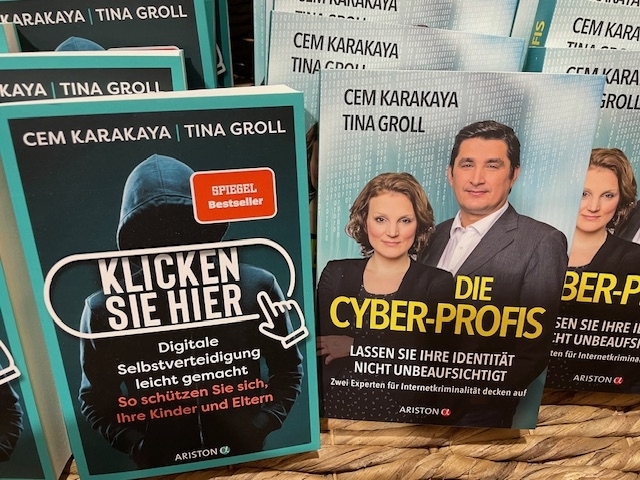
More information on this topic can be found in Cem Karakaya’s two books (“The Cyber Pros” and “Click Here”) as well as on his company’s website, blackstone432.
The Steinmühle recently hosted the Hessian Judo Championships. In the new, large sports hall, the motto for numerous teams was: Focus! For the Steinmühle, it was also a day of active collaboration. As a partner of the Sportfreunde Blau-Gelb Marburg, it had spontaneously made it possible to host the event after the club was no longer offered any other venue options.

The championships were also a big day for another partner, the German Institute for the Blind (blista). Their athlete , Arda Yilmaz—16 years old and completely blind—impressed with his outstanding performance. He, too, competed for Sportfreunde Blau-Gelb Marburg.


Marcel Kalb: “Interest in the Japanese martial art is growing”

At Steinmühle, about 20 students from the bilingual elementary school and high school are currently participating in a judo club. This program has been in place for some time now. “The plan is for interested students from our club to be able to participate in such championships in the future,” explains school sports director Marcel Kalb. According to Kalb, the partnership with the judo department at Blau-Gelb has been running very smoothly and on an equal footing for years and is attracting growing interest among the student body. The judo department also made a very valuable contribution to Steinmühle’s sports project days last summer.

Lisa Braun, a German teacher at Steinmühle, shared some great news: Tabea Moses from Class 6a at Steinmühle is Marburg’s best reader! This was the decision of the jury at the regional round of the 66th Reading Competition of the German Book Trade. The panel consisted of two booksellers, a linguist from Philipps University of Marburg, the artistic director of the Waggonhalle Marburg, an author, an employee of the city library, and last year’s city winner, Judith Ruff. Next up for Tabea is the district round, where she will represent the city of Marburg.

“You all did a fantastic job. You’ve read aloud in front of others time and again at your own schools, and now once again today here in front of a jury—that takes a lot of courage,” said Mayor and Head of the Youth and Schools Department Nadine Bernshausen during the Marburg city finals in the Building Authority Hall on Barfüßerstraße.


Clear pronunciation, varying speed and volume

The jury particularly liked about Tabea, “…how you gave the characters their own voices. Your pronunciation is clear and easy to understand. We were also impressed by how you vary both the speed and the volume to suit the story.”


“I like stories with suspense and a spooky vibe”

Tabea Moses chose a passage from Kaja Bergmann’s *Gabriel: Duel of the Angels* to read aloud: “What I like about the book is that it starts off slowly, so it’s easy to get into, and then it gets really exciting. I like stories with suspense, thrills, and mysteries,” said Tabea Moses. Tabea has been interested in books since kindergarten and would try to decipher the words because she wanted to know what they meant and what the story was about.


School libraries also encourage reading

As a child, she read a lot from a very early age, and as a teenager she rediscovered her love of reading through the school library, the reading competition, and her little sister, to whom she often read aloud.The photos (Stefanie Ingwersen/City of Marburg) show Tabea with her mother Katja Moses (left), her friend Amelie Michanikl (second from left) and Mayor Nadine Bernshausen (right), as well as in a group photo with the other contest participants.

It was an exciting day for Aurelia Wild, a fourth-grader at the Steinmühle Bilingual Elementary School: She had registered for the 64th Math Olympiad, and now the Hesse state round was getting underway. After a welcome address at the Mathematikum in Giessen by its director, Prof. Albrecht Beutelspacher, Aurelia and her fellow contestants were shown to their workstations. For two hours, the children worked on interesting math problems before they had the chance to thoroughly explore the experiments at the Mathematikum. During this time, many dedicated teachers graded the submitted assignments.


“Silver” in the state competition

At 2:00 p.m., the awards ceremony finally began. First up were the third-graders, and the excitement kept building—even for Aurelia. Then the certificates of participation were awarded to the fourth-graders—and that’s when it became clear that Aurelia was among the winners. She was overjoyed when she was even called up to receive second place!


Parents Thank Teachers for Their Motivation

Aurelia proudly accepted her certificate and prize. She’s already certain: “I’ll be back next year!” The teachers led by Lorraine Herrmann from the administration of the Bilingual Elementary School and Steinmühle Principal Björn Gemmer are also proud. Aurelia’s mother, Lydia, is delighted: “We’d like to thank Steinmühle for encouraging its students to participate in competitions like the Math Olympiad.”