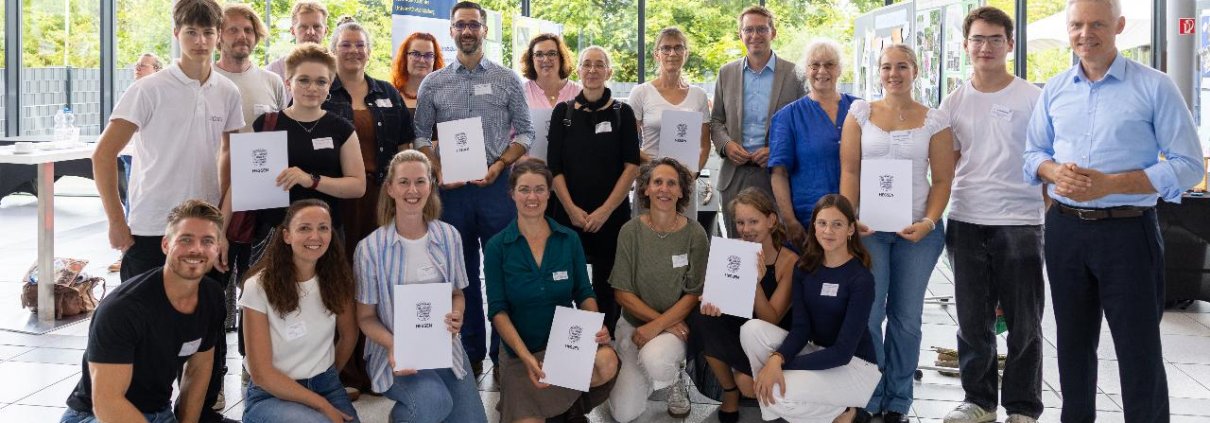
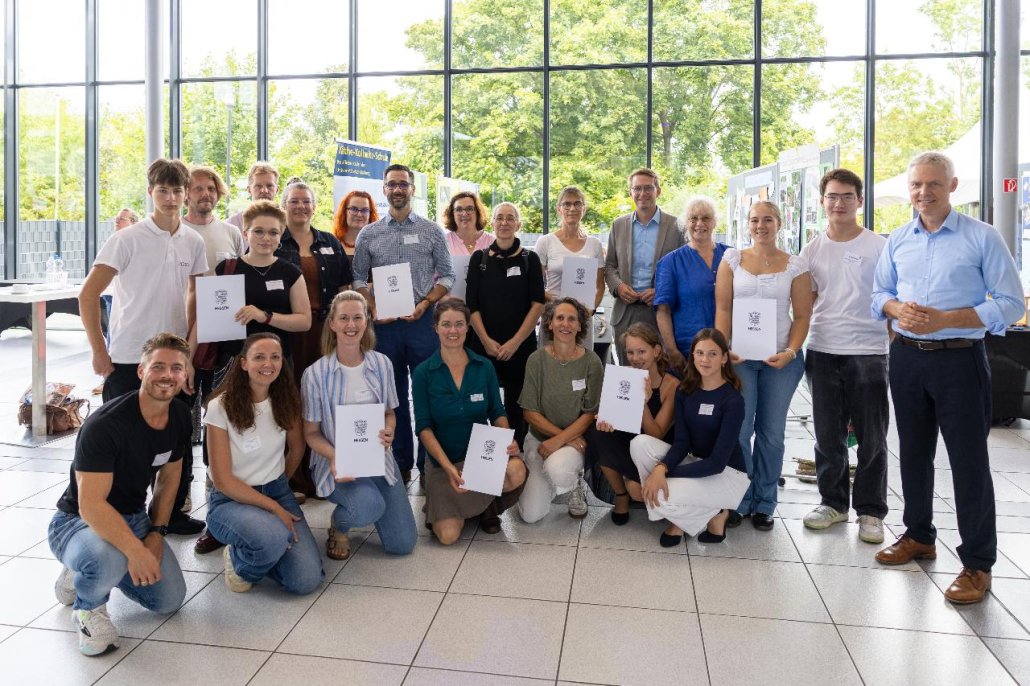
A proud group of participants from Steinmühle at the “Environmental Schools 2026” awards ceremony: Once again, our school received the corresponding certificate for another two years, presented by State Secretary for Education Dr. Manuel Lösel and Michael Ruhl, State Secretary at the Hessian Ministry of Agriculture and the Environment, Viticulture, Forestry, Hunting, and Regional Affairs. Steinmühle was represented by Dr. Sven Freibert, Anna-Lena Griessler, and Vasyl Diachenko (Class 9i, elective course on bees). Our group can be seen on the left side of the photo. The photo shows representatives from various schools that—like Steinmühle—belong to the Roßberg Youth Forest Center, an extracurricular environmental education center.


Activities at the Steinmühle go beyond the award criteria

The presentation of the certificate and the entire ceremony once again served as a powerful testament to our school’s commitment to Education for Sustainable Development (ESD). The numerous presentations and contributions by the students, as well as the dedication of the accompanying teachers, enriched the event in a special way.

To earn this award, our students and teachers spent two years working on topics related to sustainable development, guided by the ESD Compass. Throughout their activities, they were supported and advised by teachers seconded to extracurricular environmental centers. The liaison for Steinmühle is Ute Visser, regional coordinator of the environmental center and a student teacher at our school.


The ESD-focused activities at the Steinmühle School and Boarding School are not limited to the criteria required for the award, but go far beyond them. We will continue to report on various examples.

(Heinm/ Photo: Stephan Rech)


In the “School Cycling” event in Marburg and the surrounding district, the Steinmühle School & Boarding School covered the most kilometers. It won with 25,213 kilometers cycled, well ahead of the Gymnasium Philippinum (16,567 km) and the Gesamtschule Niederwalgern (13,835 km).

The results were recognized at an awards ceremony held in front of the district administration office in Marburg and as part of the student awards ceremonies on the last day of the previous school year.

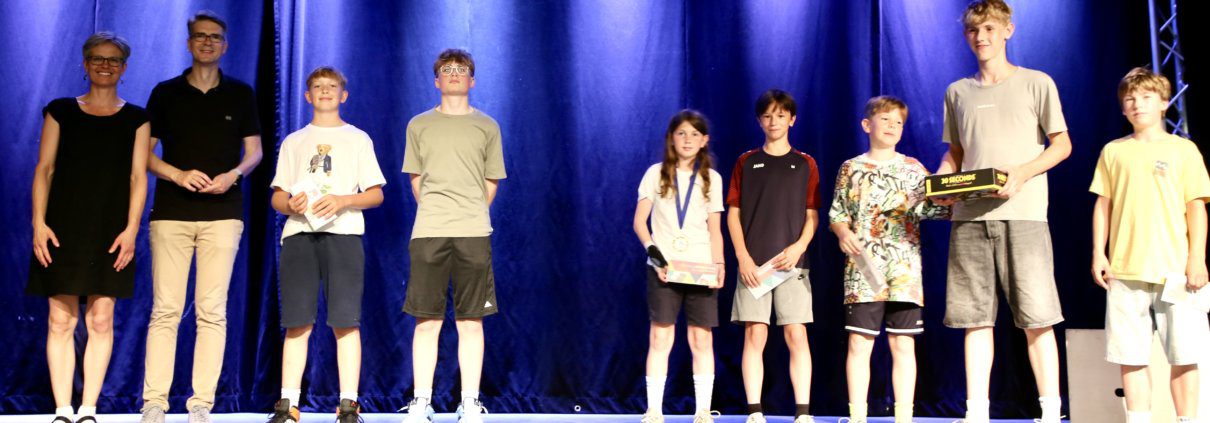
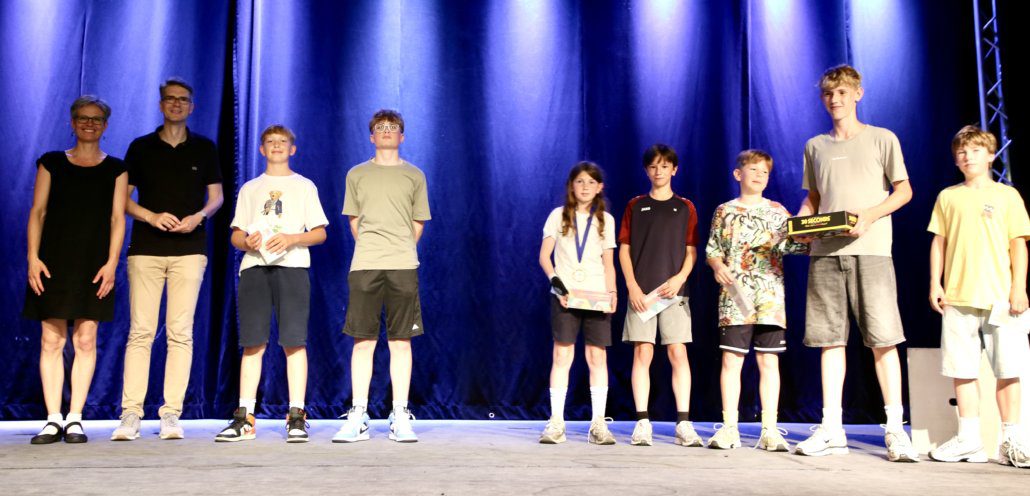
Julius Henkel (13D) cycled the most kilometers at Steinmühle High School—namely, 1,751.9 kilometers. Lars Hübl (8c) was the winner in the middle school division, while Vincent Maximilian Peter (6c) came out on top in the lower school division. Anton Lucio Röder from 2nd grade took first place at the Steinmühle Bilingual Elementary School. Among non-students, Björn Hübl topped the leaderboard. Students who cycled more than 300 kilometers included Lukas Zimmer, Mattis Hofacker, Levin Schulenberg, Cajus Lauf, Anton Richter, Kai Gundlach, Emil Zuckermann, and Romy Buschmann. Some members of the winning team received gift certificates awarded by lottery, while others were delighted to receive free admission tickets to Lake Niederweimar, presented by Steinmühle teacher Jonathan Gröb.

Some of the students were ultimately able to attend the official awards ceremony alongside teacher Ines Vielhaben and principal Björn Gemmer (from left) and proudly posed for the photographer.

In any case, we’re taking the energy of our successful cyclists with us into the new school year and wish everyone a pleasant start to the school year!

(Heinm)

No electricity, no running water—just water jugs and a construction-site toilet. The best places rarely stand out for their perfection, but rather for their authentic atmosphere and tranquility, which are hard to find elsewhere. With this in mind, the Steinmühle in Marburg’s southern district has now renovated its forest cabin for internal use. It’s a well-maintained forest cabin with sleeping quarters, a small kitchenette, a gas stove, a few cabinets, and a gas grill. Right outside the door, a mowed meadow and trimmed bushes await on a 3,000-square-meter property featuring both meadow and forest.


An extracurricular learning environment surrounded by nature

Anyone who has already been there—such as the group led by house director Nils Schwandt from the Steinmühle boarding school—will find that this historic facility, the former Steinmühle rural school camp dating back to the early 1970s, is the ideal place for extracurricular learning. The forester’s lodge was originally built as a hunting cabin for the Steinmühle hunting club of that time.

Even though hunting is now a thing of the past at the Steinmühle School and Boarding School, the Steinmühlen Lodge offers a different, extraordinarily intense connection with nature—far removed from TV and cell phone chargers.


Our photo shows our technical service team putting the finishing touches on the project.

If you are interested in staying here, the Technical Manager of the Steinmühle, Fabian Küster, will be happy to assist you (fabian.kuester@steinmuehle.net).


(Angela Heinemann)
`

An sweetgum tree was planted on the grounds of Steinmühle to mark “Arbor Day.” The project was carried out by Balzer Garten- und Landschaftsbau, a landscaping company based in Buchenau. The tree stands at the entrance to the riding school at the Steinmühle School & Boarding School and is intended to serve as a long-term, visible symbol of sustainability and environmental awareness.


Strengthen environmental education, promote climate awareness

The planting initiative was supported by the Hesse-Thuringia Association of Garden, Landscape, and Sports Field Contractors. The goal of the initiative is to strengthen environmental education and further promote awareness of nature and climate issues.

Among those present at the planting were State Parliament Representative Dirk Bamberger (CDU), school principal Björn Gemmer, and Frank Balzer, managing director of Balzer Garten- und Landschaftsbau. Students from the gardening club also took part in the event. It was a new experience for them: instead of working in the greenhouse as they usually do, they were able to participate in a large-scale tree-planting project for the first time.

In the future, the young people will also take responsibility for the tree. As tree sponsors, they will monitor its growth and continue to actively support nature and the environment.


Beautiful fall colors

The sweetgum tree, which can grow up to 20 meters tall, is an impressive tree for both solitary and group plantings thanks to its fall colors. The play of colors in its foliage is striking and beautiful to behold. However, according to the specialist firm Balzer, the sweetgum must be watered diligently at first to thrive.

(Heinm)


With support from the LandesEnergieAgentur Hessen (LEA) and the Rotary Clubs’ nonprofit initiative “gesundekids e.V.,” the Rotary Club Marburg der Steinmühle has now donated a drinking water fountain worth just under 3,000 euros. Immediately after its installation, the students began eagerly using the water dispenser.


Reduce Health Risks

“The LEA (Hesse State Energy Agency) supports this project in light of the growing impacts of climate change and the resulting need for action. “The free provision of drinking water is important for public health, as staying hydrated reduces the risk of heat- and drought-related health problems,” according to a statement on the matter.

Carl-Eugen Bitzer, a member of the board of gesundekids e.V. from Langen in southern Hesse, who also serves as the Rotary district representative for gesundekids, arranged for the official handover by Steinmühlen School Principal Björn Gemmer, a member of the Rotary Club of Marburg, to the school community, represented by student body presidents Niclas Peters and Anna Reinhardt.

According to reports, the drinking fountain continues to be very popular, and Steinmühle would like to express its heartfelt thanks!


The Steinmühle won both the “School Cycling” and “City Cycling” competitions organized this year by the university city of Marburg, reported Principal Björn Gemmer, who proudly added: “This makes us not only the most active school when it comes to cycling, but also the most active company in Marburg.”

Every summer, the city organizes a three-week “City Cycling” campaign for businesses. One subcategory is dedicated to “School Cycling.” There are many reasons to get around by bike: health, reducing CO2 emissions, or cost savings—whatever your personal priorities may be.

A huge lead over the runners-up

Teachers Ines Vielhaben and Antje Seel were the main ones to drum up support within the Steinmühle school and boarding school community, encouraging students to register for the competition and to get around primarily by bike during the period from May 24 to June 23. Steinmühle ultimately accounted for 196 of the 1,274 active cyclists registered in the competition and logged an incredible 32,662 kilometers. This represented a significant lead over the next-ranked participating company, which cycled 27,4423 kilometers, and a huge lead over the second-place school, which managed just under 14,000 kilometers.

The City of Marburg recognized Steinmühle’s outstanding results with a certificate in both categories—City Cycling and School Cycling—as well as a cash prize of 250 euros. Principal Björn Gemmer and teacher Ines Vielhaben accepted the awards and prize from Mayor Nadine Bernshausen (center). Steinmühle would like to thank everyone who contributed to this success—including those who were inspired to get on their bikes even if they don’t usually cycle very far. Perhaps we can make cycling a habit more and more often.

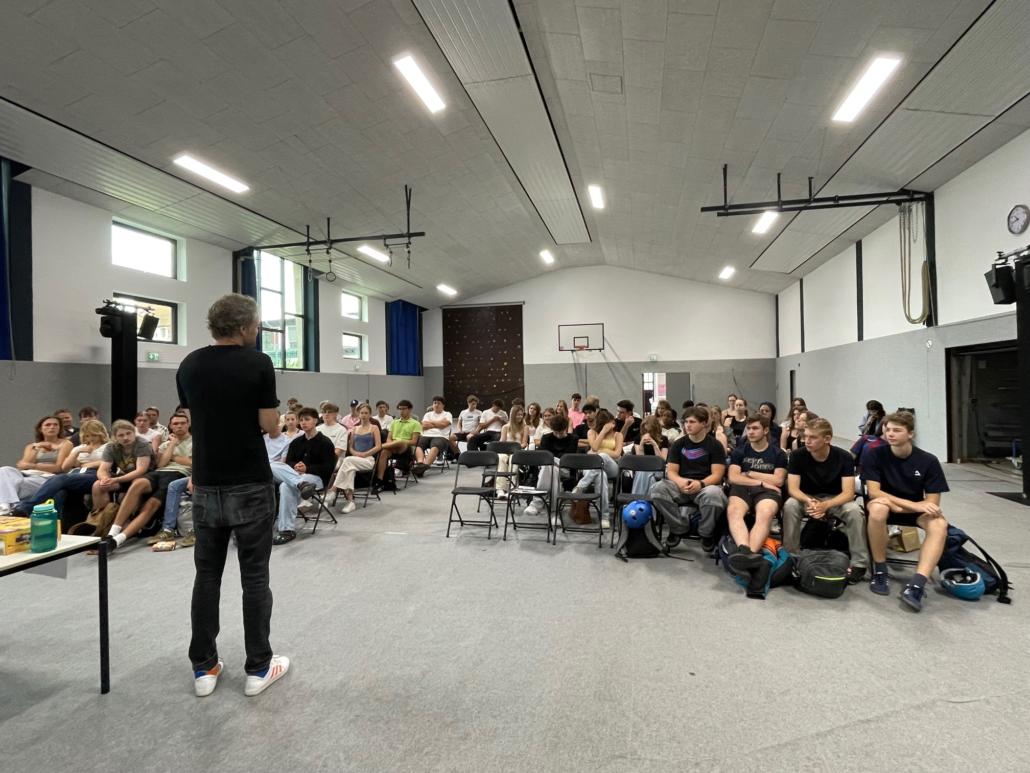
How can one combine the unique challenges of sustainability with the popular business administration program?

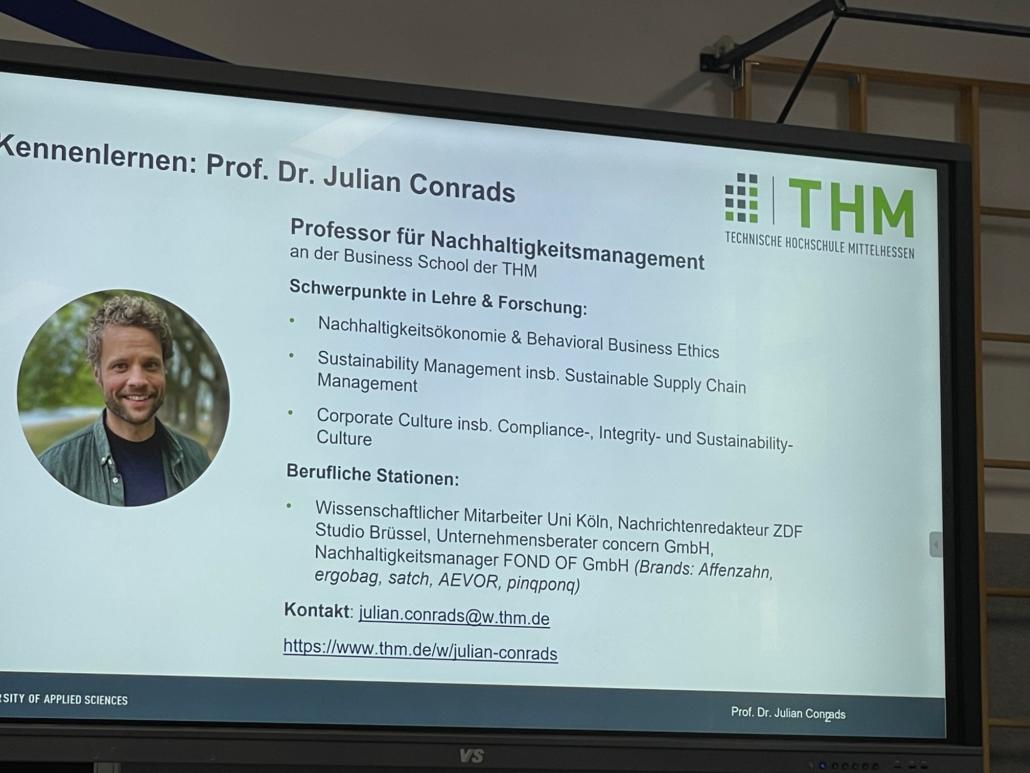
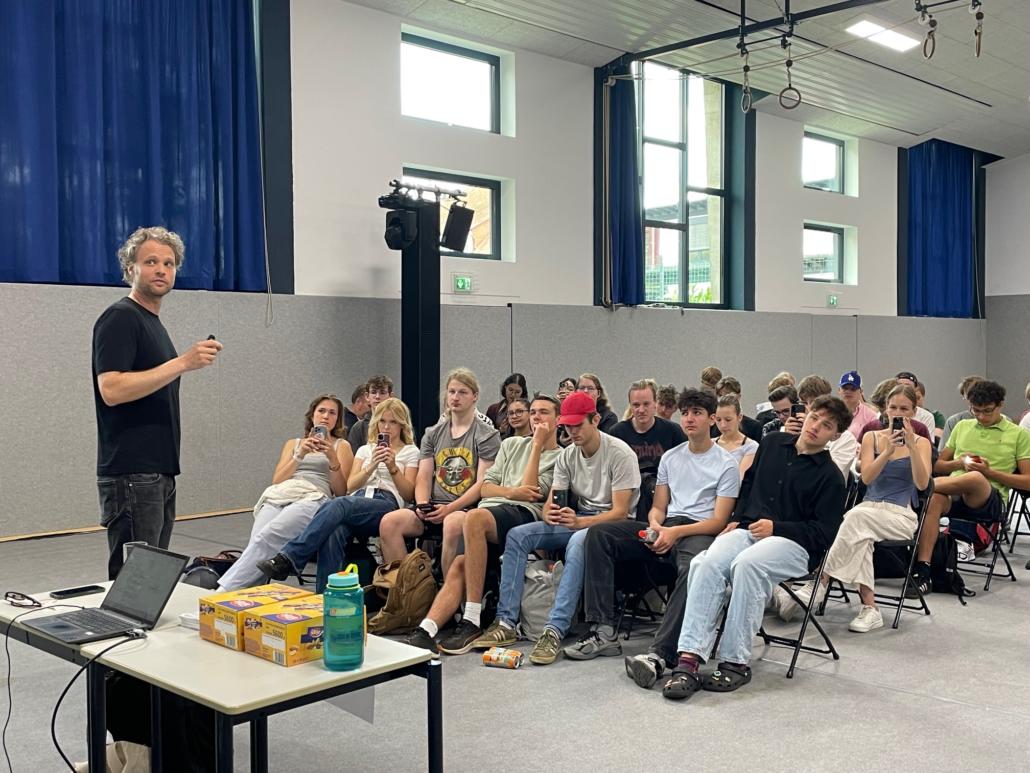
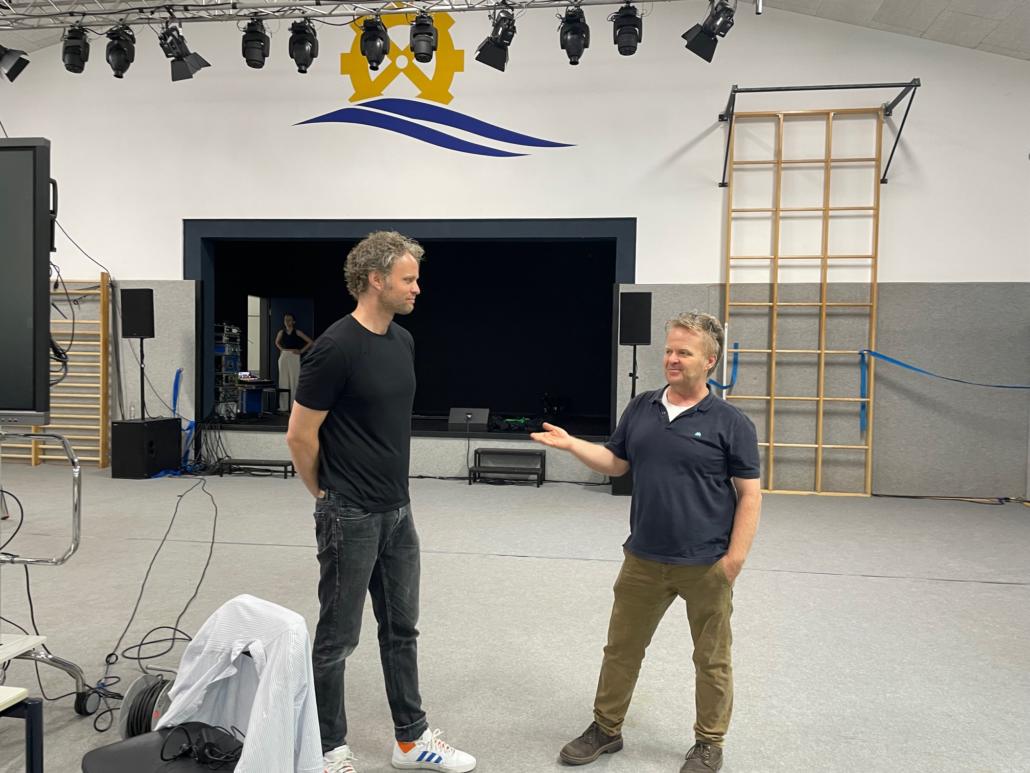
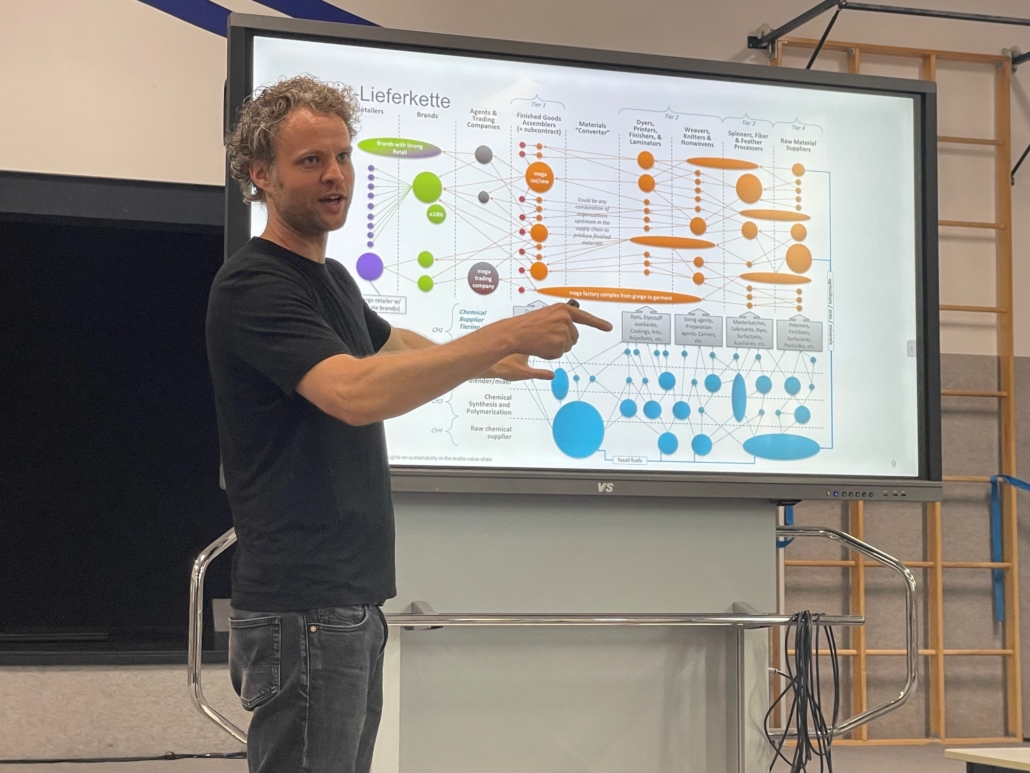
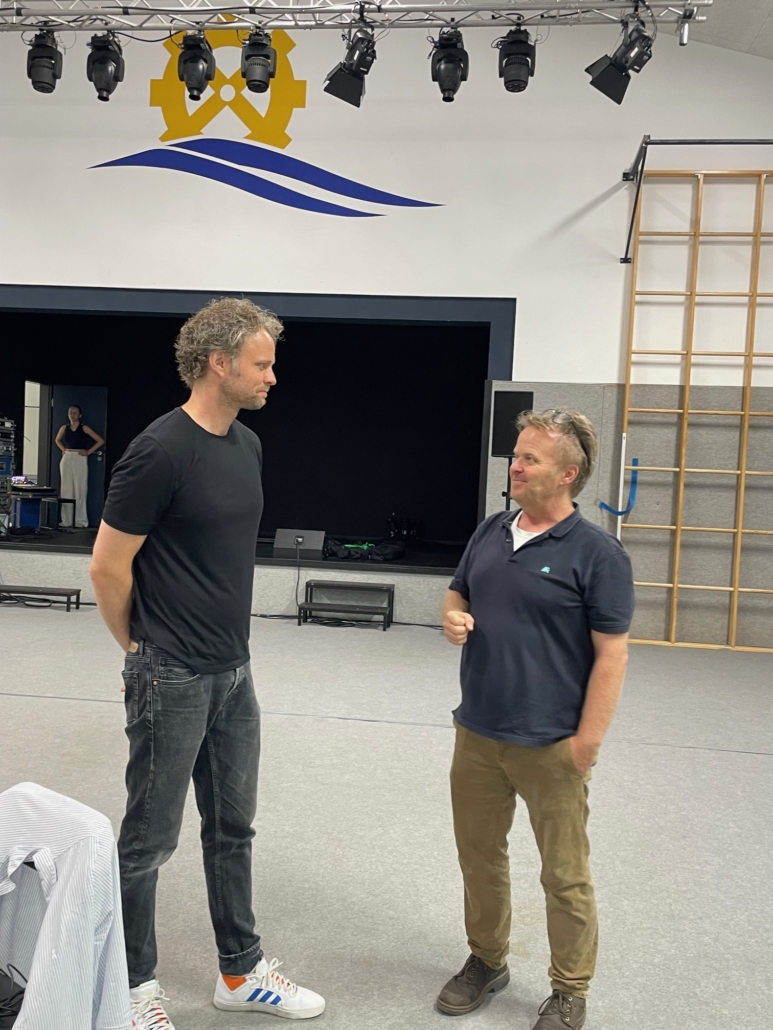
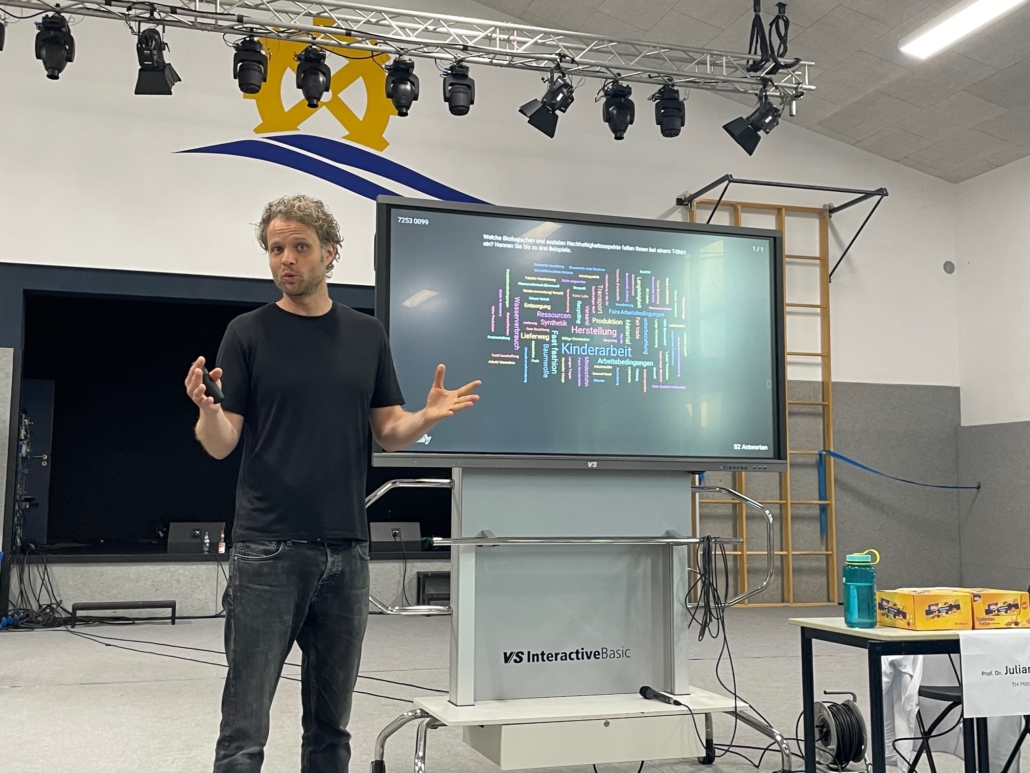
One person who knows this all too well is Prof. Dr. Julian Conrads. For the past three years, he has been teaching business administration with a focus on sustainability management at the Technical University of Central Hesse (THM). His lecture at the Steinmühle, given at the invitation of Bernd Hülsbeck—a subject teacher and head of the social sciences department at our school—contributed to career guidance and once again fostered exchange with the university.


In Focus: Textile Manufacturing, People, and the Environment

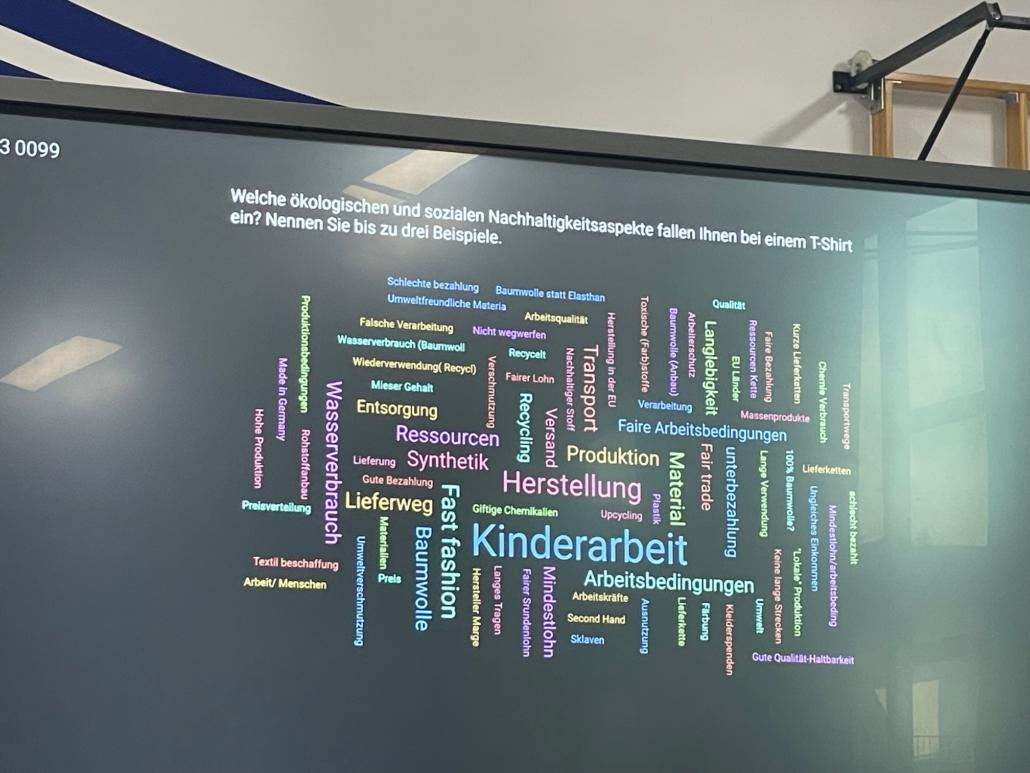
This issue affects everyone, and to have a say in it, all you have to do is look down at yourself: What am I actually wearing? Textile manufacturing around the world is a hot-button issue—one that’s generally well known but often ignored. “Surely expensive brand-name manufacturers don’t tolerate poor working conditions,” many reassure themselves, attributing the environmental impact of the textile industry solely to low-cost producers. — That’s often the case and may be true, but it isn’t necessarily so, as Prof. Conrads knows.


Utilization of all conceivable resources

Vietnam, Taiwan, Bangladesh: Conrads went there in person to see for himself the conditions under which the items we wear are produced and how, for example, backpacks are sewn together. The focus is on the three pillars of sustainability: ecology, economy, and social responsibility. Aware that synthetic materials are petroleum-based and that dyeing—along with cotton cultivation—places an enormous strain on water resources, we can immediately announce another startling fact: With 1.2 billion metric tons of CO2 per year and 6–8 percent of global emissions, the textile industry has a greater impact on our climate than air travel and shipping combined.

In fact, these are all figures you should be aware of. And here are a few more examples: The textile industry consumes 20 percent of the world’s water supply. For every kilogram of clothing produced, about one kilogram of chemicals is used.


A Look at Working Conditions

However, alongside these sobering facts, it is also true that the textile industry is a major global employer. It is estimated that 70 million people—particularly in developing and emerging economies—earn their livelihoods from it. Yet even these figures must be viewed in context, given the often inadequate wages paid to workers—who are mostly women and frequently lack basic rights. It is not only the natural environment that suffers from the production of textiles due to air, water, and soil pollution; human resources—specifically, the labor of workers—are also exploited.

Compliance with core labor standards is part of social responsibility. This includes the elimination of forced labor, fair wages, and reasonable working hours. Independent third-party firms conduct audits to ensure that certain standards are met or maintained. Another important criterion in this context is the elimination of child labor.


Business Statements Send a Message

To ensure that employees—most of whom are women—are aware of their rights, training sessions are offered in the areas of occupational safety and labor law. Complaint hotlines are available if on-site conditions do not appear to comply with the law. To send a clear message, companies issue a business statement in which they commit to adopting a sustainable approach. This also addresses supply chains, the diversity of suppliers, and the highly complex substances to be processed.


Is sustainable business economically viable?

Social responsibility and sustainable business practices entail costs for companies. “Can this even be economically worthwhile anymore?” the speaker asked the group, consisting of 11th-grade students from Steinmühle High School. They had the right answer ready. To ensure this is the case, companies rely on marketing and on building a reputation that resonates with consumers.


Possible Career Paths

The Business Administration (BWL) program in Sustainability Management, leading to a Bachelor of Science (B.Sc.) degree, can lead to careers in corporate management, work with nongovernmental organizations (NGOs), a career in politics, or starting a business. Prof. Conrads: “It’s an addition to business administration. We’re trying to make sustainability a normal part of business administration.”

Angela Heinemann
 

With scientific precision, homemade testing equipment, and surprising findings, young researchers impressed the expert jury at Stiftung Warentest’s renowned “Jugend testet” competition. Among a total of 1,103 submitted tests involving more than 3,700 participants —a new record—Steinmühlen students Leonard Berger and Nicolas Bohnstedt secured an outstanding second place in the 10th–13th grade category with their research on sustainable alternatives to conventional petroleum-based plastic wrap! Together with their advisor, Dr. Jutta Töhl-Borsdorf, they traveled to Berlin for the awards ceremony.


In-house production of biofilms

Leonard and Nicolas tested 20 different types of plastic wrap and produced their own biodegradable wraps. Their conclusion: While conventional wraps have good performance characteristics, they harm the environment—and some “eco-products” turn out to be nothing more than greenwashing.


A six-member panel of experts

Steinmühle congratulates the team on their outstanding ranking, which was determined by a six-member jury of experts from the fields of science and journalism.


2,000 euros in prize money

The award came with a cash prize of 2,000 euros. In addition, there was a very appealing supporting program; “the foundation really went out of its way,” reports Dr. Jutta Töhl-Borsdorf.
For example, attendees were invited to see the musical *Romeo & Juliet* at the Theater des Westens and to participate in a city scavenger hunt in Kreuzberg.

The awards ceremony, featuring a magician and very heartfelt laudatory speeches, is also fondly remembered: “A wonderful experience for everyone involved.”