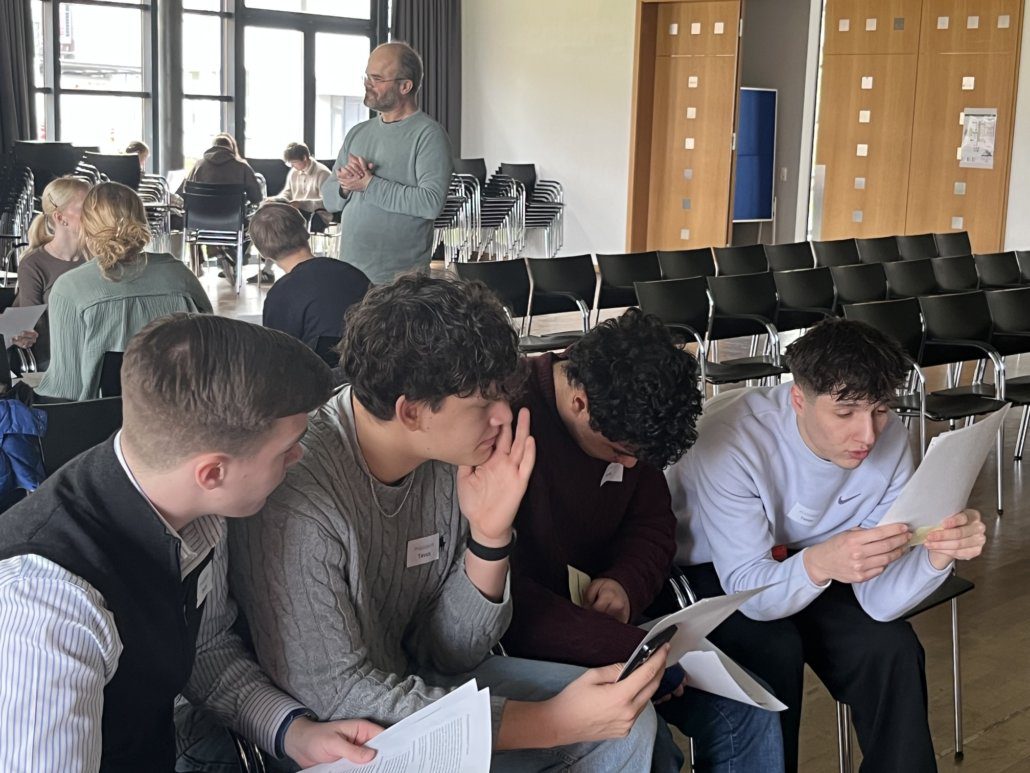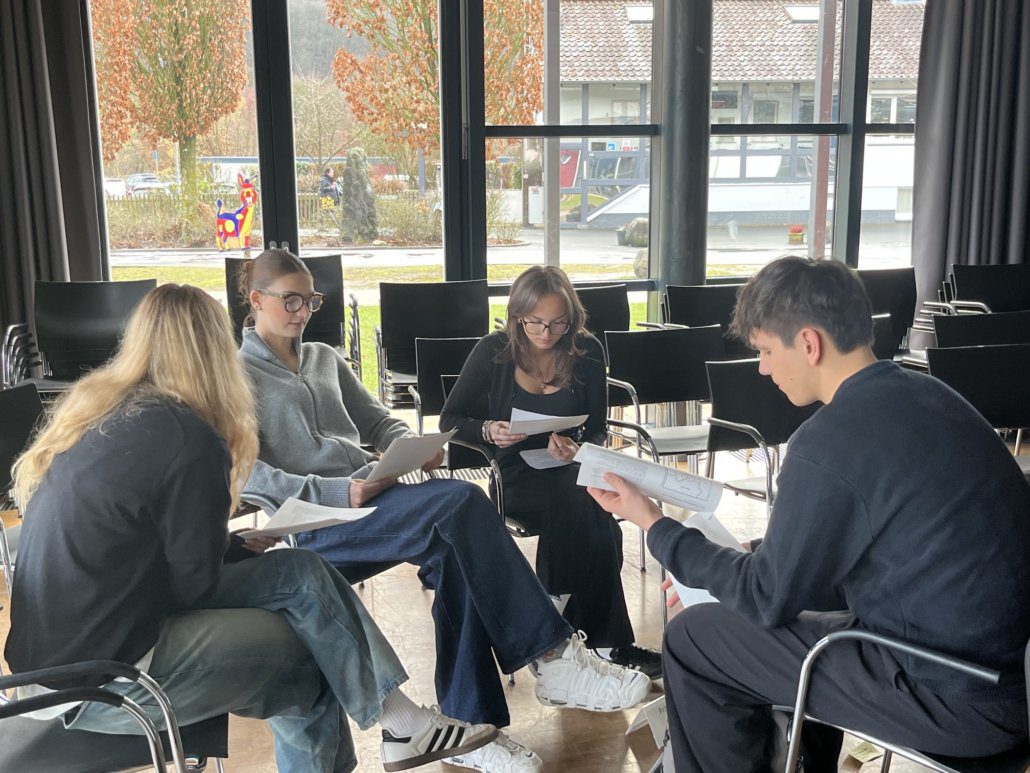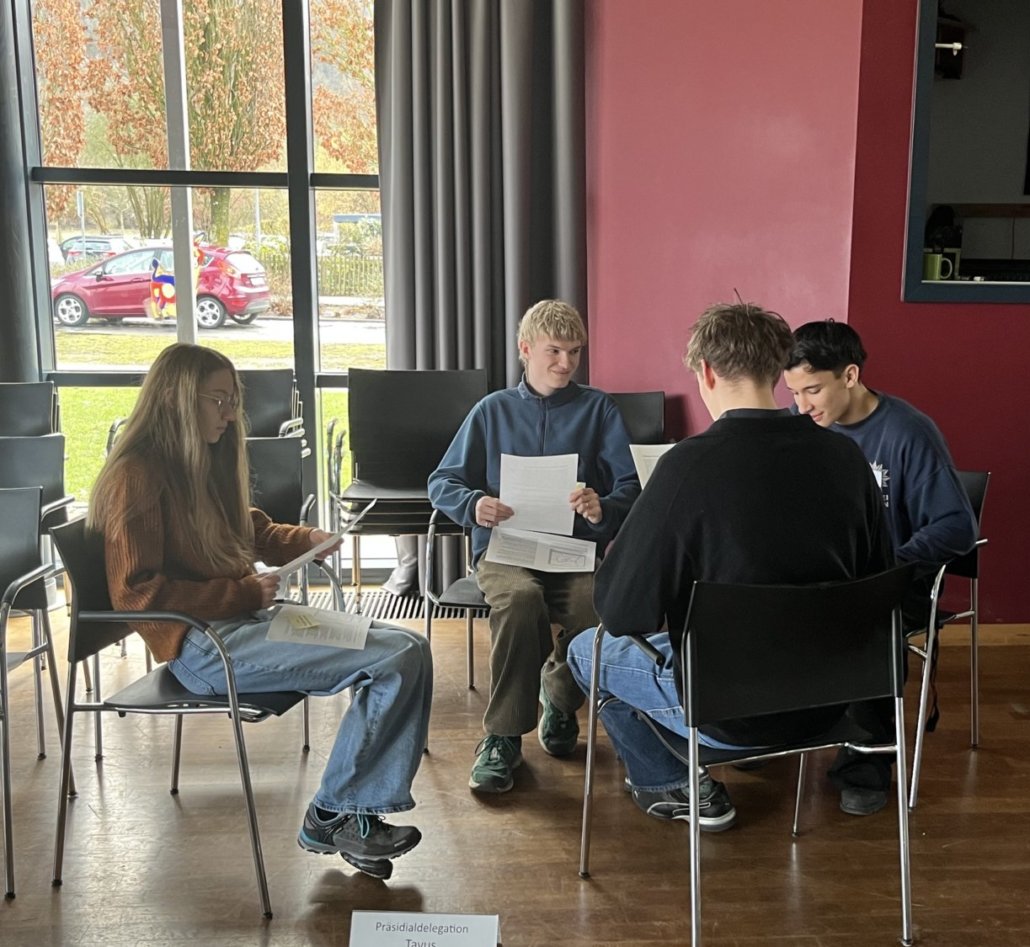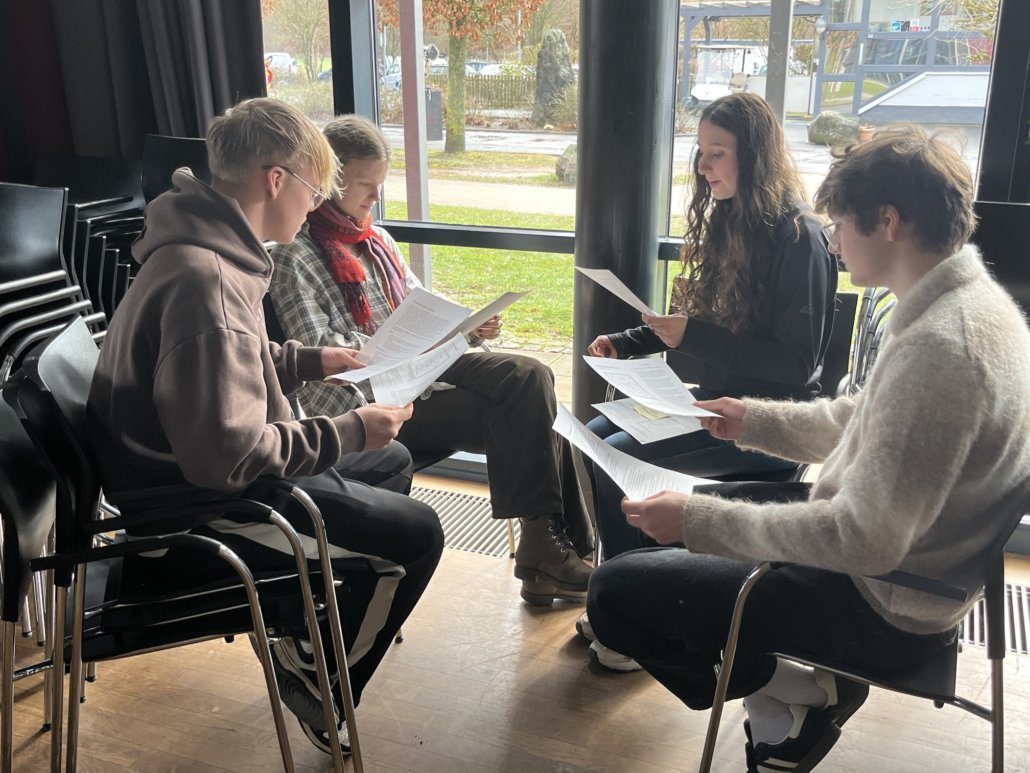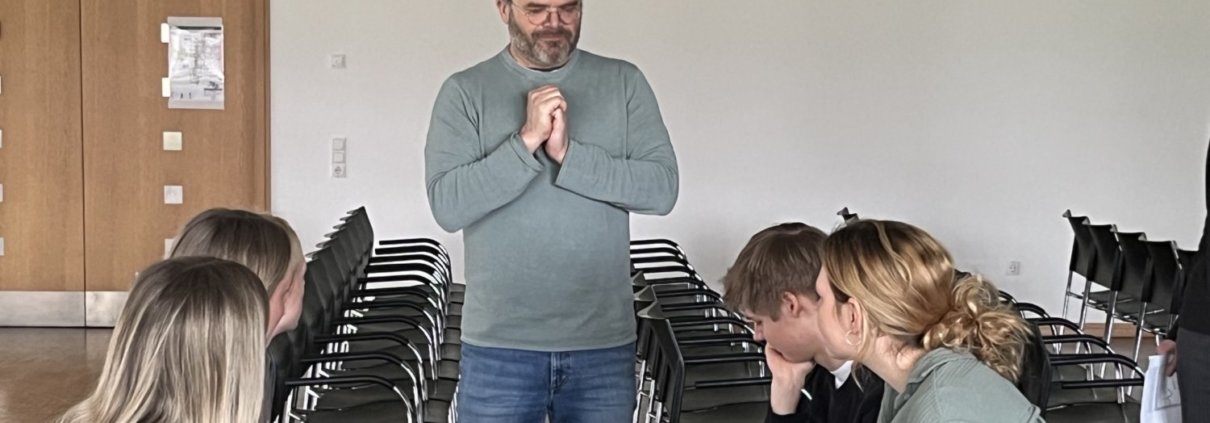
Why can’t international conflicts simply be resolved at the negotiating table? The 13th-grade students at Steinmühle once again explored this question. Following the successful premiere two years ago, this year’s collaboration with Philipps University of Marburg once again demonstrated just how challenging diplomatic negotiations actually are. The event was largely facilitated by conflict researcher Dr. Stéphane Voell, who led the simulation and guided the participants through the challenging simulation exercise.


Informal discussions as a first step

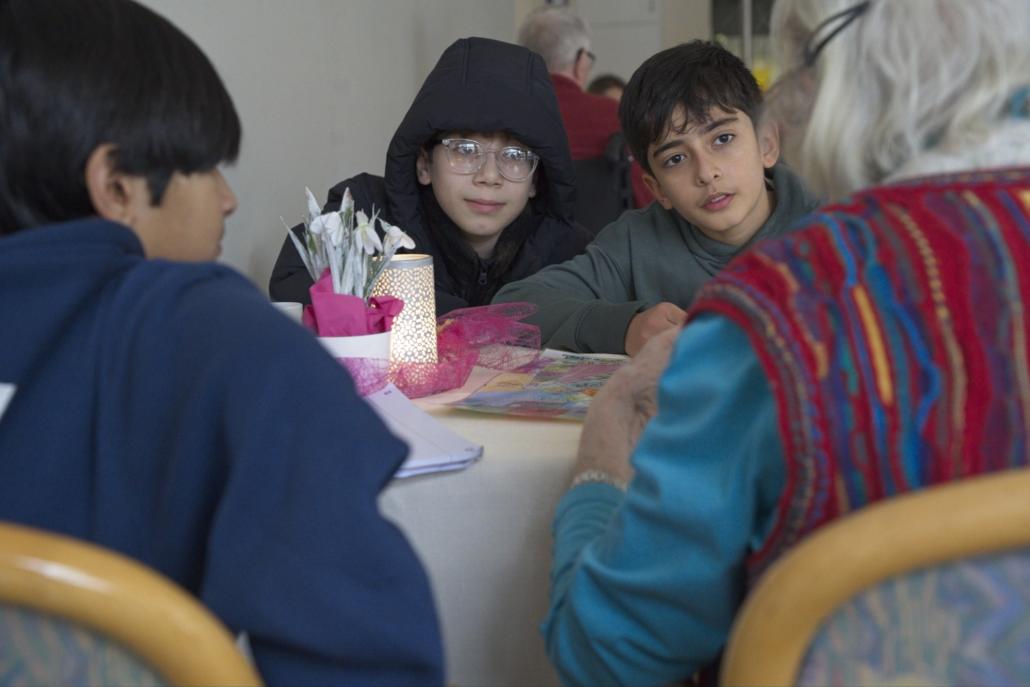
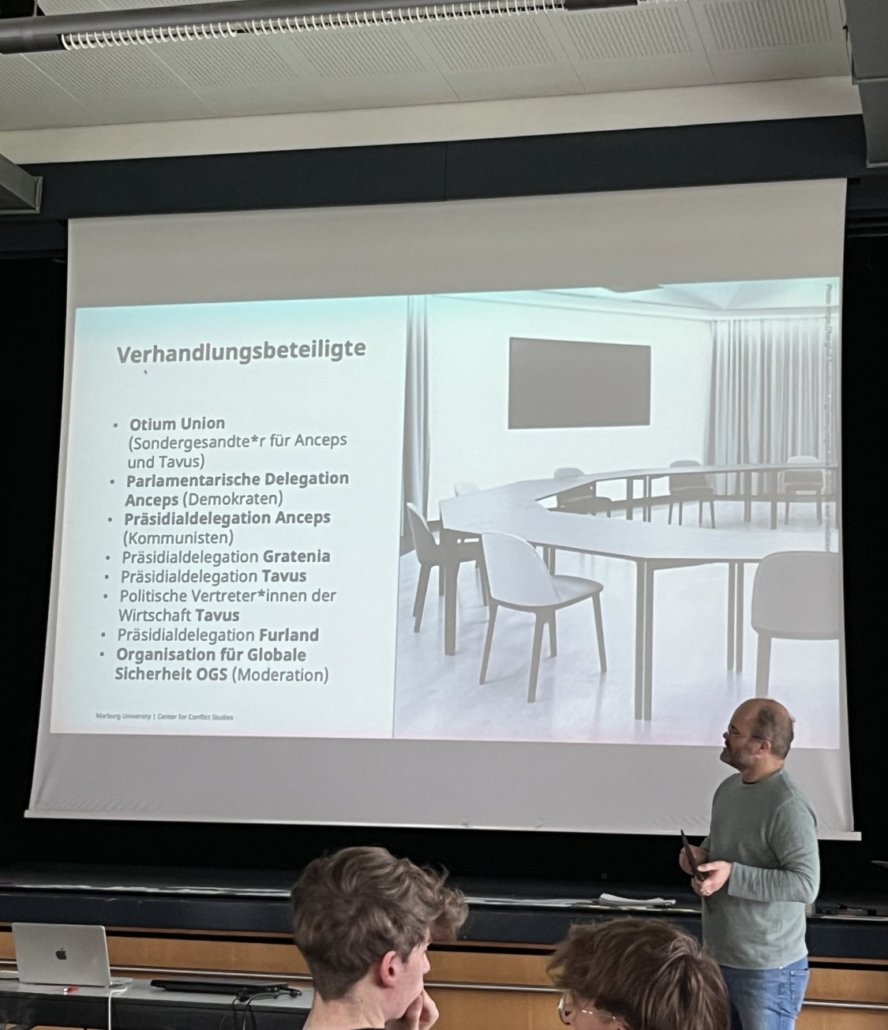
During the event, the students took on the roles of delegates from various fictional countries. Each with their own interests, political goals, and territorial claims, they first engaged in informal discussions before gathering at a roundtable to try to develop a joint solution to the conflict. To give the simulation as authentic and official a character as possible, the participants were instructed to consistently address one another formally during the negotiations. It quickly became clear how difficult it is to negotiate compromises when national interests, economic interdependencies, and security considerations clash.


Caught between conflicting interests

Not every delegation was willing to compromise. Some vigorously defended their positions, while others sought dialogue—a tension that significantly shaped the course of the negotiations. The participants gained firsthand experience of just how challenging international diplomacy can be and why even well-intentioned solutions often fail due to conflicting interests.


A Keener Perspective on Real-World Conflicts

During the concluding reflection session, many students described how intensely they had experienced their respective roles. Terms like “frustrating” or “complicated” came up repeatedly, yet it also became clear that these very experiences had sharpened their perspective on real-world political conflicts. Together with Stéphane Voell, the dynamics of the negotiations were analyzed, and the simulation’s framework was finally revealed: The scenario was broadly based on the Transnistria conflict between the Republic of Moldova and the self-proclaimed Transnistrian Republic, with Russia’s involvement.


Experience the partnership with the university firsthand

For Bernd Hülsbeck, a subject teacher and head of the social sciences division within the Politics and Economics Department, the event is a successful example of close collaboration between the school and the university. It allows students to experience firsthand the long-standing partnership with Philipps University of Marburg. At the same time, the simulation adds a practical perspective to the 13th-grade curriculum, which is currently covering international relations.


A Wide Range of Career Opportunities

The Peace and Conflict Studies program at the University of Marburg offers graduates a wide range of career opportunities—including positions in international organizations such as the United Nations, as well as in the academic analysis and resolution of international conflicts. The simulation, held once again, impressively demonstrated just how complex peace processes are and how important dialogue, negotiation skills, and mutual understanding remain for sustainable solutions.

(Angela Heinemann)


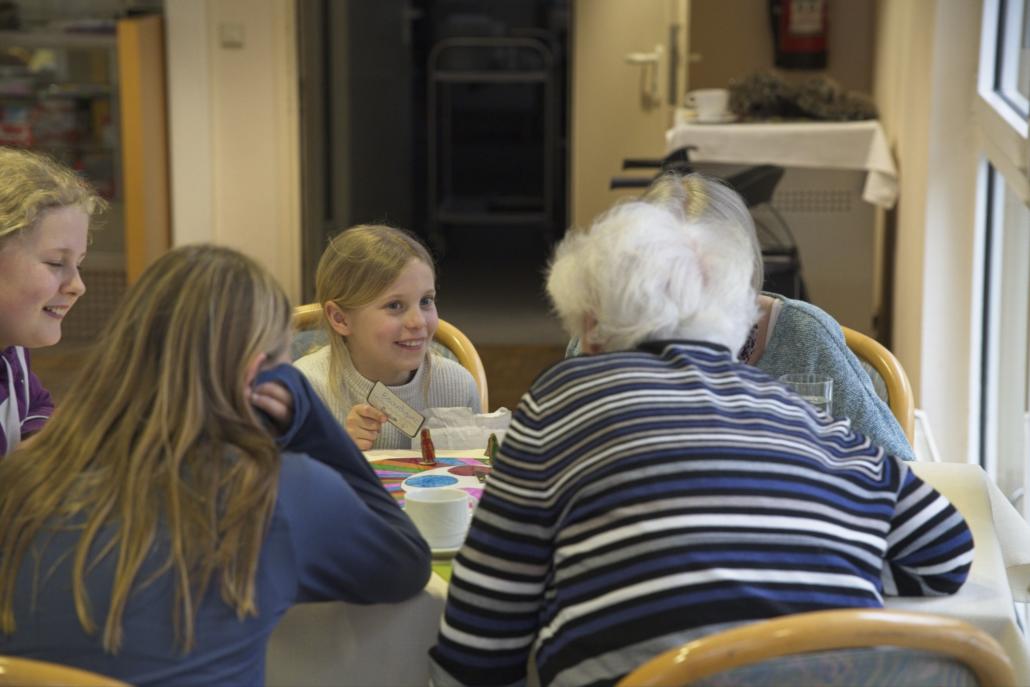
When is a man a man? Herbert Grönemeyer asked this very question back in 1984 in his song “Männer.” The topic has lost none of its relevance. Over the weekend, a workshop on “Masculinity & Role Models” took place at the Steinmühle boarding school, led by two guest speakers from ProFamilia.

Overall, the program was very well received by the young men, reports program director Marlon Welsch. Most of them engaged openly and enthusiastically with the content and discussions. In the workshop, they explored societal role models, aspects of toxic masculinity, and their own ideas about relationships and how to shape them.

What makes a man a man?

The discussion about what “makes a man” for them personally was particularly valuable. Many participants were able to take away concrete ideas and food for thought to apply to their daily lives—especially with regard to self-reflection, interacting with one another, and building respectful relationships.


The workshop provided a safe space for honest conversations and was generally considered an enriching experience.


(Heinm/Photo: KI)


Are you between 14 and 19 years old? Are you interested in learning more about when and why it’s easier or harder to concentrate? Would you like to support our study by participating? If so, we look forward to hearing from you! Information sessions will be held on March 4 or 9. You can find more details on our poster:


We are looking for motivated individuals to join our study hall team at the boarding school as soon as possible

Teaching Assistant (m/f/d) for Teacher Education Students (particularly in STEM subjects)

The Learning Center is open Monday through Thursday from 2:45 p.m. to 6:00 p.m. Students are required to attend for at least one day. For more information about the Learning Center, visit https://steinmuehle.de/internat/lernen/


Application Form
Name
Drag & Drop Files, Choose Files to Upload You can upload up to 2 files.
If you would like to submit a cover letter and a resume, you can upload the PDF files here.
Privacy Policy

We’re offering you a chance to combine your studies with hands-on experience!

Steinmühle Boarding School is seeking, for its boarding program, a staff member for a coed residential group to start as soon as possible

Students majoring in education or teacher training (as teaching assistants)

Are you ready to channel your passion for education, your creativity, and your interpersonal skills into providing strength-based support to students? Then you’ve come to the right place. We offer an idyllic boarding school setting on the southern outskirts of Marburg with direct bus service and free internet access, full board, and compensation reported on your income tax form. This position may be recognized as an internship. A Class B driver’s license is required.

If you have any questions, the boarding school administration will be happy to assist you.


Application Form
Name
Drag & Drop Files, Choose Files to Upload You can upload up to 2 files.
If you would like to submit a cover letter and a resume, you can upload the PDF files here.
Privacy Policy

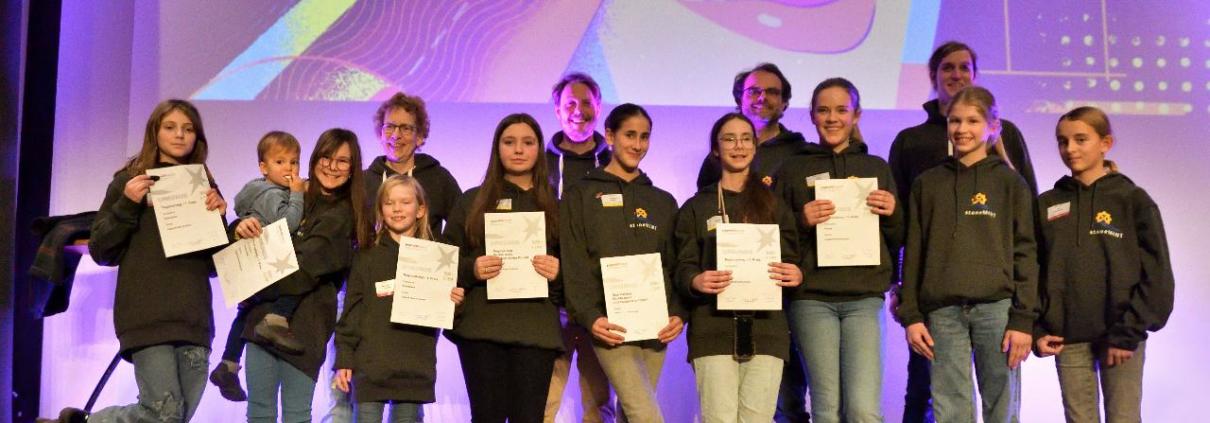
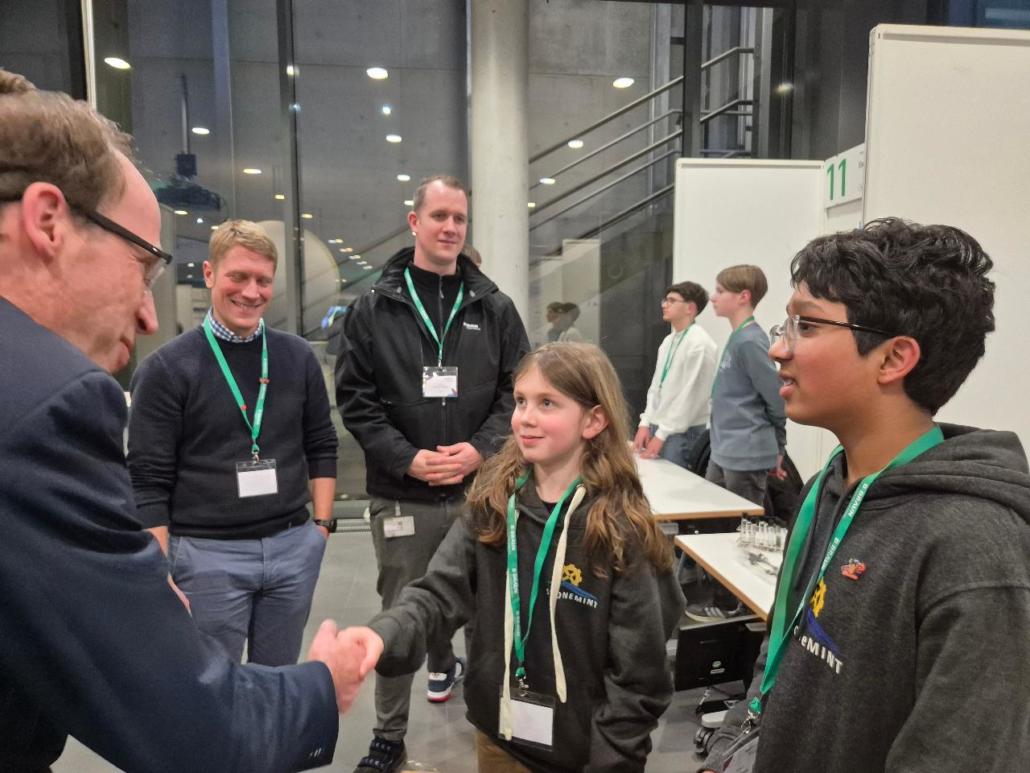
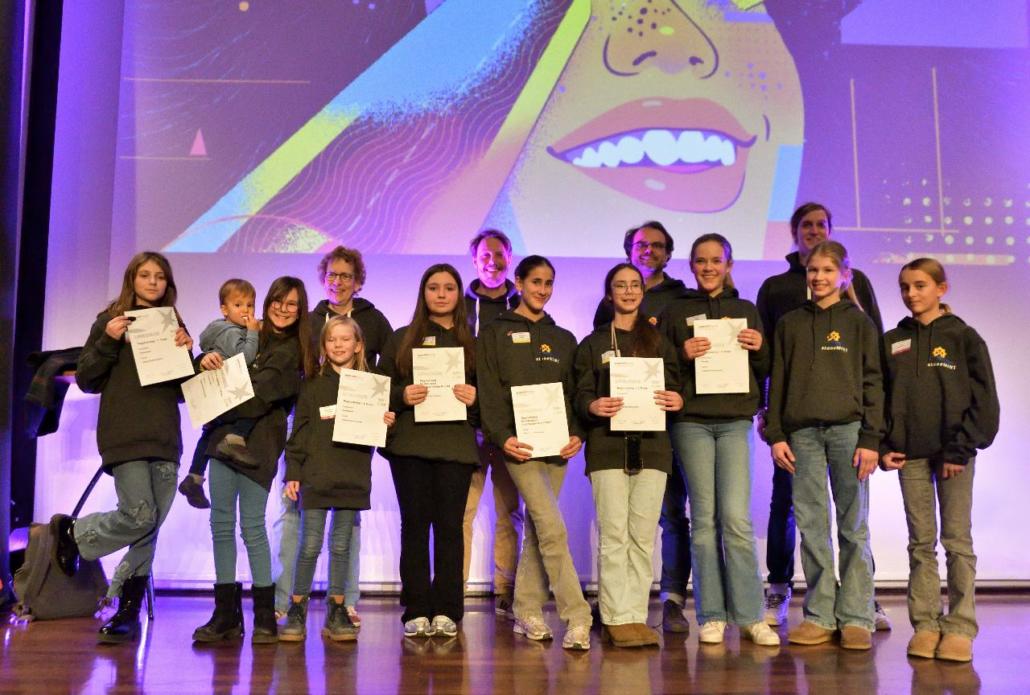
The Steinmühle sent six projects to the regional “Jugend Forscht” competition over the weekend—and returned with six first-place finishes! All of the Steinmühle’s participating projects won the regional title in their respective fields! As a result, the Marburg high school will travel to Kassel from March 20 to 21 with a total of 11 students and five projects to compete in the state competition of “Jugend Forscht Junior.” One group will compete in the state competition for older students in Darmstadt.

Ideas… they don’t really exist. Marietheres Schwabe, Aurelia Wild, and Fatma Sepetcigil from 5th grade had one. In their research, they focused on making baby diapers more eco-friendly—using plant power instead of superabsorbents.

Under the guidance of teachers Dr. Jutta Töhl-Borsdorf and Dr. Patrick Szabo, the group’s project in the “Working World” course sought an ecological alternative to the non-biodegradable superabsorbent used in baby diapers. In extensive tests of absorption capacity, absorption speed, and pressure stability, the students found that a mixture of apple pectin and konjac powder works very well. This combination of materials even passed the practical test in a “modified diaper” with Aurelia’s little brother.


A Closer Look at Elephant Toothpaste

Marlene Jerrentrup and Ida Watzlawek from 6th grade, under the guidance of Dr. Patrick Szabo and Antje Seel, conducted a “Living Foam” experiment in their chemistry class: Elephant Toothpaste

The group investigated how temperature, the amount of yeast, the amount of dish soap, and the concentration of hydrogen peroxide affect the amount of foam produced. Among other things, the young researchers found that you should use a lot of yeast, but not too much dish soap.


Unraveling the Formula for Flight

Isabella Kuhl and Lotte Wagner, seventh-graders, tested the formula for flight under the supervision of Malte Klimczak and Dr. Jutta Töhl-Borsdorf in the physics department.

The two researchers re-examined a recently discovered formula that can be used to calculate the wingbeat frequency of insects and birds based on the animals’ masses and wing areas. To do this, they measured and analyzed free-flying insects and butterflies they had raised themselves using video analysis. They also investigated how changes in the mass of an ornithopter (a wind-up model bird) affect its flight behavior.


A special project by young car enthusiasts

Akaash Bhagwat (8th grade) and Emil Zuckermann (6th grade) focused their project on the potential interaction between smart fluids and smart cars. Under the guidance of Dr. Jutta Töhl-Borsdorf and Dr. Sven-A. Freibert in their physics class, they investigated the fascinating properties of magnetorheological fluids and subsequently conducted experiments they designed themselves, which demonstrated how viscosity and damping behavior can be specifically controlled by magnetic fields. Finally, the students filled the shock absorbers of a model car with the magnetorheological fluid and demonstrated adaptive damping using a ramp test.


Paper made from horse manure has been further developed

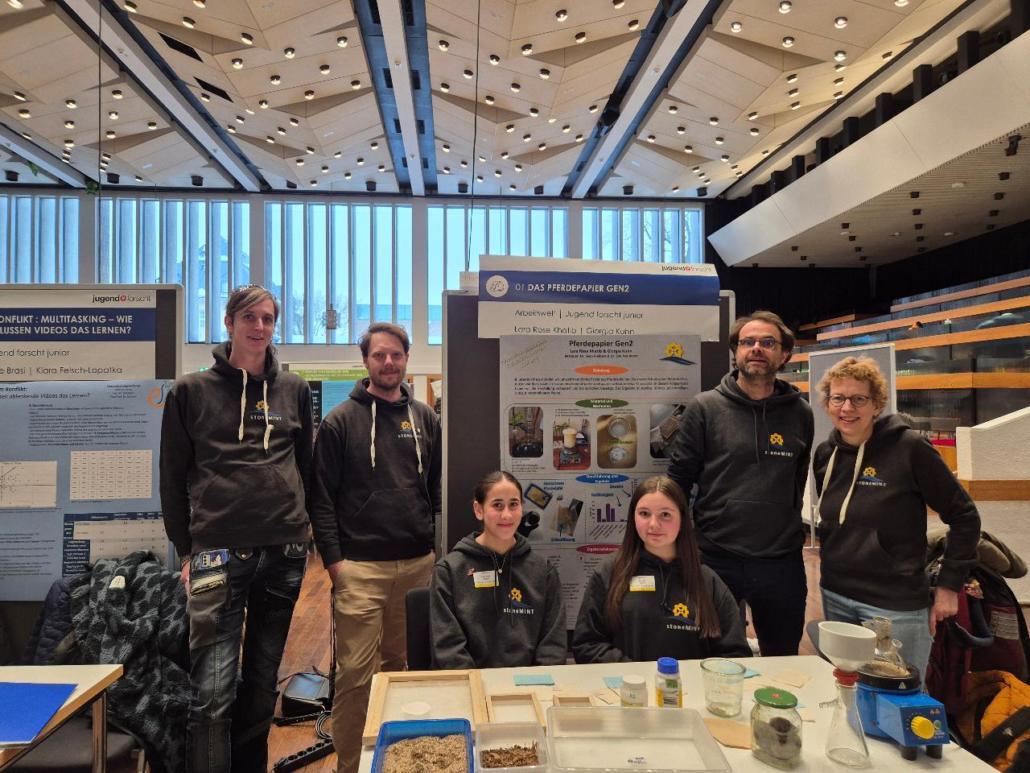
Lara Khatib and Giorgia Kuhn from 8th grade worked on further developing their project, which involves producing eco-friendly paper from horse manure. Under the guidance of Dr. Sven Freibert and Dr. Eva Neumann, the two students were able to significantly improve the production of their eco-friendly paper from horse manure in this follow-up project as part of the “Working World” course. Among other things, adding starch reduced the paper’s brittleness. The result is a second-generation (Gen2) paper that is sturdy, thin, uniform, and easy to write on.


The AIceBear is a seasoned competitor

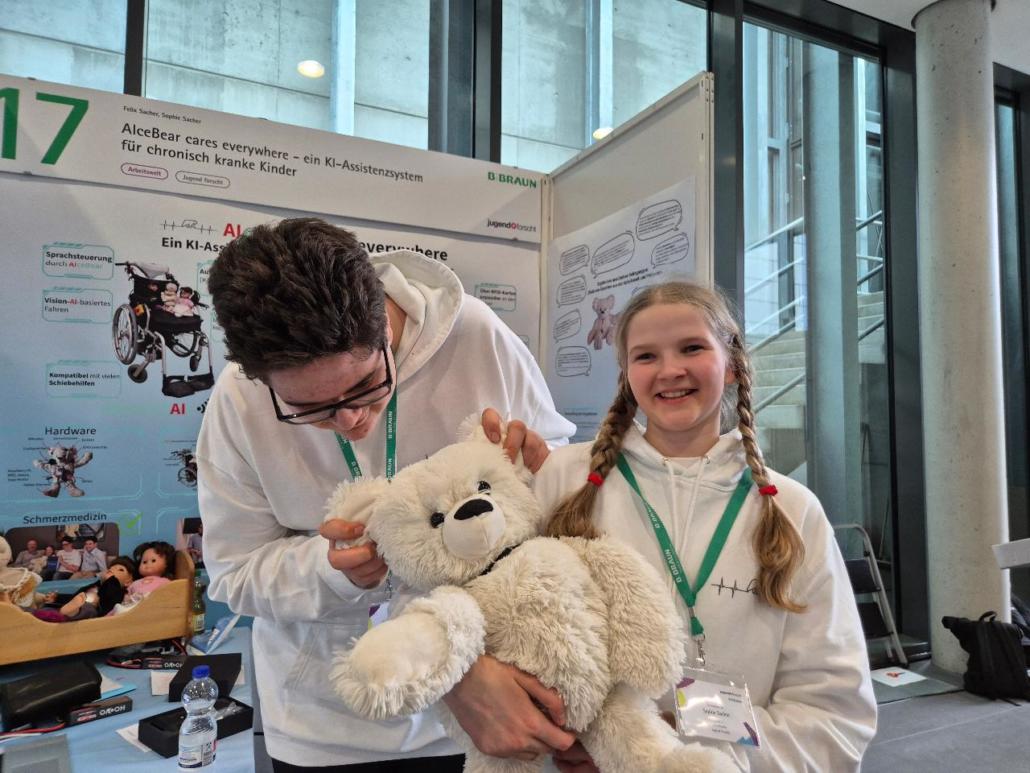
The AIceBear has already traveled with siblings Sophie and Felix Sacher to many competitions, including one in Singapore (as we reported). Now, the project—an AI-driven assistance system for chronically ill children—has been presented at Jugend Forscht in the “Working World” category and has qualified directly for the state competition. To present it to the jury, they’ll be heading to Darmstadt at the end of March, while the younger students will have to explain their experiments to the experts in Kassel.

The students are feeling confident about the next round.

(Angela Heinemann)
How do I recognize my own boundaries? How do I stand up for them? These and other topics, such as self-assertion and self-defense, were the focus of a workshop for young women at the Steinmühle boarding school. Through this workshop, the organizing association, Wendo Marburg, actively offers encouragement and support to participants aged 16 and older.

Ten young women participated in the two-day course. Through various exercises, they were able to explore their own boundaries and learn to assert them to others.


Coping with Everyday Situations

The exercises focused, for example, on personal presentation—both verbal (using the two-sentence method) and nonverbal—as well as on everyday situations that participants could learn to handle through repetition. A safe space for dialogue was created. At the same time, the focus was on assertiveness and self-defense. Working in pairs and small groups, the young women were able to try out and practice various strategies.


Mutual Support

Program Director Anne Gebhardt: “It was especially nice to see that the young women continued to talk to one another even in the days following the workshop and, for example, recommended apps to each other within the group so they could continue to support one another beyond the course.”

(Heinm/Photo: KI)

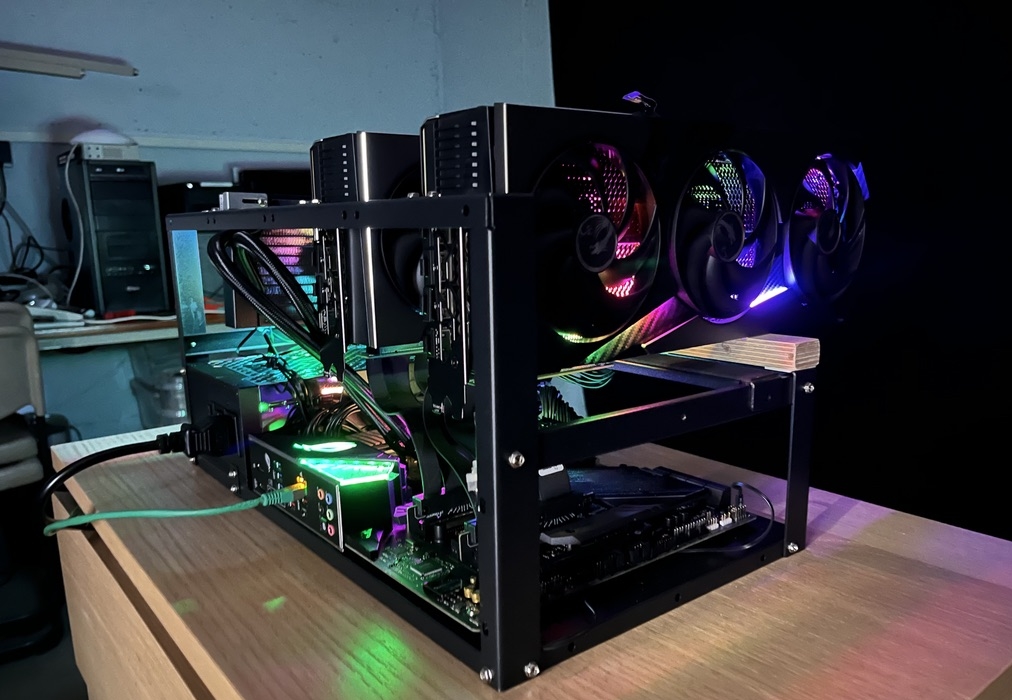
Thanks to the support of our booster club, chaired by Jasmine Weidenbach, and a wealth of in-house expertise, Steinmühle has had something for several months now that most schools in Germany do not yet have: its own AI server—and with it, true digital sovereignty.

Behind the unassuming server case lies remarkable computing power: Two high-performance NVIDIA graphics cards power state-of-the-art open-source language models—including GPT-OSS-120b, Gemma 3, and Mistral 7b. The OpenWebUI interface makes them intuitive for teachers and students to use. The hardware is deliberately designed to be scalable, ensuring that growing usage will not cause bottlenecks. The server and its features were presented to the faculty at Steinmühle during the school’s internal teacher training program (SchiLF).


The server operates in a completely climate-neutral manner

Steinmühle is particularly proud of its sustainable operations: The server runs entirely climate-neutrally—powered by hydropower and the school’s own photovoltaic system. — So, for us, AI and sustainability are by no means mutually exclusive.

But what exactly can the server do? We’re currently testing several exciting applications: a parent assistant with information about Steinmühle, a resource assistant for the religion department, exam assistants for teachers, and other experimental projects. Everything runs on our own infrastructure—no data leaves the school, and full GDPR compliance is guaranteed.


The Interplay Between Education and Technology

Recent developments also show that we’re on the right track with this approach: We’ve just submitted our entry to a prestigious 2026 competition—with our data-sovereign server at the heart of the concept. We’re very excited to see what happens!

Steinmühle would like to thank the school administration and management for their vision of a school that responsibly combines education and technology. We are proud of our experts, who developed our project and are keeping an eye on its future development.


Contact:

Björn Wagner, teacher at Steinmühle, AI and Data Protection Officer

Till Buurman, IT Specialist for System Integration, member of the Steinmühle IT team, and server administrator

This post was created using AI and edited by Angela Heinemann

Gymnastics is a new sport at Steinmühle; at any rate, this sport has been revived after a very long hiatus—and is currently highlighted by the school’s participation in the “Youth Training for the Olympics” competition. Lotta Jerrentrup from Class 9a reports:

“At the end of January, our school gymnastics team had the opportunity to compete in the regional finals of ‘Youth Trains for the Olympics’ in Limburg. The team members were Zoe Gundlach, Lotta Jerrentrup (9th grade), Miranda Lammerskötter (7th grade), Marlene Jerrentrup, and Ida Watzlawek (6th grade).

In the morning, a shuttle bus picked us up and took us to Limburg. The trip there took 2 hours because we picked up several other school teams along the way. Once we arrived, we found a large gym with a competitive atmosphere, since the “Jugend trainiert” competition mainly features competitive gymnastics teams.


Competition Start According to the English System

First, we warmed up for half an hour. After the entrance march accompanied by music, the competition began according to the English system, which means that each gymnast is allowed one minute on each apparatus (vault, parallel bars, balance beam, and floor) to warm up and get familiar with it, since the apparatus can be used differently in every gym.

Our team started on the vault alongside the Elisabethschule. Next came the parallel bars, followed by the balance beam, and then the floor exercise. We completed all the apparatus and were satisfied with our performance. It was very impressive to see what some of the gymnasts from the competitive groups were able to do—the elements they had mastered on each apparatus. This was followed by a break during which all the apparatus was taken down. Finally, there was the awards ceremony, where, as expected, the school teams from the competitive gymnastics centers swept the top spots. Our school team came in 8th place!


“Taking part really motivated us”

In conclusion, we can say that competing in Limburg was a wonderful experience. Being able to participate really motivated us, and we hope to compete again in 2027! A big thank you goes to our chaperone, physical education teacher Marcel Kalb, who made our participation possible and gave us great support.”


A Pleasant Collaboration

Marcel Kalb, the physical education director at Steinmühle, immediately expressed his gratitude and praise: “We weren’t able to prepare for the competition at Steinmühle because we lack the necessary gymnastics equipment. Here, we received active support from teacher and club coach Thomas Nickol (TSV Ockershausen, Sophie von Brabant School), who not only guided us through the competition and our preparation but was also a very pleasant partner to work with.” Perhaps, says Marcel Kalb, this will lead to a formal gymnastics partnership in the future.

(Heinm)