


A great prize, ambitious projects, and an expanded team of STEM mentors
One Year of Plus-MINT Talent Development at Steinmühle / The next application period is already underway
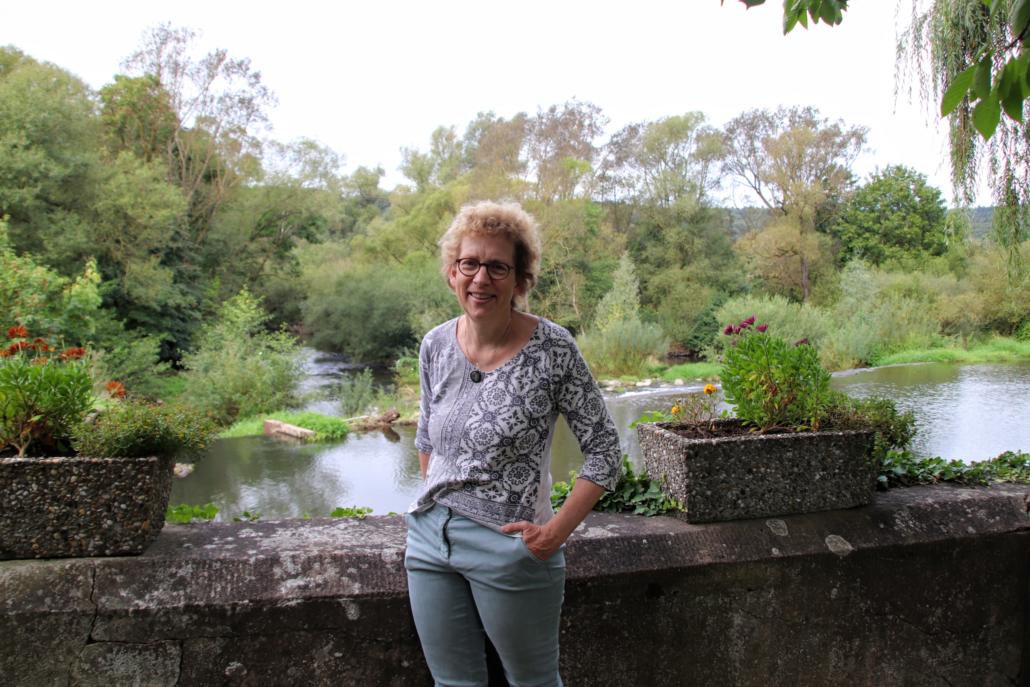
For the past year, Steinmühle has been one of seven boarding schools in Germany participating in the plus-MINT talent development program. We spoke with Dr. Jutta Töhl-Borsdorf, the head of the MINT and plus-MINT departments at Steinmühle.
Hello, Dr. Töhl-Borsdorf. Looking back, what all happened during the first year of plus-MINT?
Oh, quite a lot. It all really got started in October 2022. That’s when YouTuber Marcel Häfele, aka Techtastisch, came to Steinmühle with some spectacular experiments. That really got all the students from the research labs excited.
In November, the annual plus-MINT conference took place. Many students and staff members from the other plus-MINT boarding schools came to Steinmühle for the event. The atmosphere was fantastic. The same was true in January 2023, when we hosted our first plus-MINT Math Camp at Steinmühle. This was followed by the plus-MINT Astronomy Camp in Heidelberg. And in July of this year, YouTuber Dr. Whatson finally came to Steinmühle for a video shoot (the link to the video can be found at the end of the interview).
Many day students from Steinmühle also took part in all of these events. That makes me personally very happy. It’s a great opportunity for everyone and helps STEM and plus-MINT grow together.
That sounds like a very exciting and varied program. Do the plus-MINT students already have their own project?
Yes, indeed, the “Boat Project.” The four of them are working there in collaboration with the Department of Earth Sciences at the University of Marburg—that is, with the support of Dr. Christoph Reudenbach. They are building a boat equipped with sensors to semi-automatically measure water quality in the Lahn River and collect water samples. It’s a very ambitious project.
Have there been any STEM achievements to report this year?
Yes, you could certainly say that! The Steinmühle won the Hopp Foundation’s school award for its commitment to STEM education as part of the “Jugend forscht” state competition.
The boat project by the plus-MINT students played a major role in the application. The prize money of €2,500 came at just the right time, since the necessary sensors are quite expensive. The money also made it possible to purchase a high-performance 3D printer. Now, of course, we’re hoping for success when the project’s results are presented at “Jugend forscht.” So please keep your fingers crossed! Beyond the public recognition that comes with success, what’s most important, of course, is that the students are given every opportunity to fully pursue their interests in the natural sciences.
How did you personally experience the first year with the four plus-MINT students?
It’s labor-intensive, but very exciting. A first run-through like this is never perfect. We had actually planned to start with something involving biological and chemical water analysis, since we didn’t know much about the four students’ STEM interests. However, three of the “STEM students” are primarily interested in physics and math. So we had to improvise at first. But with the boat project and the university partnership, we found a great project that’s interesting for everyone.
Still, the four of them had to find their footing as a group first. We had the opportunity to get to know four remarkable and very different young people. Of course, there were also some “dry spells” along the way. As is often the case in science, things don’t always work out the way you imagine at the beginning. In any case, the four of them have already demonstrated perseverance and a willingness to work hard.
What makes the plus-MINT program special?
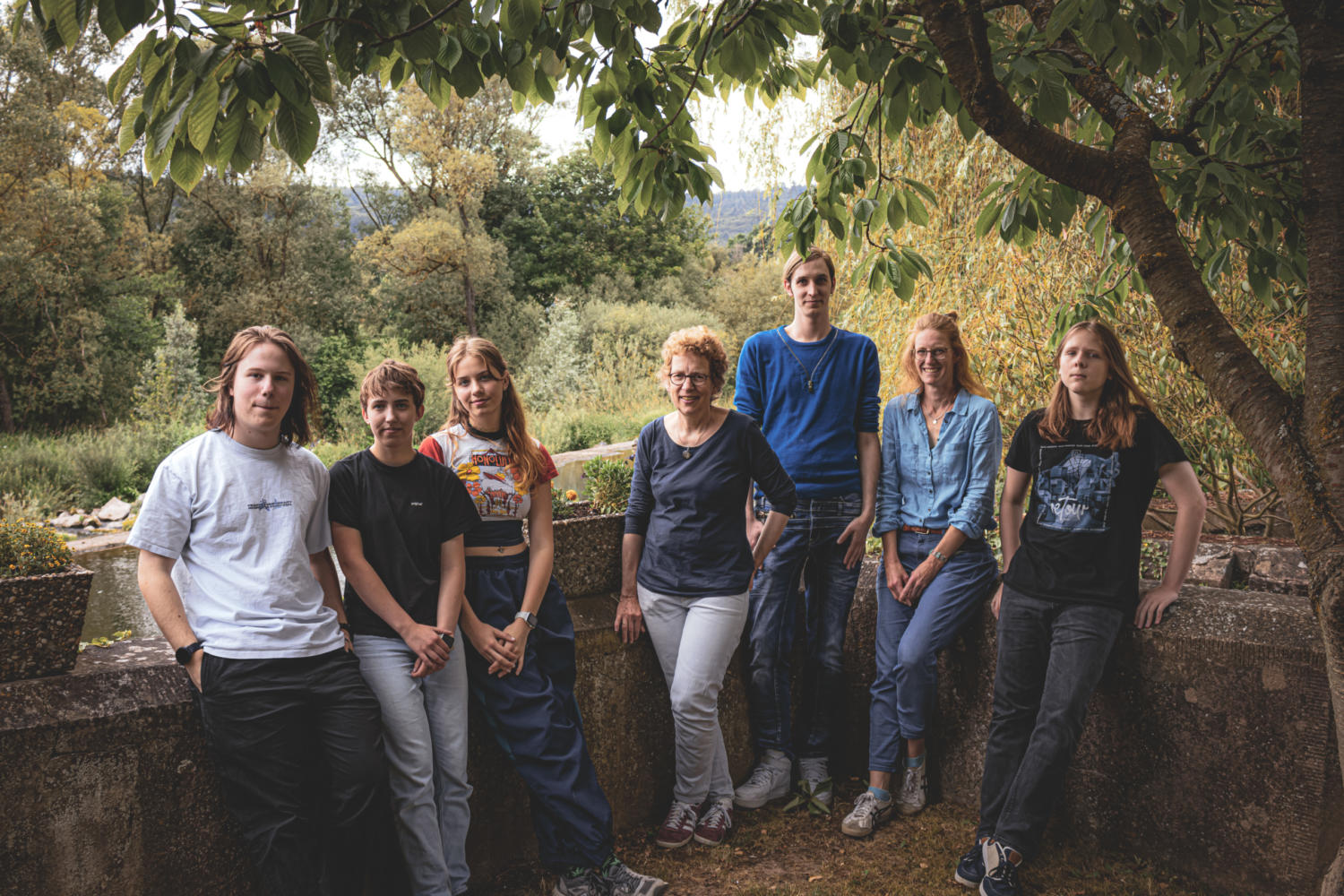
That a framework is being created for students passionate about STEM—one they certainly didn’t have in this form at their former schools. They’re working on a major project in the STEM module and have many other opportunities to conduct research and network across regions. Clara, for example, has been studying mathematics at the University of Marburg since last semester, and Fabian is starting his biology studies this semester.
Because all plus-MINT students live in the boarding school, they can meet up at any time to continue discussions, conduct research, or simply have fun.
Speaking of having fun, what else can the plus-MINT students expect at the Steinmühlen Boarding School?
The plus-MINT students are part of the boarding school community. In addition to their STEM talent and passion, the MINTis are teenagers at the boarding school. They have the same rights and responsibilities. They attend the study hall, eat together, choose their extracurricular groups, and live in one of the six residential groups on campus. They contribute their share to the community. Fabian and Marlene, for example, are active on the boarding school council. Fostering the academic talents of our STEM students is one of our goals. However, to integrate into the workforce and succeed in the future, young people also need team spirit, empathy, and self-confidence. A boarding school can provide optimal support on this journey.
That sounds great! Is the plus-MINT talent development program continuing at Steinmühle?
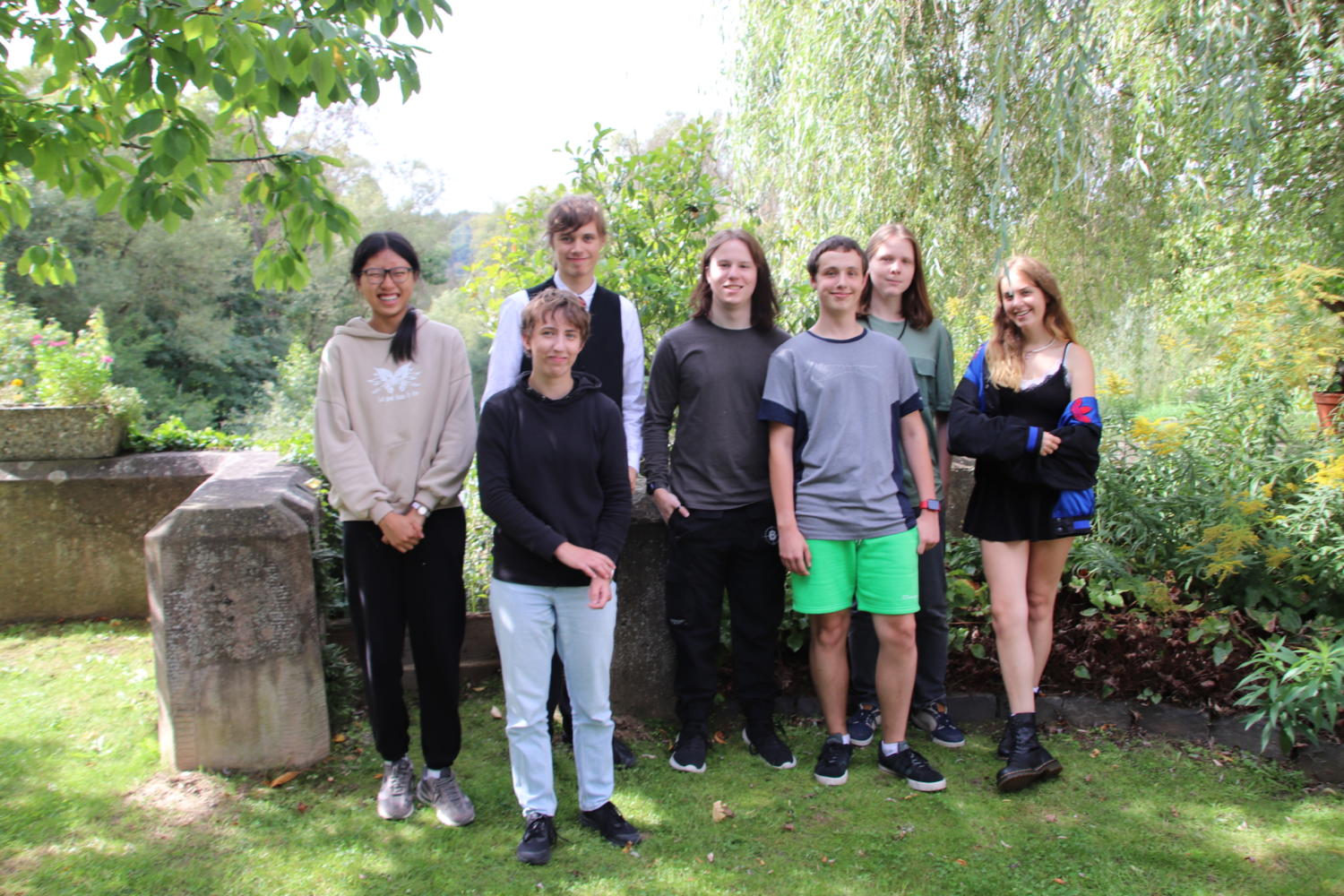
Yes, plus-MINT is definitely continuing. We were able to welcome four more MINTis to Steinmühle at the start of the new school year. In total, there are now 8 plus-MINT students at Steinmühle. Now the goal is to raise even more awareness of this great opportunity at Steinmühle and to encourage even more young people to apply for the next round (the 2024–2025 school year).
What are Steinmühle’s STEM plans for the future?
We would like to further expand the program for our day students. We want children and teens not only to participate in camps and competitions, but also to work on collaborative projects. To do this, we urgently need a larger lab so that all research groups can have their own workspace—a place where they don’t have to constantly put away their experimental materials, but can continue working on their projects during breaks or free periods.
Another issue is access to the SFM, the Central Hesse Student Research Center. Unfortunately, it’s relatively far from the Steinmühle for our students.
And—we want our school to become climate-neutral. Of course, we’re also planning to involve our STEM students in this effort, for example with the hydroelectric power plant.
Those are some very ambitious plans! In addition to financial resources, you’ll probably need a lot of personnel as well. How are you going to manage that?
I’m happy to share some good news: Our STEM mentor team at Steinmühle has grown! I’m very pleased to have the support of Dr. Sven Freibert and Mr. Jonathan Gröb, and I’d like to welcome them both once again. That means there are now five of us in the STEM department at Steinmühle.
What are your suggestions for the plus-MINT and MINT programs at Steinmühle?
It’s clear: more time for students. My greatest wish would be to “streamline” and reform the curricula. Our society is changing rapidly right now, but the state ministries of education are barely responding. Why not give students more time to work on their strengths and interests? Our students have so much to accomplish and too little time for projects close to their hearts, especially in high school, where we have little influence.
Are there still possible solutions at the Steinmühle?
At the next SchiLf (in-school teacher training session), Steinmühle will explore a new school schedule model designed to provide more opportunities for independent work and interest-driven learning. I expect this to bring many improvements for STEM subjects. Currently, our structures—with WU, the GuFi Lab, the STEM module, and the Open Lab—are very complicated, and there’s a gap in 7th grade that’s currently only being filled by the Open Lab. For example, forming groups has become extremely complicated.
Of course, this applies not only to STEM but also to the other subject areas. After all, we at Steinmühle want to do justice to all students!
I, too, would like to have more time to focus more on the subject matter with the students again. I’m just as fascinated by the STEM subjects as they are. I enjoy having in-depth discussions with the students and sparking their interest. I always learn something new myself with every project—that’s really great. But there’s so much administrative work to do these days that there’s hardly any time left for the students.
Yes, science requires time AND space. You’ve already mentioned that there’s a shortage of space.
That’s correct. We’d like to have a STEM lab to make our school even more attractive to future STEM and plus-STEM students.
How do you become a plus-MINT student at Steinmühle?
You can apply online for the plus-MINT program until January 31, 2024, starting with a short letter of motivation (initial application). Steinmühle accepts students entering 10th or 11th grade. In the second round of the selection process, you submit teacher recommendations, report cards, etc.
Once you’ve cleared these hurdles, you’ll be invited to a 4-day selection camp at the Birklehof in the Black Forest. Passing the camp there isn’t as difficult as you might think. A large number of spots are made available.
The alternative is a wildcard (free pass), which can be awarded by plus-MINT students or teachers; if you receive one, you’ll be invited directly to the selection camp.
In addition to interest and aptitude, key admission criteria include extracurricular involvement in STEM fields, academic performance, as well as personality and social skills.
We hope to receive many applications for the coming school year!
The current application deadline for the plus-MINT Talent Development Program is January 31, 2024.
For more information, visit www.mint-verein.de


