It all started with a simple idea: shared joy is double the joy!

The students at the Steinmühle boarding school have also noticed that these vital resources derived from social relationships are currently difficult to access due to the COVID-19 measures. Adolescence is supposed to be characterized by diverse social relationships that can play a particularly important role in the developmental process; however, the many opportunities for social interaction are currently severely limited.

Boarding school educator Francine Olschewski also noticed this growing desire for social interaction and connection among the students at the Steinmühle boarding school. And so the idea was quite simple: By doing something good for others, you might also be doing something good for yourself in the process. From this simple idea by the educator emerged a successful and promising collaboration between the City of Marburg’s “In Würde Teilhaben” project and the Steinmühle boarding school community.

Small Ideas with a Big Impact

The City of Marburg’s project aims to improve the subjective well-being of elderly and very elderly people who are lonely and living in isolation by establishing contact with them. During the run-up to Christmas, surprise packages—known as “encouragement bags”—were put together for this purpose, and the boarding school students contributed to them with homemade cookies and handcrafted Christmas cards.

At first, a handful of students got together and pooled their ideas. It quickly became clear: Our students wanted to do something good for people in need during this time of the coronavirus pandemic. Anyone can bake cookies, and many are creatively talented: so for the “Cheer-Up Bag,” the students wanted to include something delicious and a kind message. “I finally felt like I was doing something meaningful again!” says student Friederike enthusiastically. “Such small things can bring so much joy.”

The entire boarding school community pitches in

The students’ initiative impressively demonstrated that sharing experiences with others can enhance our well-being:
With the support of boarding school counselor Francine Olschewski, this small group of students managed to get every member of the boarding school community to participate in this initiative. As a result, ovens are running hot in all six residential groups as students bake cookies, and even the housekeeping and administrative staff helped design the cards. “I really didn’t think we’d be able to pull this off. But so many people on campus were enthusiastic about the idea that, in the end, we all pulled it off together,” Francine Olschewski reports proudly. In the end, the boarding school community donated 180 bags of cookies and 180 individually designed cards to the “Mut-Mach-Tüte” project.

Mayor Spies and HR document the handover

And because the initiative is so full of compassion and dedication, it was no surprise that Mayor Dr. Thomas Spies wanted to be there to help present the gifts to the project leader. This ultimately even drew Hessischer Rundfunk to the Steinmühlen grounds, where they recorded the students presenting their homemade gifts to project leader Ms. Angela Schönemann. Boarding school student Noah is especially thrilled: “It all started with just a little idea. And now I’m carrying the cookies right alongside the mayor!”

You can listen to the segment from the show HERE .

Endless Commitment – Students Are Motivated

Caught up in the excitement, the students naturally can’t resist taking part in the distribution of the “cheer-up” bags to the elderly. And so, equipped with FFP2 masks, bags of homemade cookies, and handcrafted cards, some students are bringing a little joy to elderly people living alone in Marburg. “I think it’s super cool what you’ve started here. It began with just a little idea, and I’m so touched by the result. This is exactly what older people need right now,” says project leader Angela Schönemann happily.

Three groups of students surprise lonely seniors at their front doors with a socially distanced visit during the pre-Christmas season. A special highlight: Felix, a student who hopes to study music someday, delights and amazes them with spontaneous arias and choral songs right at their front doors.

The reactions are very emotional on both sides: While the elderly express their joy at this spontaneous, lovely surprise with effusive warmth, the students are deeply moved that such a small gesture can bring so much joy. “I can hardly believe how much love is coming our way. I definitely want to keep doing things like this next year!” says student Verena, visibly moved.

Cooperation to Continue – Doing Good in 2021 as Well

Despite all the challenges, the students at Steinmühle Boarding School have already put together a wonderful project this year. Inspired by the heartfelt reactions of the elderly residents, initiator Francine Olschewski and her students are eager to continue the project in 2021. They are planning to establish mentoring relationships and regular contact between young and old. No matter what—the Steinmühle boarding school community will find its own unique way to make this happen in 2021 as well.

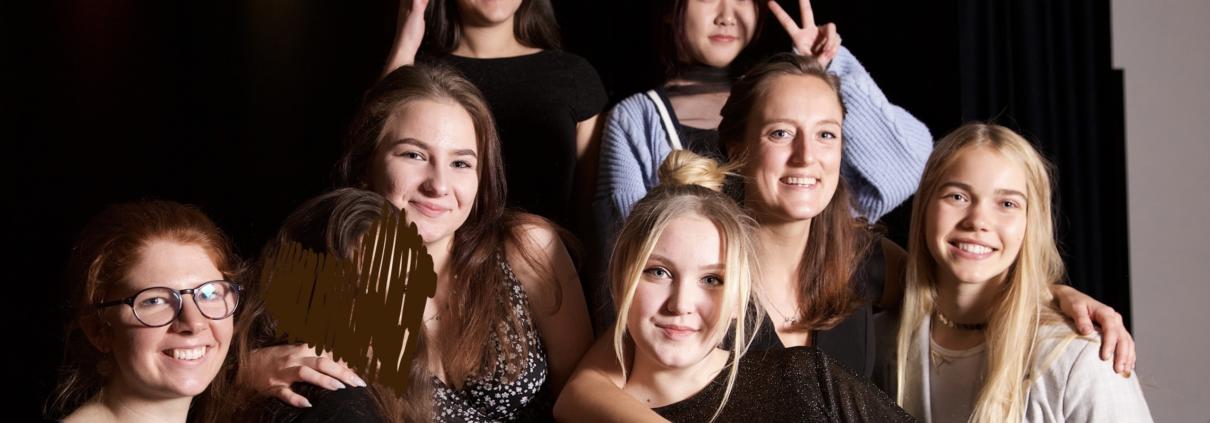
Normally, the Christmas party serves as a major end-of-year event for the entire boarding school: a big celebration where all the boarding students, their parents, and their teachers dine together in the dining hall and then stay up all night—that’s the plan.

But in 2020, nothing really seems “normal” anymore, and so it came to pass that Steinmühle celebrated an early, COVID-safe Christmas in a small group: The individual residential groups spread out across the grounds and made the most of their time together. And while the individual residential groups celebrated on their own, boarding school director Anke Muszynski, together with Steinmühle photographer Till Buurman, enjoyed moving from celebration to celebration and capturing these unique moments.

Westfalenhaus Swings Its Way Back to the 1920s

In the dining hall, the teachers organized a 1920s-themed murder mystery dinner for all the students at the Westfalenhaus: Who could catch the evil gangster? Even though the residents unfortunately didn’t catch the murderer by the end of the game, the party ended up being all the wilder. The students almost managed to dance the night away, if it hadn’t been for the teachers…

The parent company treats itself to a sumptuous meal

The students at the main campus usually make do with pizza during their house evenings, but for the Christmas party, they were treated to something special: The Meier III catering service delivered roast goose in abundance. And anyone who still had the energy after this delicious feast could round out the evening with a cozy get-together playing board games.

Biohaus is showering itself with compliments

The youngest students at the Steinmühle boarding school had the entire gym all to themselves. The boys and girls first let off some steam together before gathering for dinner and wrapping up the evening with a movie and homemade vanilla crescent cookies. The best part was the “compliment round” in between: Here, every student and every teacher had the chance to tell all their housemates in the residential group what they liked and admired about each person. Rumor has it that here and there, a tear of joy was even shed.

Hessenhaus Wonders: How Well Do We Really Know Each Other?

On Saturday evening, the tea room was more beautiful than it had been in a long time. The students and teachers had transformed the room into a little Christmas wonderland. After a few rounds of SingStar and exchanging Secret Santa gifts, things got exciting again: The team of educational directors had come up with some interesting questions about the residential community. Using a digital platform, the students answered the questions and eagerly followed the live rankings as the results were tallied. What color is the office door? And who is the oldest person in the house? In this playful way, the residential community got to know each other even better as the year came to a close.

Bremerhaus Dances the Night Away

After a student opened the evening in style by performing a beautiful piano piece on the grand piano in the opulently decorated room, the celebration continued in a lively atmosphere. As a surprise for the residential group, a bartender whipped up delicious (non-alcoholic) cocktails, making the evening even sweeter for the students. And while some had to take off their shoes to keep dancing, others were running around: Who would get the highly coveted frying pan for cooking in the group kitchen? In the end, the dice decided, and everyone danced together until they were completely exhausted.

Mühle Names the Winner of the Residential Group Competition

The Mühlenjungs recently renovated their common room, so it quickly became clear that the Christmas party would be the perfect occasion for a proper housewarming celebration. The highlight of the entertainment was the residents’ own performances. Ahead of the Christmas party, the guys had agreed on a contest: Who could best showcase the Mühle and its features? The winner was a video by a student who filmed the building with impressive precision using his drone.

And so this year, there were six small Christmas parties instead of one big one. Nevertheless, students and teachers were able to enjoy a wonderful evening together and, within the limits of what was possible, made this evening their own special celebration in their own unique ways.

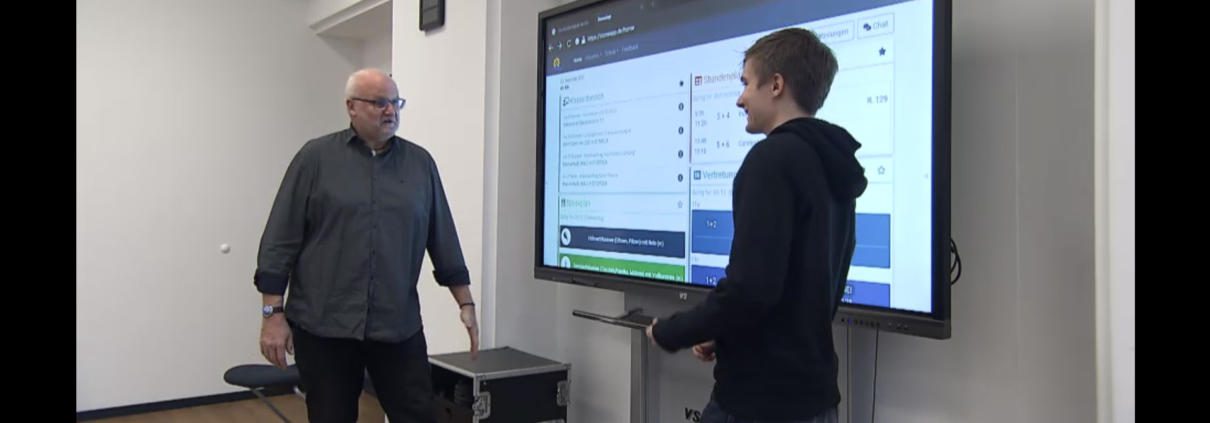
Am 3. Dezember 2020 besuchte uns RTL Hessen. Nach Veröffentlichung des Podcasts bei HR-iNFO hatte auch der Fernsehsender großes Interesse, unsere StoneApp kennenzulernen und vorzustellen.
Entstanden ist ein wirklich sehr schöner Beitrag. Herzlichen Dank an die Reporter Pascal Wede und Tim Ellrich – und großes Kompliment an Aaron, Jan, Eberhard Wieth und Bernd Holly für den perfekten Auftritt!

Elke Buurman is delighted. The new director of the Steinmühlen Riding Stables has noticed a steadily increasing demand for riding opportunities on the Steinmühlen campus. At the start of the school year, there were a total of 15 interested riders just for a spot in a regular after-school club. Restrictions due to weather or the pandemic have not dampened interest in equestrian sports. “However, we are very much hoping for an end to the restrictions so that riders can resume their activities in full.”

The Steinmühle riding stable has always been an integral part of boarding school life. It’s convenient for the students to be able to pursue their hobby right on campus, with the riding stable just a few steps away. Some are discovering the joy of riding for the first time. Traditionally, it’s mostly girls, but boys are also proving to be talented riders.

More club activity times to meet each rider’s specific needs

To accommodate the high demand and take individual prior experience into account, three club session times were introduced. This way, separate groups bring together advanced riders, beginners, and those interested in riding who are just getting a taste of the “basics” and learning everything involved in working with horses.

Horseback riding for beginners covers the basics of movement, equine theory, getting to know the horse and its needs, as well as tips on establishing a connection between rider and horse.

If someone has already spent some time in the saddle but lacks more advanced knowledge and skills, the initial focus is on handling the horse, daily care, saddling and bridling, riding in a group, and how human and animal interact during direct work together.

Experienced riders will continue their training in the third group. They can refine their techniques and, under professional guidance, build on and improve their riding skills.

In addition to the equestrian activities offered in the clubs, Steinmühle Boarding School also offers the option of taking private lessons. Students can book additional riding lessons or arrange to share ownership of a horse. It is also generally possible to take part in holiday riding courses to earn riding badges. It is also possible to board your own horses. Currently, two boarding school students are taking advantage of this opportunity and are delighted to have their horses right nearby.

From the basics to riding independently:
Anything is possible at Steinmühle

“Our goal is to build on the foundational knowledge of theory and practice to progress from independent, free riding to specific training for both rider and horse—all while fostering a healthy and harmonious relationship between animal and human,” explains Elke Buurman.

Additional activities during boarding school weekends—such as groundwork courses or intensive training in the care of Shetland ponies and school horses, as well as opportunities to work in the stables—are designed to provide a comprehensive and realistic experience of life as a rider.

The Steinmühle boarding school currently has seven school horses available for riding. In addition, there are five Shetland ponies. In total, there are 31 horses at the riding stable.

Animal and Human and Animal Health First

Elke Buurman approaches her work with a deep love for animals and takes the students’ varying wishes into account: She sees it as her mission to meet the needs of both people and animals equally. She plans to expand the riding program at Steinmühle even further in the future, depending on demand. She views the riders’ commitment—which extends far beyond the club and includes helping out in the stables and caring for the Shetland ponies and horses—with approval, but also with a watchful eye. As an educator, the Steinmühle teacher of German and physical education knows that a healthy balance must be struck in this regard.

“Everyone is looking forward to the end of the pandemic-related restrictions”

A major success for the riding program at Steinmühle was that interest in riding remained undiminished well into the winter following the club’s new elections—despite the adverse weather conditions. Unfortunately, the COVID-19 pandemic threw a wrench in the works. The restrictions imposed by the Hessian Equestrian Association (Pferdesportverband Hessen e.V.) naturally apply at Steinmühle as well. As a result, riding operations had to be almost completely suspended at times and only gradually resumed. Stable manager Elke Buurman has been and continues to be committed to ensuring the well-being of the school horses despite these circumstances. The horses’ care needs—and above all, their lack of exercise—must be addressed.

We must also keep the students’ needs in mind. In order for them to continue participating in activities with the horses, strict planning is necessary, safety measures must be implemented, and contact restrictions must be enforced. Elke Buurman: “Even though riding lessons can only take place to a limited extent, we’re trying to continue supporting students’ participation in the horses’ daily lives.”

It’s no surprise, then, that both the riding stable management and the boarding school’s riders are hoping that restrictions on riding will soon be eased. The students are eager to resume their beloved hobby in full.

As soon as it becomes possible again, more time slots for equestrian activities should be scheduled each week, in addition to the regularly scheduled riding clubs. Elke Buurman: “The students are eager to further develop their enjoyment of horses and life at the riding stable. That’s why we’re looking forward to the end of the restrictions.”


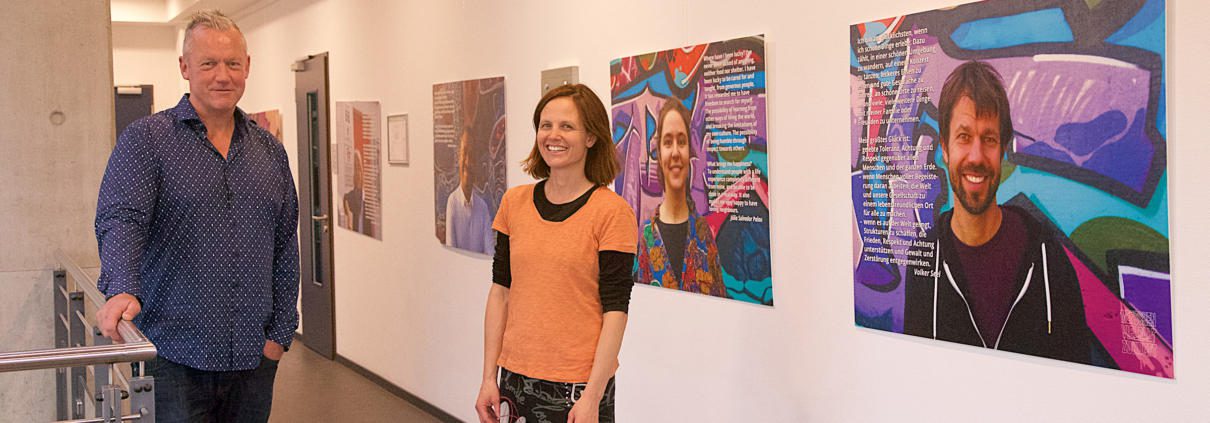
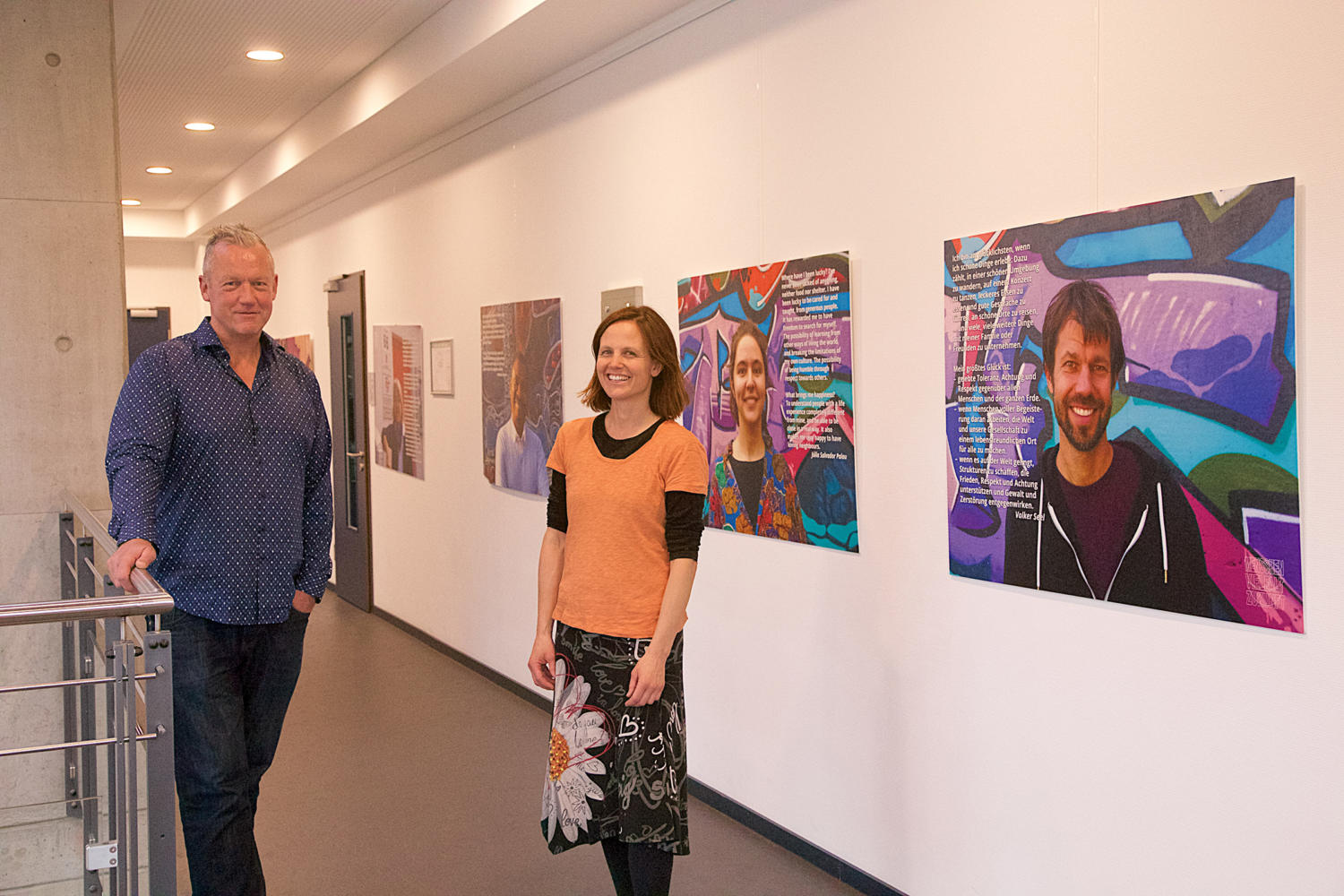
“The exhibition PEOPLE, DIVERSITY, FUTURE – SHOW YOUR FACE! RAISE YOUR VOICE!” was created as a tool for educational and public outreach so that the cultural diversity of the people in the university town of Marburg and the Marburg-Biedenkopf district becomes visible as a statement and a symbol against xenophobia and racism,” explains Thomas Gebauer in an interview. Visitors can get a glimpse into his work in the atrium of the Steinmühle.

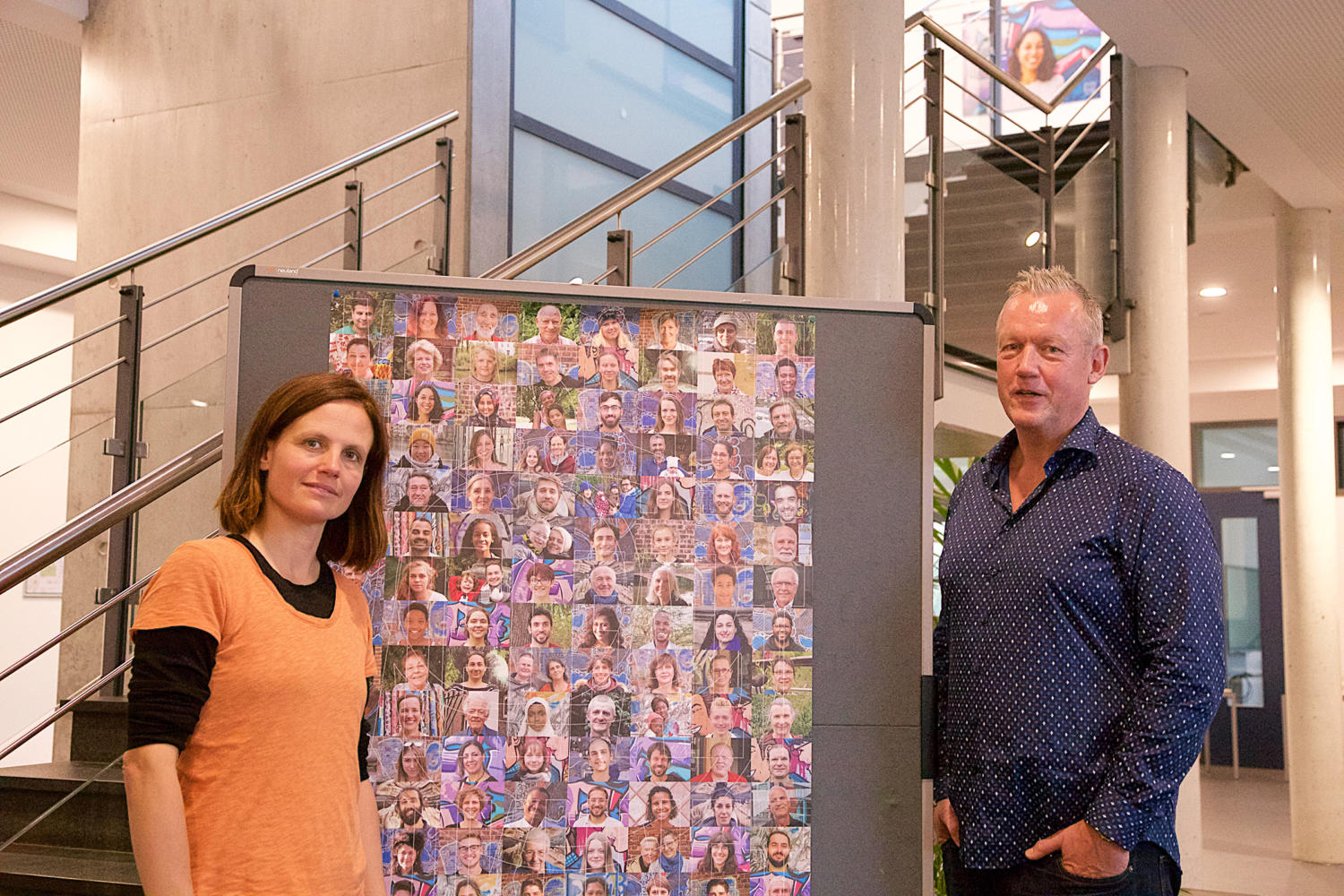
People think and feel differently, have different values and norms, and do not share a uniform conception of happiness. And yet all people deserve the same respect, regardless of their background, religion, or skin color. Thirty-five of the 120 exhibits in the “People, Diversity, Future” exhibition are currently on display in the atrium of the Steinmühle. The answers to the question, “What is my greatest happiness?” are just as diverse.

With this work, Thomas Gebauer aims to encourage reflection on the pursuit of happiness as a collective need and the sociocultural foundation of human civilization. In the future as well, activities accompanying the exhibition and writing projects, for example, are intended to deepen and broaden the understanding “that we are one indivisible human family, in which all people, without exception, share human rights and bear joint responsibility for all life and for the future of the Earth,” according to his statement.

A dynamic impetus for reflection

Thomas Gebauer thus provides a dynamic impetus for reflection on human happiness. Happiness, a concept that often devolves into a cliché when put into words, can indeed be described precisely and individually—but this takes time. “During the two years of preparation for this exhibition, I waited a very long time and with great patience for some of the answers, and in doing so I learned that human happiness seems to be something that is found rather than sought, and that while it varies greatly depending on people’s life situations, it always revolves around a core understanding of happiness.” “Everything takes time” also applied to the numerous appointments Gebauer had to organize over the two-year production period in order to photograph the approximately 140 women, men, teenagers, and children. A photographic presentation of the exhibition even includes 140 exhibits.

“In a specially produced exhibition newsletter, I published not only photos of the people and their thoughts on happiness but also a logo designed specifically for the “People, Diversity, Future” exhibition, in which the sun (light/insight), a sail (moon/tool), and a ship (Earth/human family) are integrated in multicolored form into the words PEOPLE DIVERSITY FUTURE,” explains Gebauer.

Everyone defines happiness differently

For me, happiness is “…being healthy…” “…my family being well…” “…being able to drink an Äppler in my Weidenhausen…”. – Some answers come up more often, while others are unique. Responses to the question of personal happiness often revolve around peace or spending time with loved ones. But there are other responses as well: “I’m happiest when I’m not thinking about whether I’m happy.” Or even “…I’m happy when all the plastic disappears from the oceans.”

People, Diversity, Future – “Show Your Face! Raise Your Voice!” is a very ambitious exhibition project. In October 2017, the association “Vielfalt Marburg e.V.” was able to secure Thomas Gebauer to bring the project to life, and Gebauer ultimately completed and unveiled it in October 2019. The theme fits well into current debates, explains chairwoman Nadine Bernshausen. It is the mission of the association “Vielfalt Marburg e.V.” to further promote a general spirit of internationalism and mutual understanding among people, so that a vibrant utopia can continue to be fostered: Being different should not only be accepted, but can also be perceived as exciting and enriching.

A Tool Against Racism

According to Gebauer, dialogue and shifts in perspective—as cultural tools—along with mutual recognition and understanding among people, are important goals of communication. He himself experienced the exhibition’s development phase as a kind of journey of discovery into the values and ideas that are “essential and truly important” to all people on Earth. Gebauer plans to show the “Human Diversity, Future” exhibition for an initial period of five years as a tool against racism and xenophobia in general, and hopes, “… that, in light of the fascinating diversity of our human family, the fear of what initially seems foreign to us in other people can be overcome in favor of greater openness and curiosity toward people both near us and those from distant, foreign cultural spheres.”

“Thomas Gebauer did a great job with that,” commented Ines Vielhaben, an art teacher at Steinmühle. “There is a great deal of support for this topic at Steinmühle.” She set up the exhibition with the 10th-grade class and the advanced art course and explored the messages it conveyed. The 11th-grade class, led by teacher Stephan Kersten, discussed the topic of “happiness” in their ethics class—it was a perfect fit!

María Rámos, who represents the International Affairs department at Steinmühle, also believes the exhibition fits into the school’s philosophy: “It did a good job of capturing different personalities.” Both teachers agree: “This initiative is an asset to Steinmühle. It inspires people to reflect and reminds them of important values.”

Contact Thomas Gebauer: https://agent21-art-and-repair.de

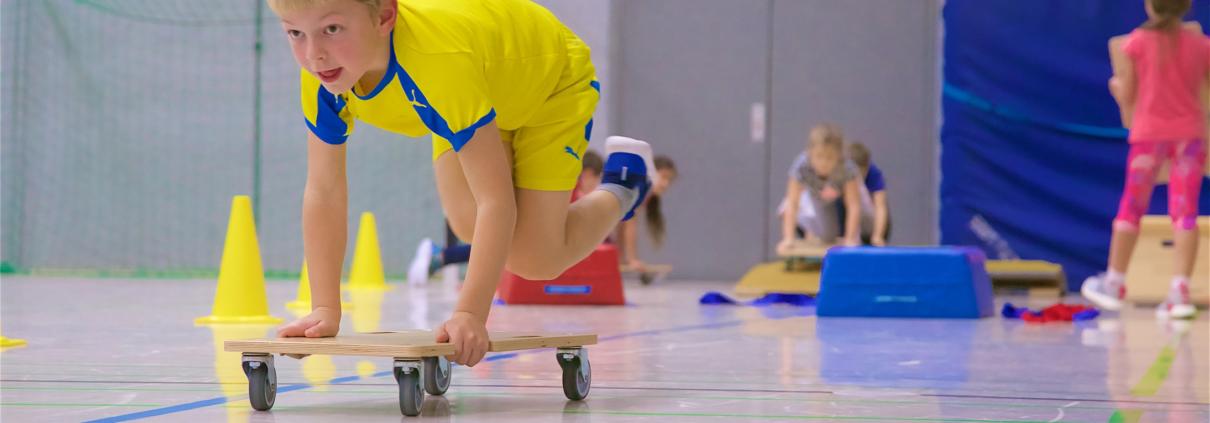
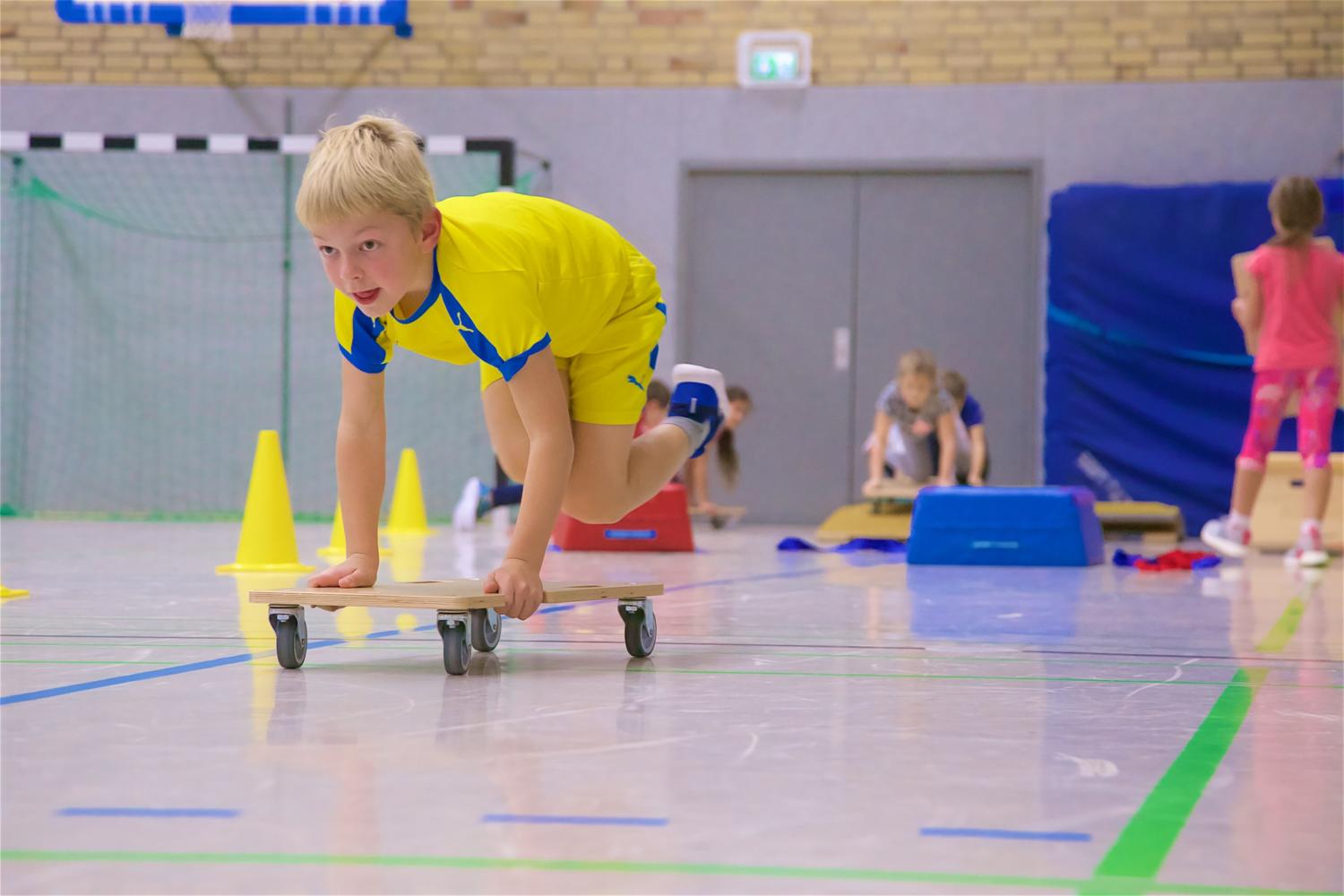
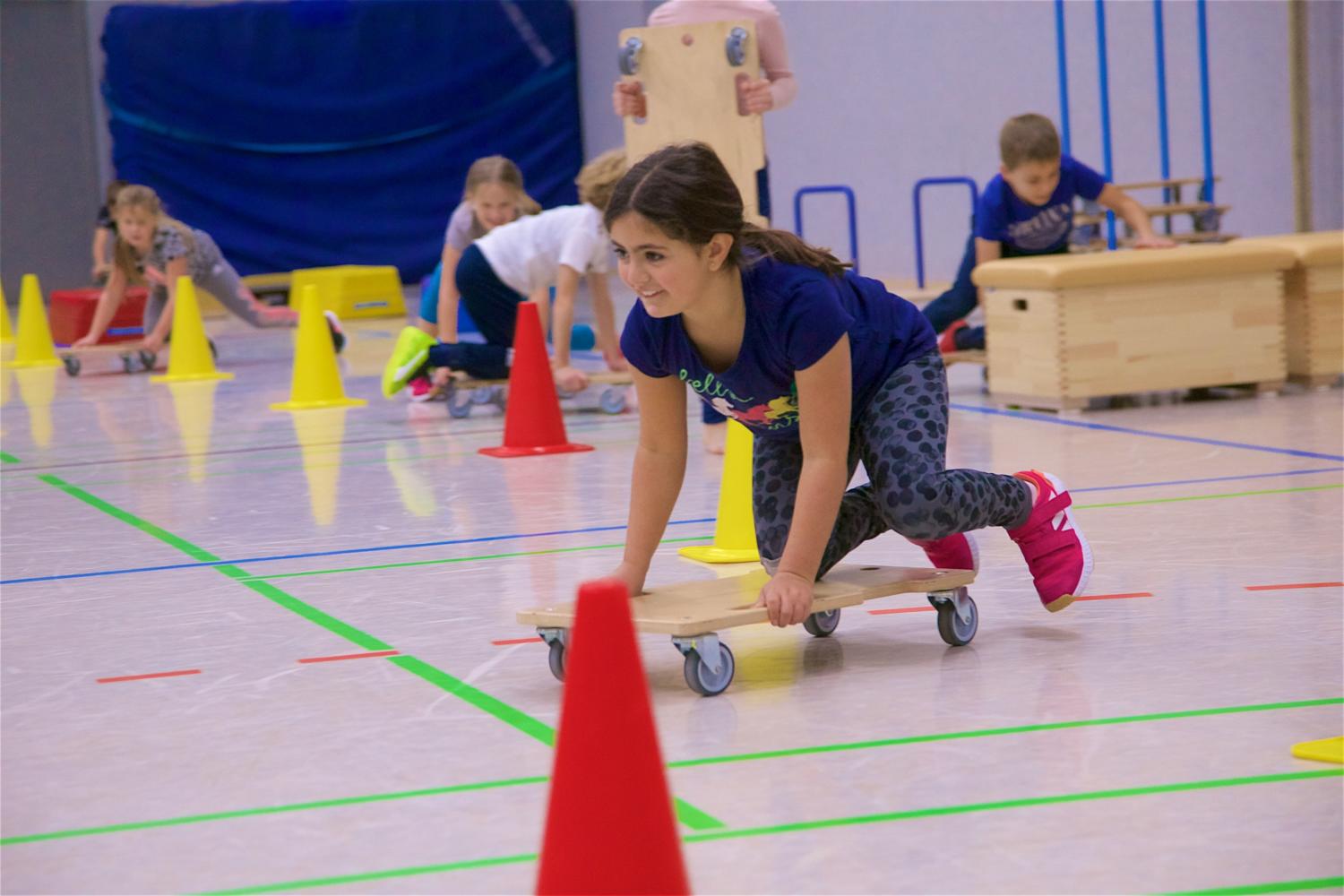
For some time now, the Steinmühle Bilingual Elementary School has had skateboards and jump ropes to help students stay active and have fun during recess. The sports equipment, valued at approximately 800 euros, was donated by gesundekids.“Gesundekids”is a nonprofit initiative of the Rotary Clubs in Germany. Under the motto “Fit for Life,” the initiative works nationwide to promote the health of children between the ages of 3 and 12. The Rotary Club of Marburg was pleased to receive the request from Steinmühle, which explained the need for physical activity equipment for the elementary school division by noting that many students—having moved to Germany only recently—often haven’t been able to form many social connections yet, struggle with language barriers, and spend a lot of time at their desks learning a new language. The goal is to create opportunities for physical activity and to encourage the students to cooperate and communicate with one another. The balance boards and jump ropes are ideal for this purpose.

Striking a balance between academic workload and extracurricular activities is a key factor in students’ success. This is why Steinmühle Boarding School places such a strong emphasis on offering high-quality and varied educational recreational programs. Tailored to the seasons, a different program is offered twice a year. The goal is to consciously experience leisure time—whether through physical activity or learning—together with others, rather than passively engaging in it in isolation.

Winter has always naturally presented the greatest challenges: gloomy weather, lethargy, limited outdoor activities, and early darkness. It’s easy to imagine that this year is particularly difficult. The COVID-19 pandemic and its consequences are an additional obstacle we must contend with.

A successful concept is no accident

Nevertheless, the educational team has once again managed to put together a varied program. It takes safety considerations into account while still leaving room for students to experience a sense of self-efficacy and personal growth. It is no coincidence that the program is authentic and tailored to the boarding school student body. In the run-up to the program, educators aligned their ideas and possibilities with the students’ needs.

As many as 20 students want to learn to dance

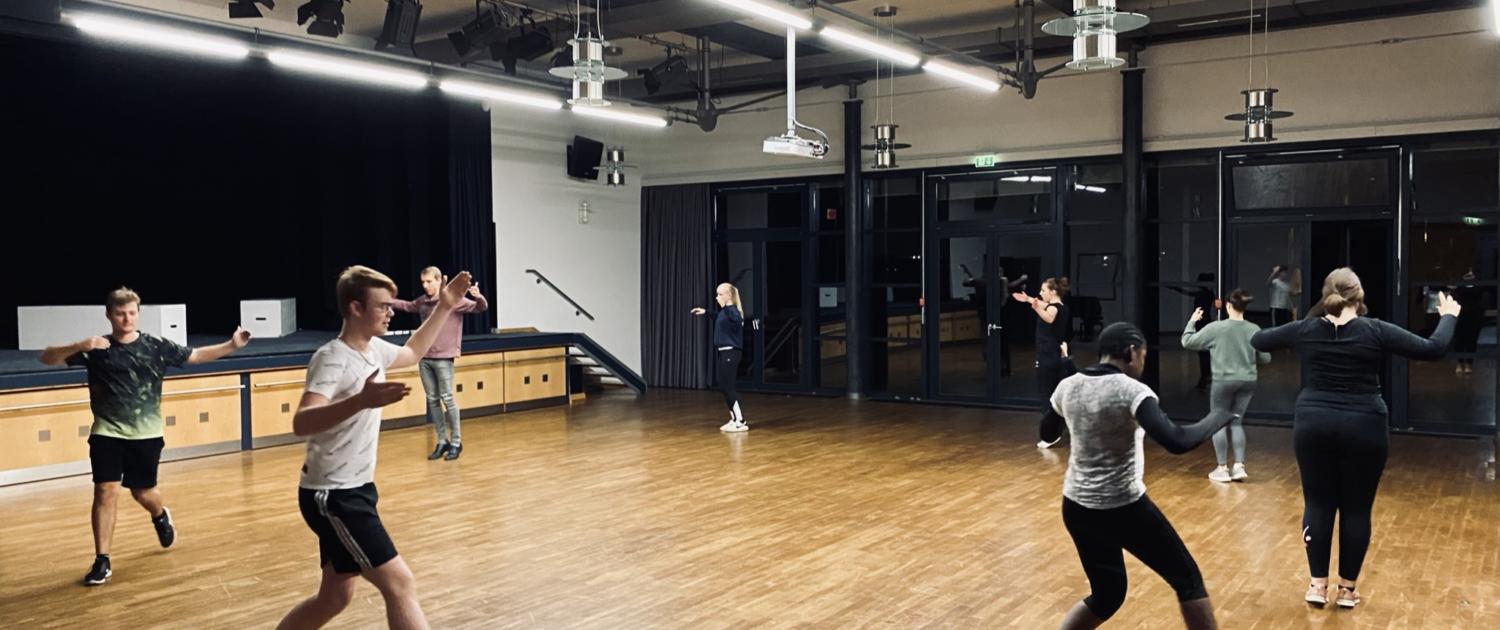
The requests vary widely: Several students expressed a desire for a new pool table for cozy game nights, and as many as 20 students expressed interest in a dance club. Together with a professional dance instructor, the teaching staff has therefore organized dance activities that comply with COVID-19 guidelines to make learning standard dances as accessible as possible.

At first glance, creating a LEGO room might sound like a request tailored exclusively to the younger boarding school students. But that’s not the case, because while the younger students let their creativity run wild there during the day, the older students can use the space as a chill-out room in the evenings—and, of course, they’re also welcome to get creative with Lego.

“Exercise for Everyone” is the name of a new extracurricular activity format currently being piloted. A wide range of activities, created anew each week by several educators, serves as a pool of options for students at the Steinmühle boarding school. One of the activities becomes mandatory, while others can be chosen flexibly, depending on the students’ personal schedules. In the event of exams or illness, everyone can adjust their activities accordingly.

With this type of program, Steinmühle Boarding School aims to accommodate the individual students’ lifestyles and the increased demands placed on them, in order to learn from this experience and draw conclusions for the next cycle. “We are in a phase where we are taking a respectful yet critical look at our existing structures to see whether this increased level of flexibility helps students tailor their weekly schedules to better meet their needs,” says Patric Hahn, who is responsible for recreational educational programs at Steinmühle Boarding School.

Upcycling: Giving Old Shirts a New Life

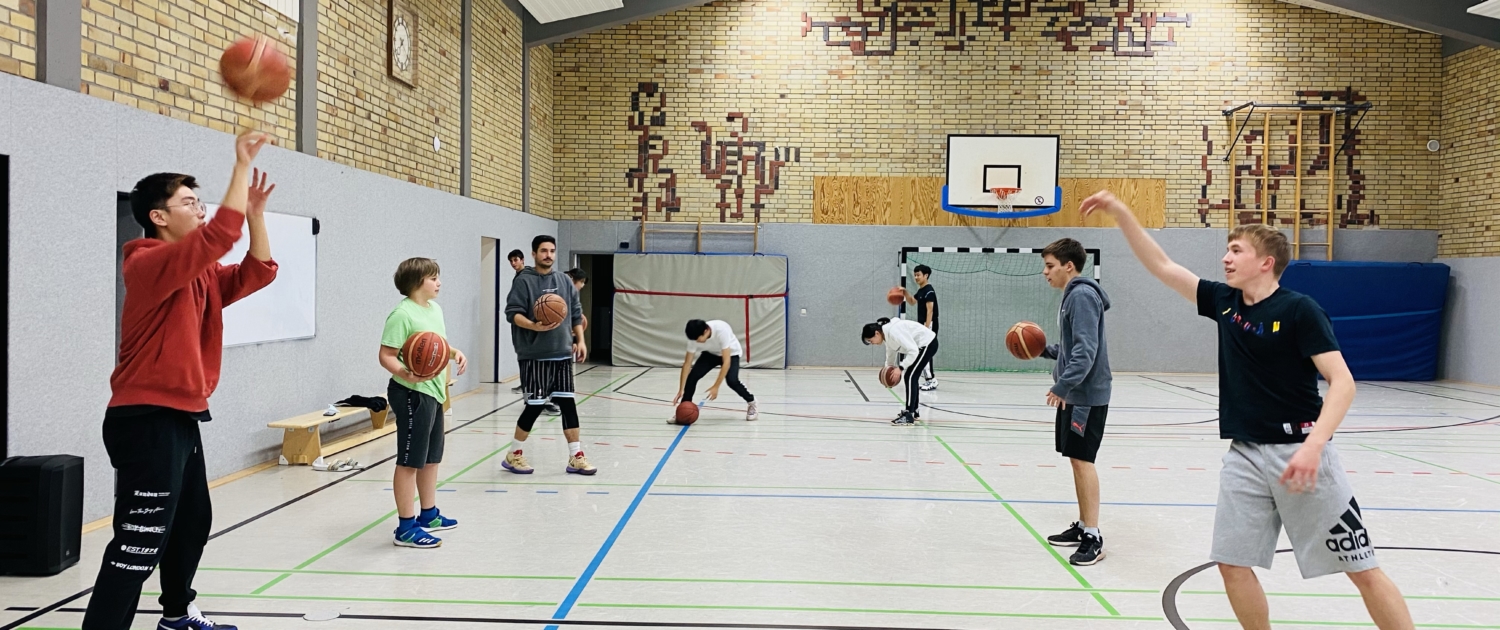
In addition to these areas, which aren’t covered in the curriculum, the teaching team also draws on tried-and-true activities from the range of extracurricular clubs. These include classics such as badminton, soccer, basketball, jumping fitness, digital drawing, and hand lettering, as well as seasonal activities like lantern-making, guided fall walks, and learning cafés. Even though “traditional games” are currently being avoided in team sports, the focus is on technique and individual training.

Mainly on weekends, students also have the opportunity—with organizational support from teachers—to try new things in a safe environment and create their own activities. A great example is one student’s idea to repurpose old T-shirts.

Tax Returns & More: Tips for Later in Life

In addition to this structural change, a completely new topic area has been added to the range of extracurricular group offerings: Life Skills. The goal here is to provide answers to questions that arise after finishing school—questions that young people have often been able to address only with a shrug: How do I apply to college? What is a tax return, and how do I file one? How do I get insurance, and what kinds of insurance do I need? “This club is about preparing young people for life beyond their time at Steinmühle,” says club leader Nils Schwandt.

The combination of established programs and new formats tailored to the circumstances thus contributes to an increased sense of well-being for everyone involved in boarding school life—despite all the challenges!


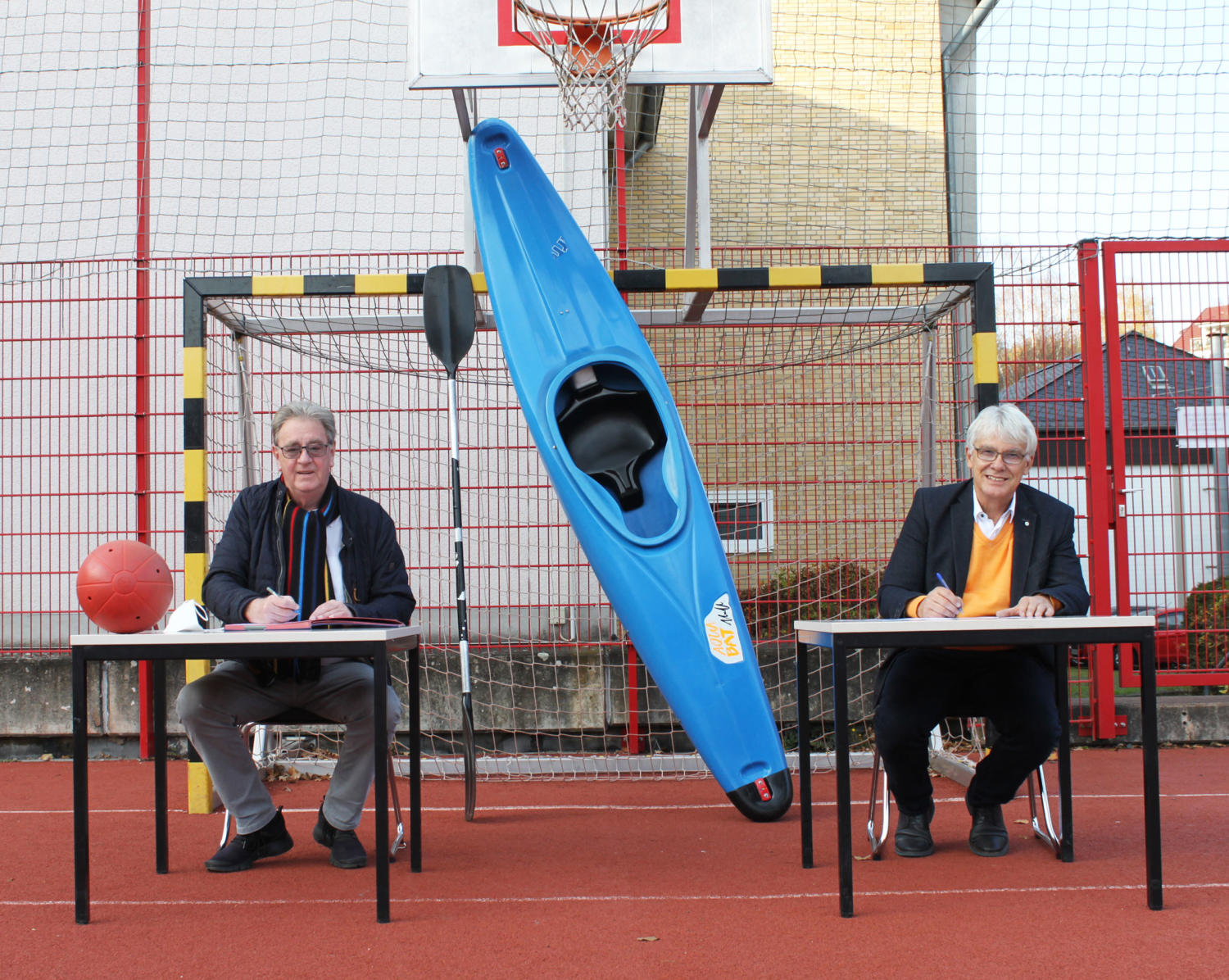
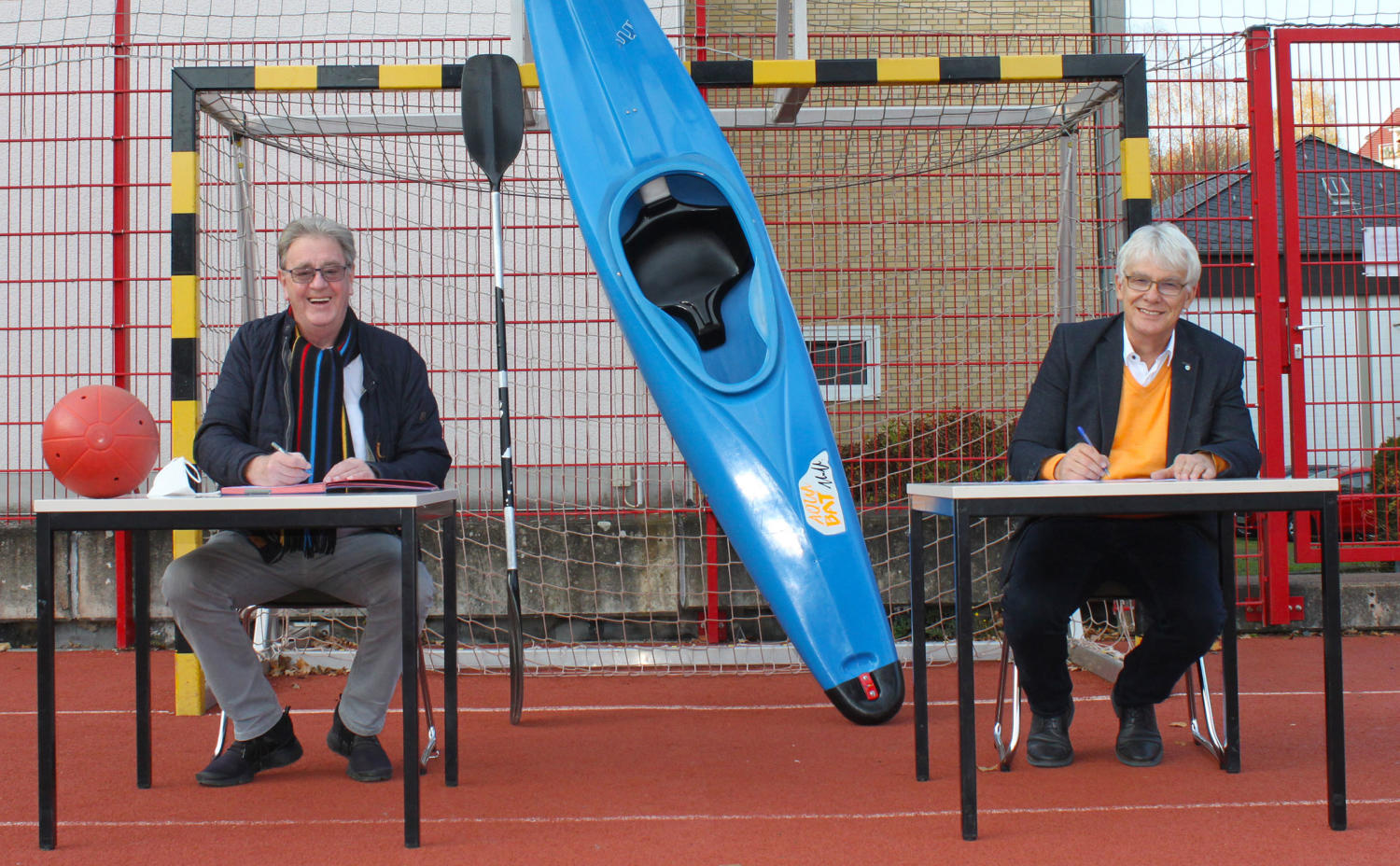
Steinmühle Marburg e.V. (Steinmühle) and the German Institute for the Blind (blista) are expanding and strengthening their collaboration in the area of sports programs for blind, visually impaired, and sighted students.

“With the partnership we entered into today, we are laying the groundwork to expand competitive sports programs at both schools and to demonstrate that children and young people with and without disabilities can compete on equal footing, even in competitive sports,” explains Egon Vaupel, chairman of Steinmühle.

“The children and teenagers at our two schools have been participating in joint sports classes and activities for many years. The experiences have been consistently positive,” explains blista Director Claus Duncker. “It’s not pity or forced friendliness that makes the difference, but the desire to train together and work hard together—with everyone and all the human emotions that go along with it: hopes, joy, disappointments, encounters, and friendships.”

The new alliance for inclusive competitive sports is built on a strong conceptual foundation. According to Article 26 of the Universal Declaration of Human Rights, children and adolescents have the right to an education that is geared toward the development of their whole personality. Both schools attach particular importance to the potential of sports for the personal development of their students. For many years, Steinmühle has been known for its excellent training conditions, particularly for high-performance rowing; blista serves as the state training center for judo and blind soccer, as well as the Paralympic training center for goalball. Starting this year, blista has also implemented a program that enables ambitious young athletes to pursue a successful individual academic path as part of a “dual career” while simultaneously supporting their development in competitive sports.

Based on the experiences at both schools, sports bring young people together in an inclusive way and thus also shape the cultural life of our society.

Photo: Signing of the contract: Egon Vaupel, Chairman of Steinmühle, and Claus Duncker, Chairman of blista.

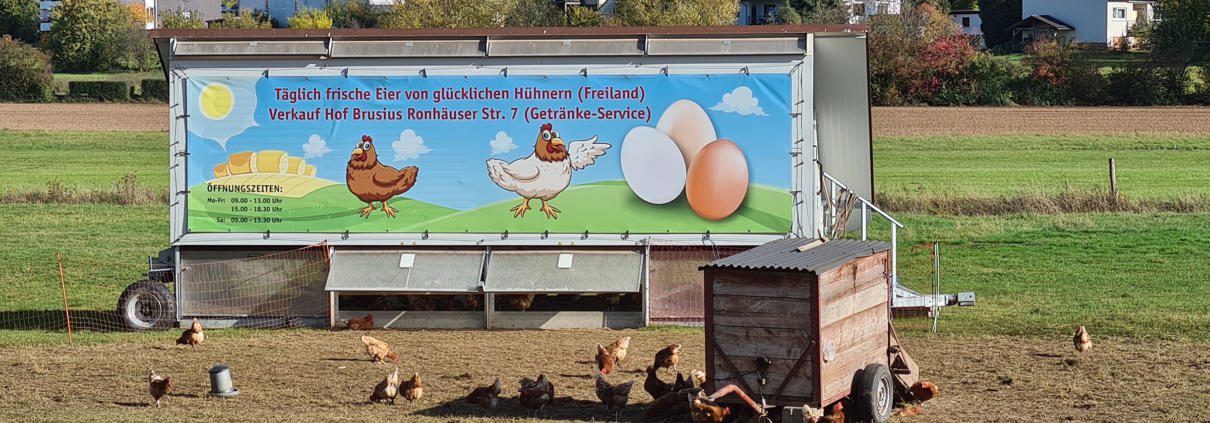
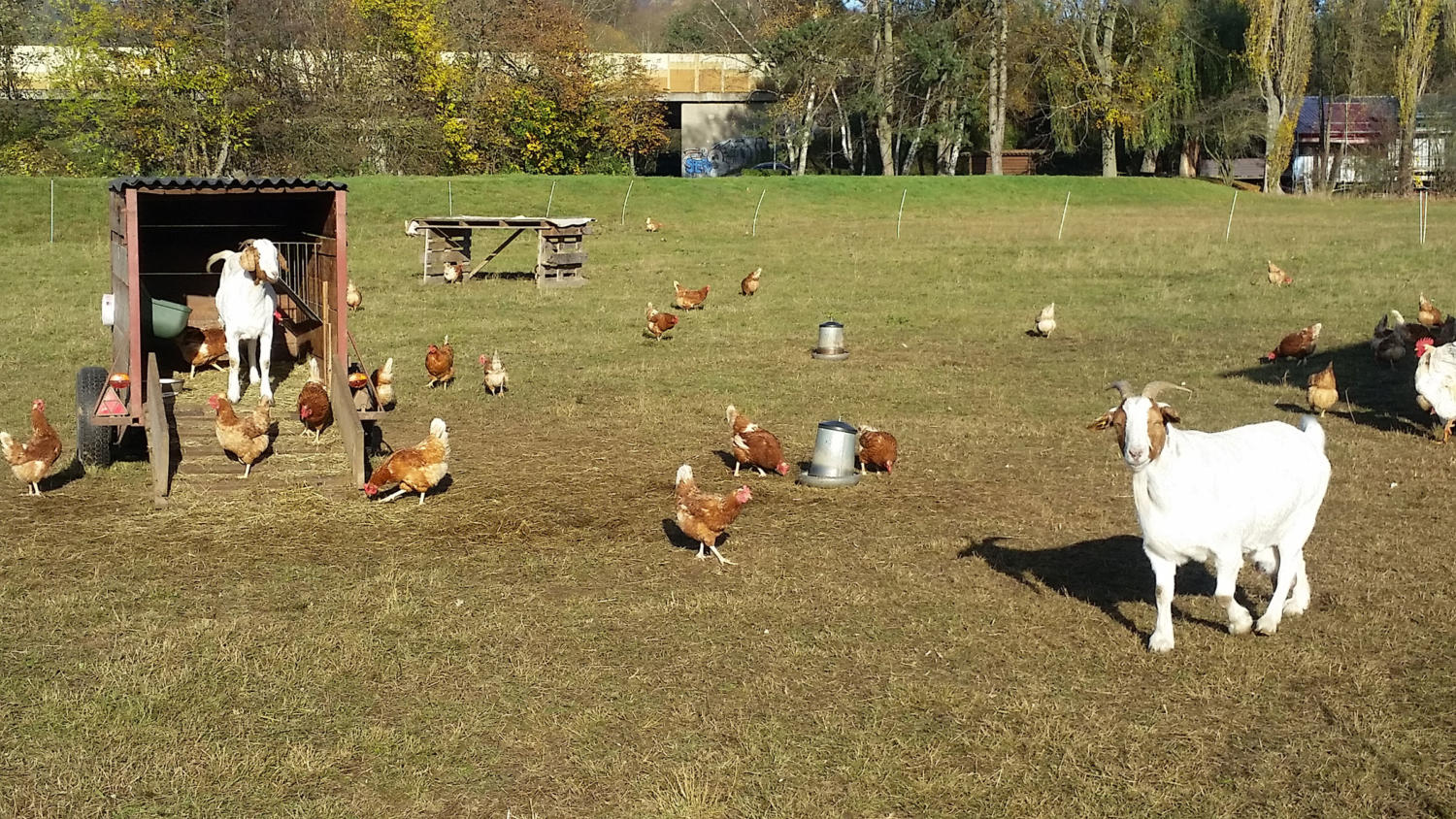
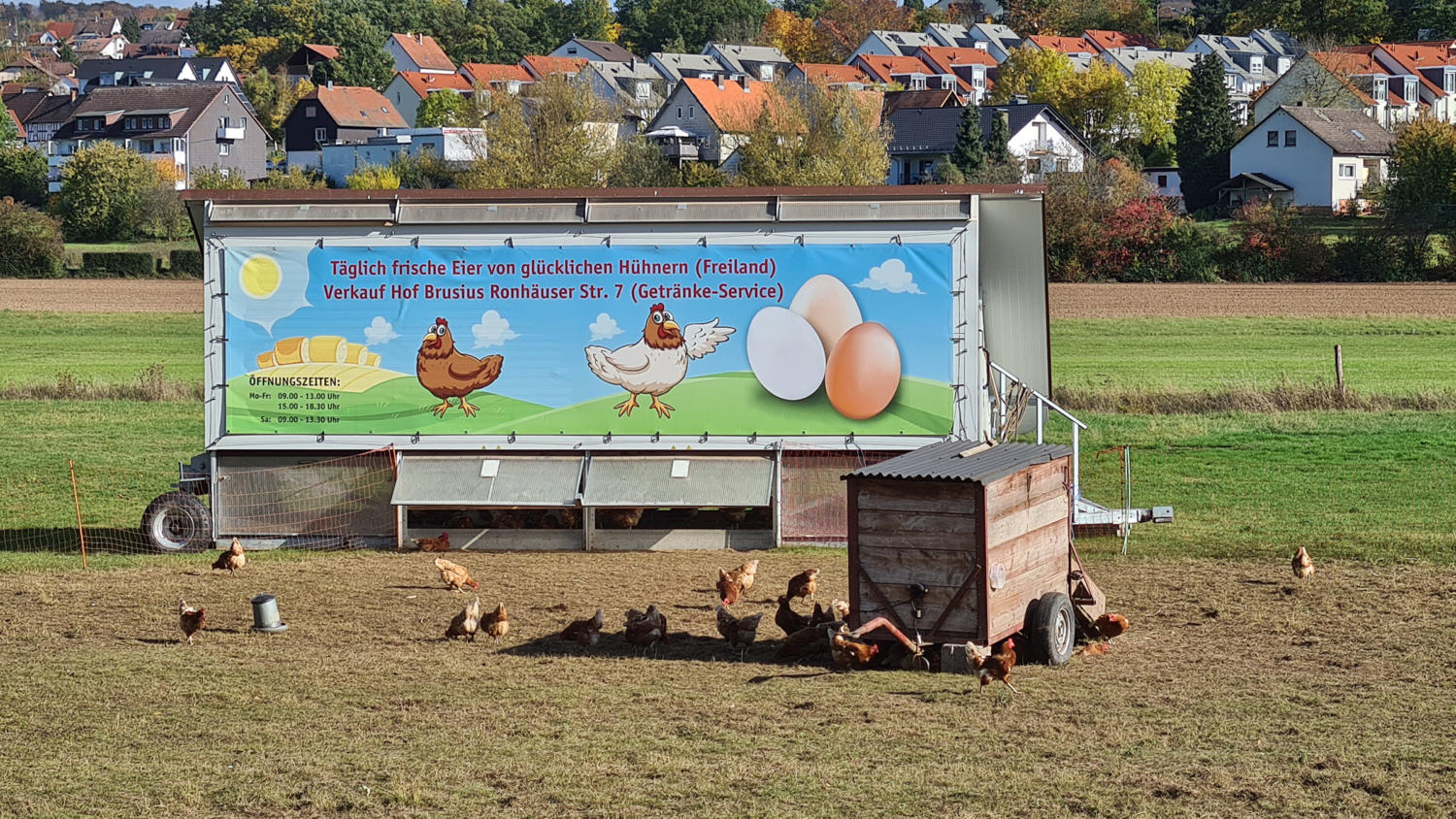
The billy goat is actually supposed to keep birds of prey at bay, but he also maintains a healthy skepticism toward people. Near the Steinmühle boathouse, he and his mate guard Gisela Brusius’s mobile chicken coop. The Steinmühle receives about 240 eggs per week from her mobile chicken coop, which are used in the kitchen for breakfast, cakes, or casseroles. These products fit perfectly into the school and boarding school’s food supply plan.

The relationship between the Steinmühle and Gisela Brusius goes back a long way. Her farm is located in Cappel, about 200 meters away as the crow flies, and the farmer has a long-standing friendship with boarding school partner Johanna Buurman-Rogalla. This has led to a mutually supportive relationship—or, to put it in modern terms: a win-win situation. The Steinmühle riding stable has leased pasture land from Gisela Brusius. Most recently, the Steinmühle was able to purchase land from Gisela Brusius on which the new sports hall will be built. In return, she was assured of a regular customer for her eggs. The farm’s previous flock of 60 classic brown laying hens moved off the property; with the expansion of the flock, they gained 140 new “colleagues”—and the owner found some relief: “Compared to the current mobile chicken coop, keeping the hens on the farm was very labor-intensive.”

This new farming method marked yet another step forward. The “Hühnermobil” is a modern, fully mobile free-range housing system designed for species-appropriate and environmentally friendly chicken farming. “This fits perfectly into our concept,” says Steinmühle’s head chef, Sebastian Riehl. Steinmühle places great importance on using products in its kitchen that fit the “regional—organic—fair trade” criteria. In each individual case, the team determines which criterion should reasonably be given priority.

With this in mind, Steinmühle Boarding School, which operates the kitchen, partnered with the organic bakery Siebenkorn in 2020. At the same time, a new regional produce vendor was brought on board as a partner. The beverage selection includes Fairtrade coffee. The bistro offers organic lemonade.

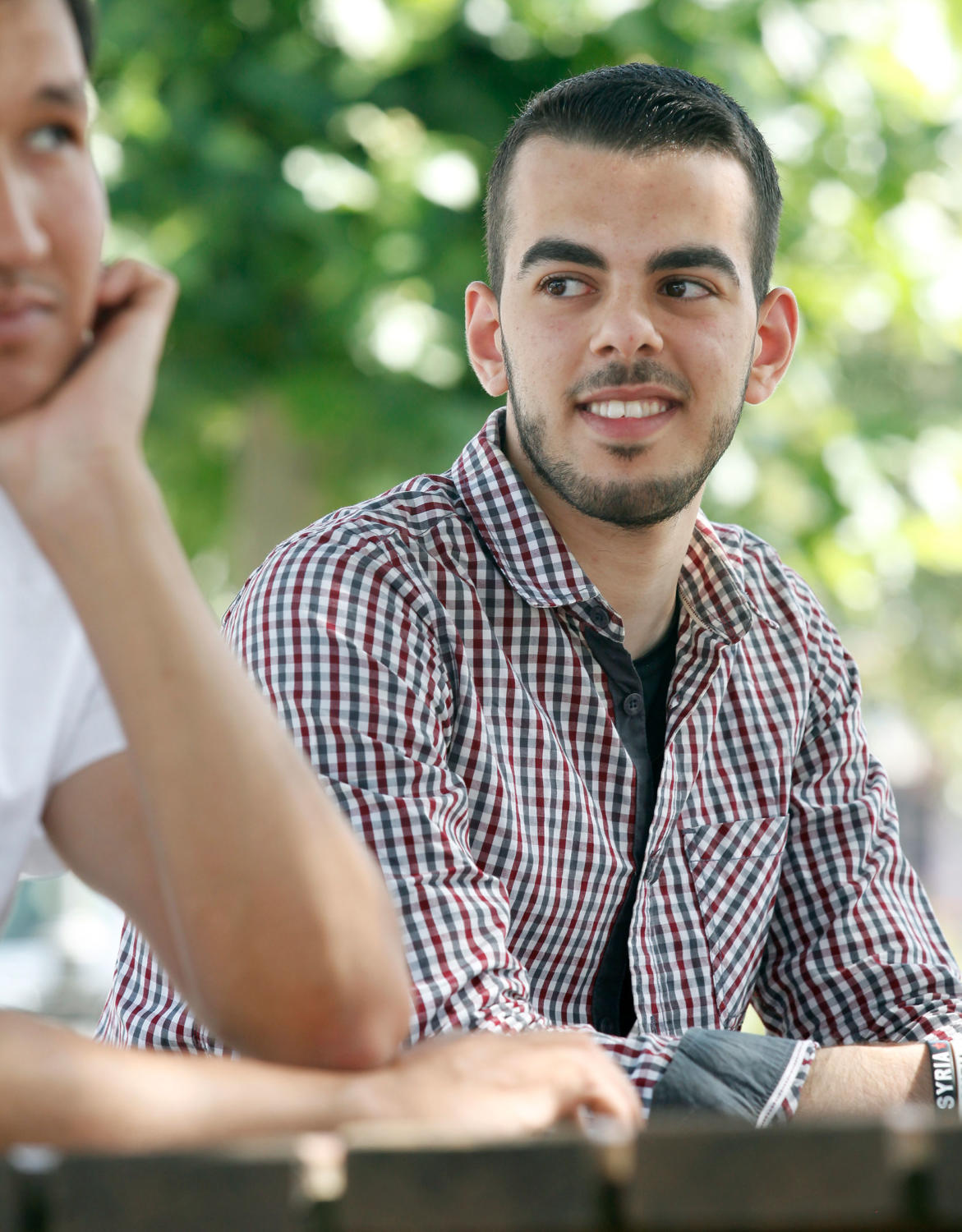
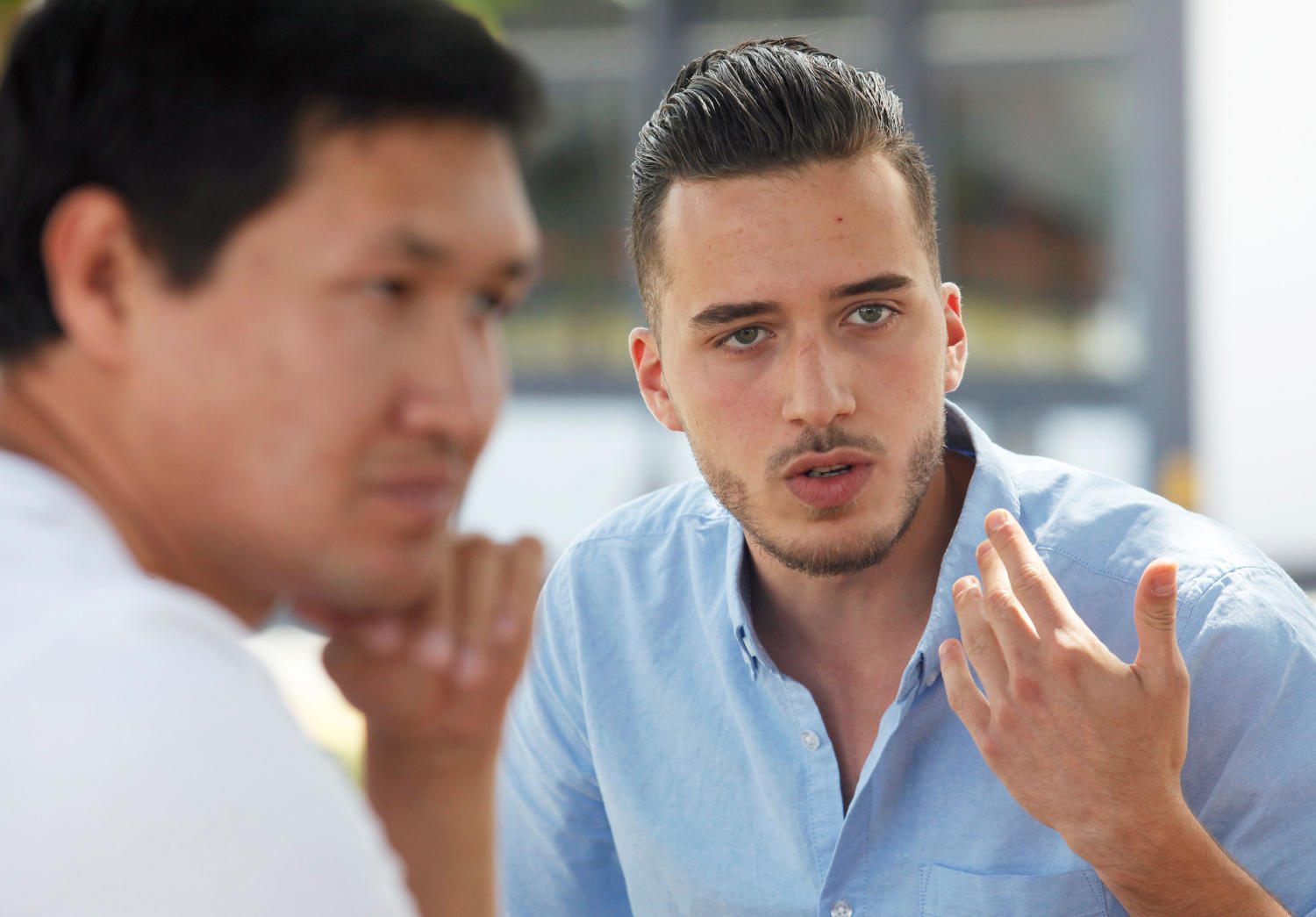
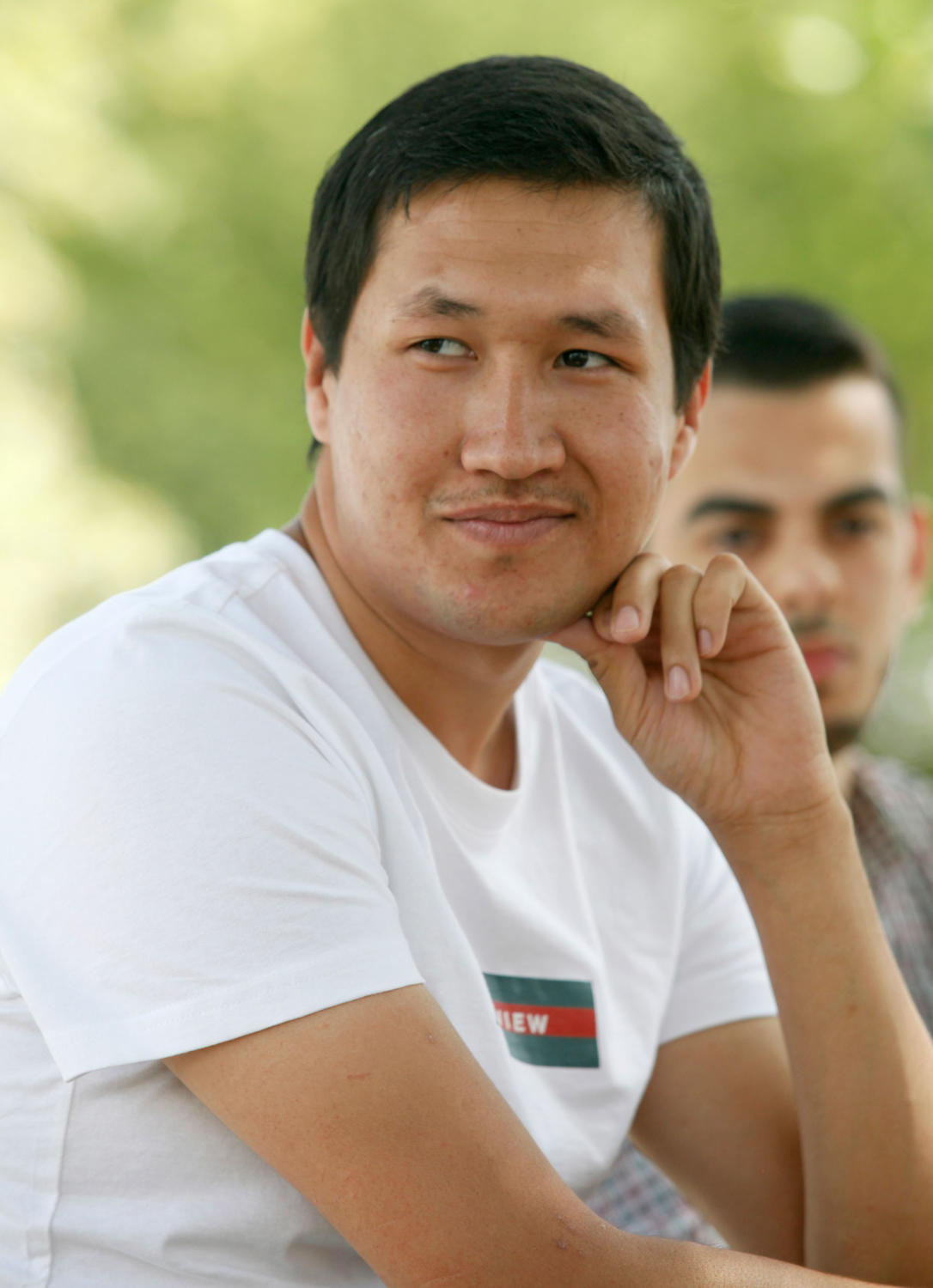
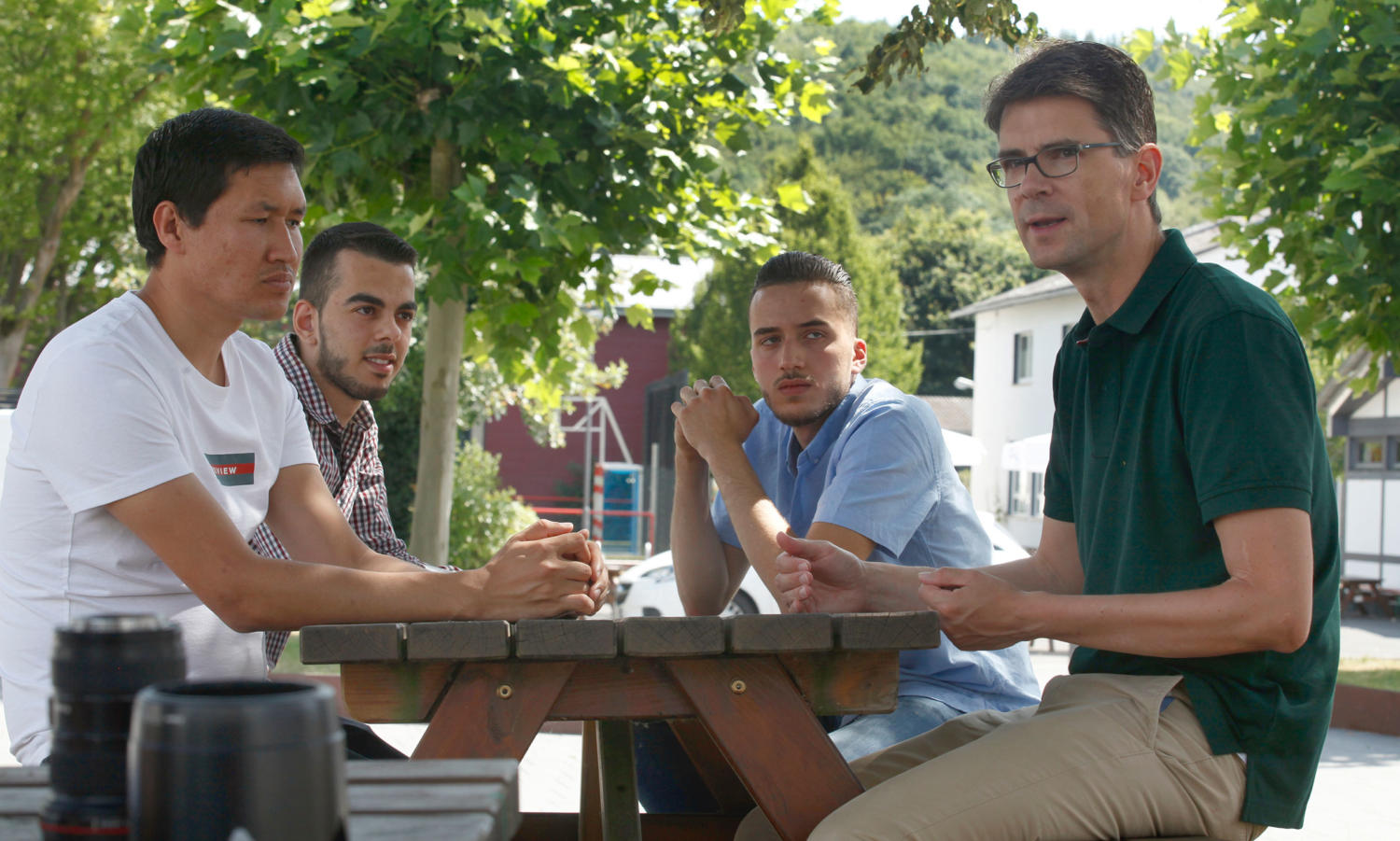
One could begin this story with “Once upon a time….” But this is no fairy tale. When Hussam, Abdallah, and Habib arrived at the Steinmühle in the fall of 2015, they had nothing in their pockets, just one goal in mind: to earn their high school diplomas. Today, five years later, they’ve all achieved their goal. And that’s not just a voice prompt from a GPS—it’s the result of hard work.

None of the three spoke German; they had brought nothing but their ambition. They were part of the group of refugees who, as part of an external youth welfare program, moved into the rented Bremerhaus at Steinmühle and were also educated on the premises.

They were the ones to watch: Hussam, a Palestinian born in Syria; Abdallah, a Syrian; and Habib, an Afghan originally from Iran. This was true not only—but especially—for math class. All three chose the math track in 11th grade. Math is an international subject; other classes, taught on a broader German-language basis, pose the greater challenge. But was math the only challenge?


“We knew we had to”

And how they crammed German anyway! They got their start in the intensive German class. “We knew we had to,” the three recall, thinking back on learning German—a language that was completely foreign to them—but which they simply couldn’t avoid. “It really helped that we spent 24 hours on campus,” they recall. “Our classmates were a huge support to us.”

And yet: It was very, very hard. They admit to the lean times, the homesickness, and everything else that sets in when you worry that your loved ones back home are in danger. But that was precisely what drove them to give it their all and seize these opportunities to shape their lives the way they’d always dreamed. For the sake of those back home, too.

“It was quite an experience—for us teachers as well,” says Björn Gemmer. The principal of Steinmühlen School and former homeroom teacher of the three young men also recalls the challenges they faced. “Overall, it was a diverse group, all of whom shared the goal of earning a diploma. There was no family to fall back on.” Religious considerations also came into play, such as Ramadan, for example. “But we couldn’t accommodate that from an organizational standpoint at the school.”

Today, the pride Steinmühle feels for having paved the way clearly outweighs everything else. Everyone seems relaxed, happy, and full of hope for the future. Habib and Hussam plan to study business informatics, while Abdallah wants to become a doctor—specifically, an “orthopedist.” He graduated from high school with a 1.1 GPA. “My dream of going to college came true here.”