Are you between 14 and 19 years old? Are you interested in learning more about when and why it’s easier or harder to concentrate? Would you like to support our study by participating? If so, we look forward to hearing from you! Information sessions will be held on March 4 or 9. You can find more details on our poster:


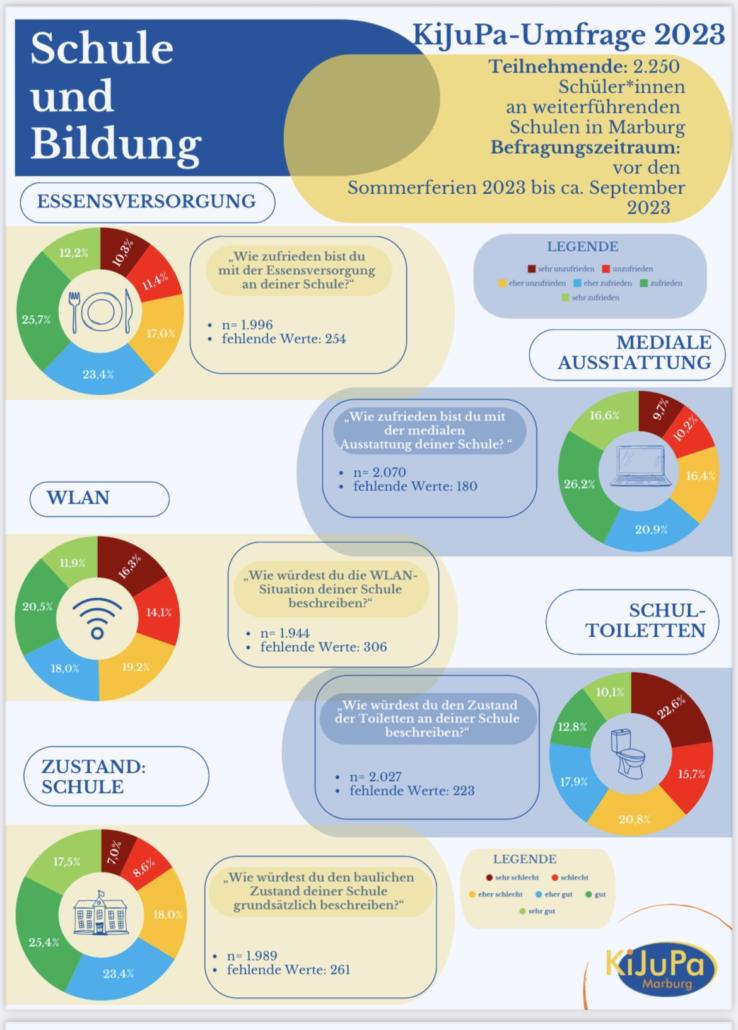
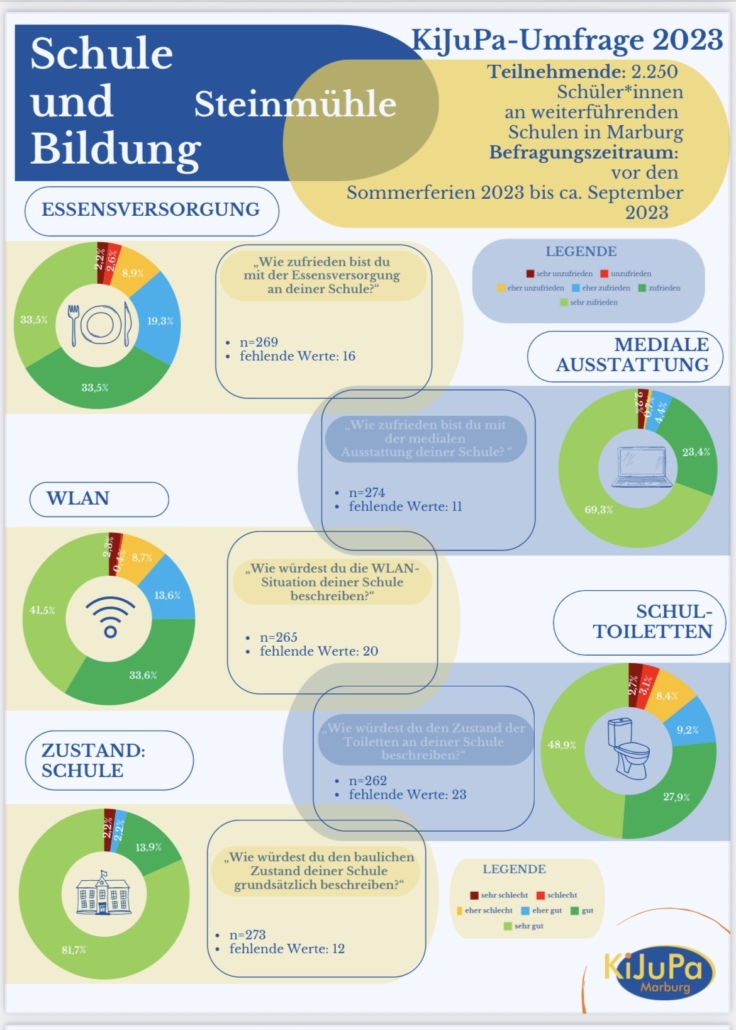
In a survey of 2,250 Marburg students, in which they were asked to evaluate their secondary school based on specific criteria, Steinmühle came out on top: It ranked first in terms of food, media facilities, Wi-Fi, school restrooms, and overall condition.


Investigation Initiated by the Children’s and Youth Parliament

The large-scale study was launched in the summer of 2023 by the Children and Youth Parliament (KiJuPa) of the university city of Marburg. The study was motivated by a desire to answer the question of what young people need and what they hope for in their lives in Marburg.

The young people were surveyed not only on the topic of school and education, but also on topics such as politics and civic engagement, transportation and mobility, leisure, media and digitalization, safety, discrimination, and the future.


With the support of two experts

With support from Philipps University, KiJuPa analyzed the survey results on its own. With Prof. Dr. Ivo Züchner from the Department of Education and Philipp Klingler from the Institute of Political Science, KiJuPa had two experts at its side who guided them through the survey “jungle,” explained complex issues in a clear and understandable way, and gave everyone a crash course in research methodology.


Steinmühlen Principal Praises the School’s Supporting Association

“The outstanding results for Steinmühle give me reason to extend my heartfelt thanks to the School Association on behalf of the school administration team!” commented Steinmühle Principal Björn Gemmer on the survey results. “As the school’s governing body, the School Association provides nearly ideal conditions for our students—far better than the (once) financially strong public school system is able or willing to do,” he said, praising the dedication of School Association Chairman Egon Vaupel, his deputy Gerhard Müller, and Steinmühle Managing Director Dirk Konnertz.

The complete survey section on the topic of school can be viewed here: https://kijupa-marburg.de/wp-content/uploads/Umfrage-Schule.pdf

Angela Heinemann


On February 19, 2025, the junior elections were held once again at the Steinmühle, this time as part of the early federal elections.

Voter turnout, at 80.2 percent, was slightly below average compared to turnout in previous years, which can be attributed to the high number of students on sick leave and the many students who were abroad. Given these circumstances, however, it is encouraging that voter turnout was still relatively high.


Many thanks to the election workers

This was certainly also due to the great dedication of this year’s election volunteers. Ben Luis Peters, Jannis Bastian, Fabian Gutmann, Andreas Wöhr, Jonathan Eckardt, Baris Tutu, Jan Templer, and Anton Neßler from Dr. Claudia Röder’s Political Science seminar impressed everyone with their motivation, expertise, organizational skills, and their friendly and good-humored demeanor.

Project manager Eva Rink was pleased that the junior elections went off without a hitch. The political science and English teacher was also relieved that the junior elections were able to take place at all this year, which was by no means a given due to the early federal elections and the resulting time constraints. Once again, the project’s sponsor, the nonprofit and nonpartisan association Kumulus e.V. from Berlin, proved itself to be a reliable supporter and organizer of political education (for more information: juniorwahl.de).

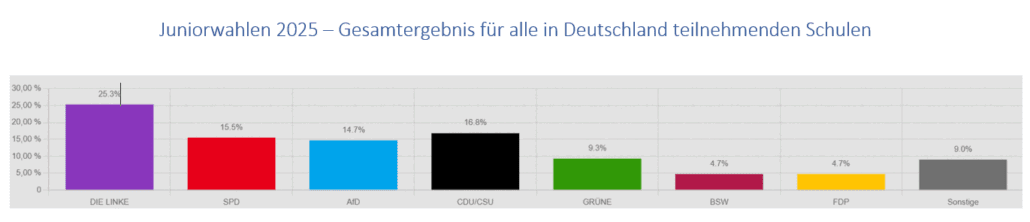
The results of the mock elections could hold a few surprises here and there, especially when compared to the results of the actual federal elections or to the overall results of the mock elections from all participating schools in Germany.


CDU Remains the Strongest Party, Followed by the Left Party

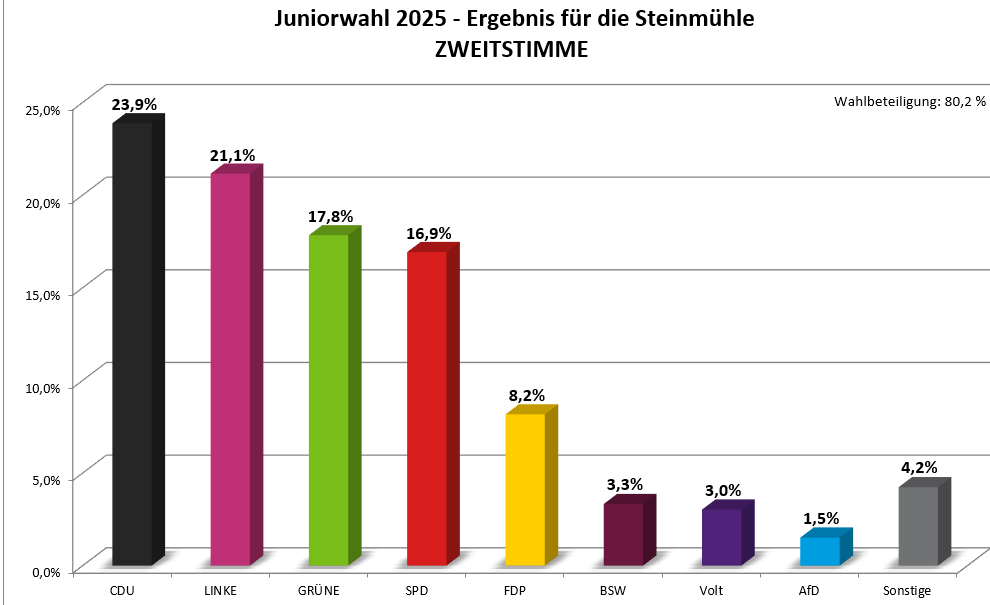
At Steinmühle, the CDU emerged as the leading party with 23.9 percent of the vote, just as it had in the last youth election held in conjunction with the European elections.

The result achieved by the Left Party—which was considered the loser in the last election—is striking. This year, the party can certainly be described as another winner, as it not only made significant gains but also became the second-largest party with 21.1 percent of the vote.

The Greens are in third place with 17.8 percent, just ahead of the SPD (16.9 percent).

A nationwide trend is also evident at Steinmühle: Compared to previous junior elections at Steinmühle, the FDP has suffered further losses. While it was still the second-strongest party in the youth elections held as part of the 2021 federal elections, this year it received only 8.2 percent of the vote.

The Sarah Wagenknecht Alliance and the Volt Party received 3.3 percent and 3.0 percent of the vote, respectively, putting them almost neck and neck.


There was no shift to the right

The shift to the right, which is evident not only in Germany but throughout Europe, did not take hold in Steinmühle. The AfD received even fewer votes than in the previous local elections and managed to secure only 1.5 percent of the vote.

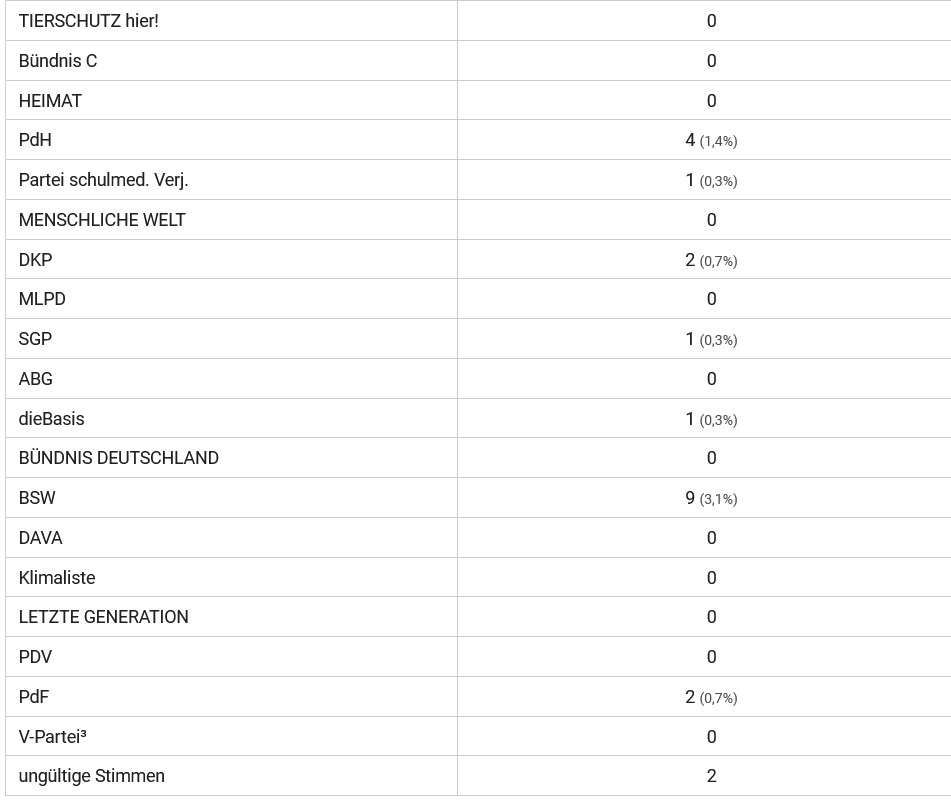
In the chart, the following parties were grouped under “Others”: Free Voters (1.2 percent), Animal Protection Party (1.2 percent), Die PARTEI (0.9 percent), MLPD (0.6 percent), and PdH (0.3 percent).


“Panel Discussion Was Helpful”

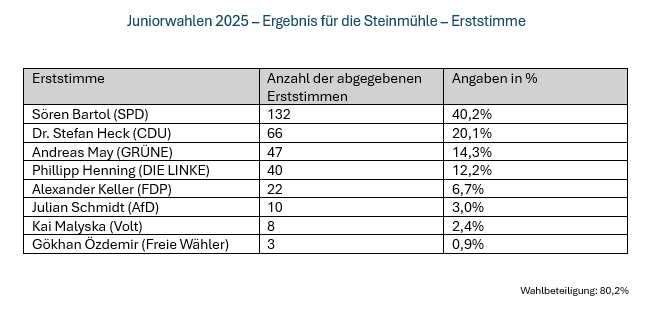
The results of the first-preference votes are also interesting. Sören Bartol of the SPD emerged as the clear winner, with 40.2 percent of the vote. The attached table shows additional results regarding the district representatives.

Many students noted that the previous panel discussion at the Steinmühle with the candidates running directly for the German Bundestag was very helpful in determining their voting decisions and left a lasting impression.


Democracy is fun

In addition, numerous students and faculty members once again spoke positively about the junior elections, a sentiment that was also reflected in the enthusiasm shown by the Steinmühle student body on election day. Democracy is fun! This was evident once again this year, and the organizer of the junior elections at Steinmühle hopes that enthusiasm for the event will not wane in the years to come.

Eva Rink
 

On June 6, the junior election for the European Parliament took place at the Steinmühle under bright sunshine. Subject teacher Eva Katharina Rink reports:

It’s no wonder that, with such beautiful election weather, voter turnout was a gratifying 83 percent. But we also have our hardworking election volunteers to thank for this, as well as those who were willing to help out with the junior elections:

Baris Cem Tutu, Jonathan Eckardt, Jan Templer, and Anton Neßler enjoyed their work as election volunteers so much that the junior elections were even completed earlier than originally scheduled. The four young men from Dr. Claudia Röder’s Political Science elective class stood out for their dedication, organizational skills, knowledge, and sense of humor.


Fun While Voting

So the two accompanying teachers, Jessica Schumann and Eva Katharina Rink, didn’t get bored either. On the contrary—the atmosphere at the junior election at Steinmühle was warm, cheerful, and lively. That’s what makes voting fun!

However, the following students should also be mentioned:

Ben Luis Peters, Jannis David Bastian, Fabian Gutmann, and Andreas Fabian Wöhr also wanted to serve as junior election workers, and some of them—including Ben Luis Peters—had already demonstrated their commitment to democracy and their diverse skills during the previous junior elections in the fall of 2023, held in conjunction with the Hessian state legislative elections. Constantin Mensing also served as an election worker during the junior election for the state legislative election and left a very positive impression.


A thank you for your hard work

Eva Katharina Rink, the English and social studies teacher who was primarily responsible for organizing and conducting the junior elections, would like to take this opportunity to extend a heartfelt thank you to the people mentioned above. Without you, these junior elections would not have been possible—you’re the best! 😊

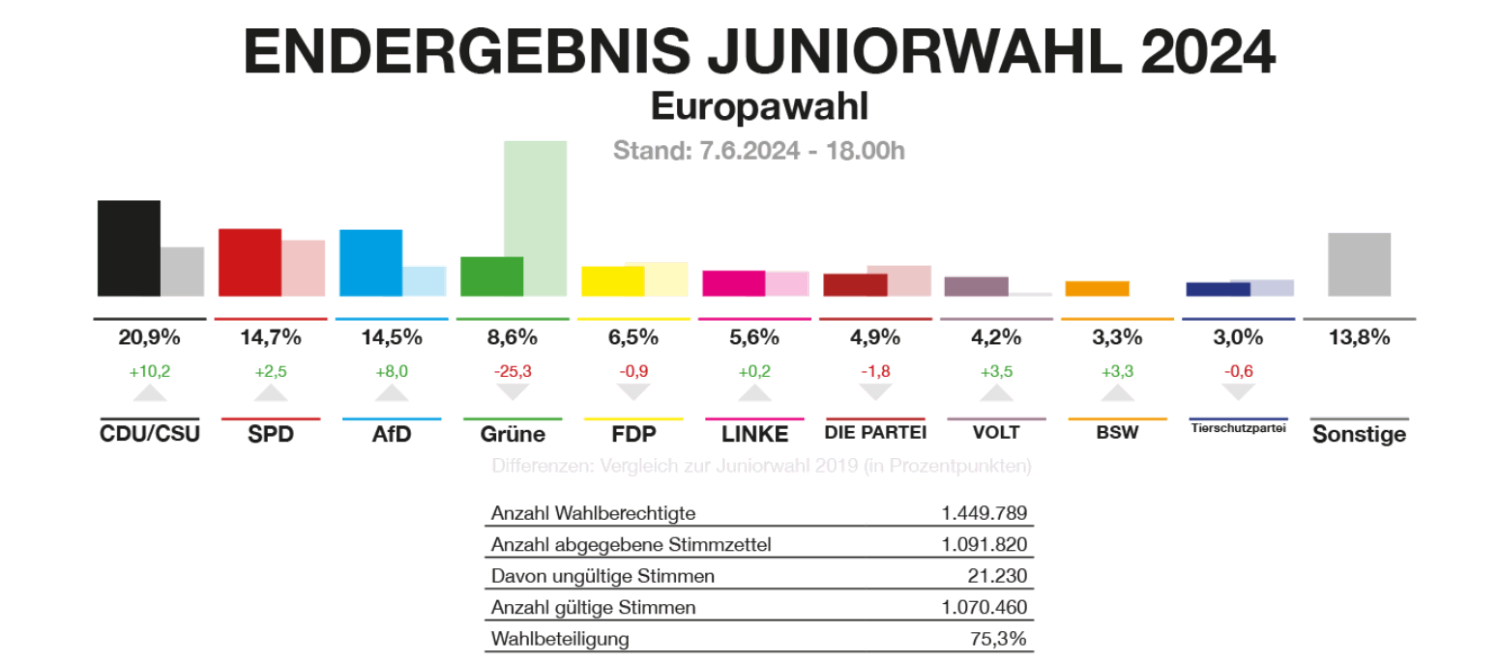
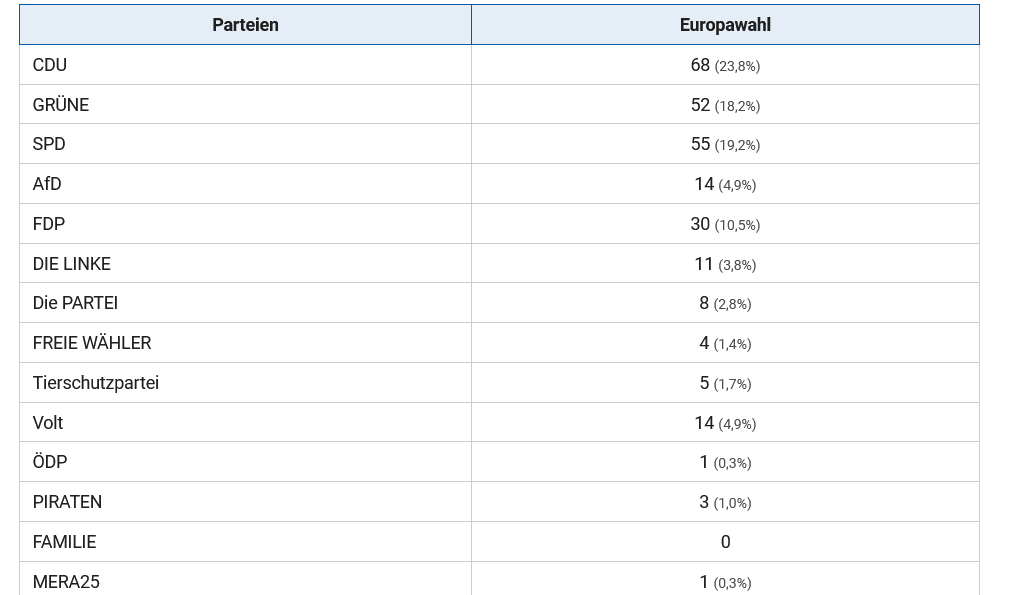
The results of the junior elections at Steinmühle were also outstanding, especially when compared to the overall results of all participating schools in Germany. At Steinmühle, in fact, a clear victory for the democratic parties is emerging. Although the AfD also gained ground here (4.9 percent), it lags significantly behind the other parties. A nationwide trend is also evident at Steinmühle: The Greens are the losers of this election and have lost many votes compared to previous junior elections at Steinmühle (18.2 percent), but they are still the third-strongest party and thus well ahead of the FDP (10.5 percent).

The results for the CDU, which emerged as the leading party at Steinmühle, are also noteworthy (23.8 percent) and the SPD, which, with 19.2 percent, is clearly the second-strongest party and can certainly be described as the winner of the election, as it has made significant gains at Steinmühle compared to previous junior elections.


To Promote Democracy

The result for the Volt party is also noteworthy, as it is tied with the AfD (4.9 percent).

With 3.8 percent of the vote, Die Linke is considered the loser at Steinmühle, and Sahra Wagenknecht’s party (BSW) also managed to secure only 3.1 percent of the vote. It thus trails Die Linke by a narrow margin.

Other parties received a total of 11.5 percent. The exact results can be found in the chart on the right. This result is typically high for our school. This year’s junior elections were, of course, particularly exciting, as 16- and 17-year-olds were also allowed to vote for the first time in the “real” European elections.

The Junior Election (www.juniorwahl.de) is viewed as a project to promote democracy, and given the enthusiasm shown by the Steinmühlen students on Election Day, one can definitely agree with this assessment.

The organizers of the junior elections at Steinmühle hope that the rest of the student body and faculty share this view, and that the enthusiasm and commitment to our wonderful and exciting democracy at our school will continue to grow in the years to come.

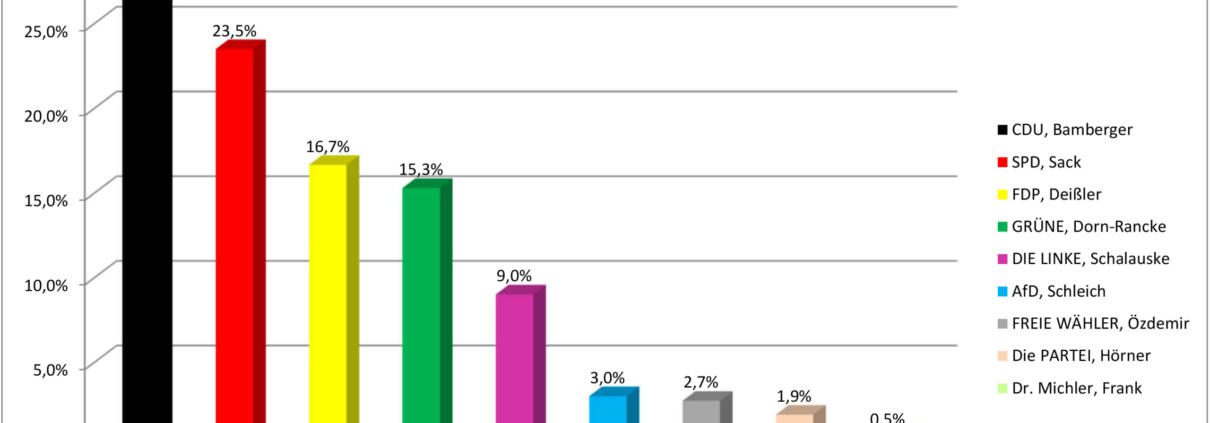
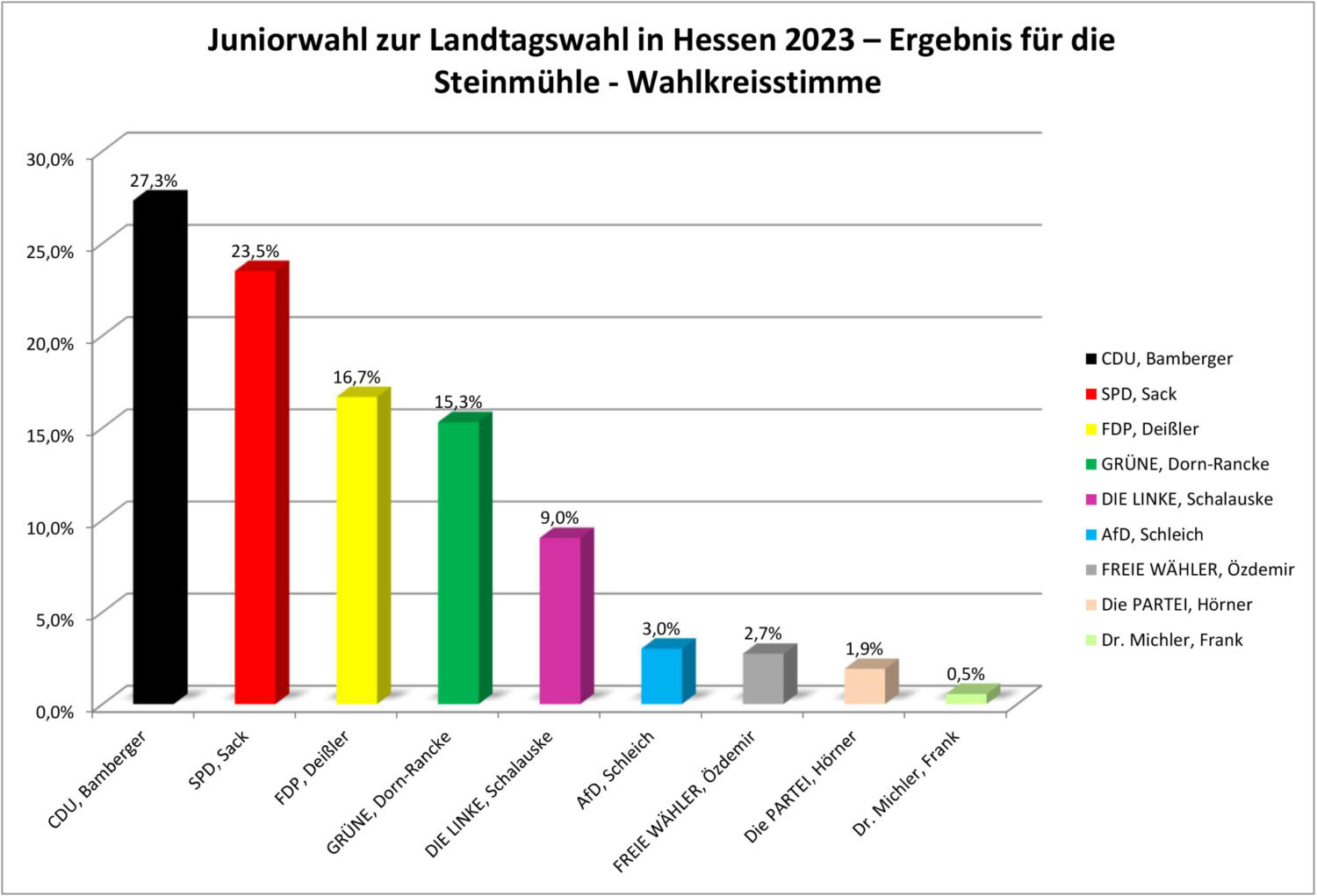
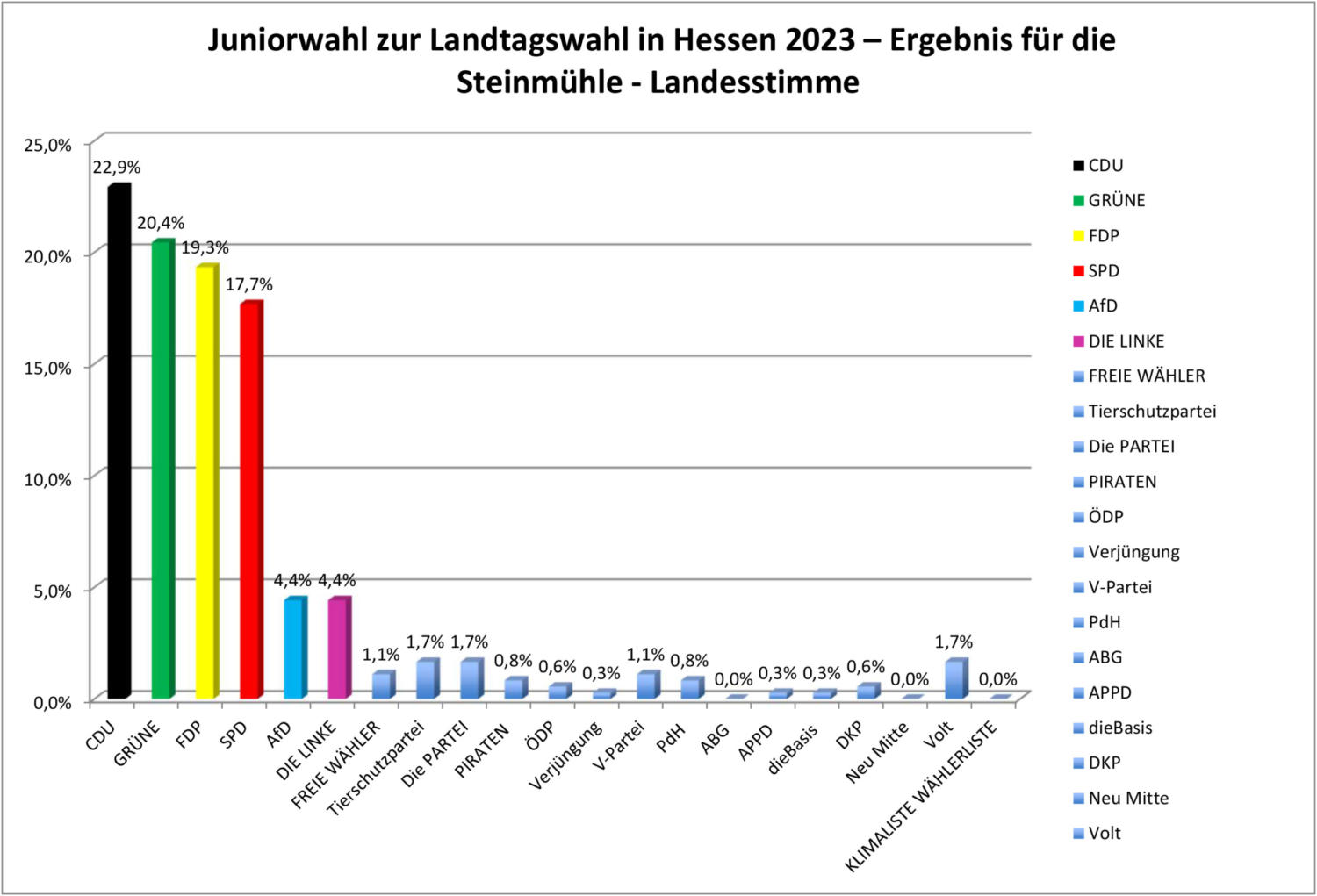
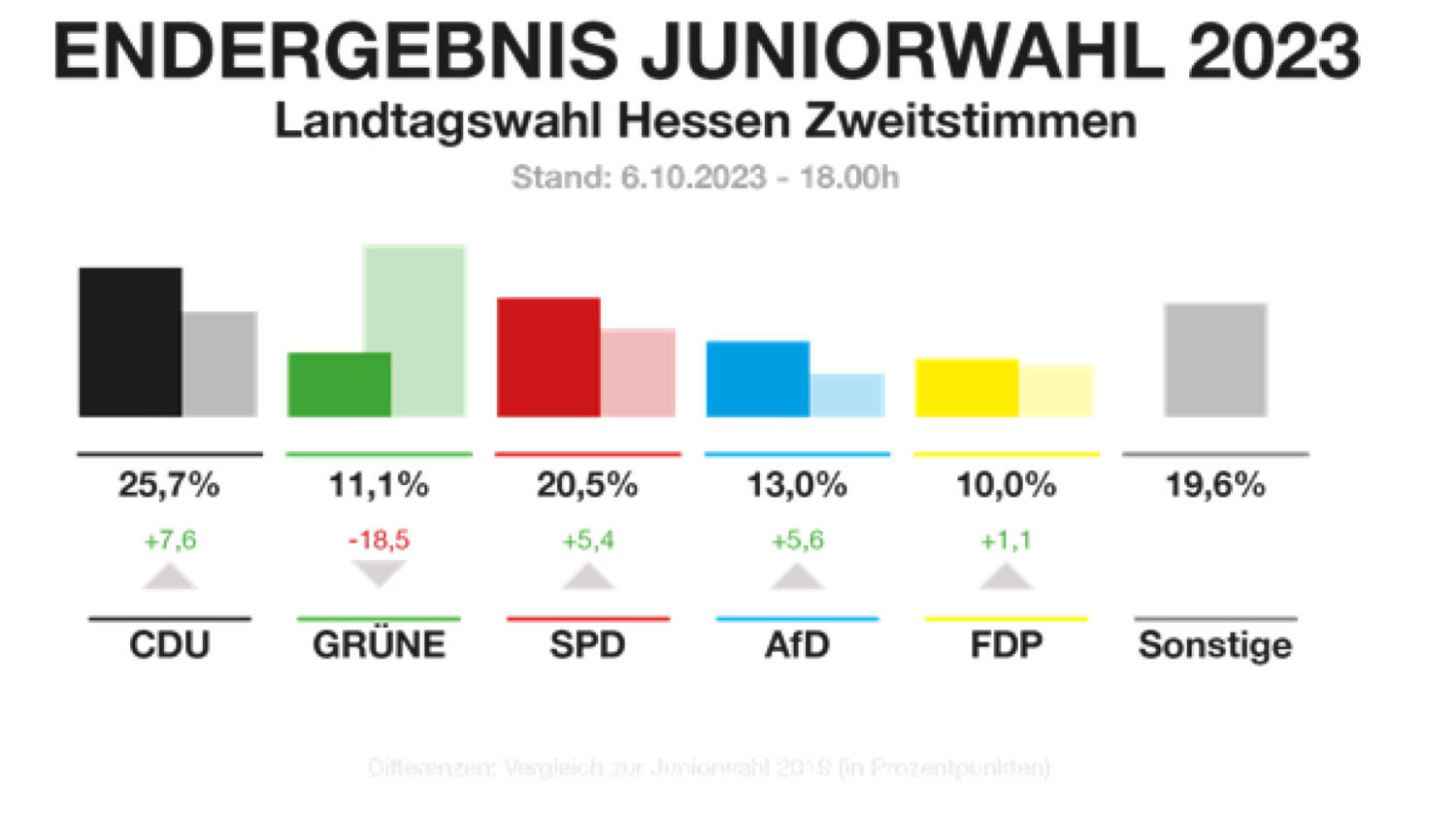
As part of a school project on political education, the “Junior Elections” were once again held at Steinmühle for students in grades 9–13 in the run-up to the state legislative election on October 8. As subject teacher Eva Katharina Rink reported, the students cast their constituency votes and state votes on October 4 and 6, respectively. The charts show how voting took place at our school—and, with regard to the state-wide vote, also in comparison to the overall results of all participating schools in Hesse. Voter turnout at Steinmühle, at 85.1 percent, was higher than the state average (82.7 percent).

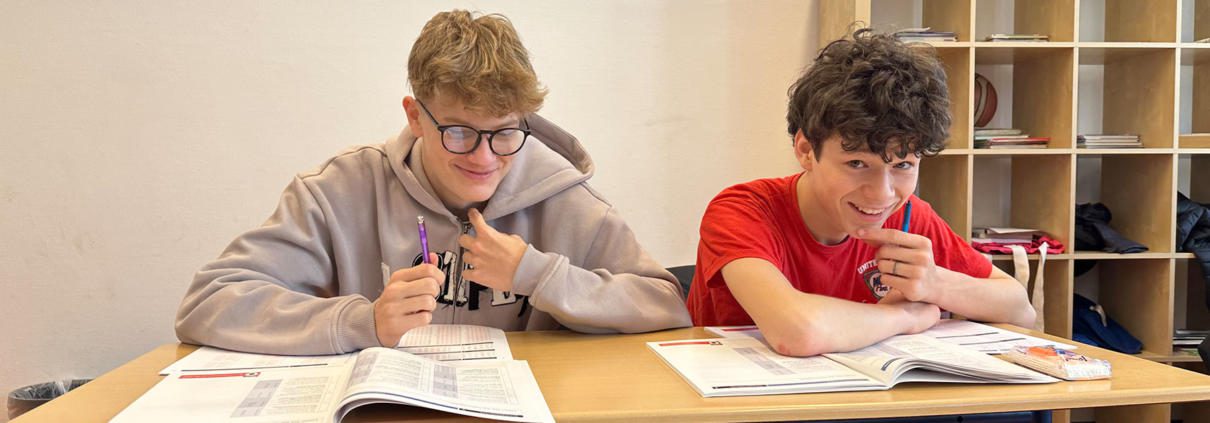
Once again this year, Steinmühle gave 11th-grade students the opportunity to assess their own abilities and interests through the geva test before they finalize their selection of advanced courses. The task was to work through a test booklet containing various exercises within a limited time. Many students are still unsure about the direction their future career “journey” will take. They are struggling with their choice of advanced courses and have absolutely no idea which college major to pursue or which vocational training program to complete later on.

Once the results are analyzed, the geva test essentially provides students with answers to the following questions:

  • What are my greatest interests, key skills, and achievements?
  • Where is there potential, and where are the starting points for my personal development?
  • Am I assessing my performance accurately? In which areas do I overestimate myself, and in which do I underestimate myself?
  • How do I stand out from my peers with a similar educational background?
  • Which degree programs or vocational training programs are the best fit?
  • What career development opportunities are available?

“Our partnership with the geva Institute is an important part of our career guidance efforts,” explained Dr. Claudia Röder, who is responsible for academic and career guidance at Steinmühle and coordinates the school’s internships.

As one of 50 schools in Hesse, Steinmühle participated in a project funded by the German Research Foundation (DFG). In this project, called COINS, the Leibniz Institute for Research and Information in Education (DIPF) in Frankfurt am Main is investigating how to develop a test that optimally reflects students’ learning progress. For research purposes, learning progress in mathematics was to be measured using the 8th-grade curriculum. To this end, Class 8c, along with their math teacher Nicole Scholtes, took part in the study.

Two test days were required to gather the relevant data for the study. The first assessment took place in early December—deliberately scheduled before the students had actually covered the material in the math test. The second assessment took place on March 23. By that date, the students had already completed the lesson on linear equations and functions.

Each test lasted two school periods and consisted of a math test and a questionnaire. Nicole Scholtes, as a teacher, also had to fill out a questionnaire. It included questions about lesson design and lesson planning. She also had to submit a detailed account of the lesson content, including all the exercises covered.

The name of the COINS study, which is being conducted in both Germany and Switzerland, stands for “Construction of Instructionally Sensitive Test Items.” The study aims to determine what test items in mathematics classes must look like in order to demonstrate the impact of instruction and authentically reflect student learning outcomes. Based on the results, tests can then be developed that all students can take and that can be used to assess the quality of instruction in schools.

Steinmühle School Principals Björn Gemmer and Bernd Holly: “Steinmühle is happy to support such innovative projects, and we are delighted when our colleagues are willing to participate.”

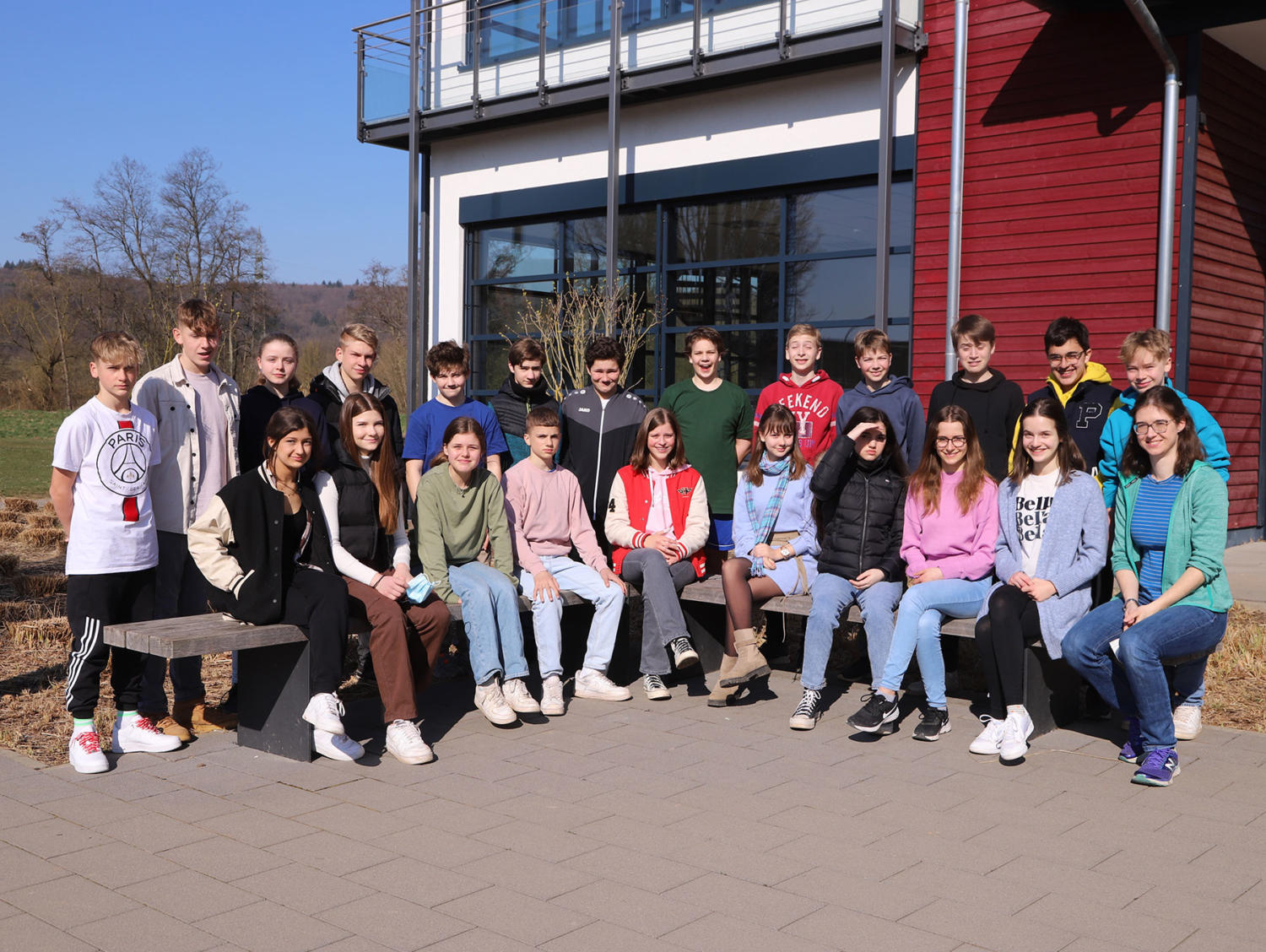
Our photo shows math teacher Nicole Scholtes (right) with the students in Class 8c.