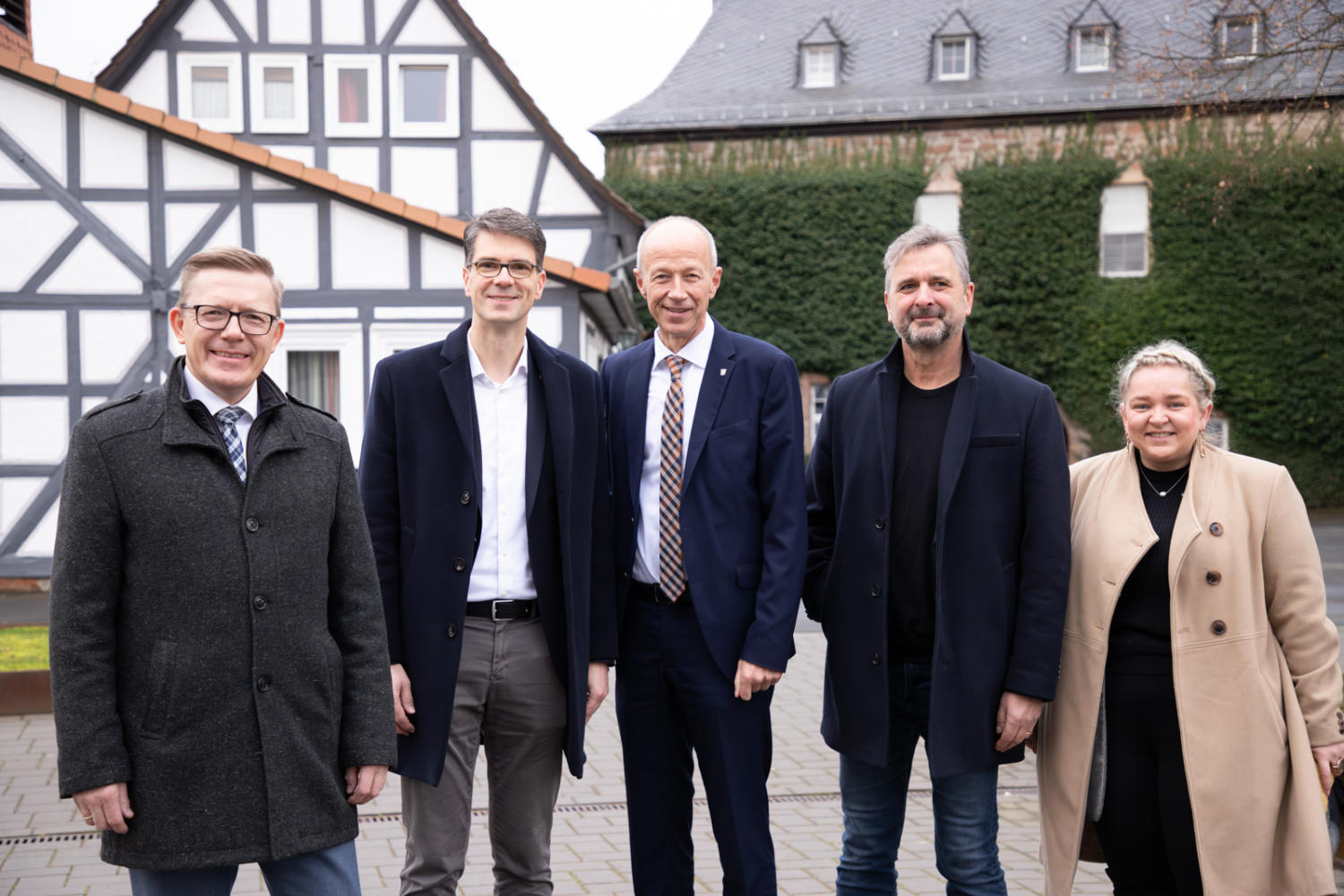


A tour of the campus with several “highlights”
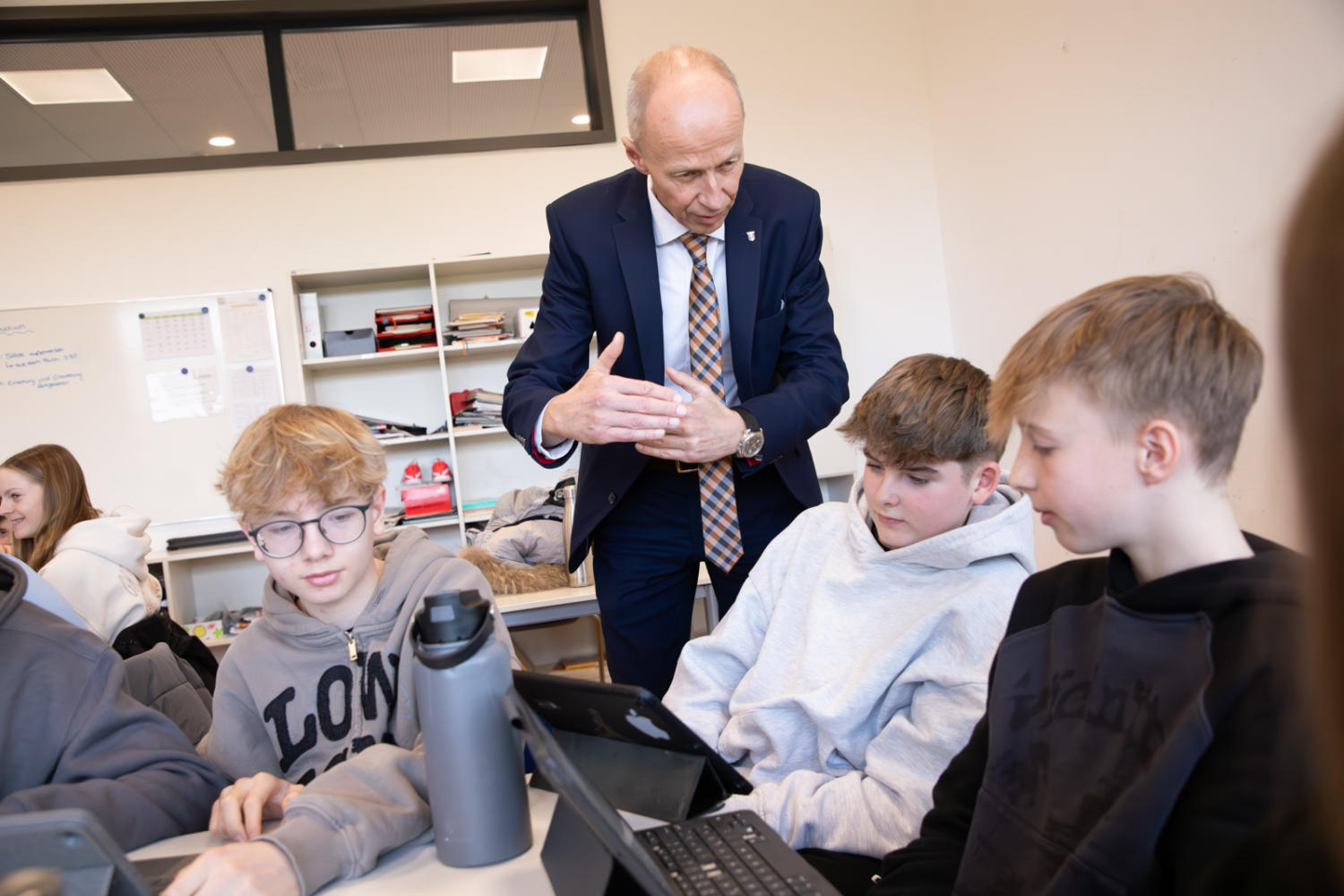
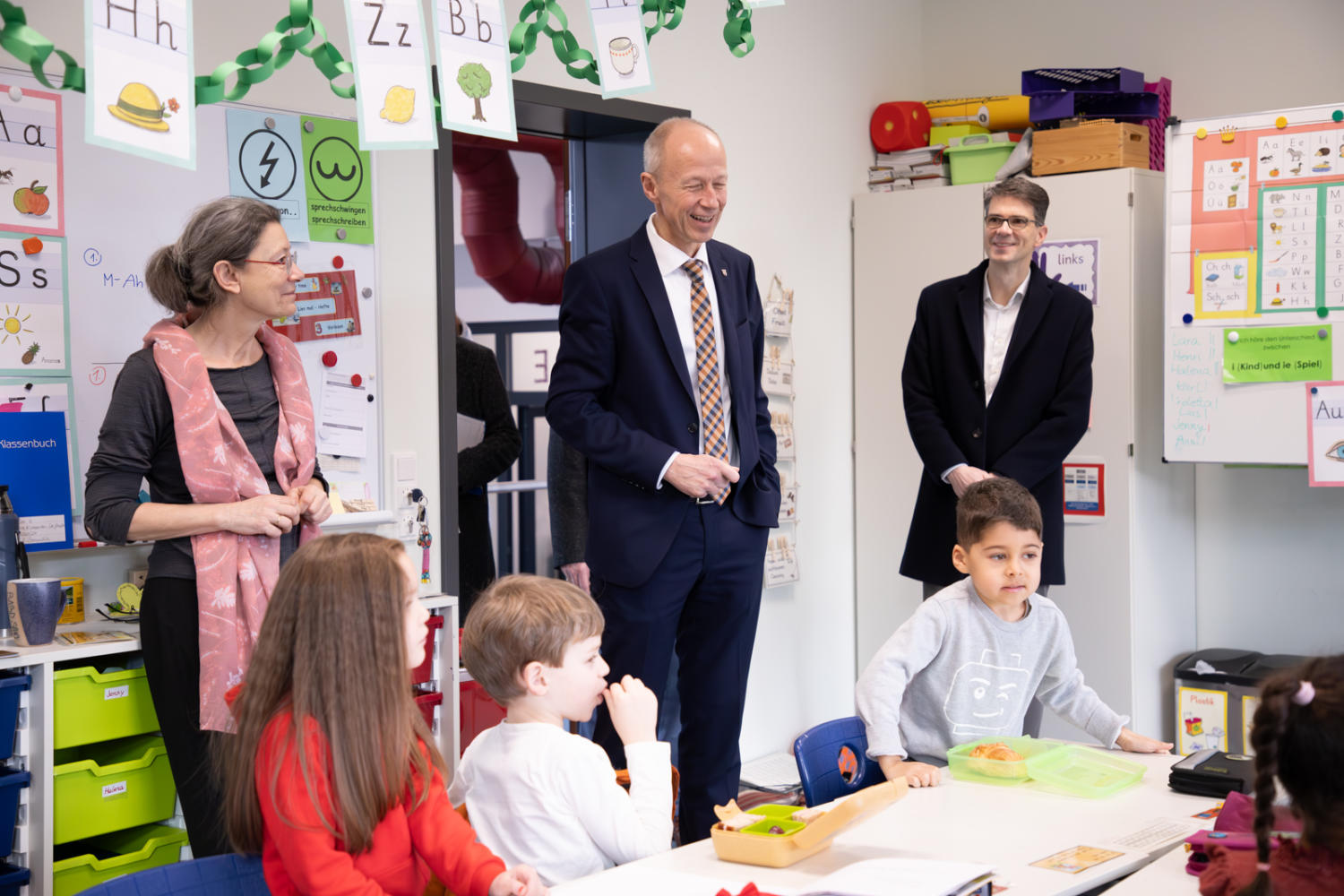
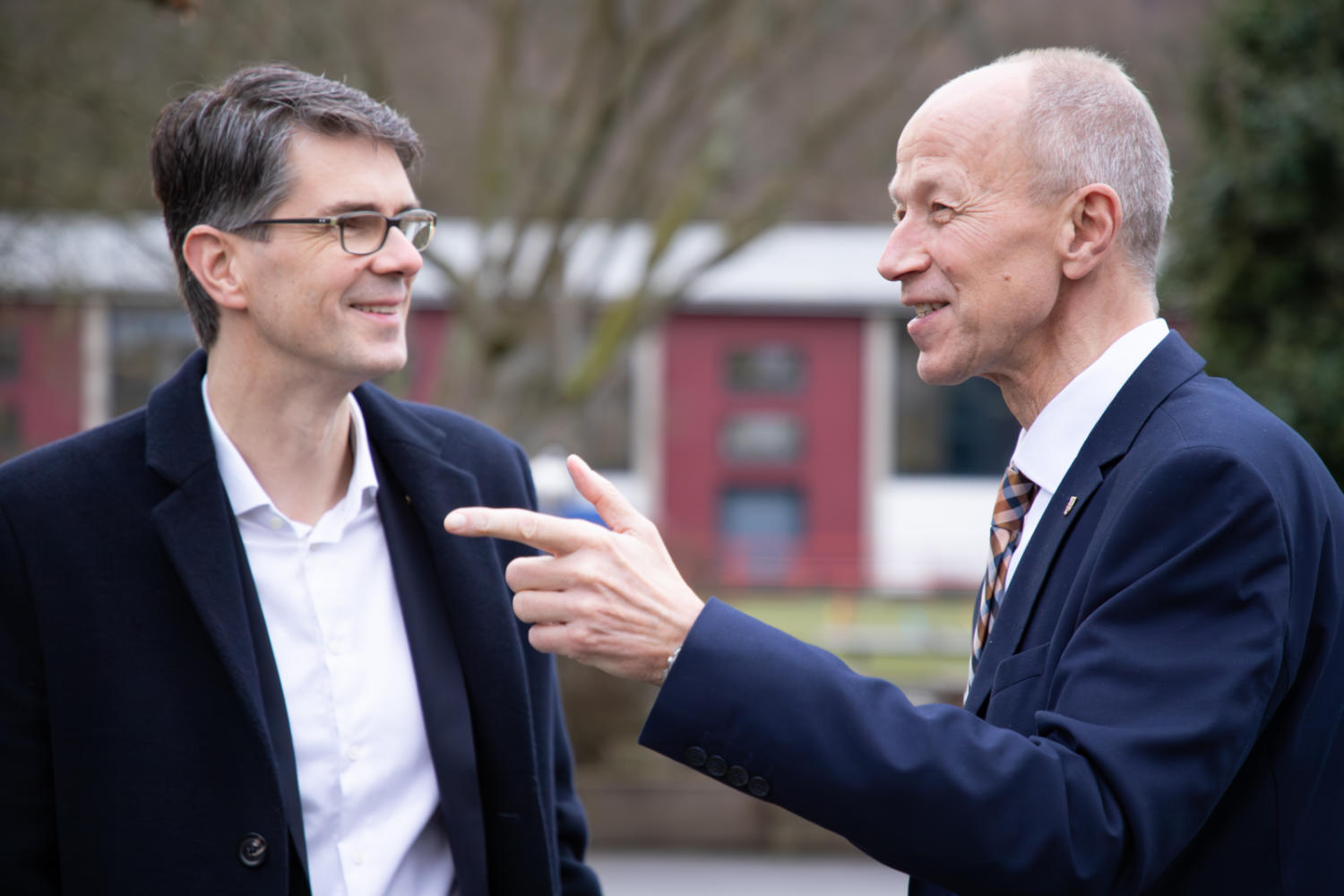
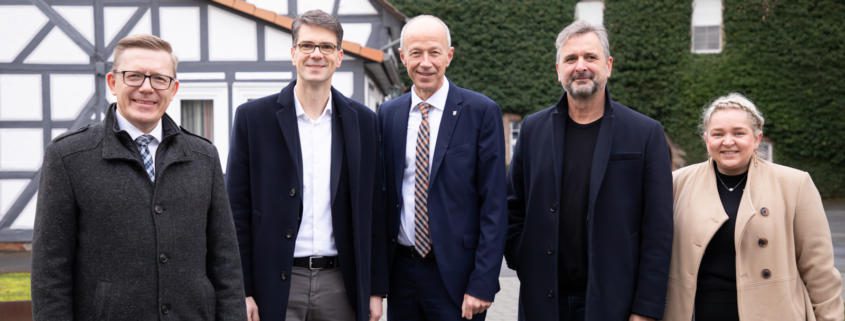
He has been in office for just one month—and the new Hessian Minister of Education has already visited Steinmühle—the first school in Marburg he has visited. “Independent schools, or so-called alternative schools, are a fundamental part of our educational landscape,” explained Armin Schwarz as he observed various classes.
In conversation with students and teachers, it was immediately apparent that the CDU politician was on familiar ground. Born in Arolsen, the minister—born in 1968—studied English, politics, and education in Marburg and Wolverhampton and worked as a teacher for many years before entering politics.
The guest, who had not only skimmed through the information provided about the Steinmühle but had also taken it to heart, demonstrated a good understanding of the circumstances at our school. He clearly enjoyed learning in the 11th-grade profile preparation course how the school helps students make their course selections in high school.
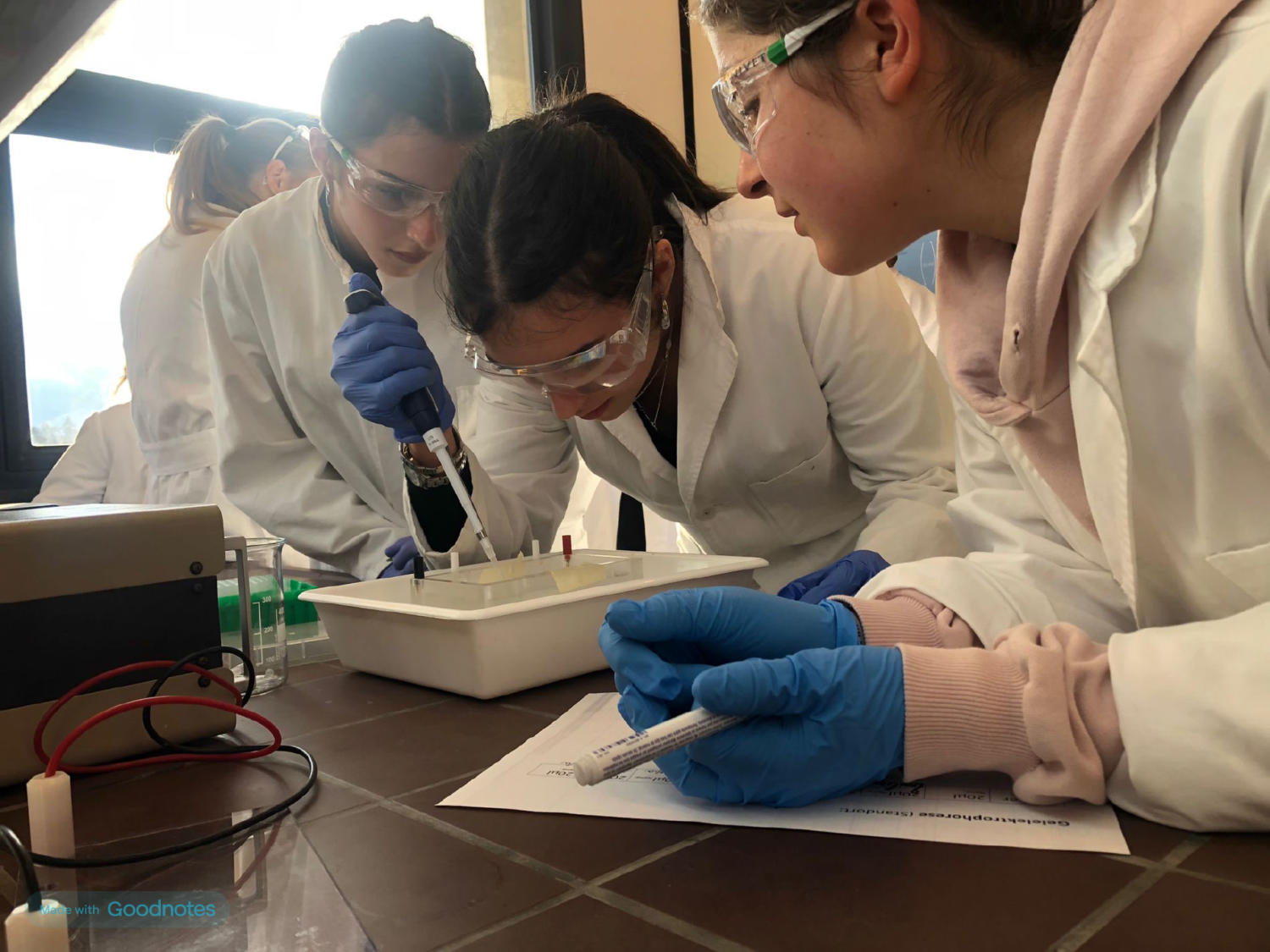
In the course led by Principal Björn Gemmer, Mathilda Lambach explained the concept of the specialized upper secondary program, and Jingyi Li presented her plus-MINT research project on organic light-emitting diodes (OLEDs).
A student reported on the option he had learned about at Steinmühle to earn his high school diploma in eight years instead of nine. This so-called “option model,” known as G8 or G9, is offered only at Steinmühle in the Marburg-Biedenkopf district.
That’s when the English teacher walked in
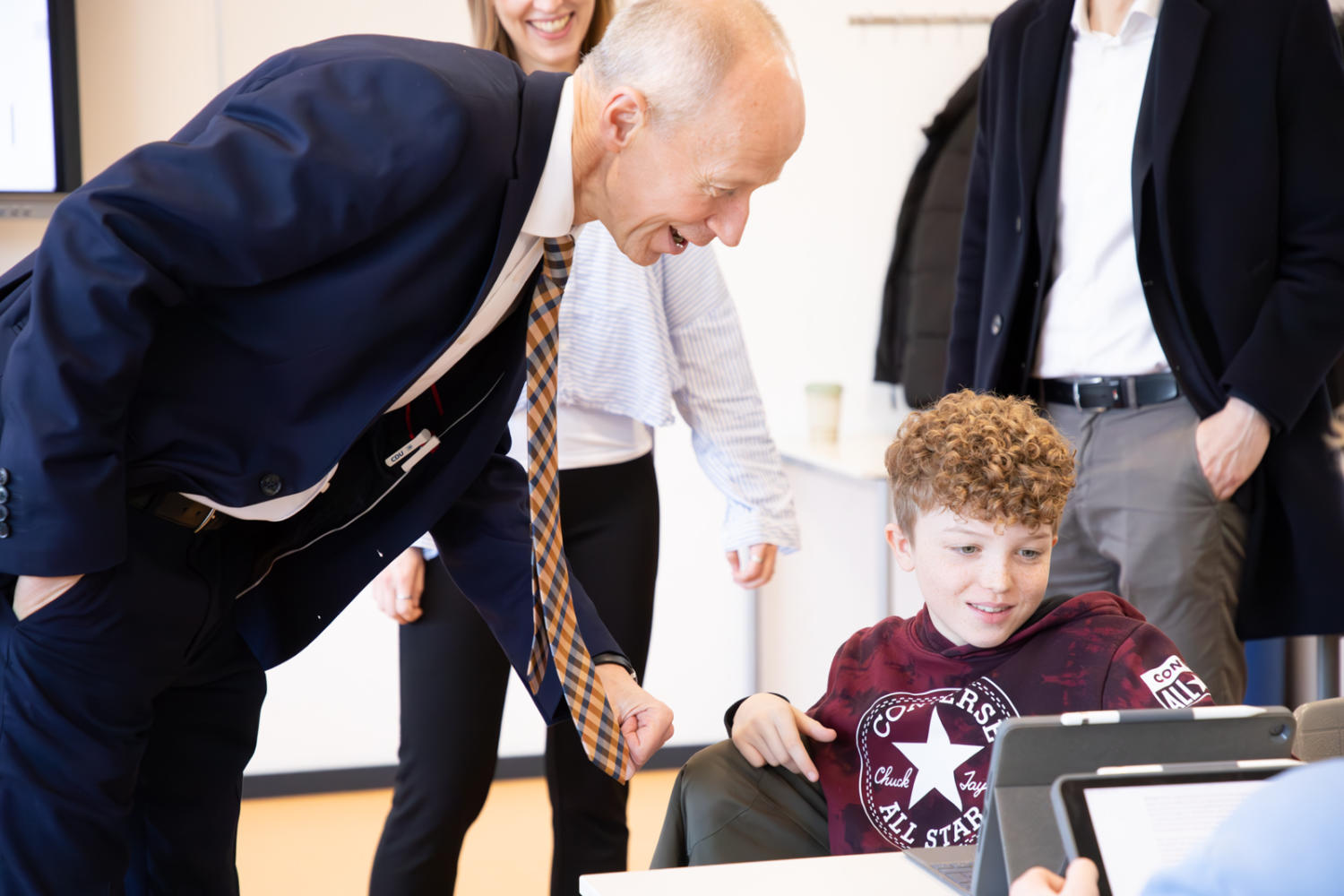
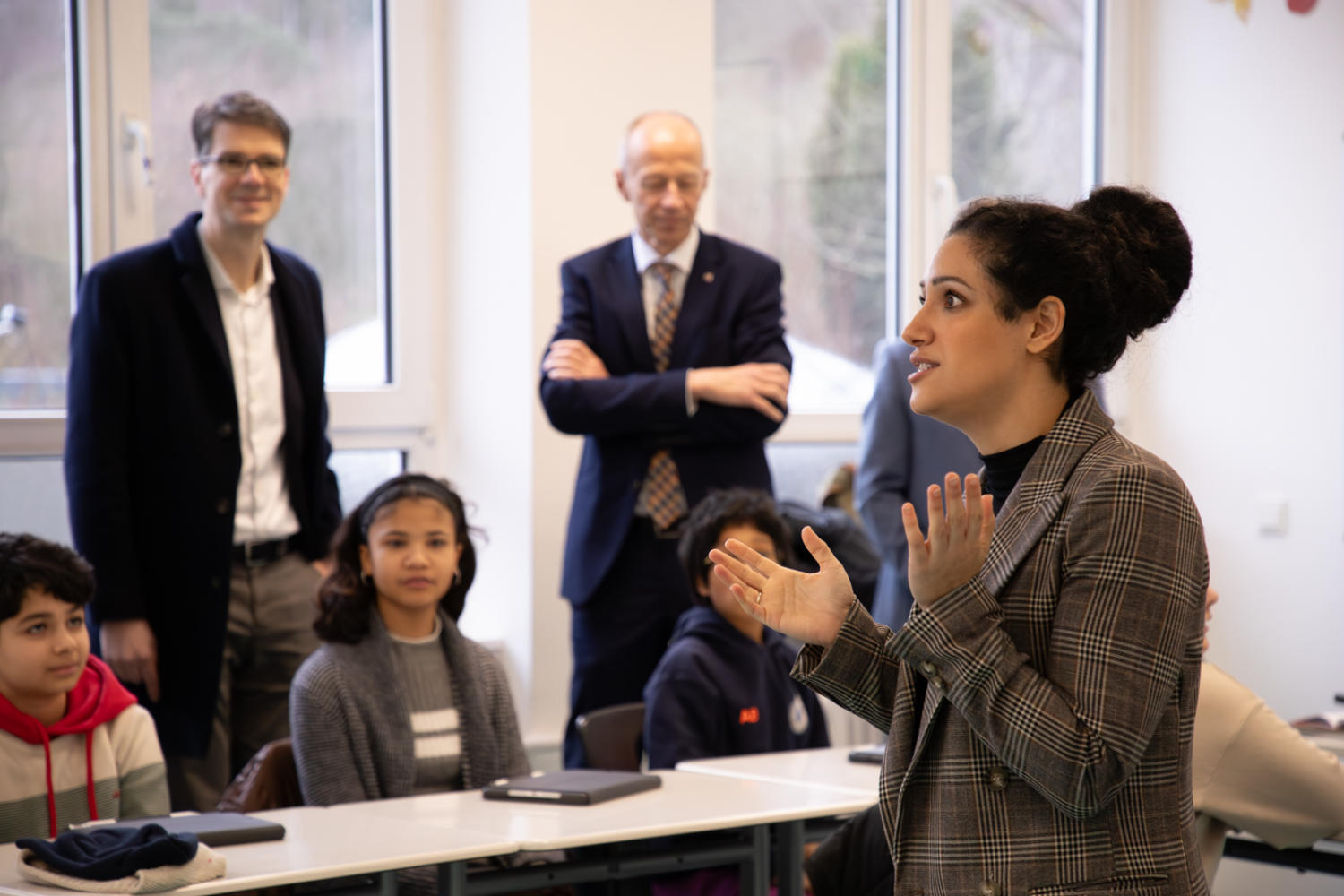
At the next stop at the Bremerhaus—with the 6th-grade class of the International High School track—the political guest seemed to be in his element. The trained English teacher listened to a student presentation in English on “Ancient Rome,” the Roman Empire, asked specific questions, and encouraged further contributions. The class taught by Aylin Yüzgülen-Bienek focused on “Global Perspectives,” a subject that has become established in the International High School Track. Minister Armin Schwarz would certainly have spent more time in this class had a glance at his watch not reminded him of his other appointments for the day.
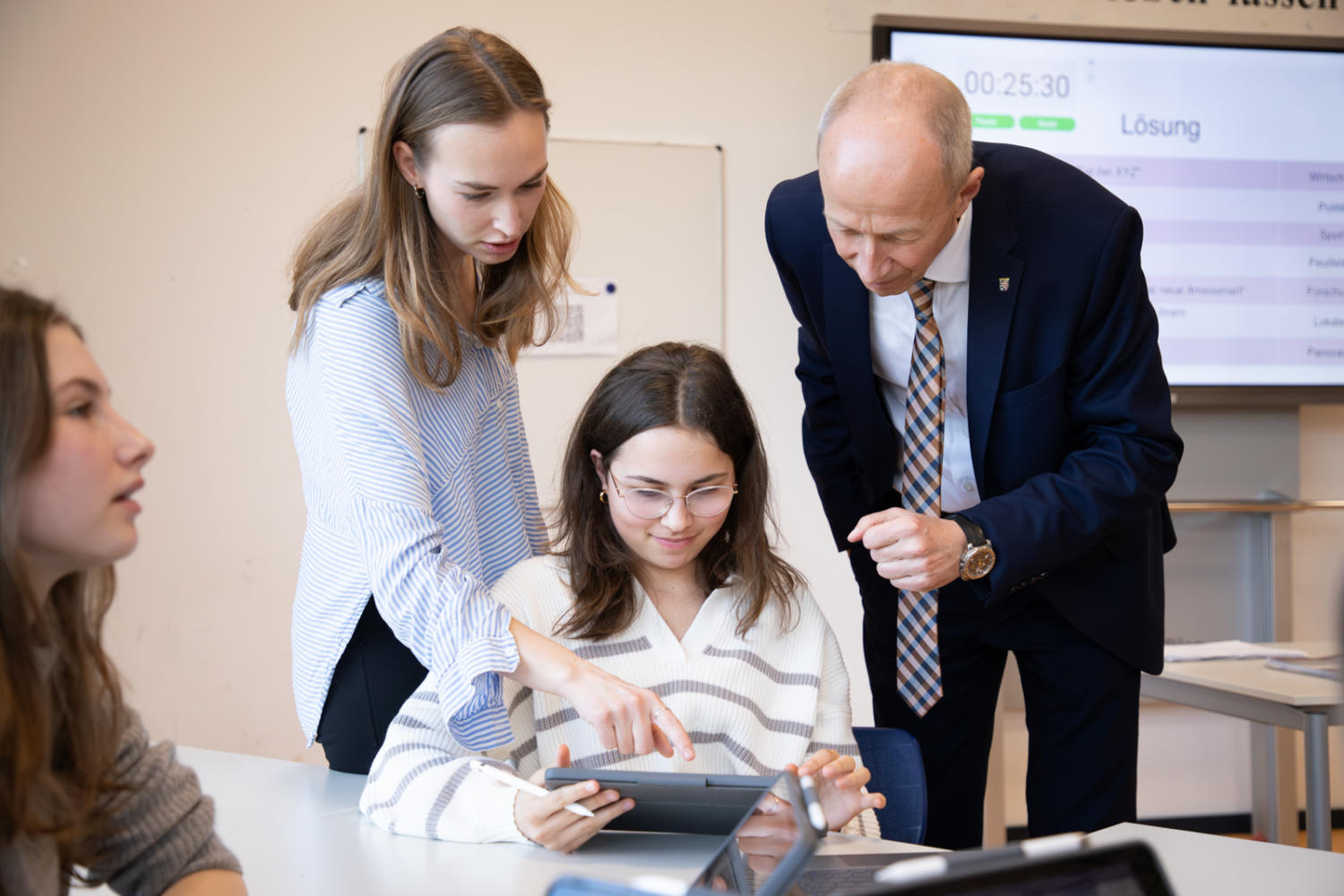
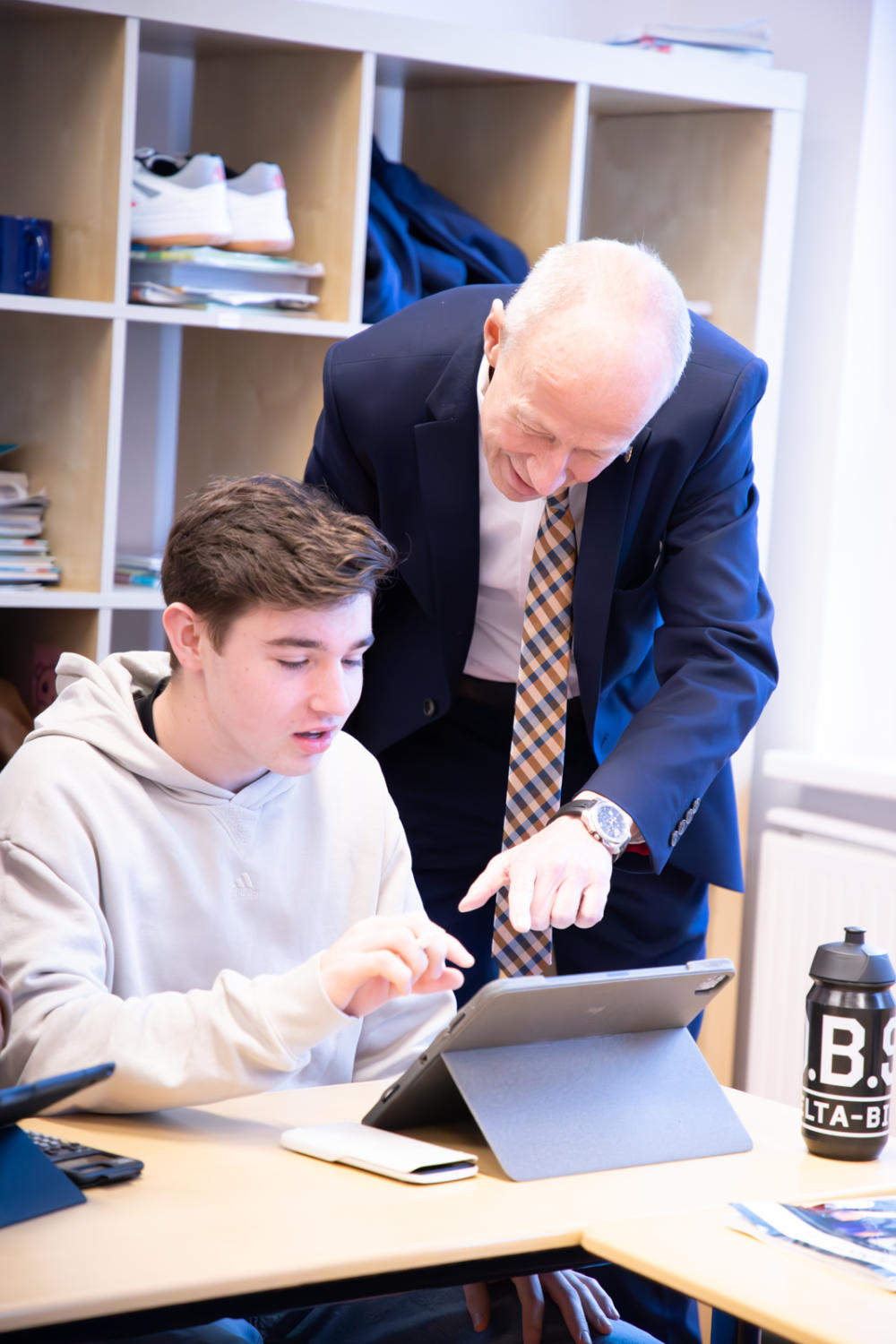
A brief stop at the Flex B elementary school class, a quick peek inside the large new gym—and then it was off to the atrium, where Anna Prokop, the 8c class, and the project-based lesson were waiting. The lesson focused on a newspaper project. Equipped with tablets and the app from the local “Oberhessische Presse,” the students were getting an overview of what it’s like to work in a newsroom. How do you edit texts? How do you assign content to specific sections? How do you manage your time when under pressure? “Who among you would like to become a journalist?” asked the Minister of Education, and the response was rather subdued.
Nevertheless, the eighth graders were eager to show the visitors from Wiesbaden their project work on their mobile devices and then enthusiastically talked about their favorite projects from past school years.
Took advantage of the opportunity to exchange ideas
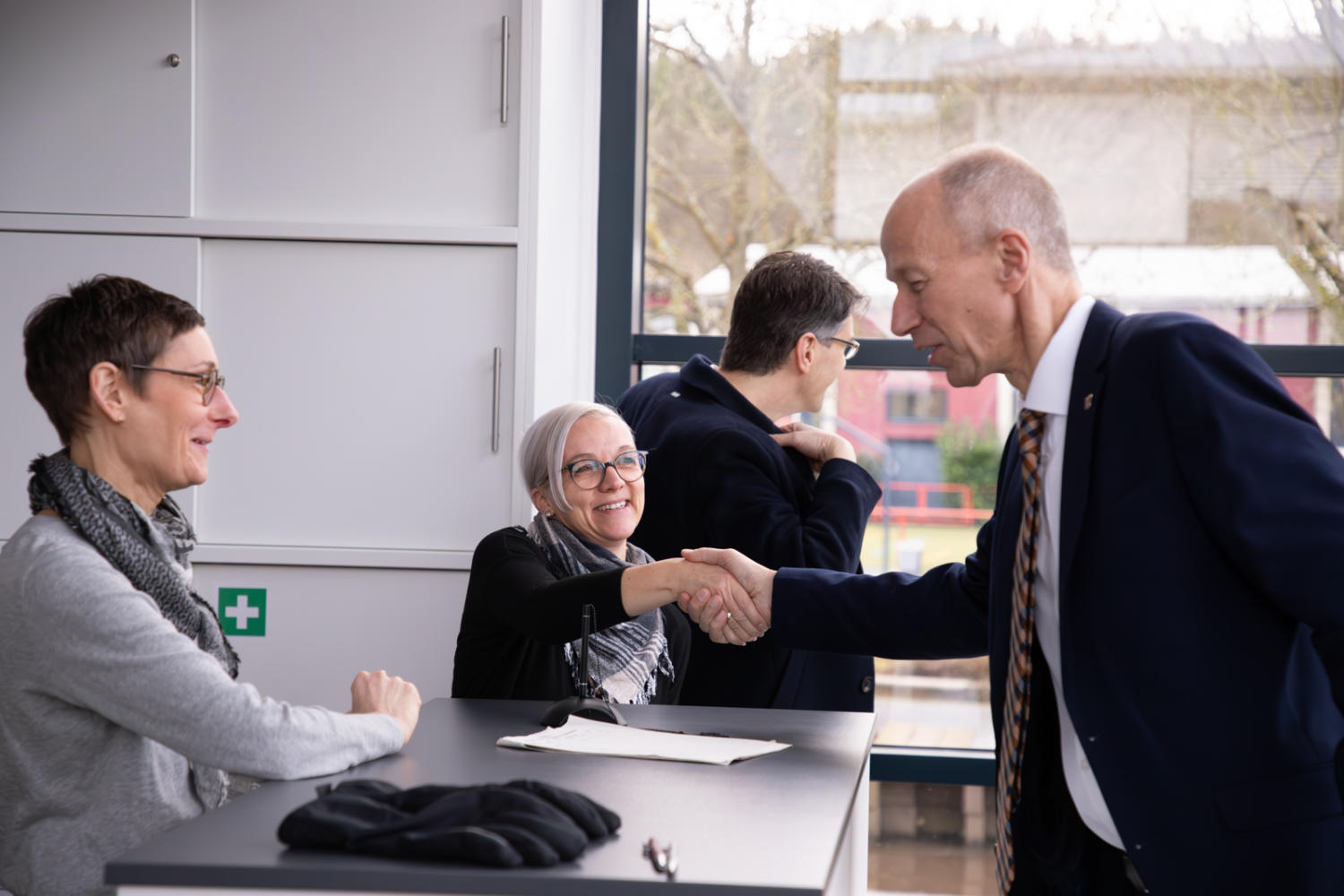
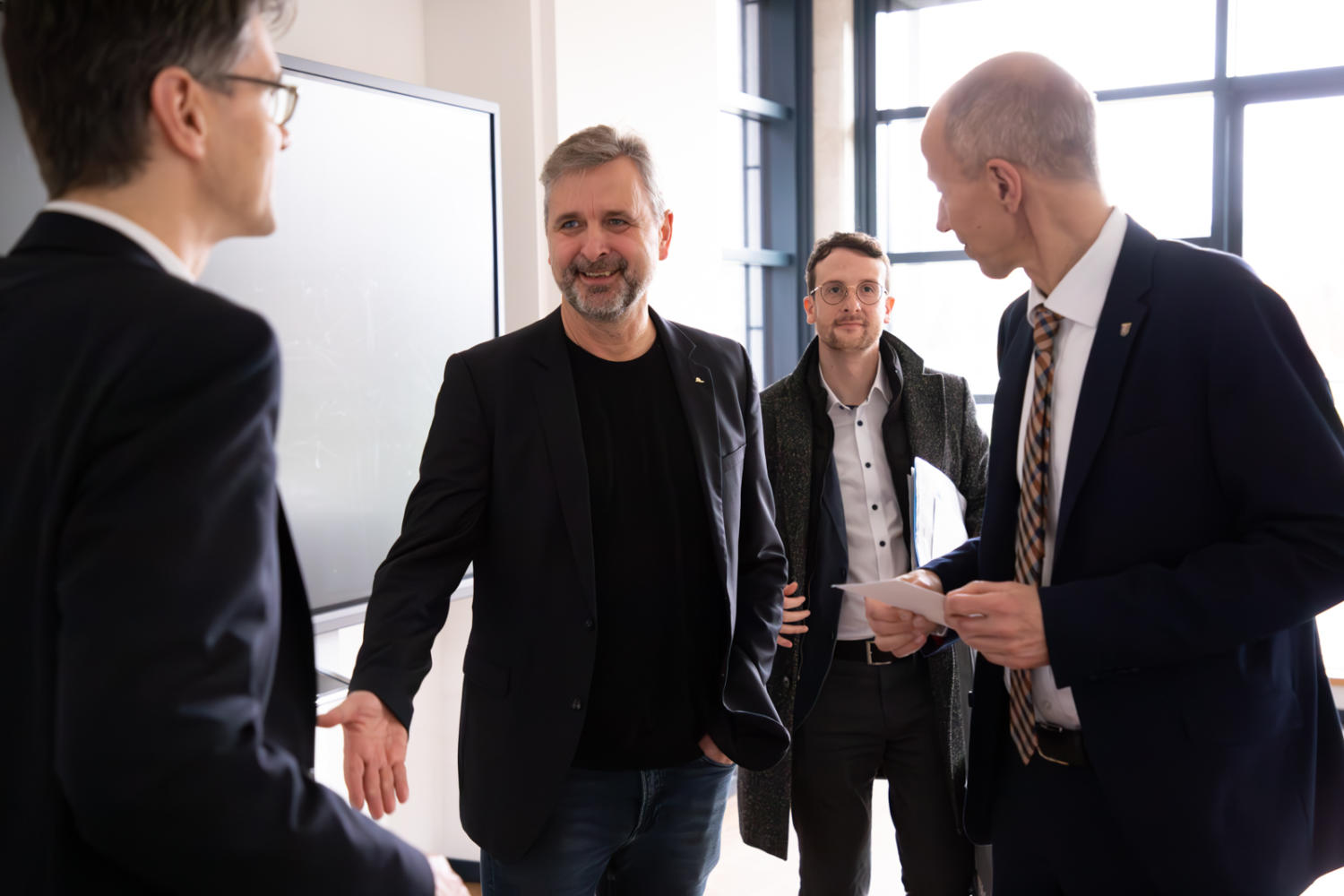
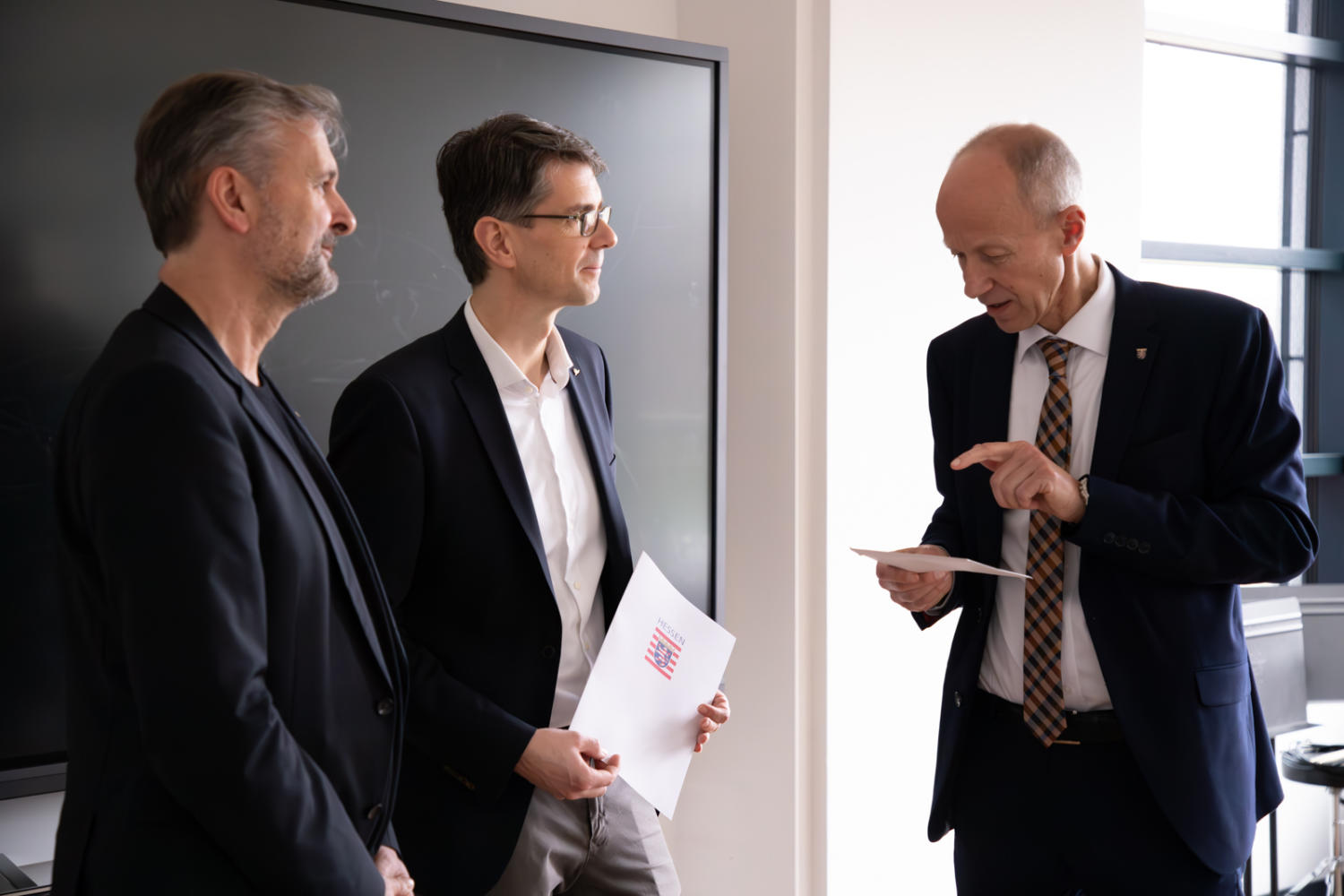
It was finally time to catch our breath at the end of the morning’s visit. In the spacious Room 615 of the Atrium, the Minister of Education, the accompanying local state parliament representative Dirk Bamberger, the leadership team—Björn Gemmer, Dirk Konnertz (Executive Director), and Anke Muszynski (Head of the Boarding School), as well as the entire school administration team—consisting of Frank Wemme (Head of Lower Secondary School), Constanze Oestreicher-Gold (Head of Upper Secondary School), Tobias Karlein (Head of School Organization), and Dirk Lange (Head of Quality Management) gathered for canapés, cake, and refreshments. Also present was Bianca Zenker from the executive board of the parents’ association. The minister and those in attendance “exchanged” documents: While Armin Schwarz presented a donation to the Steinmühle Friends Association, Executive Director Dirk Konnertz took advantage of the minister’s personal presence to draw attention, in a written statement, to the economic challenges facing the Steinmühle educational institution in light of high inflation and collective bargaining agreements. Bianca Zenker presented an envelope containing “reading material for your continued journey.” The School Parents’ Council had documented in writing the issues currently viewed as challenges by the parent body. The focus here was on the topic of academic assessments in the upper school.
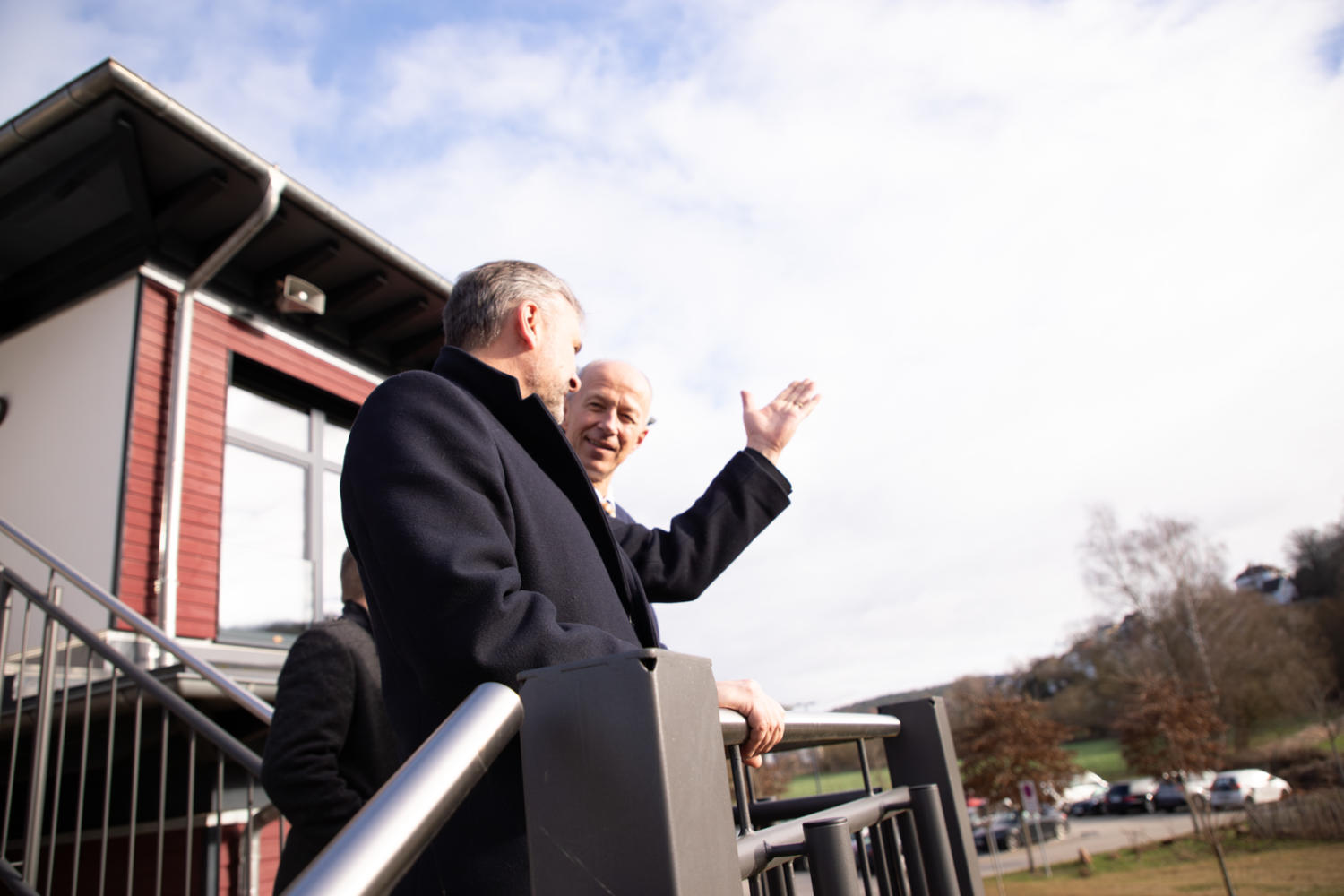
The Minister of Education’s discussion partners in this larger group also included the student council team, consisting of Joela Schwing and Lennart Holly. Naturally, rowing came up in the conversation—not only because the boathouse was in plain sight, but also because Lennart, an active competitive rower, was present. Of course, it shouldn’t seem as though rowing at Steinmühle is limited to just the athletic aspect. The minister was told just as much about the successful girls’ soccer program as about the numerous sports in which Steinmühle has been actively involved in recent years, even participating in the “Youth Training for the Olympics” competitions. “Not to mention our partnership with Marburg’s largest soccer club, Sportfreunde Blau-Gelb Marburg,” added Managing Director Dirk Konnertz in closing, mentioning the joint Unified Team—a project close to the heart of School Association Chairman Egon Vaupel, whose greetings he conveyed.