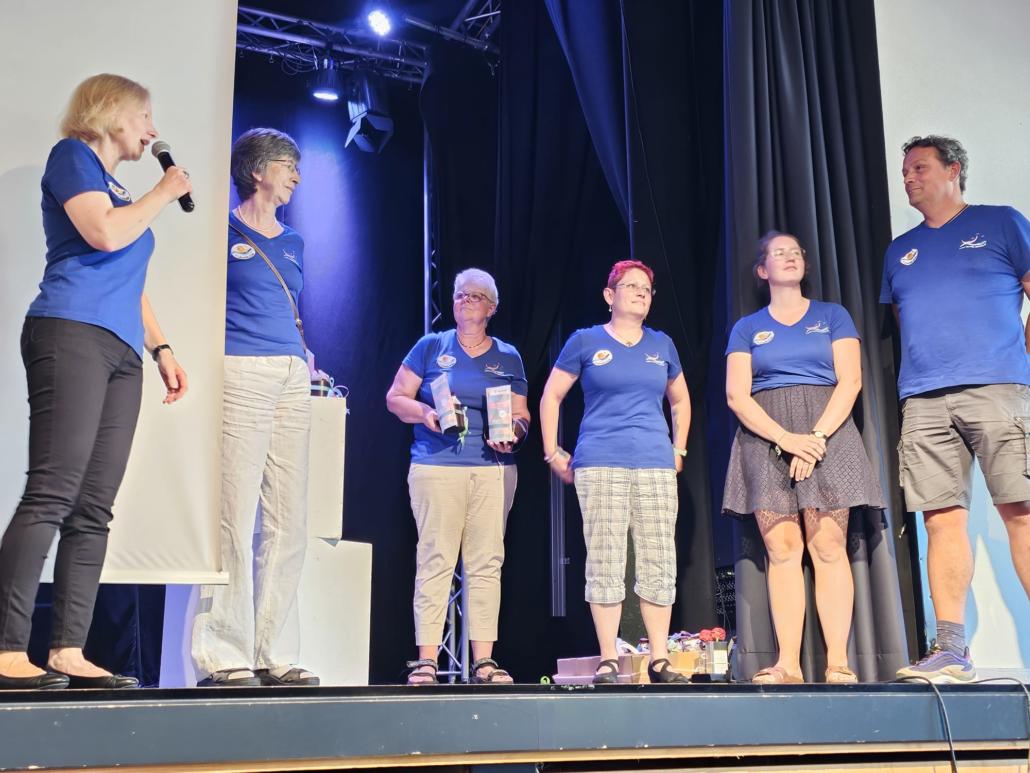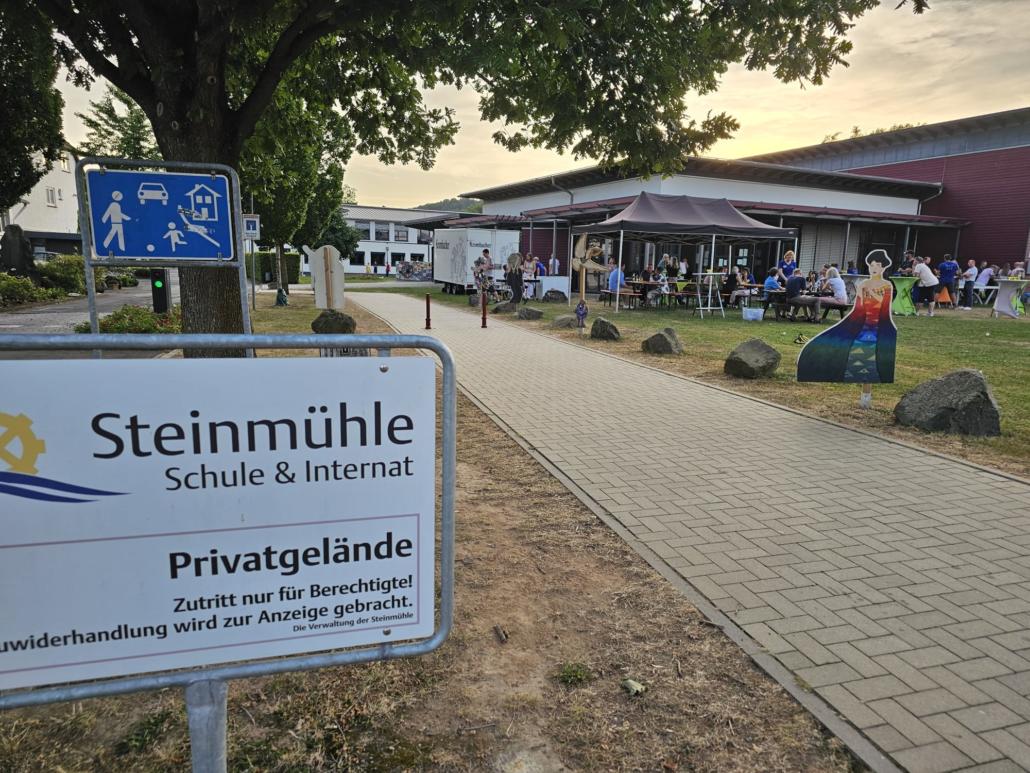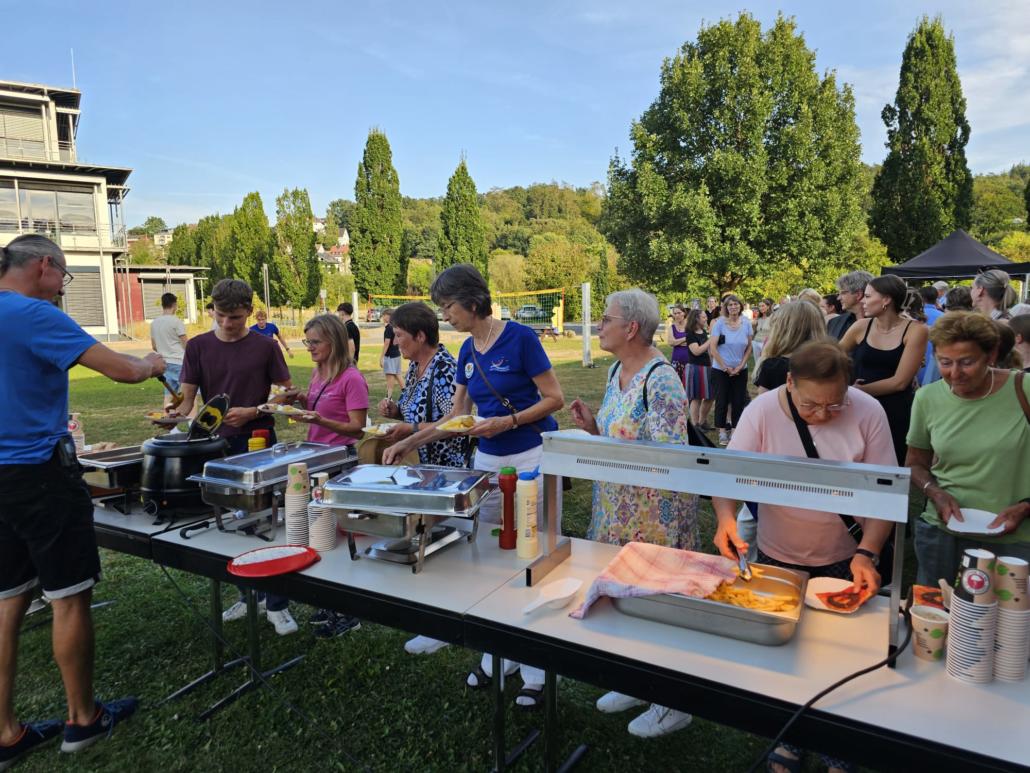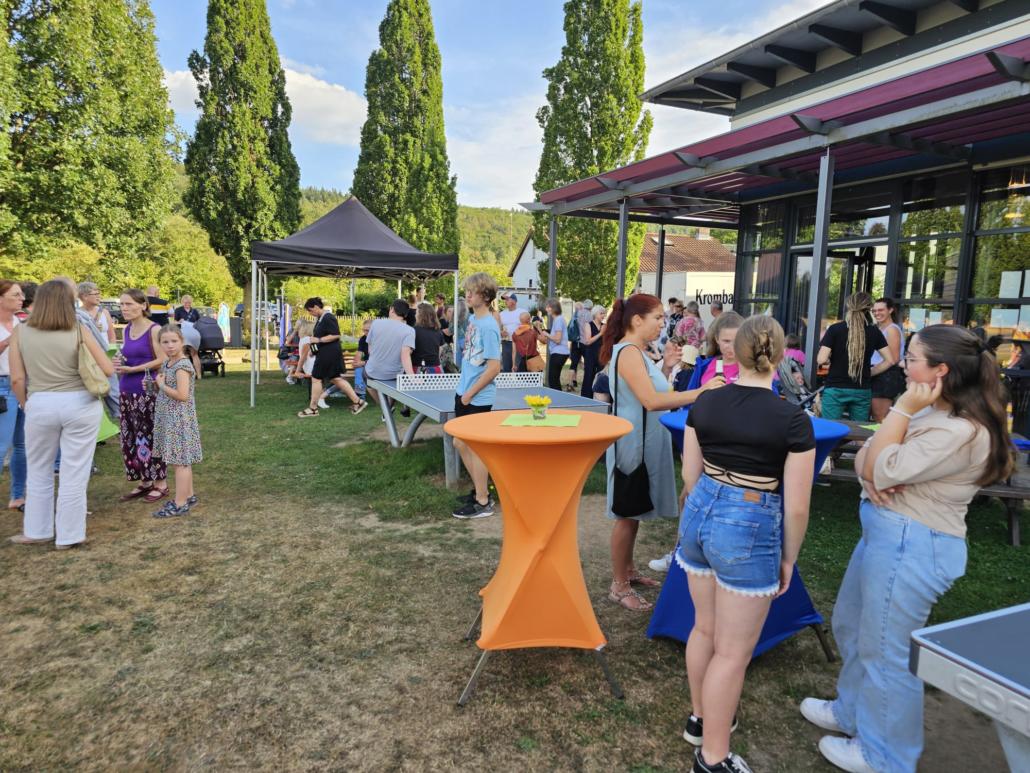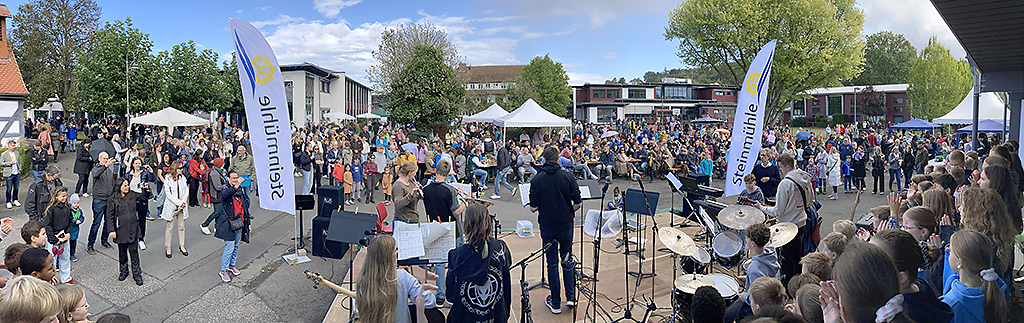
As the last Saturday in September approaches, excitement builds every year at Steinmühle. On this day, the school and boarding school traditionally celebrate their fall festival with many guests: It’s a gathering of parents, families, friends, alumni, and everyone who feels a connection to Steinmühle. At the same time, it’s an opportunity for anyone interested to get a taste of the Steinmühle atmosphere.

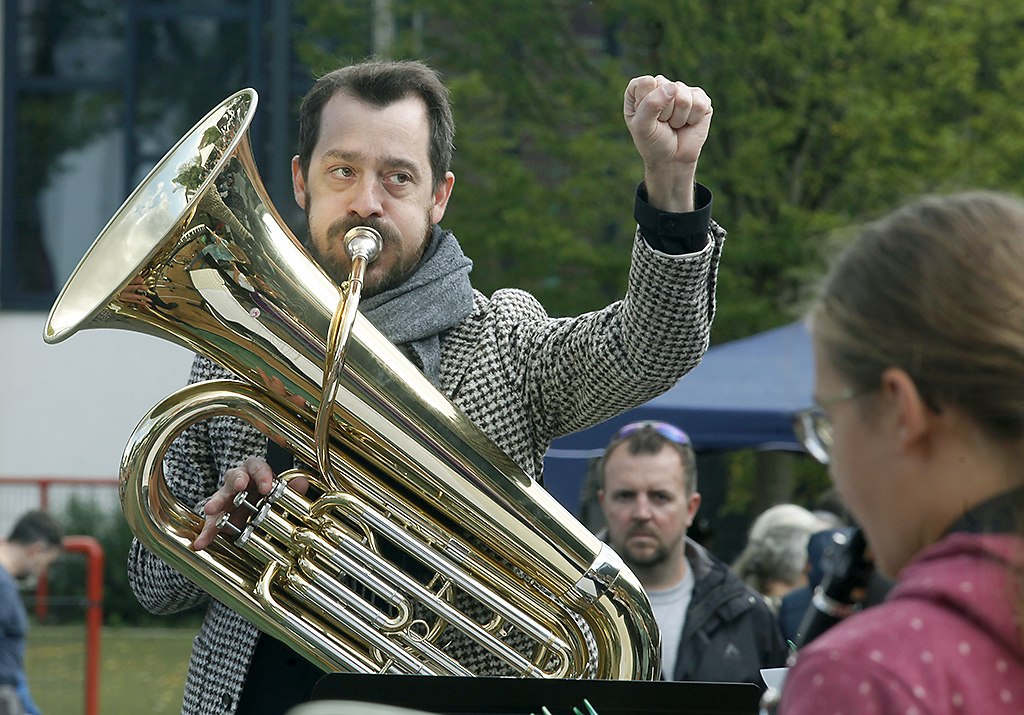
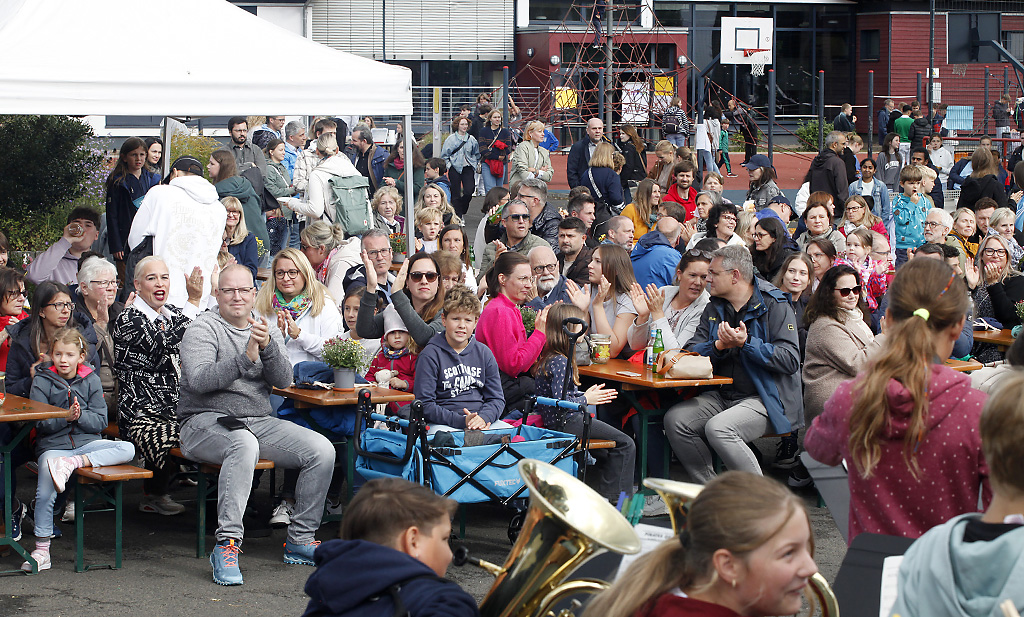
“Many people on our campus have been working toward this day,” explained Frank Wemme, middle school principal and festival organizer, after Principal Björn Gemmer’s opening remarks on the music stage. The benches in the schoolyard were packed with spectators, and the sun was shining down on the guests, who clearly preferred to pull out their sunglasses rather than their umbrellas.


Here’s to us!

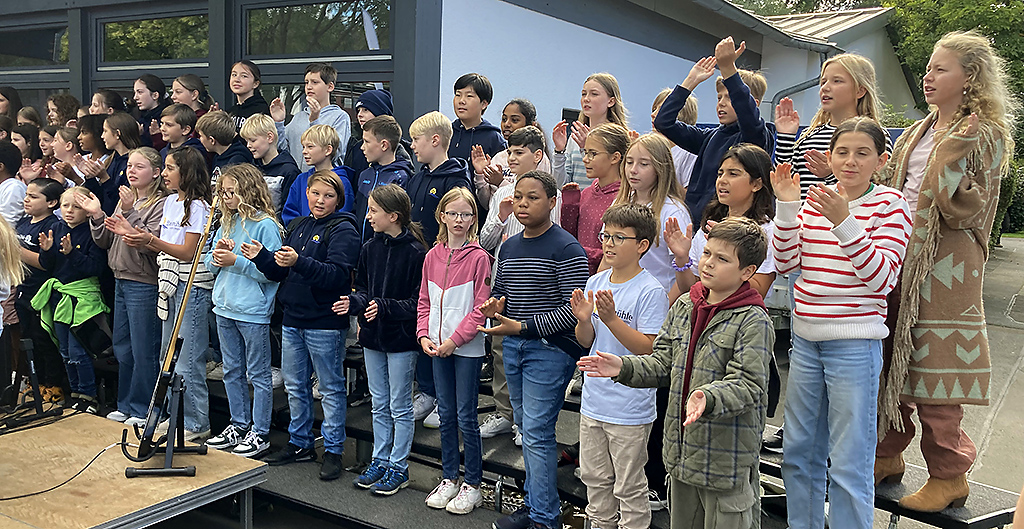
The musical introduction featured more highlights from the festival week celebrating the 75th anniversary of the Steinmühle. This memorable anniversary had been celebrated in June with a variety of events. The then 5th-grade choir—now in 6th grade—performed songs such as “Yellow Submarine,” “99 Luftballons,” and—fitting for the occasion—“Ein Hoch auf uns,” conducted by Anna Prokop and Ulrike Wilmsmeyer.


Lovable Four-Legged Friends

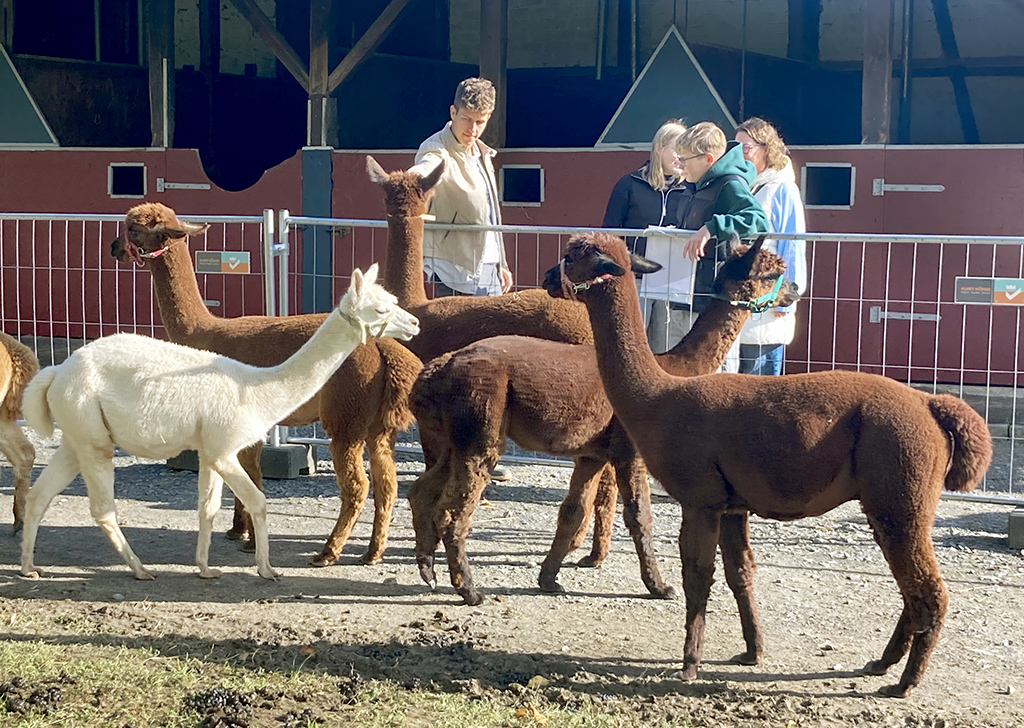
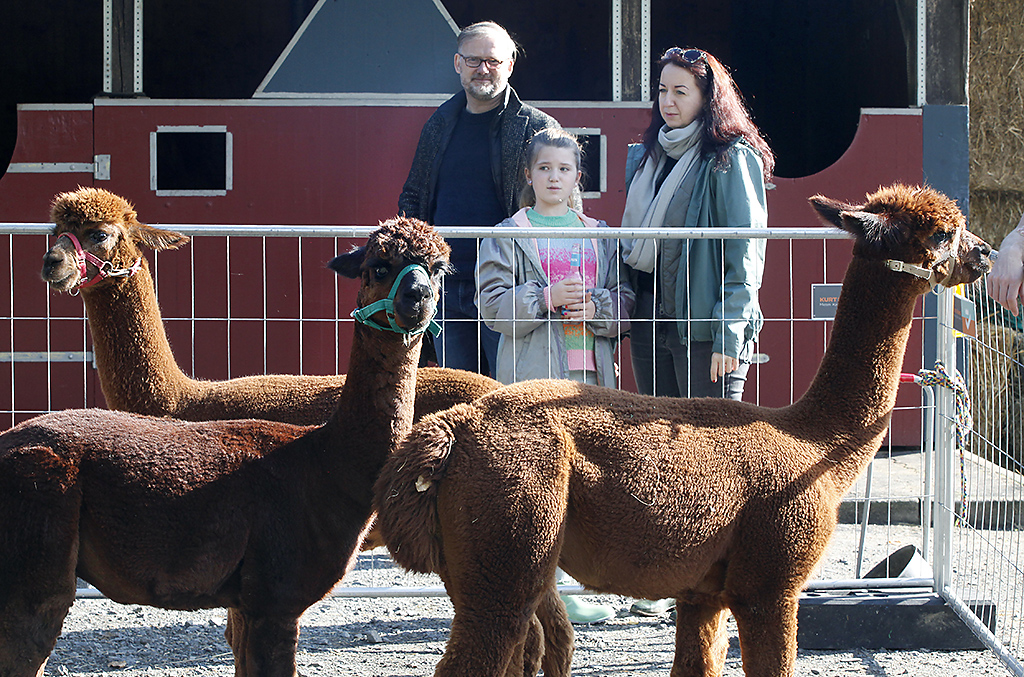
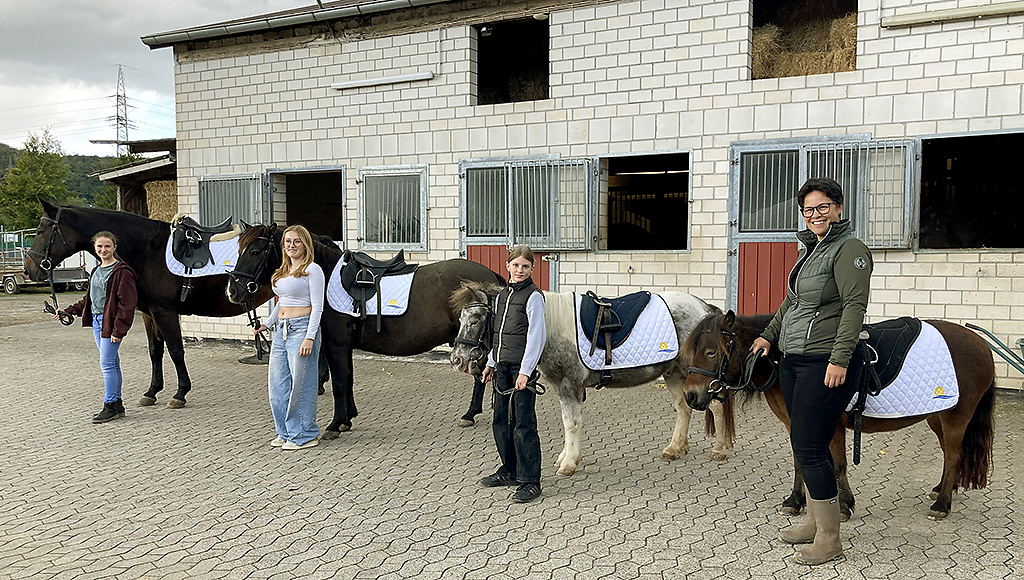
As we walked through the grounds, there were new things to discover. Alpacas had never been seen at the Steinmühle before—for the fall festival, six animals, normally based in Weimar/Lahn, gathered near the equestrian center. District Administrator Jens Womelsdorf was also charmed by the cute appearance of these four-legged friends with their button eyes, which their owners often bring along to events. On the other side of the building, Steinmühle ponies, smartly adorned with the Steinmühle logo, posed, ready for a ride with interested young visitors.


Information About the Day Group

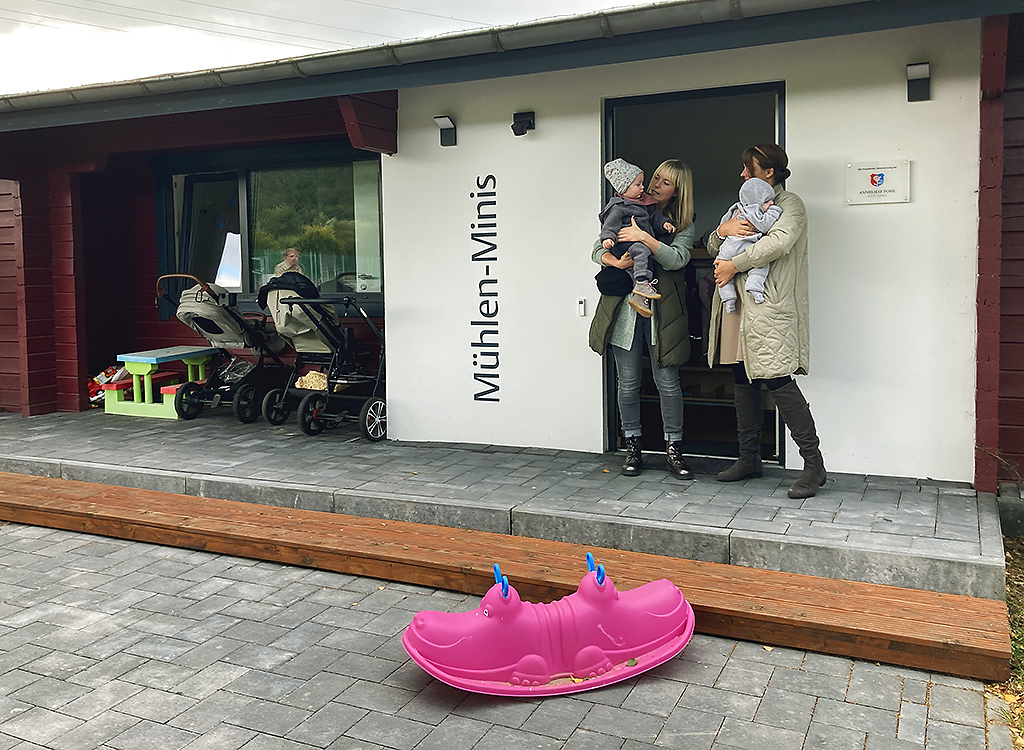
The two child care providers for the new “Mühlen-Minis” group took advantage of the Steinmühlen event to show interested visitors around the rooms in the fully renovated log cabin and explain their work.


It’s all part of the fun

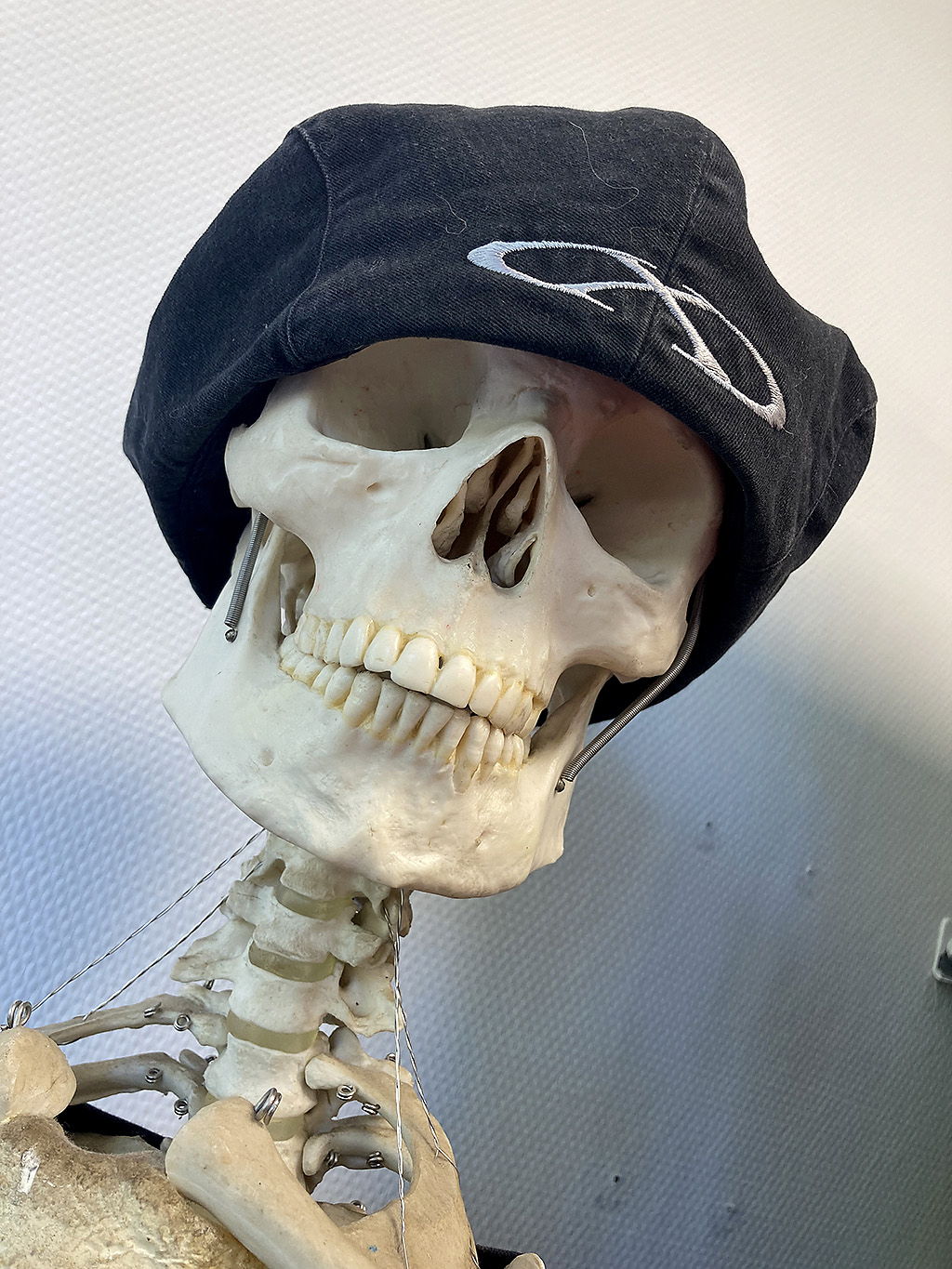
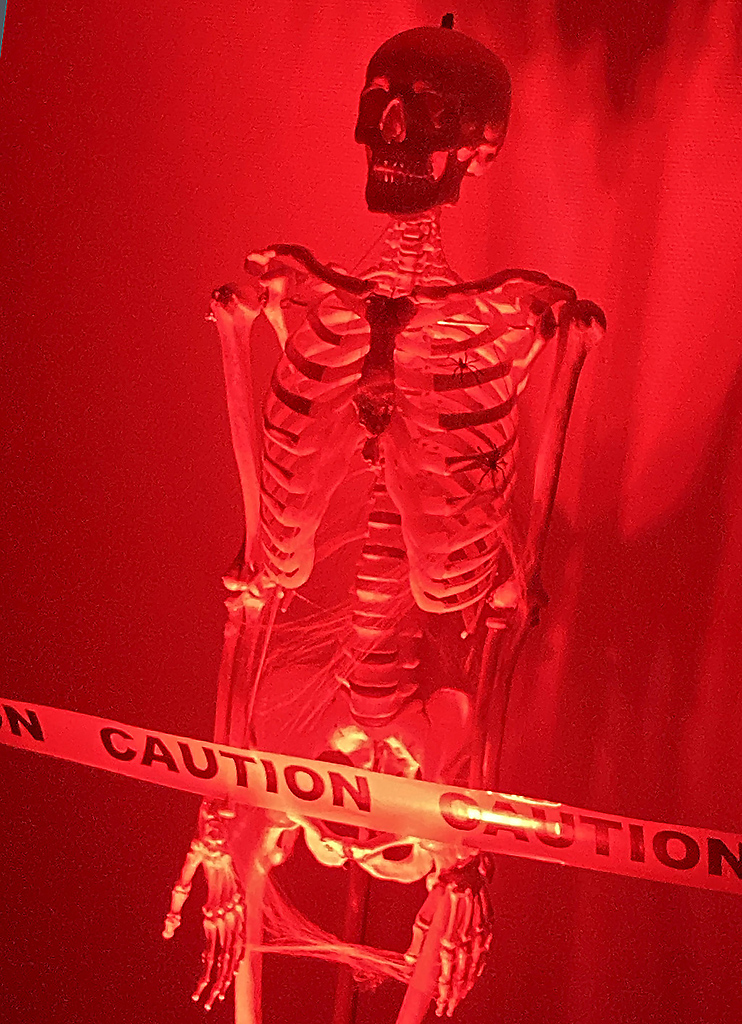
And then the time had come. This time, the two reporters from the Steinmühle couldn’t avoid visiting the haunted house, which was once again very crowded—as evidenced by the long line in front of the building. Both crept through the darkened corridors with a sense of awe, guided only by bright lines on the floor. Here and there, water dripped from above; rustling sounds and faint touches in the pitch darkness made the whole experience truly spooky…and then… there it was—the skeleton, illuminated in shifting colors… and captured in a photo in the blink of an eye. Great job, students of Class 7a!


An Insight into Food Art

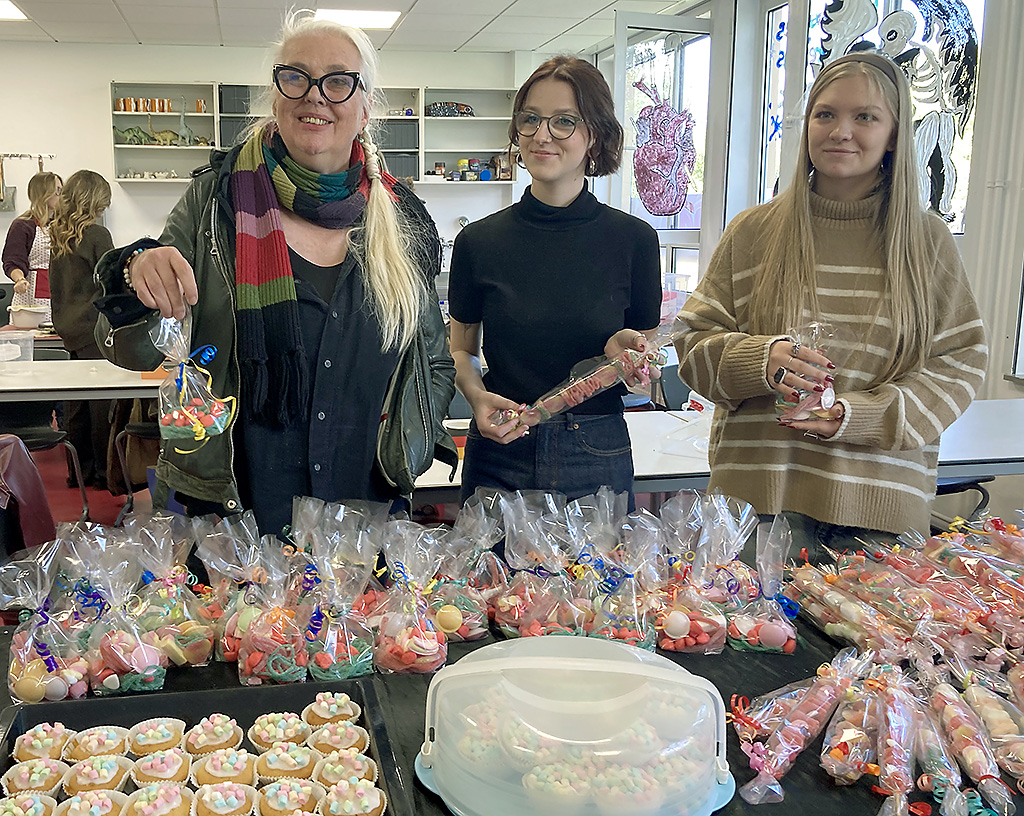
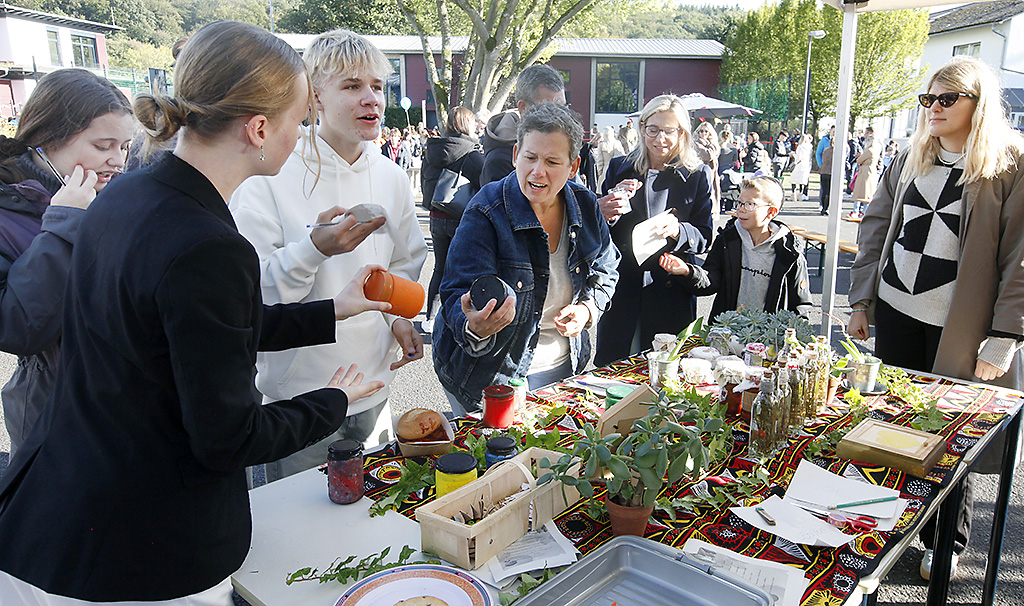
The presentation by the 13a advanced art class, led by teacher Heike Rabben Martin (“Rado”), was a work of art that was a feast for both the eyes and the palate. Their display was simply titled “Food Art”—an extensive collection of sweets that had been handmade and packaged by the students themselves the night before.

The elective course (WU) “Vegetarian Cooking & School Garden,” led by teacher María Ramos, offered gourmet products.

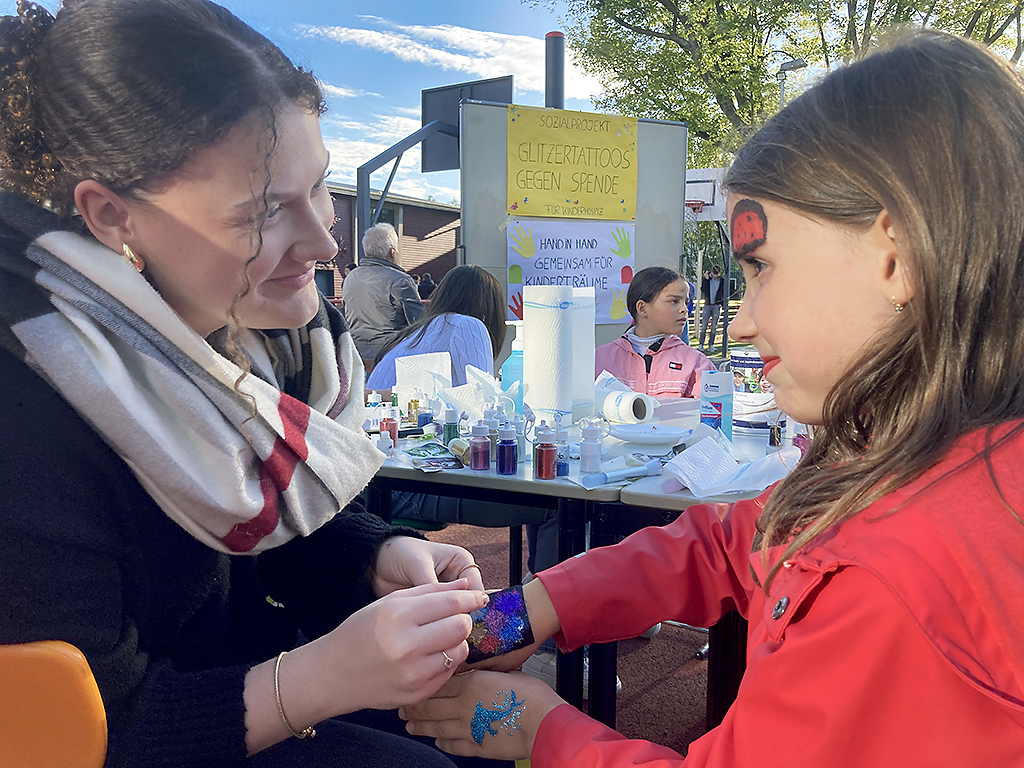
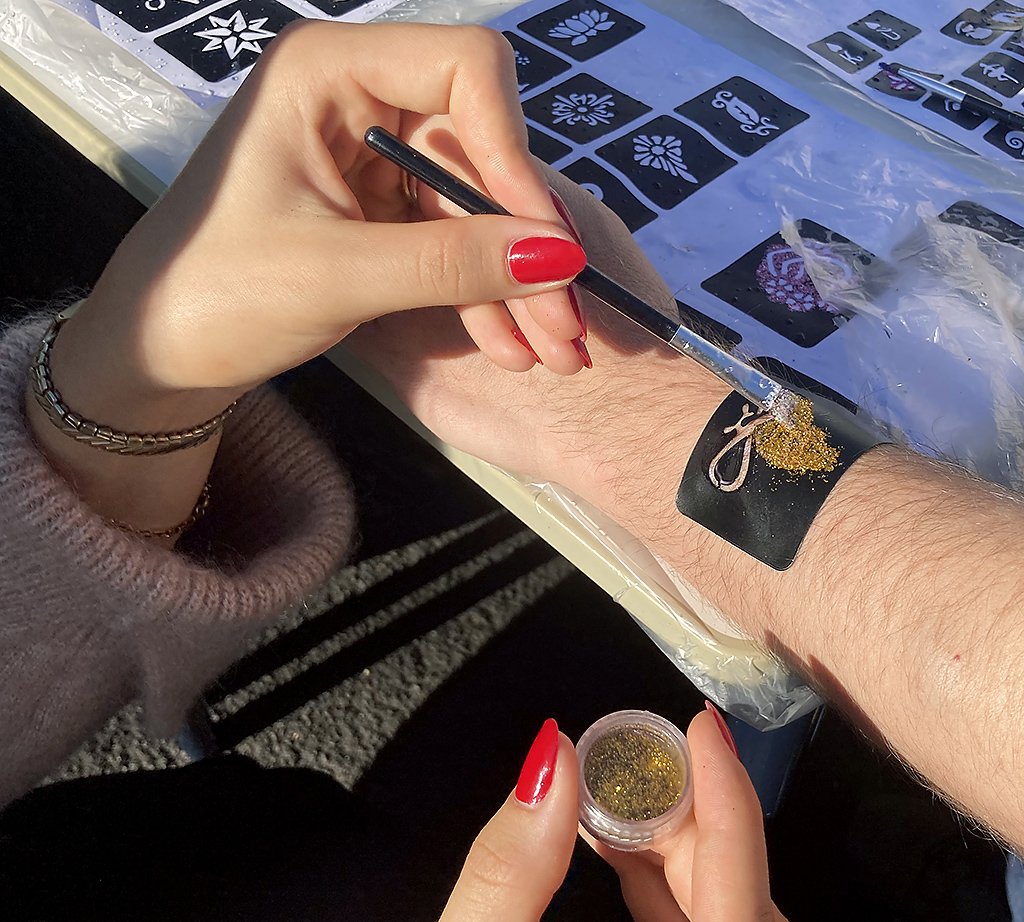
The tattooing skills of other students, meanwhile, were put to the test on several occasions—including by one or two teachers, incidentally. The donations collected for this went to charity.

The WU Computer Science Department showcased the impressive results of the group’s work. LEGO robots were presented.


Questions About the School and the Parent-Teacher Association

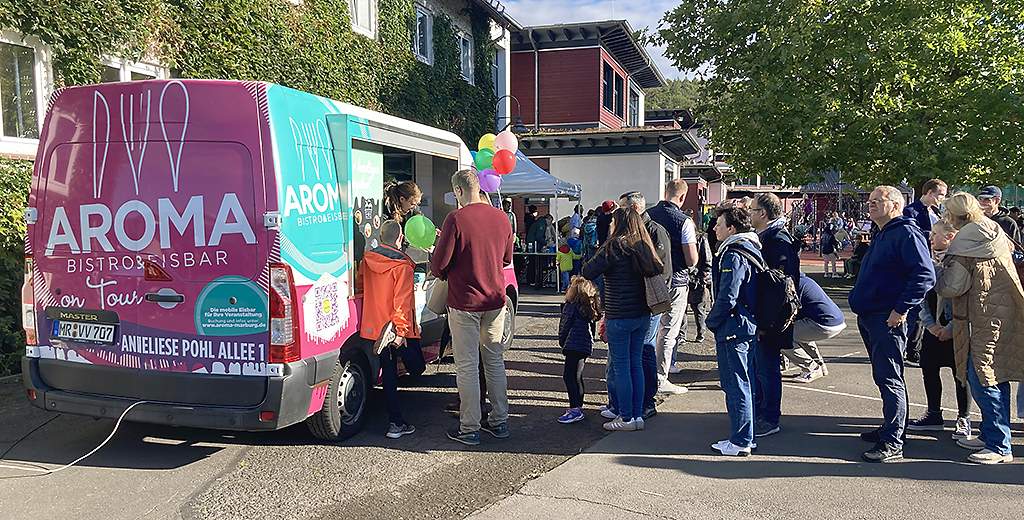
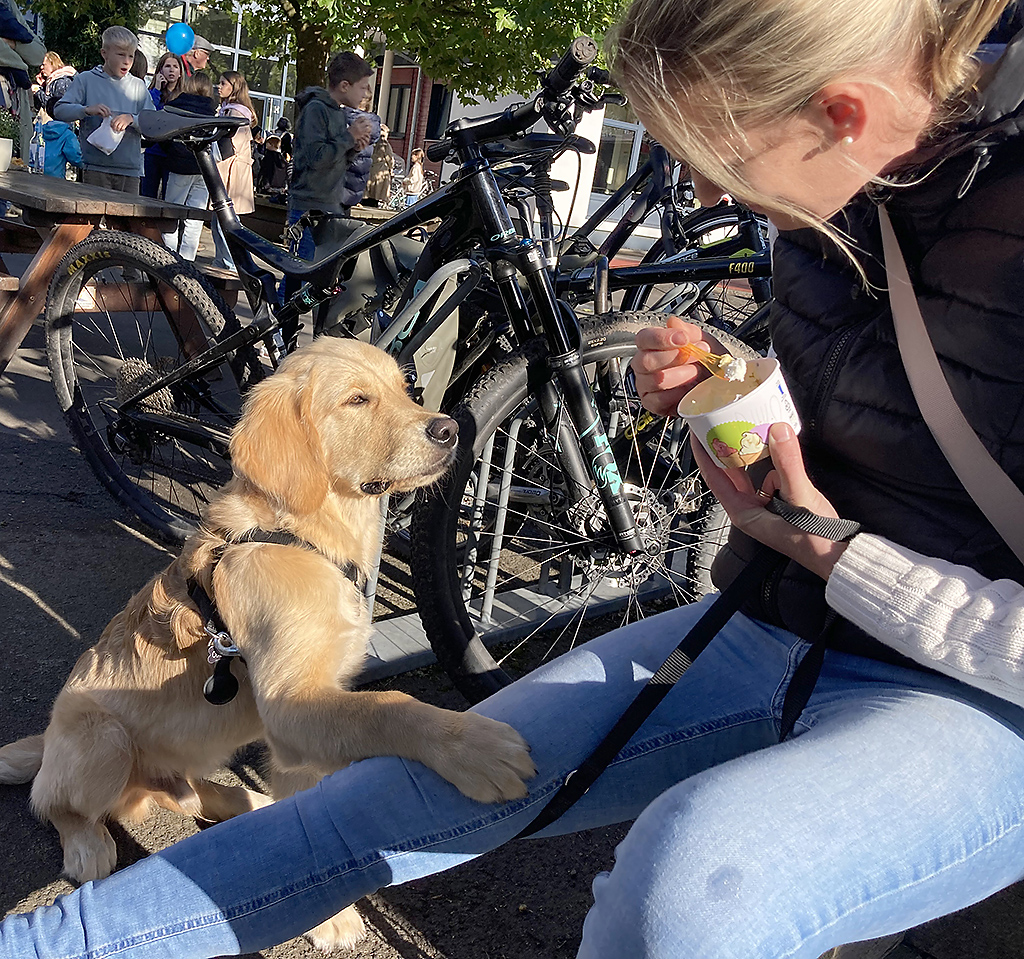
As always, there was a long line in front of the AROMA ice cream truck, which had been organized by Jasmine Weidenbach, the chair of the Friends Association. There was also a great deal of interest in the Friends Association’s own booth. Visitors spoke with board members to learn about the association’s activities and how to become a member, and they were able to ask questions. The same was true at the school administration team’s information table, where school administrator Dirk Lange and his colleagues spoke with Autumn Festival guests to answer questions about what Steinmühle has to offer.


Stone Mill Honey

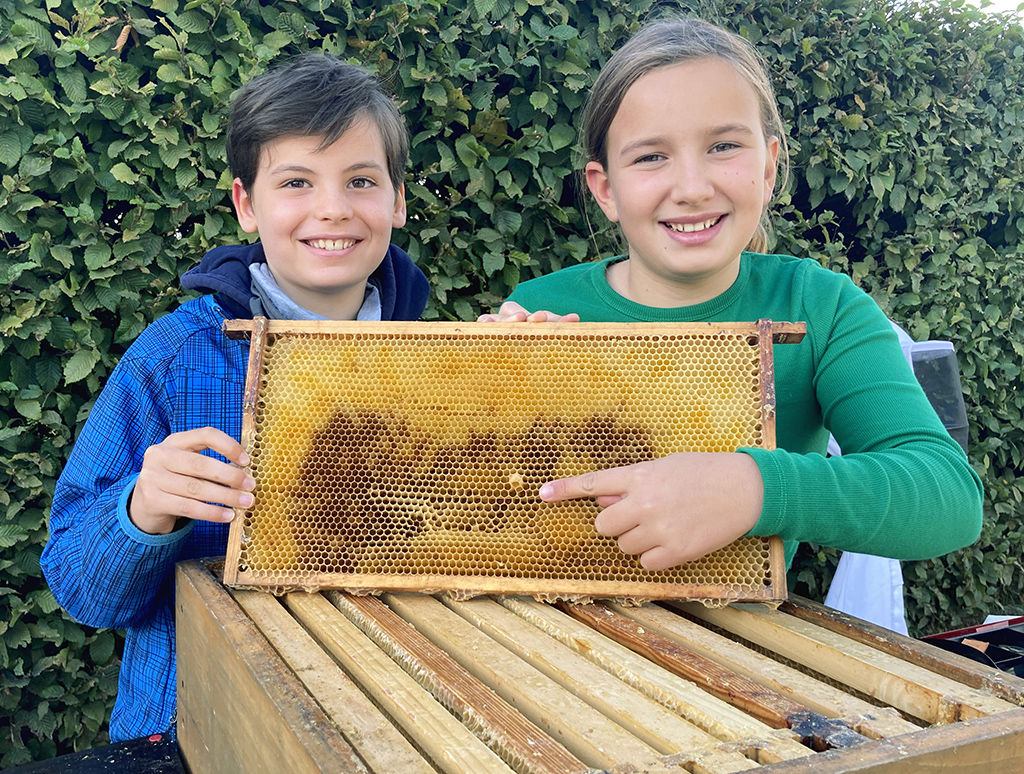
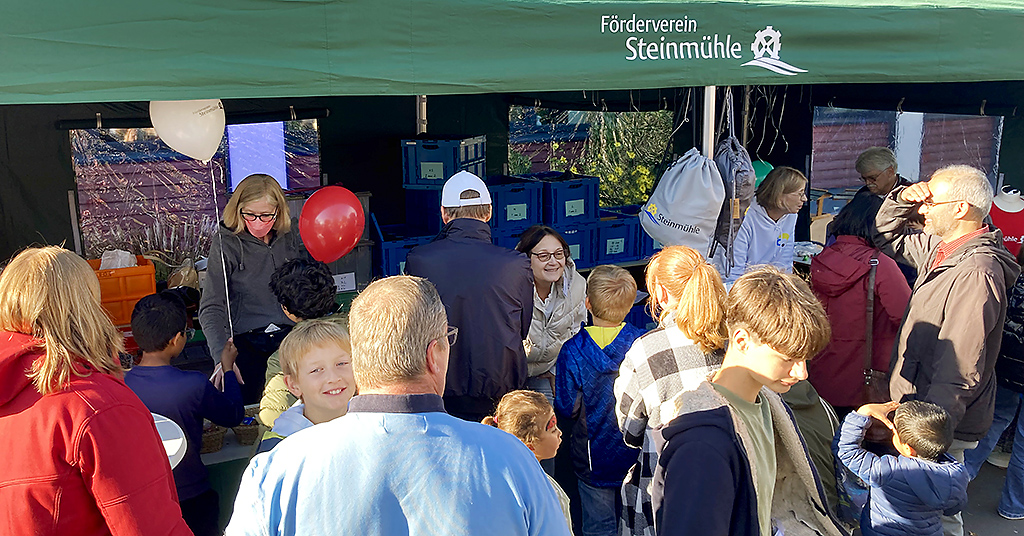
Something special was on offer at the entrance to the Steinmühle grounds: Stone Honey! The young Steinmühlen beekeepers, Mara Schleich from class 5i and Julian Busch from class 5b, presented and explained the fantastic results of their work so far with two bee colonies and offered the jars of honey—featuring labels designed by art teacher “Rado” in exchange for a donation. They revealed that two more bee colonies are set to join the hive soon.


Games from Ancient Greece

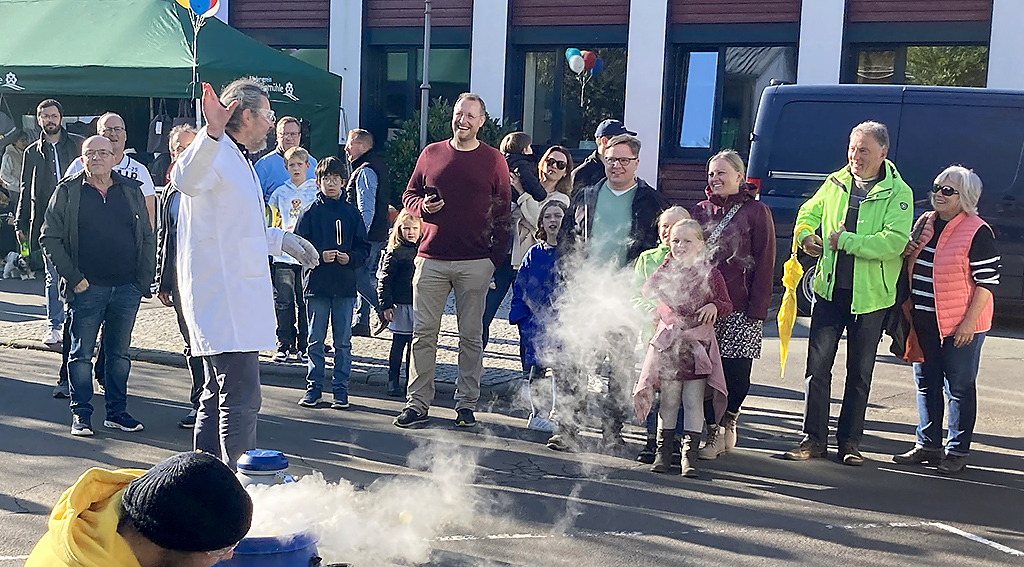
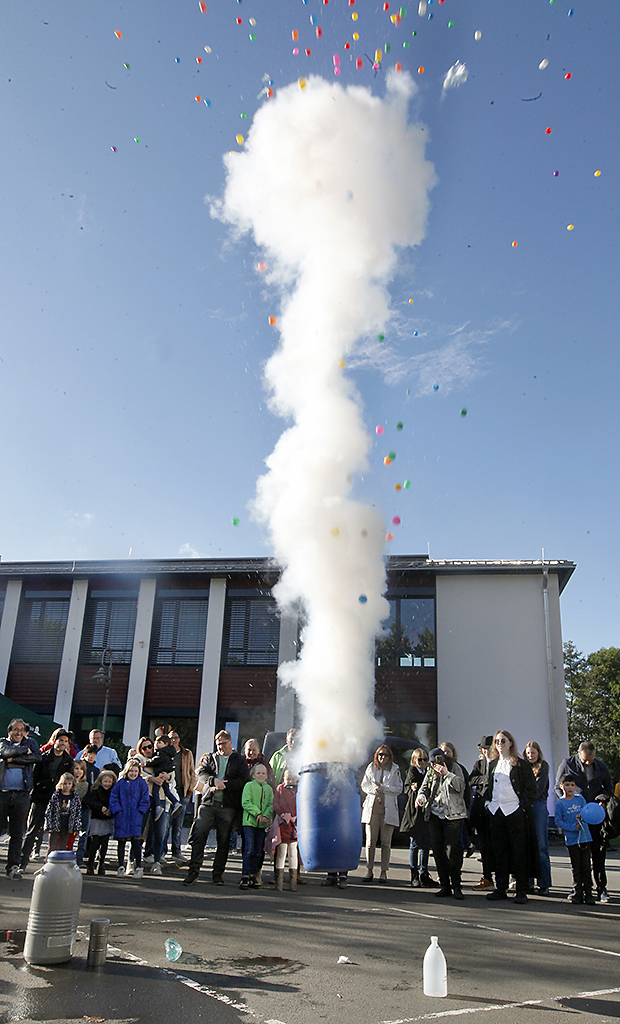
The experiment conducted with liquid nitrogen at the Chemikum—with which Steinmühle collaborates—always makes a big visual and auditory impression. This collaboration is reliably supported by Steinmühle teacher and STEM coordinator Dr. Jutta Töhl-Borsdorf.

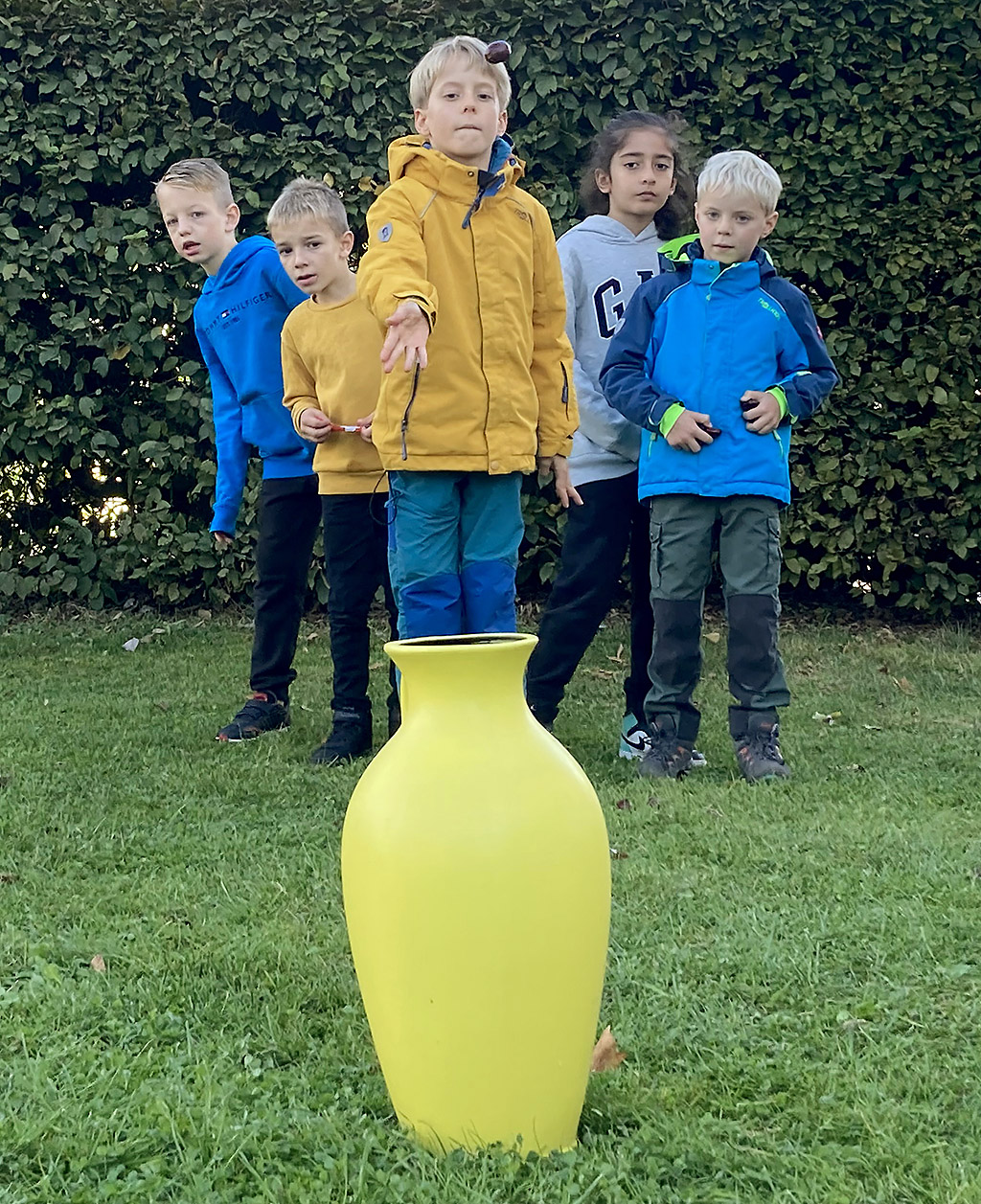
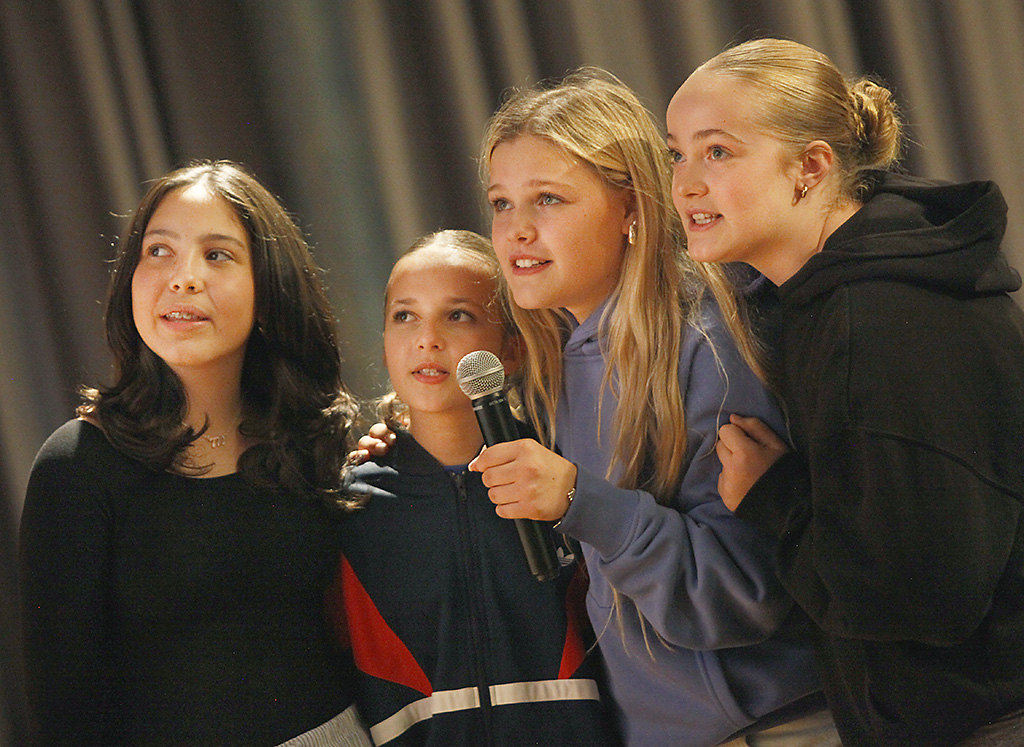
The “Games of Ancient Greece” event in front of the Forum required quite a bit of skill. Inside the Forum itself, karaoke was on the program. Lady Gaga and the gang would surely have been amazed!

A film provided information about the phenomenon of the Miyawaki forest. Former Steinmühle principal Bernd Holly had planted one such forest on the grounds in front of the new gym. There, anyone interested could see for themselves how this natural phenomenon grows and thrives.

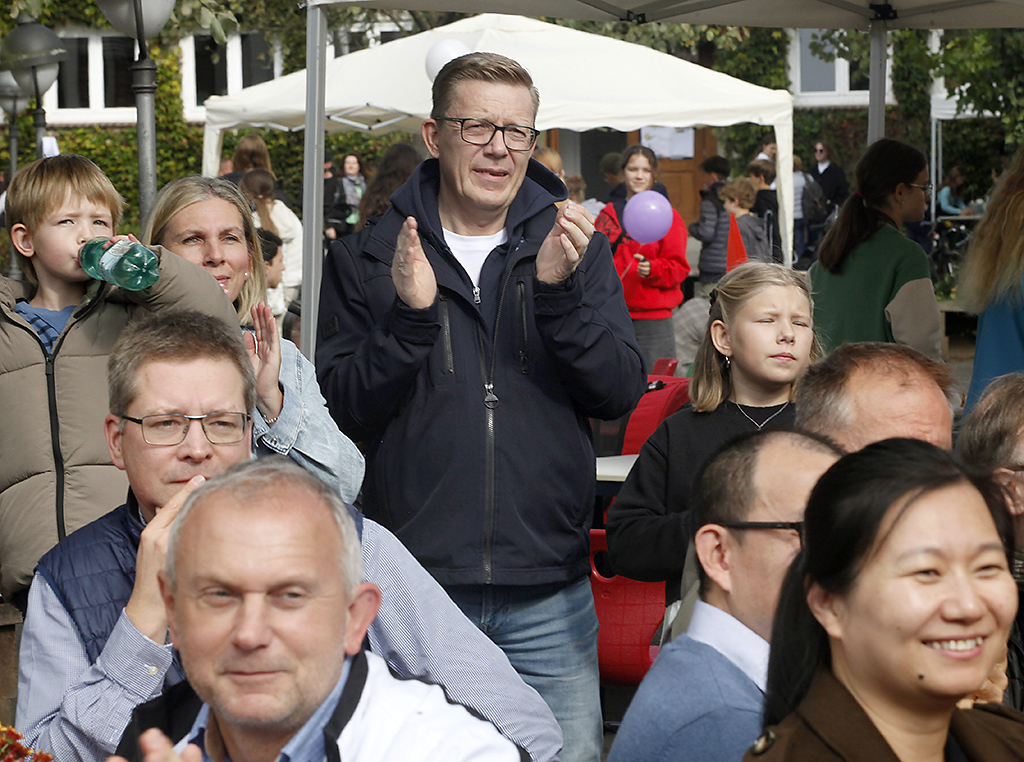
The first set of our photos gives a glimpse of the Fall Festival activities during the day. We’ll report on the evening atmosphere and the alumni reunions soon.
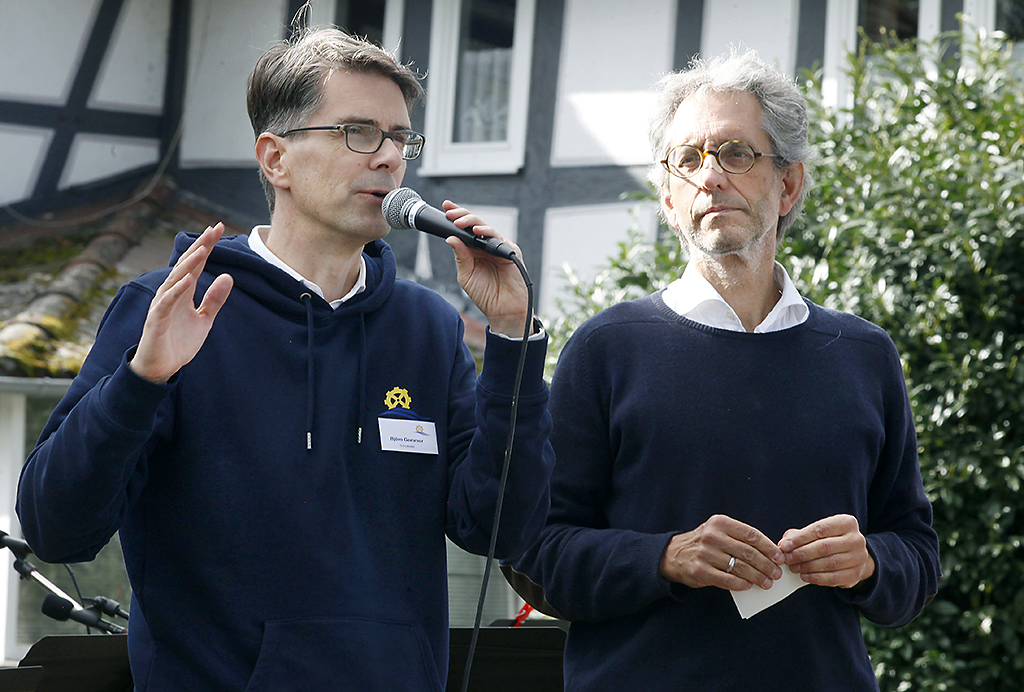
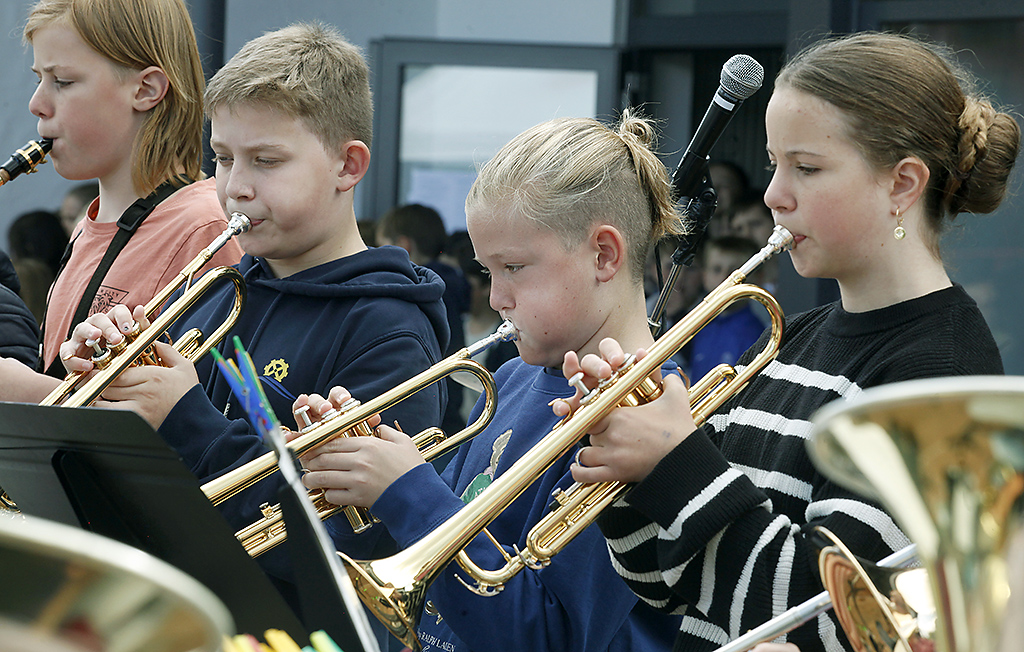
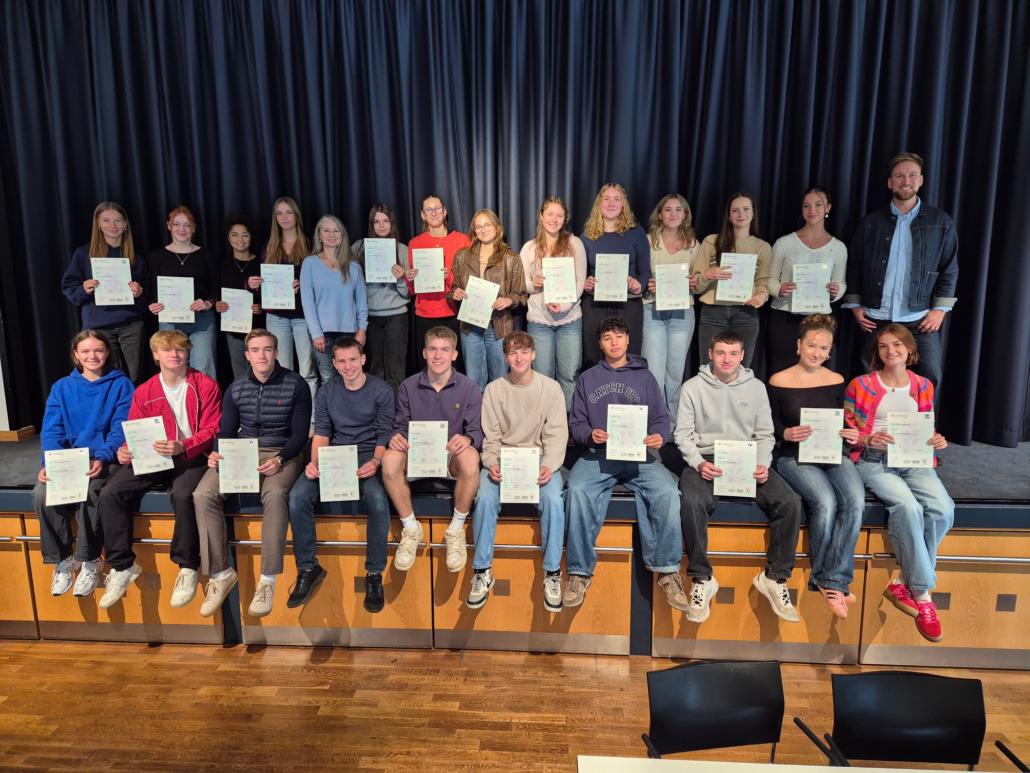
Once again this year, students at Steinmühle who earned the Cambridge Certificate achieved outstanding results. This was reported by teachers Nicole Hohm and Matthäus Otte.

The English language plays a central role at Steinmühle: Students at the Bilingual Elementary School begin learning English in first grade; they can later deepen their knowledge of the language in the International High School track or, if they enroll in the regular high school track, further develop their language skills by earning the Cambridge Certificate.

Congratulations to our recent graduates!

The following people participated (front row, from left to right): Flora Endres, Marvin Preis, Marc Wirth, Julius Henkel, David Immel, Joel Rucker, Hessein Koheil, Leon Schmidt, Elsa Stremme, Anna Reinhardt.

Back row, from left to right: Zoe Reisch, Janne Elsasser, Aurora Valente, Lia Kraft, subject teacher Nicole Hohm, Mia Dotzauer, Hanna Schmidt-Dege, Rebecca Zenker, Alicia Bruchmann, Emilia Sperl, Emily Böth, Marharyta Diachenko, Amelie Laukel, subject teacher Matthäus Otte.

Missing from the photo: Sophia Nolte, Joshua Müller-Brodmann, Leticia Günther, Ivo Hamann, Mike Klatt, Zoe Potthoff, Alexander Trofimov, Rakim Tsegay, Lukas Zimmer, Melina Mengel.

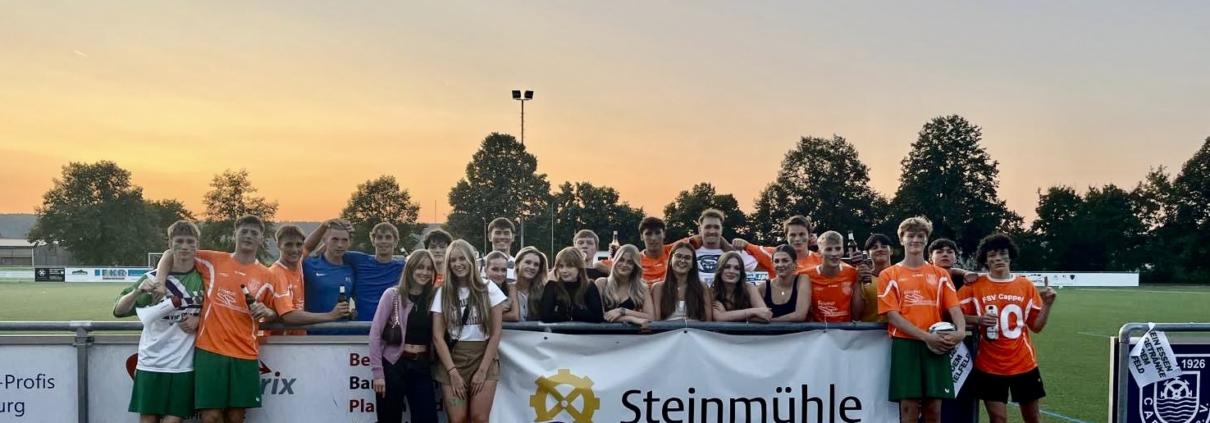
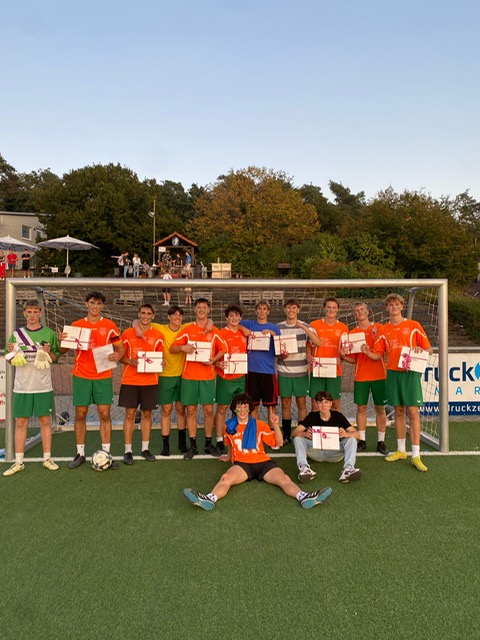
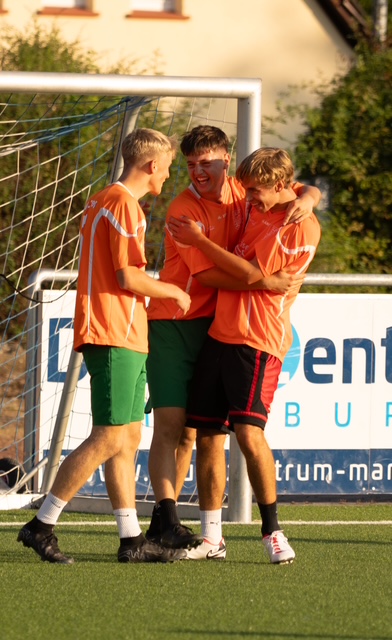
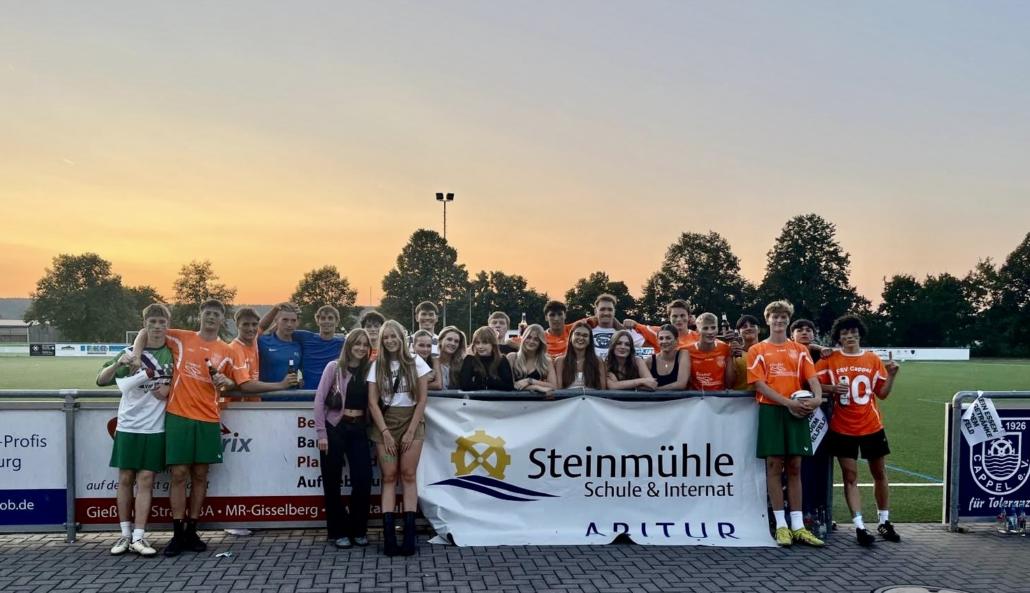
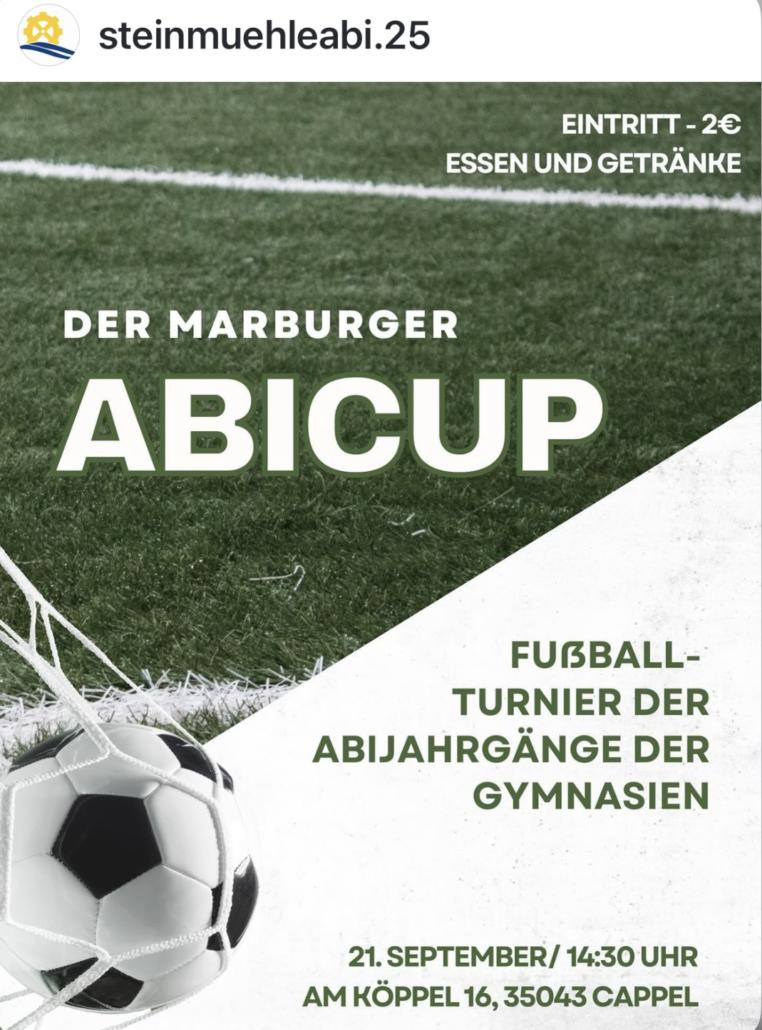
Now that’s what we call taking care of things in a timely manner! The Steinmühlen Class of 2025 kicked off its final school year with a great idea: It organized a citywide soccer “ABIcup” and invited the soon-to-be high school graduates from all schools in Marburg to participate.

The tournament took place on September 21 at the Cappeler Köppel Stadium. The modest admission fee of 2 euros and the proceeds from the sale of hot dogs and drinks went toward the ABI fund. “The ABI Cup organized by the Steinmühlen Class of 2025 was meant to be a change of pace from the usual graduation parties,” reported Alicia Spitzhüttl on behalf of the graduation committee. “We also wanted to bring schools together and strengthen the bonds within our own class. The highlight of the tournament was, of course, that our boys were able to bring home the victory!” she said happily.

The Steinmühle’s Class of 2025 promoted the event—and later its results—on their Instagram account. By the way, the students there would definitely appreciate some followers and likes! They’ve certainly earned them for bringing their great idea to life.


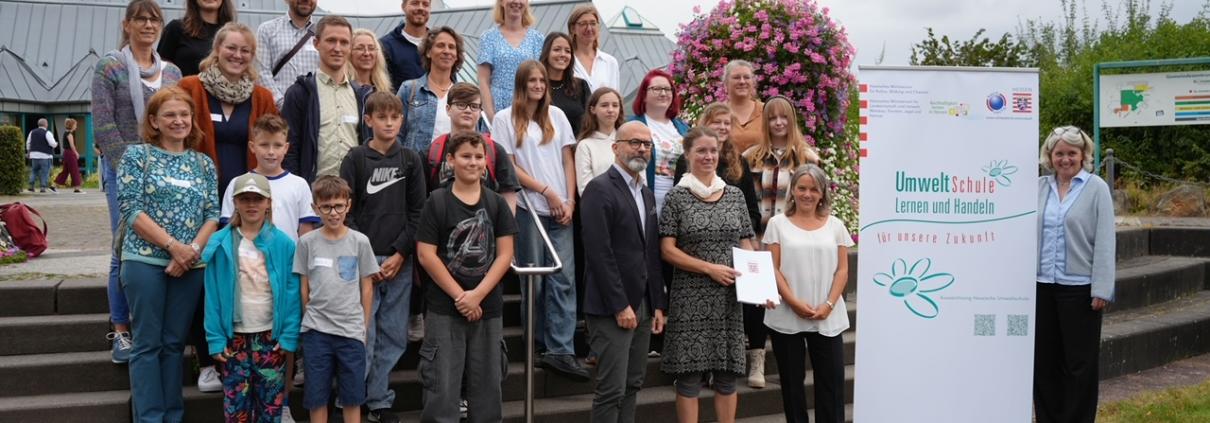
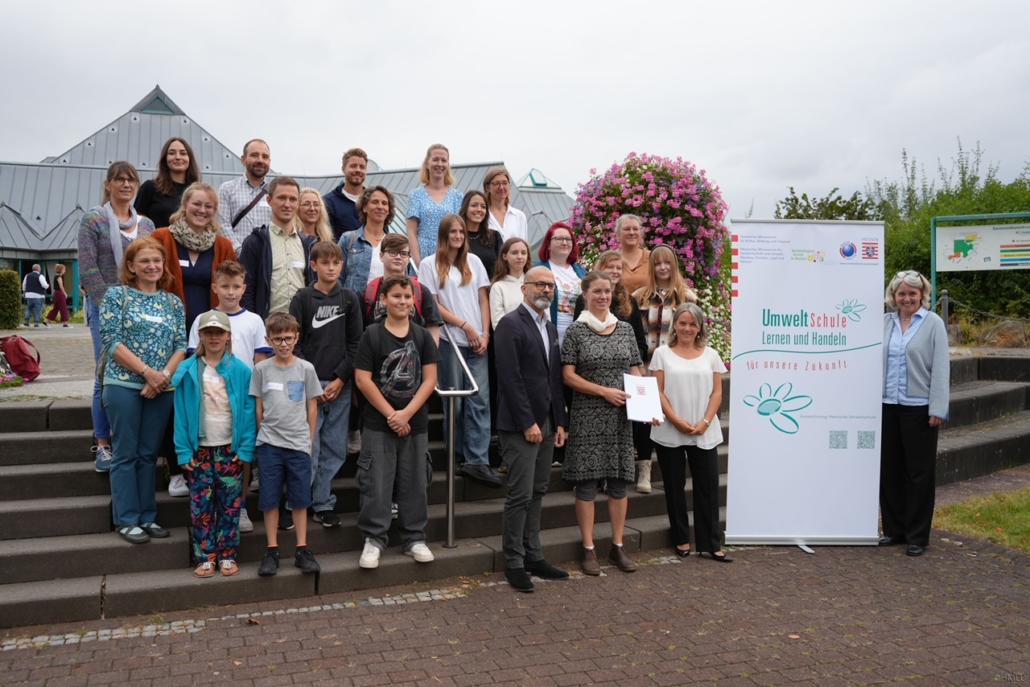
The Steinmühle has once again been awarded the “Environmental School – Learning and Acting for Our Future” certificate. Steffen Ullwer reports on this. He accepted the certificate on behalf of Carmen Bastian, who worked tirelessly to secure the certification for the Steinmühle.

This award is part of a joint initiative by the Hessian Ministry of Education and Cultural Affairs and the Ministry of the Environment, which recognizes schools for their exceptional commitment to “Education for Sustainable Development” (ESD). This year, a total of 94 schools from across Hesse were honored for their outstanding contributions to integrating sustainability topics into the classroom and school life.


Environmental Awareness and Sustainability Embedded in Everyday Education


Steinmühle impressed with two innovative projects: In the STEM field, the students developed an autonomous, low-cost boat for determining water quality that enables efficient water sample analysis. In addition, the school participated in the “Miyawaki Forest” project, which supports the rapid establishment of biodiverse mini-forests on small plots of land, thereby making an important contribution to reforestation and climate protection.
Through its commitment, Steinmühle demonstrates how important it is to embed environmental awareness and sustainability in everyday education from an early age and to actively involve students in shaping a sustainable society.

Our photos show Steffen Ullwer receiving the certificate from Ute Visser, regional director of the Environmental Schools program for the Roßberg Youth Forest Camp area, along with a large group of representatives from the award-winning schools.


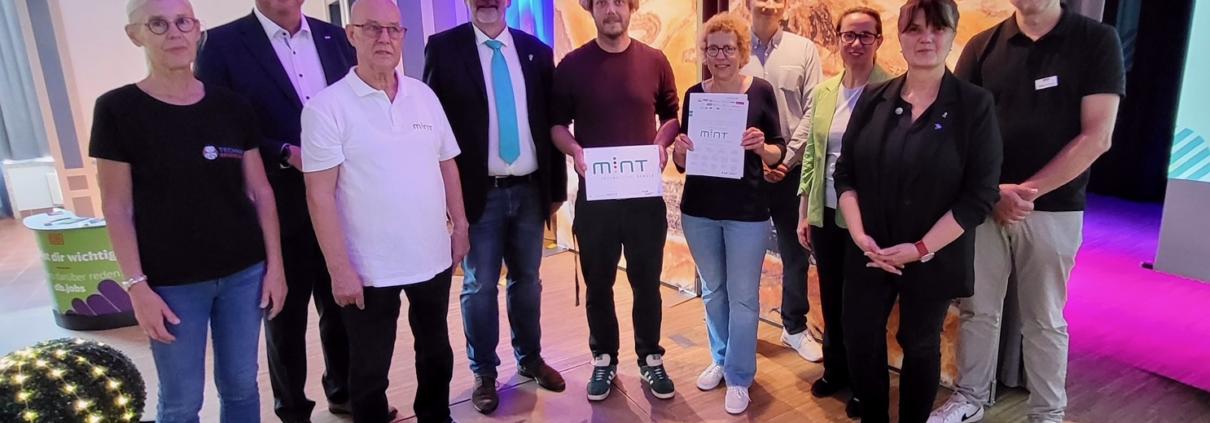
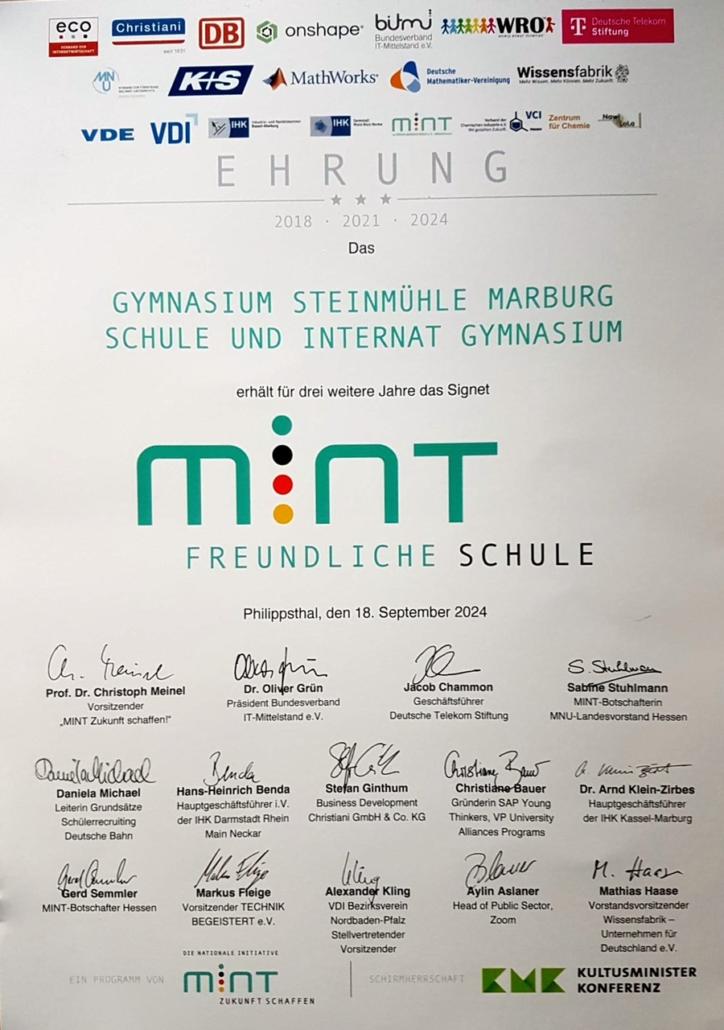
Once again, Steinmühle was recognized as a STEM-friendly school yesterday, Wednesday. Dr. Jutta Töhl-Borsdorf and Dr. Sven Freibert accepted the award in Philippstal, North Hesse, representing Steinmühle as the only participating school from Marburg.


Steinmühle Receives Top Rating


“In the evaluation, the Steinmühle was ranked at the highest level,” said Dr. Jutta-Töhl-Borsdorf happily.

According to the two teachers, in the morning, participants were able to visit the training center of the host company, K+S Minerals and Agriculture GmbH Philippsthal, and gain interesting insights, for example, into dual degree programs.

The schools were honored by Sabine Stuhlmann (MNU Hesse Regional Association and the NaWi LoLa project), Benjamin Gesing (Executive Director of MINT Zukunft e.V.), and Harald Fisch (Senior Advisor at MINT Zukunft e.V.). The awards are valid for three years.


Recognized and supported by the business community


Mathematics, computer science, natural sciences, and technology (MINT) have become increasingly important for school development. The award-winning “STEM-friendly schools” demonstrate that their educational approach enables them to integrate ad hoc measures—such as those related to digitalization—into everyday school life in a didactically and pedagogically sound manner. The “STEM-friendly schools” gain visibility among students, parents, businesses, and the general public through this recognition and are not only acknowledged but also receive special support from the business community. Nationwide partners of the national initiative “MINT Zukunft schaffen!” (Creating a Future with STEM!) honor those schools that consciously prioritize STEM. The schools are evaluated based on a rigorous, standardized set of criteria and undergo a nationally uniform application process.

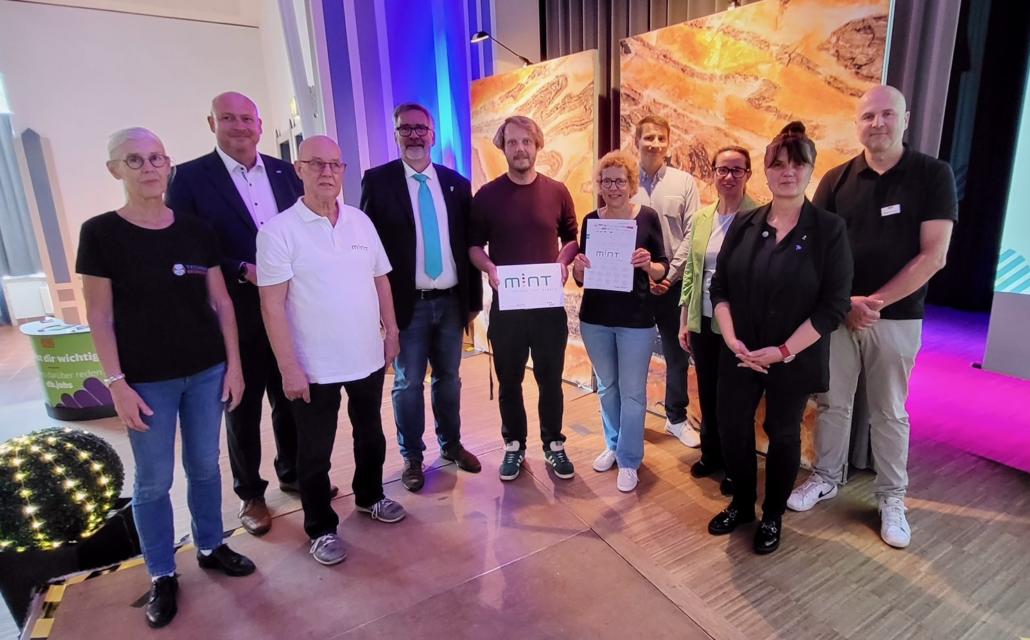
The group photo, taken by Uwe Handke on behalf of the organizer, shows Dr. Jutta Töhl-Borsdorf and Dr. Sven Freibert holding their award certificates during the ceremony.

Whether it’s event planning, the boarding school council, decorations and design, or creating content for social media —the students at Steinmühle Boarding School are now actively shaping these and other areas: Last Saturday, the “InnoClubs” kicked off! In the run-up to the event, the students were able to choose from a total of eight groups and join the one that interested them the most.

Under the guidance of the boarding school teachers on Head of Boarding School Anke Muszynski’s team, the first order of business was brainstorming: Who has what ideas? How will we go about planning? What are the next steps?


First Aid, Culture, and a New Café at the Tennis Courts


Those who chose “Peer Connect” will focus in the future on topics such as sustainable projects, learning at the boarding school, and first aid. The Culture Club is dedicated to cultural activities and also aims to build connections with cultural offerings in Marburg. The Welcome Club will explore ways to further refine the welcoming atmosphere at Steinmühle. The “Café Mühle” group is tasked with helping to design the café currently under construction at the tennis courts.


We’ve already received a lot of input from the student body


The teaching staff reported that the students had been very engaged from the very beginning and had already contributed numerous ideas to the mixed-age groups.
Participation in an InnoClub at the Steinmühle boarding school is a required activity, along with joining a recreational club.


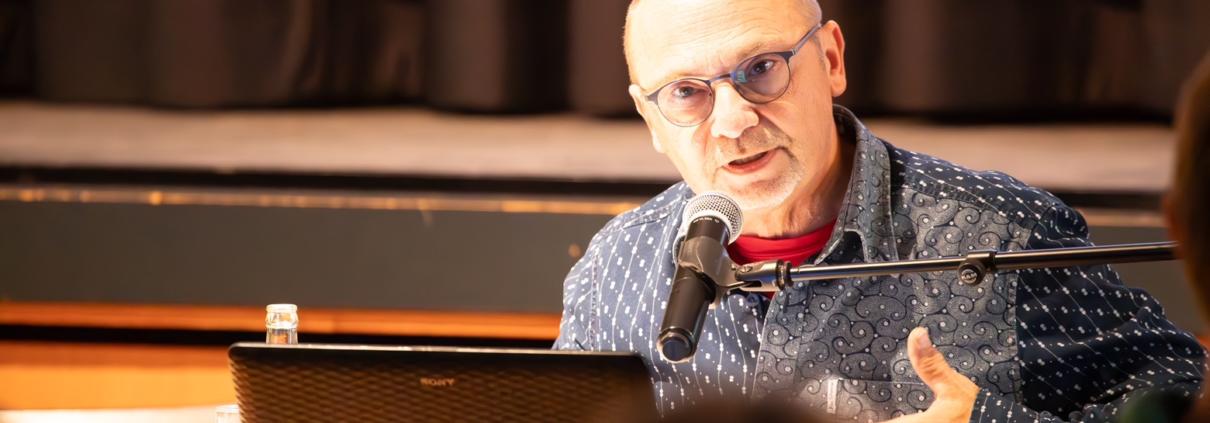
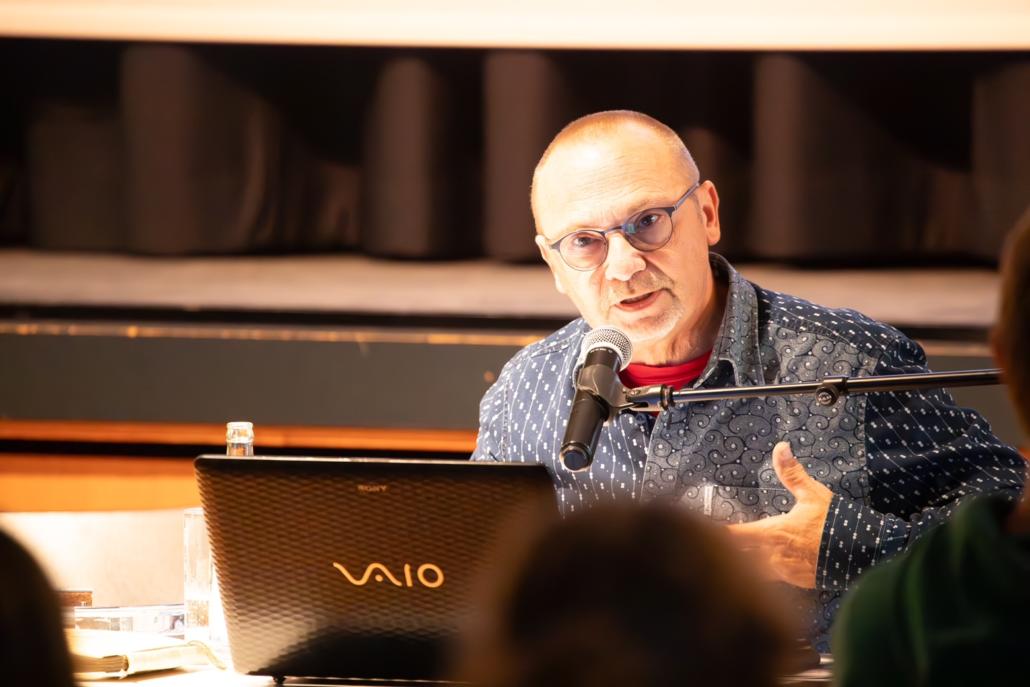
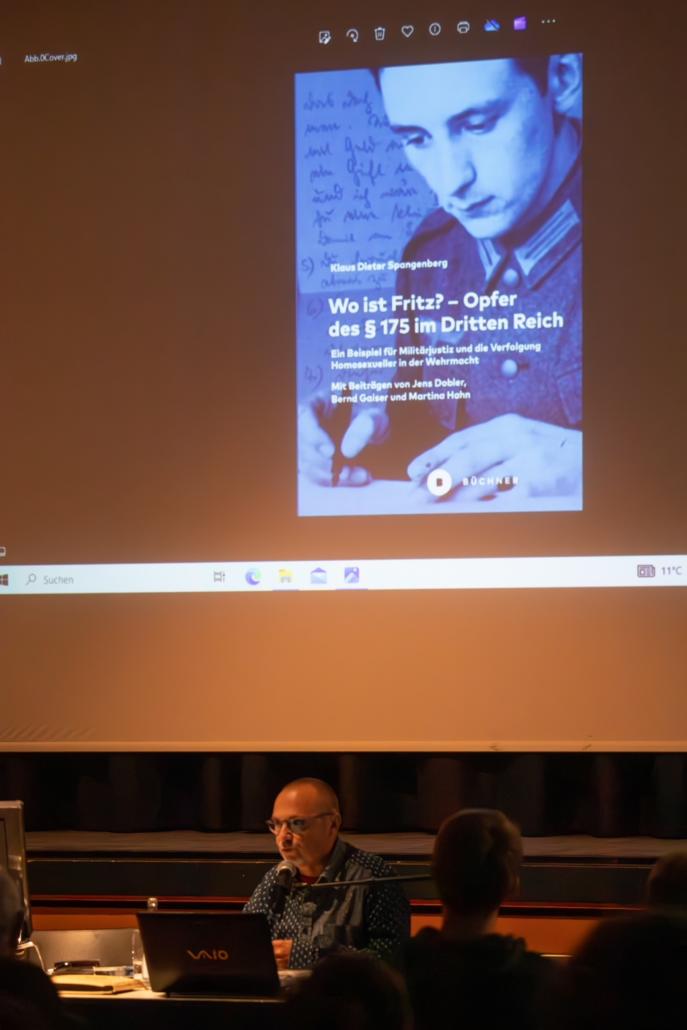
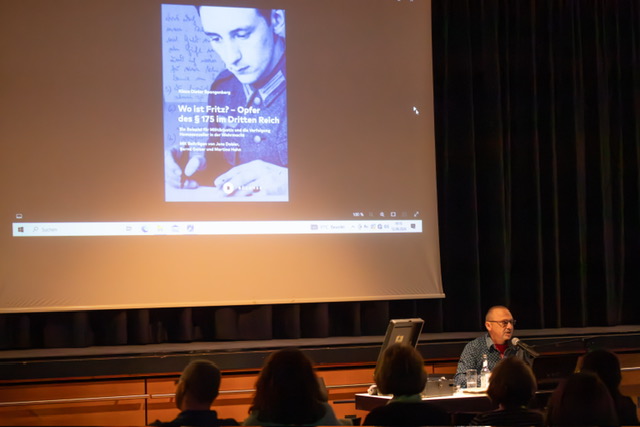
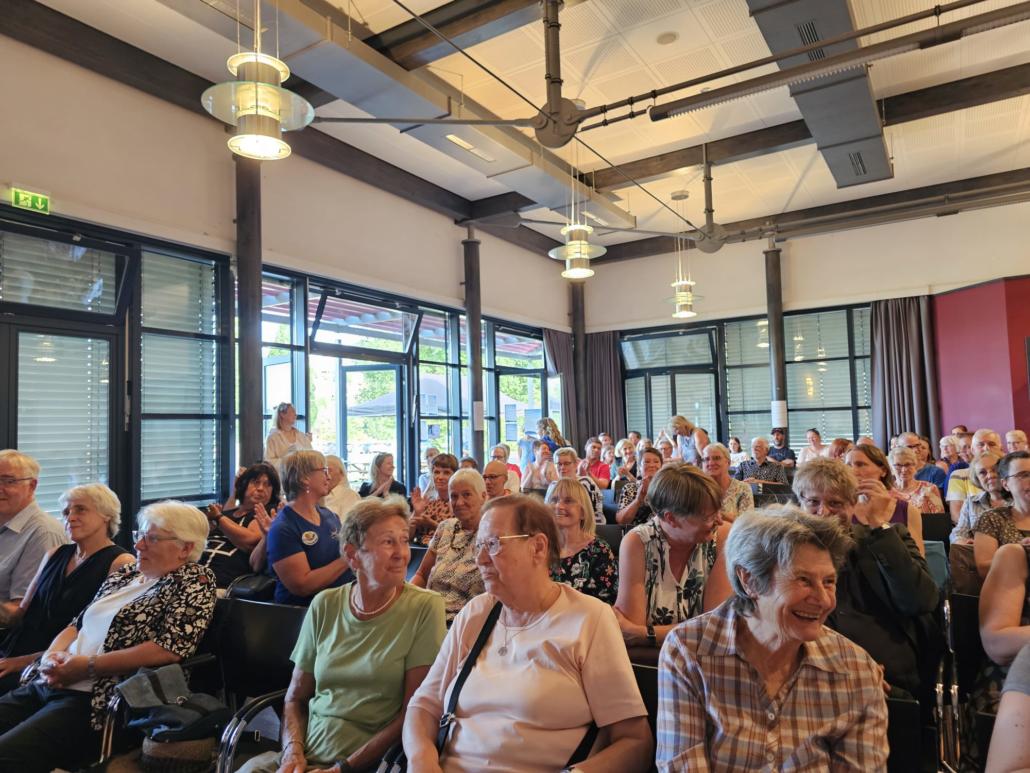
A colorful rainbow shone over the Cappel neighborhood of Marburg and the Steinmühle on Thursday evening, as if it wanted to extend a special invitation to the Forum for Klaus Dieter Spangenberg’s reading. A native of Marburg and a certified social worker, Spangenberg presented his book there, titled “Wo ist Fritz” (Where Is Fritz?). In it, he recounts the fate of his great-uncle as an example of the victims of military justice and the persecution of homosexuals in the Third Reich.

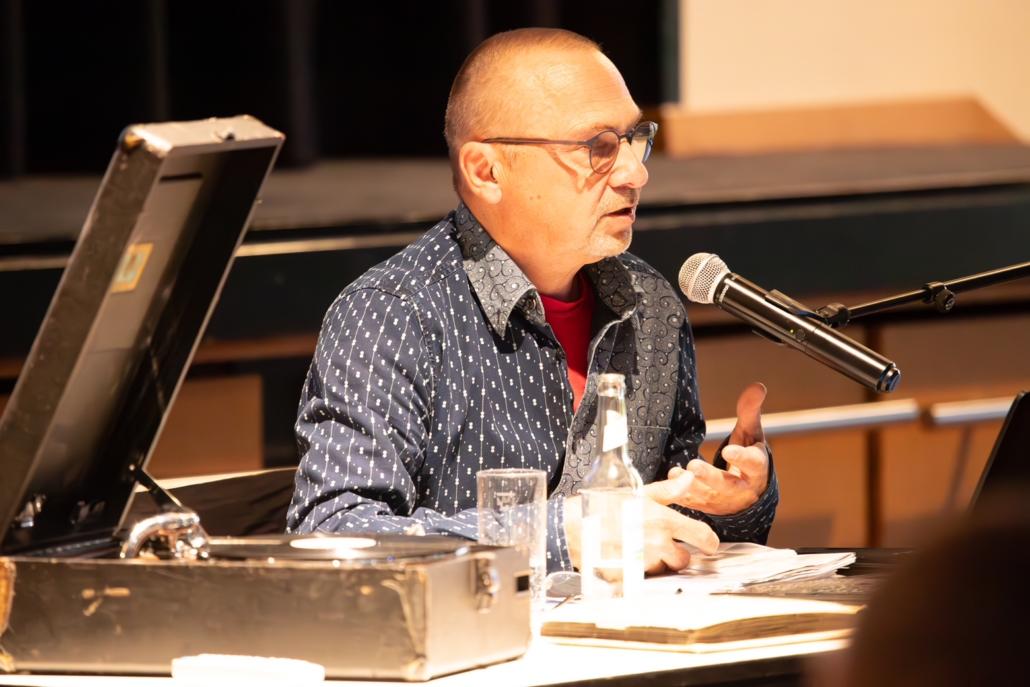
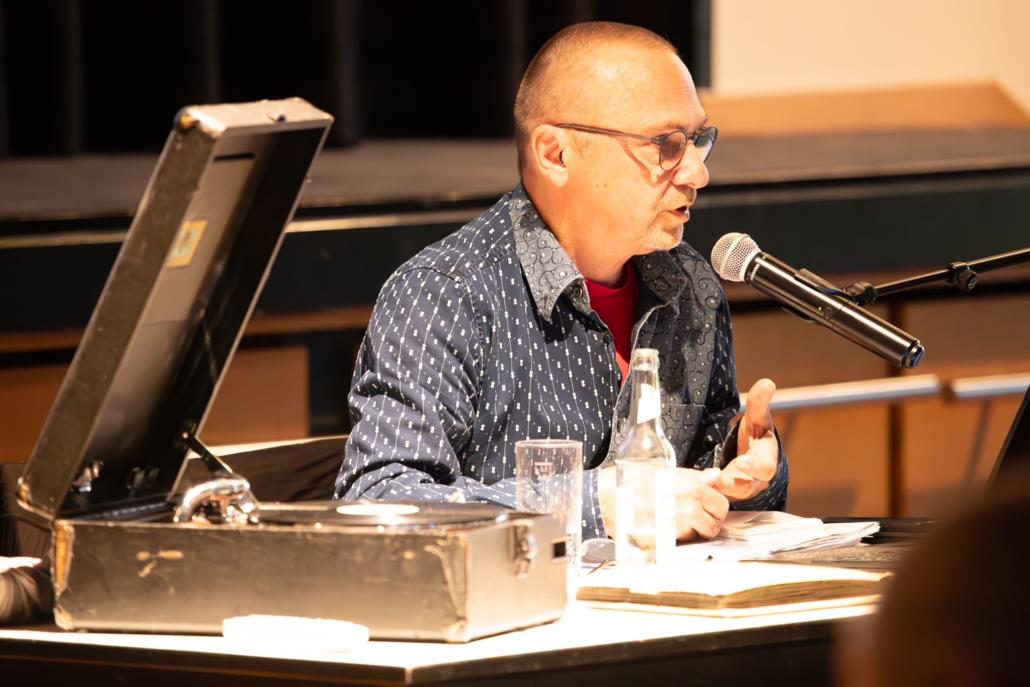
Visitors of all ages did not get to attend a reading in the strict sense of the word. Instead, they listened to a heartfelt account of the family history, with a focus on the life of Great-Uncle Fritz Spangenberg.

Still Something Special

When author Klaus Dieter Spangenberg, born in 1964, came out himself in 1982–83 and revealed his sexual orientation to his family, he was told, “You’re not the first.” There had already been someone else at Bahnhofstraße 11 in Marburg: his great-uncle Fritz Spangenberg. As a gay man during the Third Reich, he had experienced the particular harshness of Paragraph 175 of the Criminal Code—with all its inhumane consequences.

Even though, decades later, more and more rights were won for people in same-sex relationships, and Paragraph 175 of the German Criminal Code (StGB) was later relaxed and finally repealed in 1994—according to the speaker’s account, it always remained something special. In his own family home, the unspoken rule was not to talk about it; after all, the family was well-known and ran an established café in Marburg—and, according to his family, there was no room for gossip. Klaus Dieter Spangenberg—incidentally, a graduate of Steinmühlen High School—who, as a gay man, saw “no future in a small town,” left Marburg for Berlin. He left the city behind—but thoughts of his great-uncle Fritz stayed with him.
Research through 2022

“Can love really be a sin?” asked Zarah Leander in her song from the album of the same name, which the guest played during his lecture. According to his own account, Spangenberg began researching the fate of his great-uncle several years later—in 2009—and continued his research until 2022. Documents—including criminal records, details about his time in the penal battalion, a photo album belonging to his grandfather, and letters from his great-uncle to his own sister—documented the obstacles, resistance, demotions, and punishments that Fritz Spangenberg, born in 1914, had been forced to endure. The photos showed the pharmacy student and later pharmacist first as an assistant cook, often fooling around—sometimes even in women’s clothing—but also, in 1935, in an SA uniform, which promised certain privileges. That same year, Section 175 of the German Criminal Code (StGB) had been further tightened.

Fritz Spangenberg often appeared in public as part of a trio, with his sister Elfriede and her fiancé Hans Hahn. The three pharmacists went on many outings and had their pictures taken. – For Klaus Dieter Spangenberg, these are documents from a time when his great-uncle seemed, at least on the surface, to be doing well.

Witnessing Enforcement Proceedings

Fritz Spangenberg completed his basic military training in Kassel. At some point, an allegation of attempted seduction of minors—an age group that at the time included anyone under the age of 21—appeared in Fritz Spangenberg’s criminal record. The evidence was scant. Nevertheless, Spangenberg was targeted by the “Department for Combating Homosexuality.”

As a trained paramedic, he was able to avoid being sent to a concentration camp or prison; however, in 1943 he was sent to the Wehrmacht prison in Torgau on the Elbe. Among other things, he was required to witness the execution of death sentences there.
And there’s more. He was demoted as an officer, lost his military rank, had his certification as a medic revoked, and had his license to practice as a pharmacist revoked. Because he conducted himself very well in the Wehrmacht prison, on February 16, 1943—after nine months—he received his discharge certificate, which at least documented his good conduct and behavior toward everyone.
The End: Penal Company on the Eastern Front

Nevertheless, in December of that same year, he had to say goodbye to his family once again to report for duty in the so-called “punishment company” on the Eastern Front. This unit carried out its operations in Russia and Belarus. His family members had always hoped afterward that he would be taken prisoner. Instead, they—and later Klaus Dieter Spangenberg—learned from a commander’s report in the archives that Fritz Spangenberg and his Unit 299 had gone missing during a night raid in a swampy and forested area.

Fritz Spangenberg’s remains were never found; he was declared dead in 1969. There is no memorial site. His name appears only on a memorial plaque honoring the victims of World War I and World War II.

Social ostracism, the loss of his medical license, shame, and ultimately death in a penal battalion on the Eastern Front make up the sad and moving story of Fritz. The book is an attempt to reconstruct his tragic fate based on documents from the Wehrmacht files and the family archives. Fritz is one of over 50,000 victims of the Nazi justice system and one of approximately 7,000 individuals convicted within the Wehrmacht.

Klaus Dieter Spangenberg: Where Is Fritz? – Victims of § 175 in the Third Reich. An Example of Military Justice and the Persecution of Homosexuals in the Wehrmacht. The book has 116 pages and was published by Büchner Verlag, Marburg, in 2024, as a paperback or e-book (ISBN: 978-3-96317-349-3).

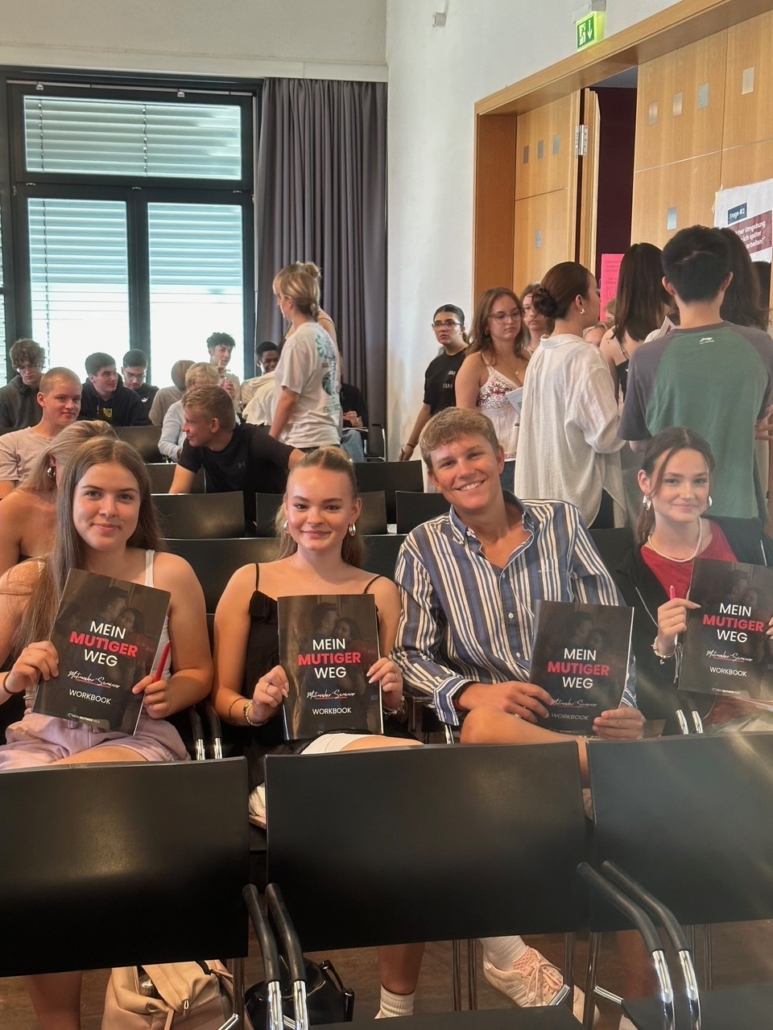
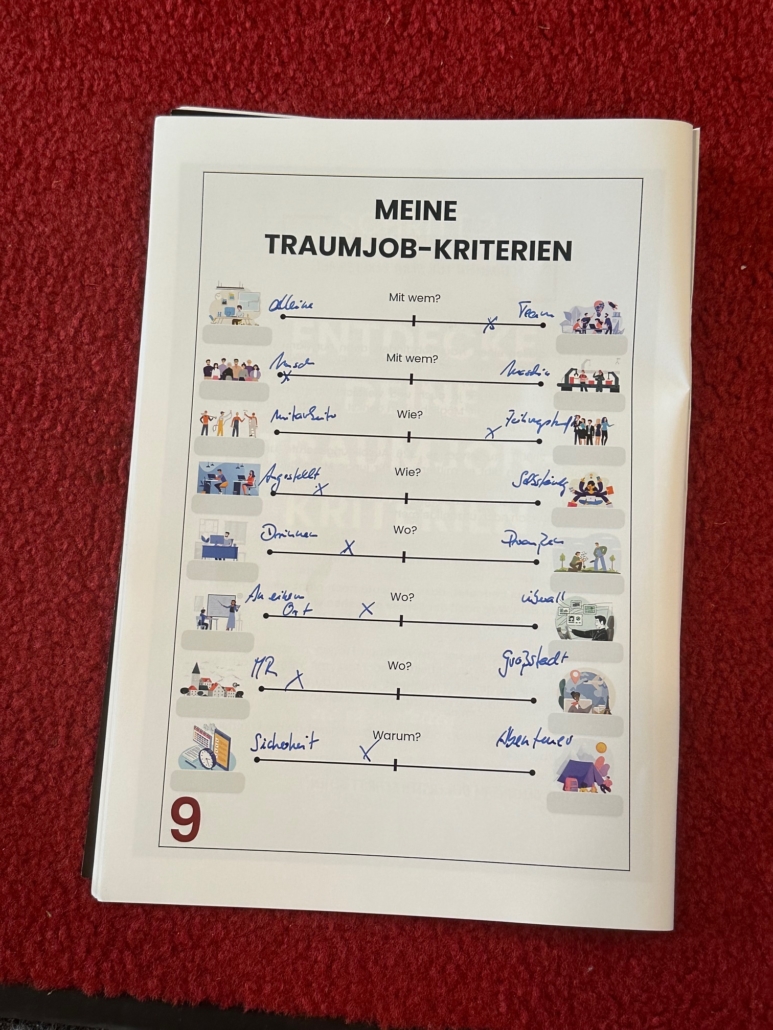
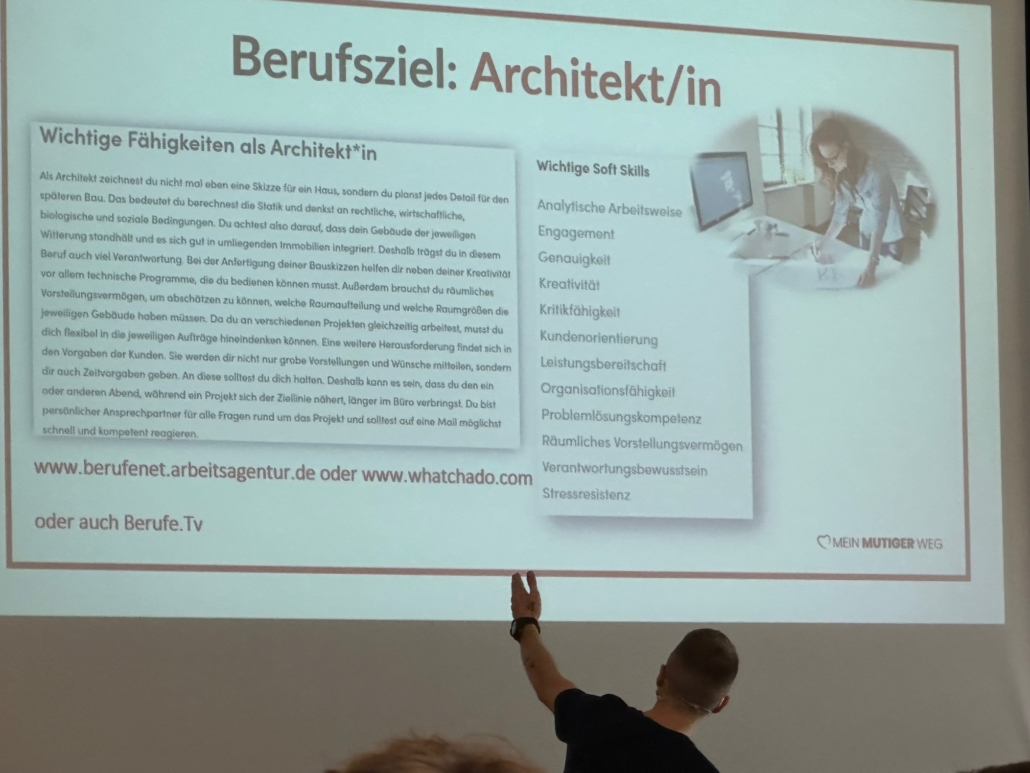
Where does the path lead after graduating from high school? Steinmühle is very committed to helping its students develop as clear a vision as possible—even while they’re still in high school—of what they want to do once they hold their high school diploma in their hands. Career-oriented events are therefore regularly scheduled throughout the school year. A morning seminar with the educational startup “Mein mutiger Weg” has now become a standard part of the program. The trainers offer modern career guidance. Their motto: Working on your own future should be a joy, not a source of fear.

Identify skills

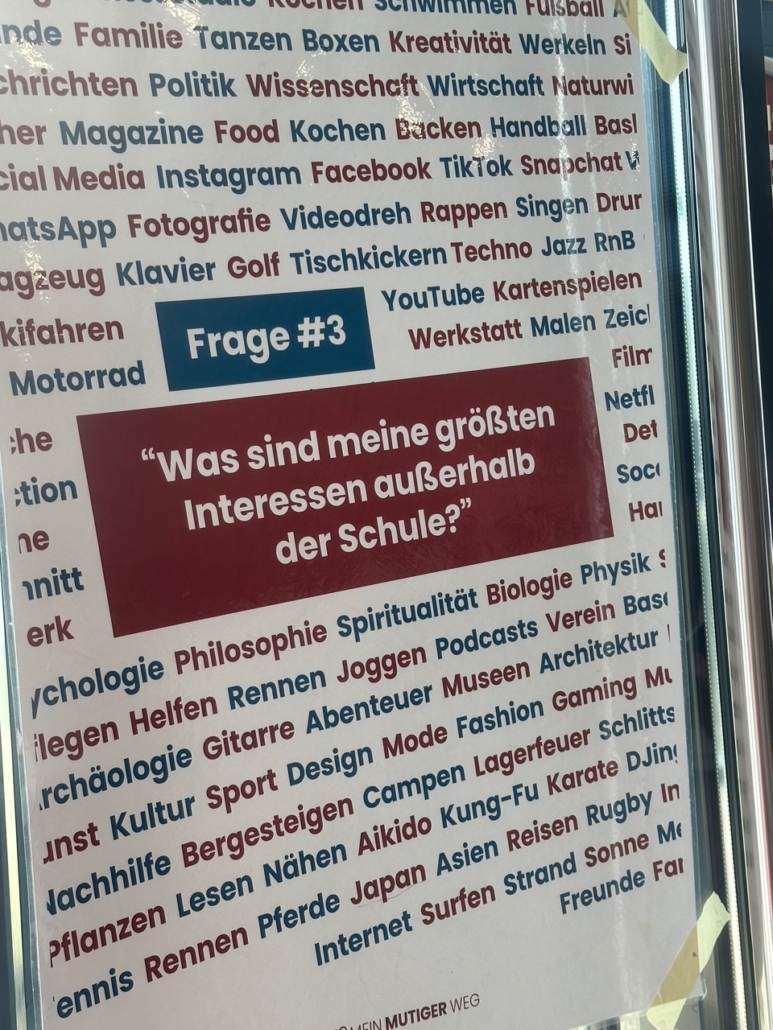
During the seminar last Tuesday, the high school students once again learned how important it is to identify their own abilities, interests, and even dreams, so they can take targeted steps—on their own initiative and with self-confidence—to get a little closer to achieving them. Clarifying one’s ideas, life priorities, and personal strengths serves as an important guide to ideally finding the right college program or vocational training. “Defining the criteria for choosing a future career can help prevent many students from dropping out,” reported the team from the certified educational institution in Karlsruhe.

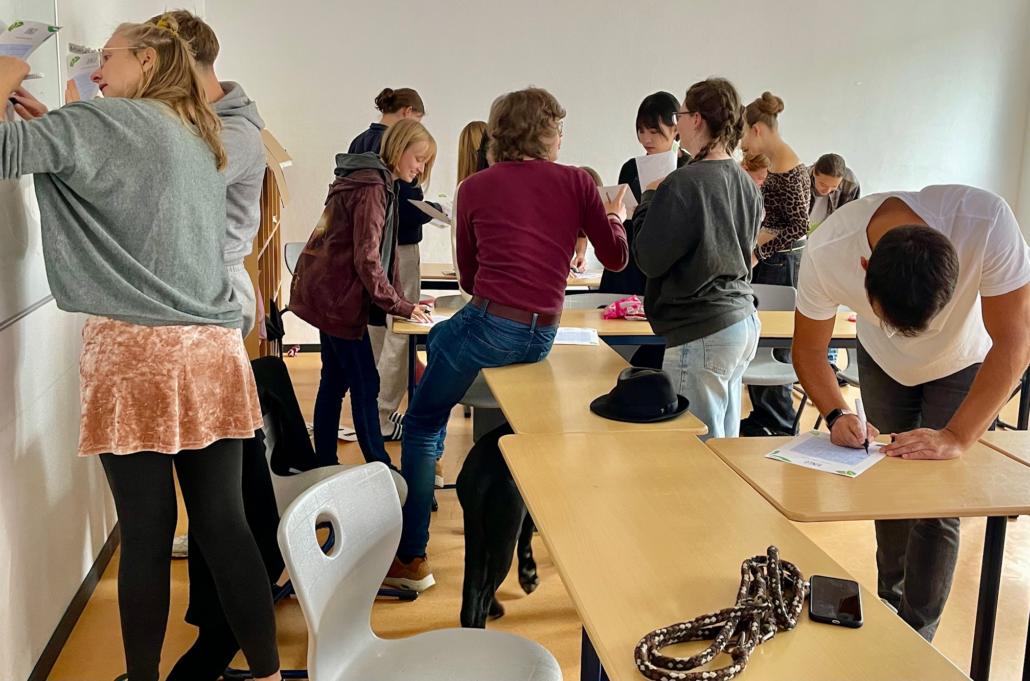
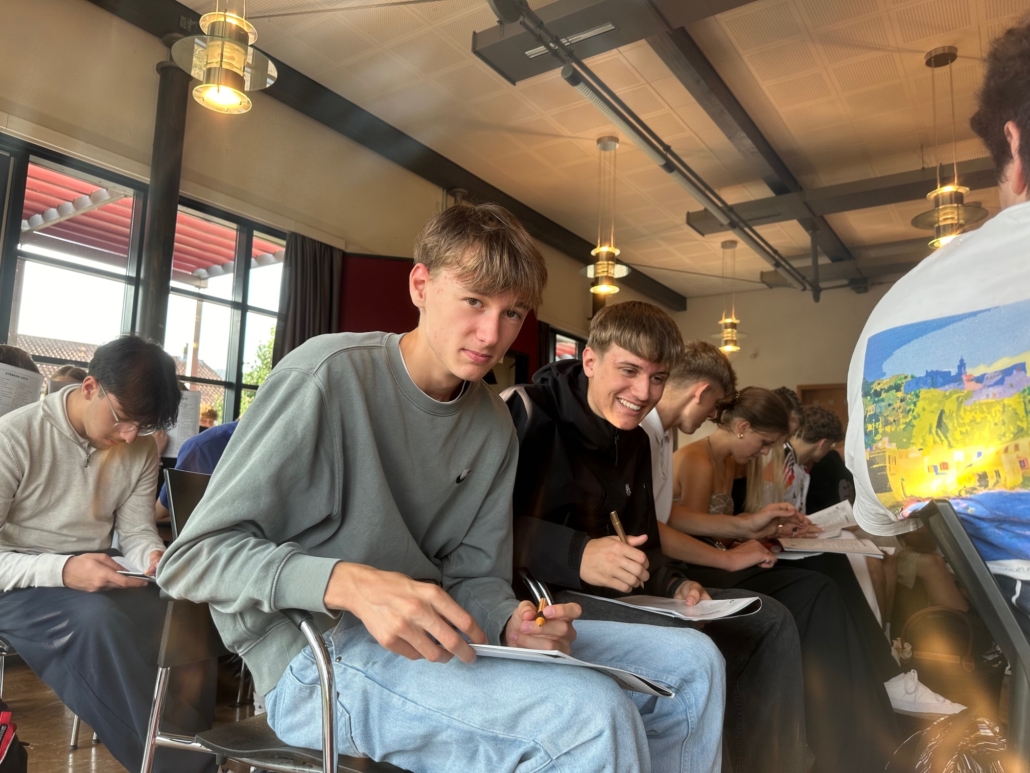
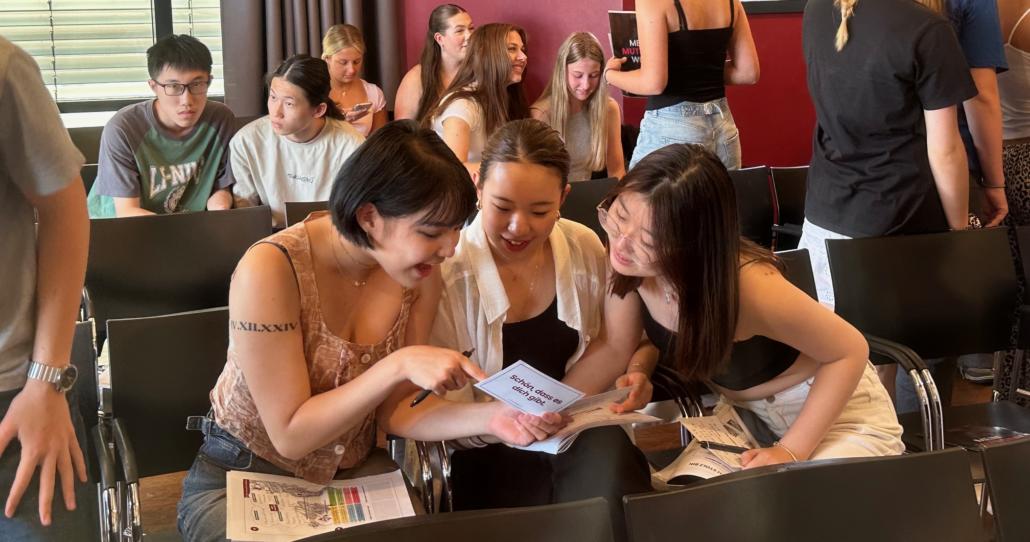
The morning at the Steinmühle Forum consisted of answering questions, engaging in interactive activities, and working through a seminar workbook.

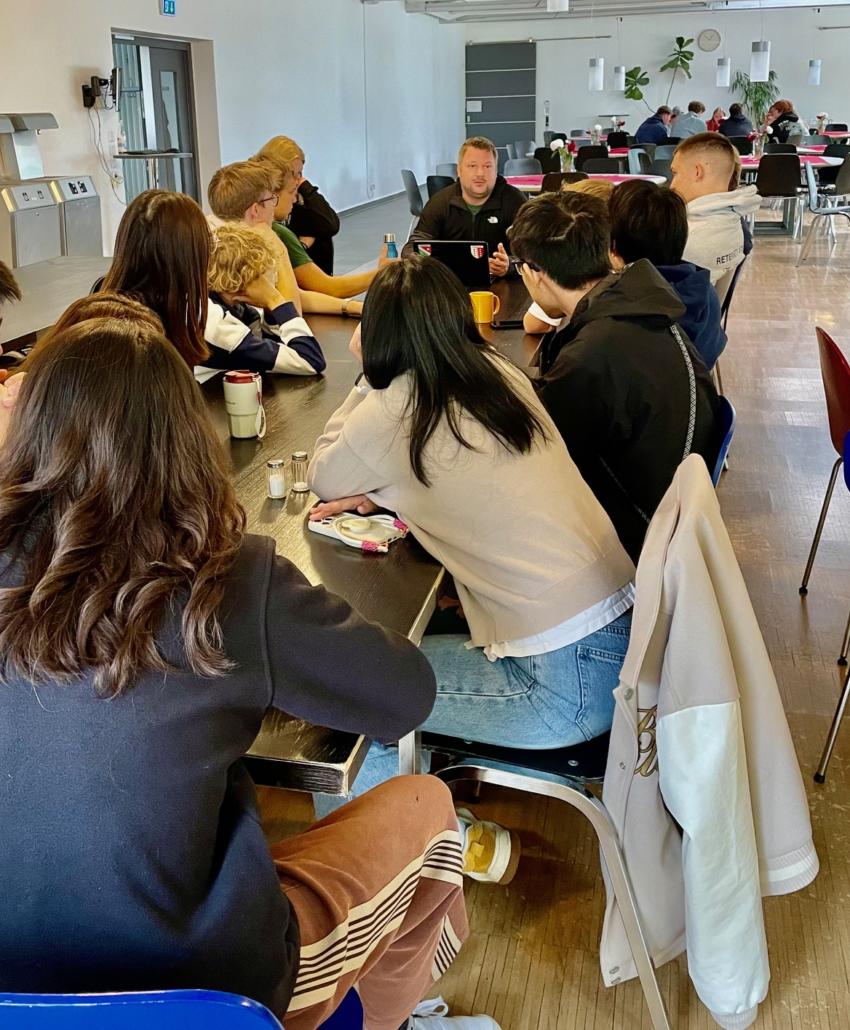
Dr. Claudia Röder, who is in charge of career guidance and internships at Steinmühle, organized the event and shared some photos from it. Somehow, it seems as though the students actually enjoyed discussing the otherwise serious topic of “the future.”