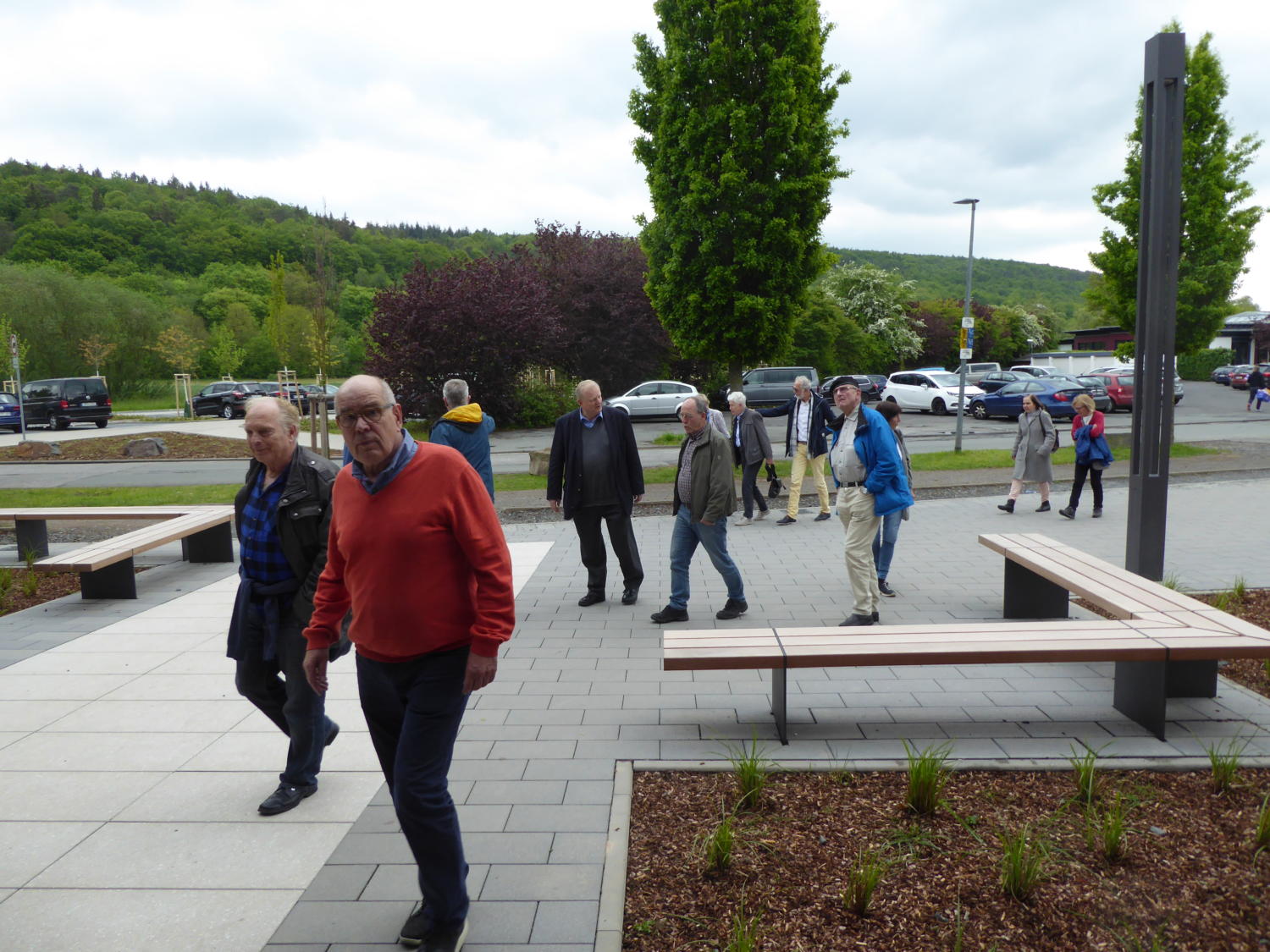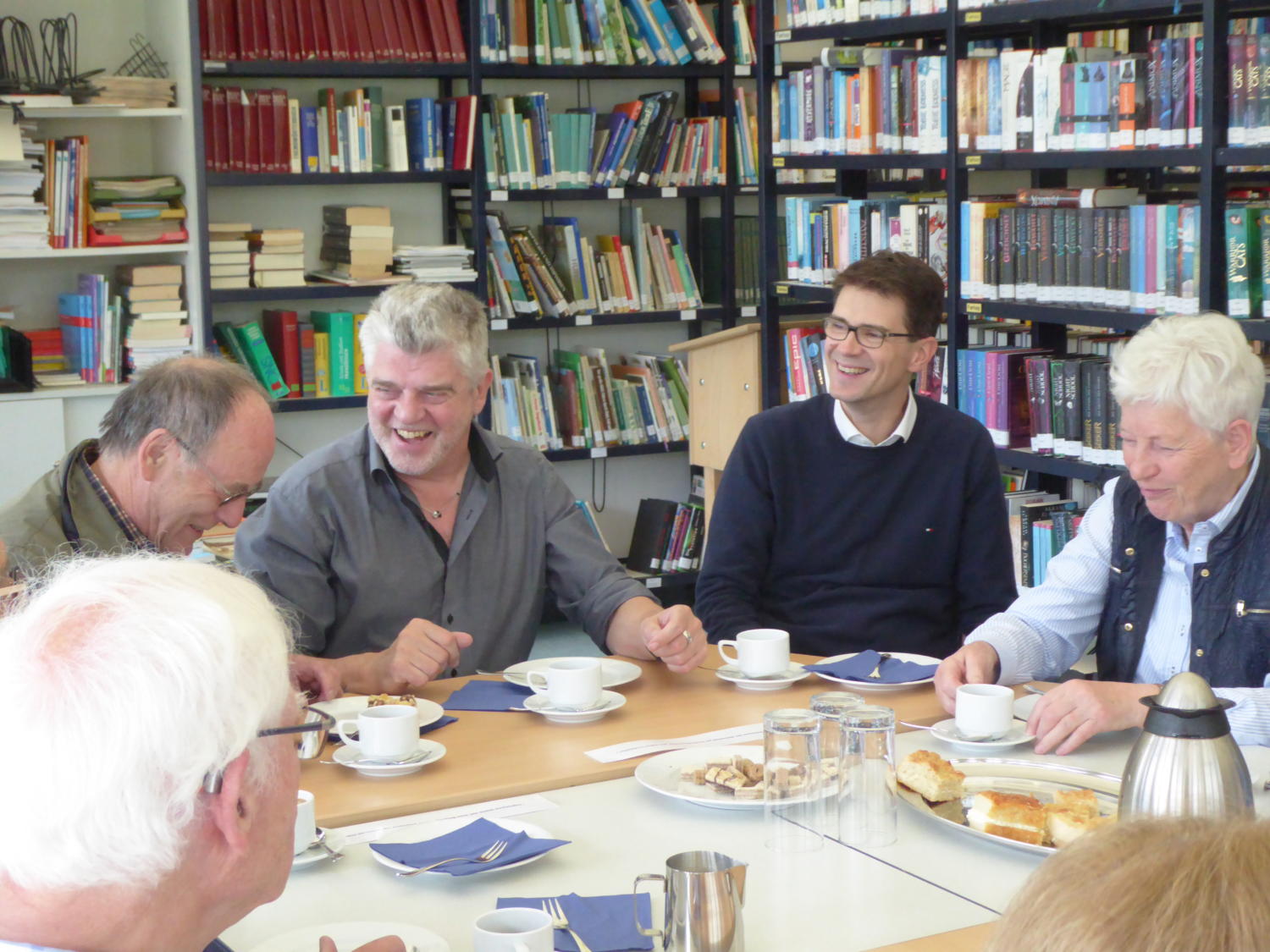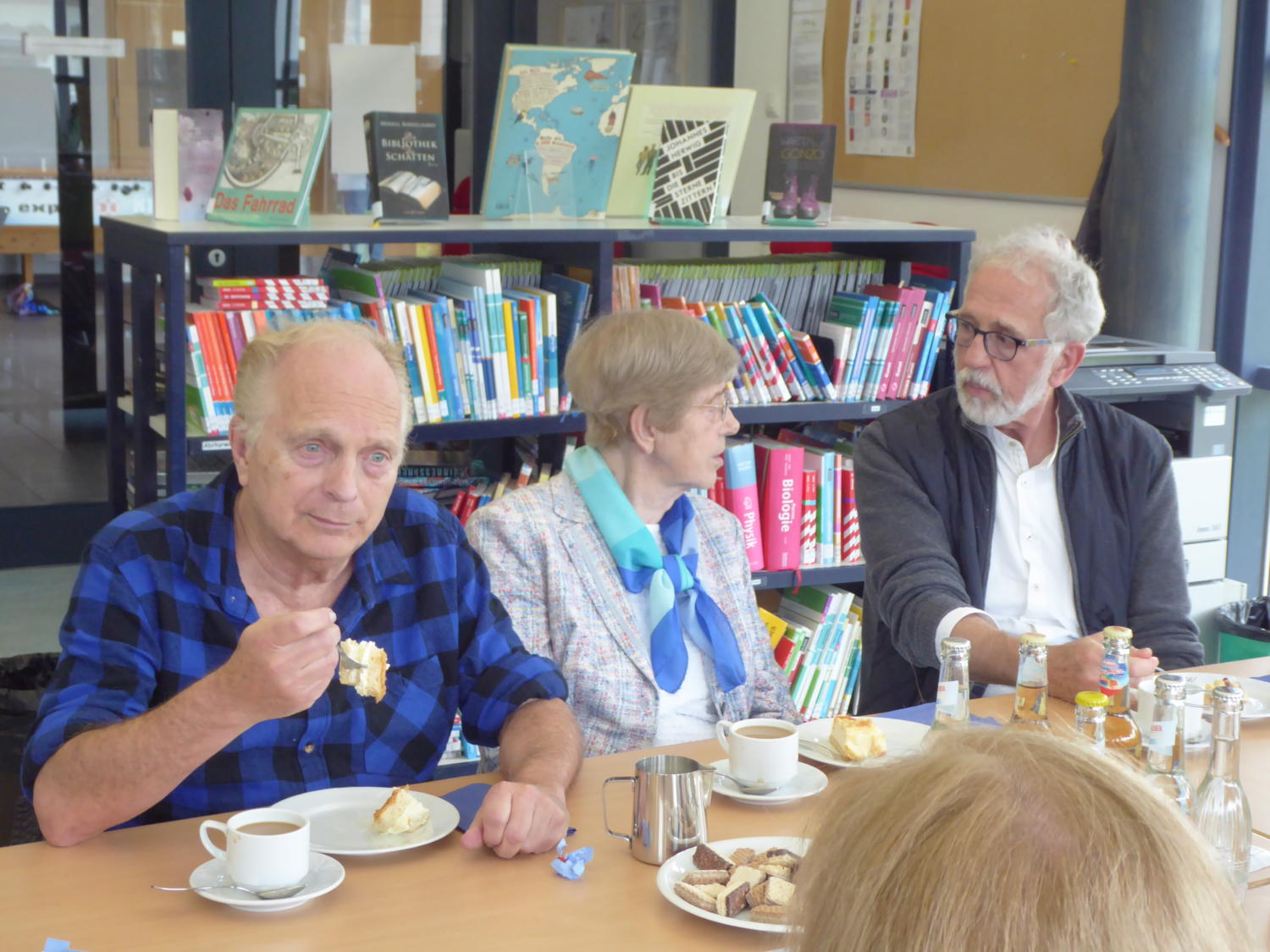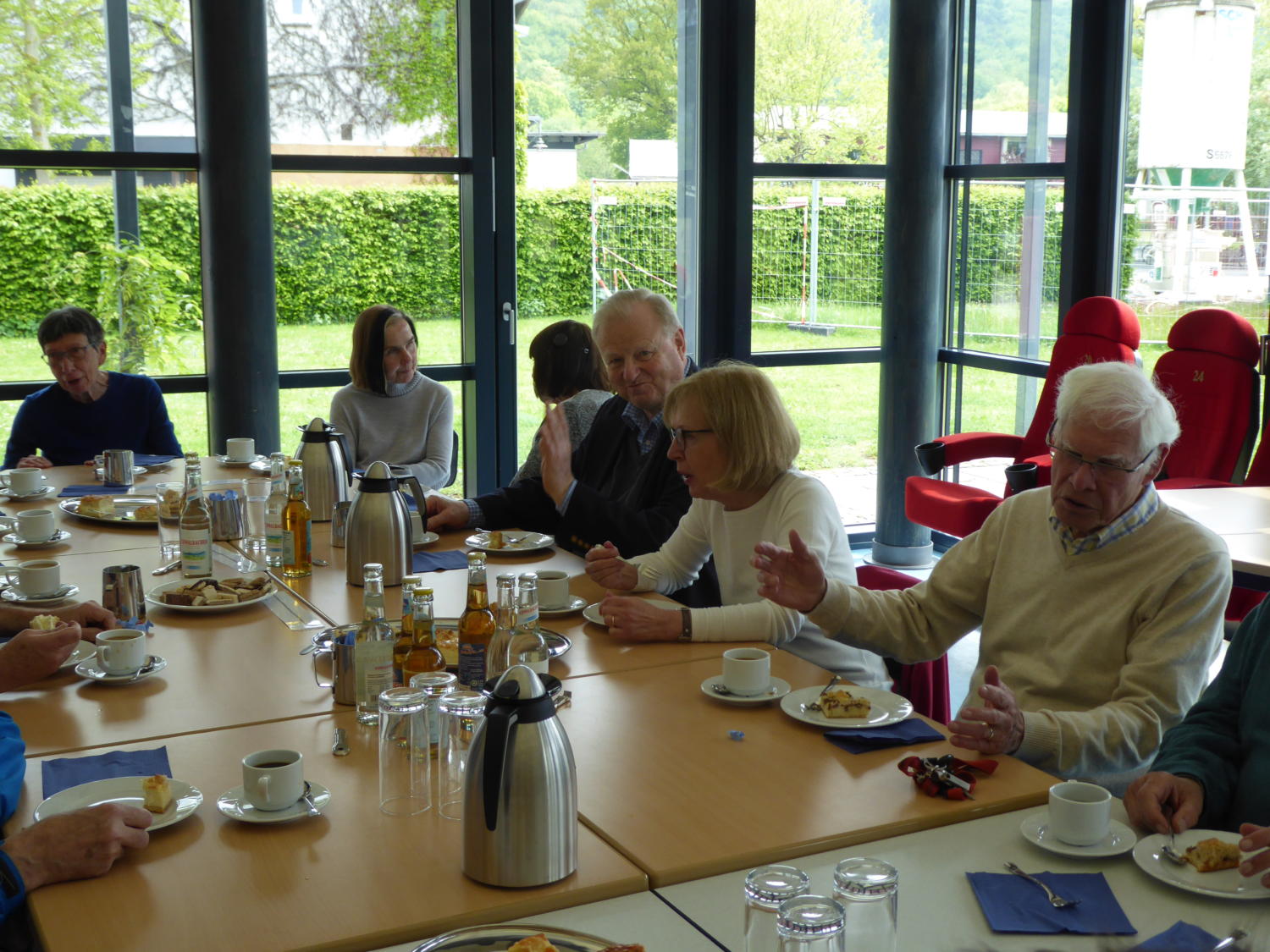


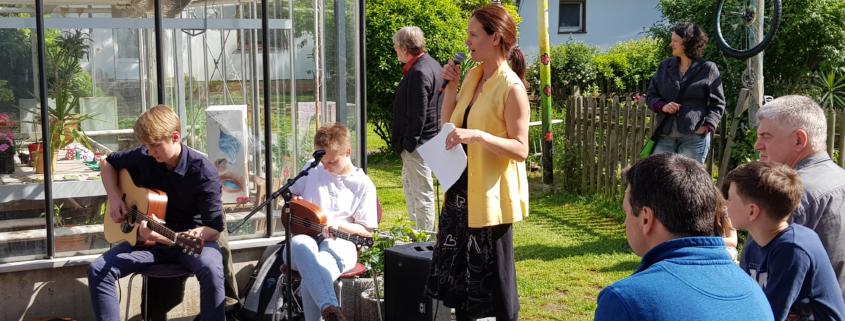
At the opening of this year’s art exhibition in the Steinmühle greenhouse, more than 50 visitors marveled at the three-dimensional artworks created by nine art groups consisting of students of various ages—from 5th grade through the E-phase. Classmates, parents, teachers, and Steinmühle staff enjoyed the art and nature in the beautiful, natural setting of the greenhouse and the school garden.
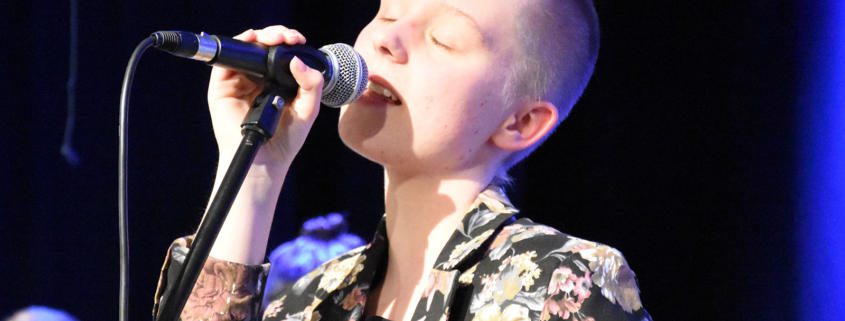
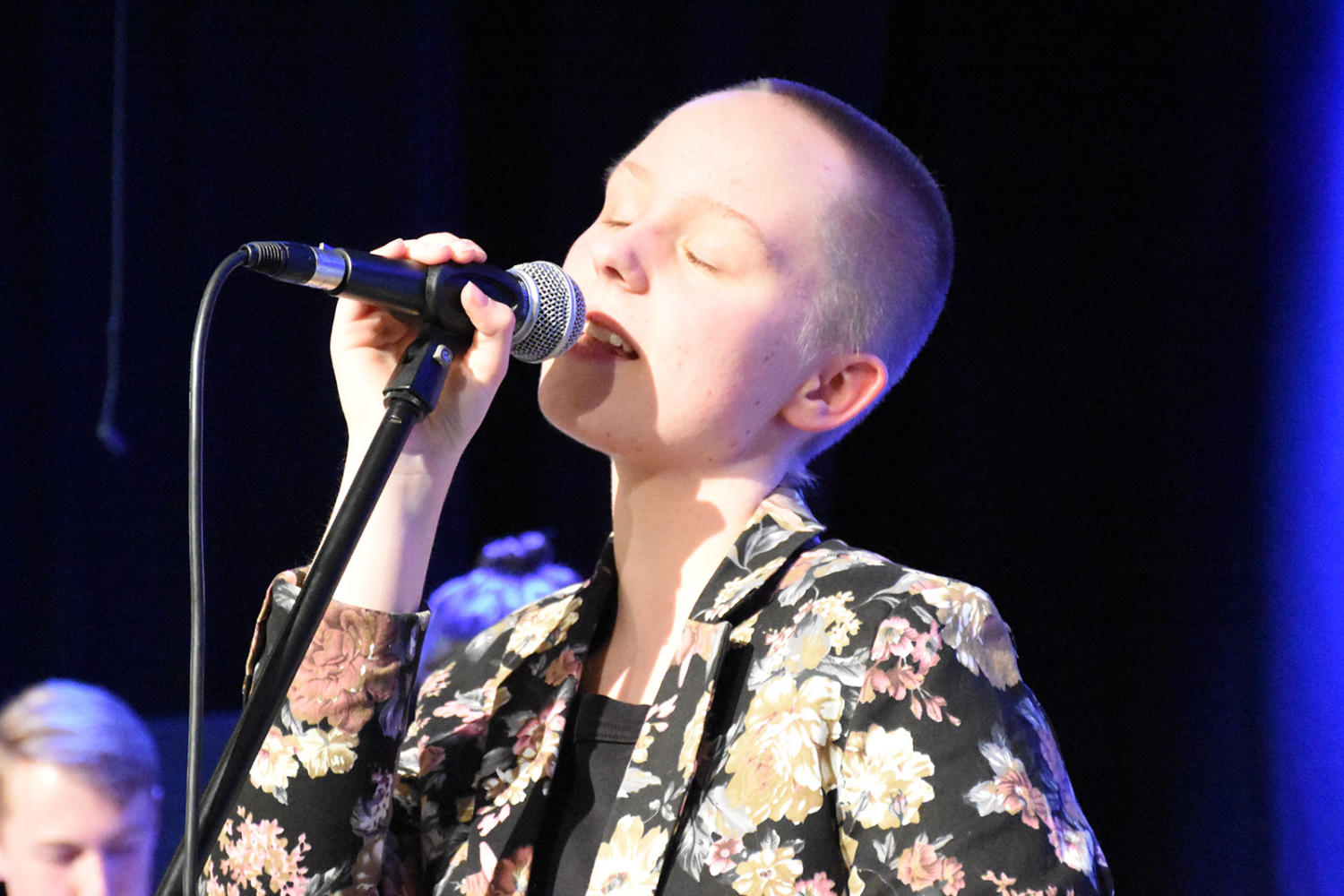
The opening was accompanied by musical performances from the two talented musicians, Talea Funk and Fynn Konnertz. The event was rounded out by culinary delights from the elective course (WU) Party Service, led by Fido Wagler.
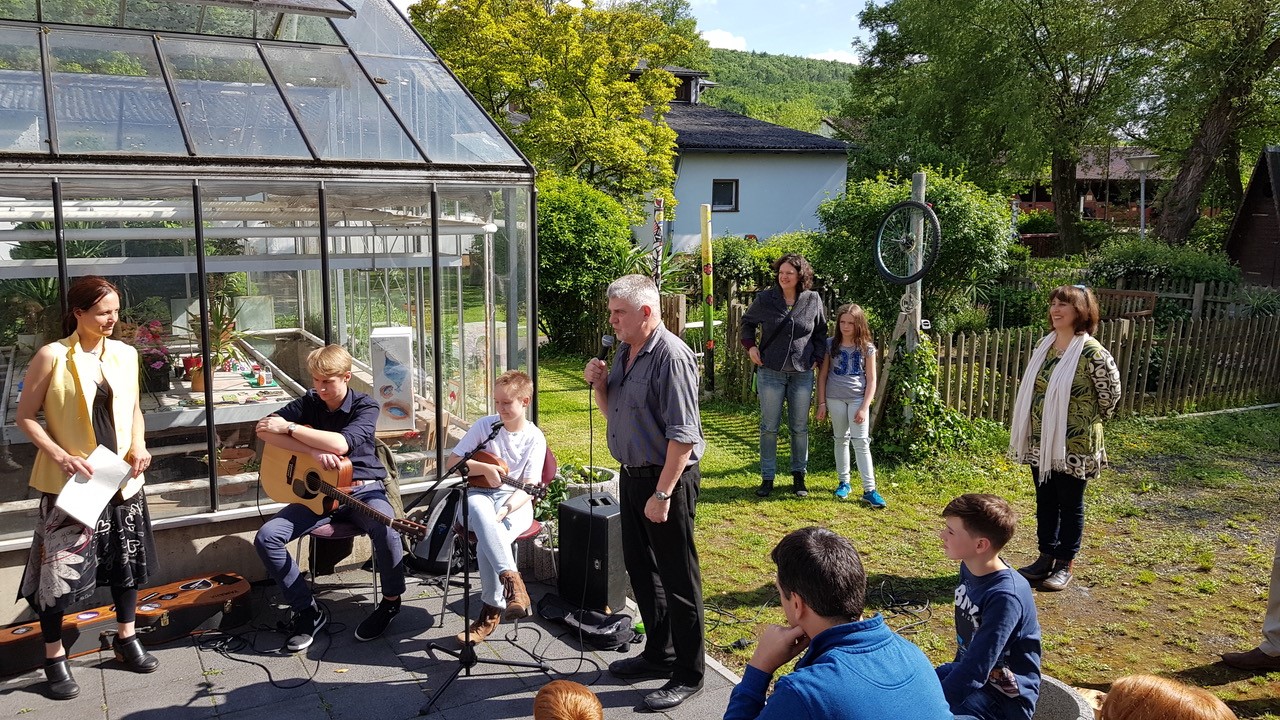
Where do we come from? Who are we? Who will we be? How will we live?
Students in Ines Vielhaben’s E-Phase class have explicitly explored this theme through their sculptures, which greet guests at the entrance to the greenhouse. How much of the instinctive, animalistic lies within humans? What identity or identities will people create in the future? Into what kind of avatars or cyborgs will they evolve?
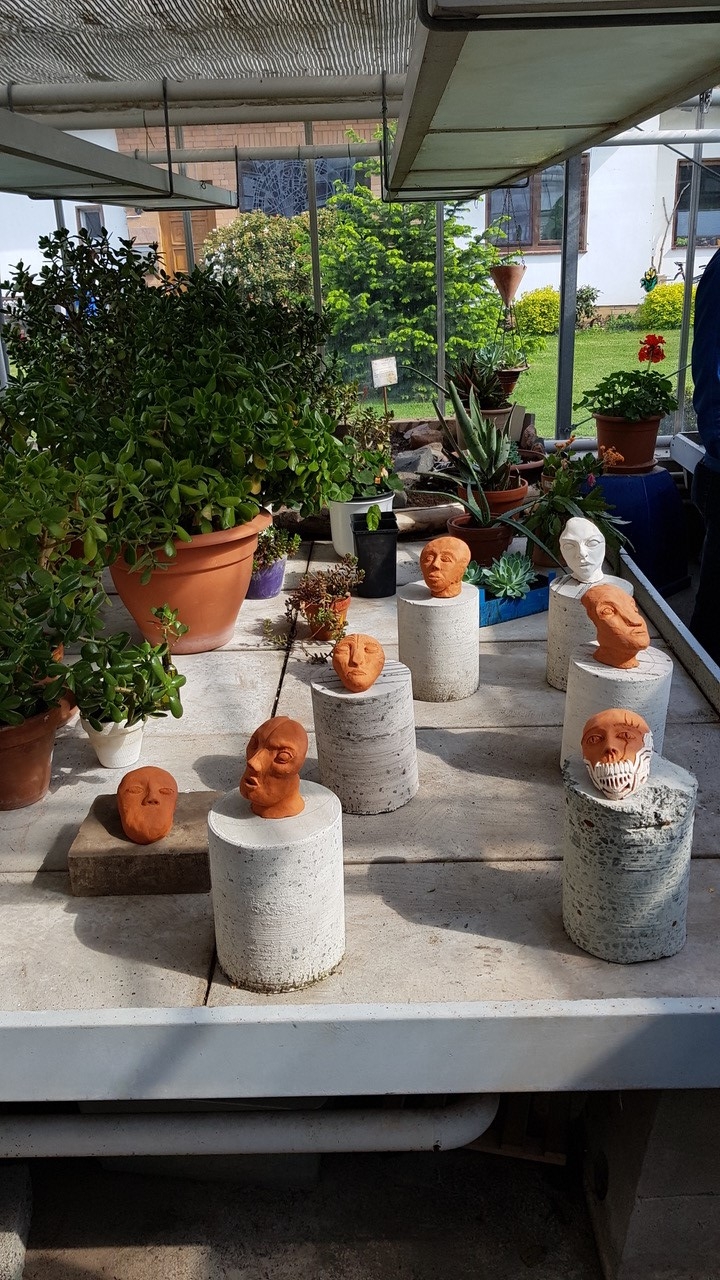
The modeling course always took human forms and proportions as its starting point, since they were the models all around us in the clay workshop. But these had to be distorted, elongated, or compressed—depending on whether the goal was to create a monkey, a human, or a cyborg.
The surrealist boxes from the same grade level are on display . The project began in Art Room 507, which the treasure chests were intended not only to enhance artistically but also to personalize.
Formally, these boxes draw inspiration from the works of Mexican artist Frida Kahlo and Belgian surrealist René Magritte. Here, a dreamlike imaginary world and reality are interwoven in equal measure. They were created by the art class under the direction of Heike Rabben-Martin.
In Dr. Sabine Kraft’s class, the young designers from classes 10b and 10c are presenting models of seating furniture, some of which are futuristic: The teams turned their designs—which were initially developed as thumbnail sketches—into models.
The groups, working in the field of industrial design, chose “seating furniture” as their theme. The finished product had to meet one additional requirement: it had to fit in the palm of the hand! Otherwise, they had complete freedom in choosing the material, shape, and type of seating.
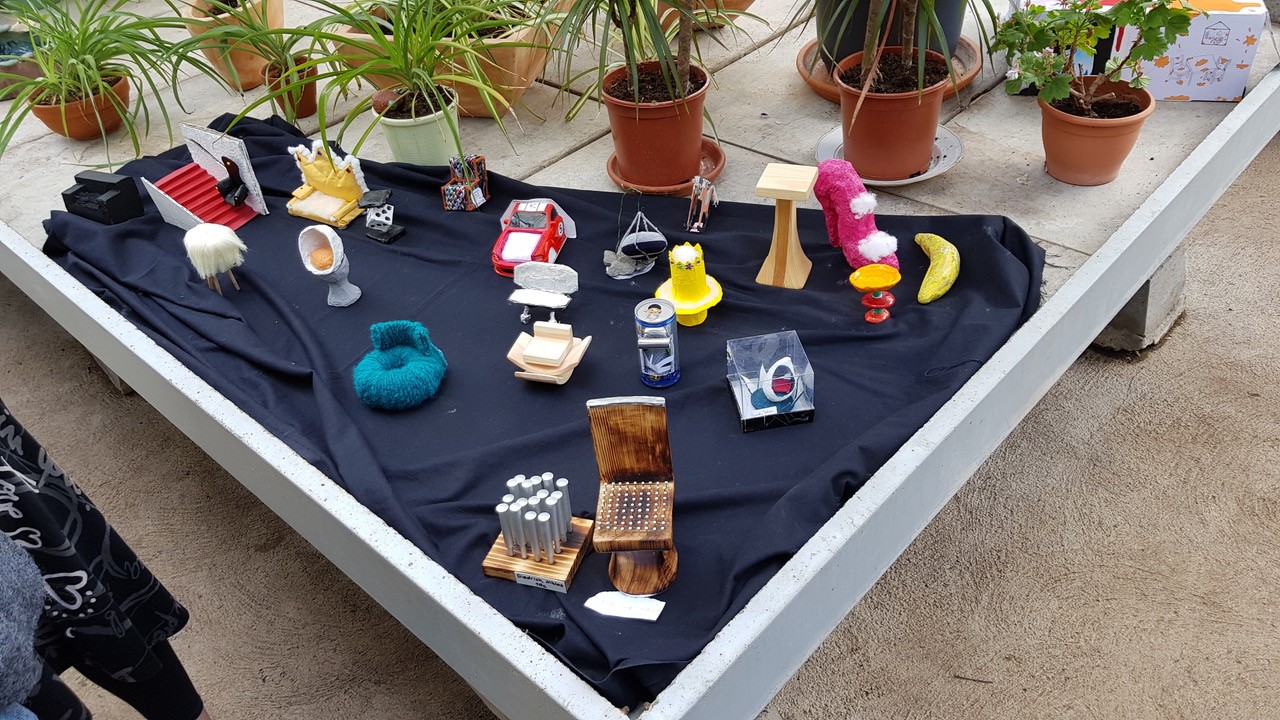
A little theory made it easier for the young artists to make their decision. As a result, the three key aspects of a successful design object were discussed beforehand.
- Practical function: The usability of a design object from the user’s perspective.
- Aesthetic function: The main criterion is the interplay between primary and secondary forms, as well as color, material, and surface, as perceived by the viewer.
- Symbolic function: It determines, for example, whether the product can convey a higher status or merely give the impression of it, and how it is perceived by others—from the owner’s perspective.
Finally, we cut and assembled, hammered and glued like crazy. Some attempts didn’t go as planned and had to be redone.
Architecture in the Style of Hundertwasser
Class 10a chose an architecture theme with the intention of trying their hand at model-making in the style of Hundertwasser. First, the teams of architects built a scale model out of matchboxes, which they covered with plaster and smoothed out. With this prepared surface, they were ready to get started!
Above all, avoiding right angles—but of course also colors, shapes, and a variety of ornaments—were the design elements that inspired the working groups. With each “construction phase,” the groups continually developed new ideas, which they brought to life creatively.
Friedensreich Hundertwasser would have been delighted to see how much “his” unconventional views continue to inspire young architects even today.
One of the highlights of this year’s exhibition is definitely the food-styling mannequins created by the 8th-grade students.
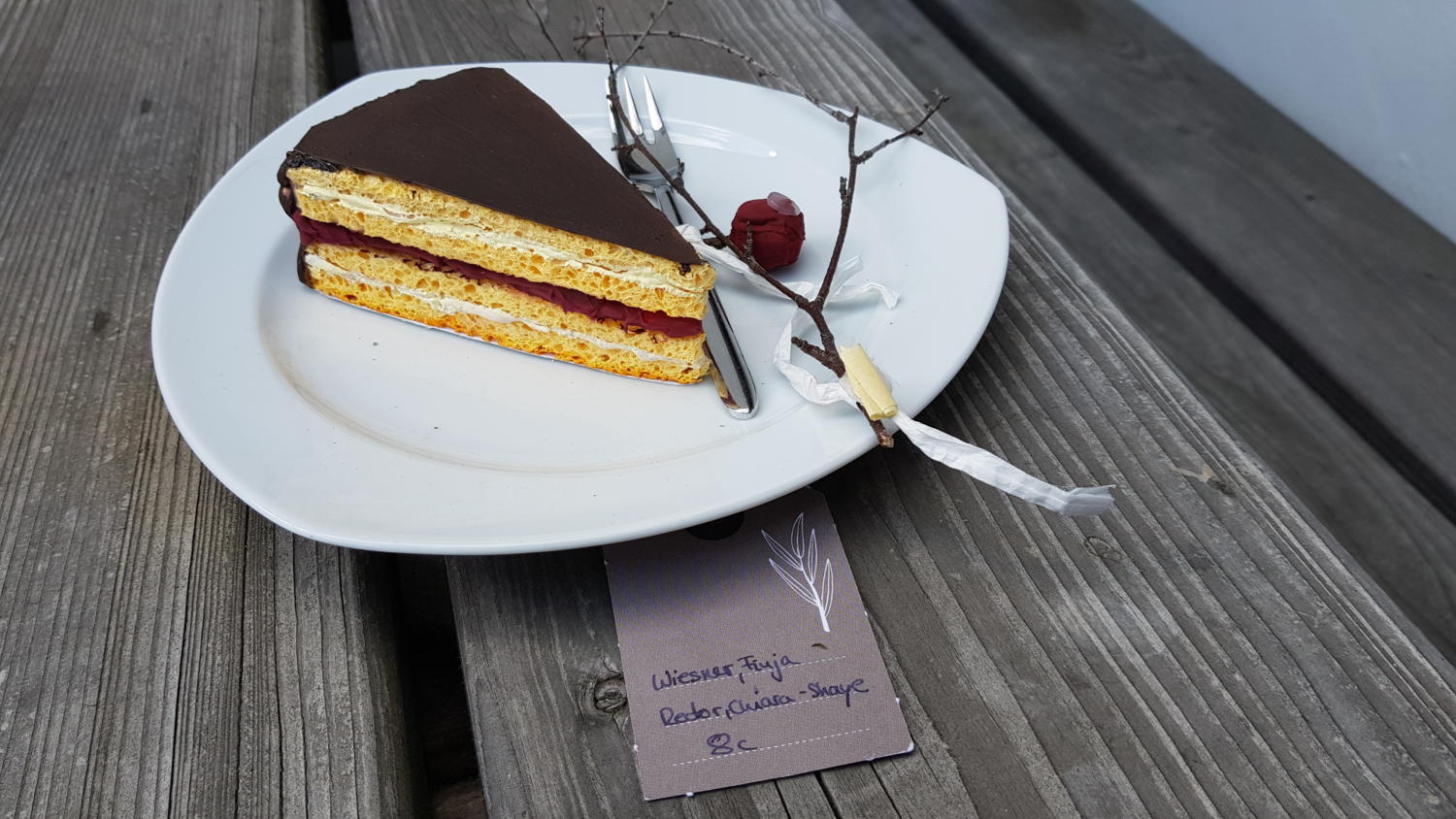
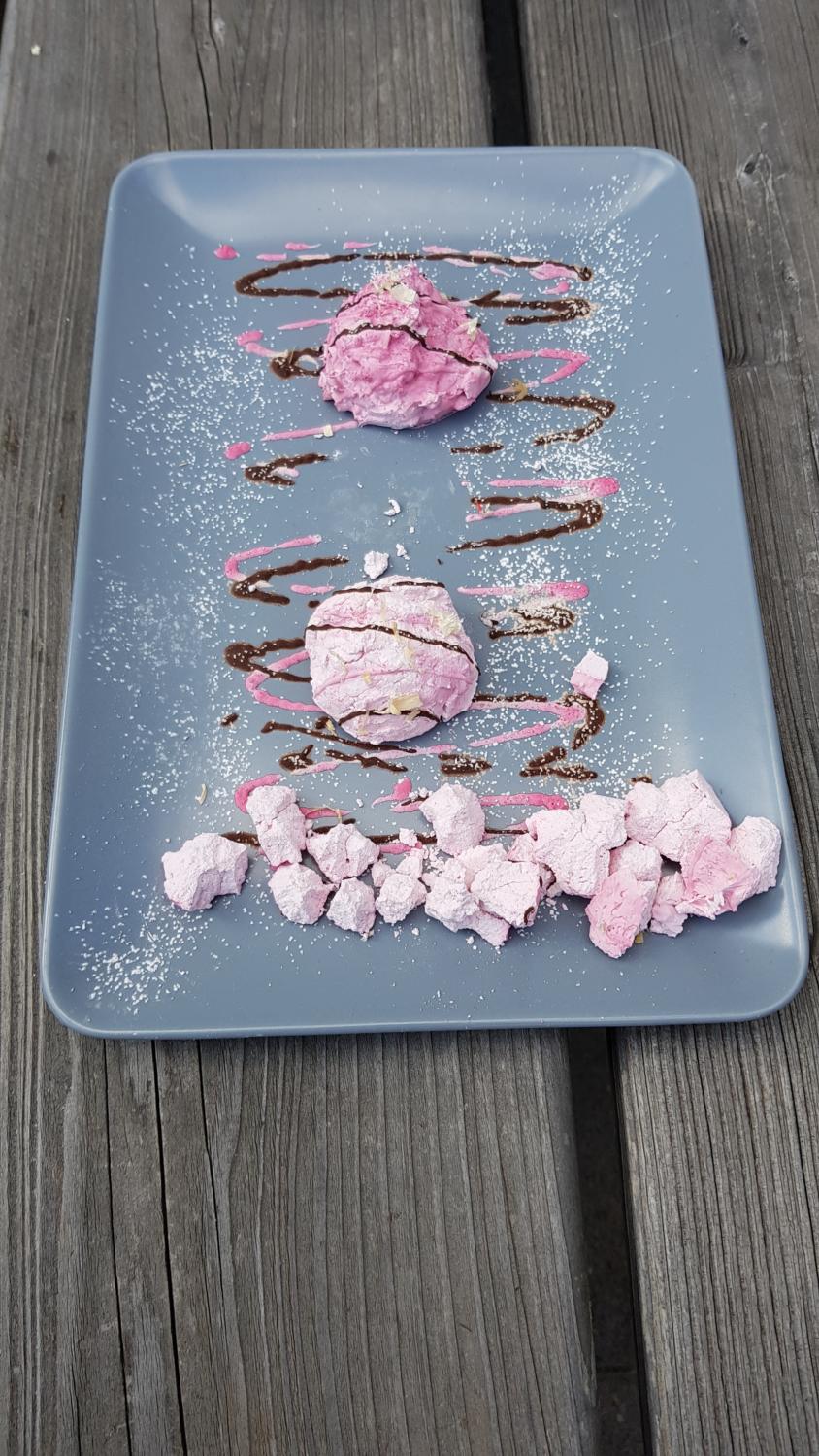
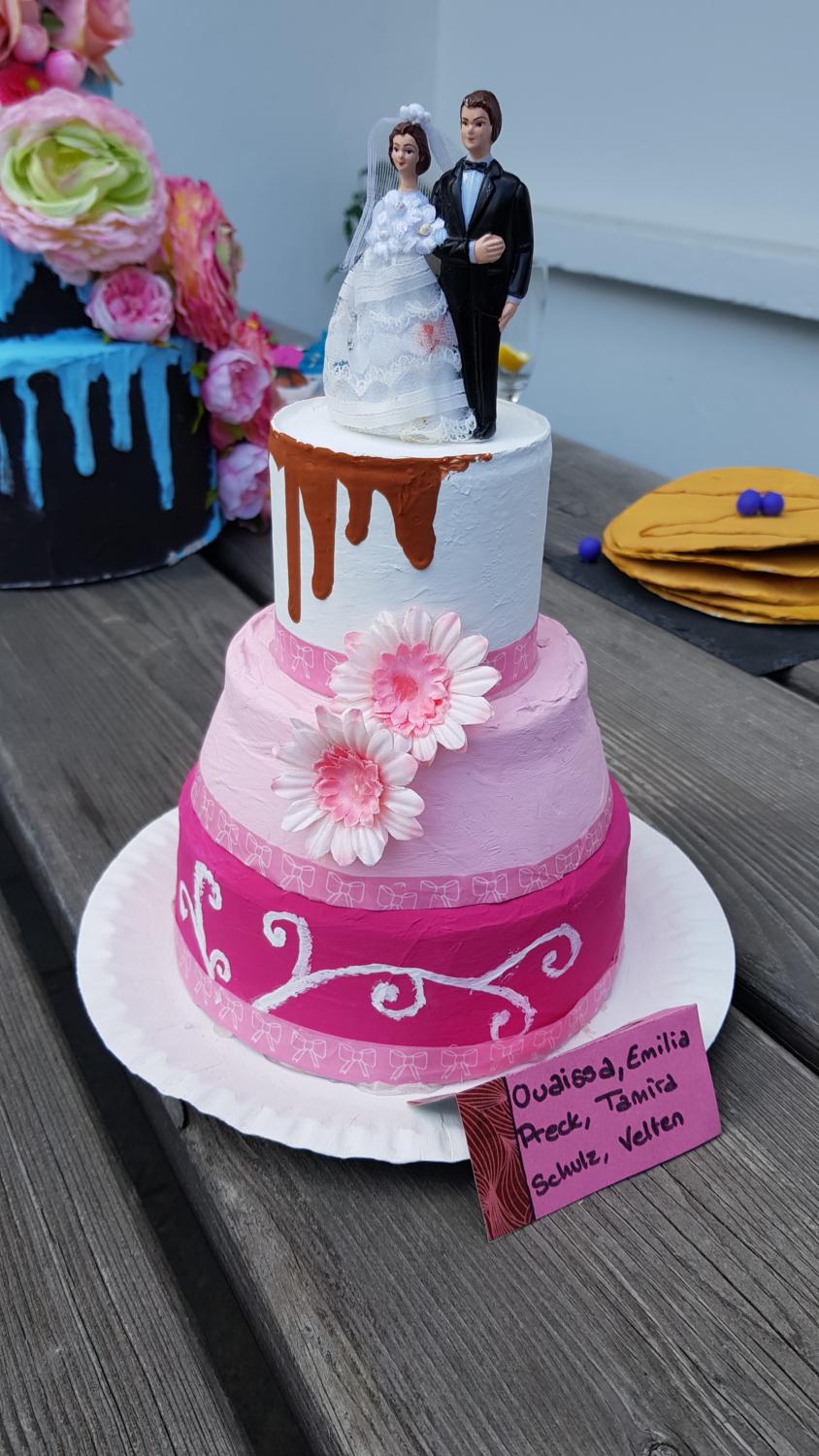
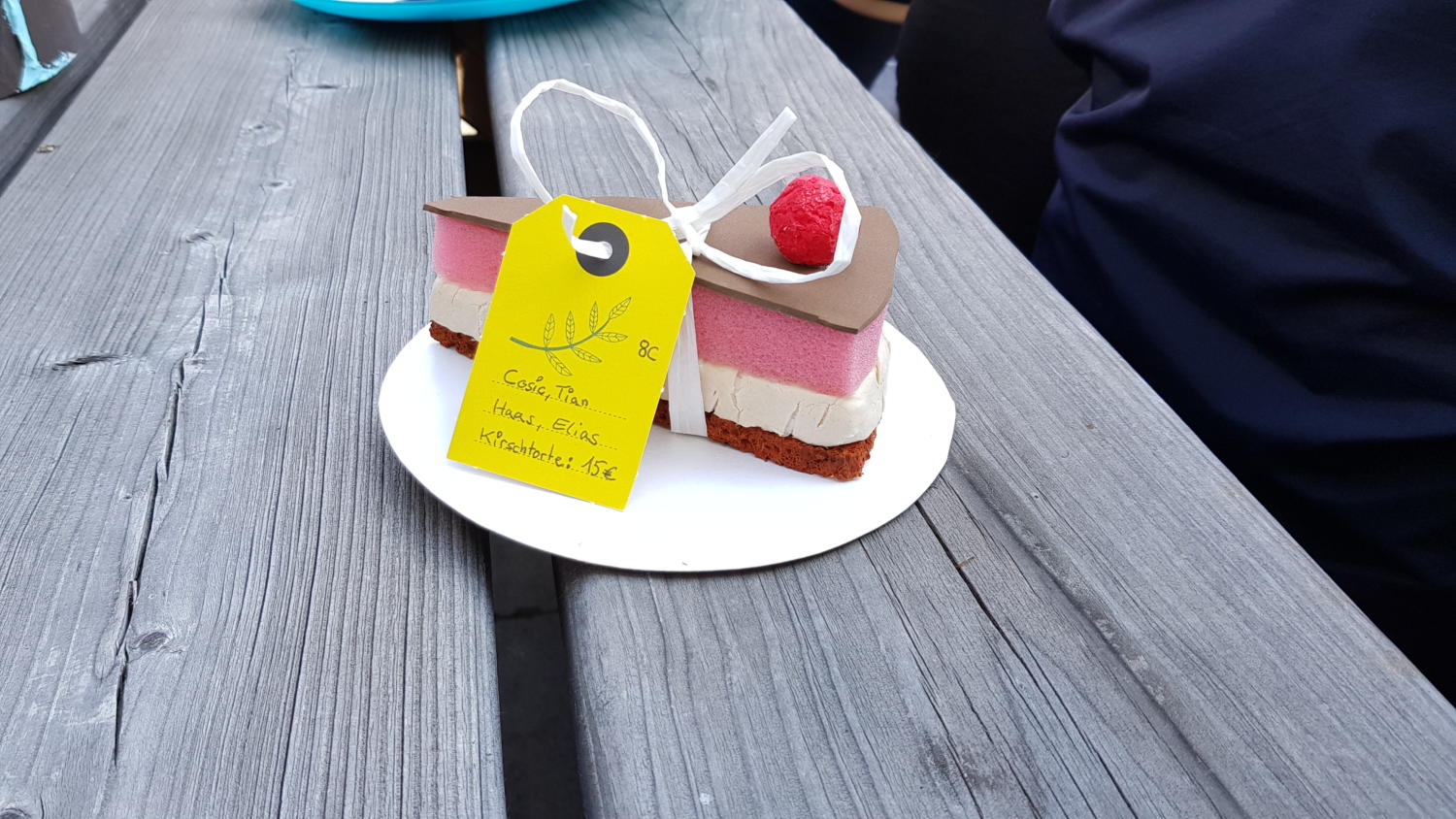
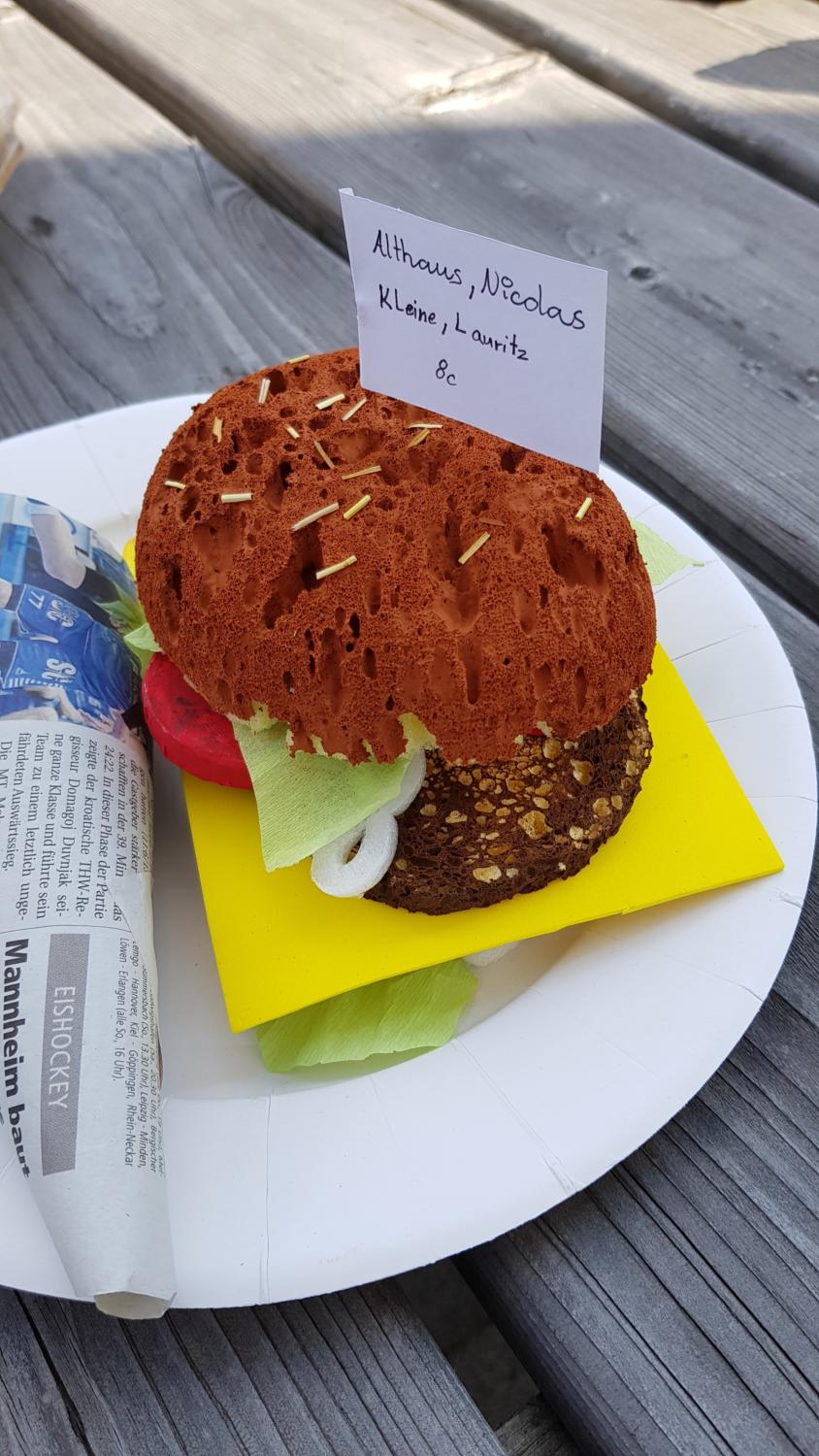
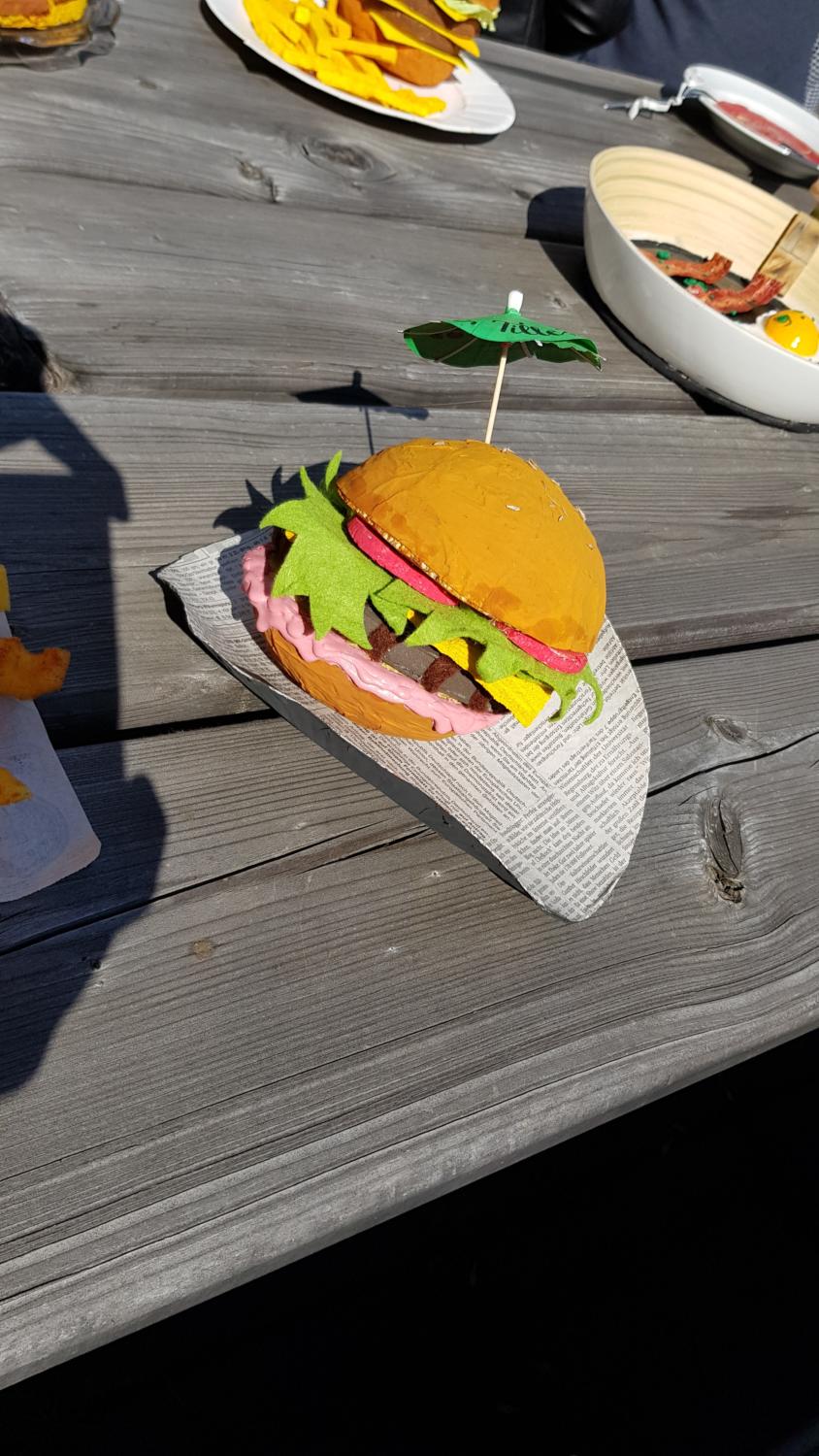
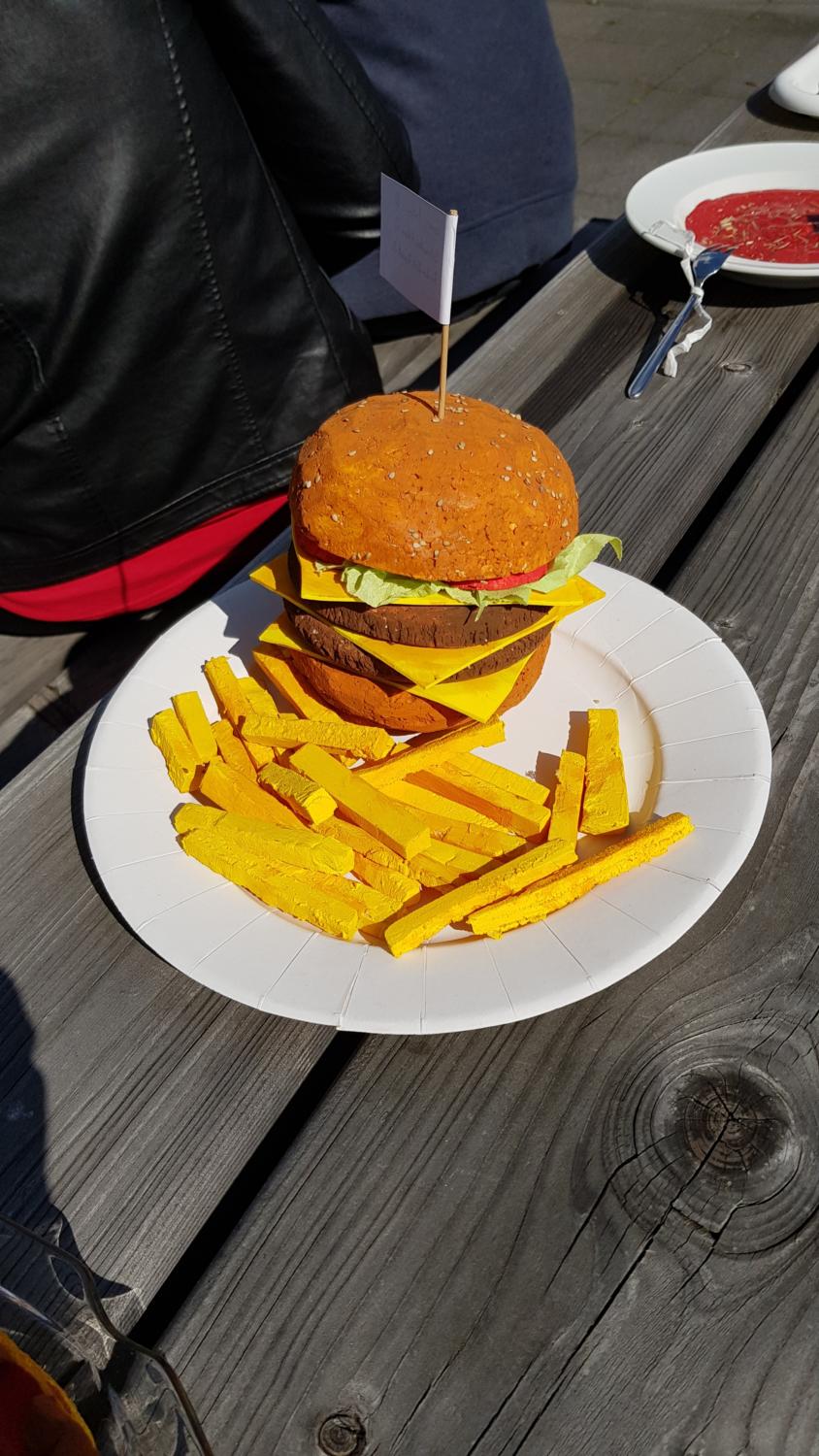
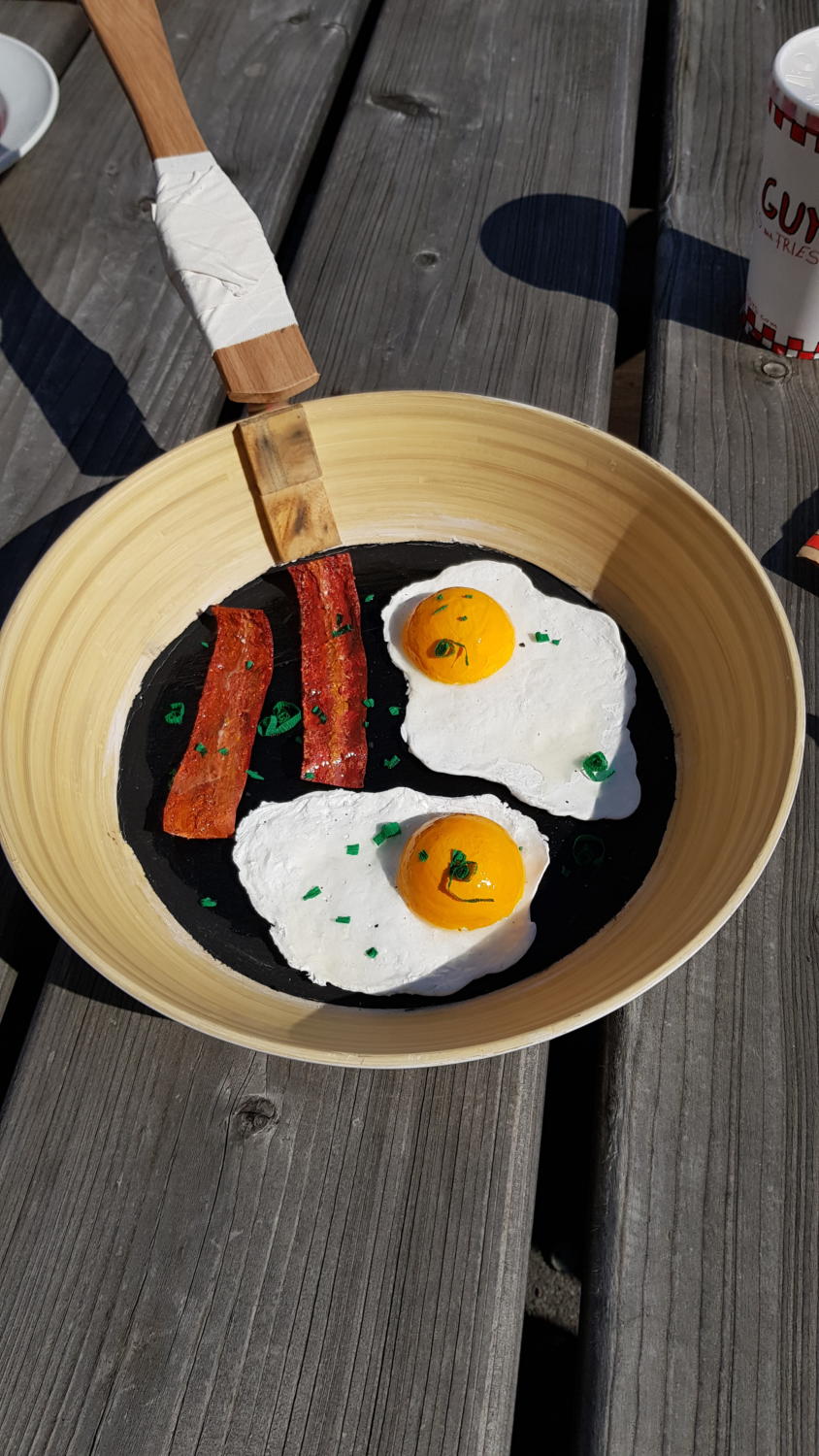
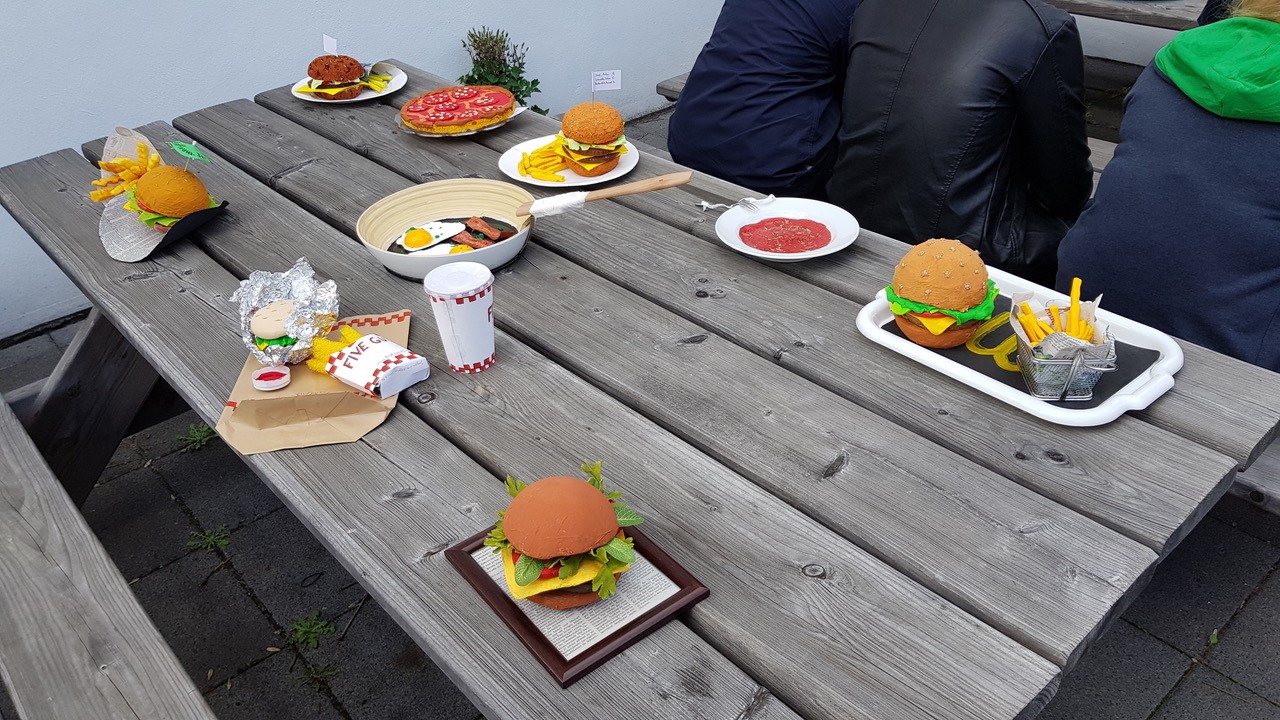
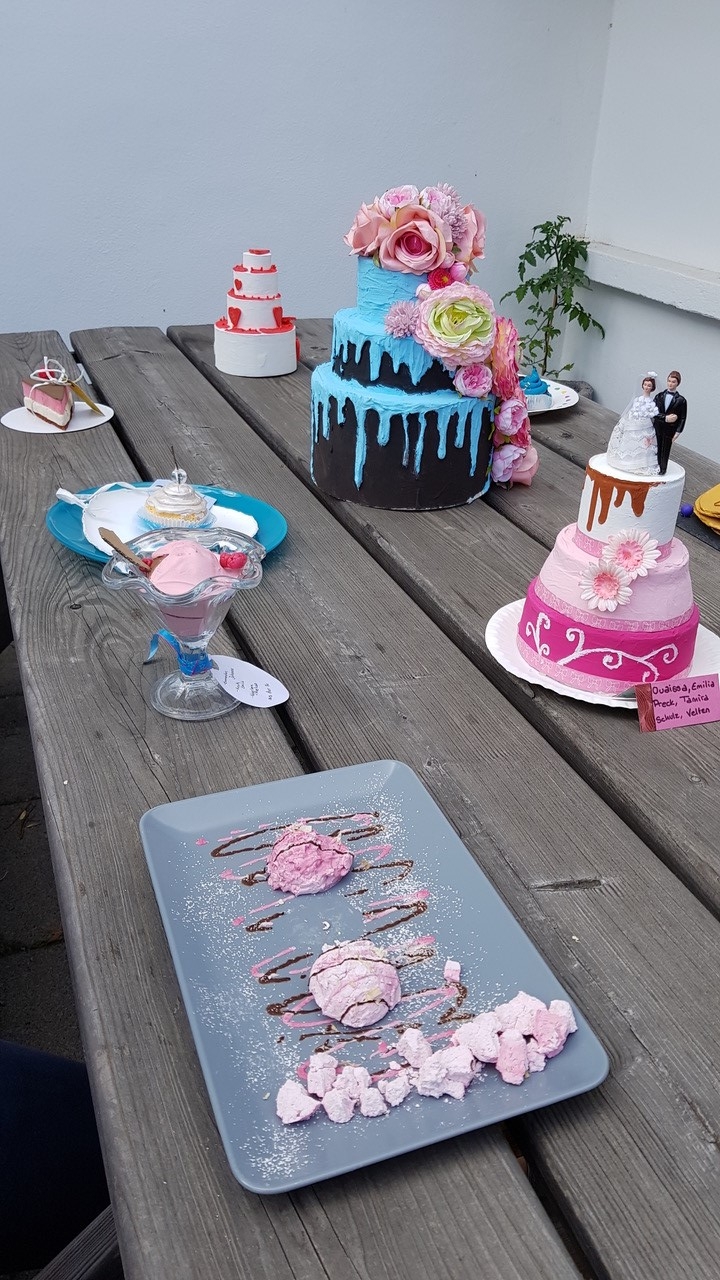
Food styling refers to the preparation of food for promotional purposes. Images of (seemingly) freshly prepared food are in high demand, particularly in the fields of packaging design and audiovisual media.
Food photography can be very time-consuming. Therefore, the products used must remain visually appealing and “crisp” over an extended period of time. For this reason, using “dummies” is more efficient than using real food or baked goods. The latter would quickly lose their appetizing appearance. With the mock-ups, however, texture and color—signs of freshness—are preserved. Another advantage of mock-ups is that they can be reused. Using them is therefore also more economical than wasting edible food for advertising. The food stylists from classes 8a and 8c experimented with various materials and used them to artificially recreate the ingredients and components of their favorite dishes in their projects. The student teams’ preferences are clear: burgers with fries, pizza, and desserts top the list!
Our youngest artists from Class 5a created magic cauldrons that would surely be a big hit on Diagon Alley. Based on their designs, they shaped the vessels using simple construction techniques and decorated them imaginatively. In addition, the fifth graders modeled animals on ceramic tiles. Using indentations and raised areas, they carved the shapes out of the tile’s surface or pressed them into it. They were also tasked with accentuating the animal relief with an appropriate surface finish.