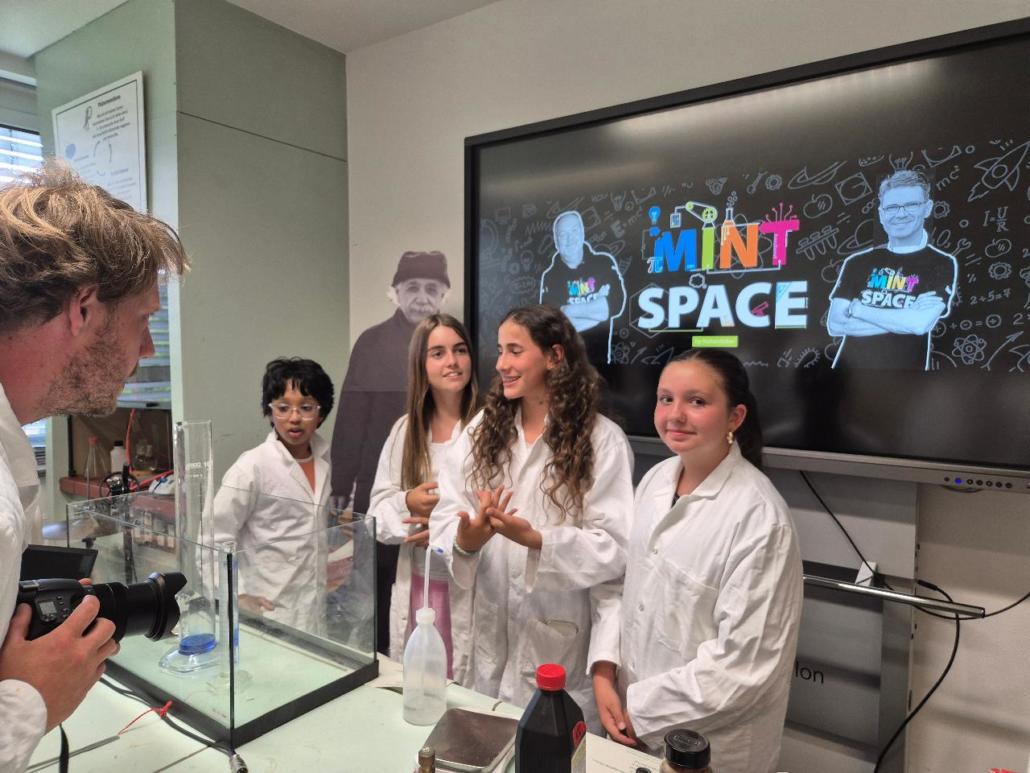
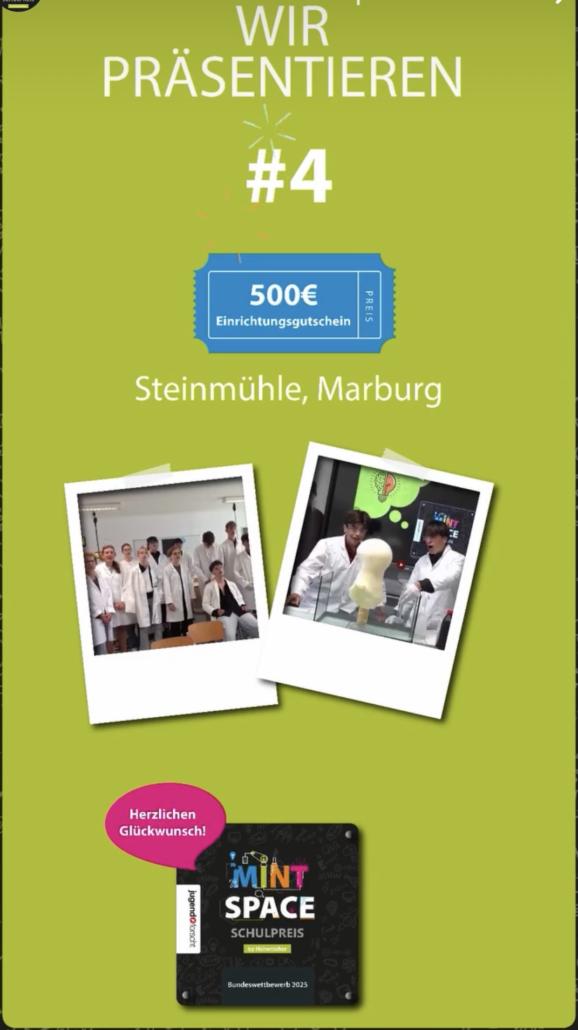
At this year’s MINTSPACE national competition, organized by school supplies provider Hohenloher, Steinmühle achieved an outstanding 3rd place. The music video “Another Lab in the Hall,” filmed live in the science lab with great dedication, impressed the MINTSPACE jury. Since 2021, the school supplier Hohenloher and the “Jugend forscht” Foundation have been presenting the MINTSPACE School Award to recognize innovative learning spaces and laboratories for STEM education—that is, for mathematics, computer science, natural sciences, and technology.

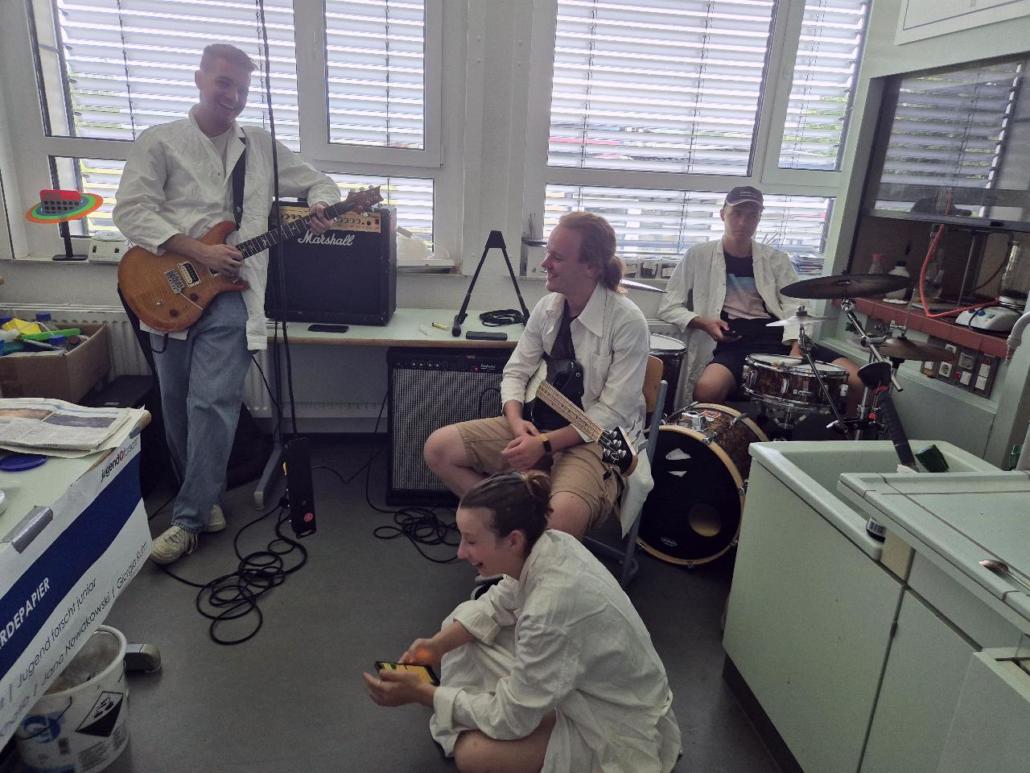
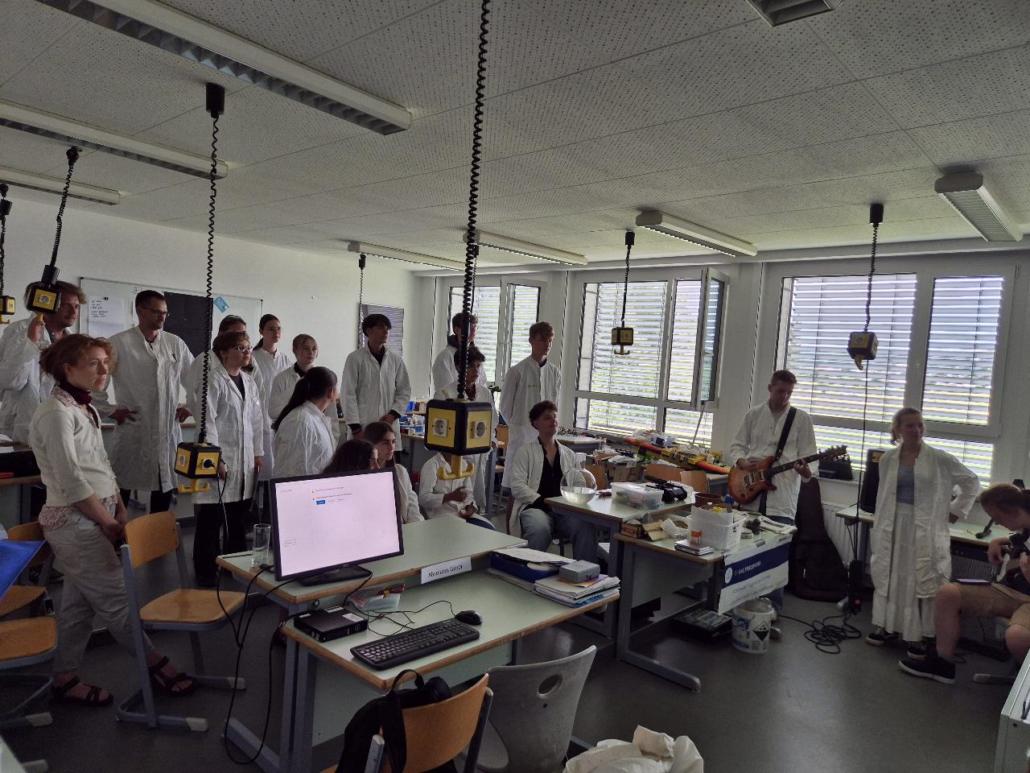
Students at Steinmühle had set out with great enthusiasm and dedication to write, rehearse, perform, and record a piece of music as their entry for the MINTSPACE National Competition. “Hey, Teacher, let the kids explore!” rang out in unison to the live orchestral sounds of the Pink Floyd classic “Another Brick in the Wall” (as we reported).


The video impressed the jury

Dr. Dr. Dierk Suhr, educational director at Hohenloher and chair of the MINTSPACE jury, was immediately impressed by the competition entry. The entire jury was particularly impressed by the fact that the storyboard, text, audio and video recordings, mastering, and editing had all been handled entirely by the students. Last but not least, a well-rehearsed choir made up of students and teachers from the Steinmühle Lab, along with the school’s own band, “Die lauten Laubfrösche,” made the performance a resounding success.


Prize Money to Go Toward a New Laboratory at Steinmühle

The victory comes with a gift certificate worth 500 euros, which Hohenlohe Regional Advisor Guido Jäger has now presented. Principal Björn Gemmer said, “The prize is a wonderful recognition of what has been built up in the STEM field at Steinmühle over the past few years. It honors the creativity and broad commitment of our students and teachers. The prize money will be reinvested immediately, as we plan to set up an S2 lab for our students next year.”

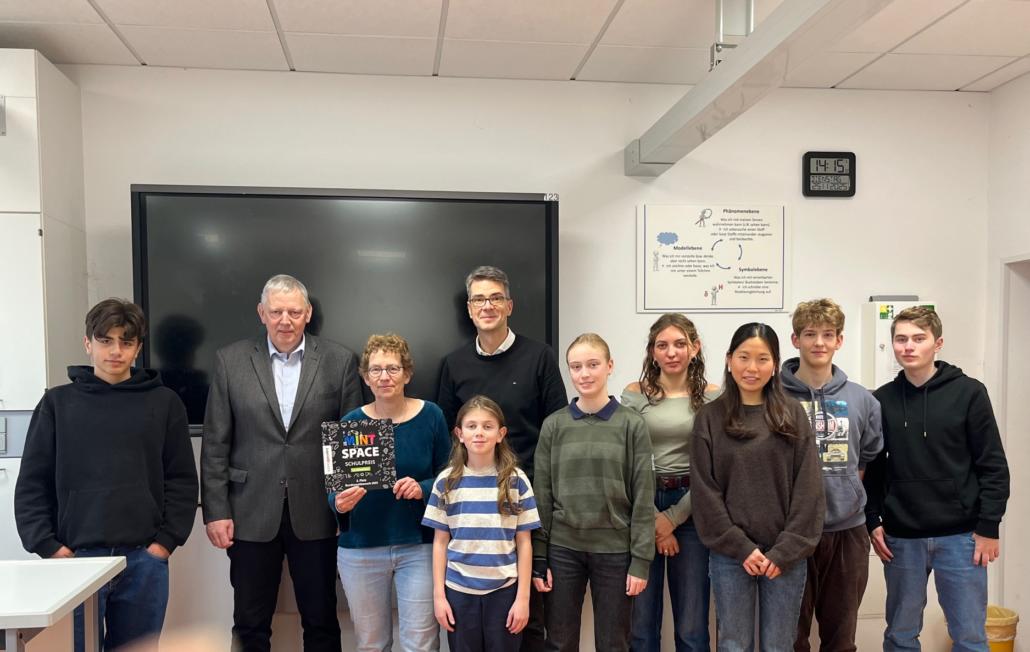
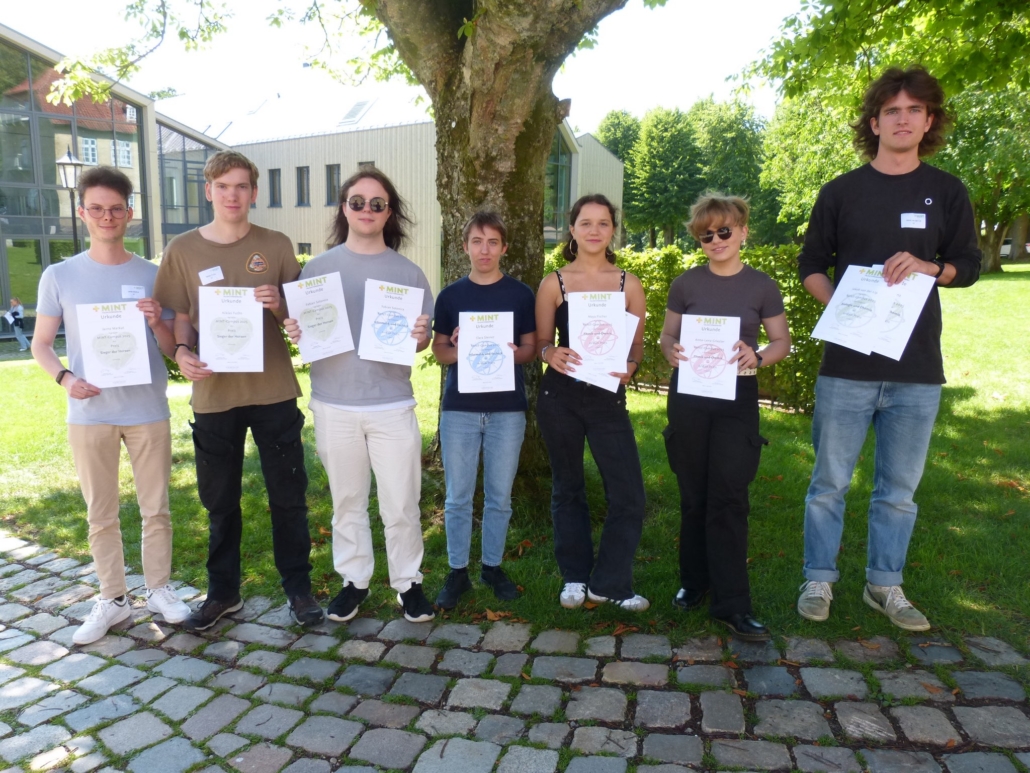
Our photo shows Hohenlohe Regional Advisor Guido Jäger, the Steinmühle STEM coordinator, Dr. Jutta Töhl-Borsdorf, and Principal Björn Gemmer at the presentation of the MINTSPACE School Award, surrounded by students from the STEM module.

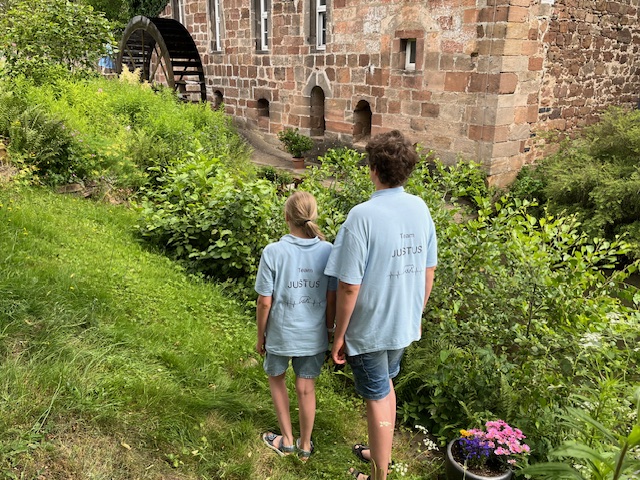
While we’re scraping ice off car windows at Steinmühle School & Boarding School and there are still patches of snow along the roadsides, two of our students in Singapore are dealing with temperatures around 30 degrees. Sophie and Felix Sacher are there, ready to go for their presentation at the World Robot Olympiad (WRO), which is starting right now. After their project “Ice Bear – I Care Everywhere” has already enjoyed great success in Germany (as we’ve reported on several occasions), it’s now being presented on the international stage. The technical design is intended to make everyday life easier for children with migraines and heart conditions.

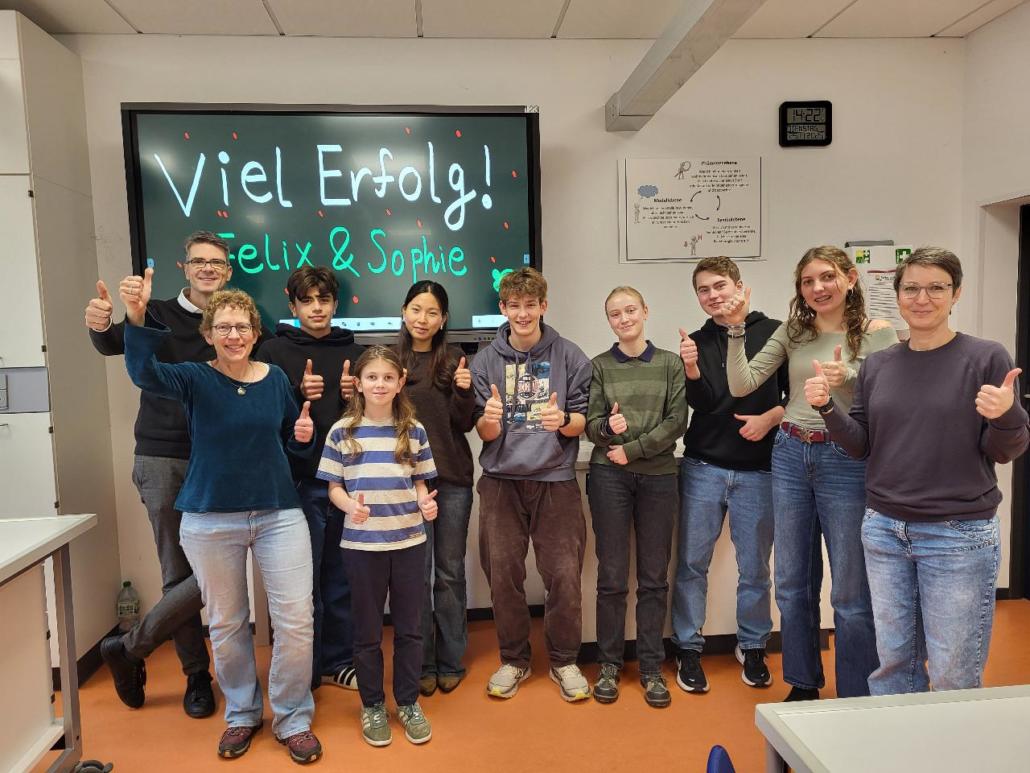
Dear Sophie, Dear Felix: No matter how you do, you’re simply amazing! The Steinmühle STEM team is rooting for you and wishes you the best of luck!


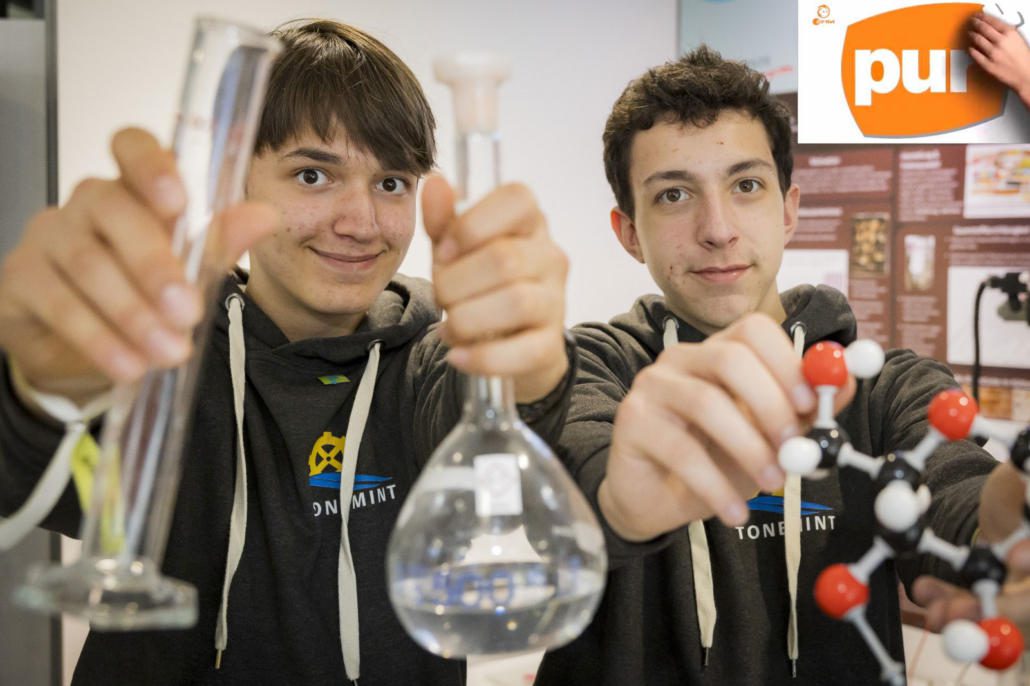
On March 13, a ZDF camera crew visited Steinmühle to film the successful Steinmühle duo, Leonard Berger and Nicolas Bohnstedt, as they conducted research into sustainable alternatives to conventional petroleum-based plastic wrap.

After both won first place in chemistry at the regional “Jugend forscht” competition, earned a special prize at the state competition, and placed second out of over 1,000 contestants at the “Jugend testet” competition in Berlin, their successful work will now be featured on screen. It has been available online on the ZDF streaming portal since last Friday, October 31: https://www.zdf.de/reportagen/purplus-100 ( starting at minute 9)

The episode will air on KiKA on Tuesday, November 4, and on ZDF on Saturday, November 8 be broadcast.

Enjoy watching!

“What an awesome day that was!”—when students leave class saying that, it means the teachers have done something right!


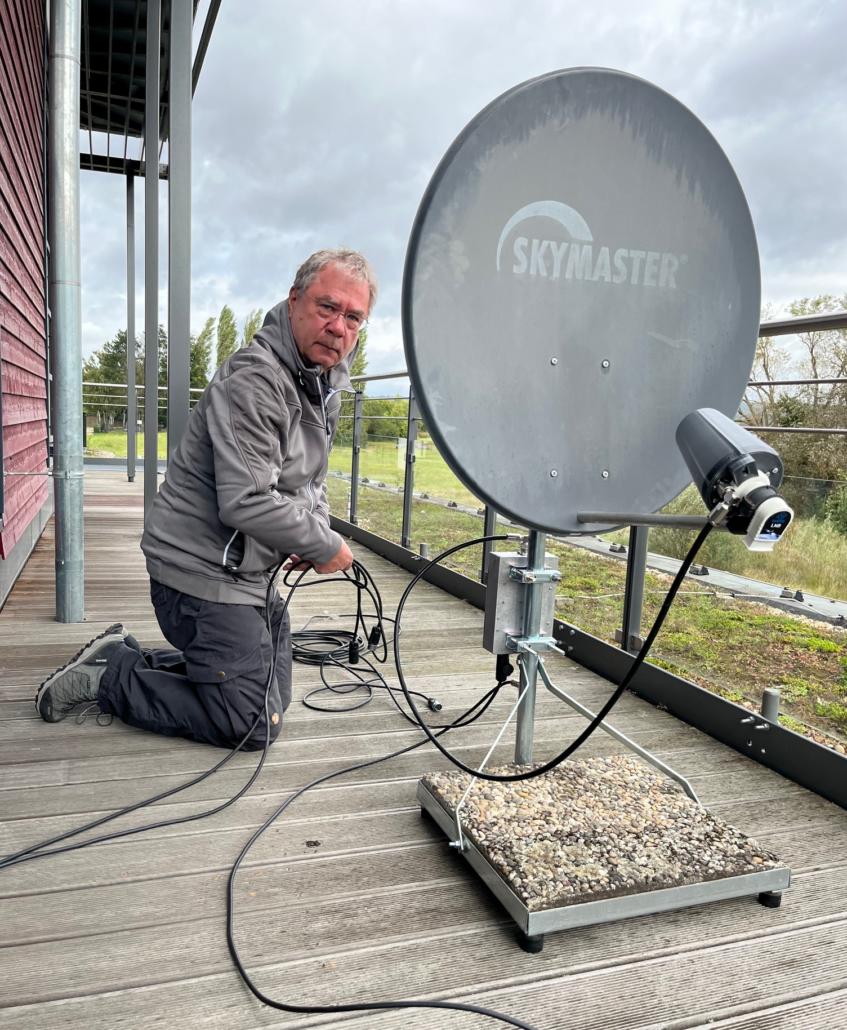
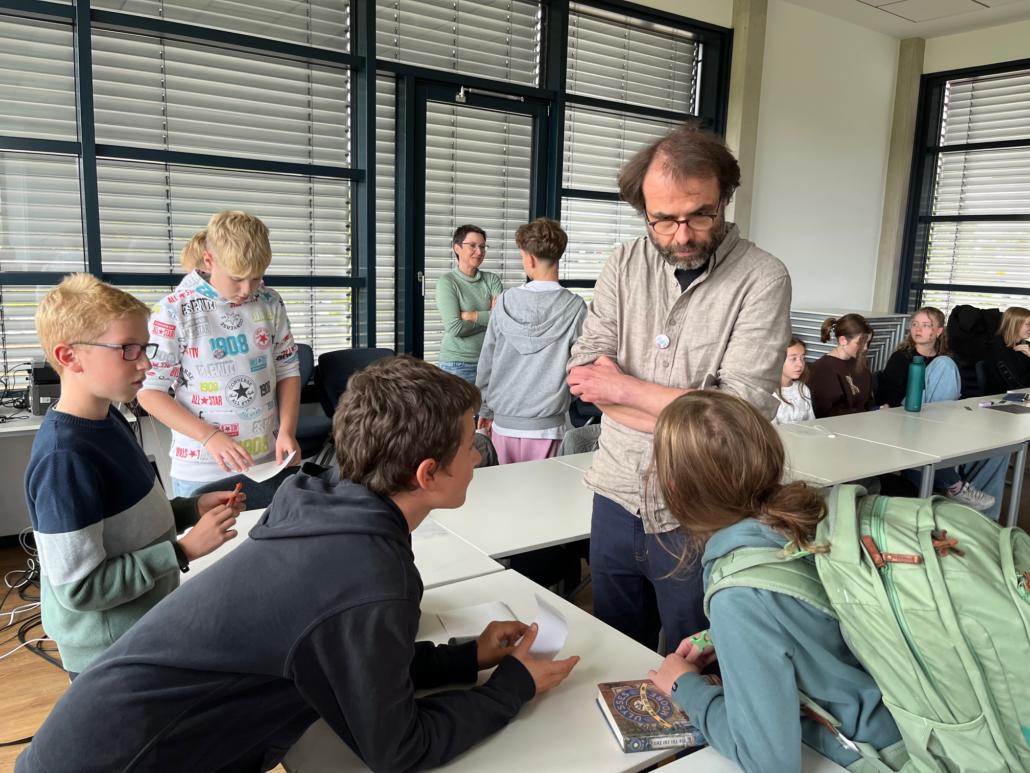
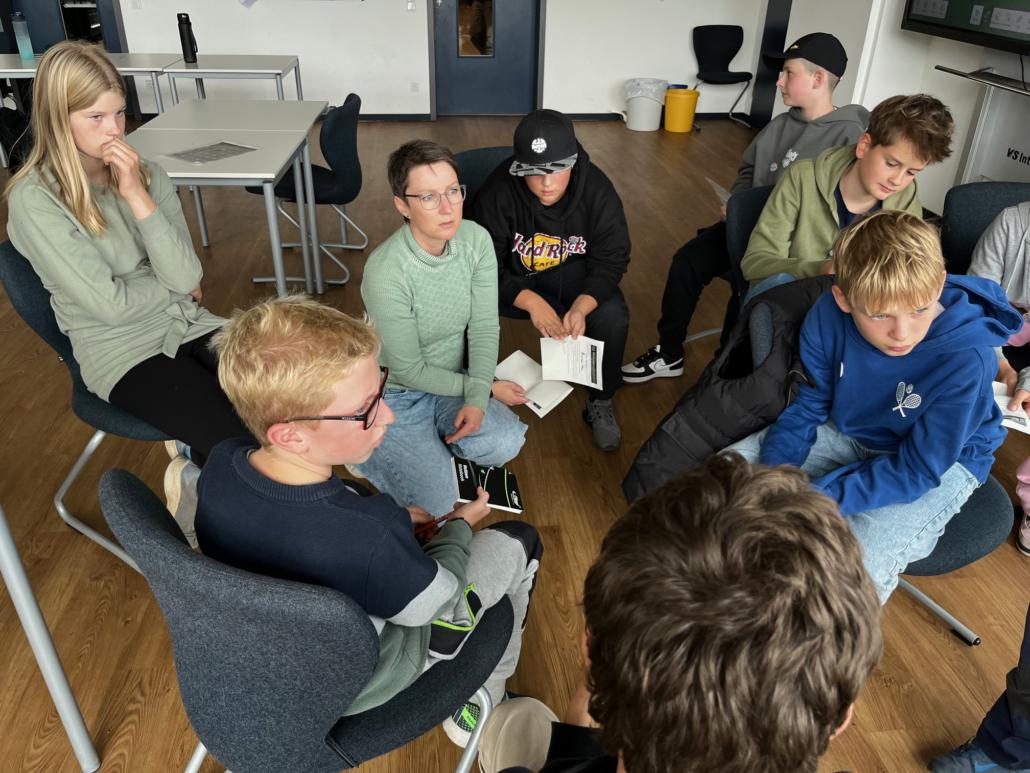
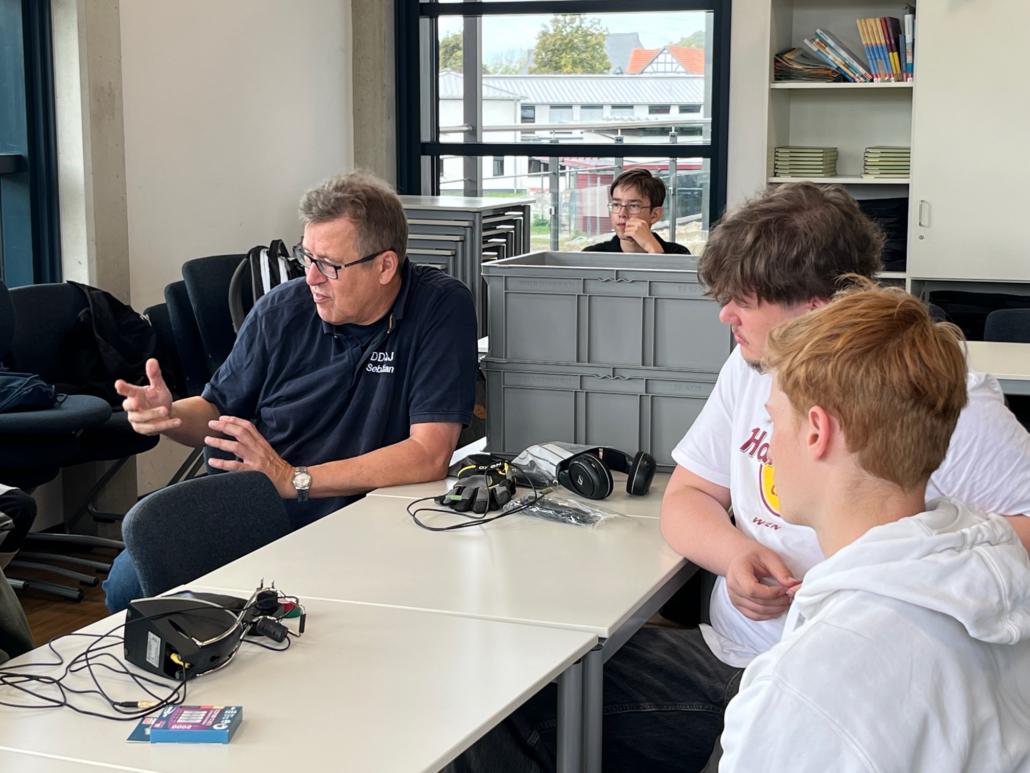
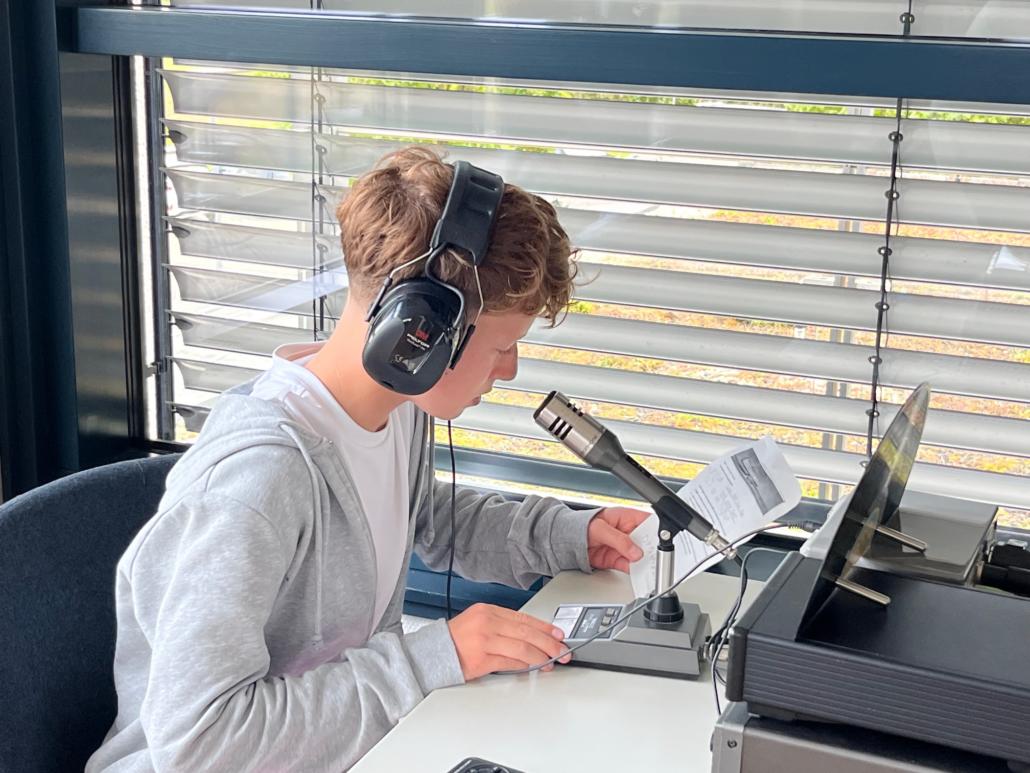
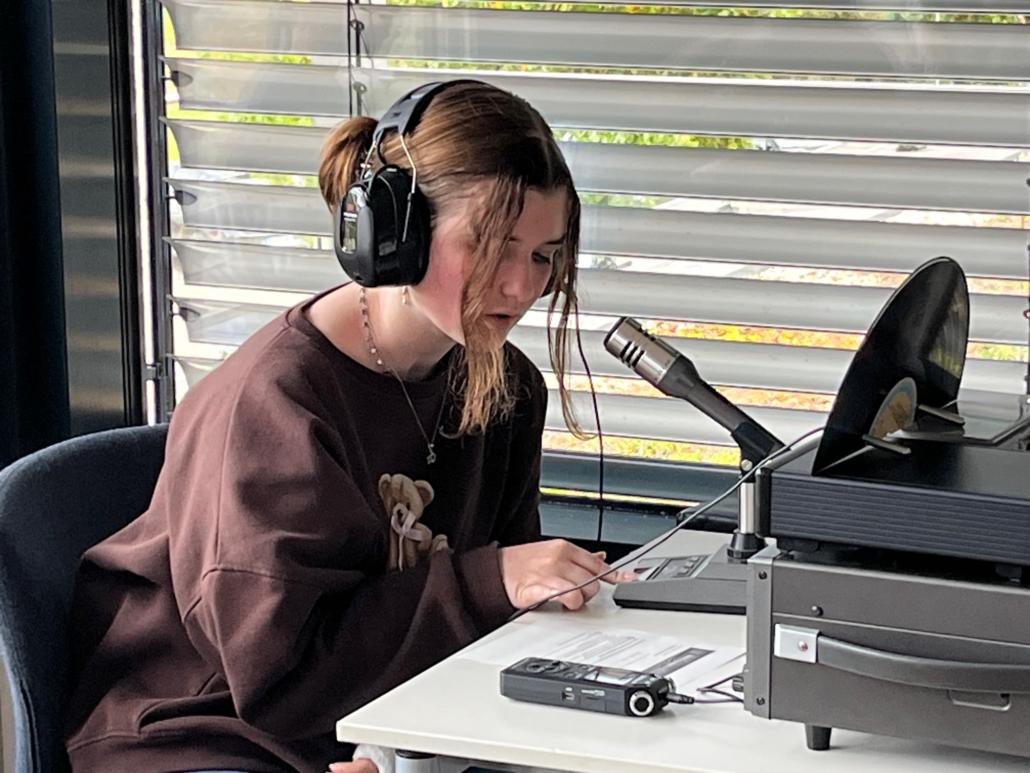
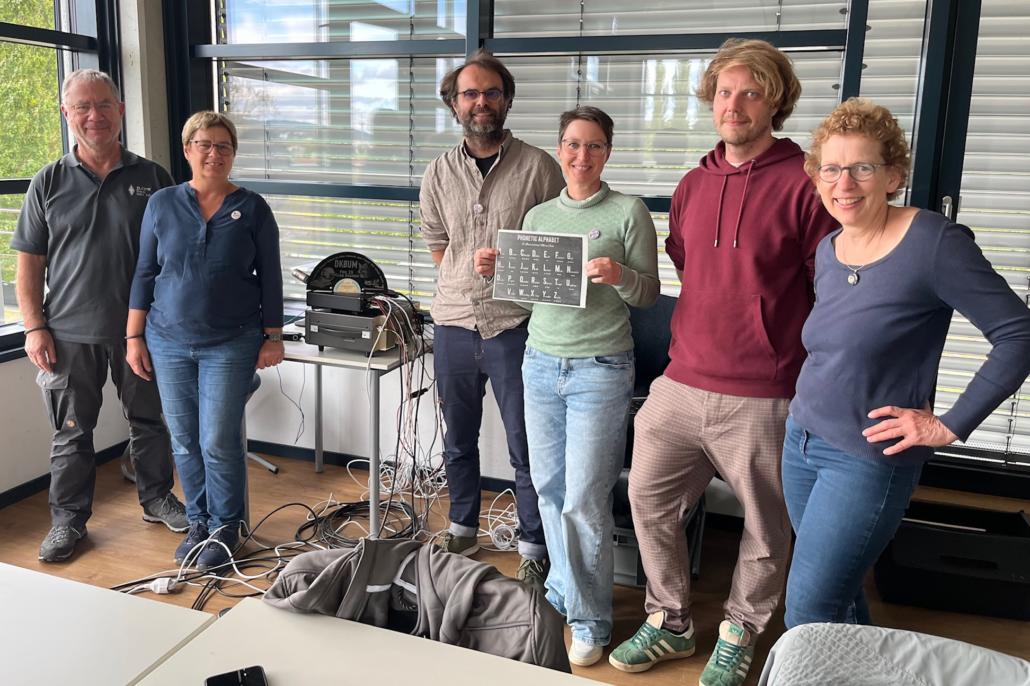
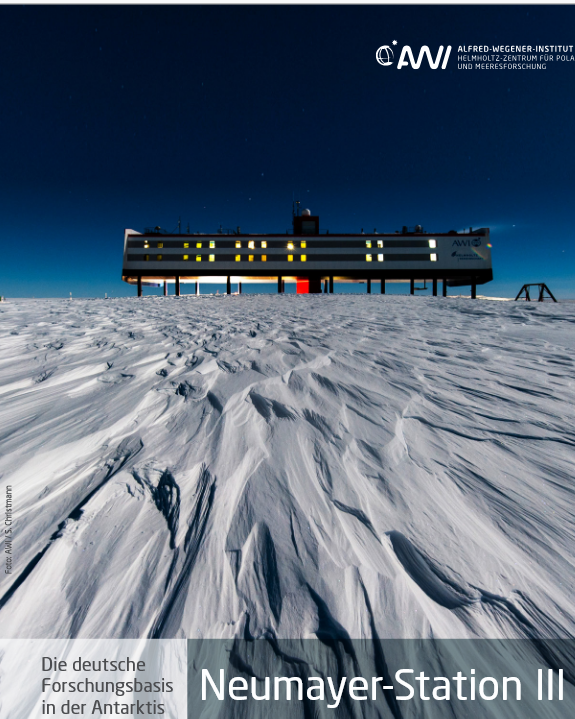
One thing is clear: It’s not every day that you can establish radio contact with the South Pole. When the opportunity arose on September 24, many students at Steinmühle were thrilled to speak with the Neumayer III research station in the Antarctic ice. Establishing contact with the crew and receiving their answers to various questions from Steinmühle was made possible by technical support from the German Amateur Radio Club (DARC), by working out questions for the scientists together with the STEM teachers at Steinmühle, and by maintaining discipline during the radio communication. After all, just saying something casual into the microphone isn’t enough.


A Quick Introduction to the Basics of Radio Communication

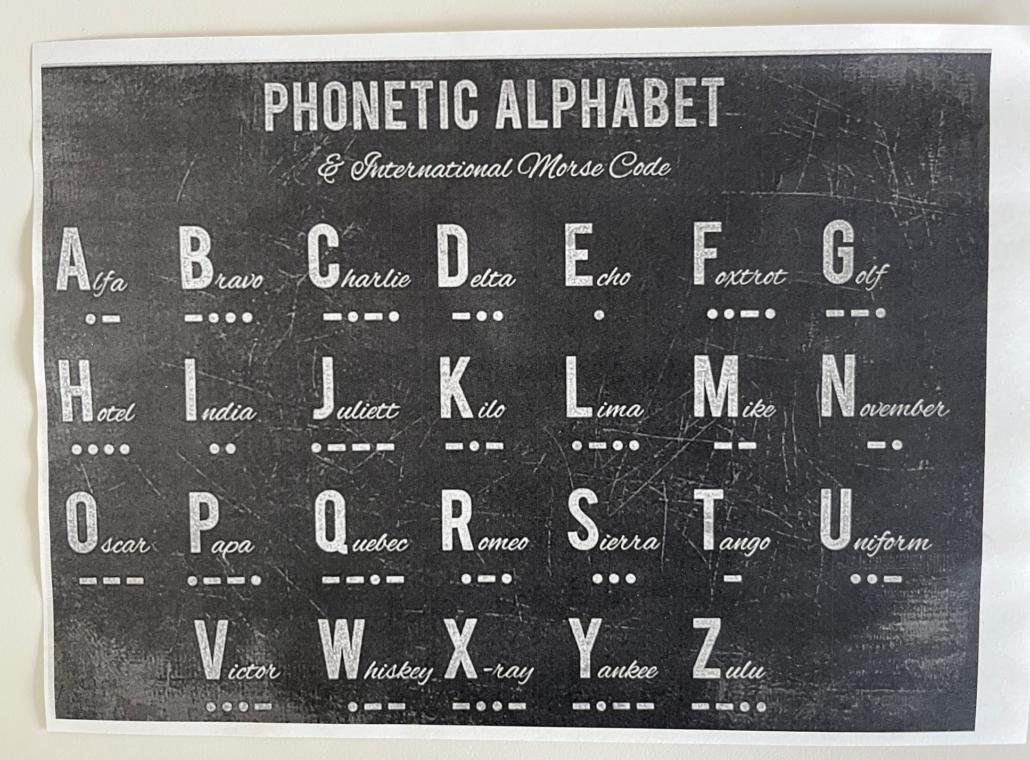
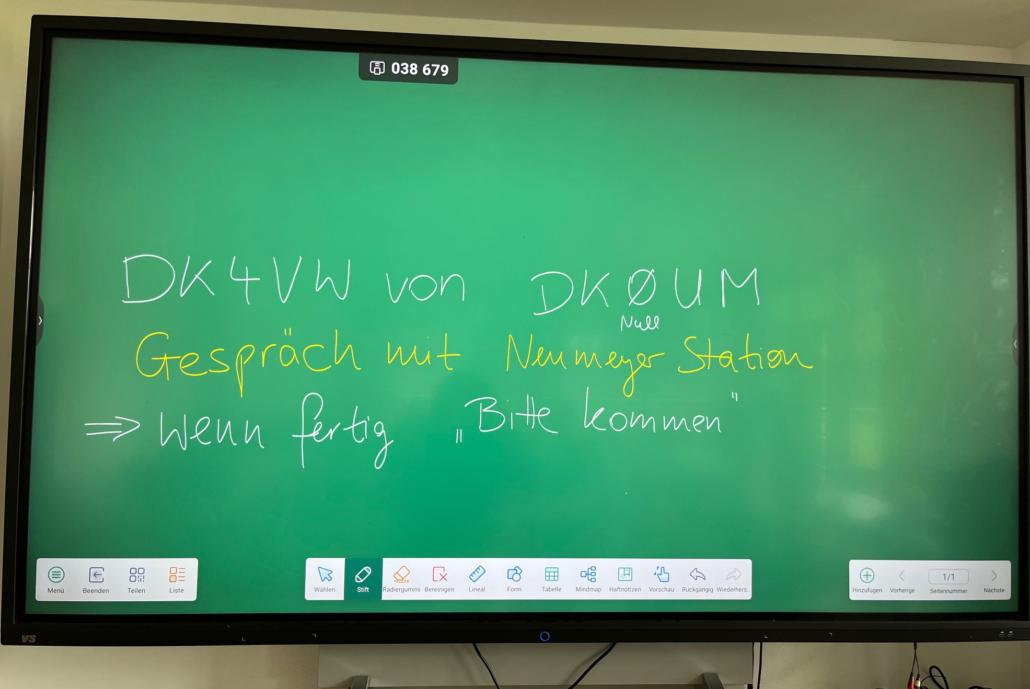
Under expert guidance, the task was to familiarize oneself with the radio alphabet, recite the call sign of the other station, and then state one’s own call sign. Each sentence had to end with “come,” which signals to the other party that you are finished. “Over and out” ends the conversation completely.


Research findings of global interest

To be able to hear the scientists’ answers to the questions posed by the Steinmühlen students, discipline and keeping one’s own voice down were helpful. Just imagine: Nine people are located about 12,000 kilometers away in the Southern Ocean, at a research station built on stilts. And beneath them lies 200 meters of ice. They are experts in various fields, such as meteorology, geophysics, climate research, and biology. Their tasks include Earth observation, radiation measurement, and climate research using data, temperatures, and time series. These are the issues of our time.


Many questions were on people’s minds

“Hello, Luna,” came the greeting back over the airwaves. When it became clear that radio contact was working, excitement mounted once again. There was a barrage of questions: what data is collected on glacier movements and ice thickness, how energy is generated at the station, whether there’s cell service on site, whether penguins are also being studied, where wastewater is discharged, and much more.


What is life like in isolation?

But the students also had personal questions for the team. “How are you coping with the isolation? How do you take care of yourselves? What do you eat? What do you do in your free time? And how do you stay warm?” Given the outside temperature of around minus 40 degrees Celsius, that’s a valid question. The team, which included a doctor, explained their daily routine, which each member could tailor within certain limits—“…with puzzles, on the rowing machine, or on the treadmill, for example.” No, there isn’t really a big Christmas spirit; much of it comes down to individual preferences. Fortunately, however, they’ve had internet for the past three years through the provider Starlink, which brings high-speed connectivity even to remote corners of the world—enabling not only communication but also the ability to watch the occasional video.


150 meters per year toward the ice edge

Returning to civilization after months of research can also be challenging. However, the projects, research, and findings make up for the very unique life at the research station, which must be raised regularly to prevent it from sinking into the ice. The station, operated by the Alfred Wegener Institute in Bremerhaven and which moves 150 meters closer to the ice edge every year, is currently located 10 kilometers away from it. The current team has been on site since November 2024 and will begin their journey home by plane—the same aircraft used to deliver supplies once a year—this coming December.


More opportunities than in Germany

When asked why someone would subject themselves to these unconventional working conditions for such a long time, there is one answer that researchers are likely to understand particularly well: “I simply have more opportunities here than in Germany.”


“One of the best experiences I’ve ever had”

For the students, this radio contact with the Neumayer III research station in the Southern Ocean was undoubtedly the highlight of the year. This was evident from comments such as “One of the best experiences I’ve ever had.” The project was organized under the leadership of Steinmühlen teachers Malte Klimczak and Dr. Eva Neumann. Kudos for this extraordinary “journey”! A very heartfelt thank you also goes to Frank Riedel and Marina Meixner from the German Amateur Radio Club. Your dedication was outstanding and indispensable. Angela Heinemann

The following link provides insights into the conversations between students at Steinmühle and the scientists at the Neumayer III research station:

https://cloud.steinmuehle.info/s/tS4zQq3qRzogNXj


With a video they produced themselves, the Steinmühle STEM team secured third place among numerous competing schools in the competition for the MINT SPACE School Award from the Hohenloher Academy’s School Facilities Division. The prize included a €500 furnishing voucher and a great deal of fun making the video, which centered on the desire for further improved conditions for our highly successful “MINTies” and dedicated STEM teachers.

Of course, you showed total dedication in this competition as well, did a great job, and even showed a lot of humor! Great job!


Lyrics
We don’t need any boring classrooms
We want spaces that are bright and free
No broken tables in the stonemill
MINT-space is the place to be

Chorus
Hey, teacher, let the kids explore! (Shout)
All in all, it’s just another lab in the hall
All in all, we’re just another lab in the hall
A future lab so well designed,
A place for every genius mind,
Modern, open, bright, and smart,
Where innovations truly start.

Chorus
, Hey, teacher, let the kids explore! (Shout)
, All in all, it’s just another lab in the hall
, All in all, we’re just another lab in the hall
, Hohenloher, hear the call,
, Let’s build the greatest lab of all!
We are ready and full of heart—
Please help us make this vision a reality!

Chorus
, please—help us make this vision a reality! (Shout)
All in all, we’re just another lab in the hall.
All in all, we’re building
A brilliant lab for us all.

Many students and teachers from Steinmühle – Schule & Internat were involved in the video project. Specifically, they were:

Storyboard and Lyrics
, Anna-Lena Griesler, Lisa Schreier, Dr. Jutta Töhl-Borsdorf

Band
“Larry and the Loud Tree Frogs” (Constantin Franz on guitar, Bent Deidl on bass,
Jaron Häußermann on drums, Juliana Stry on vocals)

choir
Students from the Steinmühle laboratory. Directed by Daniel Sans

Technical Support
, Jonathan Kurz

Editing
, Anna-Lena Griesler


This year, a delegation from Steinmühle once again made its way to Louisenlund to participate in the STEM Campus and present their projects—despite the summer break in Hesse. This is according to Dr. Jutta Töhl-Borsdorf, STEM coordinator at Steinmühle.


Reunited with Old Friends

Fabian Sotonica, Clara Steiner, Maya Fischer, and Anna-Lena Griesler received a warm welcome on Thursday and, following the play *The Visit* staged by the +MINT students from Louisenlund, had the opportunity to meet new people and reconnect with old friends. Afterward, they had the opportunity to take a guided tour of the Learning & Research Center and admire the school’s new observatory, which was set to be inaugurated the following day.

Friday morning began with an interesting presentation on “genetic and epigenetic changes.” This was followed by the main event of the day—the fair, where students presented their projects to the public and a panel of judges and had the opportunity to discuss them with one another.


Workshops and a Lecture on Climate Protection

Just like last year, the popular pub quiz took place again that evening. The quiz involved sitting around a table and answering questions on a wide variety of topics, and the relaxed atmosphere made for a very pleasant evening.

The next morning began with workshops on various STEM topics. This was followed by another presentation on climate protection and then the awards ceremony conducted by the jury.


Both Steinmühlen teams won in their respective categories

As was the case last year, Steinmühle was extremely successful and secured victory in its respective categories with the projects it entered: The “Boat Project / A-WAVE” in the technology category and “Natural UV Protective Agents” in the chemistry category—as well as the “Orbitals Project,” a collaboration between Steinmühle and Louisenlund, which received the audience award “Winner of the Hearts.”

Afterward, everyone had the afternoon to spend as they pleased. This brought an extremely successful and exciting weekend to a pleasant close, and everyone was able to head home on Sunday morning feeling satisfied. Anna-Lena Griesler

Math isn’t boring or dry. Quite the opposite: Math can also successfully challenge the creative side of the brain, and anyone who doesn’t believe that is welcome to see for themselves in our photo gallery below. As an alternative learning assessment on the topic of fractions in 6th grade, numerous creative projects were produced last school year. Math teacher Malte Klimczak shared some examples of the work from the classes that he and his colleague Nina Kvachko supervised during math class. This alternative learning assessment served as a creative replacement for a traditional class test.


Task: Create a poster or handout

Math and creativity? What does that look like?

This was an individual assignment in which the student was required to create an informative poster or lab book on the topic of “Working with Fractions” using colors, pictures, or diagrams. Within a specified time frame of 10 school hours, the assignment consisted of required and optional tasks.


Present the most important rules for working with fractions

For the required tasks, the most important rules of fraction calculations were to be presented, and at least one clear example was to be used for each rule. Among the five optional tasks, for example, students had the option to design a fold-out “fraction pizza slice” made of paper that explains the addition of fractions, or a “fraction scale” made of cardboard that demonstrates the balance when expanding and reducing fractions.


Guidelines for Project Planning

For the planning phase of the project, each student received general guidelines applicable to everyone on how to approach the task in a meaningful and goal-oriented manner. Assessments were based on a point system using a matrix that evaluated completeness, examples and explanations provided, creativity and design, completion of the assigned task, and structure and organization. There were also written comments that explained the scoring and grading to the sixth graders as clearly as possible.


Felix and Sophie Sacher had just received their invitation to the World Robot Olympiad (WRO) World Finals in Singapore when the next award came in for the young scientist siblings from Steinmühle: They took third place in the 47th edition of the Hesse-wide experimental chemistry competition “Chemie – mach mit!” (Chemistry—Join In!), organized by Dr. Jens Salzner and his team at Goethe University Frankfurt am Main.
Steinmühle would like to thank both of you and your advisor, Dr. Jutta Töhl Borsdorf, our school’s STEM coordinator, for your interest and enthusiasm in science projects and competitions. You’re a great team, and we’re delighted that you’ve been invited to the awards ceremony in Frankfurt at the end of the year. We’re also looking forward to everything that’s still to come!

Felix and Sophie Sacher, a pair of siblings from Steinmühlen School, have shared some amazing news with us: At the World Robot Olympiad (WRO), the ninth-grader and fifth-grader qualified for the world finals in Singapore in the “Future Innovators” junior group with their project “Ice Bär – I care everywhere.” From November 26 to 28, up to 500 teams from 80 countries are expected to compete there.


Project Description

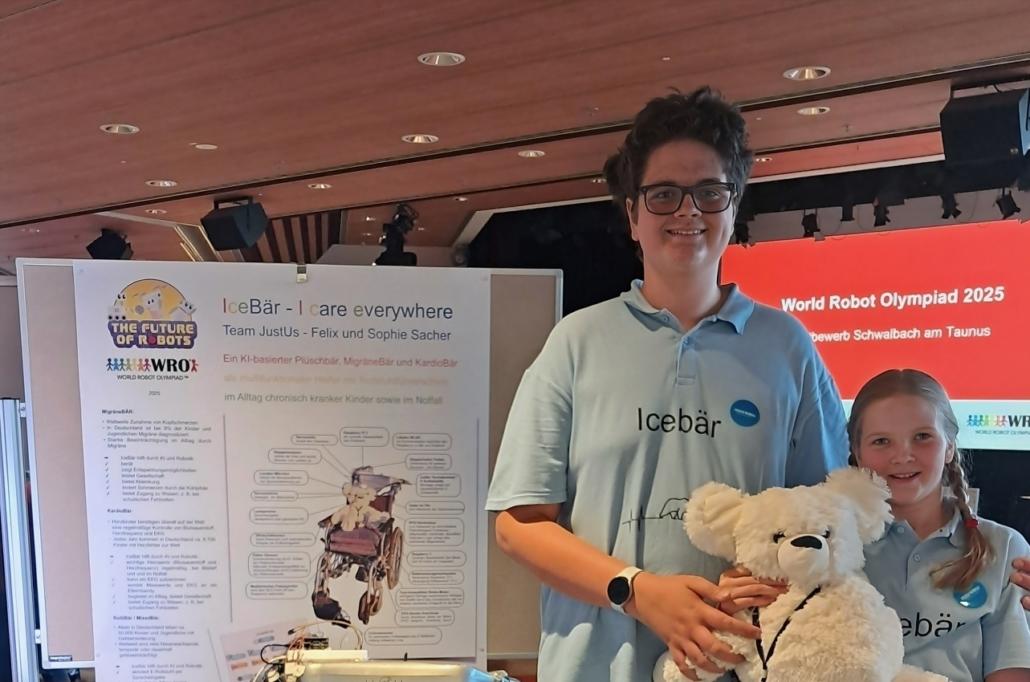
It is the central component and also serves as the title of her project: “IceBär – I care everywhere.” The “IceBär” is a highly complex system for this age group, consisting of various modules and biometric sensors. An AI-based stuffed bear with an integrated ECG and computer serves as a multifunctional assistant—complete with a “wheelchair license”—in the daily lives of chronically ill children as well as in emergencies. The target groups are young migraine sufferers, young people with heart conditions, and young people with mobility impairments. The technology provides a cooling function for migraines when needed or, in the case of heart problems, important cardiac readings, which it can also transmit. Through a voice function powered by generative AI, it can also provide emotional support. The combined electric wheelchair can start and stop, and the IceBär responds to voice commands.


Two Jack-of-all-trades

The two young inventors came up with the entire technical design and even tailored the IceBear’s shaggy plush fur themselves. The IceBear is designed for children between the ages of 3 and 17. It could be used at home, in children’s hospitals, or in emergency medicine. The Sacher siblings, who have given themselves the double-entendre name “Team JustUs” (just us—or, in Latin, “just”), envision numerous applications and opportunities for further development of the system.


A victory by a wide margin

In the competition, the “Future Innovators” teams were tasked with developing a robotic solution that combines AI with robotics to improve people’s lives. “Out of a total of 111 teams in Future Innovators Germany, we were the only ones left in our ‘Junior’ age category at the German finals, and we’ll be representing Germany at the world finals in Singapore,” Felix and Sophie say happily. The siblings had already impressed the jury during the qualifiers for the German finals in the “Junior” age group, taking first place by a wide margin.


27-page document

In the competition, projects must be presented using working models, and technical questions must be answered on the spot. Entries were evaluated using a detailed evaluation form across various sections and categories: the idea, the technical solution, the presentation, and teamwork.

According to the jury, the project was not only presented in an outstanding and confident manner, but was also documented with impressive professionalism. Steinmühle had the opportunity to review the 27-page documentation, which was produced to the highest standards and demonstrates that young people are pursuing this project with heart and soul, convinced of its practicality for everyday use.


Fascinated by medical professionals and STEM teachers

Felix and Sophie have already interviewed several medical experts across Germany about their project, and they were encouraged by these experts to present it on the international stage. The STEM teachers at Steinmühle were also fascinated by the project when it was tested “live” at the school.

We’re curious to see how the IceBear’s journey will unfold and whether it will find supporters who might one day help bring it to market.


The old school year isn’t over yet, but there are already fantastic prospects for the new one: In September, our school will host an extraordinary event—a one-hour live radio contact with Neumayer Station III, the German research station in Antarctica!

“During this time, our students have the unique opportunity to speak directly with the scientists on site, ask questions, and gain insights into their exciting research in one of the most extreme regions on our planet,” reports Malte Klimczak, a teacher at Steinmühlen and the project leader.


Classes and courses can participate

Teachers are cordially invited to participate in this initiative with their classes or courses, to incorporate the topic into their lessons, and to prepare specific questions that students can then discuss live with the scientists.

The project is being carried out in cooperation with the DARC (German Amateur Radio Club), Marburg chapter. In the lead-up to the radio contact, interested students will also have the opportunity to explore radio technology both in theory and in practice.


“Radio Day” in Preparation

To help students prepare for the content, an overview of Neumayer Station III is available, which includes information on research areas such as climate research, geophysics, ozone and air analyses, penguin observation, and the EDEN-ISS greenhouse project, reports Malte Klimczak. The schedule has also been set: “The plan is to hold a ‘Radio Day’ during the week of September 15, during which interested students will set up and align the antenna, receive an introduction to the technology, and practice radio communication.”


Live Chat on September 24

Finally, on September 24, the live session with the station will take place, during which the students—who have practiced beforehand—will be able to speak with the station in real time and ask their questions.

According to Malte Klimczak, after summer break, the project will be discussed in the classes and, ideally, also covered in class, so that questions to be asked can be gathered.