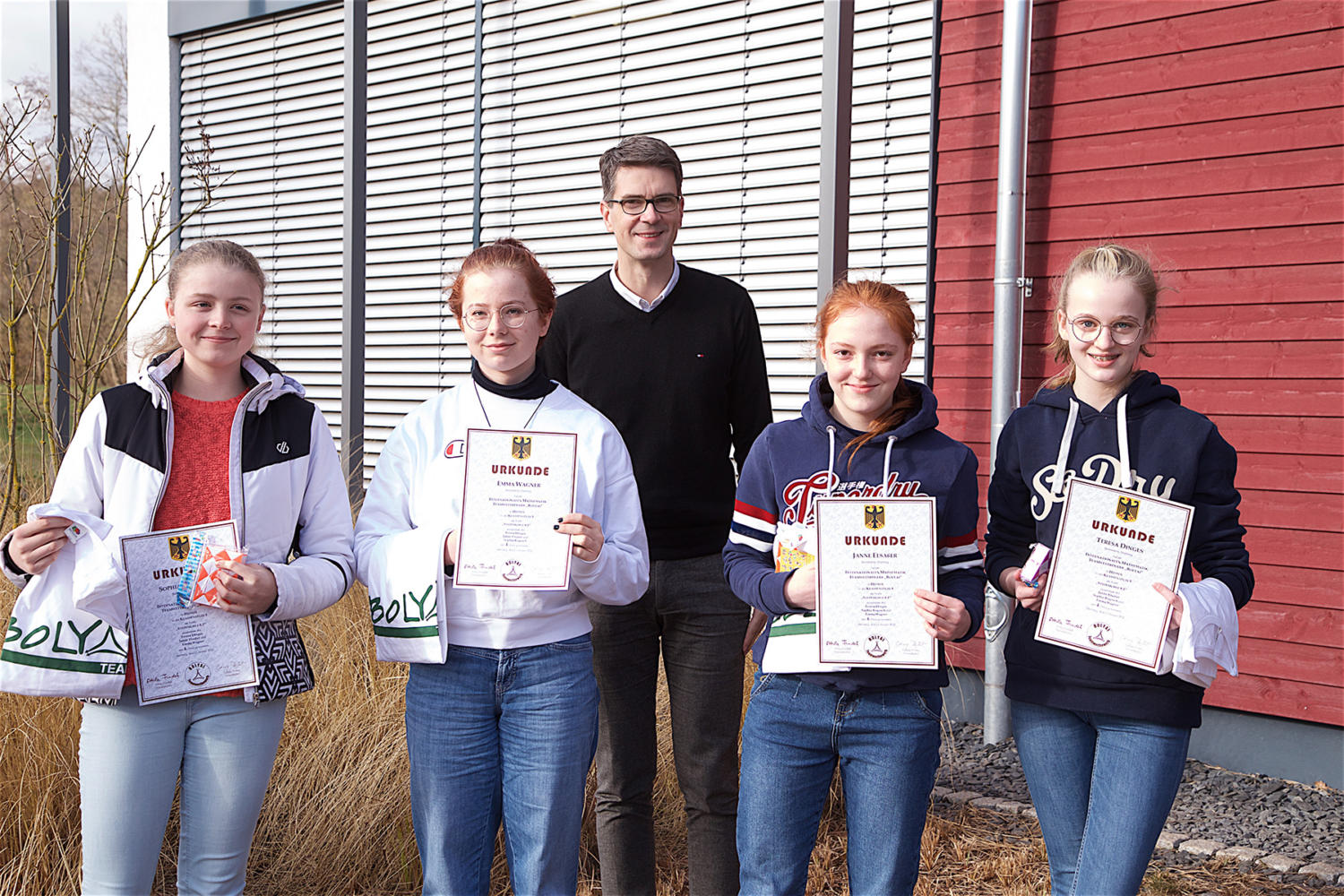
Math isn’t for girls? Not a chance! At the international “Bolyai” math team competition, (from left) Sophia Rogosch, Emma Wagner, Janne Elsaßer, and Teresa Dinges took 4th place out of a total of 61 eighth-grade teams from Hesse. To achieve this ranking, you have to be pretty good at solving a certain number of problems within a limited time frame. And they’re quite tricky.
Participation in the competition, which was developed in Hungary, is voluntary and challenging. A team of four must solve 14 problems in 60 minutes. The team can decide for itself how to approach the problems. For example, they can divide up the problems at the start of the 60 minutes or work together to find the solutions. One thing is clear, though: the problems are too challenging for everyone to solve all of them within the allotted time.

Seventeen teams from Steinmühle had registered, including just one from 8th grade. That team made it into the top 5 in Hesse. In the Marburg-Biedenkopf district, seven teams achieved this ranking across all grade levels. A total of 680 teams participated statewide. Principal Björn Gemmer and the four participants were understandably delighted with the young math whizzes’ performance and the resulting award. They demonstrated once again that outstanding achievements in mathematics are often made by female students and proudly presented their certificates to the photographer.

A look at the problems (example):
“We write down the numbers 1, 2, 3, 4, 5 in a specific order. In this sequence, starting with the second number and continuing for all subsequent numbers, the following holds true: The sum of the numbers to the left of the number currently under consideration is a multiple of that number. Which number, then, can be immediately to the left of 4?”
(A) 1 (B) 2 (C) 3 (D) 5 or (E) “You cannot write down the numbers according to the requirements.”
(The correct answers to the above problem are A and B.)

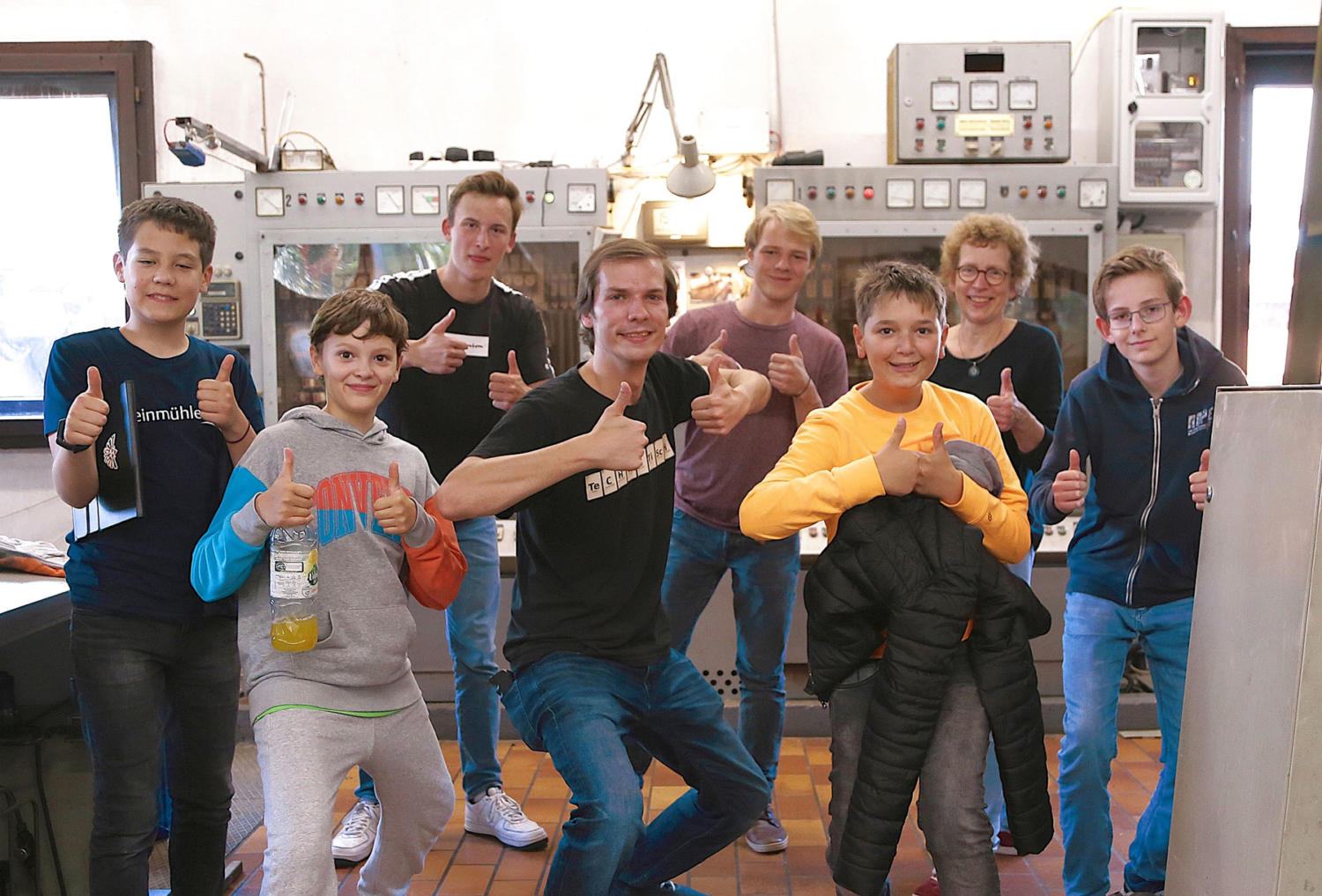
For some time now, the well-known YouTuber Techtastisch (Marcel Häfele) has been a supporter of the +MINT talent development program, which Steinmühle will join starting in the 2022–23 school year as the only boarding school in Hesse to do so.
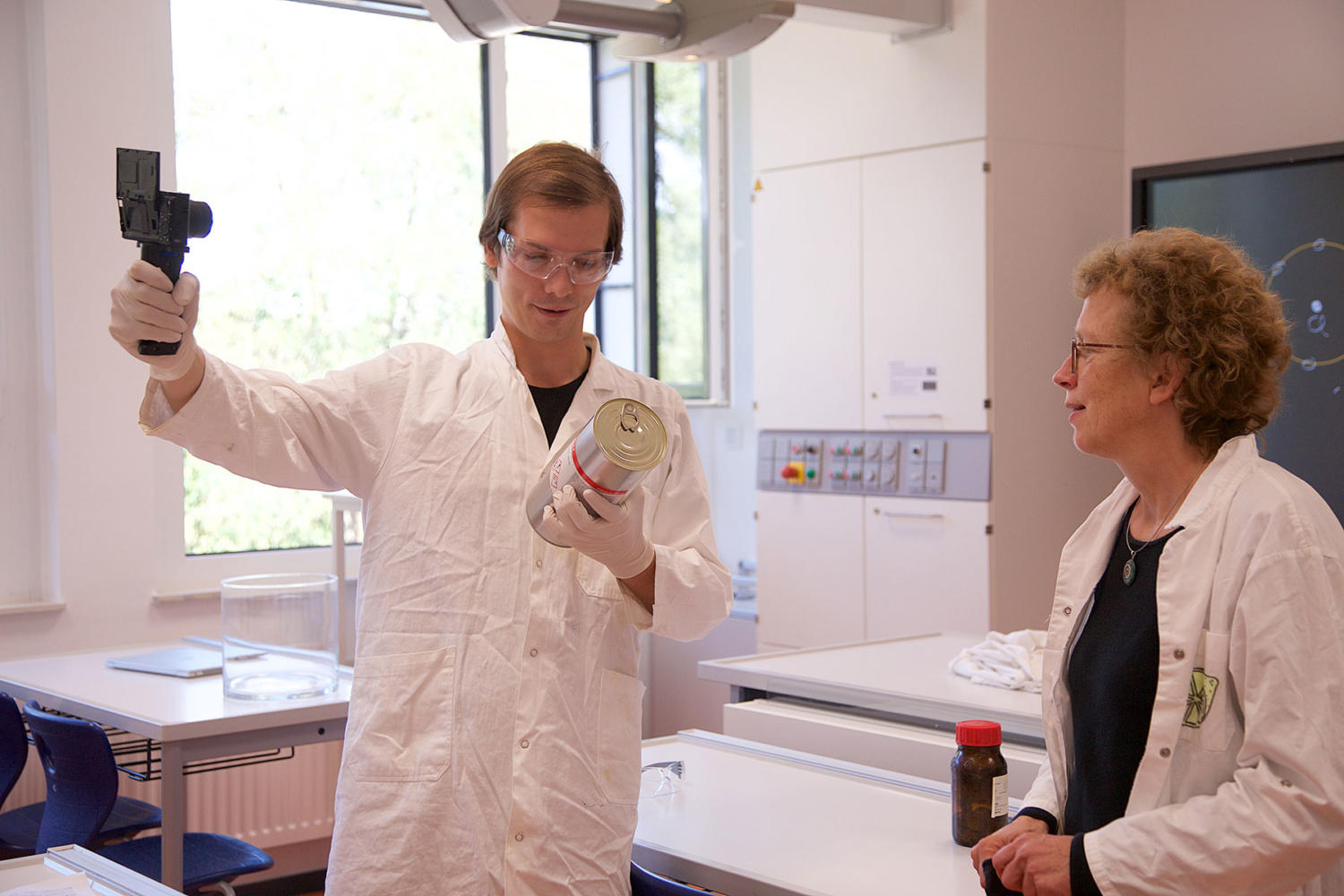
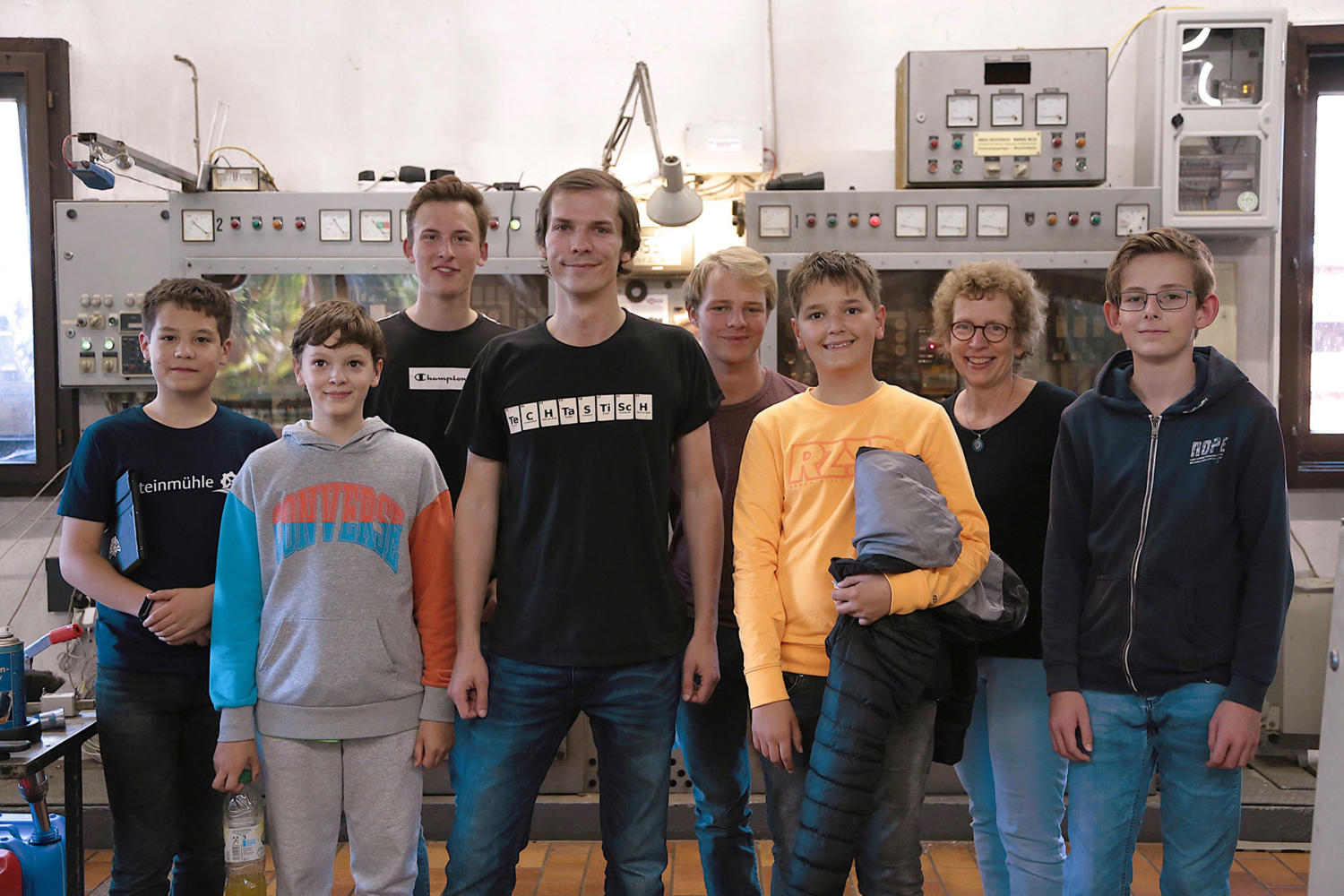
With the participation of students from various research courses, he recently visited Steinmühle for a day of filming. In the run-up to the visit, the students worked with their teacher, Dr. Jutta Töhl-Borsdorf, to plan experiments that are usually not feasible to conduct in a typical classroom setting.
Everyone involved was thrilled, as the experiments were spectacular. The reaction of sodium with water—on a slightly larger scale than is usual in the classroom—as well as with chlorine and ice, generated a great deal of interest.
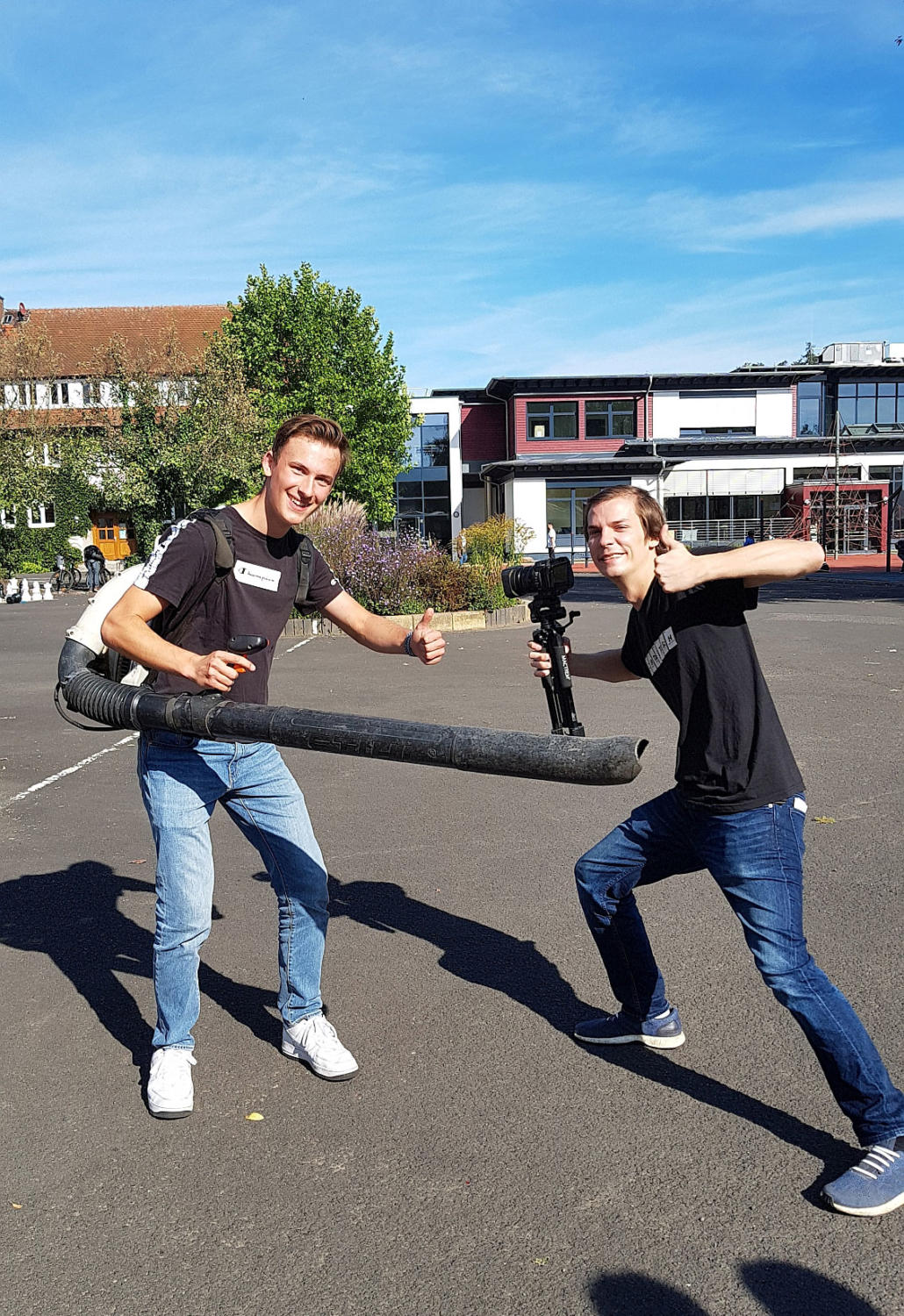
The experiments in the schoolyard also drew the attention of numerous other students, who were able to observe the spectacle from a safe distance. Afterward, the elementary school students in particular had so many questions that it became very clear just how great even the youngest children’s thirst for knowledge is when it comes to scientific phenomena.

Techtastisch itself was also thrilled—by the beautiful school grounds, the fantastic opportunities for experimentation, the power plant, and the many curious students.

You can watch the video of Techtastisch’s visit here: https://www.youtube.com/watch?v=qeFfHtvVoL4


What is our vision for biology classes at Steinmühle?

Direct experiences with nature not only increase students’ motivation to learn but also foster a caring attitude toward living things and the environment.

Biodiversity plays a central role, especially in the debate on climate change. It is precisely this diversity of habitats, animals, and plants that we now need to document and integrate even more deeply into biology classes. That is why we set out to assess and map the potential of the Steinmühle site.


Who are we?

We are the BiologyDepartment, which currently consists of ten faculty members. These include Carmen Bastian, Tim Elmshäuser, Hanna Herzog, Marcel Kalb, Malte Klimczak, Yvonne Nehl, Heike Rabben-Martin, Mirko Radatz, Siiri Wienbeck, and Aylin Yüzguelen.

What did we do?

The BiologyStudent Council met at the Steinmühle grounds before summer break, discussed the general plan, and then we were off. We explored the orchard meadow, whose variety of fruit tree species sparked our interest in old apple varieties. The pond, with its inhabitants, invited us to observe and linger. The vegetation-rich area along the Lahn River fascinated and inspired us with its diversity of shapes and colors. In addition to the stream, the Steinmühle school garden, and the greenhouse, the Steinmühle grounds impress with their large number of different trees.

How can you bring nature into the classroom?

In addition to the many ideas that have already been implemented to incorporate the diversity of habitats into biology classes, Marcel Kalb describes a successful project below:

Thanks to the EU LIFE project “Living Lahn – One River, Many Demands,” a significant stretch of the Lahn at the far end of the Steinmühle site was also extensively restored to its natural state.

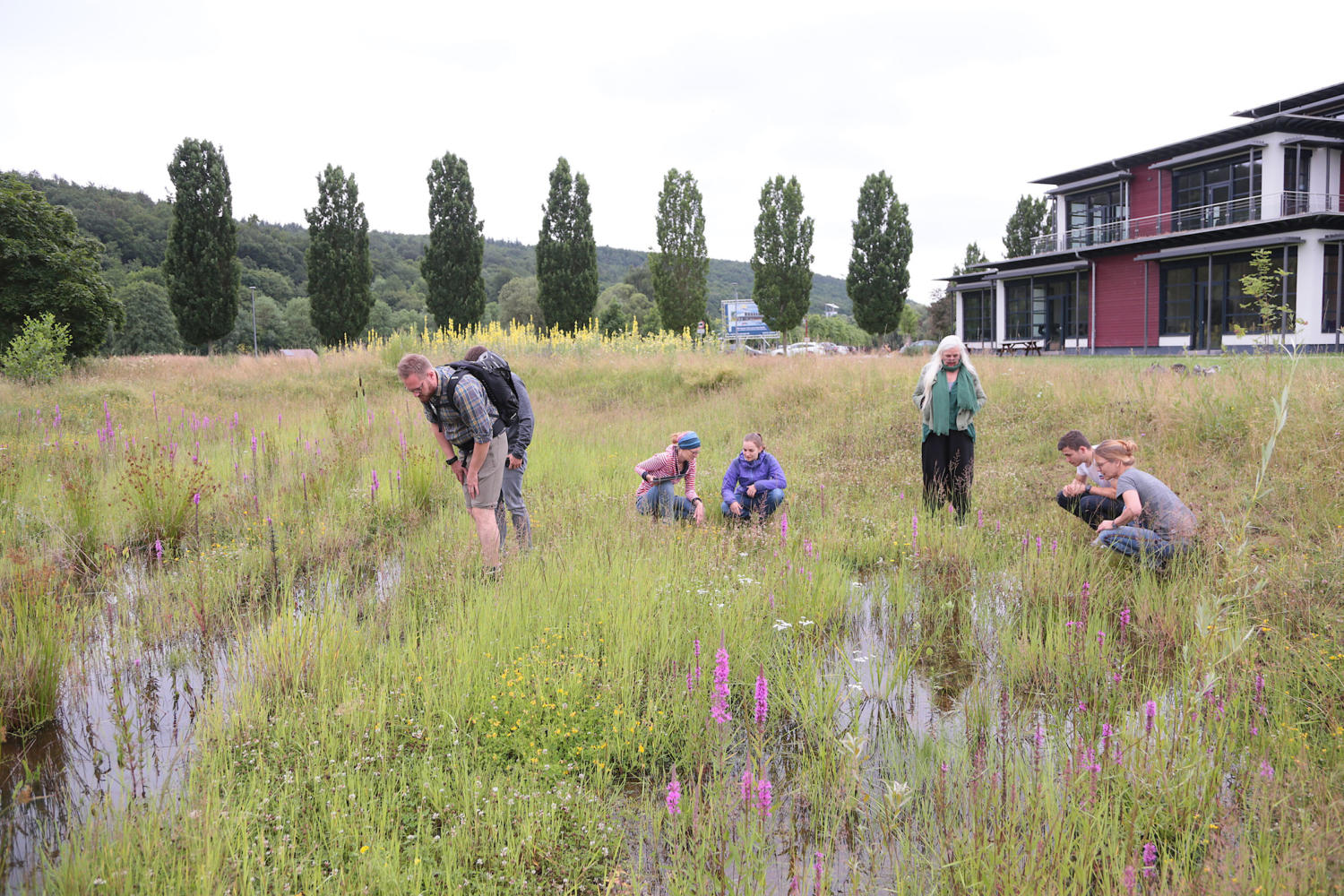
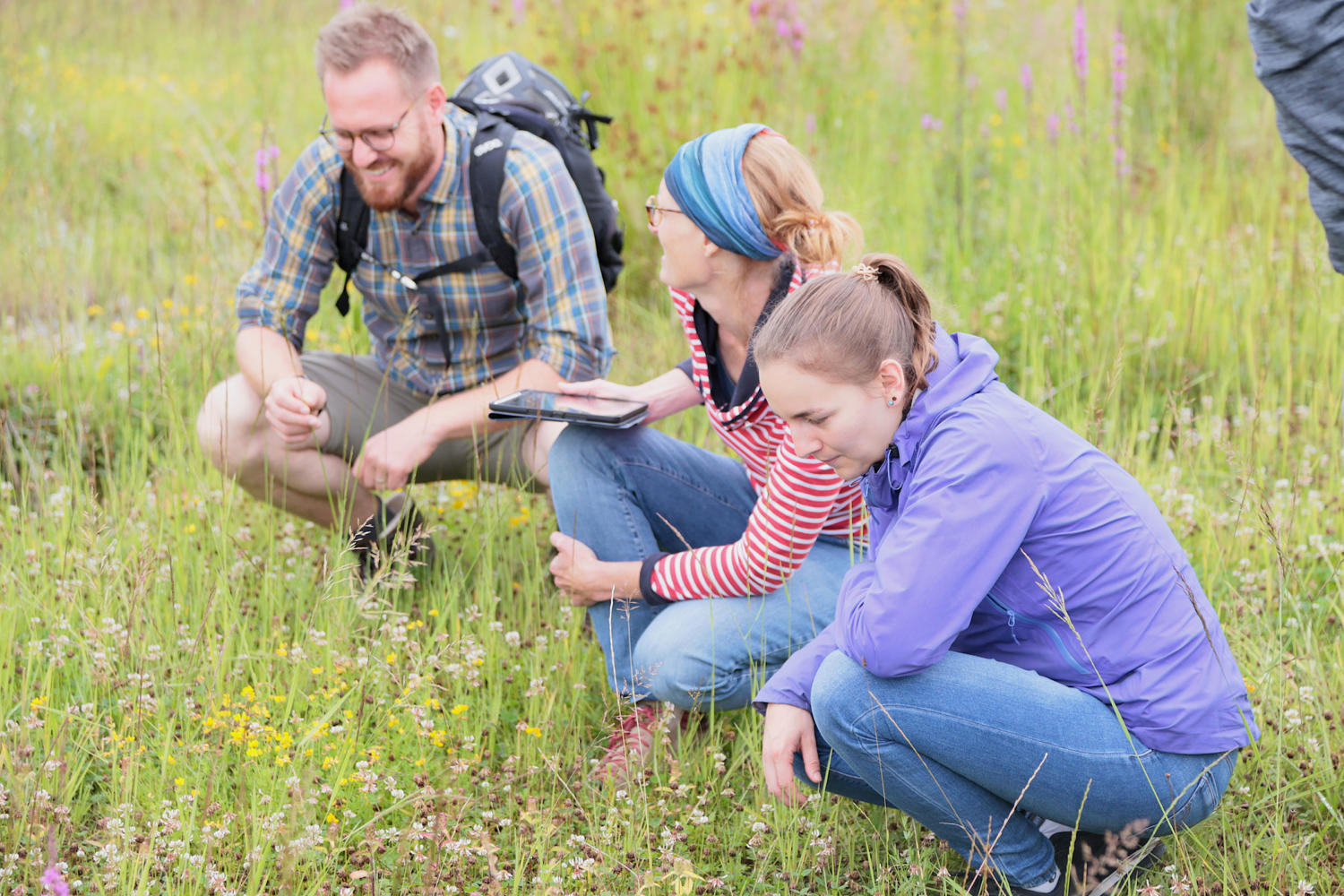
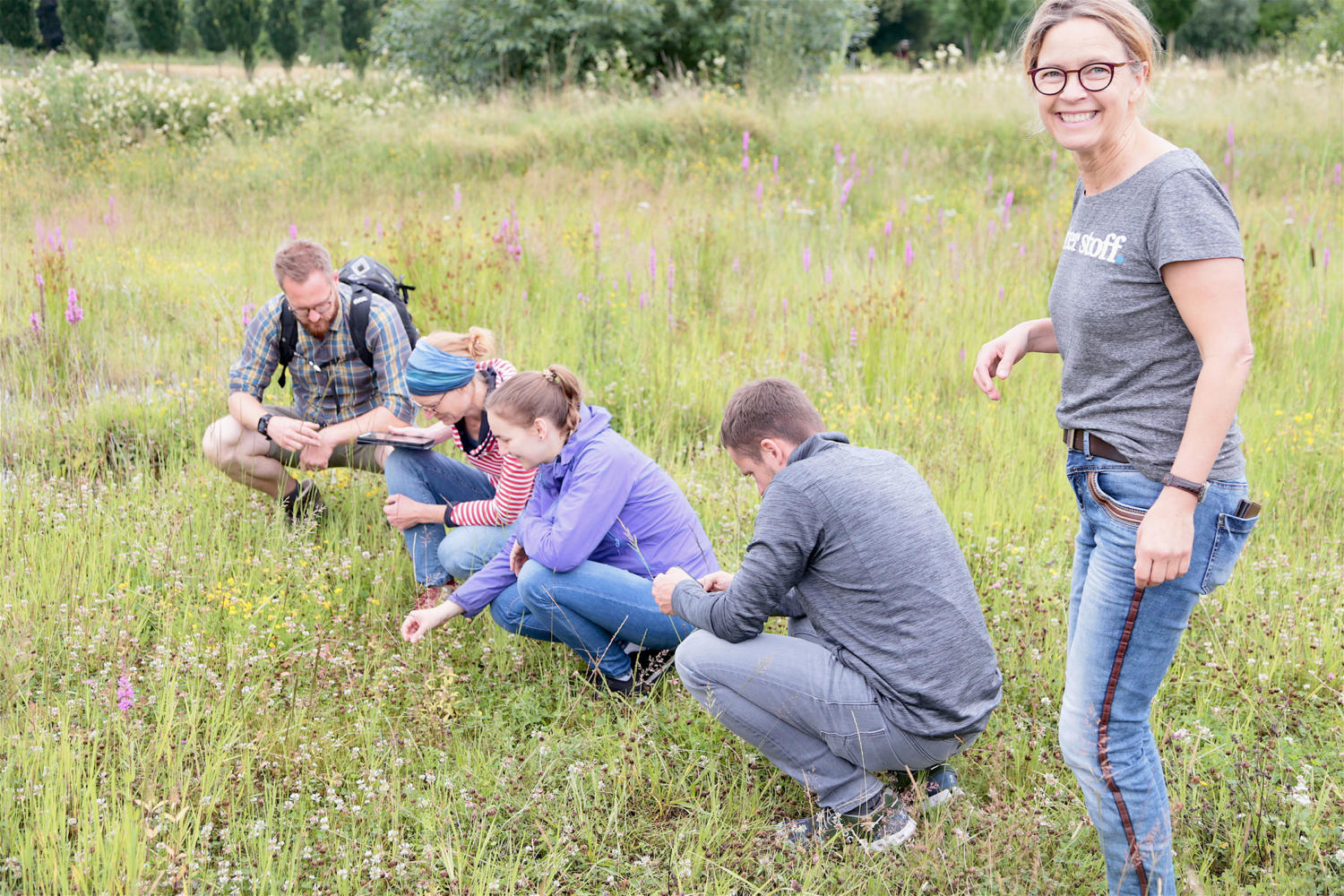
That’s why a “field trip just around the corner” for the Q2 biology class was the perfect opportunity. Armed with ecological background knowledge and equipped with outdated maps and photographs, the students were tasked with analyzing which structures had changed as a result of the intervention and what ecological impacts this intervention had on the organisms living there. The fact that the students were able to leave the classroom and experience the subject matter with all their senses reflects Steinmühle’s guiding principle of sustainable and hands-on learning. In the concluding reflection session, the class agreed: “This is what makes cramming fun!”

Yvonne Nehl

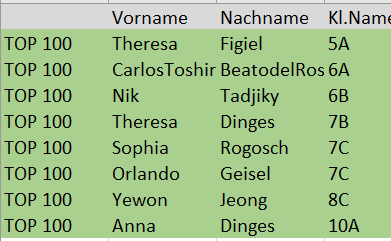
The Pangea Math Competition is a Germany-wide math competition for students in grades 3 through 10 that has been held annually since 2007. Steinmühle participates in it regularly. This year, 21 of the approximately 11,000 participating students came from Steinmühle. Of those, eight students made it into the top ranks of their grade level, according to math teacher Bernd Schweitzer.

The table below provides an overview of which students achieved these outstanding results. We congratulate them and tip our hats to them!

Participation in the Kangaroo Competition—a multiple-choice math competition with over six million participants in more than 80 countries worldwide—has now become a firmly established part of the school year at Steinmühle. This year, too, students once again achieved top rankings, reports math teacher Julia Riemenschneider.

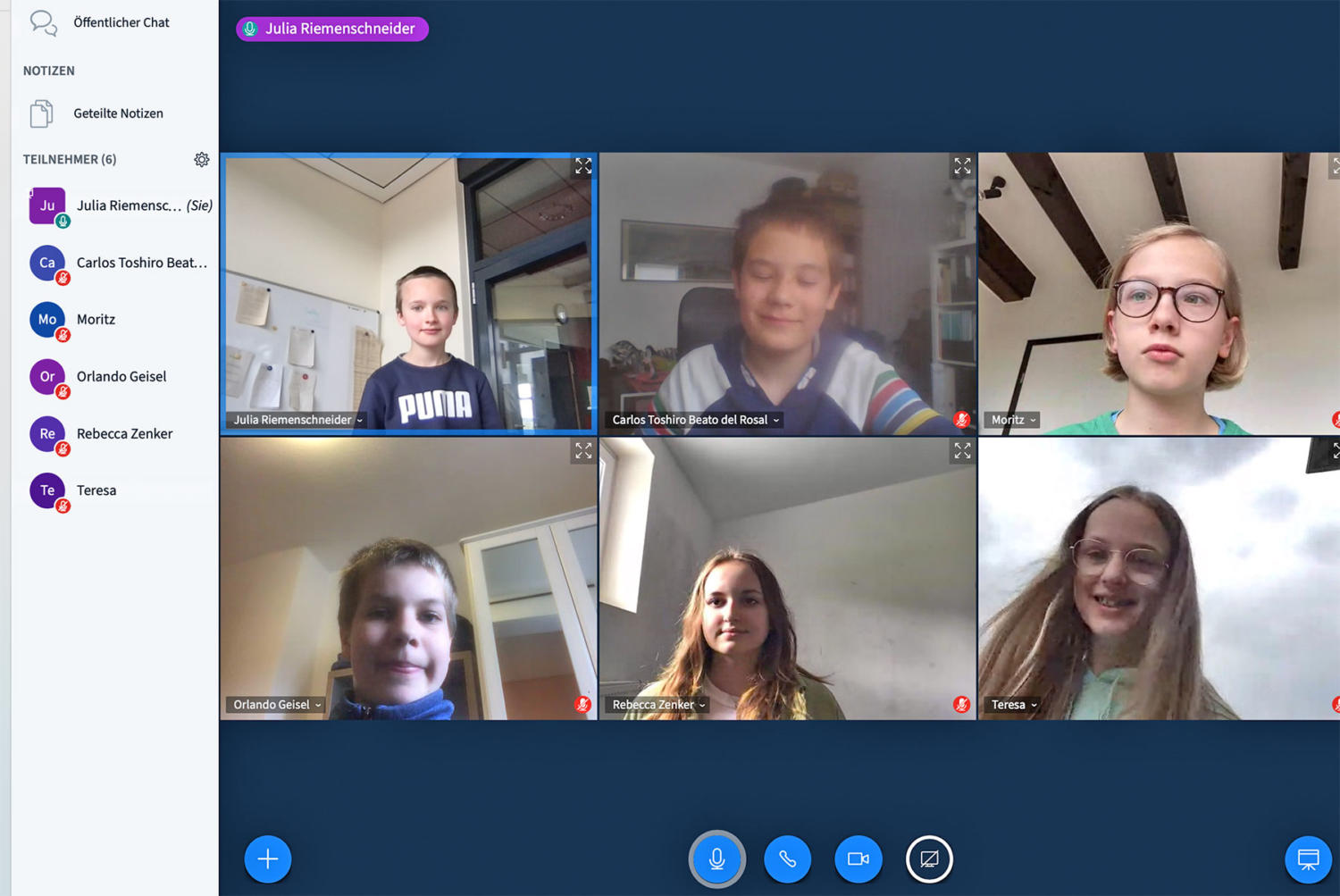
A total of 65 students from Steinmühle took part in the competition. They participated both in person and, due to the pandemic, online from home. One aspect made this year’s participation particularly special: for the first time, there were also participants from third grade at the Steinmühle Bilingual Elementary School. The oldest participants are in 10th grade.

The results of the competition demonstrate once again that mathematics is successfully taught and learned at Steinmühle. Students took second place three times. Toshiro Beato del Rosal (6a), Teresa Dinges (7b), and Orlando Geisel (7c) qualified for the competition. Lars Mitschke (5c), Moritz Wagner (5c), and Rebecca Zenker (8a) also earned a spot on the “podium,” taking third place.

In the “Kangaroo Jumps”—that is, the category for the most questions answered correctly in a row—Toshiro Beato del Rosal and Teresa Dinges once again stood out for their performance. A third-grade student, Julian Steinkamp, also performed exceptionally well.

Our heartfelt congratulations to all the participants!


Supporting Mathematics Education

The Kangaroo Competition is a contest held once a year on the third Thursday in March in all participating countries simultaneously; it is administered as a voluntary written exam in schools under supervision.

The event is designed to support mathematics education in schools, to spark and reinforce an enthusiasm for mathematics, and to encourage both independent study and classroom work by offering interesting problems.

The Kangaroo Competition is an individual contest in which participants have 75 minutes to solve 24 problems each in grades 3–4 and 5–6, and 30 problems each in grades 7–8, 9–10, and 11–13.

Our photo shows the participating students. Julian Steinkamp from Class 3 is not in the photo.

Once again this year, many students from Steinmühle participated in the Math Olympiad, despite the challenges posed by the pandemic. Theresa Dinges, a 7th grader, was the top student in her grade level in all of Hesse!

The Math Olympiad began right at the start of the school year with what is known as a “homework round.” At the teachers’ request, particularly motivated students were given math problems to work on independently in their free time. If they were able to solve a sufficient number of these problems (the evaluation was carried out in consultation with the respective math teachers), the students could participate in the second round.
This second round took place in November 2020 and was also held within the school. Seven of our students were still in the competition at that point and took a four-hour exam. These exams were graded by their respective math teachers; their scores were submitted, and a central decision was made regarding the cutoff scores for which students in each grade level would advance.

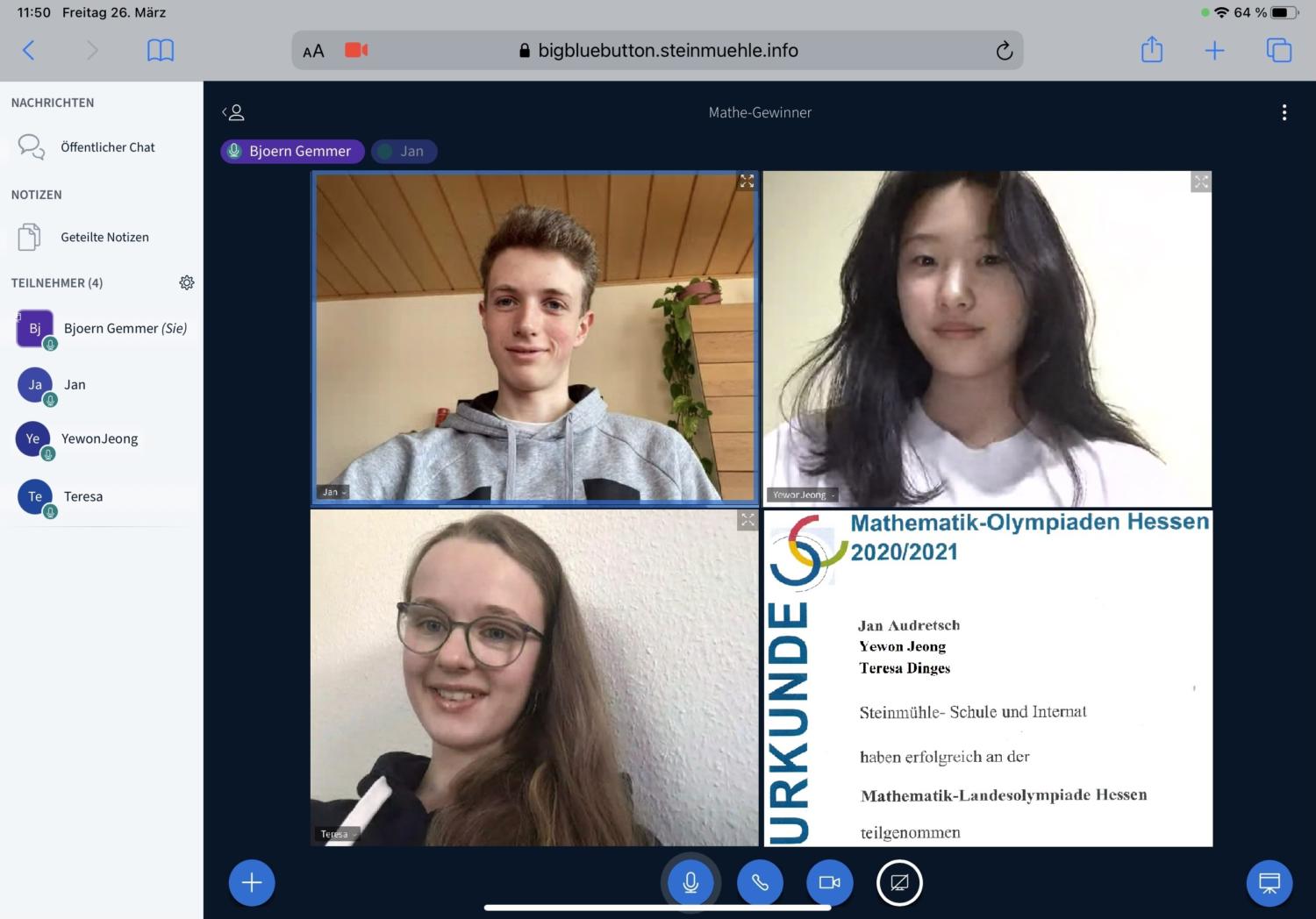
Jan Audretsch (11th grade), Teresa Dinges (7th grade), and Yewon Jeong (8th grade) ultimately advanced to the Hesse round. Due to the pandemic, this round was conducted differently than usual. Normally, students are invited to the University of Darmstadt, where they take their third-round exams. This year, however, our participants familiarized themselves with an online platform entirely on their own. There, on the afternoon of Friday, February 26, they were able to download an exam, which was again set to last four hours.
The completed assignments, which were subsequently uploaded back to the platform, were graded by a team consisting of supervising teachers (including Julia Riemenschneider from Steinmühle), former winners, and mathematics students. Our students achieved excellent results.

Teresa Dinges deserves special mention. She took first place in the 7th grade across all of Hesse.

Steinmühle would like to congratulate you on this tremendous success!

“Jugend Forscht”: Steinmühlen Teams Win Additional Special Prize

Another success for Steinmühlen High School students Joshua Wieder (15), Morten Köhler (15), and Benjamin Schul (16): After the successful trio won the regional “Jugend Forscht” competition, the three students went on to take second place in the state competition. What’s more, they also won the special “JugendUnternimmt summer school” prize for their chemistry project. Held in Erfurt from July 30 to August 5, this seminar teaches entrepreneurial thinking with a focus on the potential commercialization of one’s own business idea. Their younger classmates Leonard Berger (13), Mats Egbring (12), and Leontin Schmidt (13) were also successful at the state-level “Schüler experimentieren” competition in Kassel, as they had likewise qualified for the next round. At the competition, which took place at the University of Kassel’s Department of Electrical Engineering & Computer Science, they took third place and also received the Special Prize for Environmental Technology from the Federal Foundation for the Environment.
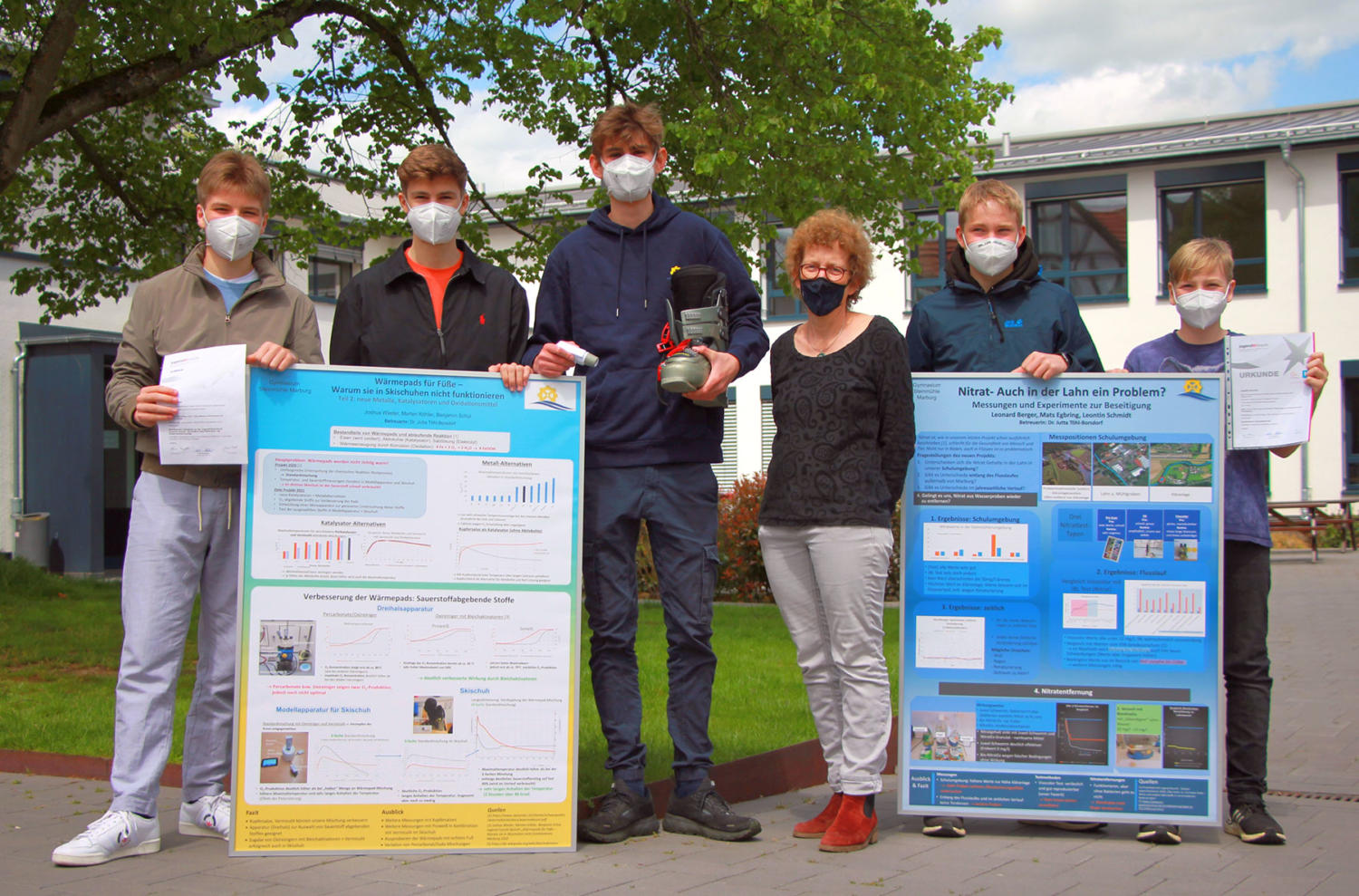
From left: Morten Köhler, Benjamin Schul, Dr. Jutta Töhl-Borsdorf, Mats Egbring, Leontin Schmidt (not pictured: Leonard Berger)
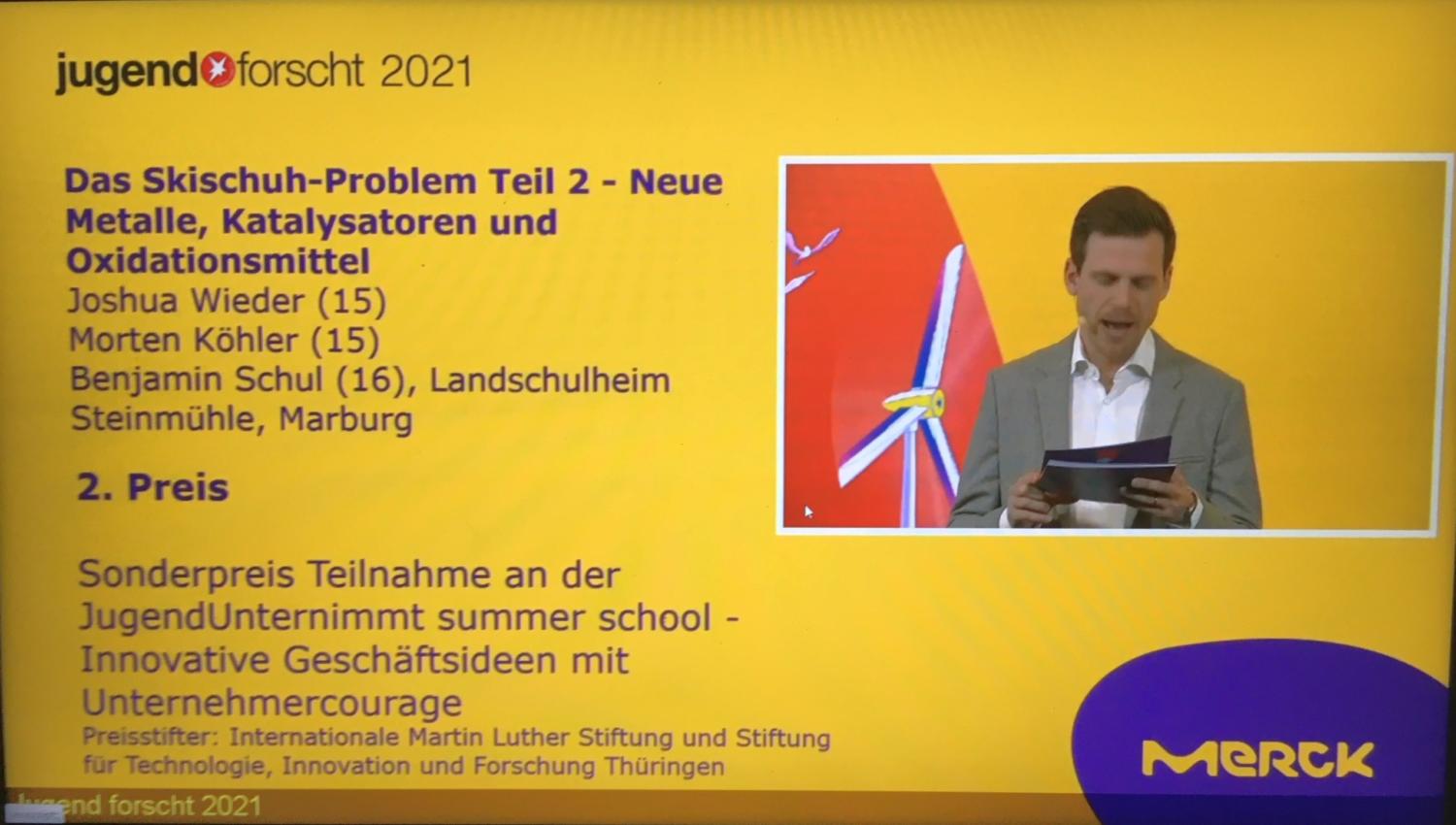
 

Why conventional heating pads don’t work in ski boots—the questions the project posed to the older students have been persistently explored by Joshua, Morten, and Benjamin since last year, as they’ve come up with new ideas. They continued their research and attempted to conduct the experiment using new metals, catalysts, and oxidizing agents to optimize the heating pad system for ski boots. At the awards ceremony, which took place at Merck in Darmstadt, the expert jury praised them, saying: “You presented everything clearly and effectively, improved the analytical methods, and developed a redox system that works experimentally and is suitable for creating a prototype.”

In last year’s project, the trio of researchers was already able to demonstrate that oxygen is consumed very quickly in a snugly fitting ski boot and that the reaction leading to heat production quickly comes to a halt. Now they have found a solution to this problem; they tested various oxygen-releasing substances and ultimately succeeded with oxygen-based detergents. When heated, these substances—used as detergent additives—release large amounts of oxygen.


How to Develop a Business Plan

The “JugendUnternimmt Summer School,” which Joshua, Morten, and Benjamin are now attending, aims to empower young people to develop their ideas and innovations into viable business concepts and present them, as well as to give them an understanding of the social and societal responsibilities that entrepreneurs bear.

– Just imagine if the experiment by the three chemistry whizzes actually made it to market one day!

Now, of course, the trio is hoping that this seminar in Thuringia—which was offered as a prize by the International Martin Luther Foundation and the Thuringia Foundation for Technology, Innovation, and Research—will even be able to take place at all, given the pandemic. It will only be held in person—or it will be canceled. Unfortunately, there are no plans for an online option.

The figure on the right summarizes the project’s topic and its performance in the competition.


Nitrate in the Lahn River: Experiments on Removal

Leonard Berger, Mats Egbring, and Leontin Schmidt had also participated in the “Jugend Forscht” competition last year, focusing on the issue of nitrate. Back then, their work involved soil analyses; this time, the focus was on measurements in water bodies—specifically, in the nearby Lahn River. This is because nitrate is also dangerous in water bodies, as it can seep into groundwater and drinking water and is harmful to the body. The trio of researchers was particularly interested in the changes that occur in different seasons and at different locations along the Lahn as a result of fertilization and harvesting. The young researchers also wanted to find out whether nitrate can be removed from the water. To this end, they closely examined chemical and biological products available in the aquarium trade to test their effectiveness.

The expert jury also praised these projects highly and awarded them third place in the state-wide competition.

The Steinmühle congratulates you all on these achievements! You can be proud—we certainly are!

Under the motto “Touch Tomorrow,” the Dr. Hans Riegel Foundation aims to provide students with guidance on career paths in the STEM fields, where the acronym STEM stands for science, technology, engineering, and mathematics. The foundation carries on the legacy of former HARIBO owner Dr. Hans Riegel (1923–2013) and, with its Science Truck, offers an extracurricular learning space where young people can learn about these subjects. In the video clips featured in the truck—which is touring across Germany and Austria—Steinmühlen teachers Julia Riemenschneider and Maximilian Moll will soon be the “faces” of mathematics.

Math is great! To explain why that’s the case and to show who, based on their skills, can confidently take an advanced math course, an agency produced a video on behalf of the foundation, featuring the two Steinmühlen teachers as interviewees. “You have to know the basic arithmetic operations in your sleep. In the advanced course, you question things more, learn more about rules, and discover that the often-unpopular field of probability and statistics can actually be quite relevant to everyday life,” Julia Riemenschneider explained on camera. “Mathematics builds on itself, and unfortunately, there are often gaps in students’ knowledge. If the basic tools are missing, it’s difficult in the advanced course.”

Her colleague Maximilian Moll emphasized: “Anyone who can tinker and think logically meets some of the requirements.” He added: “You should definitely be confident in solving equations. And you need to have perseverance.”


Smart Teens – Well-Prepared Teachers

The Dr. Hans Riegel Foundation had approached Steinmühle following the truck’s last visit to Marburg. The Steinmühle students who had taken advantage of the opportunity during the truck’s visit to engage in dialogue with the presenters on site caught the organizers’ attention, as they asked such clever questions that the organizers automatically assumed highly qualified teachers were behind them. It didn’t take long before Dr. Jutta Töhl-Borsdorf, the STEM coordinator at Steinmühle, was contacted. Teachers like that would certainly be welcome to represent the subjects!

The STEM information on the Dr. Hans Riegel Foundation’s truck is intended to help students choose their advanced courses, but also to inform them about potential future career paths. Due to the pandemic, the truck has been unable to continue its tour as planned in recent months. However, the schools that had booked it will receive an online program via the “Touch Tomorrow Stream.”

For the 30th time, the Center for Chemistry (ZFC) invited 16 high school students from Hesse to learn about scientific practice and specific corporate structures through dialogue with professionals. In the “digital lab,” the young talents explored high-performance materials that also play a central role in the context of the energy transition. Topics included efficient storage media for renewable energy, as well as surface analyses and high-performance magnets, such as those used in the field of electric mobility and in wind turbines.

Veit Gemmer, a student in Class 13 at Steinmühle, had qualified for the week-long Inventors’ Lab. His group focused on sodium solid-state batteries, which contain so-called Nasicon electrolytes and may one day offer alternatives to the problematic materials currently used in lithium-ion batteries.

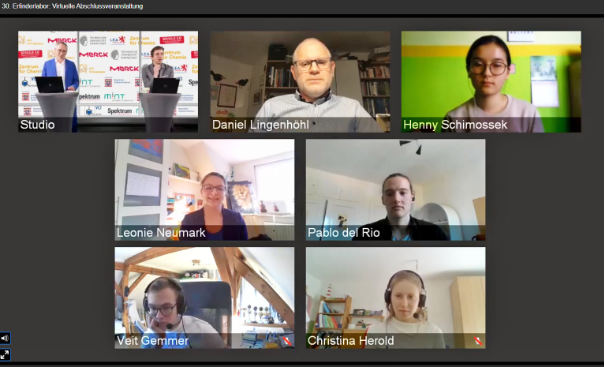
The Inventors’ Lab was actually supposed to take place in October 2020 but was then postponed to early 2021 due to the pandemic. This event, too, could only be held online, but it still provided interesting insights, as Veit reports:

The Inventors’ Lab, themed “High-Performance Materials for the Future,” which normally takes place at the Technical University (TU) of Darmstadt, was at least able tobe heldonline via the Microsoft Teams platform. During the week-long workshop, we had the opportunity to gain exciting insights into the field of materials science and the Merck Group through various discussions with experts from TU Darmstadt and Merck KGaA. Using this knowledge, combined with our own additional research, our group was tasked with creating an educational video about sodium solid-state batteries. Even though creating a high-quality video took a great deal of time, the week was still very interesting.

Veit Gemmer

Created in the Inventor’s Lab created Video about sodium solid-state batteries


Closing Ceremony (below: Veit with his group)


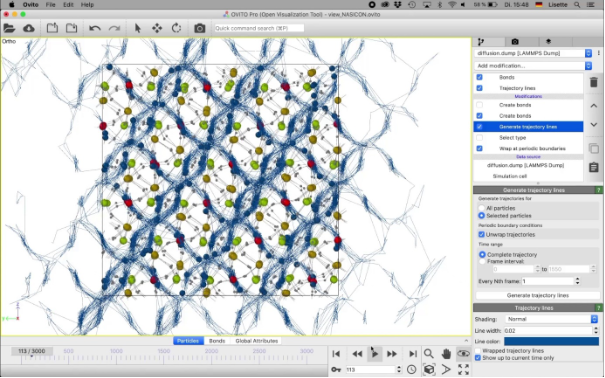
Computer simulations of the Transport mechanisms and Conductivityen of sodium–ions in the solid-state electrolyte Nasicon (Na+–Super-ion conductor).


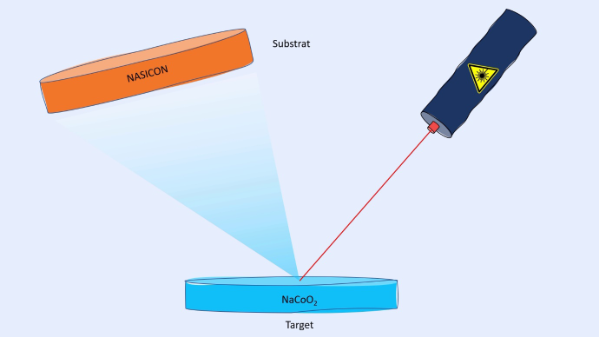
Improvement of Conductivityby Nasicoelectrolytes via Pulsed Laser Deposition (PLD)

At the international “Bolyai” math team competition, Steinmühle emerged as the most successful school in Hesse, with three winning teams across eight high school grade levels! The competition, which originated in Hungary, was held in Germany for the first time in 2014. Even during its first participation, Steinmühle achieved very good results. Now, in its second appearance, the school’s success has skyrocketed.

It’s all about teamwork and outstanding mathematical skills. That’s because participants in the ”
” competition must meet two key requirements: the ability to develop solutions as part of a team of four, while making the most of their exceptional mathematical talents.

In the competition, which was held online due to school closures, participants had to solve 13 problems within 60 minutes.
The problems were available for download at a specific time, and solutions had to be uploaded no later than 60 minutes afterward.

The fact that the competition took place online made conditions more difficult: no opportunity to practice together, no teamwork in a conference room, and time pressure—combined with technical challenges related to uploading and downloading.


Principal Organized 23 Chat Groups

With a total of 23 teams—which Principal Björn Gemmer organized via 23 chat groups on the school’s own “StoneApp”—Steinmühle participated in the competition. It soon became clear that the considerable effort had paid off, as Steinmühle emerged at the end of the day as the most successful school in Hesse, with three winning teams across eight high school grade levels! Second place, with two winning teams, went to “Schloss Hansenberg,” the State of Hesse’s boarding school for gifted students.
Our collection of portrait photos below shows what the state math champions look like:

Top row: Hesse champions in Grade 5, “Steinmühle Team 5” (from left): Alexandra Köller, Flynn Biallas, Johanna Rogosch, Liam Randau. They placed first out of 59 teams across Hesse. Their math teacher is Steffen Ullwer.

Middle row: Hesse’s 7th-grade champions, “Die Mathemagier” (from left): Teresa Dinges, Sophia Rogosch, Jonathan Hundt, Leon Delong (the latter two—the boys—are friends of Teresa and Sophia and attend the Gymnasium Philippinum). They took first place out of 43 teams across Hesse. Their math teacher is Michael Schmidt.

Bottom row: Hesse champions in Grade 8, “Steinmühle Team 8” (from left): Max Preidel, Lukas Zimmer, Mathilda Lambach, Mike Klatt. They took first place out of 38 teams across Hesse. Their math teacher is Eberhard Wieth.


A few additional teams in the top 10

But there were even more successful mathematicians among the participating Steinmühlen students. In addition to the three winning teams mentioned above, the following Steinmühlen teams ranked in the top 10 in their grade levels across Hesse:

  • Another team from 5th grade: Johannes Denzel, Teo Dohmen, Felix Martens, and Henri Reinhardt. Their math teacher is Eberhard Wieth.
  • Another team from 8th grade: Franka Preising, Paula Hartmann, and Flora Endres. Their math teacher is Constanze Oestreicher-Gold.
  • A team from Class 13: Lasse Michel, Nina Brand, Louis Kirschstein, and Till Maier. Their math teacher is Malte Klimczak.

Congratulations to all the participants! We’re so proud of you!