

Award for a Trio of Researchers: It’s True After All! Organic Fields Offer Better Soil
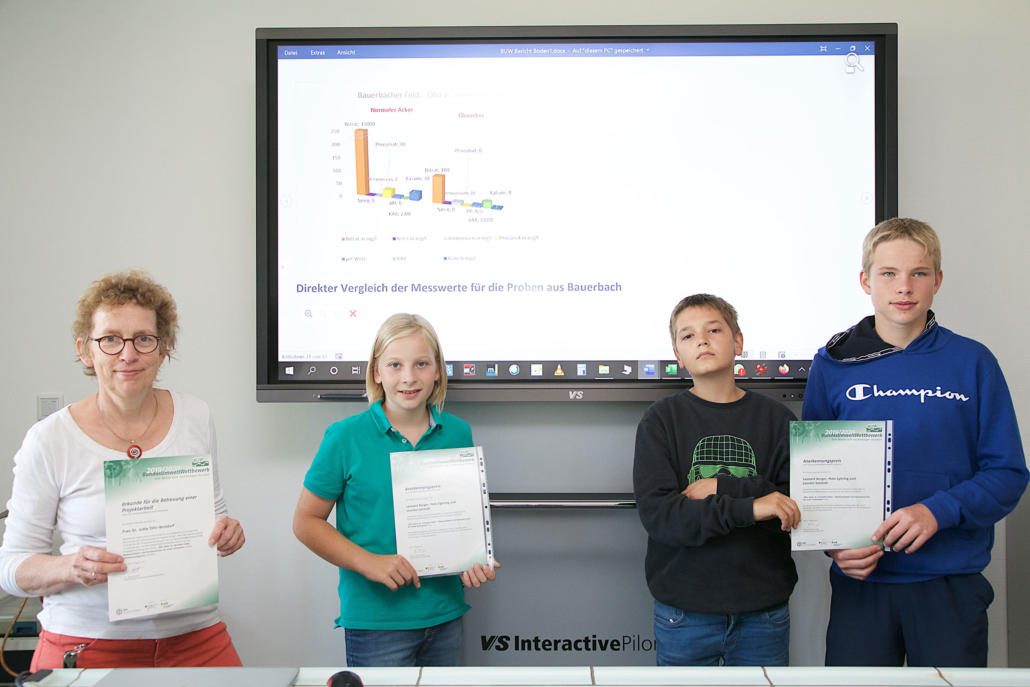
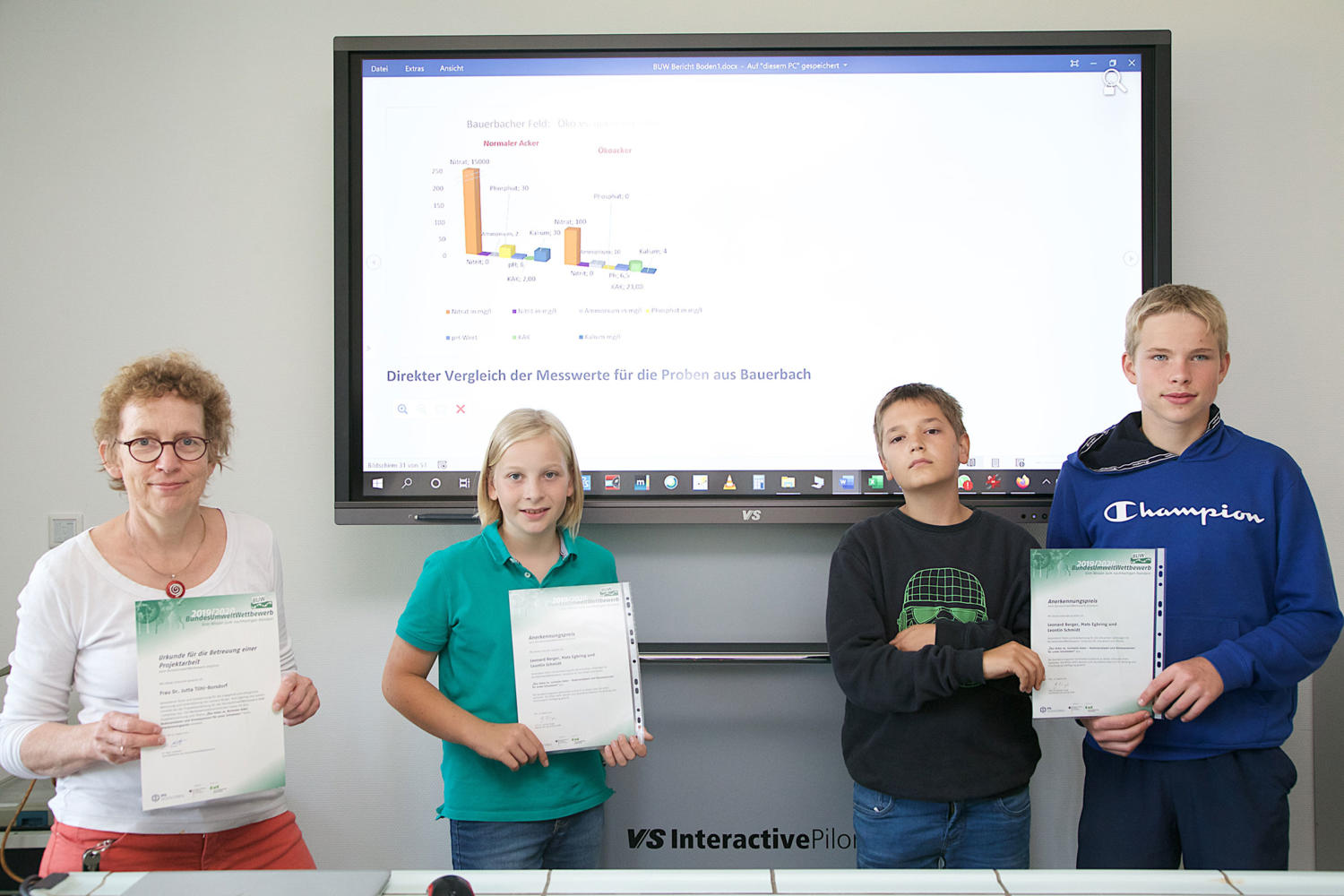
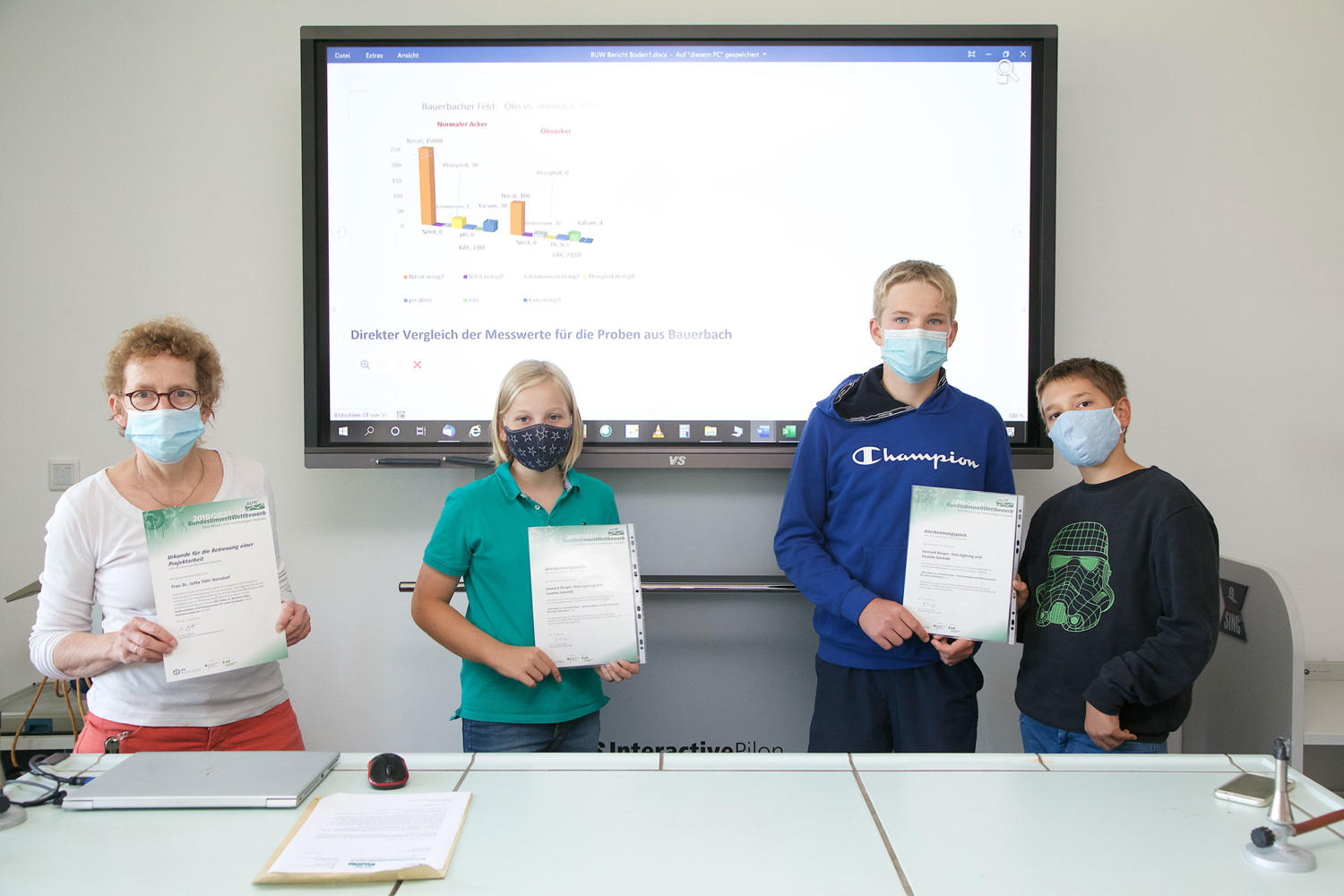
Leontin Schmidt, Mats Egbring, and Leonard Berger have proven what is often merely claimed: Organic fields are less polluted than conventional fields and therefore provide a better foundation for growing healthy food. For their work, the students and their teacher, Dr. Jutta Töhl-Borsdorf, have now received an award of recognition and certificates from the “BundesUmweltWettbewerb” (BUW), an initiative of the Federal Ministry of Research and Education.
Early in the year, before the pandemic-related measures took effect, the trio—who were interested in the natural sciences—had already submitted their project for the competition. “Soil Analyses and Implications for Our School Lunches” was the title the then-sixth graders gave to their project, which had taken up a great deal of time for them and their supervising teacher. Various soil samples were tested for their nitrate content, as well as for ammonium, phosphate, potassium, their pH value, and their so-called KAK value. This value measures the soil’s ability to release nutrients.
Nitrate Pollution as a Priority Area for Monitoring
The studies focused on nitrate levels. Nitrate, which is converted into nitrite in the body, inhibits oxygen transport and is suspected of being carcinogenic in higher amounts due to further reactions that produce so-called nitrosamines.
The project wasn’t limited to the in-depth studies. It also included a survey of the school community. The survey asked about consumption and eating habits regarding organically grown products, as well as students’ perceptions of their health benefits. The sixth graders also wanted to know whether Steinmühlen students would like to see even more organic options in the cafeteria and bistro at Steinmühlenküche.
As far as the soil samples are concerned, the results speak for themselves. It was found that soils from organic farming do indeed show better test results, which was particularly evident in the nitrate levels. The committee was pleased to have discovered, as part of the experiment, that the forest soils examined still show good values overall.
Supplementary Survey on Organic Food
The positive attitude of the students surveyed toward organic food confirmed to the three students and their teacher that the overall topic of their experiment is highly relevant and has “struck a chord.” However, the results also revealed that food selection in the Steinmühle kitchen is already largely guided by the principles of “organic, regional, and fair trade.” “We would,” the students said, “also be happy if this shift in thinking regarding food choices continued not only in the Steinmühle kitchen but also at home within individual families.”
In addition to project supervisor Dr. Jutta Töhl-Borsdorf, who closely oversaw all aspects of the project and was awarded a certificate in recognition of her efforts, Dr. Dietmar von der Ahe, who provided assistance with the numerous soil samples, and Dirk Lange, who managed the SurveyMonkey survey.
Although the BUW jury concluded that the project could be resubmitted after further development, the three young researchers are now focusing on water analysis. They have already begun testing nitrate levels in the Lahn River.