• Anruf
  • E-Mail
  • Zu Facebook
  • Zu Instagram
  • Zu LinkedIn
Loading
Steinmühle – Schule & Internat
  • About us
    • Organization & History
    • Teams
    • Stakeholders
    • Internal clubs
      • Riding School
      • Rowing Club
      • Friends of the School Association
    • Partners
    • Mission Statement & Vision
    • Ecology & Sustainability
    • A Safe Place
    • Quality Management
  • School
    • High School
    • Bilingual Elementary School
    • Project-Based Learning
    • Promoting STEM Talent
    • Languages & International Affairs
    • Sports & Health
    • Art, Music & Theater
    • Social Responsibility
    • Digitization
    • Promoting Independence & Individuality
    • Social Responsibility & Strengthening the Community
  • Boarding School
    • Boarding School as an Opportunity
    • Support for Families
    • Life
    • Learning
    • Sports & Recreation
    • Trips & Weekends
    • Talent Program Plus STEM
    • Fit for Life
  • Admission
    • Boarding School Admission
    • High School Admission
    • International High School Program
    • Bilingual Elementary School
    • Costs & Contract Terms
  • News
    • News
    • News Archive
    • Events
    • Support Current Projects
  • Friends & Alumni
    • Stories
    • Alumni Reunion
    • Steinmühle Alumni Network
  • Fan Shop
  • English
    • German
    • Spanish
    • French
    • Italian
    • Russian
  • Search
  • Menu Menu
  • English
    • German
    • Spanish
    • French
    • Italian
    • Russian

Steinmühle won top honors and special prizes at regional “Jugend Forscht” competitions

Contests & Awards, News, STEM, Talent Development

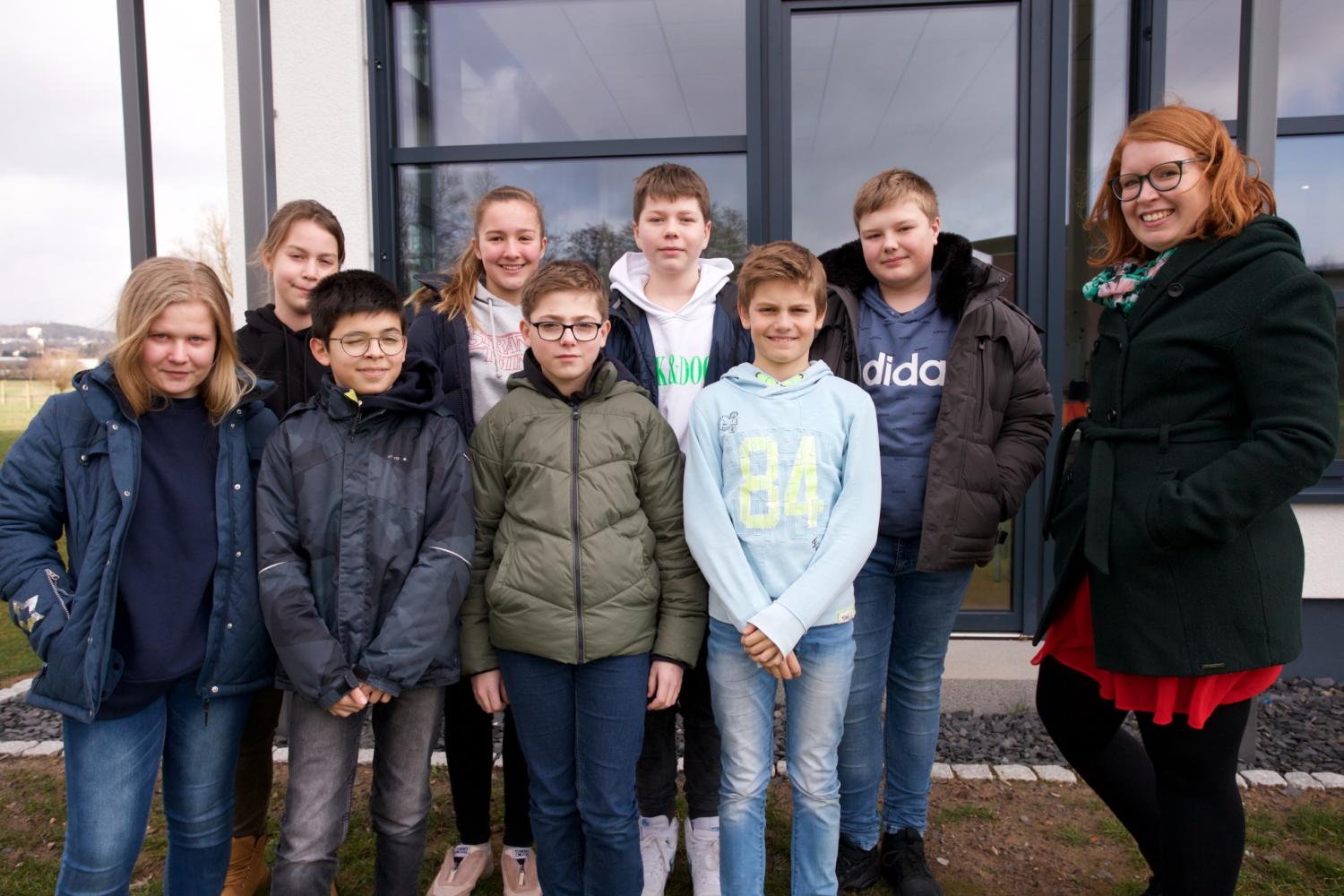
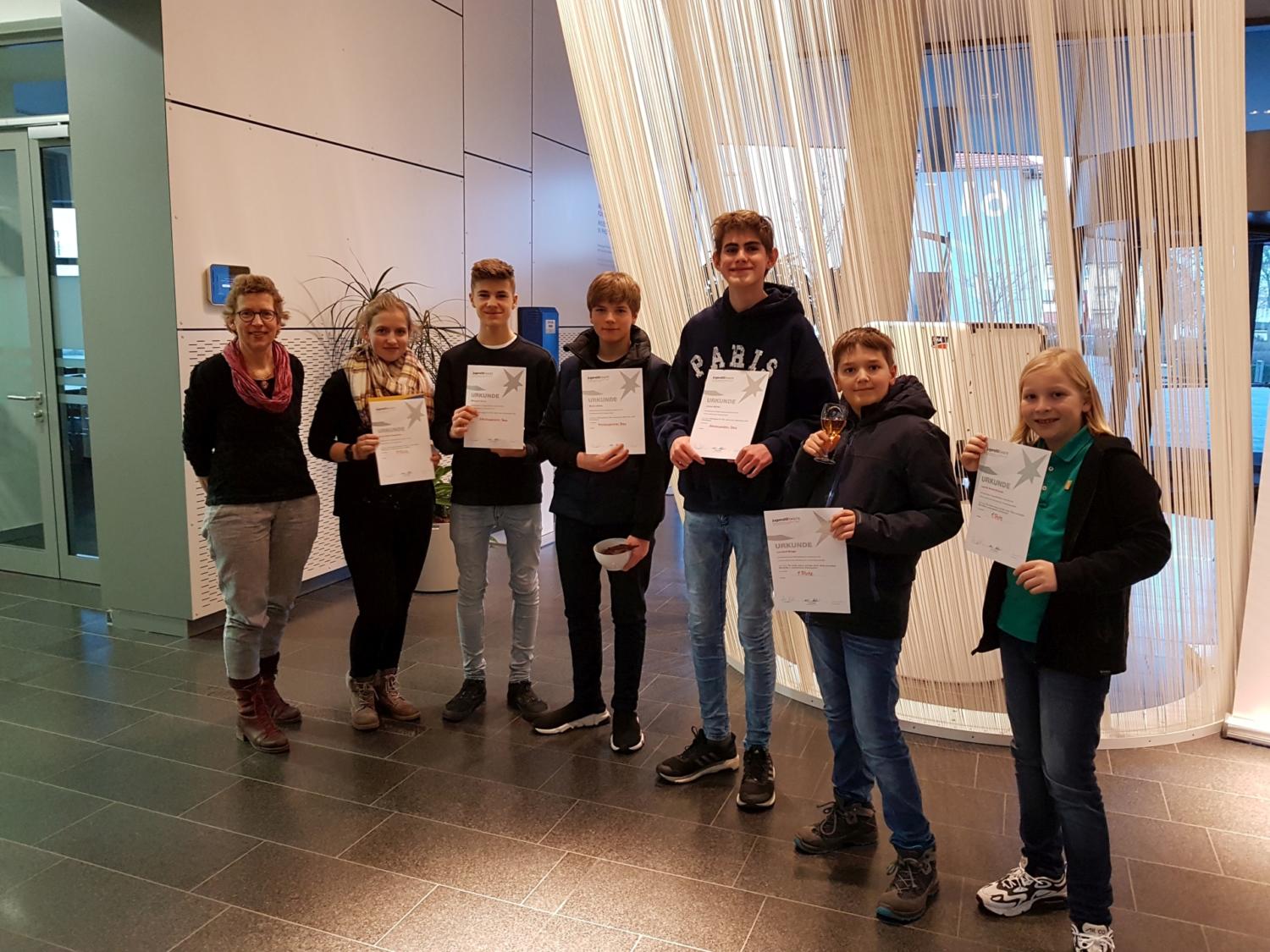
With a total of six projects, Steinmühle competed this year in the regional competitions in Lollar and Kassel. Three teams took first place, thereby qualifying for the state competitions in Darmstadt and Kassel in the “Schüler experimentieren” category. Three teams earned a special award.

Noteworthy is the participation of teams from various grade levels—from the lower school to the upper school. Grade 6 was represented twice, while grades 8, 9, 11, and 13 were each represented once. The subject areas were also quite diverse: research and experiments were conducted three times in biology and once each in chemistry, physics, and earth and space sciences.

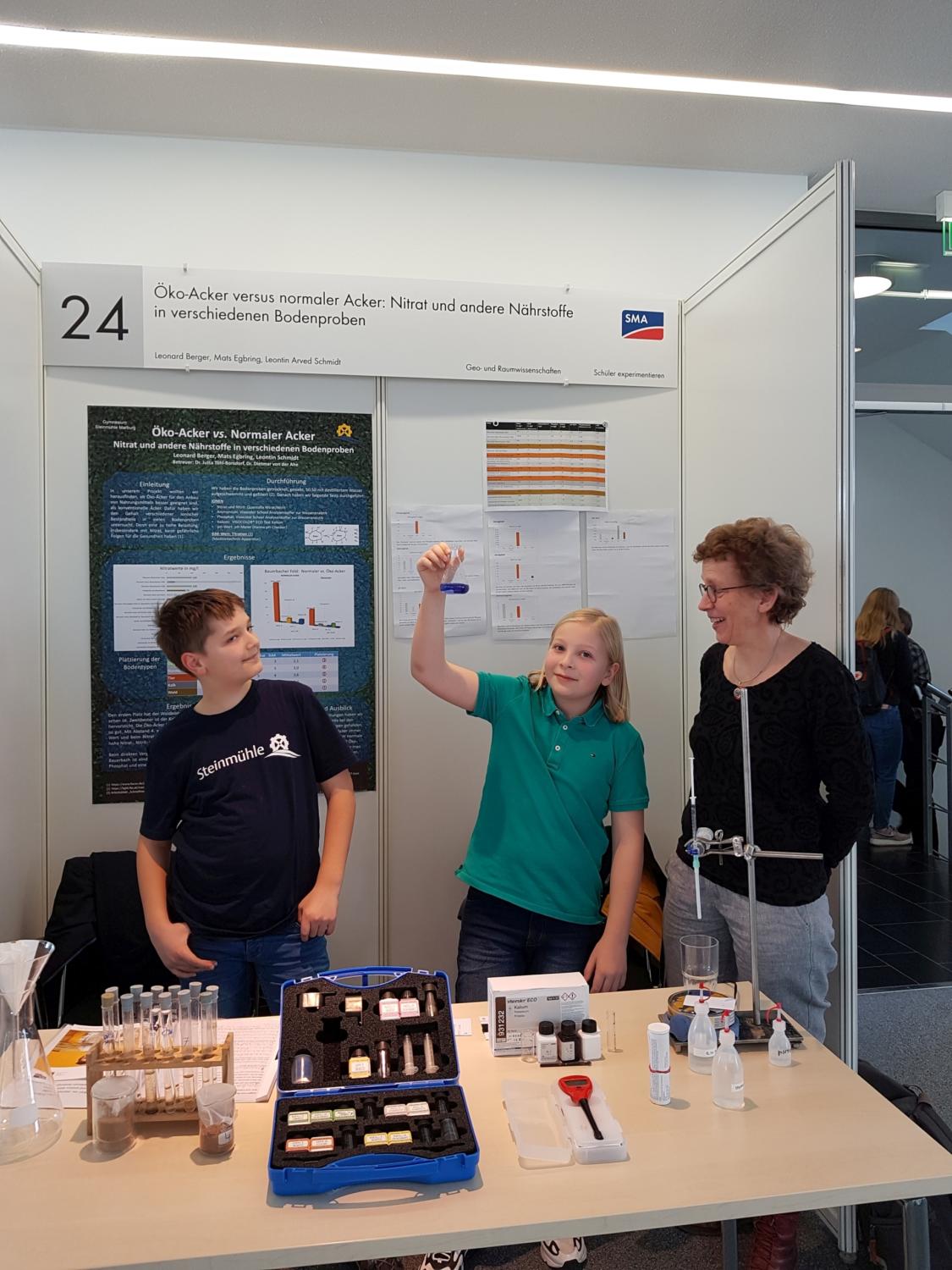
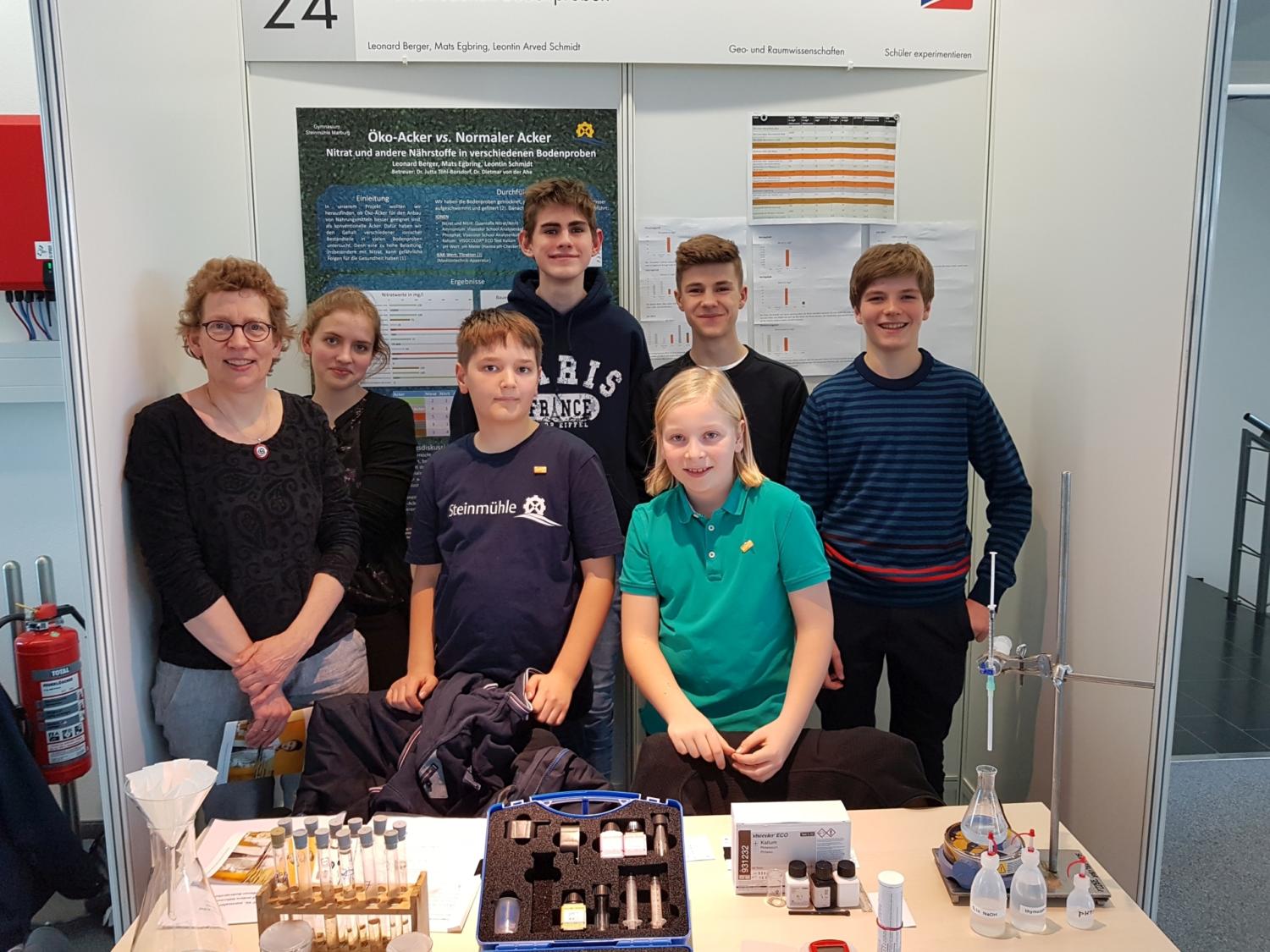
Leonard Berger, Mats Egbring, and Leontin Schmidt were the sixth-graders who, in the “Schüler experimentieren” under the guidance of teachers Dr. Jutta Töhl-Borsdorf and Dr. Dietmar von der Ahe, and also took home the special prize for environmental technology. They compared organic fields with conventional fields. In doing so, they analyzed a total of nearly 20 soil samples and found that organic fields scored highly both due to their low nitrate levels and their ability to bind and subsequently release nutrients. Conventional fields—and especially those fertilized with liquid manure—almost universally exhibited concerning levels of nitrate and nitrite. The jury deemed the topic, the project, and its results worthy of the highest possible ranking. Next up is the state competition in Kassel.


Not enough oxygen in the shoe

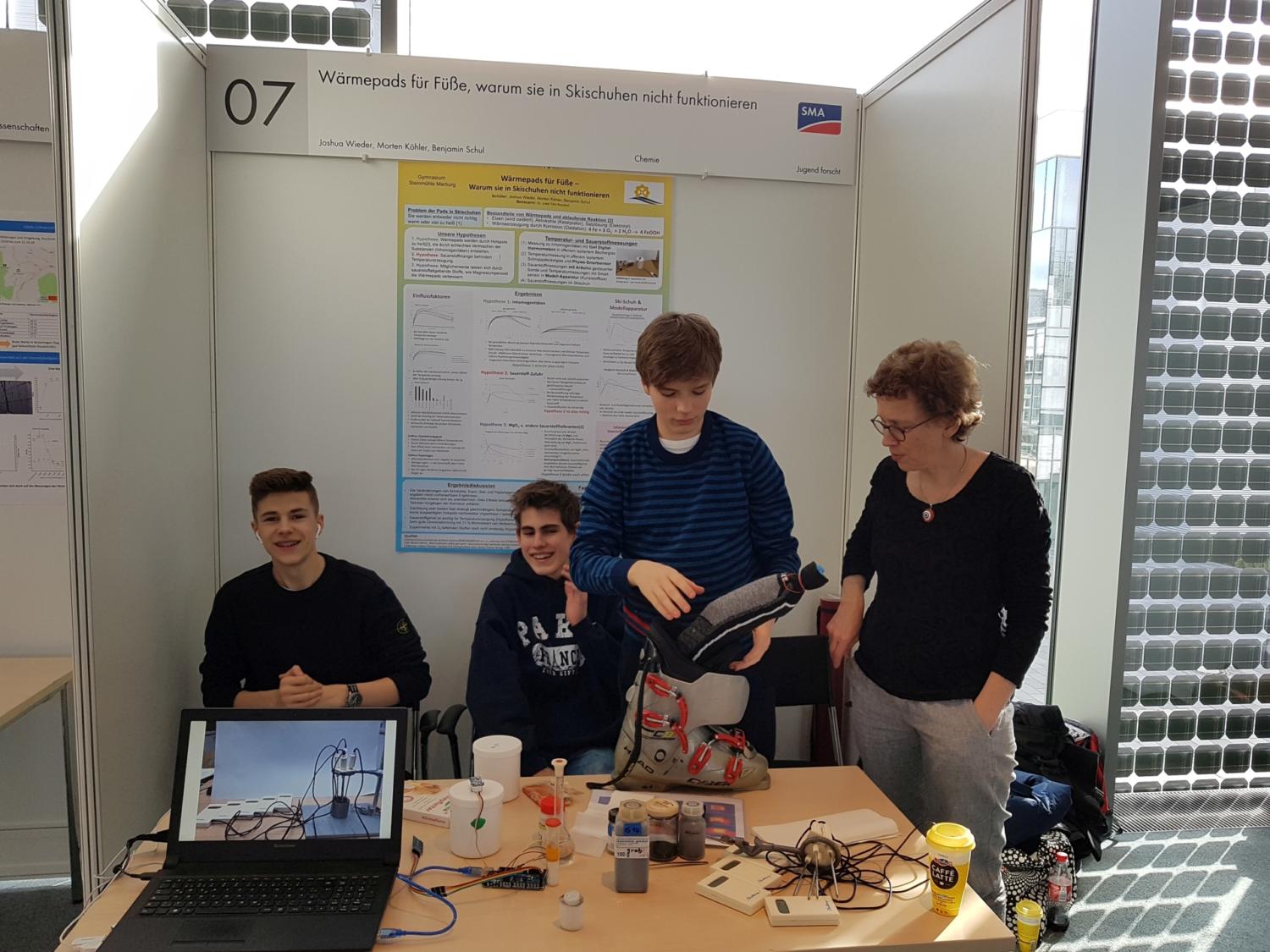
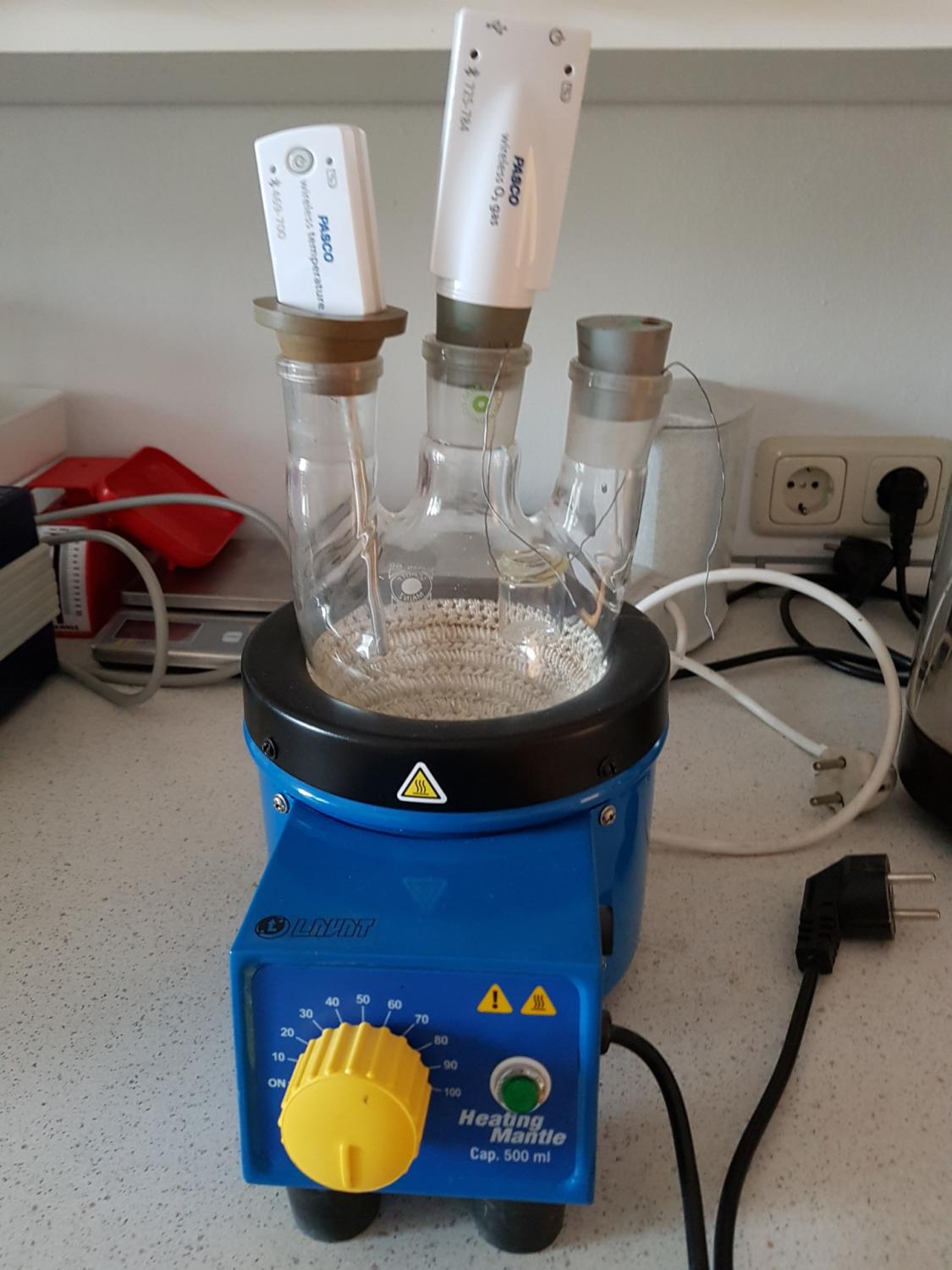
Morten Köhler, Benjamin Schul, and Joshua Wieder from 9th grade investigated why heat pads don’t work in ski boots. The three students had gotten cold feet during the Steinmühle ski trip and noticed that heat pads for feet—which are supposed to provide relief—work very poorly. They investigated the chemical reaction and found—in part by measuring temperature and oxygen curves—that there is simply not enough oxygen inside ski boots. As a result, the desired reaction quickly comes to a halt.

Under the guidance of teacher Dr. Jutta Töhl-Borsdorf, they used smartphone-controlled temperature sensors and an oxygen probe controlled by an Arduino. Arduino microcontroller boards were first introduced at Steinmühle by Malte Klimczak in the elective technology class and were also used here to address chemistry problems. These three students also won first place in chemistry for the best interdisciplinary project and can look forward to competing in the state competition in Darmstadt.


How Flour Beetles “Break Down” Styrofoam

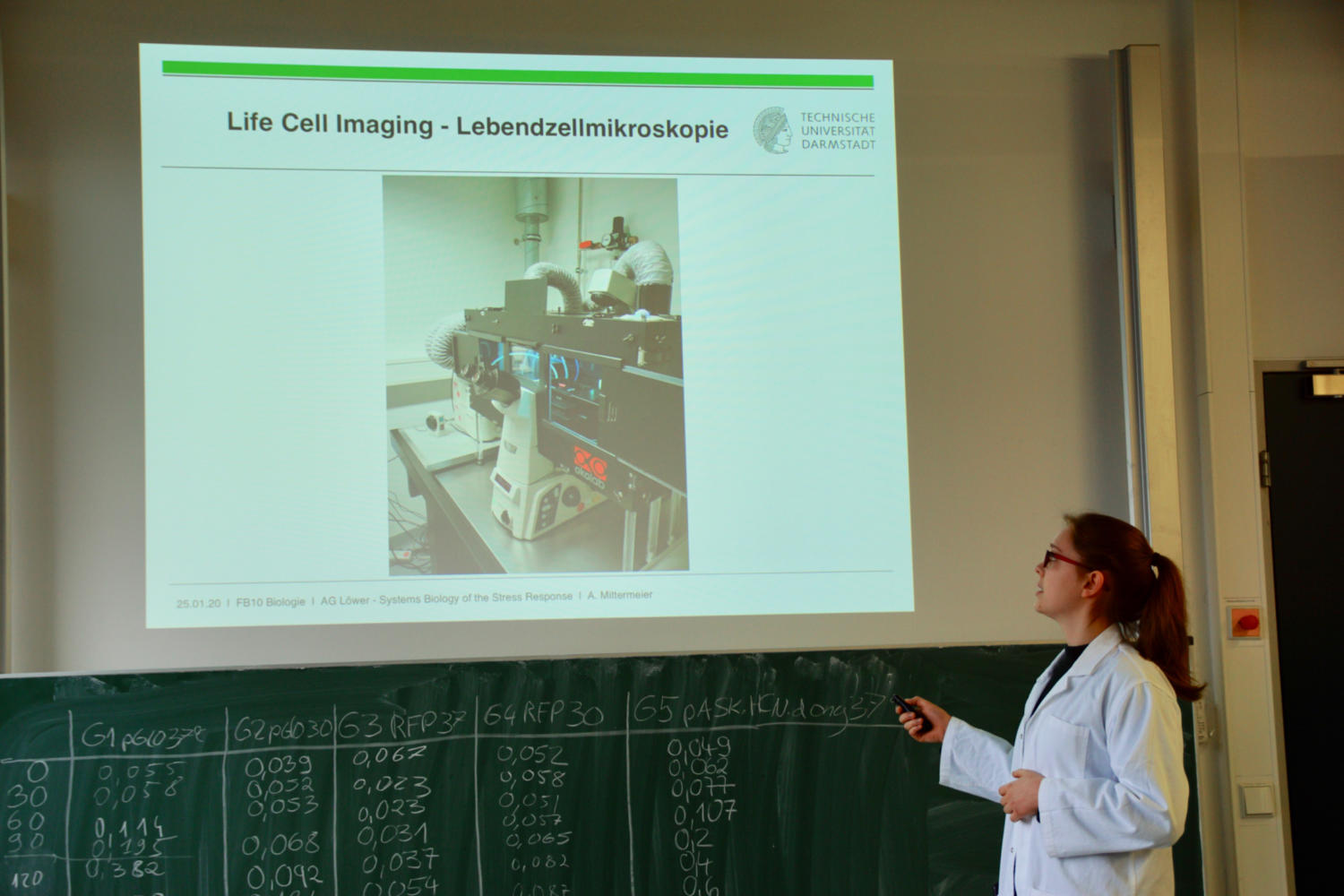
Clara Müller, Marie Englert, and Jennifer Weber, all 11th-grade students, investigated—under the guidance of Dr. Dietmar von der Ahe—whether bacteria in the gut flora of mealworm larvae play a role in the degradation of Styrofoam. The students observed the feeding behavior of mealworm larvae (Tenebrio molitor) under various conditions. Using molecular biology methods (PCR, genomic and PCR DNA isolation, DNA quantification with a photometer, gel electrophoresis, and 16S rRNA gene sequencing performed by Eurofins Genomics, Ebersberg), they examined 230 different bacterial clones from the larvae’s gut flora for their phylogenetic relationships and their ability to degrade polystyrene. In the process, they identified several bacterial clones from the Enterobacteriaceae family that can degrade the plastic in a nutrient solution. The genome of one of these clones (Clone No. 43) was fully sequenced (approximately 6 million base pairs) by Eurofins Genomics on their behalf in order to search the genome for coding regions for enzymes that might be involved in styrene degradation. The students also presented a possible mechanism for the chemical process of styrene degradation. As a special prize, the trio received a one-year subscription to the scientific journal “Bild der Wissenschaft.”


Connecting with the University Through a Competition

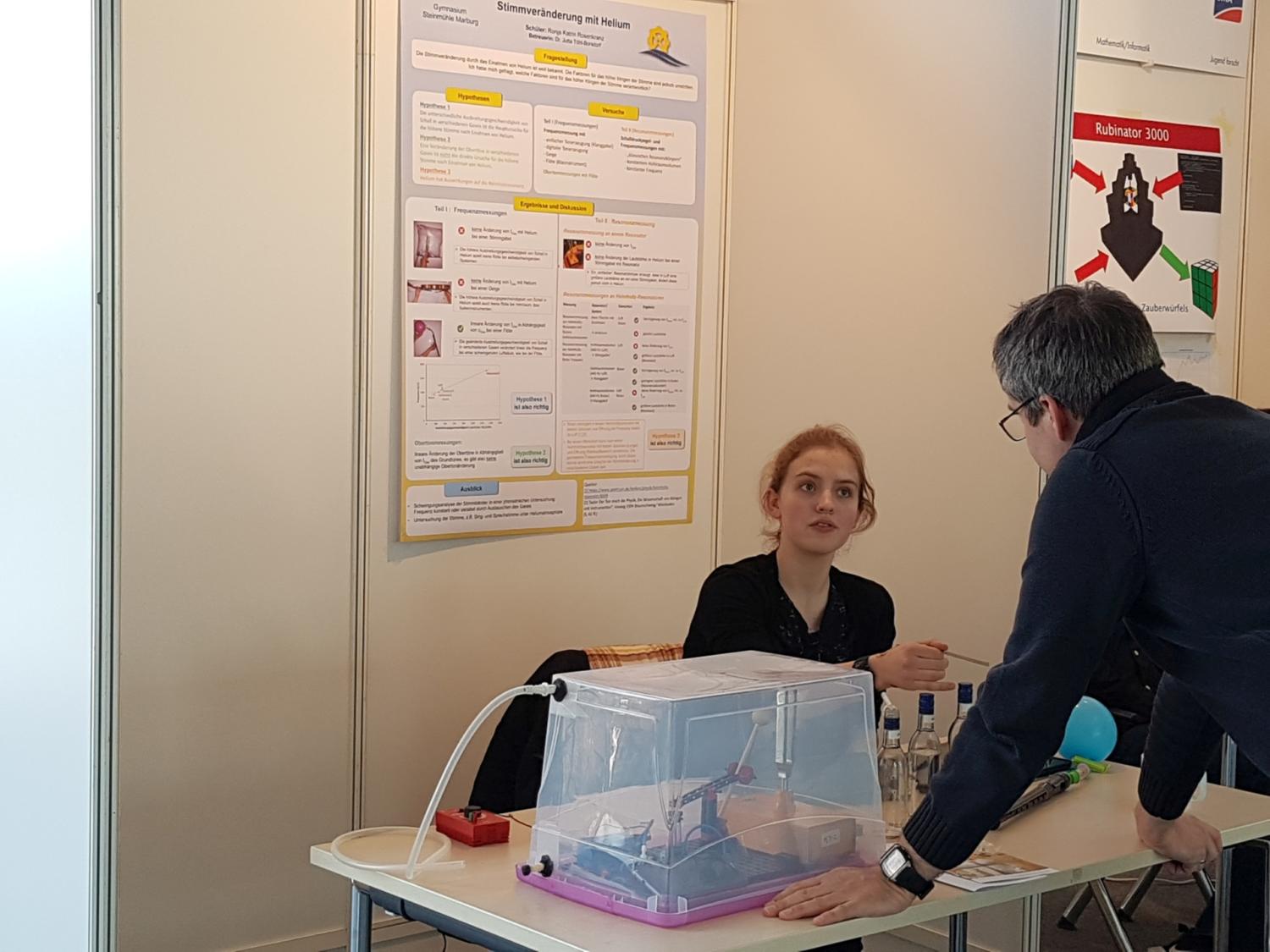
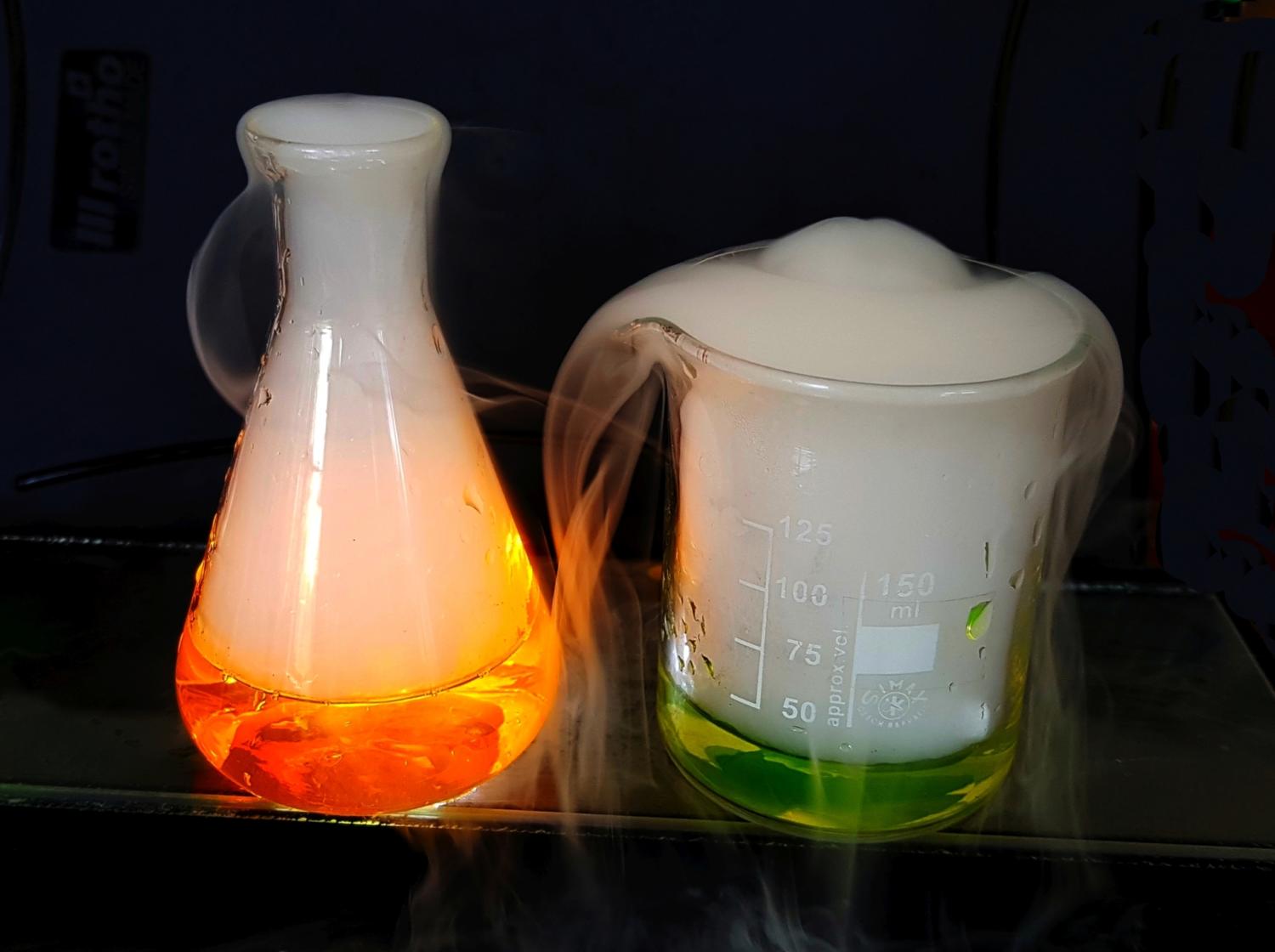
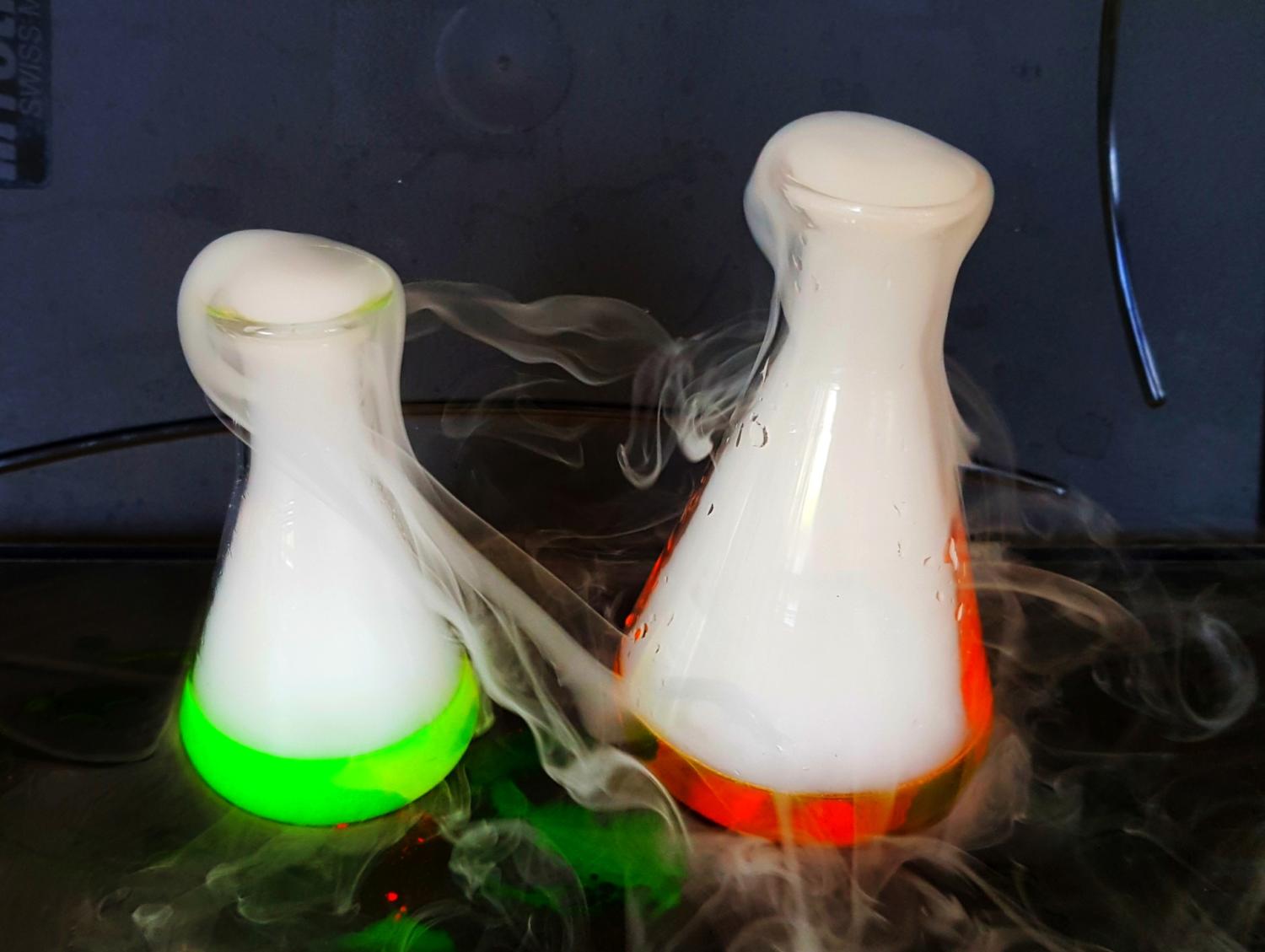
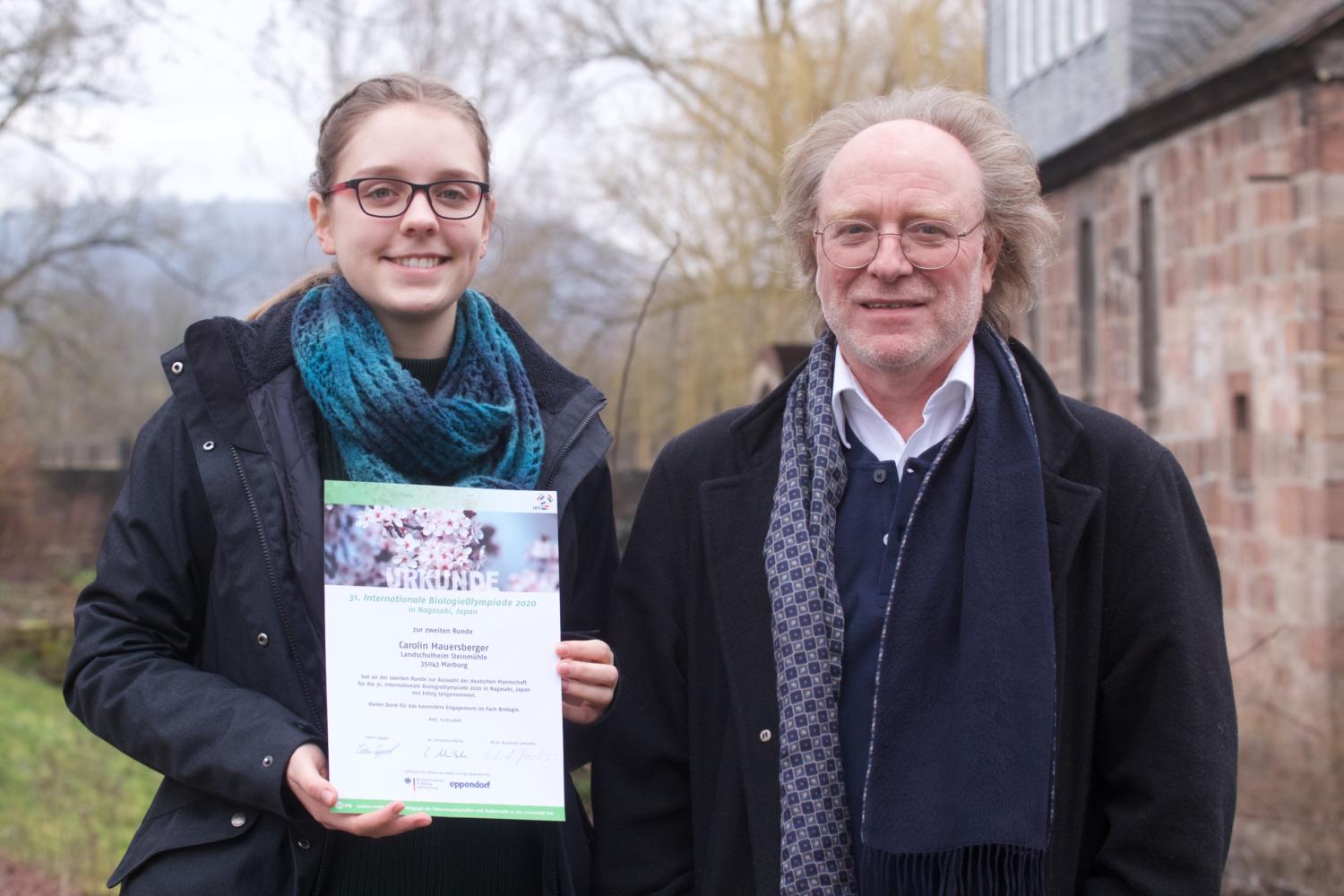
Ronja Rosenkranz, a 13th-grade student, impressed the jury in the physics category. She investigated what causes voice changes when inhaling helium. Students asked themselves this question in the 5th-grade NaUnt course taught by Dr. Jutta Töhl-Borsdorf. Ronja quickly realized that the explanation found almost everywhere is only partially correct and that the phenomenon is much more complex than previously thought. She developed various experimental setups to get to the bottom of the matter. The jury particularly emphasized her highly scientific approach to this question. Through the competition, she quickly established contacts with the University of Marburg, making it possible to conduct measurements in the Department of Phoniatrics. First place in physics for this project and the special prize for acoustics also qualify Ronja Rosenkranz for the state competition in Darmstadt.


What Earthworms Like

In the “Schüler experimentieren” competition, led by Dr. Dietmar von der Ahe, young researchers Teresa Dinges (Class 6b) and Sophia Rogosch (6c) investigated the potential effects of earthworms on soil and climate. In this project, the students took a close look at the behavior of the native earthworm Lumbricus terrestris and its interaction with soil bacteria. In the process, they discovered:

  • the type of soil that earthworms prefer
  • what soil conditions he avoids (pH level, calcareous soil, sandy soil, etc.)
  • that earthworms produce significant amounts of the greenhouse gas CO2 in the soil through their interaction with soil bacteria.
  • that the bacterial families present in the soil differ from those found in earthworm feces.


The Environment of Horsehide

Silas Krüger and Jan Vollmer (both in Class 8c) wanted to learn more about “life on a horse’s skin.” Under the guidance of Dr. Dietmar von der Ahe, the students examined various skin areas of two horses (skin, ear, nose, mouth) for bacterial colonization—the so-called microbiome. In the process, they discovered that the summer microbiome differs significantly from the winter microbiome—that is, different bacterial families are found on the various skin areas in summer than in winter. This corresponds to the different skin functions under varying climatic conditions.
 

18. March 2020
https://steinmuehle.de/wp-content/uploads/sites/5/2020/03/1-scaled.jpg 673 1500 konnertz https://steinmuehle.de/wp-content/uploads/sites/5/2025/11/Logo_SchuleInternat_Steinmuehle_2026_3.png konnertz2020-03-18 12:44:412026-06-18 15:50:38Steinmühle won top honors and special prizes at regional “Jugend Forscht” competitions

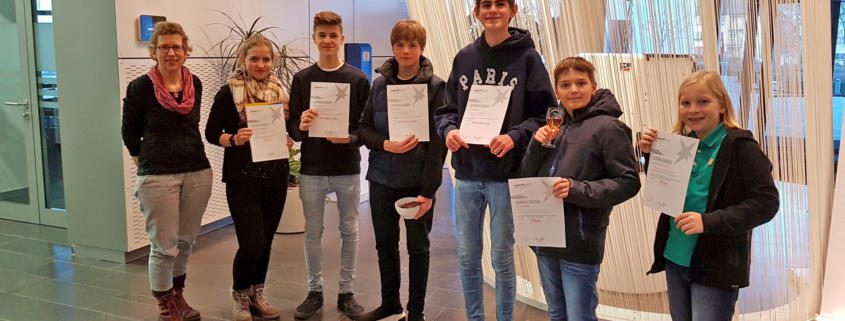
Junior Science Olympiad: Even the youngest participants worked independently and successfully

Contests & Awards, News, STEM

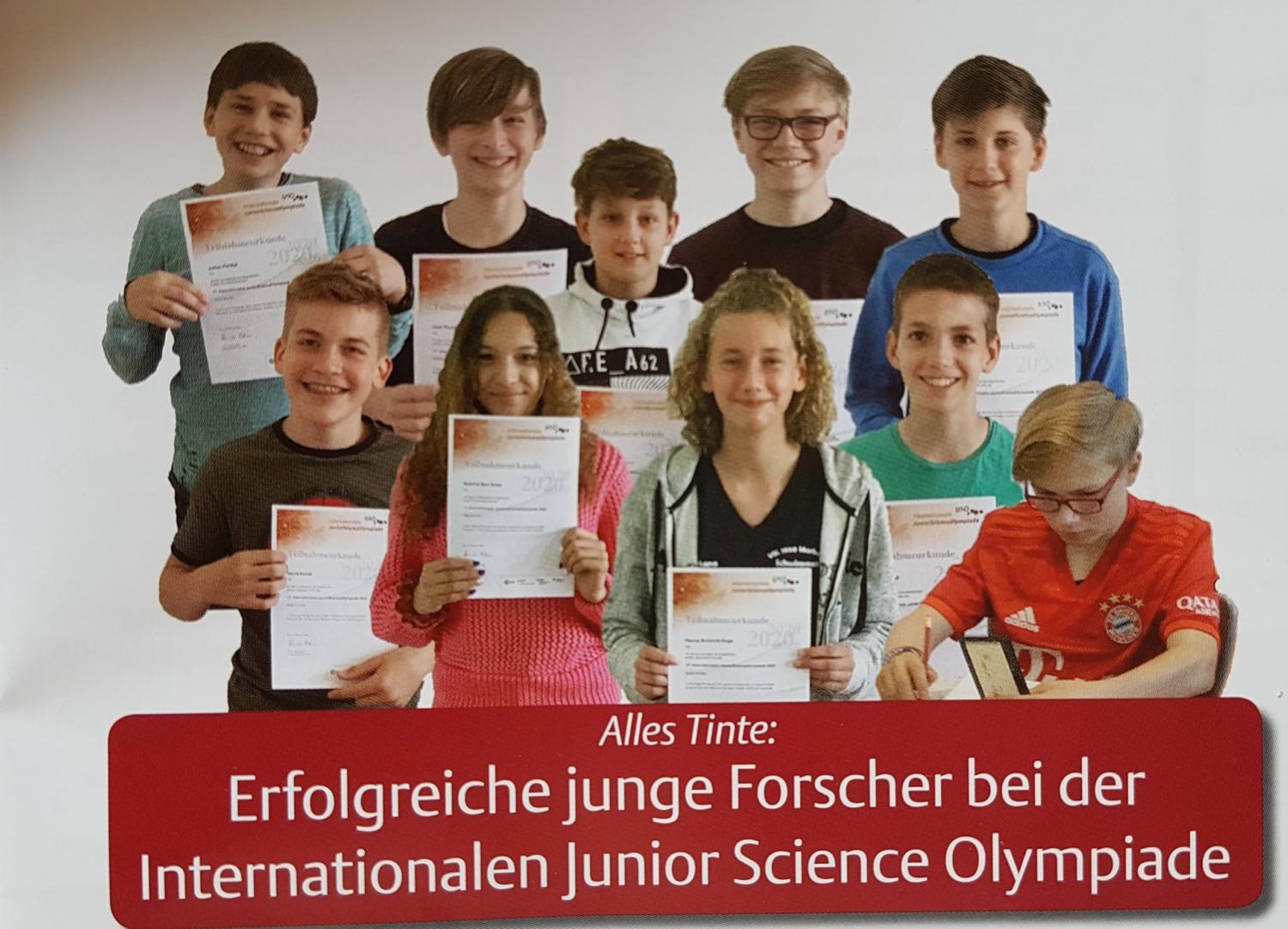
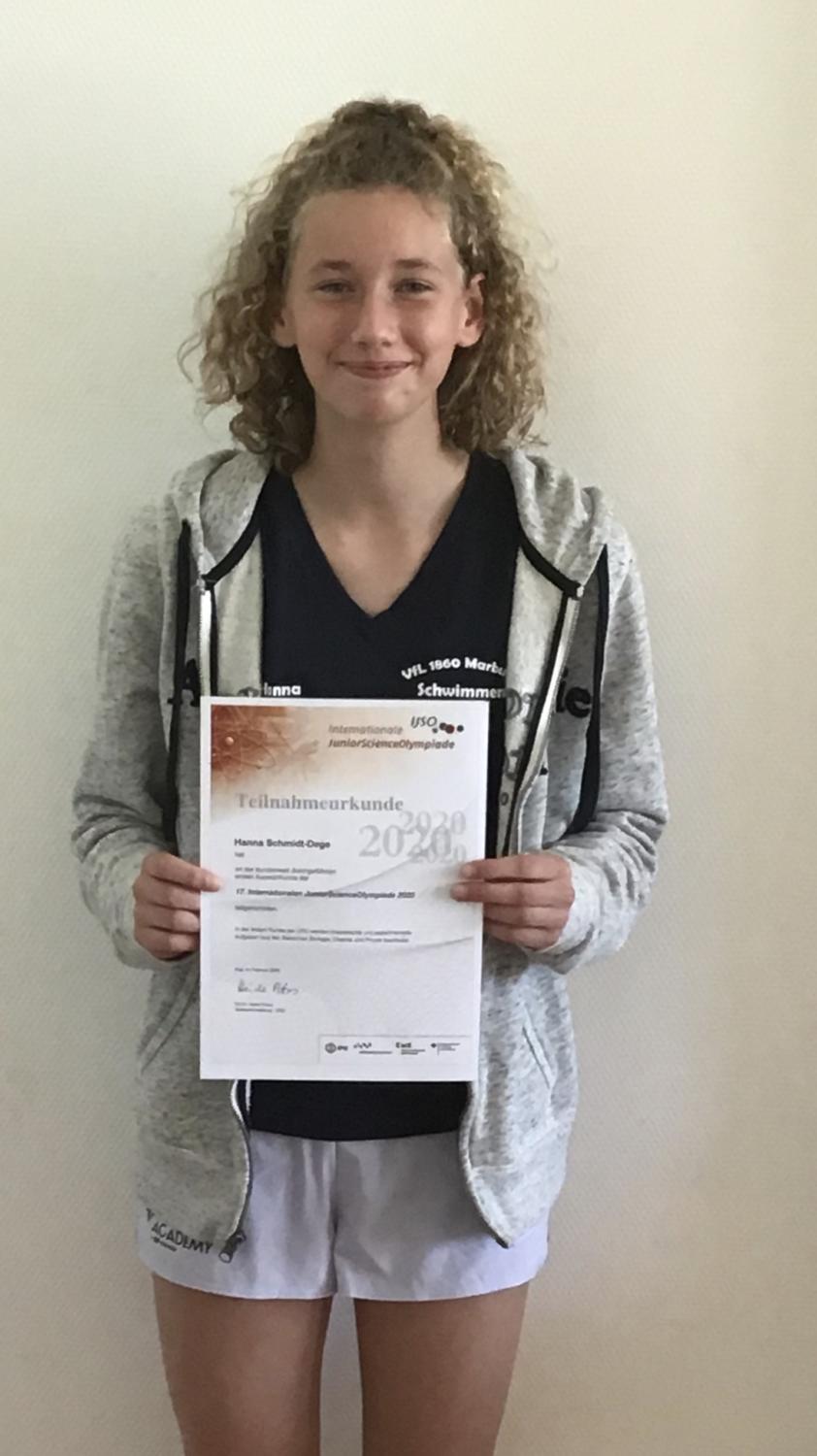
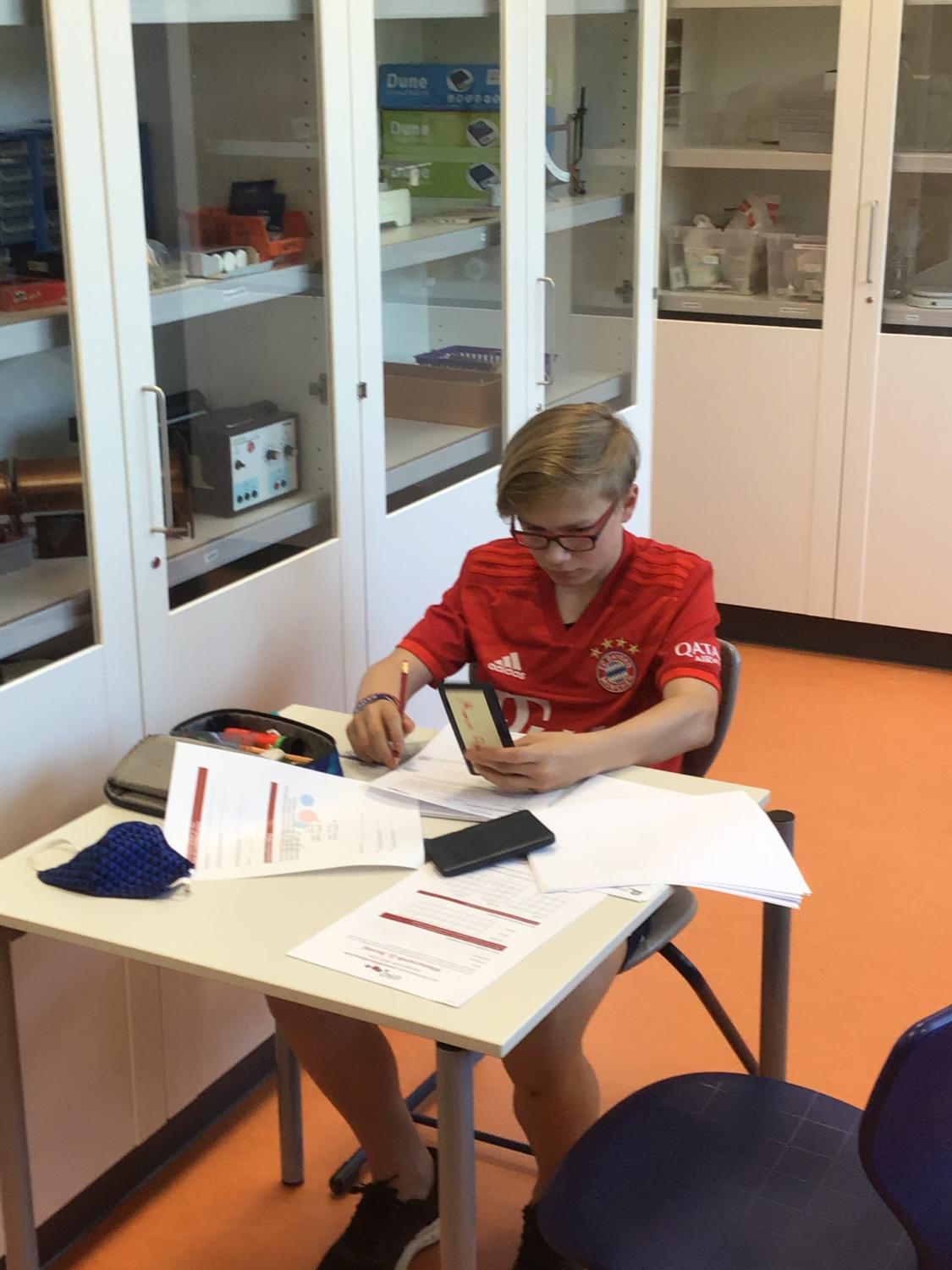
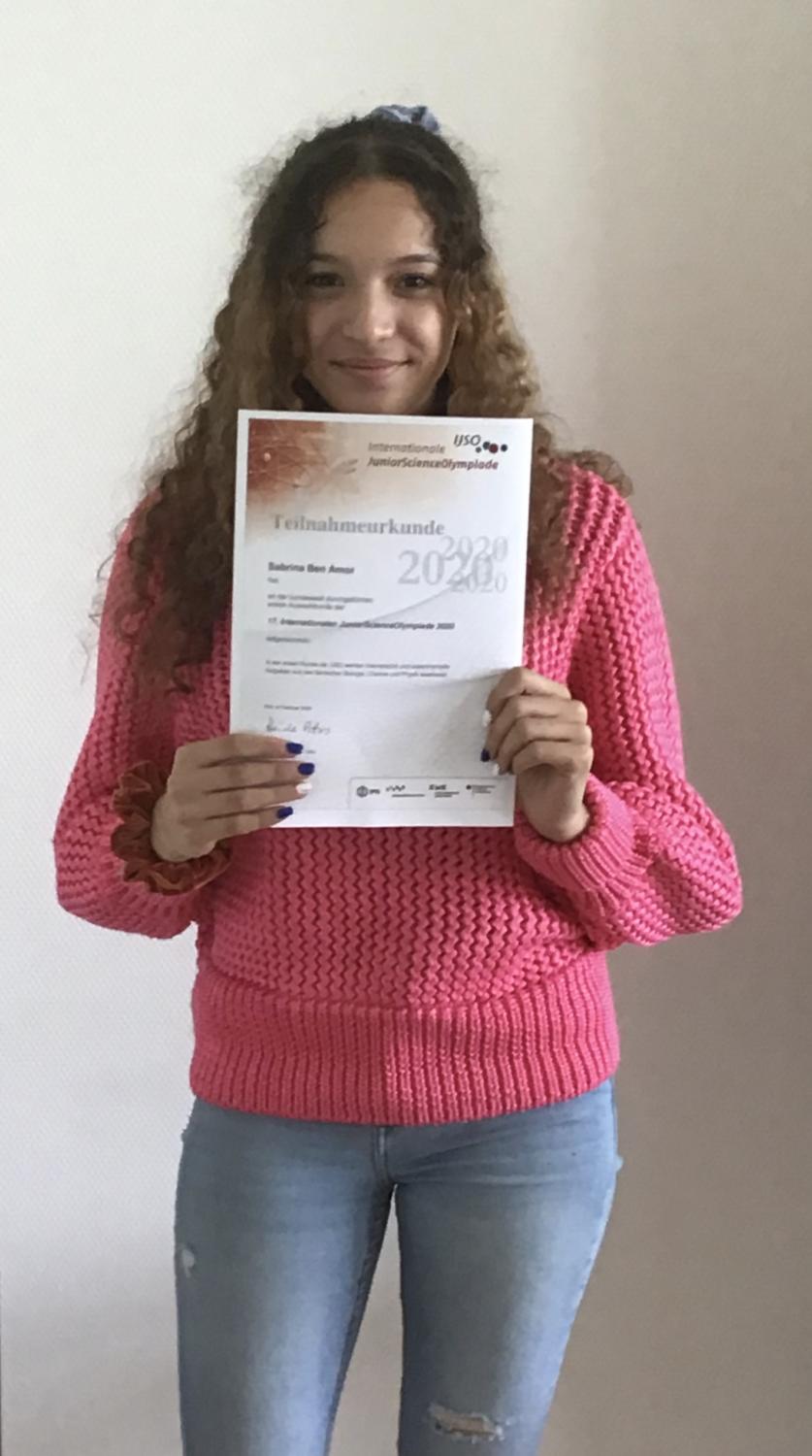
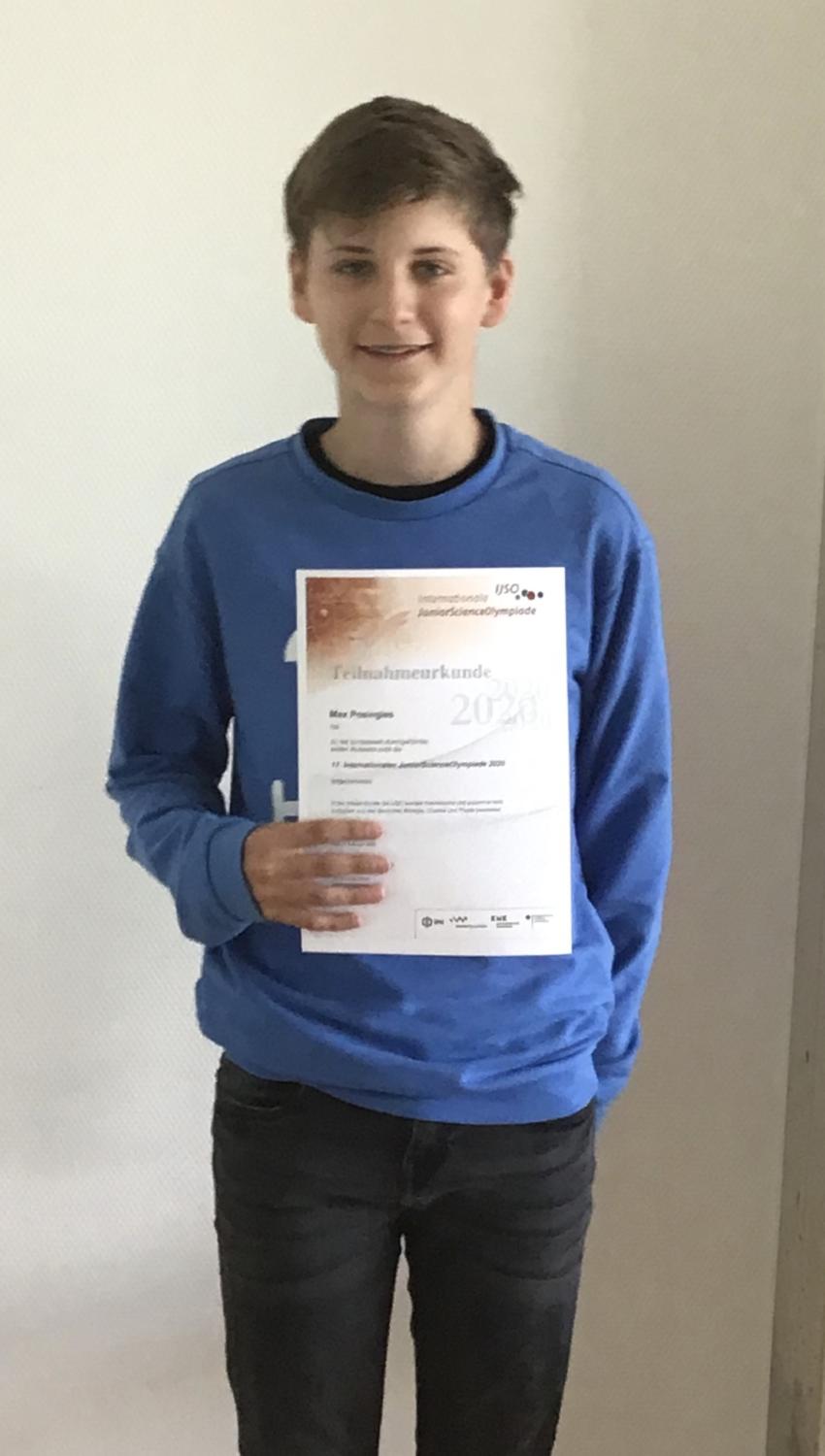
The first round of the 17th International Junior Science Olympiad took place between early December and mid-January. During this round, children and teenagers up to age 15 had the opportunity to conduct, document, and analyze experiments on a specific topic—this year, “ink.” This competition offers students an accessible introduction to STEM subjects (science, technology, engineering, and mathematics) and is designed to spark an interest in inquiry-based learning—particularly in an interdisciplinary context—that goes far beyond the standard school curriculum.

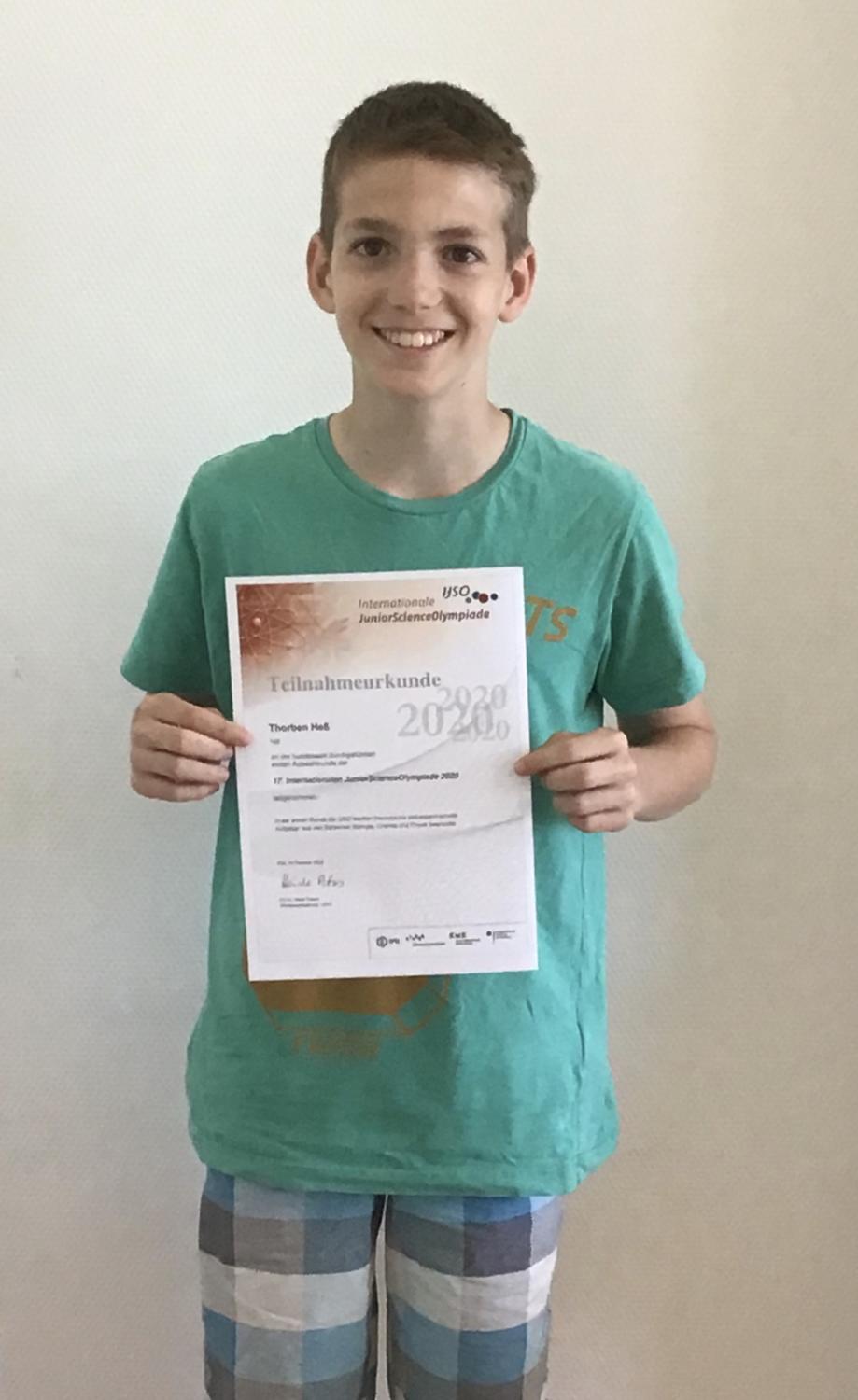
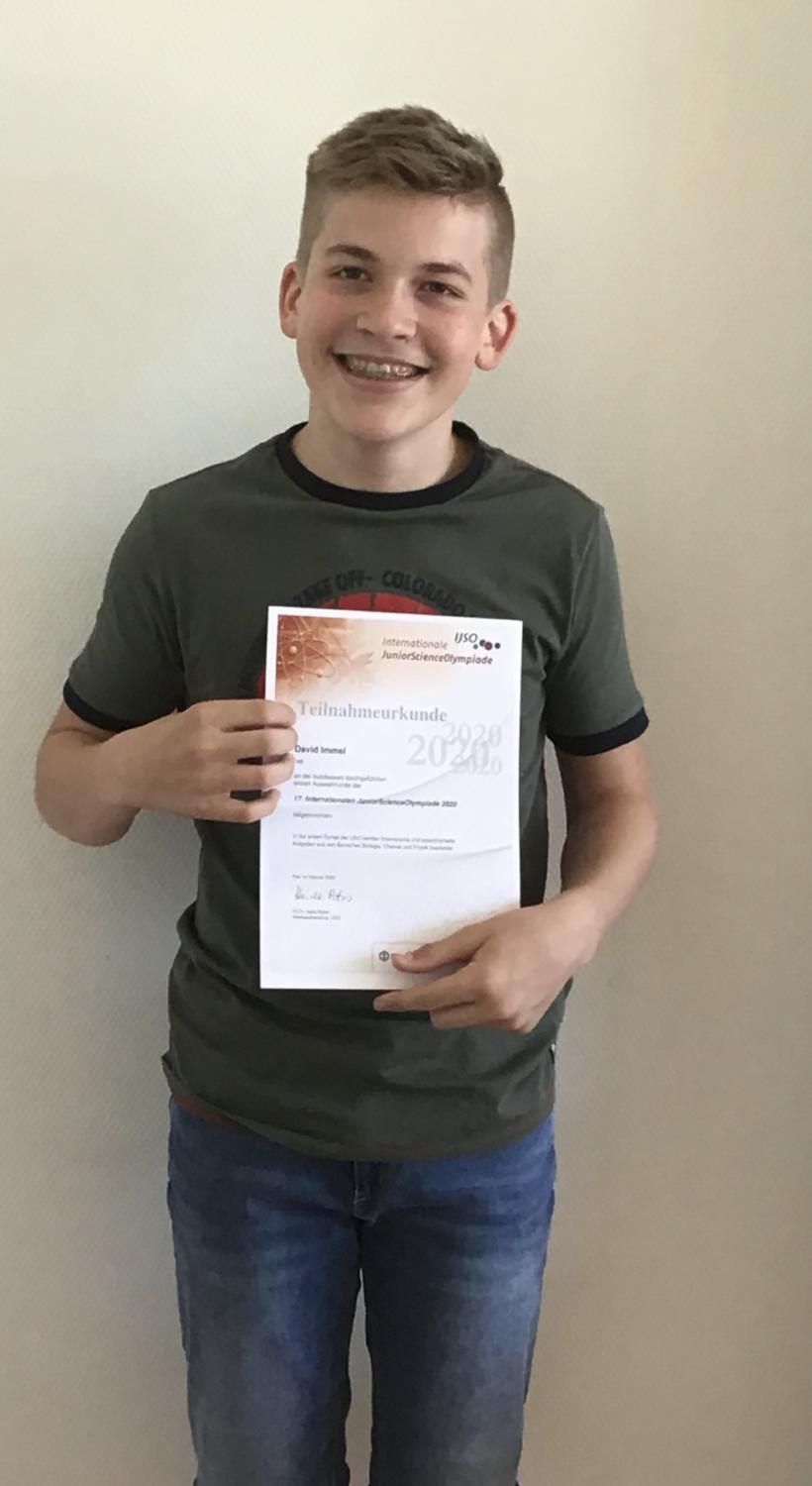
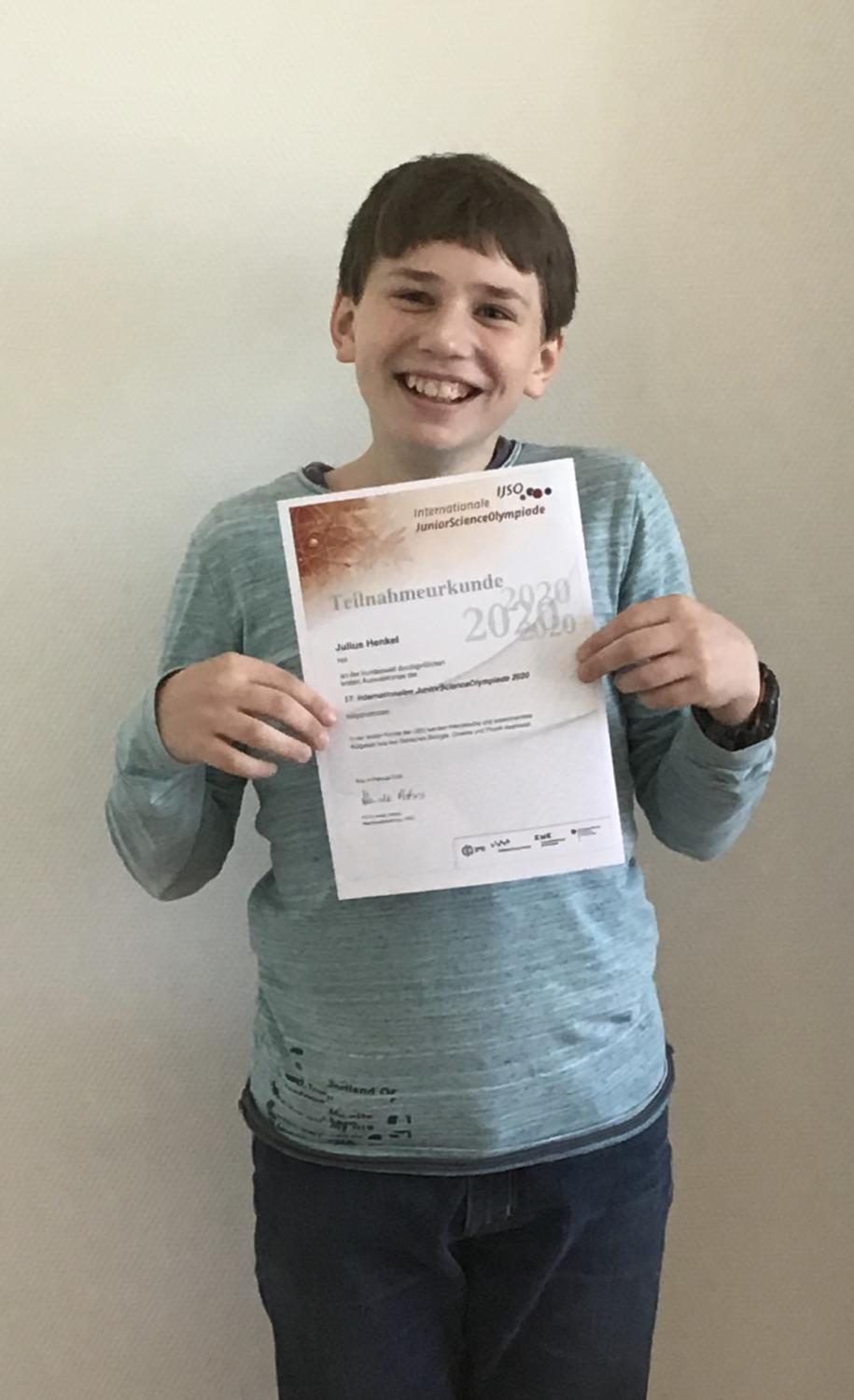
A total of 10 students took on the challenge at the Steinmühle under the guidance of their NaUnt teacher, Julia Riemenschneider: Liliane Albrecht, Mats Egbring, Maximilian Glock, Lilian Gräser, Max Krug, Antonia Kurlinsky, Stella Preiß, Konrad Rothmann, Jonathan Wolff, and Philipp Zielen. Alongside their regular classes, they worked with great enthusiasm on the experiments, which they conducted and documented using only everyday materials. The tasks posed a particularly significant challenge, especially for the youngest participants in the competition. Despite this, they were able to successfully complete the experiments on their own, demonstrating great enthusiasm for STEM subjects.
Julia Riemenschneider

4. March 2020
https://steinmuehle.de/wp-content/uploads/sites/5/2020/03/Teaser-2-scaled.jpg 722 1500 konnertz https://steinmuehle.de/wp-content/uploads/sites/5/2025/11/Logo_SchuleInternat_Steinmuehle_2026_3.png konnertz2020-03-04 11:20:482026-06-18 15:49:29Junior Science Olympiad: Even the youngest participants worked independently and successfully

“Amazon Ants” and “Math Magicians” took second place statewide in Hesse

Contests & Awards, News, STEM

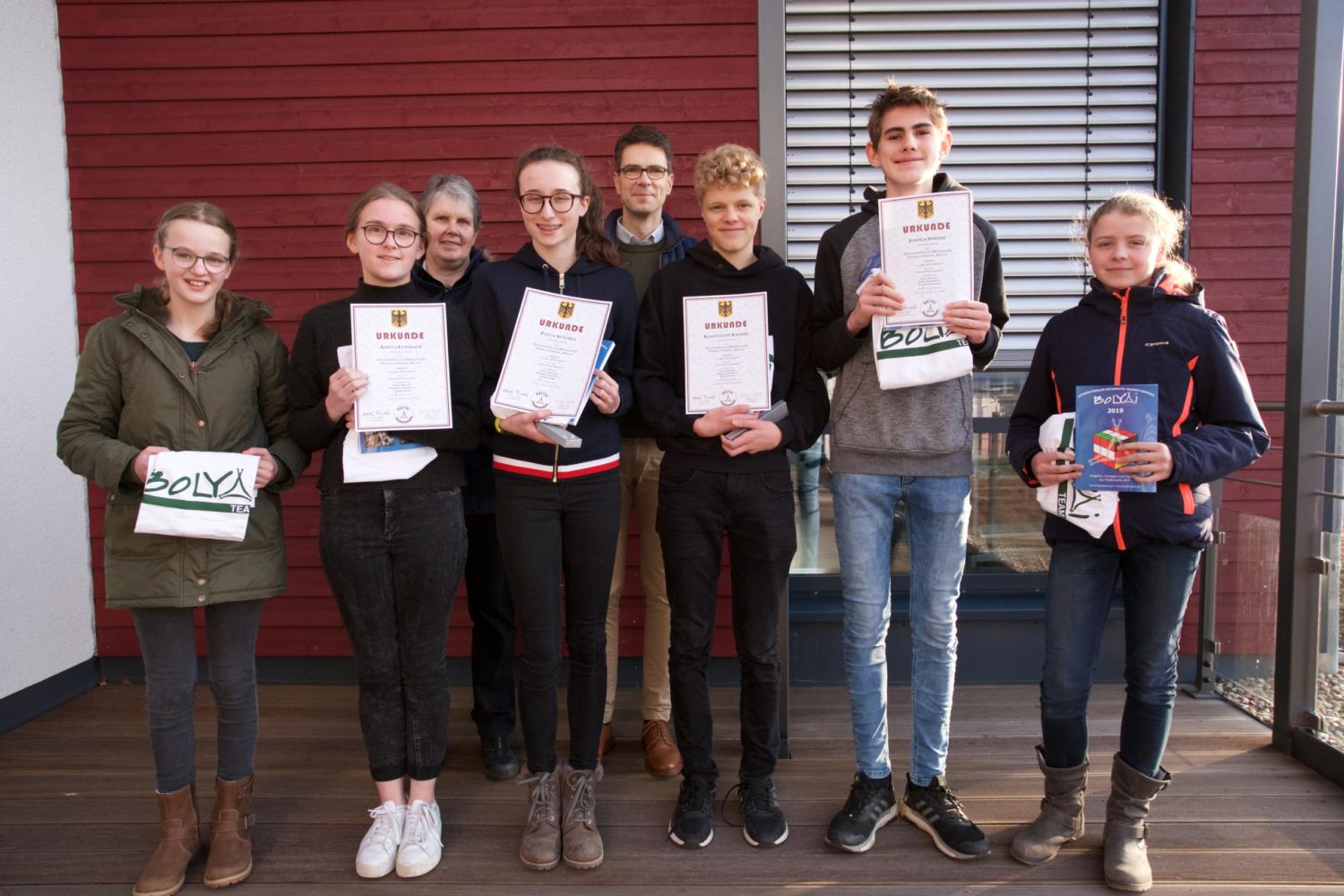
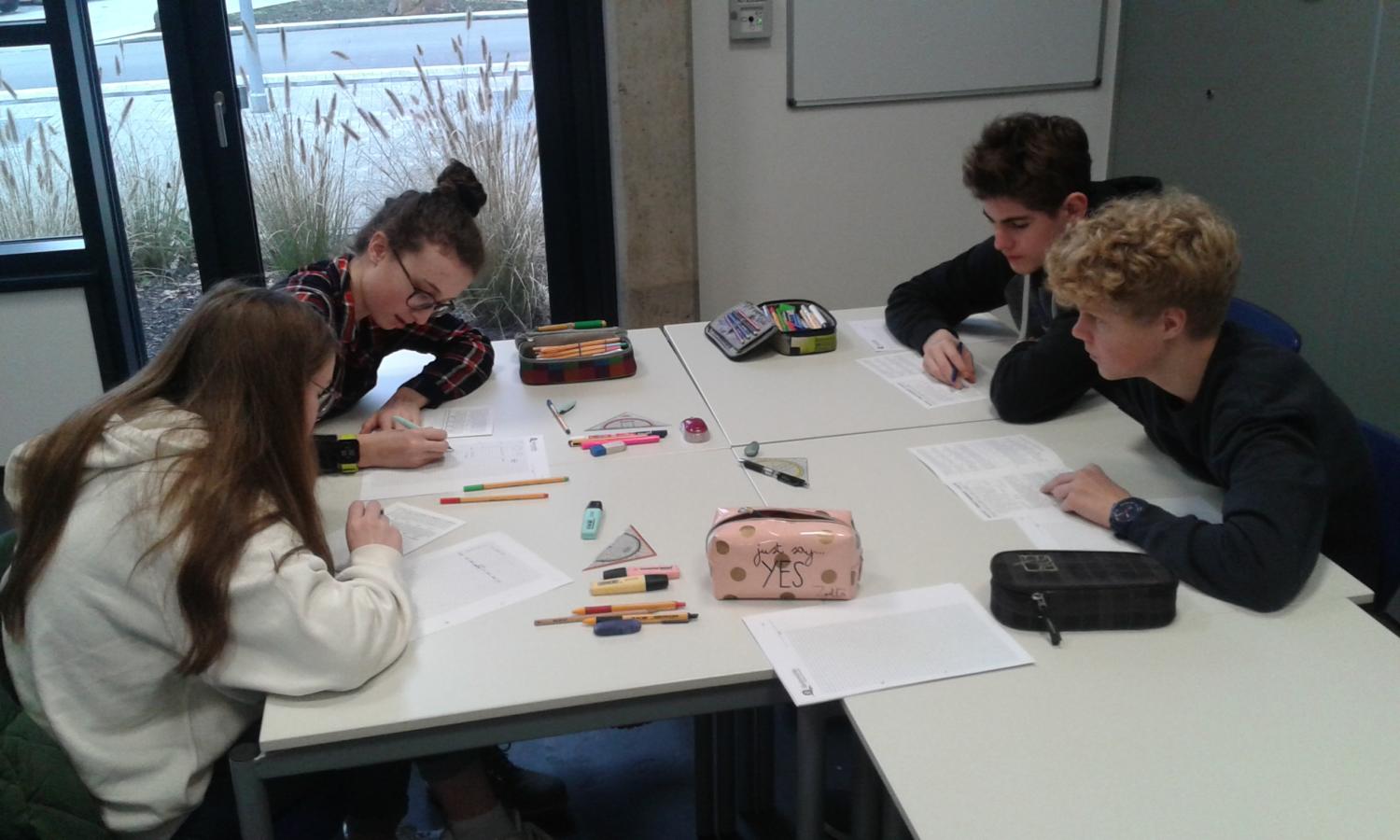
“Can you guys double-check if what we’ve checked off here is right?” “I’m on a hot lead for Problem 8 right now.” “How do you factor again?” “You cross out something at the top and something at the bottom.” “I know the p-q formula. Am I smart or am I not smart?”—Those were the actual words of Aliena, Paula, Joshua, and Konstantin from Class 9a as they worked on the problems for the Bolyai Team Math Competition.

What is not allowed in regular class exams or tests is, in fact, encouraged in this new math competition: Two to four students from the same grade form a team and work together to determine which of five given answers is correct for a math puzzle. Anything is possible, ranging from “none” to “all 5 answers.”

“The ability to work together is a core value in our lives”—that’s the motto of this competition, which originated in Hungary and has only been offered in Germany for the past five years. The two girls and two boys from class 9a agreed to participate in Bolyai without a moment’s hesitation. They spent more time discussing their team name. They ultimately competed as the Amazon Ants (“They’re the strongest animals in the world relative to their body weight,” Joshua had explained) and were very successful. Out of 61 participating teams in Hesse, they took second place and received certificates, T-shirts, and the 2019 Bolyai Competition yearbook containing all the problems and solutions.
Just like last year, Teresa Dinges (6b) and Sophia Rogosch (6c), along with two students from the Gymnasium Philippinum, competed in the Bolyai Competition as “Die Mathemagier.” They were just as successful as last year and took second place among 103 participating groups of sixth graders in Hesse.

Congratulations to both successful math teams!
Gisela Opper

4. March 2020
https://steinmuehle.de/wp-content/uploads/sites/5/2020/03/Teaser-1-scaled.jpg 632 1500 konnertz https://steinmuehle.de/wp-content/uploads/sites/5/2025/11/Logo_SchuleInternat_Steinmuehle_2026_3.png konnertz2020-03-04 11:13:352026-06-18 15:49:28“Amazon Ants” and “Math Magicians” took second place statewide in Hesse

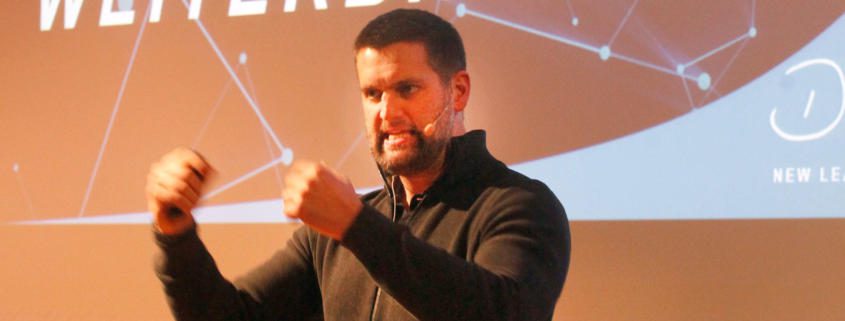
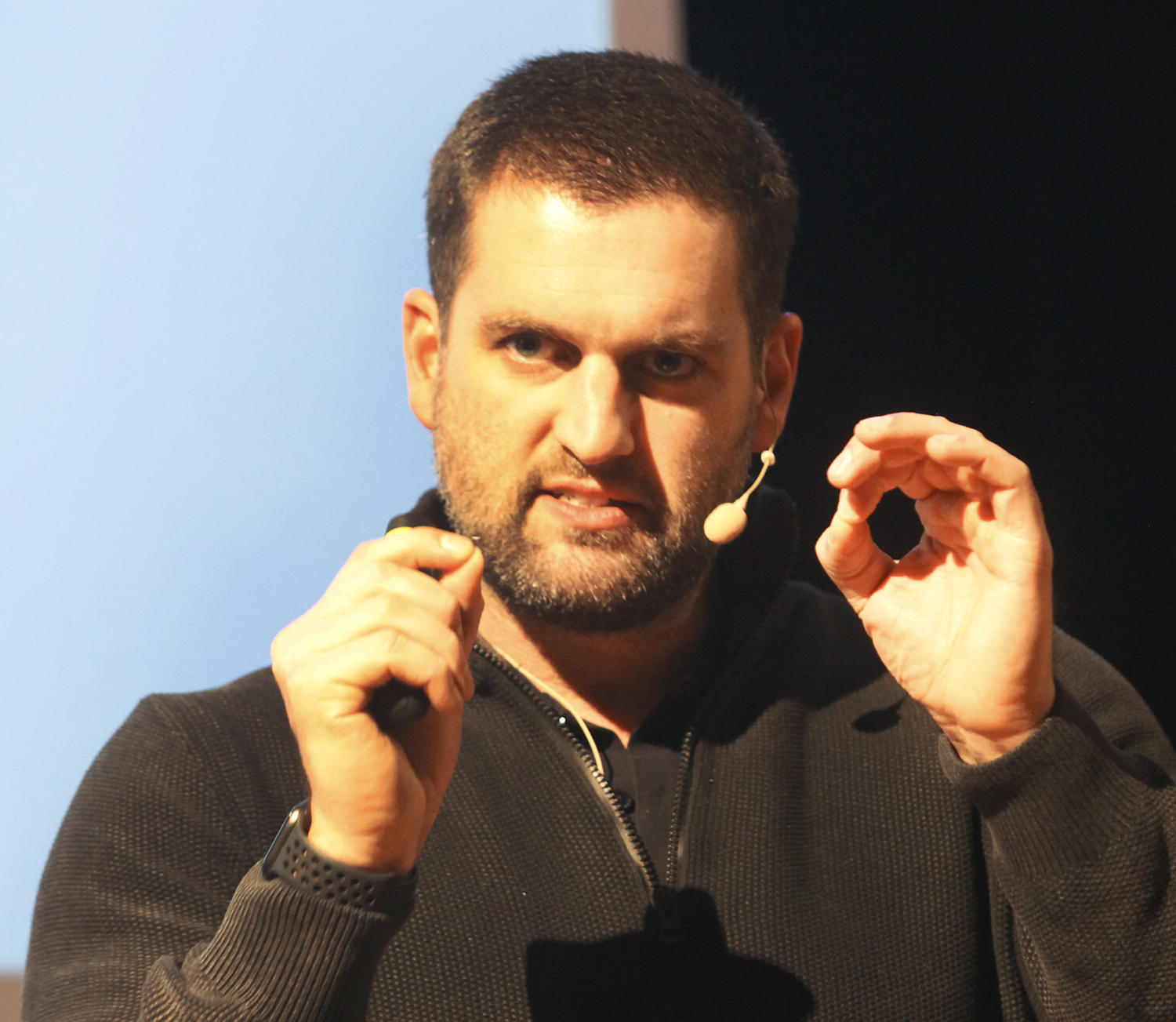
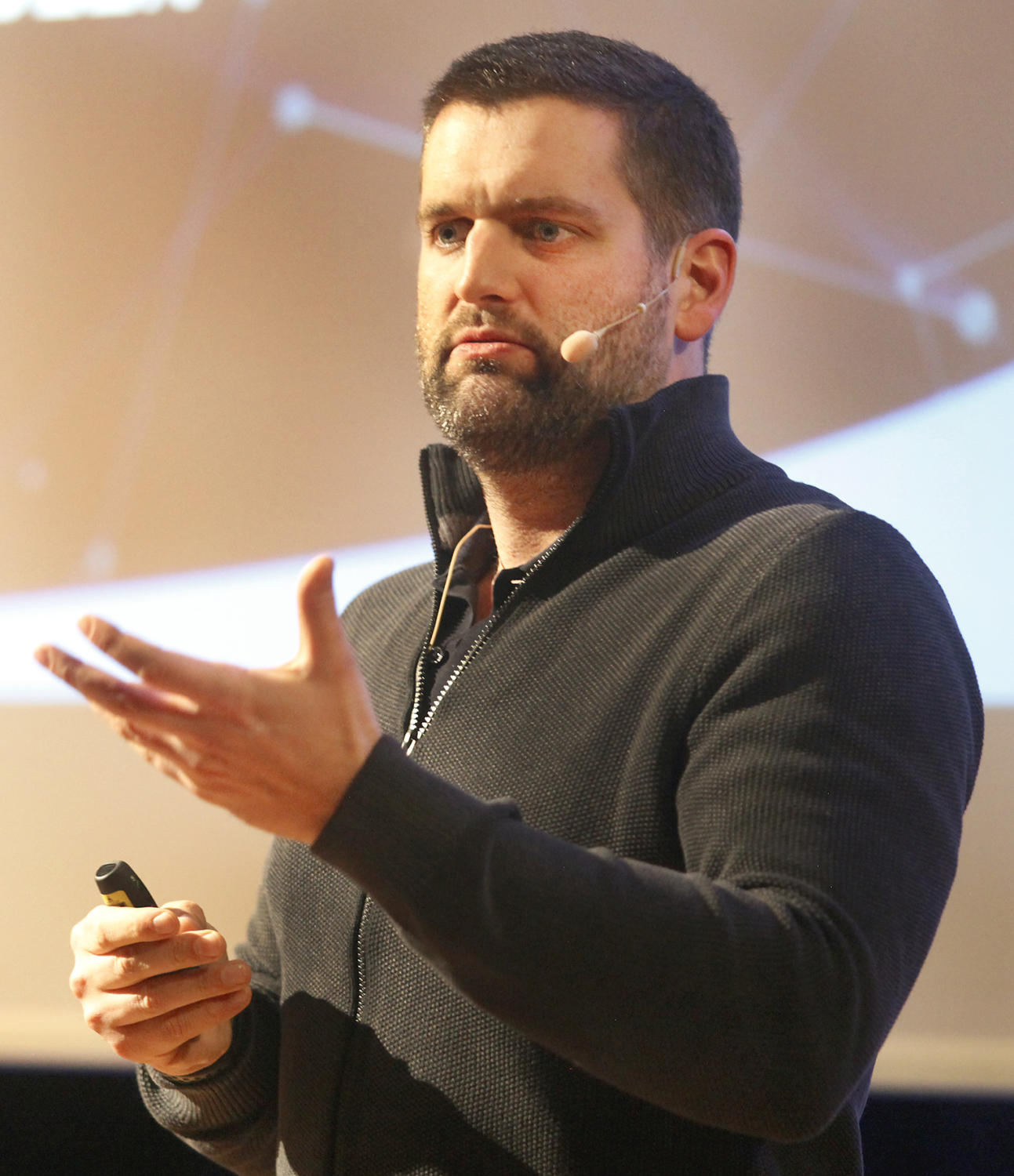
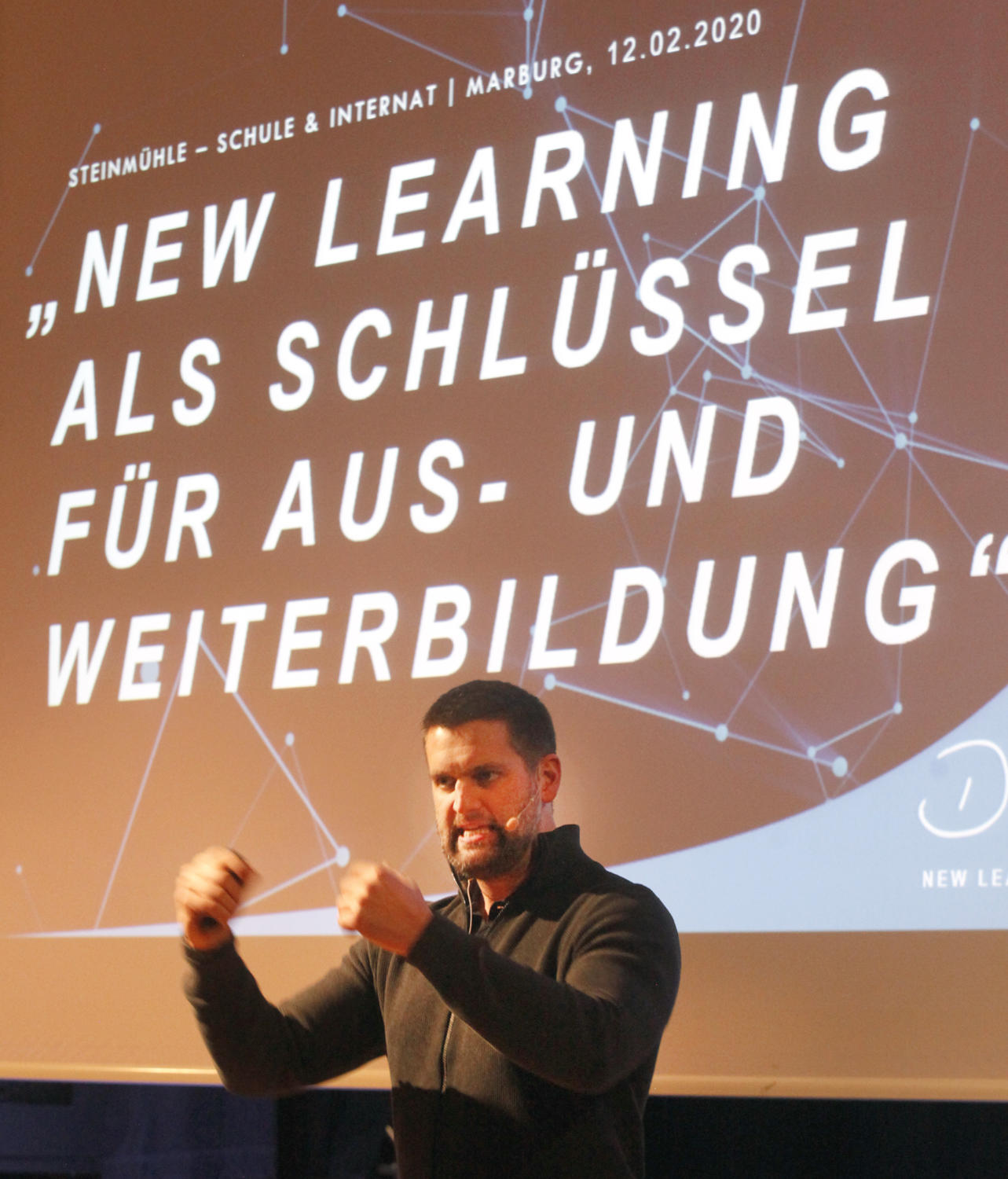
“Share your knowledge with the world” — Successful math YouTuber Daniel Jung spoke at the Steinmühle

News, STEM

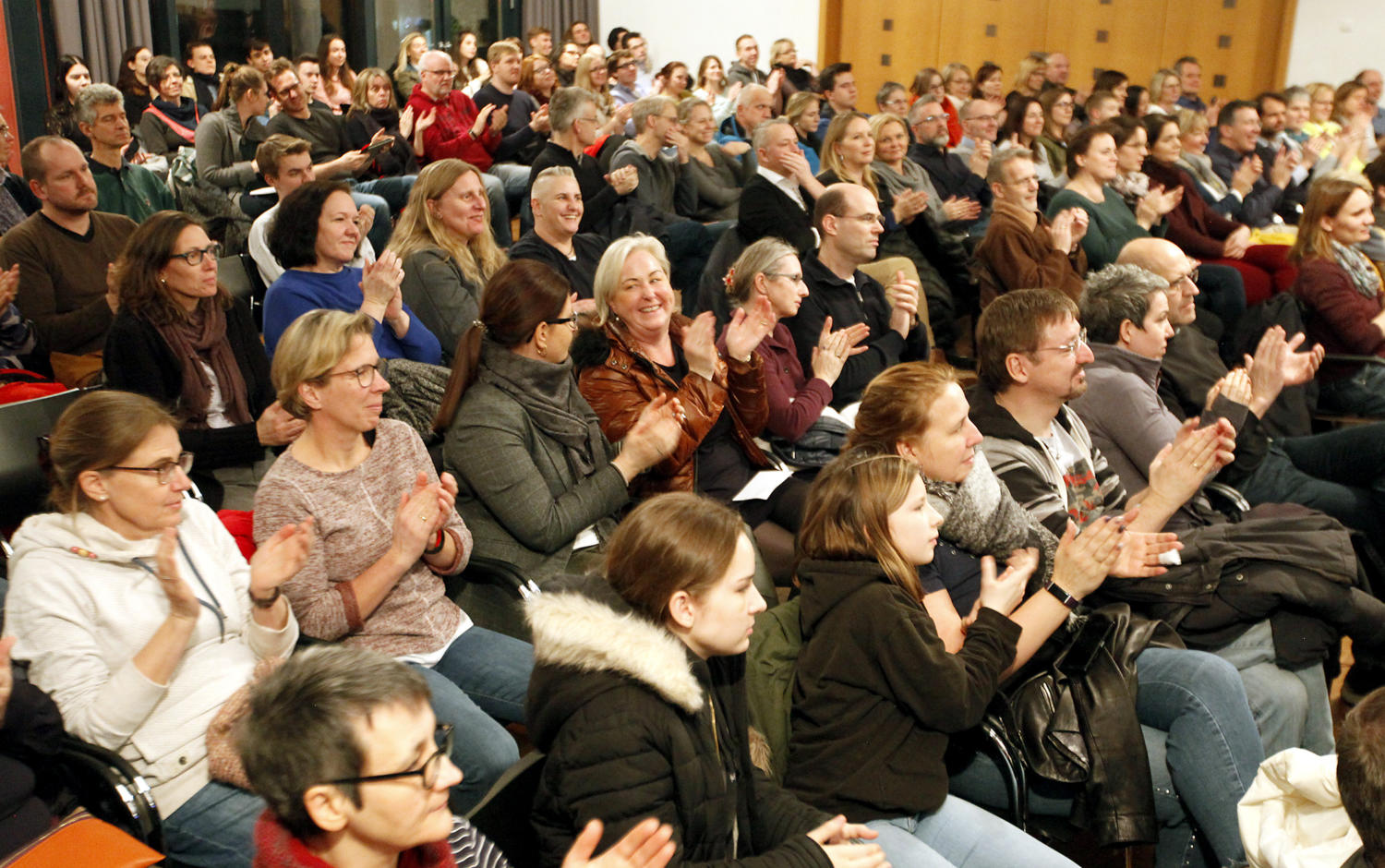
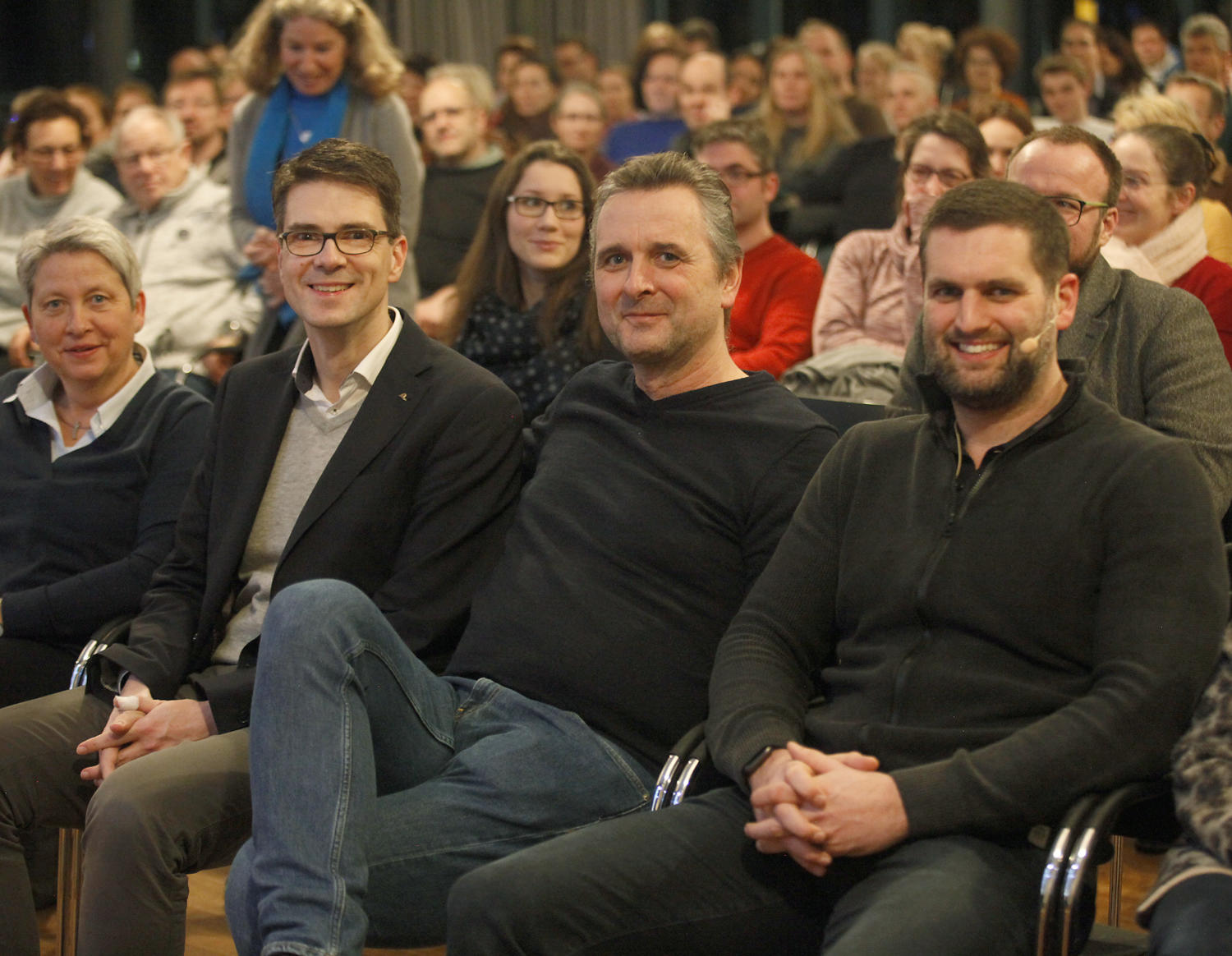
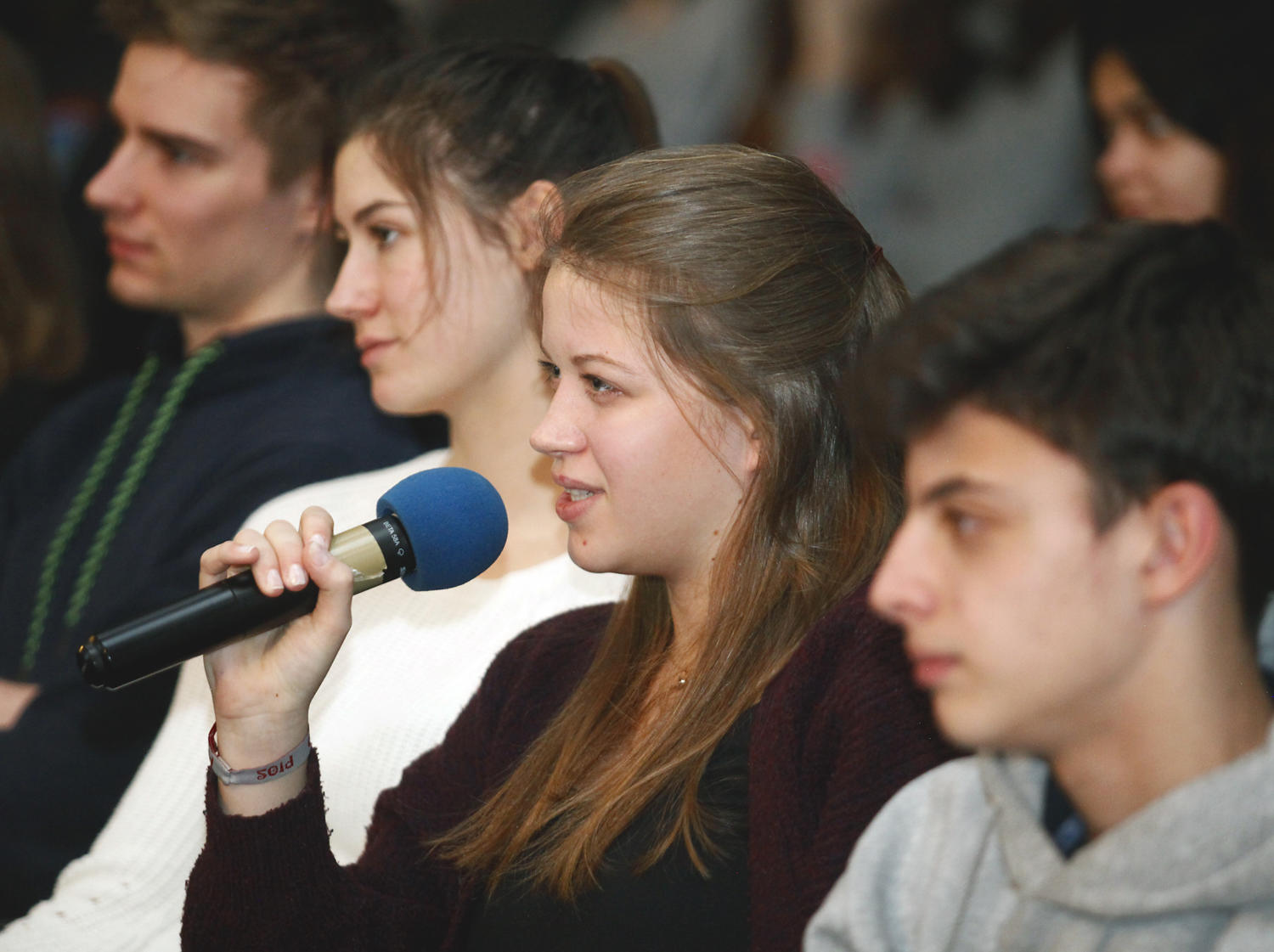
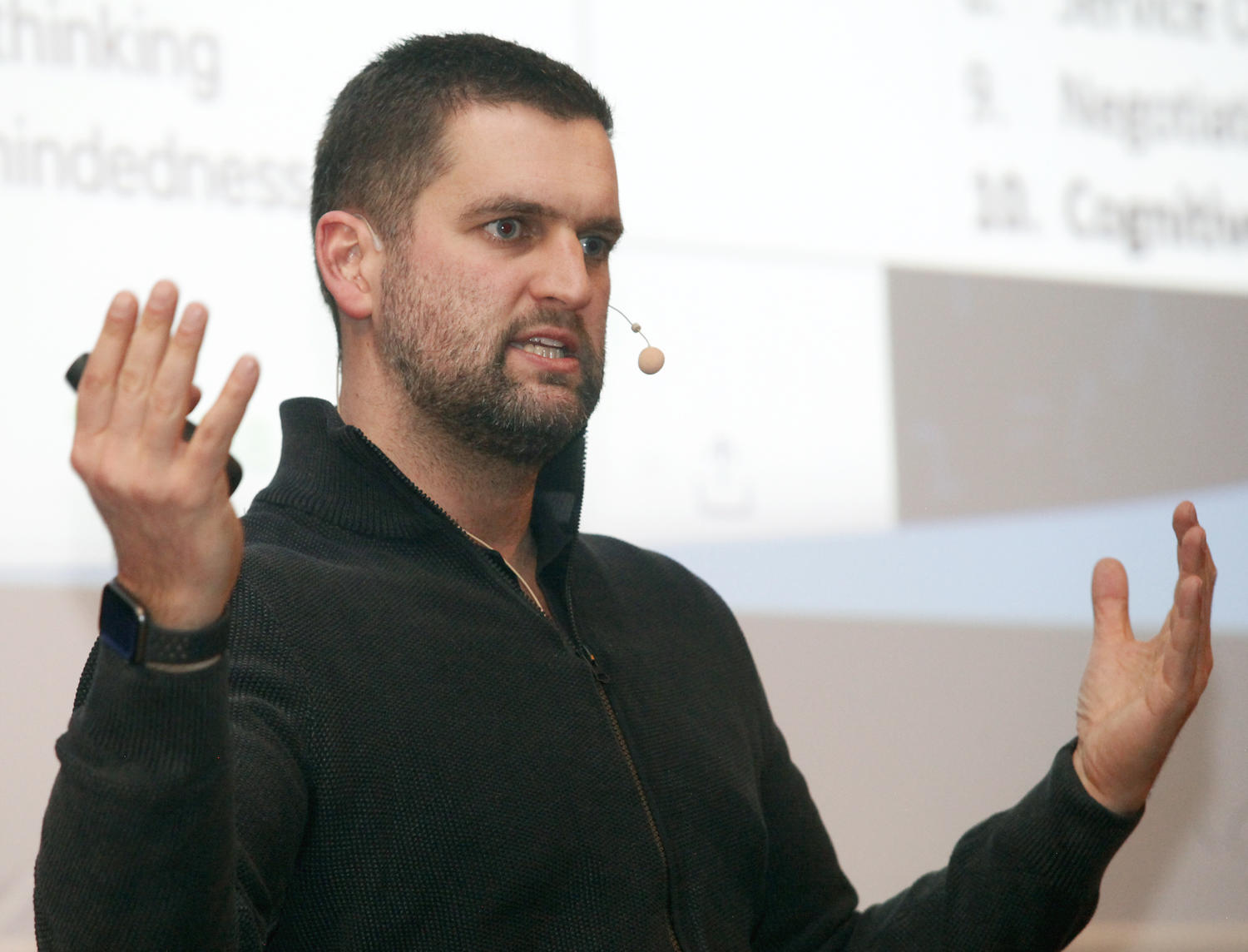
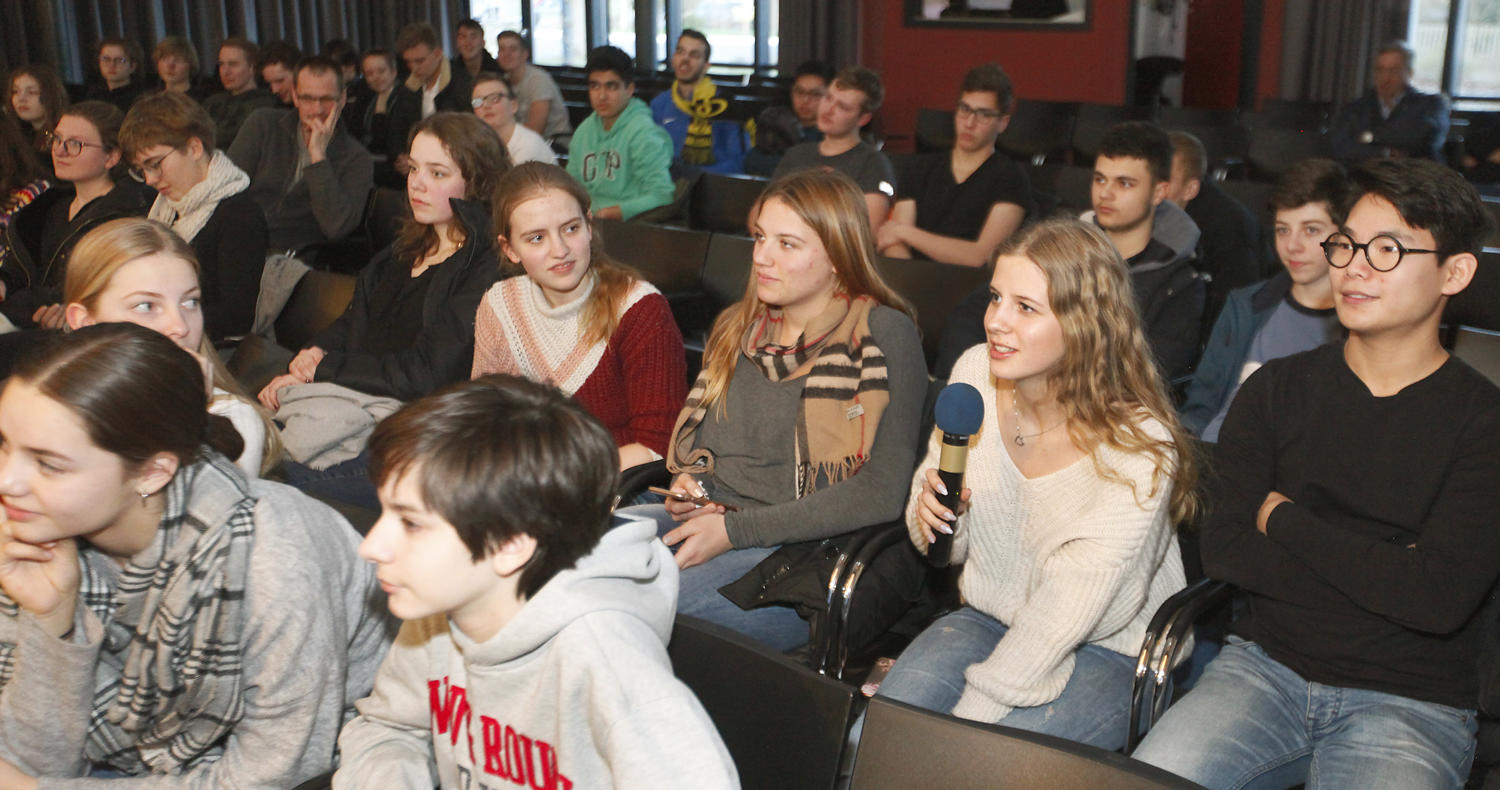
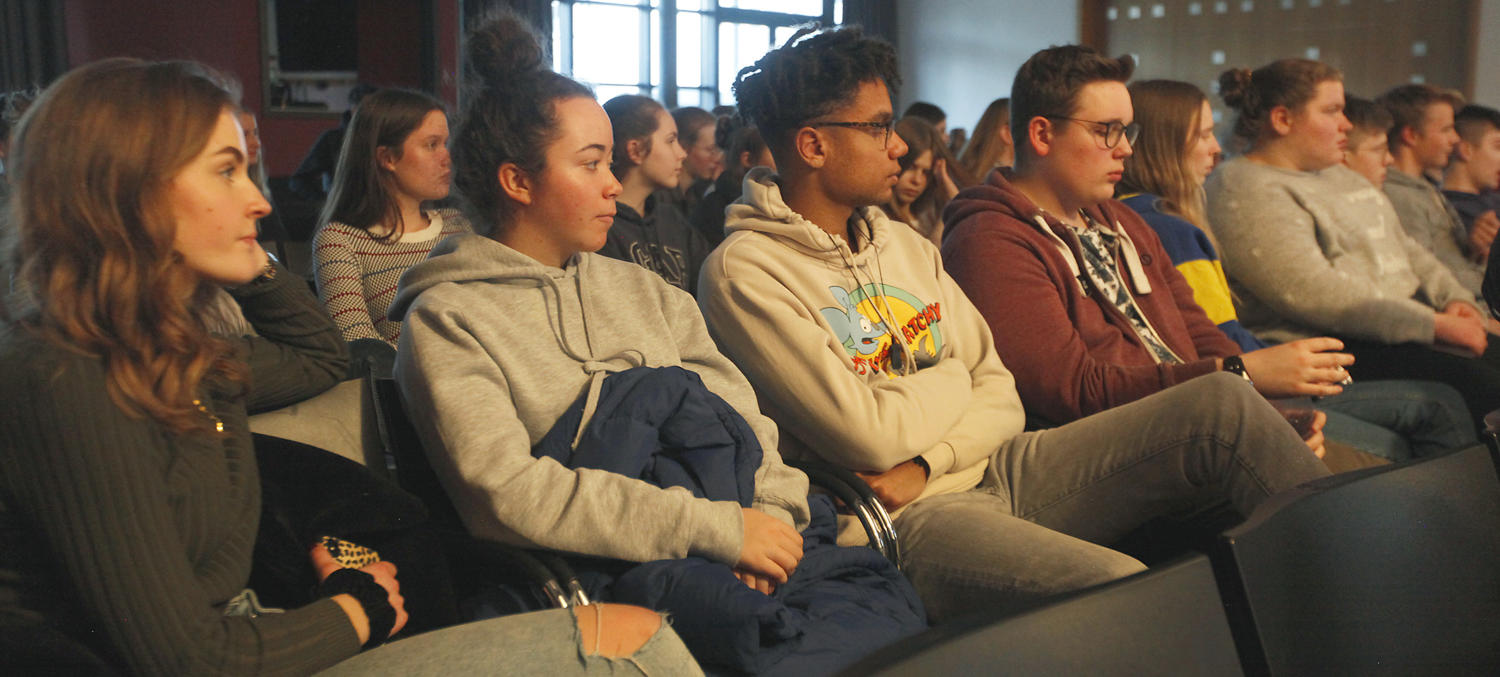
He is a regular guest speaker at well-known companies, but he has never been invited by a school. — School principal Björn Gemmer wasn’t willing to let this statement by Germany’s most famous math YouTuber, Daniel Jung, in an article in Deutsche Bahn’s customer magazine stand unchallenged. The school administration and Steinmühle management secured the “math rock star’s” agreement to give a talk at Steinmühle. On Wednesday evening, he filled the audience seats in the forum.

He doesn’t waste time with long introductions in his videos. Daniel Jung gets right to the point—and that’s exactly what his well over 600,000 followers seem to love. It’s not about beauty, fashion, or fitness like it is for countless other YouTubers. Daniel Jung’s passion is—mathematics! Laughter fills the hall as the speaker on the Steinmühlen stage mimics the way he steps into the frame in front of the camera in his videos—and then steps back out again. That’s how many people who search the internet for solutions to math problems—and find them—know him.

Born in Remscheid in 1981, Jung has compiled over 2,200 explanatory videos covering topics such as stochastics, systems of linear equations, and other mathematical problems that give many high school and college students a hard time. The videos, each just a few minutes long, are a huge hit on YouTube. His videos have already been viewed over 200 million times. The thank-you comments under his videos speak for themselves. “Oh my God, you saved my butt on my final exams,” one comment reads, for example. Or: “I learned more from you in 60 seconds than I did in half a year of math class.”


Breaking Down a Generational Conflict

Yet this eloquent man in his late thirties, who studied math and sports but ultimately did not pursue a teaching career in the traditional school setting, does not see himself as competition for schools, but rather as a complement: “We need the structured school environment, ‘but people aren’t built for 45 minutes of high-pressure learning.’” In addition, it has been proven that an individual teacher can achieve more than group instruction. And: “My material is accessible from anywhere, at any time.” Daniel Jung, who, among other things, contributes to the platform mathefragen.de and founded the Daniel Jung Academy, sees himself as an entrepreneur. His goal is to decipher “new learning,” break down a generational divide, and make it clear: “It’s not just thick books that can impart knowledge—the internet can, too.”
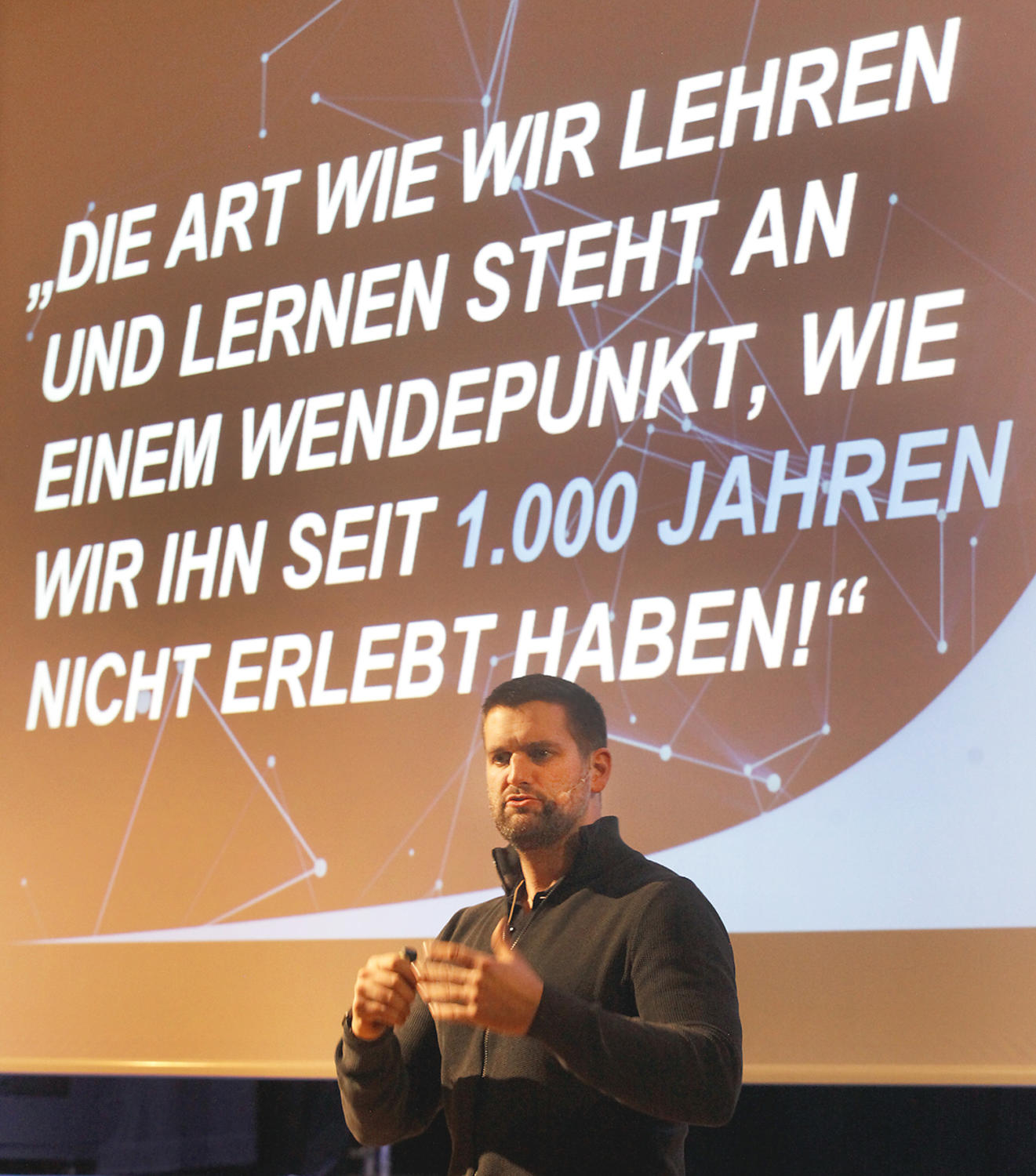
With his approach—projected powerfully onto the Forum’s screen—Jung delivers a thunderclap: “The way we teach and learn is at a turning point unlike any we’ve seen in a thousand years.” Even statements from dissenters—who demonized educational videos by claiming they were to school learning what Amazon is to retail—did nothing to change this. “We should meet young people where they already are—namely, on the internet,” said the speaker.
He therefore encouraged students and teachers to use the Internet to share interesting content: “Share your knowledge with the world. It’s fun to help others.”

14. February 2020
https://steinmuehle.de/wp-content/uploads/sites/5/2020/02/Titel-scaled.jpg 945 1500 konnertz https://steinmuehle.de/wp-content/uploads/sites/5/2025/11/Logo_SchuleInternat_Steinmuehle_2026_3.png konnertz2020-02-14 09:10:102026-06-18 15:49:14“Share your knowledge with the world” — Successful math YouTuber Daniel Jung spoke at the Steinmühle

From Accident Prevention to “Bouncy Crowds”: The Advanced Chemistry Class Took a Field Trip to TU Darmstadt

News, Steinmühle on the Road, STEM

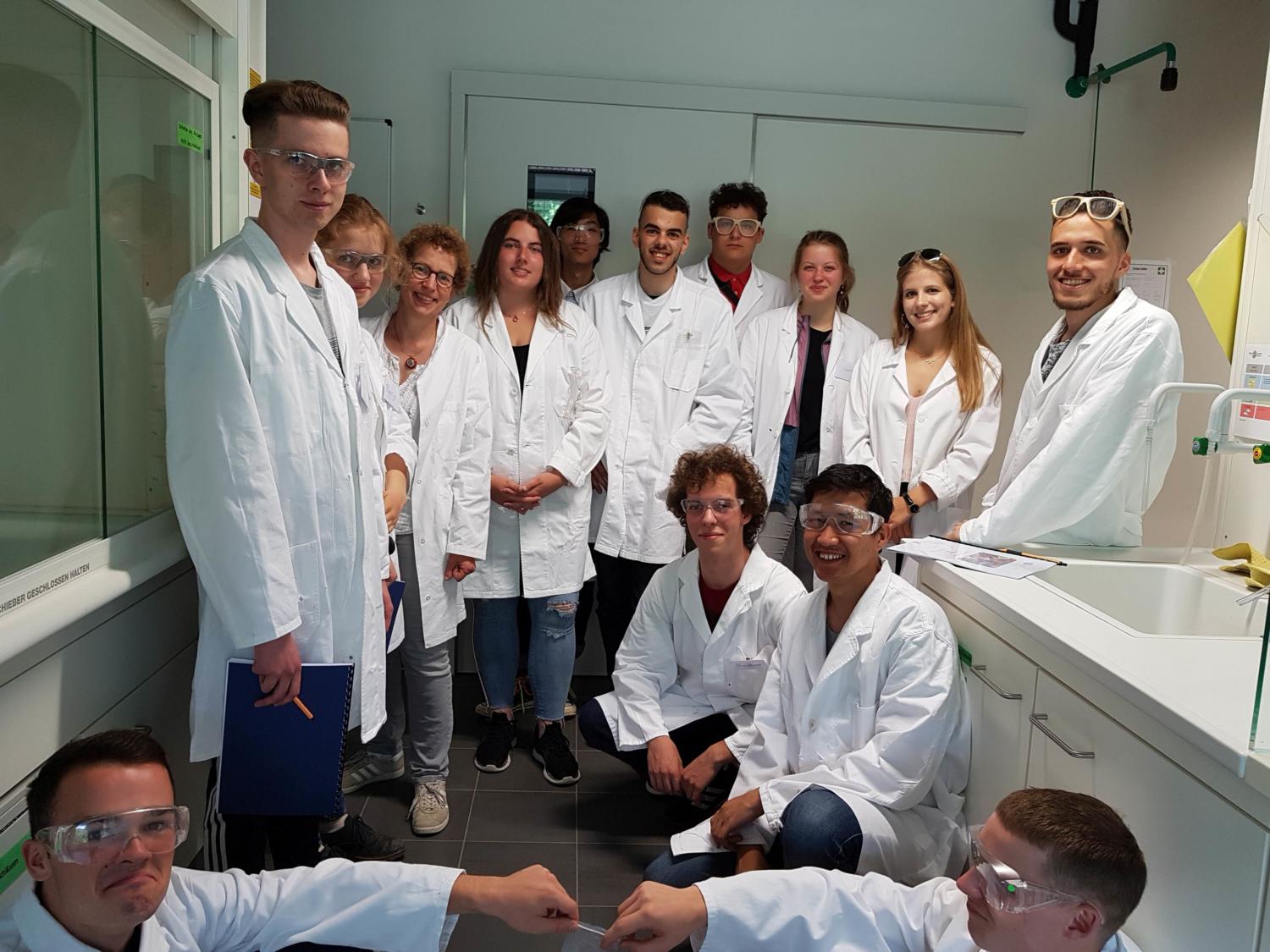
At the end of September, the advanced chemistry class of the graduating senior class traveled with their teacher, Dr. Jutta Töhl-Borsdorf, to the Technical University in Darmstadt.

The goal of the field trip was to learn about various topics related to “plastics” and “equilibria.” Getting to know a chemistry lab and conducting educational experiments in a university setting were intended to provide insights into a potential future degree program. After a two-hour train ride, the group headed straight to the university, where they first received an introduction to the topic of “plastics” and the experiment they would be conducting. The experiment involved synthesizing polydimethylsiloxane to produce silicones. The group also received detailed instruction on safety and protective equipment before beginning the experiment to prevent potential accidents in the lab.

The first part of the experiment on the production of silicones—synthetic polymers in which silicon atoms are linked to one another via oxygen atoms—took place on the morning of the day we arrived. We also had lunch in the university cafeteria.

This was followed in the afternoon by the second part of the experiment—cross-linking the oligo- or polydimethylsiloxane with boric acid; the results were “bouncy ball-like,” colorful masses. Afterward, the class headed to a nearby youth hostel. The students spent the evening with their teacher, Dr. Jutta Töhl-Borsdorf, enjoying a cozy get-together over dinner at a nearby pub.

Insightful Impressions

On the second day of the field trip, the university course covered the topic of “chemical equilibria” and conducted experiments to determine an equilibrium constant using spectrophotometry. In the course of this, the class also learned how to use a “Graphical Analysis app” to analyze and evaluate the results obtained; based on these measured values (the slope of the graph and the y-intercept), the equilibrium constants they were seeking could be calculated. In the afternoon, the advanced chemistry class headed back to Marburg, taking with them valuable insights and new experiences, both in terms of academic knowledge and career orientation.

Earlier this year, students in the advanced chemistry class had the opportunity to get a glimpse into what it’s like to study chemistry at Philipps University of Marburg. The topic of this workshop was plastics. The students in the advanced chemistry class learned about the various synthesis methods and how to use the tools of the trade.

Lena Noelle Joußen and Svenja Winter

28. January 2020
https://steinmuehle.de/wp-content/uploads/sites/5/2020/01/2019-09-27_12-17-19_Chemie-LK-Abi-2020-TU-Darmstadt.jpg 961 1280 konnertz https://steinmuehle.de/wp-content/uploads/sites/5/2025/11/Logo_SchuleInternat_Steinmuehle_2026_3.png konnertz2020-01-28 08:53:142026-06-18 15:48:48From Accident Prevention to “Bouncy Crowds”: The Advanced Chemistry Class Took a Field Trip to TU Darmstadt

“Jugend Forscht” Training Trip for Winners of the State Advisor Awards

Contests & Awards, News, STEM, Talent Development

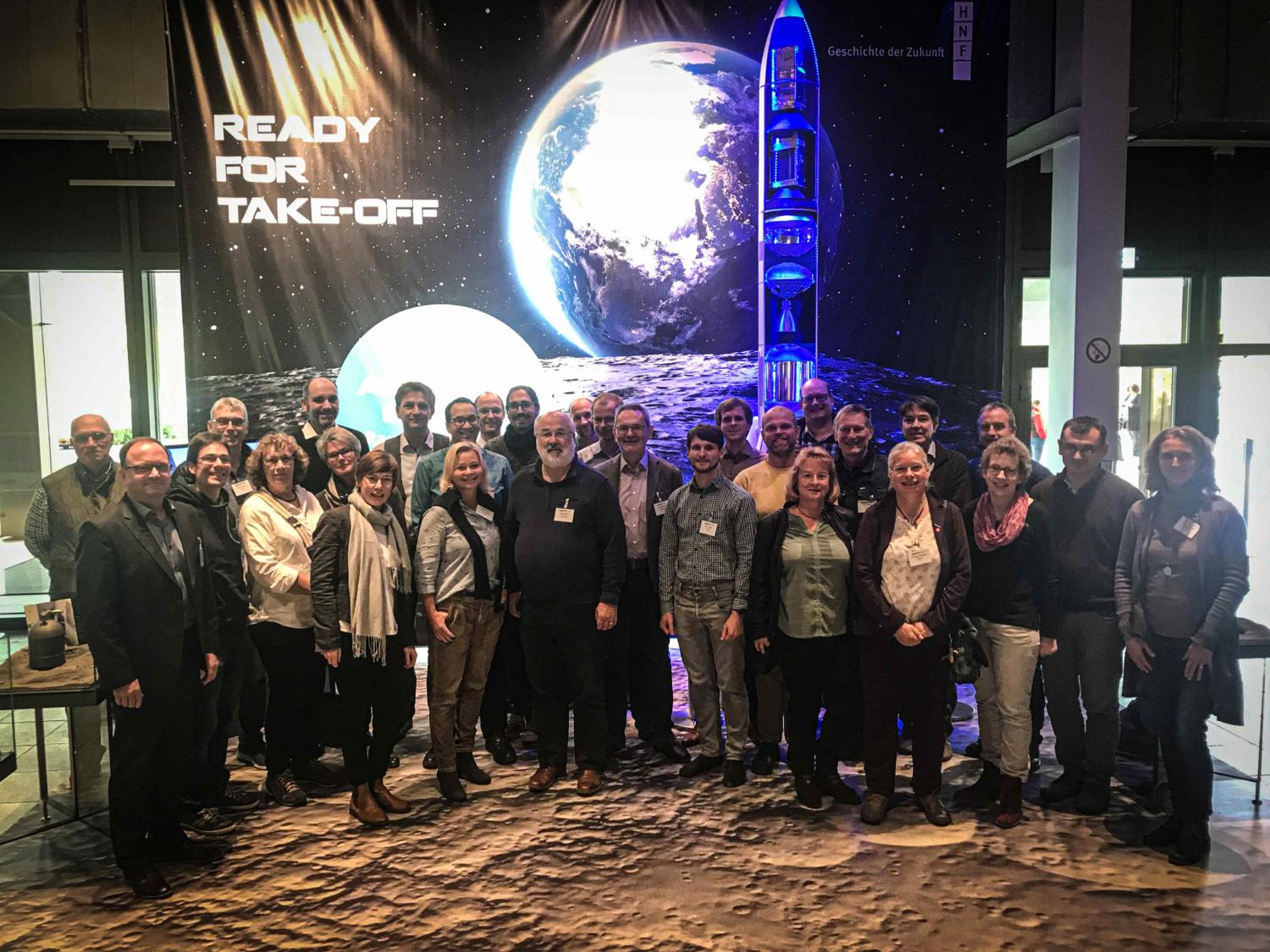
Under the motto “Jugend Forscht Offers More,” the award-winning mentors from the individual federal states gathered for an interesting professional development trip from November 15 to 17, 2019.
Dr. Jutta Töhl-Borsdorf, a teacher at Steinmühlen School, was awarded the Mentor Prize for Hesse at the state-level “Jugend forscht” competition in Kassel. A varied program awaited her in Paderborn, to which the “Jugend forscht” ambassadors from the federal states were also invited. In addition to exciting program activities, there was also ample time and opportunity for collegial exchange in a relaxed atmosphere.
It was particularly interesting to see how differently individual schools organize their participation in the “Jugend forscht” competition, depending in part on the specific conditions and opportunities in each federal state.
The new contacts made, as well as the many stimulating conversations and ideas, will certainly be valuable for the further development of the “Jugend Forscht” projects at Steinmühle.

(Photo: Award-winning mentors with the ambassadors from the federal states and the organizers “on the moon” at the Heinz Nixdorf Museum)

28. November 2019
https://steinmuehle.de/wp-content/uploads/sites/5/2020/01/2019-11-16_13-34-07x_Jugend-Forscht-Betreuerpreis-Nixdorf-Paderborn-scaled.jpg 1125 1500 konnertz https://steinmuehle.de/wp-content/uploads/sites/5/2025/11/Logo_SchuleInternat_Steinmuehle_2026_3.png konnertz2019-11-28 08:28:382026-06-18 15:48:35“Jugend Forscht” Training Trip for Winners of the State Advisor Awards

Mobile Chemikum Returns to the Steinmühle Fall Festival

Collaborations & Partnerships, Events & Celebrations, Former Students & Alumni, News, STEM

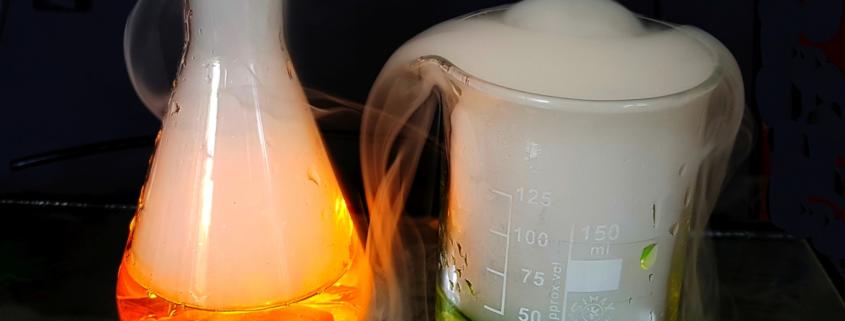
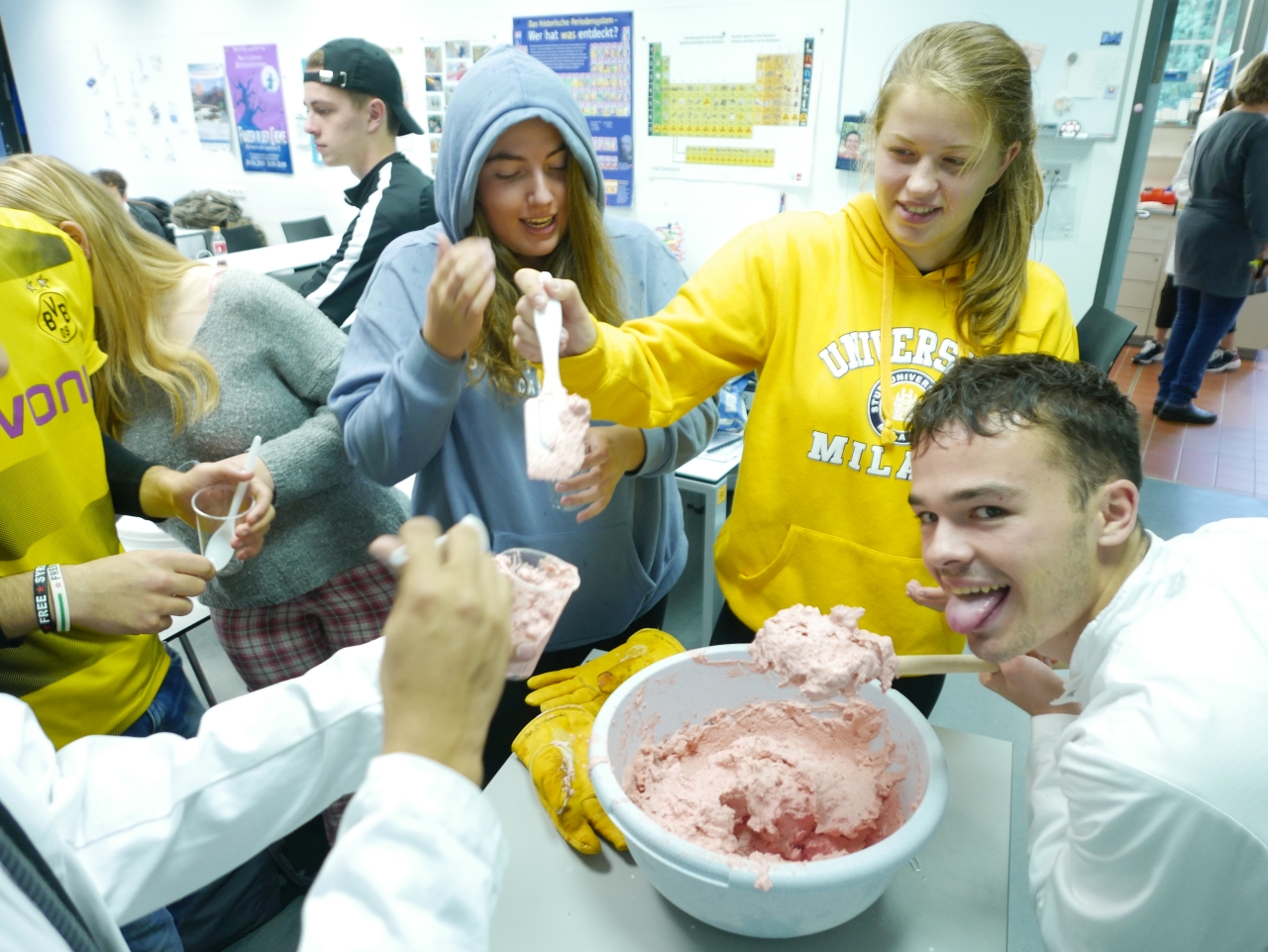
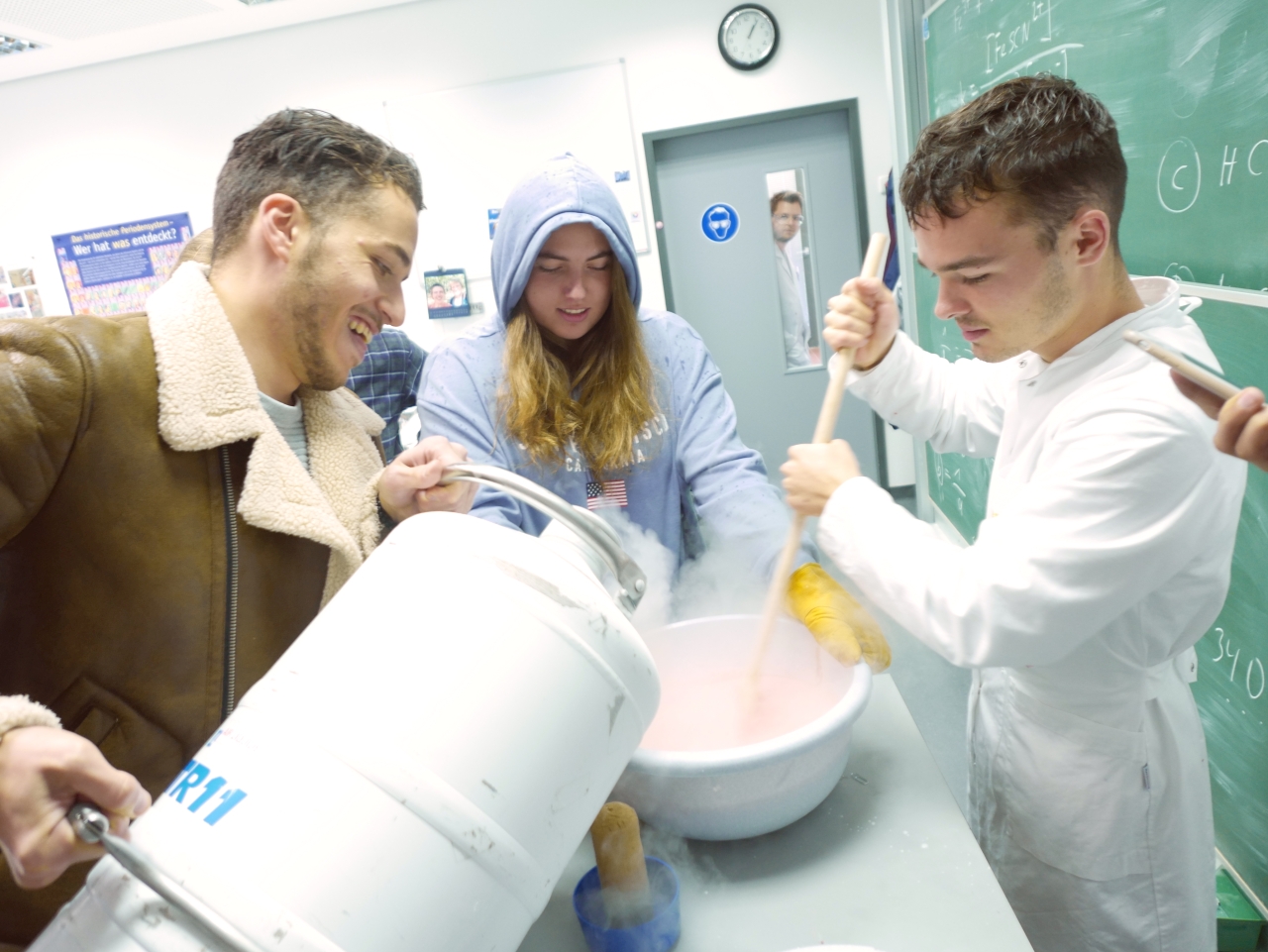
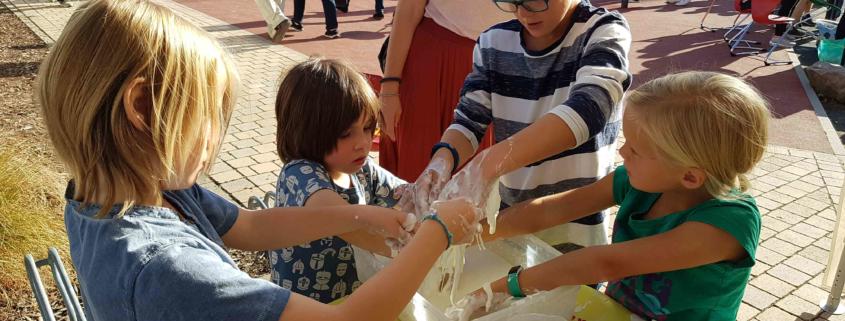
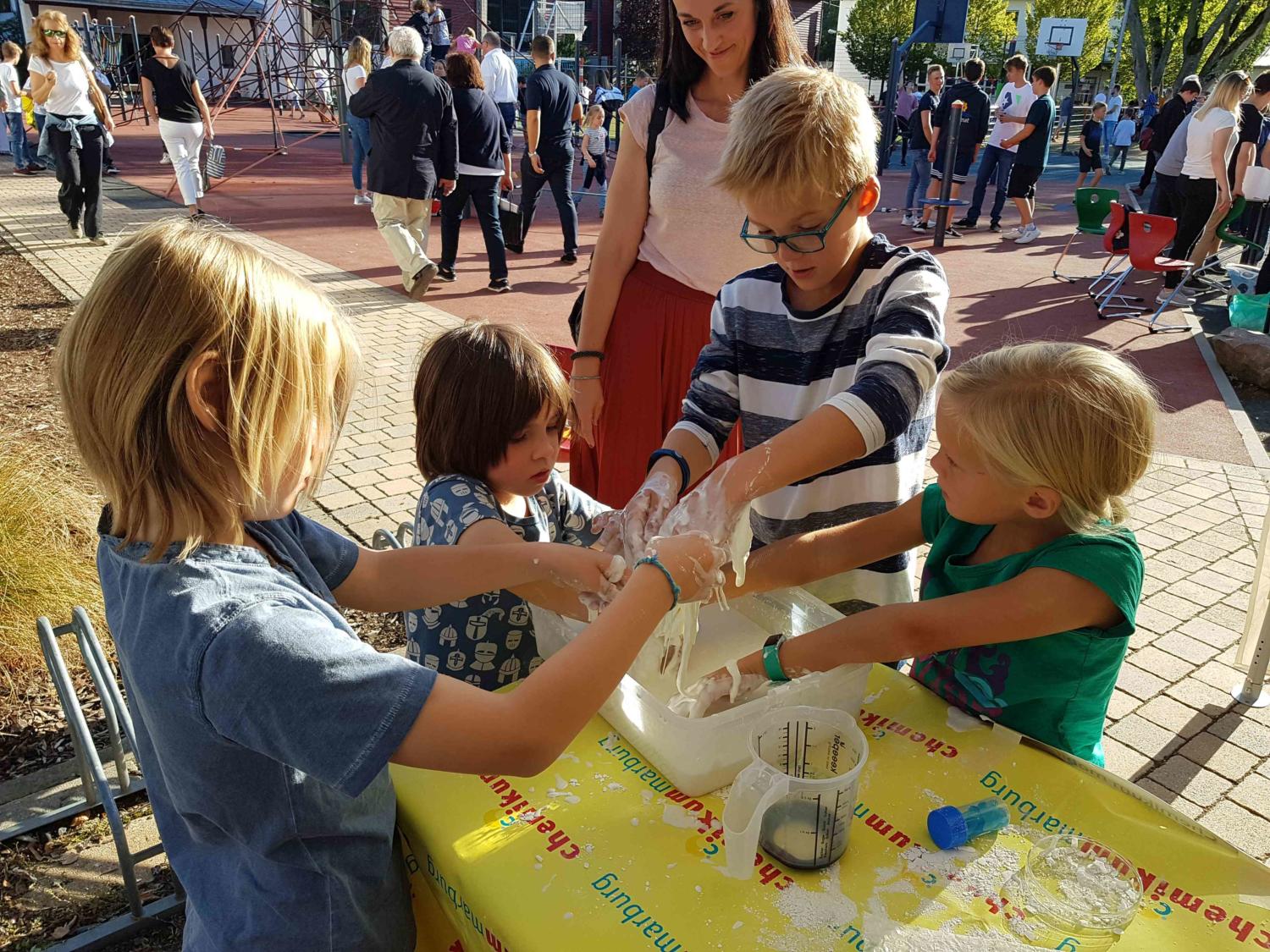
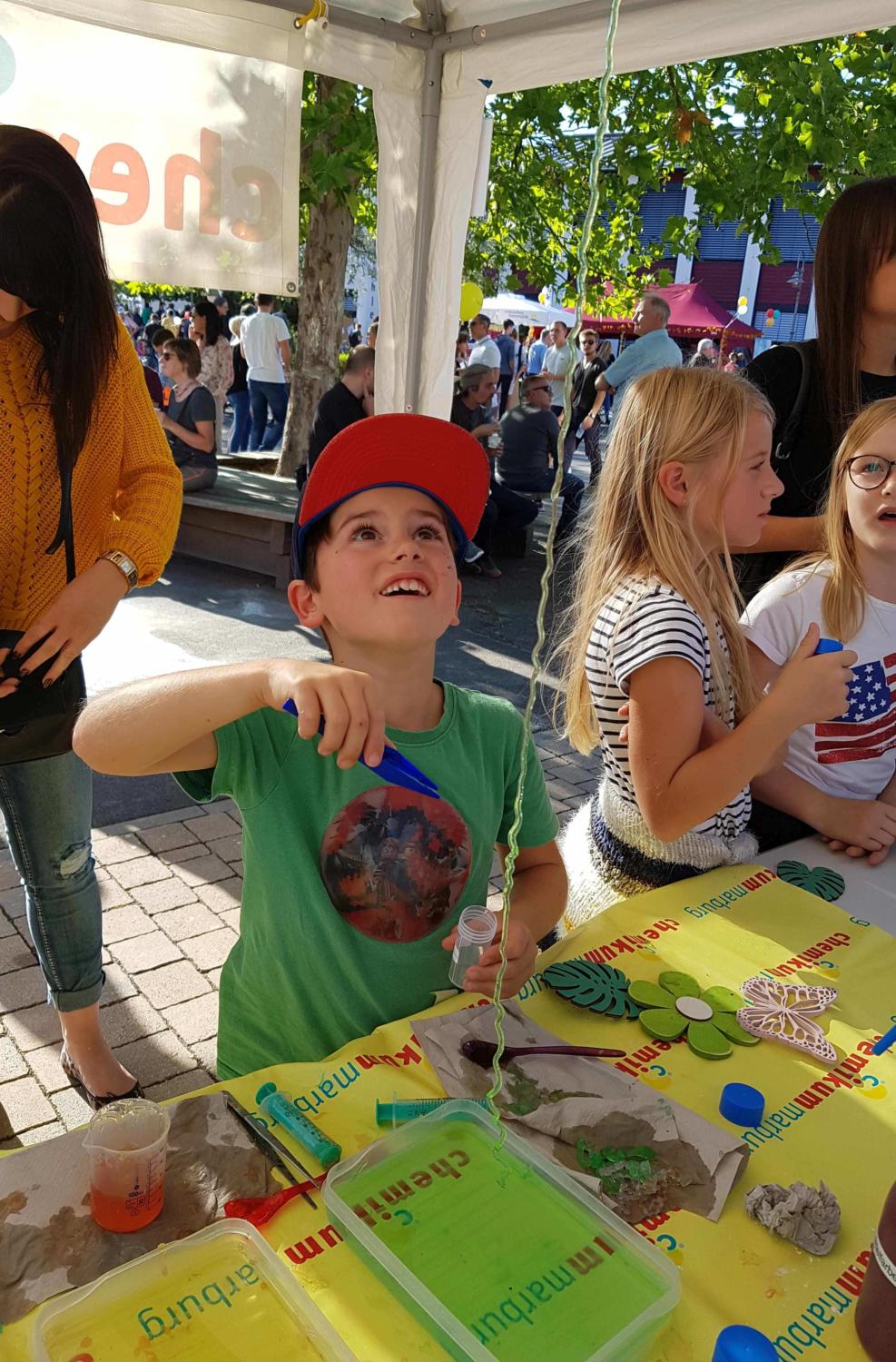
As it does every year, WU-Forschen is represented at the Fall Festival with a hands-on booth. This year, our students received support from the mobile Chemikum Marburg—just as they did in 2015. The Steinmühle Friends Association made this collaboration possible.
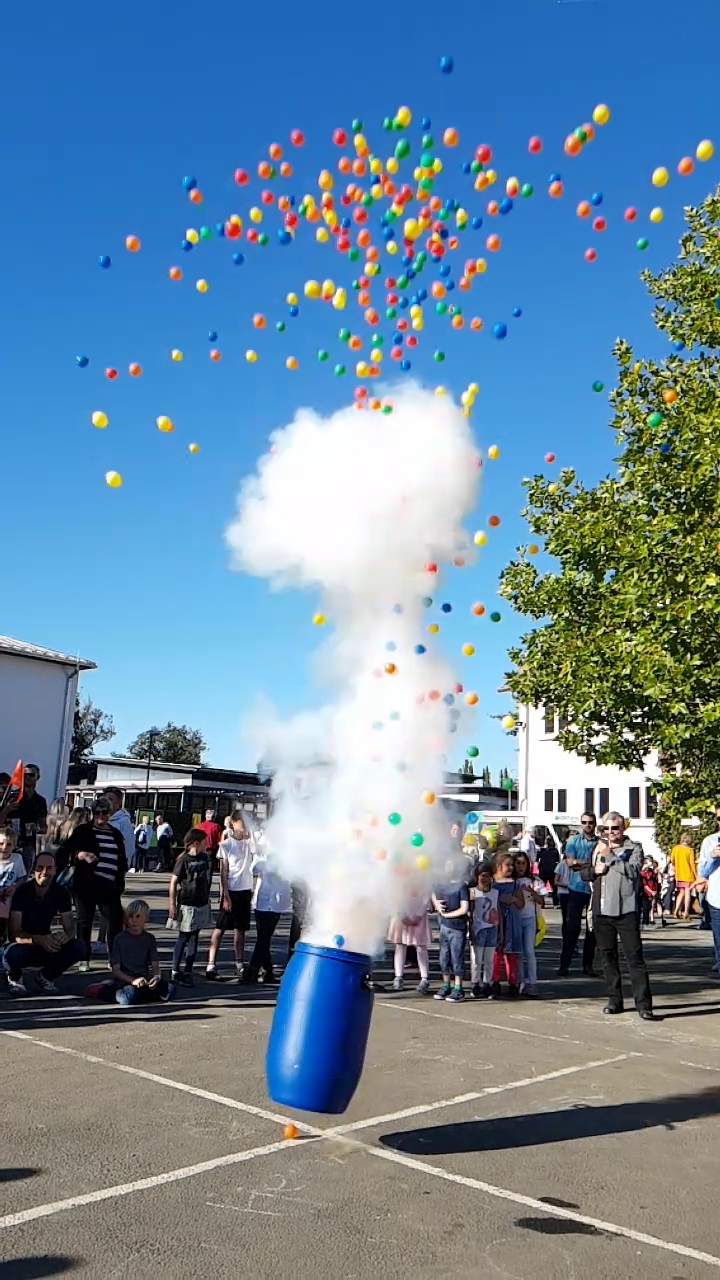
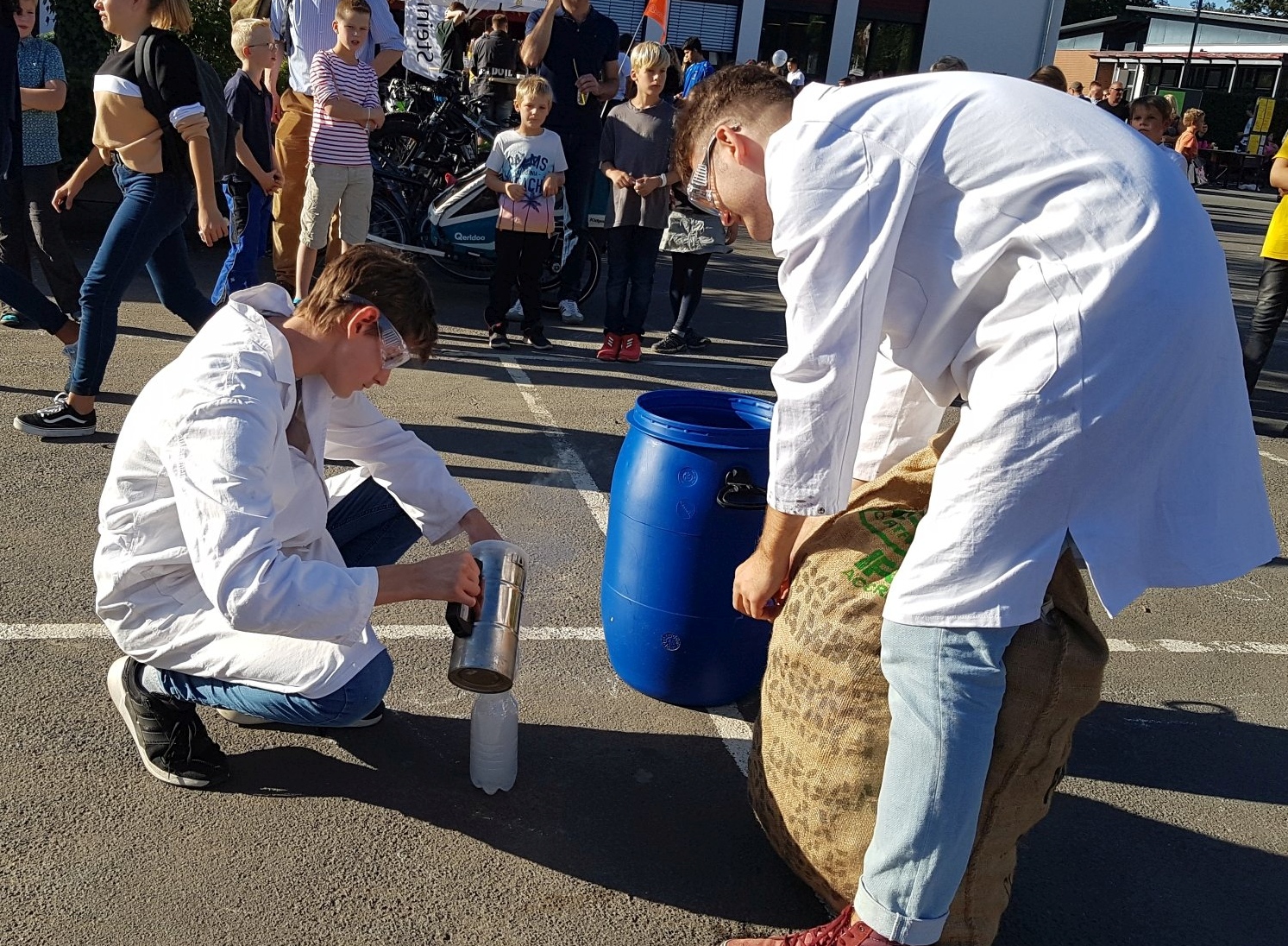
In addition to hands-on experiments with secret codes, alginates, dry ice, and much more, the Chemikum also demonstrated the popular “ball explosion” (photo).
There was a lot of interest at the booth. Younger children, especially those from the bilingual elementary school, were able to learn a lot and have fun here.

11. October 2019
https://steinmuehle.de/wp-content/uploads/sites/5/2019/11/2019-09-21_16-53-21_Herbstfest-Steinmuehle-Chemikum-scaled.jpg 1125 1500 konnertz https://steinmuehle.de/wp-content/uploads/sites/5/2025/11/Logo_SchuleInternat_Steinmuehle_2026_3.png konnertz2019-10-11 11:38:112026-06-18 15:47:15Mobile Chemikum Returns to the Steinmühle Fall Festival

Awards for everyone in the junior division of “Jugend forscht”

Contests & Awards, News, STEM, Talent Development

This spring, for the first time, a state competition was held in Hesse in the junior division of Jugend Forscht, also known as “Schüler experimentieren.” For Steinmühle, participating was a complete success, as no one returned to school without a prize.

The competition was organized by the Department of Electrical Engineering and Computer Science at the University of Kassel and was held there as well.
Steinmühle was able to field four teams (one biology project and three chemistry projects) that had won first place in the regional competition. The students from grades 5, 6, and 8 had to arrive early to set up their booths by around 8 a.m. Over the course of two days, they presented their research projects at their booths using scientific posters to a panel of experts and, on the second day, to the general public as well. It quickly became apparent that—compared to the regional competition—the overall standard of the research projects was very high.

A varied program of activities, including a visit to Grimm-Welt on Friday and a drumming workshop on Saturday, was on the agenda for the students. They spent the night at the nearby youth hostel.

Famous TV Host

The awards ceremony finally took place on Saturday afternoon and was hosted in a very entertaining manner by Shary Reeves, whom many recognize from the KiKa show “Wissen macht Ah.”
The program began with a series of thank-you speeches by representatives from the Hessian Ministry of Education and Cultural Affairs, the business community, and the University of Kassel. Shary Reeves then announced the rankings in the individual disciplines and presented the special awards.

The result was sensational for Steinmühle. Happily, all of Steinmühle’s participants went home with prizes! This was also true for Dr. Jutta Töhl-Borsdorf, our school’s STEM coordinator, who received a mentor award: “When it comes to the supervisor awards, it’s repeatedly emphasized that we’re able to have even very young students work on challenging projects.” There was also an interview in Kassel about the structures at Steinmühle.


Many would like to continue

Dr. Jutta Töhl-Borsdorf: “It’s great that the students who leave the GuFi Lab in 7th grade often continue—or now want to continue—for example, on Friday afternoons in the ‘Open Lab’ or during the 8th and 9th periods in elective classes.”

Another goal is for the project to extend all the way to the upper grades. While students there often have a very full schedule, it is possible to substitute a subject required for the Abitur with a “Jugend Forscht” project as a “special academic achievement.”


The following projects were developed for the “Schüler experimentieren” competition:

Teresa Dinges, Neyla Fritz, Sophia Rogosch
: Herbs, Tea & Co. Against Bacteria: 3rd place in Biology (75€) and a non-cash prize (a multimeter) from CINSaT for an interdisciplinary project.

Mats Egbring & Leonard Berger
Sunscreen for Trees: Special Prize for Energy Efficiency and the Environment (150€)

Marvin Preis, Joel Rucker, Mats Böhmer
, “Phosphate in Food—How Delicious Food Can Become Dangerous”: Special Prize for Environmental Technology from the German Federal Environmental Foundation (150€)

Joshua Wieder, Morten Köhler, Benjamin Schul
How and How Fast Does Milk Really Go Bad?: 2nd Place in Chemistry (100€)

The mentor award for Dr. Jutta Töhl-Borsdorf includes participation in a training workshop to be held in November in Paderborn at the Nixdorf company, together with mentors from the other federal states.

19. June 2019
https://steinmuehle.de/wp-content/uploads/sites/5/2019/06/Teresa-Neyla-Sophie-scaled.jpg 1000 1500 konnertz https://steinmuehle.de/wp-content/uploads/sites/5/2025/11/Logo_SchuleInternat_Steinmuehle_2026_3.png konnertz2019-06-19 12:18:222026-06-18 15:45:58Awards for everyone in the junior division of “Jugend forscht”

“Jugend Forscht”: Grade 12 Team Takes Second Place in Darmstadt

Contests & Awards, News, STEM, Talent Development

At the regional “Jugend Forscht” competition, the two 12th-grade students, Lena Noelle Joußen (17) and Janina Seip (18), qualified for the Hesse state competition in Darmstadt. This meant they had to keep putting the finishing touches on their project right up until the very end.

The two-person team set off for Darmstadt the day before the competition, right after school ended. The next morning at 8 a.m., they were admitted to the Merck company’s gym. A total of 36 teams from the fields of the working world, biology, chemistry, earth and space sciences, mathematics and computer science, physics, and technology set about setting up their booths, taking the opportunity to check out the other participants’ projects.

Each team received two partition walls as well as tables and chairs; parents and guardians were not permitted to attend that day. At 9 a.m., the opening remarks were given, highlighting this year’s motto, “Don’t ask me, ask yourself,” and outlining the schedule for the day. A list of the jury’s evaluation times was passed around. This was much more enjoyable than at the regional competition, since we didn’t have to stand at the booth the whole time but could also attend various workshops on topics such as dual study programs or patent law, etc. We also got to know the other teams better, who also had very good projects to present.


45-minute evaluation by a four-member panel of experts

The wait until the jury’s questioning seemed relatively long, and our nerves kept getting worse. At 12:15 p.m., the jury arrived at our booth, “Microorganisms and Plastic Degradation: Identification of Bacteria in the Larval Intestines of Galleria mellonella.” Our presentation was followed by questions from the four-member expert jury, after which a sort of conversation developed, making the 45 minutes go by faster than expected.

We were done just in time for lunch, so we were able to spend the rest of the day in a more relaxed manner. Until 4:00 p.m., camera crews, photographers, and radio teams were on the move, interviewing the candidates. The jury also conducted their final evaluations. This was followed by a dress rehearsal for the awards ceremony, which seemed a bit unnecessary. Then, after a long wait, the moment finally arrived: buses took us participants to the Kinopolis so that everyone could watch the movie “Ex Machina” and then enjoy dinner together. During this time, the atmosphere among us grew increasingly lively, and by the end of the evening—when everyone had settled into either a youth hostel or a hotel—many new connections had been made.
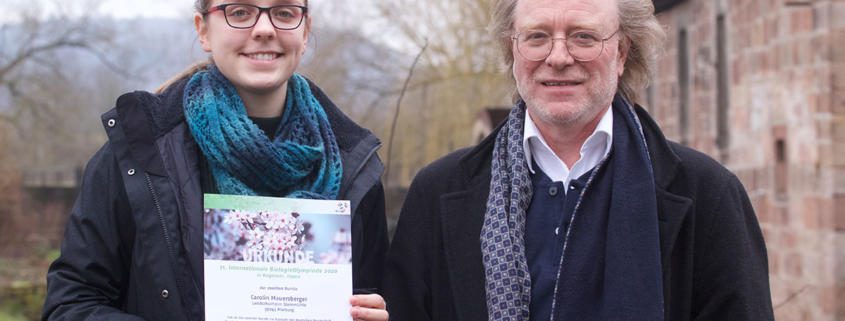
 

“Feel free to put your own ideas into action!”

The next morning, we had breakfast, and afterward everyone was driven back to the Merck campus. There was a lot of excitement about the awards ceremony, as well as a noticeable sense of fatigue among everyone. However, the schedule didn’t allow for any long breaks. The tour of the Merck Innovation Center, where ideas for the future are brought to life, was very impressive and innovative, and our fatigue quickly faded away. We were given an insight into the idea development process—which usually takes more than two years—and a startup entrepreneur explained his company’s process to us in a very relaxed manner, encouraging us to put our ideas into action.
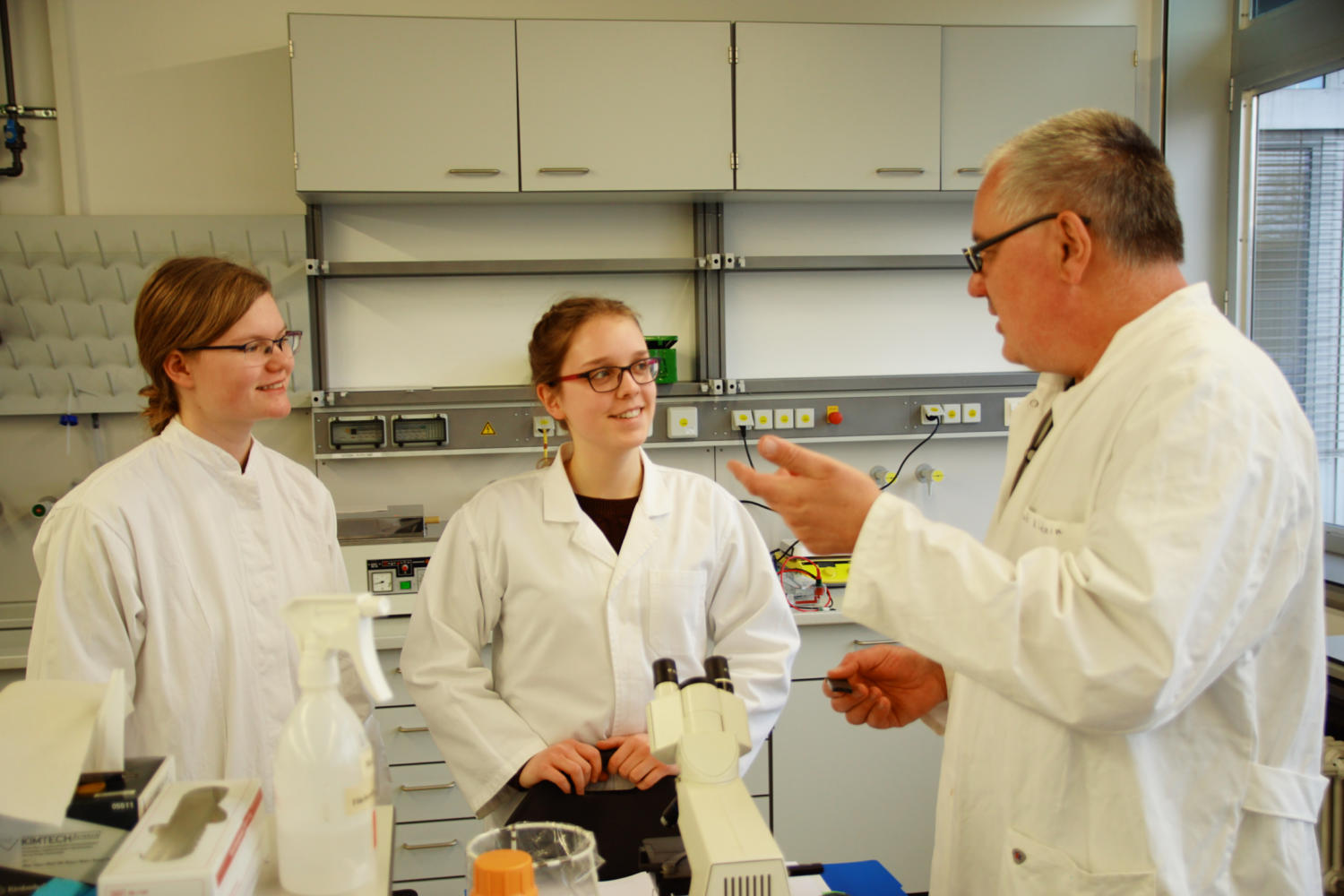
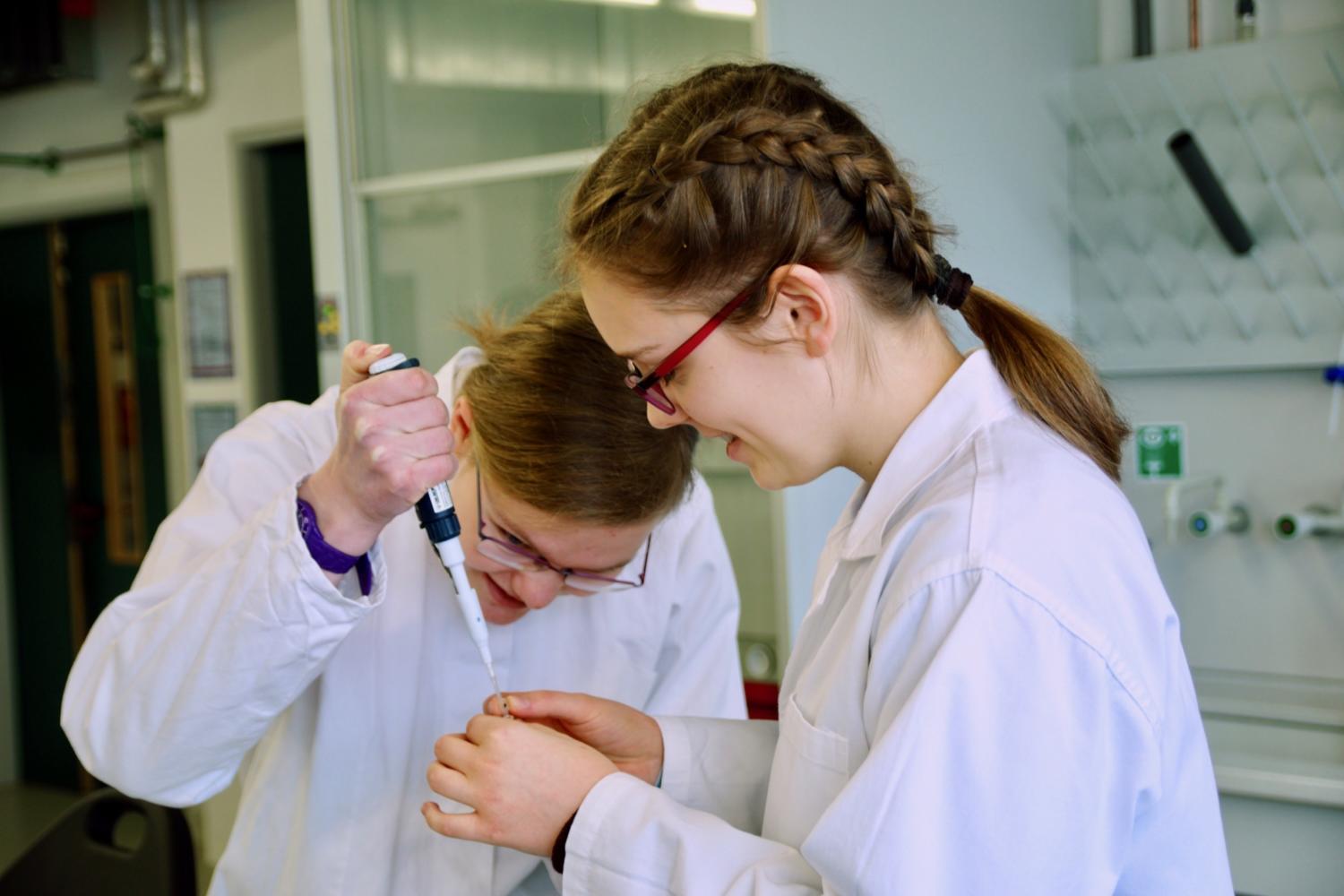
After spending nearly three hours at the Merck plant, we made our way back to the gym, where parents, chaperones, and science enthusiasts were now waiting to hear explanations of the projects. This part was exhausting but also very interesting, as a noticeable number of interested people came to our booths.


Vince Ebert as host

At 3:30 p.m., the awards ceremony began as the participants entered the hall, and host Vince Ebert welcomed everyone in his usual warm and friendly manner. This was followed by many more speeches from Merck representatives, mayors, and the Minister of Culture.

With its second-place finish in the biology category, along with 200 euros in prize money, Steinmühle achieved a very gratifying result, which delighted our parents as well as our advisor, Dr. Dietmar von der Ahe, and our chemistry and physics teacher, Dr. Jutta Töhl-Borsdorf, who had also traveled to Darmstadt. Dr. von der Ahe, as our advisor, received the Advisor’s Award. All in all, these two days were extremely enlightening, interesting, yet also very exhausting, and were filled with many wonderful experiences. Janina Seip


Lena Noelle Joußen and Janina Seip won second prize at the state-level “Jugend Forscht” competition for their research on “Microorganisms and Plastic Degradation: Identification of Bacteria in the Larval Intestines of Galleria mellonella.”


This speaks to the quality of the education at Steinmühle: Just like his colleague Dr. Jutta Töhl-Borsdorf (right) at the “Schüler experimentieren” junior competition, Dr. Dietmar von der Ahe (left) also received the Mentor Award at the “Jugend Forscht” competition.


19. June 2019
https://steinmuehle.de/wp-content/uploads/sites/5/2019/06/chemie_p0a6697-scaled.jpg 1141 1500 konnertz https://steinmuehle.de/wp-content/uploads/sites/5/2025/11/Logo_SchuleInternat_Steinmuehle_2026_3.png konnertz2019-06-19 11:50:192026-06-18 15:45:22“Jugend Forscht”: Grade 12 Team Takes Second Place in Darmstadt

NaUnt: Fifth-grade students use a model to study the respiratory process

News, STEM

How does human respiration work? And how do fish manage to live underwater without suffocating? Students in 5th grade learned about this in NaUnt, the science class taught by biology teacher Heike Rabben-Martin. Lenja Kissling from class 5b wrote an essay about how the group approached the topic:

“At the beginning, we built a simple model of human respiration in NaUnt, which you can clearly see in the photo. We, as pulmonary breathers, take in air into our lungs. The ambient air contains only 21 percent oxygen. However, our lungs are able to absorb this oxygen from the air and release it into our bloodstream.

The lungs fill with air when we inhale and empty again when we exhale. The diaphragm contracts when we inhale and relaxes when we exhale. When we inhale, oxygen-rich air is drawn into the lungs through the mouth or nose and down the windpipe, and oxygen-poor air leaves our body via the same route.

The researchers then studied the fish’s respiration to determine how they manage to live underwater without suffocating.

In class, we learned that the main organ fish use to breathe is their gills. Fish open their mouths, allowing water to flow in. When they close their mouths, the water flows back out through the gills. The gills absorb the dissolved oxygen from the water, and the water that exits the gills contains less oxygen.

“To better understand the structure and function of gills, we made a model of fish gills in class, as shown in the photo.”

27. May 2019
https://steinmuehle.de/wp-content/uploads/sites/5/2019/05/MG_6494-scaled.jpg 1500 1083 konnertz https://steinmuehle.de/wp-content/uploads/sites/5/2025/11/Logo_SchuleInternat_Steinmuehle_2026_3.png konnertz2019-05-27 10:57:292026-06-18 15:45:08NaUnt: Fifth-grade students use a model to study the respiratory process
Page 11 of 12«‹9101112›

Pages

  • A Safe Place
  • About Us
  • Alternative Sports
  • Alumni Feed
  • Alumni Login
  • Alumni Reunion
  • Annual Calendar Download
  • Art, Music & Theater
  • Awards
  • Bilingual Elementary School
  • Bilingual Elementary School
  • Boarding School
  • Boarding School Admission
  • Boarding School as an Opportunity
  • Charity Projects
  • Contact
  • Costs & Contract Terms
  • Digitization
  • Donation Failed
  • Donation Receipt
  • Donor Dashboard
  • Ecology & Sustainability
  • Elementary School Registration
  • Events
  • Fan Shop
  • Fit for Life
  • Forgot your password?
  • Friends & Alumni
  • Friends of the School Association
  • Funding Partners
  • Fundraising
  • Groups
  • High School
  • High School Admission
  • High School Registration Form
  • Home
  • Internal Clubs
  • International High School
  • International High School Program
  • International High School Registration Form
  • International School
  • International School Registration
  • Keyword Search
  • Languages & International Affairs
  • Learning
  • Legal Notice
  • Life
  • Members
  • MINT Lab Equipment
  • Mission Statement & Vision
  • My Profile
  • News
  • News
  • News Archive
  • Newsletter
  • Newsletter
  • Organization & History
  • Partners
  • Privacy Policy
  • Privacy Policy (Detailed)
  • Project-Based Learning
  • Promoting Independence & Individuality
  • Promoting STEM Talent
  • Publications
  • Quality Management
  • Recording
  • Registration Form for the Bilingual Elementary School
  • Reset Password
  • Riding School
  • Rowing Club
  • School
  • School as a Community
  • Signed up for the newsletter
  • Social Responsibility
  • Social Responsibility & Strengthening the Community
  • Sponsorship
  • Sports & Health
  • Sports & Recreation
  • Stakeholders
  • Steinmühle Alumni Network
  • Steinmühle as a Youth Welfare Agency
  • Stories
  • Summer Camps
  • Support Current Projects
  • Support for Families
  • Talent Program Plus STEM
  • Teams
  • Terms and Conditions for High School
  • Terms and Conditions for the Bilingual Elementary School
  • Terms and Conditions of the International High School
  • Terms of Contract for the Bilingual Primary School
  • Terms of Contract for the International School
  • Trips & Weekends
  • Upload Transcript
  • What is … up to today, anyway?
  • Why Steinmühle?
  • Work at the Steinmühle

Categories

  • Archive
  • Art, Music & Theater
  • Bilingual Elementary School
  • Boarding School
  • Class Trips, Field Trips, and School Outings
  • Collaborations & Partnerships
  • Contests & Awards
  • Digitalization & AI
  • Ecology and Sustainability
  • Events & Celebrations
  • Former Students & Alumni
  • International High School
  • Job Openings
  • Languages & International Affairs
  • Life at Boarding School
  • News
  • Politics, Business & Responsibility
  • Rowing
  • Social Engagement
  • Sports
  • Sports & Health
  • Steinmühle on the Road
  • Steinmühle Riding School
  • STEM
  • Surveys & Studies
  • Talent Development
  • Uncategorized

Archive

  • June 2026
  • May 2026
  • April 2026
  • March 2026
  • February 2026
  • January 2026
  • December 2025
  • November 2025
  • October 2025
  • September 2025
  • August 2025
  • July 2025
  • June 2025
  • May 2025
  • April 2025
  • March 2025
  • February 2025
  • January 2025
  • December 2024
  • November 2024
  • October 2024
  • September 2024
  • August 2024
  • July 2024
  • June 2024
  • May 2024
  • April 2024
  • March 2024
  • February 2024
  • January 2024
  • December 2023
  • November 2023
  • October 2023
  • September 2023
  • August 2023
  • July 2023
  • June 2023
  • May 2023
  • April 2023
  • March 2023
  • February 2023
  • January 2023
  • December 2022
  • November 2022
  • October 2022
  • September 2022
  • August 2022
  • July 2022
  • June 2022
  • May 2022
  • April 2022
  • March 2022
  • February 2022
  • January 2022
  • December 2021
  • November 2021
  • October 2021
  • September 2021
  • August 2021
  • July 2021
  • May 2021
  • April 2021
  • March 2021
  • February 2021
  • December 2020
  • November 2020
  • October 2020
  • September 2020
  • August 2020
  • July 2020
  • June 2020
  • May 2020
  • April 2020
  • March 2020
  • February 2020
  • January 2020
  • December 2019
  • November 2019
  • October 2019
  • September 2019
  • August 2019
  • July 2019
  • June 2019
  • May 2019
  • April 2019
  • March 2019
  • February 2019
  • January 2019
  • December 2018
  • November 2018
  • October 2018
  • September 2018
  • August 2018
  • July 2018
  • June 2018
  • May 2018
  • April 2018
  • March 2018
  • February 2018
  • January 2018
  • December 2017
  • November 2017
  • October 2017
  • September 2017
  • August 2017
  • July 2017
  • June 2017
  • May 2017
  • April 2017
  • March 2017
  • February 2017
  • January 2017
  • December 2016
  • November 2016
  • October 2016
  • September 2016
  • August 2016
  • July 2016
  • June 2016
  • May 2016
  • April 2016
  • March 2016
  • February 2016
  • December 2015
  • November 2015
  • October 2015
  • September 2015
  • July 2015
  • June 2015
  • May 2015
  • April 2015
  • March 2015
  • February 2015
  • January 2015
  • December 2014
  • November 2014
  • October 2014
  • September 2014
  • July 2014
  • June 2014
  • May 2014
  • April 2014
  • March 2014
  • February 2014
  • January 2014
  • December 2013
  • November 2013
 
PreviousNext
12
 
PreviousNext
123456

Do you have questions about the school?

School Administration & Management

Björn Gemmer & Dirk Konnertz
Phone: 06421 408-20

schule@steinmuehle.de

Do you have questions about the boarding school?

Boarding School Administration & Management

Anke Muszynski & Dirk Konnertz
Phone: 06421 408-0

internat@steinmuehle.de

  • NEWSLETTER
  • PUBLICATIONS
  • CAREERS AT STEINMÜHLE
  • SUMMER CAMPS
  • LEGAL NOTICE
  • PRIVACY POLICY
  • CONTACT

Do you have questions about the school?

School Administration & Management

Björn Gemmer & Dirk Konnertz
Phone: 06421 408-20

schule@steinmuehle.de

Do you have questions about the boarding school?

Boarding School Administration & Management

Anke Muszynski & Dirk Konnertz
Phone: 06421 408-0

internat@steinmuehle.de

  • NEWSLETTER
  • PUBLICATIONS
  • WORK AT THE STONE MILL
  • SUMMER CAMPS
  • LEGAL NOTICE
  • PRIVACY POLICY
  • CONTACT

© Copyright – Steinmühle 2026 | Erneuern oder ändern Sie Ihre Cookie-Einwilligung
Scroll to top