• Anruf
  • E-Mail
  • Zu Facebook
  • Zu Instagram
  • Zu LinkedIn
Loading
Steinmühle – Schule & Internat
  • About us
    • Organization & History
    • Teams
    • Stakeholders
    • Internal clubs
      • Riding School
      • Rowing Talent Development
      • Tennis
    • Friends of the School Association
    • Partners
    • Mission Statement & Vision
    • Ecology & Sustainability
    • A Safe Place
    • Quality Management
  • School
    • High School
    • Bilingual Elementary School
    • Project-Based Learning
    • Promoting STEM Talent
    • Languages & International Affairs
    • Sports & Health
    • Art, Music & Theater
    • Social Responsibility
    • Digitization
    • Promoting Independence & Individuality
    • Social Responsibility & Strengthening the Community
  • Boarding School
    • Boarding School as an Opportunity
    • Support for Families
    • Life
    • Learning
    • Sports & Recreation
    • Trips & Weekends
    • Talent Program Plus STEM
    • Fit for Life
    • Summer Camps
  • Admission
    • Boarding School Admission
    • High School Admission
    • International High School Program
    • Bilingual Elementary School
    • Costs & Contract Terms
  • News
    • News
    • News Archive
    • Support Current Projects
  • Friends & Alumni
    • Stories
    • Alumni Reunion
    • Steinmühle Alumni Network
  • Fanshop
  • English
    • German
    • Spanish
    • French
    • Italian
    • Russian
    • Chinese (Simplified)
  • Search
  • Menu Menu
  • English
    • German
    • Spanish
    • French
    • Italian
    • Russian
    • Chinese (Simplified)

Taxes, Finance, and More: Filling the Gaps That Schools Can’t Cover

News, Politics, Business & Responsibility

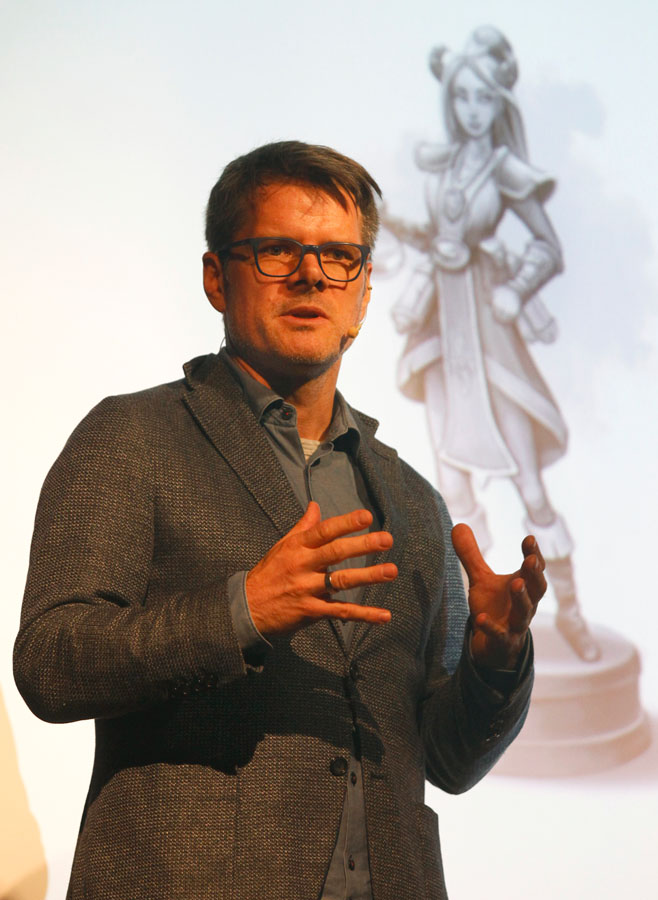
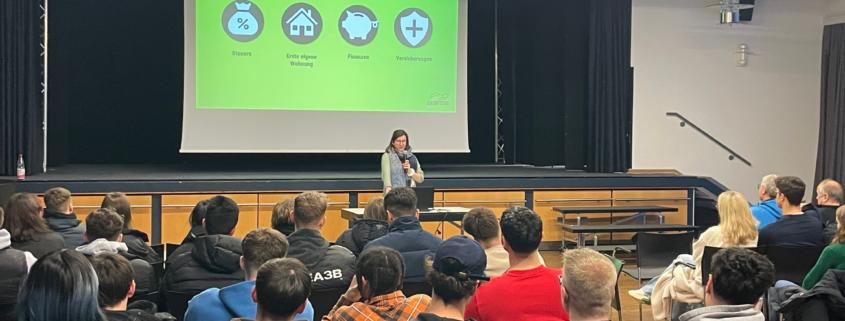
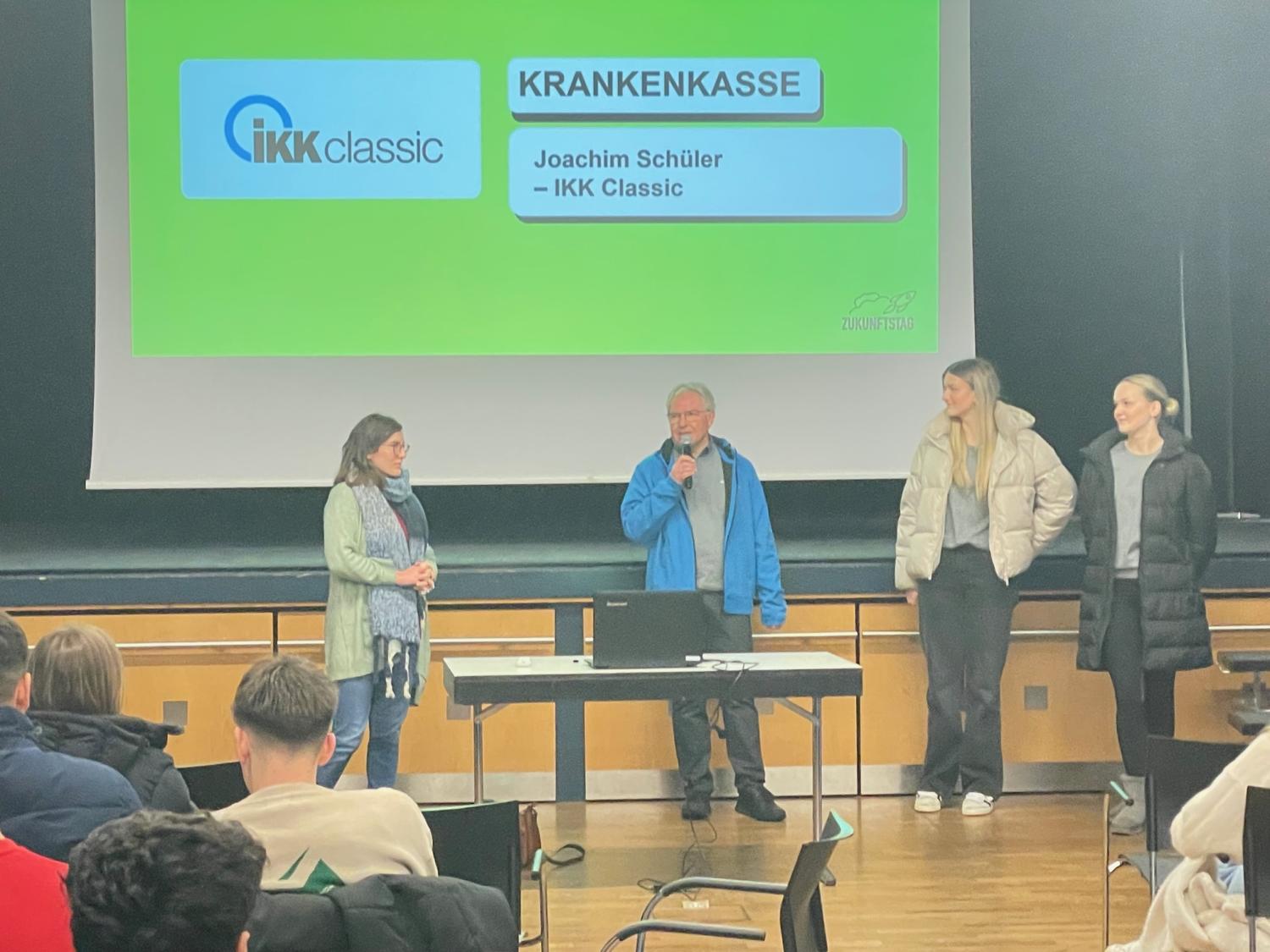
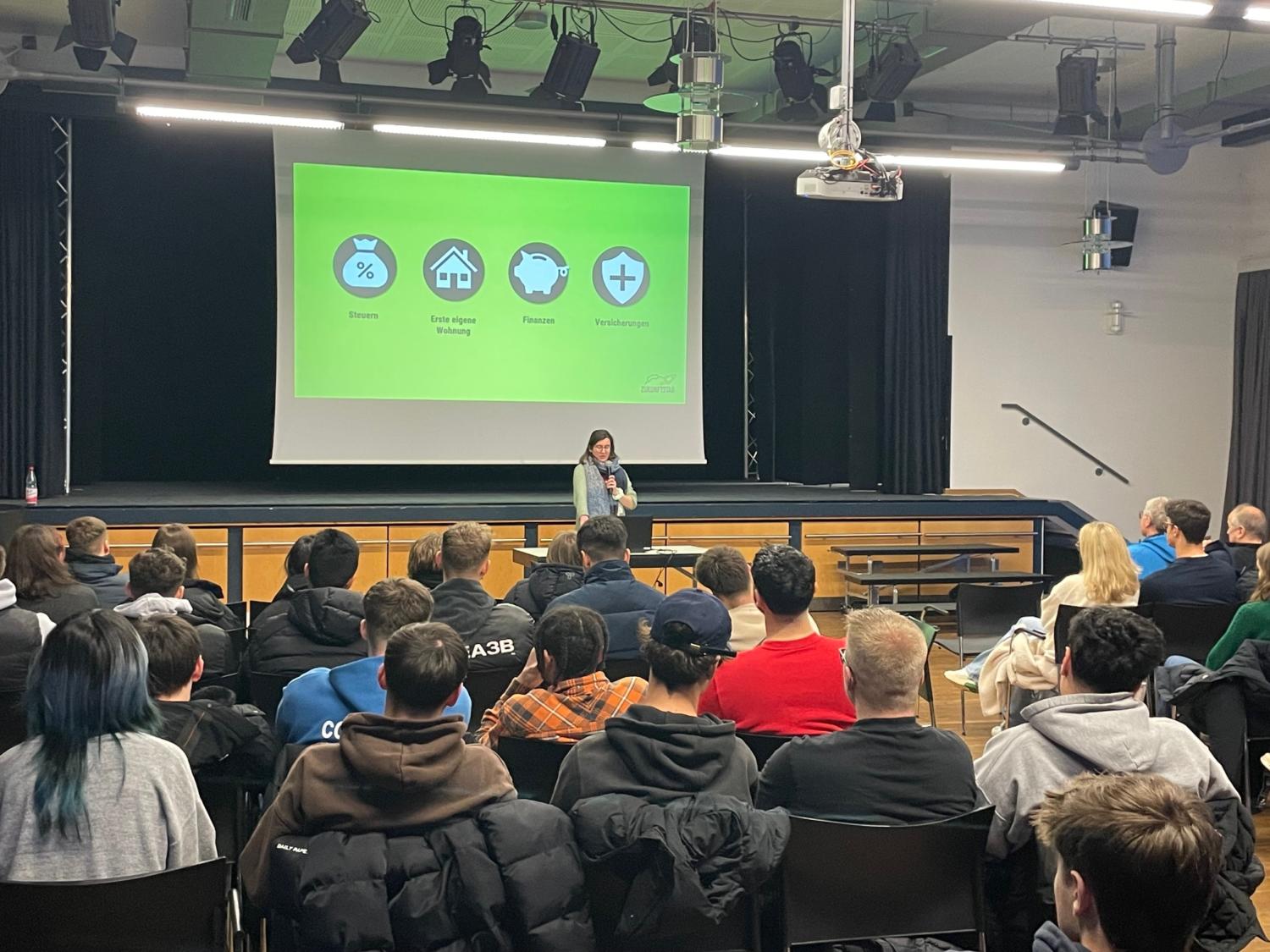
For the second time, a so-called “Future Day” was held at Steinmühle for the 13th-grade class. Behind this initiative is a nonprofit limited liability company that has made it its mission to take a closer look at topics that are often neglected during a student’s school career: taxes, finance, housing, and health insurance.

When young people rent their first apartment and have to file their first tax return, they often realize: I have no idea how to do this. The same is true when it comes to health insurance and everything related to finances. Investing, pension insurance, retirement planning—there’s simply a lack of knowledge in these areas. “Steinmühle aims to fill these gaps, and we see the activities of ‘Future Day’ as an important contribution,” explains Constanze Oestreicher-Gold, head of the upper school.

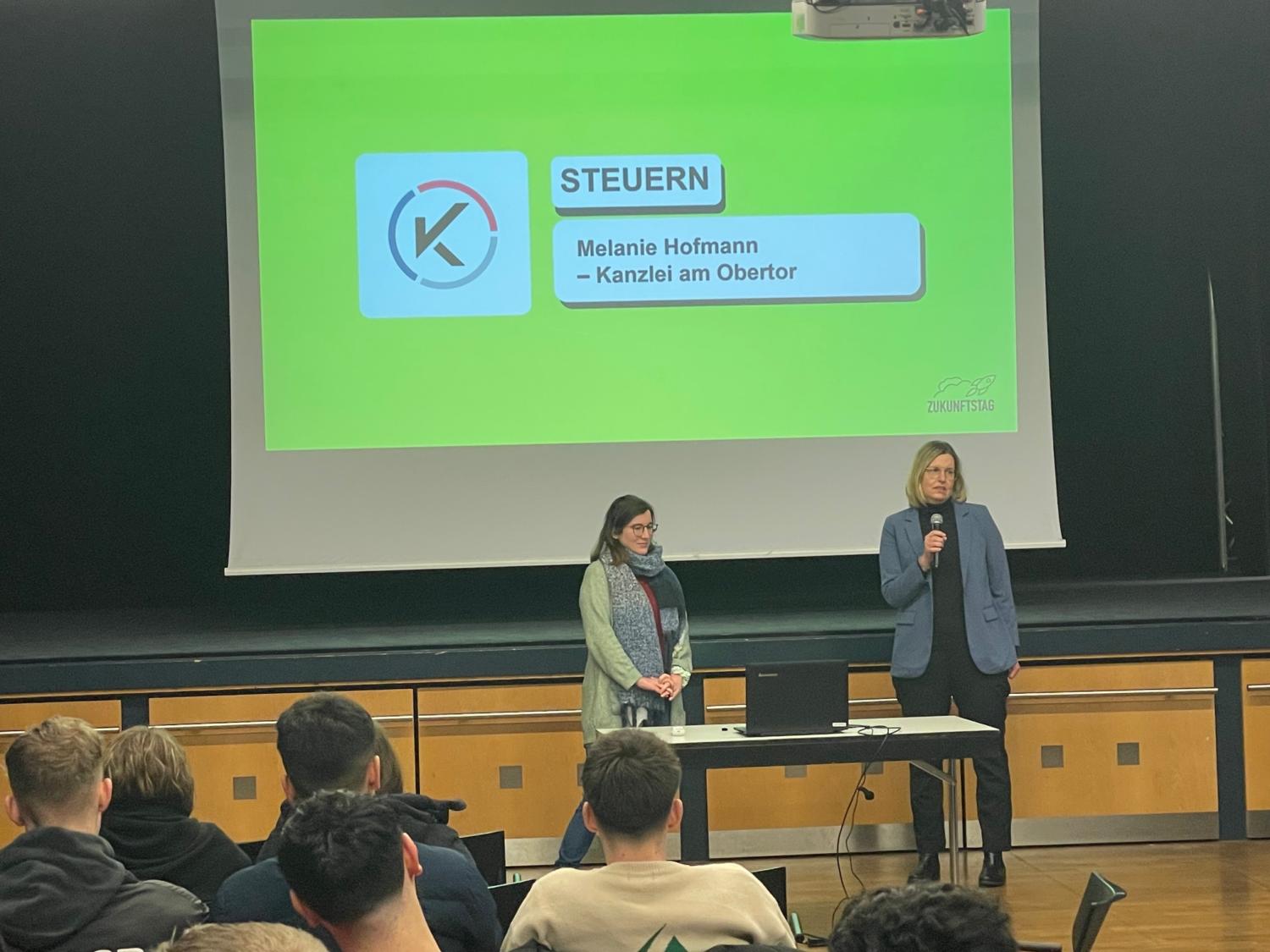
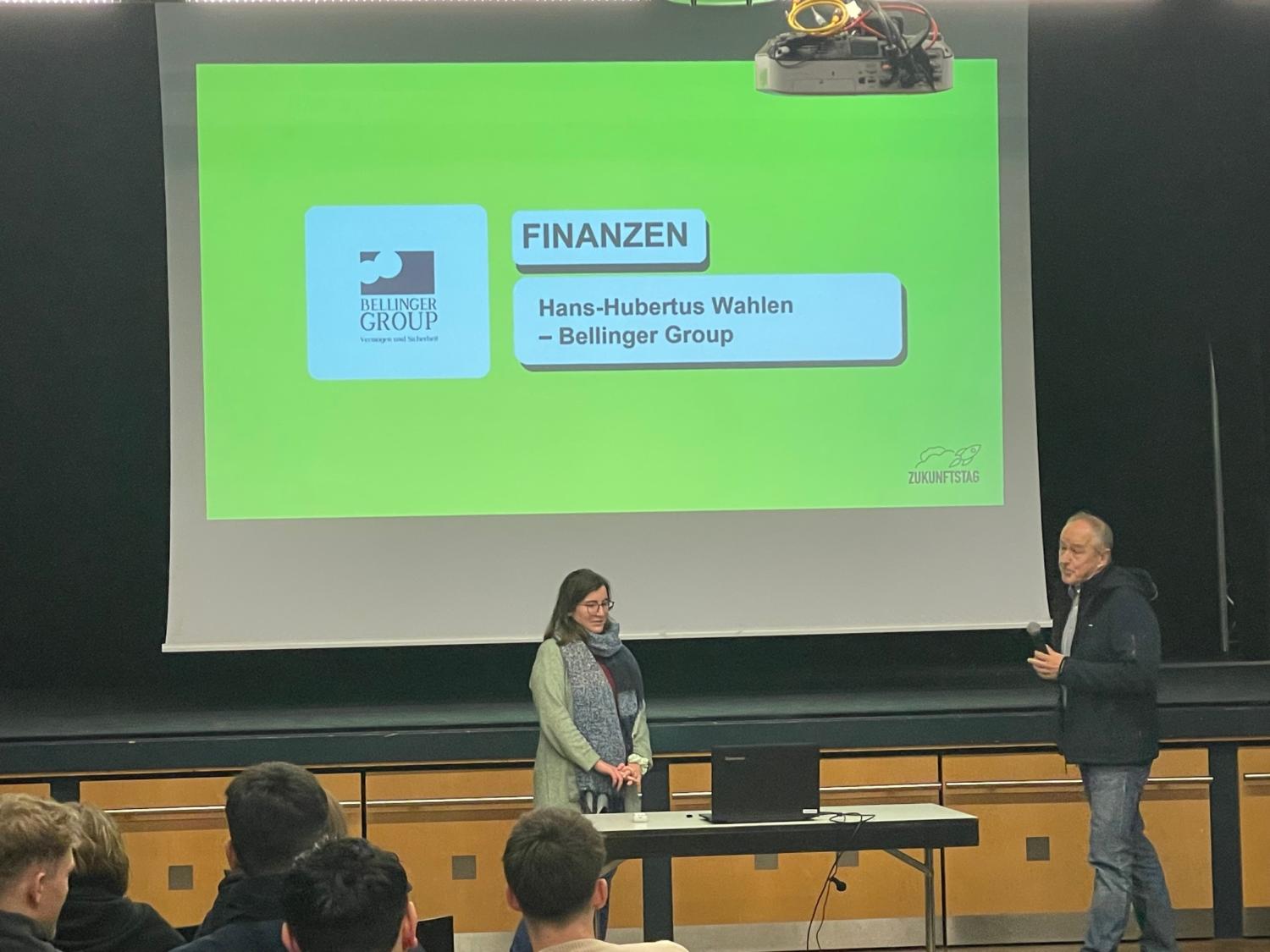
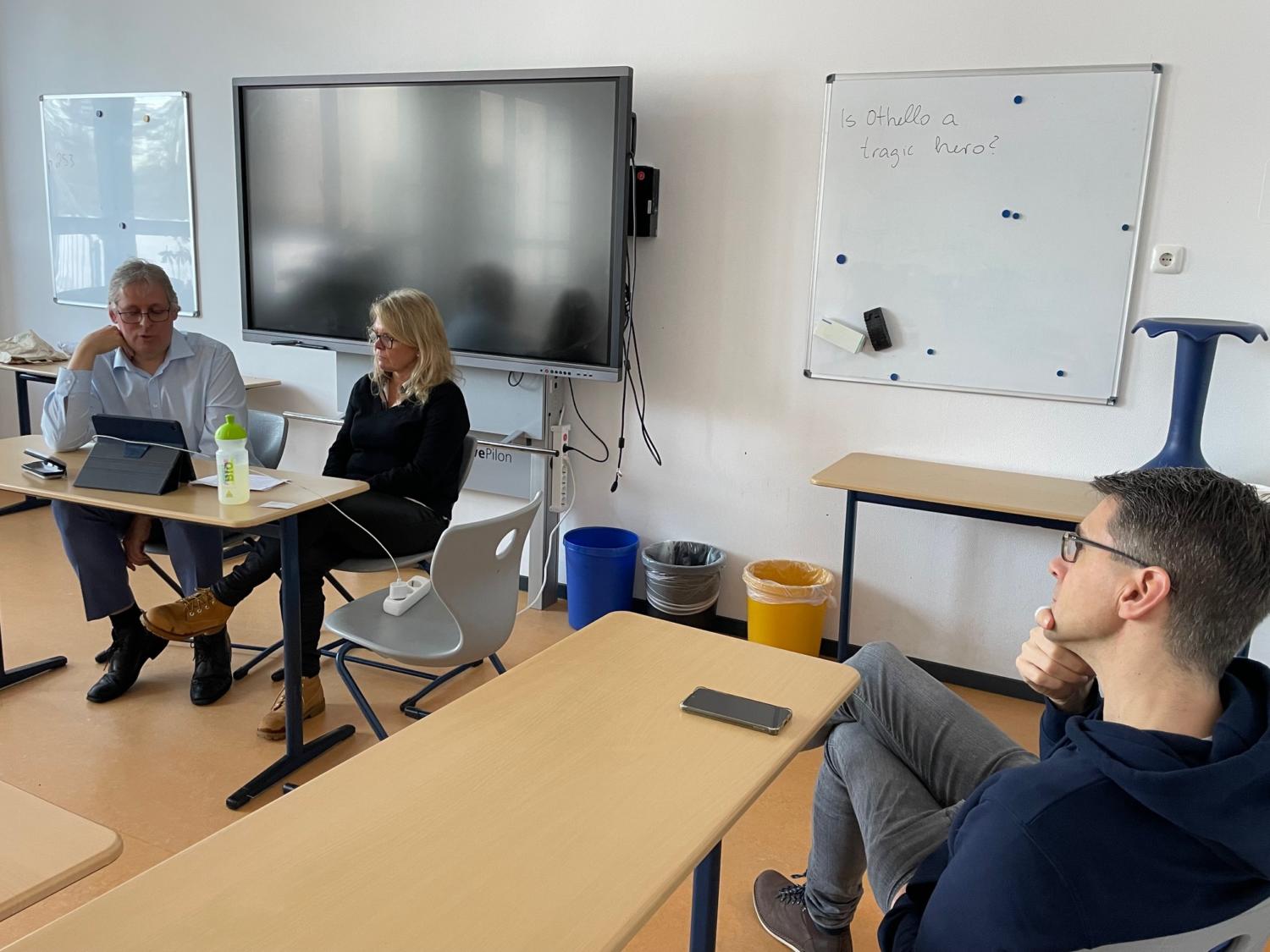
Following a joint introductory session, experts from the respective industries led various workshops to provide foundational knowledge in the areas of finance, taxes, and health insurance. Participants were able to ask and clarify any questions they had, starting with basic know-how on the relevant topics. Hans-Hubertus Wahlen (Bellinger Group), Joachim Schüler (IKK Classic), and Melanie Hofmann (tax consultant, Kanzlei am Obertor) were on hand to answer questions. Due to the speaker’s illness that day, no workshop on housing could take place.

The “Future Day” project is sponsored by companies, foundations, and the Hessian Ministry of Education and Cultural Affairs, which also serves as its patron.

15. February 2024
https://steinmuehle.de/wp-content/uploads/sites/5/2024/02/IMG_5388-scaled.jpg 1125 1500 konnertz https://steinmuehle.de/wp-content/uploads/sites/5/2025/11/Logo_SchuleInternat_Steinmuehle_2026_3.png konnertz2024-02-15 10:53:042026-06-18 17:37:47Taxes, Finance, and More: Filling the Gaps That Schools Can’t Cover

Dr. Jan-Marco Müller: From Cappel to the EU in Brussels

Collaborations & Partnerships, News, Politics, Business & Responsibility

Much more complex than expected, and important not only as a peace alliance

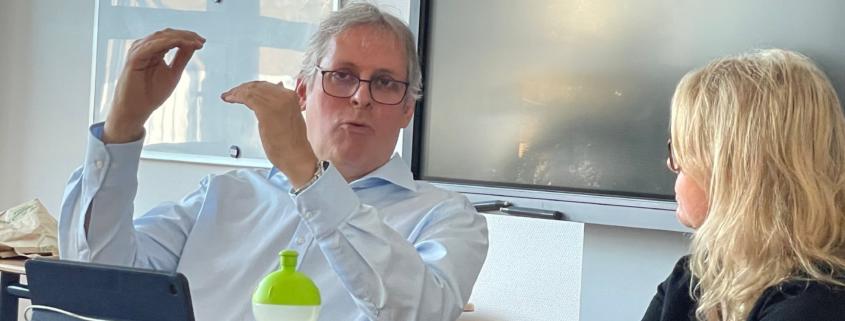
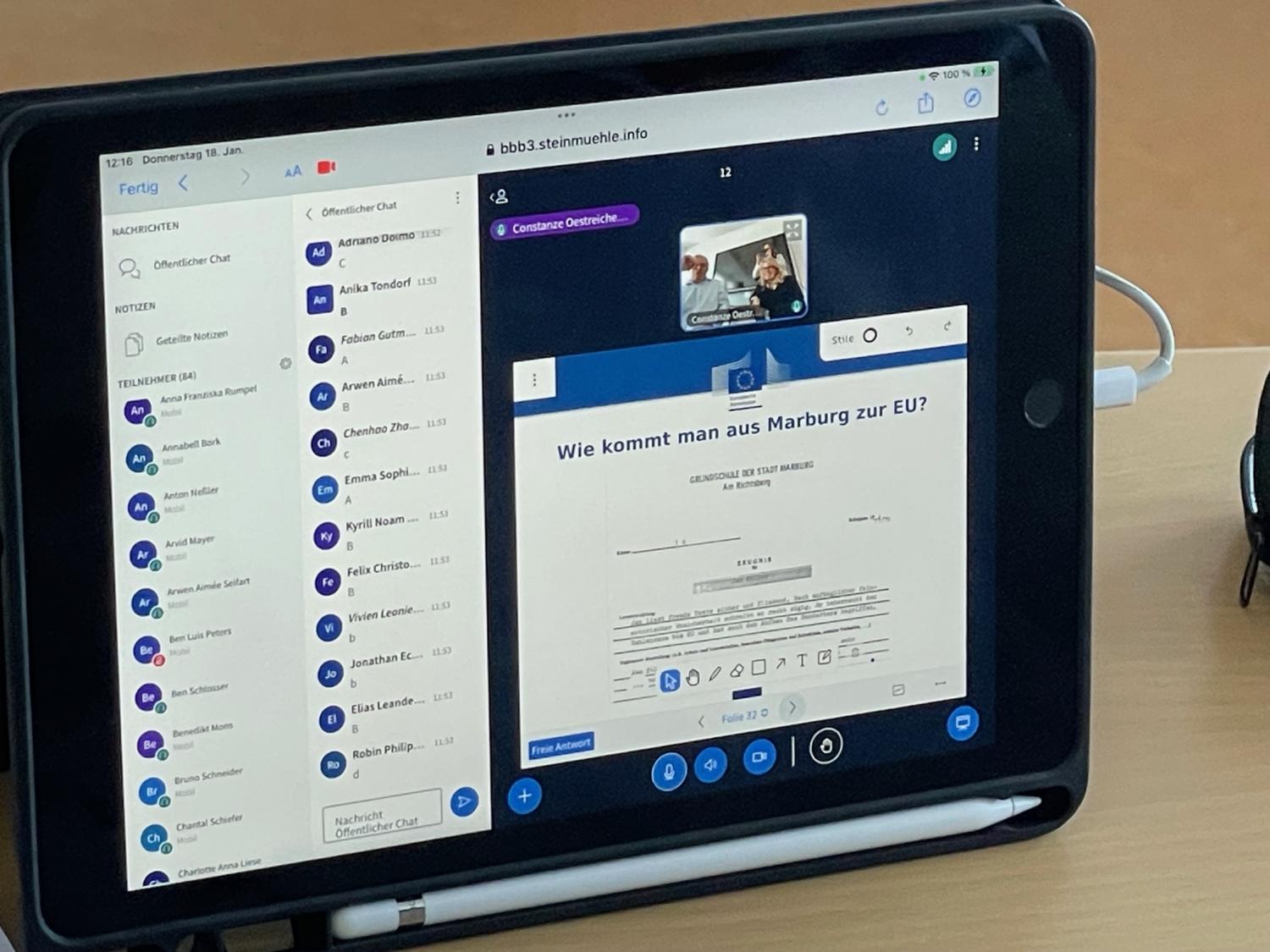
People often make jokes about the EU and the work of those based in Brussels, sometimes questioning the efficiency of their efforts and the entire institution itself. Yet very few people seem to know exactly which bodies make up the EU, what their responsibilities are, and, above all, what would happen if the EU suddenly ceased to exist. Dr. Jan-Marco Müller spoke to the 11th-grade class about all of this last Thursday. The fact that the EU official’s presentation took place on a morning when weather-related remote learning was in effect did not diminish the students’ interest in the slightest. The event was facilitated by Steinmühlen teacher Dr. Claudia Röder.

An introductory quiz quickly made it clear just how complex knowledge about the EU can be: “Ireland, Iceland, Switzerland—which one is not part of the Schengen Area?” That really made you think, just like the question, “Which one is not part of UEFA: Kazakhstan, Monaco, or Israel?” The guest also wanted to know whose application for EU membership had been rejected in the past: Turkey, Morocco, or Bulgaria. He also raised the question of the difference between the following bodies: the Euro Council, the Council of Europe, the European Council, and the Council of the European Union. – By then, at the latest, most people had to admit defeat.


European Elections: A Gift of Democracy

The late Henry Kissinger had already recognized that Europe isn’t all that simple: “Who do I call if I want to call Europe?” was the question he posed several years ago—one that has often been quoted in political circles. With 27 member states, half a billion inhabitants, 24 official languages, and three alphabets, it was a question that couldn’t be answered off the cuff. “United in diversity” is how the guest from Brussels described the situation for the member states, all of which share one very important advantage: they have enjoyed peace since 1945.

There are also several other solid reasons why countries want to join the EU: the free movement of people and the free exchange of goods, the rule of law, mutual solidarity, and subsidiarity. The guest went on to explain other responsibilities within the administrative apparatus, which comprises 25,000 employees. But he also promoted the European elections on June 9, calling them “a gift of democracy.”


A “compromise machine”

“There are 232 parties running for election,” Müller said, “but unlike in other elections, there is no 5 percent threshold.” This means that, contrary to usual practice, votes cast for small or very small parties are not wasted. Under the umbrella of the European Parliament, parties with similar platforms would find common ground through cooperation. Otherwise, it would include the governments of 27 nations—”a compromise machine.”

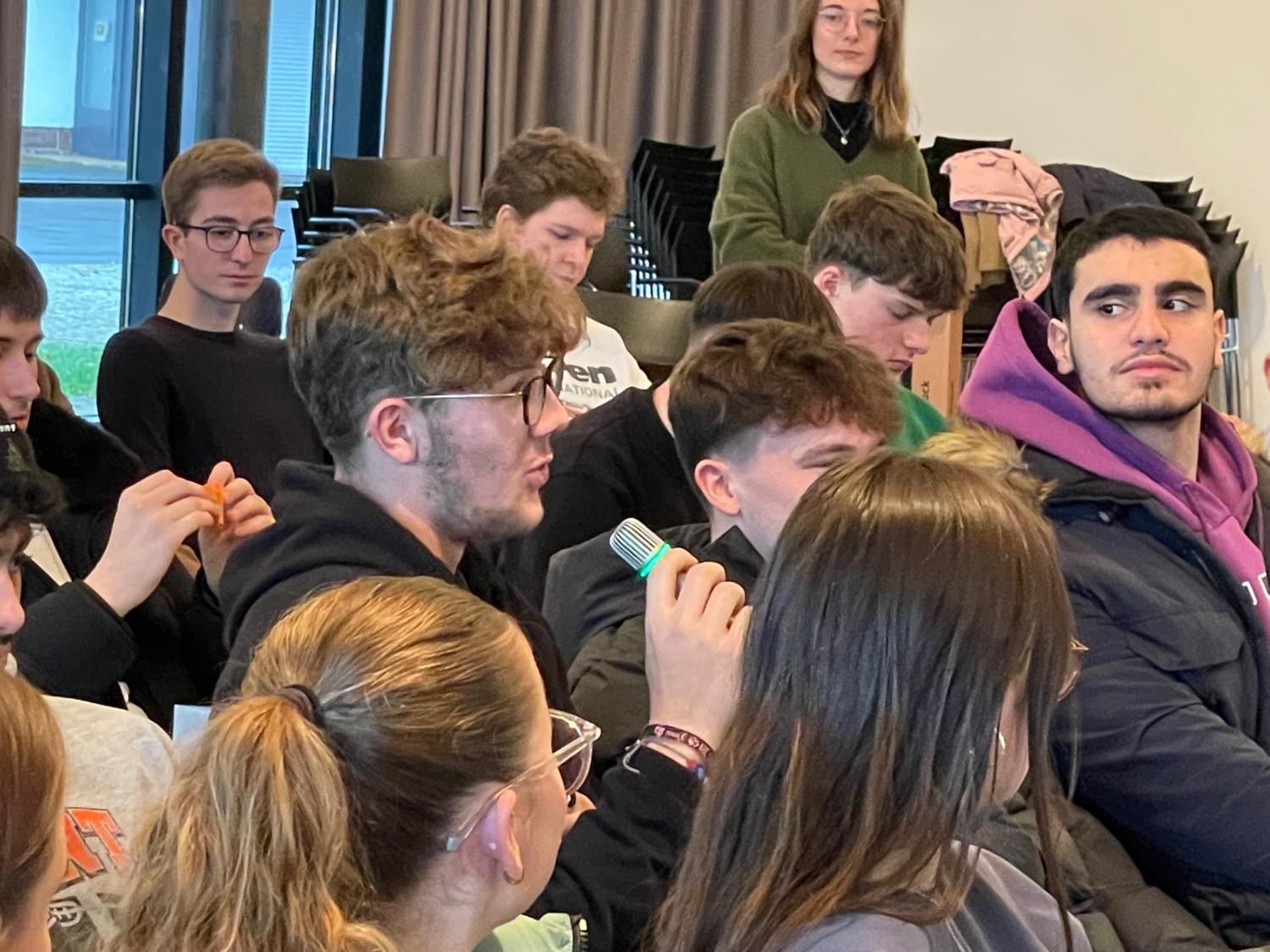
The students’ questions about the speaker’s presentation came one after another. They ranged from whether and how the shift to the right in Europe was becoming apparent, to why Ukraine’s accession to the EU was desirable, to questions about legislation for a climate-neutral continent. One 11th-grade student also wanted to know whether the EU was considering the creation of a European army. But there were also questions, like the one he asked, about how the speaker felt about Martin Sonneborn’s satire. Armed with the diplomacy of an EU official, Dr. Jan-Marco Müller replied accordingly: “You have to have jokers like that in Parliament, and privately, it’s actually quite nice. You can’t really do much politics there—we have to come up with solutions.”

Solutions are also the goal when it comes to all the world powers: “We have to make sure we have a voice on the world stage. It’s a long road ahead, but we’re well-positioned for it.”


“We need people with all kinds of backgrounds from all fields”

Dr. Jan-Marco Müller, who grew up in Cappel, studied geography in Marburg, worked in science management, and joined the EU through the scientific service, where he initially served as a scientific policy advisor. Currently, as a science diplomat, he is exploring how science can be used to improve diplomatic relations: “Scientists speak up when diplomats no longer do.” Müller adds: “I try to get politicians excited about science and convey the relevant facts.” This involves, among other things—though not exclusively—climate change and the technology race with China.

The speaker, who had an extremely interested audience, encouraged the students to consider pursuing a career in the EU: “We need people with all kinds of backgrounds, from all fields.”

Principal Björn Gemmer welcomed the speaker at the outset and took some time himself to follow the interesting presentation. There was likely no one in the lecture hall or watching on the screens who hadn’t expanded their knowledge that morning.


26. January 2024
https://steinmuehle.de/wp-content/uploads/sites/5/2024/01/IMG_3451-scaled.jpg 1125 1500 konnertz https://steinmuehle.de/wp-content/uploads/sites/5/2025/11/Logo_SchuleInternat_Steinmuehle_2026_3.png konnertz2024-01-26 08:54:342026-06-18 17:37:42Dr. Jan-Marco Müller: From Cappel to the EU in Brussels

Hosted by Steinmühle: Future Workshop on Securing a Skilled Workforce

Collaborations & Partnerships, News, Politics, Business & Responsibility

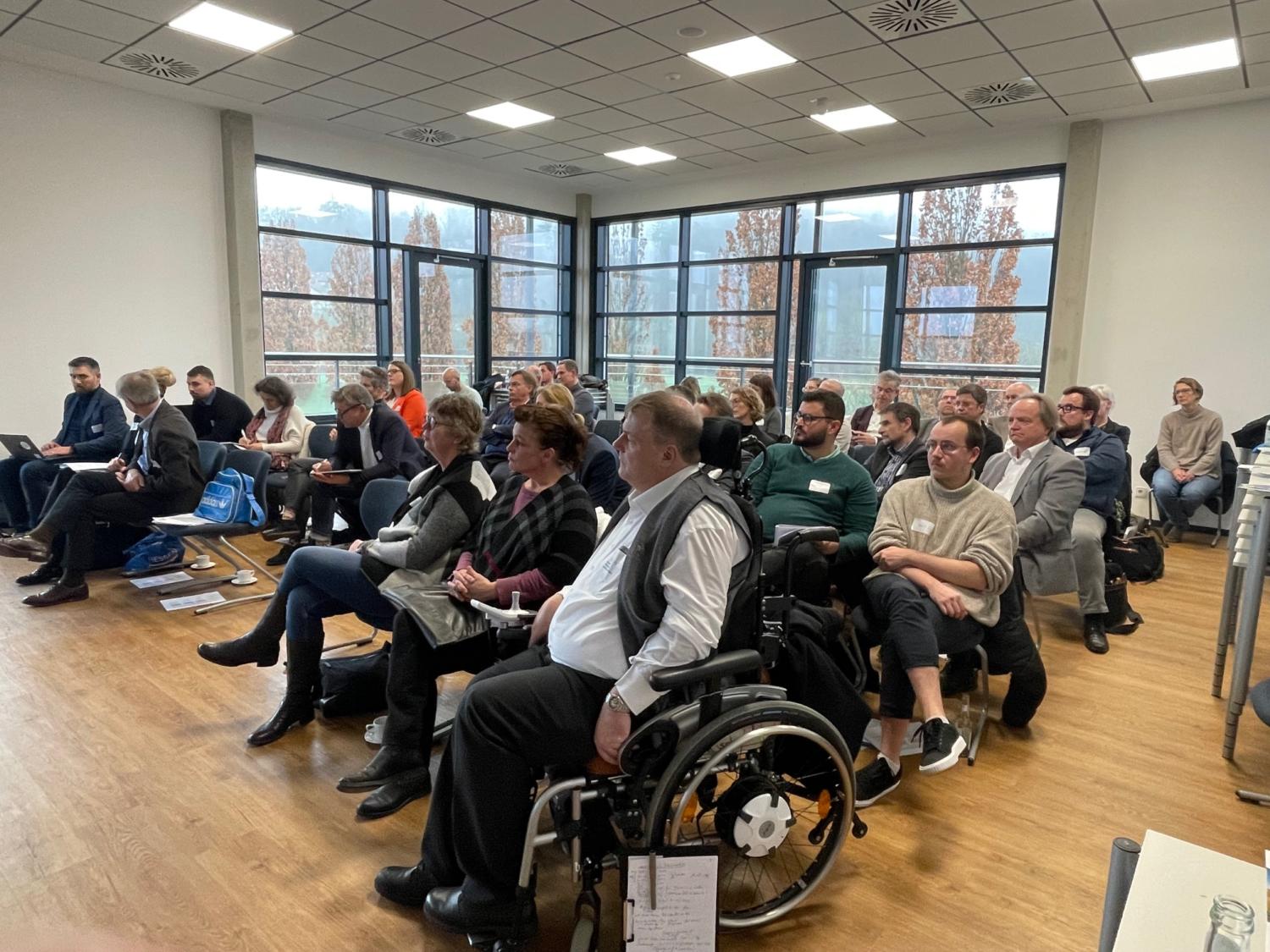
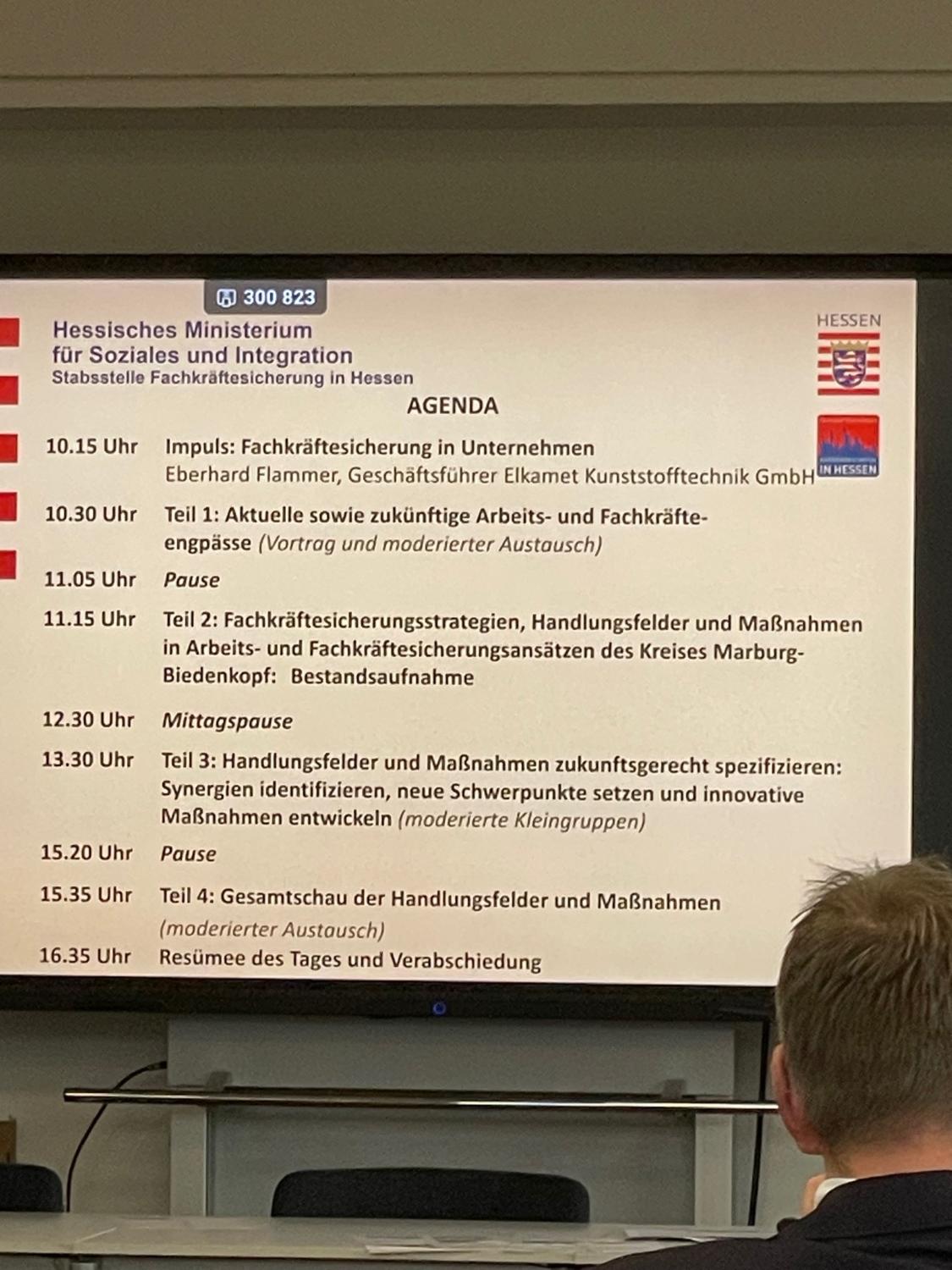
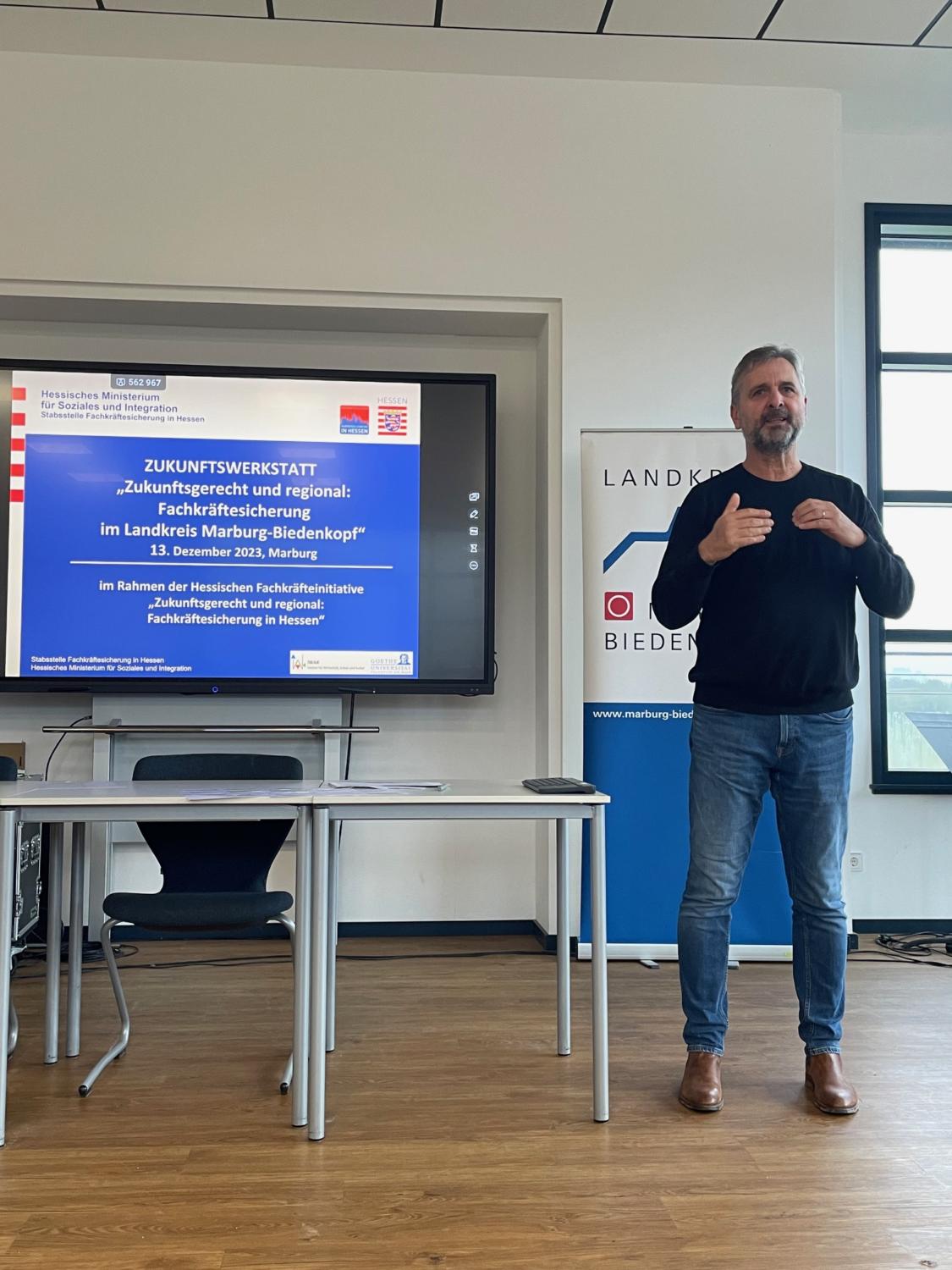
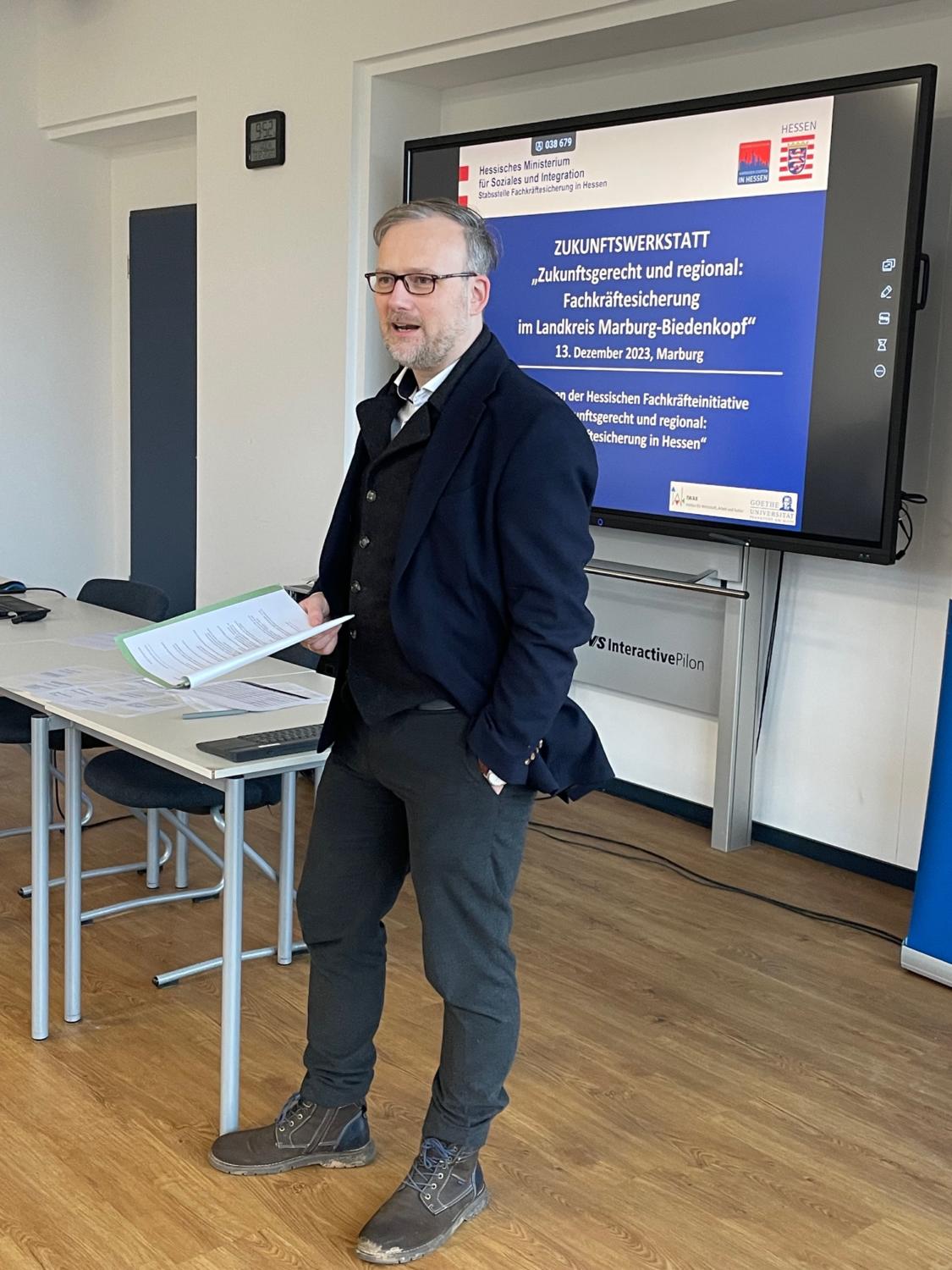
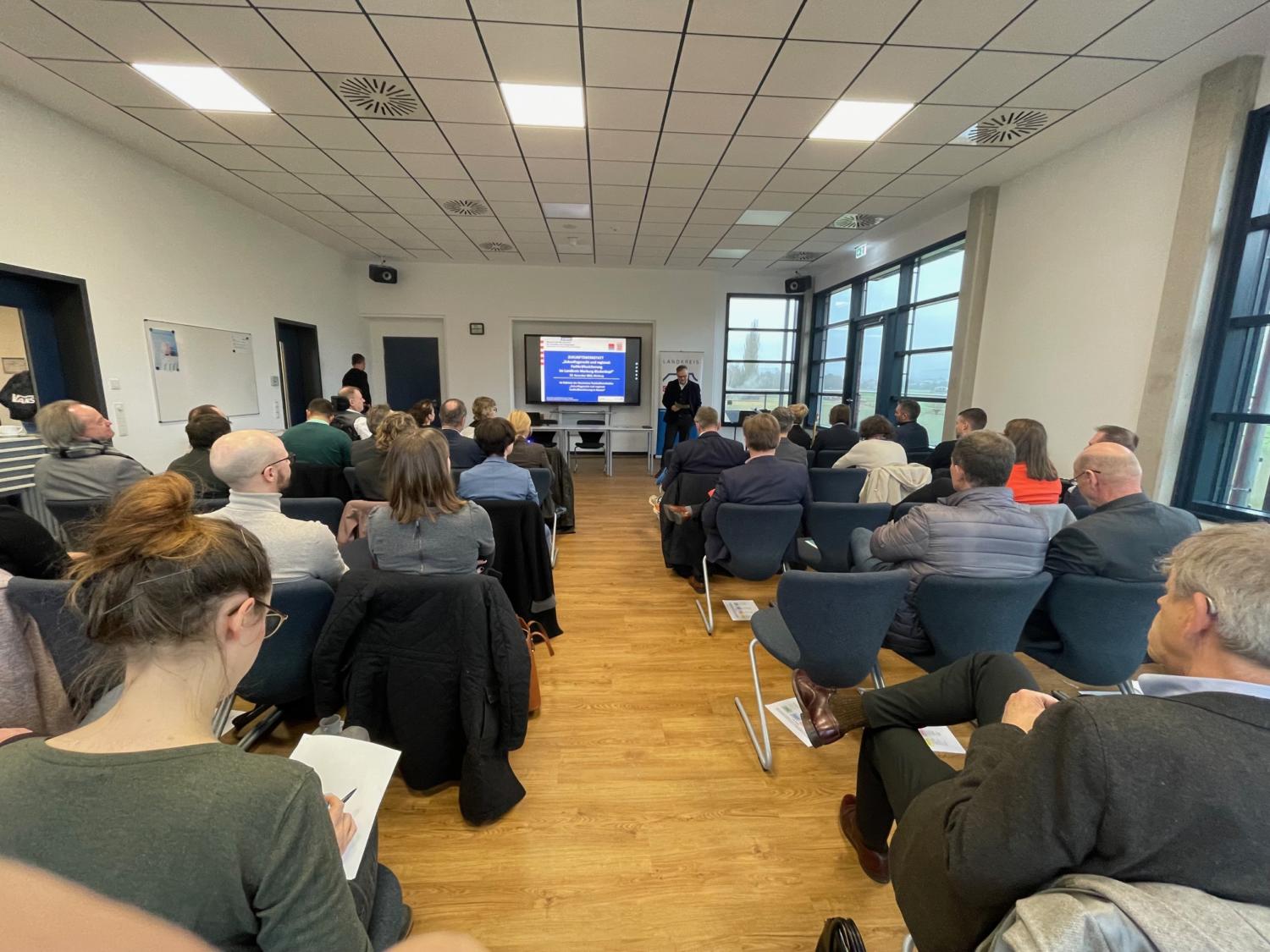
As part of its partnership with the Marburg-Biedenkopf district, Steinmühle hosted a full-day “Future Workshop” on the topic of securing a skilled workforce. The event was organized by the newly founded Marburg-Biedenkopf Economic Development Corporation (Wirtschaftsförderungsgesellschaft Marburg-Biedenkopf mbH), represented by its managing director Tobias Kurka, and the Office for Securing a Skilled Workforce at the Hessian Ministry of Social Affairs and Integration.

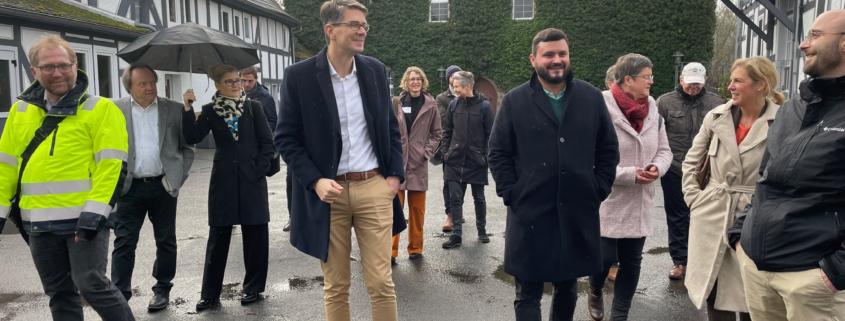
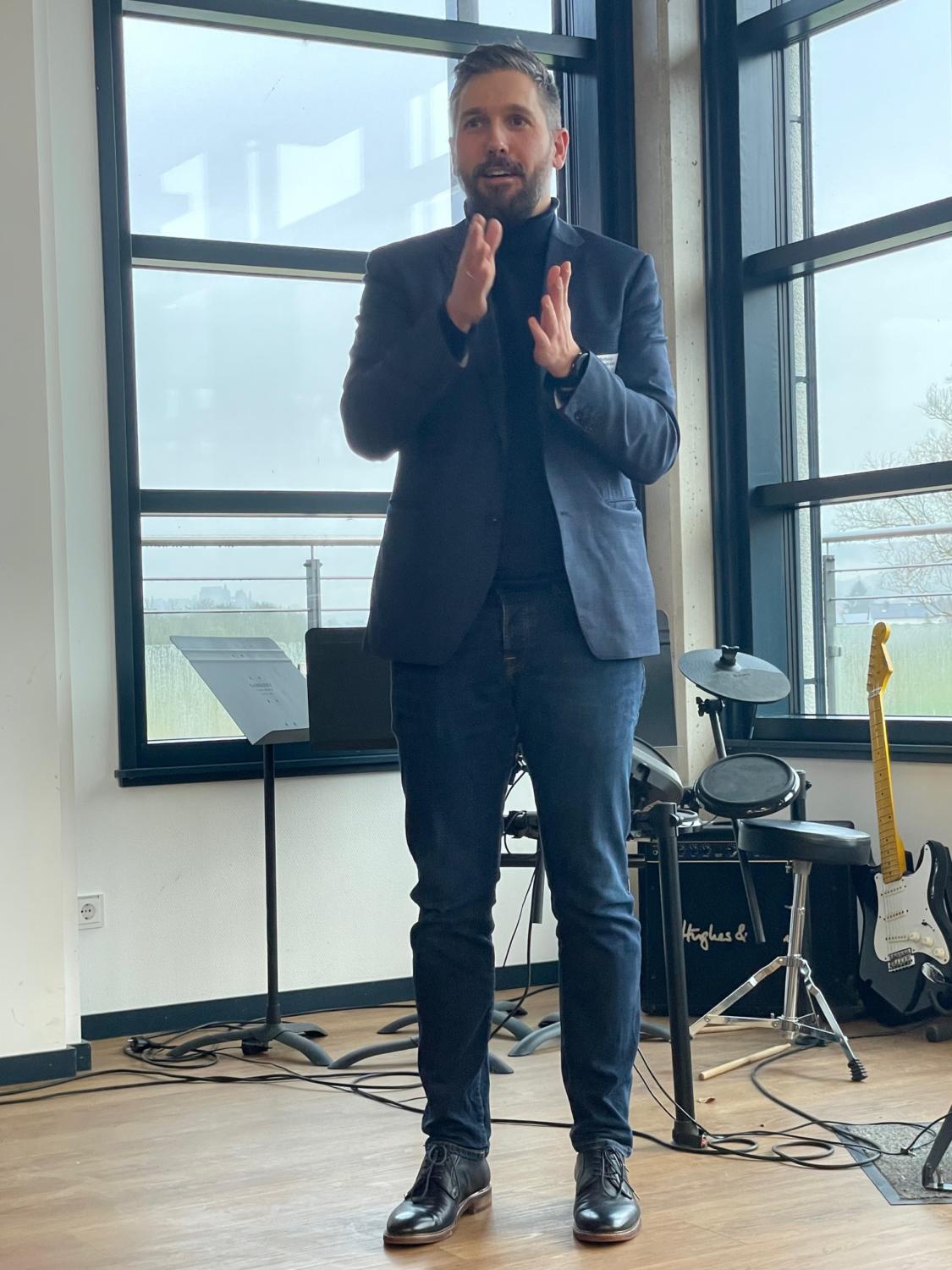
In his welcome address to the participants, Steinmühle Managing Director Dirk Konnertz mentioned the close and ongoing collaboration with the district, but also emphasized the connection between the conference’s theme and Steinmühle as an educational institution. During the lunch break, Principal Björn Gemmer gave the guests a tour of the Steinmühle campus.

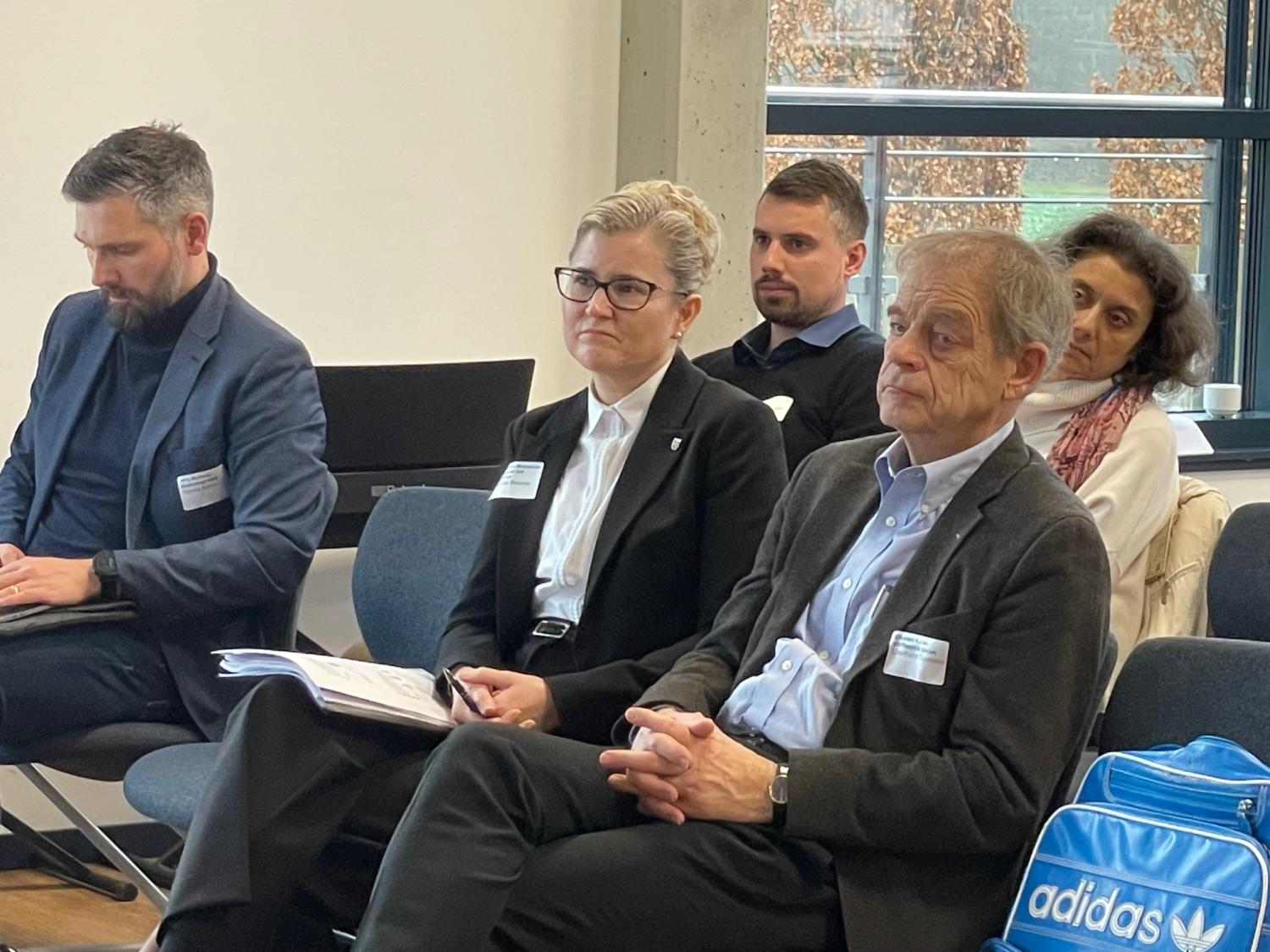
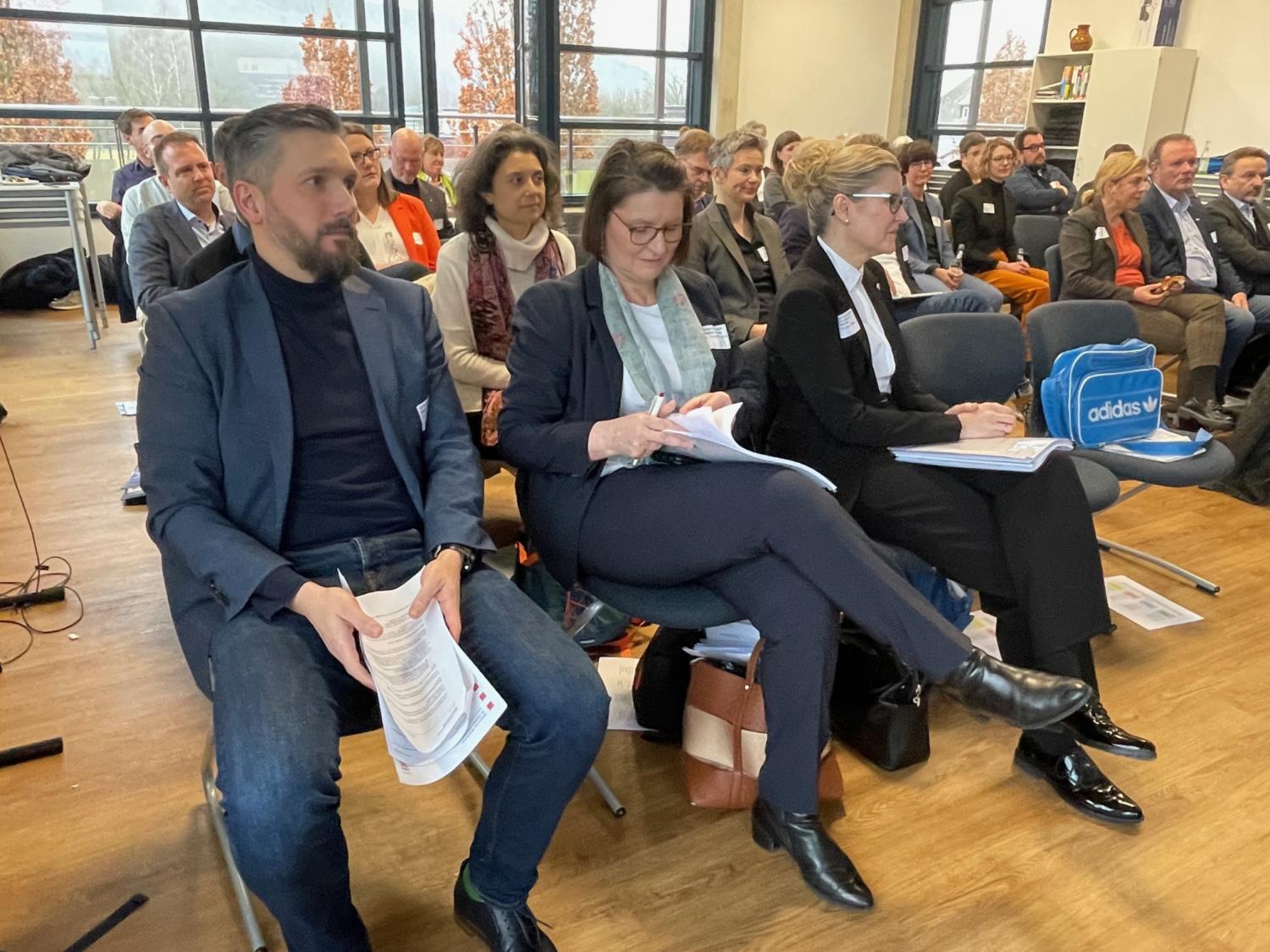
District Administrator Jens Womelsdorf emphasized that the Future Workshop, with over forty participants, was an excellent example of successful cooperation within the district. Among those invited to the conference were representatives from the Chamber of Industry and Commerce, Philipps University of Marburg, the Technical University of Central Hesse, local banks, and leading companies in the region.


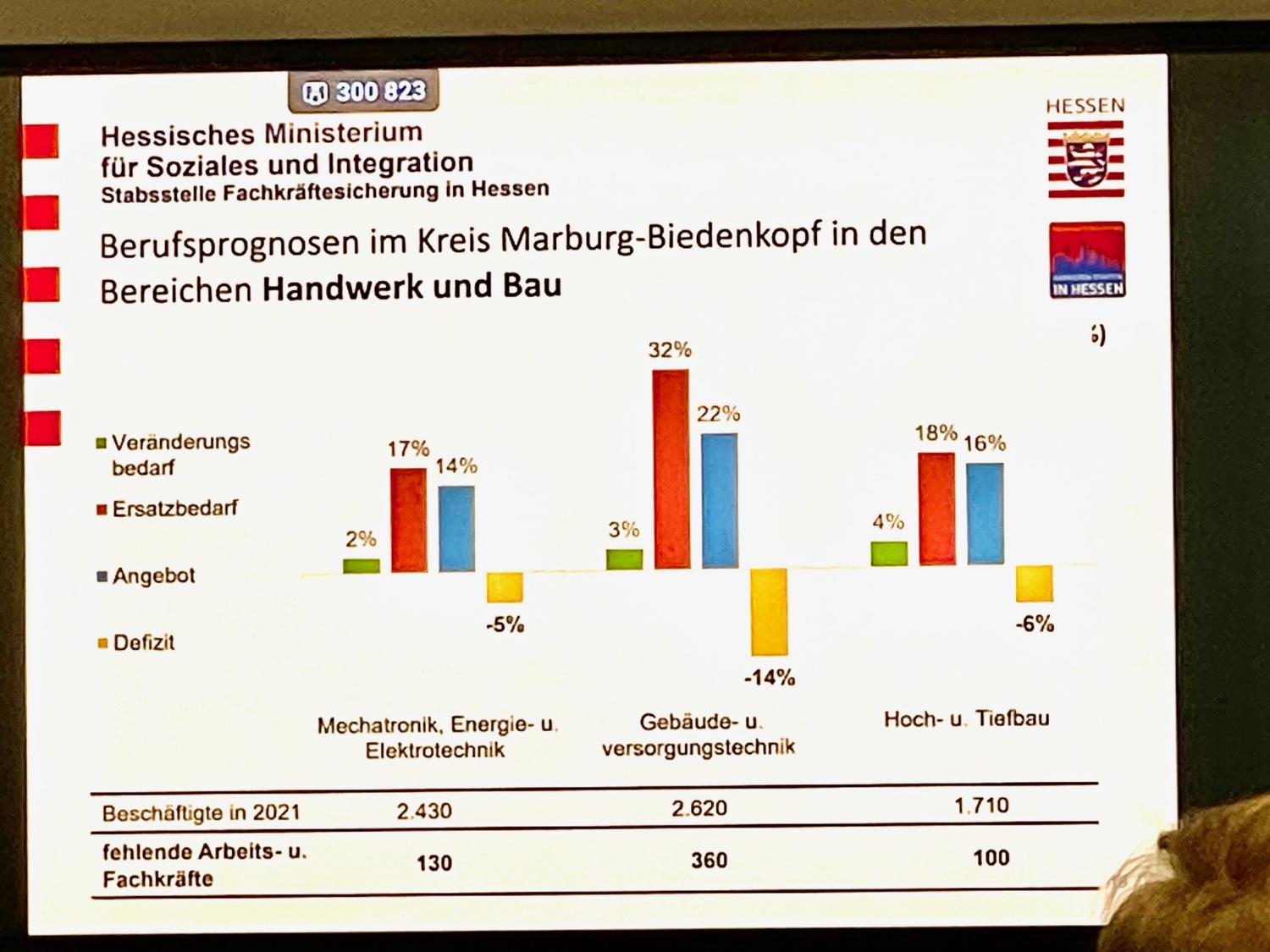
By 2028, the district will be short more than 4,000 skilled workers with vocational degrees

“Securing a skilled workforce is a genuine societal and long-term challenge that requires the commitment of all stakeholders. I am grateful that we in Hesse are working together to address the issue of securing skilled workers and the labor force. We need coordinated strategies for securing a skilled workforce to pool regional resources, create synergies, and tap into further potential,” said Claudia Wesner of the Office for Securing a Skilled Workforce at the Hessian Ministry of Social Affairs and Integration.

Dr. Christa Larsen, Director of the Institute for Economics, Labor, and Culture at Goethe University Frankfurt: “The labor market situation in the Marburg-Biedenkopf district is already quite tight and will become even more severe in the coming years. By 2028 alone, the district will face a shortage of approximately 4,000 skilled workers with academic or vocational degrees. These skilled-worker shortages will grow even larger in the coming years as the baby boomer generation retires. That is why existing strategies for securing a skilled workforce must be reevaluated, and we need to explore what new approaches are necessary. Ideas for this will be developed in the Future Workshop.”

The Marburg-Biedenkopf Economic Development Corporation (WFG), founded in May 2023, is intended to help address the shortage of skilled workers. The WFG will build on the results of the Future Workshop to strengthen the district’s economic and employment structure in a sustainable manner, in collaboration with all stakeholders.

22. December 2023
https://steinmuehle.de/wp-content/uploads/sites/5/2023/12/IMG_3239-scaled.jpg 1125 1500 konnertz https://steinmuehle.de/wp-content/uploads/sites/5/2025/11/Logo_SchuleInternat_Steinmuehle_2026_3.png konnertz2023-12-22 11:39:072026-06-18 17:37:43Hosted by Steinmühle: Future Workshop on Securing a Skilled Workforce

A big thank you to the families: Once again, school backpacks were sent on their way to Sibiu, Romania

Collaborations & Partnerships, News, Politics, Business & Responsibility, Social Engagement

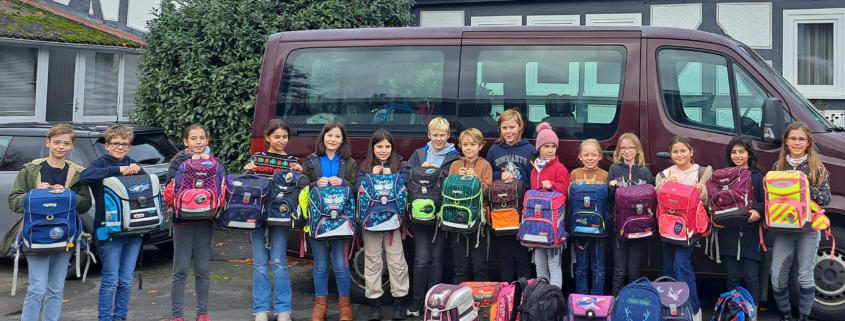
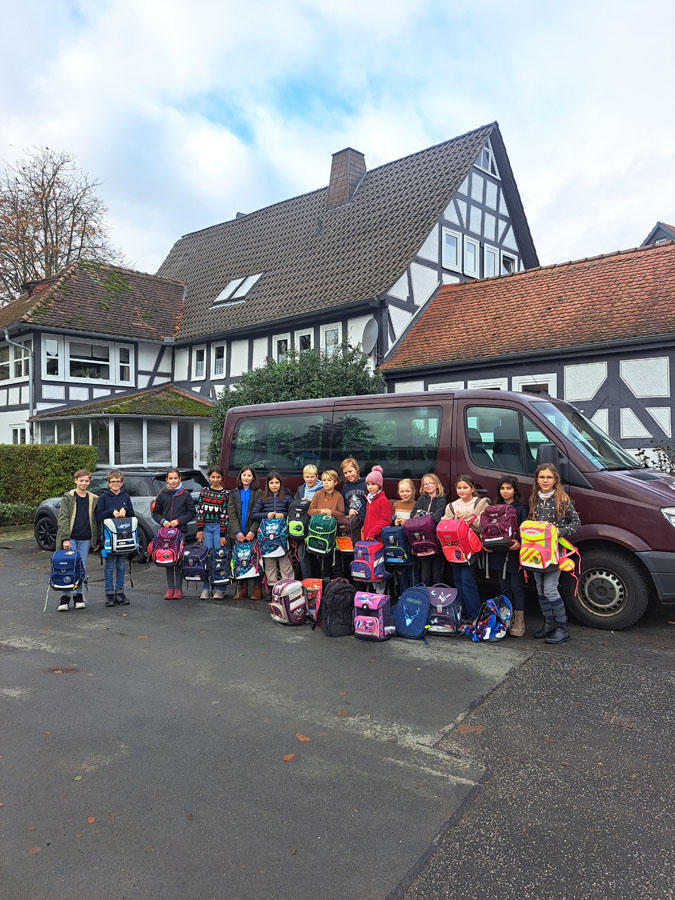
Once again this year, we received active support from the students and parents of Steinmühlen School for the Children’s and Youth Parliament’s charitable campaign, “School Bags for Romania.” The families of 5th-grade students were asked to donate well-preserved “second-hand” backpacks from their elementary school days for the new school year, to be sent to Sibiu, Marburg’s sister city. There, many children can only afford a backpack and quality school supplies to a limited extent—or not at all! So, on November 10, the backpacks collected over several weeks set off on their journey—first to the Haus der Jugend in Marburg, and then, in even greater numbers, to Romania. We would like to extend our heartfelt thanks to all the children and families who donated a backpack and, in some cases, even filled it with school supplies.

22. December 2023
https://steinmuehle.de/wp-content/uploads/sites/5/2023/12/Titel-1-scaled.jpg 941 1500 konnertz https://steinmuehle.de/wp-content/uploads/sites/5/2025/11/Logo_SchuleInternat_Steinmuehle_2026_3.png konnertz2023-12-22 11:31:082026-06-18 17:37:42A big thank you to the families: Once again, school backpacks were sent on their way to Sibiu, Romania

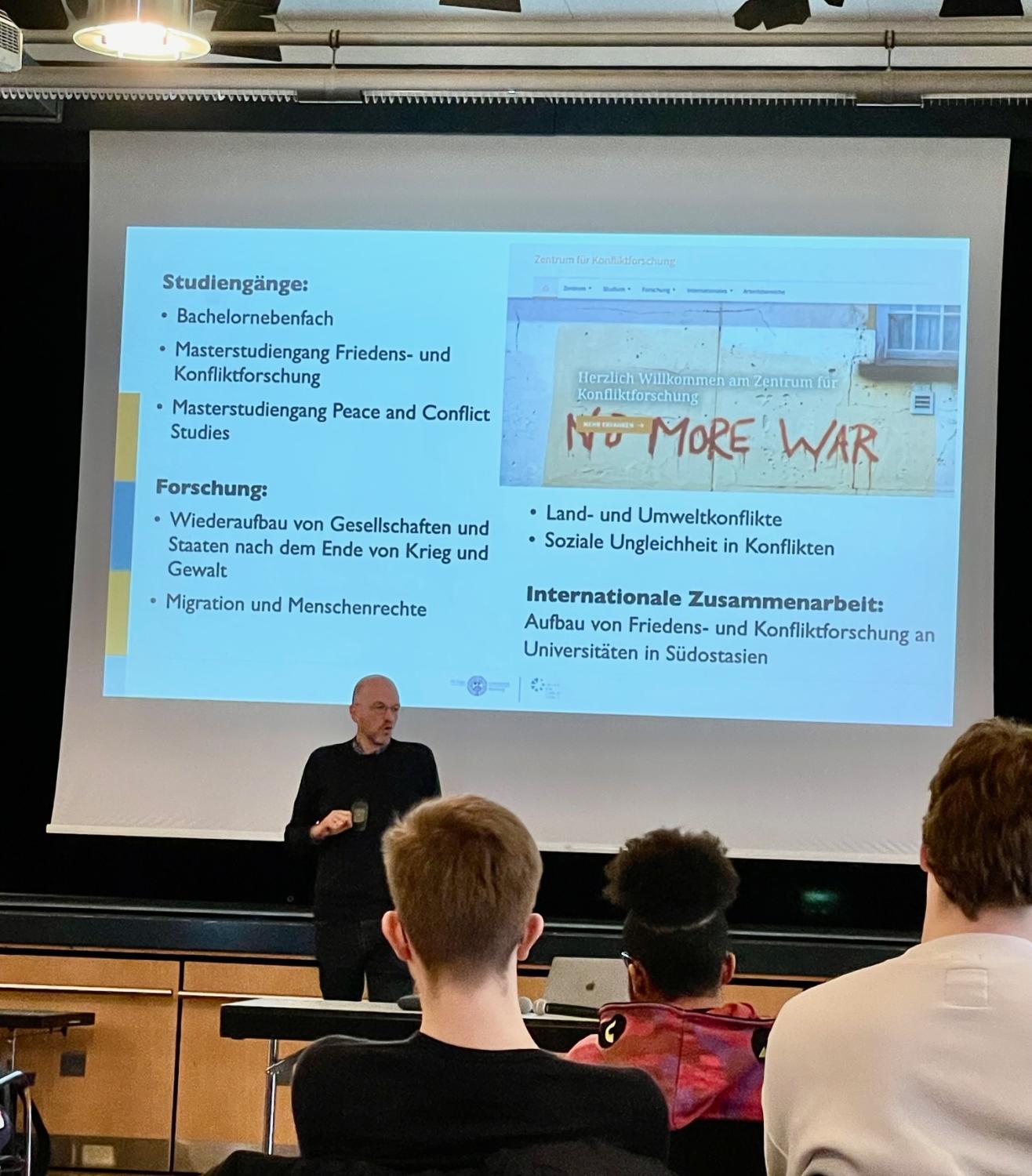
Delegation from the Center for Conflict Research at Steinmühle: 13th-grade students host a mock UN conference

Collaborations & Partnerships, News, Politics, Business & Responsibility

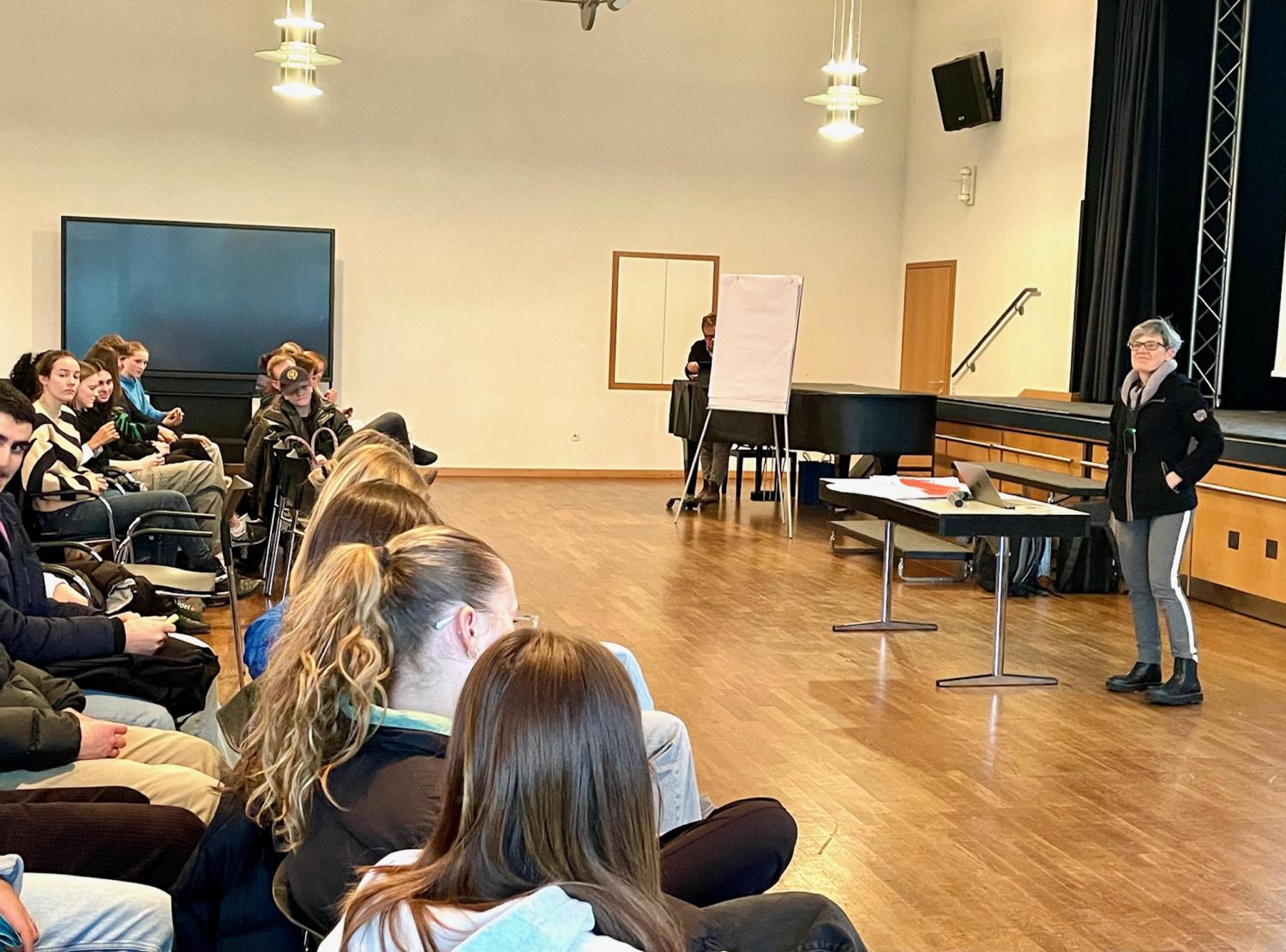
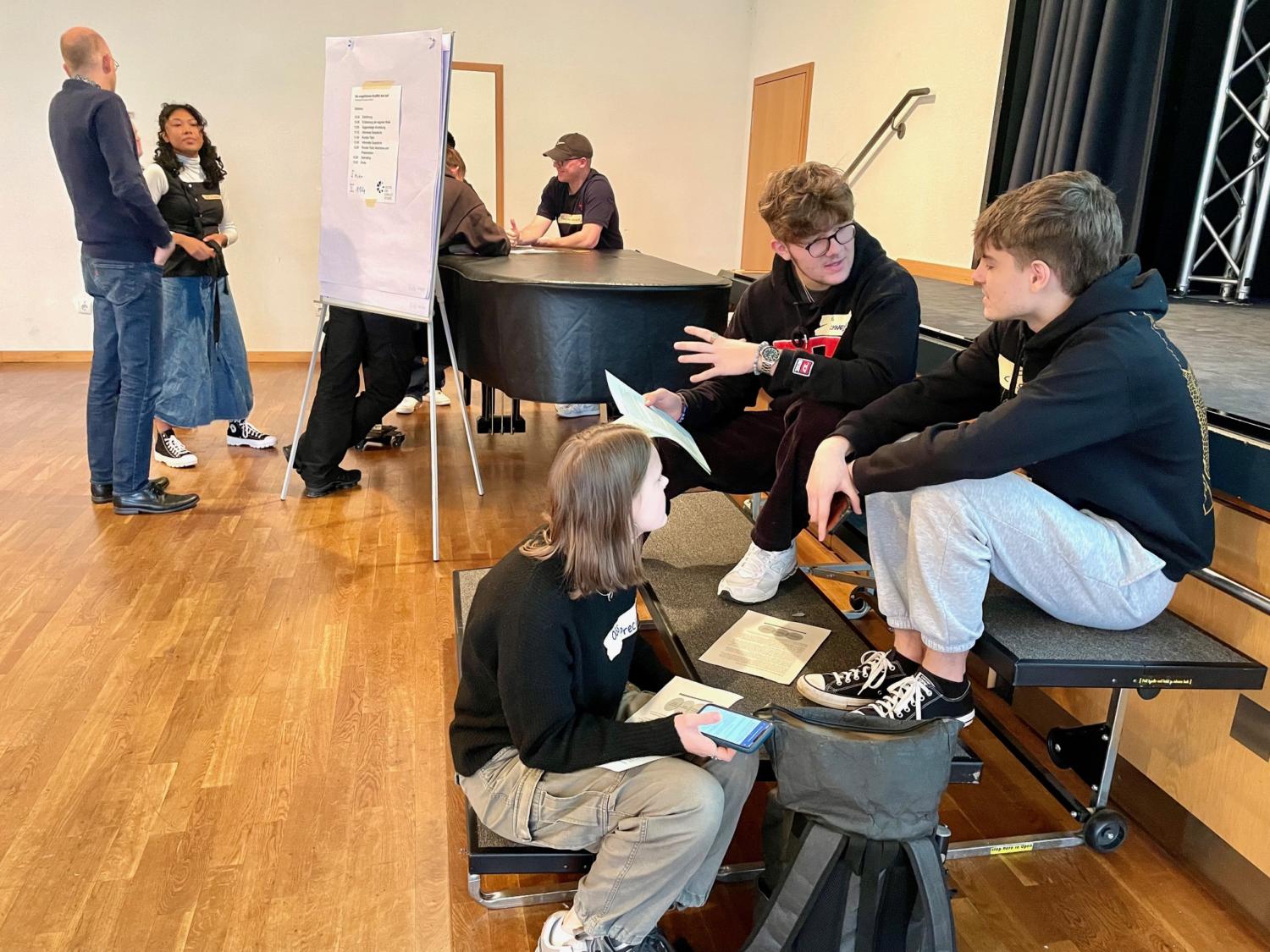
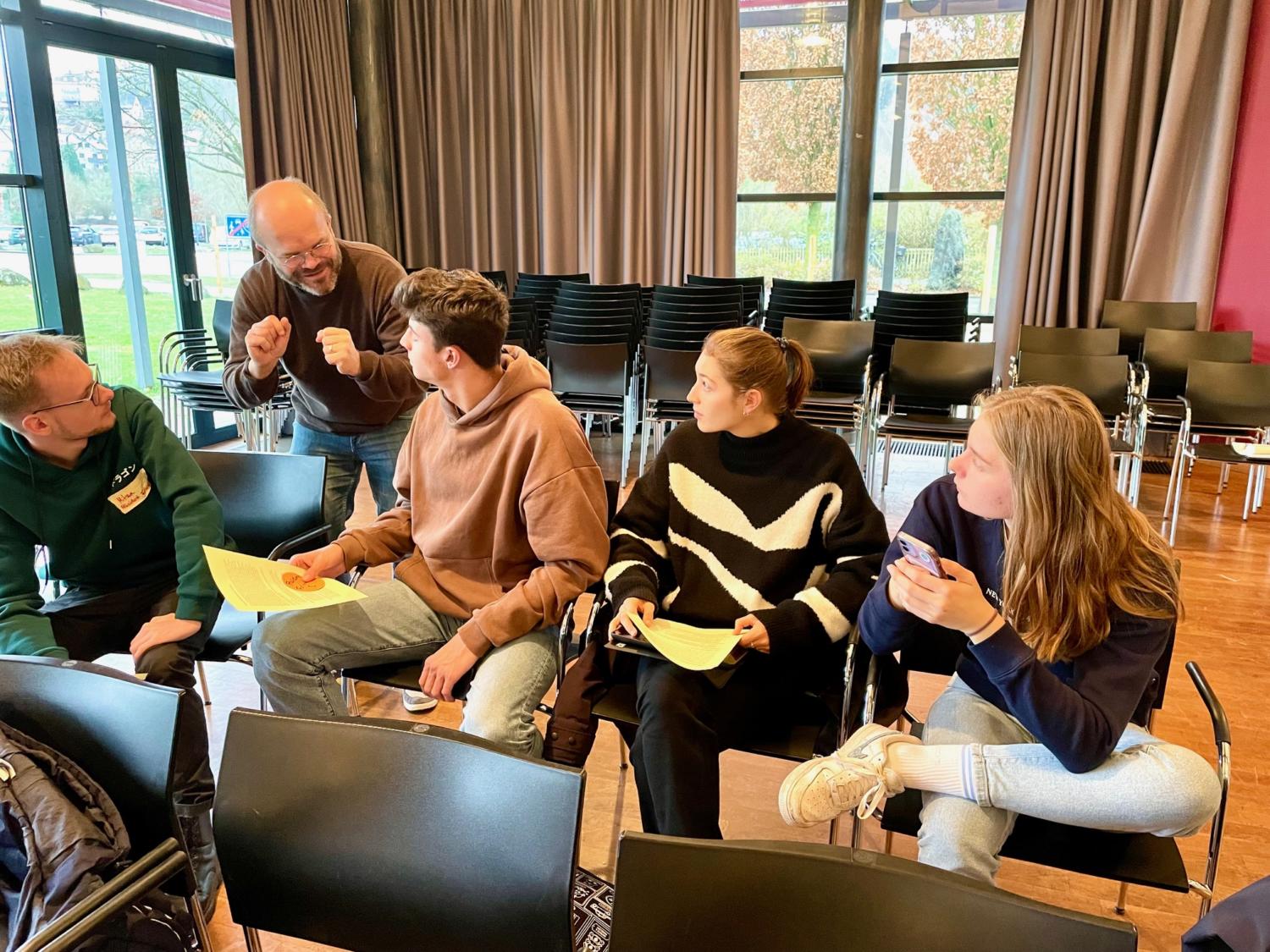
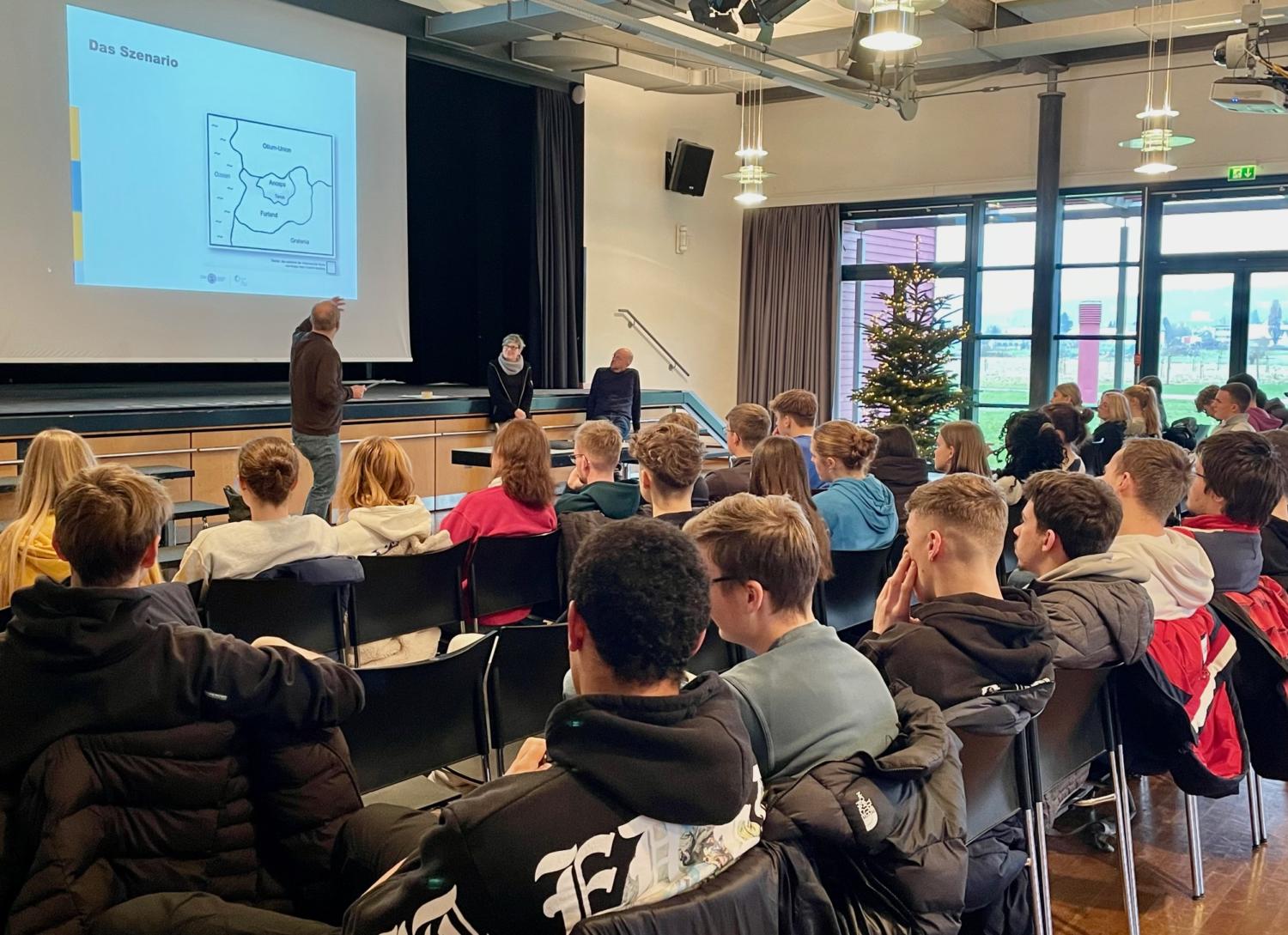
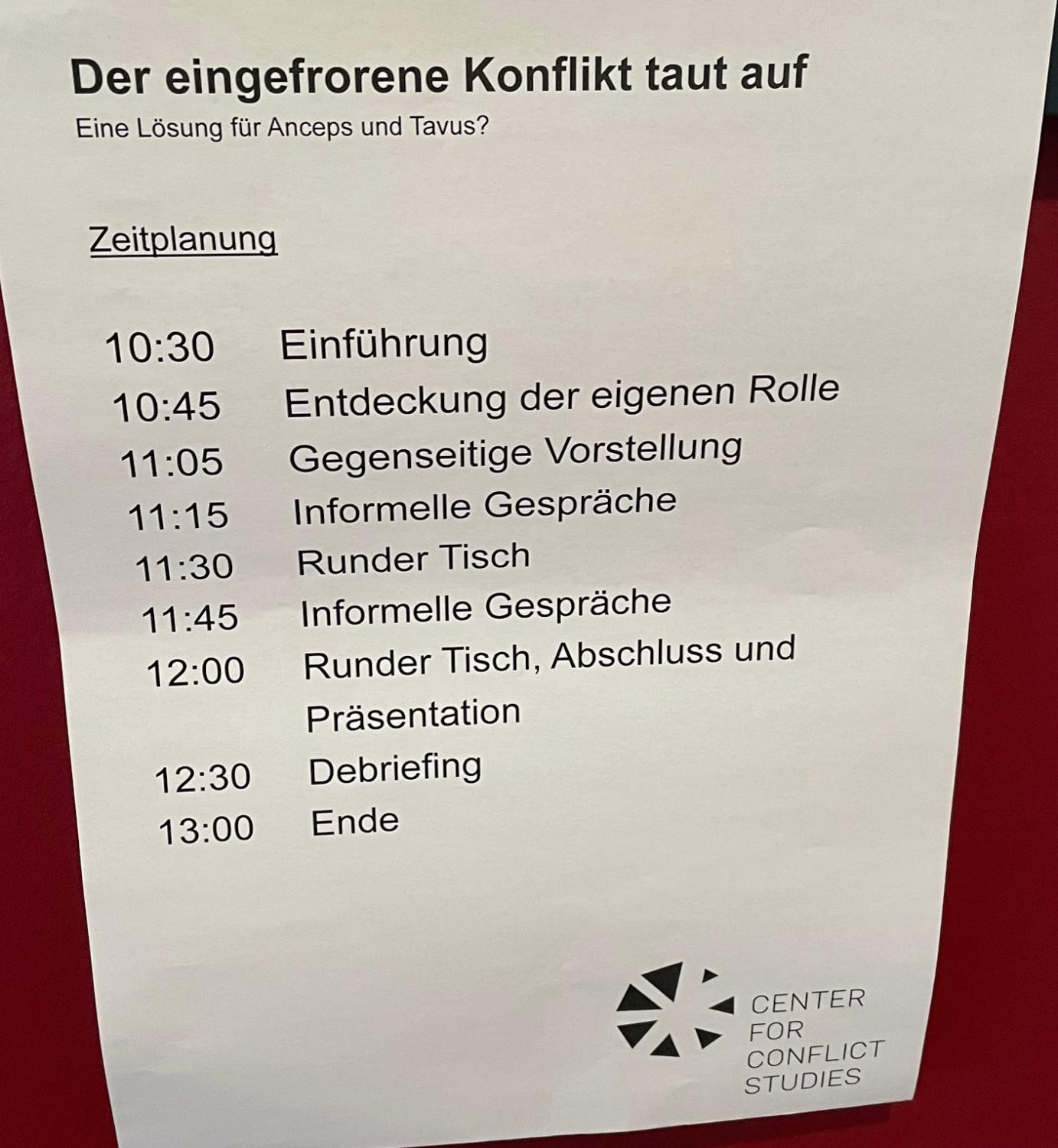
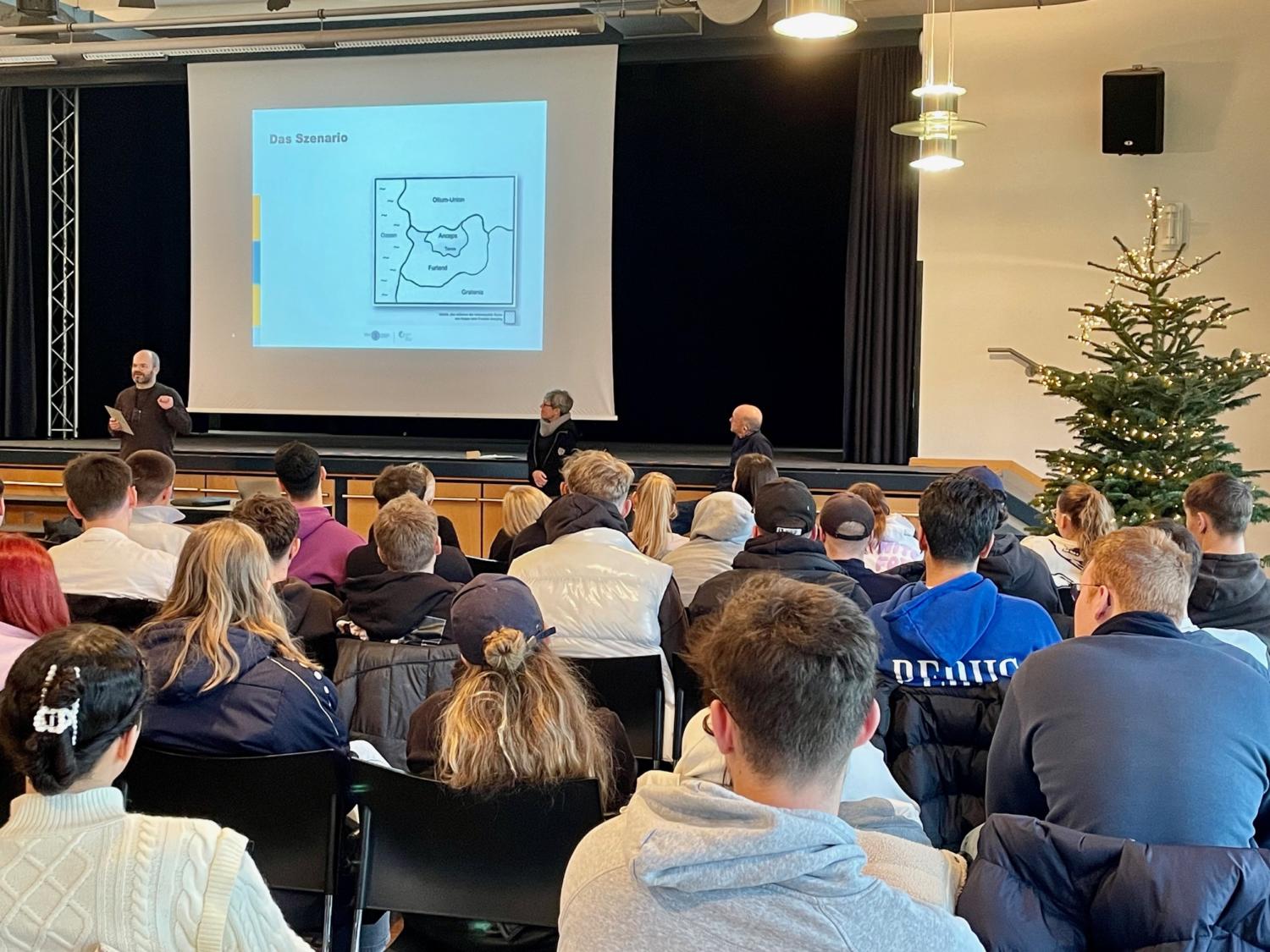
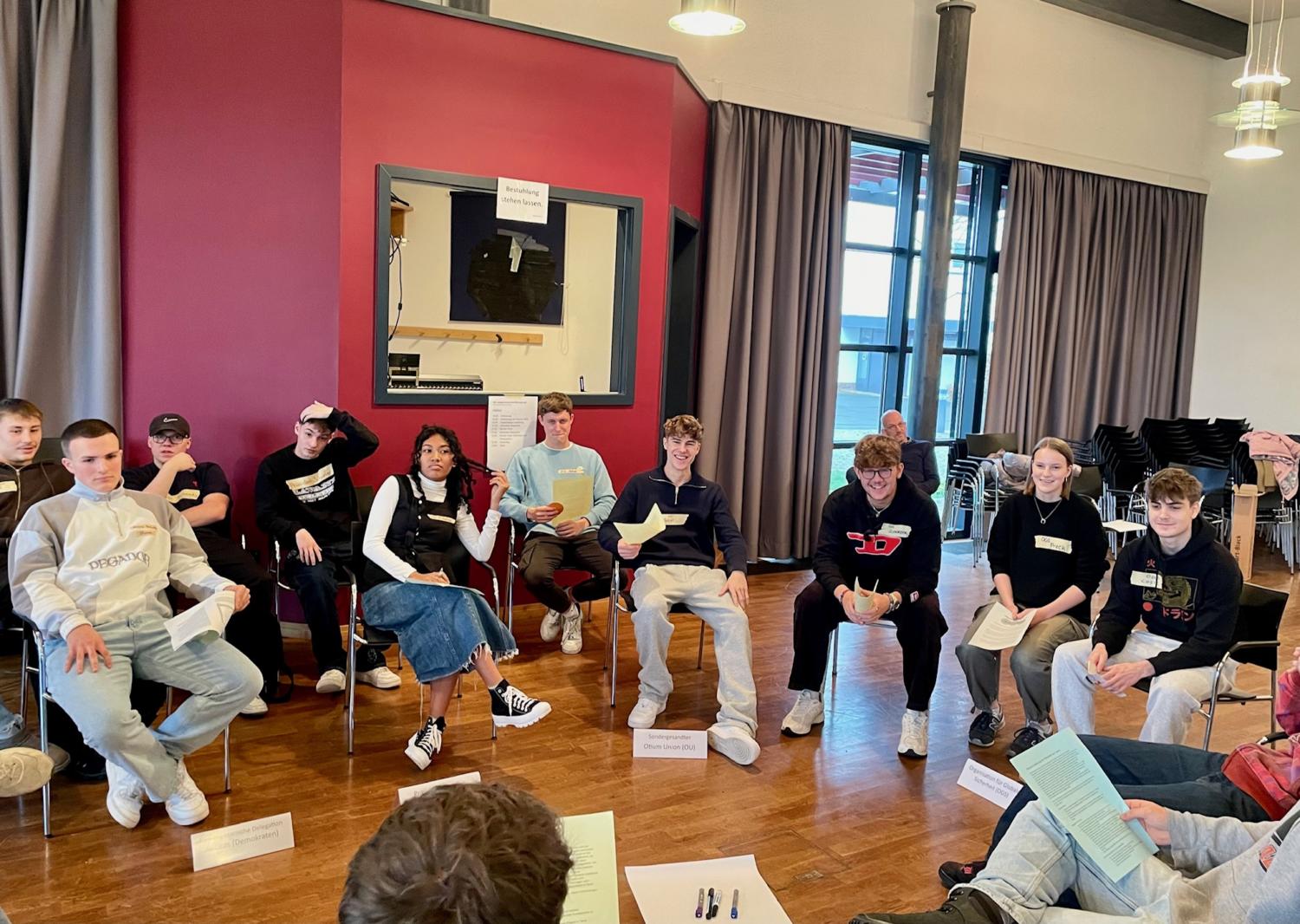
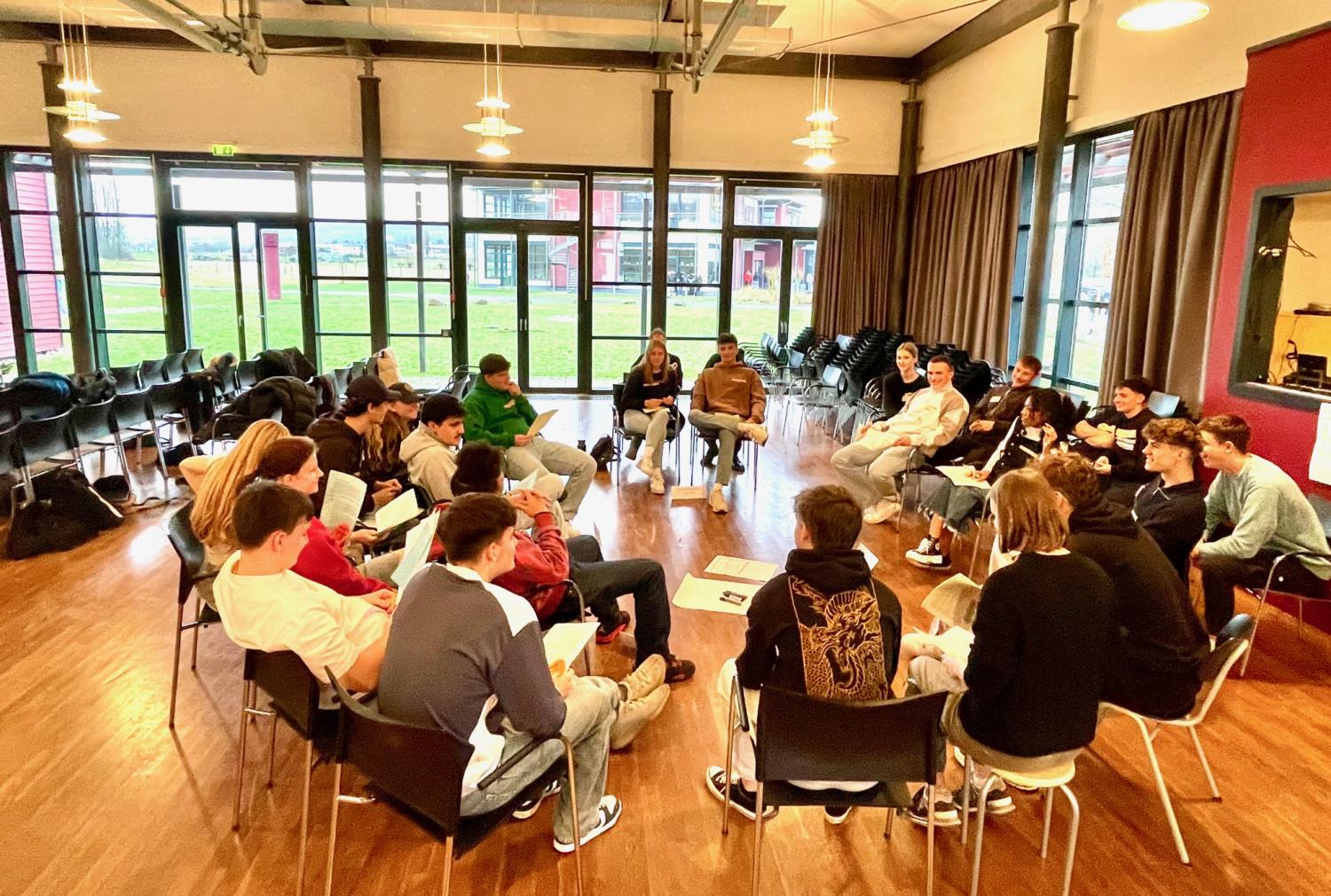
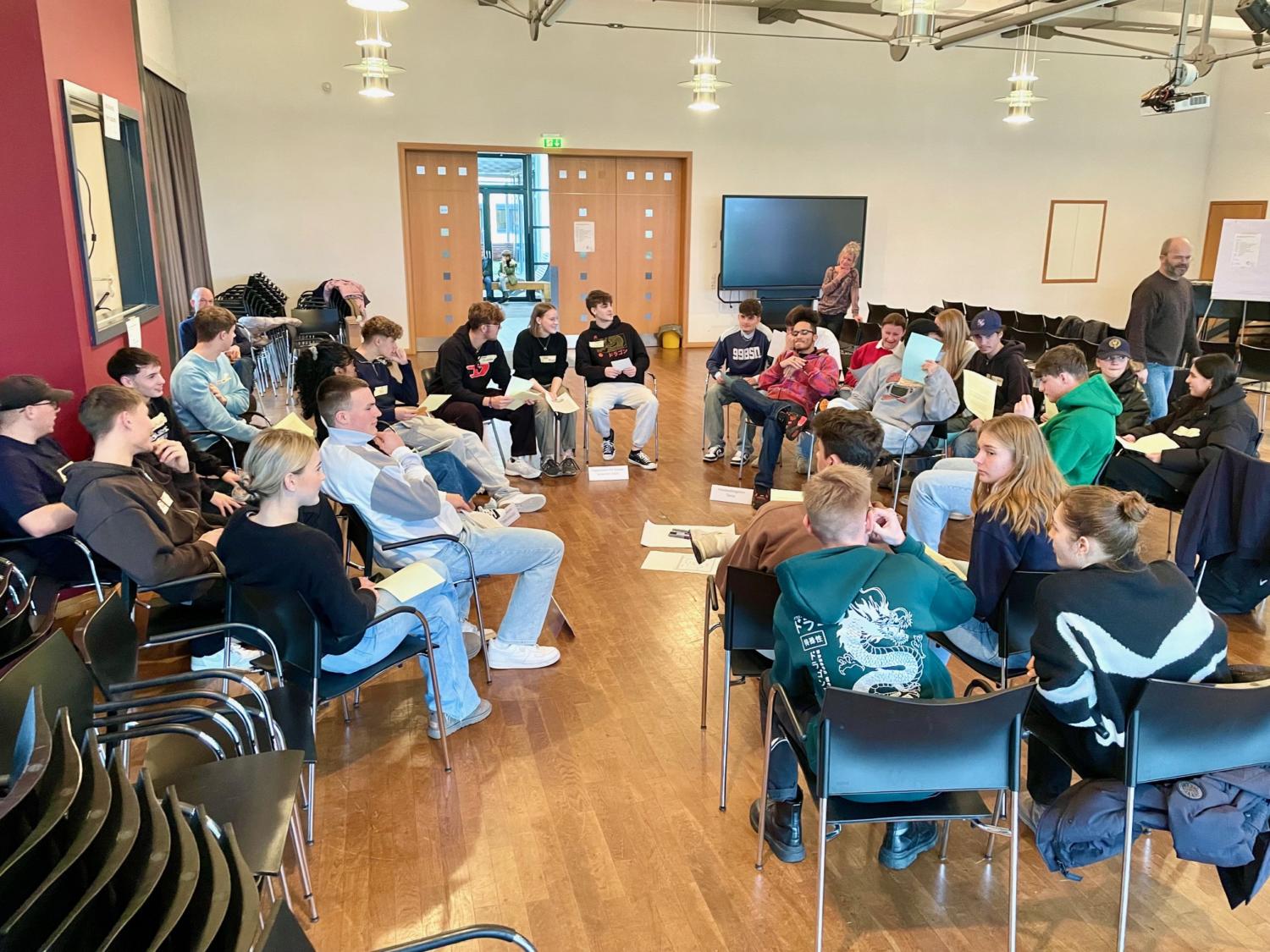
Why can’t they reach an agreement through diplomatic channels? — Given the many political conflicts around the world, this question comes up time and again. Recently, a delegation from the Center for Conflict Research at Philipps University in Marburg visited our school. In a simulation of an international conflict, 13th-grade students were given the opportunity to lead negotiations at a fictional UN conference. They soon realized that reaching an agreement isn’t all that easy.

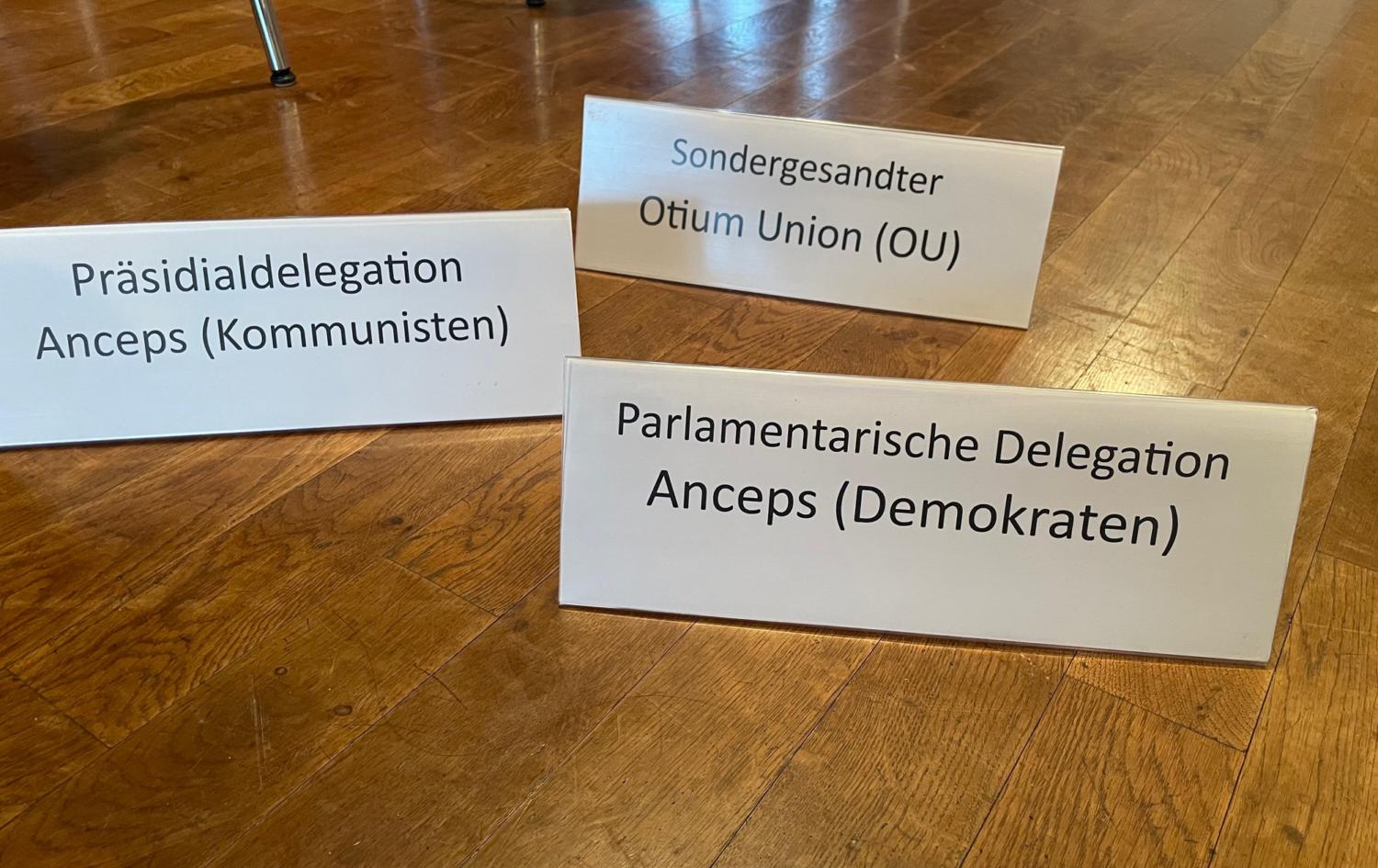
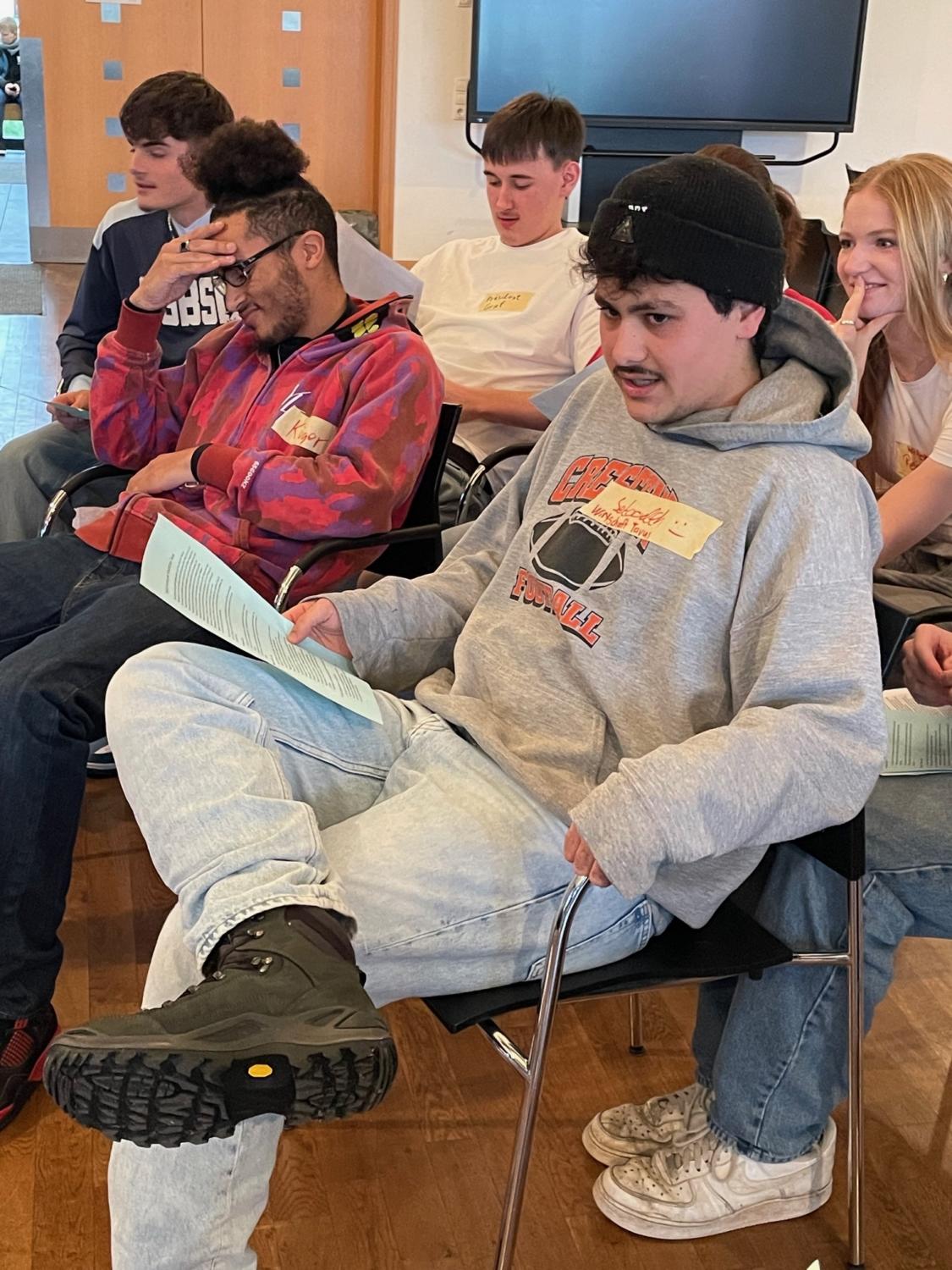
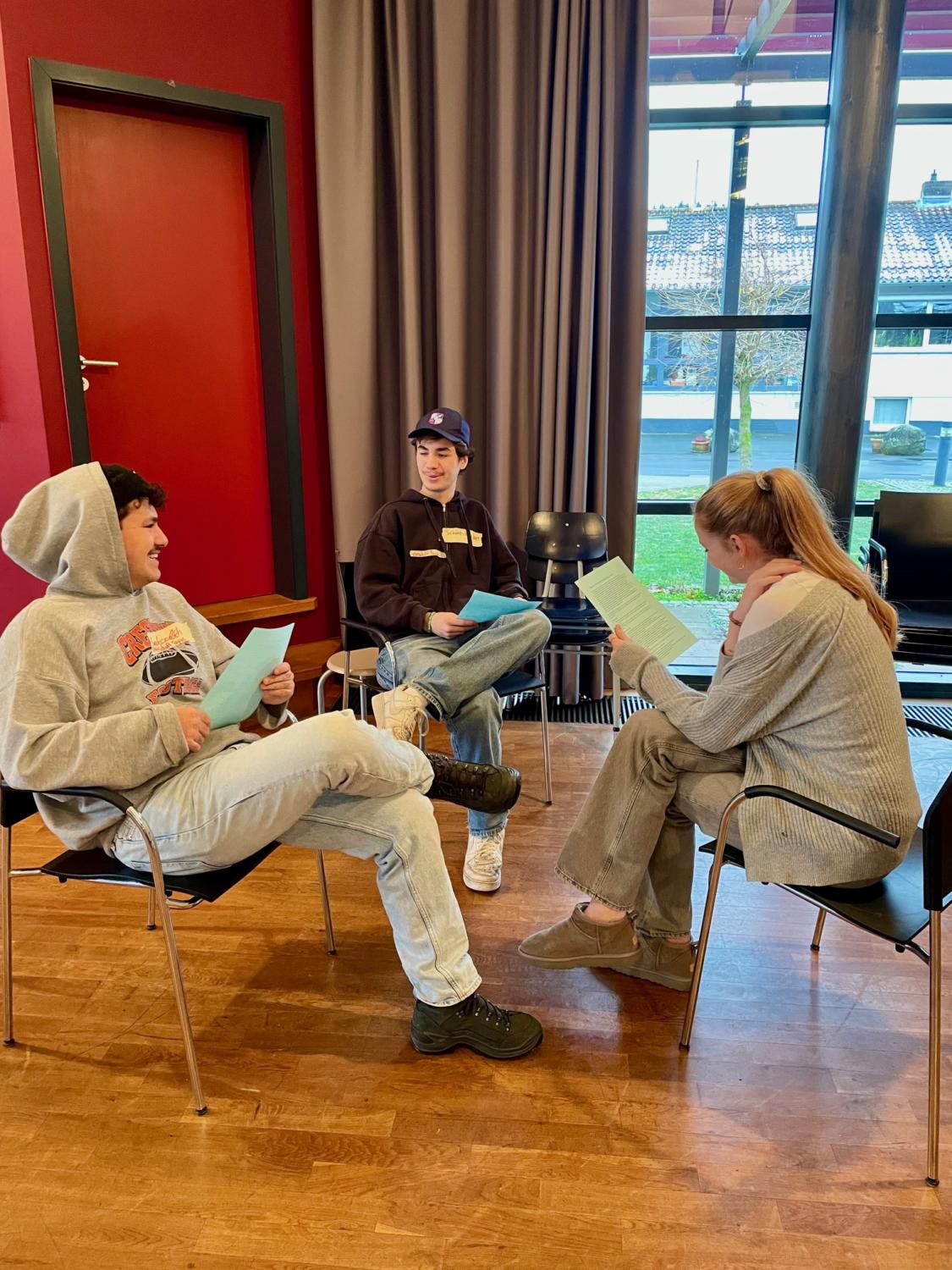
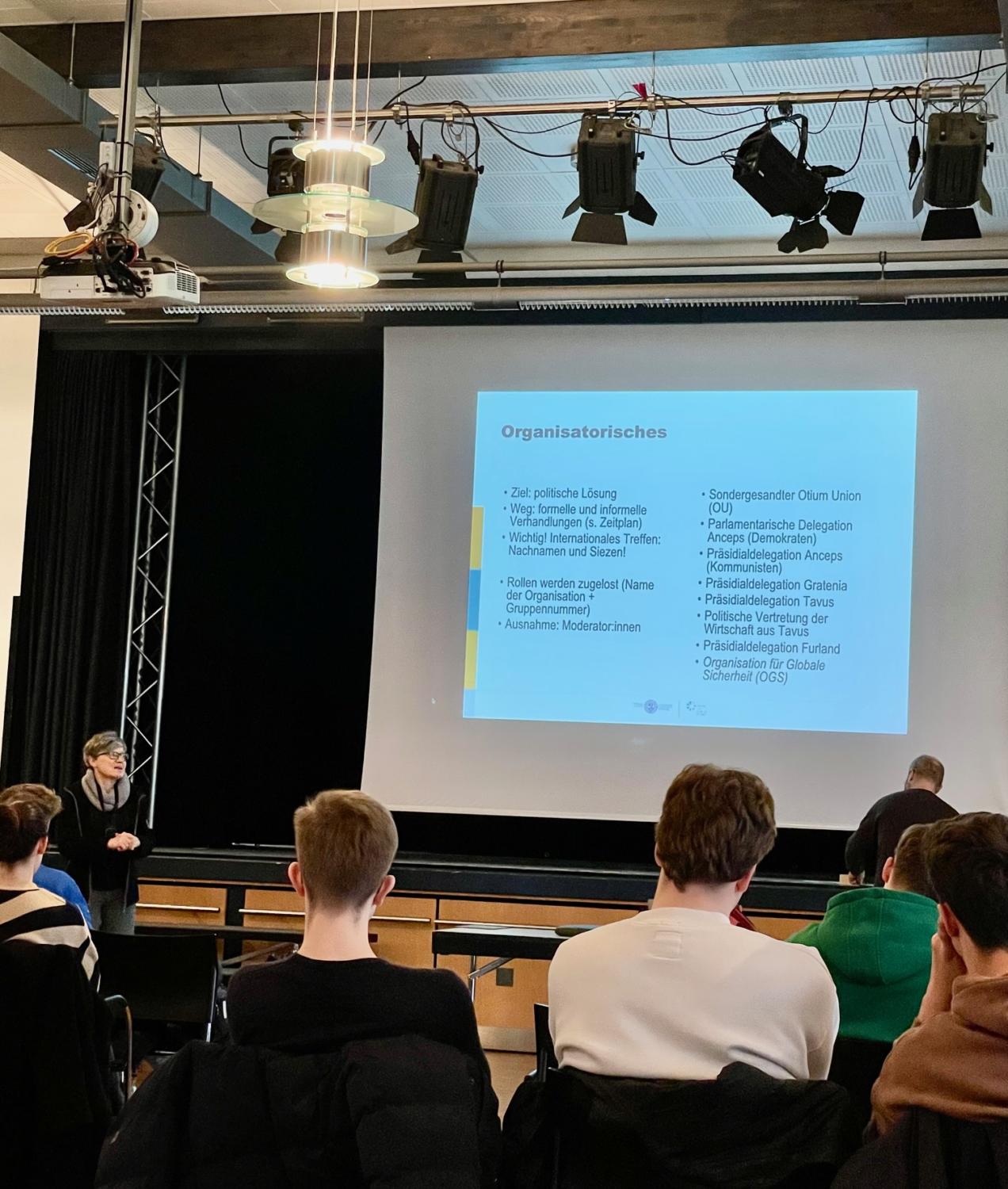
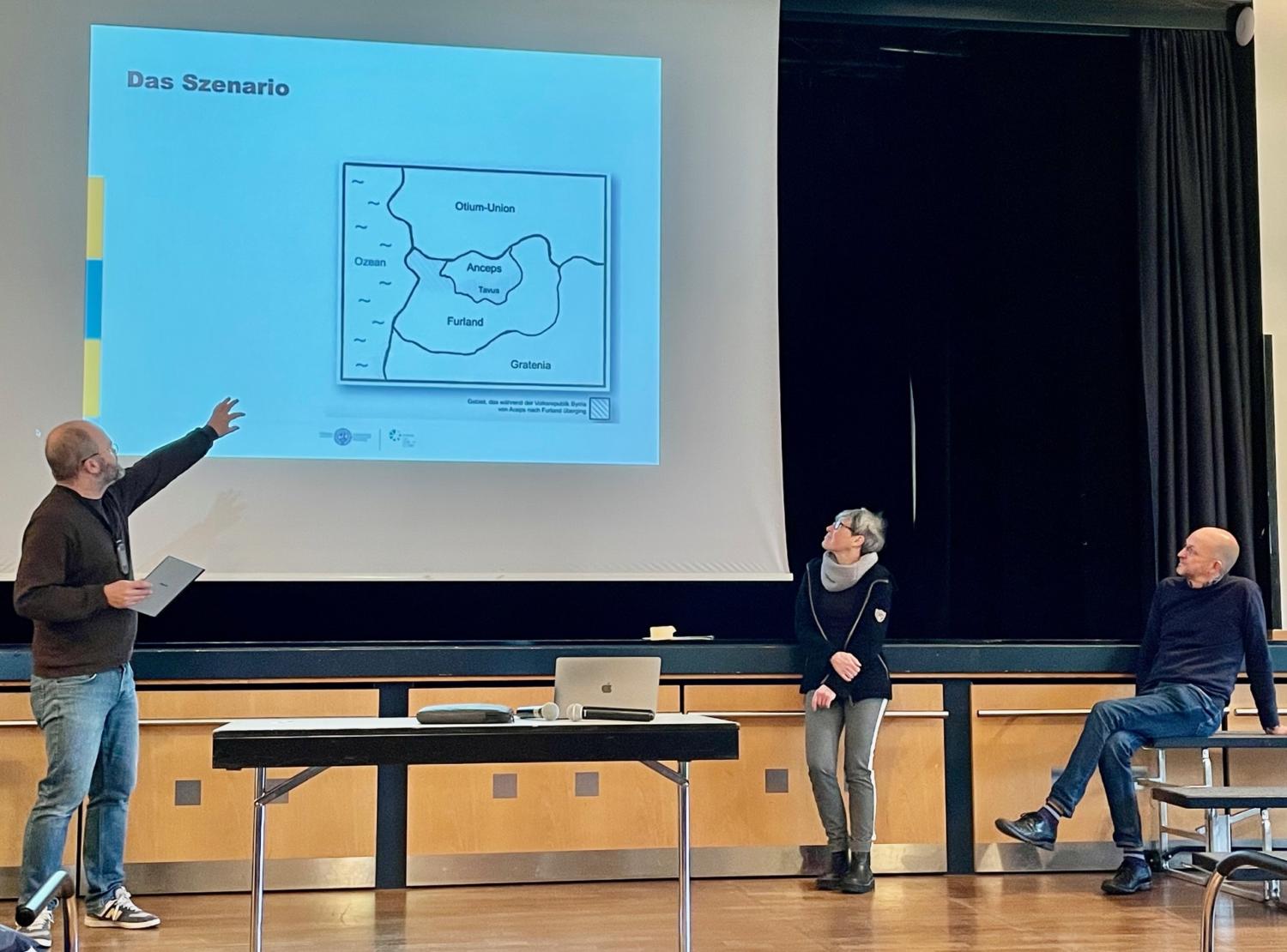
Otium-Union, Anceps, Tavus, Furland, and Gratenia: These were fictional countries with fictional names, whose representatives were to exchange views in informal discussions and later at a roundtable. Students took on these roles, wearing name tags and addressing one another formally. The goal was to immerse themselves in their own roles and those of their counterparts, focusing on national identity, territorial claims, economic factors, and peacekeeping.


Sticking to One’s Own Point of View

All parties involved issued a brief statement explaining their positions. It soon became clear that this was a gathering of very different personalities. Not all parties were open to discussion—or were difficult to reason with—and many insisted on their position, vehemently opposing, for example, a “relocation” proposed by the other side in the negotiations.


“Frustrating” at times

The final evaluation was intended to reveal how the students felt about their roles. The word “frustration” came up—they found it difficult to reach an agreement, especially when the negotiators were primarily pursuing their own interests rather than focusing on the common goal. Reasons cited included, among others, interdependencies that make agreements difficult, as well as many conflicting interests. The people were said to be unwilling to compromise.

“Do you have any idea where this took place?” Of course, it was eventually revealed which part of the world the students had been discussing during those three school hours. The university guests first let the students guess and then revealed that the scenario outlined in the presentation roughly corresponded to the Transnistria conflict between the Republic of Moldova and the self-proclaimed Transnistrian Republic, with Russia’s involvement.


Making University Collaboration a Reality

Bernd Hülsbeck, a subject teacher and head of the social sciences division within the Politics and Economics department at Steinmühle, views events like this primarily through the lens of “opening up the school”: “We have a partnership with Philipps University of Marburg, and we need to make that partnership tangible.” The Steinmühle teacher thanked the university delegation—consisting of Prof. Dr. Thorsten Bonacker, Dr. Stéphane Voell, Dr. Kerstin Zimmer, and Tabea Hanke—for coming by presenting them with a gift. Events like these help make the curriculum—which is currently focusing on international relations in the 13th grade—somewhat more practice-oriented.


The “Peace and Conflict Studies” program prepares students, among other things, for work with the UN when staff are deployed to crisis areas.

11. December 2023
https://steinmuehle.de/wp-content/uploads/sites/5/2023/12/IMG_3132-scaled.jpg 1125 1500 konnertz https://steinmuehle.de/wp-content/uploads/sites/5/2025/11/Logo_SchuleInternat_Steinmuehle_2026_3.png konnertz2023-12-11 11:41:242026-06-18 17:37:35Delegation from the Center for Conflict Research at Steinmühle: 13th-grade students host a mock UN conference

In-School Teacher Professional Development Days: Other schools are successfully using these concepts and approaches

News, Politics, Business & Responsibility

Regularly reevaluating our own approach and constantly evolving: The Steinmühle is a school that never stops learning—and not just on paper. The school’s internal teacher training days were used to visit other schools in Germany that employ various modern approaches: to see how things can be done differently, to gather ideas, and to gain new perspectives. The field trips taken by the four groups of teachers led them to the Sächsisches Landesgymnasium Sankt Afra in Meissen, the Alemannenschule in Wutöschingen, Baden-Württemberg, the Anne Frank School in Bargteheide near Hamburg, and the Ratsgymnasium in Minden.


St. Afra: Deepen Your Interest with Addita

St. Afra’s philosophy is to consistently focus on the students’ strengths. Students are given the freedom to develop their personalities and are trained to take on responsibility. Mentoring in the boarding school and high school, along with building relationships, forms the foundation for everything. At St. Afra, a boarding school for gifted students, children also practice crafts, and teachers introduce them to various hobby activities. Through so-called “Addita,” students can explore their own interests—beyond the core curriculum—in greater depth. “We need more accountability,” is the credo of the school administration, which fosters a school atmosphere of total focus on the subject matter. In “learning tandems,” high-achieving and average students work together in chemistry class—an approach that has proven effective.


Alemannenschule Wutöschingen: Grading System for Social Behavior

At the Alemannenschule in Wutöschingen, the school’s mission statement is put into practice: decency, respect, and personal responsibility. Here, teachers are called “learning guides,” and students are “learning partners.” Everyone sits together in the same room, and everyone is working. The atmosphere is quiet, with only whispers. The staff members are always present; there are hardly any places to retreat to. Every week, students reflect on their personal plans with their own coach. Clear rules are a cornerstone of the Alemannenschule’s approach. Everything is extremely clean and well-maintained; meals are eaten only in the dining hall, not elsewhere in the building. No one uses cell phones—neither middle schoolers nor high schoolers. “Learning through experience” is a guiding principle. Experts who are not teachers help the children and teenagers experience real life. There is a grading system for social behavior that allows students to earn greater freedoms.


Anne Frank School in Bargteheide: No Grades for Grades 5–7

Every class in grades 5–9 at the Anne Frank School in Bargteheide has two co-teachers with equal responsibility. At this inclusive comprehensive school, only part of the class works with tablets at any given time; the students share the devices. In grades 5–7, report cards with grades are not used. Instead, there are portfolios and a portfolio review that highlights each student’s strengths—further emphasized by a corresponding certificate at the end of the school year. A consistent reduction of 5 minutes in each class period creates free time during which students can explore their personal interests in extracurricular clubs or elective courses. A high degree of mindfulness fosters a very personal atmosphere at the school, which has adopted the motto “Connection before Education.”


Ratsgymnasium Minden: “Deeper Learning” in Practice

The Ratsgymnasium in Minden is committed to an open approach to learning. Using the so-called “Deeper Learning” concept, the school has set out to have students first master the fundamentals in selected lessons, and then apply that knowledge as practical skills through authentic and relevant tasks. These tasks are then intended—on a large or small scale—to have an impact on the school community, if possible, in the form of a relevant outcome or product. For the Ratsgymnasium, a school with a strong cultural focus, such tasks often arise from various performance formats, such as concerts or theater productions. However, they can also take the form of explanatory videos, a school scavenger hunt, or other formats that are personally meaningful to the students and develop from their own ideas. The school works in close cooperation with external partners not only for these performances. In addition to theater and concert venues, these have included, for example, professional craftsmen with whom students built the school’s outdoor seating themselves.


Innovative public schools provided impetus

In any case, the visits to the four schools have shown that a reformed and innovatively designed school day is not the exclusive domain of independent schools: All four of the schools visited are public, and they are located in different federal states.

Steinmühle has, in fact, found that it can learn from innovative public schools. “But that doesn’t mean Steinmühle is now turning its concept upside down,” the school administration team summarized. During the discussion of what they had heard, the Steinmühle faculty compiled several ideas and guiding principles that had been noted, in order to reflect on them and assess whether and to what extent they could be incorporated into the school’s daily routine and the Steinmühle’s educational philosophy.


The following to-dos, lines of thought, and statements (selection) were listed, among others:

  • Connecting the school with the local community, bringing students together with (external) people, opening the school to people from outside the community
  • Freedom is causally linked to obligations
  • Emphasize social behavior, solidarity, and compassion
  • School as a Social Space
  • Slipper Culture: A Whole New Level of Quality of Life
  • Taking a Closer Look at Grades for Younger Students
  • Companies are interested in young people who follow (their own) guidelines
  • We should take a look at what we already have and incorporate new elements into a well-rounded overall plan
  • Strengths-Based Approach
  • As teachers, we must take the rules seriously ourselves and serve as role models
  • Examining the mentoring system and the two-teacher system
  • Highlighting “Fundamentum” and “Additum”

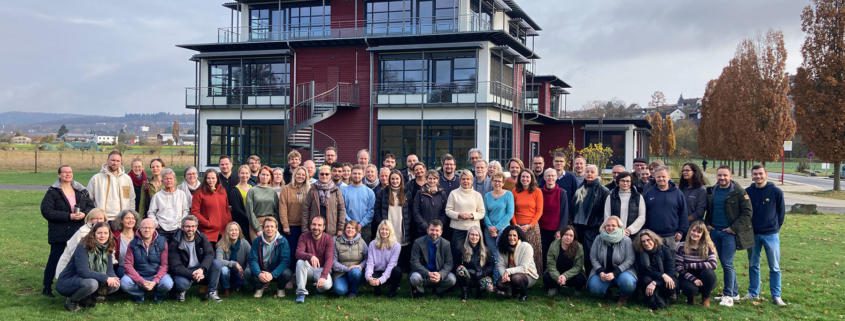
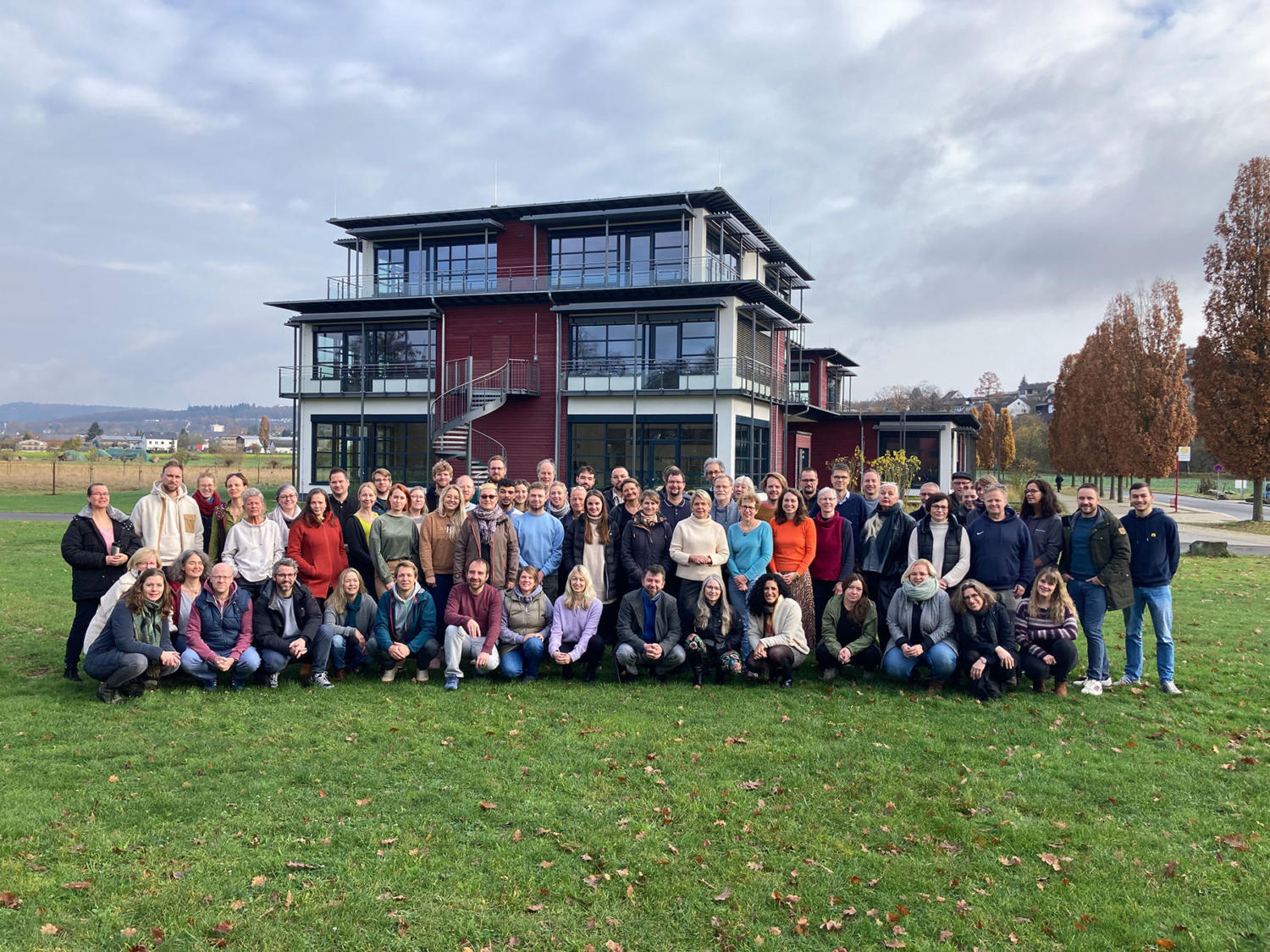
Our photo in front of the Forum shows the teachers from Steinmühle on the second day of the training session, when all the results were compiled.

11. December 2023
https://steinmuehle.de/wp-content/uploads/sites/5/2023/12/Team_Steinmuehle-scaled.jpg 1125 1500 konnertz https://steinmuehle.de/wp-content/uploads/sites/5/2025/11/Logo_SchuleInternat_Steinmuehle_2026_3.png konnertz2023-12-11 11:29:422026-06-18 17:37:34In-School Teacher Professional Development Days: Other schools are successfully using these concepts and approaches

Rotary Career Information Day: Firsthand Tips from Professionals

Collaborations & Partnerships, News, Politics, Business & Responsibility

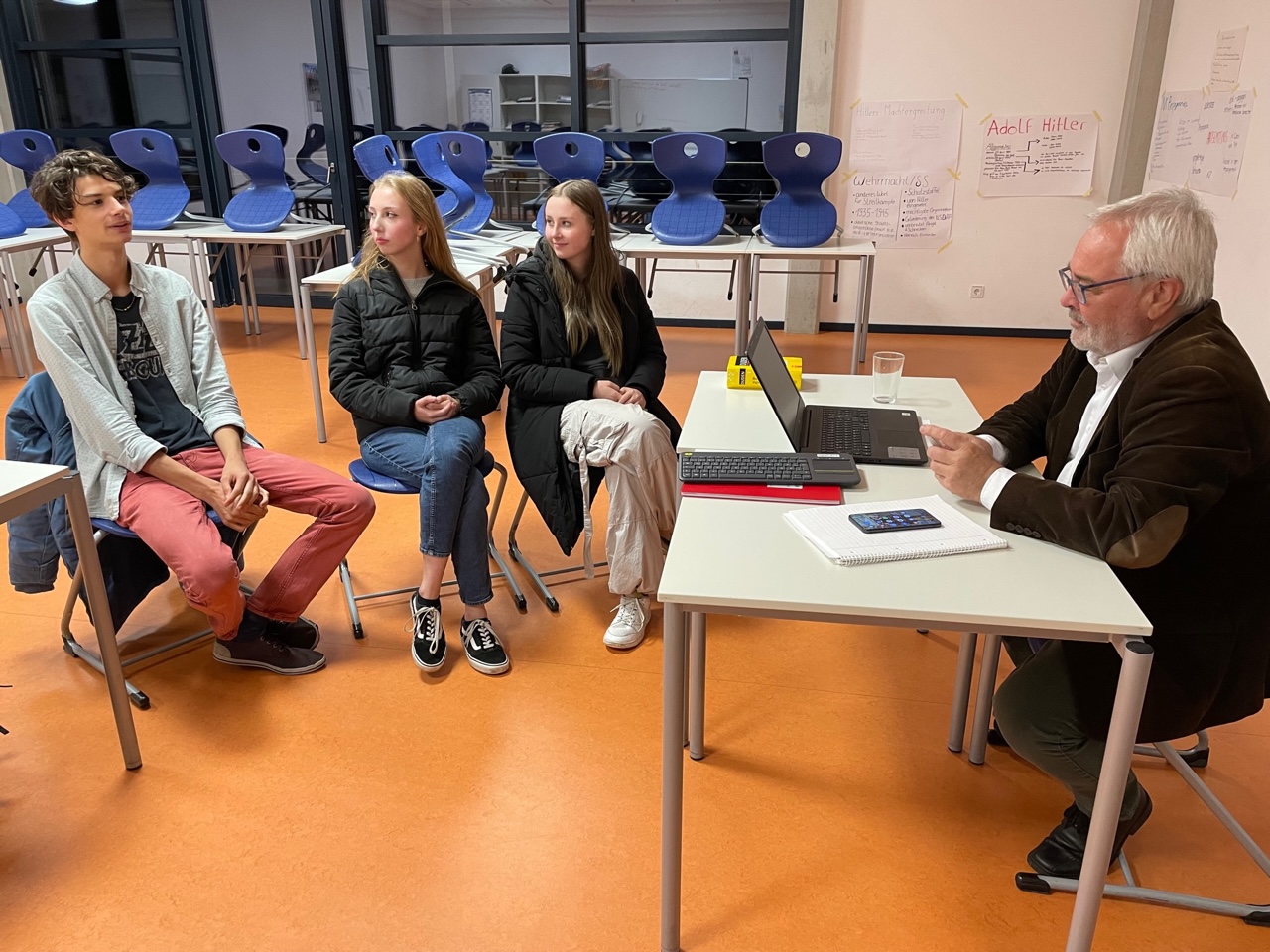
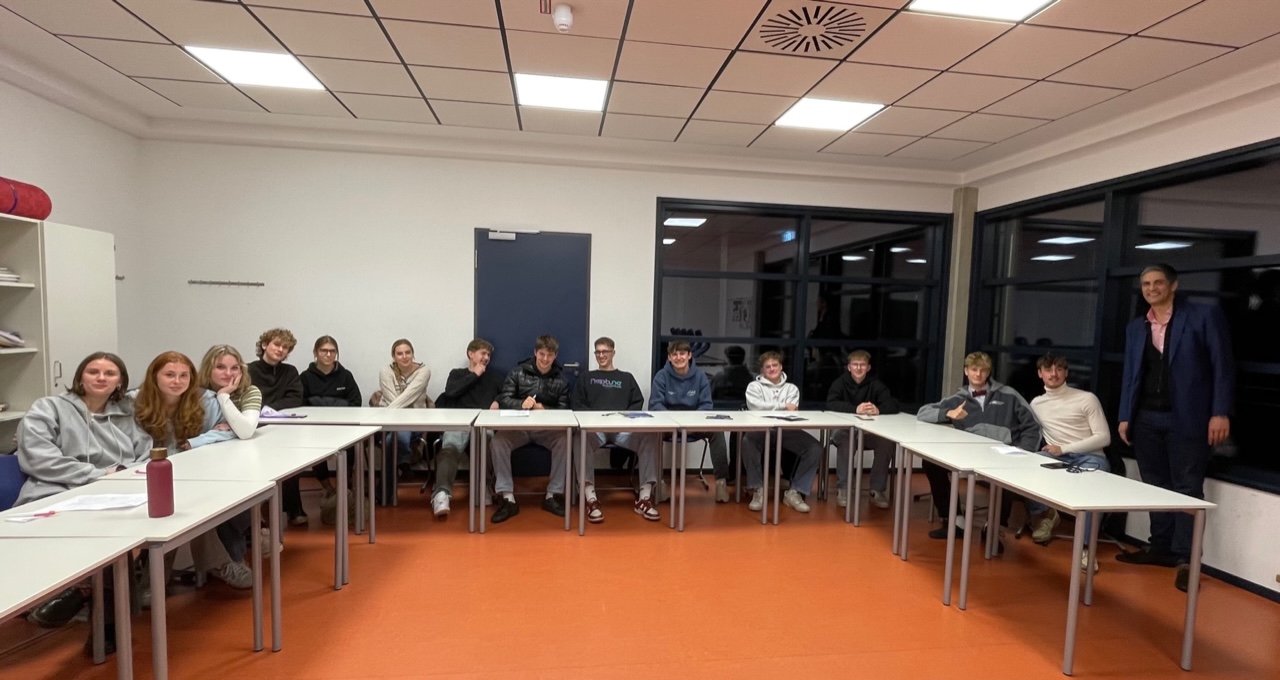
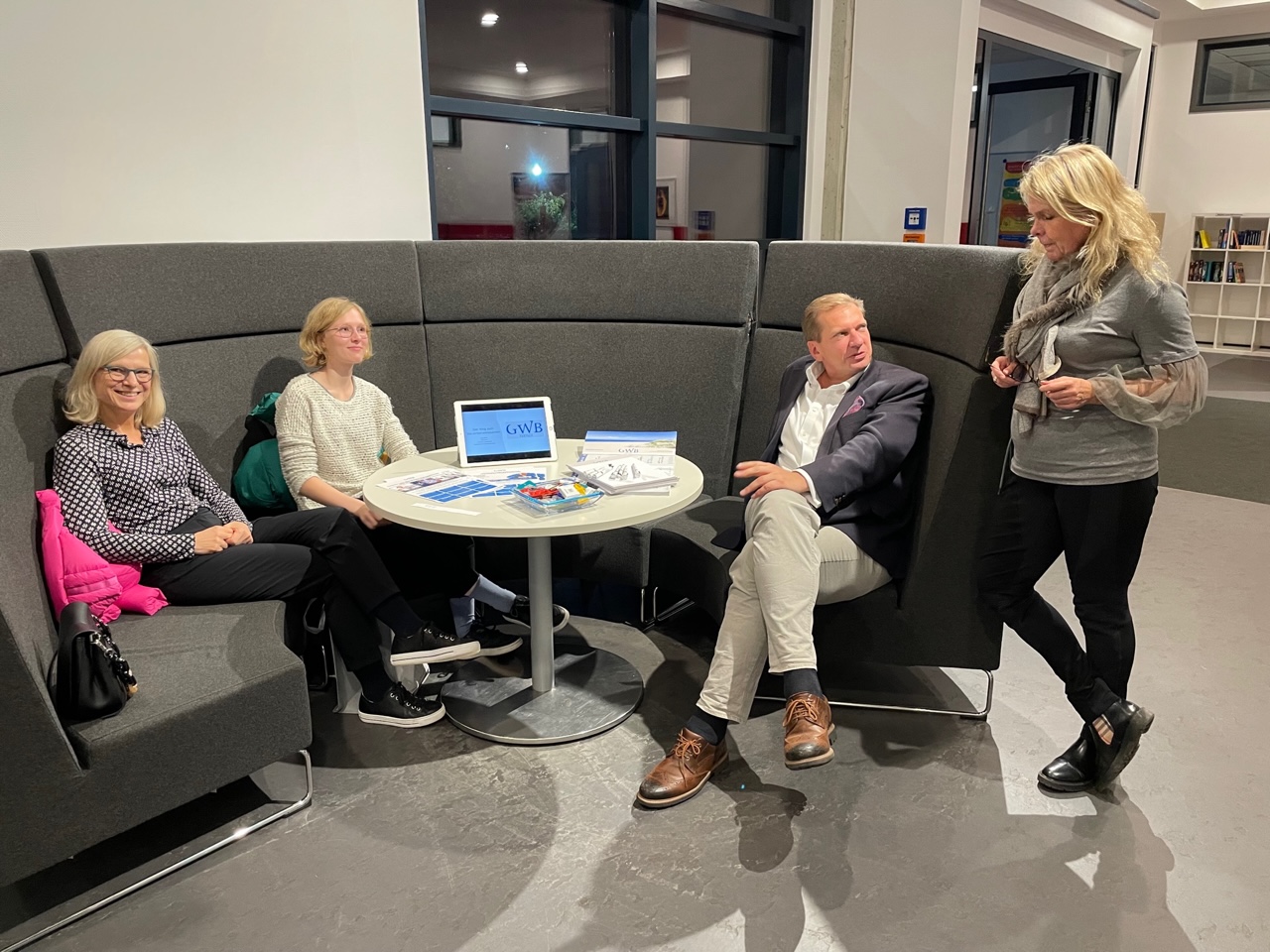
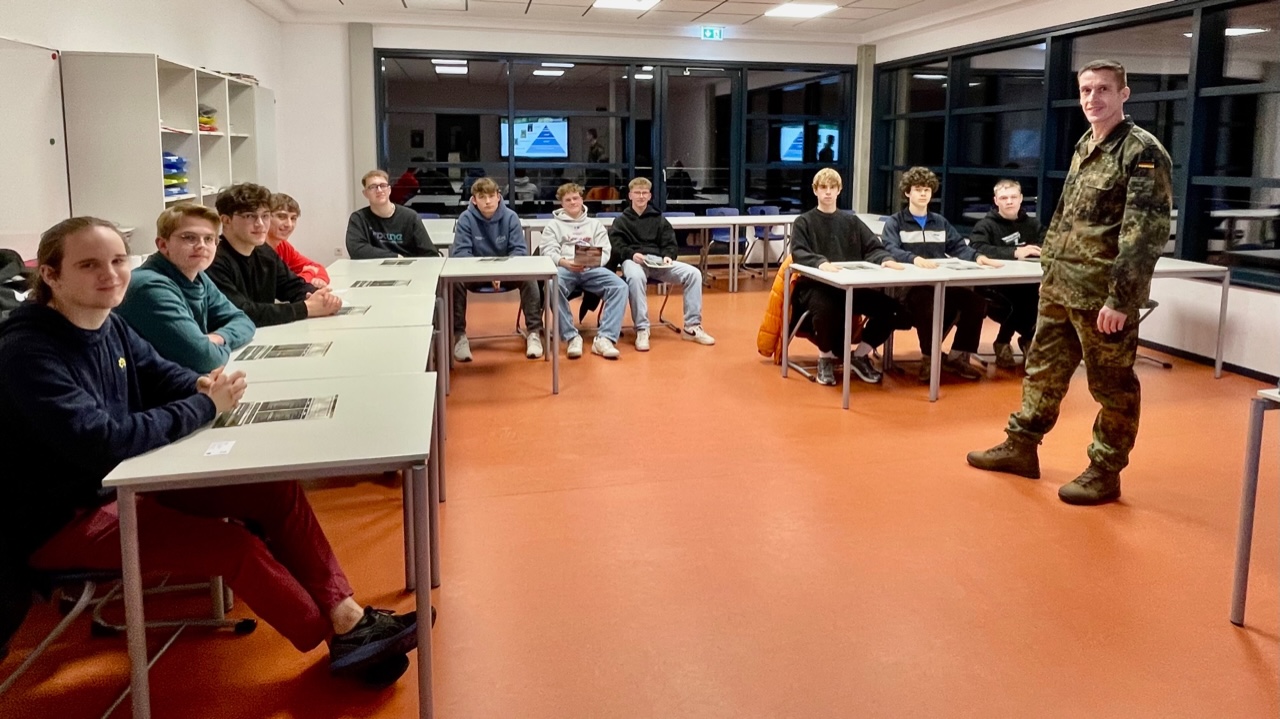
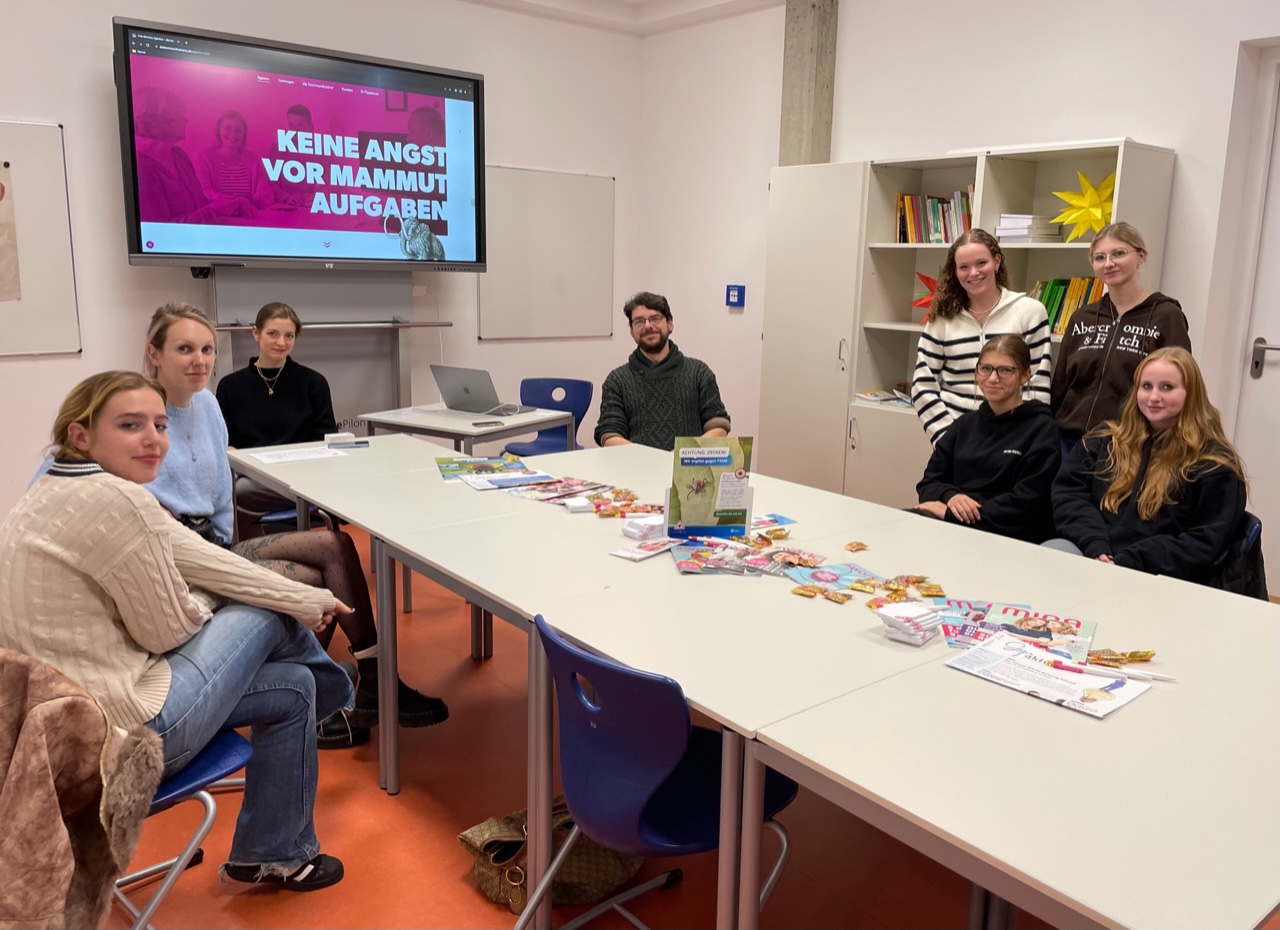
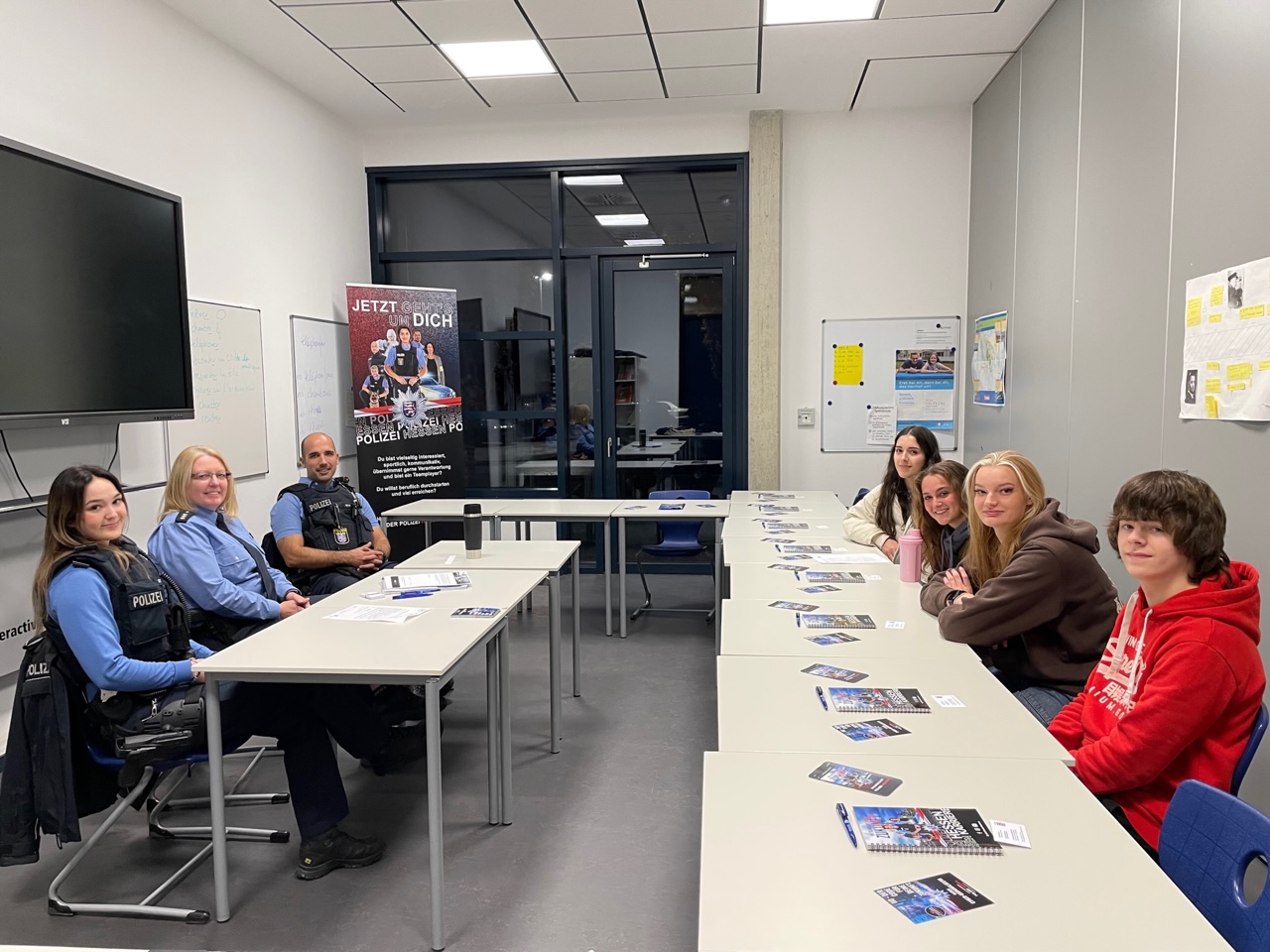
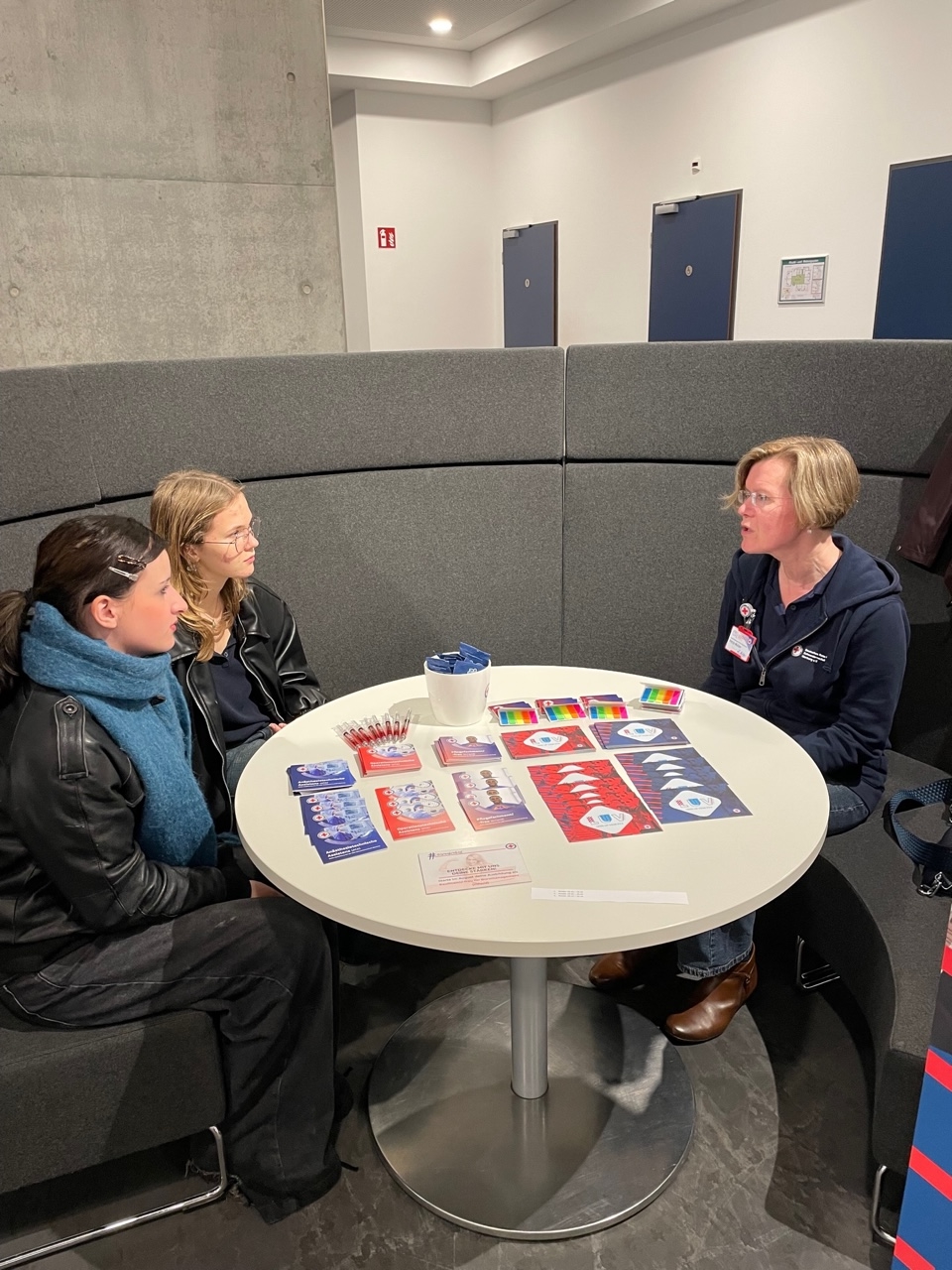
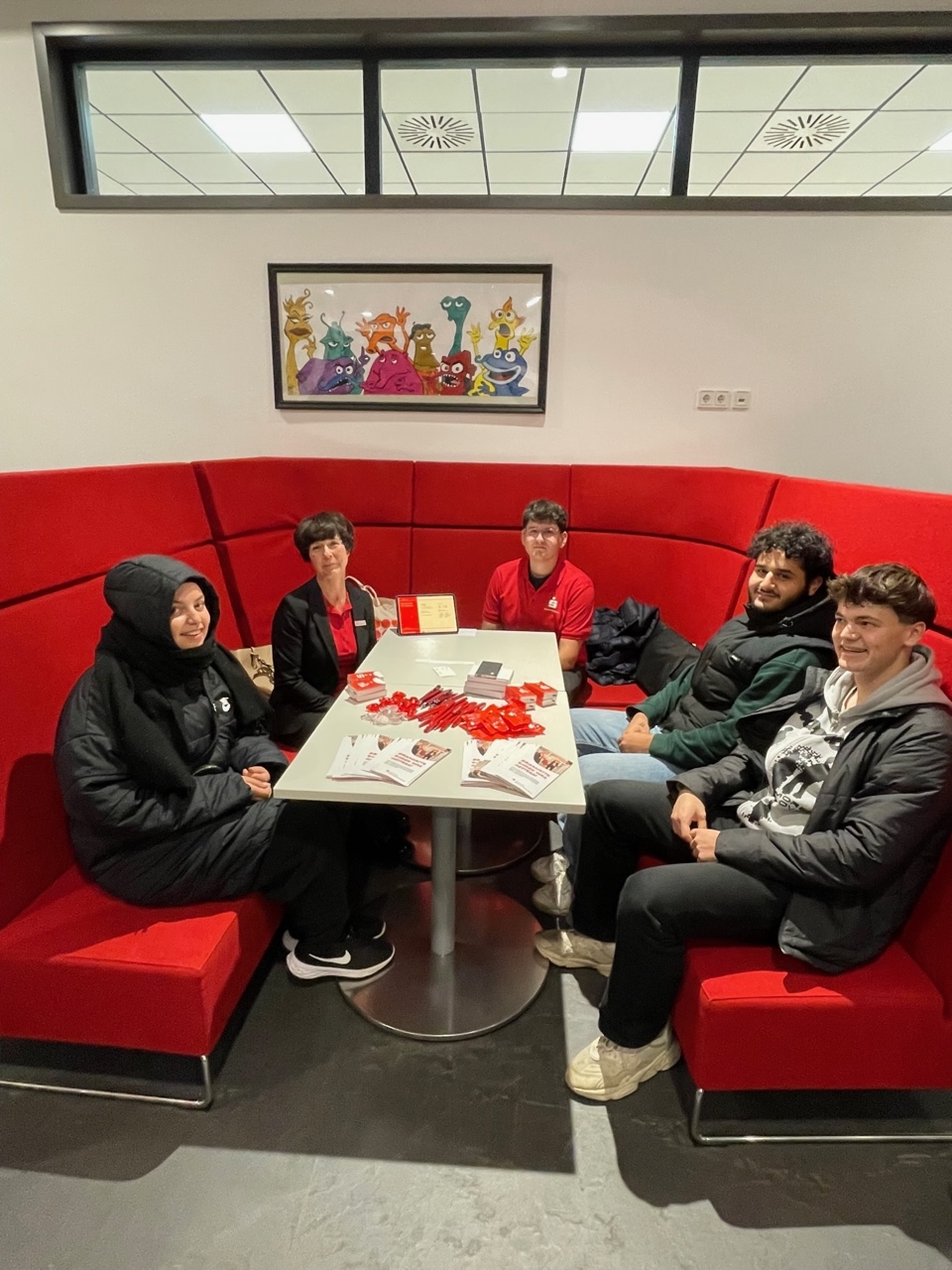
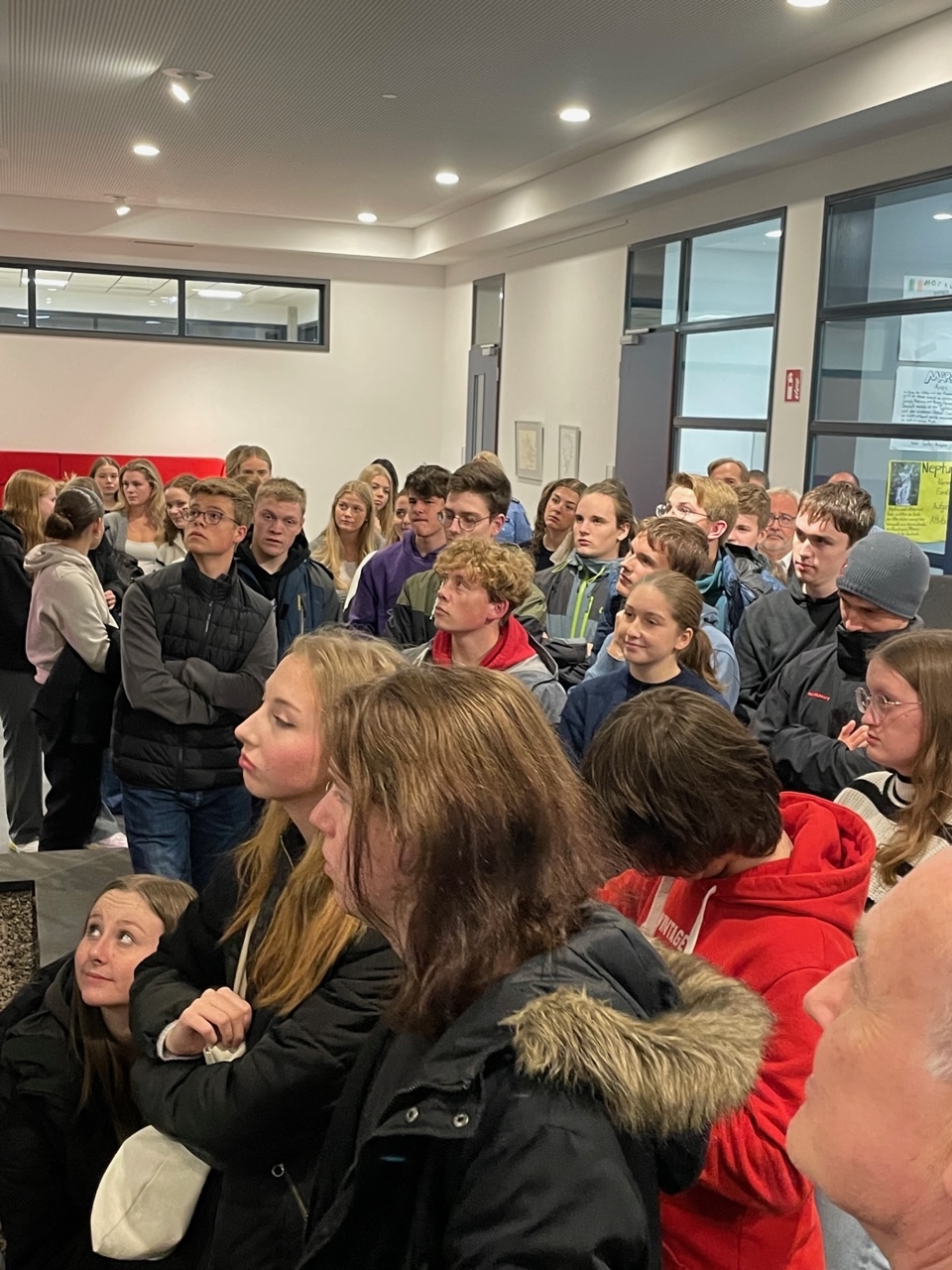
Every year, for one evening in November, the Steinmühle Atrium is reserved for the 12th-grade class and representatives of the Marburg-Schloss Rotary Club. Under the motto “Students Ask—Professionals Answer,” these young adults have the opportunity to learn about various careers, gain insights, and ask questions.

To ensure that the flow of information is as effective as possible and that the representatives also cover professions that interest the students, the 12th-grade class has a say in the composition of the team of experts beforehand. Students can express their preferences regarding which careers they would like to learn more about from a practical perspective. Once the panel of experts has been finalized, students receive a PDF file in advance containing information about each expert and their responsibilities in their respective fields. This allows students to choose which of the three available expert sessions to attend in a highly targeted manner.

Every year, Dr. Claudia Röder and Hans-Heinrich Bähr are responsible for the preliminary organization and the smooth running of the event. “We’ve become a well-coordinated team by now,” they say. The Steinmühlen teacher is in charge of academic and career guidance at the school, while Hans-Heinrich Bähr is responsible for the career information service at the Rotary Club Marburg-Schloss. Principal Björn Gemmer thanked both of them for their reliable preparation before opening the event.


Specific offers were well received

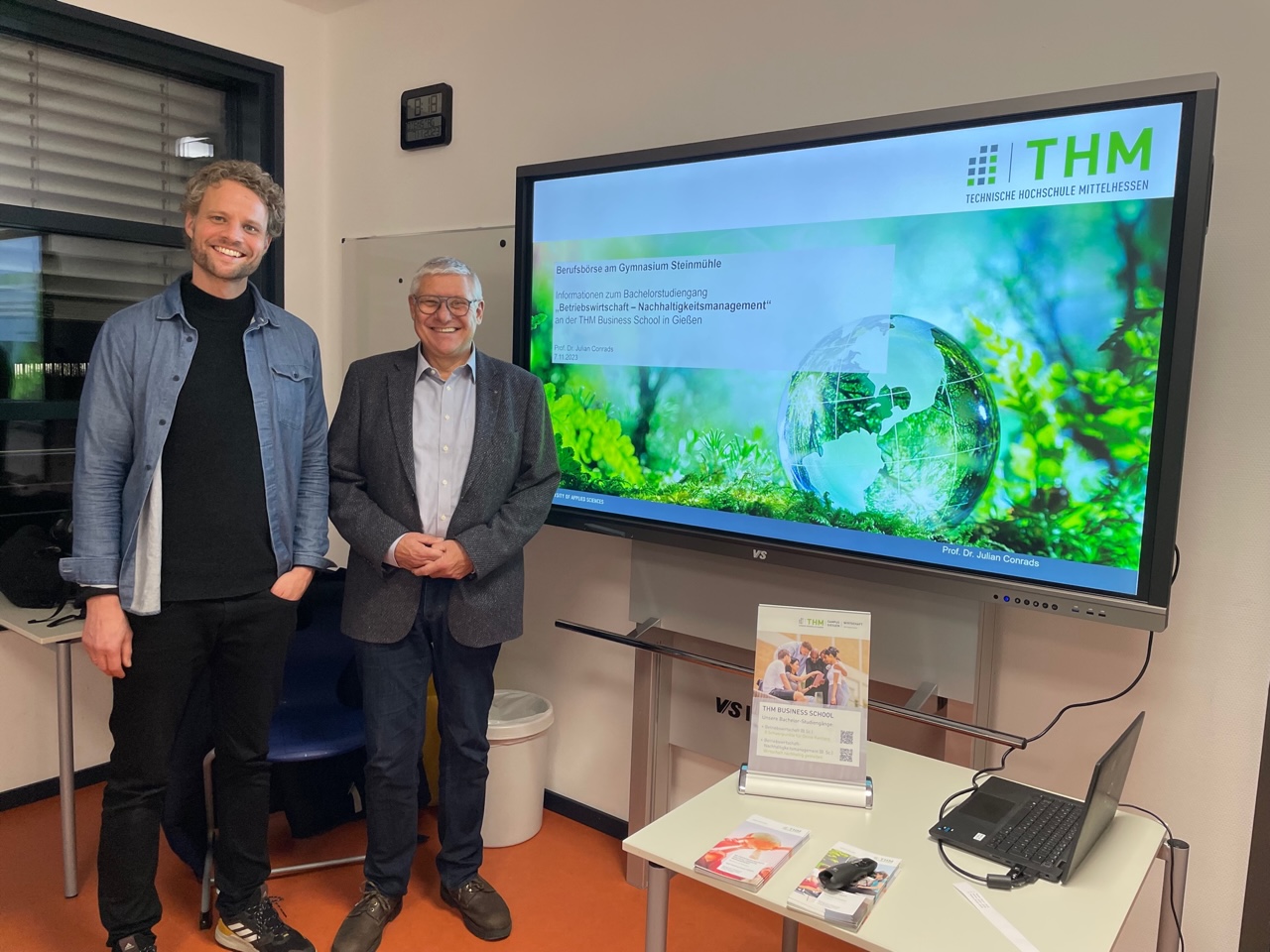
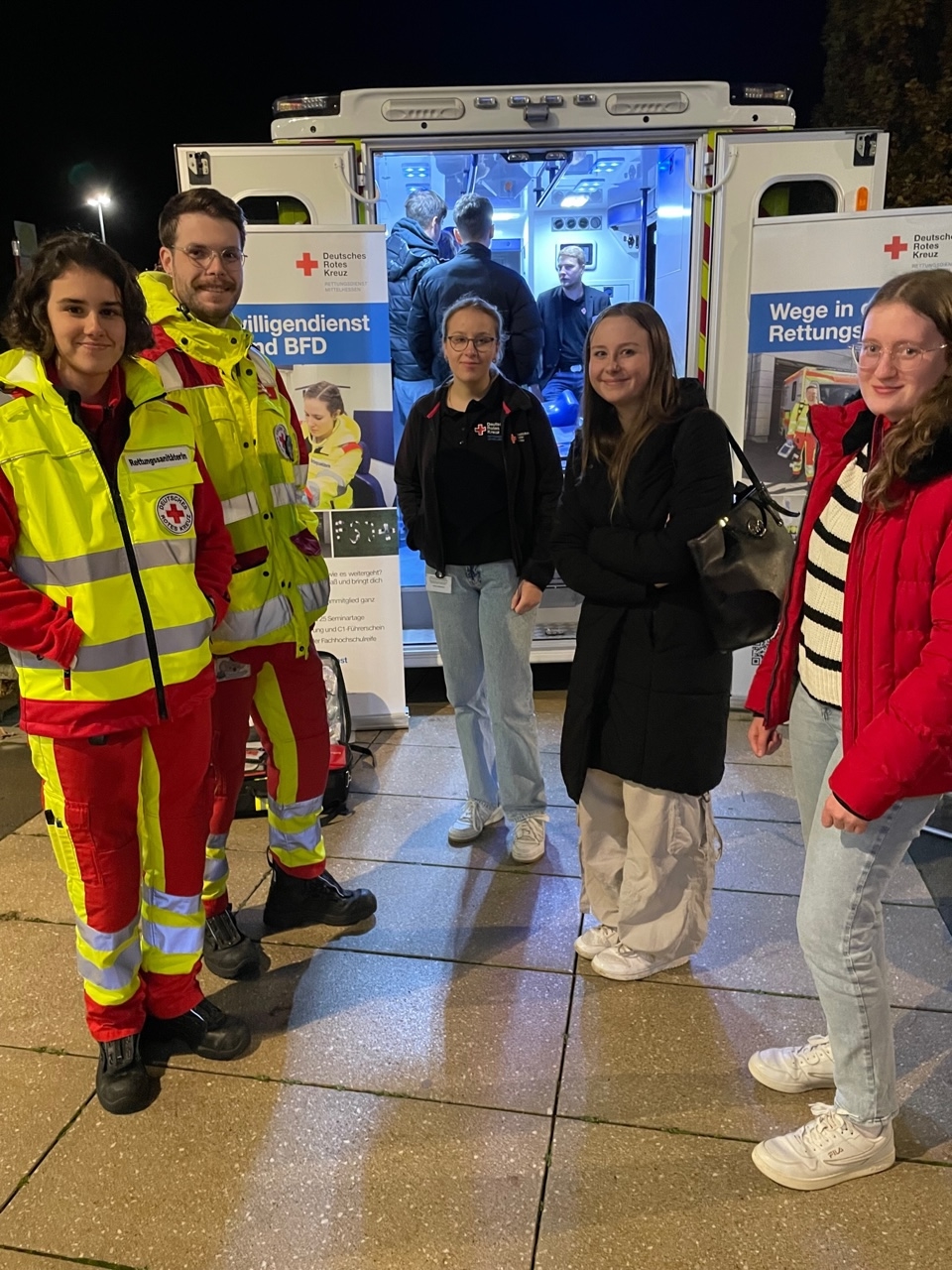
While last year a few specific career paths were the absolute favorites—such as the profession of psychologist and various opportunities with the German Armed Forces—this time the main areas of interest were somewhat more diverse. For example, there was also strong interest in counseling sessions on the various career opportunities with the Mittelhessen Emergency Medical Services and the Mittelhessen Police Headquarters, as well as in strategic service roles for hotel chains and the Sustainability Management degree program at the Technical University of Mittelhessen —the latter two were new additions to the Career Information Day’s offerings, just like the Materials Science degree program. Creative and communication-oriented professions, such as design, art direction, and journalism—to name just a few—were also in high demand. Numerous interested attendees also came to the information session on the career profiles of lawyers, (dental) physicians, and management consultants. A larger group also gathered at the German Red Cross (DRK) Nurses’ Association, which, for example, highlighted the opportunity to complete a voluntary social year. A total of 22 different career paths were presented.

“We liked that the career representatives just talked about their work on their own, without us having to ask questions,” said students Vivien Ettrich and Amelie Schröder. They were interested in psychology and journalism, but also found the option of first completing a voluntary social year appealing. Ina Arnold and Paula Henke found the information provided by the police to be very insightful: “They had three people there from different fields, and you could immediately see how diverse the opportunities with the police are.” Both were also drawn to the information provided by the Bundeswehr representative: “He offered internships, participation in camps, and even degree programs,” they reported.


The Best Ways to Combine High School Graduation and a Trade

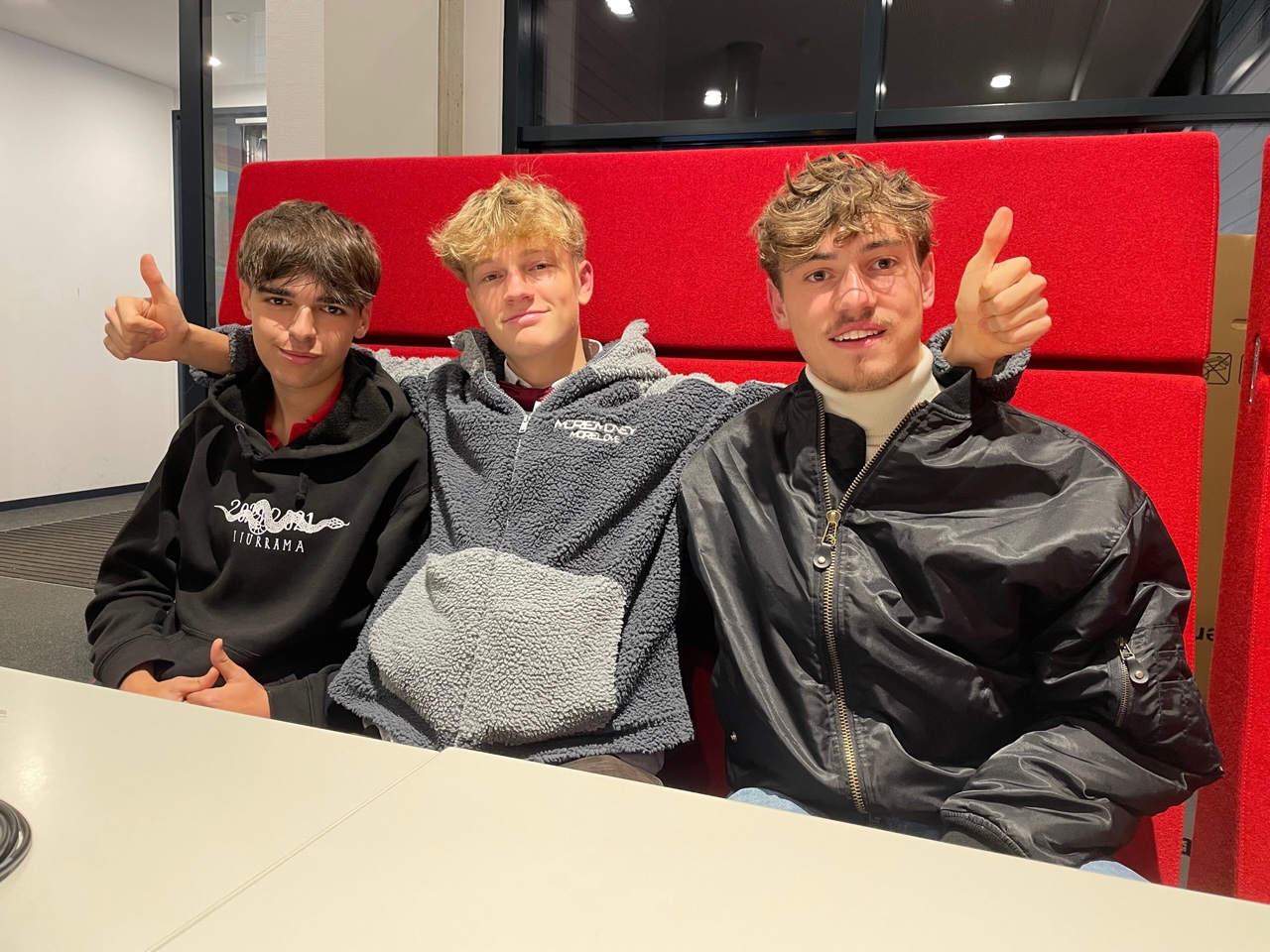
Constantin Mensing, Johnny Eckardt, and Manu Yárnoz were impressed by the descriptions provided by the representative of the Hyatt Hotel Group and considered the information to be “very authentic” and now know that there are excellent career advancement opportunities in this particular field, provided one is willing to adapt to certain conditions, such as work hours. They also gained valuable insights into the careers of architects and lawyers, which offer a wide range of opportunities. The students found their conversation with Stefan Gräser about the role of a building energy manager to be very informative. Conclusion: There are excellent opportunities to combine a high school diploma with a trade.

Baris Cem Tutu and Selim Özcan found the visit with representatives of Sparkasse Marburg-Biedenkopf informative, as well as the presentation by the Bundeswehr representative, who “did a great job” of explaining the material. “I now have a general idea,” says Selim. “A little more time overall wouldn’t have been a bad thing.”

In addition to the opportunities mentioned, the following career fields were also presented: Business graduate, managing director, IT specialist, tax consultant/certified public accountant, investment advisor/insurance agent, physicist.

27. November 2023
https://steinmuehle.de/wp-content/uploads/sites/5/2023/11/IMG_2885-rotated-1.jpg 1280 960 konnertz https://steinmuehle.de/wp-content/uploads/sites/5/2025/11/Logo_SchuleInternat_Steinmuehle_2026_3.png konnertz2023-11-27 09:55:252026-06-18 17:37:37Rotary Career Information Day: Firsthand Tips from Professionals

A Word of Encouragement for Anyone Who Wants to Start a Business: What Matters Most Are Innovative Ideas and a Strong Team

Collaborations & Partnerships, News, Politics, Business & Responsibility

Axel Täubert, bestselling author and Head of Startups at Google, visited the Steinmühle

Those who fail are often met with ridicule: “He went bankrupt,” “his company went under,” “so much for those great ideas.” Even today, founders whose companies couldn’t hold their own in the market are still stigmatized in Germany. Axel Täubert, who graduated from the Liebigschule in Giessen in 1996 and is now Head of Startups at Google, made this the topic of his talk at the Steinmühle on Tuesday evening. The provocative title: “Failure as a Business Model.”

It’s easy to forget: Anyone who starts a business has dealt with things that many employees only know about from hearsay. Formalities, business plans, capital requirements, and—if necessary—the search for investors—not to mention the willingness to work longer hours than “nine-to-five.” Almost essential: putting together the right team. “Anyone who wants to start a business needs people who are not only passionate about the same idea but whose skills complement one another.” One person is at home in the world of finance, while another loves sales and interacting with people. A third person has the expertise that the company relies on—whether as a technician, engineer, scientist, or whatever field the startup specializes in. This explicitly includes skilled trades businesses.


“Everything should start with the user”

Many entrepreneurs rely on financial support during the startup phase. If they can convince investors in such a situation with a novel, innovative business idea and the structure of their team, venture capital often comes into play. Investors provide funding to high-growth, unlisted startups without requiring collateral and offer not only financial assistance but also advice and access to networks. This takes the form of a venture capital fund as part of an equity investment in the company. The investment results in co-ownership, though the investors do not seek a majority stake.

Venture capital-eligible companies are those that, through their activities, offer clear customer value and an innovative advantage. Axel Täubert: “Everything should start with the user.” He cited the example of a company that, using decorative elements and a special design concept, transformed MRI diagnostic equipment into an “adventure cave” that, rather than instilling fear in children, encourages them to enter and undergo the examination.


If you’re going to fail, do it quickly

Only one in ten startups becomes truly successful, reports Axel Täubert. Relevant statistics show that between 80 and 90 percent of all startups fail within three years. “It’s important to recognize early on when things aren’t going well,” advises Täubert. Admitting failure shouldn’t be unnecessarily delayed in the false hope that things will still turn around. Of course, this doesn’t rule out adjusting the business plan before throwing in the towel. Fortunately, failure after starting a business is no longer seen as a stigma. On the contrary, investors often view it as a sign of experience.

“Believe in your ideas; if necessary, have them patented,” advises the speaker, who had come to the Steinmühle through the efforts of Jens Ihle, the managing director of Regional Management Central Hesse. According to Täubert, the organization, based in Gießen, is also a possible place for potential founders to pitch their ideas or find out where they can do so. During the Q&A session following the presentation, Täubert also explained that there are geographical differences in Germany regarding which regions or cities are best suited for founders: “Certain universities simply offer better opportunities for support, and in certain places there is simply a strong startup ecosystem. The Lokschuppen in Marburg is one of them.”


Essential Skills for Founders

The speaker specifically described the role a school can play in turning graduates into potentially successful entrepreneurs as follows: “Anyone who can read for meaning, is good at math, is a team player, and can work independently has every chance of becoming a successful entrepreneur.” Principal Björn Gemmer, who guided the highly engaged audience through the evening, also noted that the course “Jugend gründet” (Youth Starts a Business)—analogous to “Jugend forscht” (Youth Researches)—is already established at some German schools, even as a “Special Learning Achievement” and thus as an Abitur subject.


Grades 5 through 7 discussed Axel Täubert’s book *The Classroom Coach*

A change of scene. Axel Täubert, father of two sons aged 13 and 15, fills the forum on Wednesday morning with students from grades 5 through 7 at Steinmühlen. He reads from his book *Der Classroom-Coach*, which he co-authored with education entrepreneur Daniel Jung. A little less than four years ago, Daniel Jung—the math YouTuber to whom so many students owe a debt of gratitude for help with math problems—stood here as well. A memorable quote from that time: “You saved my butt on my final exams.”

This time, in Axel Täubert’s bestseller *Classroom Coach*, the story revolves around a learning app—a tutoring app whose development stems from an idea by a student named Nele. She and her team—which, besides her, consists of Karl, Mehmet, and Aliyah—are acting as founders. It’s an exciting journey that is first read aloud on stage by Axel Täubert himself and later by four Steinmühlen students taking on the respective roles.

Despite the longer listening time, the young audience was captivated—just like Axel Täubert himself: “The students didn’t just read it—they acted it out,” he said enthusiastically, referring to the way Leo Keil (5b), Thomas Pfotenhauer (6b), Lotta Jerrentrup (7a), and Samri Wulf (7a) portrayed their respective roles.

Afterward, there was plenty of time for questions, and the students had plenty of them. It became clear just how well-informed the students were about the latest relevant websites, and they peppered the expert guest with all the questions that were on their minds. Among them were questions that Axel Täubert preferred to sidestep, such as “How much do you earn at Google?” He credited his decision to inspire young people to become entrepreneurs to his acquaintance with financial entrepreneur Carsten Maschmeyer. Together with him, he also wrote the bestseller *Die Start-Up-Gang*.

“If you’re going to do something, do something new,” the guest concluded his appearance at the Steinmühle. And who knows—maybe he’ll run into one or two of those enthusiastic young people again someday.

Axel Täubert is a retired rapper, SPIEGEL bestselling author, and Head of Startups at Google. He lived in Gießen until he graduated from high school (Liebigschule, 1996) and, prior to his current role, served as Head of Gaming at YouTube, among other positions. He founded several companies at a young age and now supports various startups as a business angel. He is also the author of children’s books and lives in Munich with his wife and two sons.

8. November 2023
https://steinmuehle.de/wp-content/uploads/sites/5/2023/11/MG_5962a_Taeubert-Alex.jpg 753 1200 konnertz https://steinmuehle.de/wp-content/uploads/sites/5/2025/11/Logo_SchuleInternat_Steinmuehle_2026_3.png konnertz2023-11-08 13:21:272026-06-18 17:37:29A Word of Encouragement for Anyone Who Wants to Start a Business: What Matters Most Are Innovative Ideas and a Strong Team

Exhibition on Sustainability Issues

Art, Music & Theater, Collaborations & Partnerships, Ecology and Sustainability, News, Politics, Business & Responsibility

Ines Vielhaben’s Advanced Art Class has creatively curated an exhibition featuring impressive documentary and staged photographs that shed light on selected Sustainable Development Goals in a compelling way. This visual journey through commitment and vision awaits all interested visitors in the open workspace of the Steinmühlen main building. The photos not only tell very different stories but also encourage reflection.

According to Ines Vielhaben, the exhibition is more than just pictures on the wall—it is an invitation to view the world through the lens of sustainability.

This selection of photos provides a glimpse into the various photo series.

7. November 2023
https://steinmuehle.de/wp-content/uploads/sites/5/2023/11/IMG_1432.jpg 900 675 konnertz https://steinmuehle.de/wp-content/uploads/sites/5/2025/11/Logo_SchuleInternat_Steinmuehle_2026_3.png konnertz2023-11-07 14:34:562026-06-18 17:37:29Exhibition on Sustainability Issues

A Glimpse into the Day-to-Day Work of the Judiciary: High School Student Theresa Figiel Reports on Her Visit to the Regional Court

News, Politics, Business & Responsibility, Steinmühle on the Road

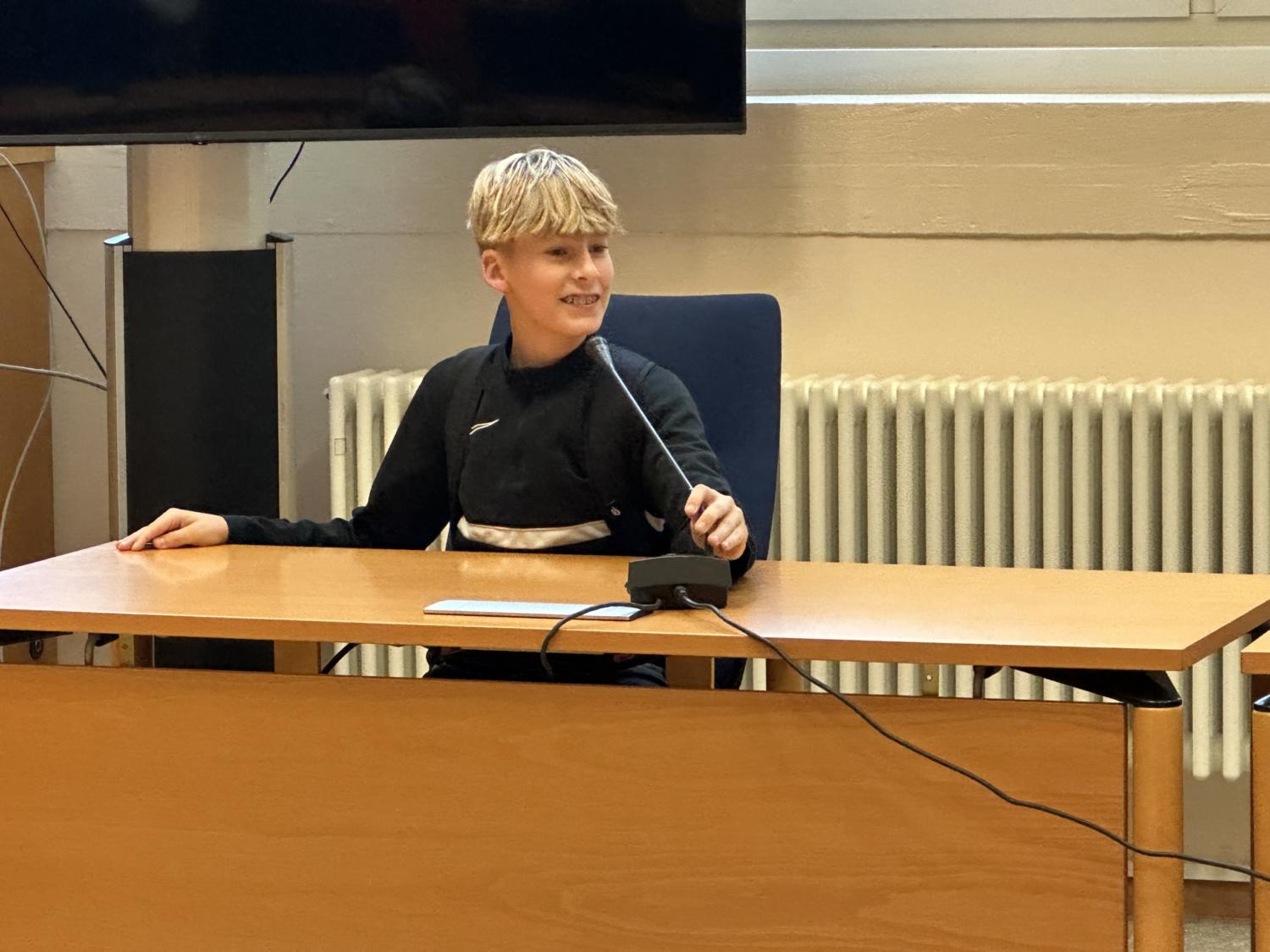
On September 25, we, Class 8a, visited the Marburg Regional Court on Universitätsstraße as part of the “Youth and Crime” project, accompanied by our teacher, Dr. Claudia Röder. The visit was made possible by the father of one of our classmates, who works as a judge at the regional court; he also gave us a tour of the building and answered our questions. The date was chosen so that we would have the opportunity to observe a criminal trial.
We met at 8:10 a.m. at the courthouse on Universitätsstraße in the city center. Before the trial began, we had a little time to look around the building. This gave us the opportunity to see the holding cells. Defendants can be detained there on the day of their trial. These cells resemble prison cells, with a toilet, sink, table, and chair—though without a bed.
 

Inspection of ankle restraints and protective gear

Afterward, we spoke with a member of the security staff. Among other things, court officers are responsible for escorting and guarding prisoners in the courthouse. We were allowed to look at the equipment used for this purpose, such as handcuffs and leg irons, as well as the court officers’ protective gear.

Since the trial we wanted to attend was being held in a smaller courtroom, we took a look at the building’s largest courtroom—the jury courtroom—which was not in use that morning. It is a fairly large, high-ceilinged room, almost the size of a small gymnasium, and it also has a section for spectators. There were also many chairs for all the defendants and plaintiffs, along with their respective attorneys.

Shortly before the hearing, we took a look at a smaller courtroom at the regional court and then went to the district court shortly afterward, where the hearing took place.

The hearing was actually supposed to begin at 9 a.m. However, due to a road closure on the B3 caused by an accident, some of the participants—including the judge—were delayed, so the start of the hearing was postponed by one hour to 10 a.m.


Surveillance video from the crime scene

The criminal case heard in court involved a charge of aggravated assault and illegal possession of a weapon. The incident in question took place in Marburg in August 2022. The defendants were an 18-year-old at the time of the crime and his adoptive father. The younger of the two was accompanied by a lawyer. The plaintiff did not appear at the hearing. The trial was presided over by Juvenile Court Judge Kai Michel Dronka, and the prosecution was represented by the public prosecutor.

At the start of the trial, surveillance video from the crime scene was first reviewed, followed by an interrogation of the two defendants by the judge and the prosecutor. The younger defendant admitted to possessing the weapon; both described the physical altercation with the plaintiff as self-defense. In addition, two female witnesses were questioned; one refused to testify, while the second confirmed the defendants’ statements.


Penalty for Absence on the Day of the Hearing

After the questioning ended, a 15-minute break was scheduled. Since the hearing had started an hour later than planned, we didn’t have time to wait for the verdict and had to head back to school. Later at school, we learned that the older of the two defendants had not received a sentence. The younger one was sentenced to 80 hours of community service for illegal possession of a weapon. The plaintiff was also fined 300 euros or sentenced to three days in jail for being absent on the day of the hearing, because the judge did not accept his doctor’s note.

It was a very successful morning during which we were able to get a little insight into the day-to-day workings of the justice system and the courts. Just seeing the inside of the courthouse—which we’d otherwise only seen in photos in the newspaper—was interesting. Even though we had to head back to school before the verdict was handed down, the day was well worth it.

Photos were also taken during the visit that will serve as a memento of the day at the regional court.

11. October 2023
https://steinmuehle.de/wp-content/uploads/sites/5/2023/10/IMG_8873-scaled-1-scaled.jpg 1125 1500 konnertz https://steinmuehle.de/wp-content/uploads/sites/5/2025/11/Logo_SchuleInternat_Steinmuehle_2026_3.png konnertz2023-10-11 14:26:452026-06-18 17:37:26A Glimpse into the Day-to-Day Work of the Judiciary: High School Student Theresa Figiel Reports on Her Visit to the Regional Court
Page 5 of 9«‹34567›»

Pages

  • A New Shetland Pony Riding Arena
  • A Safe Place
  • About Us
  • Alternative Sports
  • Alumni Feed
  • Alumni Login
  • Alumni Reunion
  • Annual Calendar Download
  • Art, Music & Theater
  • Awards
  • Bilingual Elementary School
  • Bilingual Elementary School
  • Boarding School
  • Boarding School Admission
  • Boarding School as an Opportunity
  • Charity Projects
  • Contact
  • Costs & Contract Terms
  • Digitization
  • Donation Failed
  • Donation Receipt
  • Donor Dashboard
  • Ecology & Sustainability
  • Elementary School Registration
  • Events
  • Fan Shop
  • Fit for Life
  • Forgot your password?
  • Friends & Alumni
  • Friends of the School Association
  • Funding Partners
  • Fundraising
  • Groups
  • High School
  • High School Admission
  • High School Registration Form
  • Home
  • Internal Clubs
  • International High School
  • International High School Program
  • International High School Registration Form
  • International School
  • International School Registration
  • Keyword Search
  • Languages & International Affairs
  • Learn About the Boarding School
  • Learning
  • Legal Notice
  • Life
  • Members
  • MINT Lab Equipment
  • Mission Statement & Vision
  • My Profile
  • News
  • News
  • News Archive
  • Newsletter
  • Newsletter
  • Organization & History
  • Partners
  • Privacy Policy
  • Privacy Policy (Detailed)
  • Project-Based Learning
  • Promoting Independence & Individuality
  • Promoting STEM Talent
  • Publications
  • Quality Management
  • Recording
  • Registration Form for the Bilingual Elementary School
  • Reset Password
  • Riding School
  • Rowing Talent Development
  • School
  • School as a Community
  • Signed up for the newsletter
  • Social Responsibility
  • Social Responsibility & Strengthening the Community
  • Sponsorship
  • Sports & Health
  • Sports & Recreation
  • Stakeholders
  • Steinmühle Alumni Network
  • Steinmühle as a Youth Welfare Agency
  • Stories
  • Summer Camps
  • Support Current Projects
  • Support for Families
  • Talent Program Plus STEM
  • Teams
  • Tennis
  • Terms and Conditions for High School
  • Terms and Conditions for the Bilingual Elementary School
  • Terms and Conditions of the International High School
  • Terms of Contract for the Bilingual Primary School
  • Terms of Contract for the International School
  • Thank you, boarding school
  • Thank you, school
  • Trips & Weekends
  • Upload Transcript
  • What is … up to today, anyway?
  • What People Are Saying About the Steinmühle
  • Why Steinmühle?
  • Work at the Steinmühle
  • Your Home

Categories

  • Archive
  • Art, Music & Theater
  • Bilingual Elementary School
  • Boarding School
  • Class Trips, Field Trips, and School Outings
  • Collaborations & Partnerships
  • Contests & Awards
  • Digitalization & AI
  • Ecology and Sustainability
  • Events & Celebrations
  • Former Students & Alumni
  • International High School
  • Job Openings
  • Languages & International Affairs
  • Life at Boarding School
  • News
  • Politics, Business & Responsibility
  • Rowing
  • Social Engagement
  • Sports
  • Sports & Health
  • Steinmühle on the Road
  • Steinmühle Riding School
  • STEM
  • Surveys & Studies
  • Talent Development
  • Uncategorized

Archive

  • August 2026
  • July 2026
  • June 2026
  • May 2026
  • April 2026
  • March 2026
  • February 2026
  • January 2026
  • December 2025
  • November 2025
  • October 2025
  • September 2025
  • August 2025
  • July 2025
  • June 2025
  • May 2025
  • April 2025
  • March 2025
  • February 2025
  • January 2025
  • December 2024
  • November 2024
  • October 2024
  • September 2024
  • August 2024
  • July 2024
  • June 2024
  • May 2024
  • April 2024
  • March 2024
  • February 2024
  • January 2024
  • December 2023
  • November 2023
  • October 2023
  • September 2023
  • August 2023
  • July 2023
  • June 2023
  • May 2023
  • April 2023
  • March 2023
  • February 2023
  • January 2023
  • December 2022
  • November 2022
  • October 2022
  • September 2022
  • August 2022
  • July 2022
  • June 2022
  • May 2022
  • April 2022
  • March 2022
  • February 2022
  • January 2022
  • December 2021
  • November 2021
  • October 2021
  • September 2021
  • August 2021
  • July 2021
  • May 2021
  • April 2021
  • March 2021
  • February 2021
  • December 2020
  • November 2020
  • October 2020
  • September 2020
  • August 2020
  • July 2020
  • June 2020
  • May 2020
  • April 2020
  • March 2020
  • February 2020
  • January 2020
  • December 2019
  • November 2019
  • October 2019
  • September 2019
  • August 2019
  • July 2019
  • June 2019
  • May 2019
  • April 2019
  • March 2019
  • February 2019
  • January 2019
  • December 2018
  • November 2018
  • October 2018
  • September 2018
  • August 2018
  • July 2018
  • June 2018
  • May 2018
  • April 2018
  • March 2018
  • February 2018
  • January 2018
  • December 2017
  • November 2017
  • October 2017
  • September 2017
  • August 2017
  • July 2017
  • June 2017
  • May 2017
  • April 2017
  • March 2017
  • February 2017
  • January 2017
  • December 2016
  • November 2016
  • October 2016
  • September 2016
  • August 2016
  • July 2016
  • June 2016
  • May 2016
  • April 2016
  • March 2016
  • February 2016
  • December 2015
  • November 2015
  • October 2015
  • September 2015
  • July 2015
  • June 2015
  • May 2015
  • April 2015
  • March 2015
  • February 2015
  • January 2015
  • December 2014
  • November 2014
  • October 2014
  • September 2014
  • July 2014
  • June 2014
  • May 2014
  • April 2014
  • March 2014
  • February 2014
  • January 2014
  • December 2013
  • November 2013
 
PreviousNext
12
 
PreviousNext
123456

Do you have questions about the school?

School Administration & Management

Björn Gemmer & Dirk Konnertz
Phone: 06421 408-20

schule@steinmuehle.de

Do you have questions about the boarding school?

Boarding School Administration & Management

Anke Muszynski & Dirk Konnertz
Phone: 06421 408-0

internat@steinmuehle.de

  • NEWSLETTER
  • PUBLICATIONS
  • CAREERS AT STEINMÜHLE
  • SUMMER CAMPS
  • LEGAL NOTICE
  • PRIVACY POLICY
  • CONTACT

Do you have questions about the school?

School Administration & Management

Björn Gemmer & Dirk Konnertz
Phone: 06421 408-20

schule@steinmuehle.de

Do you have questions about the boarding school?

Boarding School Administration & Management

Anke Muszynski & Dirk Konnertz
Phone: 06421 408-0

internat@steinmuehle.de

  • NEWSLETTER
  • PUBLICATIONS
  • WORK AT THE STONE MILL
  • SUMMER CAMPS
  • LEGAL NOTICE
  • PRIVACY POLICY
  • CONTACT

© Copyright – Steinmühle 2026 | Erneuern oder ändern Sie Ihre Cookie-Einwilligung
Scroll to top