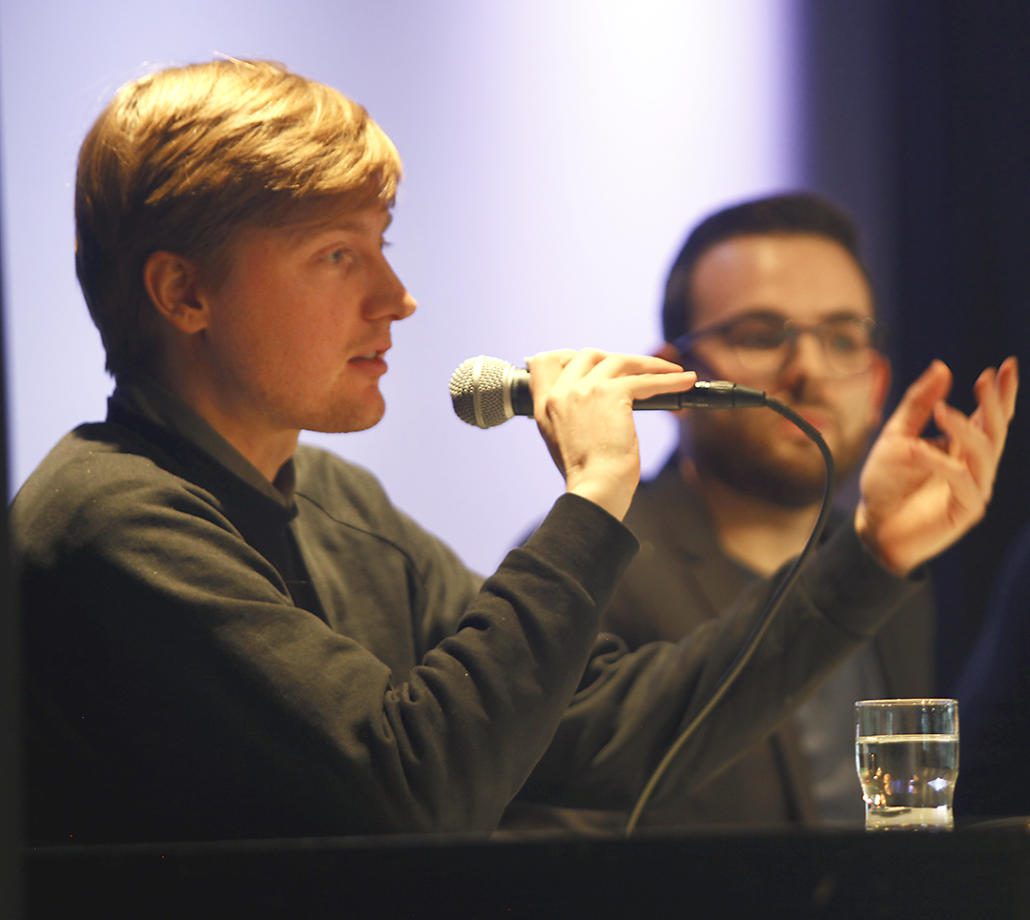
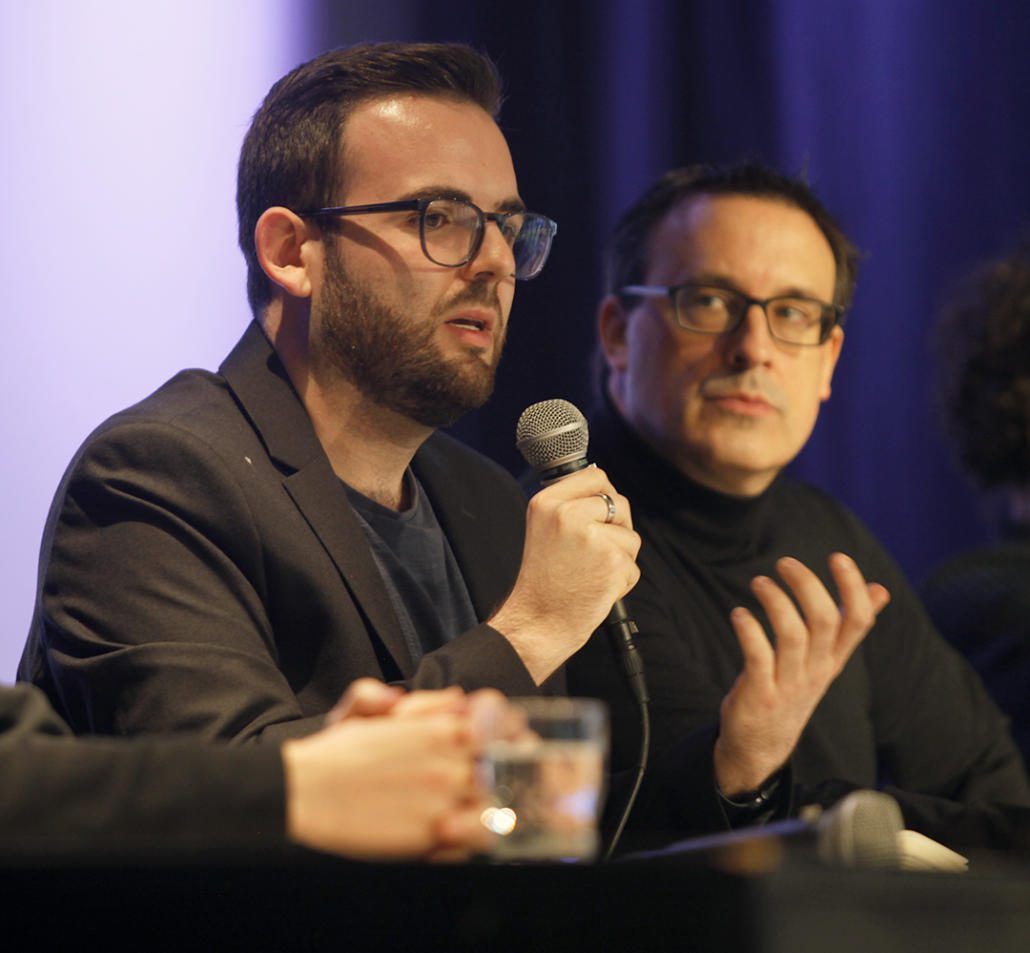
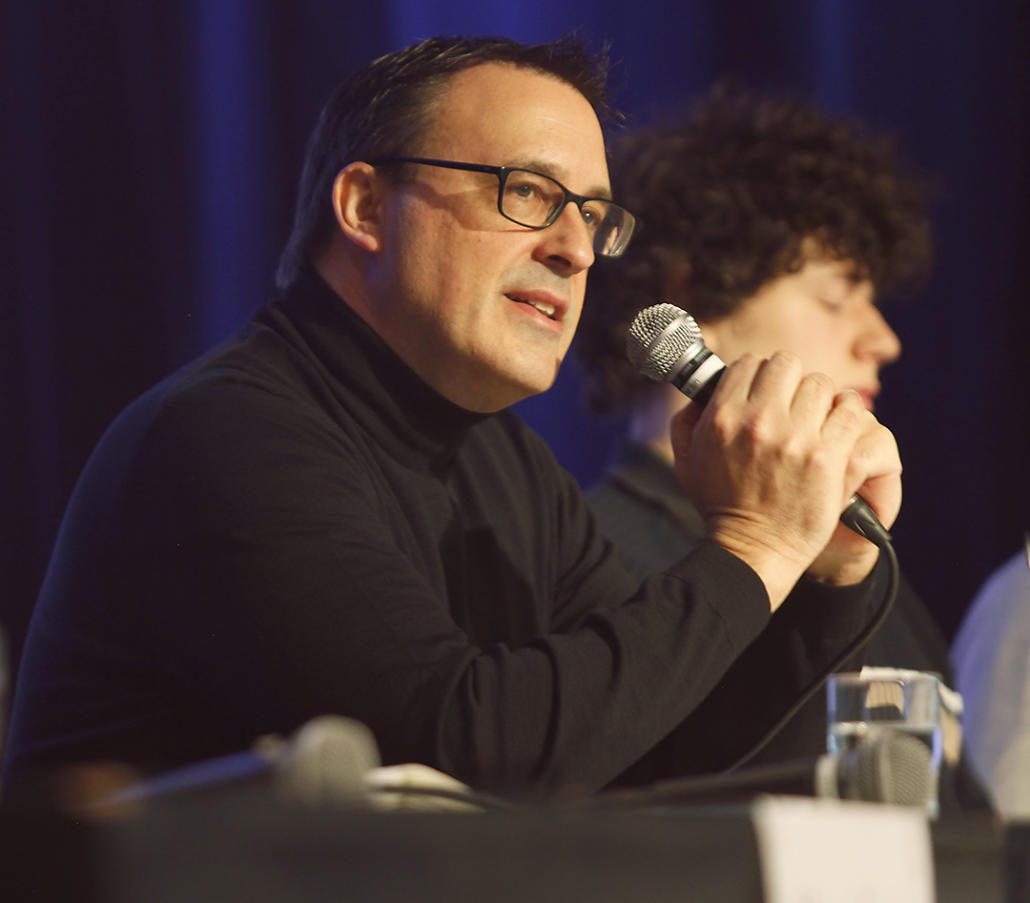
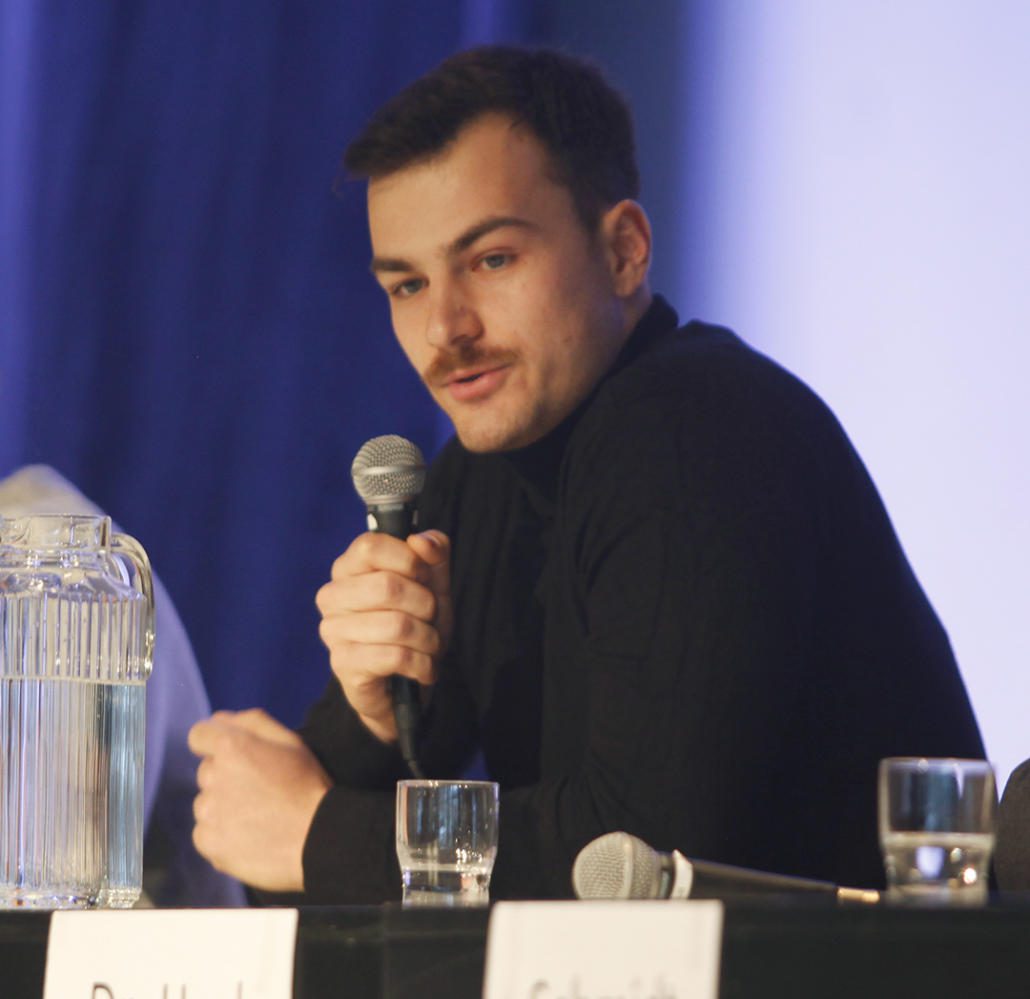
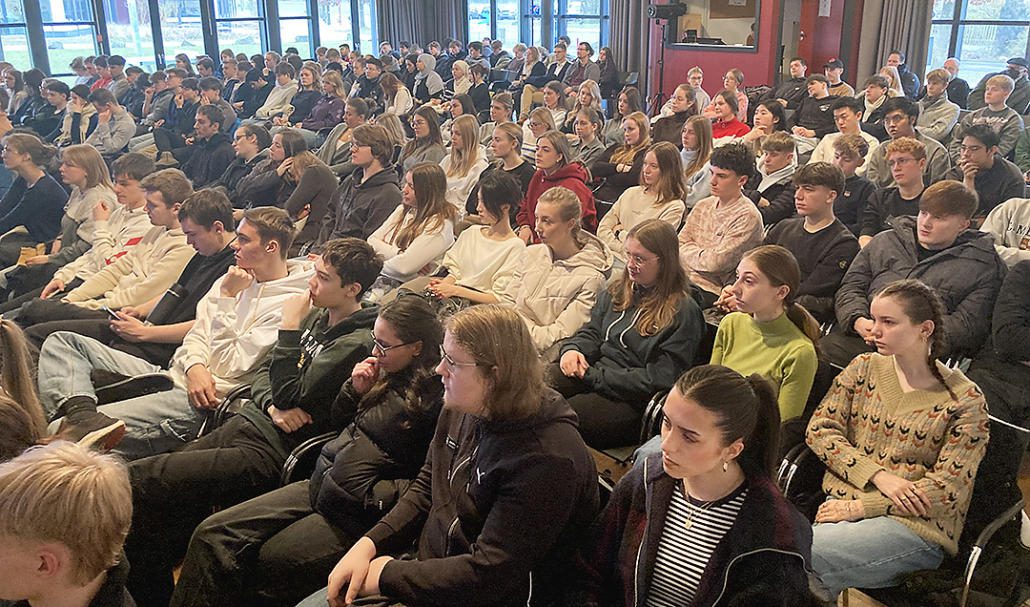
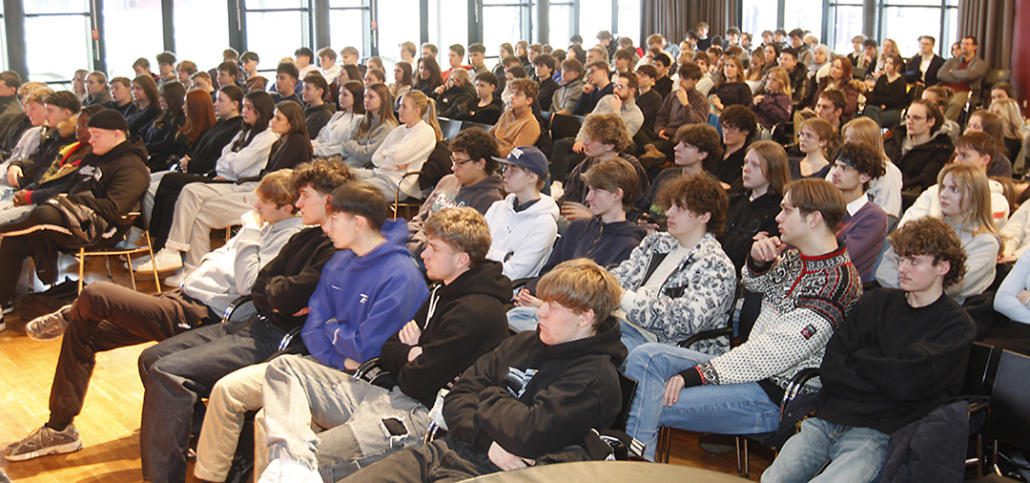
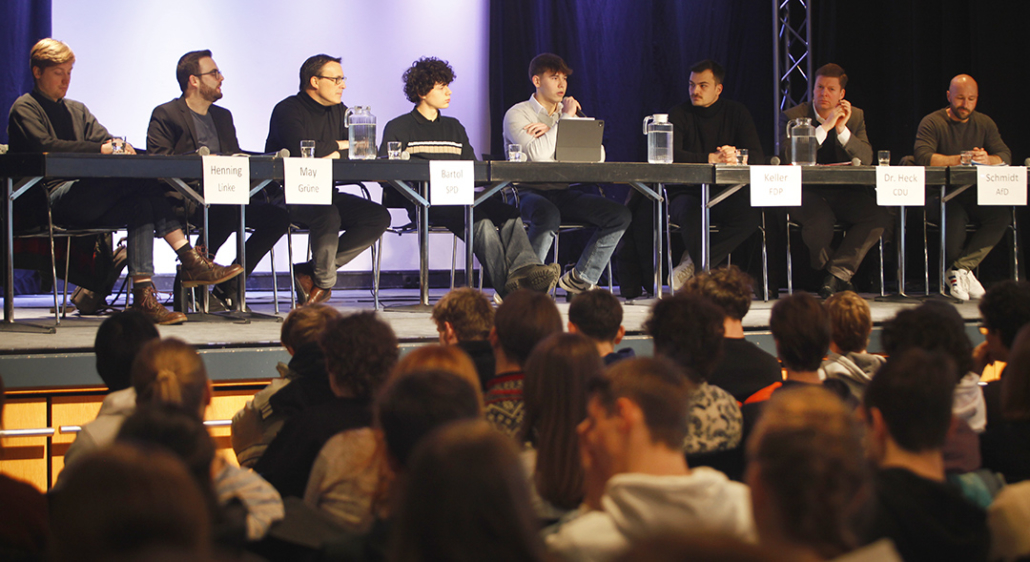
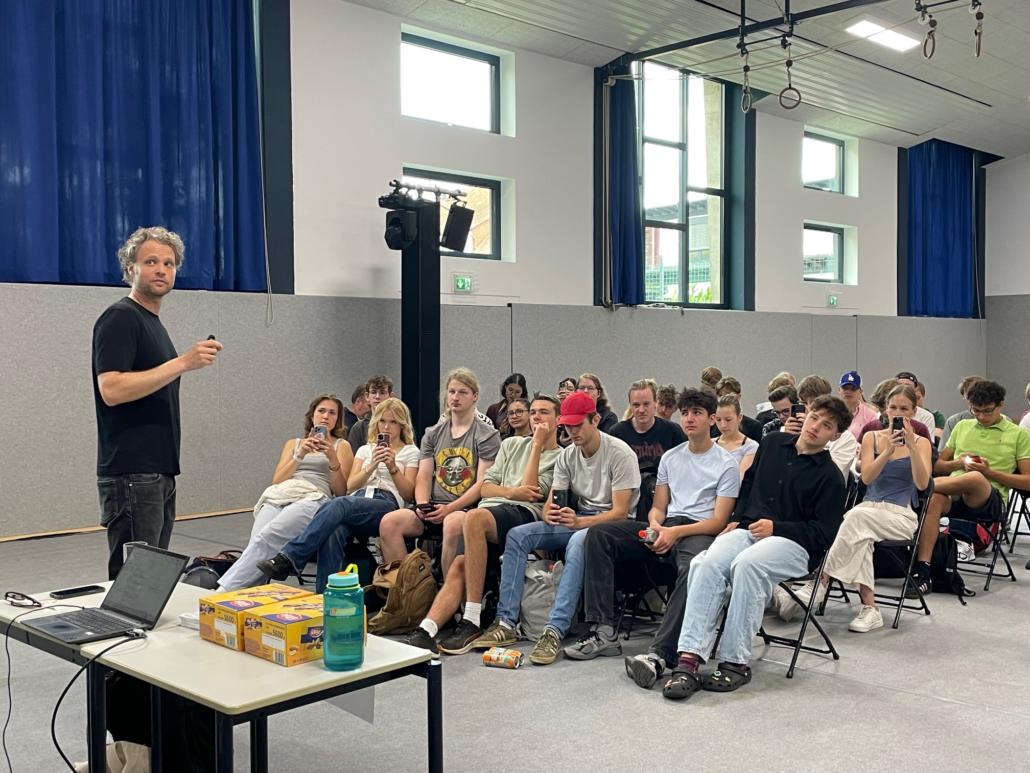
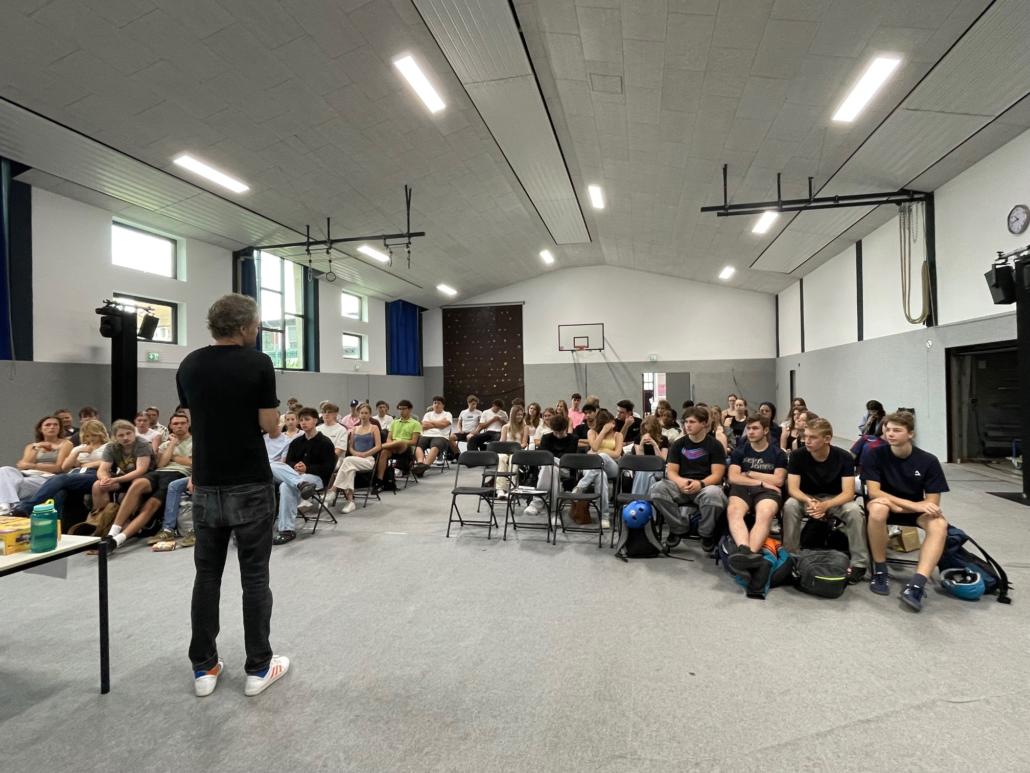
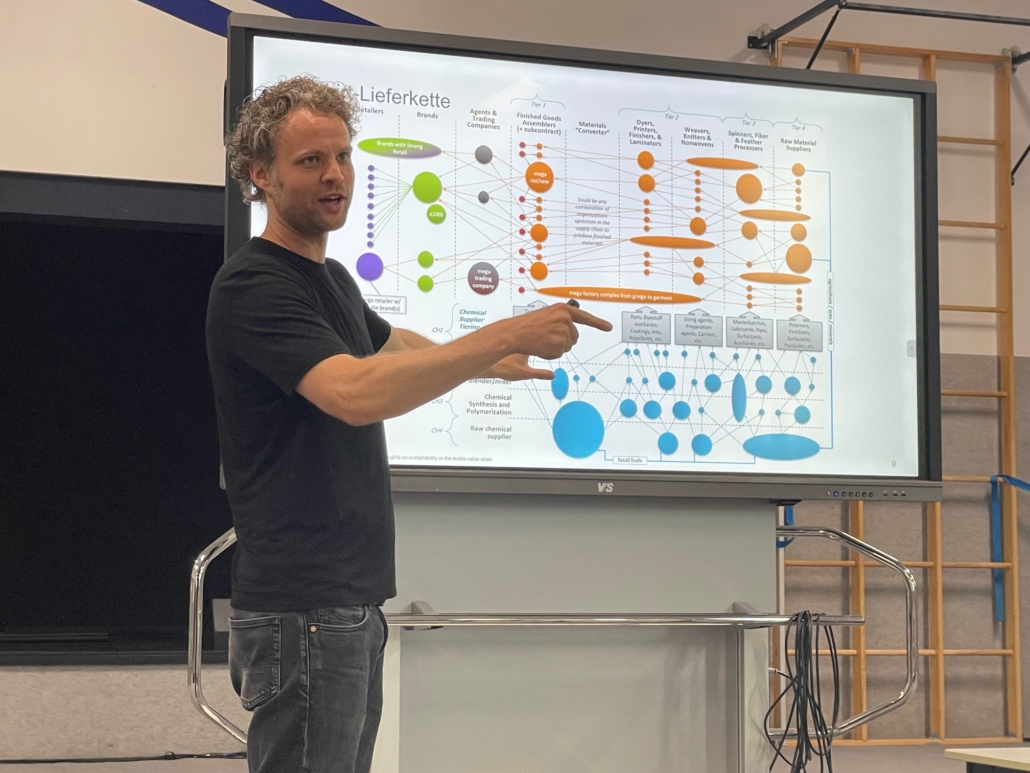
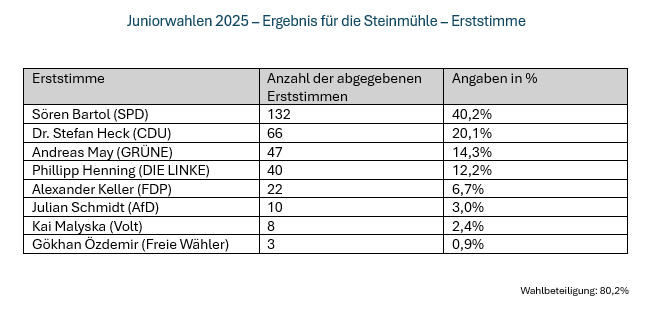
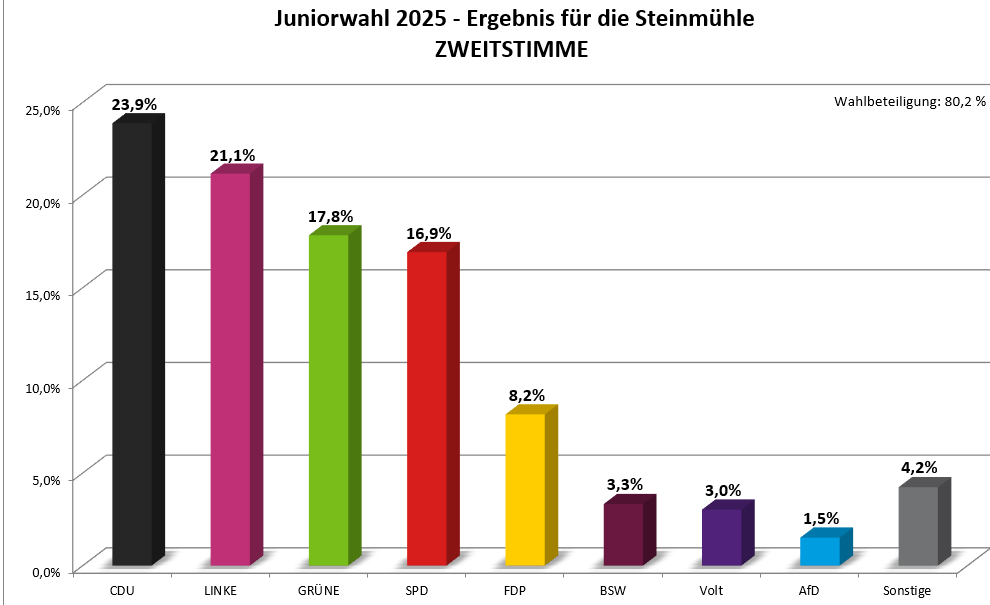
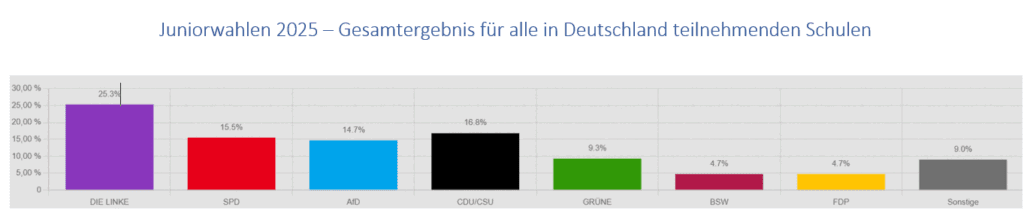
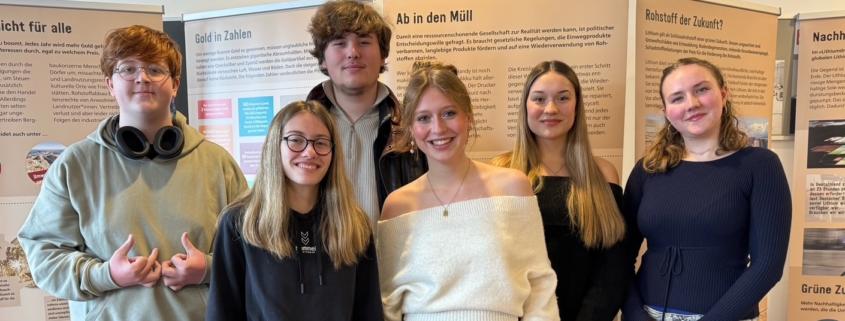
Foreign policy, the future of the Bundeswehr, economic challenges, energy production, social justice, the migration debate: Local candidates from various political parties addressed a wide range of topics before students in Q4, the E-phase, and 10th grade at Steinmühle. The young people asked plenty of questions, were able to form their own firsthand impressions of the parties and their representatives, and thus gained guidance as future (first-time) voters.
There is a shortage of female politicians
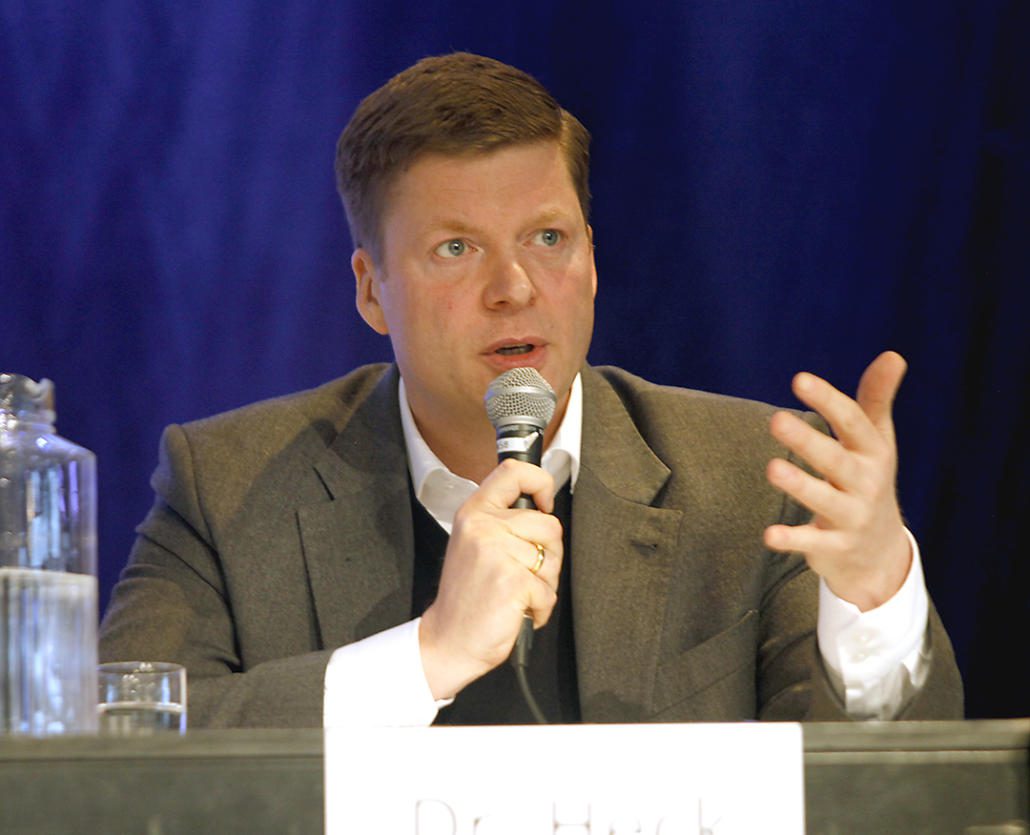
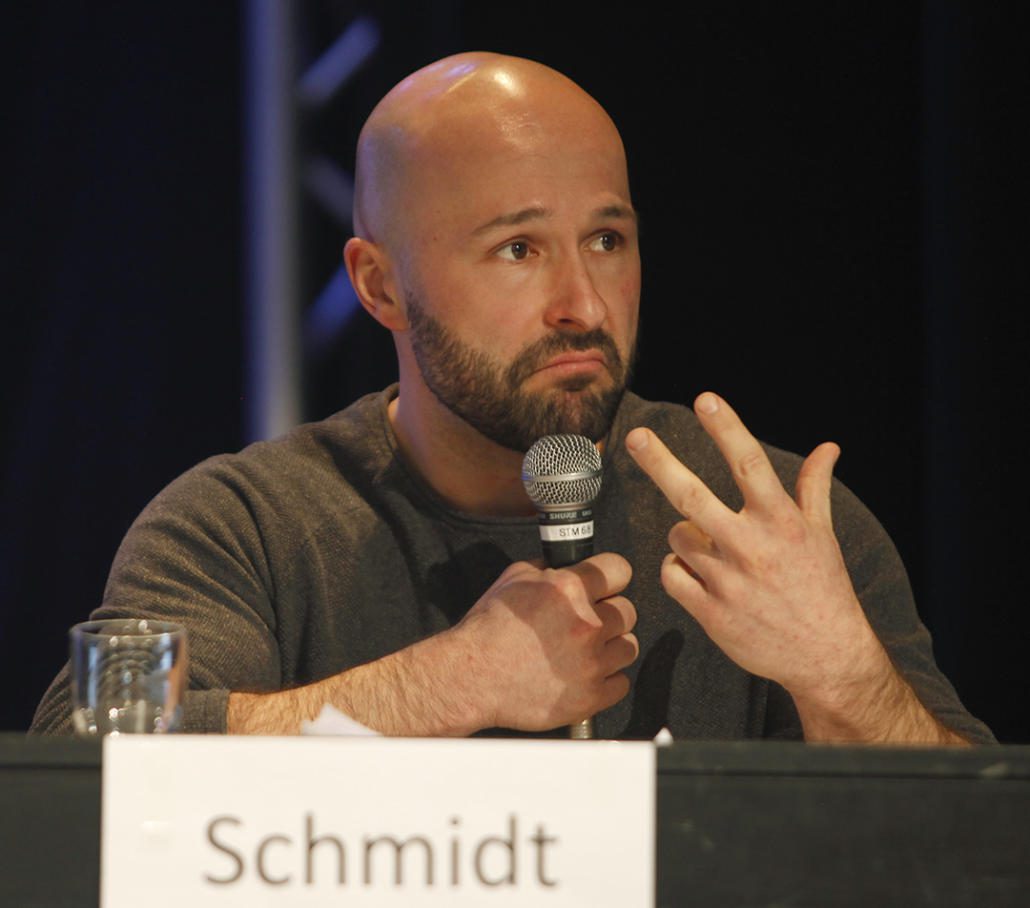
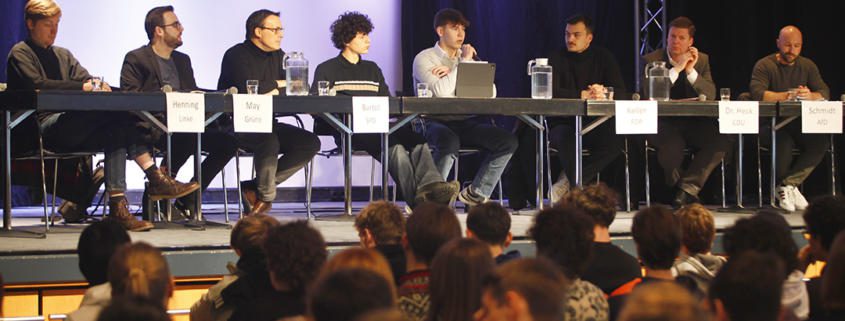
Among the panelists—unfortunately, no women were included—political veterans mingled with young politicians. Philipp Henning (Die Linke), Andreas May (Alliance 90/The Greens), Sören Bartol (SPD, Member of the German Bundestag), Alexander Keller (FDP), Dr. Stefan Heck (CDU, Member of the German Bundestag), and Julian Schmidt (AfD) first took turns commenting on overarching issues. For the most part, they successfully represented their parties’ positions, though in some cases their personal views came through—an element that perhaps contributed to their credibility in the “political circus,” since the seasoned politicians among the elected representatives know exactly which cards to play when the public is watching.
Aside from differences in their positions on the issues, the tone of the panel discussion had remained relatively calm. The final topic—the debate on migration—then heated up the atmosphere. “A disgrace to democracy,” Sören Bartol declared, referring to the far right. At any rate, this comment drew the first and last round of applause of the morning.
Anton and Ben Luis did a good job
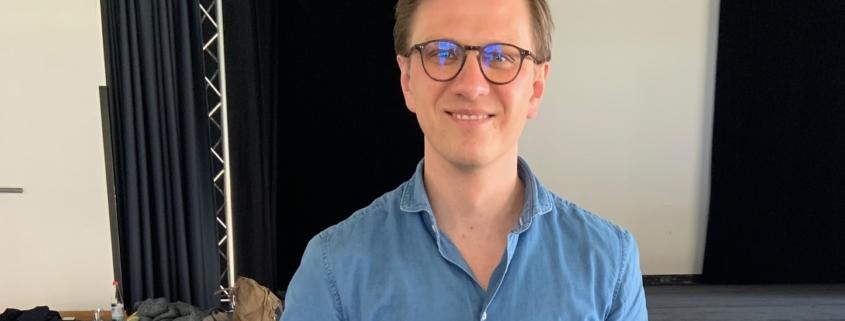
The two moderators, Anton Nessler and Ben Luis Peters from the 13th-grade advanced Politics and Economics (PoWi) class, handled their duties with confidence during the two-hour event. As is always the case before elections, PoWi teacher Dr. Claudia Röder had ensured that the students at Steinmühle could get a firsthand impression of the local party representatives without the mediation of the media. Principal Björn Gemmer thanked her for this and expressed his delight that all the politicians had accepted the invitation.
The topics and the answers:
Germany’s Role in Foreign Policy / The Future of the Bundeswehr
We need to talk more about how to spend less. Unfortunately, Trump and Putin are here. No more money should go to NATO or the Bundeswehr (Philipp Henning, Die Linke)
We are against conscription. Our decision: rearmament or addressing issues for the future (Philipp Henning, Die Linke)
The U.S. is no longer a guarantor of peace. We must invest in defense with the goal of never having to use those weapons. We must rethink security (Andreas May, Alliance 90/The Greens)
We are no longer able to defend ourselves. Today, disarmament is no longer a realistic option (Andreas May, Alliance 90/The Greens)
The issue of national defense is back in the spotlight. Conscription is not financially viable. The Bundeswehr must be made more attractive to both men and women (Sören Bartol, SPD)
We need a strong Bundeswehr; that is the only way we can be effective. I am not in favor of conscription. Making the Bundeswehr more attractive must become a central topic of public debate (Alexander Keller, FDP)
Within the European alliance, someone has to take the lead. We need to discuss universal conscription, whether in the Bundeswehr or in civilian sectors such as the fire department, THW, or similar organizations. …Out of 40 tanks, about two are operational. We need to discuss defense cooperation. Soldiers need more social recognition and greater visibility (Dr. Stefan Heck, CDU)
Germany needs a robust foreign policy, a capable military, and a confident stance (Julian Schmidt, AfD)
Every defense minister has new ideas (regarding conscription). This creates a sense of uncertainty. We need a unified, bipartisan approach. Conscription is an important pillar (Julian Schmidt, AfD)
Economic Challenges
From an economic perspective, the question is what to prioritize. There was a global recession, not just in Germany. We need to tap into the wealth tax, capital gains tax, and inheritance tax. Social inequality must be addressed. We need to invest in roads and infrastructure (Philipp Henning, Die Linke)
We are dependent on exports, have seen no growth since 2016/17, and do not have a favorable investment climate. We have tried to balance industry and climate protection. There is a labor shortage and a shortage of skilled workers. We must distinguish between migration and asylum (Andreas May, Alliance 90/The Greens)
We need to keep a close eye on our infrastructure, such as railways and bridges. These are massive investments. The debate over the debt brake needs to be reformed. Local governments are underfunded. People with a lot of money need to contribute more (Sören Bartol, SPD)
There is no clear economic line within the SPD. Yet the economy is the driving force behind everything—it’s the foundation (Alexander Keller, FDP)
Our government has failed to distribute nearly a trillion in tax revenue as it should have (Dr. Stefan Heck, CDU)
We need an affordable energy supply. Social security contributions are too high. Businesses should be relieved of many of their reporting obligations. We are pushing for openness to technology (Julian Schmidt, AfD)
Equal Opportunity
Many people are receiving the basic income; that’s not the right approach. We need to get people into work (Julian Schmidt, AfD)
Education is the key to everything. We should place this sector under federal jurisdiction, because it’s unacceptable that a high school diploma in Bremen is worth less than one in Bavaria. Our state must also seek out talent in underprivileged districts (Alexander Keller, FDP)
When it comes to financing the economy, the focus is solely on growth. We need a minimum wage of 15 euros to increase purchasing power. Rent control is an important issue, including in Marburg (Andreas May, Alliance 90/The Greens)
Our pension system has been ruined. Austrian law provides a better example. Everyone contributes (Philipp Henning/Die Linke)
Artificial Intelligence (AI) as a New Medium for Retail?
It seems that ship has sailed. First, we would have to create the framework for businesses (Julian Schmidt/AfD)
We would need to collaborate with universities. The question is: Do we have enough electricity? An AI computer requires more electricity than a normal computer. The EU must establish a secure legal framework (Dr. Stefan Heck, CDU)
This should be incorporated into the curriculum at schools and universities (Philipp Henning, Die Linke)
The Future of Nuclear Power
Shutting down the last three nuclear power plants in 2022 was a serious mistake. Now we’re importing nuclear power from France. We’re currently lacking 20 years of experience in nuclear technology. We’ll see what happens after the election (Dr. Stefan Heck, CDU)
It’s dangerous to leave that open (Sören Bartol, SPD)
That would have to be clarified by a committee of inquiry (Alexander Keller, FDP)
There is no going back to nuclear power. It is no longer economically viable. During periods of low sunlight , we make do with imports in addition to renewable energy (Andreas May, Alliance 90/The Greens)
That’s complete madness. I’m not interested in a Chernobyl 2.0 (Philipp Henning, Die Linke)
We should make it possible to return to nuclear power. Given the current state of our technology, the only reason we can live the way we do is because other countries have different policies (Julian Schmidt, AfD)
Declining Interest in Politics
Corporate donations should be banned. There needs to be more transparency in lobbying registries (Philipp Henning, Die Linke)
A major challenge! A matter of trust. Given that there are also corporate donations to The Left and initiatives like “D-Day” within the FDP (Andreas May, Alliance 90/The Greens)
Everyone has the opportunity to cast their vote accordingly (Sören Bartol, SPD)
Decisions are made transparently and are not dependent on large donations (Dr. Stefan Heck, CDU)
That impression is understandable. To be honest, power and money do play a role. I can only encourage everyone to do what they can to change this and join a political party (Julian Schmidt, AfD)
When it comes to issues affecting the public, we should, whenever possible, embrace more direct democracy (Alexander Keller, FDP)
On the Current Debate on Migration
We need to distinguish between asylum and migration. We need skilled workers (Alexander Keller, FDP)
Illegal migration has been haphazard over the past 10 years. We need to resolve individual cases before they even reach the EU (Dr. Stefan Heck, CDU)
Anyone who wants to work here legally is welcome. Anyone seeking protection must integrate and behave appropriately. No asylum for people who don’t need protection (Julian Schmidt, AfD)
It’s also about the nature of the debate. Of course, we have to assess what mistakes were made (Sören Bartol, SPD)
Habeck is planning an “enforcement campaign.” But these are not “deportation tickets” (Andreas May, Alliance 90/The Greens)
The AfD is harming Germany as a business location. It is an escape from realities that we have helped create (Philipp Henning, Die Linke)