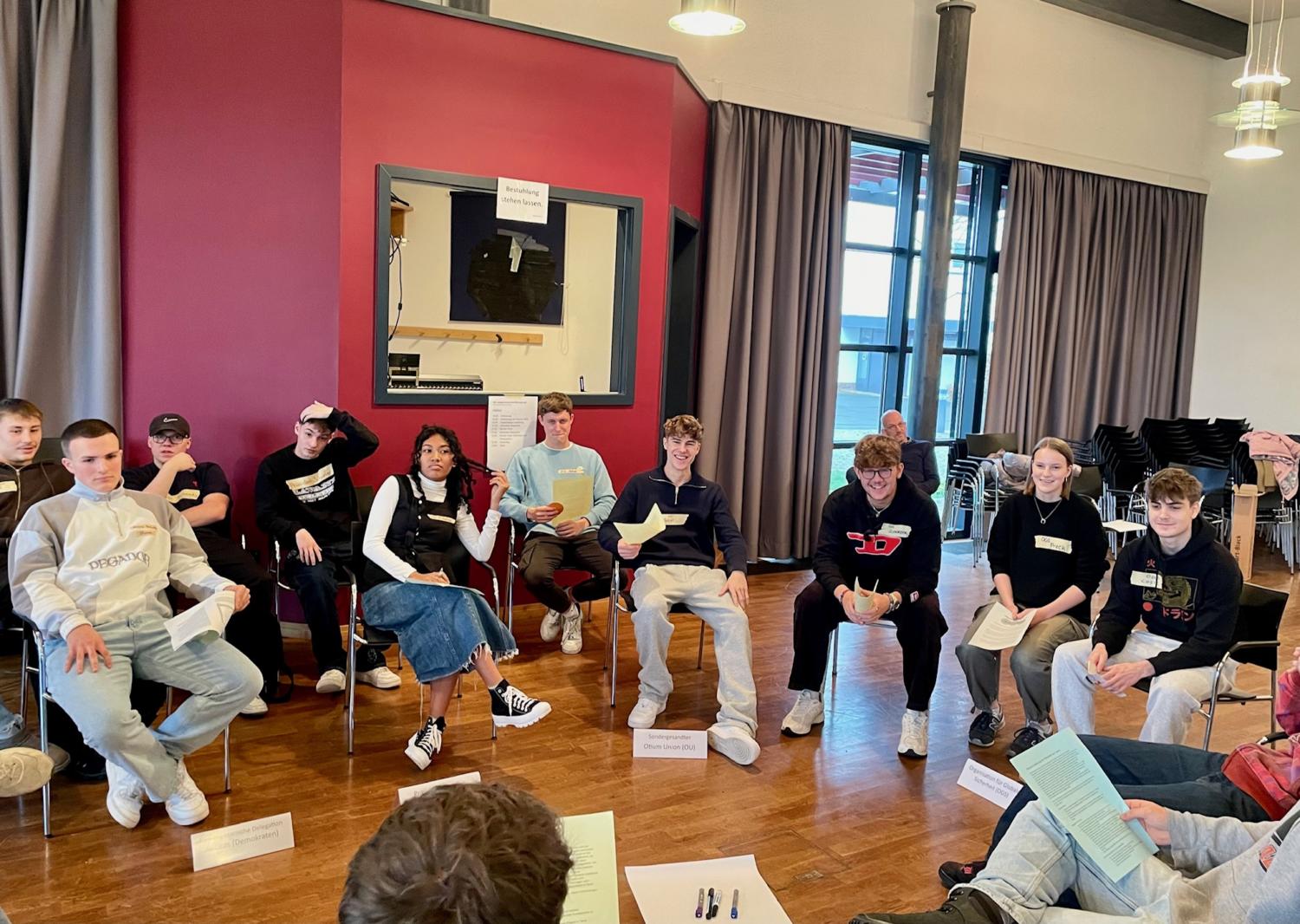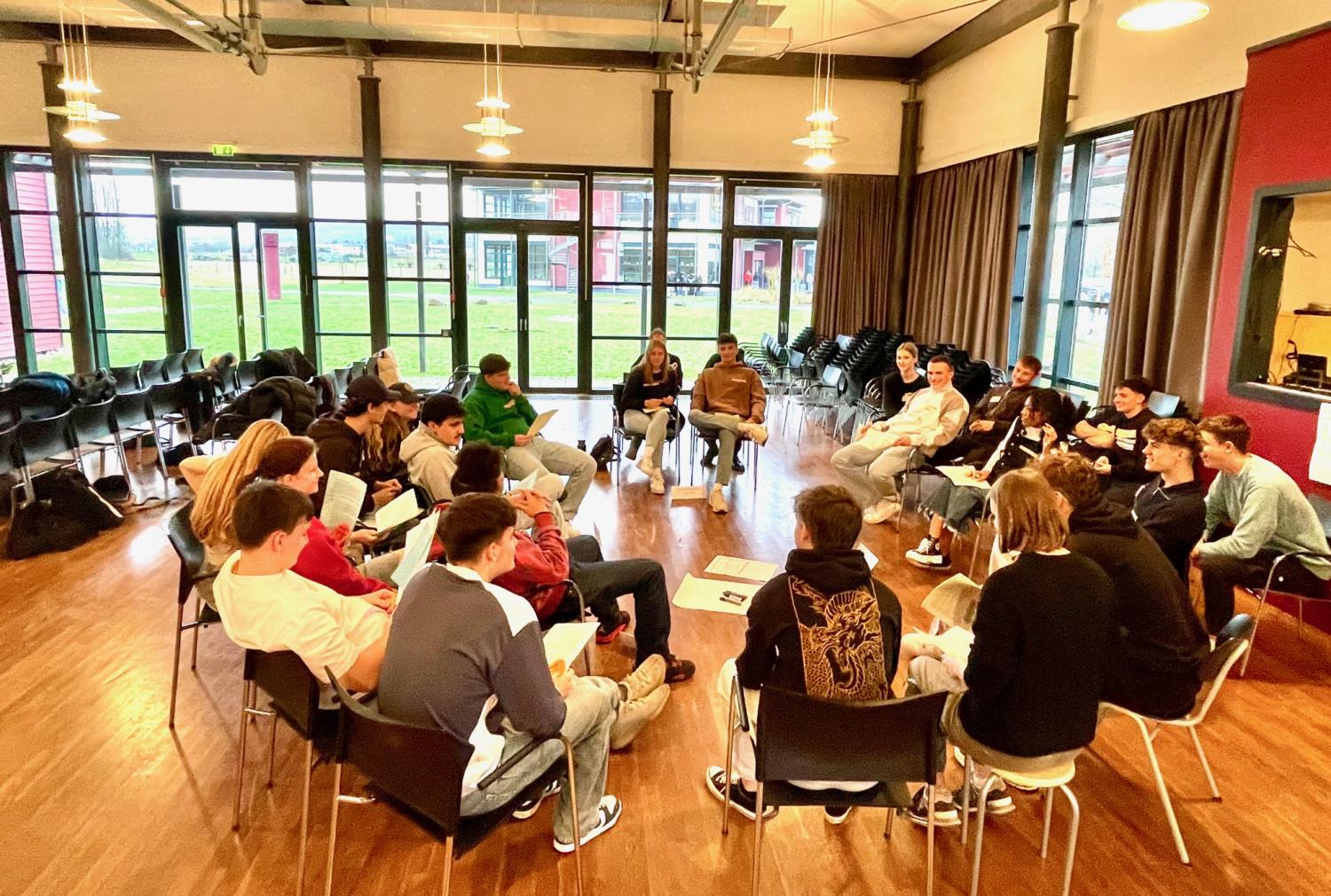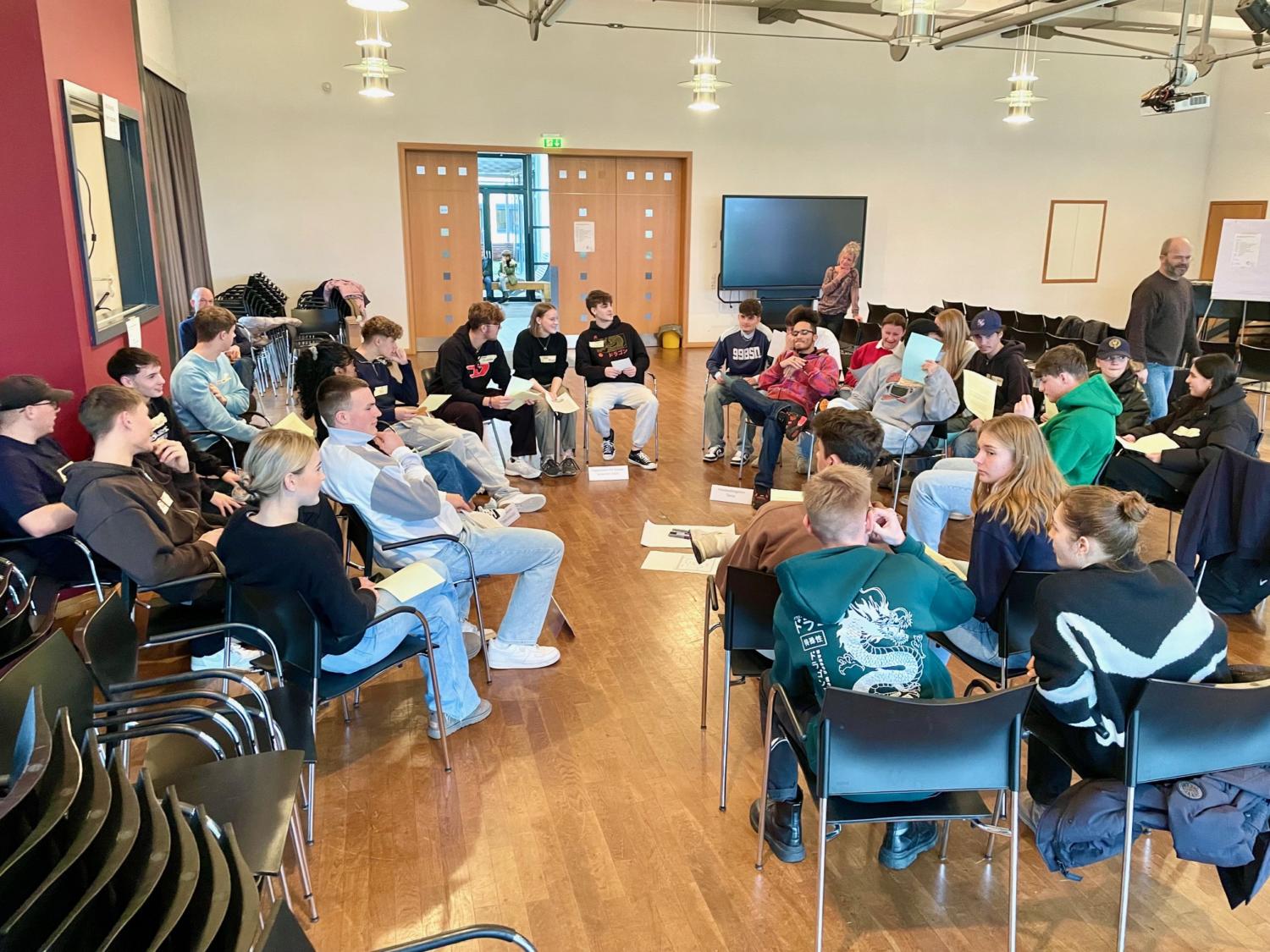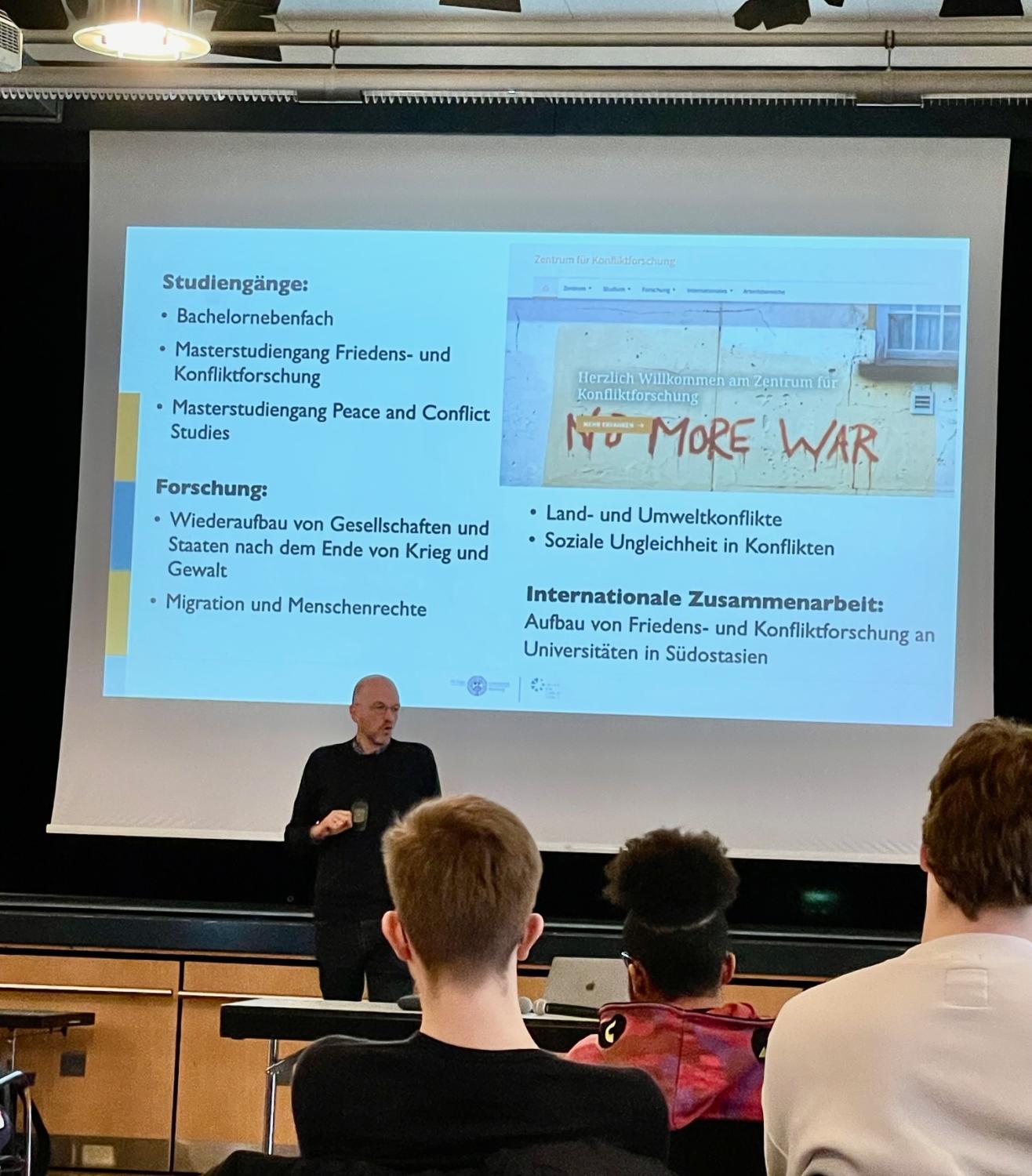


Delegation from the Center for Conflict Research at Steinmühle: 13th-grade students host a mock UN conference
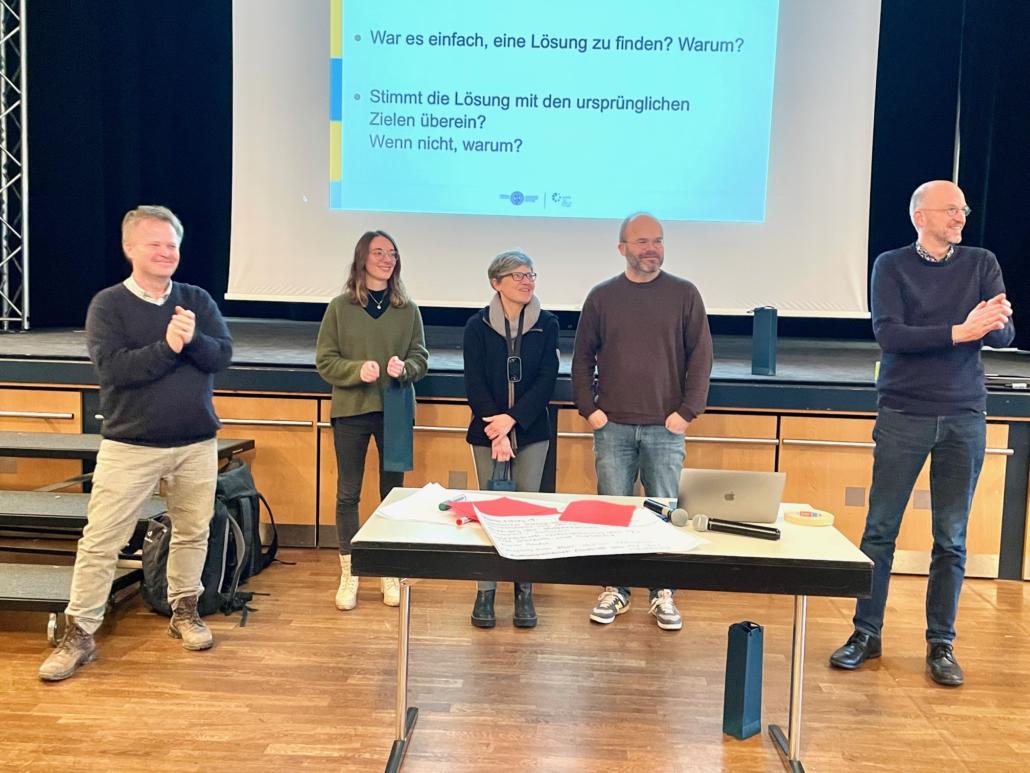
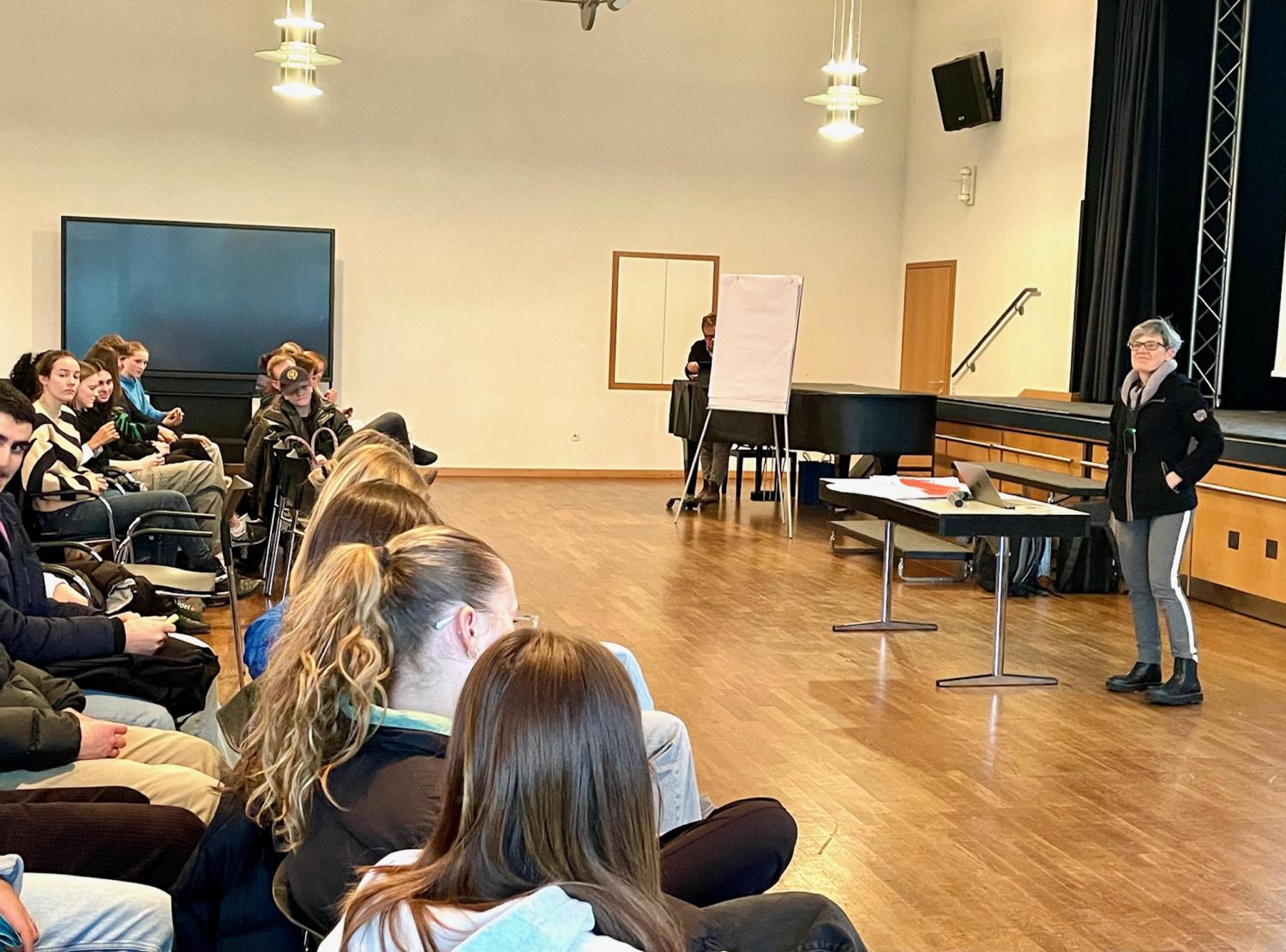
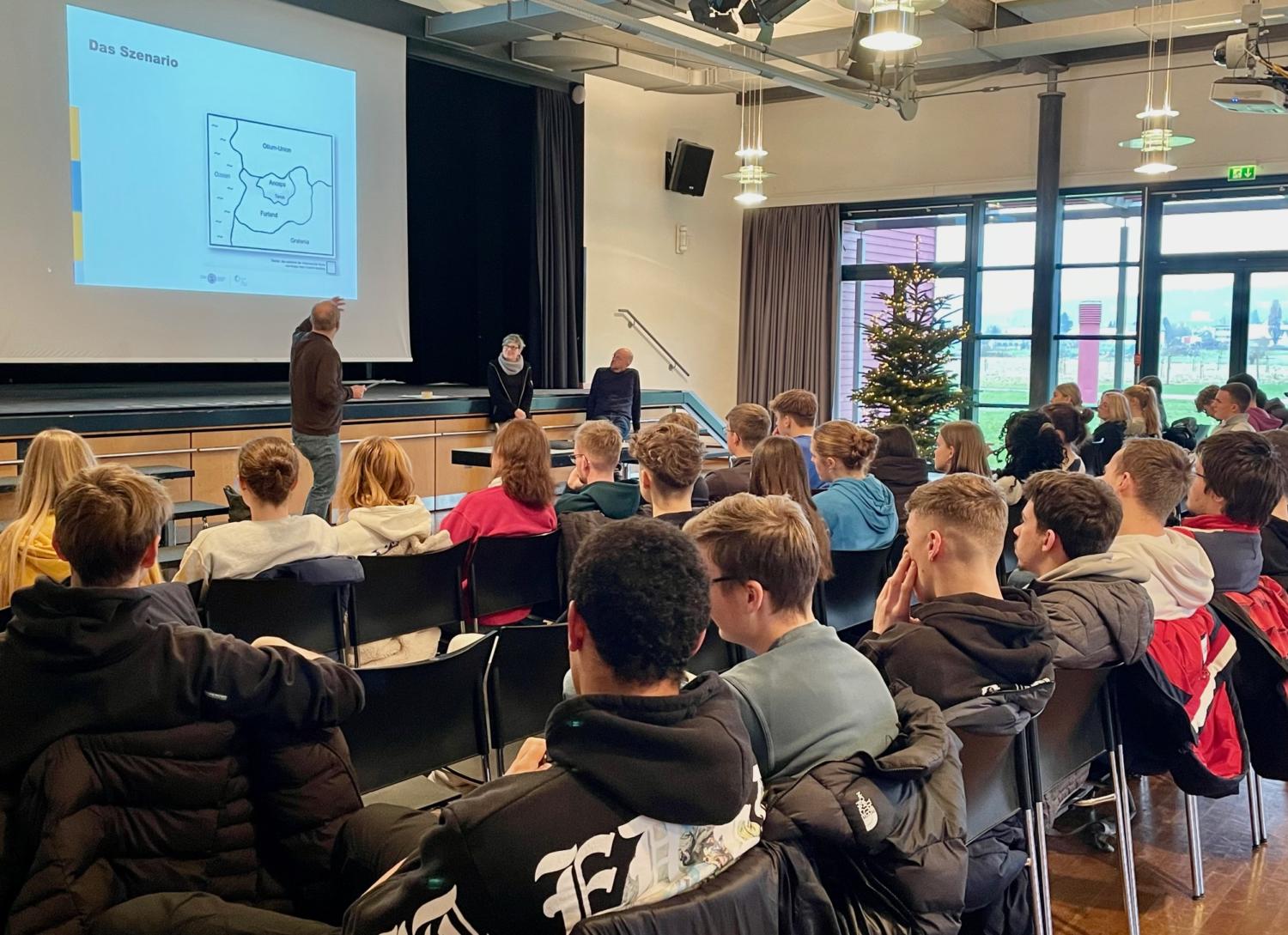
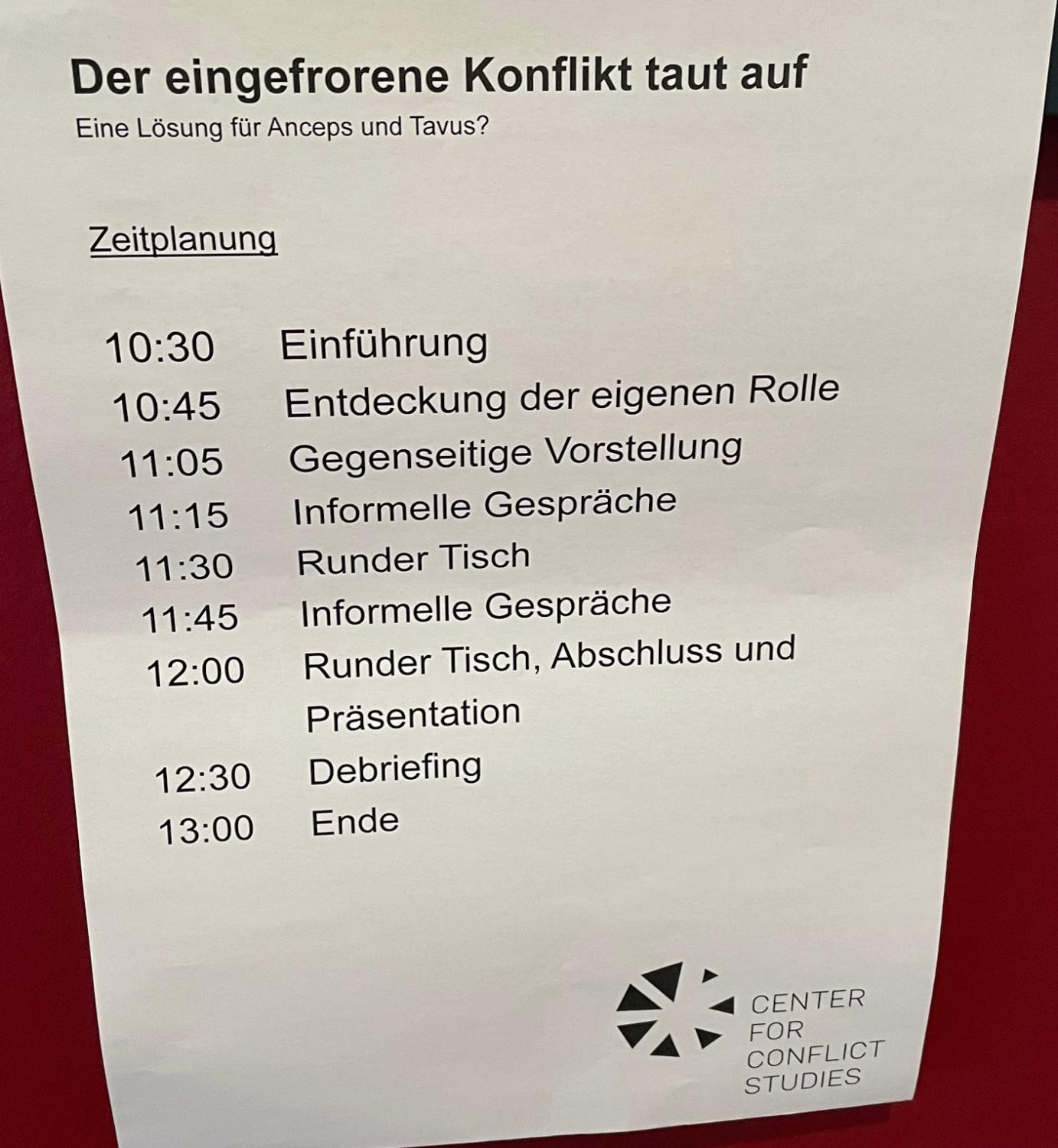
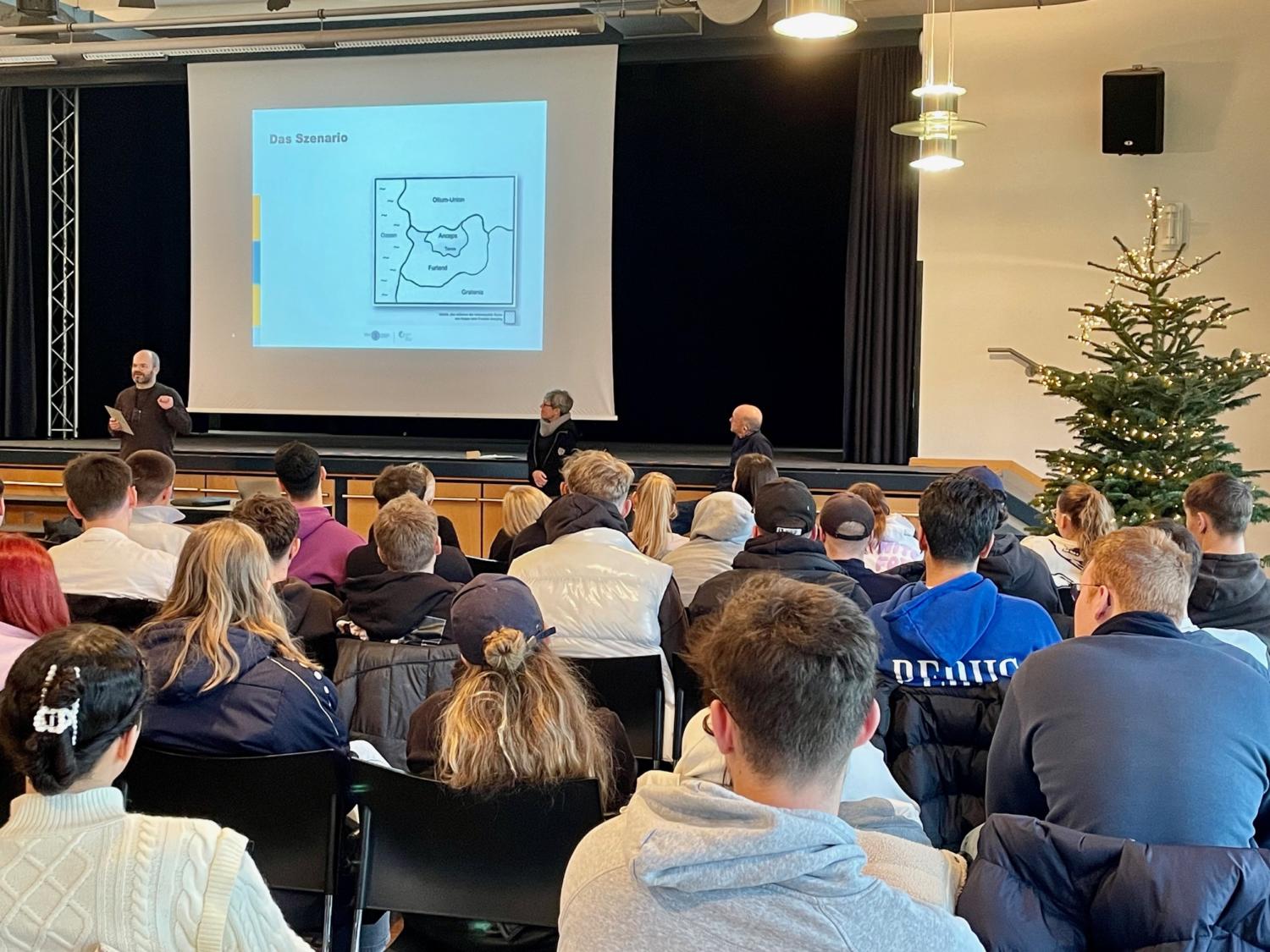
Why can’t they reach an agreement through diplomatic channels? — Given the many political conflicts around the world, this question comes up time and again. Recently, a delegation from the Center for Conflict Research at Philipps University in Marburg visited our school. In a simulation of an international conflict, 13th-grade students were given the opportunity to lead negotiations at a fictional UN conference. They soon realized that reaching an agreement isn’t all that easy.
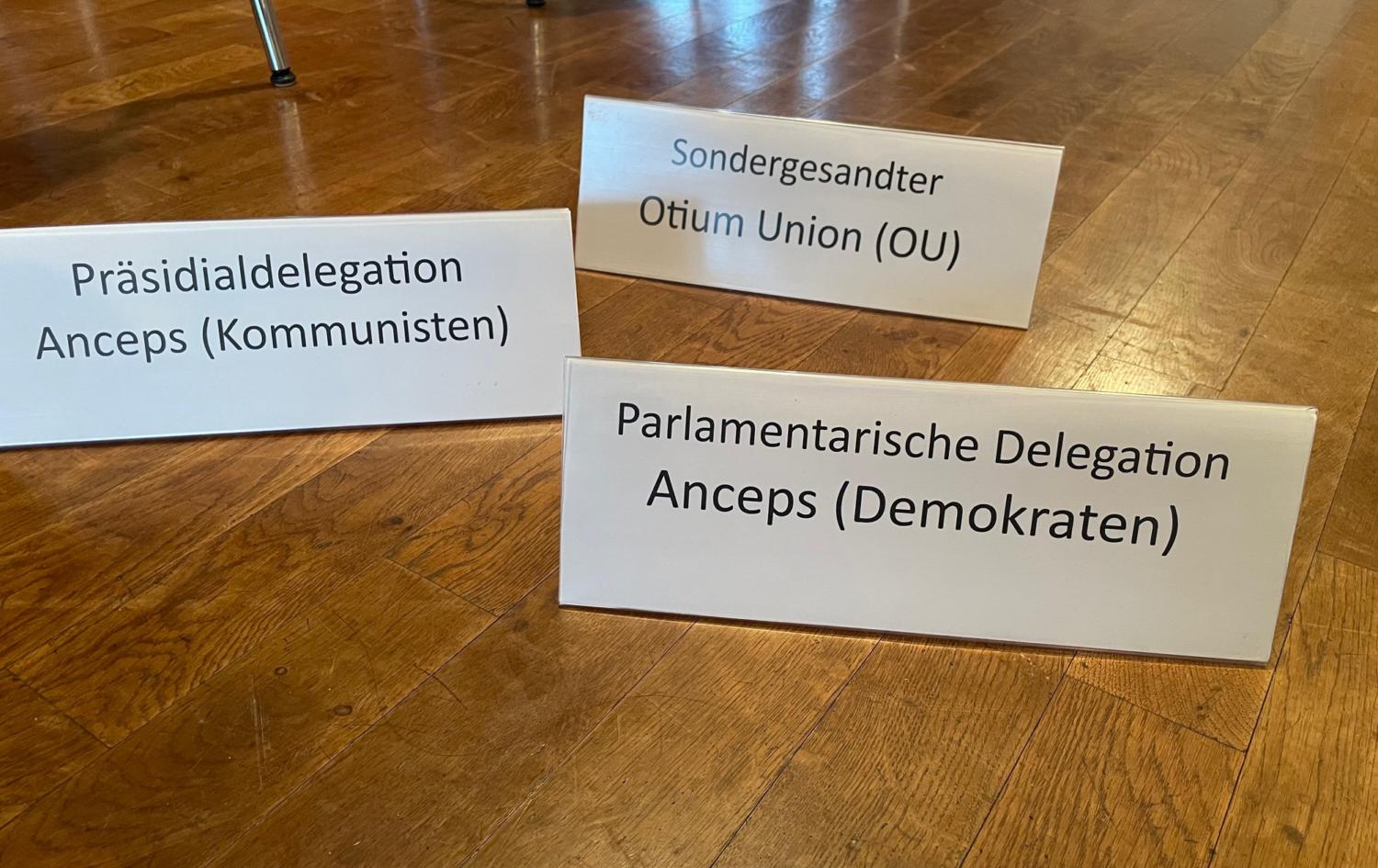
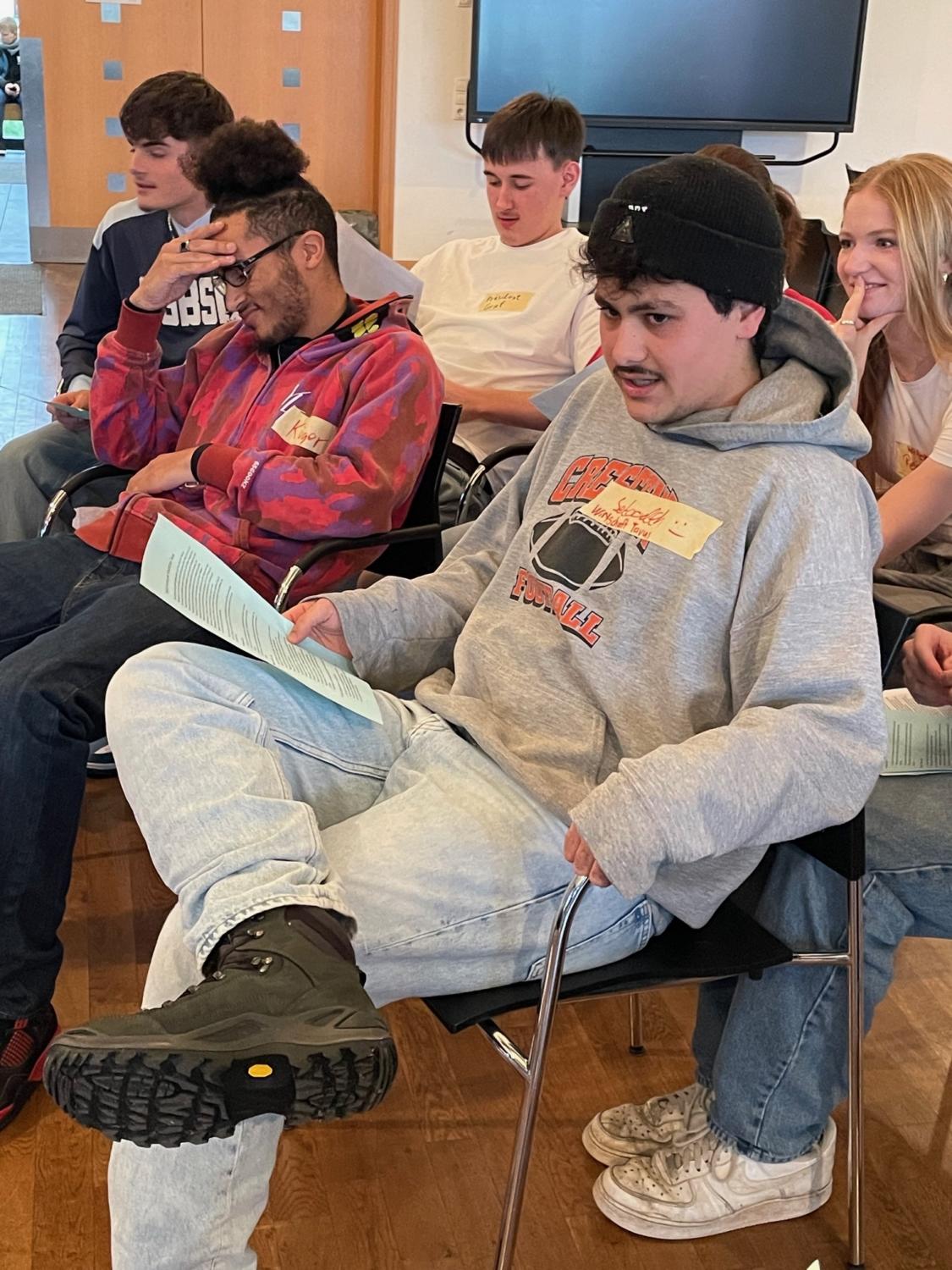
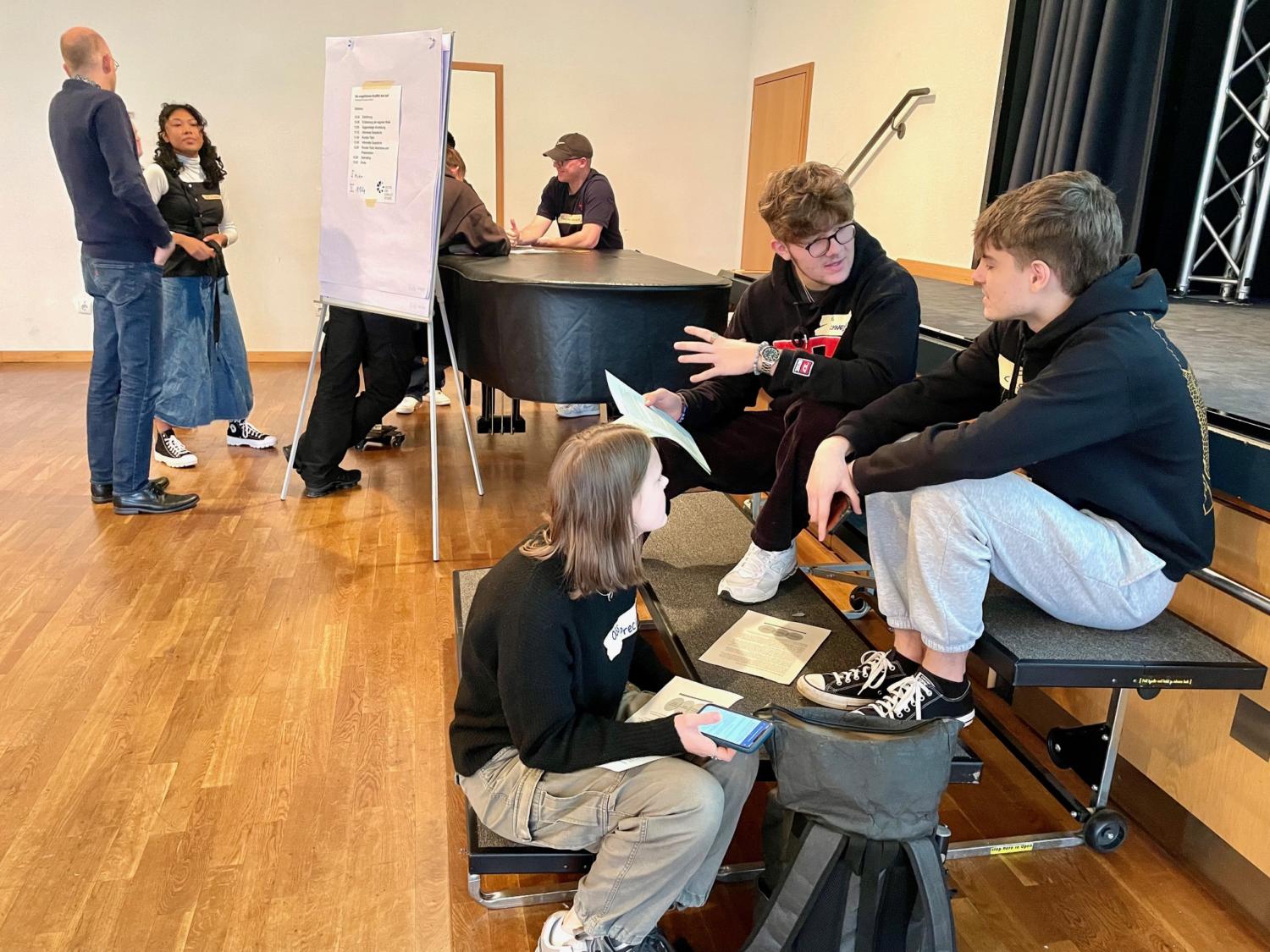
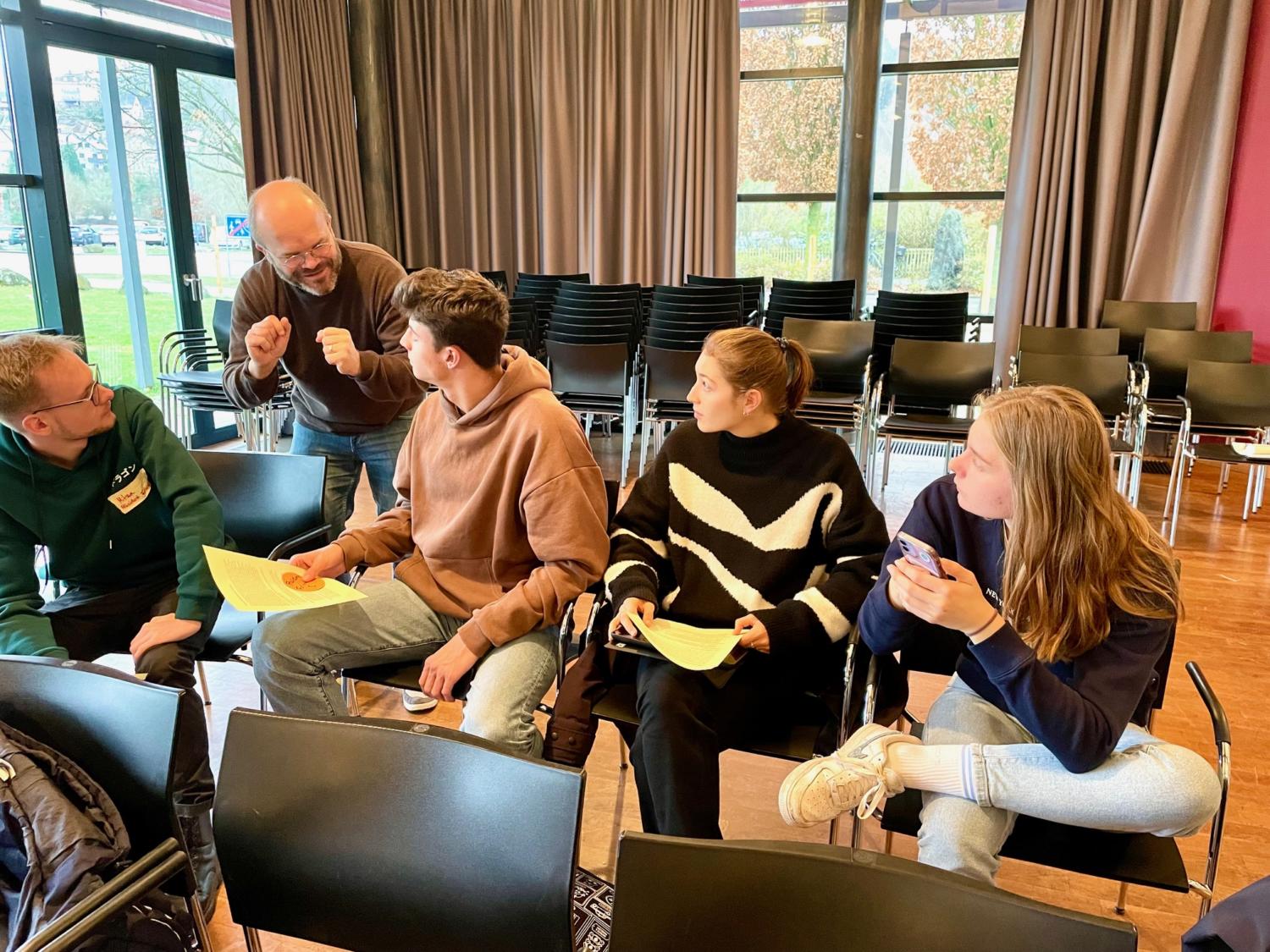
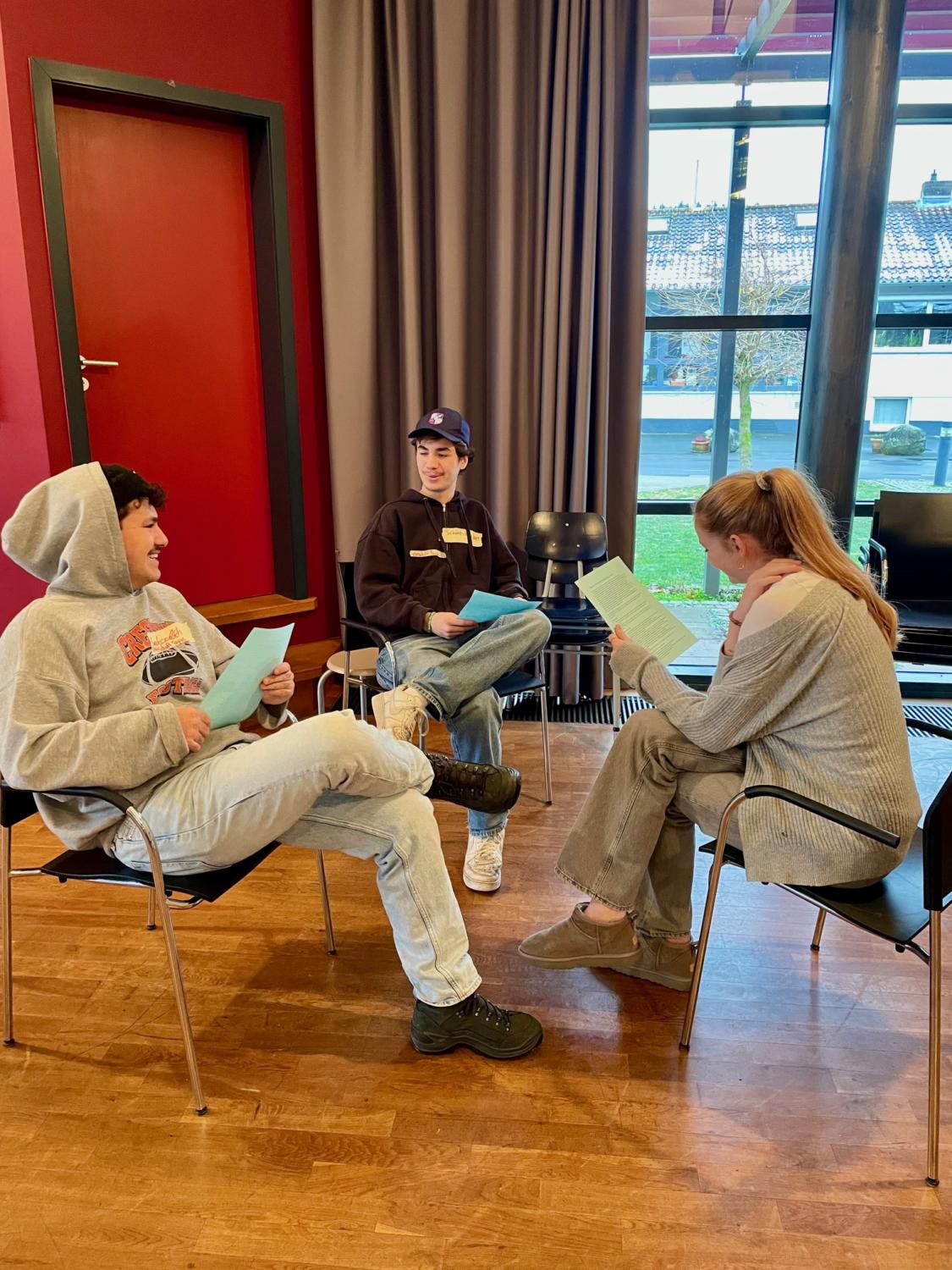
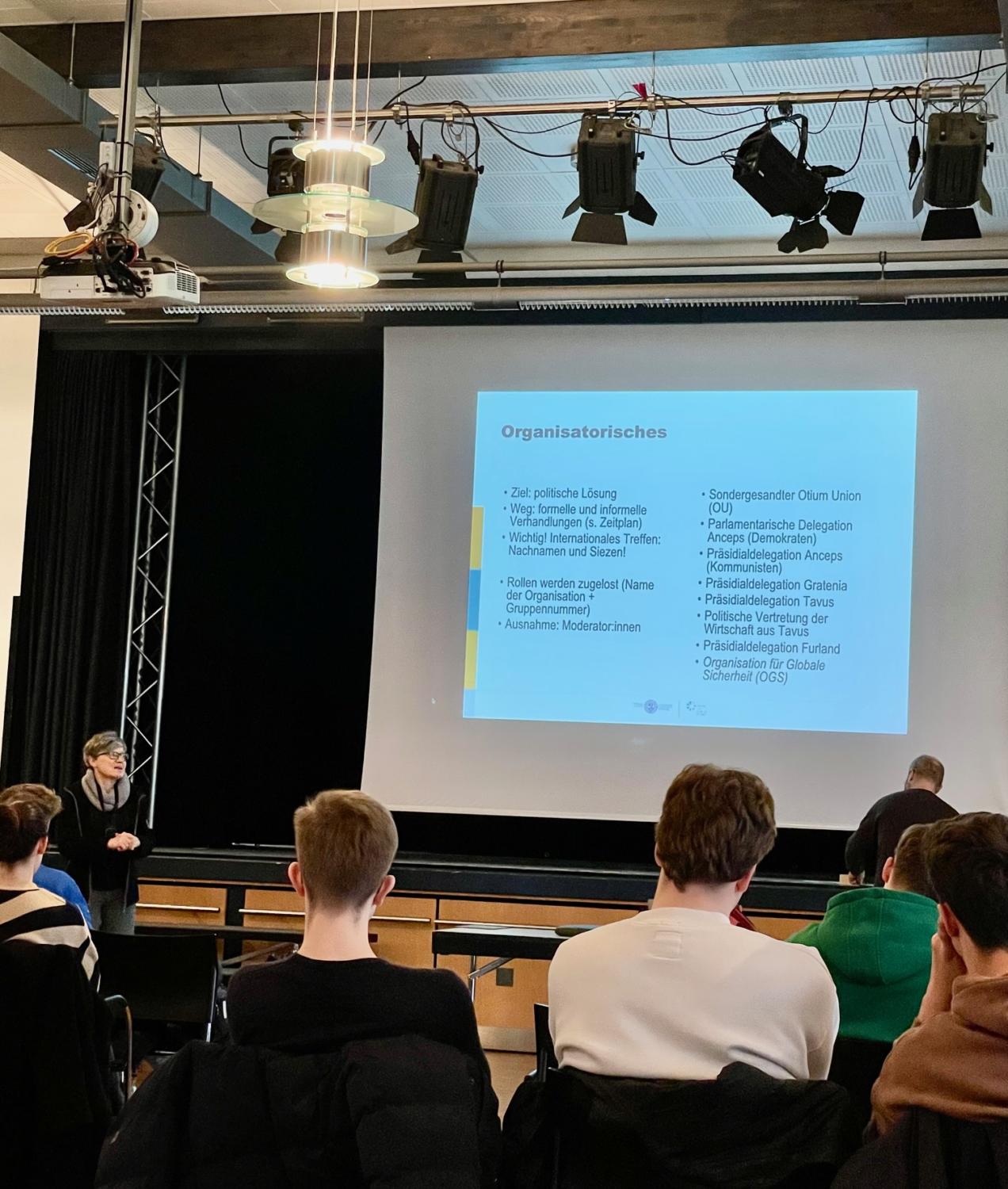
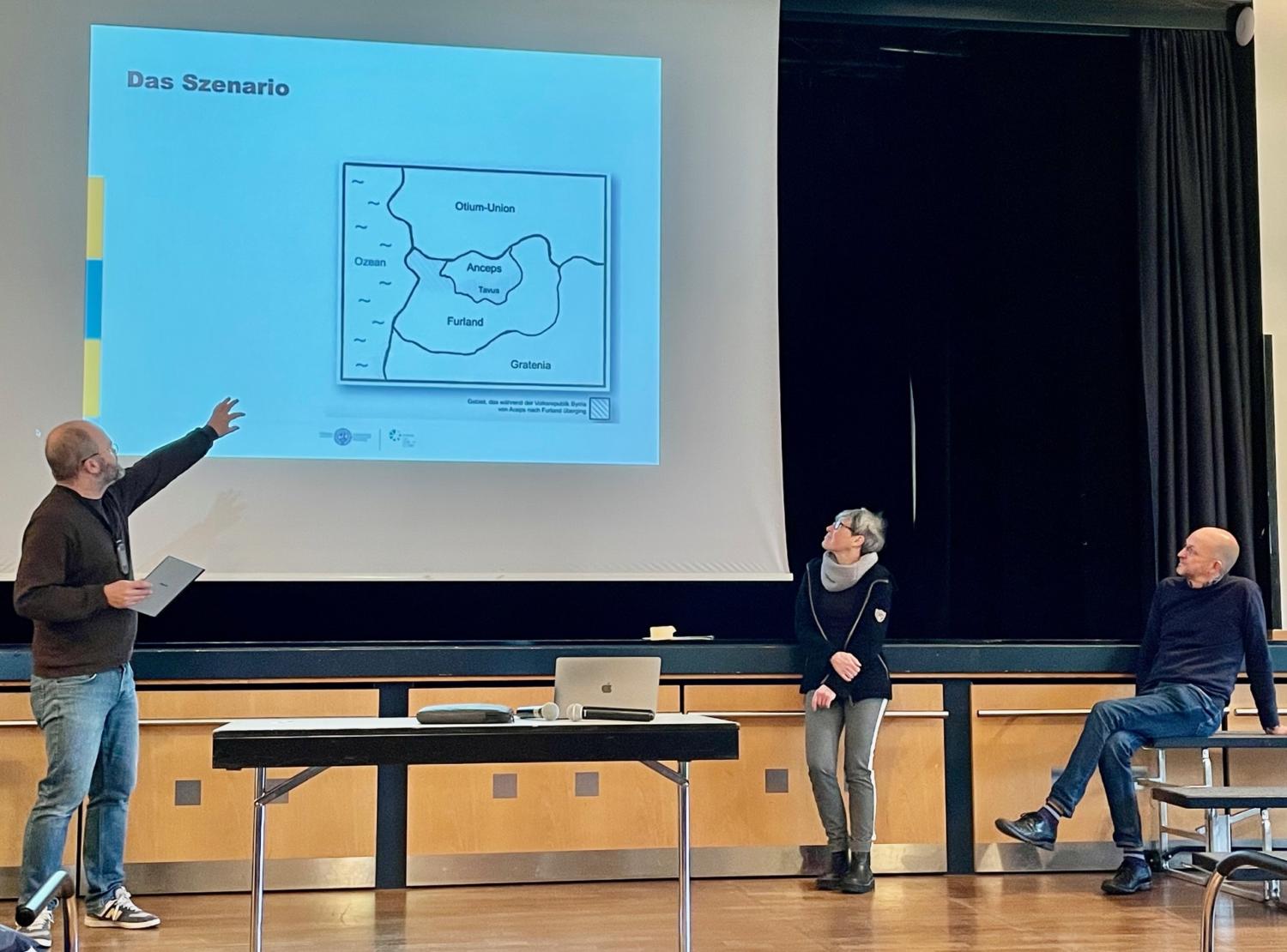
Otium-Union, Anceps, Tavus, Furland, and Gratenia: These were fictional countries with fictional names, whose representatives were to exchange views in informal discussions and later at a roundtable. Students took on these roles, wearing name tags and addressing one another formally. The goal was to immerse themselves in their own roles and those of their counterparts, focusing on national identity, territorial claims, economic factors, and peacekeeping.
Sticking to One’s Own Point of View
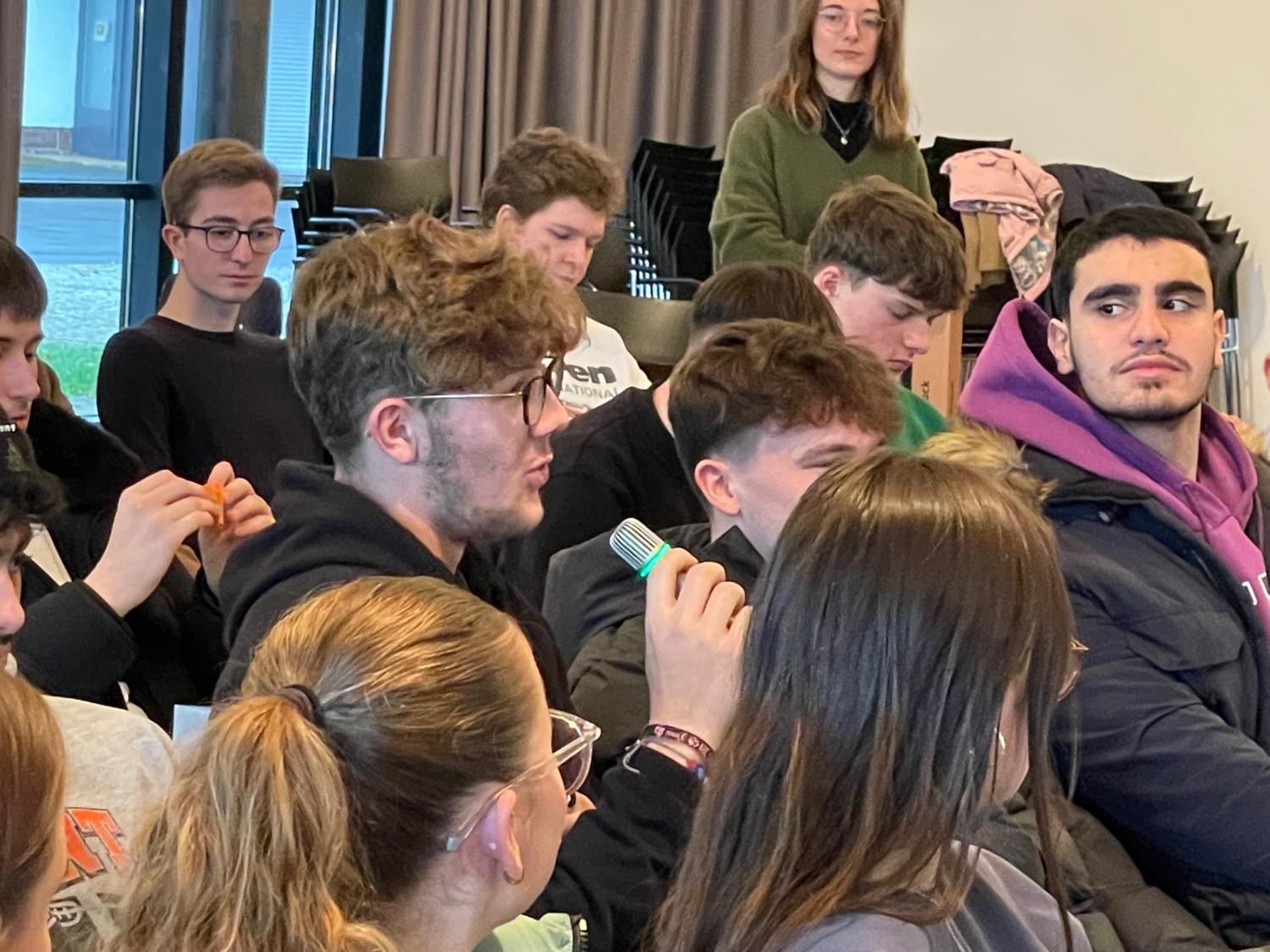
All parties involved issued a brief statement explaining their positions. It soon became clear that this was a gathering of very different personalities. Not all parties were open to discussion—or were difficult to reason with—and many insisted on their position, vehemently opposing, for example, a “relocation” proposed by the other side in the negotiations.
“Frustrating” at times
The final evaluation was intended to reveal how the students felt about their roles. The word “frustration” came up—they found it difficult to reach an agreement, especially when the negotiators were primarily pursuing their own interests rather than focusing on the common goal. Reasons cited included, among others, interdependencies that make agreements difficult, as well as many conflicting interests. The people were said to be unwilling to compromise.
“Do you have any idea where this took place?” Of course, it was eventually revealed which part of the world the students had been discussing during those three school hours. The university guests first let the students guess and then revealed that the scenario outlined in the presentation roughly corresponded to the Transnistria conflict between the Republic of Moldova and the self-proclaimed Transnistrian Republic, with Russia’s involvement.
Making University Collaboration a Reality
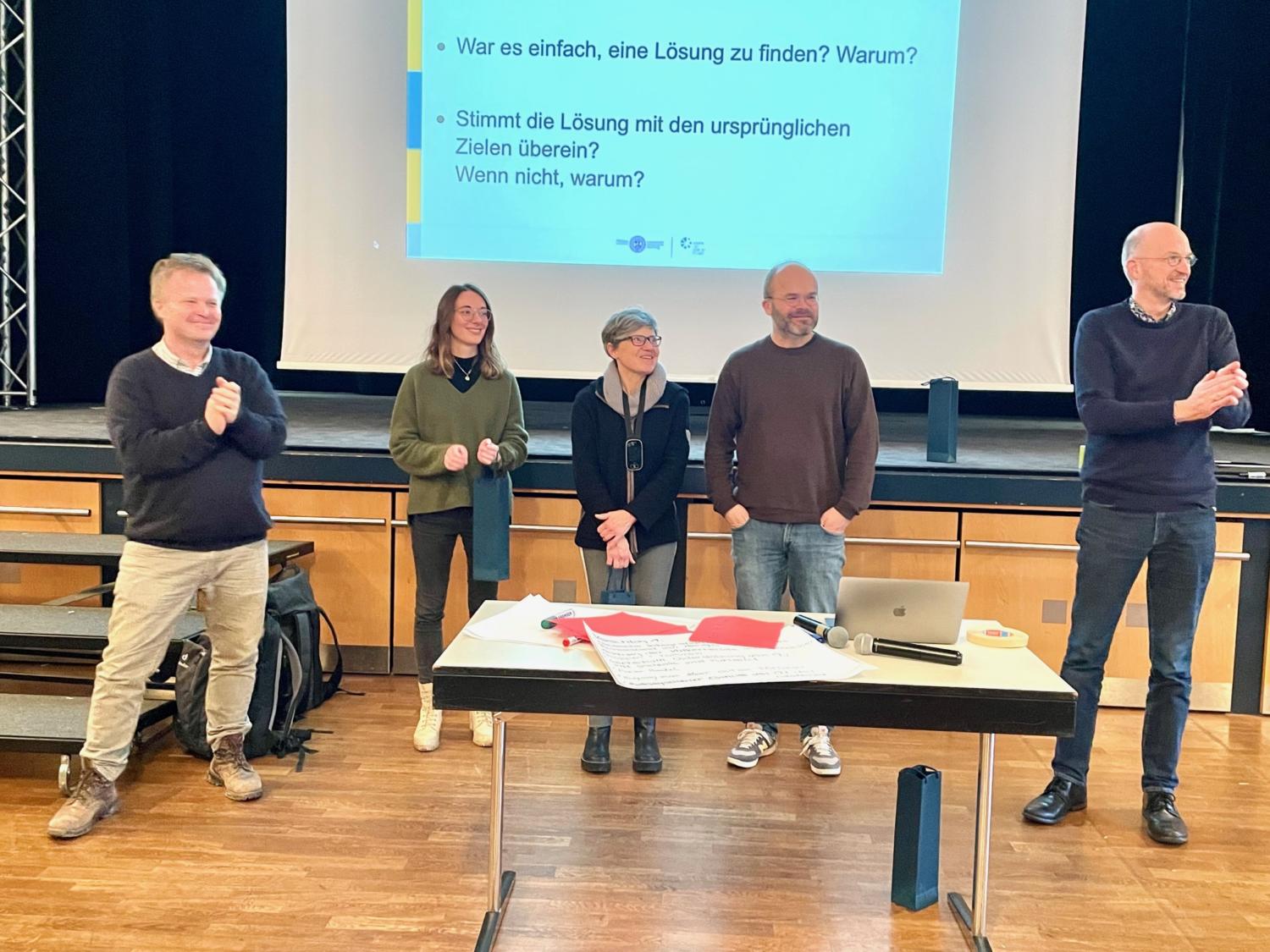
Bernd Hülsbeck, a subject teacher and head of the social sciences division within the Politics and Economics department at Steinmühle, views events like this primarily through the lens of “opening up the school”: “We have a partnership with Philipps University of Marburg, and we need to make that partnership tangible.” The Steinmühle teacher thanked the university delegation—consisting of Prof. Dr. Thorsten Bonacker, Dr. Stéphane Voell, Dr. Kerstin Zimmer, and Tabea Hanke—for coming by presenting them with a gift. Events like these help make the curriculum—which is currently focusing on international relations in the 13th grade—somewhat more practice-oriented.
The “Peace and Conflict Studies” program prepares students, among other things, for work with the UN when staff are deployed to crisis areas.