• Anruf
  • E-Mail
  • Zu Facebook
  • Zu Instagram
  • Zu LinkedIn
Loading
Steinmühle – Schule & Internat
  • About us
    • Organization & History
    • Teams
    • Stakeholders
    • Internal clubs
      • Riding School
      • Rowing Club
      • Friends of the School Association
    • Partners
    • Mission Statement & Vision
    • Ecology & Sustainability
    • A Safe Place
    • Quality Management
  • School
    • High School
    • Bilingual Elementary School
    • Project-Based Learning
    • Promoting STEM Talent
    • Languages & International Affairs
    • Sports & Health
    • Art, Music & Theater
    • Social Responsibility
    • Digitization
    • Promoting Independence & Individuality
    • Social Responsibility & Strengthening the Community
  • Boarding School
    • Boarding School as an Opportunity
    • Support for Families
    • Life
    • Learning
    • Sports & Recreation
    • Trips & Weekends
    • Talent Program Plus STEM
    • Fit for Life
  • Admission
    • Boarding School Admission
    • High School Admission
    • International High School Program
    • Bilingual Elementary School
    • Costs & Contract Terms
  • News
    • News
    • News Archive
    • Events
    • Support Current Projects
  • Friends & Alumni
    • Stories
    • Alumni Reunion
    • Steinmühle Alumni Network
  • Fan Shop
  • English
    • German
    • Spanish
    • French
    • Italian
    • Russian
  • Search
  • Menu Menu
  • English
    • German
    • Spanish
    • French
    • Italian
    • Russian

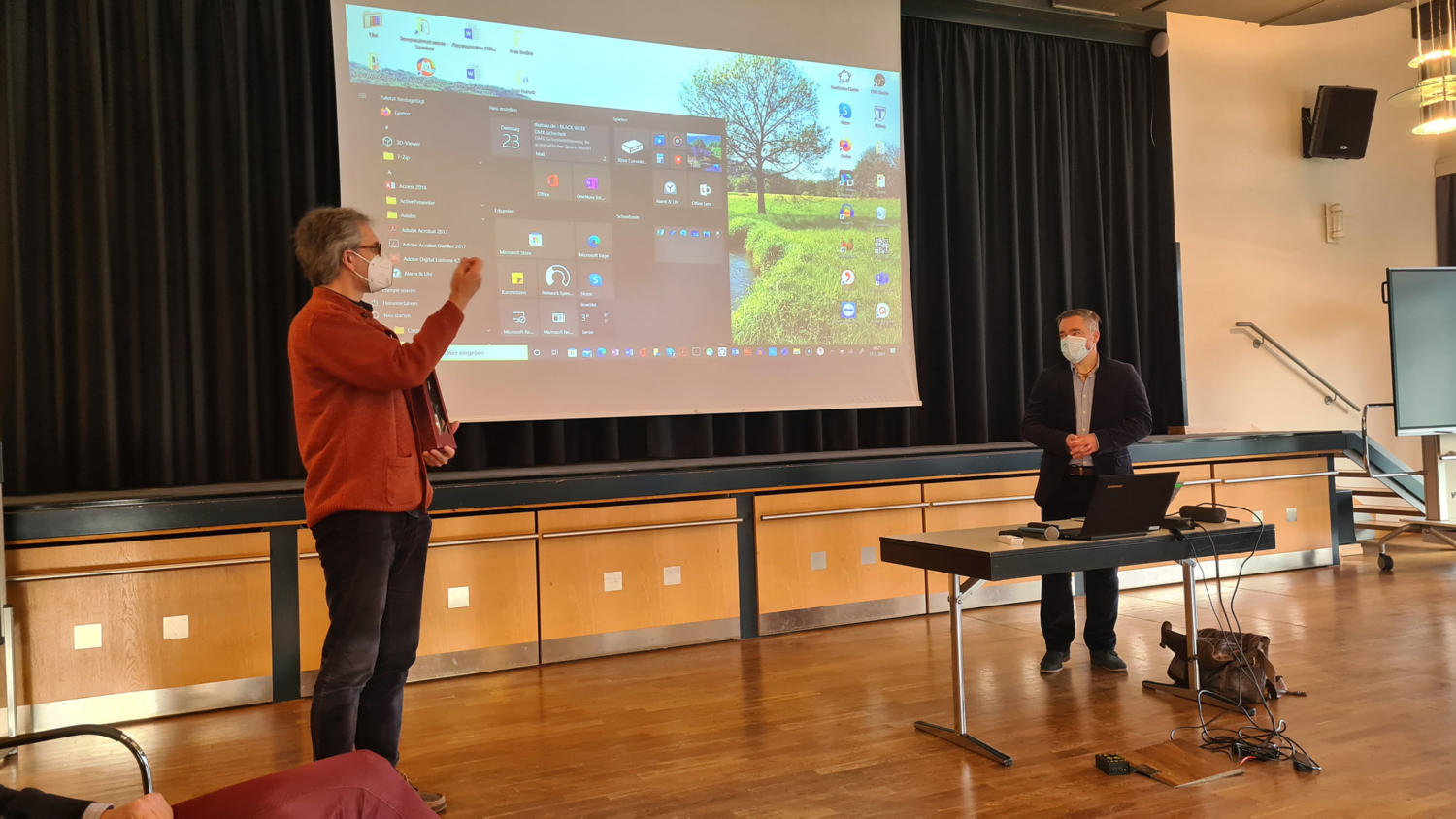
In-School Teacher Professional Development: Optimizing and Thoughtfully Utilizing Digital Technology in Everyday School Life

Digitalization & AI, News

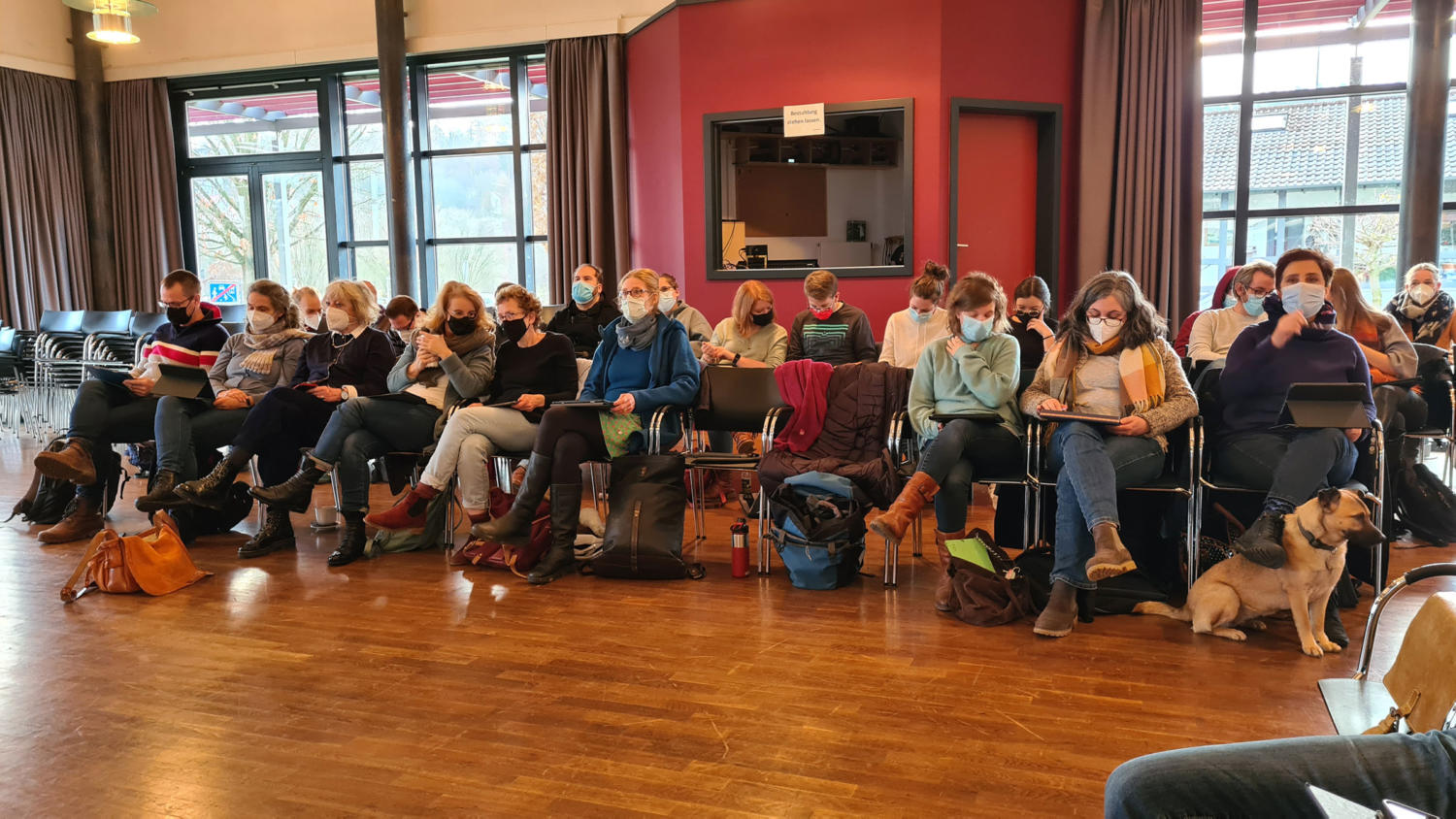
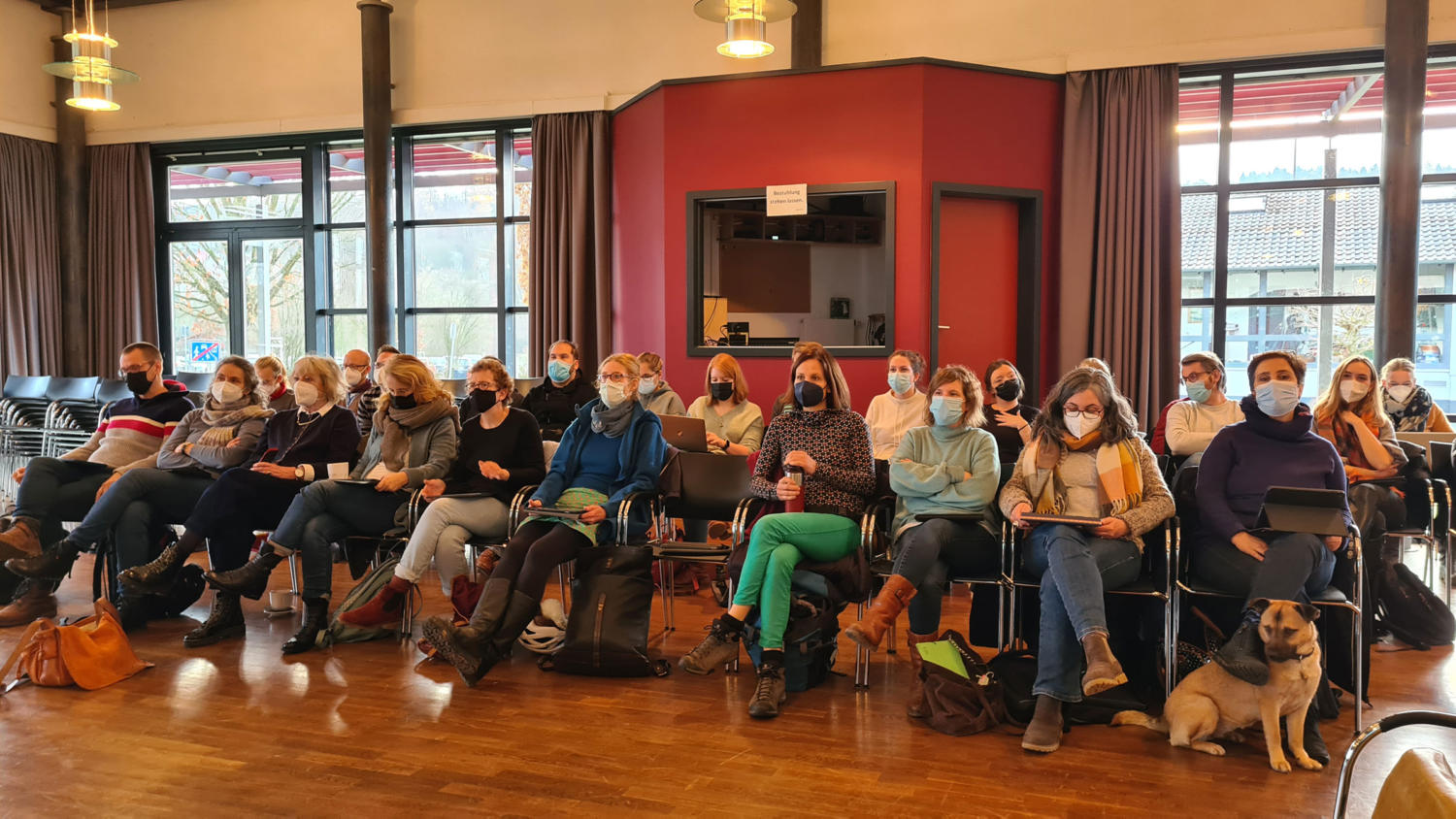
For Steinmühle, developing the StoneApp and winning Bitkom’s “SmartSchool” award are not the grand finale of its digital transformation, but rather the beginning of a further optimization process. The pandemic has forced students—but especially teachers—to become highly engaged with digital technology. But what does the future hold for digitalization—until the end of the pandemic and, above all, afterward? These questions were on the minds of the Steinmühle faculty during this year’s in-house teacher training session.

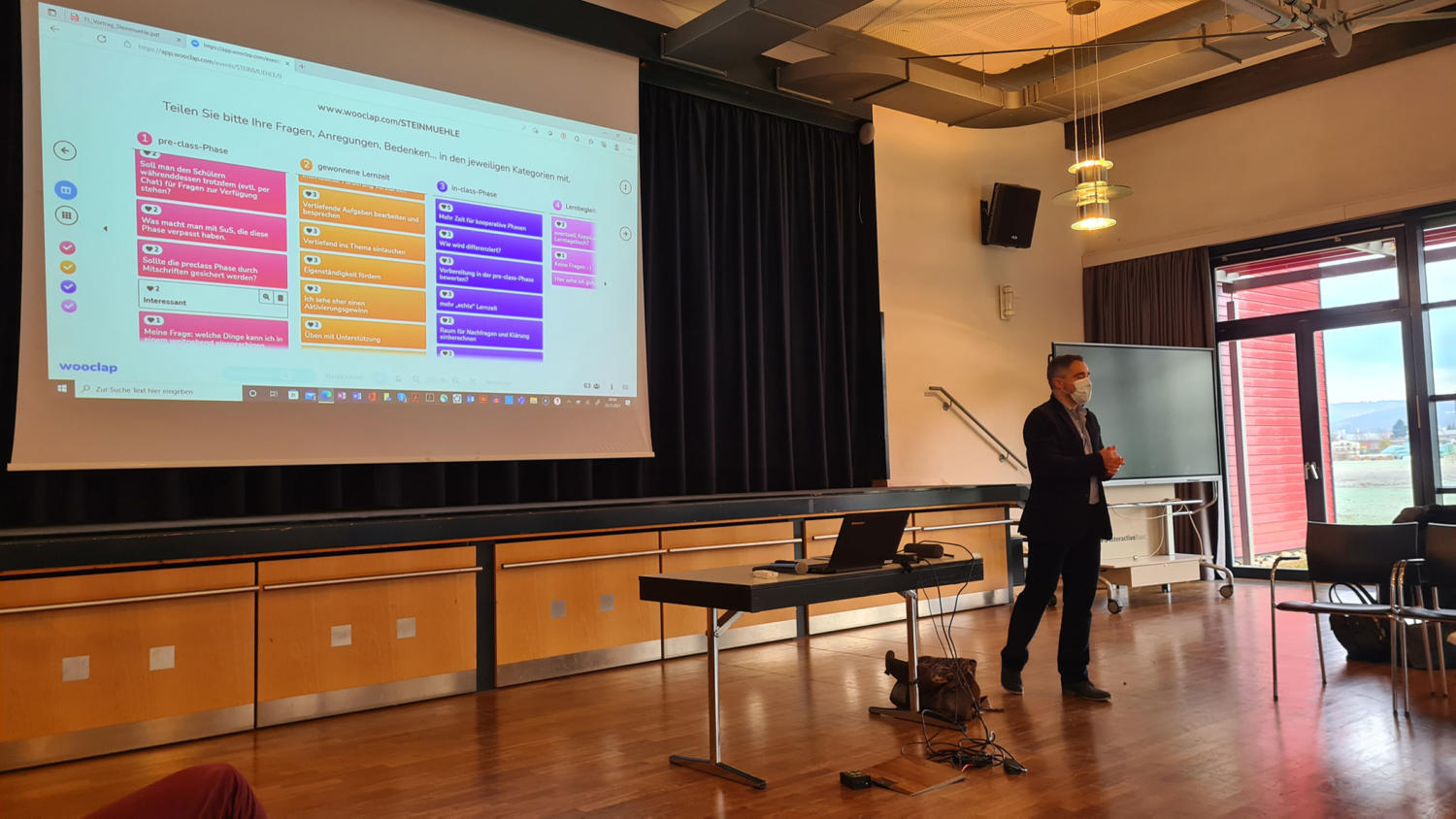
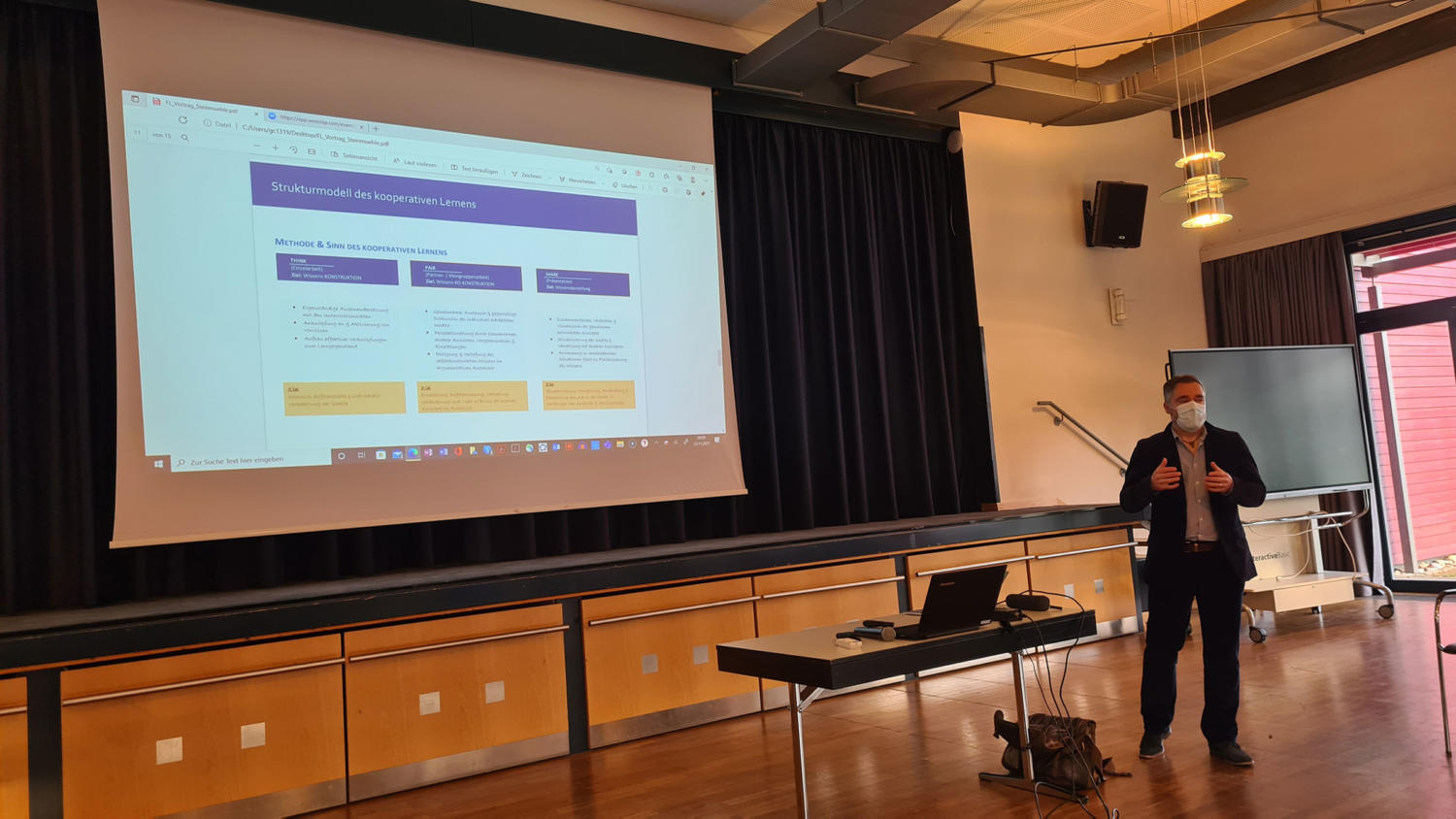
The methods used in digitalized instruction often involve various concepts. At the start of the two-day event, “flipped learning”—an “alternative approach to learning” in which students work through course material at home and then present it in class—was introduced in this context. The “Peer Instruction” teaching method, developed at Harvard University, was also explained. It is based on the observation that tasks are better understood and solved in a group than by students working alone. This is determined through a two-step question-and-answer session on the respective task, in which students first give their own assessment and then, after group discussion, provide a revised answer. In the second step, the overall results are consistently significantly more accurate.

The use of media at Steinmühle is based on a media education concept. Similarly, the protection of minors in the media plays an important role at Steinmühle. These areas, as cornerstones of our media work, are—like digitalization itself—dynamic and are structured quite differently across the various grade levels.

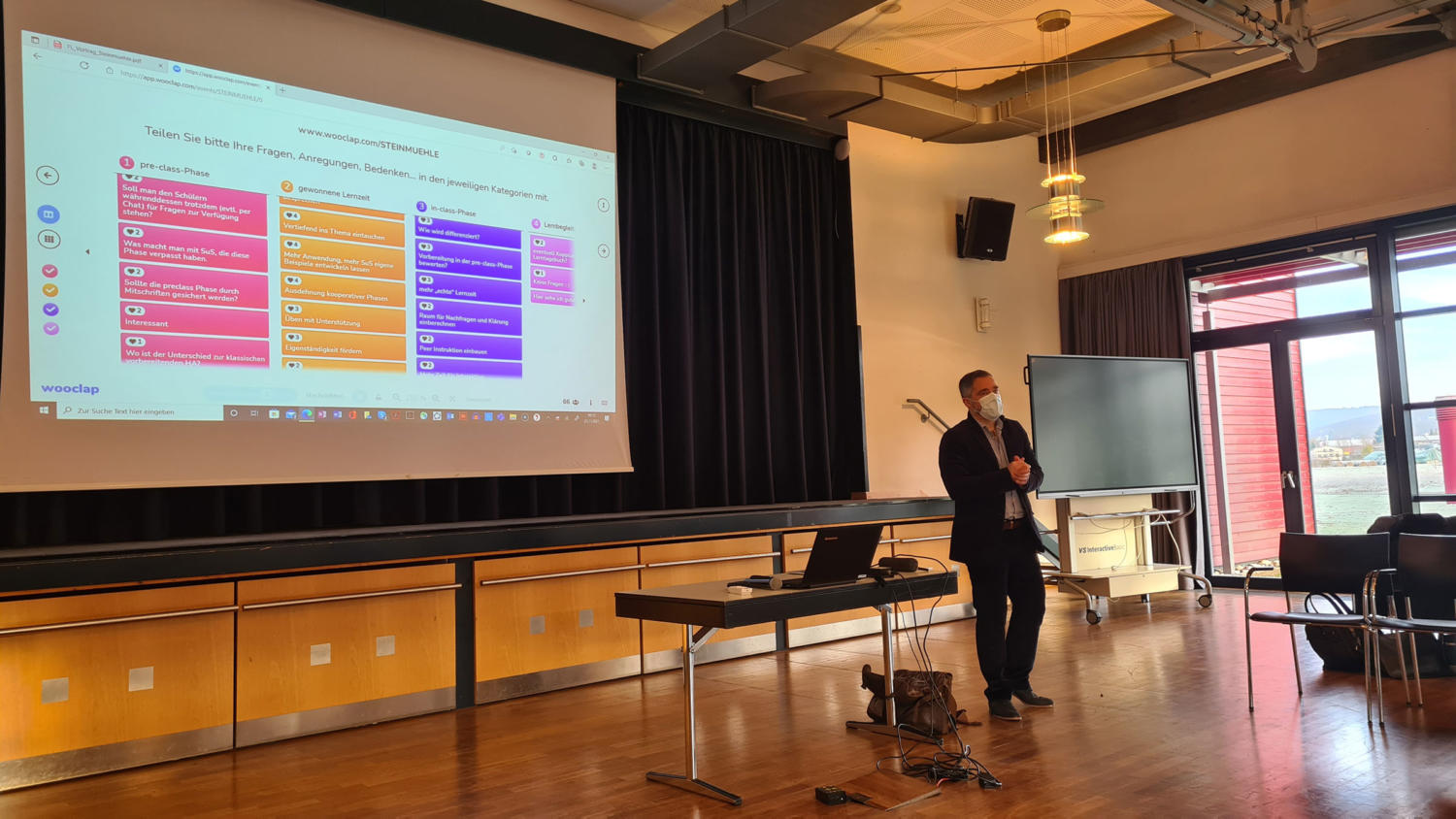
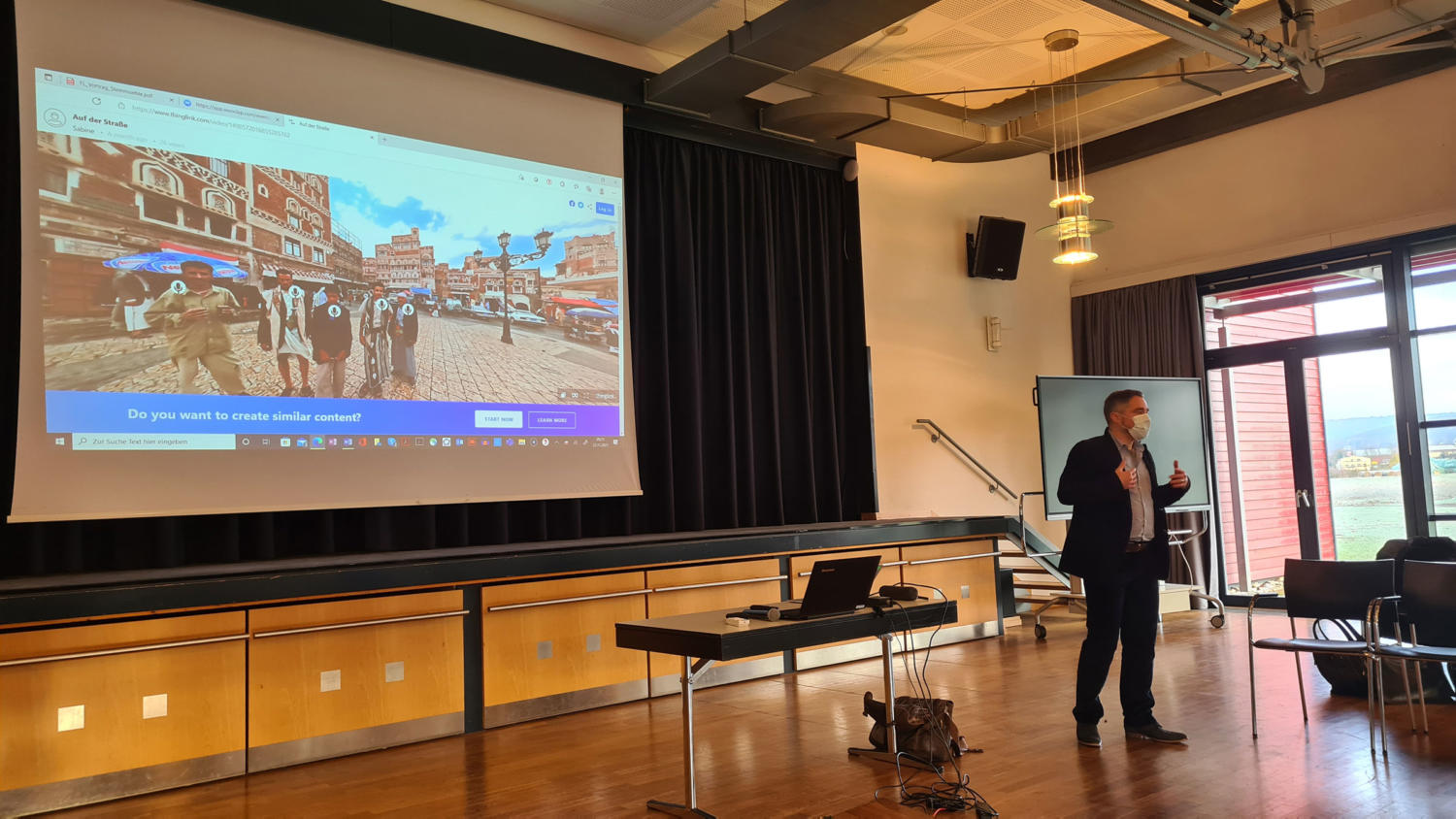
Continuously optimizing teaching and learning—a challenging situation for teachers. “Here at Steinmühle, we have the advantage of having Malte Klimczak as our digitalization coordinator, as well as many dedicated colleagues who have familiarized themselves with specific areas,” explained Frank Wemme, the event’s organizer. While the second day of professional development featured a presentation by external speaker Patrick Eckert on the flipped classroom method, but several teachers from within the faculty had also delved so deeply into specific topics that they were able to share their knowledge with the faculty in a meaningful way, either in plenary sessions or in individual workshops.

Recognizing that mediation is closely linked to both analog and digital components, the school integrated a basic training course on mediation into its internal teacher professional development program. The goal of this training is to develop a shared set of methods that promote learning processes and structure learning in a meaningful way over the years. This is done with a focus on generally developing and strengthening personal competence and social competence—particularly in cooperative learning formats and conflict resolution—as well as in the integration of digital tools.

Ideally, according to Frank Wemme, a basic methodological framework would be developed based on all the elements taught, and, above all, it would be implemented in everyday school life.

8. December 2021
https://steinmuehle.de/wp-content/uploads/sites/5/2021/12/07-1-scaled.jpg 844 1500 konnertz https://steinmuehle.de/wp-content/uploads/sites/5/2025/11/Logo_SchuleInternat_Steinmuehle_2026_3.png konnertz2021-12-08 08:23:372026-06-18 17:35:23In-School Teacher Professional Development: Optimizing and Thoughtfully Utilizing Digital Technology in Everyday School Life

The Future of Education After the Pandemic

Collaborations & Partnerships, Digitalization & AI, Events & Celebrations, News

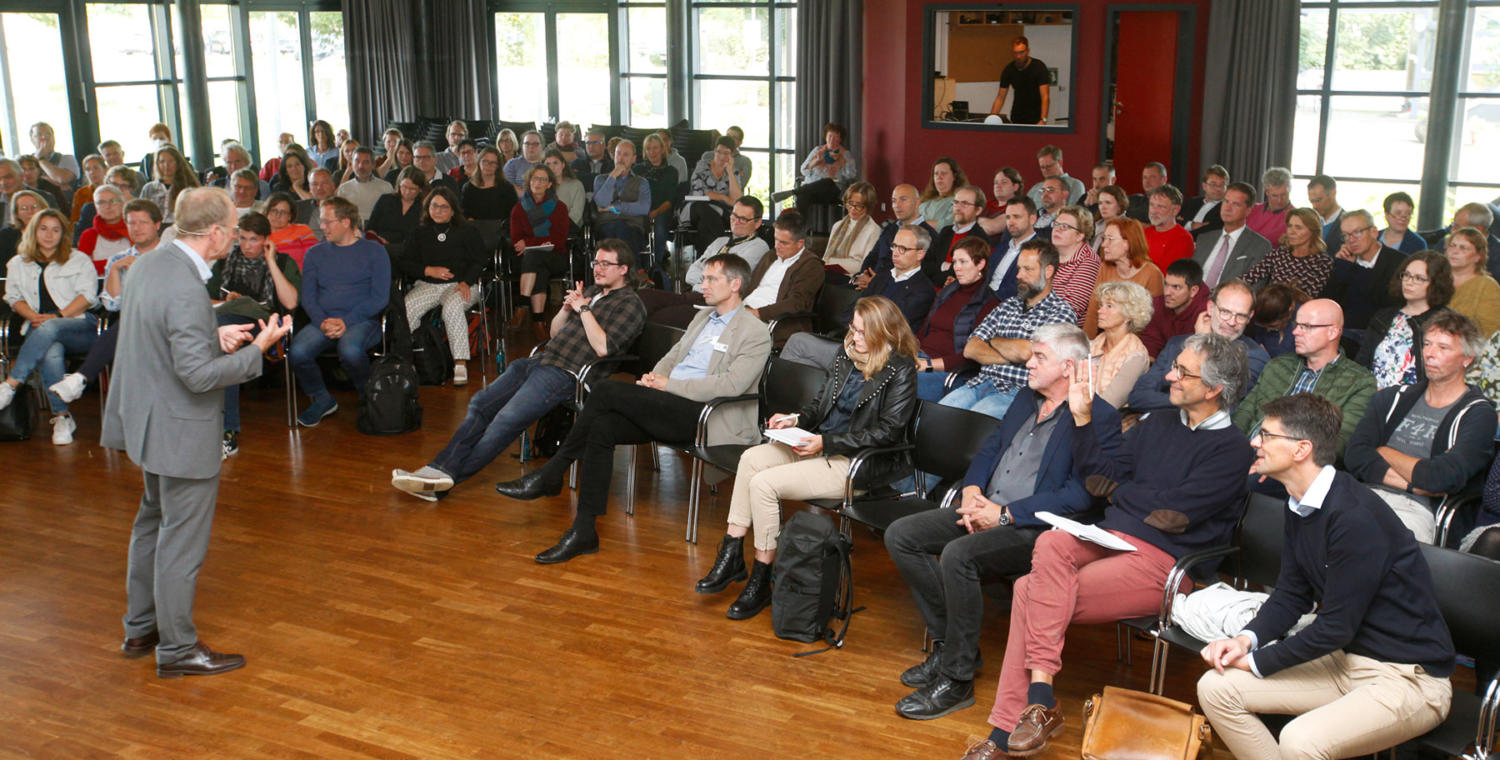
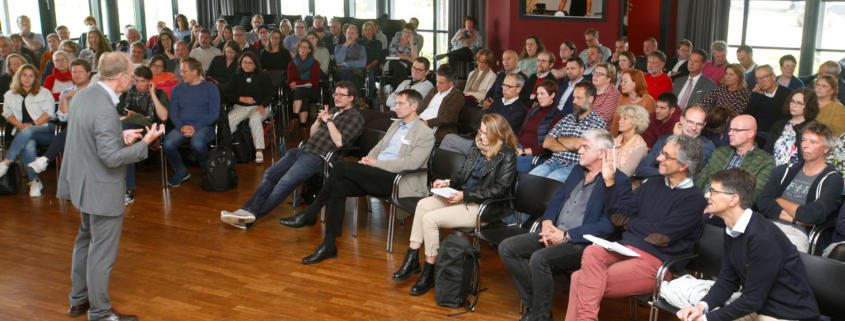
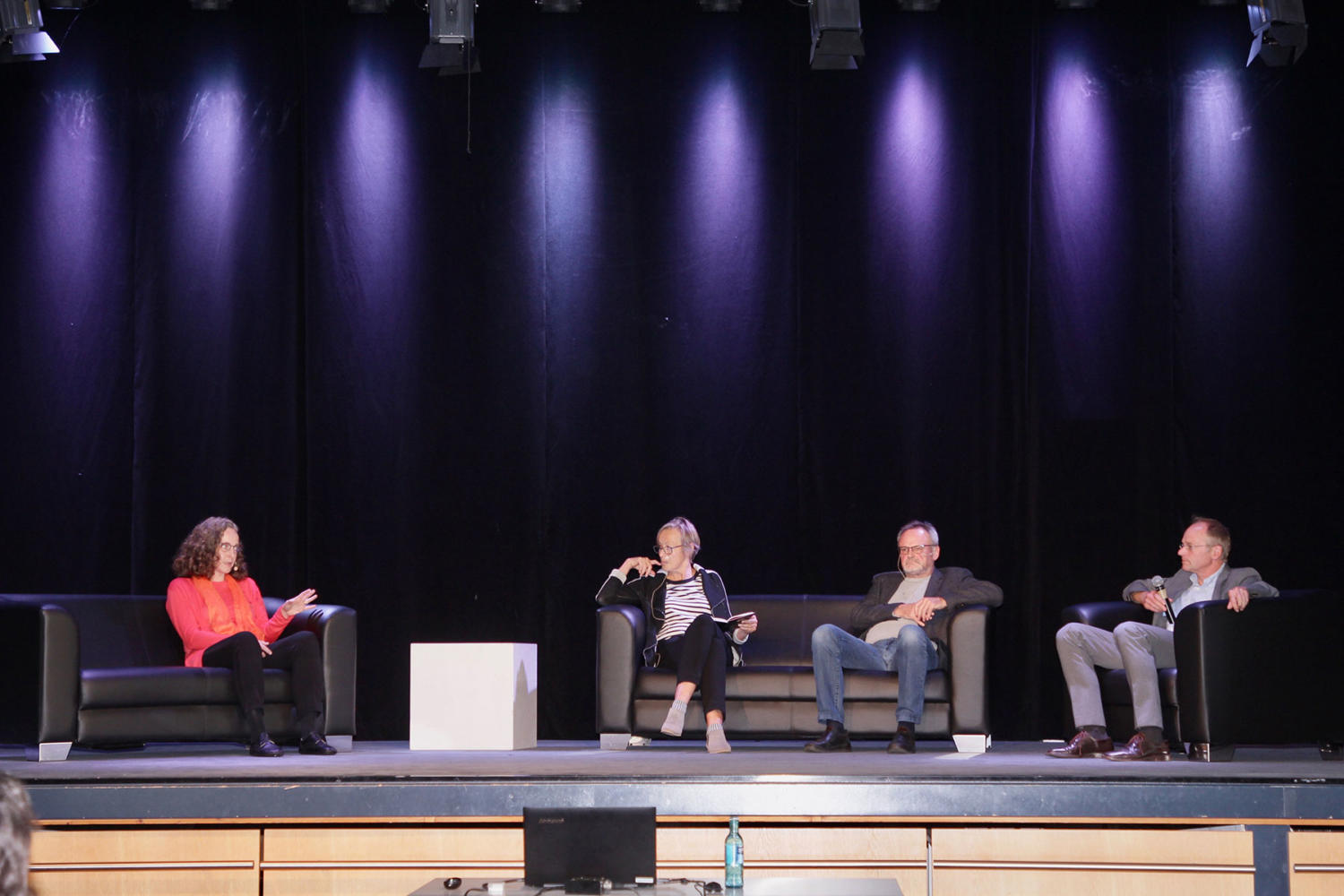
The Boarding School Association (DIV) held its meeting at the Steinmühle with 135 participants

The Steinmühle School and Boarding School are linked in more ways than just their shared logo. The two institutions are financially separate but closely linked in their missions. Given this, it was only natural for Steinmühle School Principal Björn Gemmer—after a period of membership in “Die Internate Vereinigung” (DIV)—to take over as chair of the association this year. The “2021 Major Staff Conference of the Boarding Schools Association,” attended by representatives from all 16 member schools across Germany, was therefore held this year at Steinmühlenweg in Marburg.

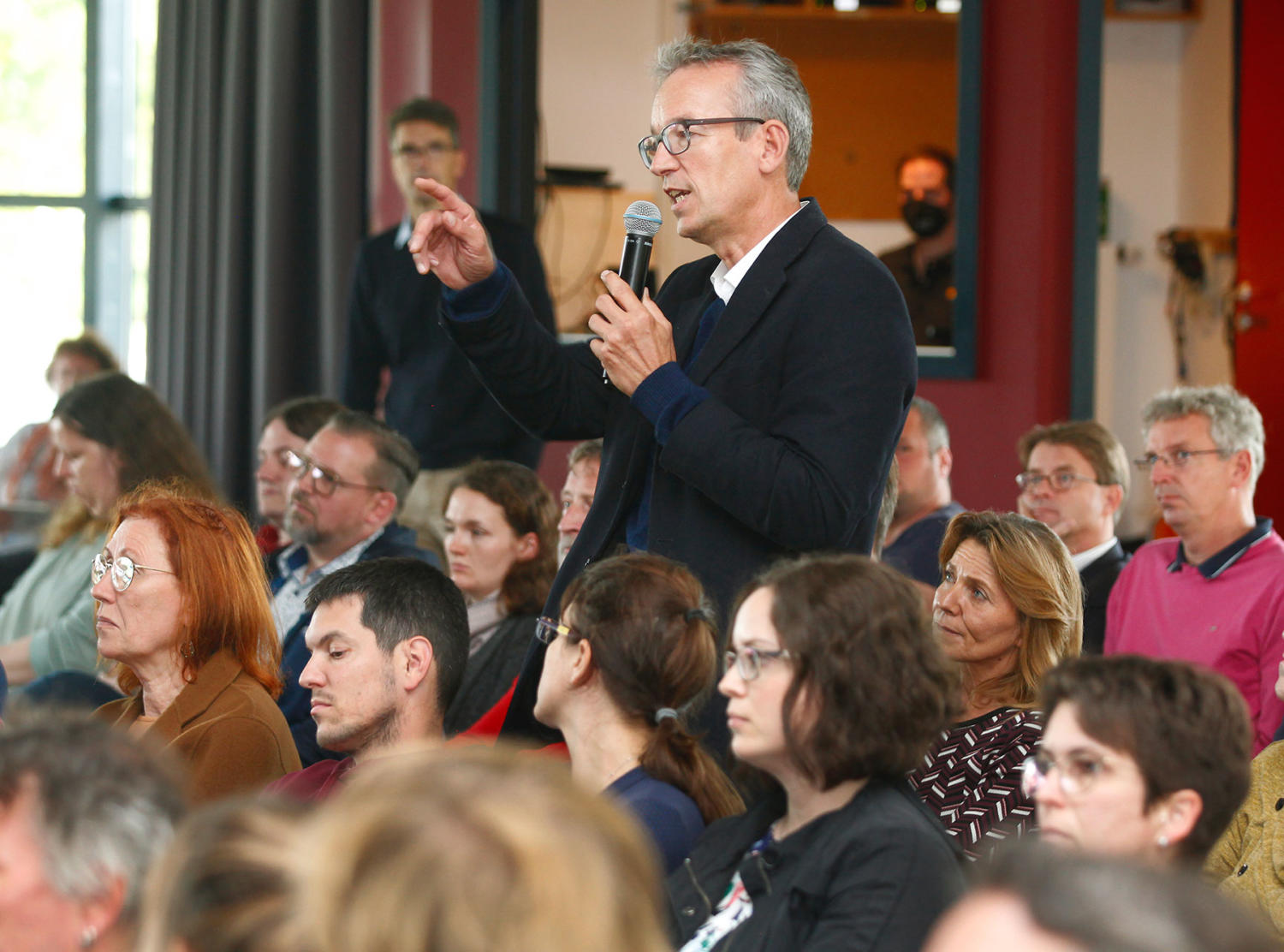
Asking questions about our own daily lives, discussing them with speakers, and learning about our colleagues’ perspectives—the annual meetings aren’t just about patting each other on the back. Reflecting on the present, staying true to oneself, and gaining new inspiration—that was the goal of the 135 attendees this time, most of whom were educators. “We’re not competitors; either everyone is doing well or everyone is doing poorly,” was the sentiment expressed in summarizing past events. This time, the message was clear: All boarding schools are full.


The Importance of a Real Mentor

Whether on the North Sea coast or in the Alpine foothills, boarding schools have long struggled with image problems. They were seen as a “way out” for families—a place you end up if you’re not a good student or a well-behaved daughter. This image—unknown in England—has largely been overcome in Germany. The conference participants at the Steinmühle focused on solving other problems and addressing issues arising in the present: digitalization in schools, learning during and after the COVID-19 crisis, the importance of a real-life mentor, and the question of what asynchronous learning can or must look like.

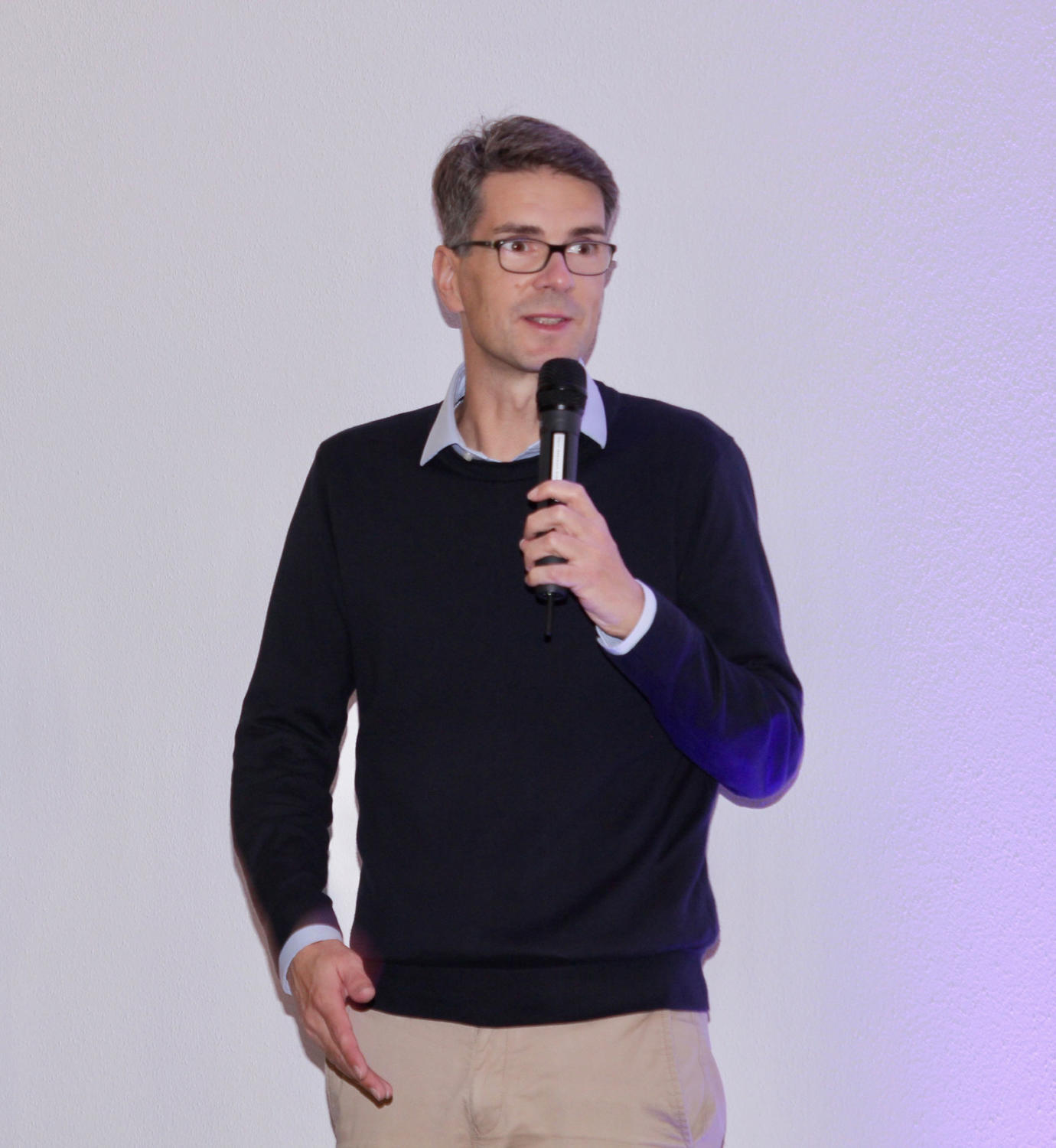
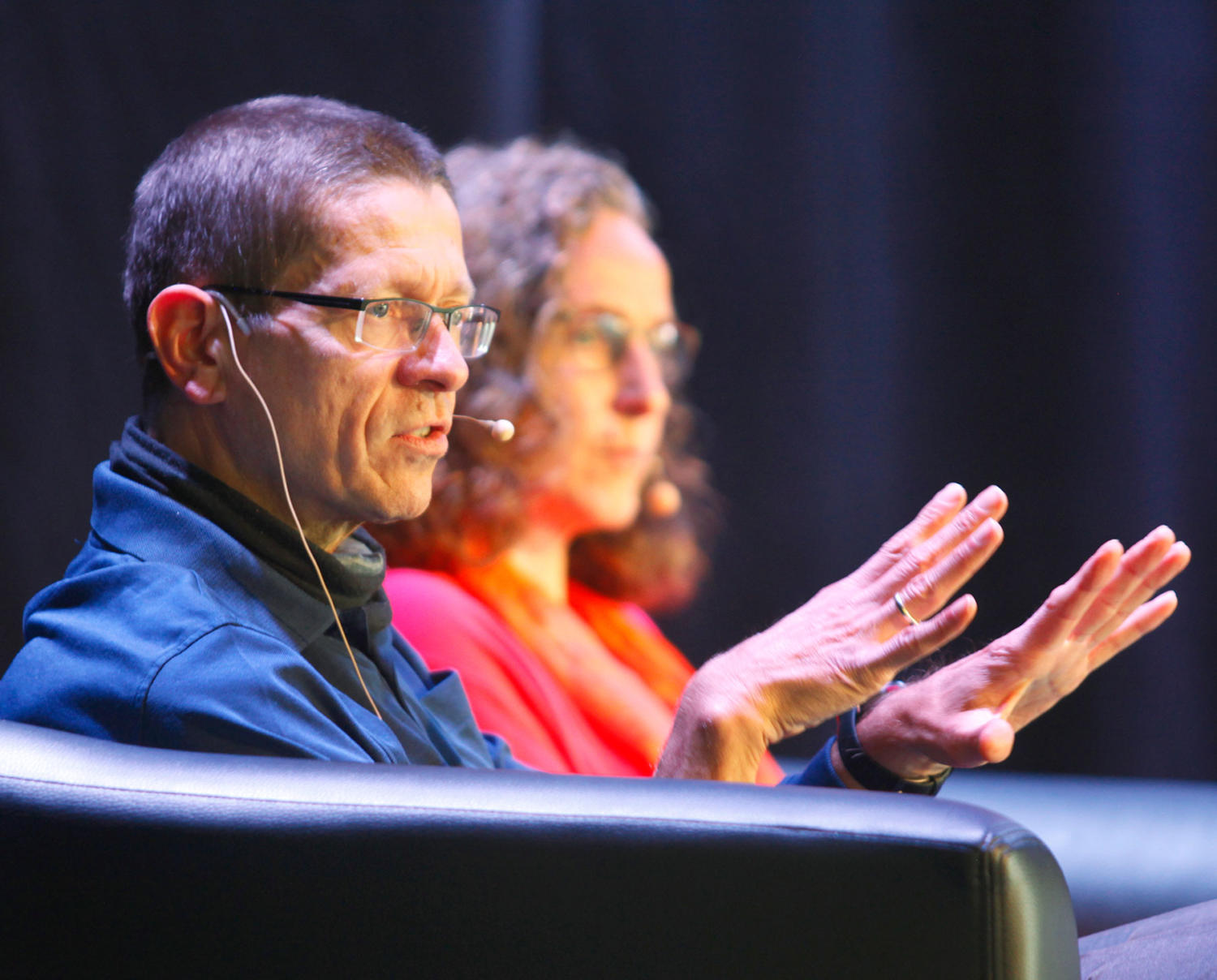
The three-day conference featured presentations by experts and a panel discussion that, naturally, could not avoid addressing the interrelated topic of teacher education. Speaking as a local representative was Prof. Dr. Jürgen Handke, the “guru of digitalization” from Marburg, who, among other things, expressed the fear that after the pandemic, teaching would “fall back into the old rut” in which people had “made do with emergency solutions”: “We have neglected asynchronous knowledge transfer”; the way content is delivered must change, because simply providing assignments digitally is not enough in schools.

Prof. Dr. Martin Korte of the Technical University of Hannover focuses his research on the cellular basis of learning and memory. According to him, effective learning requires a school environment as well as a real mentor—even if, in the future, that mentor might find himself in the role of an advisor or learning coach.


Questioning Teacher Education

Another participant in the expert discussion was University Vice President Prof. Dr. Evelyn Korn, who is responsible for teacher education at Philipps University of Marburg. In her view, there is no single “right” way to conduct digital instruction, and so it is not part of teacher training to “hand out recipes” for it. Korn acknowledged that there is a difference between students’ physical presence and their digital presence: “For the first time, students knew more than their instructors. It undoubtedly changes the learning process.”

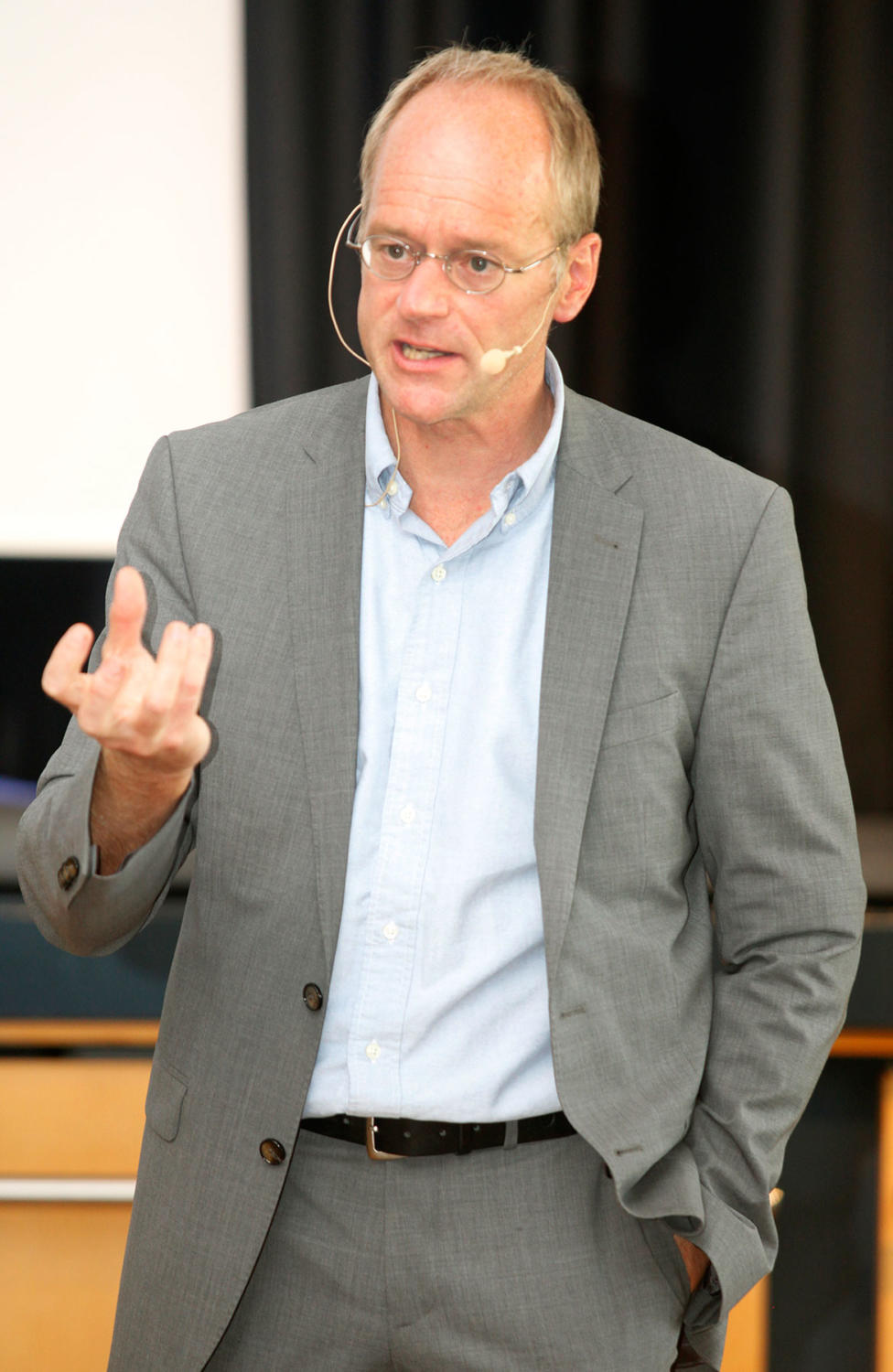
Prof. Dr. Klaus Zierer of the University of Augsburg, a full professor of school pedagogy, emphasized yet another approach. He called for a reevaluation of teacher training: “We need to address this differently; a lot is going wrong here.” Unlike in some other countries, he noted, the public perception of the teaching profession in Germany is not favorable, which in turn is one of the causes of a glaring shortage of teachers. “We need to find a way to inspire students to pursue a career in teaching again.”

Shortly after the event, Björn Gemmer, the conference director and organizer, received feedback on how the individual participants had personally benefited from attending the DIV conference in Marburg:


“Having just arrived home, I would like to once again express my sincere thanks for the invitation to the lecture. I thoroughly enjoyed it—it’s rare to experience so much educational ethos all in one place. Great!” (Prof. Dr. Klaus Zierer, Full Professor of School Pedagogy, University of Augsburg)


“I would like to express my gratitude for the excellent organization of my presentation and the panel discussion featuring myself and the other speakers. In my view, it was a truly successful event, and listening to Mr. Zierer was an experience in itself! I am deeply impressed by what the Boarding School Association has put together here!” (Prof. Dr. Martin Korte, Technical University of Braunschweig)


“On behalf of my wife as well, thank you once again for the opportunity to be part of your wonderful conference and to enjoy the various additional amenities. I am glad that my ideas and initiatives have fallen on such fertile ground, and you can be sure that I will hold up the high schools and boarding schools that were present at the DIV conference as exemplary and mention them in the future. A first workshop has already been scheduled at Louisenlund (with Dr. Rösner), where I would like to prepare students, teachers, and parent representatives for digital teaching through several hands-on workshops. I can well imagine that other schools and boarding schools would also like to take advantage of this offer, and I am open to establishing such contacts. In any case, we should stay in touch to continue strengthening the pioneering path your schools and boarding schools are taking.” (Prof. Dr. Juergen Handke, University of Marburg & 3M Solutions, RoboPraX – Robotikum)


“Now that we’ve returned safely to the Ammersee, I’d like to take a moment to once again express my heartfelt thanks for the excellent planning and execution of the conference. Our staff were absolutely thrilled and have already shared this with the rest of the faculty during our Monday meeting today. That’s exactly how it should be. An outstanding start for future events. I can well understand what it takes to organize such an event at the beginning of the school year. So, hats off to you! By the way, I’ll soon be meeting with colleagues from Neubeuern and Stein for one of our tried-and-true (Bavarian) exchange meetings. If desired, I’d be happy to beat the DIV drum once again there.” (Rüdiger Häusler, Foundation Director, Landheim Ammersee)


“Thank you so much for this absolutely wonderful conference, your fabulous organization, the fascinating topics, the delicious food, and especially for your comforting words right at the start: I took that literally and actually took a little ‘vacation’—I was able to unwind, even found time to explore the wonderful old town a bit, light a candle for my grandpa at St. Elizabeth’s Church, and just pause for a moment amid the constant hustle and bustle—which I actually really enjoy! The gathering and conference were so important—and how wonderful that we were finally able to see each other again and exchange ideas. And thank you for making Marburg a permanent fixture on my mental map from now on: a great city, but above all, a fantastic, innovative, and incredibly well-equipped school—thank you, thank you, thank you, thank you for your energy and time, for your perseverance and resilience in complicated times: that was exactly what was needed, and I’m very much looking forward to our continued collaboration and all the upcoming events and activities.” (Katja Maike Braun, Principal, Executive Board of the Ecole d’Humanité)


“After a tiring but incredibly varied, informative, and superbly organized weekend, I would like to express my sincere thanks—also on behalf of my colleagues—for the warm welcome we received at the Steinmühle Boarding School. The impressions we gained of the DIV, its member boarding schools, and especially Steinmühle Boarding School were so consistently positive and rewarding that we know it is definitely worth further strengthening our collaboration, and the three of us, as ambassadors in Roßleben, will always be happy to share the spirit of the DIV. We look forward to the invitations to the working groups and hope you’ll find some time to relax after what were surely exciting days for you as well.” (Yvonne Sonnenfeld, Roßleben Foundation Administration)


“I really enjoyed the weekend at Steinmühle! Delicious food, interesting presentations, a great atmosphere, nice people, and excellent organization—thank you so much to you and your team!!!” (Maik Lüdemann, Business Director at Marienau School)
18. November 2021
https://steinmuehle.de/wp-content/uploads/sites/5/2021/11/01-scaled.jpg 760 1500 konnertz https://steinmuehle.de/wp-content/uploads/sites/5/2025/11/Logo_SchuleInternat_Steinmuehle_2026_3.png konnertz2021-11-18 11:46:492026-06-18 17:35:19The Future of Education After the Pandemic

Digital Sustainability Day at Steinmühle

Collaborations & Partnerships, Digitalization & AI, Ecology and Sustainability, News

Just click here on Saturday, September 18: Everyone can join in live

Issues such as the environment, nature conservation, ecology, and sustainability have always been important to Steinmühle. So it’s no surprise that Steinmühle supports the Marburg-Biedenkopf district in its efforts to become a Fairtrade district and is a member of the district’s “Fairtrade Steering Group.” It was within this group that the idea arose to host the district’s planned “Sustainability Day” at Steinmühle. The events will take place this Saturday, September 18, from 10:45 a.m. to 2:00 p.m. The event will be streamed online.


It was actually supposed to be a really big day: featuring a wide range of presentations, activities, booths in the schoolyard, and conversations between visitors and the student body. To ensure planning certainty, we decided against holding the event in this format. Pandemic-related restrictions are still in place, uncertainties remain, and disruptions cannot be ruled out. It is therefore with a heavy heart that the organizers are switching to an online format for activities aimed at the wider public. At the Steinmühle Forum, there will be a stage program presenting key elements related to the event’s theme—in a small yet significant and compact setting. The event will be streamed live at the scheduled time via a link on www.marburg-biedenkopf.de.


When are we taking action to protect the climate, and when aren’t we?

Principal Bernd Holly will deliver the opening remarks. Following that, District Administrator Kirsten Fründt and Egon Vaupel, chairman of the Steinmühle Marburg e.V. school association, will join her on stage. The program will then focus on the 2021 Citizens’ Sustainability Budget, which supports public-interest, sustainable projects and ideas from civil society. Afterward, choir director, tenor, and conductor Daniel Sans—who is also a teacher at Steinmühle—will provide musical entertainment together with his wife, Marie Sans.

At around 12:30 p.m., the event will take on both a scientific and practical dimension: Dr. Gerhard Reese, professor of environmental psychology, will give a talk on the topic “Climate Crisis = Behavioral Crisis? What Holds Us Back and Motivates Us to Take Action to Protect the Climate.”

The event will conclude with a poetry slam on environmental, social, and economic sustainability.


In-person edition following the pandemic

“When we take stock of all the ways we’re already addressing the topic of sustainability in our daily school life and on the Steinmühle campus, we end up with a long and impressive list,” report the school association board, the administration, and the school leadership. There are several points worth mentioning in each of the following areas: mobility, buildings, energy, projects on campus, curriculum content, and nutrition. — A broad range of topics that will soon be covered in greater detail on the Steinmühle platforms. “We’re also looking forward to holding Sustainability Day after the pandemic just as it was originally planned,” adds Managing Director Dirk Konnertz.

The Digital Sustainability Day on September 18 is the best way to get started with this topic.

Visit www.marburg-biedenkopf.de to go directly to the event from 10:45 a.m. to 2:00 p.m.


17. September 2021
https://steinmuehle.de/wp-content/uploads/sites/5/2021/09/Plakat1.jpg 675 1200 konnertz https://steinmuehle.de/wp-content/uploads/sites/5/2025/11/Logo_SchuleInternat_Steinmuehle_2026_3.png konnertz2021-09-17 09:45:192026-06-18 17:35:03Digital Sustainability Day at Steinmühle

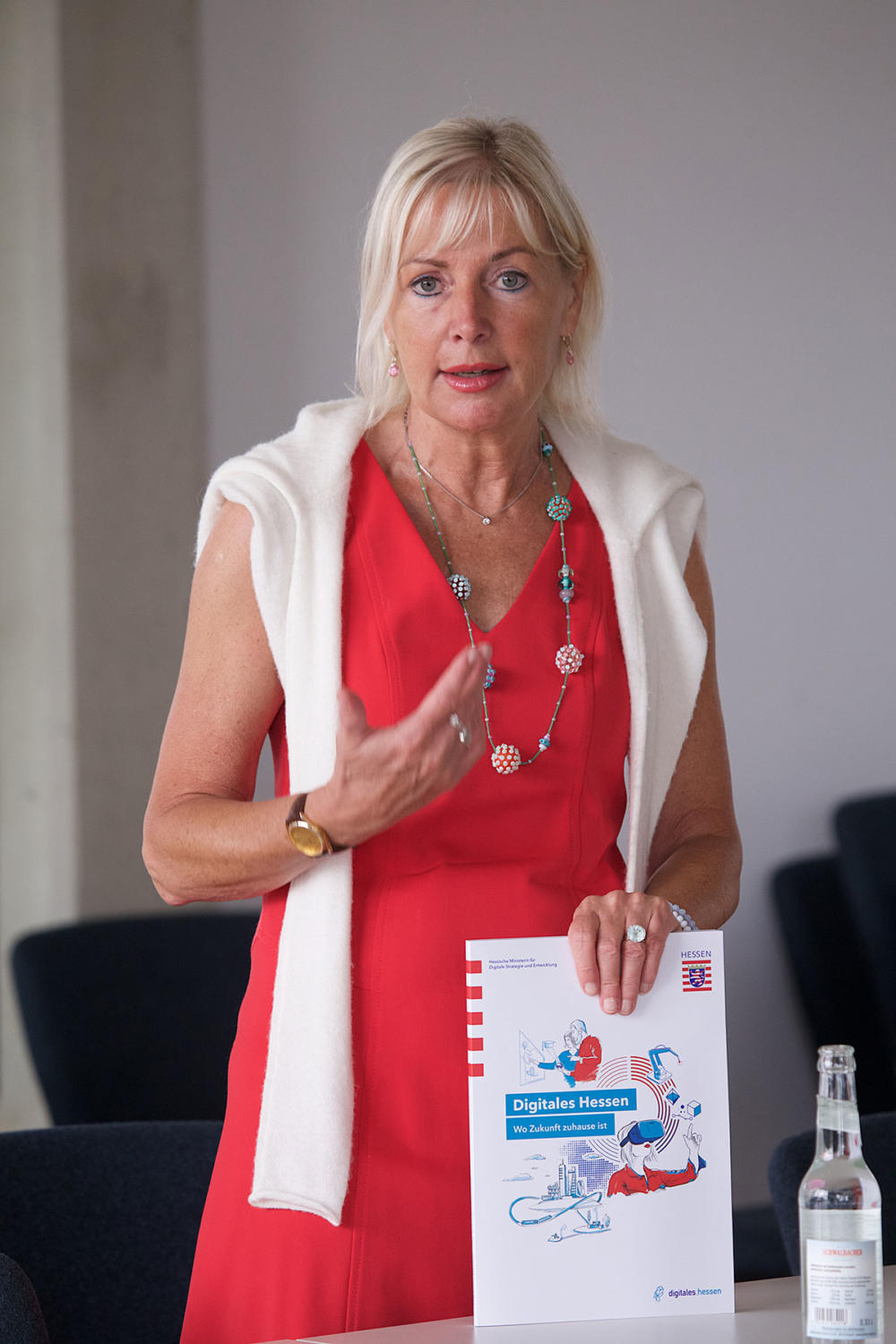
Hesse’s Minister of Digital Affairs, Prof. Dr. Kristina Sinemus, visited the Steinmühle

Collaborations & Partnerships, Digitalization & AI, News

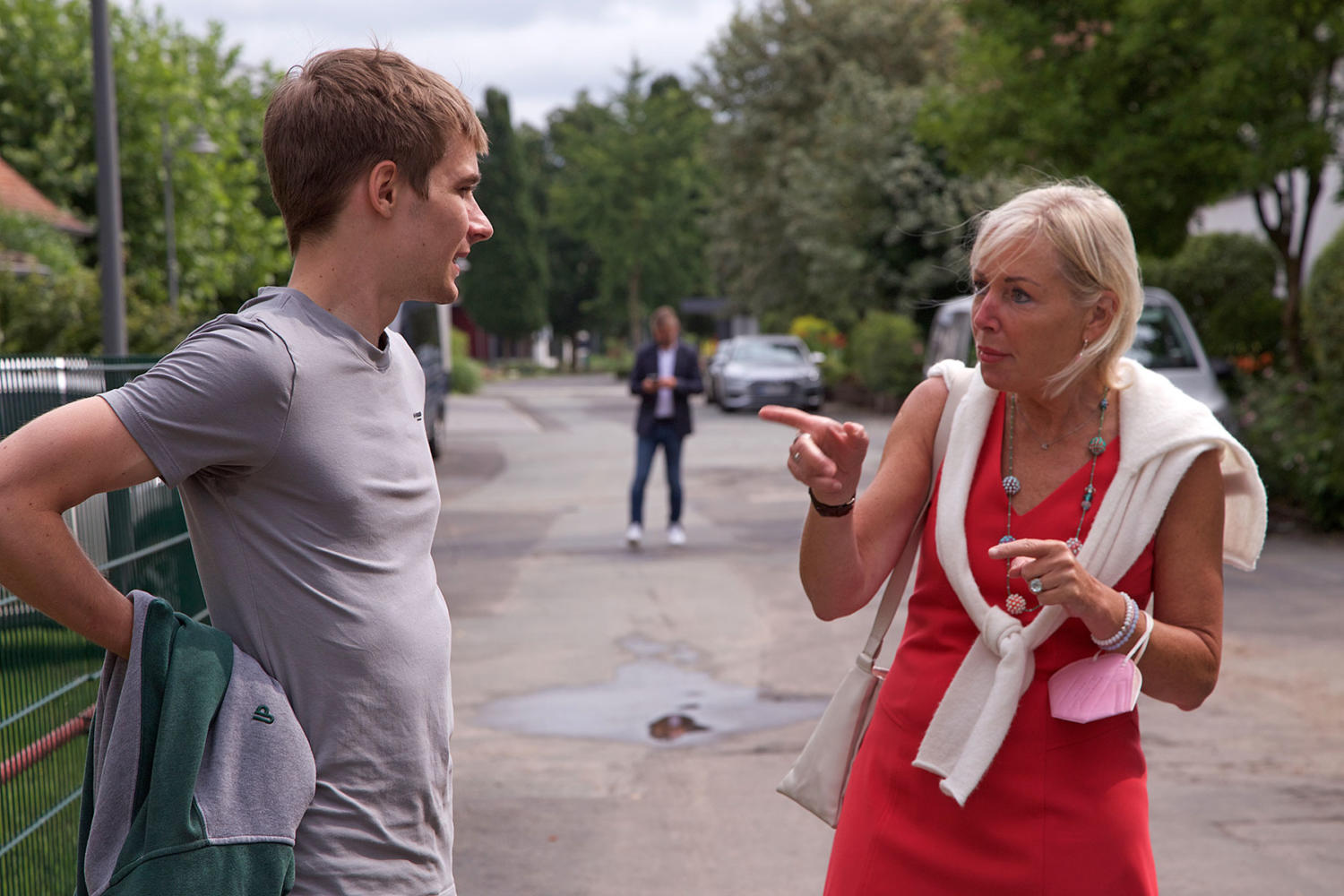
Just popping in, a bit of small talk, and back in the car—that’s not how it works with Kristina Sinemus. As a guest at a school, the Hessian Minister of Digital Affairs took a closer look. On her summer tour, she visited Steinmühle, which was awarded the Bitkom “Smart School” certificate just a few weeks ago. It’s also a STEM school—reason enough for the trained high school teacher and scientist to take a closer look at the school’s digitalization concept on site.

A brief tour of the school and boarding school grounds was part of the athletic minister’s general orientation—with a favorable glance at the beach volleyball court. Even on the way to the student lab, which the prominent visitor was eager to see, the “escort” through the new school buildings had grown longer and longer. Not only school and administrative staff, local state parliament representative Dirk Bamberger, and media representatives, but also the young participants of the summer camp—currently being held at the Steinmühle by the Marburg-based educational organization LernTeam—had joined the line. “Can I have an autograph?” Of course that was possible! So, in addition to the coveted autograph, the girls and boys also received a few giveaways featuring the Hessian lion.

Kristina Sinemus, a biologist with a master’s degree and a Ph.D. who holds a professorship on leave of absence in the Department of Public Affairs at Quadriga University Berlin, is a political newcomer. No other federal state has a Ministry of Digital Affairs—she heads the only one in Hesse. The fact that Prof. Sinemus is also an entrepreneur and founded a science communication company has given her a particularly broad perspective. “One of my responsibilities is to strengthen the connection between schools and education,” the guest explained.

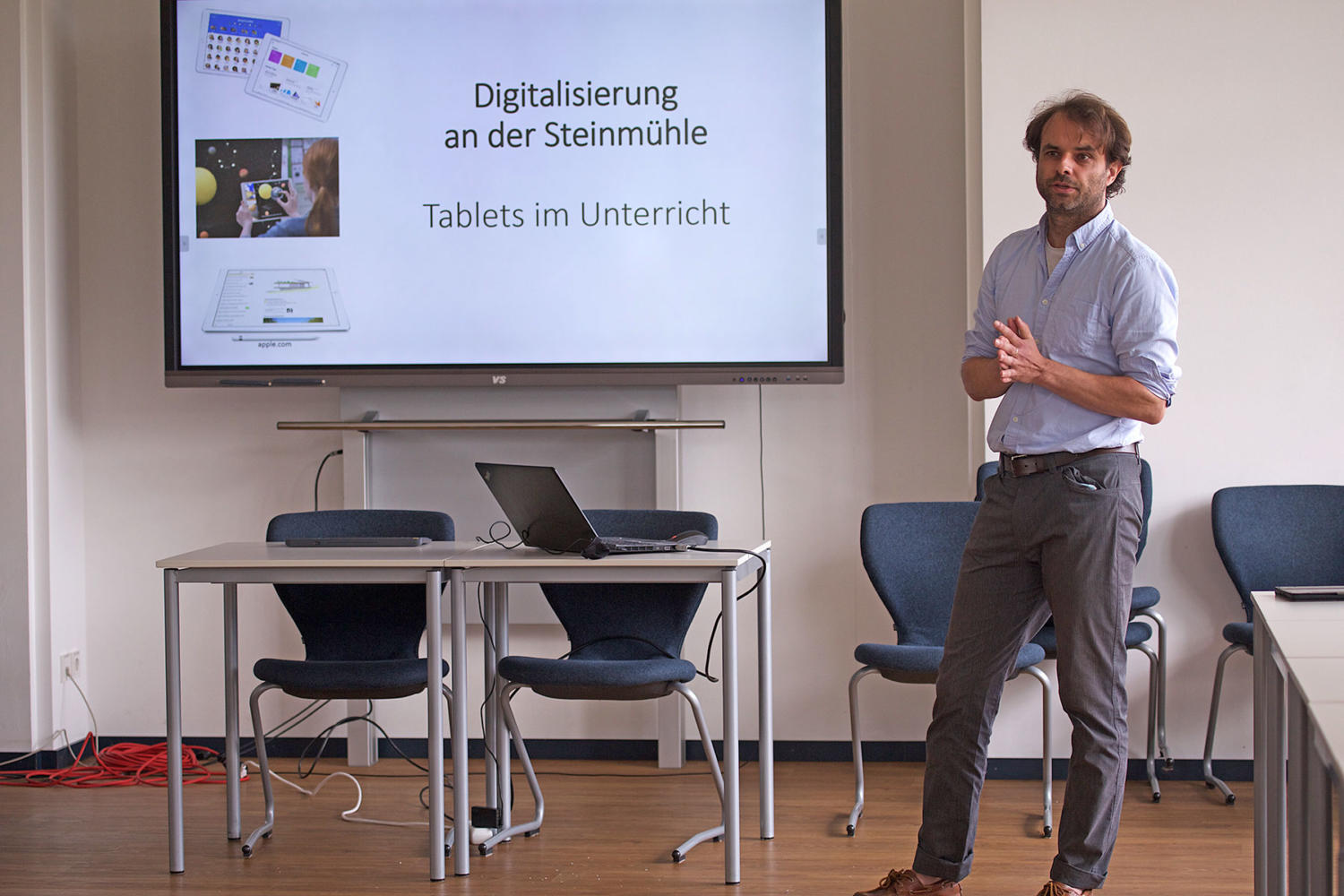
Of course, the visit’s agenda included a focus on the StoneApp at the Steinmühle. Former student and developer Aaron Stein personally explained the app. Livia and Sophia from 8th grade explained how the app’s features are used, with an additional focus on homeschooling. Malte Klimczak, the digitalization coordinator, gave a brief overview of the Steinmühle’s fundamental conceptual approach to media literacy. He discussed the staffing arrangements for its implementation and described the wide range of uses for the tablets, which are used starting in 7th grade.

“Digital-supported instruction opens up new learning and teaching methods that have become more important than ever during the pandemic,” said Hesse’s Minister for Digital Affairs. She is all the more pleased that many schools and school types are actively committed to the digital advancement and continuation of instruction, as is the case here at Steinmühle, one of 81 “Smart Schools” nationwide. “When, moreover, technical innovations originate from the students themselves and lead to the creation of important tools like the ‘Stone App,’ it is a special joy and a great benefit for everyone,” said the minister, referring to Aaron Stein’s development. Around 1,000 students, parents, and teachers now use this tool every day.

“I’m also here to find out what else I should keep in mind for the schools,” explained Prof. Dr. Sinemus before setting off for the next stop on her summer tour. The Minister of State found the idea of making the technical capabilities of the StoneApp available to other schools for customized use “definitely interesting and worth considering.” Schools could then adapt the app to their specific needs in their own computer science classes.

29. July 2021
https://steinmuehle.de/wp-content/uploads/sites/5/2021/07/DM-scaled-1-scaled.jpg 684 1500 konnertz https://steinmuehle.de/wp-content/uploads/sites/5/2025/11/Logo_SchuleInternat_Steinmuehle_2026_3.png konnertz2021-07-29 11:19:352026-06-18 17:35:09Hesse’s Minister of Digital Affairs, Prof. Dr. Kristina Sinemus, visited the Steinmühle

The School’s Biggest Award Yet: Steinmühle Named a “Smart School” in the Bitkom Competition

Contests & Awards, Digitalization & AI, News

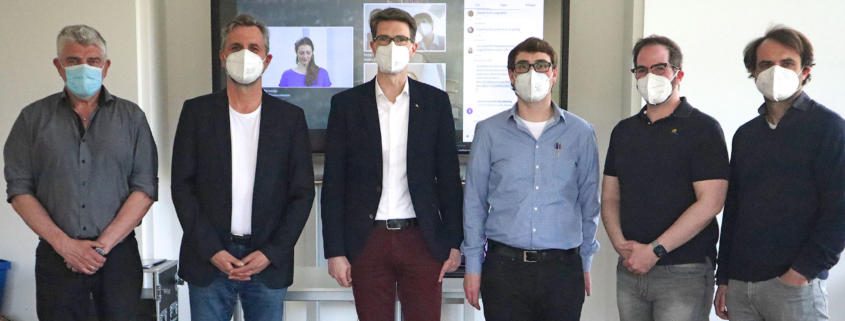
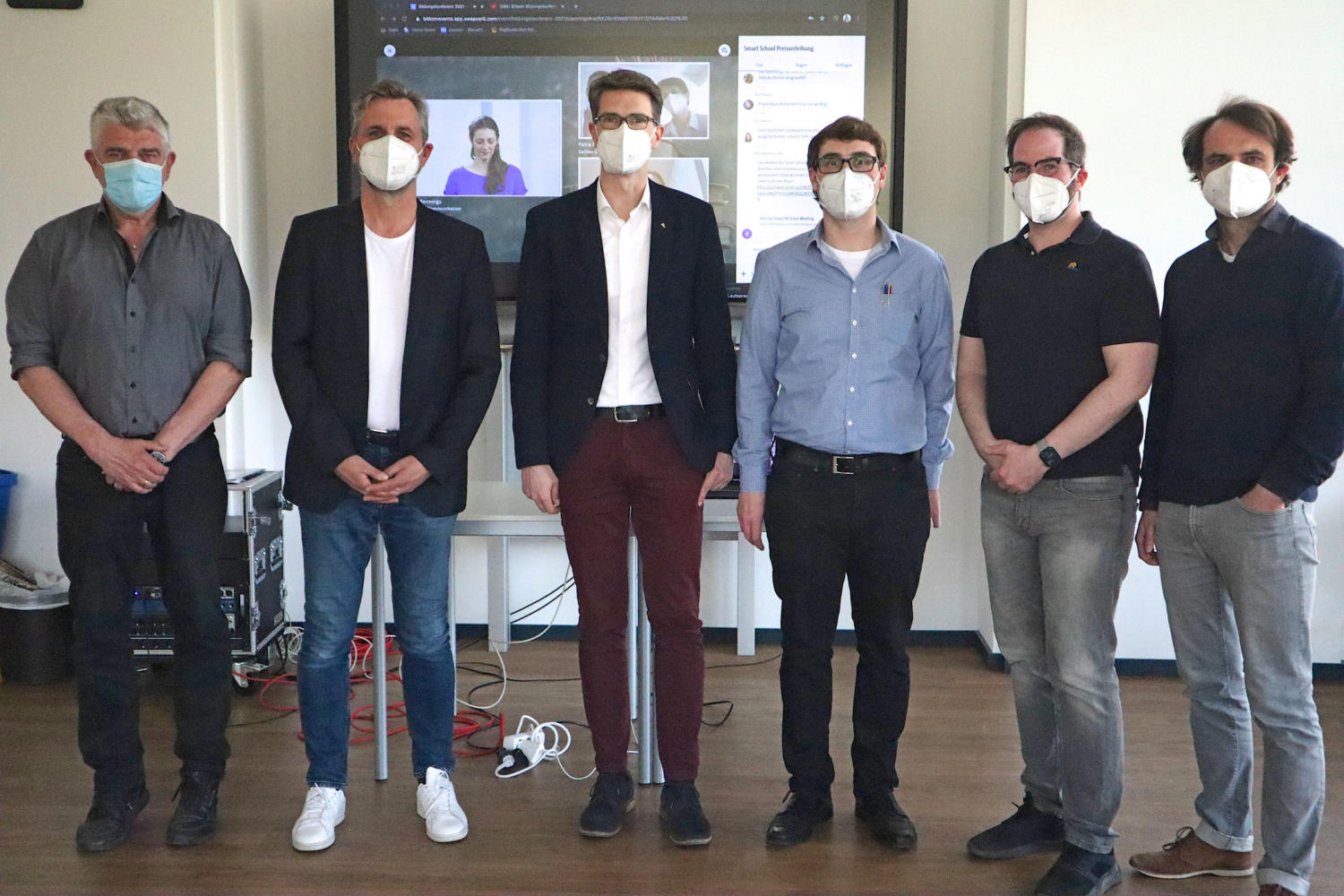
For Steinmühle, this is arguably the greatest honor it has ever received: As of Wednesday evening, our school is one of 81 “Smart Schools” nationwide—out of a total of about 40,000 schools in Germany. The announcement of this year’s twenty winners was made at the digital Bitkom Education Conference by Minister of State and Commissioner for Digitalization Dorothee Bär, who joined the event live from the Federal Chancellery. The politician, who also serves as chair of the jury, announced the names of the “award-winning flagship schools that demonstrate how digitization works.” The minister went into even greater detail: “These schools aren’t just continuing digitally what was already being done in the analog world. Rather, they’re providing additional services and doing much, much more.”

In fact, that sums up the application process quite well. Dirk Konnertz, executive director of the Steinmühle School Board Association, took the initiative and ultimately compiled the comprehensive application materials together with Principal Bernd Holly. The goal here was to demonstrate that visions for the future of our education system have already become part of everyday school life. It was about showing how digital skills are taught and how new learning scenarios are being implemented. Dirk Konnertz: “We had to explain how technology works at our school and what it accomplishes, but also how our teaching staff and students tackle these challenges—each in their own way. In addition to all these descriptions, we naturally also had to demonstrate credibly how these processes unfold, that we offer professional development, and that we are constantly evolving. We clearly benefited from the fact that we’re well-positioned in terms of our public image and that we document everything very well on our website, in the yearbook, and in the Steinmühlen magazines.” Dirk Konnertz saw particularly good prospects for the competition because the school’s self-developed app had successfully established itself as a digital tool in everyday school life: “I’m in touch almost daily with our programmer, Aaron Stein, who has continued to reliably develop the StoneApp even a year after graduating from Steinmühle. He therefore played a major role in winning this award,” emphasizes the managing director.


The only winning school in Hesse

“It makes you very proud,” said Principal Björn Gemmer, delighted with Steinmühle’s achievement as the only school in Hesse to win among all types of schools. Fellow principal Bernd Holly and Fabian Küster from Steinmühle’s IT department then explained to the live audience what best practices look like at Steinmühle—especially during the pandemic, but not only then. Of course, they mentioned the school’s own StoneApp, but they also highlighted the dedicated teachers across all grade levels, “…without whom we could never have won this award.” Steinmühle has been proud of its digitalization coordinator, Malte Klimczak, not just since winning this award. Whenever support and advice are needed, he has always been there. “Always available”—Till Buurman is also always on call when it comes to IT. After all, when the technology glitches, online conferences, learning tools, and the like simply don’t work.

“The expert jury clearly recognized that we have already arrived in the digital future and that there are no gaps in our system,” the participants concluded at the end of the day, pleased with this prestigious award.


Jury Members and Partners

The digitization of the Steinmühle was evaluated as part of the competition by the following jury members:

Dorothee Bär (Jury Chair, Office of the Federal Chancellor), Prof. Silke Bartsch (Didactics of Vocational Education, TU Berlin), Prof. Ira Diethelm (Didactics of Computer Science, University of Oldenburg), Dr. Julia Freudenberg (Managing Director, Hacker School), Julia Kleeberger (Managing Director and CEO, Junge Tüftler), Stefanie Kreusel (Member of the Supervisory Board, Senior Vice President, Customer & Public Relations, Group Representative for Digital Education and Schools at Deutsche Telekom Business Solutions GmbH), Thomas Oks (Head of Instructional Design at Oskar-Schindler-Gesamtschule in Hildesheim), Micha Pallesche (Principal, Ernst-Reuter-Schule, Karlsruhe; Smart School), Dario Schramm (Secretary General, Federal Student Conference), Lena Spak (Co-founder, Scobees), Catharina van Delden (Treasurer, Founder, and Managing Director

innosabi GmbH), Marja-Liisa Völlers (Member of the Bundestag and Vice Chair of the Enquete Commission on “Vocational Education and Training in the Digital World”), Madeleine Wolf (co-founder and CEO of Vision You).

The competition’s partners are dell.com and telekom.de; excitingedu.de serves as the media partner.


3. May 2021
https://steinmuehle.de/wp-content/uploads/sites/5/2021/05/Titel-scaled.jpg 698 1500 konnertz https://steinmuehle.de/wp-content/uploads/sites/5/2025/11/Logo_SchuleInternat_Steinmuehle_2026_3.png konnertz2021-05-03 10:30:292026-06-18 17:35:03The School’s Biggest Award Yet: Steinmühle Named a “Smart School” in the Bitkom Competition

Strong Interest in the StoneApp: RTL Hessen Visited the Steinmühle

Collaborations & Partnerships, Digitalization & AI, News

Am 3. Dezember 2020 besuchte uns RTL Hessen. Nach Veröffentlichung des Podcasts bei HR-iNFO hatte auch der Fernsehsender großes Interesse, unsere StoneApp kennenzulernen und vorzustellen.
Entstanden ist ein wirklich sehr schöner Beitrag. Herzlichen Dank an die Reporter Pascal Wede und Tim Ellrich – und großes Kompliment an Aaron, Jan, Eberhard Wieth und Bernd Holly für den perfekten Auftritt!

10. December 2020
https://steinmuehle.de/wp-content/uploads/sites/5/2020/12/StoneAPP_RTL-scaled.jpg 777 1500 konnertz https://steinmuehle.de/wp-content/uploads/sites/5/2025/11/Logo_SchuleInternat_Steinmuehle_2026_3.png konnertz2020-12-10 10:35:522026-06-18 17:34:51Strong Interest in the StoneApp: RTL Hessen Visited the Steinmühle

Homeschooling at Steinmühle, or the Benefits of the StoneApp

Digitalization & AI, News

Homeschooling is currently posing major challenges for many students, but especially for parents. This is particularly true when parents still have to go to work or work from home while also caring for their children.

However, parents do not always complain about the additional workload caused by the assignments; many feel helpless because there is a lack of adequate communication between the school, the home, and the teachers. And still others are surprised that their daughters and sons have very little to do. Apparently, not all teachers feel obligated to assign homework, or they lack the technical means to get it to the students.

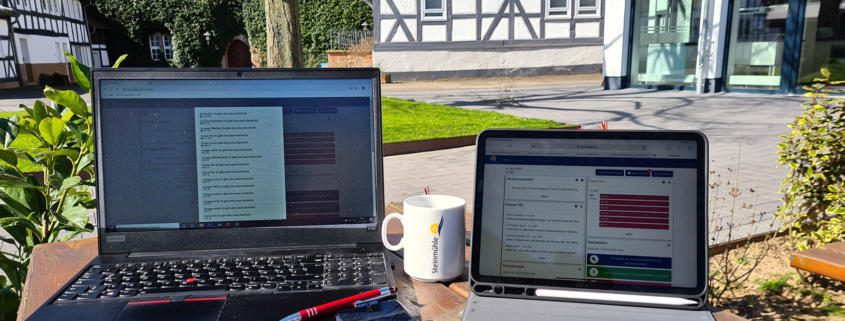
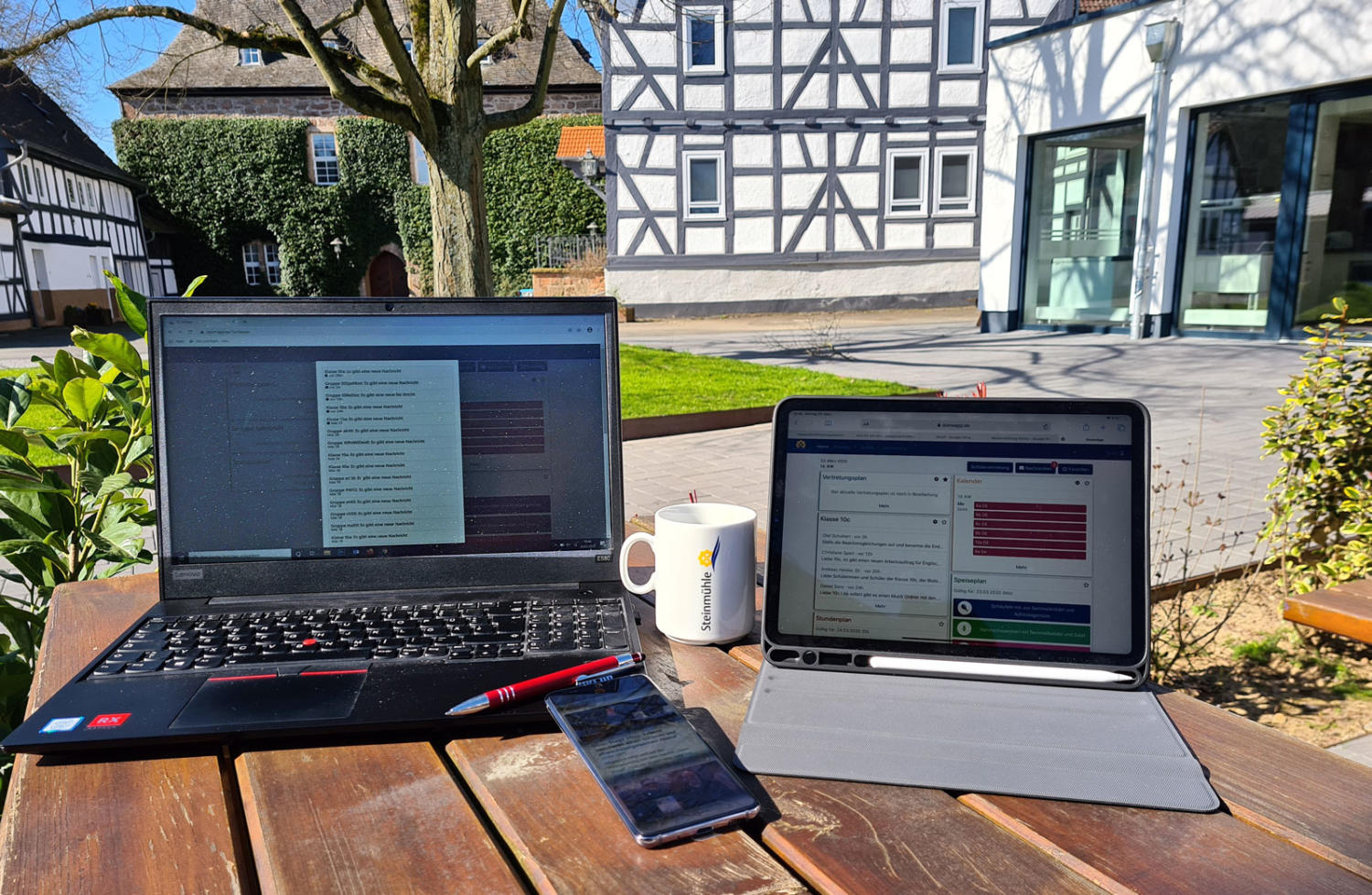
At Steinmühle, they’re unaware of these problems. The reason: this privately run school has made enormous efforts over the past two years and is years ahead of public schools when it comes to digitalization. When it comes to homeschooling, the so-called StoneApp is particularly helpful; it was initiated a few months ago by Steinmühle’s upper-level computer science class and was largely programmed by current Steinmühle senior Aaron Stein. The StoneApp, which all Steinmühle students and their parents have been using for a year and a half, displays individual class schedules, the substitute teacher schedule, the exam schedule, and the school cafeteria menu, and it is linked to the Steinmühle website. During the school closure, it is of the utmost importance that the StoneApp also serves as a communication and data platform between students and their parents, on the one hand, and teachers and the school, on the other:

  • Each class and each course has its own group, to which all students and the respective teachers are assigned.
  • Teachers and group moderators can post messages in individual groups, create subject folders, and upload assignments to them.
  • Because StoneApp is a web-based app, it can be used not only on mobile devices such as smartphones and tablets, but also on any computer with internet access. This makes downloading and processing orders particularly convenient.
  • The StoneApp contains the email addresses of all Steinmühle teachers, so users can send questions, comments, and assignments to the teachers.

When the school closed, the Steinmühle faculty were required by the school administration to do the following:

  • Assignments should be created that roughly cover the amount of time the class would have taken.
  • Teachers are required to document assignments: They must enter into a teacher’s lesson plan spreadsheet the information that would otherwise have been recorded in the class or course log.
  • Students are required to send their work to their teachers via email. Assignments should be given on a weekly basis, and the work should be collected weekly. This allows the students’ work to serve as a basis for the teachers’ further planning, and enables the teachers to provide the students with feedback on their work.
  • Facts can be researched using appropriate online resources. To this end, many skills have been acquired in recent months through in-school teacher training sessions held as part of the introduction of tablet-based instruction at Steinmühle.
  • Teachers who wish to create their own so-called tutorials or who require their students to create video content are granted access to the Steinmühlen Cloud, where large amounts of data can be uploaded.
  • The requirement to assign learning and work tasks applies not only to major subjects but also to minor subjects. The only exceptions are elective courses, physical education, and swimming. In the subjects of Drama, Musical Theater, and Theater Workshop, students should be assigned tasks to memorize texts.

To ensure that all of this could be done successfully, the students were given three days—each day consisting of eleven hours—at the start of the school closures to retrieve their school supplies from the school. This helped prevent large crowds from forming.

The students in emergency care and the boarding students who cannot go home are working on their assignments at the Steinmühle.

The feedback provided by students and parents to homeroom teachers and school administrators during the first week mostly reflected great gratitude for the excellent organization and the teachers’ strong commitment. The only critical feedback concerned the sheer volume of assignments. In this regard, the school administration had to urge its teachers to exercise restraint and to consider that completing assignments independently at home is more challenging than at school, where classmates and teachers can more easily offer help or provide specific guidance. This remains the case even with StoneApp, which is why the volume of assignments for Week 2 was reduced slightly.

23. March 2020
https://steinmuehle.de/wp-content/uploads/sites/5/2020/03/Stonapp-scaled.jpg 979 1500 konnertz https://steinmuehle.de/wp-content/uploads/sites/5/2025/11/Logo_SchuleInternat_Steinmuehle_2026_3.png konnertz2020-03-23 11:14:402026-06-18 17:34:28Homeschooling at Steinmühle, or the Benefits of the StoneApp

Students Lead Clubs: Steinmühle Boarding School Actively Supports the Digitalization Process

Digitalization & AI, News

Digitalization? We’ll take matters into our own hands! That’s probably what two boarding school students at Steinmühle thought, and they each launched their own working group on the topic.

New Digital Drawing Club:
An ideal space for creative people

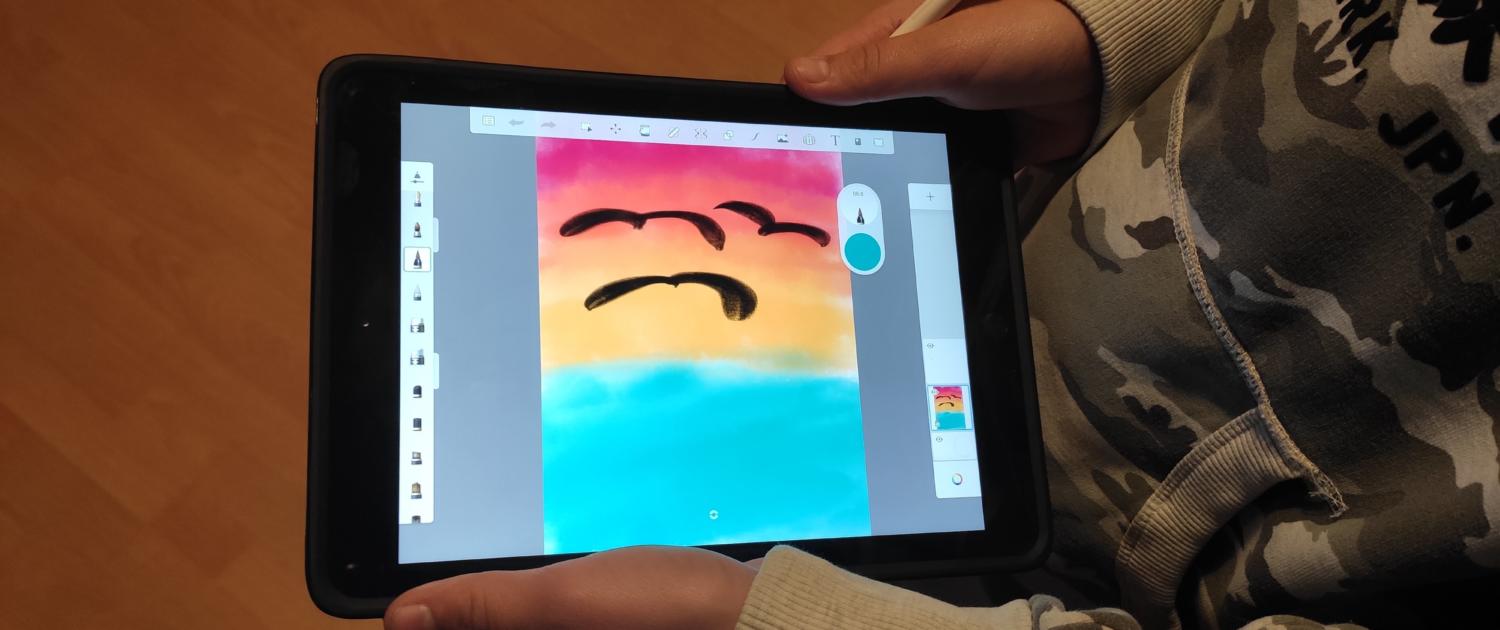
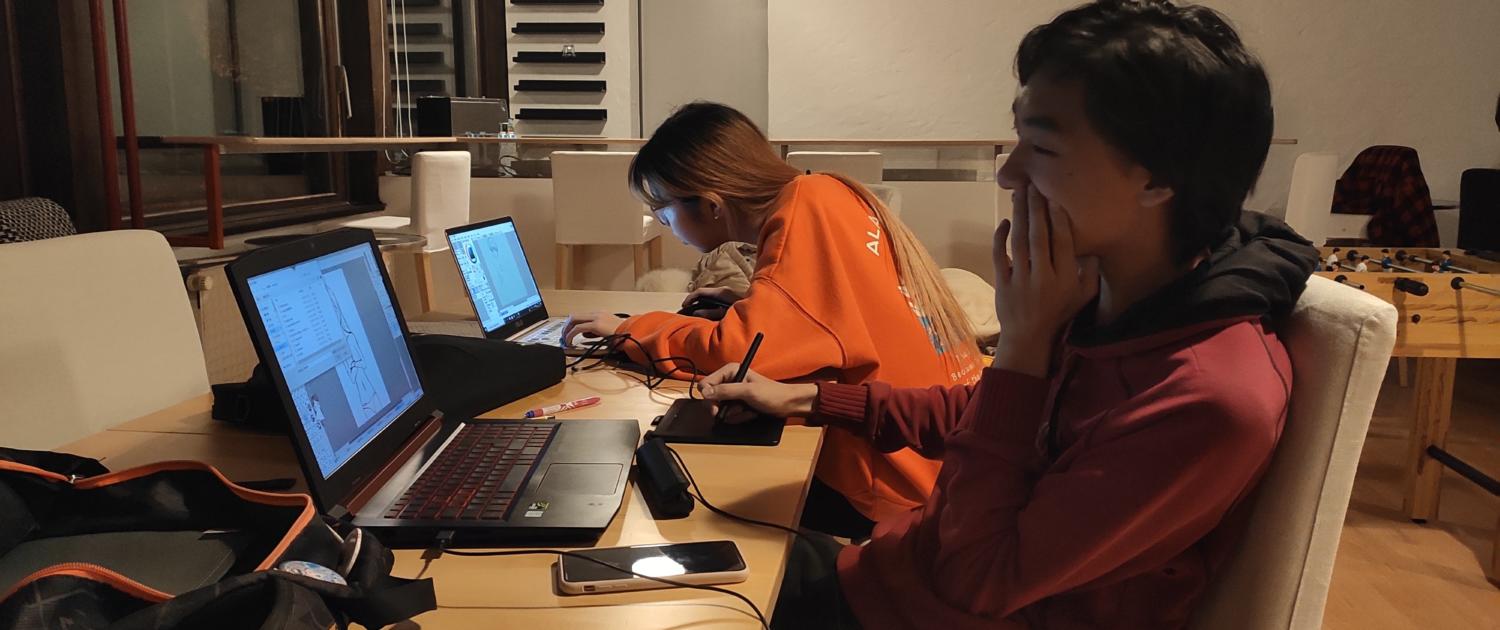
Francis Wang is 19 and finds it extremely convenient that he no longer has any space issues. Because everything is full: his portfolio, the walls—and his head. That’s where he’s already planning his next masterpiece: He’s not short on creative ideas—he just needs a place to put the results. From now on, that’s no longer a problem. He traded his canvas for a tablet and learned how to use a drawing app.

By now, the boarding student at Steinmühle has gotten the hang of it. But that’s not all. He’s confident enough to share his knowledge with others. He enjoys helping his classmates learn how to use the editing software so they, too, can give free rein to their creative ideas. After all, worrying about where to store everything is a thing of the past. And there’s another option available to the “Digital Creatives”: If they want, they can share their work with friends right away!


Study Group for Programmers:

Konstantin (14) will show you how!
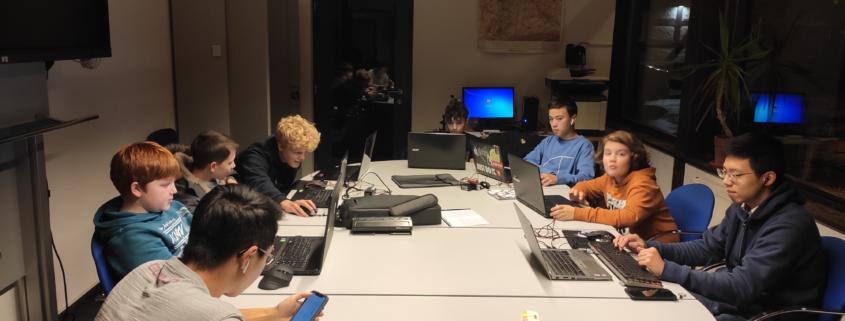
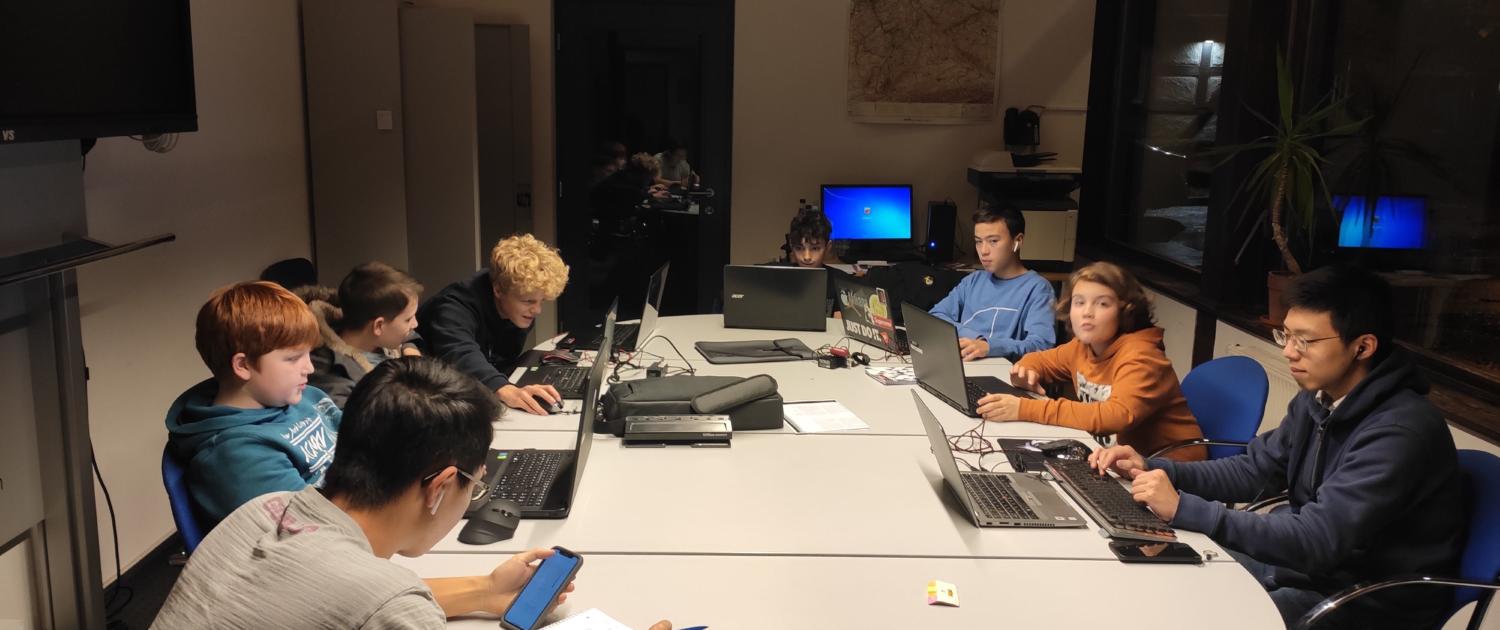
This is how people imagine a programmer: at least in their mid-twenties, with a high school diploma long in hand and far removed from anything related to “school.” Konstantin Knorre hasn’t cleared that hurdle yet, but he programs anyway. The 14-year-old boarding student at Steinmühle has been active in this field for a year; he’s now taking “Programming” as an elective. He also leads a club for his classmates in this subject. He’s already programmed two mobile games of his own. In these games, he has to dodge obstacles or prevent moving planets from colliding. Konstantin works with the “Unity” program in the “C#” programming language. This allows for complex three-dimensional programming. So far, six students are participating in his club.

2. December 2019
https://steinmuehle.de/wp-content/uploads/sites/5/2019/11/IMG_20191112_192823-scaled.jpg 1125 1500 Angela https://steinmuehle.de/wp-content/uploads/sites/5/2025/11/Logo_SchuleInternat_Steinmuehle_2026_3.png Angela2019-12-02 17:00:192026-06-18 15:48:06Students Lead Clubs: Steinmühle Boarding School Actively Supports the Digitalization Process

Electronics and Programming in Elective Classes

Digitalization & AI, News, STEM

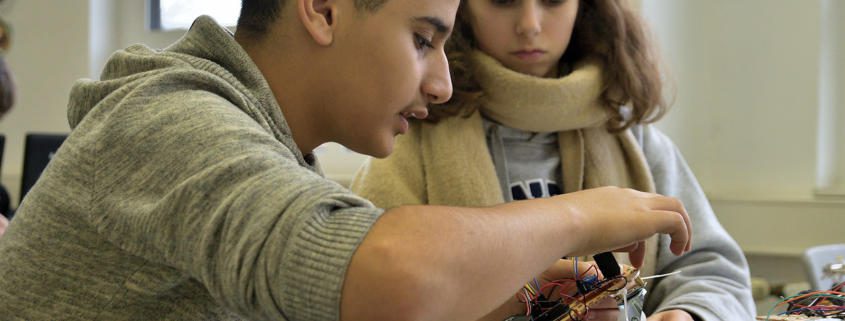
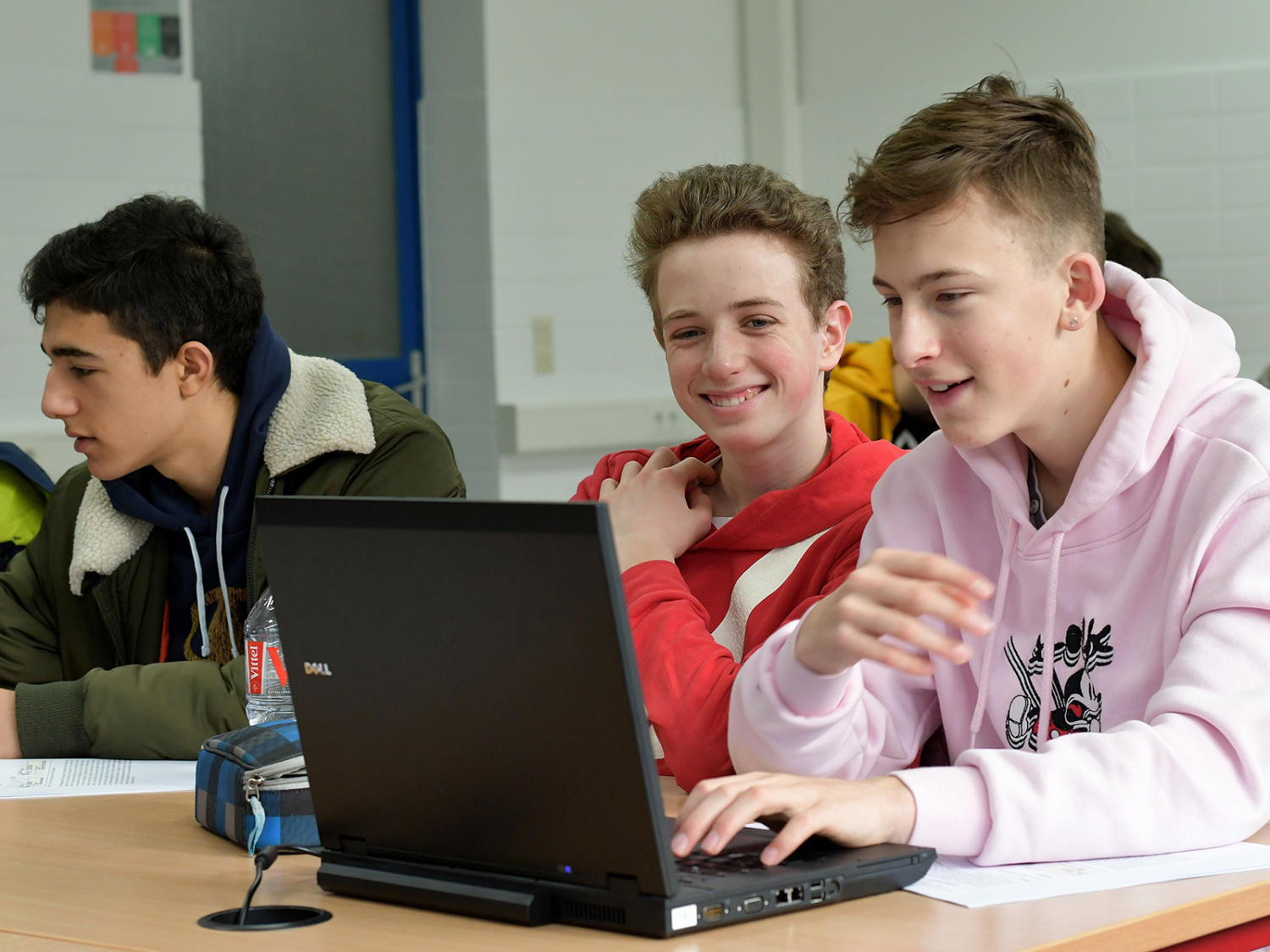
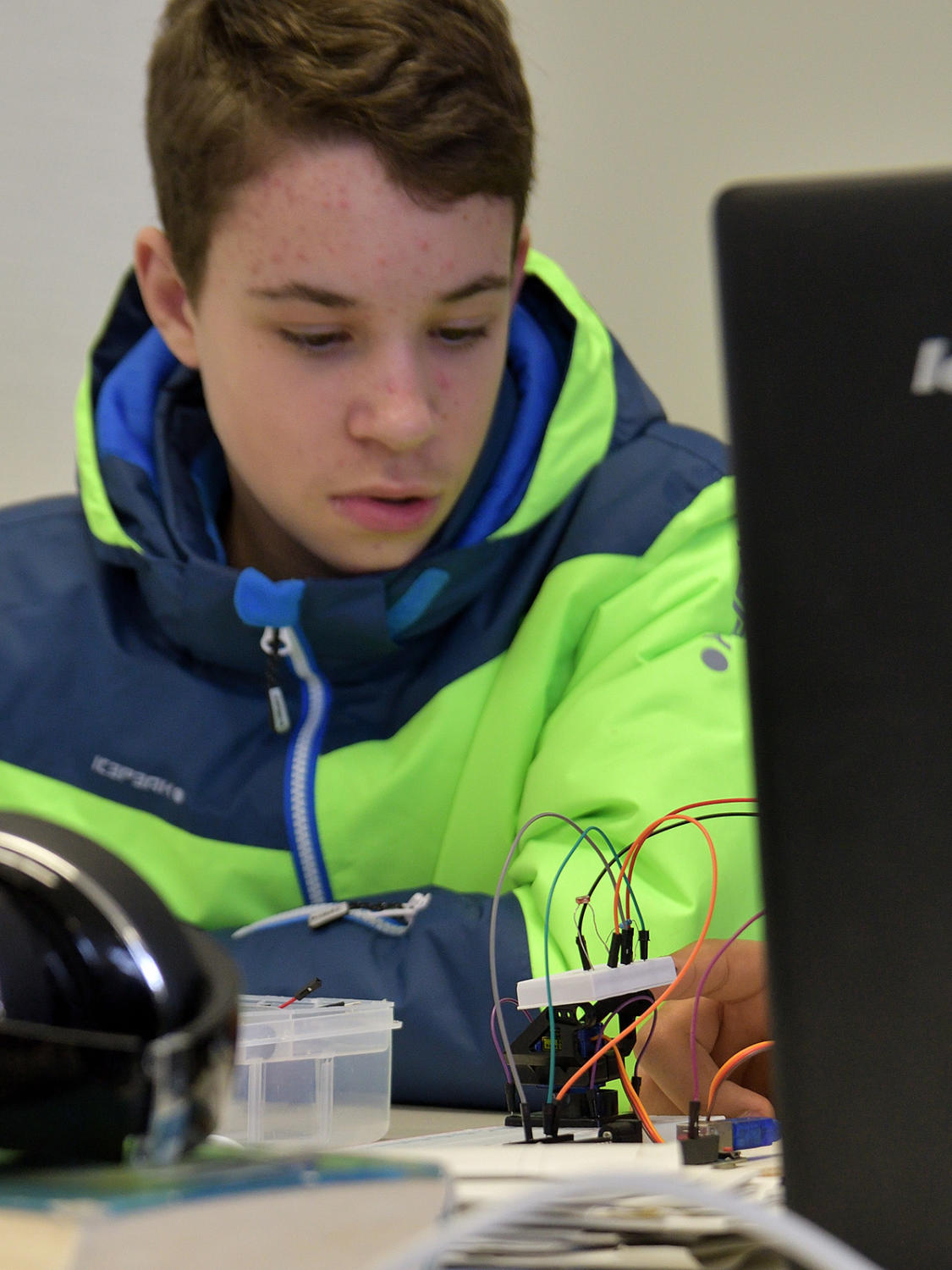
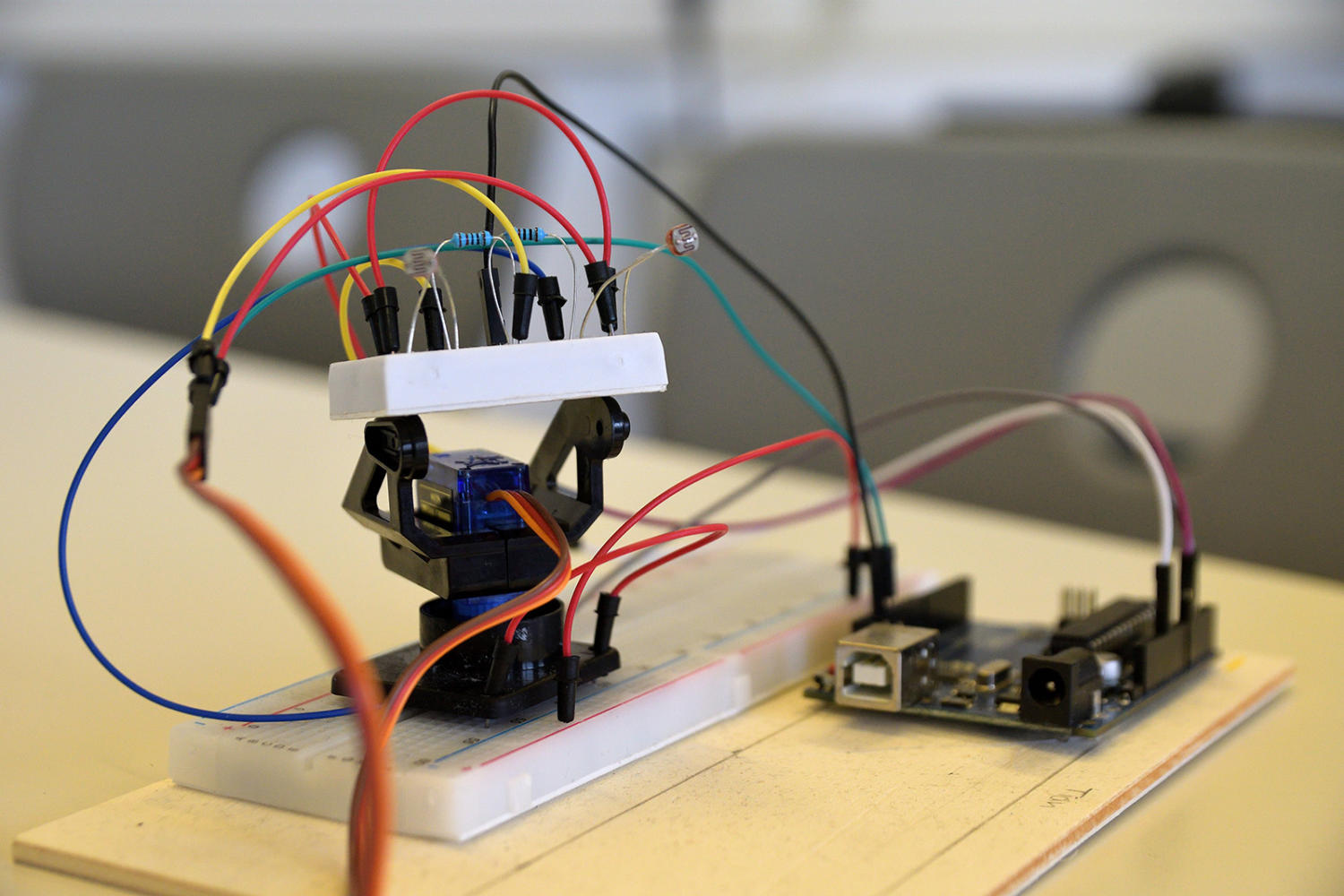
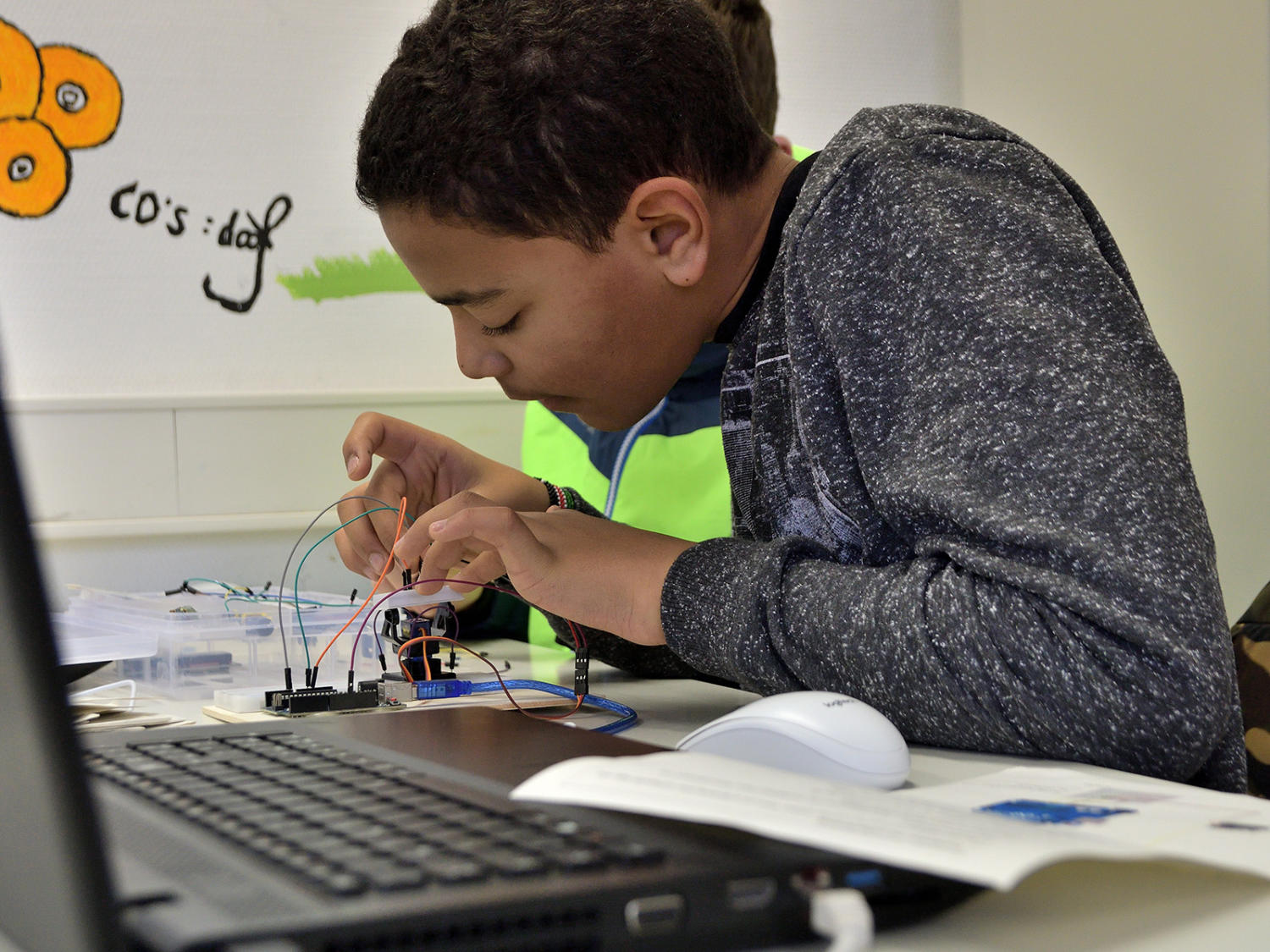
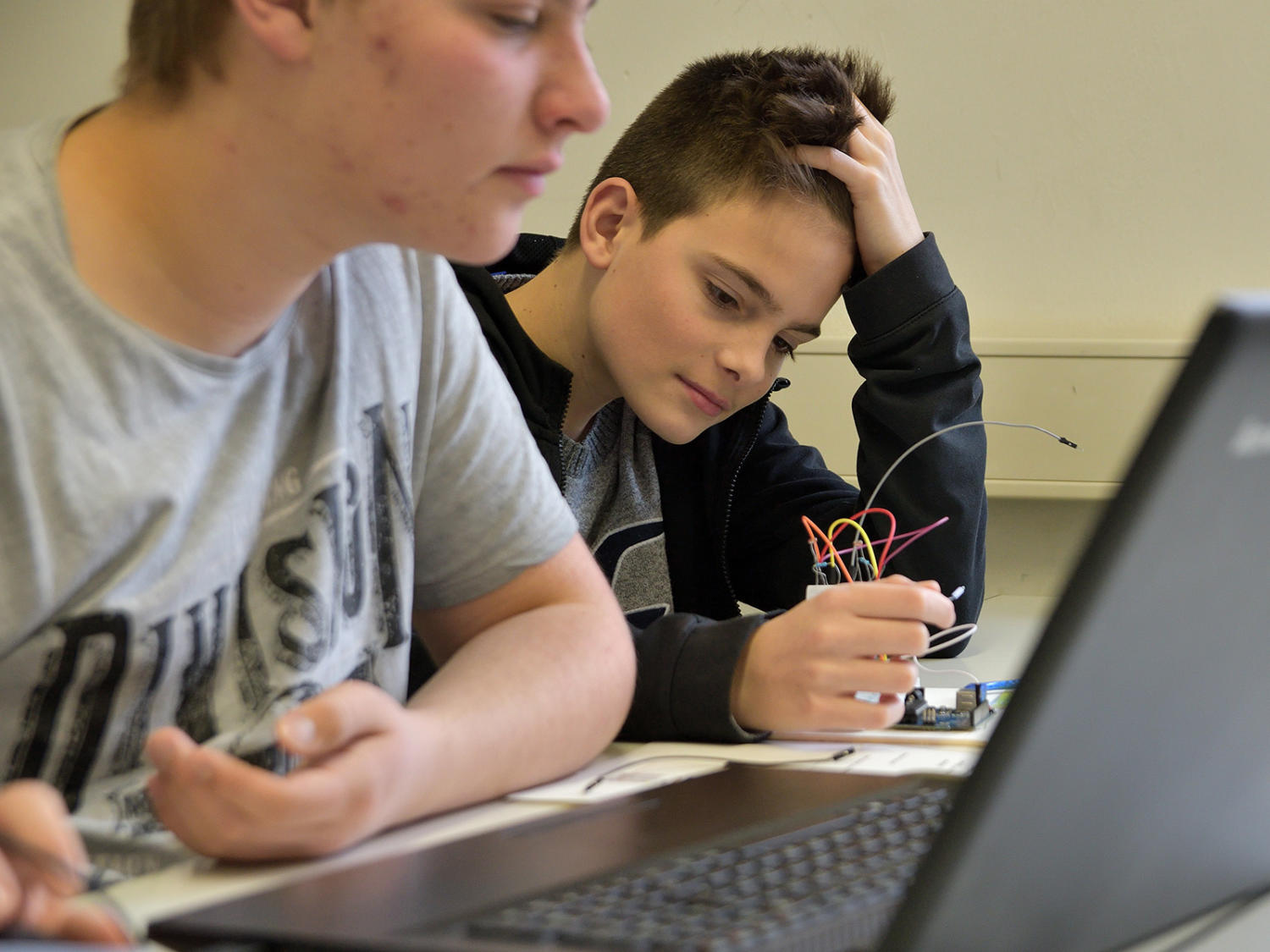
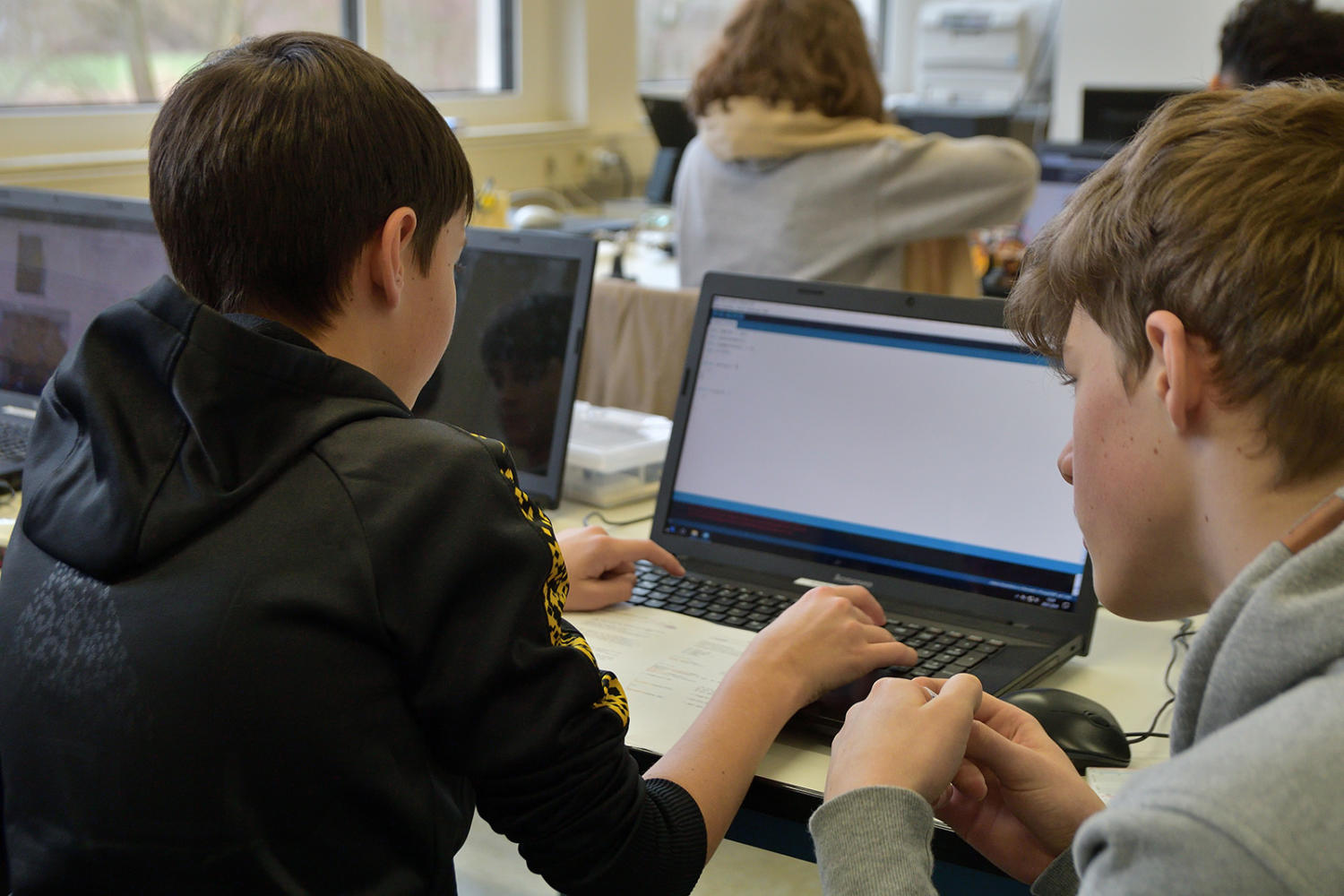
As part of the elective course (WU), the offerings in the area of technology and computers were expanded this school year. Students in grades 8 and 9 had the opportunity to carry out their own electronics projects using Arduino microcontrollers. Arduino, according to Malte Klimczak, the teacher in charge, in his report, is an open-source electronics prototyping platform for flexible, easy-to-use hardware and software. It is primarily used by artists, designers, tinkerers, and hobbyists to bring creative ideas to life.

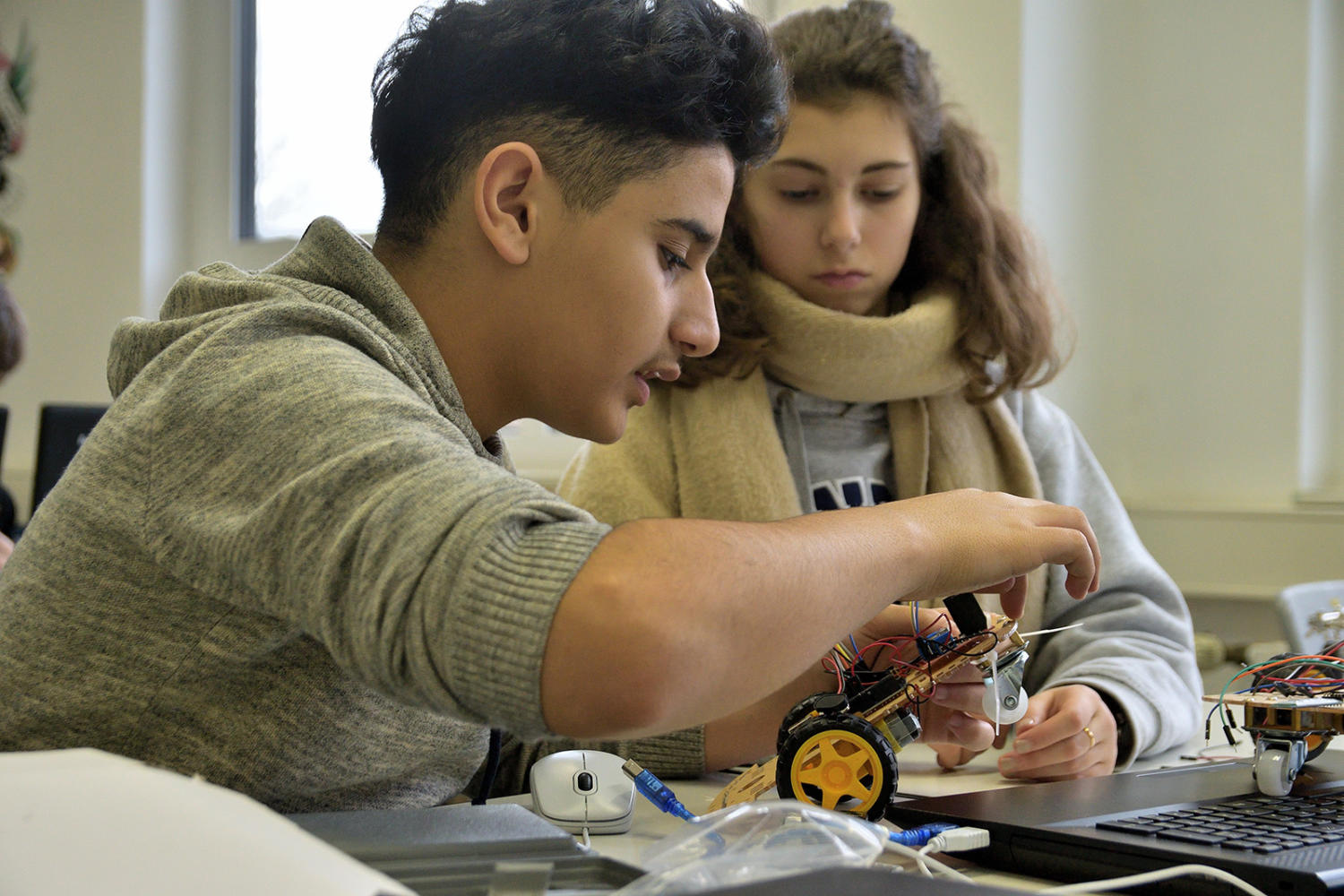
Various sensors (e.g., temperature, motion, light, etc.), as well as LEDs, motors, buttons, and displays, can be connected to the microcontroller. The individual components are controlled through simple programming. This allows students to create small interactive objects in a short amount of time. Among other things, the students have built a small robot that follows the light of a flashlight, a car controlled via Bluetooth and a smartphone, and a digital thermometer. In addition, a group of students independently developed a motor control system for a remote-controlled model airplane.


Analytical thinking is developed

The focus was not only on programming microcontrollers, but also on the practical assembly of electronic circuits. In particular, students can develop technical skills and acquire competencies in computer science and programming. Logical and analytical thinking are honed and applied in real-world situations. This program builds on physics and project-based learning and serves as a valuable supplement.

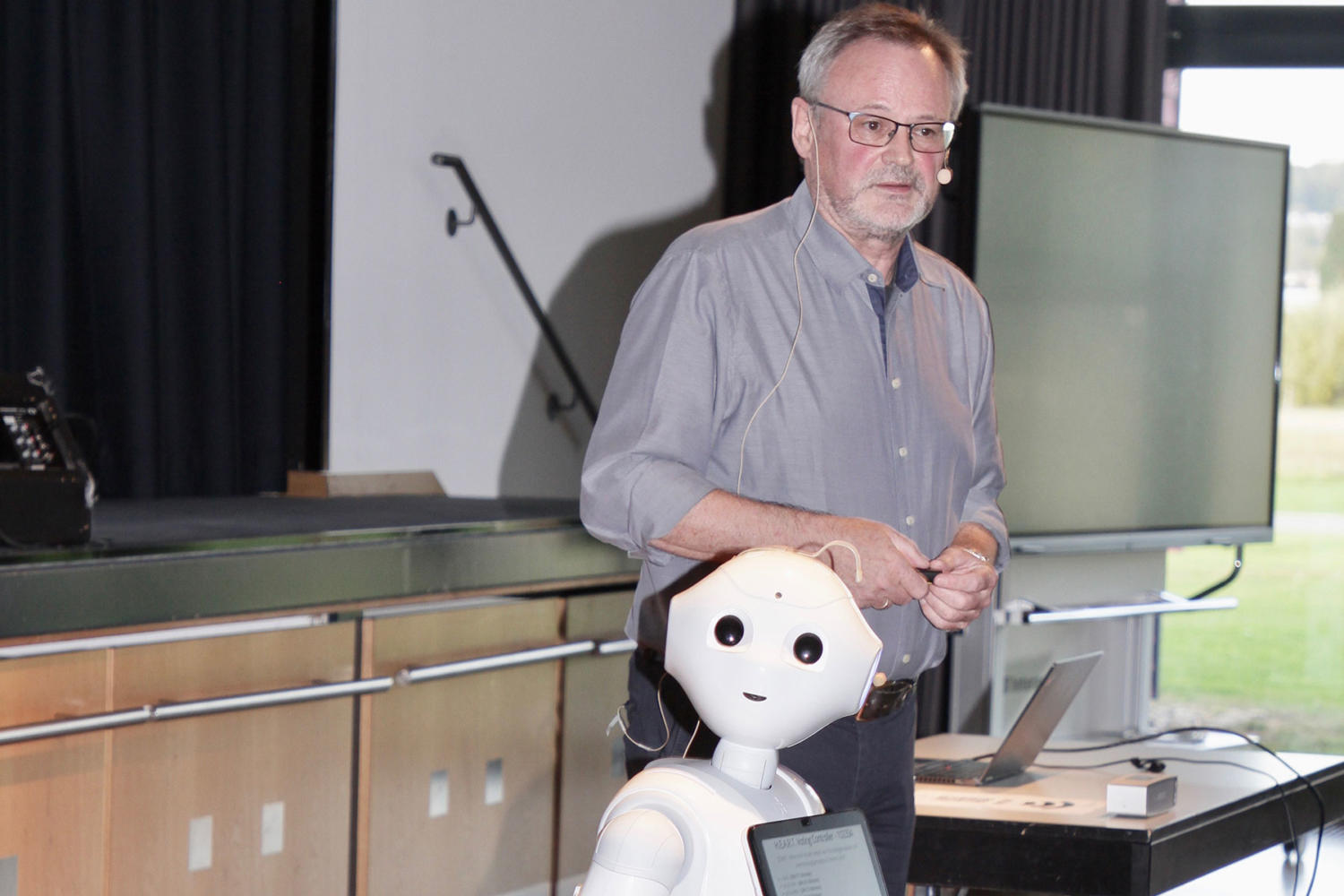
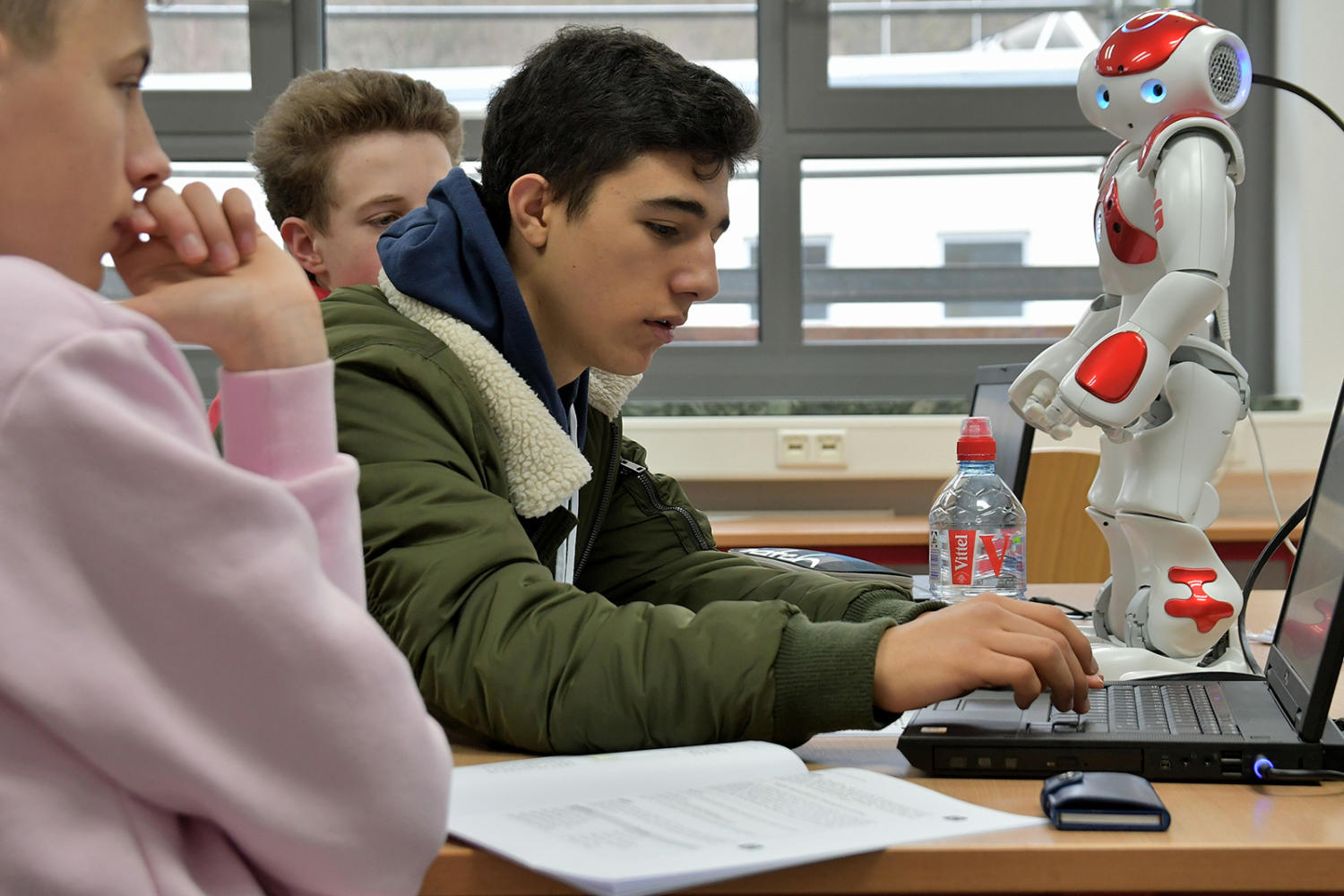
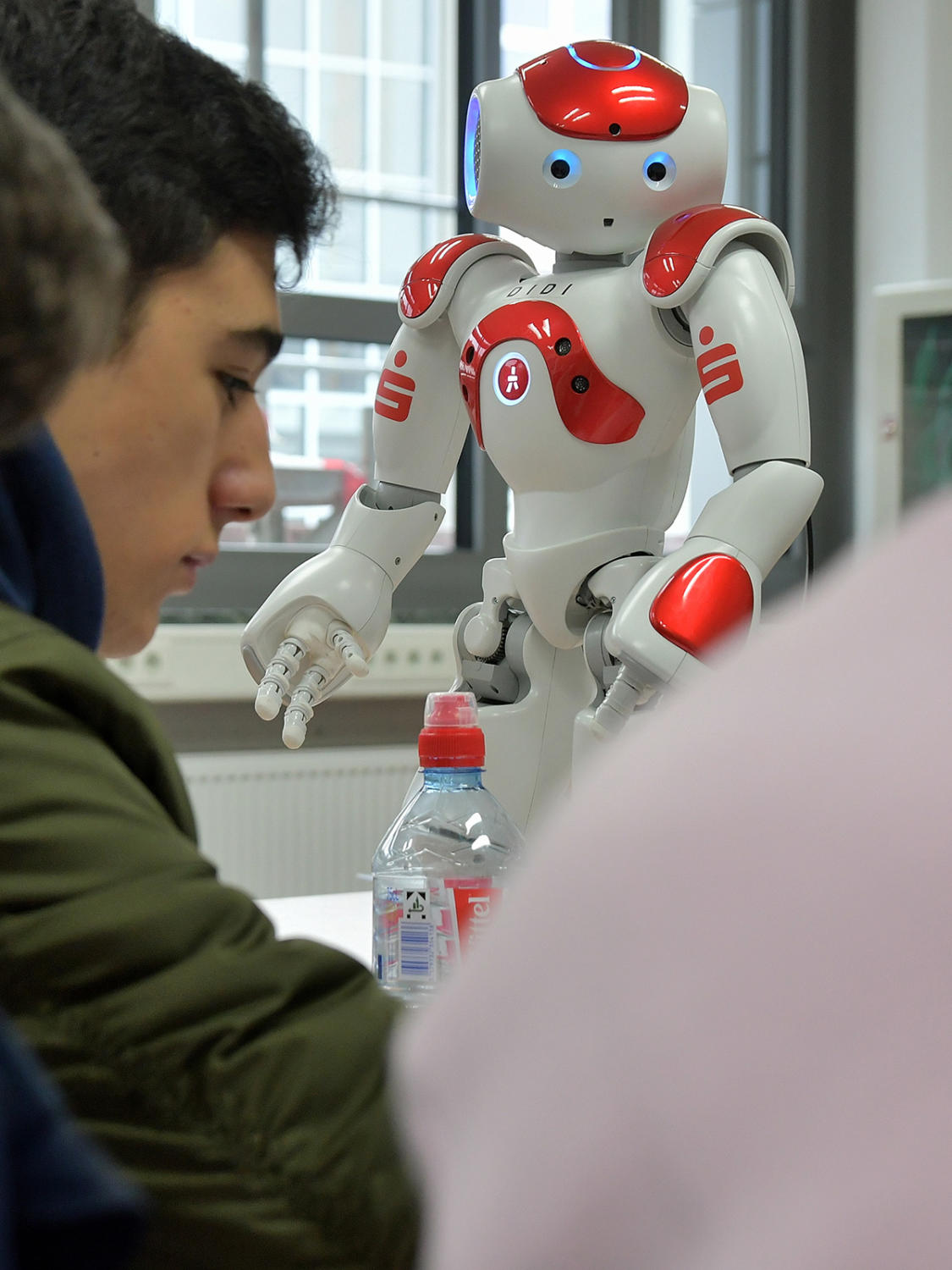
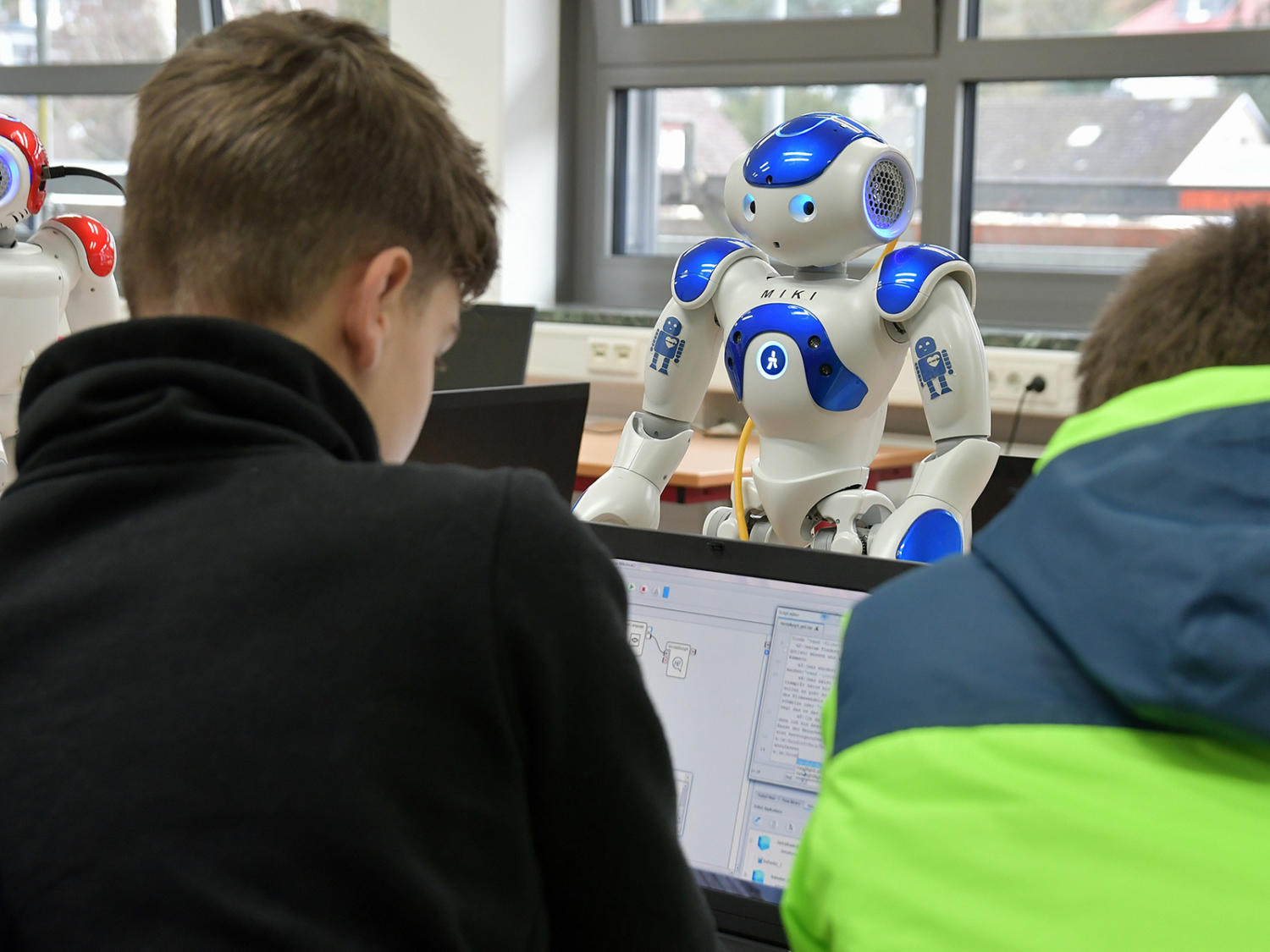
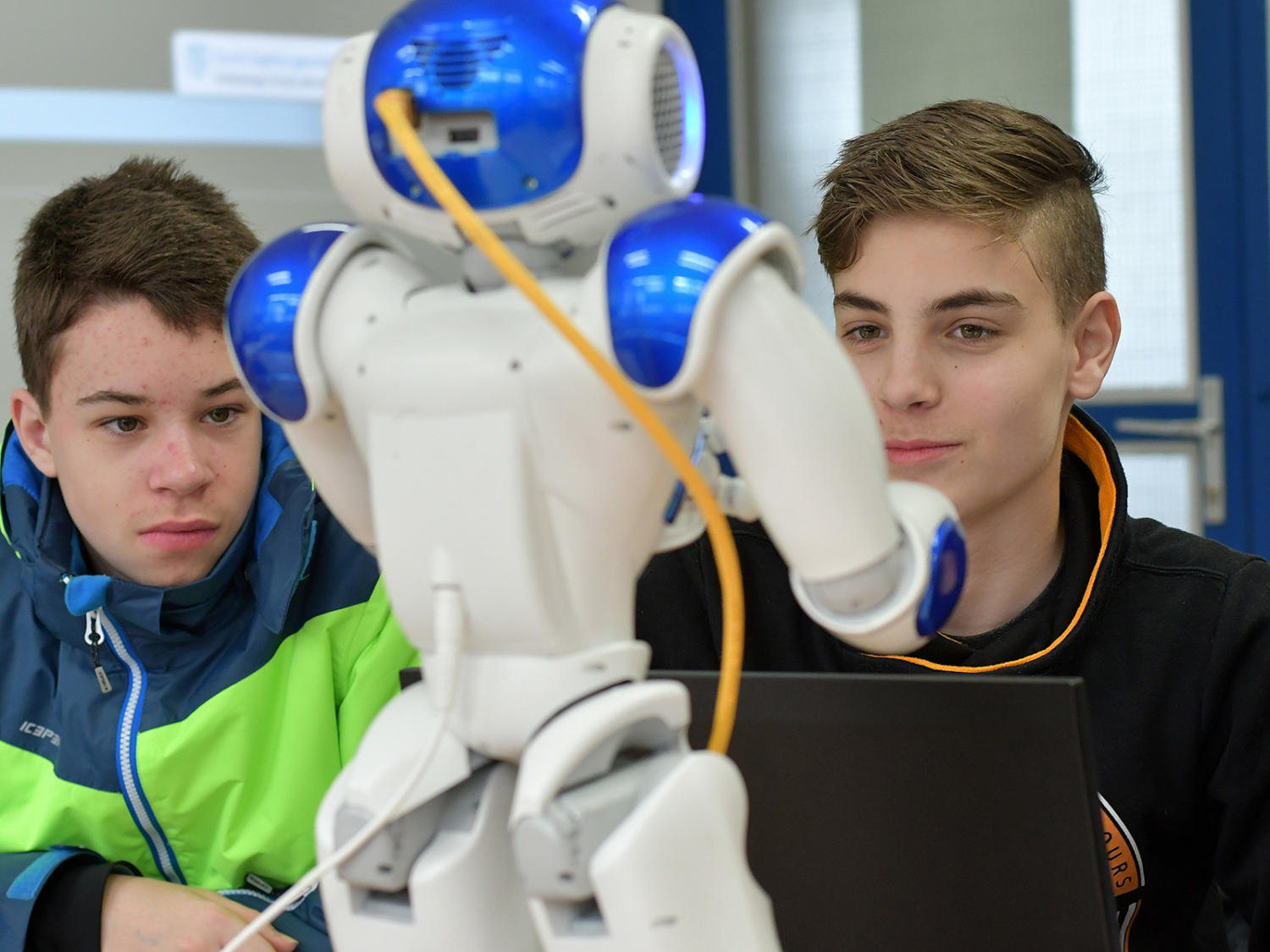
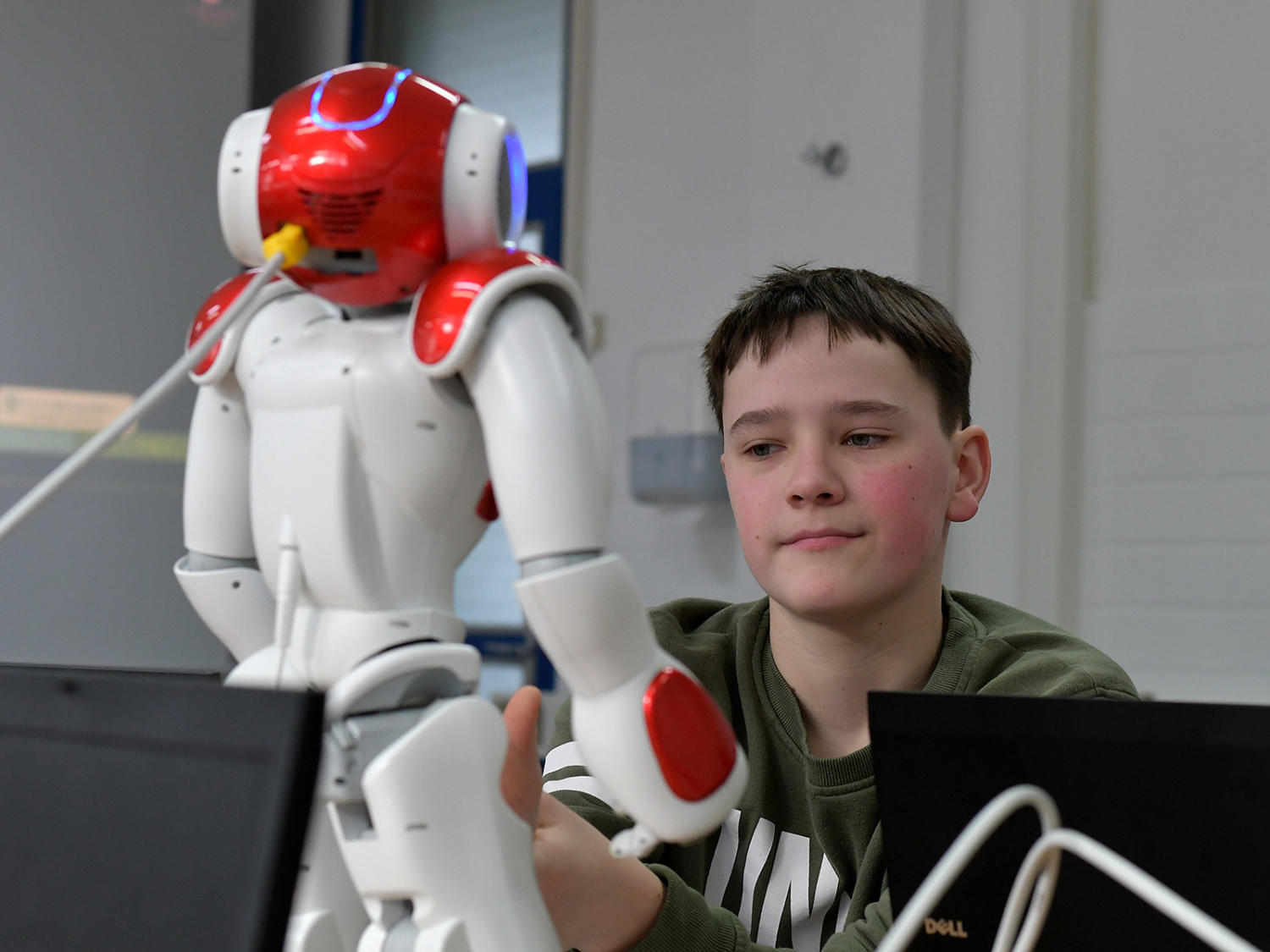
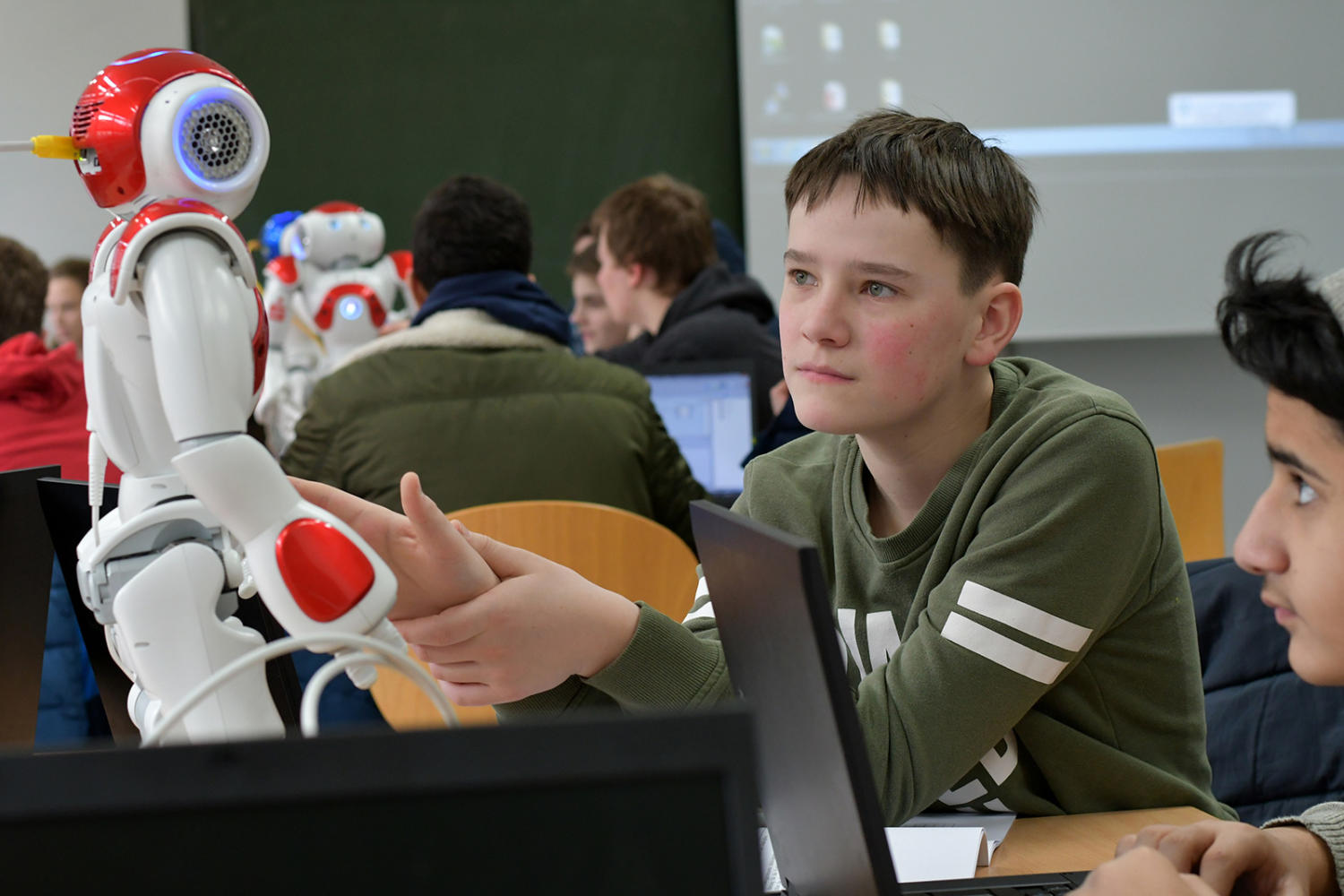
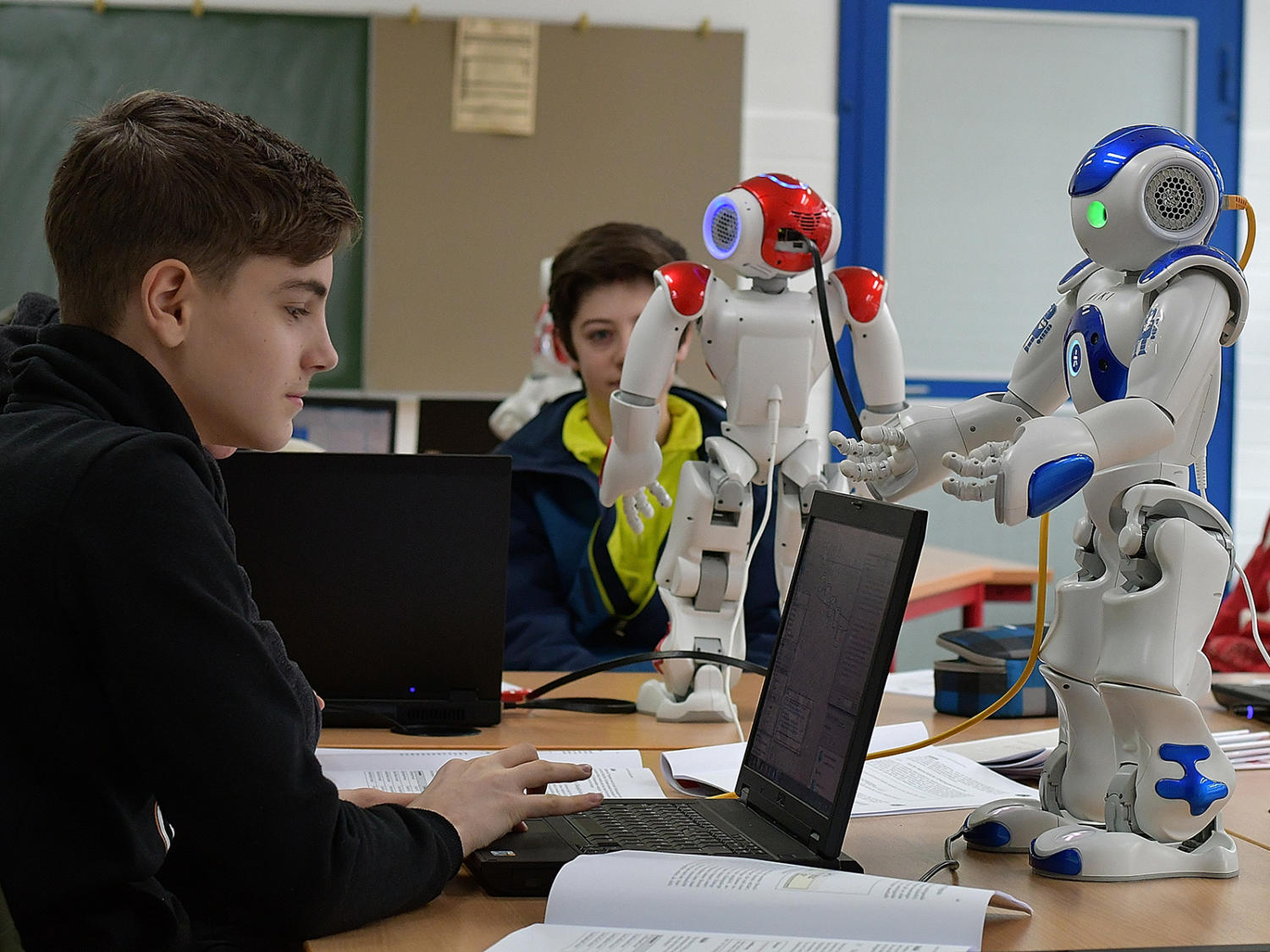
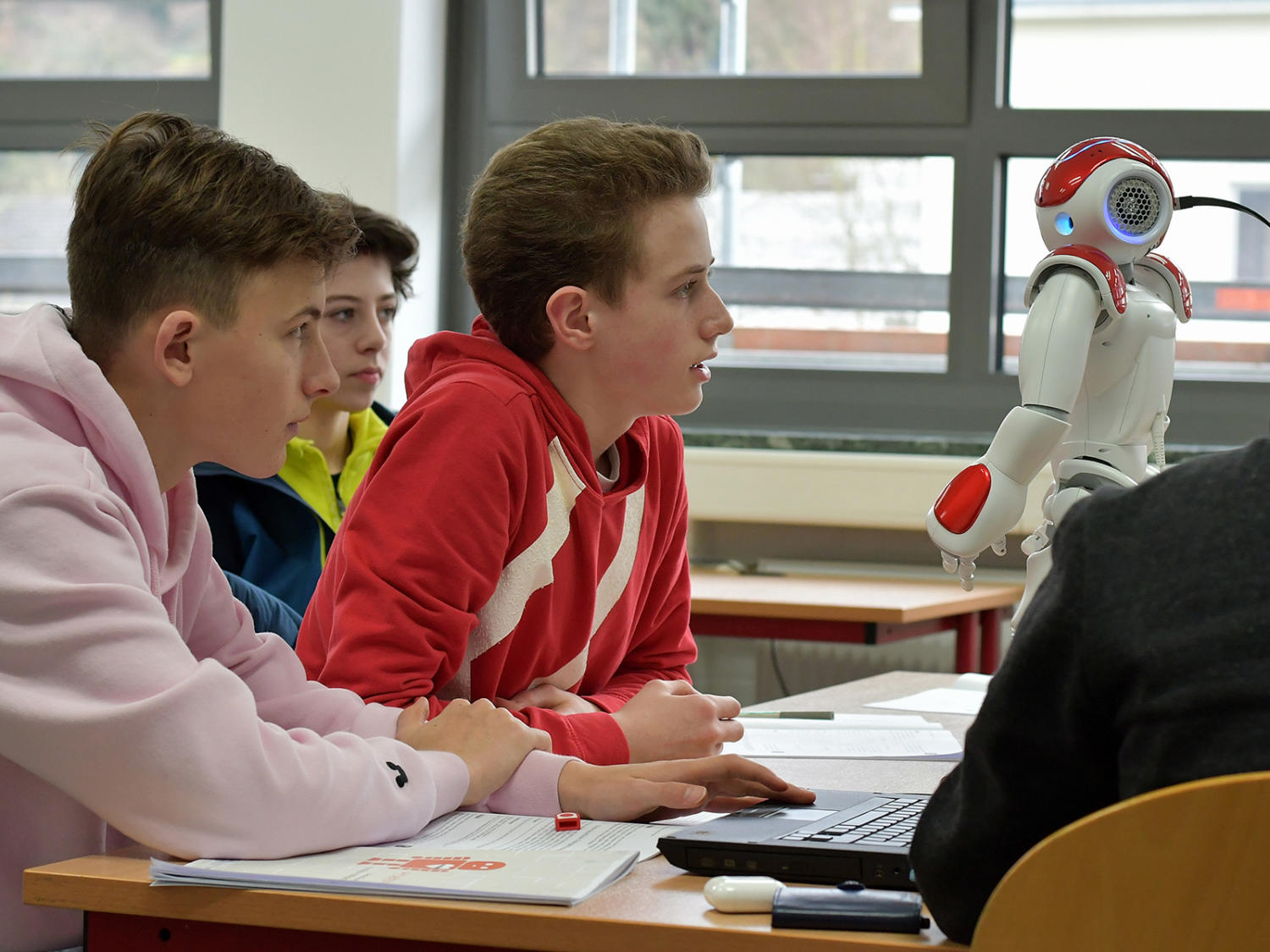
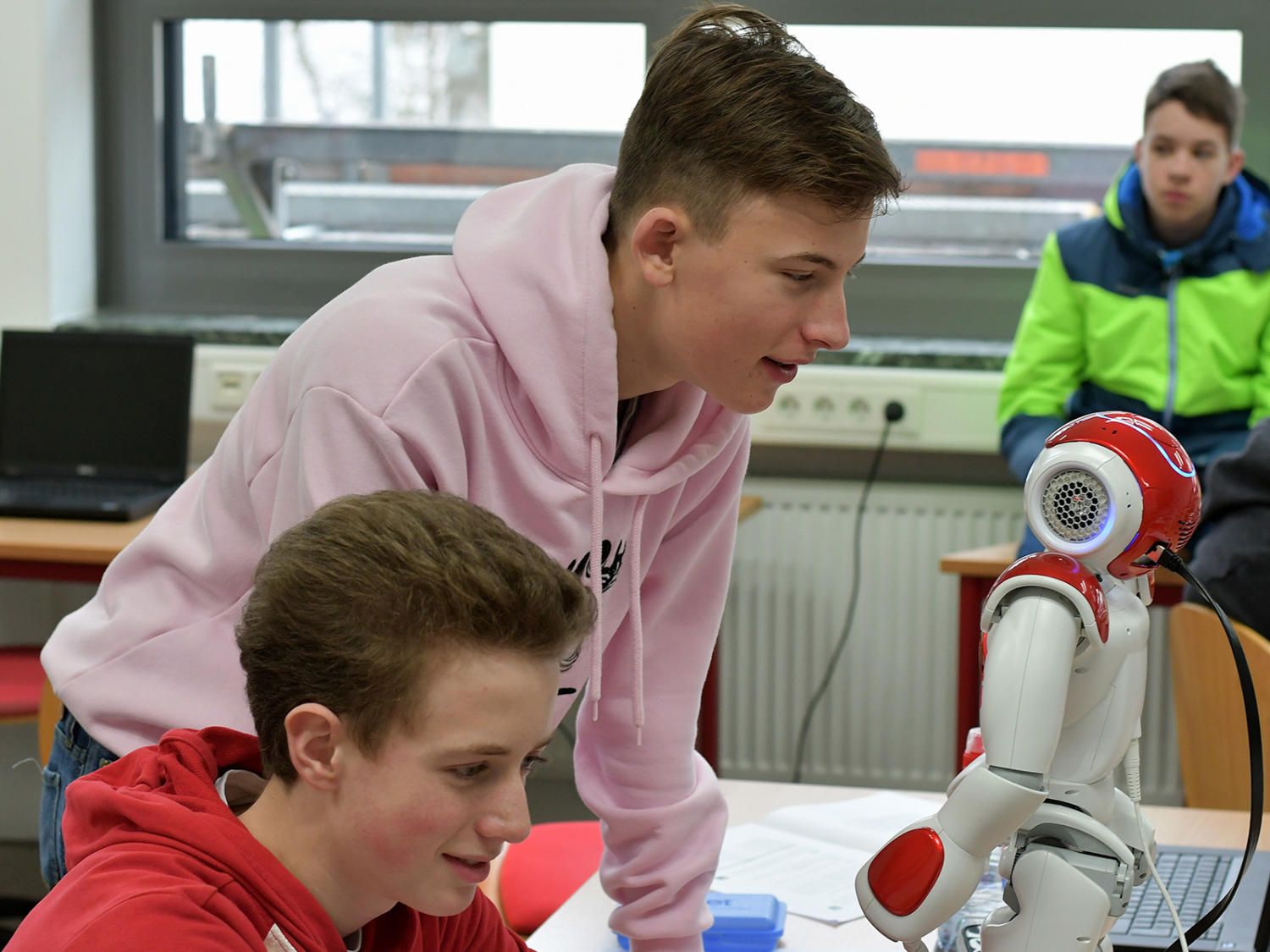
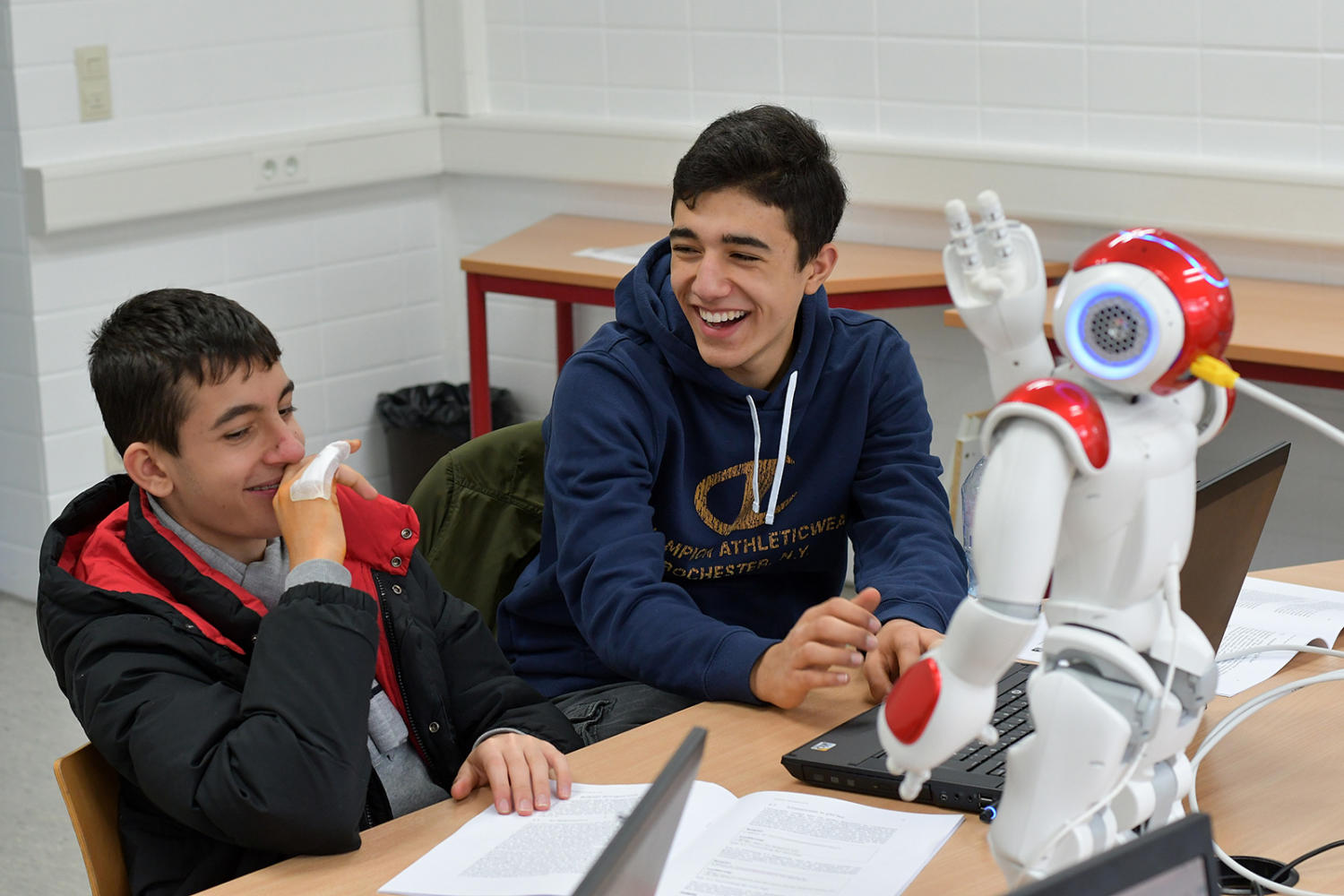
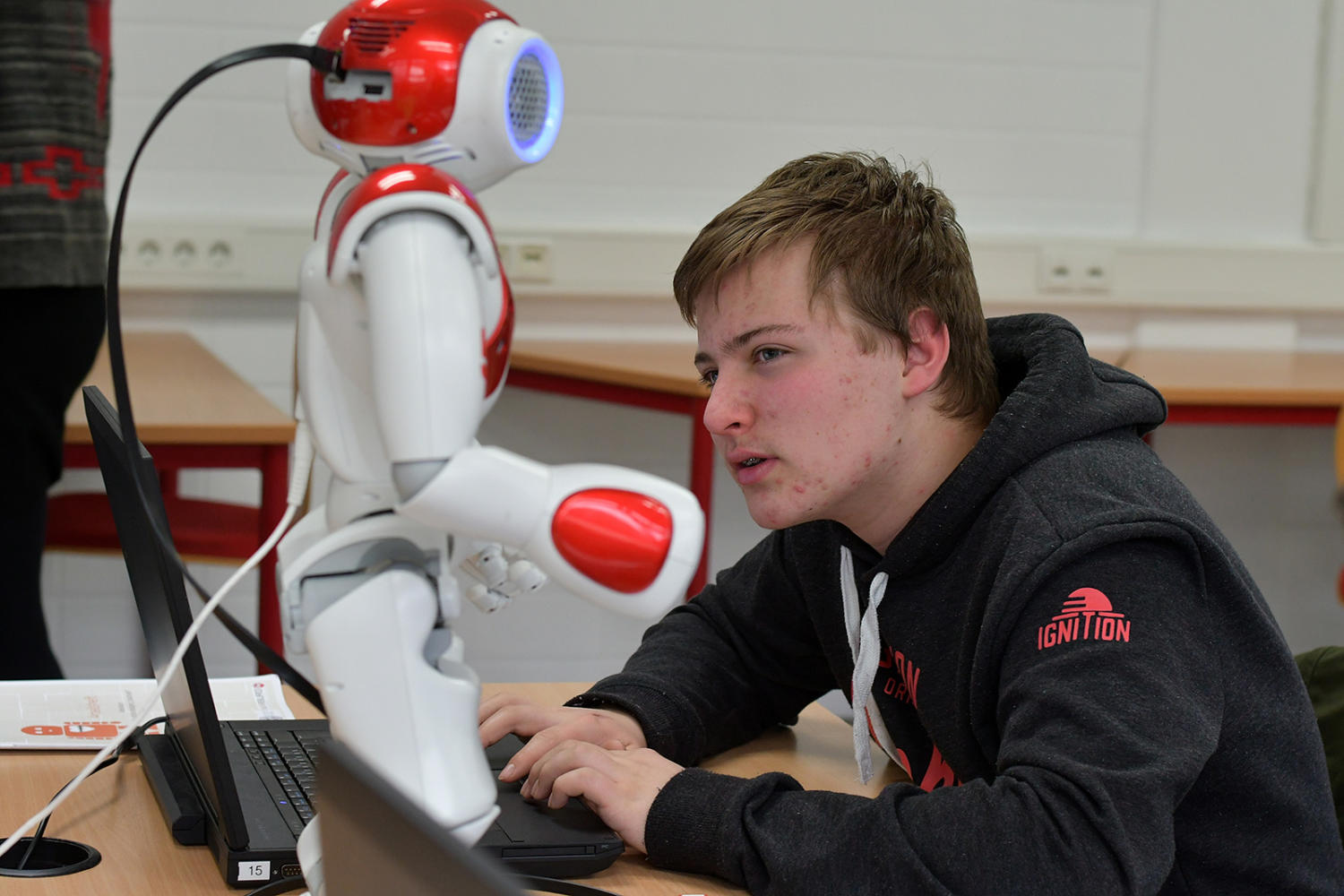
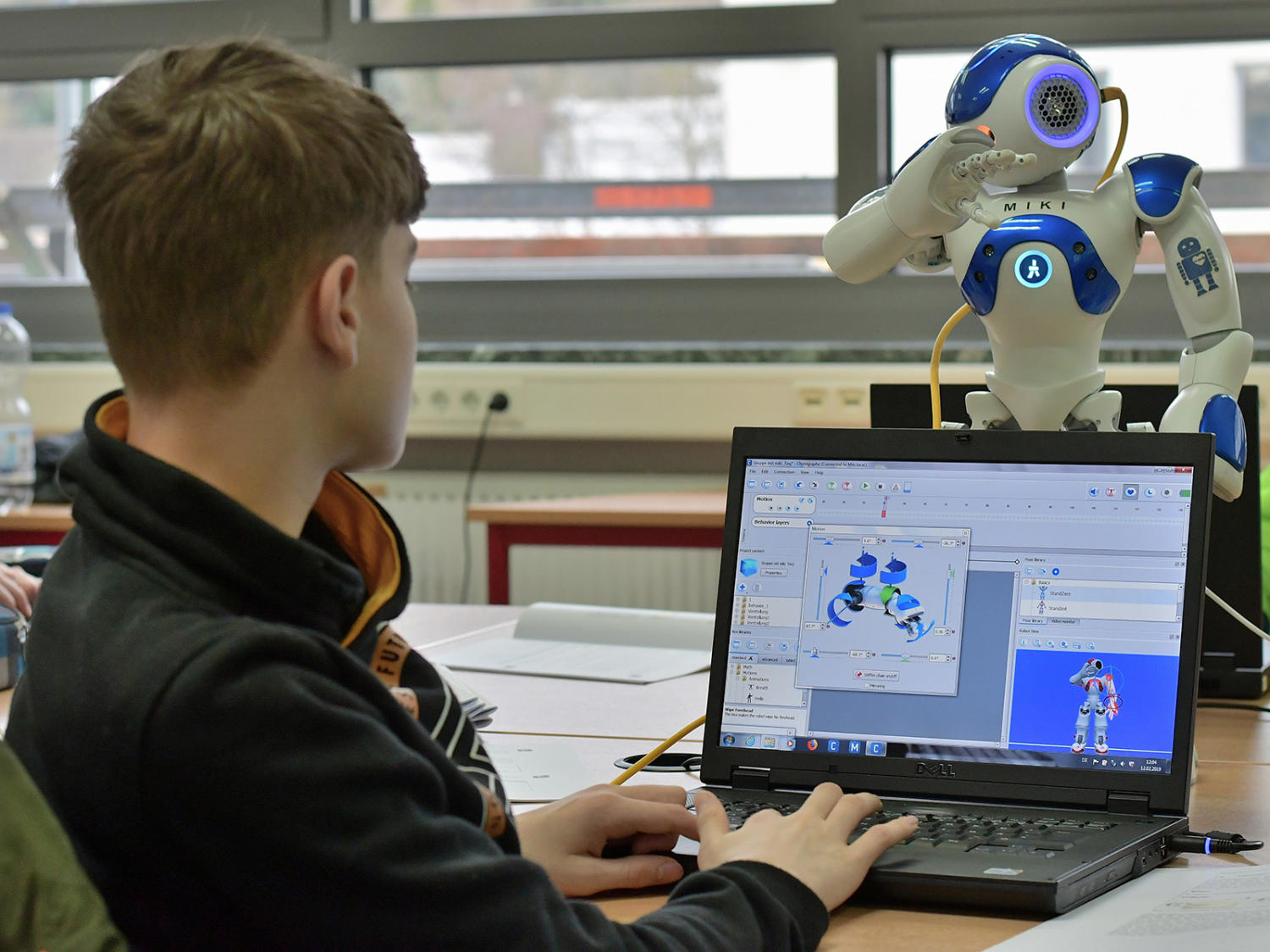
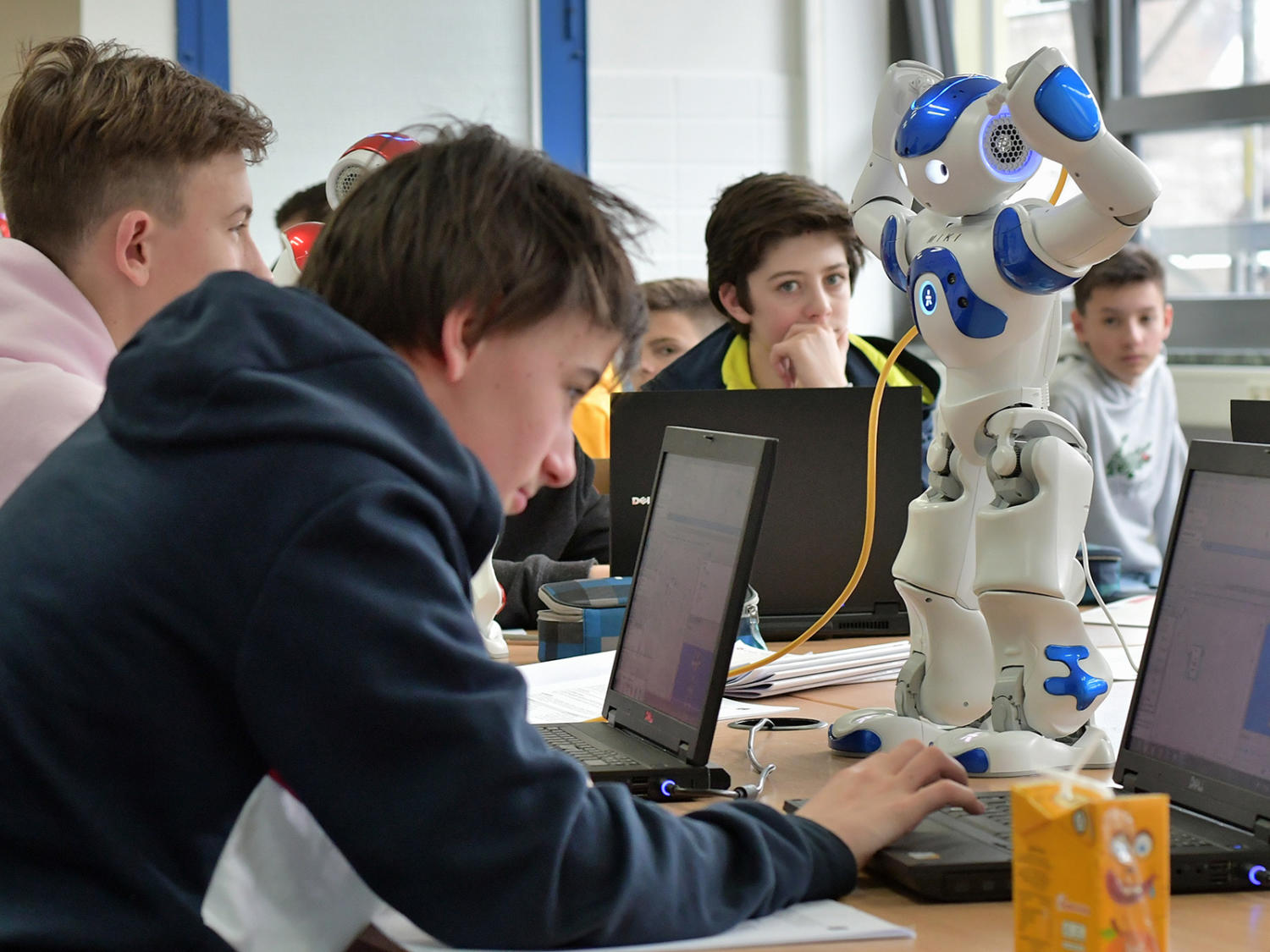
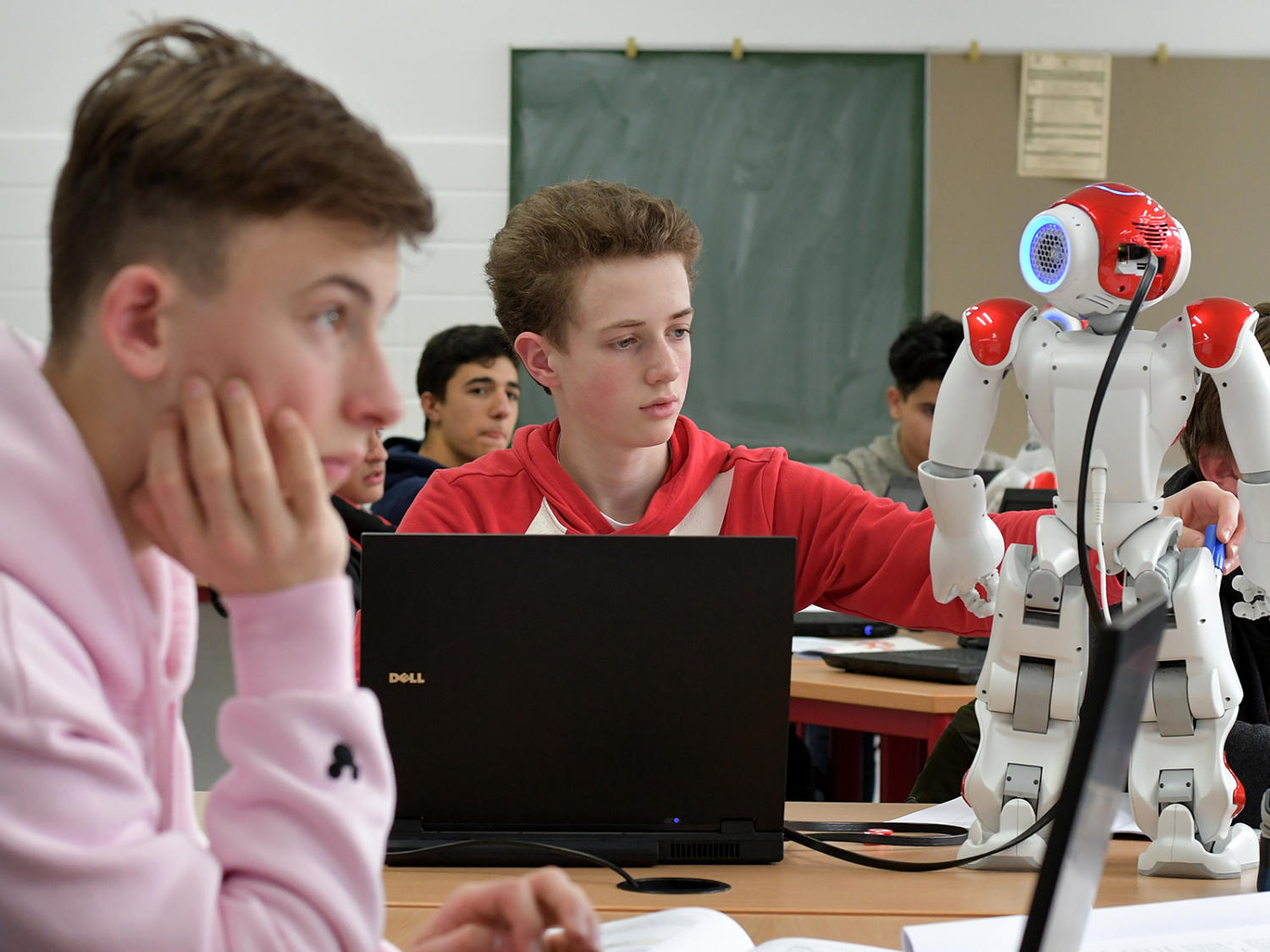
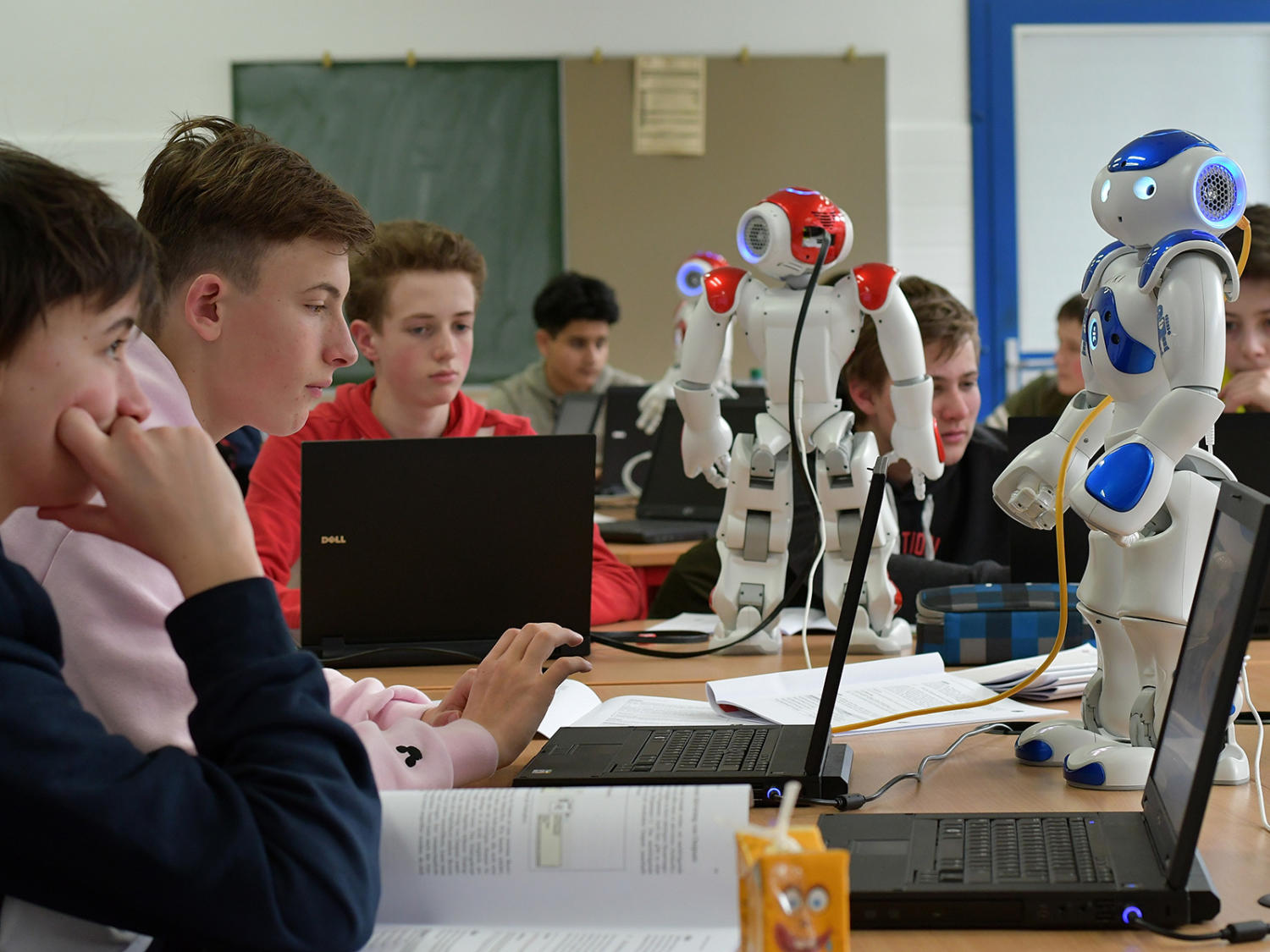
The semester concluded with a visit to the so-called “Robotikum” at Philipps University of Marburg, located on the grounds of the Adolf-Reichwein School. During the three-day workshop, the students had the opportunity to try out NAO-type humanoid robots. The robots can walk, speak, and interact with the people around them. Artificial intelligence makes these diverse interactions possible.

During the internship, the students had the opportunity to develop and test dialogues, movements, and facial recognition with the robots. The goal was not only to become familiar with the robots and understand how they work, but also to improve their own algorithmic thinking, which is particularly important in today’s digital world.


21. February 2019
https://steinmuehle.de/wp-content/uploads/sites/5/2019/02/WU-Elektronik_01-scaled.jpg 1000 1500 konnertz https://steinmuehle.de/wp-content/uploads/sites/5/2025/11/Logo_SchuleInternat_Steinmuehle_2026_3.png konnertz2019-02-21 08:46:502026-06-18 15:41:51Electronics and Programming in Elective Classes
Page 2 of 212

Pages

  • A Safe Place
  • About Us
  • Alternative Sports
  • Alumni Feed
  • Alumni Login
  • Alumni Reunion
  • Annual Calendar Download
  • Art, Music & Theater
  • Awards
  • Bilingual Elementary School
  • Bilingual Elementary School
  • Boarding School
  • Boarding School Admission
  • Boarding School as an Opportunity
  • Charity Projects
  • Contact
  • Costs & Contract Terms
  • Digitization
  • Donation Failed
  • Donation Receipt
  • Donor Dashboard
  • Ecology & Sustainability
  • Elementary School Registration
  • Events
  • Fan Shop
  • Fit for Life
  • Forgot your password?
  • Friends & Alumni
  • Friends of the School Association
  • Funding Partners
  • Fundraising
  • Groups
  • High School
  • High School Admission
  • High School Registration Form
  • Home
  • Internal Clubs
  • International High School
  • International High School Program
  • International High School Registration Form
  • International School
  • International School Registration
  • Keyword Search
  • Languages & International Affairs
  • Learning
  • Legal Notice
  • Life
  • Members
  • MINT Lab Equipment
  • Mission Statement & Vision
  • My Profile
  • News
  • News
  • News Archive
  • Newsletter
  • Newsletter
  • Organization & History
  • Partners
  • Privacy Policy
  • Privacy Policy (Detailed)
  • Project-Based Learning
  • Promoting Independence & Individuality
  • Promoting STEM Talent
  • Publications
  • Quality Management
  • Recording
  • Registration Form for the Bilingual Elementary School
  • Reset Password
  • Riding School
  • Rowing Club
  • School
  • School as a Community
  • Signed up for the newsletter
  • Social Responsibility
  • Social Responsibility & Strengthening the Community
  • Sponsorship
  • Sports & Health
  • Sports & Recreation
  • Stakeholders
  • Steinmühle Alumni Network
  • Steinmühle as a Youth Welfare Agency
  • Stories
  • Summer Camps
  • Support Current Projects
  • Support for Families
  • Talent Program Plus STEM
  • Teams
  • Terms and Conditions for High School
  • Terms and Conditions for the Bilingual Elementary School
  • Terms and Conditions of the International High School
  • Terms of Contract for the Bilingual Primary School
  • Terms of Contract for the International School
  • Trips & Weekends
  • Upload Transcript
  • What is … up to today, anyway?
  • Why Steinmühle?
  • Work at the Steinmühle

Categories

  • Archive
  • Art, Music & Theater
  • Bilingual Elementary School
  • Boarding School
  • Class Trips, Field Trips, and School Outings
  • Collaborations & Partnerships
  • Contests & Awards
  • Digitalization & AI
  • Ecology and Sustainability
  • Events & Celebrations
  • Former Students & Alumni
  • International High School
  • Job Openings
  • Languages & International Affairs
  • Life at Boarding School
  • News
  • Politics, Business & Responsibility
  • Rowing
  • Social Engagement
  • Sports
  • Sports & Health
  • Steinmühle on the Road
  • Steinmühle Riding School
  • STEM
  • Surveys & Studies
  • Talent Development
  • Uncategorized

Archive

  • June 2026
  • May 2026
  • April 2026
  • March 2026
  • February 2026
  • January 2026
  • December 2025
  • November 2025
  • October 2025
  • September 2025
  • August 2025
  • July 2025
  • June 2025
  • May 2025
  • April 2025
  • March 2025
  • February 2025
  • January 2025
  • December 2024
  • November 2024
  • October 2024
  • September 2024
  • August 2024
  • July 2024
  • June 2024
  • May 2024
  • April 2024
  • March 2024
  • February 2024
  • January 2024
  • December 2023
  • November 2023
  • October 2023
  • September 2023
  • August 2023
  • July 2023
  • June 2023
  • May 2023
  • April 2023
  • March 2023
  • February 2023
  • January 2023
  • December 2022
  • November 2022
  • October 2022
  • September 2022
  • August 2022
  • July 2022
  • June 2022
  • May 2022
  • April 2022
  • March 2022
  • February 2022
  • January 2022
  • December 2021
  • November 2021
  • October 2021
  • September 2021
  • August 2021
  • July 2021
  • May 2021
  • April 2021
  • March 2021
  • February 2021
  • December 2020
  • November 2020
  • October 2020
  • September 2020
  • August 2020
  • July 2020
  • June 2020
  • May 2020
  • April 2020
  • March 2020
  • February 2020
  • January 2020
  • December 2019
  • November 2019
  • October 2019
  • September 2019
  • August 2019
  • July 2019
  • June 2019
  • May 2019
  • April 2019
  • March 2019
  • February 2019
  • January 2019
  • December 2018
  • November 2018
  • October 2018
  • September 2018
  • August 2018
  • July 2018
  • June 2018
  • May 2018
  • April 2018
  • March 2018
  • February 2018
  • January 2018
  • December 2017
  • November 2017
  • October 2017
  • September 2017
  • August 2017
  • July 2017
  • June 2017
  • May 2017
  • April 2017
  • March 2017
  • February 2017
  • January 2017
  • December 2016
  • November 2016
  • October 2016
  • September 2016
  • August 2016
  • July 2016
  • June 2016
  • May 2016
  • April 2016
  • March 2016
  • February 2016
  • December 2015
  • November 2015
  • October 2015
  • September 2015
  • July 2015
  • June 2015
  • May 2015
  • April 2015
  • March 2015
  • February 2015
  • January 2015
  • December 2014
  • November 2014
  • October 2014
  • September 2014
  • July 2014
  • June 2014
  • May 2014
  • April 2014
  • March 2014
  • February 2014
  • January 2014
  • December 2013
  • November 2013
 
PreviousNext
12
 
PreviousNext
123456

Do you have questions about the school?

School Administration & Management

Björn Gemmer & Dirk Konnertz
Phone: 06421 408-20

schule@steinmuehle.de

Do you have questions about the boarding school?

Boarding School Administration & Management

Anke Muszynski & Dirk Konnertz
Phone: 06421 408-0

internat@steinmuehle.de

  • NEWSLETTER
  • PUBLICATIONS
  • CAREERS AT STEINMÜHLE
  • SUMMER CAMPS
  • LEGAL NOTICE
  • PRIVACY POLICY
  • CONTACT

Do you have questions about the school?

School Administration & Management

Björn Gemmer & Dirk Konnertz
Phone: 06421 408-20

schule@steinmuehle.de

Do you have questions about the boarding school?

Boarding School Administration & Management

Anke Muszynski & Dirk Konnertz
Phone: 06421 408-0

internat@steinmuehle.de

  • NEWSLETTER
  • PUBLICATIONS
  • WORK AT THE STONE MILL
  • SUMMER CAMPS
  • LEGAL NOTICE
  • PRIVACY POLICY
  • CONTACT

© Copyright – Steinmühle 2026 | Erneuern oder ändern Sie Ihre Cookie-Einwilligung
Scroll to top