

Hesse’s Minister of Digital Affairs, Prof. Dr. Kristina Sinemus, visited the Steinmühle

Just popping in, a bit of small talk, and back in the car—that’s not how it works with Kristina Sinemus. As a guest at a school, the Hessian Minister of Digital Affairs took a closer look. On her summer tour, she visited Steinmühle, which was awarded the Bitkom “Smart School” certificate just a few weeks ago. It’s also a STEM school—reason enough for the trained high school teacher and scientist to take a closer look at the school’s digitalization concept on site.
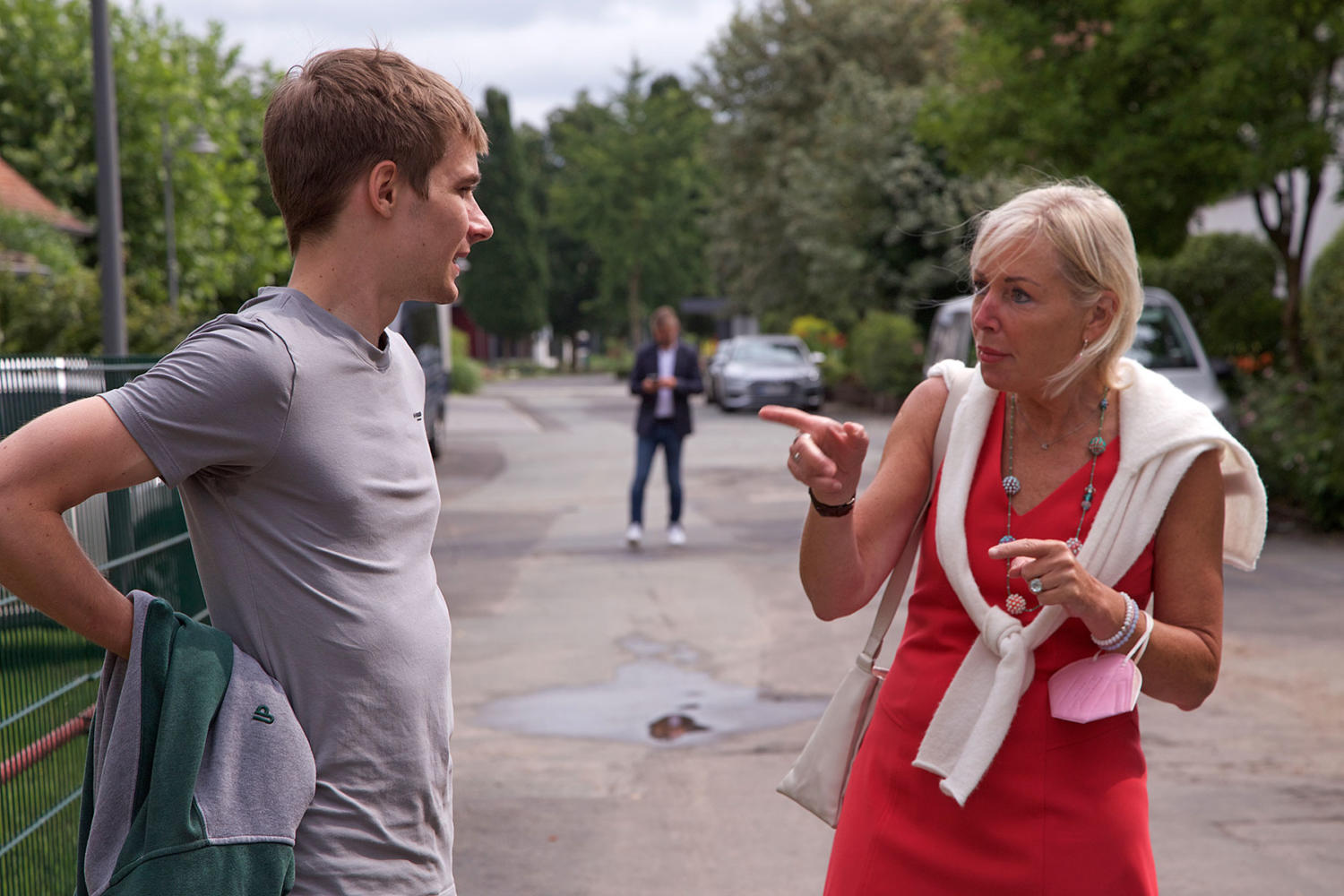
A brief tour of the school and boarding school grounds was part of the athletic minister’s general orientation—with a favorable glance at the beach volleyball court. Even on the way to the student lab, which the prominent visitor was eager to see, the “escort” through the new school buildings had grown longer and longer. Not only school and administrative staff, local state parliament representative Dirk Bamberger, and media representatives, but also the young participants of the summer camp—currently being held at the Steinmühle by the Marburg-based educational organization LernTeam—had joined the line. “Can I have an autograph?” Of course that was possible! So, in addition to the coveted autograph, the girls and boys also received a few giveaways featuring the Hessian lion.
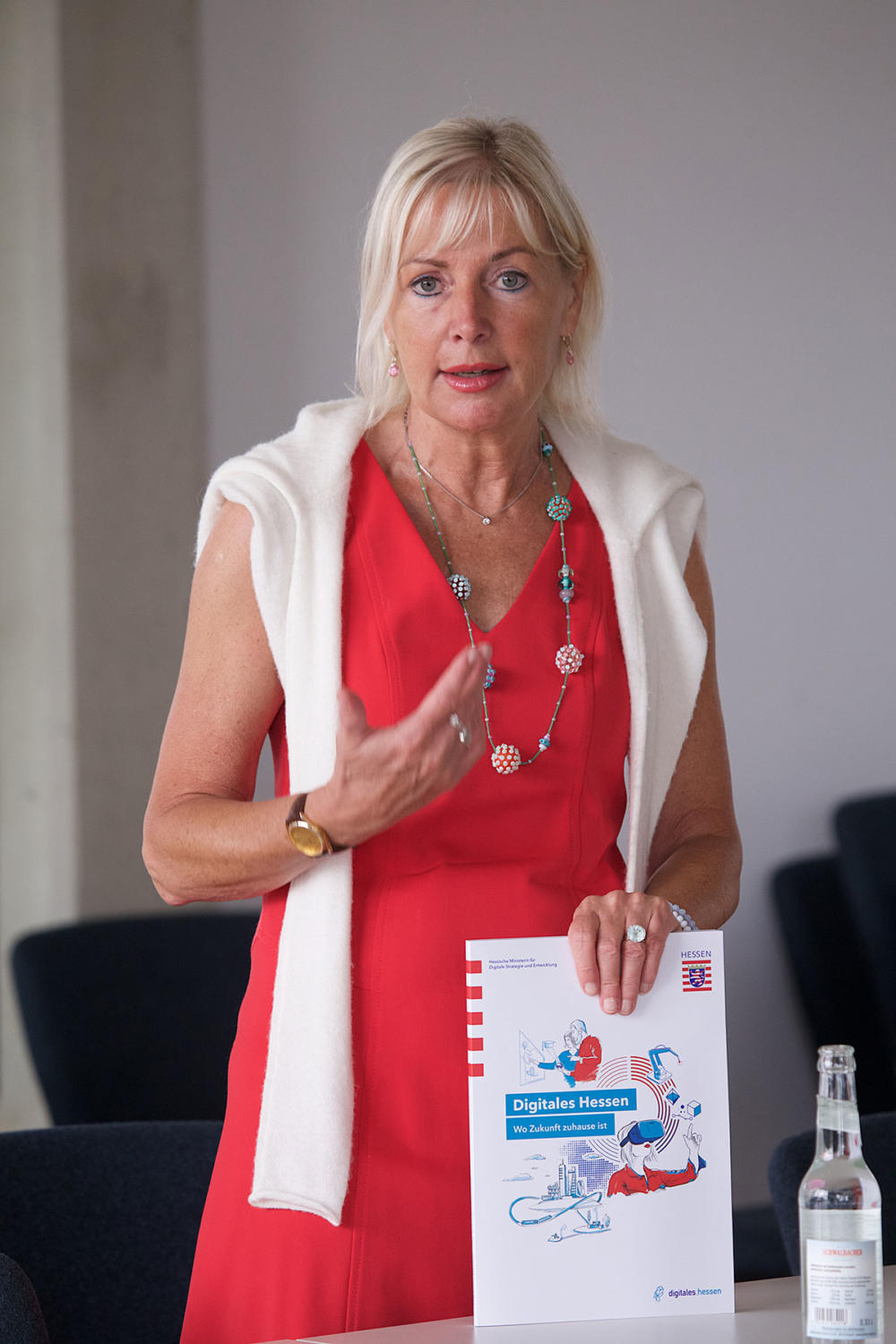
Kristina Sinemus, a biologist with a master’s degree and a Ph.D. who holds a professorship on leave of absence in the Department of Public Affairs at Quadriga University Berlin, is a political newcomer. No other federal state has a Ministry of Digital Affairs—she heads the only one in Hesse. The fact that Prof. Sinemus is also an entrepreneur and founded a science communication company has given her a particularly broad perspective. “One of my responsibilities is to strengthen the connection between schools and education,” the guest explained.
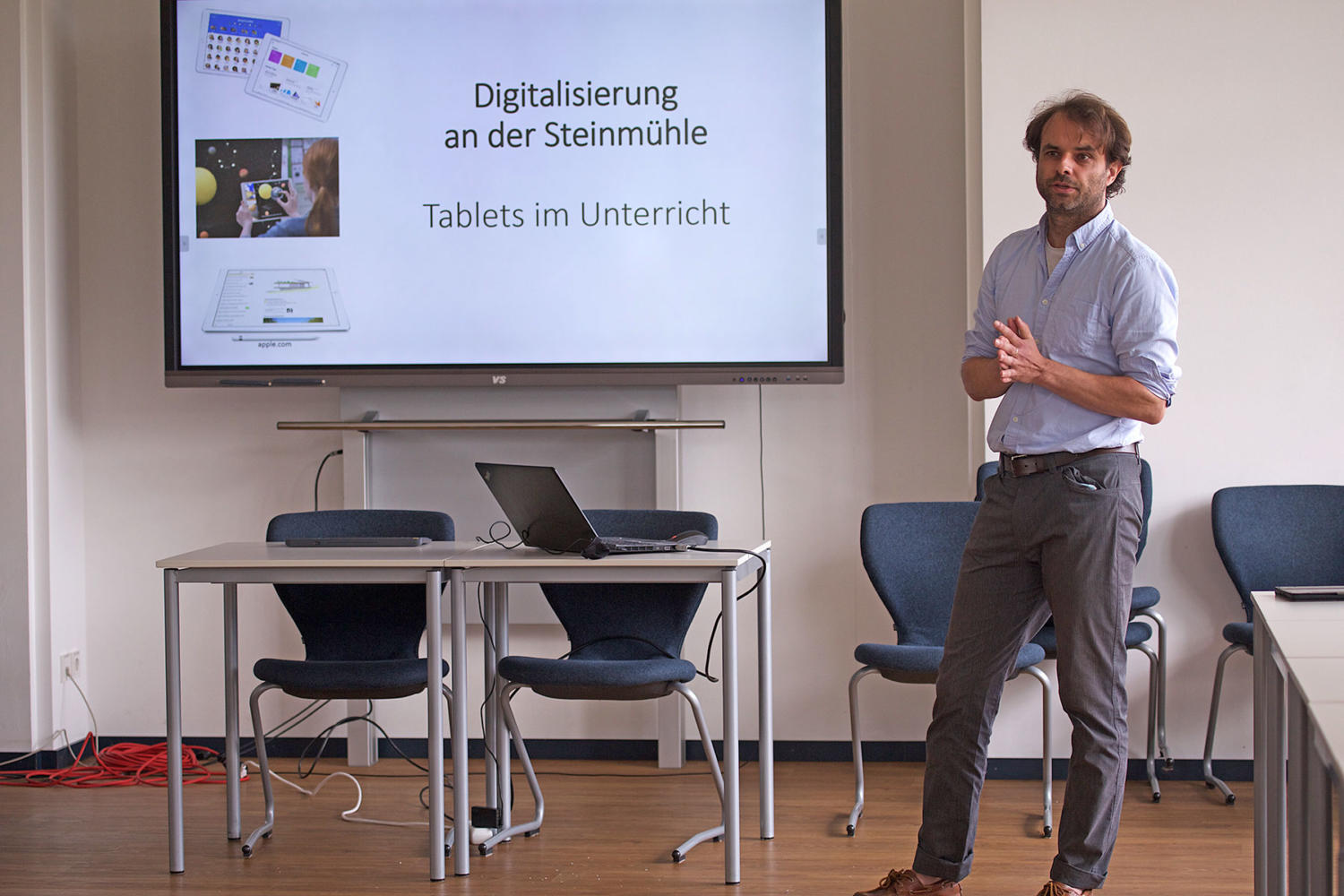
Of course, the visit’s agenda included a focus on the StoneApp at the Steinmühle. Former student and developer Aaron Stein personally explained the app. Livia and Sophia from 8th grade explained how the app’s features are used, with an additional focus on homeschooling. Malte Klimczak, the digitalization coordinator, gave a brief overview of the Steinmühle’s fundamental conceptual approach to media literacy. He discussed the staffing arrangements for its implementation and described the wide range of uses for the tablets, which are used starting in 7th grade.
“Digital-supported instruction opens up new learning and teaching methods that have become more important than ever during the pandemic,” said Hesse’s Minister for Digital Affairs. She is all the more pleased that many schools and school types are actively committed to the digital advancement and continuation of instruction, as is the case here at Steinmühle, one of 81 “Smart Schools” nationwide. “When, moreover, technical innovations originate from the students themselves and lead to the creation of important tools like the ‘Stone App,’ it is a special joy and a great benefit for everyone,” said the minister, referring to Aaron Stein’s development. Around 1,000 students, parents, and teachers now use this tool every day.
“I’m also here to find out what else I should keep in mind for the schools,” explained Prof. Dr. Sinemus before setting off for the next stop on her summer tour. The Minister of State found the idea of making the technical capabilities of the StoneApp available to other schools for customized use “definitely interesting and worth considering.” Schools could then adapt the app to their specific needs in their own computer science classes.