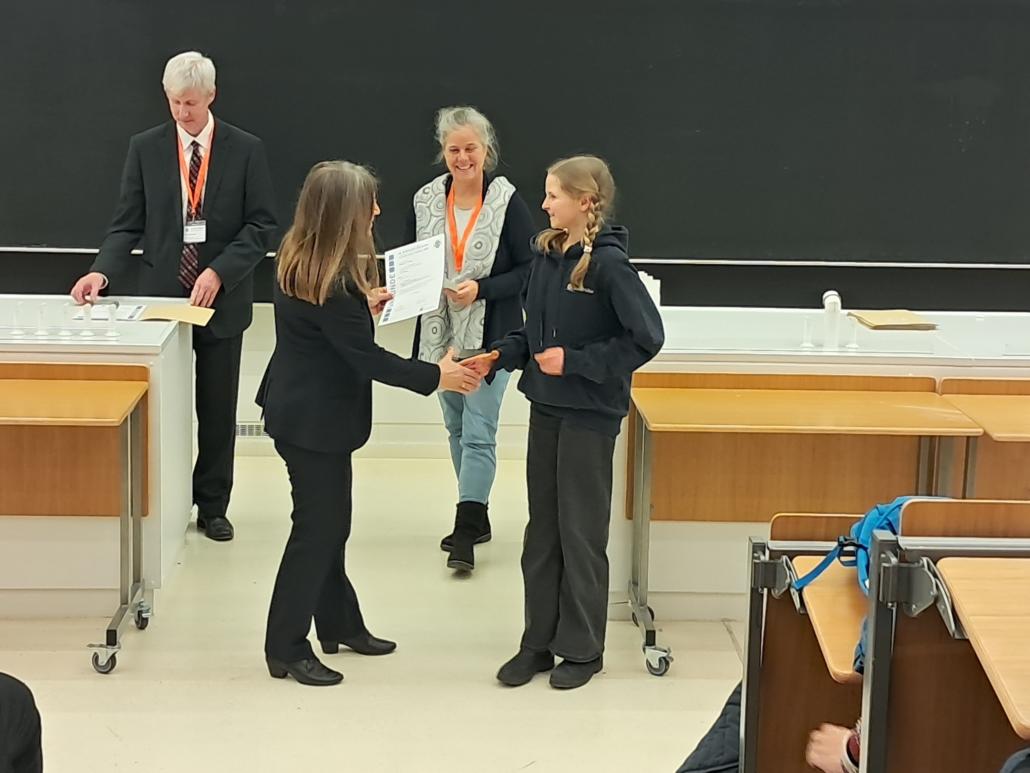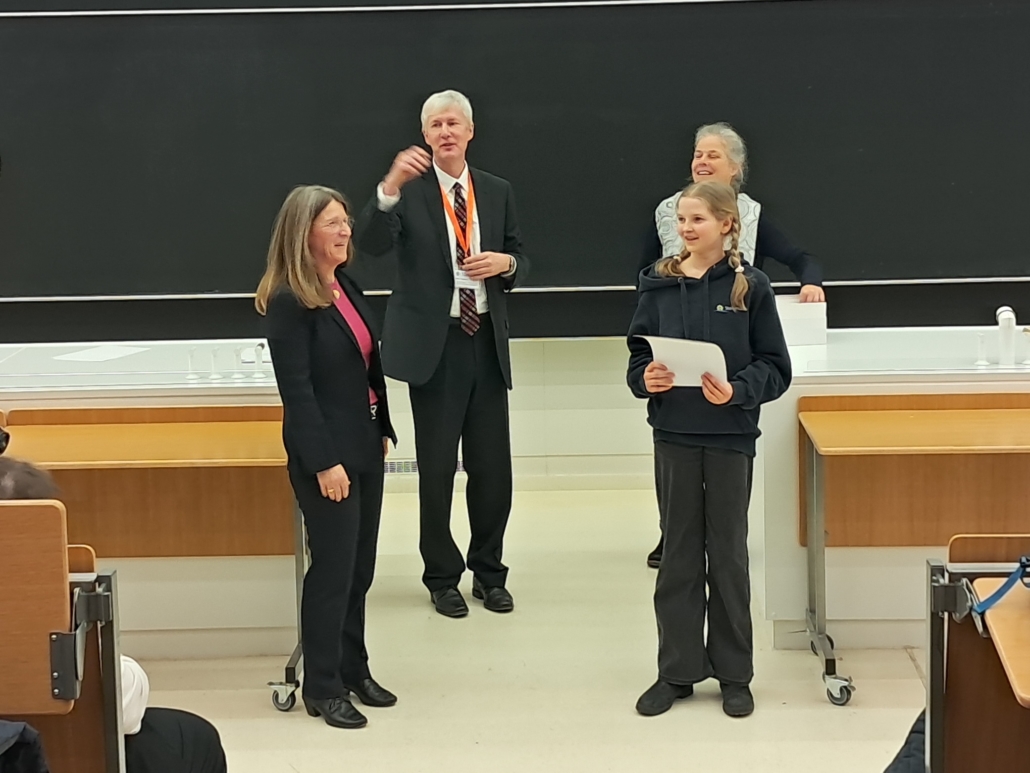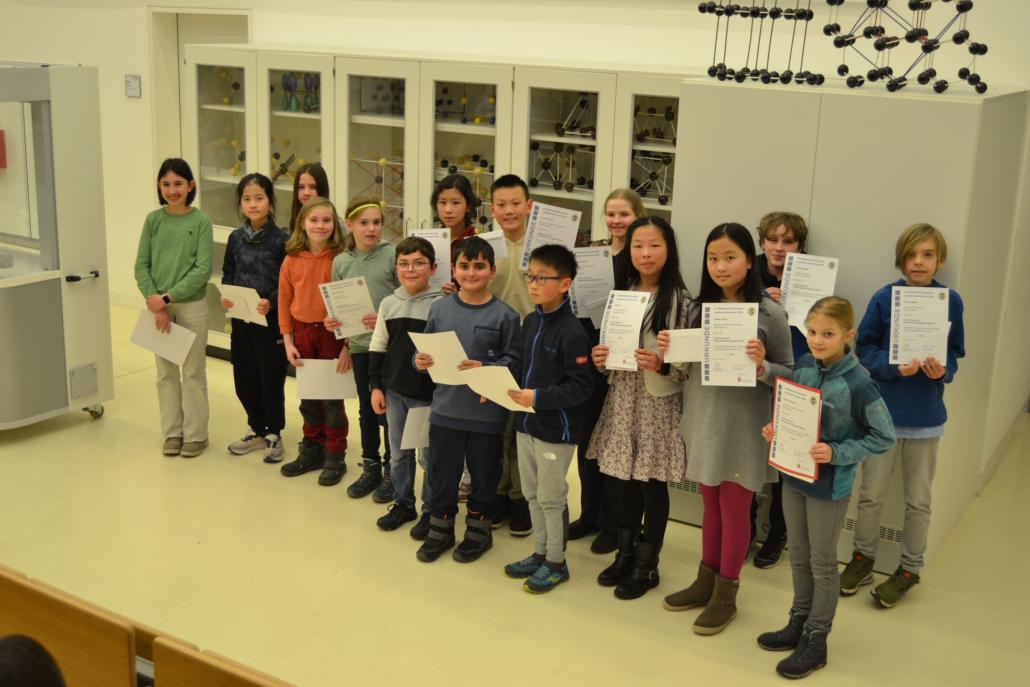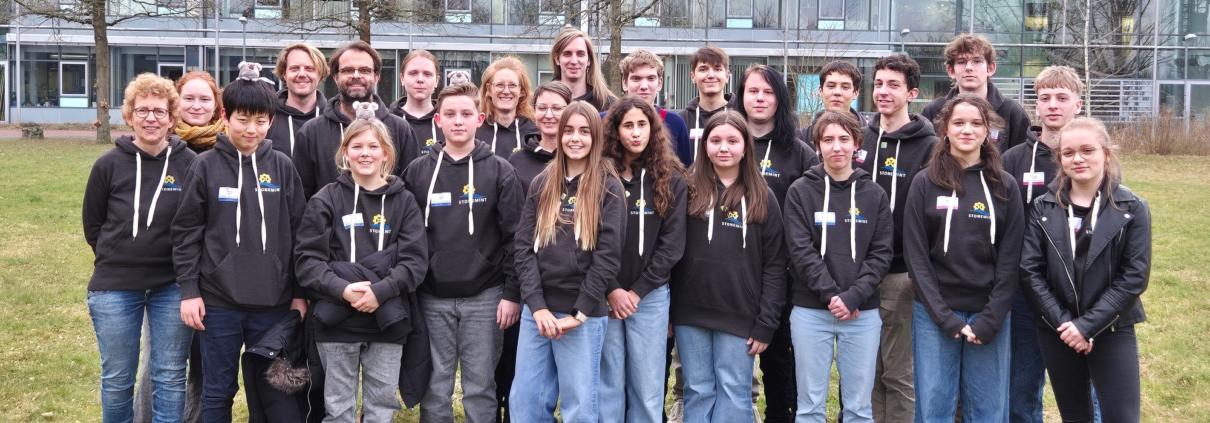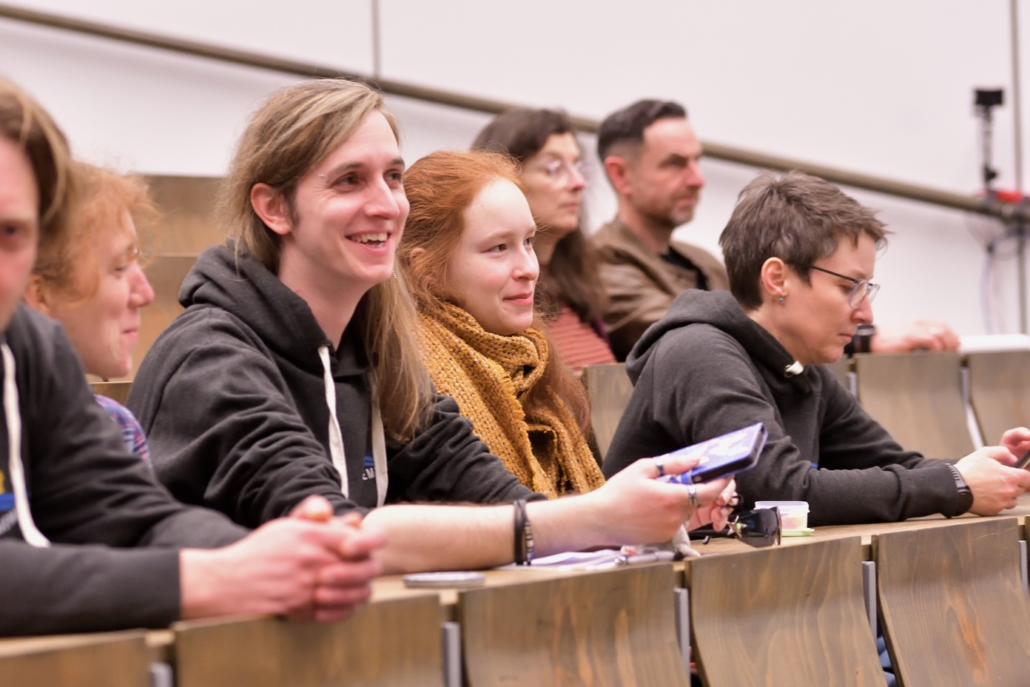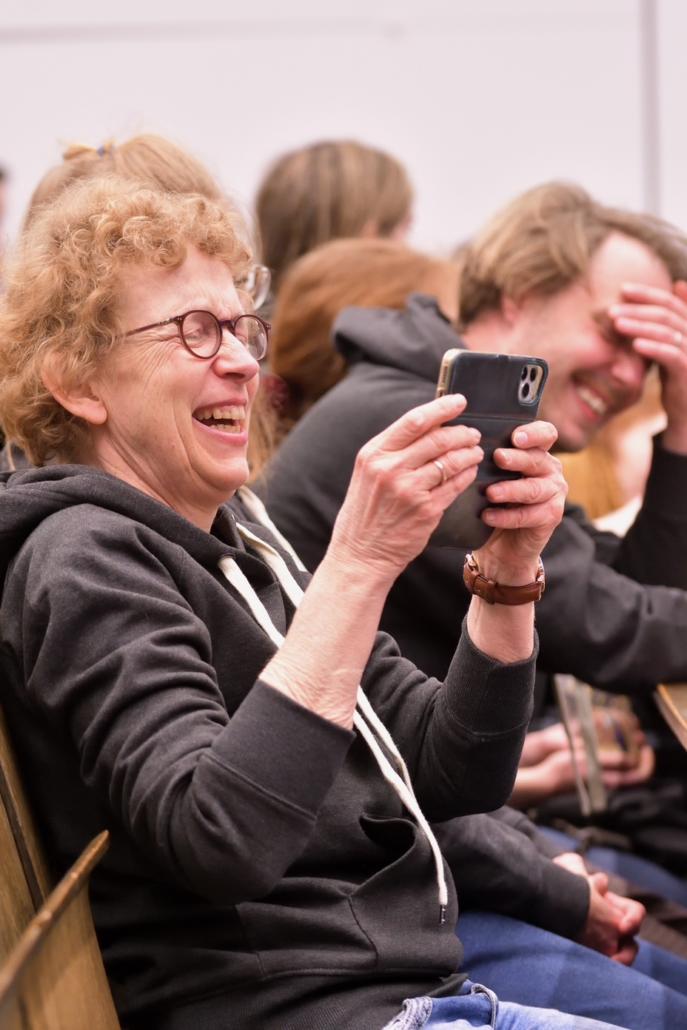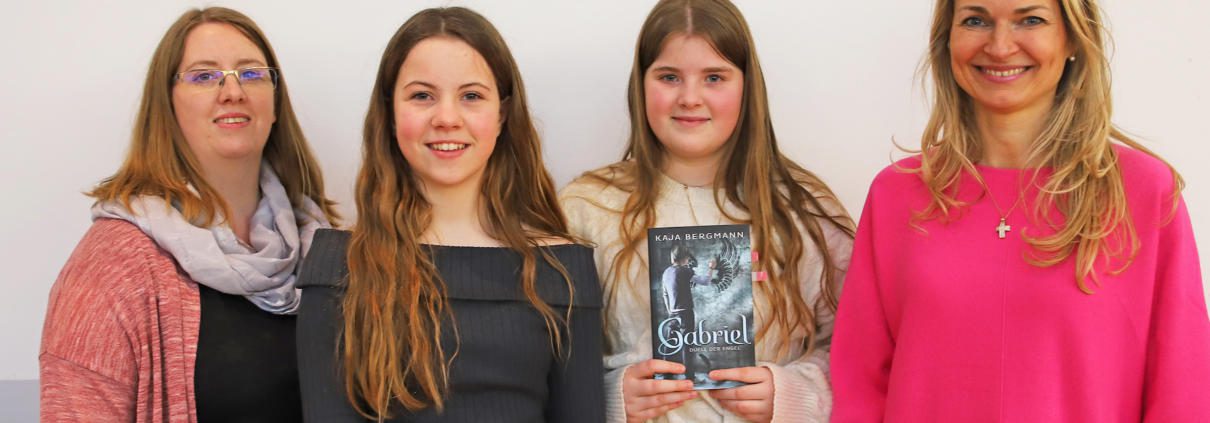
At the Central Hesse regional round of “Jugend forscht”—Germany’s best-known competition for young talent in mathematics, computer science, natural sciences, and technology—Steinmühle took first place four times. Following a team from the plus-MINT boarding school Steinmühle’s advancement to the national competition last year, this marks another outstanding start to the competition. Now in its 60th year, the competition invites young researchers to present their projects to a 24-member jury.

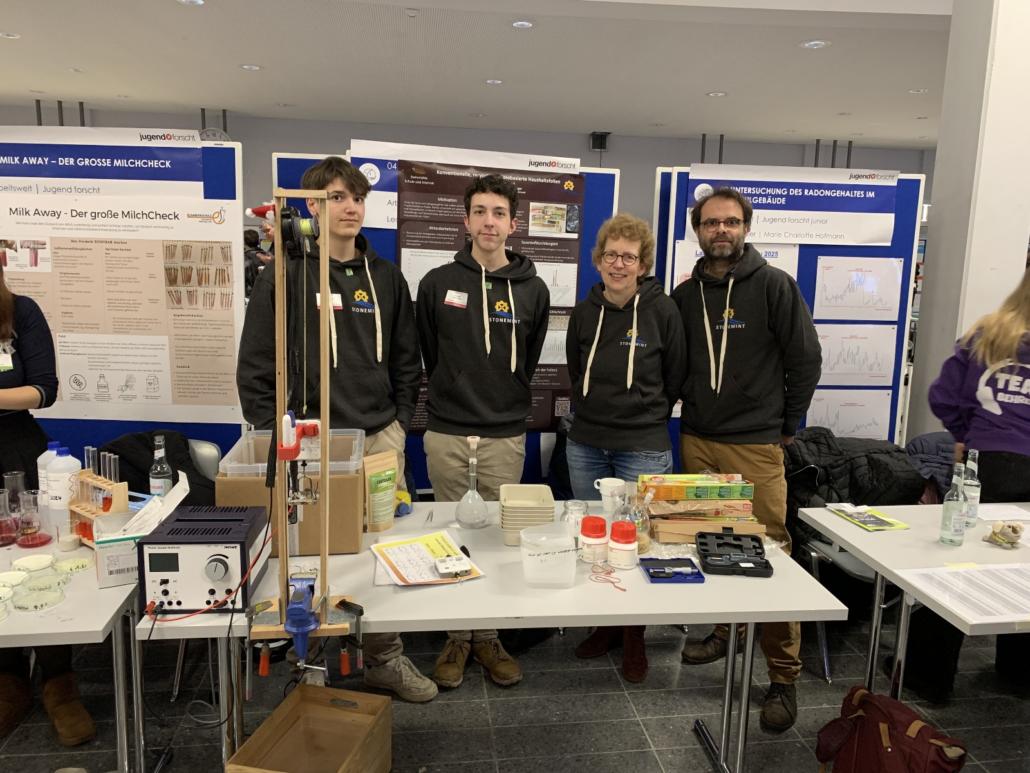
A total of 34 teams presented their research projects at the event, which was coordinated and jointly organized by Justus Liebig University Giessen and the Technical University of Central Hesse. Steinmühle was represented by seven teams, all of which addressed different topics in chemistry, the working world, biology, and technology. Using equipment, poster presentations, and scientific explanations, the students described their research questions and methods and reported on their findings. Key criteria included innovative thinking, the level of scientific rigor, as well as attention to detail and the ability to derive plausible and practically applicable insights.


For gentle UV filters in sunscreens

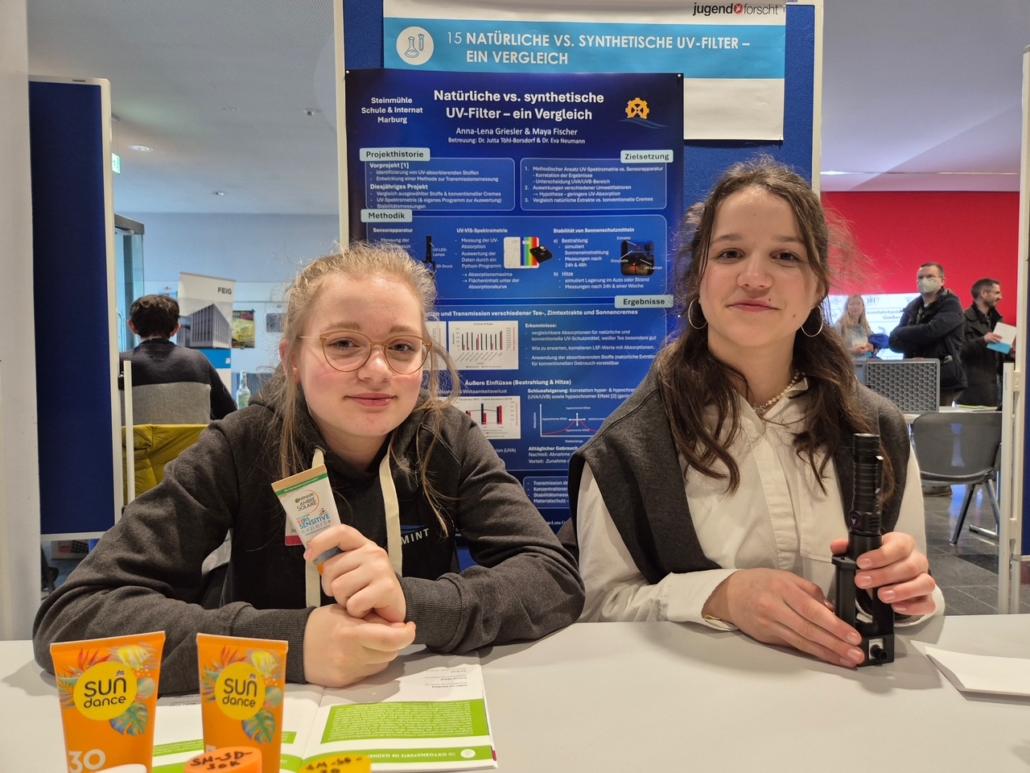
Anna-Lena Griesler and Maya Fischer from 9th grade took first place in chemistry. Building on a project from the previous year, they investigated the possibility of replacing synthetic and potentially harmful UV filters in conventional sunscreens with natural and long-term stable extracts, which required specialized equipment in the form of a UV-VIS spectrometer.


A Closer Look at Film Properties

First place in chemistry also went to Leonard Berger and Nicolas Bohnstedt, who are conducting research on sustainable alternatives to conventional petroleum-based plastic wrap. Their work focused on films that are partially recyclable or biodegradable, and they used precise methods to investigate their properties relevant to everyday use—including tear resistance, elasticity, oxygen barrier properties, and degradability.


Can You Learn Perfect Pitch?

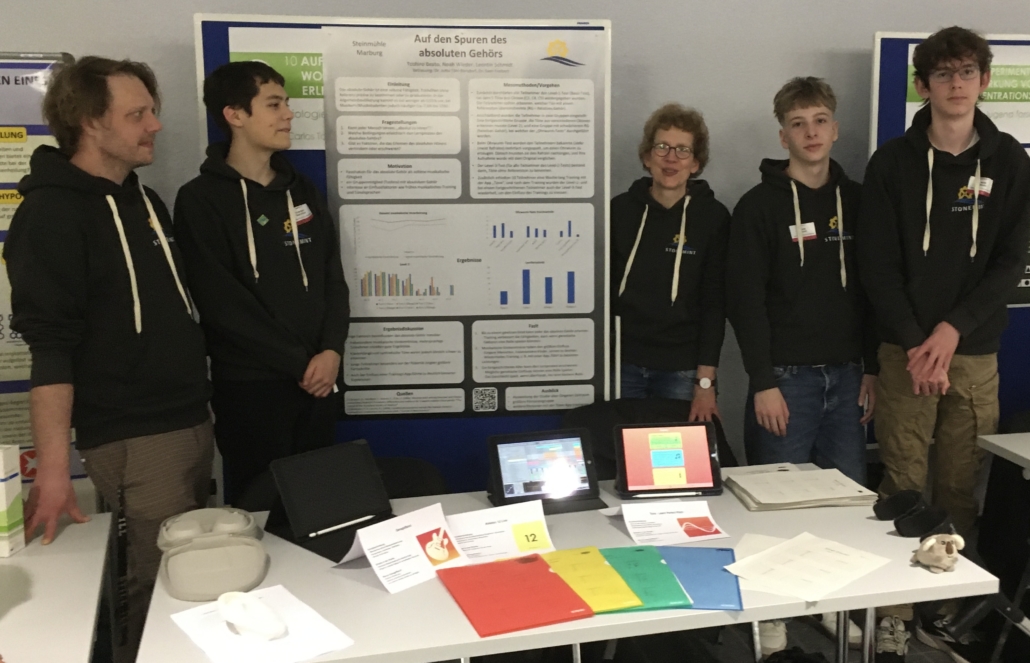
Toshiro Beato, Leontin Schmidt, and Noah Wieder were delighted to take first place in biology. The trio of young researchers explored the topic of perfect pitch—what it depends on, how it can be learned—and whether it can be learned at all. To investigate this topic, the three young researchers designed questionnaires and conducted tests as part of a study.


Collaboration Between Two plus-MINT Boarding Schools

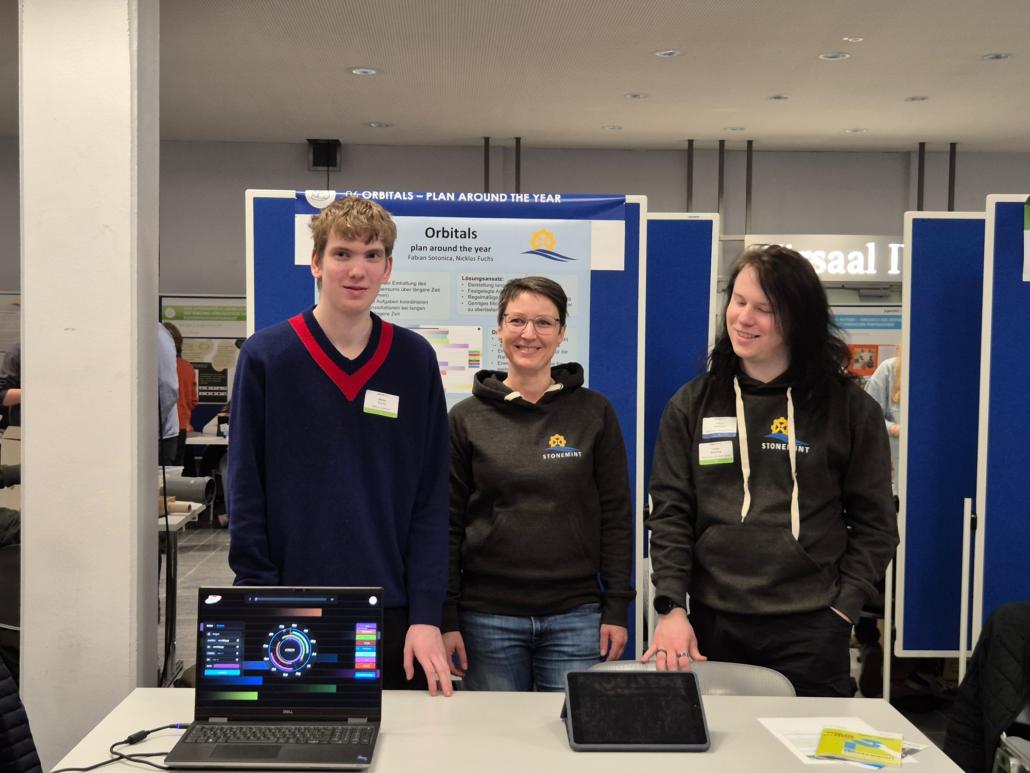
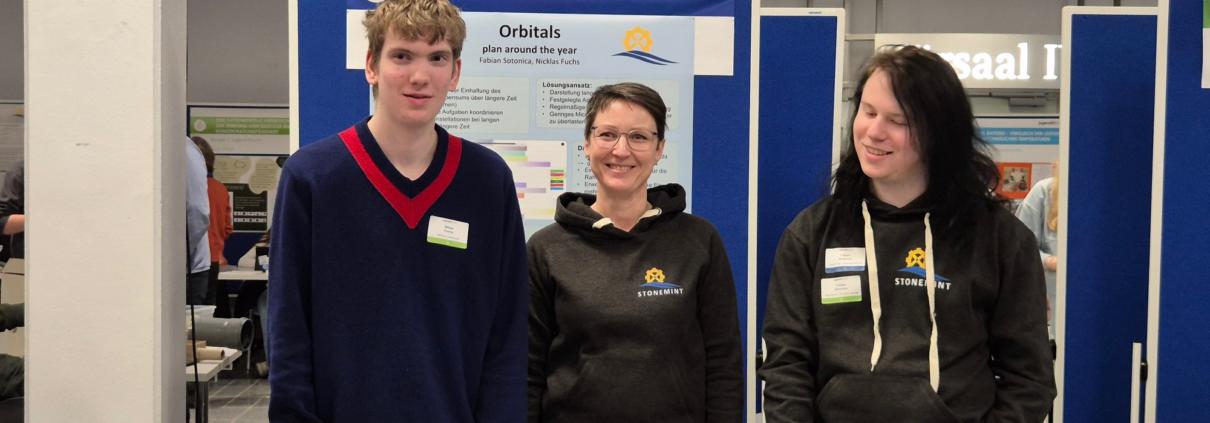
The project “Orbitals – plan around the year” by Fabian Sotonica, a student at Steinmühlen, and Nicklas Fuchs from the Louisenlund Foundation was the fourth project to win first place, in the “Working World” category. The project focused on annual schedule management, taking into account not only individual dates but also broader time frames. An application was developed for this purpose. This project marked the first collaboration between two plus-MINT boarding schools in the “Jugend forscht” competition.


Paper Made from Horse Manure

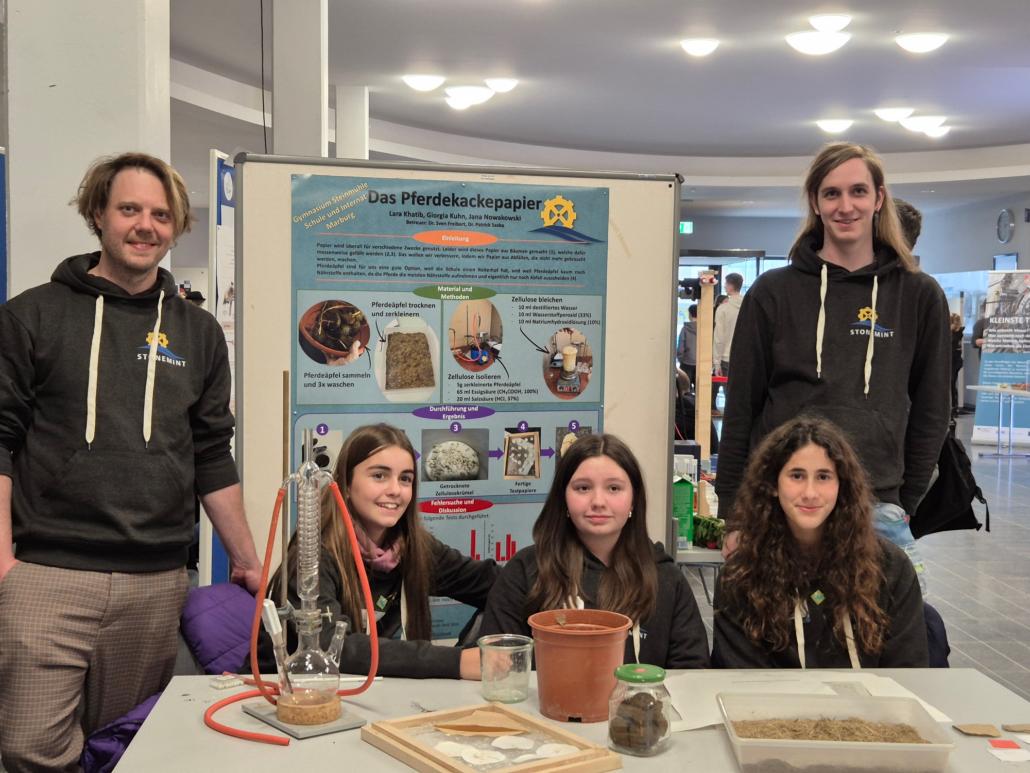
Lara Khatib, Jana Nowakowski, and Giorgia Kuhn (7th grade) took second place in the “Working World” category and won a special prize for resource efficiency with their project “Environmentally Friendly Paper Made from Horse Manure.” By producing paper from this resource—which is virtually unlimited at Steinmühle thanks to the school’s own horse farm—tree die-off can be reduced.


Professionalizing Water Quality Testing

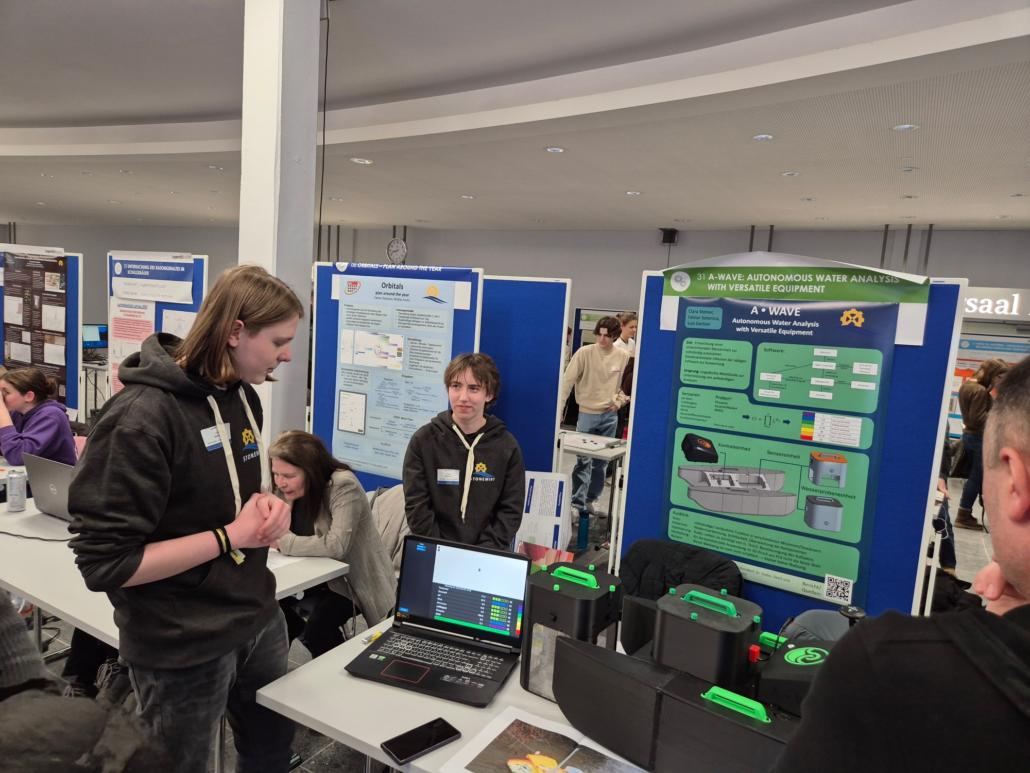
Fabian Sotonica, Luis Gerloni, and Clara Steiner won third prize, along with the special “Make Annual Subscription” award, for their optimization measures aimed at the professional use of the low-cost boat they developed for the semi-automatic determination of water quality classes. The focus was on individual functions and autonomous waypoint tracking to enable completely autonomous sampling and subsequent analysis.


A Bubbling Experiment

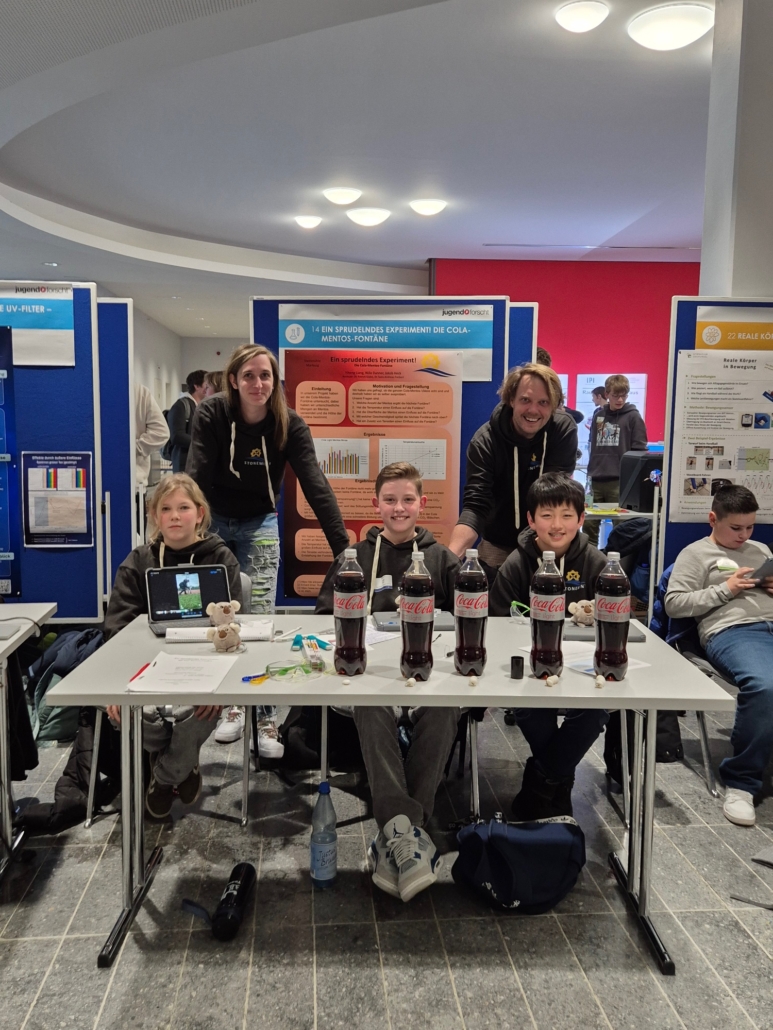
Third place also went to Yiheng Liang, Niilo Danner, and Jakob Heck from 6th grade. The trio had investigated the height of the “Coke-Mentos fountain” as a function of the quantity, state, and temperature of the ingredients. The three young researchers were also interested in the fountain’s speed and whether adding dish soap would change its height.


All Steinmühlen projects were ranked

This means that all of Steinmühle’s “Jugend forscht” projects have placed in the competition. To top off all these awards, Steinmühle received the MINTSPACE School Award from Hohenloher.


Many thanks to the support team!

The Steinmühle projects, which achieved outstanding results among the 34 participating teams, were supervised by Steinmühle teachers Dr. Jutta Töhl-Borsdorf, Dr. Sven Freibert, Malte Klimczak, Dr. Eva Neumann, Antje Seel, Dr. Patrick Szabo, and Dr. Christian Drews (Louisenlund).
Rainer Grabowski, Hesse’s State Representative for the Mathematics Olympiad at secondary schools, was the one to deliver the good news to Maximilian Moll from the Steinmühle math department: Once again, Steinmühle had secured a podium finish in a competition. Fifth-grader Sophie Sacher scored 26.5 out of 40 points in the highly challenging competition, securing third place. Steinmühle Principal Björn Gemmer commented on the achievement of the student, who attends Steinmühle’s International High School Program: “Outstanding!”

Emil Zuckermann, also a 5th grader and regional champion, and Orlando Geisel (11th grader) also took on the challenging problems of the Math Olympiad. Unfortunately, Orlando had to withdraw early on the second day due to illness.

Up through 7th grade, the state competition is the highest level that can be reached

The Math Olympiad consists of several rounds, with the difficulty increasing from round to round—culminating in the national round for the top math whizzes starting in 8th grade. For students in grades 3 through 7, the competition ends with the state round and a grand awards ceremony organized by the individual states.

Our photo shows Sophie Sacher at the awards ceremony alongside Brigitte Hirschler from the Hessian Ministry of Education and Cultural Affairs, organizer Rainer Grabowski, and the head of Olympiad Class 5. All the award winners from this Olympiad class then gathered for a group photo. Sophie can be seen in the back row, center.

Germany’s best-known competition for young talent in mathematics, computer science, natural sciences, and technology—Jugend forscht—kicked off on Friday. And once again, this competition ended with an outstanding performance by Schule & Internat Steinmühle!


Standing out among 34 teams

At the Central Hesse Regional Competition, coordinated and organized jointly by Justus Liebig University Giessen and the Technical University of Central Hesse, Steinmühle took home the regional title with no fewer than four projects! A total of 34 teams presented their research and experiments to a 24-member jury, after which other interested attendees had the opportunity to ask the participating groups various questions.


Collaboration Between Two plus-MINT Boarding Schools

We’ll be presenting the experiments over the next few days, including, as a special feature, a collaborative project with the Louisenlund Foundation—which, like the Steinmühle, is a plus-MINT boarding school. We’re proud of the entire group, including the teachers led by MINT coordinator Dr. Jutta Töhl-Borsdorf. Thank you all so much! Simply amazing!


Lisa Braun, a German teacher at Steinmühle, shared some great news: Tabea Moses from Class 6a at Steinmühle is Marburg’s best reader! This was the decision of the jury at the regional round of the 66th Reading Competition of the German Book Trade. The panel consisted of two booksellers, a linguist from Philipps University of Marburg, the artistic director of the Waggonhalle Marburg, an author, an employee of the city library, and last year’s city winner, Judith Ruff. Next up for Tabea is the district round, where she will represent the city of Marburg.

“You all did a fantastic job. You’ve read aloud in front of others time and again at your own schools, and now once again today here in front of a jury—that takes a lot of courage,” said Mayor and Head of the Youth and Schools Department Nadine Bernshausen during the Marburg city finals in the Building Authority Hall on Barfüßerstraße.


Clear pronunciation, varying speed and volume

The jury particularly liked about Tabea, “…how you gave the characters their own voices. Your pronunciation is clear and easy to understand. We were also impressed by how you vary both the speed and the volume to suit the story.”


“I like stories with suspense and a spooky vibe”

Tabea Moses chose a passage from Kaja Bergmann’s *Gabriel: Duel of the Angels* to read aloud: “What I like about the book is that it starts off slowly, so it’s easy to get into, and then it gets really exciting. I like stories with suspense, thrills, and mysteries,” said Tabea Moses. Tabea has been interested in books since kindergarten and would try to decipher the words because she wanted to know what they meant and what the story was about.


School libraries also encourage reading

As a child, she read a lot from a very early age, and as a teenager she rediscovered her love of reading through the school library, the reading competition, and her little sister, to whom she often read aloud.The photos (Stefanie Ingwersen/City of Marburg) show Tabea with her mother Katja Moses (left), her friend Amelie Michanikl (second from left) and Mayor Nadine Bernshausen (right), as well as in a group photo with the other contest participants.

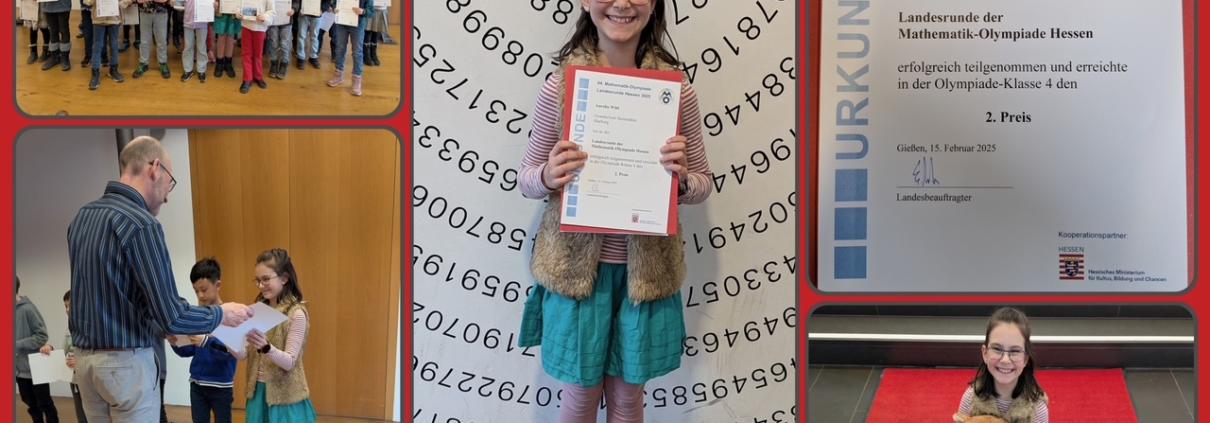
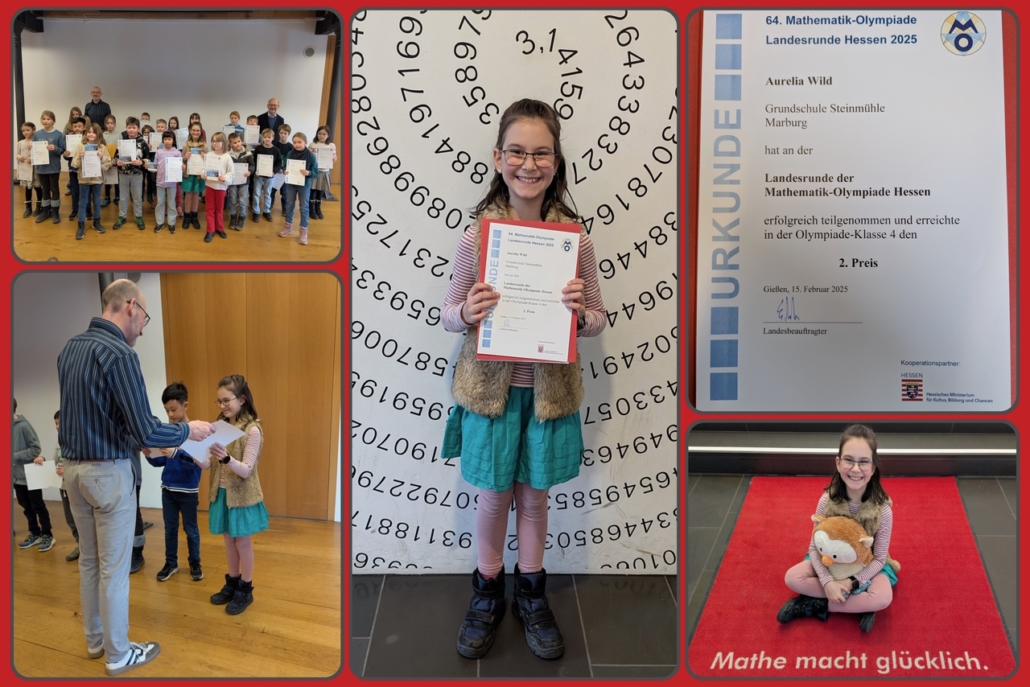
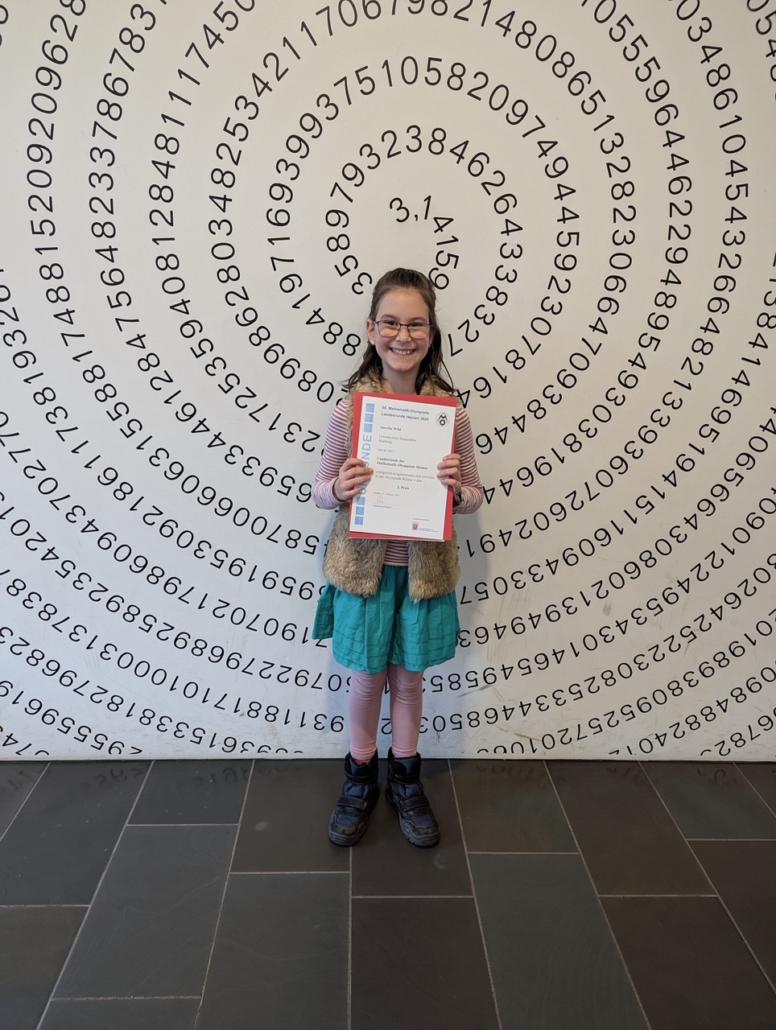
It was an exciting day for Aurelia Wild, a fourth-grader at the Steinmühle Bilingual Elementary School: She had registered for the 64th Math Olympiad, and now the Hesse state round was getting underway. After a welcome address at the Mathematikum in Giessen by its director, Prof. Albrecht Beutelspacher, Aurelia and her fellow contestants were shown to their workstations. For two hours, the children worked on interesting math problems before they had the chance to thoroughly explore the experiments at the Mathematikum. During this time, many dedicated teachers graded the submitted assignments.


“Silver” in the state competition

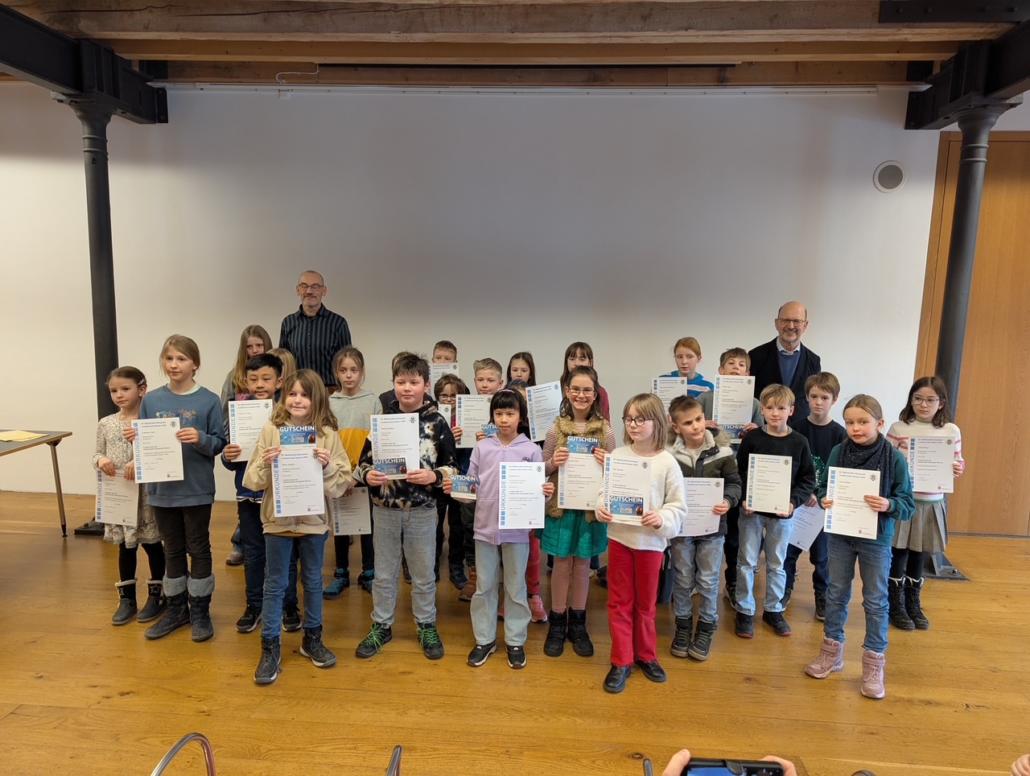
At 2:00 p.m., the awards ceremony finally began. First up were the third-graders, and the excitement kept building—even for Aurelia. Then the certificates of participation were awarded to the fourth-graders—and that’s when it became clear that Aurelia was among the winners. She was overjoyed when she was even called up to receive second place!


Parents Thank Teachers for Their Motivation

Aurelia proudly accepted her certificate and prize. She’s already certain: “I’ll be back next year!” The teachers led by Lorraine Herrmann from the administration of the Bilingual Elementary School and Steinmühle Principal Björn Gemmer are also proud. Aurelia’s mother, Lydia, is delighted: “We’d like to thank Steinmühle for encouraging its students to participate in competitions like the Math Olympiad.”

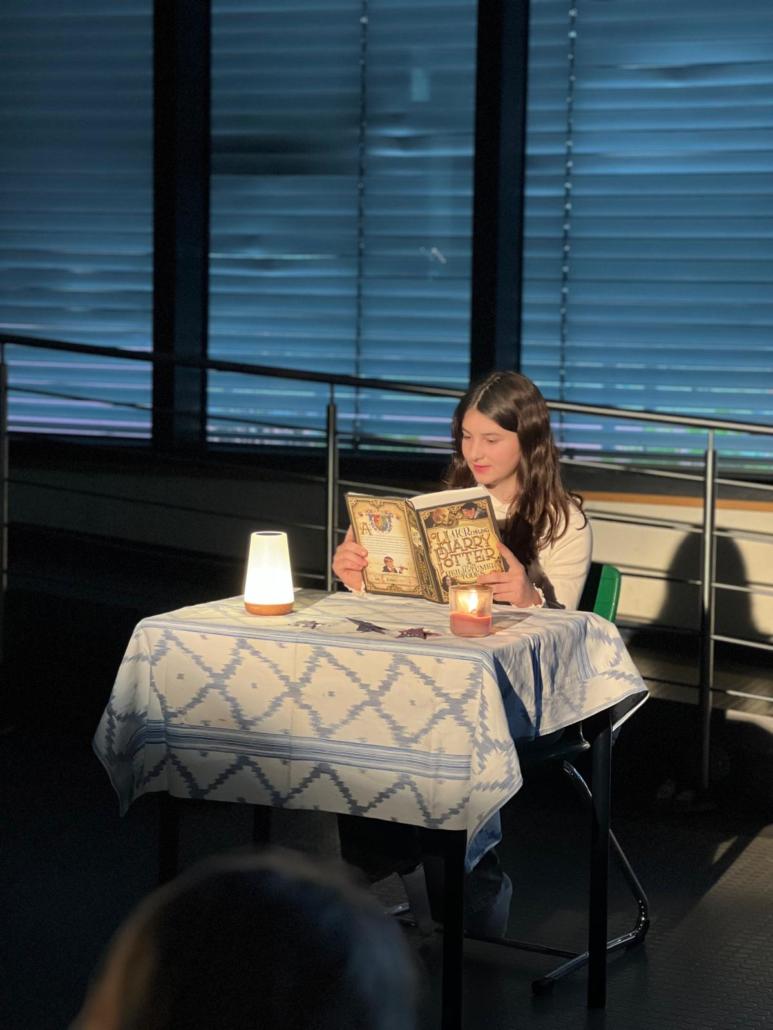
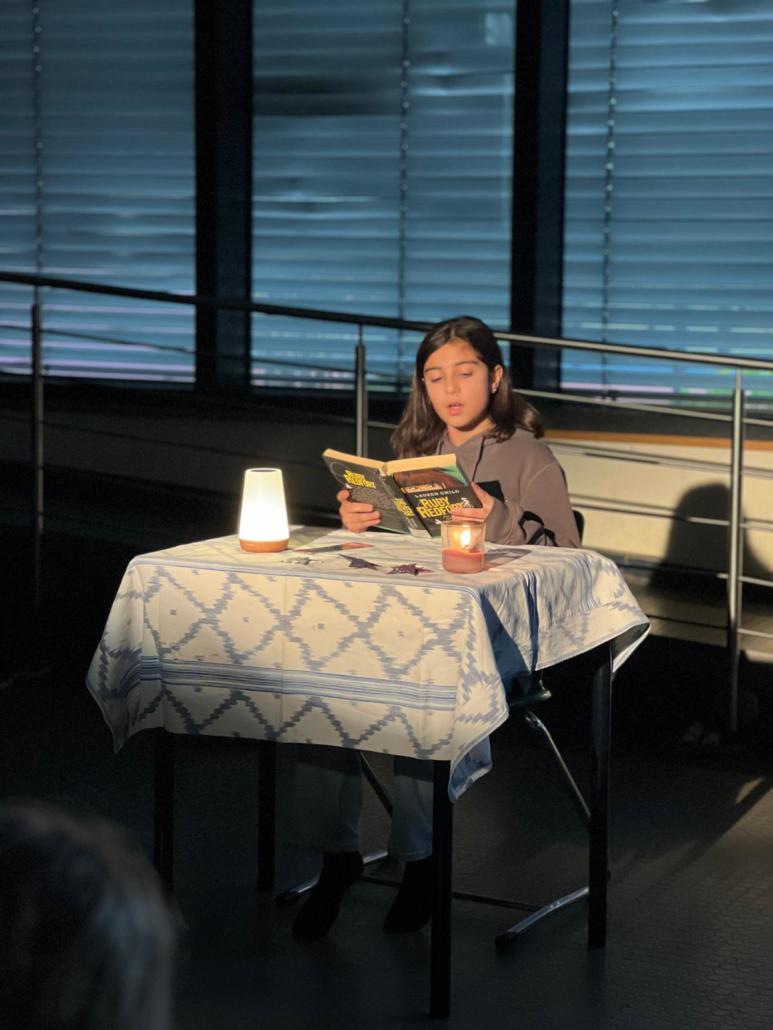
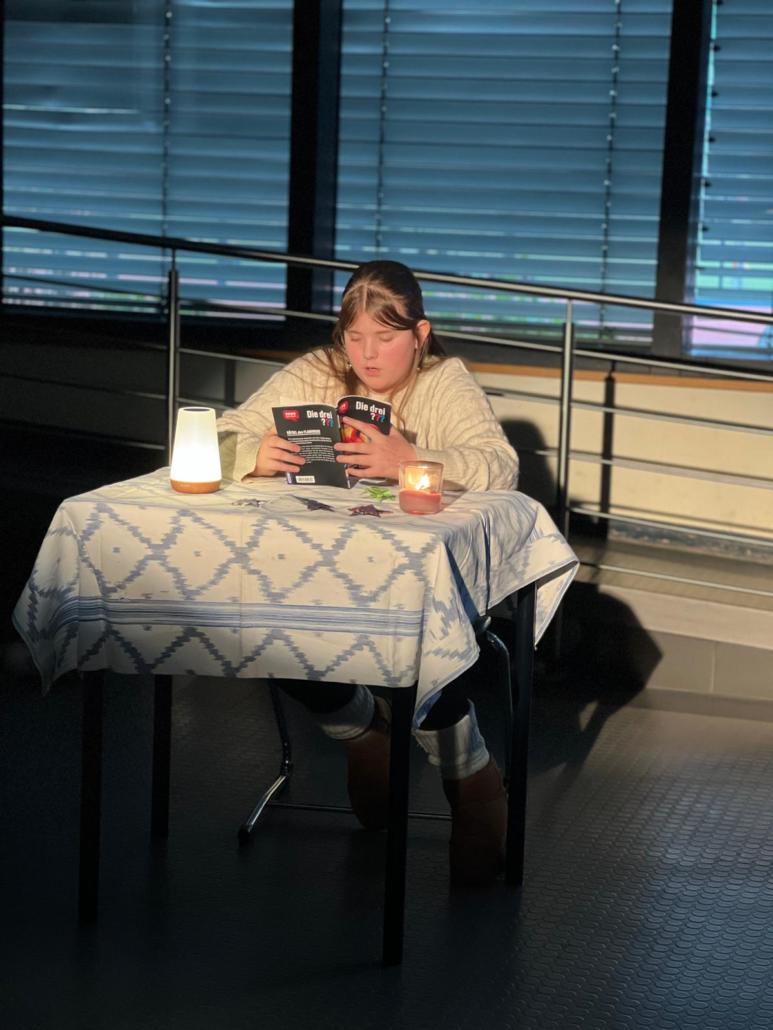
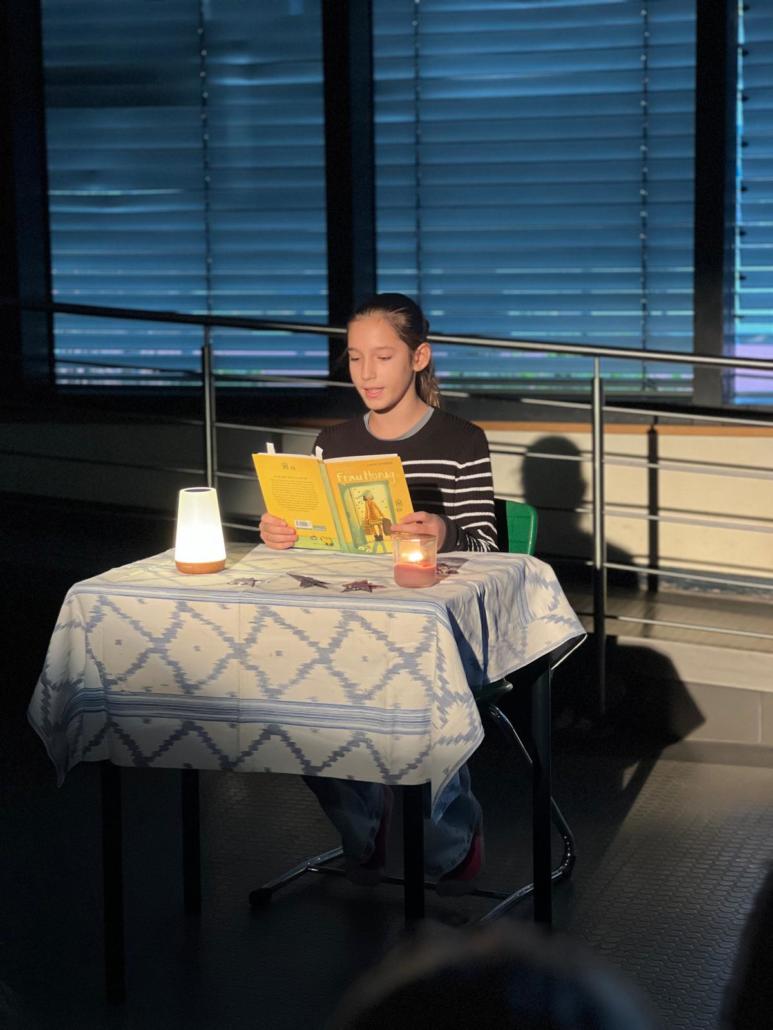
We started the new year with some great news from Grade 6: students Romilda, Carla, Nika, and Tabea successfully participated in the 2024 reading competition for Grade 6 students at Steinmühle. The competition, which takes place at the end of every year, once again showcased the reading skills of our lower school students.

All four of them knew how to bring the characters, the plot, and the atmosphere of their chosen passages to life and captivate their classmates—who were listening from the steps of the open learning area in the Centrum—with their readings. Whether it was about Ms. Honig, Harry Potter and his adversary, the youngest agent Ruby Redfort, or the Three Investigators: Romilda, Carla, Nika, and Tabea delivered impressive performances on Wednesday, December 11, in this second round as well, after having been named “winners” within their classes in the weeks prior.


Tabea is launching at the city level

In the end, the so-called “external text”—which the students had to read—proved to be the deciding factor, so the jury—composed of the German teachers Lisa Braun, Dagmar Müller, Nina Merzenich, and Frank Wemme—in consultation with the fellow students invited to help with the evaluation, Tabea Moses from class 6a—selected her by a narrow margin to represent the school in the third round of the competition at the city level, expected to take place in February.
A heartfelt thank you to all the readers and the wonderful audience for the delightful reading moments at Steinmühle, and good luck to Tabea in the next round.🍀

Frank Wemme

Great news to end the year: In the 2024 school garden campaign organized by the magazine “Mein kleiner schöner Garten” (published by Burda in Offenburg), the team led by teacher María Ramos won a gourmet gift package worth 50 euros from TressBrüder. Principal Björn Gemmer congratulated the team on this prize and the accompanying certificate, which recognized their interest and creativity, and thanked María Ramos for her ongoing dedication to gardening and for participating in the contest.

In fact, we’re all already excited to see what will grow, thrive, and bloom again at the Steinmühle this spring and summer!


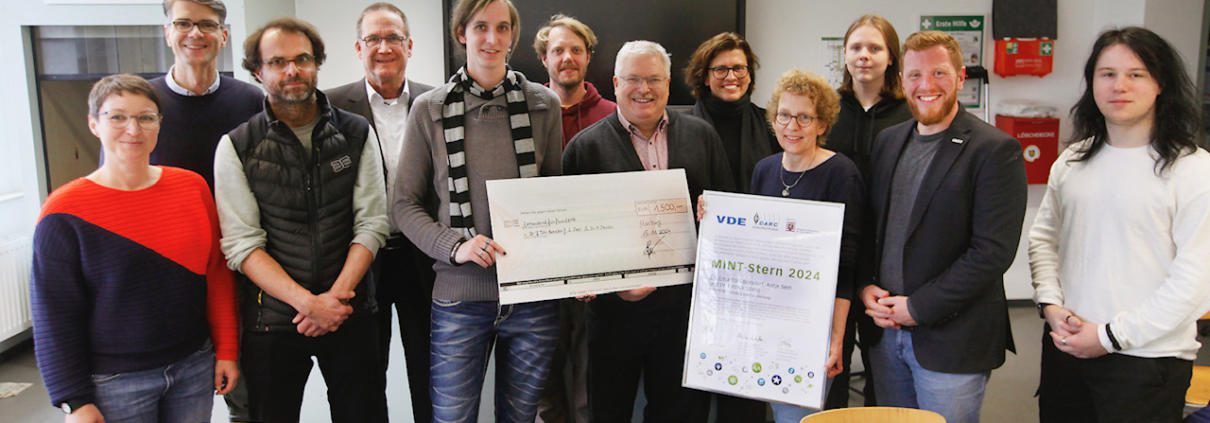
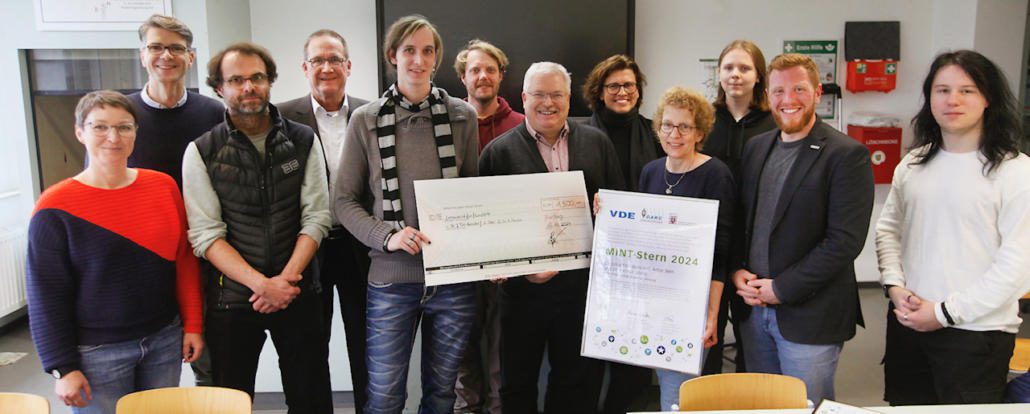
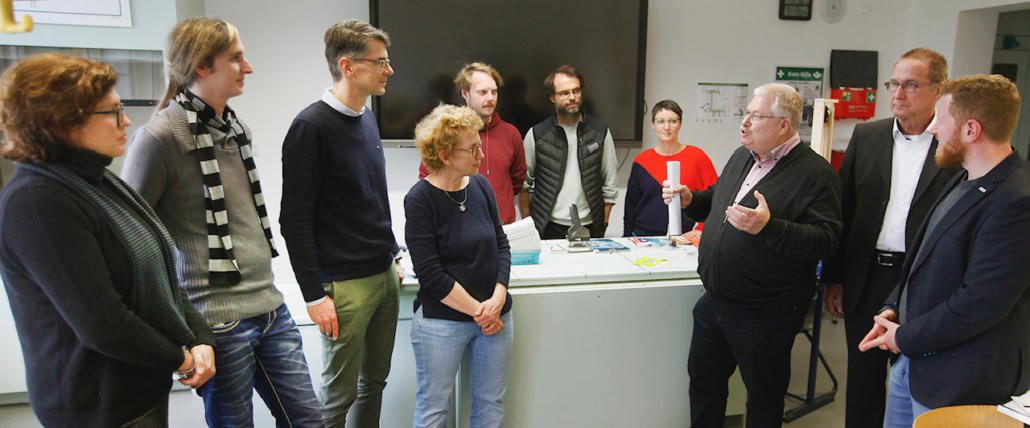
A grand reception on our campus: Steinmühle welcomed a five-member delegation to accept a very special award in the STEM field. The Association for Electrical, Electronic, and Information Technologies (VDE) and the German Amateur Radio Club (DARC) awarded the Steinmühle School & Boarding School the STEM Star 2024, thereby recognizing “outstanding and sustained commitment to the fields of mathematics, computer science, natural sciences, and technology.”


The interplay between the disciplines was convincing

Individual teachers and teams from schools in Hesse were eligible to apply. “With a STEM Star, we recognize projects and programs that demonstrate exceptional impact, continuity, and ingenuity,” said Dr. Kevin Rick, director of VDE Südwest. The award was presented to STEM coordinator and head of the STEM gifted education program, Dr. Jutta Töhl-Borsdorf, her colleague Antje Seel, and her colleague Dr. Patrick Szabo. “Without qualified guidance that inspires students and spurs them on to peak performance in research and experimentation, such outstanding achievements would not be possible,” commented the laudators, including Thomas Beiderwieden from VDE Rhein-Main and Christian Entsfellner from DARC, in recognition of their work. In the case of Steinmühle’s winning project, “Water Analysis 2.0,” the jury was particularly impressed by the interplay of the disciplines involved in the project—ranging from ecology to programming to model building. The team of students from the Plus-MINT track at the Steinmühle boarding school thus advanced to the national finals of “Jugend forscht” this early summer. This project involves a measurement platform developed and built by the students themselves to determine water quality (we have reported on it several times).
 

Minister of Culture as Patron

“Steinmühle is delighted to receive this very special award and is proud of everyone who contributed to it through their hard work, perseverance, and dedication,” said Principal Björn Gemmer on behalf of the award recipients, who received certificates and prize money totaling 1,500 euros. For Steinmühle, this serves as an incentive to continue investing energy in this area. Because, as you can see, it’s worth it in every way!
The award ceremony, held under the patronage of Armin Schwarz, Hessian Minister of Culture, was celebrated by the participants with a meal together in the dining room of the Steinmühle. And there, too, there was plenty of praise—for our cuisine.


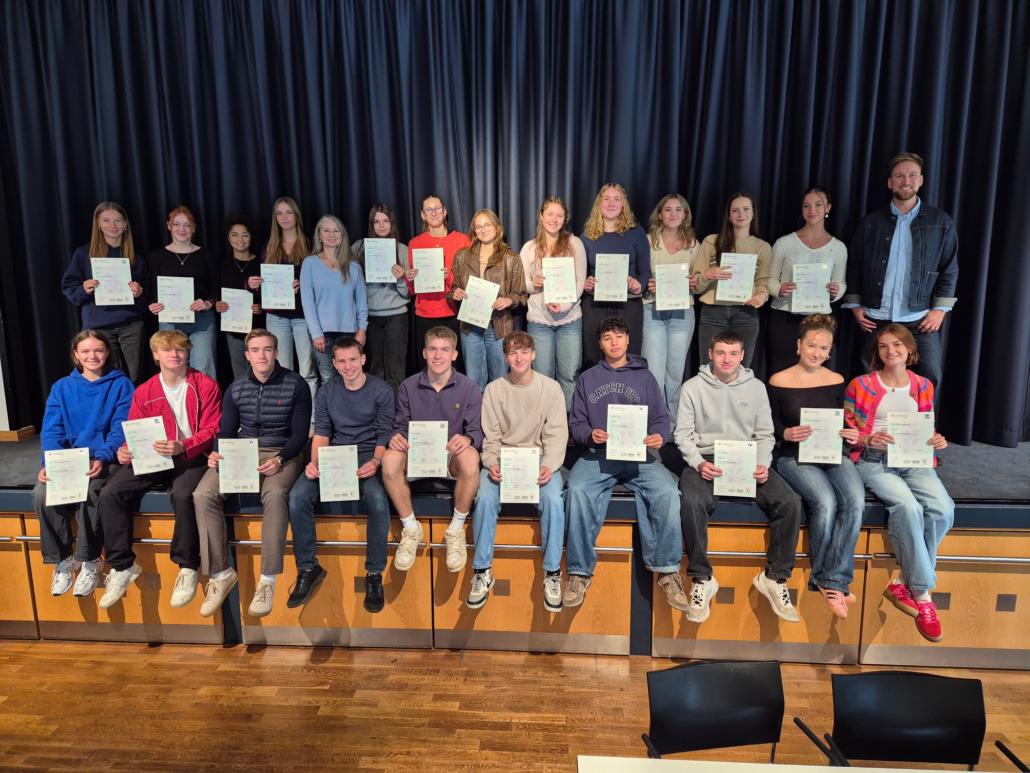
Once again this year, students at Steinmühle who earned the Cambridge Certificate achieved outstanding results. This was reported by teachers Nicole Hohm and Matthäus Otte.

The English language plays a central role at Steinmühle: Students at the Bilingual Elementary School begin learning English in first grade; they can later deepen their knowledge of the language in the International High School track or, if they enroll in the regular high school track, further develop their language skills by earning the Cambridge Certificate.

Congratulations to our recent graduates!

The following people participated (front row, from left to right): Flora Endres, Marvin Preis, Marc Wirth, Julius Henkel, David Immel, Joel Rucker, Hessein Koheil, Leon Schmidt, Elsa Stremme, Anna Reinhardt.

Back row, from left to right: Zoe Reisch, Janne Elsasser, Aurora Valente, Lia Kraft, subject teacher Nicole Hohm, Mia Dotzauer, Hanna Schmidt-Dege, Rebecca Zenker, Alicia Bruchmann, Emilia Sperl, Emily Böth, Marharyta Diachenko, Amelie Laukel, subject teacher Matthäus Otte.

Missing from the photo: Sophia Nolte, Joshua Müller-Brodmann, Leticia Günther, Ivo Hamann, Mike Klatt, Zoe Potthoff, Alexander Trofimov, Rakim Tsegay, Lukas Zimmer, Melina Mengel.

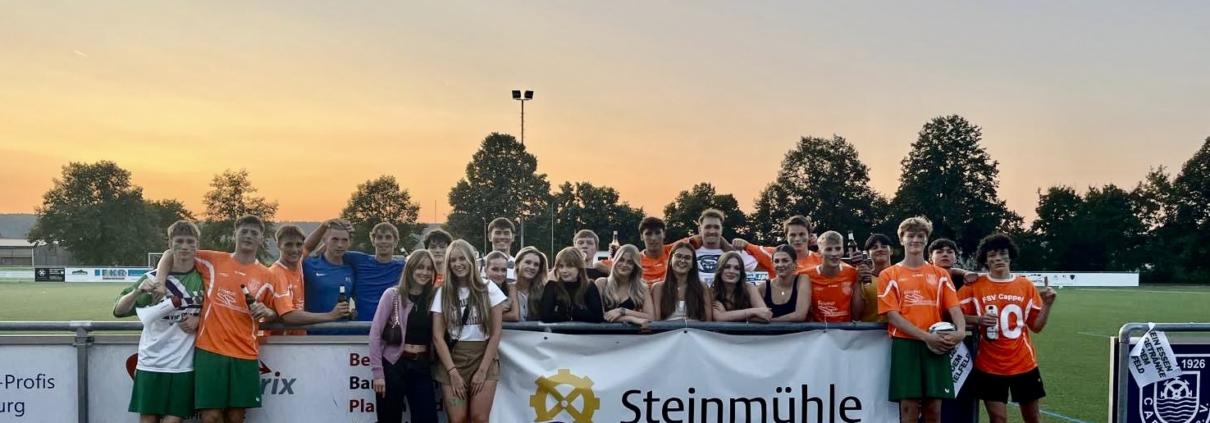
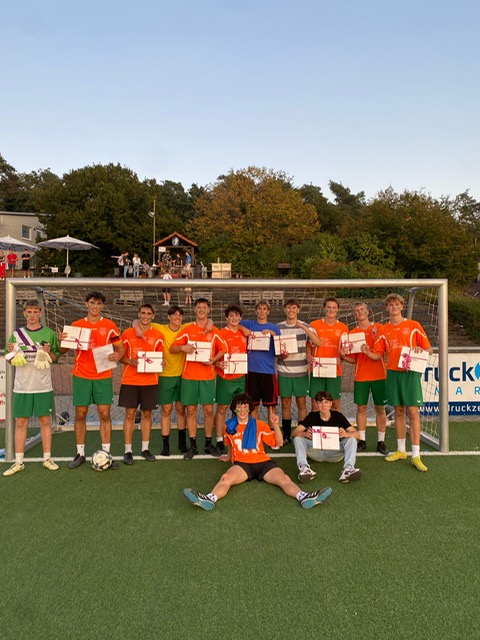
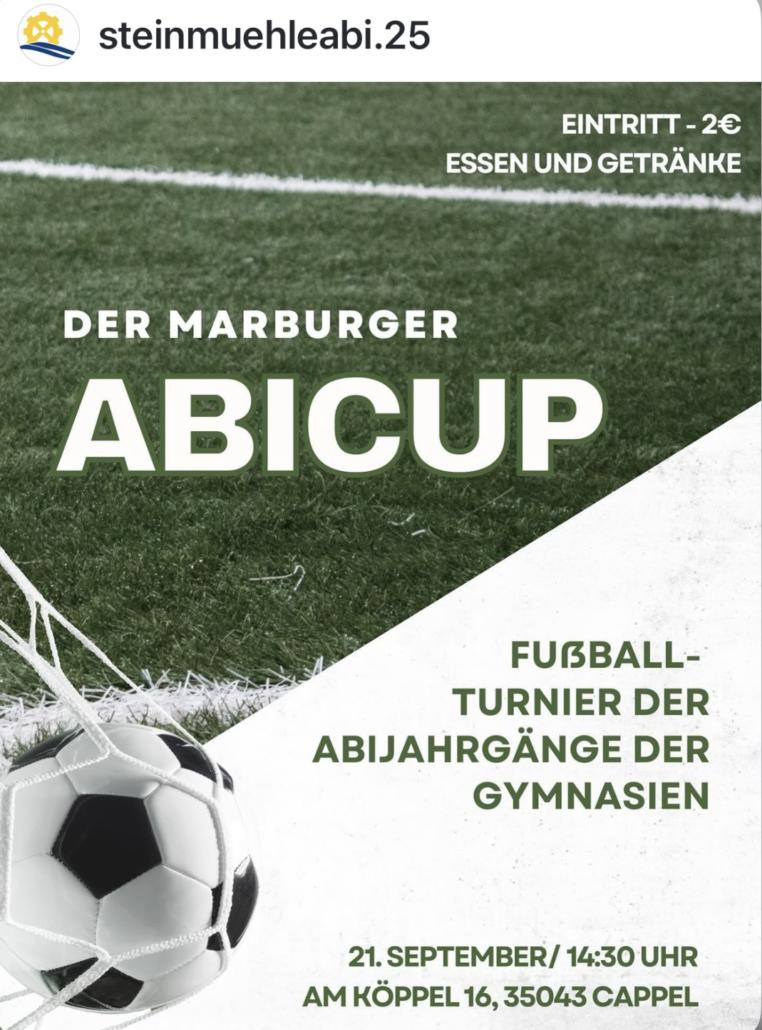
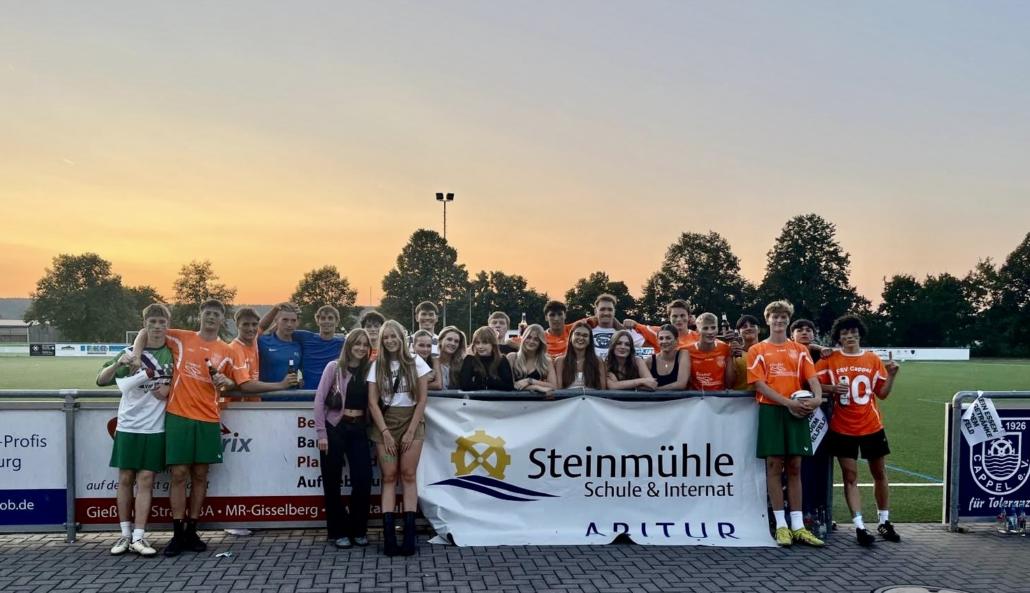
Now that’s what we call taking care of things in a timely manner! The Steinmühlen Class of 2025 kicked off its final school year with a great idea: It organized a citywide soccer “ABIcup” and invited the soon-to-be high school graduates from all schools in Marburg to participate.

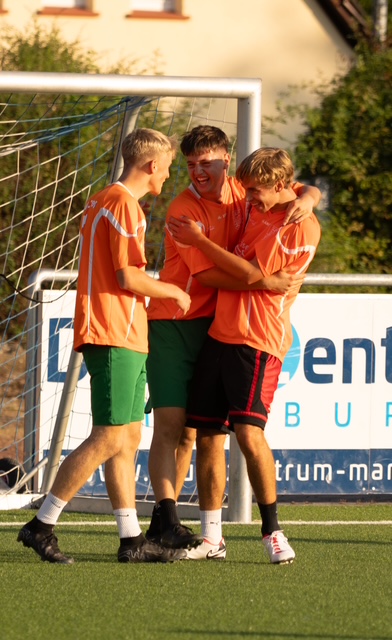
The tournament took place on September 21 at the Cappeler Köppel Stadium. The modest admission fee of 2 euros and the proceeds from the sale of hot dogs and drinks went toward the ABI fund. “The ABI Cup organized by the Steinmühlen Class of 2025 was meant to be a change of pace from the usual graduation parties,” reported Alicia Spitzhüttl on behalf of the graduation committee. “We also wanted to bring schools together and strengthen the bonds within our own class. The highlight of the tournament was, of course, that our boys were able to bring home the victory!” she said happily.

The Steinmühle’s Class of 2025 promoted the event—and later its results—on their Instagram account. By the way, the students there would definitely appreciate some followers and likes! They’ve certainly earned them for bringing their great idea to life.