

Sustainability Management—A Promising Addition to a Business Administration Degree
How can one combine the unique challenges of sustainability with the popular business administration program?
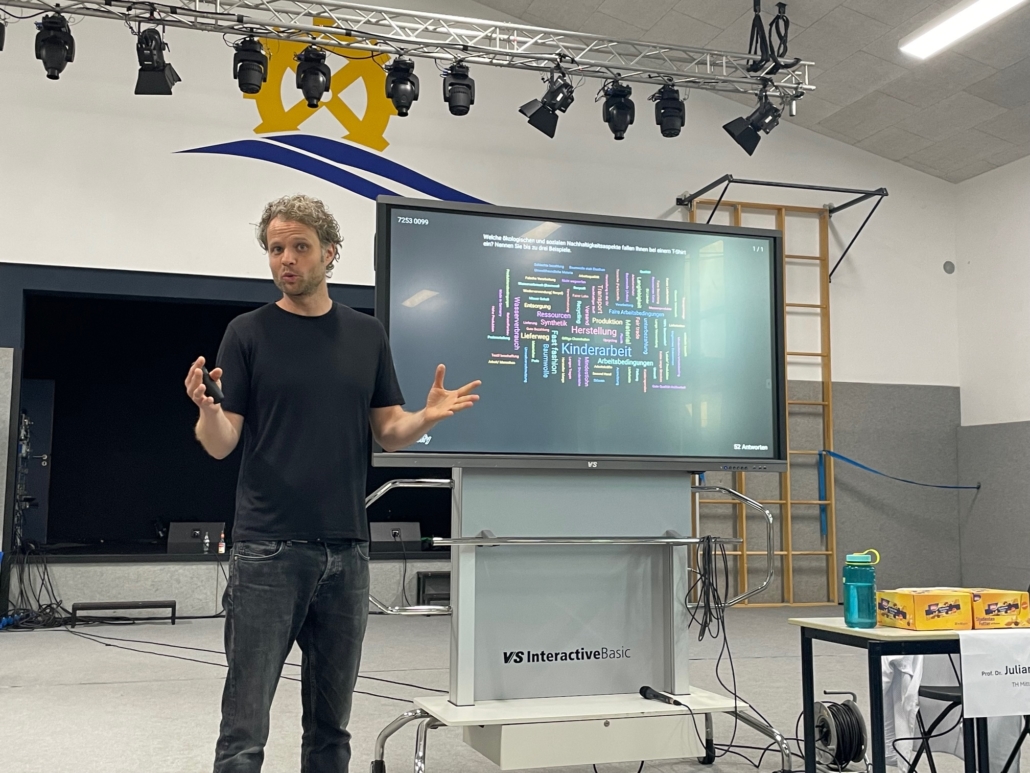
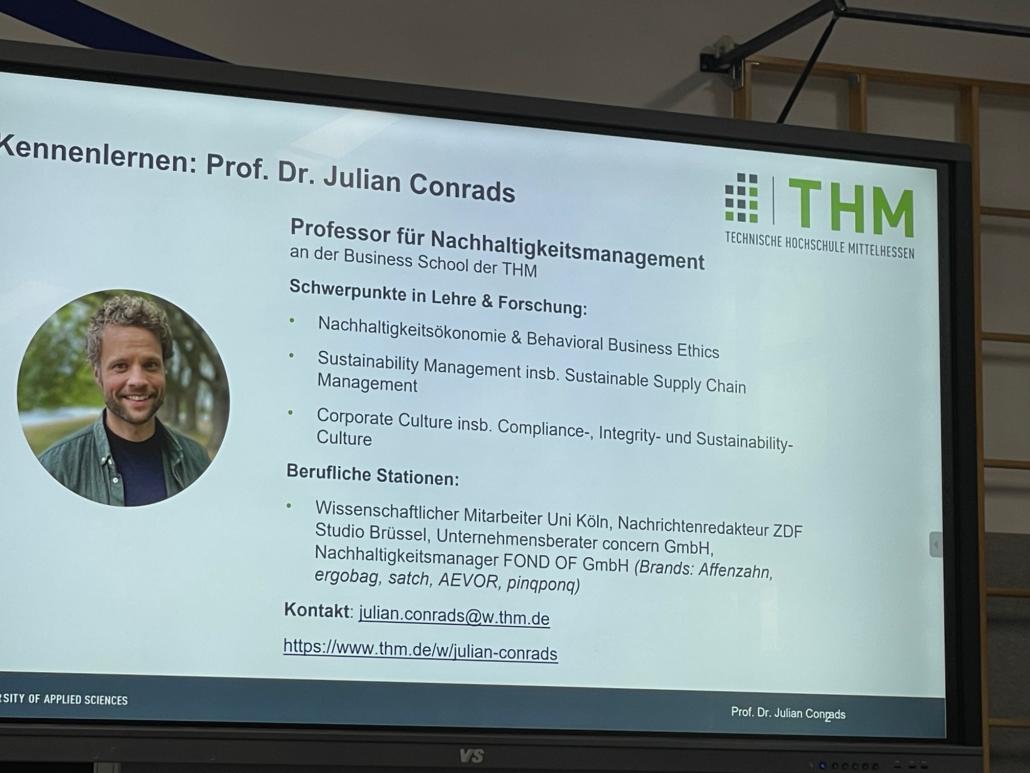
One person who knows this all too well is Prof. Dr. Julian Conrads. For the past three years, he has been teaching business administration with a focus on sustainability management at the Technical University of Central Hesse (THM). His lecture at the Steinmühle, given at the invitation of Bernd Hülsbeck—a subject teacher and head of the social sciences department at our school—contributed to career guidance and once again fostered exchange with the university.
In Focus: Textile Manufacturing, People, and the Environment
This issue affects everyone, and to have a say in it, all you have to do is look down at yourself: What am I actually wearing? Textile manufacturing around the world is a hot-button issue—one that’s generally well known but often ignored. “Surely expensive brand-name manufacturers don’t tolerate poor working conditions,” many reassure themselves, attributing the environmental impact of the textile industry solely to low-cost producers. — That’s often the case and may be true, but it isn’t necessarily so, as Prof. Conrads knows.
Utilization of all conceivable resources
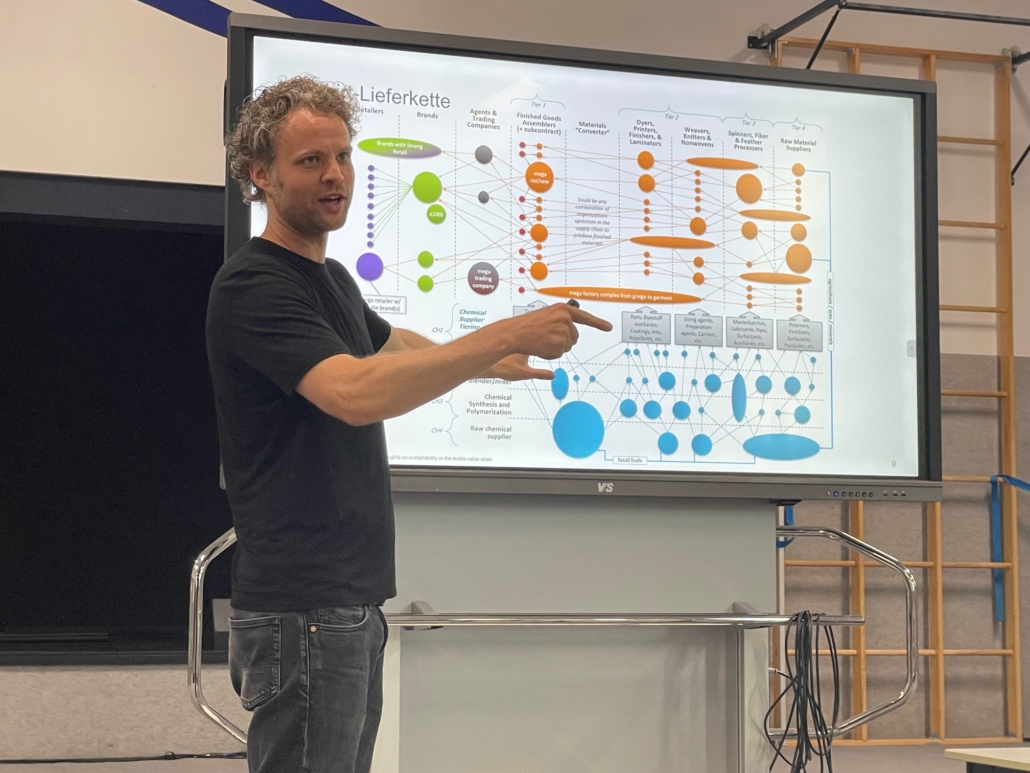
Vietnam, Taiwan, Bangladesh: Conrads went there in person to see for himself the conditions under which the items we wear are produced and how, for example, backpacks are sewn together. The focus is on the three pillars of sustainability: ecology, economy, and social responsibility. Aware that synthetic materials are petroleum-based and that dyeing—along with cotton cultivation—places an enormous strain on water resources, we can immediately announce another startling fact: With 1.2 billion metric tons of CO2 per year and 6–8 percent of global emissions, the textile industry has a greater impact on our climate than air travel and shipping combined.
In fact, these are all figures you should be aware of. And here are a few more examples: The textile industry consumes 20 percent of the world’s water supply. For every kilogram of clothing produced, about one kilogram of chemicals is used.
A Look at Working Conditions
However, alongside these sobering facts, it is also true that the textile industry is a major global employer. It is estimated that 70 million people—particularly in developing and emerging economies—earn their livelihoods from it. Yet even these figures must be viewed in context, given the often inadequate wages paid to workers—who are mostly women and frequently lack basic rights. It is not only the natural environment that suffers from the production of textiles due to air, water, and soil pollution; human resources—specifically, the labor of workers—are also exploited.
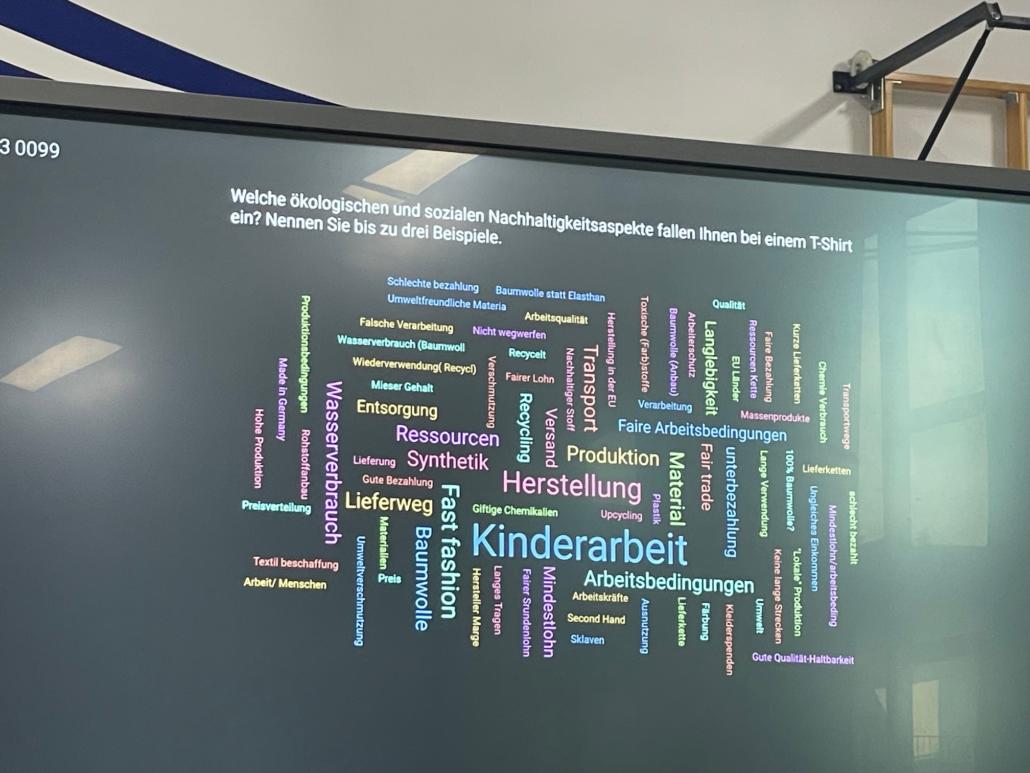
Compliance with core labor standards is part of social responsibility. This includes the elimination of forced labor, fair wages, and reasonable working hours. Independent third-party firms conduct audits to ensure that certain standards are met or maintained. Another important criterion in this context is the elimination of child labor.
Business Statements Send a Message
To ensure that employees—most of whom are women—are aware of their rights, training sessions are offered in the areas of occupational safety and labor law. Complaint hotlines are available if on-site conditions do not appear to comply with the law. To send a clear message, companies issue a business statement in which they commit to adopting a sustainable approach. This also addresses supply chains, the diversity of suppliers, and the highly complex substances to be processed.
Is sustainable business economically viable?
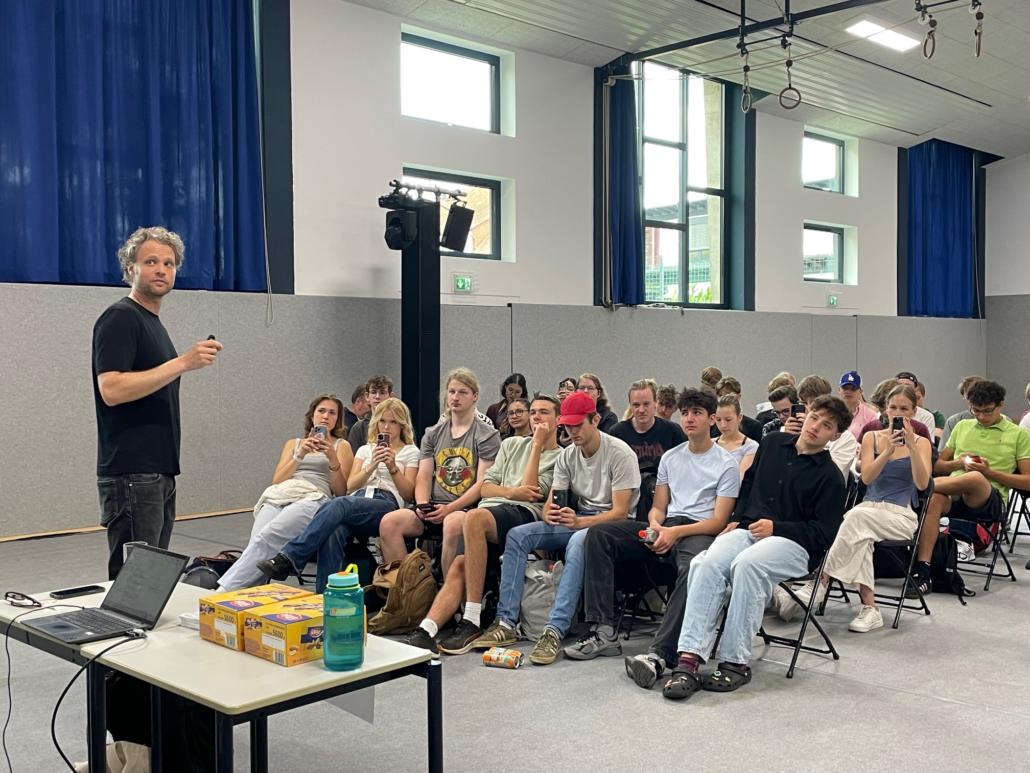
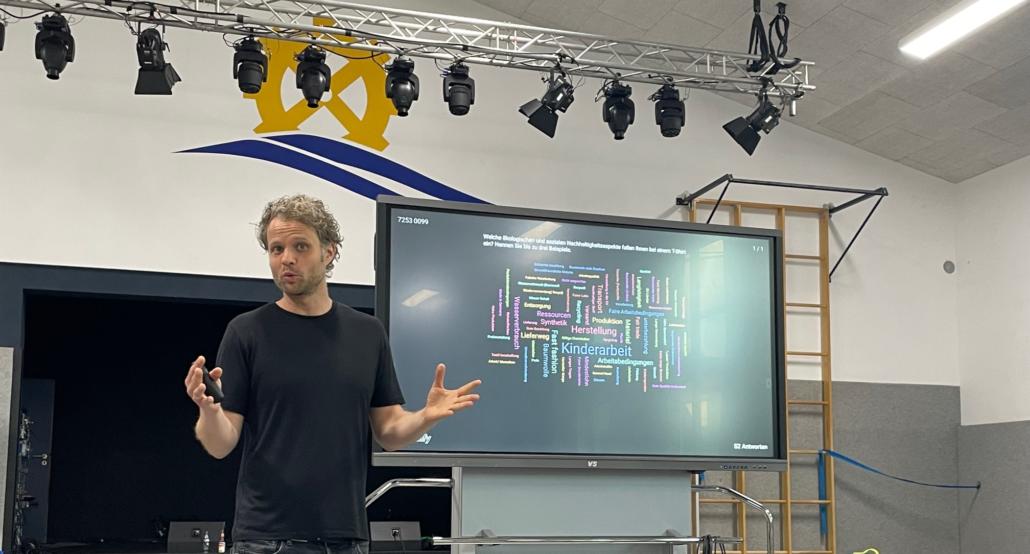
Social responsibility and sustainable business practices entail costs for companies. “Can this even be economically worthwhile anymore?” the speaker asked the group, consisting of 11th-grade students from Steinmühle High School. They had the right answer ready. To ensure this is the case, companies rely on marketing and on building a reputation that resonates with consumers.
Possible Career Paths
The Business Administration (BWL) program in Sustainability Management, leading to a Bachelor of Science (B.Sc.) degree, can lead to careers in corporate management, work with nongovernmental organizations (NGOs), a career in politics, or starting a business. Prof. Conrads: “It’s an addition to business administration. We’re trying to make sustainability a normal part of business administration.”
Angela Heinemann