


A call from Steinmühlen teachers Ines Vielhaben and Antje Seel to participate in the “Stadtradeln” competition:
Dear students, dear parents, dear faculty, and dear boarding school staff,
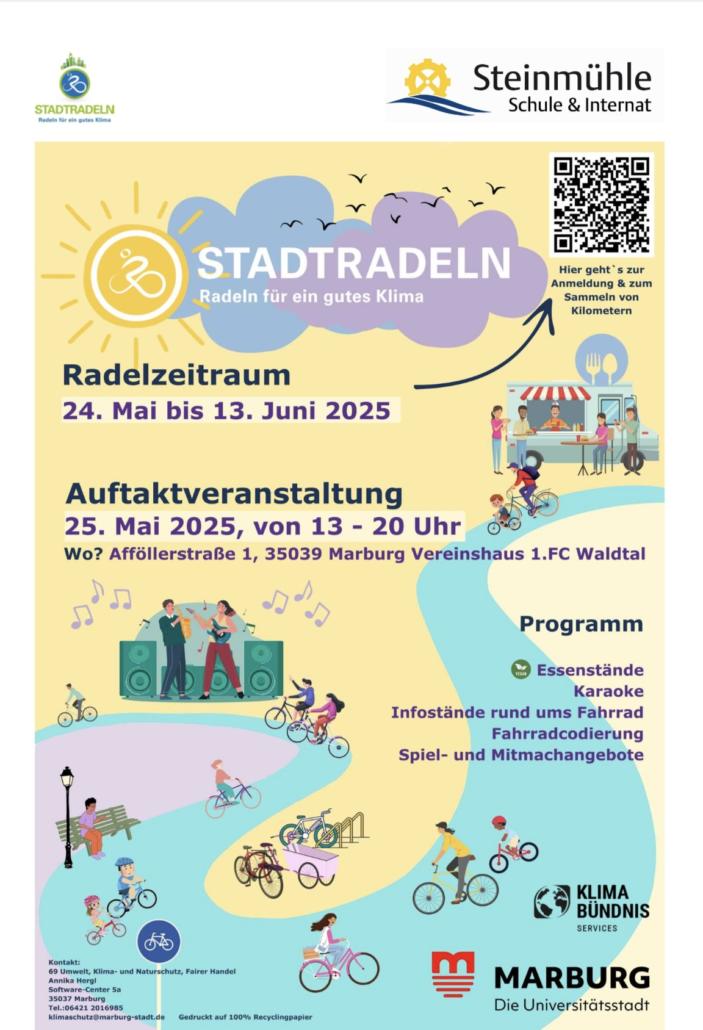
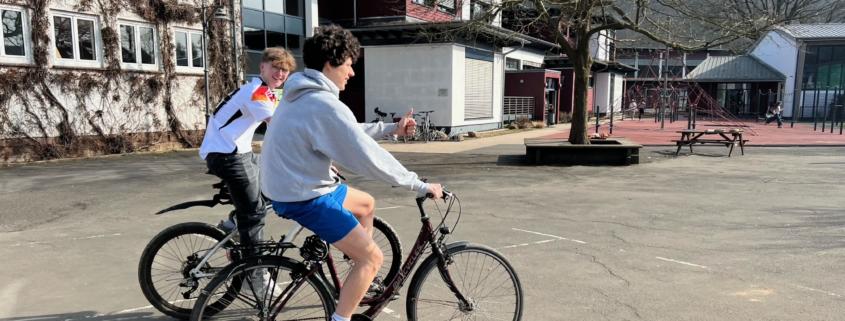
we would like to invite you to participate in the 2025 City Cycling Challenge. From May 24, 2025, through June 13, 2025, we at Steinmühle can compete to become the most bike-friendly school in Marburg. Over the past three years, we’ve already achieved a fantastic second-place finish—now let’s work together to take it up a notch!
The Steinmühle is idyllically situated just off the Planetenweg and is accessible by bike. Many of you already bike here regularly during the warmer months. But during the campaign period, every kilometer counts—whether it’s on your way to school, a post-work ride, or a weekend tour. Just log all your rides at
using the STADTRADELN app and help us rack up kilometers for our team!
we would like to invite you to participate in the 2025 City Cycling Challenge. From May 24, 2025, through June 13, 2025, we at Steinmühle can compete to become the most bike-friendly school in Marburg. Over the past three years, we’ve already achieved a fantastic second-place finish—now let’s work together to take it up a notch!
The Steinmühle is idyllically situated just off the Planetenweg and is accessible by bike. Many of you already bike here regularly during the warmer months. But during the campaign period, every kilometer counts—whether it’s on your way to school, a post-work ride, or a weekend tour. Just log all your rides at
using the STADTRADELN app and help us rack up kilometers for our team!
The university town of Marburg is presenting the following awards:
– The school that cycled the most kilometers overall,
– The school that cycled the most kilometers per participant (average),
– The school that was able to motivate the most students to participate.
– The school that cycled the most kilometers per participant (average),
– The school that was able to motivate the most students to participate.
From Steinmühle:
– The class that cycles the farthest will win a special field trip to Seepark Niederweimar, including admission:
– The participant who cycles the most kilometers will receive a €20 Marburg gift certificate:
– We’ll raffle off five €10 Marburg gift cards
among all participants who have cycled more than 300 km.
– The participant who cycles the most kilometers will receive a €20 Marburg gift certificate:
– We’ll raffle off five €10 Marburg gift cards
among all participants who have cycled more than 300 km.
City Cycling is a great opportunity to promote sustainable mobility, daily physical activity, and climate protection—and it’s twice as much fun when we do it together!
New this year:
On May 25, 2025, a big kickoff event will take place from 1 p.m. to 8 p.m.—you can find all the details in the attached flyer.
The Steinmühle is already registered, and a Steinmühle team called “Steinmühle Marburg School and Boarding School” has signed up. Anyone interested can register for the competition via the following link, join the Steinmühle team, and start cycling:
The Steinmühle is already registered, and a Steinmühle team called “Steinmühle Marburg School and Boarding School” has signed up. Anyone interested can register for the competition via the following link, join the Steinmühle team, and start cycling:
www.stadtradeln.de/marburg
Here’s how registration works:
1. Open the link
2. Enter your user information
3. Select the state of Hesse
4. Municipality: Select Marburg in the Marburg-Biedenkopf district
5. Click “Continue” and, in the next step, select “Join an existing team”
6. All previously registered teams
and school teams will then appear in the “Team Name” dropdown menu. Select the “Steinmühle Marburg” school team
8. Confirm the privacy policy and rules of the game
2. Enter your user information
3. Select the state of Hesse
4. Municipality: Select Marburg in the Marburg-Biedenkopf district
5. Click “Continue” and, in the next step, select “Join an existing team”
6. All previously registered teams
and school teams will then appear in the “Team Name” dropdown menu. Select the “Steinmühle Marburg” school team
8. Confirm the privacy policy and rules of the game
We’re really looking forward to your active participation 😊
Warm regards
Ines Vielhaben and Antje Seel
For inquiries: antje.seel@steinmuehle.net or ines.vielhaben@steinmuehle.net
P.S. You can also set up a subteam as a class, tutorial group, or boarding school house, or collect kilometers for the Steinmühle as part of a sports project.