Bottle and Can Collection Drive to benefit of young victims of domestic violence

To provide relief where it is most urgently needed right now, the high school seniors at Steinmühle Boarding School have launched a fundraising campaign over the past few weeks. Their goal is to do their part to foster a spirit of solidarity.

The effects of the COVID-19 crisis are a test for society as a whole, but during economic crises, it is often those who already have very little who suffer the most. Independent social service organizations are particularly hard-hit by economic downturns, as they are only able to make limited financial provisions. The loss of revenue then particularly affects clients who are in urgent need of financial and social work support.

The plan was quickly made

The idea was as simple as it was successful: If everyone contributes just a small part, but the number of participants is very high—so the simple equation goes—the result will also be very large. So our high school seniors called on the entire boarding school community to donate their personal returnable bottles and beverage crates to the fundraiser. To make it as easy as possible for everyone to participate, they didn’t even have to take the empty containers away themselves. A “pickup service” organized by the graduating seniors ensured that all the empty bottles and crates were collected from the doors of the boarding school students’ private rooms and apartments over the course of two weeks.


Overwhelming Success
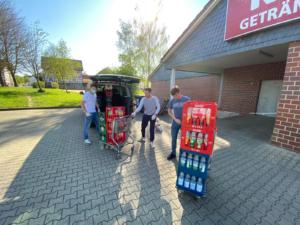
Since all the students, the entire teaching staff, and the boarding school as an institution were happy to respond to the call for donations and participated in this wonderful initiative in an exemplary manner, the graduating seniors were able to collect so many empty bottles and cans over the course of two weeks that transporting them required the use of a bus and an additional car. After more than an hour of redeeming the bottles, it was finally clear that the initiative had raised more than 300 € for the donation fund, which was subsequently donated to “Frauen helfen Frauen e.V.” and the Counseling and Intervention Center Against Domestic Violence. It didn’t take long for the thanks to come…


Dear Ms. Muszynski, dear high school graduates,

Thank you very much for your donation to the children’s and youth program at the Marburg Women’s Shelter—we were very happy that the children living here were remembered in this way !

The womenat the women’s shelter have often witnessed or even experienced violence themselves. It is therefore important for them to be able to enjoy a time here at the women’s shelter that is as carefree as possible .

Since summer is just around the corner and we hope that outings will soon be possible again, we’d like to use the money for those kinds of activities (e.g., going out for ice cream, visiting the zoo, etc.).

I’ve attached a little note from the children.

Once again, thank you so much to you and the high school graduates, and all the best!

With warm regards from the women’s shelter,

Jasmin Worseg (Music Therapist, M.A. // Children’s and Youth Services at the Women’s Shelter)

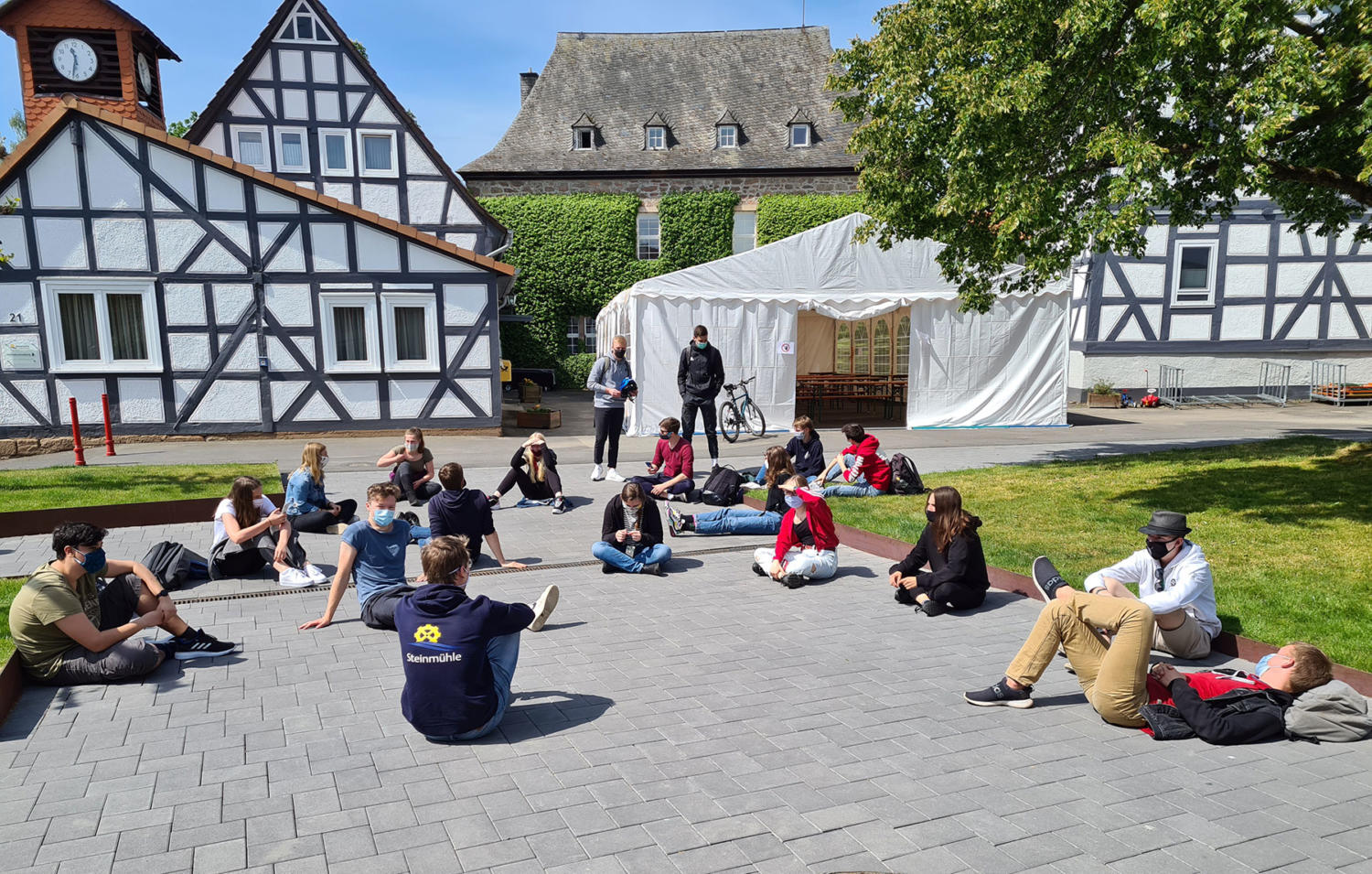
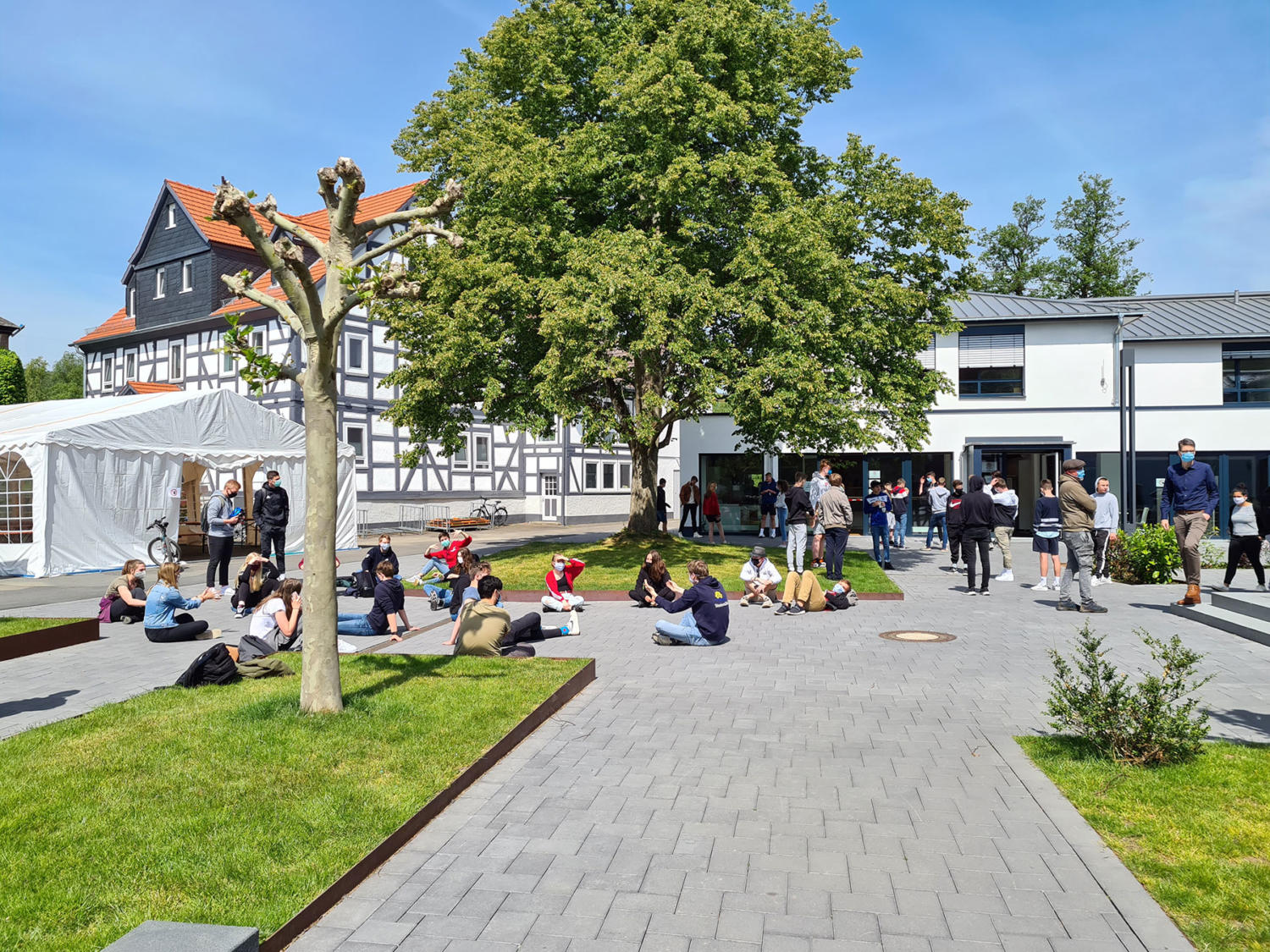
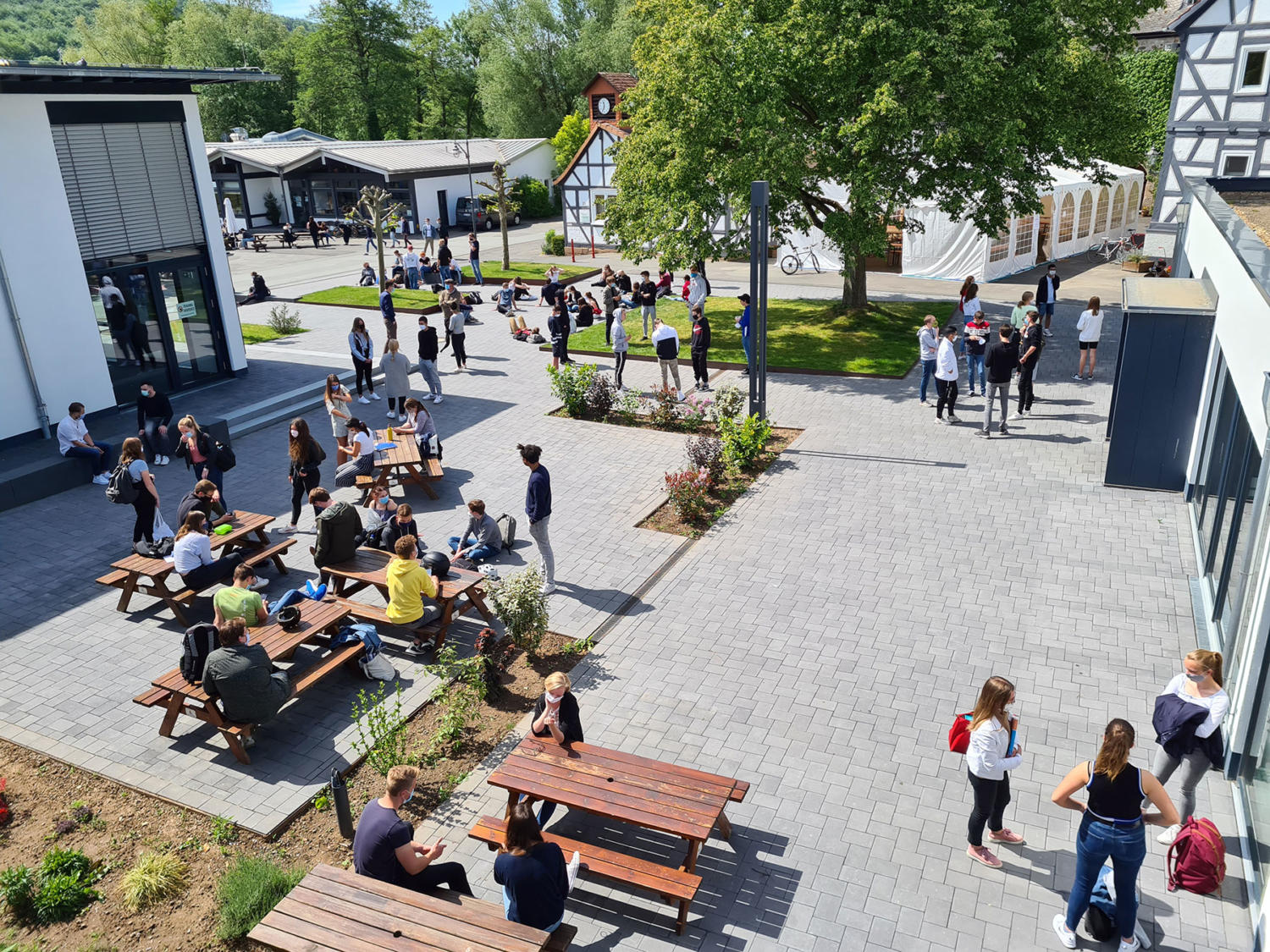
This morning, about 450 students returned to Steinmühle. It’s a wonderful feeling to have life back on our school grounds after nine weeks of school closures. A big compliment to all students and staff who are adhering very diligently to our hygiene guidelines and social distancing rules. We’re thrilled! Special thanks go to our two principals, Bernd Holly and Björn Gemmer, who worked—in some cases through the night—to get this extraordinary reopening plan off the ground. We’re confident that we’ll be able to stick to our plan until summer break: Grades 5 through 8 will attend school in half-classes on a weekly rotation, alternating between in-person instruction and homeschooling, while grades 9 through 12 will be at Steinmühle continuously until the summer break. Our elementary school is permitted to resume operations on June 2!

In March, the COVID-19 pandemic brought massive disruptions to our personal, academic, and social lives and required great sacrifices from all of us. As the Easter break approached, the boarding school was therefore committed to offering the children a restful and carefree vacation and, in doing so, providing some relief to their parents. And so, the boarding school students were given the opportunity to spend the entire Easter break on the Steinmühle grounds—under the constant supervision of the on-site educational team, safe and secure with no contact with the outside world, enjoying a wide range of recreational activities on the spacious campus, homeschooling, and special projects.


Take some time to focus on your personal interests

In addition to the daily recreational activities and support with homework while working from home, the opening of special project rooms was primarily intended to allow students to pursue personal interests that often take a back seat during the regular school year, or to broaden their horizons beyond the classroom.

The students interested in technology took their first steps in programming by working with the Arduino microcontroller and taking online courses on artificial intelligence offered by the University of Helsinki. This is a skill that is already in high demand today, but will be particularly sought after in future societies.


Learn a Foreign Language or Become an Office Pro

There were also extensive opportunities for anyone who wanted to develop their practical everyday skills. The program included learning another foreign language, as well as professional training in all Office applications and improving touch-typing skills. Our high school graduates in particular—who, despite all the challenges, had taken their written exams in a nearly heroic manner before the break and most of whom will be heading to college—showed great interest and dedication in these programs.

All athletes had the opportunity to train for the German Sports Badge, hone their basketball skills under the guidance of a basketball player, earn their C-level fitness trainer certification, or take a closer look at currently very popular fitness apps to assess their user-friendliness.

Anyone who wanted to hit the dance floor was in the right place in the boarding school’s mirror hall. Under the guidance of Timo, one of our 12th graders, students learned the rhythms of disco fox and cha-cha-cha, as well as the elegance of the tango, so they can cut a fine figure on any dance floor in the future.


My Own Creations on the Sewing Machine

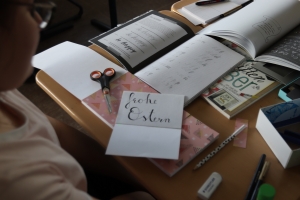
Creative talents should also be given the freedom to flourish. In a hand-lettering class, the young people were able to practice their calligraphic skills and learn “the art of beautiful writing.” With Easter just around the corner, it was the perfect opportunity to send greeting cards and Easter wishes.


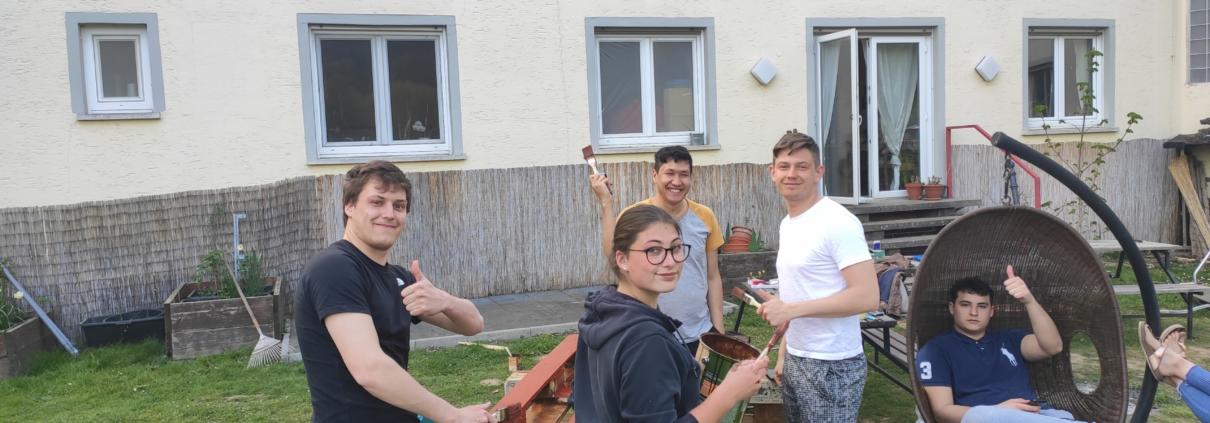
Upcycling projects—the processing and reuse of waste materials—have been very popular for years, especially when it comes to creating new furniture from old pallets. So, some students at the Westfalenhaus “armed” themselves with pencils, hammers, and paintbrushes to enhance the garden for the coming summer with a garden lounge, where future students will also be able to enjoy Marburg’s sunny days.


In addition, thanks to the active support of Corinna, one of our housekeepers, the boys and girls were able to showcase their talent at the sewing machine. Old clothes were transformed into new, original creations, and by sewing face masks, they rose to the challenge of the current situation.


Easter Break at Steinmühle: Perhaps the most enjoyable way to comply with stay-at-home orders…

Unlike project-based learning in grades 5–9, where students typically work on three projects per semester, grade 10 features two major semester-long projects. In the first semester, each group chose a topic related to environmental sustainability, which consisted of a research phase, a project, and a presentation on the topic and project they had selected. In this context, we—Calvin, Clemens, Felix, Jan, Lukas, and Simon—from class 10b focused on CO2 emissions.

Since trees have the ability to sequester CO2, they are indispensable for protecting the climate. Upon closer examination, it quickly becomes clear that this ability not only ensures sustainability over many years but also continuously counteracts CO2 pollution. So, in order to take action ourselves against this CO2 pollution and to improve the local ecosystem in a sustainable way, we have decided to plant trees and create our own orchard meadow.

Since the school still needed to implement a compensatory measure for the new middle school building, our idea fit very well with the school administration’s plans. As a result, a suitable meadow area was quickly made available to us for planting, specifically behind the middle school building. Following a corresponding application by the school, the Giessen Regional Council provided 1,156 euros to cover the material costs for the orchard meadow—on the condition that the school take responsibility for maintaining the trees.


A home for thousands of animals and plants

An orchard meadow is beneficial not only because of the environmental benefits provided by the trees. It is an unfertilized meadow where fruit trees grow; it also serves as a habitat for over 5,000 animal species and more than 3,000 plant species. For example, the red-backed shrike, which needs both open space and trees, can settle here. And the orchard meadow is also an ideal habitat for the nightingale, the chiffchaff, the yellowhammer, and otherwise endangered bat and insect species.

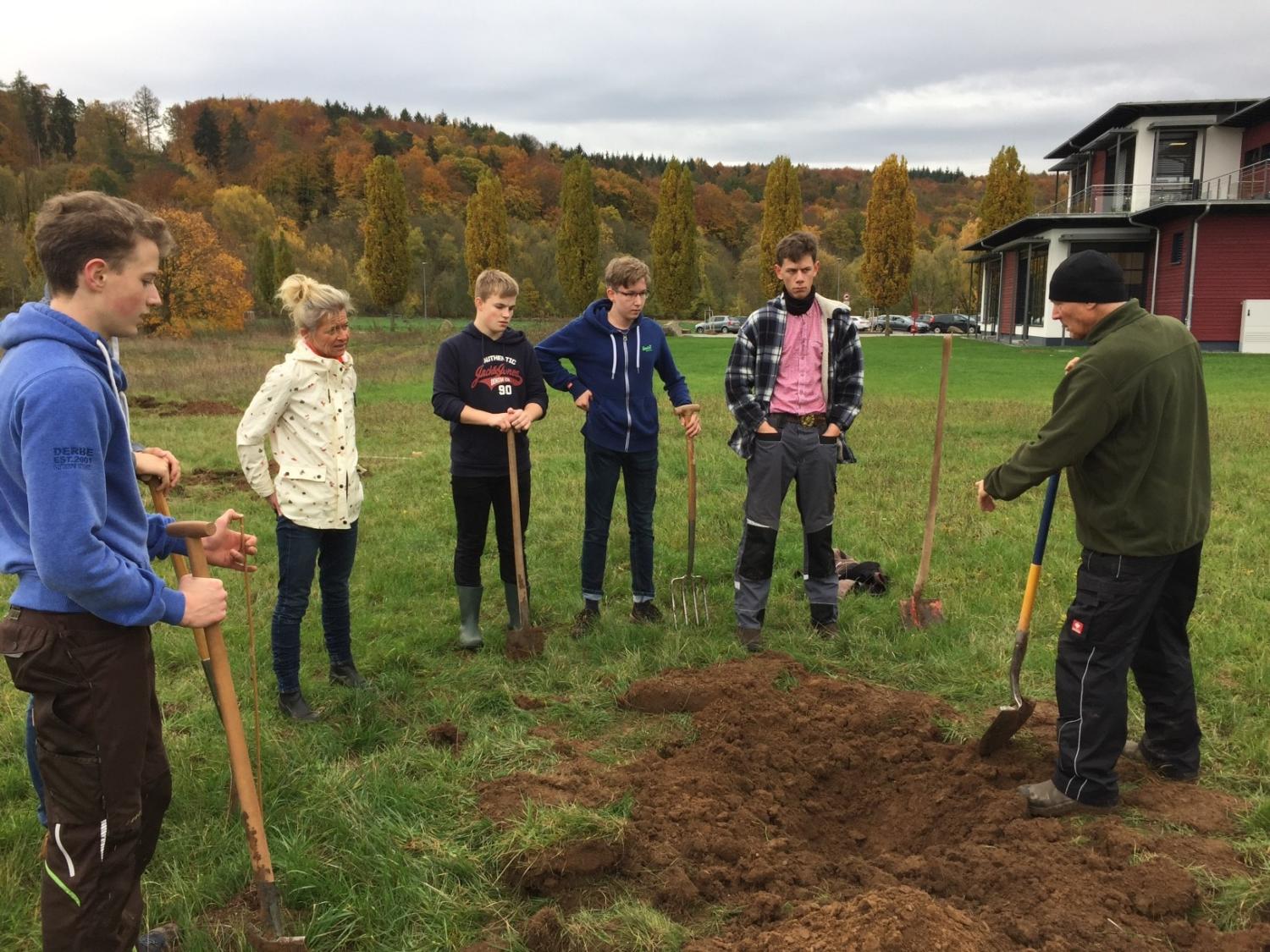
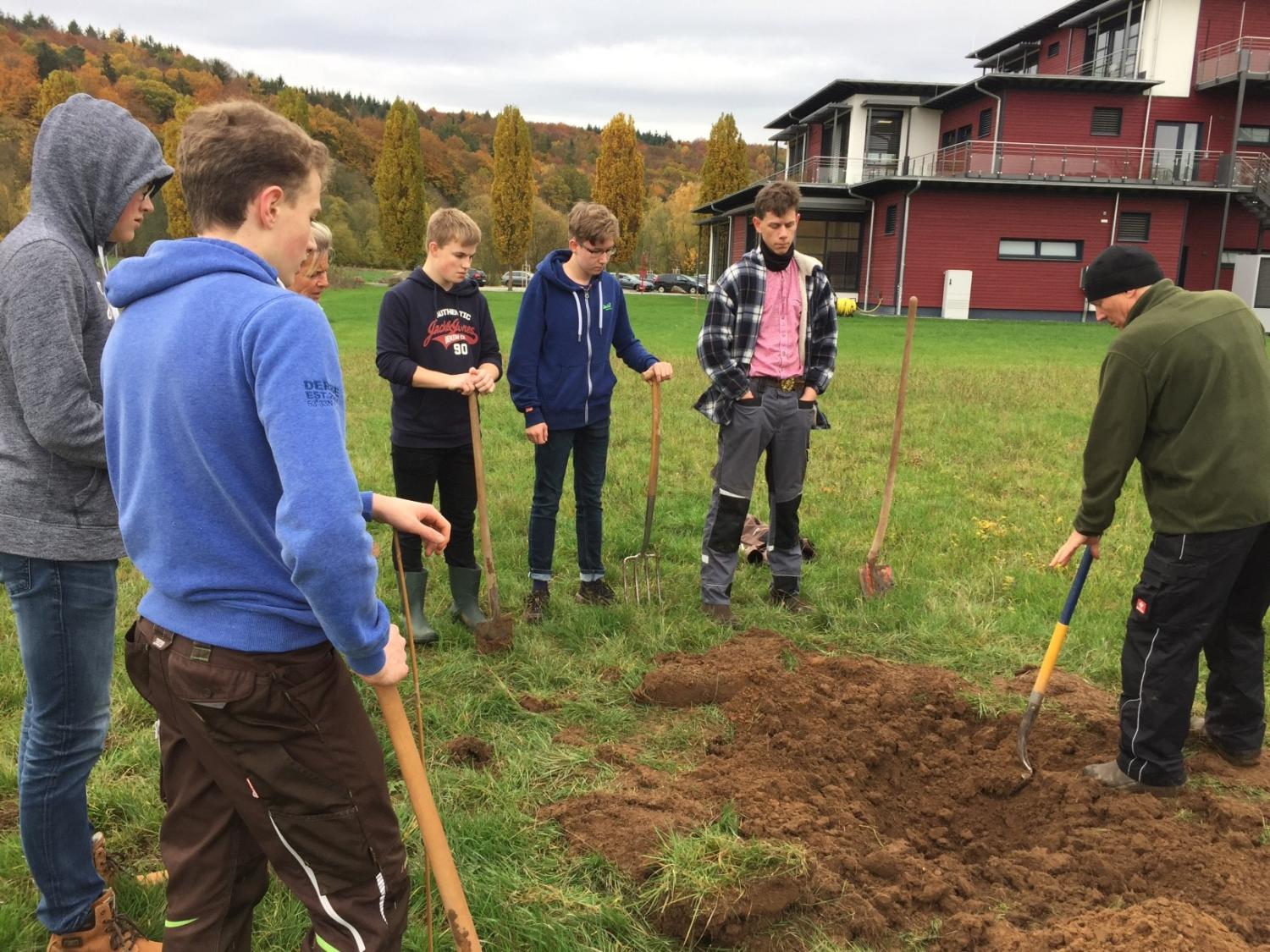
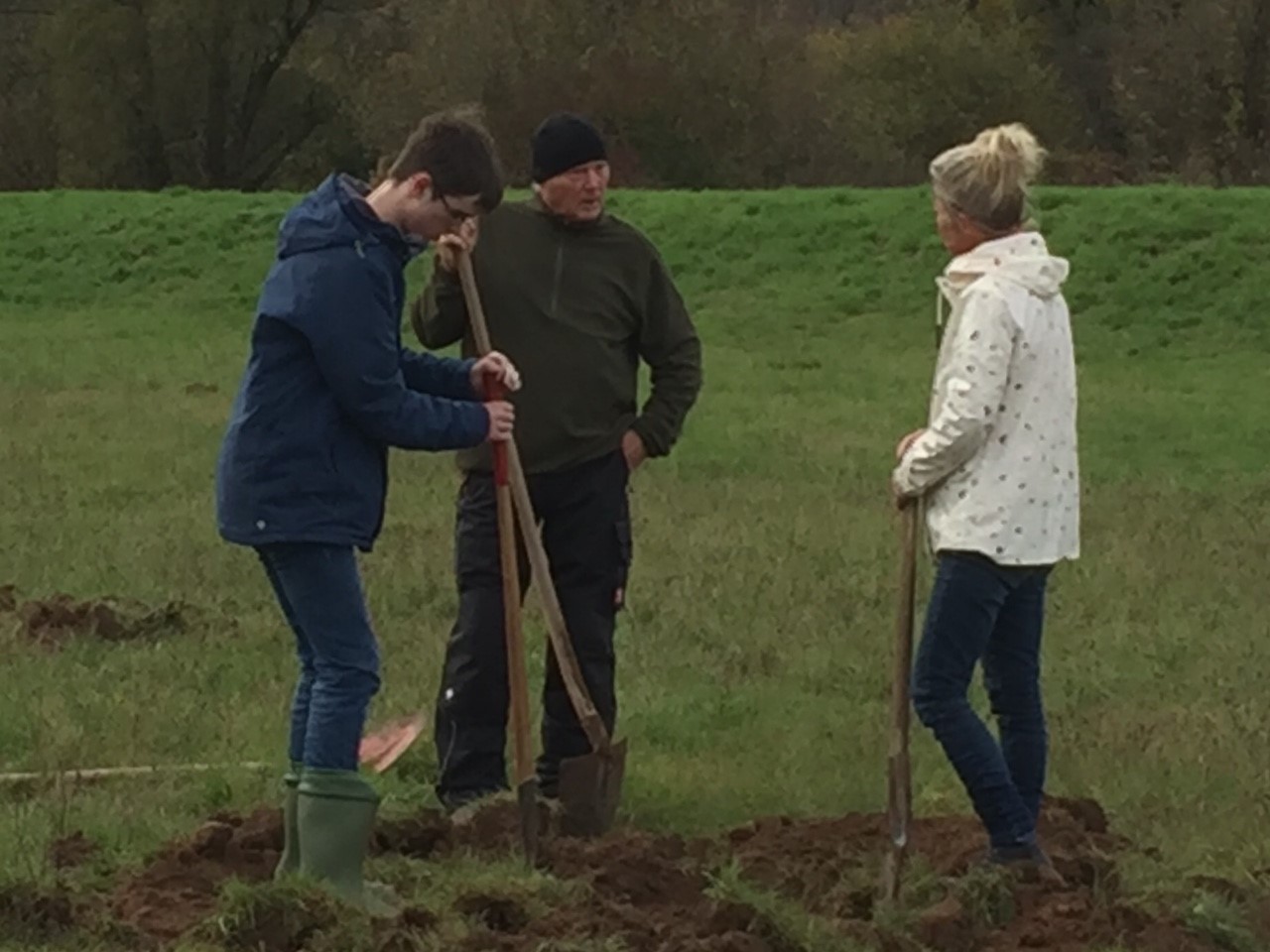
Now we had to decide where to place the trees on the selected area. To do this, we first staked out the meadow and marked the tree locations with sticks. We decided to arrange the trees in triangles. This made sense because the trees had to be spaced a certain distance apart, which was easy to achieve with a triangular pattern. A few days later, the trees arrived at the school. Since they still had bare roots at that point, we had to dig them in temporarily. Then the day of planting arrived. We received help from an expert on orchard meadows, Mr. Moll; Steinmühlen teacher Carmen Bastian; the landscape gardener; and Mr. Schäfer, a teacher at the boarding school.


How to Plant Trees

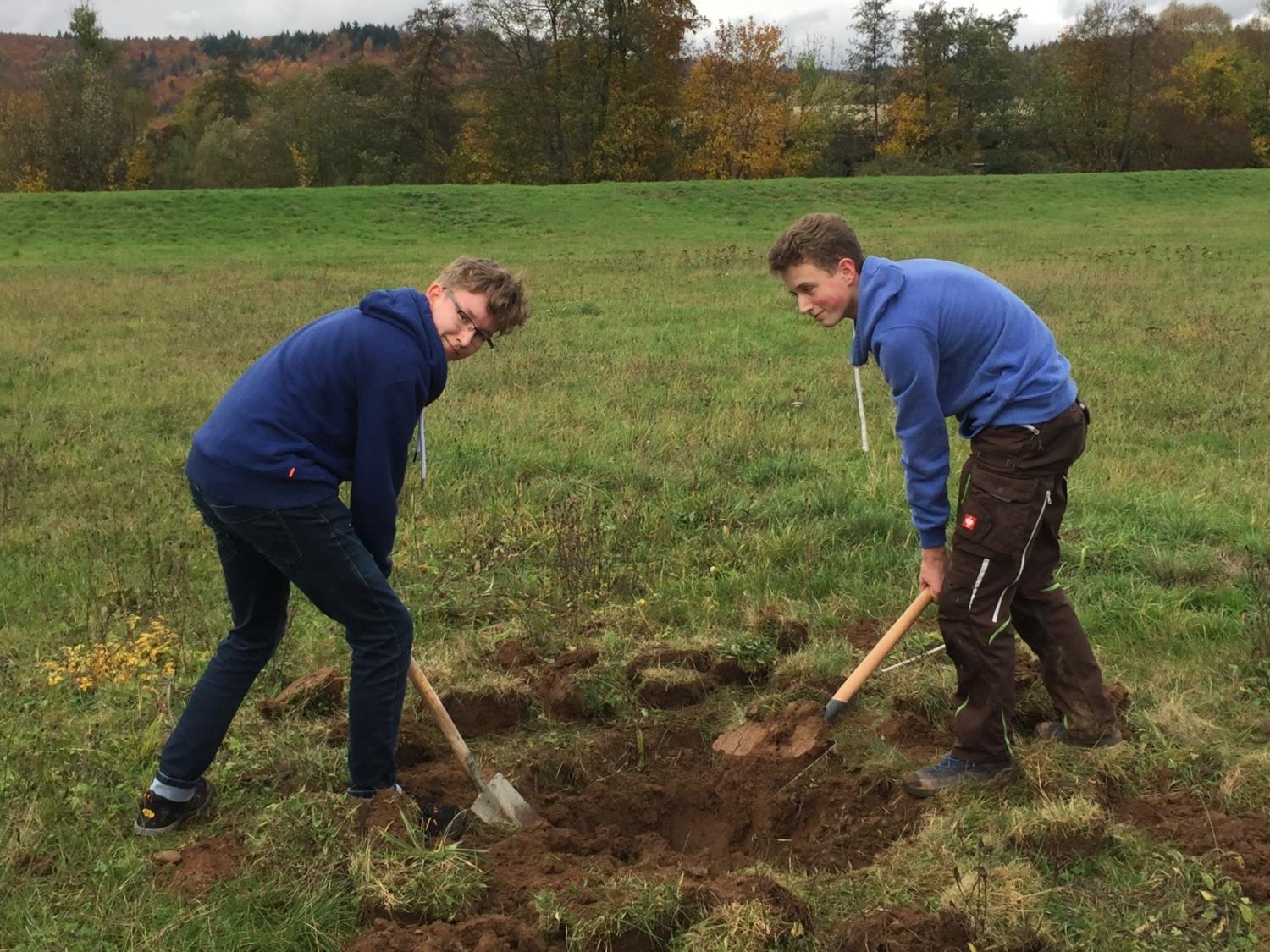
First, holes were dug for the trees, and in the center of each of these holes, another, deeper hole was dug. Next, a wooden stake was hammered into the ground at the edge of each hole. Finally, a wire was placed in the deep hole to protect the tree. Next, the tree, along with its root ball, was placed into the hole and the whole thing was covered with soil. Finally, we tied the tree to the stake with a thick string. This provides the tree with support during the initial period. We used this method for all 15 trees. We made good progress, and even though it started to rain after a while, that didn’t dampen our motivation.

For environmental reasons, we planted not just one type of tree, but three different fruit varieties: mainly apple trees, but also a few plum and pear trees. We also decided not to arrange the trees randomly, but to group them by fruit variety. So the two plums and the two damsons are on the left side, while the apple trees are in the center and on the right.

Clemens Gerhardt (Class 10b)

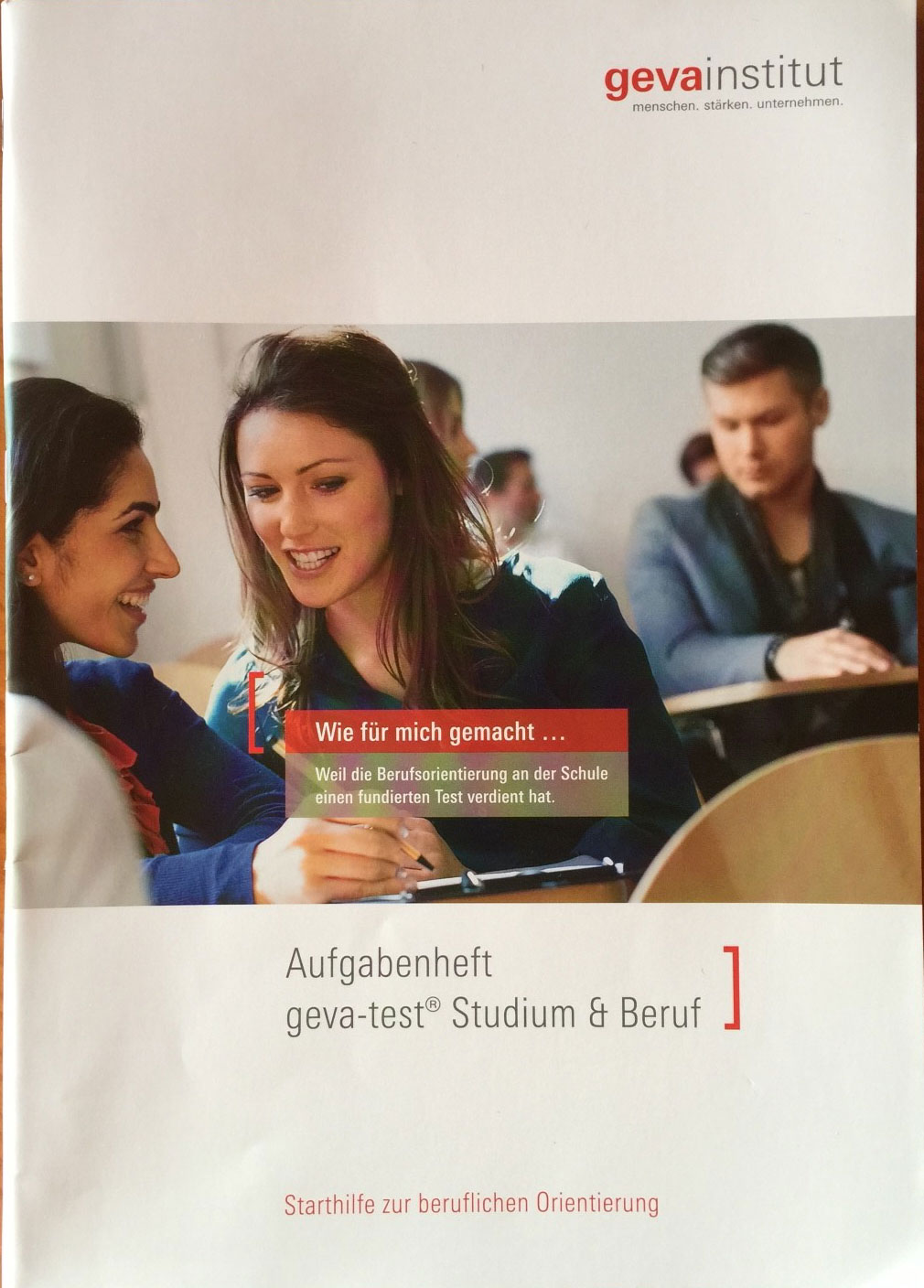
For the third time, Steinmühle gave a graduating class the opportunity to assess their own abilities through the geva test before they were finally placed in advanced courses. The test requires students to work through a test booklet containing various tasks within four hours. A limited amount of time is allotted for each task. Once the results are evaluated, they reveal the students’ aptitudes and interests and suggest which careers might be suitable for them in the future. This is particularly helpful for students who do not yet have a specific career path in mind. “Our partnership with the geva Institute is a key component of our career guidance activities,” explained Dr. Claudia Röder, who also serves as the coordinator for school-based internships.

Three and a half days to work together to bring to life the music we want to play—for many years now, this has been the foundation of both ensembles’ annual programs, which are then premiered at Bands on Stage: Songs ranging from John Lennon to ’50s rhythm ’n’ blues, ’80s movie pop, jazz-funk, and Real Book standards in 2020. Both ensembles have grown significantly this year thanks to younger musicians—in particular, female vocalists, flutists, a violinist, and a young euphonium player. The more experienced older members are still there as well, ensuring that both the band and the jazz ensemble maintain their vibrant outlook for years to come: How it’s done is passed on playfully, directly from musician to musician, through collaboration among students in grades 6 through 12. What is explained can be experienced immediately through mutual listening and playing. Ideas for just about everything come from the group. And the wonderful retreat on the edge of the Wolfshausen forest is a fantastic and welcoming place for this—once again this year: “Imagine… it’s easy if you try.”

(Frank Wemme)

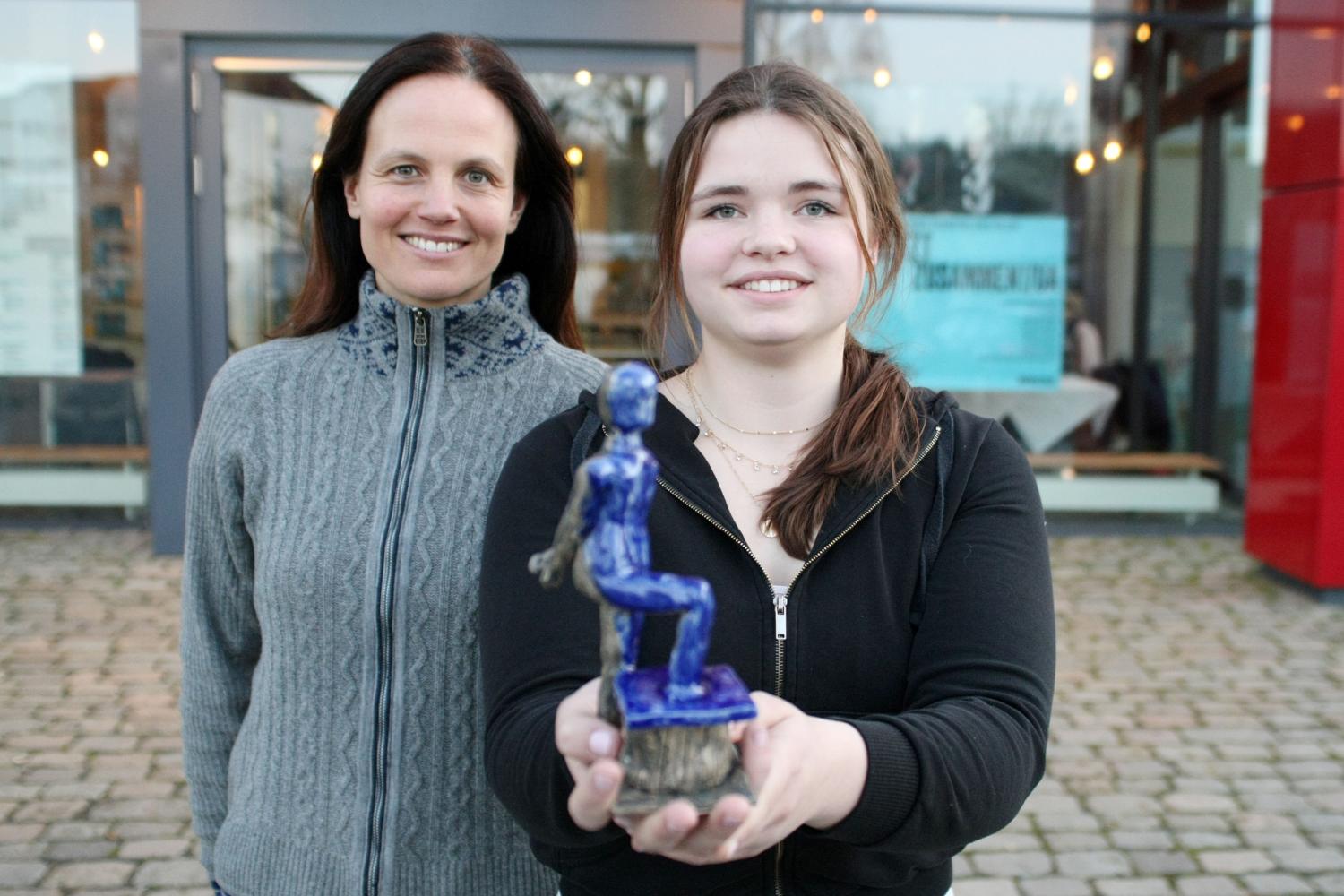
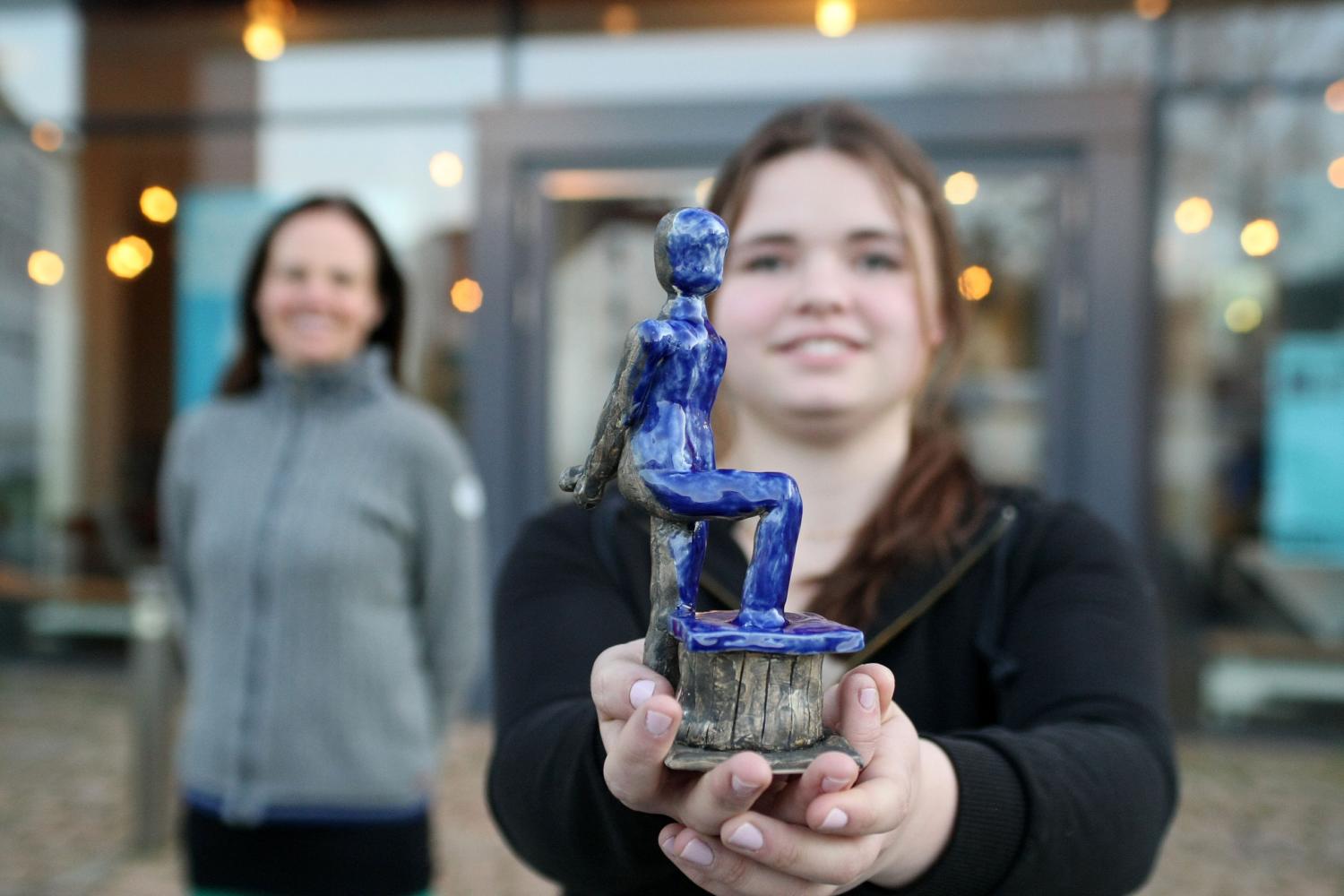
In search of its own “Oscar” for the Hessian Children’s and Youth Theater Week (KUSS Festival), partner schools of the Hessian State Theater were asked to submit design ideas. The idea submitted by Steinmühlen student Kiara Cordes (Class 12e) was the most compelling: an artist modeled from clay on his way to the stage. The trophy was created during special sessions over the holidays with the support of teacher Ines Vielhaben and will now be recreated each year and presented to the new KUSS winner. Photos: Katja Peters

KUSS Festival Trophy, Kiara Cordes, Steinmühle. Photo: Katja Peters

KUSS Festival Trophy, Kiara Cordes, Steinmühle. Photo: Katja Peters

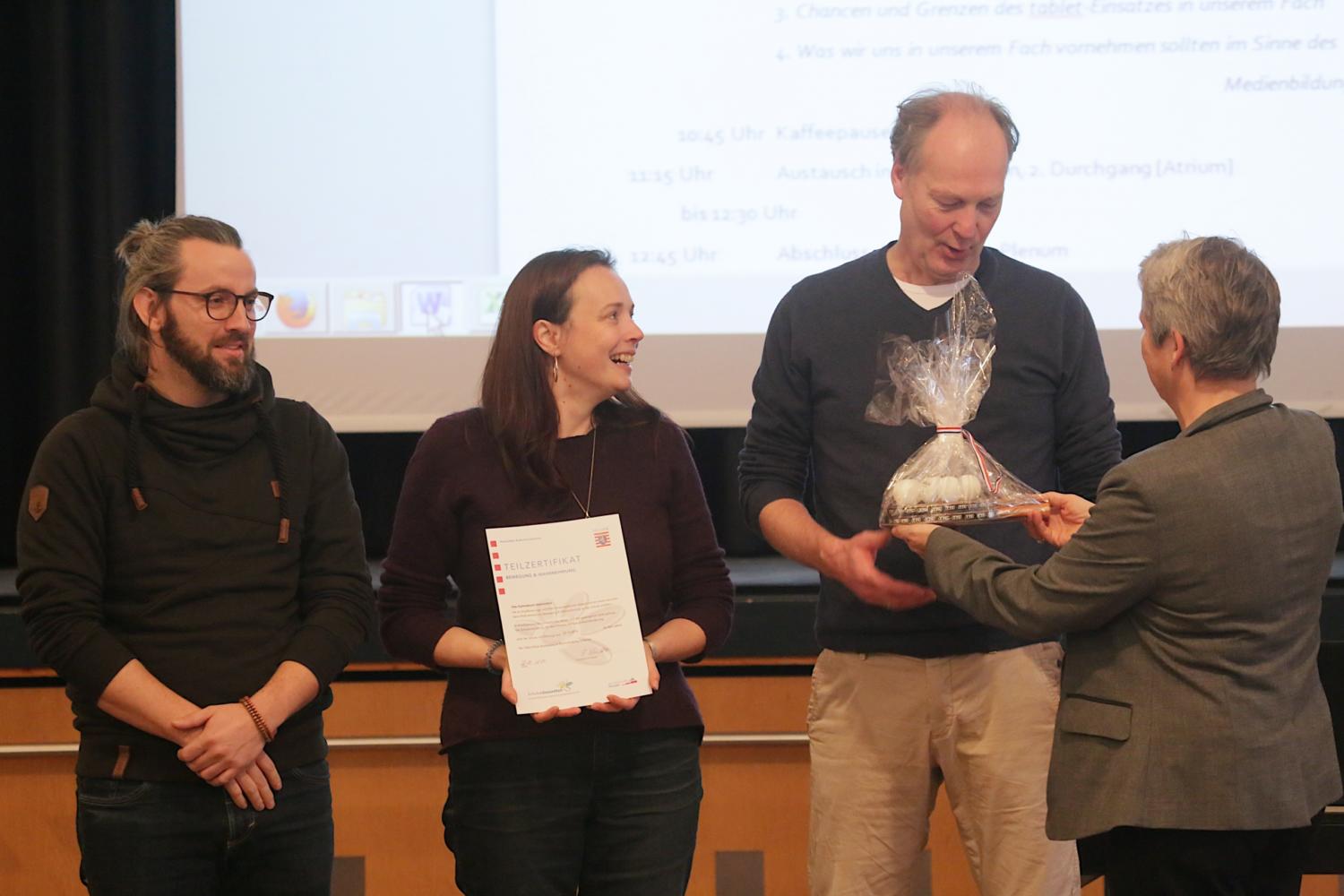
Steinmühle School has cleared another hurdle on its path to becoming a Health-Promoting School and has earned the “Movement and Perception” partial certificate. As a result, the school now holds two of the at least four partial certificates required to earn the overall certificate. Both partial and overall certification are issued by the Hessian Ministry of Education and Cultural Affairs.

All certification stages require a high degree of organization and commitment in the respective area. After the first partial certificate focused on the topic of “Nutrition and Consumption,” the focus shifted to school activities related to physical activity and awareness. “The certification process was initiated by forming a steering committee,” reports school athletic director Michael Neirich, who coordinated the overall process and also provided professional development on the topic. “It worked to Steinmühle’s advantage that many of these elements were already part of our everyday school life,” says Neirich in retrospect. “We were in a pretty good position right from the start.”

Nevertheless, it was necessary to collect basic data, compile conceptual information, and prepare documentation on the work. This included conference minutes, project descriptions, press reports, and professional development events. The assessment was based on a self-evaluation and an external evaluation by the certification group of the State School Authority—including a meeting with the school administration, an on-site tour, and classroom observations.

In addition to Michael Neirich, the main contributors to the development of the “School Promoting Physical Activity and Perception” sub-certificate were Manuela Schmidt (steering committee chair), Moritz Zöckler (documentation), Nicole Hohm and Heike Rabben-Martin (addiction prevention), Carmen Bastian (Environmental Office), and Bernd Holly, representing the school administration. Angela Heinemann

They were the “front-line workers” who helped earn the certificate, which was presented by School District Director Heike Grosser (right). From left: Moritz Zöckler, Manuela Schmidt, Michael Neirich.

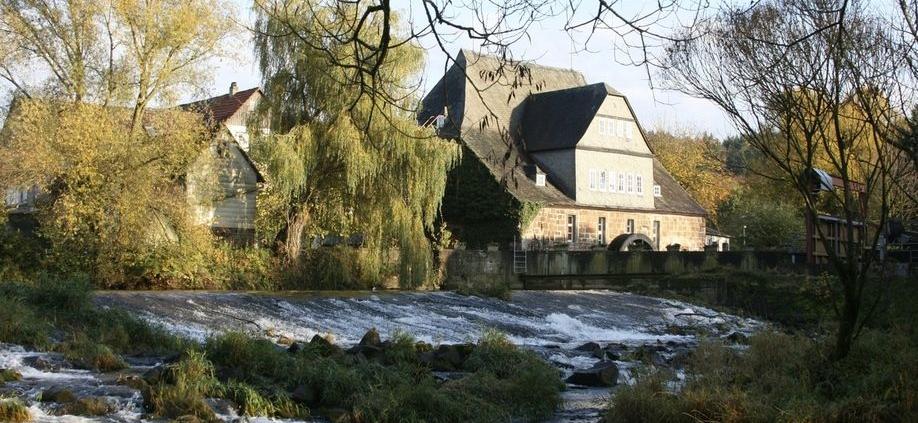
Idyllic natural surroundings at the Steinmühle boarding school and nature camp in Marburg, Hesse, for students with behavioral challenges and gifted students

Even during the COVID-19 crisis, Steinmühle Boarding School remains a safe and reliable home for every boarding student. In compliance with the currently applicable general hygiene regulations, all residents have the opportunity to move about freely on the spacious boarding school grounds. This ensures that students can spend time close to nature in the fresh air and engage in individual physical activities.

To ensure the safety of all students and teaching staff, students are currently not permitted to leave the Steinmühle campus.

Since the state of Hesse suspended compulsory schooling, all students at Steinmühle have been participating in homeschooling. Steinmühle immediately implemented the necessary technical measures to facilitate this. The teachers provide as much support as possible to boarding students during homeschooling whenever questions arise regarding their assignments.


Homeschooling is currently posing major challenges for many students, but especially for parents. This is particularly true when parents still have to go to work or work from home while also caring for their children.

However, parents do not always complain about the additional workload caused by the assignments; many feel helpless because there is a lack of adequate communication between the school, the home, and the teachers. And still others are surprised that their daughters and sons have very little to do. Apparently, not all teachers feel obligated to assign homework, or they lack the technical means to get it to the students.

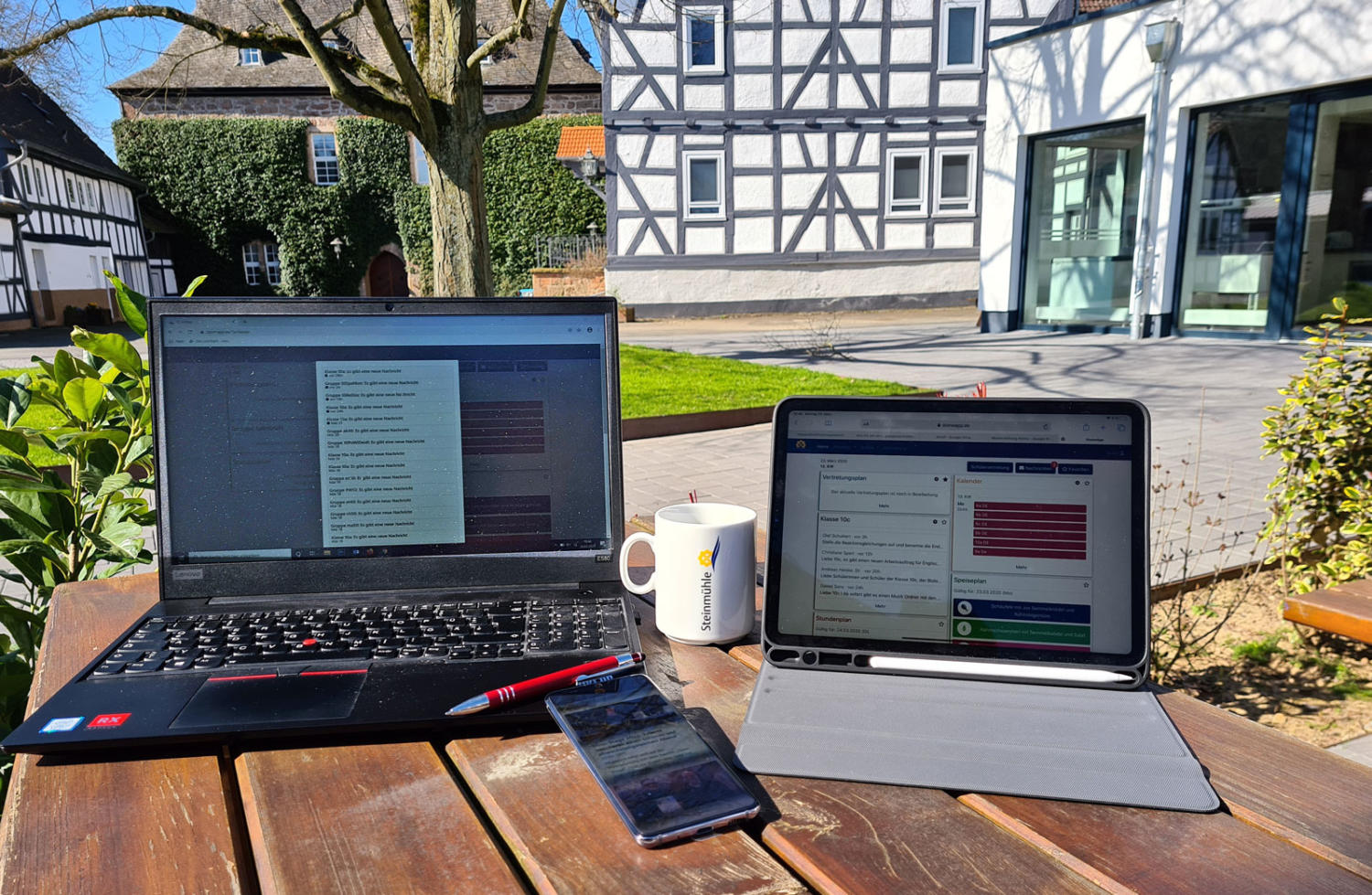
At Steinmühle, they’re unaware of these problems. The reason: this privately run school has made enormous efforts over the past two years and is years ahead of public schools when it comes to digitalization. When it comes to homeschooling, the so-called StoneApp is particularly helpful; it was initiated a few months ago by Steinmühle’s upper-level computer science class and was largely programmed by current Steinmühle senior Aaron Stein. The StoneApp, which all Steinmühle students and their parents have been using for a year and a half, displays individual class schedules, the substitute teacher schedule, the exam schedule, and the school cafeteria menu, and it is linked to the Steinmühle website. During the school closure, it is of the utmost importance that the StoneApp also serves as a communication and data platform between students and their parents, on the one hand, and teachers and the school, on the other:

  • Each class and each course has its own group, to which all students and the respective teachers are assigned.
  • Teachers and group moderators can post messages in individual groups, create subject folders, and upload assignments to them.
  • Because StoneApp is a web-based app, it can be used not only on mobile devices such as smartphones and tablets, but also on any computer with internet access. This makes downloading and processing orders particularly convenient.
  • The StoneApp contains the email addresses of all Steinmühle teachers, so users can send questions, comments, and assignments to the teachers.

When the school closed, the Steinmühle faculty were required by the school administration to do the following:

  • Assignments should be created that roughly cover the amount of time the class would have taken.
  • Teachers are required to document assignments: They must enter into a teacher’s lesson plan spreadsheet the information that would otherwise have been recorded in the class or course log.
  • Students are required to send their work to their teachers via email. Assignments should be given on a weekly basis, and the work should be collected weekly. This allows the students’ work to serve as a basis for the teachers’ further planning, and enables the teachers to provide the students with feedback on their work.
  • Facts can be researched using appropriate online resources. To this end, many skills have been acquired in recent months through in-school teacher training sessions held as part of the introduction of tablet-based instruction at Steinmühle.
  • Teachers who wish to create their own so-called tutorials or who require their students to create video content are granted access to the Steinmühlen Cloud, where large amounts of data can be uploaded.
  • The requirement to assign learning and work tasks applies not only to major subjects but also to minor subjects. The only exceptions are elective courses, physical education, and swimming. In the subjects of Drama, Musical Theater, and Theater Workshop, students should be assigned tasks to memorize texts.

To ensure that all of this could be done successfully, the students were given three days—each day consisting of eleven hours—at the start of the school closures to retrieve their school supplies from the school. This helped prevent large crowds from forming.

The students in emergency care and the boarding students who cannot go home are working on their assignments at the Steinmühle.

The feedback provided by students and parents to homeroom teachers and school administrators during the first week mostly reflected great gratitude for the excellent organization and the teachers’ strong commitment. The only critical feedback concerned the sheer volume of assignments. In this regard, the school administration had to urge its teachers to exercise restraint and to consider that completing assignments independently at home is more challenging than at school, where classmates and teachers can more easily offer help or provide specific guidance. This remains the case even with StoneApp, which is why the volume of assignments for Week 2 was reduced slightly.