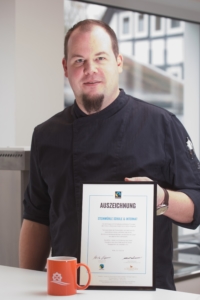
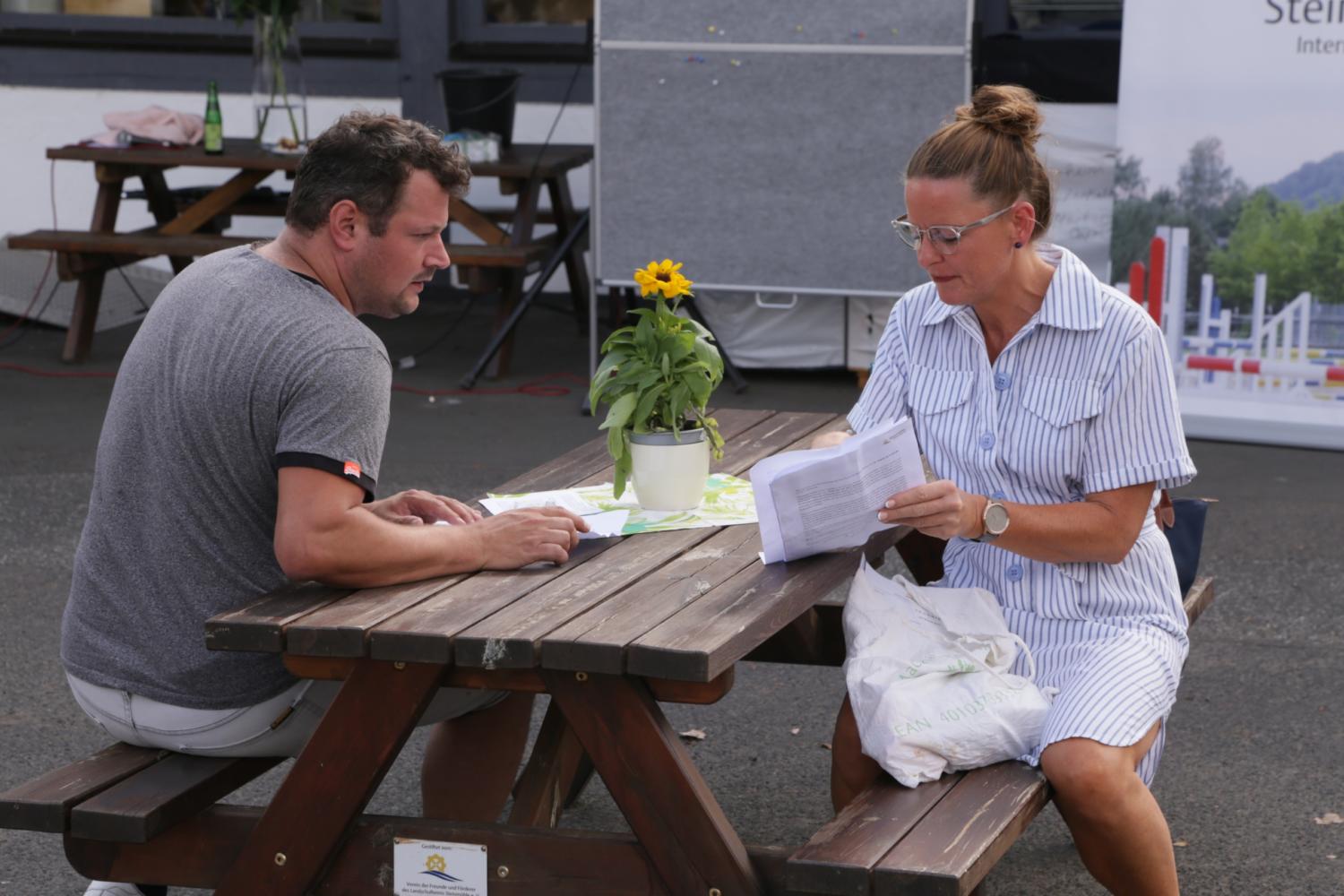
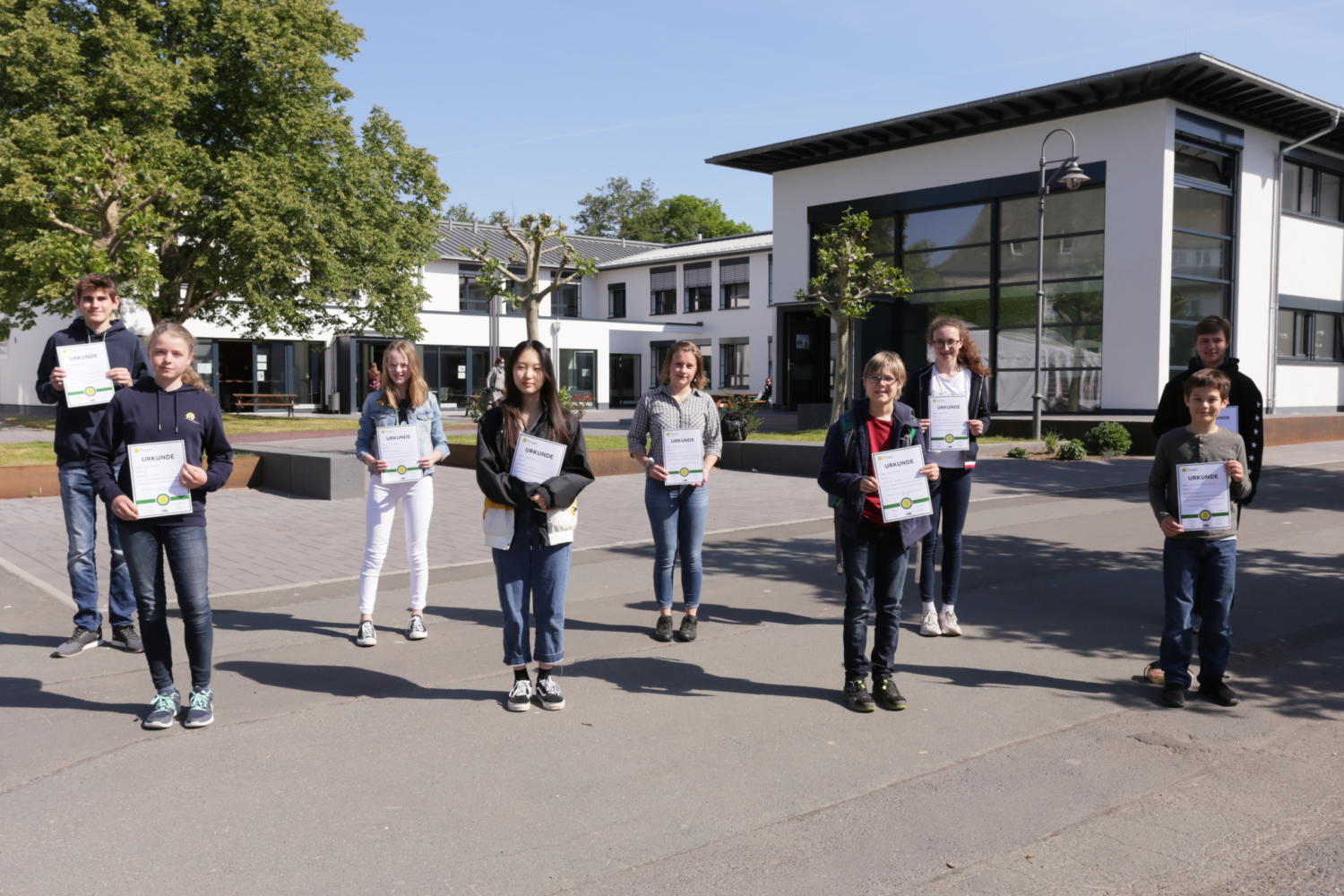
Following last year’s successful launch, students from Steinmühlen’s E-Phase once again participated in the program to qualify for the “Entrepreneurship License.” The certificate is based on a program offered by the e-learning provider bit media in collaboration with the student learning platform LONA Education. The exam is administered by the Academy for Business and Logistics. This is preceded by instruction in the fields of business, economics, and business administration. The Entrepreneur’s License is completed through several modules, each of which concludes with a certification exam. It is a recognized business certificate. Principal Björn Gemmer (back left) and subject teacher Erno Menzel congratulated the students on their successful demonstration of knowledge, which in almost all cases was documented in Modules A and B. Preparations for the next level, Level C, according to Erno Menzel, were unfortunately derailed by pandemic-related restrictions. The Entrepreneur’s License was earned by Johannes Agel, Sarah-Marie Blöcher, Lara Maria Engel, Paul Kappeller, Sebastian Koch, Moritz Philipp Mägerlein, Simon Süßer, Mara Wagner, and Elisabeth Weber.

Starting immediately, the Steinmühlenküche’s menu will be completely meat-free on Mondays: Neither the cafeteria nor the bistro will serve meat or sausage on that day of the week. With this measure, the school and boarding school are heeding a prominent call that is spreading around the world: Paul McCartney and his daughters launched the “Meat Free Monday” campaign. “Everyone can do their part to raise awareness of the harmful environmental impacts of animal agriculture and the consequences of industrial meat processing.” With this appeal, the Johns Hopkins Bloomberg School of Public Health had already advocated for one meat-free day per week as a public health awareness program as early as 2003. The campaign was supported by numerous other schools of public health, but it has only gained worldwide attention since Paul McCartney and his daughters began supporting it as the nonprofit project “Meat Free Monday.”

Principal Björn Gemmer gave the Steinmühlen kitchen the key suggestion that has now superseded the previous, rather half-hearted solution. Although every Wednesday had been “Veggie Day” up until now—it was limited to lunch and only in the cafeteria. Breakfast, dinner specials, and the bistro menu still featured meat and sausage. That’s no longer the case on “Meat-Free Monday.” “Veggie is simply the trend.” August 17 marked the launch of Meat-Free Monday at the Steinmühle.

Head chef Sebastian Riehl also welcomes the initiative: “It’s about raising awareness of doing something good for yourself and the world.” He knows that eating vegetarian has long since ceased to be merely the philosophy of a few individuals. “Veggie is simply in.” Through its curriculum and building initiatives, Steinmühle has already demonstrated on multiple occasions that it places a high priority on the environment and the ecosystem. Now, the school and boarding school are placing further emphasis on this approach when it comes to meals. This initiative is one of many activities that help slow climate change, conserve valuable natural resources, and improve personal health. For more information on the Meat Free Monday campaign, visit www.meatfreemondays.com.

As part of the annual program, boarding school students set off on what are known as “house trips” immediately after the start of the school year: Each residential group heads to a different destination in Germany together. Reports indicate that this year’s trips were once again a lot of fun. “The ‘Häuserfahrten’ have become an established tradition at our boarding school—a trip that each residential group can effectively use for team-building activities and to get to know one another,” reports boarding school director Anke Muszynski.


Bremerhaus: In the Footsteps of the Vikings

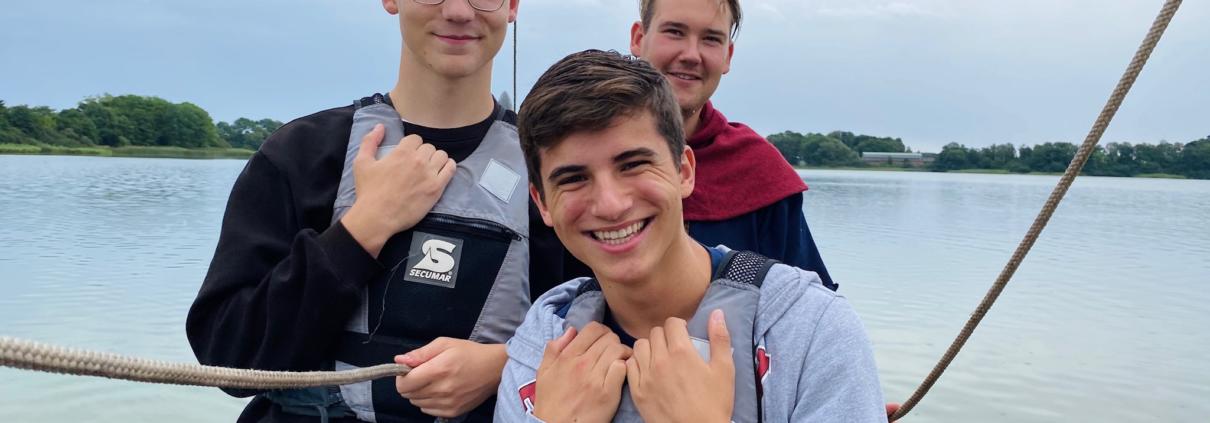
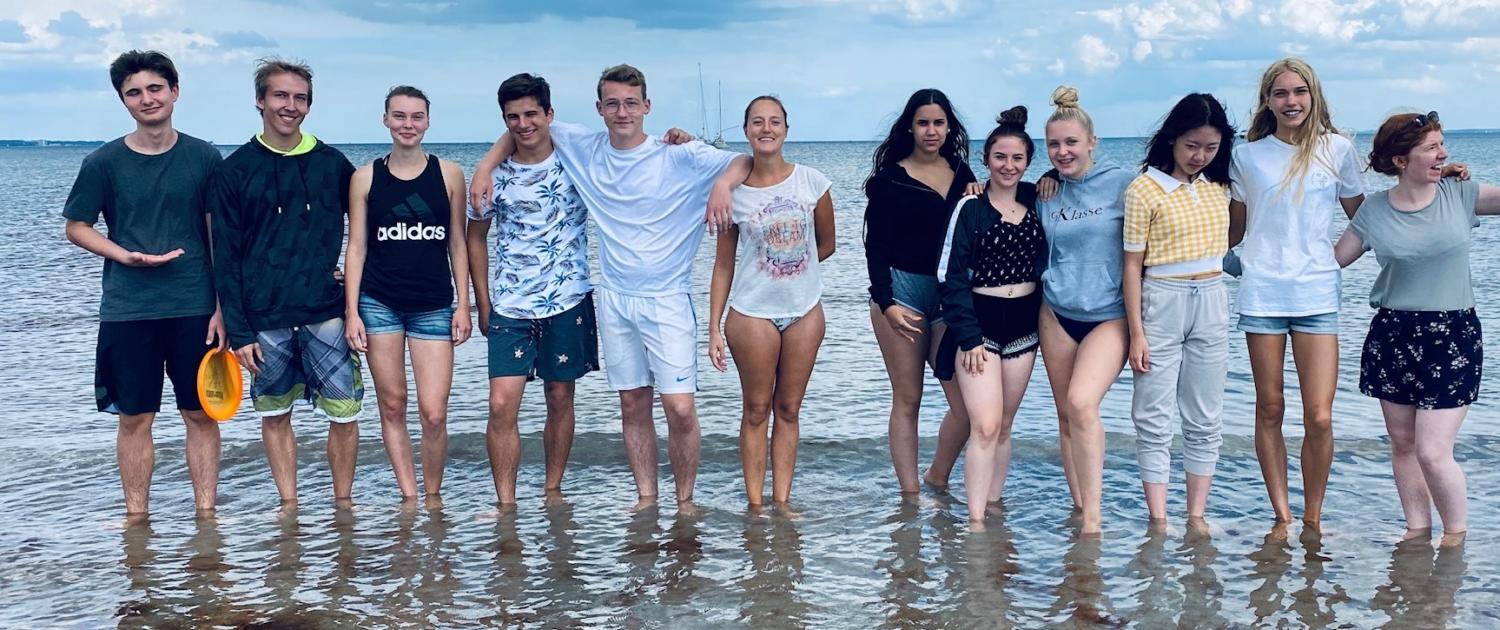
This year, the Bremerhaus traveled to Süsel in Schleswig-Holstein. The stunning location—with Lake Süsel right on the doorstep of the Tannenhöhe youth vacation center and just a few minutes from the Baltic Sea—couldn’t be dampened even by the occasional rain. With the two birthday celebrants, Sarah and Luke, everyone celebrated together in the group room. And as if they were all true Vikings, the students and counselors braved the rain and embraced Viking Day on Friday. “Oars up!” In a traditional boat, the residential group navigated across Lake Süseler after trying their hand at Viking games together, including axe throwing, archery, and Viking chess. On Saturday, the sun came out for a relaxed and playful day at Scharbeutz Beach on the Baltic Sea, which came to a perfect close with a sumptuous barbecue buffet in the evening.
 

The parent company’s goal: A campground in Heidelberg

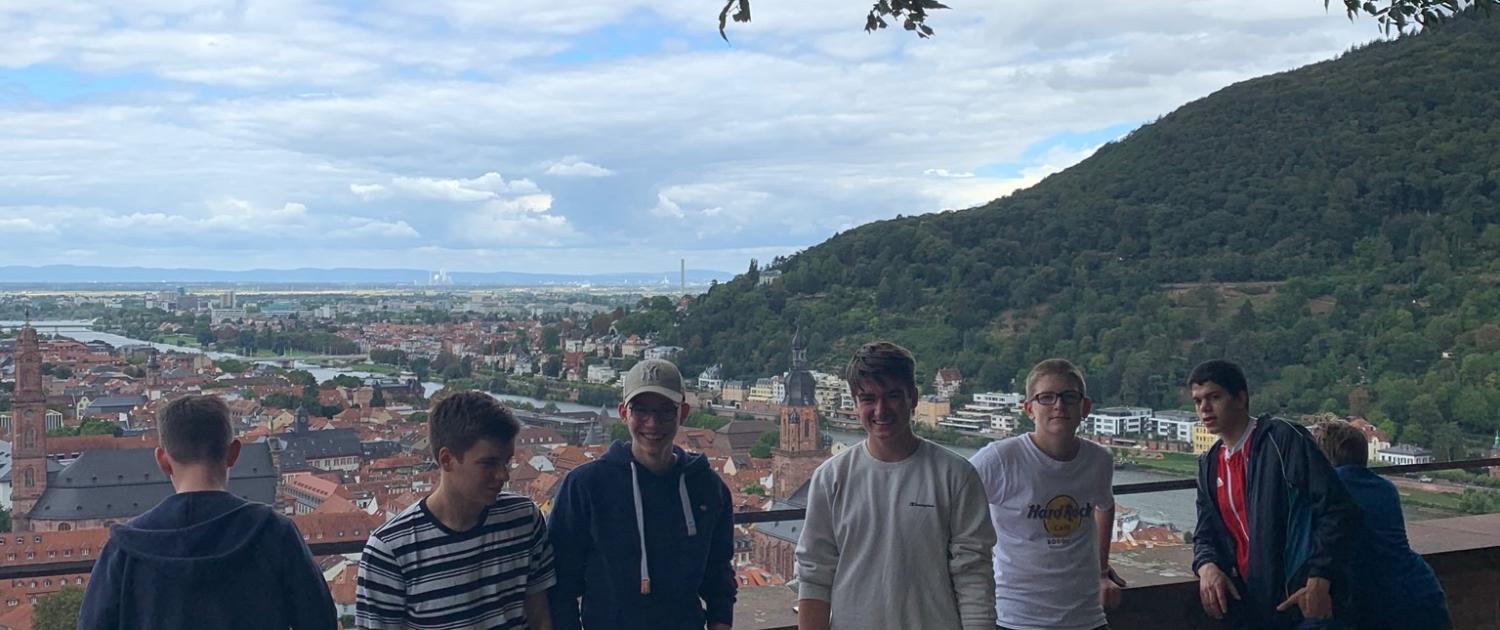
Heidelberg is this year’s destination for the residents of the main house. Once there, they headed to a campground and are spending the night in small cabins. A nice touch: there’s virtually no internet reception at the campground. So “digital detox” became the theme of the weekend for the residential group, allowing the students and educators to fully focus on themselves. In the evenings, they also had barbecues at the main house and enjoyed spending time together in a relaxed atmosphere. The highlight of the trip was a visit to the Auto & Technik Museum in Sinsheim. The main attraction there: a Concorde.
 

Heidepark in the Spotlight at the Hessenhaus

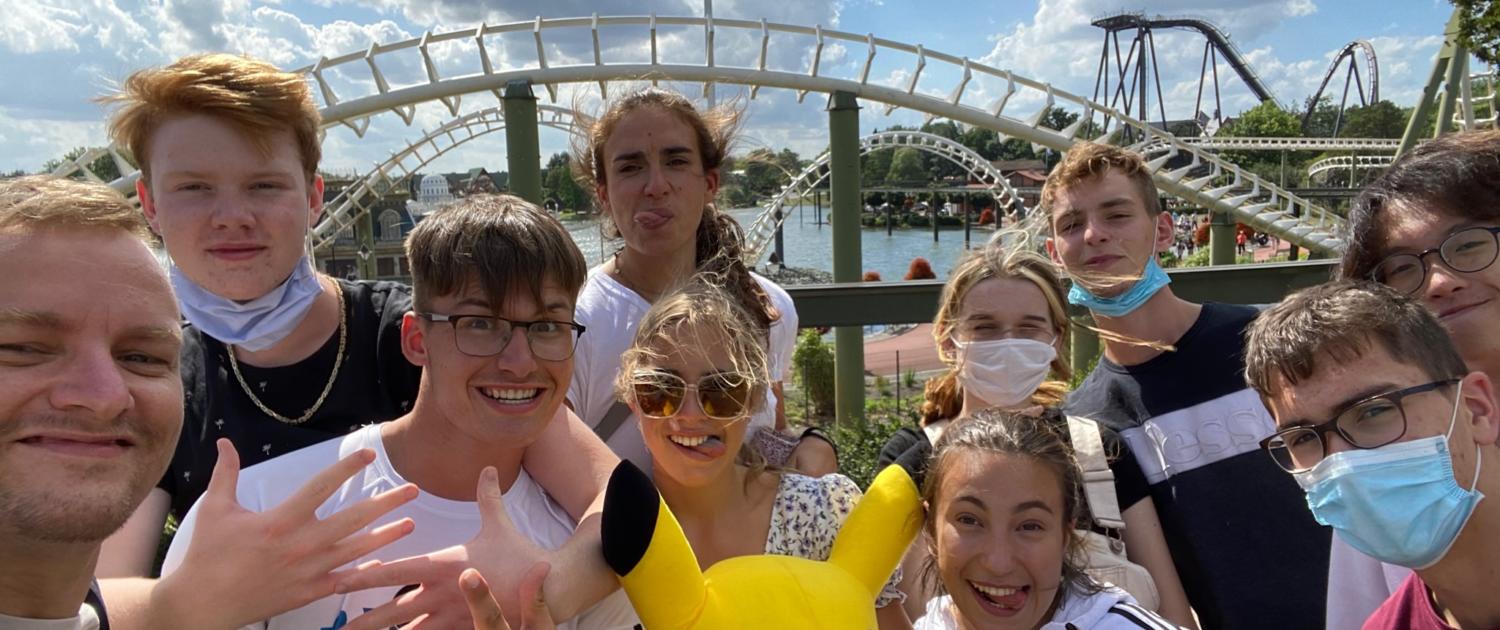
The Hessenhaus group headed toward Hanover: Near the capital of Lower Saxony—which has beautiful, natural spots on its outskirts—they fired up the grill in the evening and chatted. Since there were no other groups staying at the very modern facility at the time, the Hessenhaus group was able to feel completely at home playing soccer and basketball and enjoying the lively evening atmosphere. The group had planned a visit to Heidepark for the next day: endless fun, games, and excitement for the new residential group.
 

“MS Mühle in the harbor of Lake Wißmar”

The “MS Mühle,” jokingly dubbed the “passenger ship of good cheer,” sailed into the “harbor” of Lake Wißmar near Gießen on Friday. After setting up camp at the campground, firing up the grill was at the top of the agenda. Since Ivo, whose birthday it was, was on board, a little celebration was in order for Saturday.

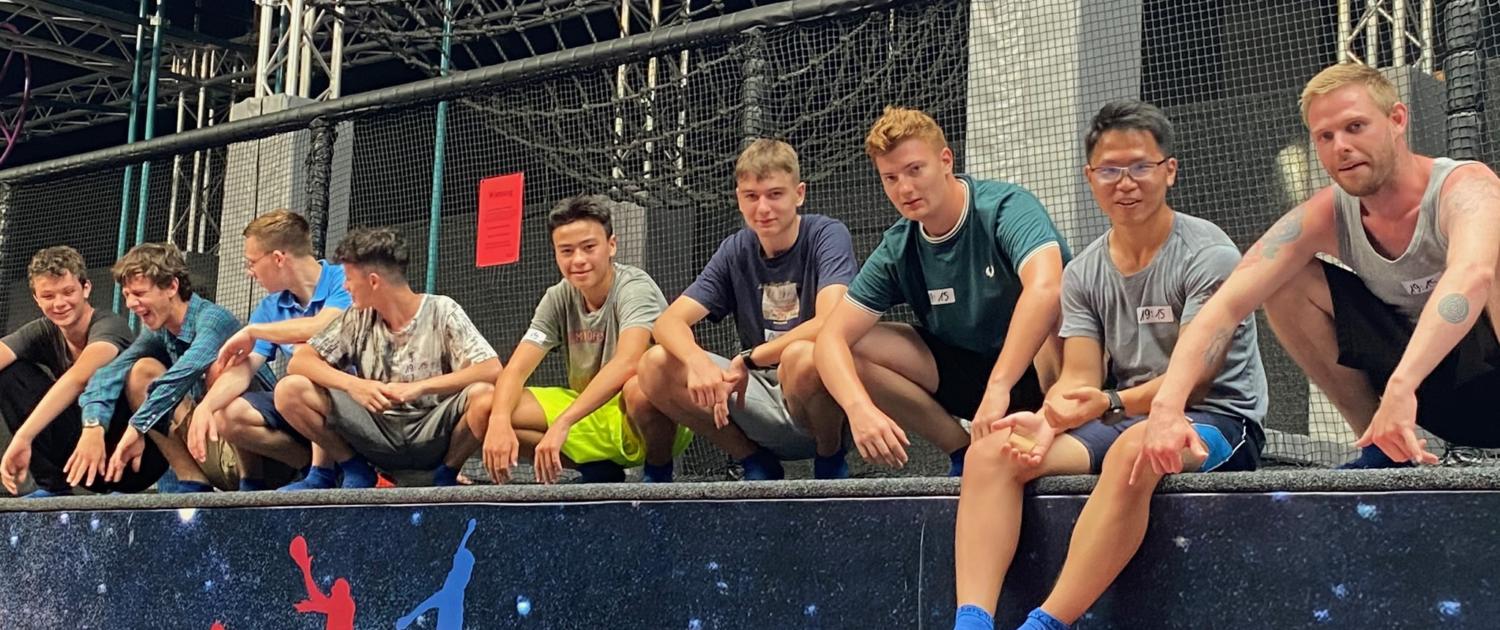
Other activities planned for the residents of the Mühle: group icebreakers and team-building activities, as well as a visit to “Jump & Fly” in Linden. After a cozy evening and a quiet morning, the soccer fans in the residential group were looking forward to watching the Champions League final after a manageable 30-kilometer trip back.
 

Westfalenhaus: “Being a Kid Again”

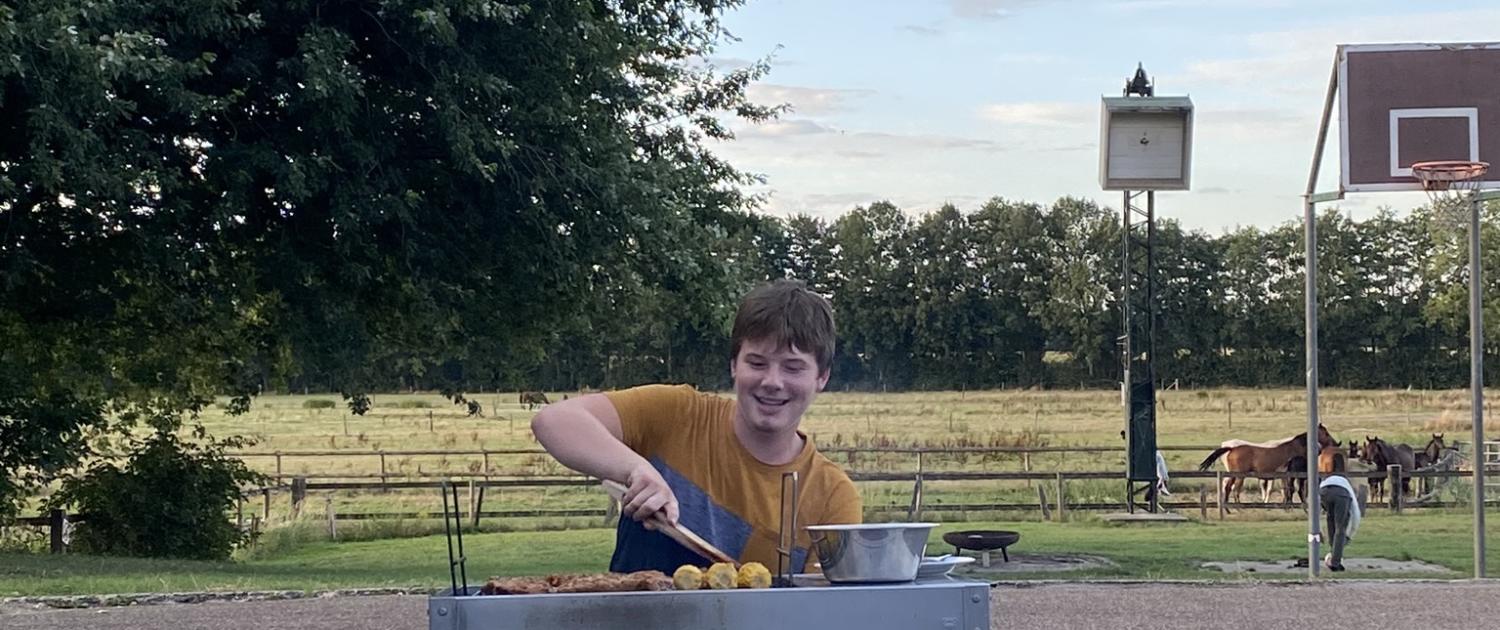
The Westfalenhaus headed to the tried-and-true group house in Weeze, North Rhine-Westphalia, which used to be a school. On the grounds, various games proved to be the perfect way to pass the time before everyone could satisfy their appetites at the long-awaited barbecue and the evening came to a close around the campfire. The “Wunderland Kalkar” amusement park served as an attractive highlight of the weekend together—with attractions for all ages, “not only to get our adrenaline pumping, but perhaps also to simply be kids again for a while.”


Biohaus: Getting to Know and Trust Each Other

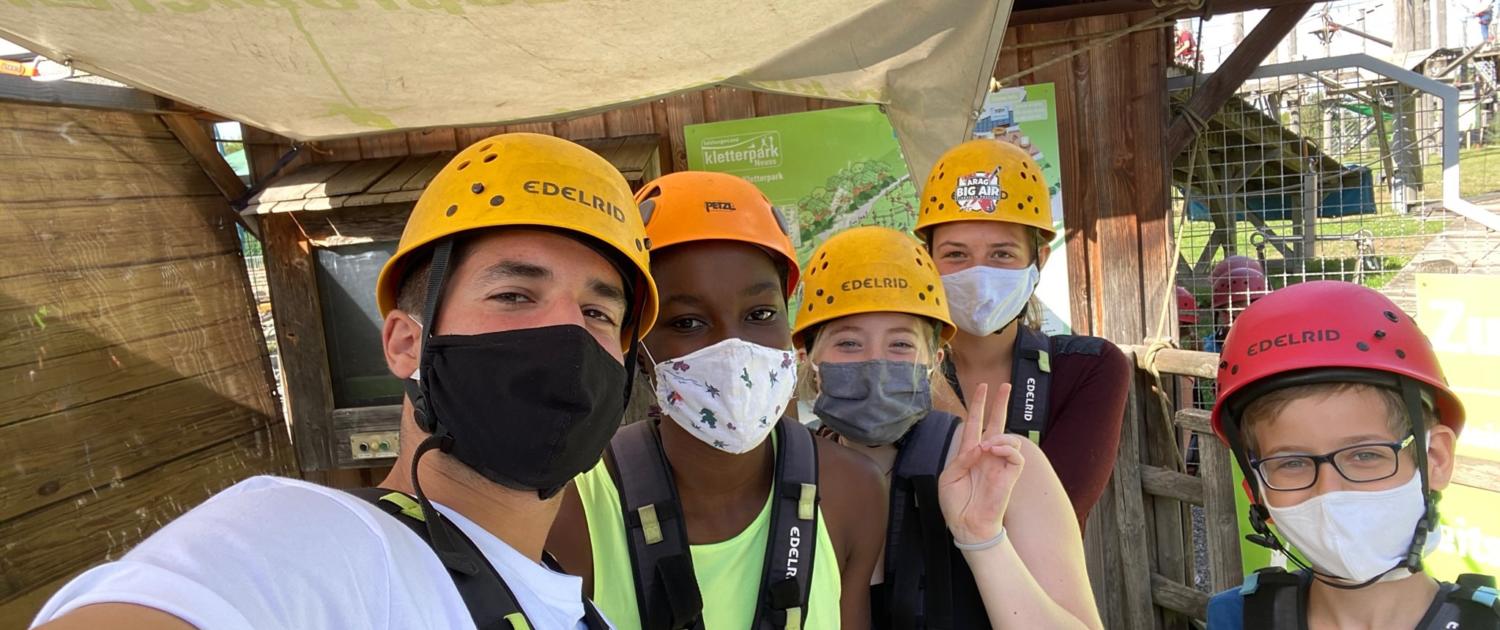
For the youngest house at the Steinmühle boarding school, the focus was clearly on age-appropriate, relaxed, and fun team-building and trust-building activities. So this year, the Biohaus headed to Düsseldorf for an overnight stay at a youth hostel and a visit to a climbing park that is part of the Alpenpark Neuss. Climbing as a group activity: As a true team, the students overcame their fear of heights together; guided by the experienced team of educators, the younger students motivated one another throughout the climbing course and, in the process, grew together into a real group.
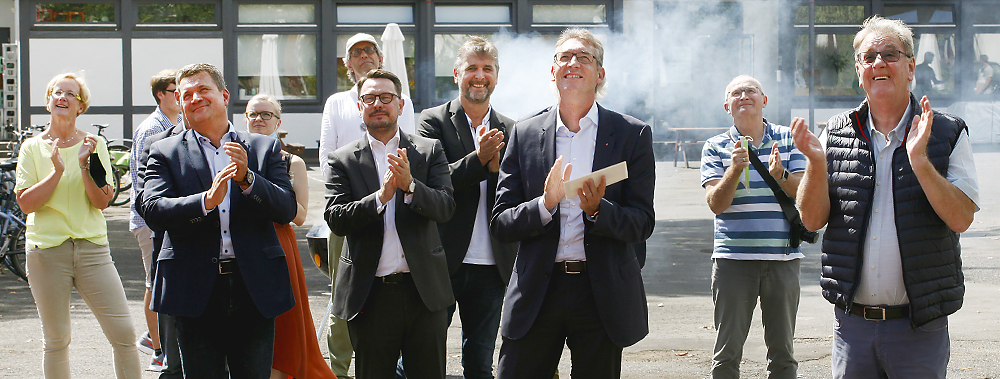
“In a turbulent world, the safest investment is in education.” With these words, Egon Vaupel, chairman of the Steinmühle Marburg School Association, opened the topping-out ceremony for the expansion of the Steinmühle Learning Center. Starting in the second semester, the bilingual elementary school is set to move into this new floor. The school opened a year ago and has been housed in the Bremerhaus building until now.

The fact that this works so smoothly is yet another testament to the excellent collaboration between the school and the Steinmühle boarding school. The high school and elementary school, on the one hand, and the boarding school, on the other, work hand in hand to further establish the bigger picture—namely, “Steinmühle.” “We’ve already succeeded in this; there is great respect for what our students and staff accomplish,” Vaupel reported. This was confirmed by Georg Ritter, who, as managing director of the boarding school’s operating entity, Landschulheim Steinmühle GmbH & Co. KG, praised both the spirit of partnership and the supportive attitude of the shareholders.


“The celebration is in honor of the construction workers”

“We’re celebrating here first and foremost to thank the construction workers,” Egon Vaupel went on to explain. “And we’re glad that all the work was completed without any injuries or incidents. Let’s hope it stays that way.”

In addition to praising site manager Jochen Schröder (Gade), Vaupel highlighted the architectural firm Thomas Oesterle’s aesthetic execution of the ideas within the framework of the numerous requirements. He praised the cooperative partnership with Sparkasse Marburg-Biedenkopf on financing matters, the support provided by the Steinmühlen Friends Association, and the dedication of School Association Executive Director Dirk Konnertz, backed by the reliable support of school principals Björn Gemmer and Bernd Holly.

All those involved took advantage of the gathering to engage in lively conversation over grilled sausages and cold drinks. Interested guests had the opportunity to take a guided tour of the building shell.

Last but not least, the group posed for a group photo—with Janine Neckenich taking center stage. The elementary school division director is especially delighted that the day when her students and colleagues will move into the new classrooms is now drawing ever closer.

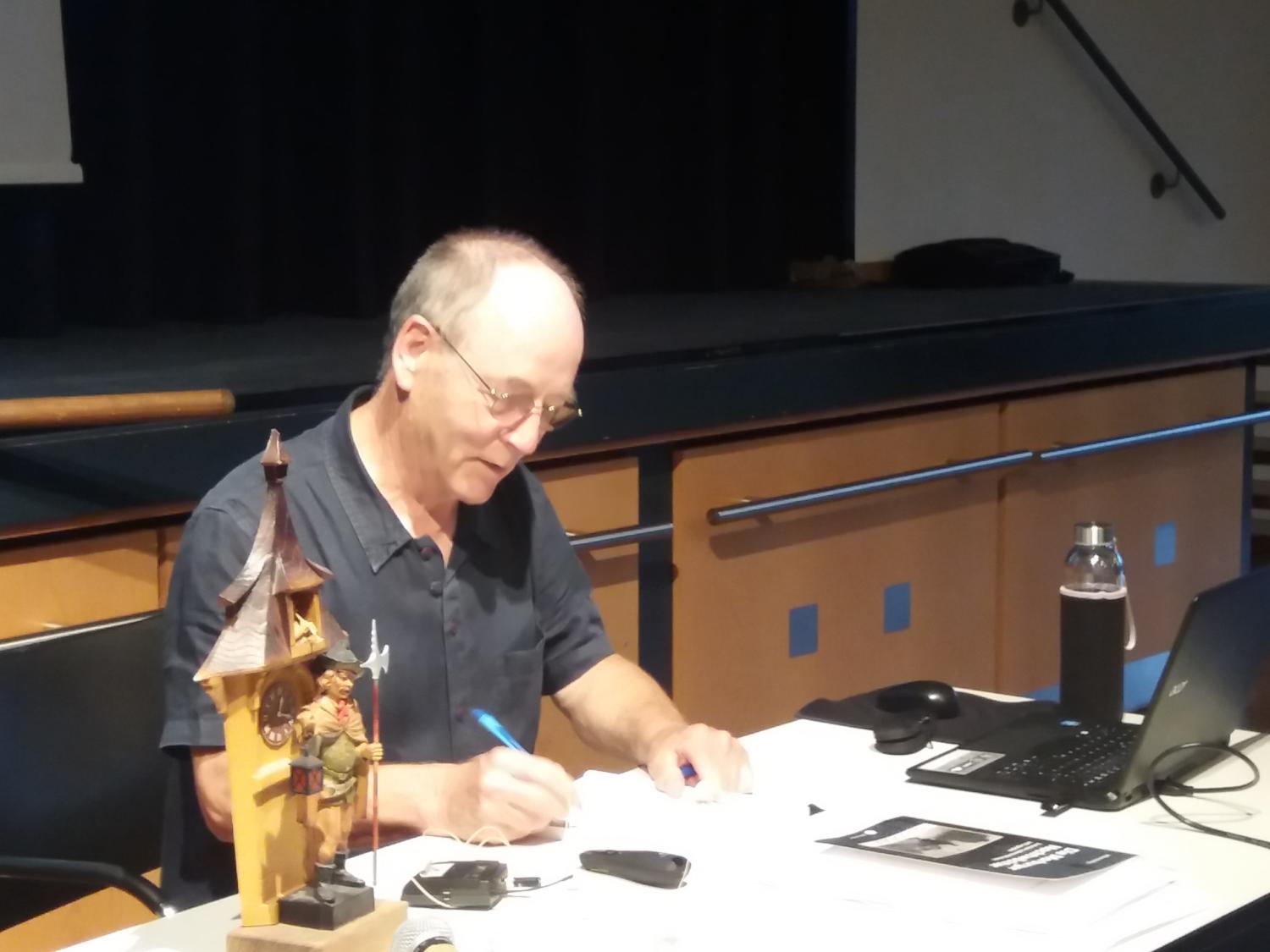
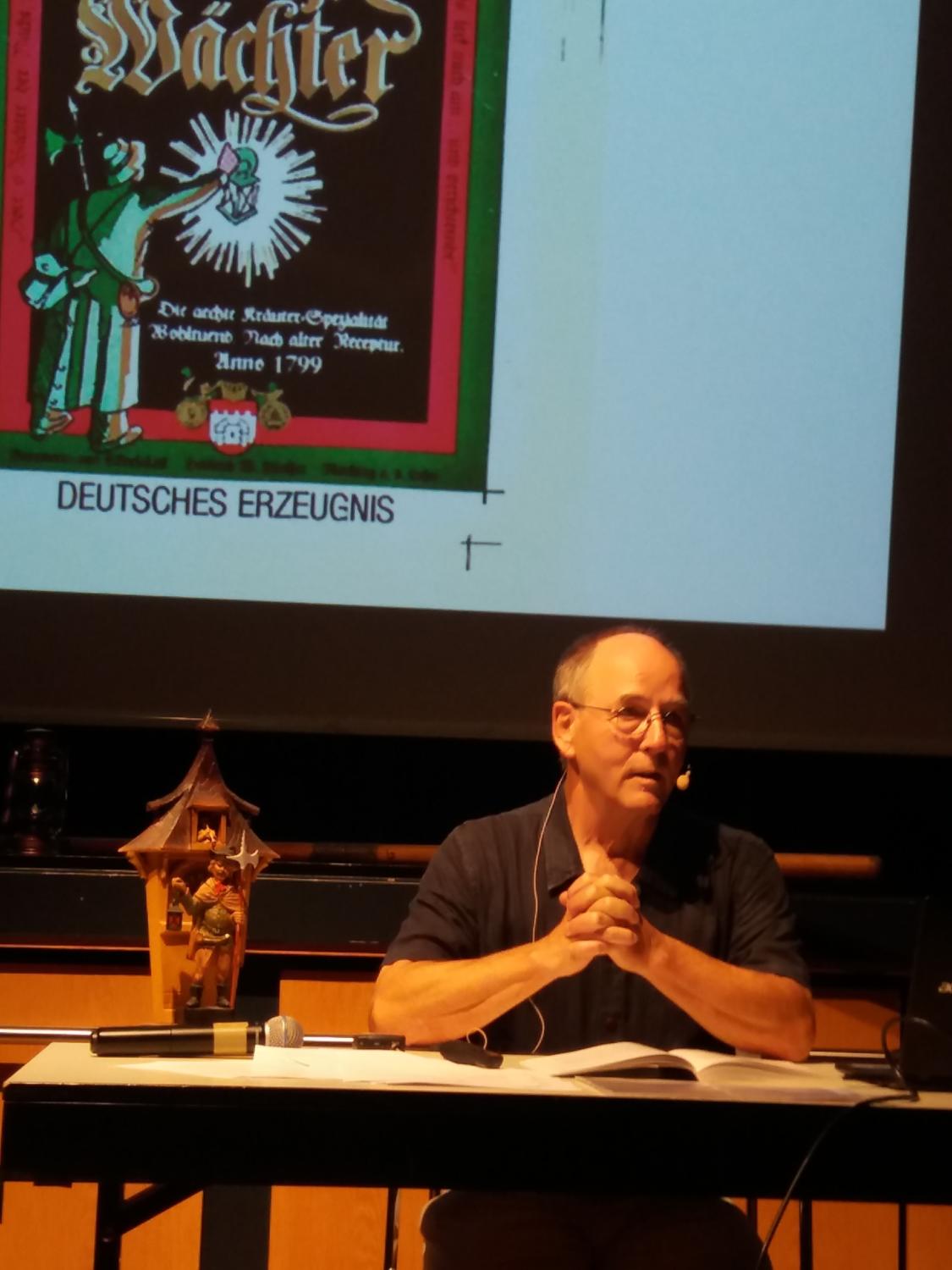
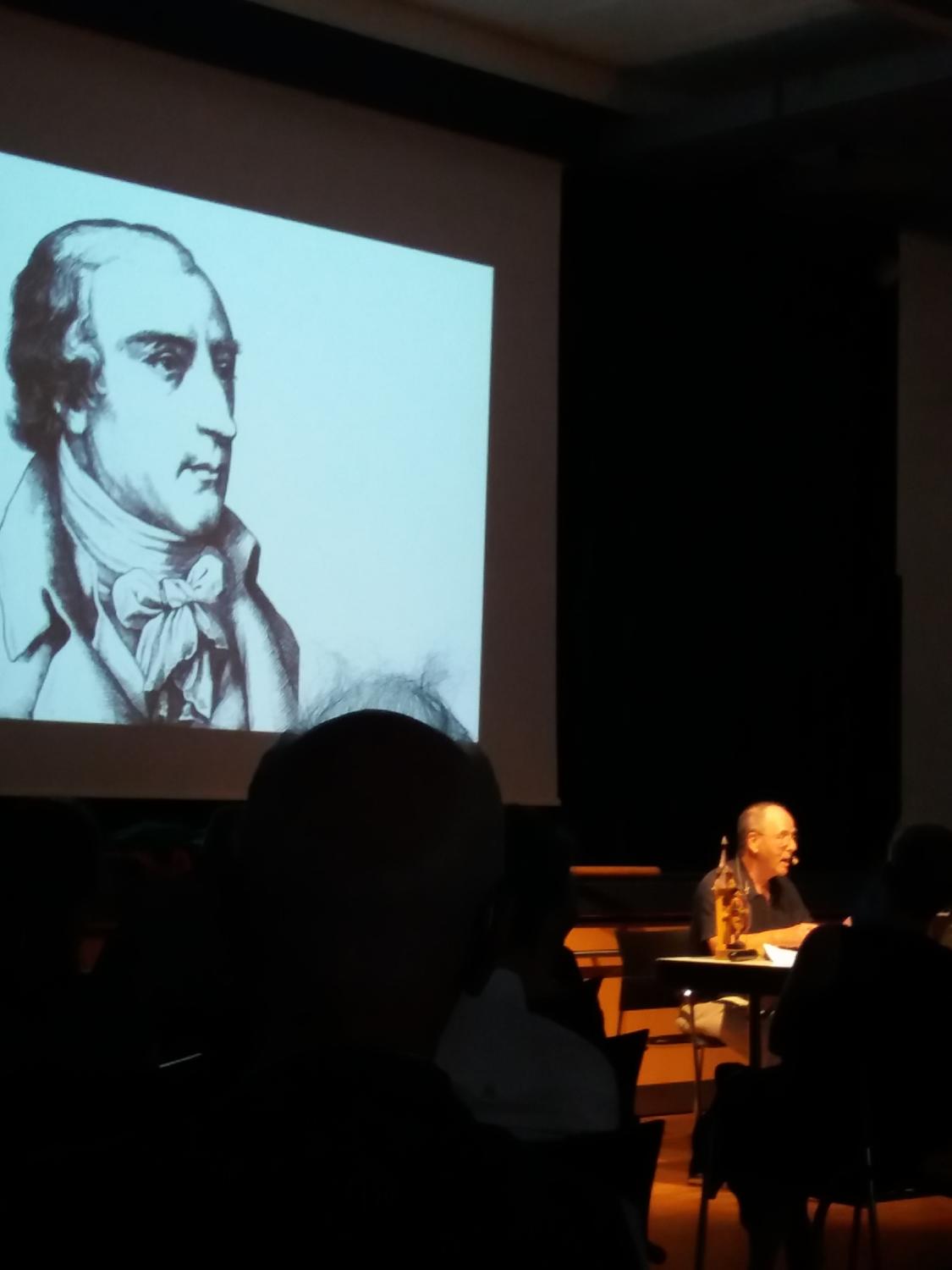
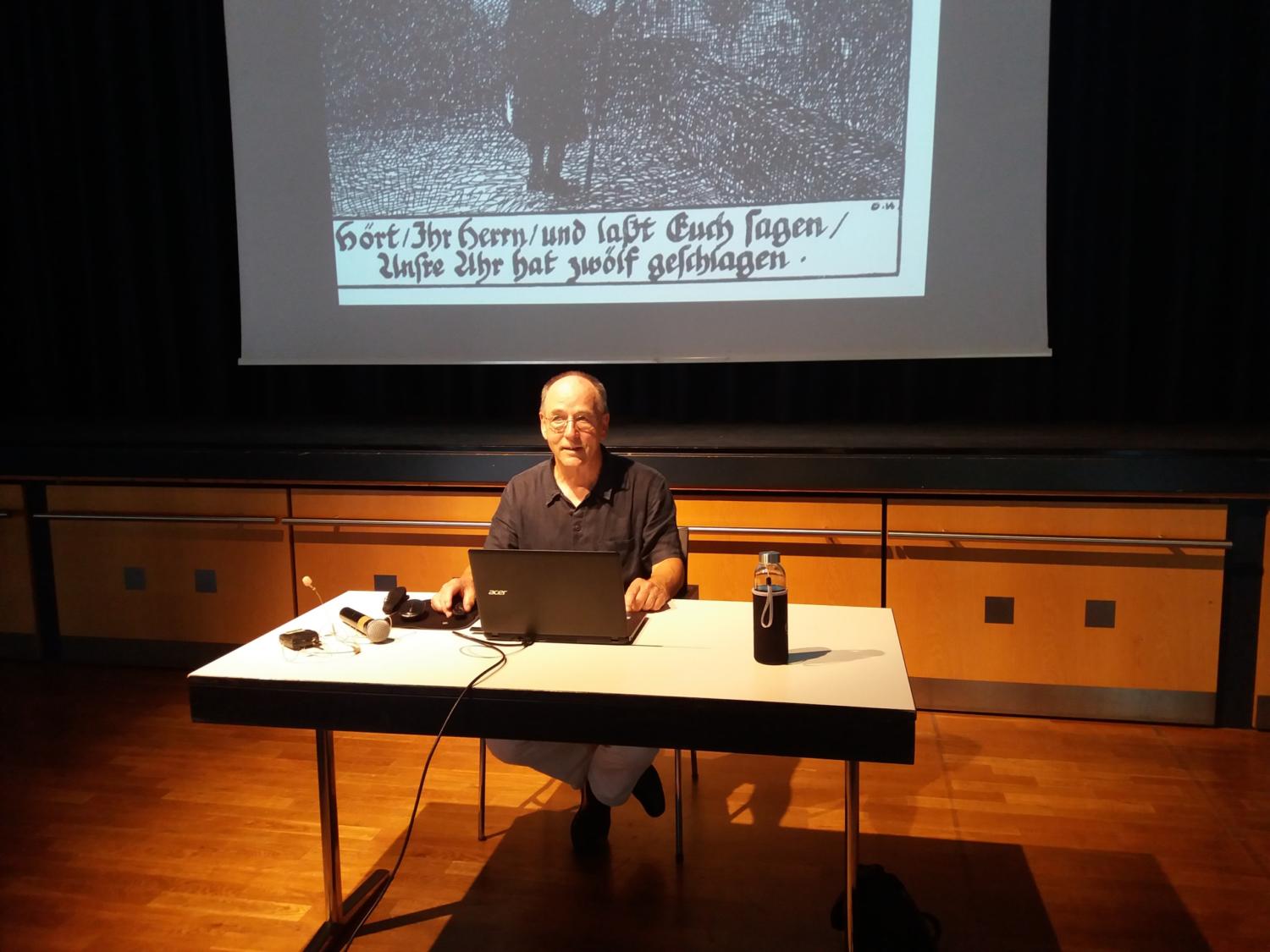
Former Steinmühle teachers often return to their old workplace: to have coffee, chat, and see what’s changed. It’s rather rare for them to invite the forum to a reading as an author. Wilhelm Stehling, who has been retired since February 2014, did just that. He presented his book, *Die Marburger Nachtwächter* (The Marburg Night Watchmen), at the Steinmühle. The audience was thrilled.

“The hall was full—or what you’d call ‘full’ under the current restrictions,” reports Principal Björn Gemmer. The audience had a good time as “Willi” Stehling provided entertaining insights into the rough-and-tumble world of night watchmen. It’s a profession that’s often ridiculed, but in reality, the hardships involved are underestimated, and the job is associated with numerous anecdotes.

So anyone who wants to know more about the Marburg night watchmen—when they were active and what happened to them—will find the answers in Willi Stehling’s book, available from Büchner-Verlag. Perhaps while reading, some of you will recall not only Wilhelm Stehling’s classes in geography, physical education, and music, but also his Grade 5 choir, the brass band, swimming lessons, and much more.

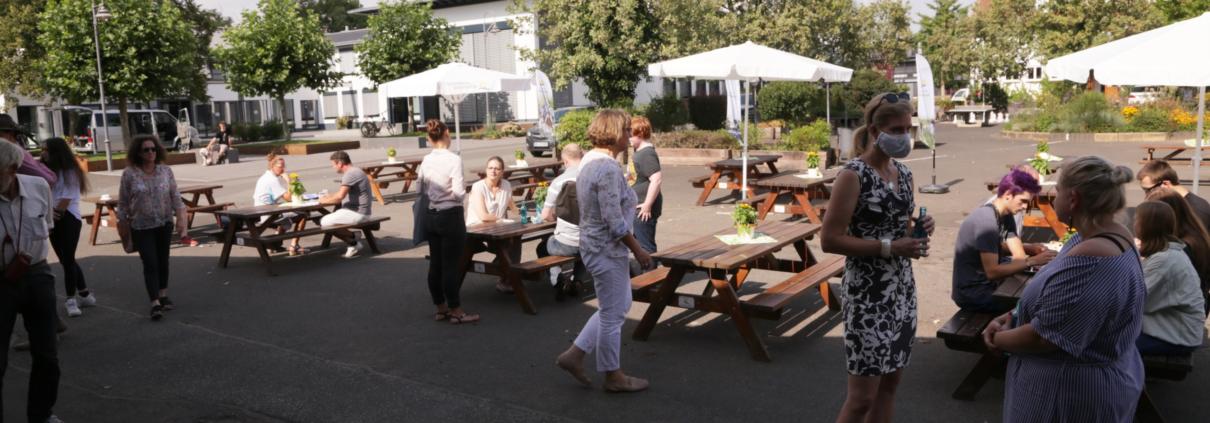
How fortunate that the outdoor facilities on the Steinmühle campus are so spacious. And how wonderful that the weather was so perfect on the day the boarding students arrived. As a result, restrictions, social distancing, and hygiene measures did not dampen the welcome afternoon on Sunday before school began. Instead of gathering in the dining hall as usual, the new boarding students and their families took their seats at flower-adorned tables outdoors—well sheltered from the warm sun and treated to a cake buffet set up by the kitchen team, complemented by cold drinks and fruit. Soft music played in the background.

“We’d like to introduce our team,” said boarding school director Anke Muszynski as she welcomed the 23 new students and their families.

Parents—and in some cases grandparents and many siblings—had traveled with the students to get a feel for Steinmühle Boarding School. The system in the residential groups has also been changed: Steinmühle Boarding School now relies on a mixed-age structure, so that students in grades 7 through 13 live under one roof. The residential group in the Steinmühle Biohaus is an exception; there, the very young students live together among themselves.

Steinmühle is an international company

China has long been a common country of origin for students at Steinmühle Boarding School. This is also the case this school year. However, places were also eagerly filled by children and teenagers from the United States, France, Switzerland, and Russia. Many parents from all regions of Germany also chose to send their children to Steinmühle Boarding School. “We know our son is in good hands here,” explained one father.

The students and families who have been familiar with Steinmühle Boarding School for some time greatly appreciate this professional care. When the “long-time” residents began arriving at 3:00 p.m., there was great joy at seeing the staff and fellow residents again, while saying goodbye to their families was more of a routine matter. By 6:00 p.m. at the latest, family members had to begin their journey home.

Only time will tell how the start of the school year will actually go under the current COVID-19 regulations; “But we are confident.” That same evening, the children and teenagers received a briefing on the current COVID-19 safety guidelines for the start of the school year.

The number of new students equals the number of graduates

But there is also news that is entirely positive. After more than 20 students graduated from Steinmühle Boarding School at the end of the school year, 23 children and teenagers have already been admitted for the 2020–21 school year: “We were able to guide our graduates safely through the Abitur despite the pandemic. The fact that we had practically the same number of new admissions speaks volumes about Steinmühle.” Several new employees who have chosen Steinmühle Boarding School as their employer are sending the same positive signal. They are strengthening the educational team in the residential groups.

These encouraging updates are complemented by the news that tablets are now available for every teaching team. This ensures that Steinmühle students in the tablet classes receive the best possible support. At the same time, this measure advances the ongoing process of digitization.

Despite all the challenges, Steinmühle Boarding School is looking forward to the new school year and is confident that together, we will overcome all obstacles!

Steinmühle Boarding School is extremely confident that it can fully meet the challenges posed by the SARS-CoV-2 pandemic. A role model for the students is the graduating class, which left the boarding school at the end of the school year. They did not allow “Corona” to limit their performance.

Farewell Ceremony for High School Seniors and high school graduates against a cinematic Hollywood backdrop

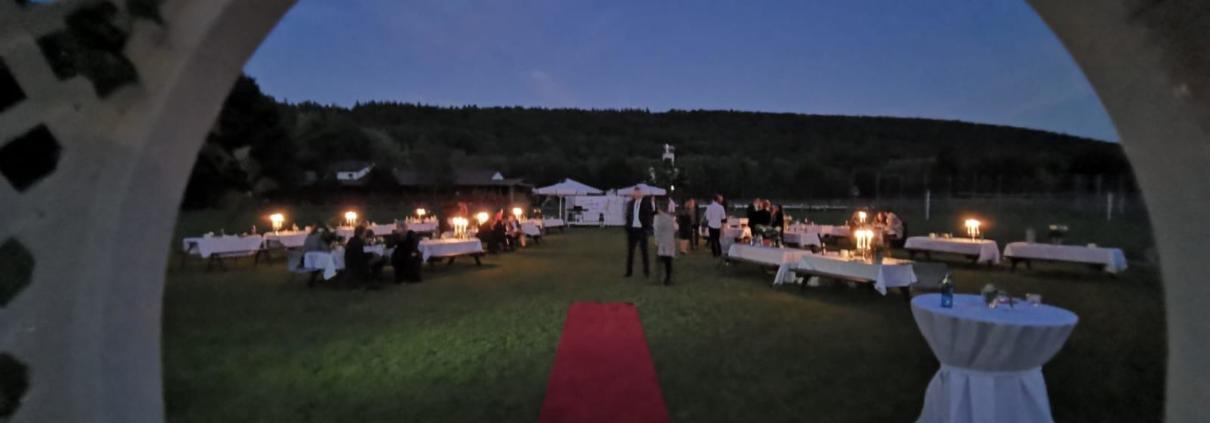
On June 20, the big day had finally arrived. After 13 years of school and the rigors of the Abitur exams, which took place under very unusual circumstances, the “school” chapter finally came to an equally special end for the class of 2020. After it had long seemed as though SARS-CoV-2 would ensure a quiet and subdued farewell—after all, the school’s graduation parade, the school’s graduation ball, and all other festivities had to be canceled—it was all the more delightful that an in-house graduation ball could be organized on the boarding school’s own sports field. Not only did this ensure compliance with social distancing rules, but it also provided the setting for a farewell ceremony that our graduating seniors undoubtedly deserved.

What began weeks ago as a stopgap measure ultimately turned out to be an absolute stroke of luck and a unique event that will remain an unforgettable memory for all guests, all high school graduates, and the entire teaching staff at Steinmühle.


An elaborate production

Right from the start, the guests were treated to a sight that left many of them in awe. The flawless planning (thanks once again to Luise Schneider and Celina Traser) and the incredibly thoughtful and elaborate staging by Edeltraud Buurman created breathtaking impressions even before the evening had officially begun.

Under the open sky, nestled in the beautiful natural surroundings on the outskirts of Marburg and with the setting sun casting its glow over the treetops of the adjacent forest, the guests were treated to a backdrop that felt more like the set of a Hollywood movie than a high school prom. With pleasant summer temperatures, the atmosphere that emerged could not have been better planned and more than lived up to the occasion.


Graduation Ceremony for the High School Seniors

Inspired by this unique setting, the guests enjoyed pleasant conversations while savoring the culinary delights of the barbecue buffet prepared by our kitchen team, sipping the occasional cool drink, and taking in the evening’s program—which had been planned by our “Abis.” In addition to the young ladies’ grand entrance in ball gowns, musical performances, and the equally skillful and humorous hosting by our “Abis,” the official send-off for the graduating class was the highlight of the evening.

When, in true “” style and in keeping with the school’s tradition, each high school graduate was bid farewell with a personalized tribute—some very funny, some very emotional—that captured the wonderful memories that had been created over the course of so many years, and it wasn’t just the graduates who shed a few tears.

On the banks of the Lahn, all the participants celebrated and danced to the music of a DJ well into the early hours of the morning, when the prom finally came to an end.


Thank you very much for your support

In closing, we would like to thank everyone who contributed to the success of this evening: Without the dedication of Edeltraut Buurman, Till Buurman, the entire kitchen team, and the many volunteers, this wonderful finale would not have been possible.

One last time, the entire teaching staff at Steinmühle Boarding School would like to thank our graduating seniors. Not just for this evening, but also for all the wonderful moments that led up to it and that we’ve shared together over the past few years. Good luck on whatever paths may lie ahead of you. Take care—and see you at next year’s Fall Festival. We’re looking forward to it…!


The participation of numerous students from our school in the annual Pangea Mathematics Competition, which takes place in several countries, has become a true tradition and shows that mathematics is a subject that can inspire many people.

This competition consists of 20 multiple-choice questions of varying difficulty, which students must solve within 45–60 minutes without a calculator. These are not traditional math problems from the classroom, but rather a combination of logic and brainteaser problems, such as those sometimes found in various aptitude tests for career orientation. Scoring is done centrally, and typically the top 500 participants in each grade level from across Germany are invited to the intermediate round.

This year, too, several students performed exceptionally well and made it into the top 500 in Germany (and the top 50 in Hesse).

5th Grade: Carlos_Toshira_Beato_Del Rosal

6th Grade: Sophia Rogosch and Teresa Dinges

7th Grade: Timo Wienbeck and Yewon Jeong

9th Grade: Joshua Wieder; Paula Auschill; Susanna Just; and Velten Schulz

We would like to extend our warmest congratulations to our students on this achievement.

(Unfortunately, due to the COVID-19 situation, the remaining rounds of the competition have been canceled this year.)


(from left to right) Joshua Wieder, Sophia Rogosch, Teresa Dinges, Yewon Jeong, Susanna Just, Timo Wienbeck, Paula Auschill, Carlos Toshira Beato del Rosal, Velten Schulz

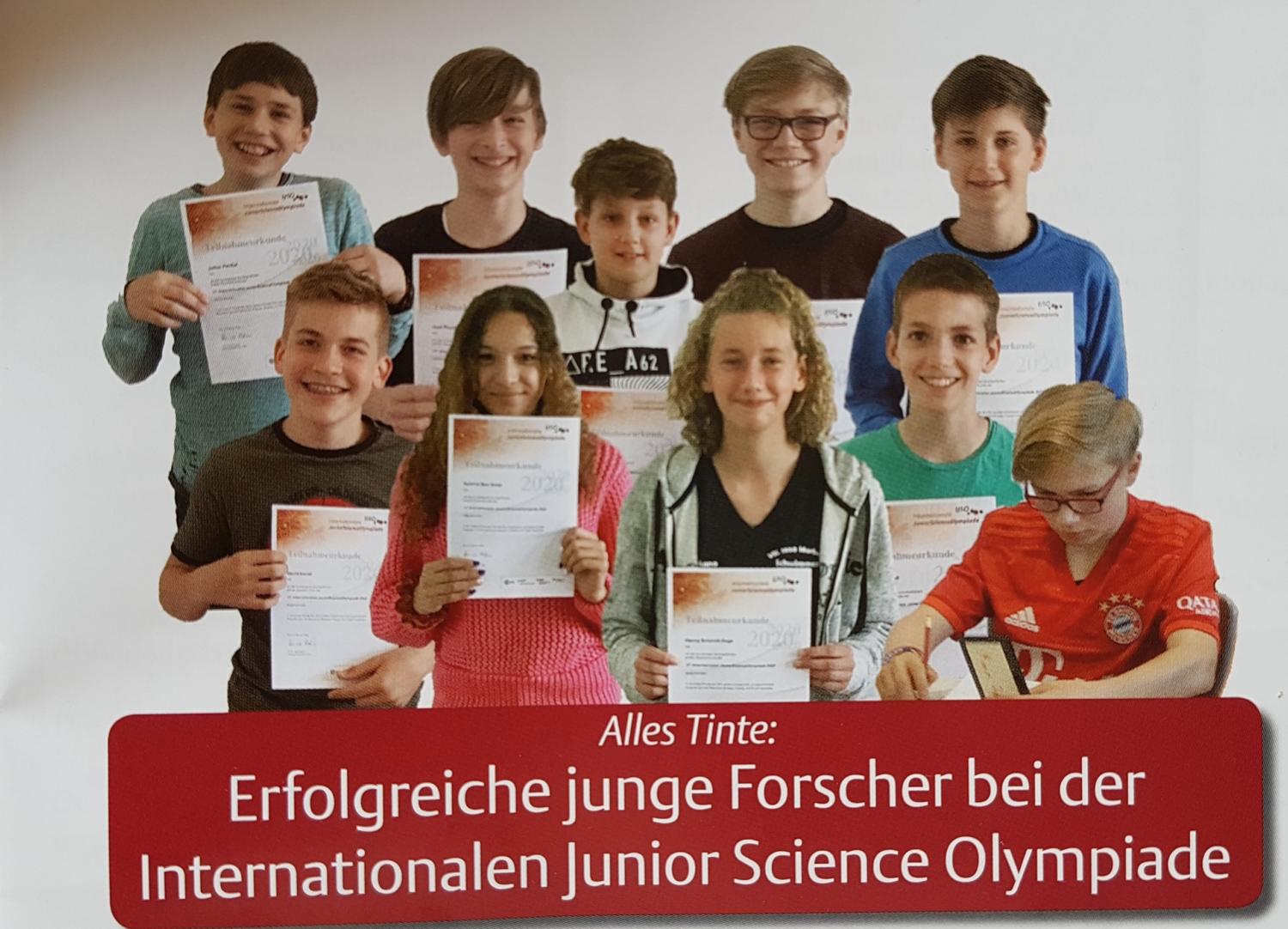
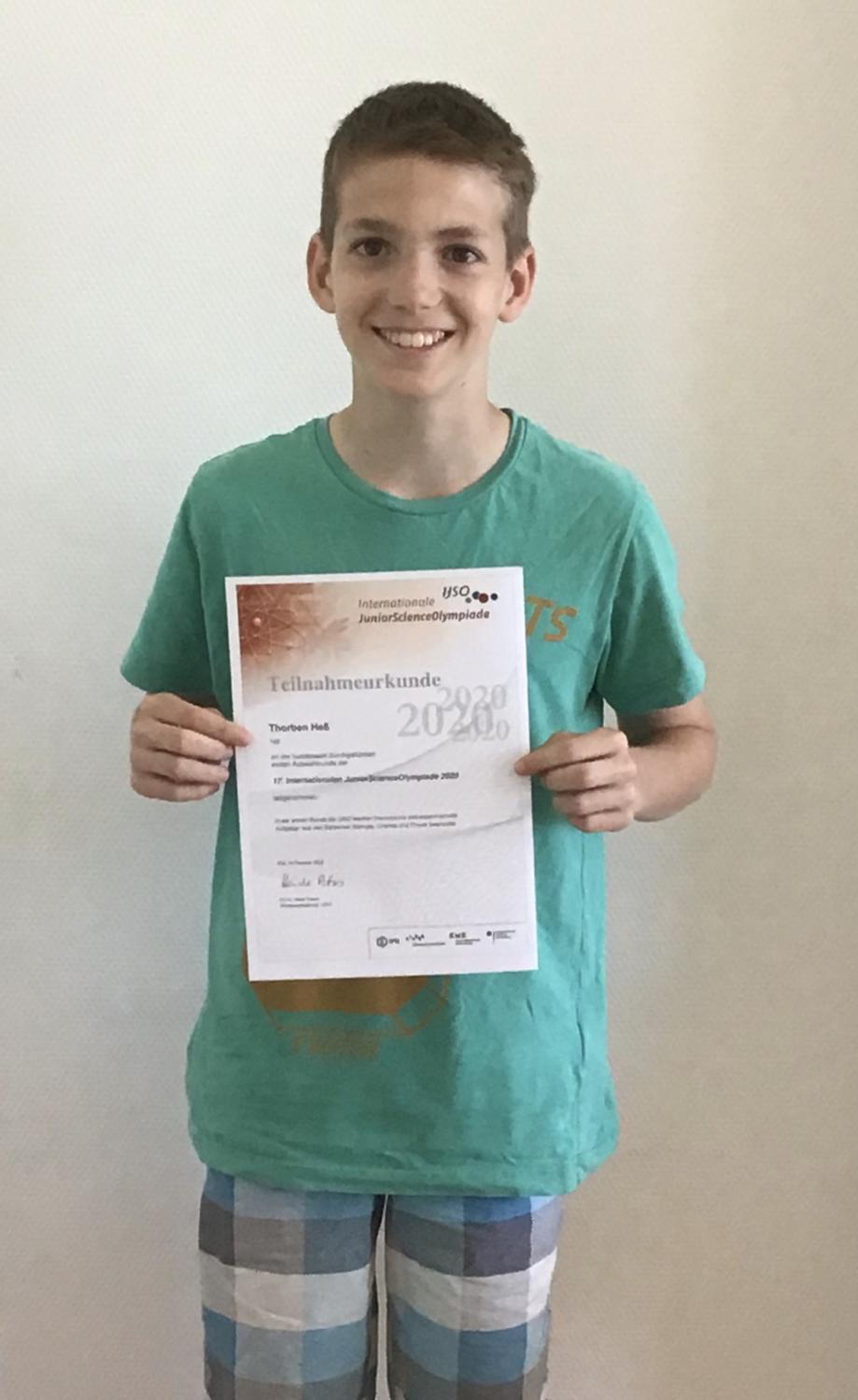
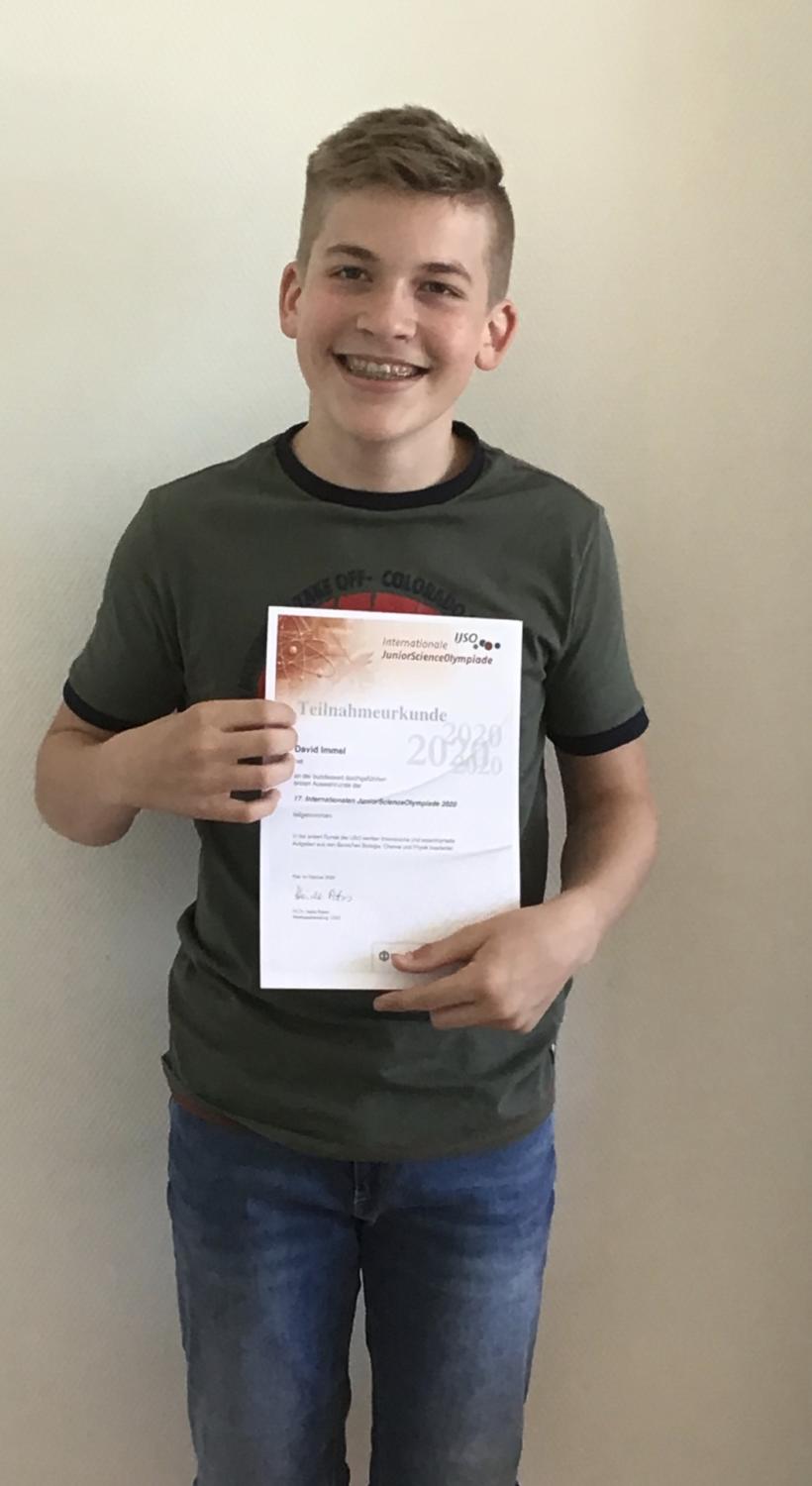
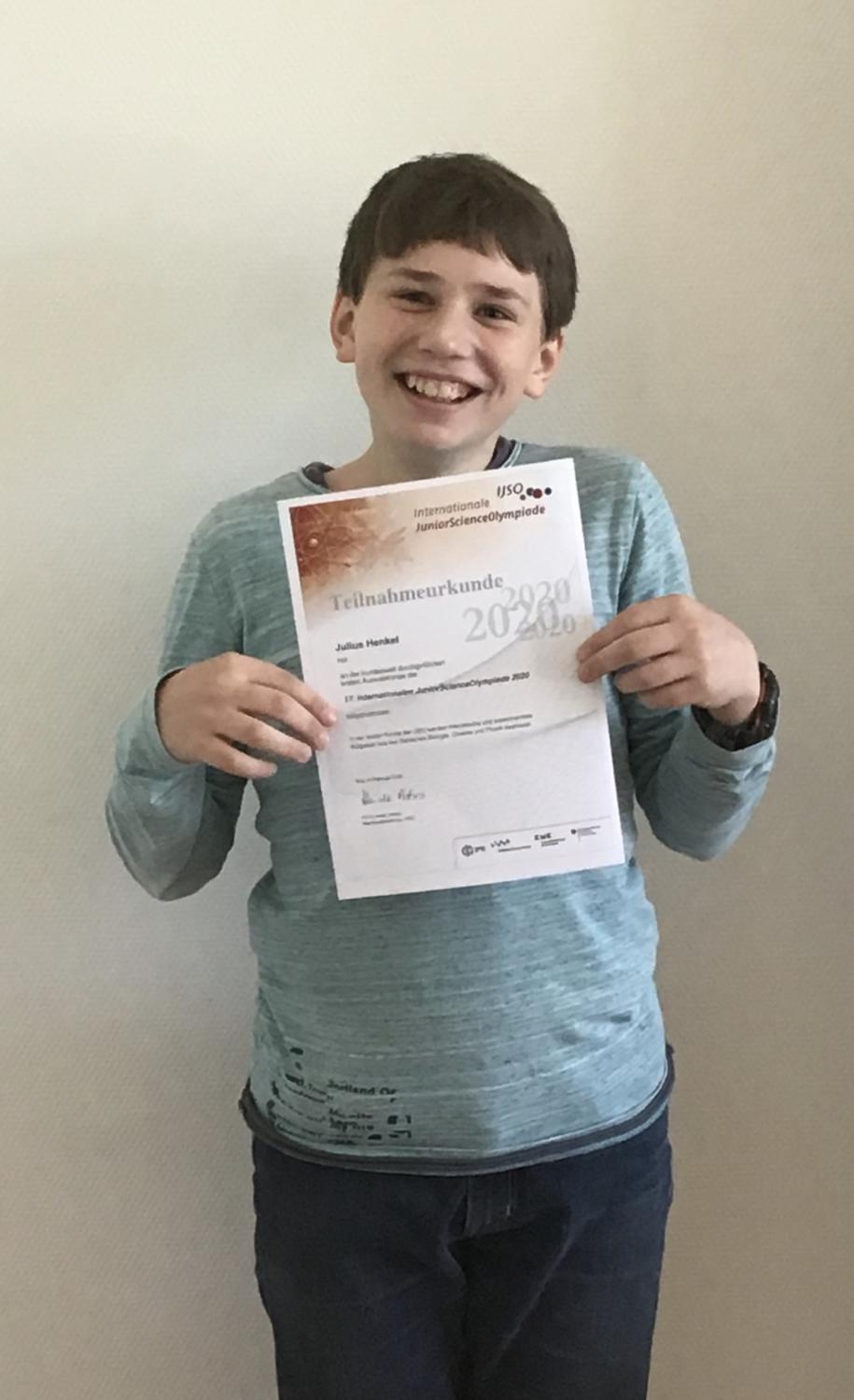
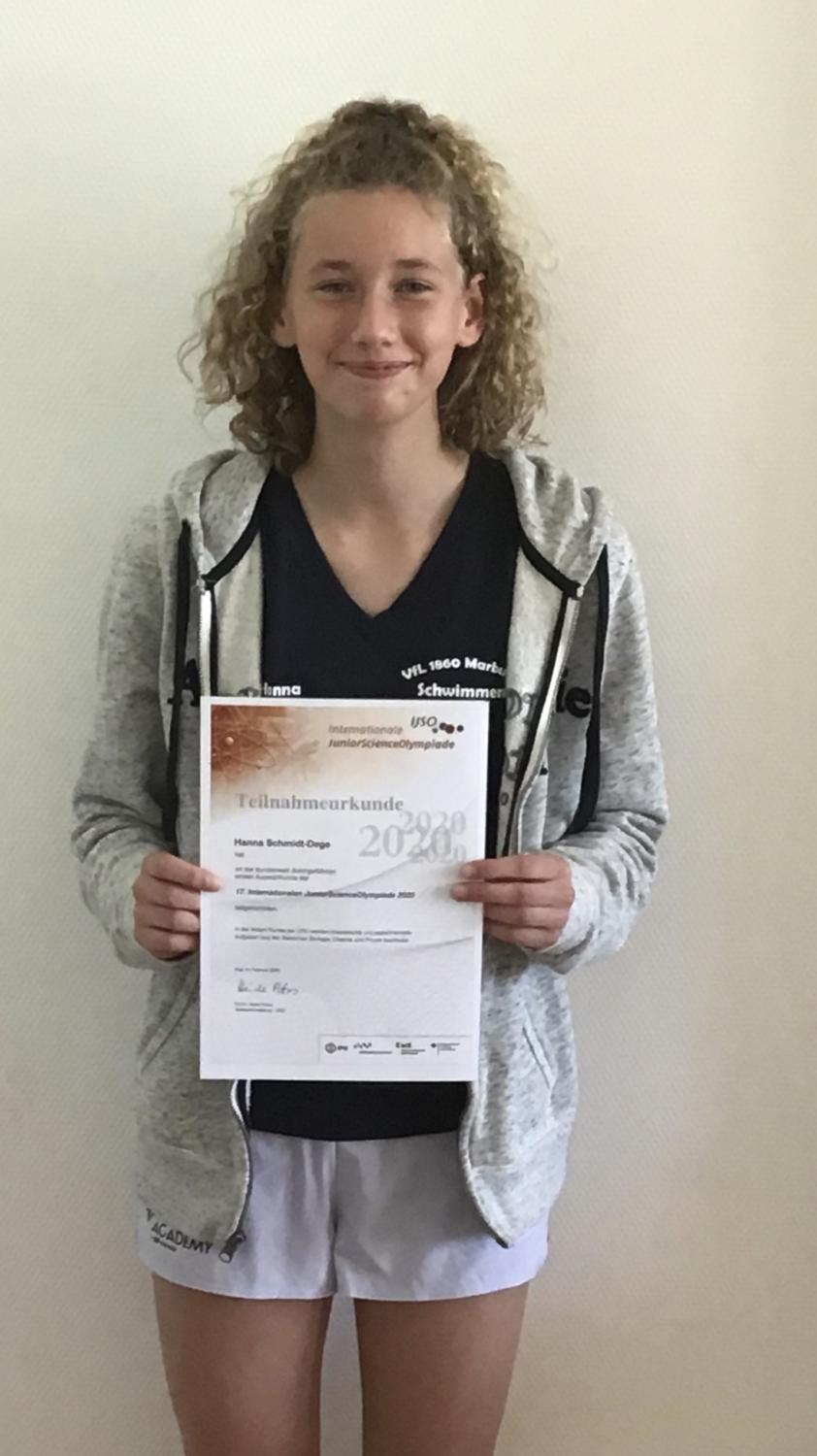
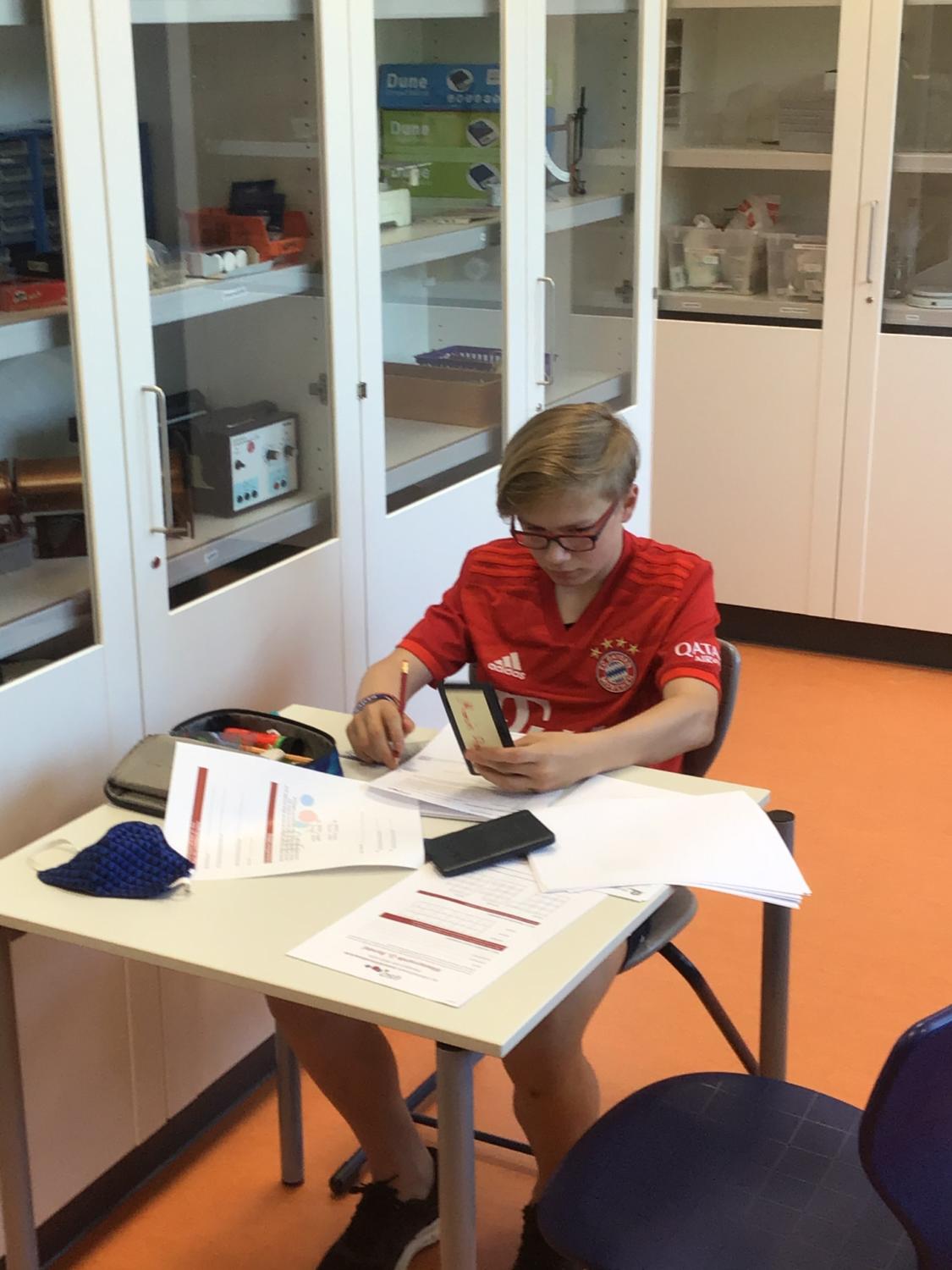
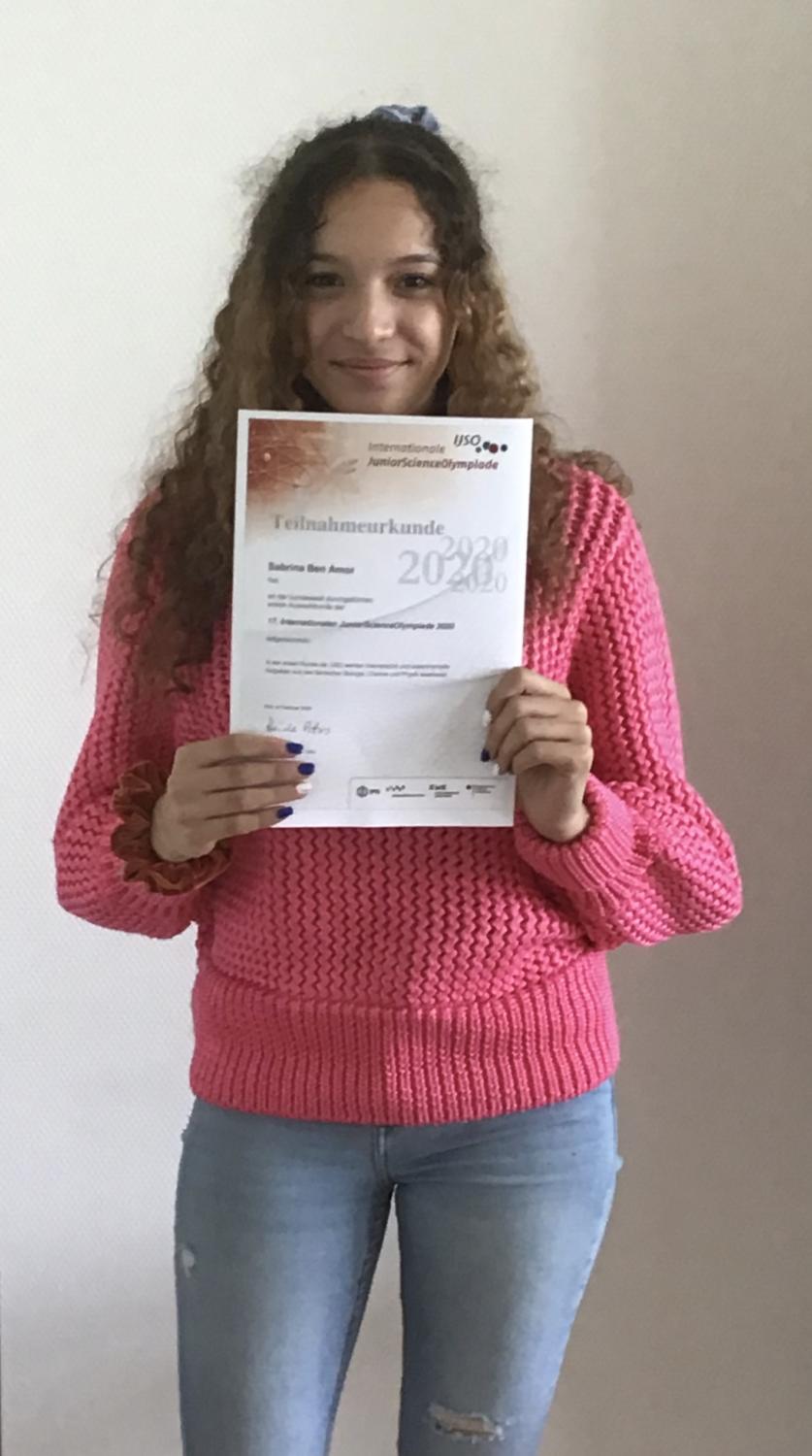
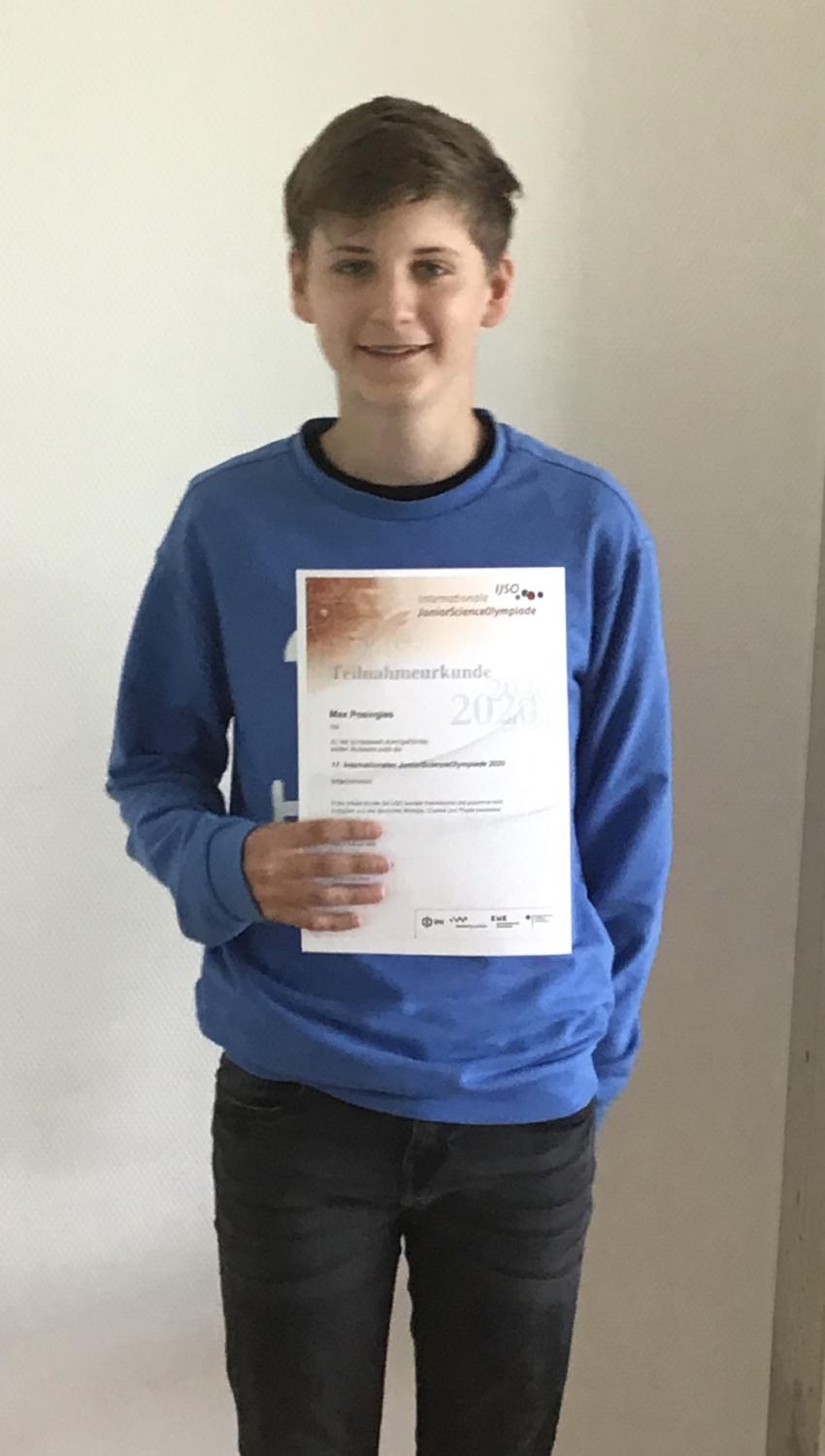
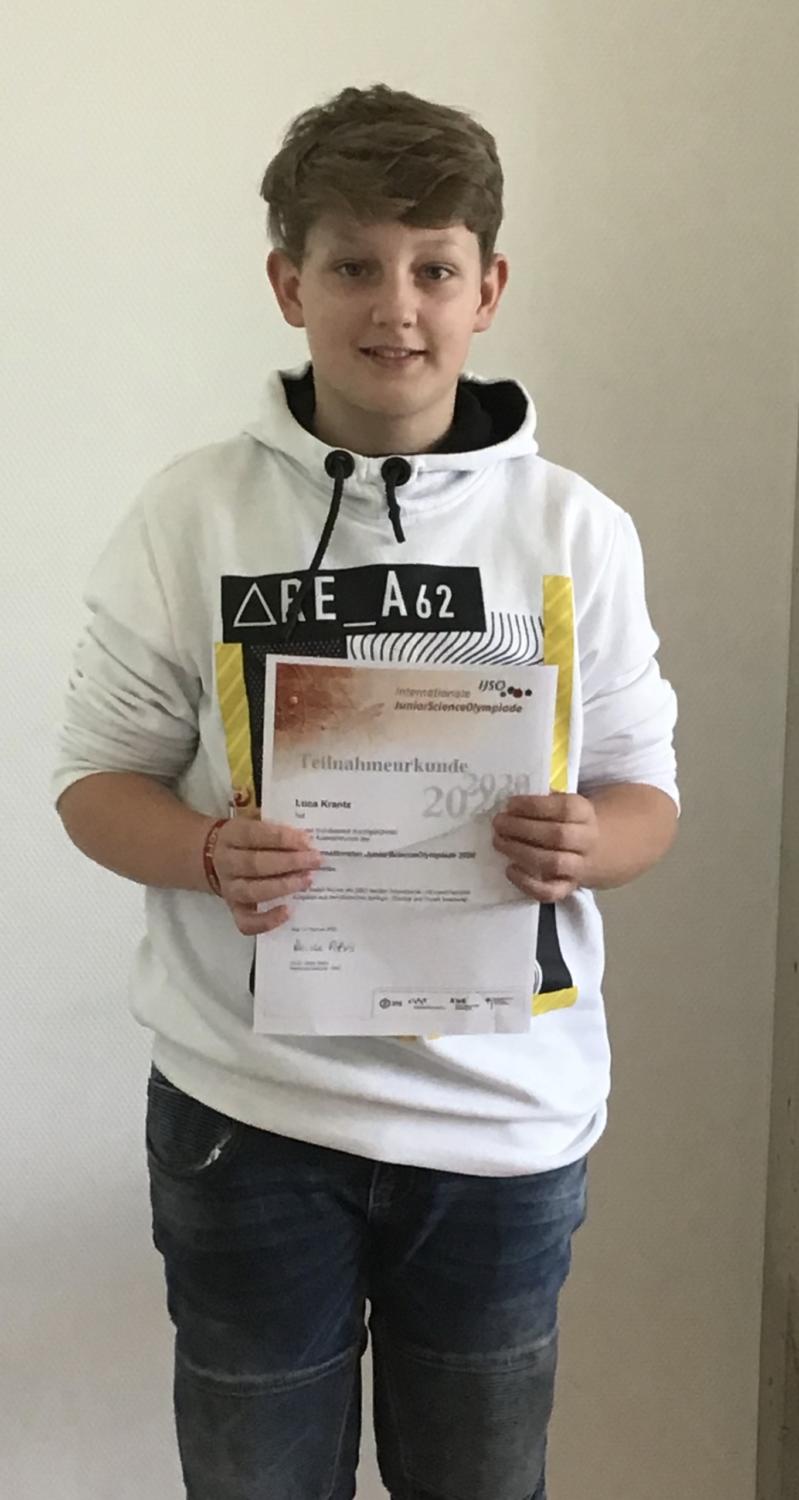
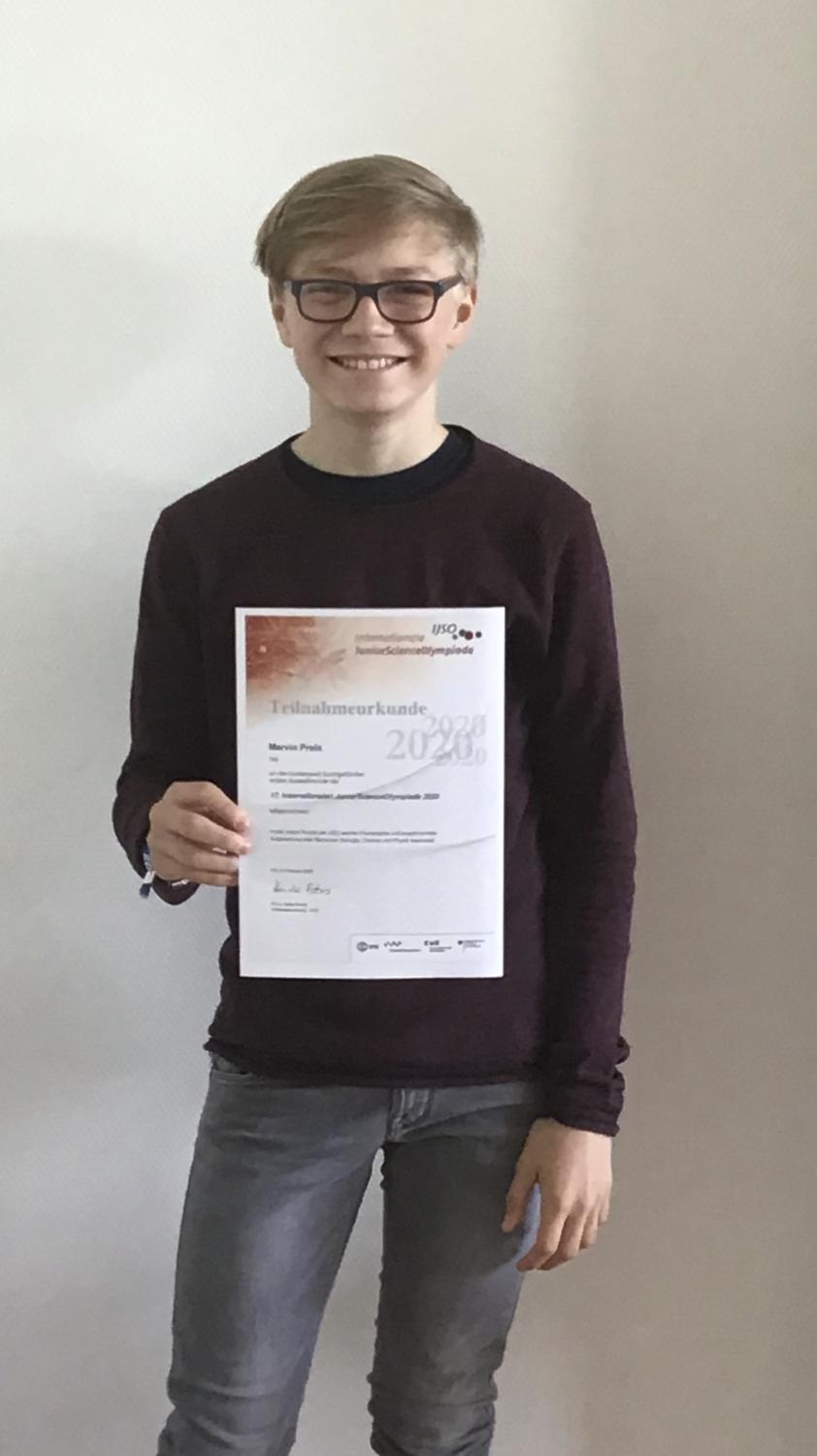
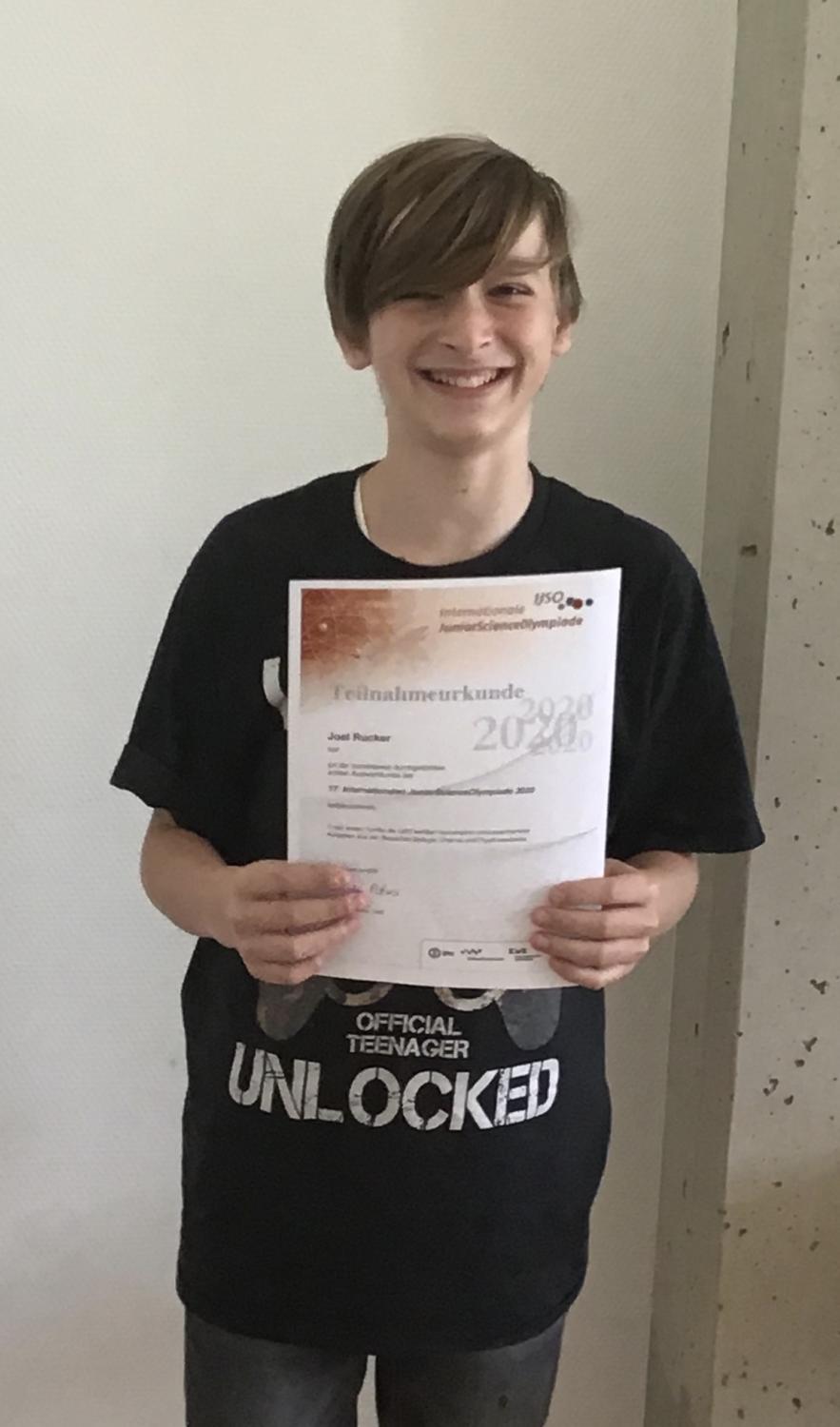
For the second time, Hanna Schmidt-Dege (7a), Sabrina Ben Amor, Julius Henkel, Thorben Heß, David Immel, Luca Krantz, Max Posingies, Marvin Preis, and Joel Rucker (all 7c) took part in the International Junior Science Olympiad, which this year had the theme “All About Ink.” In this competition, children and teenagers up to age 15, under the supervision of a teacher, can work on various competition tasks either alone or in small groups. The most important part of each task is an experiment that must be conducted, documented, and evaluated. This year, for example, the students investigated what happens to ink when it is “erased” with an ink eraser, and they made their own ink using various recipes. In two additional experiments, they used ink to examine water transport in flowers more closely and to visualize particle movement in liquids of varying concentrations and temperatures.

The students were able to conduct the experiments during their regular physics classes and thus also make use of the school’s resources (e.g., the student lab, physics equipment collection). The results show that everyone learned from last year’s experiences and acquired a high level of experimental competence.

Marvin Preis (7c), who not only participated in this year’s Olympiad but also successfully competed in the “Jugend experimentiert” contest last year, advanced to the next round of the competition. There, he had to answer a total of 24 quiz questions on various topics in the natural sciences that went far beyond the school curriculum for his age group. Marvin rose to this challenge as well and qualified for the next round—a written exam—which will take place in June, and we wish him the best of luck.

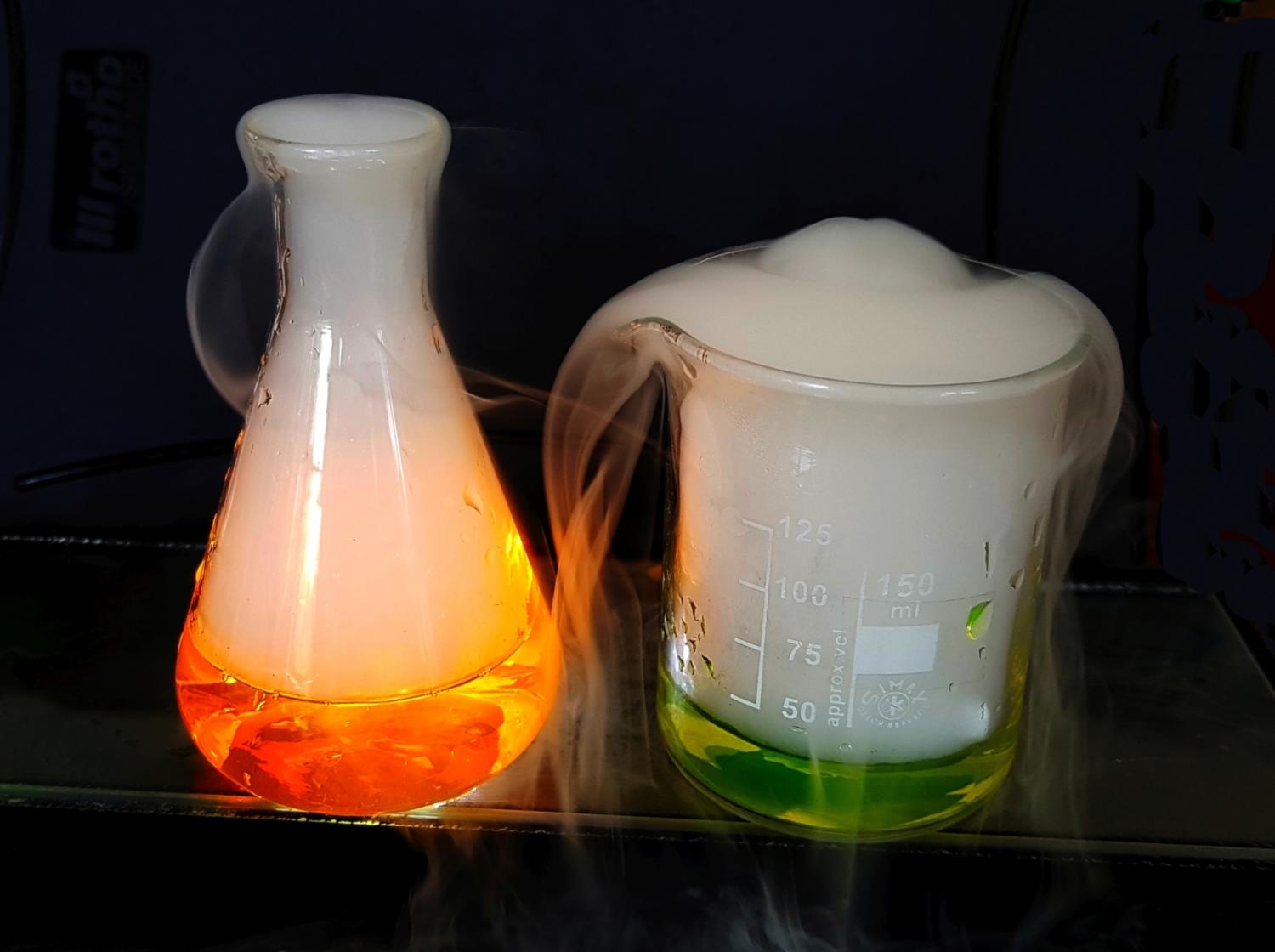
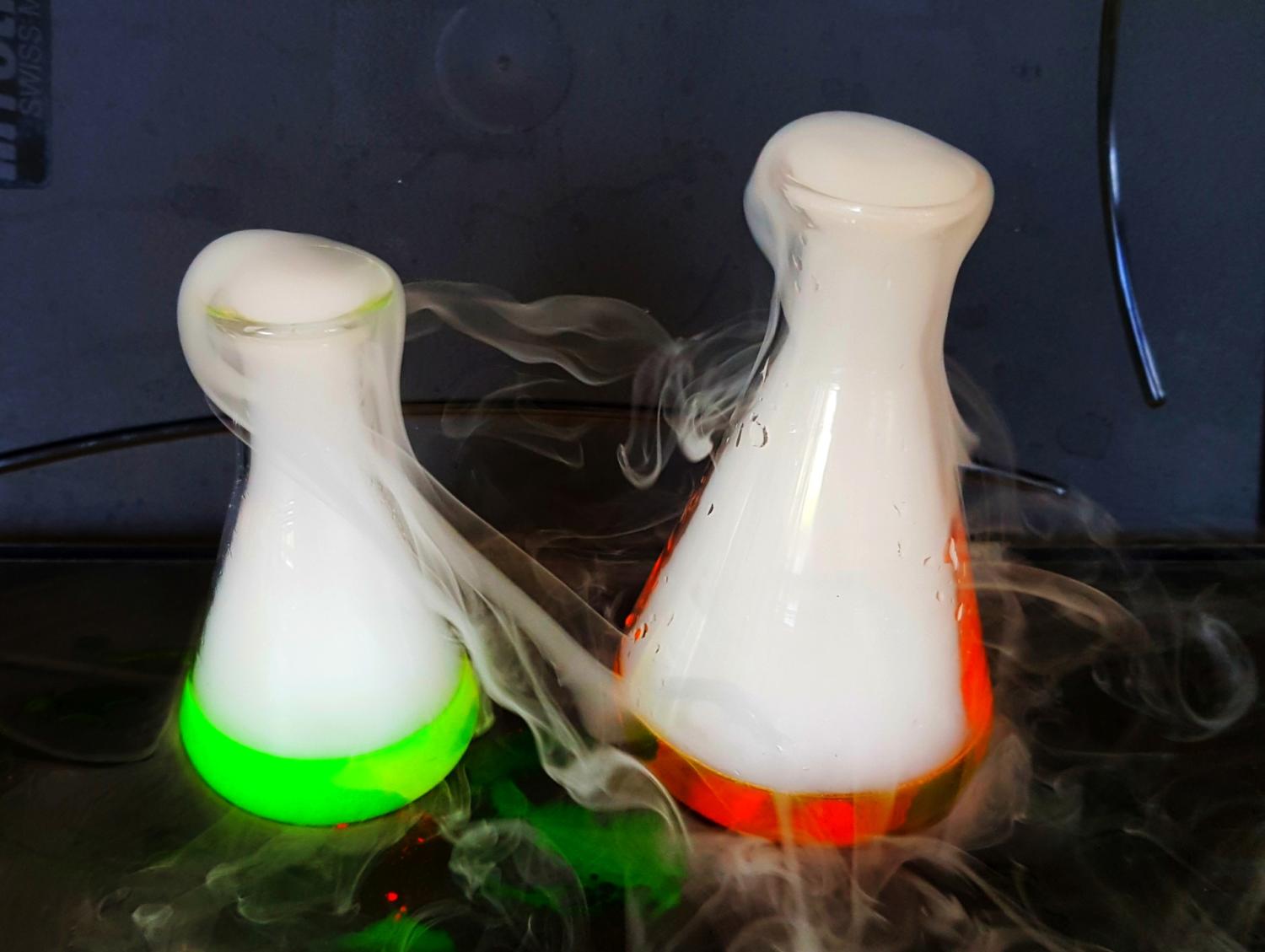
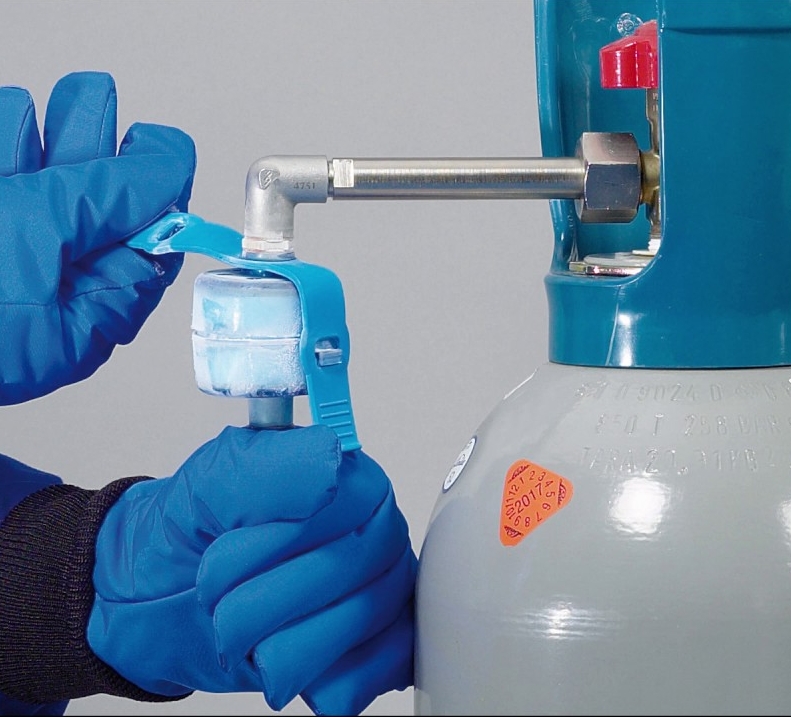
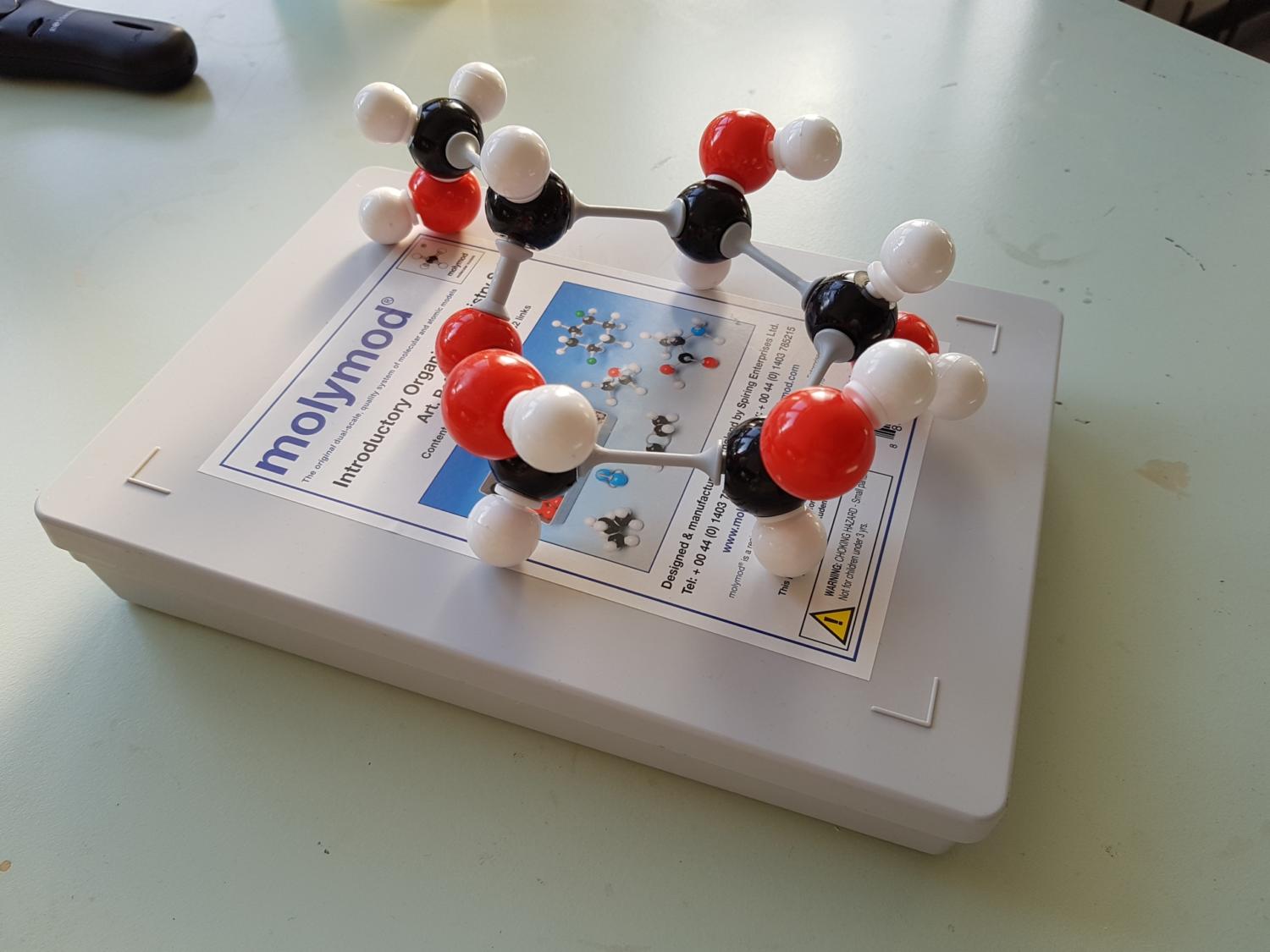
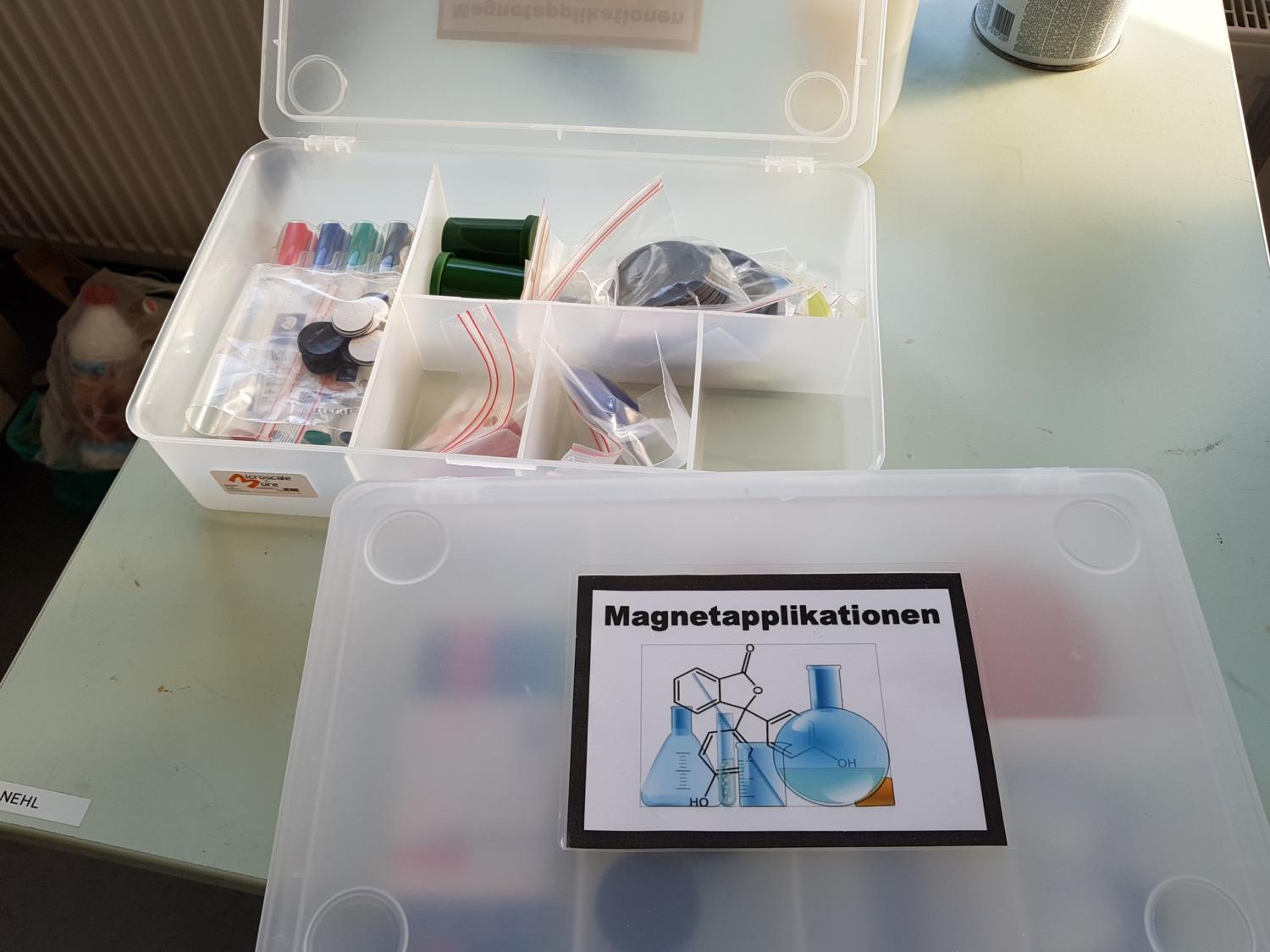
Every three years, secondary schools can apply to the Chemical Industry Fund for financial support for experimental science instruction. Steinmühle regularly applies for these grants. In the spring, another €2,500 was approved. With these funds, the school has since been able to purchase new molecular building sets and magnetic applications for modeling chemical processes and concepts, as well as additional specialized literature. With an attachment for carbon dioxide cylinders designed to compress dry ice tablets, small amounts of dry ice can now be produced right at the school. Experiments with dry ice are among the most popular activities among the students. Additional experimental materials for student experiments have also been purchased and will be gradually added in the coming weeks.


Experiments with dry ice are fascinating


Models make it easier to understand chemical structures and reactions


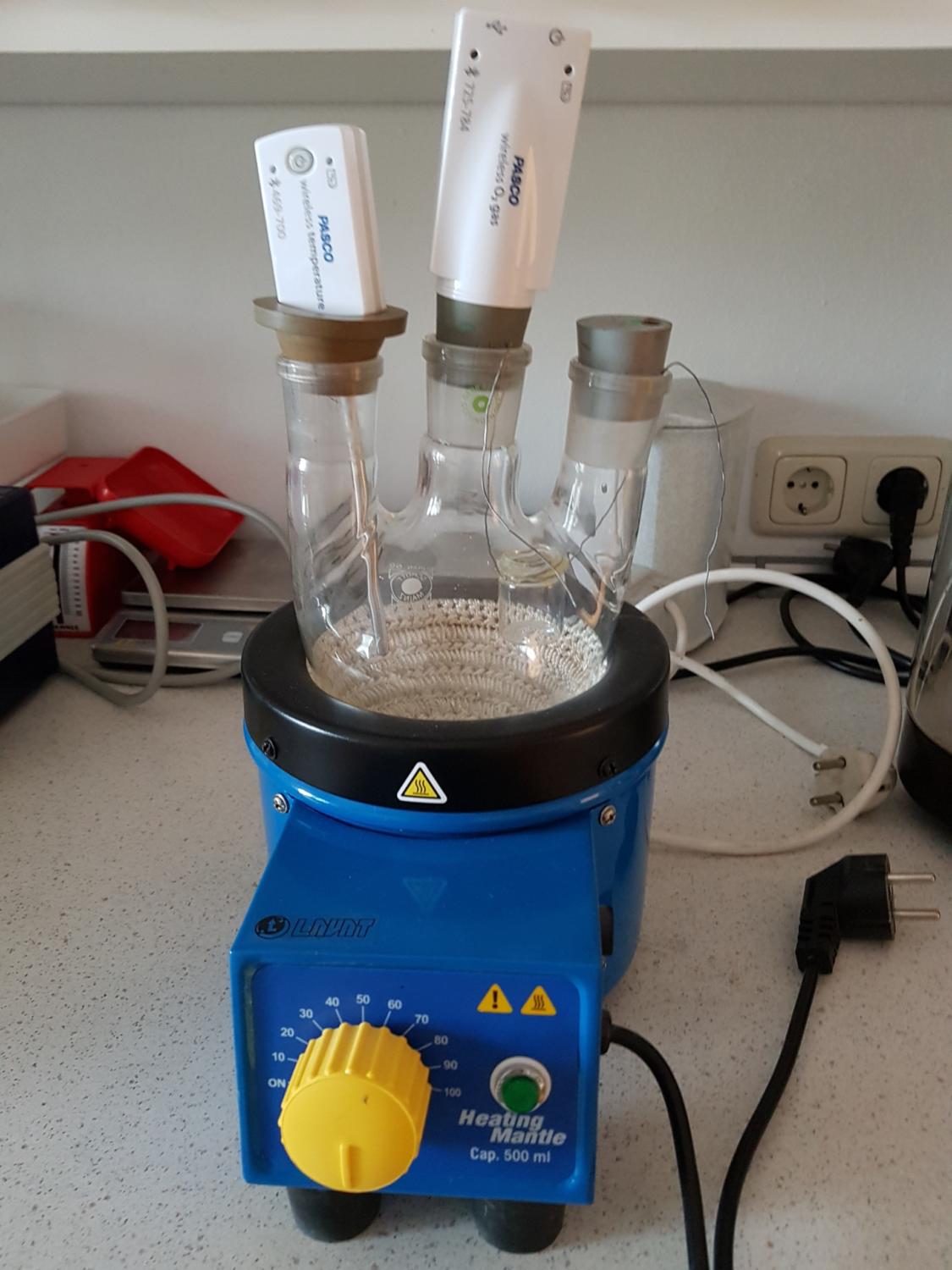
Smart sensors, when used in conjunction with a tablet or smartphone, enable the measurement of various parameters over time


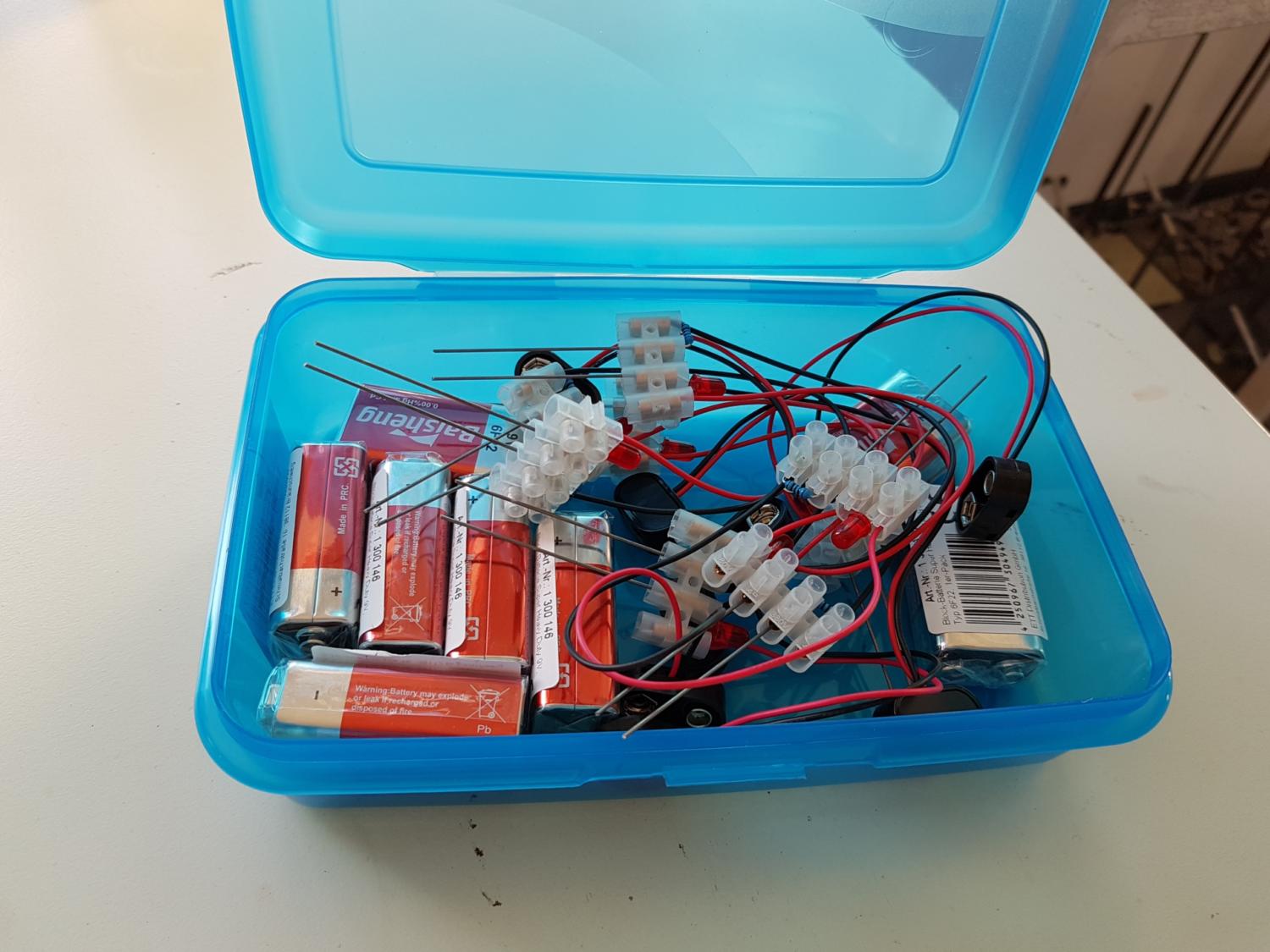
Conductivity can be measured very easily using LEDs