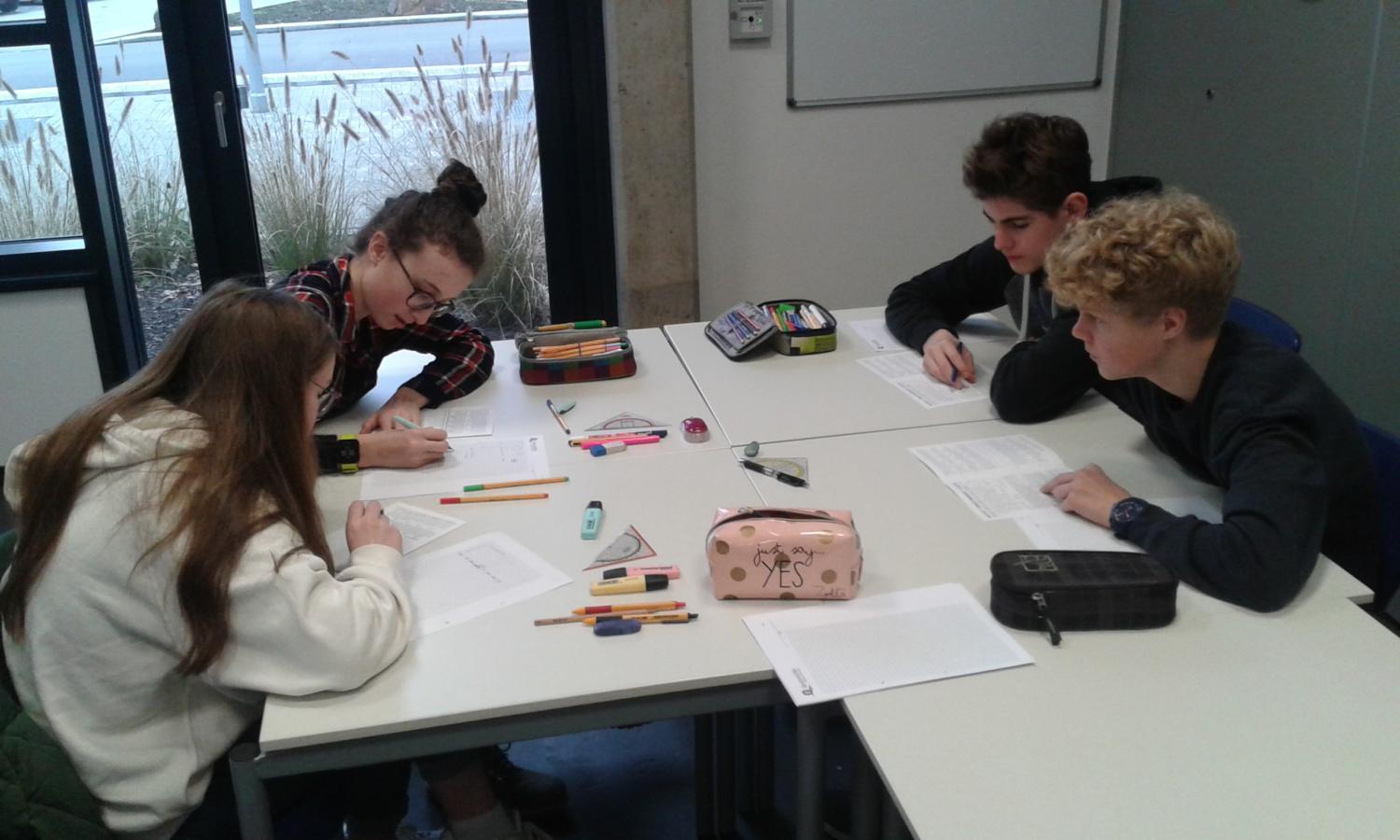
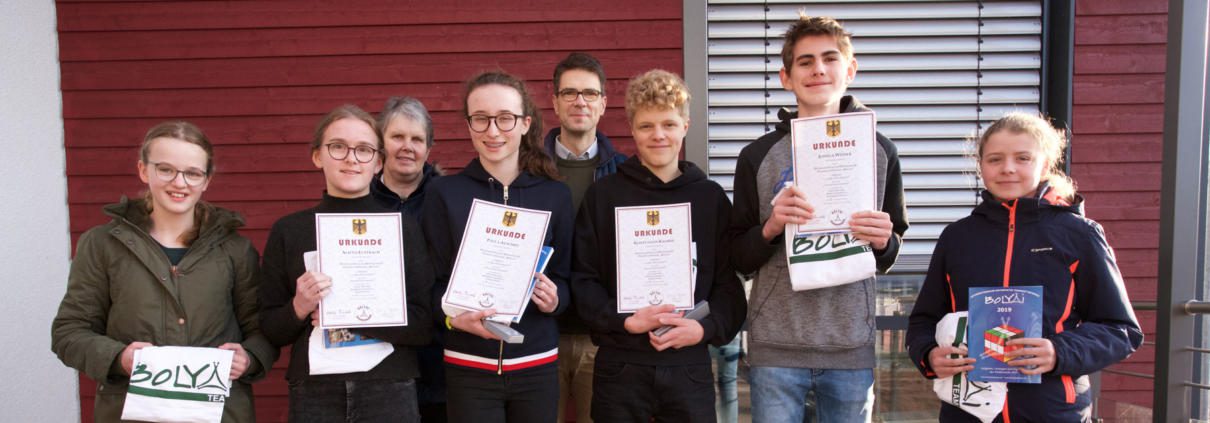
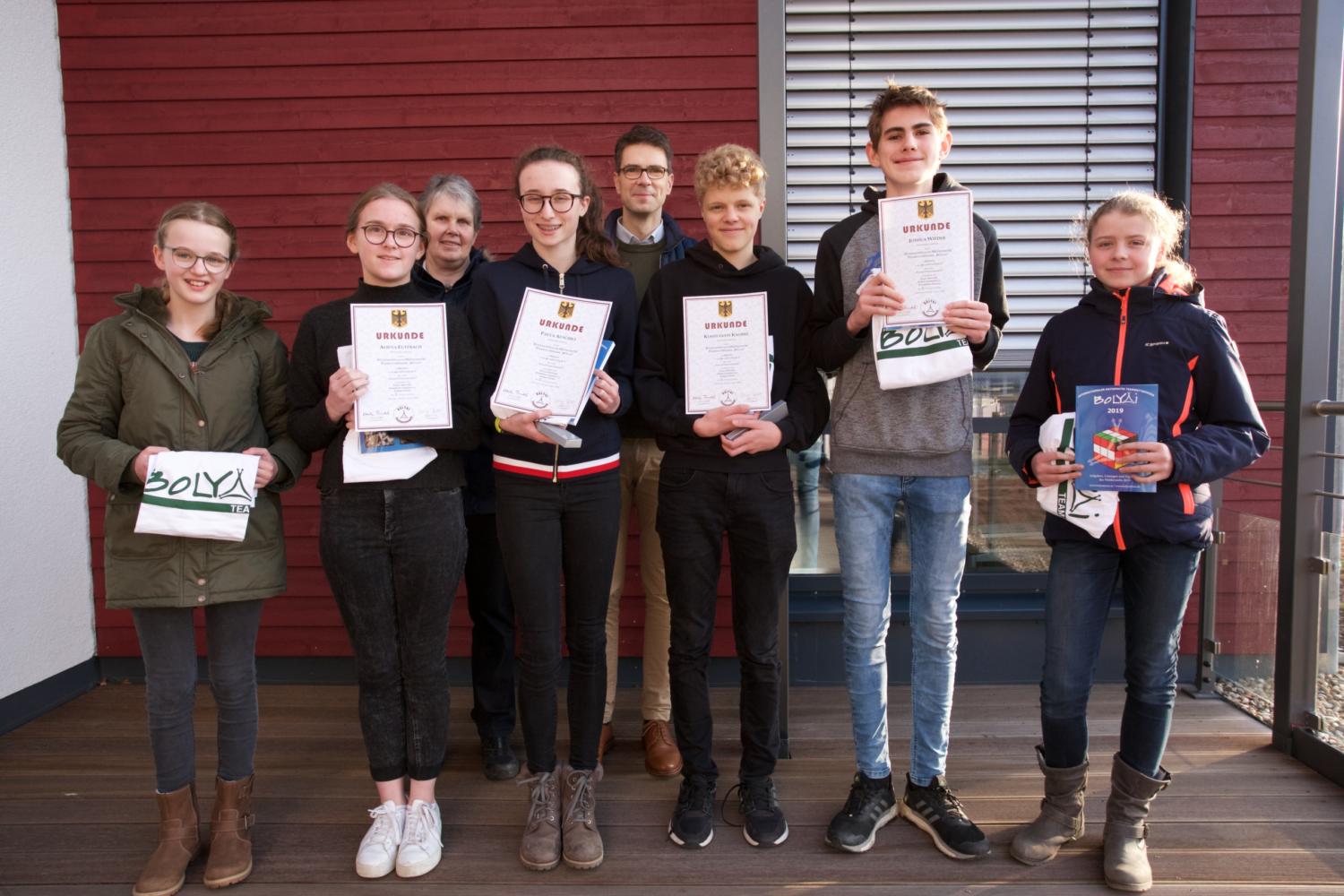
“Can you guys double-check if what we’ve checked off here is right?” “I’m on a hot lead for Problem 8 right now.” “How do you factor again?” “You cross out something at the top and something at the bottom.” “I know the p-q formula. Am I smart or am I not smart?”—Those were the actual words of Aliena, Paula, Joshua, and Konstantin from Class 9a as they worked on the problems for the Bolyai Team Math Competition.

What is not allowed in regular class exams or tests is, in fact, encouraged in this new math competition: Two to four students from the same grade form a team and work together to determine which of five given answers is correct for a math puzzle. Anything is possible, ranging from “none” to “all 5 answers.”

“The ability to work together is a core value in our lives”—that’s the motto of this competition, which originated in Hungary and has only been offered in Germany for the past five years. The two girls and two boys from class 9a agreed to participate in Bolyai without a moment’s hesitation. They spent more time discussing their team name. They ultimately competed as the Amazon Ants (“They’re the strongest animals in the world relative to their body weight,” Joshua had explained) and were very successful. Out of 61 participating teams in Hesse, they took second place and received certificates, T-shirts, and the 2019 Bolyai Competition yearbook containing all the problems and solutions.

Just like last year, Teresa Dinges (6b) and Sophia Rogosch (6c), along with two students from the Gymnasium Philippinum, competed in the Bolyai Competition as “Die Mathemagier.” They were just as successful as last year and took second place among 103 participating groups of sixth graders in Hesse.

Congratulations to both successful math teams!
Gisela Opper
For the past 25 years, bands from Marburg and the surrounding area, as well as from the sister cities of Northampton, Poitiers, Maribor, Sfax, Eisenach, and Sibiu, have been invited to Marburg for a weekend in March to play their music at the MaNo Festival in pubs and clubs. All guest bands introduce themselves to the Marburg audience with a few songs on Thursday evening.
For the first time, one of the co-organizers, Antje Schmidt, came up with the idea of announcing the bands during the concert using posters instead of a host to mark the anniversary year. A collaboration with a high school class at Steinmühle was established to design the posters.

In the art class, the “assignment” of the eleven bands was conducted just like on popular talent shows: the bands’ songs were played, and the students who were the first to press the fictional buzzer got to design the poster for that band. Decisions regarding color contrasts, brushstrokes, composition, and typography were incorporated into the concept and sketches before the art room was transformed into a painting studio.

“It’s especially the way each poster is individually tailored to the sounds and rhythms of each band that makes these student posters so appealing,” comments art teacher Ines Vielhaben. “We’re really curious to see if the musicians like our designs.”

The posters for the guest bands at the MaNo Festival will be unveiled to the bands and the audience at the Waggonhalle on Thursday.

A tense calm hangs in the air during the final round of the Marburg Student Chess Championship. You can’t even hear the clocks ticking—electronics have made their way here, too. Full concentration on opponents and the board. A large group of students comes through the door and quietly gathers around the first table of the 5th/6th-grade group to watch their top players compete on the top boards. And they aren’t disappointed—the game is thrilling and ultimately ends with their classmate’s victory and his title win in this group. Applause!

The School Chess Individual Championship, organized by the Chess Club and Steinmühle, was well attended again this year. A total of 59 students from 13 schools in the Marburg district took part and competed in three categories (up to 4th grade, 5th and 6th grades, and 7th grade and above) to determine their champions. The event was sponsored by Sparkasse Marburg-Biedenkopf. City Councilwoman Kirsten Dinnebier served as the event’s patron and personally welcomed the participants.

Among the winners were some new faces and some familiar ones. The winner in the category for grades up to 4 was Mark Scherer from the Erich Kästner School, with 6 out of a possible 6 points. In the 5th and 6th grade category, Philipp Dubinker from the Steinmühle School took first place, also with 6 out of 6 points. Finally, in the “older” category, Jakob Wolf from the Elisabethschule won once again.

The organization, which is now well-established, ran smoothly. The next major chess event on the horizon is the schools’ team championship, which will take place this summer.

Text and photo: Helge Neidhardt, Schachklub Marburg e.V.

This is what winners look like: (from left) Jakob Wolf (Grades 7 and up, Elisabethschule), Mark Scherer (up to Grade 4, Erich-Kästner-Schule), Philipp Dubinker (Grades 5/6, Steinmühle, Class 5b)

2020 Winter Teepee Camp

There was no snow, but everyone was in high spirits

This year, too, a total of 10 students and two educators set out to answer the call of the wild and set up their winter teepee camp in the wooded area of the “Zum Oertzwinkel” campground in Kreutzen near Münster. Even though this year’s winter camp had to make do without winter, the conditions still held their own charm for the campers. Bright sunshine, cool and clear nights, and pleasant temperatures provided the perfect setting and kept everyone in good spirits.

A Unique Atmosphere

While shooting with a bow and arrow during the day gave participants a glimpse of what life in the wild must have been like back then, the evening brought a unique and incomparable atmosphere as the campfire was lit— without which no real winter camping trip would be complete and which is what makes the experience of nature truly authentic. In the steady glow of the flames and accompanied by the crackling of the embers, we sang, cooked, ate, and—above all—laughed a lot with old friends and new acquaintances.

“Sturmfrei” with a Twist

On Sunday, our adventurers also demonstrated perfect timing. Just as they had stowed away their belongings and were ready to head home, Storm “Sabine” began whistling through the treetops at the campground. When we arrived home, exhausted but happy, and learned that we’d have the day off on Monday because “Sabine” had “blown” the classes off the schedule, an unforgettable weekend came to a perfect end.

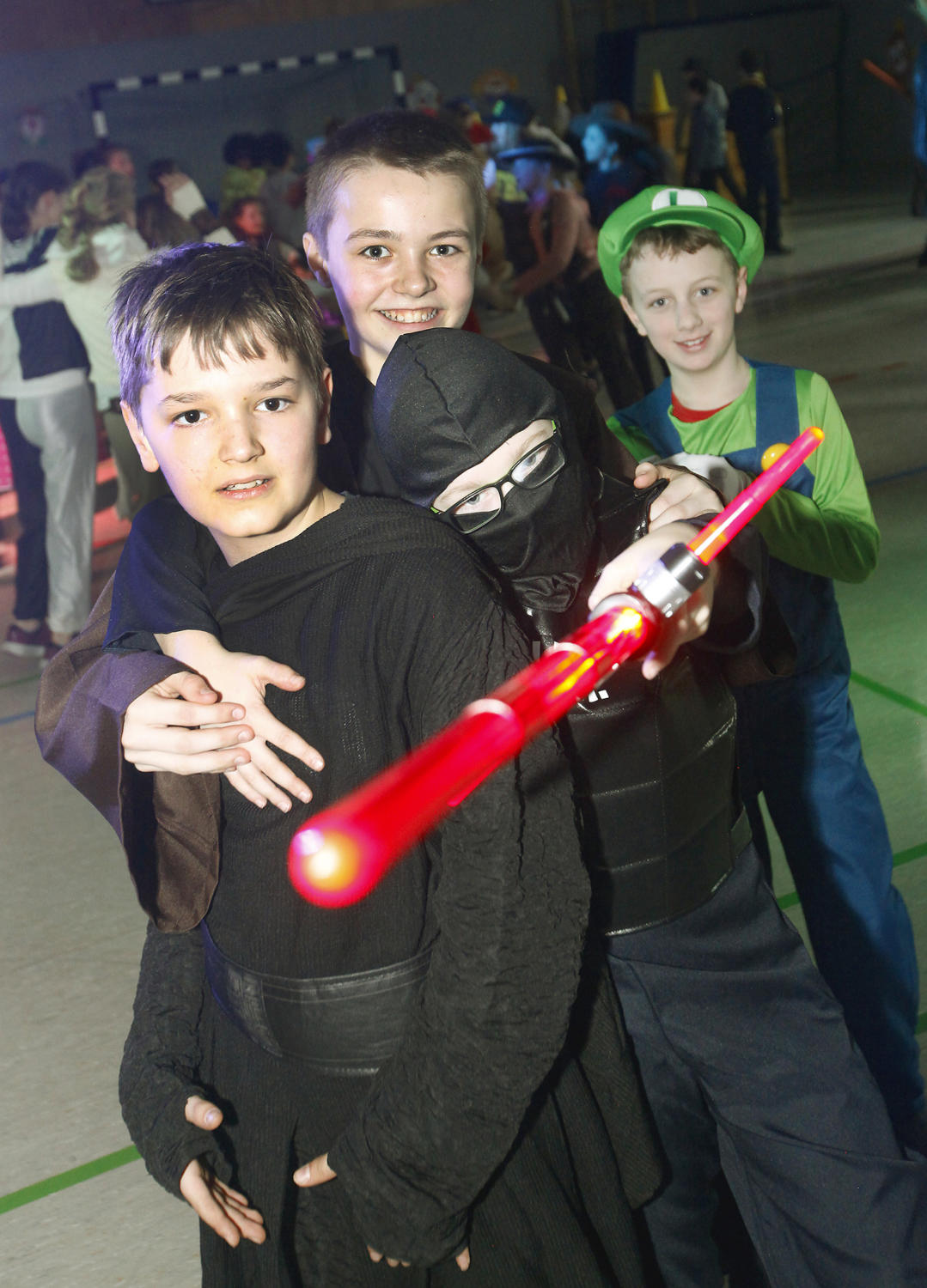
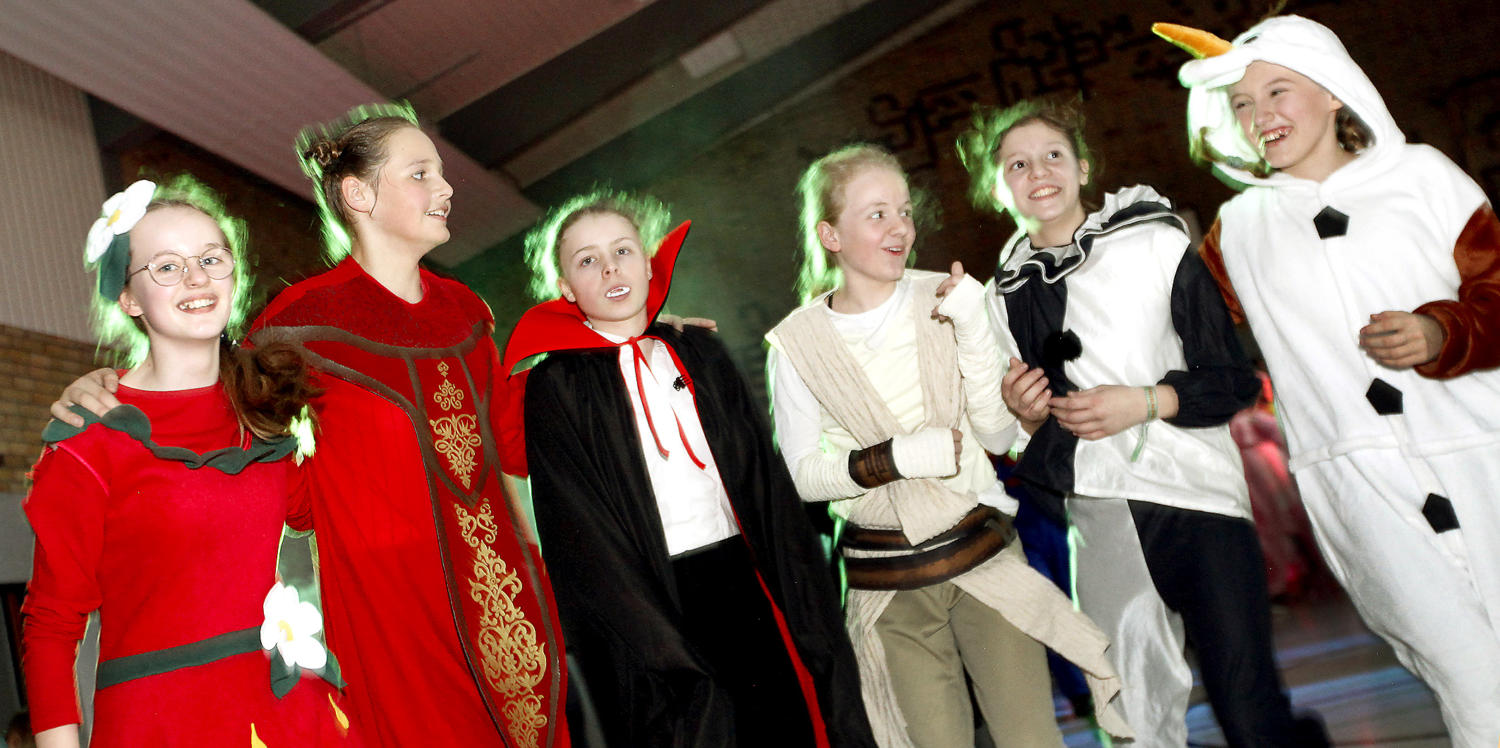
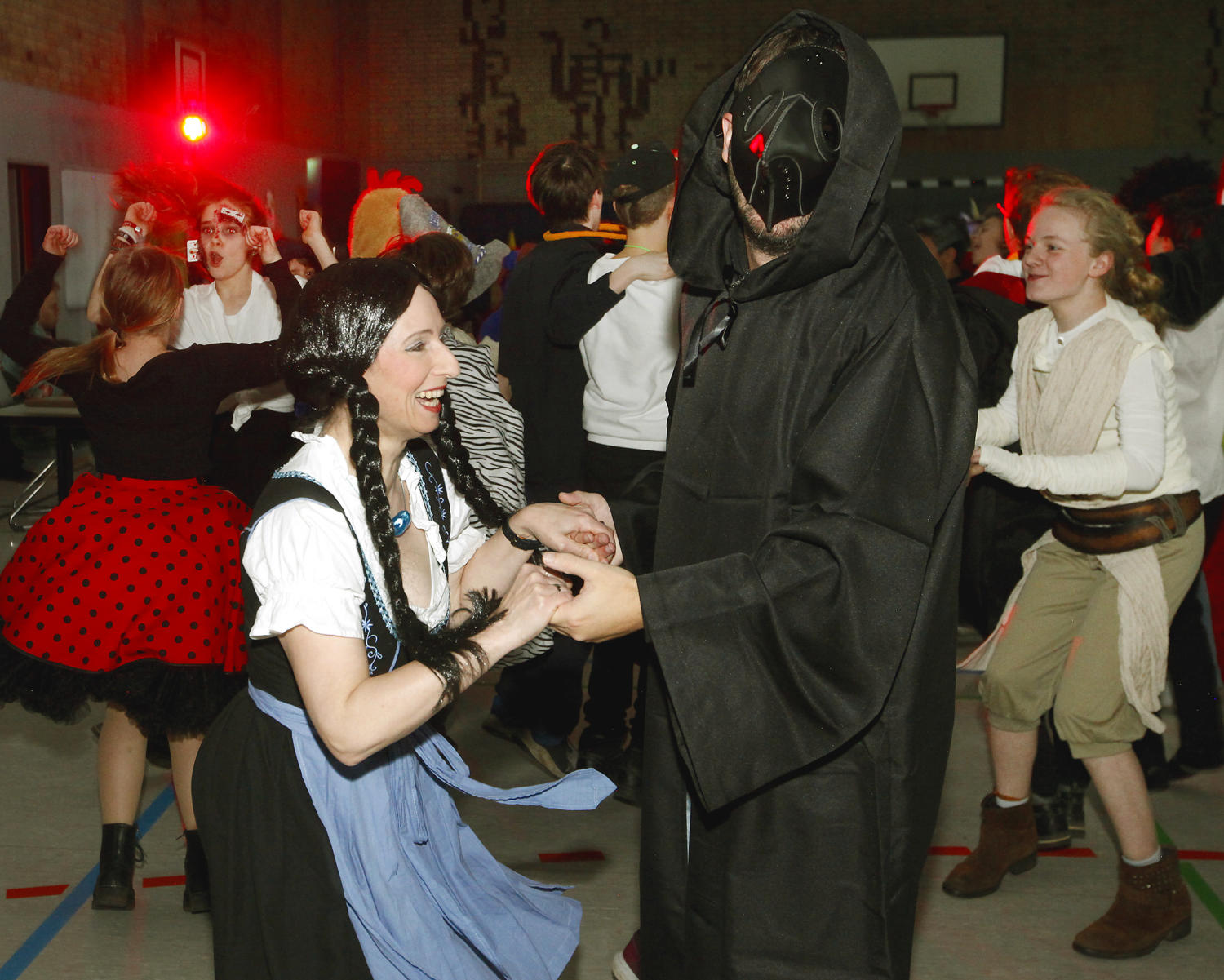
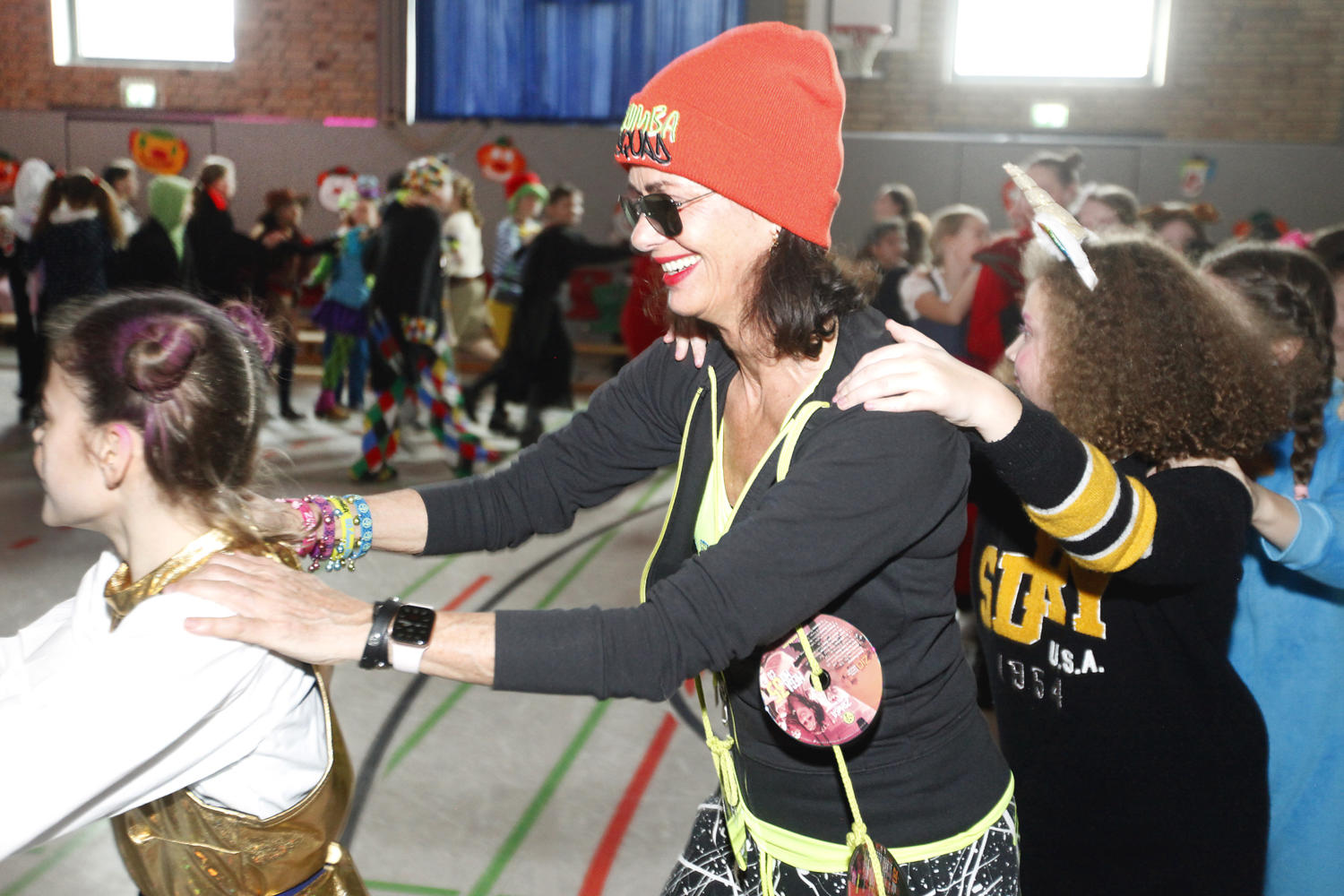
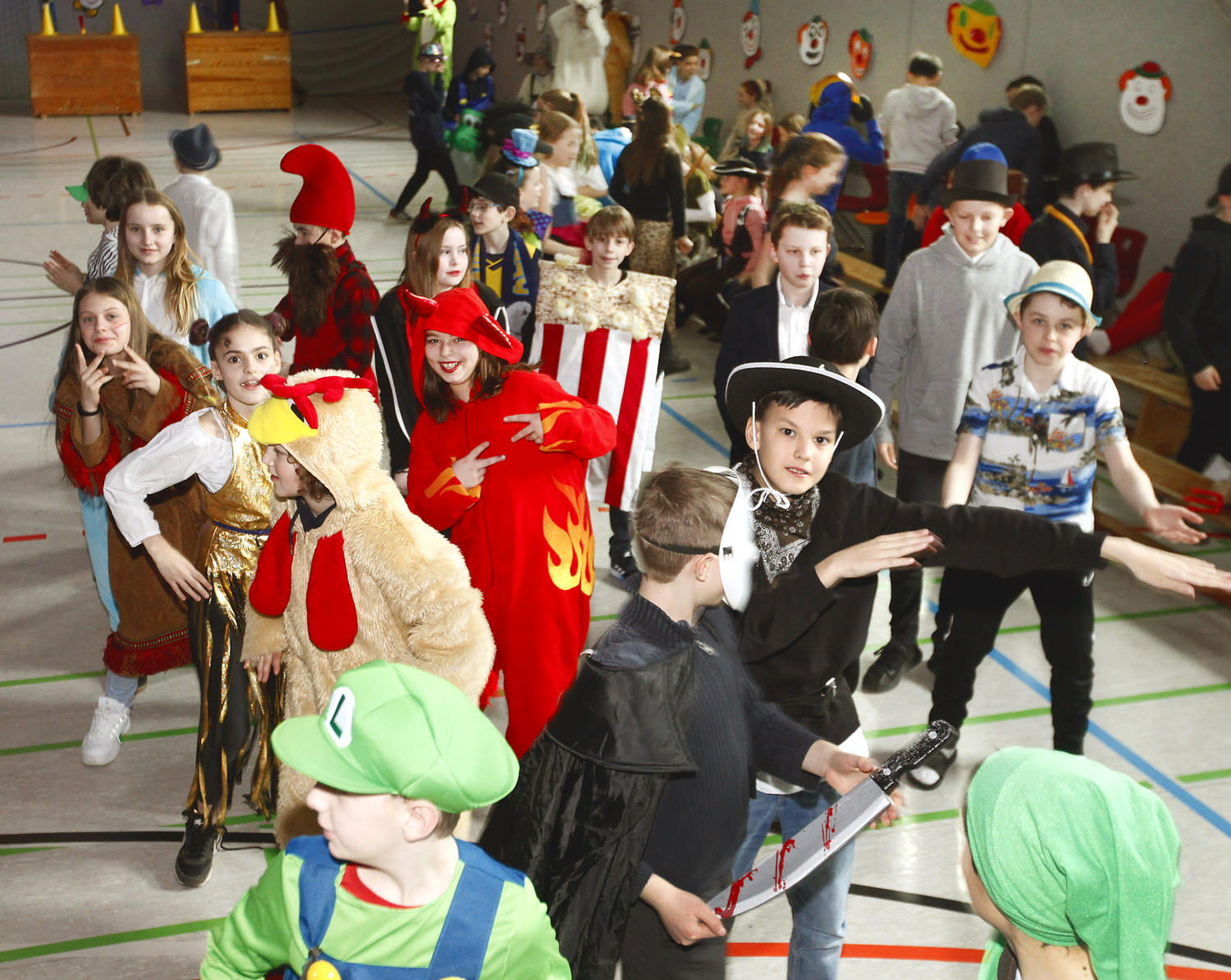
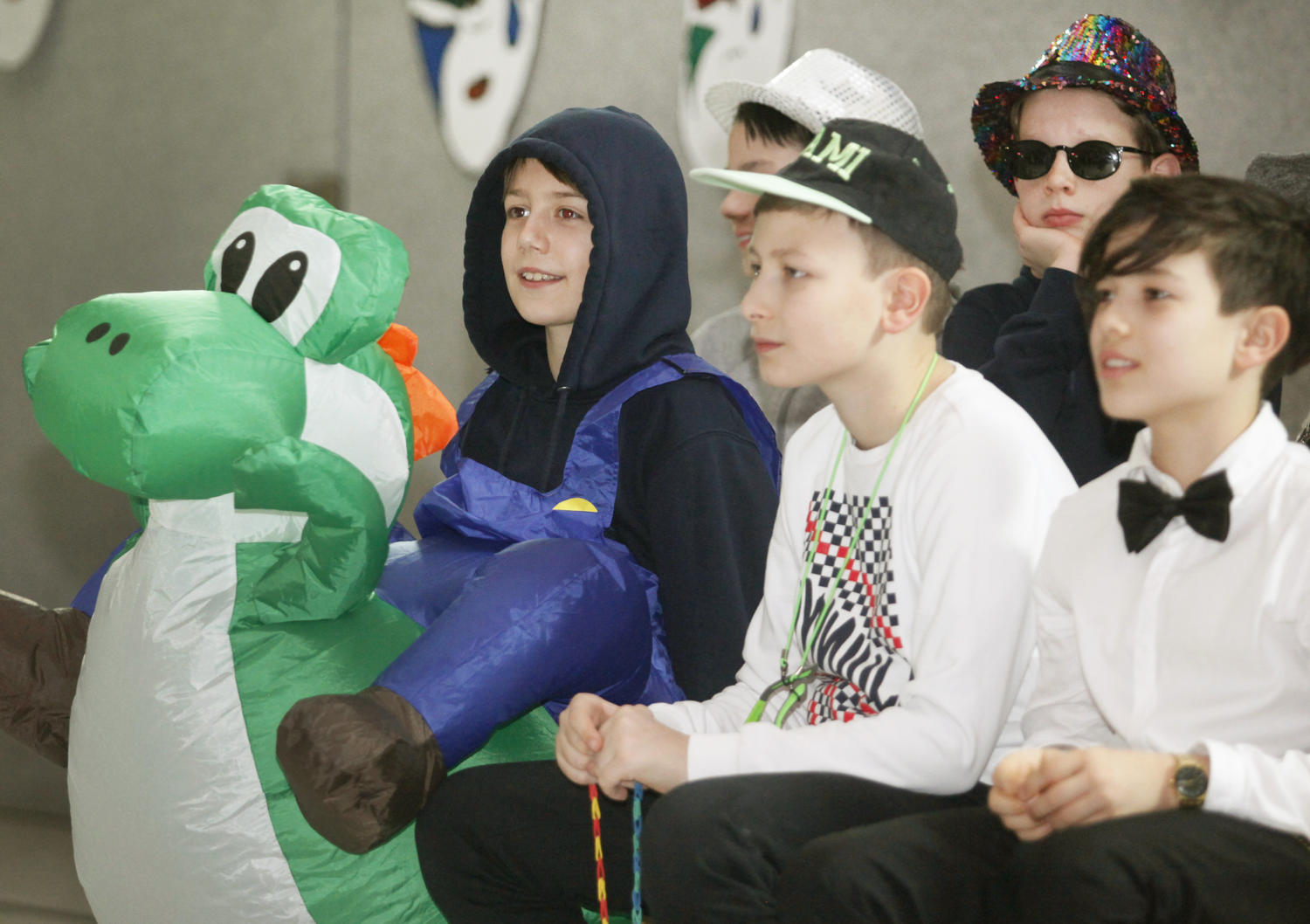
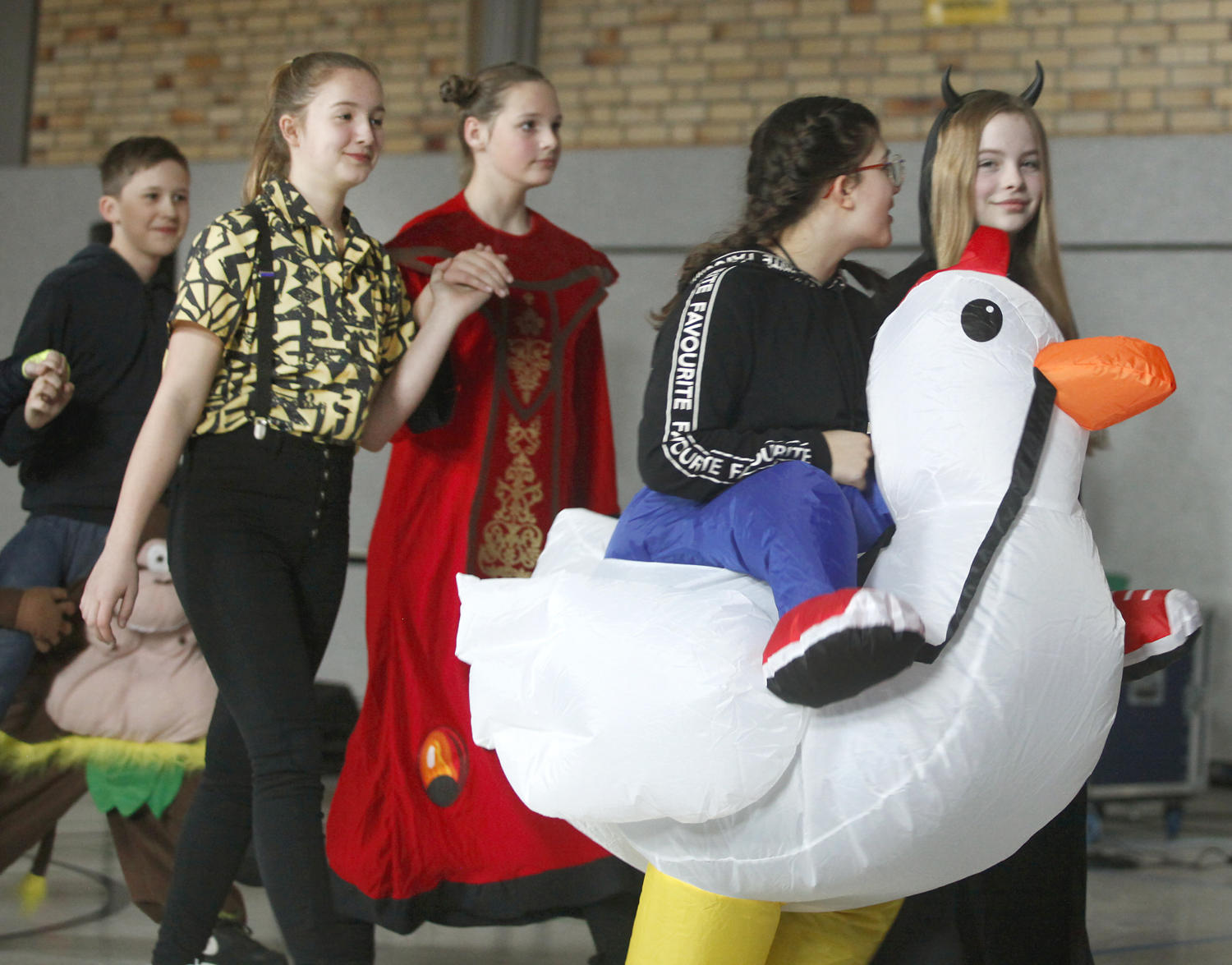
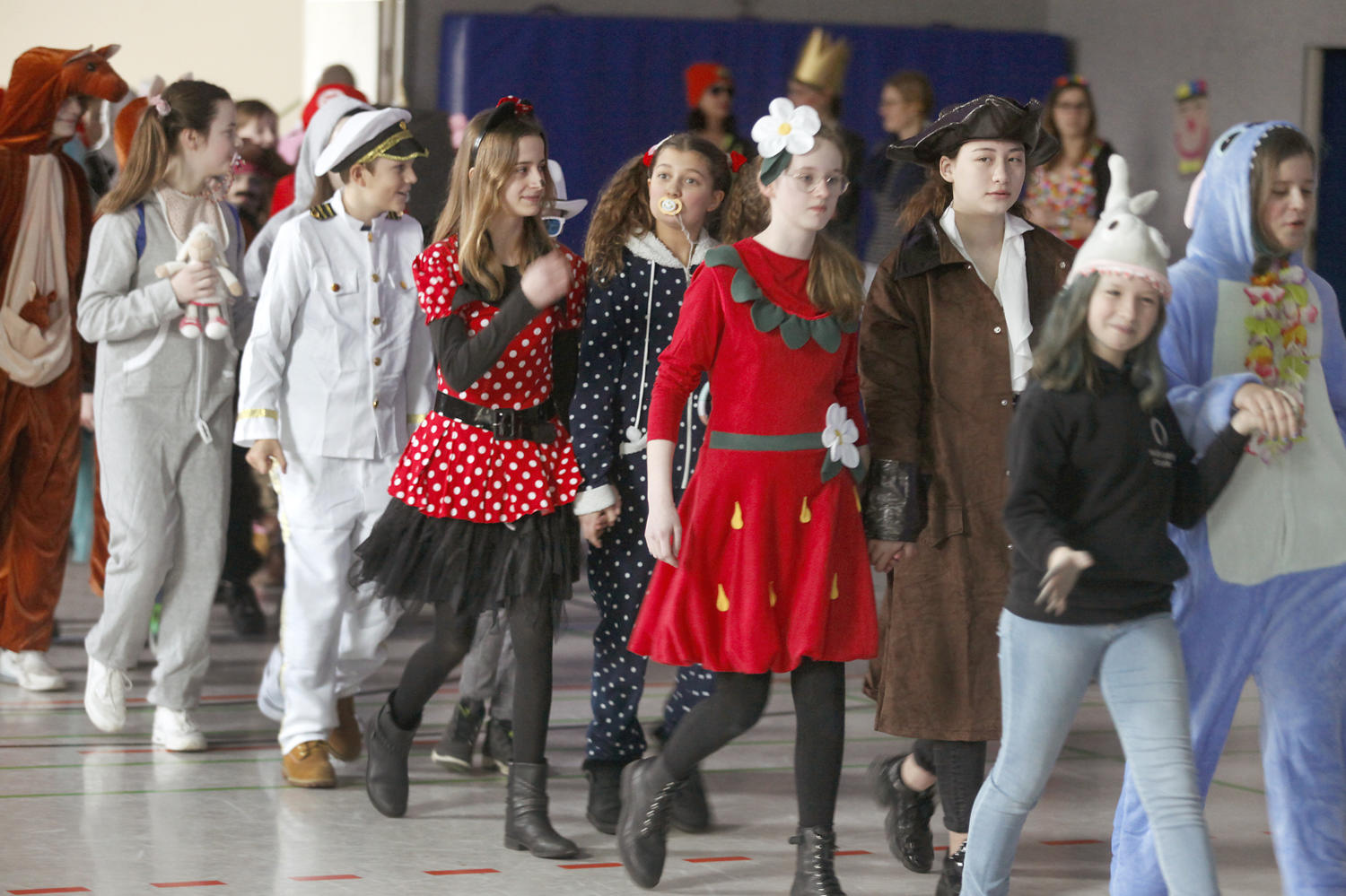
Exuberant and cheerful, a polonaise of children from grades 5 and 6 winds its way through the Steinmühle gym to the music. Everyone is in high spirits, and it’s a joy to watch: school beyond grades and studying.

And yet, the annual Carnival afternoon for the lower grades requires some preparation on the part of the teachers. Decorations must be arranged, and the dance must be rehearsed. – Who will stand at the front, and who will be the lead? This is where teachers Nicole Hohm and Stephan Steinebach step in to help. Then it’s time for the can toss—a tried-and-true and popular activity. Next up on the program is the disco. After a playlist featuring requests from the 6th-grade classes—compiled by teacher Dirk Lange—Sam Kempkes (Sound & Light Club) plays all the selected songs in his usual style: “Hier kommt die Maus,” “Helikopter 117,” and other songs that get the party started. If you open the door to the outside, you can already smell it: the unique aroma of french fries. They’re simply part of the tradition of the Steinmühlen Lower School Carnival and are enjoyed with relish after the disco.

This Carnival afternoon in the new decade also came to an end, and there will be another edition next year. General organizer Frank Wemme thanked the colleagues who participated, including others not mentioned here who supported the event through their assistance and presence.

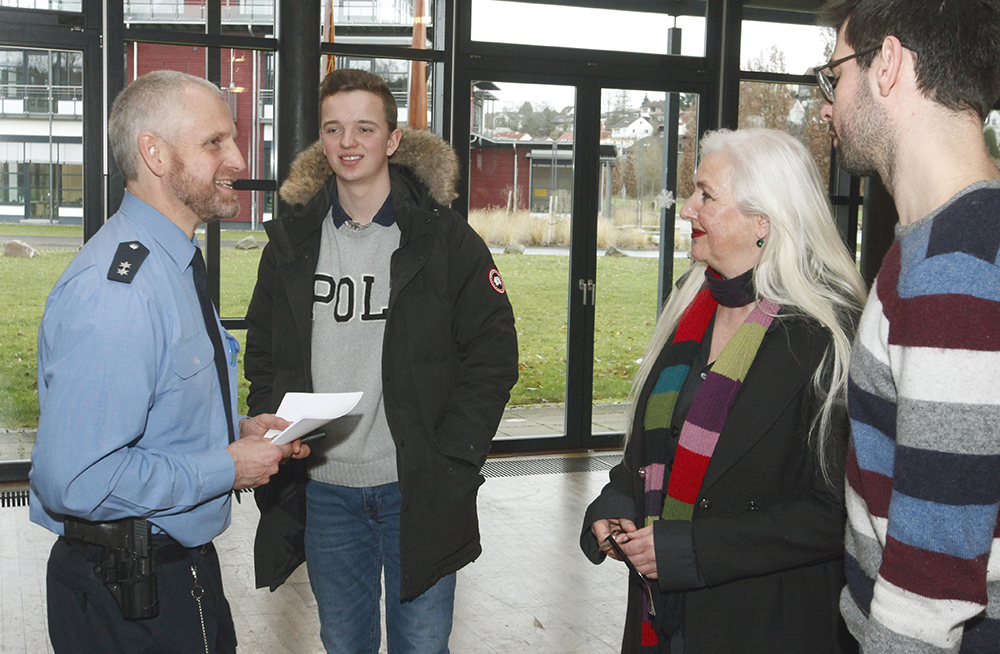
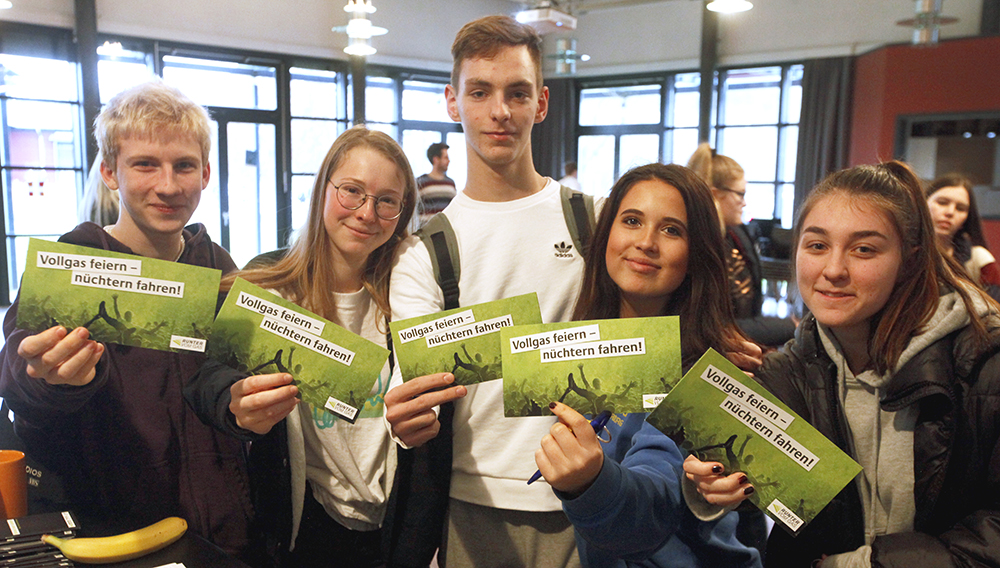
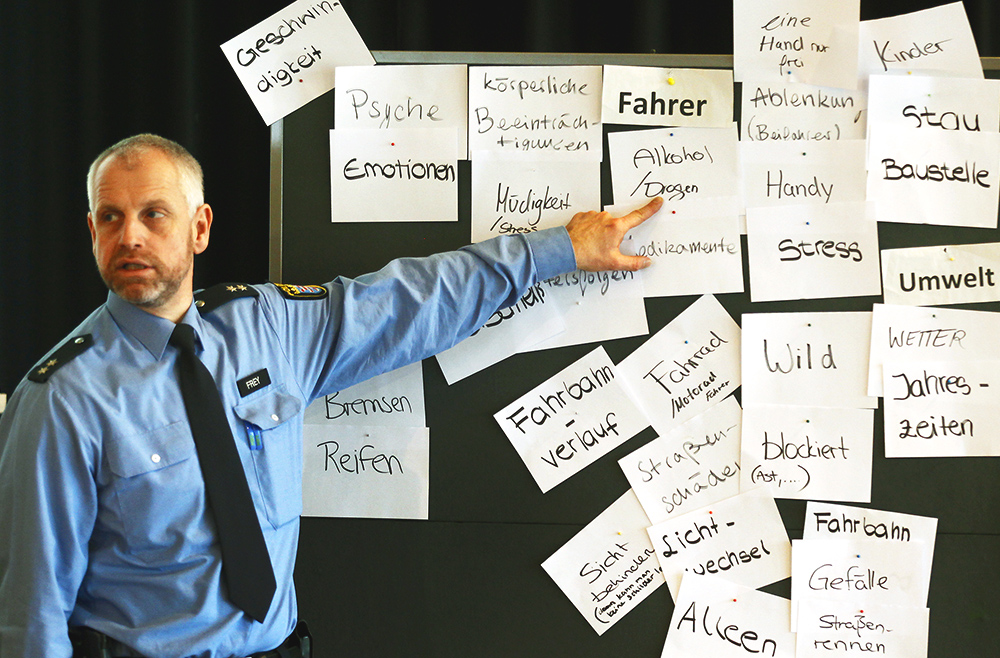
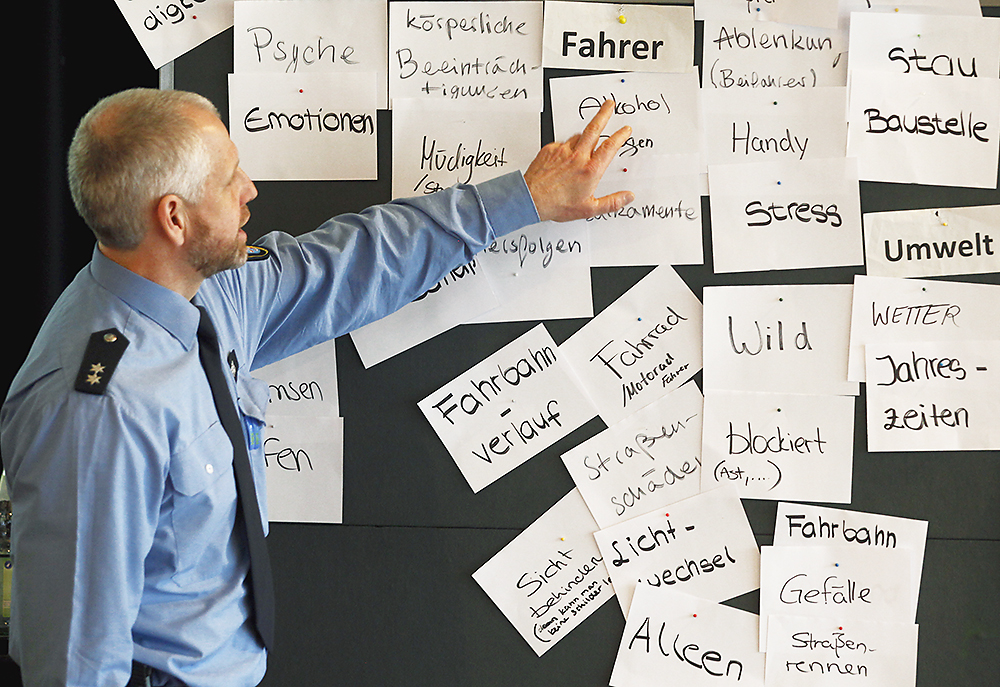
The workshop is known as “Aktion BOB,” and every year, in the run-up to Carnival season, the police use it to educate 11th-grade students about the dangers of drinking and driving. However, the content of the two-hour course goes beyond simply describing the dangers of alcohol and is, of course, relevant all year round.

Senior Police Inspector Thorsten Frey from the Regional Traffic Division of the Marburg Police Department spent two mornings giving very vivid presentations to two classes each day, explaining where dangers lurk for drivers, what behaviors to follow, and which ones to avoid. The entire project was organized by Steinmühlen teachers Heike Rabben-Martin and Nicole Hohm.


Also dangerous: old glasses, medications, and time pressure

Drawing on real-life incidents from the local area, the speaker described the tragic outcomes of car trips where alcohol was involved. But danger can also lurk from other sources. For example, many medications contain substances that impair reaction time. Outdated eyeglasses impair vision, and a leg or arm in a cast no longer allows for reliable control of the vehicle. In addition to faulty brakes or tires—which must have a minimum tread depth of 1.6 mm—distractions such as cell phones, children in the car, or restless passengers are often underestimated. If you’re pressed for time, it’s not a good idea to mention the stress or time pressure you’re under when filing a report after an accident. “By doing so, you’re essentially admitting that you intentionally exceeded the speed limit or, at the very least, accepted that you had broken it.” The police officer also warned against driving or continuing to drive while extremely tired: “Before you risk falling asleep at the wheel, please pull over!” (Hei)

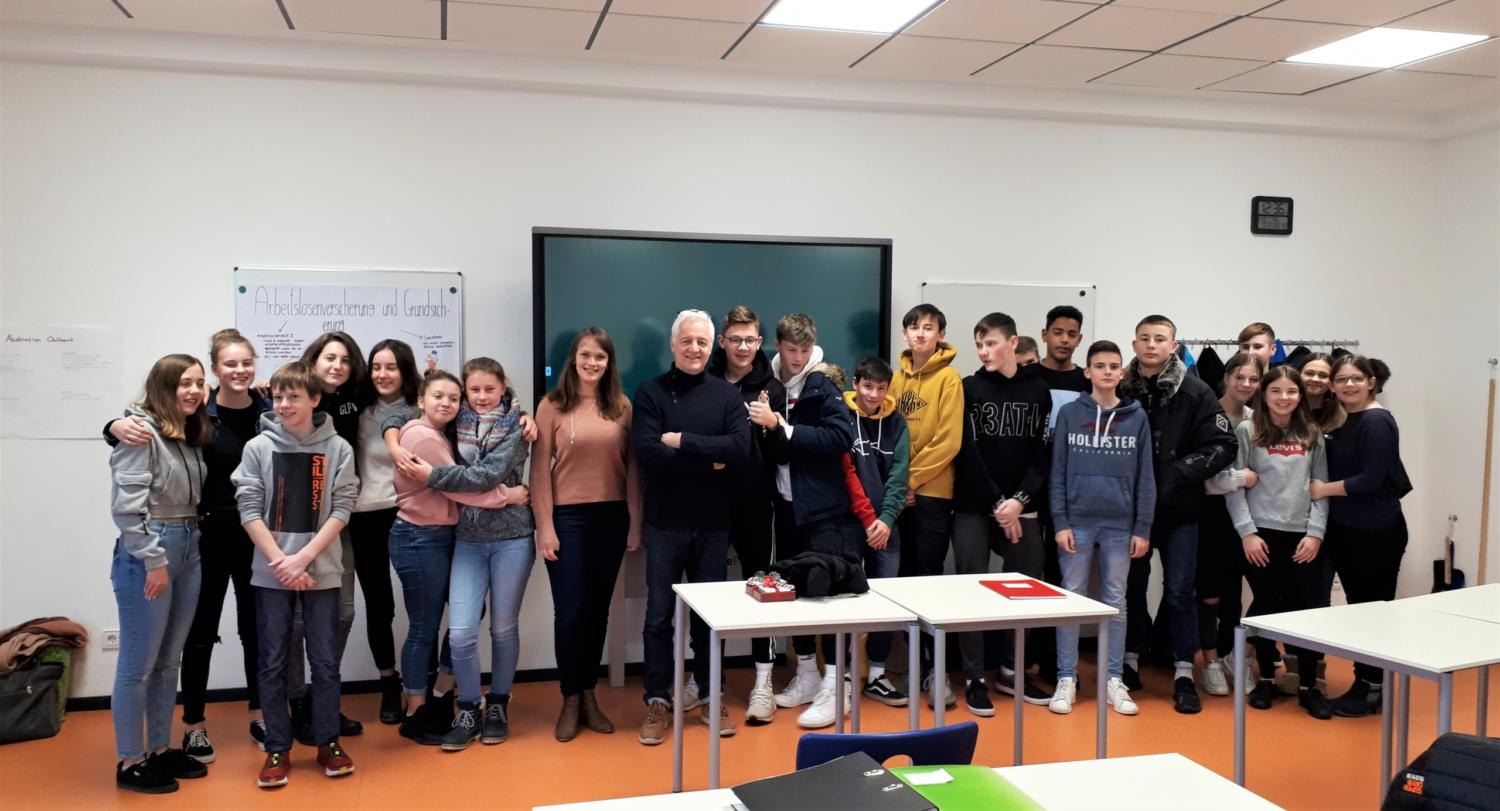
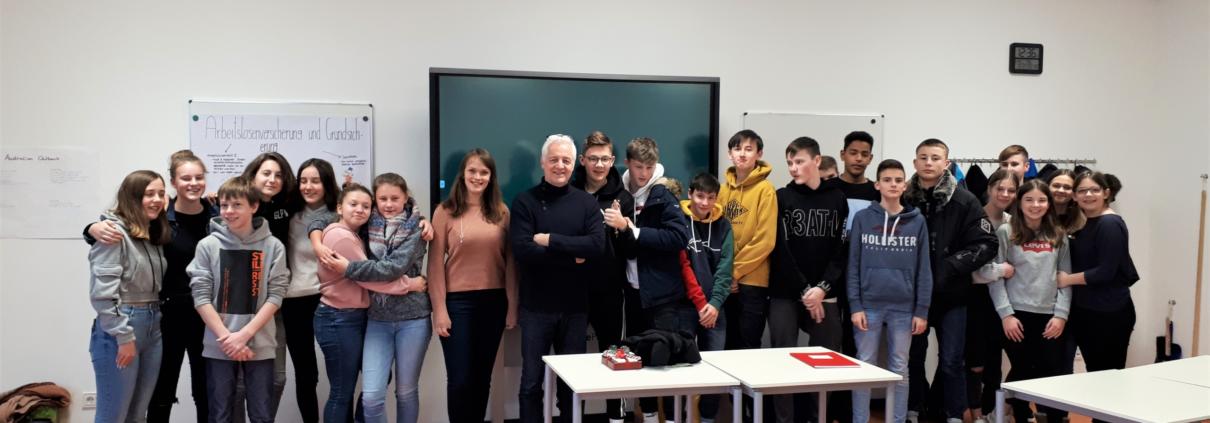
During a politics and economics class, student Anton Schneider enthusiastically told his class, 9c, and his teacher, Eva Stelz, that his father, Michael Schneider, as part of his work as a labor court judge, had recently dealt with a case that touched on the topics of politics and media as well as the rule of law—two areas currently being covered in the 9th-grade Politics and Economics class! Anton suggested inviting his father to class so he could tell the class a little about the case and his work at the court.

No sooner said than done! Labor court judge Schneider visited the class a few days later and sparked enthusiasm and great interest with his compelling account, his professional expertise, and his open approach to the students’ questions. The students were able to put themselves in the situation described in the case and were also asked for their own opinions on it, allowing them to apply and expand upon the knowledge they had gained in class using a real-life case as an example.

The class and their teacher, Eva Stelz, were delighted that the expert’s visit had made for a hands-on political science lesson that the students will surely remember for a long time to come.
Eva Stelz

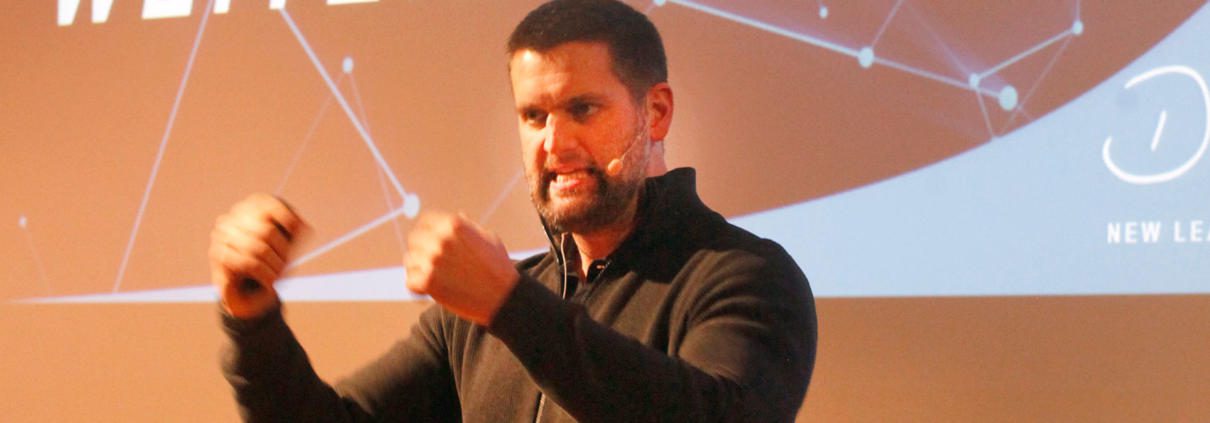
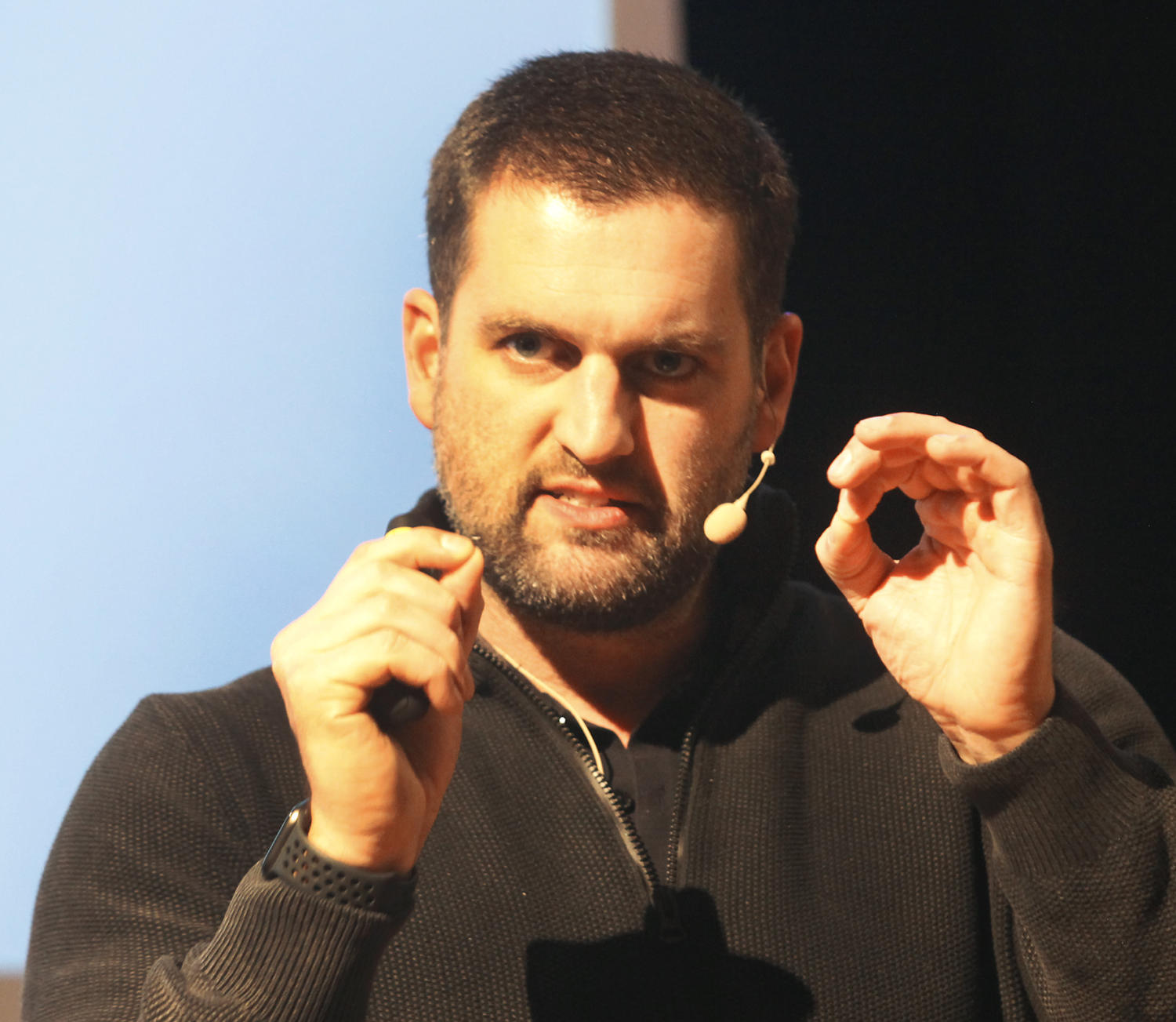
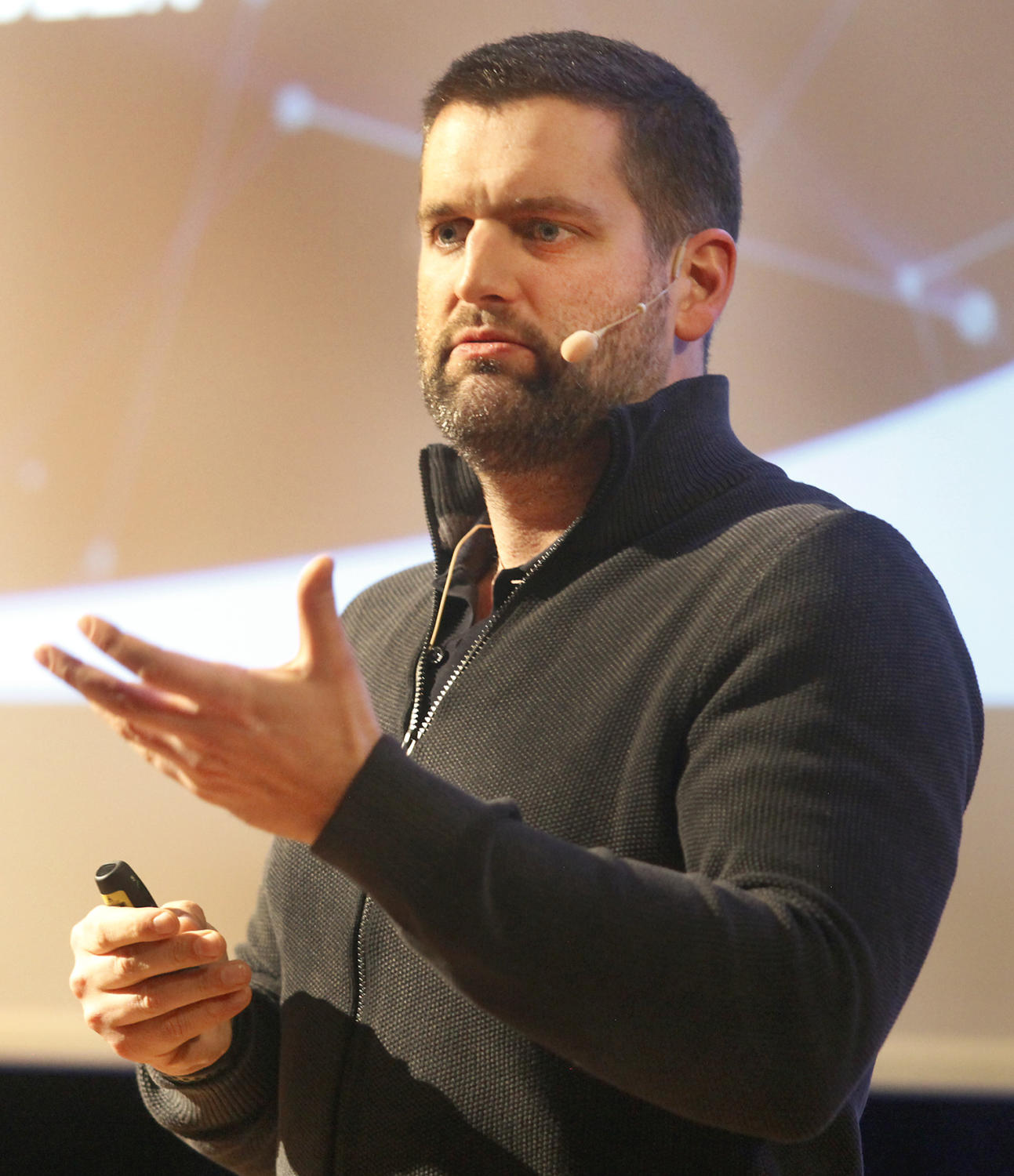
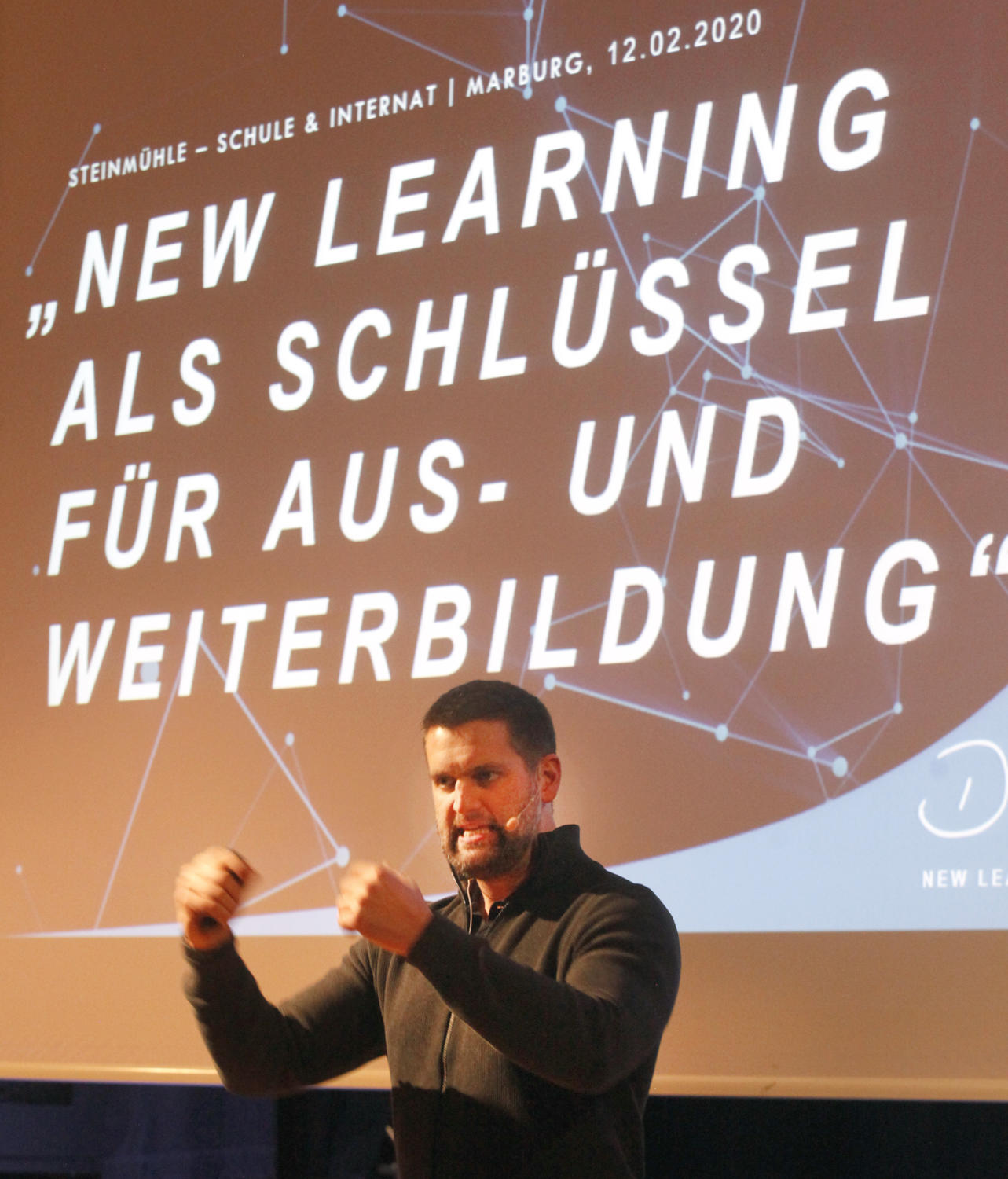
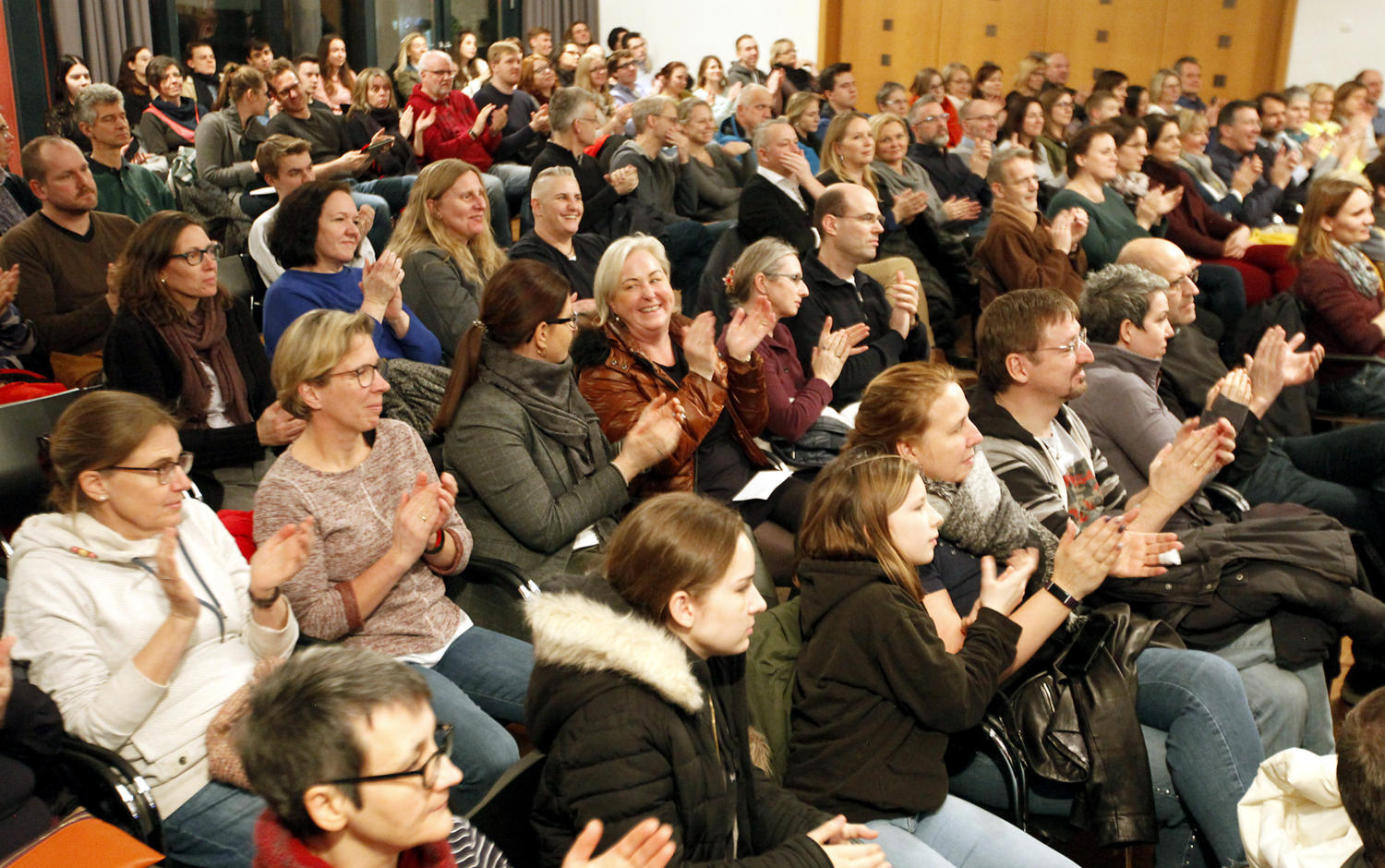
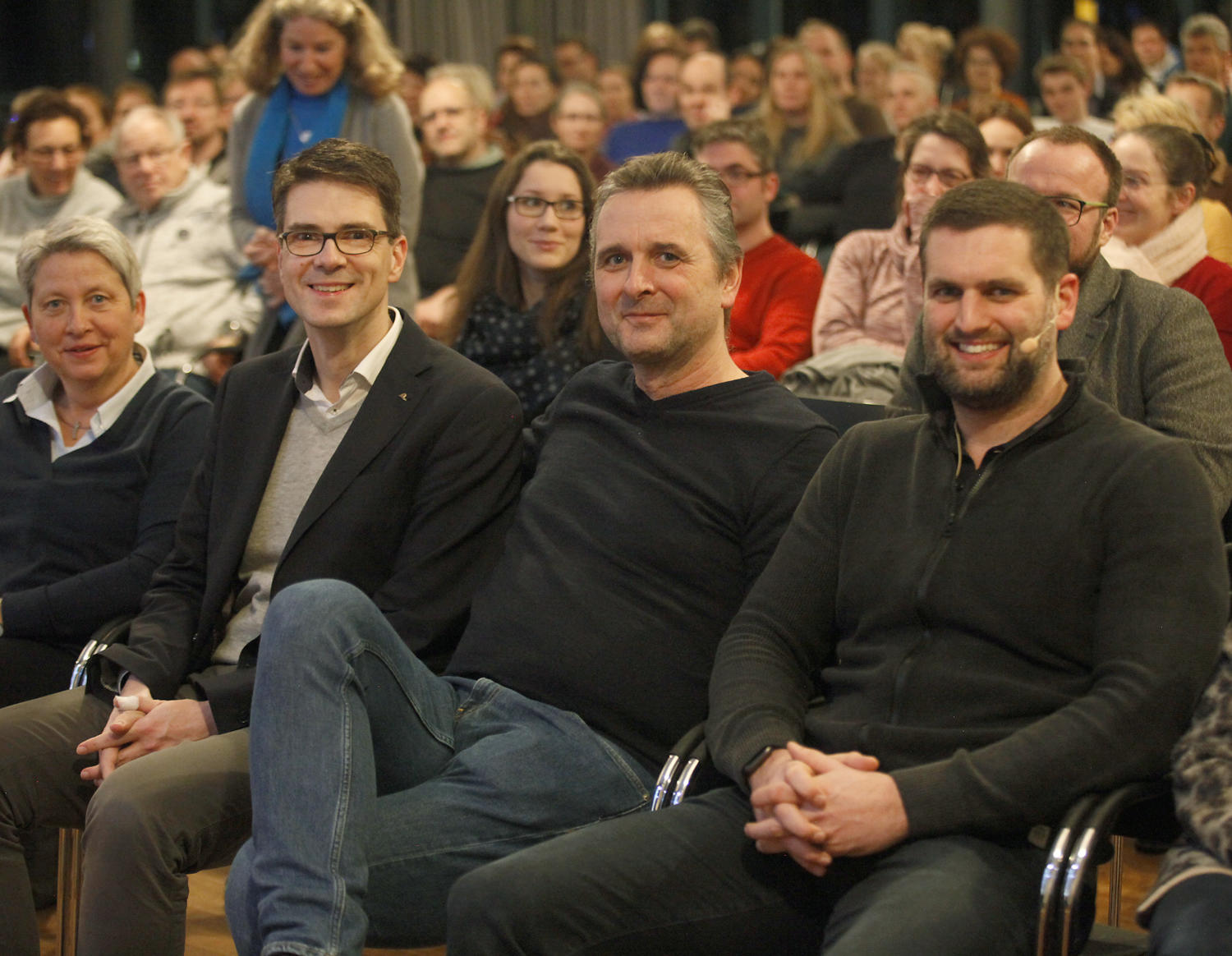
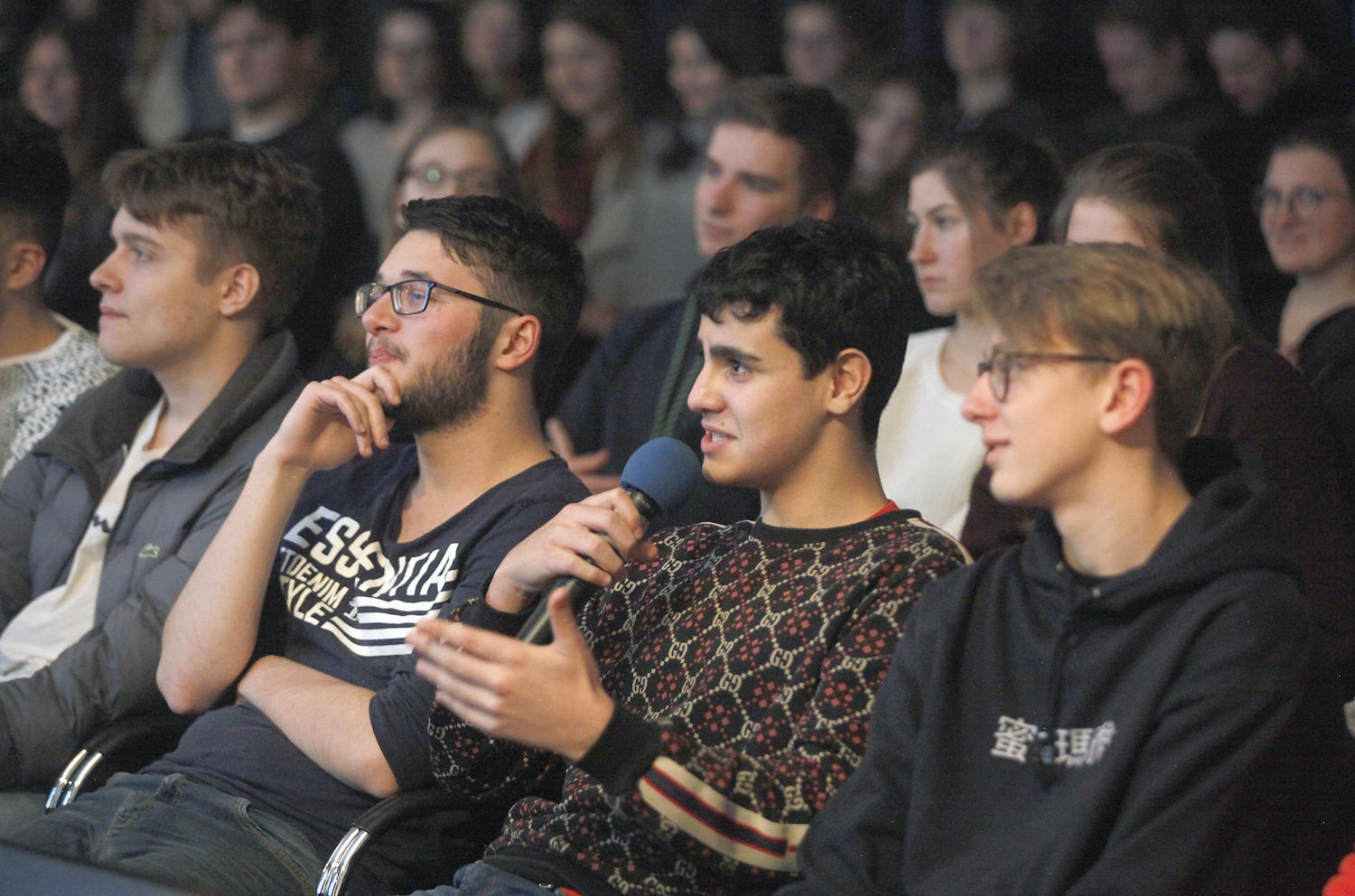
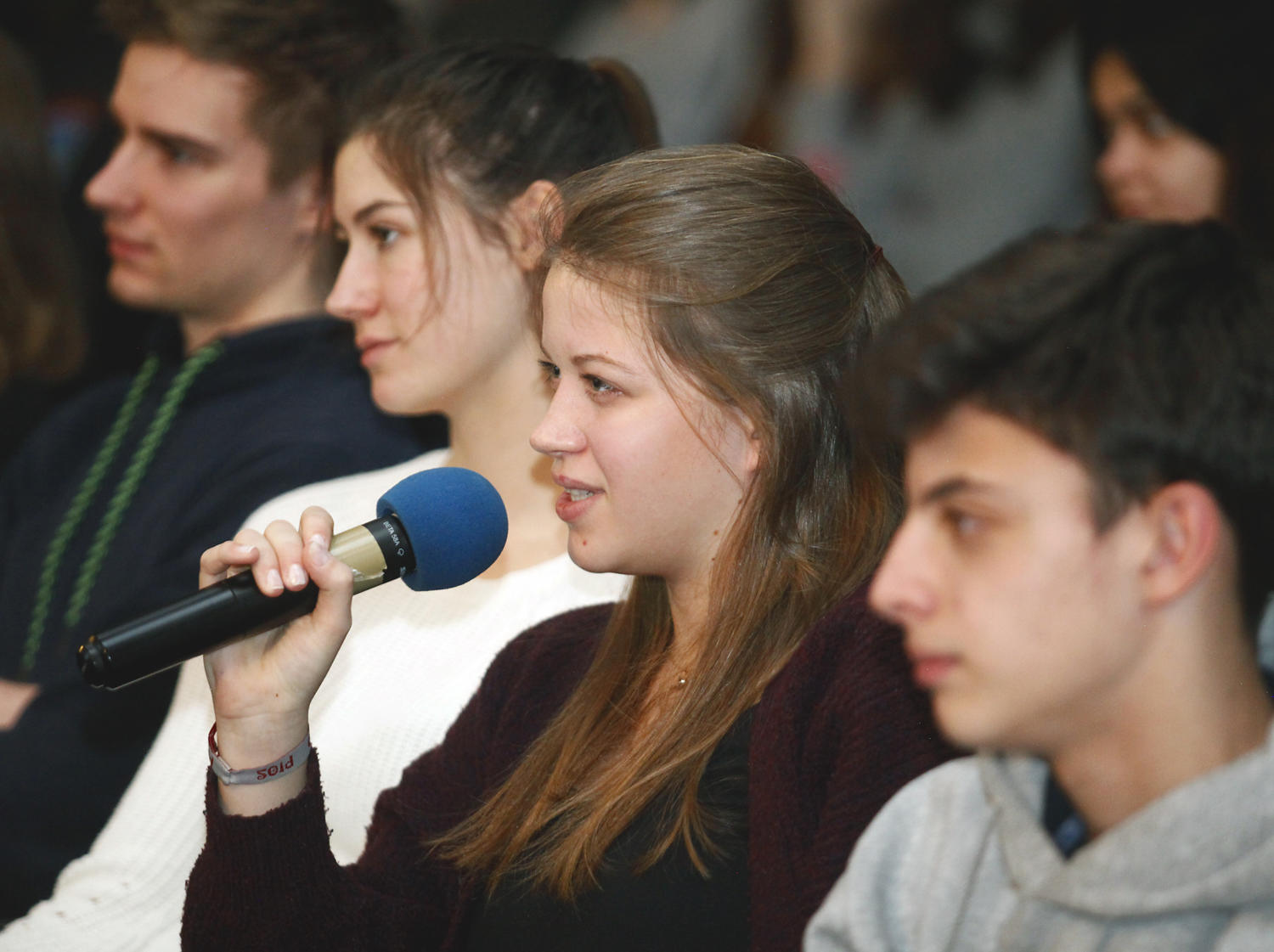
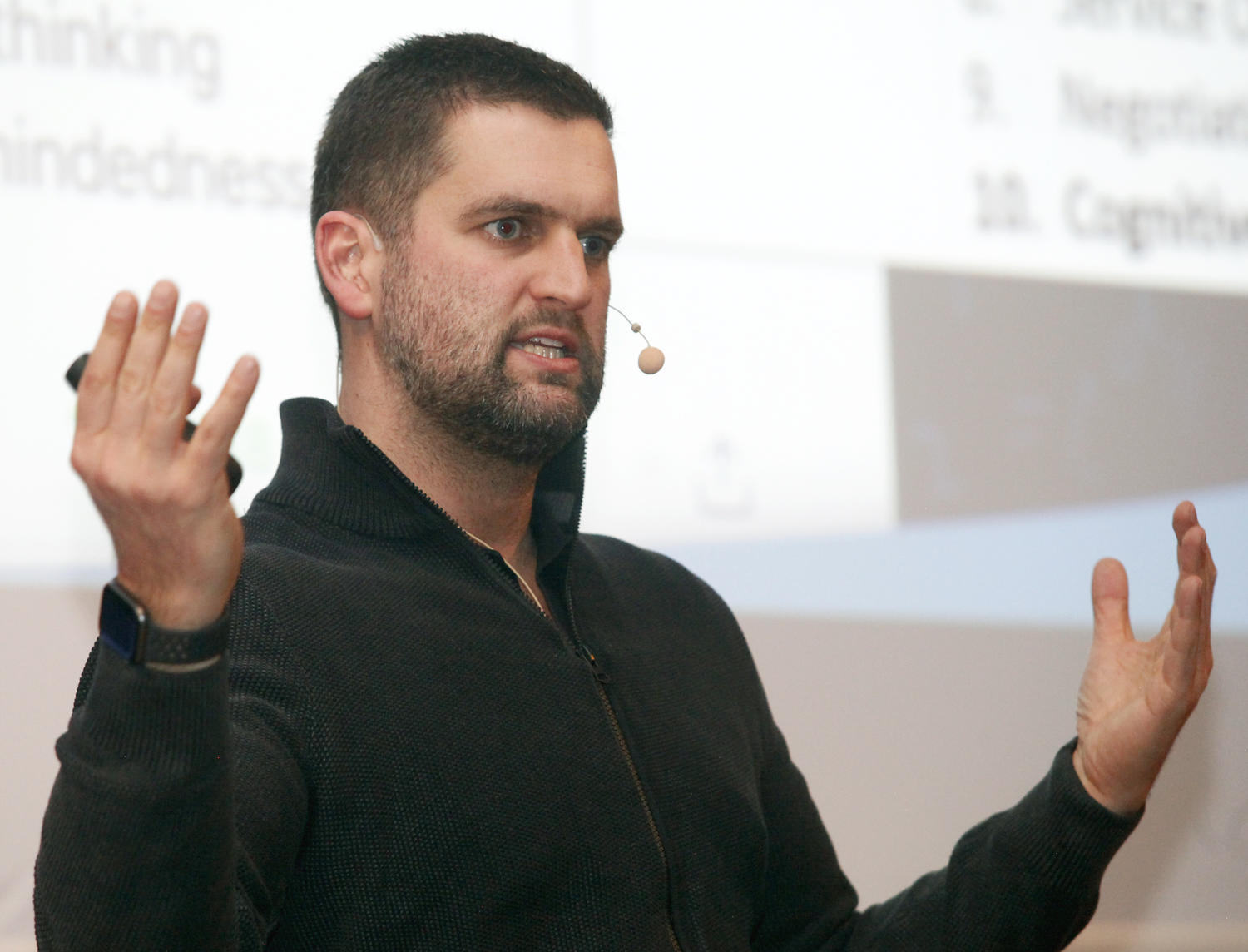
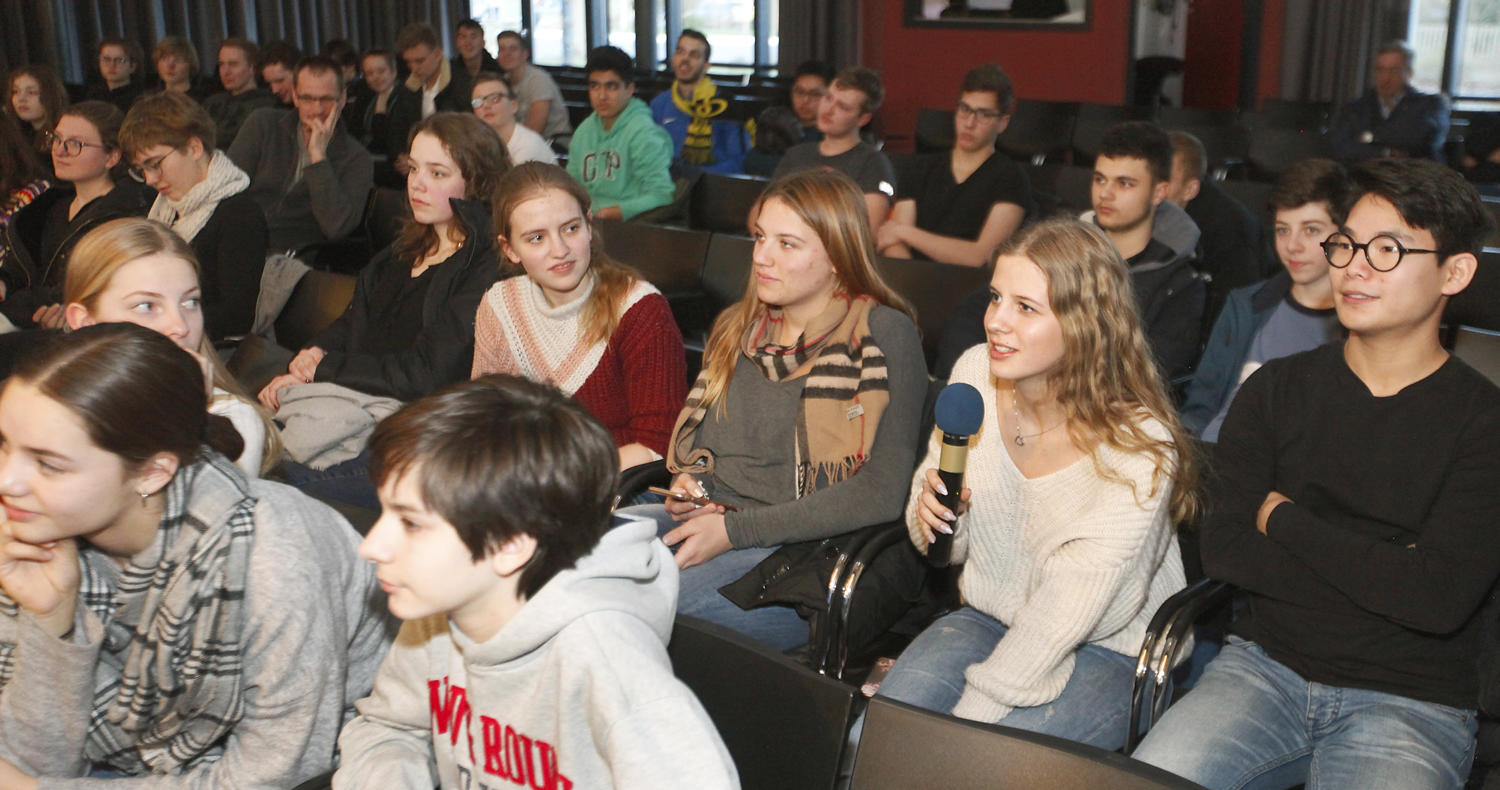
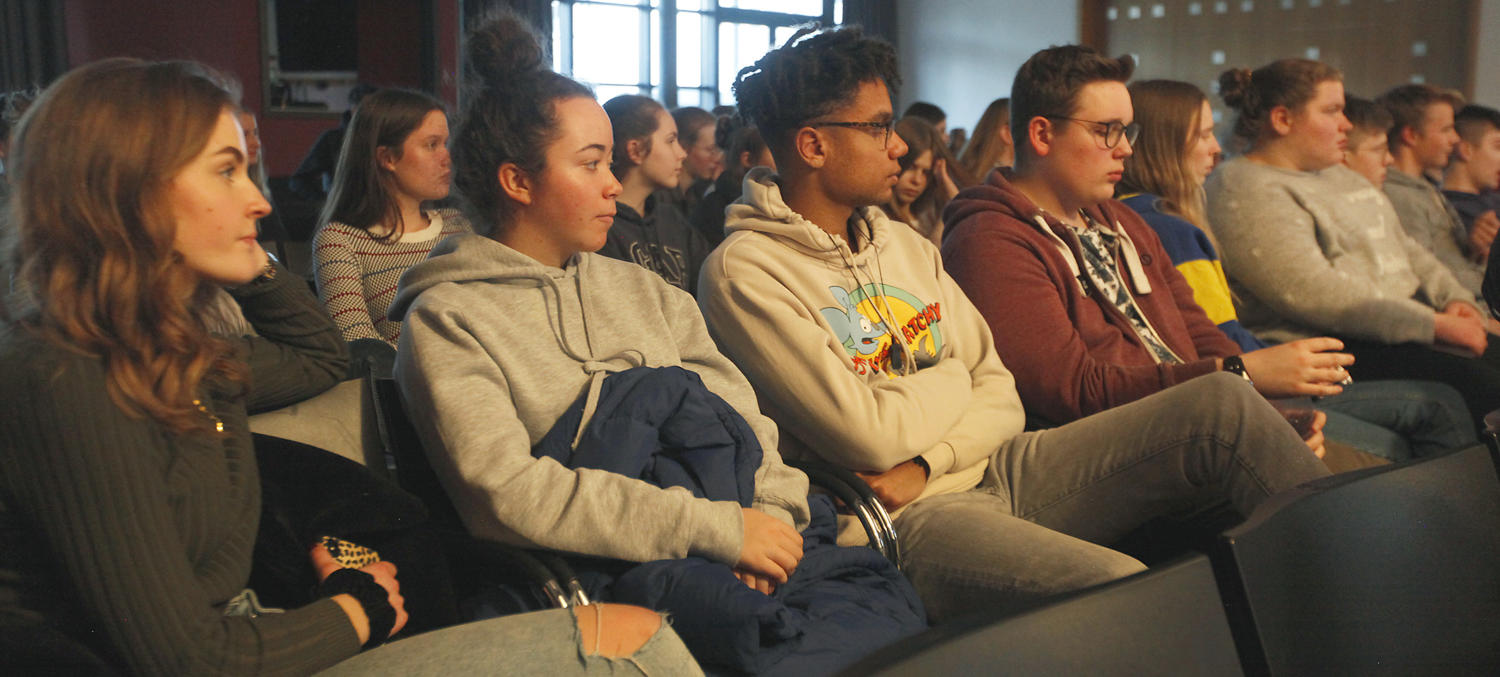
He is a regular guest speaker at well-known companies, but he has never been invited by a school. — School principal Björn Gemmer wasn’t willing to let this statement by Germany’s most famous math YouTuber, Daniel Jung, in an article in Deutsche Bahn’s customer magazine stand unchallenged. The school administration and Steinmühle management secured the “math rock star’s” agreement to give a talk at Steinmühle. On Wednesday evening, he filled the audience seats in the forum.

He doesn’t waste time with long introductions in his videos. Daniel Jung gets right to the point—and that’s exactly what his well over 600,000 followers seem to love. It’s not about beauty, fashion, or fitness like it is for countless other YouTubers. Daniel Jung’s passion is—mathematics! Laughter fills the hall as the speaker on the Steinmühlen stage mimics the way he steps into the frame in front of the camera in his videos—and then steps back out again. That’s how many people who search the internet for solutions to math problems—and find them—know him.

Born in Remscheid in 1981, Jung has compiled over 2,200 explanatory videos covering topics such as stochastics, systems of linear equations, and other mathematical problems that give many high school and college students a hard time. The videos, each just a few minutes long, are a huge hit on YouTube. His videos have already been viewed over 200 million times. The thank-you comments under his videos speak for themselves. “Oh my God, you saved my butt on my final exams,” one comment reads, for example. Or: “I learned more from you in 60 seconds than I did in half a year of math class.”


Breaking Down a Generational Conflict

Yet this eloquent man in his late thirties, who studied math and sports but ultimately did not pursue a teaching career in the traditional school setting, does not see himself as competition for schools, but rather as a complement: “We need the structured school environment, ‘but people aren’t built for 45 minutes of high-pressure learning.’” In addition, it has been proven that an individual teacher can achieve more than group instruction. And: “My material is accessible from anywhere, at any time.” Daniel Jung, who, among other things, contributes to the platform mathefragen.de and founded the Daniel Jung Academy, sees himself as an entrepreneur. His goal is to decipher “new learning,” break down a generational divide, and make it clear: “It’s not just thick books that can impart knowledge—the internet can, too.”
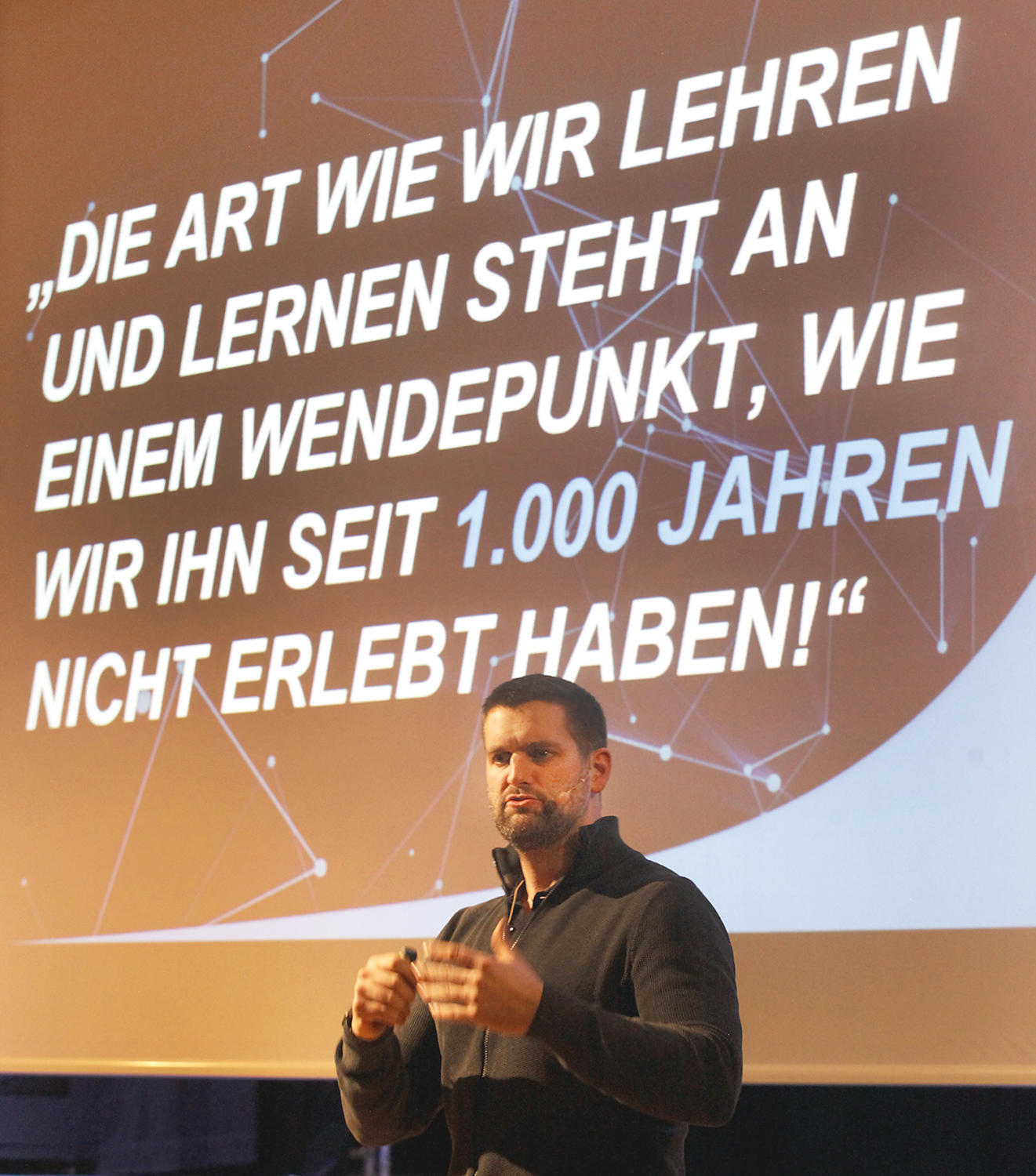
With his approach—projected powerfully onto the Forum’s screen—Jung delivers a thunderclap: “The way we teach and learn is at a turning point unlike any we’ve seen in a thousand years.” Even statements from dissenters—who demonized educational videos by claiming they were to school learning what Amazon is to retail—did nothing to change this. “We should meet young people where they already are—namely, on the internet,” said the speaker.
He therefore encouraged students and teachers to use the Internet to share interesting content: “Share your knowledge with the world. It’s fun to help others.”

In light of the impending storm, public schools in the Marburg-Biedenkopf district will remain closed on Monday, February 10. This also applies to schools in the university city of Marburg. The district, the city of Marburg, and the State School Authority reached this decision on Sunday during a meeting called on short notice. The closure of public schools also affects after-school care programs at those schools. The Steinmühle is offering emergency care but expressly warns against sending students to emergency care due to the storm.

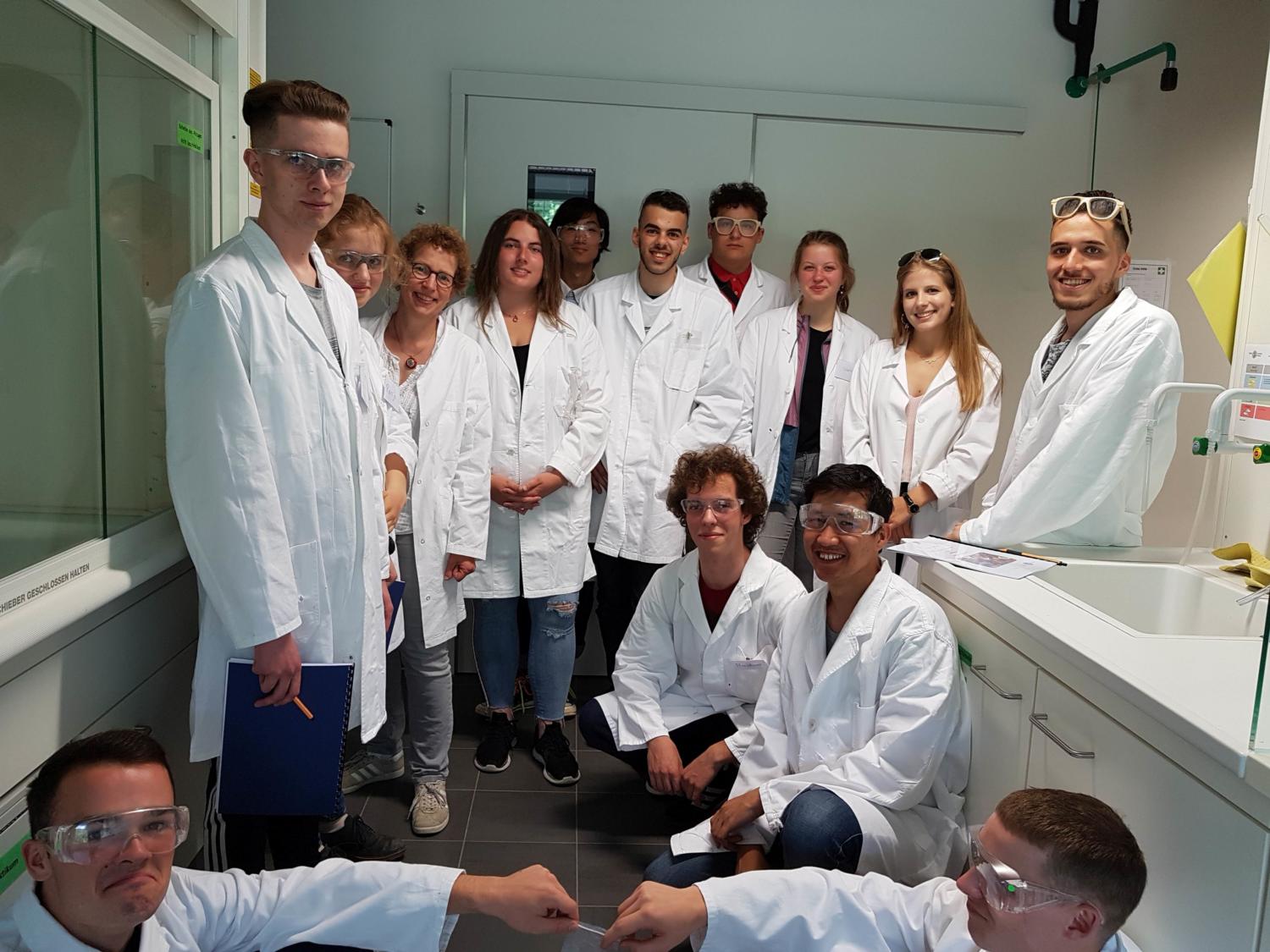
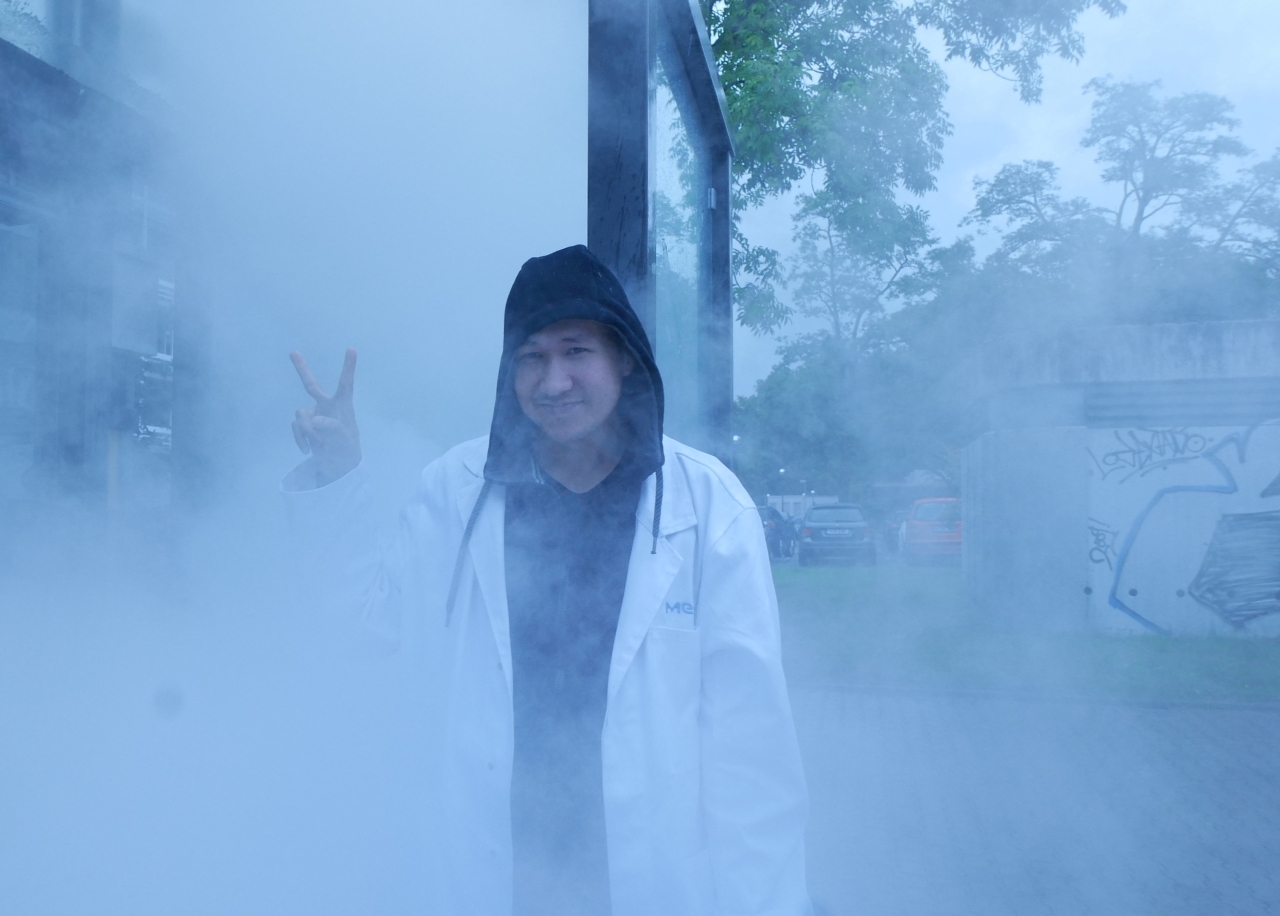
At the end of September, the advanced chemistry class of the graduating senior class traveled with their teacher, Dr. Jutta Töhl-Borsdorf, to the Technical University in Darmstadt.

The goal of the field trip was to learn about various topics related to “plastics” and “equilibria.” Getting to know a chemistry lab and conducting educational experiments in a university setting were intended to provide insights into a potential future degree program. After a two-hour train ride, the group headed straight to the university, where they first received an introduction to the topic of “plastics” and the experiment they would be conducting. The experiment involved synthesizing polydimethylsiloxane to produce silicones. The group also received detailed instruction on safety and protective equipment before beginning the experiment to prevent potential accidents in the lab.

The first part of the experiment on the production of silicones—synthetic polymers in which silicon atoms are linked to one another via oxygen atoms—took place on the morning of the day we arrived. We also had lunch in the university cafeteria.

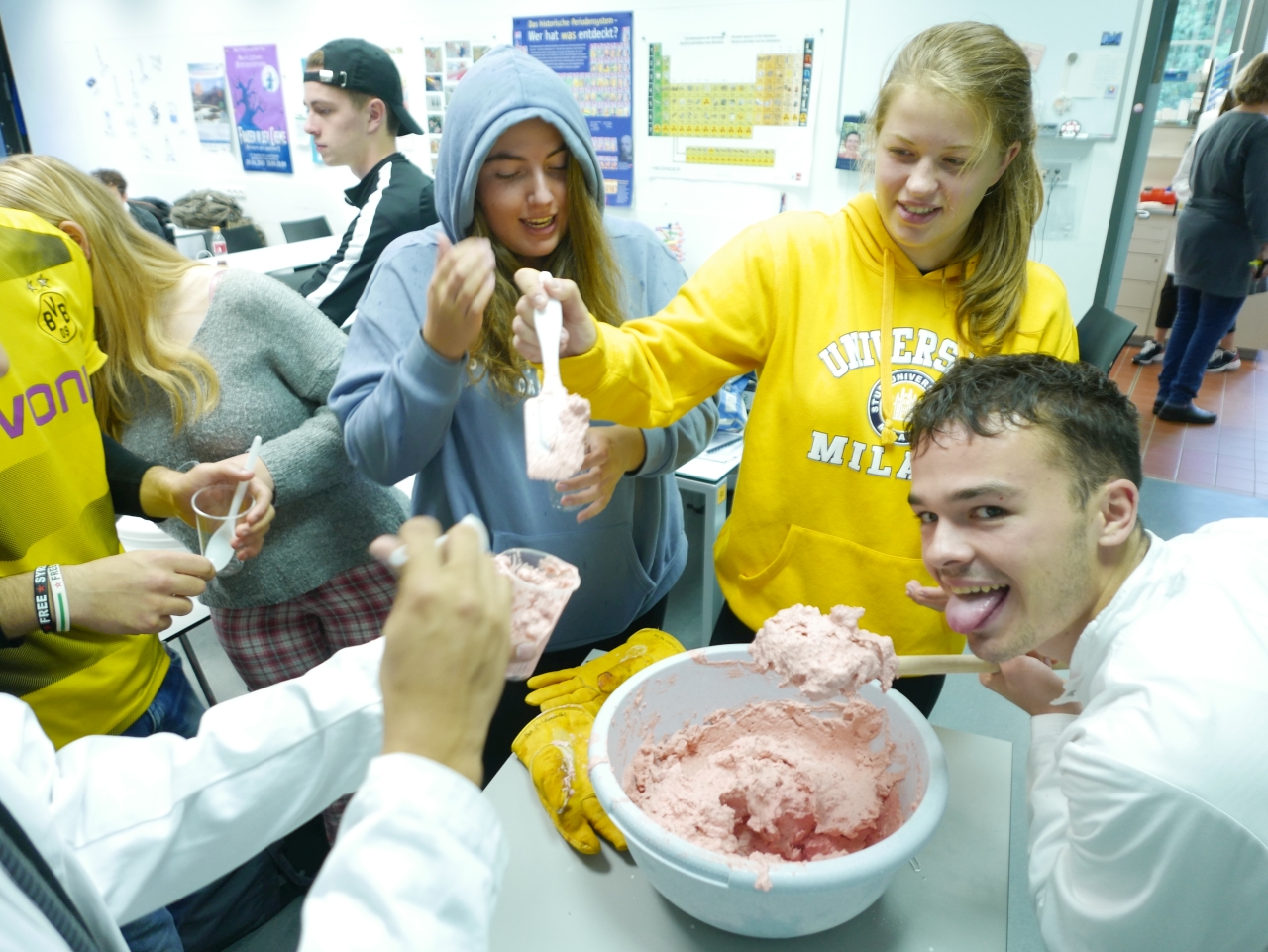
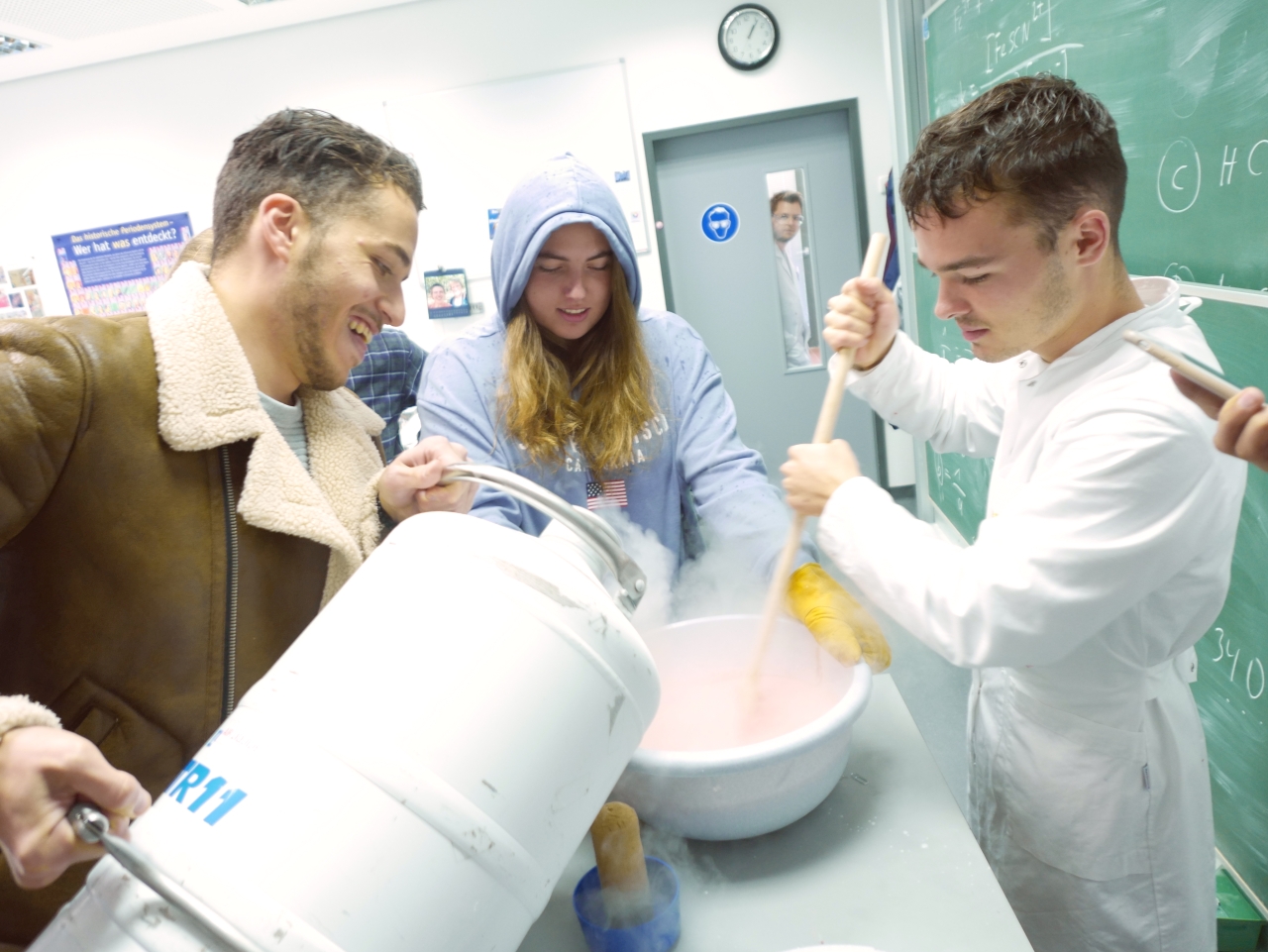
This was followed in the afternoon by the second part of the experiment—cross-linking the oligo- or polydimethylsiloxane with boric acid; the results were “bouncy ball-like,” colorful masses. Afterward, the class headed to a nearby youth hostel. The students spent the evening with their teacher, Dr. Jutta Töhl-Borsdorf, enjoying a cozy get-together over dinner at a nearby pub.

Insightful Impressions

On the second day of the field trip, the university course covered the topic of “chemical equilibria” and conducted experiments to determine an equilibrium constant using spectrophotometry. In the course of this, the class also learned how to use a “Graphical Analysis app” to analyze and evaluate the results obtained; based on these measured values (the slope of the graph and the y-intercept), the equilibrium constants they were seeking could be calculated. In the afternoon, the advanced chemistry class headed back to Marburg, taking with them valuable insights and new experiences, both in terms of academic knowledge and career orientation.

Earlier this year, students in the advanced chemistry class had the opportunity to get a glimpse into what it’s like to study chemistry at Philipps University of Marburg. The topic of this workshop was plastics. The students in the advanced chemistry class learned about the various synthesis methods and how to use the tools of the trade.

Lena Noelle Joußen and Svenja Winter