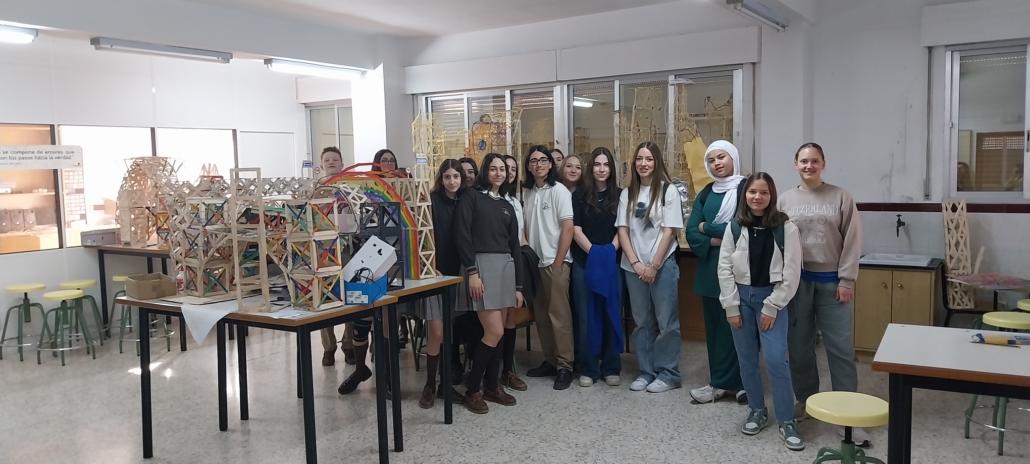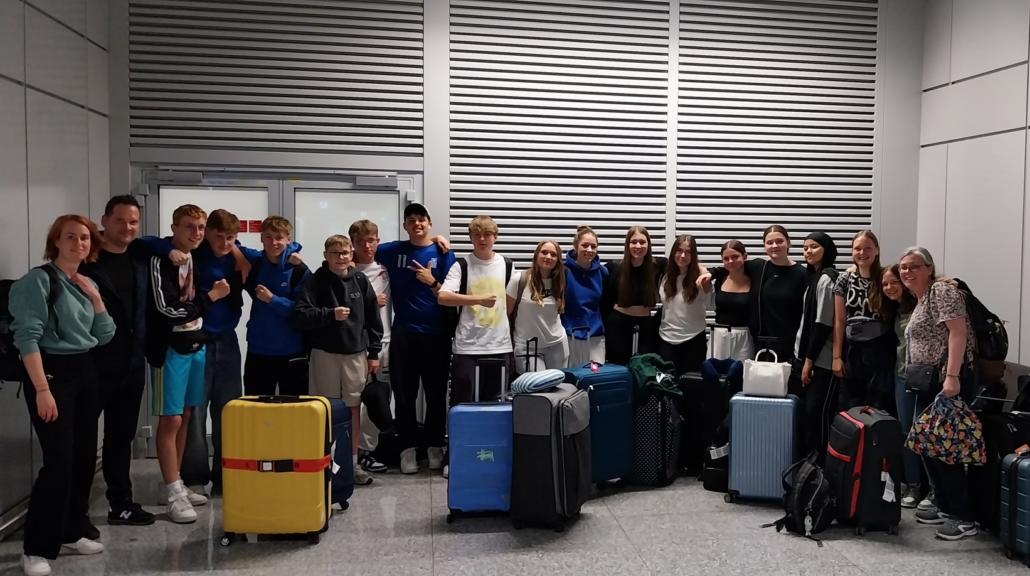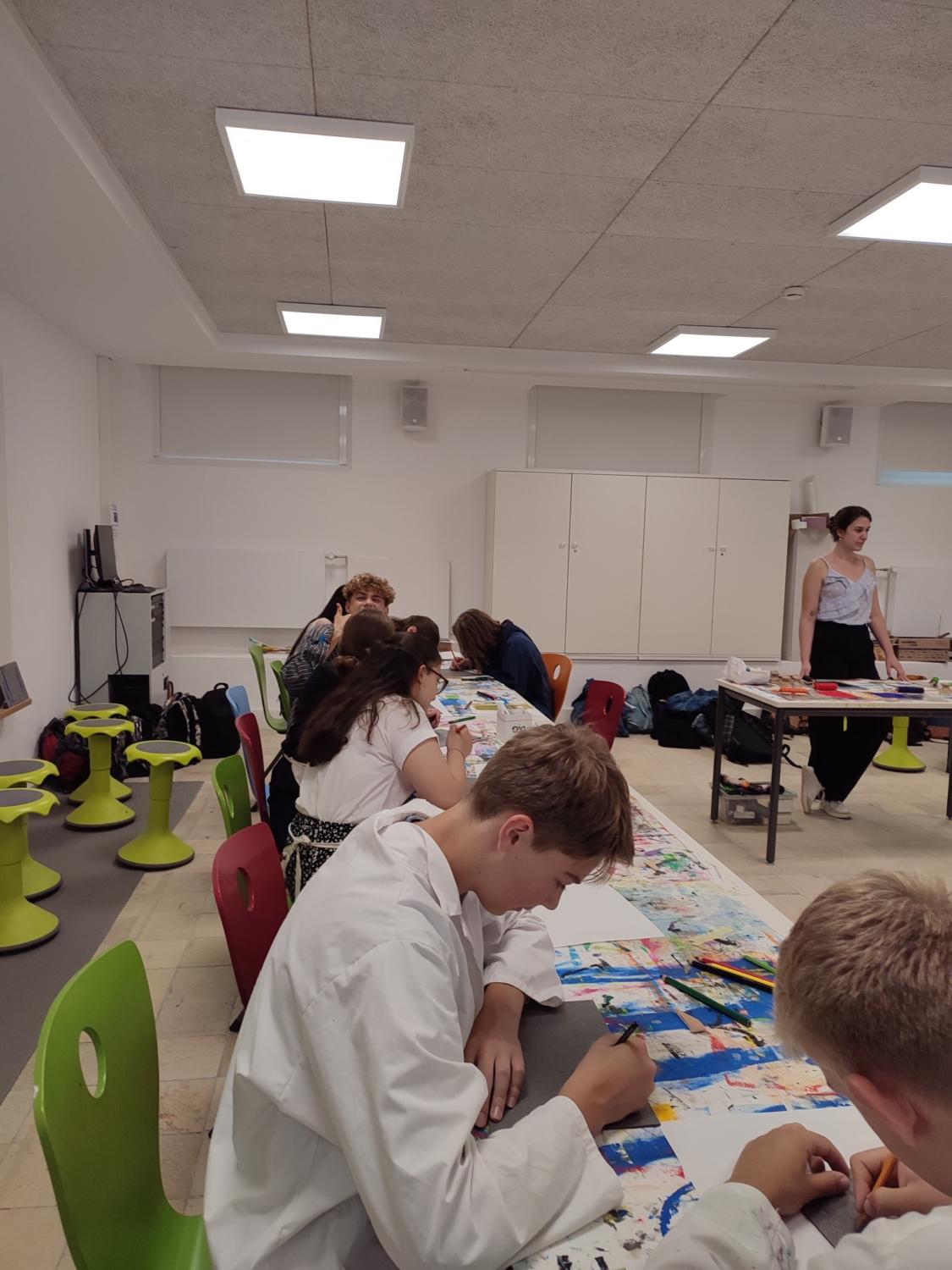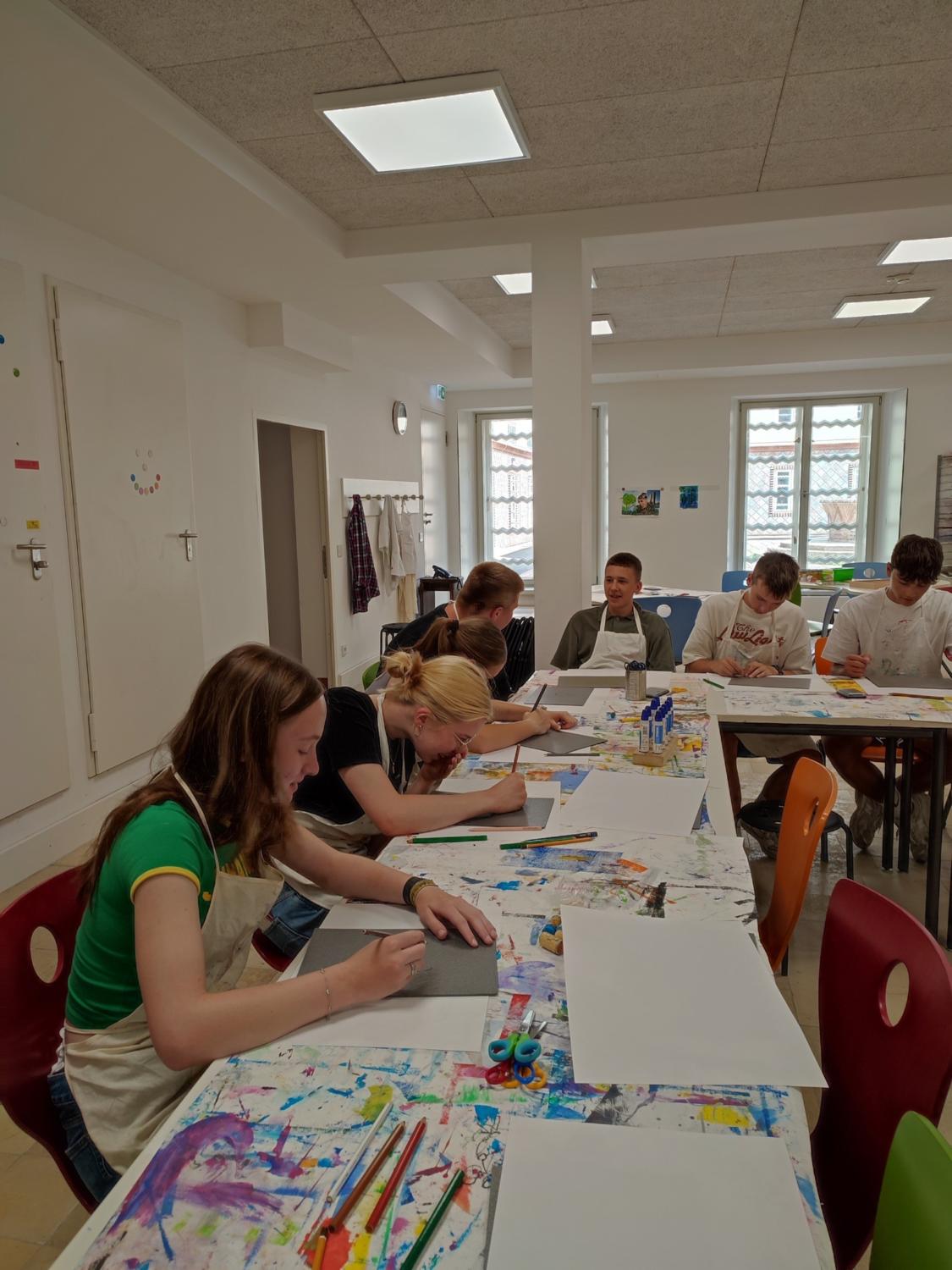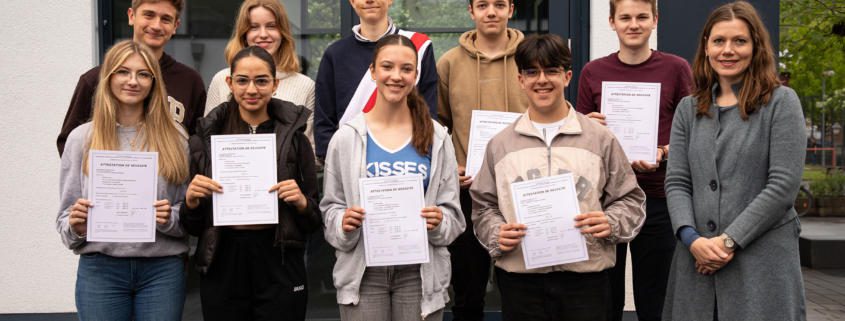


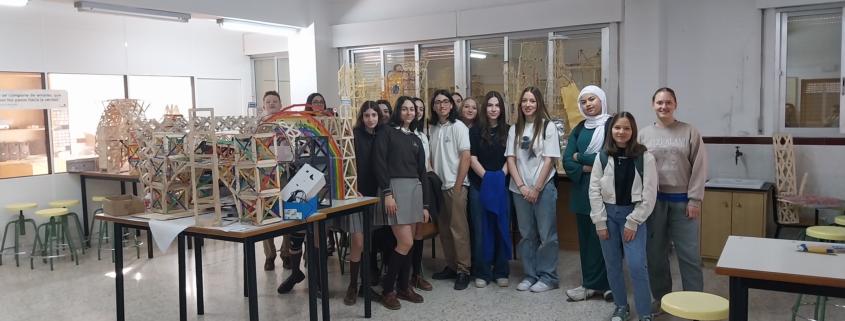
The trip to Spain for Mar Montenegro’s group began with a flight on a very small plane via Madrid to Granada, where we were picked up at the airport by our respective host families. Over the next few days, after a Spanish breakfast with our host families in the morning, we went to our exchange students’ schools with them. Our class was split among three different schools, all located in the center of Granada.
In the mornings, we sometimes participated in the Spanish students’ regular classes. At the schools, we were also able to continue working on our ERASMUS projects. Since our exchange was funded by ERASMUS, we focused on four topics:
- Interfaith Dialogue/Coexistence of the Three Religions (Cultures): Islam, Judaism, and Christianity—Then and Now
- Environment/Climate Change: Water as a Fundamental and Indispensable Resource; Water Management in Marburg and Granada Then and Now
- Sustainable School: Mobility/Waste Separation/Sustainable Consumption
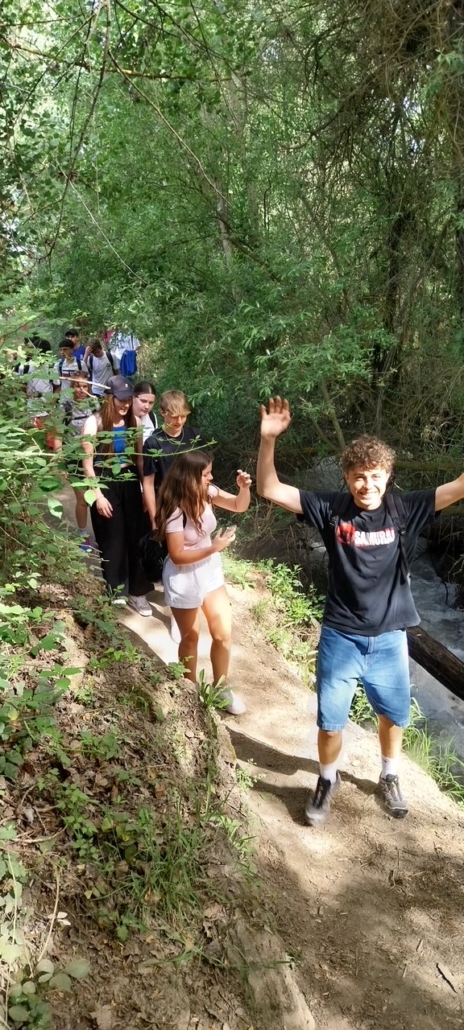
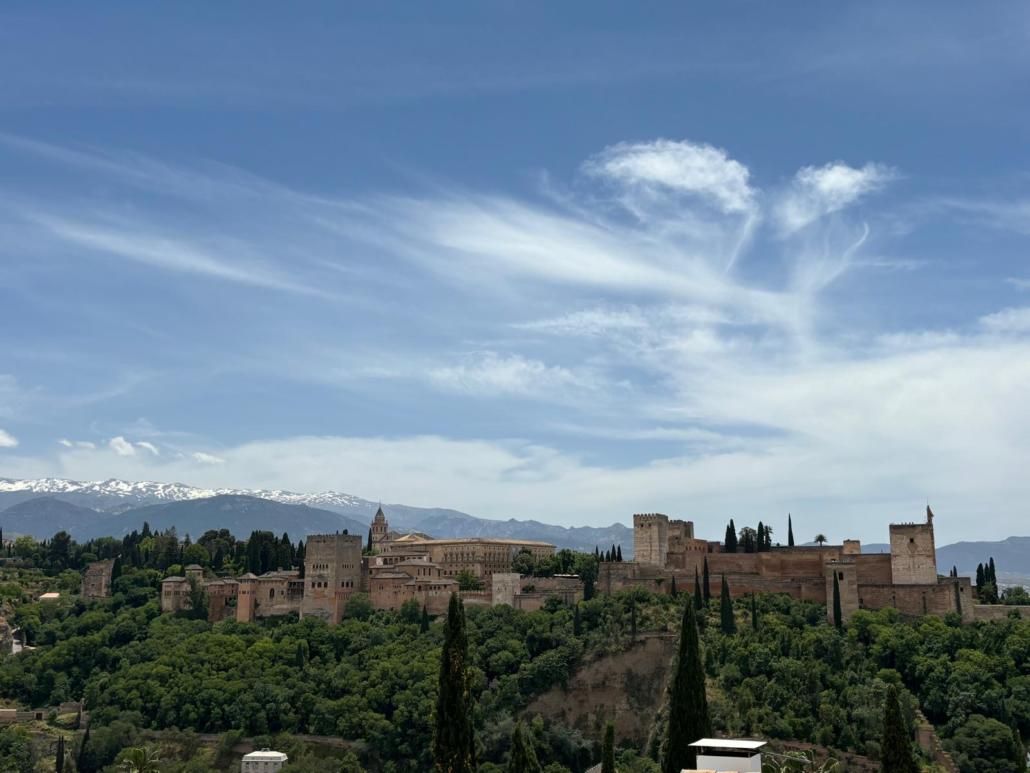
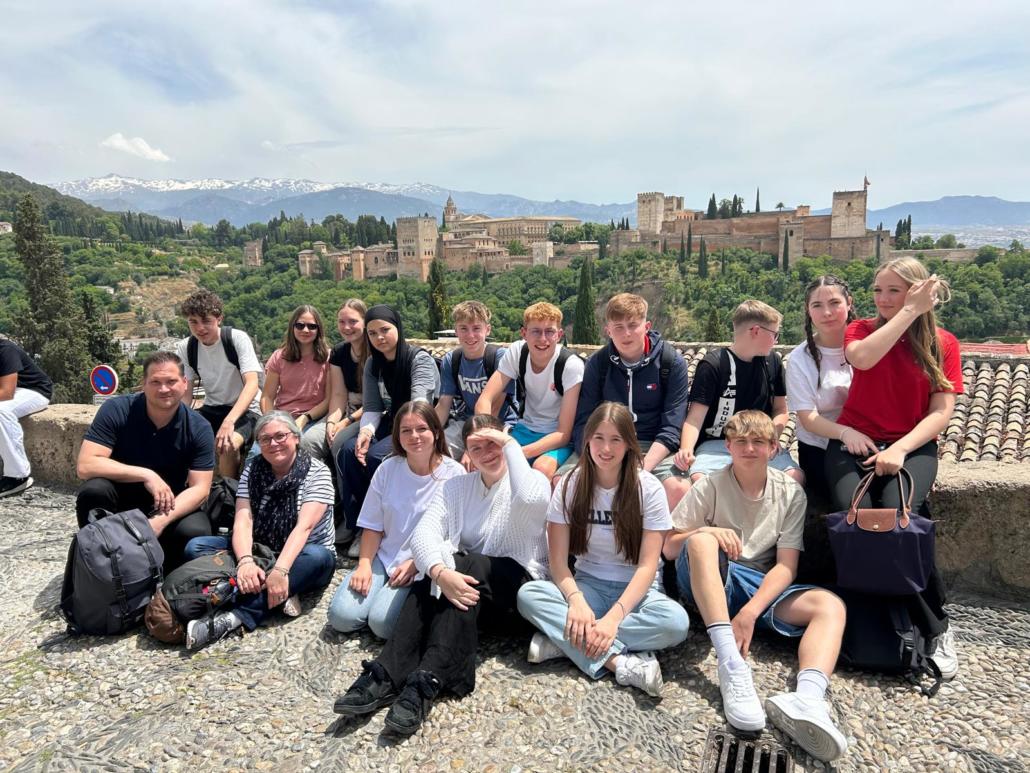
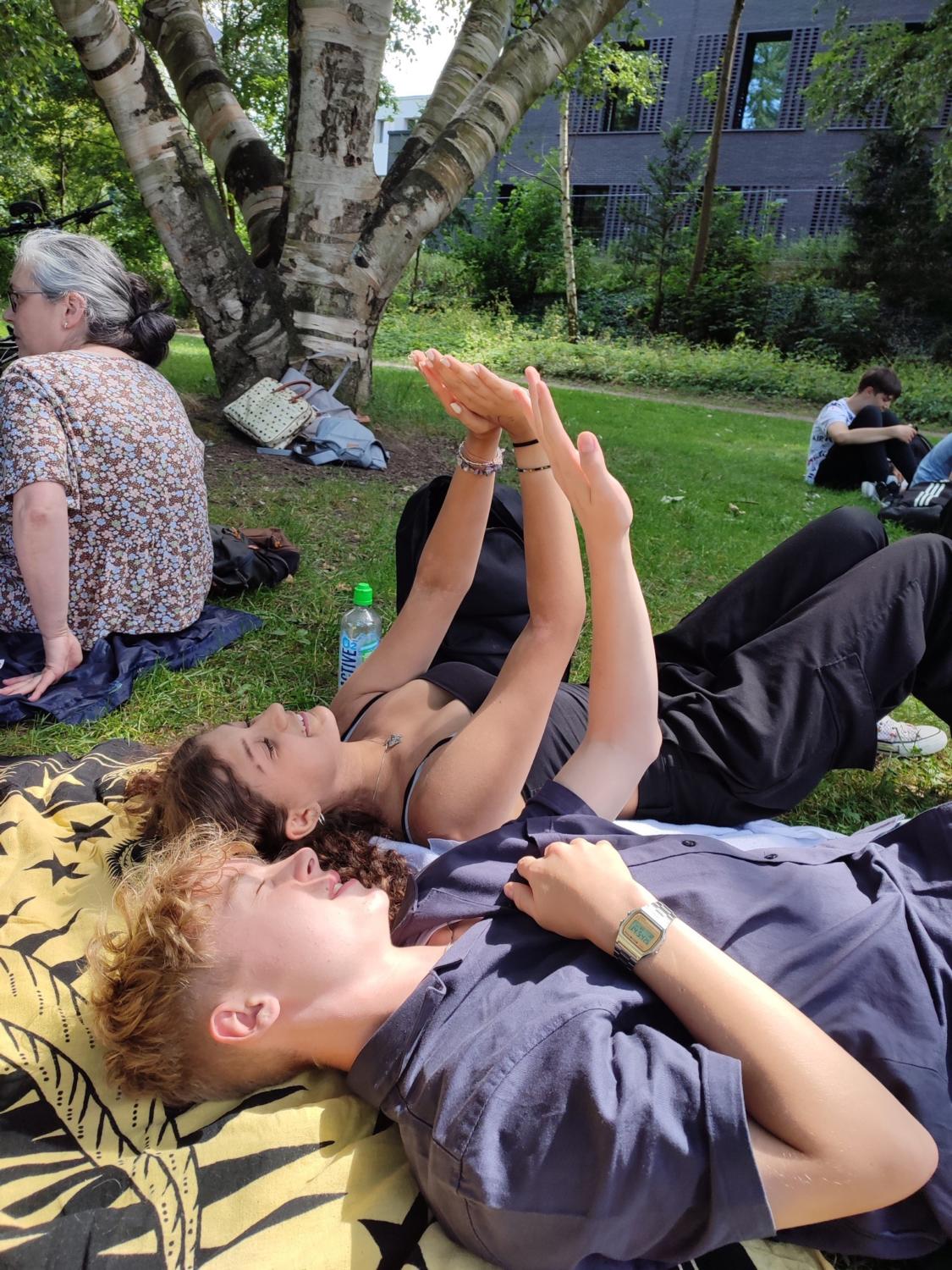
- Environment/Climate Change: Changes in the Surroundings After class, we often met up with others from our Spanish course in the city and went on excursions together, led by our three accompanying teachers (Mar Montenegro, Ronja Heckmann, Stephan Kersten). A major highlight for us students was the trip to the Alhambra, the ancient fortress built by the Moors. We were able to explore the entire interior, and the magnificent architecture and the view over the entire city were particularly impressive. In the afternoons, we had free time with “our” Spanish friends and could go shopping in the city or go on our own excursions. On the weekends, some of us went on individual outings with our host families, such as trips to the beach. But we also went as a group to the big “Corpus” fair, which took place for Corpus Christi. With all the rides and the traditional clothing everyone was wearing there, it was a wonderful experience. To wrap up the trip, we went hiking in the mountains and then swam in a lake. The next morning, we drove to the airport together and arrived safely back in Marburg after a 12-hour journey. Overall, we thought the Spanish exchange was really cool, and it was definitely an eventful exchange.
Jael Bieber (9b) and Evelyn Hildermann (9c)