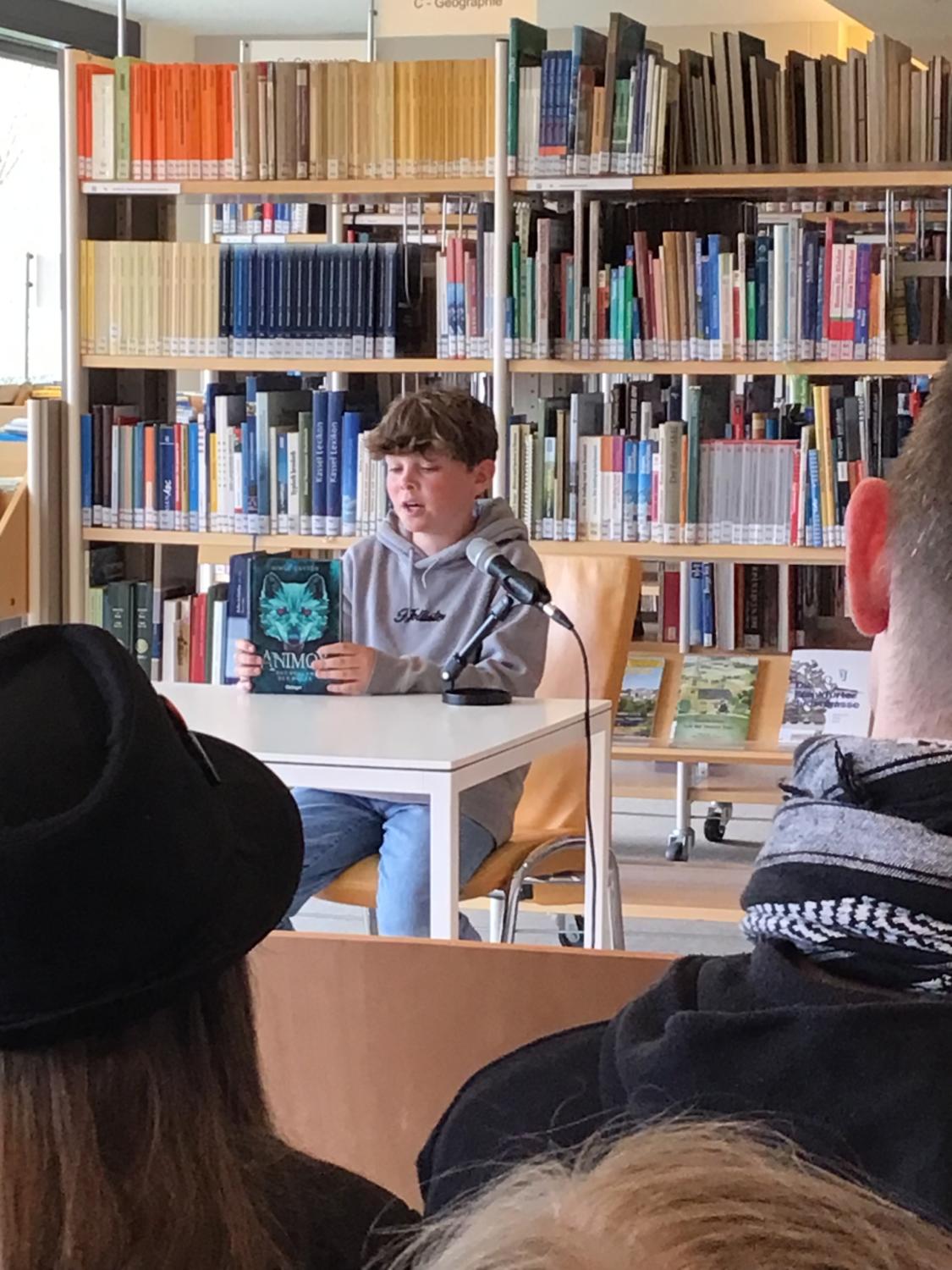
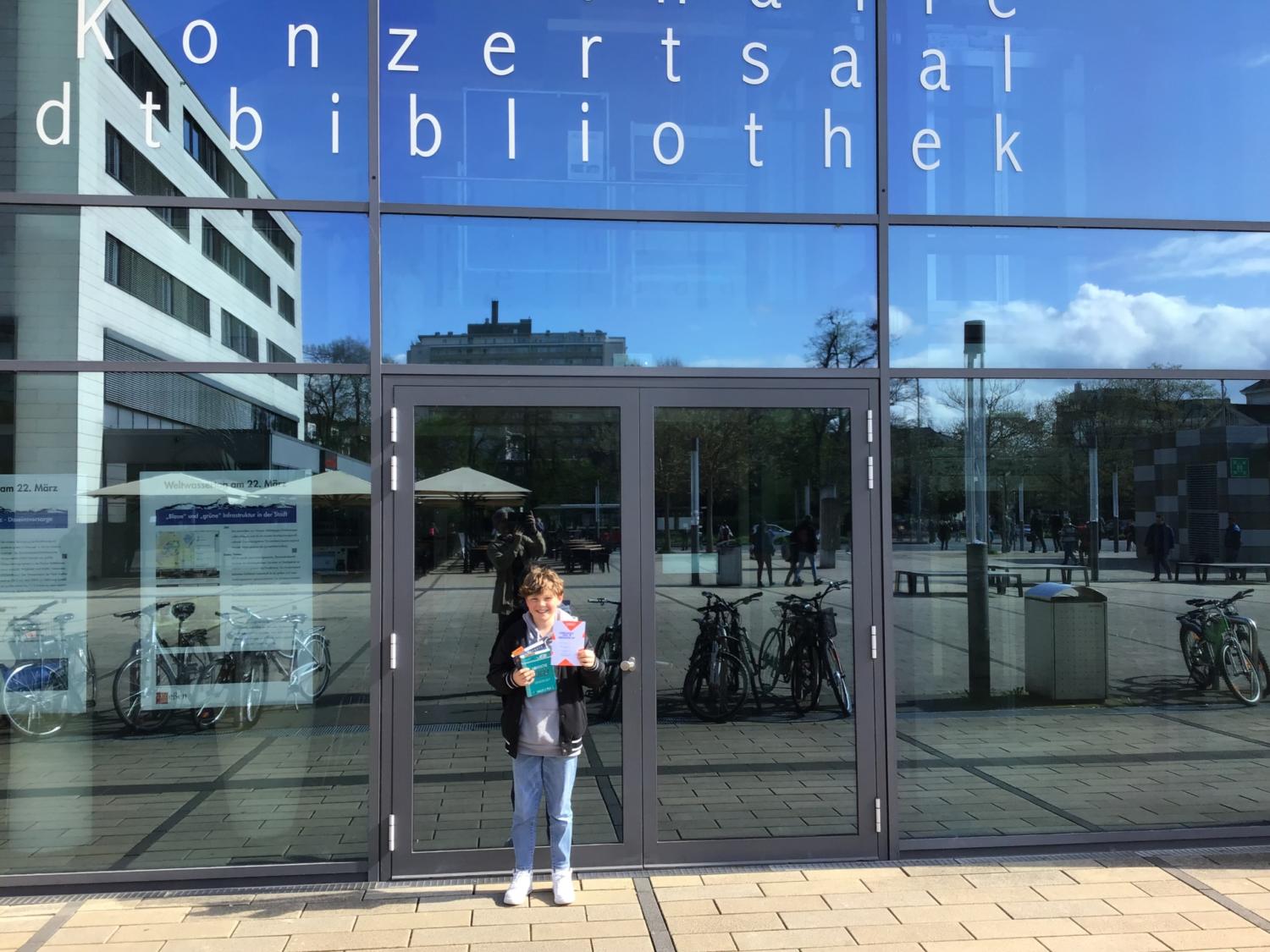
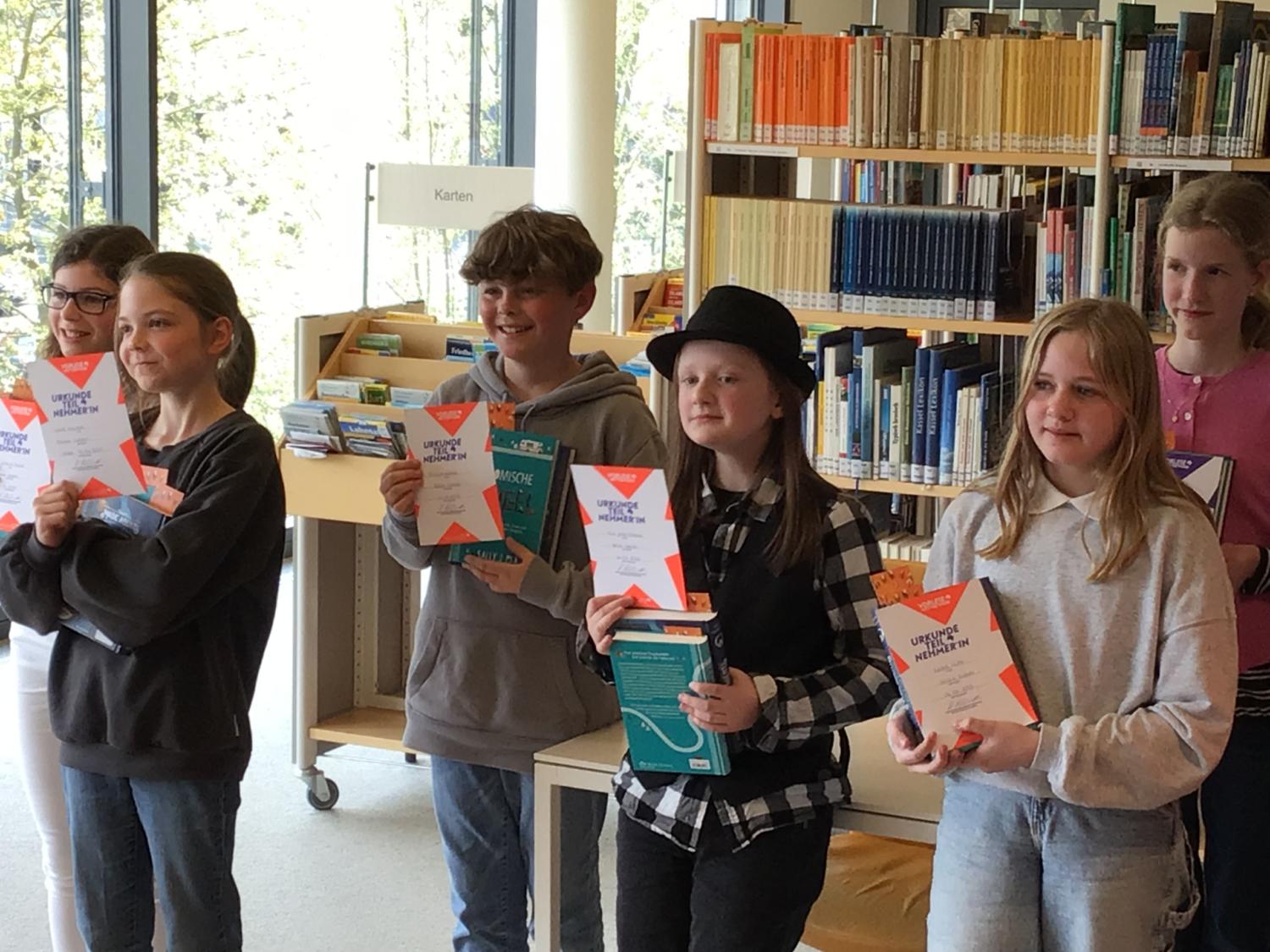
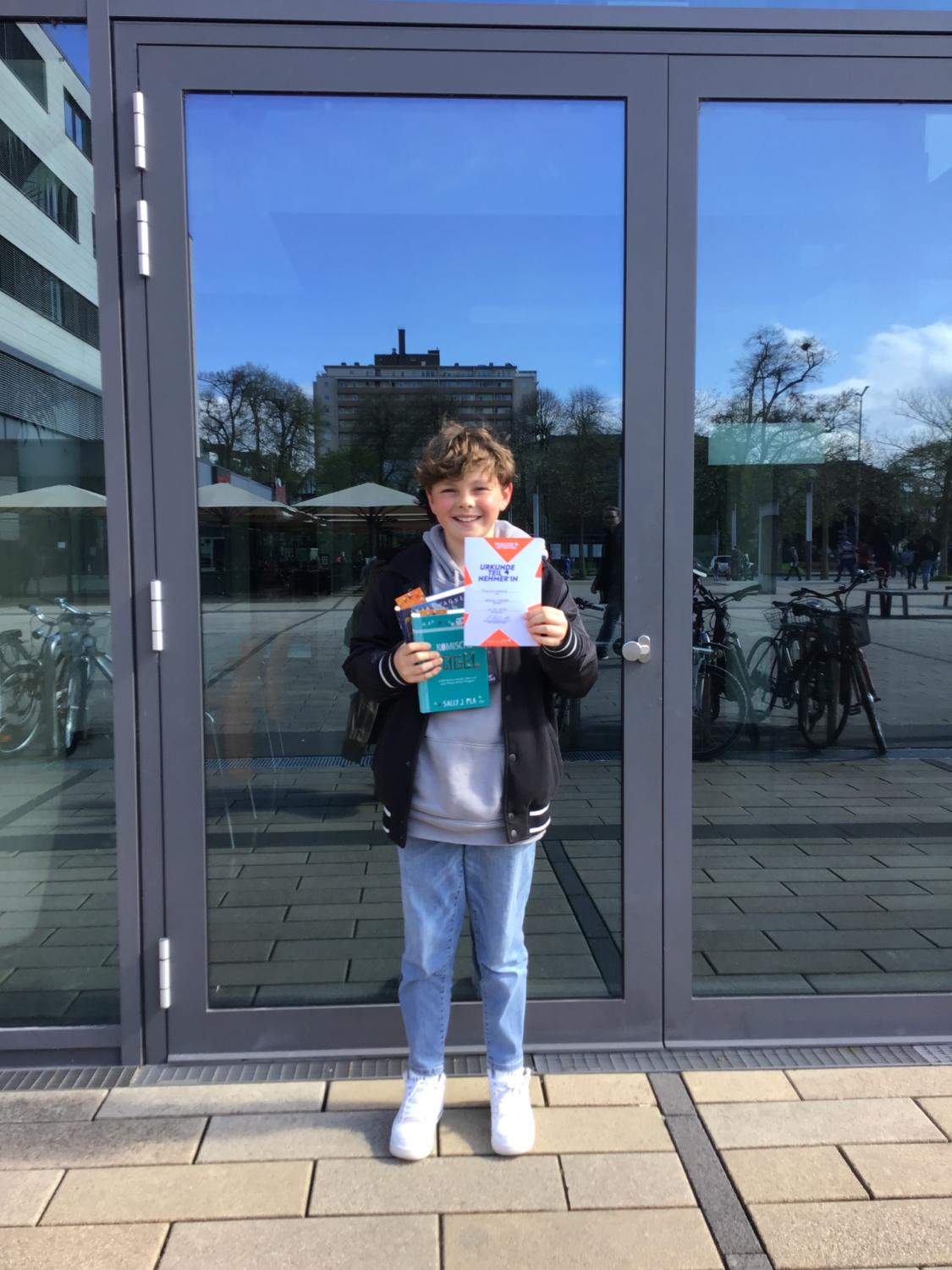
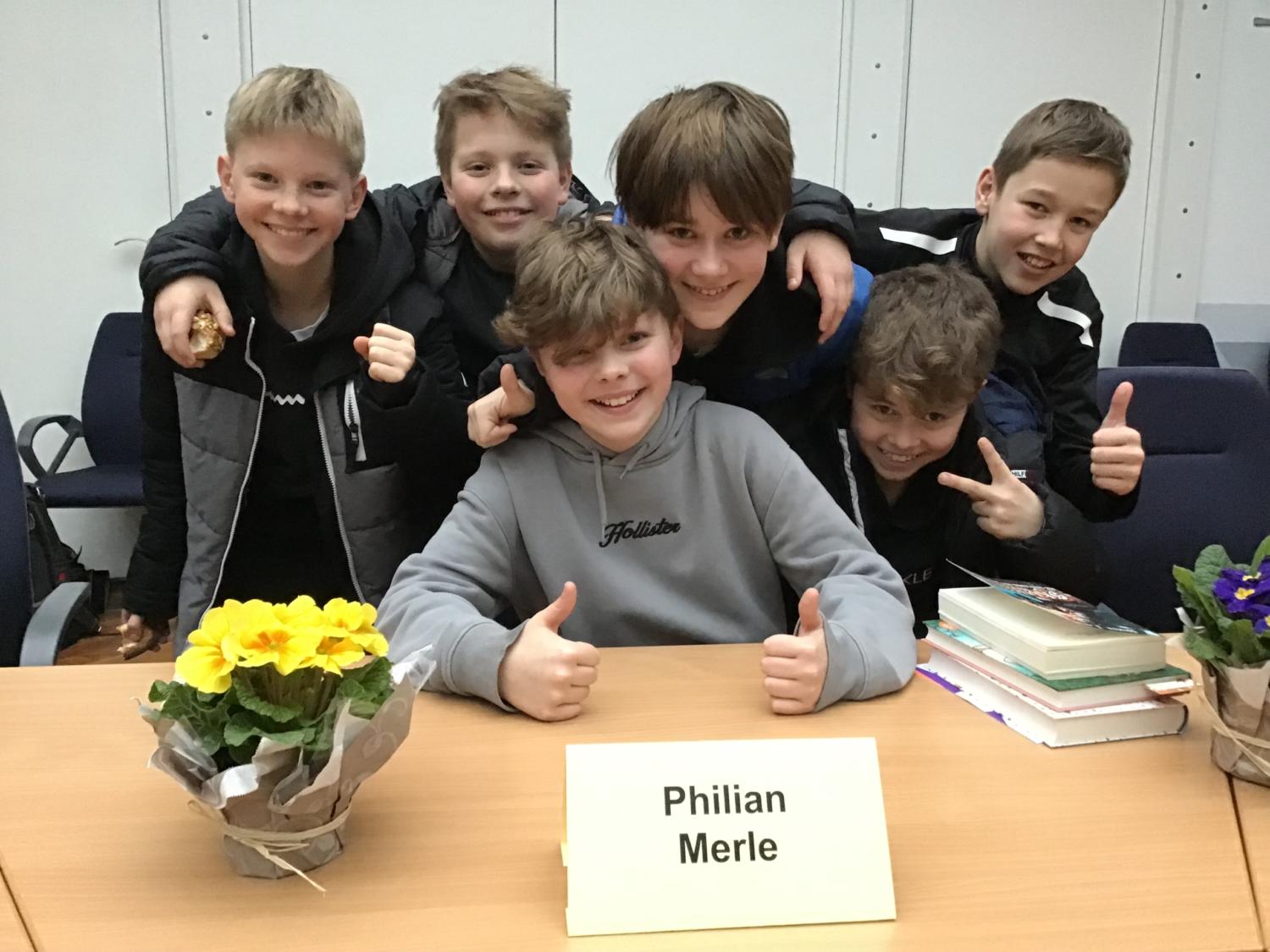
On the very first Monday after the Easter break, the winners of the city and county rounds had to take the stage as readers in the next round of the district competition at the Giessen City Library. Philian from Class 6c once again delivered a compelling performance.
Once again, he skillfully evoked the moods of the texts—both the prepared ones and the unfamiliar ones—and, with the latter, he once more demonstrated his quick grasp of the given moments. Overall, he was very skilled at drawing the audience into the story. However, he was not alone in this regard during this round. Nine talented young readers demonstrated remarkable reading skills, a fact the jury highlighted in their brief remarks. The selection was, inevitably, not an easy one for the jury. The fact that Philian did not advance to the next round—along with six other strong young readers—was something we had to accept, as is customary in competitions. All in all, it was an admirable “reading journey,” and we were delighted to accompany him on it. Hats off to him!

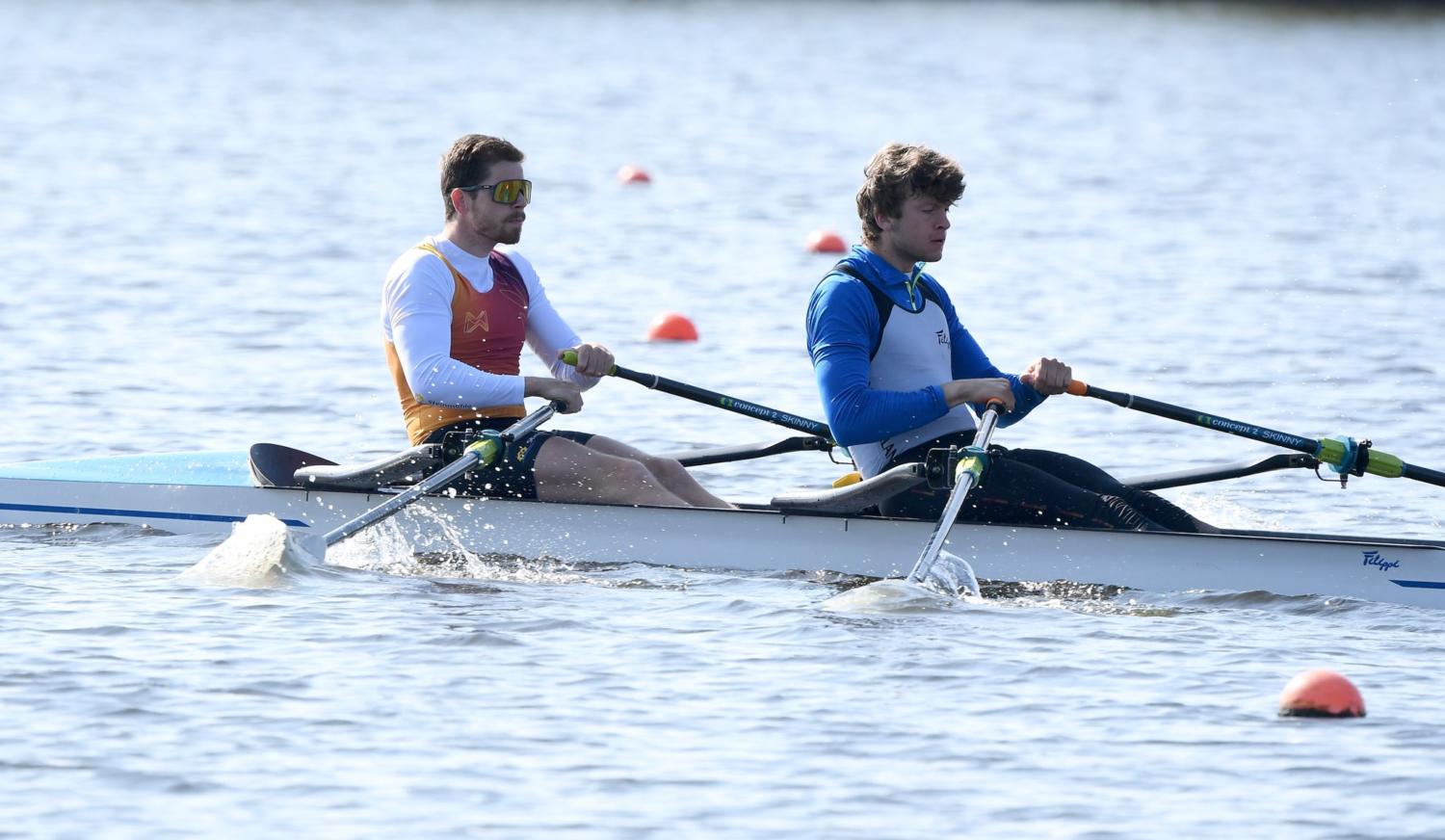
The Steinmühlen rower’s goal is to qualify for the Olympics

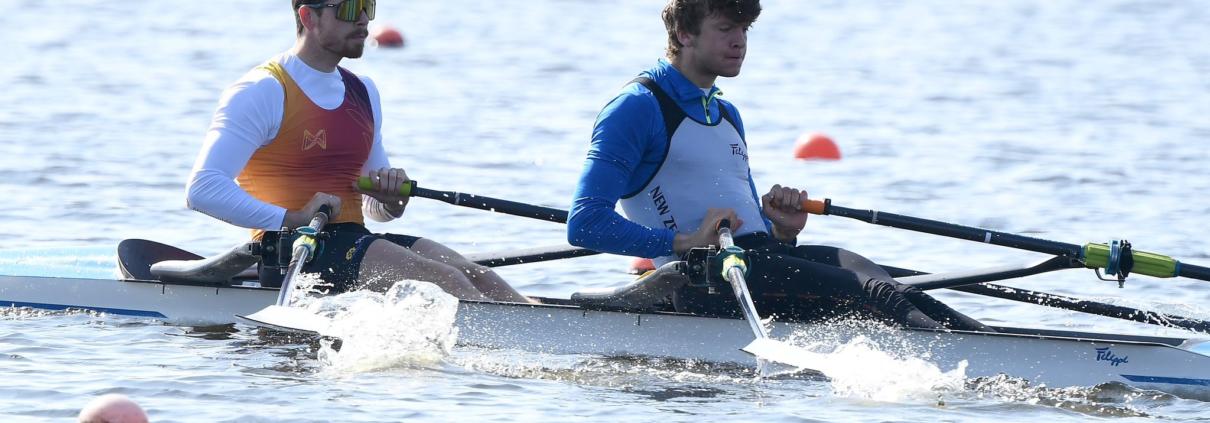
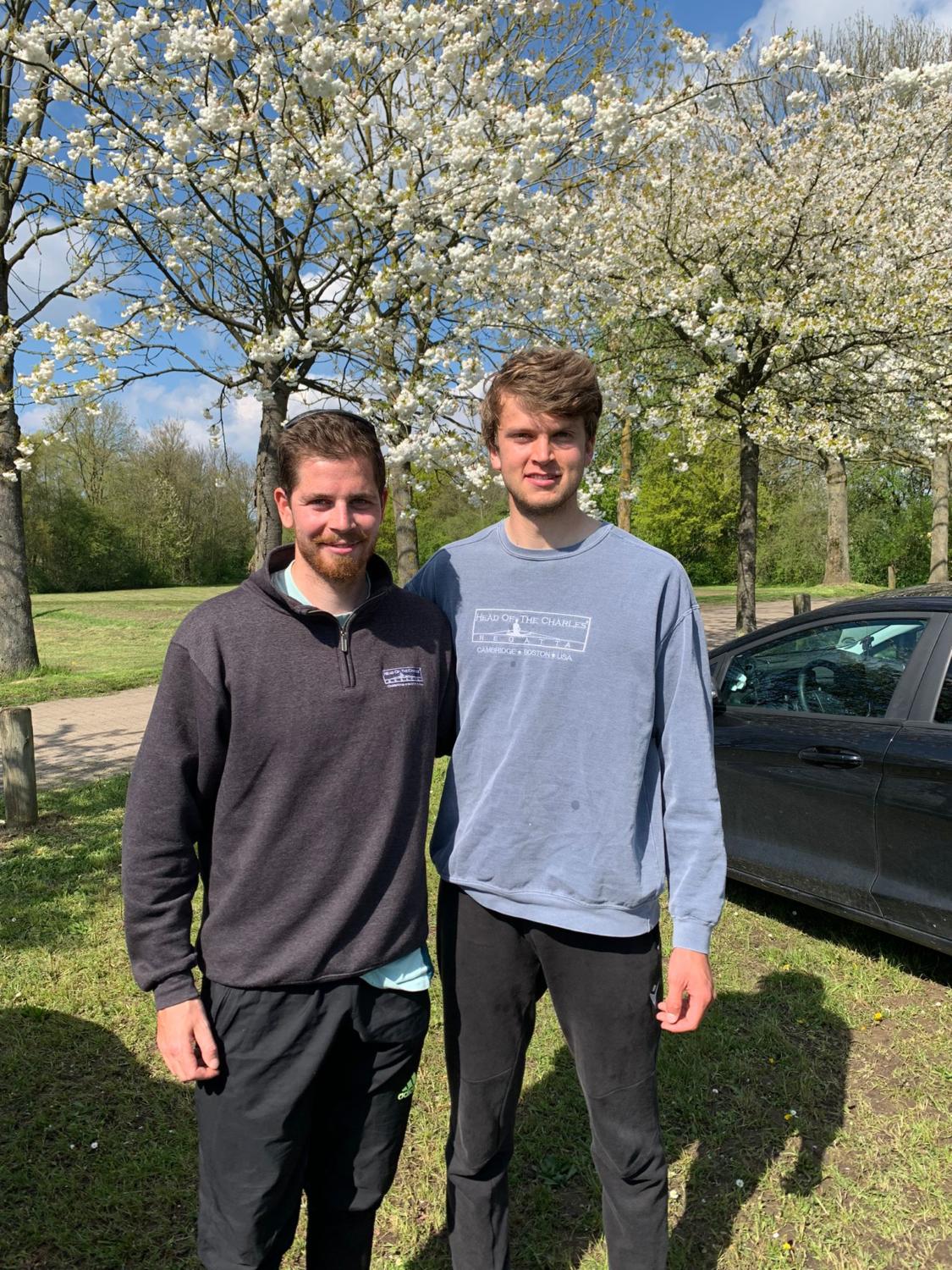
That’s quite an achievement: With a five-second lead, Steinmühlen rower Marc Weber and his partner Jonas Gelsen from the Nassovia Höchst Rowing Club clearly and confidently held off their opponents at the mid- and large-boat trials on the regatta course in Hamburg-Allermöhe. They had already won two out of two races on Saturday, so they didn’t even have to compete on Sunday. “With this victory in the qualifying round, the team has qualified for the European Championships in four weeks and will aim to secure an Olympic berth at the World Championships,” explained coach Martin Strohmenger.

“We were both a little nervous before the competition,” says Marc Weber. “After reviewing our ergometer results and our performance at the German Small Boat Championships in Brandenburg two weeks ago, we wanted to see where we stood,” he explains. “We managed to take a clear lead in the first race and also take the lead in the second race. If we do well at the European Championships as well—which I hope we will—then we can secure our spot and get the ‘go-ahead’ to qualify for the Olympics at the World Championships.”


“The support from Steinmühle helps me keep my head clear”

Marc Weber, for whom the weekend in Hamburg had been sunny—and not just in terms of the weather—said: “I’m very happy. We’re making great strides right now; we’re on the right track and moving very fast.” The athlete extended a big thank you to Steinmühle and to everyone there who supported him without making a big deal out of it. Weber: “I feel very well taken care of; my mind is clear. The Rudern und Sport Steinmühle club, along with the Steinmühle School and Boarding School, deserve a great deal of credit for helping us achieve significant success across Germany.”

High praise for their new recruit, Marc Weber—U23 World Champion in the single sculls (2019) and 2019 Athlete of the Year in Hesse—was in turn

Steinmühlen management, school administration, and the board of the Rudern und Sport Steinmühle association. “We would be delighted if this journey continues on an international level. We will continue to support this effort.”


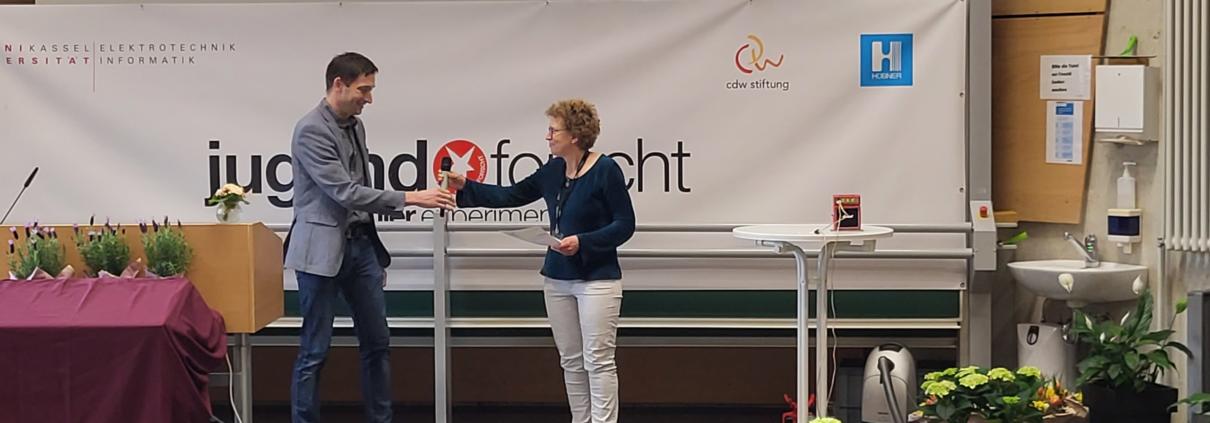
We have reason to celebrate! The Steinmühle has won the Hopp Foundation’s school award—worth €2,500—for its commitment to STEM education as part of the “Jugend forscht” state competition.

The Hopp Foundation is committed to promoting young talent in STEM subjects and has been a key supporter of “Jugend Forscht” for many years. Since last year, the award has honored schools that are particularly committed to fostering talented students interested in science and technology, thereby making an important contribution to strengthening science and technology in Germany.
This generously endowed award is—in addition to being a recognition of achievement—of course also a welcome opportunity to significantly expand Steinmühle’s science equipment.
A prerequisite for participating in the competition was a detailed application letter in which a project by Steinmühle plus STEM students played a significant role.


Plus-MINT Project in cooperation with Philipps University of Marburg

In collaboration with the University of Marburg, a project idea was developed to study the Lahn River in the area of the restoration site at the Gisselberg Span. Dr. Christoph Reudenbach from the Department of Geoinformatics is actively supporting the plus-MINT students with his expertise. The idea is to develop an autonomous, sensor-equipped boat to minimize the need to enter the sensitive ecosystem in the Gisselberg span renaturation area. This platform is designed to semi-automatically measure water quality in the Lahn River and collect water samples.
The project is a great opportunity for the students to learn how to build complex devices and program them independently for research purposes, as well as to deepen their knowledge in the fields of robotics, programming, and environmental sciences.


Strong Commitment to Environmental Education

In recent years, students at Steinmühle have submitted numerous projects to “Jugend forscht” and have often achieved great success. This year, they won two second-place finishes and one first-place finish at the regional competitions; one project even won the state award for the best interdisciplinary project in Hesse.
In his laudatory speech, Mr. Oliver Karplak, the state competition director for “Jugend forscht,” specifically highlighted Steinmühle’s strong commitment to environmental education and environmental projects in recent years. This helps raise students’ awareness of environmental issues and encourages them to act in an environmentally conscious manner.


A big thank you

Steinmühle is very proud that its work in the STEM fields has been recognized with this award, and we would like to once again extend our heartfelt thanks to everyone involved. The Hopp Prize is a wonderful recognition of this work and an incentive for the future to continue raising our students’ awareness of the importance of STEM subjects and environmental issues, and to offer them opportunities to actively engage in building a sustainable future.

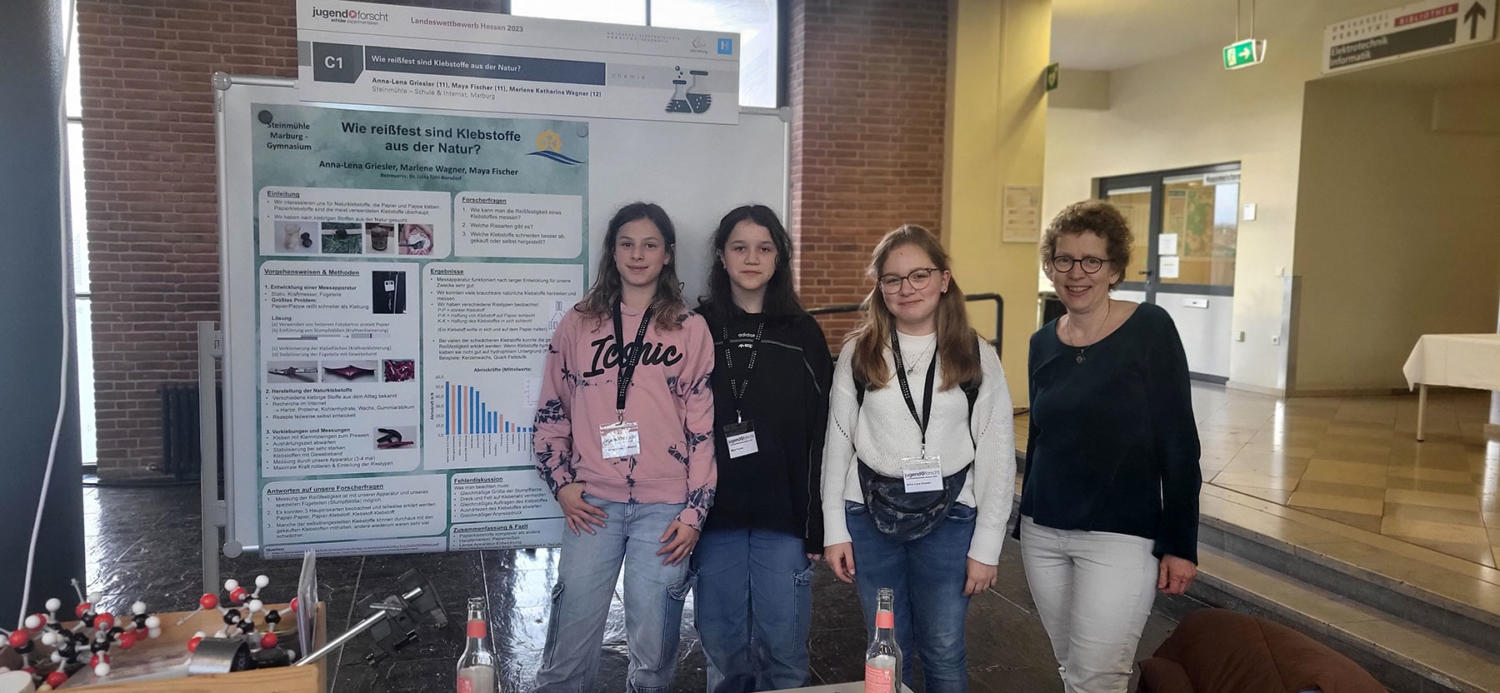
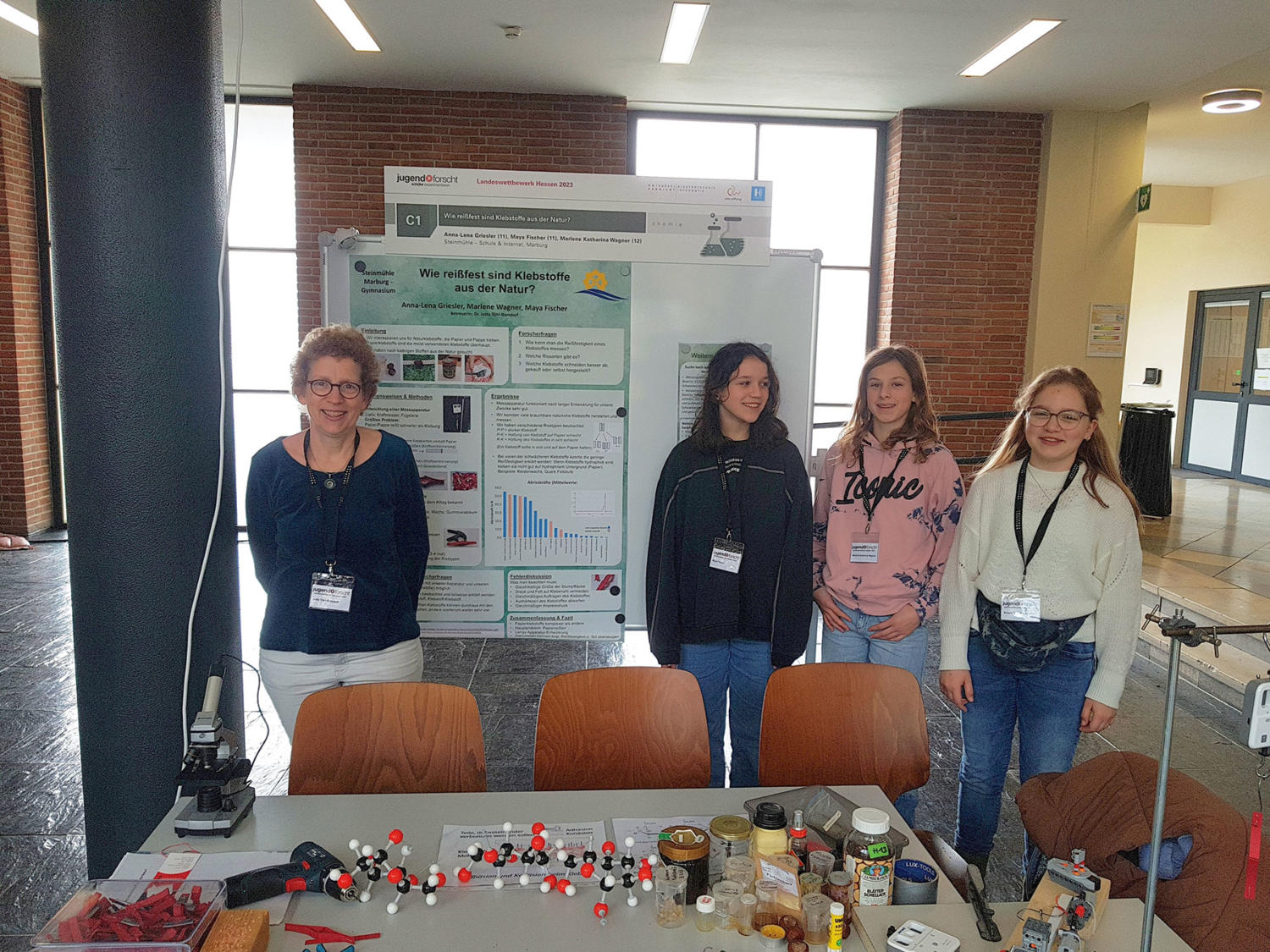
A great success for our very young researchers from 6th grade: By winning the regional competition in Gießen, they qualified for the state competition and were able to travel to Kassel for two days with their advisor, Dr. Jutta Töhl-Borsdorf, to present their research project there. And they won there, too.
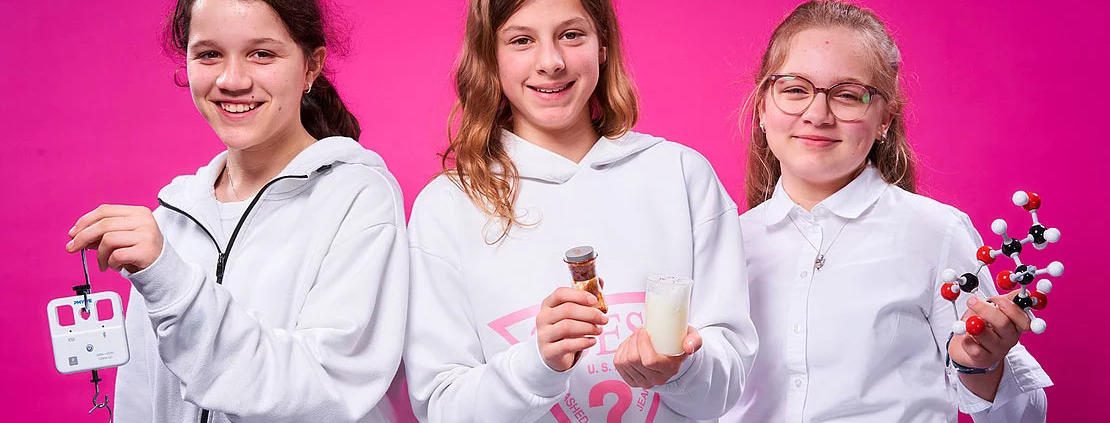
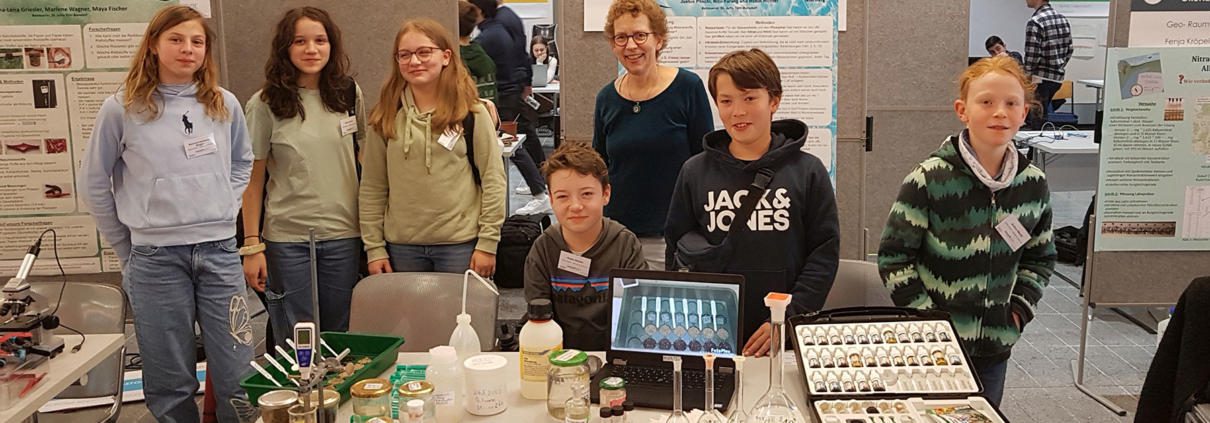
, Anna-Lena Griesler (11), Maya Fischer (11), and Marlene Wagner (12) focused on making adhesives from natural sources (as we reported), and this involved a lot of chemistry. But since the three didn’t stop at just making the adhesives—they also built a device to test their tensile strength—engineering played a major role in this project as well. Their force measurements using digital force sensors ultimately fell within the realm of physics as well.
This multifaceted approach—that is, its interdisciplinary nature—impressed the jury. The continuous refinement of the experimental apparatus and the depth of understanding with which they analyzed the underlying processes impressed the judges. In addition, they were praised for their confidence during the presentation and, in particular, for their strong team spirit.

The depth of content is something that is also close to the heart of “Jugend forscht” advisor Dr. Jutta Töhl-Borsdorf. “The three of them had to explain the different adhesive properties of the various materials on the paper. Since paper is made of cellulose, that’s more of a topic from 12th-grade chemistry class. Natural adhesives are also rather complex molecules. But you can ‘break it down’ into simpler terms.” During the jury deliberations, the team was able to impress with their expertise and technical terms such as hydrophilic and hydrophobic, hydrogen bonding, and cohesion and adhesion failures.

It was also great to see the students interacting with students from other schools. One team, for example, had been working on an adhesive made from mistletoe berries. A sample was quickly provided and measured by the girls. However, this adhesive turned out not to be suitable for everyday use just yet.
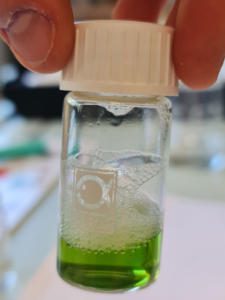
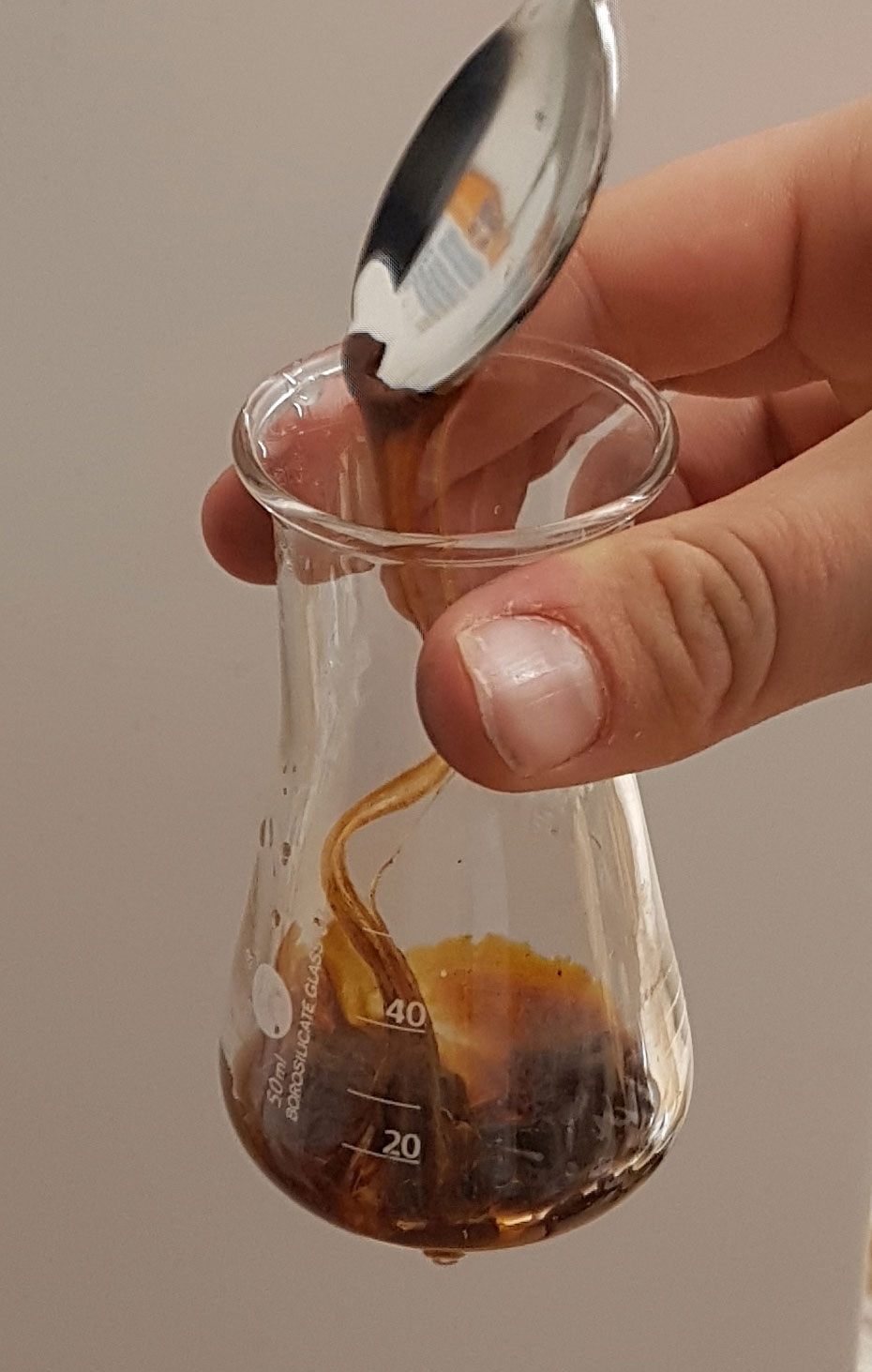
The team’s best adhesive consists of starch, sugar, and a little vinegar, which breaks down the starch molecules into shorter chains.
Last but not least, the Steinmühlen team also took home the special “Materials and Substances” prize from the Institute of Materials Science at the University of Kassel. In total, this meant prize money of 300 € for the three young researchers, though Anna-Lena noted: “The money isn’t really important at all. Spending those two days with like-minded people was the best part.”

We are very proud of you. Congratulations!
Click here for the University of Kassel’s press release

All eight school winners from across the city gave excellent and captivating readings on Monday, February 27, in the hall of the Building Authority at Barfüßertor, whether they were reading their prepared text or the assigned “unknown text.”

There was also a wide variety of talent on display: one participant skillfully brought the various characters to life with a subtle voice; another knew how to effectively highlight the onomatopoeic nature of certain terms; others developed an impressive dramatic structure through calm delivery and sensually intelligent pauses—and there were many other powerful moments as well. In his reading of the text of his choice, Philian Merle created a remarkably vivid scene with strong characterization in the dialogues. That may have been the deciding factor in the jury ultimately awarding him the victory. We’re thrilled for Philian (and his “fans”) and wish him the best of luck in the next round. At the same time, we’d like to thank the organizers from the Haus der Jugend as well as the friendly jury, who put together a wonderful, entertaining event that truly honored the young readers.


This year, our “Jugend Forscht” teams had to compete at two different locations.

What is the condition of the soil in our area?
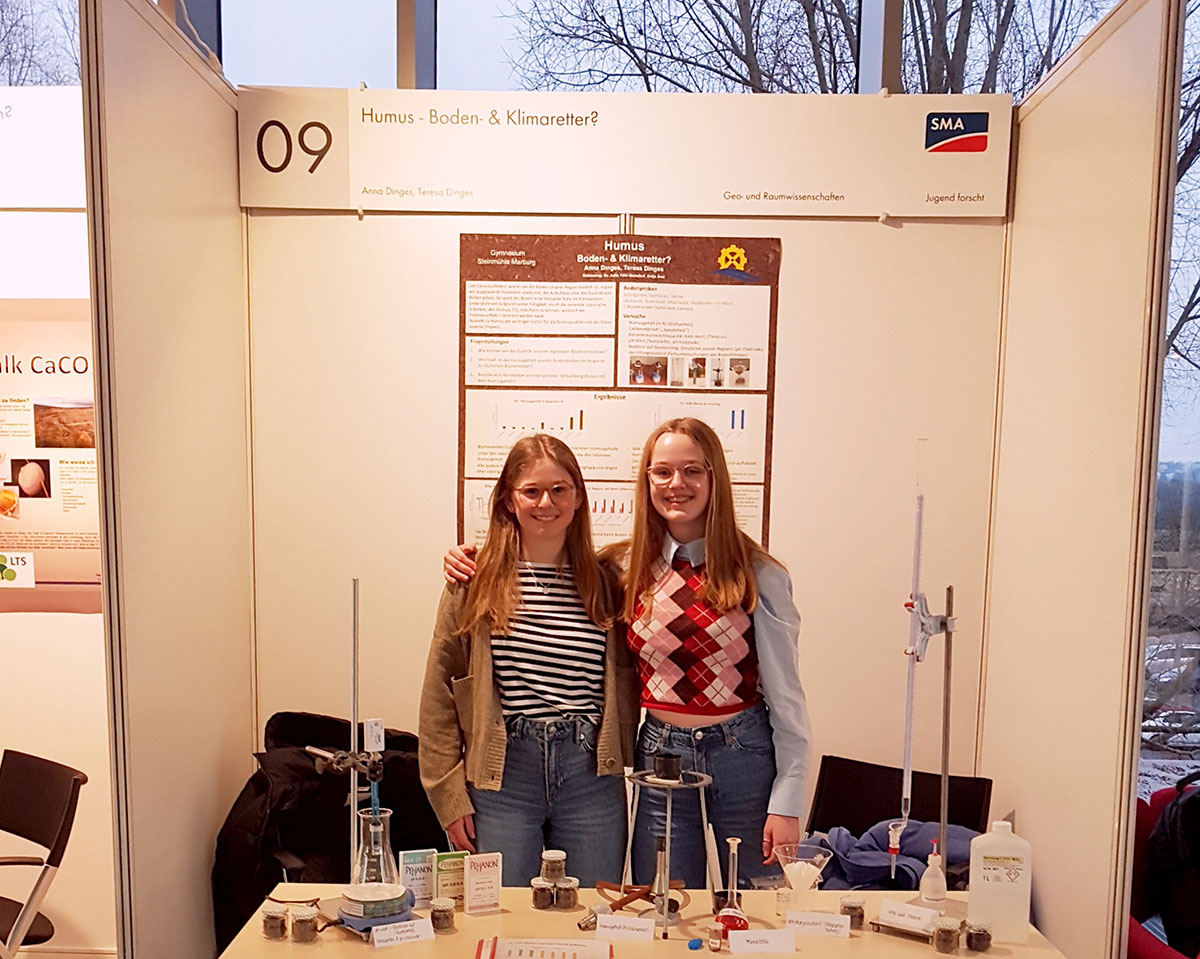
Sisters Anna Dinges (12th grade) and Teresa Dinges (9th grade) traveled to Kassel on Saturday, February 11, with their project “Humus: Savior of the Soil and Climate?” on Saturday, February 11, along with their advisors Antje Seel and Dr. Jutta Töhl-Borsdorf. The North Hesse regional competition was held at SMA in Kassel-Niestetal.

Soils play a major role in the climate system because humus is capableof storing large amounts ofCO2 . Anna and Teresa wondered about the condition of the soils in the areas where they live and go to school. In addition to measuring humus content, pH, and KAK values (a measure of soil fertility), they also investigated how soils react to acid rain. They compared the measurements from the soil samples they collected with those from commercially available potting soils and found that the latter actually had higher humus and KAK values. However, a coniferous forest soil also performed impressively overall. The jury particularly praised the outstanding laboratory work, which was conducted at a high level and with great precision, the rigorous scientific approach, and the in-depth examination of sustainability issues at the local level.

With their project, they won second place in the “Geosciences and Spatial Sciences” category and a special prize consisting of a one-year subscription to the science magazine “natur.”

Rainwater and Natural Adhesives
On
Friday, February 24, a large group set out for the University of Giessen to present their projects at the competition in Central Hesse. Anna-Lena Griesler, Maya Fischer, Marlene Wagner, Nico Farwig, Justus Pöschl, and Robin Richter—all from the 6th-grade GuFi lab groups—took on the challenge in the “Students Experiment” category.
The Steinmühlen bus was fully occupied with the six children, their supervisor Dr. Jutta Töhl-Borsdorf, STEM teacher Dr. Patrick Szabo, and participation assistant Steven Müller.
They set off at 7:45 a.m., and the morning was well filled with jury interviews and interesting lab tours. In the afternoon, the presentation booths were open to the general public. Many parents, grandparents, and friends took the opportunity to have the young researchers explain their projects to them. By around 5:00 p.m., everyone was tired but full of new impressions as they returned to the Steinmühle.
This year’s awards ceremony took place online on Saturday afternoon. To mark the occasion, all the students gathered at the Steinmühle for pizza. And finally, there was something to celebrate.

The group of three boys who asked themselves, “Is rainwater valuable?” won over the jury, taking second place in the “Geosciences and Spatial Sciences” category and a special prize of a one-year subscription to the magazine Geolino.
Justus, Nico, and Robin analyzed rainwater for various components, developed a water hardness test using soapy water, and found that cress grows better with rainwater than with tap water. The jury praised their clear methodology, the neat presentation of the measurement results, the visualization of the cress growth, and their broad knowledge.

Anna-Lena, Maya, and Marlene securedfirst place in the chemistry category—and with it, a spot in the state competition at the University of Kassel—with their project “How Tear-Resistant Are Natural Adhesives?” They made many adhesives themselves—for example, from food—and tested other natural substances, such as spruce resin, shellac, and snail slime, for their adhesive properties. The team also succeeded in developing a device to measure the adhesive strength of the substances on paper.
The jury was particularly impressed by how these very young students continuously refined and adapted their experimental setup. They paid close attention to accuracy and critically evaluated their approach in each phase of the experiment. Their strong problem-solving skills were evident.
The team also won the plusMint Special Prize for interdisciplinary projects.

If you’re interested in starting your own research project, just stop by the “Open Lab” at the Steinmühle—it’s open every Tuesday and Friday starting at 2 p.m. (Room 127).
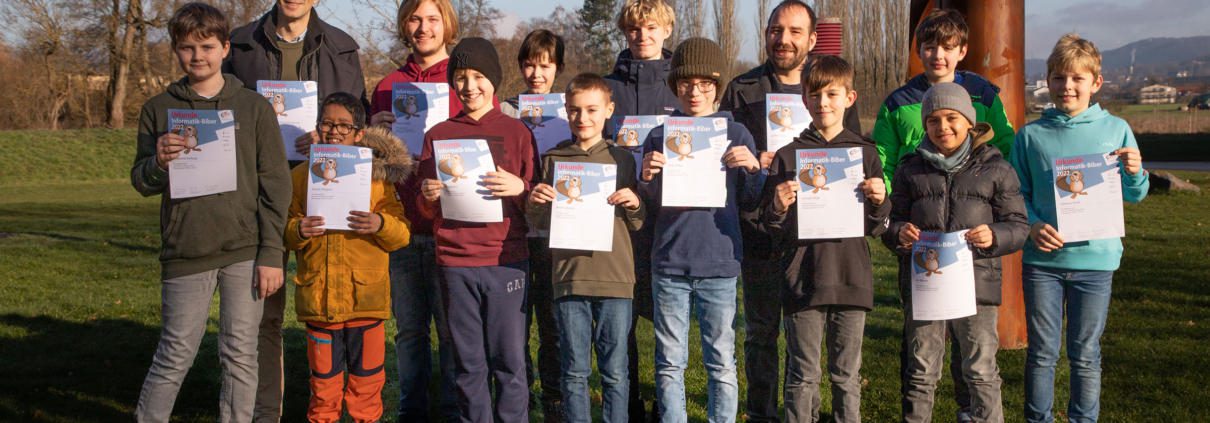
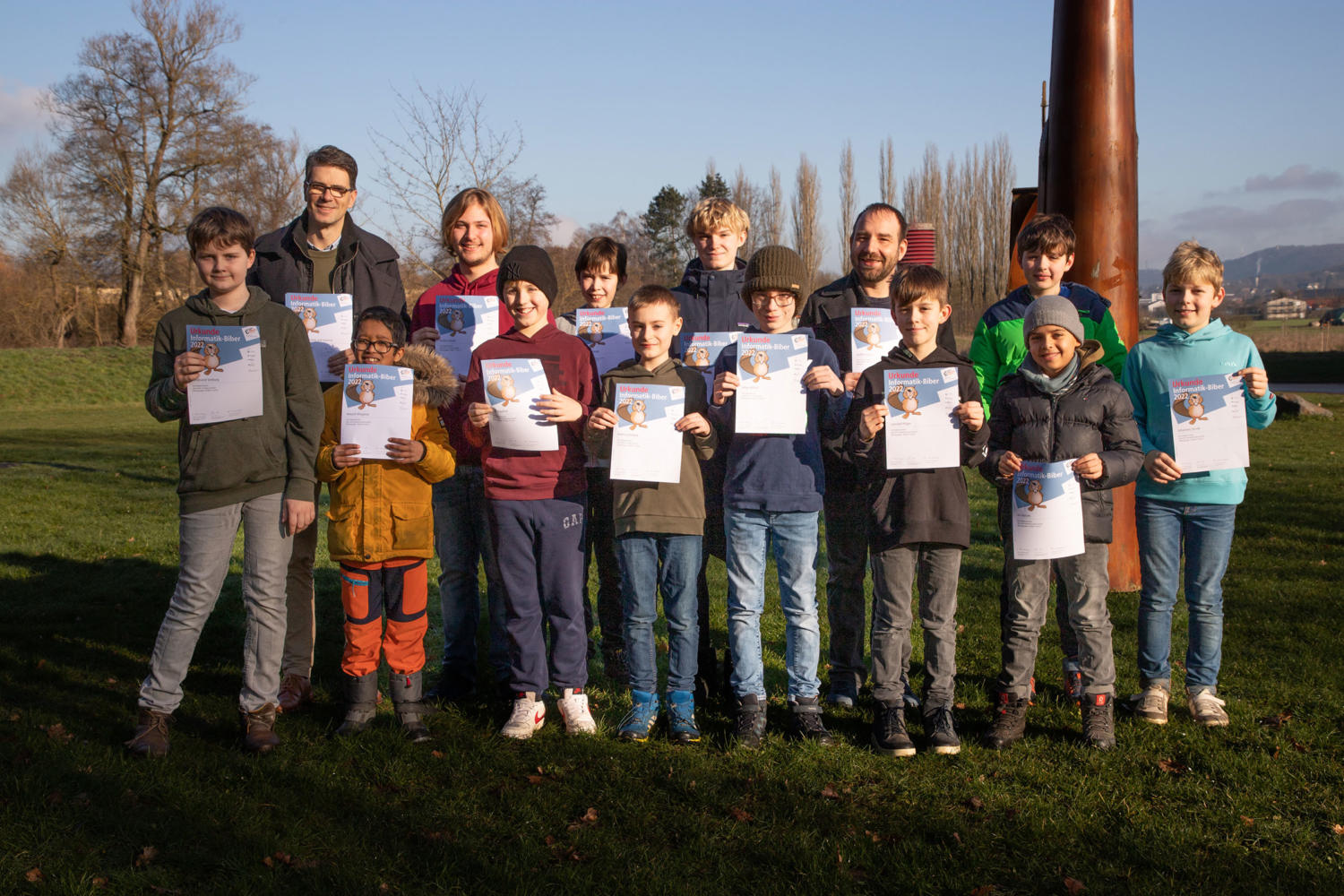
Steinmühle School participated in the nationwide “Informatik Biber” competition with 15 students from grades 5 through 13. The Informatik Biber is an annual computer science competition for students held in November, featuring brainteasers that explore concepts in computer science. The questions are answered online using a multiple-choice format.

The students at Steinmühle not only participated in this national competition, but also performed well. In addition to five certificates of recognition, they won eight third-place prizes. Anton Schmenk and Julian Alshut (front center) each even won a second-place prize.

Principal Björn Gemmer and Steffen Ullwer, head of Department III, congratulated the students on these great results and posed for the photographer alongside them. In the photo (back row, from left): Björn Gemmer (principal), Velten Schulz (13d), Leonard Schmidt (5b), Max Preidel (10b), Steffen Ullwer (Head of Department III), Leonard Hilger (5i). Front row, from left: Ferdinand Verburg (5i), Akaash Bhagwat (5i), Carl Höpfner (5a), Anton Schmenk (5b), Julian Alshut (5c), Leonard Hilger (5i), Ari Araam (5i), Johannes Stroth (5i). Missing from the photo are Paula Hartmann (10c), Mats Böhmer (10c), and Julius Lehnig (5b).
The Informatik-Biber is one of the student competitions recommended by the Conference of Ministers of Education.

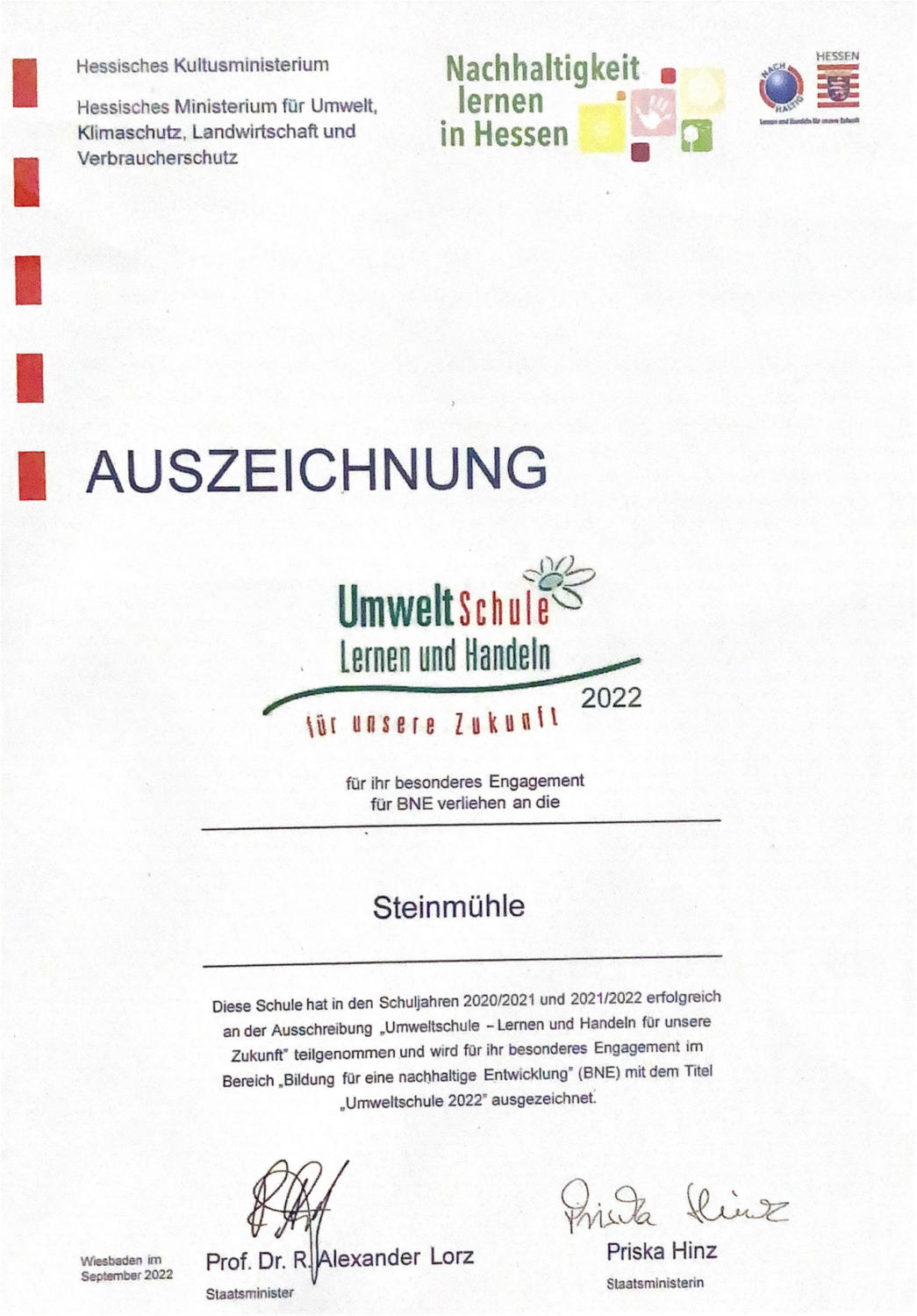
Steinmühle began 2023 as a recertified “Hessian Environmental School.” The award was presented jointly by the Ministry of the Environment and the Ministry of Education “for a school’s exceptional commitment to environmental education and education for sustainable development.”

During a festive ceremony, Angelika Schichtel from the Ministry of the Environment, Climate Protection, Agriculture, and Consumer Protection and Silke Bell (State Coordinator for Hessian Environmental Schools and Specialist Advisor on Education for Sustainable Development at the Hessian Ministry of Education and Cultural Affairs) presented the award to Steinmühle. This was reported by Carmen Bastian, the environmental officer at Steinmühle.

“Eco-School”—What Is This Award For?

The “Environmental School—Learning and Acting for Our Future” award recognizes a school’s exceptional commitment to environmental and ecological education. With this award, the two ministries honor improvements in the quality of instruction and school life in line with Education for Sustainable Development (ESD).

The fact that this is precisely the direction in which Steinmühle is currently focusing its efforts made the application for recertification a perfect fit.

In Action Area I—the sustainable redesign of the school grounds—measures related to nature conservation and the promotion of biodiversity were highlighted. These included the maintenance and expansion of the orchard meadow—we have already reported on this several times in our Steinmühlen media.

AG School for Earth as the “supreme discipline”

In Action Area II—the implementation of the concept “Education for Sustainable Development in Everyday School Life”—the application highlighted the founding of the “School for Earth” working group, led by Steinmühlen teacher Ines Vielhaben. This impressed the certifying officials, who, upon presenting the certificate, described this activity as a “pioneering flagship initiative” and wished the school much success in its continued implementation. In its yearbook, the school once again explicitly highlighted the spirit of optimism at Steinmühle and noted that the work of the “School for Earth” student group had led to a clear mandate to focus even more explicitly on ecology and sustainability. The focus is on the prioritized areas of nutrition, heating energy, electricity, waste management/cleaning, and mobility.

In this context, Steinmühle will be launching several additional initiatives in the near future. There are already numerous projects that have been implemented in the areas mentioned. The school garden, a water dispenser, the mobile chicken coop, sustainable building technology, energy-efficient renovations, solar and hydroelectric power, and participation in the “Schulradeln” competition are just a few examples.

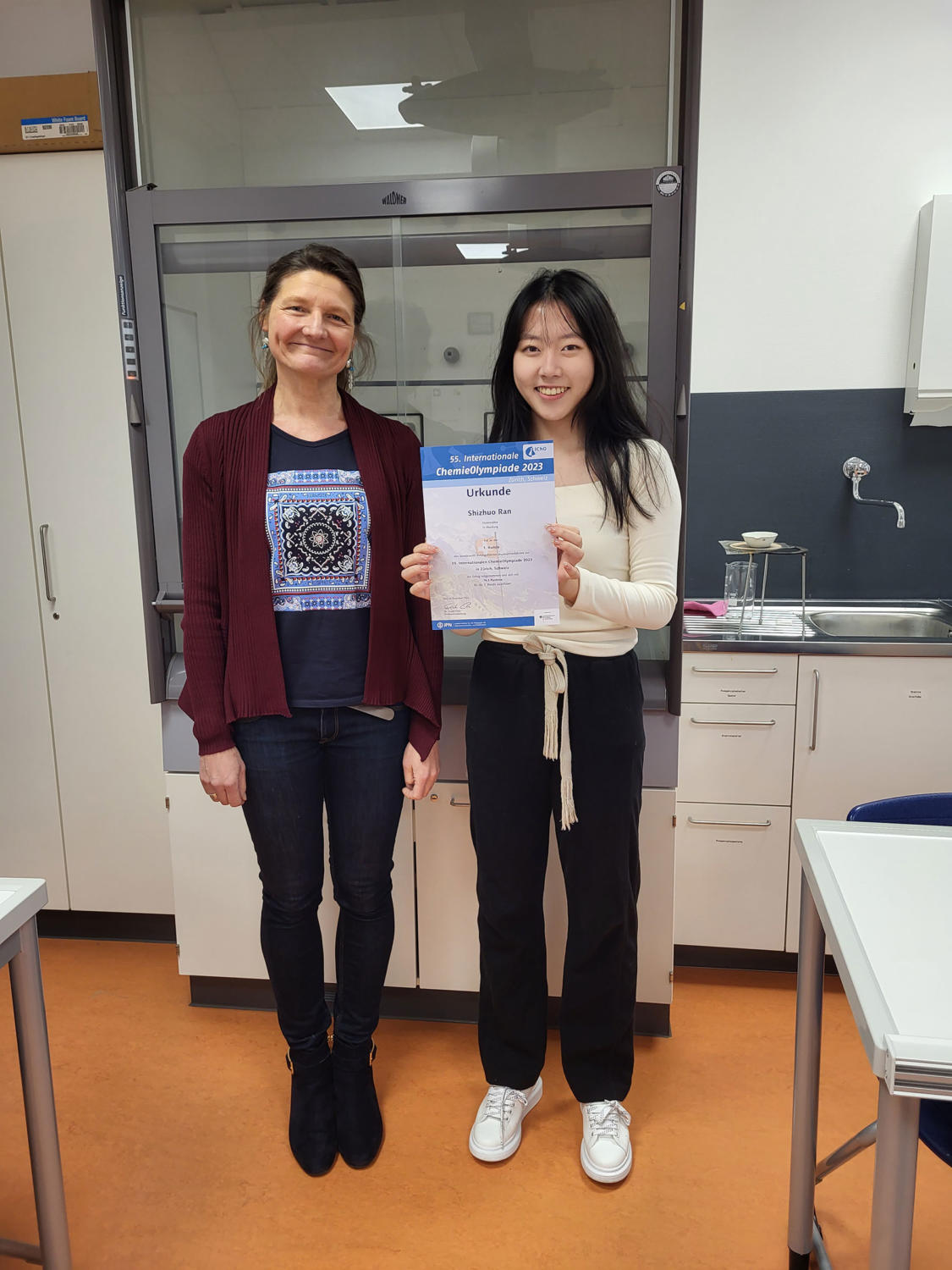
Shizhuo Ran, a 13th-grade student at Steinmühle, successfully participated in the first round of the selection process for the 55th International Chemistry Olympiad (IChO), which is taking place in Zurich this year. The IChO team at the Leibniz Institute for Science and Mathematics Education in Kiel announced the news. The entire Steinmühle community congratulates her on this achievement, which earned both the participant and her supervising teacher, Sirii Wienbeck (photo), a certificate each. The Chemistry Olympiad covers nearly the entire spectrum of chemistry, including inorganic chemistry, organic chemistry, physical chemistry, analytical chemistry, biochemistry, and spectroscopy. Many of the topics covered are at the university level.

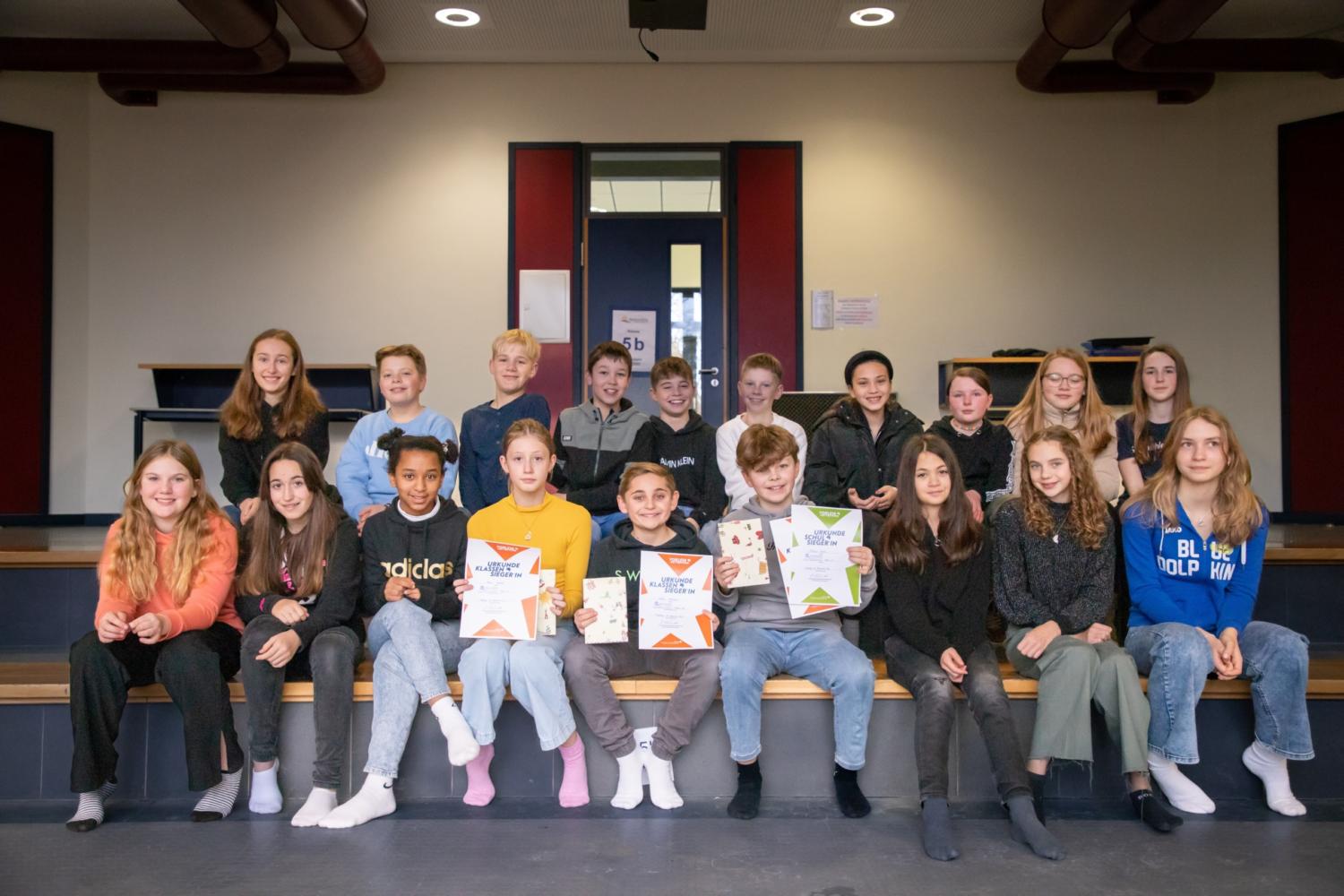
By the age of 12, reading has long since become a part of everyday life. At the same time, reading well and understanding well remain an ongoing and ever-changing challenge—one that lasts a lifetime. This also applies to reading aloud well, where we can often notice how language has the power to enchant us. Readers can thus become enchanters! Around 20 children from classes 6a, 6b, and 6c embraced this magic at the end of 2022 and took part in the nationwide reading competition for sixth graders. The event was organized by the German Publishers and Booksellers Association.


Philian Merle represents Steinmühle at the city level

All the girls and boys gave compelling and moving readings, which were met with applause and admiration from their classmates in the audience as well as from the “juries,” consisting of teachers and, in some cases, fellow students. Only one person advances to the next round in this competition, whether it’s during the class reading or in the second round, which took place in early December and involved reading in front of all classmates in the grade. As the “school winner,” according to Frank Wemme, head of the lower secondary school, Philian Merle will “represent” Steinmühle in the next round at the city level in 2023. He was selected by the teachers’ jury in December—which was no easy decision, given the high quality of reading by all three “class winners,” including Aenna Arnold and Matteo Dörbecker.The school extends its heartfelt thanks to all the brave readers for taking part. Their participation is what made it possible for Steinmühle to compete in the first place.

Our photo shows the participants in the 6th-grade reading contest: (top row, from left) Antonia Mahnken, Fabian Preis, Till Kretschmann, Ben Borawski, Ben Templer, Arthur Böning (Class 6c), Sara Strempel, Lotte Schröder (Grade 6b), Anna-Lena Griesler (Grade 6c), Helena Taschner (Grade 6b). Bottom row, from left: Janna Gosejacob, Julia Hedoch (Grade 6c), Samri Wulf, Aenna Arnold (Grade 6a), Matteo Dörbecker (Grade 6b), Philian Merle, Ceysu Sevinc, Maja Böttcher (Grade 6c), Fenja Schlegel (Grade 6b).