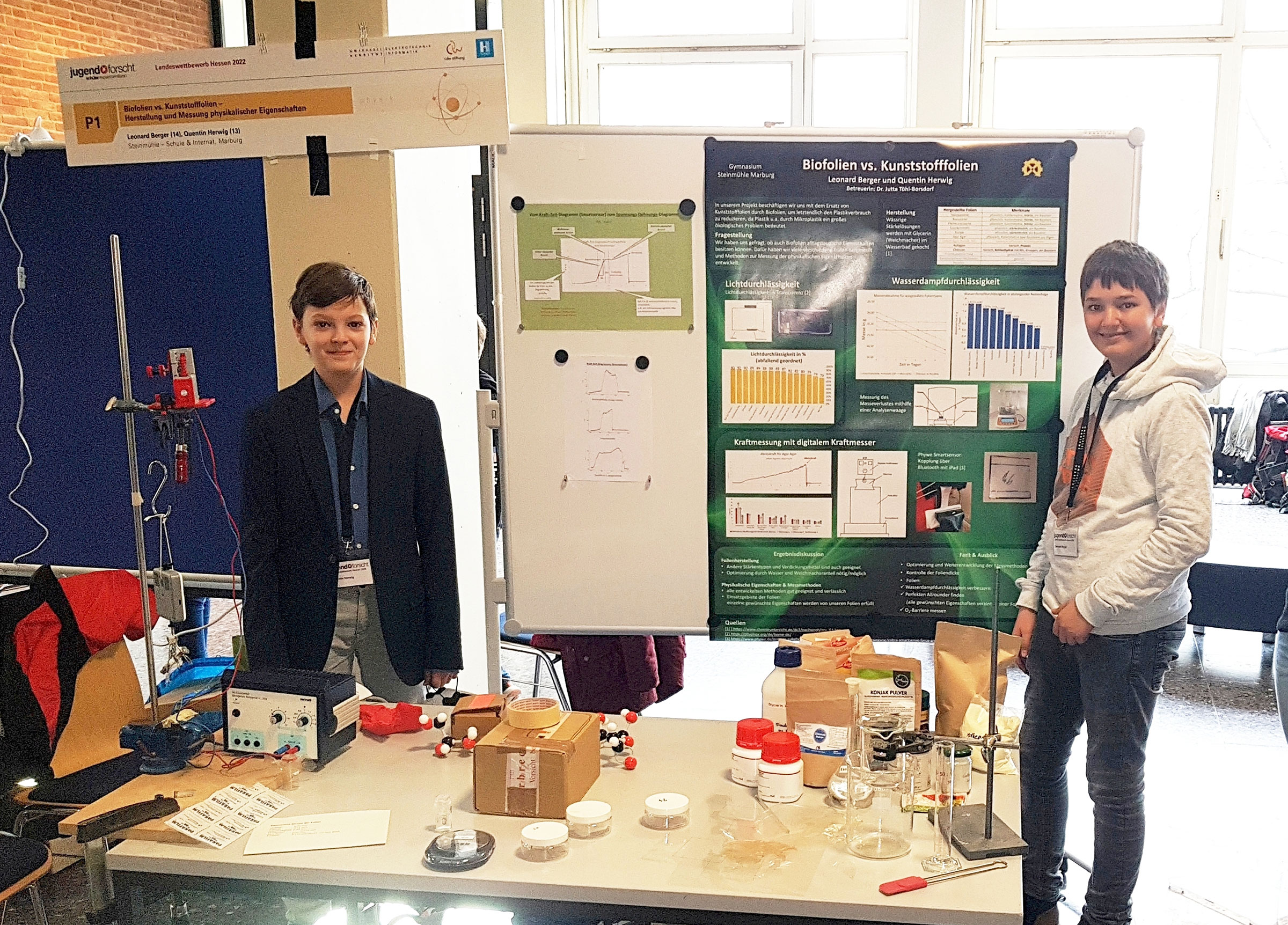
After being canceled in 2020 and held virtually in 2021, the state competition “Jugend forscht / Schüler experimentieren” took place in person again this year. The two-day event was hosted by the Department of Electrical Engineering and Computer Science at the University of Kassel. A total of 39 students in 28 teams had qualified with their projects. They presented their results to a competition jury and set up a booth to showcase their projects.
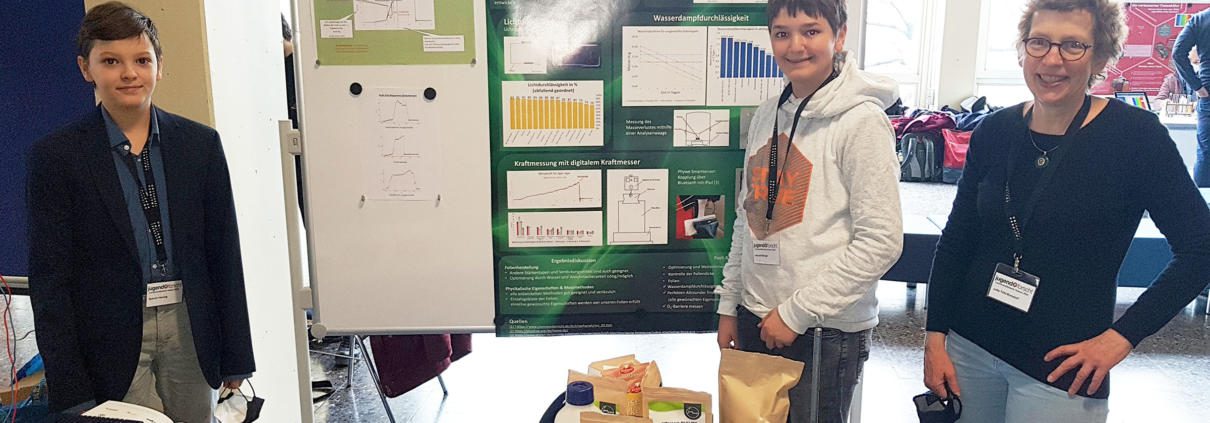
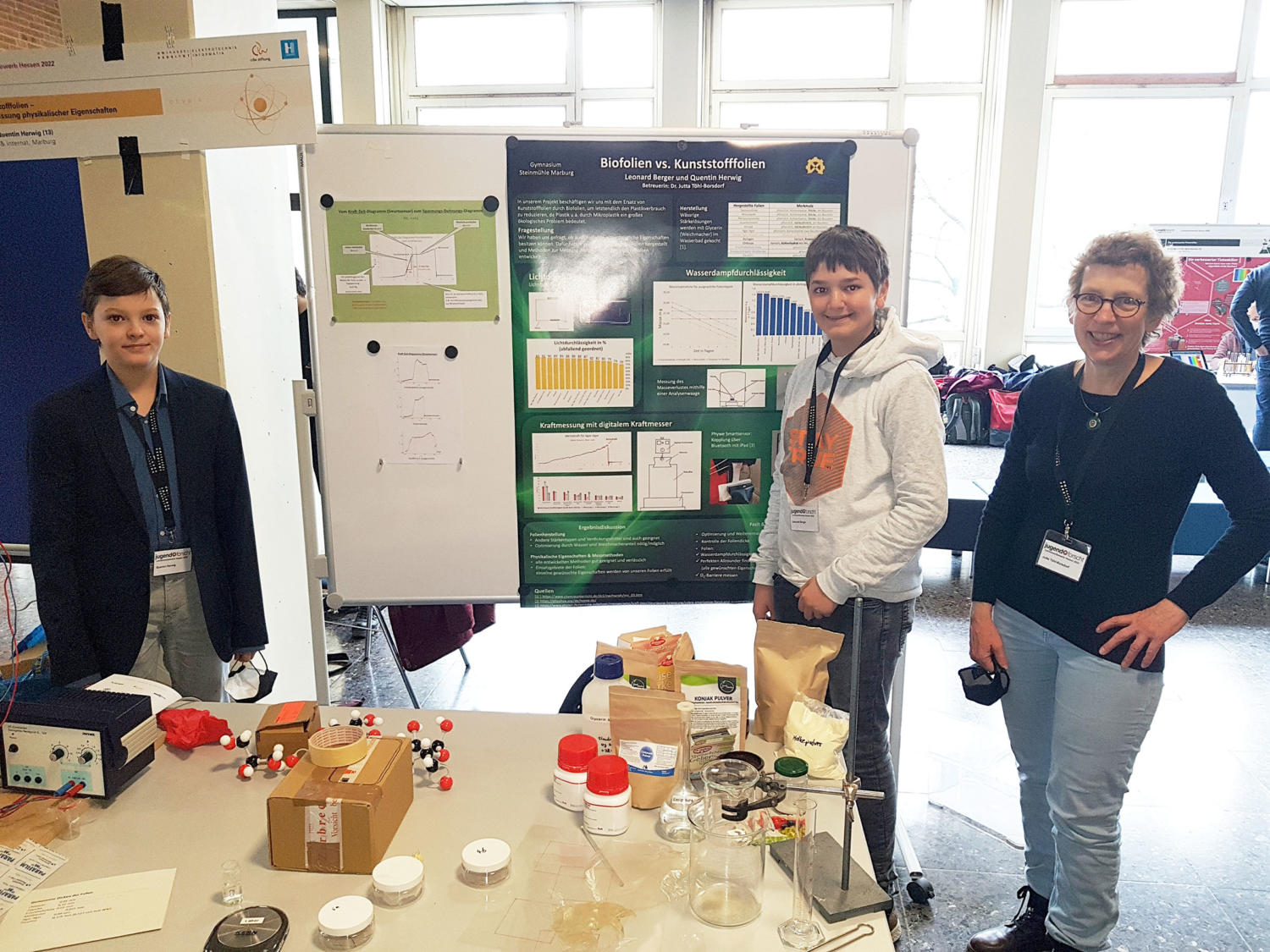
Leonard Berger and Quentin Herwig from class 8a also qualified by winning the regional physics competition in February with their project “Biofilms vs. Plastic Films—Production and Measurement of Physical Properties.” Together with their advisor, Dr. Jutta Töhl-Borsdorf, they were able to travel to Kassel for two days.
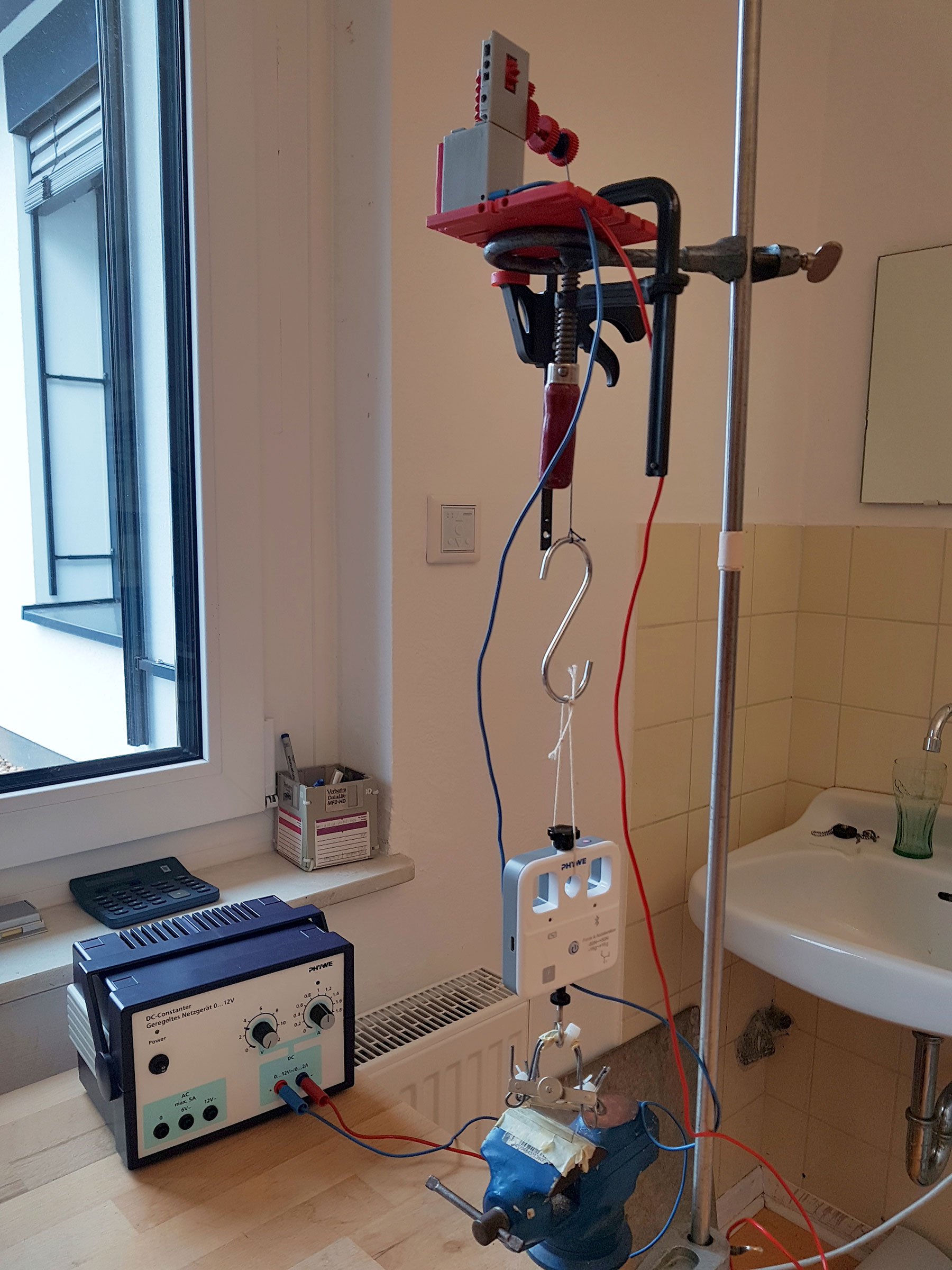
They had even further refined the project, in which they investigated the suitability of self-produced biofilms for everyday use. Among other things, they constructed a device for measuring elastic moduli in order to examine the tear strength and elasticity of the films.
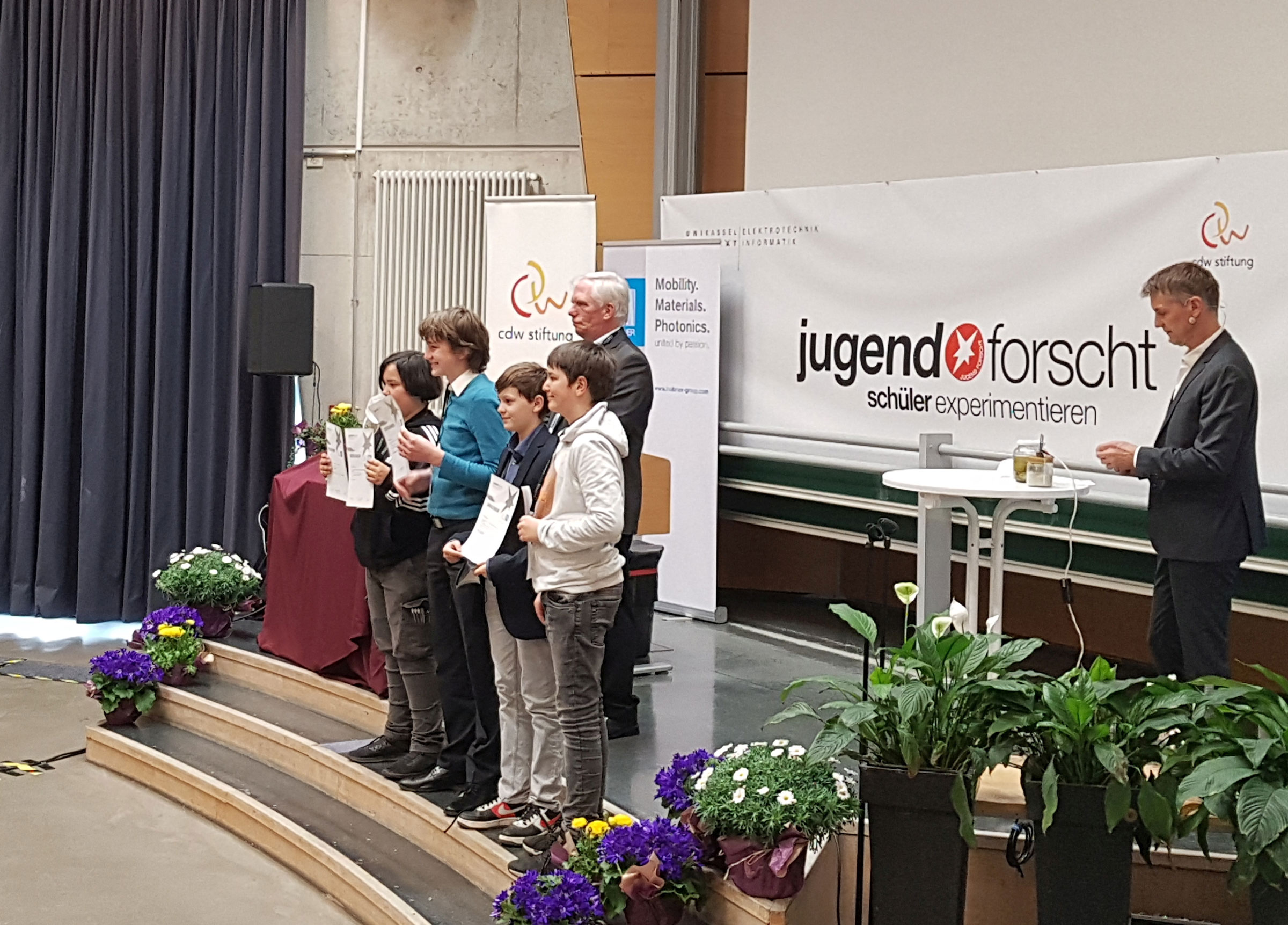
With their project, they took 3rd place in the physics category and also won the “REset Plastic” special prize, which, in addition to recognition of their achievement, came with prize money totaling 225€.
Both boys were very happy that the event was held in person. It was two fantastic, eventful days. The unanimous opinion of everyone involved was that, above all, the personal interaction among the young researchers and with the expert juries cannot be adequately replaced by any digital format.
Both young researchers are also certain that the project still has a great deal of potential, and they definitely want to continue their research on it.
We would also like to take this opportunity to thank all our colleagues who had to do without the young researchers in class on several occasions over the past few weeks.


The International Junior Science Olympiad (IJSO) is a science competition that promotes the development of young talent in the natural sciences across disciplines, starting in 5th grade. The topics and questions are based on the everyday lives of children and teenagers. This school year’s theme was “Listen Up!”

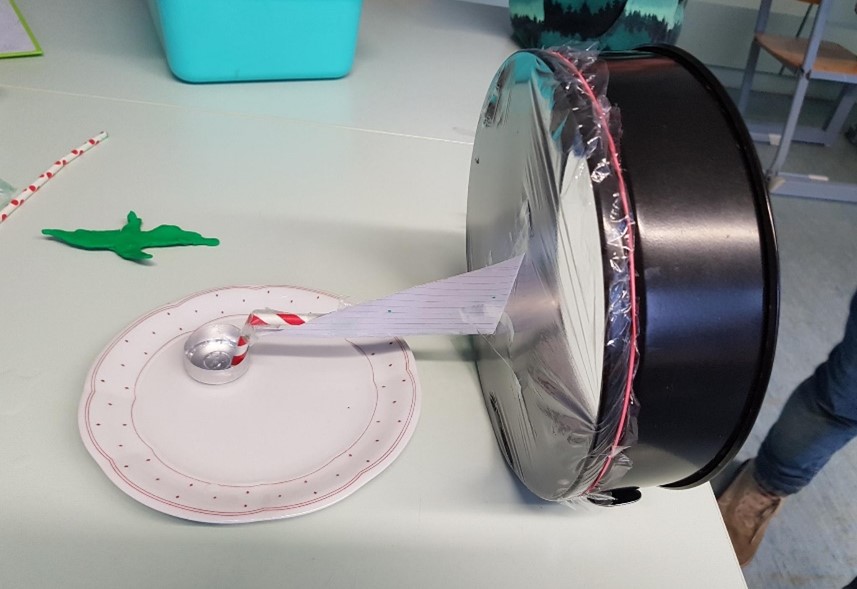
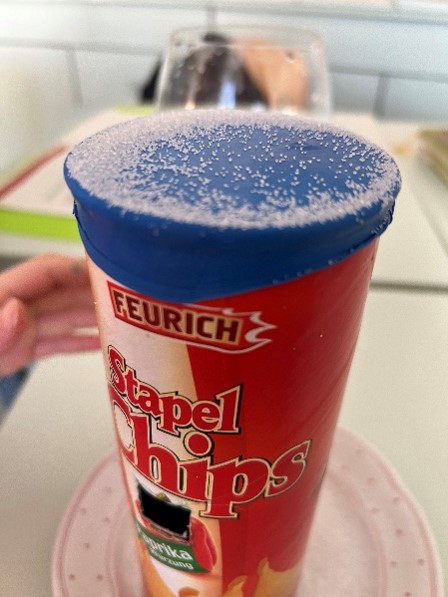
Nine students worked hard on experiments as part of the 5th-grade GuFi Lab under the guidance of Jutta Töhl-Borsdorf. They investigated popping popcorn and learned the difference between sound, noise, and a bang. They used the physics app Phyphox to investigate swinging wine glasses with different water levels. There was also plenty of time for building and crafting: they constructed a model of a human ear using a cake pan and a sound box made from a potato chip can. Finally, everything had to be documented in a report.

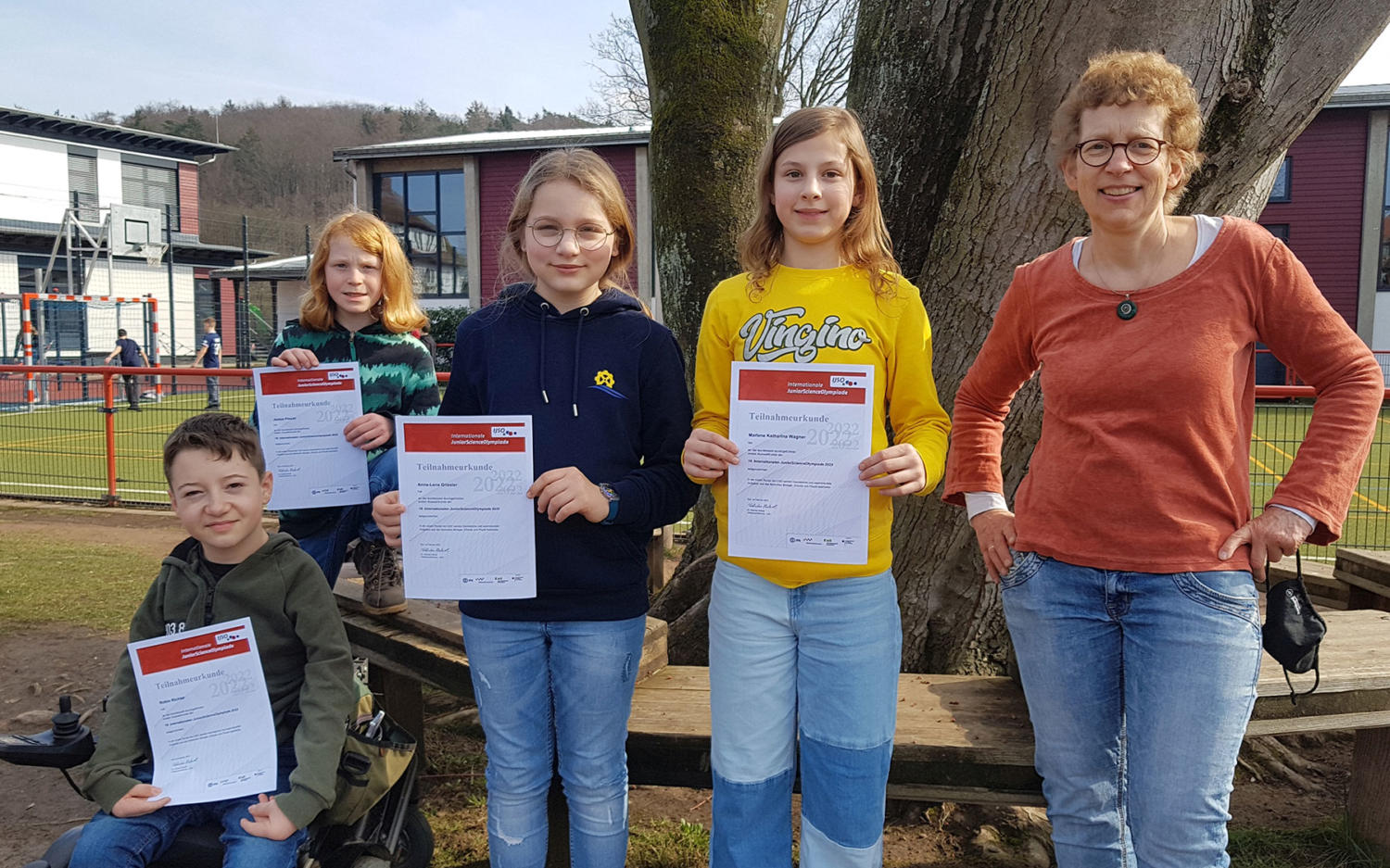
Anna-Lena Griesler, Marlene Wagner, Justus Pöschl, and Robin Richter persevered, tackled these extensive and challenging tasks, and completed the first round.
Out of approximately 3,800 participants from all over Germany, Justus and Robin performed so well that they ranked 213th, thereby qualifying for the second round.
This round consisted of a challenging quiz with 24 multiple-choice questions covering the three natural sciences—biology, chemistry, and physics—which had to be completed within 45 minutes. The quiz is still being graded and will continue until the end of March.

If they qualify, the two will have to take a written exam in the third round in May. Since the fifth-graders will be competing against eighth-graders, their motto can only be, “Just participating is what counts.”

We congratulate everyone involved and are rooting for the two boys in the next round.

On Bioplastic Films, Microplastics, and Rusting Processes

The 57th “Jugend forscht” Regional Competition for Central Hesse took place on Friday and Saturday, February 25 and 26, 2022. As was the case last year, the competition—which, unfortunately, was held exclusively online—was jointly organized by the Technical University of Central Hesse (THM) and Justus Liebig University Giessen. Under the theme “Randomly Brilliant?”, a total of 34 projects were presented, including two projects from Singapore and one from Buenos Aires.

This year, Steinmühle launched three projects as part of the “Schüler experimentieren” competition, in the fields of chemistry, physics, and biology. Steinmühle emerged successfully from this competition, taking first, second, and third place, as well as a special award for dedicated mentors. All prizes include certificates and cash awards.


Rusting keeps you warm, too!
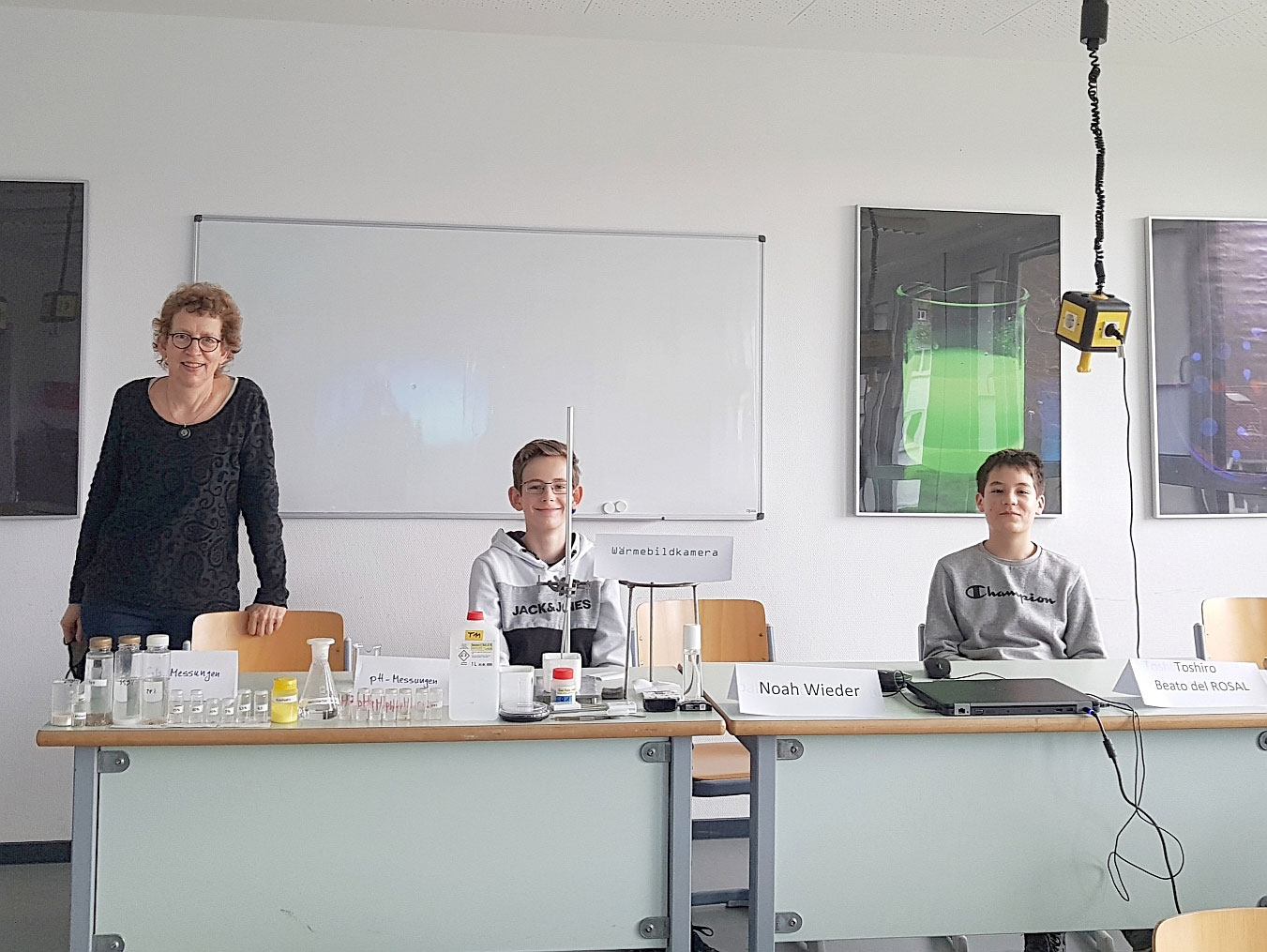
Noah Wieder (8th grade) and Toshiro Beato del Rosal (7th grade) wondered just how quickly rusting actually occurs after they noticed two rusty shopping carts at the boathouse that had been “fished out” of the Lahn River. Since rusting releases small amounts of heat, they developed model experiments under the supervision of Dr. Jutta Töhl-Borsdorf and measured temperature changes over time under various conditions. They found that the process occurs faster when the salt content is high and the pH is low. Since the temperature changes are very small overall, these measurements were not easy to perform experimentally.
The jury praised the ambitious project idea and the students’ advanced subject knowledge, as well as their excellent presentation skills, and awarded them third place in the chemistry category.
 

What effect do microplastics have on plant growth?
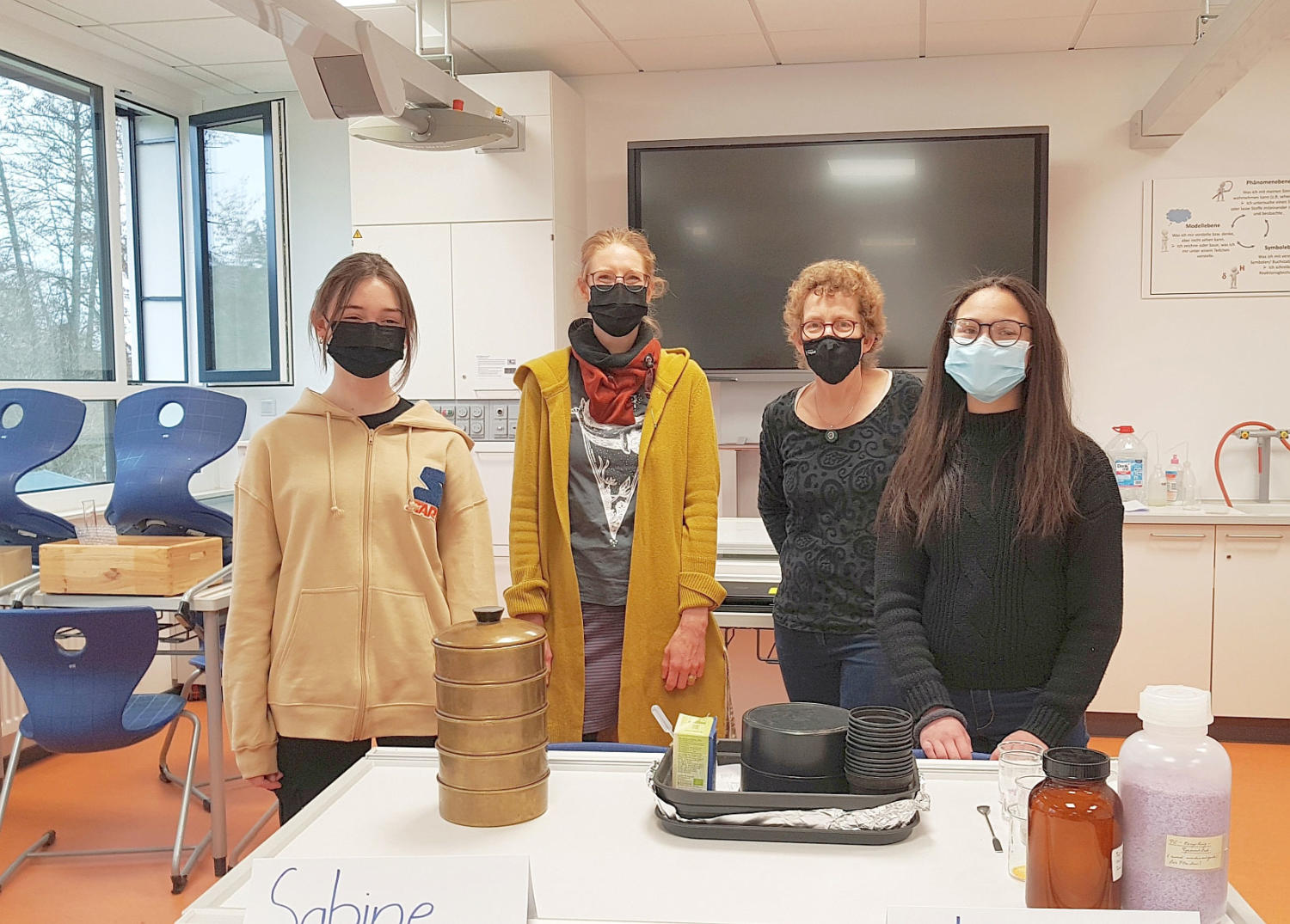
Lina Wicherek and Sabine Auer, both seventh-graders, have been studying the issue of microplastics in the soil. In their research, which focused on a specific type of microplastic (PA), they were able to show that, depending on the amount of microplastic introduced, PA negatively affects or even completely inhibits the germination of cress. They also demonstrated that the extent of the inhibition depends on the substrate. They succeeded in defining the maximum tolerated amount of PA for the substrates “sand” and “cellulose.”
The jury was impressed by the highly topical subject matter, the precise research question, and the reproducible experimental design. The project was awarded second place in the biology category. The project was jointly supervised by Antje Seel and Dr. Jutta Töhl-Borsdorf.
 

Biofilms vs. Plastic Films—Manufacturing and Measurement of Physical Properties
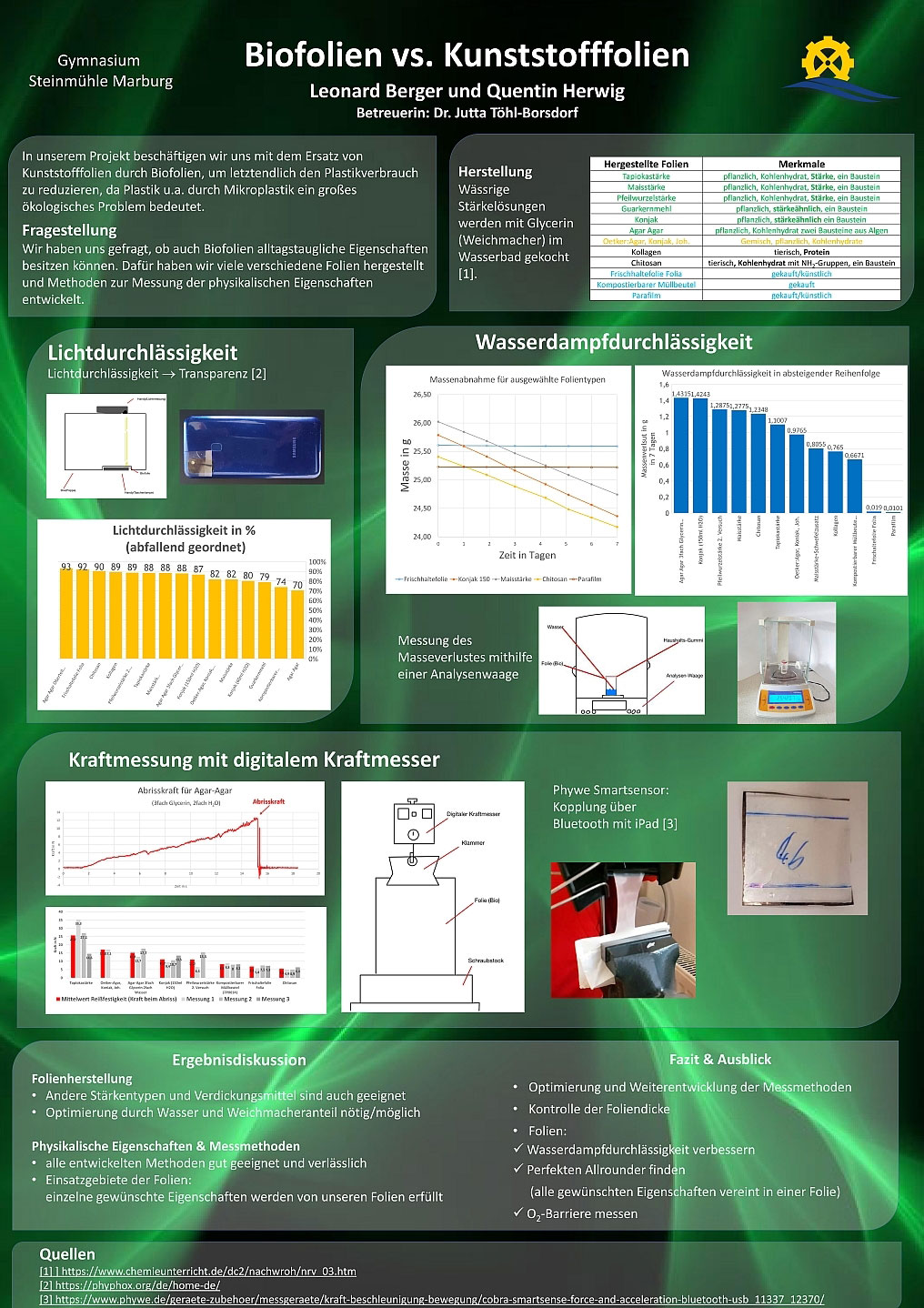
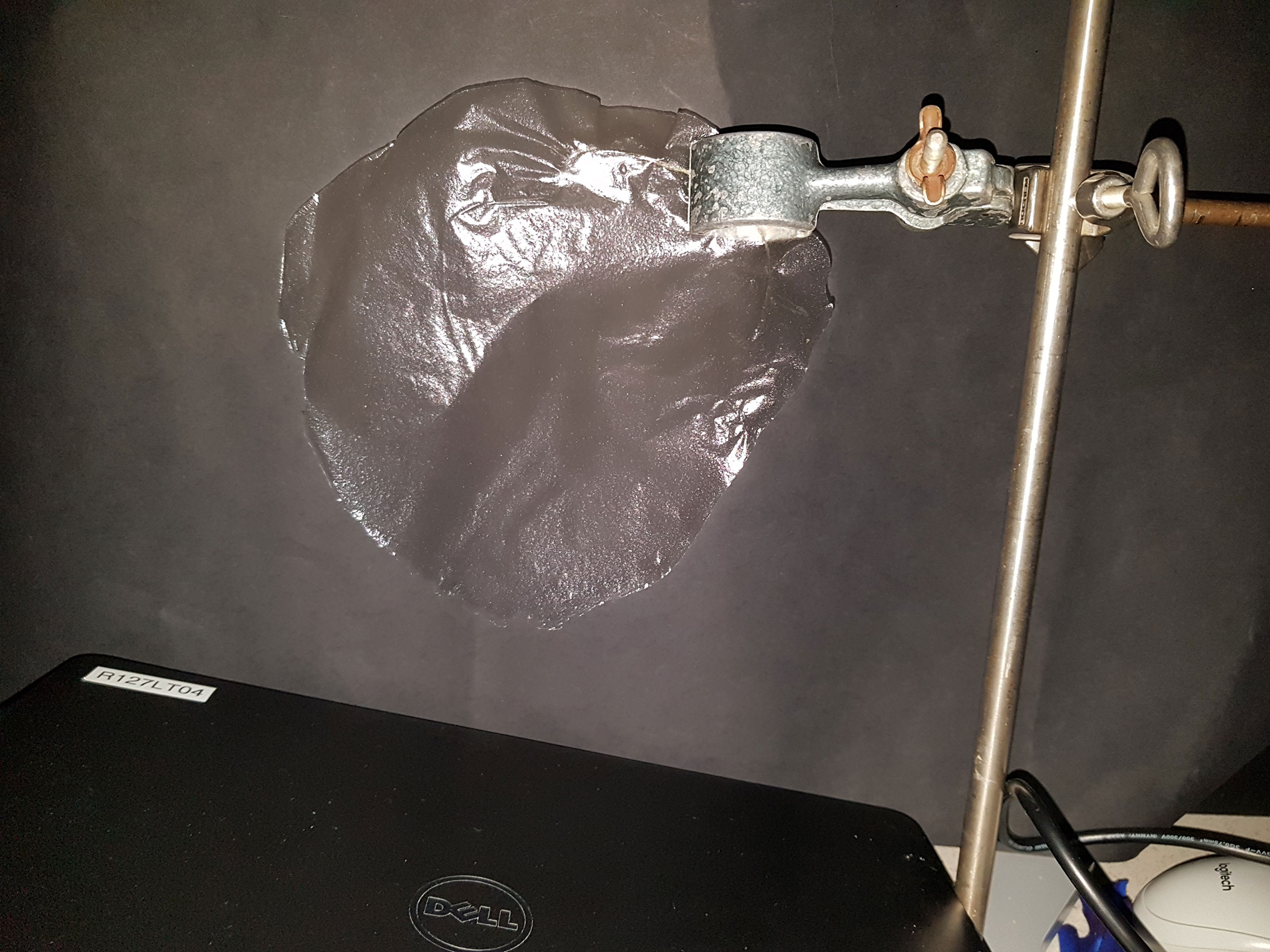
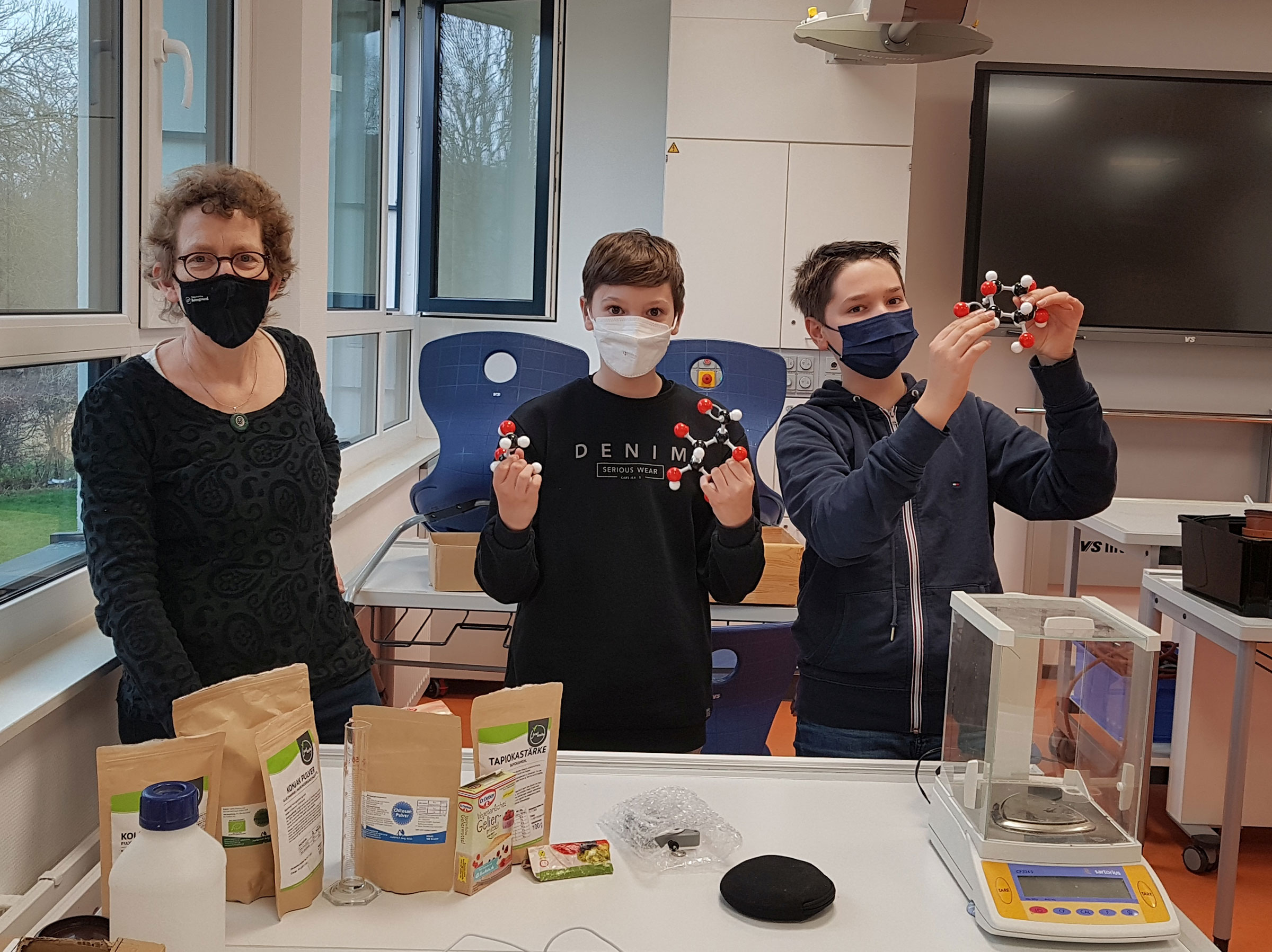
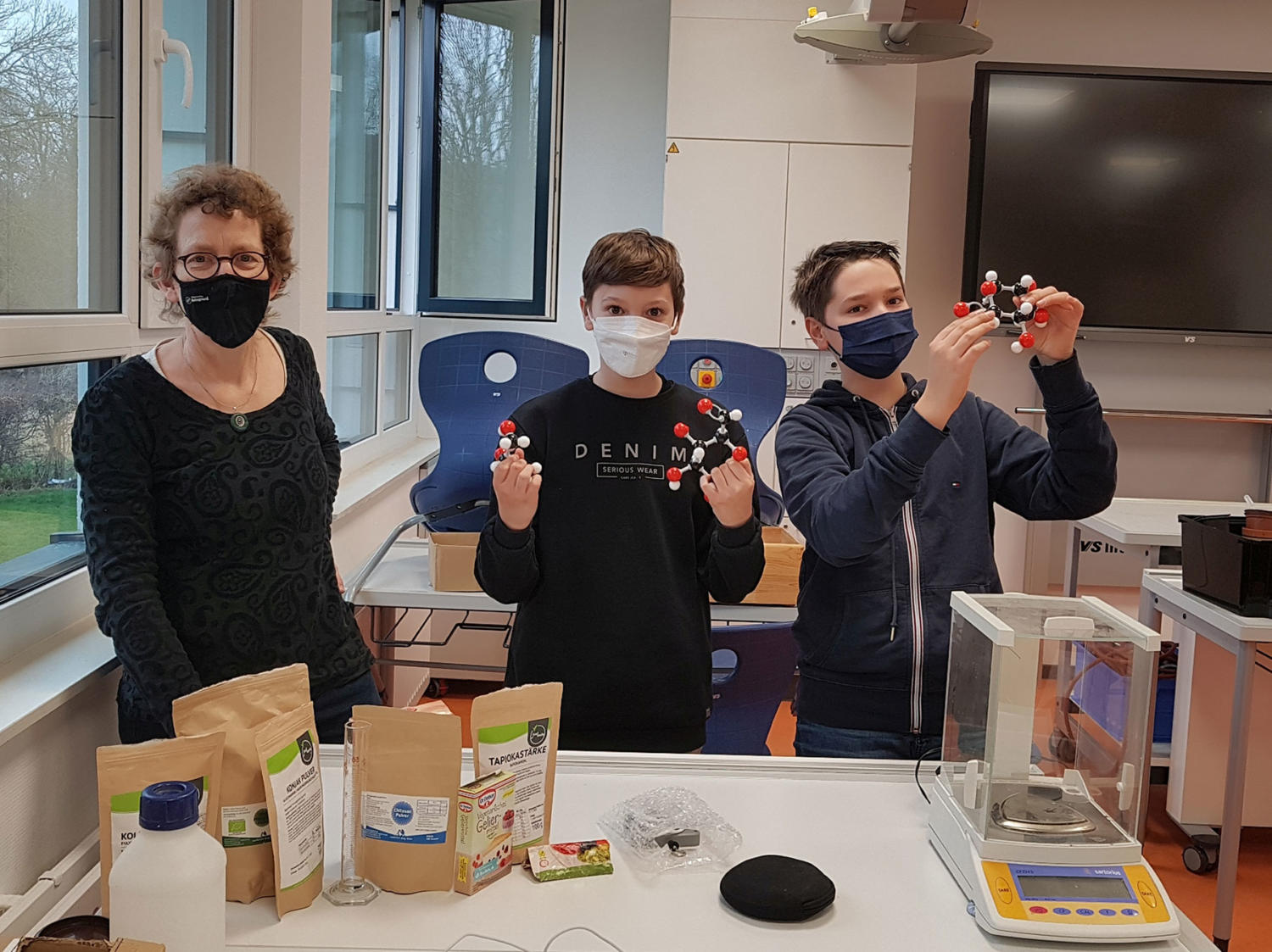
Leonard Berger and Quentin Herwig received a lengthy commendation. Under the supervision of Dr. Jutta Töhl-Borsdorf, they produced biofilms from various food-grade thickeners and developed a physical measurement apparatus to test their suitability for everyday use. The films should be as tear-resistant, transparent, and impermeable as possible.

They measured tear strength using digital sensors, transparency using a smartphone, and water vapor permeability using an analytical balance.
All of their measurement methods are now working very well, and during the production of the films, they also identified individual films with promising properties (e.g., made from tapioca, arrowroot, or konjac starch). Further research is needed to find an all-around film that performs well in all areas.

The judges were not only very impressed by the presentation, but also by the “in-depth understanding of the topic.” They also praised the comprehensive and clear description of the experiments, a very well-thought-out discussion, and the ideas for further developing the project. In addition, they recommended that the students enter their tests in the “Jugend testet” competition (Stiftung Warentest).
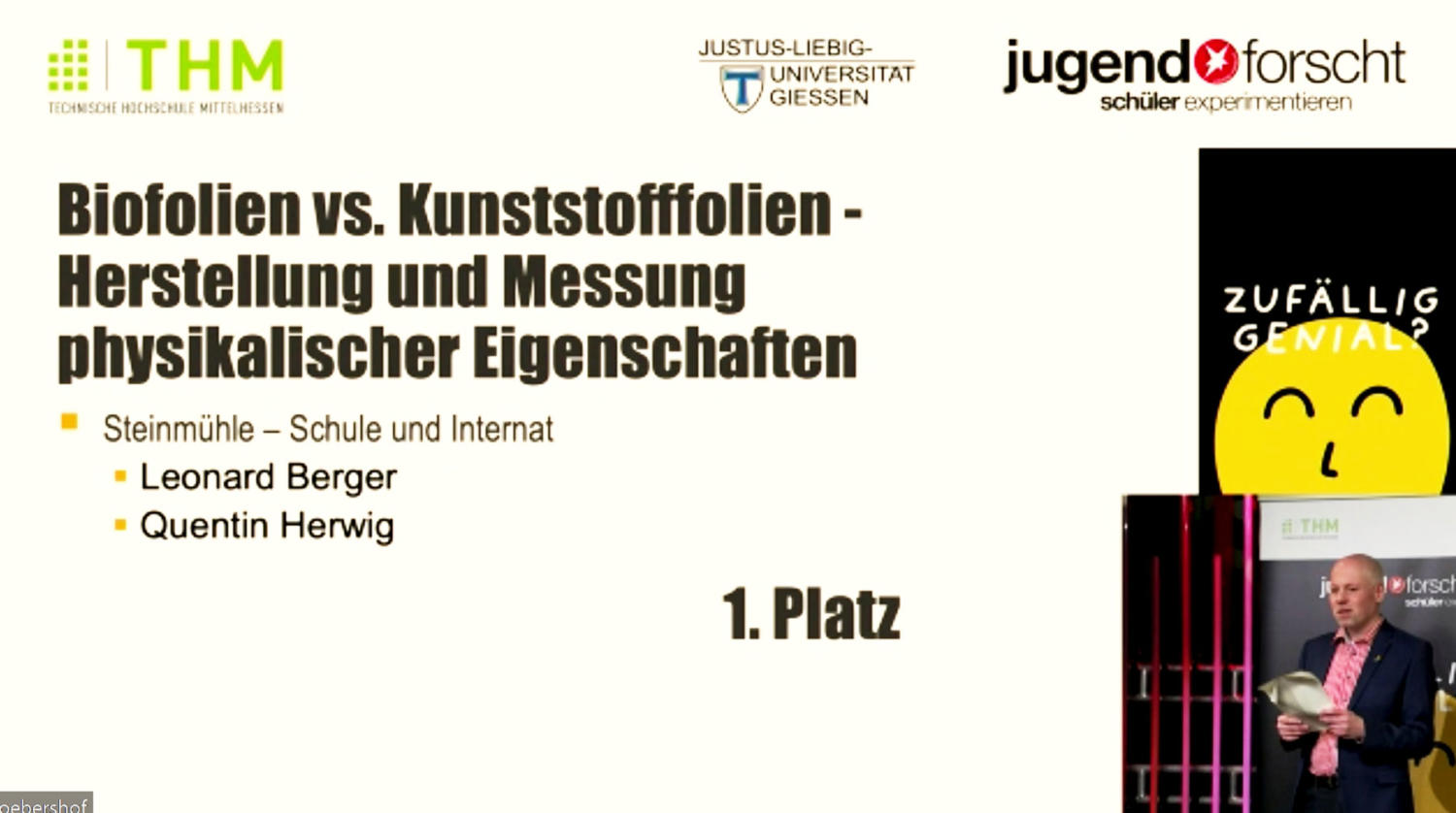
First, however, they’ll be heading to the state competition in Kassel, as the two won first place in the physics category and have thus qualified for the in-person competition. Due to the pandemic, however, the event must take place without parents and behind closed doors. At least the mentors are allowed to travel with them, and the interaction with the other young researchers—which has been missing for the past two years—will likely be able to take place.
Leonard has been participating since 5th grade—this is his fourth consecutive year in “Jugend Forscht”—and has always advanced to the state competition with his respective group. A great achievement!
Talent and Interest in the Best Hands

Last year, students Joshua Wieder, Morten Köhler, and Benjamin Schul also advanced to the state competition. The group decided to take a break this year, as the members were less enthusiastic about the online version of the competition.
Nevertheless, they didn’t sit idle and investigated how effectively various oxygen-based cleaners can remove different types of stains. This project was submitted to the ongoing “Jugend testet” competition.

Finally, Dr. Jutta Töhl-Borsdorf received another award—the Special Prize for Dedicated Talent Promoters, sponsored by the Heinz and Gisela Friedrichs Foundation. Once again, she served as the advisor and coordinator for the school’s participation in the “Jugend forscht” competition.
Steinmühle is proud of all the award winners!


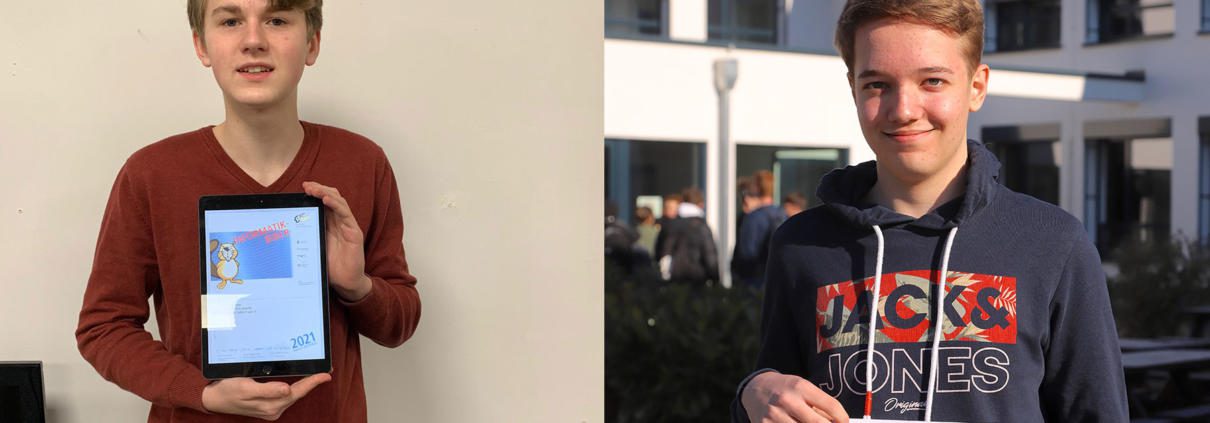
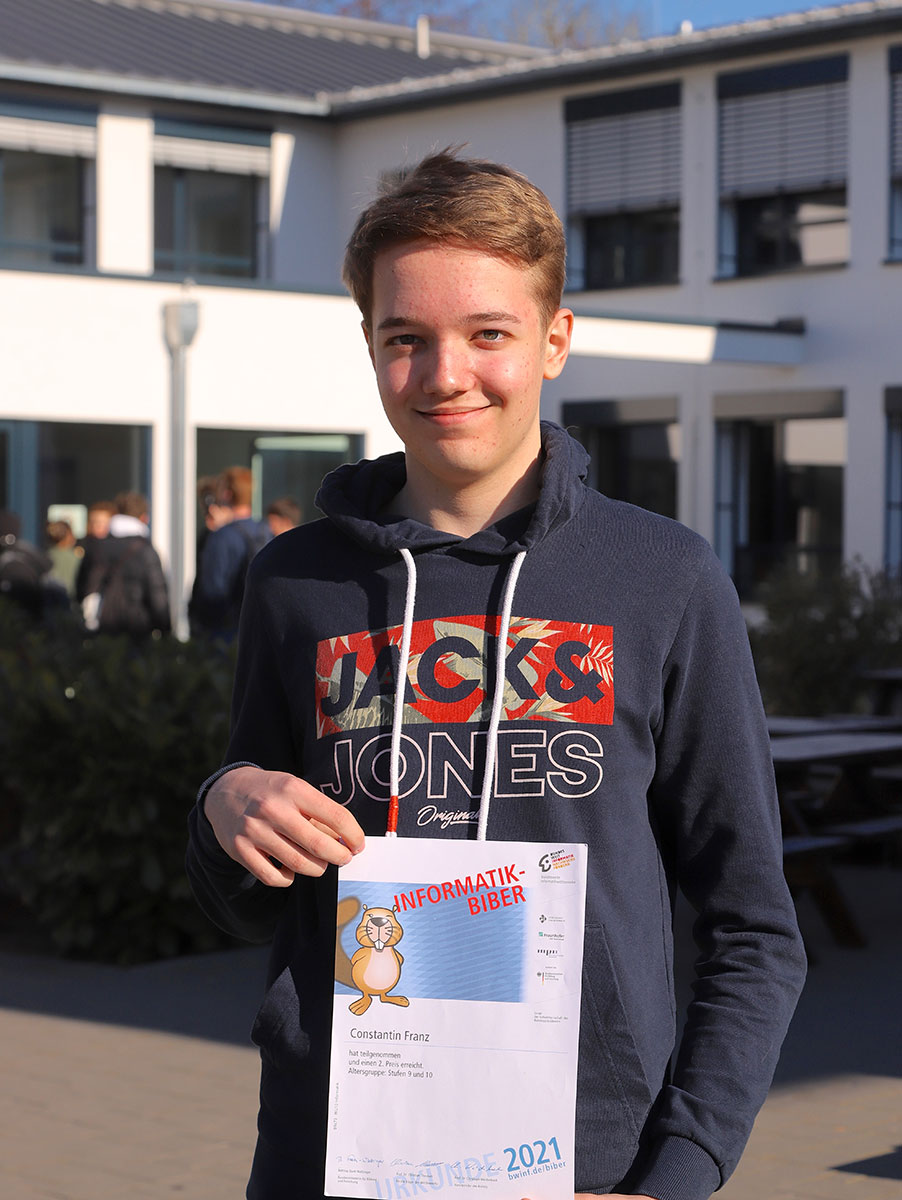
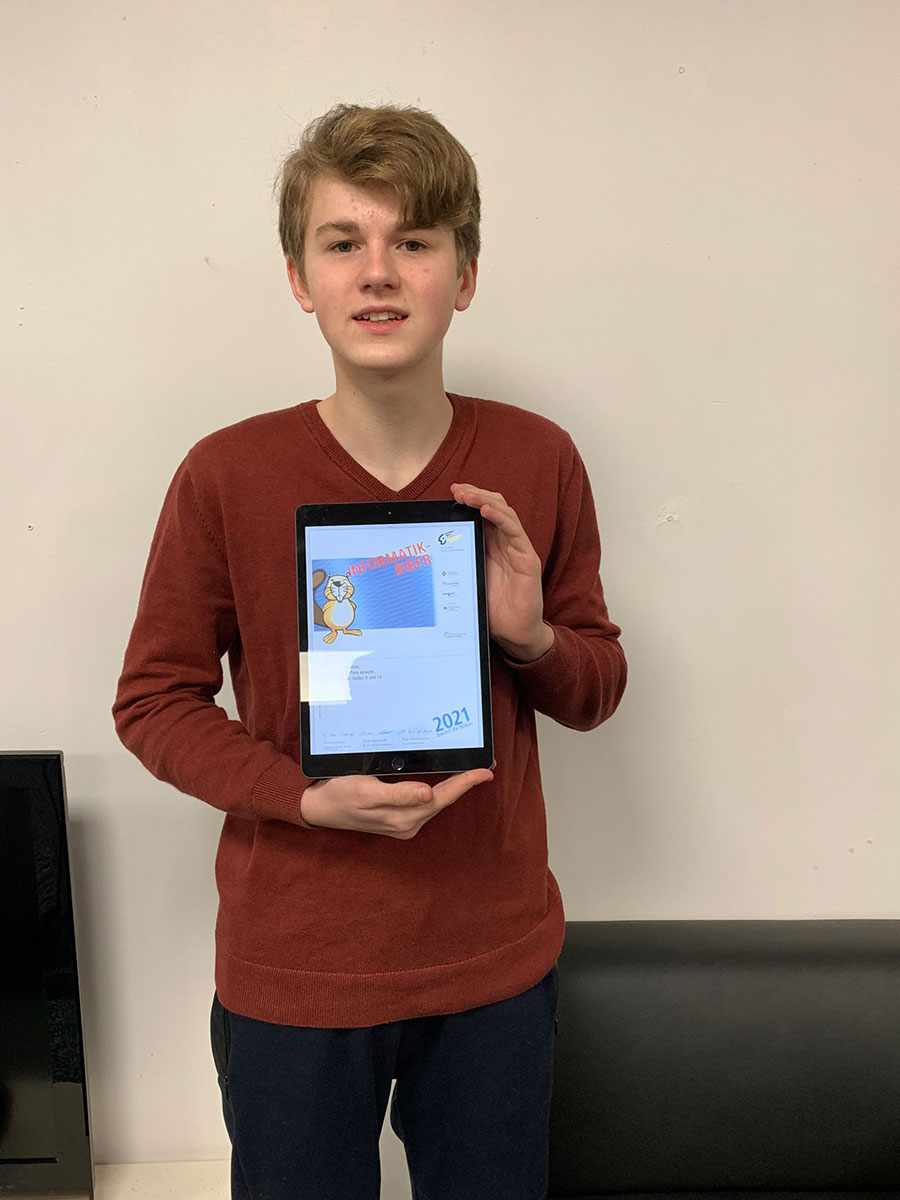
Two students from the WU10 computer science class earned second-place finishes for Steinmühle in the “Informatik Biber” competition. Constantin Franz and Felix May each received a certificate and a small prize.

The Informatik-Biber is Germany’s largest computer science competition for students in grades 3 through 13. In the most recent edition, a record number of 429,000 students from 2,500 educational institutions across the country participated.

Above all, the program calls for skills in solving puzzles and brain teasers, with the tasks creatively teaching the thought processes and concepts of computer science. One example of this is algorithmic descriptions—that is, explaining or formulating clear, structured sequences of actions that a computer could understand.

Students who are not enrolled in the Computer Science track (8th, 9th, or 10th grade) but enjoy brain teasers are welcome to contact English and computer science teacher Christopher Koch and participate in the next round at the end of the year. There is also an opportunity to practice beforehand.

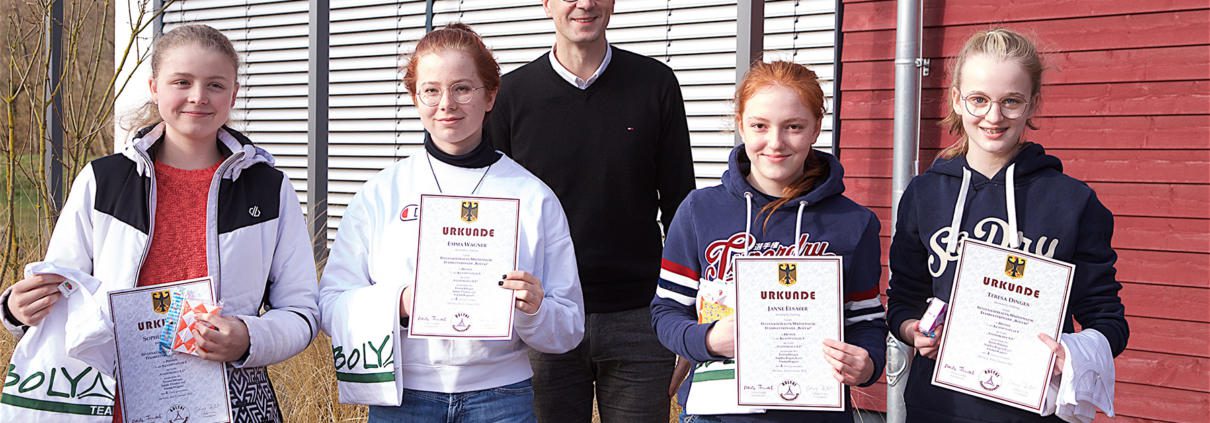
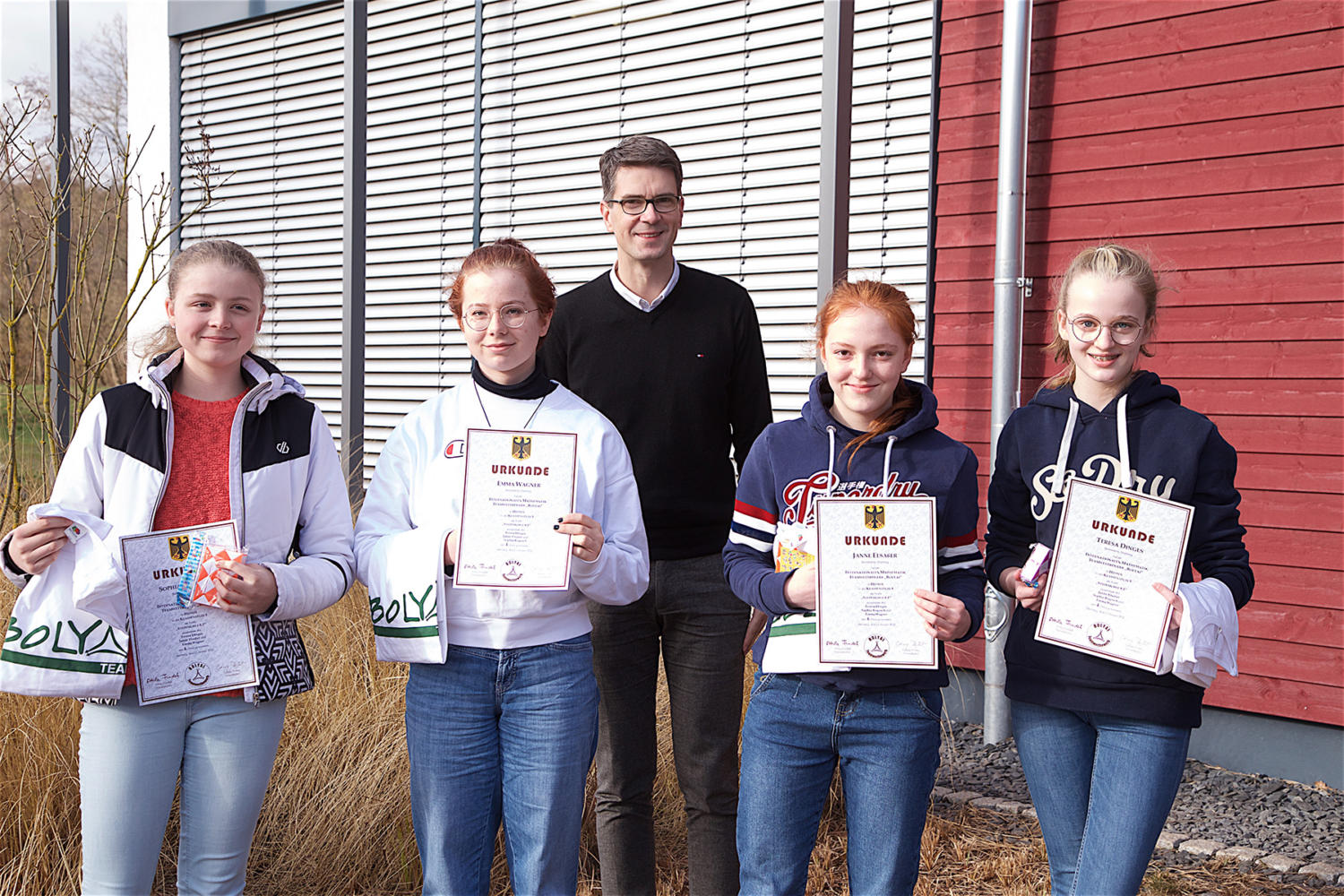
Math isn’t for girls? Not a chance! At the international “Bolyai” math team competition, (from left) Sophia Rogosch, Emma Wagner, Janne Elsaßer, and Teresa Dinges took 4th place out of a total of 61 eighth-grade teams from Hesse. To achieve this ranking, you have to be pretty good at solving a certain number of problems within a limited time frame. And they’re quite tricky.
Participation in the competition, which was developed in Hungary, is voluntary and challenging. A team of four must solve 14 problems in 60 minutes. The team can decide for itself how to approach the problems. For example, they can divide up the problems at the start of the 60 minutes or work together to find the solutions. One thing is clear, though: the problems are too challenging for everyone to solve all of them within the allotted time.

Seventeen teams from Steinmühle had registered, including just one from 8th grade. That team made it into the top 5 in Hesse. In the Marburg-Biedenkopf district, seven teams achieved this ranking across all grade levels. A total of 680 teams participated statewide. Principal Björn Gemmer and the four participants were understandably delighted with the young math whizzes’ performance and the resulting award. They demonstrated once again that outstanding achievements in mathematics are often made by female students and proudly presented their certificates to the photographer.

A look at the problems (example):
“We write down the numbers 1, 2, 3, 4, 5 in a specific order. In this sequence, starting with the second number and continuing for all subsequent numbers, the following holds true: The sum of the numbers to the left of the number currently under consideration is a multiple of that number. Which number, then, can be immediately to the left of 4?”
(A) 1 (B) 2 (C) 3 (D) 5 or (E) “You cannot write down the numbers according to the requirements.”
(The correct answers to the above problem are A and B.)

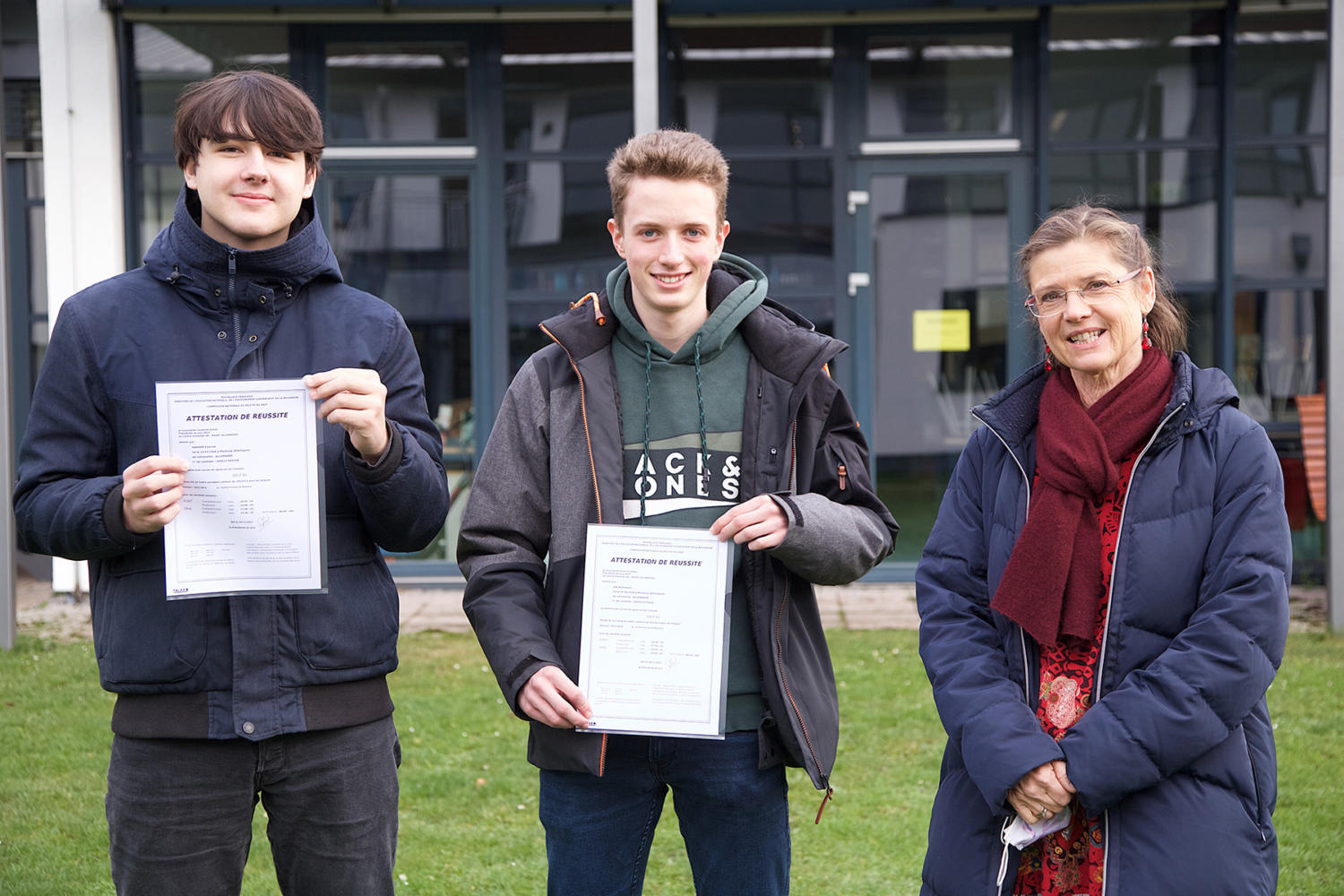
Despite pandemic-related restrictions, exams were held again in 2021, allowing students to earn the French DELF certificate. Due to the restrictions, the number of participants was lower than usual, but two brave Francophile students still took the B1 exams, prepared for them on their own, and traveled to Giessen for the oral exam: Etienne Harder (left) and Jan Audretsch. It’s all the more wonderful that both achieved excellent results! French teacher Jeannine Walter (right)—who is also the head of languages and the arts at Steinmühle—and the entire school community extend their congratulations.

This was the second time the Cambridge exam was held under COVID-19 restrictions. This year, preparation was even more heavily influenced by the lockdown and, consequently, online instruction. Despite these challenging conditions, 34 students decided to take the exam, leading to the formation of two classes led by Nicole Hohm and Matthäus Otte.

This was the first time we offered two BEC Cambridge courses. BEC stands for Business English Certificate. The Cambridge Business English Certificate series comprises a total of three certificates, and here at Steinmühle we offer the middle level—
: BEC Vantage, language level B2. With this certificate, students can demonstrate to potential employers that they are capable of working in English in an international environment. The certificate can help them when applying for internships, as well as later on when looking for a job or seeking promotions.


High degree of self-organization

While preparing for the exam, the students demonstrated a very high degree of self-organization and motivation. They voluntarily participated in online classes and also independently used digital practice rooms for language exercises. When in-person classes were finally able to resume, they worked very efficiently and with great focus in the classroom—with plenty of fresh air and the windows kept open at all times…
At the end of May, the big day arrived. After the mandatory COVID-19 tests, the exam began at 8:30 a.m.: the Reading, Writing, and Listening sections were administered until approximately 12:45 p.m., and starting at 1:15 p.m., the oral exams followed, taking place every 20 minutes in two exam rooms until 5:45 p.m.—which meant a truly nerve-wracking wait for the last exam pairs.
But the hard work paid off! The students achieved very good results—two candidates were even certified at the next higher language level, C1.
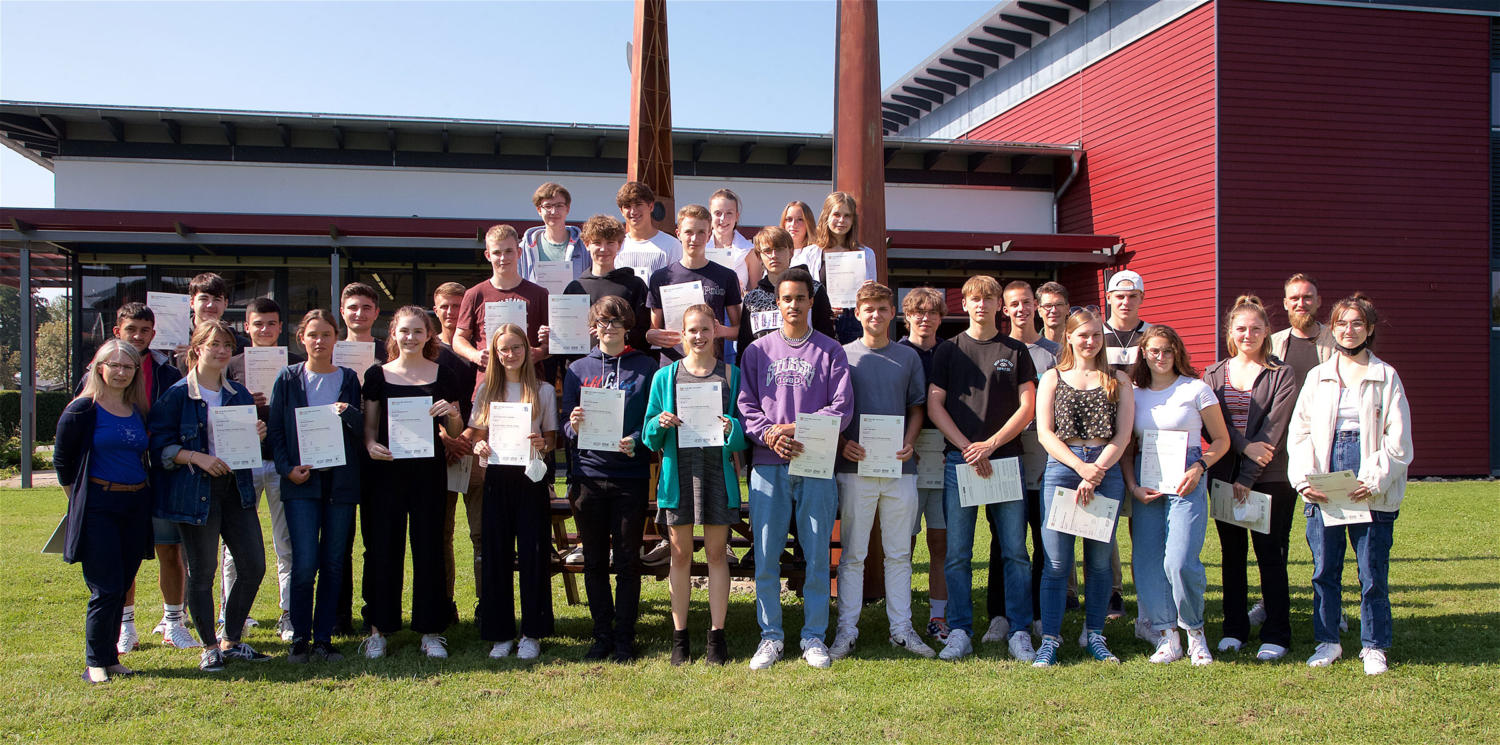
We congratulate all participants on receiving their certificates! Our photo shows the entire group together with their teachers and their certificates, which always arrive at different times.

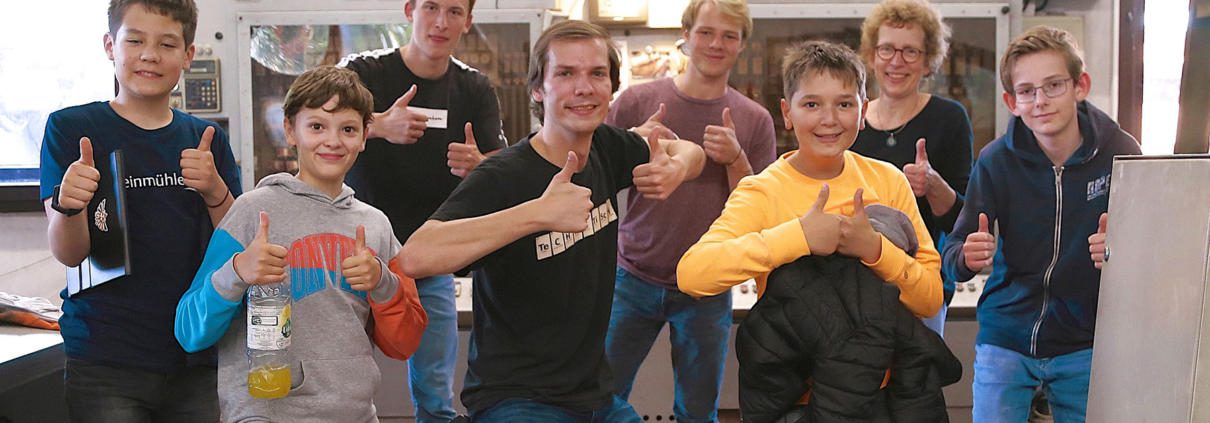
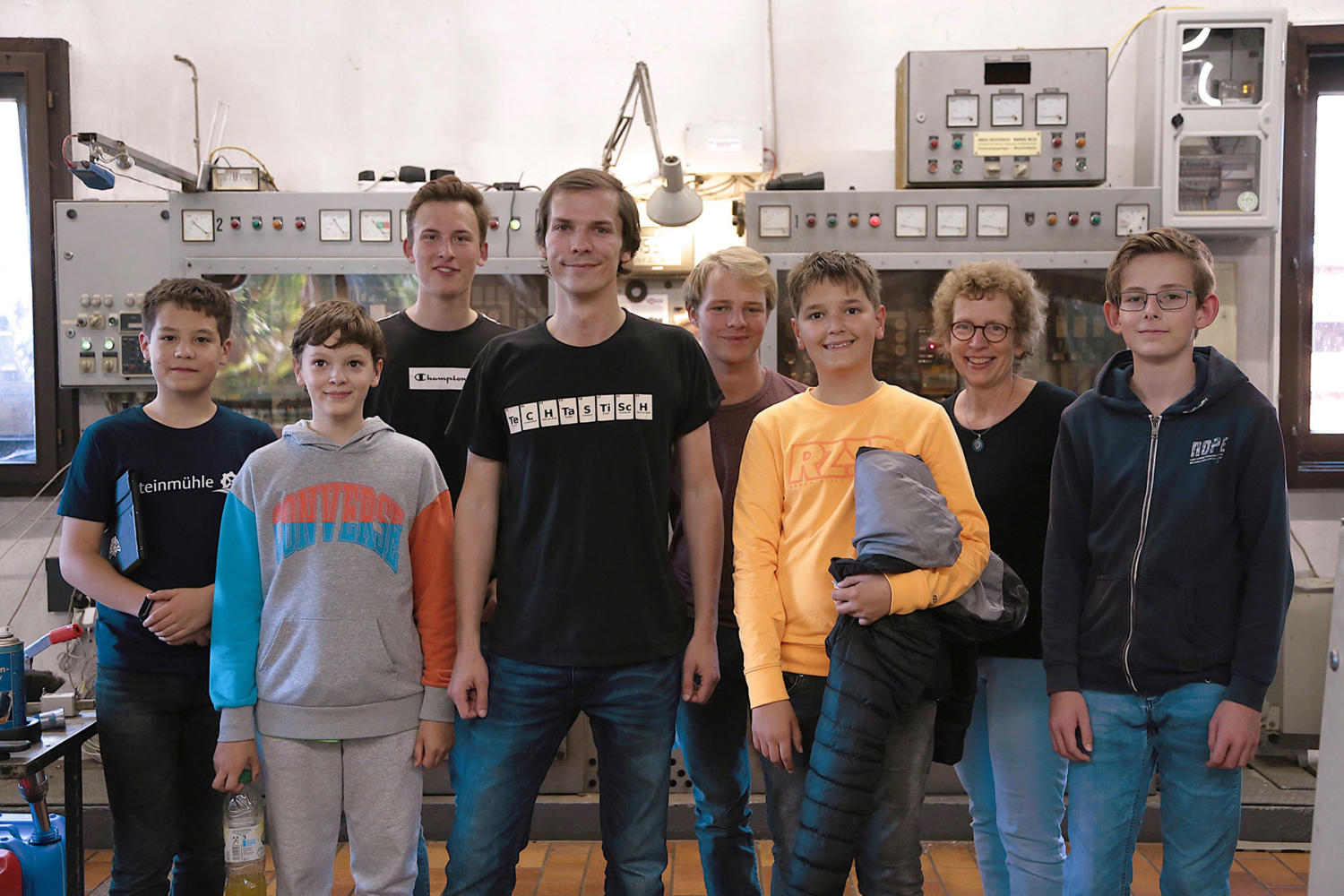
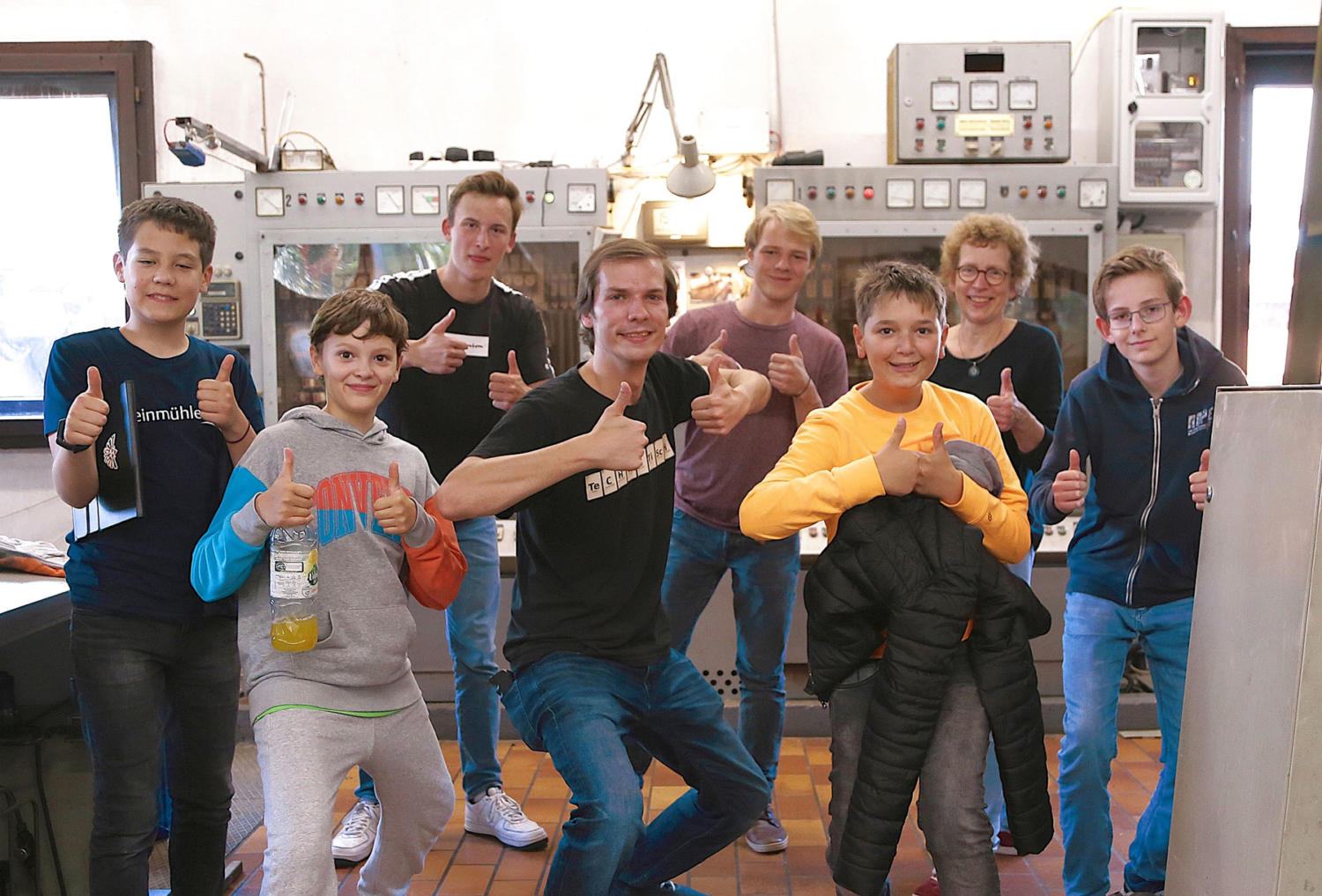
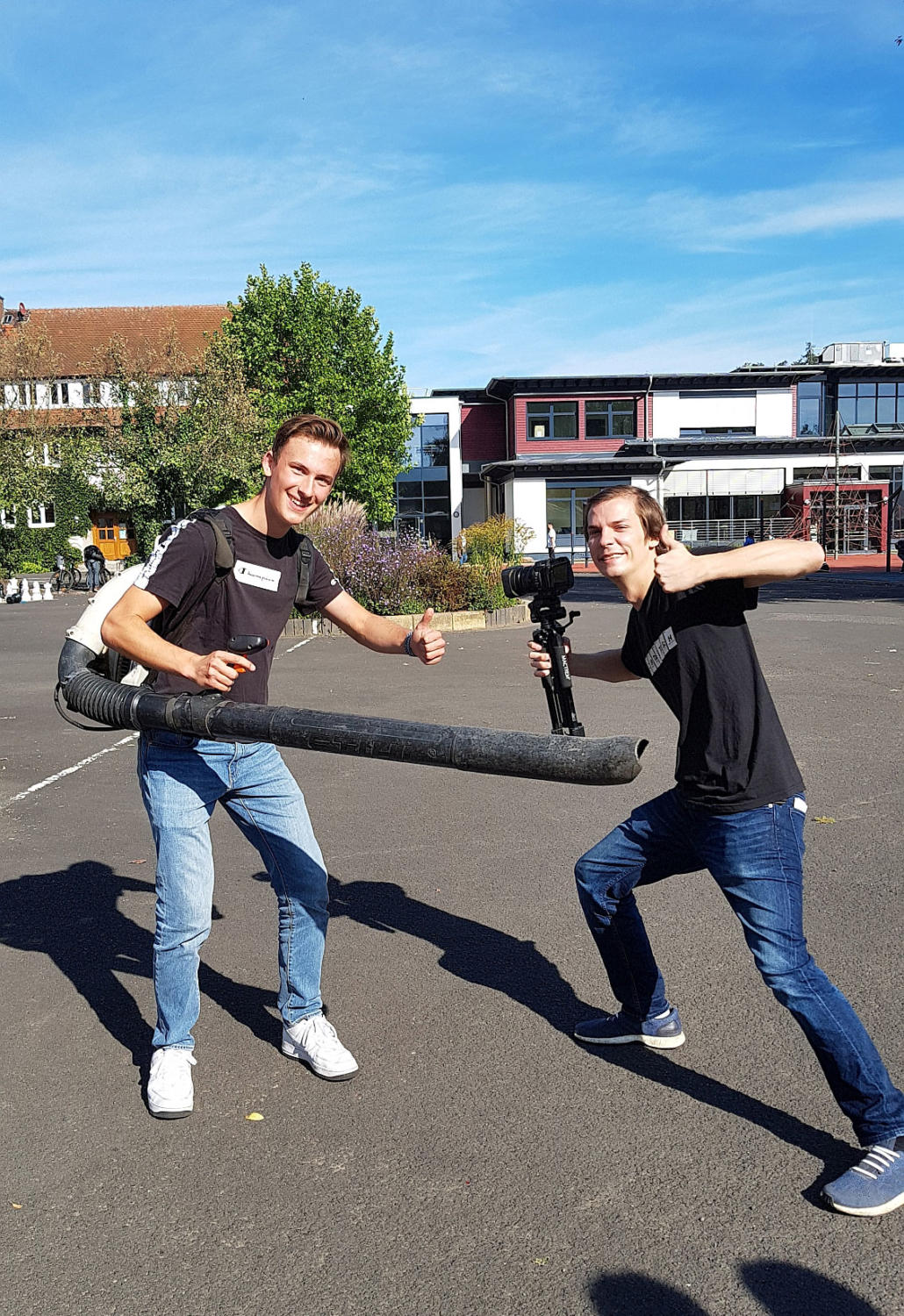
For some time now, the well-known YouTuber Techtastisch (Marcel Häfele) has been a supporter of the +MINT talent development program, which Steinmühle will join starting in the 2022–23 school year as the only boarding school in Hesse to do so.
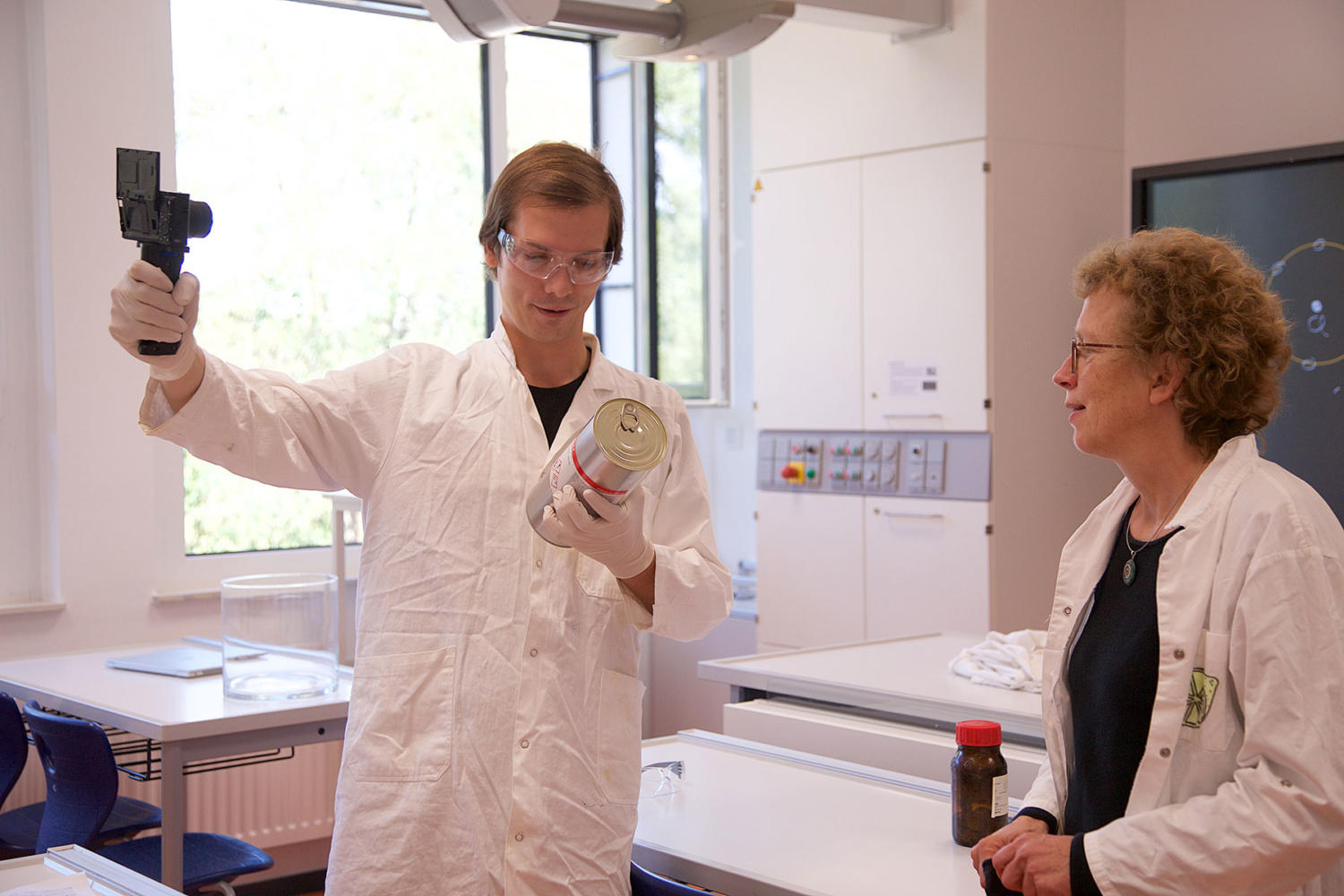
With the participation of students from various research courses, he recently visited Steinmühle for a day of filming. In the run-up to the visit, the students worked with their teacher, Dr. Jutta Töhl-Borsdorf, to plan experiments that are usually not feasible to conduct in a typical classroom setting.
Everyone involved was thrilled, as the experiments were spectacular. The reaction of sodium with water—on a slightly larger scale than is usual in the classroom—as well as with chlorine and ice, generated a great deal of interest.
The experiments in the schoolyard also drew the attention of numerous other students, who were able to observe the spectacle from a safe distance. Afterward, the elementary school students in particular had so many questions that it became very clear just how great even the youngest children’s thirst for knowledge is when it comes to scientific phenomena.

Techtastisch itself was also thrilled—by the beautiful school grounds, the fantastic opportunities for experimentation, the power plant, and the many curious students.

You can watch the video of Techtastisch’s visit here: https://www.youtube.com/watch?v=qeFfHtvVoL4


The 2021 high school graduation—it was a special adventure for the nine students at Steinmühle Boarding School who earned their college entrance qualifications this summer. The Abitur, already an exciting journey, was made even more thrilling for this graduating class by COVID-19 and what we might call the “unique challenges of the learning environment.”

And so it’s no surprise that this year’s graduating class has been compared to the nine companions from *The Lord of the Rings*. For as individual and unique as these nine students may be, they are united by their shared journey at Steinmühle. The Steinmühle boarding school as “Elrond’s House”—a safe haven and second home that provides strength and perseverance.

“The mill will always be my home as long as I’m here!”

As is the case every year, in addition to the official presentation of report cards, the graduating boarding students were also treated to a separate farewell ceremony organized by the boarding school and their homeroom teachers, which they attended together with their families. In an idyllic setting on the banks of the Lahn, over brunch and a toast together, each student received their very own personal farewell speech. The occasion served as a reminder of the wonderful moments they shared together: for example, Charles, who couldn’t imagine living anywhere other than the mill during his time here at the boarding school. Like Charles, however, all the high school graduates now face the major challenge of this new chapter in their lives.

Steinmühle Brings People Together—Even Beyond High School

Although the traveling adventurers’ time at the Steinmühle comes to an end here, their hope for a reunion was also expressed in their farewell speeches: “Let us hear from you!”, “You can do it!” and: “I’ll do what I can—no longer as a teacher, but as a colleague and friend.”

The warmth of the relationship between students and teachers was palpable in those moments. “I’m thrilled by these emotional speeches,” says Ms. Kersten, mother of our graduating senior Timo. “I could totally recognize my son, and I’m so proud of him and what he’s accomplished here.”

Roksana Stronzeck expressed how the Steinmühle can continue to be a home even after graduation. With tears in her eyes, the former student—who is currently completing her internship year for her vocational diploma at Blista, a residential group for the visually impaired in Marburg—shared how much she misses her time at the Steinmühle: “I was at the Steinmühle for six years. I knew in advance that I would miss that time. But it’s only when you’re really no longer here that you realize just how much the Steinmühle meant to me.”

Remembrance as a Tradition—The Time Capsule at the Steinmühle

And precisely because these memories of our time together at boarding school can be so wonderful, a new tradition has taken root over the past three years: Graduating seniors receive a metal time capsule in which they can place personal items, letters, and mementos. These time capsules are buried on the Steinmühle grounds and dug up again at the Fall Festival after 10 years. In seven years, the first graduating class will be able to reminisce together at the Fall Festival.

This year’s high school graduates, on the other hand, will have to wait another 10 years. “Whatever,” says graduate Luca Ledro, shrugging it off, “I come back here every year for the Fall Festival anyway.”

Here’s to saying goodbye and to seeing each other again

“What a wonderful farewell!” says Ms. Gorges, mother of graduating senior Kris, “I’m so glad we were able to enjoy this moment one more time with our small boarding school group.” And so, after the official farewell portion of the graduation ceremony, everyone came together to bring their time together to a joyful close. Tears were shed—some out of emotion, some out of happiness, and a few out of sadness and thoughts of parting.

But by the time the Fall Festival rolls around—which we hope will take place again this year—everyone is warmly invited to visit Steinmühle Boarding School once more. Until then, the boarding school community wishes our nine classmates a successful and exciting journey into this new chapter of their lives, filled with happiness, courage, hope, and, of course, good health.


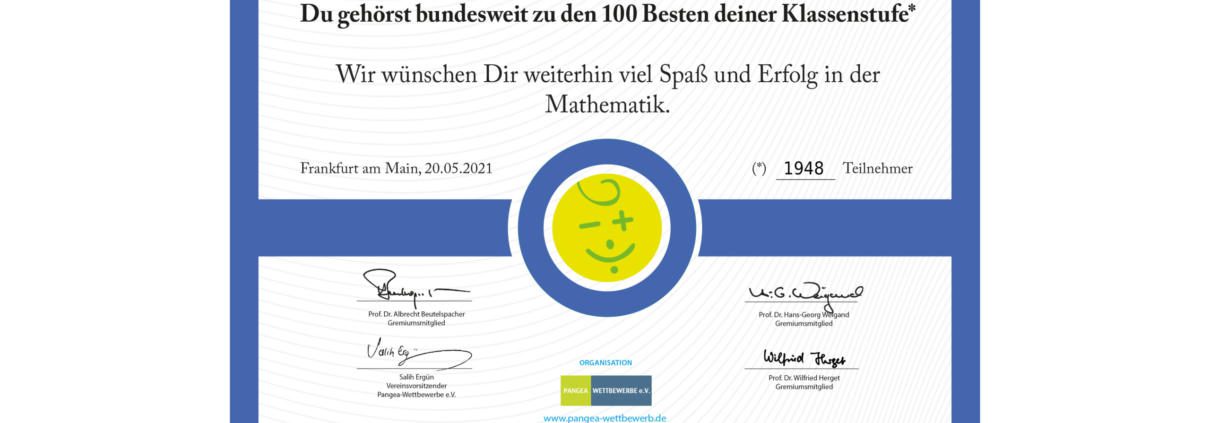
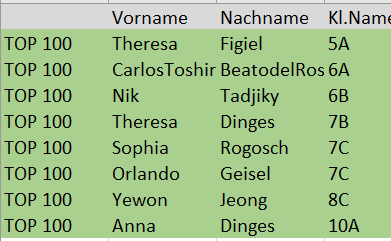
The Pangea Math Competition is a Germany-wide math competition for students in grades 3 through 10 that has been held annually since 2007. Steinmühle participates in it regularly. This year, 21 of the approximately 11,000 participating students came from Steinmühle. Of those, eight students made it into the top ranks of their grade level, according to math teacher Bernd Schweitzer.

The table below provides an overview of which students achieved these outstanding results. We congratulate them and tip our hats to them!