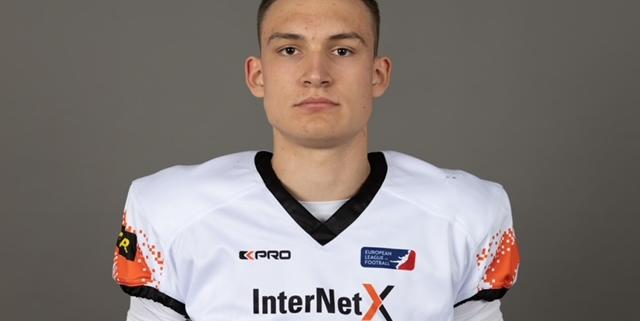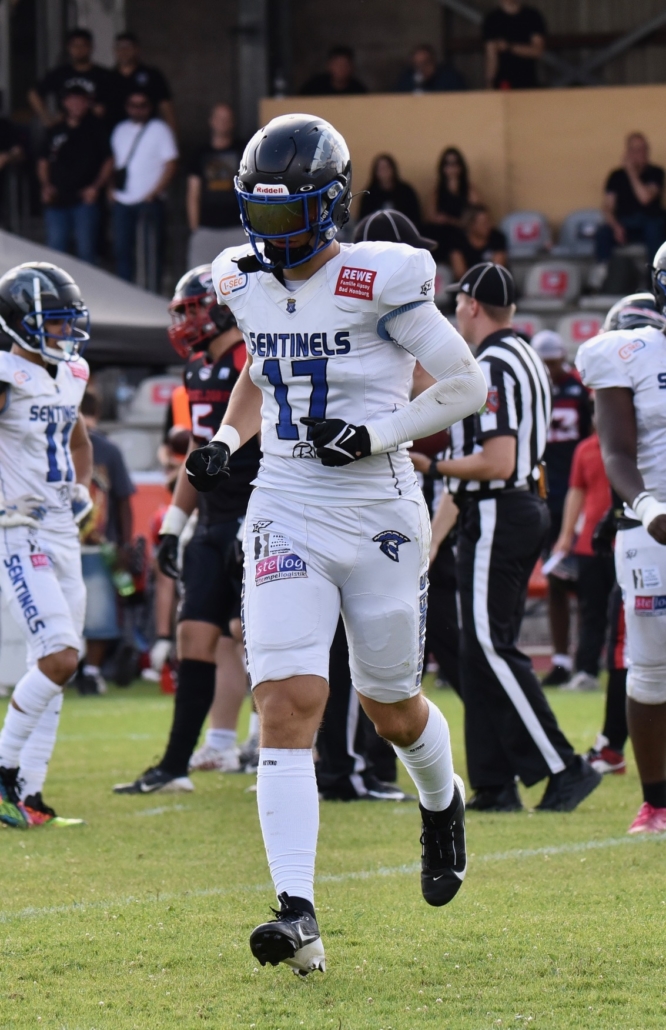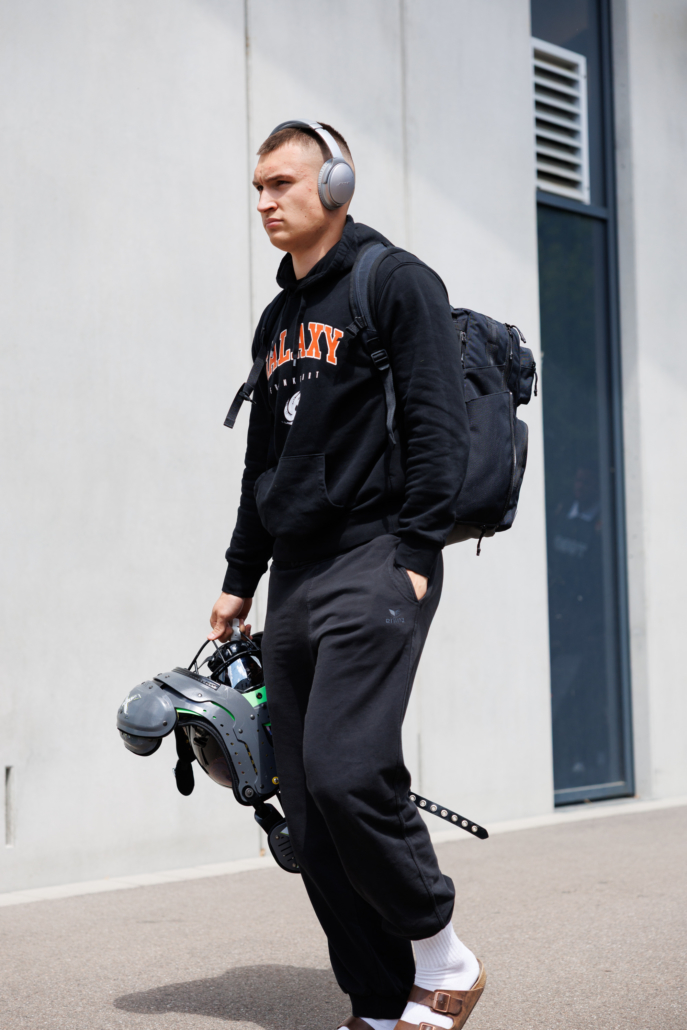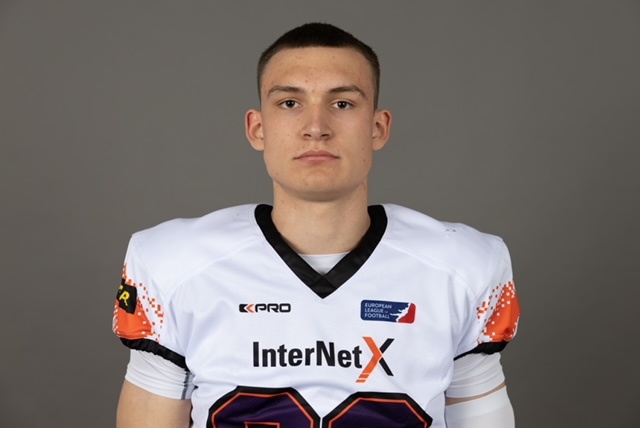


The annual Super Bowl, the championship game of the U.S. National Football League (NFL), fills the coffers and empties the beverage shelves in supermarkets. Many fans in Europe are also eagerly following the action. Benedikt Mons, who just graduated from Steinmühle Boarding School with his high school diploma in hand, remains one of the biggest fans. His goal: to play in the NFL himself one day.
First Contact as an Eighth-Grader
It’s not just a pipe dream. Benedikt has a plan, and he’s sticking to it. After joining Steinmühle in eighth grade, a classmate took him to a football practice. The sport isn’t exactly gentle. But that didn’t stop him from continuing to train.
Important Companions
Benedikt played more and more often and made the U18 Hesse select team. He connected with players from Bad Homburg, joined the Sentinels, and played in the GFL-Juniors—the youth Bundesliga of the American Football Association of Germany (AFVD). He also came to see the team’s coach, Markus Hackenberg, as a mentor: “He helped me develop as a player.” In 2024, Benedikt Mons was named to the U19 national team.
Benedikt Mons must have continued to do something right, because in early 2025, the next step was on the horizon: a move to the Frankfurt Galaxy and the transition to professional sports in the European League of Football. This was a decisive step for the humble Steinmühle student—who took advanced courses in political science and math—who is grateful not only to Steinmühle for supporting his athletic career, but also to others, such as the sports director of his current club, Thomas Kösling. “He motivated me to balance my high school diploma and training”—training four times a week, no less.
Reaching Full Potential in the U.S.
Logistically, things will get a little easier for Benedikt now that he has his high school diploma in hand. After the season, he’d ideally like to attend college in the United States. “I definitely want to keep playing, and I want to do it in the U.S. Everything about the sport is much more professional there, from training all the way to the individual support athletes receive. To reach your full potential in this sport, you have to go to the U.S.”
When it comes to this step and his athletic career, Benedikt Mons knows his parents have his back: “They support me.” Whenever possible, they even sit in the stands at his games. The high school senior regularly competes against his brother in sports. But his brother is better at hockey and tennis. “I’d rather stick with football,” Benedikt says with determination.
A lot of practice and talent, too
When asked about his career goal, the former boarding school student replies, “To make a living from sports.” Benedikt views being tied to equipment like a helmet and shoulder pads as a temporary phase. “I want to retire in my mid-30s and have made my money in the NFL by then.” Then he could imagine being a good father and helping to make the sport more attractive in Europe: “The market is growing tremendously; there’s a lot of potential.” Until then, however, Benedikt says it will take a lot of courage, a lot of time, a lot of patience, and a lot of training.
You have to run; you have to be fast. “It’s a sport for physical types,” says Benedikt Mons, describing the rough-and-tumble nature of football, while acknowledging that he himself is “genetically blessed—and grateful for it.” He’s ideal for the tight end position in football; the rest he’s earned through hard work.
But he knows that a certain amount of talent is definitely part of it. Angela Heinemann
Follow Benedikt Mons on Instagram: benedikt.mons


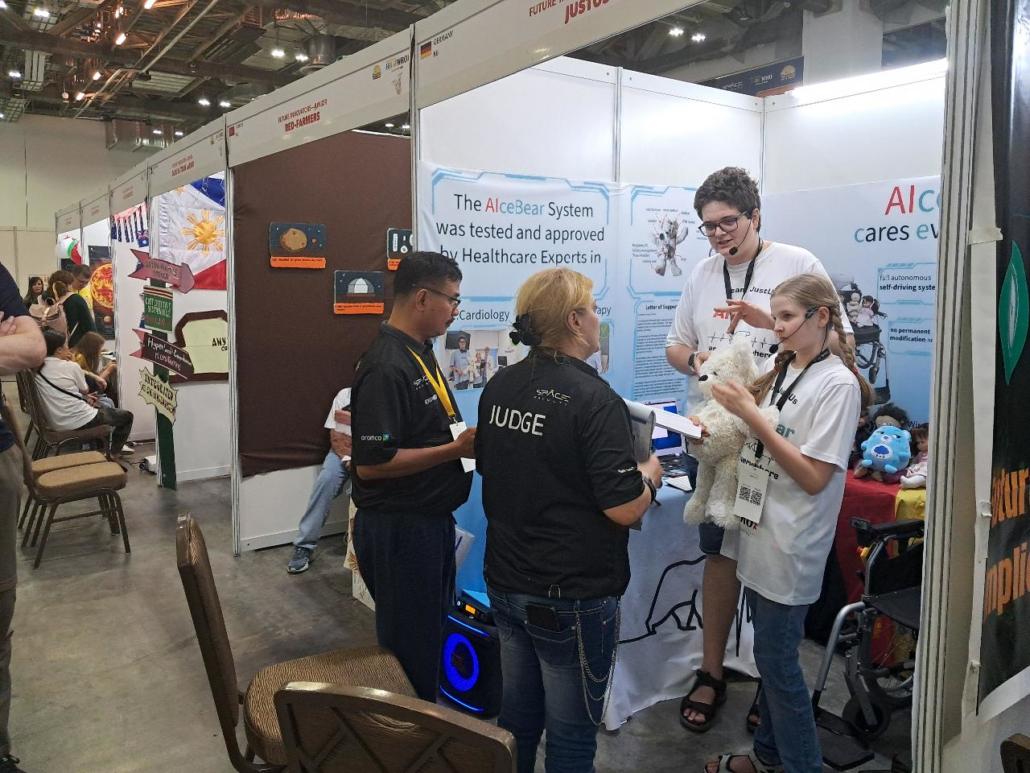
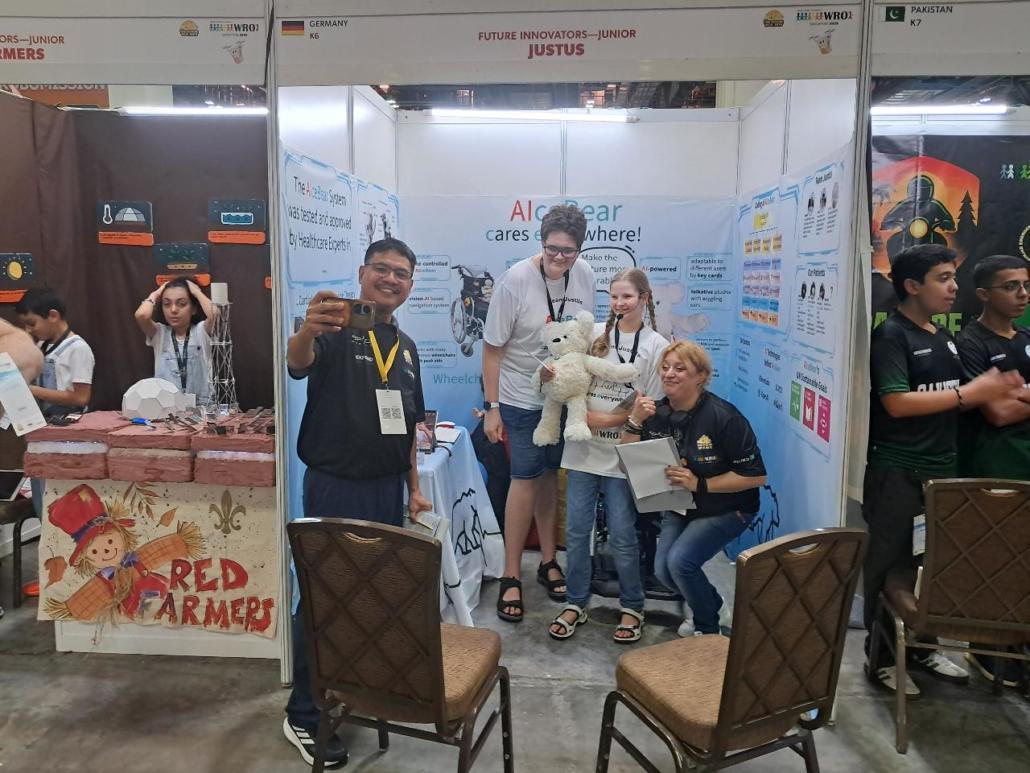
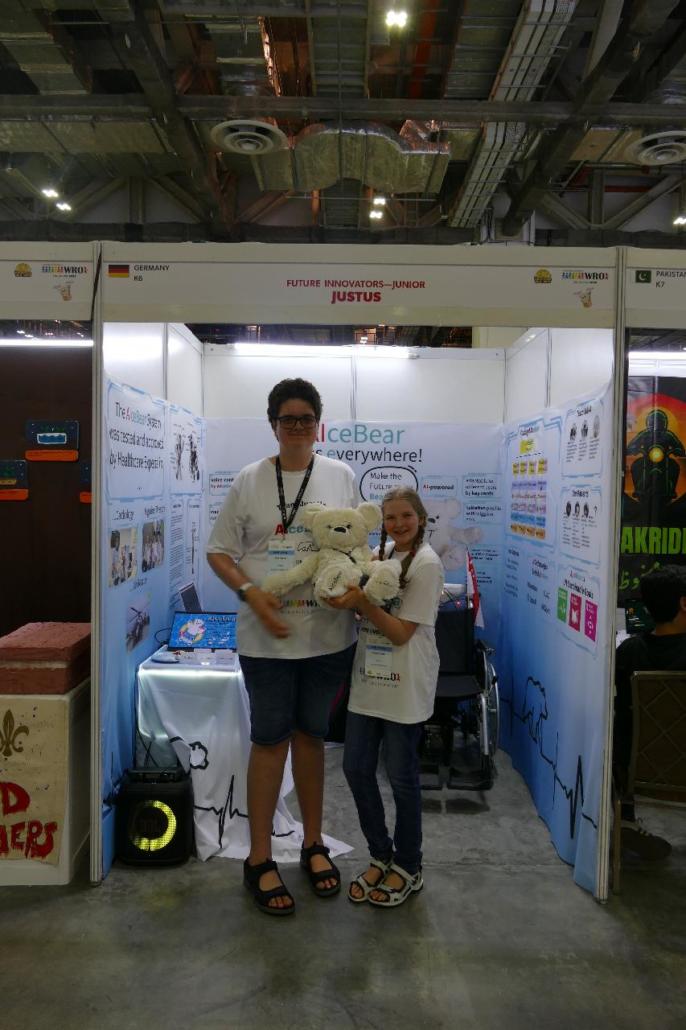
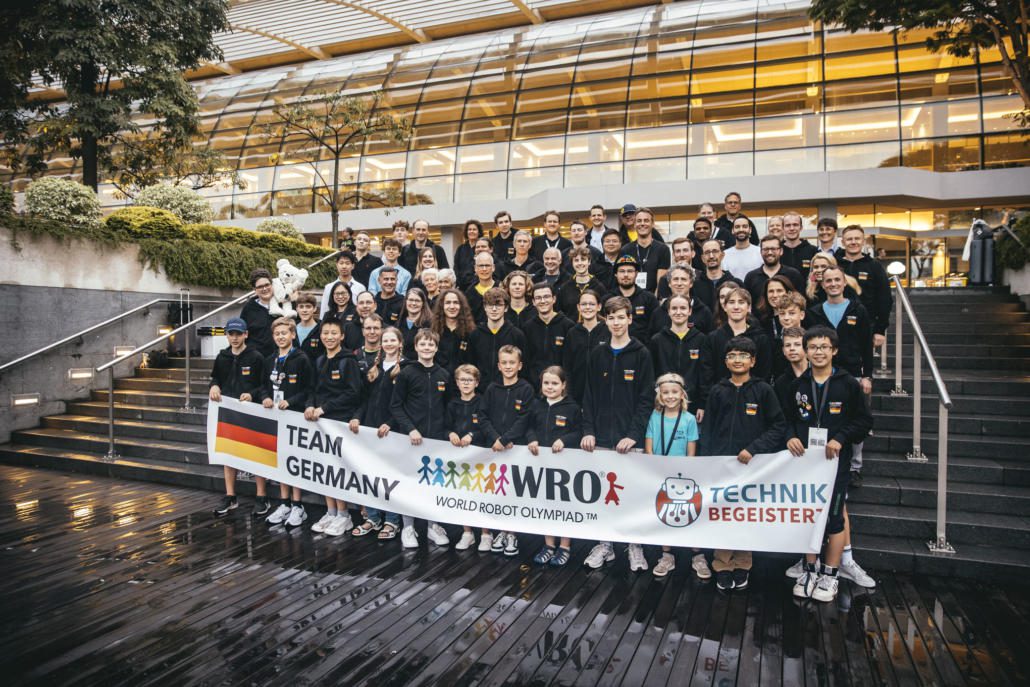
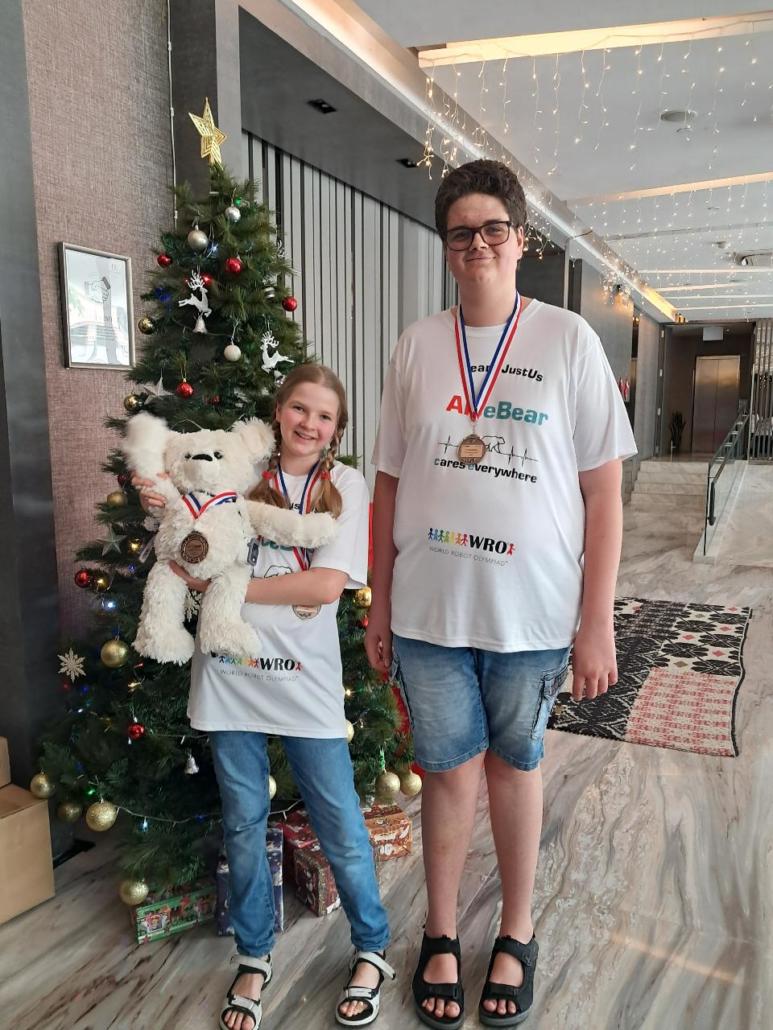
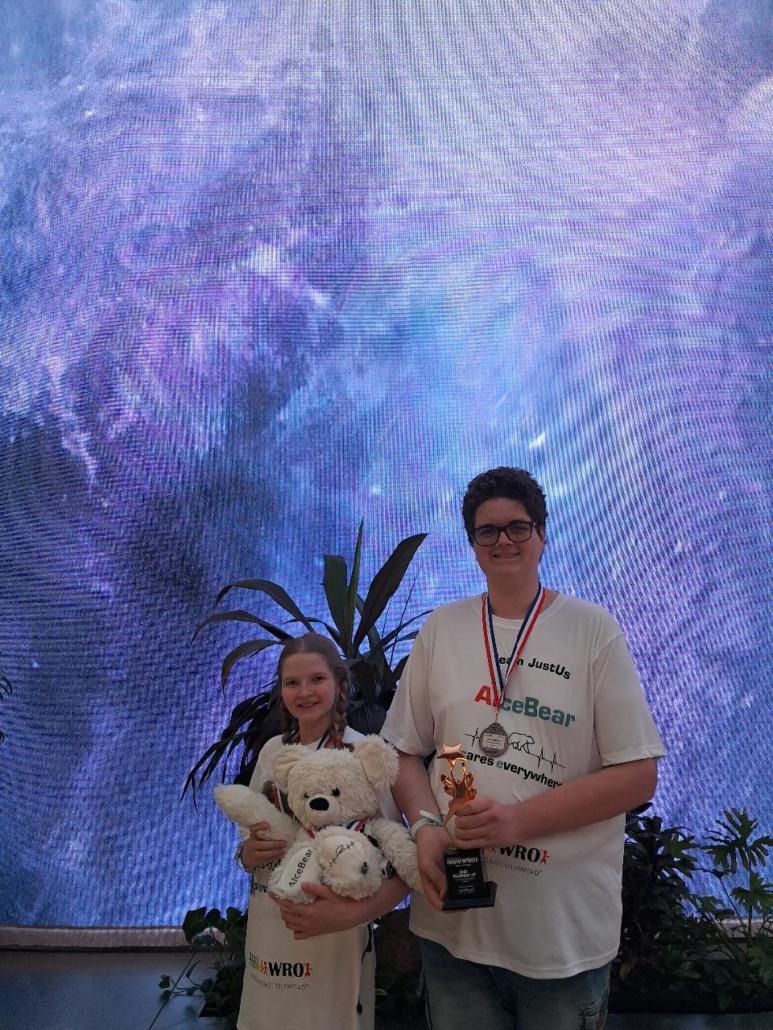
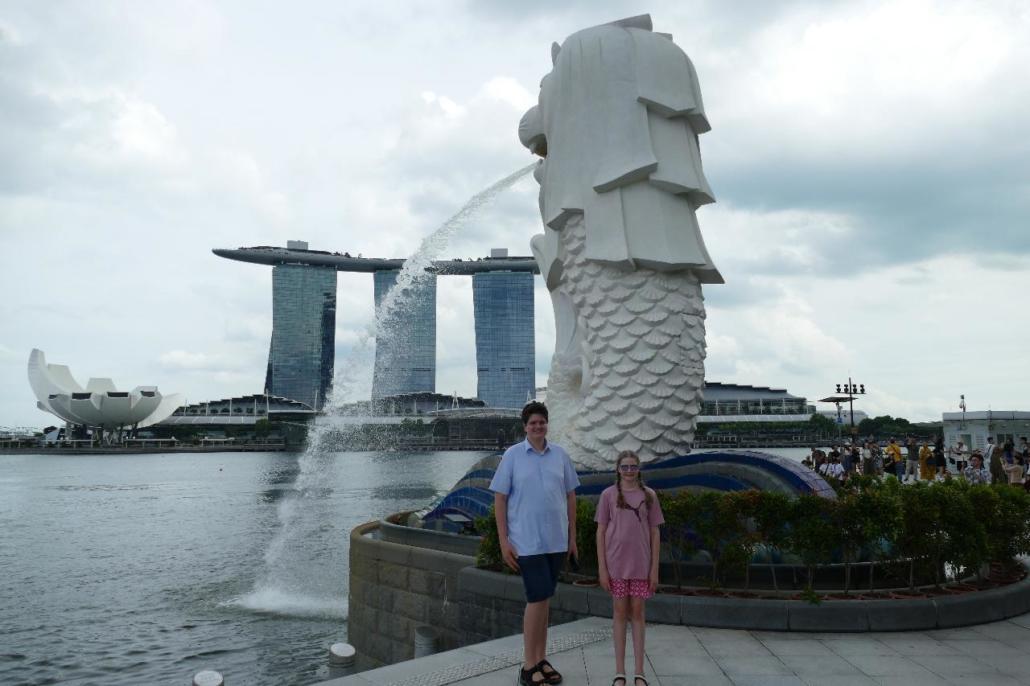
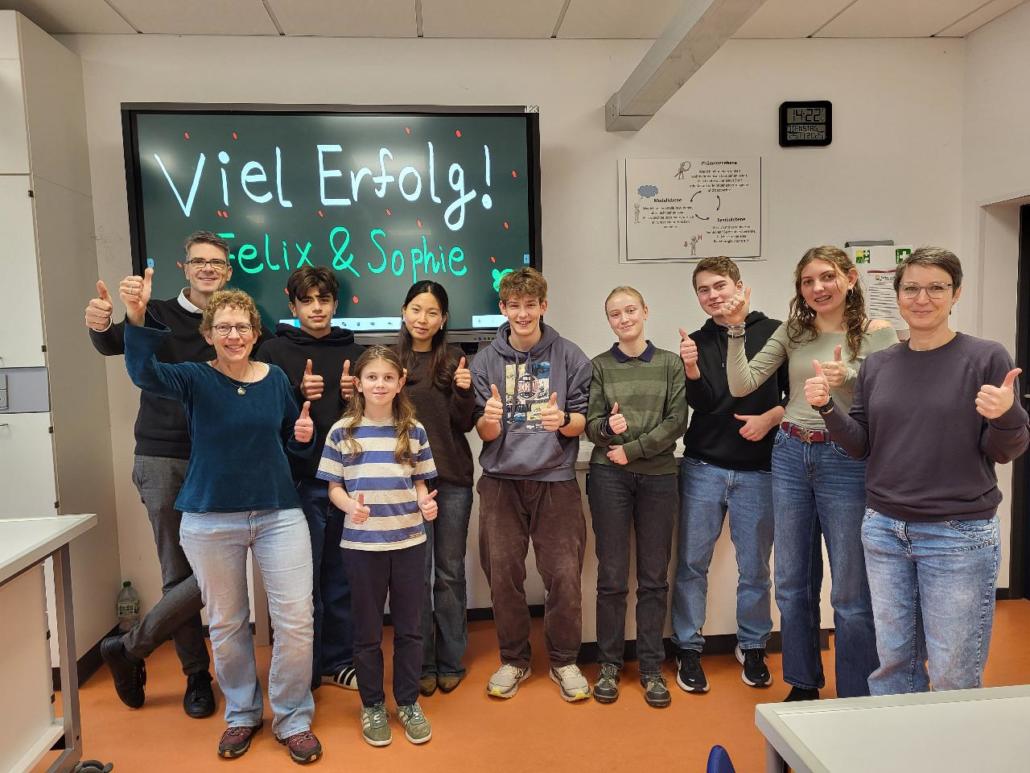
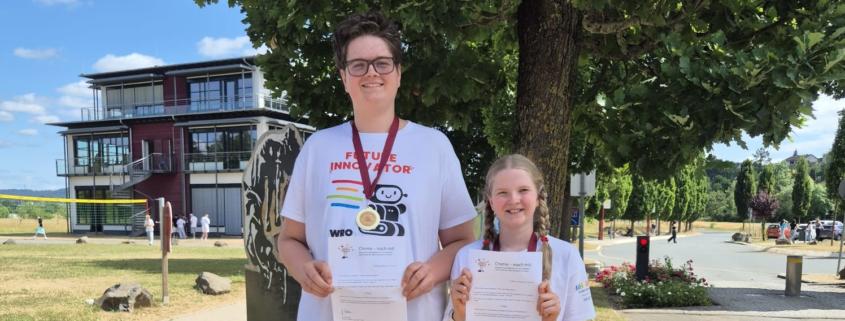
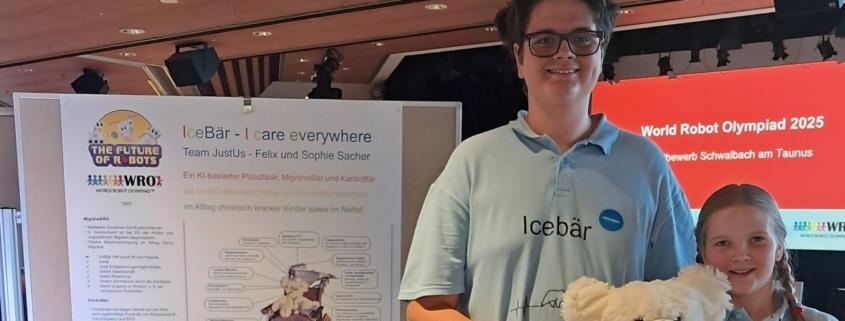
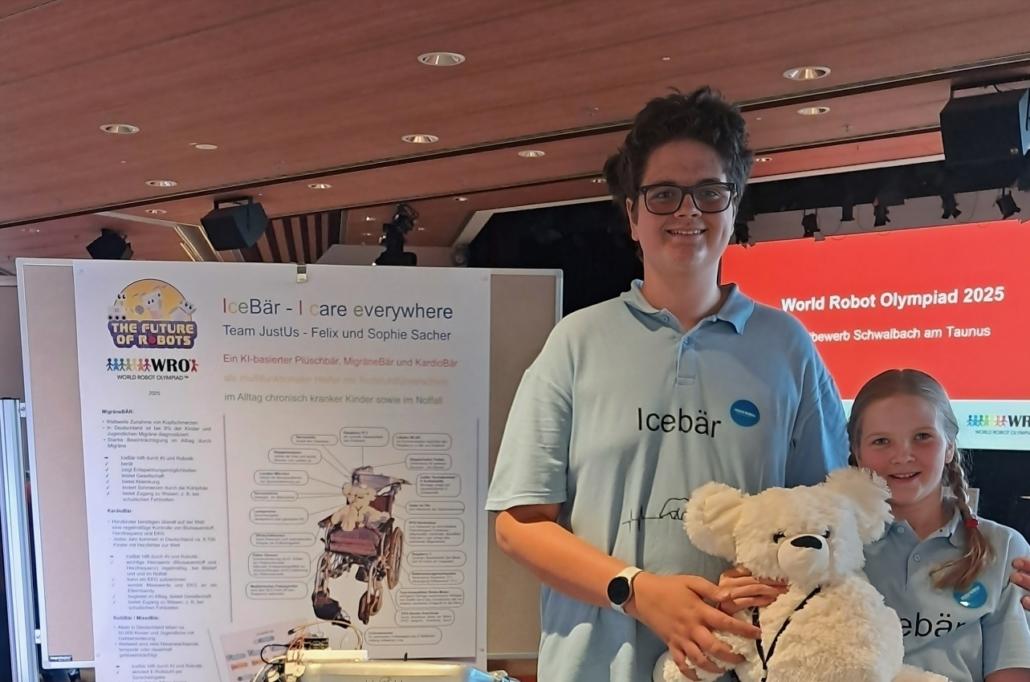
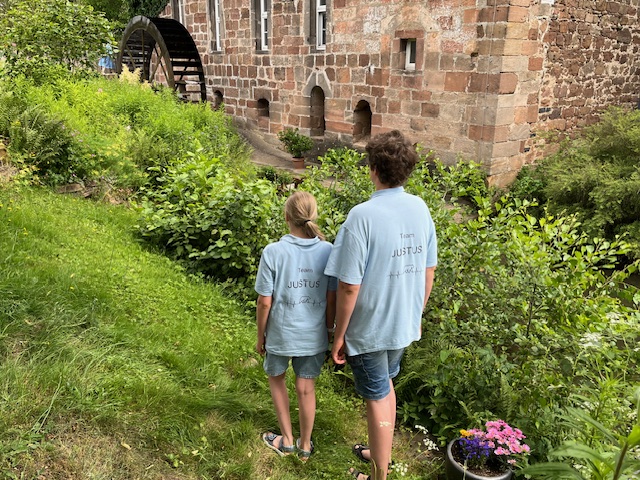
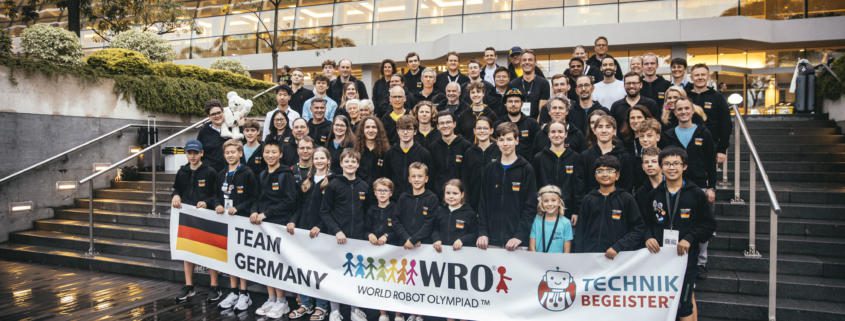
Felix and Sophie Sacher, a pair of siblings from Steinmühlen School, have shared some amazing news with us: At the World Robot Olympiad (WRO), the ninth-grader and fifth-grader qualified for the world finals in Singapore in the “Future Innovators” junior group with their project “Ice Bär – I care everywhere.” From November 26 to 28, up to 500 teams from 80 countries are expected to compete there.
Project Description
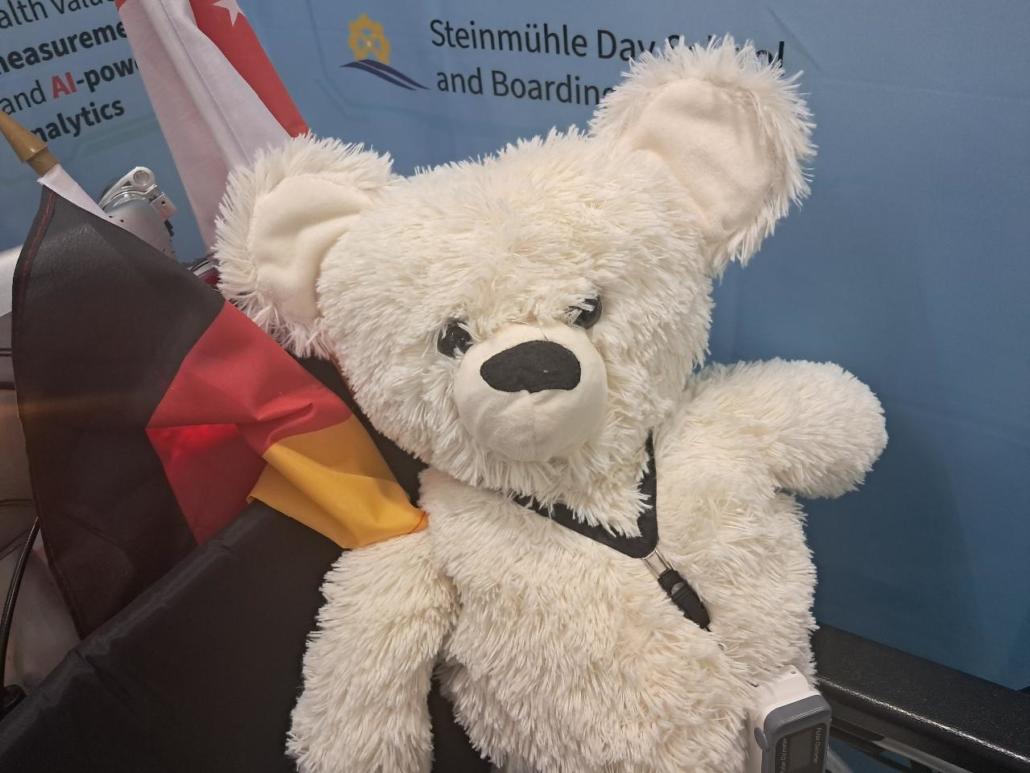
It is the central component and also serves as the title of her project: “IceBär – I care everywhere.” The “IceBär” is a highly complex system for this age group, consisting of various modules and biometric sensors. An AI-based stuffed bear with an integrated ECG and computer serves as a multifunctional assistant—complete with a “wheelchair license”—in the daily lives of chronically ill children as well as in emergencies. The target groups are young migraine sufferers, young people with heart conditions, and young people with mobility impairments. The technology provides a cooling function for migraines when needed or, in the case of heart problems, important cardiac readings, which it can also transmit. Through a voice function powered by generative AI, it can also provide emotional support. The combined electric wheelchair can start and stop, and the IceBär responds to voice commands.
Two Jack-of-all-trades
The two young inventors came up with the entire technical design and even tailored the IceBear’s shaggy plush fur themselves. The IceBear is designed for children between the ages of 3 and 17. It could be used at home, in children’s hospitals, or in emergency medicine. The Sacher siblings, who have given themselves the double-entendre name “Team JustUs” (just us—or, in Latin, “just”), envision numerous applications and opportunities for further development of the system.
A victory by a wide margin
In the competition, the “Future Innovators” teams were tasked with developing a robotic solution that combines AI with robotics to improve people’s lives. “Out of a total of 111 teams in Future Innovators Germany, we were the only ones left in our ‘Junior’ age category at the German finals, and we’ll be representing Germany at the world finals in Singapore,” Felix and Sophie say happily. The siblings had already impressed the jury during the qualifiers for the German finals in the “Junior” age group, taking first place by a wide margin.
27-page document
In the competition, projects must be presented using working models, and technical questions must be answered on the spot. Entries were evaluated using a detailed evaluation form across various sections and categories: the idea, the technical solution, the presentation, and teamwork.
According to the jury, the project was not only presented in an outstanding and confident manner, but was also documented with impressive professionalism. Steinmühle had the opportunity to review the 27-page documentation, which was produced to the highest standards and demonstrates that young people are pursuing this project with heart and soul, convinced of its practicality for everyday use.
Fascinated by medical professionals and STEM teachers
Felix and Sophie have already interviewed several medical experts across Germany about their project, and they were encouraged by these experts to present it on the international stage. The STEM teachers at Steinmühle were also fascinated by the project when it was tested “live” at the school.
We’re curious to see how the IceBear’s journey will unfold and whether it will find supporters who might one day help bring it to market.


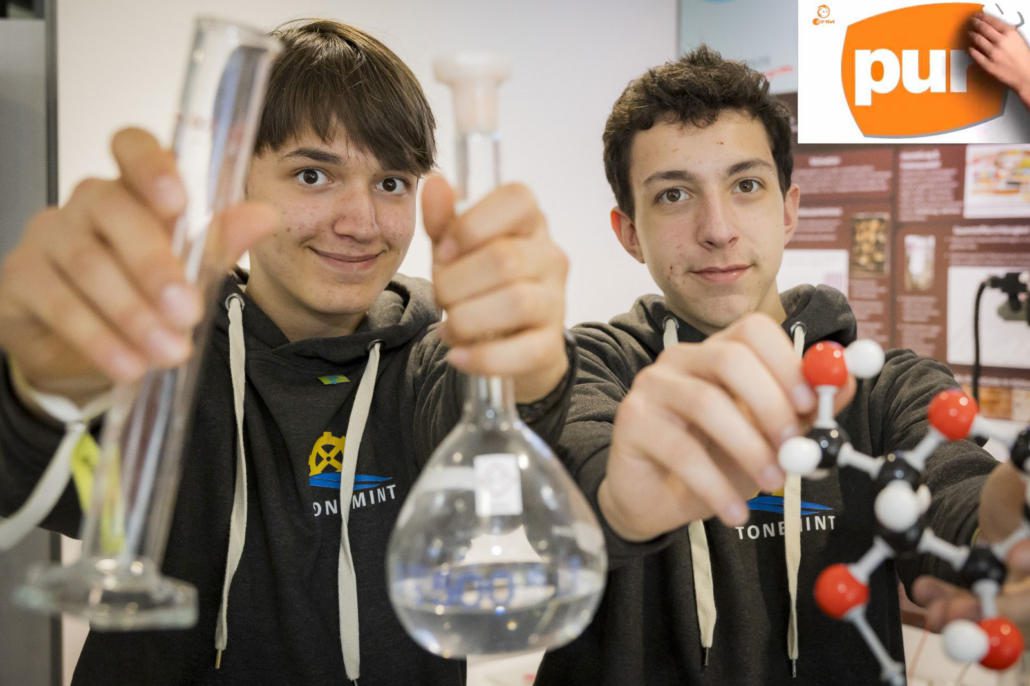
With scientific precision, homemade testing equipment, and surprising findings, young researchers impressed the expert jury at Stiftung Warentest’s renowned “Jugend testet” competition. Among a total of 1,103 submitted tests involving more than 3,700 participants —a new record—Steinmühlen students Leonard Berger and Nicolas Bohnstedt secured an outstanding second place in the 10th–13th grade category with their research on sustainable alternatives to conventional petroleum-based plastic wrap! Together with their advisor, Dr. Jutta Töhl-Borsdorf, they traveled to Berlin for the awards ceremony.
In-house production of biofilms
A six-member panel of experts
Steinmühle congratulates the team on their outstanding ranking, which was determined by a six-member jury of experts from the fields of science and journalism.
2,000 euros in prize money
The award came with a cash prize of 2,000 euros. In addition, there was a very appealing supporting program; “the foundation really went out of its way,” reports Dr. Jutta Töhl-Borsdorf.
For example, attendees were invited to see the musical *Romeo & Juliet* at the Theater des Westens and to participate in a city scavenger hunt in Kreuzberg.
The awards ceremony, featuring a magician and very heartfelt laudatory speeches, is also fondly remembered: “A wonderful experience for everyone involved.”


The annual Kangaroo Competition is designed to spark an interest in mathematics and encourage students to engage with mathematical problems. In this competition, students from various grade levels who are skilled at arithmetic and problem-solving, can concentrate well, and are having a good day stand out in particular.
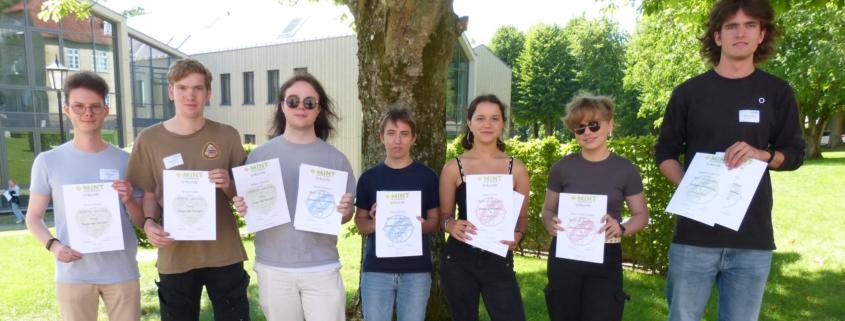
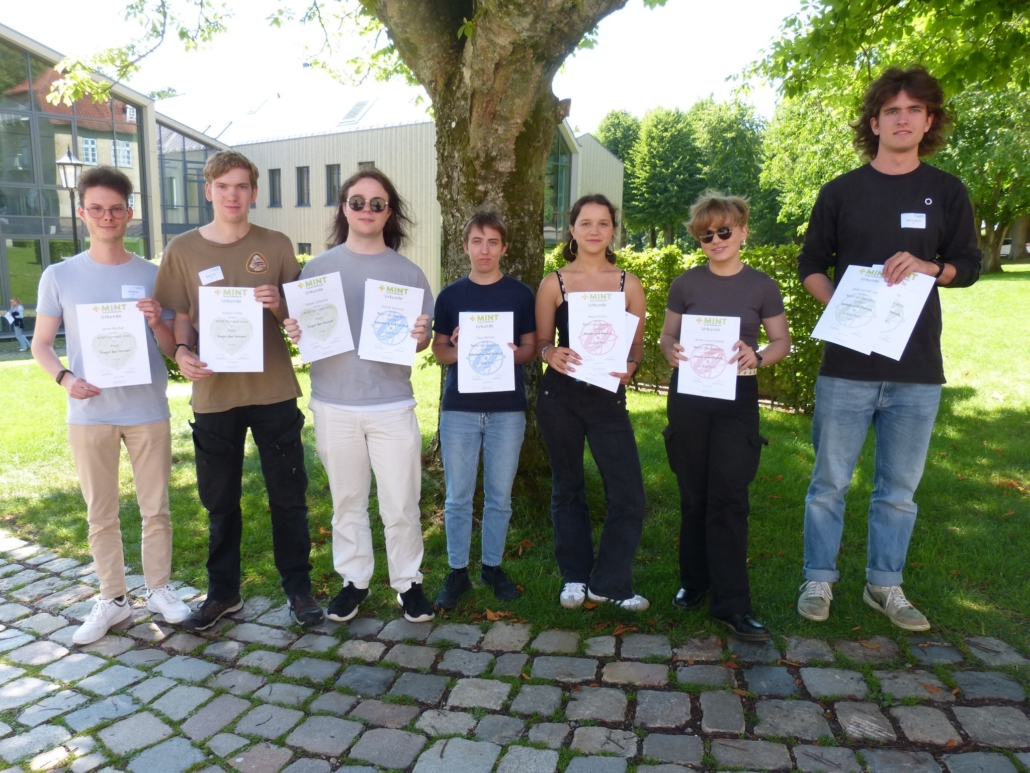
Missing from the photo: Theodor Wild (1st prize, Class 5i), Sophie Sacher (2nd prize, Class 5i), Orlando Geisel (2nd prize, Class 11d).

Last year, it was our participation in the national competition; this year, our team was the only participating school to win four titles at the regional competition. Now we have it in writing: Steinmühle School & Boarding School is among the eight most dedicated schools in Germany in the fields of mathematics, computer science, natural sciences, and technology (STEM). This result came from our recent application for the “Jugend forscht Schule 2025” award, which was sponsored by the Conference of Ministers of Education and Cultural Affairs.
“The success of the Jugend forscht competition is inextricably linked to the extraordinary commitment of the schools and their project advisors. They guide the students along their journey, promote inquiry-based, creative learning, and encourage them to follow their curiosity and explore exciting scientific questions. In doing so, schools lay the foundation for the long-term support of children and young people in the STEM subjects,” state the Board of Directors of the Jugend forscht e.V. Foundation and the Secretary General of the Standing Conference of the Ministers of Education and Cultural Affairs in a letter to Principal Björn Gemmer.
“Exemplary support”
Steinmühle is particularly committed to the “Jugend forscht” program and provides exemplary support to young talent in the STEM fields. The faculty deserves our heartfelt thanks for this.
We at Steinmühle would like to extend our heartfelt thanks to all the teachers of STEM subjects, led by their coordinator, Dr. Jutta Töhl-Borsdorf. Without you, this achievement would never have been possible.
Note: The photo accompanying this article was taken at the state competition of “Jugend forscht.”

In the second round of the 57th Mathematics Competition of the State of Hesse, 38 school champions from 8th grade in the Marburg-Biedenkopf district competed to demonstrate their mathematical skills. The Steinmühle High School was represented by three talented students: Philian Merle, Anfissa Kaschte, and Robin Richter.
In the first round, all three had achieved the best scores at our school, reports math teacher Maximilian Moll. Philian and Anfissa achieved outstanding scores among the G9 students, while Robin qualified as the top G8 student for the second round, which took place at the Elisabethschule.
Unlike the first round, the second round consists entirely of optional problems. The students are given six challenging problems, and their four best scores count toward their final score. All three participants performed very well, with Philian Merle’s performance particularly noteworthy. With 31 out of a possible 40 points, he took an outstanding 4th place.
The school community extends its warmest congratulations to Philian, Anfissa, and Robin on their achievements and wishes them continued enjoyment of math!

It’s almost that time again: For the second time, we’ll be awarding our school’s own StoneMINT certificate to this year’s high school graduates! With this certificate, we recognize outstanding achievements and dedication in the fields of mathematics, computer science, natural sciences, and technology (MINT) throughout their entire school career.
What is the StoneMINT certificate?
The StoneMINT Certificate recognizes outstanding achievements and exceptional dedication in STEM fields at the secondary school levels I and II. The award may be granted with the distinction “with very good results” or “with honors.”
What are the requirements?
To receive the STEM certificate, the following criteria must be met:
Scientific Work: Participation and placements in “Schüler experimentieren” or “Jugend forscht,” or in science or math Olympiads.
Academic proficiency: Enrollment in advanced STEM courses with a grade point average of at least “good” or “very good.”
Additional STEM activities: Participation in other STEM activities (e.g., competitions, workshops, plusMINT camps, internships, special academic achievements, etc.).
The exact criteria for awarding the certificate are listed in the sample certificate. There you will find detailed information about the requirements in each area.
All services are documented
Since some students far exceed the requirements, the complete individual STEM portfolio is printed on the certificate. This ensures that all achievements and activities are comprehensively documented and recognized—even those that go beyond the minimum requirements.
Even if you’re still in middle school or elementary school, you can start collecting now!
Questions?
If you have any questions about the StoneMINT certificate, our STEM coordinator, Dr. Jutta
Töhl-Borsdorf, will be happy to assist you (jutta.toehl@steinmuehle.net).
Our sample certificate:


With their research into sustainable alternatives to conventional petroleum-based plastic wrap, Steinmühle students Leonard Berger and Nicolas Bohnstedt have really taken off. After taking first place in chemistry at the regional “Jugend forscht” competition, winning a special prize at the state competition, and even hosting a visit from a ZDF TV crew at Steinmühle in the meantime, they now have another success to report: Leonard and Nicolas won one of the top prizes in the “Jugend testet” competition, organized by Stiftung Warentest.
Which of the three grand prizes our students have won will be announced on June 5 at the awards ceremony in Berlin, to which the team—along with their advisor, Dr. Jutta Töhl-Borsdorf—has been invited. – We’d like to offer our heartfelt congratulations in advance and look forward to hearing the results you’ll bring back to Steinmühle!

The students built on their successes at the regional “Jugend forscht” competition (as we reported) by securing two top placements and several special awards at the state competitions in Darmstadt and Kassel. “A fantastic, well-deserved achievement by our young researchers,” said the team of advisors—consisting of Dr. Jutta Töhl-Borsdorf, Dr. Sven Freibert, Dr. Eva Neumann, and Malte Klimczak—who received an invitation to the national competition as an advisor’s award.
In Darmstadt, Toshiro Beato, Leontin Schmidt, and Noah Wieder took the stage once again to present their project , “On the Trail of Perfect Pitch: What Does It Depend On, and How Can We Learn It?” They took third place in biology and were also awarded the special prize from the German Hearing Aid Industry Association.
Leonard Berger and Nicolas Bohnstedt once again stood out with their research on “Conventional, Recycled, and Bio-based Household Films—The Big Comparison .” They took home a special prize—a summer internship in materials research at the Leibniz/Helmholtz Research Institute—and were invited at the last minute to the Materials Research Conference (MatFo) in Frankfurt, where they had the opportunity to present their project.
The project ” Orbitals – plan around the year” by Fabian Sotonica and Niklas Fuchs was awarded the “Entrepreneurial Spirit” Special Prize by Wissensfabrik e.V.
Youngest Team Takes an Outstanding Second Place
Steinmühle took second place in the chemistry category and won the special prize for quality assurance through non-destructive testing at the state round of the “Jugend forscht” competition in Kassel, where the younger teams competed. ” Natural vs. Synthetic UV Filters—A Comparison” was the topic presented by the duo consisting of Anna-Lena Griesler and Maya Fischer.
We would like to congratulate you from the bottom of our hearts and thank all participants for their dedication and interest in these fascinating projects, all of which were time-consuming and required a great deal of perseverance. We are proud of you!


Do you have questions about the school?
School Administration & Management
Björn Gemmer & Dirk Konnertz
Phone: 06421 408-20
Do you have questions about the boarding school?
Boarding School Administration & Management
Anke Muszynski & Dirk Konnertz
Phone: 06421 408-0

Do you have questions about the school?
School Administration & Management
Björn Gemmer & Dirk Konnertz
Phone: 06421 408-20
Do you have questions about the boarding school?
Boarding School Administration & Management
Anke Muszynski & Dirk Konnertz
Phone: 06421 408-0