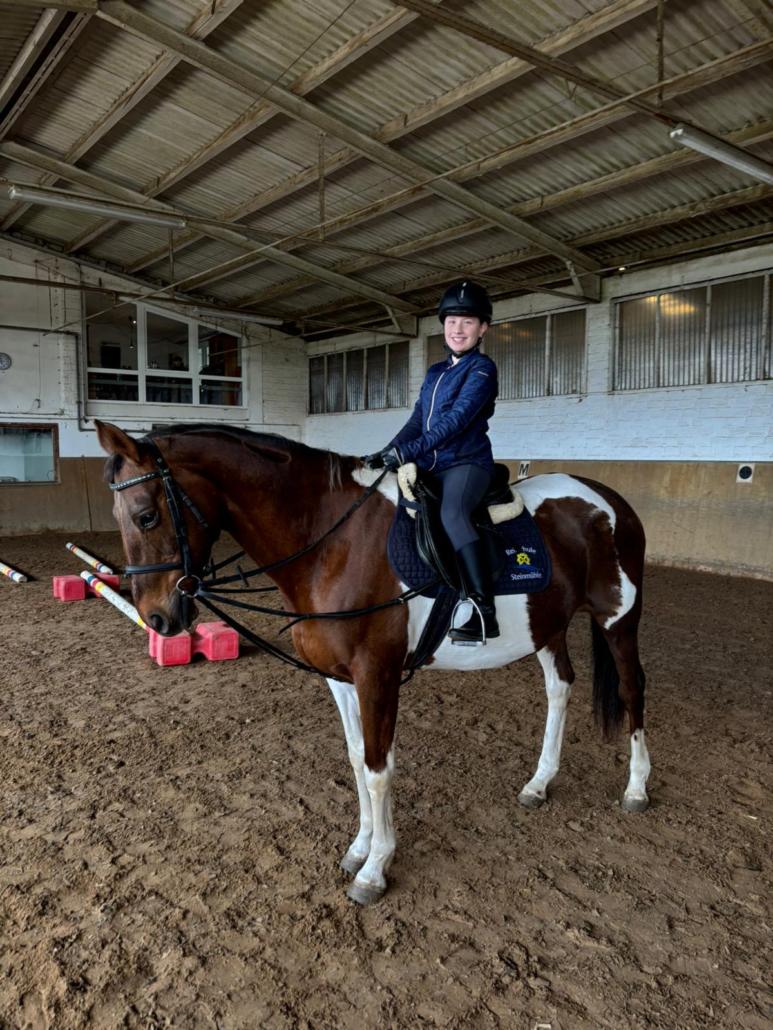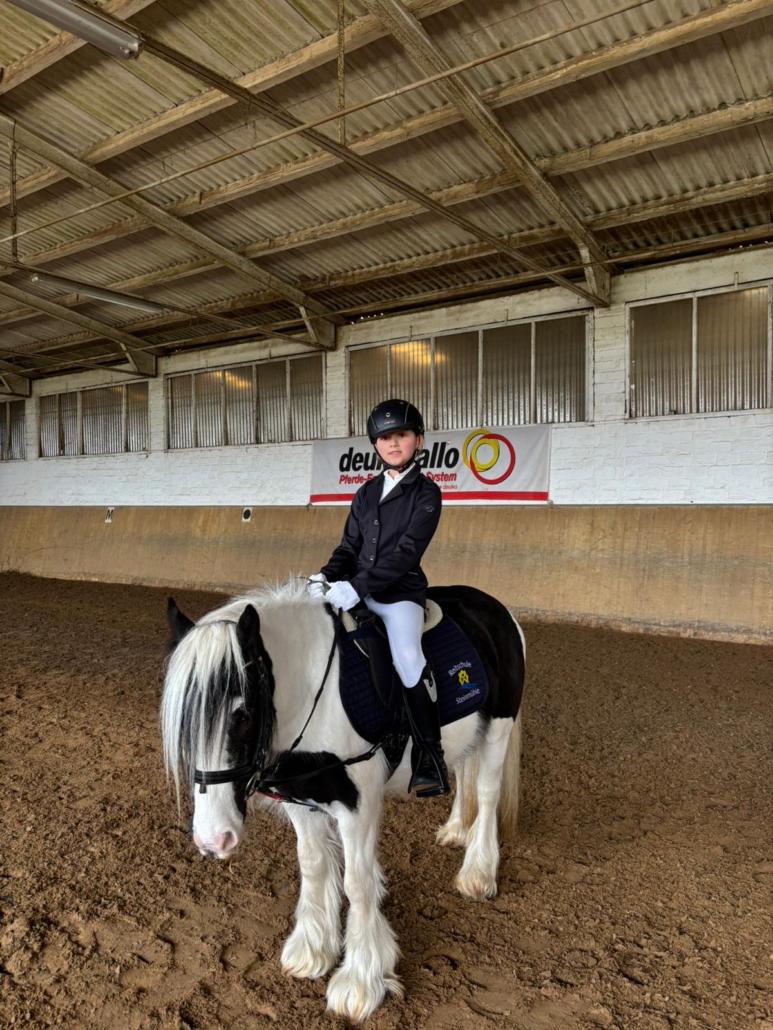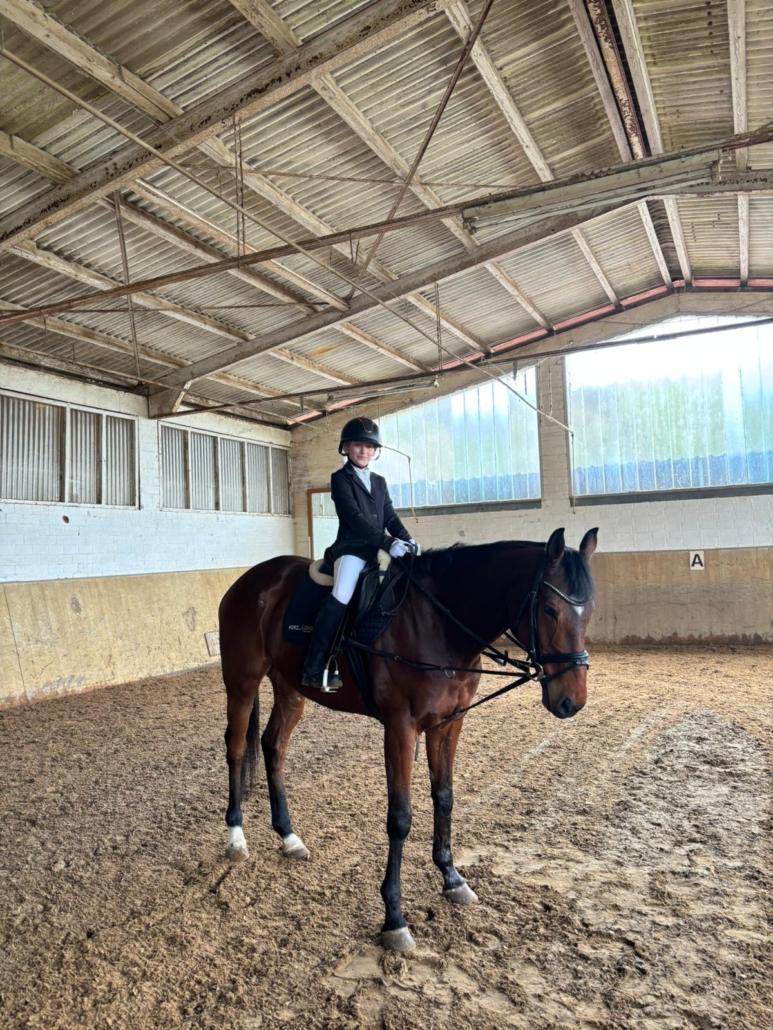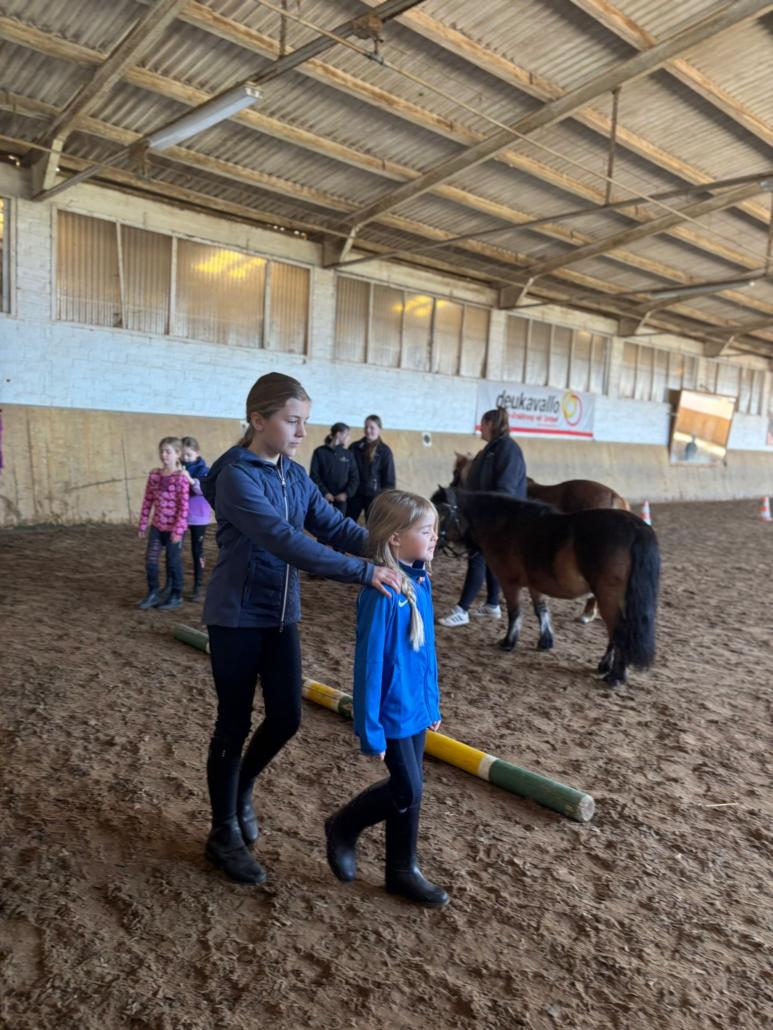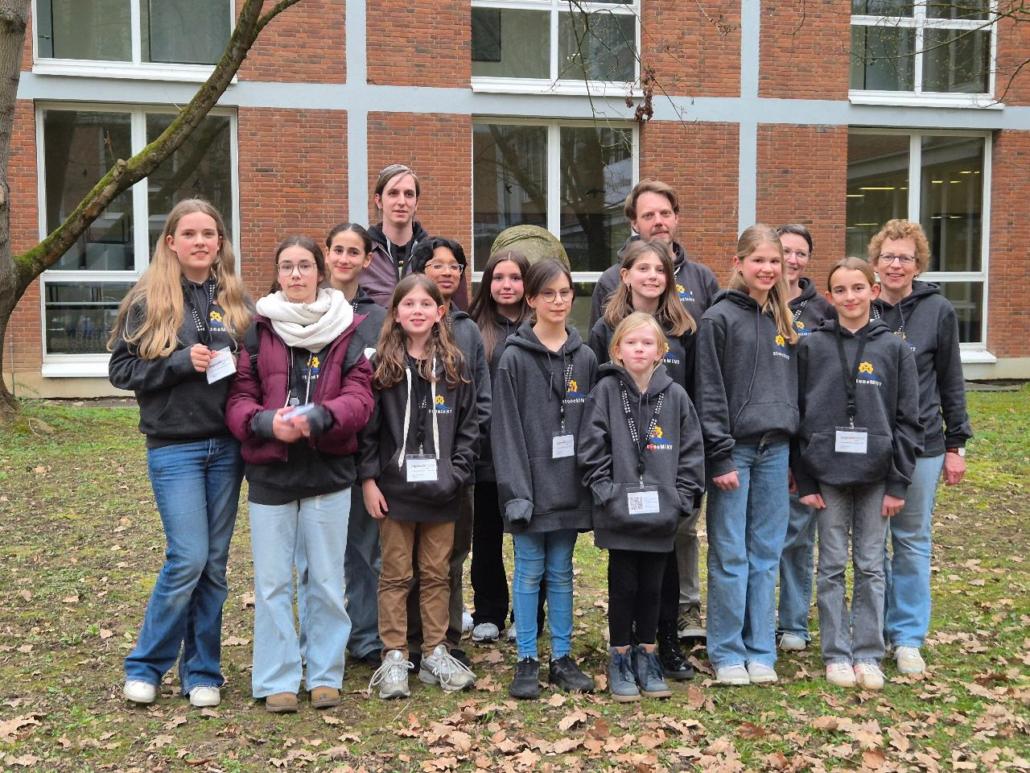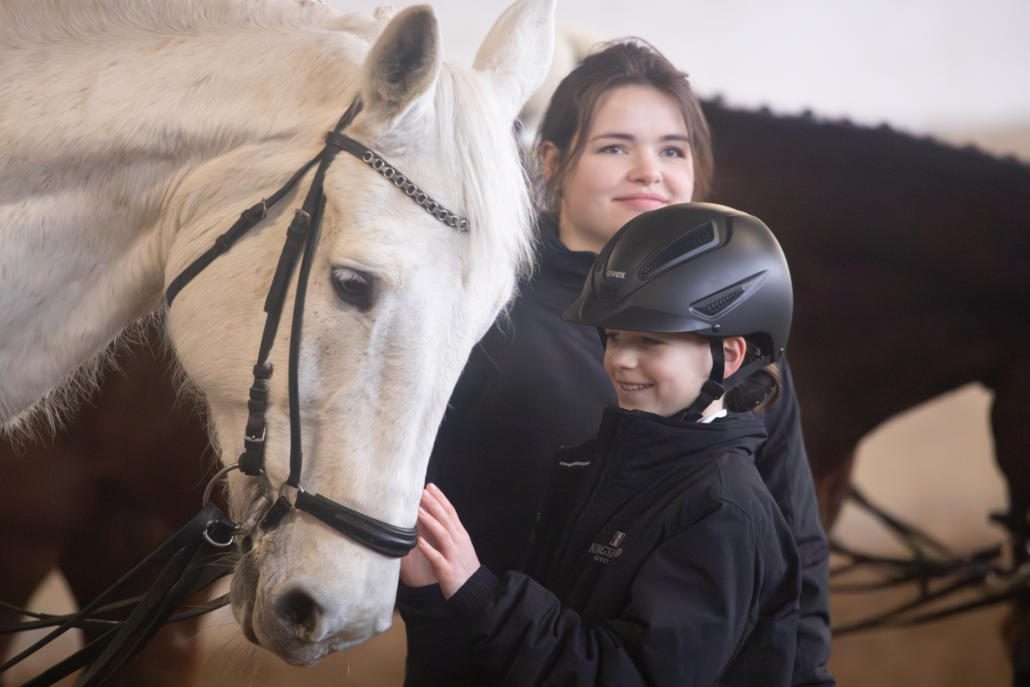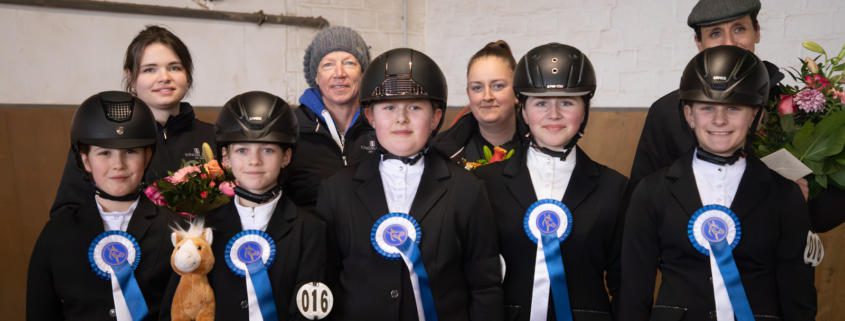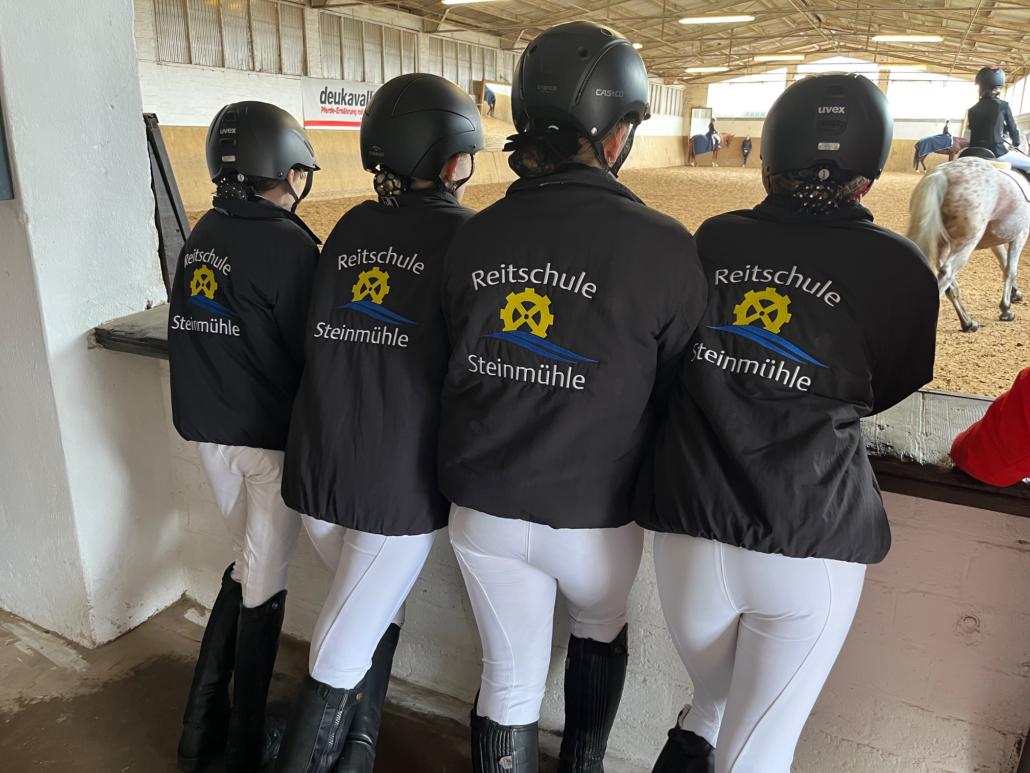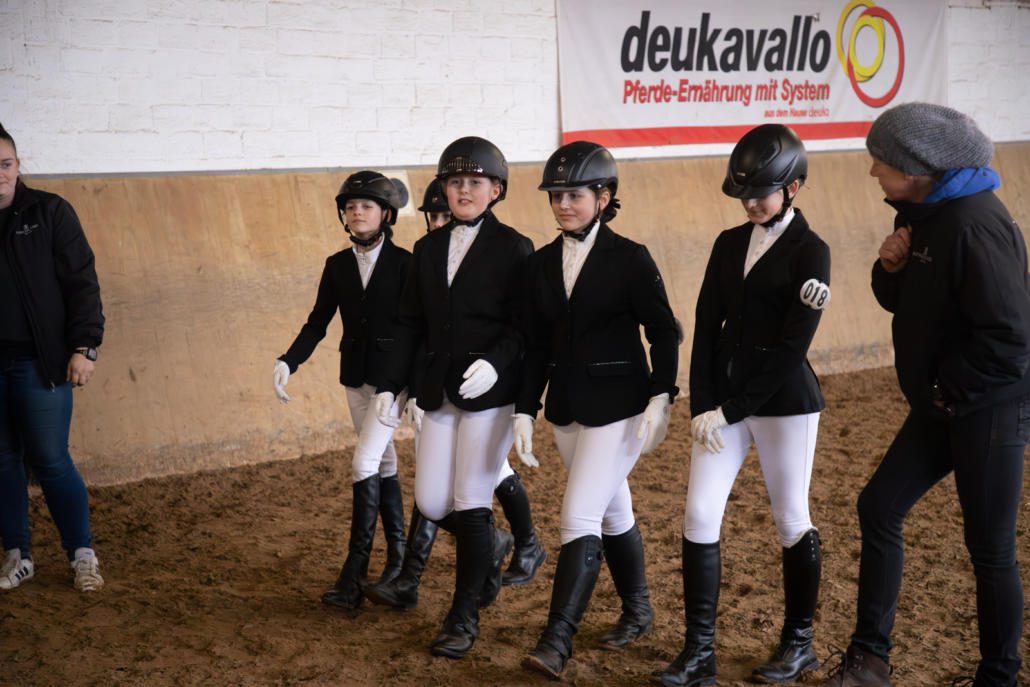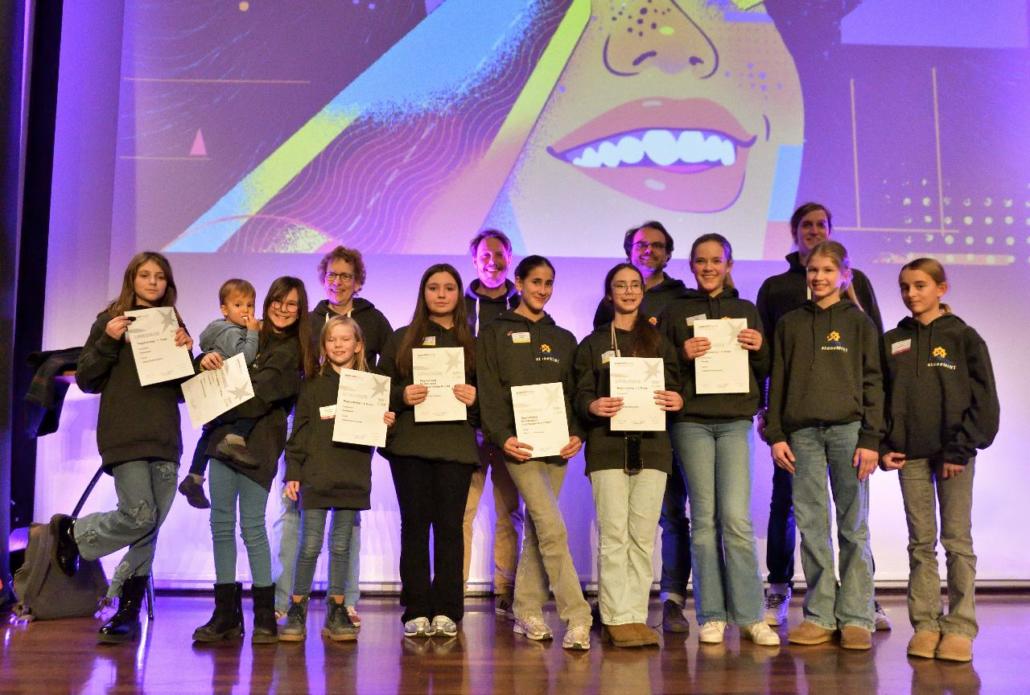


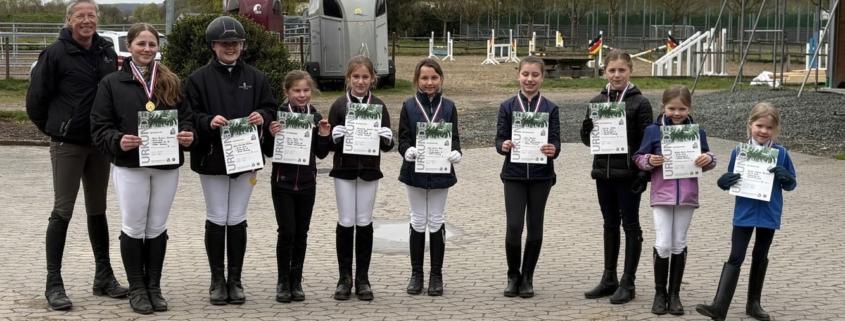
With plenty of enthusiasm, team spirit, and a passion for horses, ten girls aged 7–12 completed a course at the riding school of the Steinmühle boarding school. Under the guidance of course instructor Beate Schridde, the young horse enthusiasts learned all the necessary skills during the last week of the Easter break to earn their achievement badges at the end of the course. The exam consisted of riding, theory, and ground work.
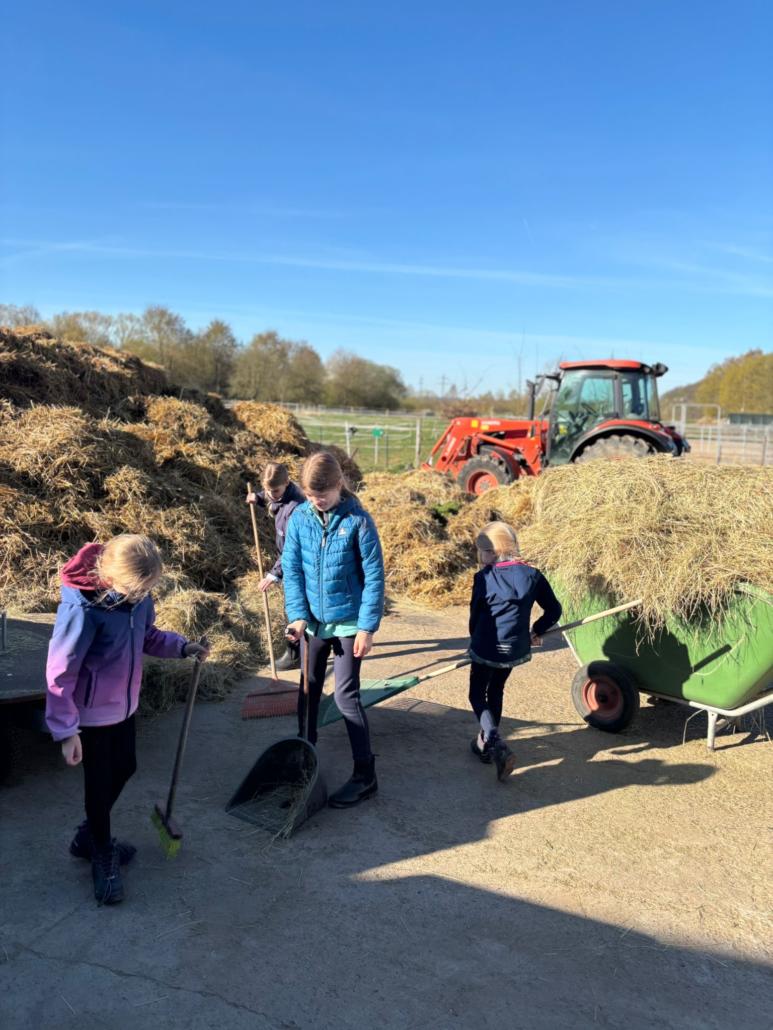
Various tasks awaited us at the riding stable
The course team—consisting of Sabrina Schneider, Chiara Cordes, Amaia Balzer, Julia Werth, and Anni Bohn—led the participants through various activities each day of the course. Starting at 9 a.m., after a meeting and welcome, the schedule included farm chores such as tending to the horses, sweeping the yard, and cleaning up manure from the paddocks. Then it was time to groom the horses. To boost everyone’s enthusiasm a bit more, a grooming competition was held, with the promise of a grooming trophy at the end of the week.
Under expert guidance, the horses were then saddled and bridled. Afterward, the girls rode in three groups.
Animal Care
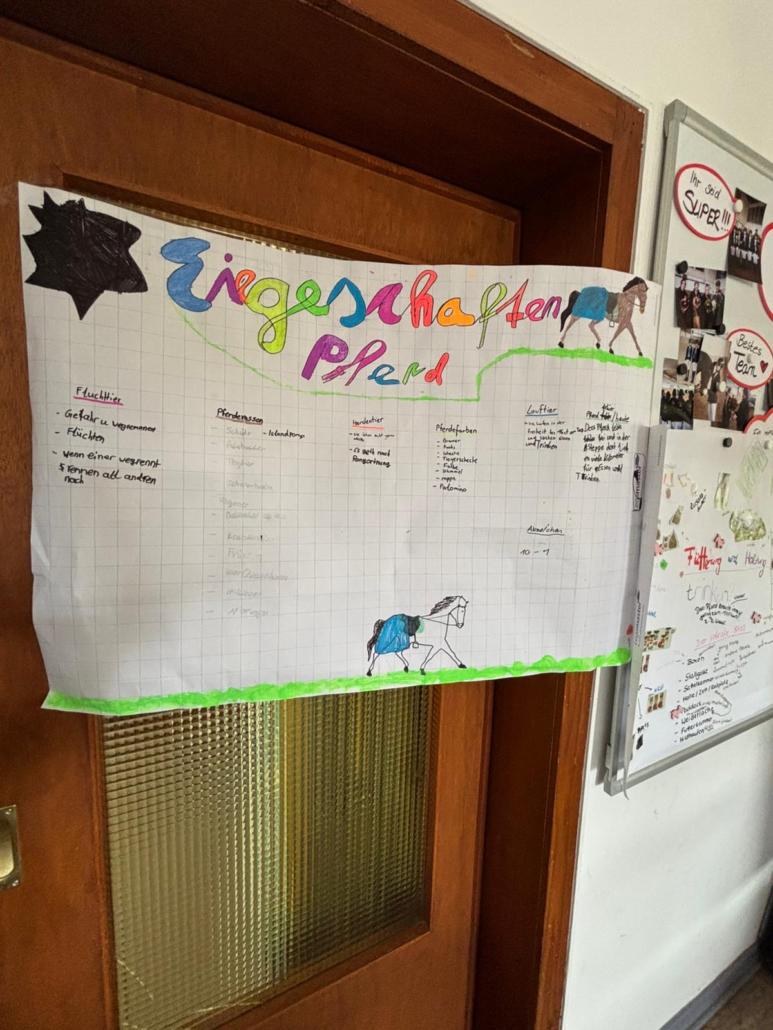
How do you properly care for horses? That was also a topic covered during the training week. Along the way, the participants absorbed the necessary theoretical knowledge. Together, they created posters to help them better internalize the individual topics. The young riders then proudly presented their insightful results to the entire group. Really well done!
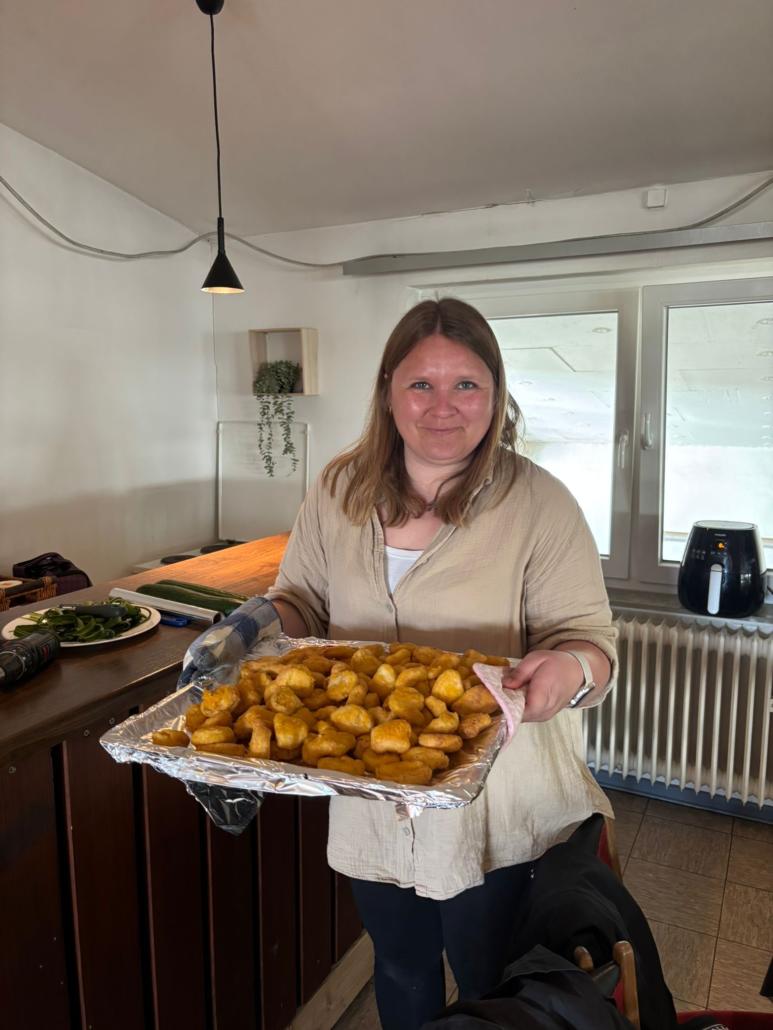
Balanced Meal Plan
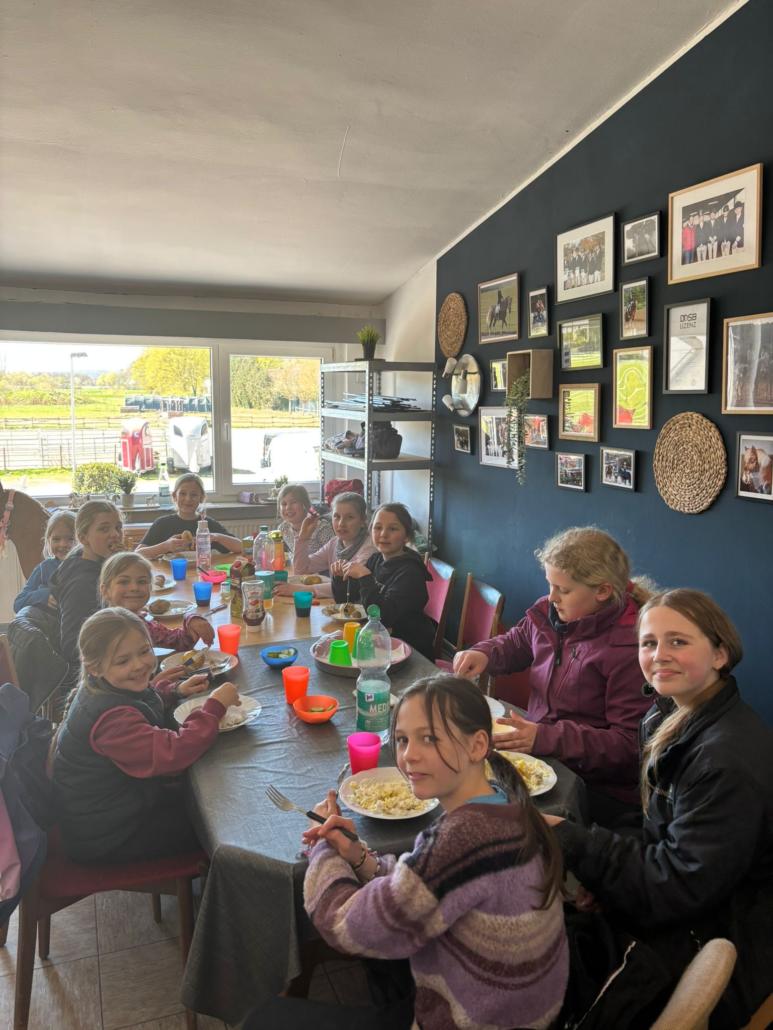
Next up was ground work—with ponies and on foot. After lunch together at the Reiterstübchen, featuring a specially planned menu, everyone enjoyed some playtime together in the riding arena and in the tent before parents and relatives arrived to pick them up at 2:00 p.m.
Enormous progress
“It was a really great week with the girls; they all got along really well, and their progress in riding from Day 1 to Day 6 was truly remarkable!” Julia Werth says enthusiastically.
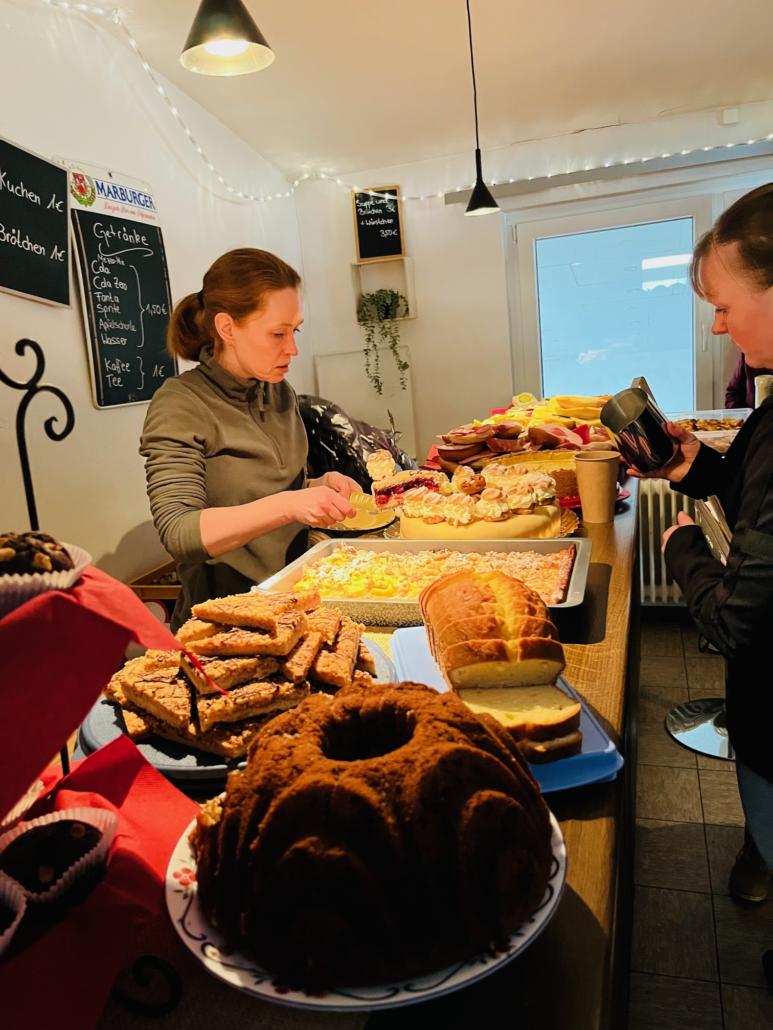
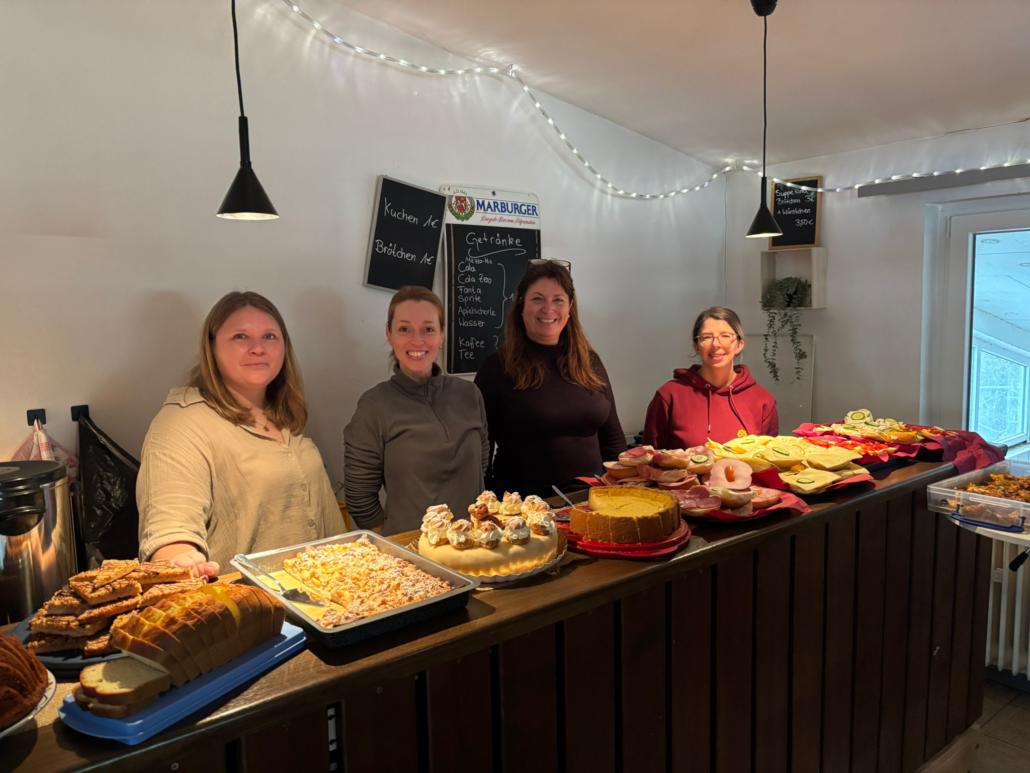
On the day of the exam, family members watched, and there was a delicious potluck buffet. During the exam, the students had to demonstrate what they had learned under the watchful eye of the judge.
Personalized Support from the Riding School Team
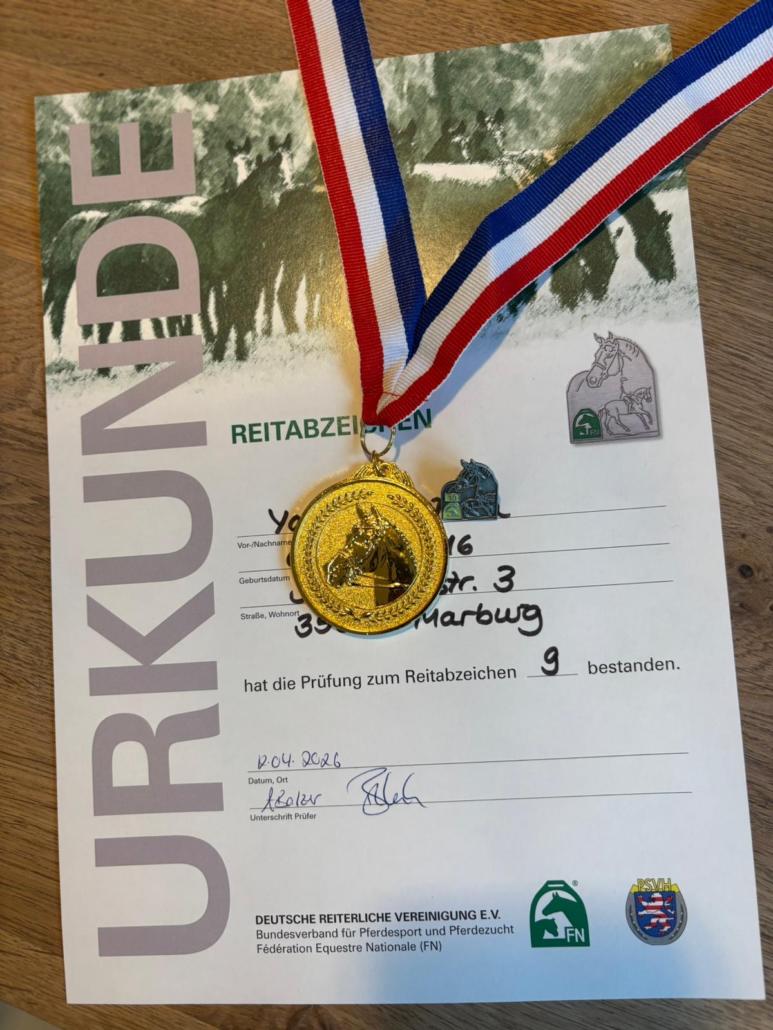
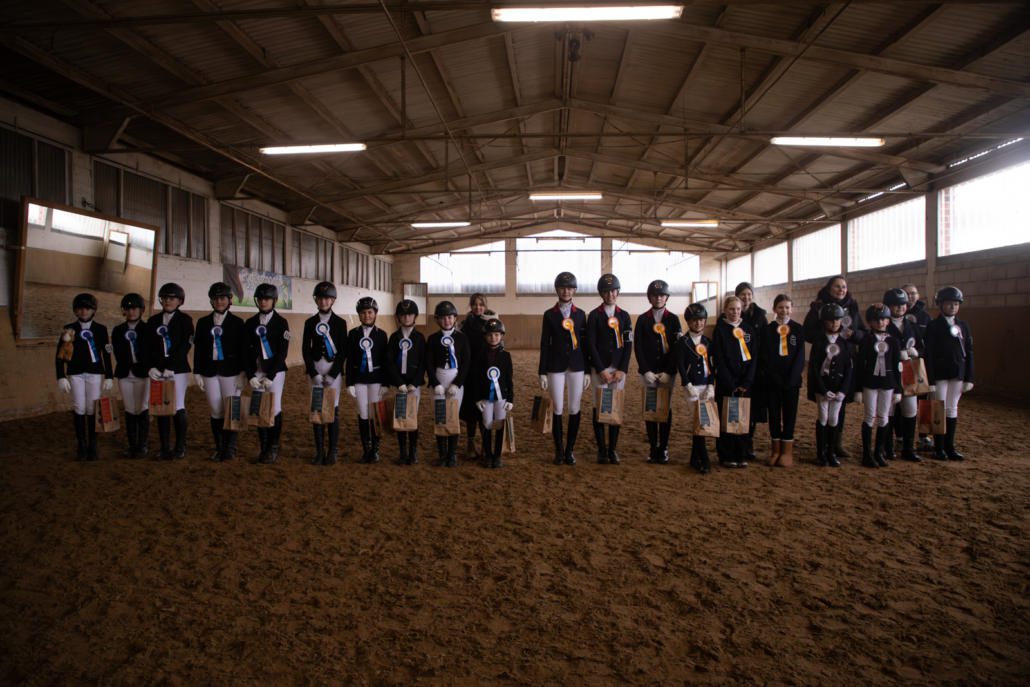
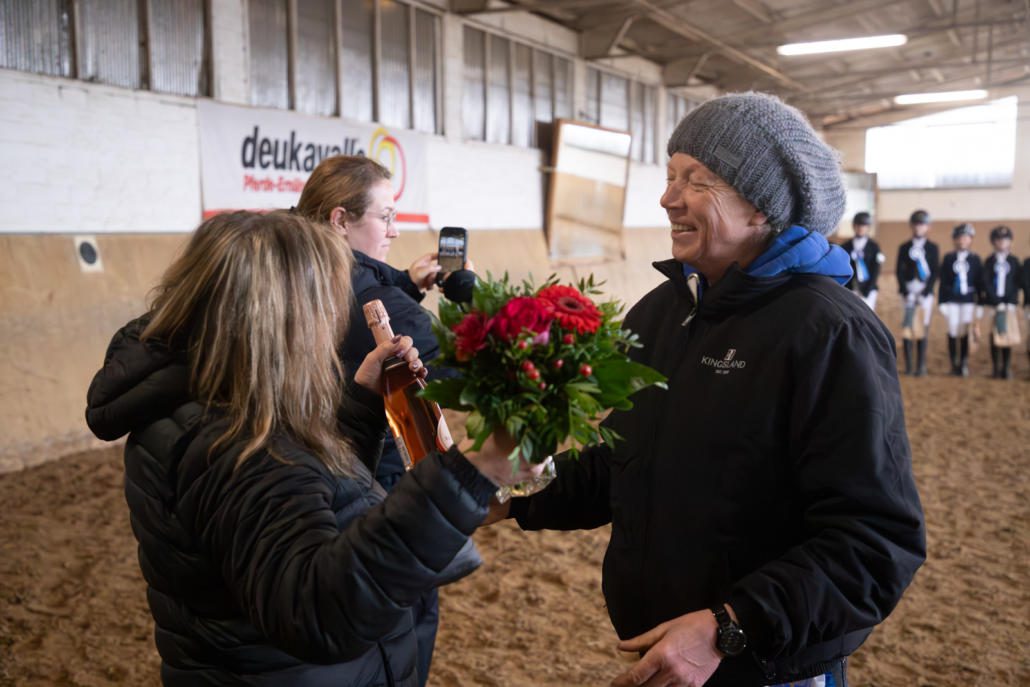
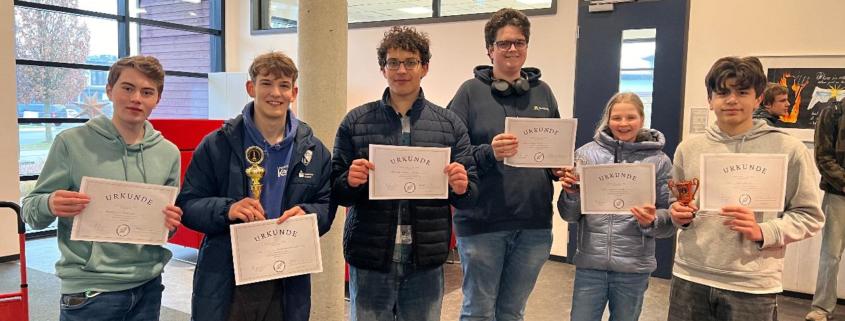
Some of the children were very excited, but thanks to the attentive guidance of the riding school team and their mutual support, all the riders passed their motivation badge test with flying colors and were beaming as they received their certificates.
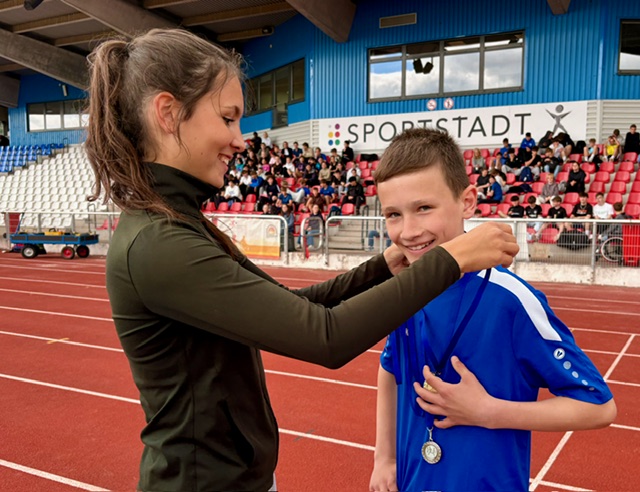
The grooming competition prize was quickly changed to medals for everyone, since it was impossible to choose a single winner. Everyone did such a great job and made the ponies’ and horses’ coats shine!
The following badges were developed:
Motivational Badge 8:
Greta Emilie Reimann
Elise Charlotte Backes
Marie Di Cato
Anna Ayiana Schneider
Motivational Badge 9:
Cleo Emilia Bohn
Julia Geisler
Annabelle Estelle Wenz
Yasmin Werth
Motivational Badge 10:
Maya Sophie Mey
Frieda Sophia Reimann
The Badge System as a Measure of Training Progress: What Do Badges 10 through 6 Mean in Equestrian Sports?
You can find answers to this question at the following link on the website of our partner, the German Equestrian Federation (FN): https://www.pferd-aktuell.de/ausbildung/abzeichen-im-pferdesport/abzeichen-im-pferdesport
Interested in a course or riding lessons?
The next course at Steinmühle is already in the planning stages; for more information, visit https://reitschule.steinmuehle.de/
Those interested can find information about riding lessons at reitschule@steinmuehle.de
(Heinm)