Germany’s best-known competition for young talent in mathematics, computer science, natural sciences, and technology—Jugend forscht—kicked off on Friday. And once again, this competition ended with an outstanding performance by Schule & Internat Steinmühle!


Standing out among 34 teams

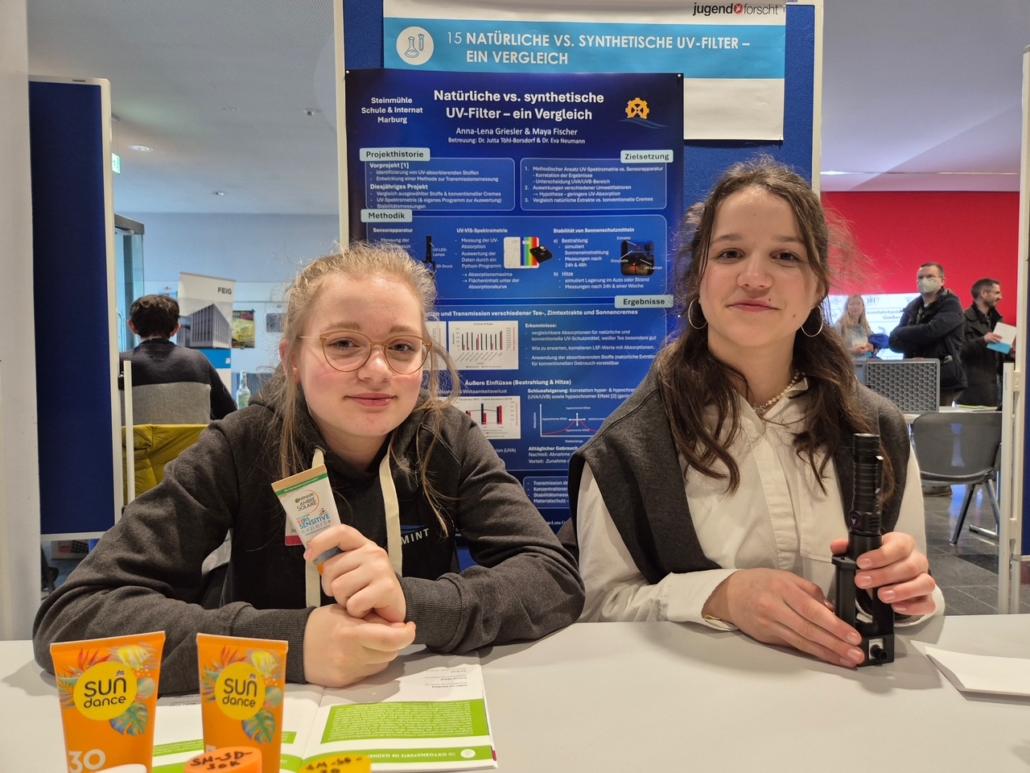
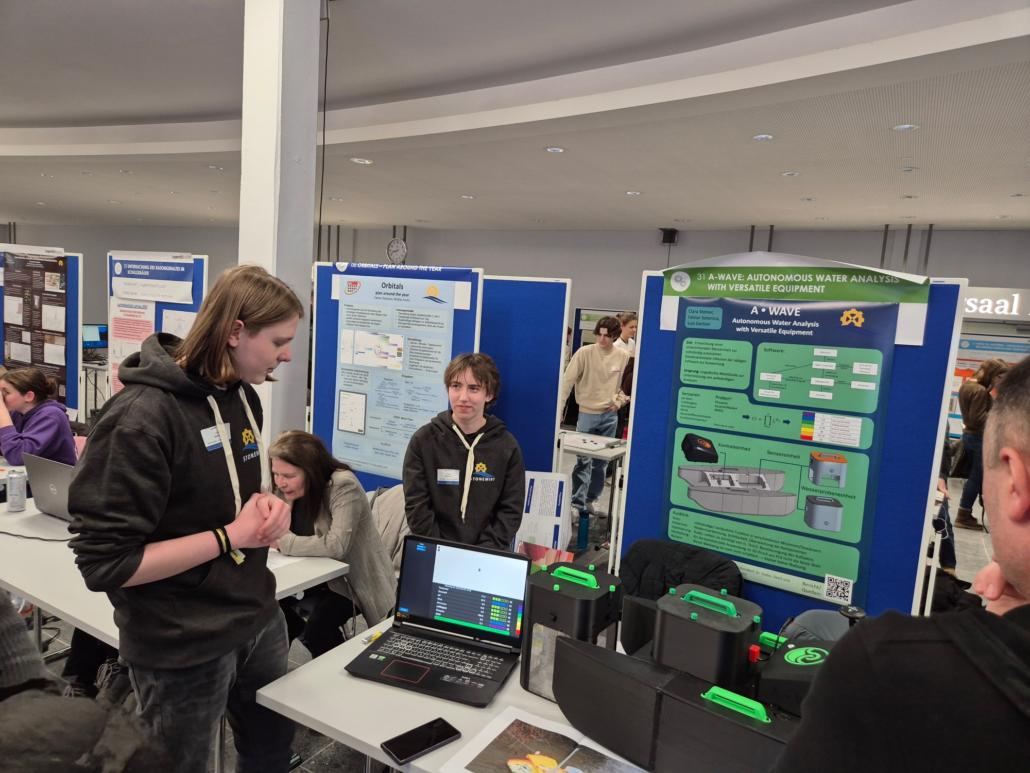
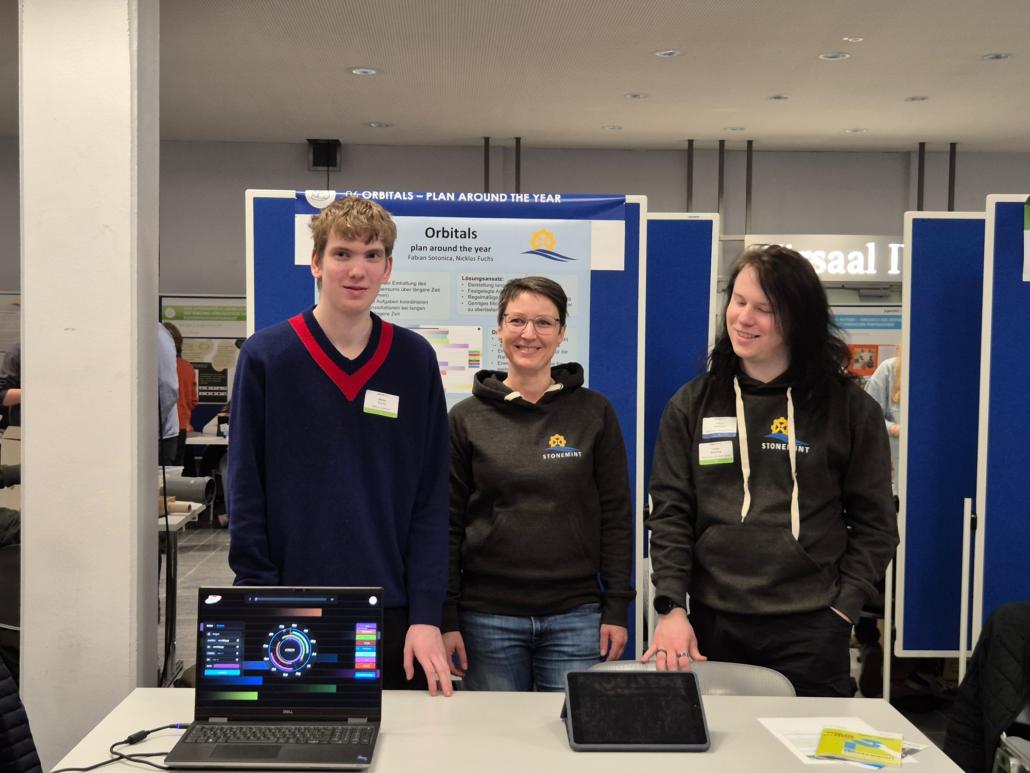
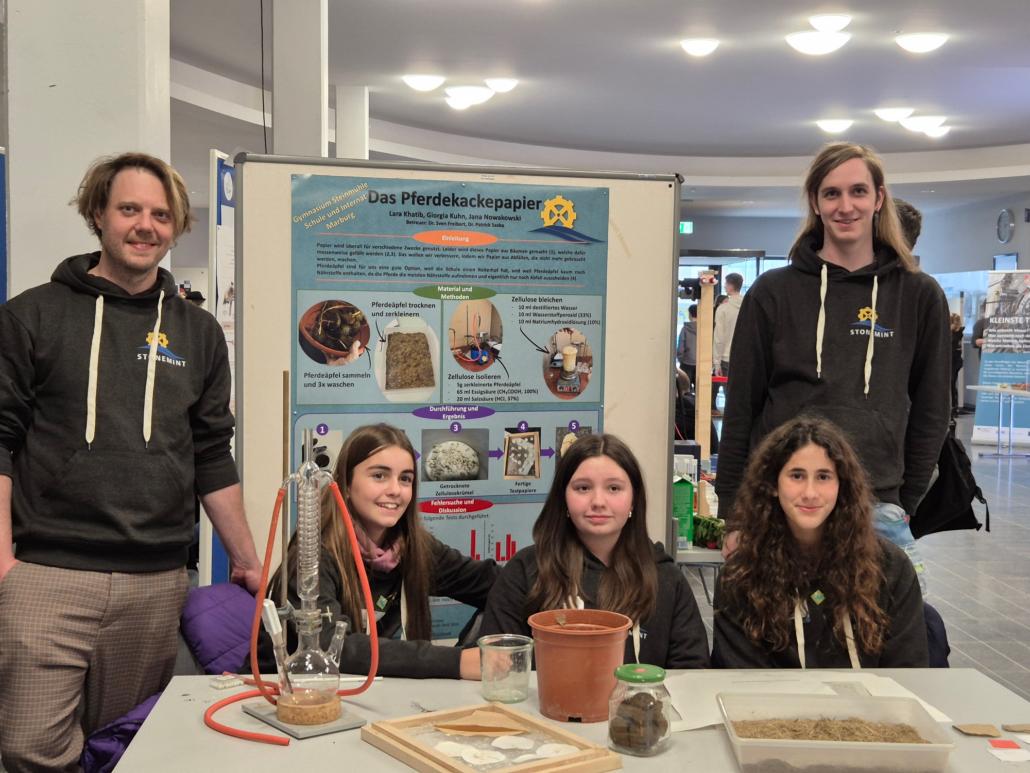
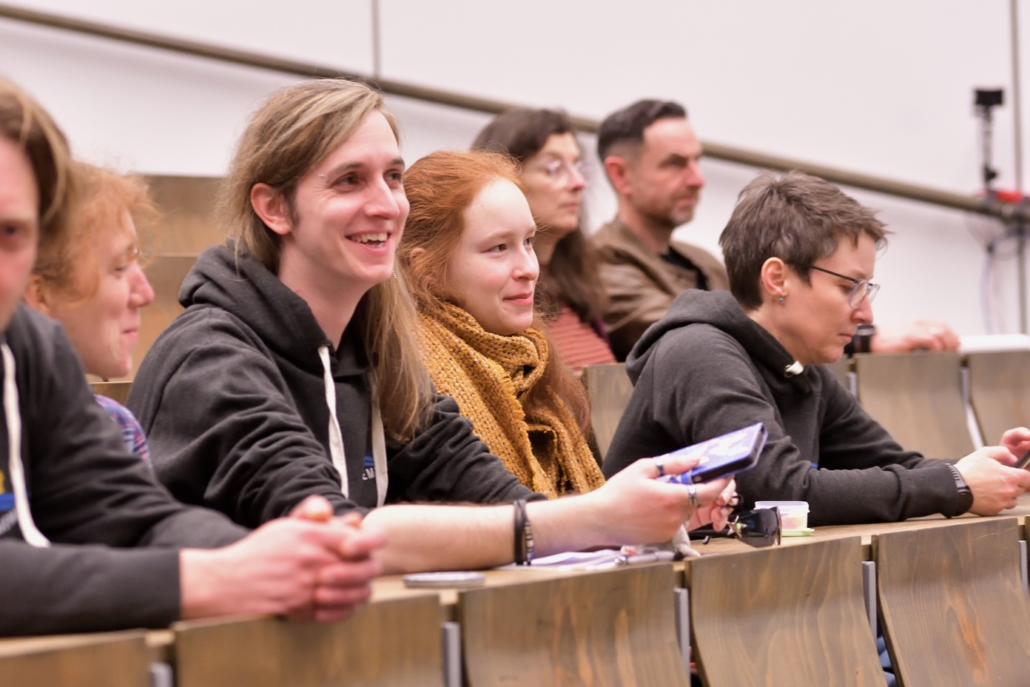
At the Central Hesse Regional Competition, coordinated and organized jointly by Justus Liebig University Giessen and the Technical University of Central Hesse, Steinmühle took home the regional title with no fewer than four projects! A total of 34 teams presented their research and experiments to a 24-member jury, after which other interested attendees had the opportunity to ask the participating groups various questions.


Collaboration Between Two plus-MINT Boarding Schools

We’ll be presenting the experiments over the next few days, including, as a special feature, a collaborative project with the Louisenlund Foundation—which, like the Steinmühle, is a plus-MINT boarding school. We’re proud of the entire group, including the teachers led by MINT coordinator Dr. Jutta Töhl-Borsdorf. Thank you all so much! Simply amazing!


It was an exciting day for Aurelia Wild, a fourth-grader at the Steinmühle Bilingual Elementary School: She had registered for the 64th Math Olympiad, and now the Hesse state round was getting underway. After a welcome address at the Mathematikum in Giessen by its director, Prof. Albrecht Beutelspacher, Aurelia and her fellow contestants were shown to their workstations. For two hours, the children worked on interesting math problems before they had the chance to thoroughly explore the experiments at the Mathematikum. During this time, many dedicated teachers graded the submitted assignments.


“Silver” in the state competition

At 2:00 p.m., the awards ceremony finally began. First up were the third-graders, and the excitement kept building—even for Aurelia. Then the certificates of participation were awarded to the fourth-graders—and that’s when it became clear that Aurelia was among the winners. She was overjoyed when she was even called up to receive second place!


Parents Thank Teachers for Their Motivation

Aurelia proudly accepted her certificate and prize. She’s already certain: “I’ll be back next year!” The teachers led by Lorraine Herrmann from the administration of the Bilingual Elementary School and Steinmühle Principal Björn Gemmer are also proud. Aurelia’s mother, Lydia, is delighted: “We’d like to thank Steinmühle for encouraging its students to participate in competitions like the Math Olympiad.”

In-depth insights through engaging workshops: For four days, 23 students in grades 10 and 11 from the Louisenlund, Sankt Afra, and Birklehof boarding schools immersed themselves in mathematics and related STEM fields. For the third year in a row, the plus-MINT Math Camp at Steinmühle provided an inspiring platform for young talents with a special passion for numbers, logic, and analytical thinking.


A Warm Welcome

Our guests were picked up right at the train station and welcomed at the bistro with snacks and drinks—a well-deserved refreshment after their journey, which had been long for some. Afterward, they went straight into the first workshop, led by engineers from the Office of Land Management. During the workshop, the students explored fascinating topics in surveying and learned, among other things, how to calculate the continental drift of the Eurasian Plate. After dinner together, the participants met in the tea room to discuss organizational details and make their final preparations for the upcoming International Bolyai Mathematics Competition.


Bolyai Competition and Workshops

The next day began with participation in the Bolyai Competition. Afterward, Dr. Karl-Heinz Muth led an engaging workshop on the topic “Mental Math—A Forgotten Art Between Variety Show and Everyday Practicality.” During the workshop, participants were introduced to impressive computational skills, such as calculating the exact day of the week for any given date—a fascinating blend of mathematical logic and practical skill.


Variety in the Program

After lunch, the group headed to the Lahnberge, where Prof. Dr. Elmar Tischhauser from the Department of Computer Science captivated the audience with a practical lecture on cryptography. After an eventful day, everyone returned for dinner, and many then took the opportunity to burn off some energy with the sports activities on offer—a welcome change of pace from the intensive program.


Mathematikum: A Must-See

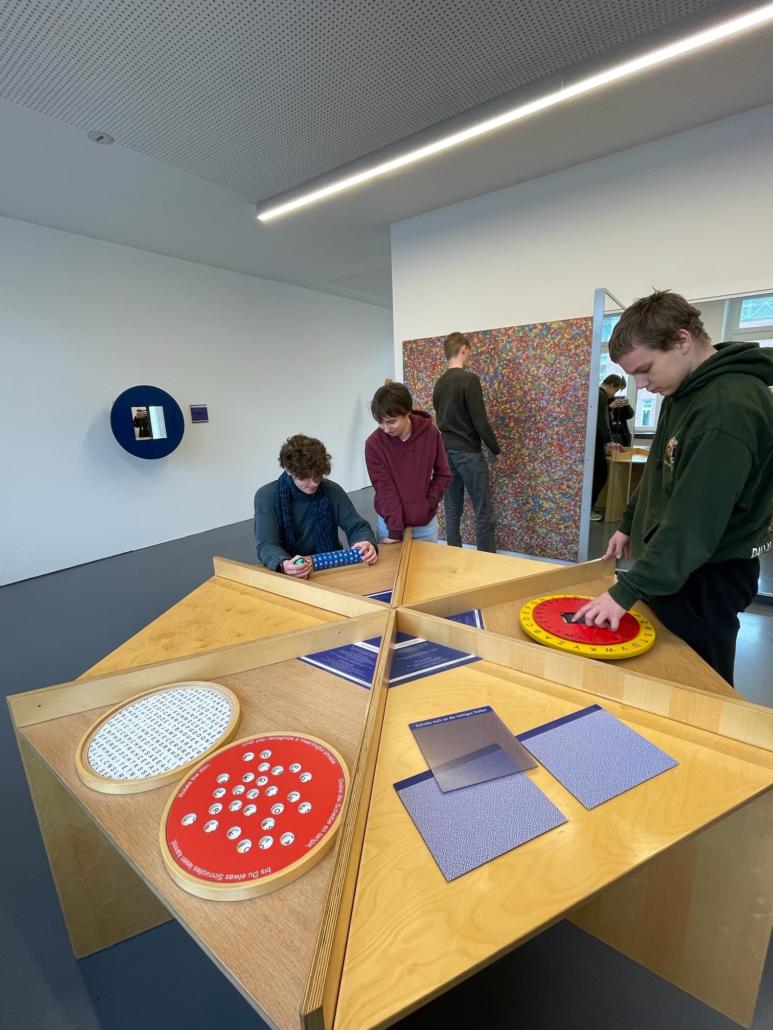
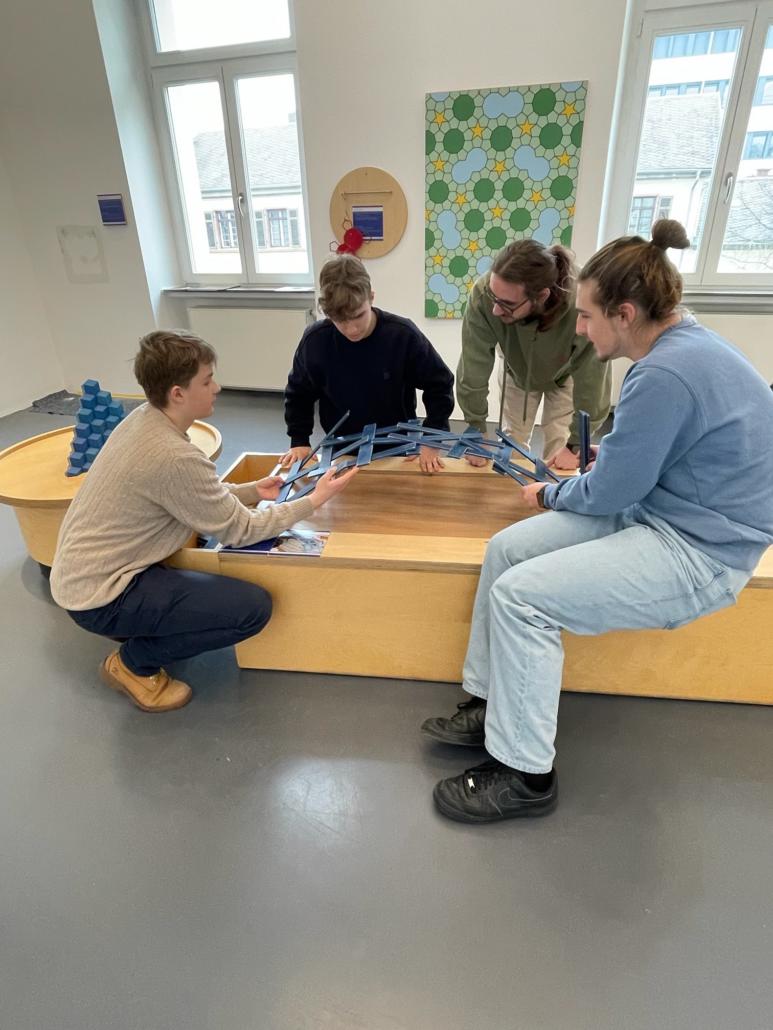
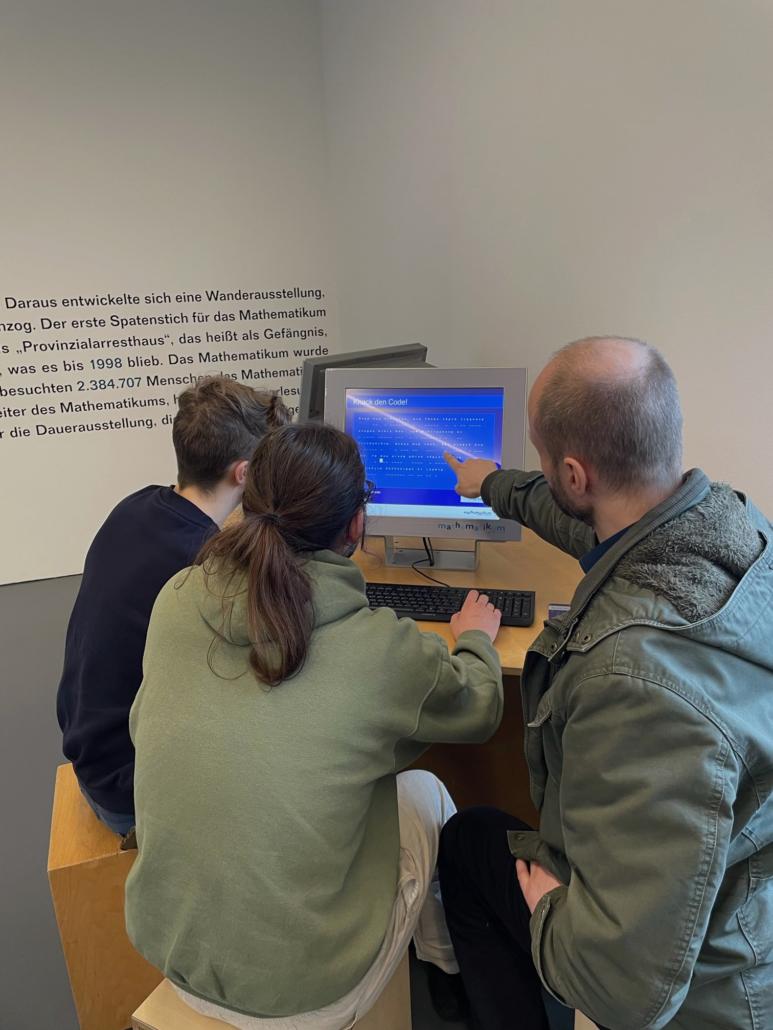
The Mathematikum in Giessen was the destination for the next morning’s excursion. The exhibits and activities at this well-known, large hands-on museum never fail to captivate visitors. Back in Marburg, the group headed once again to the multipurpose building on the Lahnberge, where Prof. Dr. Patrick Mehlitz discussed fundamental questions of mathematical optimization with his young guests.


Experience Industry Up Close

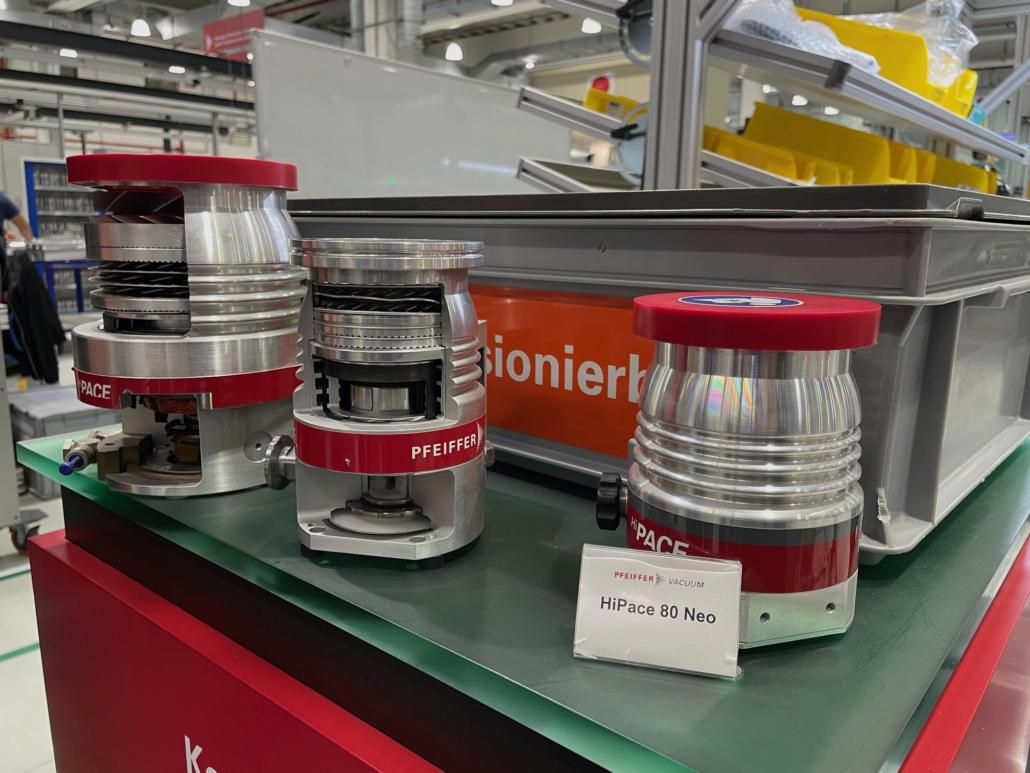
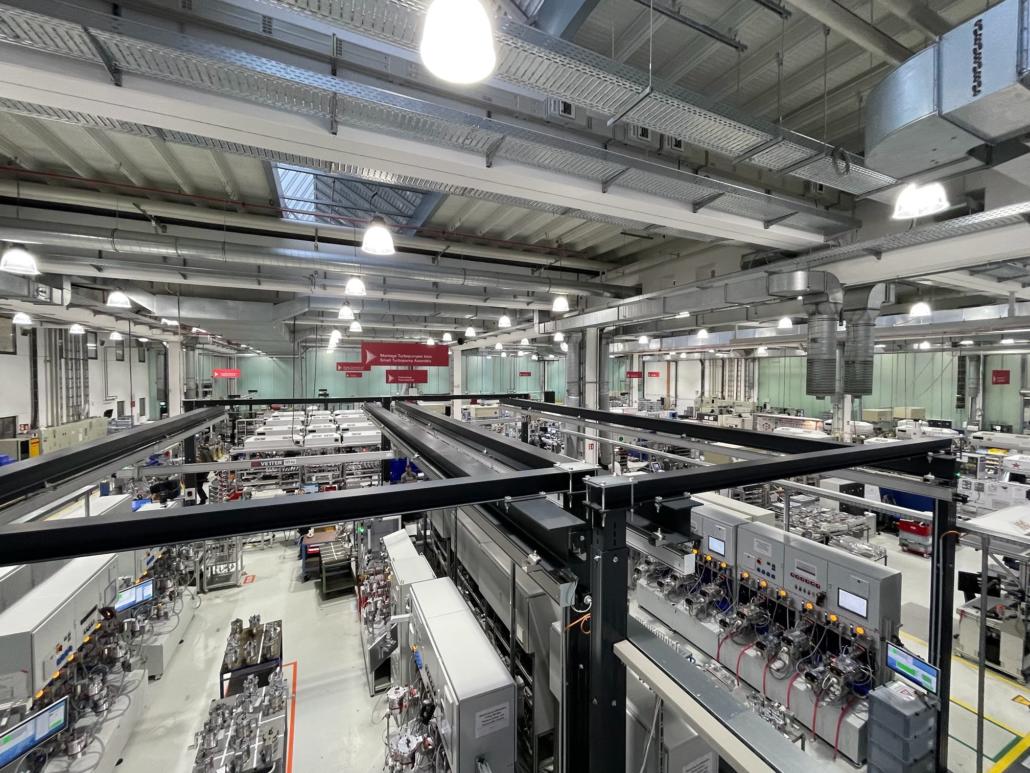
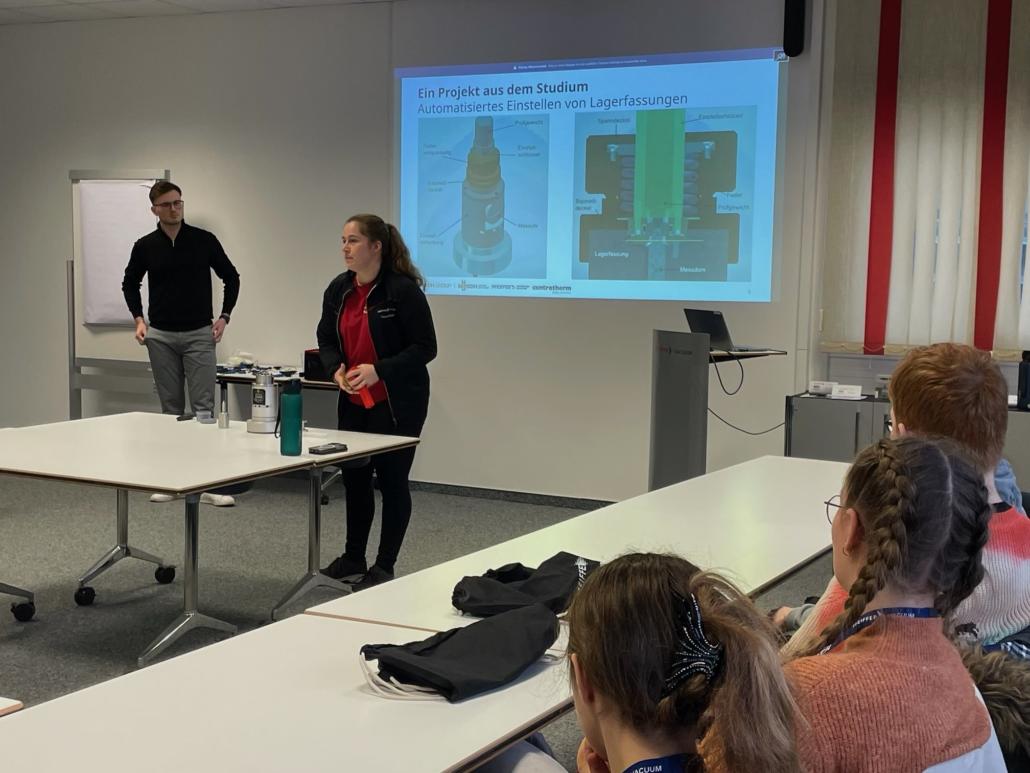
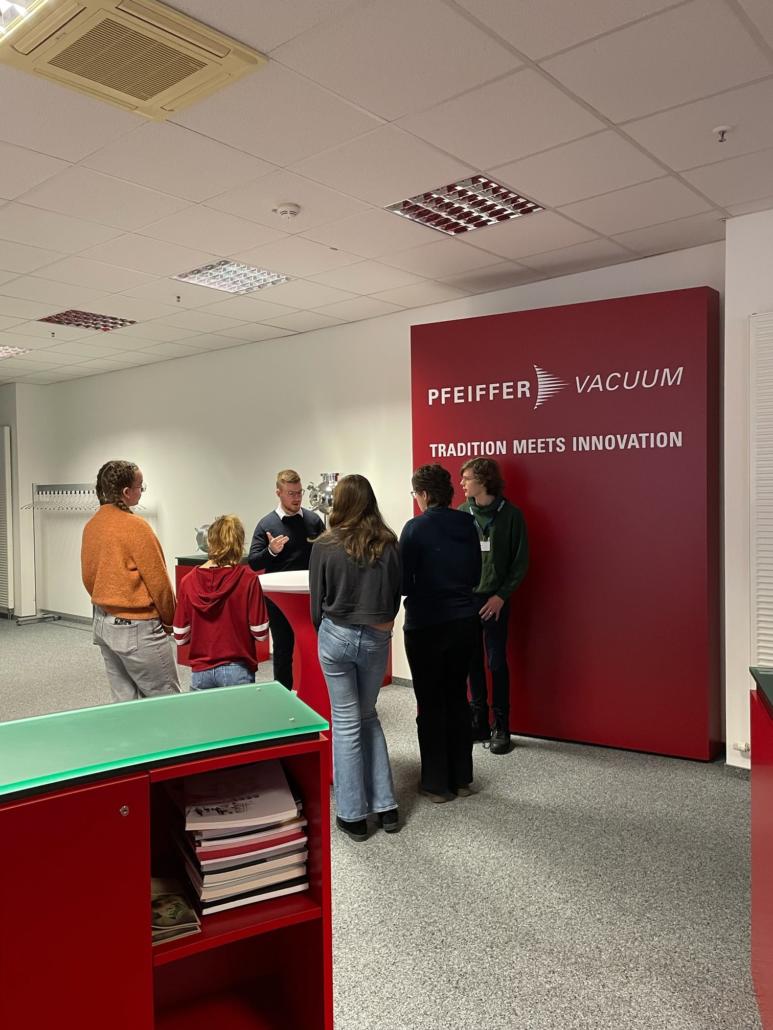
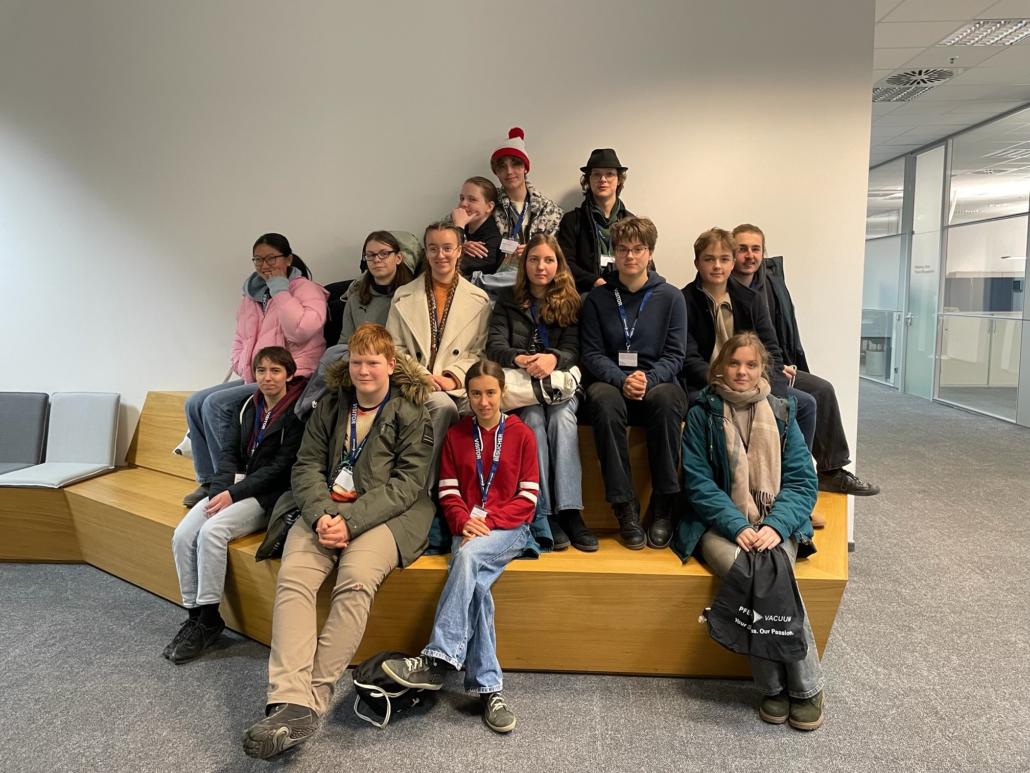
The evening was celebrated with a festive dinner in the cafeteria, as it was, unfortunately, the last one the group of STEM enthusiasts would be able to spend together. The next day’s itinerary included one final excursion to the neighboring Lahn-Dill district. The visit there to the mechanical engineering company Pfeiffer-Vacuum not only offered interesting insights into technical applications but also gave the young people the opportunity to talk directly with students and recent graduates in the fields of mechanical engineering, business informatics, and industrial engineering. During the visit, they were able to ask valuable questions and received helpful guidance regarding their own career prospects.


Farewell and Outlook

After four eventful days, it was finally time to say goodbye. Around noon, the young talents set off for home—full of new impressions, experiences, and (hopefully) inspiration. The time we spent together, during which everyone was able to pursue their passion for STEM subjects, will surely remain in our memories—and those of our guests—for a long time to come.

The plus-MINT Camp, organized by math teacher Maximilian Moll, is an initiative of Steinmühle and is supported by the Association for the Promotion of MINT Talent.

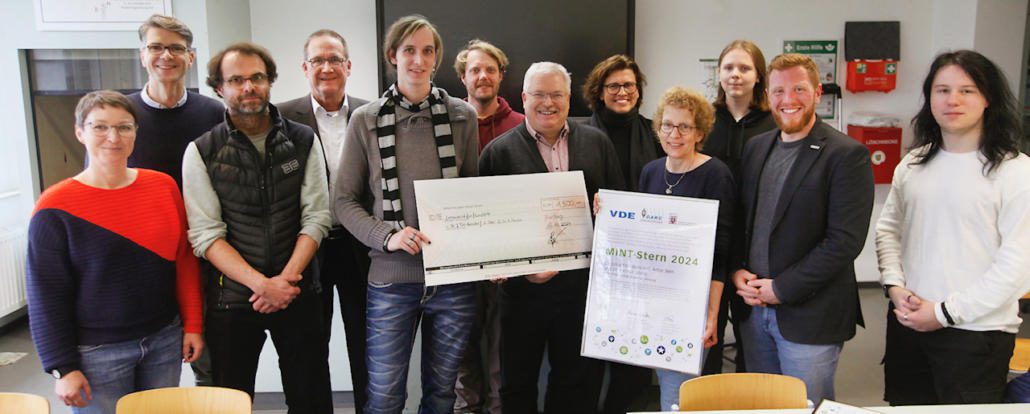
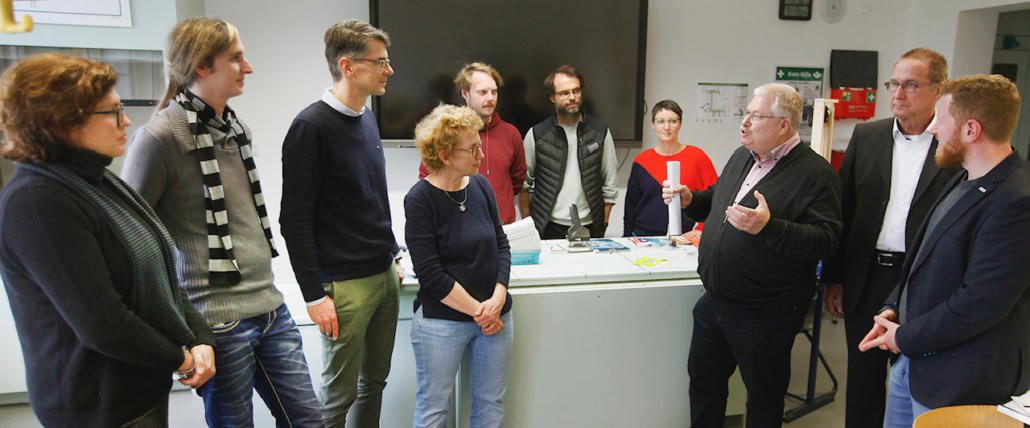
A grand reception on our campus: Steinmühle welcomed a five-member delegation to accept a very special award in the STEM field. The Association for Electrical, Electronic, and Information Technologies (VDE) and the German Amateur Radio Club (DARC) awarded the Steinmühle School & Boarding School the STEM Star 2024, thereby recognizing “outstanding and sustained commitment to the fields of mathematics, computer science, natural sciences, and technology.”


The interplay between the disciplines was convincing

Individual teachers and teams from schools in Hesse were eligible to apply. “With a STEM Star, we recognize projects and programs that demonstrate exceptional impact, continuity, and ingenuity,” said Dr. Kevin Rick, director of VDE Südwest. The award was presented to STEM coordinator and head of the STEM gifted education program, Dr. Jutta Töhl-Borsdorf, her colleague Antje Seel, and her colleague Dr. Patrick Szabo. “Without qualified guidance that inspires students and spurs them on to peak performance in research and experimentation, such outstanding achievements would not be possible,” commented the laudators, including Thomas Beiderwieden from VDE Rhein-Main and Christian Entsfellner from DARC, in recognition of their work. In the case of Steinmühle’s winning project, “Water Analysis 2.0,” the jury was particularly impressed by the interplay of the disciplines involved in the project—ranging from ecology to programming to model building. The team of students from the Plus-MINT track at the Steinmühle boarding school thus advanced to the national finals of “Jugend forscht” this early summer. This project involves a measurement platform developed and built by the students themselves to determine water quality (we have reported on it several times).


Minister of Culture as Patron

“Steinmühle is delighted to receive this very special award and is proud of everyone who contributed to it through their hard work, perseverance, and dedication,” said Principal Björn Gemmer on behalf of the award recipients, who received certificates and prize money totaling 1,500 euros. For Steinmühle, this serves as an incentive to continue investing energy in this area. Because, as you can see, it’s worth it in every way!

The award ceremony, held under the patronage of Armin Schwarz, Hessian Minister of Culture, was celebrated by the participants with a meal together in the dining room of the Steinmühle. And there, too, there was plenty of praise—for our cuisine.


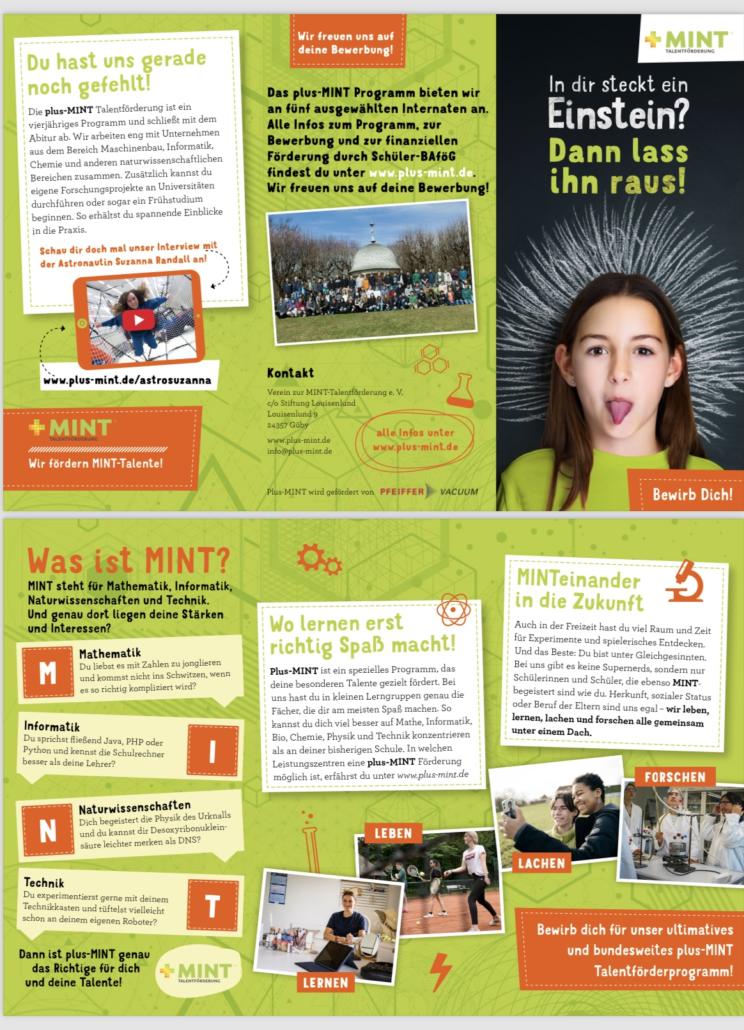
The Association for the Promotion of STEM Talent (Verein zur MINT-Talentförderung e.V.) has unveiled its new plus-MINT flyer! So if you really enjoy math, computer science, natural sciences, and technology, are quite successful in these areas, and can imagine attending a plus-MINT boarding school like Steinmühle, you’re warmly invited to take a look at the flyer and apply if it sounds like a good fit for you. The flyer for the plus-MINT program can be viewed in this post, but is also available for download: pm_flyer-2025-26#web

With their boat project, Clara Steiner, Luis Gerloni, and Fabian Sotonica from the plus-MINT program at Schule & Internat Steinmühle advanced to the national “Jugend forscht” competition, which took place this year over four days at Germany’s largest science center, Experimenta in Heilbronn (as we reported). Reaching this level marks Steinmühle’s greatest success to date in this field!

You can now also find more information and replicate the platform on our website (https://boatproject.steinmuehle.de/). The first schools in the Marburg-Biedenkopf district and the Central Hesse Student Research Center (SFM) have already expressed interest.

The “Boot Project,” which involves the construction and programming of a low-cost measurement platform for automated water analysis, was carried out in collaboration with Dr. Christoph Reudenbach from the Department of Geography at Philipps University of Marburg.

Marlene Bigeschke from the plus-MINT program also helped build the platform. The project was supervised by the plus-MINT team at Steinmühle, which includes Antje Seel, Dr. Patrick Szabo, and Dr. Jutta Töhl-Borsdorf, who was also present for two days in Heilbronn.

Just making it to the national round of the “Jugend forscht” competition is something special in itself. That’s quite an achievement! Our “MINTies”—Steinmühle boarding students Fabian Sotonica, Luis Gerloni, and Clara Steiner—have actually done just that. All three attend our boarding school as part of the plus-MINT program. Fabian Sotonica looks back on this amazing event from the second semester. What does he wish for? You get three guesses…

It’s an impressive sight as you ride the escalator down into the exhibition hall: a bustling crowd of young researchers, parents, and chaperones—107 projects with 175 participants. Our booth was located a little further back in the Earth and Spatial Sciences section, number 51. Along the way, you could already see some of the other projects, which, thanks to their uniqueness, size, or significance, made it clear that this was where the competition’s finals were taking place.

We had until the afternoon to travel there and set up. That turned out to be necessary, since it turned out that our Raspberry Pi (microcomputer)—the “brain” of our measurement platform—had been damaged and was no longer working (properly). Fortunately, we were able to turn to the “Jupas” (young researcher mentors), who had accompanied us throughout the four days. Thanks to them, we were able to borrow one of the Raspberry Pis from the Maker Lab there. Their extensive help with all our questions and needs was an unexpected but wonderful introduction to Experimenta, the science center in Heilbronn.

After that, we checked into our rooms at the youth hostel—where we were staying—or rather, at the hotel, though there wasn’t really any difference in quality between the two. On the way to the hostel, we were able to enjoy the beautiful view of the green banks of the Neckar. The evening concluded with a delicious dinner at Experimenta, as well as workshops and presentations at the “Science Dome” on topics such as the Apollo 13 mission.
Project Presentation in No Time
On the second day, things got serious, as the jury interviews were scheduled following a brief briefing (which took place every morning). Each project had two separate jury teams, to whom they had to present their project in 5 minutes before moving on to a 25-minute interview. Outside of these sessions, participants could visit the Experimenta exhibition or relax in the Jufo Lounge. The evening was spent at Campus Founders, where a workshop on starting a startup was presented after dinner.
Search for a spot for the live demo
On Saturday, we had the opportunity to speak with juries from other fields—if they were interested—to prepare our booth for the public, or to evaluate the other projects. In addition to the scheduled photo shoot for our booth, however, we spent a good portion of the time looking for a suitable spot on the Neckar River where we could launch our platform for a live demonstration. But we were unsuccessful: heavy rain and high water levels blocked the few accessible points. At noon, we walked to the “Harmonie” event hall, where the awards ceremony would take place on Sunday. There, we had lunch and went over the ceremony’s schedule.
After we returned, the public exhibition began, and a surprisingly large number of alumni—that is, former participants—took part. During the exhibition, we were able to get brief feedback from our judges at specific times.
After a lively, interesting, but also exhausting exchange with the visitors, we took buses to “RedBlue,” an InterSport event hall where the special awards ceremony took place. Interwoven with the various courses of the meal and the entertainment (the drum group “Bounce”), groups of projects and award presenters were called to the stage. About halfway through, it was our turn: “Award for Original Work in the Field of Geosciences,” sponsored by the German Geological Society – Geological Association.
Afterward, the dance floor opened up and the evening ended with a party, while a regular shuttle service took people back to their accommodations either earlier or, at the latest, by 2 a.m.
Great New Friends
Sunday was the shortest day: another exhibition was held for the (honored) guests of the awards ceremony to give them a chance to get acquainted before the ceremony began.
While the winners in each category from 5th to 2nd place were announced all at once, the national champions were presented individually on stage. Each also received an impressive laudatory speech from the jury. The event also featured a variety of entertainment: European beatboxing champion “Robeat” and “Prof. Bubbles” with his soap bubble tricks provided plenty of variety.
Of course, at the end, we had to take down the booths again. It was a truly wonderful experience, one that involved meeting many great people at all levels and in all areas. I hope and look forward to experiencing this level of competition again.
As a team, we would like to once again express our heartfelt thanks to everyone involved for their extensive and active support, as we could not have carried out this project without their help!

Fabian Sotonica

Podium finish at the Hesse Championships for the Steinmühlen women’s soccer team in Competition Class III: After winning the regional round of the “Youth Training for the Olympics” competition, the team led by Coach Lothar Potthof took home the bronze medal in Frankfurt, making them the third-best women’s soccer team in Hesse in their division.

At the regional tournament, they had three wins against Taunusschule, Gesamtschule Schlitzerland, and FvSS Wetzlar—along with two ties against IGS Busecker Tal and Gymnasium Oberursel, which had won the state championship two years ago. As always, our team played with great dedication and shone thanks to a cohesive team effort. Full of hope and enthusiasm, our players then set off for Frankfurt to compete in the Hesse finals.
At first, things were looking pretty good—despite the pouring rain, our women’s soccer team made it to the semifinals. Perhaps, in the end, they were too cautious and nervous. An unfortunate back pass ultimately led to a 0–1 loss to the team from Offenbach.
Your performances were still fantastic, girls! We want to say a huge thank you—both to our female soccer players for their dedication to the sport and to Lothar Potthoff for his great commitment. We’re already looking forward to seeing more from you! Keep up the great work!

A great success for our Steinmühlen girls’ gig quadruple sculls at “Youth Trains for the Olympics” in Competition Class III: In their very first regatta together, the team immediately put in a strong performance, reported coach Martin “Stromi” Strohmenger. Despite a valiant effort, the athletes unfortunately fell short of second place, which would have secured them a spot in the finals. Nevertheless, the five are eager for more and already have their sights set on next year. This could also mean more reinforcements from the younger age groups. Our photo shows the successful and dedicated rowers (from left): Madlena Preck, coxswain Lilu Schmidt, Emilia Taschner, Noomi Schneider, and Anna Lisa Wilhelm.

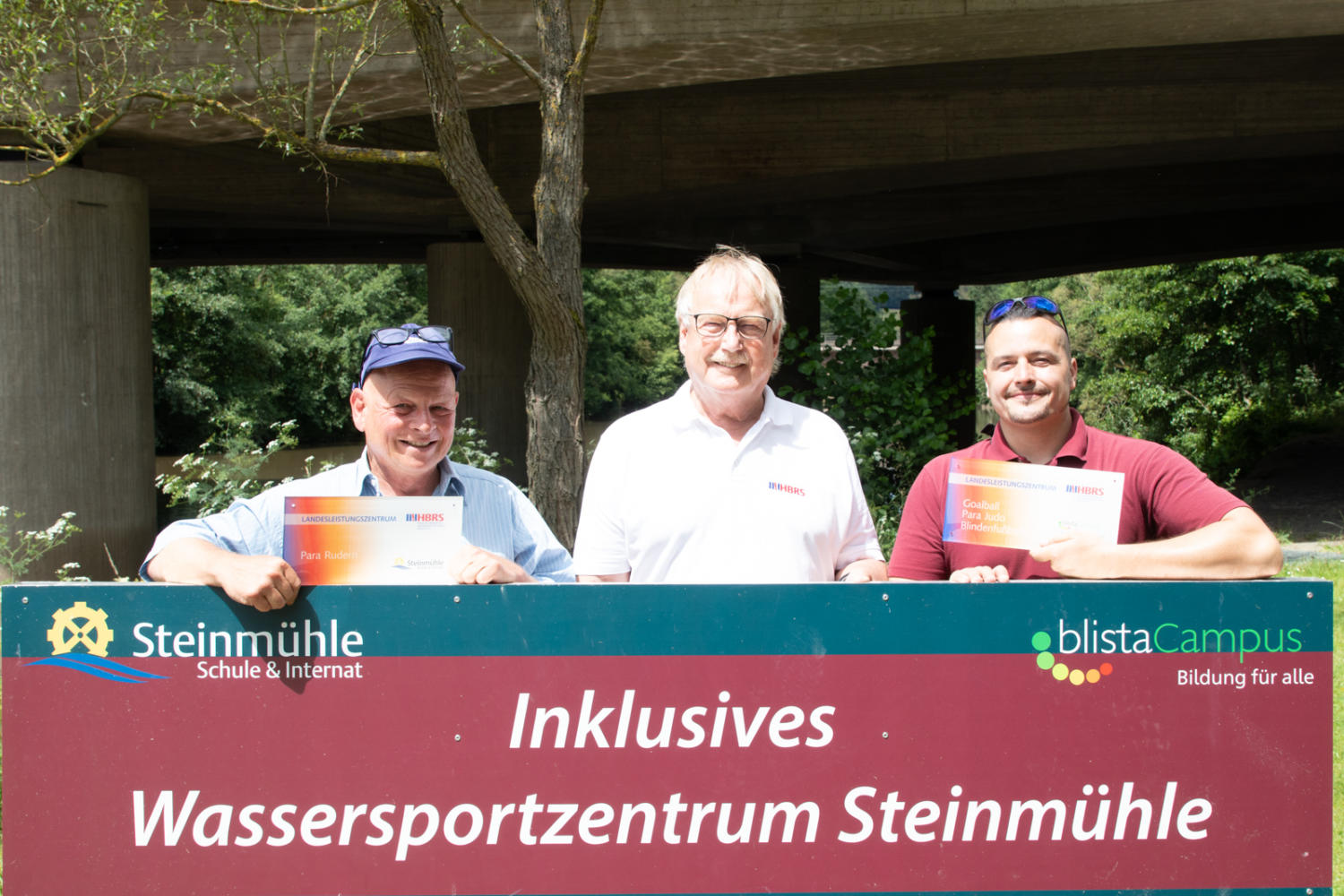
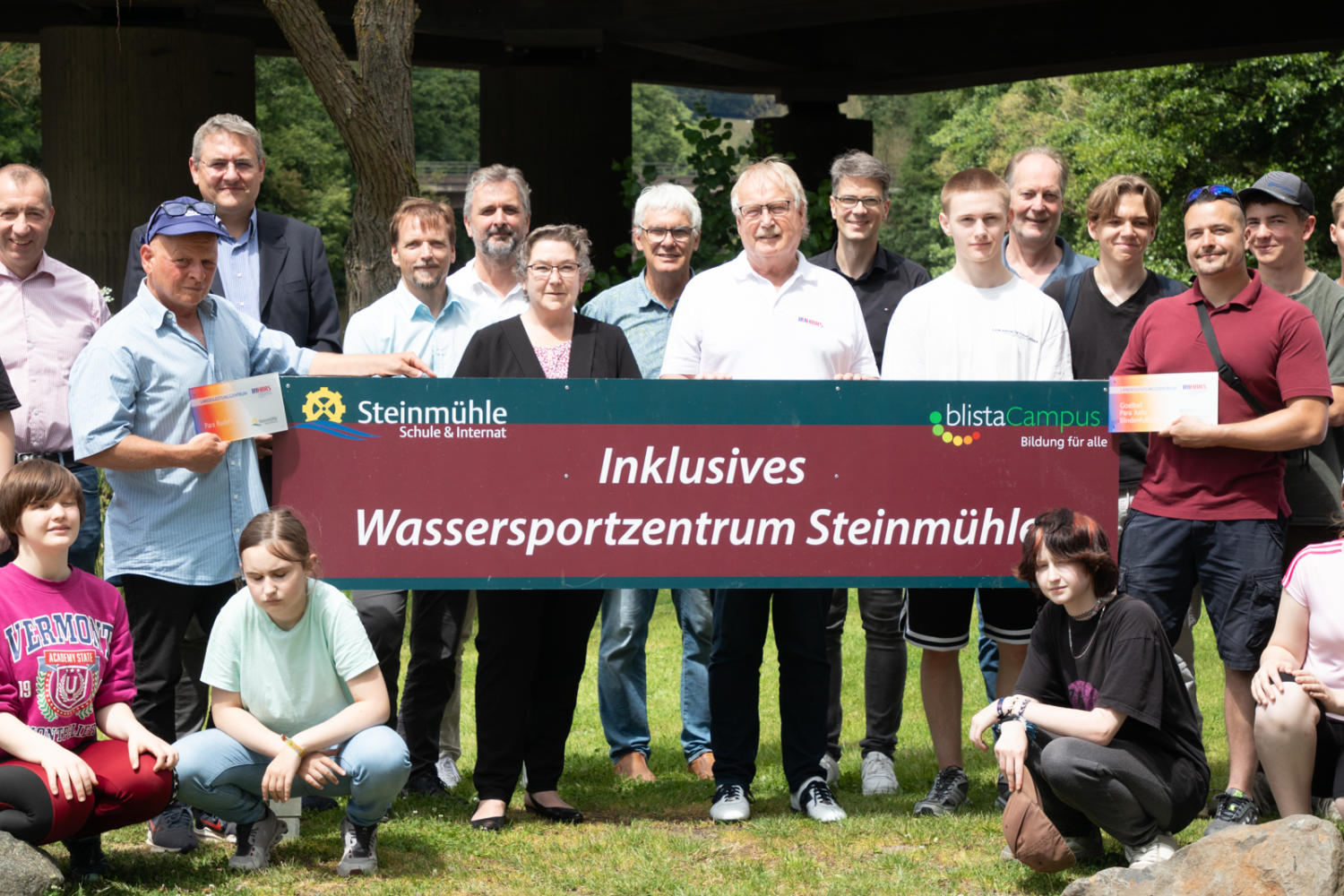
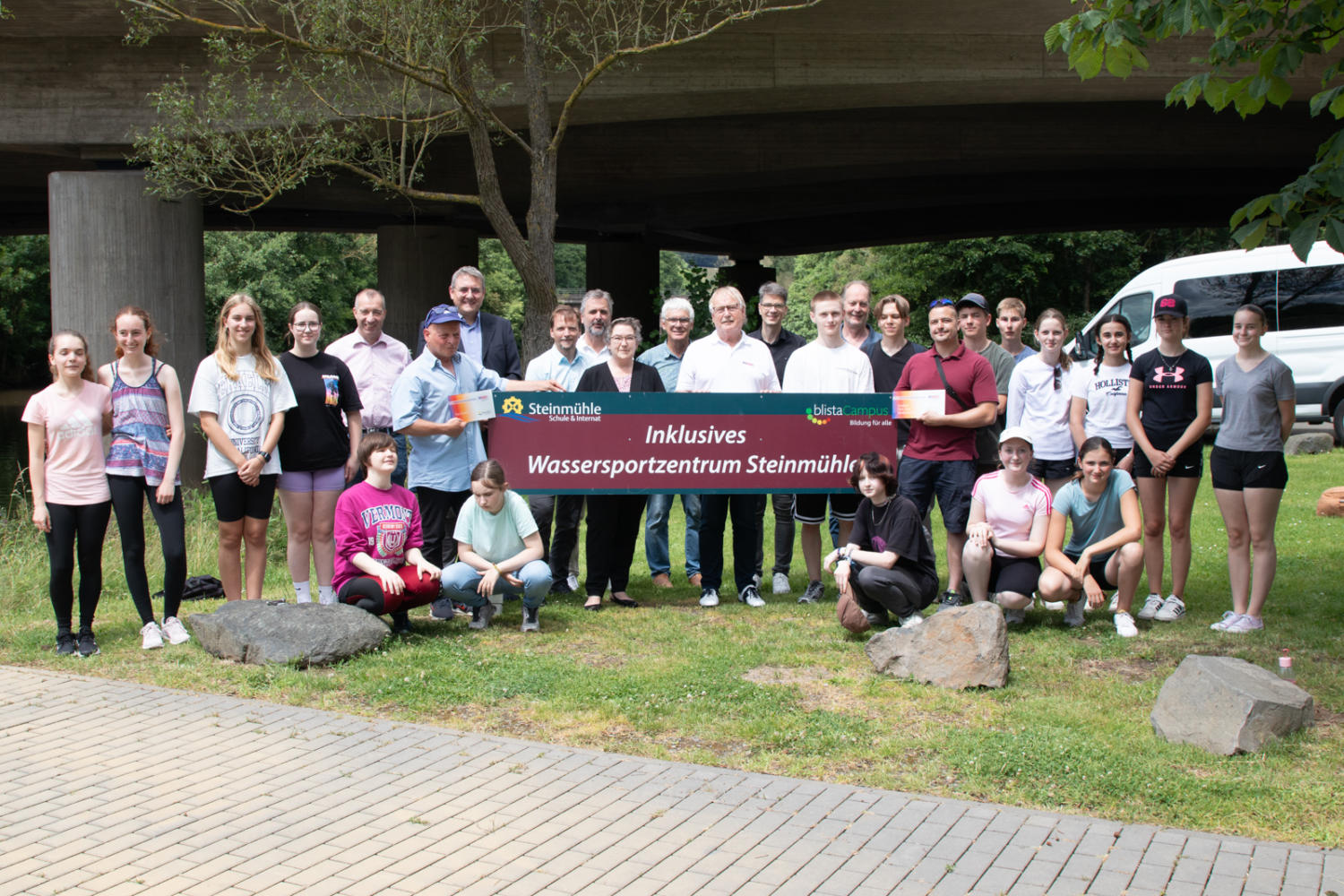
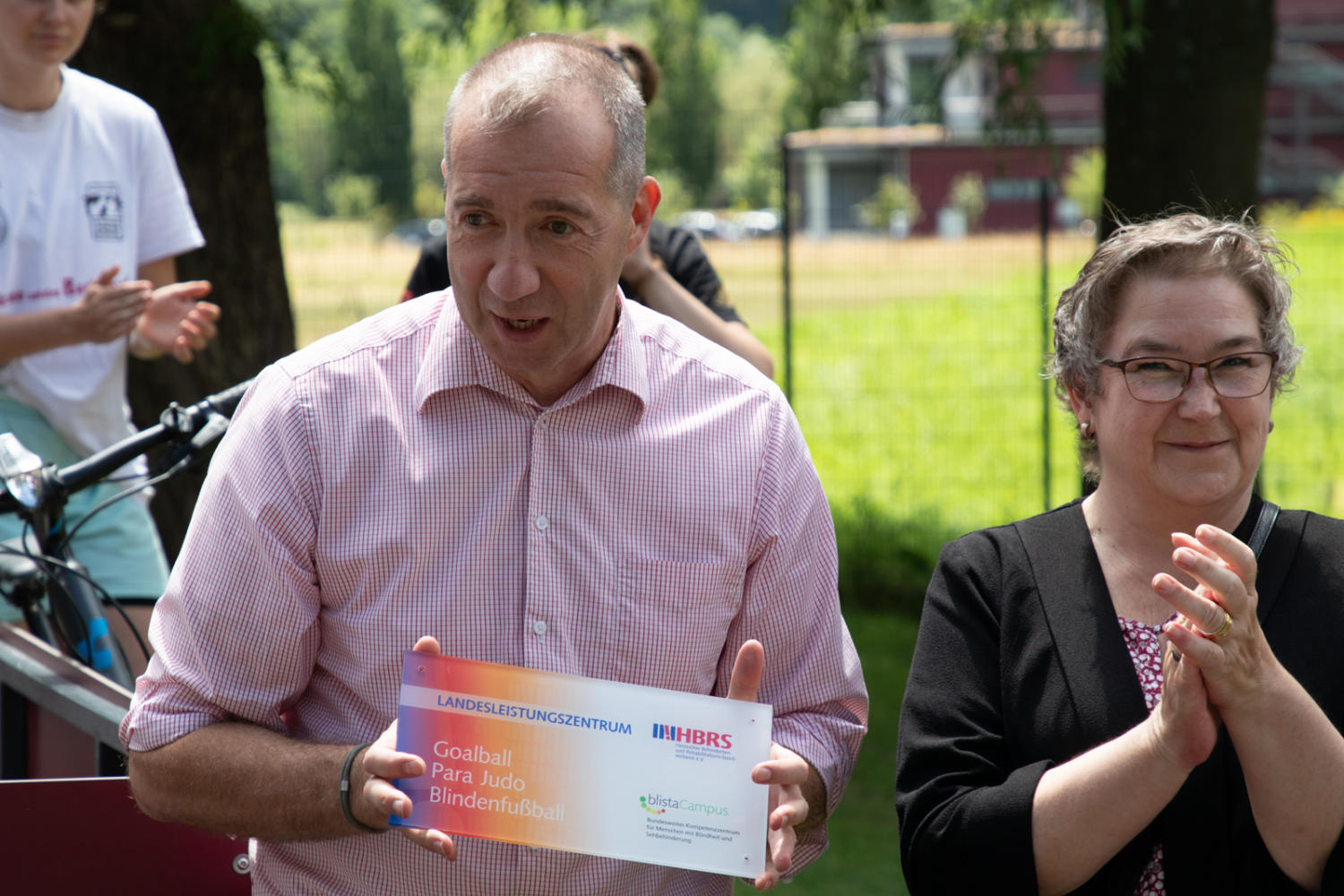
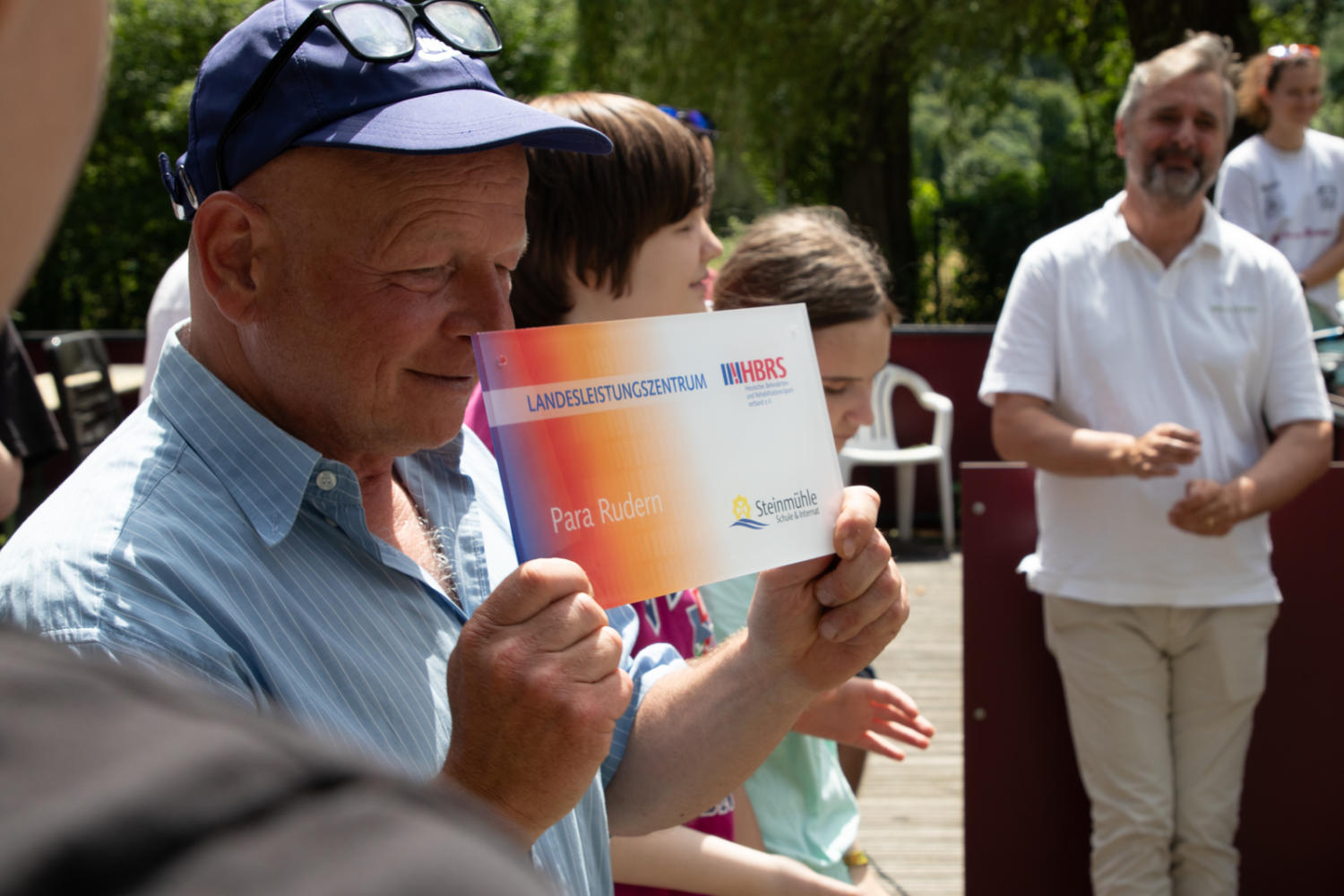
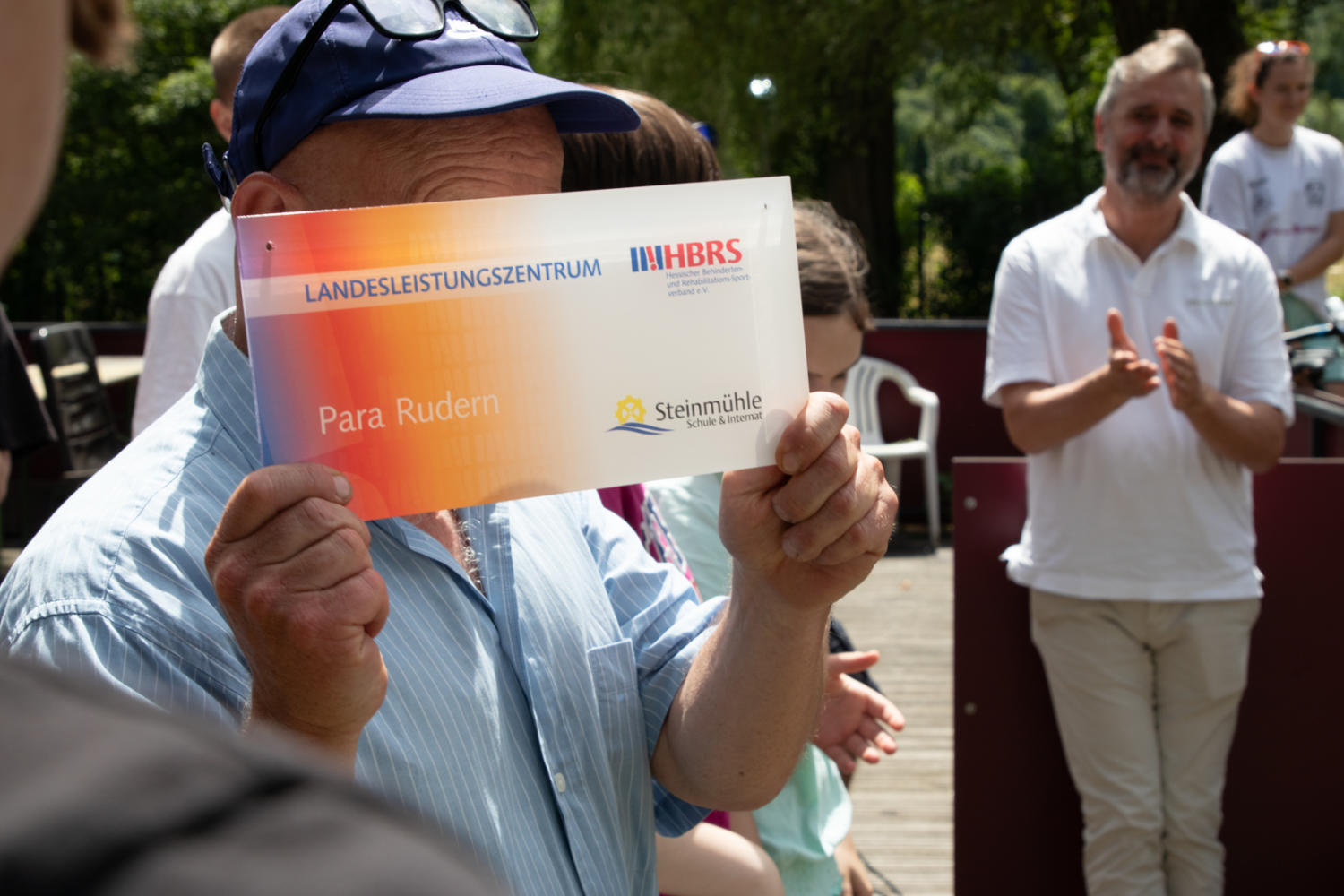
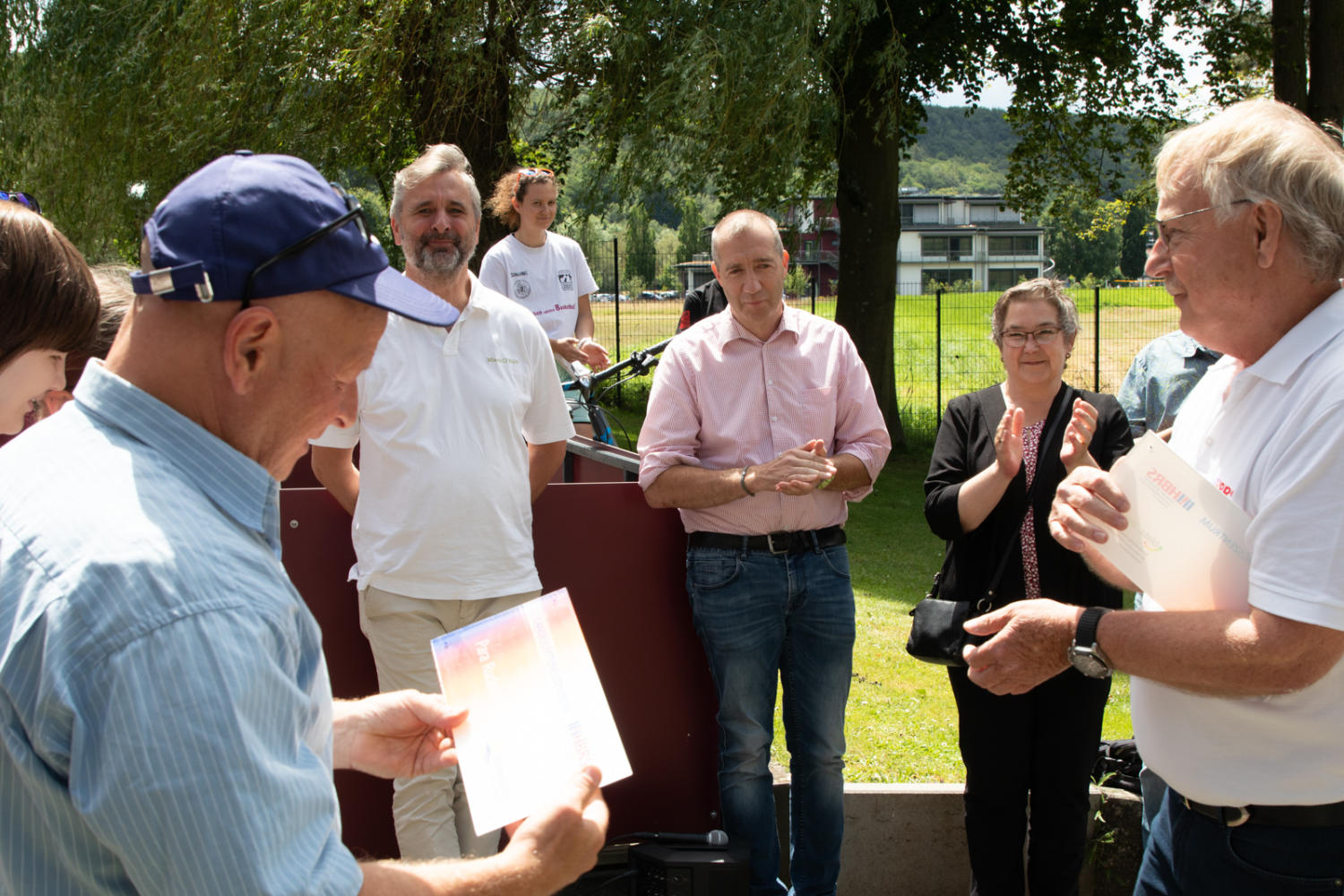
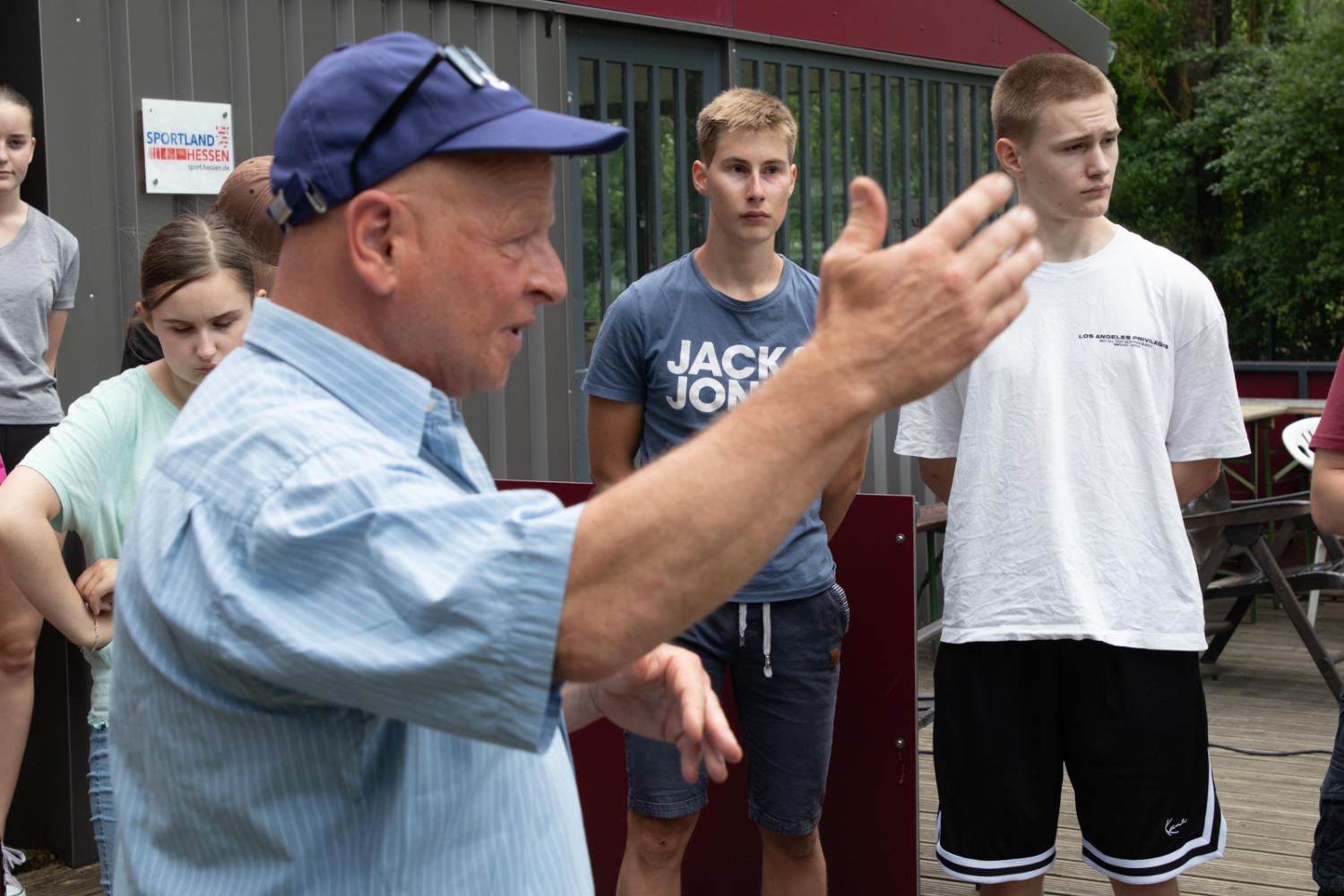
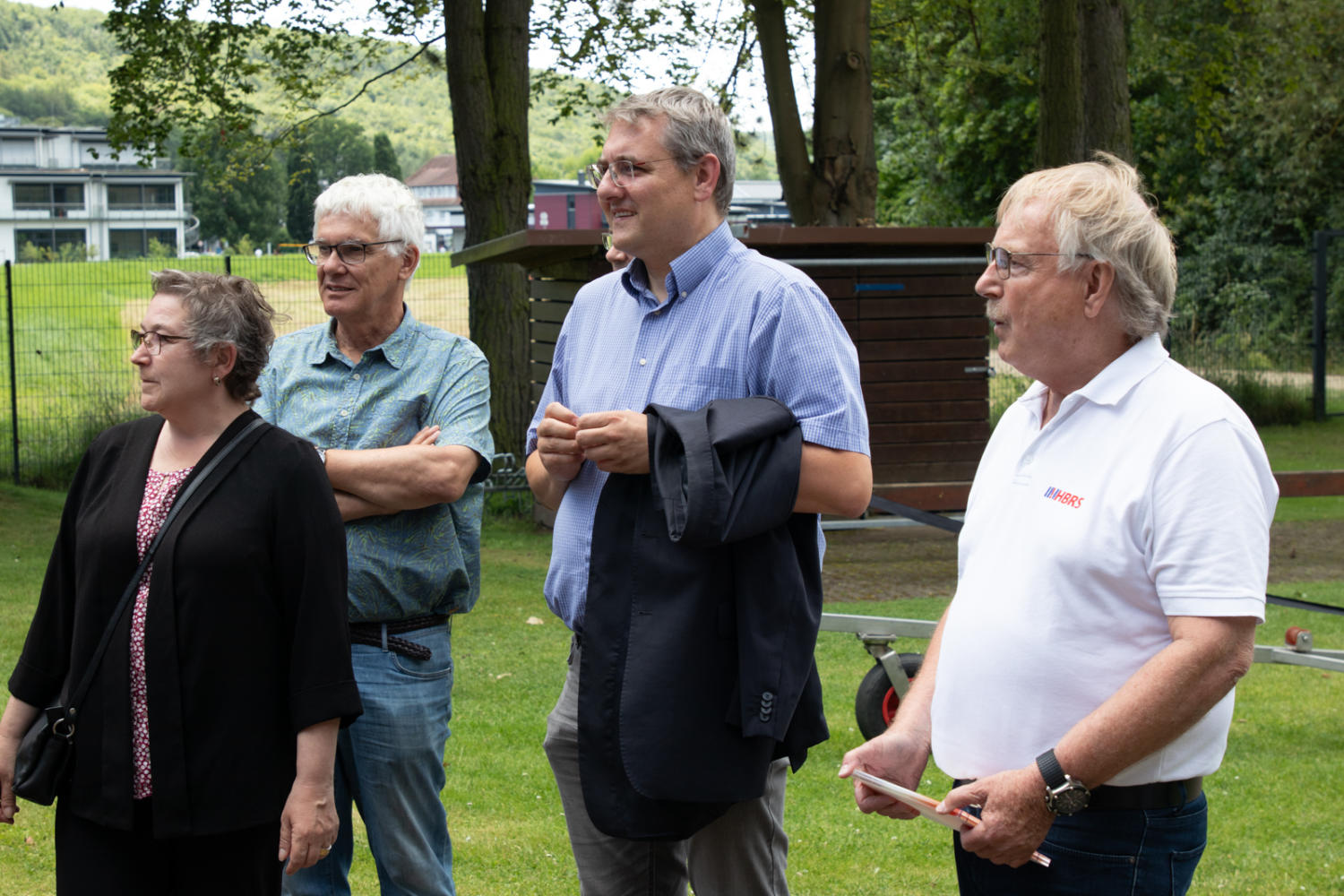
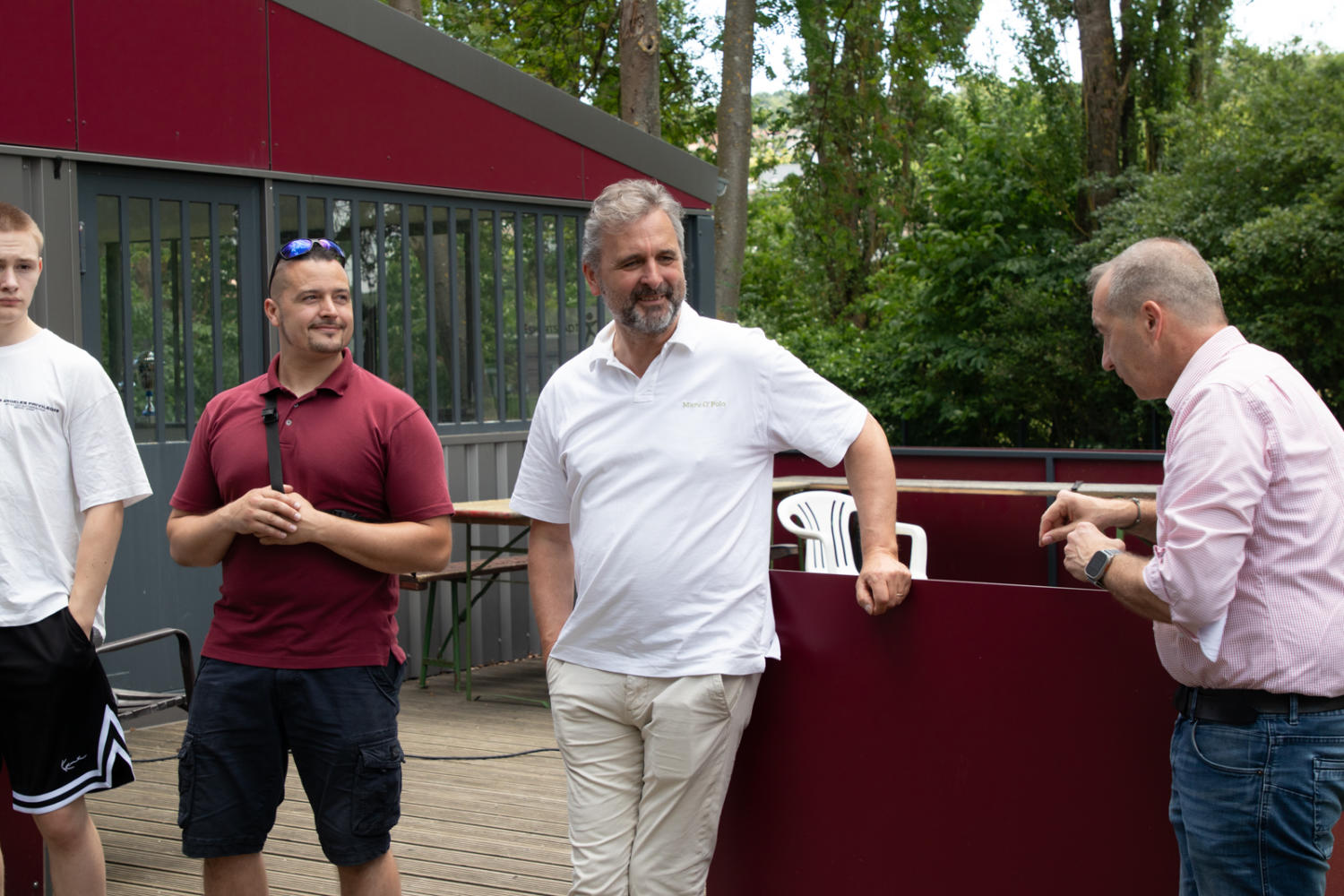
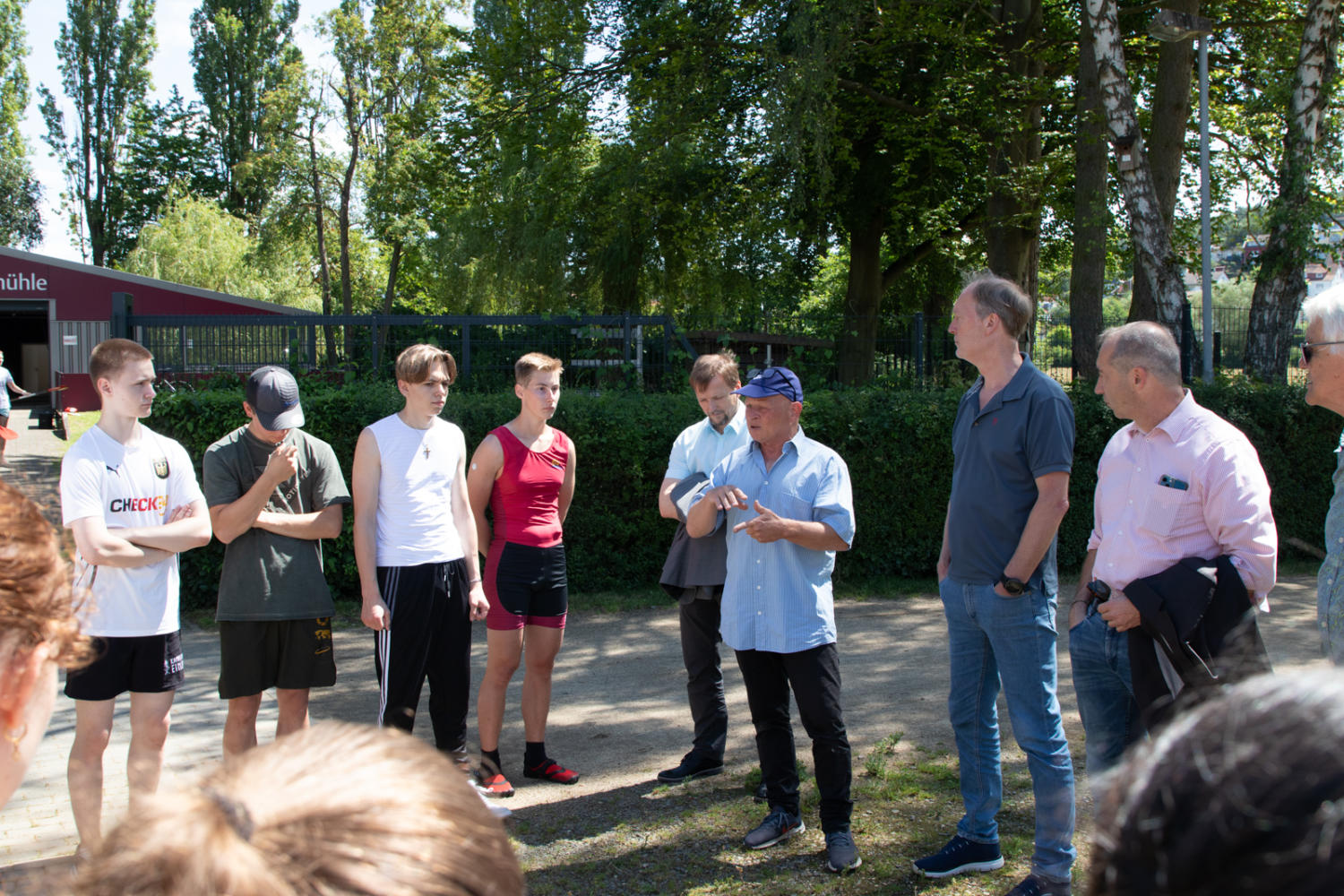
The Hessian Association for Sports for People with Disabilities and Rehabilitation (HBRS) took advantage of the Steinmühle’s major sports festival on Friday, June 28, and the presence of its sports partners at the event to officially designate Steinmühle as a “State Training Center for Para Rowing.” HBRS President Heinz Wagner presented the official award in front of the Steinmühle boathouse to rowing instructor and coach Martin Strohmenger, who had been instrumental in driving this development forward with the support and backing of Steinmühle Managing Director Dirk Konnertz (in the background). The plaque now complements the existing sign reading “Steinmühle Inclusive Water Sports Center,” which was officially unveiled exactly one year ago at the summer festival of the “Rudern und Sport Steinmühle” club. Both of Steinmühle’s designations are closely linked to its partner, blista, the German Institute for the Blind in Marburg. For years now, inclusive rowing involving sighted and visually impaired rowers has been a vibrant and successful program. Their joint inclusive water sports program also includes canoeing. Other sports for people with physical disabilities are offered jointly as well. On the same day, blista received the official designation “State Training Center for Goalball, Para Judo, and Blind Soccer” from the HBRS president.
Together with several visually impaired and sighted athletes, Steinmühle, blista, and guests celebrated the awards and paid tribute to them: blista Board Member Patrick Temmesfeld, City Councilwoman and Head of the Sports Department Kirsten Dinnebier, Björn Backes, head of the City of Marburg’s Sports Department, blista Principal Peter Audretsch, Steinmühle Principal Björn Gemmer, Michael Neirich, rowing coordinator at Steinmühle, Janosch Briel, sports coordinator at blista; and Claus Duncker, finance director of RuS Steinmühle and former blista board member.