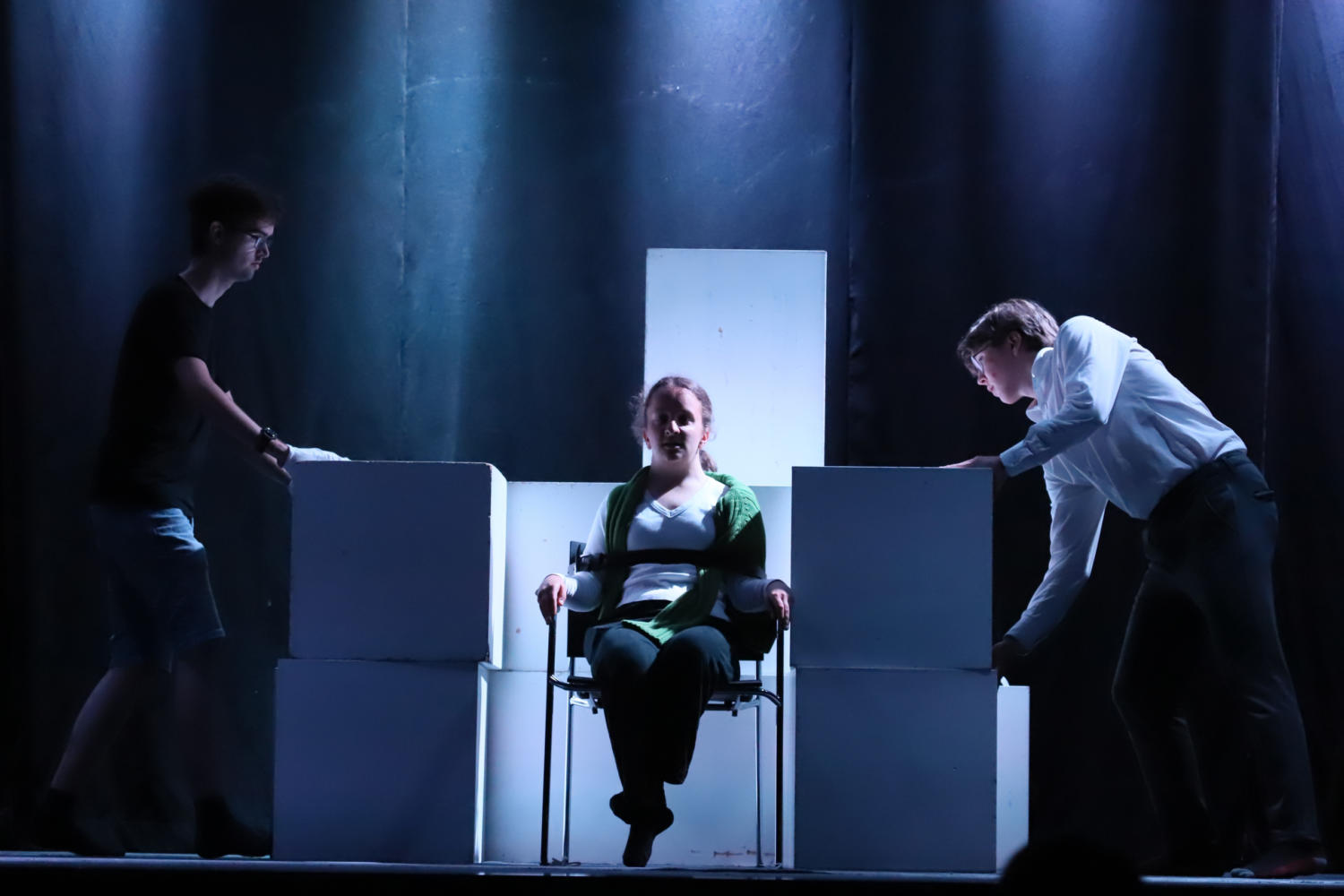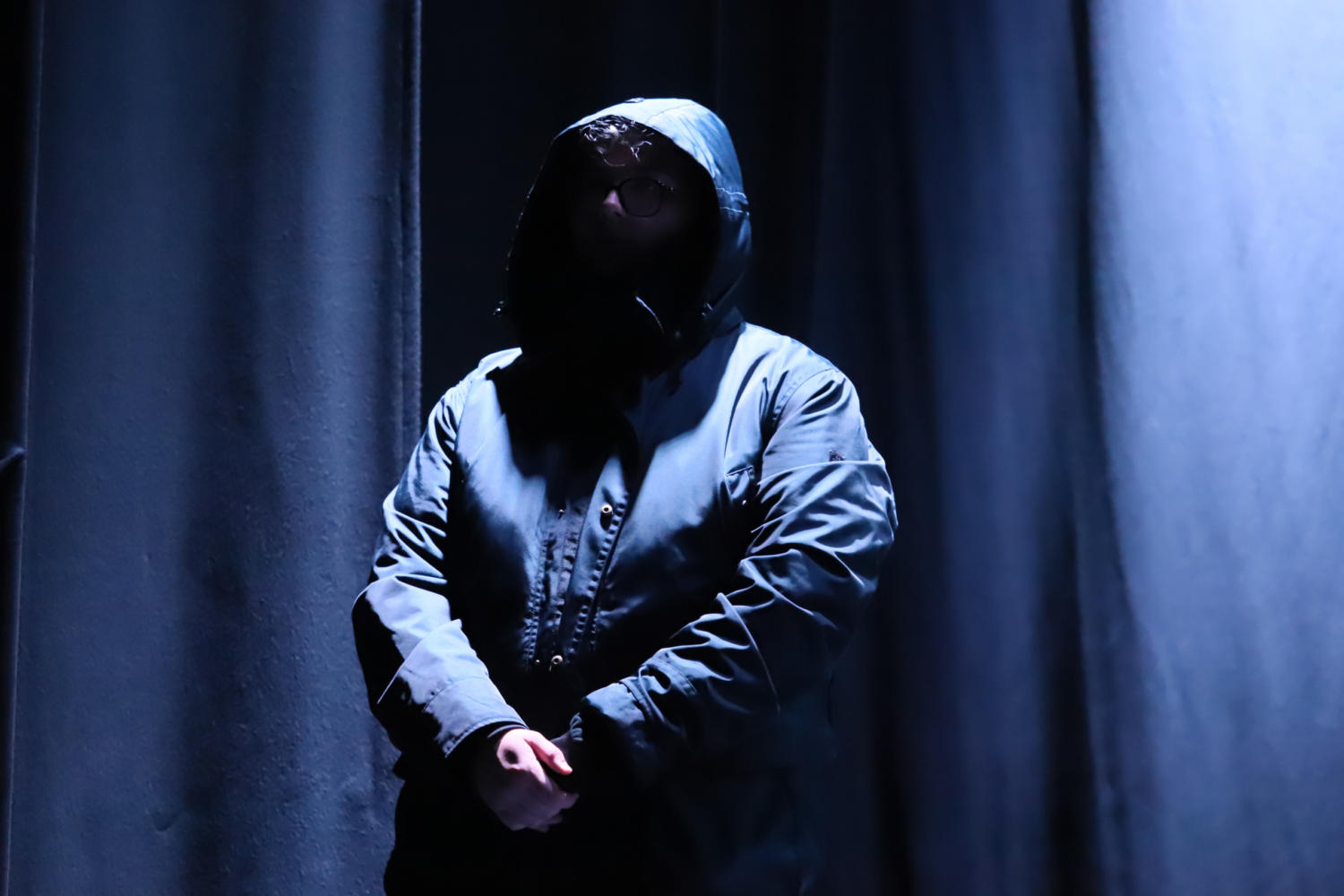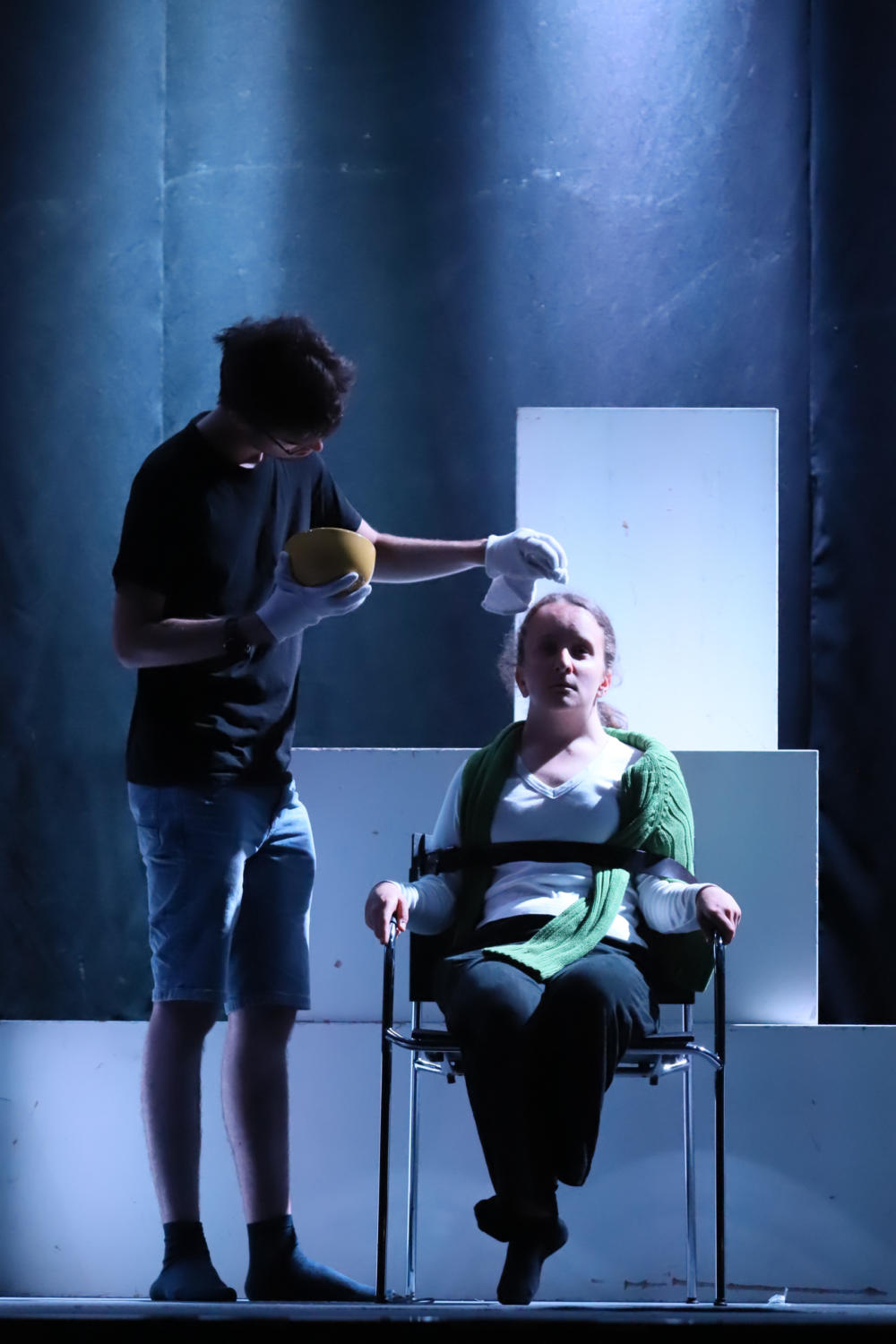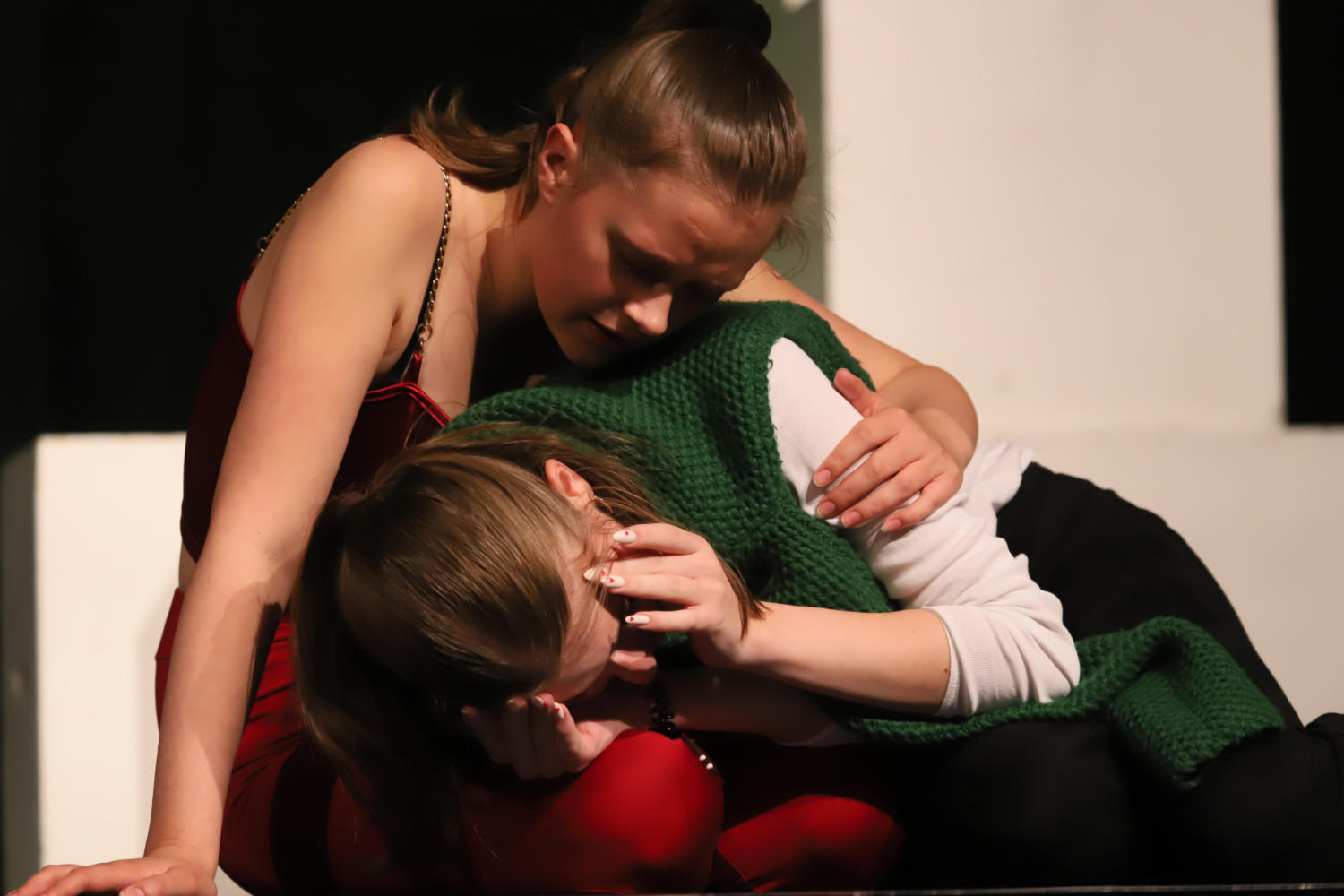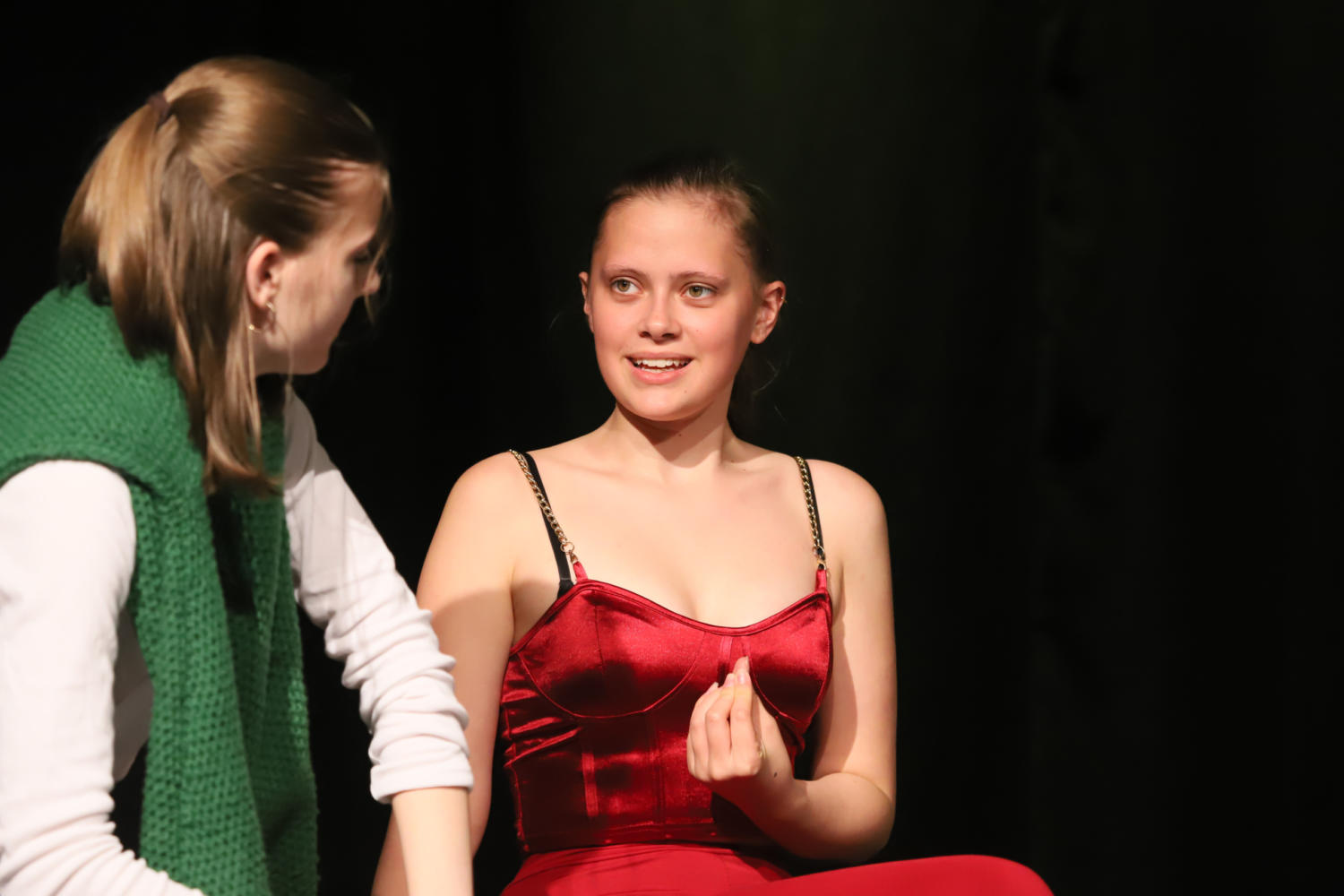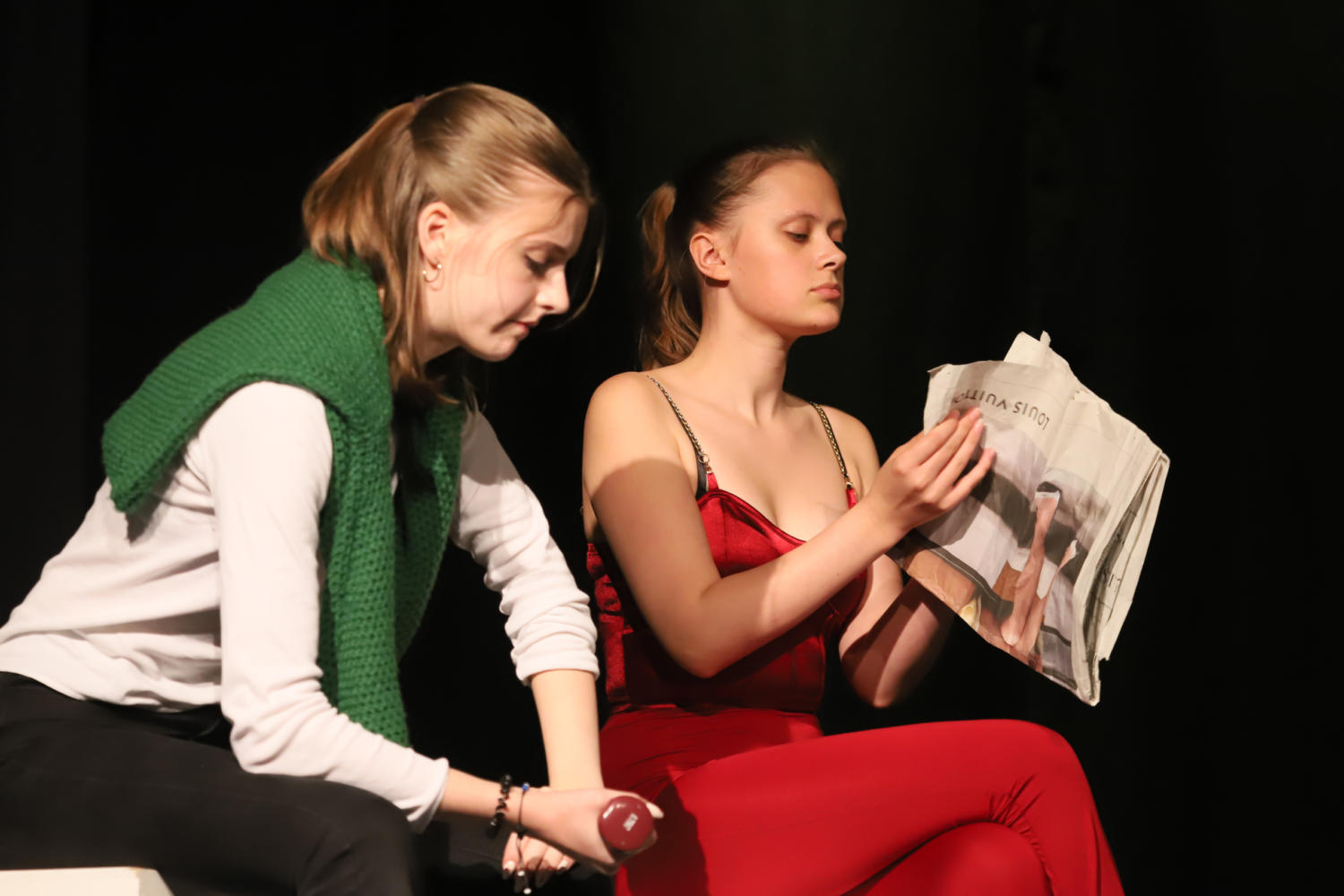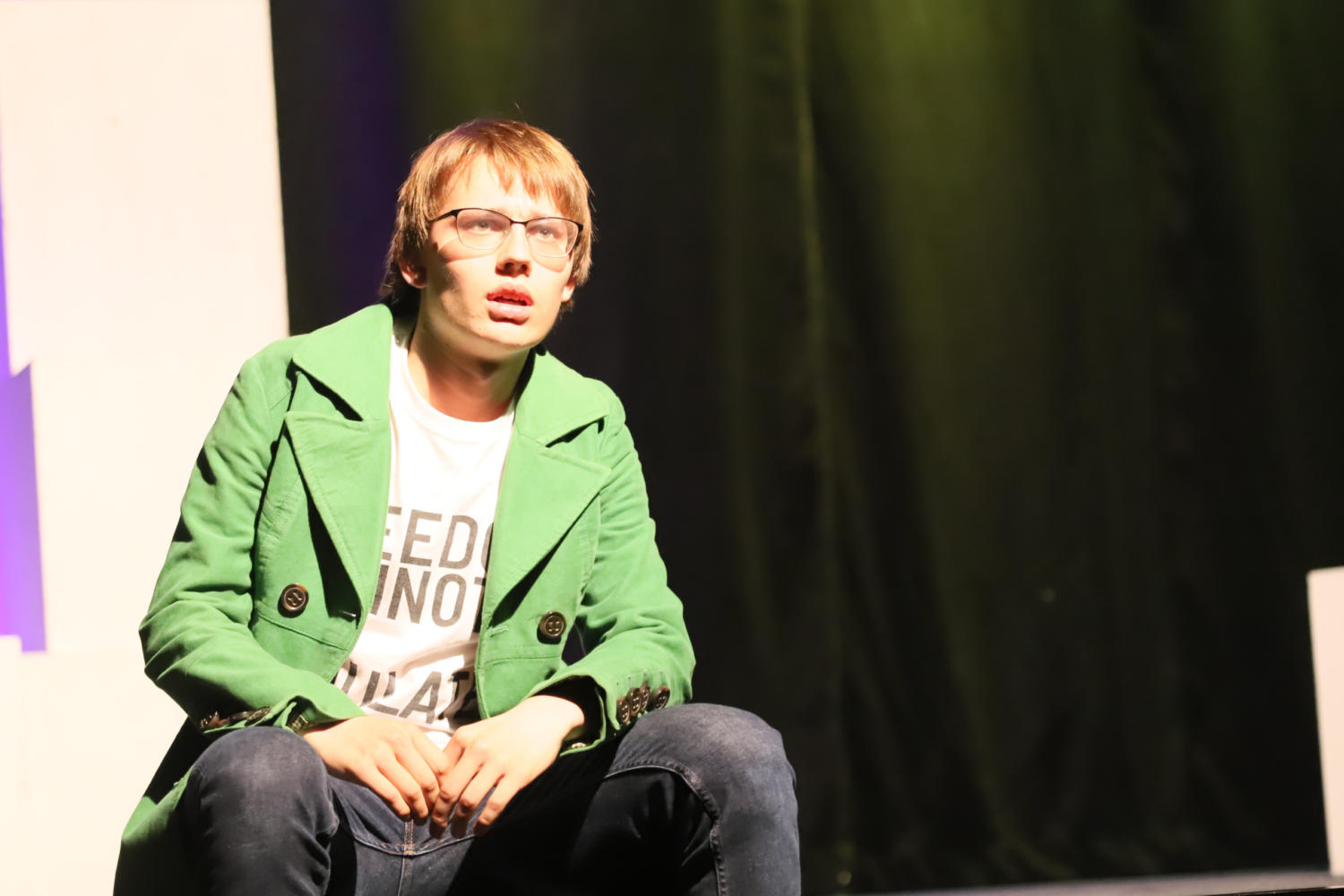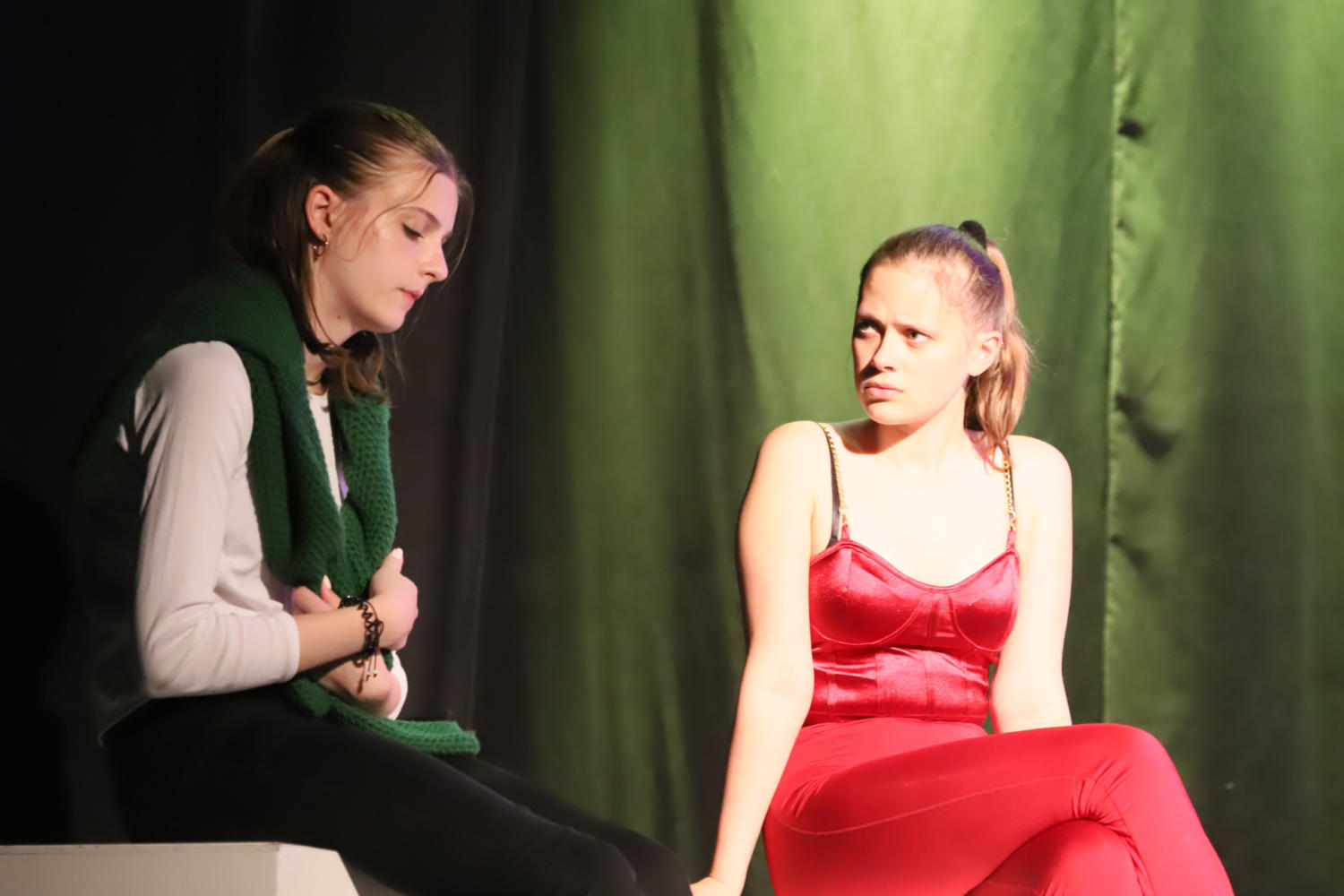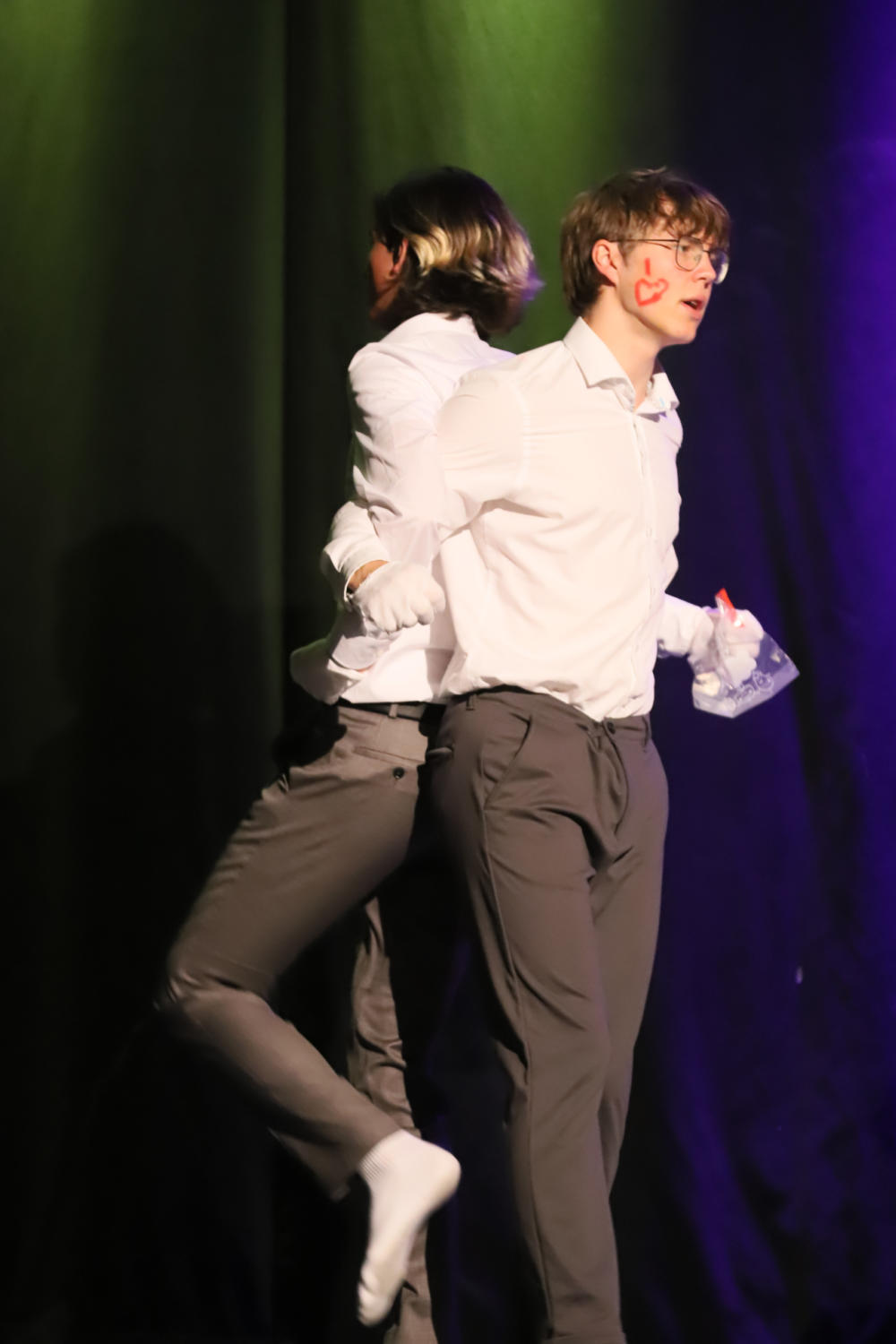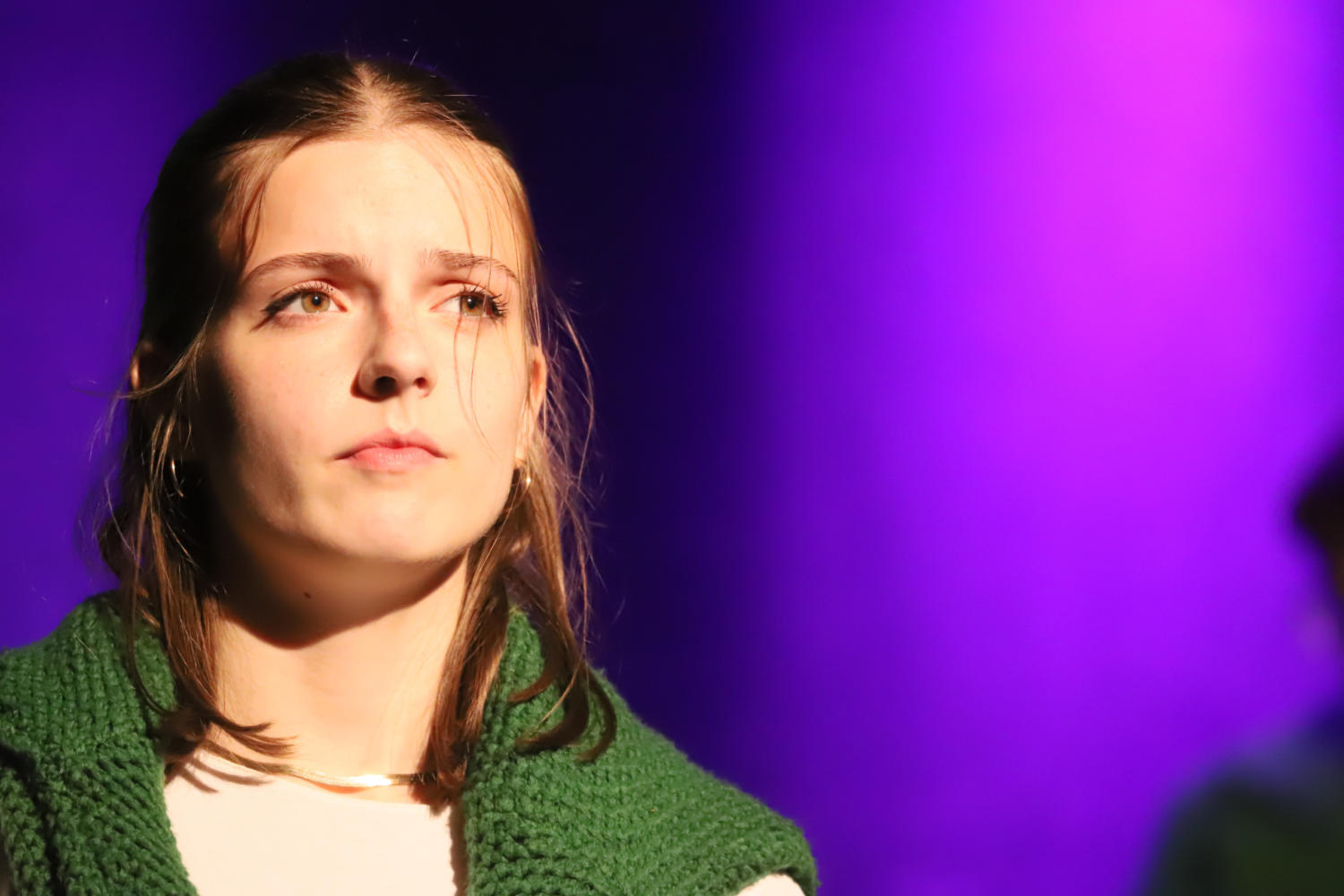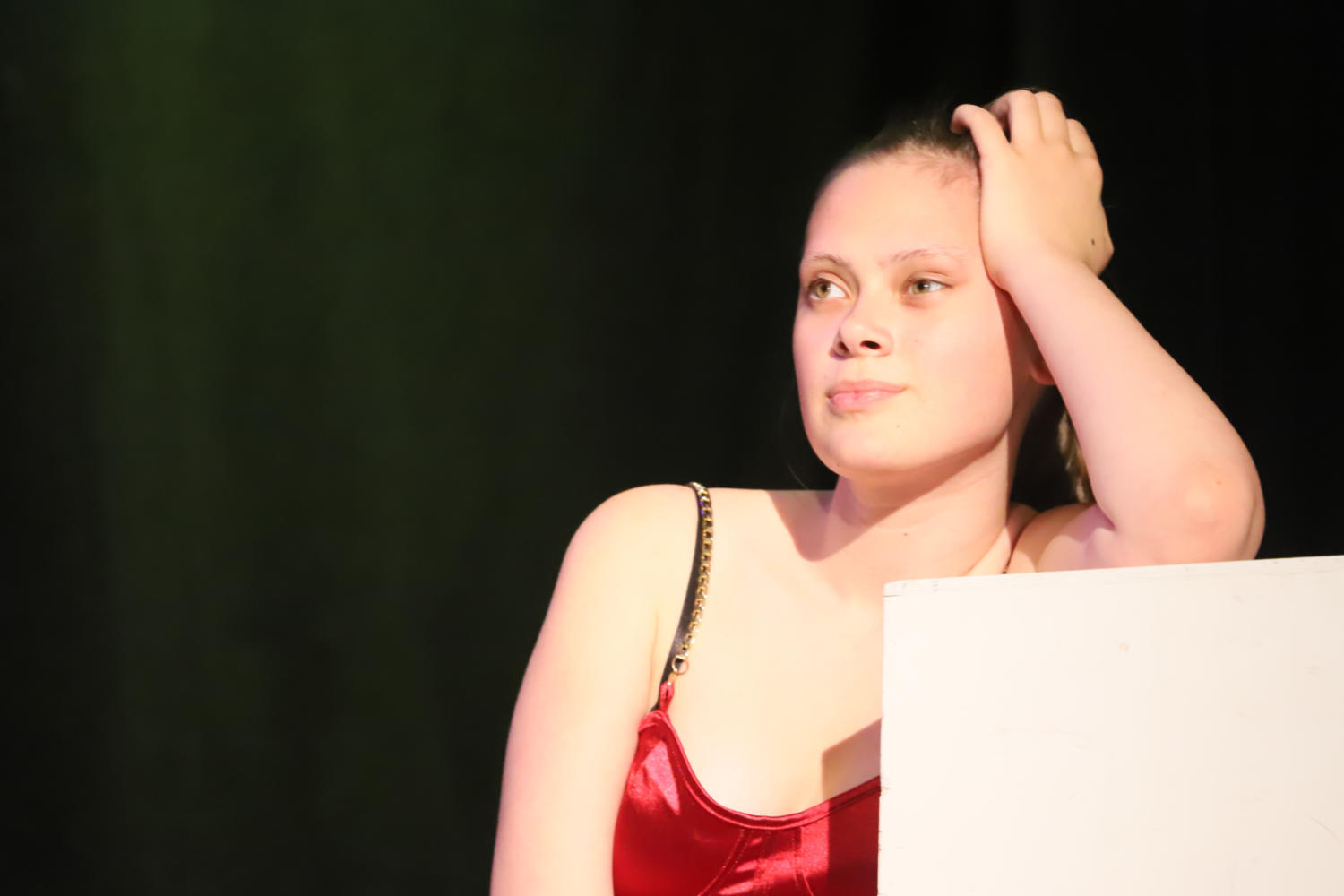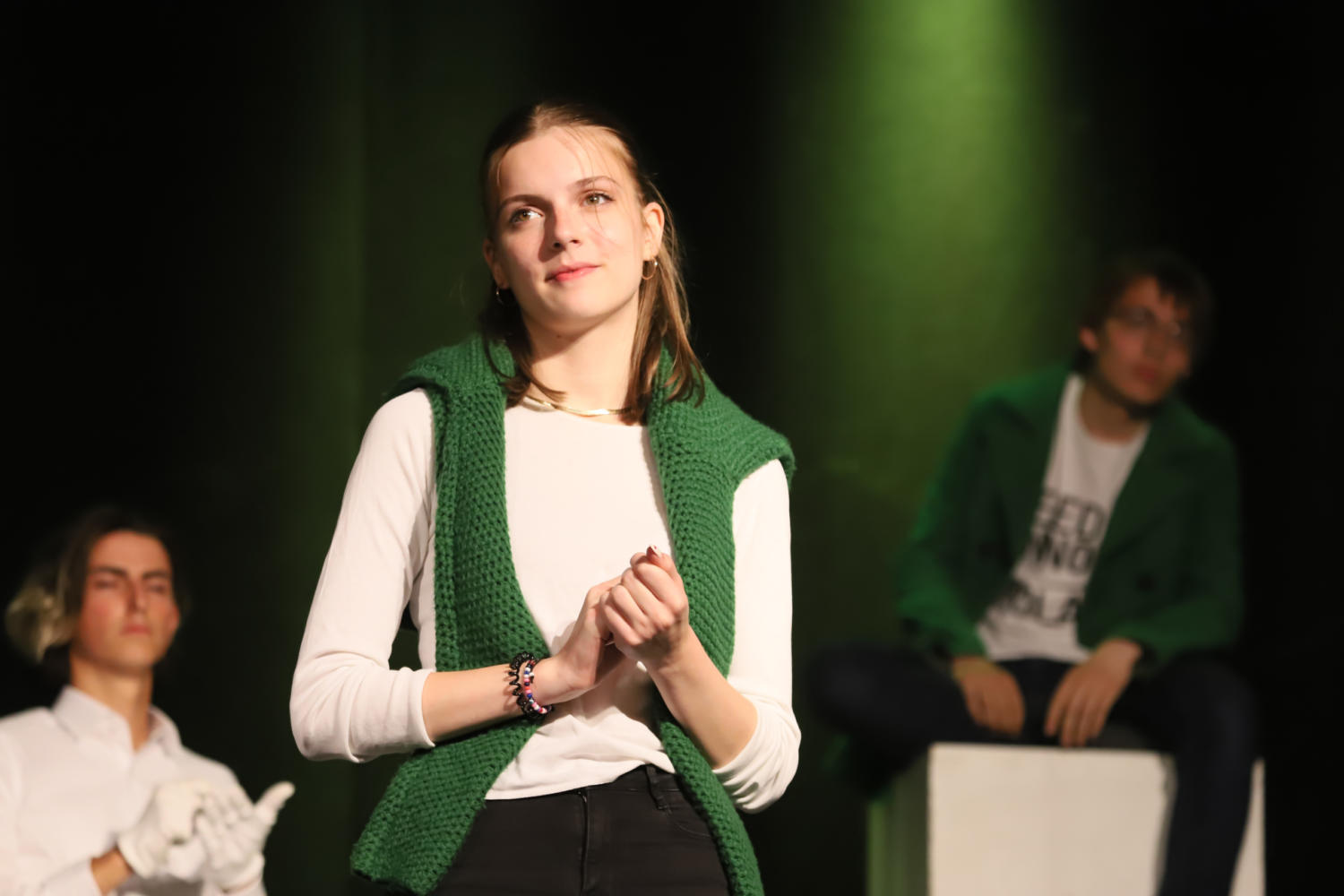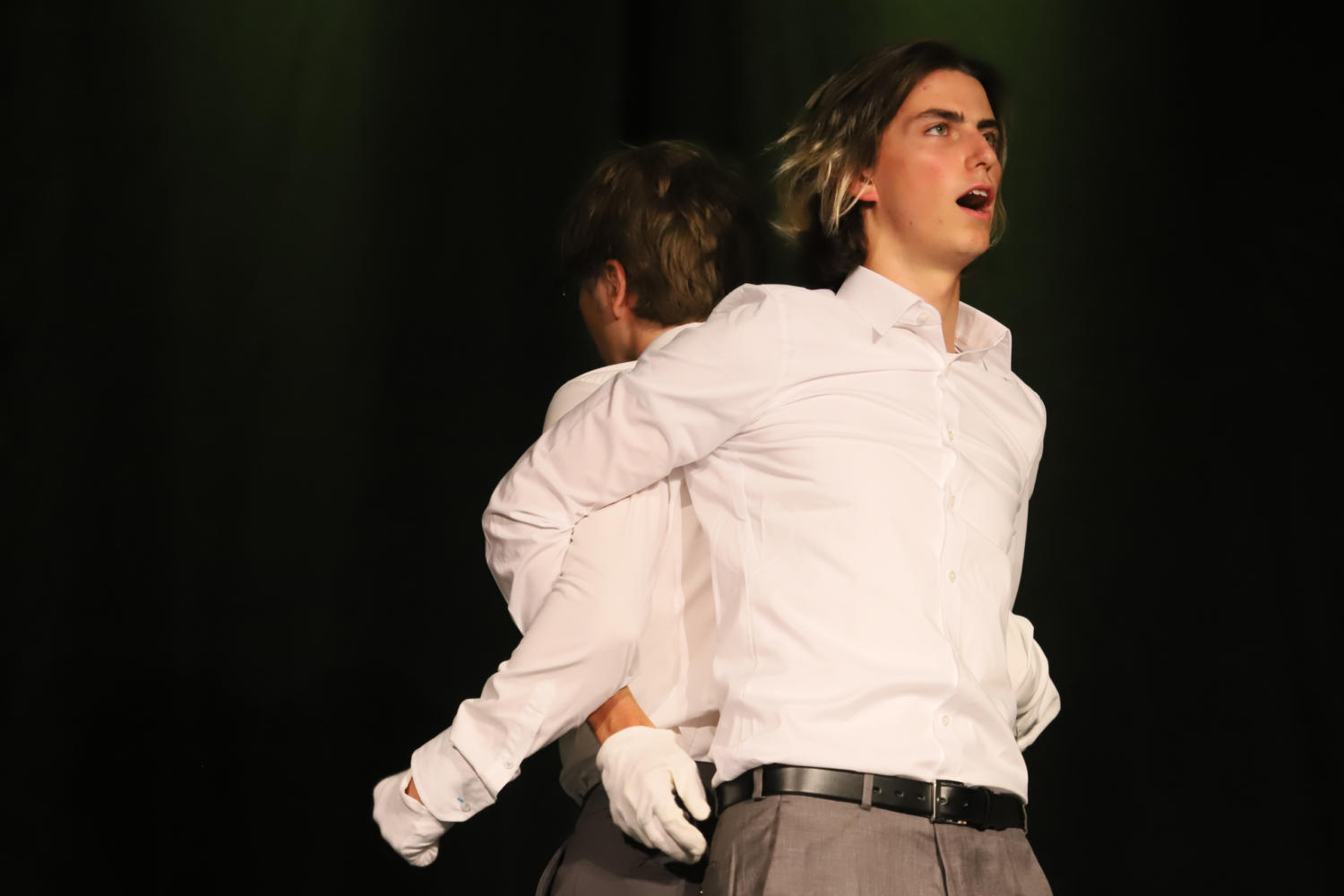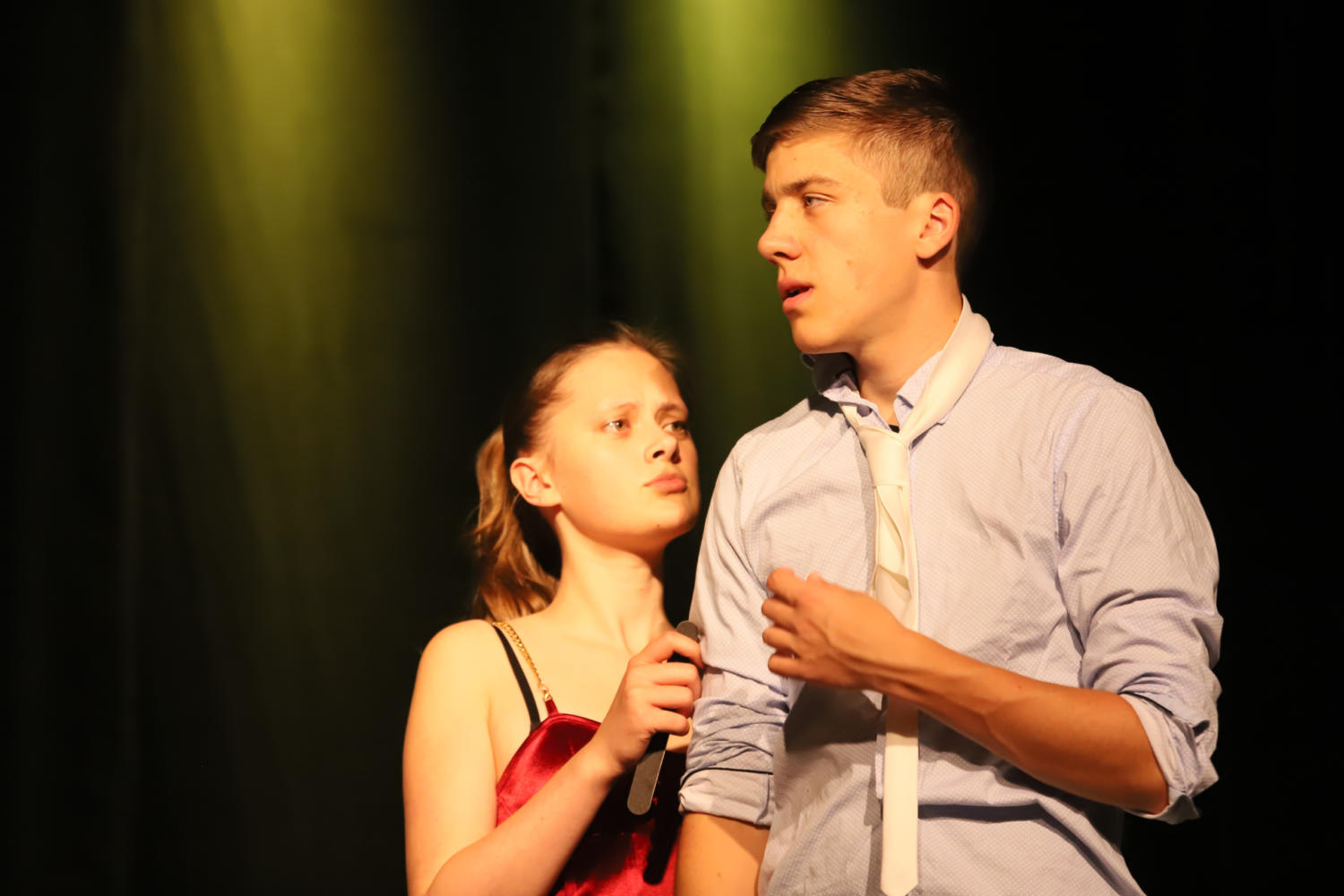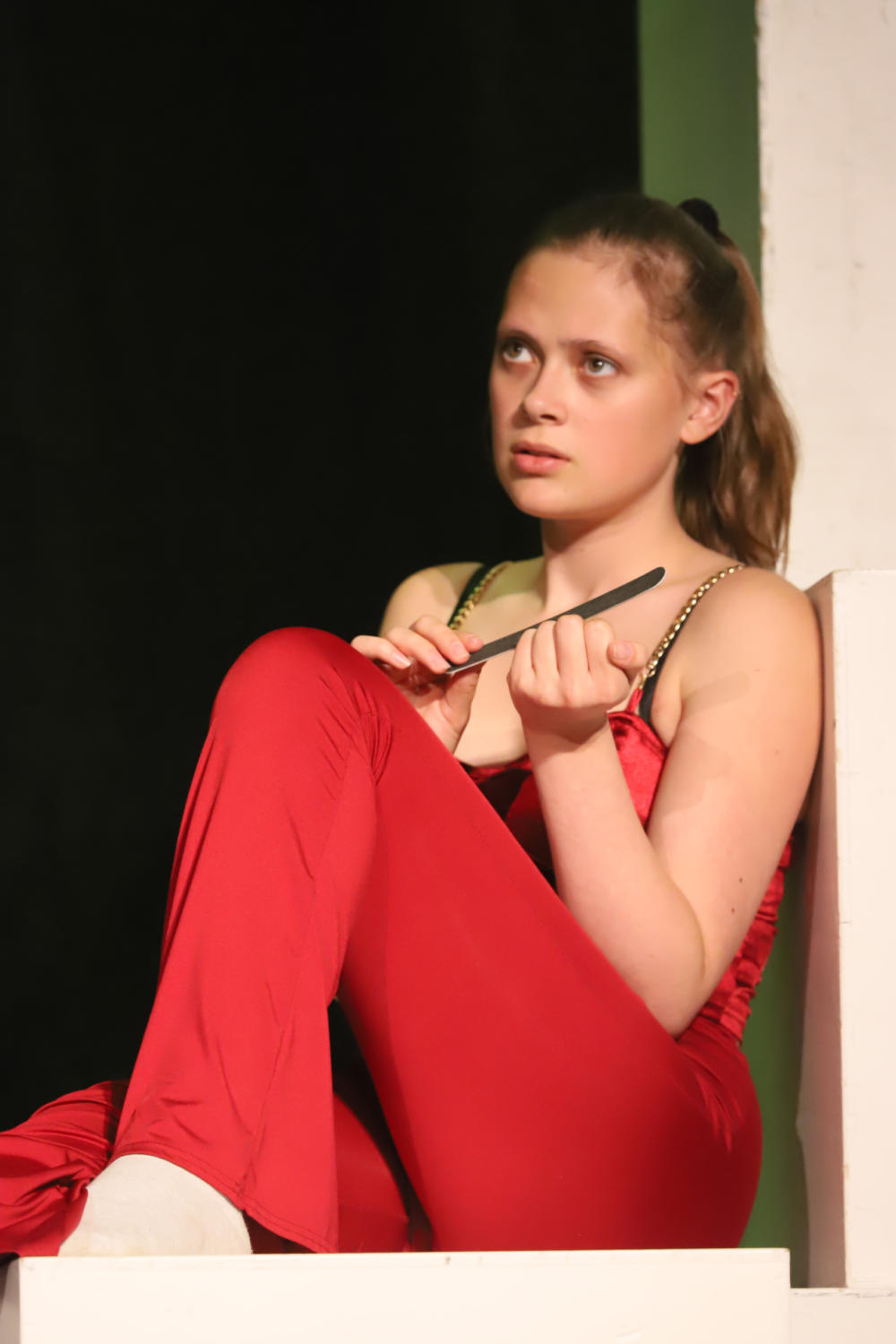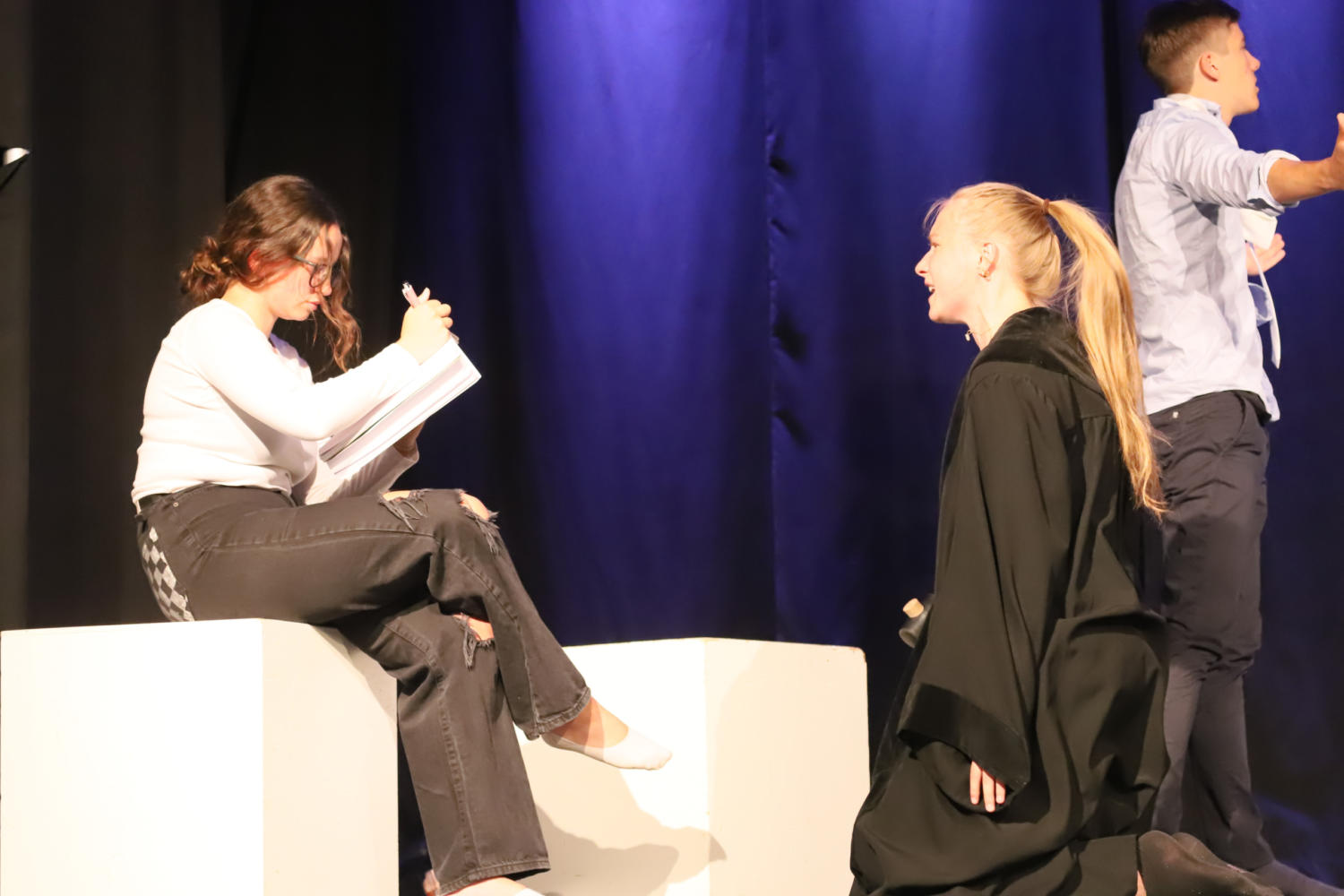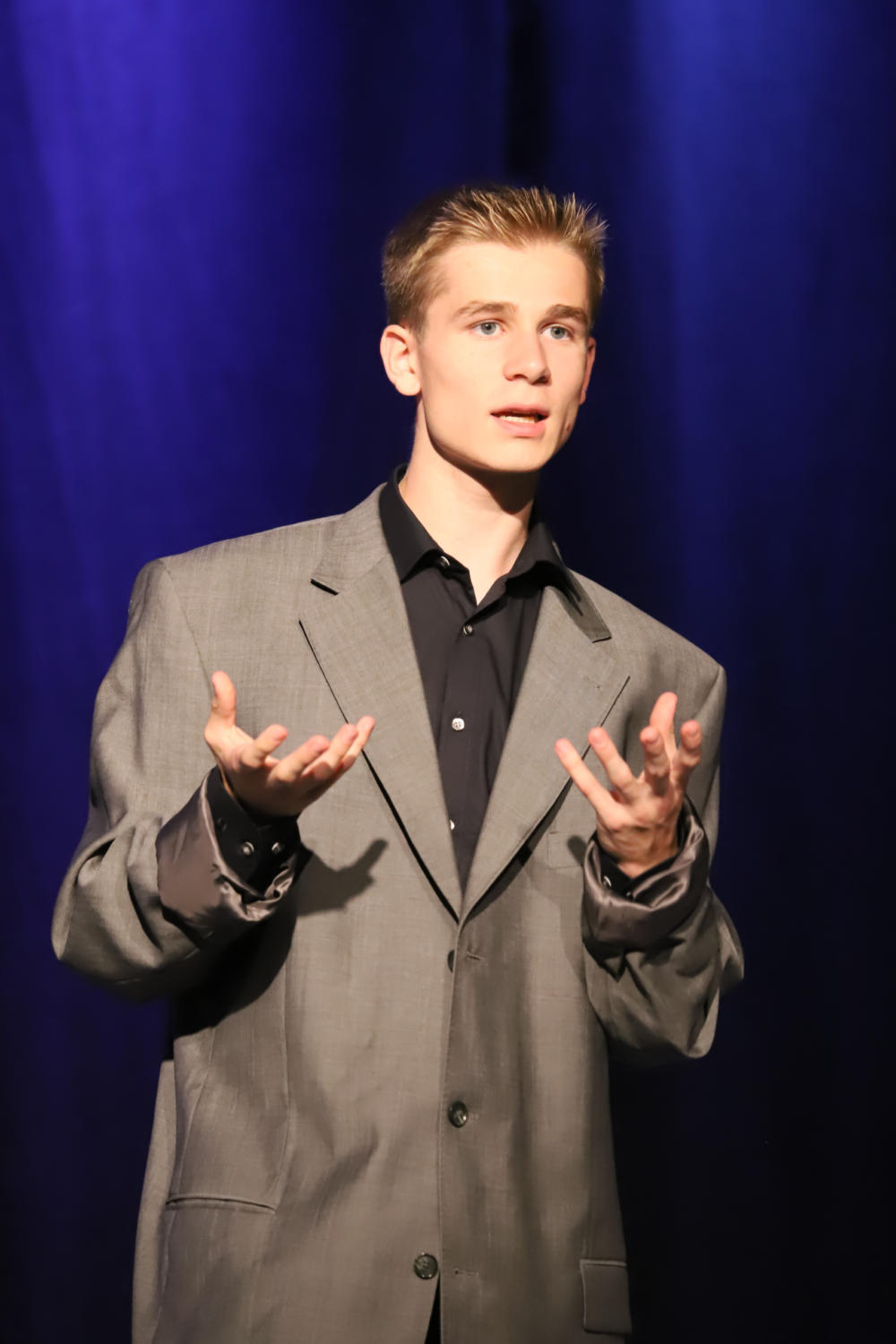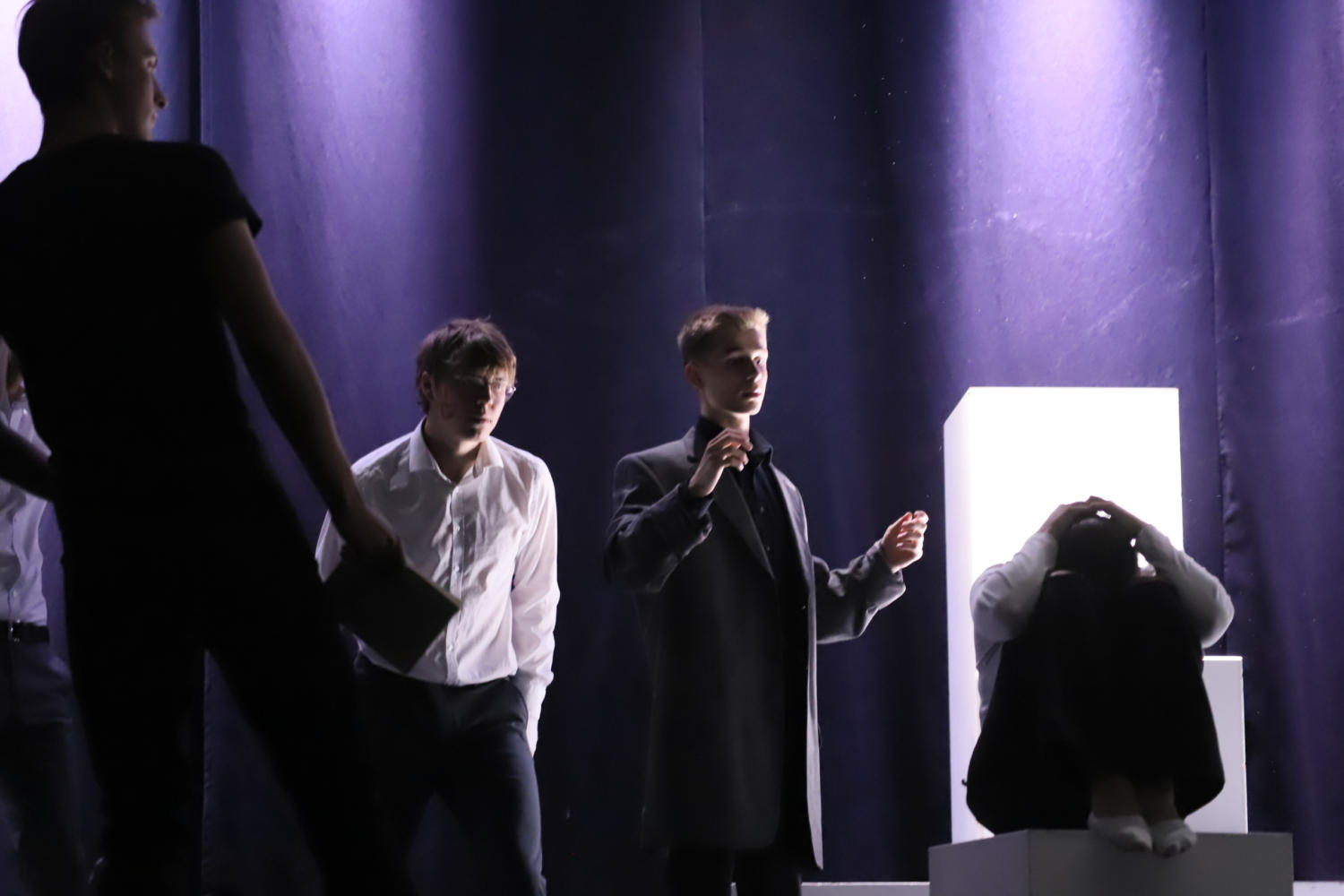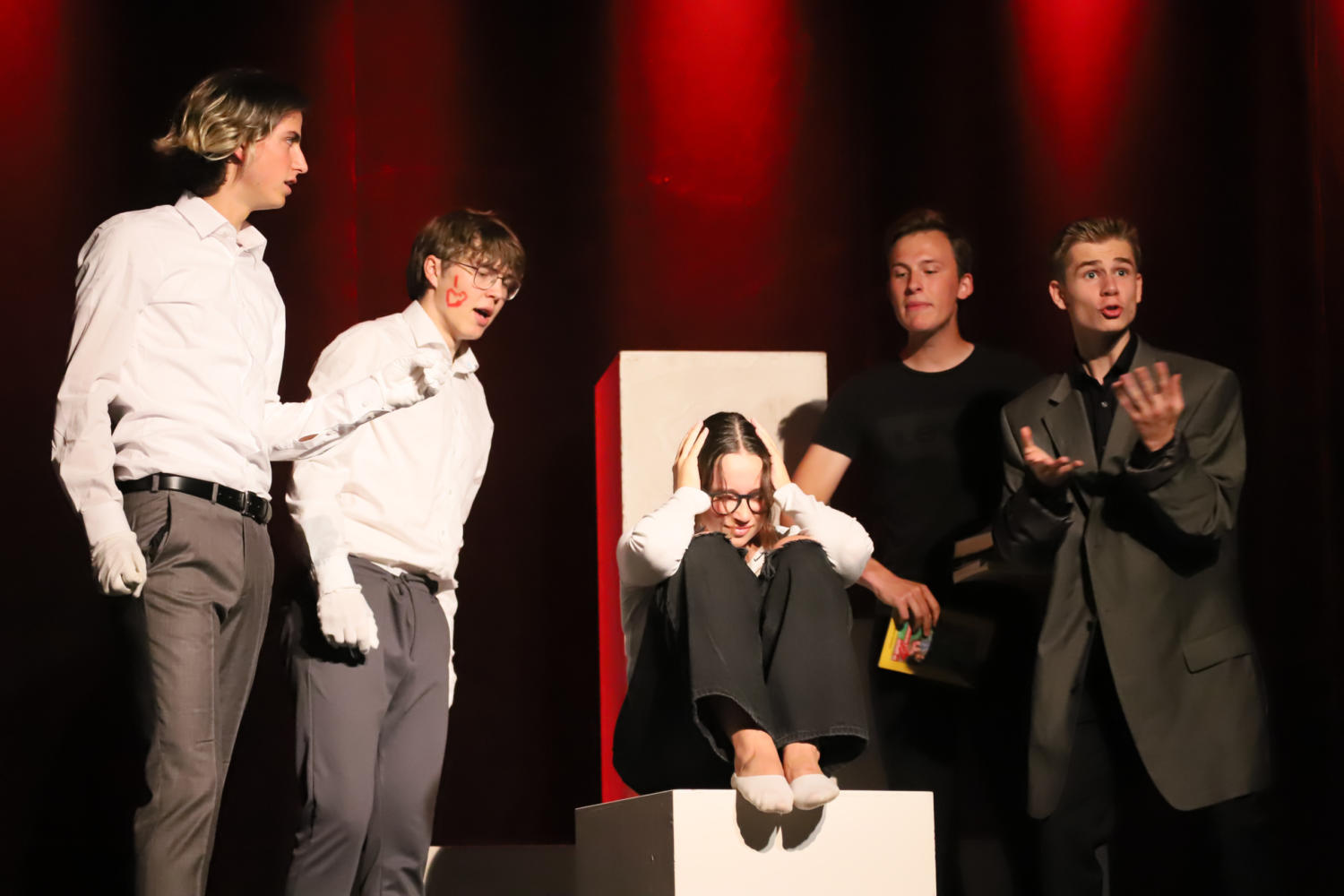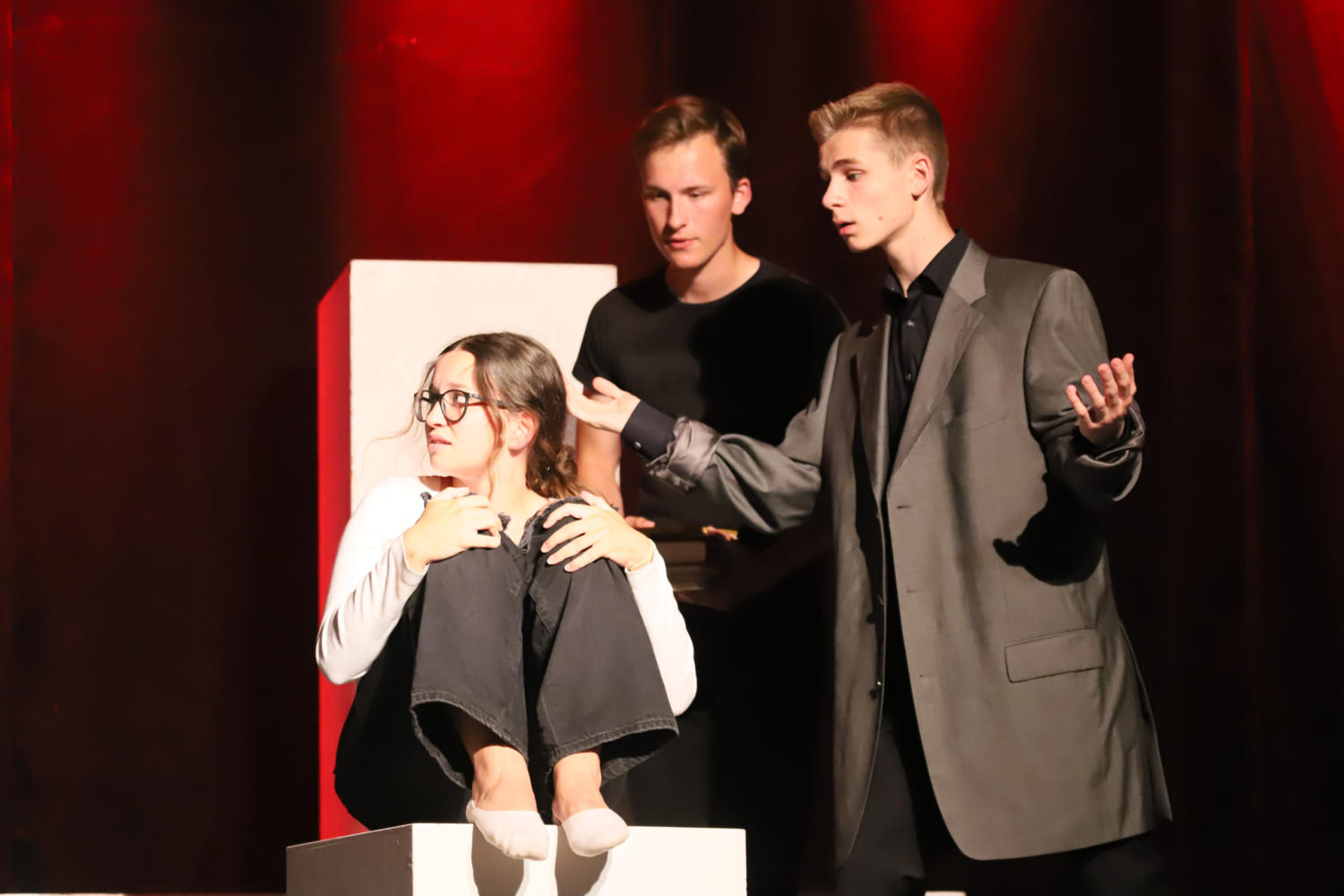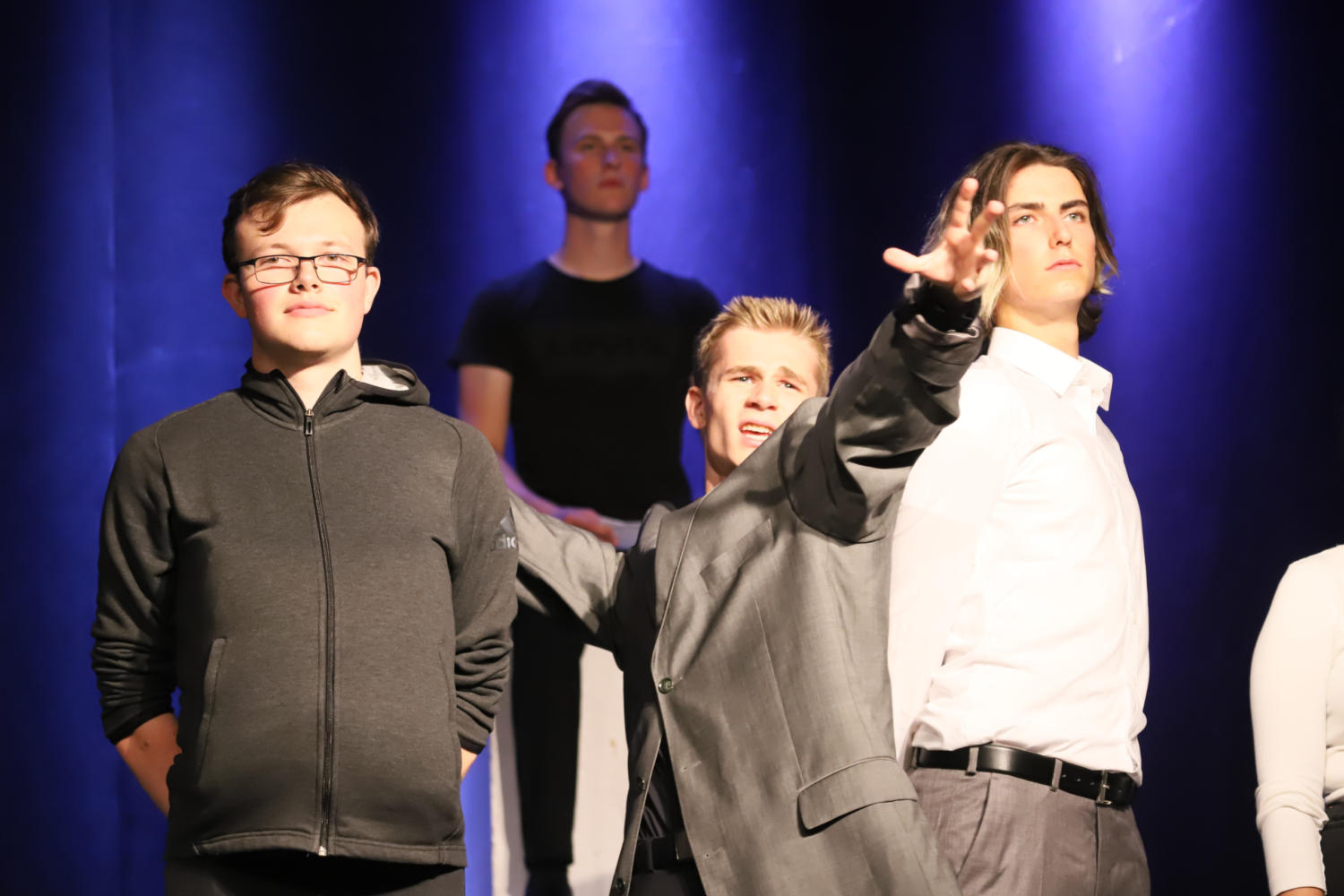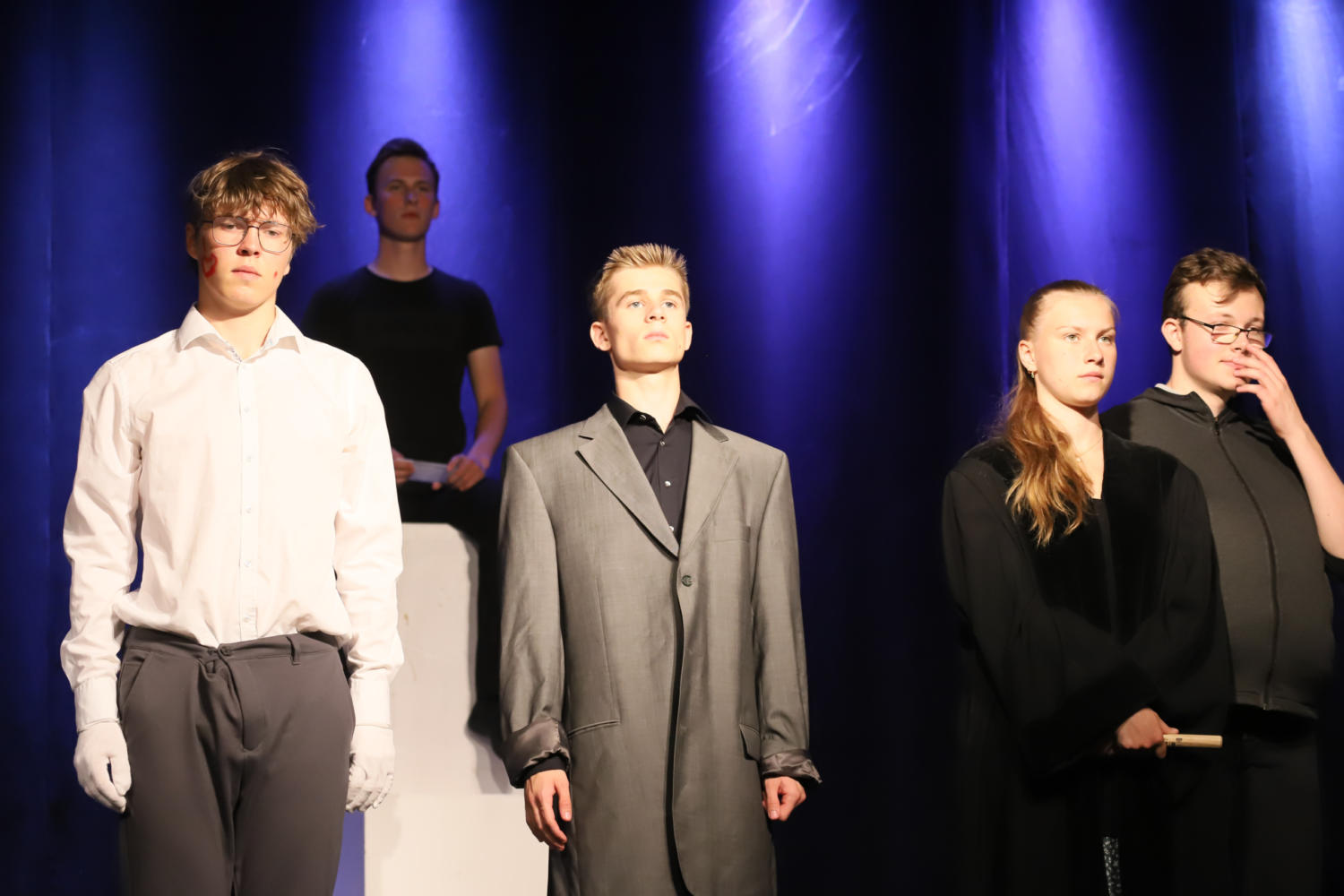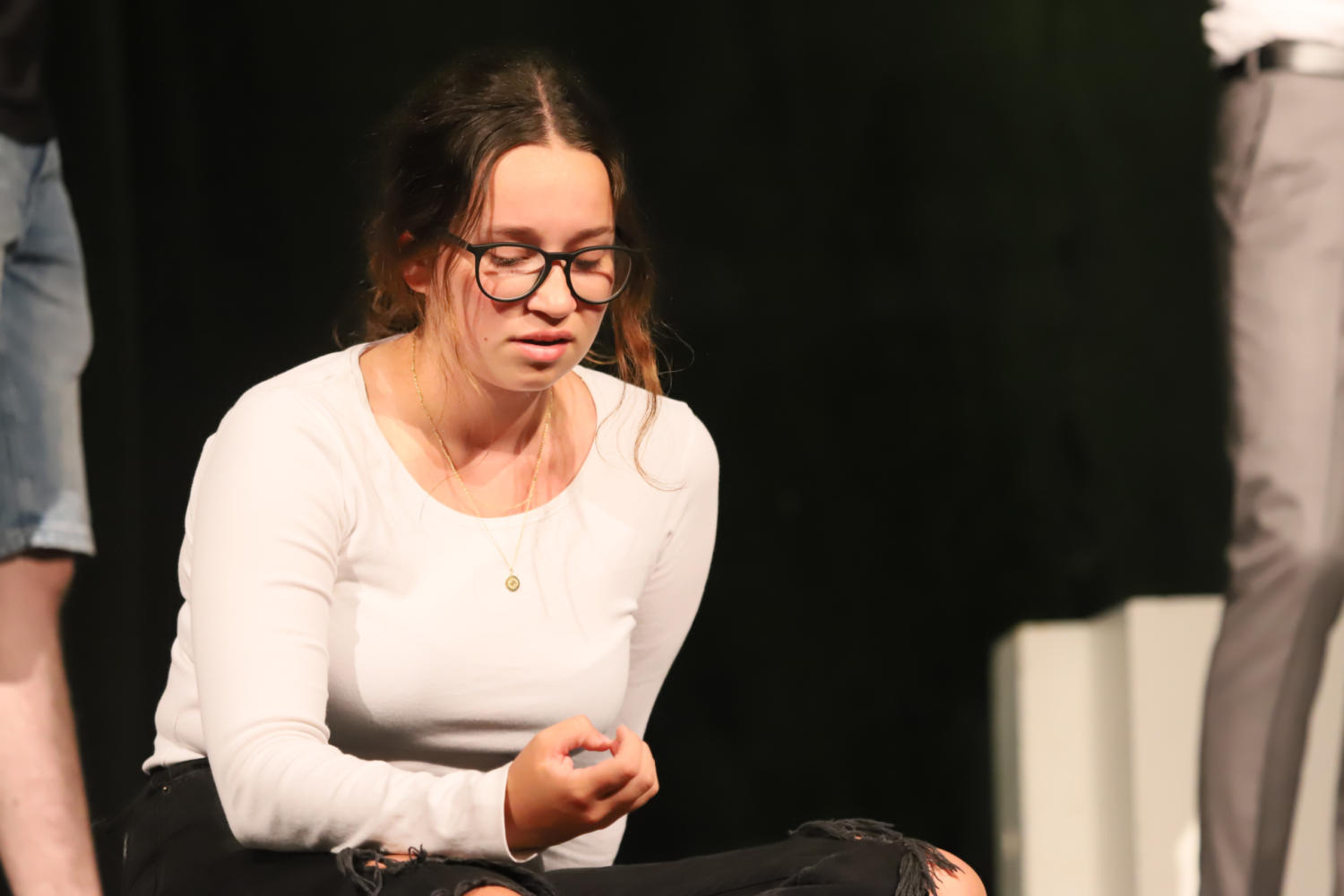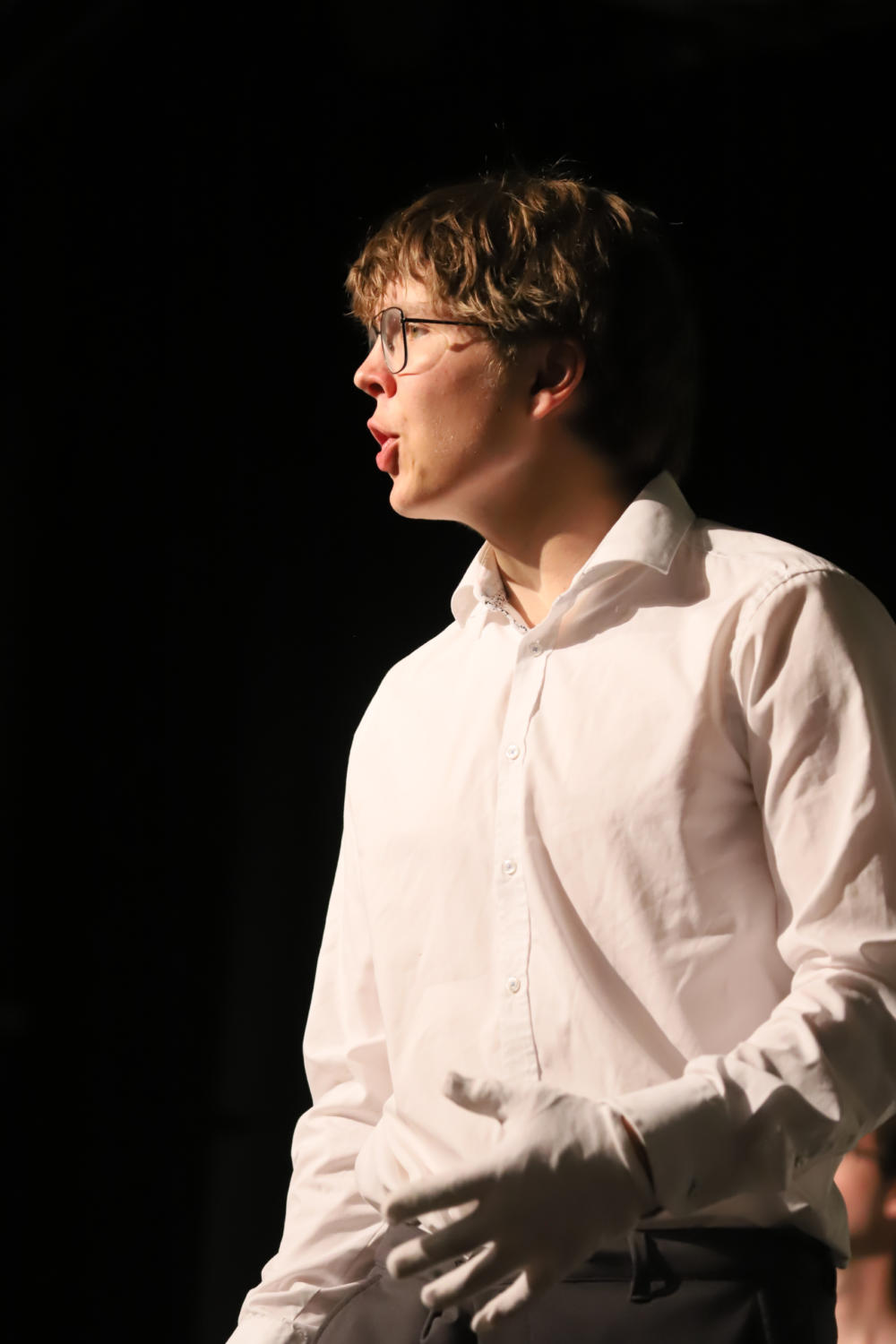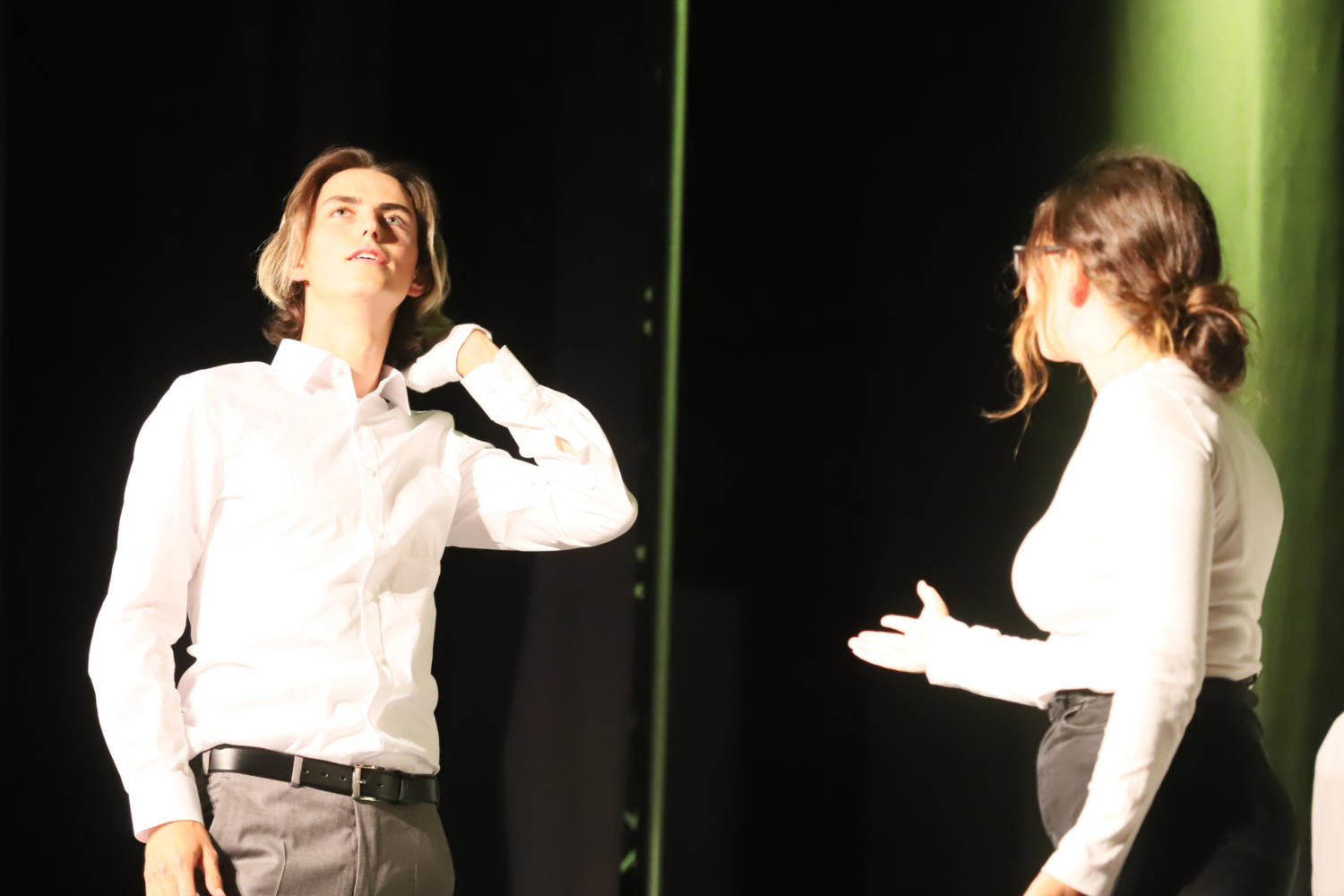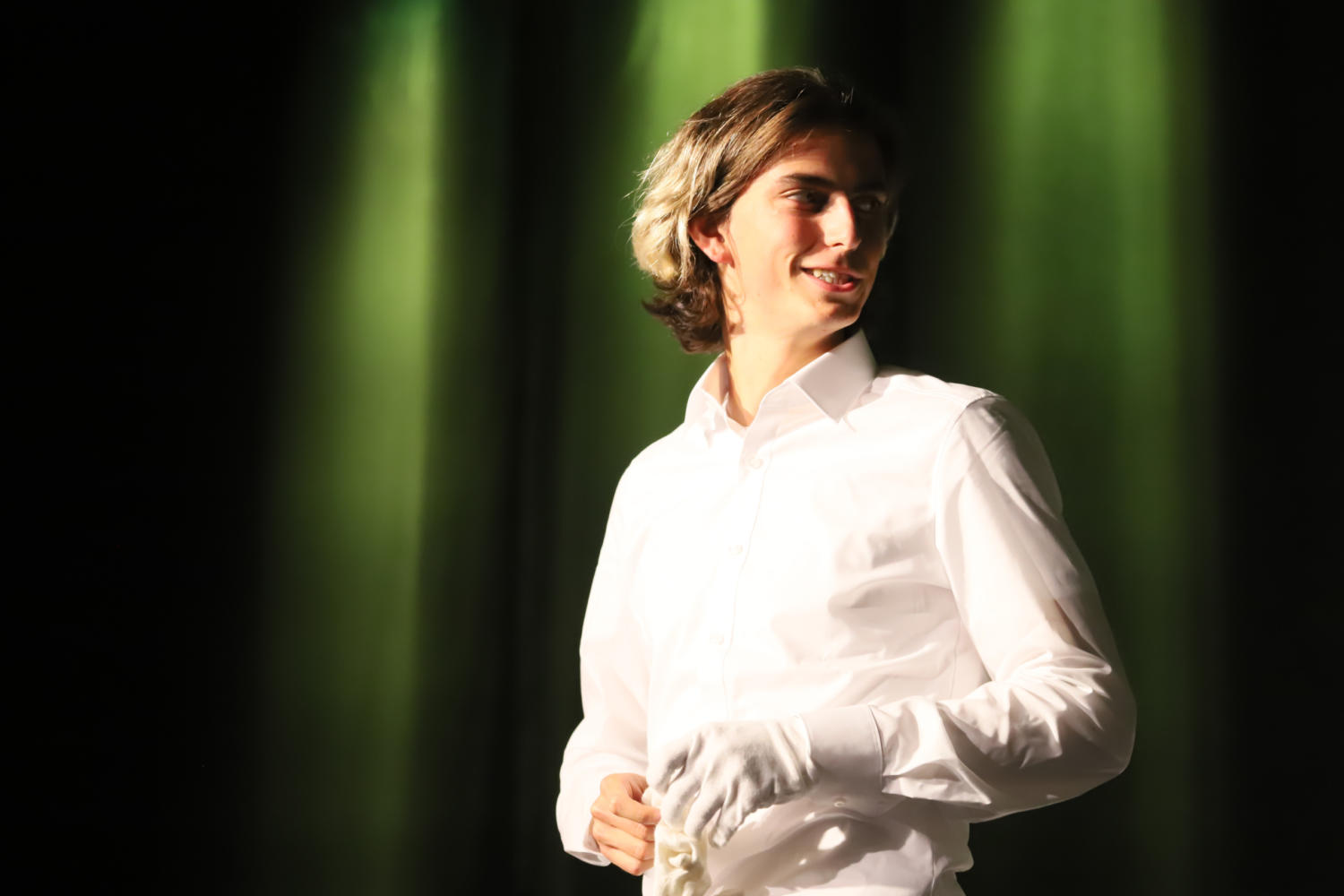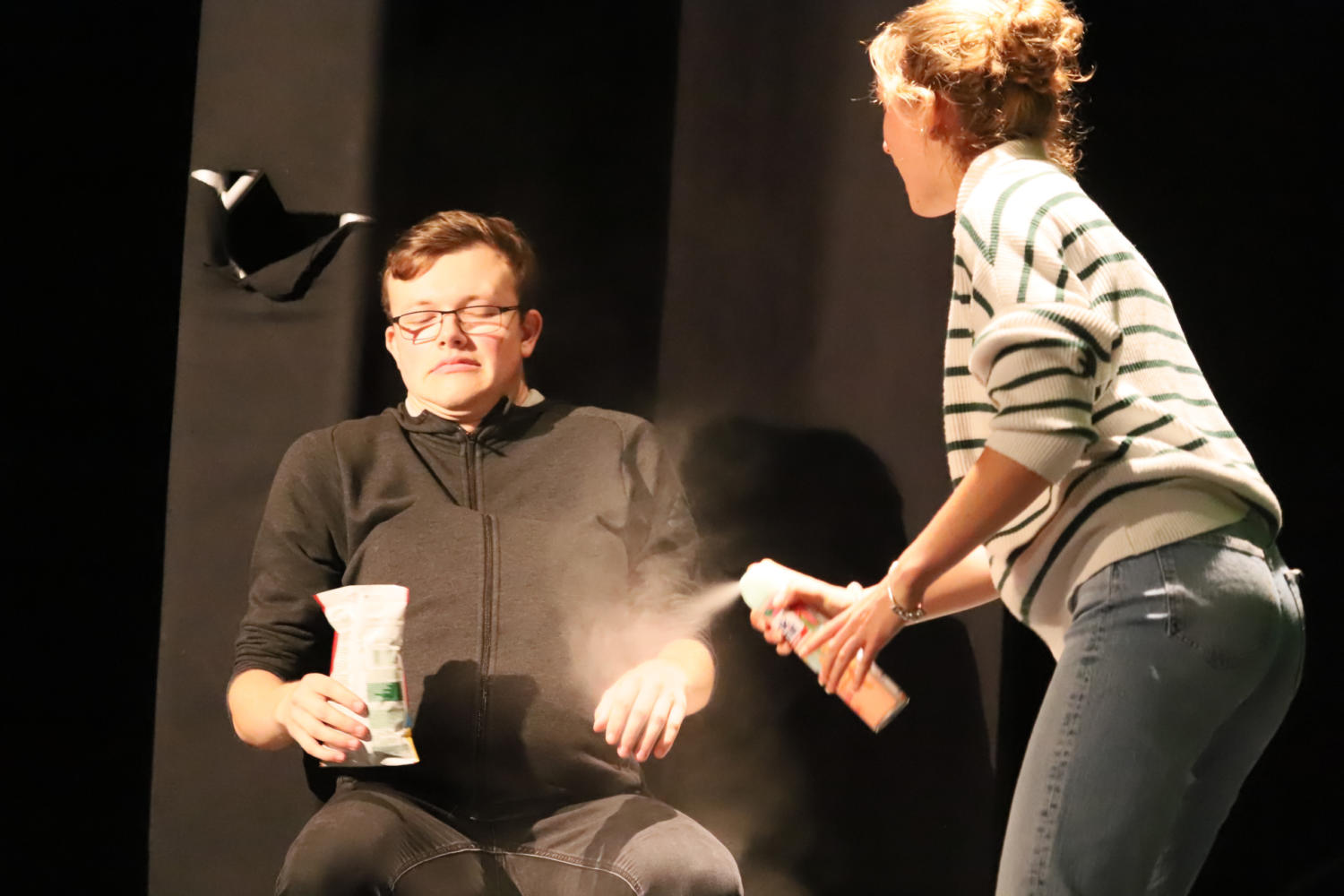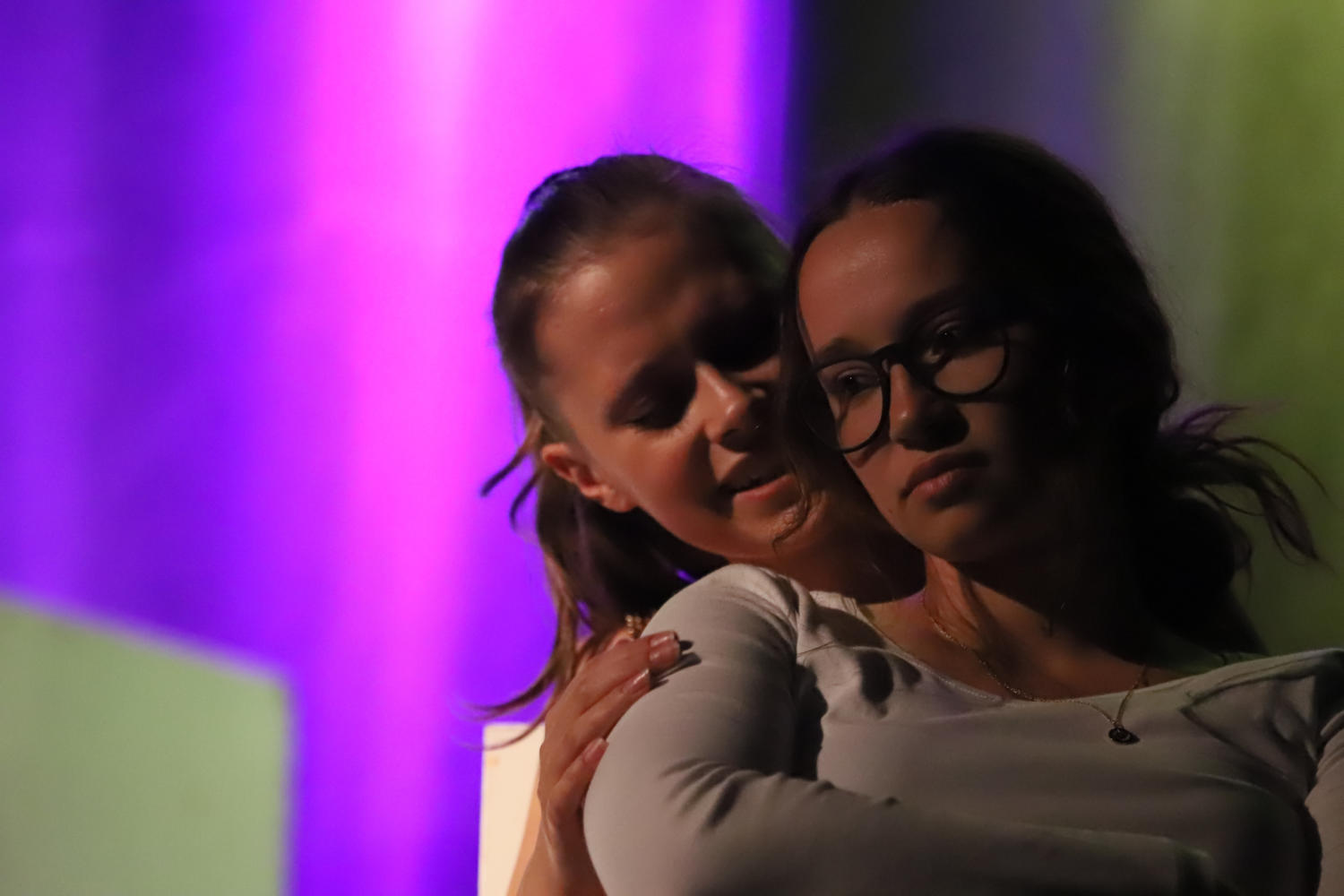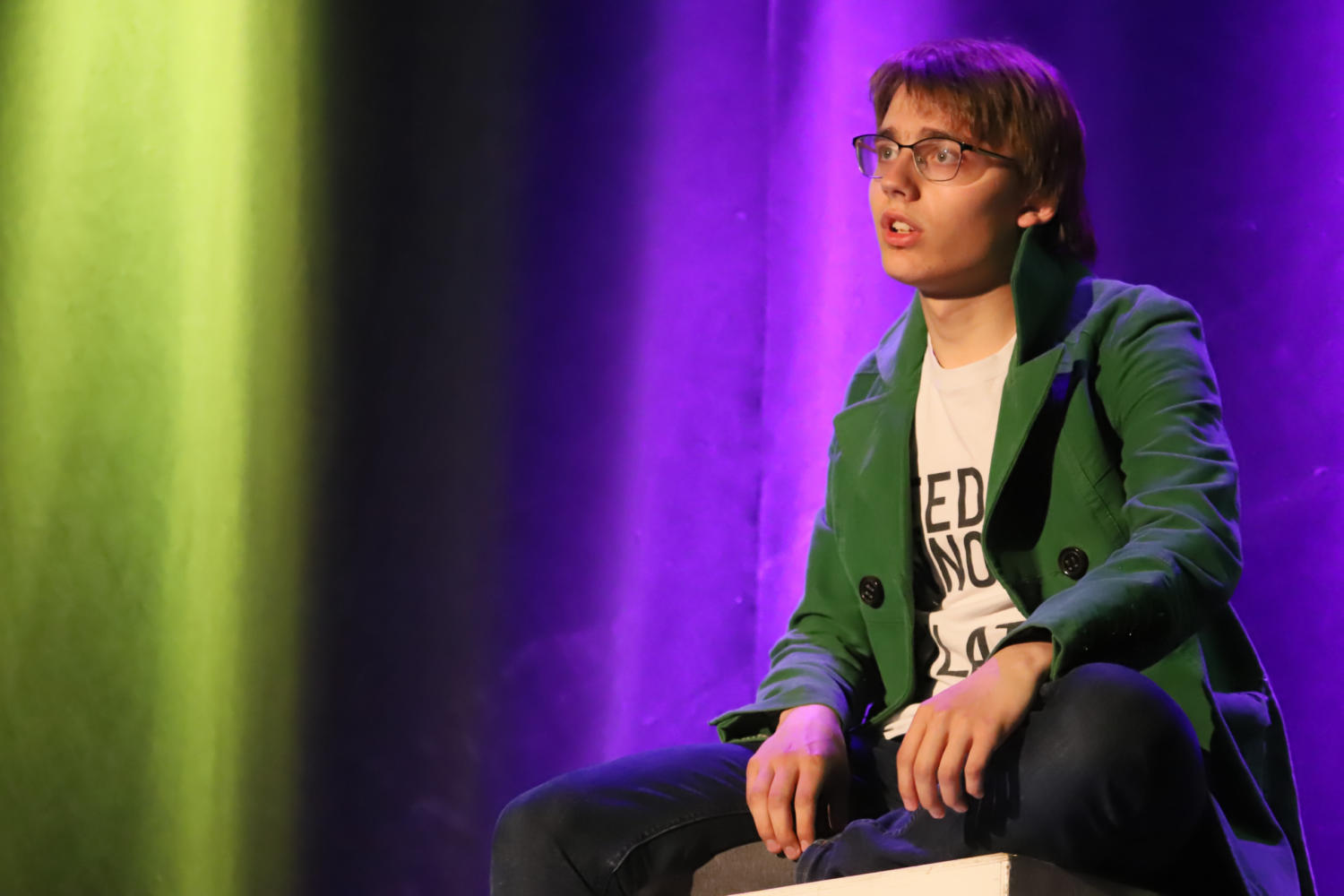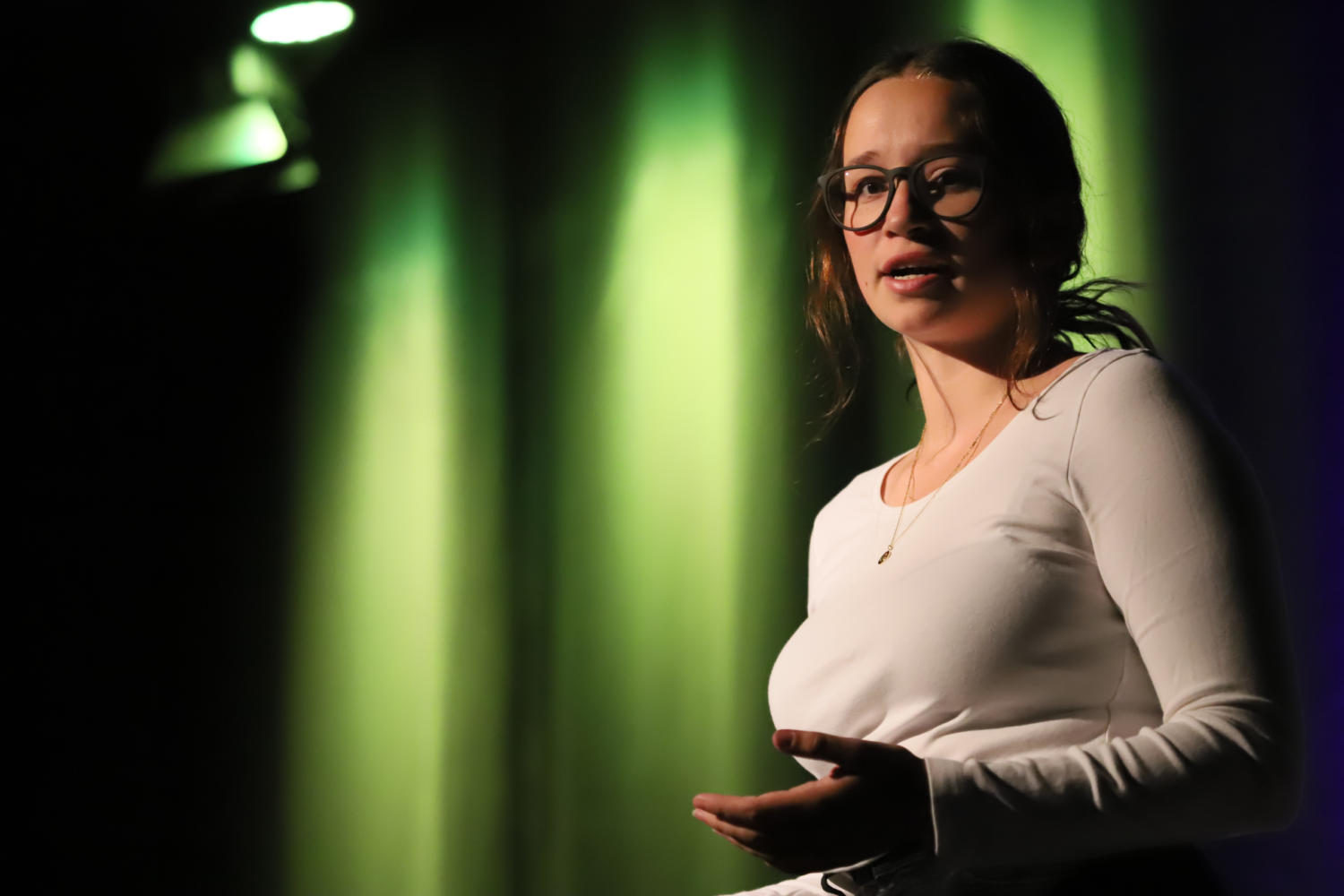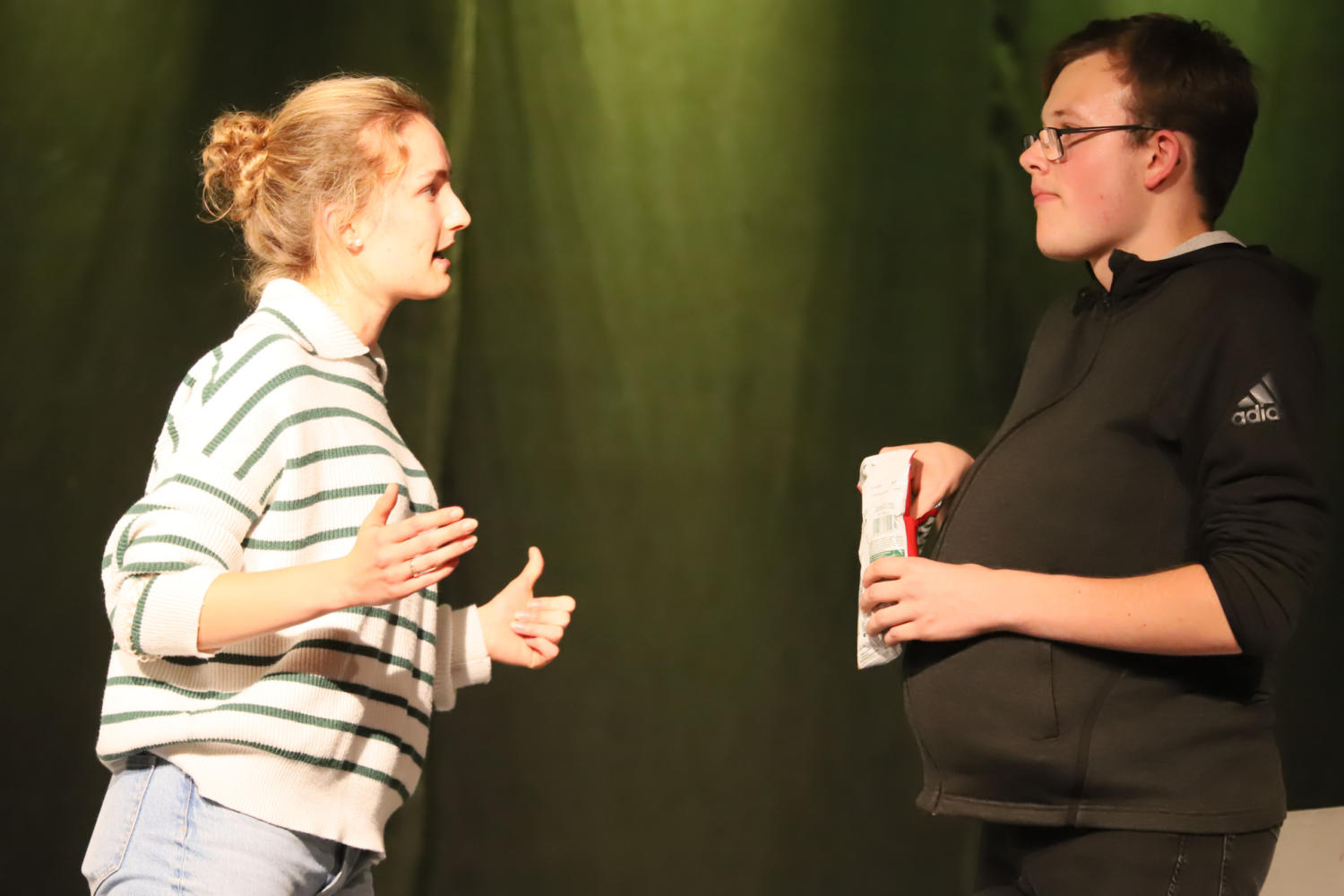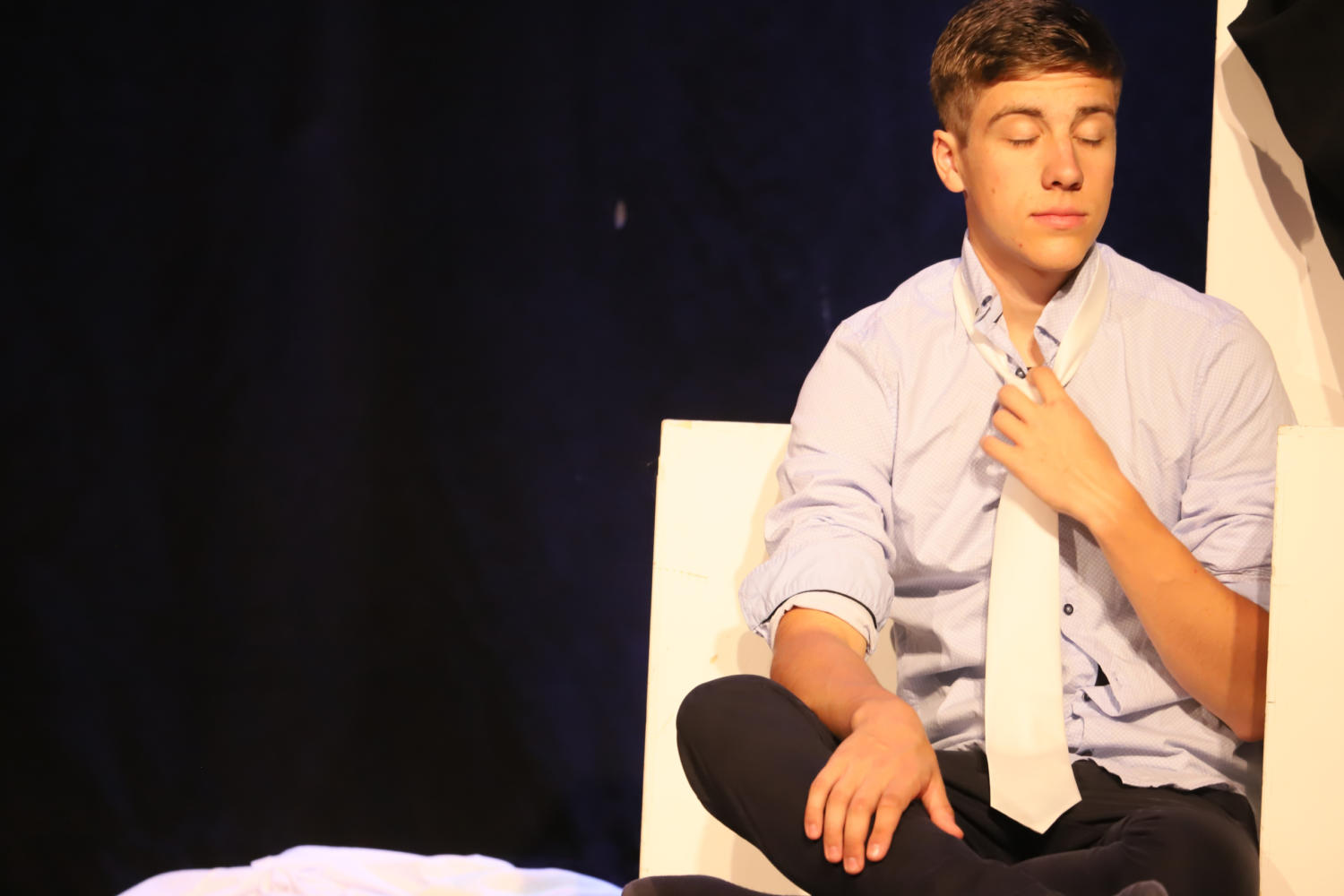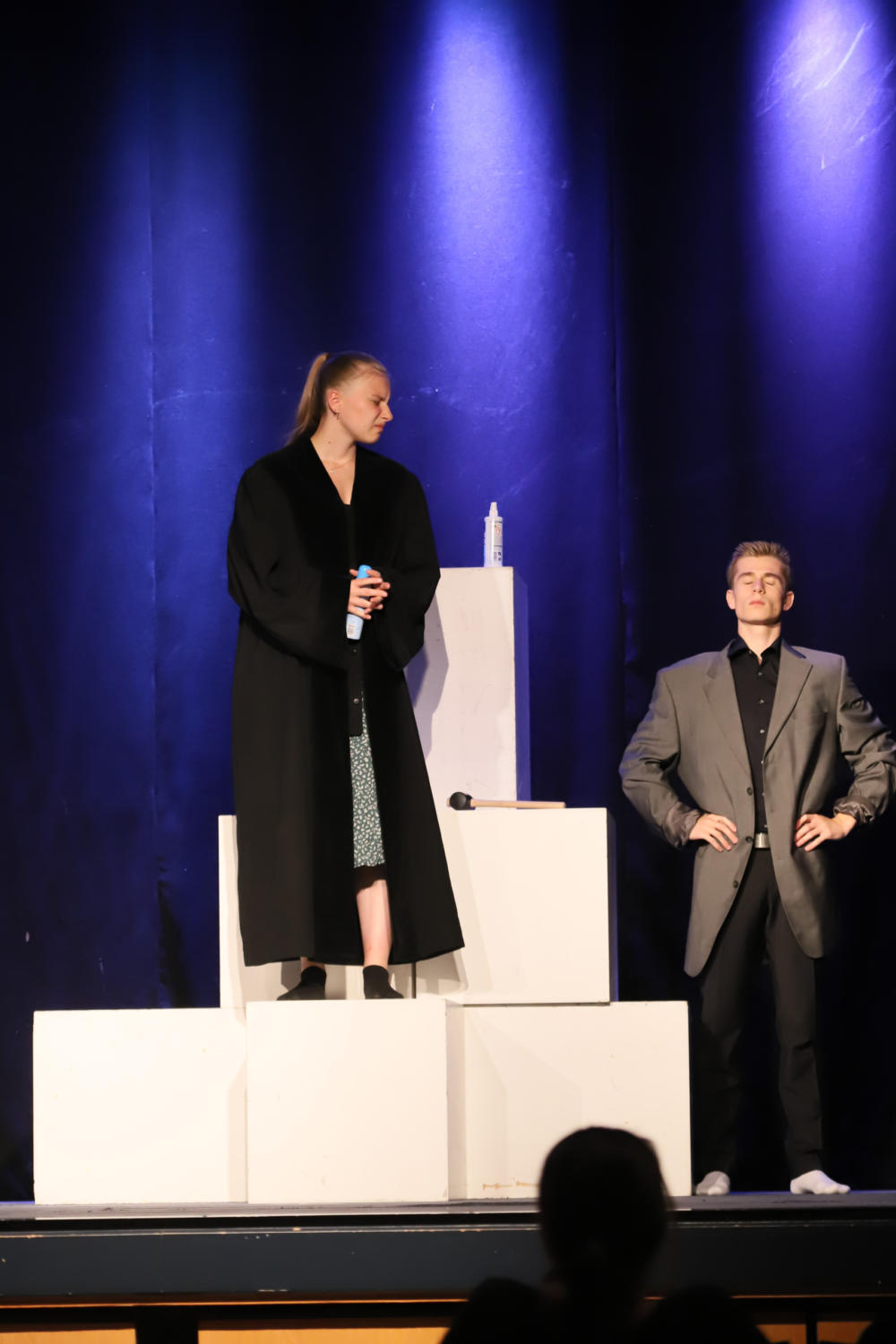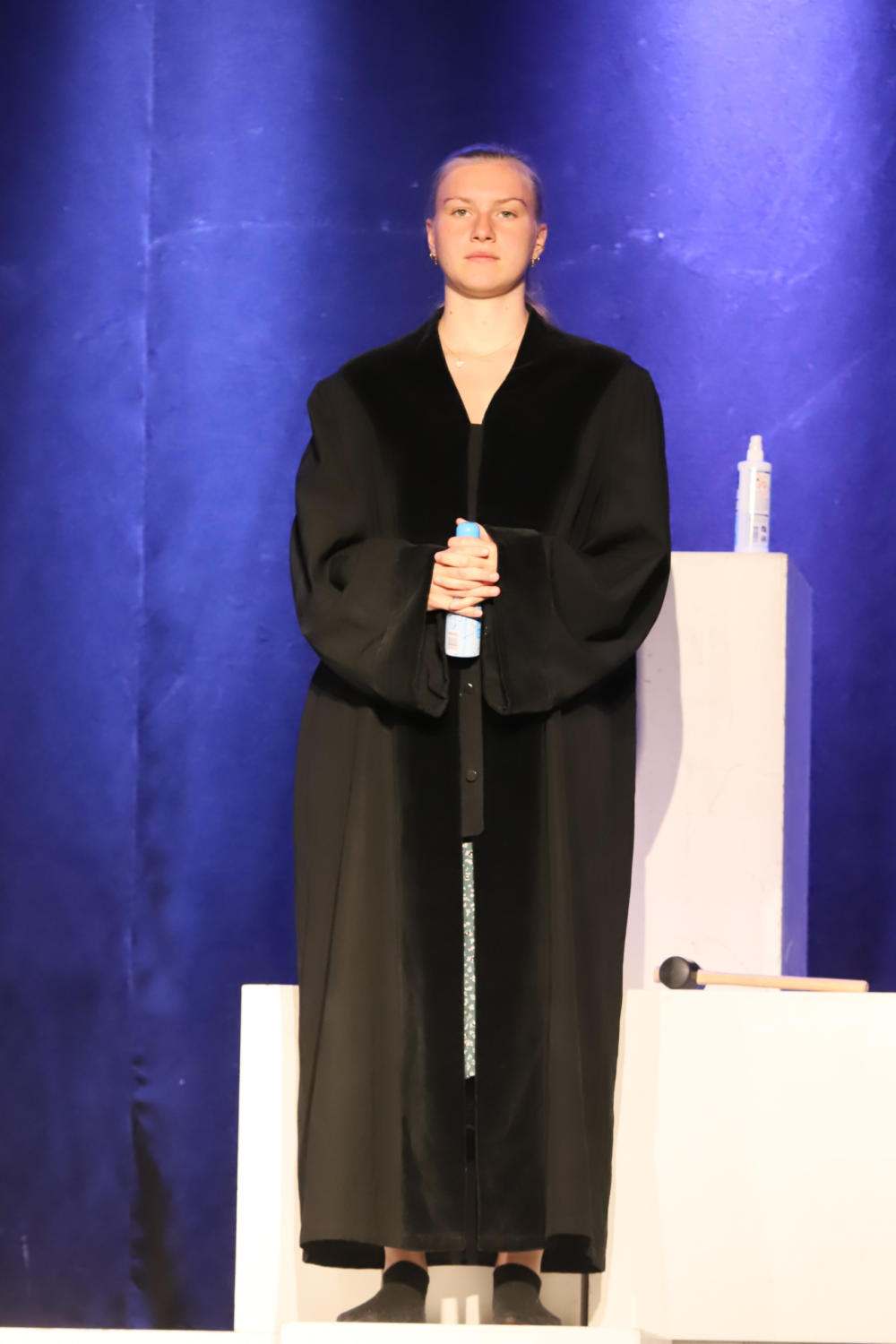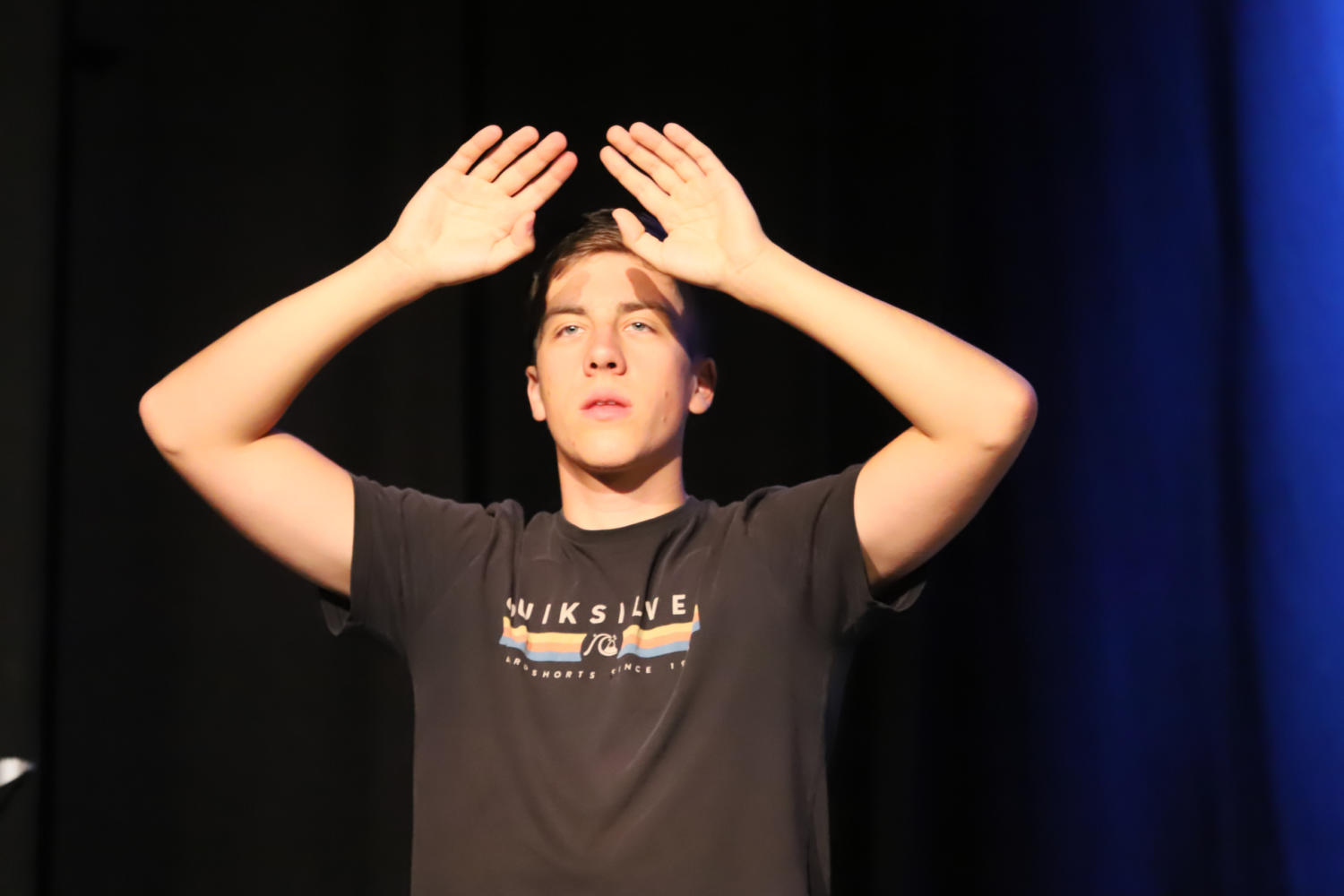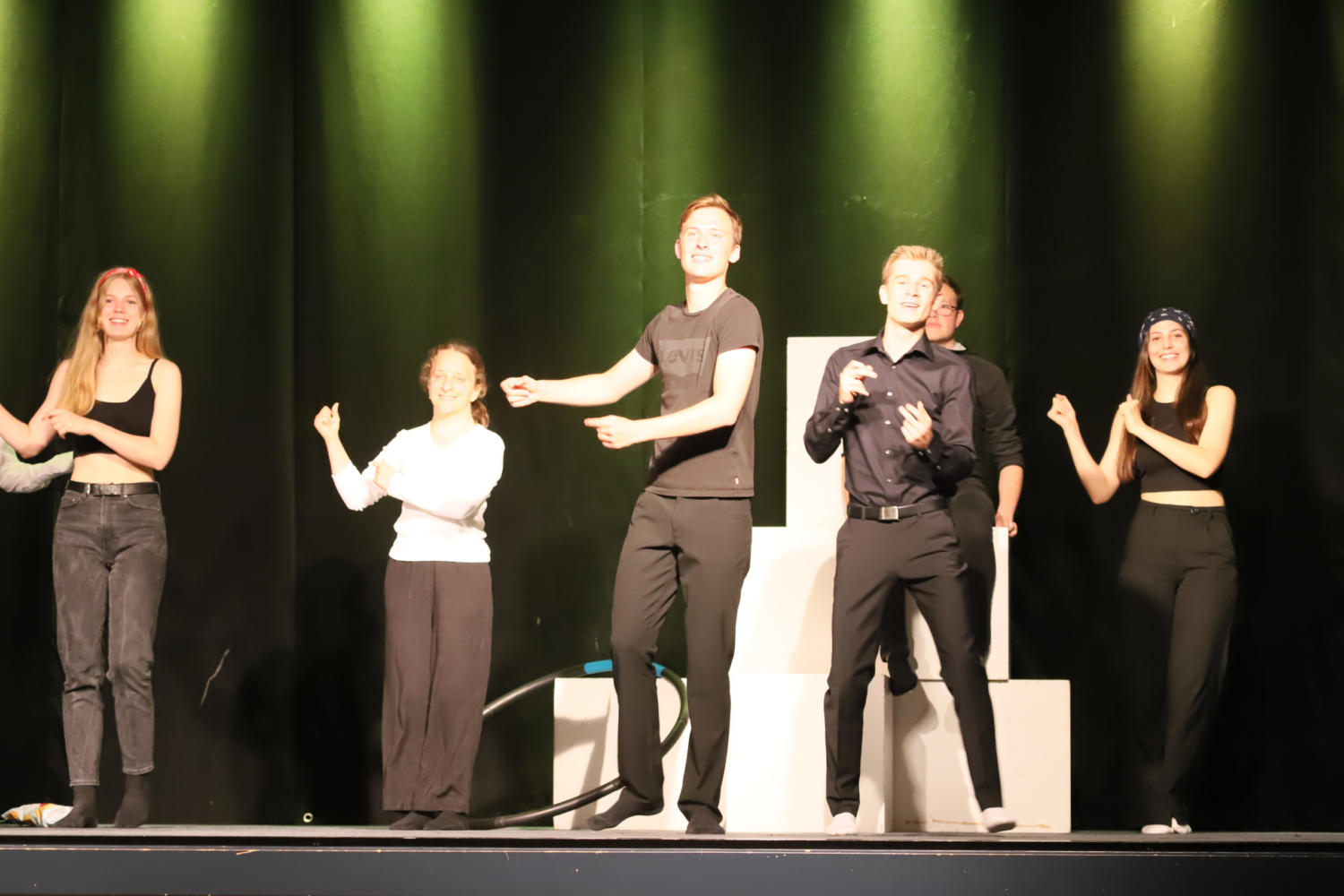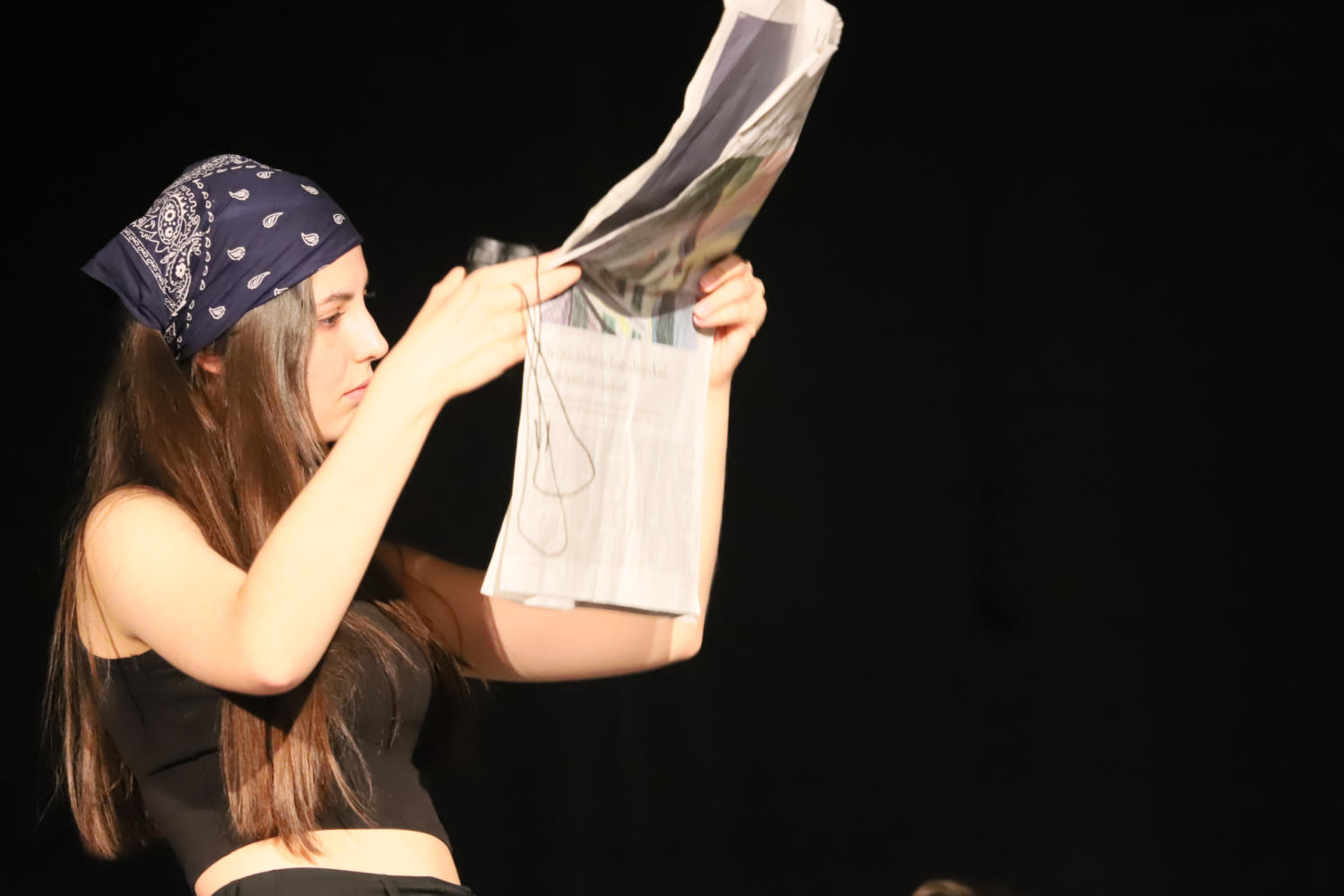
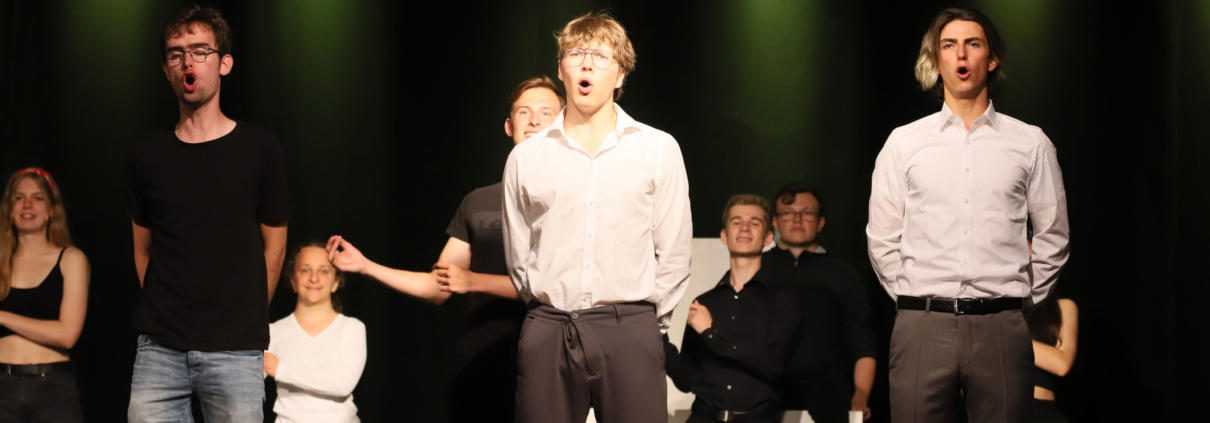
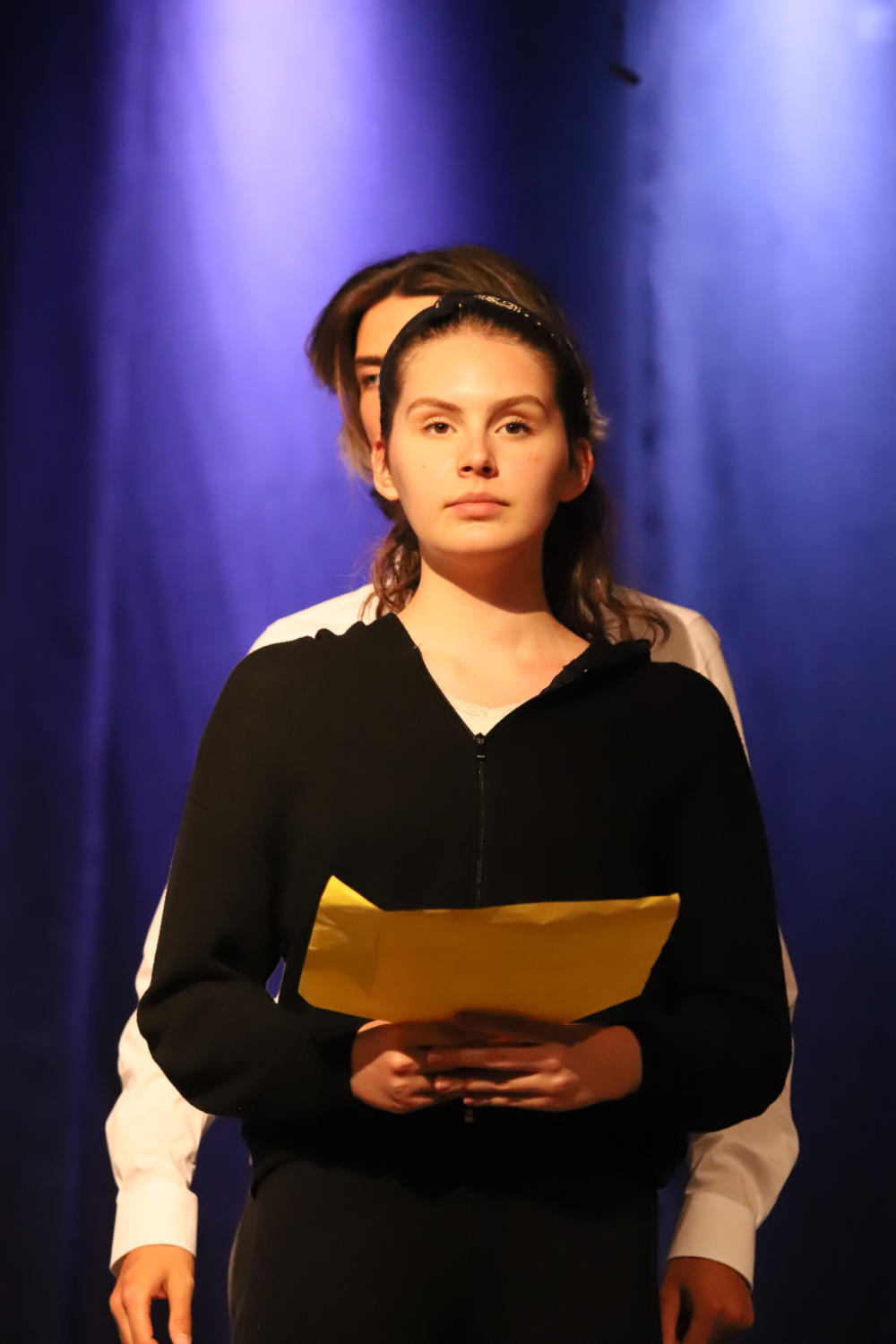
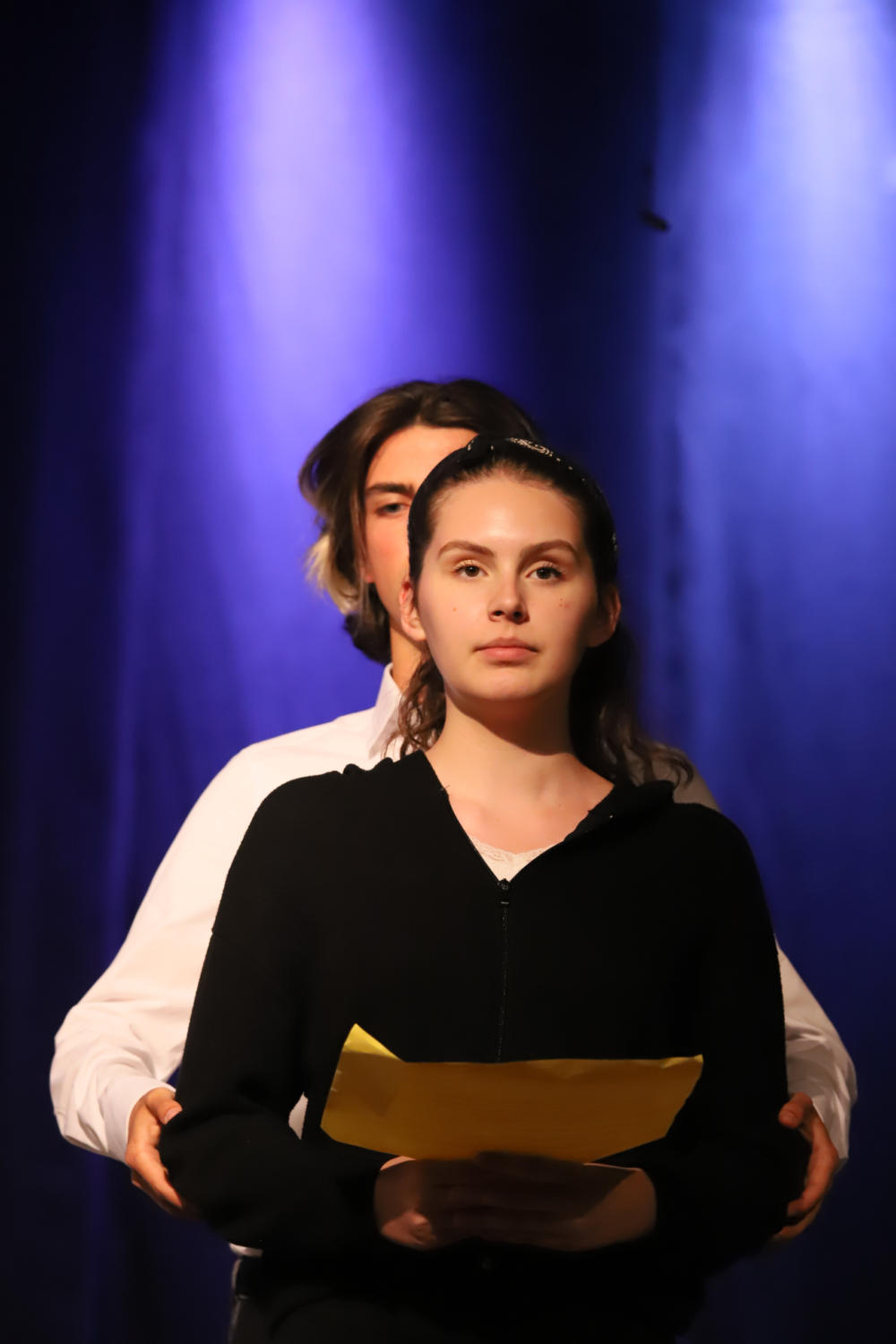
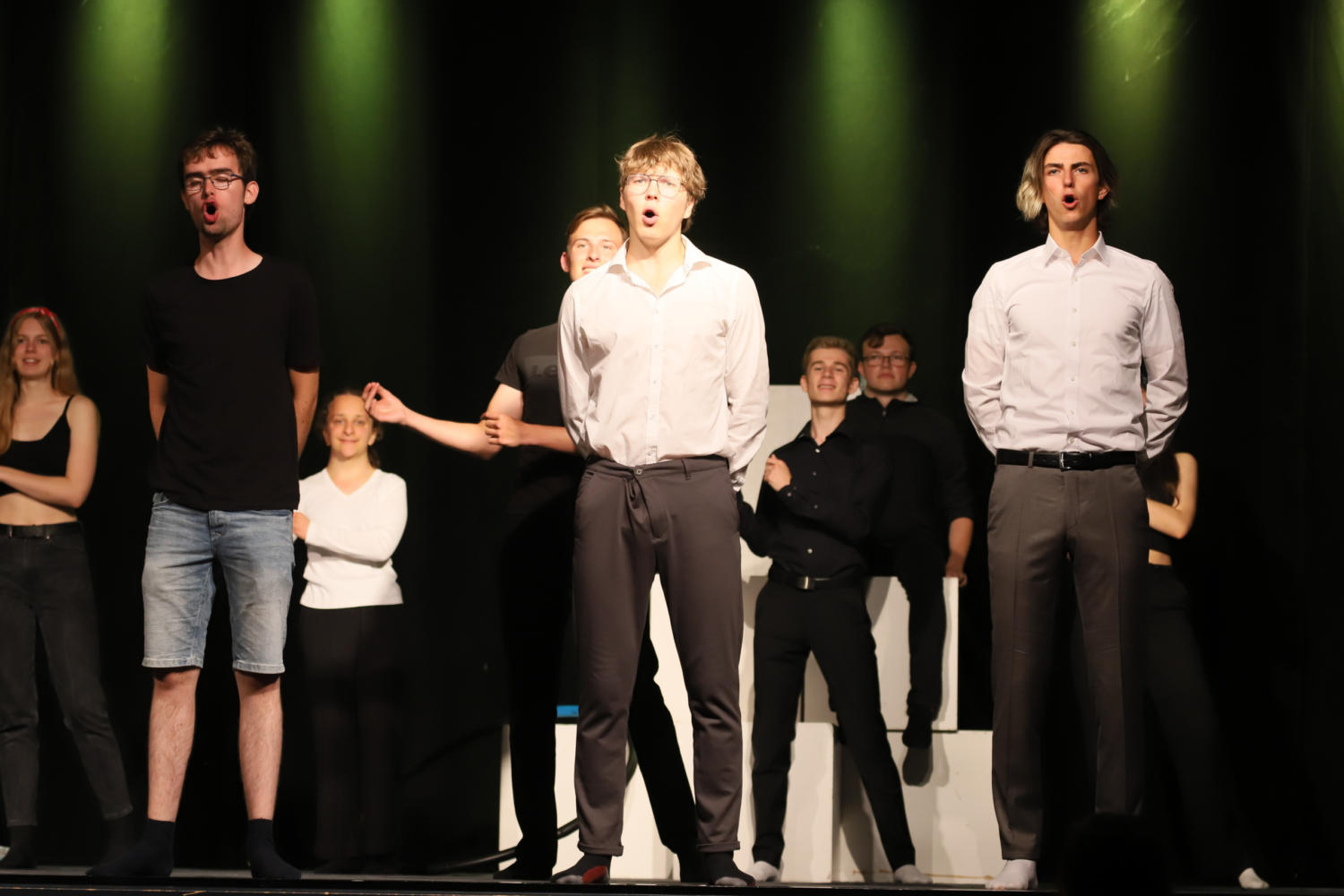
Some call this work the “contemporary German George Orwell.” In 2009, author Juli Zeh wrote the novel *Corpus Delicti*. The 12th-grade drama class staged this futuristic novel at the Steinmühle Forum. It depicts a scenario of a totalitarian surveillance state focused on the health of its citizens. The state—“the Method”—has the right to intrude on privacy. Or, to put it another way: it simply takes that right for itself.

It starts with the definition. What is health? “The Method” defines it as physical, mental, and social well-being. But who decides what that means? Who determines the criteria?

In any case, caution is advised. The eye of the Fourth Estate never sleeps. And that’s what happens to anyone who dares to lead a lifestyle that isn’t “immunologically compatible.” After all, a good person doesn’t smoke or drink. What’s more, those who oppose established methods also endanger the common good. And any means are justified to track them down.

Any means? Yes, absolutely any! Or who would have thought of sensors in the toilet that the government uses to measure stomach acid levels? Just one example of the kind of transparency we have to submit to.


A World of Ginger Shots and Smoothies

“With this play, the DS Group has addressed the highly topical issues of fitness optimization, the big data debate, the phenomenon of the surveillance state, and the tension between national security and freedom,” explains Melisande Lauginiger, who co-wrote and co-directed the play with Manuela Schmidt. “The play illustrates where things can lead when people are forced to give up their freedom in a state based on a misguided belief in state-guaranteed security.” The 19 students surrounding the protagonist “Mia Holl” had woven a few jokes and gags into this serious topic to elicit laughter and provide entertainment—even if it meant that the school principals, Björn Gemmer and Bernd Holly, were caught drinking wine or eating cream cake —which, of course, is a no-go in a world of ginger shots and smoothies.

“The play,” says Melisande Lauginiger, “transports us into a health dictatorship where brainwashing, oppression, manipulation, torture, and death not only turn people into puppets but also rob them of their individuality.” – A thought-provoking theatrical performance that received a round of applause and was illustrated with posters by Sarah Mengel (12a), Joelina Merle (12a), Alina Klähn (12a), Yunxi Zhang, and Fabian Diedrich (12c) had illustrated with posters under the guidance of art teacher Ines Vielhaben.


A clever “opener”

“We’re the opening act for the DS course”—with these words, a six-member cast from the Theater 5/6 club professionally kicked off the evening. The story revolved around a 5,000-euro loan, a money handoff in the park, “Manfred,” who was supposed to carry out a murder, and a person who did a truly excellent job acting as the eventual victim. The group led by teacher Dagmar Müller has potential—and will likely take the place of the main actors in a few years. We can’t wait to see what they’ll do!
 

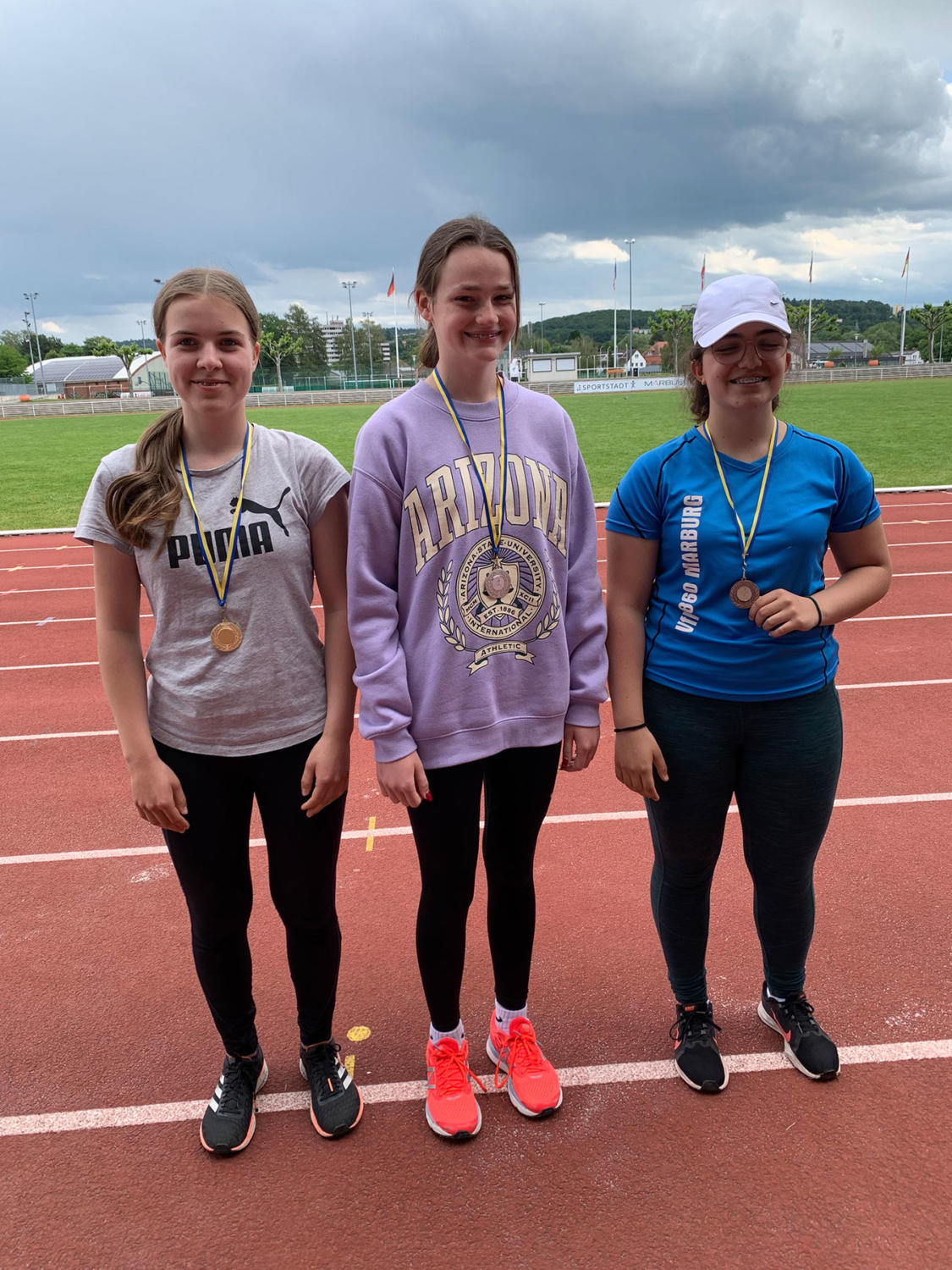
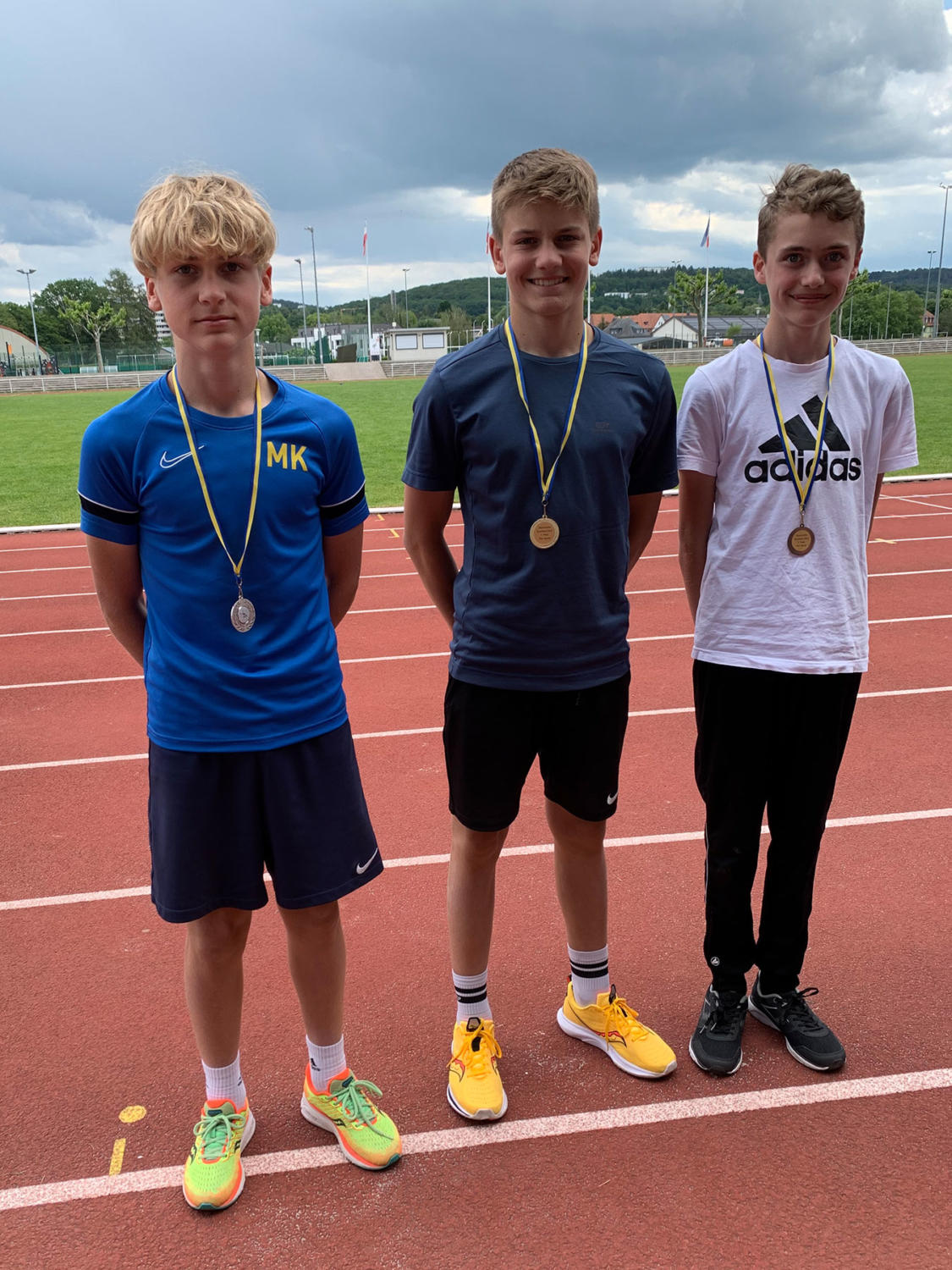
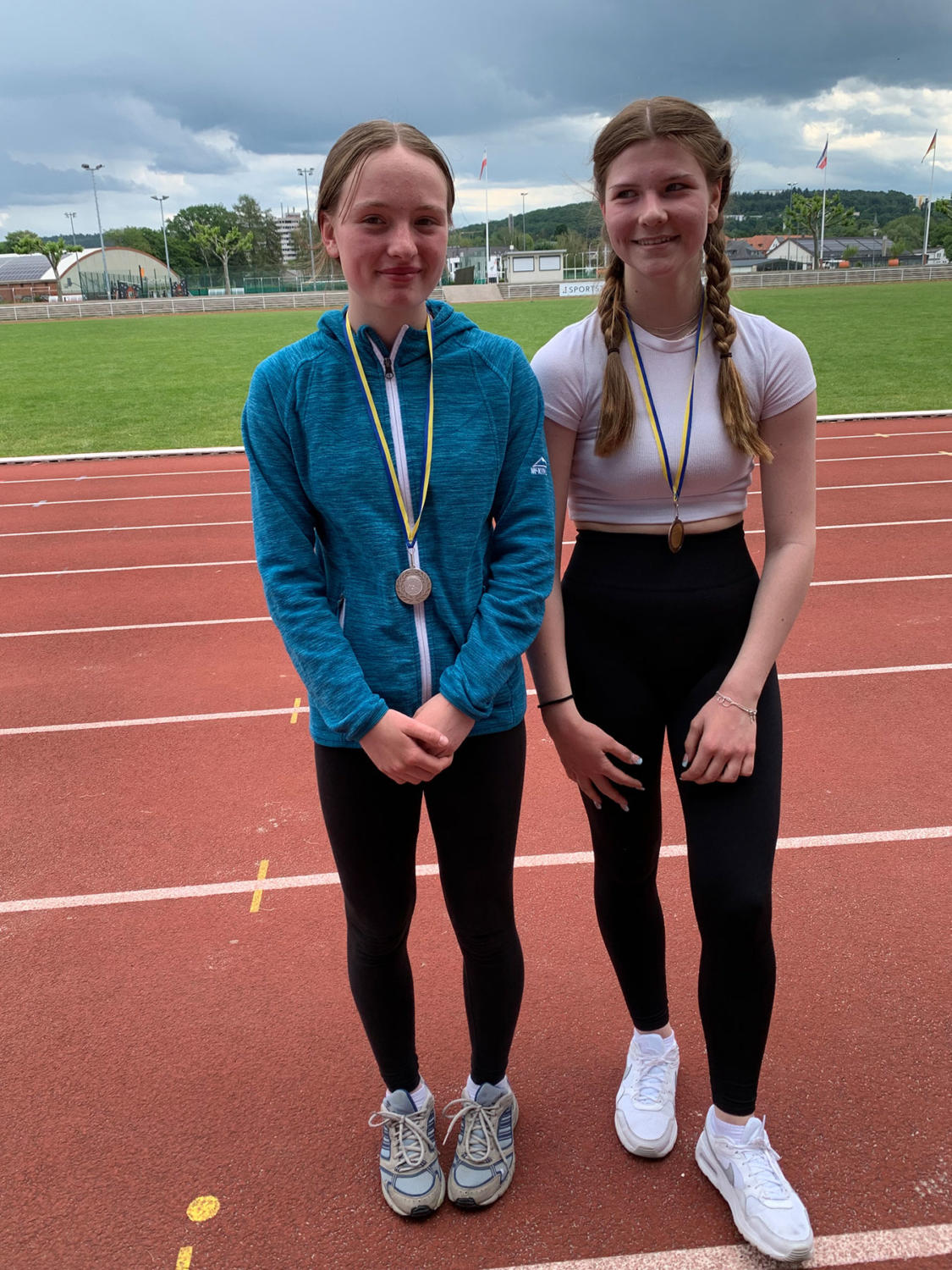
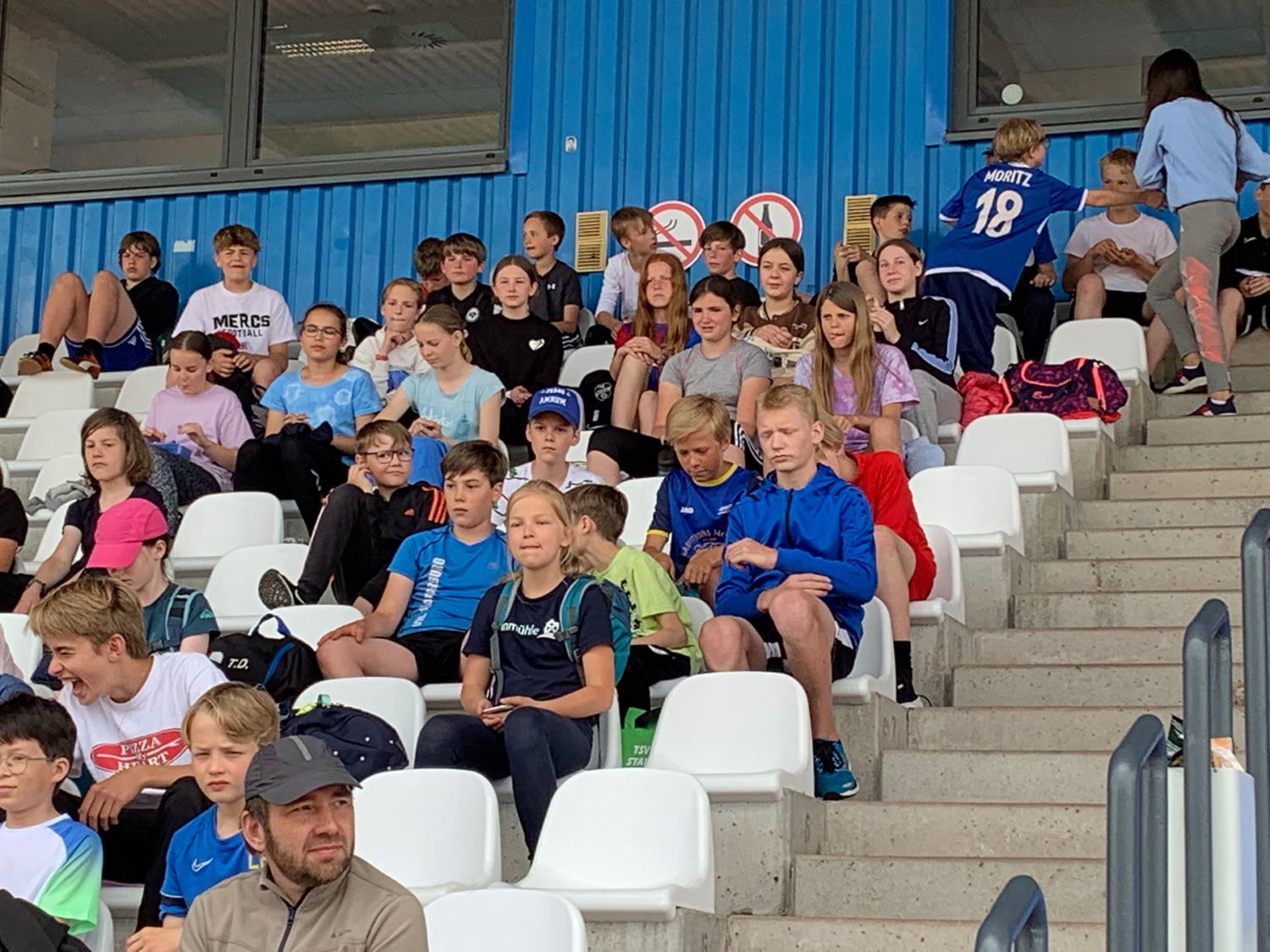
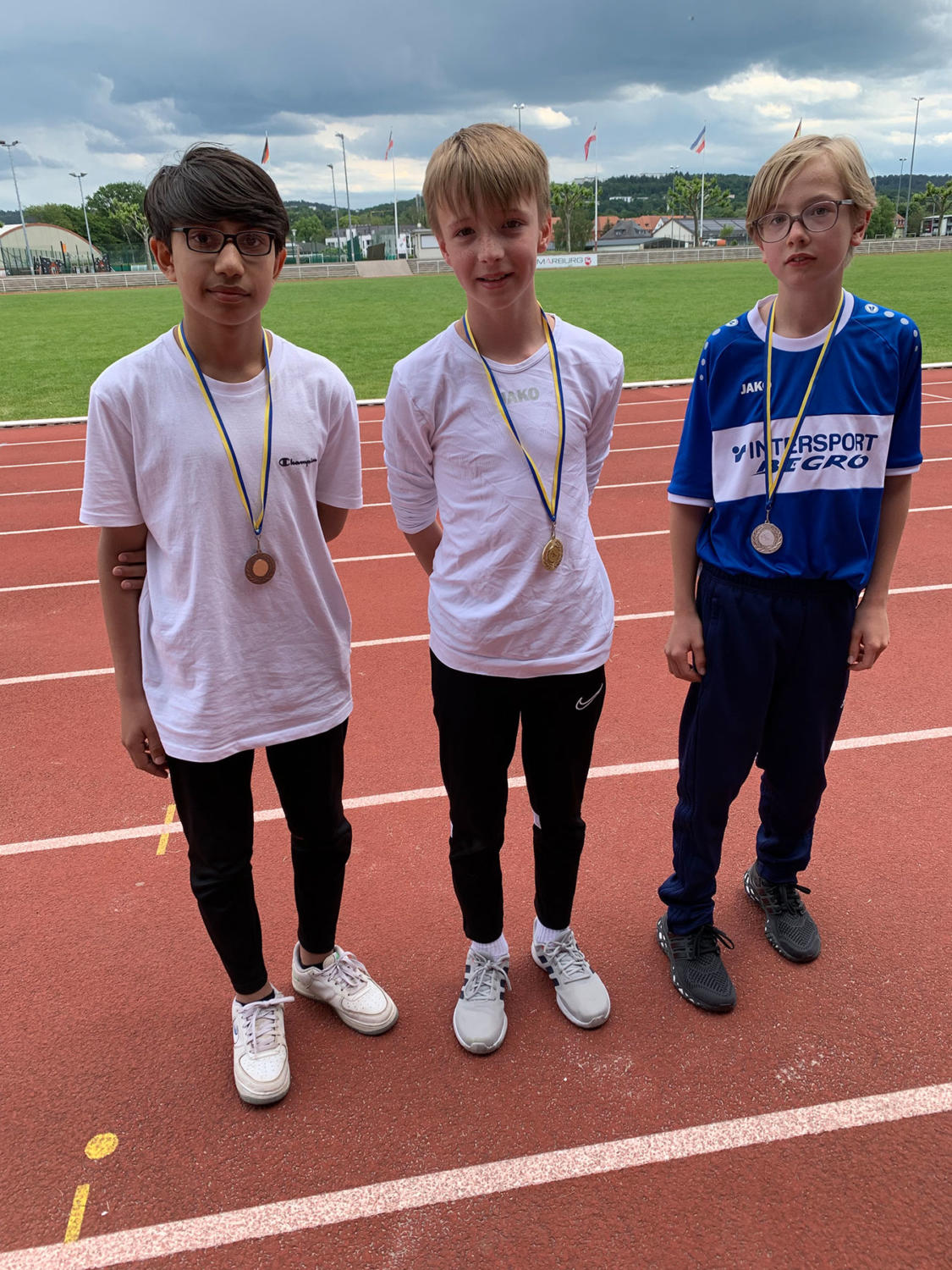
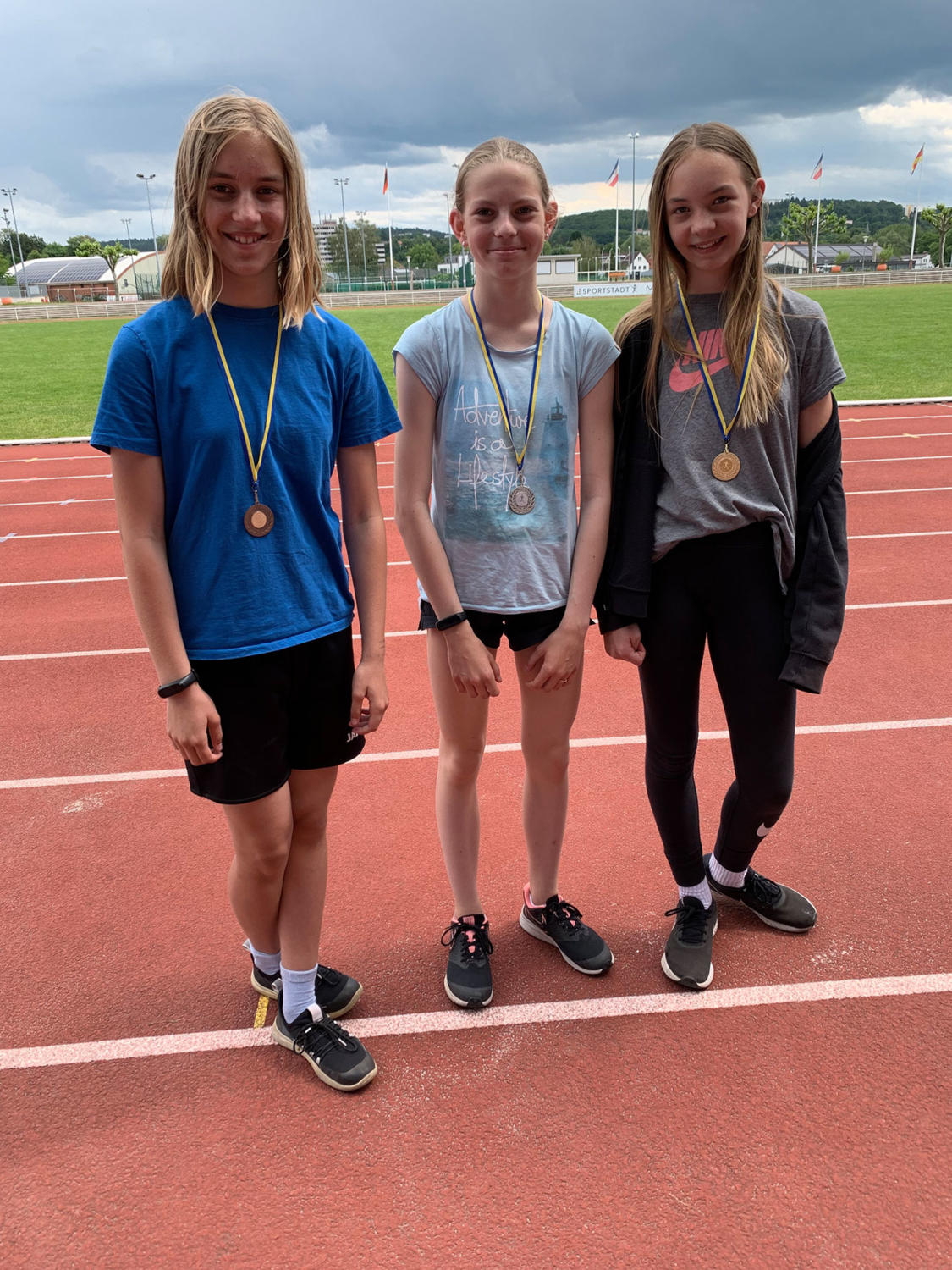
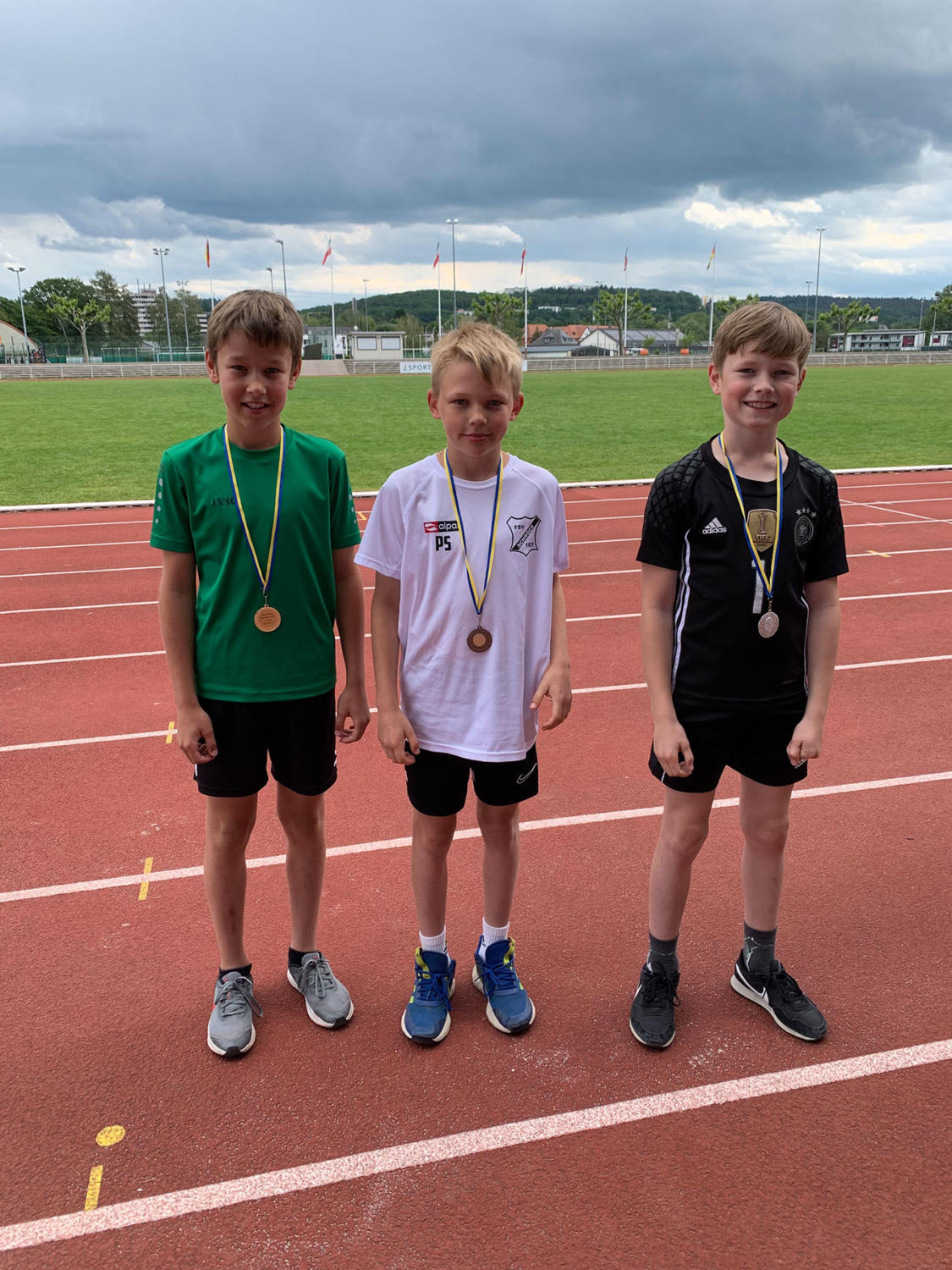
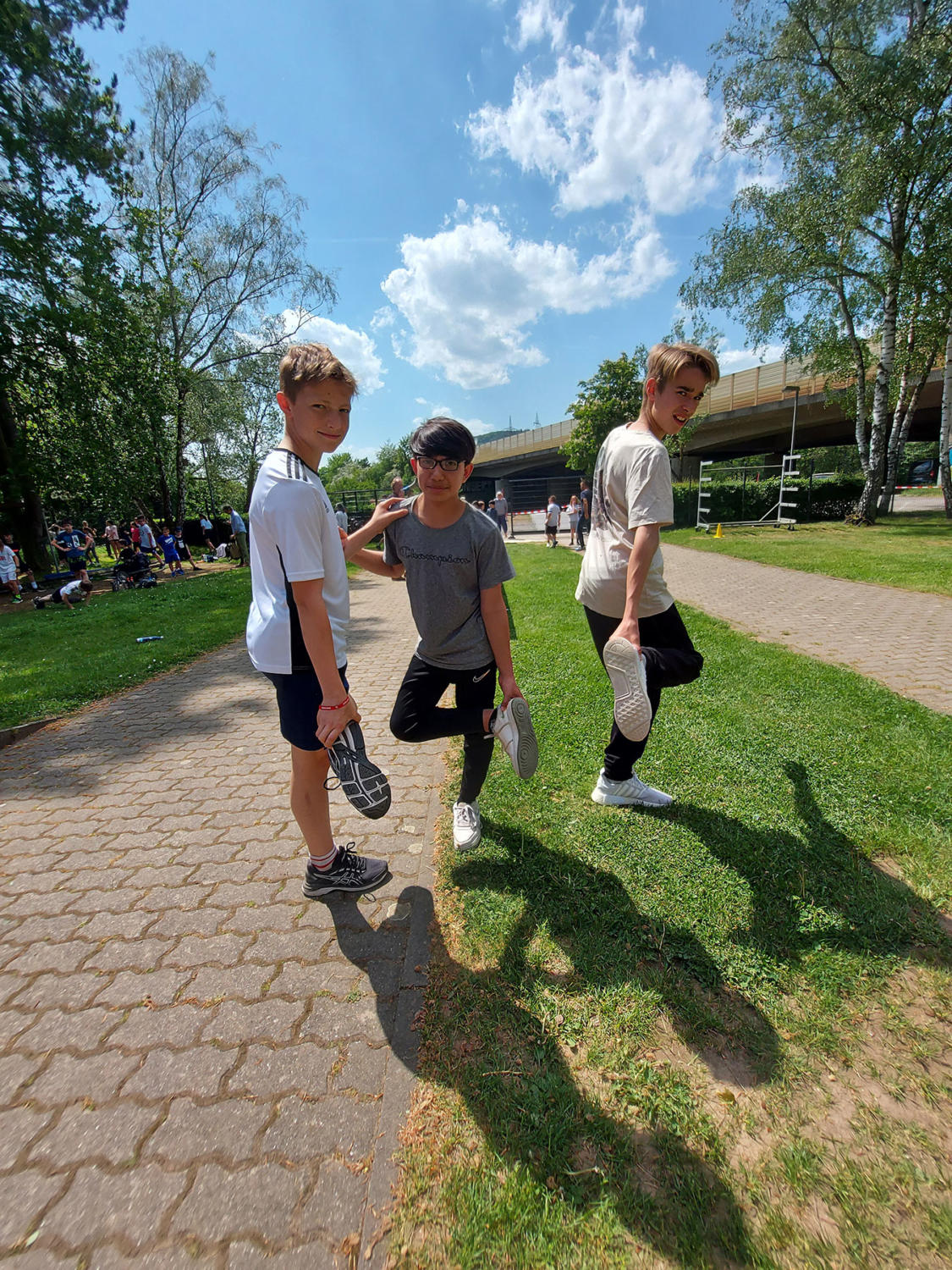
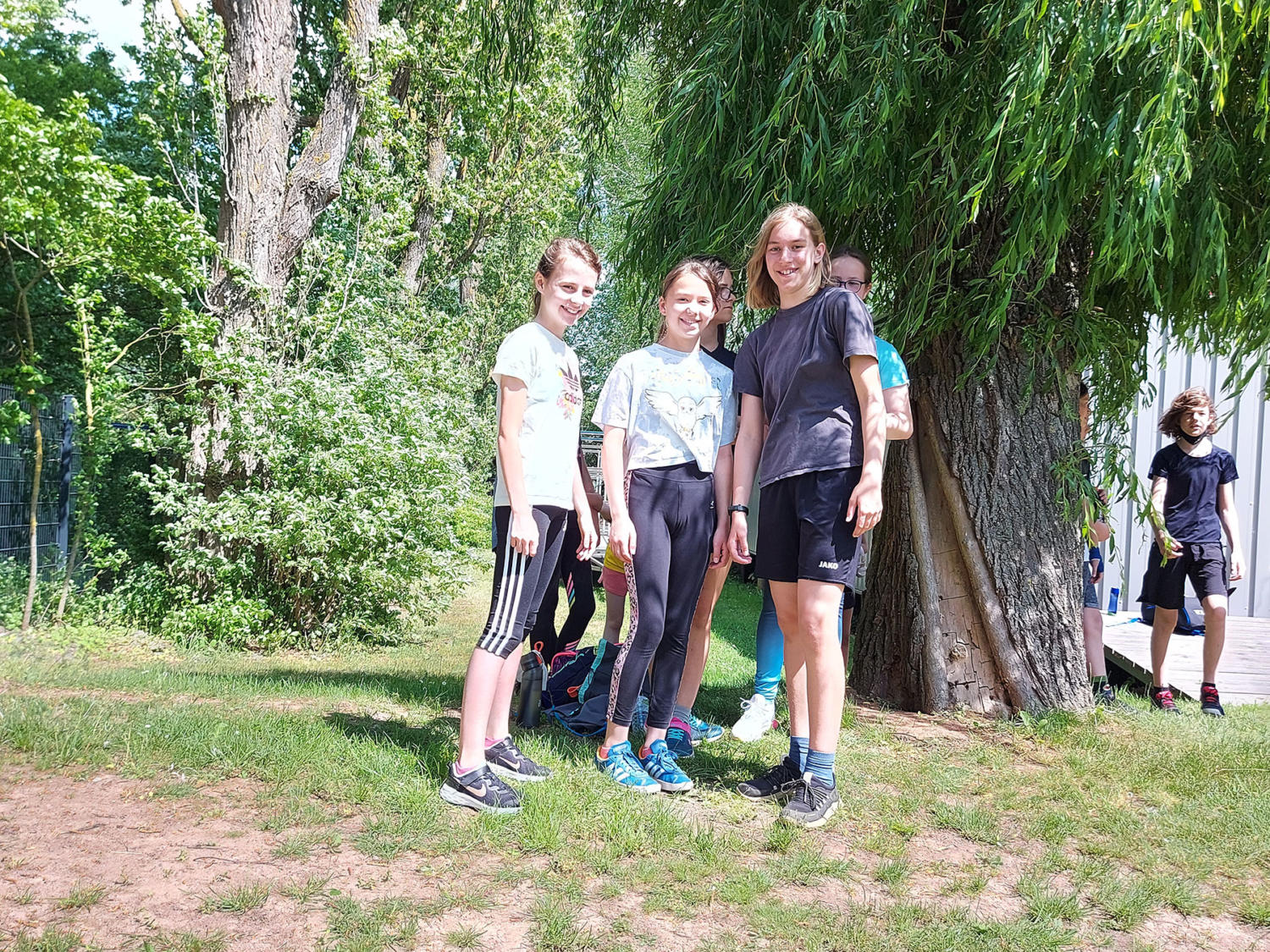
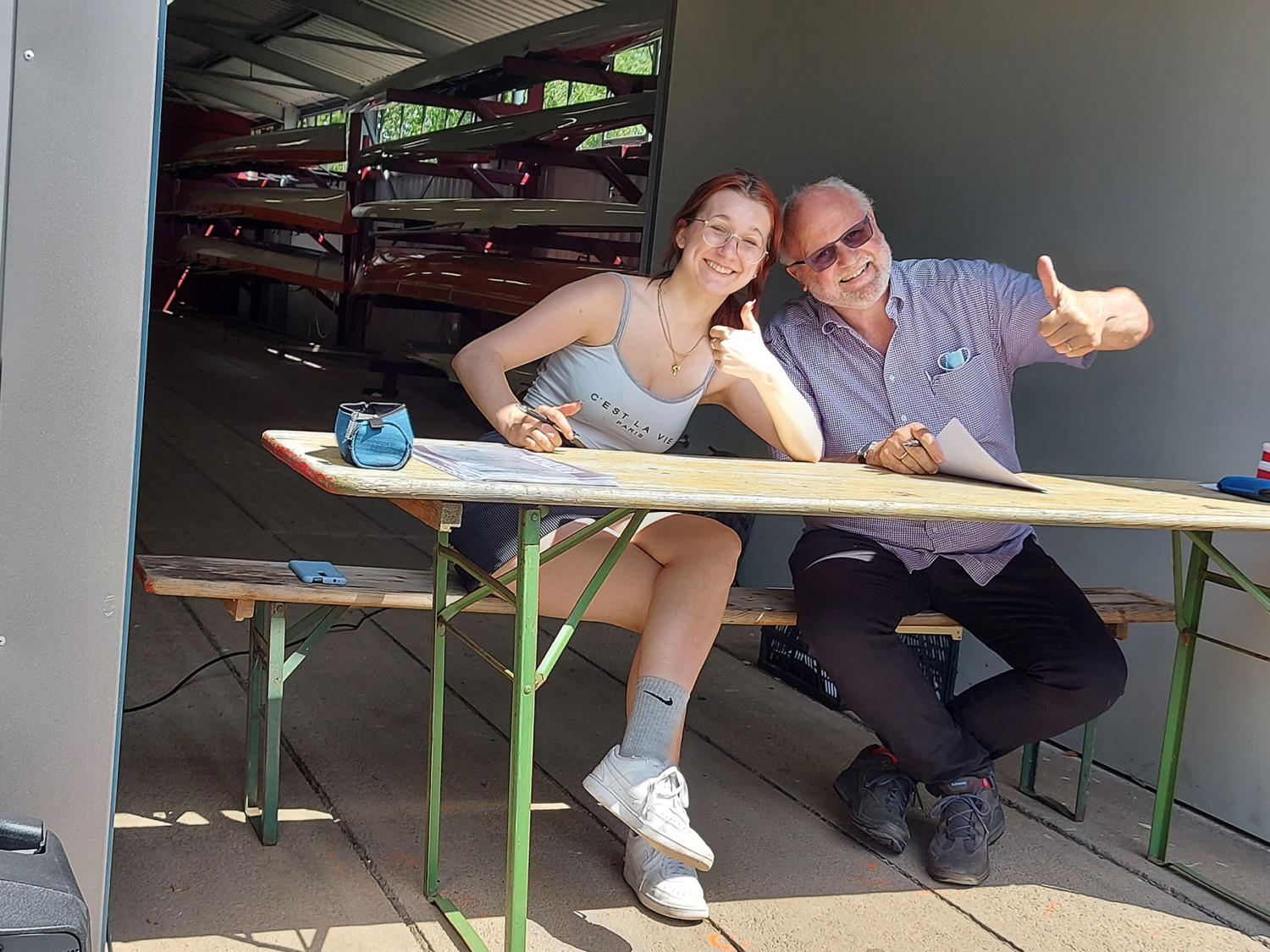
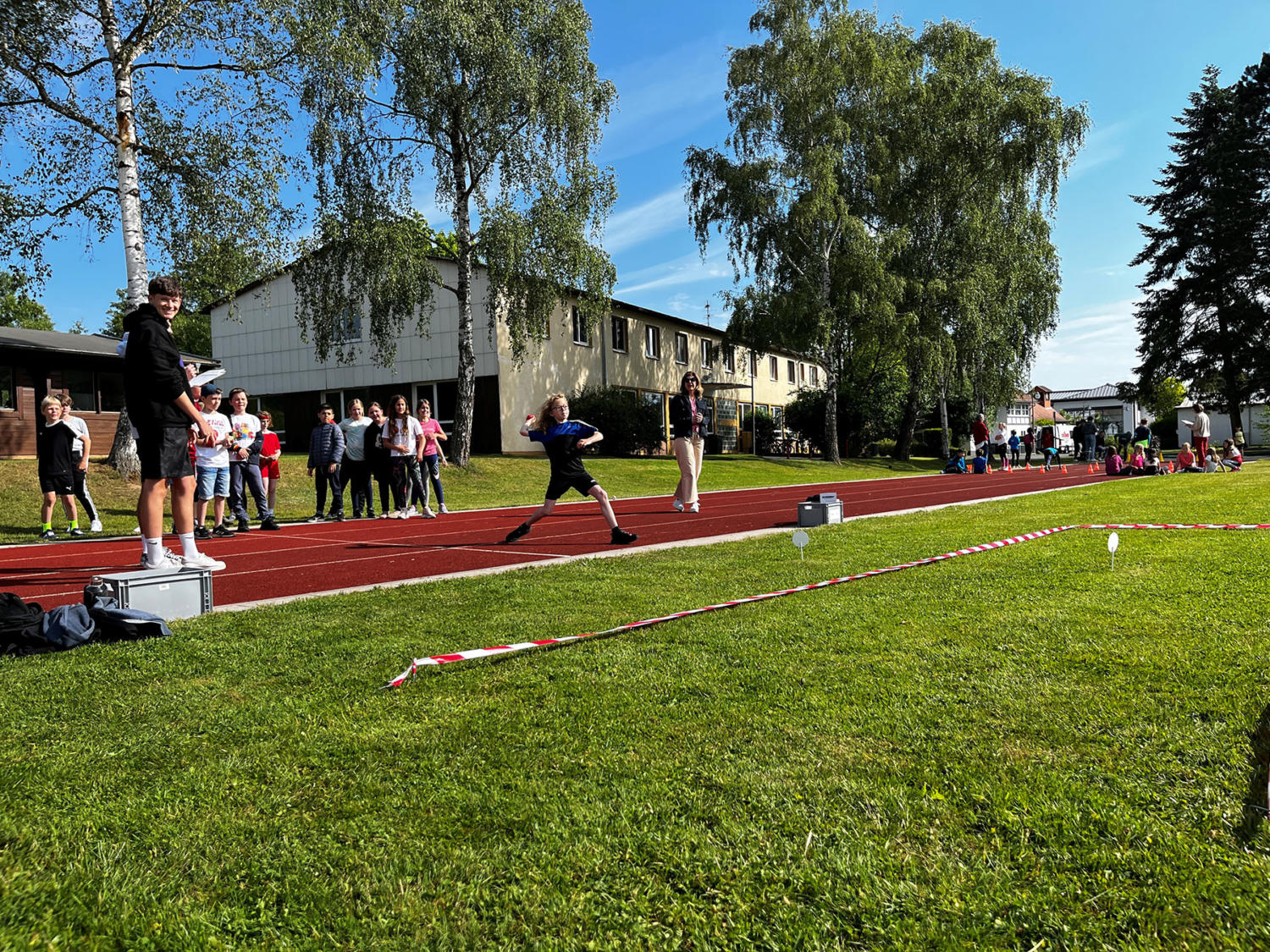
The Sports Day, featuring the Federal Youth Games and a sports festival, took place at Georg-Gassmann Stadium. In addition to faculty members, students from the 12th-grade advanced physical education class helped organize the event. Rowing activities took place around the Steinmühle boathouse under the guidance of rowing coach Martin Strohmenger. By the end of Sports Day, the students had earned quite a few points that count toward the Federal Youth Games standings, for which certificates were awarded once again this year. The participants proved in all disciplines that they can really give it their all and achieve great results! These performances also serve as the basis for earning the 2022 German Sports Badge.
School sports director Michael Neirich was delighted: After a two-year hiatus in school sports and the cancellation of competitions due to the pandemic, the regular sports events at Steinmühle were back in full swing. The 5th and 6th-grade classes were able to participate in a spring run again, and the Sports Day was held once more for the lower secondary school students.

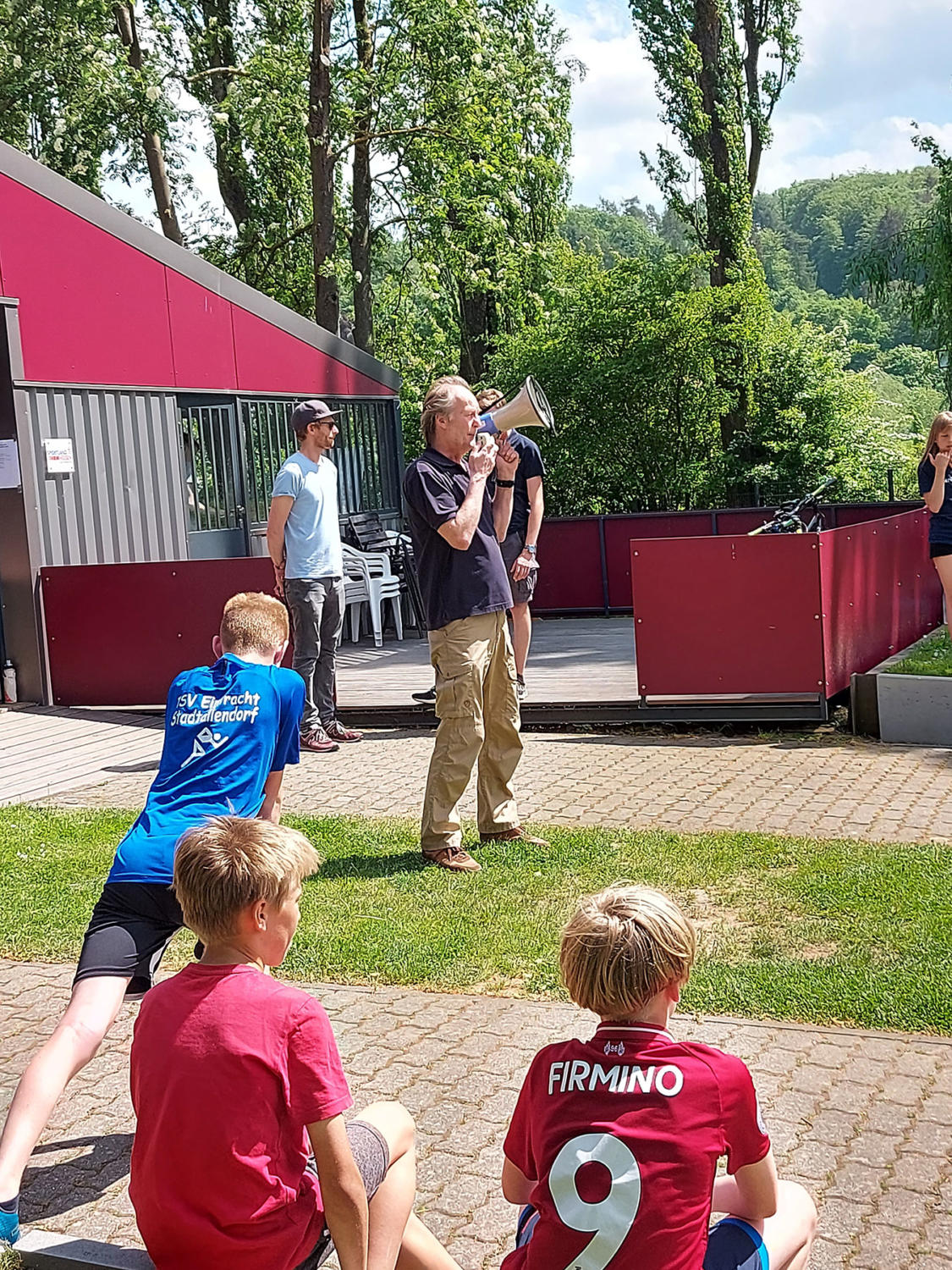
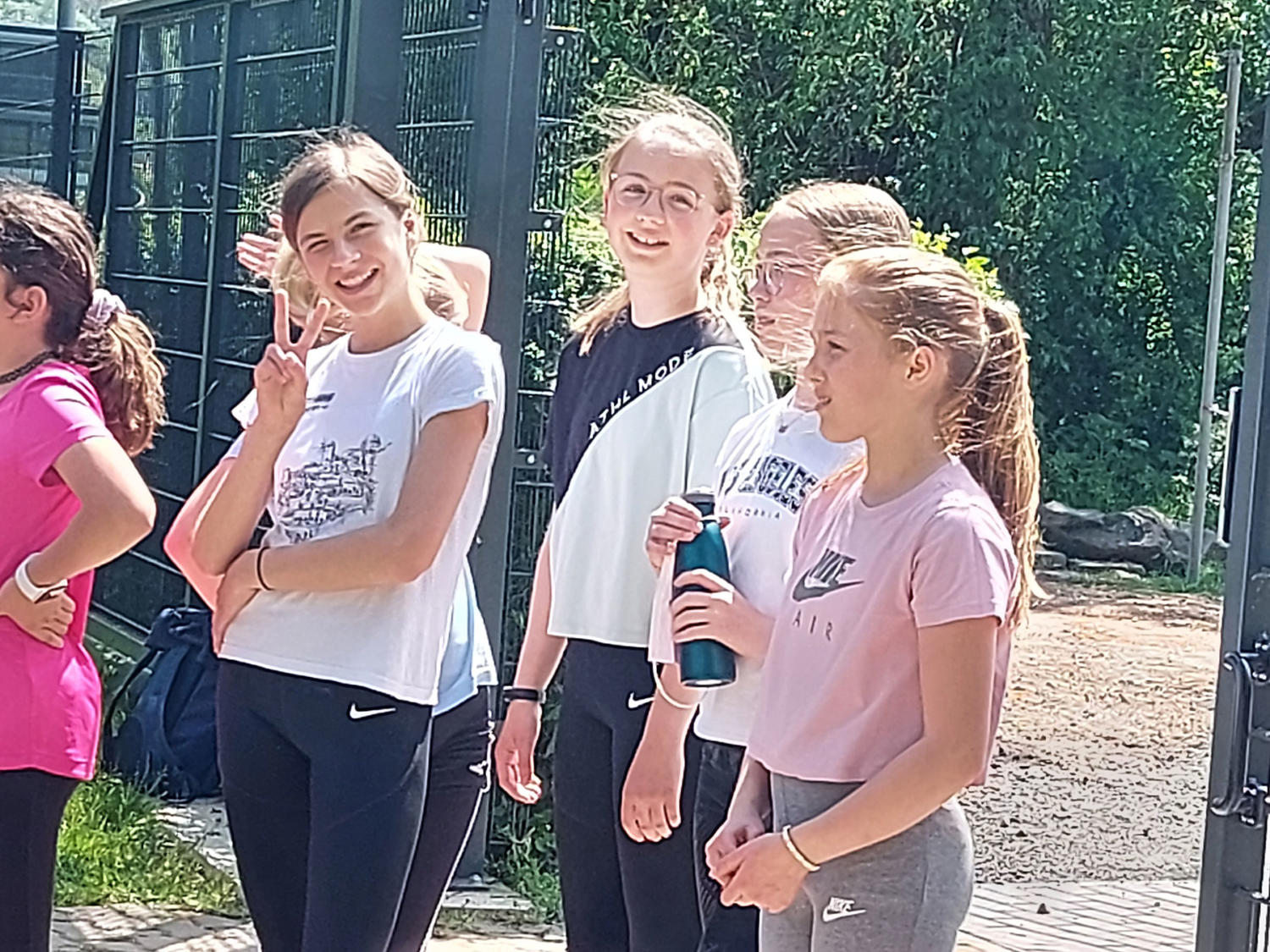
“We were especially happy about the great athletic atmosphere, given the long forced break that preceded it,” Michael Neirich reported. “The consistently nice weather also worked in our favor.” The Spring Run, featuring a course around the boathouse, was supported by faculty members as well as a 12th-grade introductory physical education class. A total of three running competitions took place. These were individual races for boys and girls in grades 5 and 6. There was also the tried-and-true relay race for grades 5 and 6, in which five selected girls and five selected boys from each class competed against one another.

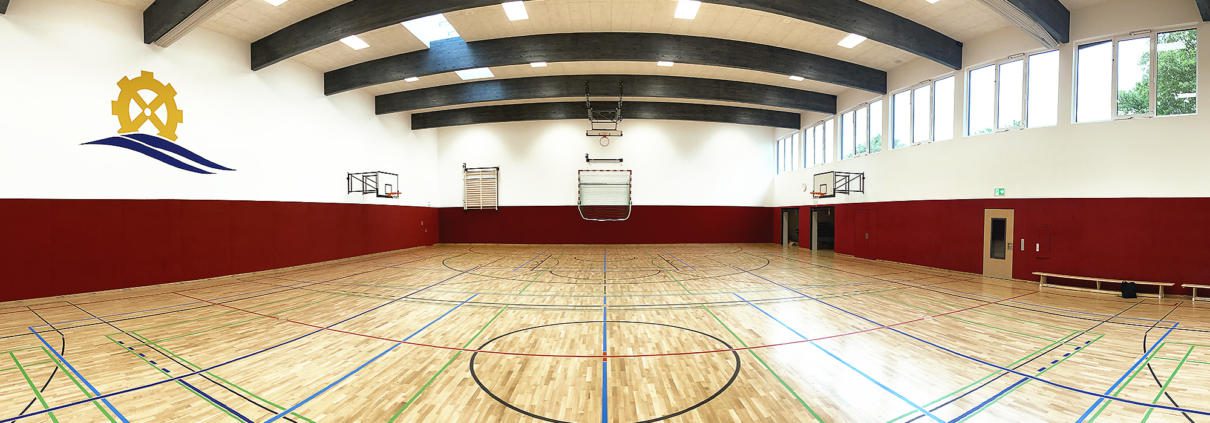
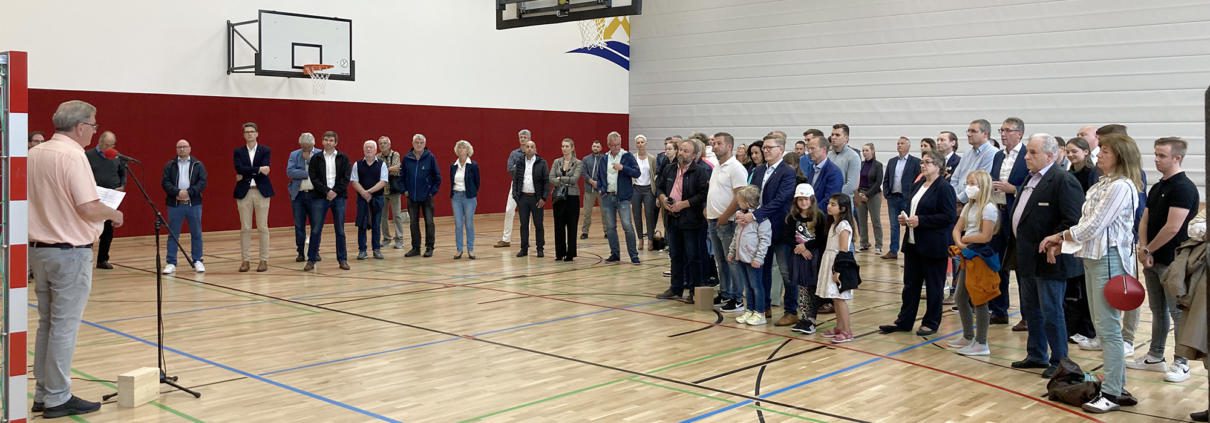
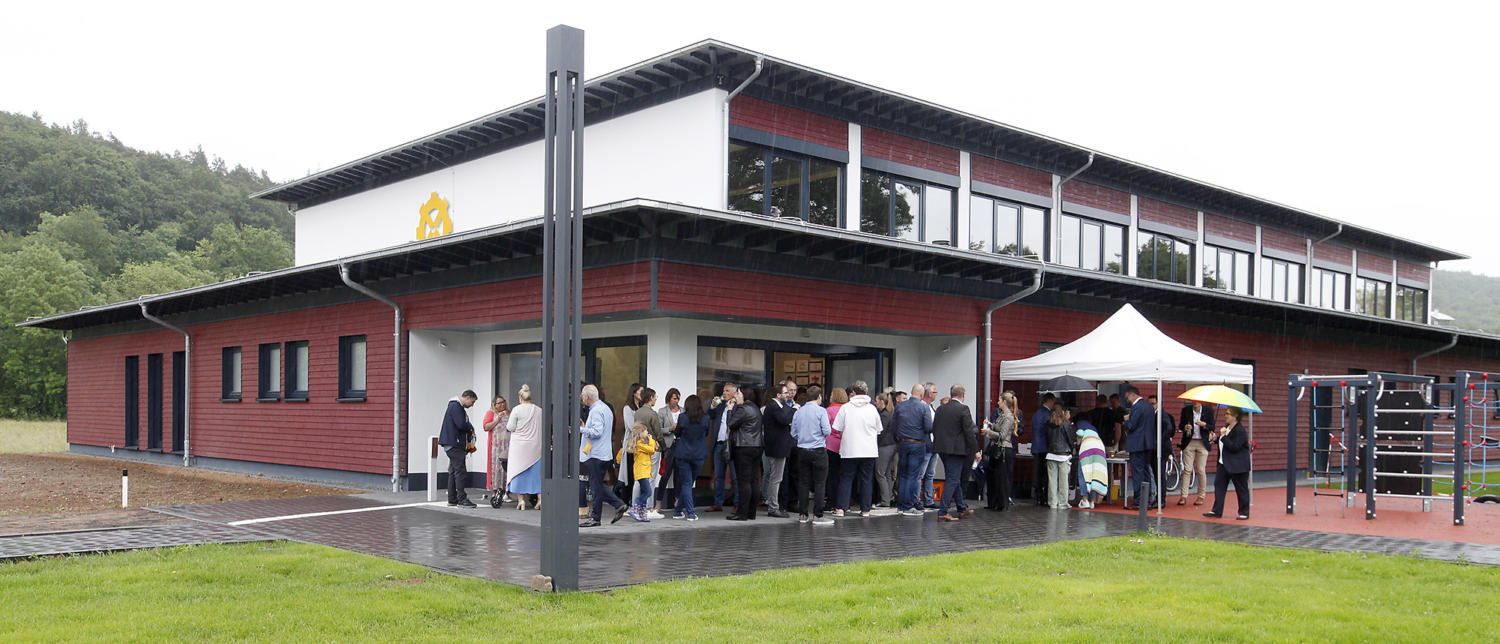
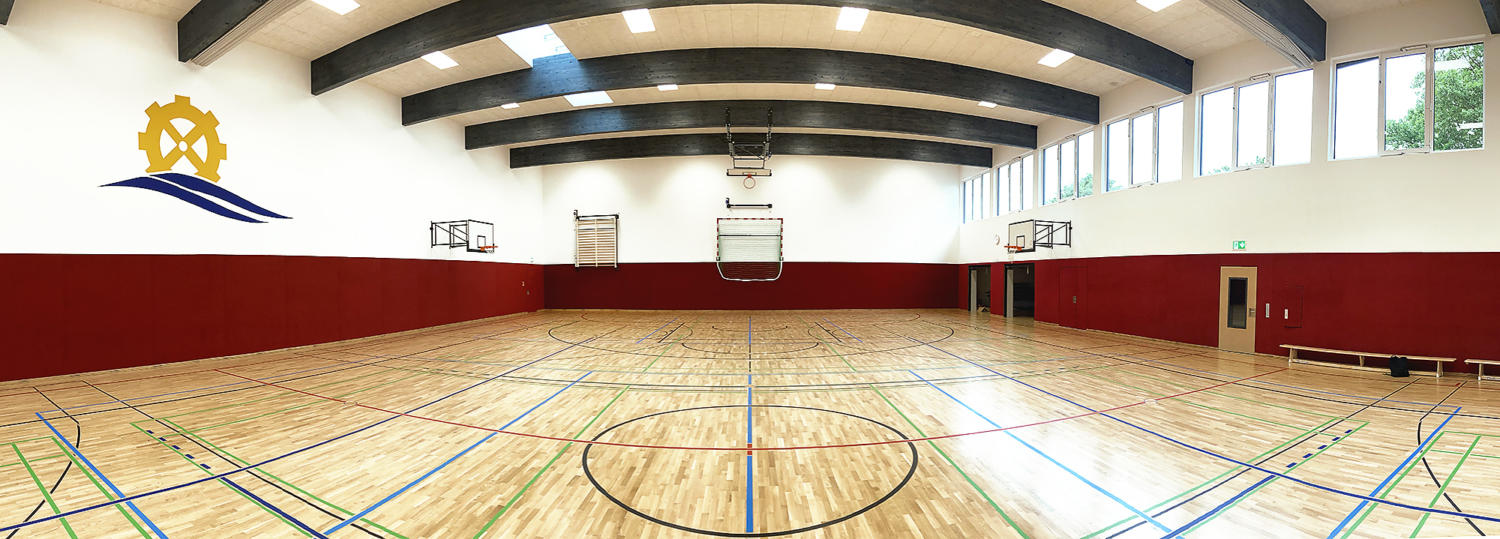
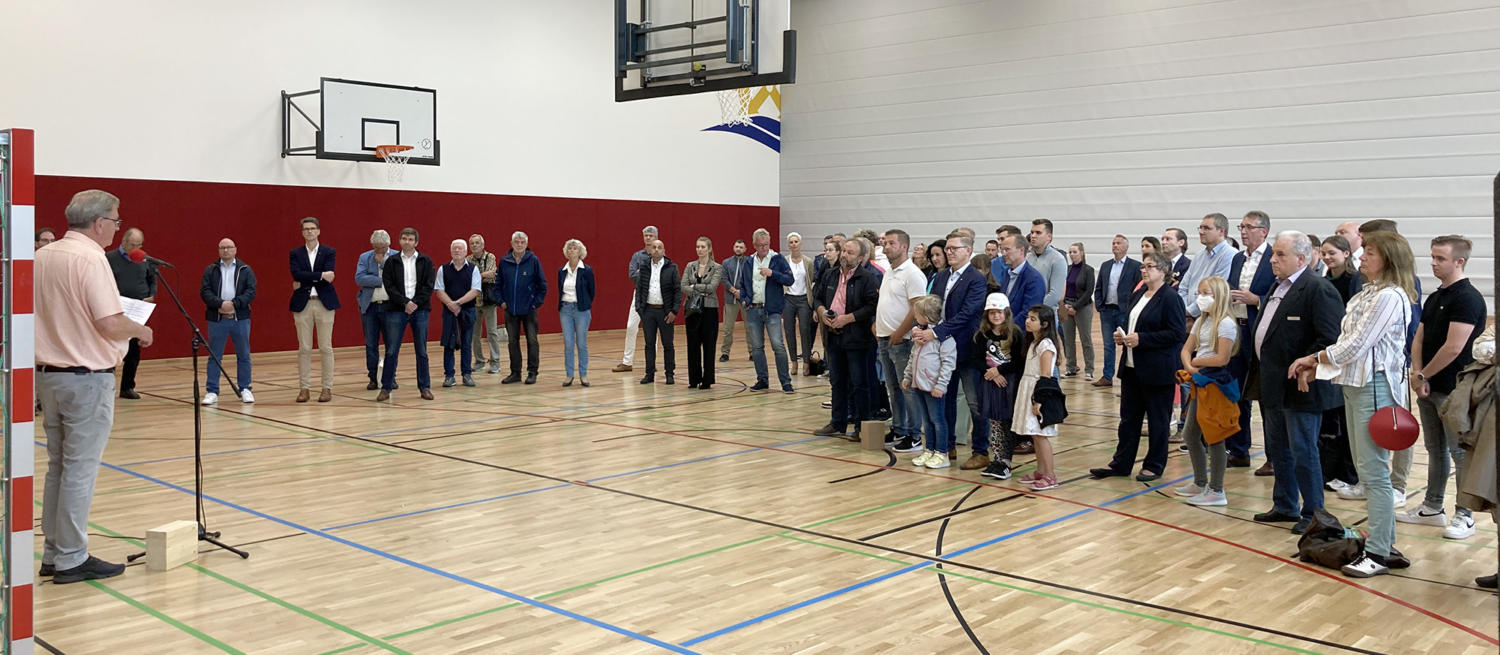
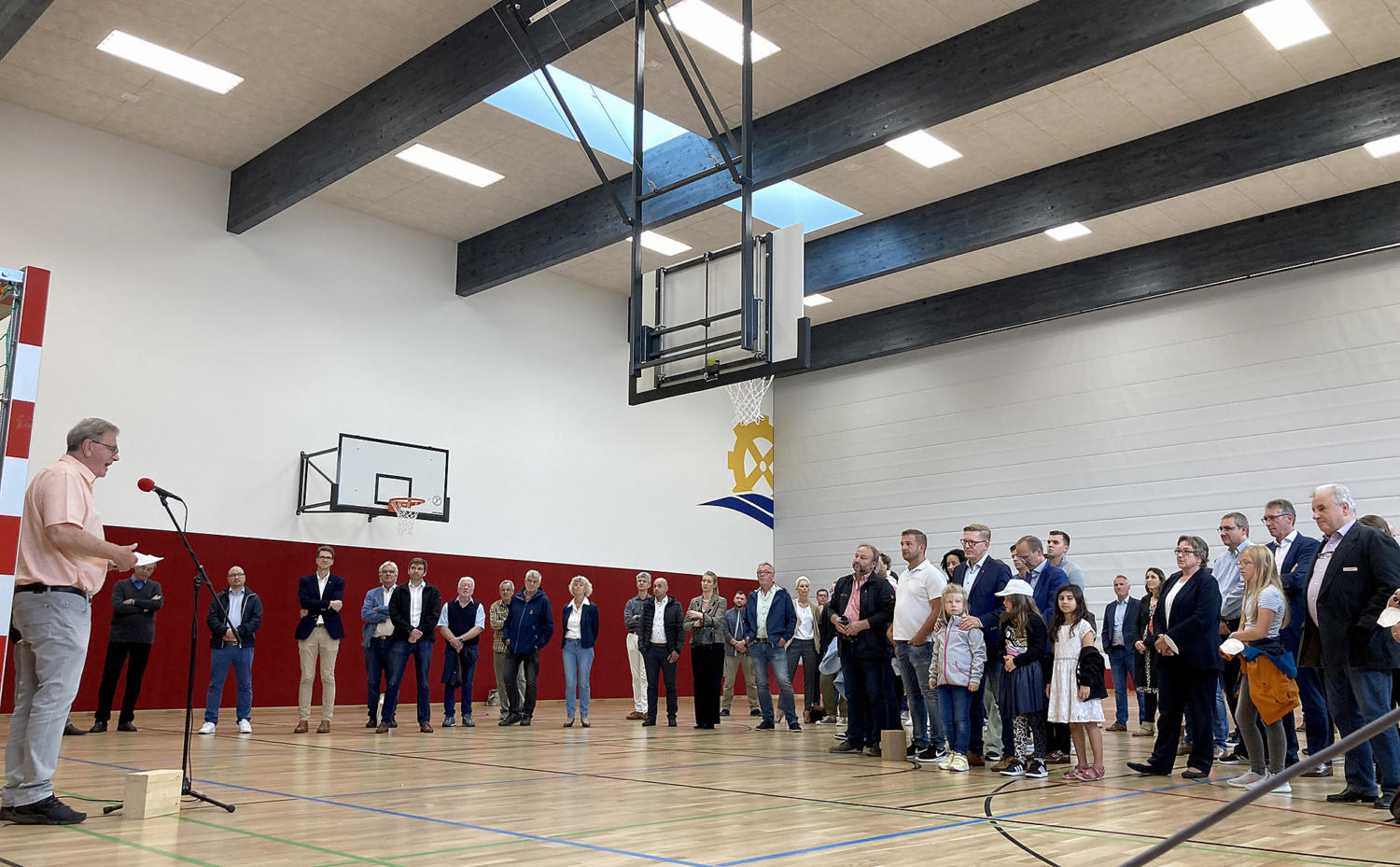
It is the latest new building—for now—to open on the Steinmühle grounds following the construction of the Forum and Atrium, as well as the extensive renovation of the main building and the bistro: the new sports hall. Steinmühle celebrated this latest milestone in June with about 100 invited guests. Representatives from politics, partner institutions, supporters, and those involved in the construction project made their way to Steinmühle and raised their glasses together to a successful future.

The Steinmühle was built—but not just for itself. Unlike any other building on the grounds, the sports hall has been guided by the spirit of cooperation from the very beginning. Notable among these are the German Institute for the Blind (blista), as well as the Blau-Gelb Marburg sports club and other partner institutions, which can book time slots starting at 5:00 p.m. The gym is particularly well-suited for visitors with disabilities who require accessible facilities. In this way, the Steinmühle takes some of the strain off public buildings and offers new opportunities to people with disabilities.

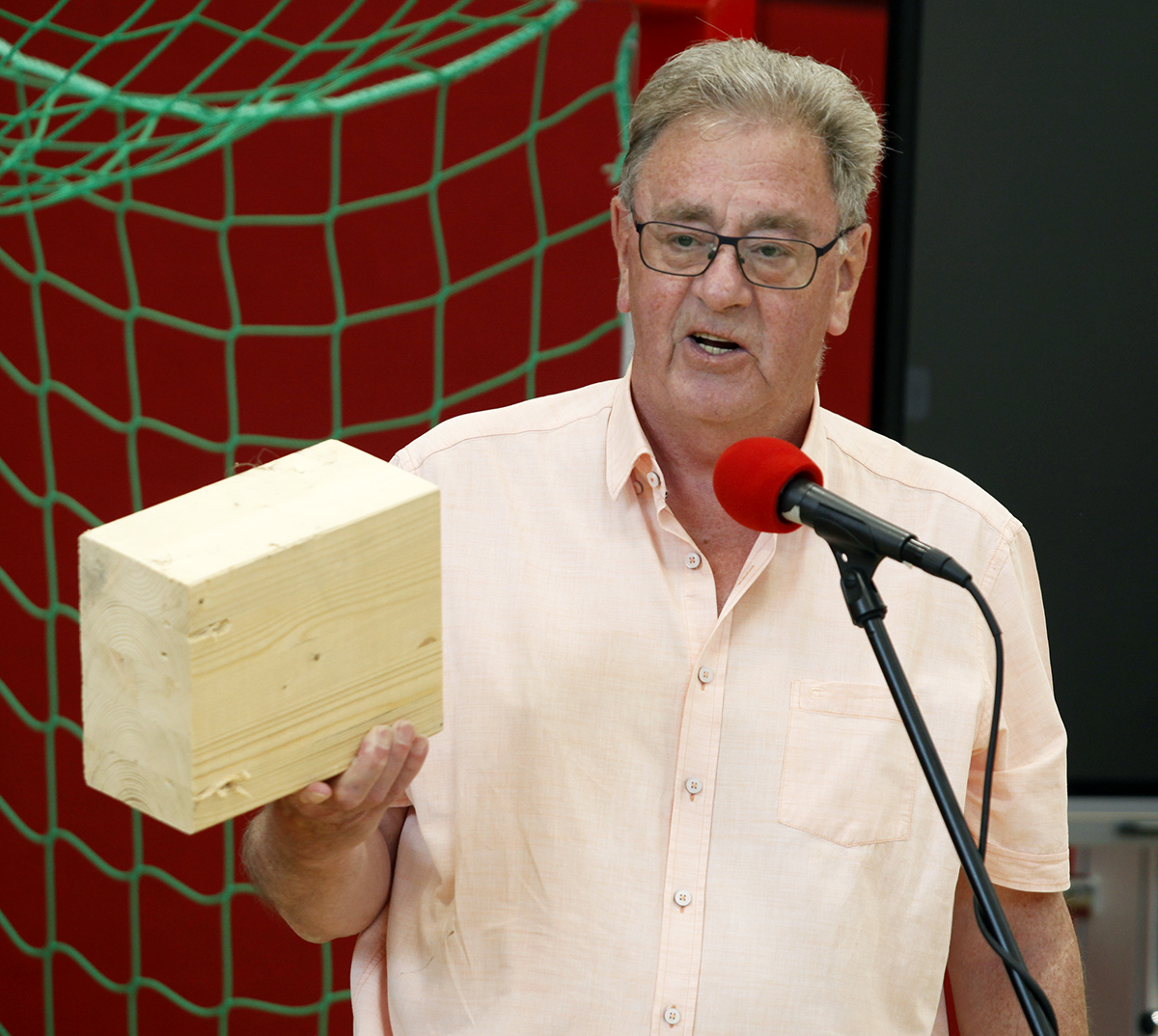
“Physical activity is part of the concept of education,” said Egon Vaupel, chairman of the board of the Steinmühle e.V. School Association, who expressed his gratitude on site to everyone involved in the construction as well as to all supporters.

The City of Marburg and the State of Hesse each provided a grant of 300,000 euros. “We can accept these funds with confidence thanks to this exceptional win-win situation,” explains Dirk Konnertz, the school’s executive director. The Steinmühle’s own support association, chaired by Jasmine Weidenbach, financed the portable sports equipment with a contribution of 28,000 euros.

The celebration, to which school administrators, boarding school representatives, other members of the school association and the booster club, as well as the sports department, parent representatives, and student representatives were invited, took place in a positive atmosphere despite the gloomy weather. Given the plans for its use, the area in and around the spacious sports hall is likely to become a regular gathering place very soon—for exercise and socializing.

We saw many beaming faces as they rode by on skateboards, waveboards, scooters, or longboards: For the last few weeks before summer break, a so-called “WHEELUP! trailer” was parked in our schoolyard, filled to the brim with just about everything that has wheels.
The action week kicked off with a scooter training session for the advanced sports class, which was led competently and with a sense of humor by the professional staff from CITY SKATE. This was followed by a brief training session and instruction on how to use the trailer for all interested teachers. Under the motto, “Helmets on, pads on, and let’s go!” young and old alike rushed to the trailer during substitute classes, breaks, or even during physical education classes and rolled together across the schoolyard.

As part of an AOK sponsorship program, the Hessian sports agency CITY SKATE is equipping this trailer with the latest sports equipment so that it can be made available to children at as many schools as possible. “Thanks to a fortunate turn of events, our school had the opportunity to use this trailer during the most sought-after time slot before the break,” reports Steinmühlen teacher Benedikt Hohmann. It’s no secret that exercise and physical activity play a central role in physical and mental health. Furthermore, the WHEELUP! project offered the ideal opportunity to make good use of the infamous “last few hours before the break” outdoors and to get the students excited about skating.

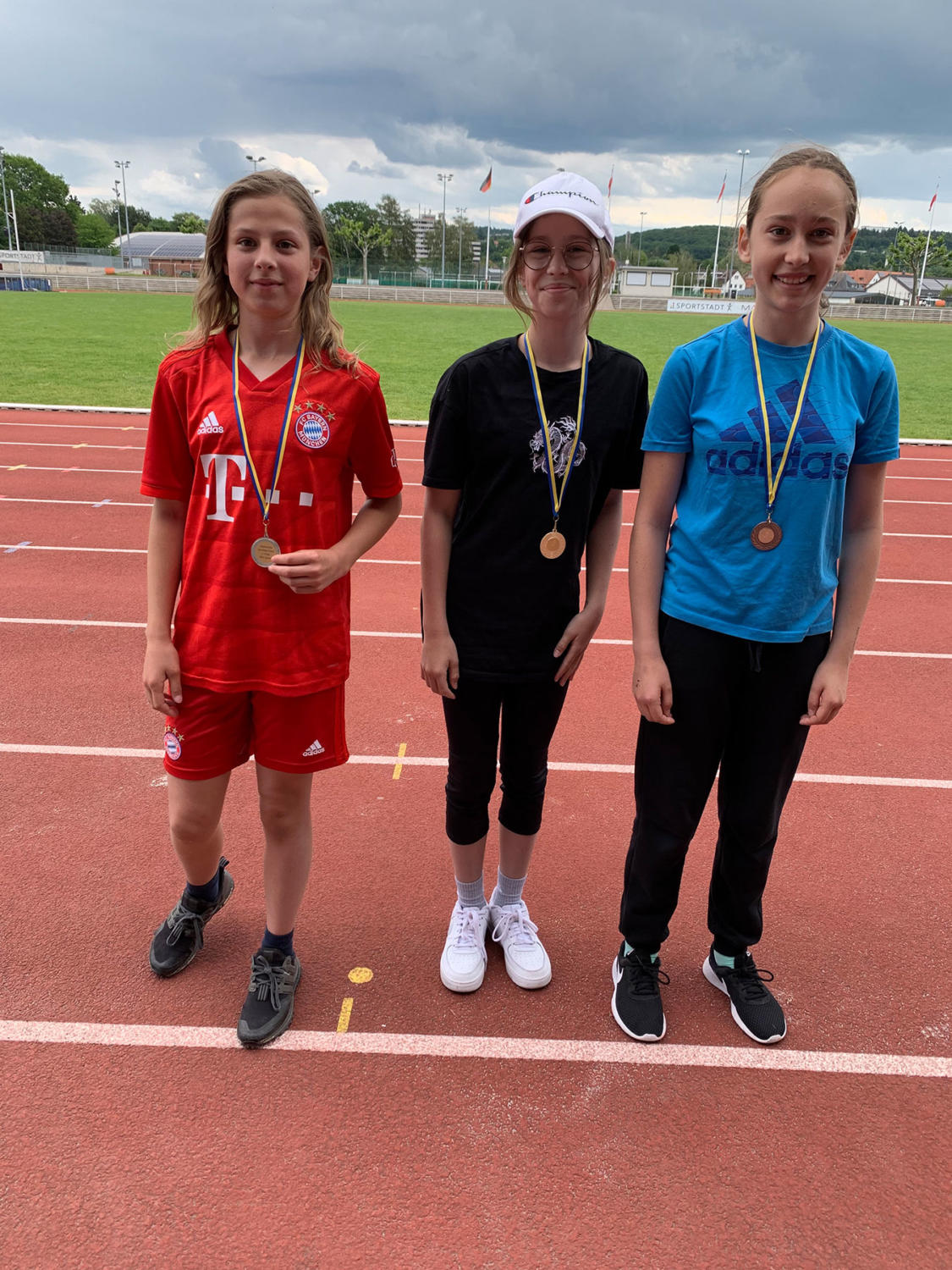
Will women’s soccer finally gain more recognition thanks to this year’s European Championship and the German team’s strong debut? At Steinmühle, at any rate, they’re already a step ahead on this front. There was a huge success here—and everyone is celebrating it! After winning the district and regional competitions, the Steinmühle girls in Competition Class IV (born in 2010 and 2011) took a surprising but well-deserved third place at the state competition in Grünberg (as we reported). — Bronze, then, at the Hesse finals of “Youth Trains for the Olympics”!

In addition to the girls, whose skill and total dedication contributed to this success, one man also played a key role: Lothar Potthoff. He is the athletic director of MSG Marburg/Weimar; he accompanied the Steinmühlen girls to all their competitions and prepared them exceptionally well for this tournament. He was supported by Carlotta Weber from 6th grade and Julian Arnold from the MSG coaching staff. “This is a huge success! Of course, the girls wanted to go to Berlin for the national finals. But after some initial disappointment, the joy of finishing in third place now prevails,” the coach summed up. His team was ultimately on the verge of reaching the final when, in the semifinals, they were unfortunately defeated in a penalty shootout by the eventual champions from Gymnasium Oberursel.

“Next year, we’ll be competing in Competition Class III with this team and we’ll see how we do,” says Lothar Potthoff, already looking forward to the upcoming competitions. He is a coach through and through and has previously coached a school team at Steinmühle—“the ones who are graduating this year.”

He began his career in soccer at an early age, starting out in his native Sauerland and then continuing in Marburg’s Waldtal and with the veterans’ team in Niederweimar. In 1988, he began working with youth.

The trend of more and more girls playing soccer has developed over the years. Female players brought their friends along, and the association promoted soccer for women. Due to a lack of all-girls teams, female players often play on boys’ teams. This is possible up through the B-Youth division.

“There are very strong women’s teams in the United Kingdom, France, and Spain that play in front of crowds of 80,000 to 90,000 spectators.” Lothar Potthoff criticizes the DFB’s policies, under which “old white men have long belittled women’s soccer with little respect.”

The former principal of the Ebsdorfergrund Comprehensive School in Heskem can neither understand nor condone this. He sees how much fun the girls in their Steinmühlen jerseys have playing soccer and is glad that there are always opportunities to practice locally. For him, life as a soccer coach five days a week has become an integral part of his life; it helps him unwind: “When I’m on the field, everything else fades away.” Social connections are important to him.

But the retired history and politics teacher cares deeply about other things as well, which he sees being put into practice through his work as a soccer coach: “Team sports counteract the trend toward individualism, foster a sense of community, and encourage the assumption of responsibility. You help your opponent back up, and you’re there when extra hands are needed. After all, you can’t carry a goal all by yourself.”

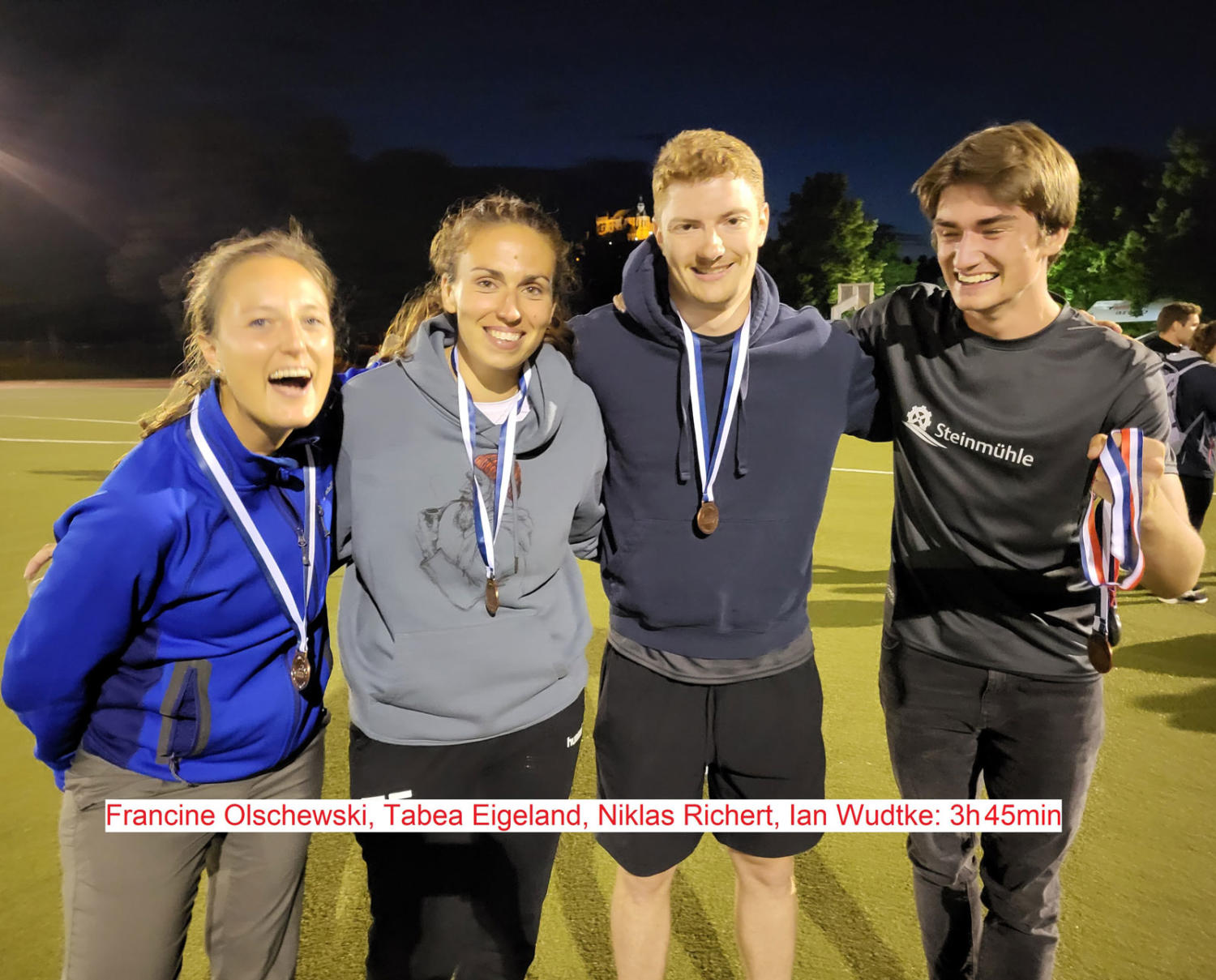
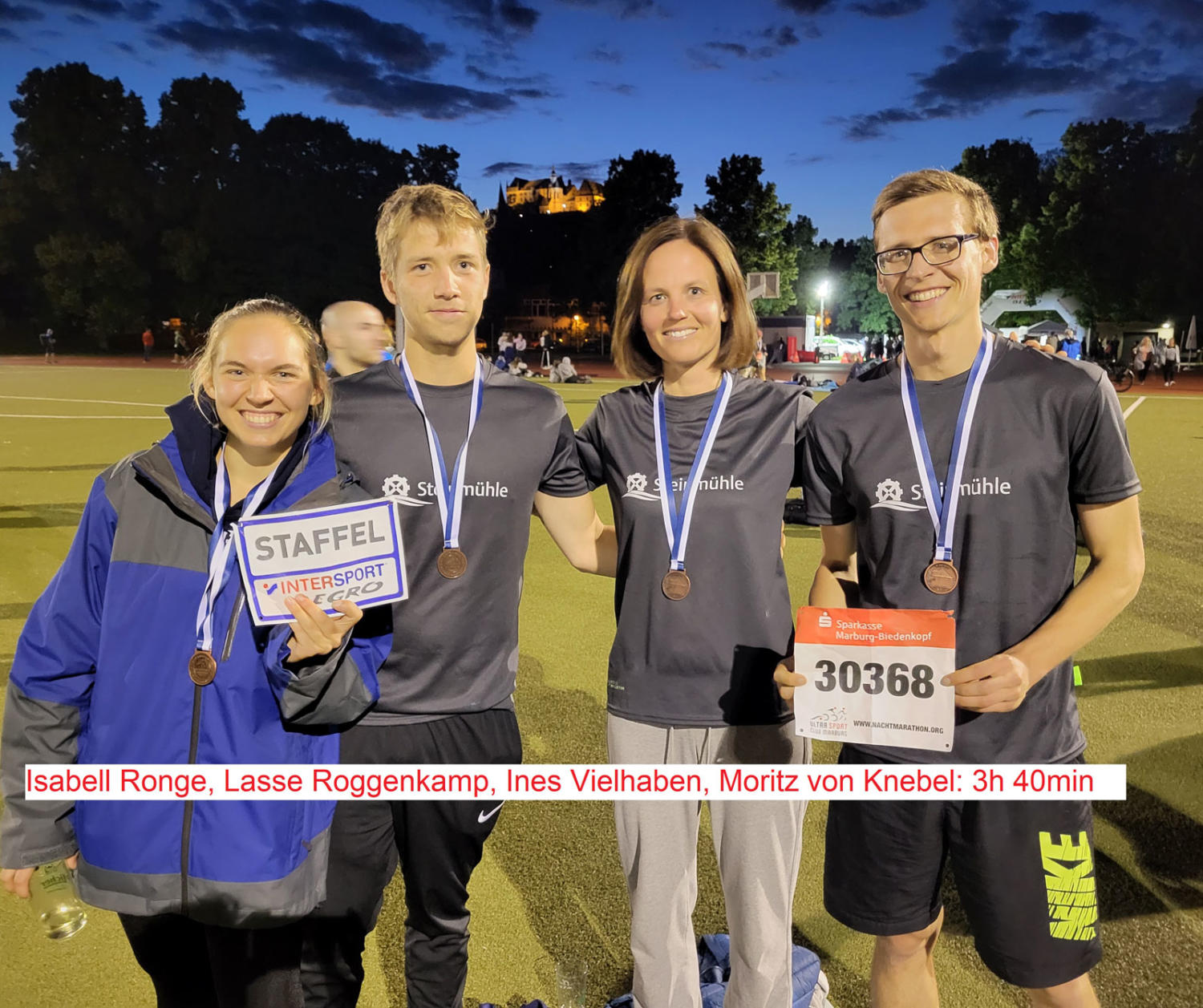
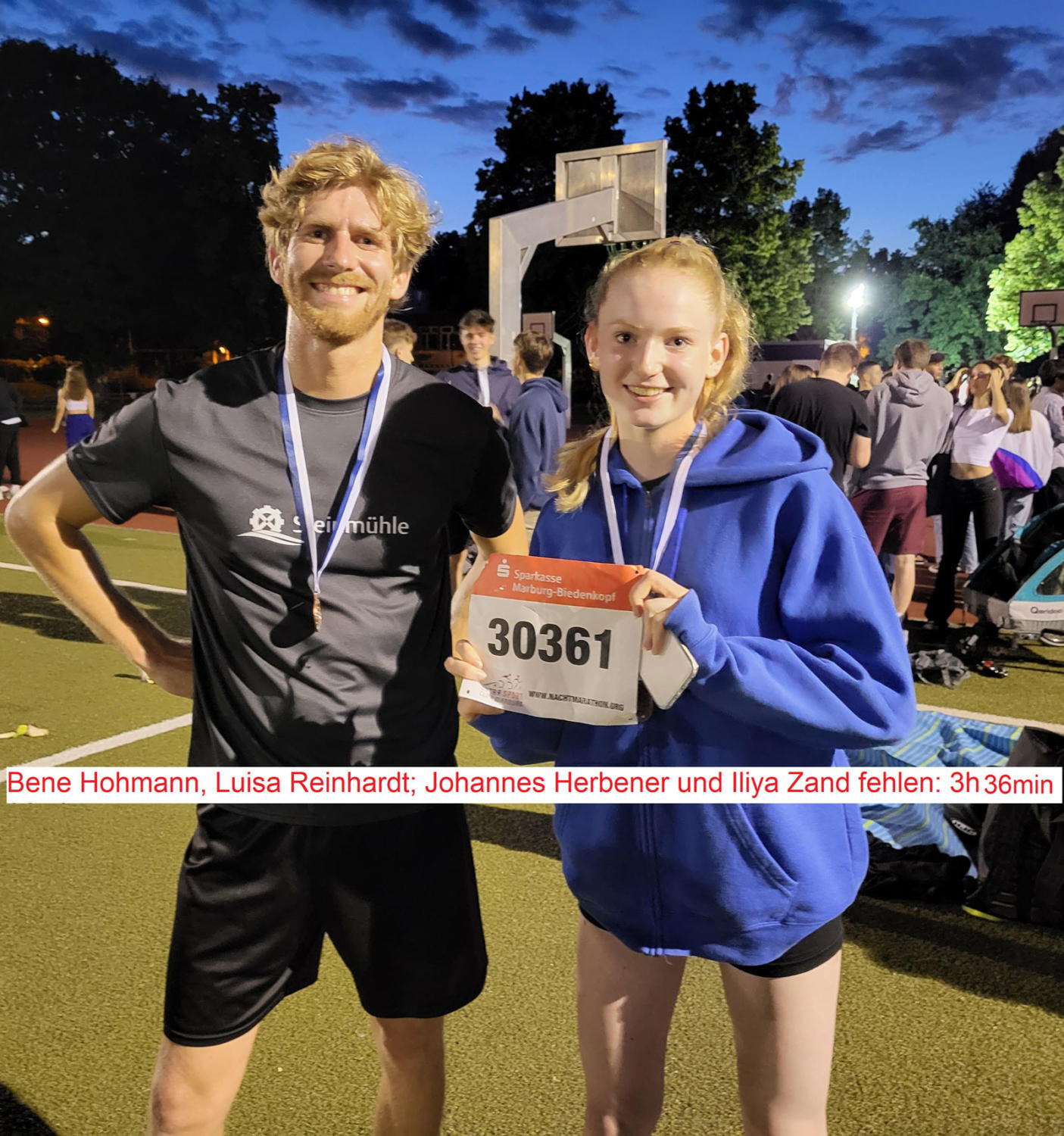
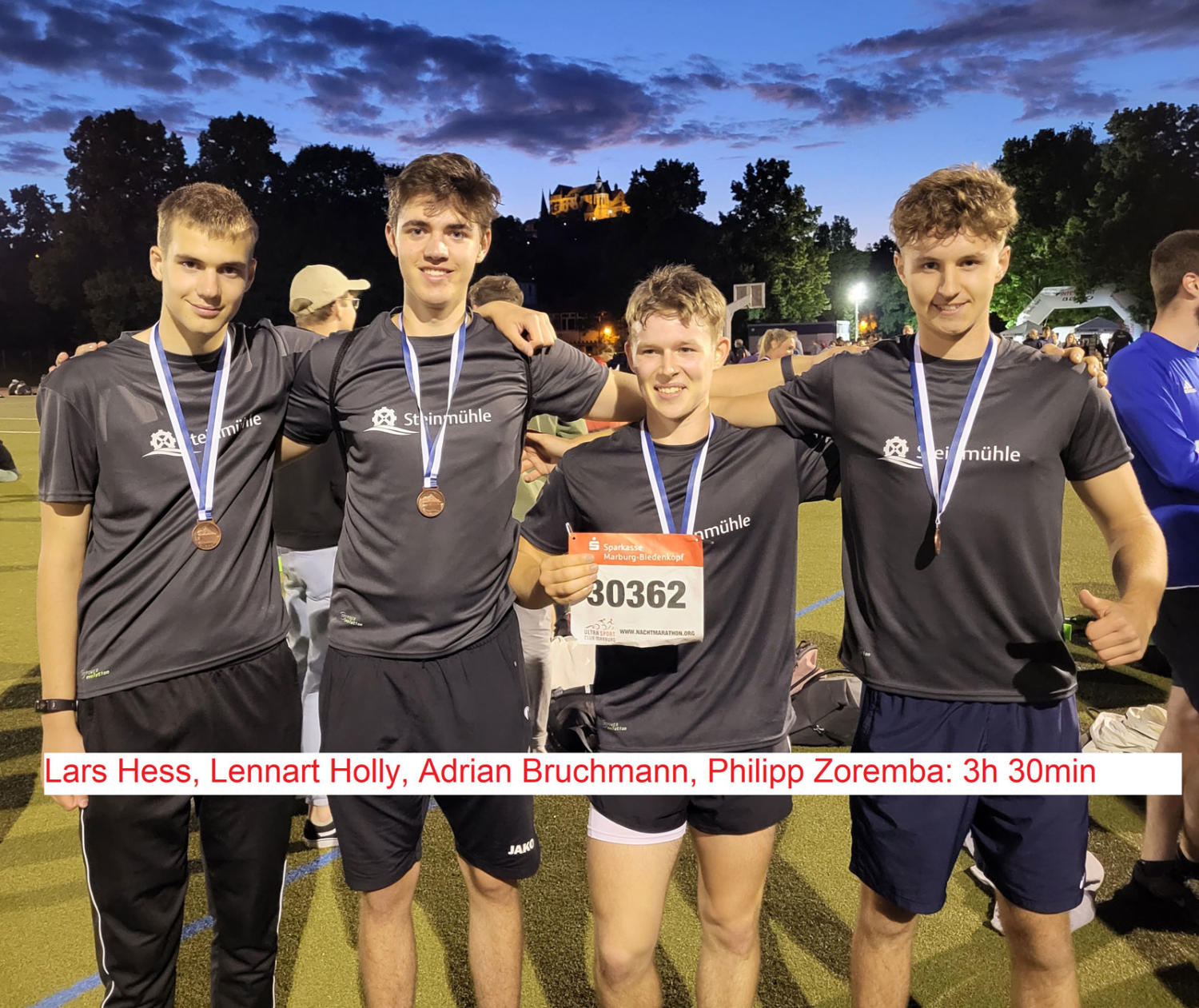
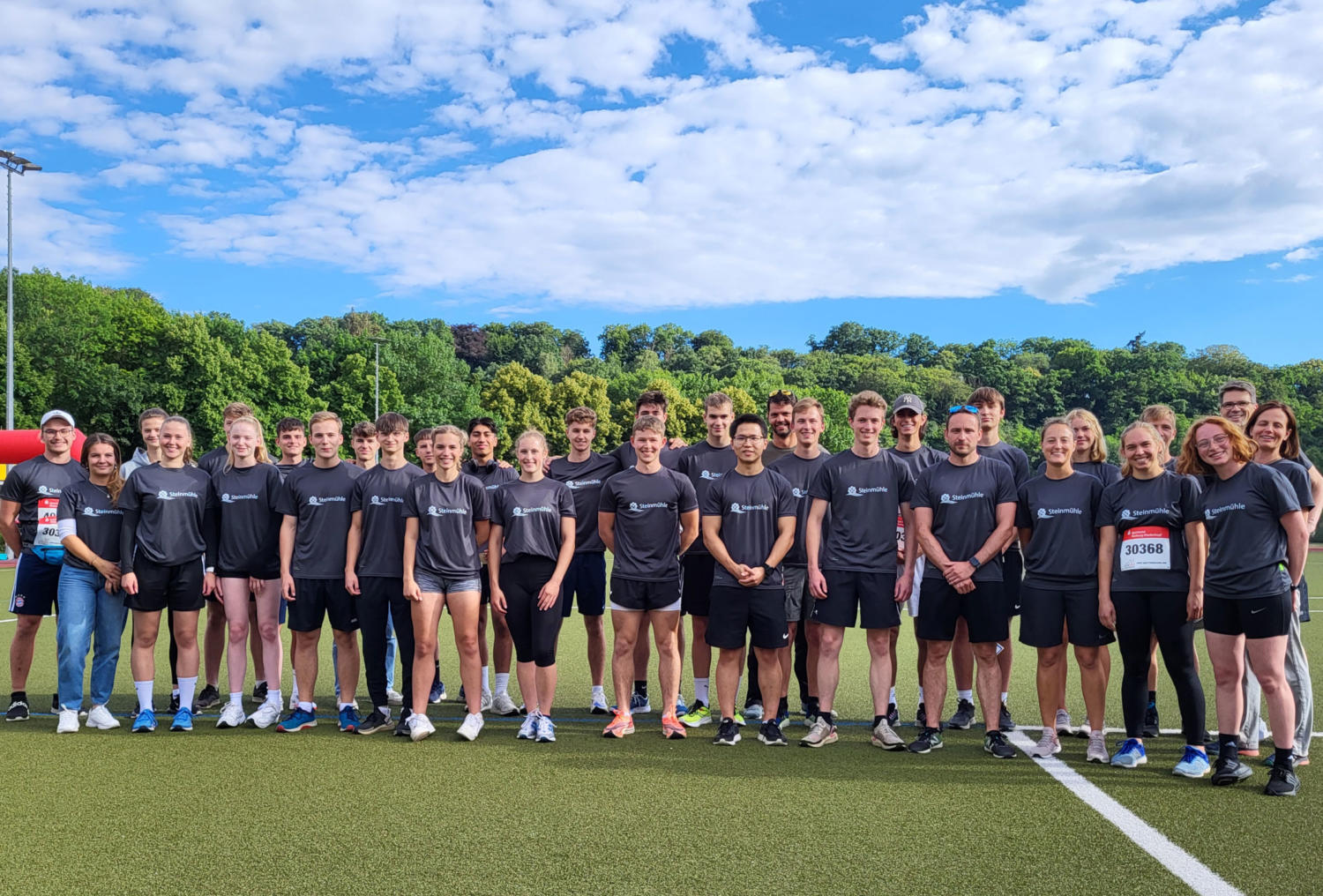
After a two-year hiatus due to the pandemic, the Marburg Night Marathon finally took place again on July 1. Steinmühle was represented by nine relay teams, meaning it had more runners at the starting line than any other school, club, or company.

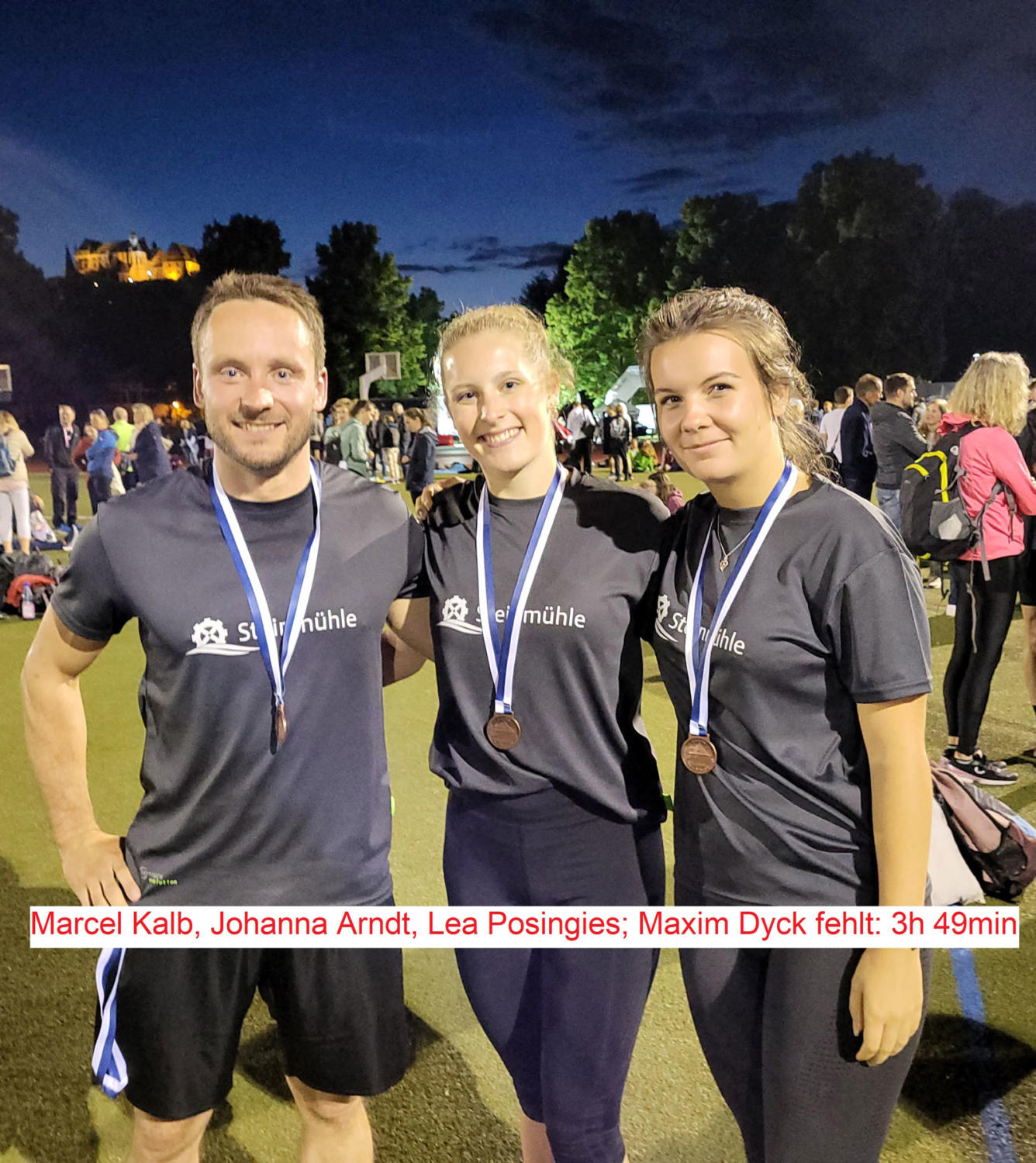
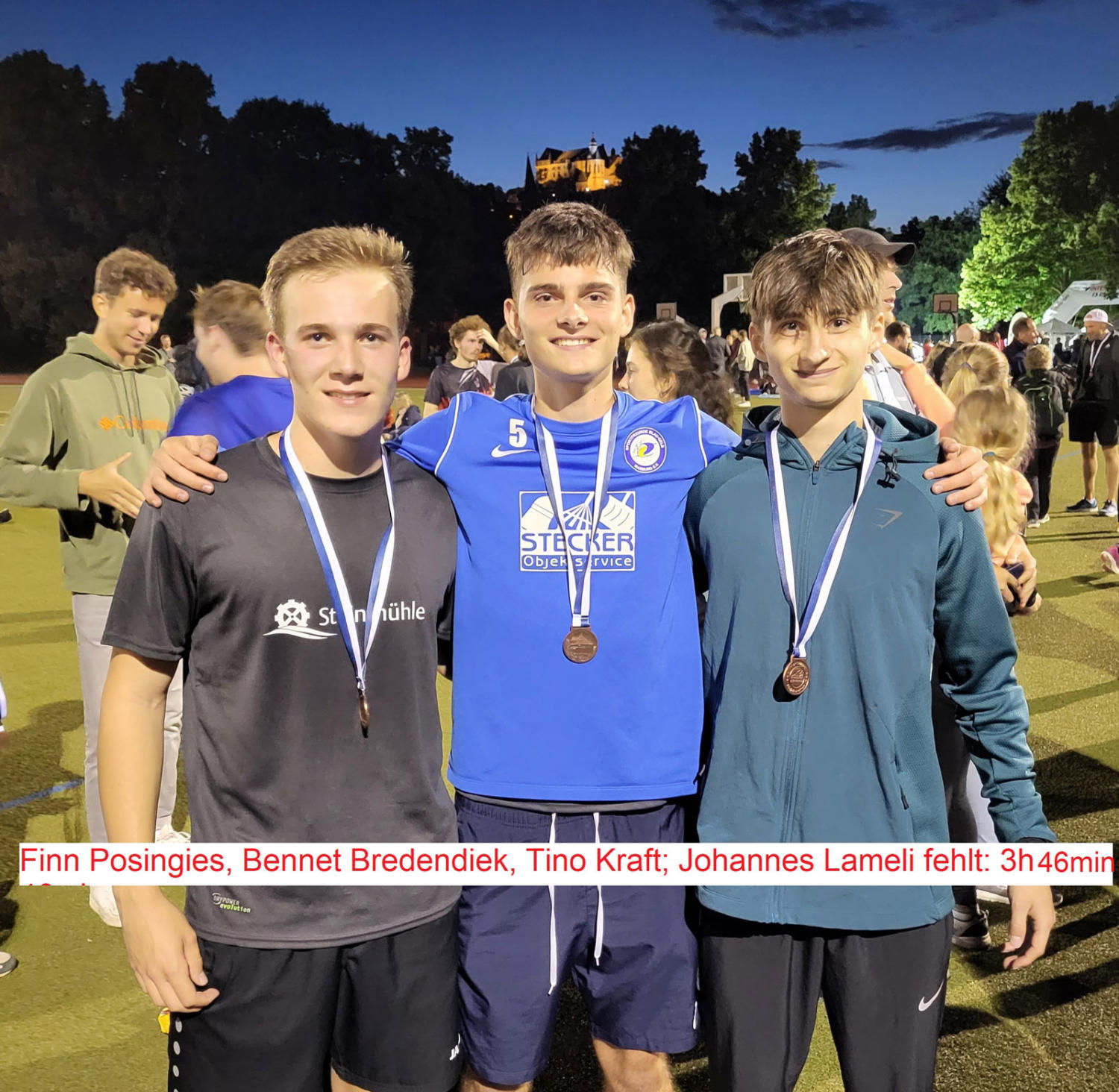
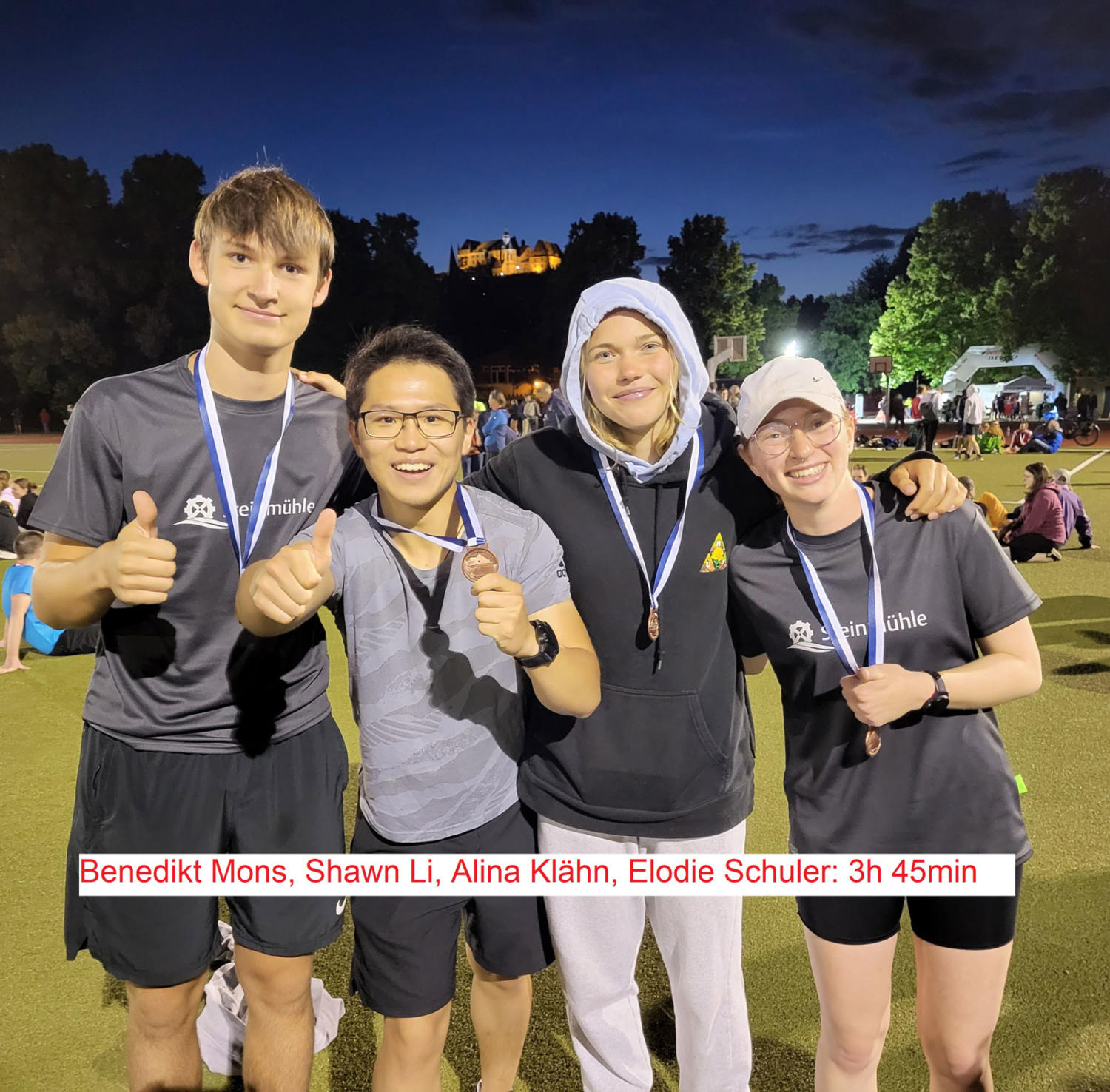
All nine relay teams completed the 42.195 km at varying speeds, depending on their goals, level of training, and physical condition. The individual runners’ times varied greatly in some cases, because the organizers, Patric Hahn and Björn Gemmer, weren’t focused on putting together teams that were as homogeneous as possible, but rather on experiencing a sense of community.

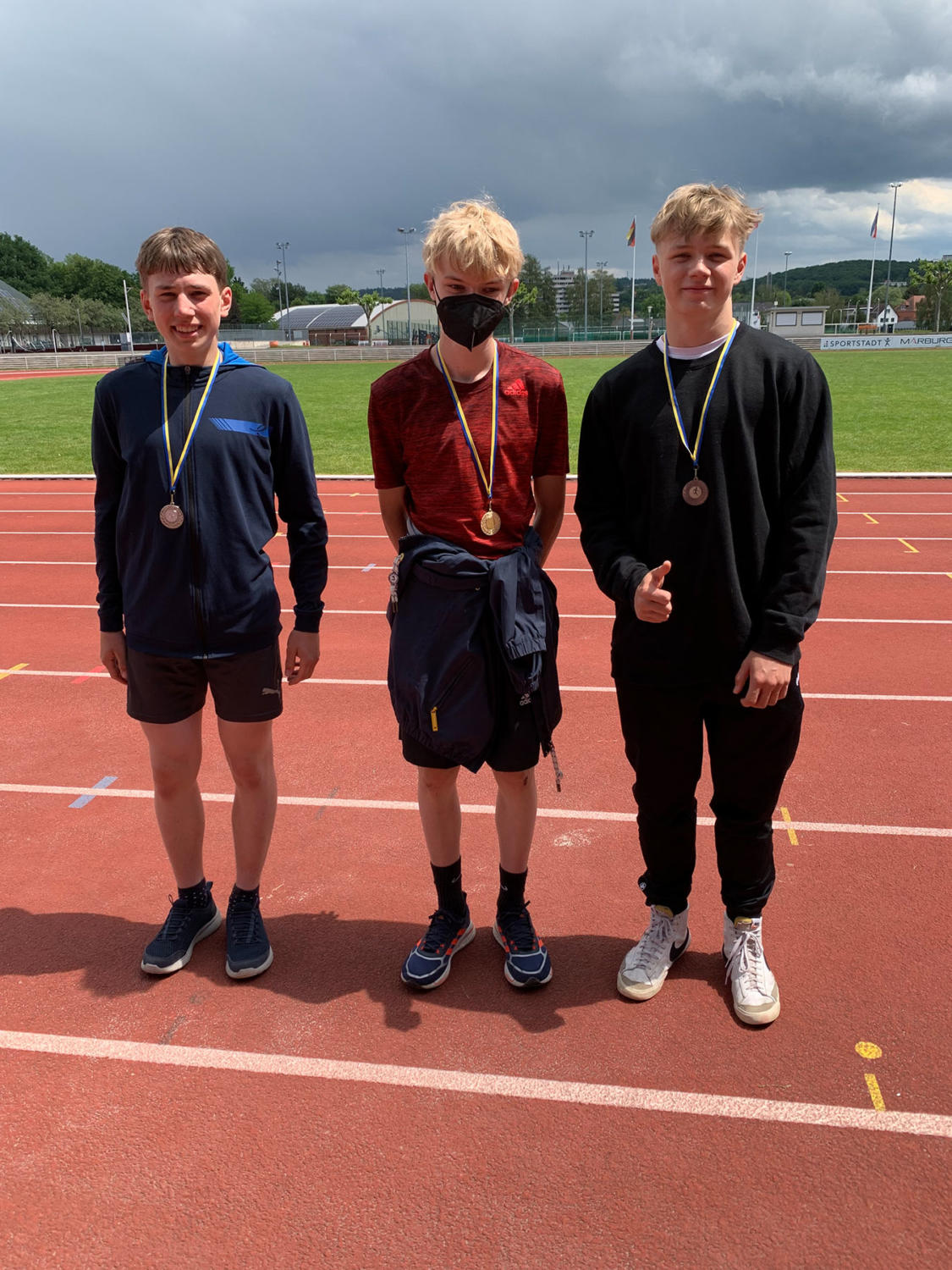
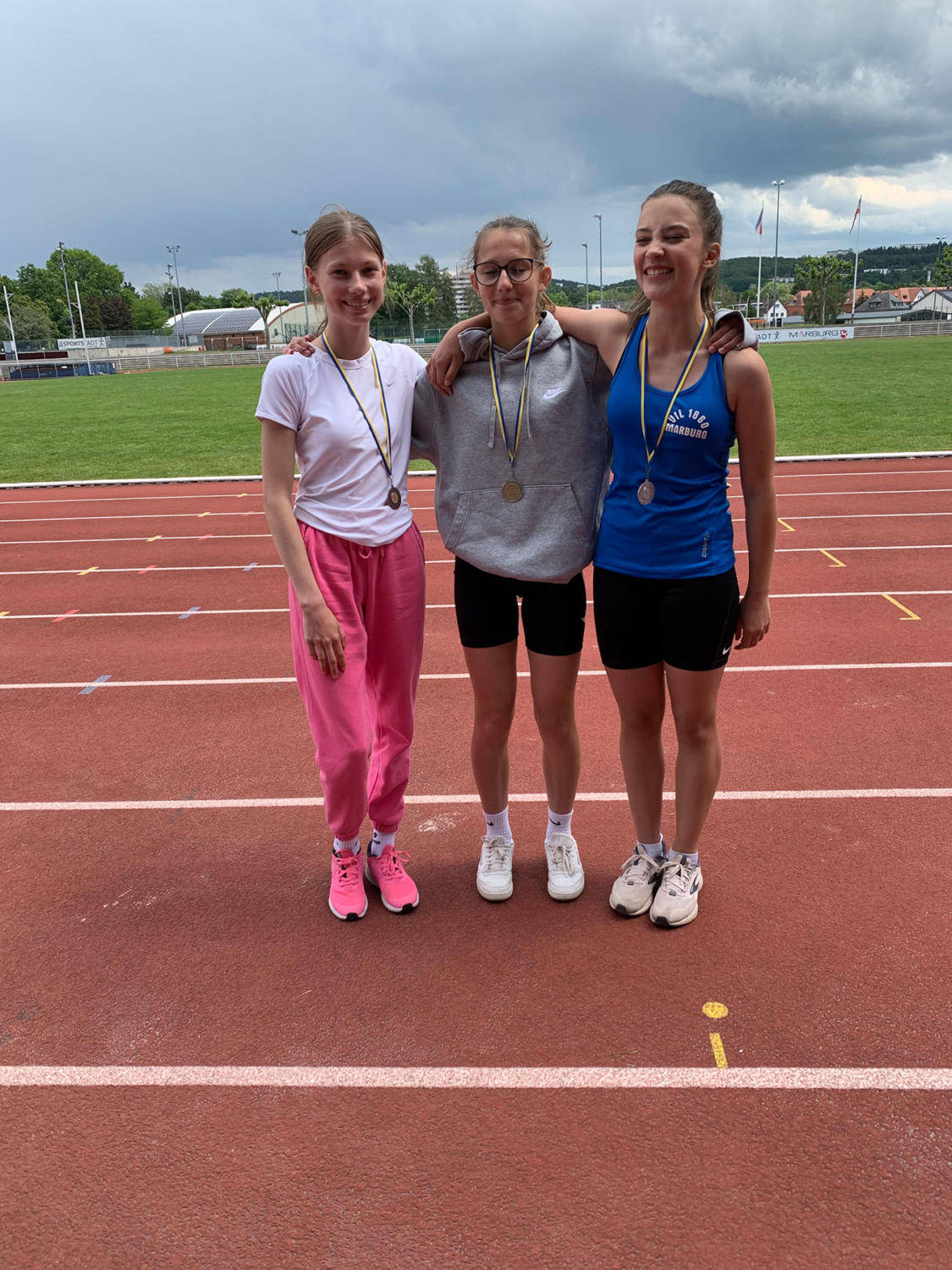
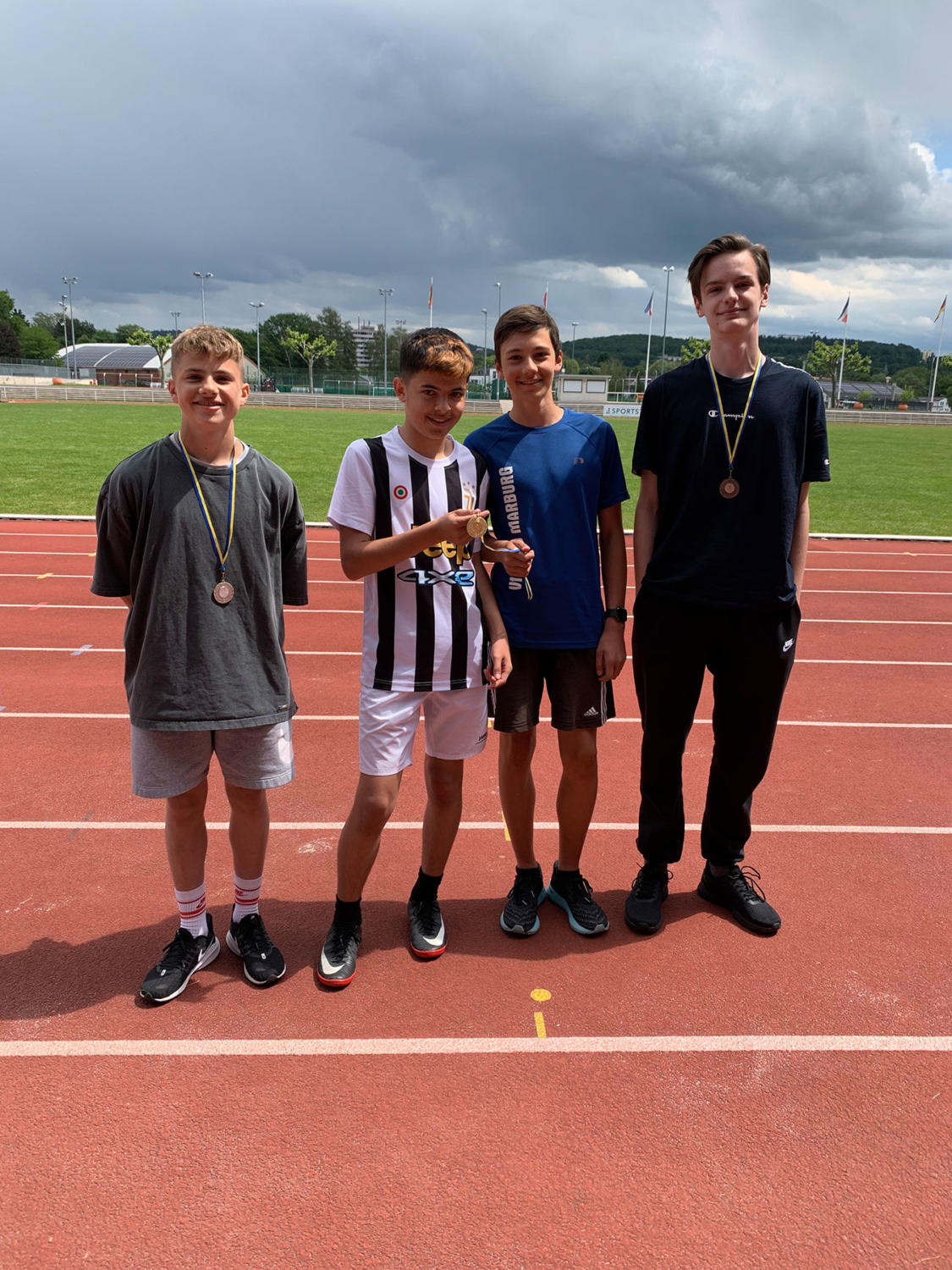
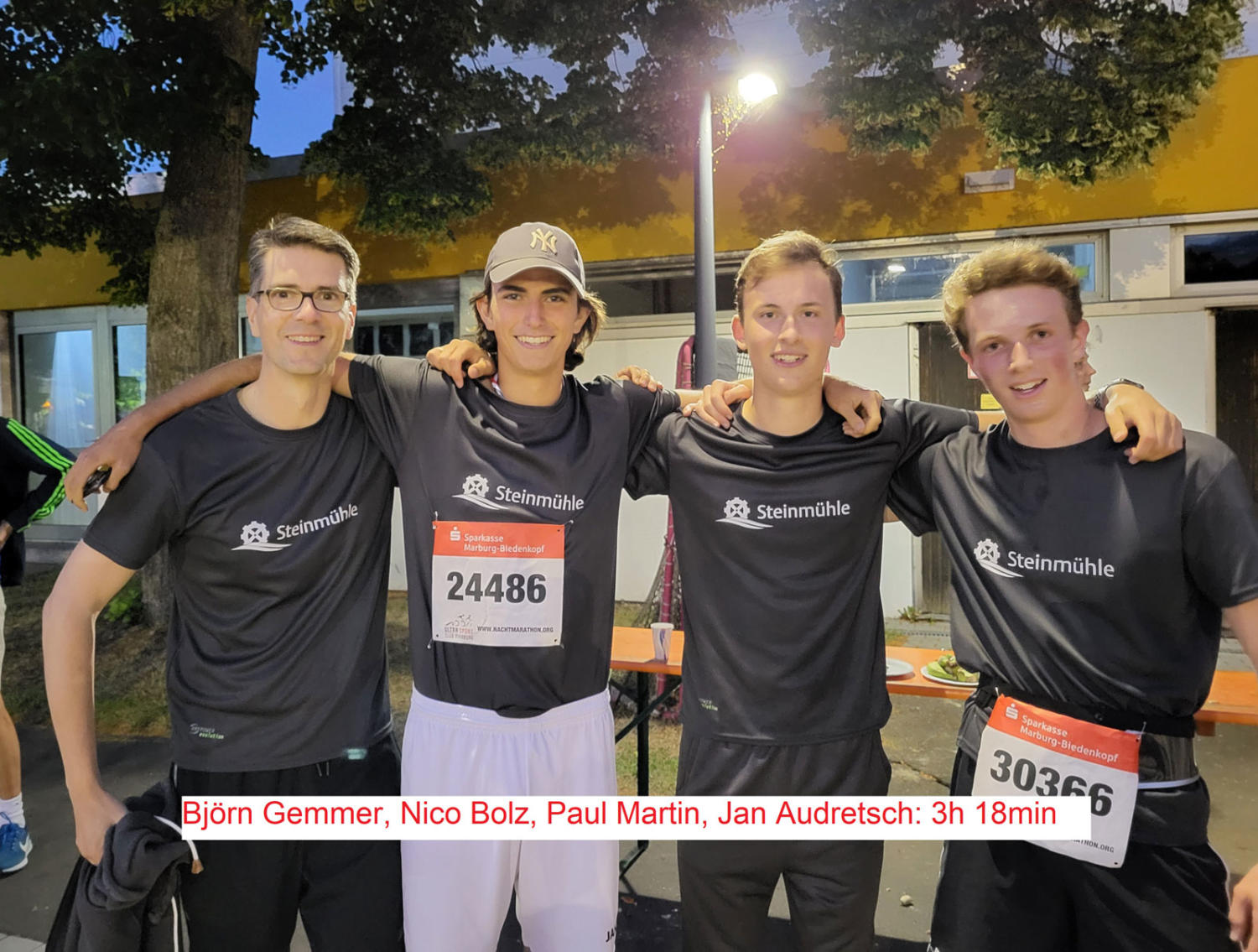
The fastest relay team, with a time of 3h 18min, was the 12th-grade math track: Students Nico Bolz, Paul Martin, and Jan Audretsch, along with their teacher Björn Gemmer, finished 15th out of 119. The other relay teams and their results are shown in the photos.

Nico Bolz, Alina Klähn, and Ian Wudtke, as the lead runners for their respective relay teams, continued running after the baton handoff and completed a half marathon. Nico finished in 208th place out of 645 after 1 hour and 49 minutes, while Alina and Ian finished just over 5 minutes later in 299th and 300th place, respectively.

Eleventh-grader Maxim Dyck even crossed the finish line as a “marathon finisher” in 80th place out of 101 after 4 hours and 32 minutes, while M-PH teacher René Schulenberg finished 18 minutes later in 89th place. Both were greeted and celebrated at the finish line to loud applause from the Steinmühlen community.

But it wasn’t just the athletic achievements that made the evening at the relay handoff and in the university stadium so special. It was the shared experience that the 37 runners had together. Students, boarding school teachers, faculty members, and one of the two principals were at the starting line, cheering on everyone wearing a Steinmühle shirt, being cheered on themselves, comparing their times, celebrated each other’s successes, and spent a joyful evening together in good company. Once again, it was clear: Steinmühle is a supportive community.


A huge success for Steinmühle: After winning the district and regional competitions, the Steinmühle girls in Competition Class IV (born in 2010 and 2011) took third place—a surprise but well-deserved result—at the state competition in Grünberg.

Lothar Potthoff, the athletic director of MSG Marburg/Weimar, accompanied the girls to all their competitions and prepared them exceptionally well for this tournament. He was assisted by Carlotta Weber from 6th grade. “This is a huge success! Of course, the girls wanted to go to Berlin for the national finals. But after some initial disappointment, the joy of finishing in third place now prevails,” the coach summed up. His team was ultimately on the verge of reaching the final when, in the semifinals, they were unfortunately defeated in a penalty shootout by the eventual champions from Gymnasium Oberursel.

In the group stage, they recorded two wins (4–0 against Gerhard-Hauptmann-Schule Wiesbaden and 1–0 against Rabanus-Maurus-Schule Fulda) as well as a decisive loss to the favored team from Carl-von-Weinberg-Schule Frankfurt (0–7). After missing out on a spot in the final in a penalty shootout against Oberursel, the team was able to muster all its strength once again in the third-place match: The Steinmühlen girls defeated the Eltville High School 3–2, securing the bronze medal in the Hesse championship. Huge congratulations on this extraordinary achievement! “Next year, we’ll compete in Competition Class III with this team and see what we can accomplish,” says Lothar Potthoff, already looking forward to the upcoming competitions.

Playing for Steinmühle were Juli Grosse, Hannah Harbrecht, Sophia Lo Lacono, Ceysu Sevinc, Ella Steiner, Antonia Tapia Gehring, Mira Vienken, Marlene Wagner, and Samri Wulf.

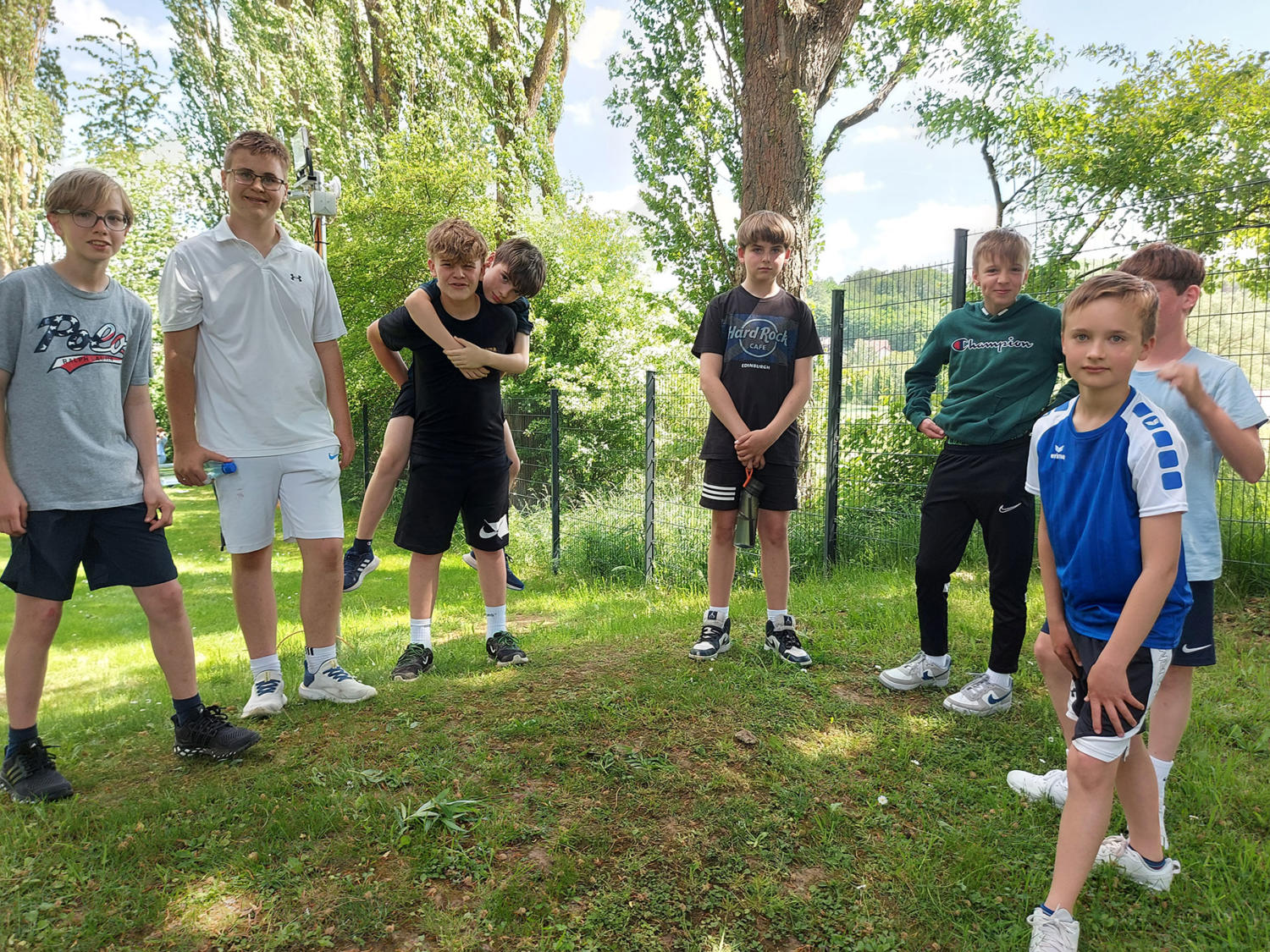
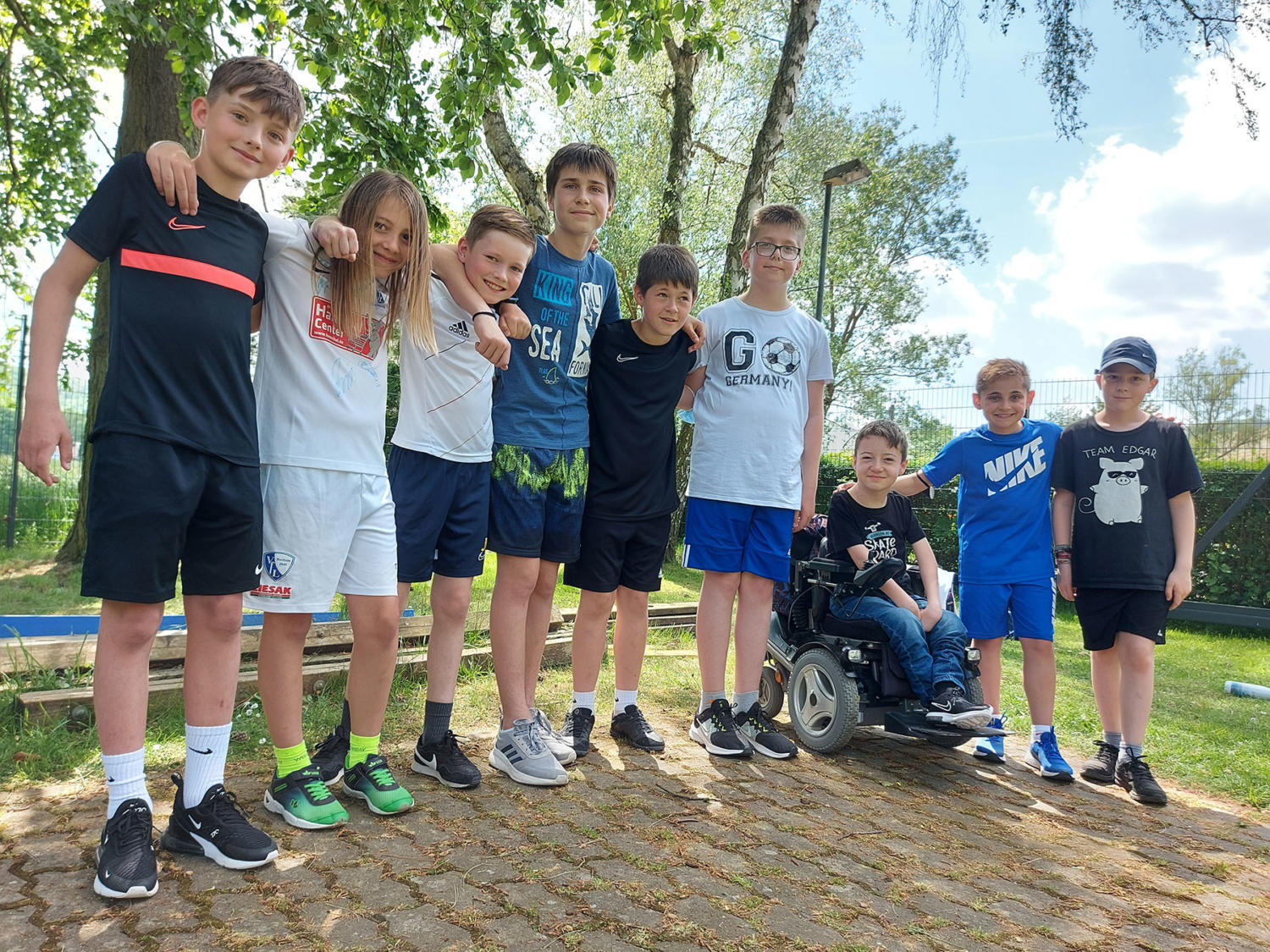
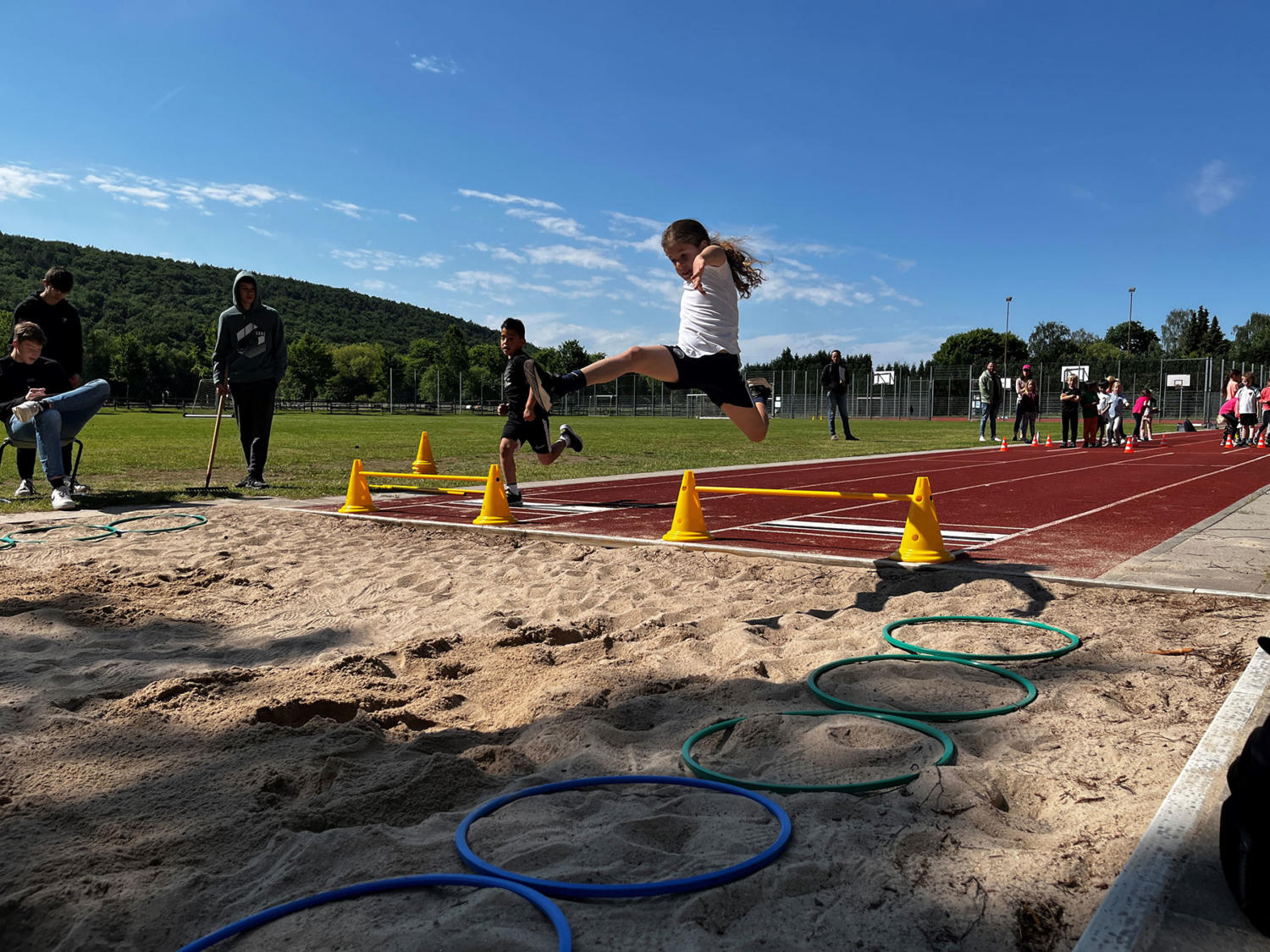
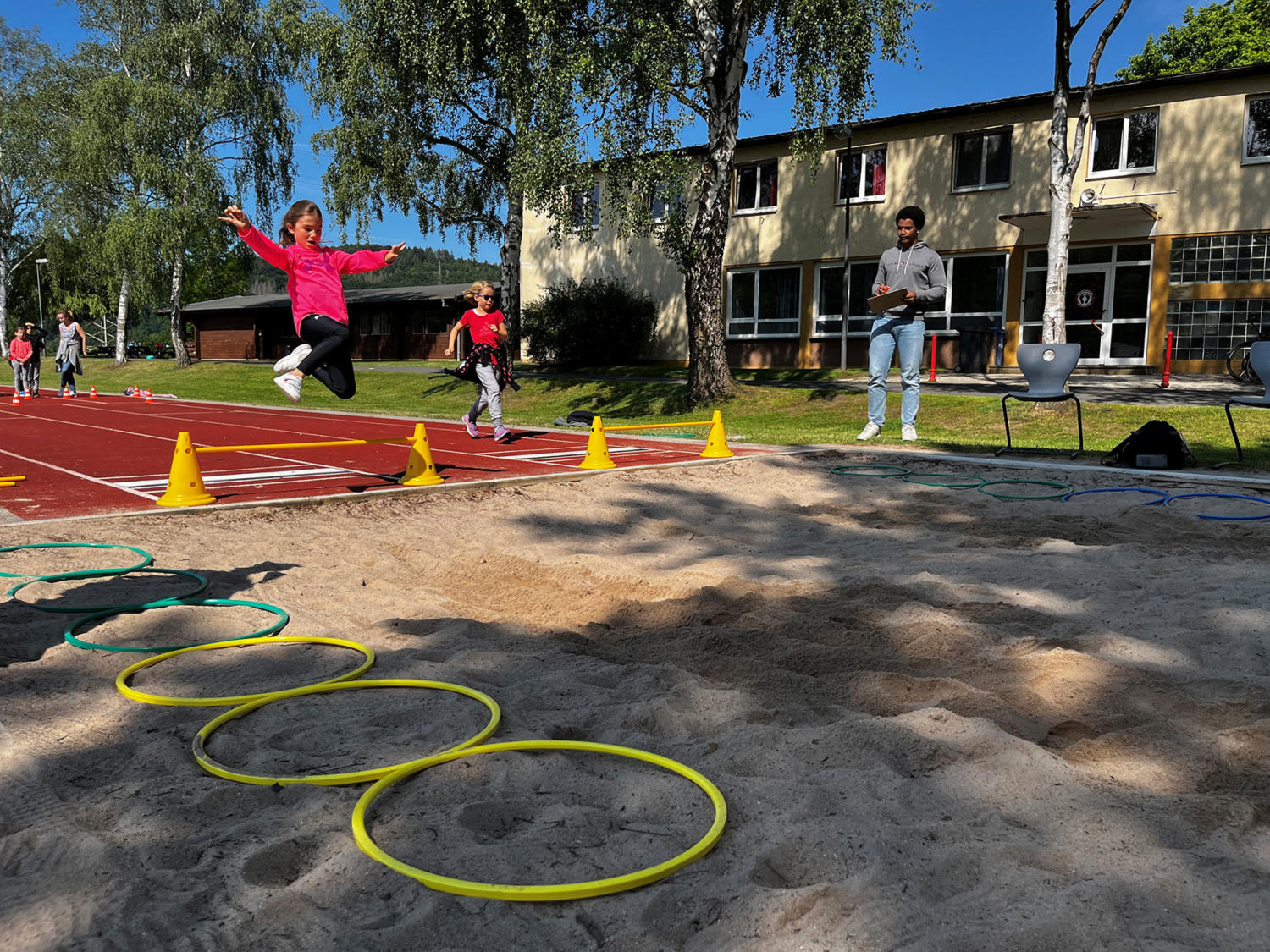
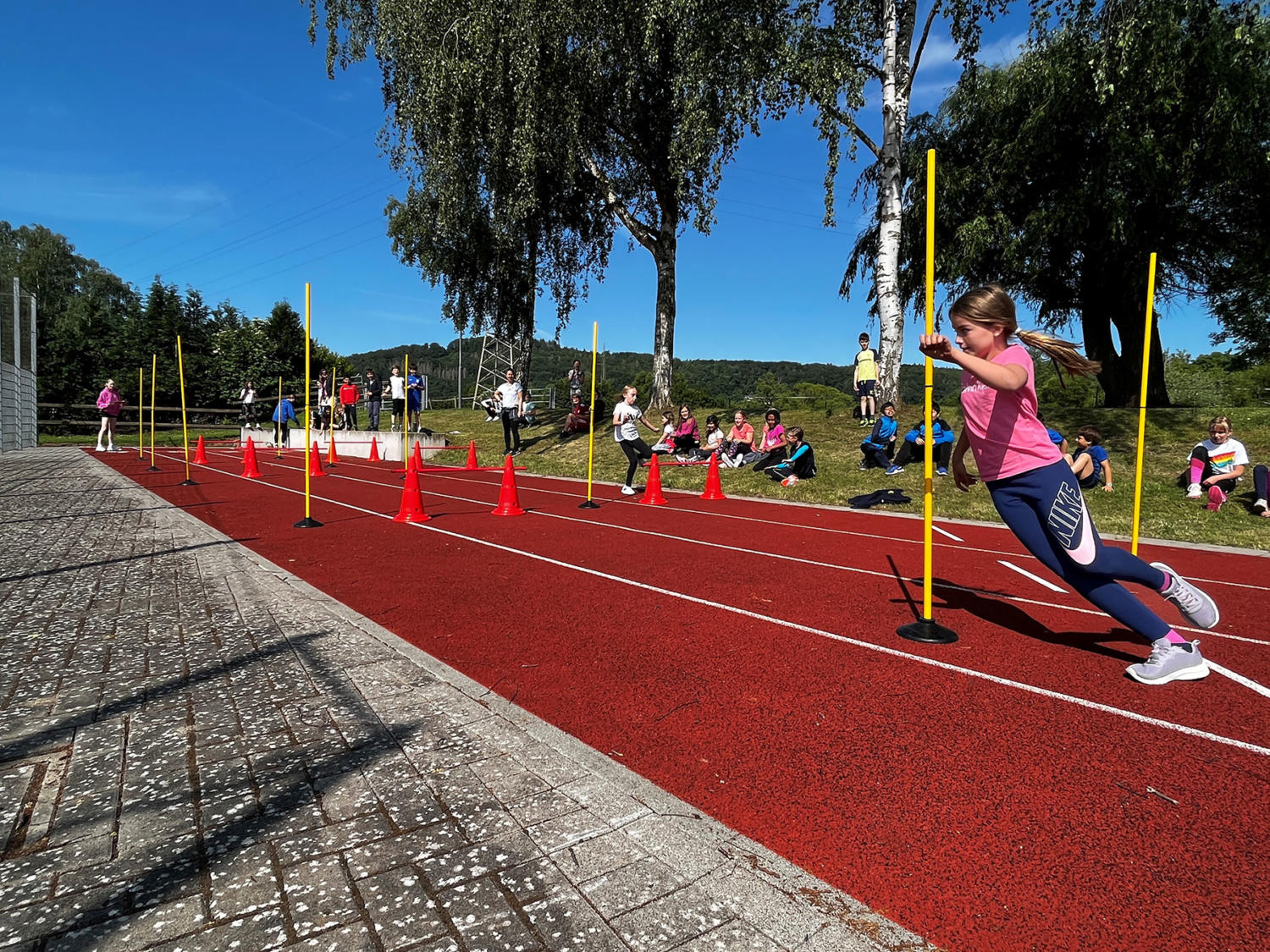
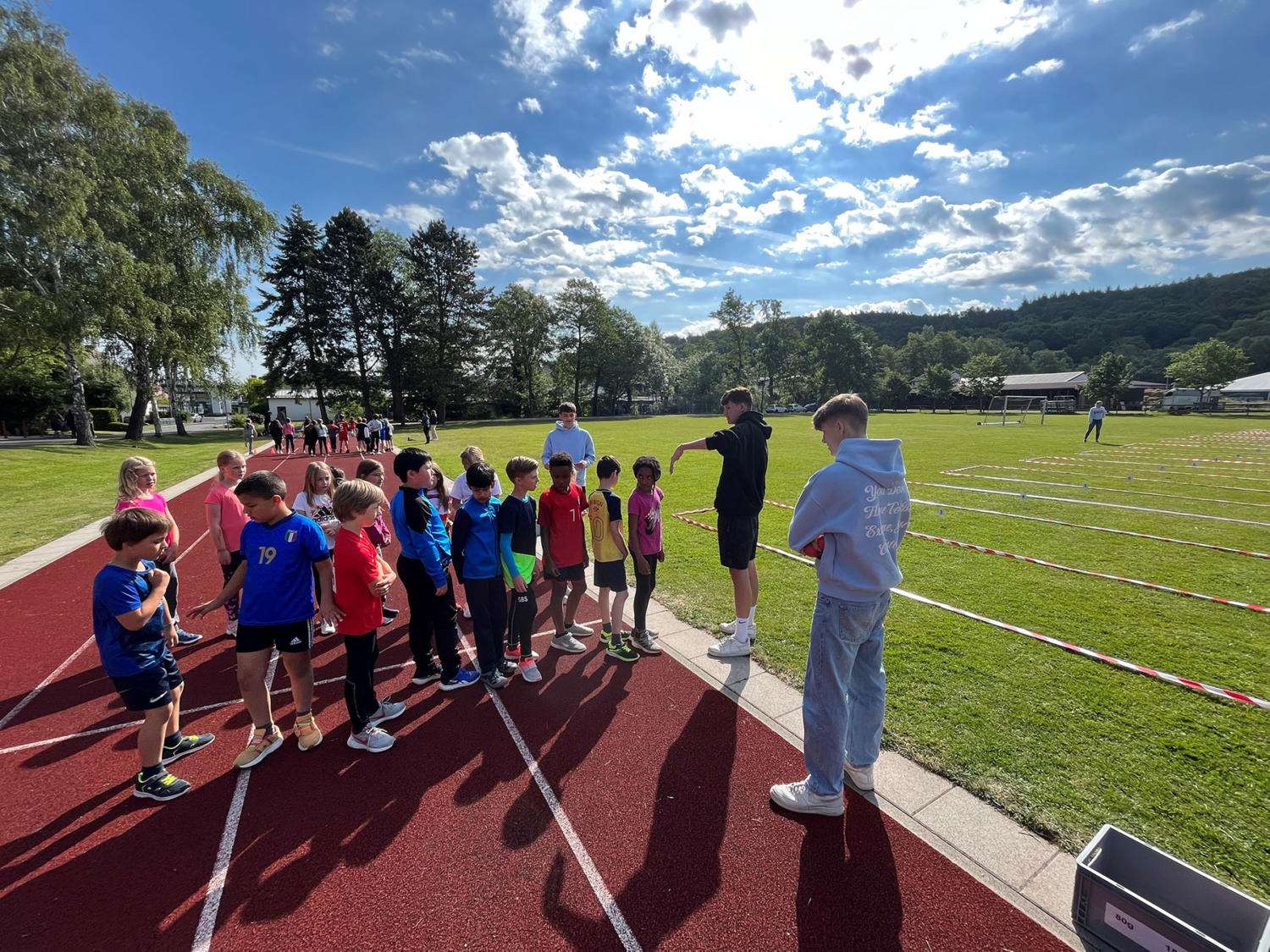
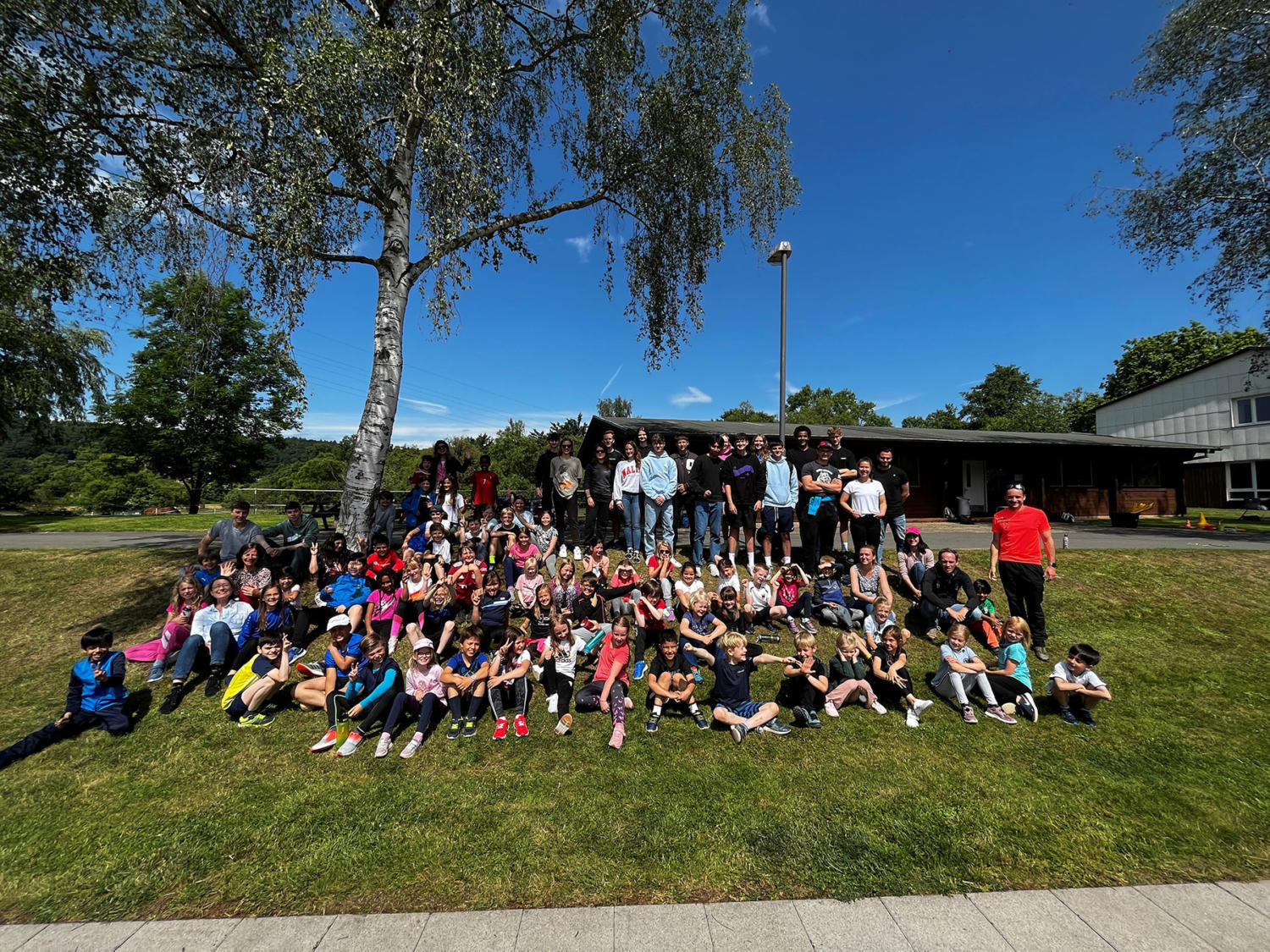
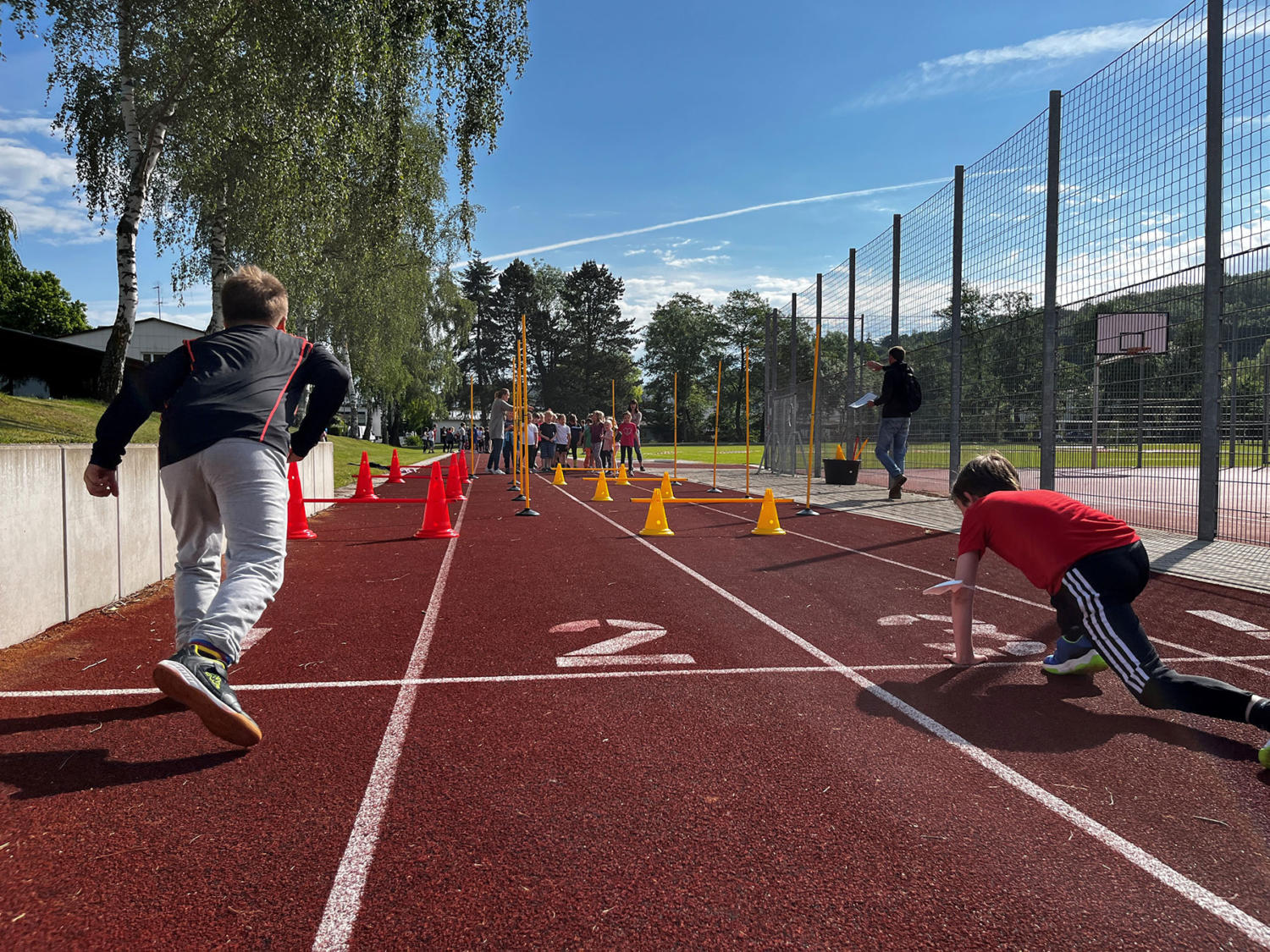
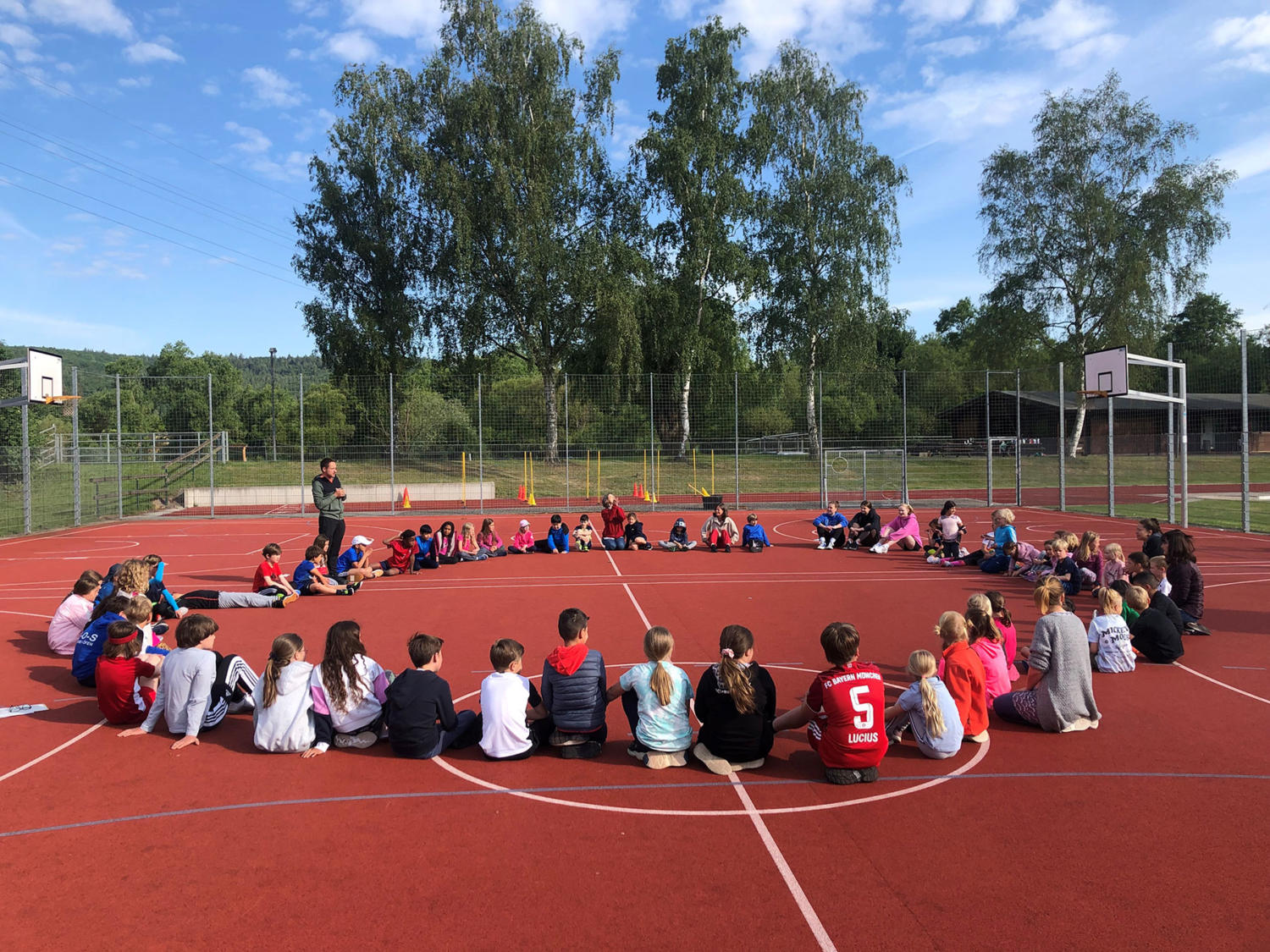
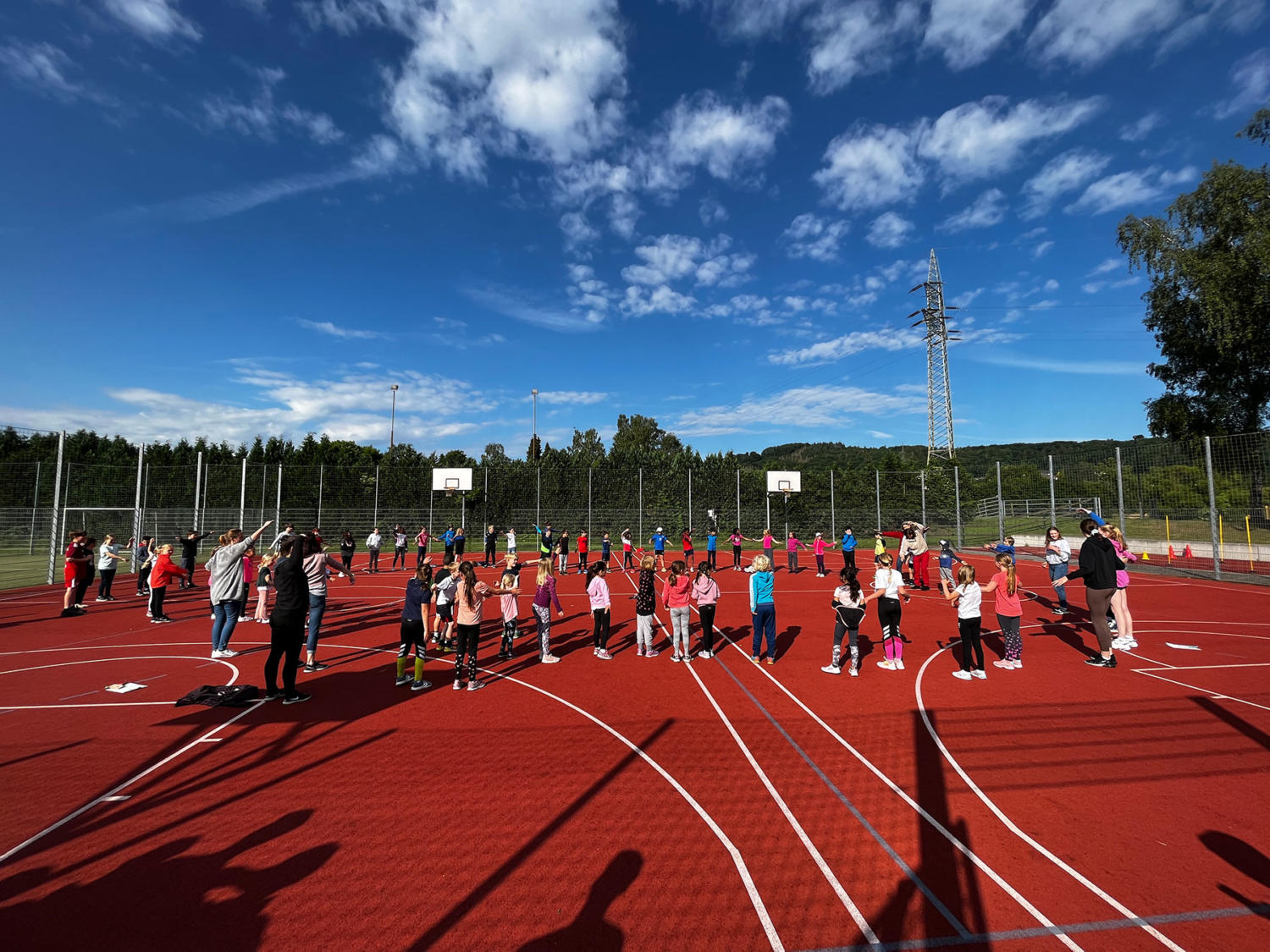
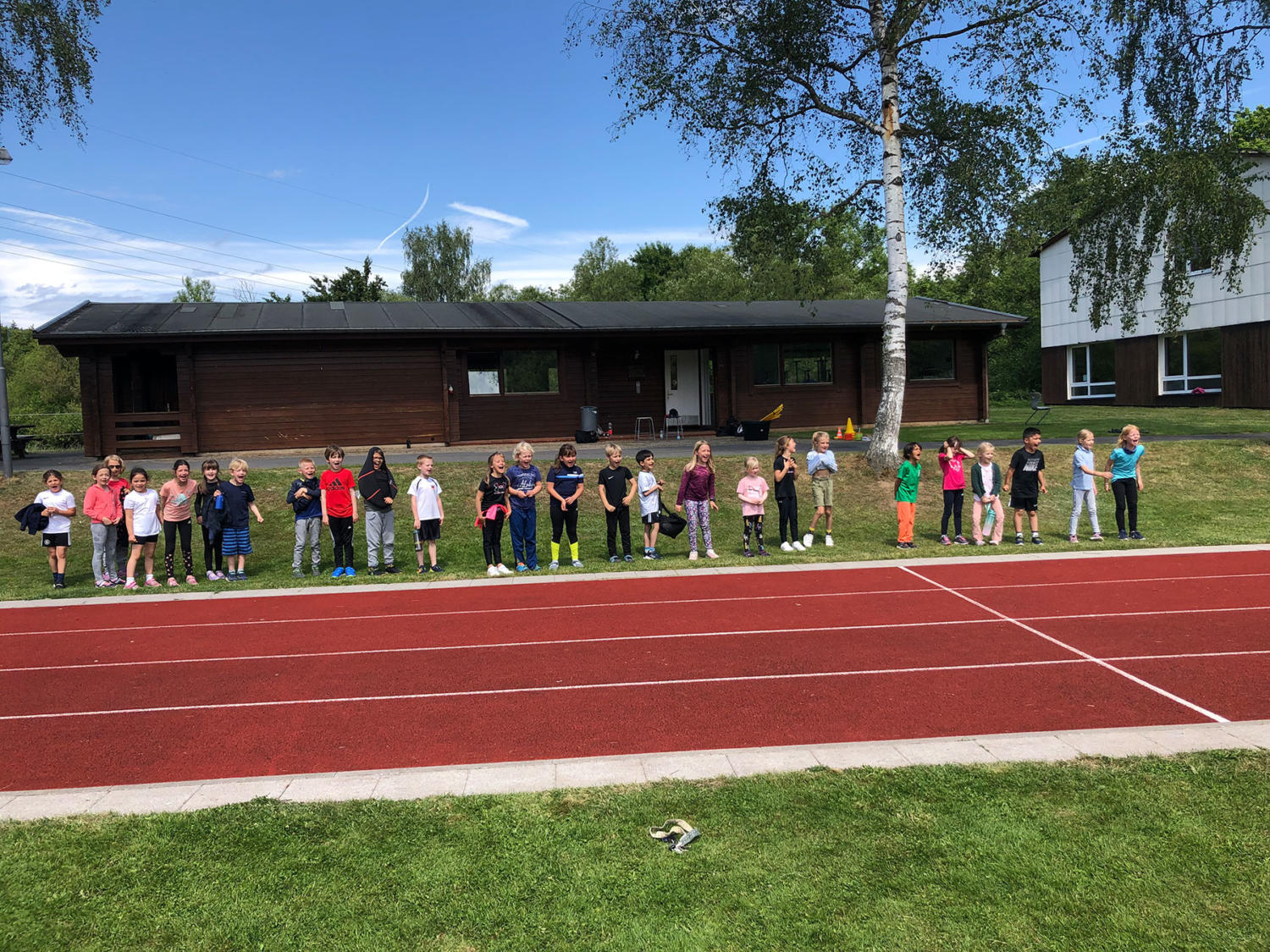
On May 31, the time had finally come: After two years of the pandemic, during which the importance of school sports had been downplayed, school sports events were finally allowed to take place again. As a result, our elementary school students got to experience their very first Federal Youth Games at Steinmühle.

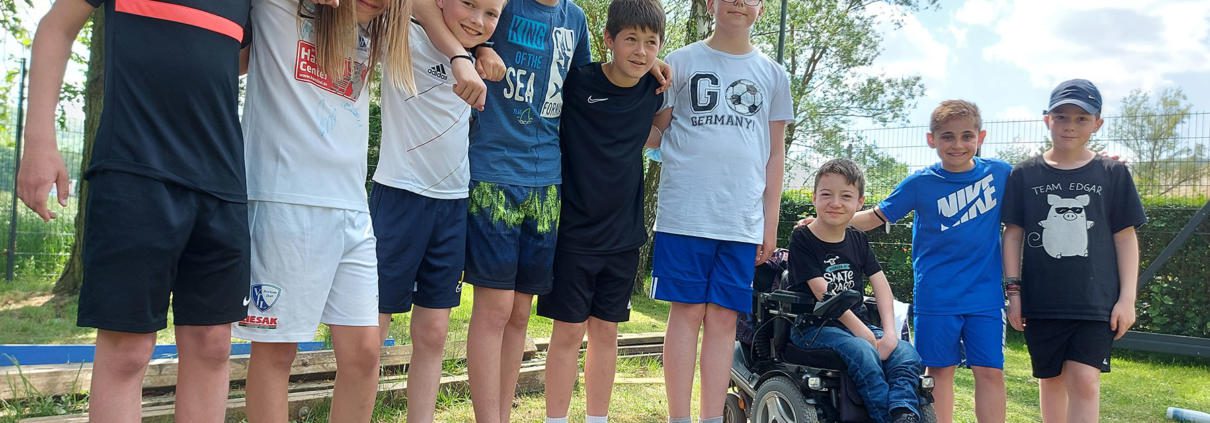
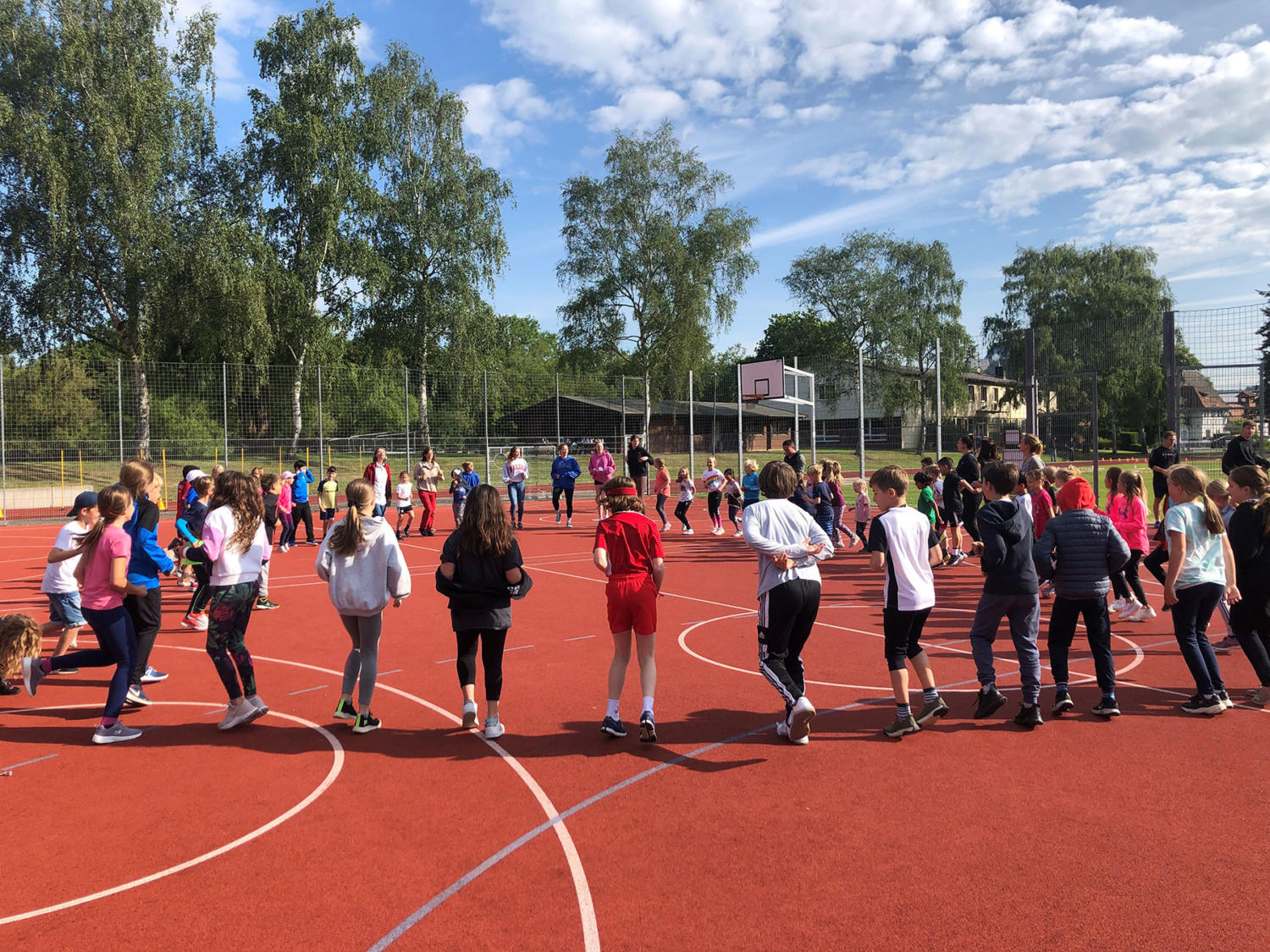
With the active support of the Sports Track (11e), all the students had a blast all morning long and got to compete and let off some steam. Here’s how our fourth graders described their morning in their own words:

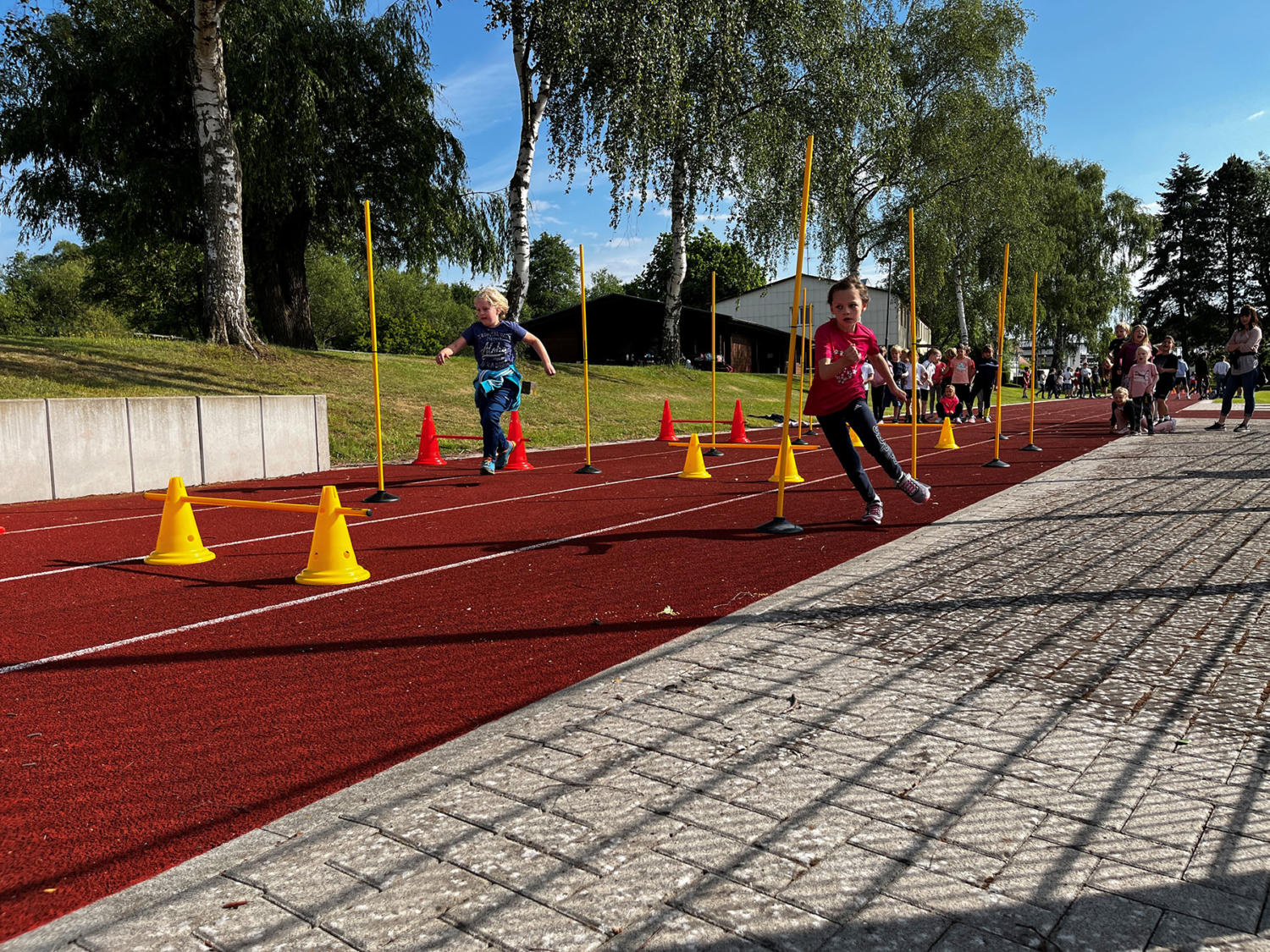
“On May 31, we attended the National Youth Games. Marcel Kalb had his 11e advanced physical education class help us prepare for the National Youth Games. They were behind the cafeteria, near the log cabin. The 11e class helped us warm up and showed us everything. We participated in four events. They showed us everything and explained everything to us. For the long jump, the 11th graders first gave us tips, and then we got started. It was a lot of fun, and the 11th graders were goofing around a lot. The ball toss is a sport where you have to throw a ball into squares numbered 1–20. Class 11e organized the ball toss and helped us understand the rules. If you didn’t hit the marked squares, you didn’t get any points. The third station was the sprint. At this station, the fourth-grade class raced against the third-grade class. We had to jump over hurdles, run a slalom course, and our times were recorded. The final event was the cross-country run. The Flexies went first. Then the fourth graders started. One of them fell over. Five minutes later, the third-grade class began. There were obstacles in the race, too.”


“I liked the race because it was fun”

Since the Federal Youth Games are set to remain a regular part of the school curriculum next year as well, third-graders were asked for their opinions for the purposes of quality assurance and “event development.” When asked, “What did you like?” they responded as follows:

  • “We liked the hurdle race and the fact that the 11e and our class cheered us on. They didn’t give up!”
  • “I liked the hurdle race because I was good.”
  • “I ended up liking the race because it was fun”
  • “The best helper for me was Sahra. Because she helped me and said, ‘You’re the sweetest first-grader.’”
  • “I liked the whole-school race because everyone was happy. I love the long jump and the hurdle race.”


“There might be more breaks to play”

The atmosphere was great, and the kids had fun. Nevertheless, there were also some critical comments from Class 3. In response to the question “What could be better next time?”, the following comments were made:

  • “There could be more breaks to play, go to the bathroom, and drink!”
  • “That the hurdles are lower for the younger kids.”
  • “Next time, I’d better make sure there’s a place to eat there!”
  • “The 11th-grade class could count better by jumping!”
  • “Next time I want more games [between each discipline] because I liked them”

In summary, it can be said that the very first Federal Youth Games at the Bilingual Elementary School fully achieved their goal of helping elementary school students discover the joy of physical activity and “competing,” but there is still room for even more progress, especially looking toward the future—or, in Tim Cook’s words:“We are proud of what we have and what we are, but there is much more to come and we can take it even further!”

—

Additional information about the report: The statements written in italics are the students’ original words. In some cases, we have made only minor grammatical changes to these statements and otherwise left them as is—in the spirit of an open culture of learning from mistakes. By the way: No one needs to worry about the fourth-grader (“One of them fell over”). He just tripped…

Marcel Kalb

Late yesterday afternoon, about 100 invited guests celebrated the opening of the new sports hall. Egon Vaupel, chairman of the board of the Steinmühle Marburg e.V. school association, welcomed and thanked everyone involved in the construction as well as all supporters; site manager Jochen Schröder provided the key facts about the project; and Claus Duncker, managing director of BLISTA, spoke about the long-standing and successful partnership between Steinmühle and BLISTA, and prominent political figures (City Councilwoman Kirsten Dinnebier, State Parliament Representative Dirk Bamberger, and District Deputy Klaus Weber) congratulated Steinmühle on the new gym.

The celebration finally came to a close in a relaxed atmosphere outdoors, with bratwurst and cold drinks, despite the rainy weather, and plenty of pleasant conversation. (A more detailed report will follow shortly.)